



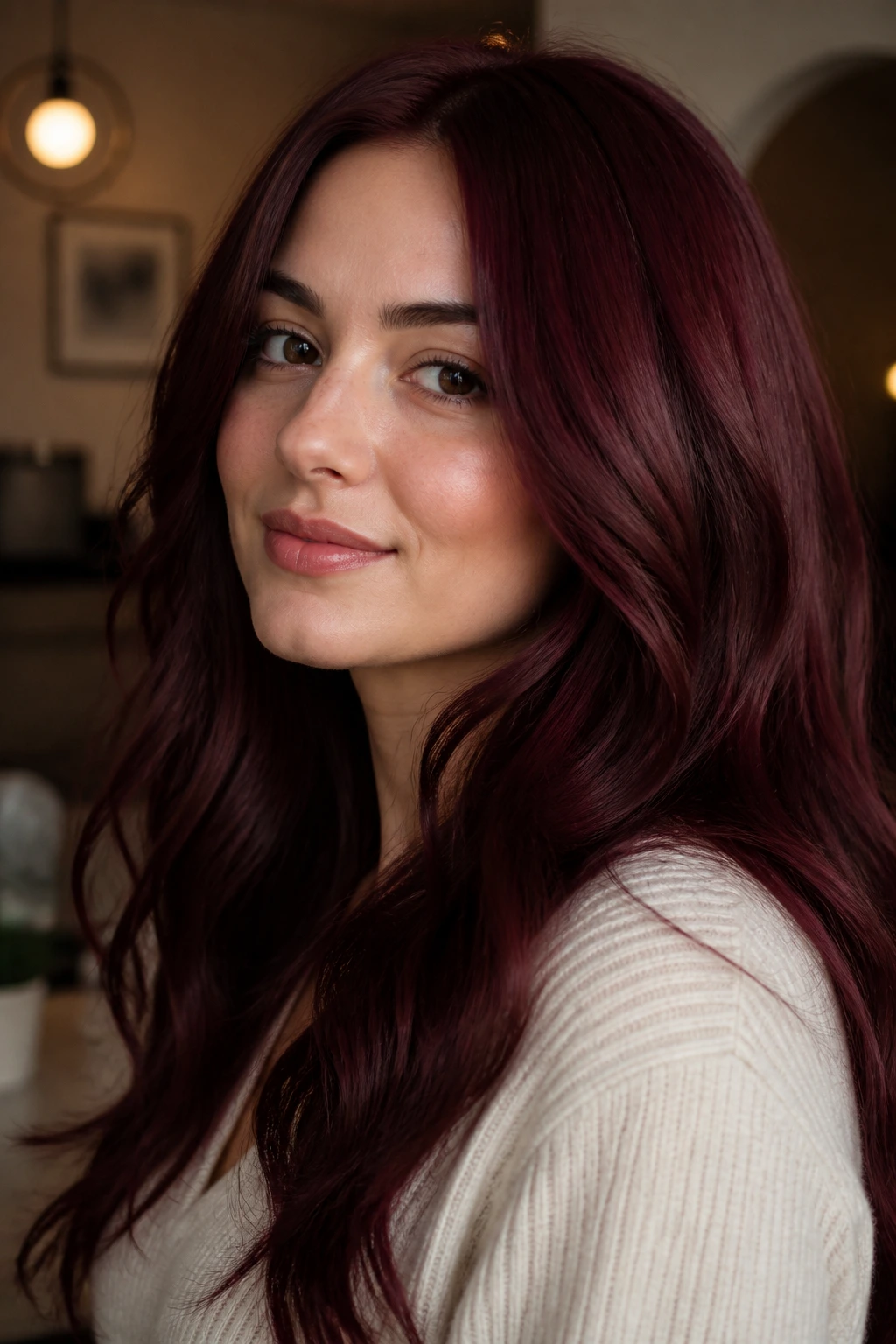
Burgundy hair color has a funny reputation. On a swatch ring, it looks straightforward: a deep red, a little winey, maybe a touch of violet. On an actual head of hair, it can do five different things before lunch. In shade, it may read as brunette with a secret. Under bright daylight, the same shade can flash blackberry, merlot, or black cherry depending on the base underneath it.
That’s why the strongest burgundy hair color ideas are never just “red, but darker.” They’re choices about placement, depth, and how much contrast you want against your natural color. A burgundy gloss on dark brown hair behaves nothing like a burgundy balayage on a pre-lightened bob. One is plush and quiet. The other has movement and bite.
I’ve always liked burgundy best when it stays rich instead of loud. The prettiest versions have a little smoke in them, a little plum in the shadow, and enough shine to catch light without turning candy-bright. That balance is what gives deep red tones their staying power. They look expensive in the simple sense of the word: layered, polished, and intentional.
So here are 25 ways to wear burgundy with depth, from full-on wine shades to face-framing streaks, soft ombré, and glossy dark red blends that sit somewhere between brunette and jewel tone.
Why These Burgundy Shades Are Worth Saving
-
They work on more base colors than people expect: A level 3 brunette can wear burgundy as a glossy veil, while lighter hair can take it as a brighter red-violet statement.
-
They give you room to choose your maintenance level: You can go full-head, pick a root melt, add a money piece, or tuck in peekaboo panels that only show when your hair moves.
-
They make shine part of the color: Burgundy reads deepest when the cuticle is smooth, so the finish matters as much as the pigment itself.
-
They can lean warm or cool on purpose: A merlot shade feels round and wine-like; a plum burgundy pulls cooler and a little moodier.
-
They hold up well in layered cuts: Ribbons, waves, curls, and shags give burgundy more places to catch light, which keeps it from looking flat.
-
They’re easier to personalize than brighter reds: You can push burgundy toward cherry, blackberry, mahogany, rosewood, or cabernet without leaving the same color family.
1. Classic Merlot All-Over Color
Merlot all-over color is the burgundy that asks for the least explaining. It sits right in that deep wine lane where red, brown, and a whisper of violet all show up together, which means the shade looks rich without shouting from across the room. On a medium brunette base, it can read almost like a velvet sheen indoors and then open up into a darker red under daylight.
Why It Works
The strength of this look is saturation. A single, even burgundy layer gives the cut enough uniformity that shine does most of the talking, which is exactly what you want if your hair is one length or a smooth lob. It also grows out cleanly on naturally dark hair, because the regrowth line is soft instead of harsh.
If I were choosing one burgundy shade for someone who wants depth first and drama second, this would be it. Ask for a demi-permanent merlot glaze if your hair is already dark and healthy, or a permanent formula if you need longer wear on resistant gray. Either way, the goal is a wine-red surface that looks plush, not flat.
2. Black Cherry Balayage
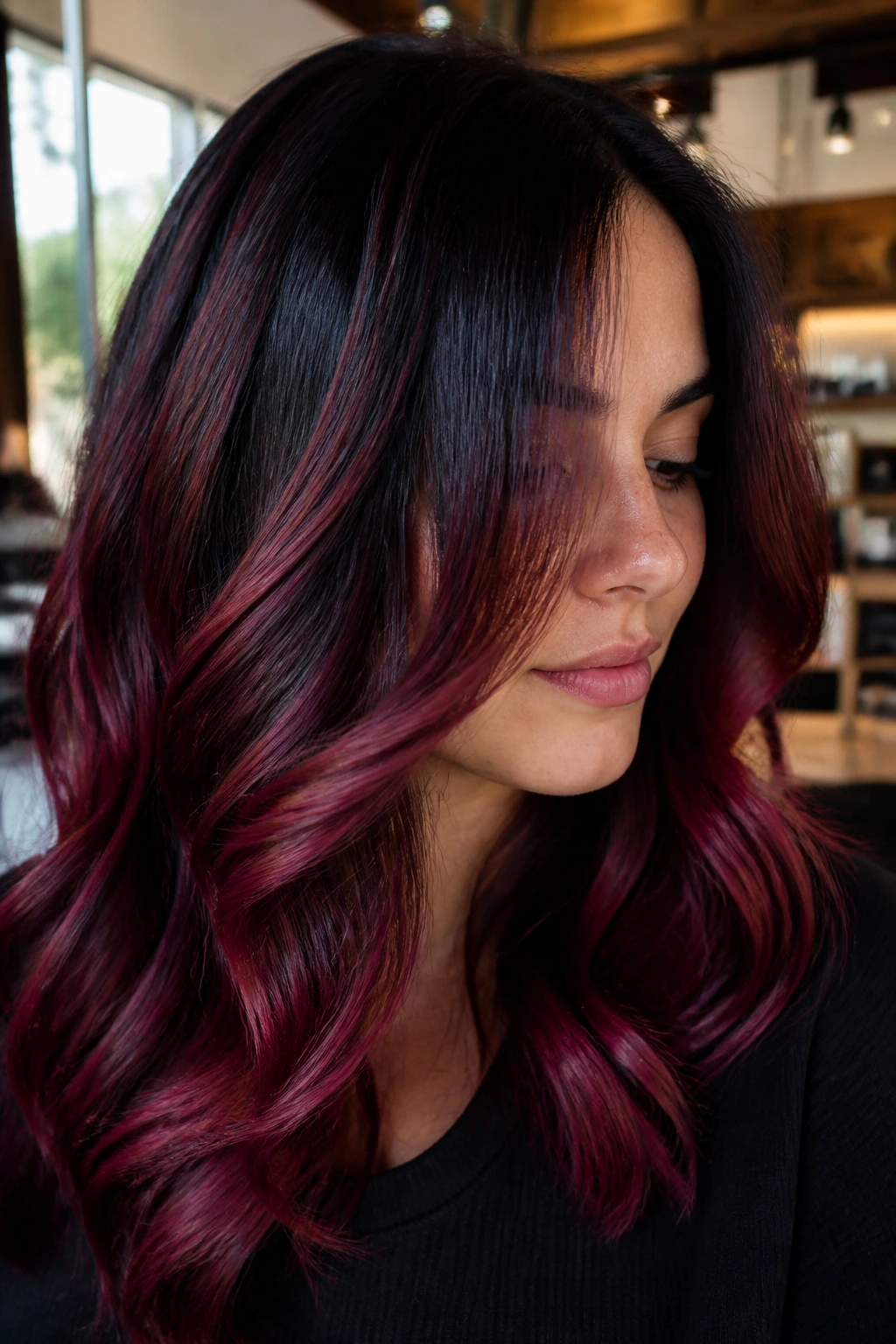
Want burgundy that still shows movement? Black cherry balayage is the answer. It keeps the root area dark and drifts into cherry-red ribbons through the mids and ends, which makes the whole head look softer than an all-over process. On curls, the color shows up in flashes. On straight hair, it reads as a dark red shimmer.
What Makes It Different
Balayage gives the color room to breathe. Instead of laying burgundy everywhere, the hand-painted pieces land where the light naturally hits, usually around the face, crown, and outer layers. That placement keeps the darker base visible, which makes the red look deeper and more dimensional.
This is the kind of burgundy I’d pick for someone who wants people to notice the color when the hair moves, not just when they stare at it. It’s a smart choice if you like low-maintenance regrowth but still want a shade that feels deliberate. Keep the ribbons fine, though. Chunky cherry panels can lose the richness and start looking loud.
3. Plum Burgundy Lob
A burgundy lob gets a cleaner, more modern read when the red leans plum. The shoulder-length cut does half the work for you; there’s enough length to show off the color shift, but not so much hair that the shade gets swallowed up. Plum tones sit cooler than merlot, which gives the look a slightly inkier edge.
Best on a Structured Cut
This is one of those shades that comes alive when the haircut has a clear line. A blunt lob, a soft A-line, or a collarbone cut with barely tucked ends all work because they frame the color like a border. The plum note stops the red from feeling warm in a generic way. It feels deliberate.
If your skin has pink, neutral, or cool undertones, this is the burgundy family I’d try first. Keep the finish glossy and smooth; textured waves are fine, but they’re not required here. The shade already has enough personality.
4. Burgundy Money Piece
A burgundy money piece is the fast way to test whether you like deep red tones on yourself. The front sections carry the color, usually from the hairline into the first few inches of the lengths, while the rest of the hair stays brunette or black. It frames the face in a way that feels bold without asking you to live inside the color everywhere.
Why It Stays Practical
The charm is in the contrast. A dark base makes the burgundy front pieces look brighter, and that little hit of color near the cheeks can sharpen your features more than a full head ever would. It also keeps upkeep manageable because you can refresh the front sooner than the rest.
I like this option for people who keep their hair pulled back a lot. A ponytail or claw clip suddenly shows the red, and that’s where the style gets fun. If you’re unsure about burgundy, start here instead of jumping straight into an all-over shade you may not want to maintain.
5. Velvet Wine Root Melt
A root melt turns burgundy into something softer and more expensive-looking in the best sense. The roots stay deeper and closer to espresso or dark brown, then the color melts into wine-red mids and ends. The transition matters. It keeps the grow-out gentle and gives the hair that plush, shaded look you see in dimensional salon work.
Where It Sings
This shade is especially strong on thick hair, because the darker root prevents the color from getting too broad or heavy at the top. The melt creates depth near the scalp and motion through the lengths, which keeps the whole style from feeling one-note. On layered cuts, the effect is even better, because every slice of hair picks up a slightly different red.
If you like your burgundy with a little drama but no obvious line of demarcation, this is a smart move. It looks more expensive than a flat block color, and frankly, it wears better. The root shadow buys you time.
6. Cherry Cola Brunette
Cherry cola brunette is for people who want burgundy to play backup instead of lead singer. At first glance, it still looks brown. Then the light lands on it and the red-violet undertone shows up, like the surface of a dark soda bottle catching sun. It’s subtle, but not boring.
Why It Works on Dark Hair
The magic here is restraint. You are not forcing the hair to become red; you’re letting burgundy sit under the brunette base so the color reads as depth instead of a full transformation. That makes it a good fit for office-friendly color or anyone who wants a shift without a big maintenance jump.
It’s also one of the easiest burgundy looks to wear on naturally dark hair without heavy lightening. A gloss or demi-permanent formula can do most of the work. Keep the finish shiny, though. The entire point is that the red should look like a shadow with a pulse.
7. Mahogany Burgundy Bob
A bob gives burgundy a cleaner edge. Mahogany tones—those brown-red, slightly woody notes—keep the color grounded, and the shorter shape makes the saturation look denser. This is the version of burgundy I think of when someone wants polish more than flash.
The Shape Matters
On a bob, every millimeter shows. That’s good news here, because the cut’s bluntness turns the color into a smooth block of rich tone. It looks especially good with a glassy blowout or a slight curve under at the ends. Too much texture can scatter the light and blur the mahogany note.
Ask for a burgundy formula with a brown base if you want the shade to stay wearable over time. Mahogany is the bridge between red and brunette, and on a bob, that bridge makes the whole haircut look more finished. Sharp cut. Soft color. Clean result.
8. Smoky Burgundy Highlights
Smoky burgundy highlights are the quieter cousin in the group. Instead of bright red ribbons, you get thin, smoky pieces that sit just a step lighter than the base. The effect is moody and layered, especially on ash brown or deep chocolate hair. It’s burgundy, but filtered through fog.
A Small Shift With a Big Payoff
This works because highlights do not need to be high-contrast to matter. Fine burgundy pieces through the mid-lengths can change the whole read of a haircut, especially if the cut has movement. The red stays cool and restrained, which keeps it from tipping into copper or orange.
I like this for someone who hates obvious color stripes. Under indoor light, the pieces may barely announce themselves. Outside, they come alive. That’s the fun of it. The shade keeps changing its mind.
9. Rosewood Gloss Finish
Rosewood is burgundy’s softer, more polished relative. A gloss finish over brown hair gives you that red-brown sheen without a heavy commitment to permanent color. The result looks like the hair has been lightly polished with a wine-tinted top coat.
Why Fine Hair Loves It
Fine hair can get overwhelmed by dense pigment, and that’s where a rosewood gloss earns its keep. It adds tone without making the hair look overloaded. Because a gloss sits on the cuticle, the finish can feel almost lacquered when the hair is healthy and well-conditioned.
This is a smart pick if you want burgundy mainly for shine. It also fades more gently than many permanent reds, which matters when you like the idea of the color but don’t want hard lines a few weeks later. The shade is subtle enough to wear with almost anything, which is probably why it sneaks into my favorite burgundy options so often.
10. Aubergine Burgundy Curls
Aubergine burgundy takes the shade toward plum and violet, and curls are the best place for it. The texture gives the color multiple surfaces to catch light, so the red-violet blend does not sit still. It moves. That movement is the whole point.
Where It Looks Best
On curly hair, a cooler burgundy can look more complex than a warmer one because the curve of each curl reveals the pigment differently. A loose coil might show berry. A tighter bend might show plum. That makes the whole style feel layered even if the formula is one shade.
Moisture matters here. Dry curls can make aubergine look dull or dusty, and that’s a waste of a good color. Keep the curl pattern defined and soft, and the burgundy will look deeper for it.
11. Burgundy Ombré Ends
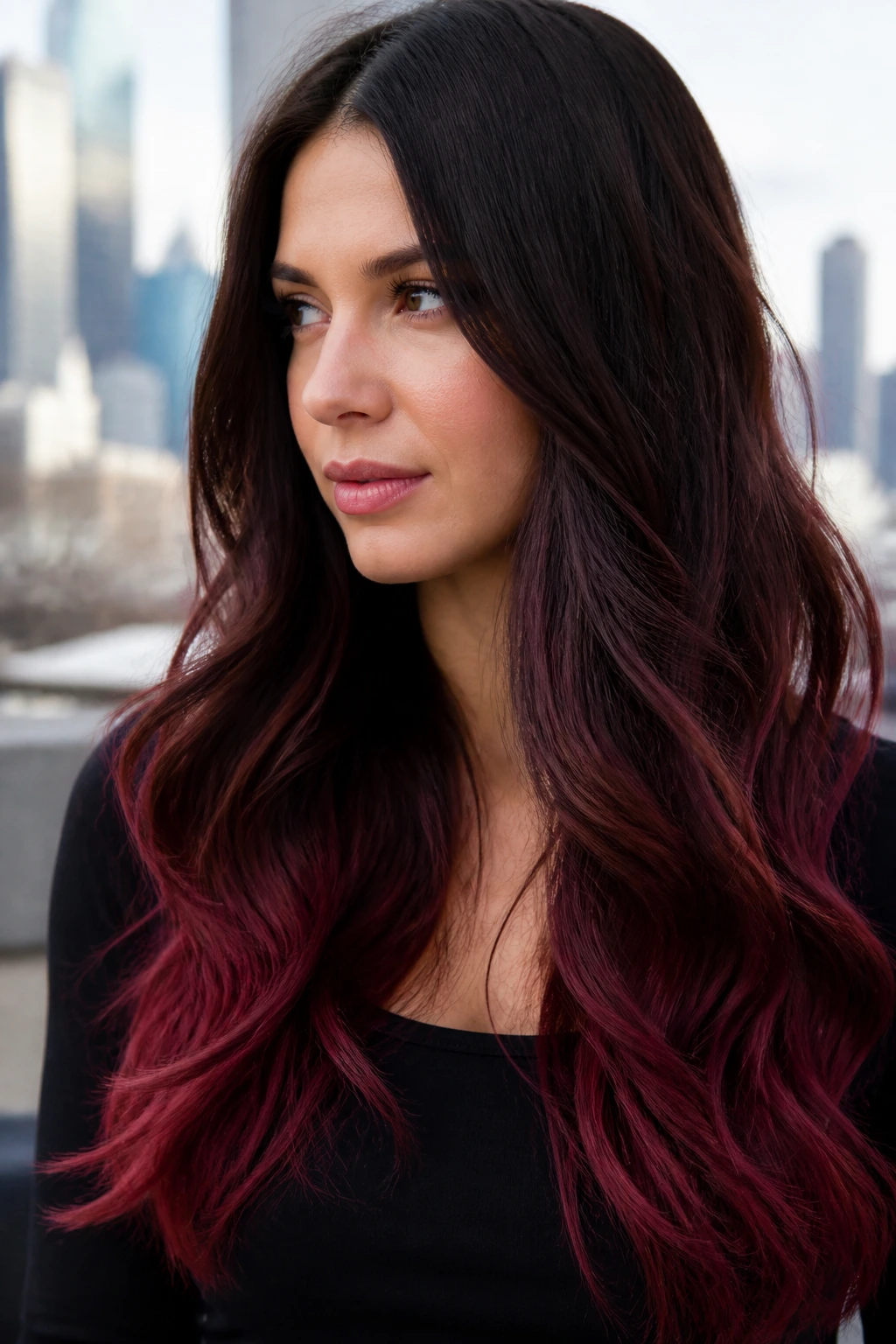
Burgundy ombré ends are a good compromise if you want color that starts quietly and ends with more fire. The roots stay darker, the mids begin to warm, and the ends hold the richest red. The gradient gives long hair a little more shape, because the eye travels downward instead of getting stuck at one flat tone.
Long Hair’s Best Trick
Ombré is useful when you want to preserve the health of the top section. Most of the visible color sits from mid-length to ends, which means fewer inches need aggressive processing. That matters on long hair, where the ends are usually the weakest part anyway.
I’d choose this if your hair is past the shoulders and you want the burgundy to show when it swings. Loose waves make the gradient obvious. Straight hair works too, but you need a glossy finish so the color shift does not disappear into the length.
12. Cabernet Shadow Root
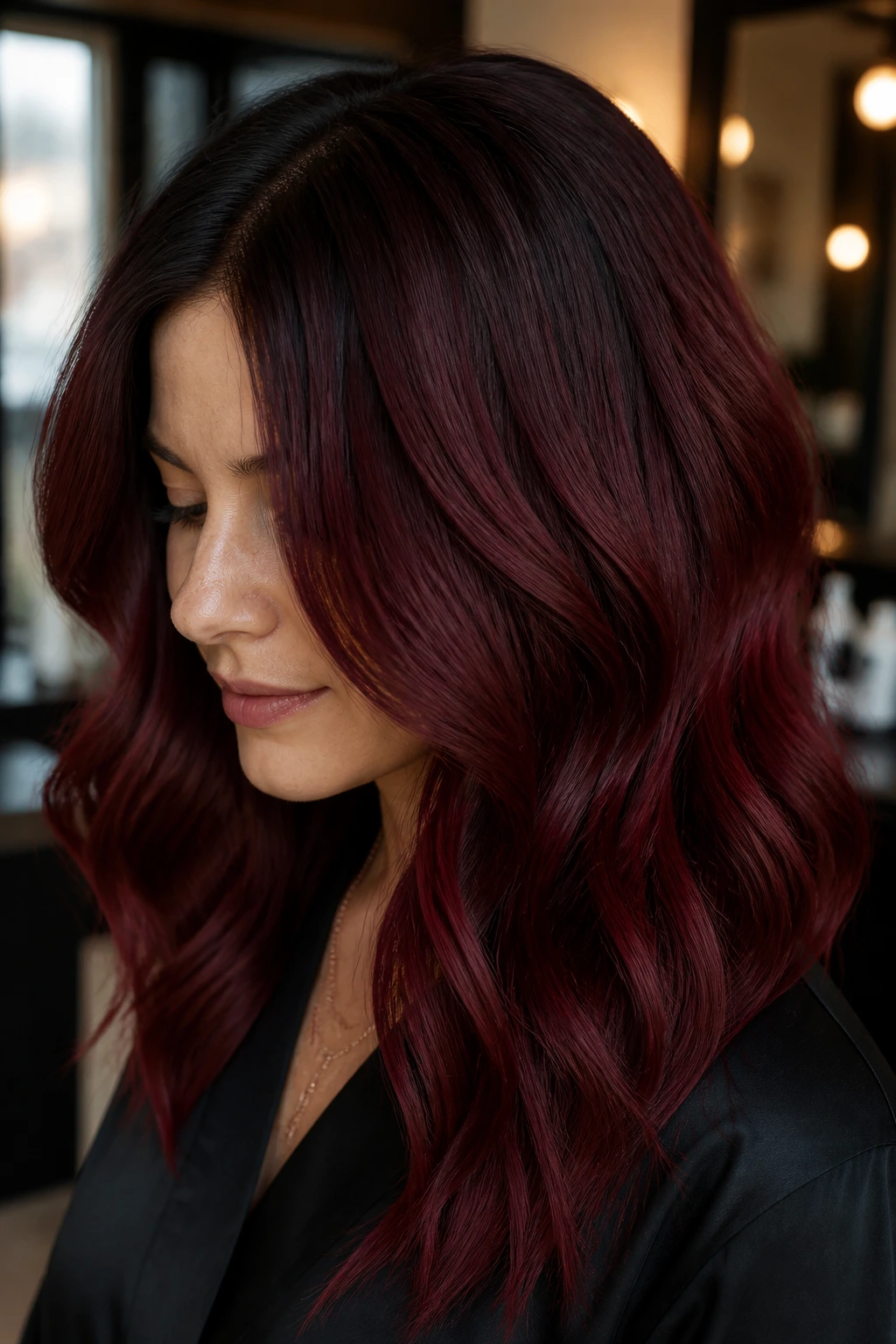
Cabernet shadow root is deeper and slightly cooler than merlot. It starts with a dark root zone, then opens into a saturated red wine tone through the mids. The cabernet note keeps the color elegant, not bright, and the shadow root makes the grow-out line behave.
Why It’s So Forgiving
This shade is forgiving because it accepts a little regrowth without looking messy. If your natural hair is dark brown or near black, the root shadow blends in instead of announcing itself. The burgundy mids carry the interest, and the color still reads rich even after several weeks.
It’s also a smart move if your hair tends to pull warm when colored. Cabernets usually sit a touch deeper and cooler than standard red-browns, so they keep the shade from drifting orange. The result is steady, not flashy. That steadiness is underrated.
13. Blackberry Burgundy Pixie
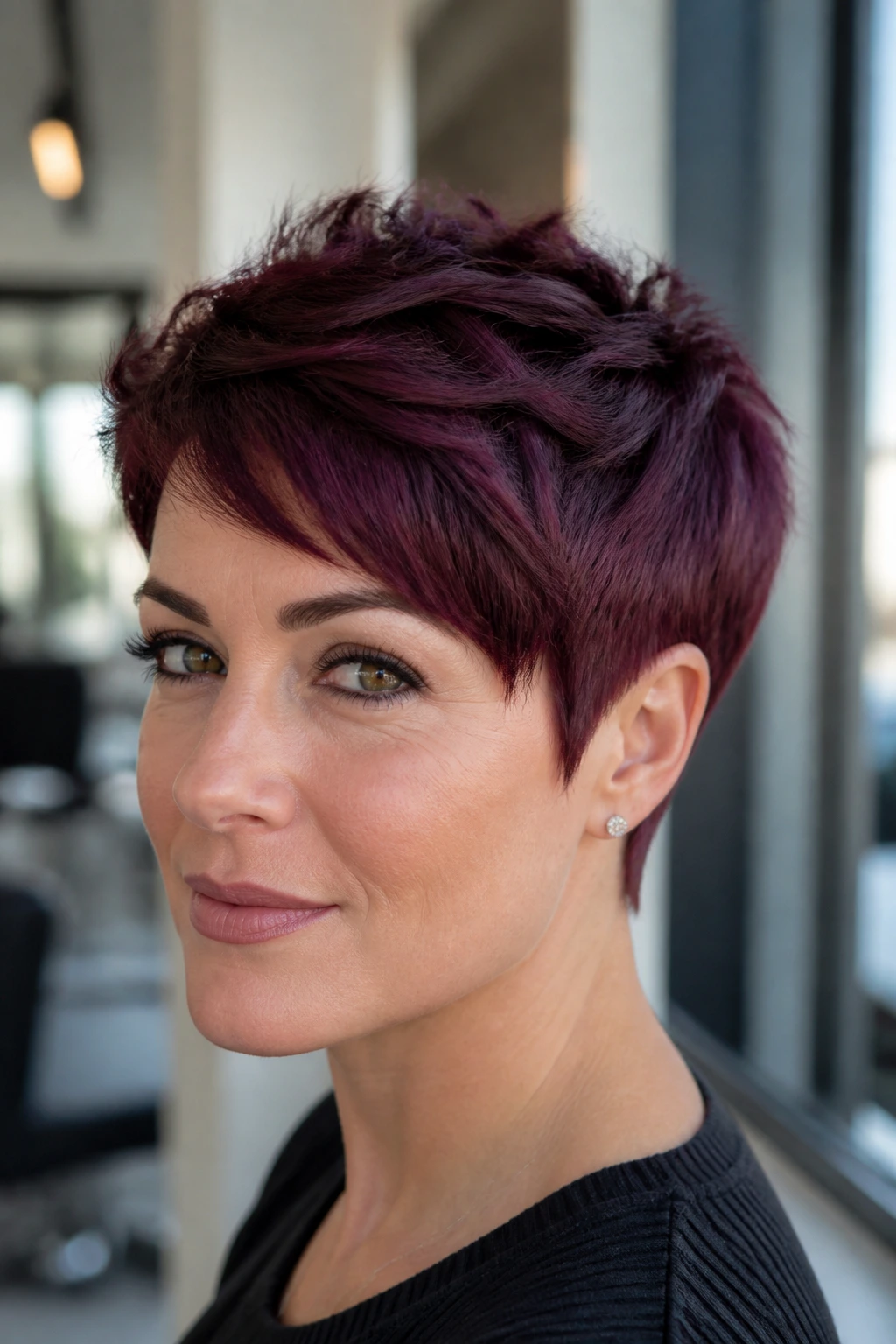
Short hair can handle more color than people think, and a blackberry burgundy pixie proves it. Because the cut is cropped close, the shade reads immediately, even when the pigment is dark. Blackberry tones add a little cool depth, which keeps the pixie from looking flat against the head.
Why Short Hair Benefits
A pixie does not have the length to hide weak color placement, so a saturated burgundy family tone is useful here. It gives the cut definition along the edges and at the crown, where light naturally lands. The color also makes the shape feel more intentional, especially if the pixie has undercut details or longer fringe.
This is the kind of burgundy that looks best when it’s precise. Keep the finish smooth on top and piecey around the front if you want the shade to show off the haircut. Short hair loves a sharp outline, and blackberry burgundy gives it one.
14. Mulled Wine Peekaboo Panels
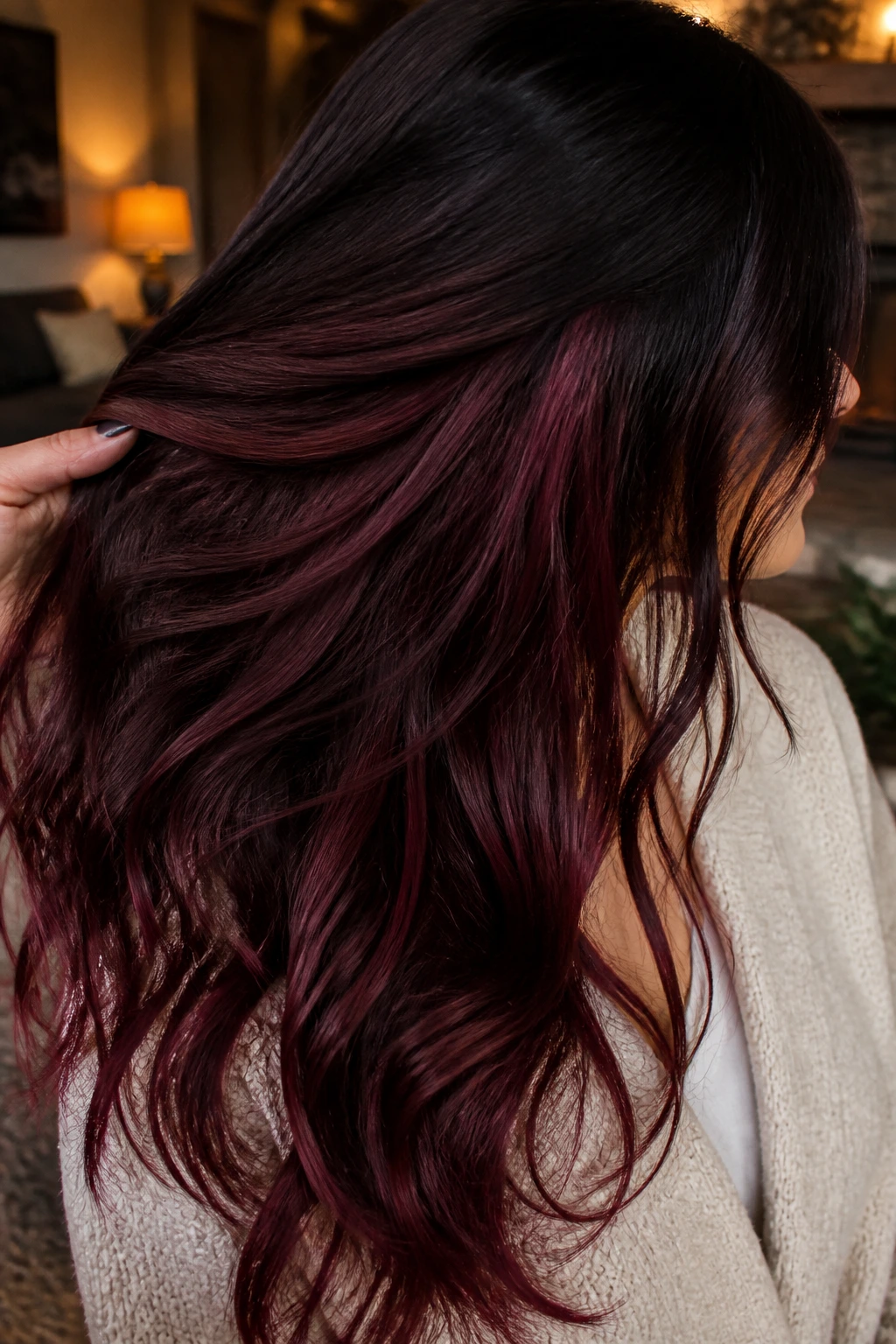
Peekaboo panels are where burgundy gets mischievous. The color hides under the top layer and shows up when the hair moves, when you tuck it behind an ear, or when you twist it up. Mulled wine is a nice name for the tone because it usually carries a touch of spice—deeper red with a slightly warm, cozy edge.
When Hidden Color Makes Sense
This is one of the easiest ways to experiment without changing your whole look. You can keep the top layer dark and professional, then let the burgundy show underneath. That makes the style feel private, which a lot of people like more than they expect to.
I’ve always thought peekaboo color is underrated for people who wear buns, braids, and half-up styles. The hidden panels become visible only when the hair shifts, and that tiny reveal is better than a loud full-head statement for many people. It’s not shy. It’s selective.
15. Auburn-Burgundy Blend
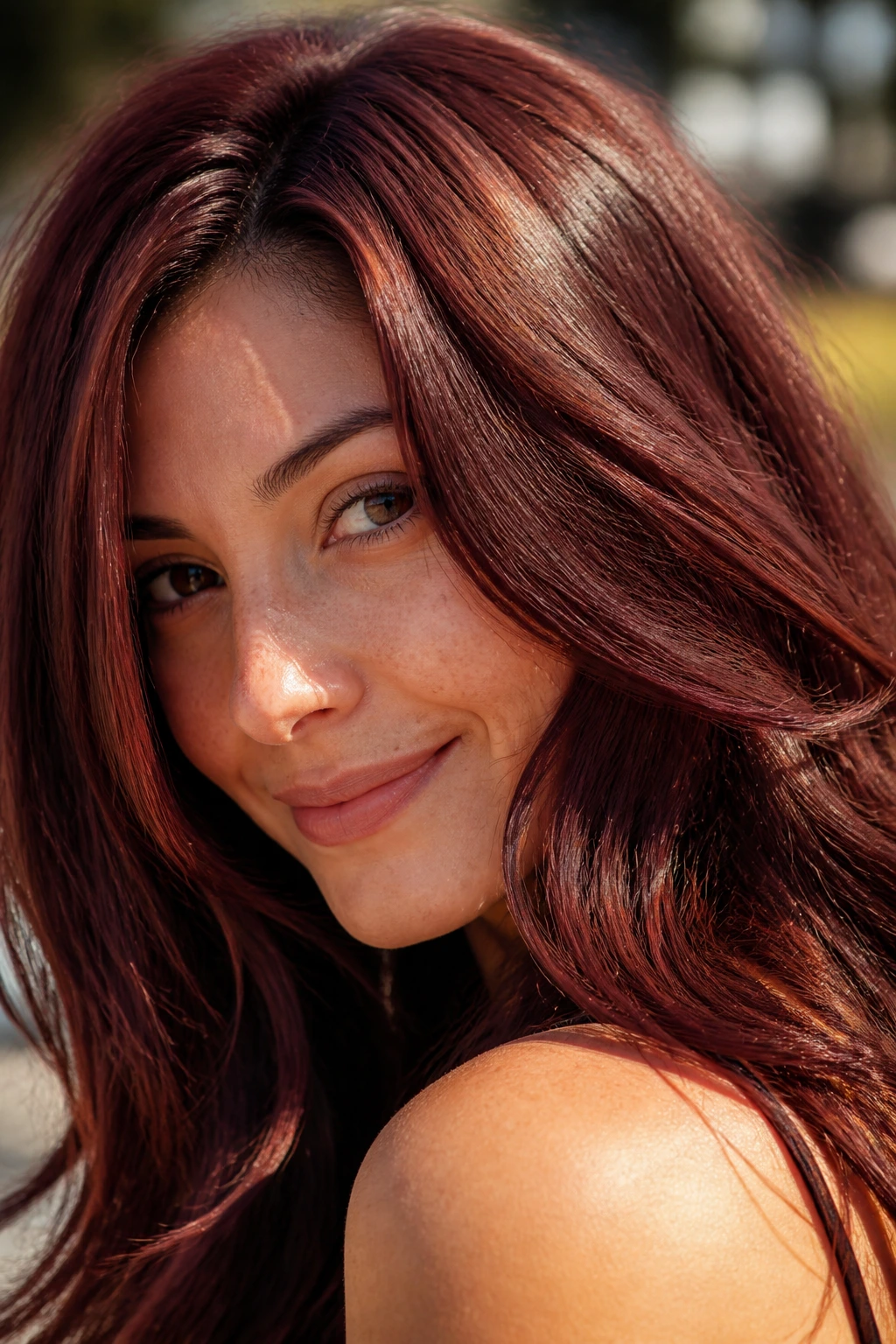
An auburn-burgundy blend sits warmer than most of the shades here. It leans red-brown instead of violet-red, which makes it feel softer and a touch more classic. If pure burgundy sometimes looks too cool against your skin, this is the branch of the family tree to try.
Who Should Reach for It
Golden and olive undertones usually get along with this blend because the warmth in the color doesn’t fight the skin. It also works on layered cuts that need a little lightness at the ends, since auburn keeps the red from turning too dense. The red still feels rich, but it’s less severe than a blue-based burgundy.
This is the shade for someone who wants the red to look natural enough that people wonder if it’s your own hair color after all. Not blond. Not copper. Something in between. That’s the appeal.
16. Satin Merlot Waves
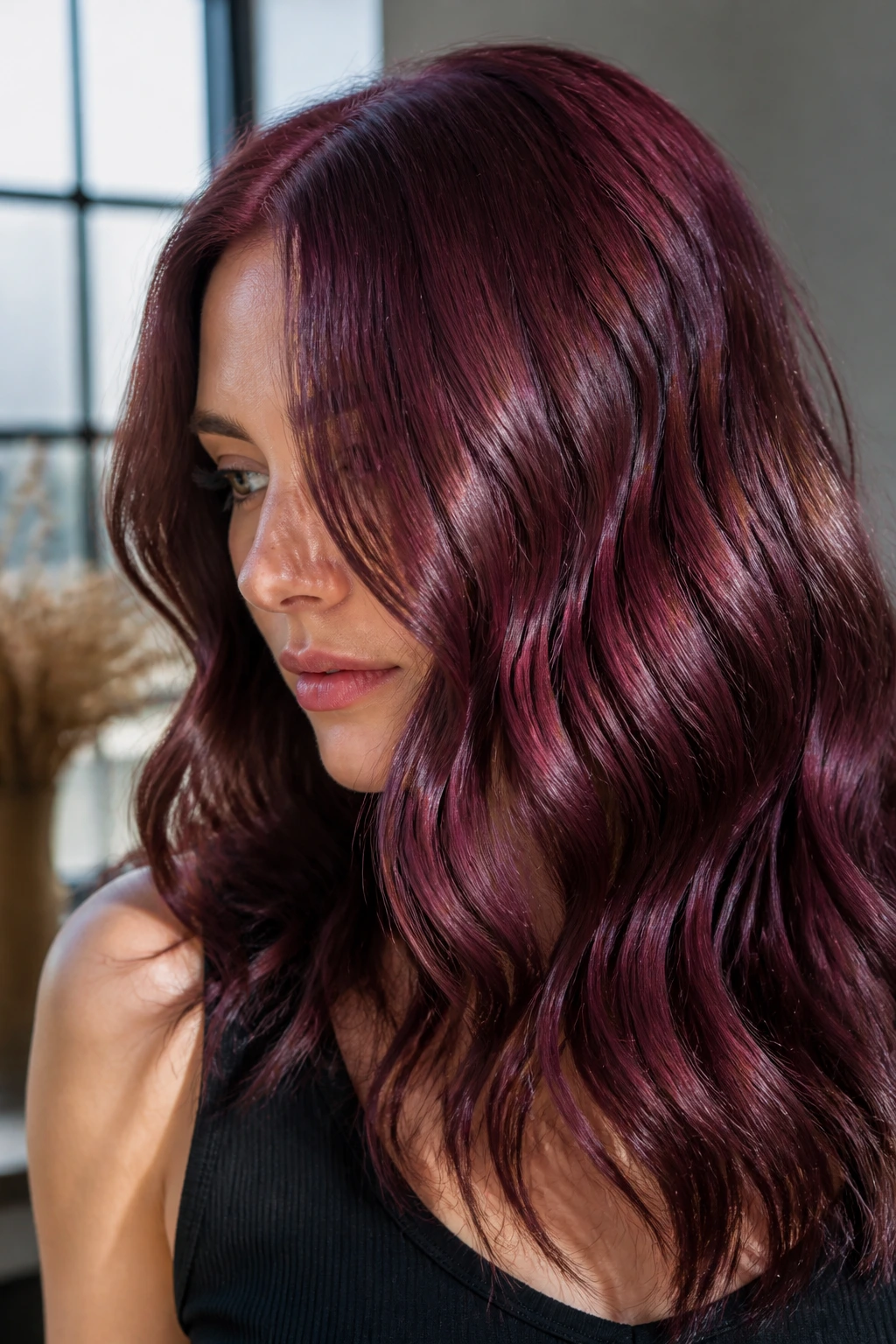
Satin merlot waves are all about surface. The color itself is deep and wine-like, but the styling gives it movement and a soft reflective finish. When the waves are loose, the burgundy shifts across the bends instead of sitting in one flat block.
Why Waves Change the Color
Waves are useful because they create little pockets of light and shadow. Burgundy behaves beautifully in that setup, because the darker red stays present in the troughs while the shine comes up on the ridges. The result looks layered even if the formula is simple.
This is a strong option for medium to long hair. A clean wave pattern shows the color’s depth without making the style feel fussy. If your hair is thick, try medium-sized bends instead of tight curling iron spirals. Tight curls can make the shade read busier than it needs to be.
17. Burgundy Lowlights on Black Hair
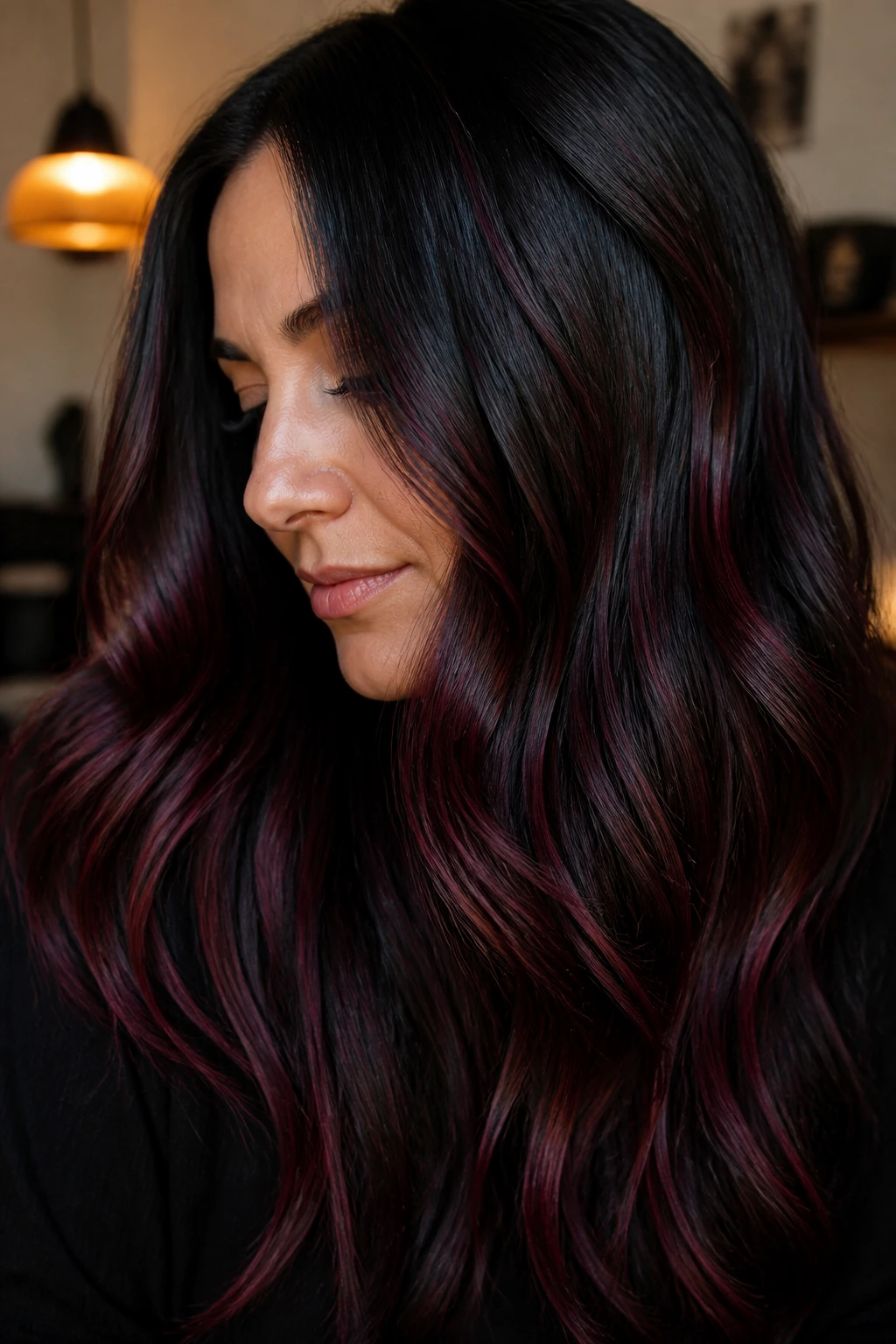
Burgundy lowlights on black hair are a smart way to add depth without lifting the whole head. The red pieces sit beneath the darker sections, so the color only shows when the hair shifts or catches direct light. The effect is subtle from a distance and luxurious up close.
Why This Is Better Than a Full Change
On very dark hair, trying to force burgundy everywhere can lead to overprocessing and not much payoff. Lowlights avoid that trap. They create tone inside the hair rather than trying to replace the base color entirely. That keeps the integrity of the hair better and often looks more natural.
This is one of my favorite choices for natural black hair that wants dimension, not a reinvention. The contrast can be tiny, but tiny is enough when the red-violet note is deep. It’s the kind of color that rewards a second look.
18. Dark Cranberry Face Frame
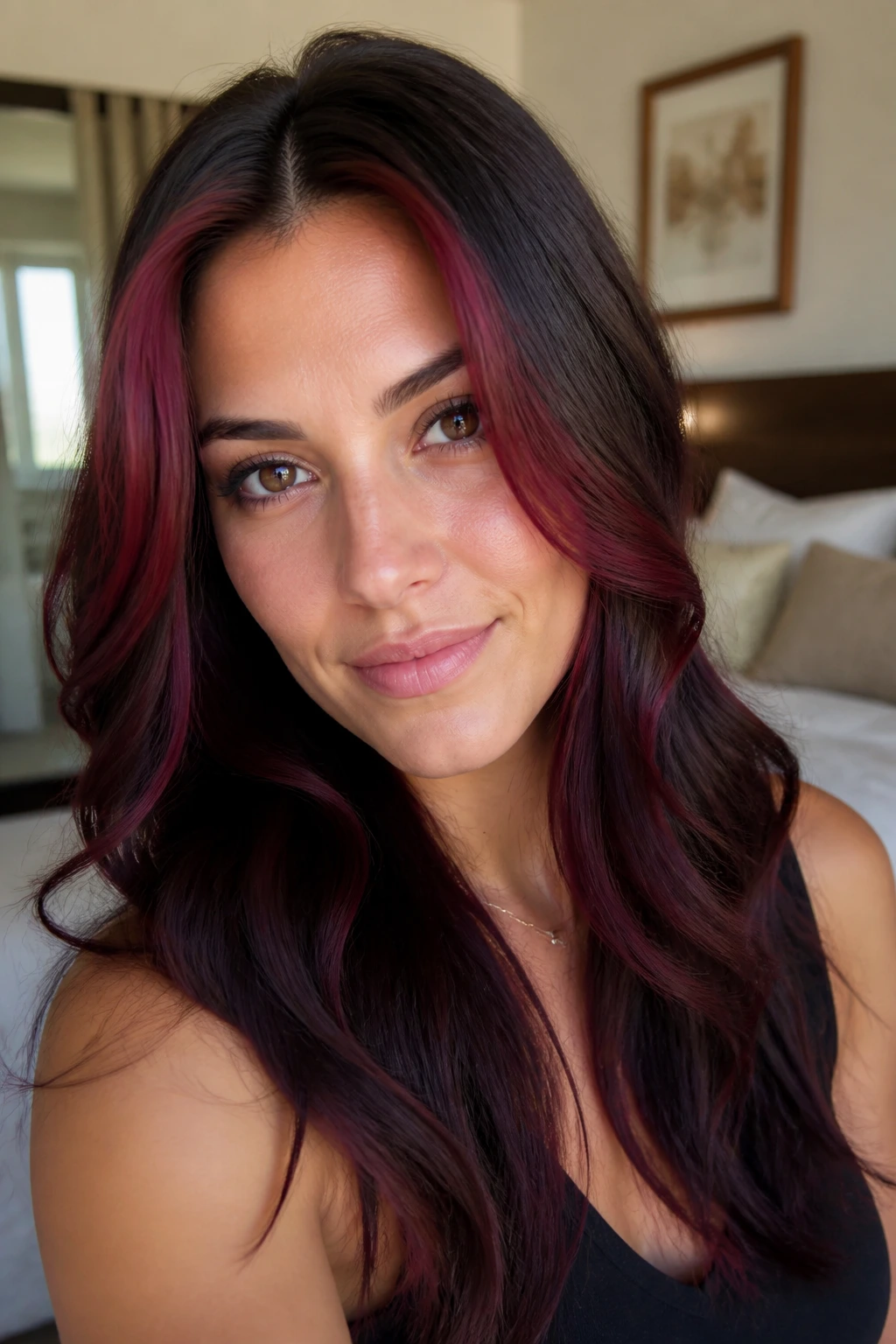
Dark cranberry face-framing pieces give you the brightness of burgundy without flooding the whole head with red. The shade sits slightly higher in the red range, so it draws attention to the front sections fast. That can sharpen the eyes and make the whole haircut feel fresher.
What Makes It Work
Face-framing color is powerful because it sits where people look first. A darker cranberry tone at the hairline can act almost like makeup for the hair, opening up the face and giving the style a clear focal point. The rest of the hair can stay neutral, which keeps the look grounded.
This is a good pick if you like wearing your hair half-up or clipped back. The cranberry front pieces stay visible even when the rest of the hair is tucked away. It’s a neat trick, and it avoids the commitment of a full red transformation.
19. Midnight Burgundy Melt
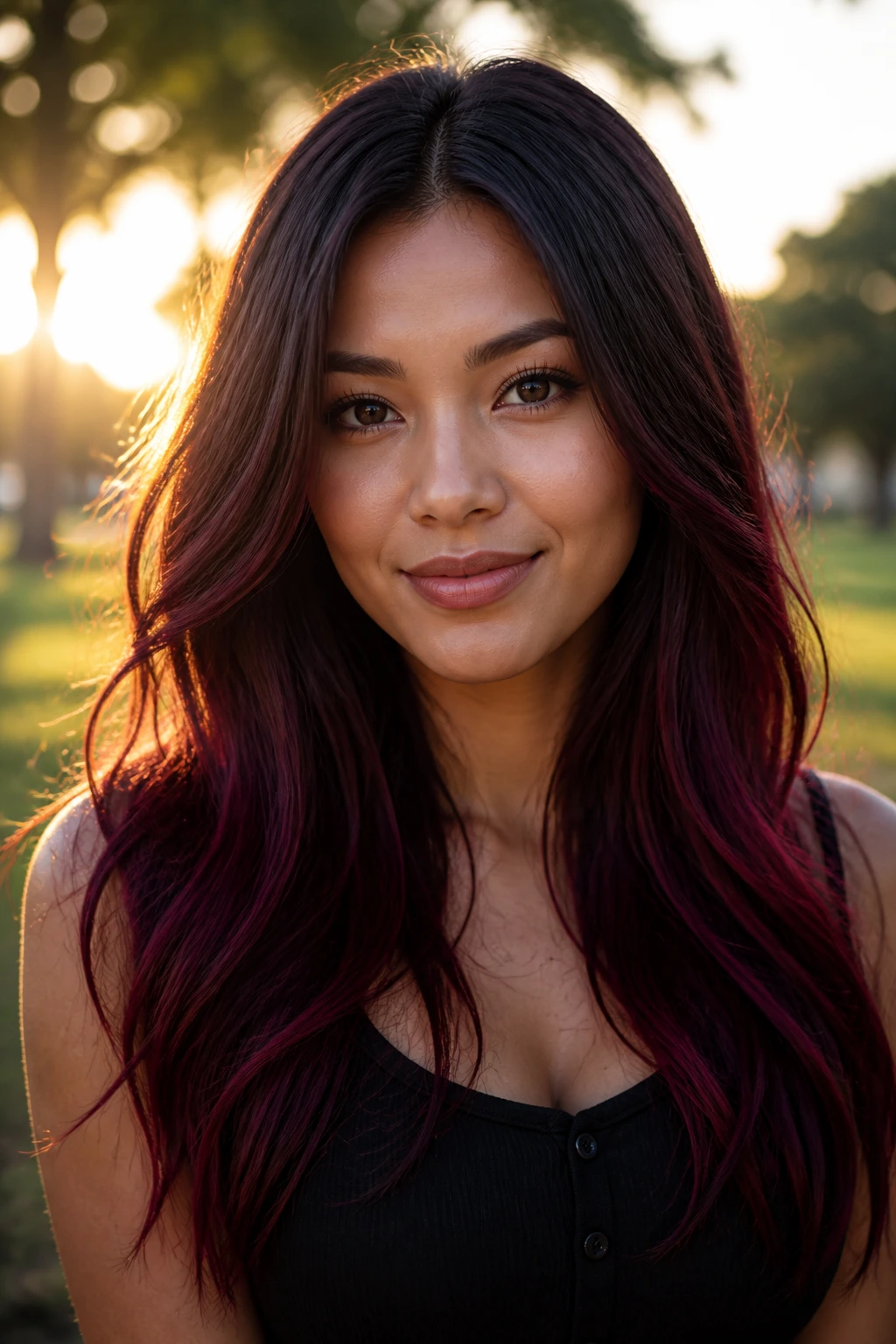
Midnight burgundy melt is probably the darkest look in the group. It starts near black at the roots and only reveals the red-violet depths when the light hits the mids and ends. The effect is moody and smooth, almost like polished glass with color underneath.
Why It Feels So Controlled
This shade is useful when you want burgundy to behave like a secret. Indoors, the hair can look near-black. Step outside, and the wine tones wake up. That range makes the style interesting without forcing the color to sit at the surface all the time.
It suits long, straight, or gently waved hair particularly well because the continuous surface shows off the slow change in tone. If your style is very layered, the color will look more textured, which isn’t a bad thing. It just changes the mood from sleek to dimensional.
20. Plum-Red Ribbon Highlights
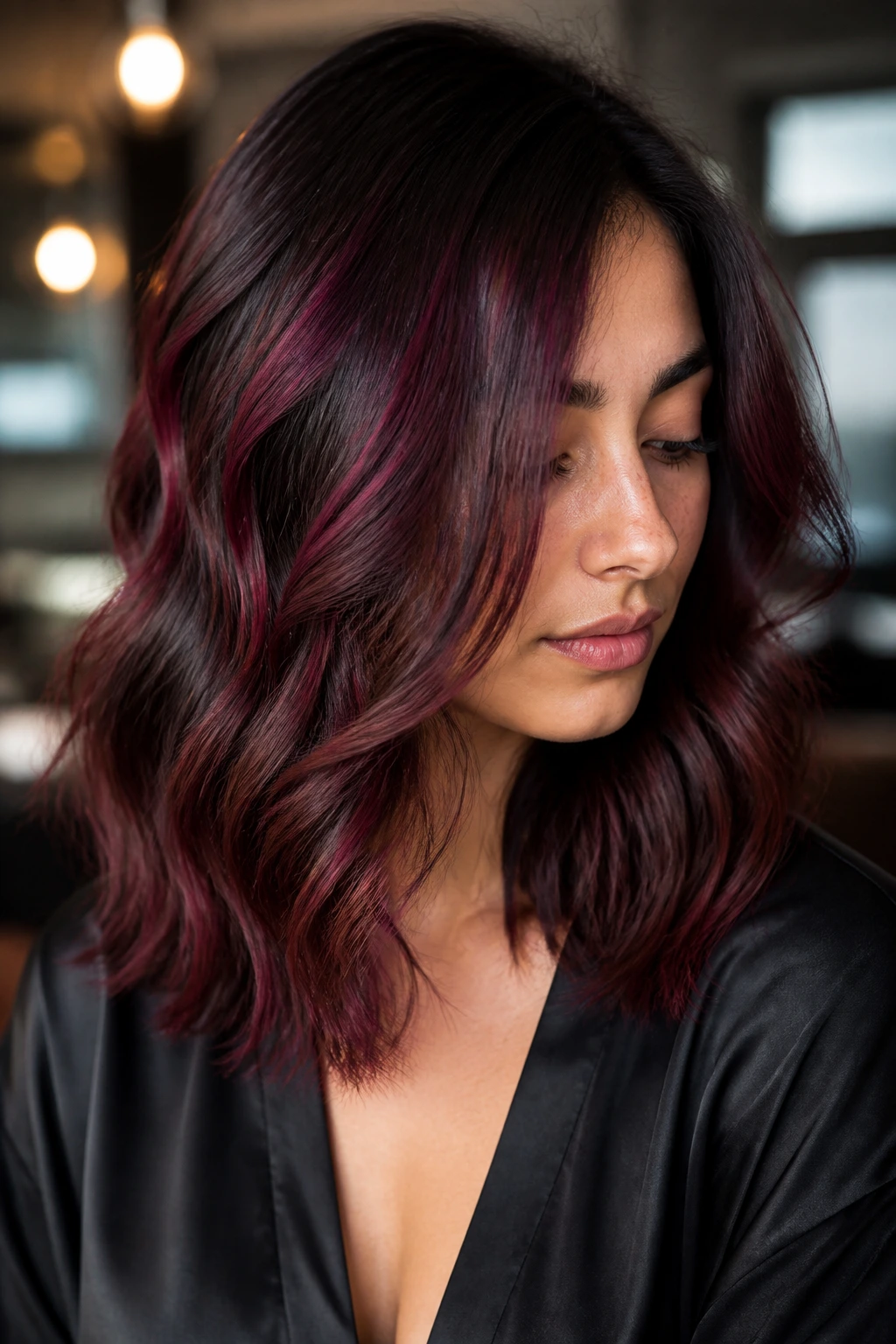
Plum-red ribbon highlights are fine, thin pieces placed through the hair instead of broad panels. The result is a quiet kind of dimension, the sort that makes hair look thicker and more alive without making the color obvious from every angle. The plum note keeps the red cool enough to stay deep.
Why Thin Pieces Work
Ribbon highlights give you control. You can place them around the face, through the top layer, or tucked into the interior so they show up only when the hair moves. That makes the shade feel tailored instead of all-or-nothing.
I like this especially on layered cuts where the pieces can separate on their own. The red threads show through the darker hair and create a little contrast that catches the eye. Not dramatic. Just enough.
21. Soft Garnet Curls
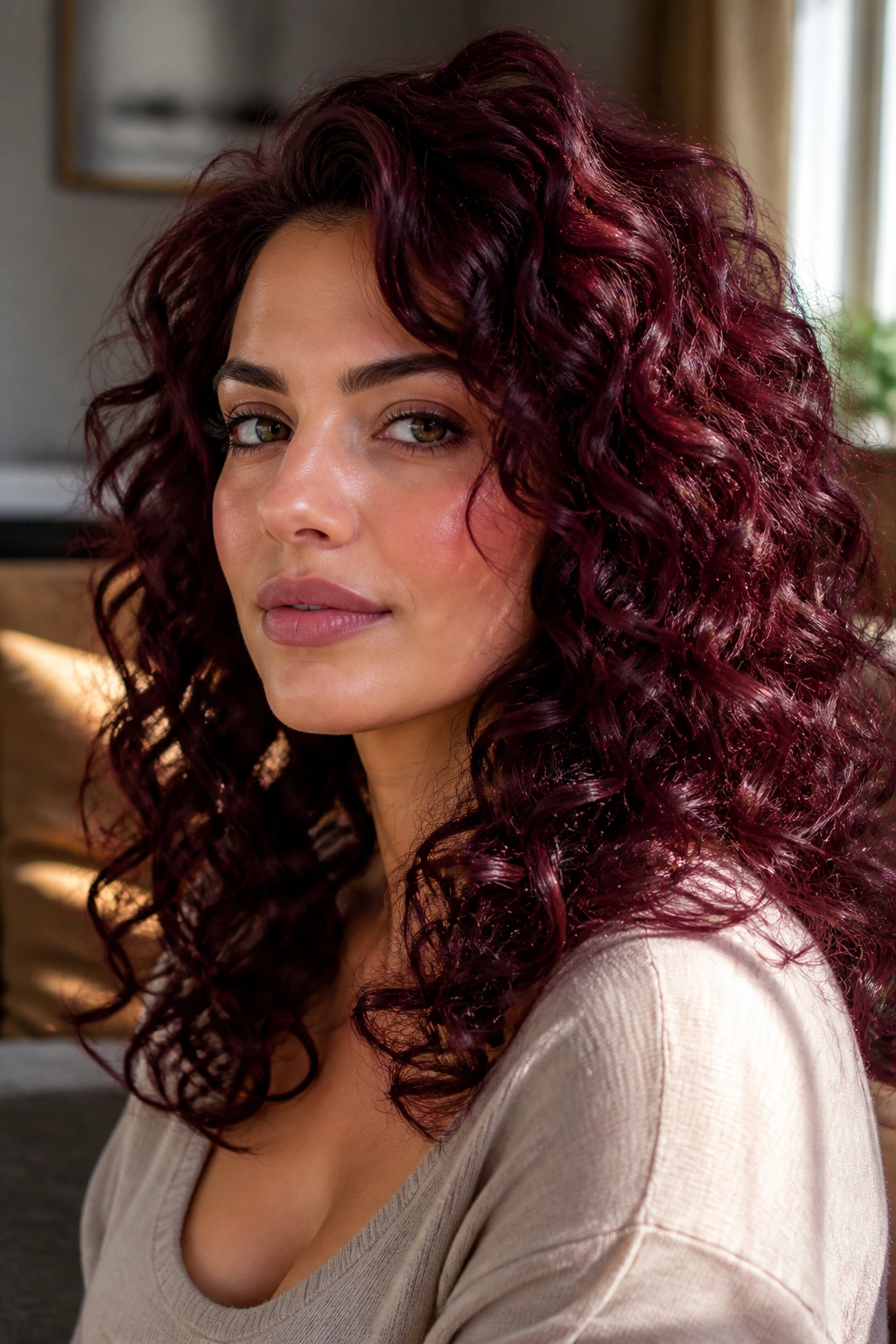
Soft garnet curls are for anyone who wants burgundy to look jewel-like instead of heavy. Garnet sits in that deep red zone with a little more brightness than plum or blackberry, which helps the curl pattern read clearly. Each bend in the curl catches light and throws a different note.
Curl Pattern Does the Work
This is one of the rare cases where texture does as much as color. The curls lift the shade off the head and let the red move between shadow and shine. If the color is a little too dark on its own, the curl shape keeps it from disappearing.
Keep the curl definition soft and bouncy, not crunchy. Stiff curls make rich reds look dull. A well-moisturized curl pattern gives garnet the soft sheen it needs.
22. Espresso Burgundy Shag
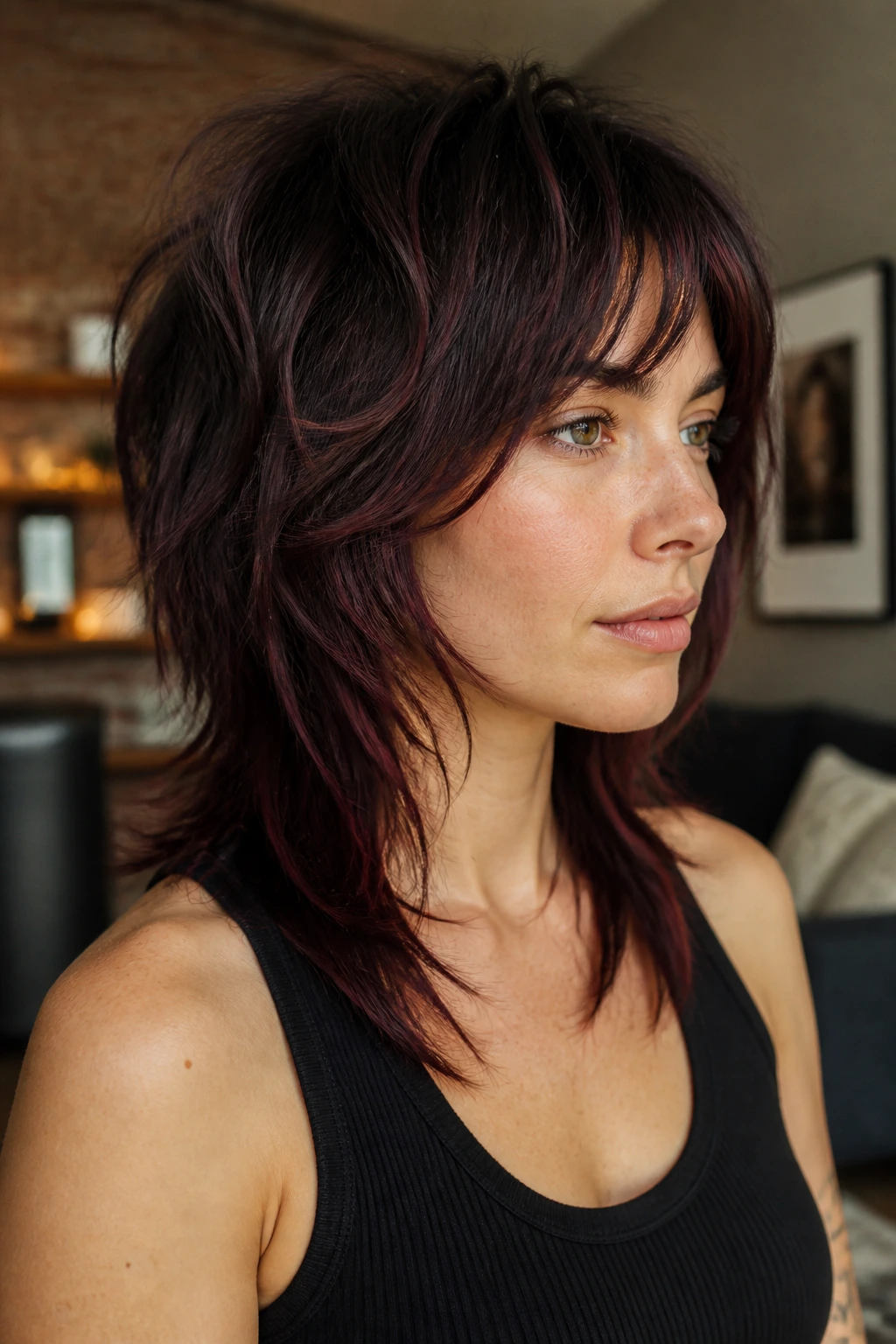
An espresso burgundy shag takes a textured haircut and gives it a dark red underside. The shag layers break up the color so the burgundy doesn’t sit as one flat surface. Instead, it peeks through the piecey ends and feathered layers.
Best on Messy, Lived-In Shape
This is not a fussy color. It works because the haircut already has movement, and the burgundy adds another layer of it. Espresso keeps the base grounded, while the red-violet note appears where the hair separates naturally.
If you like your hair a little undone, this is a strong choice. It doesn’t need mirror-perfect blowouts to make sense. In fact, the rougher texture helps it. That’s part of why I keep coming back to burgundy on shag cuts.
23. Velvet Cherry Bob
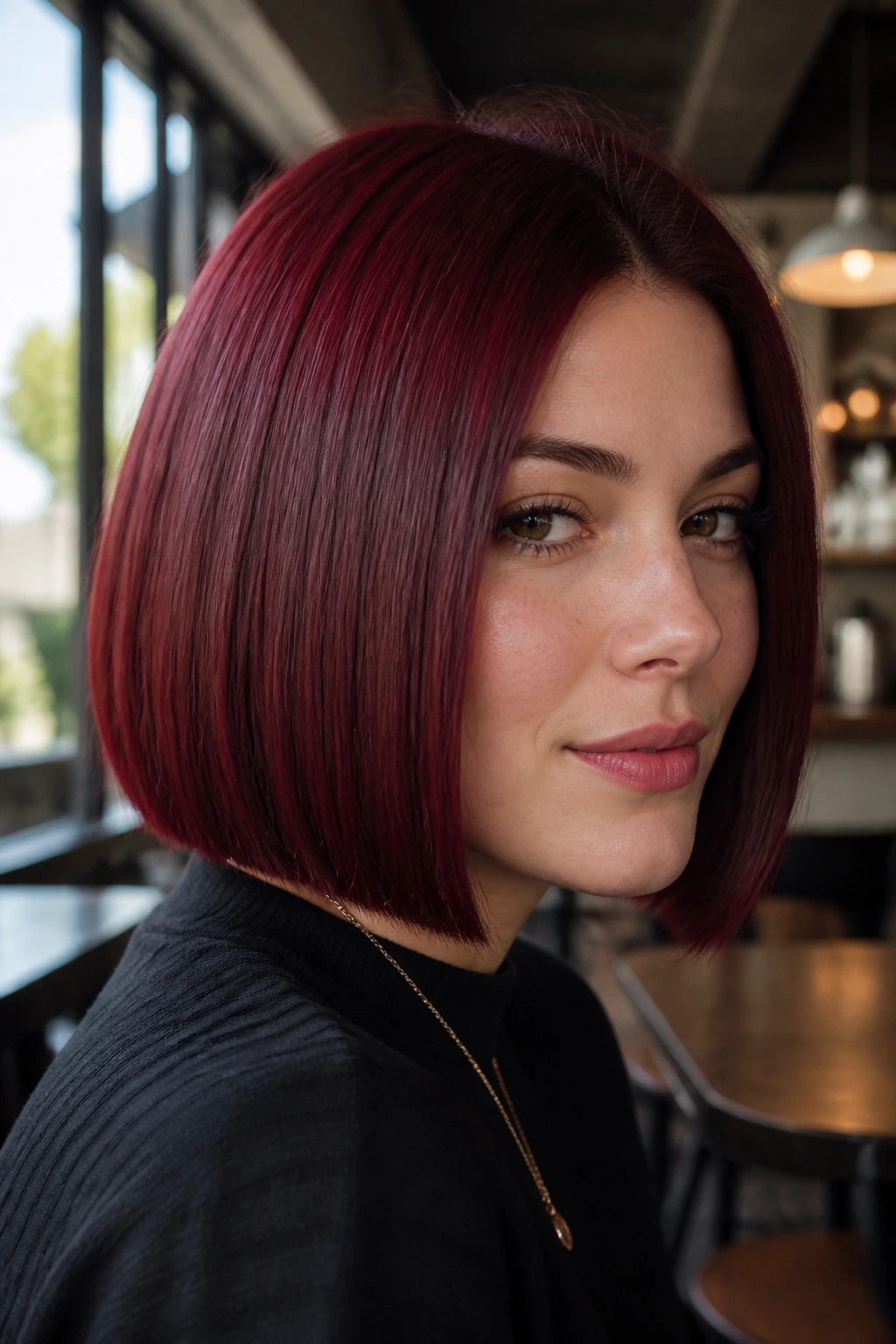
A velvet cherry bob is saturated, smooth, and unapologetically polished. The cherry note is a touch brighter than merlot, but the bob keeps it from drifting sugary. The haircut gives the color a shape to live inside, which makes the finish look clean instead of chaotic.
Why Sleek Hair Helps
A bob with a smooth blowout shows off the red surface beautifully. The reflection on the hair is what makes the color feel velvet-soft, and that effect gets lost if the styling is too rough. A center part or tucked-behind-the-ear finish keeps the outline neat and lets the color do the talking.
This is the burgundy for someone who likes a strong shape. It pairs well with a blunt fringe, a jaw-skimming edge, or a slight undercurve at the ends. The result feels precise, which is exactly what a vivid cherry tone needs.
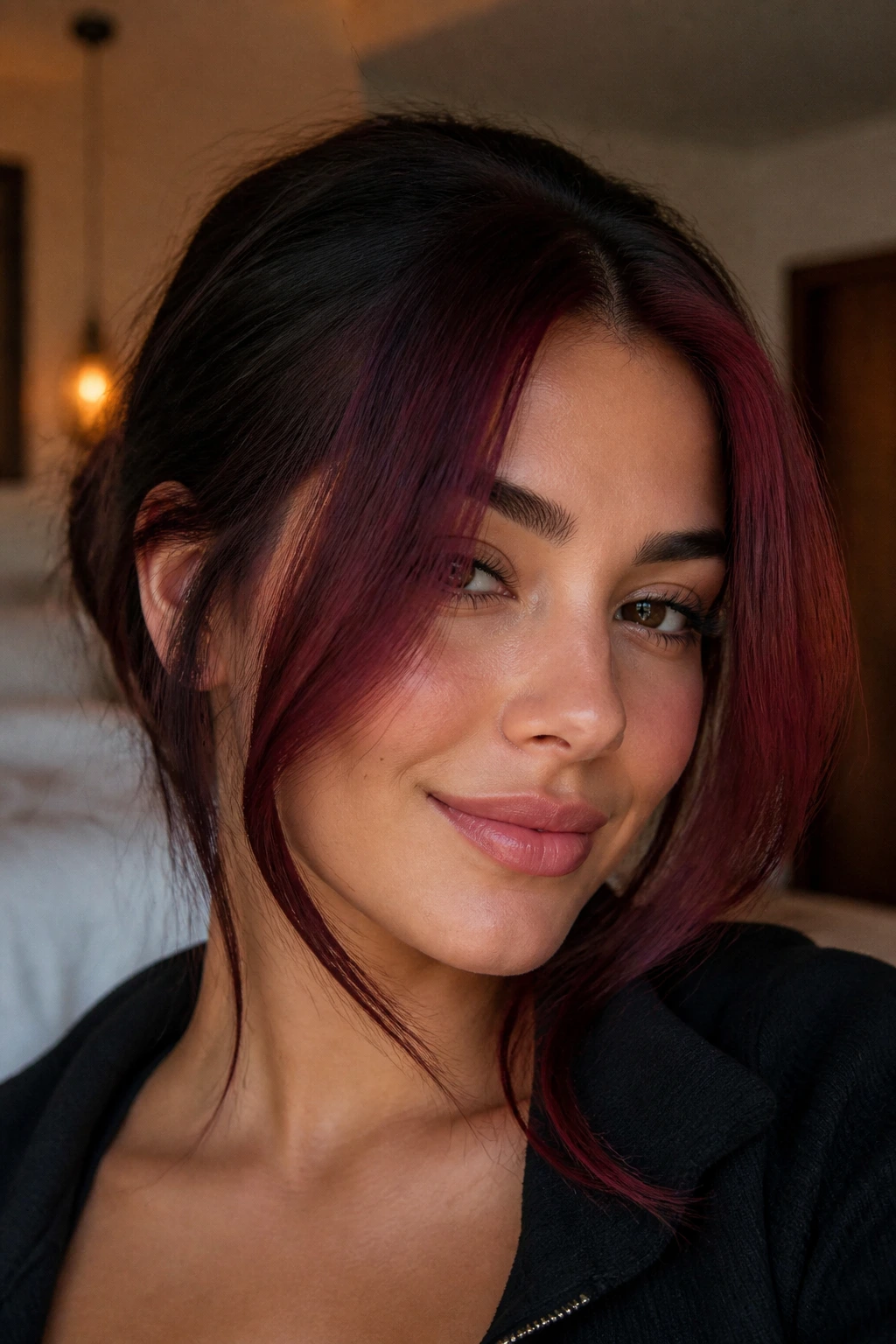
24. Deep Wine Fringe Accent
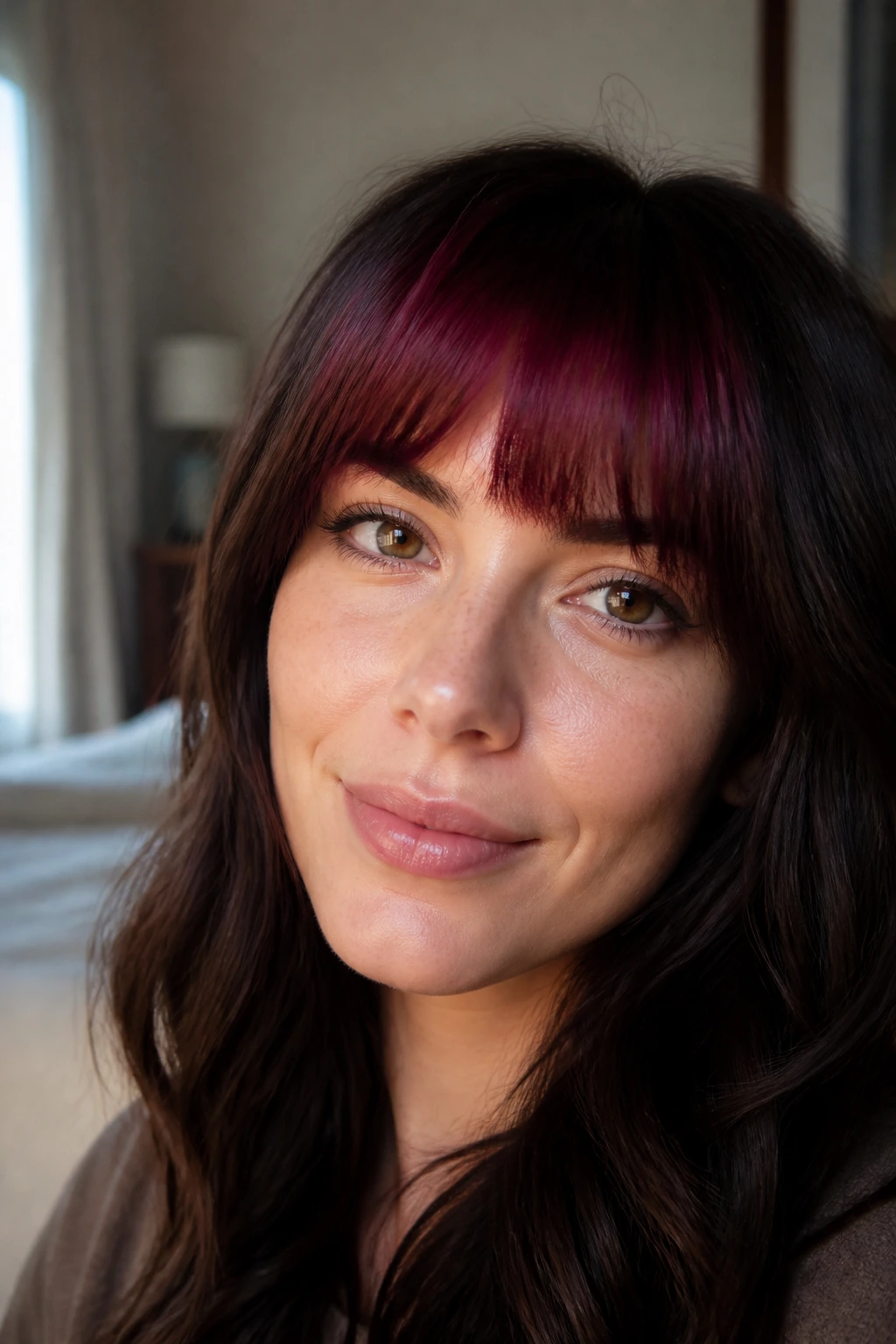
A fringe accent is one of the easiest ways to use burgundy without a full-head commitment. A deep wine tone through the bangs and maybe the first inch or two of the front layers gives the haircut a hit of color right where it matters. The rest of the hair can stay brunette, black, or dark brown.
A Small Area, Big Effect
The fringe is a smart place for color because it sits at eye level. That means even a modest amount of burgundy changes the whole mood of the cut. It also lets you judge whether you like the red family before committing to more coverage.
I like this for people whose hair is pulled back often or whose style is built around bangs. It’s practical, and it avoids the “all or nothing” problem that makes some color choices feel risky. If the bangs wear faster than the rest, the refresh zone stays small.
25. Rich Red-Violet Full Gloss
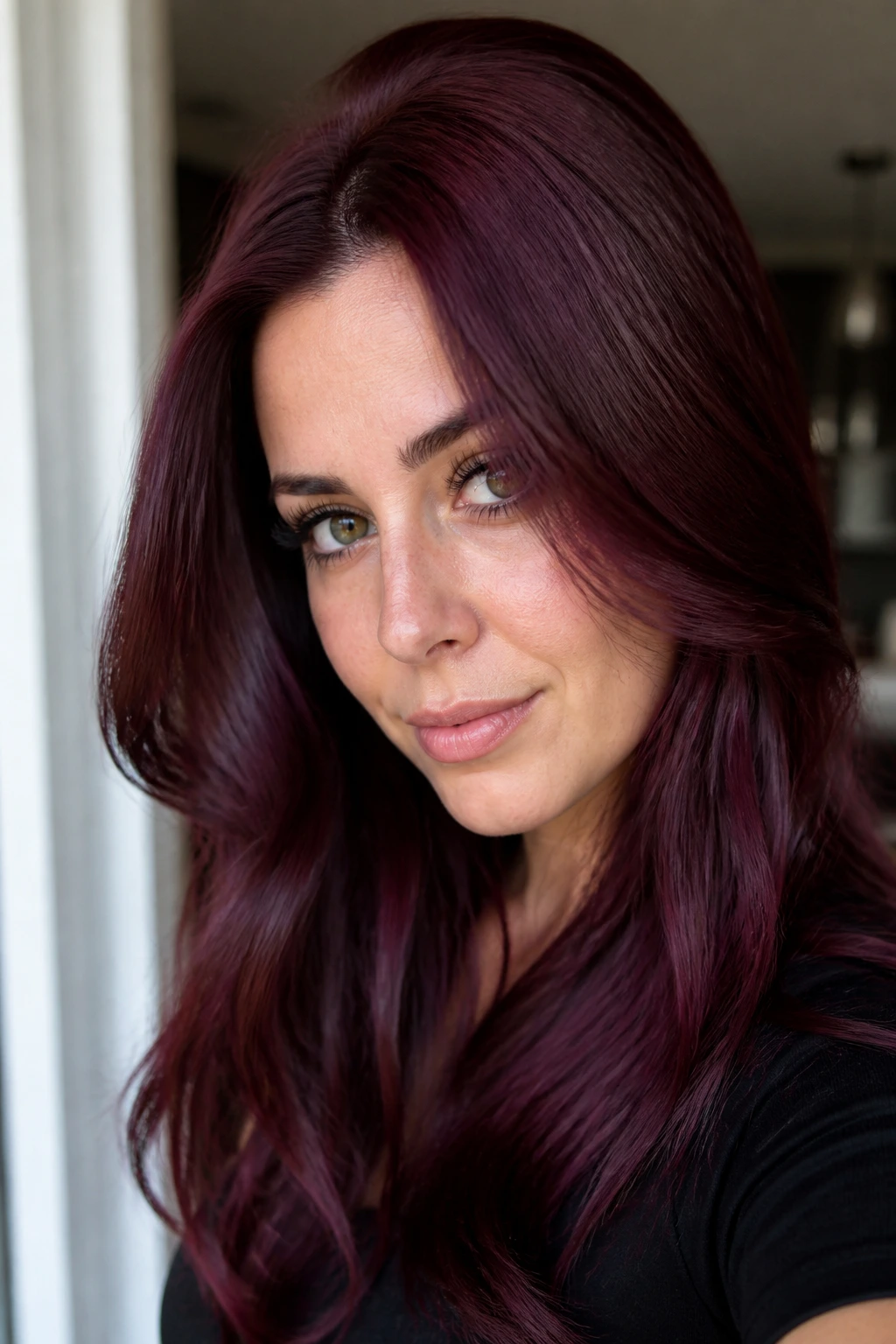
A rich red-violet full gloss is the quietest way to end the list, which feels right. It’s not a loud burgundy. It’s a translucent veil that deepens the base, smooths the surface, and adds that wine-dark glow people notice only after they’ve looked twice. On healthy hair, the shine can be the best part of the whole effect.
Why It’s a Strong Final Option
Glosses are useful because they respect the hair you already have. They don’t try to turn brunette hair into bright red. They just enrich what is there and sharpen the undertone. If your goal is depth, not a total color shift, this is hard to beat.
I’d choose this for hair that’s already a good condition and needs tone more than transformation. It works especially well if you want burgundy hair color ideas that look expensive in natural light and soft in indoor light. The color does not need to announce itself to be worth wearing.
Why Burgundy Hair Color Reads So Rich on the Right Base
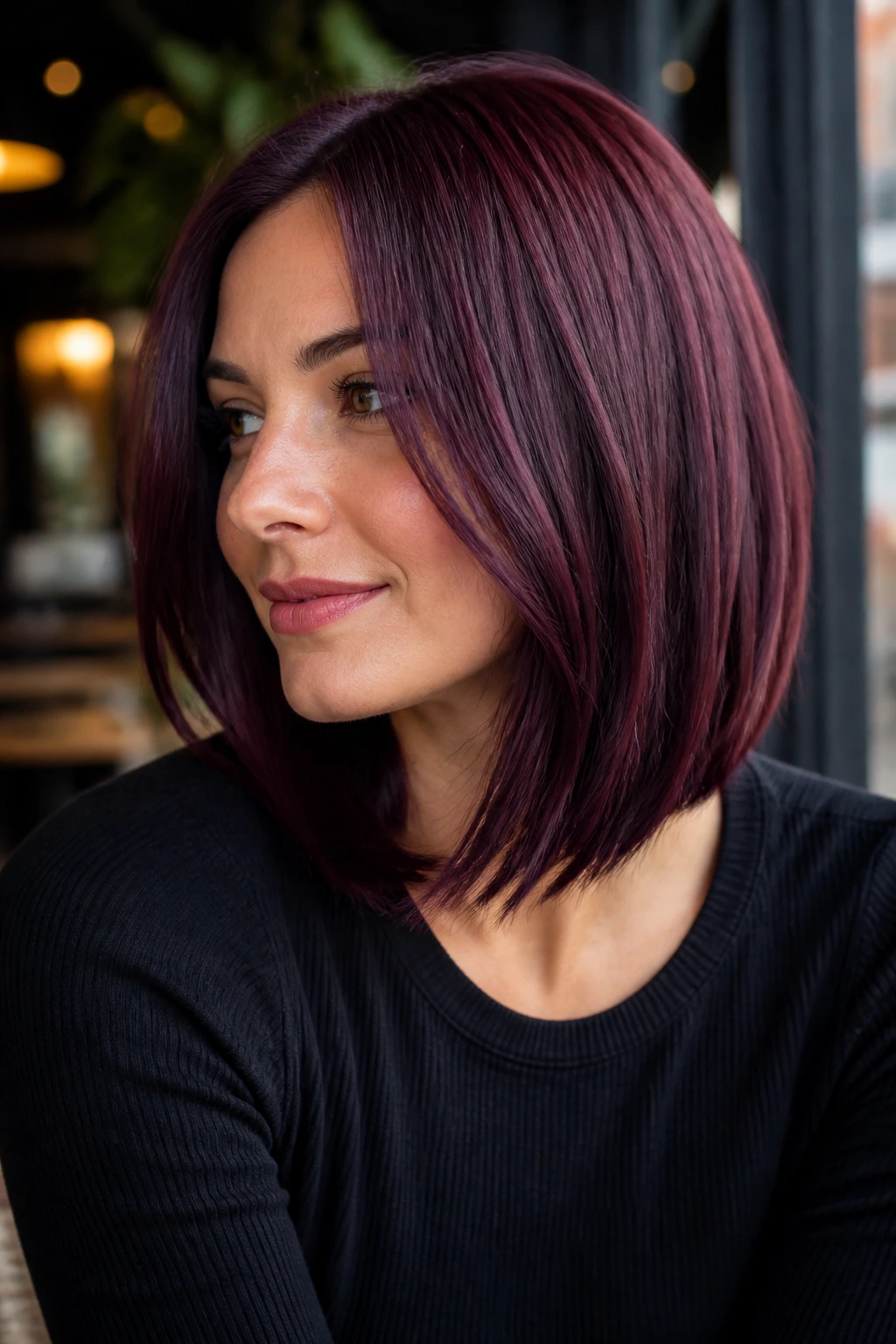
Burgundy is built from more than one note, and that is why it behaves so differently from a flat red. Most burgundy shades sit somewhere between red, violet, and brown. The brown keeps it grounded. The violet cools it down. The red is the part your eye catches first.
Base color matters more than most people expect. On dark brown or black hair, burgundy often reads as a sheen until the light hits it, which is why glosses and lowlights can be smarter than full lift. On lighter hair, the same formula can turn brighter and more vivid, especially if the hair is porous and takes pigment quickly.
Porosity changes the whole game. Dry or lightened ends grab red faster and can look a little too saturated if you do not fill them first. Healthy, smoother hair reflects light more evenly, so the shade looks deeper and more expensive. That is also why a burgundy that looks flat in a bowl can look gorgeous once it’s on a head with movement.
Base Level Changes the Mood
A level 3 or 4 brunette usually gets the richest wine effect. A level 6 or 7 base shows more cherry and plum. Very light hair can take burgundy hard and fast, which is useful if you want drama, but it can also pull brighter than expected.
Placement Decides the Personality
All-over color reads plush. Balayage reads relaxed. Money pieces and face frames read sharp. Lowlights and shadow roots read smoky. Same family of color. Completely different attitude.
Tools That Make Burgundy Easier to Wear and Maintain
-
Color-safe shampoo: A sulfate-free shampoo slows fading and helps the red-violet pigments stay on the hair longer.
-
Color-safe conditioner: Burgundy looks dull fast when the cuticle is rough, so a smooth conditioner matters more than most people think.
-
Color-depositing mask or conditioner: Useful for refreshing mids and ends between salon visits, especially if the shade leans cherry or plum.
-
Heat protectant: Burgundy fades faster when hot tools are used without protection, and the shine drops off quickly.
-
Microfiber towel: Less friction means less roughness on the cuticle, which keeps deep red tones looking cleaner.
-
Wide-tooth comb: Good for distributing conditioner through color-treated hair without dragging on fragile ends.
-
Tint brush and bowl: Handy if you’re doing a gloss, root tap, or glaze at home.
-
Gloves: Red pigment stains hands faster than people expect. Save yourself the purple nails.
-
Clips: Sectioning matters with burgundy because uneven saturation shows up quickly.
-
Old towel or cape: Red stains linger. Use something you don’t mind turning wine-colored.
-
Shower filter: Optional, but hard water can make red tones fade or look muddy sooner.
How to Choose the Right Burgundy Formula
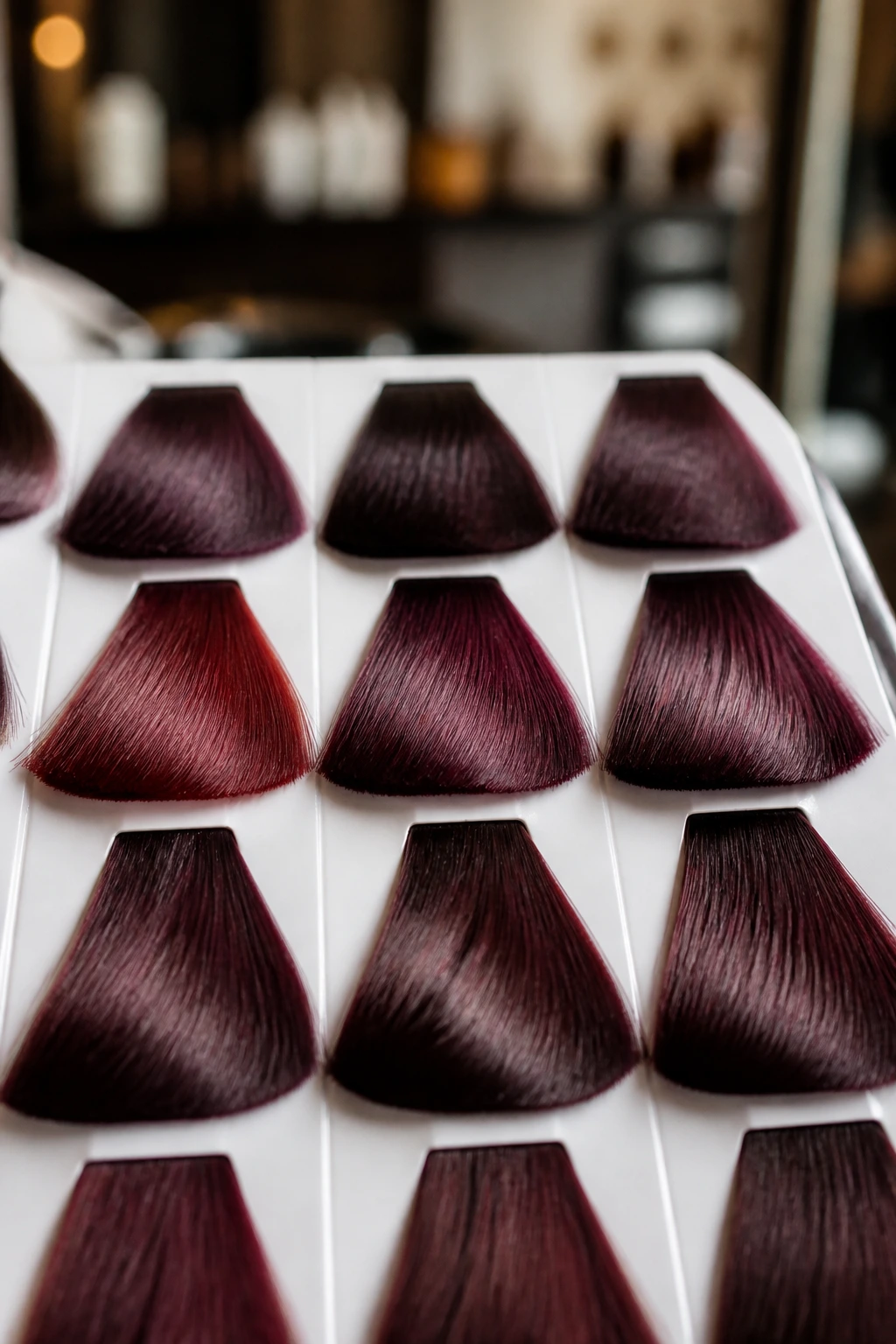
Choosing burgundy well is mostly about deciding how much lift you actually need. That sounds obvious, but a lot of color regrets start when someone asks for a picture-shade without checking the level underneath it. A burgundy on dark brunette hair can be a gloss, a demi, or a full permanent formula. Those are not interchangeable.
If you want depth with low commitment, ask for a demi-permanent burgundy or a red-violet gloss. If you want more visible shift on a darker base, the colorist may need a few highlighted pieces or a lightening step first. A level 20-volume developer does a different job from 10-volume, and you should know which one is being used before anything touches your hair. 10-volume deposits. 20-volume lifts and deposits. That difference matters.
Strand tests are not fussy theater. They tell you how your hair holds red, especially if you have old color on the lengths or porous ends that grab too hard. Box dye, in particular, can make burgundy unpredictable. The formula that looks like deep merlot on paper can come out denser or warmer than you want.
Warm, Cool, or In-Between
Cool burgundy leans plum, blackberry, or aubergine. Warm burgundy leans mahogany, auburn, or red wine. If your skin is olive or golden, a slightly warmer red-brown often sits more naturally. If you’re cool-toned or like a crisper dark red, the plum side of burgundy is easier to wear.
The Salon Conversation That Helps
Bring two photos: one for the shade, one for the placement. That sounds small. It isn’t. A photo of color on curls won’t look the same on straight hair, and a glossy studio photo won’t behave like a real-life finish under normal light.
How to Wear Burgundy Hair So the Tone Reads the Way You Want
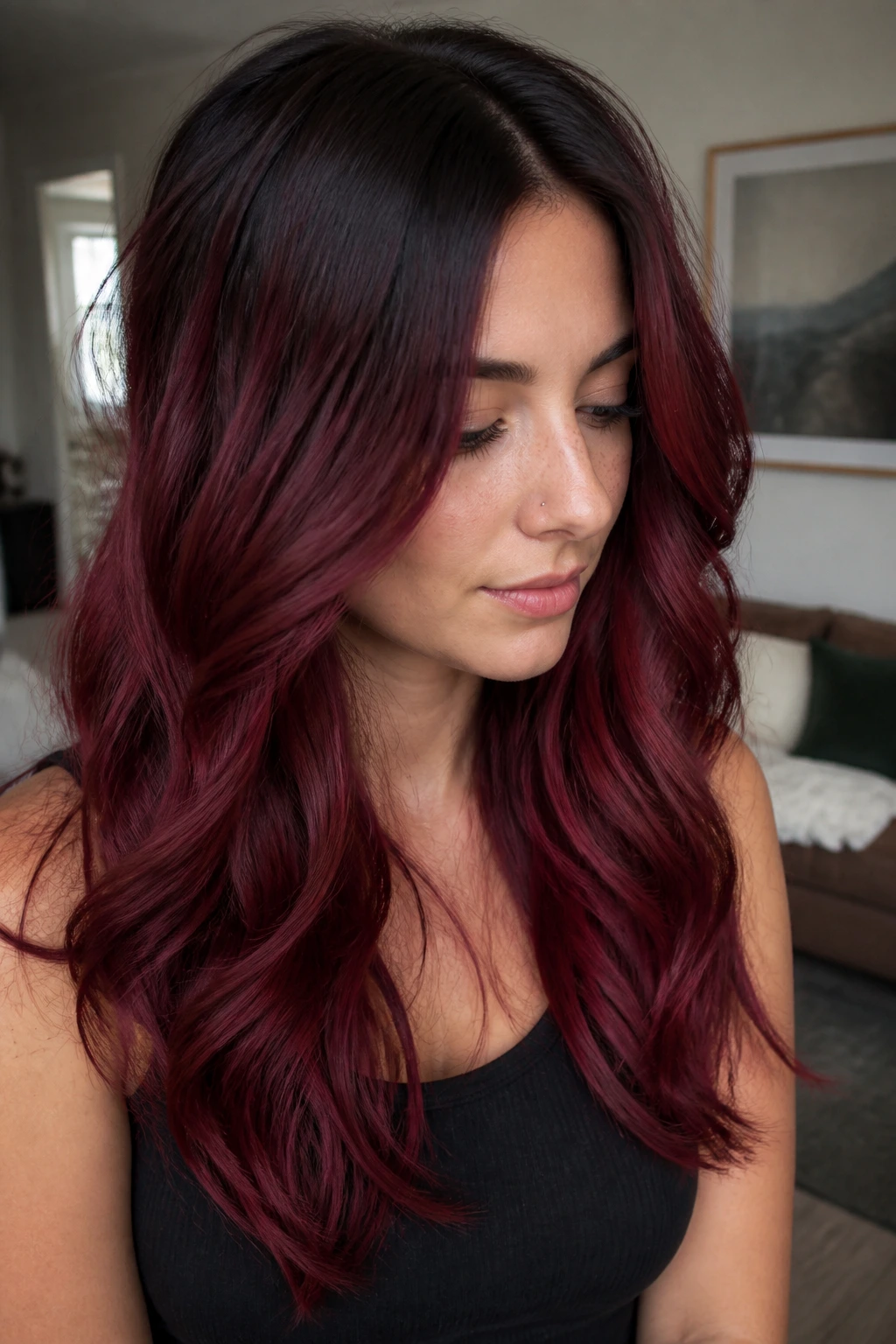
Presentation: Soft waves show off red-violet shifts because each bend catches a different note of the color. Sleek blowouts make burgundy look deeper and more lacquered, while a blunt bob turns the shade into a clean block of wine-dark shine.
Accompaniments: Burgundy loves black, cream, charcoal, olive, espresso brown, and muted gold. Strong primary reds near the face can fight the hair and make the color feel muddy, so I tend to keep wardrobe colors a little deeper when the hair is already rich.
Commitment Level: Full-head burgundy is the boldest choice. Money pieces, fringe accents, and peekaboo panels are easier if you want to test the shade before committing to regular refreshes. Root melts and balayage sit in the middle and usually grow out with fewer hard lines.
Lighting: Warm indoor light deepens the wine note. Daylight shows more plum and blackberry. If you love taking photos of your hair, burgundy needs both kinds of light to show its full range, which is part of the fun.
Little Moves That Keep Burgundy From Going Flat
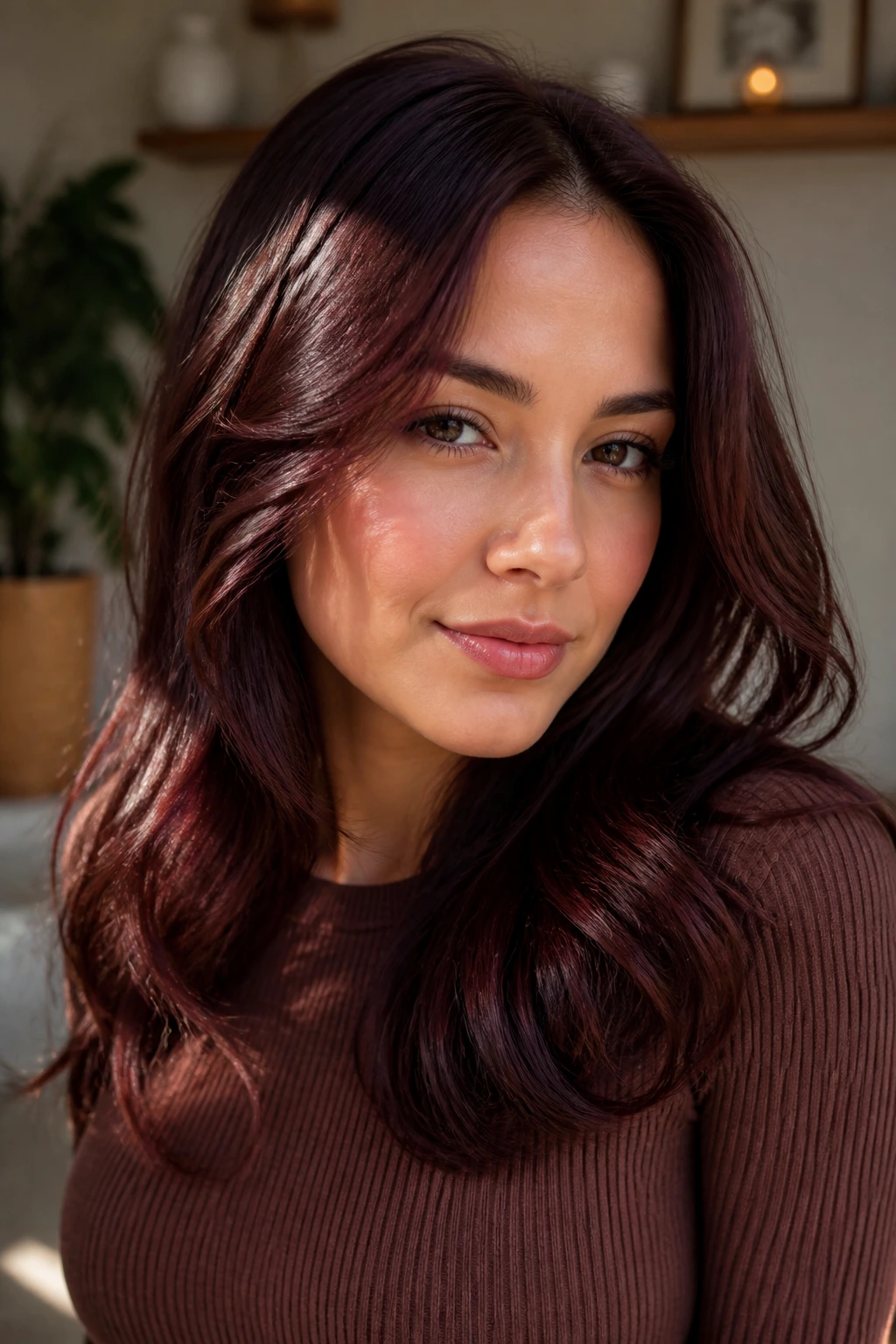
Color Enhancement: A color-depositing mask in burgundy or red-violet, used every one to two weeks, keeps the mids from looking washed out. I like to dilute it with plain conditioner on the lighter ends so they do not go too dark.
Customization: Add a little violet if you want a cooler, moodier burgundy. Push a touch of copper or mahogany into the formula if your skin looks better with warmth. The color family is broad enough to handle both.
Serving Suggestions: Glossy waves, tucked-behind-the-ear front pieces, and clean part lines show the shade best. If you wear your hair up often, focus the deepest color around the hairline and the perimeter so the red still shows when the rest is pinned back.
Make-It-Yours: Fine hair usually looks best with translucent glosses or thin ribbons. Thick or coarse hair can take heavier saturation and still keep movement. Curly hair needs moisture first, color second; dry curls make burgundy look dull fast.
Where Burgundy Hair Color Usually Goes Wrong
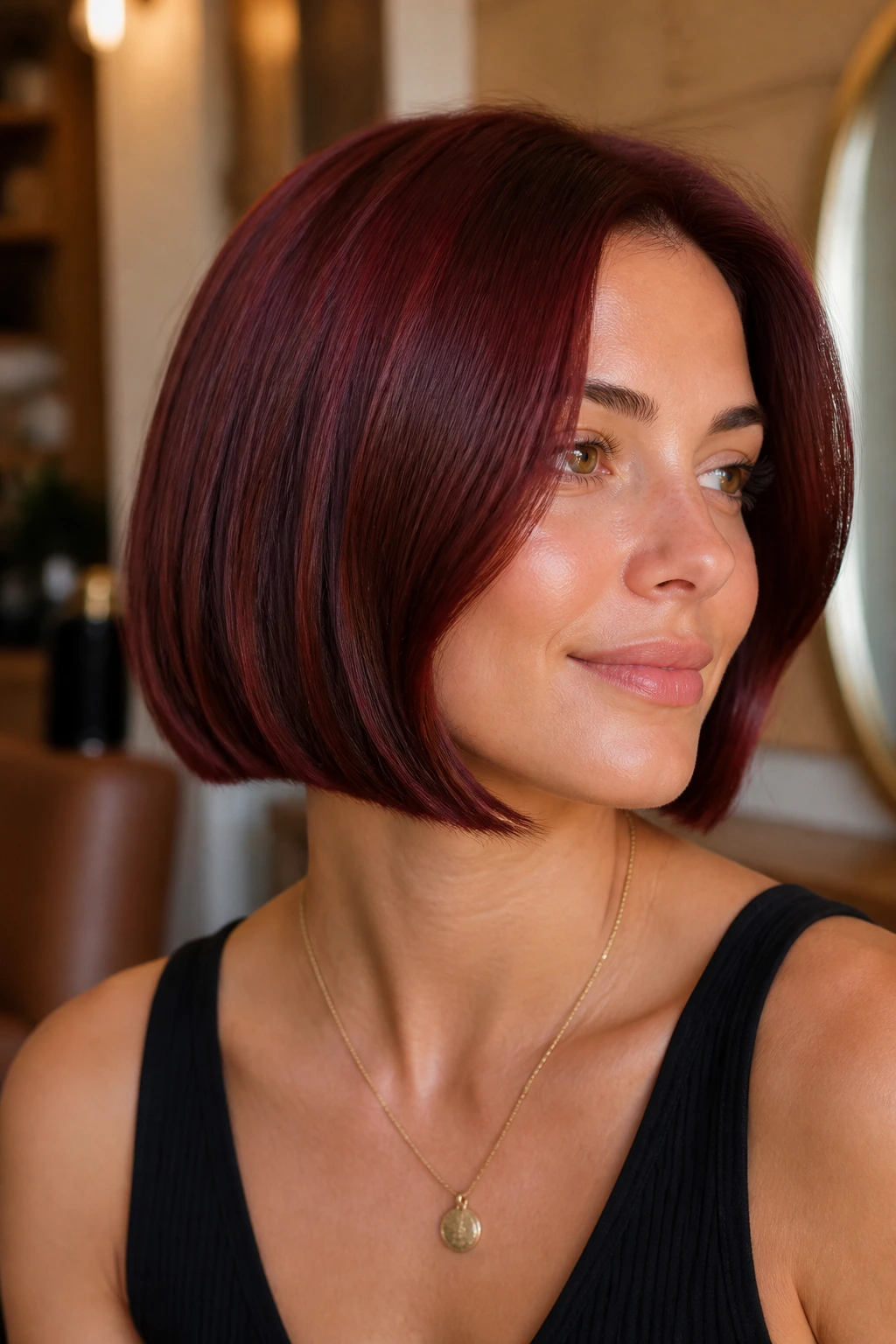
The most common mistake is choosing a burgundy that is too bright for the base underneath it. On dark hair, an overly vivid red can sit on top of the strands instead of sinking in, which gives you a color that looks separate from the hair rather than part of it. The fix is a deeper wine, plum, or merlot tone, or a pre-lightened ribbon if you want the brightness on purpose.
Skipping a strand test is another one. Burgundy can react sharply to old dye, porous ends, or uneven porosity from past heat styling. The symptom is patchiness: one section goes rich and another goes nearly black. A strand test shows that before the whole head does it.
Too much washing is a quick way to drain burgundy of its depth. Hot water and clarifying shampoos can strip the red-violet note fast, leaving the hair brownish or muddy. If you need to cleanse often, keep the water lukewarm and use a gentle sulfate-free shampoo.
The last problem is over-lightening. People often ask for burgundy highlights when what they actually want is dimension. If the lightened pieces are too pale, the red can look loud instead of rich. Darker, finer ribbons usually age better and feel more expensive.
Five Burgundy Directions Worth Trying
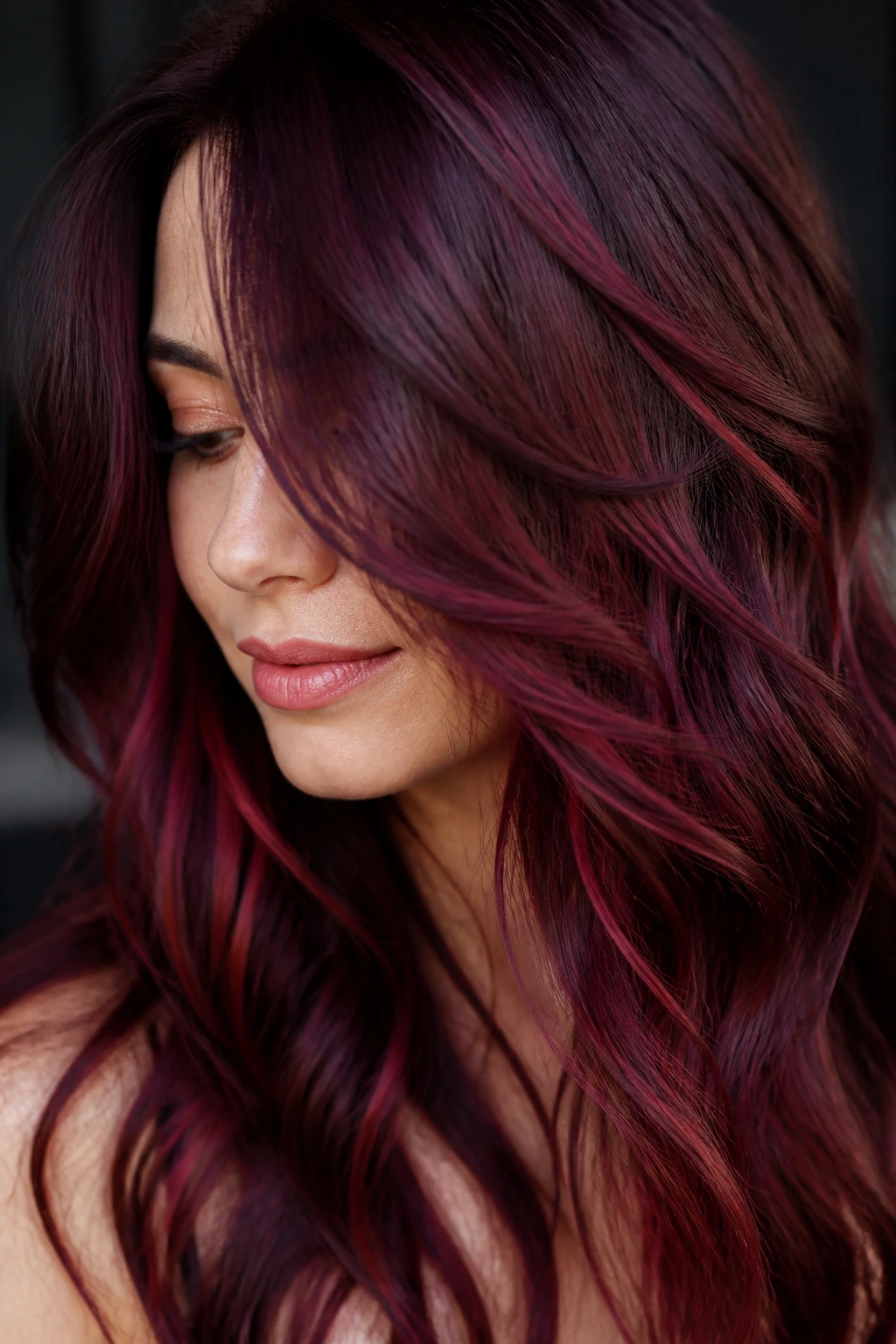
Gloss-Only Merlot: This is the softest route. A burgundy gloss over brunette hair deepens the shade, adds shine, and fades gently, which makes it ideal if you want color without a visible line of grow-out.
Cherry Cola Brunette: Keep the base brown and let the red show only in the light. This one works beautifully on straight or lightly waved hair because the shimmer appears when the hair moves.
Black Cherry Balayage: Hand-painted red pieces over a dark base give you the strongest sense of depth. It’s the look I’d choose for someone who wants burgundy to show at the ends and around the face without repainting the whole head every few weeks.
Plum-Rich Ribbon Lights: Thin, cool burgundy strands through layered hair keep the color dimensional and a little mysterious. It’s less obvious than chunky highlights and easier to live with on a daily basis.
Midnight Merlot Melt: A dark root into deep burgundy lengths gives you a moody, almost-black start with a wine finish. It’s a good fit for long hair, or any cut where you want the color to feel smooth instead of chopped up.
Keeping Burgundy Hair Rich Between Appointments
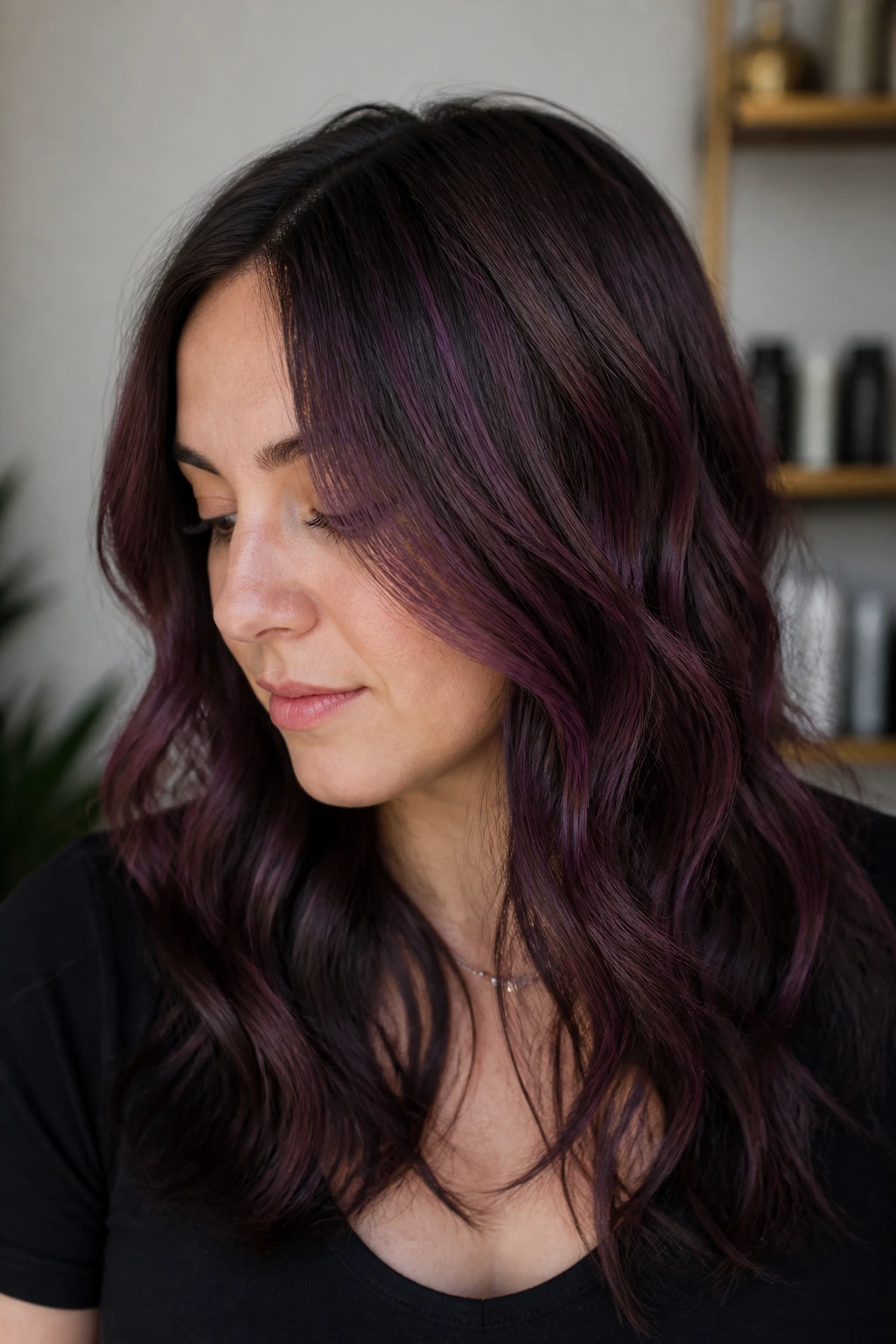
Burgundy fades in a particular way. It usually loses shine first, then the red-violet depth, and only after that does it start to look obviously faded. That means maintenance is not only about color. It is about keeping the cuticle smooth enough for light to sit on top of the hair the right way.
Washing less often helps, but the details matter too. Lukewarm water is kinder than hot water. A sulfate-free shampoo slows the fade. A color-depositing conditioner once a week can revive the mids and ends, especially if your shade leans cherry or plum. If the hair was lightened before coloring, the porous ends may need a diluted pigment mask so they do not turn too dark too quickly.
Touch-up timing depends on the placement. All-over permanent burgundy may need root maintenance every 4 to 6 weeks if the regrowth contrast is strong. Glosses and demi-permanent tones can be refreshed every 4 to 8 weeks, often with a salon glaze or at-home color deposit on the lengths. Balayage and lowlights usually stretch longer, because the grow-out line is softer. Heat styling should be kept in check as well; repeated high heat is a fast way to turn a glossy wine shade into a dry brown-red.
Frequently Asked Questions
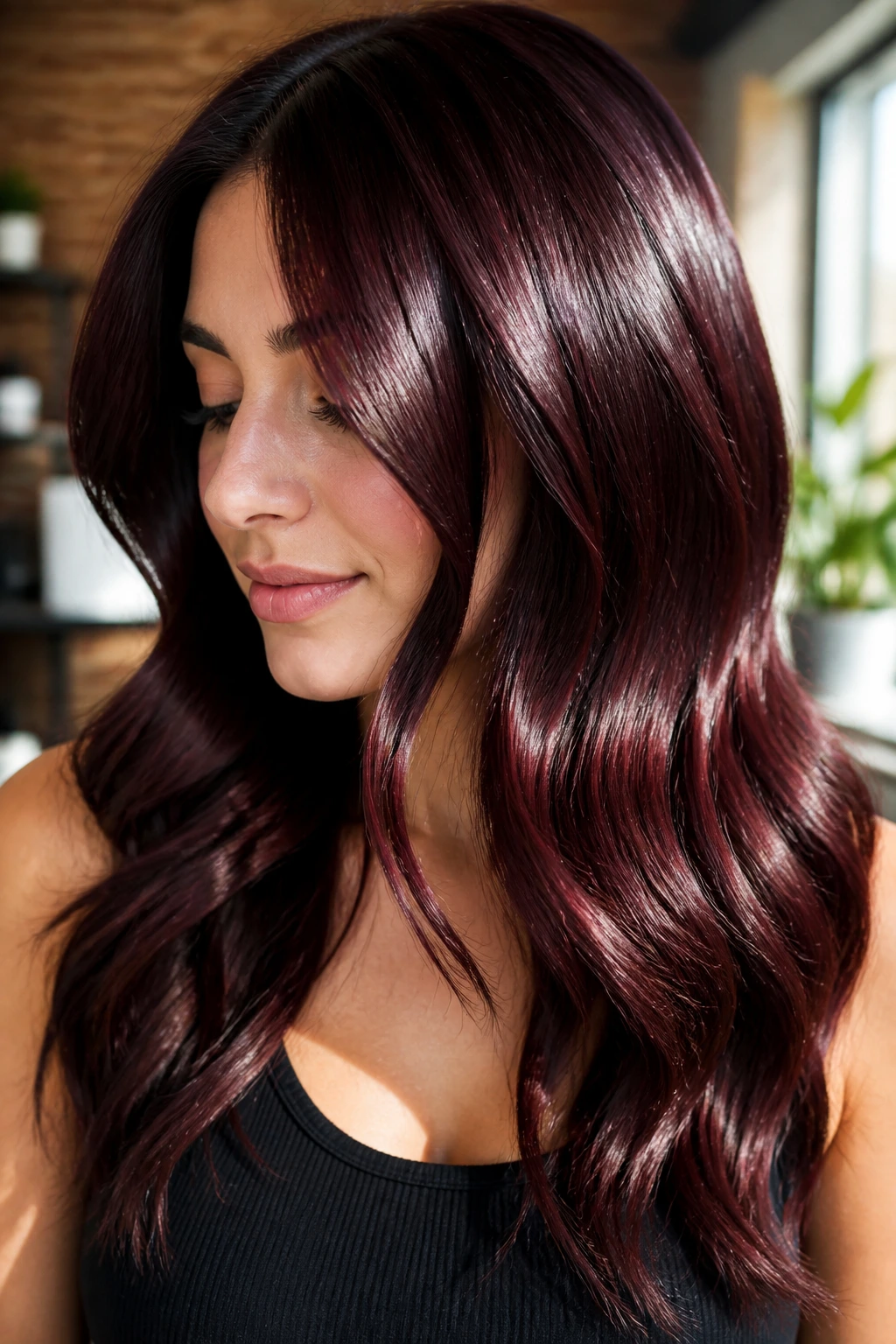
Can you get burgundy hair color without bleach?
Yes, if your hair is already dark enough and you want a deeper burgundy, merlot, or cherry-cola look. A gloss, demi-permanent color, or dark red-violet dye can show beautifully on brunette hair without bleach. If you want the red to read brighter than your natural base, lightening may still be needed.
Will burgundy show on black hair?
It can, but the effect is usually subtle unless the hair is lifted a little or the light hits it directly. On black hair, burgundy often reads as a wine sheen, not a loud red. That is actually the appeal for a lot of people.
Which burgundy shade works best for cool undertones?
Plum burgundy, aubergine burgundy, and blackberry burgundy are the easiest cool-toned choices. They keep the red from turning orange and sit nicely against pink or neutral skin. If you want the color to feel darker and moodier, stay on the violet side of the family.
Which burgundy shade suits warm or olive undertones?
Mahogany burgundy, auburn-burgundy, and cabernet tones tend to flatter warm or olive skin because they carry a little brown and copper warmth. Those shades feel softer next to golden skin than a very blue-based plum. If you want depth without looking too cool, this is the lane.
How often does burgundy hair need refreshing?
Glosses and demi-permanent burgundy often need a refresh every 4 to 8 weeks, depending on how often you wash and heat-style. Permanent all-over color may hold longer at the roots but still loses richness in the mids and ends. If the shine goes first, that’s your cue to re-tone before the color looks tired.
What if burgundy turns too purple or too red?
Too purple usually means the formula leaned cool on a porous or light base. A warmer gloss or a touch of mahogany can balance it out next time. If it turns too red or too cherry, adding a little brown or plum in the next refresh helps it settle back into burgundy territory.
Can curly hair wear burgundy well?
Absolutely. Curls are one of the best textures for burgundy because the bends show off the color shift from shadow to shine. The only catch is dryness; keep curls hydrated so the red doesn’t look matte and flat.
Is burgundy a low-maintenance color?
It can be, if you choose the right placement. A root melt, balayage, or gloss over dark hair grows out more gracefully than a full bright red change. The deeper the shade and the softer the contrast, the easier it usually is to live with.
Why Burgundy Keeps Coming Back
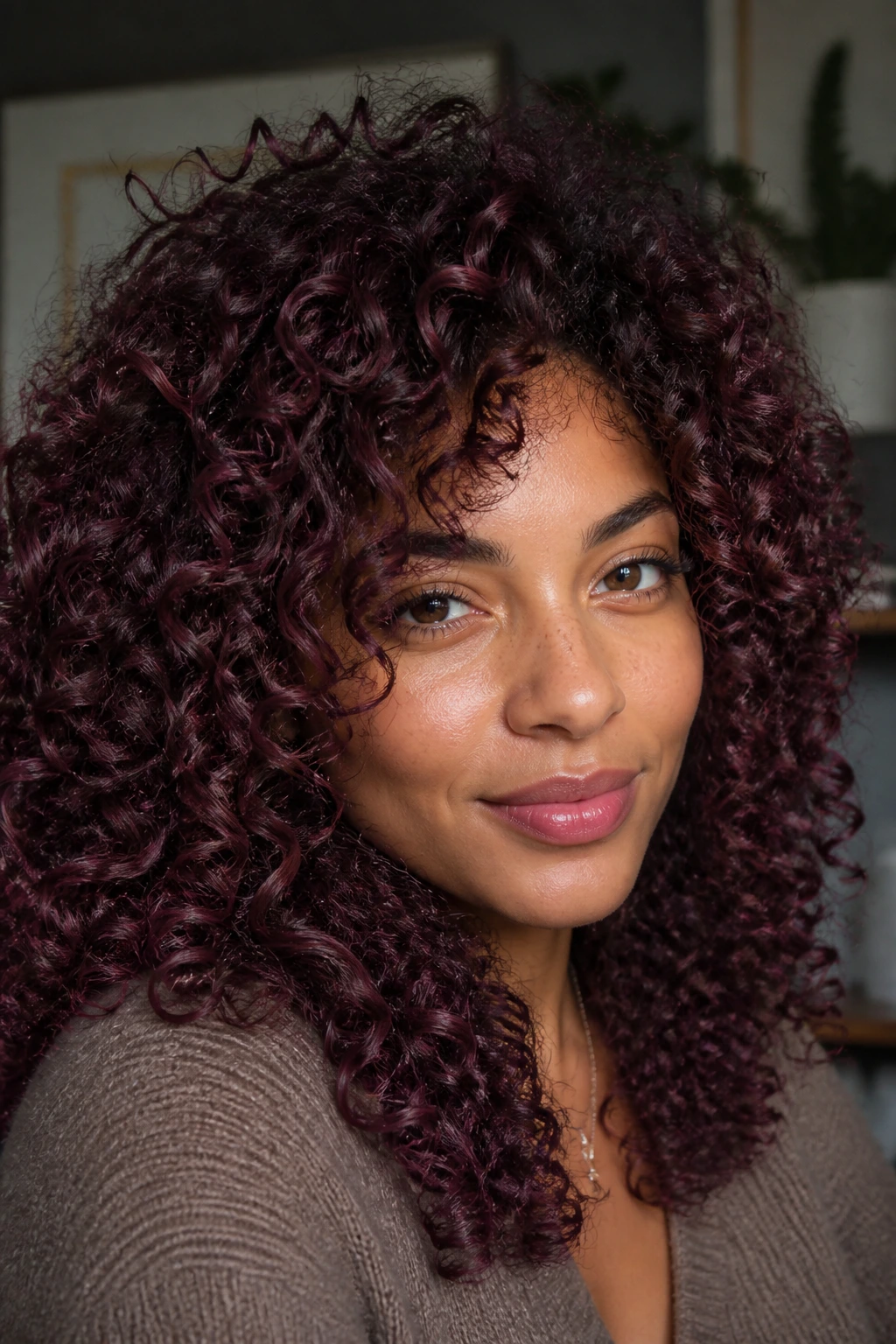
Burgundy works because it does not stay still. In one light, it’s almost brunette. In another, it flashes plum or wine. That little shift is what gives deep red tones their charm, and it’s why so many of these looks feel rich without tipping into obvious, one-note red.
The best version is the one that matches your base, your haircut, and your tolerance for maintenance. A glossy merlot bob, a black cherry balayage, a quiet cherry cola brunette—each one tells the same color story in a different voice. Pick the one that sounds like you, not the one that looks loudest on a screen.
If you want burgundy to look expensive instead of obvious, start with depth, not brightness. The shade will do the rest.
