



A money piece can change a haircut faster than a new length can. One bright slice at the front, placed where the light hits your cheekbones and part line, and suddenly the whole head reads sharper, fresher, more intentional. Done badly, it looks like a stripe somebody forgot to soften. Done well, it makes the eyes look brighter and the whole style feel awake.
That’s the part people miss. A money piece is not just “front highlights.” It’s a placement choice, a tone choice, and a brightness choice all at once. You can keep it warm and soft, lean icy and bold, tuck it into curtain bangs, or let it sit thick and chunky for a louder look. The difference between pretty and awkward usually comes down to width, contrast, and how much of the root you leave alone.
The best versions do something a little sneaky. They frame the face, of course, but they also change how the rest of the color reads. A caramel ribbon on espresso hair can make the base look richer. A platinum front on brunette hair can make the whole style feel more expensive without lighting up every inch of the head. That little strip at the front carries more visual weight than it has any right to.
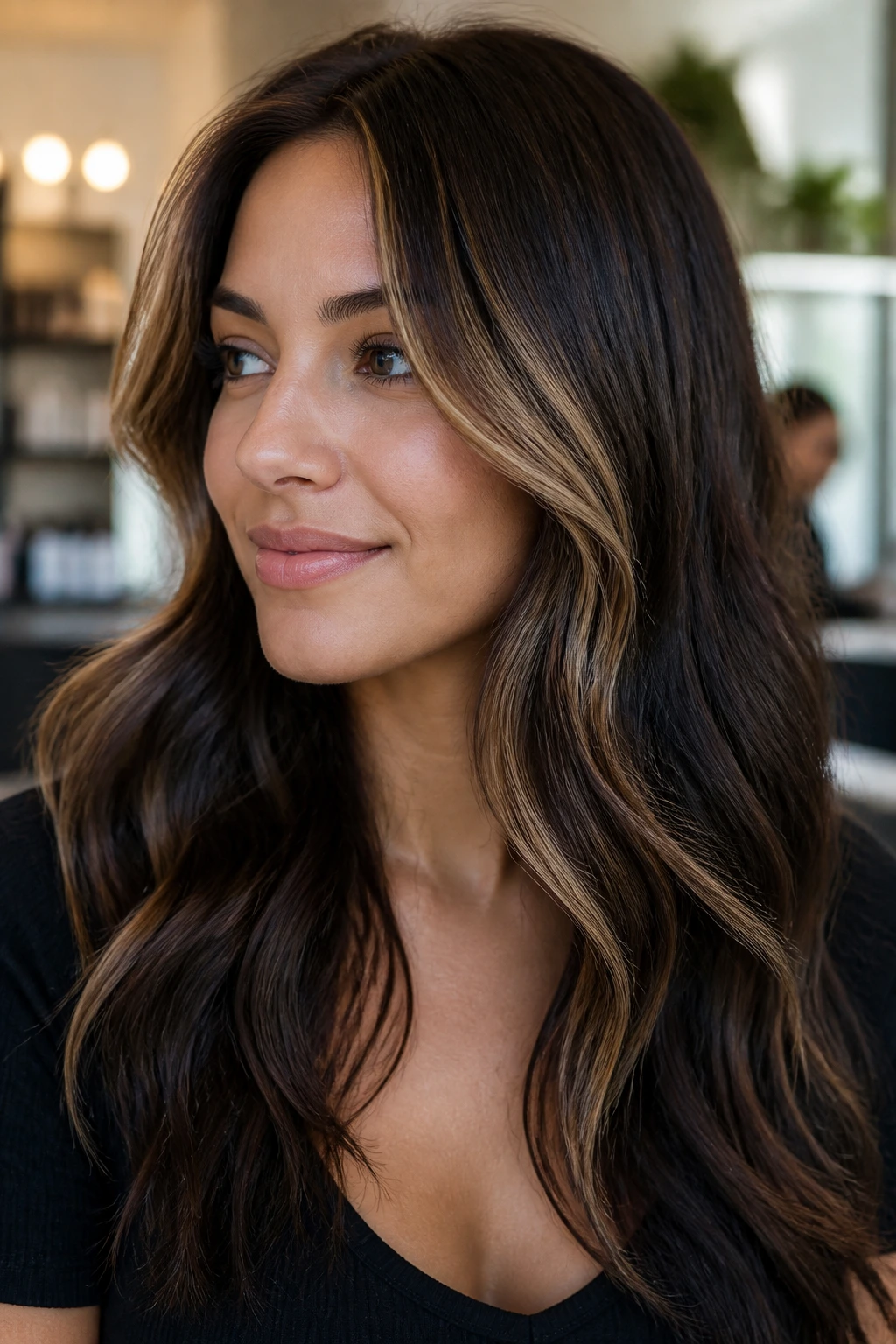
Why These Money Piece Looks Keep Showing Up in Salon Chairs
- Instant brightness at the face: A lighter front section catches the eye first, so even a simple blow-dry looks more polished.
- Less commitment than a full head color change: You can keep most of your depth and still get a noticeable shift around the hairline.
- Easy to tailor to your face shape: Wider or narrower placement changes how strong the frame feels around the cheeks, jaw, or forehead.
- Works across textures: Straight hair shows the contrast cleanly, while waves and curls break up the color so it looks softer.
- Flexible on maintenance: Some of these looks need toner every 6 to 8 weeks; others can grow out for months without looking harsh.
- Salon language is easy: A good photo and a few clear notes about width, tone, and placement go a long way.
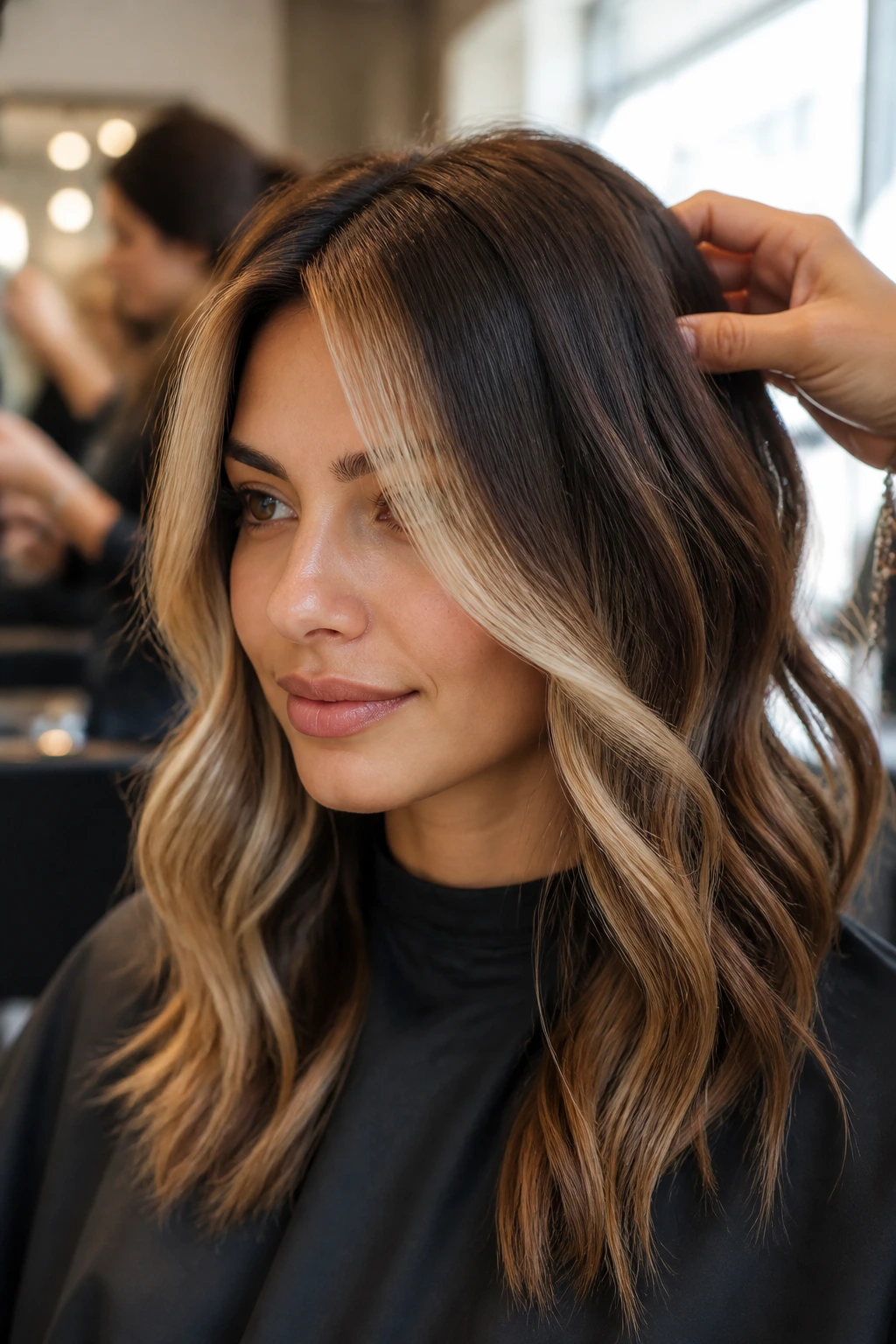
1. Warm Caramel Money Piece on Espresso Brunette
Warm caramel against espresso brown is the safe choice that never feels boring. The front pieces sit like a soft beam of light near the face, and because the contrast stays gentle, the color looks rich instead of striped. On wavy hair, it has that glossy coffee-and-cream effect that looks expensive without trying too hard.
Why It Works
The trick here is keeping the lift modest, usually around one to two levels lighter than the base. That lets the front catch light without blowing out the depth around the crown. If the caramel skews too orange, the whole look turns muddy; a beige-caramel tone stays cleaner and flatter in the best way.
What to Ask For
Ask for soft face-framing foils or a delicate balayage through the front panels, then a gloss in warm beige-caramel. Keep the money piece a little narrower at the temple and a little fuller just beside the part. That keeps it flattering when you tuck hair behind the ears.
2. Champagne Blonde Curtains on a Soft Mushroom Brown Base
This one has a quieter, cooler feel. Champagne blonde around the face gives the hair a soft shine, while the mushroom brown base keeps the whole thing grounded and modern. It’s the kind of color that looks especially good with a middle part and curtain bangs because the front light pieces blend into the haircut instead of sitting on top of it.
Why It Works
Cooler beige tones stop the front from going brassy, which matters if your natural hair pulls warm fast. The lighter pieces also soften a strong brown base without making the face frame look harsh. If you love a cleaner finish, this is one of the easiest styles to live with.
Best for: medium brunettes, cool or neutral skin tones, and anyone who likes a polished, low-drama blonde touch.
Styling note: a round brush or a 1.25-inch iron bends the curtain pieces away from the face so the color opens up instead of collapsing inward.
3. Copper Glow Money Piece for Dark Chocolate Hair
Copper on dark chocolate hair has a little fire in it. Not neon. Not loud-for-the-sake-of-it. Just enough warmth to make brown eyes pop and give the whole haircut a richer edge. If you’ve been staring at flat dark hair in the mirror and thinking it needs something, this is the move.
Why It Works
Copper does a better job than blonde at staying visible on very dark hair, especially if you do not want to lift the base much. The warmth reads immediately near the face, and the tone can be kept glossy with a copper or amber glaze. On straighter hair, it looks sleek; on curls, the color catches on the bends and looks even deeper.
Quick Salon Cue
Ask for a copper face frame with minimal root lift if your hair is fragile, or brighter copper ribbons if your hair can handle a stronger lift. Either way, keep the front soft around the temple so it doesn’t look pasted on.
4. Beige Blonde Face Frame on Shoulder-Length Layers
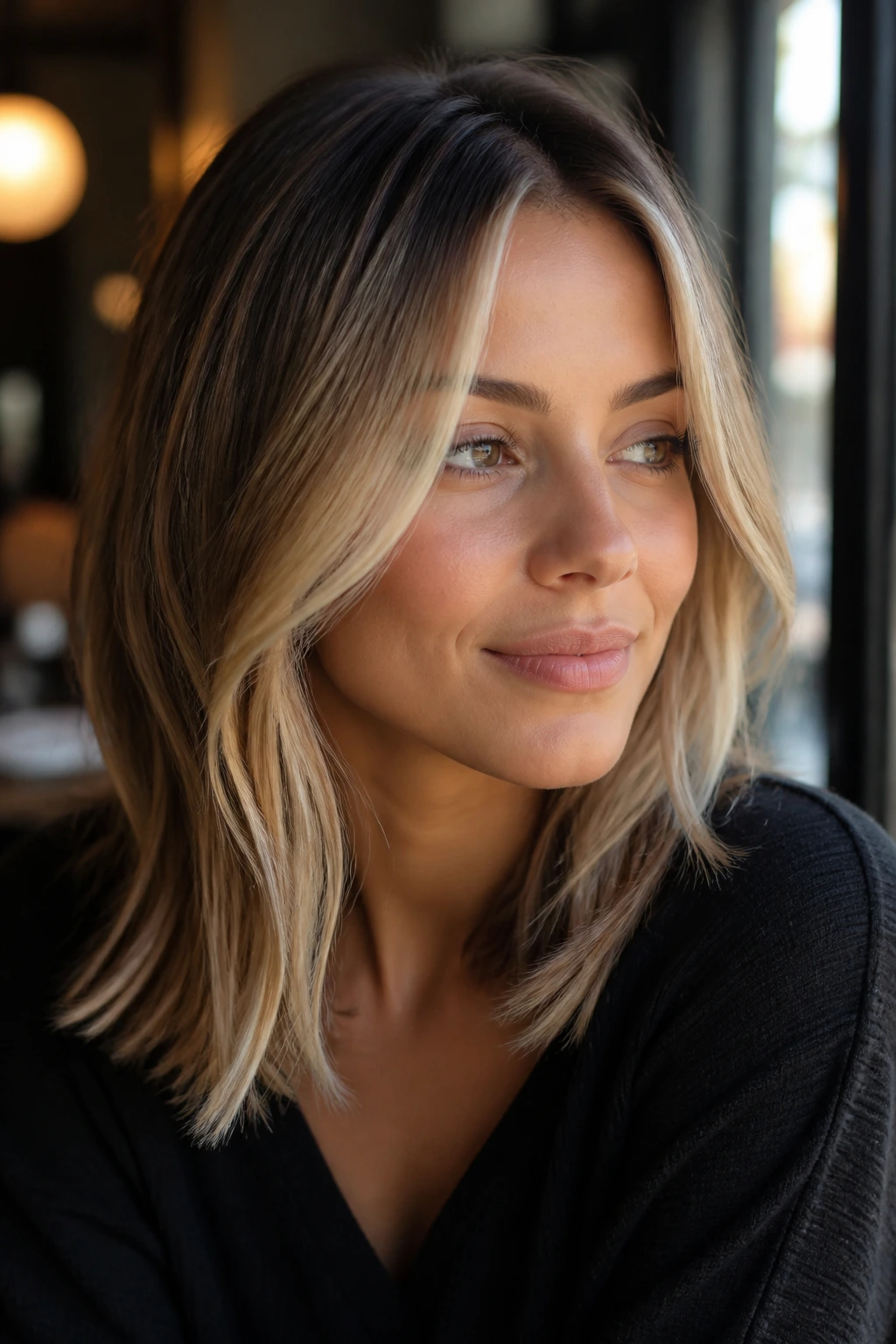
Shoulder-length hair loves a beige blonde money piece because the cut already has movement. The lighter front pieces sit right on top of the layers and give the whole shape more lift. It’s one of those looks that works in a ponytail and still looks deliberate when the hair is down.
Why It Works
Beige blonde sits in that middle zone between warm and icy. That matters more than people think. Pure gold can read too sunny near the face, and icy blonde can look sharp if the rest of the hair is deeper brown. Beige stays soft and gives the cheekbones a little lift without screaming for attention.
How to Wear It
A soft bend through the mids makes the front pieces swing outward instead of hanging straight. If your layers are choppy, keep the money piece slightly thinner so it doesn’t fight the cut. If the hair is finer, a bit more width near the part gives you enough visual weight.
5. Honey Ribbon Highlights on Long Bronde Waves
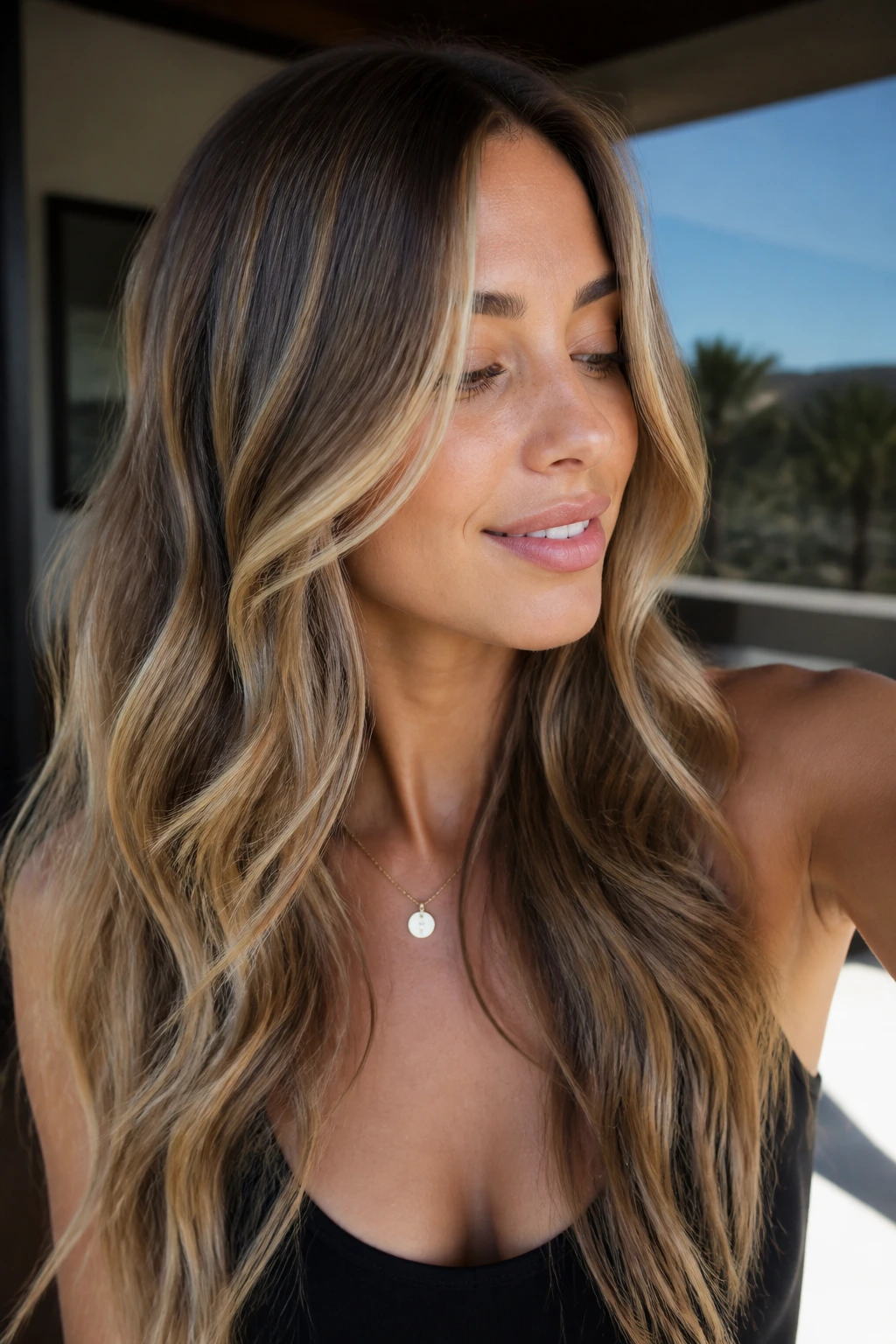
Honey ribbons on bronde hair have that easy, sun-warmed look that never feels overworked. The front pieces are lighter than the base, but not so light that you lose the depth through the lengths. On long waves, the color moves when you move, which is half the appeal.
Why It Works
Bronde already lives in the middle of brown and blonde, so a honey money piece sharpens the contrast just enough to make the face frame visible. The warmth helps the ends look richer, not dusty. It’s also forgiving on grow-out, because the front and mid-lengths can blur together nicely after a few weeks.
Tip
If you wear your hair parted on one side more than the other, ask for the brighter pieces to be slightly stronger on that dominant side. Small detail. Big payoff.
6. Platinum Pop Money Piece with a Shadow Root
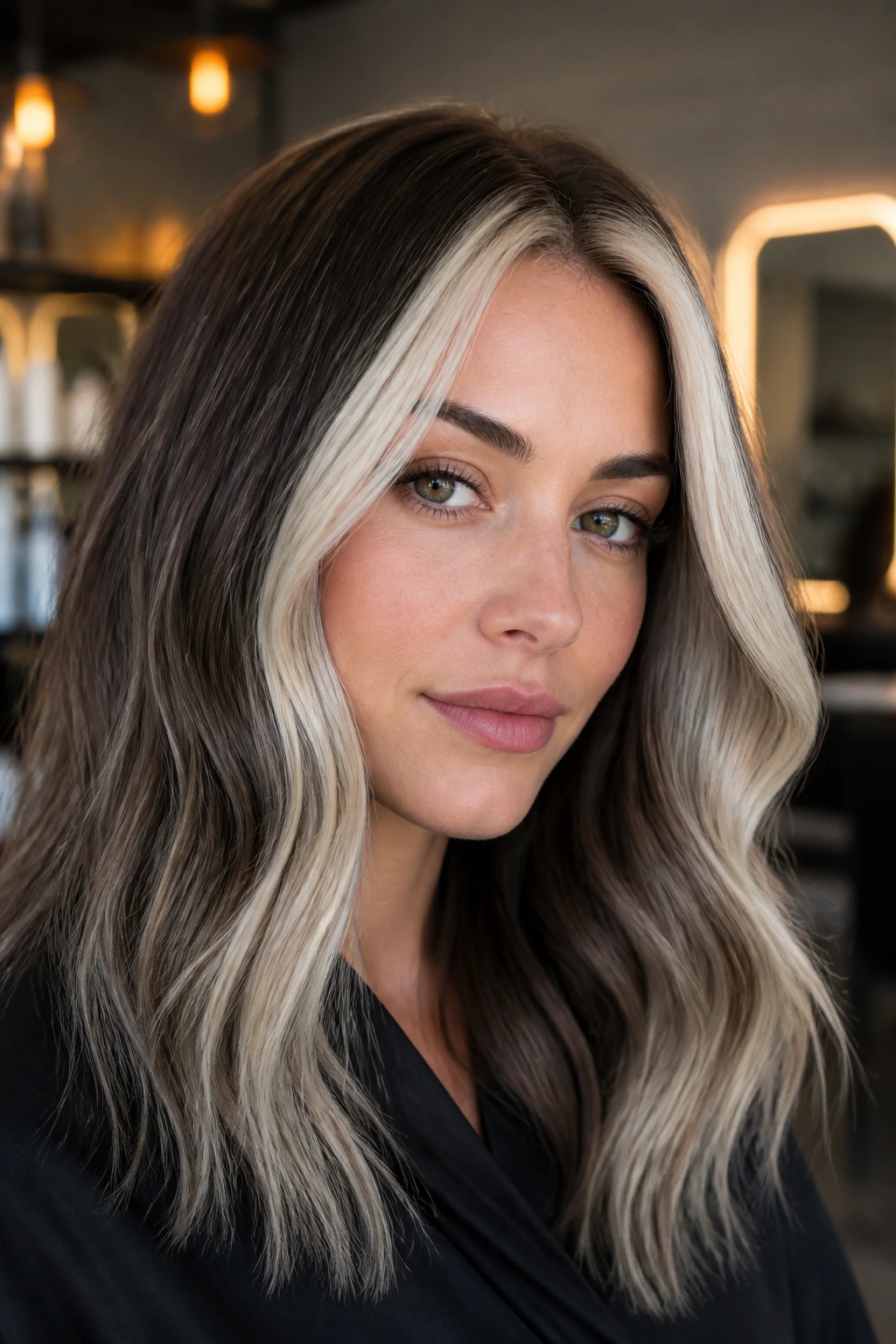
This one has range. The platinum front pieces are bold enough to read from across the room, but the shadow root keeps the look from turning into a hard helmet of blonde. On darker bases, it creates that strong salon contrast people save to their phone without thinking twice.
Why It Works
A shadow root gives the platinum somewhere to land. Without it, the front can look pasted on and the regrowth line gets too obvious too quickly. With it, you get brightness where you want it and softness where you need it.
Common sense warning
Platinum is not a casual maintenance choice. It needs toner, careful heat styling, and a little patience with brass. If your hair is already dry or overprocessed, ask for a slightly softer pearl blonde instead of pushing straight to ice.
7. Cinnamon Spice Face Frame on Black Hair
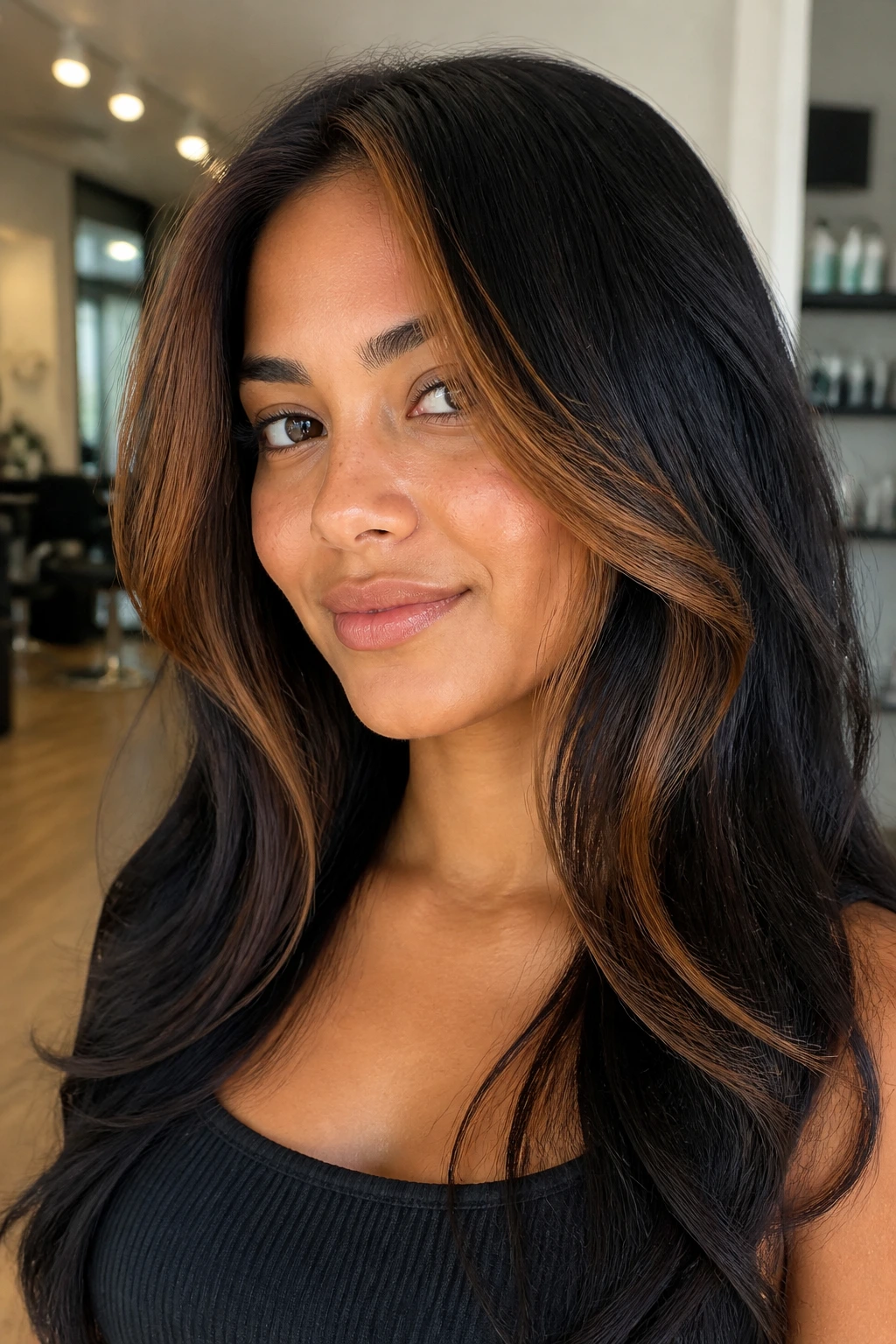
Cinnamon against black hair has a spicy, expensive feel. It’s not about contrast for the sake of contrast. It’s about warmth showing through depth in a way that feels polished. The color glows near the face, especially in daylight, and the rest of the hair stays rich and inky.
Why It Works
Black hair can swallow lighter tones if the lift is too small, so cinnamon is one of the smartest choices. The red-brown family reads clearly without demanding heavy bleaching. It also fades in a flattering way, sliding from cinnamon to soft auburn instead of turning muddy.
Best if you want
- warmth without blonde
- a face frame that still looks professional
- a shade that plays well with brown, hazel, or dark eyes
8. Soft Rose Gold Money Piece for Medium Brunettes
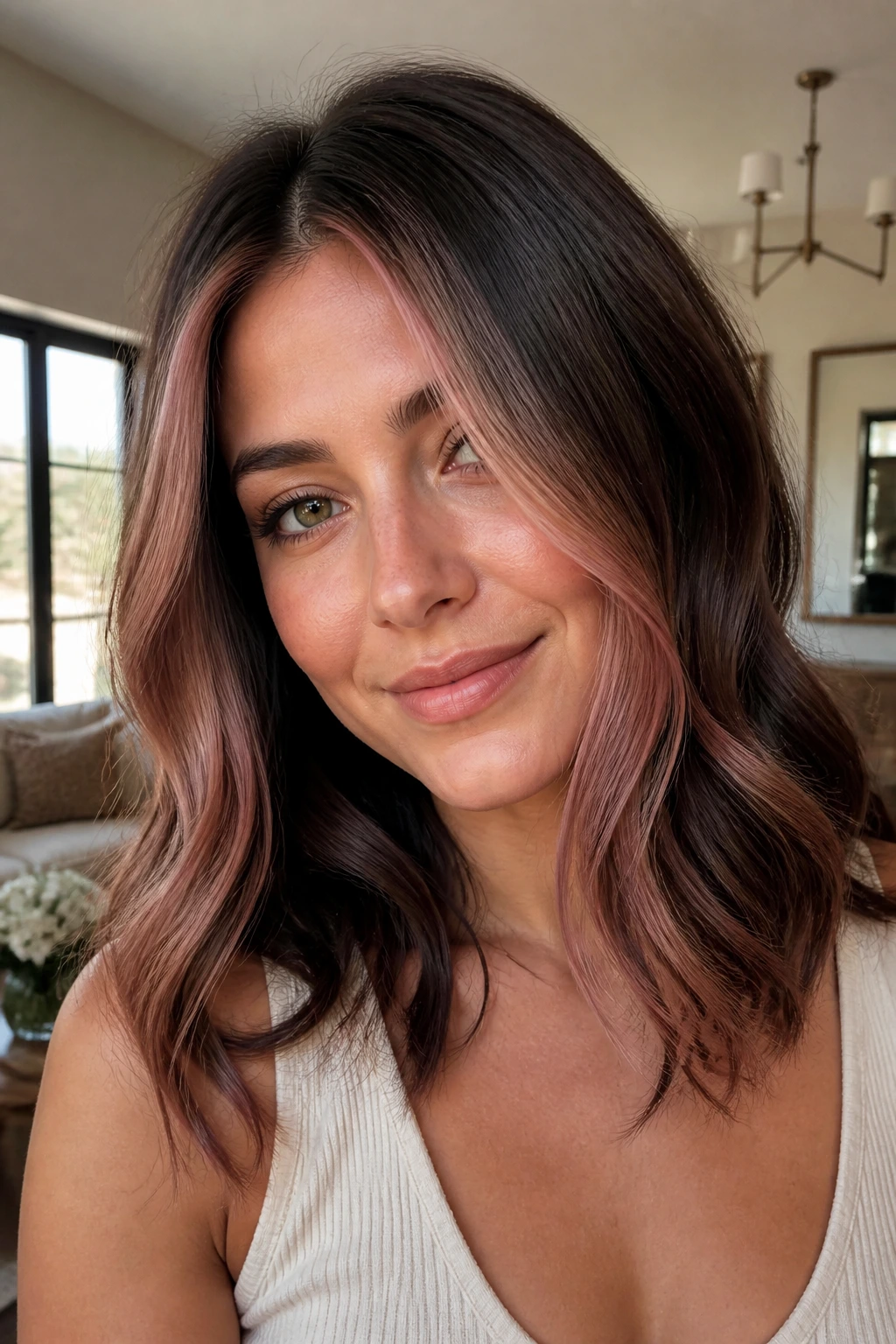
Rose gold around the face is a little unexpected, which is why it works. On medium brunettes, it brings warmth and a faint pink sheen that looks prettier in motion than it does in a still photo. It has a softer finish than red and a more playful finish than beige blonde.
Why It Works
The pink in rose gold can flatter skin that goes a little flat next to strong yellow blonde. It also works well when the rest of the hair is kept dimensional, because the face frame acts like a little wash of color rather than a whole-head commitment. If you love warm tones but hate orange, this sits in a more interesting lane.
Pro move: keep the base brunette slightly deeper at the root and soften the rose gold into a muted glaze through the front. It reads more grown-up, less candy-colored.
9. Ashy Beige Face Frame with Cool-Toned Balayage
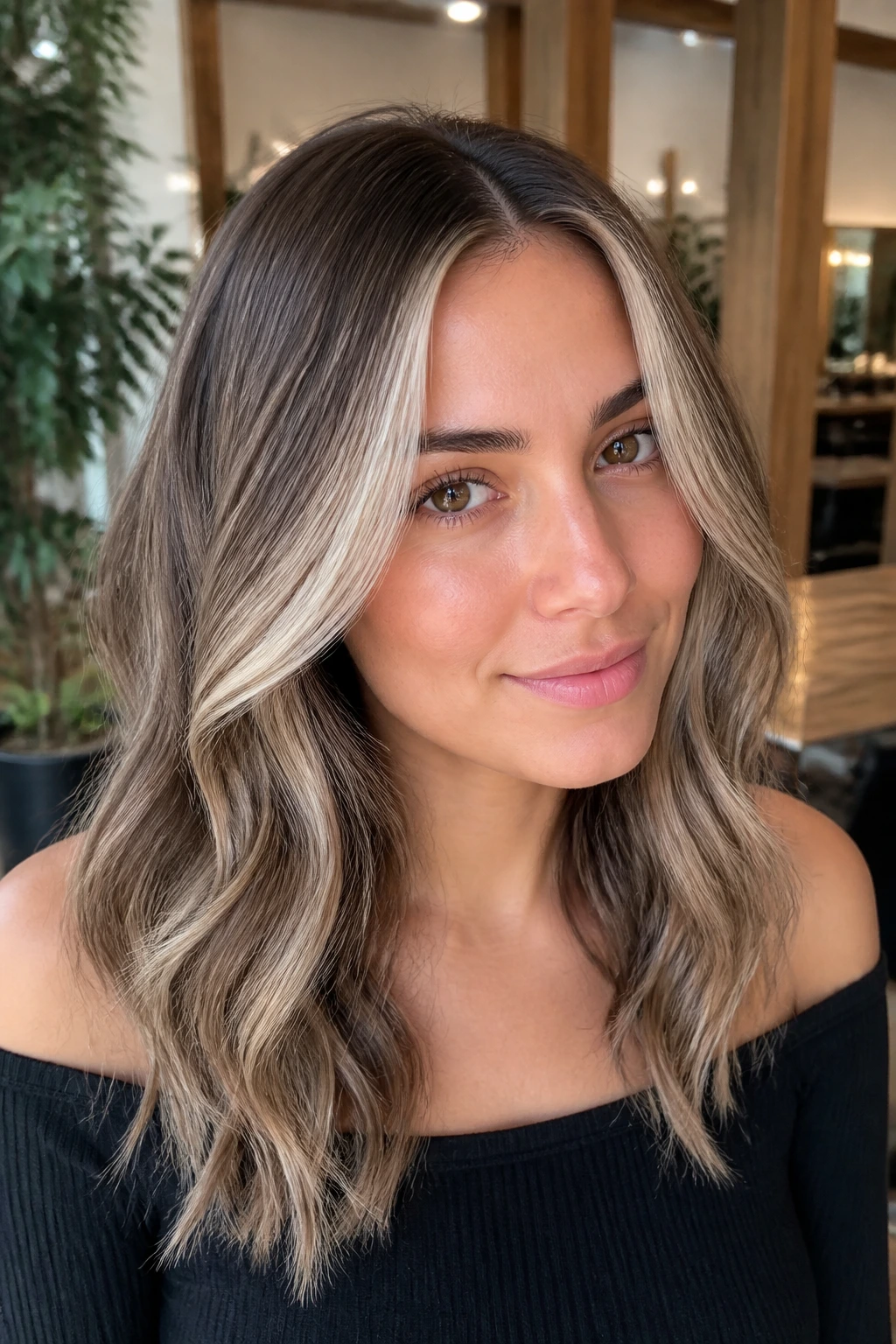
Cool, smoky beige is the answer for anyone who wants brightness but hates brass. The money piece has enough lightness to stand out, while the rest of the balayage stays muted and lived-in. On straight or softly waved hair, it looks clean and modern, almost tailored.
Why It Works
Ashy beige depends on toner more than people expect. The formula keeps the yellow out of the front pieces so the face frame stays soft instead of turning gold after a few washes. If your natural hair pulls red or orange, a blue shampoo can help between salon visits.
What to watch
This shade can go flat if it gets too cool. You want beige, not gray cement. A tiny bit of warmth in the toner keeps it alive.
10. Buttery Blonde Streaks with Curtain Bangs
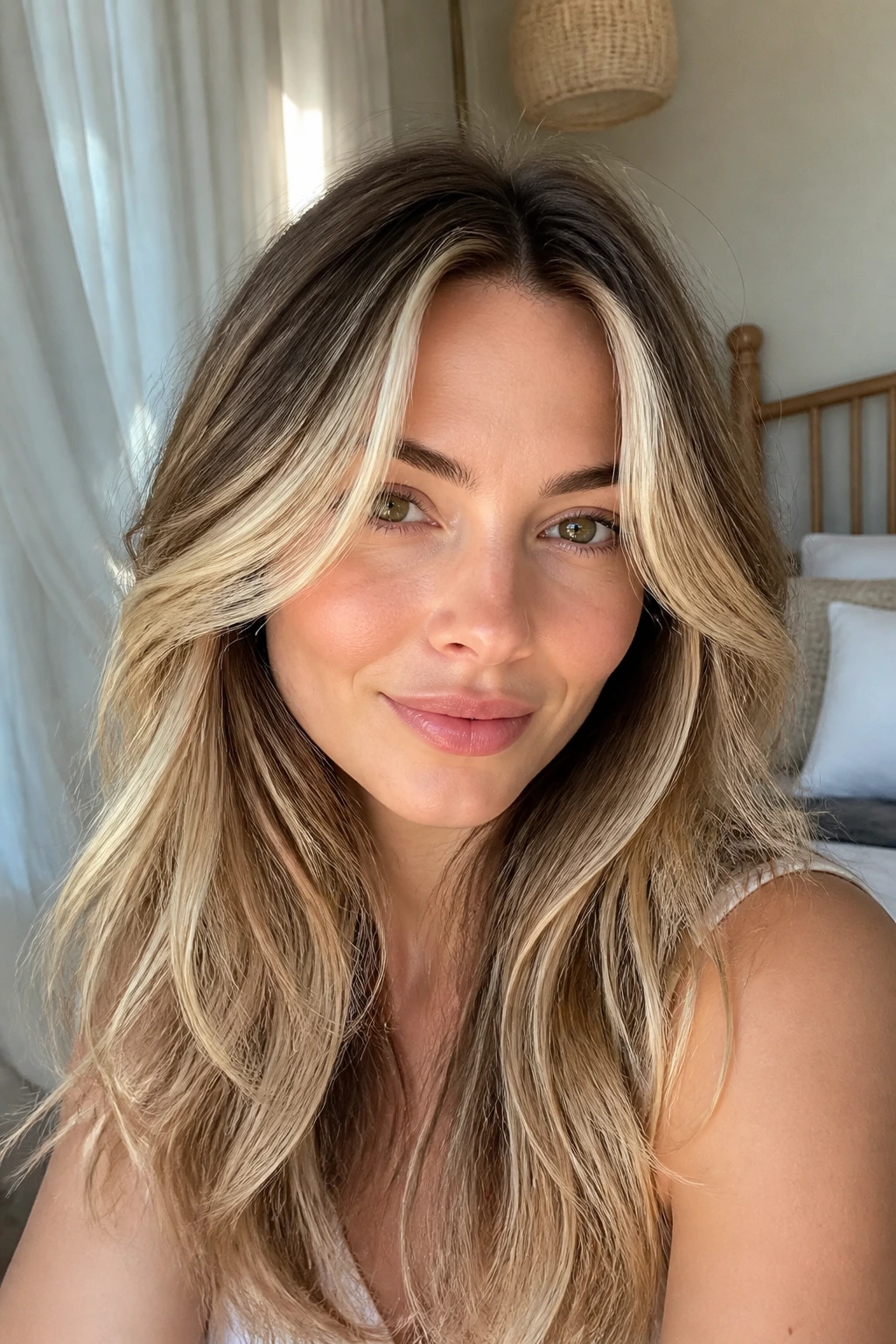
Buttery blonde and curtain bangs are a good match because both want movement. The front pieces brighten the eyes, while the bangs split the color into soft, face-brushing sections instead of one big block. It has a sunny feel without going high-contrast.
Why It Works
Butter yellow-blonde works best when the rest of the hair has dimension. If the whole head is too light, the money piece loses its job. Here, the front pieces are the brightest part, and that makes the haircut itself look more finished.
Styling angle
Blow the bangs away from the face, then tuck the very front ends under slightly. The bend gives the blonde a little curve, which makes the color show up better than pin-straight fringe ever will.
11. Dimensional Mocha Money Piece on a Wavy Lob
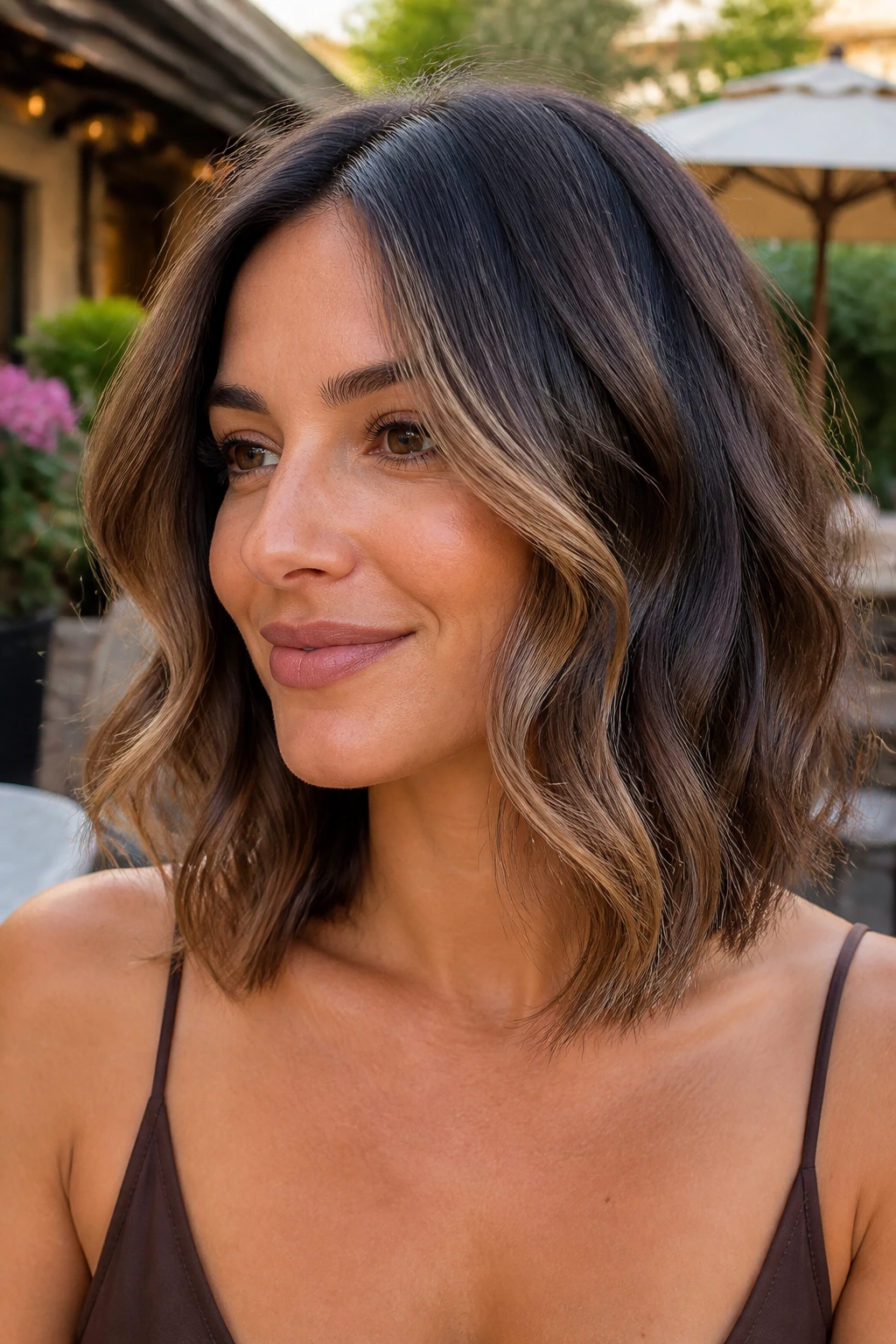
A wavy lob with a mocha money piece is quiet in the best way. The front isn’t screaming for attention, but the extra dimension around the face keeps the cut from reading flat. This is a strong choice if you like subtle color that still makes the haircut look expensive.
Why It Works
Mocha lives close enough to brunette that the grow-out is soft, yet it still catches a little light at the front. The waves break the color into ribbons, so the money piece becomes part of the movement rather than a separate strip. It’s low effort in the styling chair and low stress a few weeks later.
Best for
People who want a face frame but do not want bleach-heavy upkeep. Also good for finer hair, where a giant bright piece can overwhelm the shape.
12. Golden Peach Face Frame on Warm Brown Hair
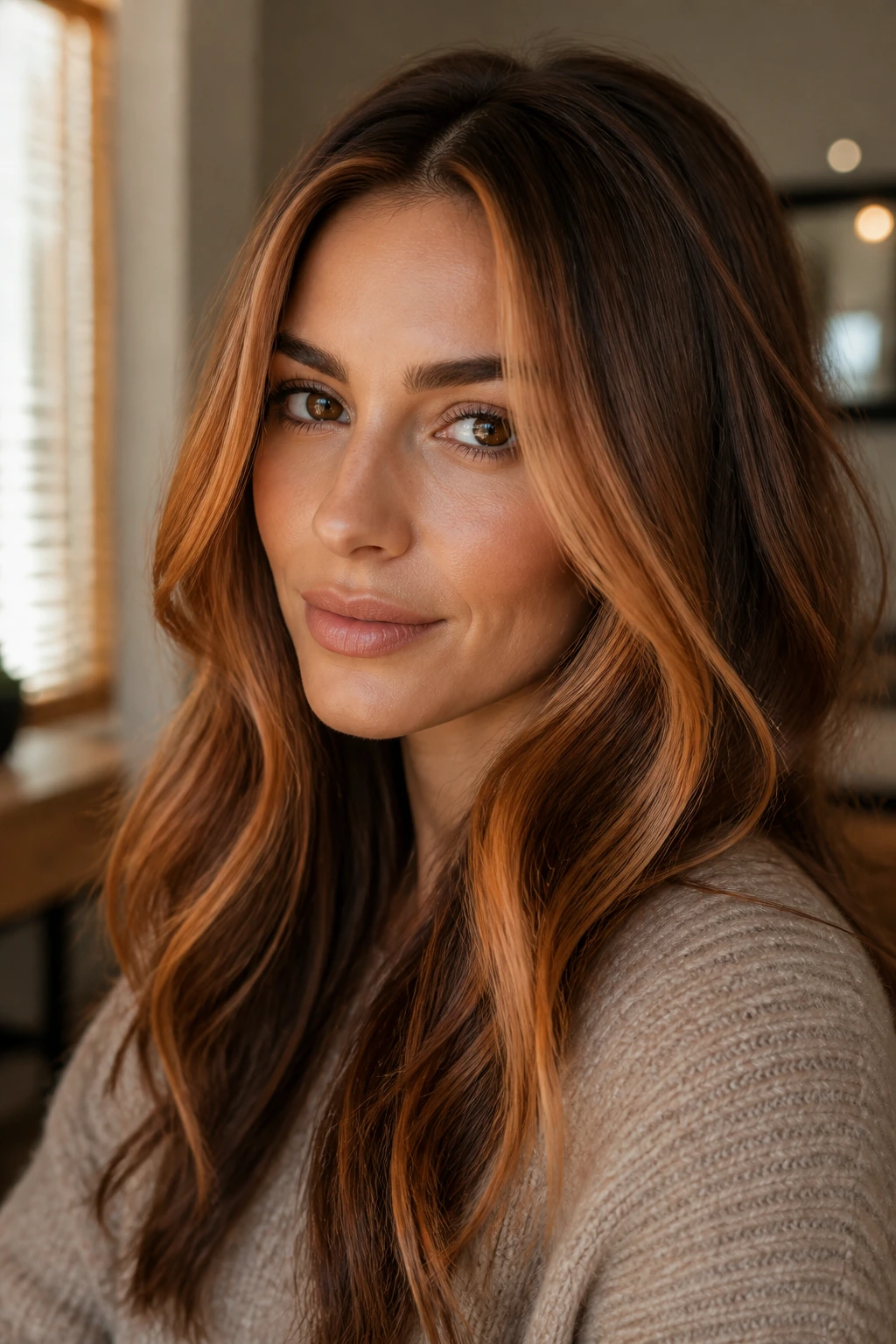
Golden peach is warmer and more playful than caramel. On warm brown hair, it reads like peach skin in sunlight — soft, glowing, and a little unexpected. It’s a nice option if you want a money piece that feels fresh but not icy.
Why It Works
The peach tone leans warm enough to sit comfortably beside brown bases, but it has enough color to feel special. It’s especially flattering when the wearer has freckles or golden undertones, though the tone can be adjusted softer with beige if needed. If you wear peach well in makeup, you’ll probably wear it well in hair.
Quick styling thought
Loose, undone waves keep peach from looking too neat. The movement lets the color blur at the edges, which is where it looks best.
13. Face-Framing Balayage for Redheads
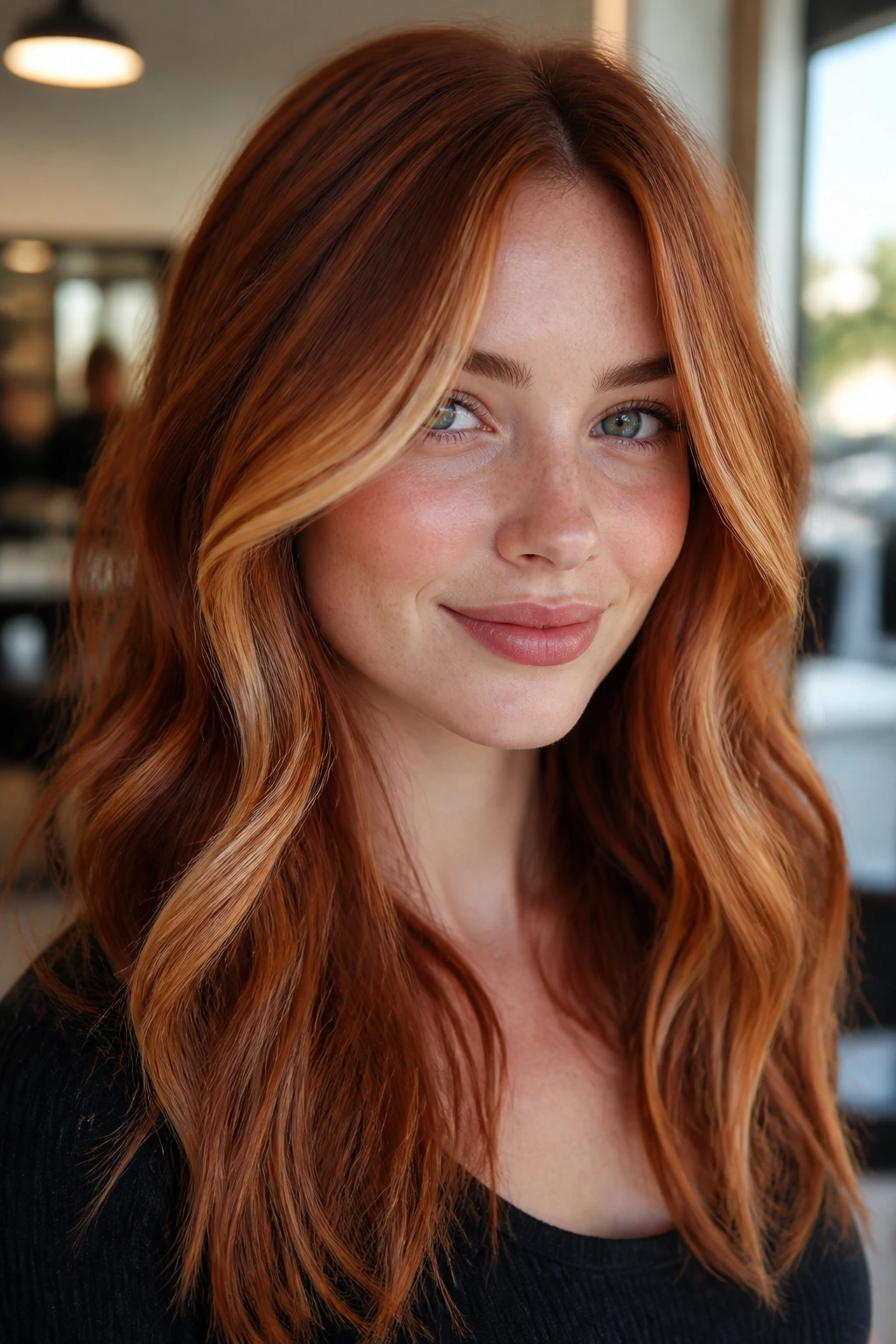
Redheads usually look best when the front pieces enhance the copper rather than fight it. A face-framing balayage that lifts just a little bit lighter than the base can make red hair feel brighter without losing that natural depth. This is one of the most flattering ways to keep red hair from going heavy around the face.
Why It Works
A red base already carries warmth, so the goal is refinement, not a dramatic blonde jump. A brighter copper or strawberry tone around the face gives dimension and keeps the roots from swallowing the haircut. If the red is too dark and flat, a gloss with gold or copper pigment can wake it up fast.
Salon note
Ask for ribbon placement, not chunky stripes. Red hair looks best when the lighter pieces echo the movement of the cut.
14. Money Piece Bob with Bright Vanilla Pieces
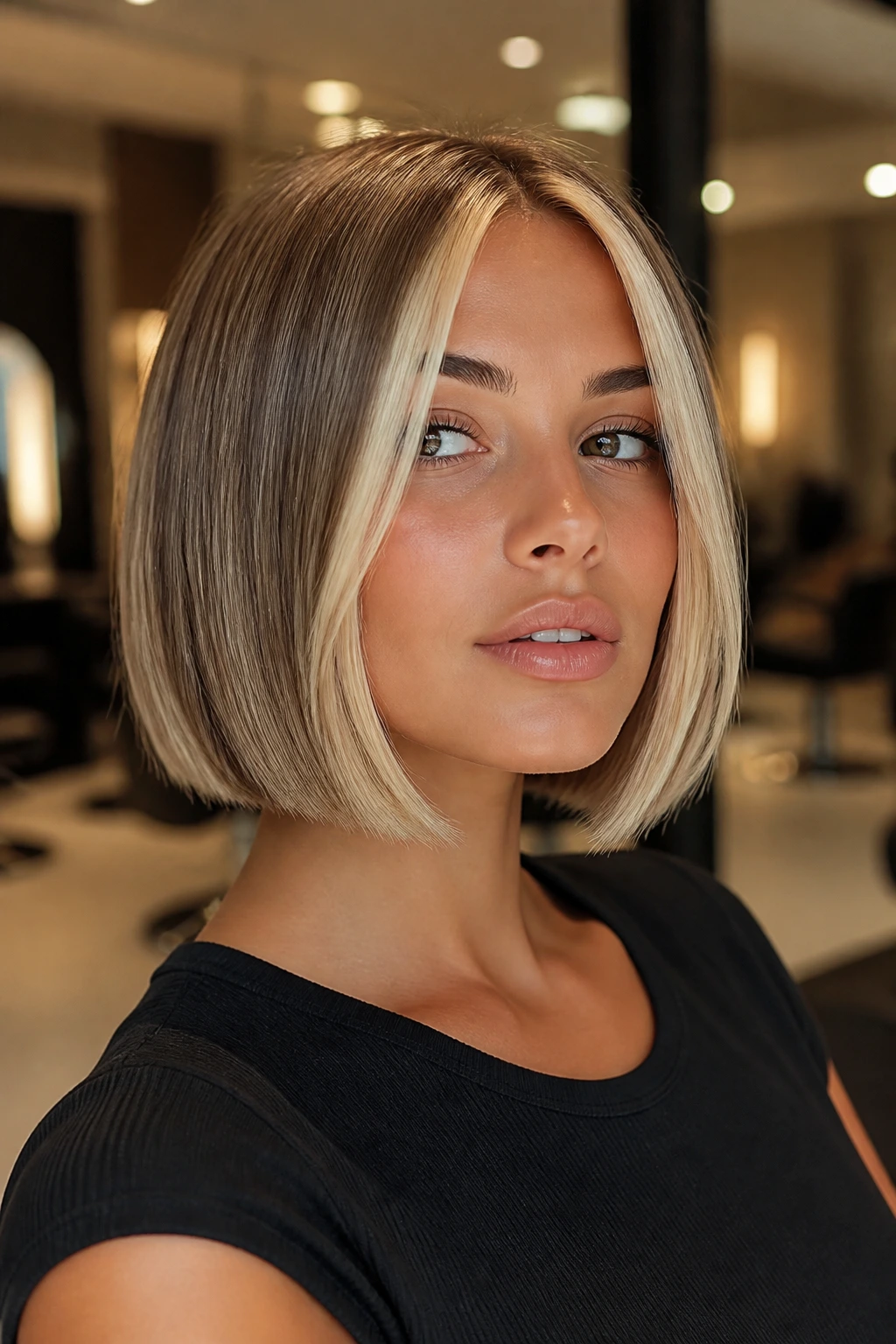
A bob can handle a stronger money piece because the haircut is already sharp. Bright vanilla at the front gives the bob a crisp edge, especially if the ends are blunt. It’s a clean, graphic look with enough softness near the face to stay flattering.
Why It Works
The shorter length means the front color sits close to the face and gets read right away. Vanilla blonde is bright without going icy, so it keeps the bob from looking severe. If the bob is tucked behind the ears, those front pieces still do the talking.
Keep in mind
With a bob, width matters more than length. Too much bright color can make the face frame take over the haircut. Narrower placement usually looks better.
15. Soft Mocha-to-Caramel Melt with a Bright Front
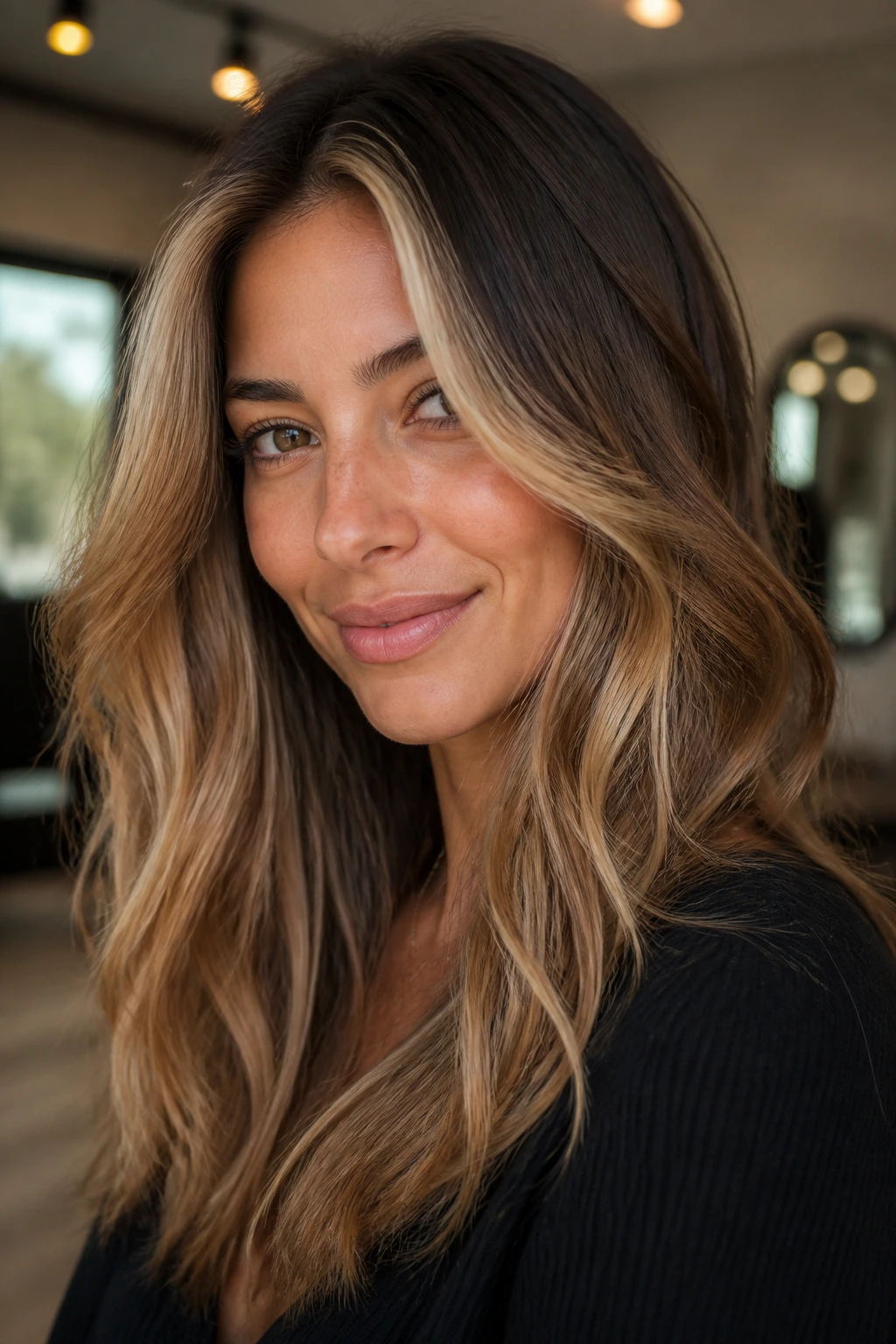
This one is all about transition. The base stays mocha, the mids melt into caramel, and the very front gets a cleaner, brighter ribbon. It’s one of the easiest ways to get dimension without seeing a hard line anywhere in the hair.
Why It Works
The gradient keeps the front from feeling pasted on. Your eye moves from dark root to soft warmth to brighter face frame, and that movement makes the whole style feel more expensive. It’s also kinder to grow-out because the color change is built to blur.
Practical tip
Bring a photo that shows both the front and the mids. If you only show the money piece, the colorist may make the front too bright and skip the melt that makes this look work.
16. Icy Silver Face Frame for Gray Blending
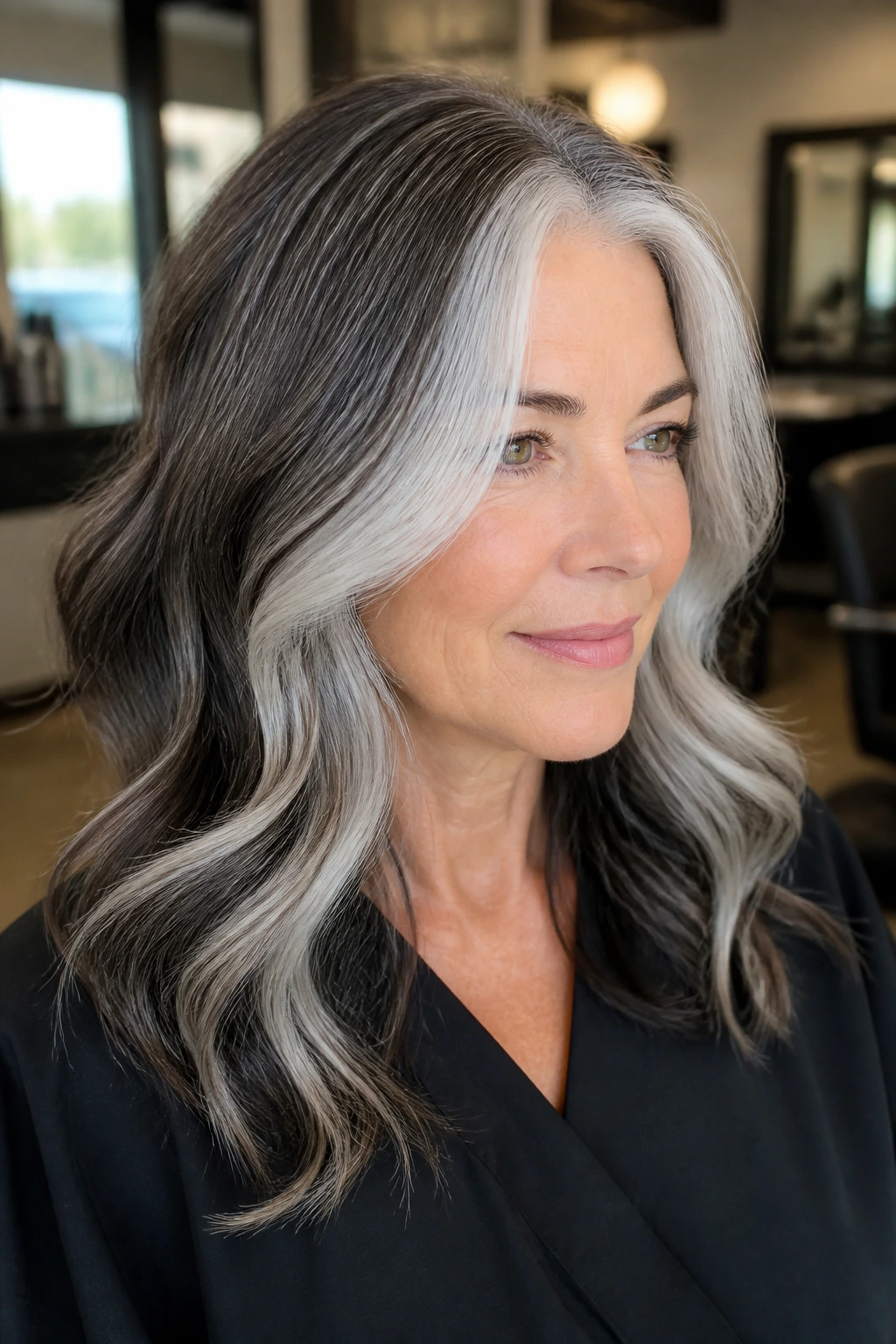
Icy silver around the face can be a smart move when you’re blending gray rather than covering it completely. The bright silver pieces let the natural gray feel intentional, not accidental. On a darker base, the contrast looks crisp and modern.
Why It Works
Silver is unforgiving if the hair is yellow underneath, so the prep matters. You need a clean lift and a toner that keeps the pieces frosty without going flat. Done well, the front looks luminous instead of streaky.
Best for
Women who are okay with maintenance and want their gray to look styled, not hidden. This one looks especially good with a sharp haircut or a smooth blowout.
17. Sun-Kissed Money Piece on Deep Brunette Curls
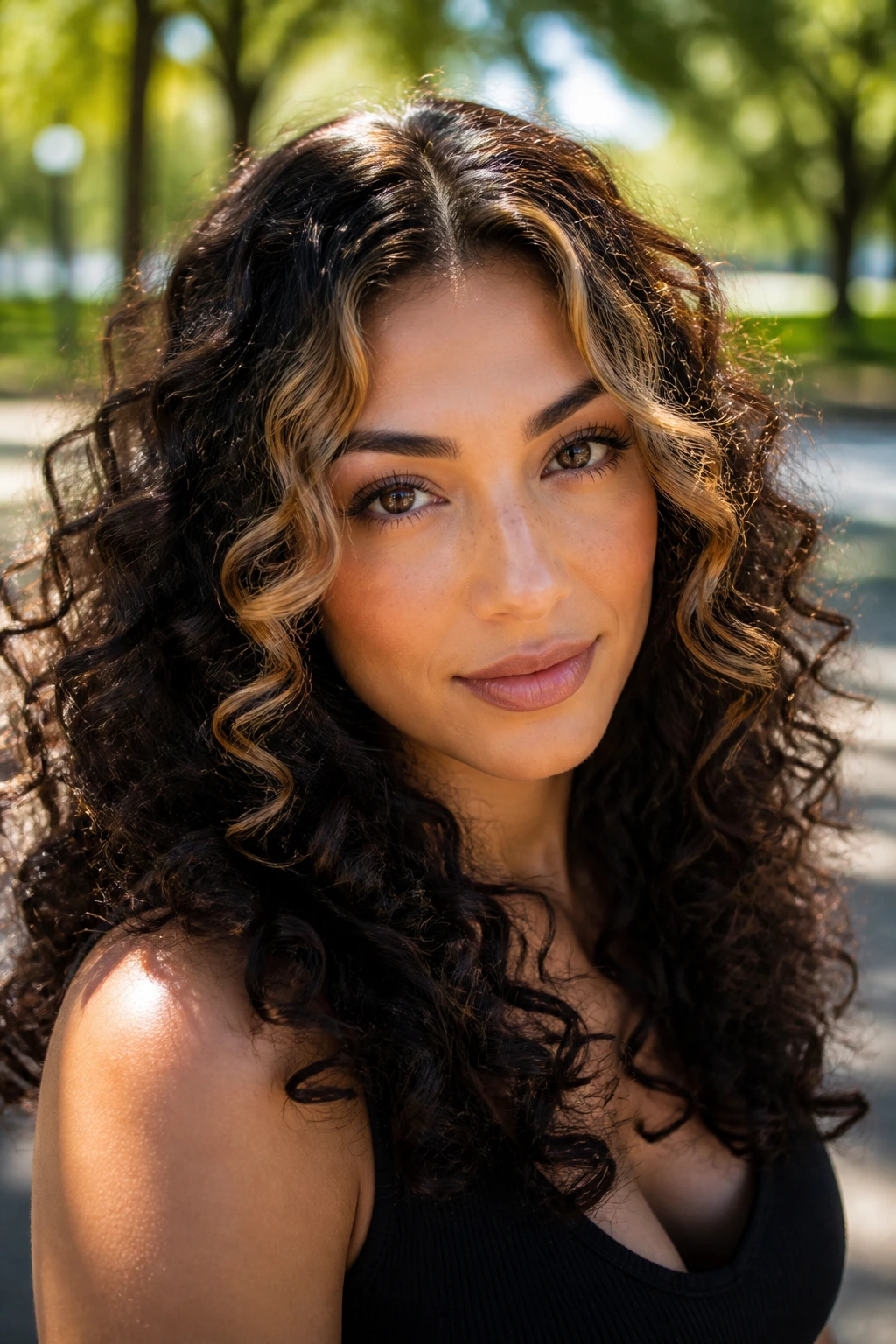
Curls need a different kind of face frame. Instead of trying to make the front pieces look like straight hair with color on top, you want sun-kissed brightness that follows the curl pattern. On deep brunette curls, the lighter front strands create a halo effect that feels soft, not stripy.
Why It Works
Curly hair shrinks up, so the brightest section has to be placed where the curl actually sits, not where it hangs wet. A few well-placed ribbons near the temples and part can make the whole style appear lighter without overloading the front. The result is movement first, color second.
Curl-specific note
Ask for the pieces to be painted in the curl’s natural direction. If they’re forced too straight, the color vanishes once the hair dries.
18. Burgundy and Cherry Face Frame on Dark Hair
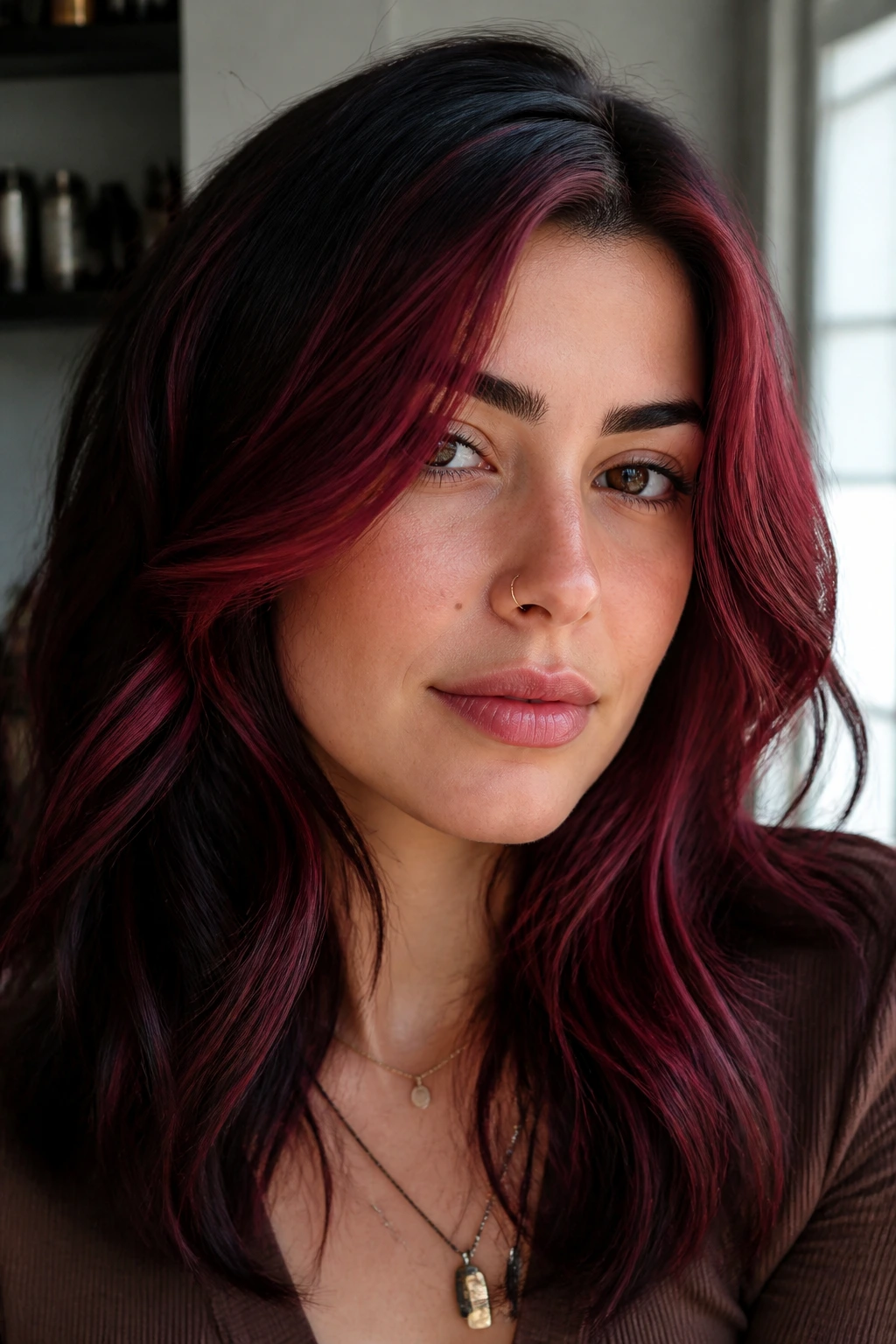
Burgundy and cherry tones are rich, moody, and a little dramatic in a good way. On dark hair, they give the face frame a wine-dark glow that changes with the light. Indoors, they look deep and polished. In daylight, they show a little fire.
Why It Works
Red-violet tones tend to stay visible without needing as much lift as blonde. That makes them a strong option for dark hair that doesn’t want a big bleach session. They also fade into softer berry tones rather than turning dull if you keep them conditioned.
Who should try it
If you like bold lips, dark eyeliner, or jewel-tone clothes, this one fits the same energy. It’s not timid. That’s the point.
19. Bronde Money Piece with Lived-In Roots
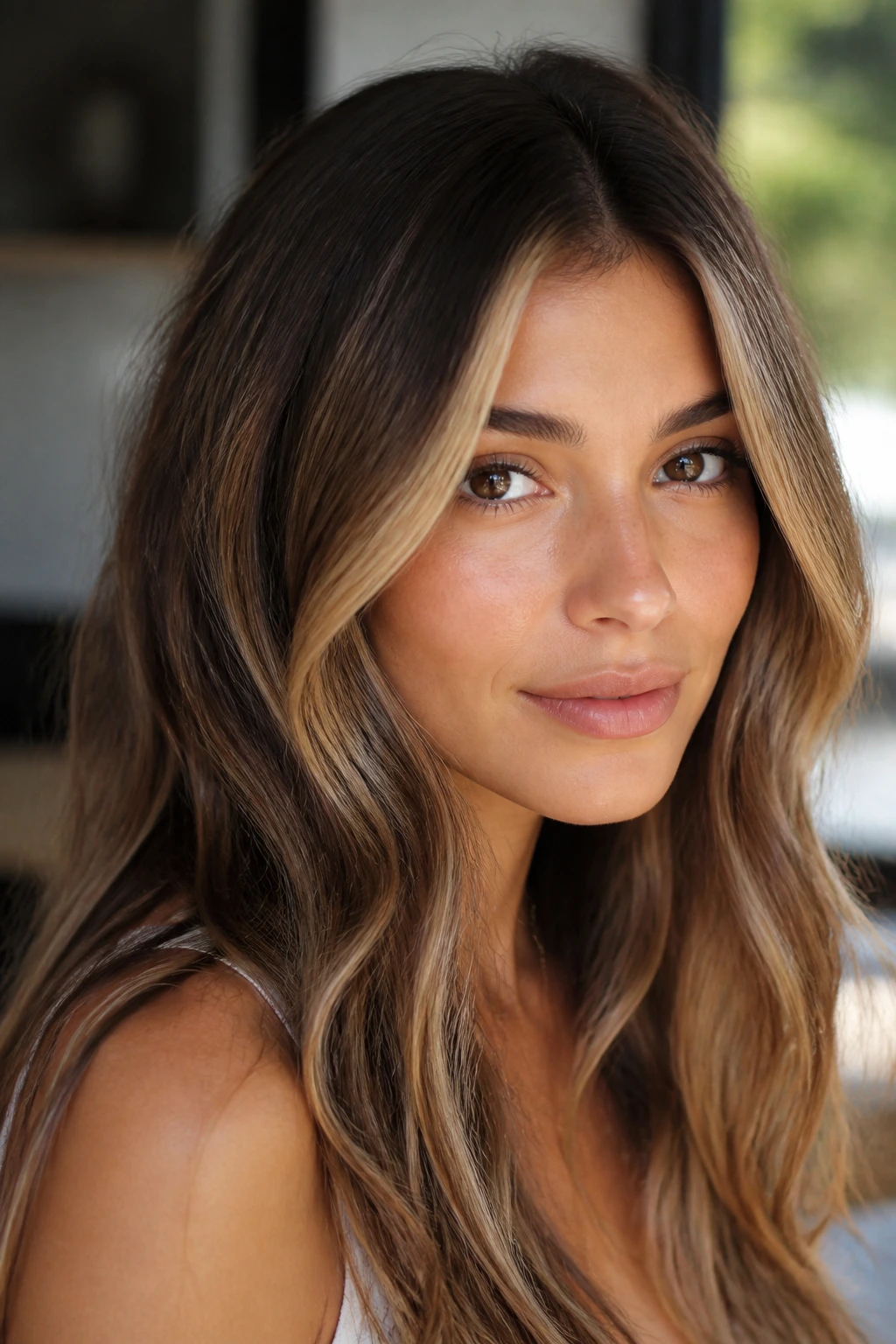
Bronde is the bridge between brunette and blonde, and the money piece keeps that bridge from getting sleepy. With lived-in roots, the front pieces stay bright enough to matter while the rest of the color grows out without a fight. It’s a smart salon choice if you want dimension but not a strict maintenance schedule.
Why It Works
The root shadow keeps the look soft. The front can be lighter and still feel believable because the depth behind it gives it context. On long hair, this is especially useful; without a darker root, the whole head can start to look washed out.
Salon cue
Ask for a rooty bronde front with brightness concentrated at the temples and part. You want dimension, not a single flat band.
20. Thick Chunky Blonde Money Piece for Retro Volume
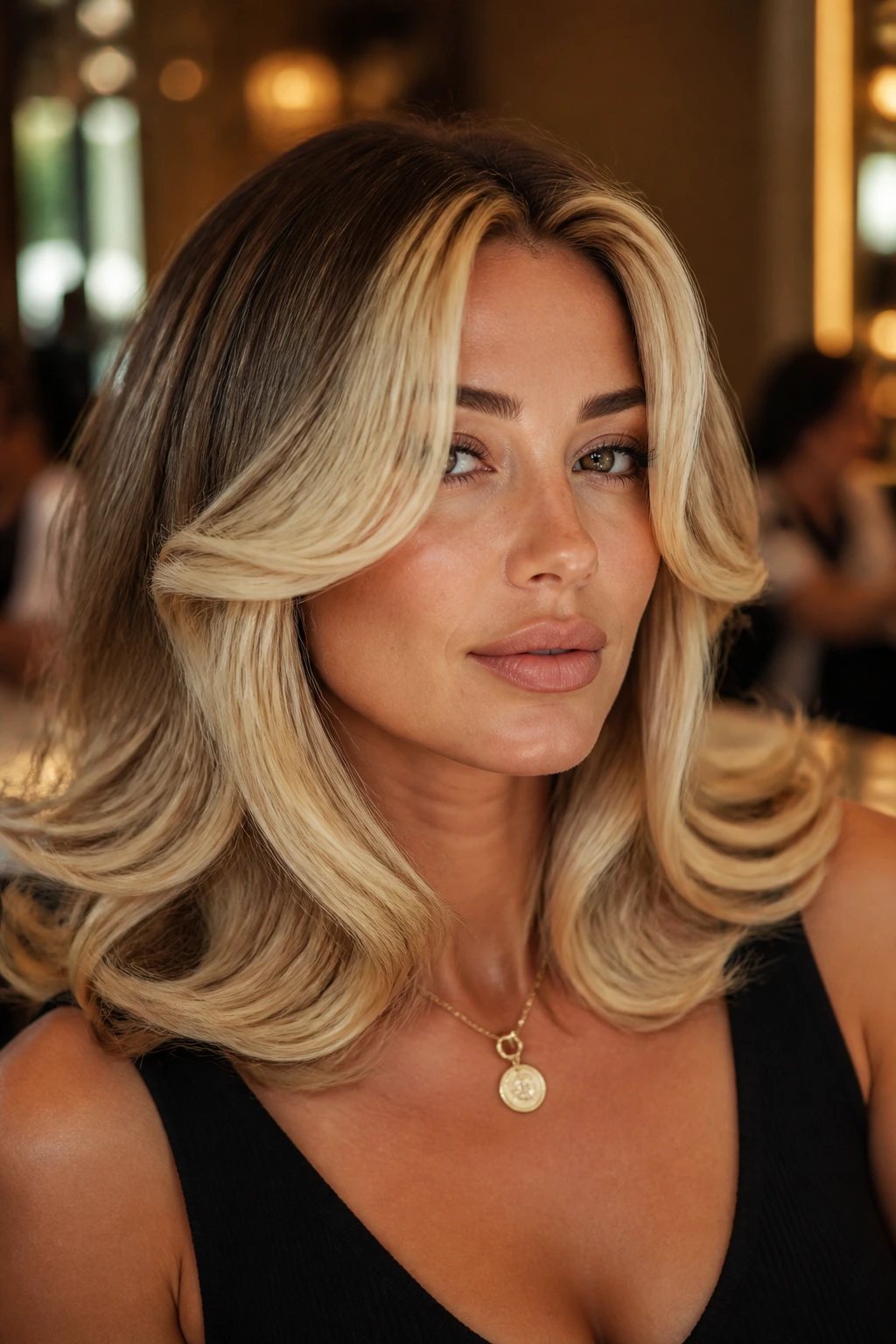
Thick chunky blonde is back for a reason: it makes a statement fast. The front pieces are broader, brighter, and more obvious, which gives the hair a throwback feel that works especially well with big blowouts and flipped ends. It’s a little louder. That’s part of the charm.
Why It Works
Chunkier placement gives more contrast, and contrast reads as volume. If your hair is fine or layered, the thicker front section can make the whole style look fuller at the root. The key is keeping the tone creamy rather than neon, so it feels playful instead of costume-y.
Best paired with
- round-brush blowouts
- soft flicked ends
- long layers or a butterfly cut
21. Soft Auburn Face Frame with a Glossy Finish
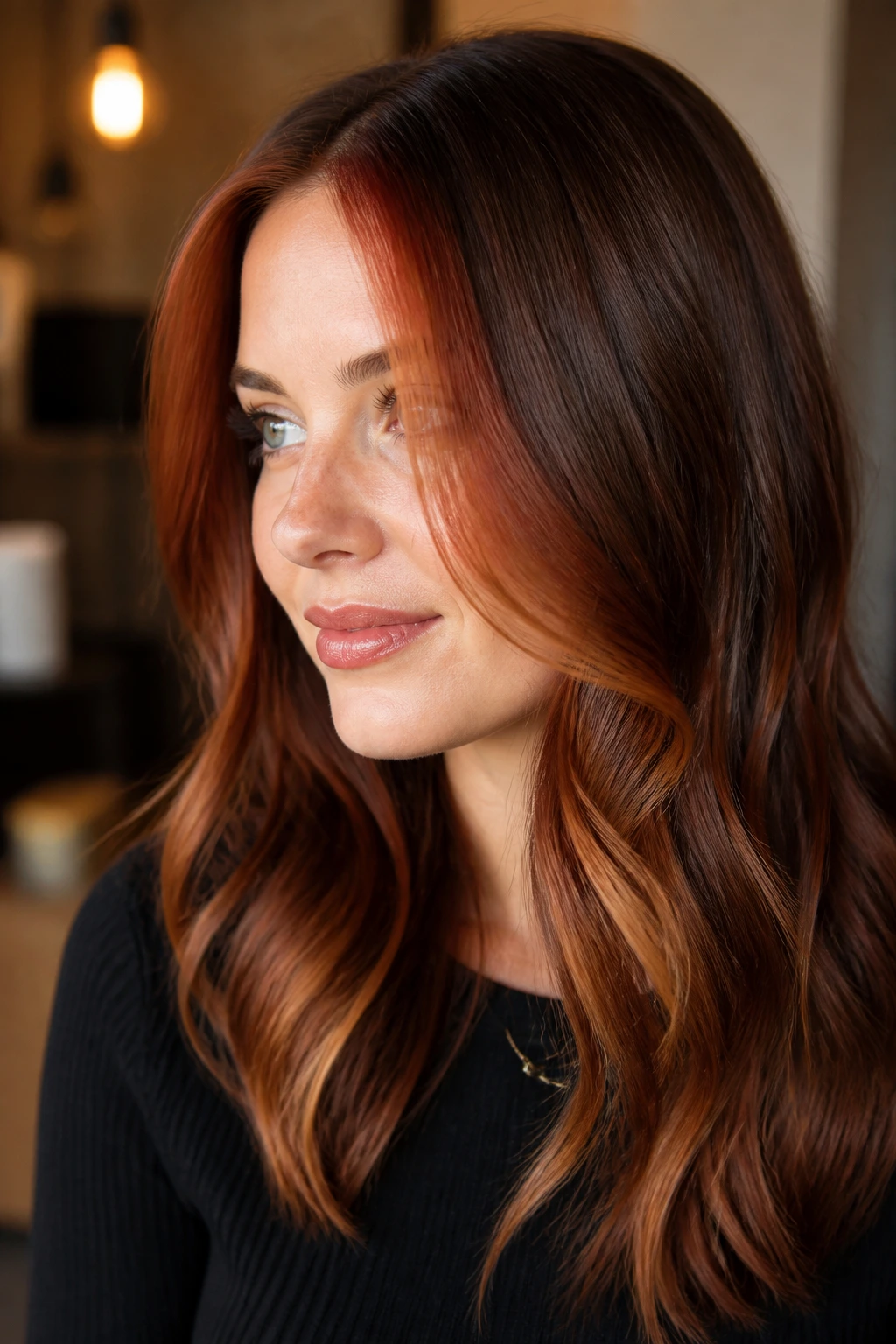
Soft auburn is the polished cousin of copper. It has enough red to brighten the face, but the finish is smoother and more muted. On brown bases, it gives a gorgeous warmth that looks especially good under indoor light.
Why It Works
Auburn sits in the sweet spot between red and brown, which makes it easier to wear than bright copper. A clear or tinted gloss keeps the tone reflective, and shine matters a lot here. Without it, auburn can look flat.
Tip
If your hair tends to get dull fast, ask for a toner or gloss that leans red-gold rather than pure red. It holds onto the warmth longer.
22. Beige Ribbon Money Piece on Long Straight Hair
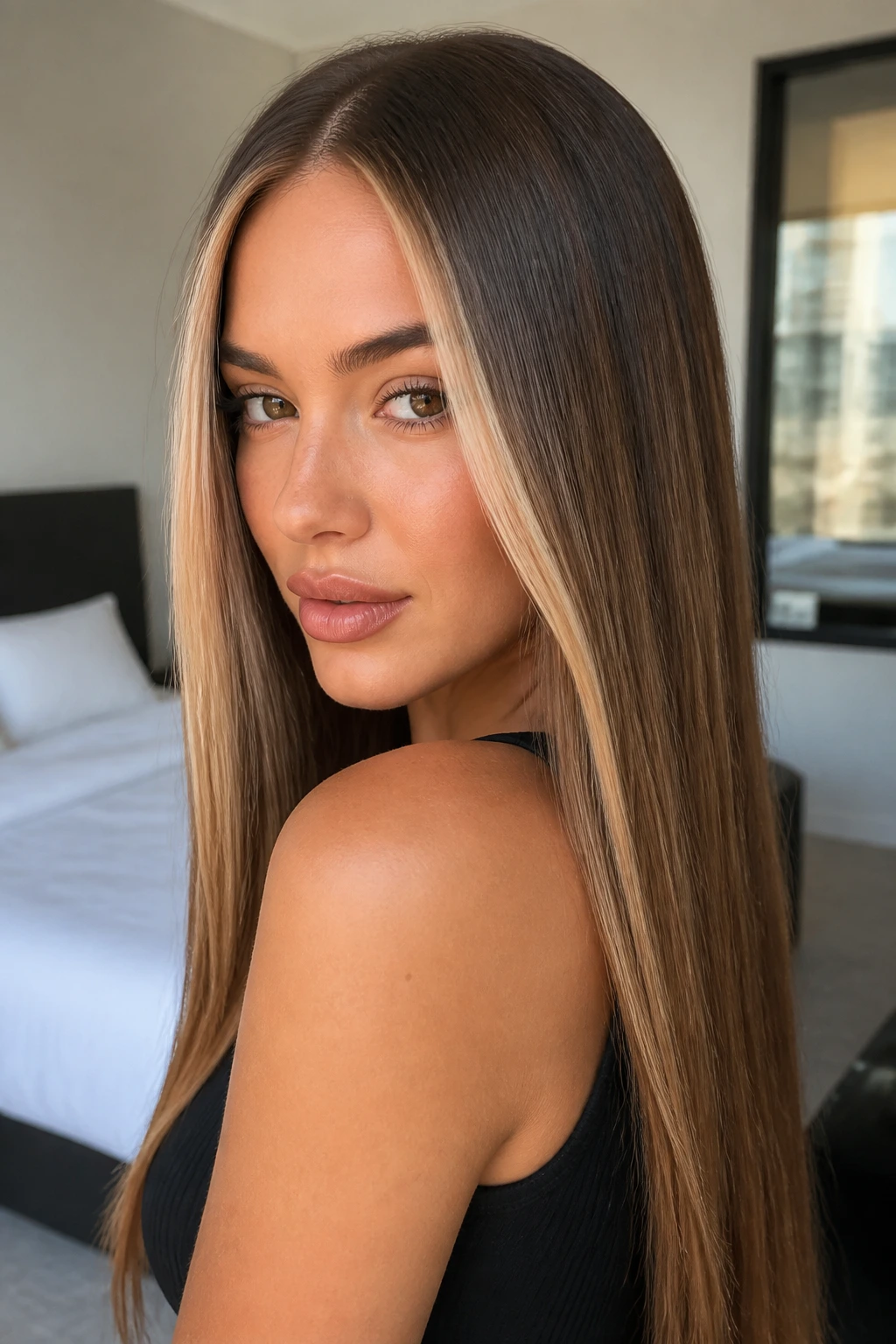
Straight hair shows every line, so beige ribbon placement has to be clean. On long hair, the money piece works almost like a vertical highlight panel, pulling the eye down the front and making the length look sleek. Beige keeps the effect soft enough to wear every day.
Why It Works
Straight hair does not hide placement mistakes. That sounds harsh, but it’s useful. If the piece is too wide, you’ll know immediately. If it’s too warm, you’ll see it instantly. Beige keeps the line clean and easy to live with.
Styling note
A slight bend at the ends keeps the front pieces from looking stiff. Even a tiny bevel matters.
23. Peekaboo Money Piece for a Subtle Office-Friendly Look
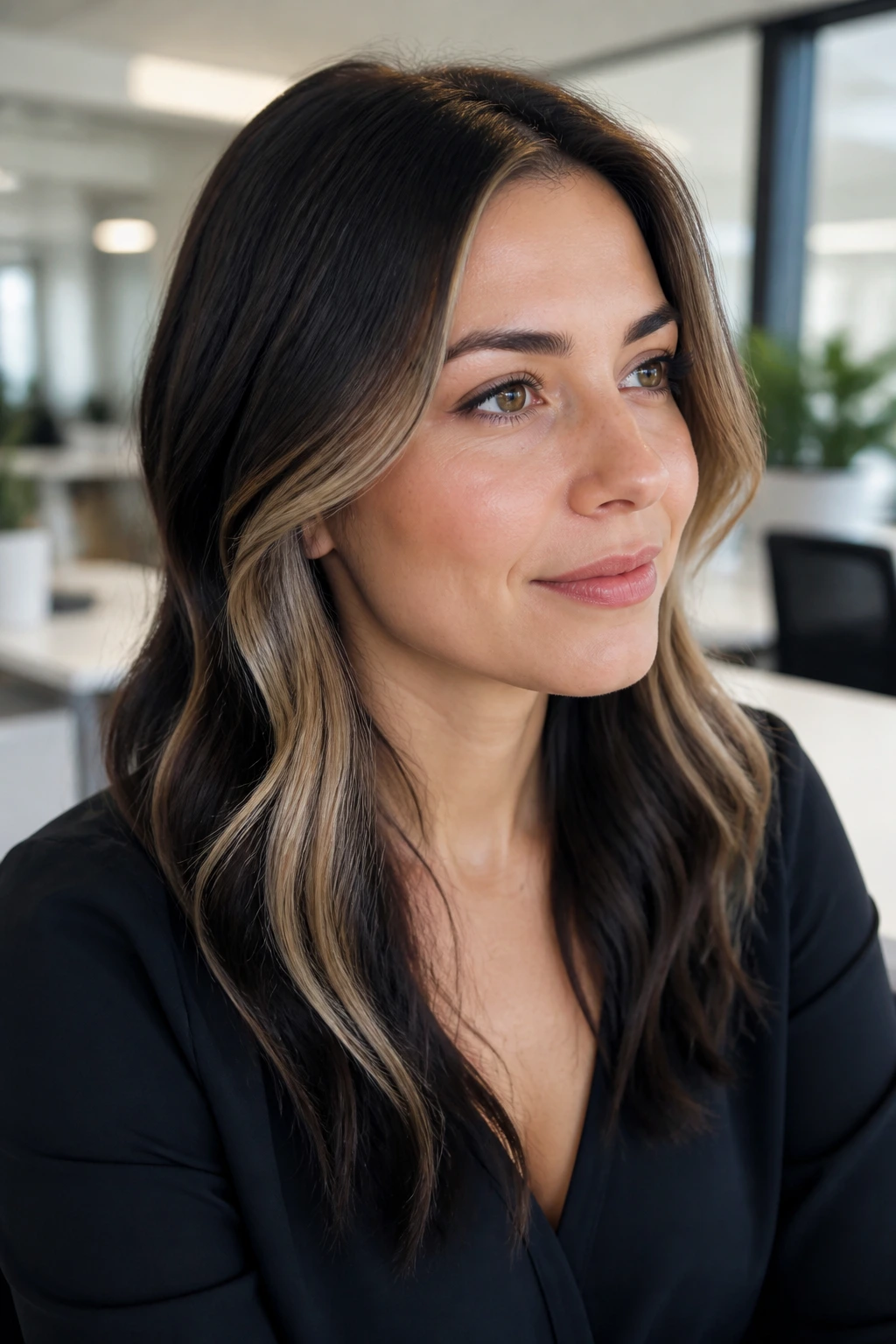
Not every money piece has to shout. A peekaboo version keeps the brightest pieces a little deeper under the top layer, so they show when the hair moves or tucks behind the ears. It’s the stealthy option.
Why It Works
You get brightness near the face without making it the first thing people see. That’s useful if you want color that feels polished in a dress code setting or just prefer softness over contrast. It also grows out well because the top layer hides a lot of the transition.
When it’s smartest
- when you wear hair half-up often
- when you want less visible maintenance
- when you need a softer shift from dark to light
24. Face-Framing Highlights with a High Ponytail
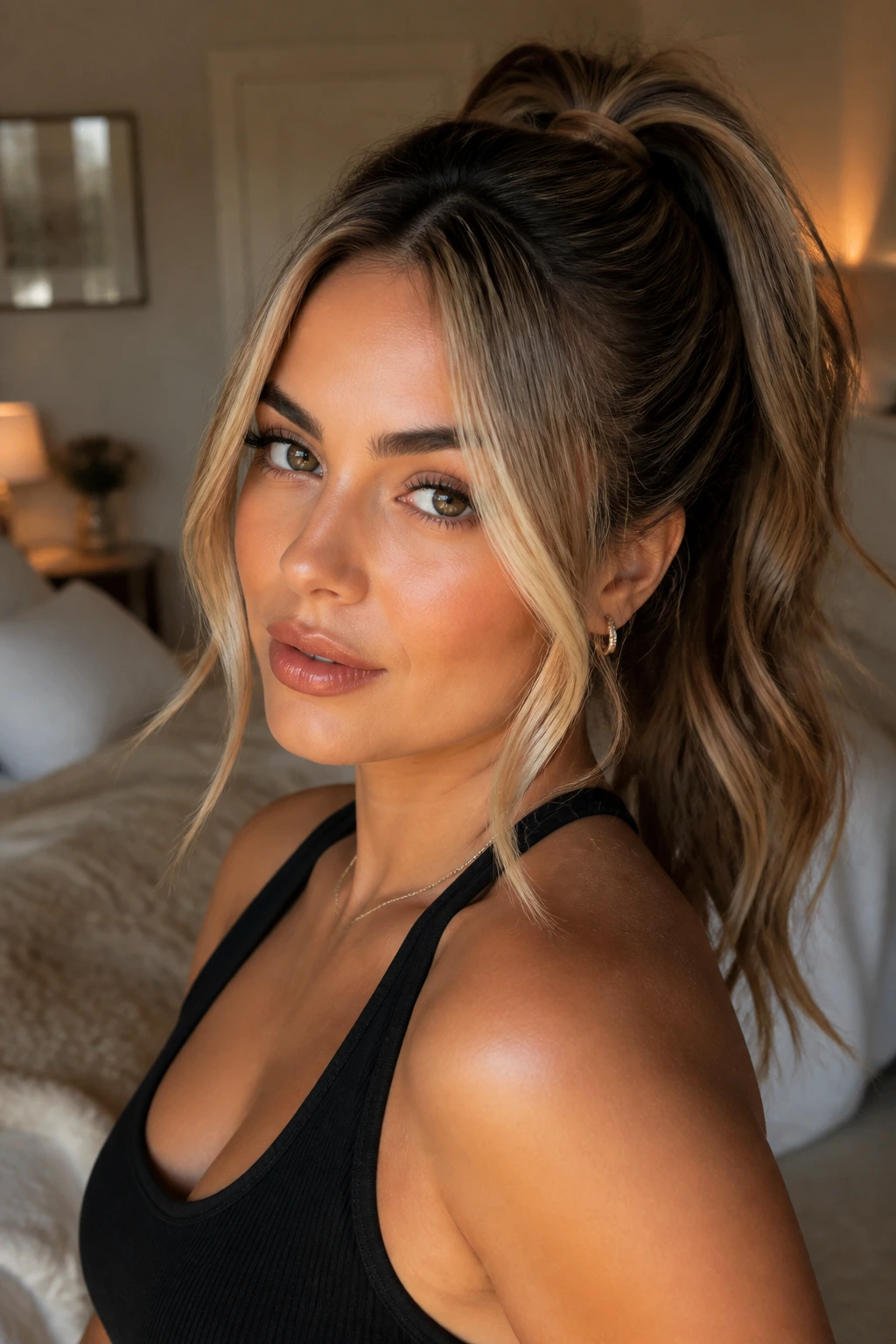
A high ponytail changes the job of the money piece. The front strands need to look good both down and pulled back, which means placement around the temples matters more than a wide panel through the center. The result is sporty, clean, and a little lifted around the face.
Why It Works
When the hair is up, the front pieces become the whole show. If they’re too thick, the pony can look heavy. If they’re too thin, the color disappears. A balanced face frame keeps the ponytail from looking plain.
Good to know
Ask your colorist to think about your usual styling habit. If you wear ponytails three times a week, the placement should be planned for that, not just for the mirror shot when the hair is down.
25. Smoky Sand Blonde Money Piece on Olive Skin Tones
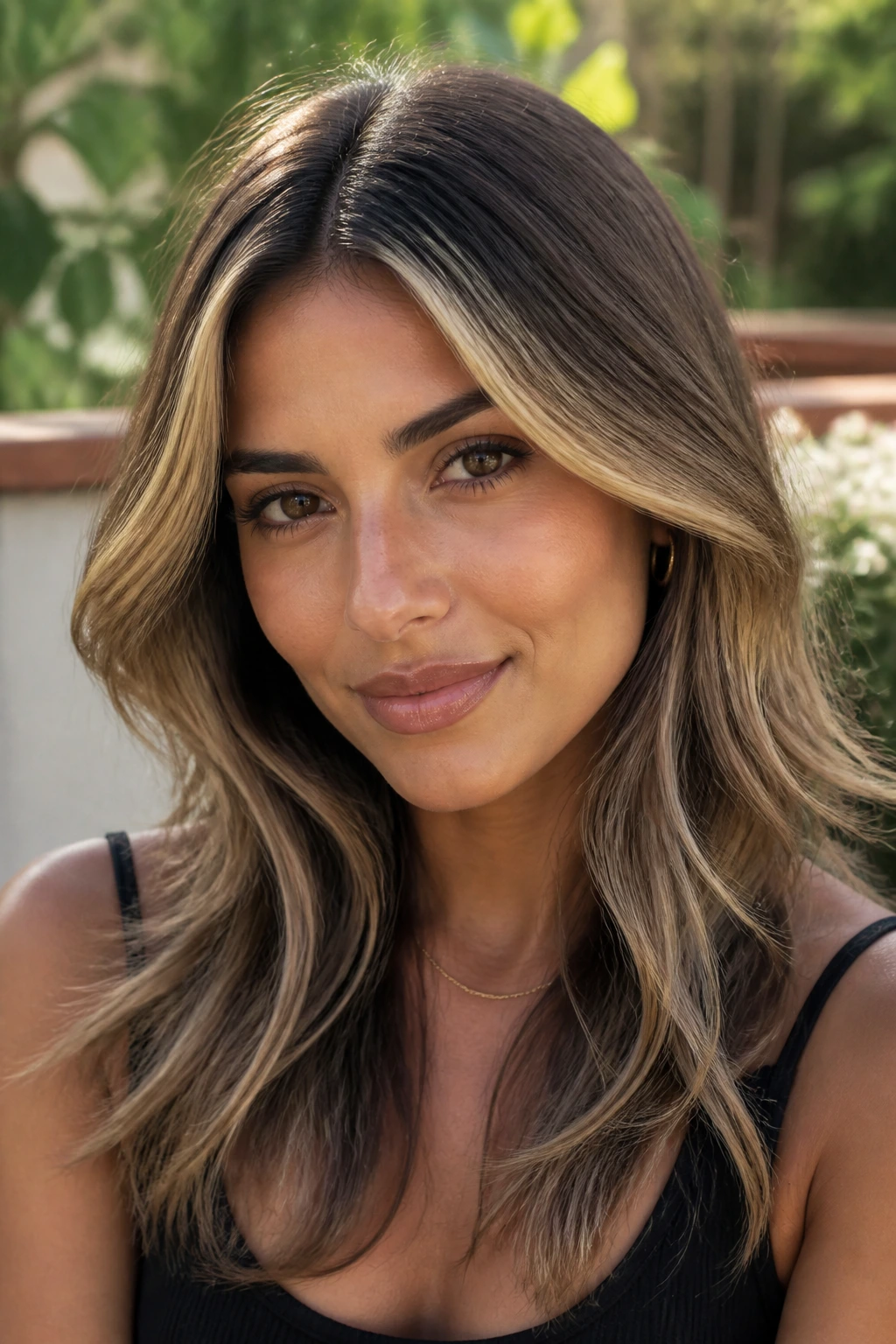
Smoky sand blonde is one of the best choices for olive skin because it avoids the too-yellow problem. The color sits in a neutral-cool lane, so it brightens the face without pulling green or orange from the complexion. It’s soft, elegant, and a little understated.
Why It Works
Olive undertones can get weird next to overly warm blonde. A smoky sand tone keeps the face frame in balance and makes the hair look like part of the skin tone instead of fighting it. The color also photographs nicely in natural light because it doesn’t flash too gold.
Pro tip
Keep the front a shade or two brighter than the mids, not five. The subtle shift is what makes it feel clean.
26. Honey-Ginger Frame for Warm Complexions
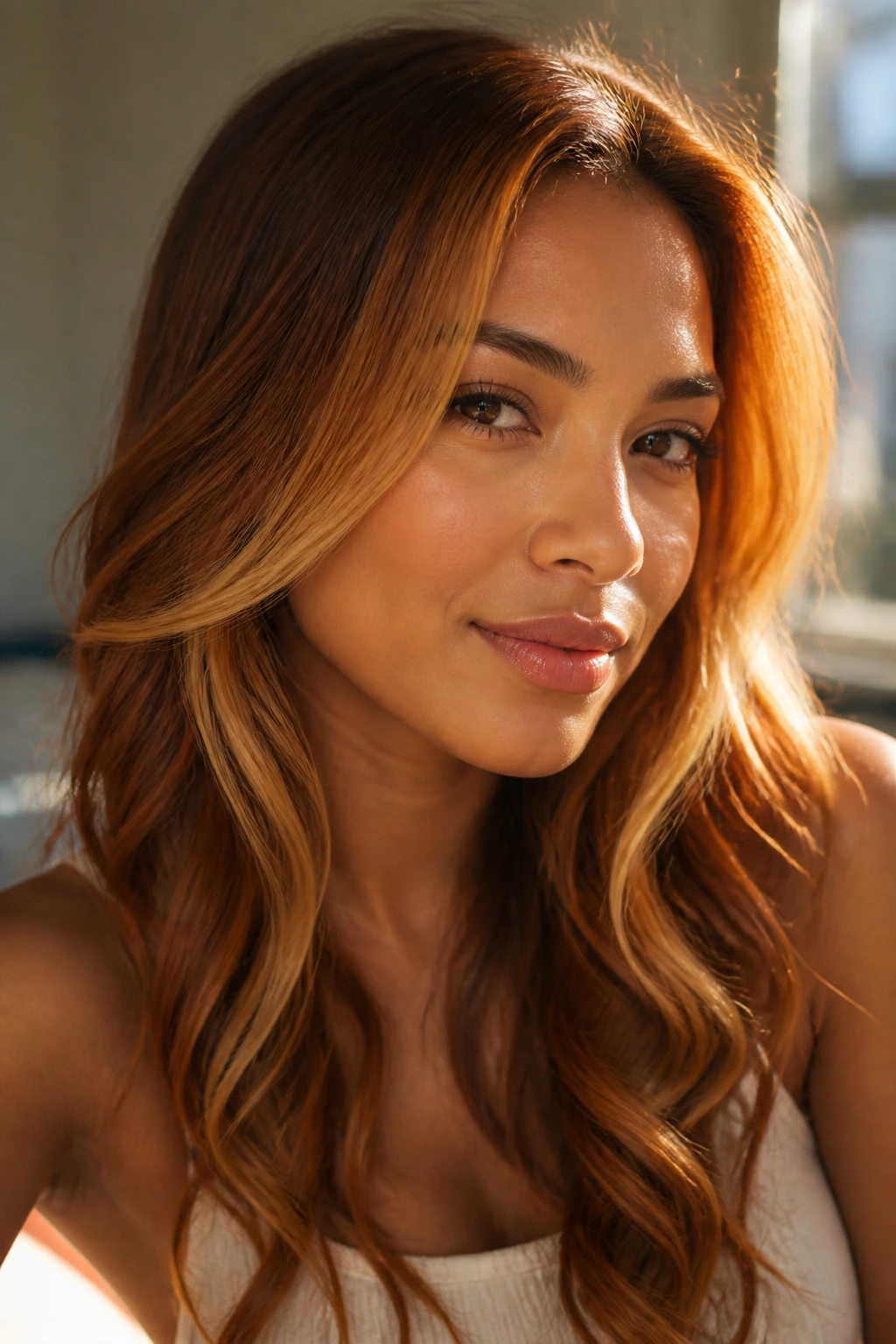
Honey-ginger sits between gold and red, and that middle ground is where the magic happens. On warm complexions, it creates a glow that feels natural rather than forced. It’s especially pretty when the hair is wavy and the light can move across the front pieces.
Why It Works
This shade enhances warmth instead of covering it. That makes it a smart pick if your skin already likes gold jewelry, peach blush, or coral lipstick. The face frame becomes part of the whole palette instead of standing apart from it.
Small detail, big result
A slightly deeper root helps the ginger pieces glow more. Too much lightness can wash the color out.
27. Soft Mocha Money Piece on Layered Shag Hair
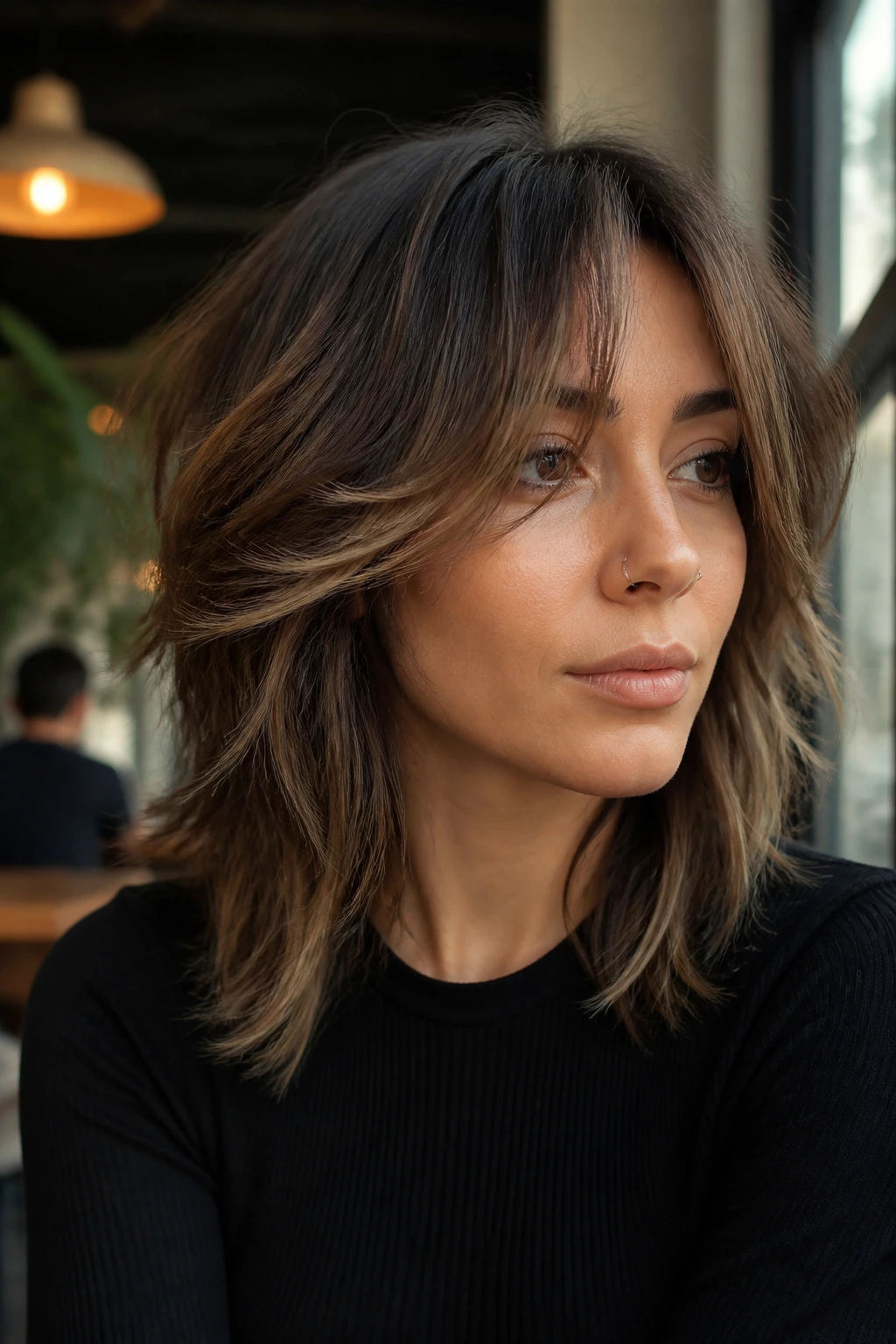
A shag haircut loves a soft mocha money piece because the layers already give the hair motion. The front color doesn’t need to be loud; it just needs to define the cut. Mocha keeps the look grounded while the shag keeps it interesting.
Why It Works
Shags can get visually busy if the color is too bright. Mocha keeps the front pieces readable without competing with the texture. When you move, the layers and color work together instead of fighting for attention.
Styling angle
Air-dried texture or a rough blowout looks better here than a super-sleek finish. The cut wants a little mess.
28. Bright Creamy Front Pieces for a Big Color Shift
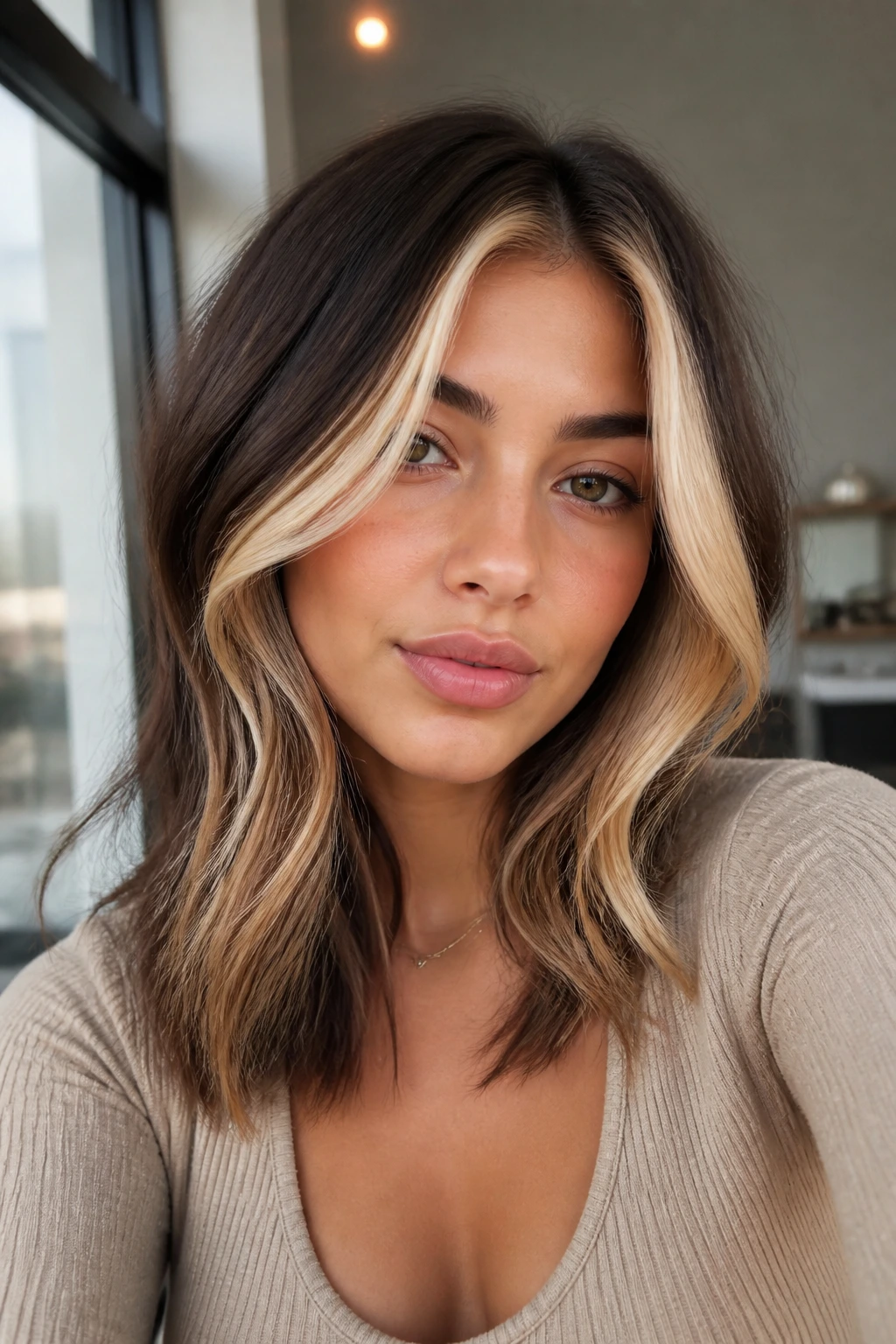
If you want the front of your hair to look dramatically lighter, creamy pieces give you the biggest visual payoff. They’re bright enough to feel like a real change, but the creamy tone keeps them wearable instead of harsh. On darker bases, this is the one that gets noticed first.
Why It Works
Creamy blonde reflects light well, which makes the face frame pop even if the rest of the hair stays deep. A slightly darker root or shadow melt keeps the brightness from looking disconnected. The result is bold without losing softness.
Best for
Women who want the front to do most of the work. If you rarely wear your hair up and love a strong part line, this is the showpiece version.
Why the Front Pieces Matter More Than the Rest of the Hair
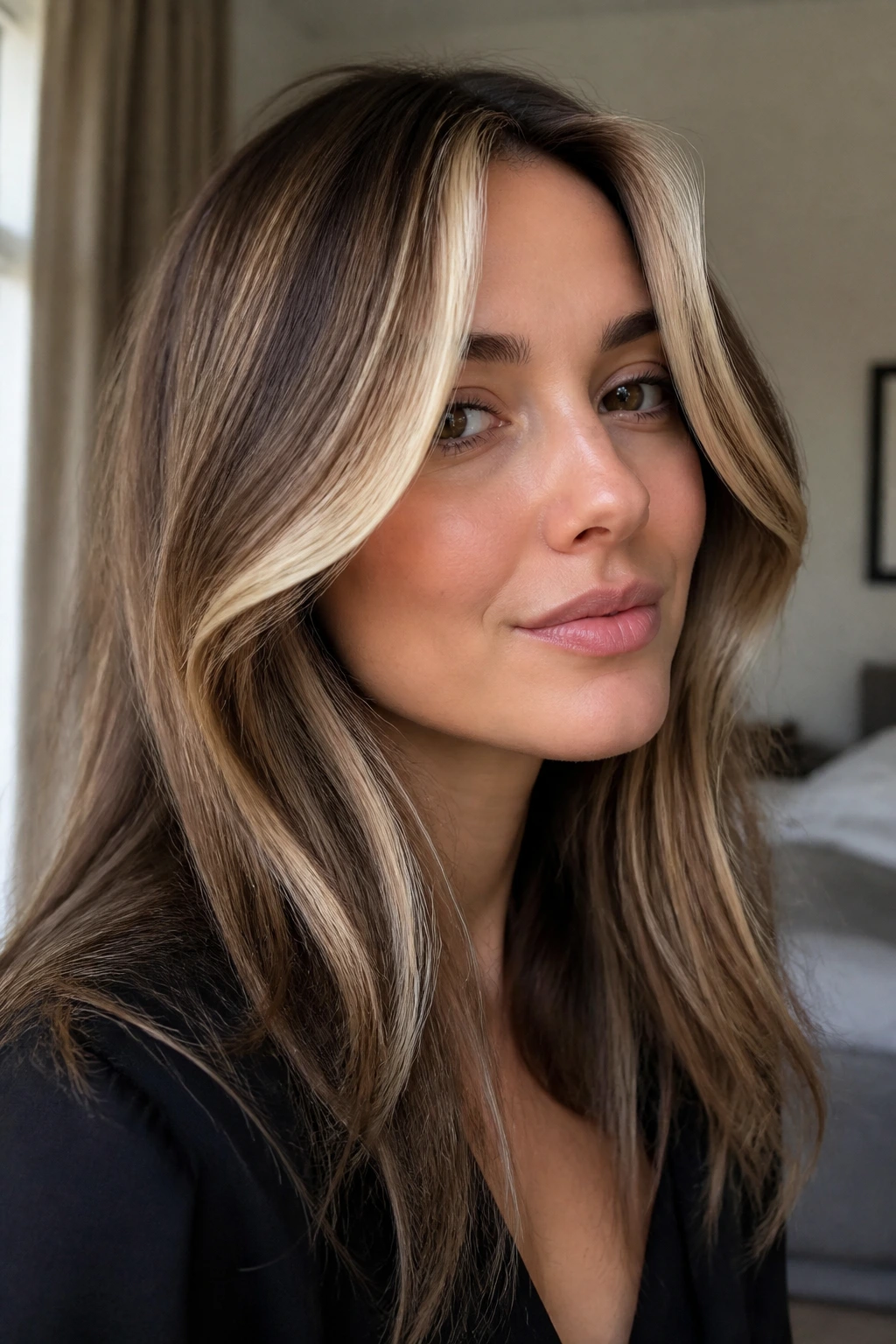
The front of the hair sits in the line of sight first. That sounds obvious, but it explains why a small color change can feel bigger than a full-head tweak. The strands near the part, temples, and cheekbones catch light every time you turn your head, and they keep doing it whether your hair is straight, waved, or thrown into a clip.
Placement matters almost as much as color. A money piece that starts too far back can disappear under layers. One that starts too wide can overpower the face and make the haircut feel boxy. The sweet spot is usually close to the part and slightly feathered through the temple, where it can frame without flattening.
There’s a practical reason colorists like this technique too. It lets them control brightness in a small area, which means they can tailor contrast to the haircut, the skin tone, and how often you want to sit in a salon chair. That’s why the best face-framing color often looks easy from the outside and fussy only where it needs to be.
Essential Tools for These Looks
- Rat-tail comb: Clean parting matters more than people think, especially for a centered money piece.
- Sectioning clips: They keep the front pieces separated while you blow-dry or style.
- Color-safe shampoo: It helps the tone stay cleaner between salon visits.
- Purple shampoo or blue shampoo: Purple helps blonde stay bright; blue helps brunette brass stay controlled.
- Heat protectant spray: Face-framing hair gets the most hot-tool contact, so skip this at your own risk.
- Round brush: Useful for lifting the front pieces away from the face.
- 1-inch or 1.25-inch curling iron: Good for soft bends that show off color.
- Gloss or toner: Keeps warm, beige, or icy tones where you want them.
- Satin pillowcase: A small swap that helps reduce friction around the front hairline.
- Mirror with side view: The front color often looks different from the side, and that’s where weak placement shows up.
How to Choose a Shade That Fits the Base and the Skin
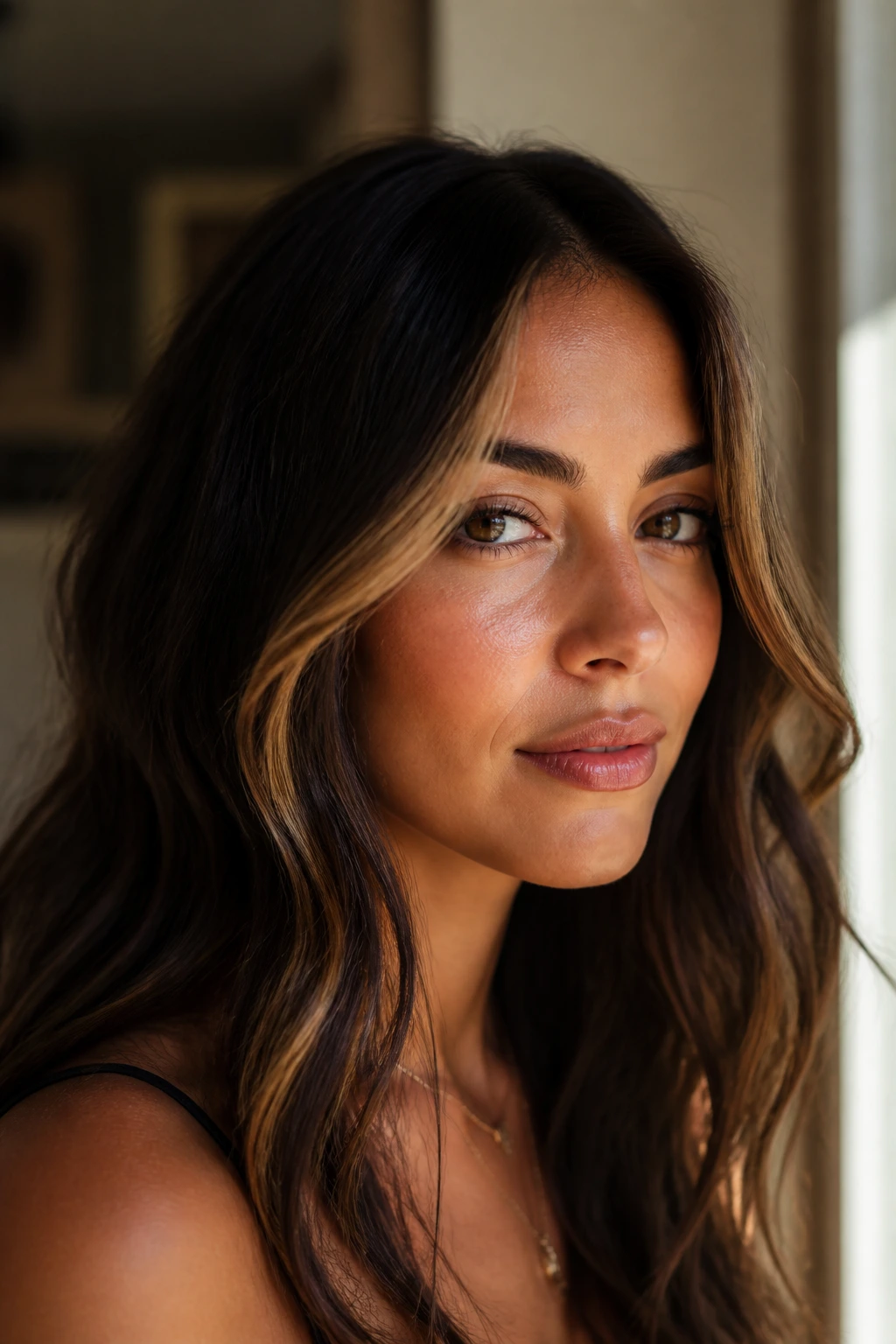
Start with the base color, not the inspo photo. A money piece is only as pretty as the contrast around it, and contrast changes depending on whether your hair is espresso, chestnut, bronde, or blonde already. If you begin with a deep brunette base, a caramel, copper, or beige-blonde front can read very differently from the same shade on a medium brown base.
Undertone matters next. Warm skin usually plays nicely with caramel, honey, copper, auburn, and peach. Cool or pink-toned skin can look sharper with champagne, beige, ash, mushroom, or silver. Neutral skin gets a wider lane, which is annoying for decision-making and convenient for everything else.
Maintenance should be part of the color choice, not an afterthought. Bright platinum or icy silver need toner and careful heat control. Copper, caramel, and soft mocha are friendlier if you want to stretch appointments. If you spend more time in a ponytail than a blowout, pick a placement that still looks good half-hidden. If you wear your hair straight and sleek, a cleaner, more graphic front panel can make sense. Small details. They change the whole read.
How to Wear and Style These Looks
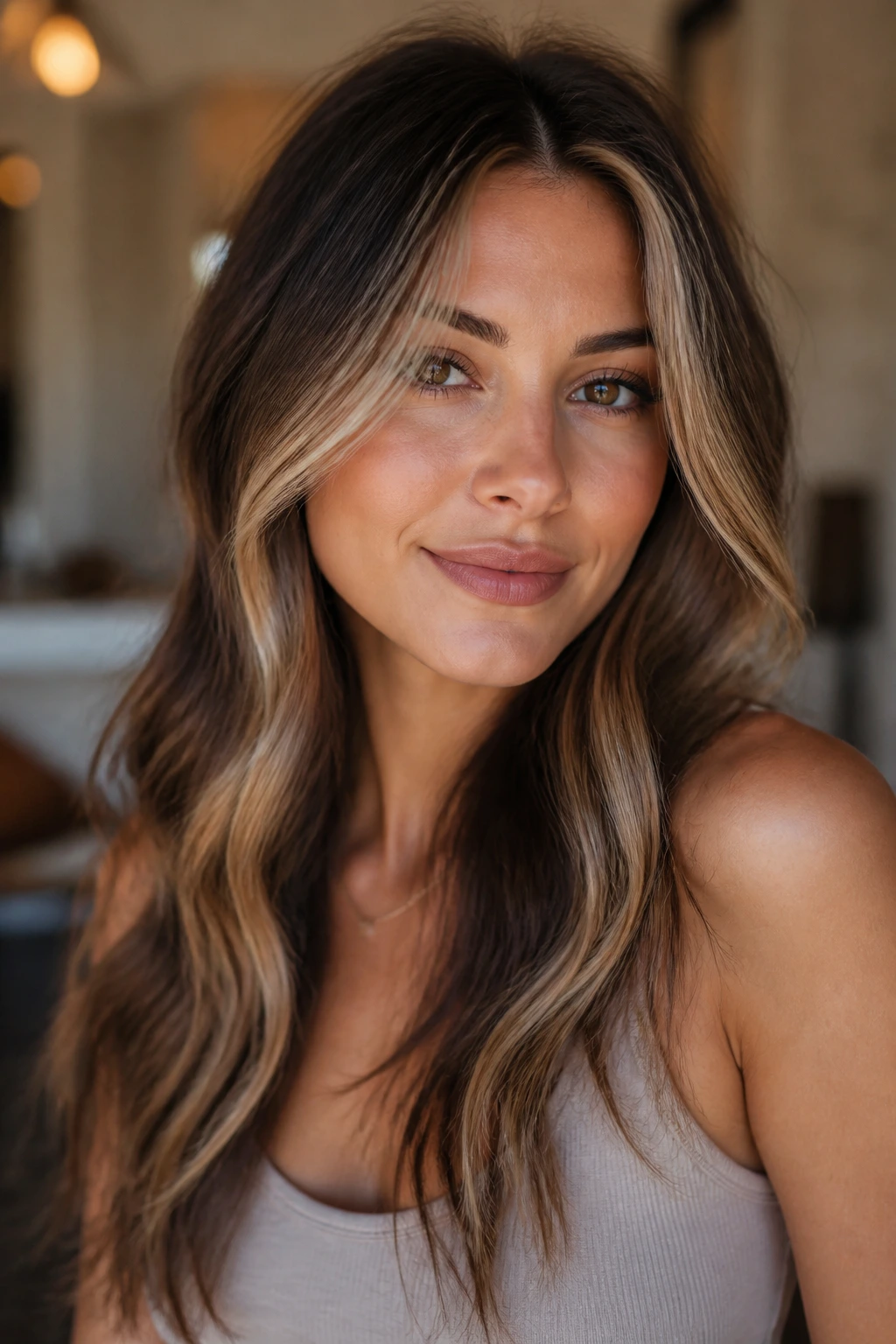
Loose waves: This is the easiest way to show the color shift. A loose bend around the face keeps the money piece visible from every angle and stops it from lying flat against the cheek.
Straight and sleek: Clean hair shows the tone clearly, which is great if you chose beige, ash, or creamy blonde. Use a slight bevel at the ends so the front pieces don’t look like flat strips.
Big blowout: Round-brush the front away from the face, then flip the ends back just a little. That motion opens the color and gives the haircut lift at the root.
Ponytails and clips: Leave a couple of slim face pieces out, or choose a front highlight placement that still shows when the hair is pulled back. If you wear claw clips often, mention that at the salon.
Braids and half-up styles: A money piece can disappear in a full braid if it’s too thin. For braid wearers, the front panels usually need a bit more width to keep the color visible.
Extra Tricks to Make the Face Frame Pop
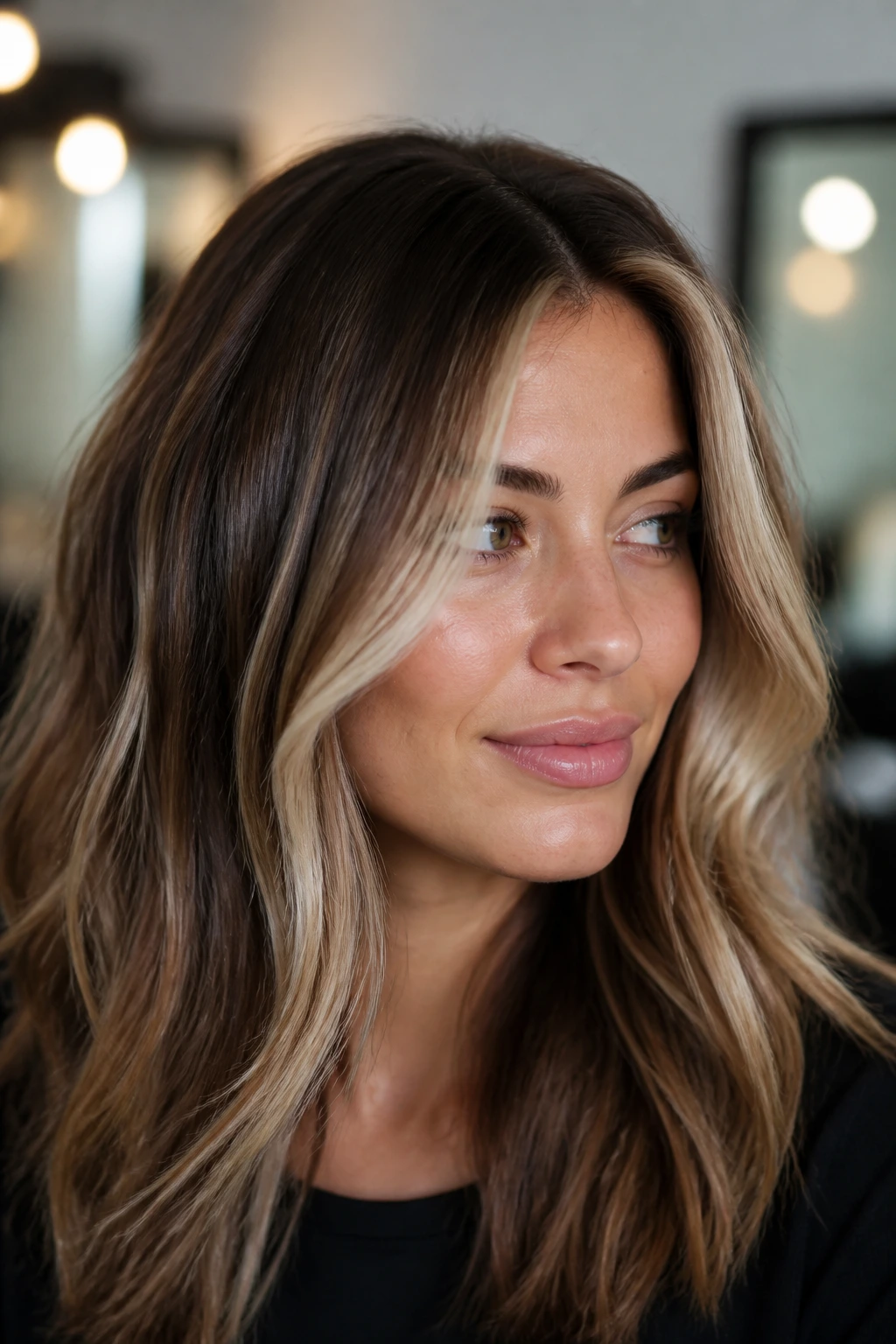
Gloss: A clear or tinted gloss every 6 to 8 weeks keeps the front pieces shiny and helps warm tones stay rich instead of dusty.
Cut pairing: Curtain bangs, butterfly layers, face layers, and textured lobs all make money pieces look more deliberate because they give the color somewhere to land.
Texture choice: If your hair is pin-straight, a small bend through the front keeps the highlight from reading like a hard stripe. If your hair is curly, let the curl pattern guide placement.
Make-it-yours: For a softer look, keep the money piece narrow and close in tone to the base. For something bolder, widen the front section by a half inch on each side and step the tone up with more contrast.
Finishing touch: A little shine spray at the front only — not the whole head — can make the face frame look more polished than the rest of the style.
Maintenance, Toning, and Grow-Out Timelines
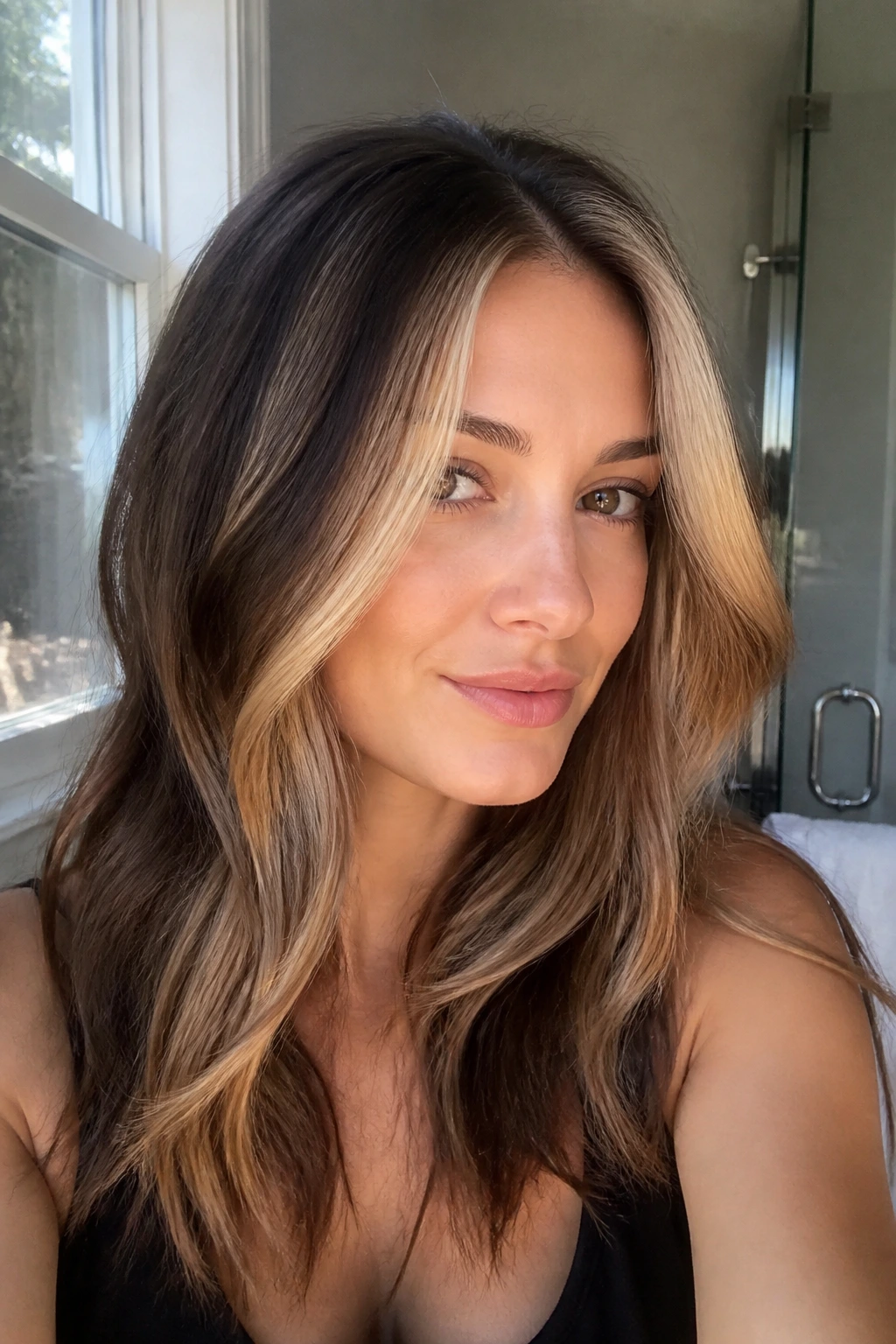
Bright front pieces need a little babysitting. The good news is that the front usually fades in a flattering direction if you choose the right tone. The bad news is that brass, dryness, and hard water can make the color shift faster than you want, especially on lighter blonde, silver, or ash looks.
For blonde and beige money pieces, a purple shampoo once every 7 to 10 days is usually enough to keep yellow under control. If the base is brunette and the front is getting orange, a blue shampoo every 1 to 2 weeks can help. Leave either one on too long and the hair can go dull or slightly muddy, so short contact times work better than marathon washes.
Plan on a gloss or toner refresh every 6 to 8 weeks for high-contrast blonde, silver, or champagne fronts. Softer caramel, copper, auburn, and mocha pieces can often stretch to 8 to 12 weeks before they need a salon touch-up. If the look is rooted and lived-in, you can sometimes push it a little longer without the grow-out line getting ugly. Heat styling adds wear, so use protectant every time. Every time. The front hairline gets the most heat and the most sun, and it shows.
Common Mistakes That Make a Money Piece Look Off
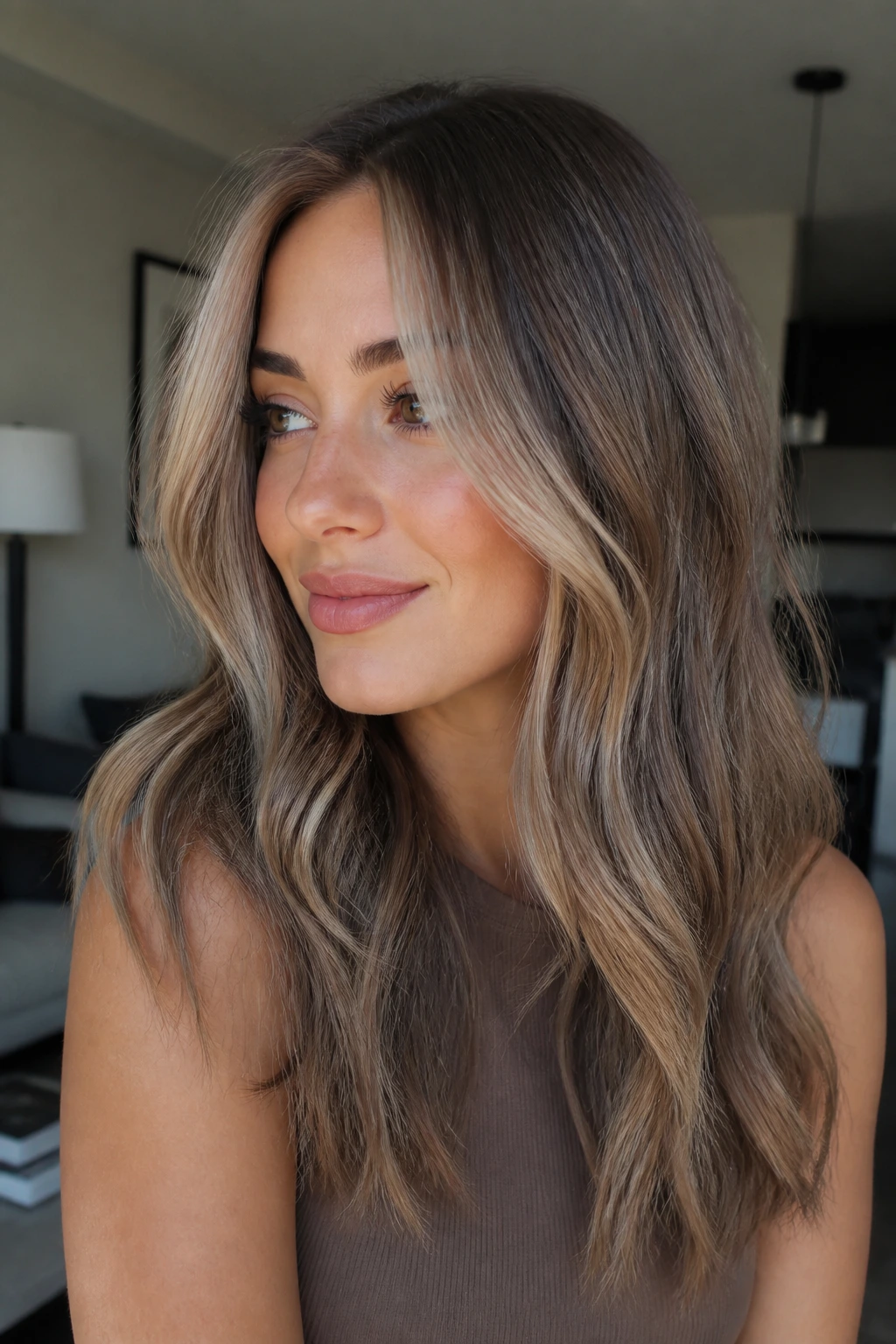
Too wide, too soon: If the front section is thick enough to look like a curtain, it can take over the whole haircut. The fix is narrower placement at the hairline and a softer feather into the part.
Wrong tone for the base: A yellow blonde on a cool brunette base can look disconnected, while an ash tone on a very warm base can look flat. Match the tone to the undertone, not the color you saw in a photo with different lighting.
Ignoring the haircut: A blunt bob needs a different front placement than long curls or a shag. If the cut has movement, the color can be softer. If the cut is sharp, the color usually needs cleaner lines.
Skipping the root blend: Without a shadow root or soft melt, even pretty brightness can look pasted on. The root gives the eye a place to rest.
Over-toning the front: Hair that gets too cool can lose shine fast. A little warmth usually looks healthier than a washed-out silver cast.
Styling it flat every day: A money piece needs lift, bend, or movement to show properly. If the front pieces are glued straight to the face, the color loses half its job.
Variations and Different Ways to Wear the Money Piece
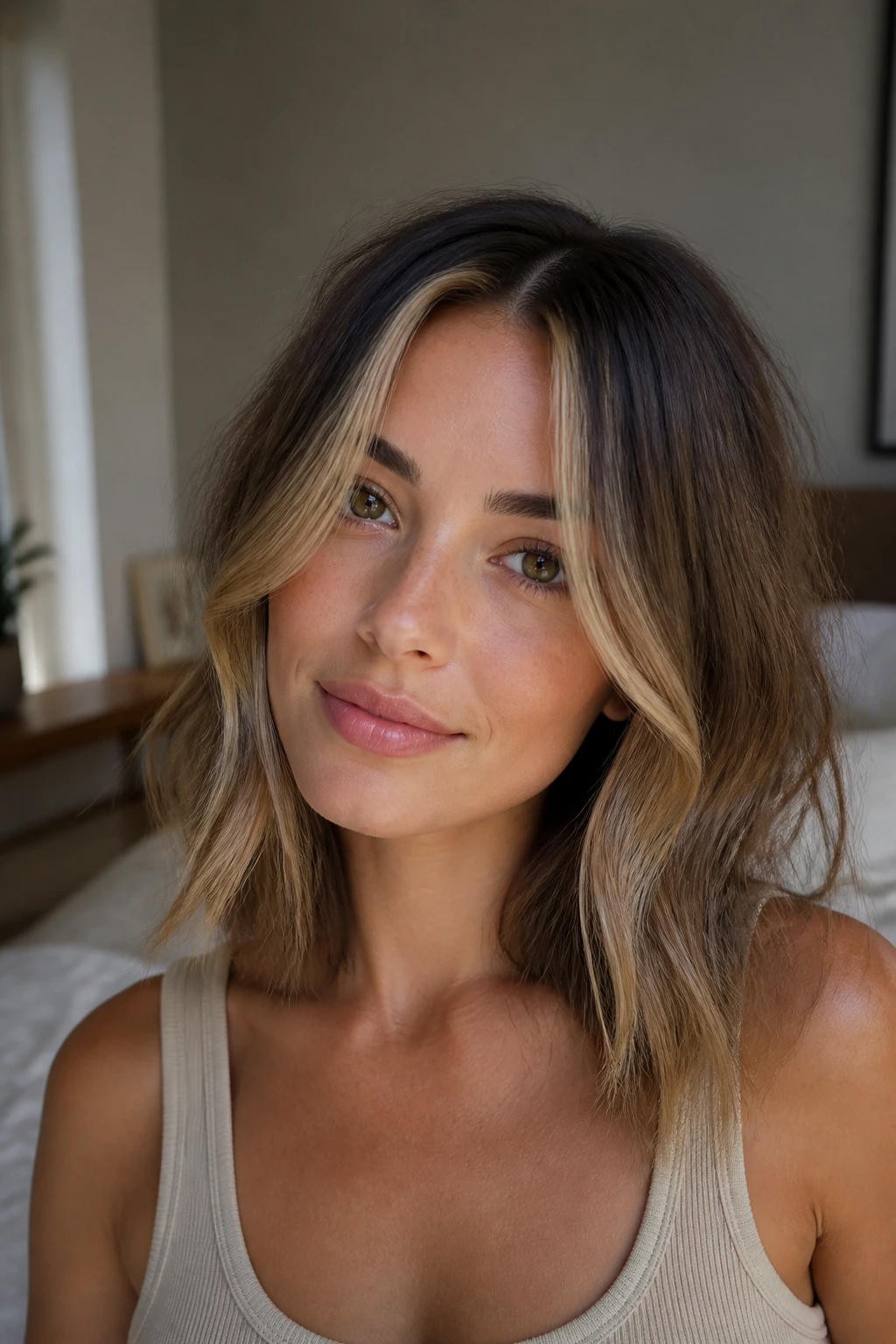
The Barely-There Frame: Keep the front pieces only a shade lighter than the base and focus on softness rather than contrast. This works well if you want a polished change that still looks natural in a low ponytail.
The High-Contrast Pop: Go brighter, wider, and more obvious at the hairline. This is the version for people who want the face frame to be the first thing anyone notices.
The Warm Glow-Up: Use caramel, honey, copper, auburn, or peach tones to warm the face instead of lightening it dramatically. It’s a smart route for darker hair and warmer skin.
The Cool Smoke: Choose beige, ash, champagne, or silver if you want a cleaner, more muted finish. This keeps brass out of the picture and reads sleek on straight or waved hair.
The Curly Halo: Place the bright pieces where curls naturally sit around the temples and cheekbones, not where they look longest when wet. This makes the color move with the texture instead of fighting it.
Questions People Ask About Money Piece Looks
What exactly is a money piece?
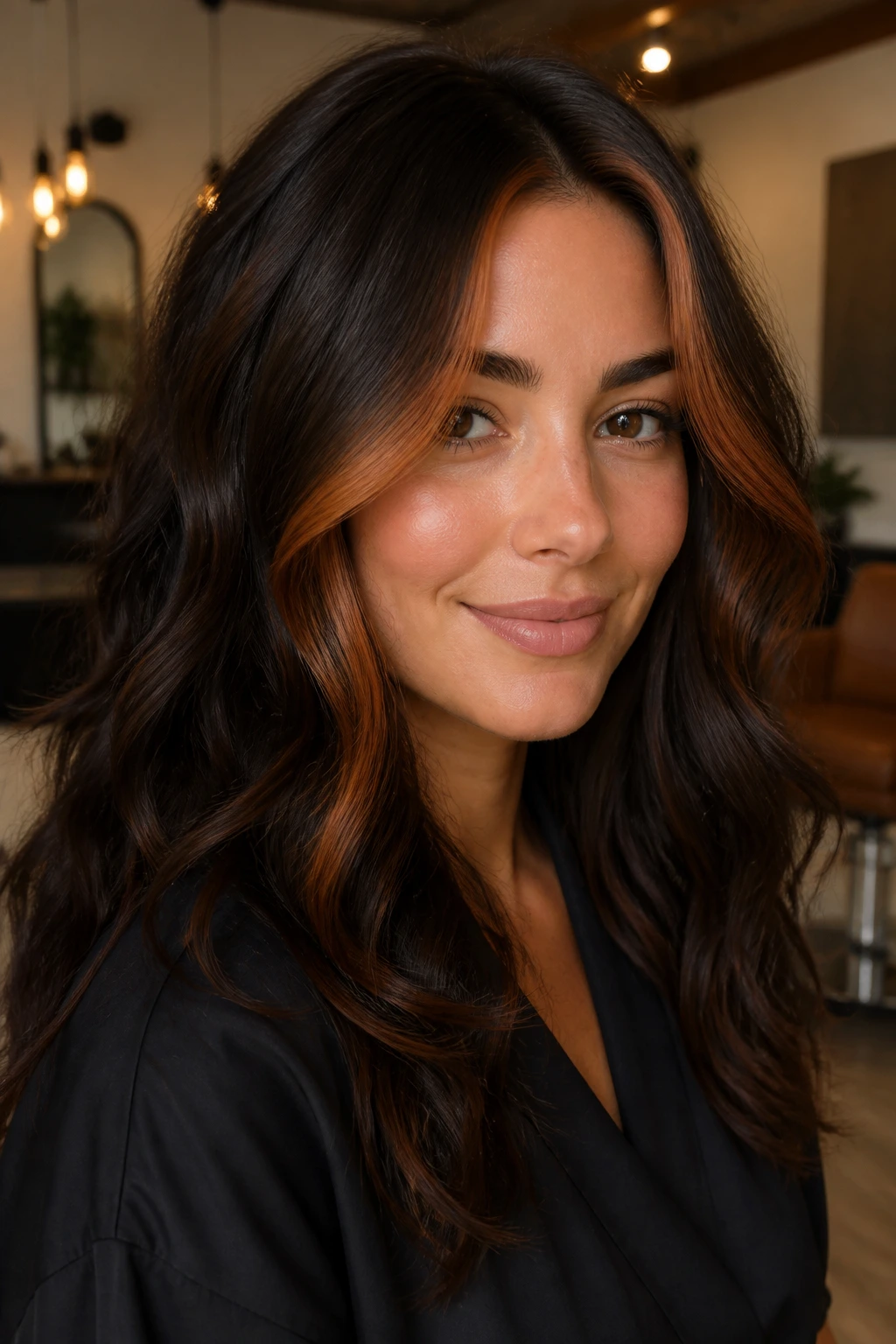
It’s the lighter face-framing section at the front of the hair, usually placed around the part, temples, and sometimes into curtain bangs. The goal is to brighten and shape the face without changing every strand.
Does a money piece work on dark hair?
Yes, and dark hair often shows the effect best because the contrast is stronger. Copper, caramel, auburn, beige blonde, and platinum all work, but the right choice depends on how much lift your hair can handle.
Is it high maintenance?
It can be, but not every version is. Soft caramel or bronde frames can grow out for months. Platinum, icy blonde, and silver need more toning and moisture care.
Can I do it without bleaching the whole head?
Absolutely. That’s one of the main reasons people choose this look. The front can be lifted while the rest of the hair stays deeper and healthier-looking.
What should I ask for at the salon?
Bring a photo and say whether you want soft or bold contrast, warm or cool tone, and narrow or wide placement. Those three choices matter more than a vague request for “money pieces.”
How do I keep the blonde from turning brassy?
Use purple shampoo sparingly, avoid washing with very hot water, and book a gloss when the tone starts to look yellow. A good color-safe conditioner helps too, especially on the front hairline.
Can this work on curly hair?
Yes, but placement has to follow the curl pattern. The bright pieces need to sit where the curls actually live around the face, or the color can vanish when the hair dries.
What if the front pieces come out too light?
A toner or gloss usually softens them faster than people expect. If the color still feels too bright, ask for a deeper root shadow next time so the contrast has a softer landing.
Will it grow out weird?
Not if the root blend is done well. A soft shadow root and a placement that feathers into the part let the color fade in a cleaner way.
A Face Frame That Pulls Its Weight
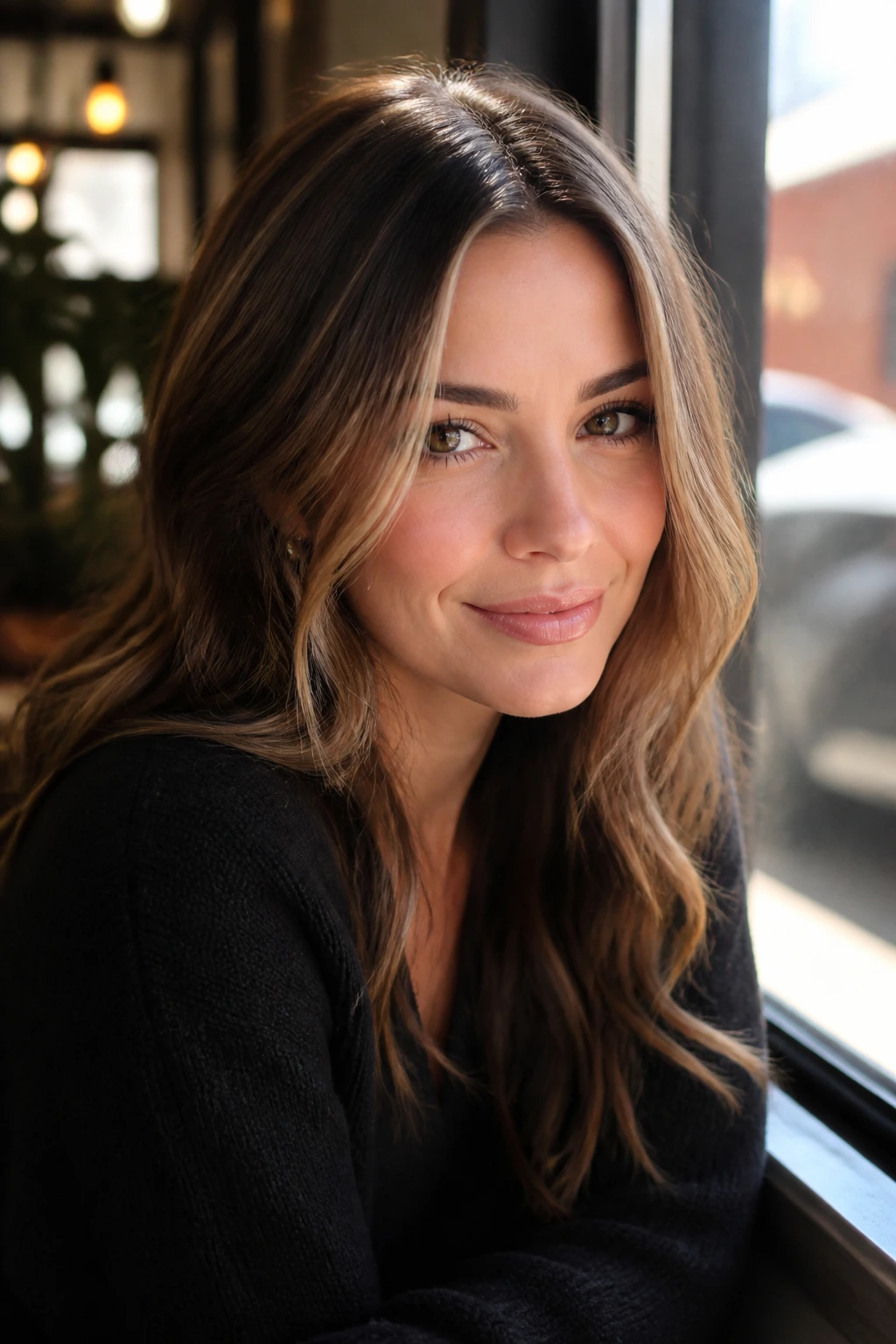
A good money piece does what good hair color should do: it earns its spot. It does not need to cover the whole head or shout from across the room. Sometimes the smartest move is a slim caramel ribbon near the temple. Sometimes it’s a bright creamy front that turns a plain cut into a statement. The right one depends on your base, your upkeep tolerance, and how much contrast you actually want to see in the mirror every morning.
Save the looks that match your hair’s depth and your styling habits, not just the ones that look loud in a saved photo. Bring one or two clear notes to your next appointment — tone, width, and how you usually wear your hair — and the front pieces will do the rest.
