



Thick hair and a pixie cut can be a brilliant match — if the cut is built for bulk, not borrowed from a fine-hair photo. Dense hair has a way of announcing itself at the temples, around the ears, and right at the nape. Leave those areas heavy, and the shape can puff out fast.
The phrase pixie cuts for thick hair covers a lot more than one neat, gamine crop. On thick hair, the job is architectural. You’re not just going short; you’re removing weight in the places that make short hair go boxy, while keeping enough length on top to create movement and direction. That’s why a good pixie on dense hair looks sharp for weeks, not hours.
I’ve always thought the best short cuts for thick hair feel a little more edited than cut. A blunt edge on the wrong head of hair can look like a helmet by lunch. But a tapered nape, some internal layering, and a clean fringe line can make the whole style sit close to the head and still feel alive. The right shape matters more than the number of inches left behind.
Why This Collection Works on Dense Hair
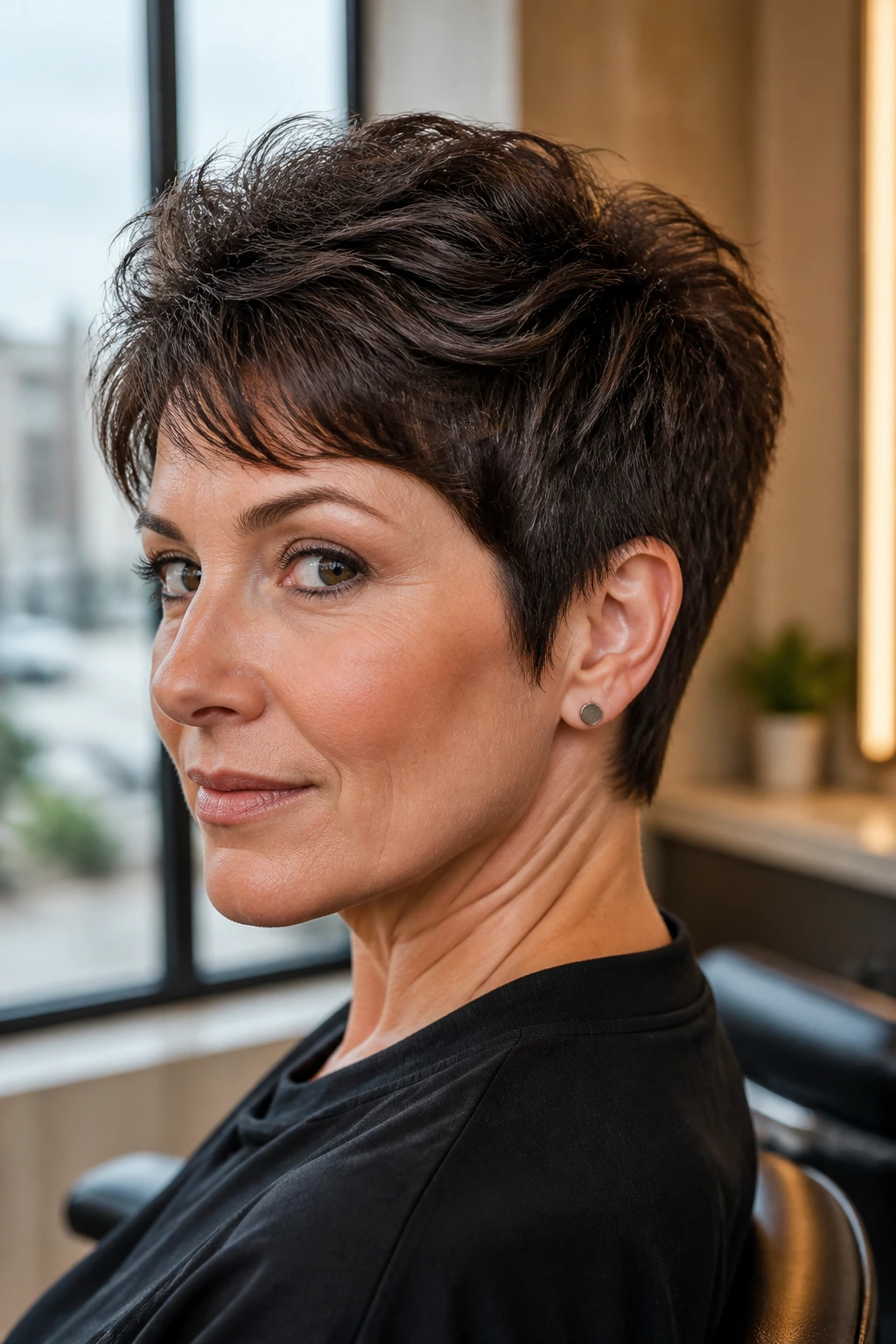
- Weight gets controlled, not just removed: Thick hair needs bulk taken out from the inside and around the perimeter, or the shape swells at the sides.
- Short hair can still move: Dense strands hold bend, lift, and texture better than fine hair, so a pixie can look full without turning flat.
- The nape becomes the anchor: A clean taper at the neck stops the back from looking squat and keeps the haircut from spreading out.
- Different fringes solve different problems: Side-swept, baby, curtain, and micro bangs all change how thick hair sits around the forehead.
- Grow-out is less awkward when the cut is built well: A smart pixie grows into a short crop, not a fuzzy triangle.
1. Classic Tapered Pixie
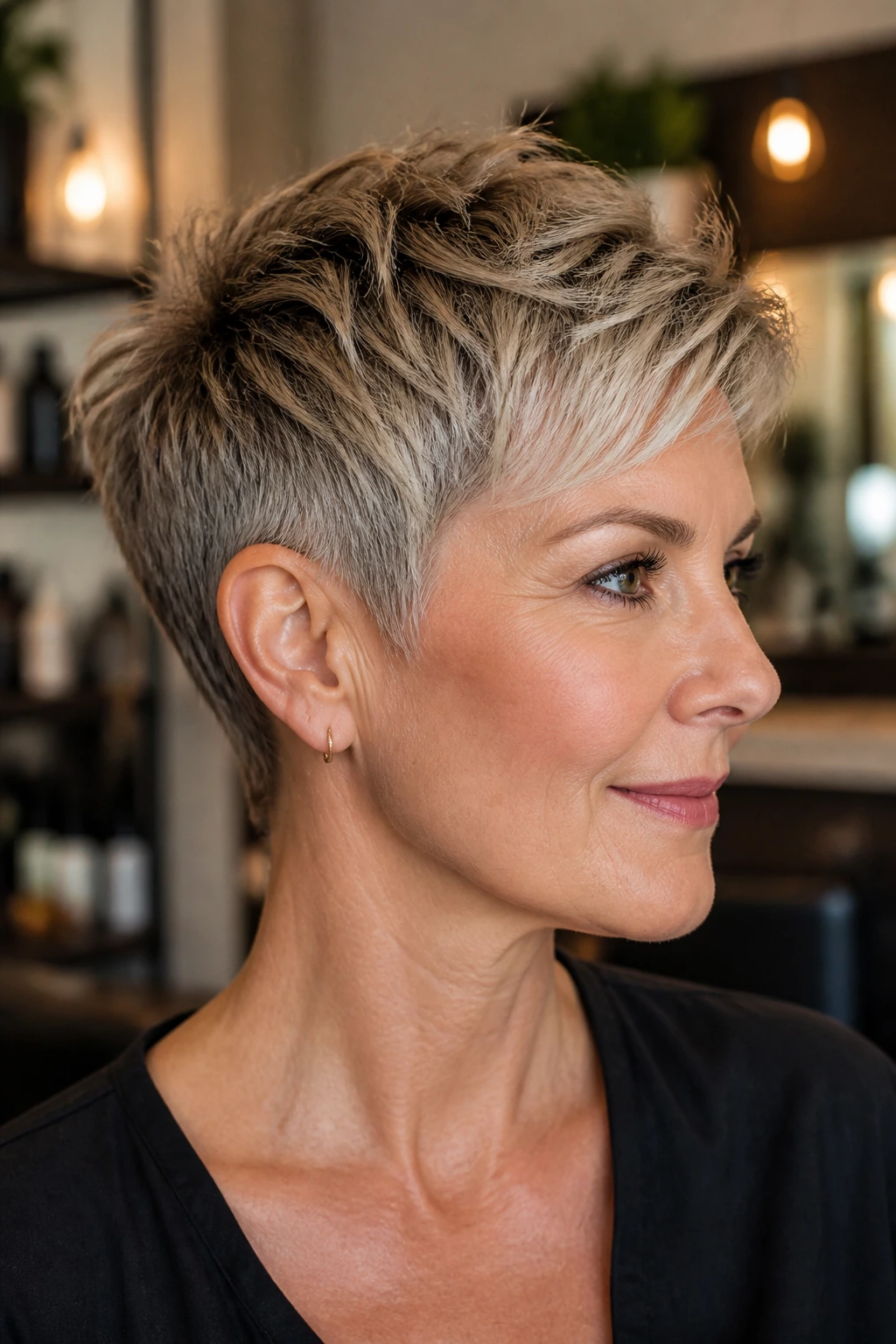
This is the version I recommend when you want thick hair to behave without a lot of drama. The sides sit close, the nape is tapered tight, and the top keeps just enough length to lie forward or slightly over to one side. It looks neat because the haircut does the work; you’re not fighting volume every morning.
Why it works: Thick hair needs a place to shed weight, and the taper gives it one. Keep the crown a little longer — around 2 to 3 inches — so the top can move while the sides stay narrow. That balance stops the cut from turning into a square block.
Best for: Straight or slightly wavy hair, especially if your hairline at the back is dense and stubborn.
Styling note: A pea-size dab of matte paste on dry hair is usually enough. Too much product flattens the crown and makes the cut look greasy.
2. Choppy Cropped Pixie
What if your thick hair refuses to lie down in a tidy line? Go choppy. This cut uses uneven ends and small internal layers to break up the mass, so the hair looks piecey instead of solid. It’s a little rougher around the edges, and that’s the point.
Why the texture helps
When the ends are blunt, thick hair often reads as a single shape. Choppy cutting creates little gaps in the outline, which keeps the crown from puffing into one heavy dome. It also gives you a cut that looks better with a quick finger-dry than with perfect, fussed-over styling.
A light texturizing cream works better here than a hard wax. Work it through the ends, then scrunch the top forward and slightly up. You want separation, not spikes.
3. Undercut Pixie with Clean Sides
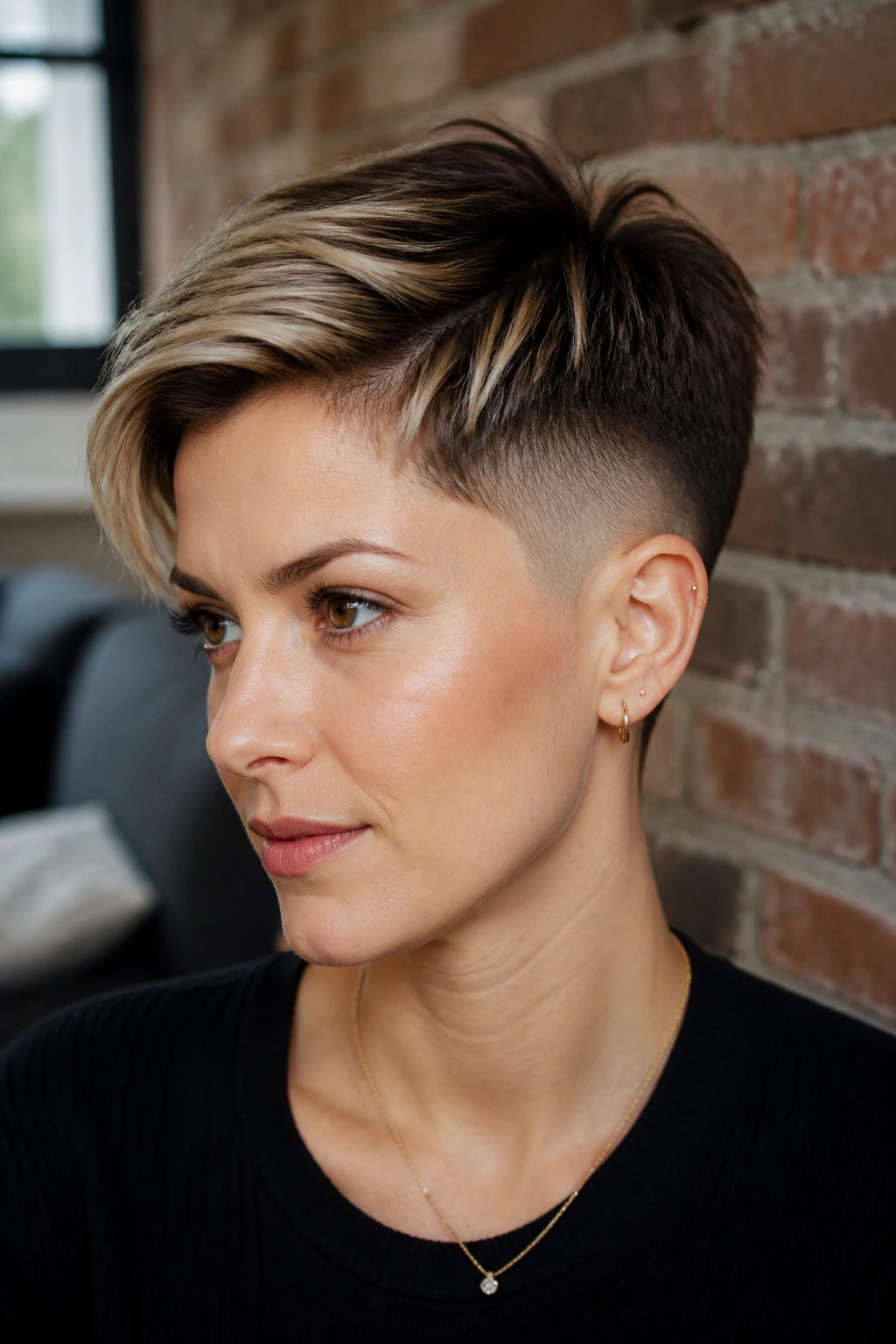
A hidden undercut can rescue a very dense head of hair. The top stays full and feminine, but the sides and nape are trimmed much shorter underneath, so the bulk disappears where it tends to flare out most. It’s especially useful if your hair grows wide around the ears.
The nice thing about this cut is that it doesn’t look shaved unless you want it to. You can keep the upper layer long enough to sweep over the shorter bits, which makes the shape feel softer than a dramatic undercut bob. On thick hair, that hidden reduction buys you time between trims.
If your hair is coarse, this one is worth serious attention. It cuts down on the triangle effect more effectively than simple layering ever will.
4. Long Fringe Pixie
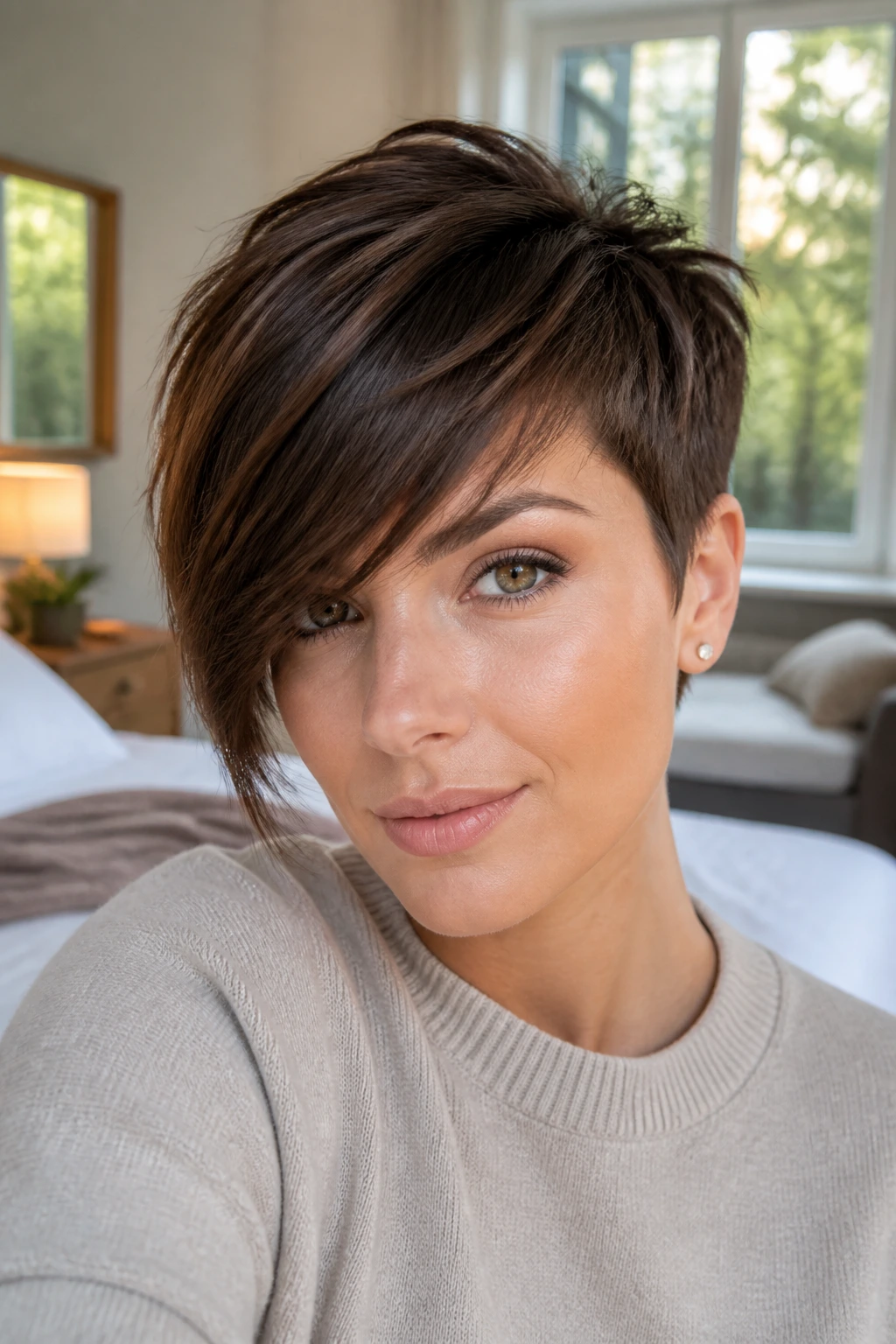
A long fringe changes everything. Instead of trying to tame thick hair across the whole head, this cut lets the front carry the style. The bangs can fall diagonally across the forehead, soften a strong brow, and pull the eye forward so the sides don’t feel so wide.
That fringe also gives you more room to work with cowlicks at the front. A short, blunt bang can spring up on thick hair. A longer one, cut with a bit of direction, usually settles more easily after a blow-dry. Leave the front long enough to tuck behind an ear when you want it out of the way.
Styling cue
Dry the fringe first, before the rest of the head gets fully dry. Thick hair sets fast, and if the front dries in the wrong direction, you’ll spend the next ten minutes pushing it back down.
5. Feathered Pixie Cut
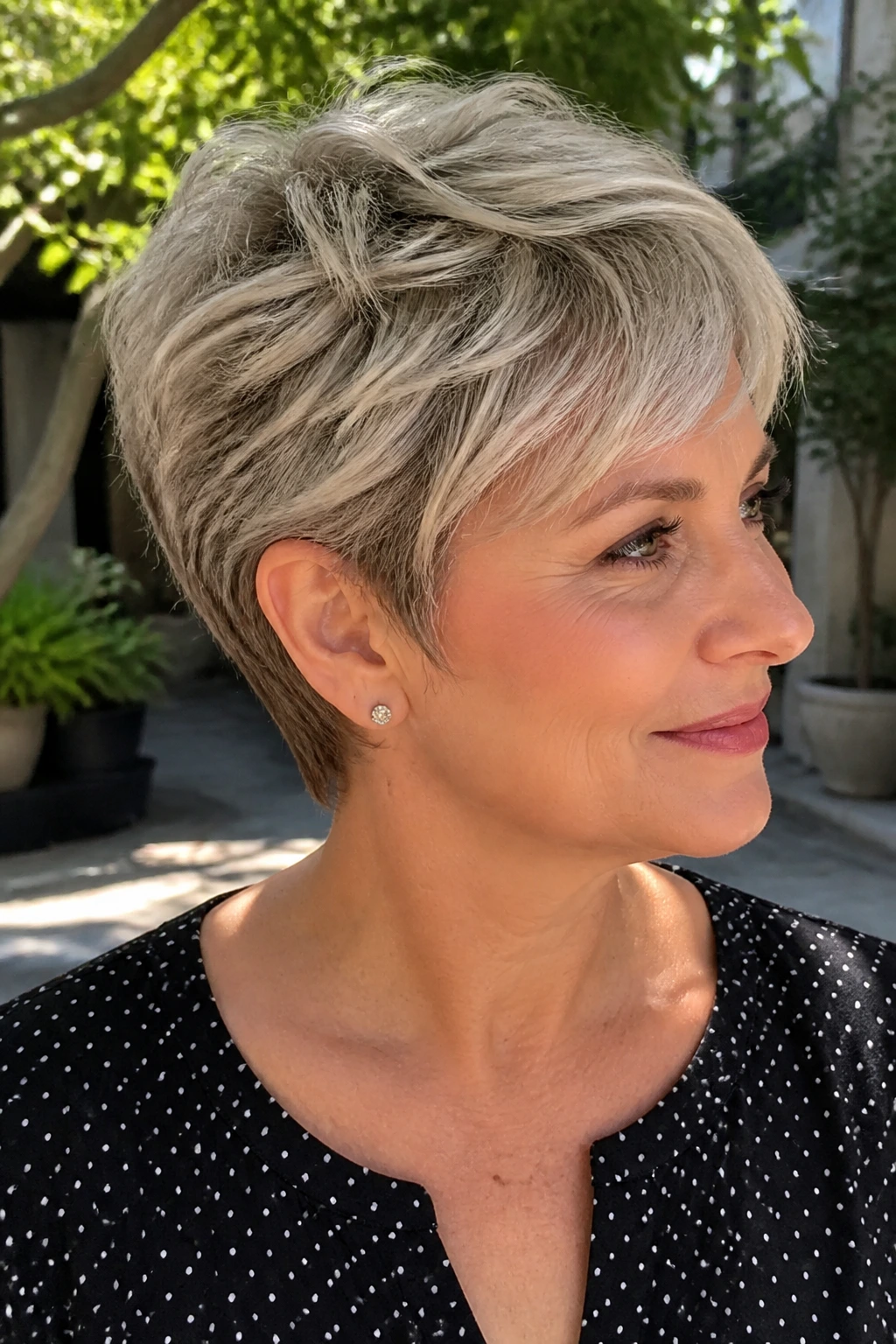
Feathering is one of the oldest tricks in the book, and it still works because it changes how the light hits the ends of the hair. More important, it keeps thick hair from feeling heavy at the perimeter. The edges look softer, the top feels airier, and the cut moves when you turn your head.
This version works well when you want a pixie that isn’t too edgy. The layers should be visible but not shredded. If the feathering is done properly, the haircut keeps a gentle shape instead of collapsing into a puff at the crown.
A round brush can help, but don’t overdo the polish. Feathered thick hair looks best when the ends bend a little, not when they’re ironed into a perfect curve.
6. Curly Pixie for Dense Curls
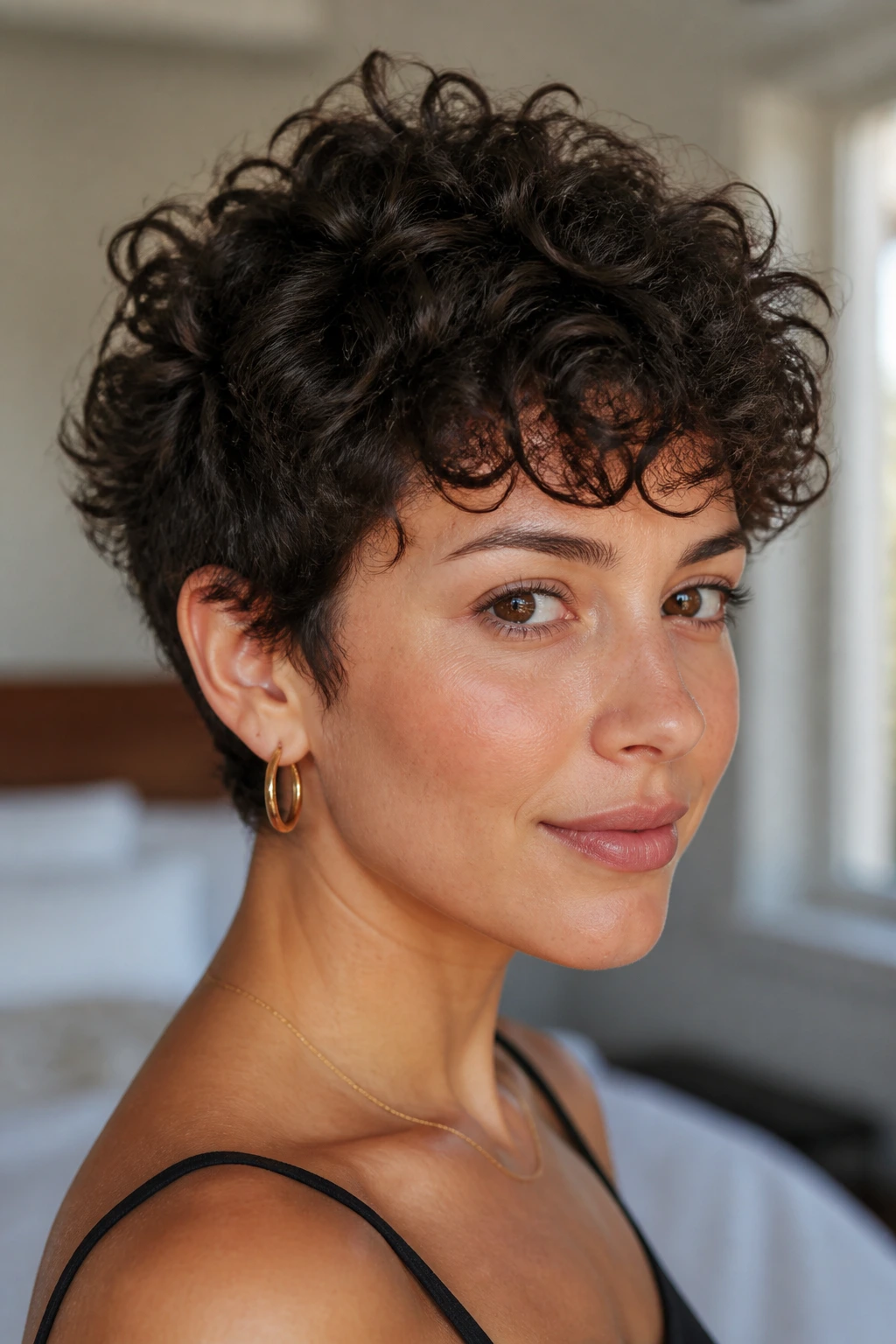
Curly thick hair needs its own rules. Cut it too bluntly and it turns into a mushroom. Cut it too aggressively and the curl pattern gets frayed and uneven. The sweet spot is a shaped pixie that respects the curl groupings and leaves enough length for the curls to spring without crowding the head.
This cut should usually be shaped with the curls in their natural state, or at least checked dry before the final trim. Shrinkage matters. A curl that looks tame when wet can bounce up two inches once it dries, and that changes everything around the fringe and nape.
The best part: a curly pixie can look rich and full without needing much product. A small amount of leave-in cream and a diffuser at low heat are usually enough.
7. Bixie with Built-In Movement
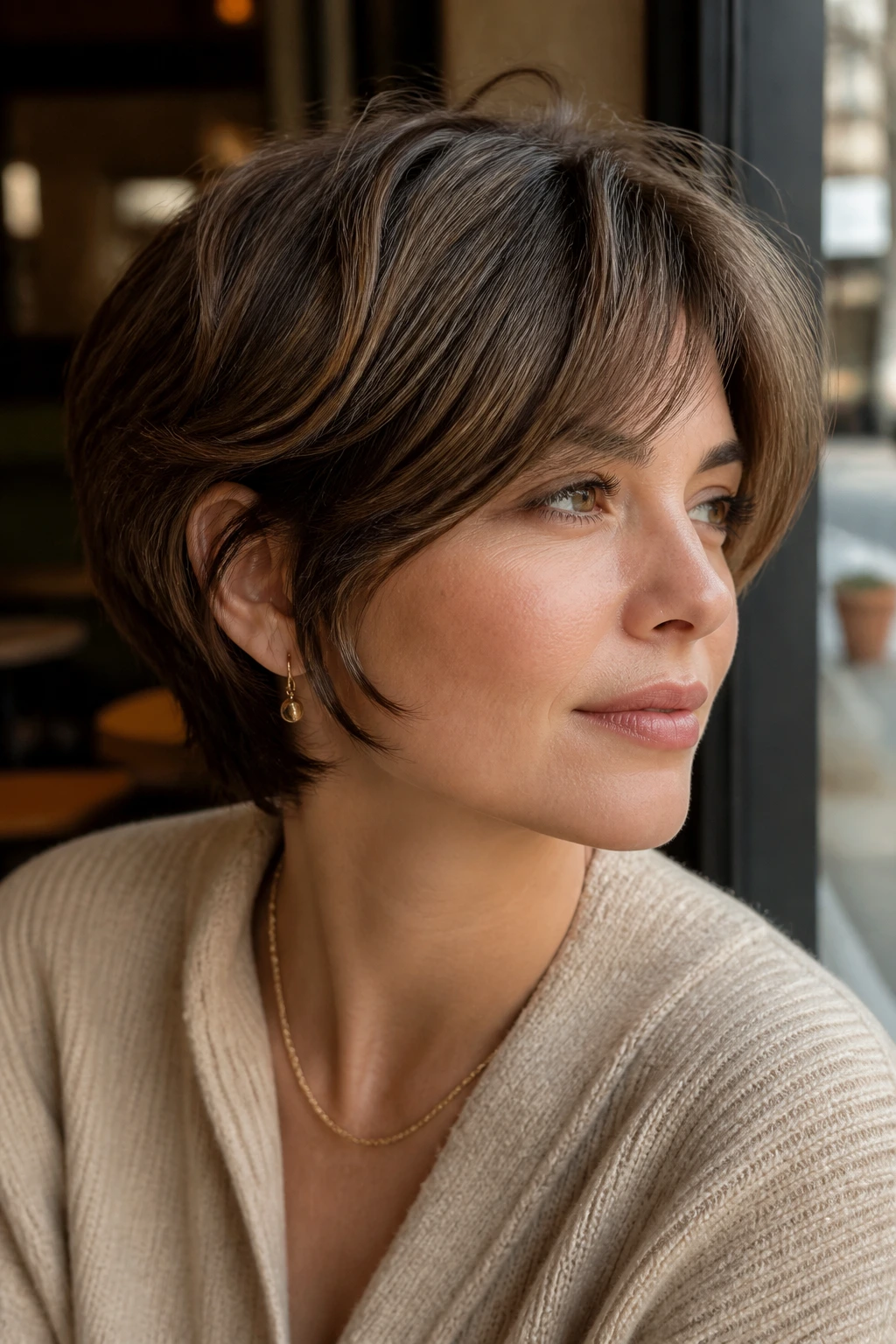
Why stop at pixie when your thick hair still has enough body for a little bob shape? The bixie sits between the two, with more length around the ears and nape but a cropped, lifted top. It’s a smart choice if you want short hair without giving up the swing that dense hair naturally has.
The extra length helps thick hair fall instead of poofing out. You can tuck it behind the ear, flick it forward, or wear it with a soft side part. That flexibility is the real selling point here.
If you’re nervous about going very short, the bixie is a good bridge. It gives you pixie energy with less scalp exposure and a gentler grow-out.
8. Asymmetrical Pixie
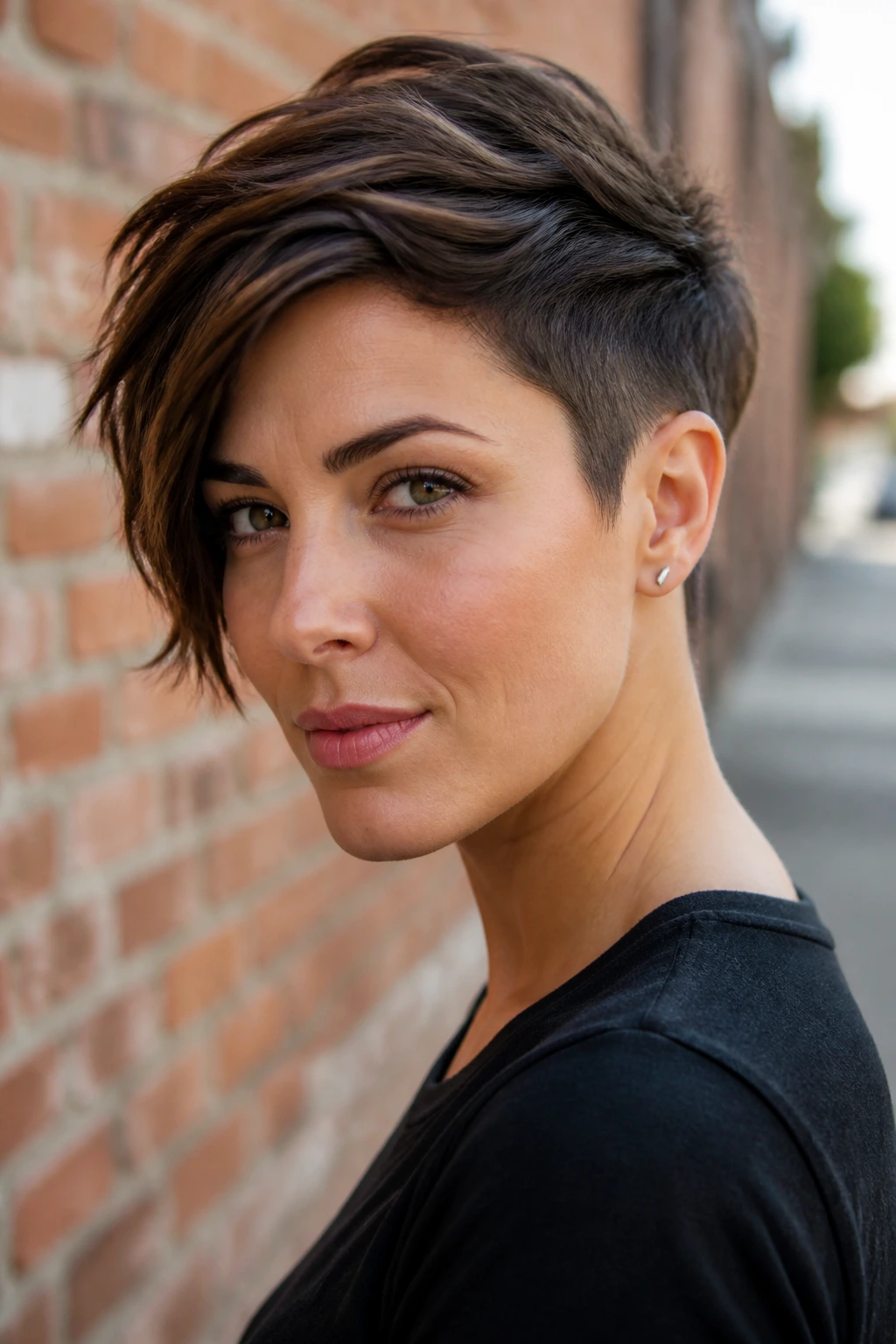
One side longer. One side tighter. Done well, this shape can make thick hair look deliberate instead of bulky. The asymmetry pulls the eye across the face, which helps if your hair tends to widen the head shape at the temples.
It also lets you control where the density lands. The shorter side keeps the haircut close, while the longer side can drape over the cheekbone or tuck neatly behind the ear. That contrast keeps the style from feeling flat.
A strong asymmetrical pixie does need a clean neckline. If the nape gets messy, the whole effect gets lost. Sharp edges matter here.
9. Shaggy Pixie with Soft Layers

The shaggy pixie is for people who like hair with a little grit. It borrows the broken texture of a shag and compresses it into a shorter shape, which is useful on thick hair because it takes away that heavy, all-one-length feeling. The result looks loose, not stiff.
This cut usually works best when the top has several short-to-medium layers that move in different directions. That’s what gives it that slightly lived-in look. If the layers are too even, the shag disappears and you’re left with a short cut that still feels dense.
A tiny amount of texture spray at the roots helps, but the real trick is the cut itself. Don’t rely on product to fake what the scissors should have done.
10. Slicked-Back Pixie
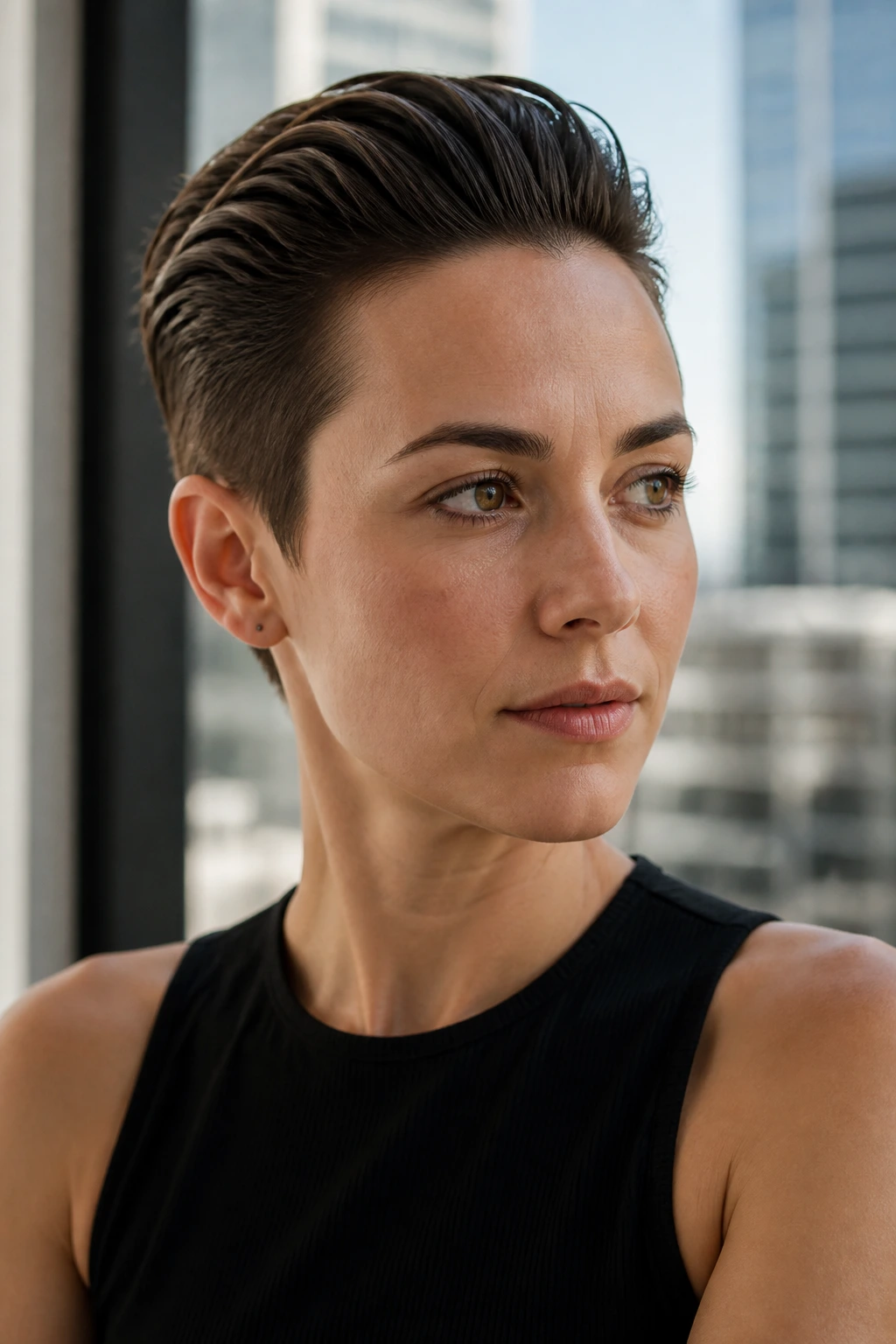
A slicked-back pixie can be a very clean answer for thick, straight hair that naturally pushes forward. The hair is short at the sides and back, longer on top, and combed back with a little shine. It feels more polished than messy, and dense hair holds the shape well once it’s trained.
This is one of those cuts that looks spare in the chair and strong on the head. The product choice matters: use a lightweight gel or styling cream, not a heavy pomade that makes the crown collapse. Thick hair already has structure; you’re just steering it.
It’s also a good evening option. The same haircut can look softer when finger-combed and sharper when smoothed back.
11. Baby Bang Pixie
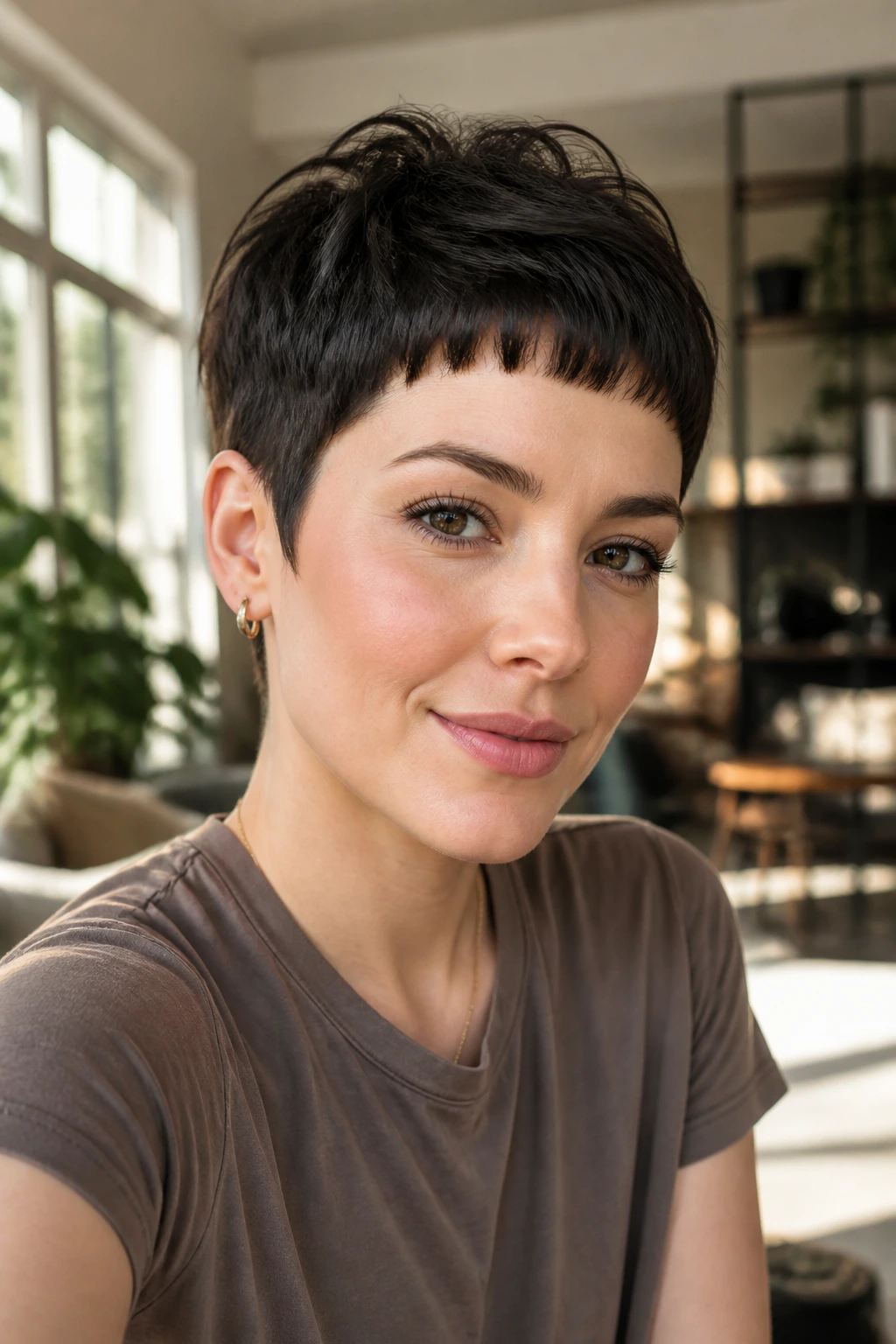
Baby bangs on thick hair are a bold move, but they can look fantastic when the rest of the cut is tight and balanced. The short fringe puts the focus high on the face, which keeps dense hair from feeling too wide around the jaw. It also gives the cut a clear personality.
The danger is going too blunt. Thick hair with a heavy micro fringe can look blocky fast. A slightly textured edge, cut with enough softness to move, usually works better than a hard line across the forehead.
If you wear glasses or have a strong brow, baby bangs can be a little tricky. They work best when the rest of the pixie is trimmed close enough to keep the fringe from competing with everything else.
12. Side-Swept Pixie
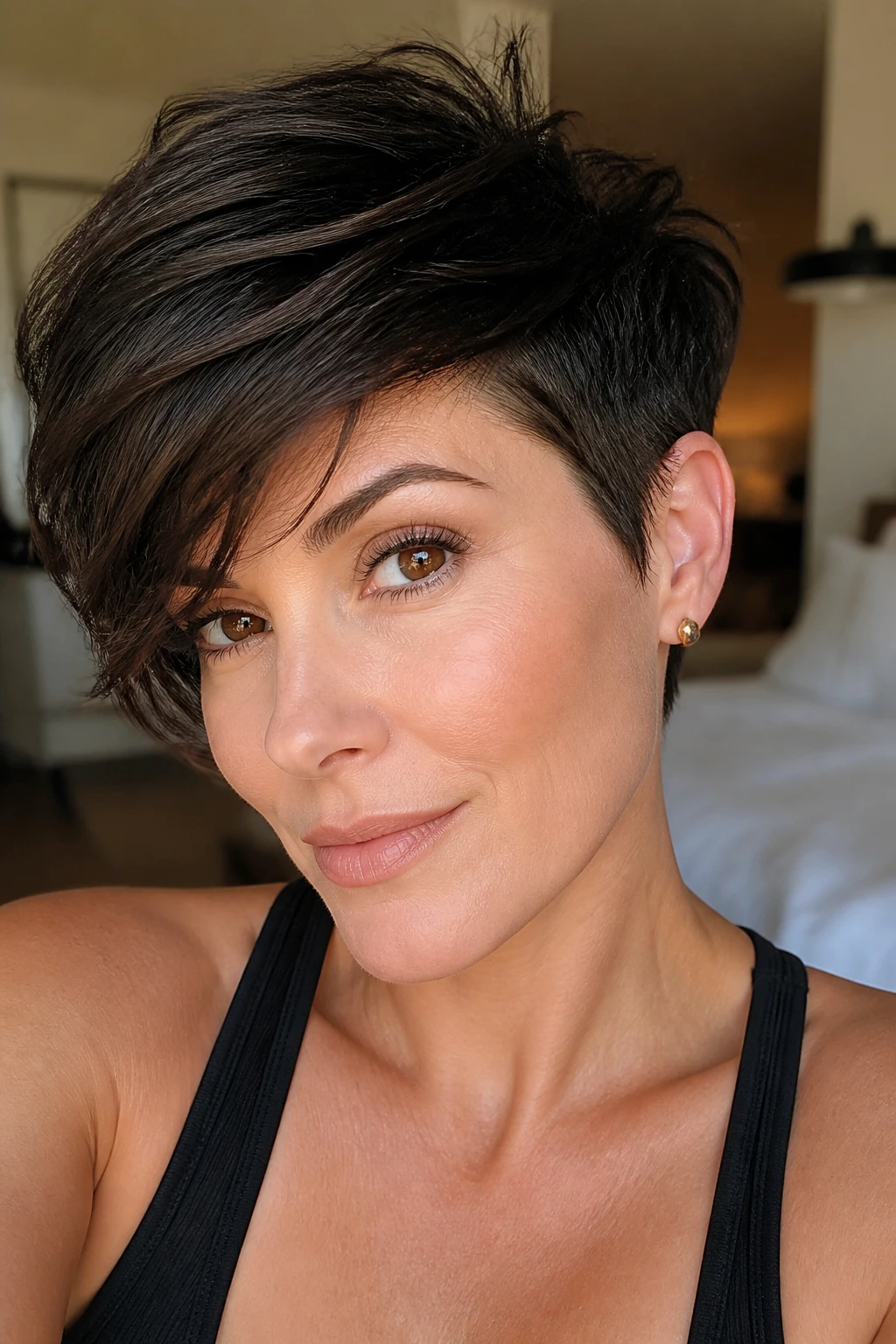
Does your thick hair have a stubborn front piece that always falls the same way? A side-swept pixie turns that into the feature instead of the problem. The top is cut with enough length to sweep diagonally, and the part line helps the bulk travel across the forehead instead of stacking straight up.
That diagonal movement is useful on rounder faces, but it also helps wide hairlines look less square. The shape feels less severe than a center-parted crop and less fussy than full bangs. It’s one of the most forgiving pixie cuts for thick hair if you like softness near the face.
Keep the sweep light. If the front gets too heavy, the whole haircut starts sliding toward a bowl shape.
13. Tapered Nape Pixie
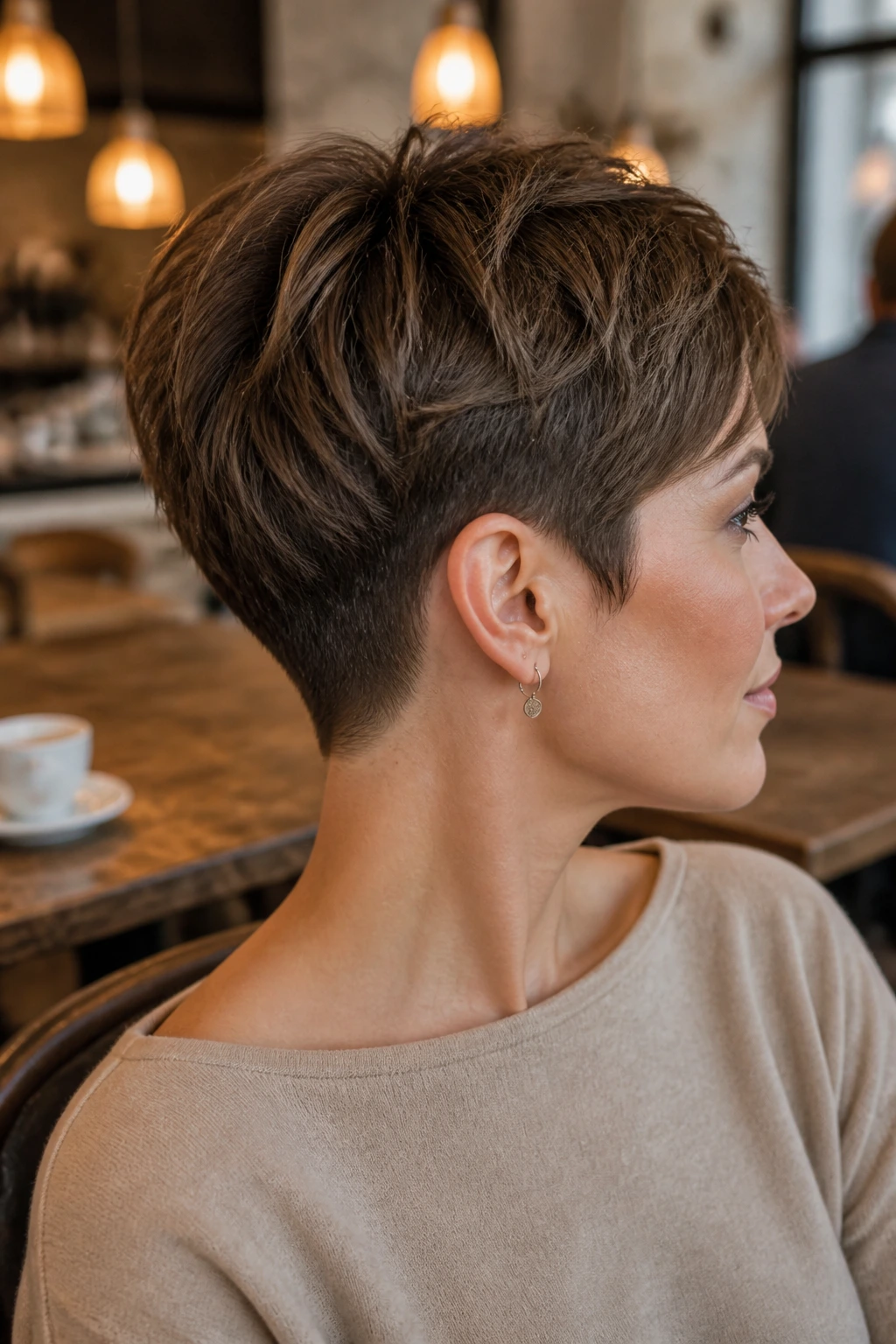
A clean nape is one of the most underrated pleasures in a short haircut. On thick hair, the back of the neck can go fluffy fast. A tapered nape pixie keeps that area close to the head, which makes the whole cut look sharper from behind and lighter from the side.
This cut works especially well if your hair grows fast at the neckline. The shorter taper buys you a better shape between trims, even when the top starts to move a little. It also pairs well with a fuller crown, so the haircut doesn’t lose personality.
Best detail to ask for
Ask for the taper to be gradual, not hacked in. A hard line at the nape can look stark on dense hair. A soft fade into the back of the head sits better and grows out cleaner.
14. Rounded Pixie with Crown Lift
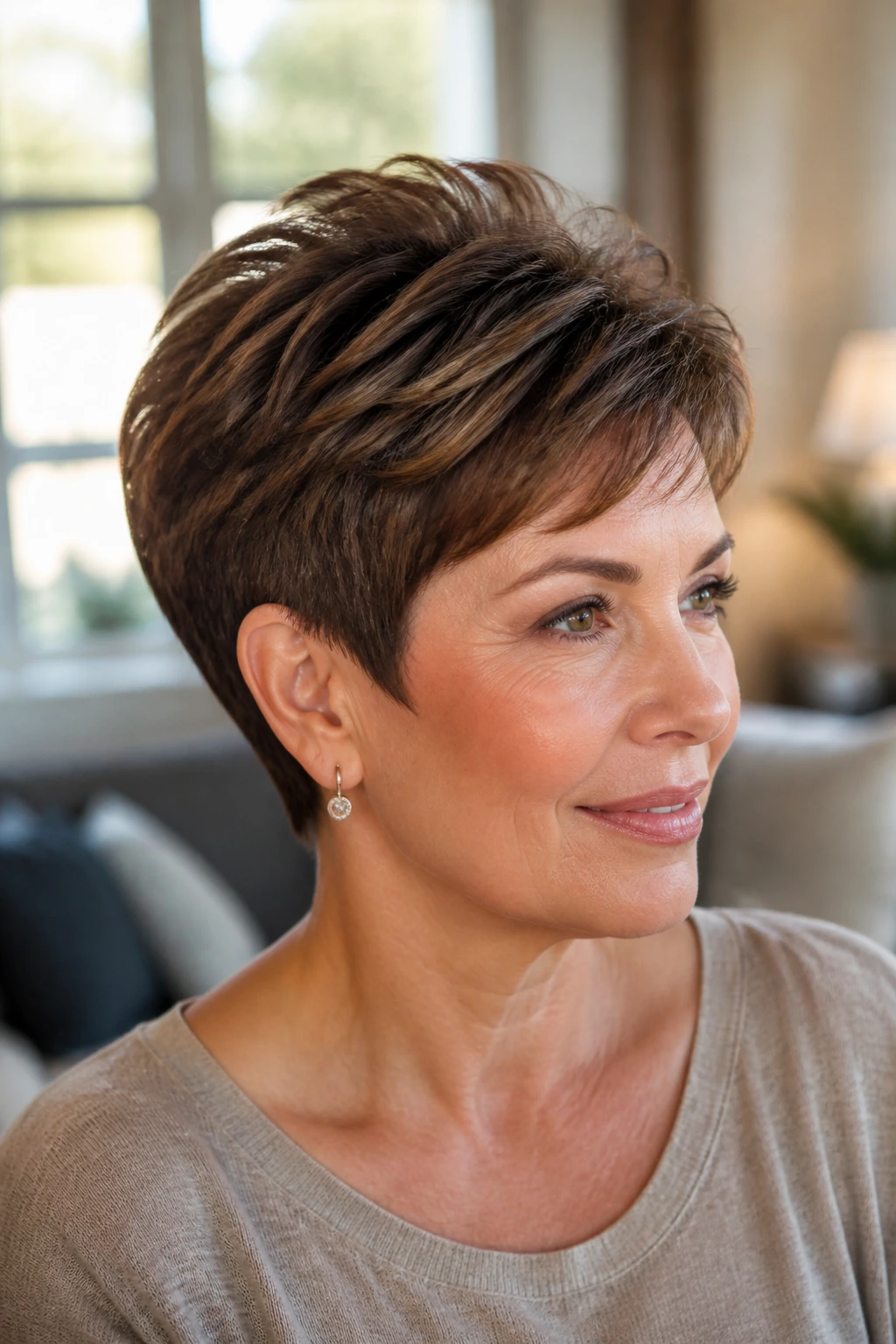
Some thick hair wants to stand up in the crown no matter what you do. A rounded pixie uses that to its advantage. The outline curves gently around the head, and the top has enough lift to keep the cut from squashing down flat at the sides.
This is a useful shape if your hair tends to grow in a slightly square profile. The rounded cut smooths the transition from crown to temple, which makes dense hair feel less bulky. It also gives you a nice silhouette from the back — something a lot of pixie cuts forget.
Use a vent brush while drying to encourage that curve. Fingers alone can leave thick hair too random here.
15. Razor-Cut Pixie
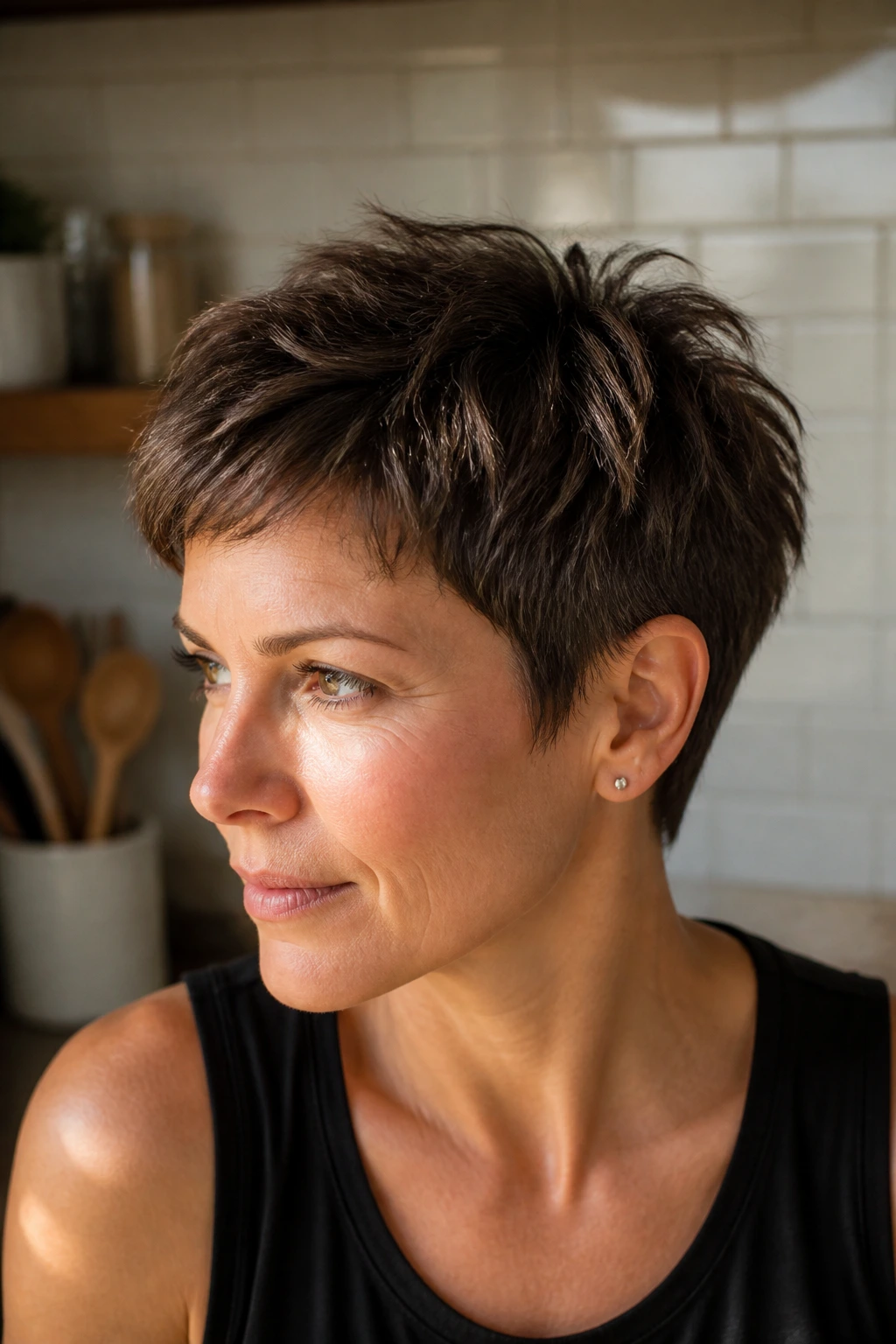
Razor cutting can be beautiful on the right thick hair. It softens the ends and breaks up the bluntness that makes dense strands look too solid. The result is a pixie that feels airy without losing shape.
This method is best for straight to wavy hair. On very coarse or very curly hair, a razor can sometimes create frizz if it’s used too freely. The cleanest versions still keep a strong outline and only use the razor where the hair needs lightness.
If your thick hair has a lot of body but not much bend, this cut can help it move without looking shredded. The ends should look softened, not frayed.
16. Mohawk-Inspired Pixie
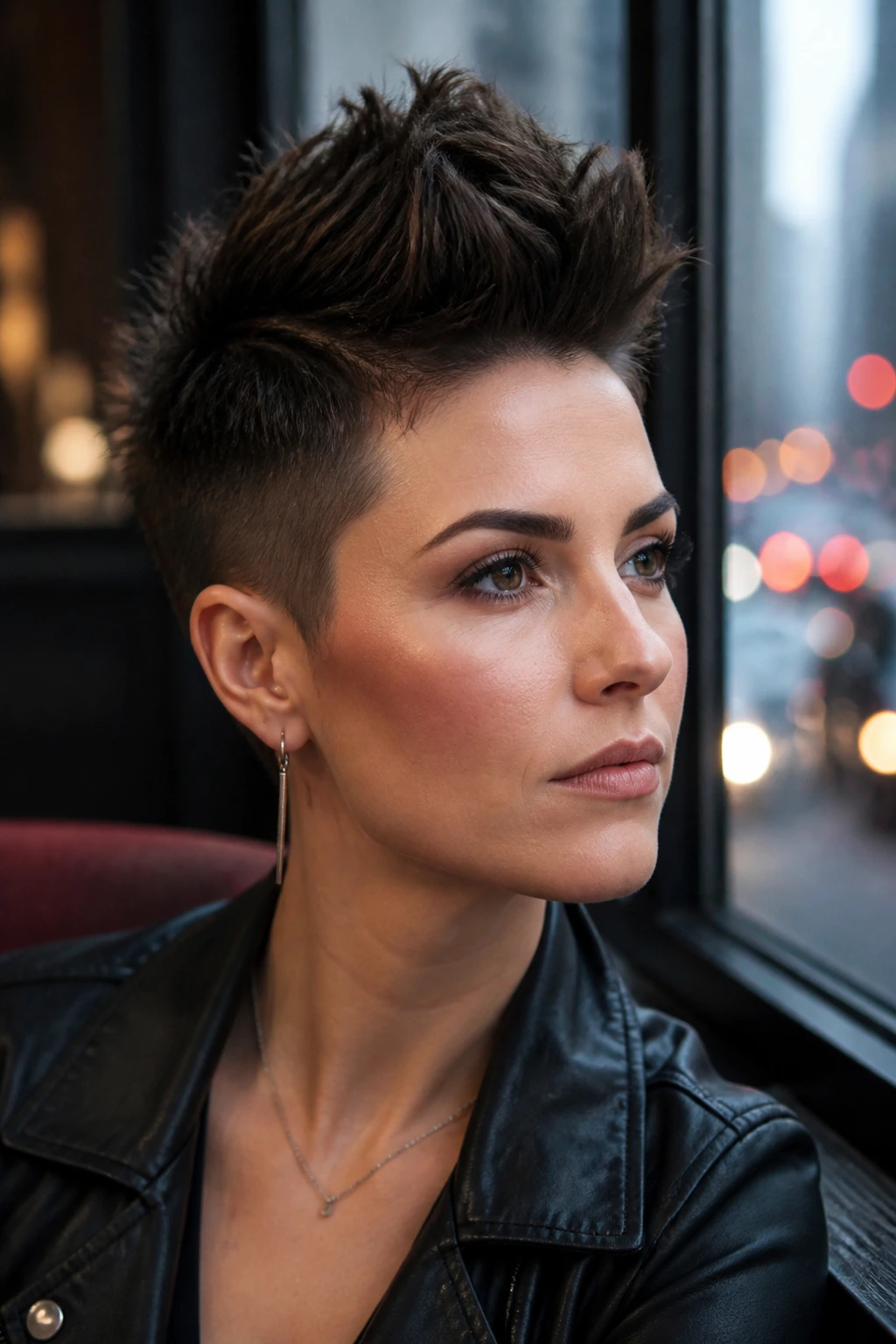
A mohawk-inspired pixie is for someone who wants the middle of the head to carry the style. The sides are trimmed tighter, the center ridge stays longer, and the whole cut runs from forehead to crown with a little lift. Thick hair makes this shape easier to wear because the center has enough density to stand up on its own.
It’s a strong look. No pretending otherwise. The benefit is that the sides stop competing with the top, so you get height without the shape spreading outward.
A matte paste or fiber cream keeps the ridge defined. If you use too much shine, the cut loses that crisp, slightly rebellious edge.
17. Layered Crop Pixie
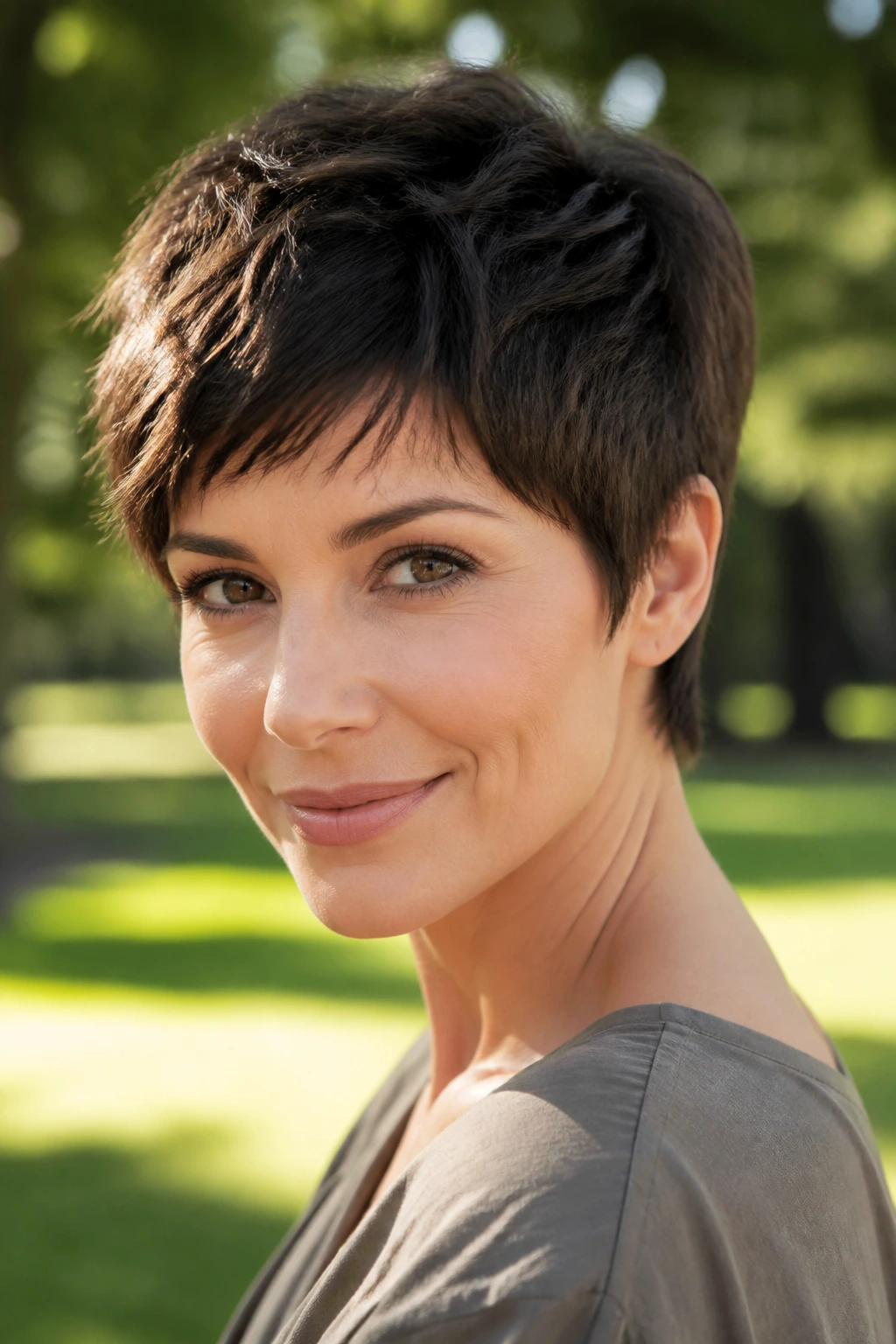
The layered crop is the calm, practical cousin of the more dramatic pixies. It uses short layers all over the top to remove bulk while keeping the shape compact. Thick hair responds well to this because the layers stop it from hanging as one heavy sheet.
What makes this version useful is the flexibility. You can style it forward, up, or to the side, and the layers will still show. That matters on mornings when you don’t want to wrestle the whole head into a single look.
If your hair has a natural bend, this cut can look especially good after a rough dry. It doesn’t need perfection.
18. Ear-Length Pixie
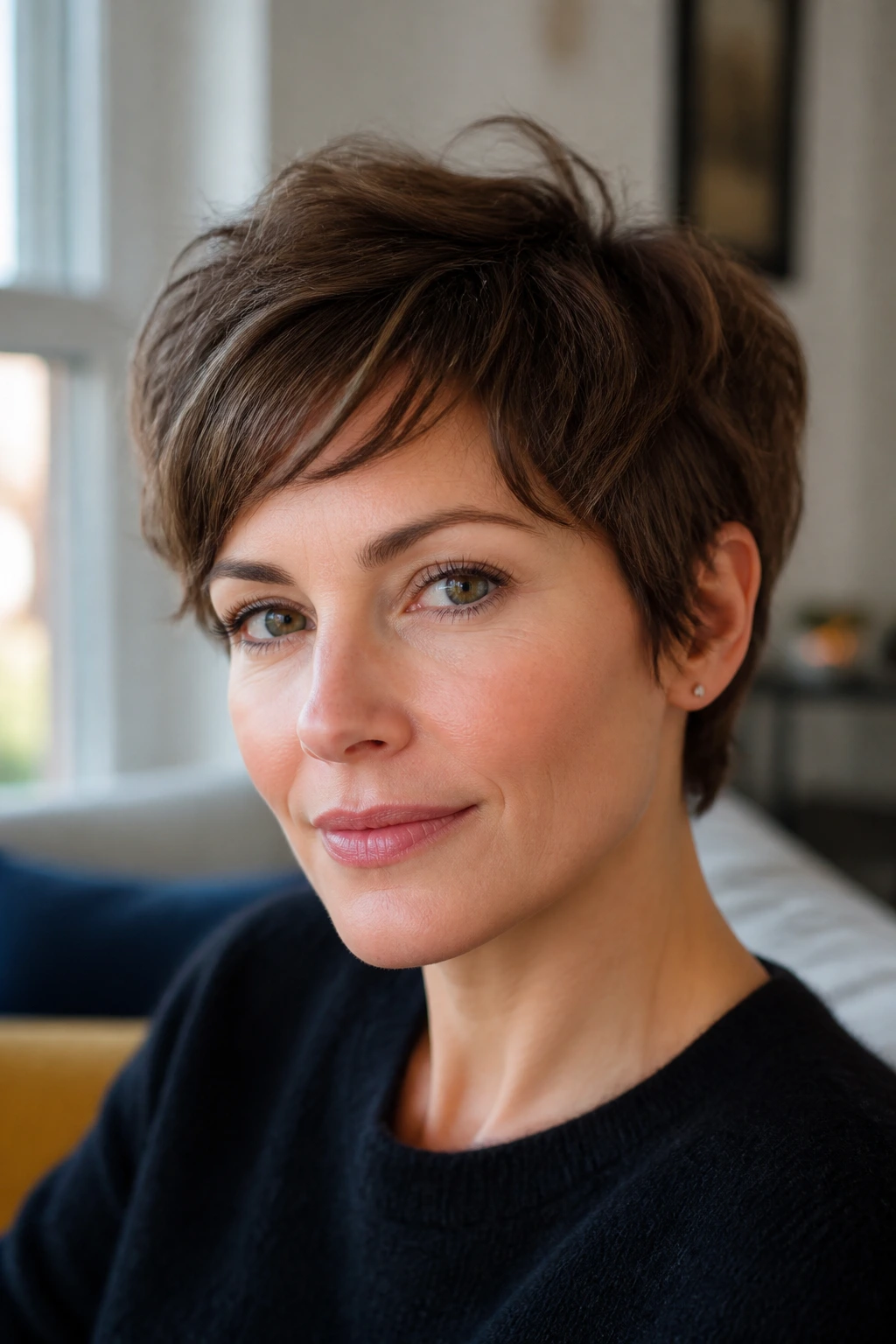
An ear-length pixie gives thick hair a little room to breathe without going full crop. The hair skims the top of the ears and keeps enough length around the sides to soften the head shape. It’s a friendly option if you like short hair but not the feeling of too much scalp showing.
Because the sides aren’t ultra-short, this cut can be easier to wear with glasses and earrings. It also gives dense hair a place to drape instead of puffing straight out. That makes the silhouette feel less severe.
It’s a good transitional cut too. If you’re coming from a bob, ear-length feels like a real short haircut without the shock of a very tight pixie.
19. French Pixie with Texture
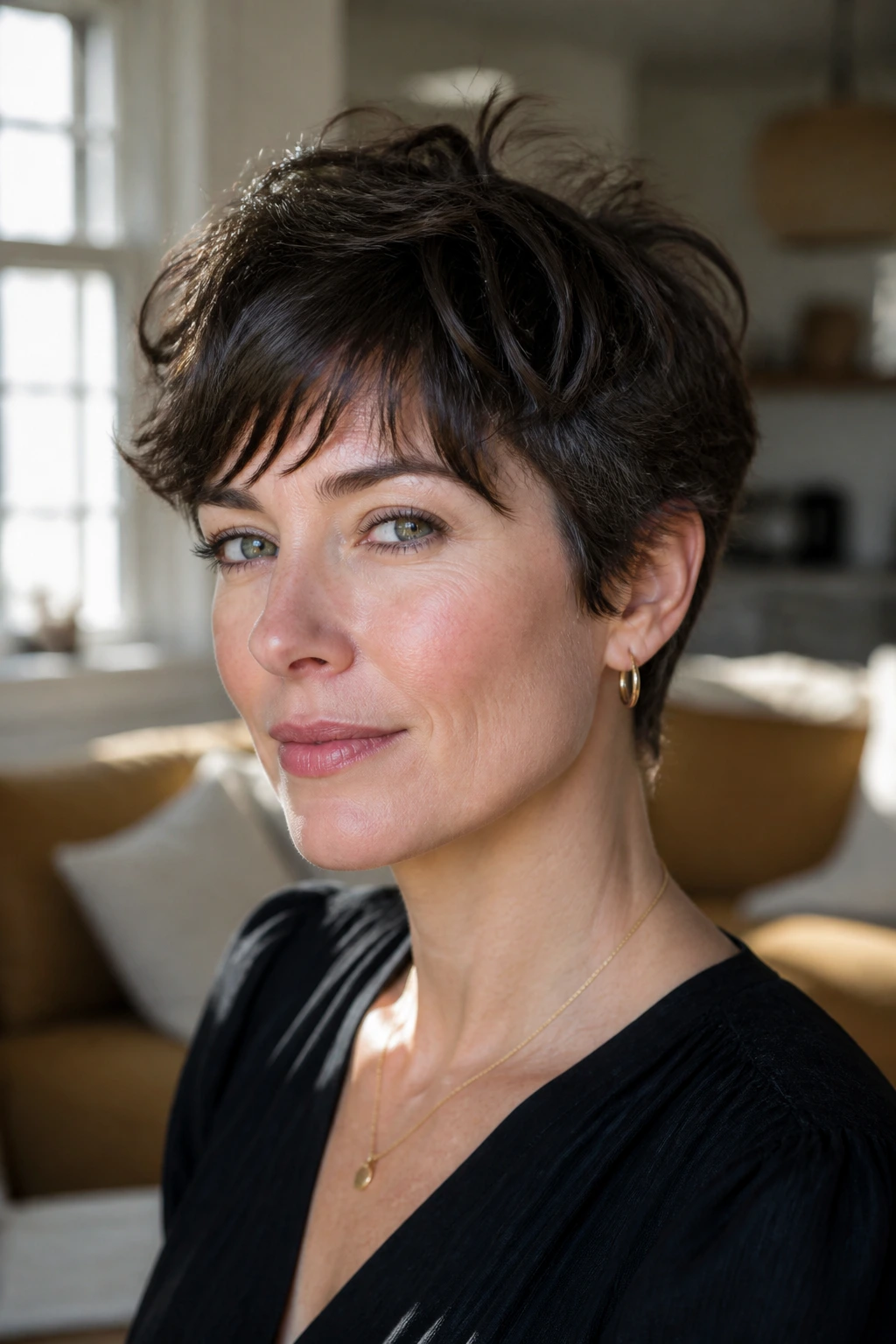
The French pixie is softer than it sounds. Think airy fringe, light texture through the top, and a shape that looks a little undone on purpose. Thick hair gives this cut enough body to avoid looking wispy, which is one reason it works so well.
The trick is restraint. You want movement around the front and crown, but not so many short pieces that the hair expands outward. A little pieceiness around the fringe is enough.
This style looks especially nice when the hair is slightly bent instead of blown pin-straight. A quick pass with a small brush or even just hands and a tiny amount of styling cream will do.
20. Disconnected Pixie Cut
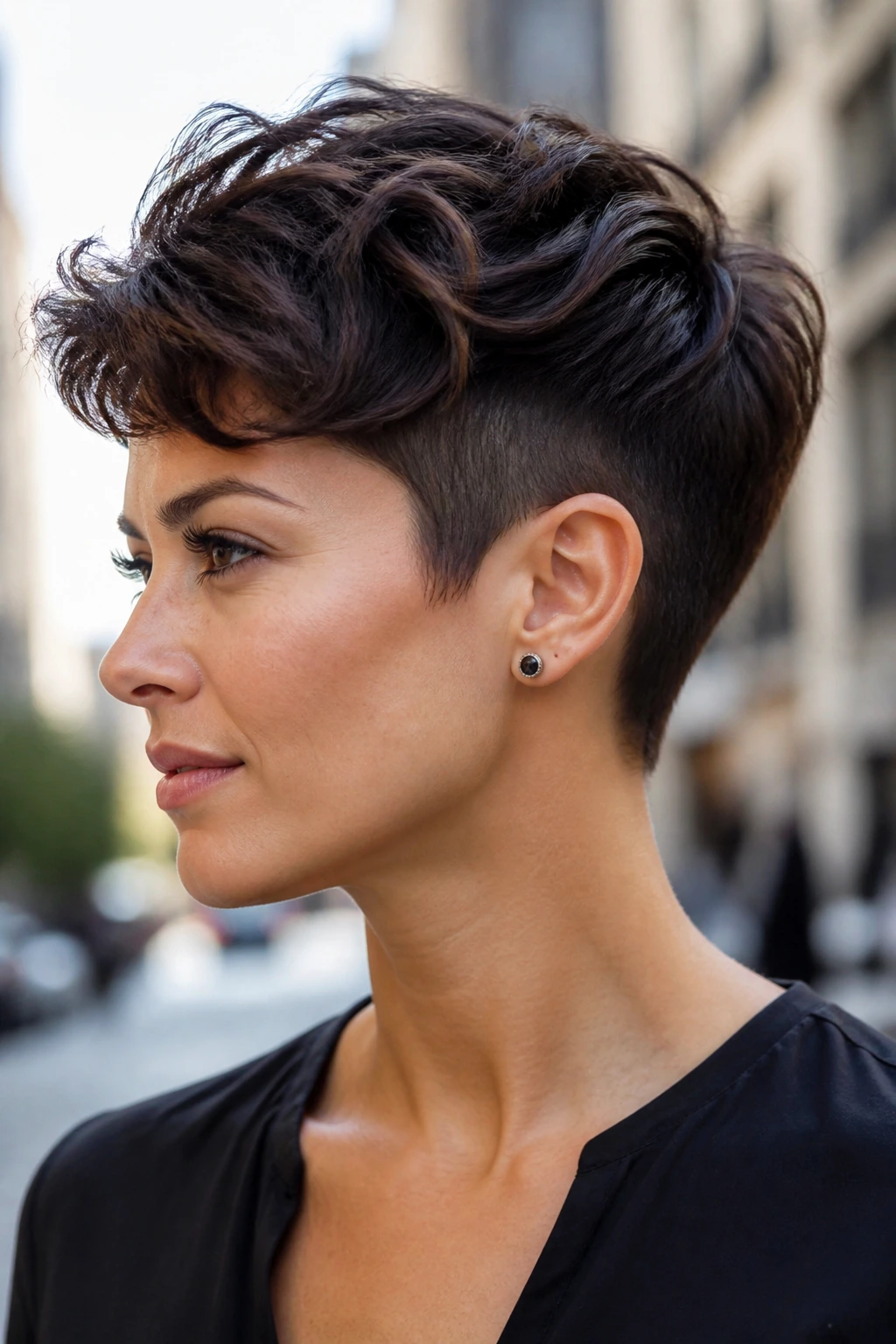
A disconnected pixie has visible contrast between the top and the sides, and thick hair can carry that contrast better than most textures. The top stays longer and more obvious, while the sides get cut shorter and cleaner. The line between the two is part of the design.
That separation helps dense hair feel intentional. Instead of fighting the fact that there’s a lot of it, the cut shows it off in two different zones. The top gives you styling freedom, and the sides keep the shape from spreading.
This one works best when the stylist leaves the transition crisp enough to read. If it’s blended too much, the distinction disappears and you’re left with a haircut that feels vague.
21. Curtain-Fringe Pixie
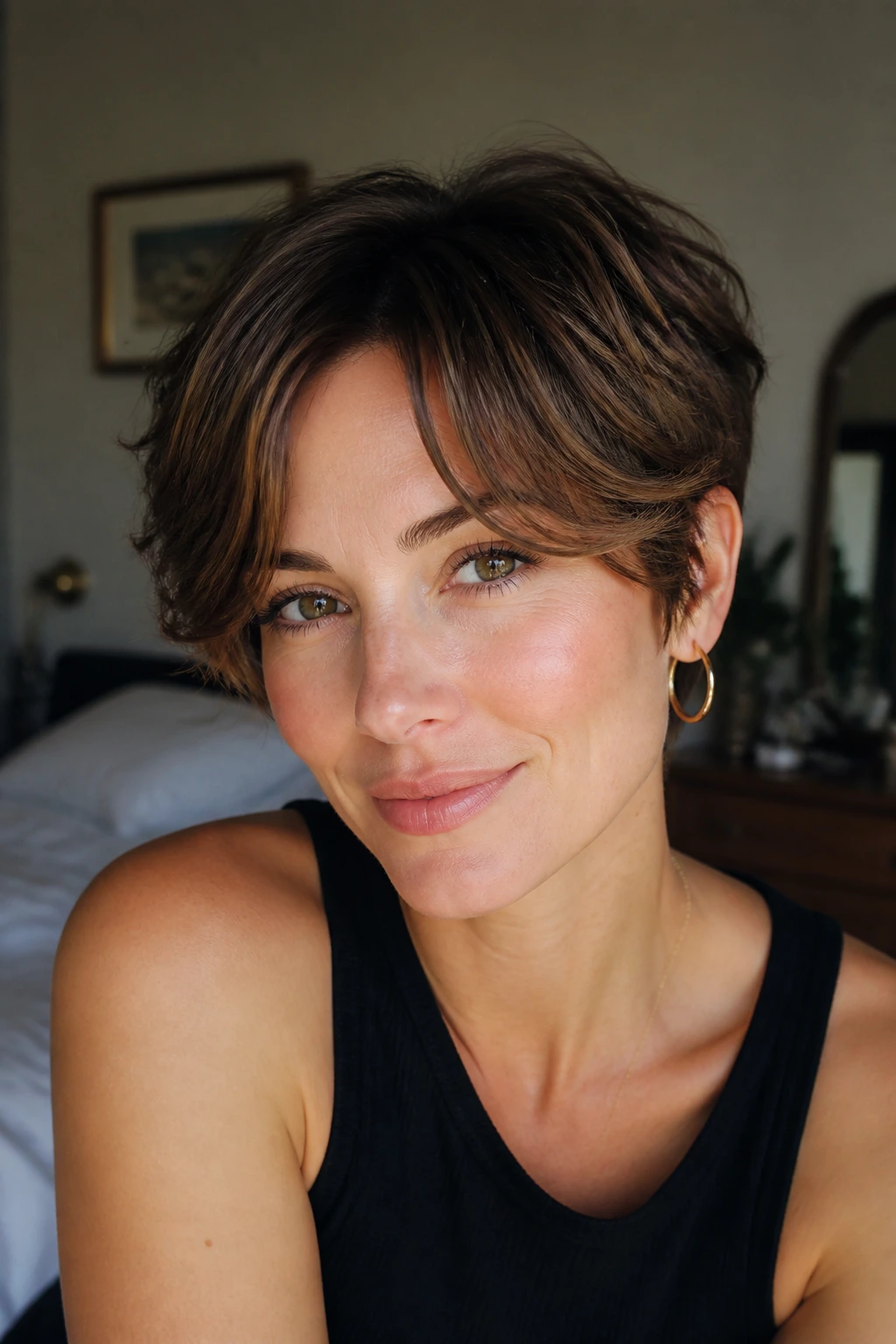
Curtain bangs on a pixie are sneaky good for thick hair. The fringe splits down the center or just off-center and opens away from the face, which helps with forehead balance and gives the cut a softer front edge. The effect is less severe than a blunt bang and less fussy than a full sweep.
Because thick hair has enough body to hold the curtain shape, the fringe doesn’t collapse as easily as it might on fine hair. That makes this cut a nice option if you want movement around the eyes without giving up too much length in front.
Keep the fringe light at the center and slightly longer at the temples. That’s what lets it drape instead of sticking straight out.
22. Spiky Pixie with Piecey Ends
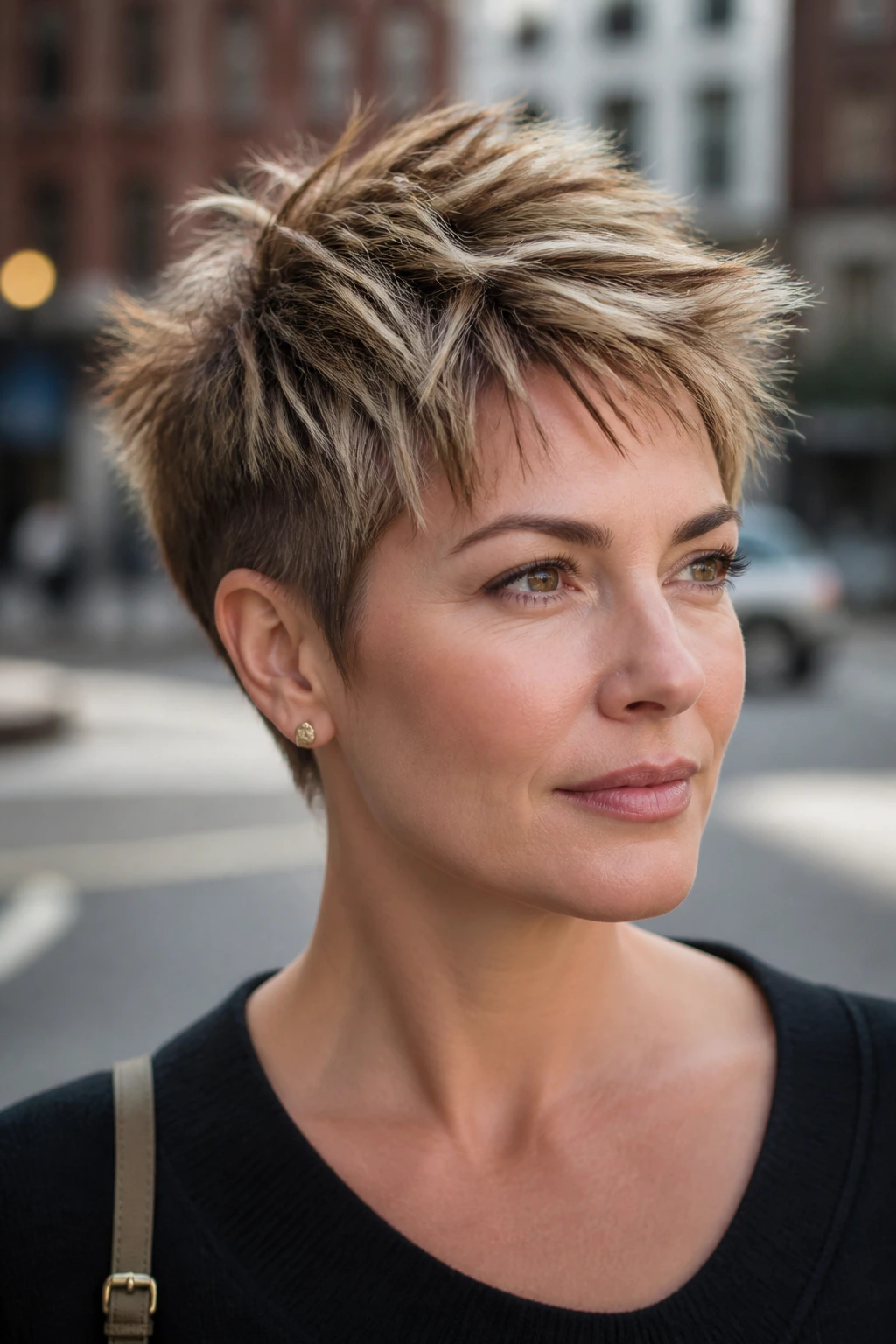
Want the most playful version of a thick-hair pixie? Go piecey. This cut leaves enough length on top for the hair to separate into little points and flicks, then trims the sides close so the shape doesn’t balloon. It’s one of the easiest ways to make dense hair look modern rather than heavy.
The style depends on texture product, but not a lot of it. Work a small amount between your palms, then pinch sections of the top and fringe. You’re aiming for definition, not a crunchy shell.
A practical note
Spiky doesn’t mean stiff. The best versions still bend when you touch them. If the hair feels hard, there’s too much product or the cut is too short on top.
23. Wind-Swept Pixie
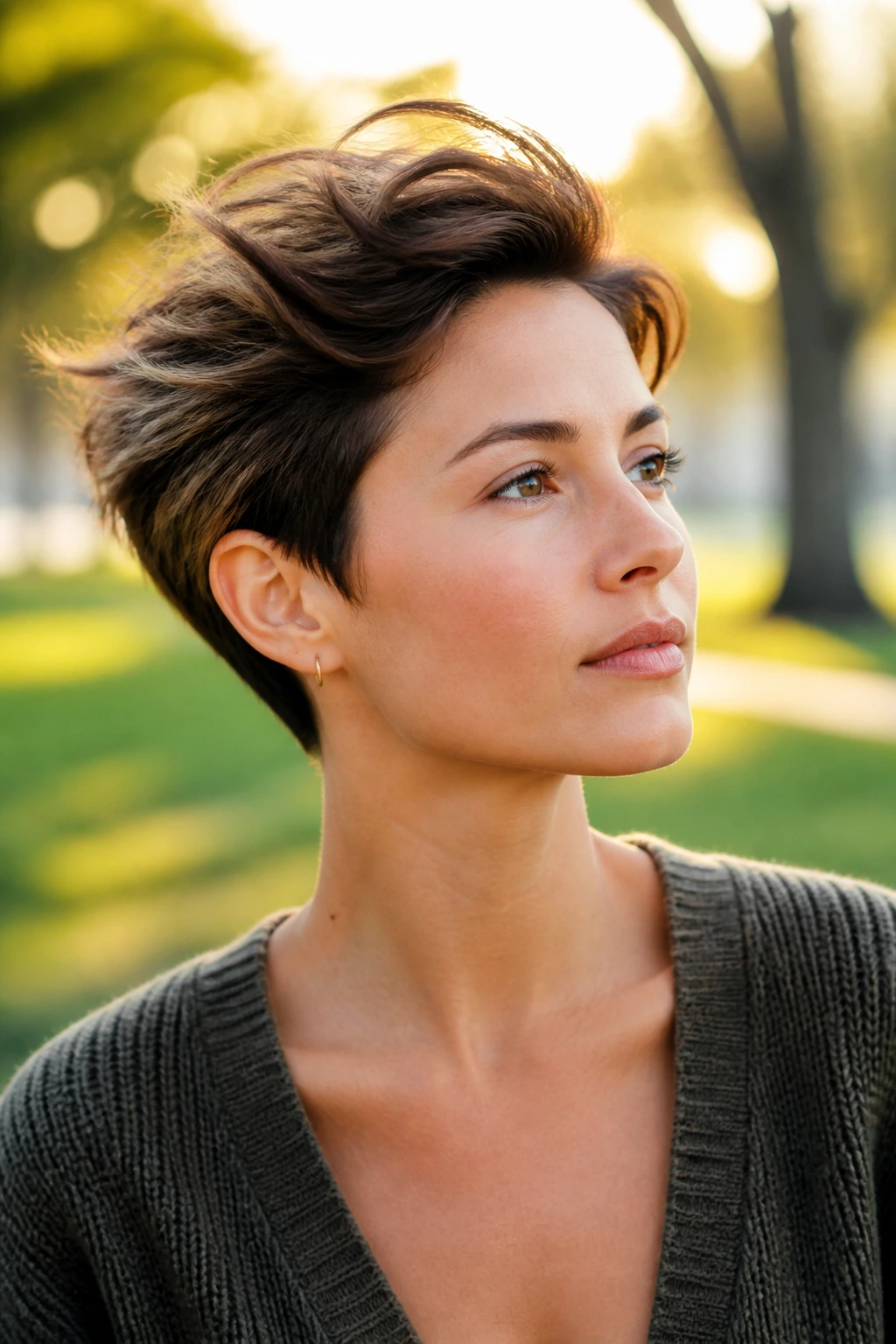
This cut looks like the hair has been pushed back by a good breeze and decided to stay there. One side usually falls away from the face, the top has direction, and the whole style feels lifted rather than compacted. Thick hair is useful here because it can hold that angled sweep without sagging.
It’s a nice choice if you dislike hair falling into your eyes but still want some length on top. The sweep can hide a stronger forehead or soften a narrow face, and the movement keeps the haircut from feeling too severe.
Use a blow dryer with the nozzle pointed along the direction of the part. Drying against the grain is what makes thick hair puff.
24. Mixie Cut with a Soft Mullet Edge
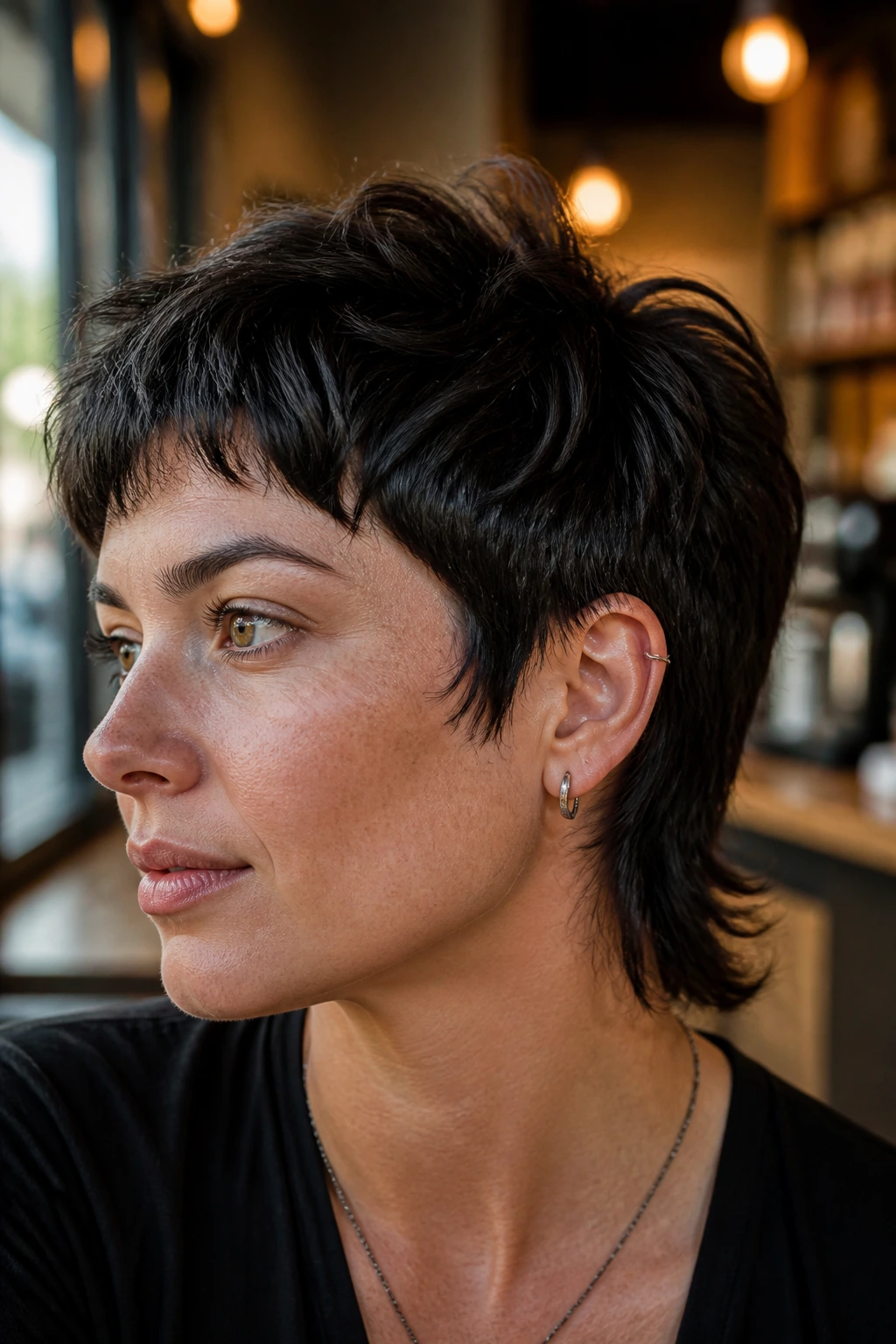
The mixie is the little troublemaker of the pixie family. It keeps the front and crown short, but leaves a bit more length at the nape and sometimes around the ears. On thick hair, that extra tail can keep the cut from looking clipped too high.
It’s not the neatest option on this list, and that’s exactly why some people love it. The soft mullet edge gives thick hair a place to taper instead of stopping abruptly at the neck. If you like a cut that feels fashion-forward but not brittle, this is a good one.
The best versions still keep the top controlled. Too much bulk up there and the mixie loses its shape fast.
25. Temple-Taper Pixie
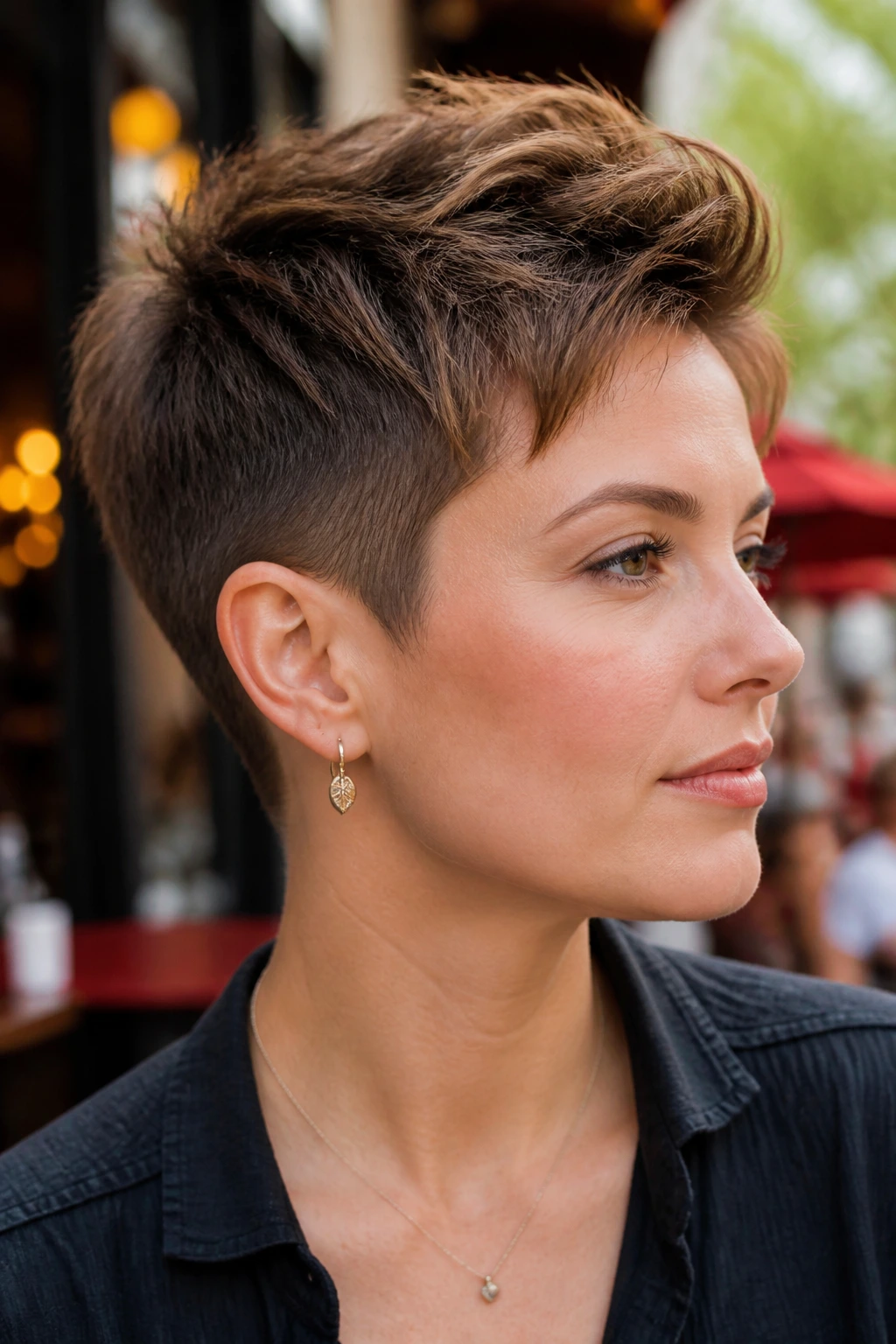
A temple taper makes a small difference that ends up mattering a lot. By slimming the hair around the sides of the head, especially near the temples, this cut narrows the profile where thick hair often widens. The rest of the hair can still be full and textured.
This shape is especially friendly if you wear glasses or want your face to stay open near the eyes. The taper keeps the frames from fighting with the haircut. It also adds a cleaner outline when you tuck one side behind the ear.
The more textured the top, the better this cut looks. You want contrast, not a uniform cap.
26. Tousled Crop with a Choppy Crown
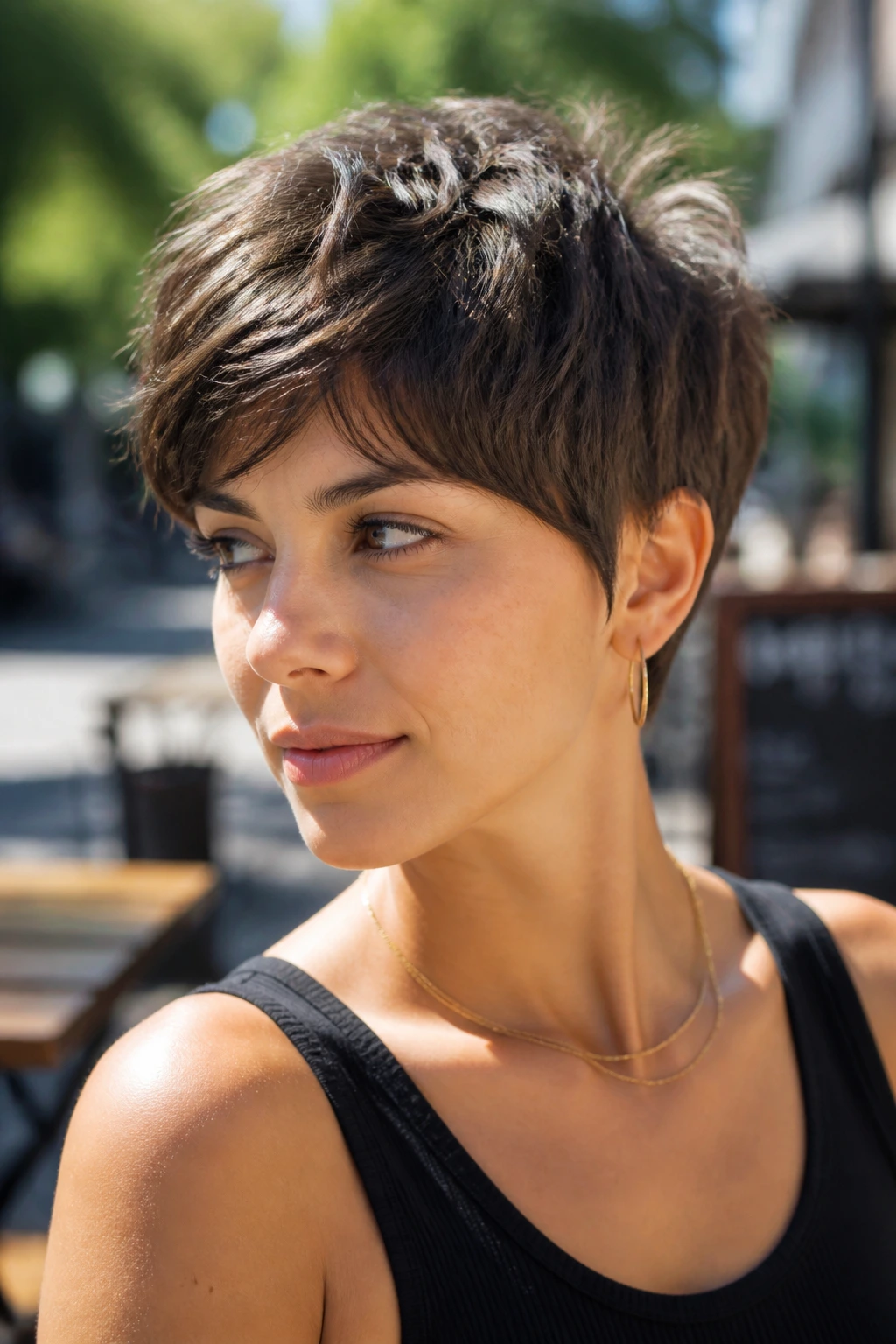
This is the version for hair that looks better a little messy. The crown is cut with enough choppiness to break up thickness, then styled so it doesn’t sit in one perfect direction. Thick hair gives this cut a lot of built-in body, which means the tousle doesn’t need much help.
If you’ve ever wished your pixie could look like you slept on it on purpose, this is the shape. The key is to leave the crown just long enough to flick and separate. Too short, and the effect disappears. Too long, and you get a heavy top.
A small dry texture spray at the roots can help, but the cut should do most of the work.
27. Wavy Long-Top Pixie
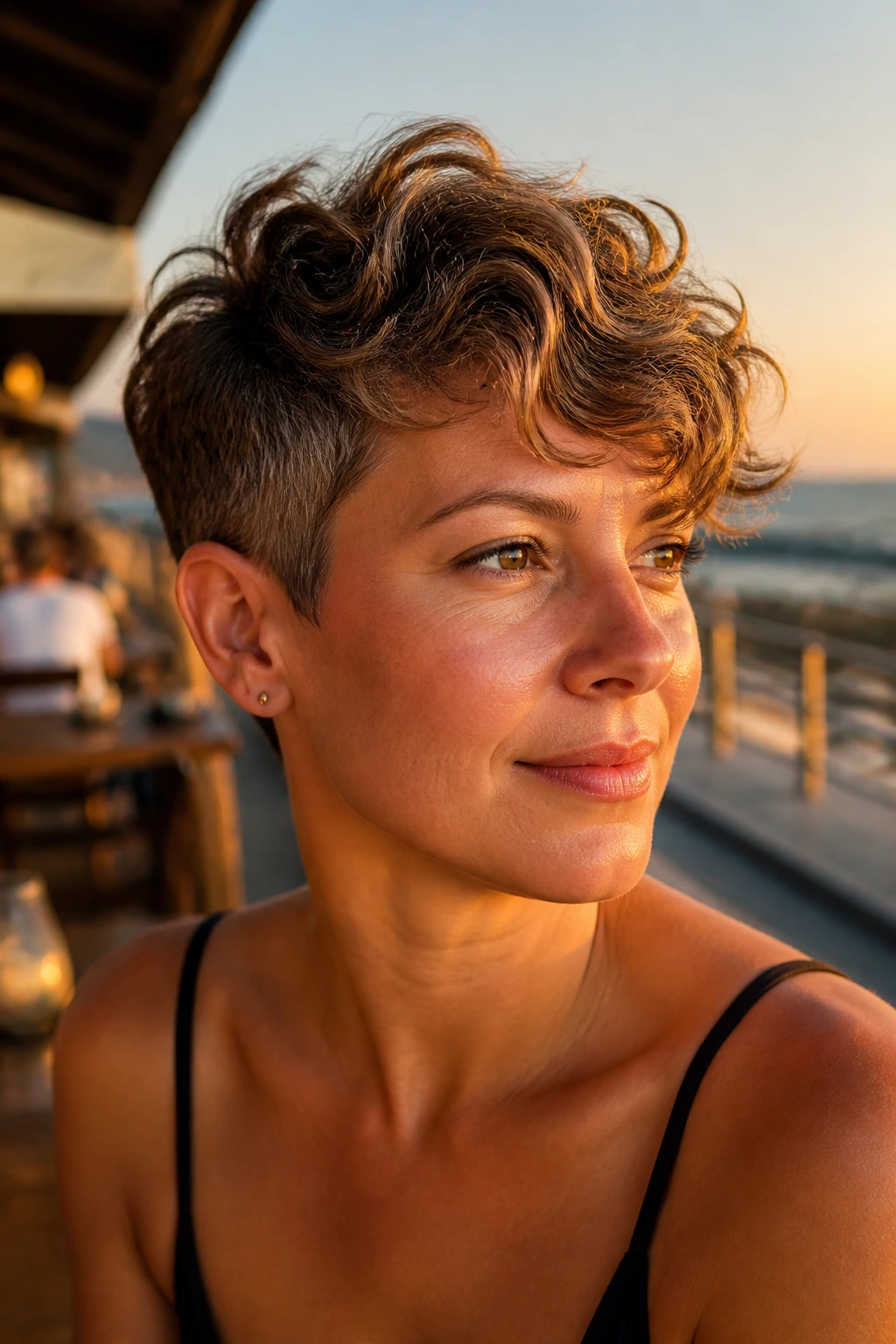
Can thick, wavy hair do a pixie without losing its bend? Absolutely. Keep the top longer and the sides slimmer, and the wave will read as texture instead of bulk. This cut is one of the easiest ways to let natural wave pattern do its thing without drifting into bob territory.
The long top also gives you flexibility. You can wear it forward, tuck it back, or let it curl into a loose fringe. Thick waves tend to behave best when they’re not asked to be too precise.
A light cream works better than a heavy gel. You want the wave to stay soft, not glued into place.
28. Sculpted Pixie with a Tucked Nape
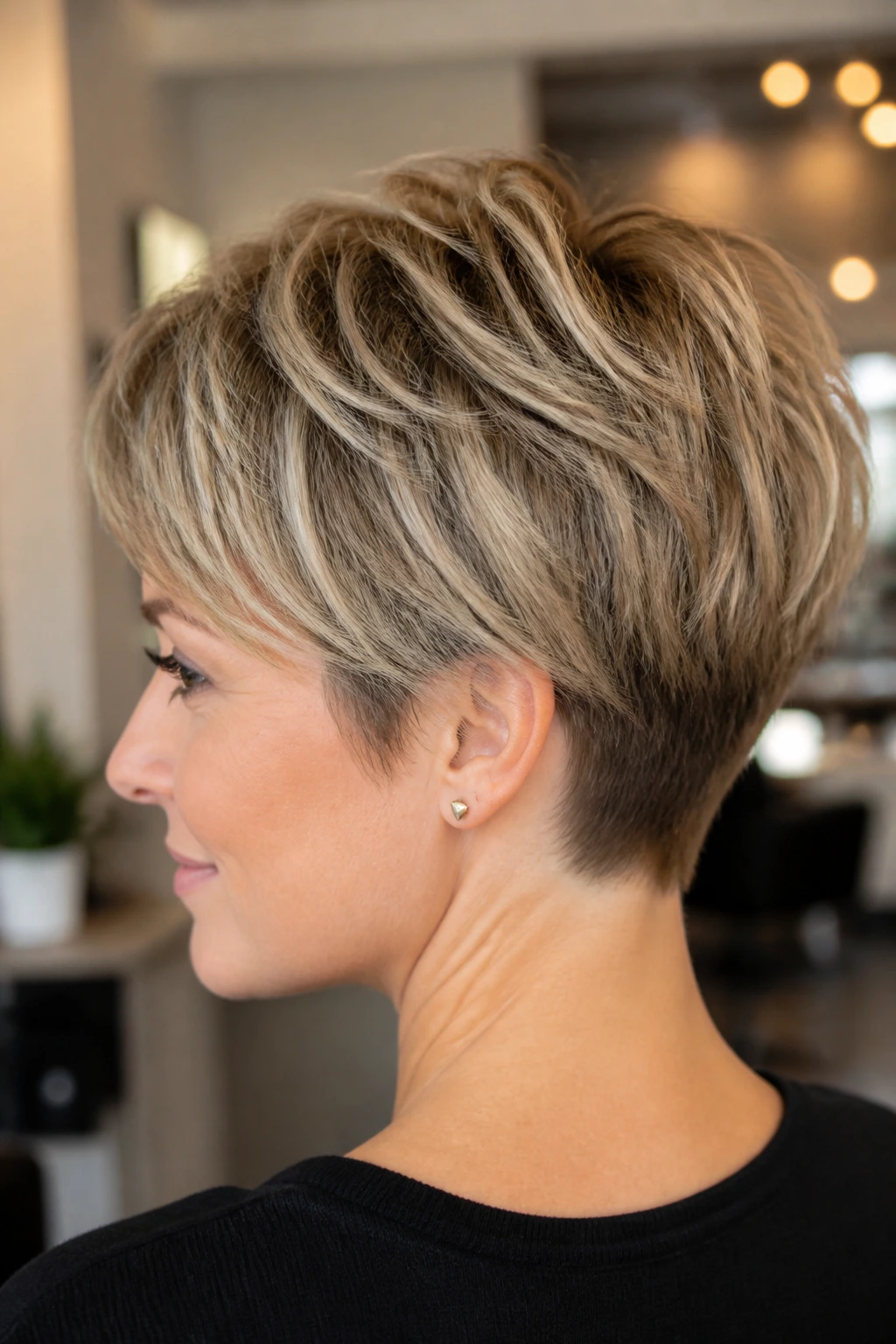
A sculpted tucked-nape pixie is for people who like a sharp neckline and a tidy finish. The hair hugs the back of the neck closely, while the top keeps enough movement to avoid looking severe. On thick hair, this creates a really satisfying contrast between structure and softness.
The tucked nape is the detail that changes the whole haircut. It makes the back look clean from every angle, especially when the hair is dense and tends to flare outward in humid air or under a collar. That’s a small thing until you see it in a mirror and realize how much better the silhouette sits.
This cut looks best when the ends are controlled, not fluffy. A narrow brush and a quick blow-dry along the neck will help the shape settle flat.
Why Thick Hair Needs a Different Rulebook
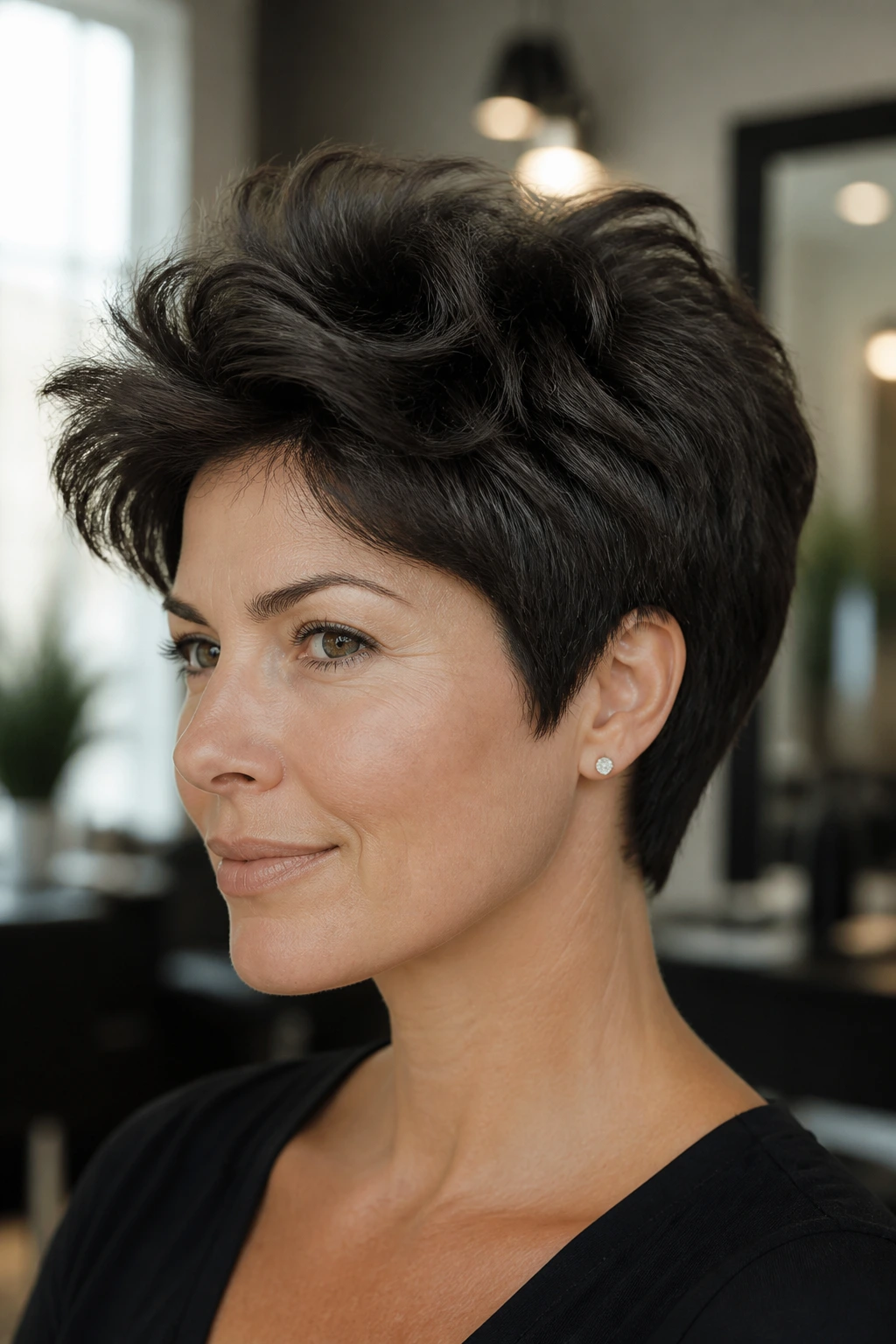
Thick hair is not just “more hair.” It grows with more density, more mass, and usually more resistance to lying flat where you want it. That changes the haircutting strategy. A pixie cut that looks tidy on fine hair can swell into a little cube on dense hair if the sides, crown, and nape aren’t handled with care.
The pressure points are predictable. The temples spread. The crown lifts. The neckline kicks out. That’s why stylists often talk about weight removal on thick hair rather than just layering it. You’re carving shape from the inside, not shaving the whole thing down and hoping for the best.
Another thing people miss: thick hair often needs direction more than it needs product. If the cut has enough taper and enough internal structure, a small amount of paste, mousse, or cream is enough to steer it. If the cut is wrong, no amount of styling paste will save it for long.
Styling Tools That Make Short Hair Behave
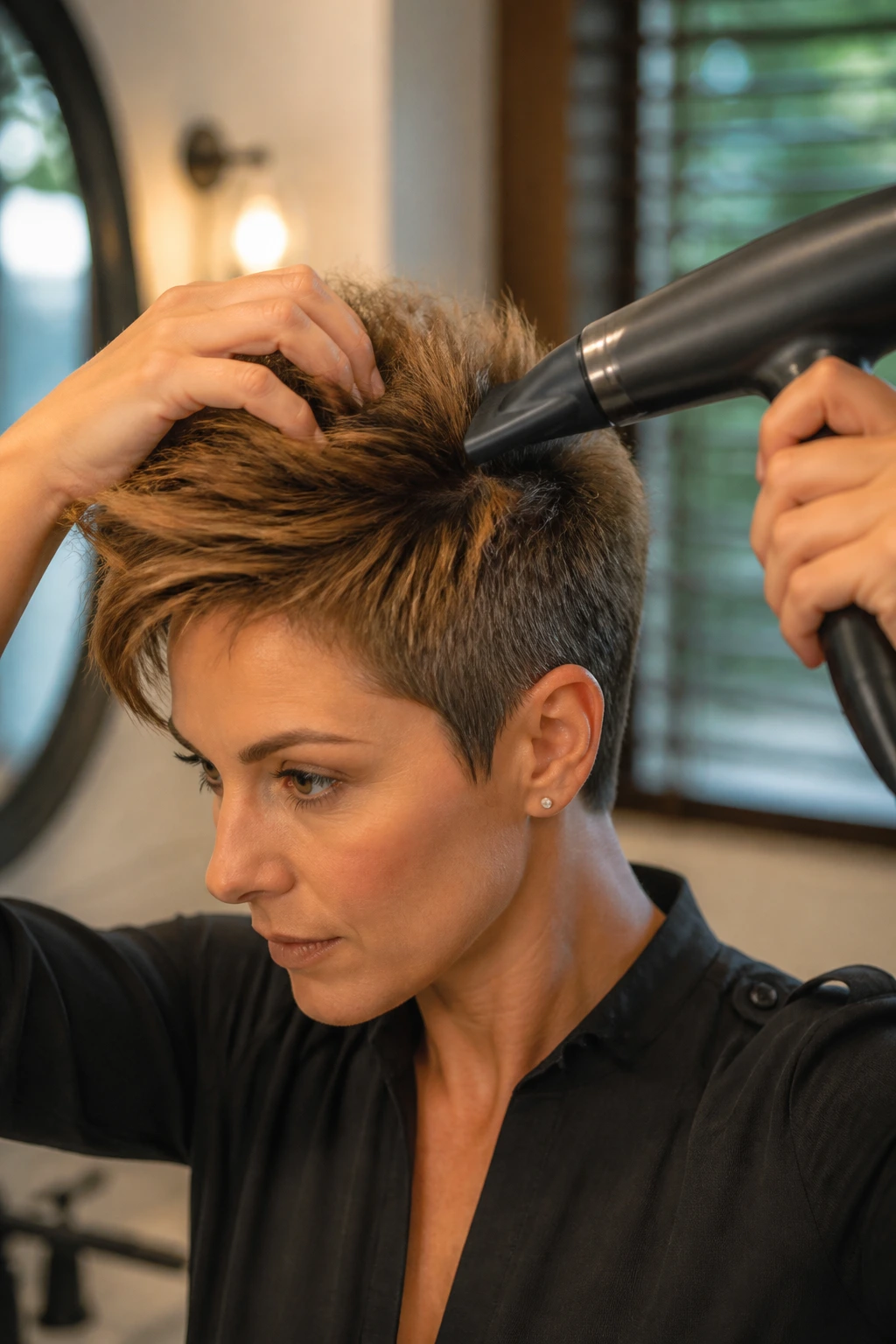
- Blow dryer with a nozzle attachment: Directs airflow so thick hair doesn’t puff in every direction.
- Vent brush: Great for rough-drying the crown and keeping the roots from sitting flat.
- Small round brush, 1 to 1.5 inches: Useful for bending the fringe or creating lift at the top.
- Tail comb: Helps with clean parts and precise direction at the front.
- Matte paste or fiber cream: Best for piecey, separated pixies that shouldn’t look shiny or stiff.
- Lightweight gel or styling cream: Useful for slicked-back or sculpted shapes.
- Texture spray: Adds a little grit to layers without making thick hair greasy.
- Diffuser attachment: A good pick for curly or wavy pixies that need shape without frizz.
- Flat iron with slim plates: Helpful if you want to flick the fringe or smooth a stubborn side piece.
- Clips: Keep sections out of the way when drying, especially around the crown and fringe.
How to Choose the Right Pixie for Your Face Shape and Hairline
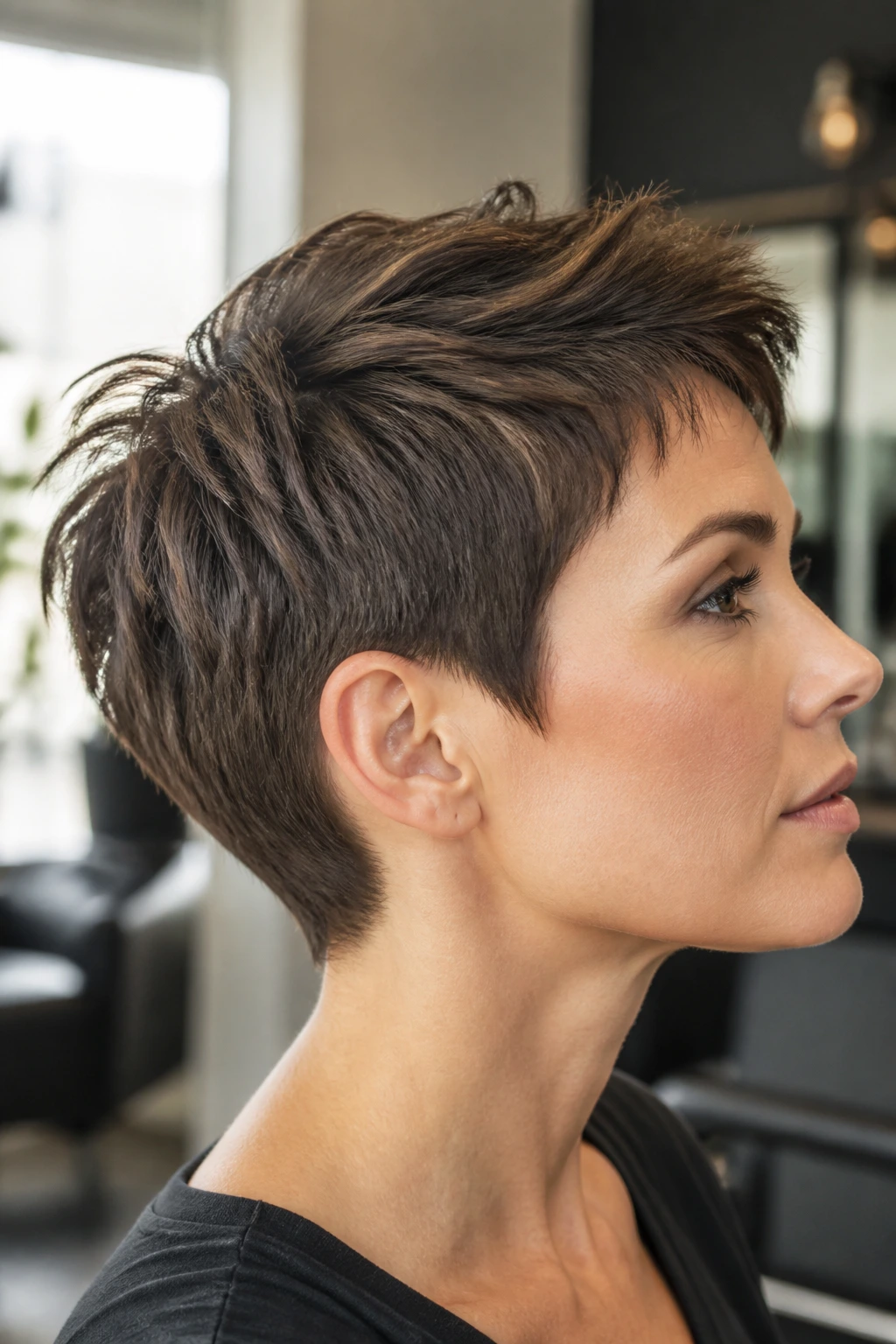
A thick-hair pixie is never just about the hair. Your forehead, jawline, ears, and cowlicks all change the shape. A cut that looks clean in one profile can feel awkward in another, and a good stylist will keep that in mind before the first snip.
If your forehead is broad
A side-swept or curtain-fringe pixie usually softens the front without making the haircut heavy. A baby bang can work too, but only if the rest of the cut is kept narrow.
If your face is round
Go for height at the crown and a tighter outline around the sides. A rounded pixie with lift, or a tapered nape version, keeps the face from widening.
If your jawline is strong
A feathered or long-fringe pixie helps soften the lower half of the face. Thick hair around the ears should be trimmed carefully, because that’s where the width can build quickly.
If you have a front cowlick
Leave the fringe long enough to redirect it. Short, blunt bangs on thick hair with a cowlick can stand up like a little roof.
If you wear glasses
Temple tapering and ear-length sides keep the frames from competing with the haircut. Tiny details matter there. A lot.
How to Style a Thick-Hair Pixie Without Puffiness
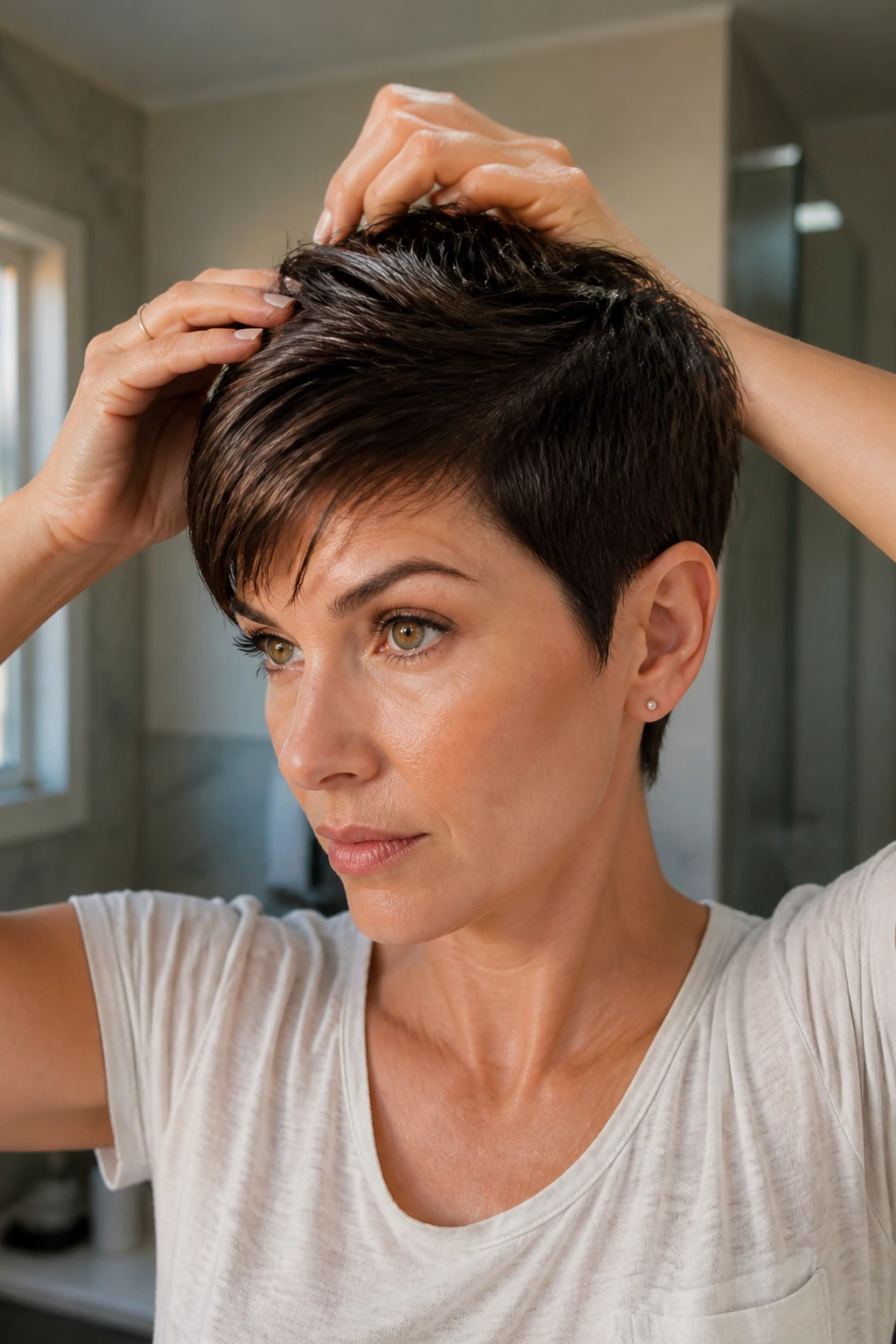
Start with damp hair, not dripping hair. Thick hair takes a long time to dry, and if the roots sit wet too long, the crown can dry in the wrong direction. Work a small amount of mousse or lightweight cream through the top, then blow-dry the roots first with the nozzle pointing where you want the hair to go.
Use your fingers for a rougher finish or a vent brush for a cleaner one. The back and sides should be dried close to the head, especially at the nape, while the top gets a little lift. If you’re wearing a fringe, dry that piece last and guide it with the brush before it sets.
Finish with a tiny amount of paste or texture cream — think pea-size, not walnut-size. Thick hair does not need much. Too much product turns the cut heavy and can make the ends stick together in ugly clumps.
Common Mistakes That Turn the Shape Boxy
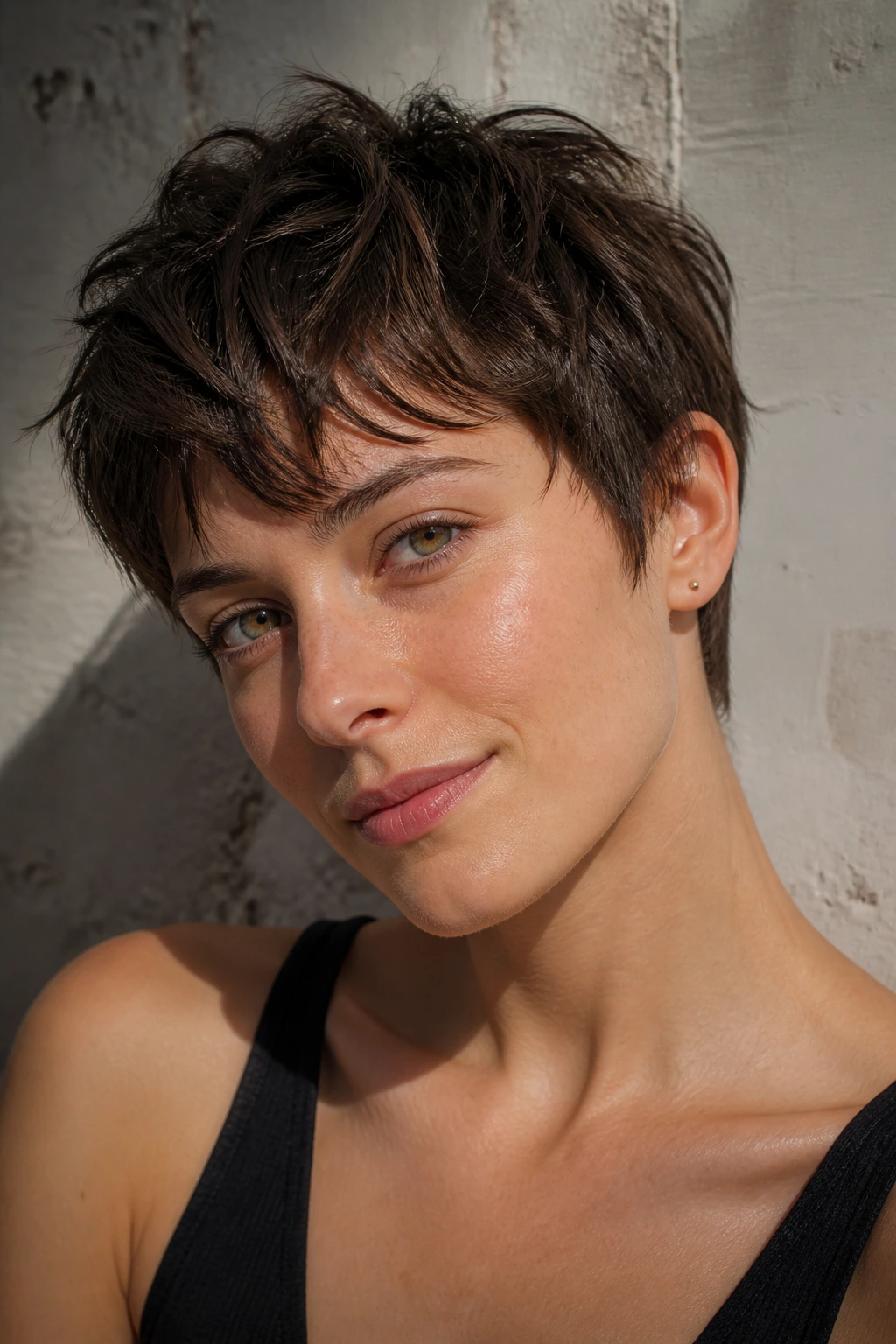
- Leaving the sides too full: Thick hair around the ears makes the head look wider than it is. Ask for tapering near the temples and sideburns.
- Using too much thinning on the ends: Over-thinning can create frizz, especially on coarse or wavy hair. The cut starts looking fuzzy instead of airy.
- Cutting the fringe too short too soon: Thick hair often springs up after it dries. A bang that looks perfect when wet may land much shorter.
- Ignoring the nape: If the back of the neck stays bulky, the whole pixie can look squat from behind.
- Overloading with product: Heavy wax or too much gel makes dense hair collapse in some places and stand up in others.
- Waiting too long between trims: A pixie on thick hair loses its shape faster than people expect, especially around the ears and neckline.
Variations and Adaptations to Try
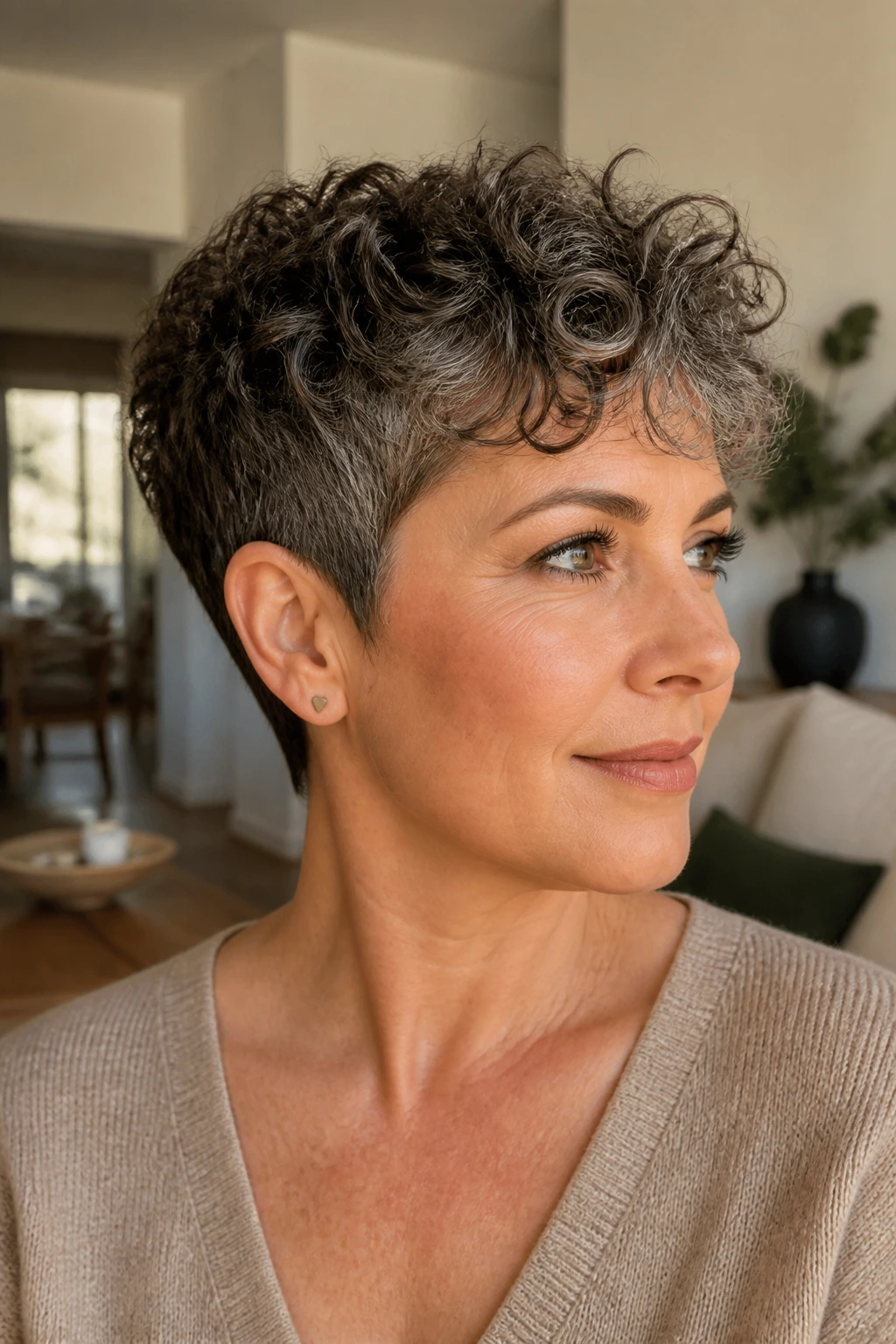
Curl-Friendly Crop
Keep the top longer and ask for curl-by-curl shaping instead of aggressive thinning. This lets the curl clump naturally and keeps the silhouette round rather than frizzy.
Glasses-Smart Pixie
Slim the temples and keep the fringe soft enough to clear your frames. The haircut should frame the glasses, not collide with them.
Low-Heat Air-Dry Pixie
Choose a cut with enough internal layering that it still looks intentional when air-dried. This works well if you hate blow-drying every morning.
Grow-Out-Friendly Pixie
Leave the nape and sideburns a touch longer so the haircut can move into a short crop without an awkward middle phase. That little bit of length buys you time.
High-Contrast Color Pixie
A bit of dimension — subtle highlights, lowlights, or a glossy glaze — can make layered pixies read more clearly. On thick hair, color can show off the cut lines without changing the shape itself.
Maintenance, Trims, and Grow-Out Between Salon Visits
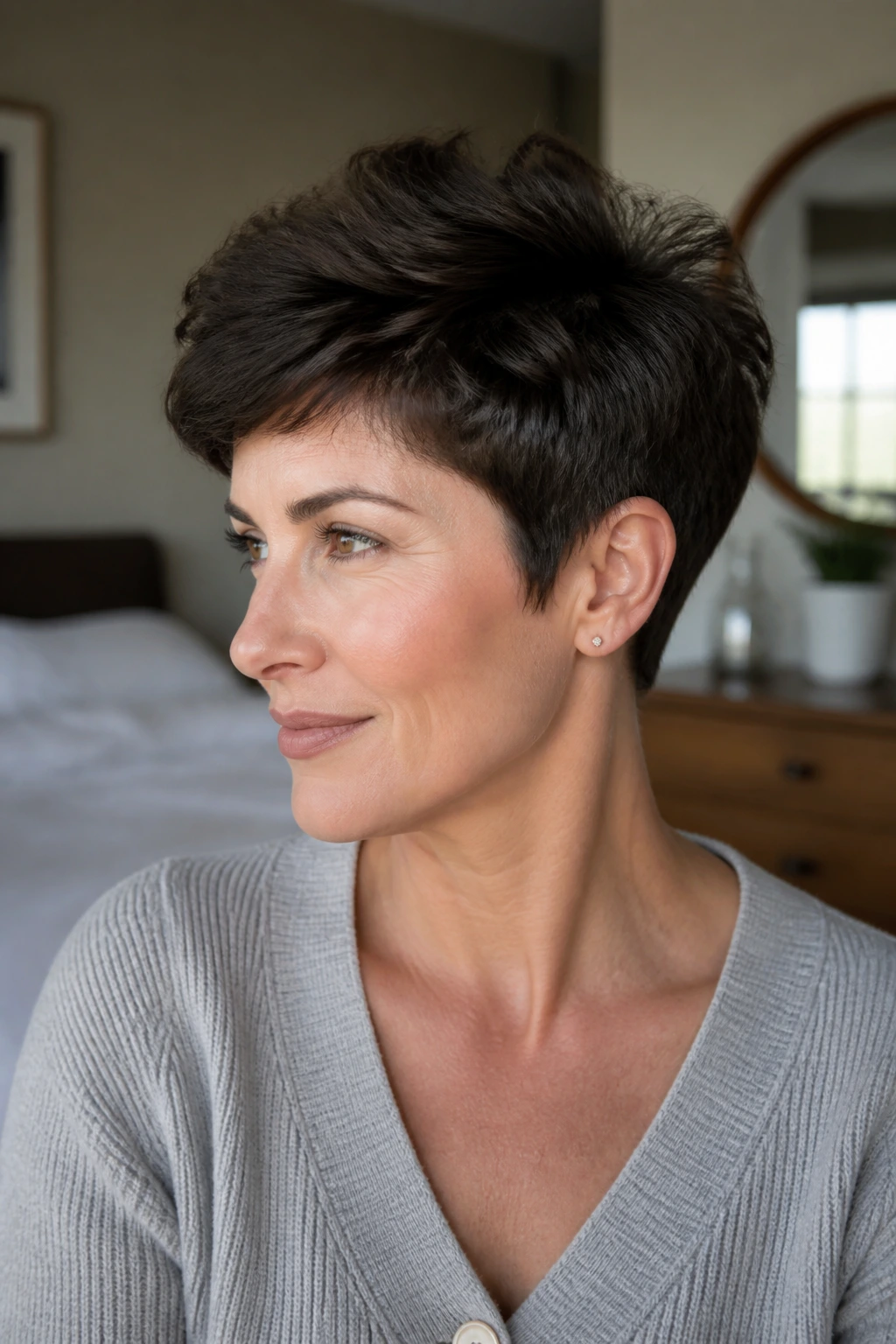
Pixies on thick hair usually need trims every 4 to 6 weeks if you want the shape to stay crisp. If your nape grows fast, 3 to 4 weeks is even better. The haircut doesn’t “fall apart” overnight, but the edges lose their clean line faster than they do on finer hair.
Night care is simple. A satin pillowcase cuts down on roughness, and a light mist of water in the morning can reset the front pieces before styling. If the crown starts to stand up between washes, a touch of cream on damp fingers usually works better than piling on dry product.
Growing a pixie out is less painful when you let the top, sides, and nape grow in stages. The top usually needs the most shaping first, while the nape can stay tidier a little longer. Don’t wait until everything feels shaggy to trim. That’s how the shape turns awkward fast.
Frequently Asked Questions About Pixie Cuts for Thick Hair
Will thick hair make a pixie look too bulky?
Not if the cut is shaped with tapering and internal weight removal. Bulk usually shows up at the sides and nape first, so that’s where the haircut needs the most attention.
Should thick hair be cut dry for a pixie?
Often, yes — or at least checked dry before the final shape is set. Dry cutting helps the stylist see how much the hair springs up, which matters a lot with dense strands.
Is an undercut the best choice for thick hair?
It’s one of the best choices if the hair is very dense or grows wide around the ears. A soft taper can work too, but an undercut removes more bulk in less space.
Can I wear a pixie if I have curly thick hair?
Yes, and the result can be excellent. The trick is preserving the curl pattern and leaving enough length for the curls to shrink without crowding the head.
How often do I need a trim?
Most thick-hair pixies need shape-ups every 4 to 6 weeks. If the neckline grows fast or the sides flare out, book sooner.
What if I have a strong cowlick in front?
Leave the fringe longer and cut it with the growth pattern, not against it. Short bangs can kick up hard and refuse to settle.
Can thick hair and glasses work with a pixie?
Absolutely. A temple taper, soft side fringe, or ear-length side keeps the glasses from fighting the haircut.
How do I grow a pixie out without the mushroom phase?
Keep the nape cleaned up while the top starts to grow, then add small trims to the sides to preserve the shape. Letting all the sections grow unchecked is what creates the mushroom look.
The Cut That Keeps Its Shape
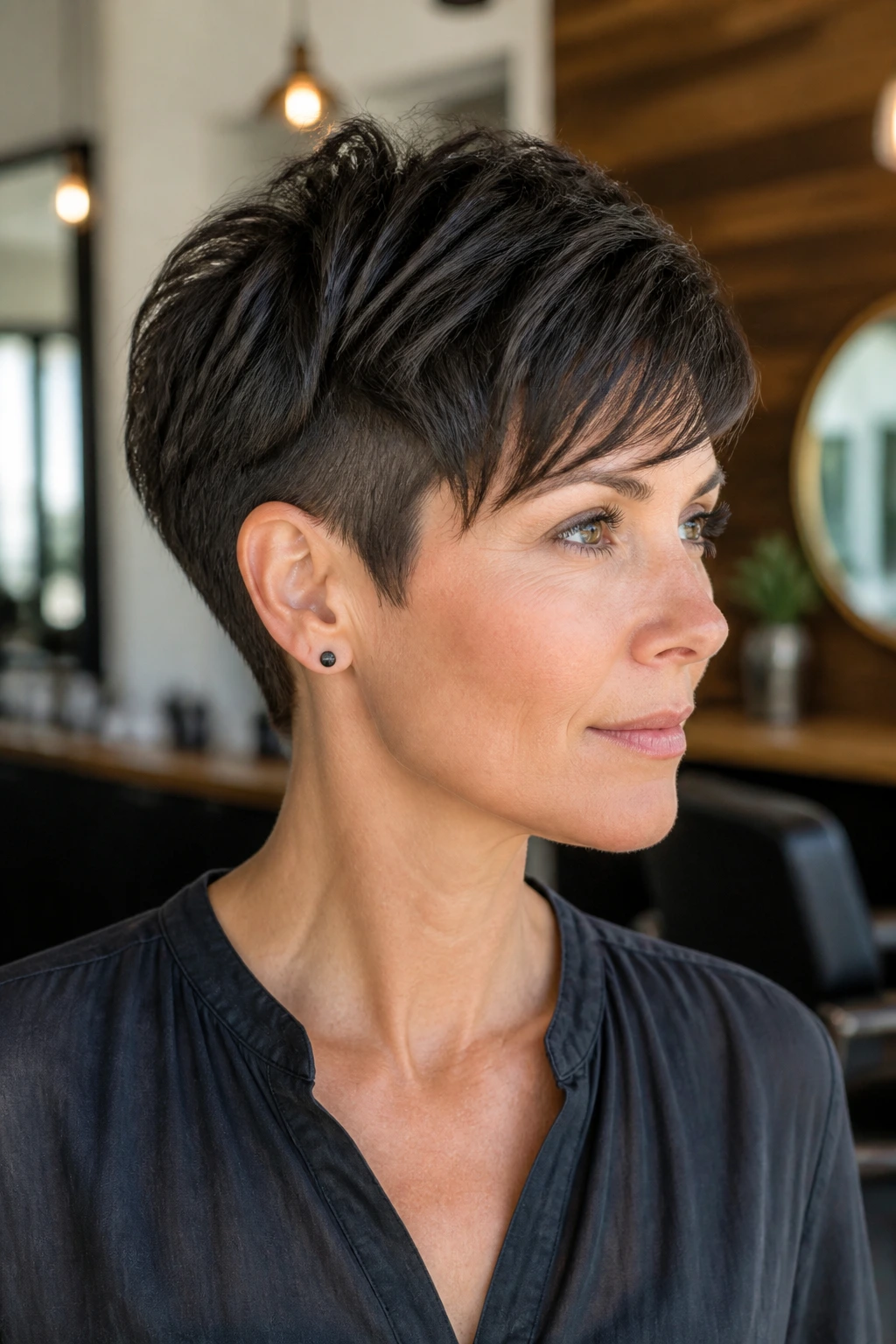
Thick hair is not the enemy of a pixie. It’s the thing that gives the cut body, memory, and staying power — if the shape is built with care. The best versions here use tapering, directional fringe, and smart internal layering to keep the volume where it helps and remove it where it gets bossy.
That’s why these pixie cuts for thick hair work so well. They don’t try to flatten dense hair into something it isn’t. They use the hair’s strength, then trim away the trouble spots. Bring a photo, yes, but bring a note about your cowlicks, your nape, and how much time you want to spend with a blow dryer. Those three details change the haircut more than most people think.
