



Pixie cuts for short curly hair work best when the cut respects the curl pattern instead of trying to flatten it into obedience. That’s the whole trick, and it’s why some curly pixies look airy and expensive while others turn into a boxy puff the second they dry. The difference usually isn’t luck. It’s shape.
A curly pixie lives or dies by a few small decisions: where the weight sits, how hard the nape is tapered, whether the fringe is cut dry or left a touch longer, and how much room the curls get to spring. A loose 3A wave and a tight 4C coil do not need the same silhouette, not even close. The good news is that once the outline is right, styling gets much easier.
That’s why this many versions matter. Short curls can be soft, sharp, romantic, edgy, retro, and low-maintenance without losing their texture. Some cuts need a bit of crown lift. Some need a tight neckline. Some need a longer fringe so the face doesn’t feel swallowed by volume. A few are happiest when they’re barely there. The right one depends on the curl, the density, and how much morning fuss you’re willing to tolerate.
Why You’ll Love This Collection
-
There’s a shape for every curl pattern: Loose waves, springy ringlets, and tight coils each behave differently at pixie length, so the right silhouette matters more than a trend photo.
-
Short doesn’t have to mean flat: A good pixie keeps lift where you want it — usually the crown, fringe, or front corners — while cleaning up the sides and nape.
-
The styling can be fast: Many of these looks need only a leave-in, a curl cream or gel, and a diffuser for 5 to 10 minutes.
-
There’s room for personality: You can go soft, sculpted, edgy, retro, or airy without growing your hair out first.
-
Most of these cuts age well: A pixie with smart tapering and a little top length usually grows out better than a blunt chop with no plan.
-
They make use of natural texture: Curly hair already has movement built in, which means the cut doesn’t need to fake volume with a lot of product.
1. Soft Rounded Pixie
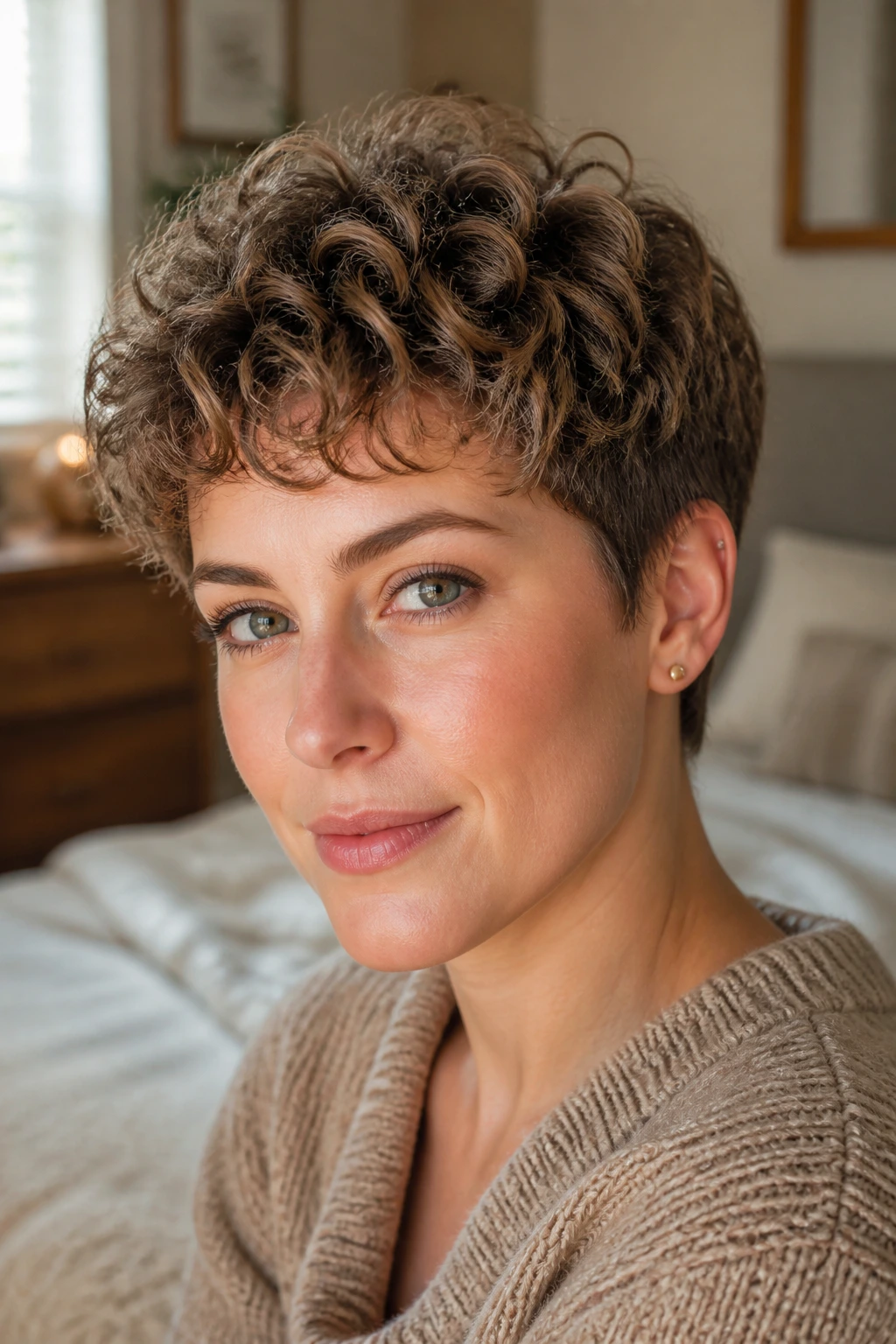
A soft rounded pixie is the one I recommend when someone wants the haircut to look like it belongs on their head, not pasted there. The sides stay close enough to keep the outline neat, but the top and crown stay curved and gentle, so the curls form a little halo instead of a helmet. That shape works especially well on looser curls and soft waves that need encouragement more than control.
Ask for the nape and around the ears to be tapered, with enough length on top to let the curls sit in a rounded dome. If your hair gets puffy at the crown, this is the kind of cut that uses that height on purpose. It’s tidy, but not severe.
2. Tapered Nape Pixie
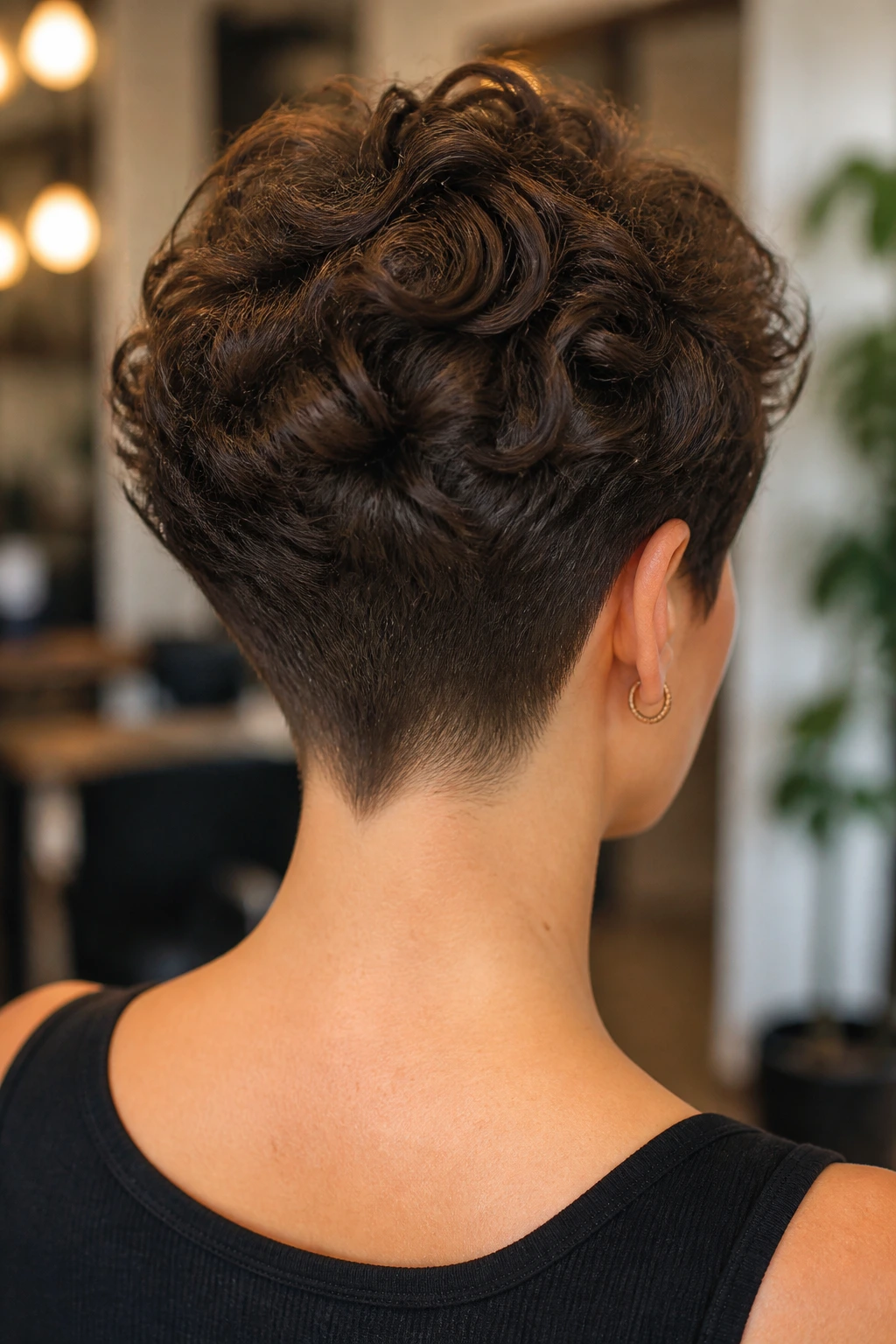
The tapered nape pixie is all about the back of the head. Short, neat, and clean at the neckline, it lets the curls on top do the talking while the lower half stays crisp. That matters more than people think; a fuzzy nape can make even a good curly cut look unfinished.
This one works well if your curls grow thick near the neck or if you hate the feeling of hair brushing your collar. Keep the top long enough for a defined curl pattern — usually about 1½ to 3 inches depending on shrinkage — and let the back sit close. It’s one of the easiest ways to make short curly hair look intentional instead of overgrown.
3. Curly Fringe Pixie
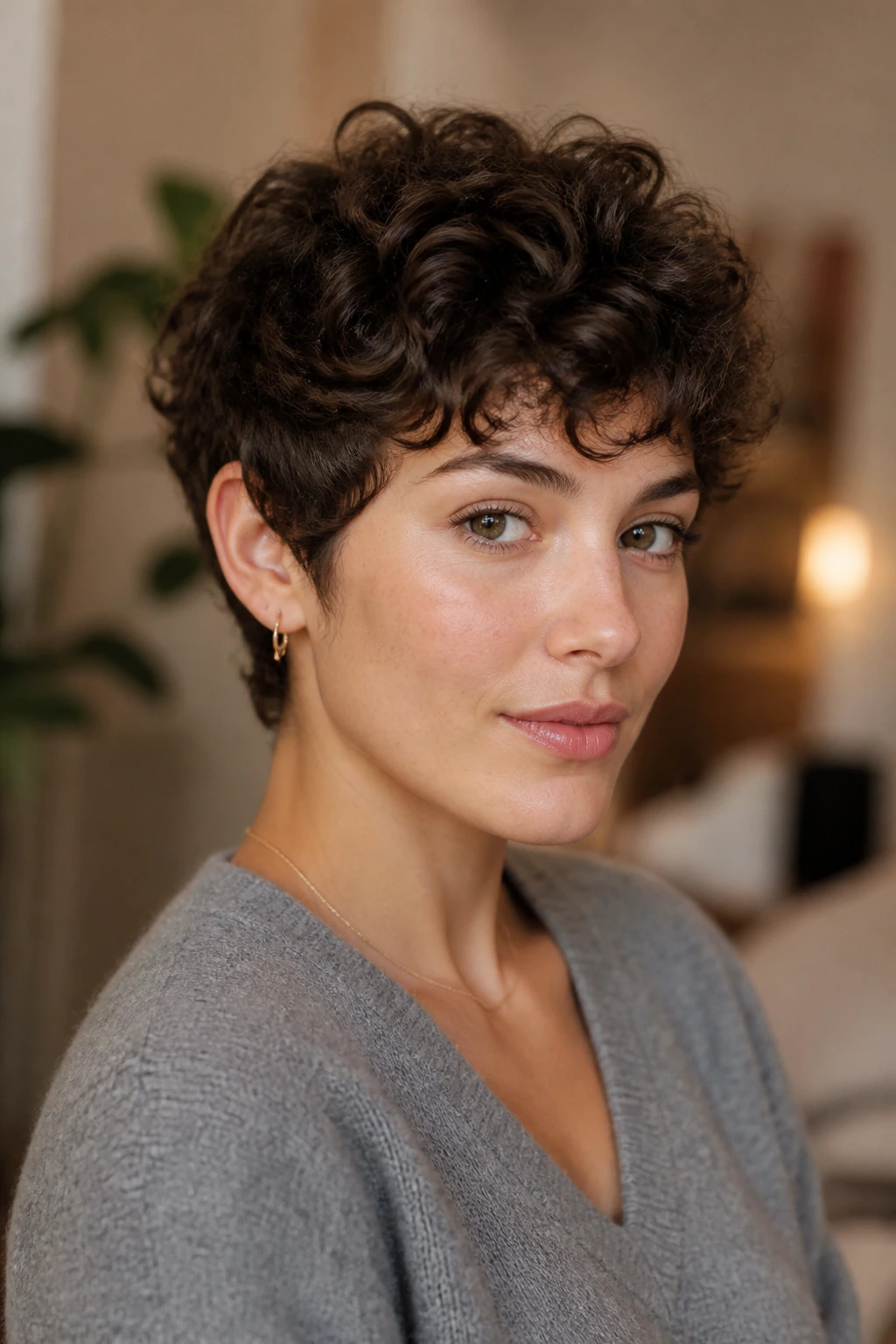
A curly fringe changes the whole face. Instead of pushing all the curls up and back, this cut leaves the front long enough to fall in a soft arc across the forehead, where the curls can break into little spirals or bends. It takes the attention off a high forehead and gives the cut a more relaxed, less formal feel.
The key is not to cut the fringe too short while wet. Curly bangs shrink hard. Leave more length than feels safe in the chair, then let the shape land after it dries. If the fringe lands just above the eyebrows or brushes them lightly, you’ve hit the sweet spot.
4. Side-Swept Asymmetrical Pixie
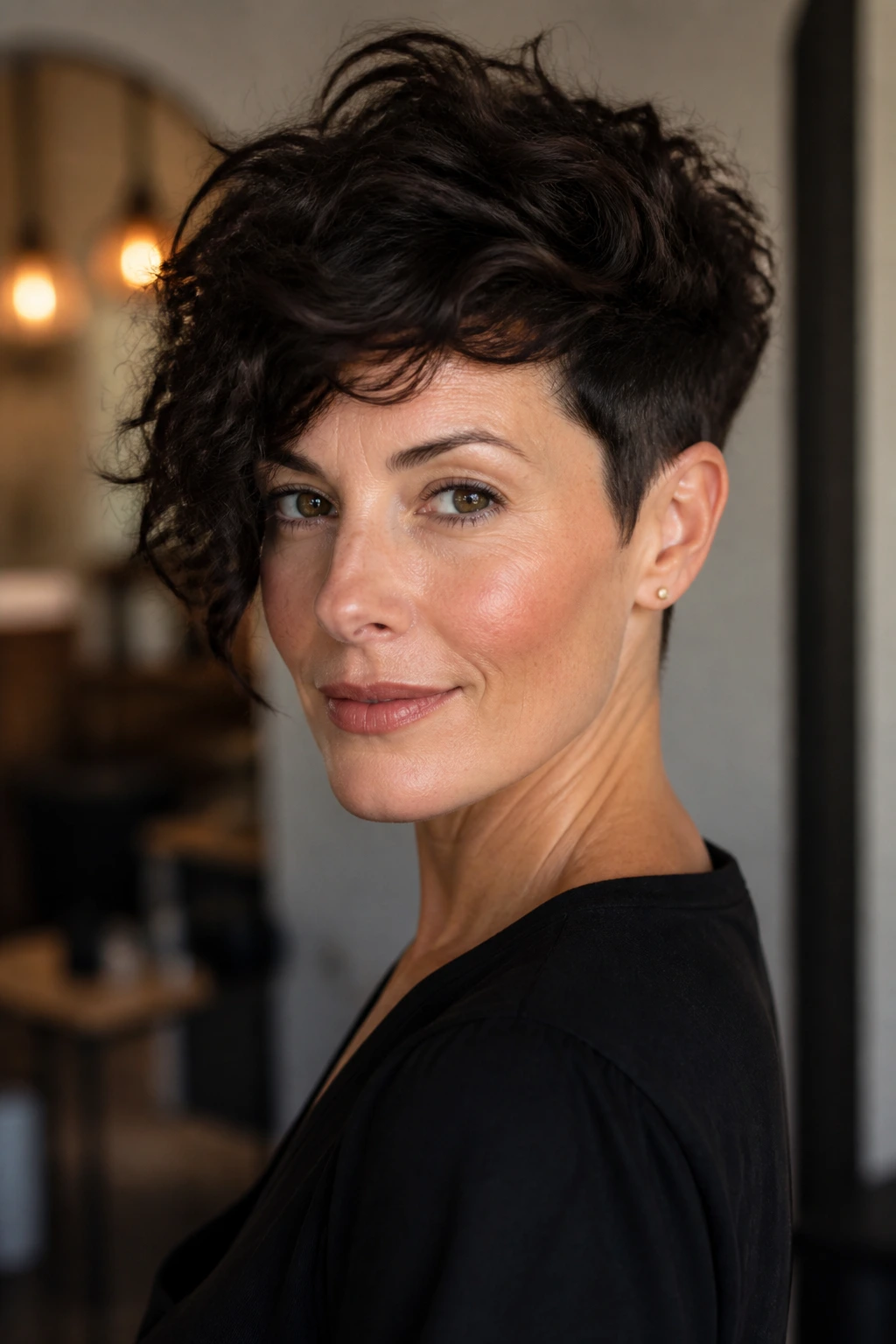
If you like a little tension in a haircut, this is where it starts. One side stays longer and sweeps across the forehead, while the other is cut closer to the head for contrast. On curly hair, that asymmetry feels even richer because the texture softens the hard line.
This cut works best when the longer side has enough weight to keep its direction. Too little length and it flops. Too much and it steals the whole show. I like it for square or round faces, because the diagonal line gives the face somewhere to go.
5. Micro Pixie With Lift
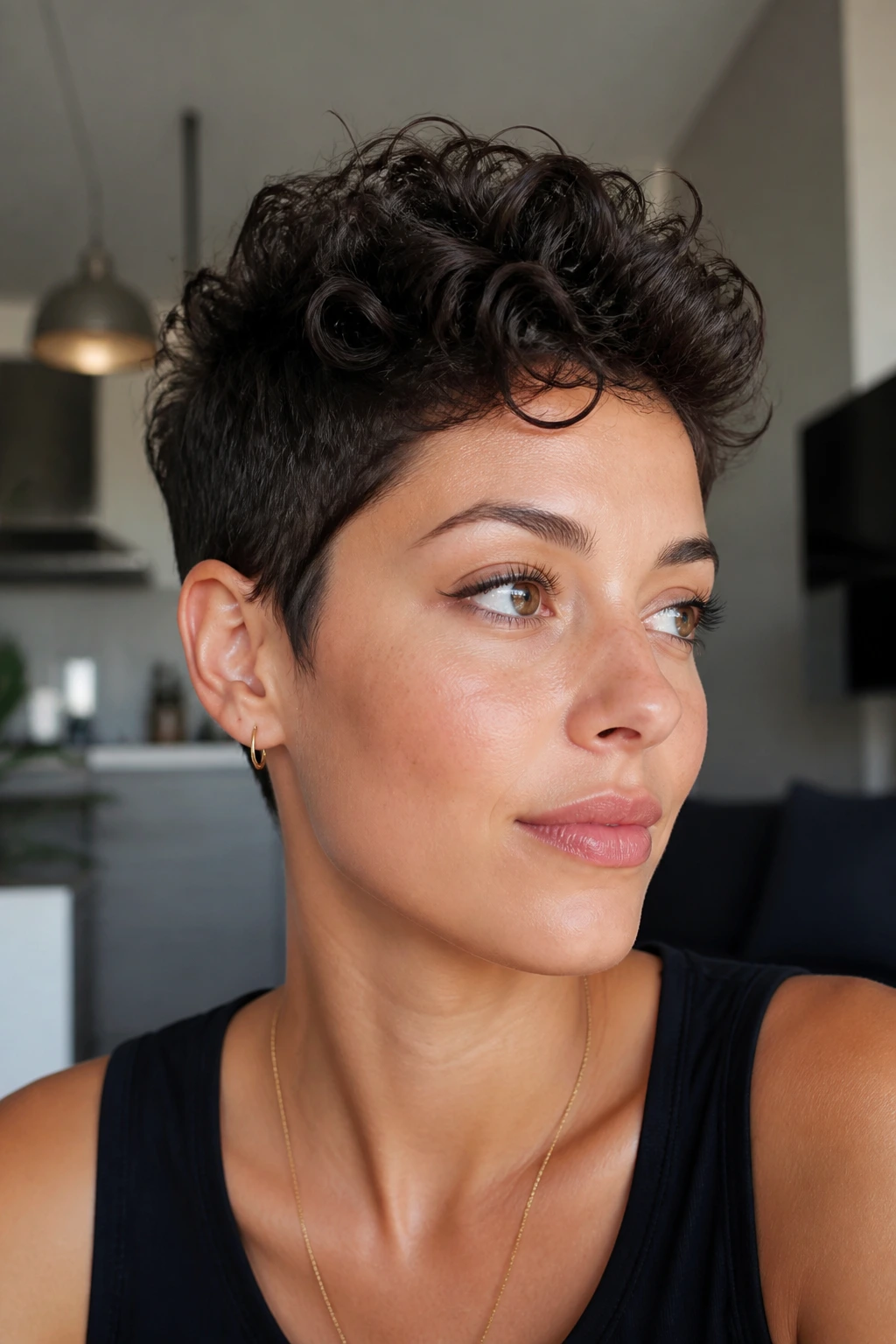
A micro pixie is tiny, but it should not be timid. The sides and back are cut very short, while the top is left just long enough — often 1 to 2 inches — for curls to stand up and show their pattern. Think of it as a close crop with personality, not a shaved head pretending to be a pixie.
This one is sharp on strong features and dense curl patterns. Fine curls can wear it too, but the top needs enough lift to avoid looking like it vanished. Use a pea-size gel or a tiny dab of mousse, then lift the roots with your fingers while diffusing. No heavy cream. It flattens the whole thing.
6. Curly Bixie Hybrid
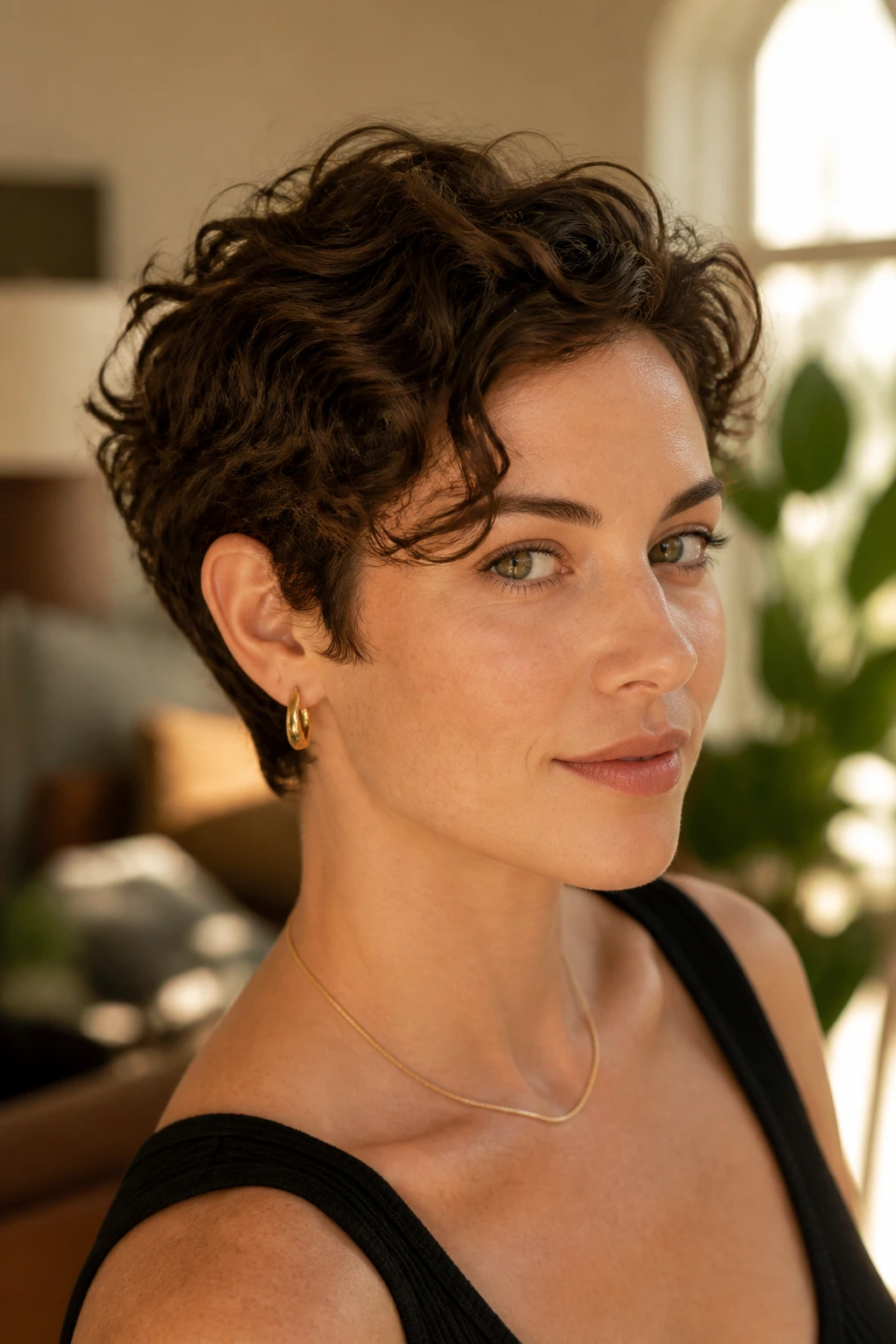
The bixie lives in that useful middle ground between a bob and a pixie, which is why I reach for it when someone likes the idea of a shorter cut but isn’t ready to lose every bit of length. The nape is shorter, the crown is rounded, and the front usually keeps enough length to tuck behind the ear or sweep to the side.
It’s especially good for curls that collapse when they get too short. You still get the shape and the lighter feel, but the perimeter has a little more swing. If you’ve ever wanted a pixie that behaves like a grown-up haircut on Monday and a playful one on Friday, this is the lane.
7. Undercut Curly Pixie
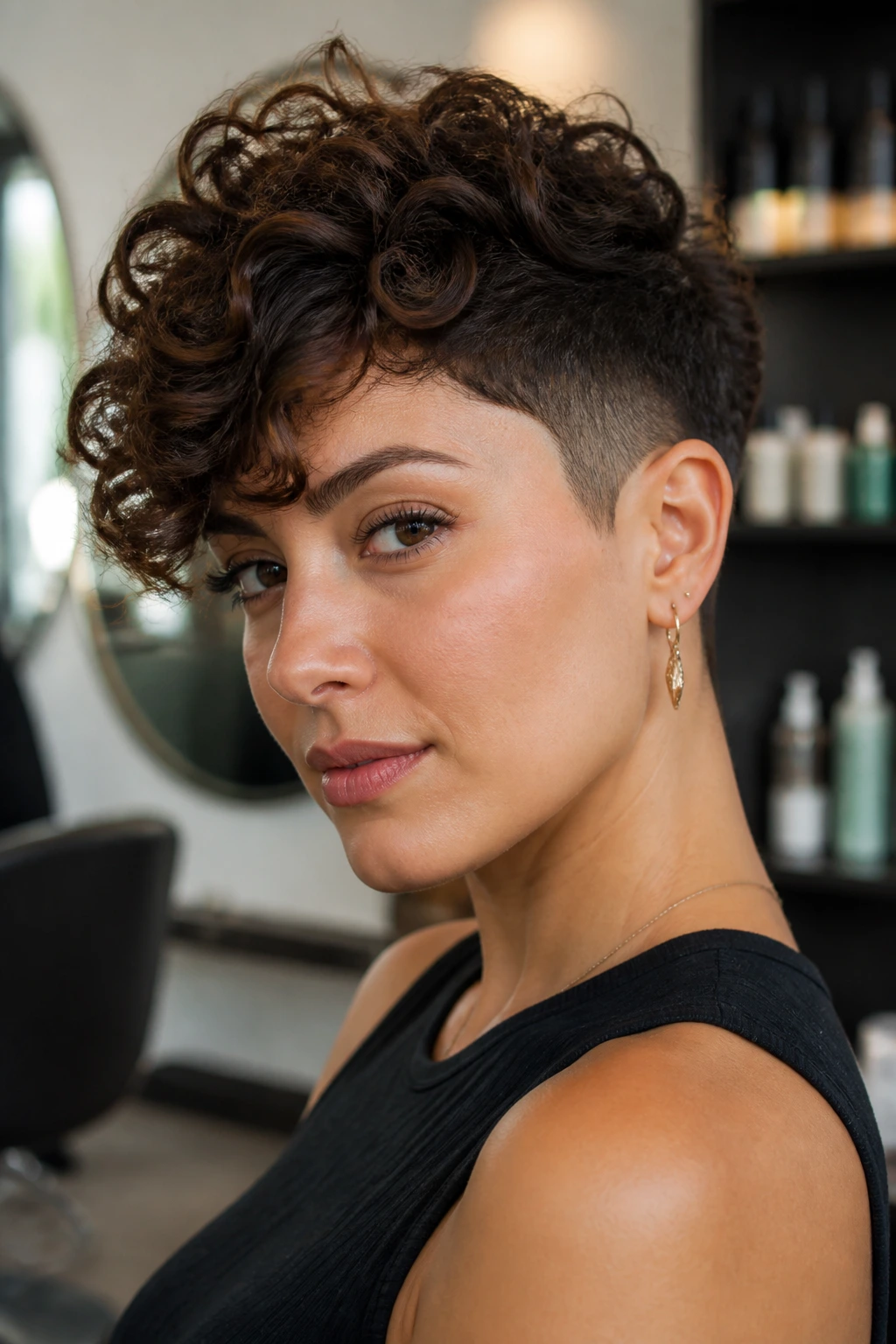
An undercut curly pixie solves a very real problem: bulk. If your curls pile up fast at the sides and under the crown, shaving or clipping the lower layer shorter removes a chunk of weight that otherwise turns the whole style into a puff. The top stays longer and can be worn forward, up, or slightly messy.
This cut has a harder edge than the rounded looks, and that’s the point. It lets the curls sit high without getting bulky around the ears. Tell the stylist where you want the undercut to stop — usually just above the ear or through the nape — so the grow-out doesn’t become a surprise.
8. Shaggy Layered Pixie
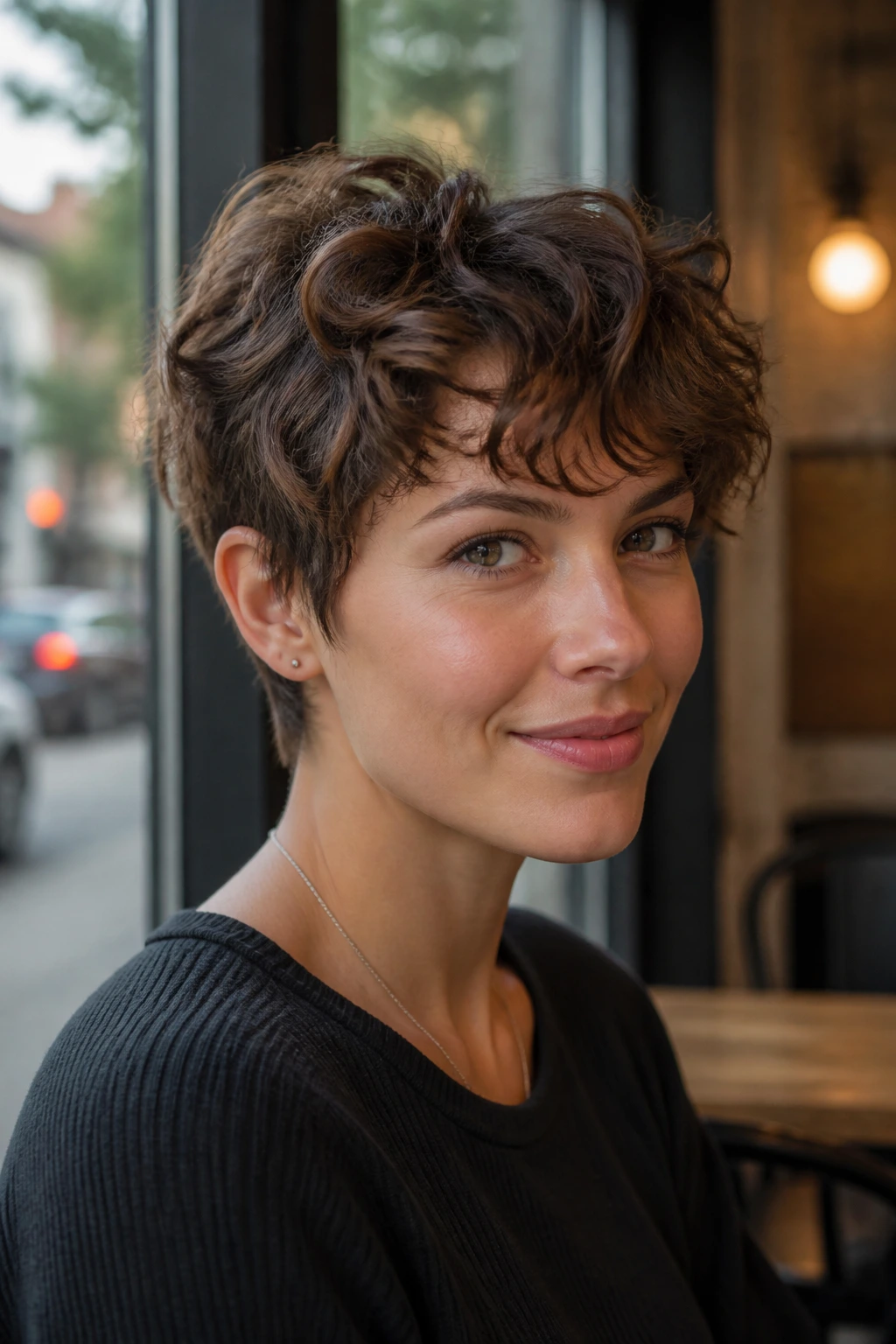
The shaggy layered pixie is a little wild in the best way. Instead of one clean, polished line, it uses short layers to break up the curl mass and make the texture look lighter. It works especially well on thicker hair that wants to expand the moment it dries.
You do need some control here, or it can go fuzzy. The layers should remove weight, not erase the shape. I like this one for people who want their pixie to look soft and lived-in rather than sleek. A bit of curl cream scrunched through damp hair keeps the ends from looking frayed.
9. Finger-Coil Pixie
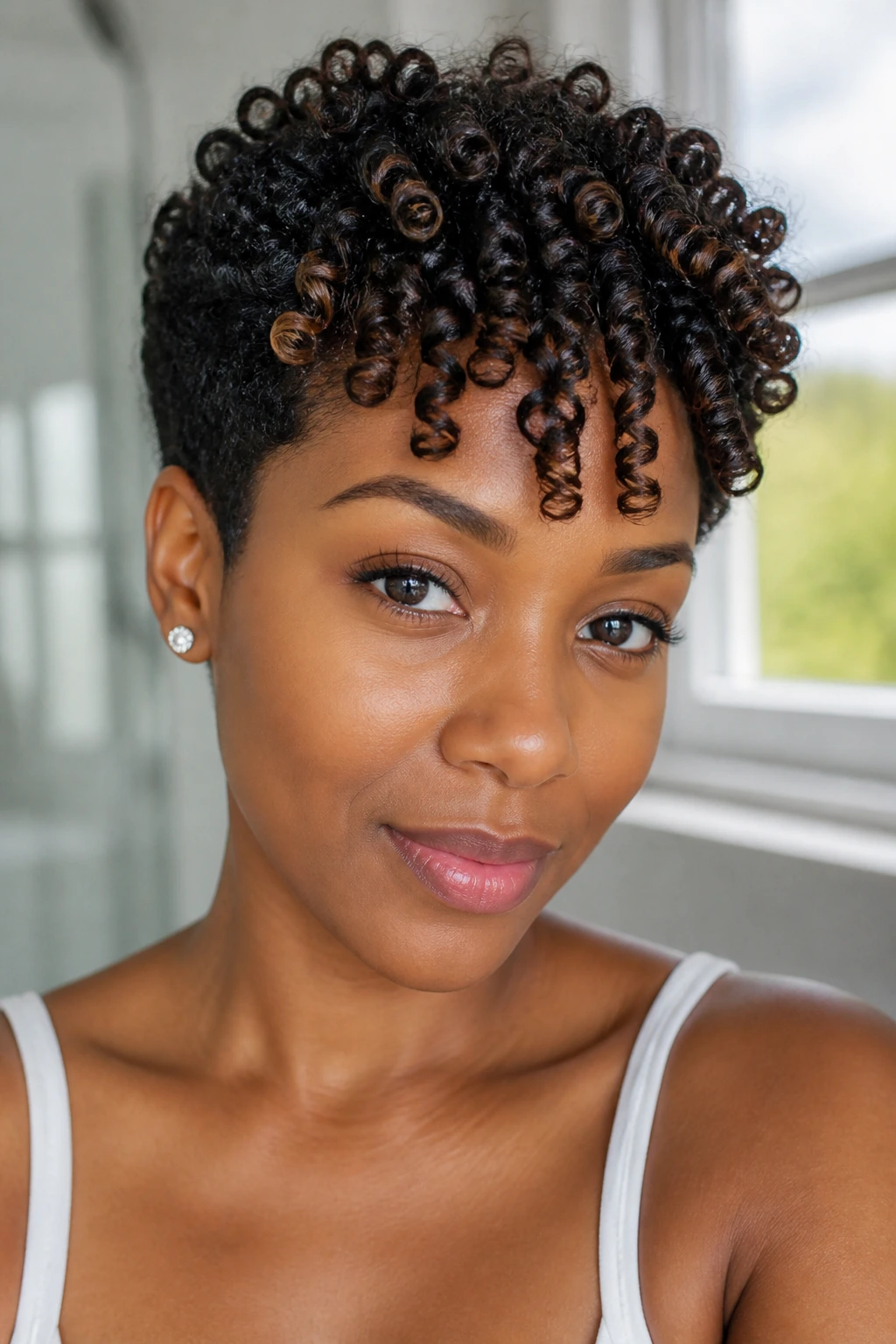
A finger-coil pixie is for curls that love definition. The cut itself usually stays compact, but the top is left long enough to be styled into little coils that hold their shape after drying. It can look polished without getting stiff, which is a nice line to walk.
This style is less about randomness and more about intention. You coil sections around your finger, set them with a light gel, and let them dry before touching them. It’s a good choice if your curl pattern is uneven and you want the front to look more uniform than it does naturally.
10. Piecey Razor-Cut Pixie
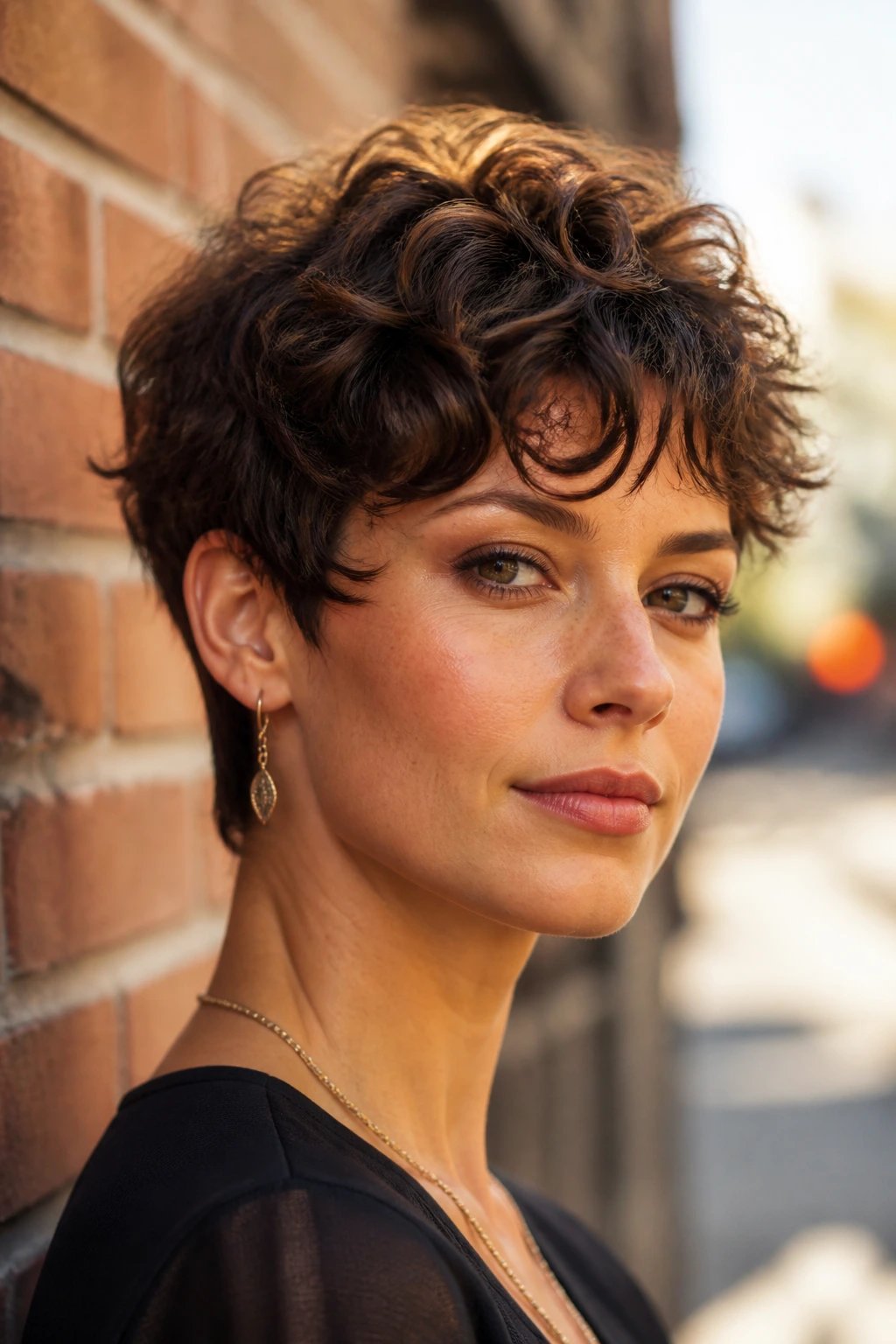
The piecey razor-cut pixie has a bit of grit to it. Rather than one blunt outline, the ends are feathered so the curls separate into small, distinct pieces. On the right hair, that creates movement that looks cooler than a smooth, rounded crop ever could.
It suits medium-density curls and waves best. Very tight curls can sometimes get frizzy if the cut is too aggressively razored, so this one needs a careful hand. The payoff is a light, broken-up shape that feels modern without trying too hard.
11. Tapered Wave Crop
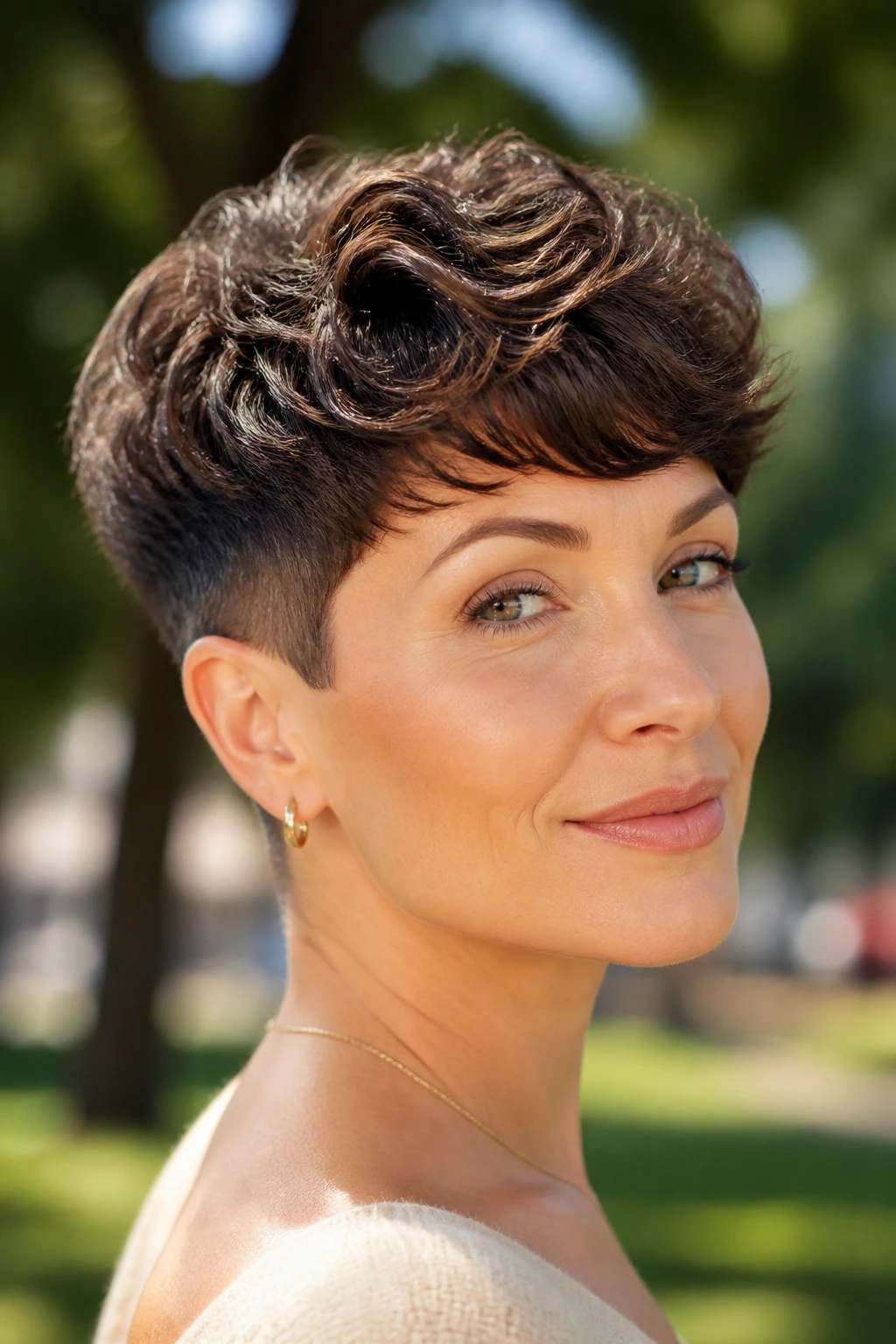
If your hair sits between wavy and curly, the tapered wave crop is a smart move. The sides and back stay neat, but the top keeps enough length for the waves to bend and stack softly. It’s less “big curly halo” and more “controlled texture.”
This cut is one of the easiest to live with because it doesn’t ask for much product. A leave-in and a little mousse can be enough. If your waves puff up at the wrong spots, ask for a little more length at the front corners so the cut doesn’t feel too close to the head.
12. High-Top Curly Pixie
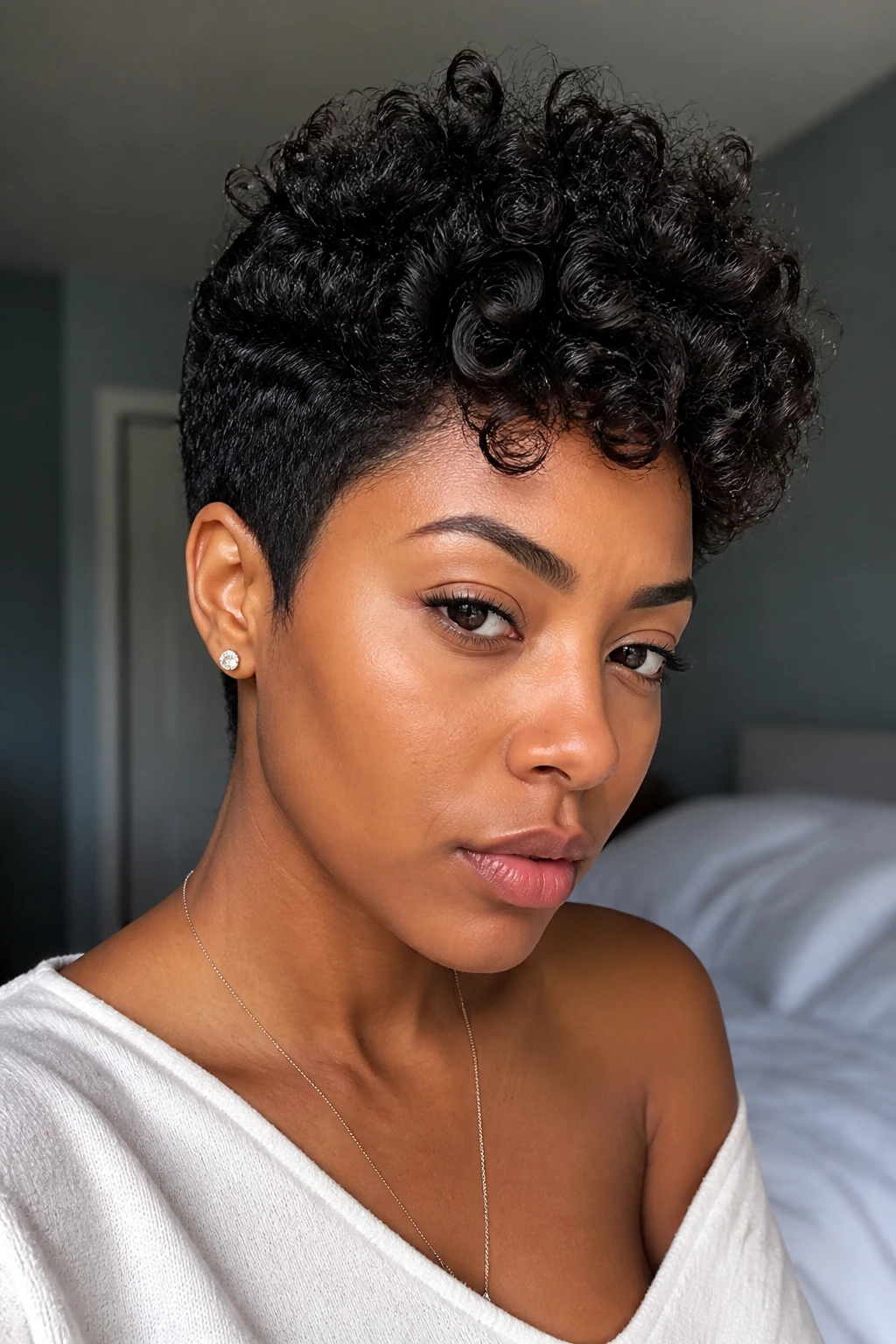
A high-top curly pixie pushes the height upward. The sides stay tight while the crown is left fuller, creating a little vertical drama without turning into a mohawk. It’s a strong silhouette, and on dense curls it looks clean and deliberate.
This is the cut for someone who likes volume on purpose. The trick is balance: too much height and the face disappears; too little and the point of the cut gets lost. A diffuser with the head tipped slightly forward helps the crown stand up instead of leaning back.
13. Faux-Hawk Pixie
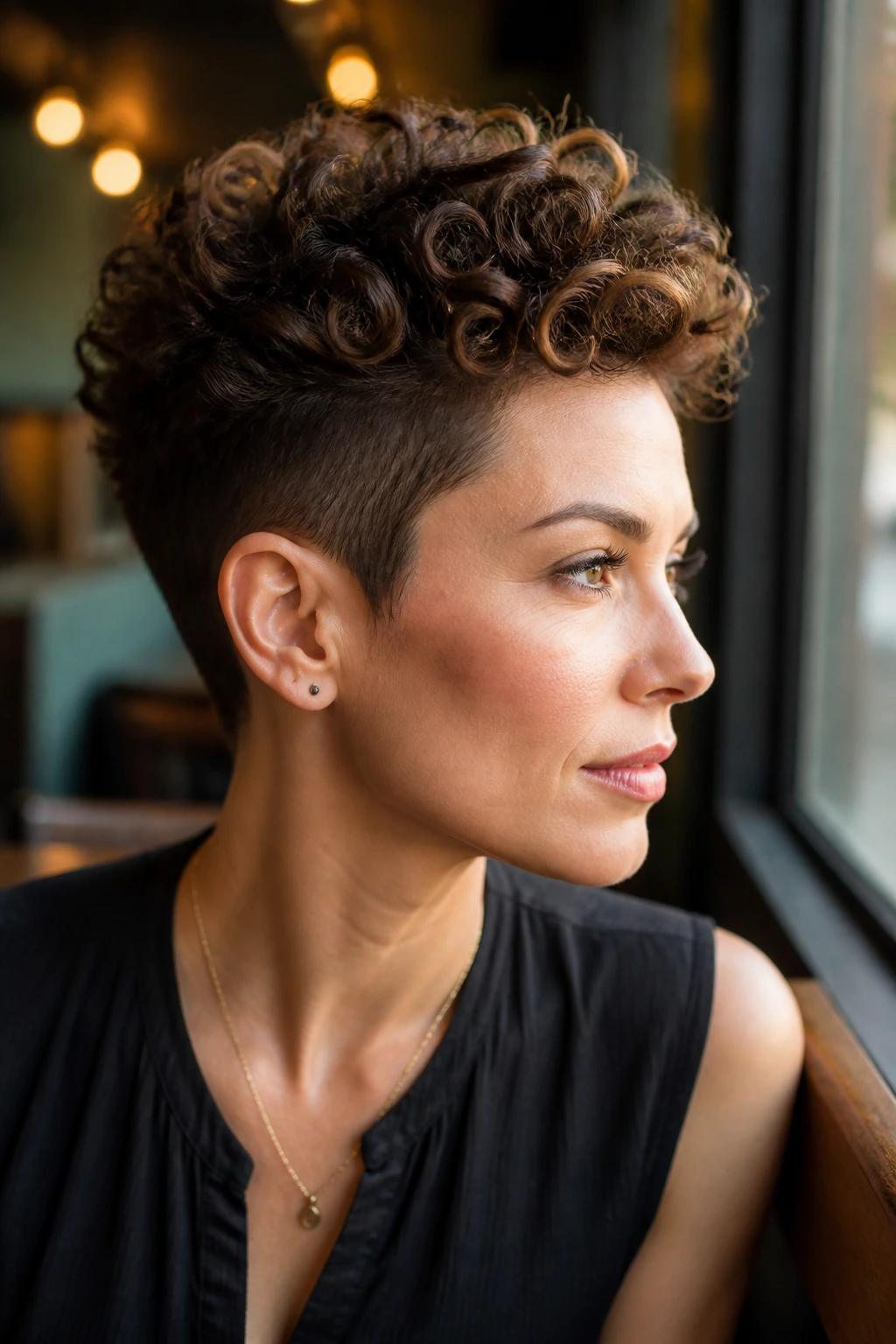
The faux-hawk pixie gives curly hair an edge without shaving the whole side of the head. The center strip stays longer, the sides are cut short, and the curls are styled upward and inward so they form a ridge through the middle. It’s bold, but not fussy.
I like this on thick curls because the texture naturally supports the shape. Fine curls can wear it too, but they usually need a root-boosting mousse and a quick clip at the crown while drying. If you want a cut that reads confident from across the room, this one does the job.
14. Deep Side-Part Pixie
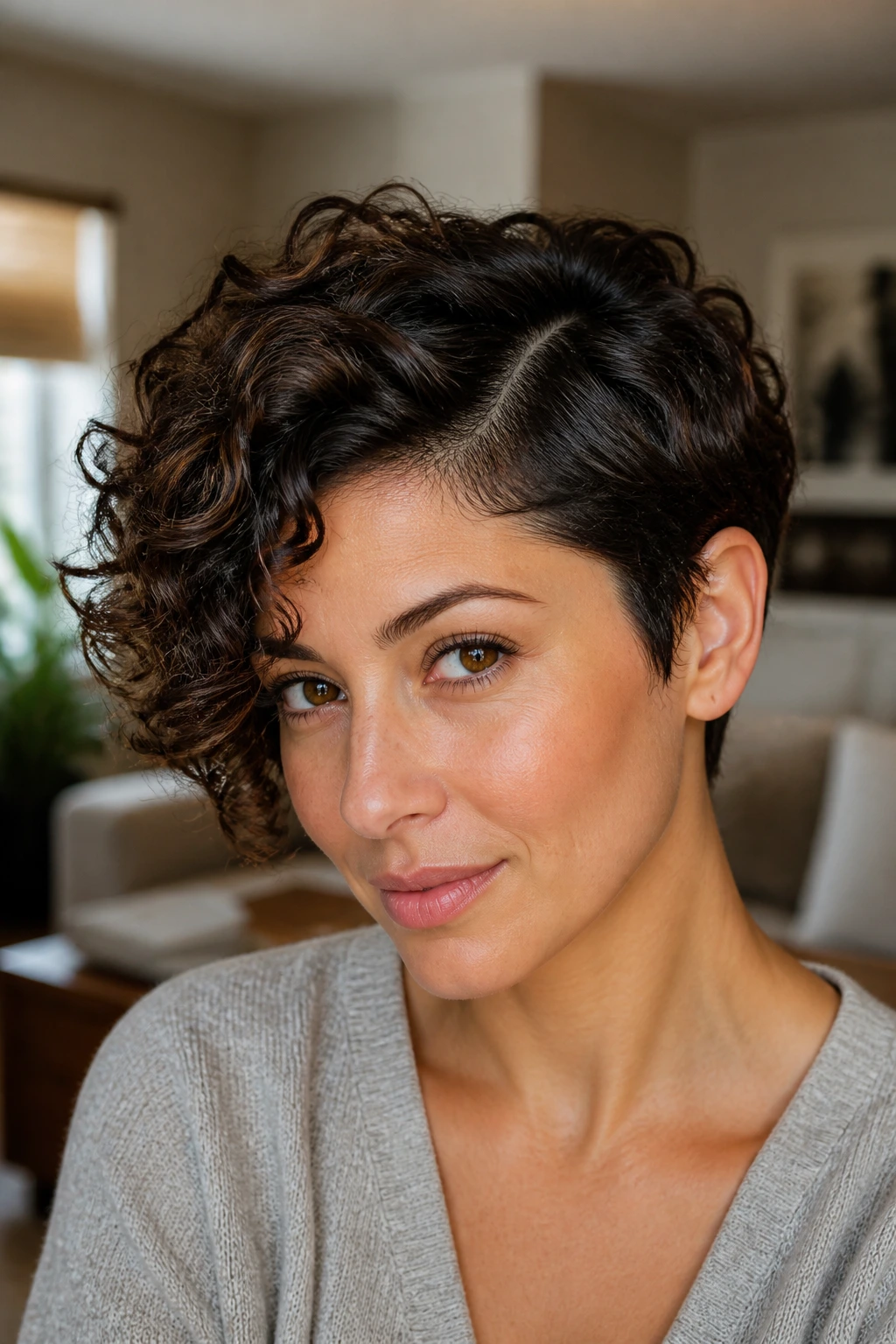
A deep side-part pixie is one of those cuts that quietly fixes a lot of problems. It breaks up width, creates a diagonal line across the forehead, and lets the curls fall in a controlled sweep instead of a uniform puff. That’s useful if your face feels widest at the cheeks.
The part matters. Push it too shallow and the style loses its shape; go deep enough and the whole cut suddenly looks more deliberate. This is a very easy pixie to dress up, too. One side clipped behind the ear, one side loose, and you’re done.
15. Rounded Afro Pixie
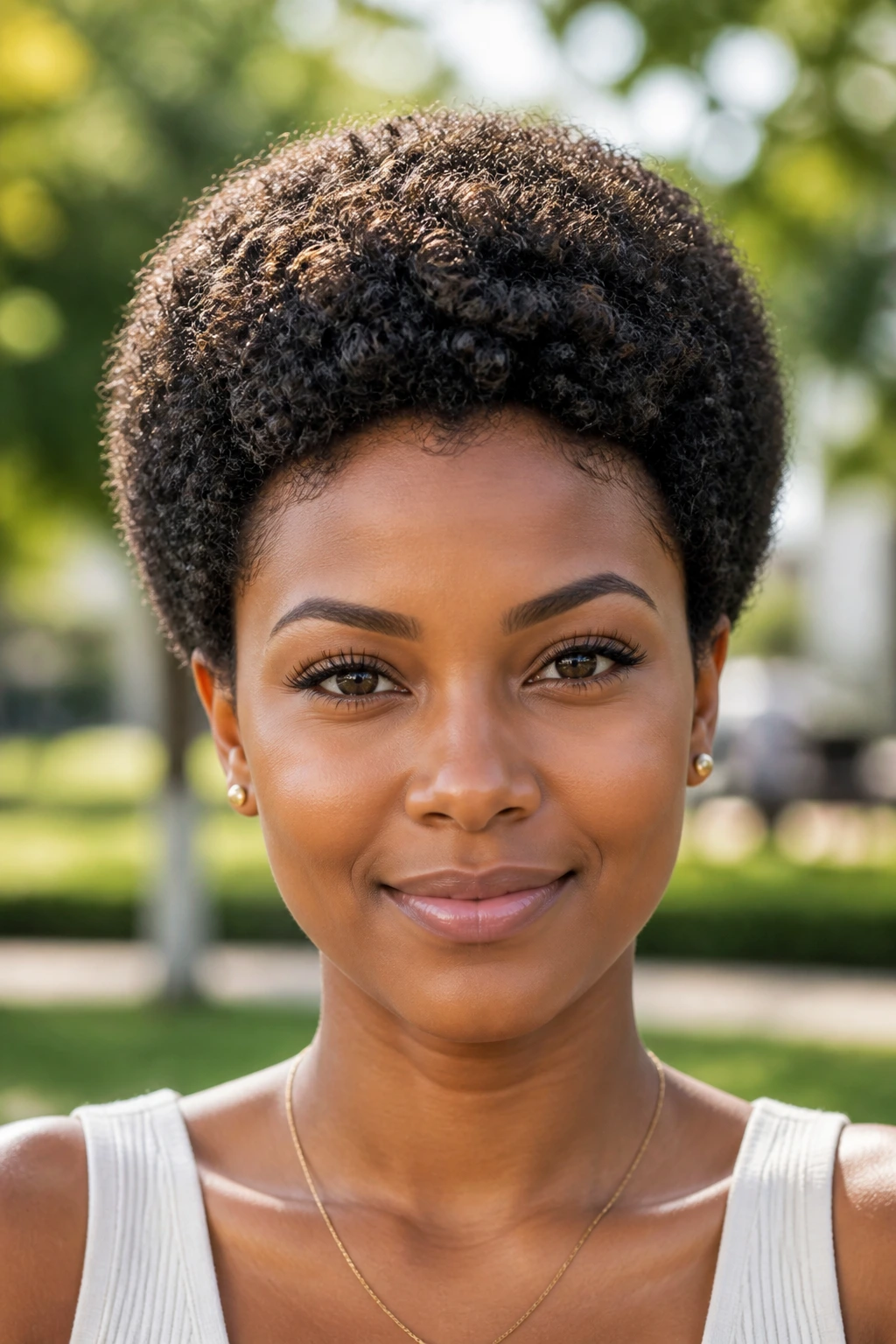
A rounded afro pixie keeps the coil pattern intact and turns it into a compact sphere. There’s less separation and more overall shape, which makes it a beautiful option for tight curls and coils that want to spring upward instead of lying flat.
The haircut should respect the natural outline of the head. That means shaping the sides and crown into a balanced curve rather than carving the hair into a flat top. If your curls have density at the sides, ask the stylist to shape the perimeter while keeping the coil spring intact.
16. Choppy Pixie Bob
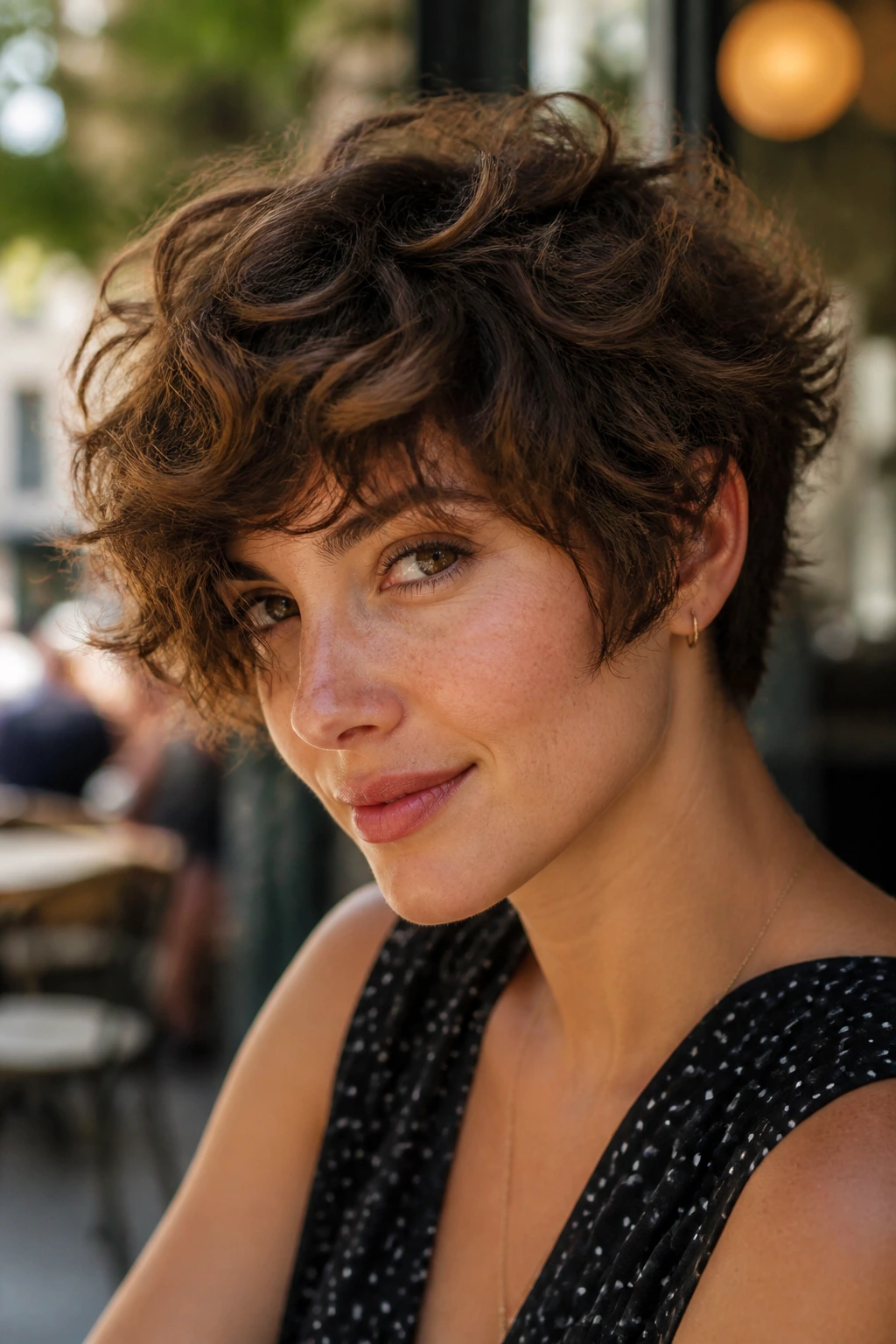
This one sits right on the border, and that border is where it gets interesting. A choppy pixie bob keeps a little extra length through the front and sides, so the curls can swing instead of just sit. It’s a good option if you want short hair without a close-cropped finish.
Because the silhouette is less severe, it tends to suit people who wear glasses or like to tuck hair behind one ear. The choppy ends keep the shape from feeling heavy. If your curls are loose enough to twist at the ends, this style will show that movement off nicely.
17. Disconnected Curly Pixie
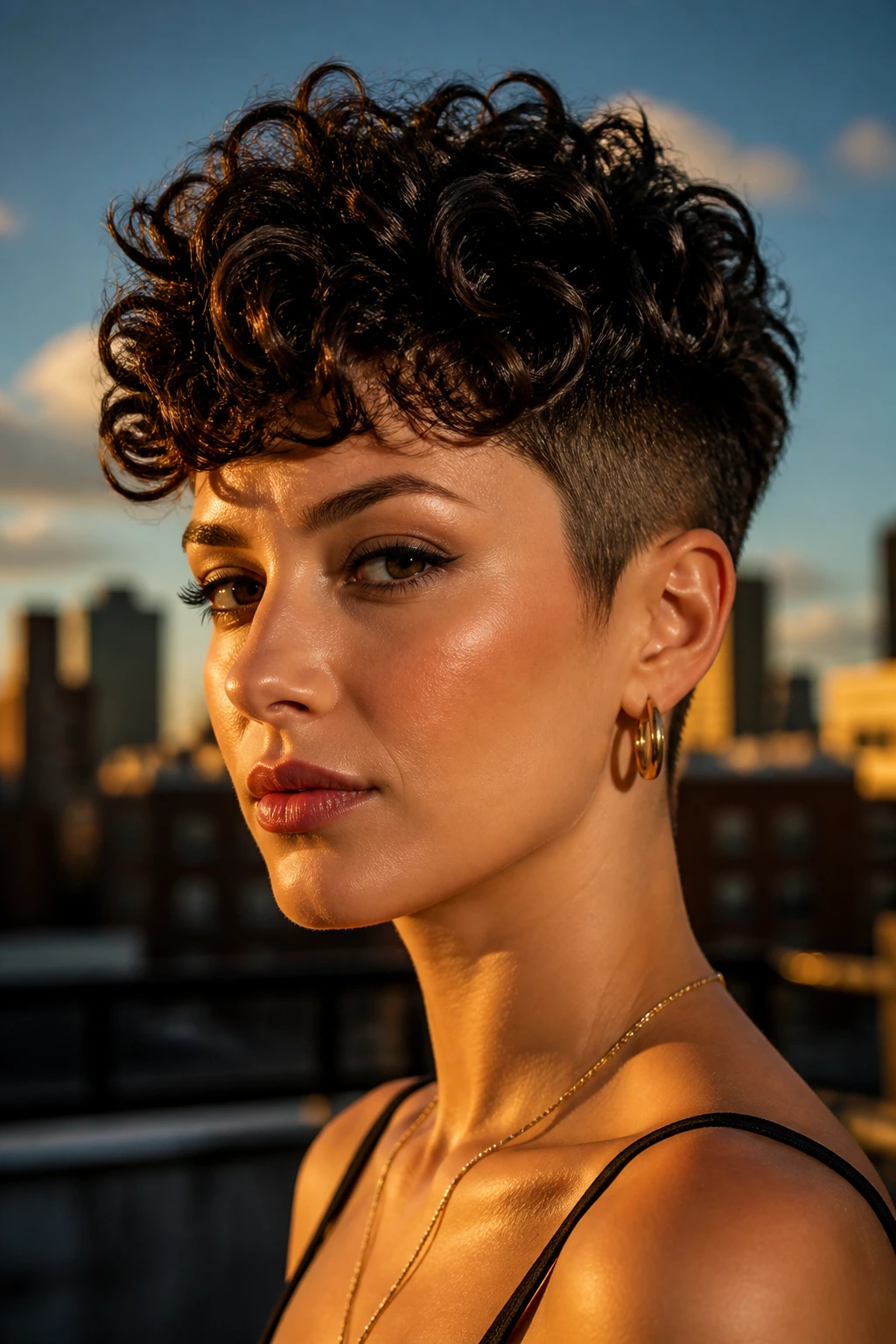
A disconnected curly pixie doesn’t blend everything together neatly, and that’s the appeal. The top stays clearly longer than the sides, so the difference is visible right away. It gives the hair a modern, editorial feel without needing a lot of length.
This cut looks best when the contrast is obvious. If the top is only a little longer, the disconnect gets muddy. If it’s much longer, the shape becomes more dramatic and easier to style forward or to the side. It’s a strong choice for anyone who likes a haircut with a little attitude.
18. Tapered Temple Pixie
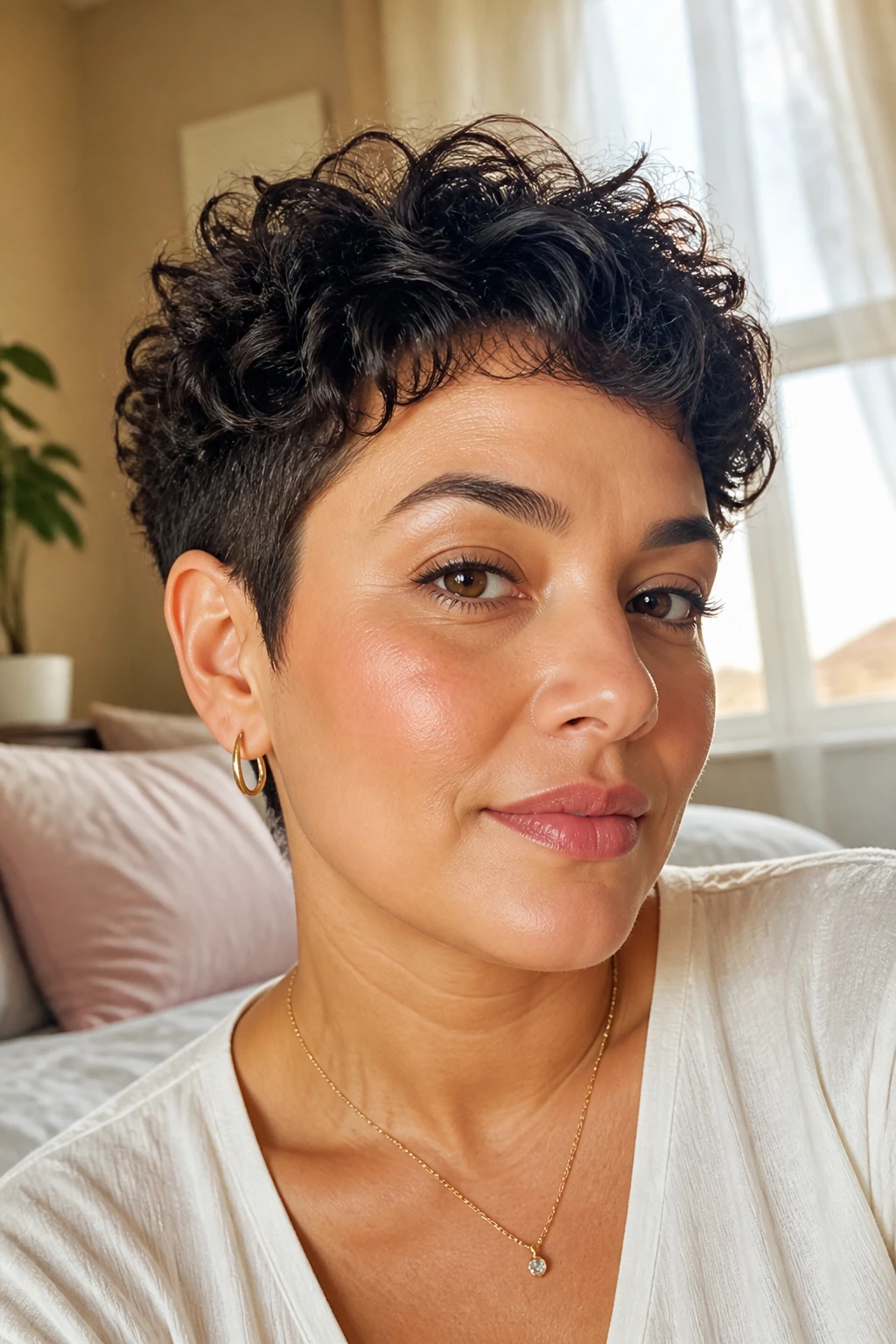
A tapered temple pixie focuses on the area around the temples and sideburns, which sounds small but changes the whole face. By keeping those spots shorter and neater, the cut opens up the cheekbones and lets the curls on top frame the face rather than crowd it.
This is a smart option for anyone whose hair grows fuzzy around the sides before anywhere else. It keeps the outline crisp without removing too much overall volume. I’d call it a quietly useful haircut. Nothing flashy. It just works.
19. Jaw-Length Curly Pixie

A jaw-length curly pixie is for people who want pixie energy without giving up that little bit of face-framing length. The curls sit close to the jawline or just above it, which softens sharper features and gives the cut some swing. It’s especially useful during a transition from longer hair.
Because there’s a bit more length, the shape can survive a bad curl day better than a shorter crop. It’s also forgiving if your curls shrink unpredictably. Ask for enough front length that you can still tuck a curl behind the ear, because that tiny bit of styling room matters.
20. Cloud-Layer Pixie
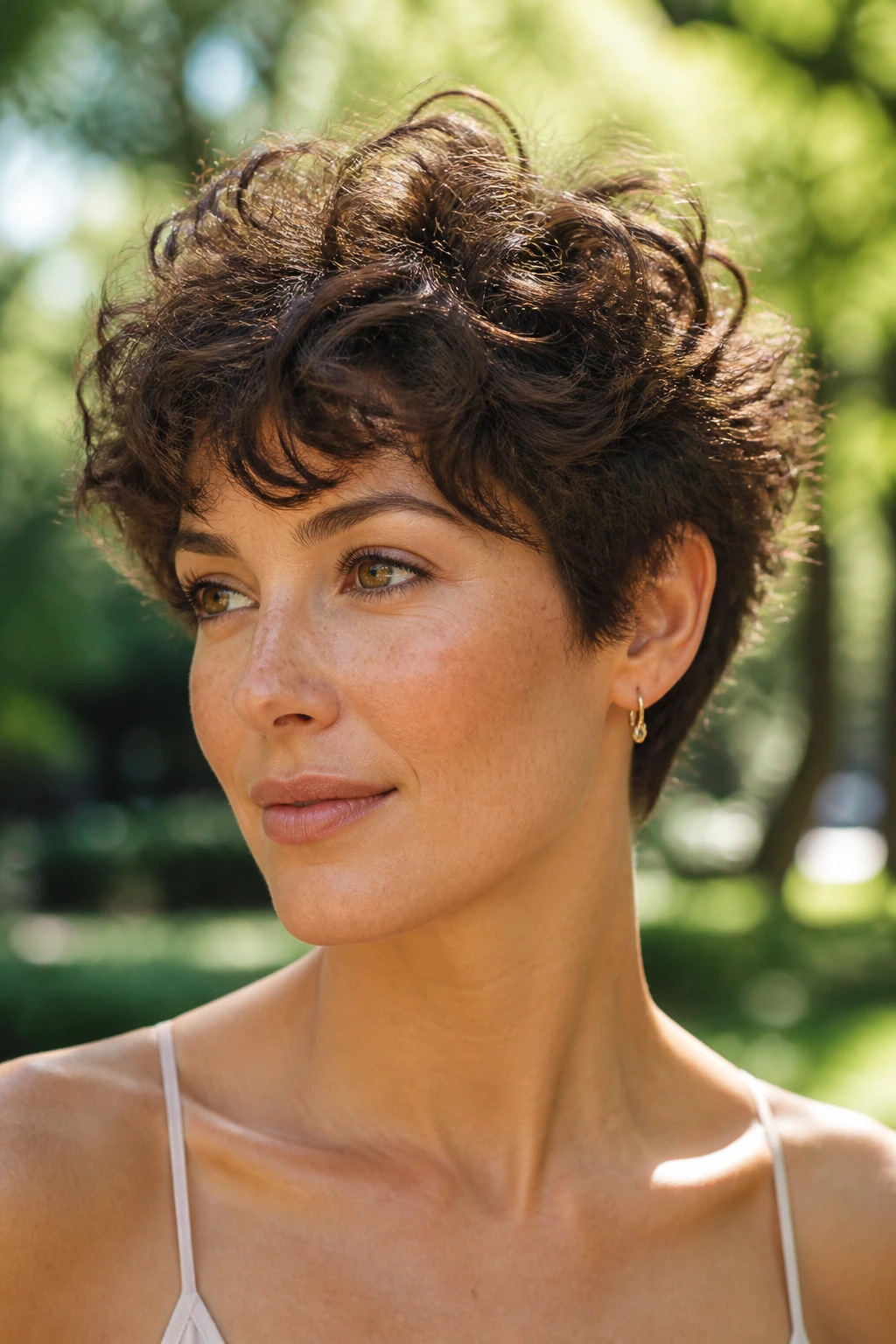
The cloud-layer pixie is fluffy on purpose. The layers are built to create air between the curls so the whole cut feels lighter and more lifted, especially at the crown. It’s not a sleek style. It’s a soft, airy one.
This works best on dense or springy curls that can hold height without collapsing. The risk is over-layering, which can leave the ends too wispy. A good version keeps the shape rounded while allowing the texture to feel loose and touchable.
21. Sleek Wet-Look Pixie
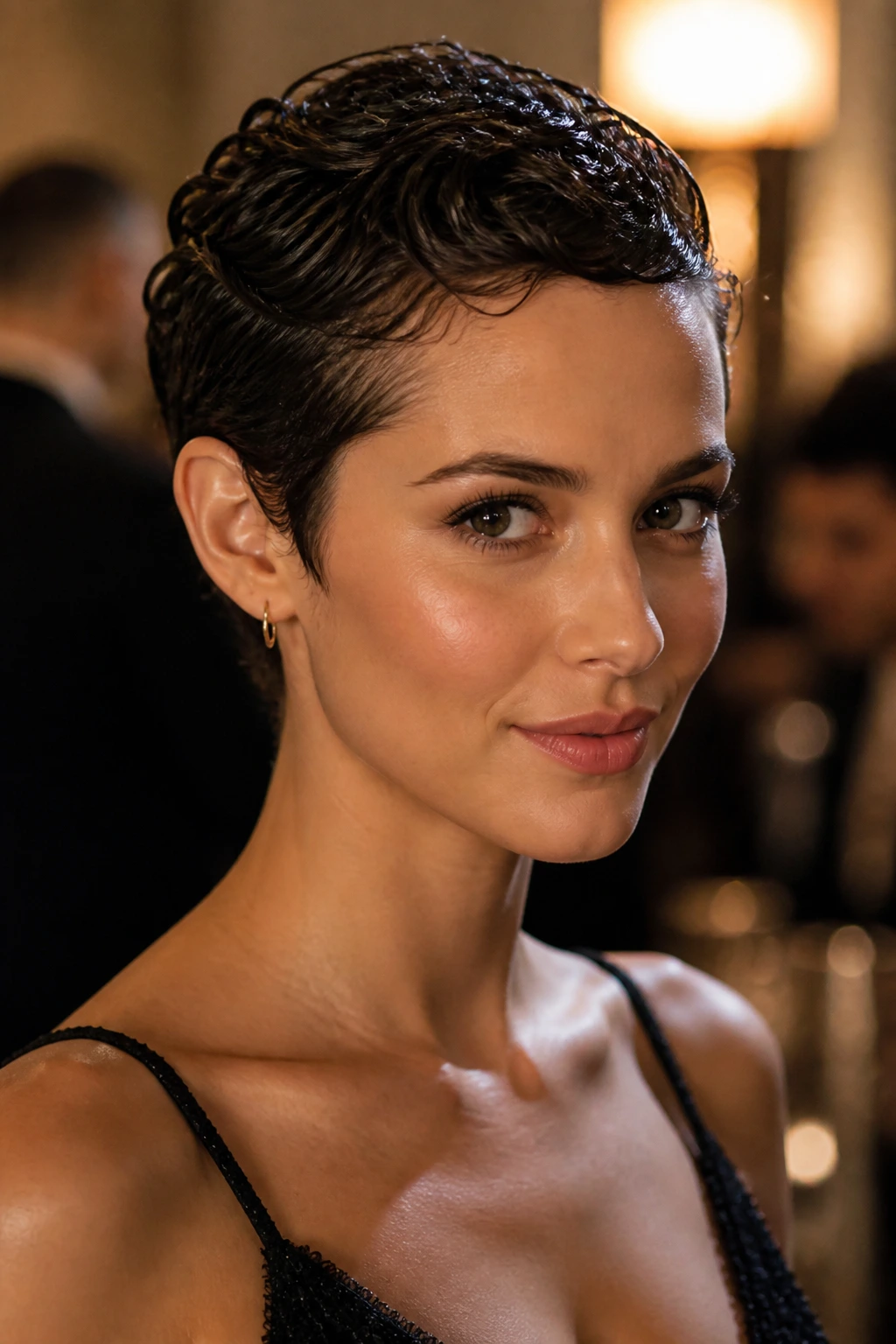
A sleek wet-look pixie changes the mood completely. Instead of encouraging softness and fluff, you use gel or strong curl cream to press the curls into a glossy, sculpted finish. On short curly hair, that can look sharp in a way people don’t expect.
The cut underneath should still have enough shape to hold the style once it dries. If the top is too short, the wet look can read flat; if it’s too long, the product gets overwhelmed. I like this for evenings, events, or any day you want the hair to look more controlled than casual.
22. Curly Bowl Crop
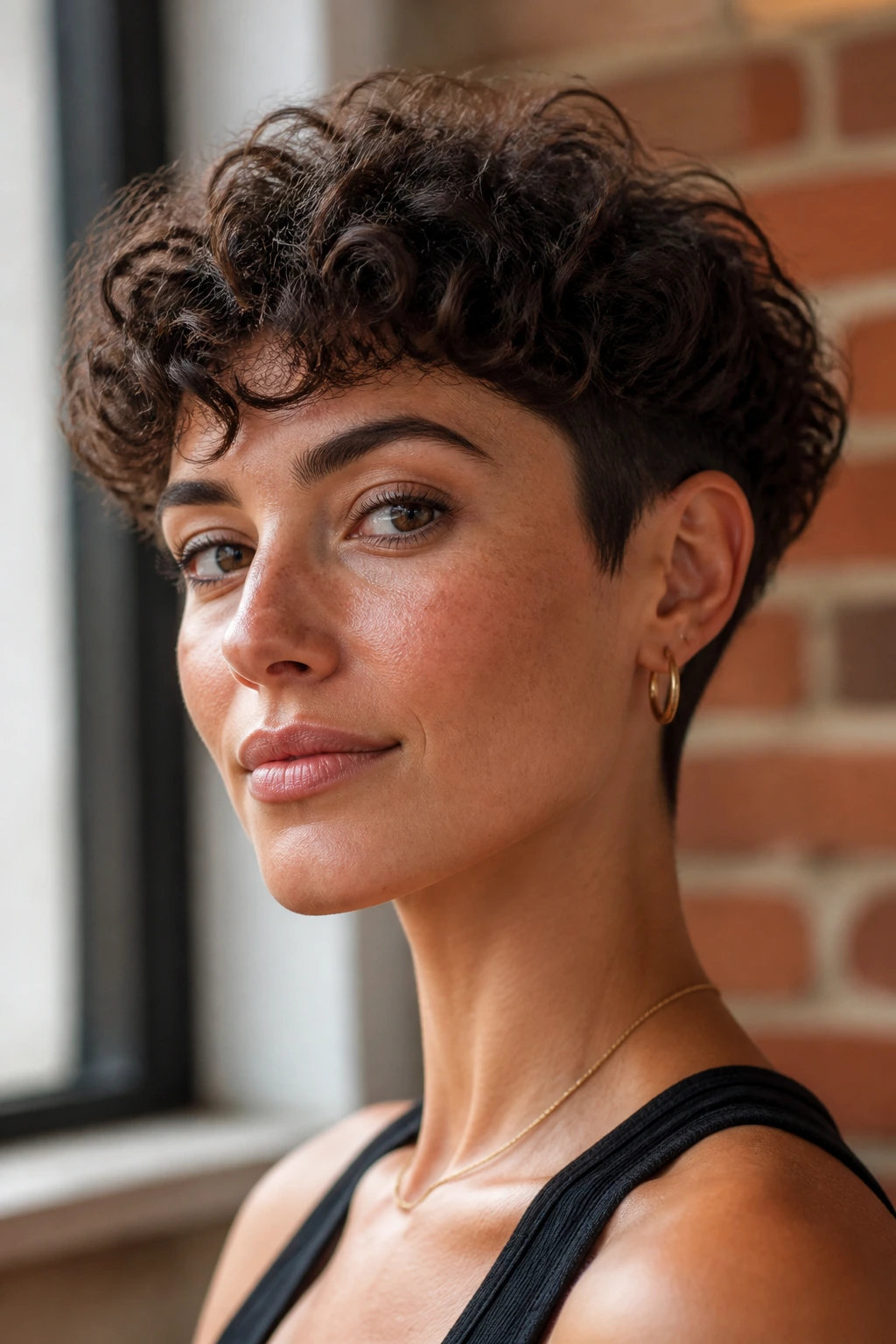
A curly bowl crop takes the rounded line of a bowl cut and makes it feel less retro-school-photo and more fashion-forward. The fringe and sides follow a curved perimeter, while the curls add softness so the shape doesn’t get too hard-edged.
This style needs precision. If the line is uneven, you notice it fast. But when it’s cut well, it gives short curly hair a striking silhouette that looks especially good on smaller faces or strong brows. It’s not subtle. That’s part of the charm.
23. Peekaboo Curl Pixie
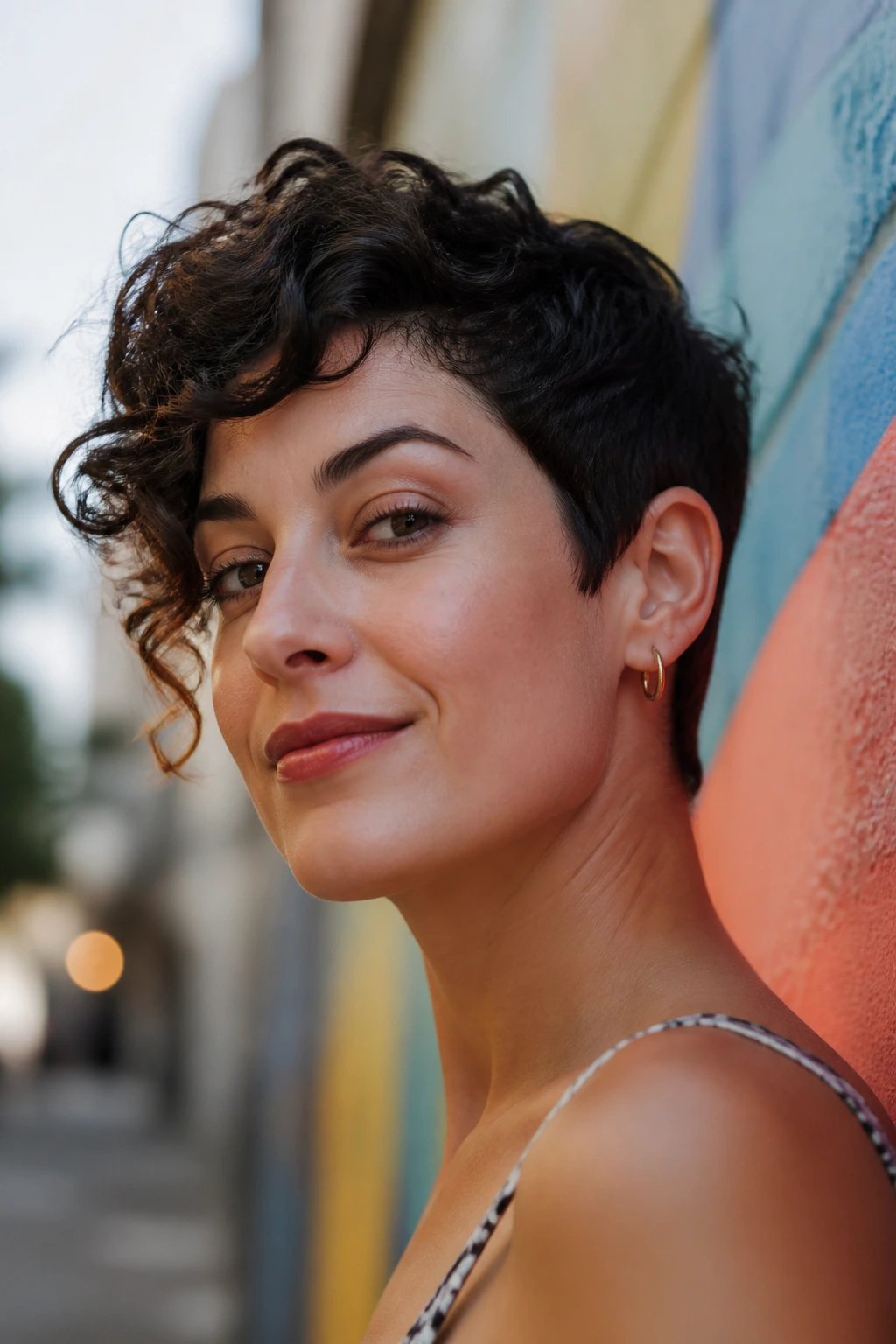
The peekaboo curl pixie keeps some curls hidden under a shorter outer layer or tucked along the sides, so the shape changes depending on how the hair falls. It’s a nice option if you want a cut with movement instead of one fixed outline.
This kind of cut works when the top layer is short enough to stay neat but long enough to reveal a curl or two when it shifts. The result feels a little playful. One side can tuck cleanly, the other can spill out. That small imbalance keeps it from looking stiff.
24. Side-Shave Pixie
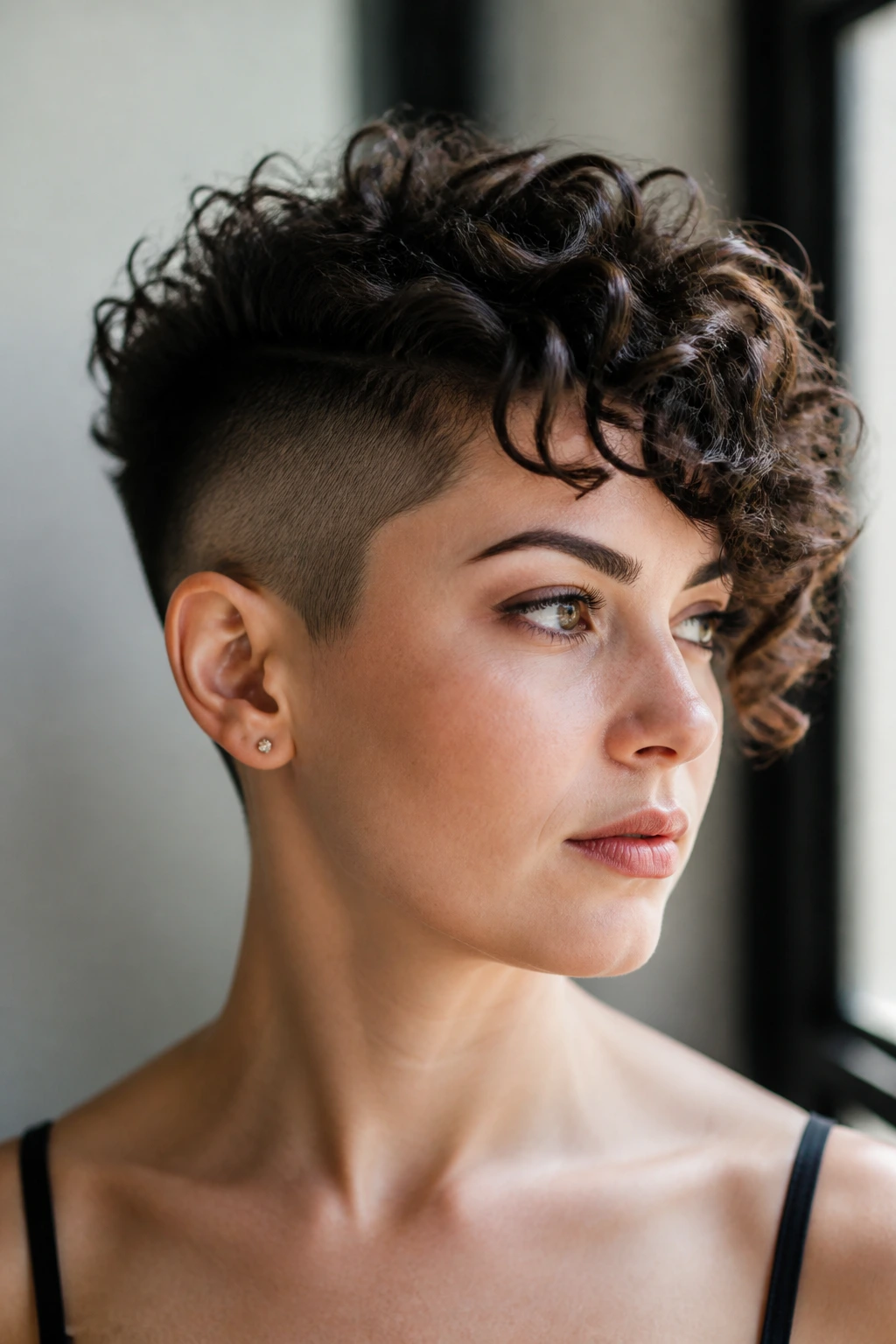
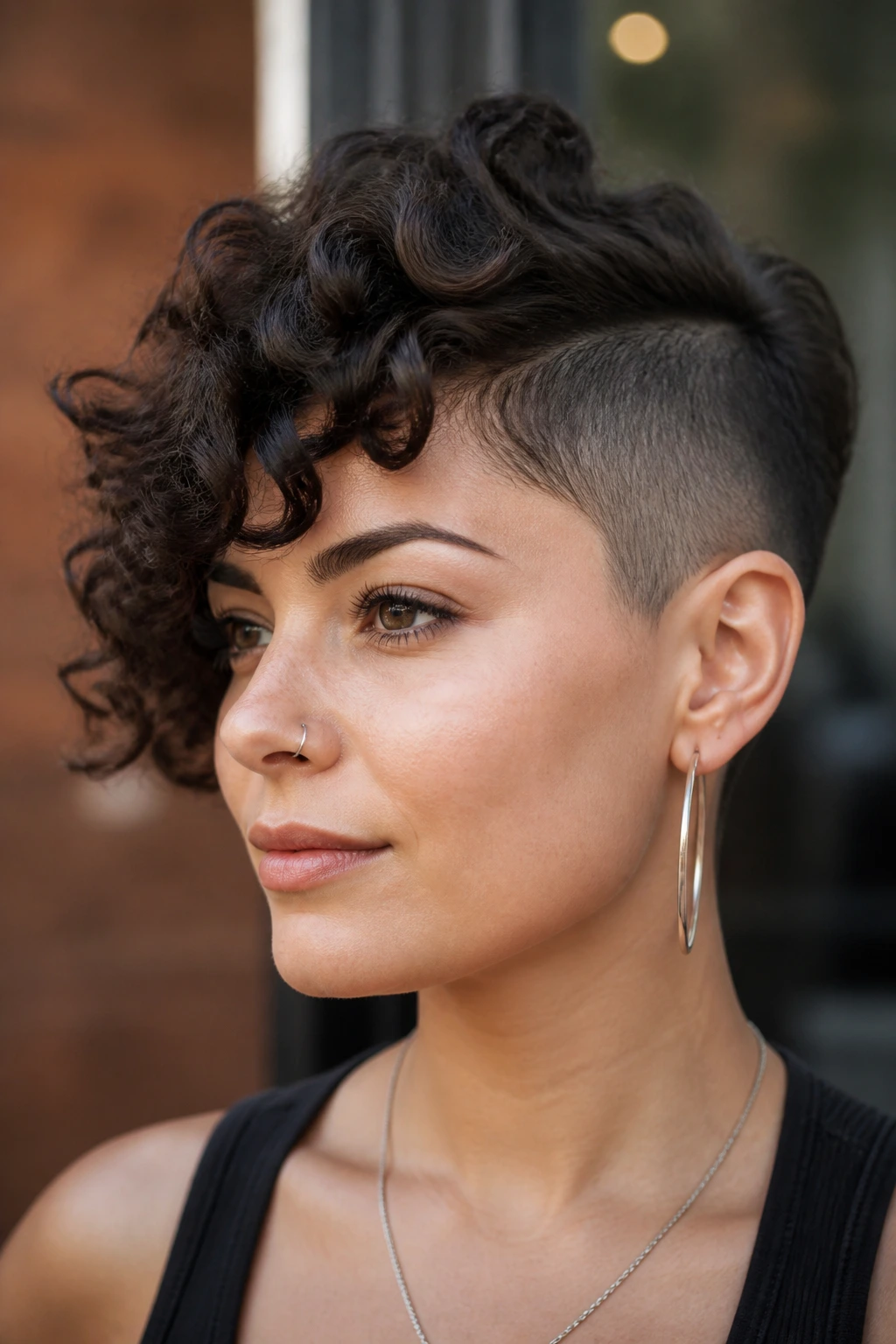
A side-shave pixie is one of the bolder options in the bunch. One side is clipped very short or shaved, while the rest of the curls stay longer and fuller. The contrast is the whole story, and on curly hair it looks especially strong because texture softens the sharp line.
If you want low bulk and high personality, this is the one. It also makes styling faster, because half the head is already handled by the haircut. The only catch is commitment — once the side starts growing back, you’ll need regular cleanups or it loses the edge.
25. Wash-and-Go Pixie
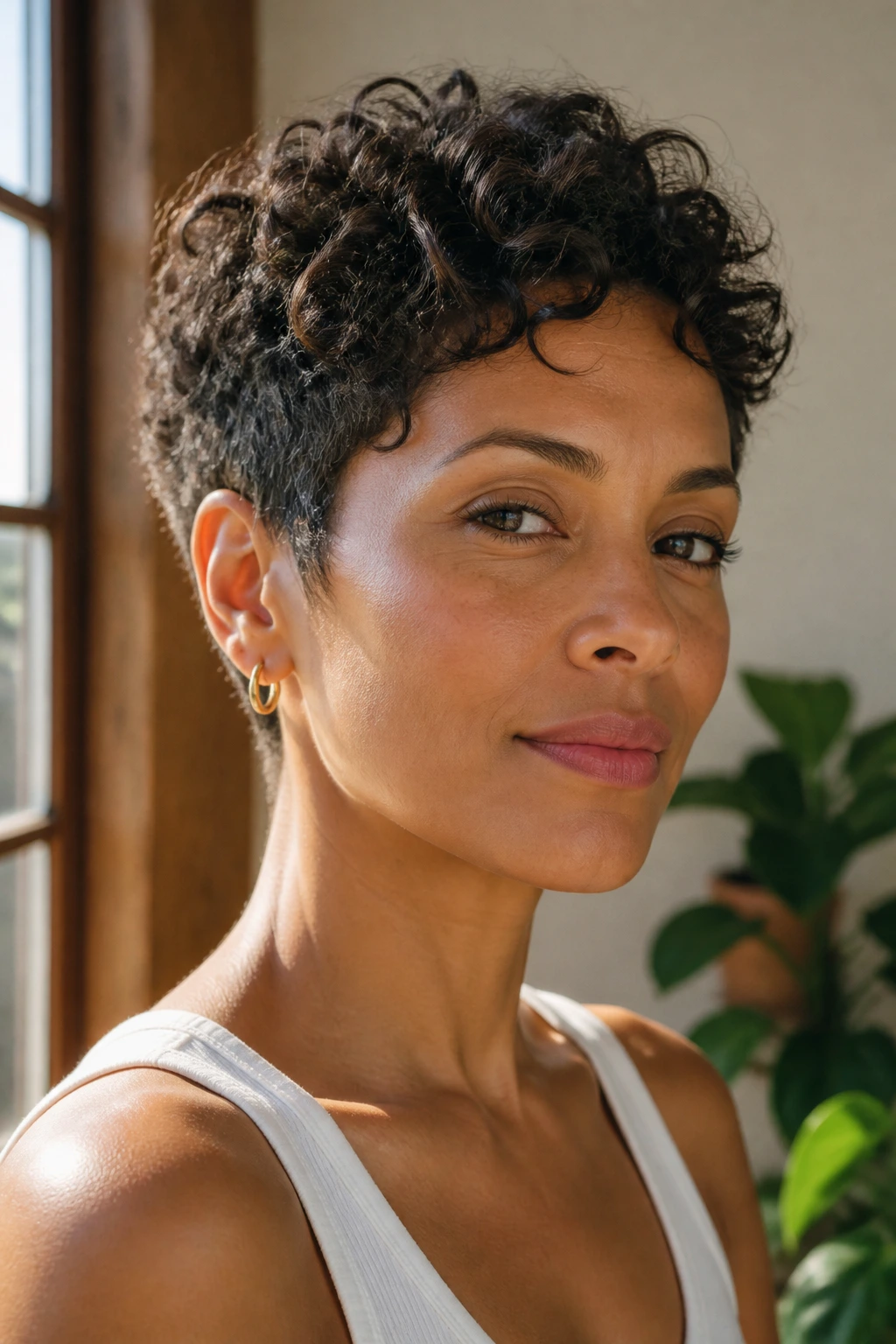
A wash-and-go pixie is cut to behave well with minimal styling. The layers are placed so the curls can fall into shape on their own, which is a big deal if you dislike spending time with a diffuser every morning. It’s probably the most realistic option for busy people with short curly hair.
The key is balance. Too many layers and the shape gets fuzzy; too few and the curls bunch up awkwardly. Ask for a cut that looks good after a simple scrunch, a bit of leave-in, and air-drying. If a haircut needs a full product ritual to survive, it isn’t really wash-and-go.
26. Long-On-Top Pixie
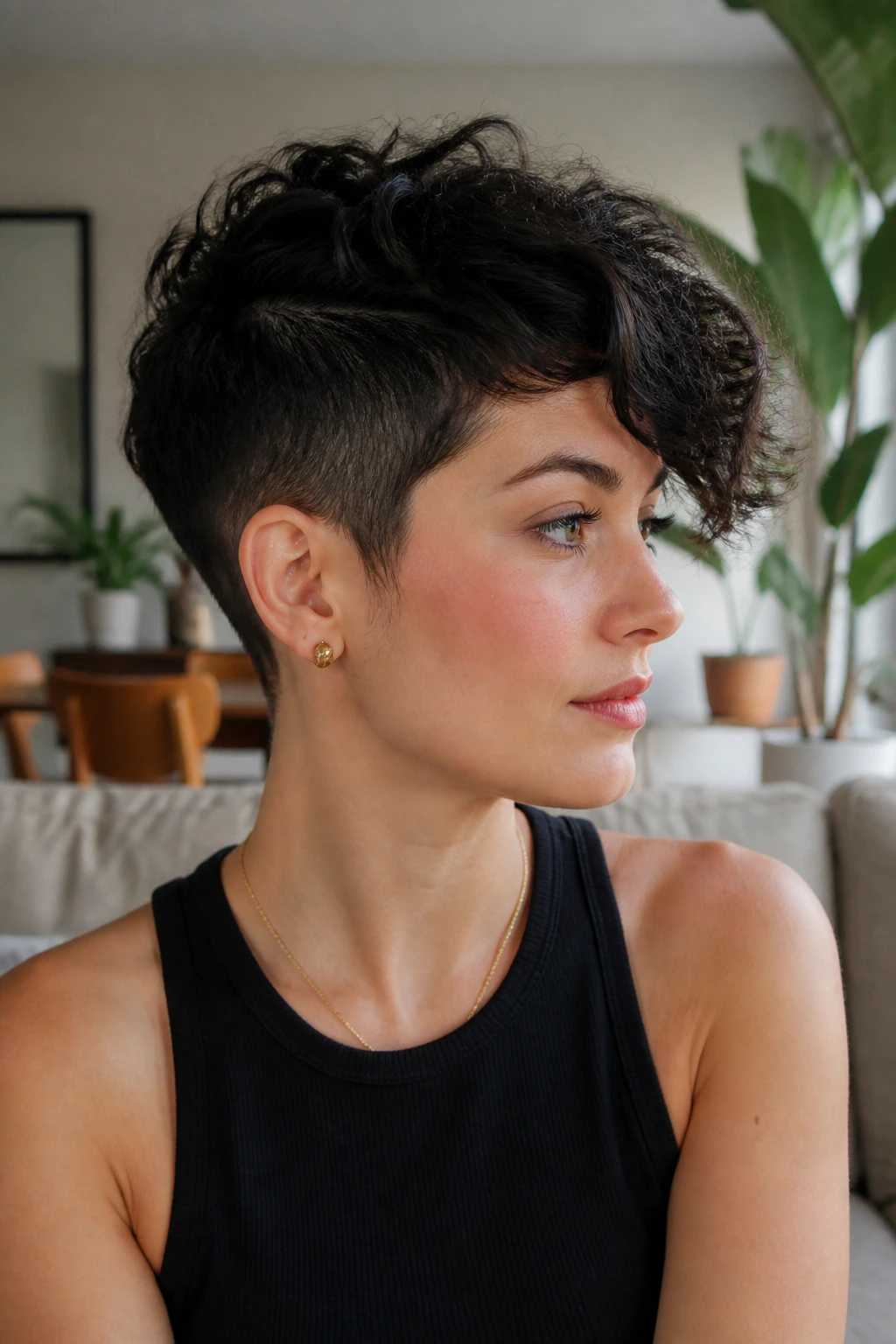
This version gives the top room to move. The sides and back stay shorter, but the top is kept longer so you can push it forward, sweep it sideways, or let it sit messier and fuller. It’s useful when you want flexibility without leaving pixie territory.
The extra length on top also helps if your curls have a mind of their own. They can be styled into shape instead of being forced into one exact line. I’d choose this one for someone who likes to change the mood of a haircut without actually changing the cut.
27. Curly Mullet Pixie
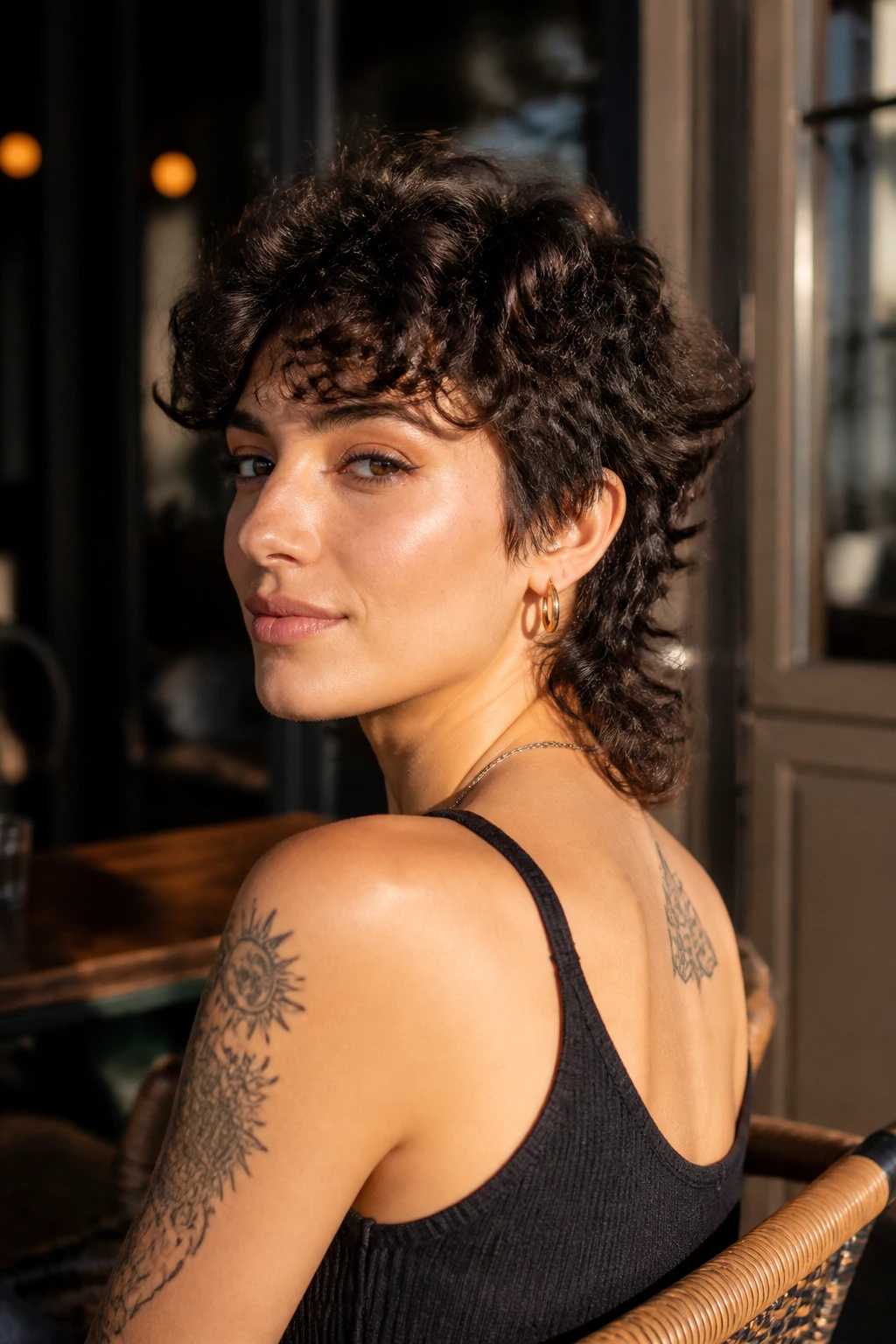
A curly mullet pixie sounds brash, but on the right texture it can look oddly chic. The front and sides stay short, while the back keeps a little more length so the nape has movement. It’s a cleaner, shorter cousin of the full mullet.
This cut works because curls make the transition feel softer. You still get the contrast, but the texture keeps it from looking harsh. If you like your hair a little rebellious and a little messy, this is a strong place to land.
28. Finger-Wave Pixie
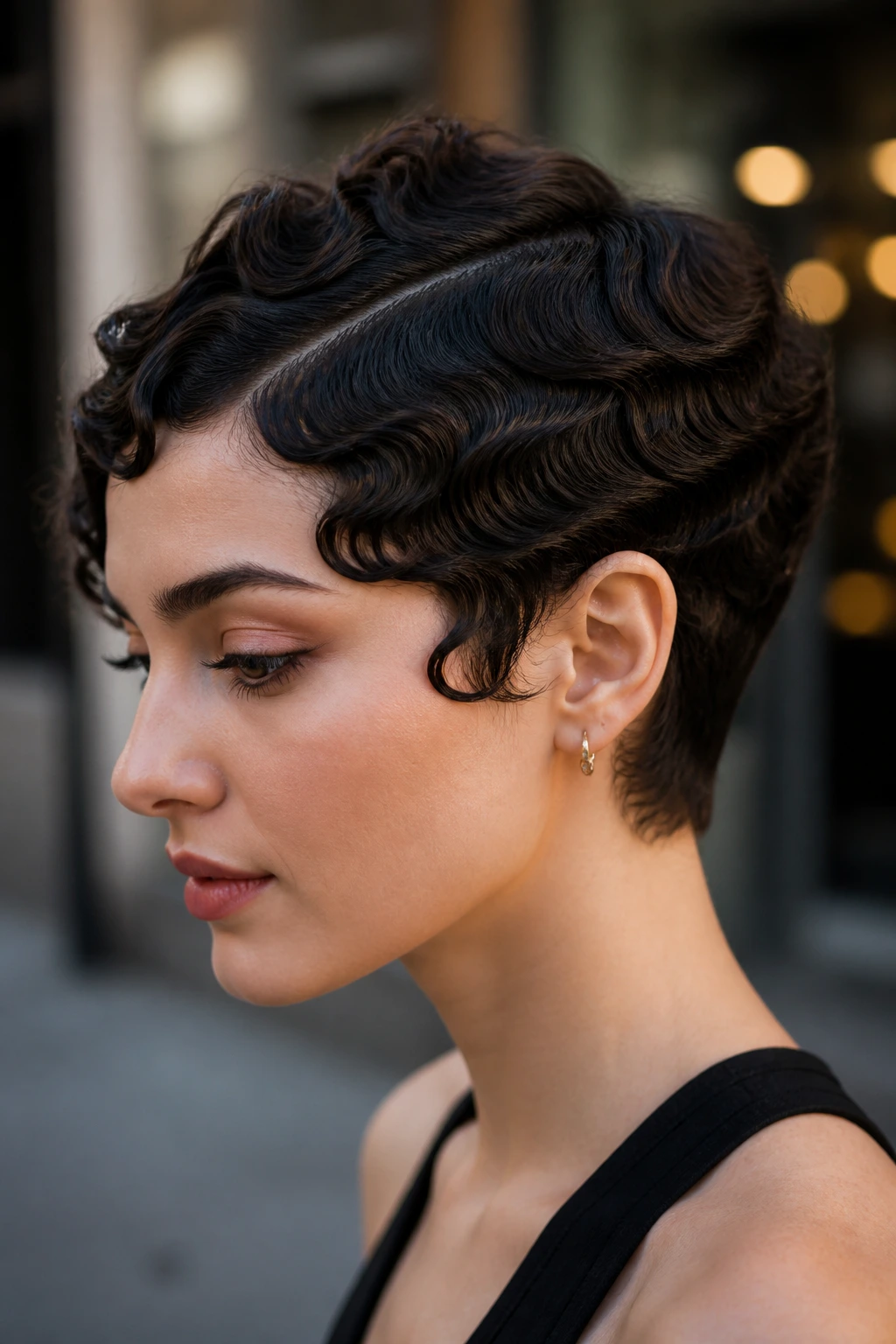
A finger-wave pixie leans vintage. The curls are guided into S-shaped bends or polished curves near the front and sides, which gives short curly hair a more sculpted look. It’s especially striking when the cut is neat around the ears and neckline.
You’ll need a bit more styling discipline here than with a wash-and-go shape. Gel, a comb, and careful placement do most of the work. The payoff is a hairstyle that looks deliberate without being stiff. It can feel formal or playful depending on the finish.
29. Spiral Coil Pixie
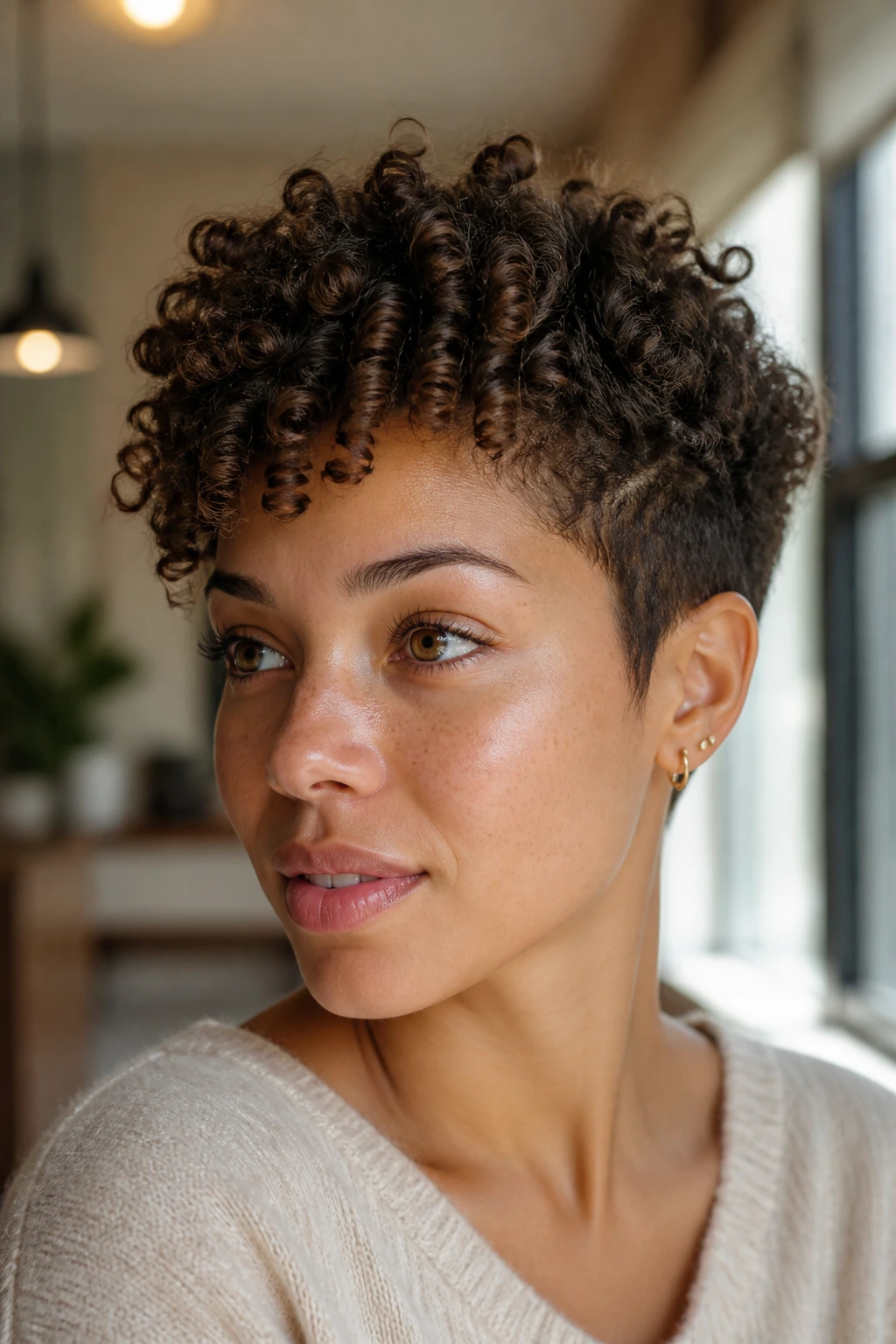
The spiral coil pixie is built to show off spring. The top is left long enough for curls to form clear spirals, while the sides stay tighter to frame them. That contrast makes the curl pattern itself the center of attention.
It’s a gorgeous choice for curls that naturally separate into defined ringlets or coils. If your pattern is looser, it can still work, but you’ll want a bit of product to encourage clumping. Keep the cut balanced so the spirals don’t look like they’re sitting on top of a shaved base.
30. Tapered 4C Pixie
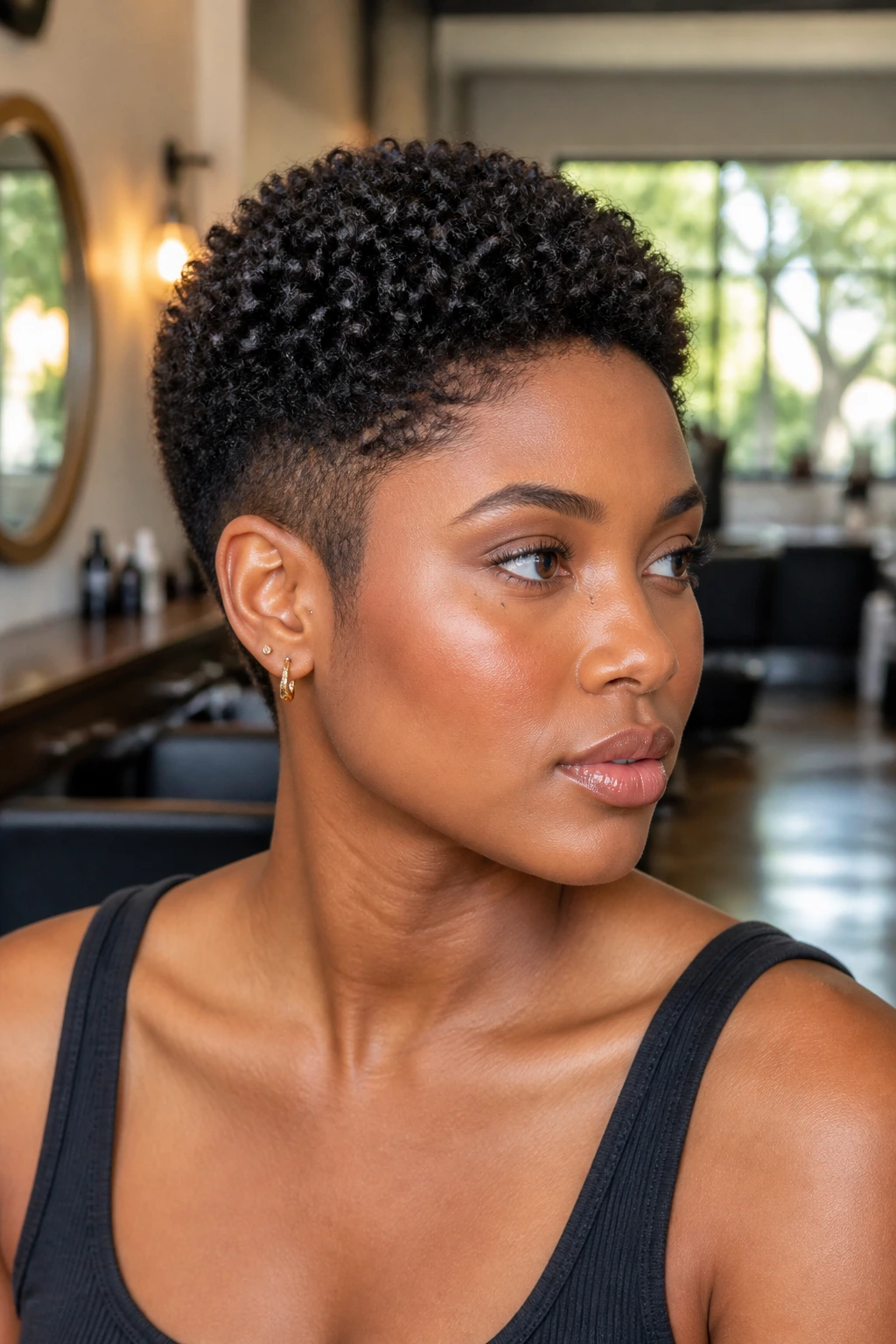
This one respects tight coils instead of forcing them into a loose-pick fantasy. The sides and nape are tapered close, while the top keeps enough length for the coils to stack and shape themselves. On 4C hair, the silhouette matters more than length, and that’s where this cut shines.
The shape should follow the head, not float away from it. A well-cut tapered pixie makes the profile cleaner and reduces bulk where it tends to spread widest. If your coils shrink a lot, ask the stylist to cut with shrinkage in mind and leave a little more top length than the scissors suggest.
31. Long Fringe Pixie
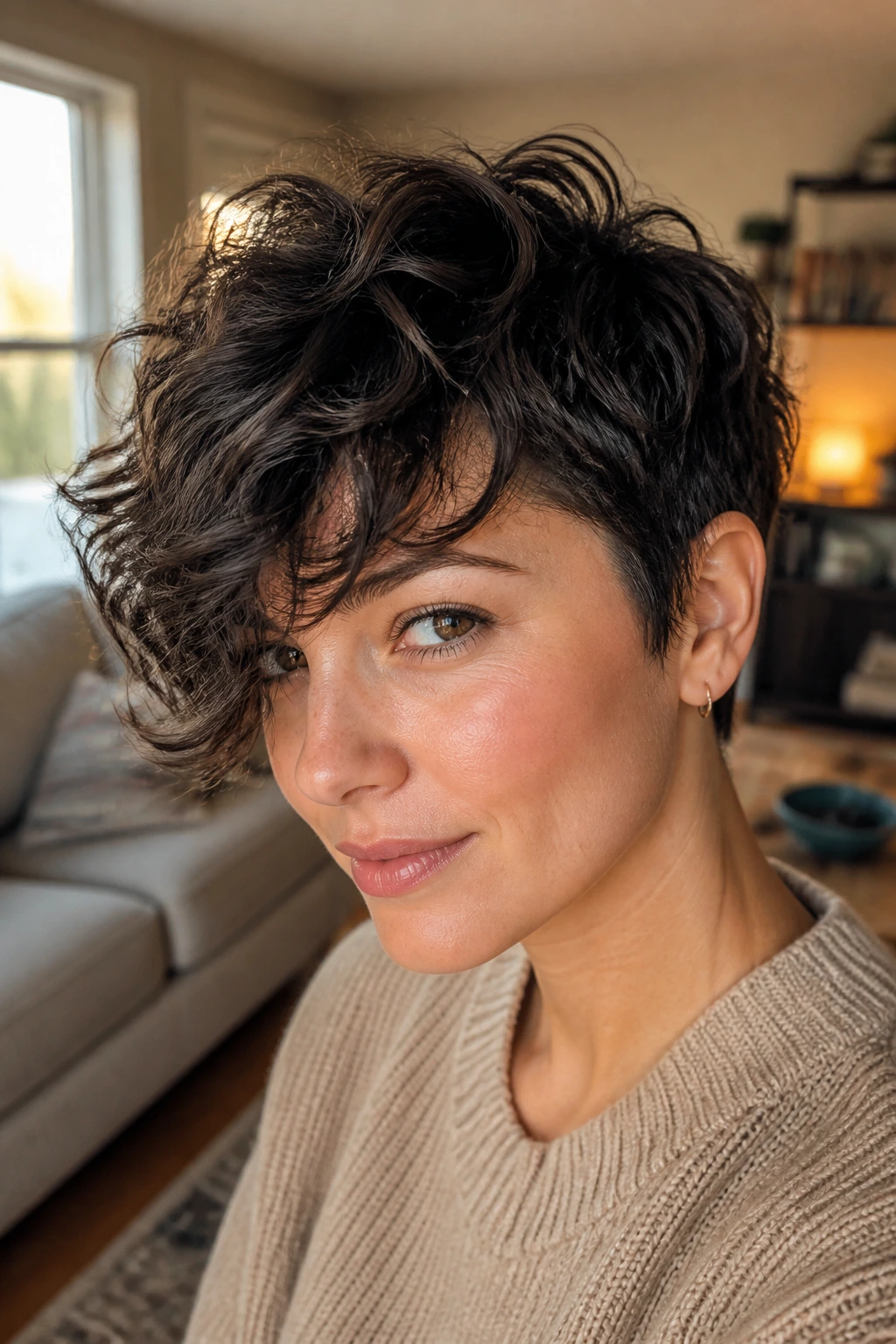
A long fringe pixie keeps the front hair noticeably longer than the rest, which gives you room to sweep, curl, pin, or split it. It’s one of the easiest ways to soften a short cut without losing the pixie feel.
This style is useful if your forehead feels too exposed in very short cuts or if you like the idea of changing the front without changing the whole haircut. The fringe can sit heavy and dramatic, or it can break into soft curls with a little scrunching. Either way, it gives the face a frame.
32. Sculpted S-Curve Pixie
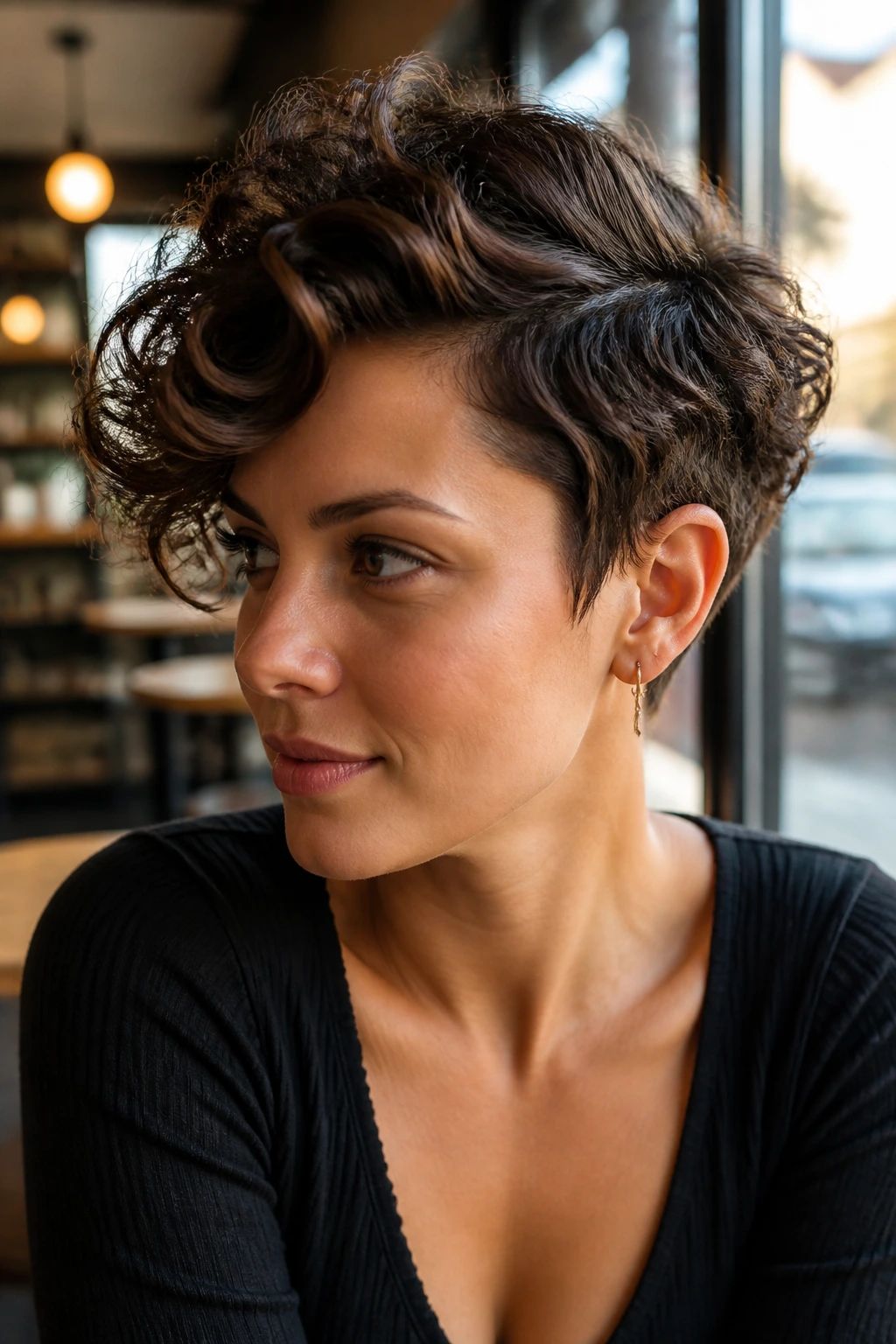
A sculpted S-curve pixie uses the natural bends in curly hair and leans into them. Instead of lifting everything upward, the cut creates a flowing curve from one side of the head to the other, which gives the silhouette a more intentional finish.
This is one of those cuts that looks more complex than it is. The shape does the heavy lifting. It works best when the curls are arranged with a side part or a subtle push-back at the crown, so the curve reads clearly. Nice on oval faces, strong brows, and anyone who likes a little polish.
33. Air-Dry Pixie
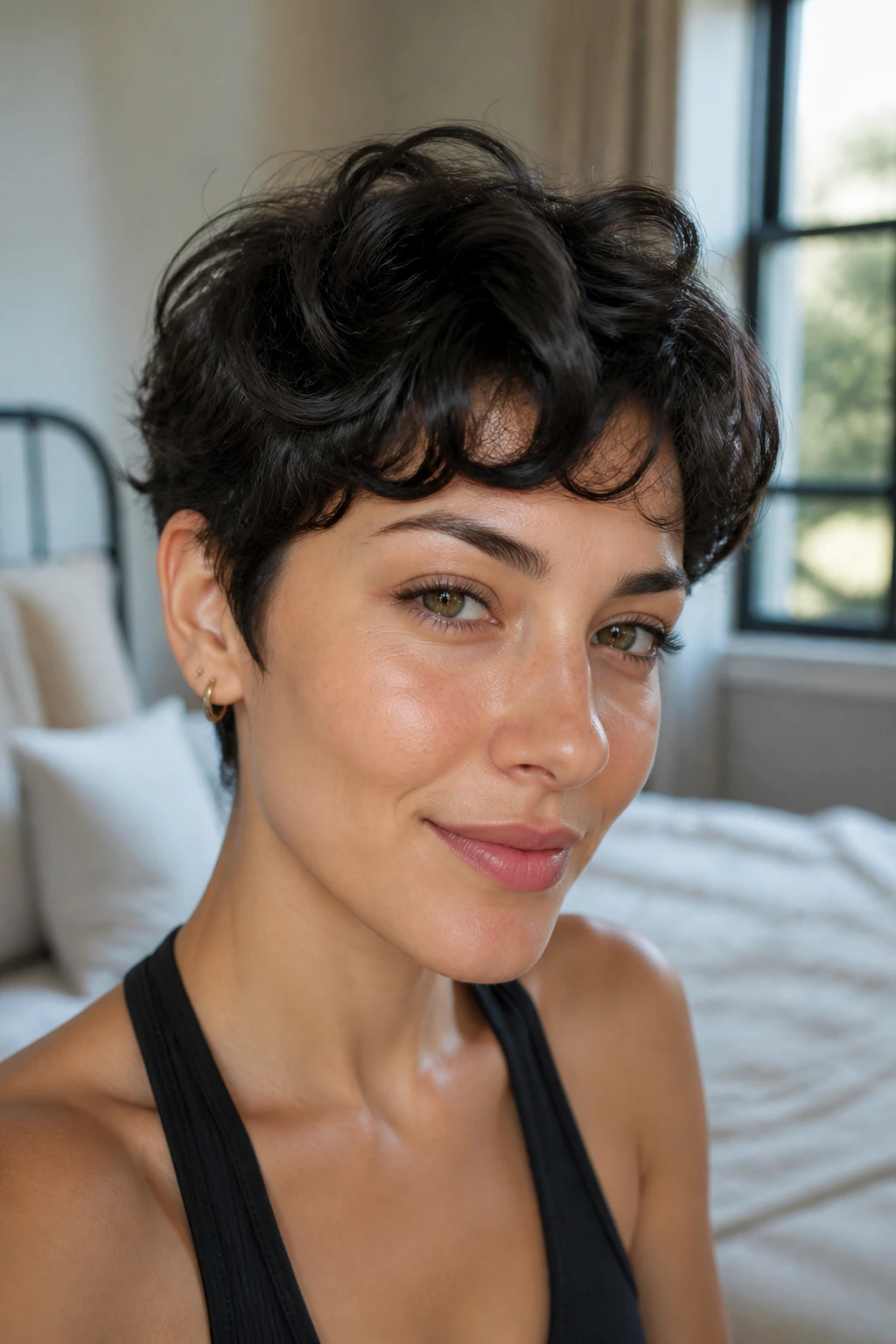
The air-dry pixie is designed for people who want the cut to settle on its own. The layers are light, the sides are clean, and the top is left just long enough to curl without being coaxed. That makes it a practical choice for busy routines or hair that hates heat.
For this style, the haircut has to be forgiving. If the structure is too precise, air-drying can leave weird bends and flat spots. A good air-dry pixie looks better a little imperfect. That’s the charm, honestly.
34. Hard-Part Crop
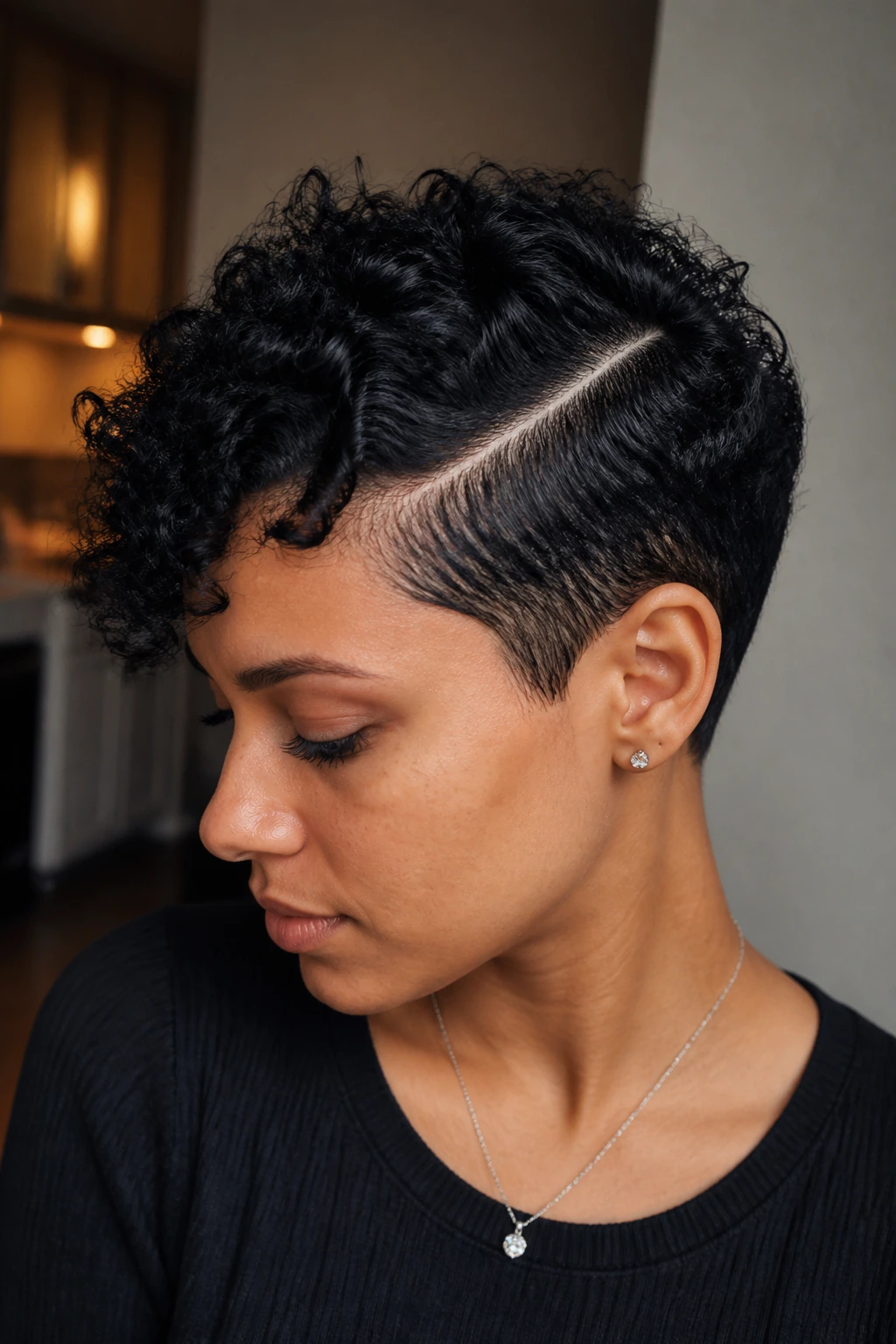
A hard-part crop adds a sharp part line through a short curly cut, usually with one side sleeker and the other side carrying more texture. The contrast gives the haircut a deliberate, almost tailored look. It’s a clean way to make short curls feel sharper without shortening everything.
This cut asks for regular maintenance because the part line loses its crispness as hair grows. If you like a haircut that feels neat around the edges, the upkeep is worth it. If you want something loose and messy, skip this one. It’s all about precision.
35. Soft Ear-Tuck Pixie
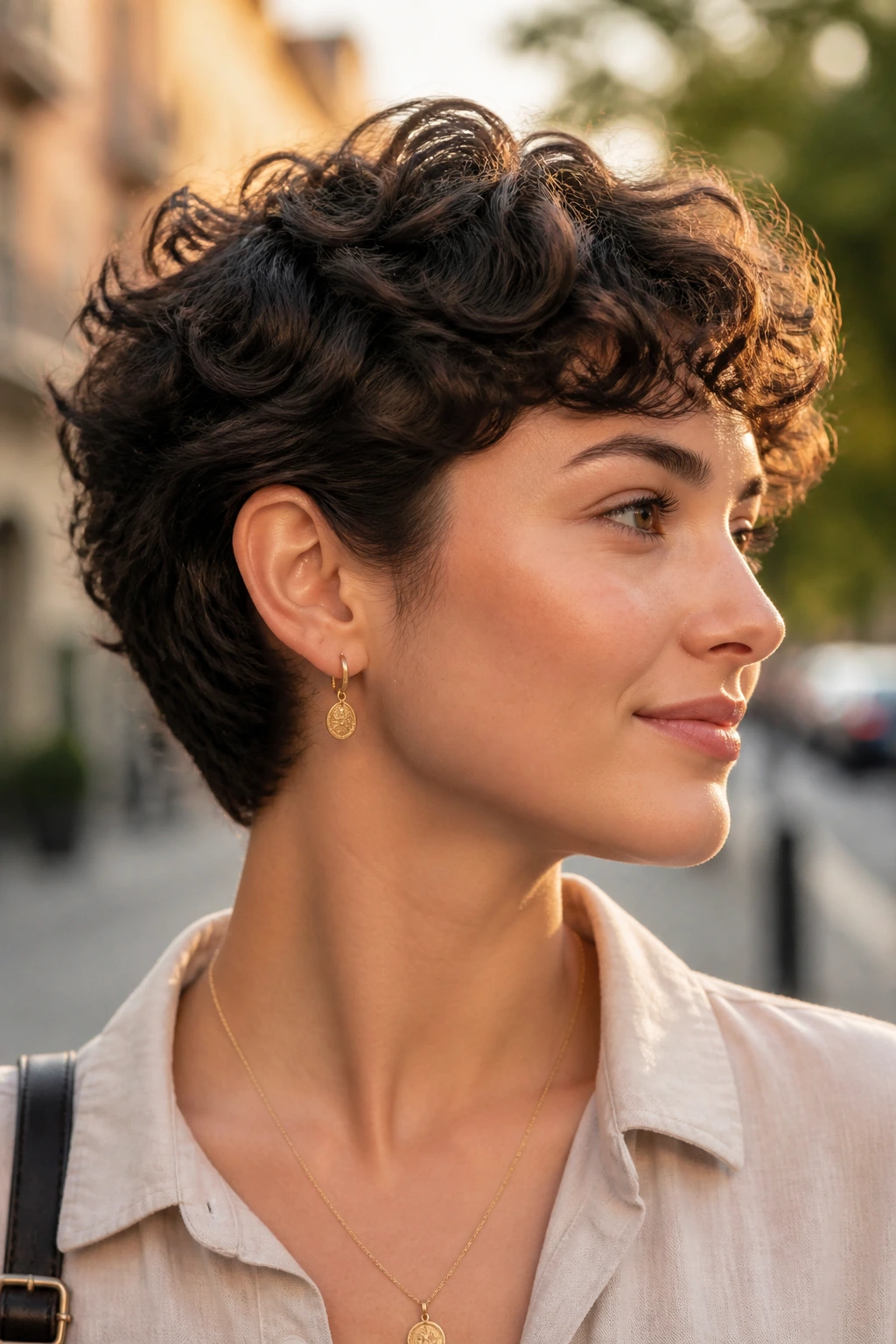
A soft ear-tuck pixie leaves just enough length around the front and sides to let curls tuck behind the ear without fighting you. That little bit of flexibility changes the haircut more than people expect. It softens the silhouette and makes styling feel easier.
This is a good pick if you wear earrings, glasses, or anything that sits near the face. The curls can come forward or get tucked back in a second. It’s one of the quieter styles on this list, but sometimes quiet is exactly what you want.
36. Glasses-Friendly Pixie

A glasses-friendly pixie takes the frame lines into account. The sides are kept neat where the arms of the glasses hit, and the fringe is cut so it doesn’t compete with the lenses. That small adjustment matters more than a lot of people realize.
If your hair is always getting trapped under your frames, this cut solves the annoyance at the source. The front can be a touch longer, but the temples should stay controlled. It’s a practical haircut, which sounds dull until you live with it for a week and stop adjusting your hair every hour.
37. Crown-Volume Pixie
A crown-volume pixie puts the lift where it counts: on top. The sides stay shorter and flatter, but the crown gets enough length to rise, curl, and create height. That can make the face look longer and the whole cut look more animated.
This is especially good for dense curls that already want to build upward. If your roots are stubborn, a diffuser and a few root clips while drying can help hold the shape. I like this version when someone wants the haircut to feel energetic instead of tidy.
38. Grow-Out Pixie
A grow-out pixie is a smart haircut, not just a cute one. The layers are placed so the style keeps its shape as it gets longer, which means you don’t hit that awkward in-between stage quite as fast. The top can stay movable while the sides soften into a little more length.
This is the version to ask for if you know you won’t want a trim every four weeks. It gives you room to evolve into a bob, a bixie, or a longer curly crop without looking like you simply forgot to book the salon. That kind of planning matters more than people think.
What Makes a Curly Pixie Hold Its Shape
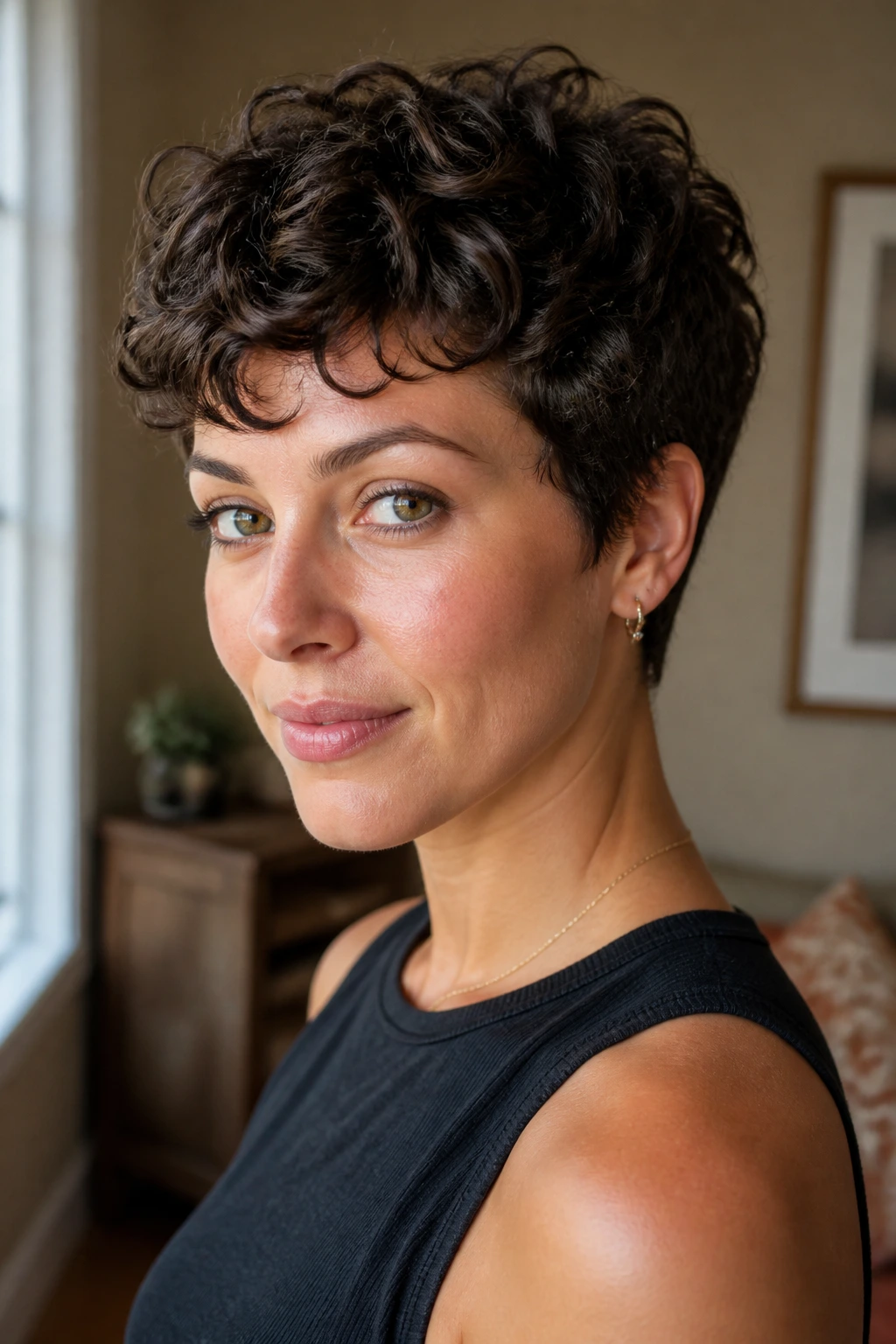
A curly pixie succeeds when the haircut does the structure work and the styling just nudges it into place. That means the cut has to account for shrinkage, density, and the direction your curls actually grow in. If the nape is too bulky, the whole head looks wider. If the crown is too short, the style loses lift and starts hugging the scalp in the wrong way.
Dry cutting helps a lot with curly hair because it shows where the curls sit when they’re in their real state, not their stretched state. I’m not saying wet cutting is wrong — it isn’t — but on curls, wet hair can lie with a straight face. A curl that looks chin-length when wet may jump an inch or more once it dries, and that changes everything.
The best pixie cuts for short curly hair also leave room for movement. A tiny bit of extra length at the fringe, a thoughtful taper at the neckline, and layers that remove bulk without hollowing out the shape can make the difference between “cute haircut” and “why does this one look so expensive?”
Tools and Products That Make the Cut Work
-
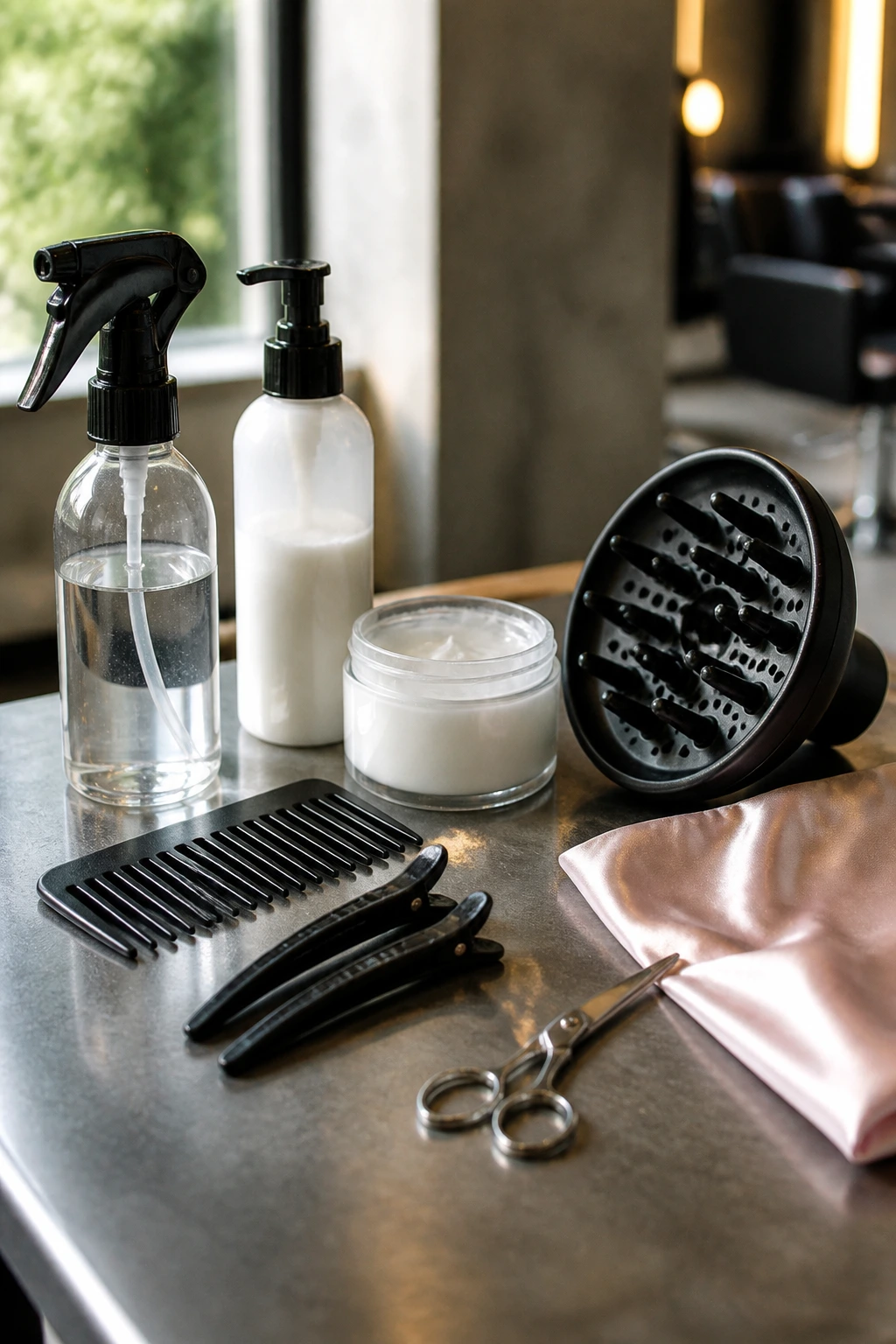
A spray bottle with water: Useful for reactivating curls between wash days without soaking the whole head.
-
Leave-in conditioner: A light layer keeps the curls soft, especially if the cut sits close to the scalp.
-
Curl cream or lightweight gel: Pick one based on density; cream for softer definition, gel for more hold.
-
Diffuser attachment: It helps the crown lift and keeps the sides from drying into a flat shape.
-
Wide-tooth comb or detangling brush: Best for distributing product without breaking up curl clumps too early.
-
Duckbill clips or root clips: Good for lifting the crown while the hair dries.
-
Silk or satin pillowcase: Keeps the shape from getting crushed overnight.
-
Small styling scissors for salon use only: Handy for trims, but I would not freehand your own pixie unless you already know what you’re doing.
Smart Product Picks and Salon Notes
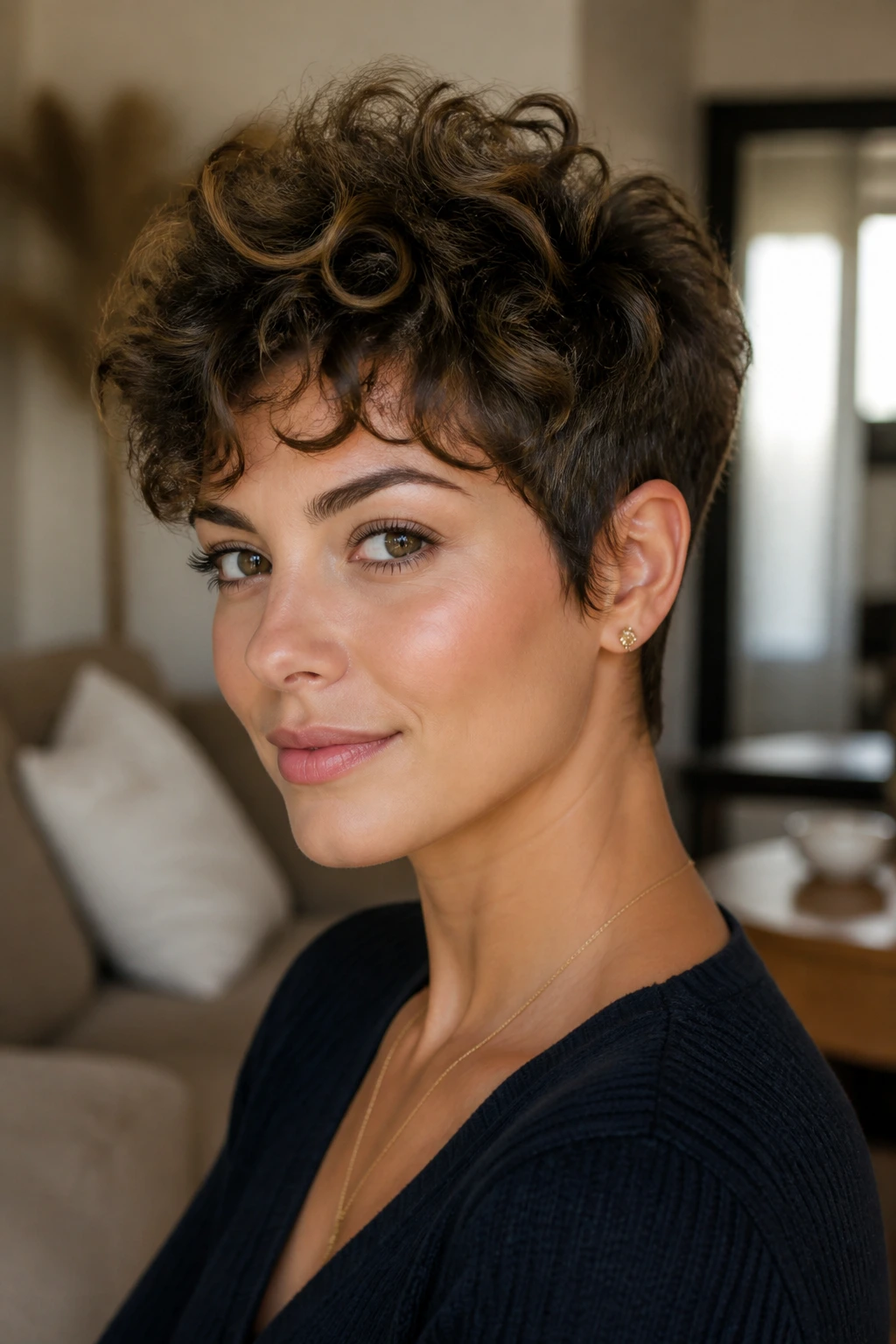
Short curly hair usually needs less product than people think, and that’s where a lot of the trouble starts. A heavy cream can make a fine pixie slump against the head, while a flimsy mousse won’t hold a denser coil pattern long enough to matter. Pick product by curl density first, not by whatever smelled nice in the bottle.
For looser curls and waves, a light leave-in plus a foam or mousse is often enough. For tighter curls, you’ll usually want more hold from a gel or custard, but still keep the amount modest — enough to coat, not enough to glaze. If the roots feel greasy before lunch, you used too much.
At the salon, bring photos that show the front, side, and back, not just one flattering angle. Tell the stylist how much shrinkage you get, how often you’re willing to trim, and whether you want a shape that stays close to the head or one that puffs out a little. That conversation saves more bad haircuts than any trendy reference photo ever will.
How to Wear These Pixies Well
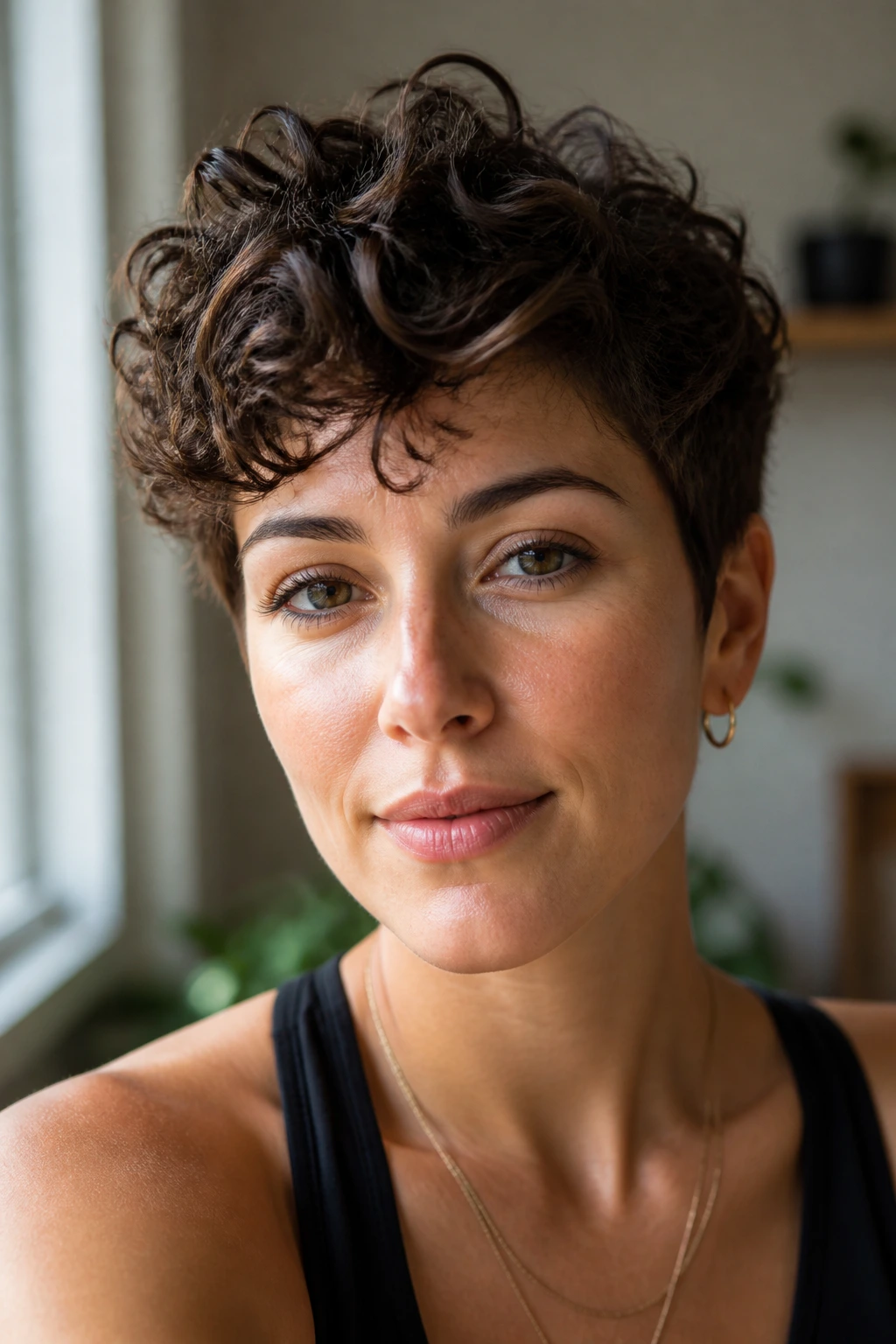
Shape: If your face is round, aim for lift at the crown or a side sweep that pulls the eye upward. If your face is longer, a curly fringe or rounded top keeps the proportions from getting too vertical.
Accessories: Tiny hoop earrings, a narrow headband, or a single clip at the temple can make a short curly pixie feel finished. Big accessories work too, but they need a haircut with enough space around the ears.
Texture: Scrunching with product gives a softer, cloudier look. Smooth gel and a fine-tooth comb give a sharper, more polished finish. Same haircut, very different mood.
Finish: Matte styles read casual and airy. A slightly glossy finish reads dressier and more controlled. I like keeping both in reach because curly pixies look different depending on whether you’re trying to pass as “just woke up cute” or “I had a plan.”
Additional Tips and Shape Boosters
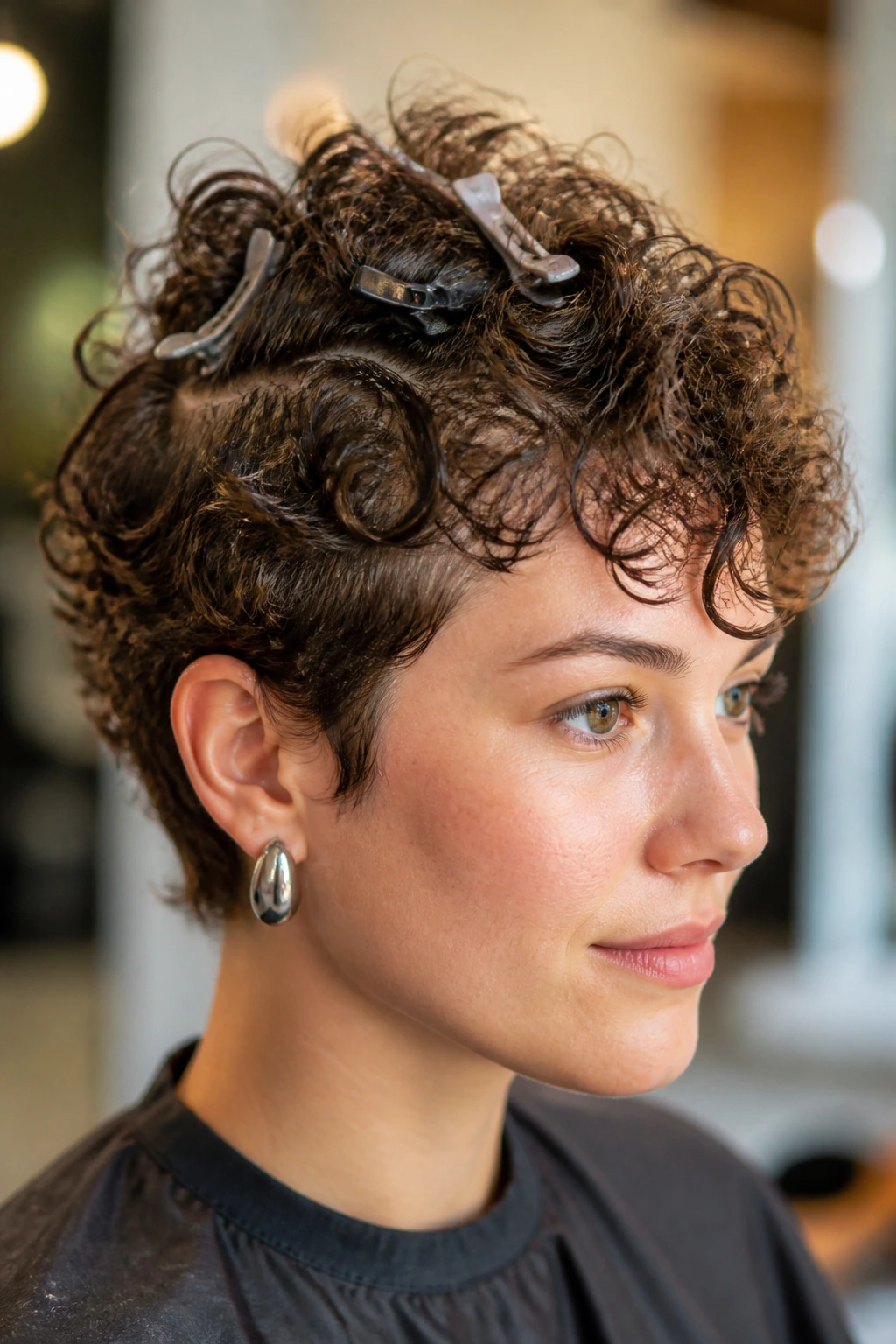
Lift at the Crown: If your curls flatten on top, clip the roots while the hair is damp and let them dry that way for 10 to 15 minutes before removing the clips. It creates height without needing a lot of mousse.
Frizz Strategy: Use a T-shirt or microfiber towel to blot, not rub. On a short cut, rough drying can turn the whole perimeter fuzzy fast, and then you spend twice as long trying to tame it.
Make It Yours: A side shave, a longer fringe, or a slightly tighter nape can push the same pixie toward soft, edgy, or polished without changing the basic shape.
Color Note: A few lighter pieces near the crown or fringe can make curl definition easier to see. You do not need bold color to make the cut interesting, but dimension helps short curls show off.
Keeping a Curly Pixie Fresh Between Wash Days
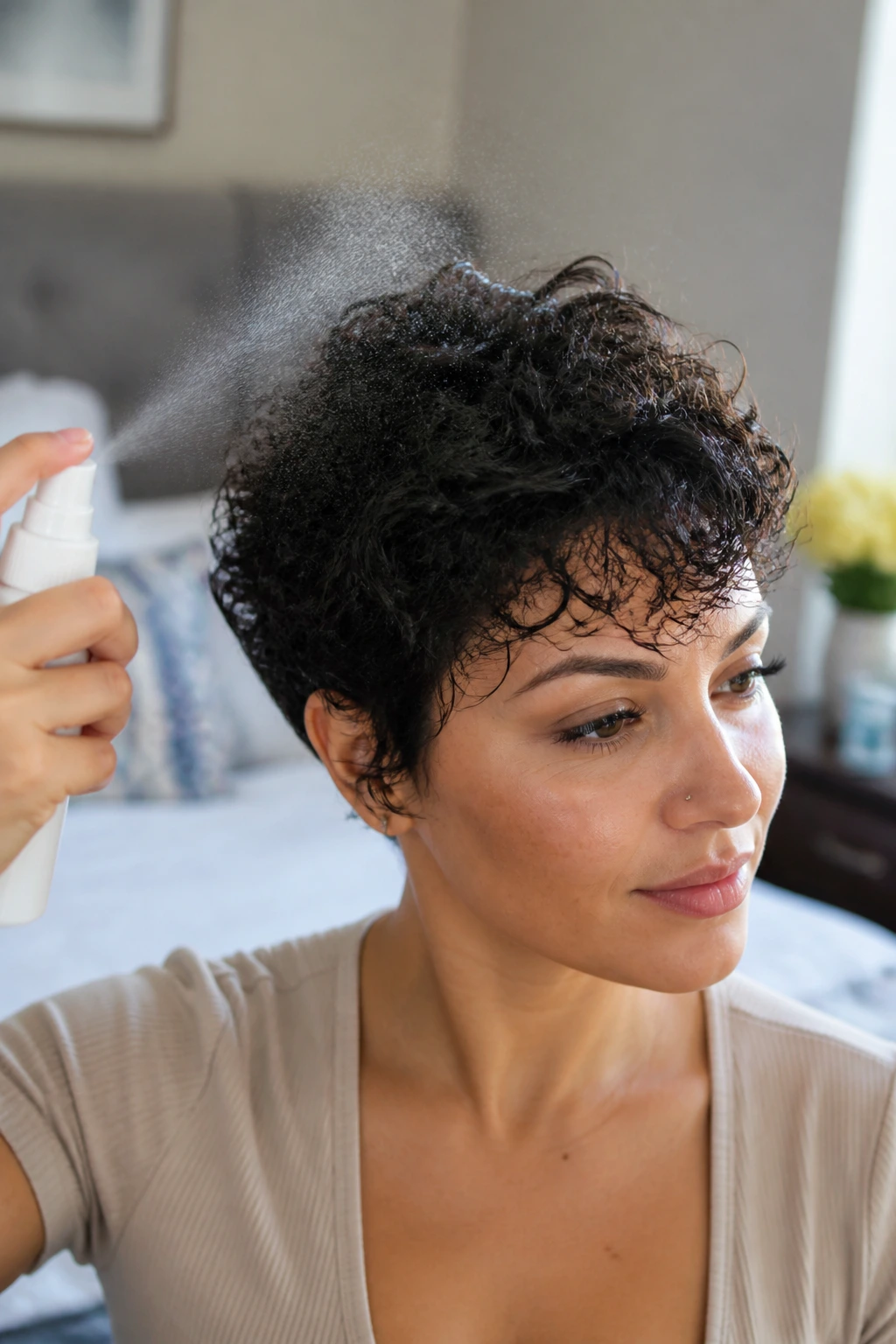
A curly pixie usually looks its best in the first two or three days after washing, and then it starts asking for help. That doesn’t mean the haircut has gone bad. It just means the roots need a little lift and the ends need a little reset. A quick mist from a spray bottle, then a pea-size amount of leave-in or gel worked through the front and crown, usually brings the shape back without starting over.
Sleeping on satin or silk matters more on short hair than people expect. Cotton pillowcases rough up the curl surface and flatten the side you slept on, which is annoying when the whole haircut is only a few inches long. A satin bonnet works too, but if you hate sleeping in one, the pillowcase alone still helps.
For trims, a crisp curly pixie often needs cleanup every 4 to 6 weeks. If you like a softer grow-out, you can stretch it to 6 to 8 weeks, but the neckline and temples will start to wander. That’s normal. What’s not normal is waiting until the whole outline has disappeared and then acting surprised when the haircut stops reading as a pixie at all.
Variations and Adaptations to Try
Fine-Hair Float Pixie: Keep the layers light and avoid heavy creams. A mousse at the roots and a small amount of gel at the ends give fine curls enough structure without dragging them down.
Dense-Curl De-Bulk Pixie: Ask for internal weight removal, not just shorter length. This keeps the outside shape compact while taking some of the puff out from underneath.
Low-Commitment Grow-Out Pixie: Leave the fringe and top a touch longer so the cut can drift into a bixie or short bob. This is the easiest choice if you know you’ll want length later.
Coily Halo Pixie: Let the top form a rounded halo while the sides stay tighter and cleaner. It’s especially strong on tight coils that want to rise instead of fall.
Soft Office-Ready Pixie: Keep the outline rounded, the nape tidy, and the fringe side-swept. It reads polished without looking overstyled, which is useful if you want short hair that behaves in a predictable way.
Side-Shave Statement Pixie: If you want more edge, shave one side or take it very close and keep the other side fuller. It turns a simple cut into something with real contrast, and the curls soften the harshness so it doesn’t feel theatrical.
Common Mistakes to Avoid
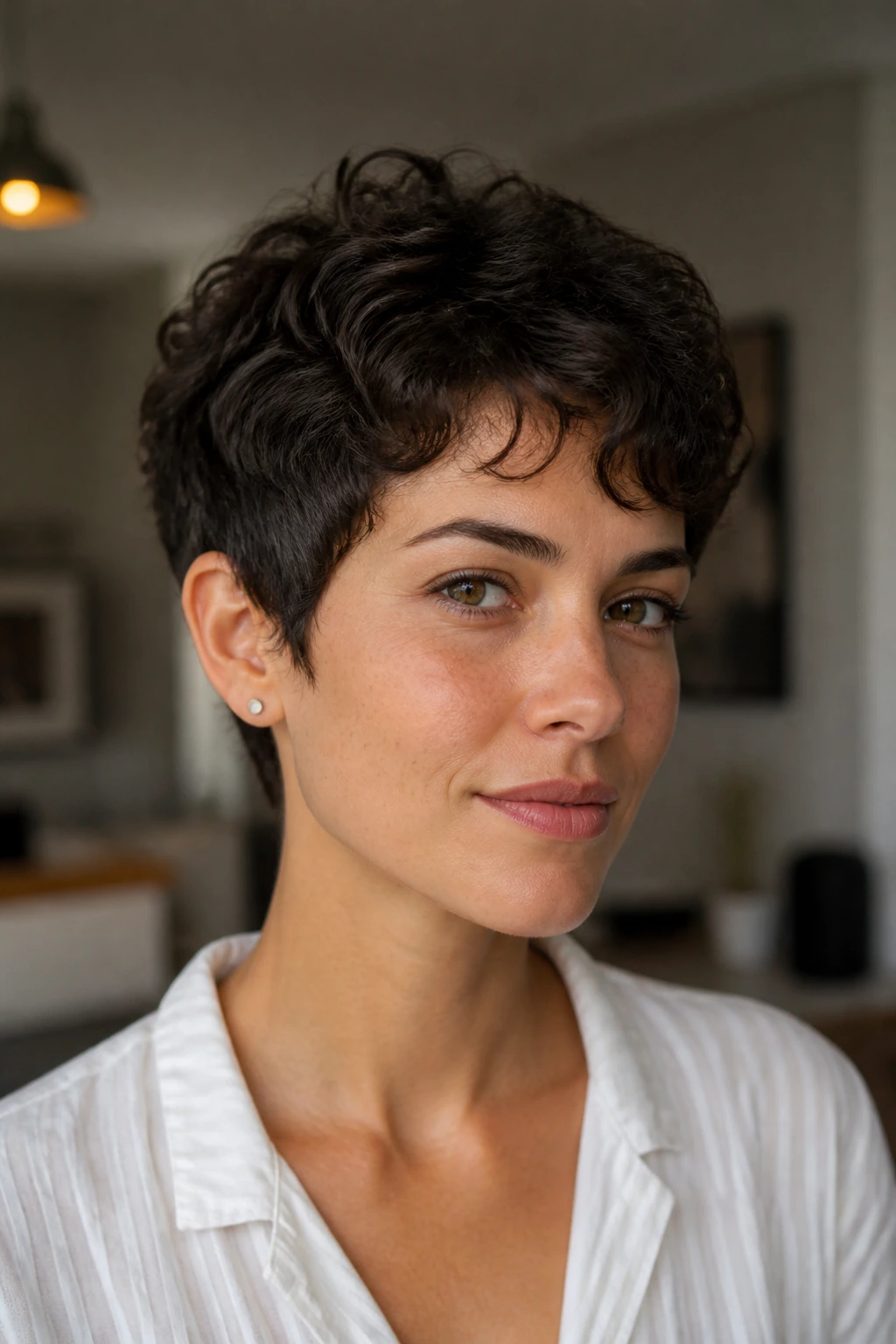
The biggest mistake is cutting curly hair as if it were straight. Curls shrink, bend, and stack, which means a section that looks safe at the sink can end up too short once it dries. The fix is simple: leave more length than feels necessary, especially through the fringe and crown.
Another trap is over-layering fine curls. Remove too much weight and the cut can fray at the ends or lose the shape that holds it together. You want movement, not holes. If the hair is fine, keep the layers controlled and let product do the rest.
Too much cream is a sneaky problem, especially on short hair. The cut can look soft for ten minutes and then sink into itself. Use less than you think, and build up only if the curls are still dry or puffy after drying.
Skipping trims is the last one I see over and over. A curly pixie can hide a little growth, but not forever. Once the nape and temples start expanding, the whole silhouette gets fuzzy and the style loses its edge.
Frequently Asked Questions About Pixie Cuts for Short Curly Hair
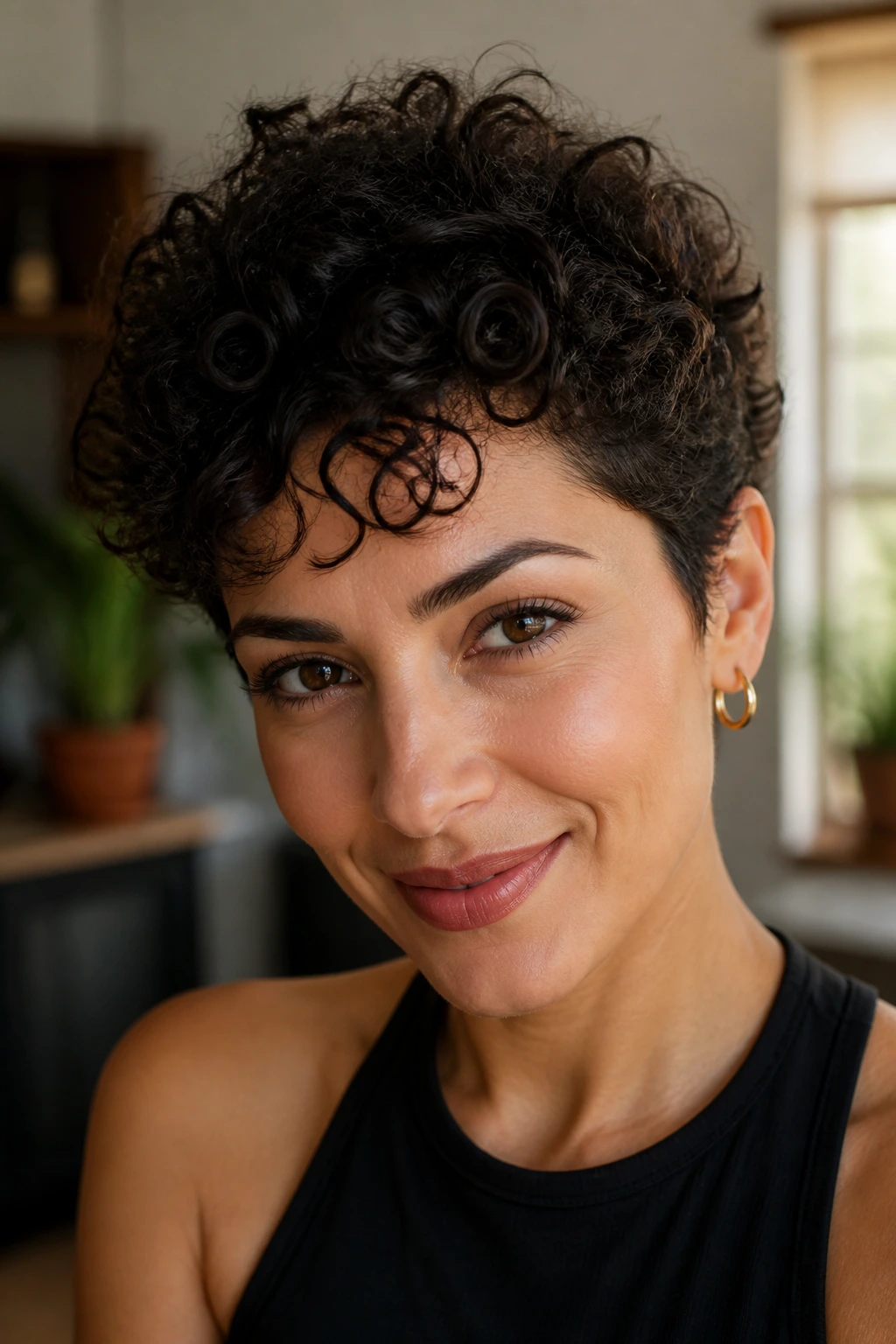
Can curly hair really go this short without turning into a triangle?
Yes, if the sides and nape are tapered and the crown has enough shape. The triangle problem usually comes from leaving too much bulk in the wrong place, not from the short length itself.
Should a curly pixie be cut wet or dry?
Dry cutting usually gives a clearer picture of the final shape, especially on curls with strong shrinkage. Some stylists do a mix of both, which can work well when they need precision and flexibility.
What curl types work best with a pixie?
Almost any curl type can wear a pixie, but the shape changes. Loose curls and waves often need more layering at the crown, while tighter coils usually need careful tapering so the style doesn’t balloon out.
How often will I need trims?
Most curly pixies need a tidy-up every 4 to 6 weeks if you want the shape to stay sharp. If you’re fine with a softer outline, you can stretch it a little longer.
What if my curls shrink a lot more than I expected?
Tell the stylist your hair’s shrinkage before the first snip and ask them to cut with that in mind. A curl that looks short in the chair may spring up more than an inch, sometimes closer to two.
Can I wear a pixie if I don’t want to style my hair every day?
Yes, but ask for a cut that behaves well with air-drying and minimal product. A wash-and-go pixie or a softly tapered crop is usually easier than a sharp, high-contrast shape.
Will a pixie work with glasses?
It can, as long as the temples and fringe are cut with the frame arms in mind. A glasses-friendly pixie keeps the sides neat and leaves enough front length so the hair isn’t constantly trapped under the lenses.
How do I grow out a curly pixie without hating the process?
Ask for a grow-out plan while the cut is still short. Longer fringe, softer tapers, and a bit more length at the crown make the transition into a bixie or short bob much less awkward.
The Shape That Sticks
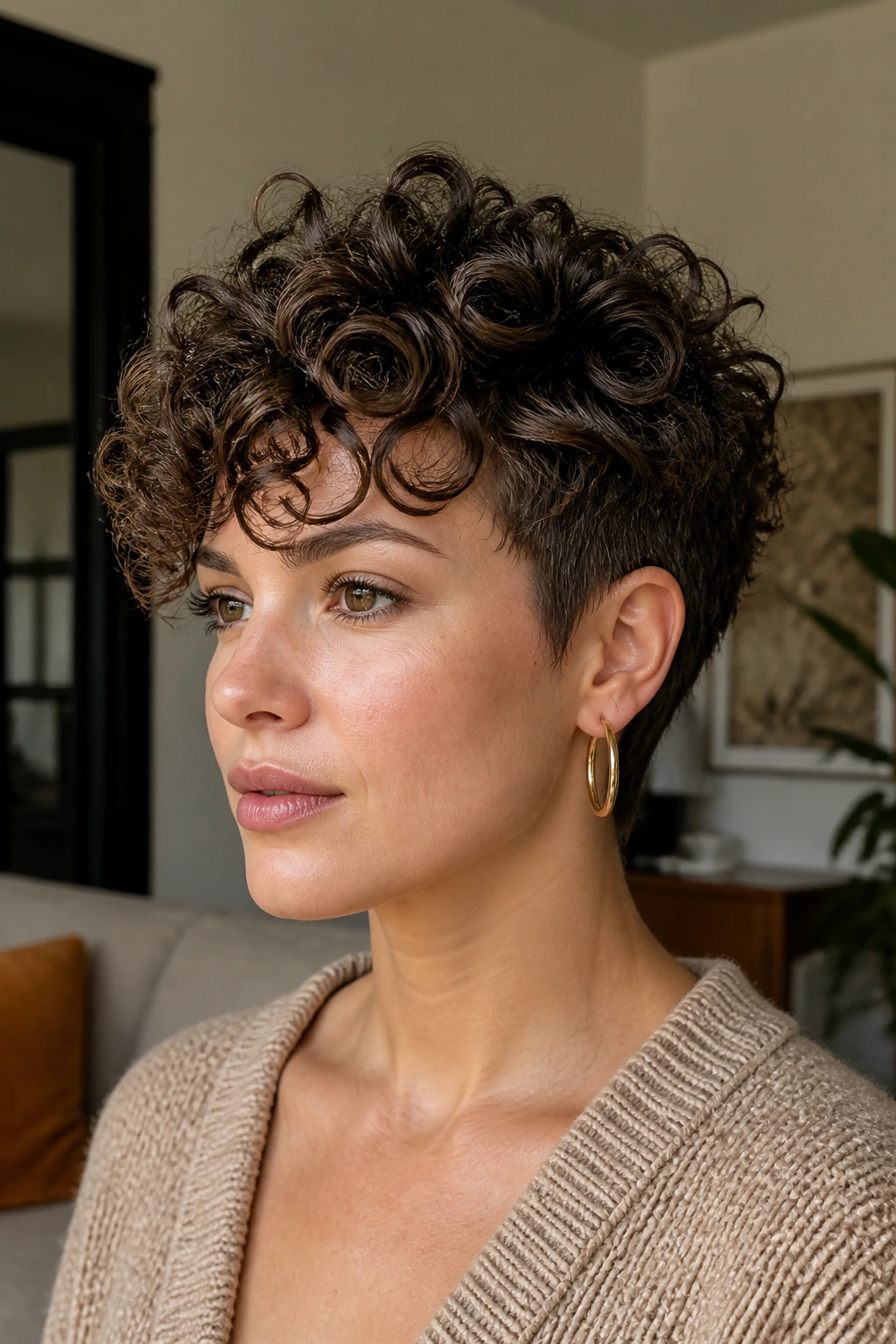
A short curly pixie works best when somebody actually thinks about the head underneath the hair. That sounds obvious. It isn’t. The right cut respects the way your curls rise, bend, and stack, which is why two people can ask for the same pixie and walk out with totally different results.
If you’re choosing between these looks, start with your curl pattern, then your density, then your patience for styling. Those three things matter more than face shape charts and trend language. Bring one photo you love, one photo you’d never want, and say what you mean about length at the nape, fringe, and crown. That conversation is worth more than a vague “make it short but keep it feminine” request.
And if your curls have been waiting for permission to go short, this is it. Pick the silhouette that matches your texture, not the one that ignores it, and the haircut will do more of the work than you expect.
