



A pixie bob on short hair is one of those cuts that looks simple from the chair and does surprisingly useful things once you live with it. The nape stays neat, the sides can skim the cheekbones, and the crown gets enough length to bend instead of sitting there like a clipped helmet.
That middle ground is the whole appeal. A pure pixie can be sharp, but it can also feel exposed if you want a little softness near the face. A bob can feel safer, but it can also hang on the head like a wet towel if your hair is fine or your crown swirls back at you. The pixie bob splits the difference in a way that makes actual sense on real hair, not just in a mirror under flattering salon lights.
I trust this shape more than most cropped cuts because it respects texture, growth patterns, and the face line at the same time. Some versions give you a jaw-hugging edge. Others keep the top piecey and loose so you can tuck one side behind the ear and move on with your day. The details matter. A lot.
Why You’ll Love This Collection
-
It works with short hair that still wants a little movement: The extra length on top and around the sides keeps the cut from collapsing into a flat, one-note crop.
-
It gives you shape without a heavy grow-out line: Many of these pixie bobs can drift into a soft bob instead of turning into a lopsided in-between stage.
-
It fits different textures instead of fighting them: Straight, wavy, curly, thick, and fine hair all get a version that makes sense.
-
It can look polished or undone with a small styling shift: A round brush, a little paste, or a quick finger-dry can change the mood fast.
-
It frames the face without swallowing it: The best versions leave enough neck and jawline visible so the cut feels clean, not bulky.
-
It gives you options at the salon: If you want softer edges, more lift, a fringe, or a tighter nape, there’s a pixie bob shape that can handle it.
1. Classic Tapered Pixie Bob
This is the version people should picture first when they hear pixie bob for short hair. The back is tapered close to the nape, the crown has enough length to lie softly instead of puffing up, and the sides skim the head in a way that keeps the silhouette tidy. It’s a cut with manners. Not boring. Just controlled.
Why it works: The taper removes bulk where short hair tends to stick out, especially at the occipital bone and around the ears. If your hair has a stubborn cowlick at the crown, keeping the top around 2.5 to 3.5 inches gives the swirl somewhere to go. I like this shape on people who want a haircut that still looks intentional on day three.
Best for: Straight to slightly wavy hair, smaller faces, and anyone who wants a cleaner neckline.
Styling note: Blow-dry the top forward first, then direct the front slightly to one side. That tiny change stops the cut from looking too helmet-like.
2. Side-Swept Fringe Pixie Bob
A side-swept fringe makes a short pixie bob feel softer immediately. The front lands in that sweet spot where it can skim the eyebrow or sit just below it, depending on how much forehead you want to keep visible. When done right, the fringe does not look heavy. It looks like a deliberate sweep.
What makes it different
The fringe carries most of the visual weight, so the rest of the cut can stay lighter and tighter around the ears. That means you can keep the nape cropped while still having something to play with at the front. If your hairline is uneven or you like the feeling of a little curtain around the face, this version has real mileage.
How to style it: Use a pea-sized amount of smoothing cream on damp hair, then blow-dry the fringe from the high side of the part across the forehead with a paddle brush. Finish by bending the ends slightly under with your fingers. Keep it soft. A rigid side-sweep gets dated fast.
3. Choppy Piecey Pixie Bob
This is the cut for people who want movement to show, not hide. The edges are point-cut or lightly razor-cut so the ends break apart instead of sitting in one blunt line. It gives short hair a little grit. A little tooth. Not shaggy, exactly. Just less obedient.
A choppy pixie bob is especially useful if your hair refuses to hold a neat round shape. The uneven ends keep the silhouette from looking too precious. I also like it on second-day hair, when a little dry shampoo and finger-combing are all you want to deal with.
Quick styling cue: Work a matte paste through the top in two sections, not all at once. If you rub the whole head together at the start, the cut can go fuzzy instead of piecey.
4. Sleek Micro Pixie Bob
A sleek micro pixie bob sits closer to the head and keeps the lines tight, almost architectural. The sides are short enough to reveal the ear shape, and the top is just long enough to brush forward or lay flat with intention. If you like a crisp neckline and a sharp profile, this one has teeth.
Why it stands out: Short, smooth cuts show every mistake, which is exactly why they look so clean when they’re done well. The shape depends on precise trimming around the temples and nape. Keep the ends blunt at the perimeter, then soften only the interior if your hair needs a little give.
Best for: Fine hair, straight hair, and anyone who likes a polished finish without a lot of volume.
A small warning: Don’t load it up with heavy oil. Sleek does not mean greasy. Two drops of serum is usually enough.
5. Hidden Undercut Pixie Bob
The hidden undercut is the move when the hair feels too thick for its own good. A slim panel beneath the top layers gets clipped shorter, usually around the nape and lower sides, while the visible surface stays smooth and fuller. That lets the top lie better without looking chopped to pieces.
This is one of my favorite fixes for dense hair that balloons at the back after a wash. The undercut reduces bulk where it matters most but leaves enough length on top to keep the haircut looking like a style instead of a shortcut. If your hair starts to wedge out at the collar by lunchtime, this is worth asking for.
Best for: Thick, coarse, or heavy hair that resists close shaping.
6. Curly Pixie Bob with Soft Layers
Curly hair needs more length than people think in a pixie bob. The curls spring up as they dry, sometimes 1 to 2 inches, so the shape has to account for shrinkage instead of pretending it doesn’t exist. A soft layered version lets the curls stack without becoming a puff.
What I love here is the balance between control and air. The back can stay tidy while the curls around the crown and front keep their bounce. Ask for layers cut in the curl’s natural state if possible. Dry-cutting or curl-by-curl shaping usually gives a better read than guessing on wet hair.
How to wear it: Use leave-in conditioner on soaking-wet hair, then scrunch in a light gel. Diffuse on low heat until the roots are set and the ends still move.
7. Wavy Air-Dry Pixie Bob
This version is built for people who want short hair without getting trapped in styling rituals. The waves do the work, and the cut just gives them enough room to bend. The best versions keep the top a little longer than the sides so the wave pattern doesn’t collapse into an odd triangle.
It’s a cut that benefits from restraint. Too much layering and the wave starts to fray. Too little and the hair can sit like a cap. The sweet spot is a soft, uneven surface that looks relaxed even when it took a little scrunching and some patience to get there.
Best for: Hair that forms loose S-waves after a wash.
Styling note: Skip the brush once the hair is half dry. Fingers are better here. A brush can pull the wave straight and leave the ends dangling.
8. Feathered Volume Pixie Bob
Feathering is the answer when you want lift without obvious chunkiness. The layers are cut so they taper inward and outward softly, which keeps the shape airy around the crown. Fine hair especially likes this, because too much blunt weight can make it fall flat by noon.
The trick is keeping the layers visible but not stripy. I’d rather see a few clean, feathered planes than a cut that looks shredded. The front can stay a little longer so it still frames the cheekbones, while the top gets the lift. That combination is doing the real work.
Who should try it
- Fine hair that loses shape quickly
- Flat crowns that need height
- Anyone who wants softness more than edge
Finish: A root spray at the crown and a small round brush are usually enough.
9. Asymmetrical Pixie Bob
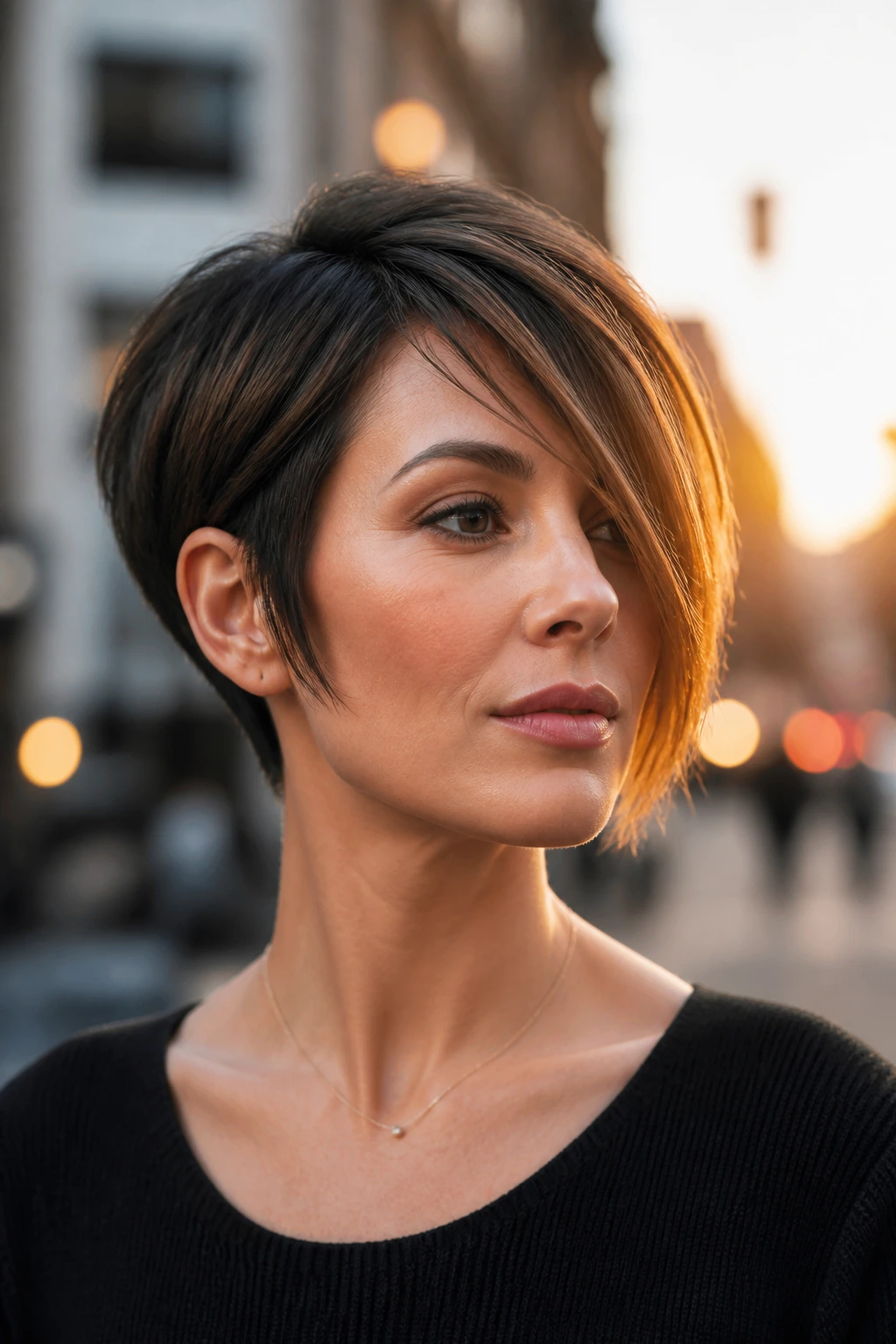
One side longer. That’s the whole point, and it works because the imbalance creates motion right away. The asymmetry can be subtle—only about 1 inch difference—or more obvious if you want the shape to read from across the room. Either way, the cut feels modern without needing extra decoration.
This version is especially useful if one side of your face carries more volume than the other, or if you always part your hair on the same side and want the haircut to lean into that habit. It can also make a short jawline feel more stretched vertically.
How to wear it: Keep the shorter side tucked close and let the longer side move across the cheekbone. That contrast is the whole visual trick.
10. Ear-Tucked French Pixie Bob
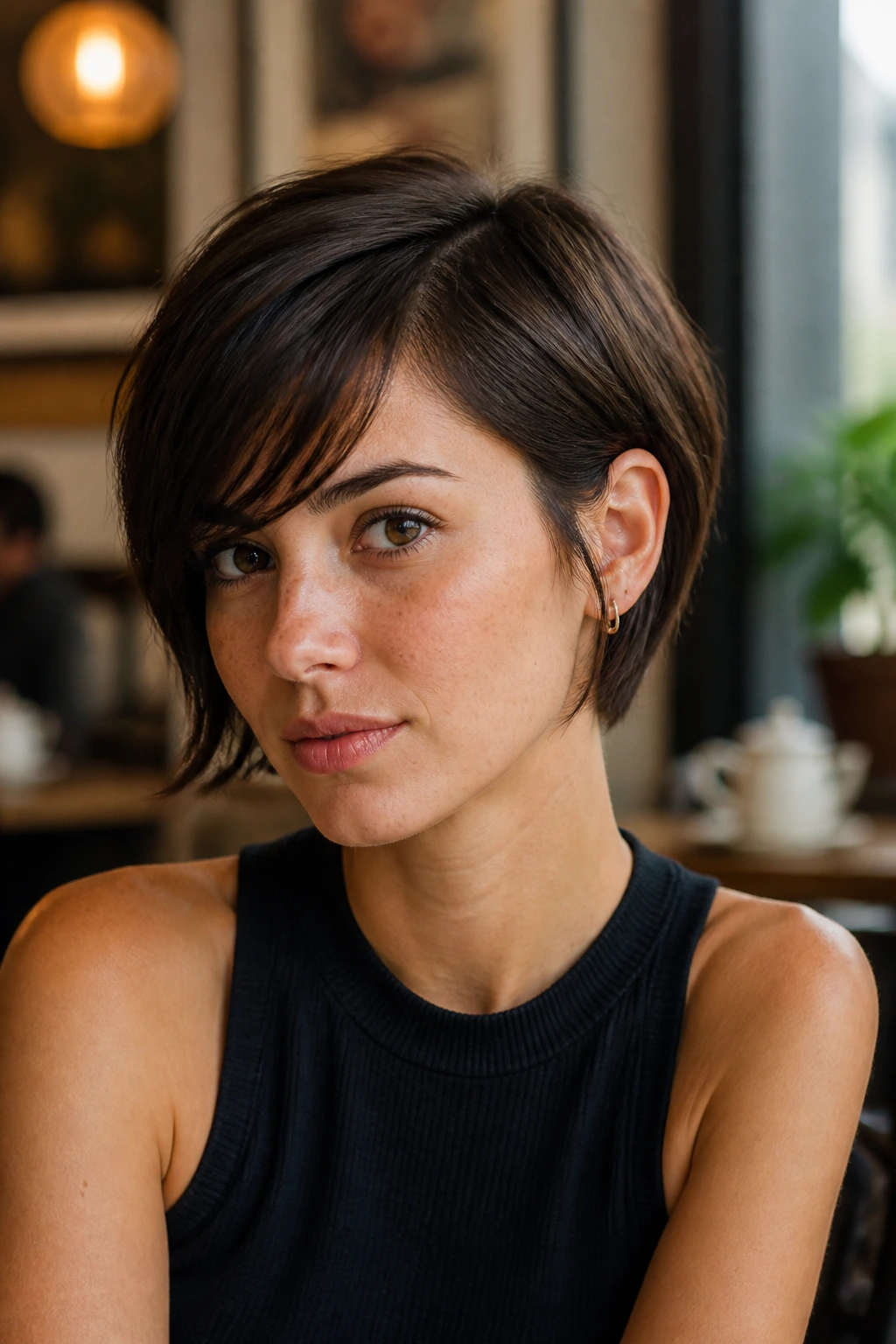
The ear-tucked version has a quiet, almost offhand charm. The sides are long enough to tuck, but short enough that the tuck looks deliberate rather than like you forgot to finish your hair. It’s neat without feeling stiff.
This cut works when the perimeter is soft and the front has a slight bend. You want the ends to graze the jaw, then slip behind the ear when needed. It’s the kind of shape that makes earrings and glasses do part of the styling work, which is never a bad trade.
Styling note: Tuck one side only. If both sides get pinned back, the cut can lose its shape and start reading too severe.
11. Stacked Nape Pixie Bob
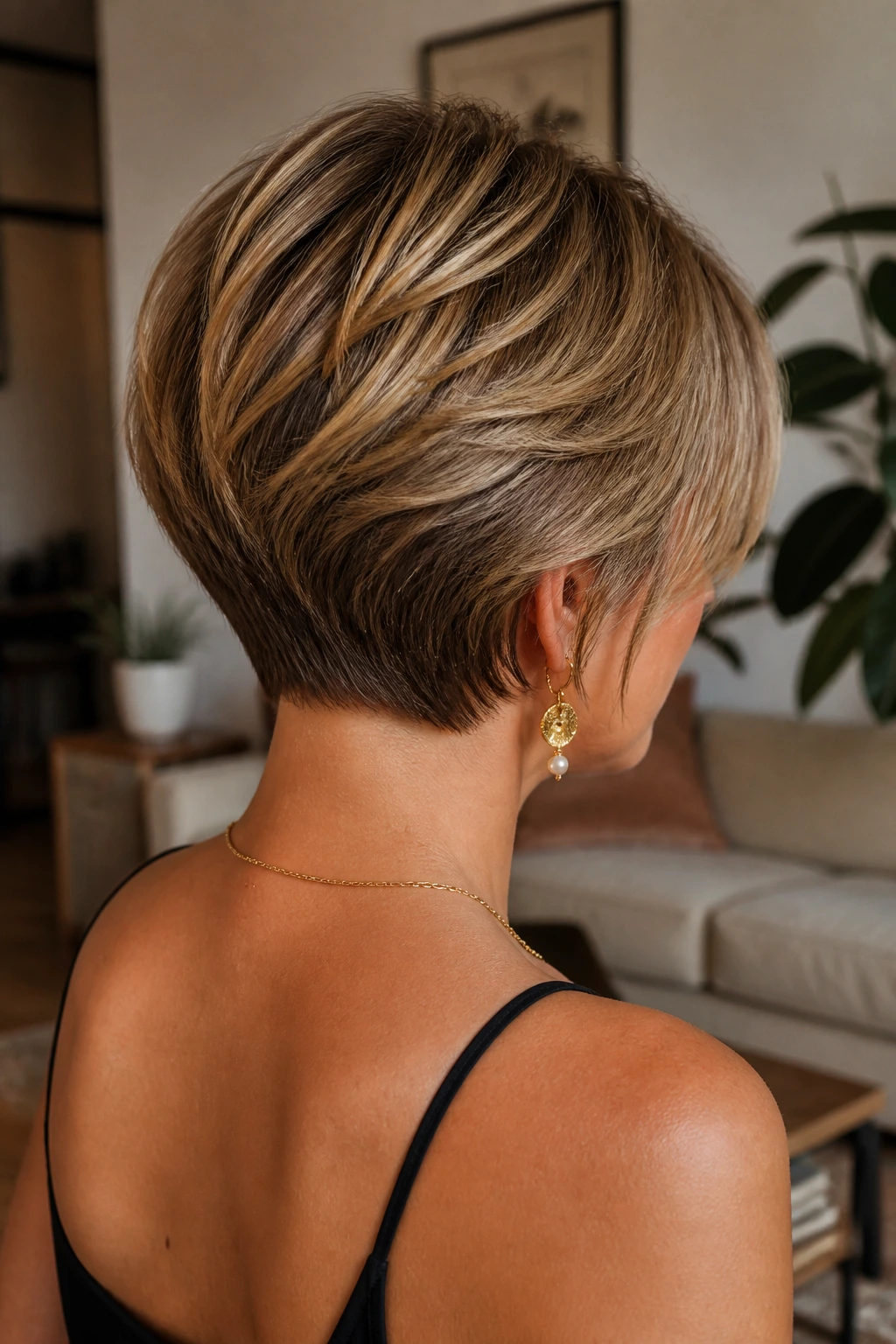
A stacked nape gives the back of the head a cleaner curve. The layers are shorter and slightly graduated near the neckline, which builds a soft lift instead of a flat shelf. It’s especially helpful if the back of your hair tends to stick out in a blunt line.
The stack should feel controlled, not puffy. I like this cut when the silhouette needs a little rear-view interest. Seen from the back, it should curve gently into the neck. Seen from the side, the line should still look crisp and settled.
Best for: Straight or lightly wavy hair that needs shape at the back.
12. Long-Crown Pixie Bob
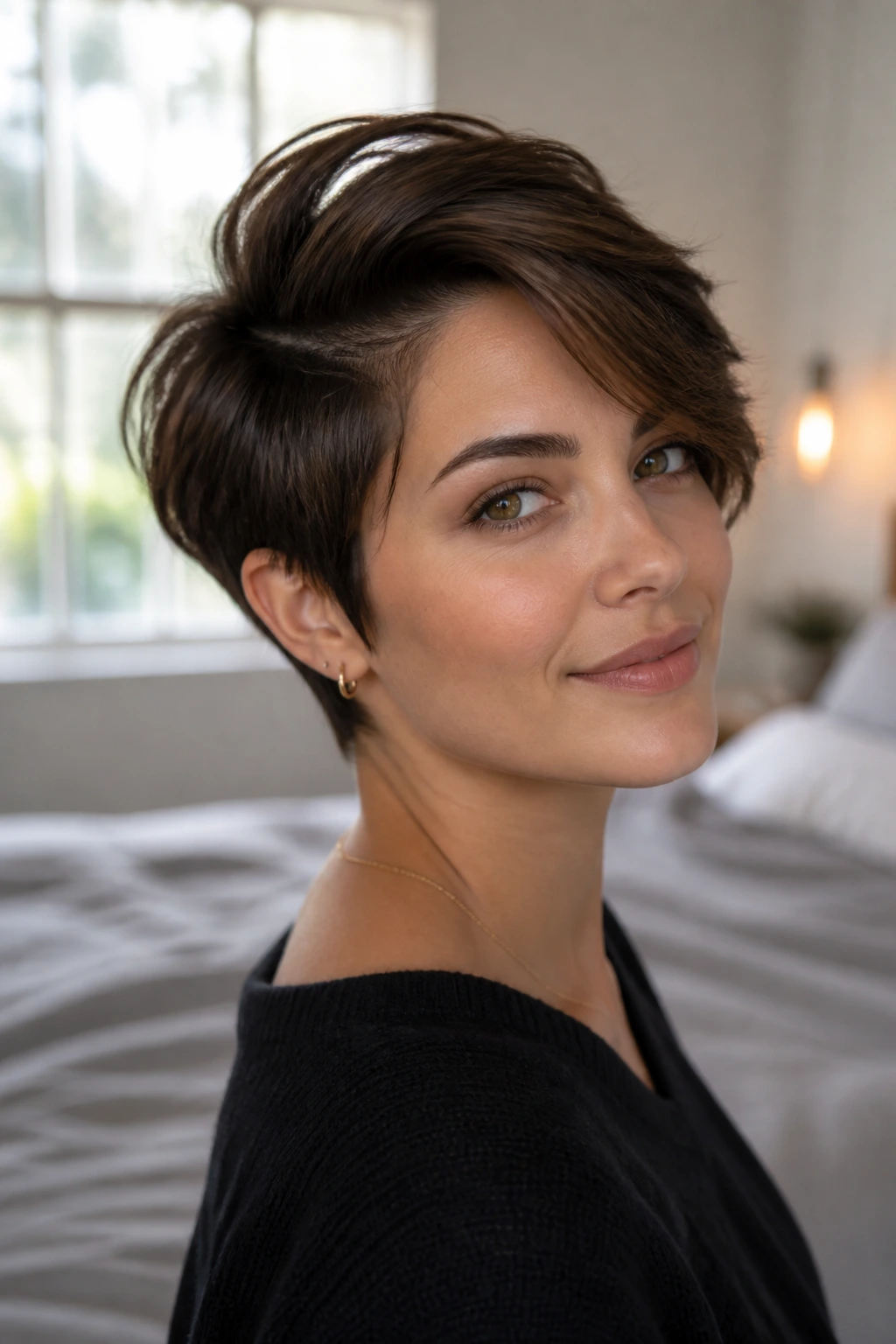
The long-crown version keeps more length on top—sometimes close to 3.5 or 4 inches—while the sides stay much shorter. That extra length gives you styling range. You can push it forward, direct it back, or lift it with a root product and let it stand away from the scalp a bit.
I like this cut for people whose face wants a little vertical length. It also plays nicely with hats, which is a small thing until you need the cut to survive a day of real life. The crown length should feel intentional, not like the salon just stopped cutting halfway through.
How to style it: Dry the crown in the opposite direction of your natural part first, then switch it back. That gives the roots a bit of memory.
13. Razor-Cut Pixie Bob
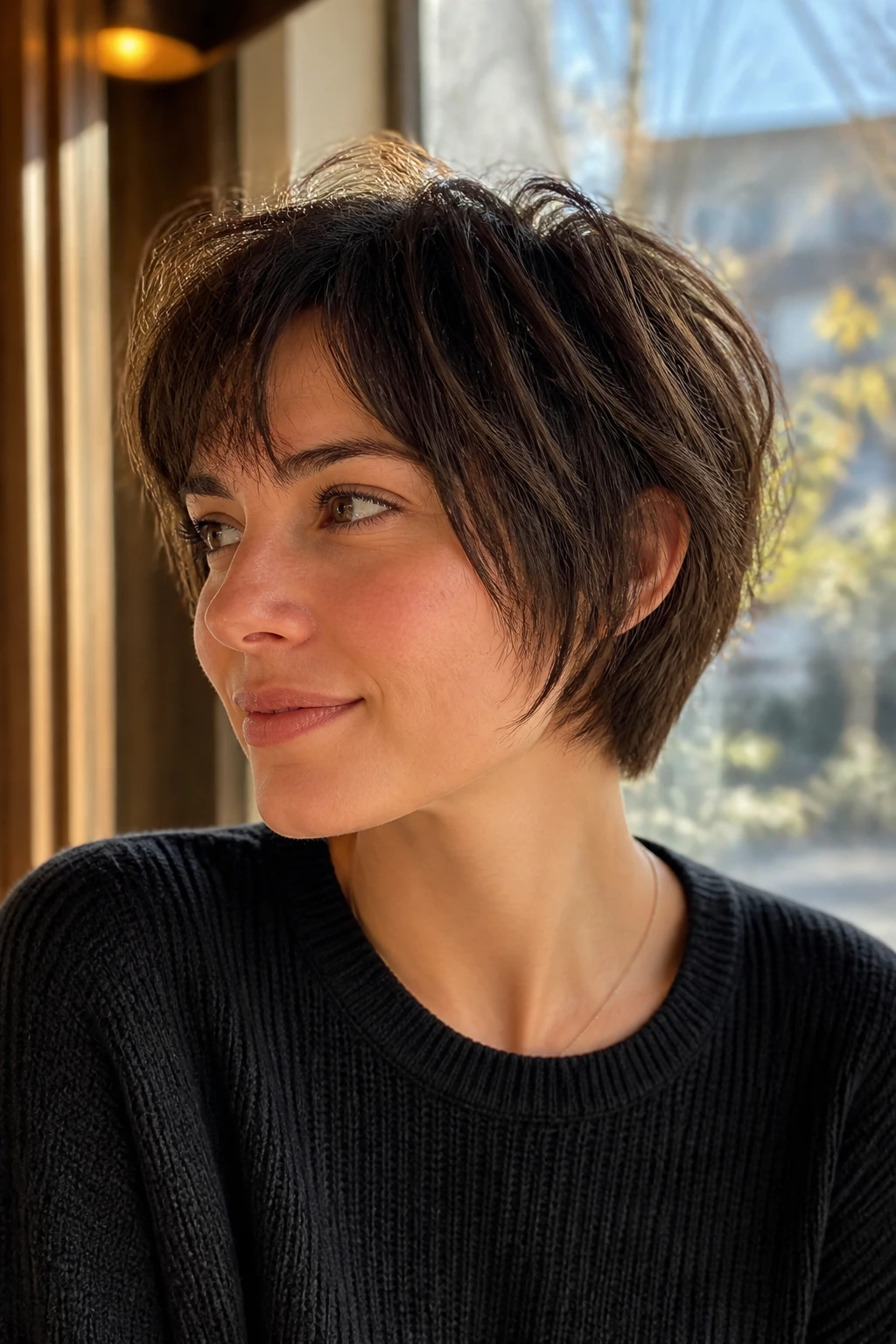
A razor-cut pixie bob has a softer edge than a blunt crop, but it can still look sharp if the shape is balanced. The razor breaks the ends apart, which gives movement to straight hair and keeps thick hair from looking too boxy. Done badly, it frays. Done well, it looks easy.
This is the cut I’d choose when I want the perimeter to feel light around the cheek and nape. It’s especially good if you like a piecey finish and don’t want the haircut to sit in one solid block. The texture does the talking.
Caution: Razor cutting and very fine damaged hair are not a dream combination. If the ends already feel wispy, ask for point cutting instead.
14. Blunt-Line Pixie Bob
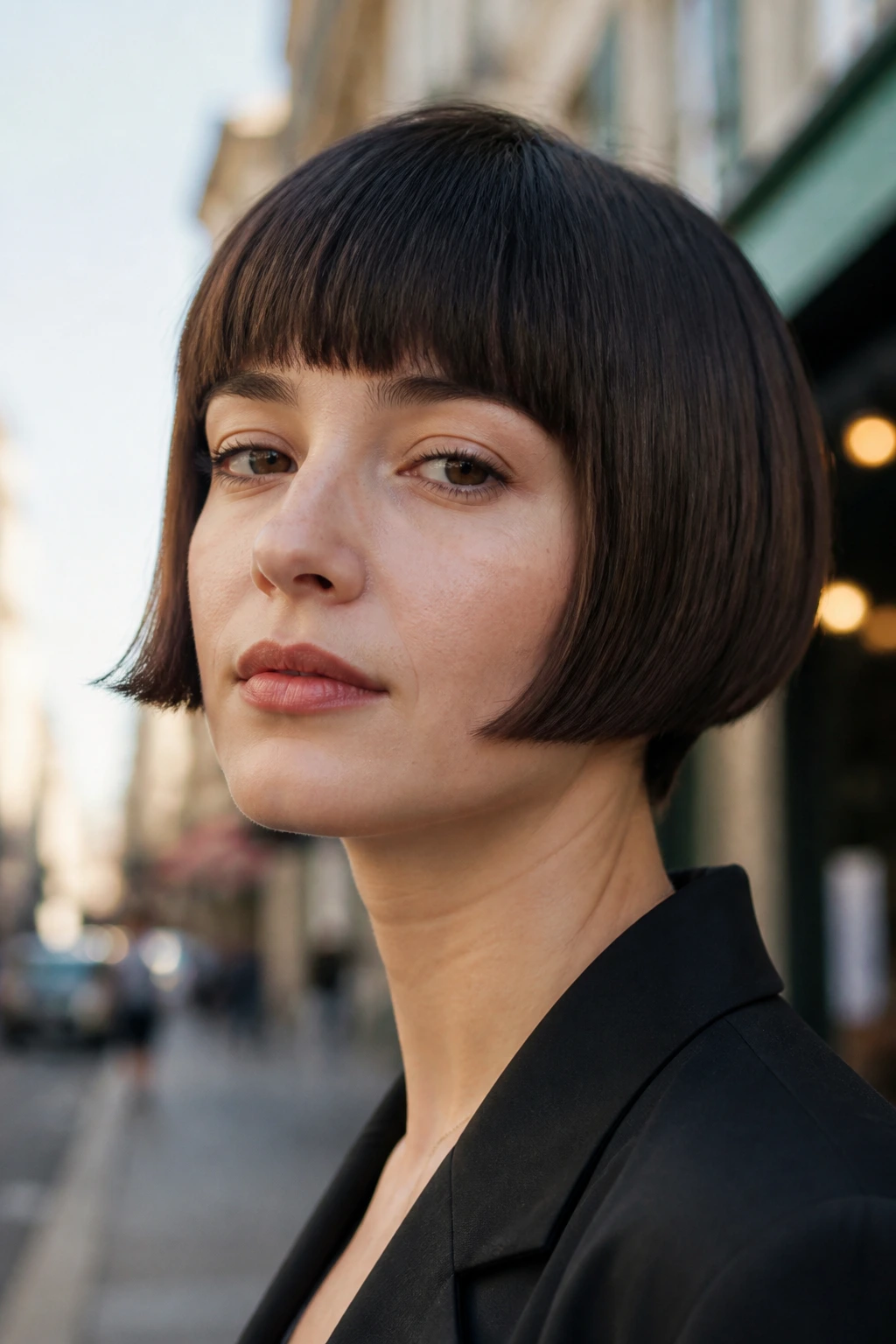
The blunt-line version is the opposite of piecey. The edges sit clean, the shape reads strong, and the line around the jaw or nape feels purposeful. On short hair, that bluntness can be elegant in a spare, unfussy way.
It works best when the hair is naturally straight or when you’re willing to smooth it a bit. Thick hair can look expensive in this shape because the line has real presence. Fine hair can wear it too, but the cut has to be precise or the shape goes limp.
How to wear it: Keep the styling minimal. A small round brush or flat brush, a quick blow-dry, and a drop of shine serum are usually enough.
15. Deep Side-Part Pixie Bob
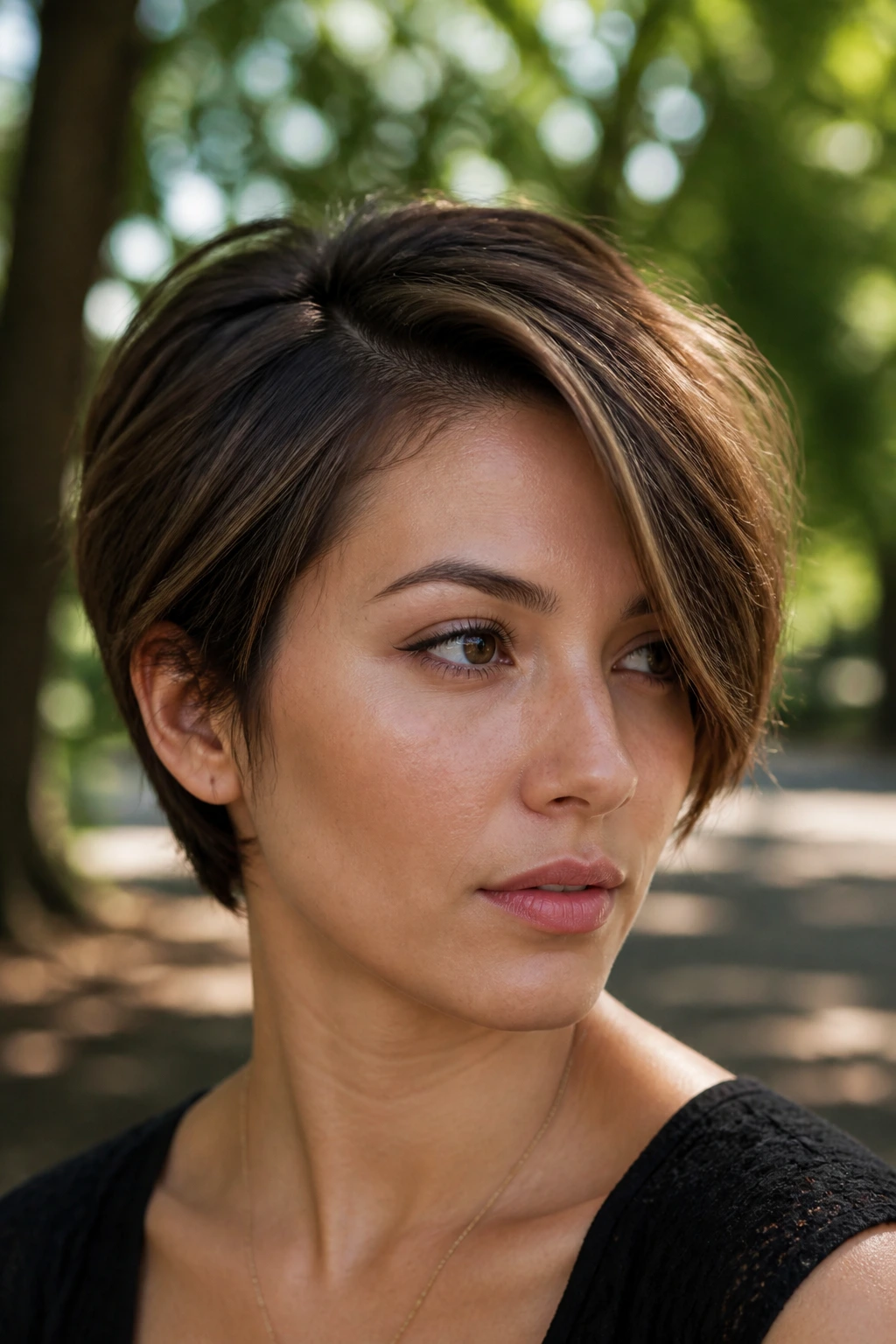
A deep side part changes the whole mood of a pixie bob. Volume gathers on one side, the front sweeps across the forehead, and the haircut suddenly feels more dramatic without needing extra length. It’s a smart move if your crown tends to lie flat in the middle.
I like this version because it gives you an easy styling switch. Same cut. Different energy. Move the part by an inch or two, and the face framing changes enough to matter. That’s useful when you want short hair that doesn’t feel locked into one look.
Best for: People with a flatter crown or a strong natural side part.
16. Baby Bang Pixie Bob
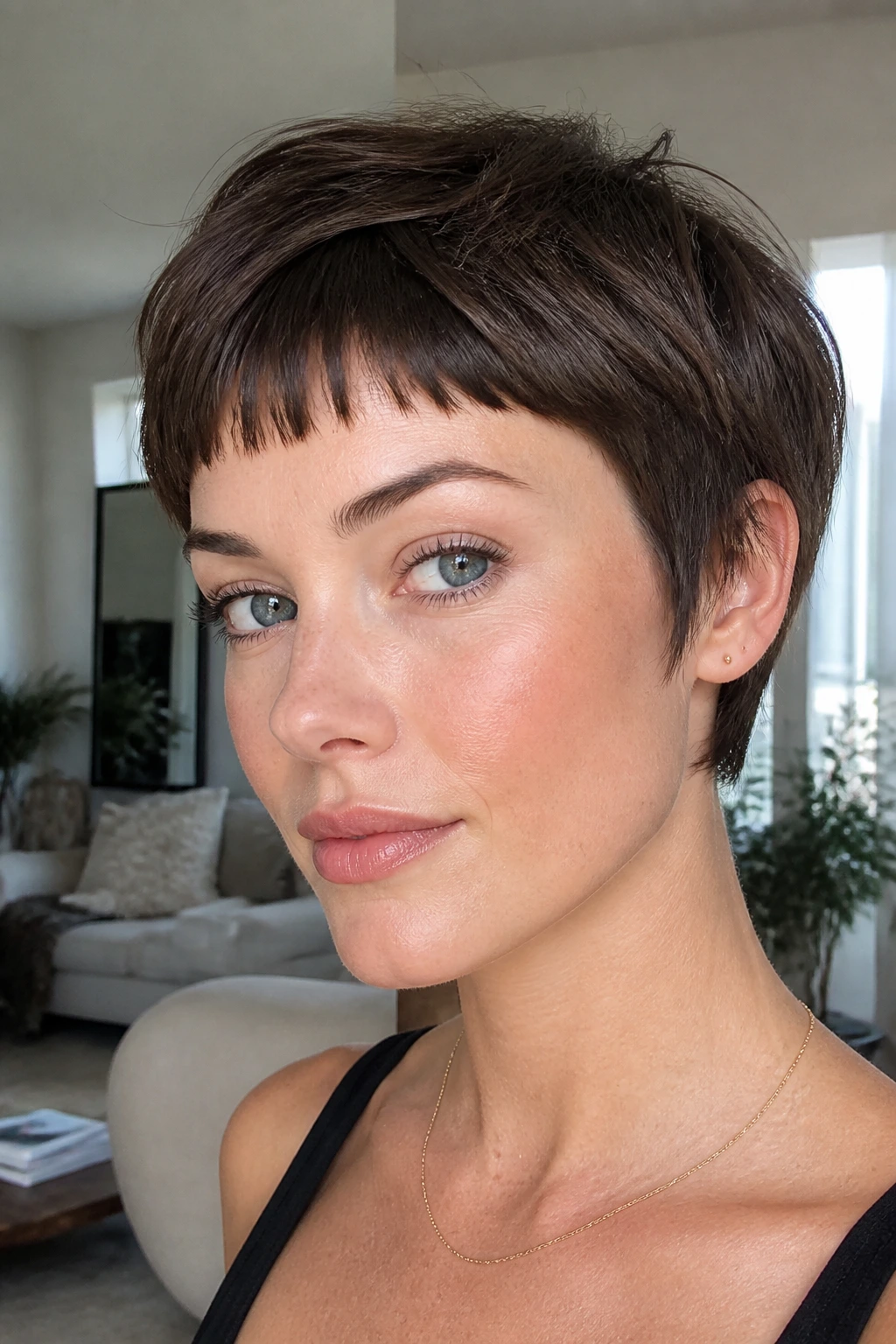
Baby bangs on a pixie bob are not shy. The fringe usually lands well above the brows, which puts the focus on the eyes and upper face. The rest of the cut can stay tight and cropped, so the bangs become the main event.
This is a strong choice if you like crisp lines and don’t mind a little attitude in the haircut. Baby bangs expose the forehead, so they make the face look more open, not less. The cut only works when the rest of the shape is clean. If the sides get too bulky, the whole thing can look accidental.
Styling note: Keep the fringe dry and separated. Heavy cream turns baby bangs into a sticky strip, and that defeats the point.
17. Curtain Fringe Pixie Bob
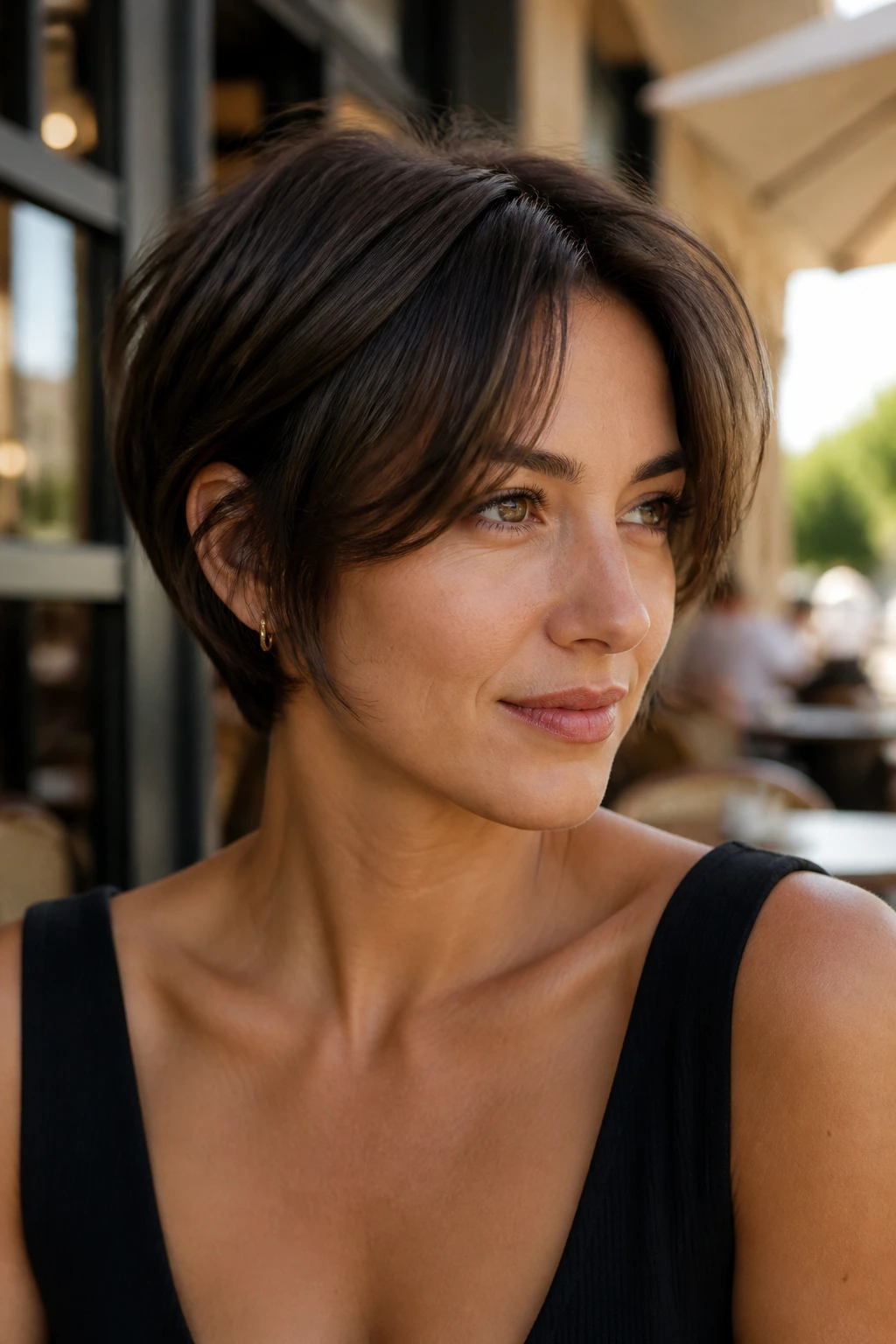
Curtain fringe on short hair sounds odd until you see it move. The front is long enough to split in the center or slightly off-center, then fall away from the face in two soft pieces. It makes a pixie bob feel less strict and a little more lived-in.
This version is lovely for anyone who wants forehead coverage without a solid wall of bangs. The fringe blends into the sides, so the haircut feels wider through the top and softer near the cheeks. That can be a good thing if you want balance more than edge.
How to ask for it: Ask for a fringe that starts longer than you think it should, then let the stylist refine it dry. Short curtain pieces shrink fast.
18. Shaggy Pixie Bob

The shaggy pixie bob borrows from a shag without fully committing to the wildness. Layers are irregular, the ends are feathery, and the top has enough movement that nothing looks too polished. It’s the haircut for people who hate the feeling of too much structure.
I like it because it ages well between trims. The softness hides growth better than a hard line does, and the texture keeps it from sliding into blandness. You still need some shape at the nape and around the ears, though. Shaggy is not the same thing as messy.
Best for: Wavy hair, medium density, and anyone who likes a casual finish.
19. Platinum Pixie Bob
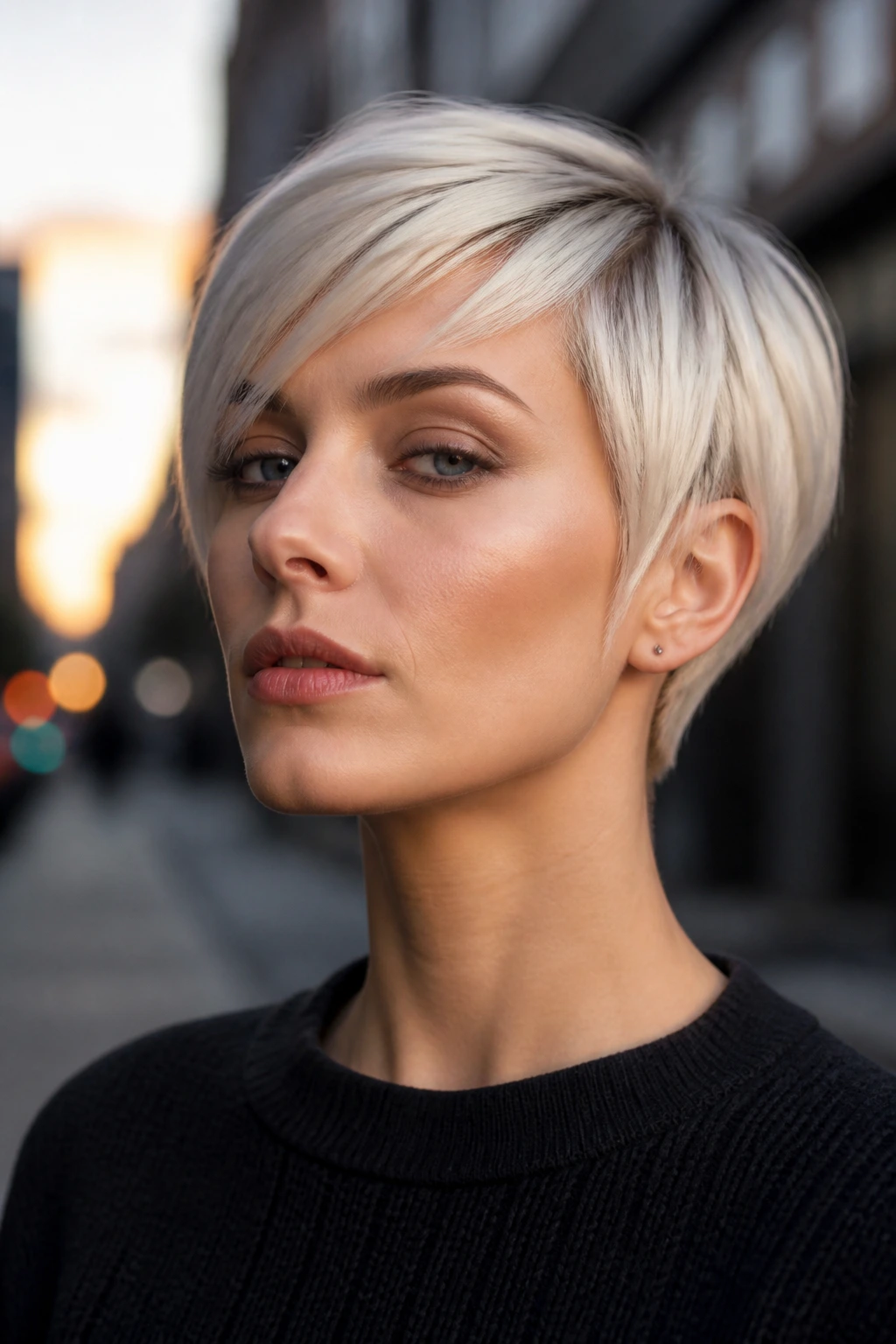
Color changes the way a pixie bob reads, and platinum makes every edge visible. The shape looks cleaner, the texture shows up more, and even a small asymmetry becomes obvious. That can be a blessing or a trap.
A platinum pixie bob needs a haircut with good bones because the color will expose weak lines fast. It also asks for more care: bond-building treatments, heat protection, and a little patience with dryness. The payoff is huge when the cut and color are in sync. Short light hair can look almost luminous around the face.
Practical note: If your hair is already fragile, keep the top longer and ask for gentle layering rather than aggressive texturizing.
20. Glossy Brunette Pixie Bob
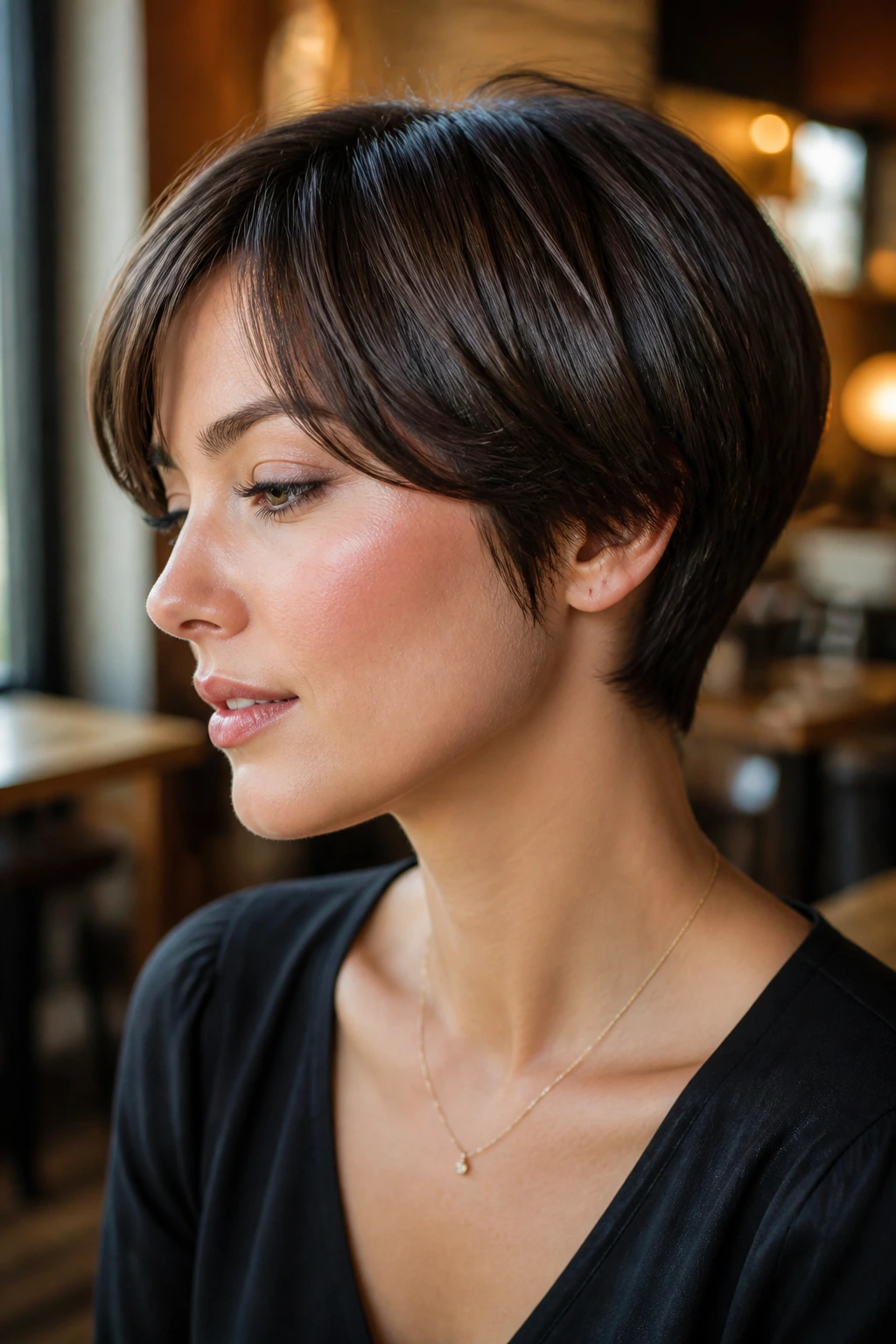
Dark hair and a pixie bob have a special relationship. The shine shows the shape, the weight makes the cut look smoother, and the outline around the jaw gets a little more dramatic. A glossy brunette version can feel cleaner than a textured blonde cut because every line reads more clearly.
I prefer this when the goal is richness instead of obvious movement. A subtle side part, a beveled end, and a disciplined neckline can do a lot here. The haircut does not need to shout. Dark hair picks up structure even in ordinary light.
Styling note: A light shine spray or one drop of serum on the ends is enough. Too much product makes dark short hair look greasy fast.
21. Salt-and-Pepper Pixie Bob
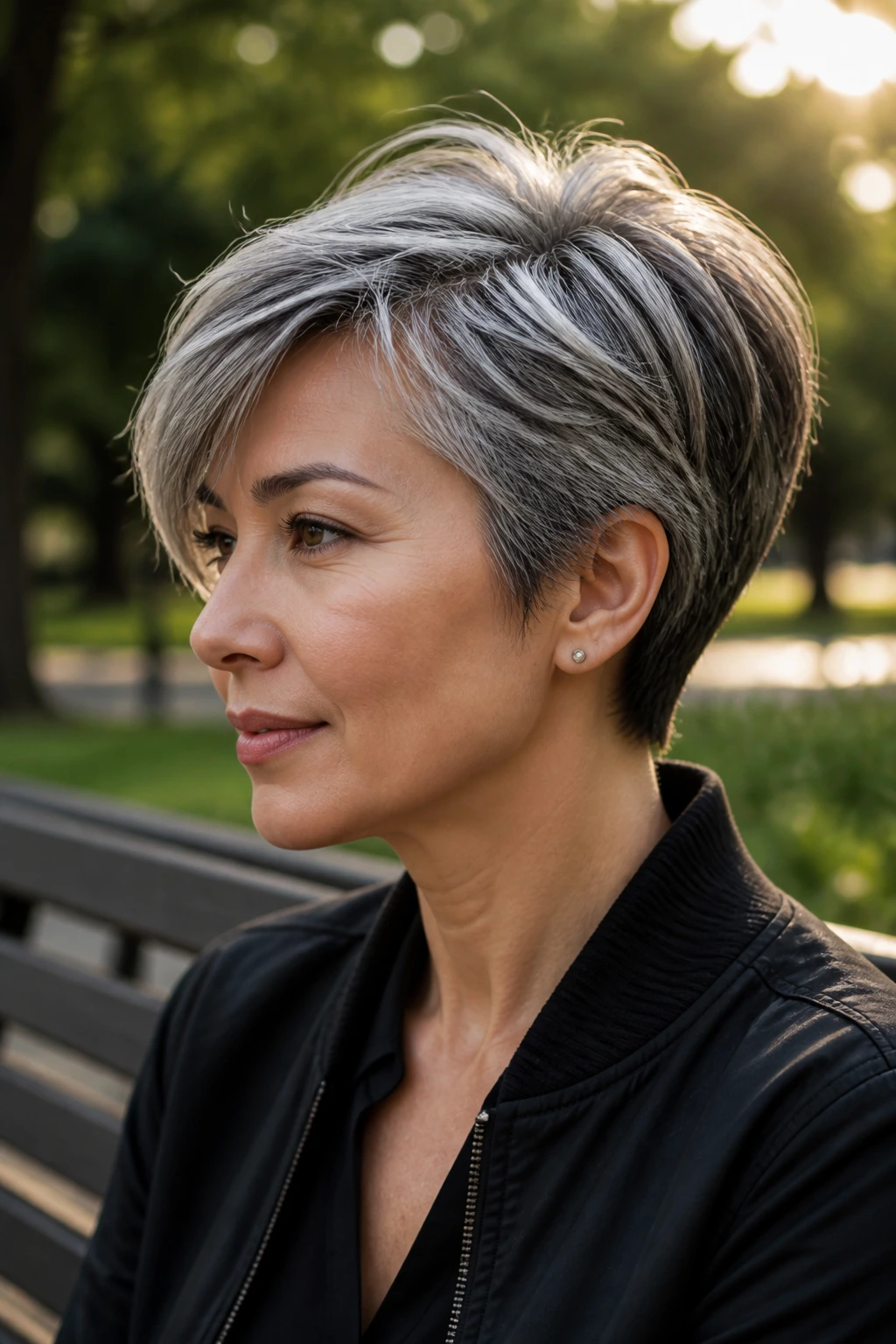
Salt-and-pepper hair deserves a cut that respects the natural contrast in the strands. A pixie bob does that by letting the gray and darker pieces show their own texture. The mix of tones can make the layers look more dimensional without any color work at all.
This version tends to look best when the silhouette is clean. You want the transition from nape to crown to read clearly so the color variation has a frame. The haircut should make the hair look intentional, not like it happened on its own and got lucky.
My take: This is one of the easiest short cuts to wear with confidence because the color already gives you visual interest. The cut just has to stay honest.
22. Fine Hair Lift Pixie Bob
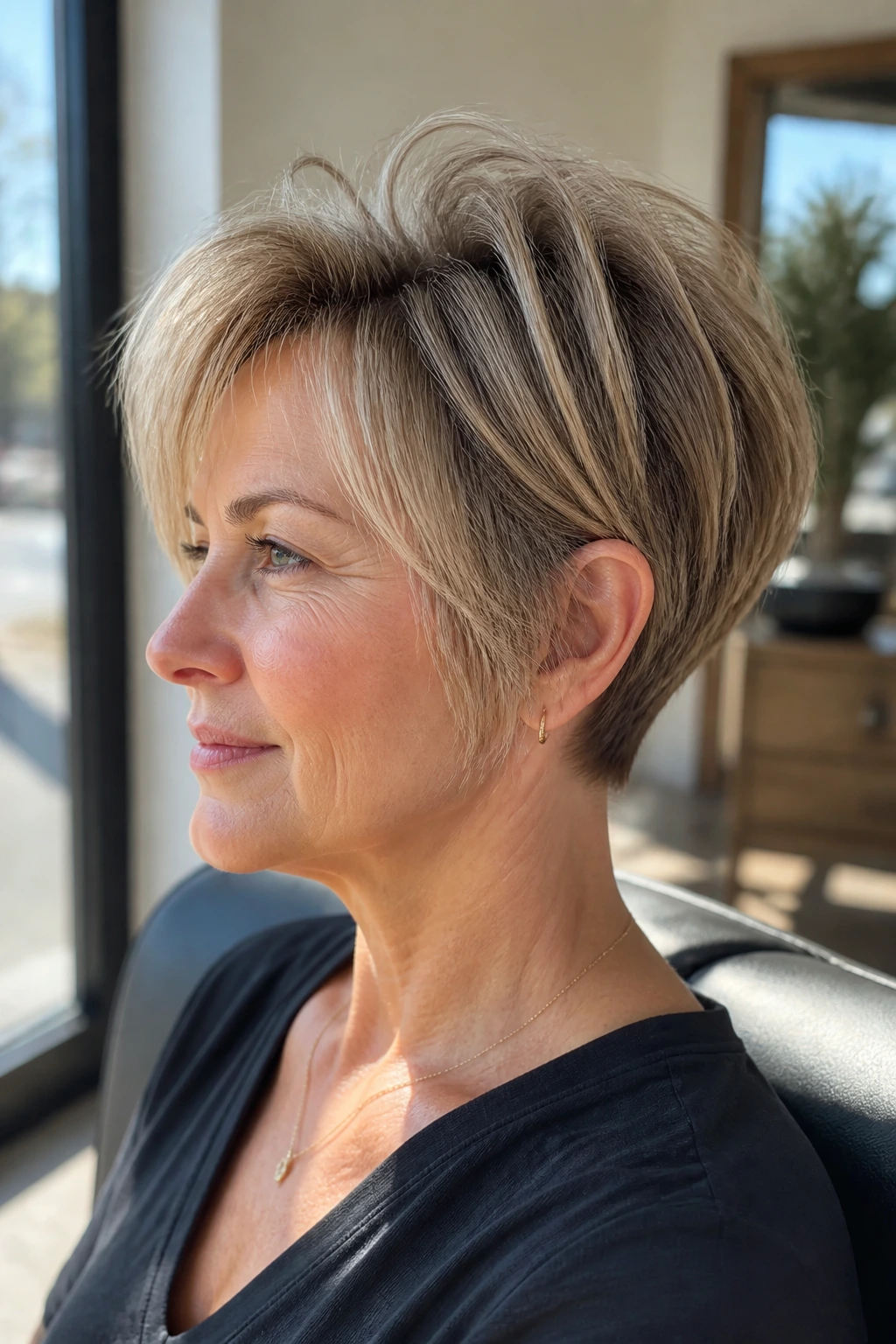
Fine hair often needs a shape that cheats a little. A pixie bob with lift does that by keeping the crown long enough to stand up after a root spray and by avoiding too much thinning near the perimeter. If you thin fine hair too hard, the ends start to look see-through.
The best version uses stacked or feathered layers sparingly, not all over the head. You want the illusion of density, not a shattered outline. A small mousse at the roots and a round brush can make the top look fuller in a way that survives the afternoon.
Best for: Hair that falls flat within hours of drying.
23. Thick Hair Debulk Pixie Bob
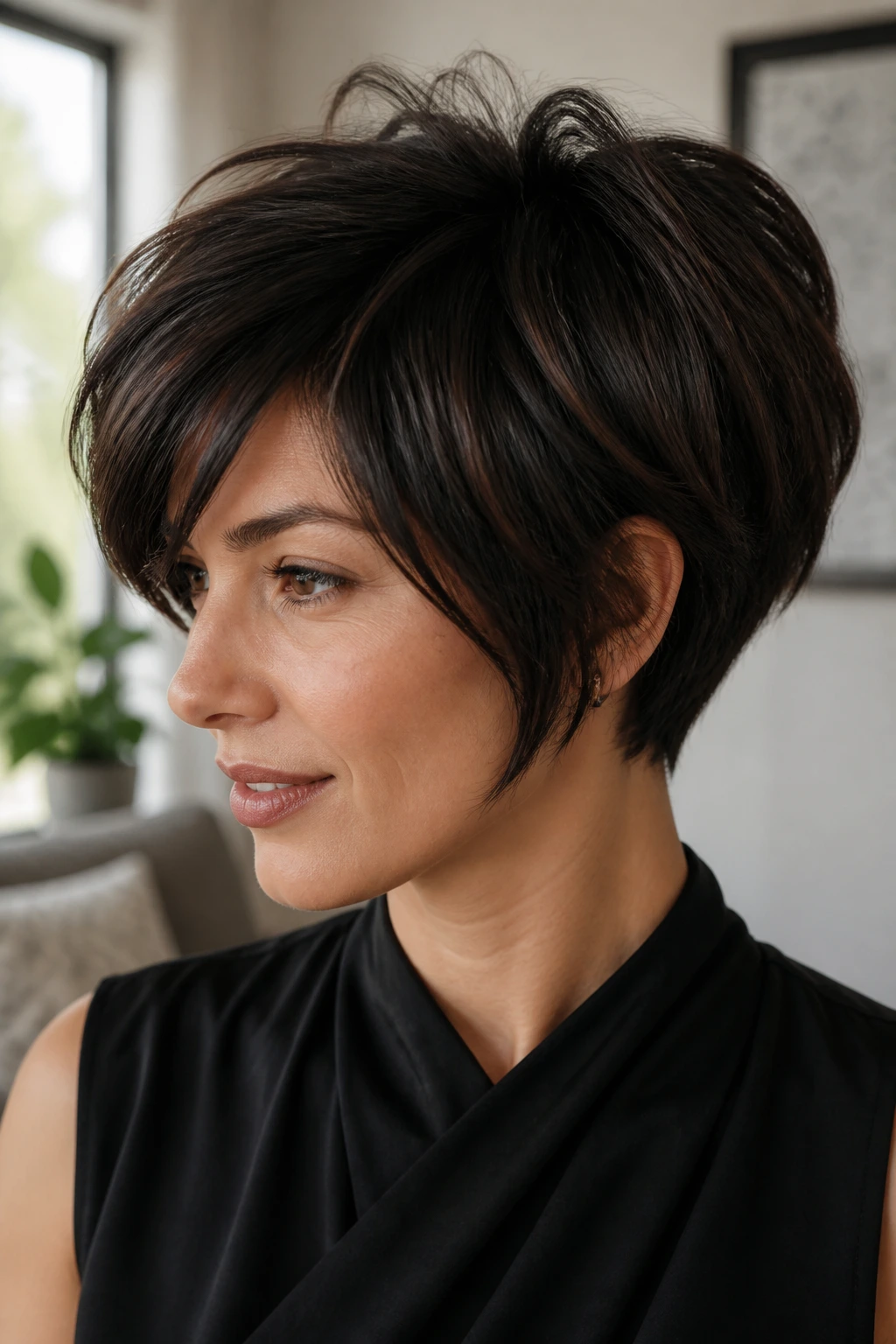
Thick hair can wear a pixie bob beautifully when the bulk is handled in the right places. That means reducing weight through the interior and lower back of the head, not just hacking at the surface. If the thickness stays trapped underneath, the cut puffs at the nape and around the ears.
I like this version because it makes short hair feel lighter to live with. The visible shape stays smooth, but the hidden structure does the work. Ask for internal debulking, not just a lot of layers. Those are not the same thing, and the difference shows fast once the hair dries.
How it behaves: Thick hair usually gives you one of the longest-lasting pixie bob shapes, because the hair has enough body to hold the line.
24. Round-Face Lengthening Pixie Bob
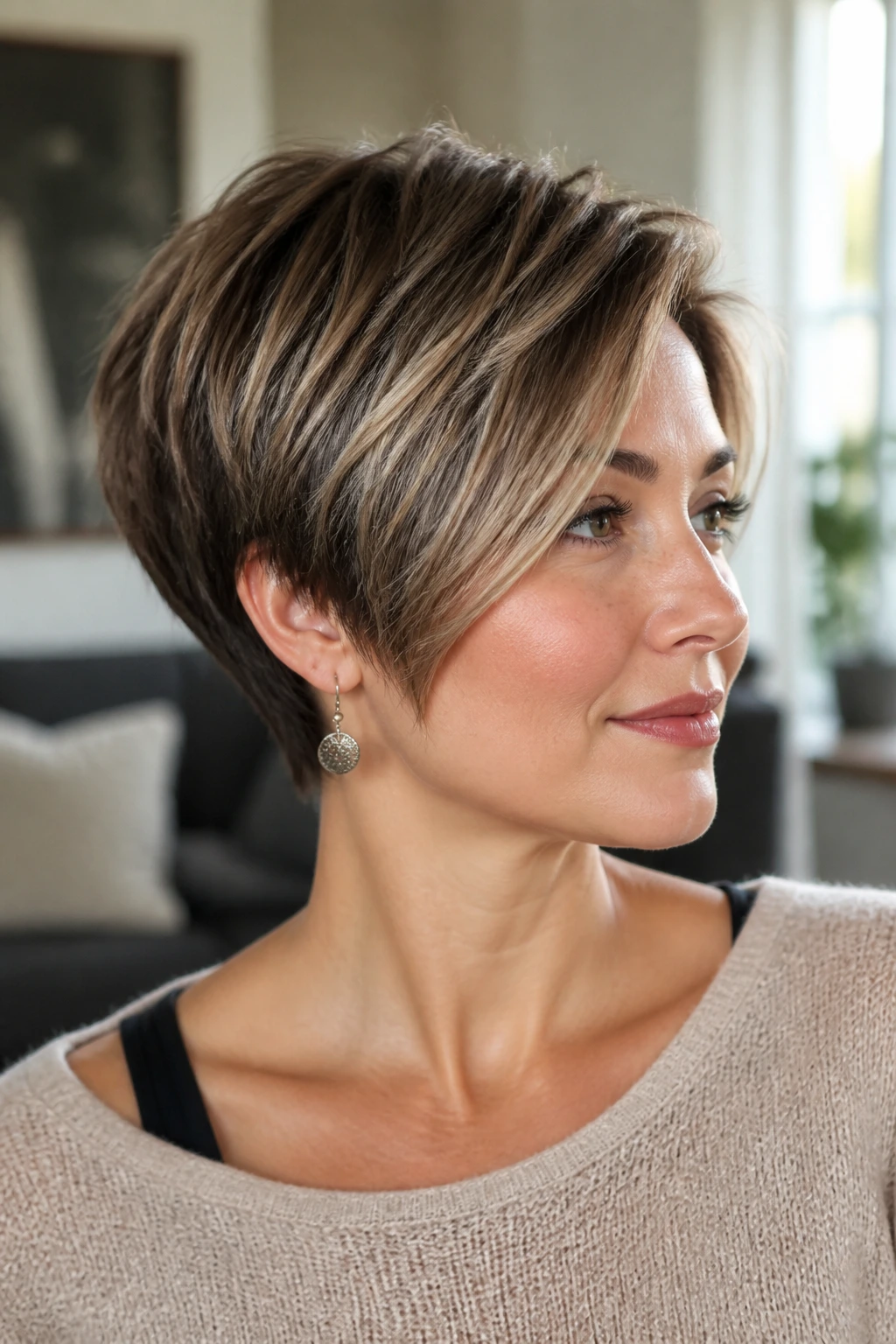
If you want to stretch the face a little, keep the length lower on the sides and avoid too much width at the cheeks. A round-face-friendly pixie bob usually has a slightly longer front section, a touch of volume at the crown, and side pieces that fall below the widest part of the face.
This is one of those cuts where tiny placement changes matter more than dramatic ones. Move the part half an inch. Let the fringe angle down a little. Keep the nape tight. Those details push the eye vertically instead of horizontally, and that’s the point.
Best for: Round faces that want more visible length through the profile.
25. Square-Face Softening Pixie Bob
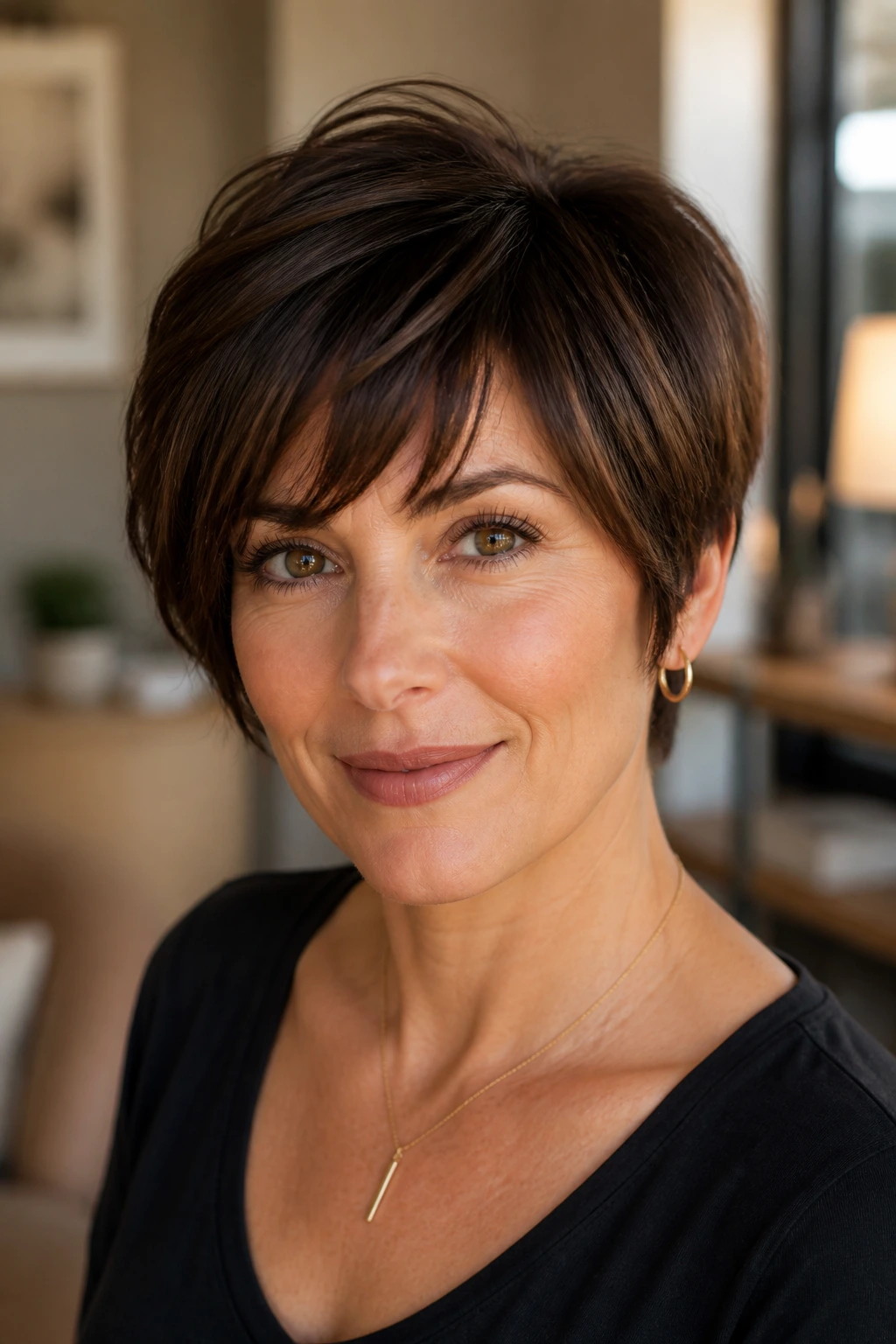
A square face can wear short hair beautifully when the edges are softened on purpose. Think curved fringe, a little bend at the sides, and no harsh box around the jaw. The cut should brush, not butt up against, the strongest angles of the face.
I’d avoid a severe blunt line here unless you want the structure to read boldly. A softer pixie bob takes the same short length and changes the mood by roundening the front pieces. Even a subtle side-sweep can help break up a square jawline without hiding it.
Styling note: A bend with a small brush or flat iron at the ends gives the haircut a gentler outline.
26. Oval-Face Balanced Pixie Bob
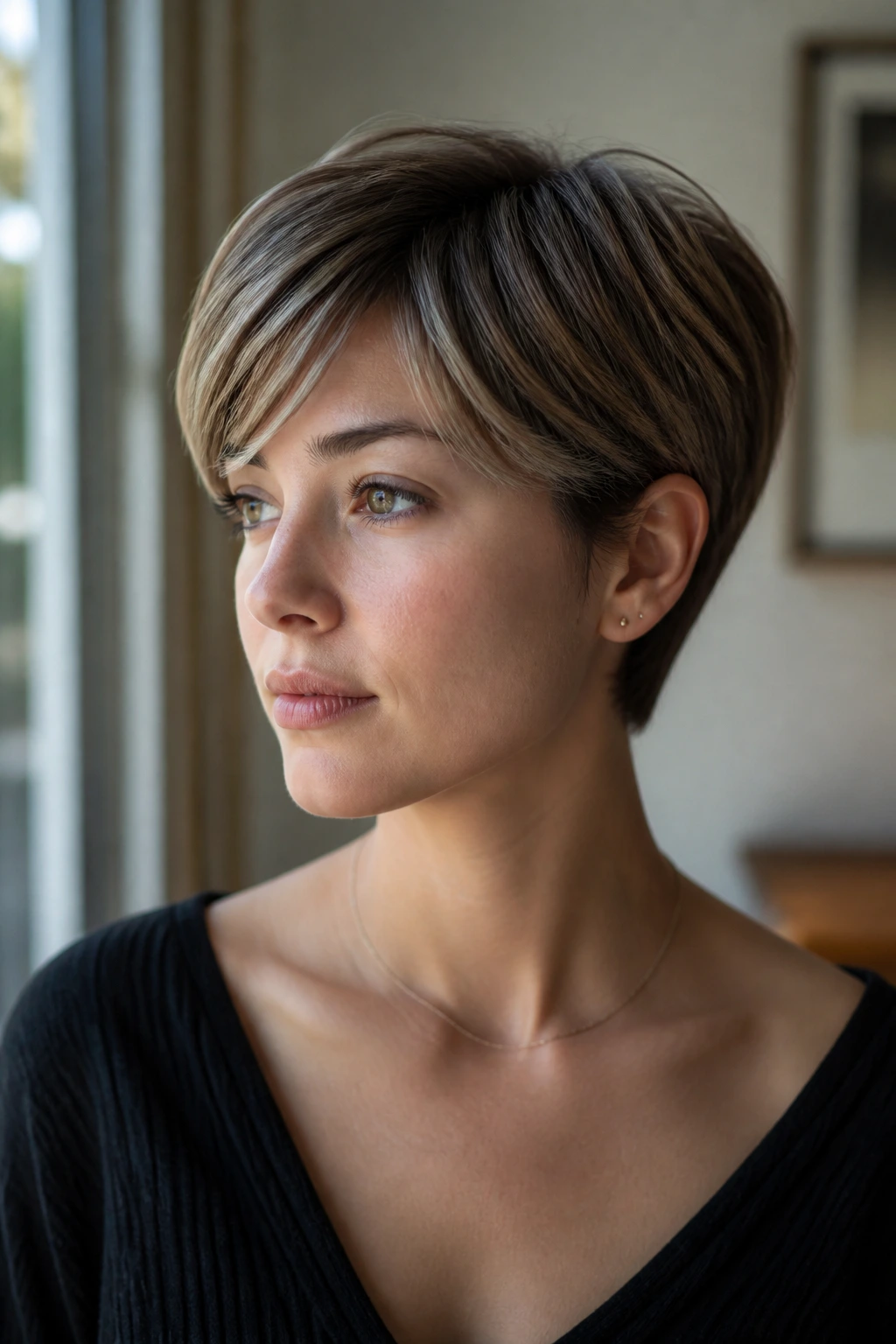
Oval faces have room to play. That’s the fun part. A balanced pixie bob can be shorter, longer, more piecey, or more polished, because the face shape already carries a lot of visual harmony. The main job is not to overwork the cut.
My favorite versions on oval faces keep the top proportionate to the sides. Too much height can feel fussy. Too much width can start to look like a cap. The best version usually lands somewhere between cheekbone and jawline, with a clean neckline to ground the shape.
Good news: This face shape can usually handle bolder bangs, too, if you want them.
27. Grown-Out Pixie Bob
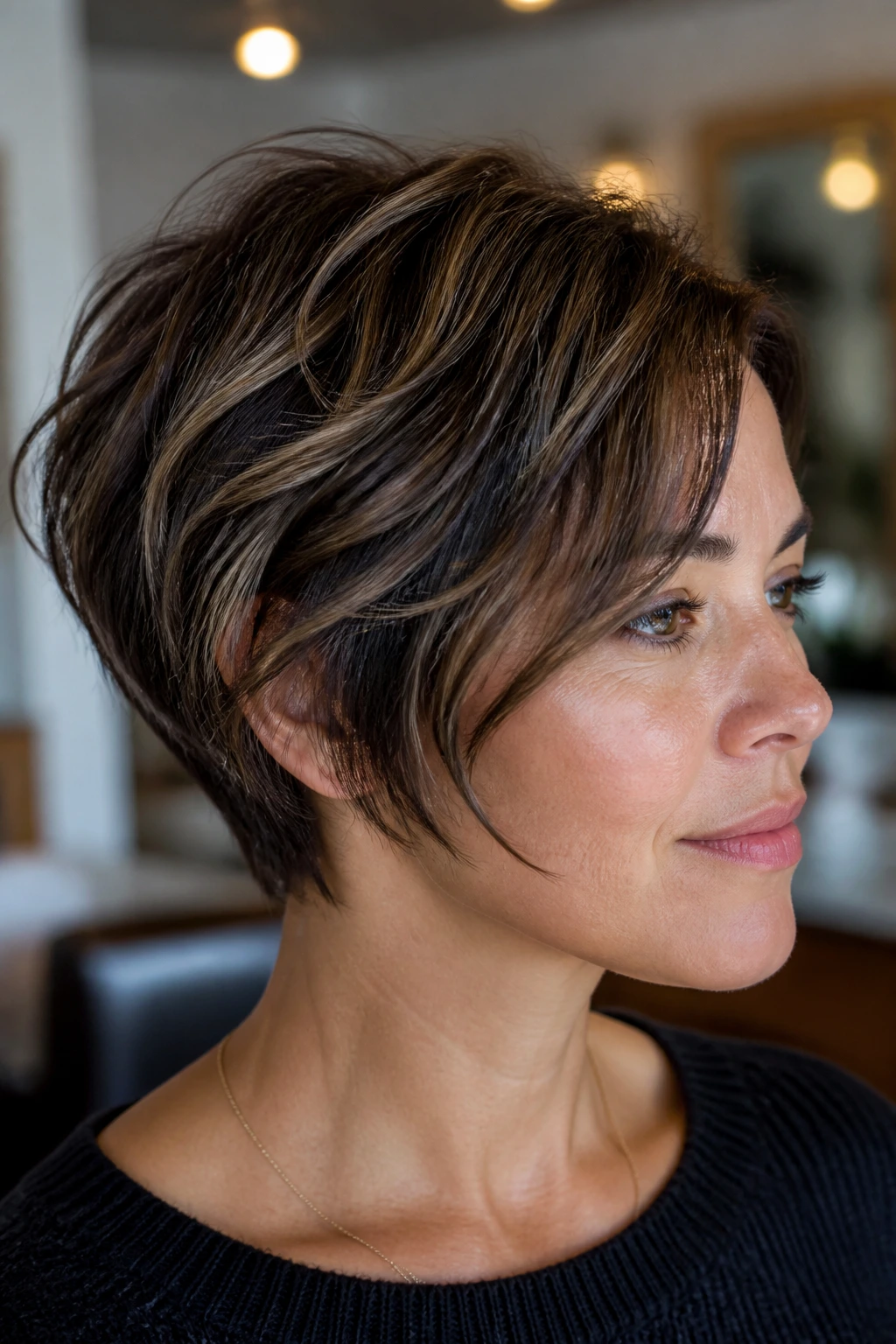
The grown-out pixie bob is not a compromise. It’s a choice. The lengths are a little softer, the edges are less strict, and the cut is allowed to drift into that in-between zone where short hair starts acting like a mini bob. If you hate the sharp six-week salon cycle, this shape makes more sense.
It’s especially useful if you’re moving away from a tighter pixie but do not want to jump straight to a full bob. Keep the nape neat, leave enough length around the ears, and let the top sit with a little slack. That slack is what keeps the cut wearable while it grows.
Best for: People who want a low-drama transition between short cuts.
28. Wet-Look Pixie Bob
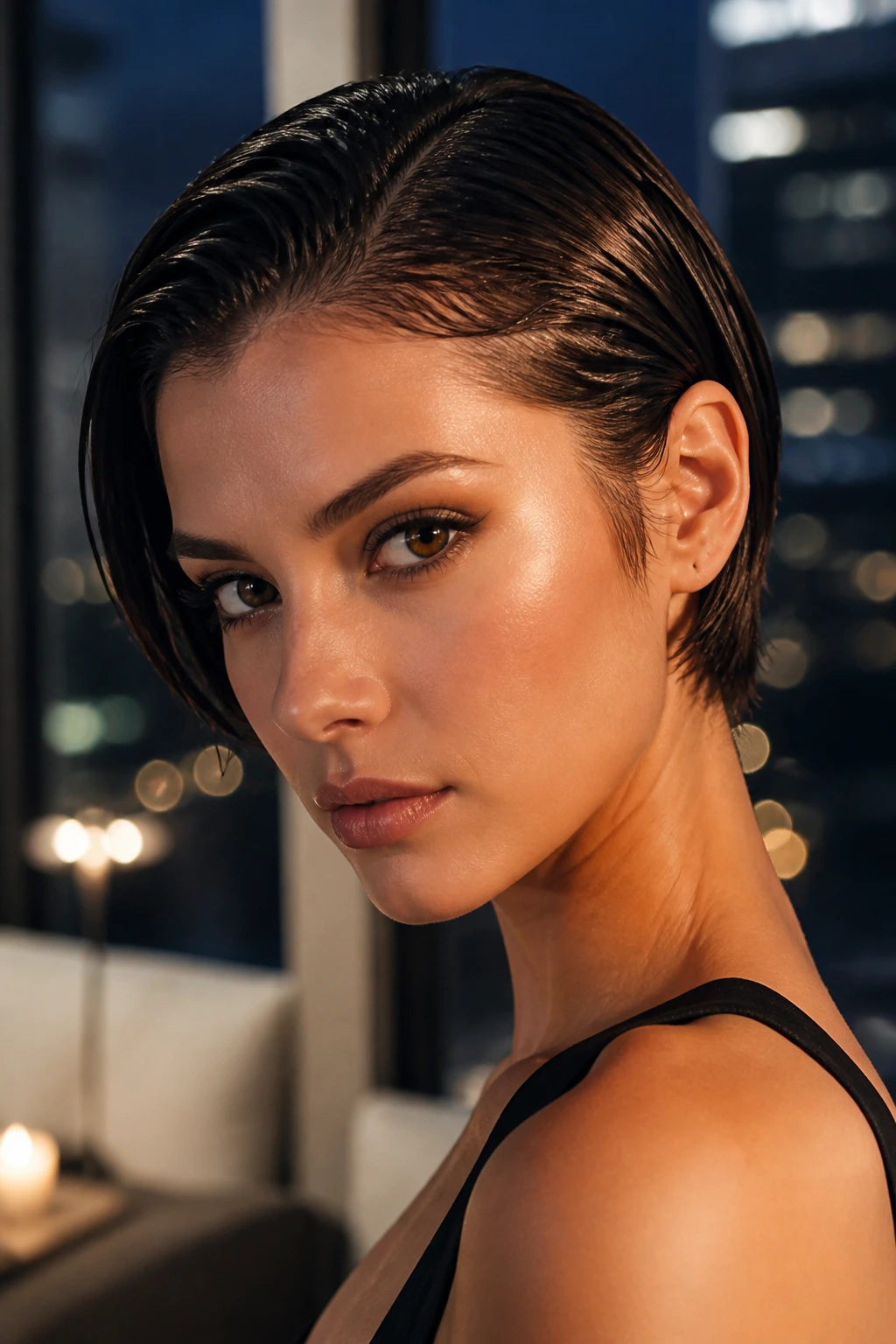
A wet-look pixie bob leans on gel or cream to create a sleek, defined finish. The hair is combed close to the head, the parts are clean, and the surface has that slick, glossy finish that works especially well for evening. It’s sharp. A little severe. In a good way.
This version works because short hair can hold the look without needing a huge amount of product. The key is control at the roots and restraint at the ends. If you pile on too much gel, the cut stops looking styled and starts looking soaked.
Styling note: Apply gel to damp hair from roots to mid-lengths, then comb it into place before it dries. Once it sets, don’t keep touching it.
29. Minimal-Product Pixie Bob
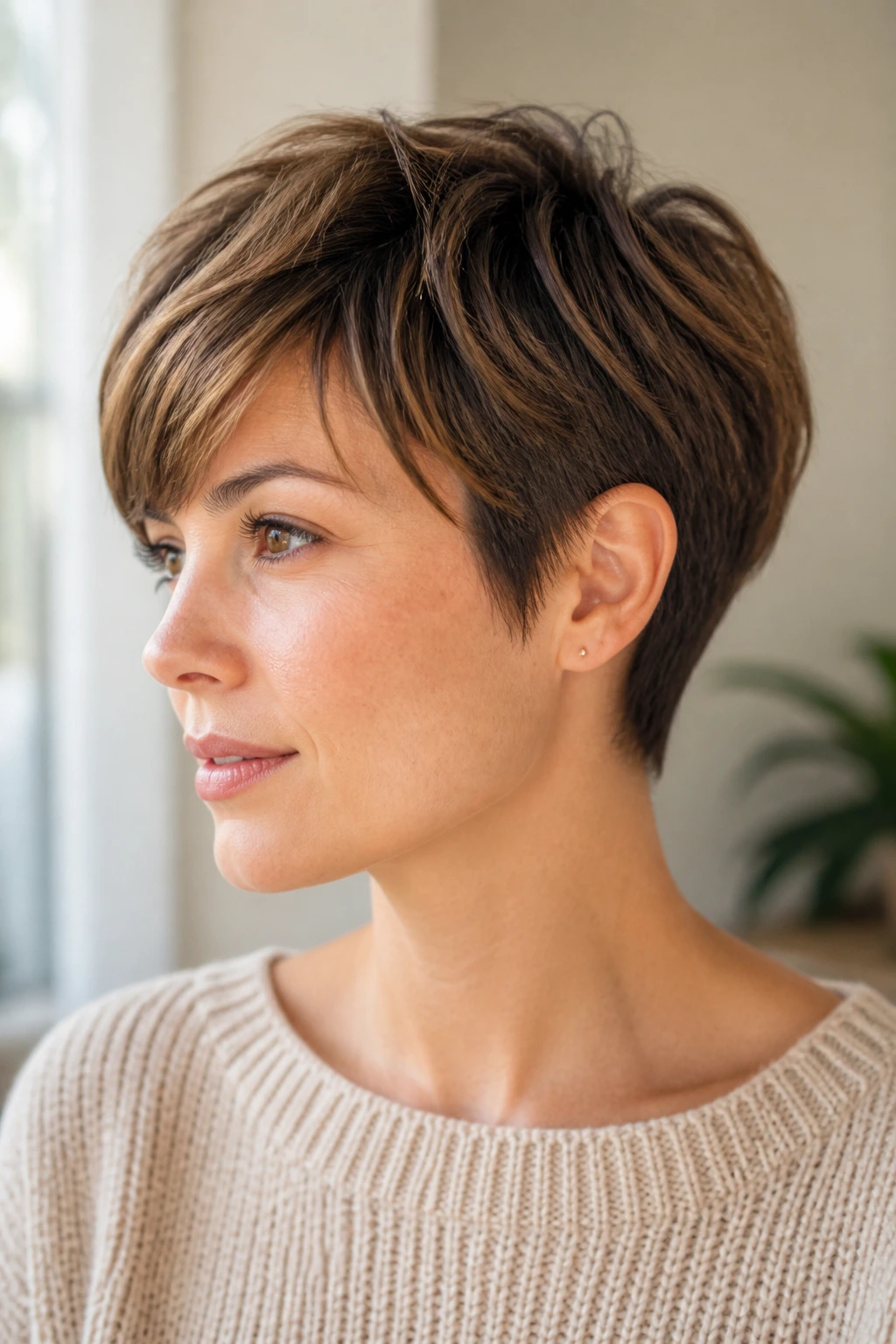
Some short hair styles need half a bathroom counter to behave. This isn’t one of them. A minimal-product pixie bob is built to dry cleanly with a light leave-in or a touch of cream, then do the rest of the work on its own. It’s a good choice for people who hate crunchy texture or heavy finishes.
The haircut still needs a real shape underneath. Clean nape, sensible layers, enough length at the top to move. If those pieces are right, the style can look fresh after an air-dry and a quick finger-scrunch.
Best for: Hair that behaves naturally and doesn’t need much persuasion.
30. Soft Retro Flip Pixie Bob
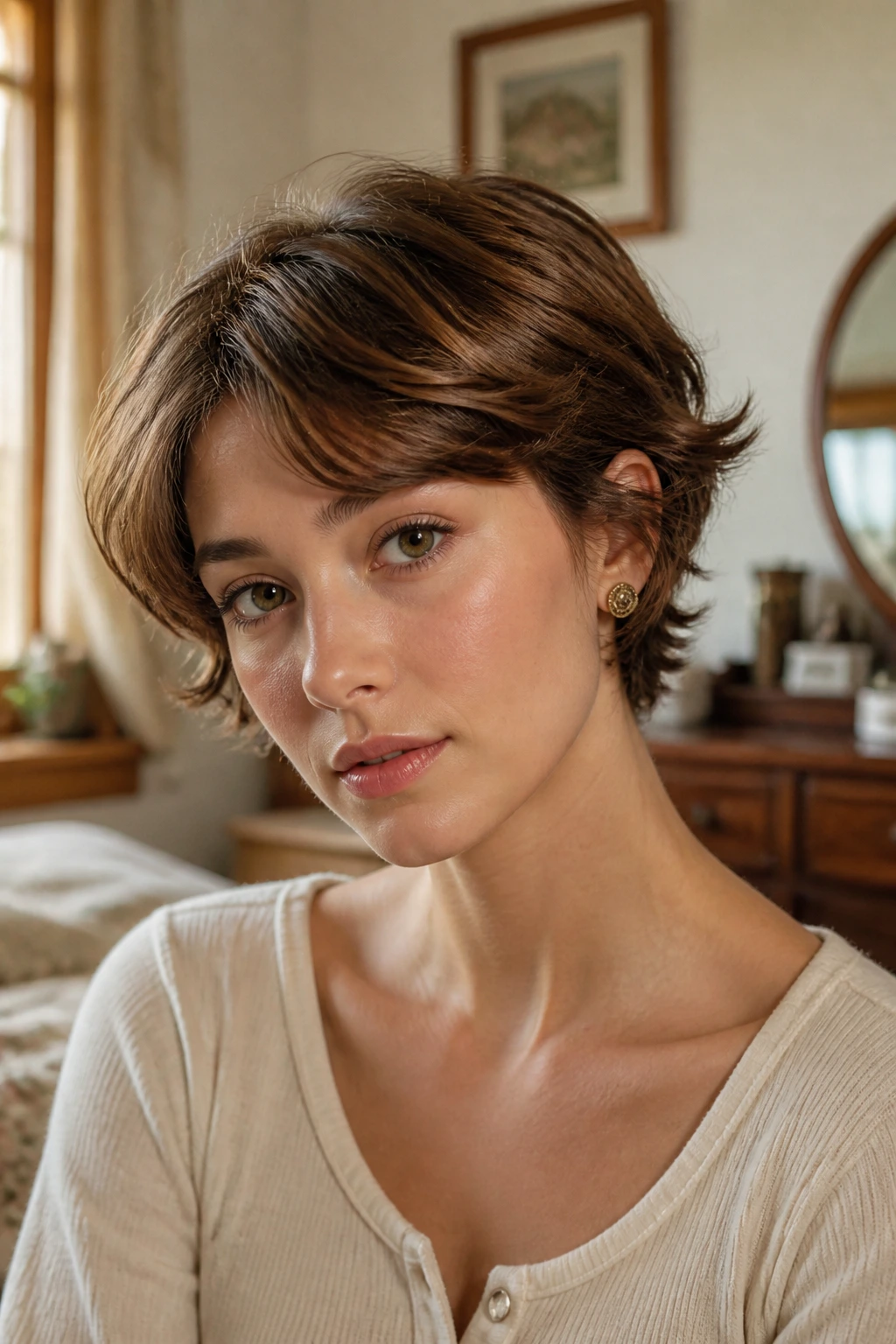
This one has a little old-school charm. The ends flip under or out just slightly, the part sits a touch to one side, and the front can carry a soft curve that nods toward vintage short hair without turning costume-y. The trick is keeping the finish light.
I like this shape when a pixie bob needs a little personality but not too much attitude. It can feel polished with a round brush, or casual if you let the ends settle where they want. The flip should be visible but not stiff. Think movement, not pageantry.
How to wear it: A medium round brush and a quick bend at the ends are enough. If the flip is too pronounced, the cut starts looking dated in the wrong way.
Why Pixie Bobs Keep Their Shape on Short Hair
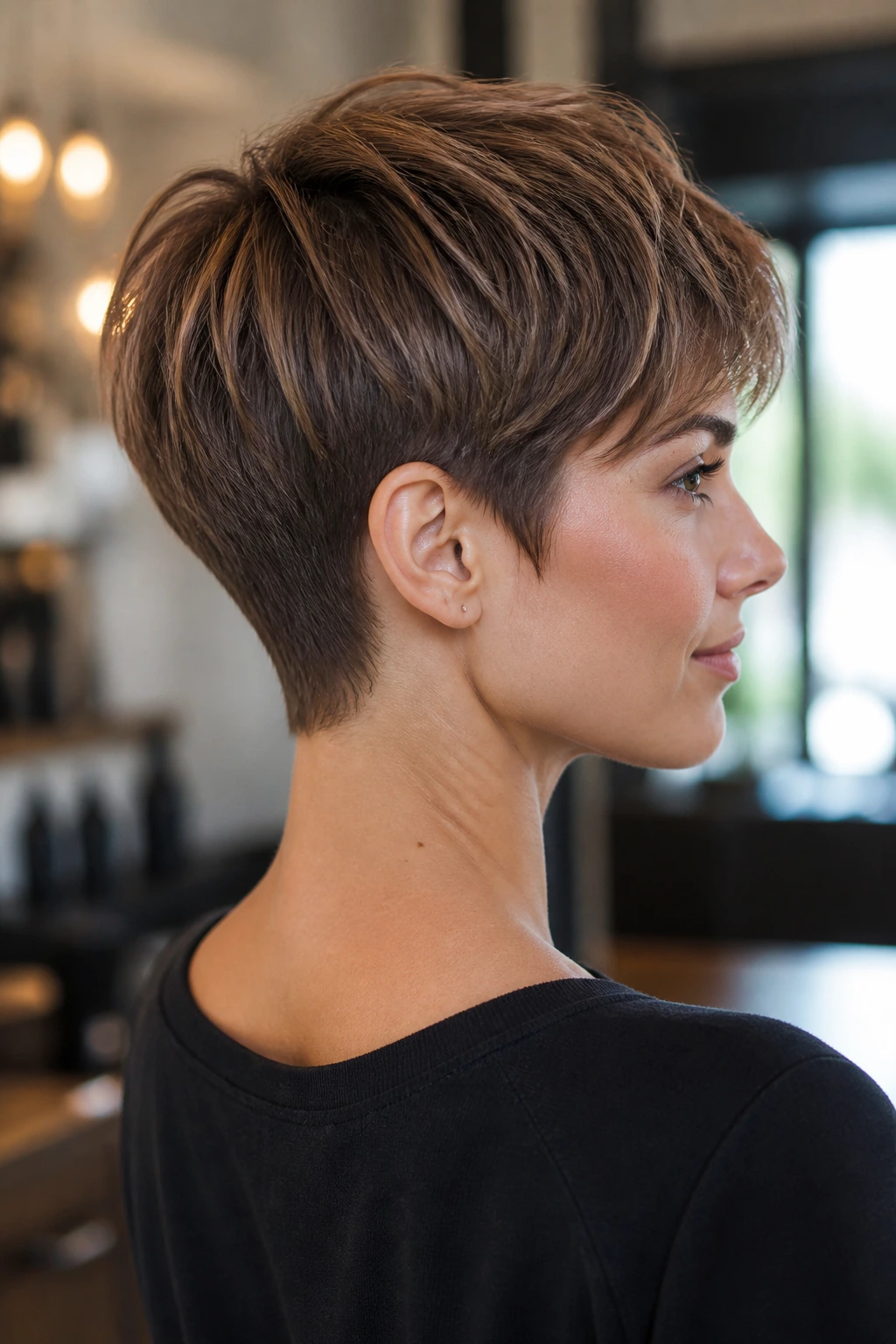
The reason a pixie bob works so well is simple: it gives the haircut somewhere to go. A pure crop can run out of room fast, especially around the crown and temple area. A little extra length at the front and top gives the silhouette a place to soften, which keeps short hair from looking chopped flat against the skull.
That extra room matters when your hair has a cowlick, a bendy part, or a stubborn growth pattern at the neck. Instead of fighting those things, the cut absorbs them. The back can stay tidy, the side pieces can frame the face, and the top can carry just enough volume to stop the style from disappearing by lunchtime.
There’s also the grow-out factor. Sharp short cuts are famous for crossing the ugly middle line quickly. A pixie bob usually moves more gracefully because the length already sits halfway between a pixie and a bob. That makes a trim cycle feel less like a deadline and more like maintenance.
How to Talk to Your Stylist Without Guessing at the Length
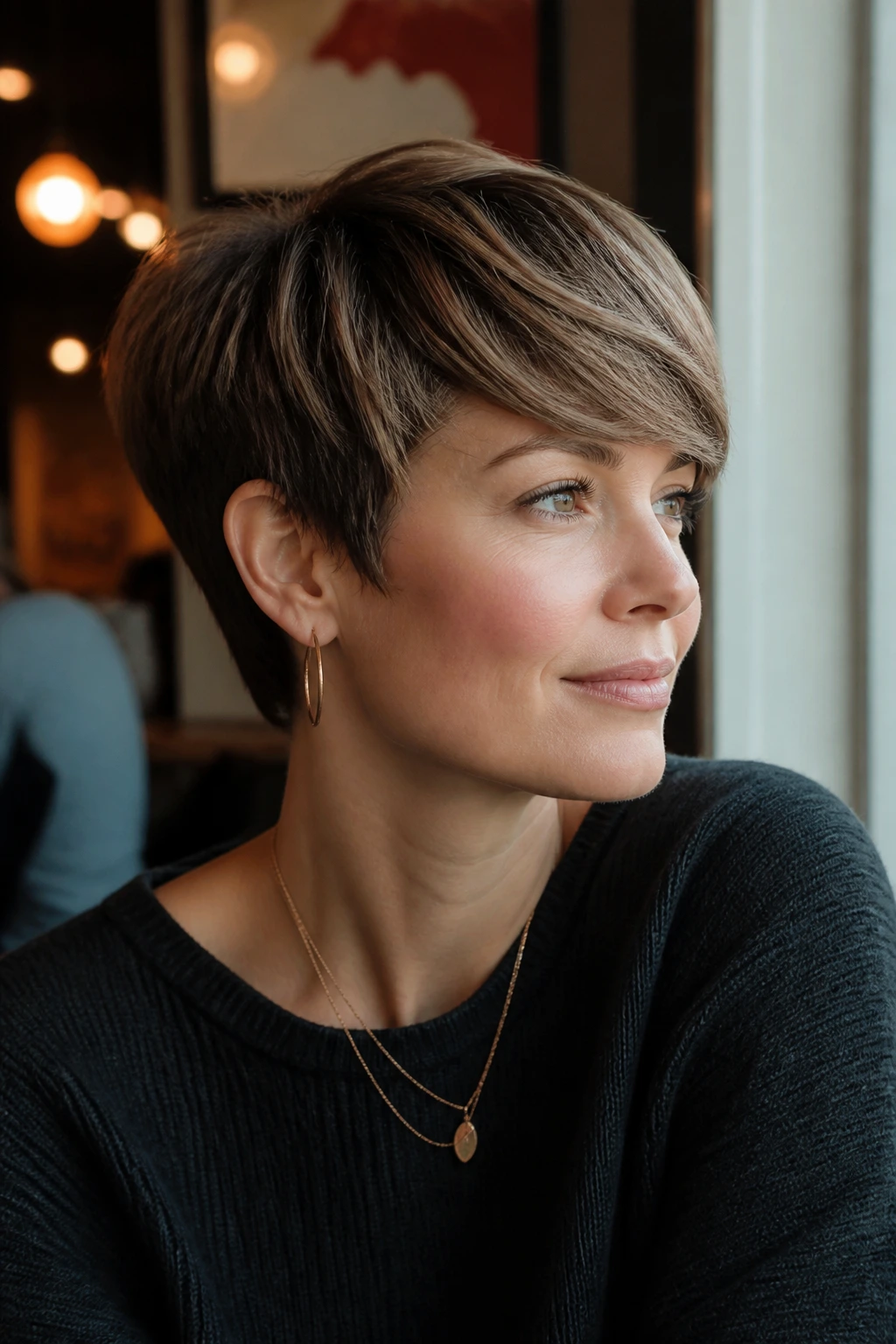
Bringing photos helps, but length words help more. Say where you want the shortest point to land: above the collar, at the nape, skimming the ear, or touching the jaw. Those landmarks mean more than asking for “short, but not too short,” which is the kind of phrase that gets interpreted three different ways.
Be specific about the crown and fringe. If you want height, ask for 2.5 to 4 inches on top so the hair has room to move. If you want softness, tell your stylist you want the perimeter to grow into a small bob, not a harsh shelf. If you have a strong part, say where it lives naturally and make the stylist cut with that in mind. Hair that fights the part from day one tends to keep fighting.
A good salon conversation also includes what you do not want. If you hate the ears being fully exposed, say so. If you want the neckline clean but not shaved, say that too. One minute of clarity beats six weeks of frustration.
Tools and Styling Products That Make Styling Easier
-
Blow dryer with a narrow nozzle: Helps direct the crown and keep the nape smooth instead of fluffy.
-
Small round brush, 1 to 1.5 inches: Good for bending the front pieces and adding lift where short hair tends to collapse.
-
Flat brush or paddle brush: Useful for sleek versions and for keeping a side part clean.
-
Mini flat iron: Handy for short fringe, tight bends, and the last inch of a curved bob edge.
-
Root-lift spray or mousse: Gives the top some support without turning the cut stiff.
-
Lightweight texture paste: Best for piecey, shaggy, or choppy versions where separation matters.
-
Smoothing cream or serum: Keeps sleek and brunette versions from looking frizzy around the ends.
-
Dry shampoo: Helps day-two short hair stay lifted at the crown instead of sticking to the scalp.
-
Duckbill clips: Useful while styling the top in sections; short hair clips fast, so these save time.
The Morning Routine That Keeps It Looking Intentional
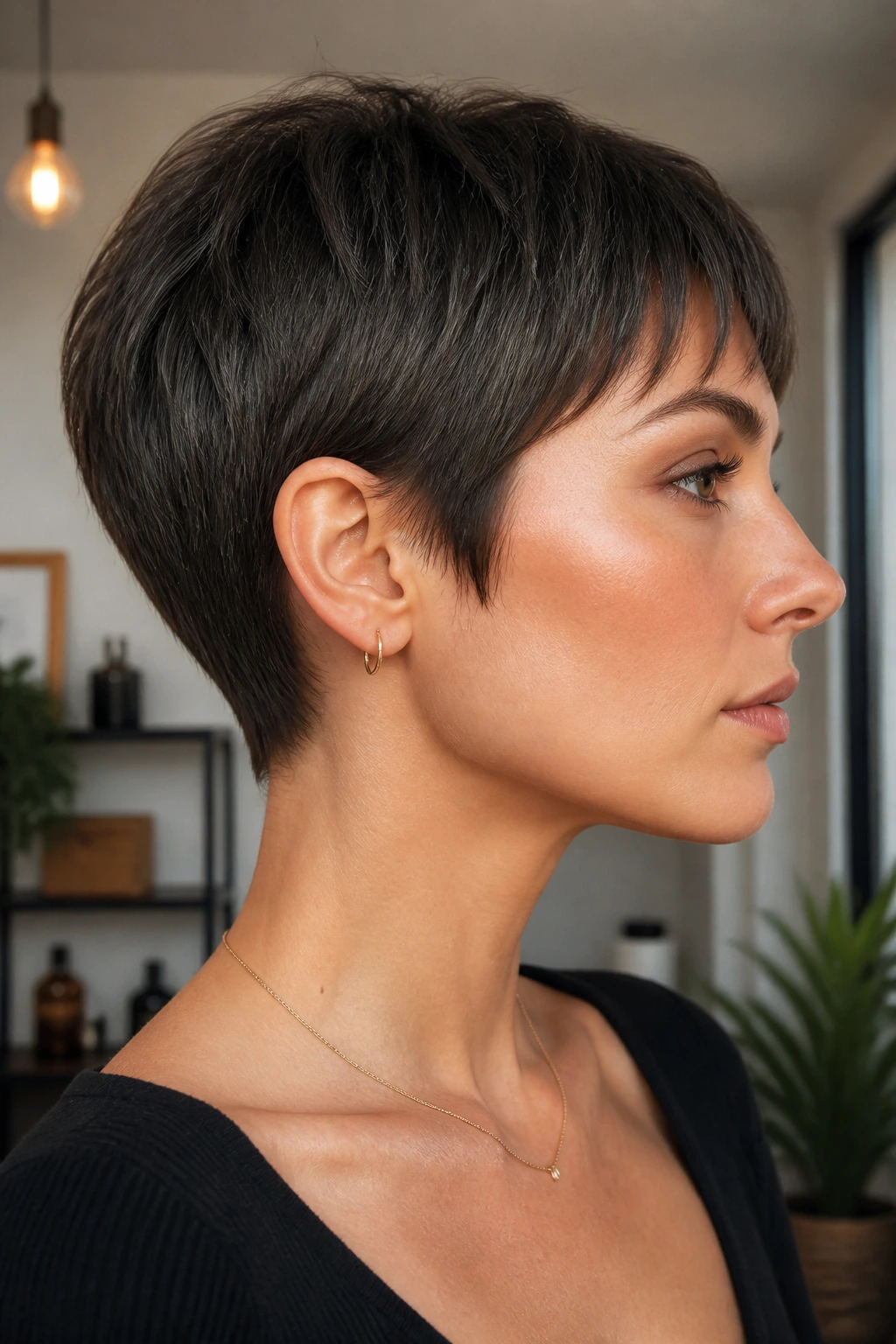
Dry the roots first. If the crown dries flat, everything else has to work twice as hard. Lift the top with your fingers or a brush and aim the dryer at the roots for the first minute or two. That small bit of direction changes the whole shape.
Use less product than you think. Short hair turns on you fast when it’s overloaded. A pea-sized amount of paste can be enough for a piecey cut, and a small pump of mousse usually covers the crown. If your hands feel coated before you’ve reached the back of your head, you’ve already used too much.
Respect the part you actually wear. Don’t style the haircut into a part you like in theory if your head keeps sending the hair somewhere else. Work with the natural split, then refine it by an inch or so. That keeps the pixie bob from looking like it got combed by a stranger.
Finish with your fingers. A brush is useful at the start. Fingers are better at the end. They break up stiffness, separate the front pieces, and keep the cut from looking over-combed.
Common Mistakes That Flatten or Frizz the Cut
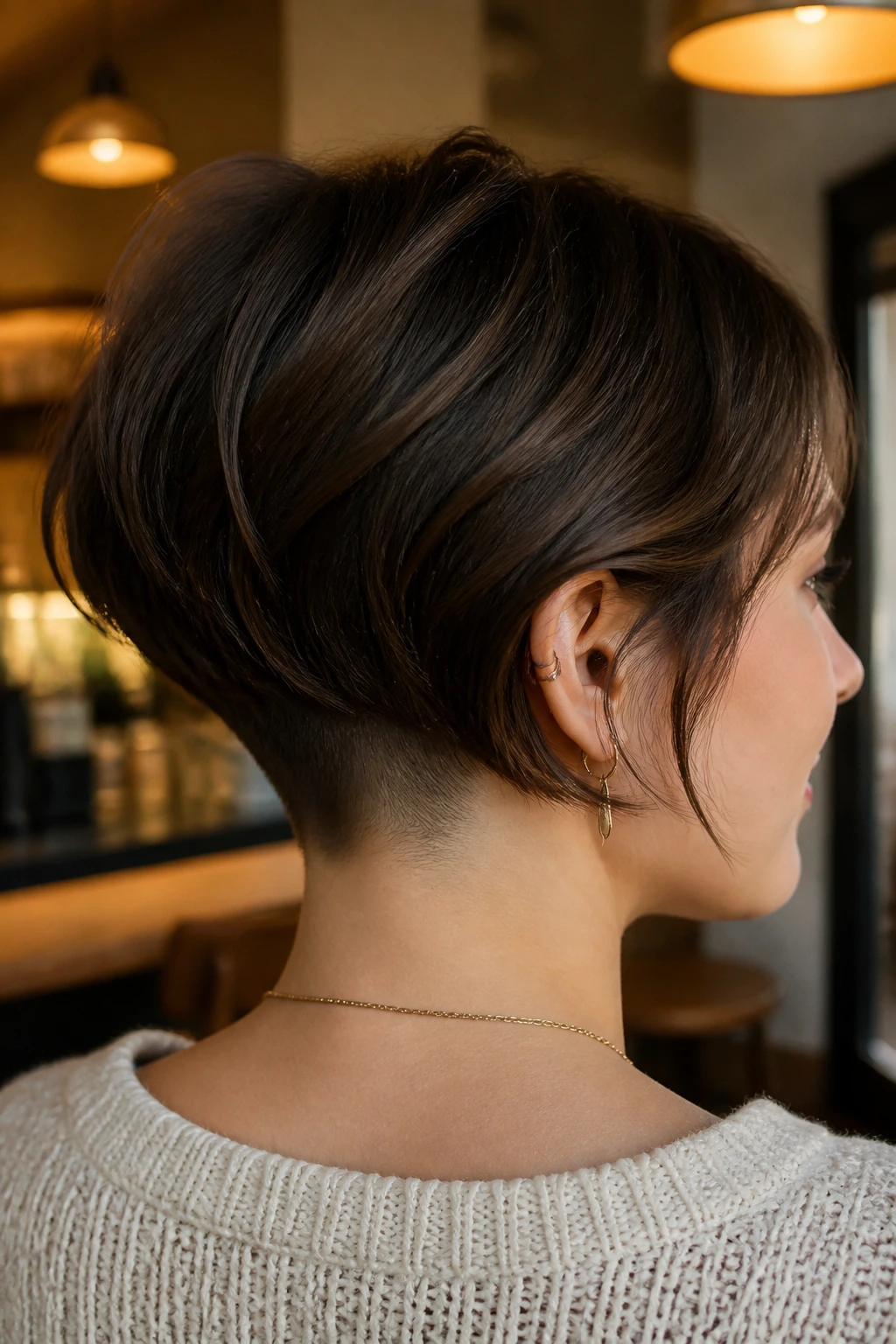
The biggest mistake is making the back too short too soon. That sounds sharp in the chair, but if the nape is shaved down while the top is still heavy, the haircut can pop out in a blunt ridge. The fix is simple: keep enough length through the lower crown to let the top settle into the neck.
Another common problem is over-layering fine hair. People ask for movement, and the haircut comes back wispy at the ends with no body left in the middle. Fine hair wants shape, not shredding. A cleaner line with a little internal removal usually works better.
Product overload is another fast way to ruin a pixie bob. Short hair can handle only so much cream, gel, or oil before it starts looking damp in the wrong way. If the style falls apart when you touch it, the product may be the problem.
And then there’s the fringe issue. Bangs cut too short or too heavy can throw the whole silhouette off. If you’re unsure, start a touch longer. You can always shorten them later. Growing them out is the part nobody enjoys.
Variations and Adaptations Worth Trying

The Soft Office Version: Keep the neckline tidy, let the side pieces graze the jaw, and avoid aggressive texturizing. It’s the safest choice if you need the cut to look neat from Monday through Friday without much fuss.
The Curl-First Version: Leave extra length through the top and front, then shape the cut around the curl pattern rather than against it. This works when shrinkage is part of the story, not a surprise.
The Thick-Hair Relief Cut: Add a hidden undercut or strong internal debulking so the shape sits close to the head instead of ballooning at the ends. This is the version that saves your neck from all that extra weight.
The Fringe-Forward Version: Let the bangs do the talking, whether you want baby bangs, side-swept pieces, or a soft curtain split. The rest of the cut can stay quieter and tighter.
The Soft Grow-Out: Keep the lengths long enough to drift into a mini bob over time. This is the least stressful option if you hate frequent salon visits and want the haircut to age in a clean line.
Trims, Grow-Out, and Long-Term Maintenance
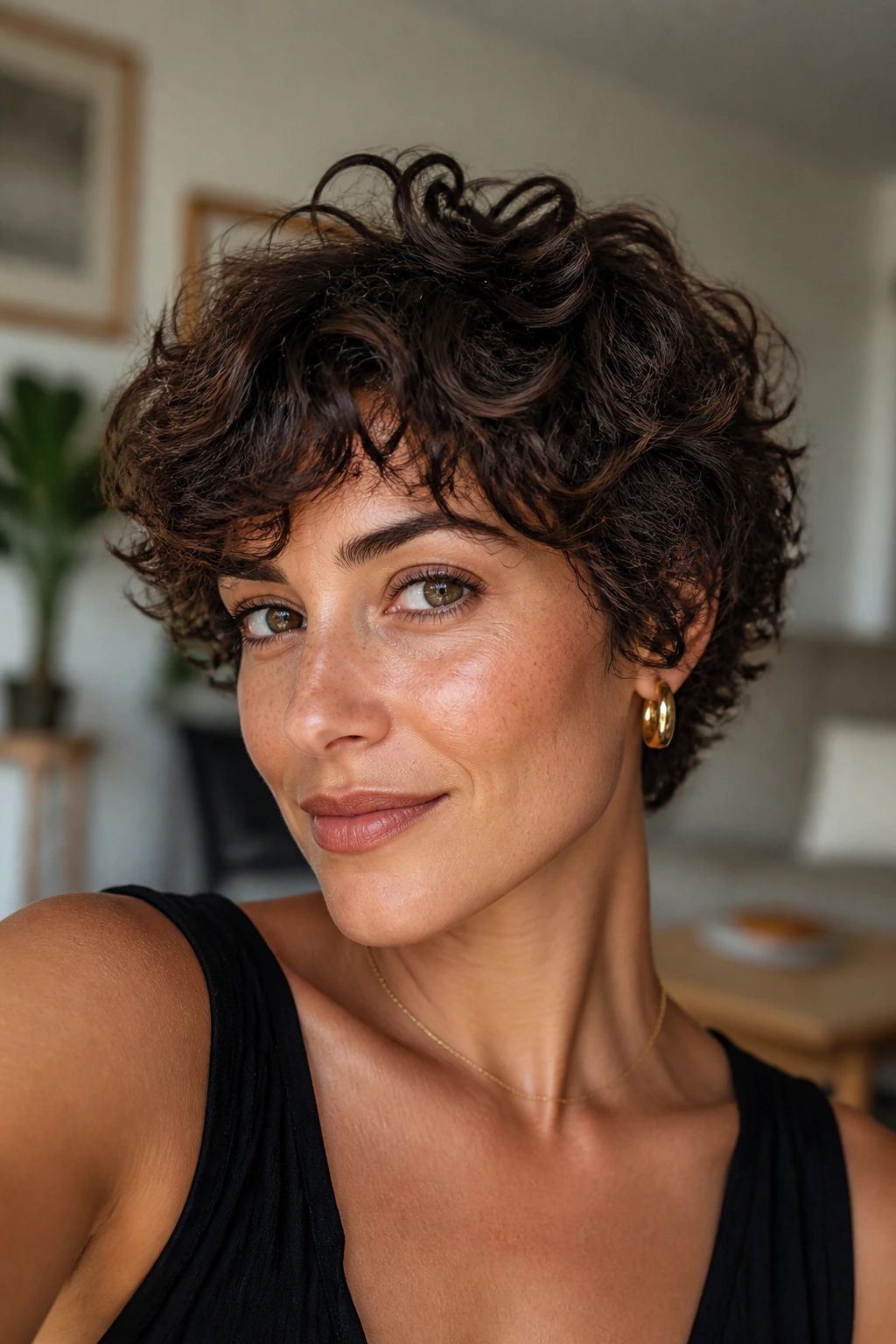
Short hair asks for rhythm. A sharp pixie bob usually needs a trim every 4 to 6 weeks if you want the neckline and side lines to stay crisp. Softer versions can stretch to 6 to 8 weeks, especially if the cut is meant to grow into a mini bob. Fringe-heavy versions often need a bang cleanup every 2 to 3 weeks, even when the rest of the shape is still fine.
Washing frequency depends on texture. Fine hair and sleek styles often behave better with more frequent washing, because oil kills lift fast. Curly and wavy versions can usually go longer between washes if the curl pattern stays defined. Dry shampoo helps on the in-between days, but use it at the roots only. If you spray the whole head, short hair can get dusty in a hurry.
Sleep matters more than people think. A satin pillowcase or a loose wrap helps keep the crown from flattening overnight. In the morning, a quick mist of water at the front and crown is often enough to reactivate the shape. Short cuts do not need a full reset every day. They need a little memory.
Frequently Asked Questions
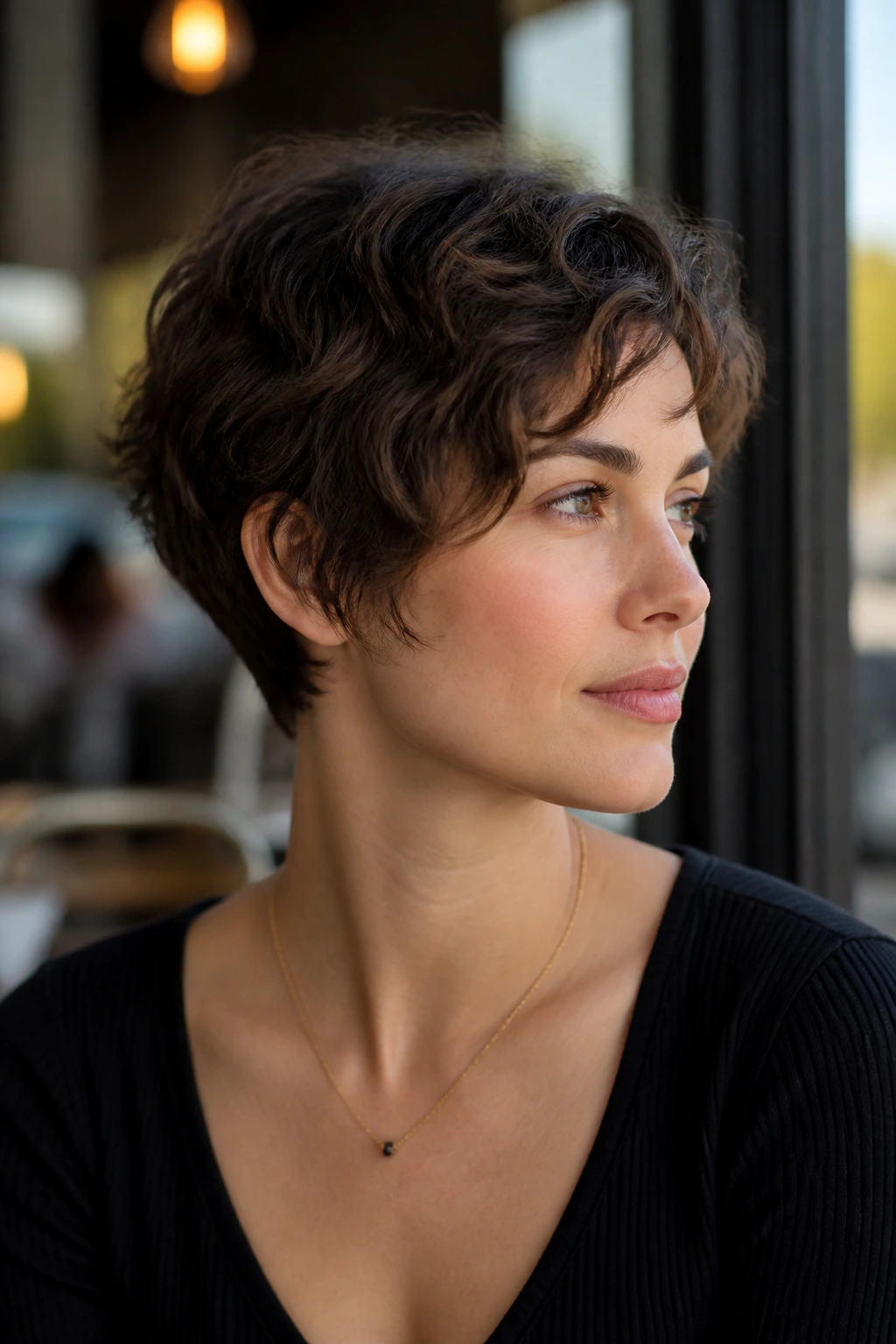
Is a pixie bob the same thing as a bixie?
They overlap, but they are not identical. A bixie usually leans shaggier and a little more grown-out, while a pixie bob keeps a clearer bob-like perimeter with a tighter nape or side line.
Will a pixie bob work on very fine hair?
Yes, if the cut protects the ends and doesn’t get over-thinned. Fine hair often looks best with a cleaner outline, a bit of crown lift, and very controlled layering.
Can curly hair wear a pixie bob without puffing out?
It can, as long as the stylist leaves enough length for shrinkage and shapes the curls in their natural state. The mistake is cutting curls too short when wet and hoping they will stay put.
How short is too short for a pixie bob?
If the back is shorter than the contour of the neck and the top has almost no room to move, you’re drifting into straight pixie territory. A true pixie bob usually keeps enough side and crown length to show a bob-like outline.
How often do I need trims?
Most people land somewhere between 4 and 8 weeks, depending on how clean they want the shape to stay. Fringe-heavy versions need attention sooner than soft, grow-out-friendly ones.
What if my hair sticks out at the nape?
Ask for a taper or stacked nape instead of a blunt cut. That lets the hair curve in more naturally and removes the shelf that causes sticking out.
Can I wear a pixie bob without heat styling?
Yes, especially if your hair is wavy or naturally cooperative. Use a lightweight cream or leave-in on damp hair, scrunch it, and let it air-dry. Straight hair may need a tiny bend at the front to keep the shape from falling flat.
Does a pixie bob look good with glasses?
Very often, yes. The right version keeps the sides neat and the fringe placed so it doesn’t crowd the frames. Side-swept and ear-tucked versions are especially easy with glasses.
How do I grow it out without hating the in-between stage?
Keep the neckline clean, let the sides soften into a mini bob, and avoid repeated overcutting at the crown. A grow-out-friendly pixie bob looks deliberate for much longer than a hard crop does.
Keeping the Shape Intentional
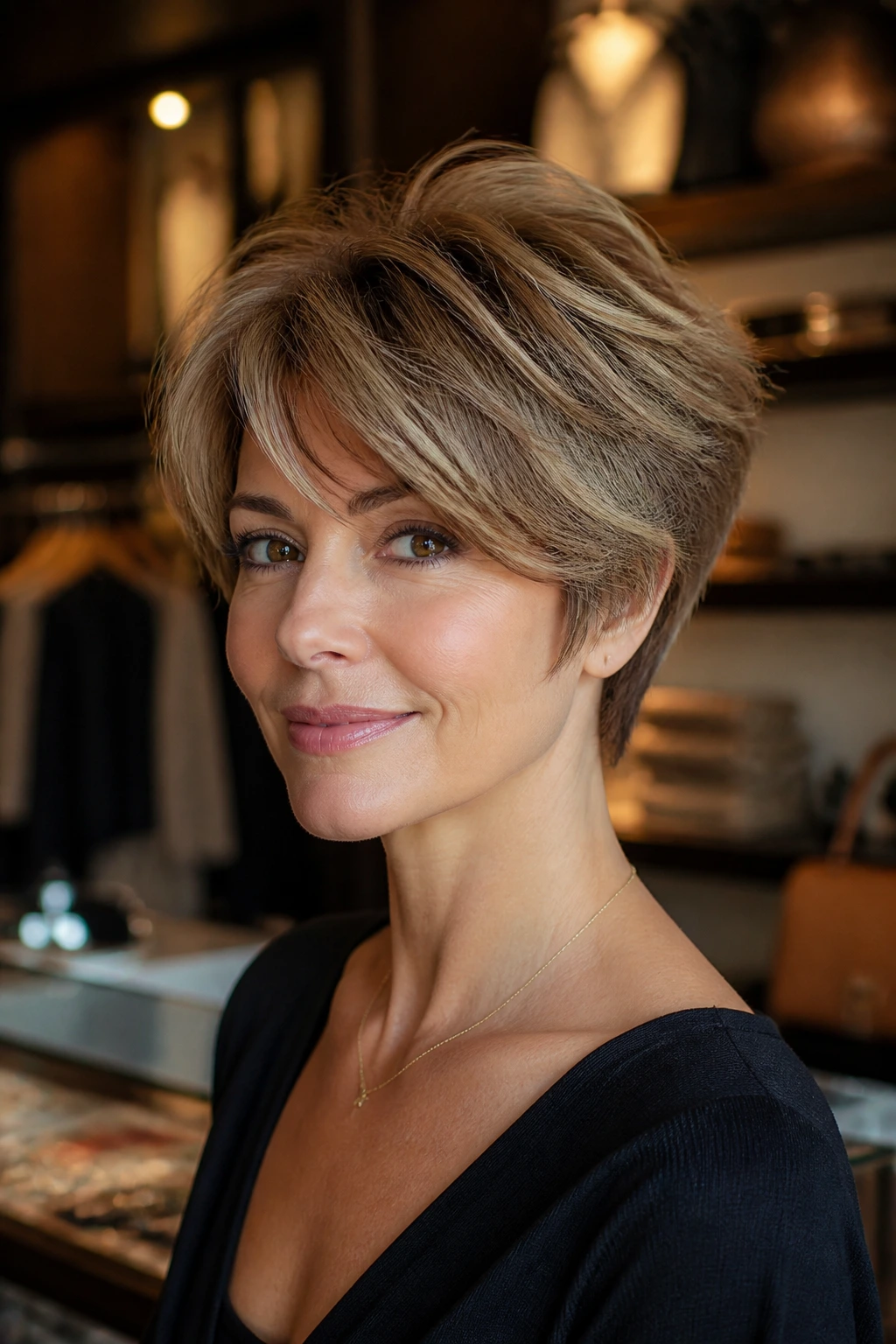
Short hair gets interesting when the outline does real work. That is the whole appeal of a pixie bob: it keeps the neck clear, leaves enough length to frame the face, and still gives you room to change the mood with a part, a bend, or a little texture paste.
The best version is the one that matches your hair’s actual habits. Not the fantasy version. Not the haircut that looks dramatic for one hour and confused by dinner. The good ones behave in ordinary life, and that is where short hair earns its keep.
Choose the shape that matches your texture, give it a clean trim rhythm, and let the silhouette do its job. A well-cut pixie bob on short hair should make getting dressed feel easier, not more complicated, and it should still look right when you catch your reflection half a day later.
