



A good pixie cut after 60 does not hide the face; it sharpens the frame around it. When the nape is clean and the crown has a little lift, silver hair looks brighter, cheekbones show up, and glasses stop fighting the haircut.
The 25 pixie cuts for women over 60 that actually work share one thing: they respect hair that has changed texture instead of pretending it hasn’t. Hair can get finer, coarser, wirier, flatter, or more curly over time. A good short cut takes that reality and uses it. The wrong one turns into a helmet in a week.
What I like about pixies is how honest they are. There’s nowhere for a bad shape to hide. That sounds harsh, but it’s useful. You can see the neckline, the fringe, the crown, the ears, and the side length all at once, which means a smart cut looks intentional from every angle and a sloppy one shows its seams fast. The cuts below lean into that honesty — soft, sharp, choppy, curly, sleek, and a little of everything in between.
Why These Pixie Cuts Work So Well After 60
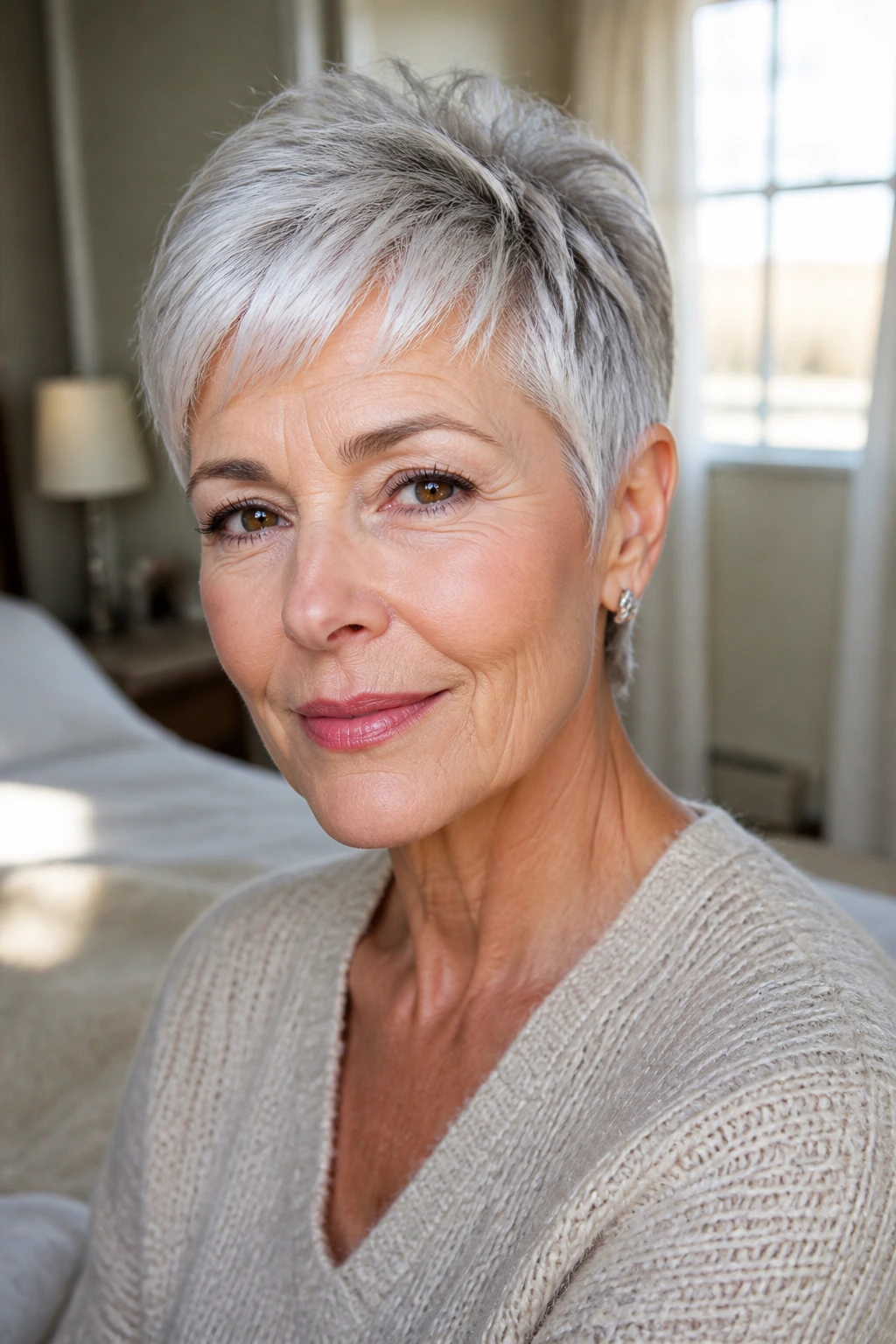
-
Fine hair gets lift where it matters: Shorter sides and a light crown keep the top from collapsing flat against the head by lunchtime.
-
Thick hair loses the bulk that causes puffiness: A tapered nape and careful debulking around the ears stop the shape from turning boxy.
-
Gray and silver hair show cut lines beautifully: Clean edges make white and salt-and-pepper strands look bright instead of fuzzy.
-
Glasses sit better with the right fringe: A side sweep or a soft micro-fringe keeps the frame from crowding the lenses.
-
Cowlicks become part of the design: When the cut is mapped to the way your hair grows, you spend less time fighting the front and more time wearing the style.
-
Short hair doesn’t have to feel severe: A few extra inches on top, a feathered fringe, or a softer sideburn changes the whole mood.
1. Feathered Pixie with Side-Swept Fringe
A feathered pixie is one of those cuts that looks quiet from across the room and thoughtful up close. The fringe slides diagonally across the forehead, which softens lines without hiding the face, and the feathering around the crown keeps the shape from getting puffy or round. It’s especially good if your hair is fine, because the light layers make the top move instead of lying there like a cap.
What to ask for
Ask for soft, point-cut ends, about 2 to 3 inches on top, and a fringe that can sweep from a deep side part. The nape should stay neat, but not shaved to the skin. That tiny bit of length keeps the cut from feeling too severe.
The best part is the styling. A pea-size bit of light cream or mousse, then a quick blast with a dryer and a small brush, is enough. You want the fringe to bend, not stick.
2. Classic Tapered Pixie with a Clean Nape
This is the pixie that knows how to behave. Short at the sides, close through the nape, a little longer on top, and no drama where the neck meets the haircut. It works because the shape is tidy without being stiff, which matters when you want to get dressed and go.
If you like earrings, scarves, or a strong collar line, this cut gives them room to show. It also tends to grow out better than sharper cropped styles, because the taper keeps the back from turning bulky too quickly. Ask your stylist to keep the neckline soft and narrow, not squared off. Squared napes can look harsh when the hair grows even half an inch.
3. Long-Top Pixie with Room to Play
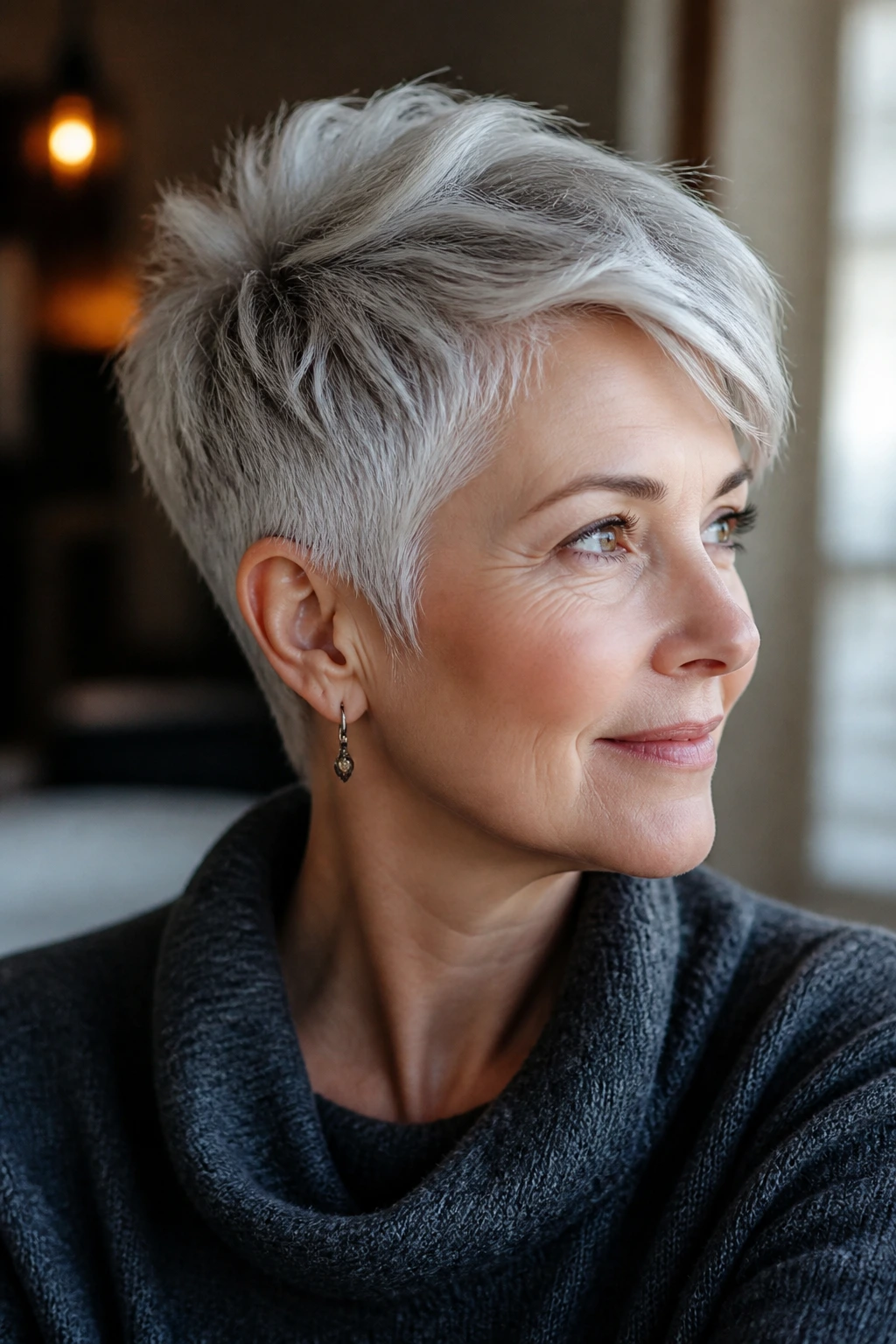
A long-top pixie gives you options, and that matters more than people admit. With 3 to 4 inches on the crown, you can brush it forward, sweep it over, tuck it behind one ear, or add a little lift at the roots for evening. The sides stay short enough to keep the silhouette clean, but the top has enough length to move.
Why it works
The extra length on top balances face shape and gives thinner hair a better chance to look full. It’s a smart pick if your hair flattens in the crown or if you want to avoid the very short, cropped look. The trick is keeping the layers light enough that the top doesn’t split into separate little spikes.
Use a root-lift spray at the roots, then dry the hair in the direction you want it to sit. That part matters. Hair remembers the way you dry it more than the way you think about it.
4. Choppy Pixie with Piecey Texture
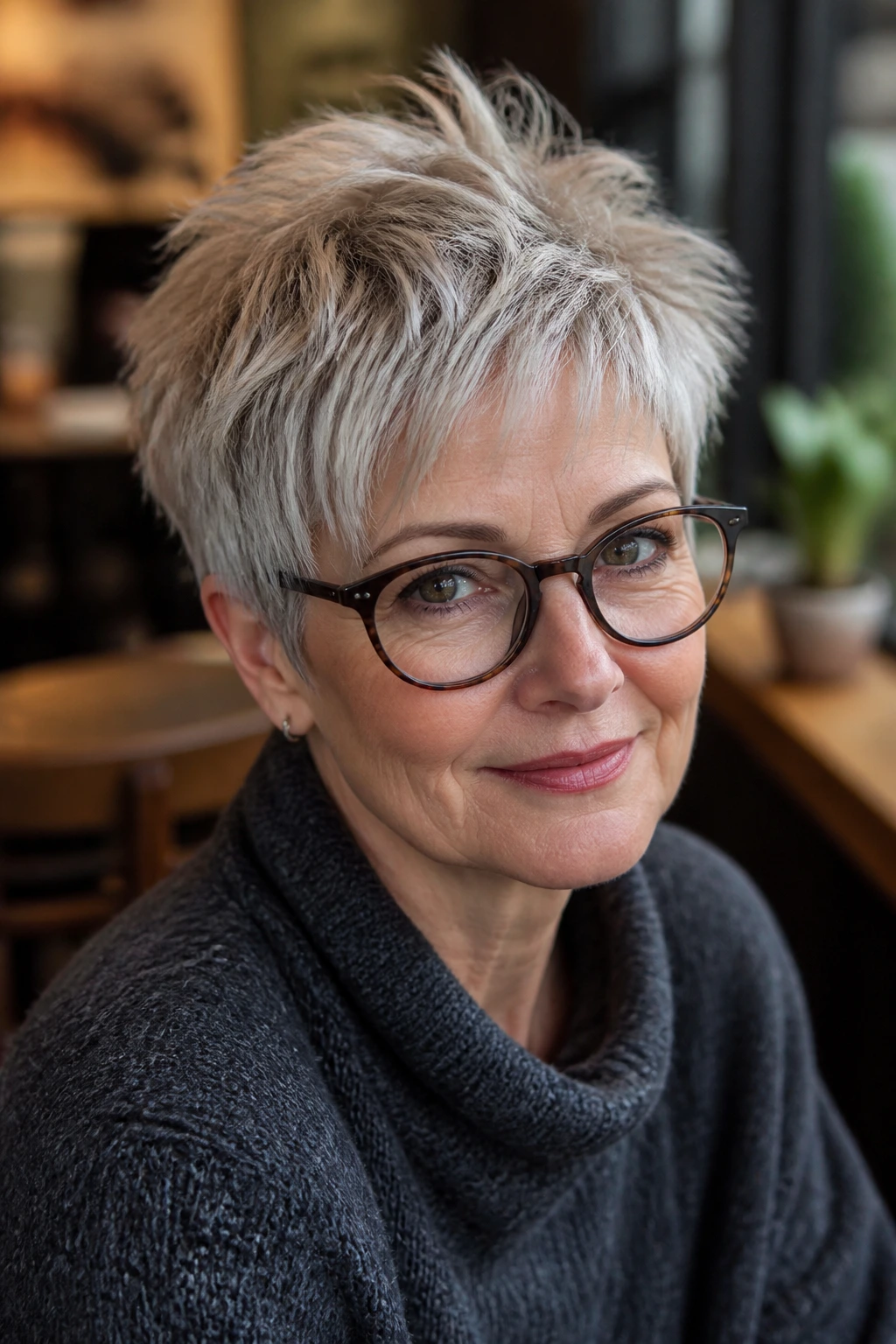
Choppy pixies are for people who don’t want their hair to behave like a uniform sheet. The ends are broken up, the layers are uneven in a good way, and the whole cut looks more alive than polished. On fine hair, that texture can make the top appear thicker. On thicker hair, it keeps the shape from looking heavy.
A razor or point-cut finish helps here. You do not want blunt, thick lines; they fight the point of the cut. A matte paste or styling clay works better than a glossy cream, because shine can make the choppiness look separated in a bad way. If you like a slightly undone finish, this is one of the easiest pixies to live with.
5. Curly Pixie That Lets the Curl Pattern Lead
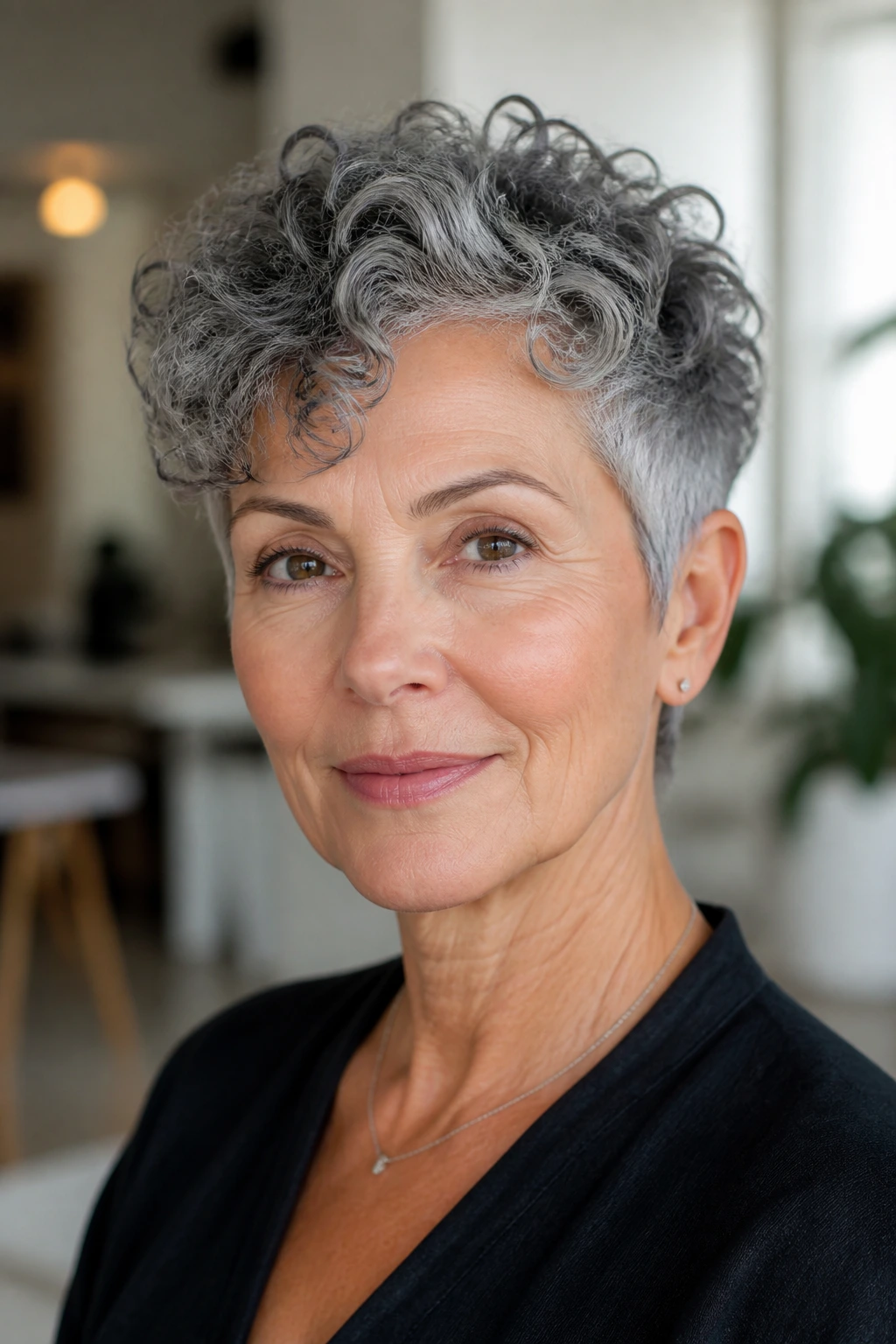
Curly hair should not be bullied into a flat, straight-edged pixie. That usually ends with triangle shape, puffy sides, and a crown that behaves like it has opinions. A better curly pixie follows the curl pattern and keeps enough length for the curl to spring instead of crumple.
Best for
- Loose curls that need shape at the crown
- Tight curls that shrink a lot when dry
- Wavy hair that frizzes if it’s over-layered
Ask for a cut that’s shaped while dry or almost dry, so the stylist can see where each curl lands. Keep the sides a little longer than you think. Curly hair always shortens once it dries, and short around the ears can turn into a surprised little puff if the cut is too aggressive.
6. Sleek Silver Pixie with Crisp Edges
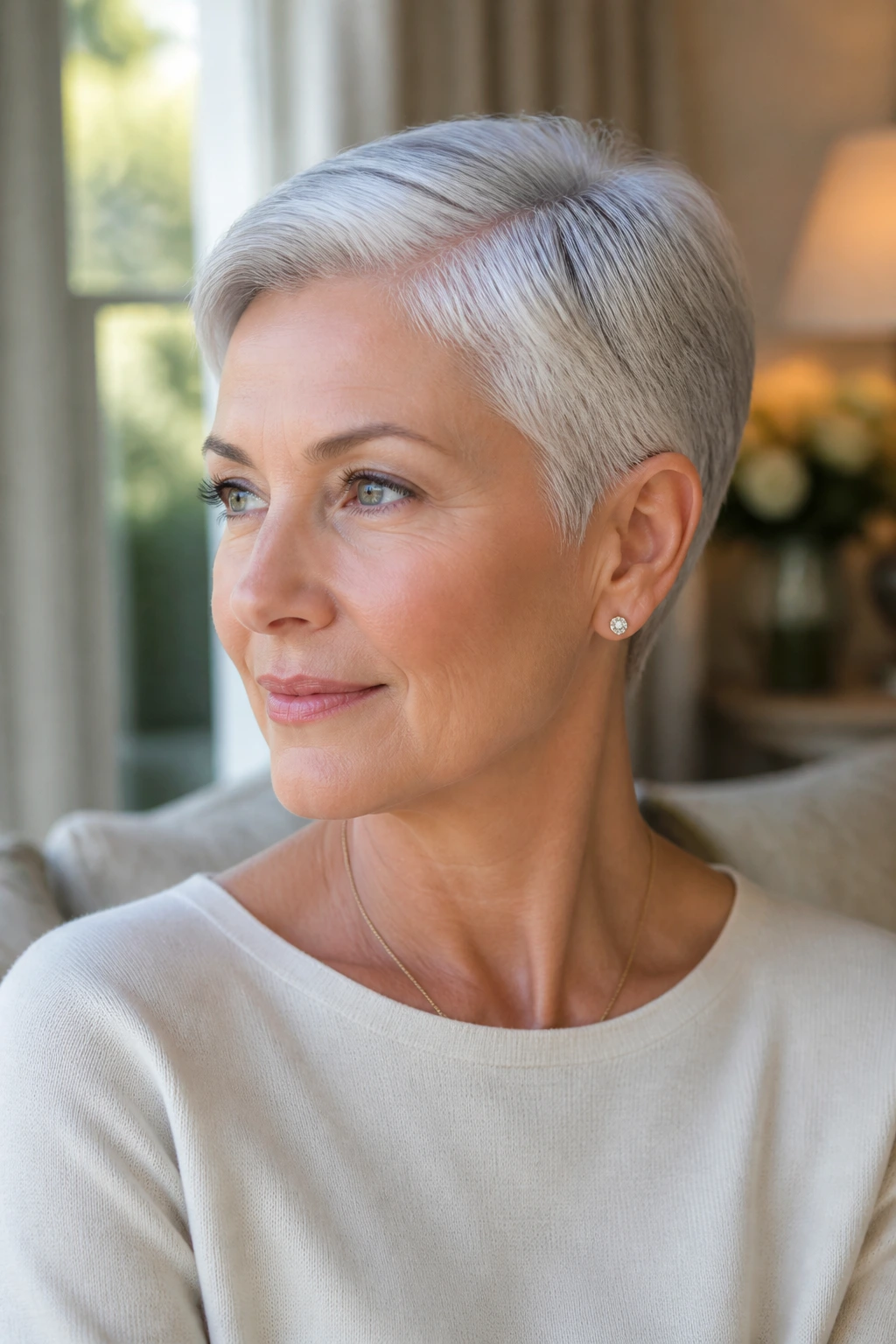
Silver hair looks expensive when the cut is clean. Not fancy. Clean. That means a sharp side part, a neat nape, and edges that are precise enough to show the shine in the hair instead of blurring it out. A sleek silver pixie is especially good if your hair is already straight or mostly straight and you like a more polished finish.
The key is restraint. Too much texture makes silver look frayed. A light styling cream, a side part, and a careful blow-dry usually do more than half a jar of product ever could. If your hair has a natural bend, smooth the front but leave a little movement at the crown. Flat all over is not the goal.
7. Asymmetrical Pixie with a Longer Sweep
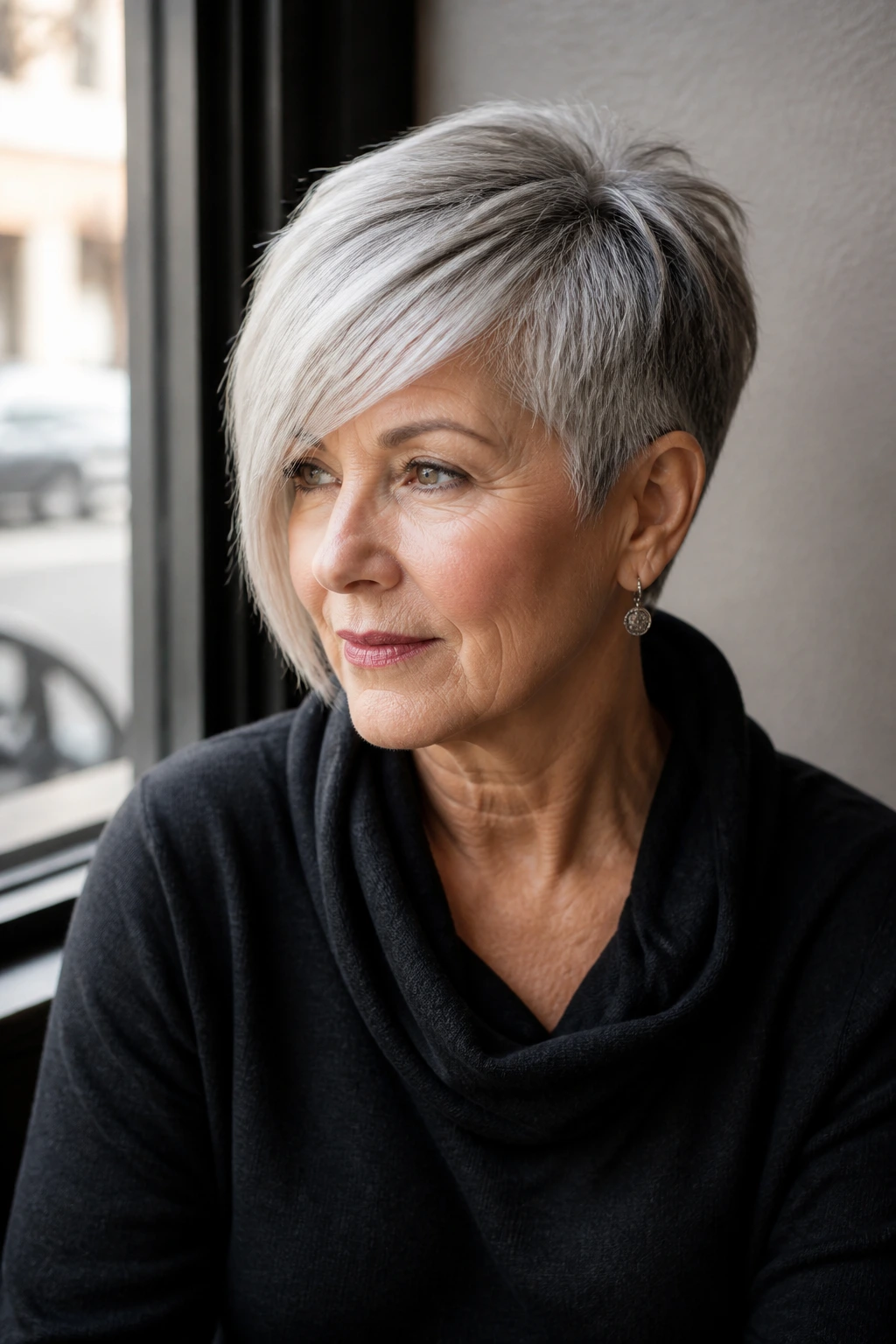
An asymmetrical pixie gives one side a little more length, usually through the fringe or front section, and that offset changes the whole face. It can soften a strong jaw, balance a face that feels narrow at the forehead, and add a little edge without going into full dramatic territory. The difference does not need to be extreme. Even a one-inch shift can be enough.
This cut is a nice match if you want short hair that still feels styled. It works best when the longer side can sweep across the brow rather than flop into the eye. Ask for a smooth transition, not a hard step between short and long sections. Hard steps are what make asymmetry look accidental instead of deliberate.
8. Undercut Pixie for Thick Hair
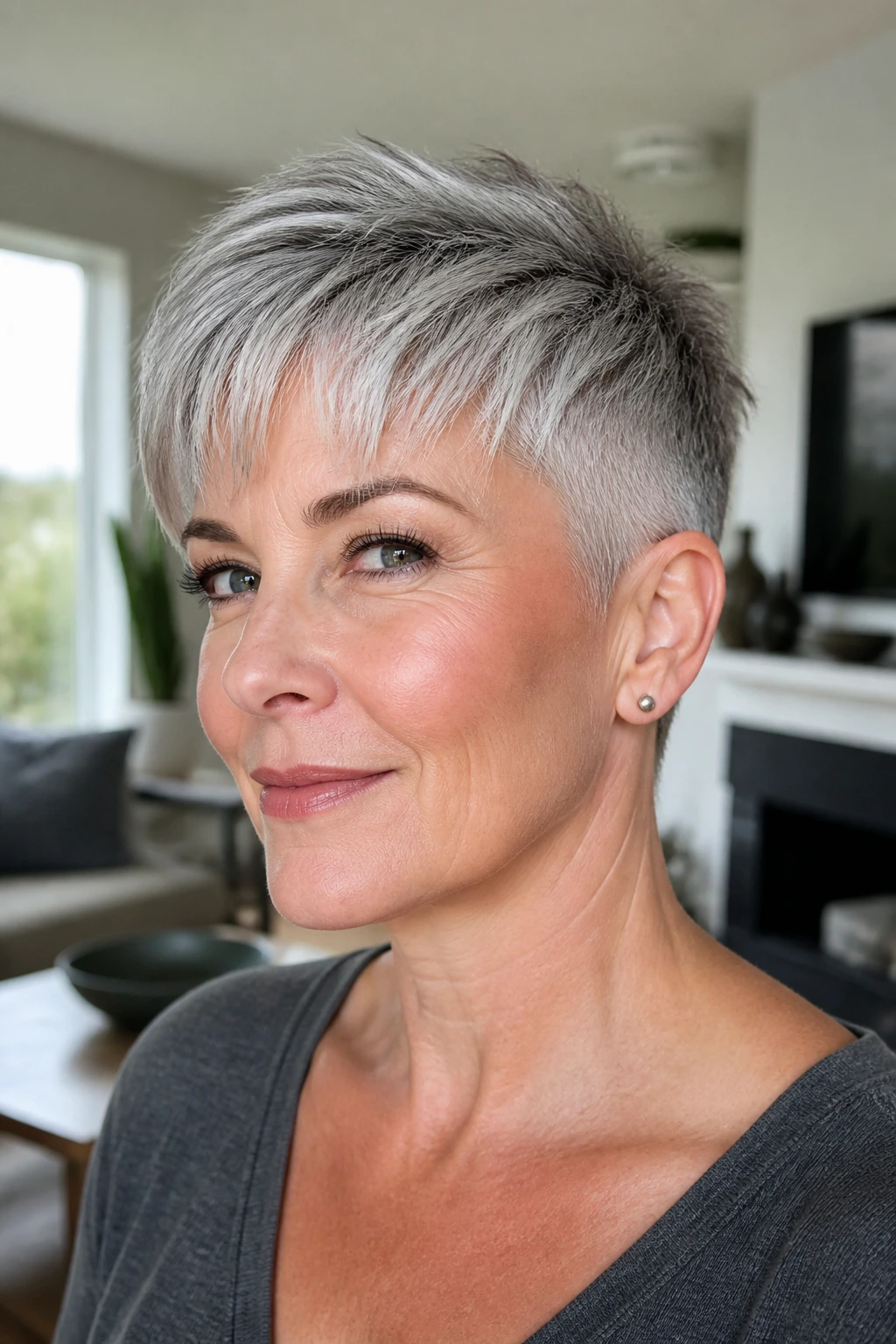
Thick hair loves to pretend it has more shape than it does. Then it swells out at the sides and eats your ears. An undercut pixie fixes that by removing bulk underneath while leaving the top soft and wearable. The result is lighter at the nape and around the temples, which makes daily styling less of a wrestling match.
Why it stays manageable
The undercut reduces the weight that makes thick hair kick out at the bottom. That means the top can sit closer to the head and move the way you want. It’s a smart choice if you like a neat outline but don’t want to spend ten minutes flattening the back every morning.
Do ask how high the undercut should go. Too high and you lose softness when the hair grows. Too low and the bulk stays right where you do not want it.
9. Brushed-Forward Pixie with Soft Bangs
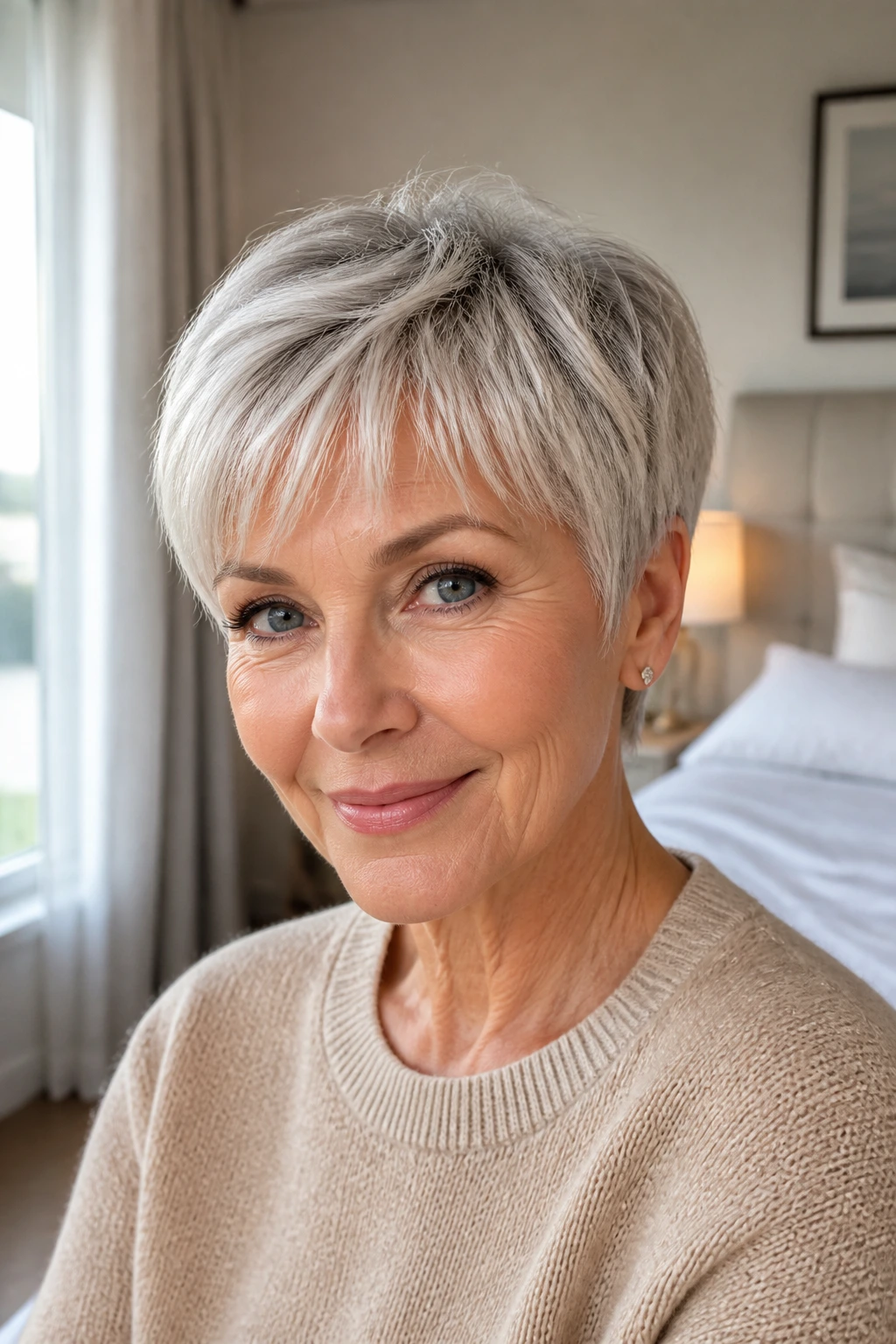
Brushing the hair forward changes the whole feel of a pixie. Instead of lifting away from the face, the top comes slightly toward the forehead, which can make the cut feel softer and a little more youthful without trying too hard. The bangs should stay light, though. Heavy fringe can take over a small face fast.
This shape works well if you like a little forehead coverage or if your hairline is uneven. It’s also handy for anyone who wants a style that dries quickly. Forward styling hides a lot of little cowlick battles. A vent brush and a small dab of styling cream are usually enough.
10. Bixie with Soft Ends
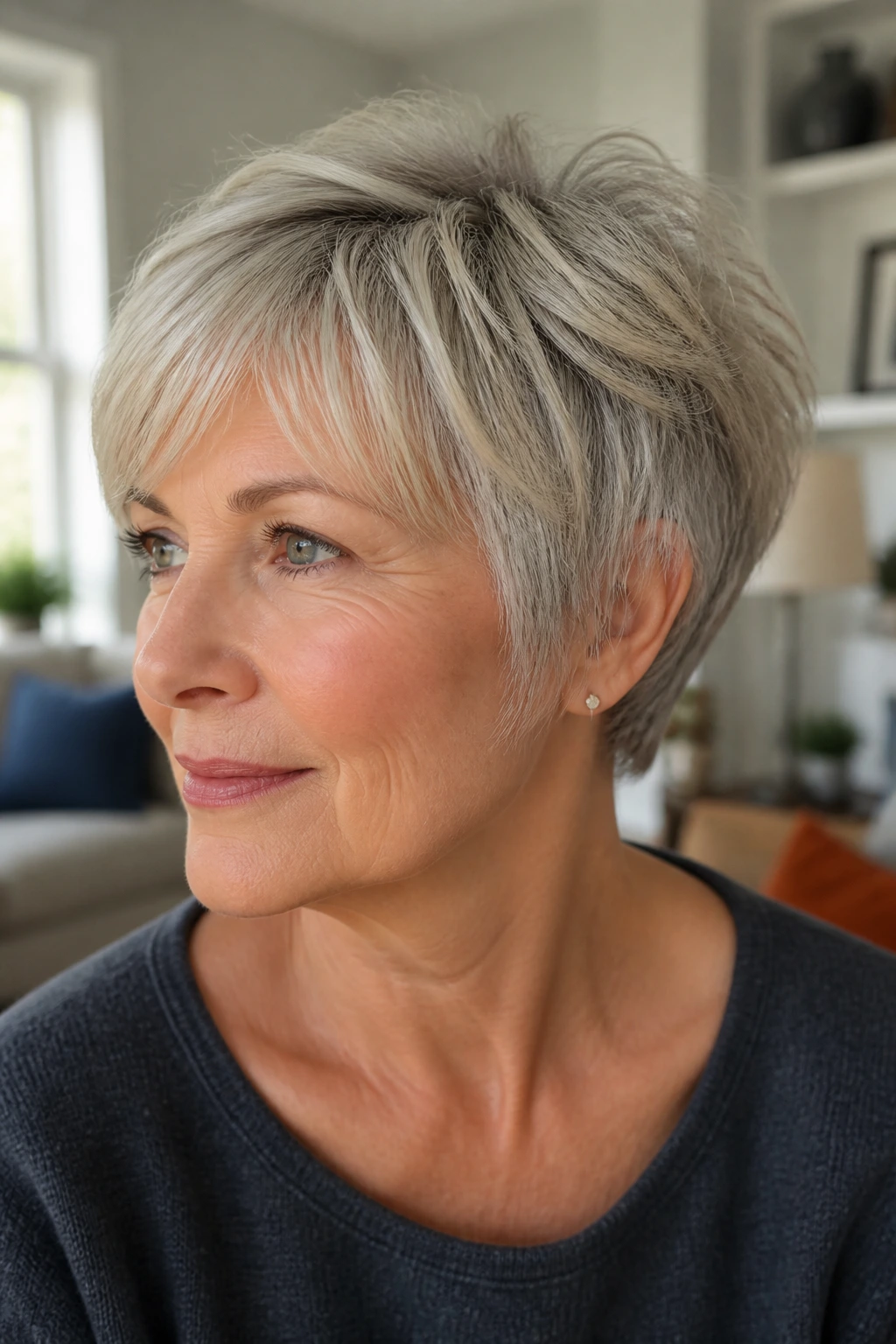
The bixie sits between a bob and a pixie, which is why so many women end up liking it more than they expected. It keeps enough length around the ears and nape to feel less abrupt, but the crown still has that short, lifted pixie feel. Soft ends make the transition easy on hair that has been worn longer for years.
This cut is useful if you want short hair without the full leap into crop territory. It also gives you a gentler grow-out. If you like to tuck hair behind your ears or if you are testing a shorter style for the first time, this is a low-stress place to start.
11. Wedge-Back Pixie with Built-In Lift
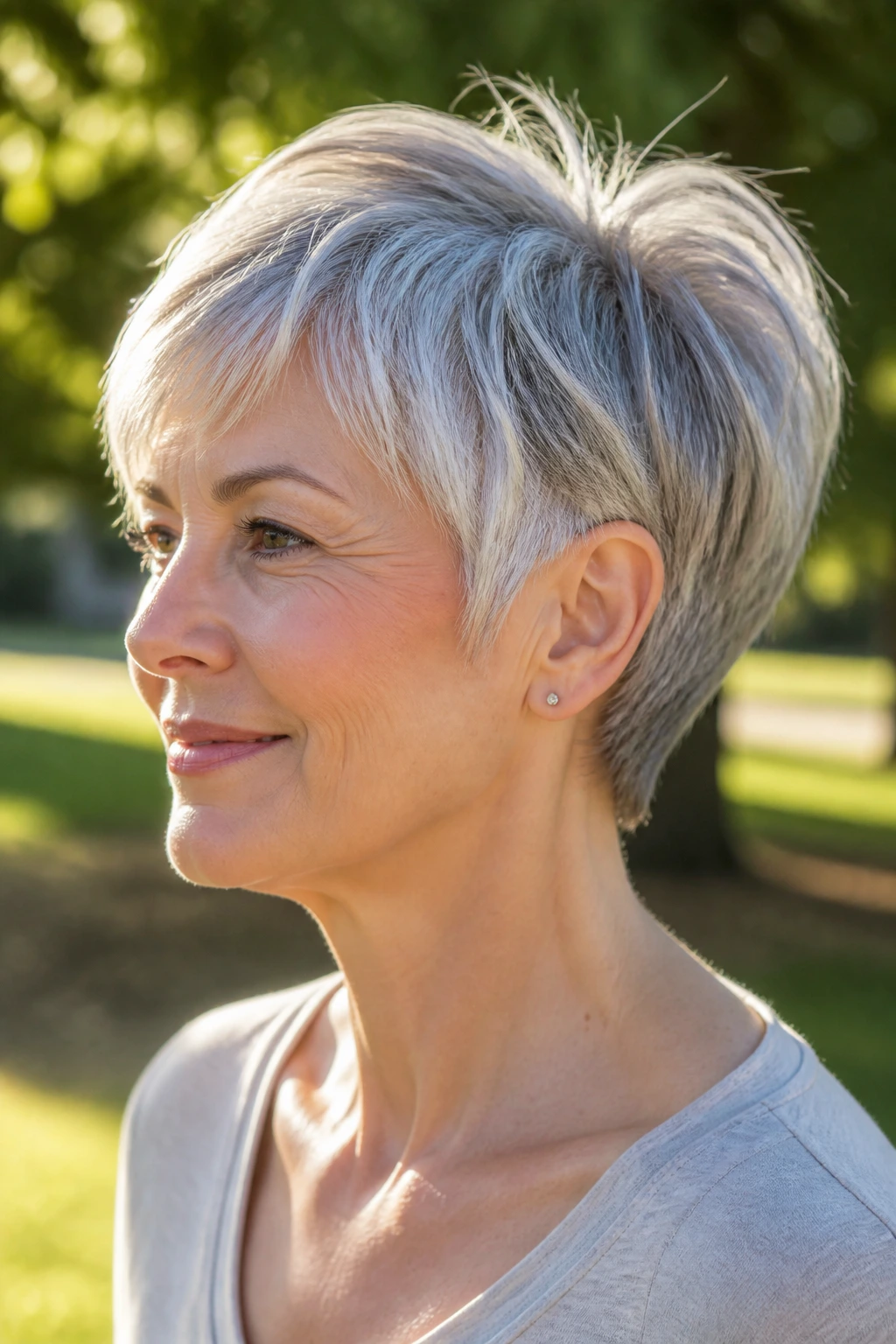
A wedge-back pixie gives the crown some built-in structure. The back is slightly stacked, the top sits higher, and the cut creates shape without needing a lot of styling help. For hair that falls flat at the back of the head, that little stacked curve matters more than people think.
How to wear it
A round brush at the crown and a quick blast at the roots usually does the trick. You do not need to curl the whole head. Just lift the back slightly and let the front fall naturally. That keeps the cut from looking overdone.
If your hairline is soft or your nape is patchy, ask for a feathered finish rather than a blunt one. The shape will still hold, but it won’t draw a hard line across the neck.
12. Micro-Fringe Pixie for a Strong Brows-and-Eyes Look
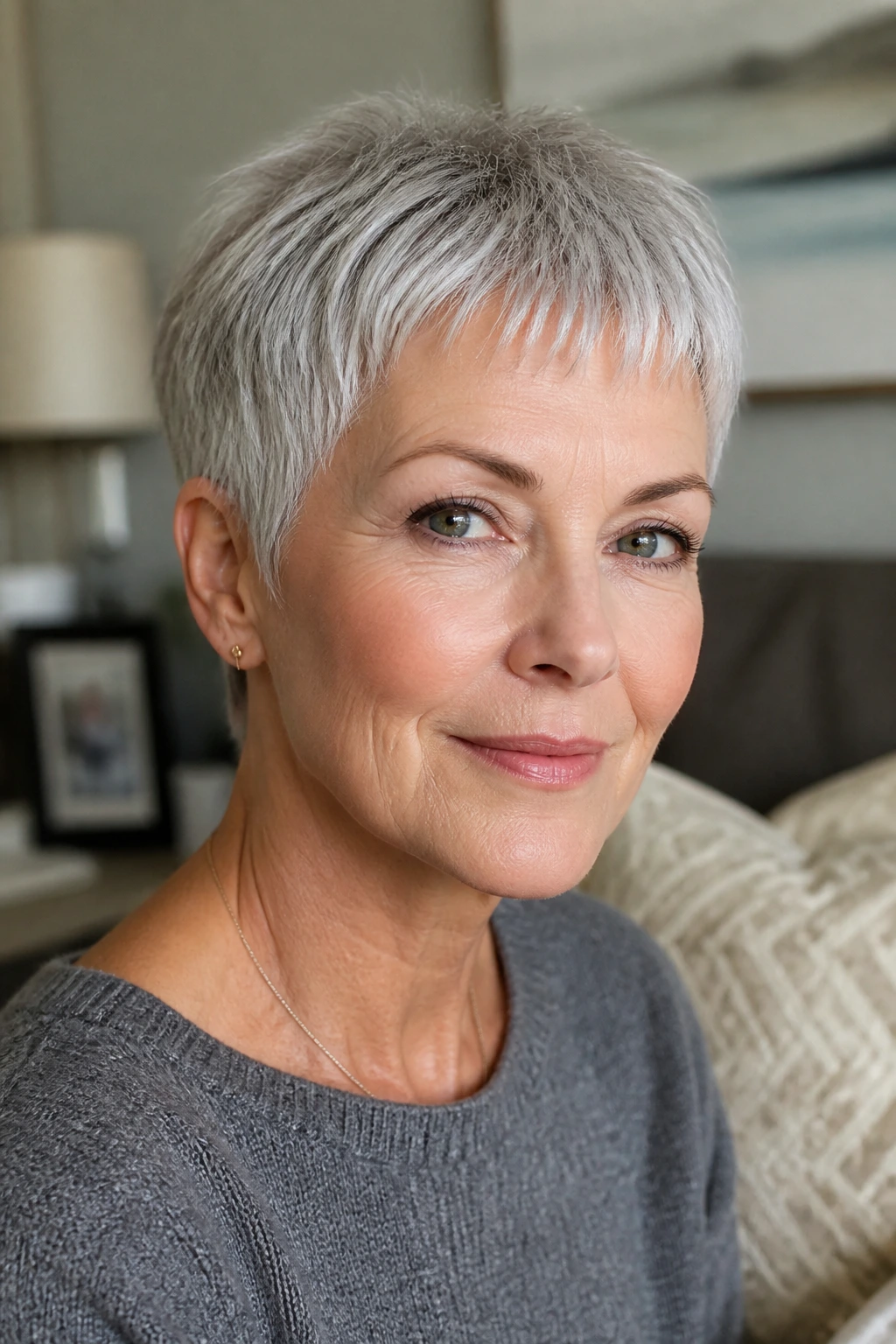
A micro-fringe is short, sharp, and not shy. It leaves the brows visible and puts the focus on the eyes, which can be striking on silver or salt-and-pepper hair. This cut is not the safest choice on paper, and that is part of its appeal. It has personality.
The trick is keeping the rest of the cut soft enough so the fringe doesn’t feel severe. You want short bangs, yes, but not a rigid helmet around them. It works best on straight or slightly wavy hair and on women who do not mind a trim every few weeks. Micro-fringes grow fast. Fast enough to get annoying.
13. Ear-Tucking Pixie with Longer Sideburns
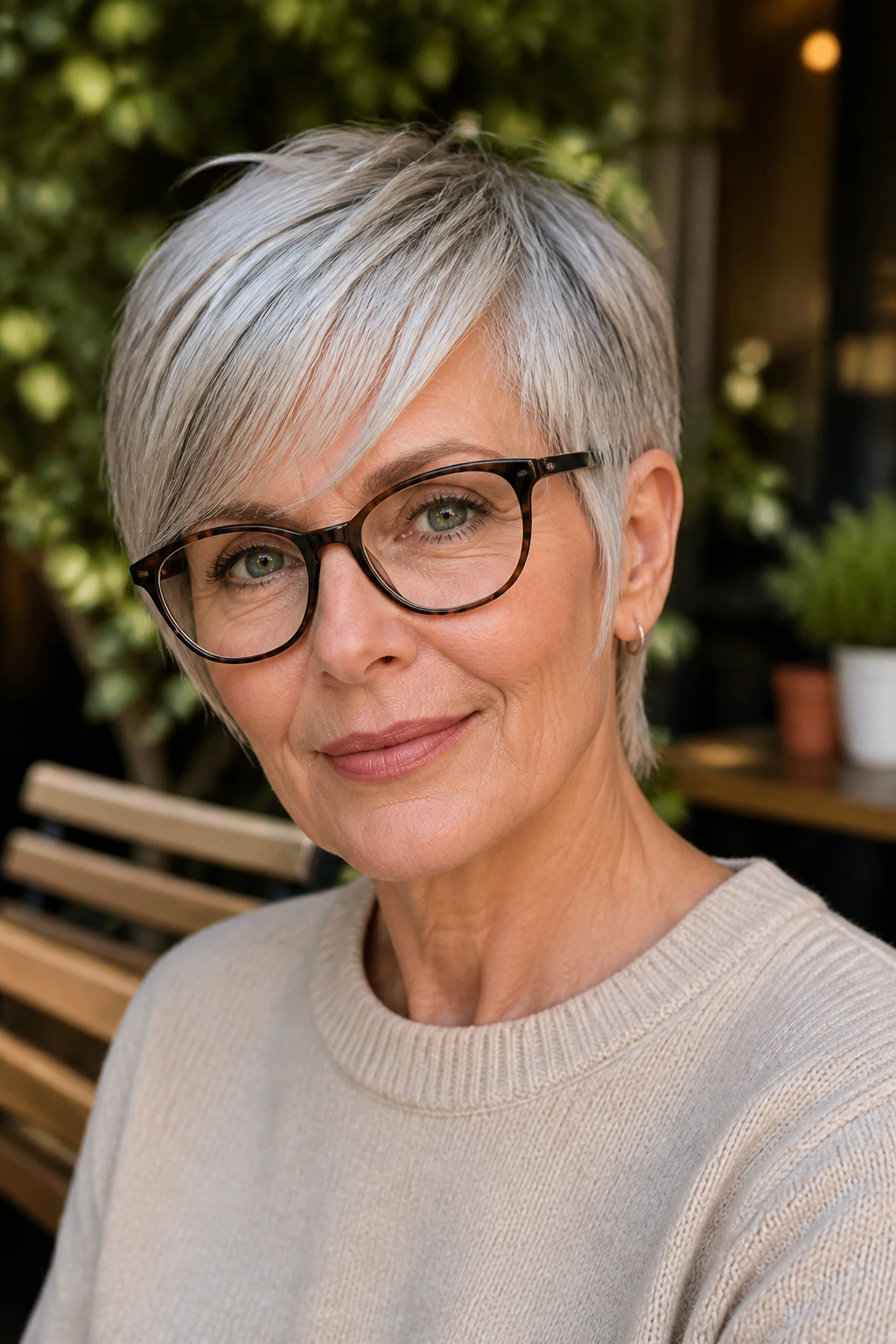
Some pixies are built around the ears, and this is one of them. Longer sideburns and soft side length make it easy to tuck hair behind the ear or let it hang loose, depending on the day. That flexibility is handy if you wear glasses or want the cut to move between relaxed and polished without changing much.
The longer sideburns also make the transition from a bob to a pixie less abrupt. They frame the cheek in a gentle way and stop the cut from opening the face too much. If your jawline is angular, this shape softens it without hiding it.
14. Feathered Crown Pixie for Flat Hair
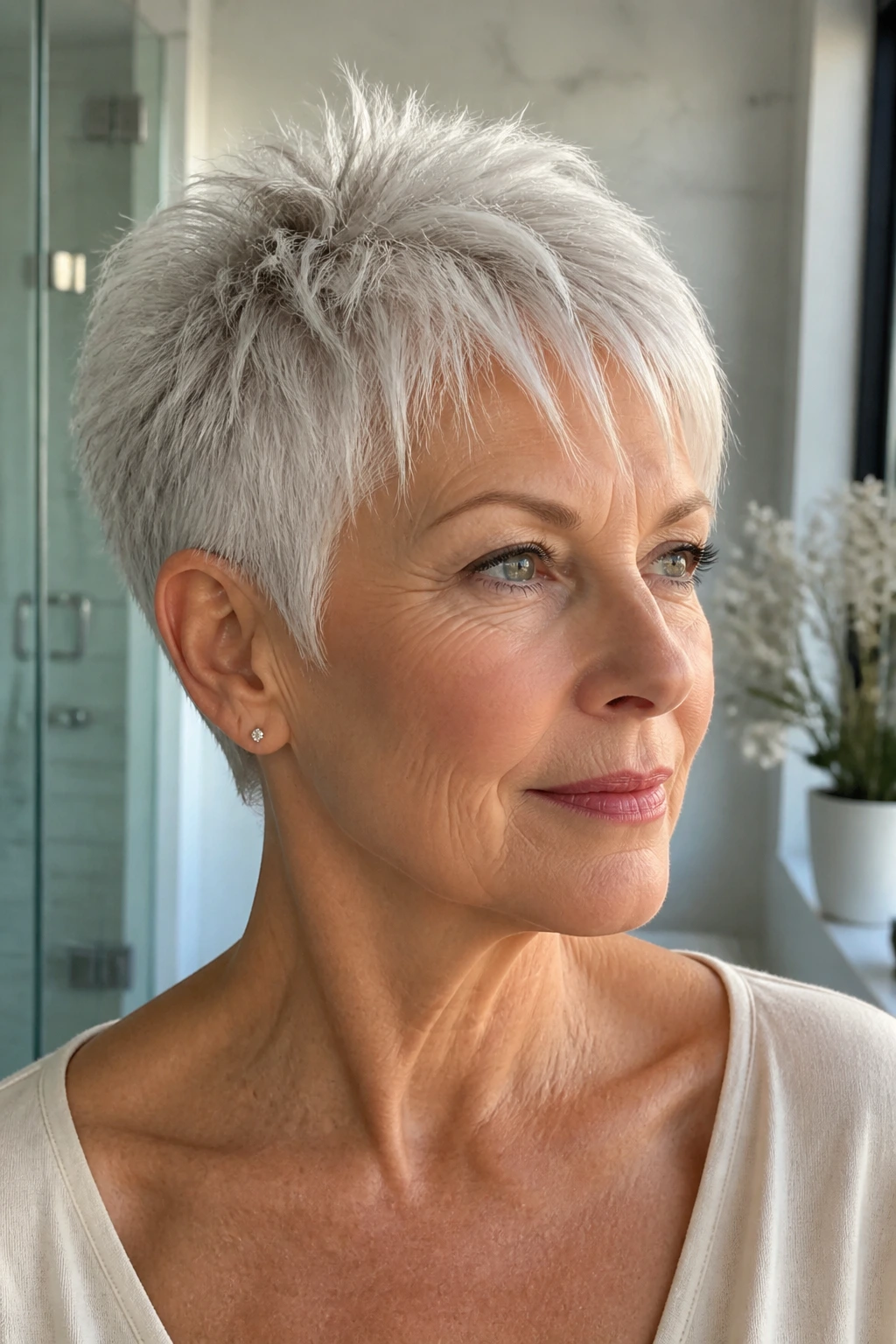
Flat crown? This is the fix I reach for. A feathered crown pixie uses short, airy layers at the top to create movement where the hair usually collapses. It can make fine hair look fuller and give straight hair a bit of lift without needing a ton of mousse.
The best version keeps the sides neat and the crown light. Too much length at the top defeats the point. You want the hair to sit up, not just lie in a different direction. A little root spray, a quick blow-dry upward, and a finger comb at the end usually beats heavy brushing.
15. Side-Part Pixie with Lift at the Crown

A deep side part is one of the simplest ways to make a pixie look finished. It creates a little height at the crown and lets the front fall with shape instead of looking chopped off. The cut feels elegant without being fussy, which is a combination worth keeping.
This is one of the better options for women whose faces are slightly asymmetrical, because the side part shifts attention in a flattering way. It also works nicely with glasses, since the fringe can be kept high enough to avoid crowding the frames. If you want a style that can go casual or dressy without changing the cut itself, this one pulls its weight.
16. Wash-and-Go Curly Pixie
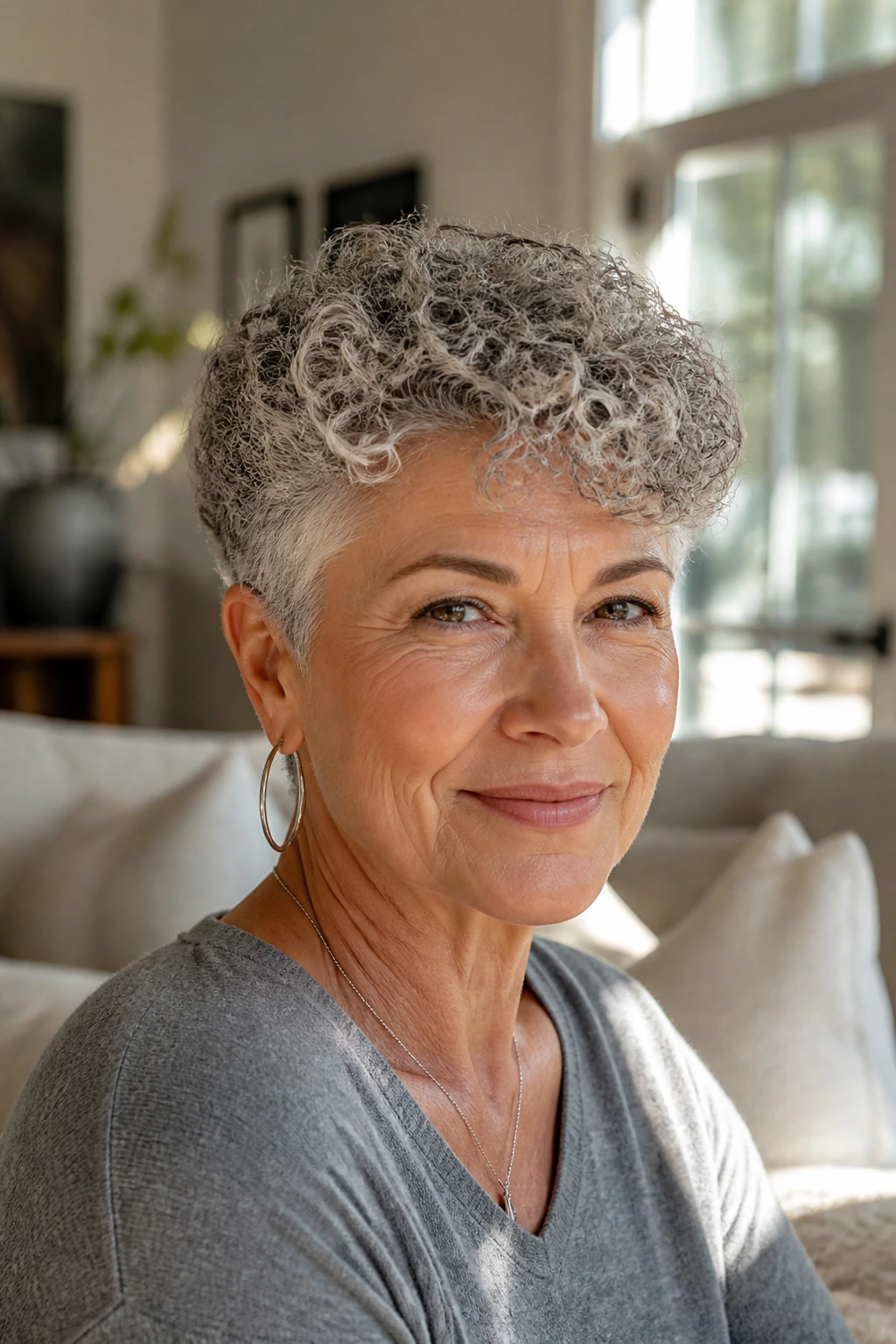
A wash-and-go curly pixie is exactly what it sounds like: a cut shaped so the curls can dry and settle with minimal help. No flat ironing. No sculpting every strand. Just leave-in conditioner, a curl cream or gel, and some patience while the hair dries.
The shape needs to respect shrinkage. That is the big point. A curly pixie cut too short can look great wet and strange dry, which is a miserable surprise. Keep the top long enough for the curl to spring and the sides long enough to avoid that mushroom shape. Diffusing helps, but air-drying often gives the softest result.
17. Razor-Cut Pixie with Airy Ends
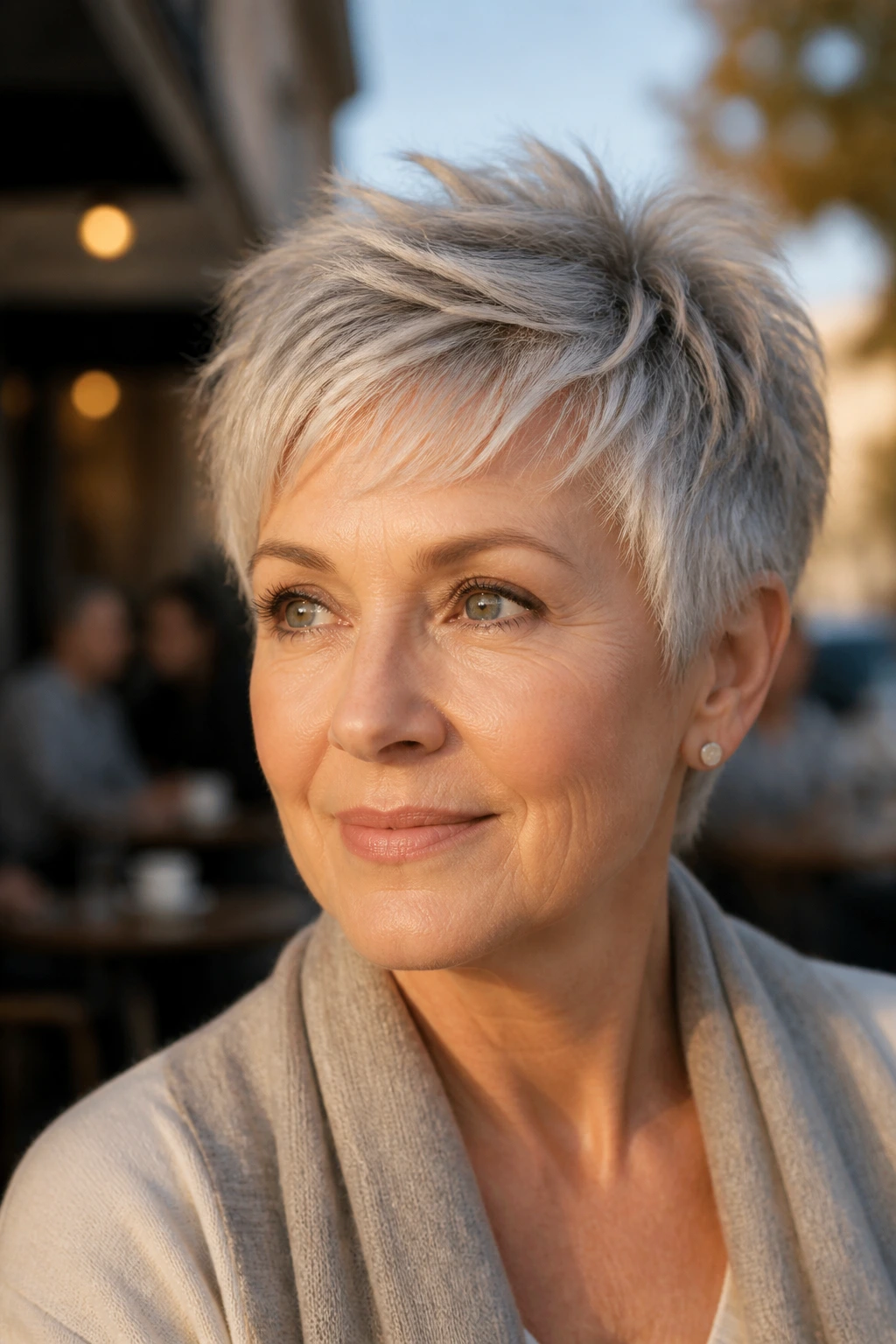
Razor-cut ends give a pixie a little swing. The line feels softer, the layers fall more loosely, and the cut avoids that blunt, helmet-like block some short styles pick up. It works well on straight or slightly wavy hair that needs movement more than volume.
I like this style on women who want the haircut to feel light around the face. The catch is that damaged ends show more clearly with a razor cut, so dry or brittle hair needs careful handling. If the hair is healthy, though, the effect is lovely. The ends look separated in a natural way, not frayed.
18. Tapered Neck Pixie for a Sharp Outline
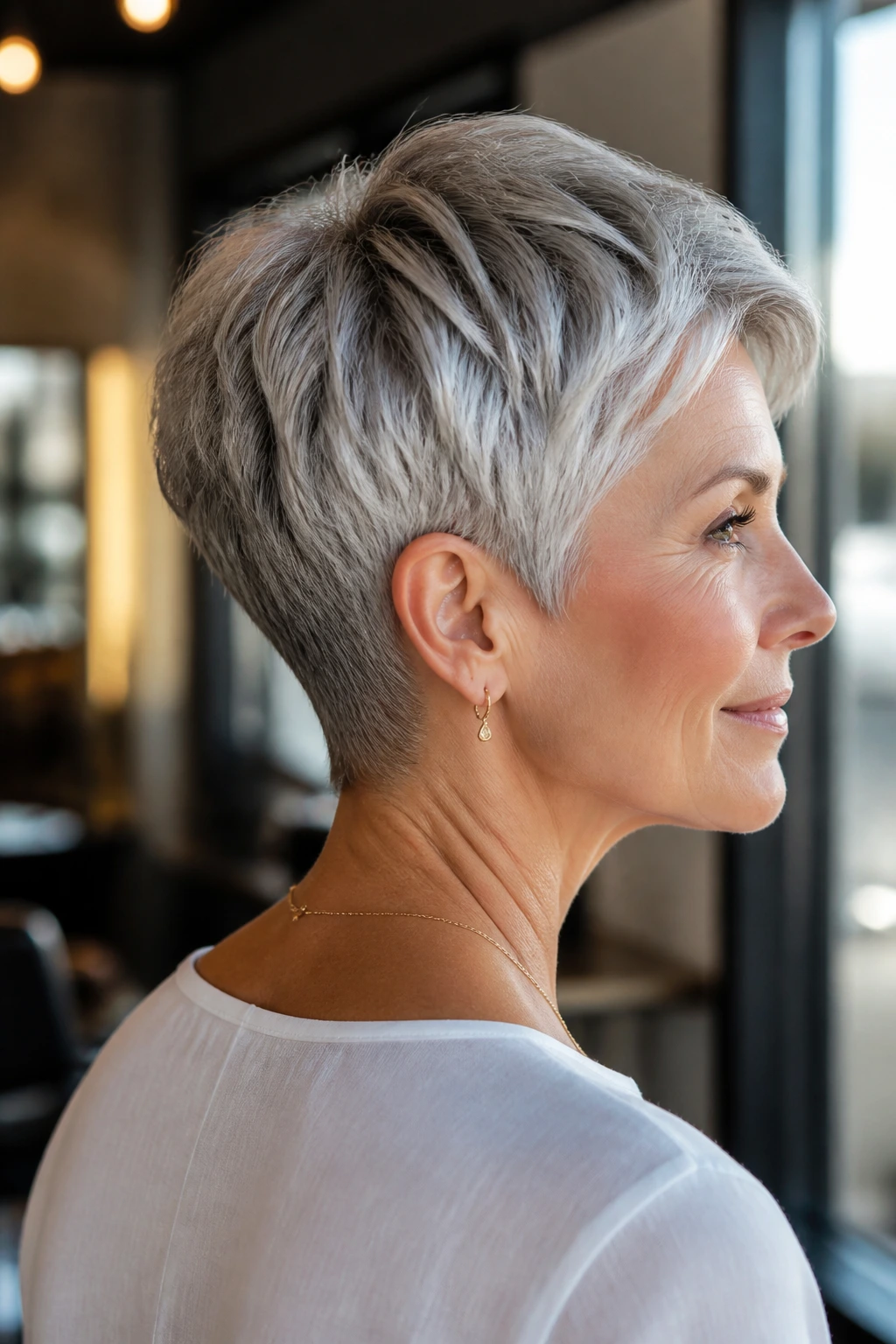
The nape can make or break a pixie. A tapered neck pixie keeps that lower edge narrow and clean, which makes the whole cut look polished even on days when the top is doing its own thing. It’s a smart choice if you like short hair to feel crisp around the collar.
That clean neckline also buys you time between salon visits, though only a little. Once the neck starts to grow out, the shape loses its snap fast. Plan on regular touch-ups if you love a neat outline. If you do not like frequent trims, this may not be your best fit.
19. Volumized Crown Pixie for Thin Hair
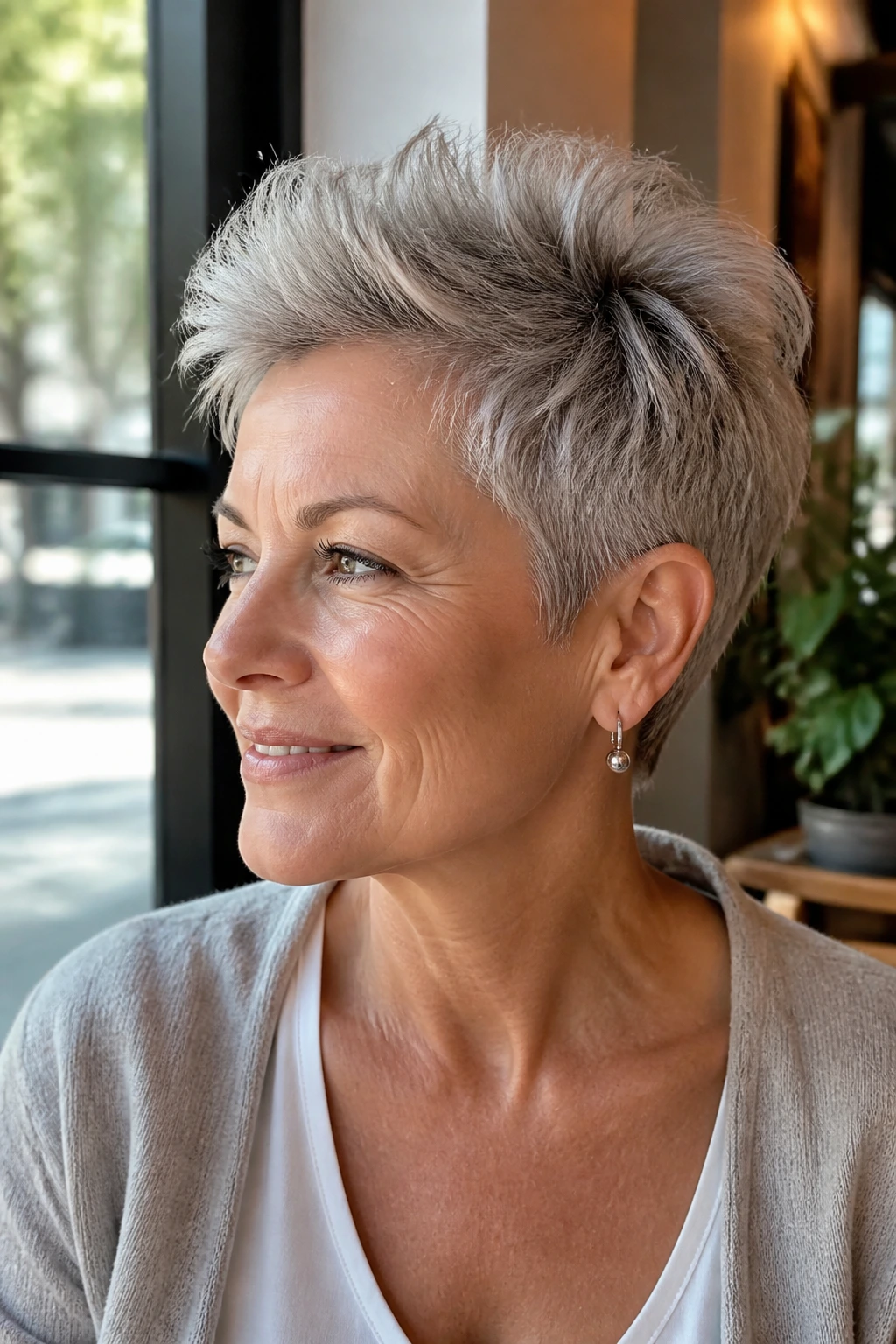
Thin hair often needs one thing more than anything else: a crown that does not collapse. A volumized crown pixie keeps the back and sides short, then builds a bit of height at the top so the whole silhouette feels fuller. It is not about making the hair huge. It is about not letting the scalp show every minute of the day.
Styling note
Flip the front forward while blow-drying, then lift at the roots with a small brush. Once it’s dry, push it into place with your fingers and a light powder or spray at the crown. Heavy creams will flatten the whole effect, and that defeats the point in a hurry.
20. Soft Mullet Pixie with a Gentle Nape
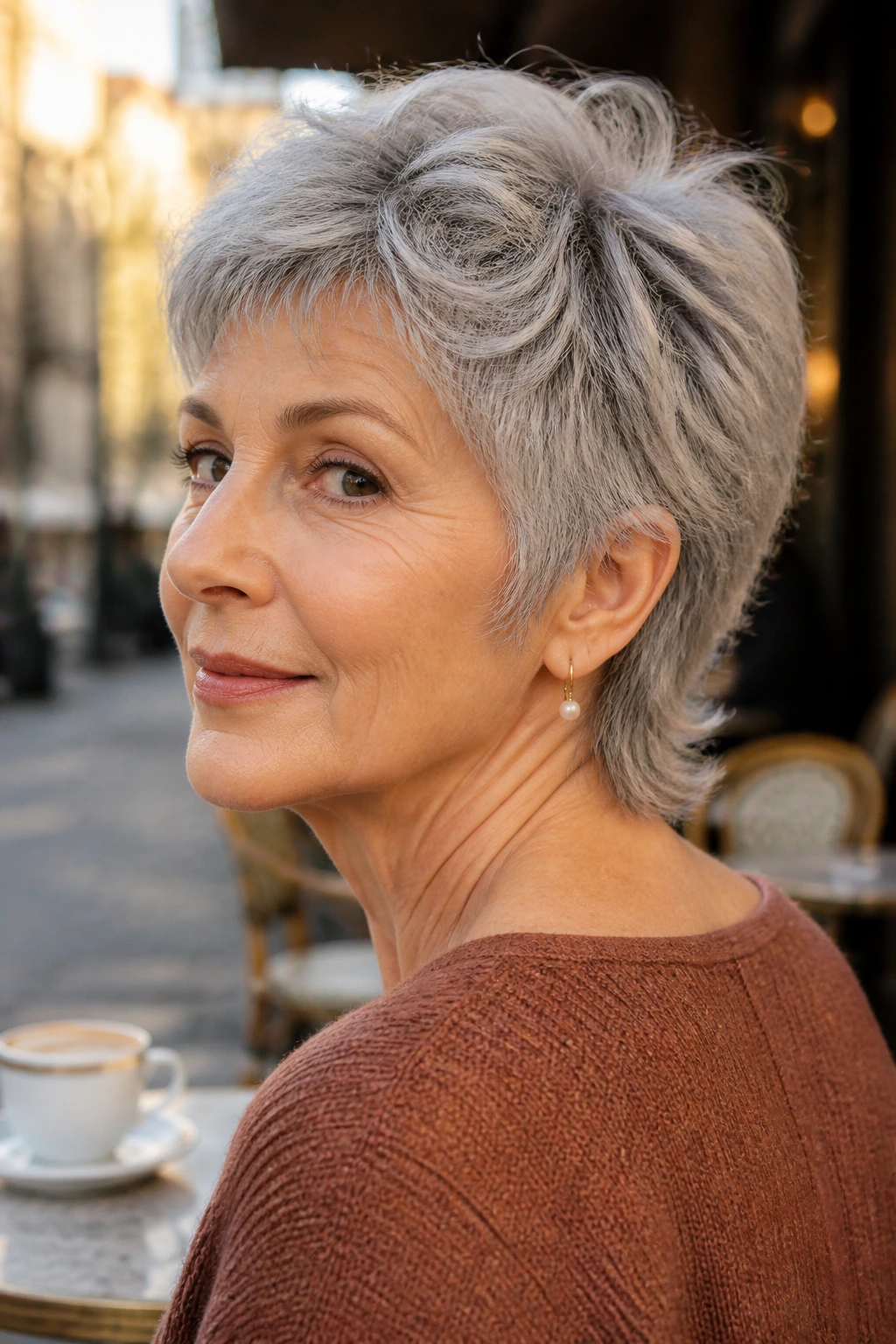
A soft mullet pixie sounds more radical than it is. The front and crown stay short, but the nape and lower sides keep a little extra length, which gives the cut a relaxed, almost shaggy swing. Done softly, it does not read like a costume. It reads like someone who likes a little movement and does not mind being noticed.
This is a good choice if you want a pixie with some edge and a grow-out that doesn’t feel abrupt. It works best with texture — straight hair can wear it, but a bit of wave makes the shape richer. Keep the layers blended. If the contrast gets too sharp, the style starts looking disconnected.
21. French Pixie with an Easy, Airy Fringe
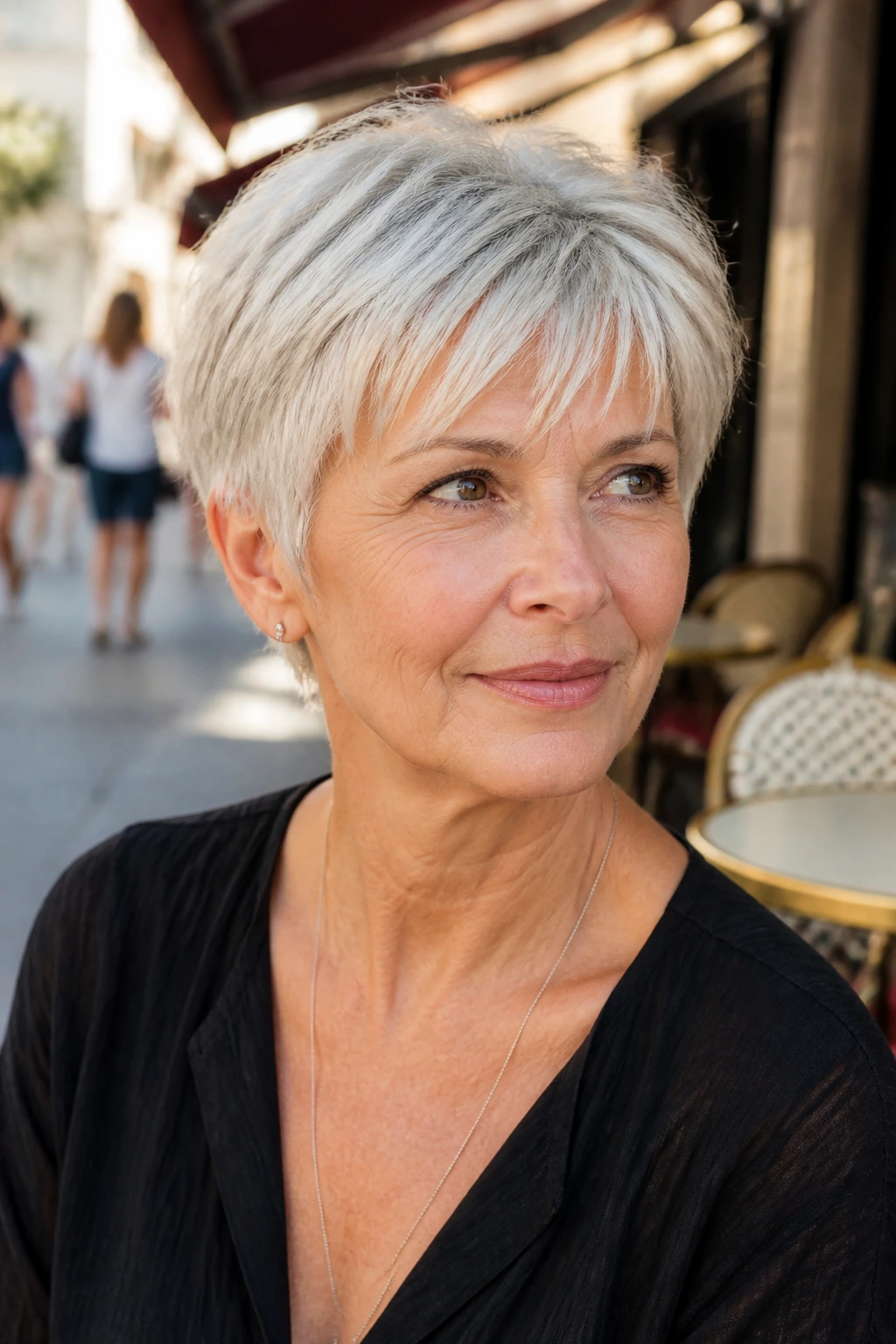
The French pixie is short, light, and a little undone in the best way. Think of a soft fringe, airy layers, and a shape that looks like it was finger-styled rather than fussed over. It’s a good fit if you like hair that looks deliberate but not stiff.
What keeps this cut from feeling childish is the balance. The fringe should skim, not cover, and the top should have enough softness to move. It pairs well with silver and white hair because the light ends catch the texture of the cut. A little styling cream rubbed between the palms is usually enough.
22. Glasses-Friendly Pixie That Sits Cleanly at the Temples
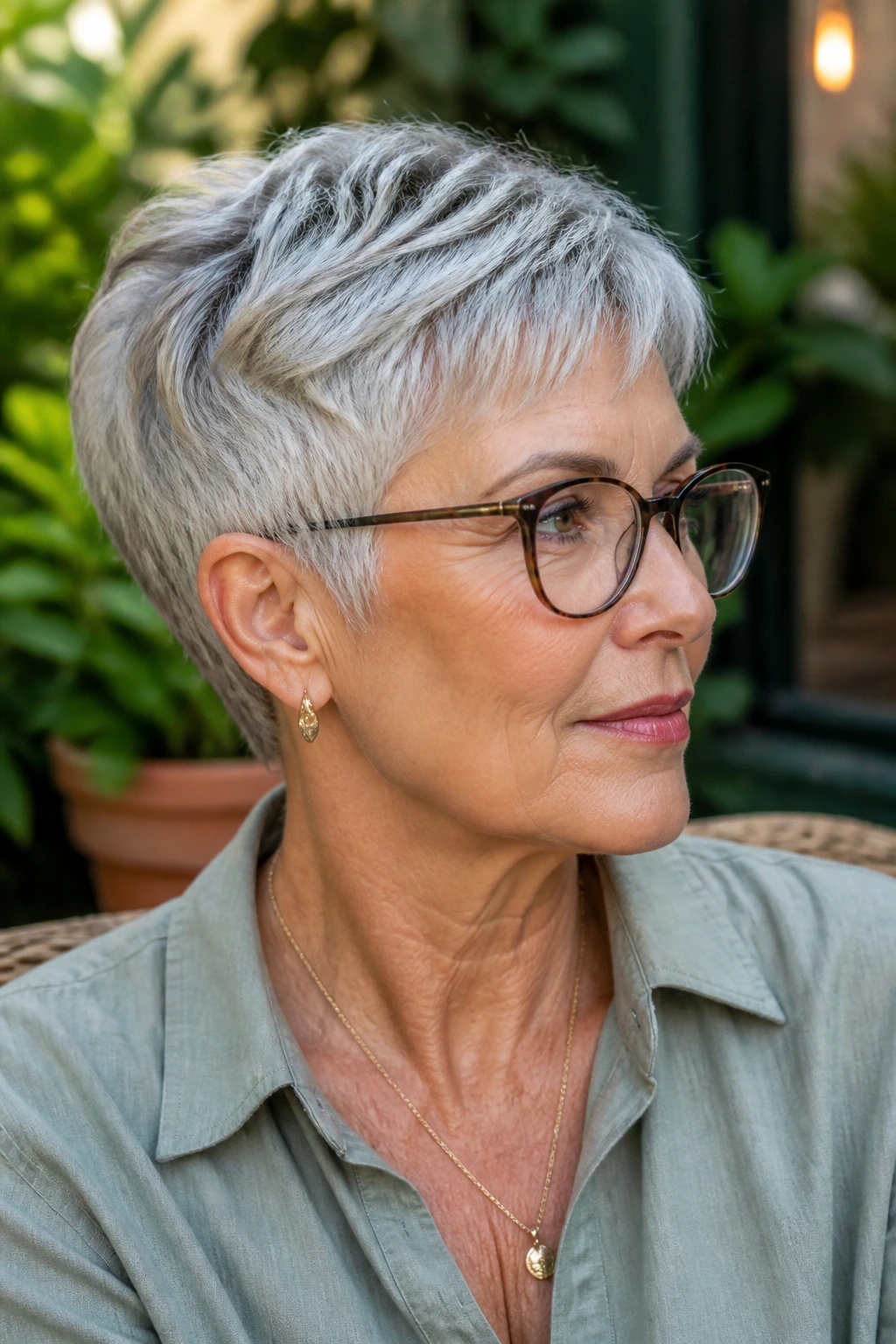
Glasses change the geometry of a haircut. A pixie that looks lovely without frames can suddenly crowd the temples or catch on the arms of the glasses. This version keeps the side length clean and the fringe light, so the frames have space to sit without fighting the hair.
The key is the area near the temples. You want enough length to soften the face, but not so much that the hair bumps into the glasses all day. Ask your stylist to check the cut with your frames on. That sounds fussy, and it’s worth it. A haircut that ignores your glasses is a haircut that ignores your life.
23. Neck-Length Pixie with a Soft Grow-Out
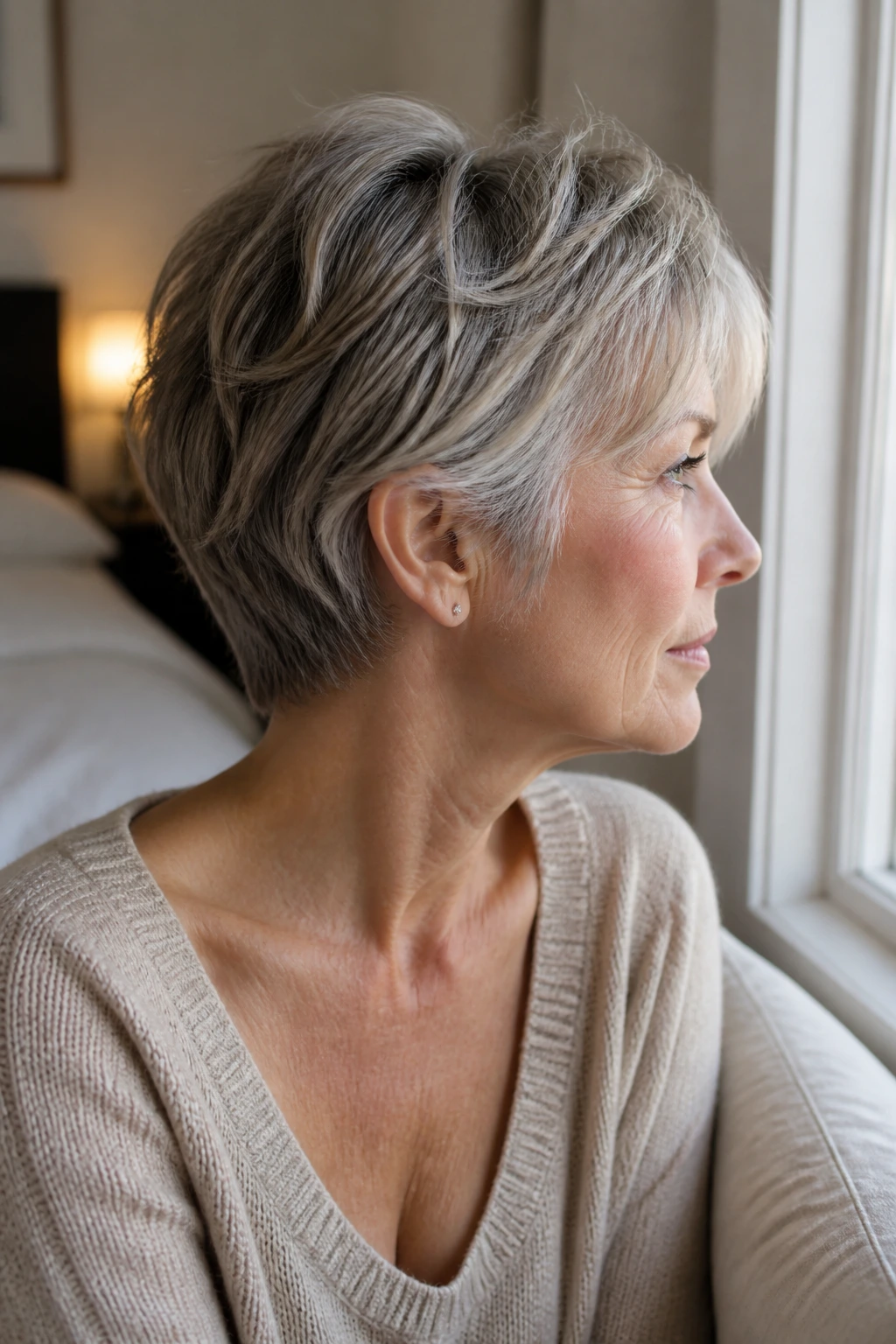
A neck-length pixie sits right on the edge between short and medium, which is a useful place to be if you are nervous about going too short. The nape is still exposed enough to feel like a pixie, but there’s more length through the sides and back, so the style grows out with less drama.
This cut is especially good for women who want to move toward shorter hair in stages. It gives you enough material to tuck, sweep, or fluff without feeling stuck in one position. If you are testing the pixie idea, this is one of the safest shapes to start with.
24. Salt-and-Pepper Pixie with Dimension
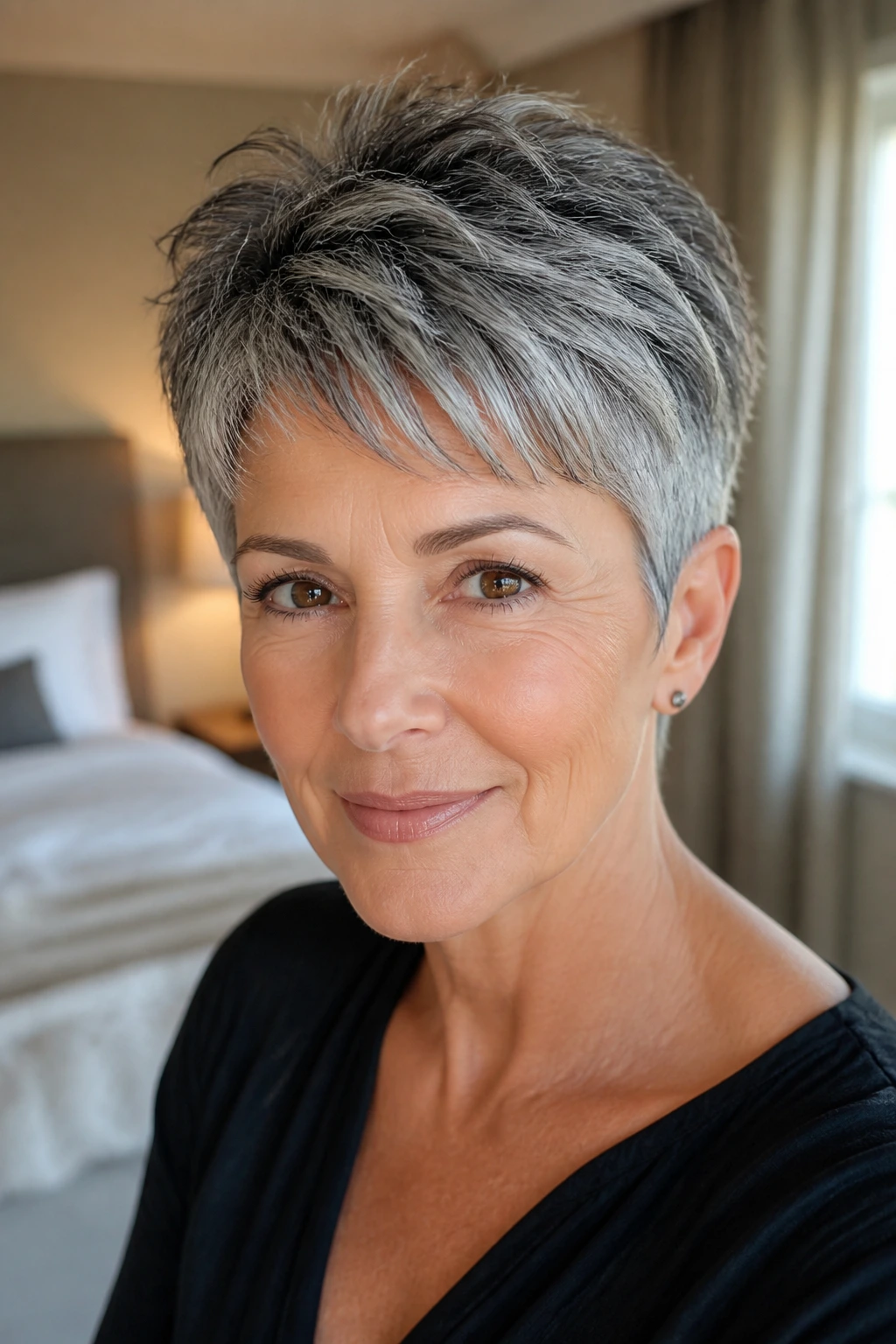
Salt-and-pepper hair can look flat if the cut is too even. A dimensional pixie solves that by adding movement through the top layers and, sometimes, a few subtle lowlights or highlights that keep the blend from reading as one flat gray mass. The cut matters more than the color trick, though. Shape first. Color second.
I like this style on hair that has multiple tones already — white, silver, charcoal, maybe a little warm brown underneath. A textured crown lets those tones show. The result is not loud. It’s just alive. And that’s a better word for a lot of mature hair than polished, which can sound a bit too neat for real life.
25. Grow-Out Pixie That Keeps Its Shape
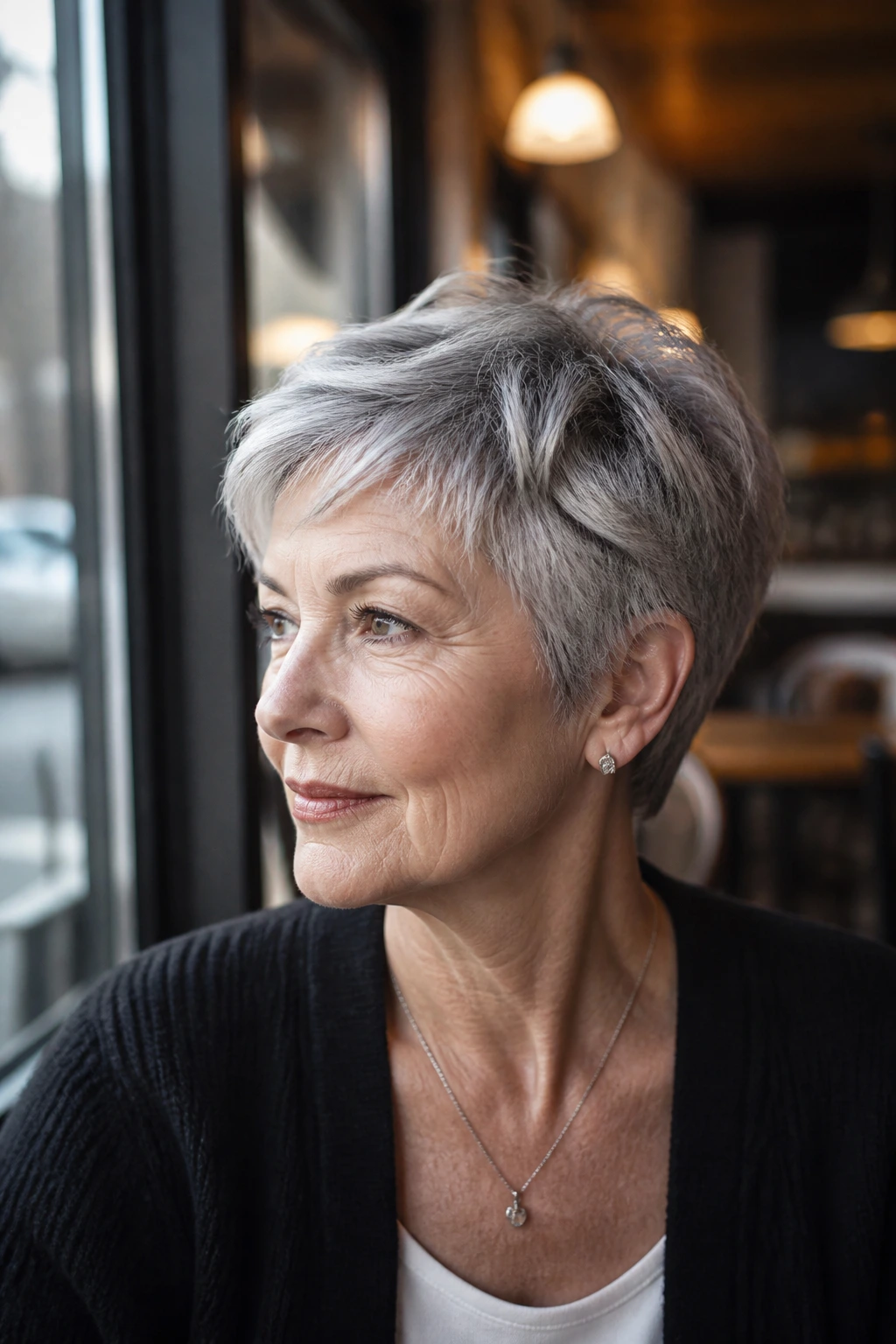
A good grow-out pixie is designed with the next haircut in mind. The top stays a little longer, the sides are soft rather than shaved, and the neckline isn’t cut so tight that it turns into a problem in two weeks. That makes it easier to move toward a bob later without a rough in-between stage.
Ask for this
- A soft, blended perimeter
- Enough length at the crown to tuck or sweep
- No harsh disconnect at the nape
- A fringe that can grow into a side sweep
This is the cut for women who like change but hate awkward phases. It looks finished now and still gives you a path later.
What Makes a Pixie Read as Fresh Instead of Fussy
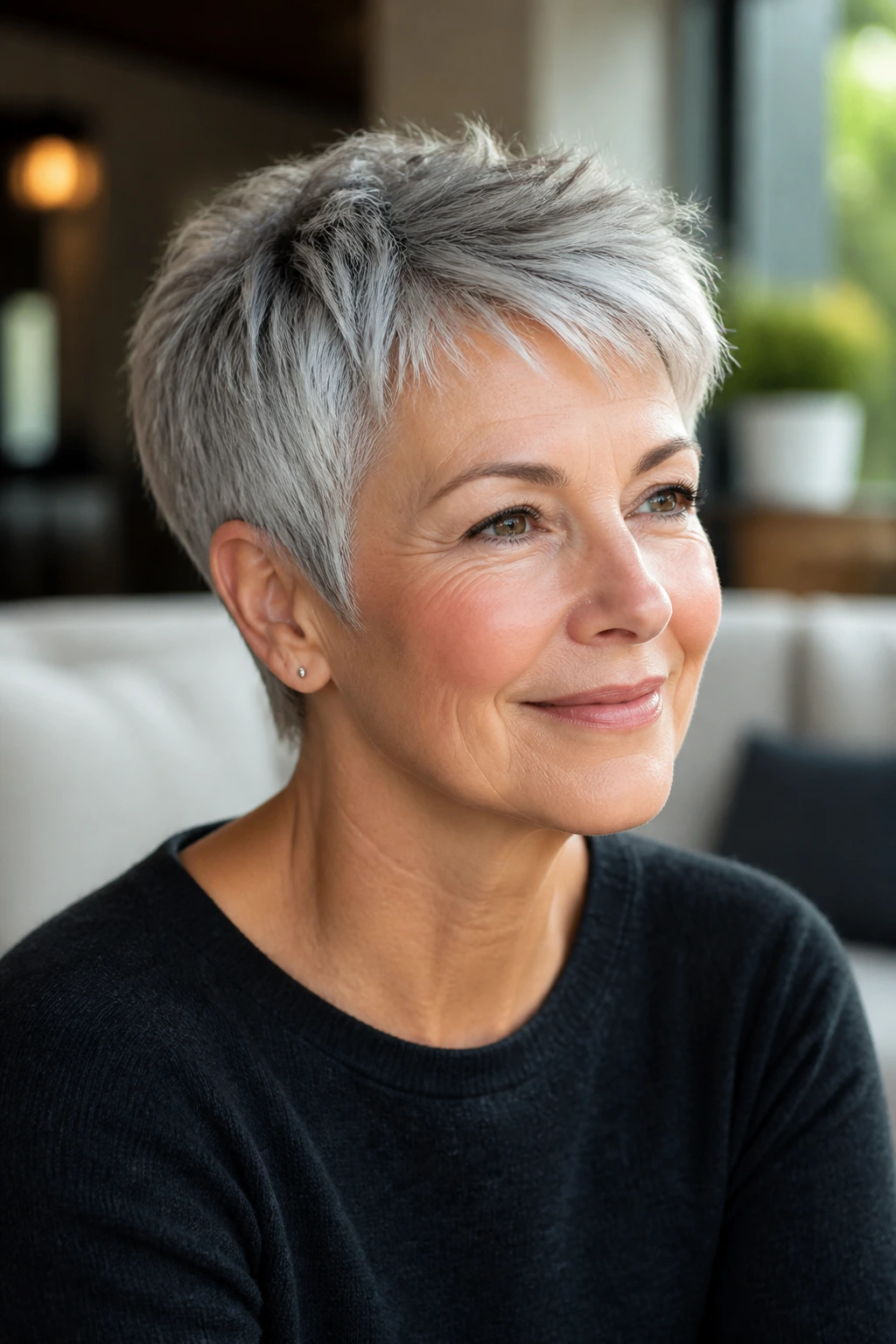
A pixie looks fresh when the shape does three things at once: it lifts the crown, narrows the nape, and keeps the fringe light enough to move. Miss one of those, and the cut starts working against you. Leave all three in place, and the style feels awake even on a plain shirt-and-jeans day.
I also think texture matters more than people admit. Not every pixie should be smooth. Some look better with a little separation at the ends, while others need a cleaner finish so silver strands can shine. The point is to match the finish to the hair you actually have, not the hair you wish would show up.
A one-minute daily routine helps more than a drawer full of products. Dry the crown in the direction you want it to sit, check the nape in a mirror, and tame the front before you leave the bathroom. That tiny bit of attention keeps the haircut from looking accidental.
How to Choose the Right Pixie for Your Hairline and Face
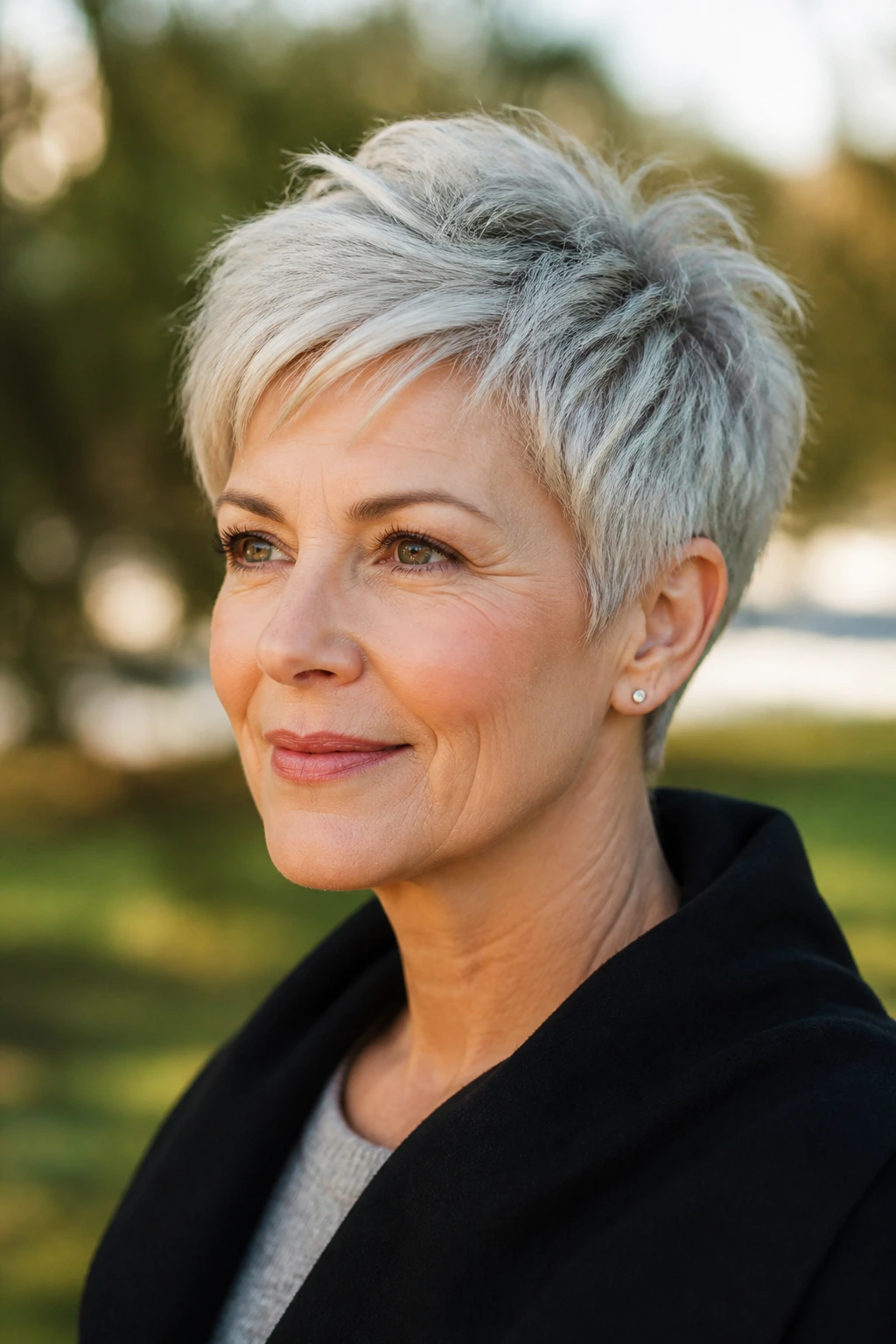
Start with your hairline, not a celebrity photo. If your crown flattens, choose a cut with lift on top. If your nape grows in unevenly, choose a tapered back that can hide the edge as it grows. If your temples are sparse, keep a little softness there instead of cutting the sides to the bone.
Face shape matters, but not in the rigid way salon magazines used to pretend. A round face can wear a pixie with height at the crown. A longer face usually looks better with some fringe or side sweep to shorten the visual length a bit. A square jaw often benefits from feathering near the cheekbone. None of this is law. It’s just a useful starting point.
Bring two photos to the salon: one of the front you like and one of the neckline you want. That second photo is the one people forget. It is also the one that saves the most regret.
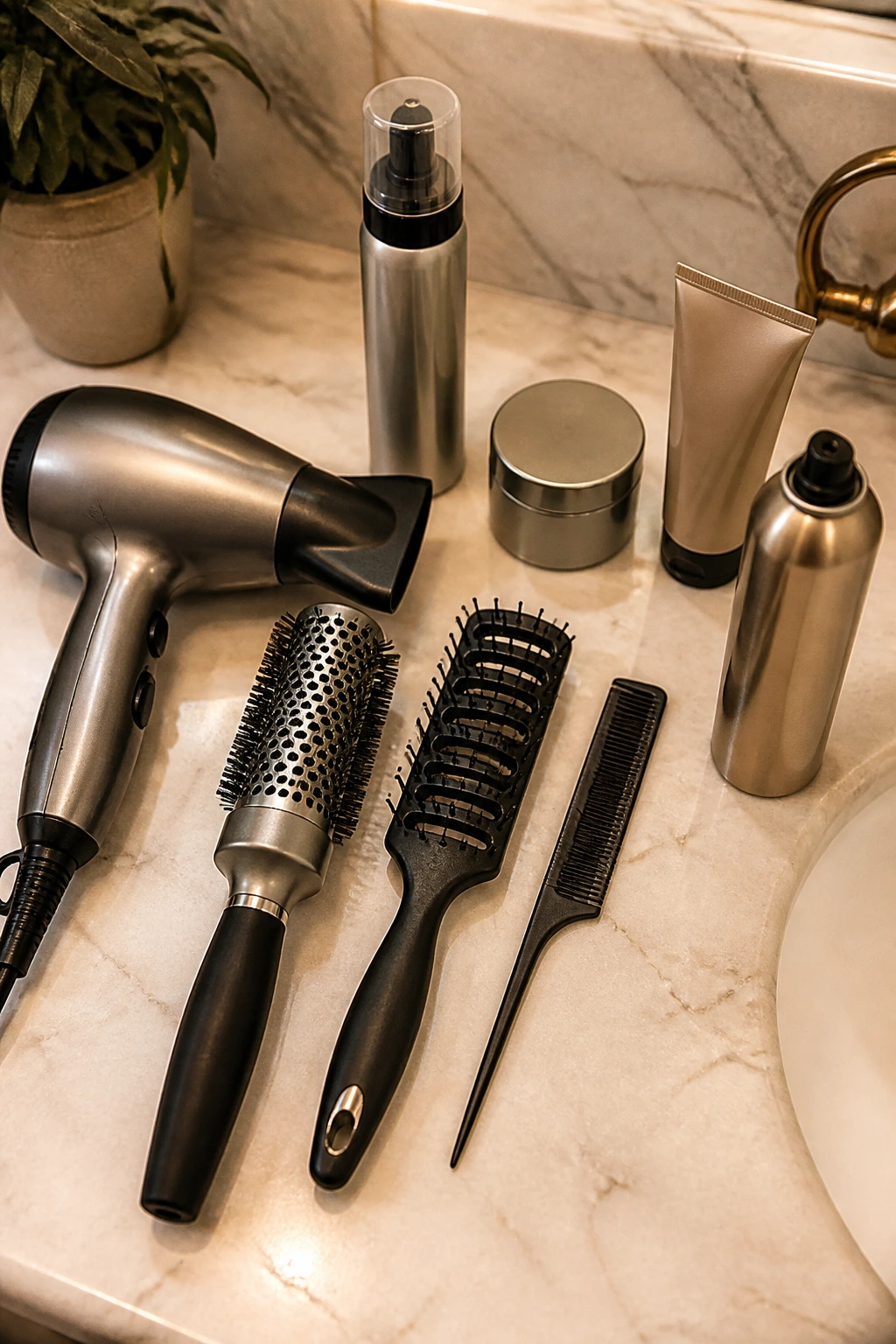
Styling Tools and Products That Earn Their Place on the Counter
-
Blow dryer with a concentrator nozzle: Directs air where you need lift and keeps the fringe from blowing every direction at once.
-
Small round brush, 1 to 1.5 inches: Good for shaping the crown, side sweep, and front bend without creating too much curl.
-
Vent brush: Faster for drying a pixie on busy mornings, especially if your hair already has a bit of body.
-
Tail comb: Useful for clean parts and for lifting the roots at the crown before you dry.
-
Light mousse or root-lift spray: Helps fine hair hold shape without becoming crunchy.
-
Matte paste or styling clay: Better for choppy or piecey pixies; a little goes a long way.
-
Light cream or serum: Works on sleek or silver cuts that need softness without flatness.
-
Soft-hold hairspray: Holds the shape without turning the hair into a shell.
-
Dry shampoo: Handy for keeping the crown from looking oily on day two or three.
How to Style and Wear These Cuts Without Fighting the Hair
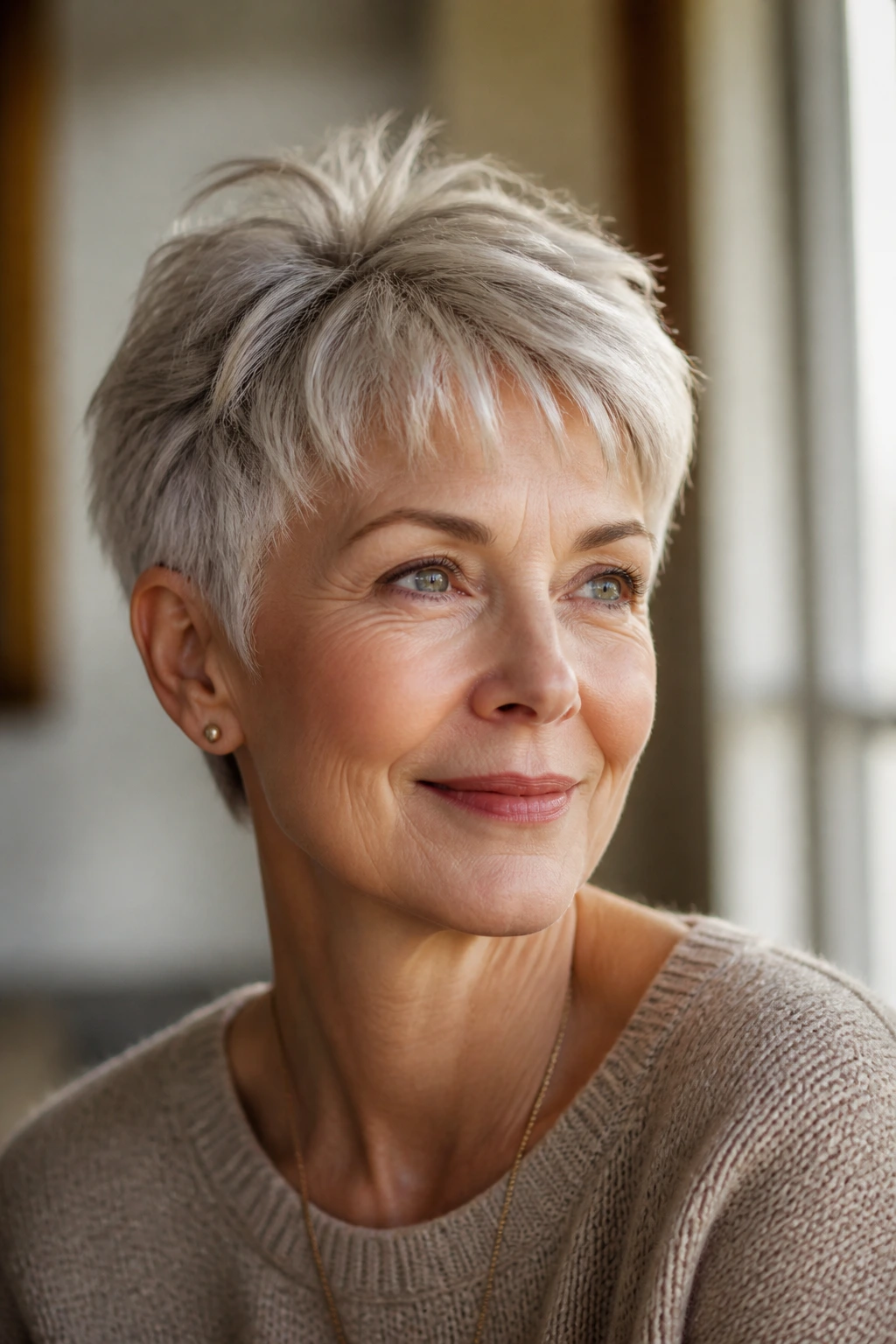
Everyday: Start with damp hair, not soaking hair. Aim the dryer at the roots first, because roots set the shape, and the ends follow. If the crown wants to lie flat, dry it in the opposite direction for a few seconds before pushing it back.
With glasses: Keep the temples tidy and the fringe light. Hair that hits the frame arms all day gets annoying fast, and you’ll know it by the number of times you push it aside.
For a dressier finish: Use a side part, smooth the sides, and give the crown a little lift. That small contrast makes the cut look intentional without turning it stiff.
On low-effort days: Let texture do the work. A finger-combed pixie with a little matte product often looks better than a brushed-out one that’s been fussed over too much.
Common Mistakes That Make a Pixie Harder to Wear
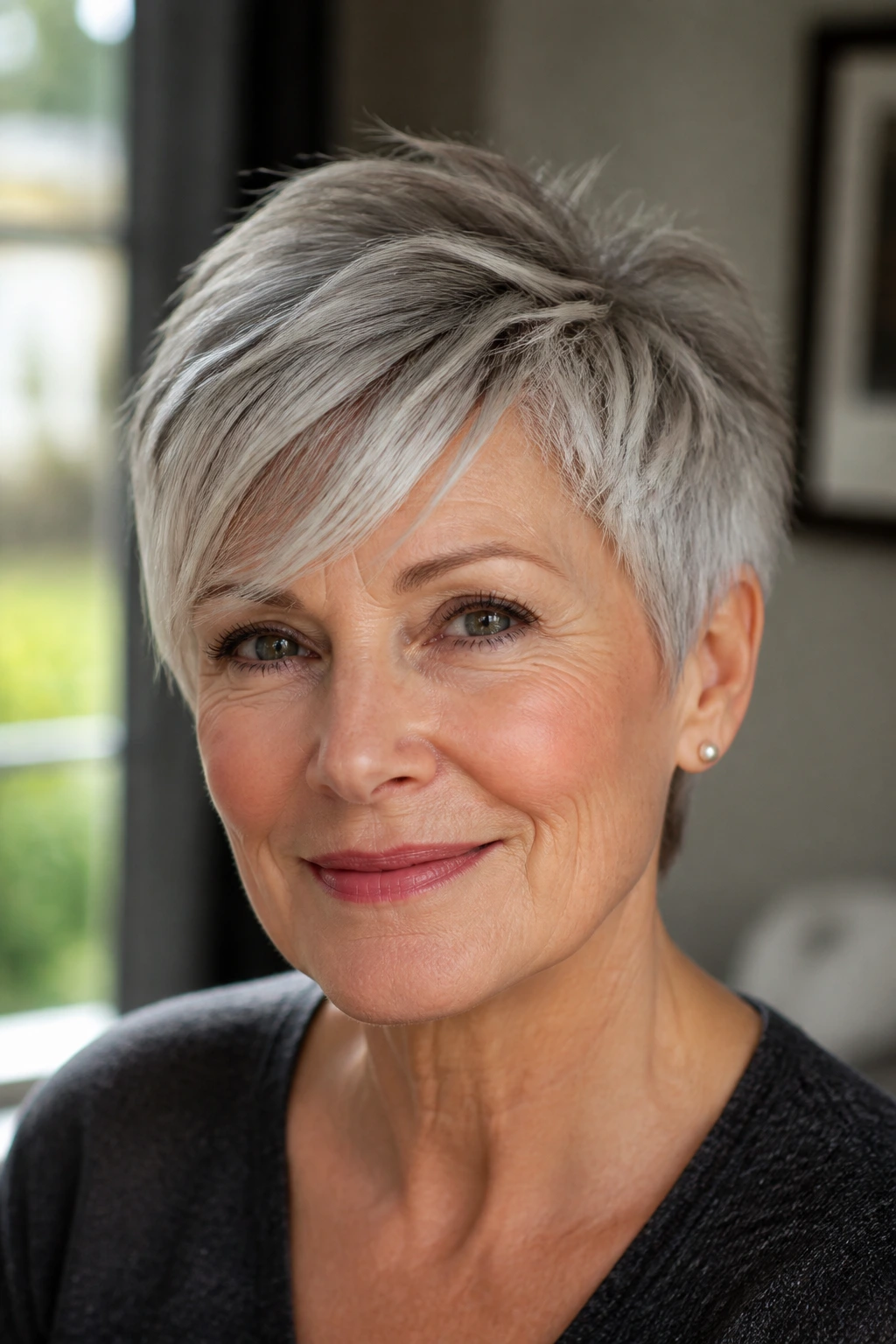
The first mistake is cutting the nape too blunt or too wide. It looks neat for a week, then starts to mushroom as it grows. A tapered neckline grows in cleaner and usually feels less harsh against the neck.
The second is overloading the top with product. Heavy cream, thick wax, or too much serum can flatten the crown and make fine hair look dirty by noon. Use less than you think, warm it in your hands, and add only if the hair needs it.
A third mistake is ignoring the cowlick. If the front swirls left, do not force it straight unless you enjoy daily arguments with a brush. Work with the growth pattern and let the fringe fall the way it wants, then shape around that.
The last one is leaving the sides too bulky. Pixies can go wide around the ears fast, and when they do, the whole cut loses lift. A good trim around the temples and sideburns keeps the head shape clean.
Variations and Adaptations Worth Trying
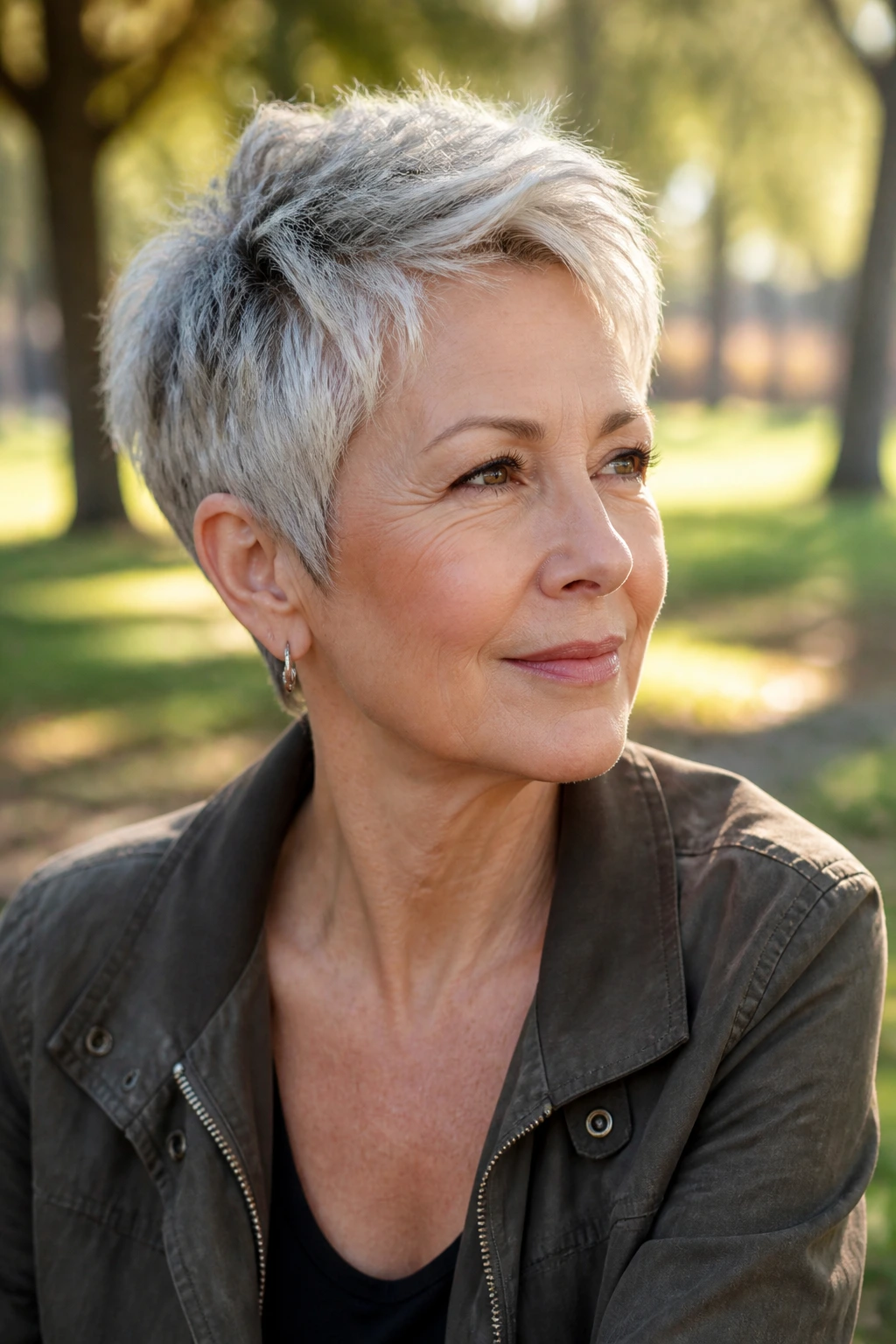
Fine-Hair Lift: Keep the top longer than the sides, but avoid over-layering the ends. Fine hair needs structure more than it needs a lot of shredded texture.
Thick-Hair Control: Use an undercut or deeper debulking near the nape and ears. That keeps the shape from puffing out and makes styling a lot quicker.
Curly-Hair Freedom: Let the curls dictate the outline and trim the hair when it’s dry or nearly dry. This keeps shrinkage from turning a cute cut into a tiny cloud.
Glasses-First Shape: Keep the fringe light and the temples narrow so the frames sit comfortably. The haircut should make room for the glasses, not compete with them.
Easy Grow-Out Version: Leave a little more length through the crown and sideburns, and avoid hard clipper lines at the back. That gives you a softer transition if you decide to grow it out later.
How to Keep the Shape Between Salon Visits
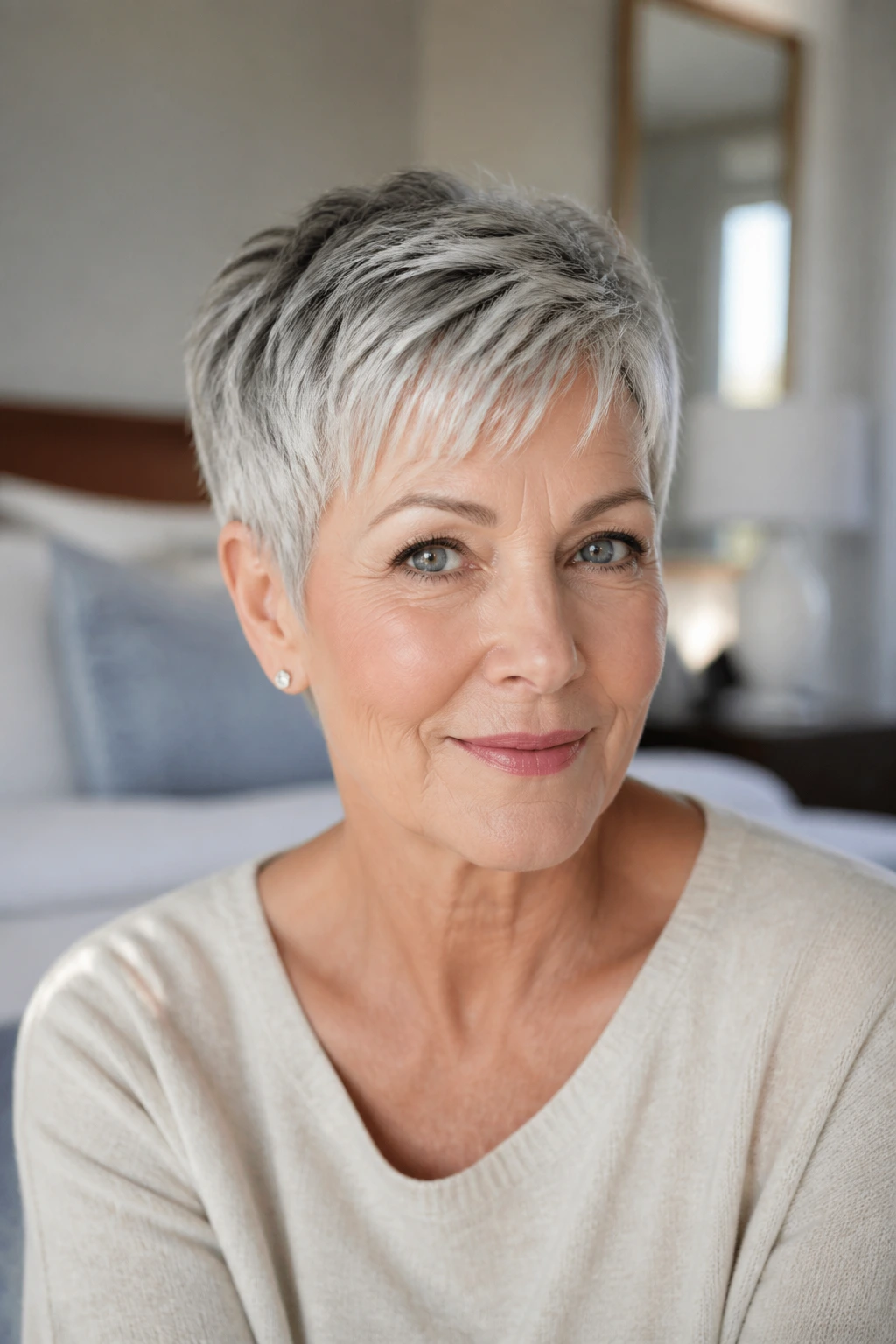
Pixies need maintenance, but not all maintenance has to be a full appointment. A good trim every 4 to 6 weeks keeps the outline sharp. If you like a crisp nape or micro-fringe, you may want a touch-up sooner. If your pixie is softer and longer on top, you can stretch it a little longer.
At home, check the neckline in good light once a week. That one habit keeps the haircut from drifting into something shapeless. A bit of dry shampoo at the roots can rescue day-two flatness, and a quick bend with a small brush can bring the fringe back to life without a full wash.
Sleep matters too. A satin pillowcase or even a smoother cotton case can help reduce frizz at the crown and around the ears. Hair that sits short against the head gets flattened fast, so anything that cuts down on friction helps.
Frequently Asked Questions
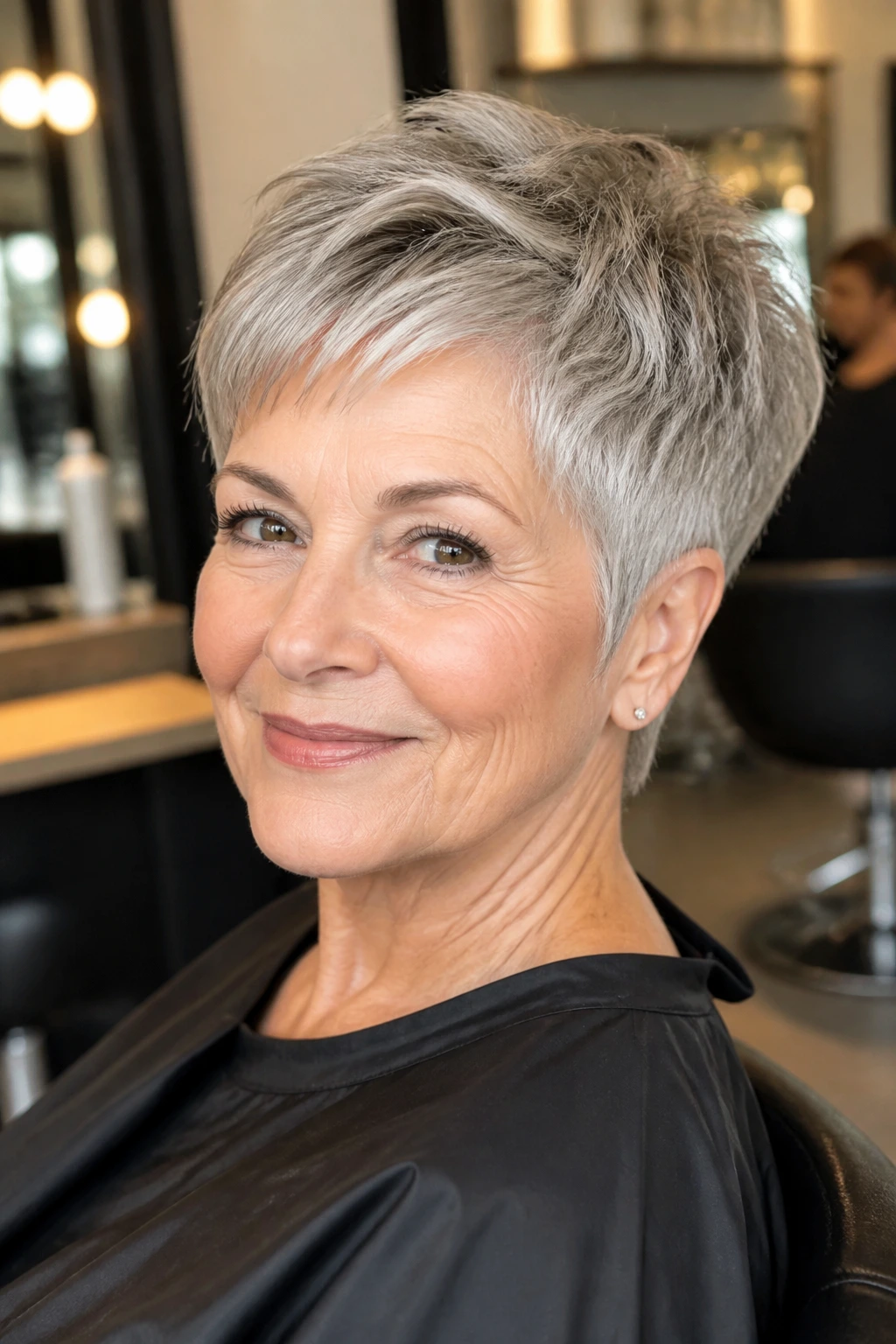
What pixie cut makes hair look thicker?
A pixie with lift at the crown and softer, broken-up ends usually gives fine hair the best shape. Avoid blunt, heavy layers that sit flat; they make the scalp show more, not less.
Is a pixie cut good for women over 60 who wear glasses?
Yes, if the sides and fringe are planned around the frames. Keep the temple area tidy and avoid bangs that drop straight into the lenses all day.
How often does a pixie need trimming?
Most pixies need a trim every 4 to 6 weeks to keep the outline clean. Very short fringe or a sharp nape may need attention sooner.
Can curly hair wear a pixie without turning puffy?
It can, if the cut follows the curl pattern and leaves enough length for the curls to spring naturally. Cutting curly hair too short around the sides is what usually creates the puff.
What should I tell the stylist if I’m nervous about going too short?
Ask for a longer pixie with a soft perimeter, not a tight crop. Mention how much you want left on top, whether you tuck hair behind your ears, and how you usually wear glasses or earrings.
How do I keep a pixie from looking helmet-like?
Use texture with restraint. A little movement at the crown and light separation at the ends keep the cut from turning into one solid shape.
What if my hair has a strong cowlick at the front?
Do not fight it blindly. Let the fringe follow the cowlick’s direction and build the rest of the cut around that movement. The haircut will look calmer, and styling will get easier fast.
Can I grow a pixie out without an awkward stage?
Yes, if the cut is designed for grow-out from the start. Keep some length at the crown and sideburns, avoid harsh disconnects, and trim shape rather than chopping everything shorter each time.
The Shape That Feels Like You
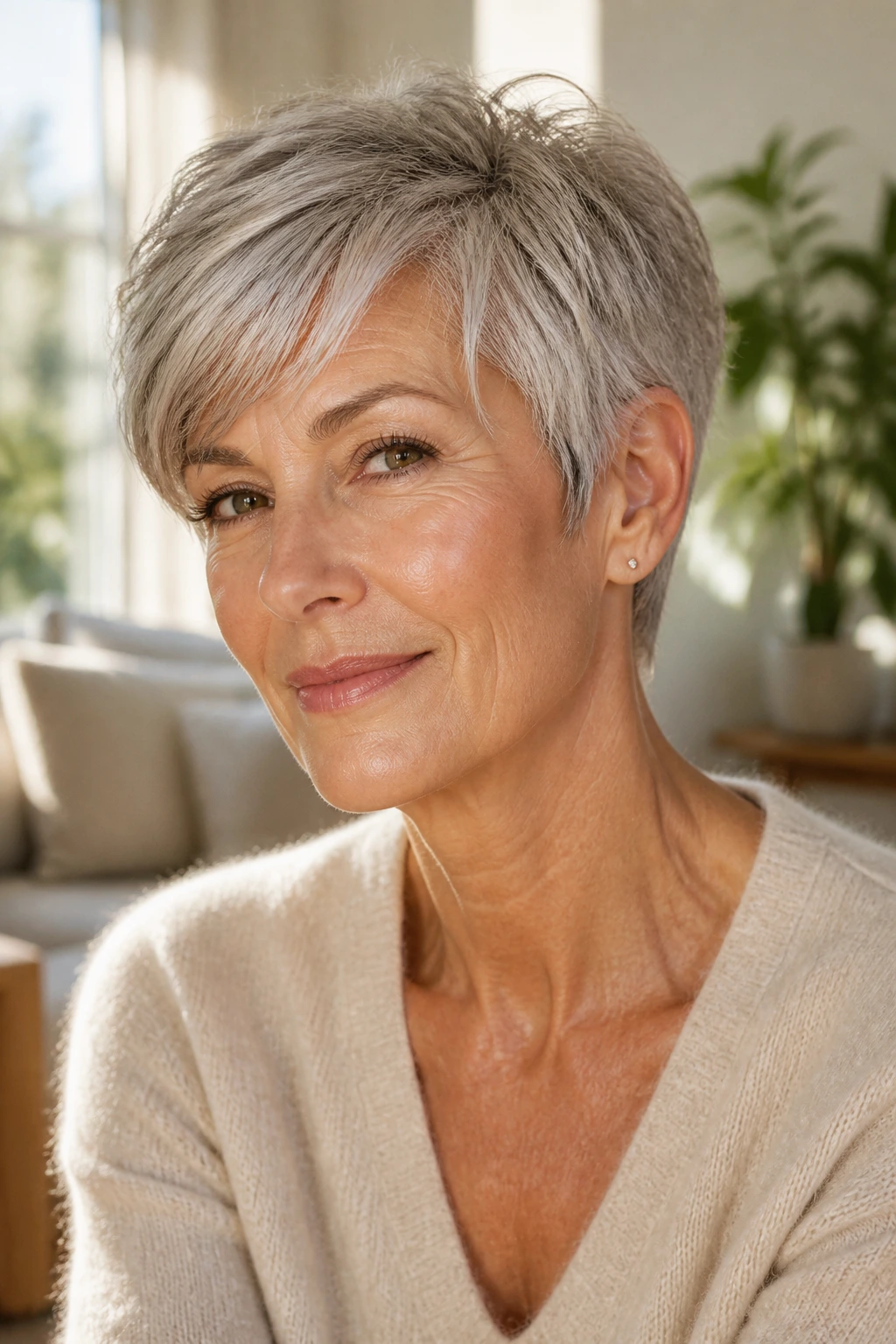
The best pixie is not the shortest one or the most dramatic one. It’s the one that sits on your head like it belongs there. For some women, that means a feathered fringe and a soft nape. For others, it means a neat silver crop, a curly pixie with room to spring, or a longer top that can be brushed forward on a lazy morning.
I keep coming back to the same idea because it matters: a pixie should make your life simpler, not more precious. If the cut needs constant rescue, it’s the wrong cut. If it dries in ten minutes, flatters your glasses, and still looks like you by lunchtime, that’s the one worth keeping.
