



Short wavy hair has a small advantage that people with straighter textures often envy: it doesn’t need much help to look alive. A pixie cut on this kind of hair can sit airy and soft one day, sharp and piecey the next, and a little wild in the best possible way after a light mist of water. Pixie cuts for short wavy hair work because the wave pattern does some of the visual heavy lifting for you. The shape already has movement baked in.
The catch is that waves are not obedient. Cut them too blunt, and they puff. Cut them too short through the crown, and they stand up like they’ve got somewhere to be. Leave the neckline sloppy, and the whole head shape goes fuzzy in a hurry. The good versions of this haircut respect the bend in the hair instead of trying to steamroll it.
That’s why the best pixies on wavy hair always look like they were planned with a ruler in one hand and a little mischief in the other. You want clean lines where the haircut needs structure, then enough softness at the top, fringe, or temples to let the texture breathe. A few millimeters change the whole mood. Seriously.
Why These 35 Pixie Cuts Work So Well on Short Wavy Hair
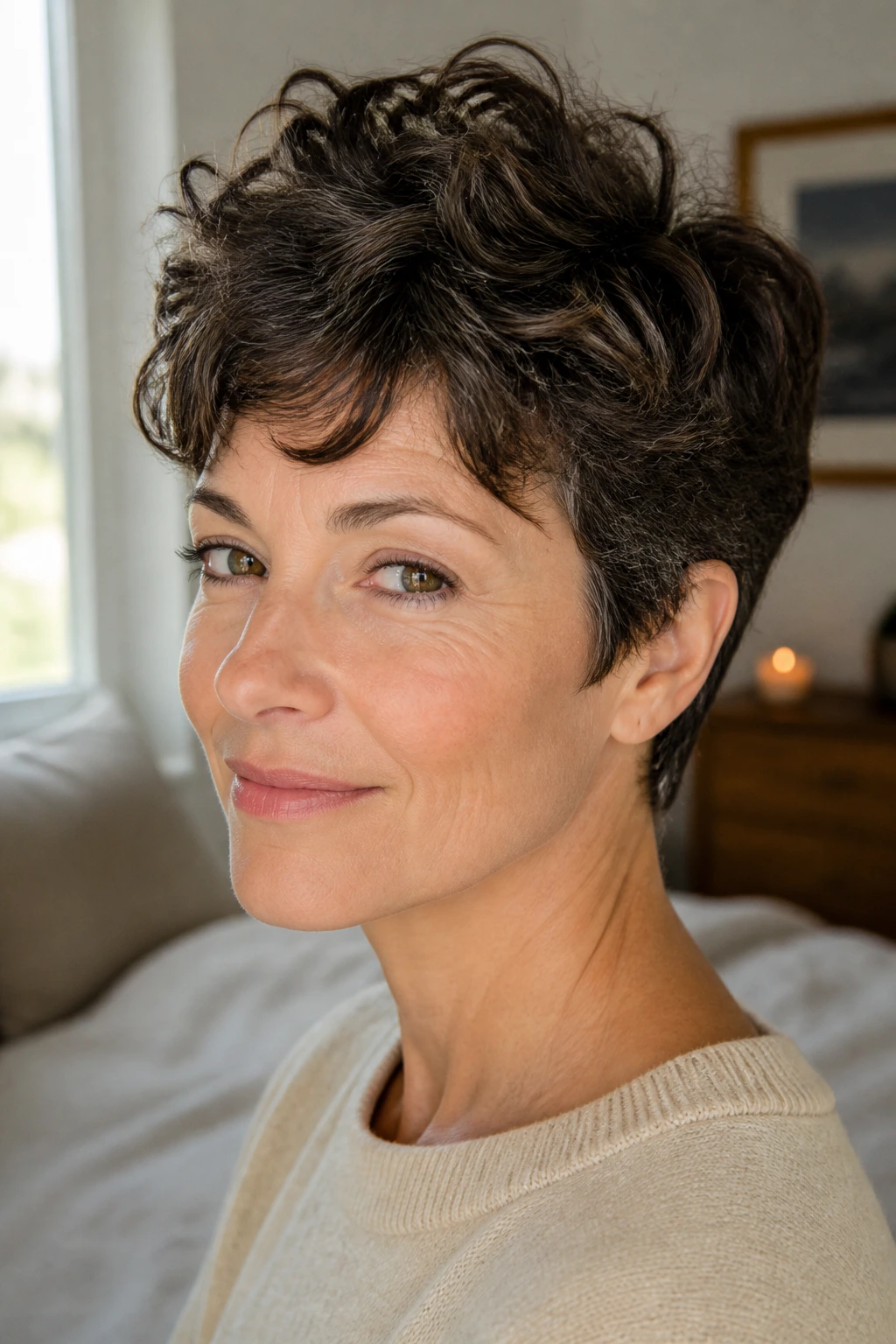
-
The wave adds built-in lift: On short hair, a 2A to 2C bend keeps the crown from lying flat, so you don’t need a lot of teasing or powder to get height.
-
Texture hides hard edges: A slightly textured end on wavy hair looks intentional; the same edge on pin-straight hair can read as blunt and severe.
-
The nape matters more than people think: A clean taper at the back stops the haircut from ballooning out when the waves dry.
-
You can air-dry fast: Short wavy hair usually settles faster than shoulder-length waves, especially when you use a pea-sized amount of cream or mousse.
-
Grow-out looks gentler: A wavy pixie can carry an extra two or three weeks of length better than a crisp, straight-edged crop.
-
Styling products stay light: You usually need less product than people assume, which is good news if your hair gets greasy at the root by noon.
Picking the Right Pixie Length for the Bend in Your Hair
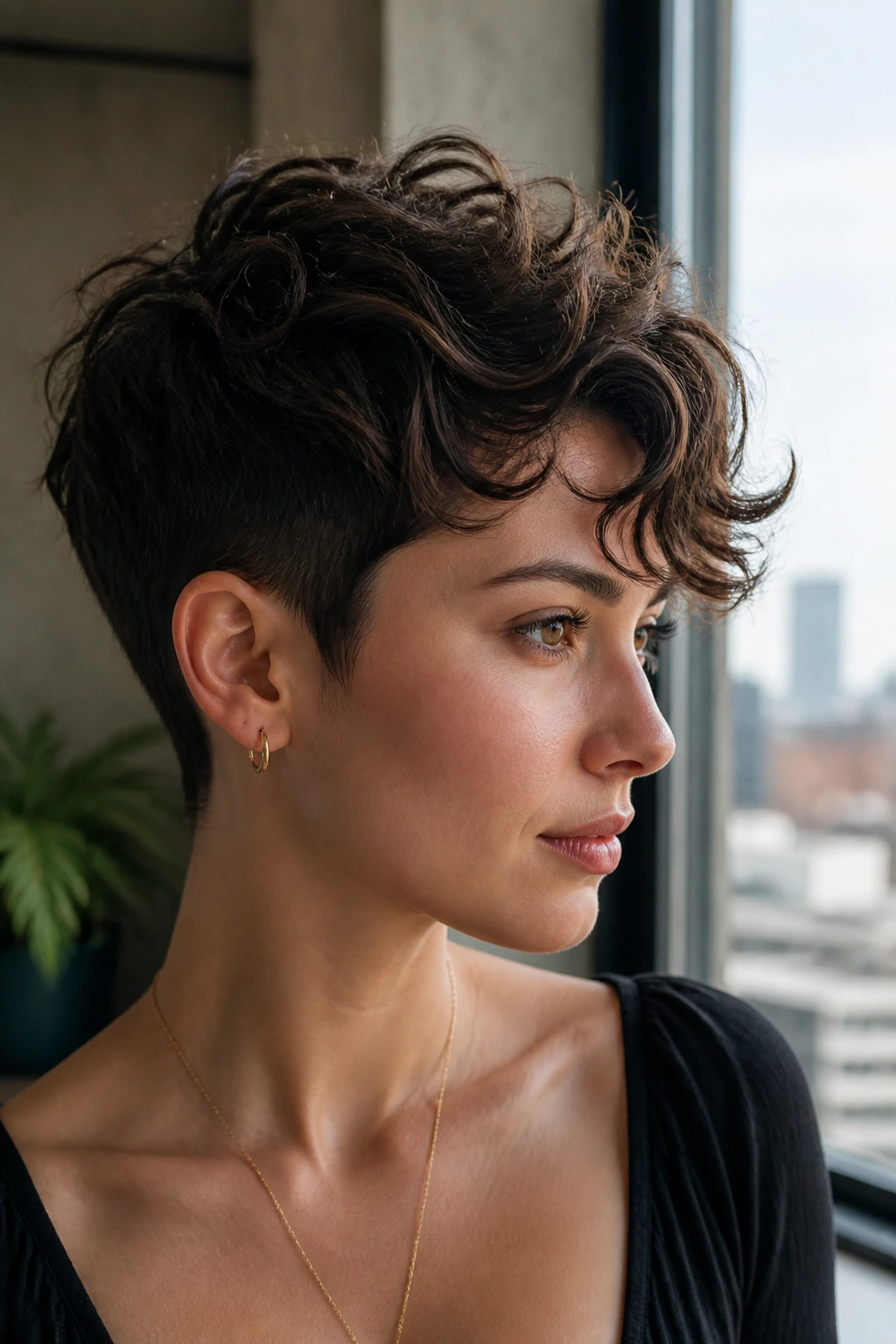
The best pixie length is not the shortest one you can get away with. It’s the one that lets your waves do their job without making the silhouette wobble. If your wave starts near the scalp, you can go shorter through the sides and nape and keep a little more room up top. If your wave shows up mostly from the mid-lengths down, too much removal at the crown can leave you with a flat top and a fluffy edge.
Fine wavy hair usually wants a little more softness and a little less thinning. Thick wavy hair usually needs more interior shaping so it doesn’t turn into a mushroom cap by the end of the day. And if your wave pattern is uneven—maybe one side flips out while the other side bends in—an asymmetrical shape or a longer fringe often makes the whole cut feel more deliberate.
The first question to ask is simple: do you want the cut to look neat with almost no effort, or do you want it to look styled? Those are not the same haircut. A neat pixie needs sharper tapering and clearer lines. A styled pixie can handle more length through the top, more movement at the fringe, and a messier finish that actually improves after you touch it with your hands.
1. Soft Tapered Pixie
This is the easiest place to start if you want the cut to feel polished without looking stiff. Keep the sides snug, taper the nape cleanly, and leave just enough length through the crown—about 2 to 3 inches—to let the wave roll instead of spike. It’s the kind of shape that looks good when you’ve done almost nothing to it.
Ask for: a soft taper around the ears and neckline, with a little extra length on top so the wave can land naturally.
2. Choppy Textured Pixie
A choppy pixie leans into the rougher side of wavy hair, and I mean that as a compliment. Point-cut ends and uneven little layers keep the top from settling into one flat shell, which is exactly what you want if your waves spring up in different directions. A dab of matte paste and a quick finger-scrunch are usually enough.
It works best when the stylist leaves some separation instead of over-blending everything into one smooth cap. Too much smoothing kills the whole point. Too much bluntness, and the texture gets bulky. There’s a narrow middle path here, and it’s worth finding.
3. Long-Crown Pixie
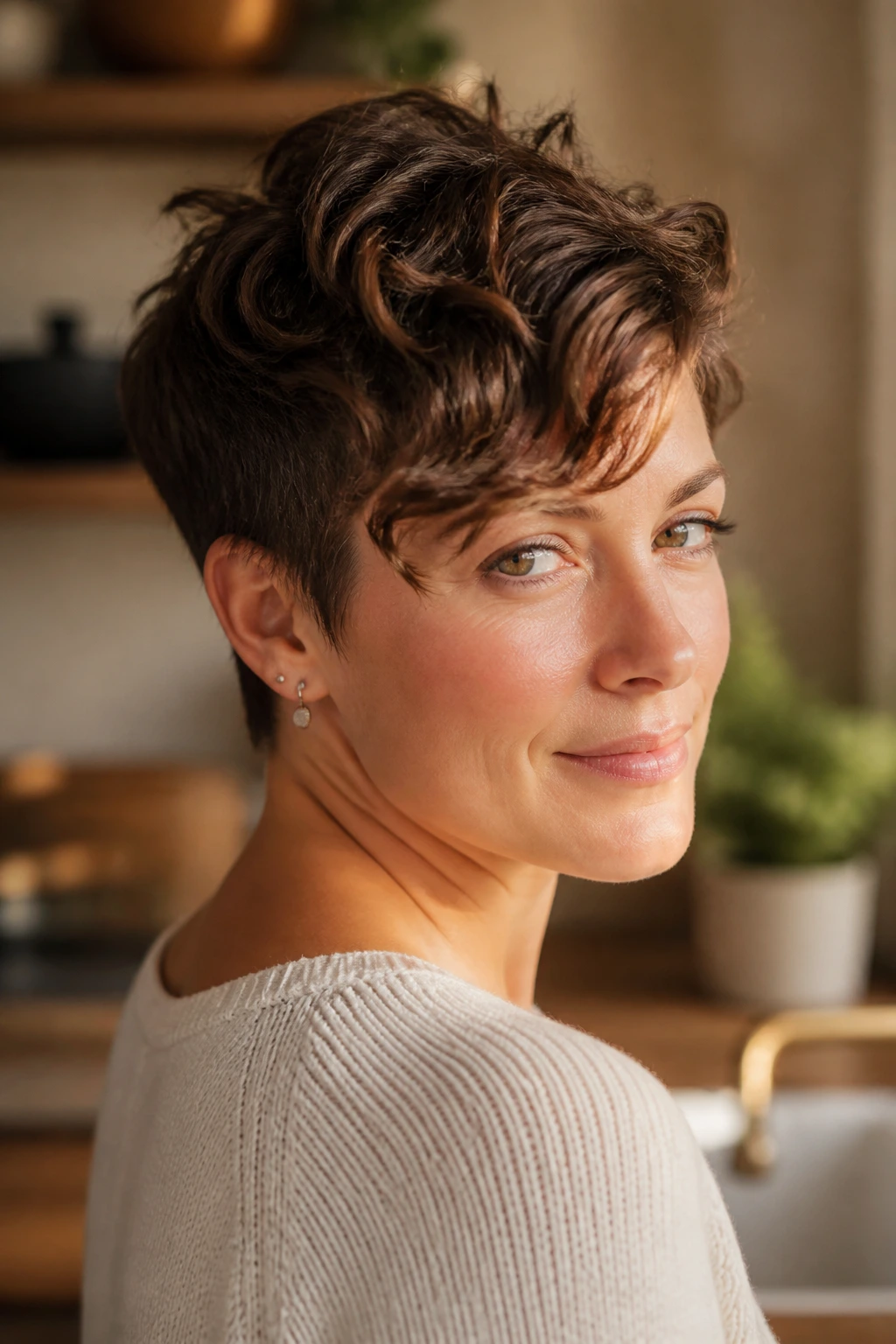
When waves need room, the crown is where you give it to them. A long-crown pixie keeps the top a touch longer—often closer to 3 or even 4 inches—so the bend shows up in a visible, almost ribbon-like way. The sides stay shorter for contrast, which keeps the style from looking shaggy.
This shape is especially good if your hair collapses the minute it’s cut too short. It also gives you more ways to style it: brushed forward, swept back, or tossed to one side with a little mousse. The haircut does not fight the wave. That’s the whole appeal.
4. Side-Swept Fringe Pixie

A side-swept fringe takes the attention off a broad forehead, a strong hairline, or any cowlick that likes to announce itself. Keep the fringe long enough to sweep across the brow—usually 3 to 4 inches at the front—and let the wave loosen it instead of pinning it into place. The result is soft, but not boring.
If your waves grow in a little irregularly at the front, this cut makes the unevenness look deliberate. A small round brush can help with direction, but most days your fingers will do fine. Just don’t drown the fringe in product. It wants motion, not glue.
5. Asymmetrical Pixie
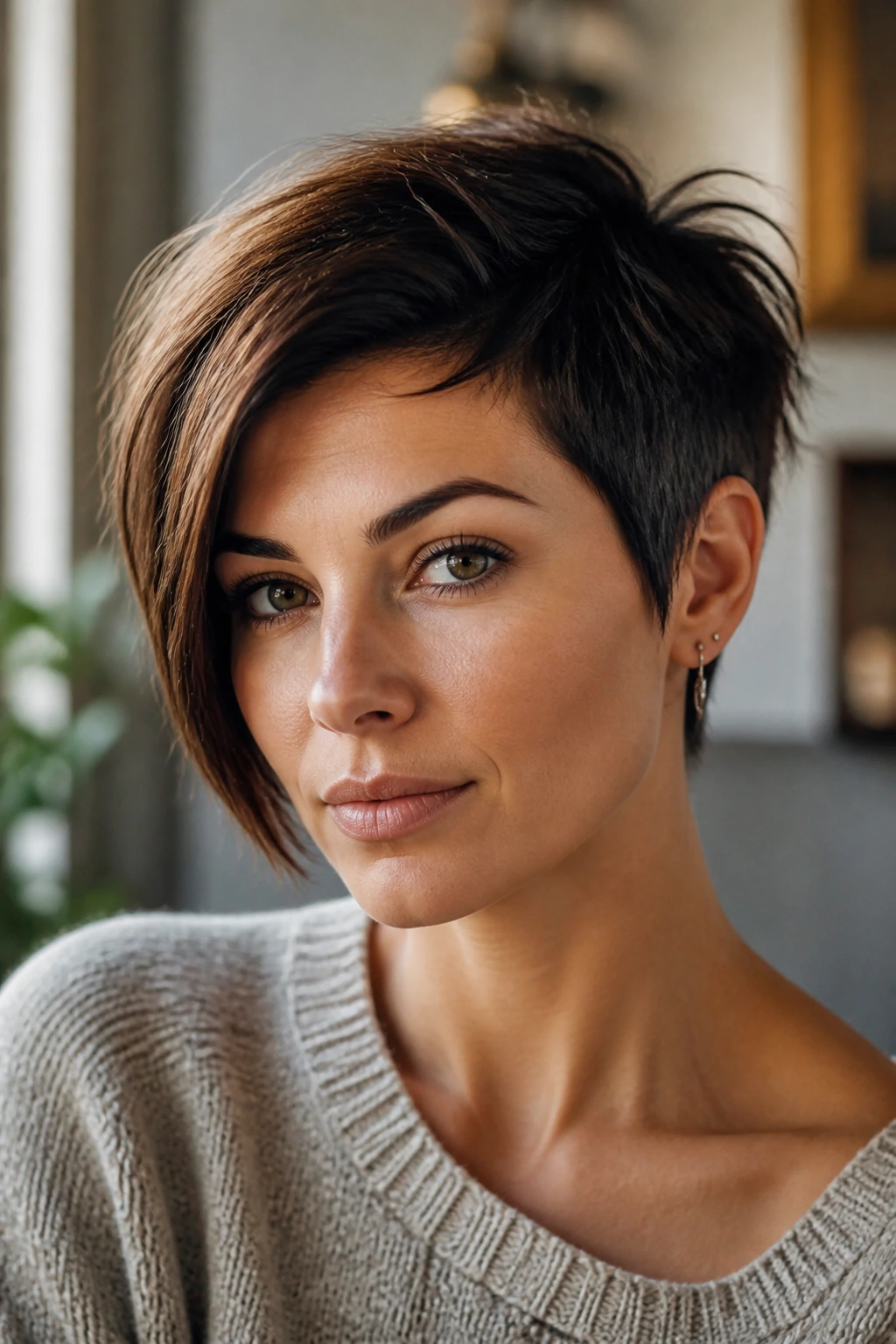
One side a little longer than the other changes the whole attitude of a pixie. Even a difference of half an inch can give wavy hair a sharper shape, because the eye sees the uneven line before it notices the texture. It’s a smart choice if your face is round or square and you want a bit of length to soften the sides.
The styling trick is to keep the longer side sleek enough to read as intentional, while letting the shorter side stay slightly messier. That contrast is the point. This cut looks especially good when the wave pattern isn’t identical on both sides, because the asymmetry makes the difference feel planned.
6. Undercut Pixie
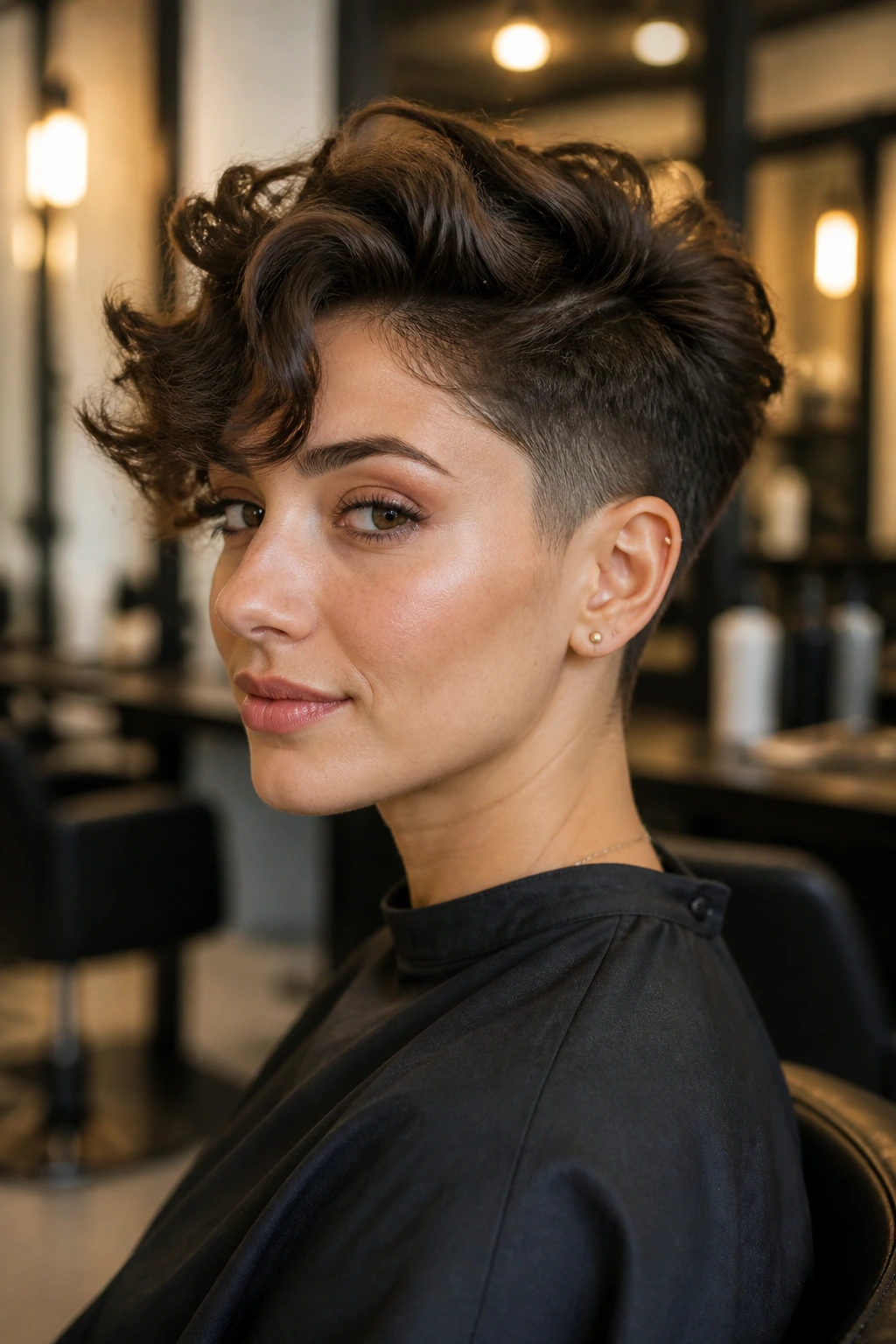
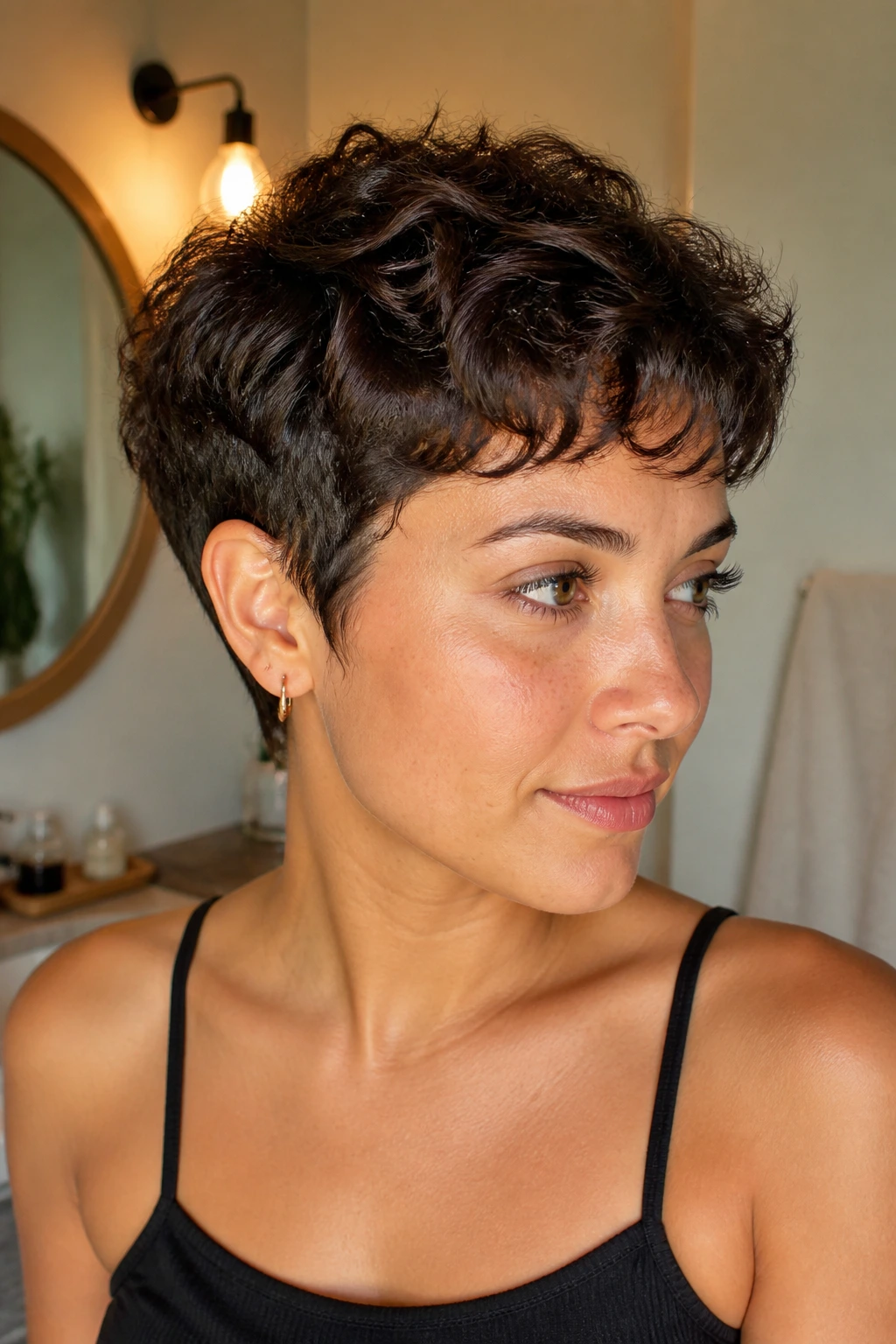
An undercut pixie is the bold one in the room. The sides and back are clipped close, sometimes with a clipper guard number 1 or 2, while the top stays long enough to flip, curl, or brush forward. On wavy hair, that contrast can be electric because the top gets all the movement and the sides stay crisp.
The real benefit is control. Thick or dense waves can explode outward if the perimeter is left too full. An undercut takes care of that without making the top feel thin. If you like a haircut that looks sharper after a little sweat and movement, this one earns its keep.
7. Micro-Bang Pixie

Micro bangs are not for the timid, and that’s fine. A short fringe just above the brows can look fantastic on wavy hair because it creates a hard visual line against a soft texture. The trick is to leave the bangs a touch longer than you think you need; waves shrink the moment they dry.
This cut works best on smaller foreheads, oval faces, or anyone who likes a very graphic shape. It does require regular trims, because even a quarter-inch can change the balance. If you want the fringe to sit flat instead of puffing, dry it with your fingers pressed lightly from the root downward.
8. Feathered Layer Pixie
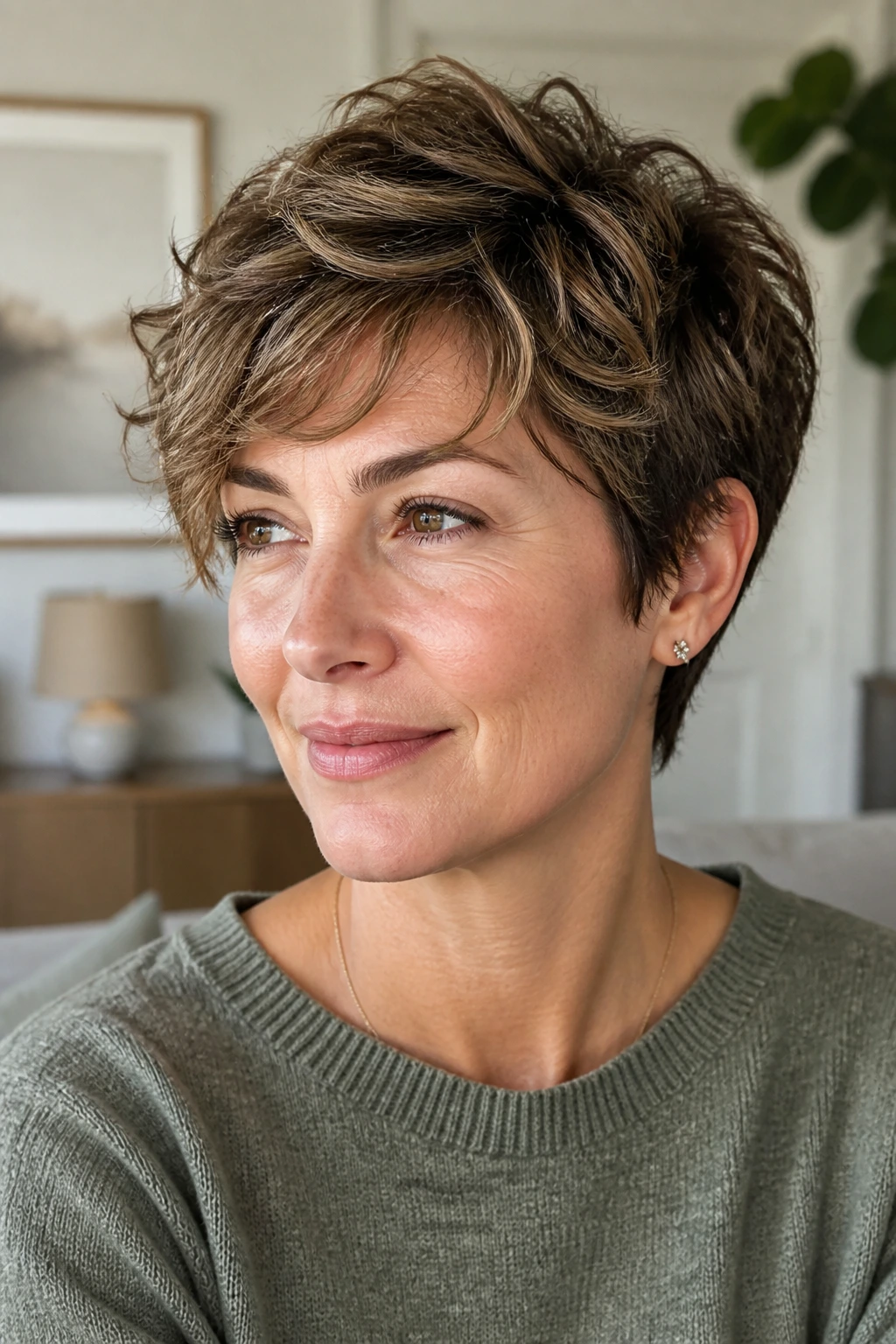
Feathering is one of those old-school techniques that still earns its place when the hair has natural bend. Instead of heavy, blunt layers, the ends are softened so the waves fall into slimmer ribbons. The haircut moves well, especially around the crown and sides, and it tends to be kinder to fine hair that can’t handle too much weight removal.
You do need a stylist who knows when to stop. Over-feathering can leave wavy hair wispy in a bad way, like the ends have been chewed on. A gentle feather around the top and temples is enough. The rest should stay clean.
9. French-Girl Pixie

There’s a reason this version keeps showing up in salons. A French-girl pixie is soft around the edges, a little longer in the fringe, and never overstyled. On short wavy hair, that laid-back shape is a gift. The texture gives it that slightly lived-in feeling without having to fake anything.
I like this cut when someone wants a pixie but does not want to look like they’ve committed to a helmet. It’s especially flattering if your waves bend irregularly, because the looseness is part of the charm. Use a little cream, tuck one side behind the ear, and stop fussing. Honestly, that’s usually enough.
10. Razor-Cut Pixie
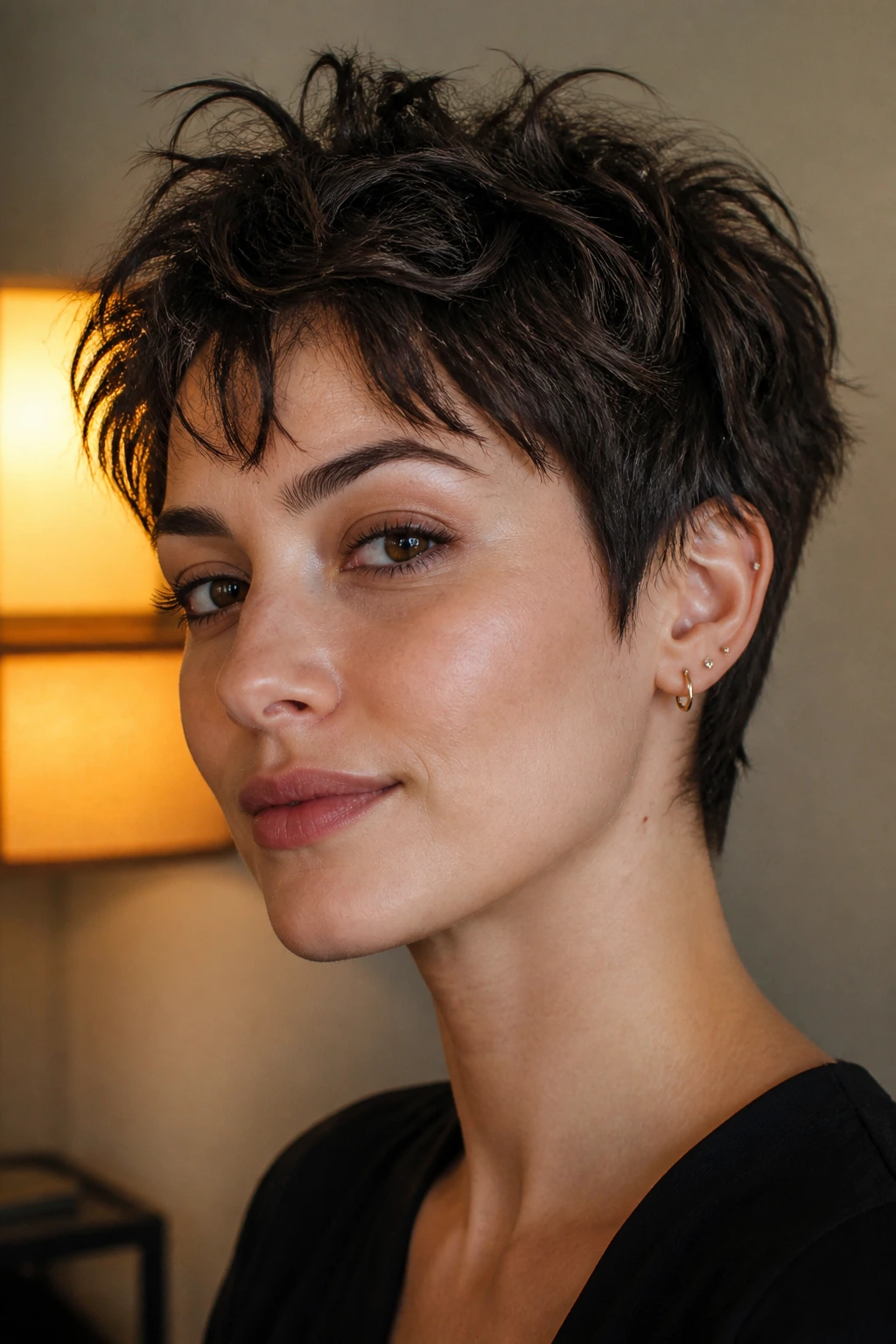
A razor-cut pixie can be gorgeous on soft wavy hair, but I’d be cautious if your ends frizz easily. The razor thins the perimeter and creates a more broken edge, which makes the texture look airy and modern. If your hair is coarse or dry, though, a razor can open up the ends too much and make the whole cut fuzzy.
The sweet spot is a light razor through the crown and front, not a heavy-handed pass over every inch of the head. Ask for the cut to keep some density at the bottom so the silhouette still reads clearly. It’s a little edgier, a little less tidy, and that’s the point.
11. Curly-Wave Crop
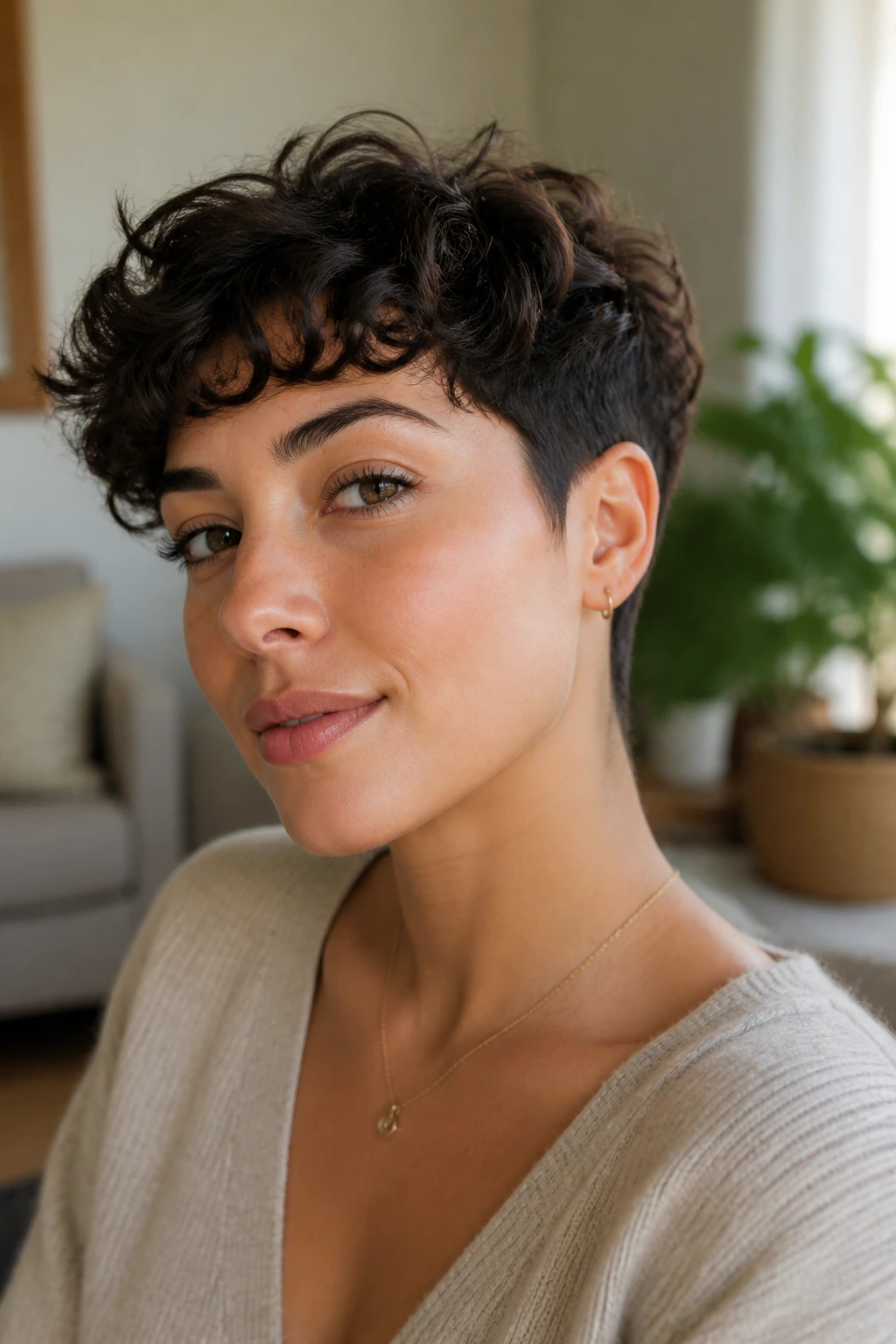
This is the pixie for people whose “wavy” hair has a bit of spring and not just bend. Leave more room through the top—closer to 3 or 4 inches—and let the curls and waves mingle instead of separating them. The sides can stay close, but not shaved so tight that the top starts looking isolated.
The cut can read playful or polished depending on product choice. Mousse and diffuser give it lift; a cream and air-dry make it softer. If your hair forms loose spirals at the front, this shape lets them show instead of getting flattened into the haircut.
12. Pixie Bob Hybrid

A pixie bob sits in that useful middle ground where the back still brushes the nape and the front has enough length to frame the jaw. On wavy hair, it’s one of the easiest ways to get a pixie feel without losing the comfort of a little extra coverage. It’s especially nice if you’re nervous about going all the way short.
The silhouette works because the waves travel through the longer front sections in a more obvious way. That movement keeps the cut from feeling boxy. If you want a cut that can be tucked, pinned, or flipped with almost no effort, this is one of the most forgiving choices on the list.
13. Grown-Out Pixie

A grown-out pixie is not a cop-out. It’s a deliberate shape with longer bits around the fringe, ears, and nape so the haircut looks good even when it’s not freshly cut. Wavy hair is perfect for this because the texture disguises the awkward in-between stage that straight hair exposes so quickly.
This is the version I recommend if you know you won’t live at the salon every four weeks. Keep the outline soft, not shaggy, and trim the edges before they start flipping into the collar. It’s practical, but it still has enough edge to look like a real style, not a compromise.
14. Nape-Tapered Pixie
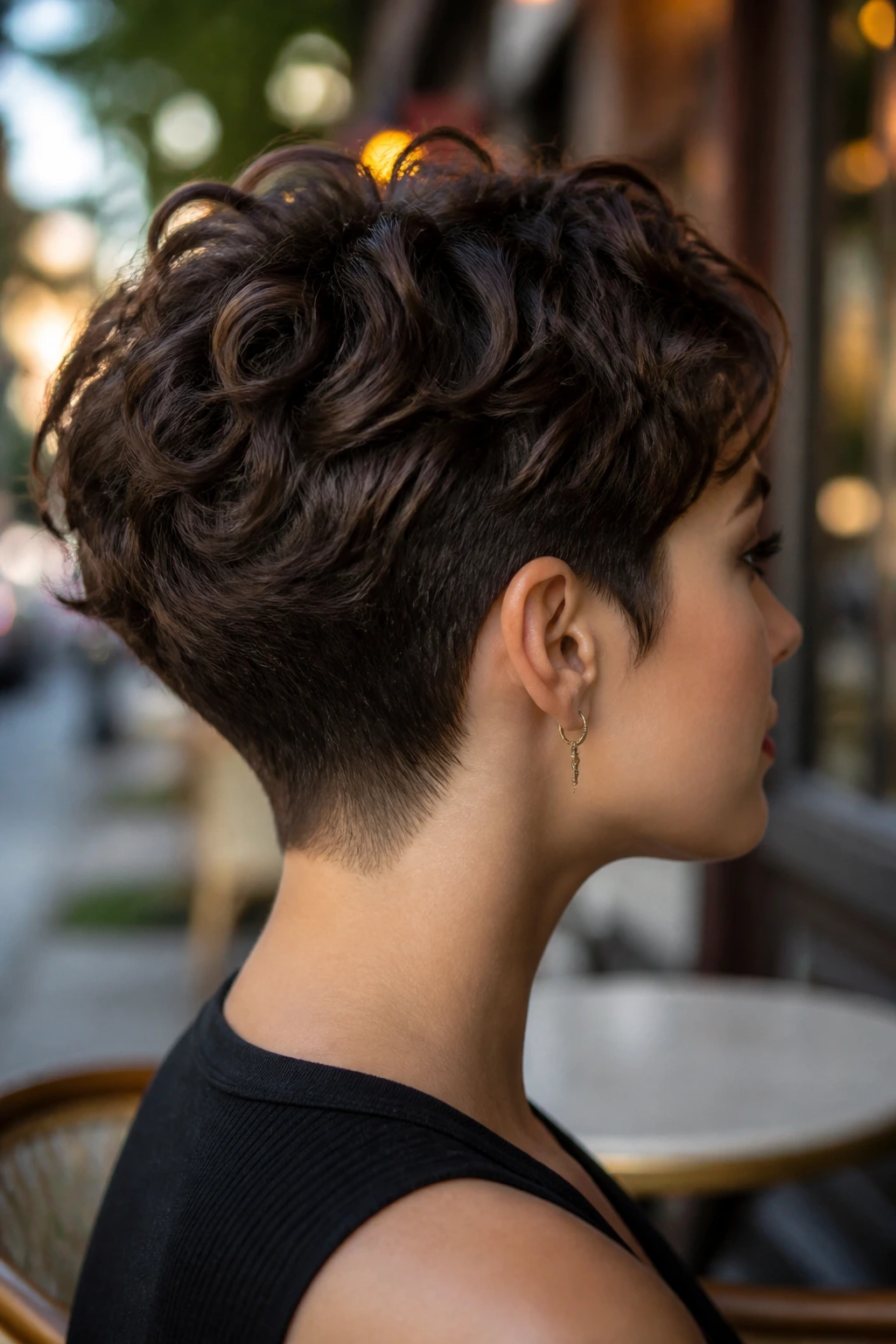
The back of the neck tells the truth about a pixie cut. If it’s too bulky, the whole style reads heavy. A nape-tapered pixie keeps that area tight and clean, which makes the waves on top look more intentional by contrast. It’s a sharp-looking cut, especially on thick hair.
I like this version for anyone who wears collars, scarves, or structured jackets a lot, because the neckline stays neat against fabric. Ask for the taper to finish softly into the hairline rather than chopped straight across. That tiny detail makes the cut look expensive, even when it isn’t.
15. Deep Side-Part Pixie
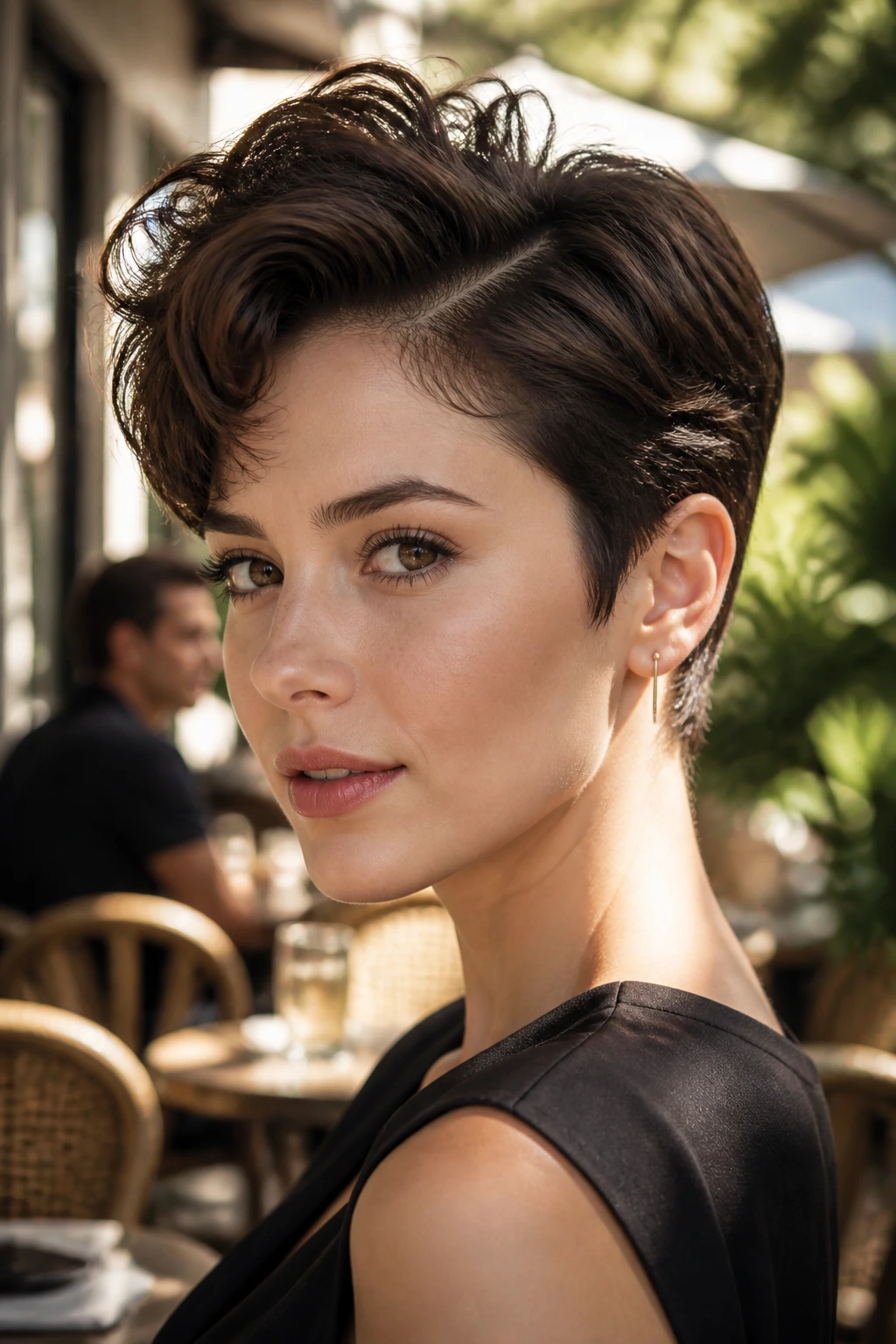
A deep side part can rescue a wavy pixie that keeps collapsing in the same direction. Moving the part low and dramatic creates lift at the root and gives the wave a clear path to follow. It’s also one of the fastest ways to make a short cut look styled without a lot of work.
This shape flatters strong cheekbones and longer faces especially well, because the sweep across the forehead balances the vertical line. A little root mousse at the part line helps, but don’t pile it on. You want lift, not stiffness. One clean side part can do more than a drawer full of products.
16. Wet-Look Pixie
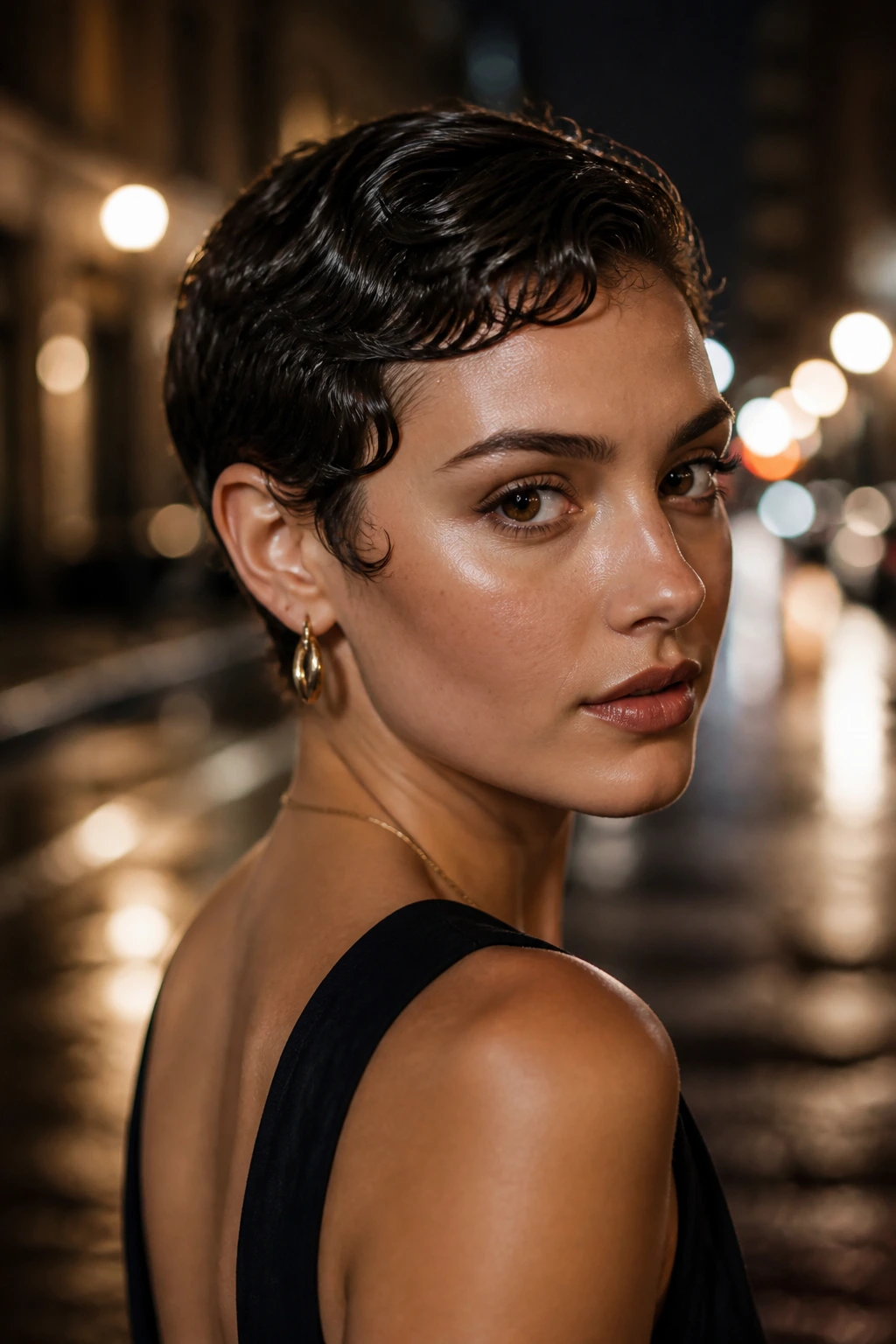
If you want a short wavy cut to feel sleek instead of fluffy, the wet-look pixie is the sharpest route. It uses gel or a glossy cream to push the waves close to the head and define every bend. On a night out, it can look deliberate in a way that matte texture never quite does.
The key is to apply the product evenly, then comb it through with a fine-tooth comb so you don’t end up with one crunchy patch and one dry patch. This style works best on hair that has some natural memory; otherwise it can fall apart as soon as it dries. Very chic. Also a little unforgiving, which is fair.
17. Crown-Volume Pixie
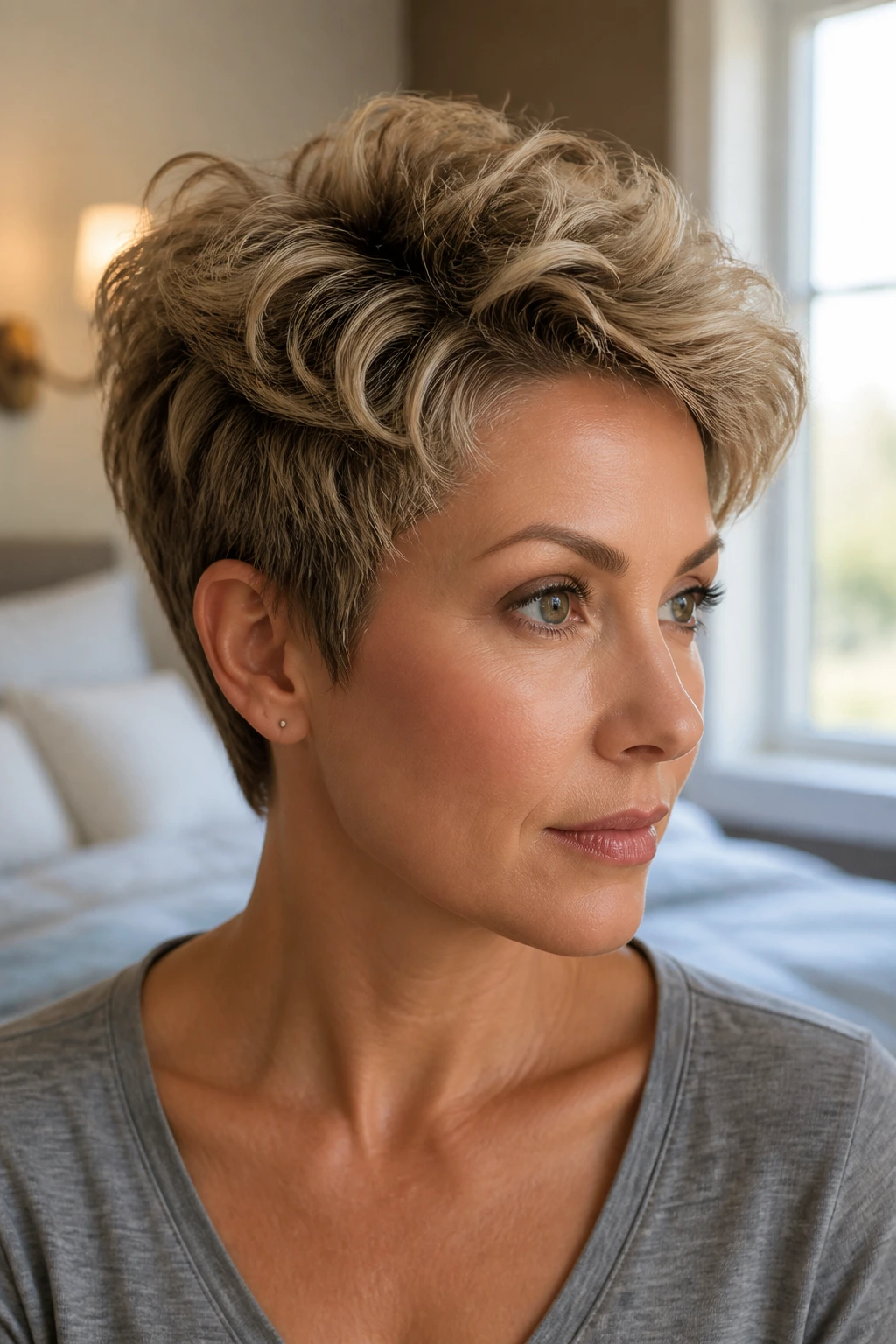
Some people want the opposite of sleek, and that’s where crown volume comes in. The top is left with enough length to lift at the root, often with a bit of layered shaping around the crown so the wave doesn’t sit flat. A little mousse at the base and a quick blast from the dryer can give you that airy, lifted shape.
This is a strong choice if your face is narrow or your hair tends to lie close to the scalp. The height balances the proportions. Just avoid pulling all the volume to the front; you want the lift to sit at the crown, where it supports the whole cut.
18. Shaggy Pixie

A shaggy pixie is basically a pixie with a slightly rebellious streak. The layers stay irregular, the fringe stays soft, and the wave gets to fall where it wants. If you like hair that looks better after being touched, this is probably your lane.
The reason it works on short wavy hair is simple: the cut uses the wave pattern as part of the silhouette instead of hiding it. A little sea salt spray, a few scrunches, and you’re done. This is not the haircut for someone who wants every strand in its assigned seat.
19. Disconnected Pixie
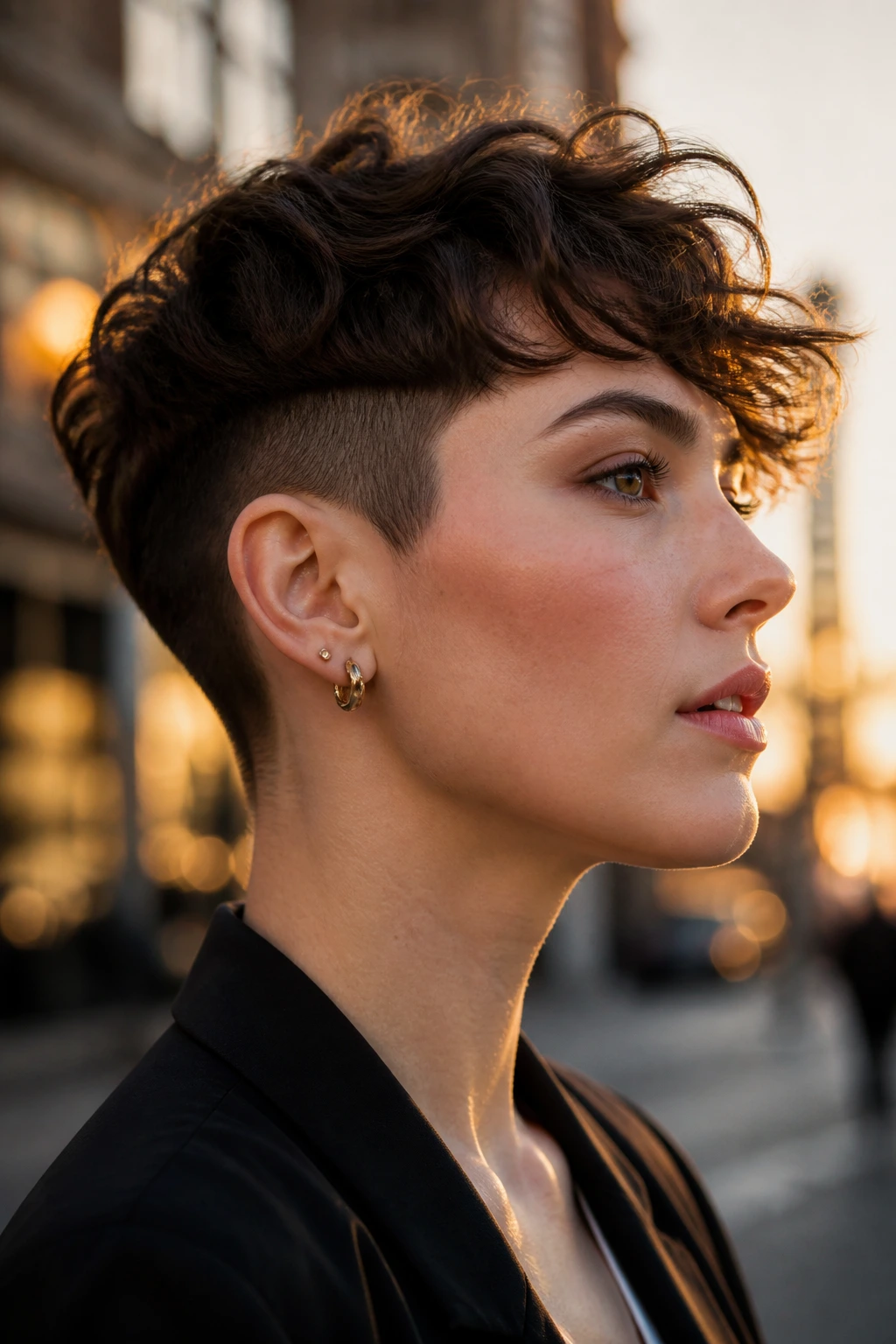
A disconnected pixie makes the contrast between top and sides obvious on purpose. The top stays noticeably longer, while the sides drop away more sharply instead of blending in quietly. On wavy hair, that disconnection makes the texture pop, because the eye gets a clear shape and then a clear movement pattern on top of it.
It’s a good choice if you want something more graphic than a classic pixie. Just make sure the transition is clean, not accidental. If the line is sloppy, the style looks unfinished. If it’s sharp, it looks like a decision.
20. Ear-Tuck Pixie
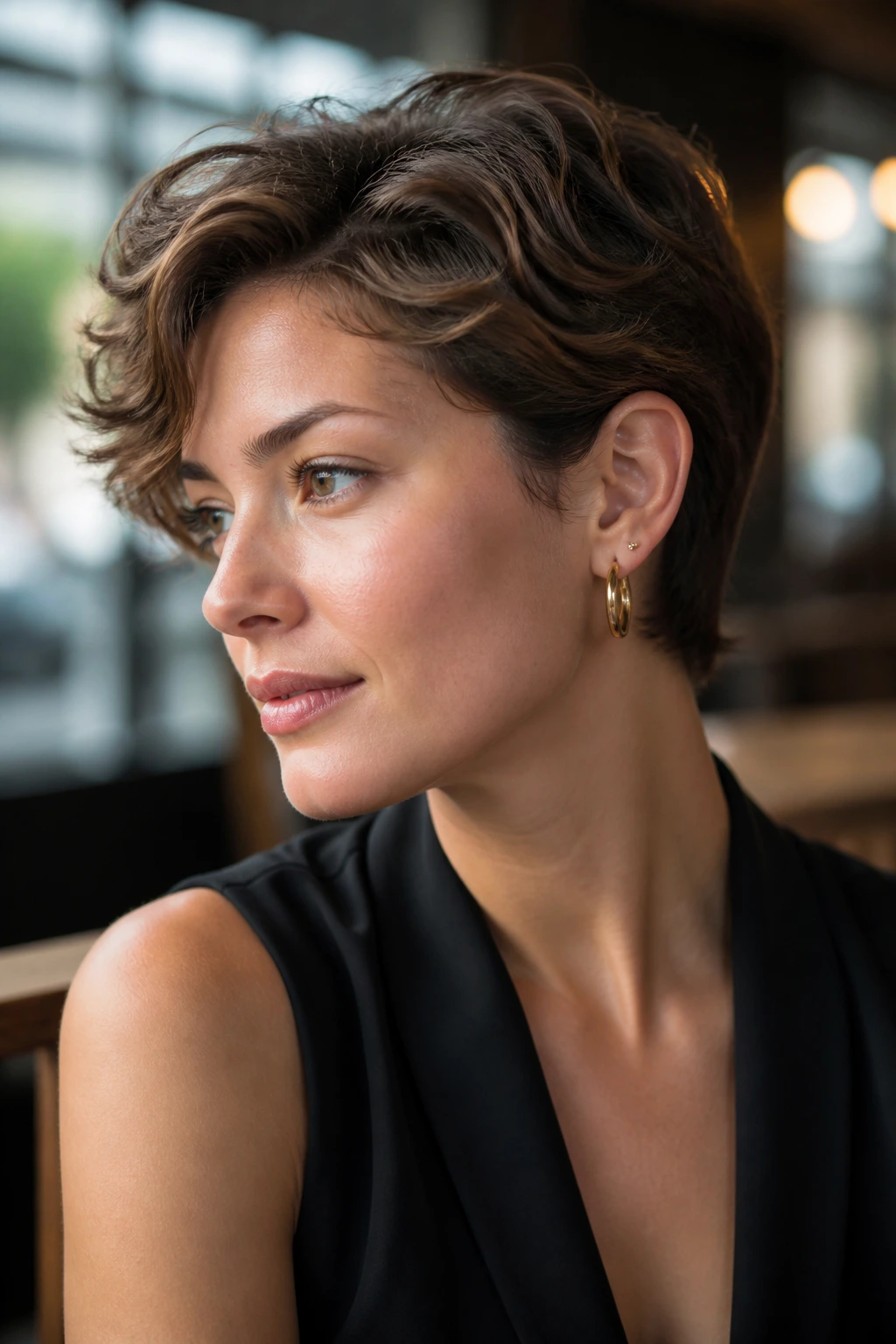
Some cuts are built for the simple pleasure of tucking hair behind one ear. This one is. Leave enough length at the front and along one side so the hair can sweep cleanly back without fighting the wave. It’s understated, which is why I like it so much.
The ear-tuck pixie works especially well when you want to show earrings, a jawline, or just a little neck. It’s low drama, but not plain. On days when the wave wants to go wherever it wants, the tuck gives you one fixed anchor point and keeps the whole style from unraveling.
21. Soft Mullet Pixie
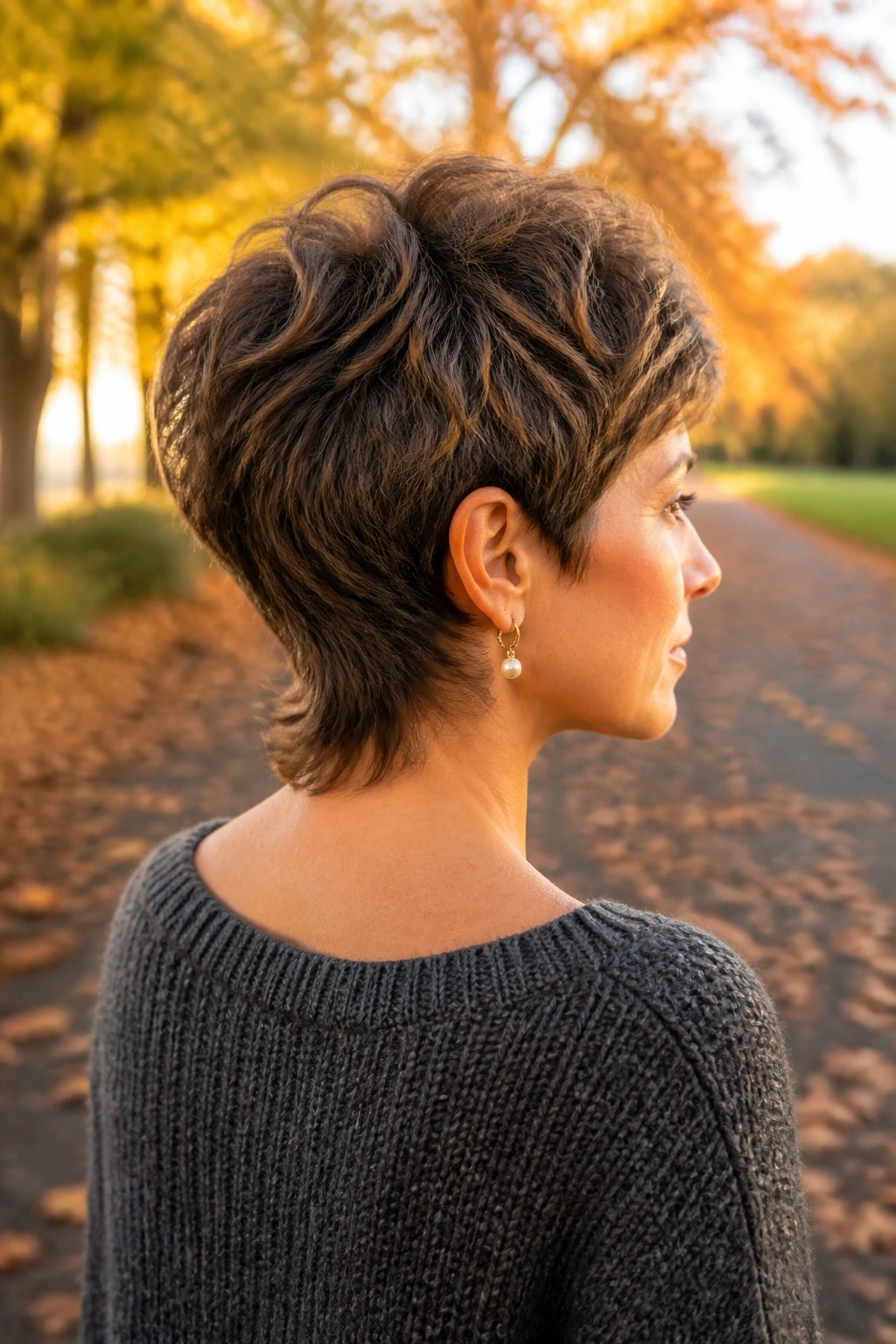
I know the word “mullet” still makes people hesitate, but a soft version on wavy hair can look surprisingly elegant. The back stays a little longer than a classic pixie, the crown gets texture, and the sides feather into the shape instead of stopping abruptly. It’s not a retro joke; it’s a real haircut with movement.
This is best for people who want edge without shaving anything off. The longer nape helps the haircut grow out gracefully, too. If you like your hair to feel slightly undone, but still shaped, this is a good compromise. Not too neat. Not too wild.
22. Sculpted Oval Pixie
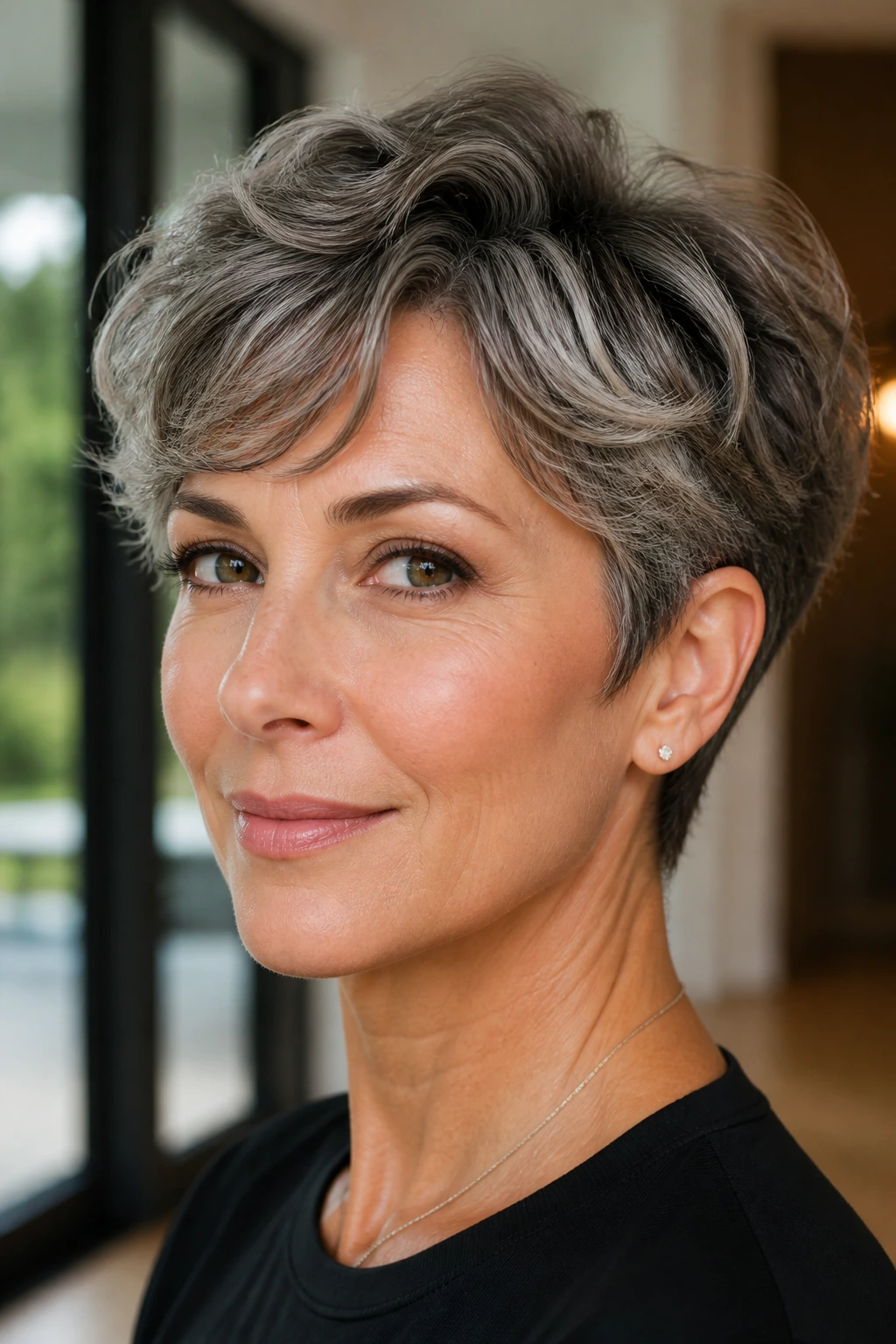
A sculpted oval pixie curves around the head in a tidy, rounded shape. Think of it as the more polished cousin of the shaggy pixie. The wave is still there, but the cut guides it into a smoother outline, which can be a relief if your hair gets too fluffy when it’s left to its own devices.
This cut flatters people who want a softer silhouette around the temples and jaw. It also tends to photograph cleanly because the shape reads clearly from every angle. You’ll want regular shaping around the ears and neckline so the oval stays visible instead of drifting outward.
23. Close Crop Pixie
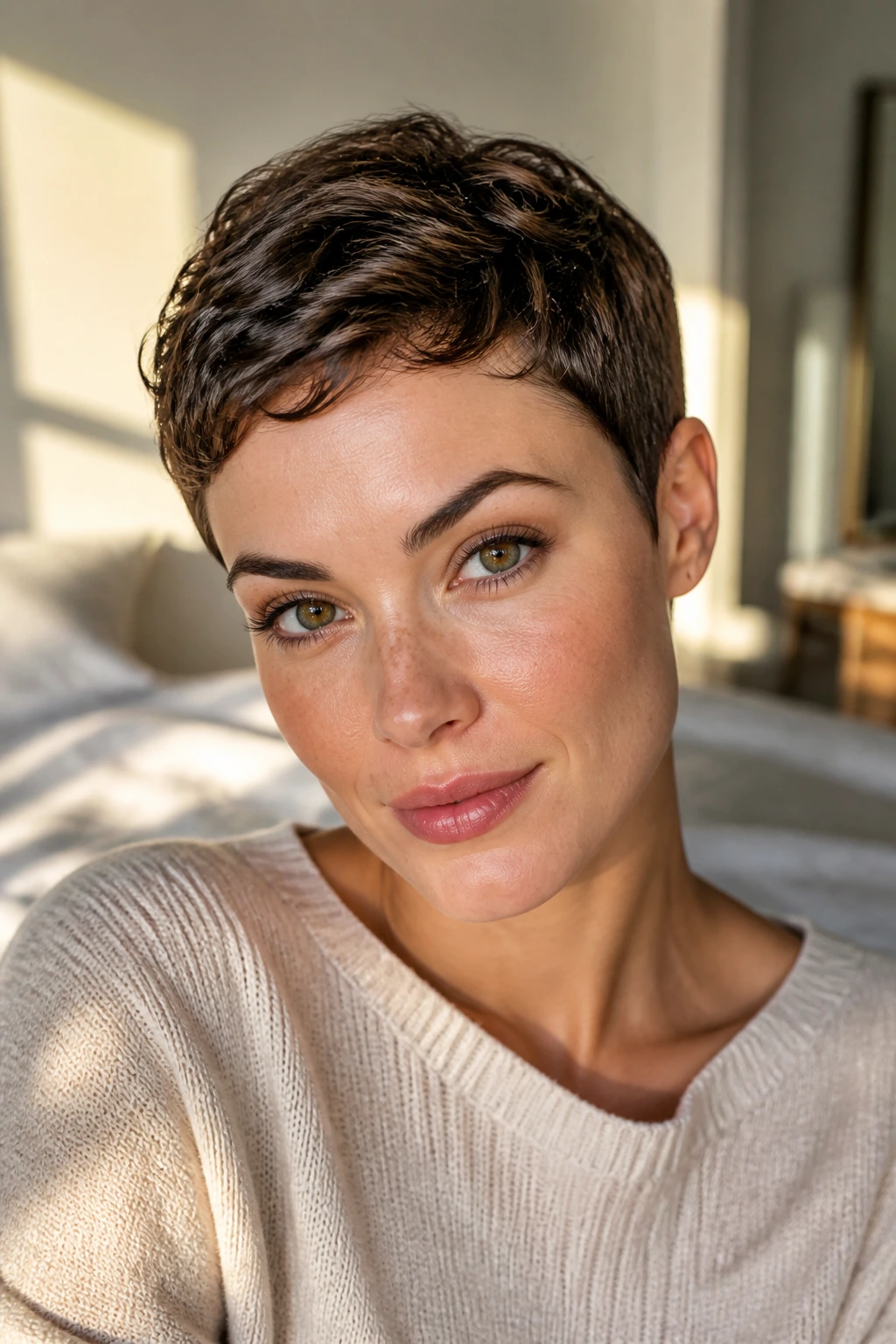
A close crop is for someone who likes the feeling of very short hair but doesn’t want to go all the way to a buzz cut. The top stays just long enough—often around 1 to 1.5 inches—to show a bit of wave, while the sides are kept lean and simple. The effect is crisp, almost sporty.
On wavy hair, this cut depends on strong bone structure and a good taper. There isn’t much length to hide behind, so the shape has to be right. But when it is, the haircut has a clean honesty to it. No fluff. No fuss.
24. Romantic Side-Swoop Pixie
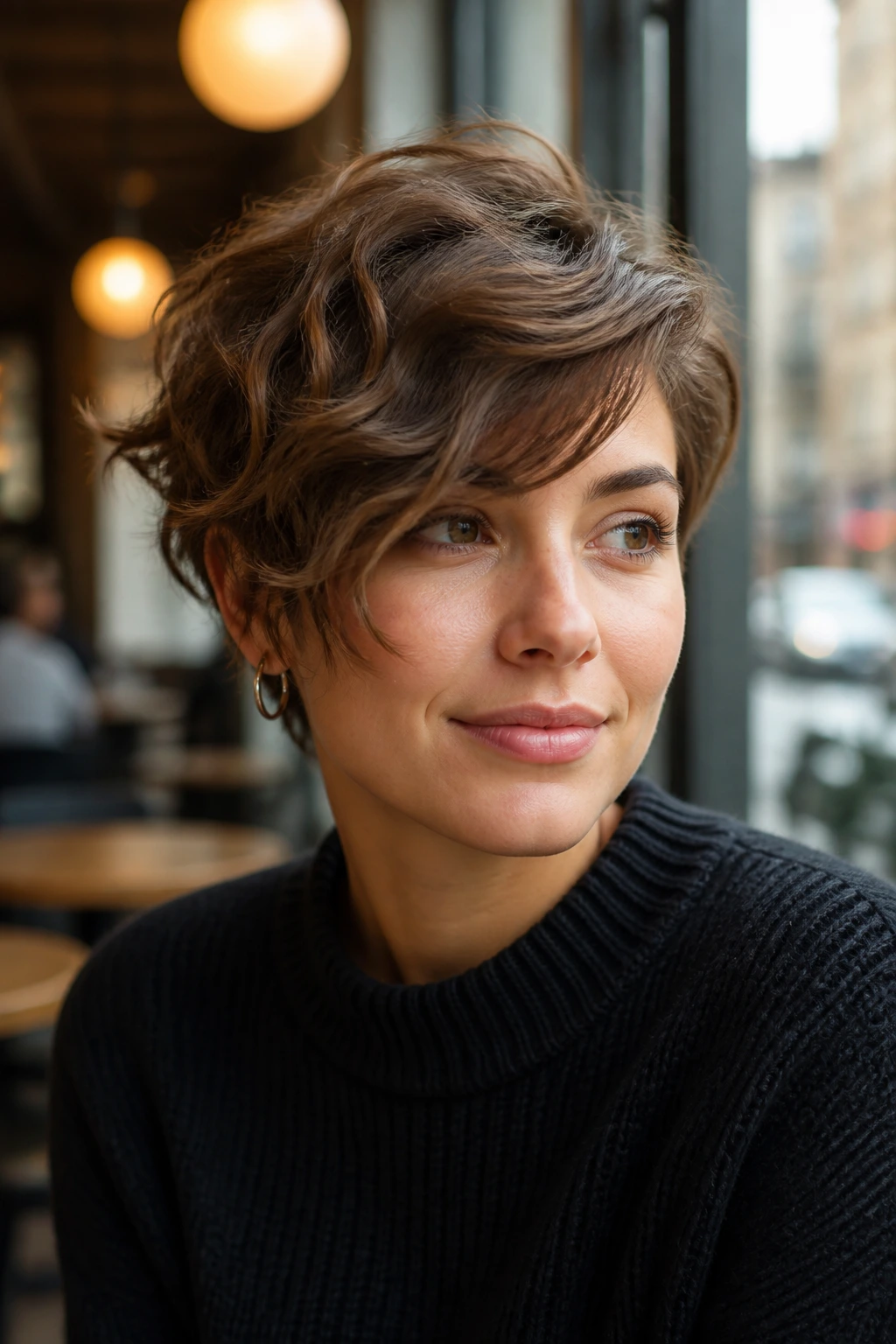
This is the softer version of a side fringe, with enough length at the front to fall across the face in a gentle sweep. It’s a nice choice if you want a pixie that still feels a little feminine and loose, without being precious. Short wavy hair gives it a nice broken-up edge.
A side-swoop can take a strong jawline and soften it, or stretch out a rounder face a touch. Use a light cream, not a sticky gel, so the movement stays relaxed. The wave should look like it landed there naturally. That’s the whole trick.
25. Highlighted Dimension Pixie
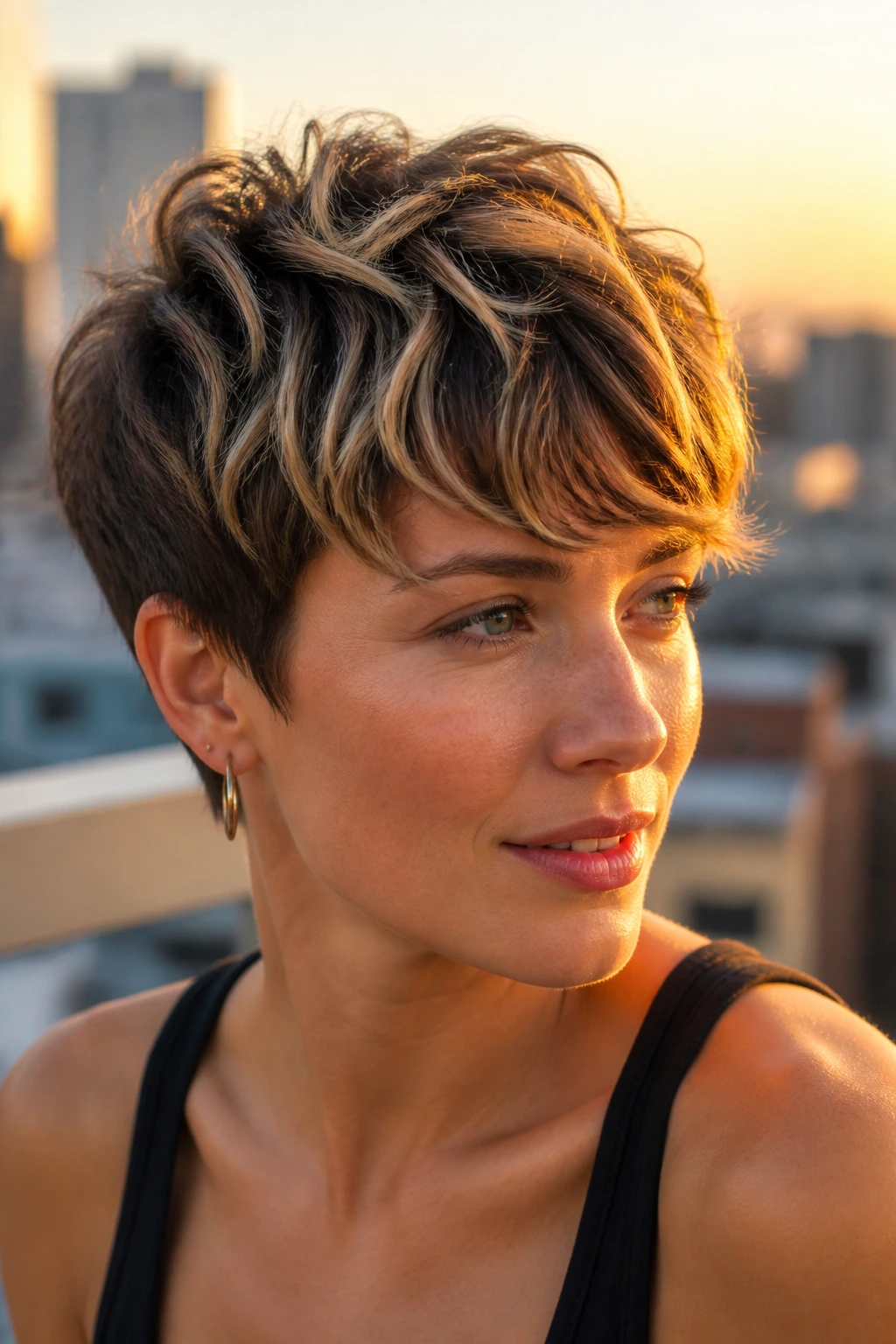
Color changes the way a pixie reads, especially on wavy hair. A few highlights through the crown or fringe create stripes of light that make the texture easier to see. Even a subtle balayage can turn a plain cut into something that looks more layered and alive.
I like this approach when the haircut itself is simple. The color does some of the work. If your waves are soft and your hair tends to disappear in one flat tone, dimension brings it back. Keep the placement around the top and sides where the bend shows most clearly.
26. Salt-and-Pepper Pixie
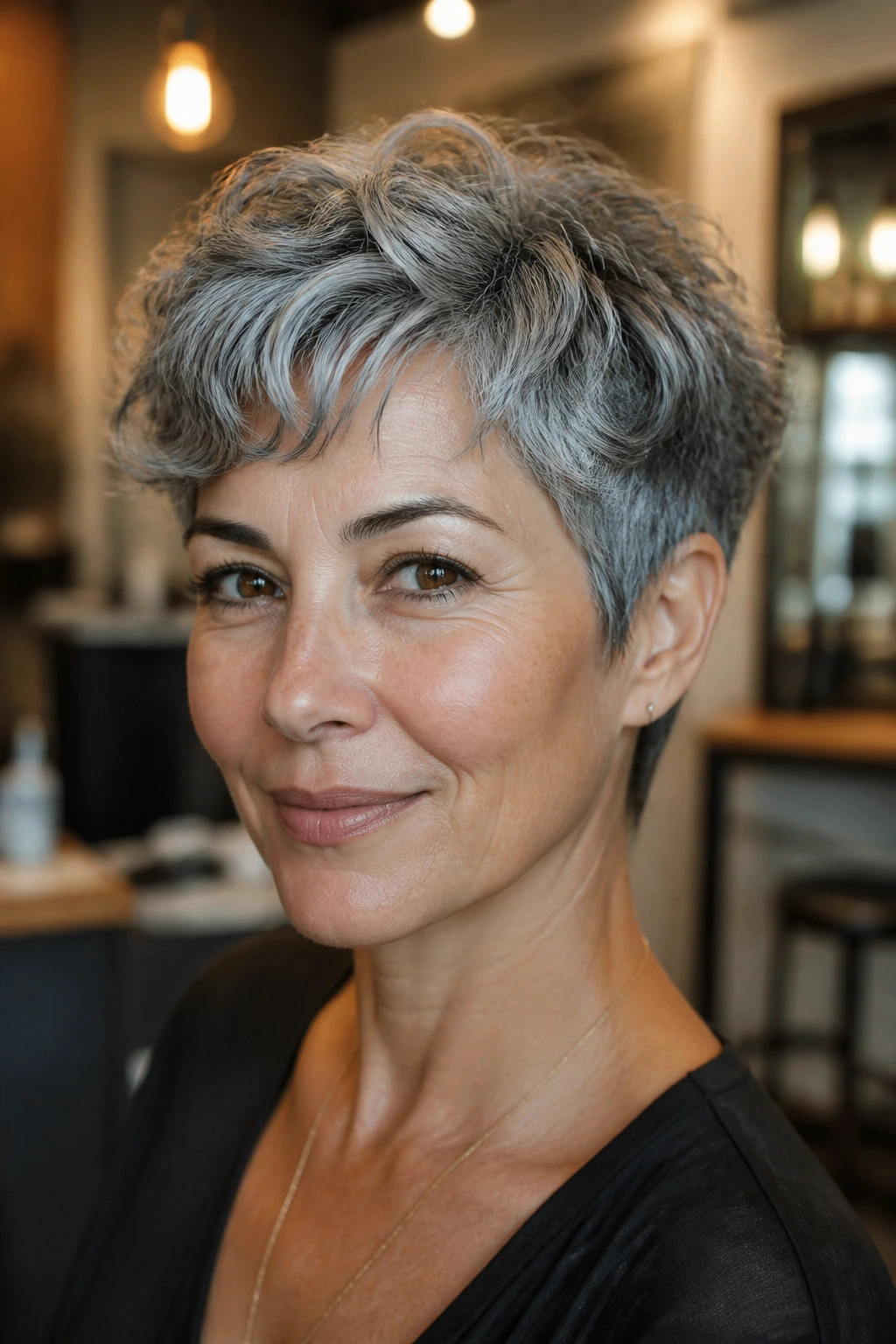
Salt-and-pepper hair and a pixie cut make a sharp pair, especially when the waves are loose and visible. The mix of silver and darker strands gives the texture natural contrast, so even a basic shape looks richer. You do not need to over-style this one. The hair is already doing enough.
What matters here is shape maintenance. Let the wave have its movement, but keep the edges clean so the color pattern doesn’t get lost in frizz. A little shine cream can help the silver stand out. Heavy product, though? That just muddies the whole effect.
27. De-Bulked Thick-Hair Pixie
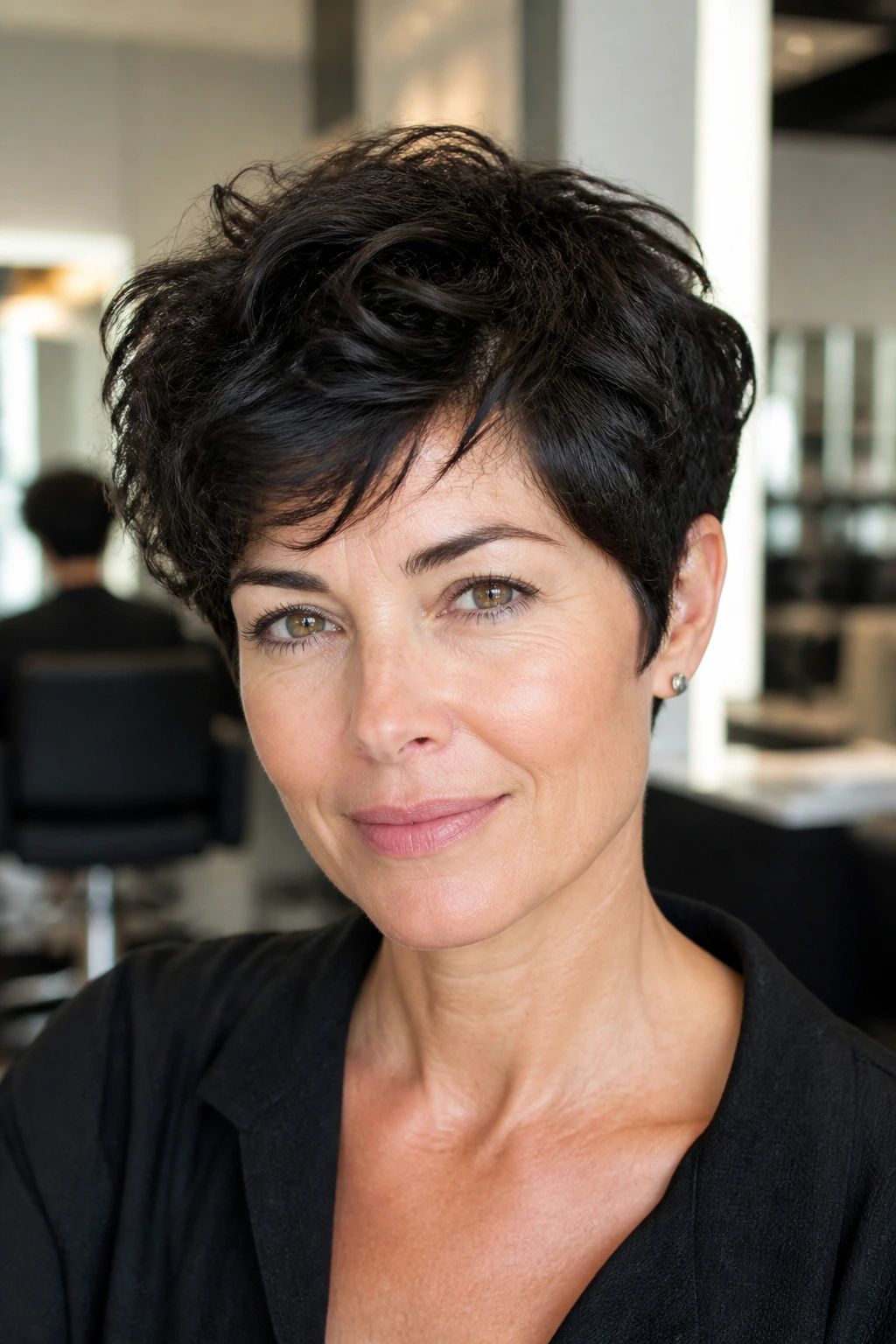
Thick wavy hair can take a pixie beautifully, but only if the interior weight comes out in the right places. This version uses careful de-bulking—not too much, not too high up—so the waves can fall instead of puff. The outline stays controlled, and the top doesn’t sit like a block.
This is the cut for someone whose hair expands by lunchtime. The stylist should remove weight from inside the shape, not just thin the ends to death. Too much thinning makes thick hair frizz. A measured hand keeps the body while losing the bulk, which is what you want.
28. Wispy Fringe Pixie
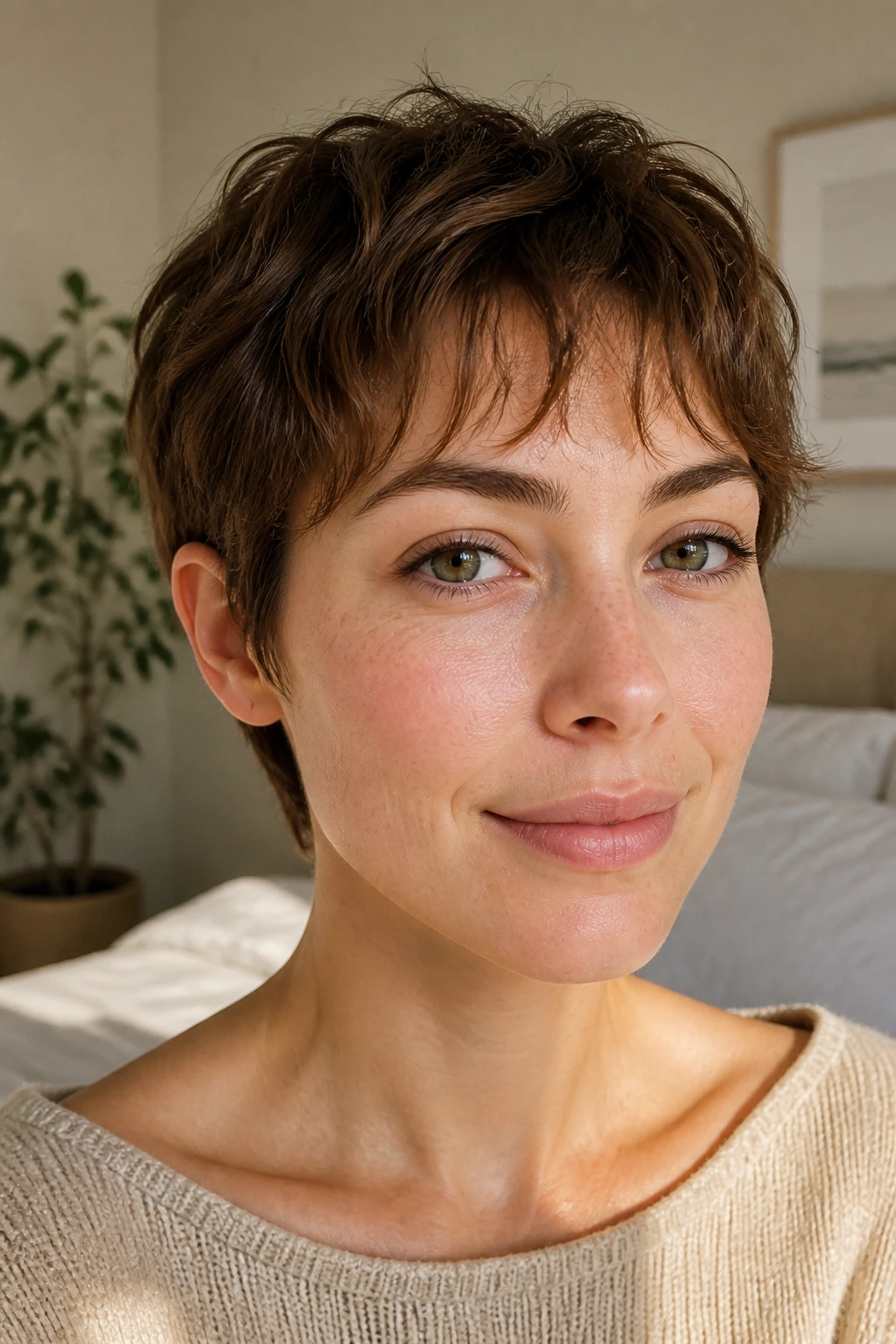
A wispy fringe pixie is all about lightness at the front. The bangs are cut soft and narrow, with tiny separations that let the wave break them up a little. It’s a pretty look on short wavy hair because the fringe doesn’t sit like a wall across the forehead.
This cut suits smaller foreheads, softer features, or anyone who wants to blur the line between bangs and layers. It also grows out well, which is a nice bonus. Use a bit of mousse on the fringe and let it dry forward first, then push it slightly to one side if it starts to cling too much.
29. Tousled Bedhead Pixie
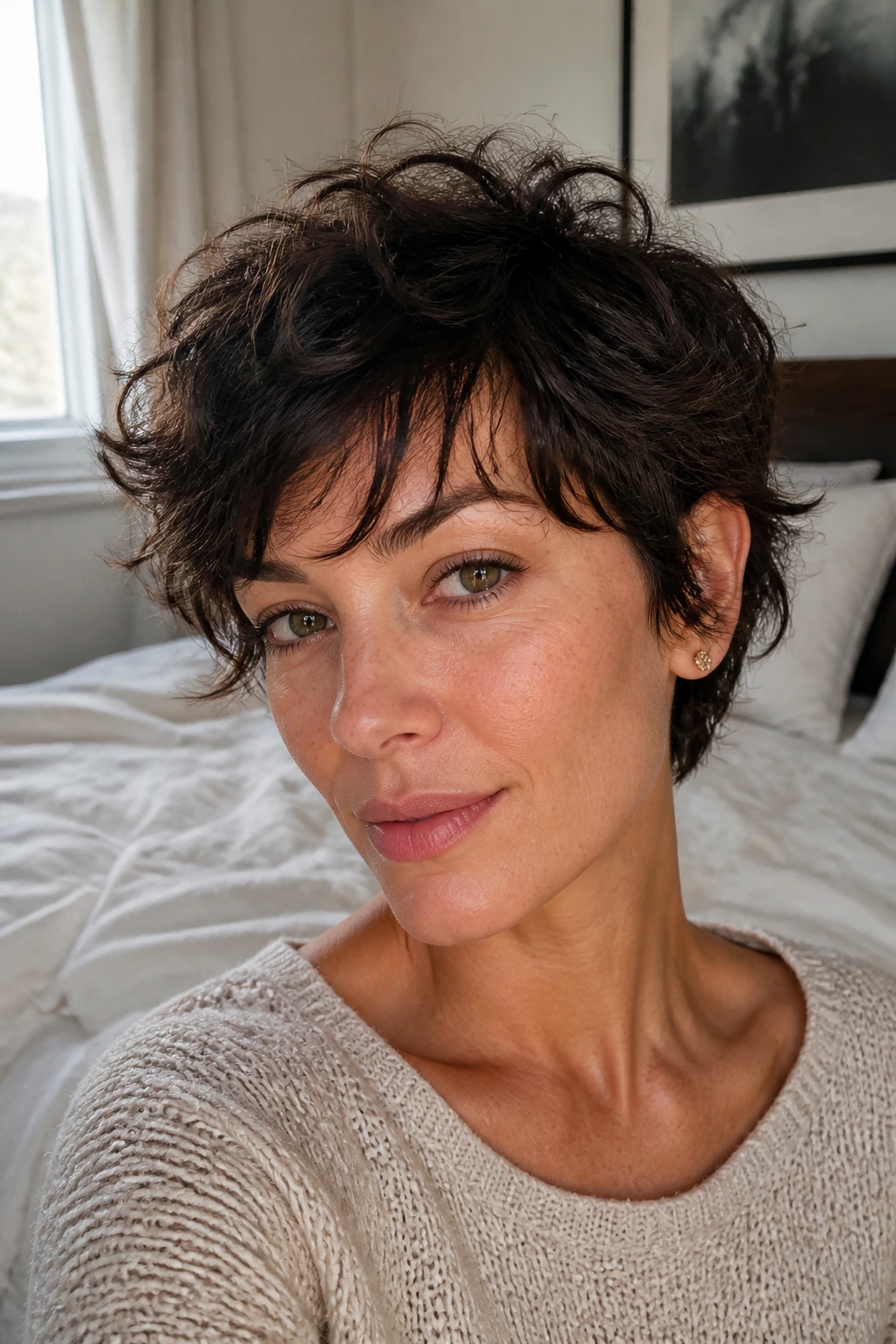
This is the cut for people who like a little mess and don’t want to apologize for it. The layers are loose, the ends are piecey, and the finish is matte rather than shiny. On wavy hair, that bedhead look often happens naturally, which is why it works so well.
The danger is crossing the line into accidental chaos. Keep the nape and around the ears trimmed, or the style loses shape fast. A pea-sized dab of texturizing paste is plenty. More than that and the hair starts to look greasy instead of tousled. There’s a big difference.
30. Rounded Pixie
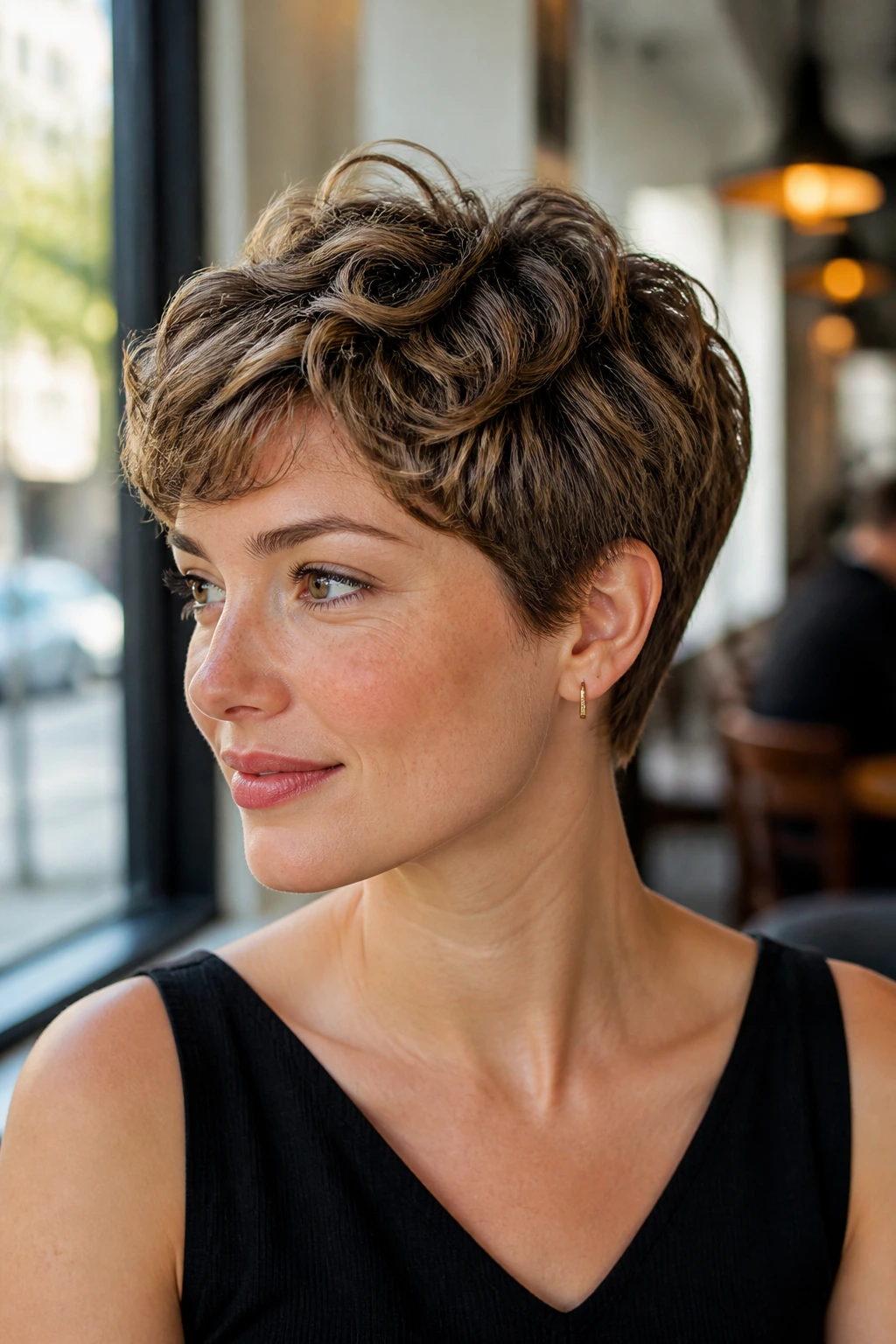
A rounded pixie curves gently around the head and gives short wavy hair a very tidy silhouette. It’s one of the best options if you want softness without abandoning structure. The wave stays visible, but the overall shape feels neat and controlled.
This cut is useful for people with finer faces or anyone who doesn’t want the sides sticking out. The rounded outline keeps everything close while still leaving movement at the crown. It’s subtle, which means the haircut has to be precise. A sloppy rounded pixie looks accidental. A careful one looks intentional in the best way.
31. Temple-Length Pixie
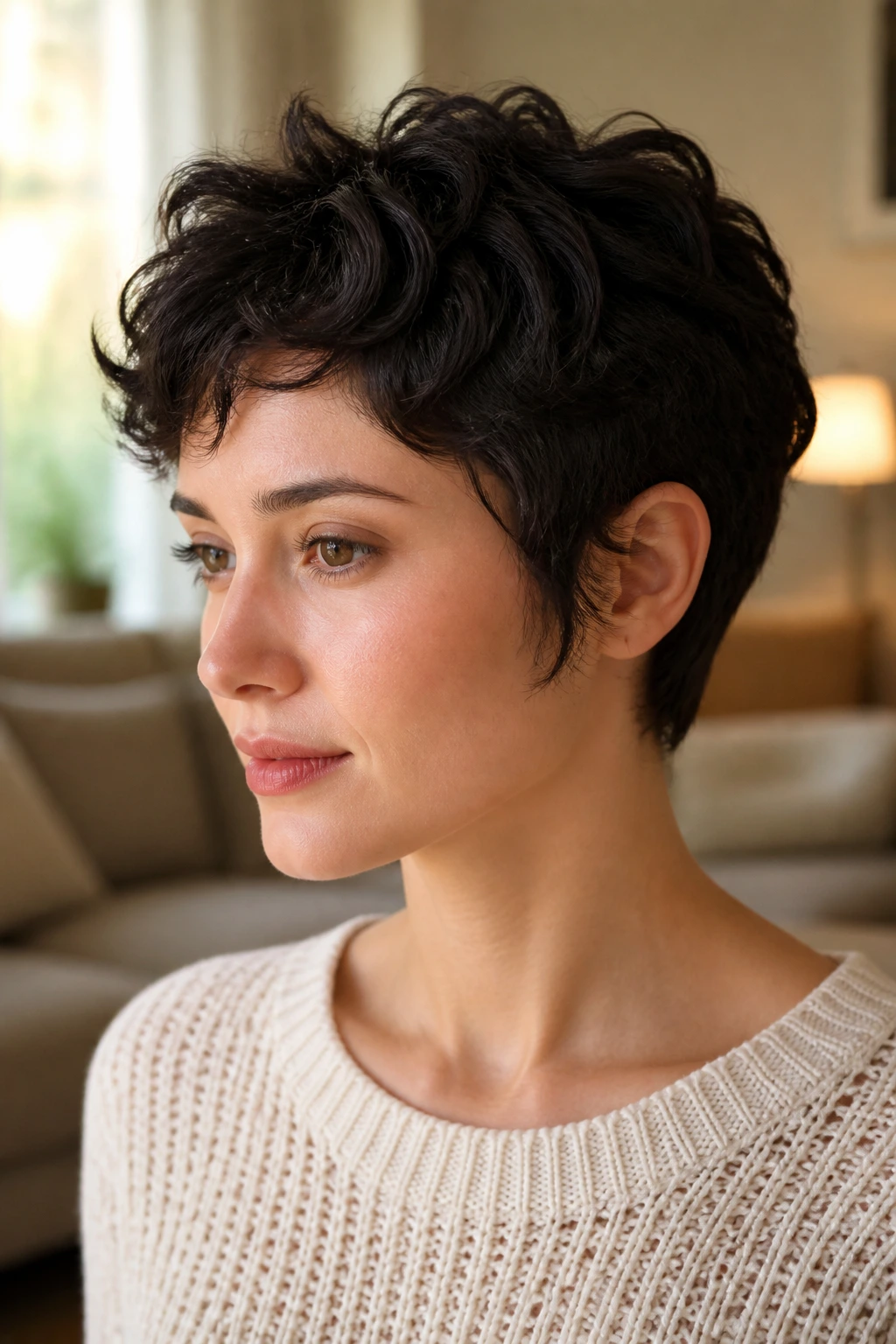
Leaving a little extra length at the temples changes the shape more than most people expect. It can soften strong cheekbones, balance a high forehead, or give the haircut a more relaxed outline. On wavy hair, those temple sections often bend in a flattering way all on their own.
This is one of my favorite adjustments for anyone who wants a pixie that doesn’t feel too exposed. The extra length near the face gives you options: tuck it, let it fall forward, or use it to frame one side. Tiny detail. Big payoff.
32. Sideburn-Focused Pixie
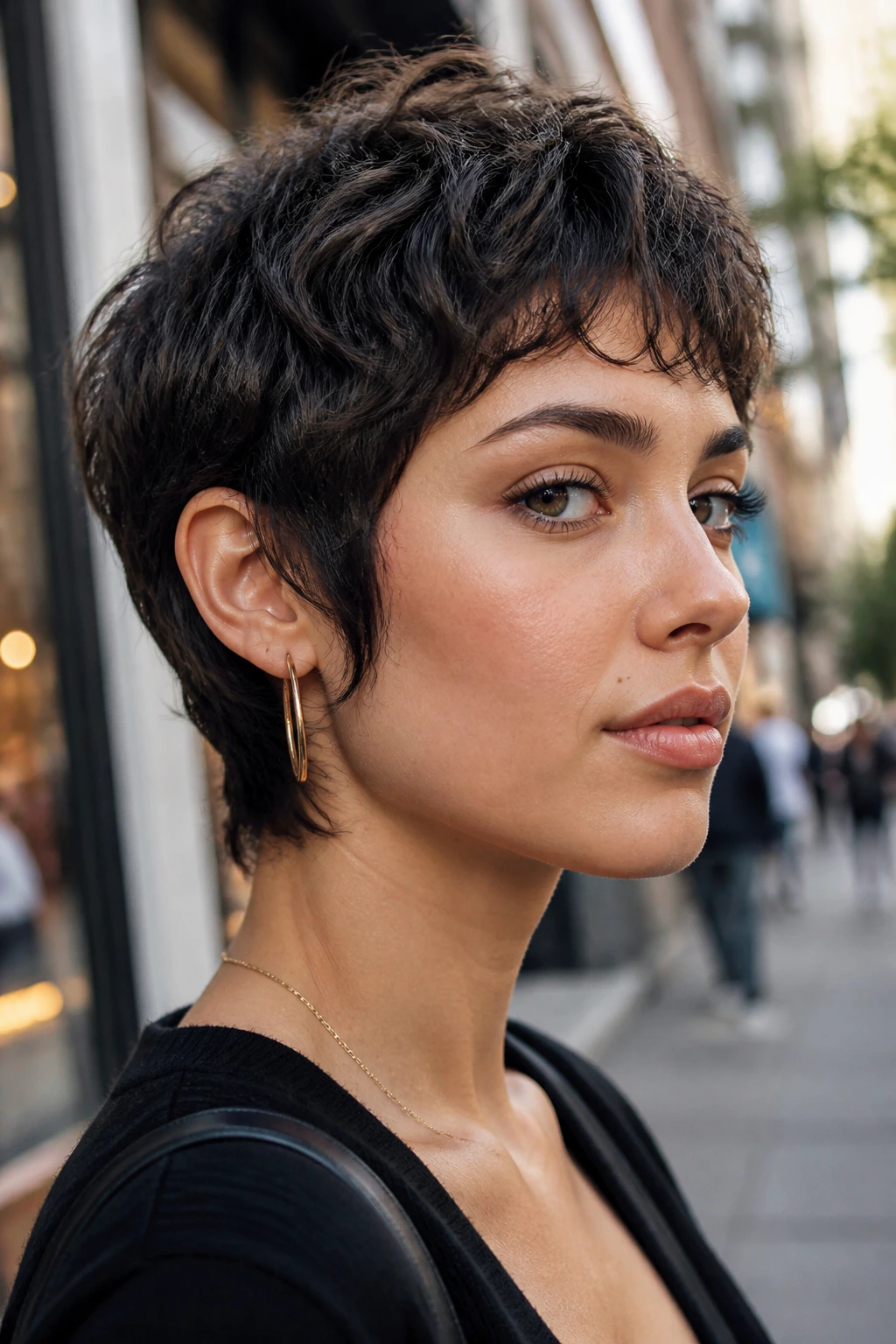
Sideburns are not a throwaway detail. In a sideburn-focused pixie, those little lengths at the sides are left slightly longer so they can soften the jaw and connect the top to the nape. On short wavy hair, that tiny bit of length gives the style a more finished edge.
It’s especially helpful if your face is angular or your hairline is strong. The sideburns create a gentle transition instead of an abrupt stop. Keep them neat, though. If they drift too long, the cut starts to lose its crispness.
33. Air-Dried Layered Pixie
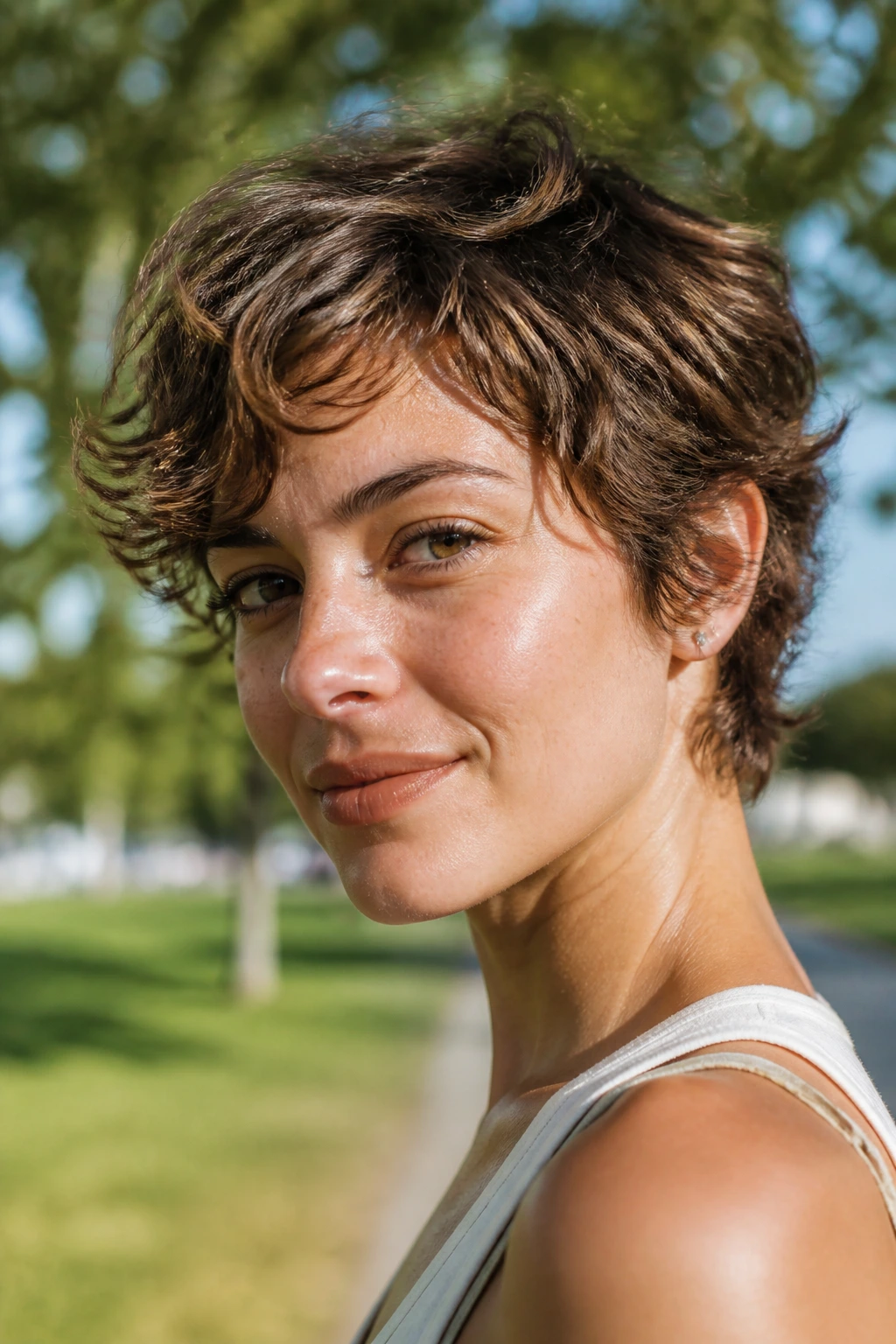
Some pixies are meant to be blown out. This one is meant to dry on its own. The layers are cut to fall into place with minimal effort, which makes it a solid choice for wavy hair that settles quickly once it’s left alone. Scrunch in a light cream, let it dry, and resist the urge to keep touching it.
The best part is that it usually looks better after a full day than it did the minute you left the house. The texture relaxes into itself. If you hate spending 15 minutes with a dryer every morning, this haircut makes a strong case for cutting out the drama.
34. Piecey Matte Pixie
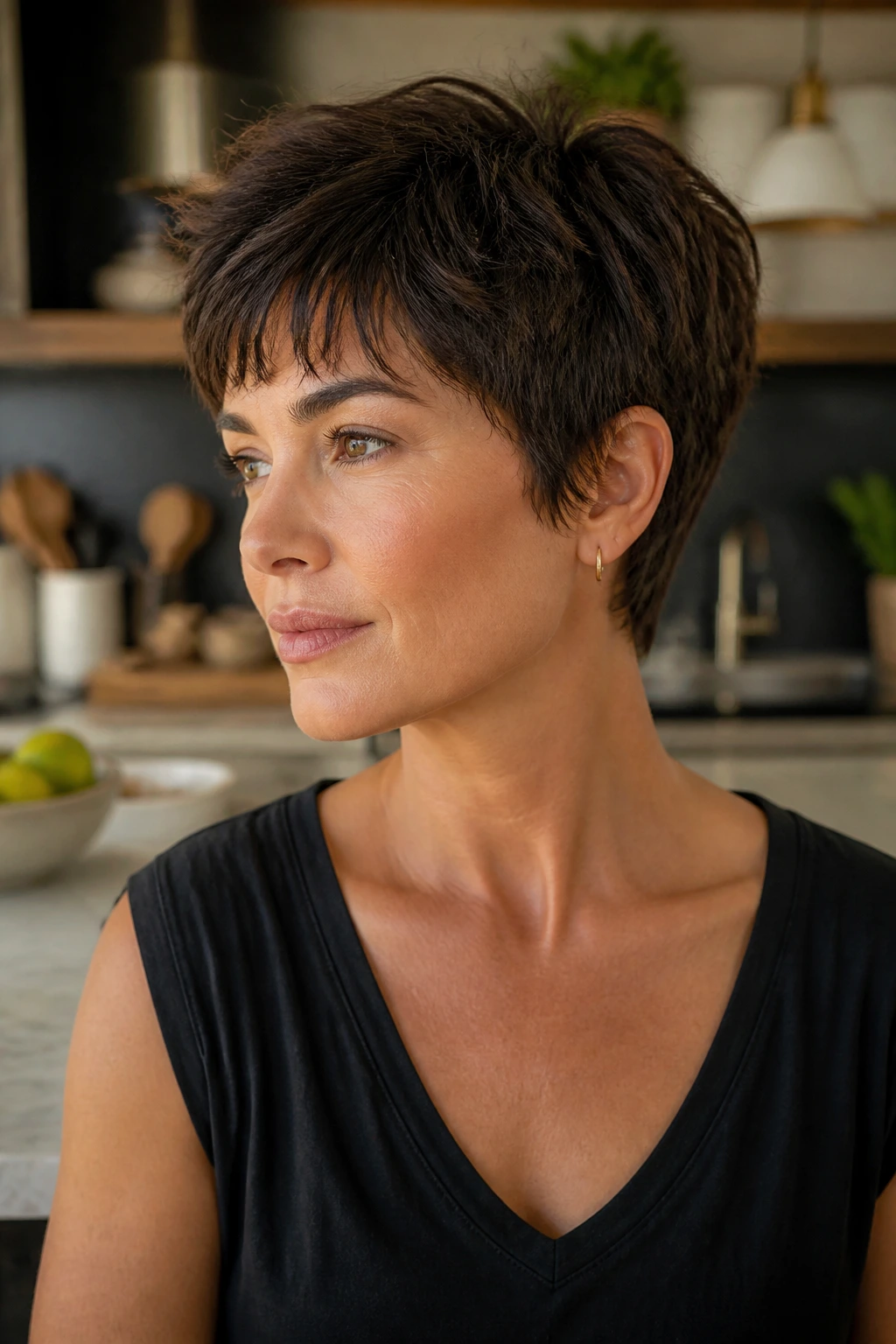
A piecey matte pixie gives you separation instead of shine. Think small sections, visible bends, and a finish that looks lightly roughed up rather than polished. Wavy hair is a natural fit because the texture already wants to divide into little ribbons.
A matte paste or clay works best here, but use less than you think. Warm a tiny amount in your palms and pinch it into the top and fringe. Too much product turns piecey into heavy. The cut should look light, not coated.
35. Low-Maintenance Grow-Out Pixie
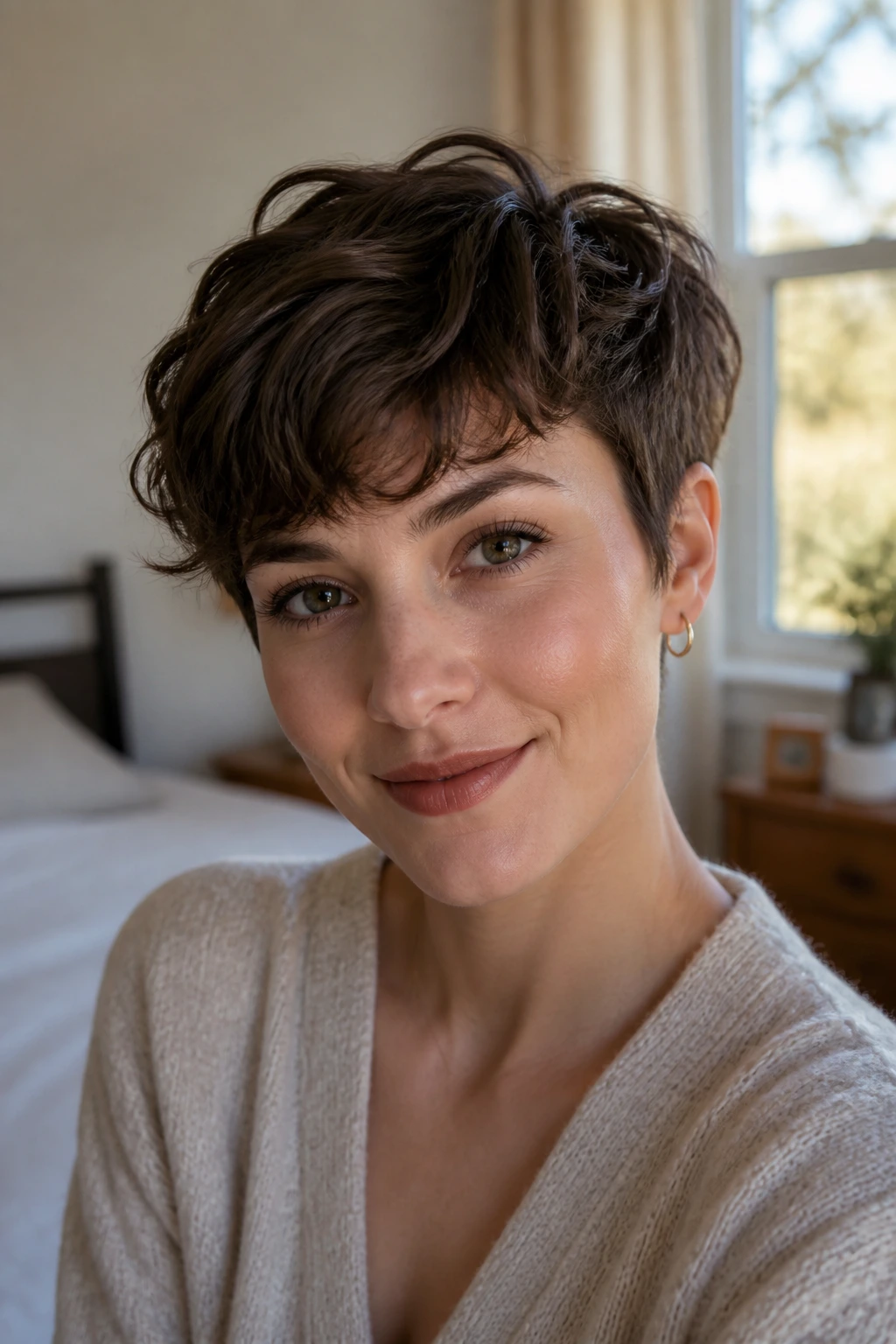
This is the one for people who want a pixie but don’t want to babysit it. The shape is softer through the edges, a little longer through the crown and fringe, and planned so it still looks decent as it grows. Wavy hair helps because the movement keeps the in-between stage from looking too blunt.
If you know your schedule is unpredictable, this is the safest bet. You can let it go a bit longer between trims without it falling apart. It’s not the most dramatic pixie on the list, but it may be the smartest. Sometimes boring is just practical, and practical wins when you’re on week six between appointments.
What to Tell Your Stylist Before the First Snip
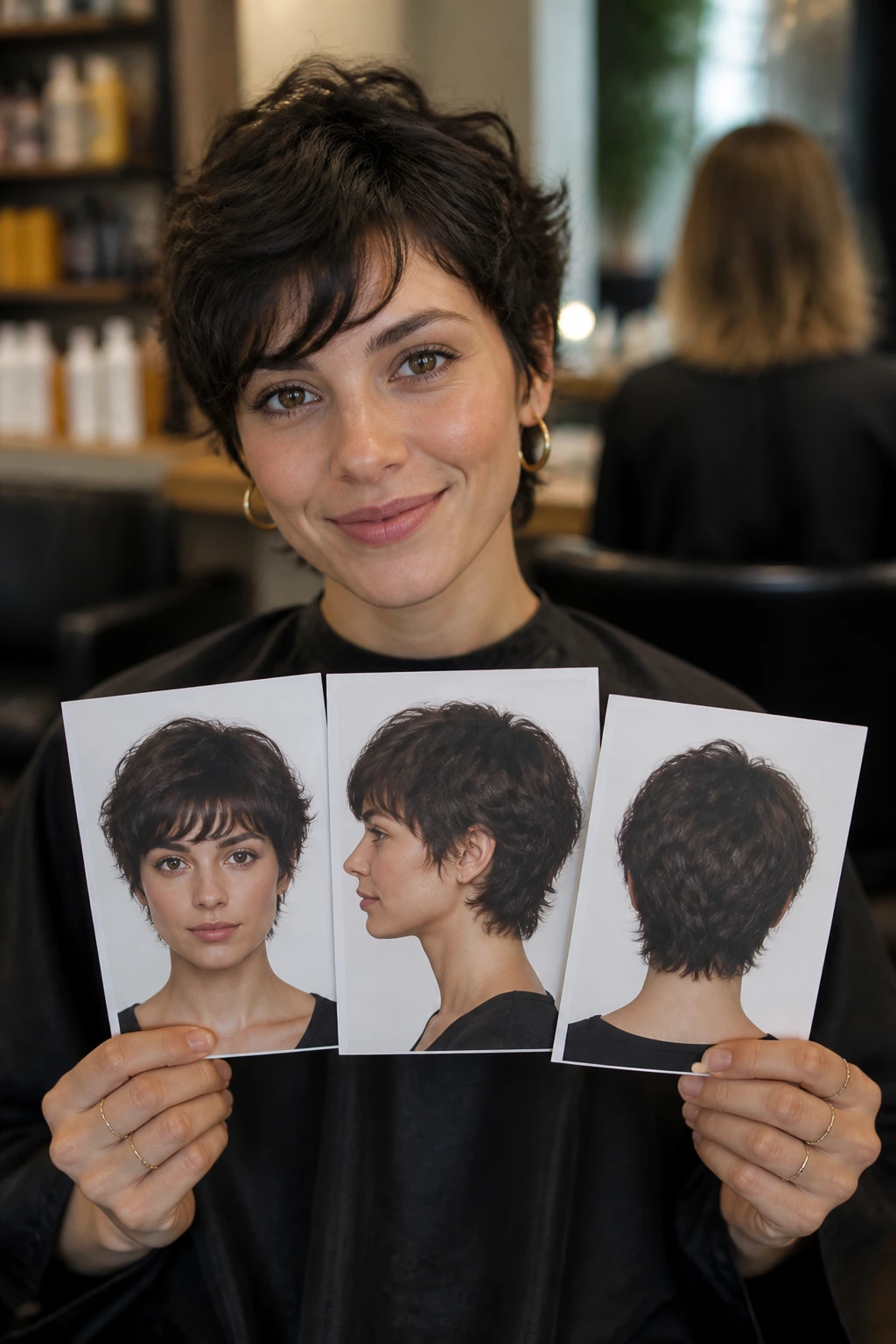
Bring pictures. Not one, but at least three, and make sure they show the front, side, and back. A wavy pixie lives or dies on the outline at the nape and around the ears, and one glamour shot from the front will not tell the whole story. Tell your stylist whether you air-dry, diffuse, or usually rough-dry with your hands, because that changes how much length needs to stay through the crown.
Use inches if you can. Say things like, “I want about 2.5 inches on top,” or “keep the fringe long enough to sweep to the side.” Those numbers are more useful than vague words like “short” or “soft.” If your hair frizzes easily, ask for point-cutting instead of heavy razor work. That one sentence can save you a month of regret.
The Tools That Make Short Wavy Hair Easier
-
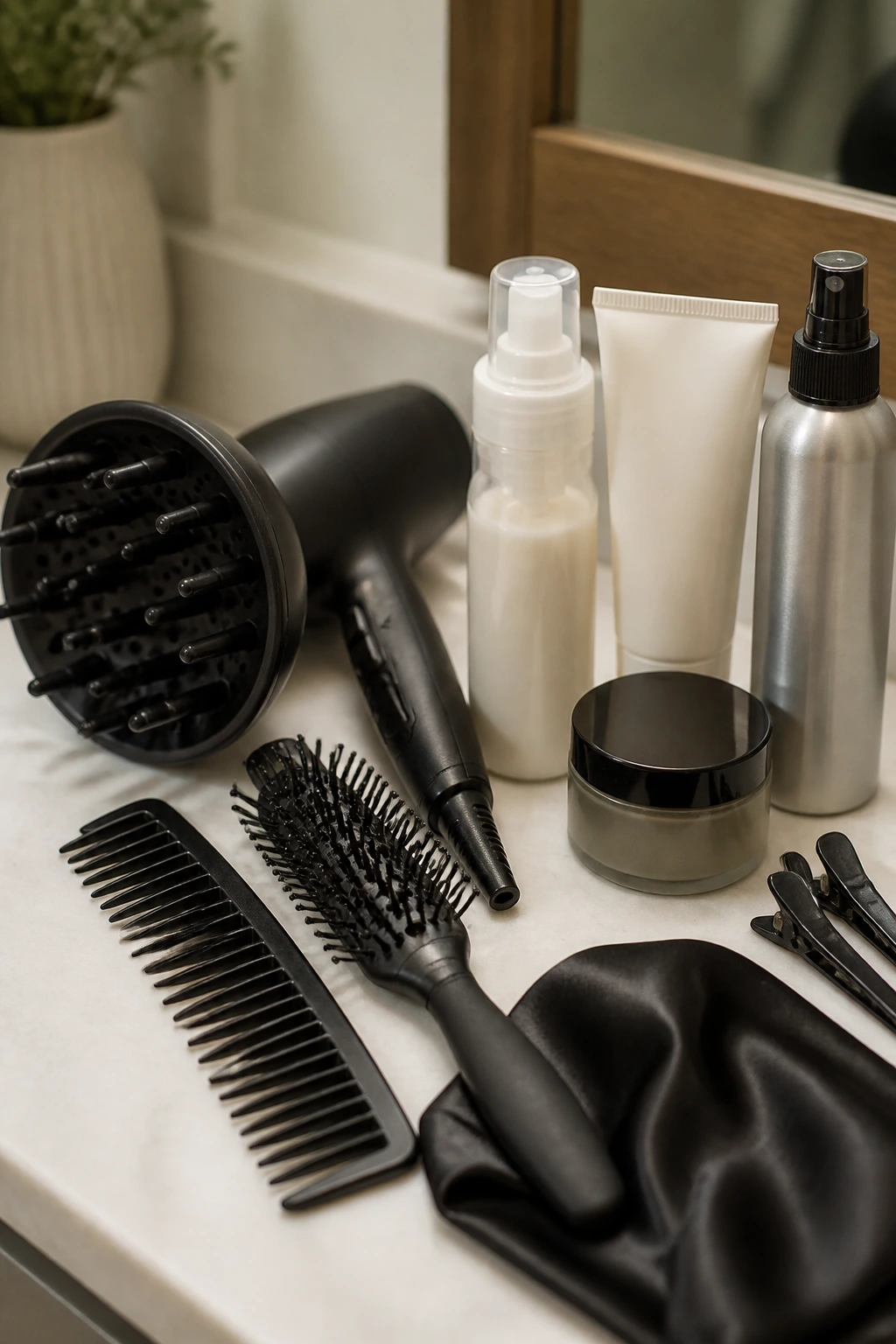
Diffuser attachment: Keeps the wave shape intact while drying the top without blasting it flat.
-
Blow dryer with a cool shot: Helps set the fringe and crown so they don’t collapse after five minutes.
-
Wide-tooth comb: Good for product distribution on damp hair without breaking up the wave clumps too much.
-
Small vent brush: Useful when you want a smoother side part or a neater fringe.
-
Light mousse: Adds root lift and memory without the sticky feel of heavy gel.
-
Curl cream or wave cream: Best for softer definition on air-dried pixies; use a dime-sized amount first.
-
Matte paste or clay: Gives piecey separation on dry hair, especially through the top and fringe.
-
Flexible-hold hairspray: Better than stiff lacquer if you want movement to stay visible.
-
Hair clips: Handy for setting a side part while the hair cools and dries.
-
Satin pillowcase: Keeps the nape and fringe from getting mashed overnight, which matters more than people think.
Styling a Wavy Pixie Without Losing the Shape
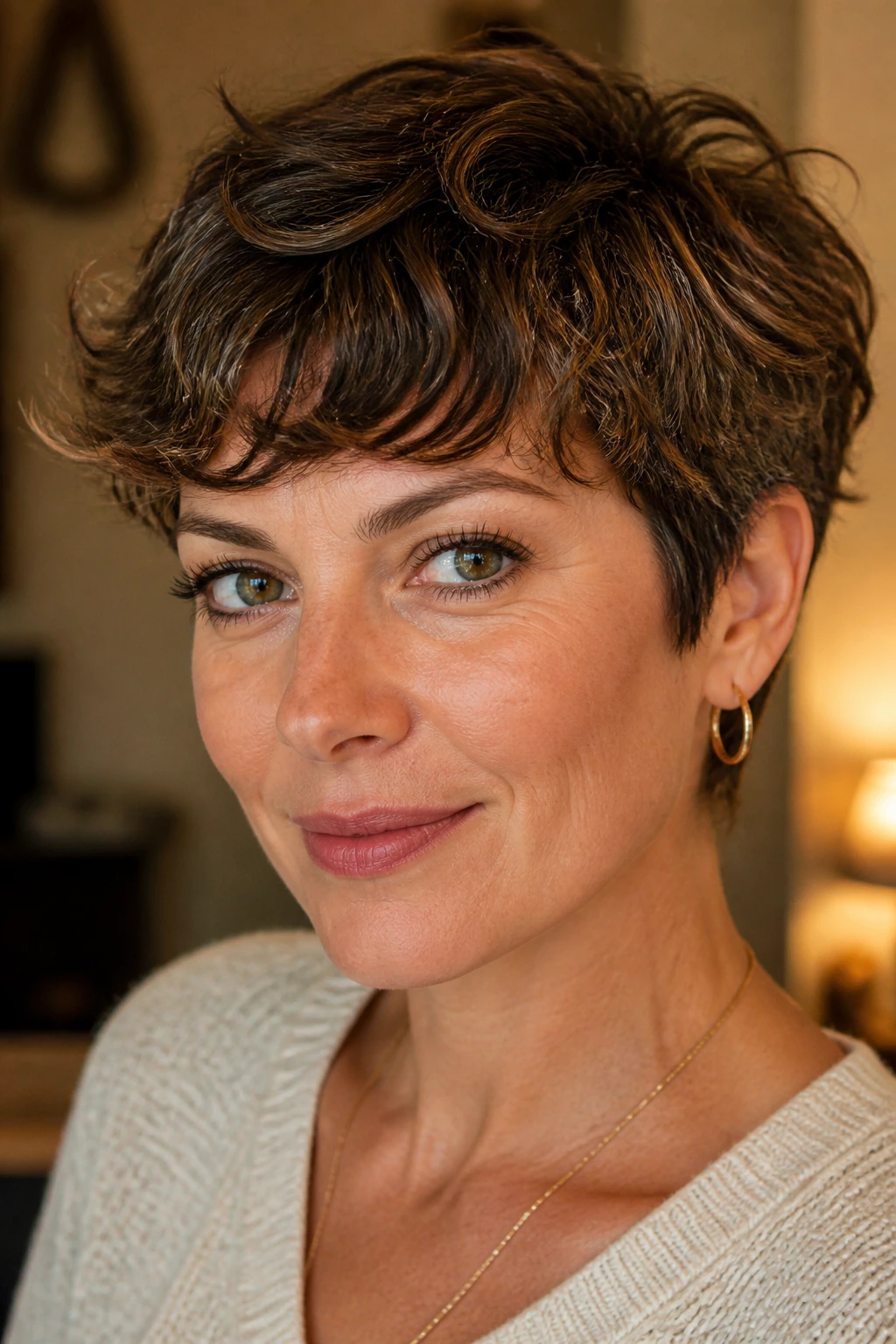
Air-Dry Routine: Start with damp—not dripping—hair. Work in a small amount of mousse at the roots and a touch of cream through the ends, then push the wave into the direction you want with your fingers. Let it dry alone for the first 10 minutes before touching it again. That pause helps the bend set.
Quick Blow-Dry: If you need control, dry the crown first with the diffuser on low heat, then use a vent brush just at the fringe and sides. The trick is to dry the roots in the direction they should sit. Drying the wrong way first makes the whole cut fight back.
Second-Day Reset: Mist the hair lightly with water, pinch the wave pieces back into shape, and add a grain-of-rice amount of paste only where things look fuzzy. You do not need to rewash the whole head. Most pixies look better with a tiny reset than a full restart.
Frizz Fix: Keep heavier cream away from the roots. Put it on the very ends or the outer layer only. Roots need lift; ends need help.
Trims, Grow-Out, and Maintenance
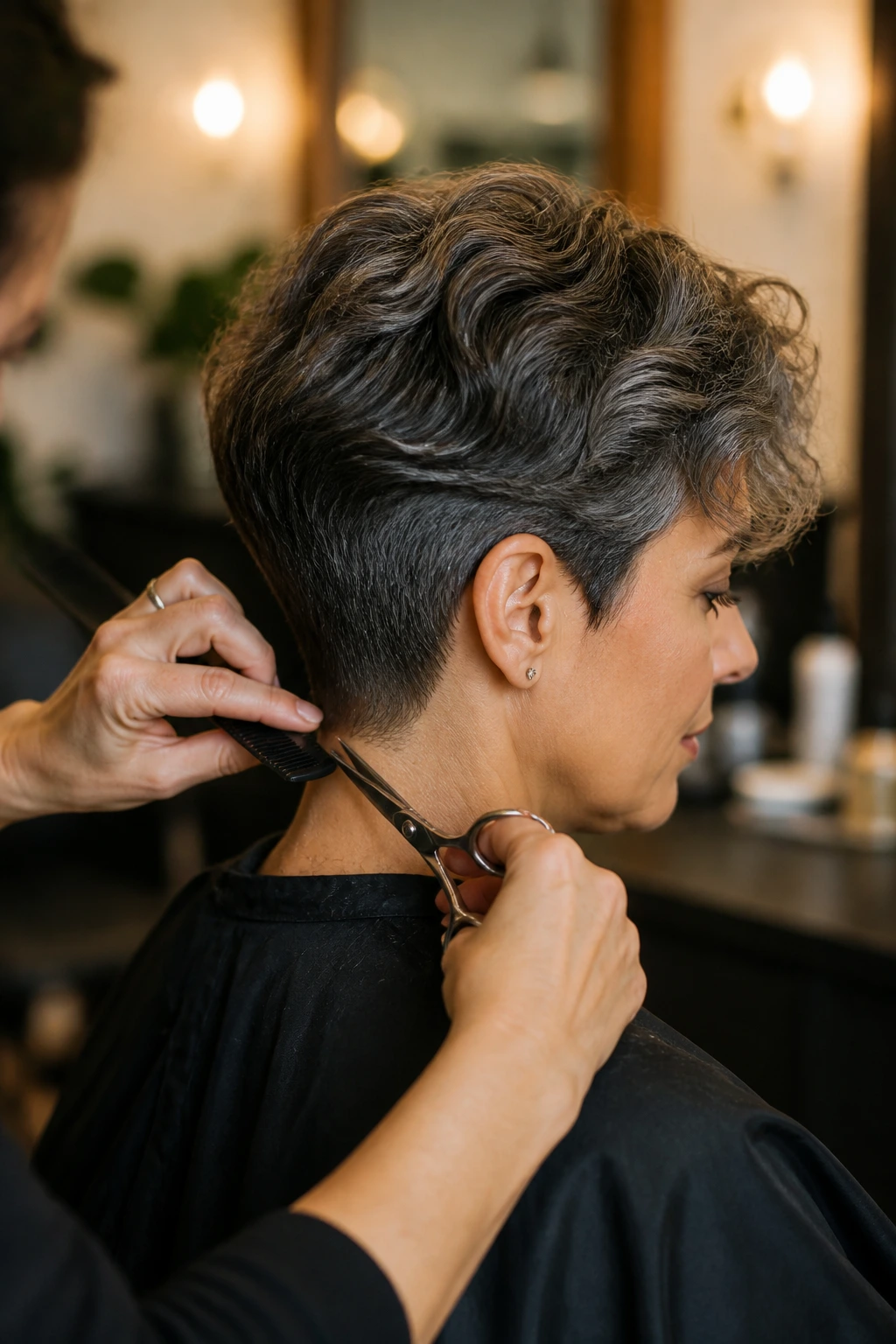
Most short wavy pixies need a shape check every 4 to 6 weeks if you want the lines to stay clean. If you’ve got an undercut or a very short nape, schedule closer to 3 or 4 weeks. Fringe-heavy versions can often stretch a little longer, but bangs are the first thing to start looking tired, so watch those.
Between cuts, watch the neckline and sideburns. Those two areas give away a grown-out pixie faster than the top does. If you’re trying to keep the haircut neat for as long as possible, use a small trimmer or book a quick edge clean-up instead of waiting until everything gets fuzzy. And if you’re growing it out, ask your stylist to leave the crown a touch longer each visit so the transition doesn’t turn into a mullet accident.
Common Mistakes That Flatten a Wavy Pixie
-
Cutting the crown too short: The top stands up or lies flat with no middle ground. Leave more length where the wave needs room to bend.
-
Thinning the hair to death: Over-thinning turns thick or coarse waves into frizz. Ask for internal shaping, not aggressive removal.
-
Using too much product: Heavy cream or paste makes short hair collapse fast. Start with less than you think and add only at the end.
-
Ignoring the nape: A bulky neckline ruins the silhouette even if the top looks good. The back needs regular clean-up.
-
Rough-drying in every direction: That creates random puffiness. Direct the roots where you want them before the hair fully dries.
-
Skipping the part line: Waves need a map. A clear side part, off-center part, or front sweep makes the whole cut look deliberate.
Ways to Make the Cut Your Own
Fine-Hair Lift: Keep the crown slightly longer and use mousse at the roots instead of thick cream. Fine waves need air and memory, not weight.
Thick-Hair Control: Ask for interior debulking and a tighter nape. This keeps the style from expanding outward like a triangle by midafternoon.
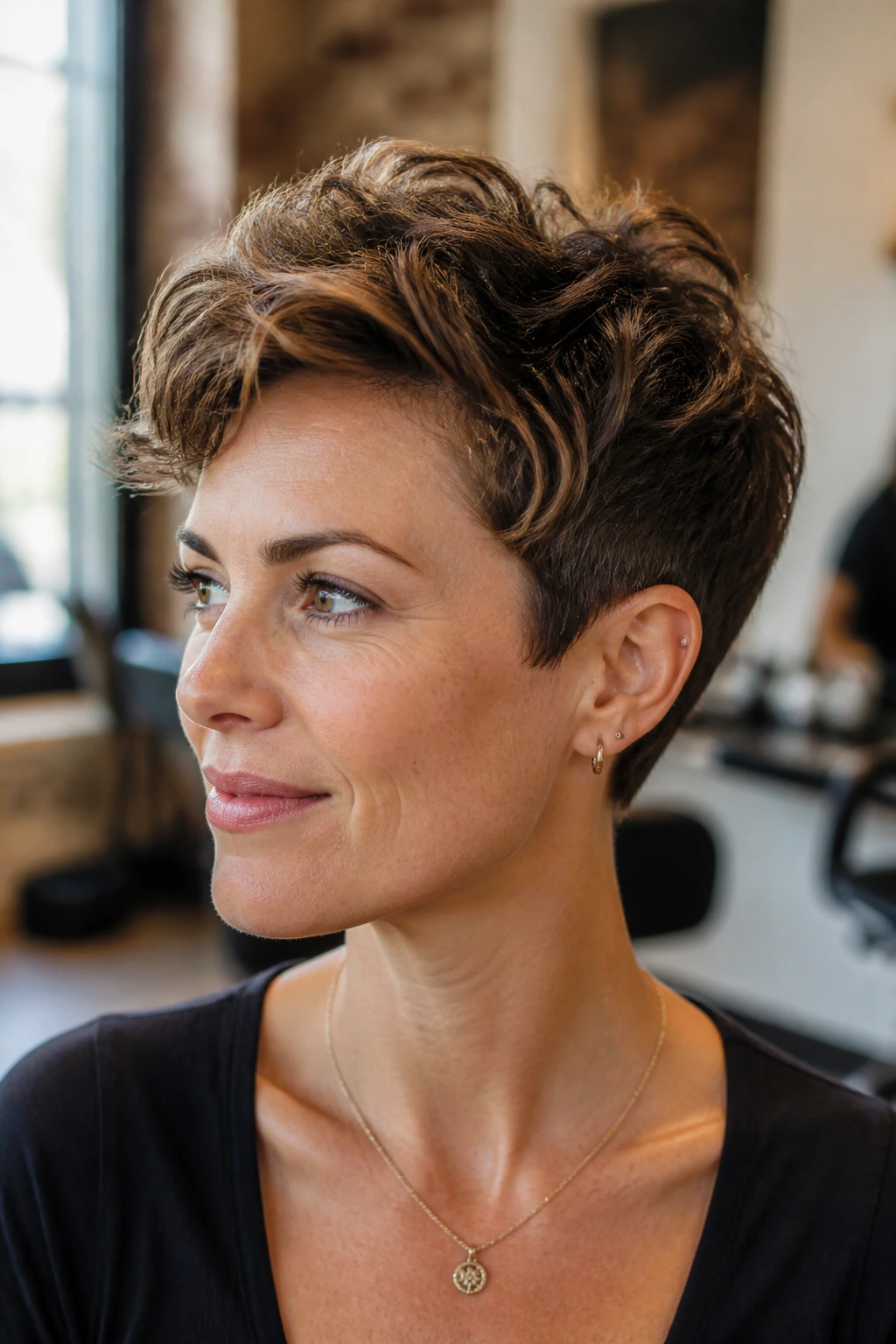
Soft Color Shift: Add subtle highlights through the top and fringe if the texture gets lost in one flat shade. A little contrast shows off the wave pattern.
Grow-Out Friendly Shape: Leave extra length at the temples and fringe so the cut can stretch for a few weeks without going strange.
Edgier Finish: Swap the airy cream for matte paste and let the waves sit in separated pieces. The haircut instantly feels tougher.
Frequently Asked Questions
Can a pixie cut work if my waves are uneven?
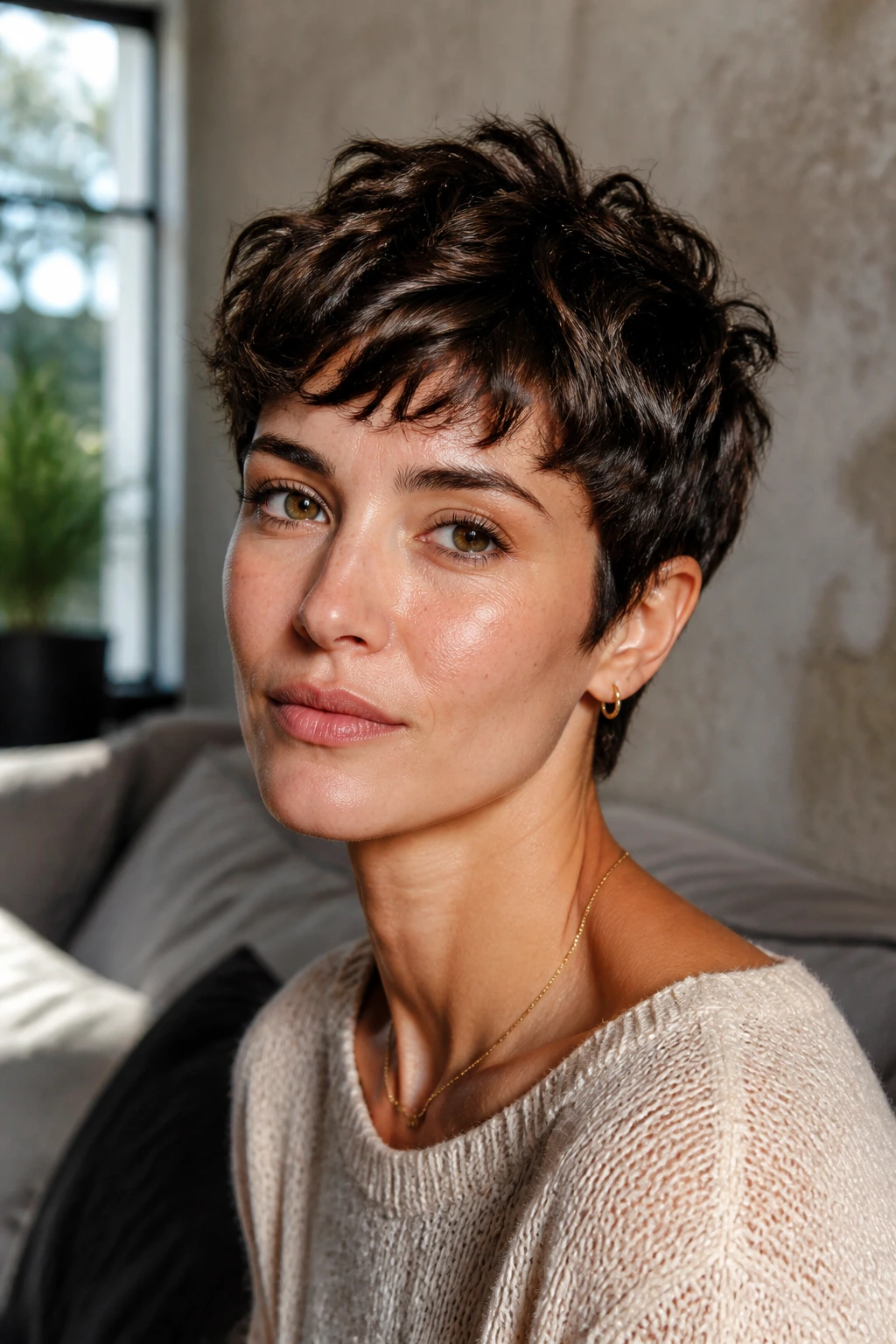
Yes, and uneven waves often look better in a pixie than they do in longer hair. A side part, asymmetrical fringe, or temple length on one side can make the difference feel intentional instead of random.
Will a pixie make my hair frizzier?
It can if the cut is too thinned out or too razor-heavy. On the right shape, though, shorter hair usually frizzes less because there’s less weight dragging the wave down into a puff.
How do I know if I should keep the fringe long or short?
If your forehead is high, your hairline is strong, or your waves spring up at the front, longer fringe is usually safer. If your face is small or your waves fall flat at the front, a shorter fringe can open things up.
Is a pixie bad for thick wavy hair?
Not at all. Thick wavy hair often looks excellent in a pixie when the interior bulk is removed carefully. The main thing is to keep the outline clean so the hair does not puff outward.
Do I need special products every day?
No. A light mousse or wave cream is enough for most days, and many cuts only need a pea-sized amount of matte paste on the second day. If your hair already has a lot of body, you may need less than you think.
How often should I trim a wavy pixie?
Most people do best at 4 to 6 weeks. If you have micro bangs, an undercut, or a very tight nape, you may want a quicker refresh so the shape stays crisp.
What if I want to grow it out later?
Tell your stylist from the start so the shape is built for grow-out. Keep the crown a little longer, avoid over-shaving the sides, and let the fringe and temples bridge the awkward stage.
Can I air-dry a wavy pixie every day?
Yes, and for a lot of people that’s the easiest route. Just keep the product light, scrunch gently, and resist touching it while it’s drying, because constant fiddling breaks the wave clumps apart.
The Shape That Lets Waves Breathe
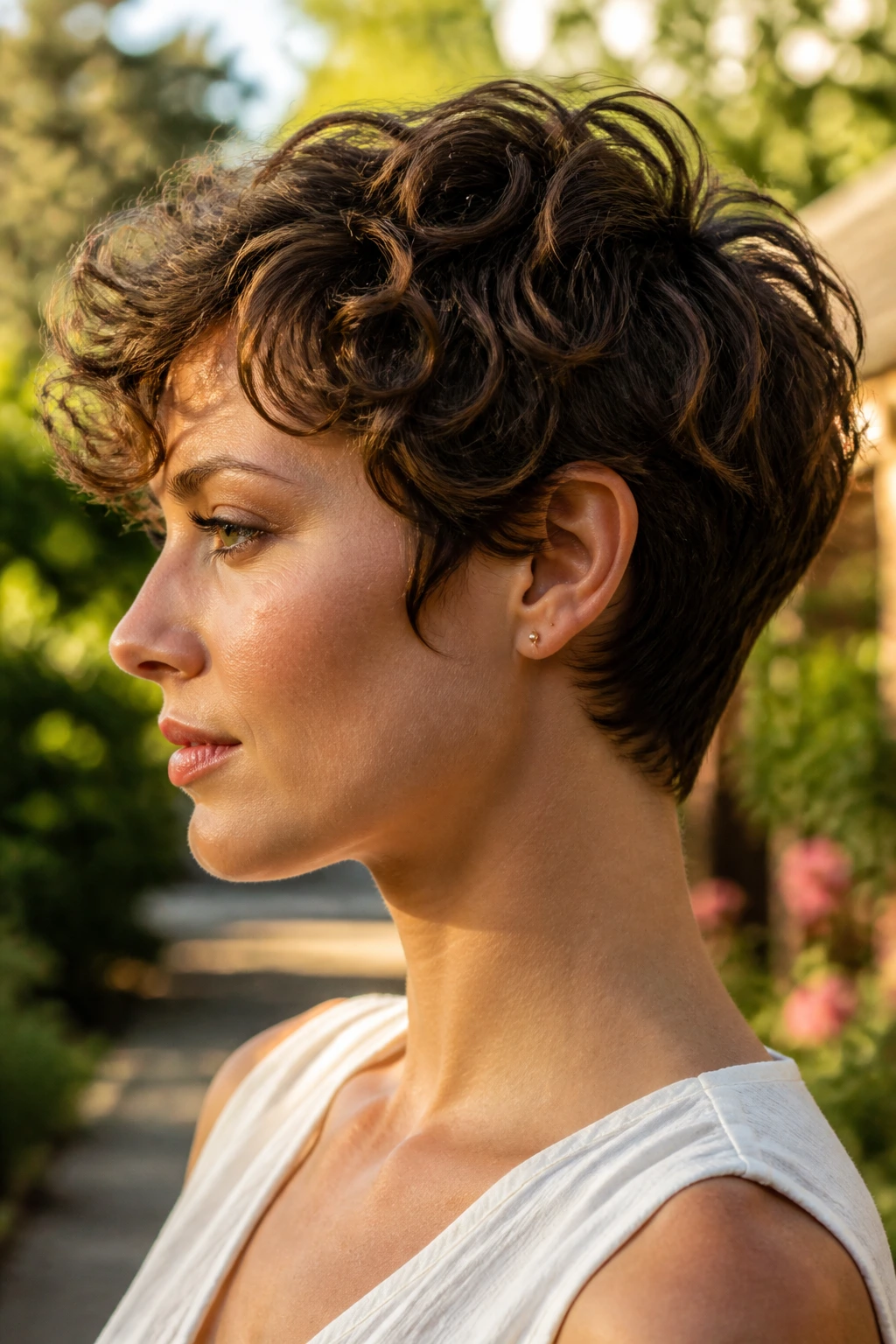
The nicest thing about a pixie on wavy hair is that it does not have to look severe. It can be neat, messy, sleek, playful, or a little bit rebellious, and the same haircut can shift moods just by changing the part or the product. That flexibility is the whole reason these cuts work so well.
If you keep one thing in mind, let it be this: the right pixie doesn’t fight the wave. It gives the wave a frame. Once you get that part right, the rest is mostly attitude, a decent trim schedule, and the kind of styling that stops before the hair starts arguing back.
