



A good pixie can do a lot of quiet work. It opens the face, cleans up the neckline, and makes a scarf, a pair of glasses, or a sharp lip color look intentional instead of accidental. The problem is that plenty of short cuts go too stiff, too helmet-like, or too severe the minute the hair loses a little bounce. Wavy pixie cuts for older women solve that by letting the texture do some of the shaping.
Gray hair changes the texture rules. So does finer hair. So does the little cowlick at the crown that never listens to reason. A wavy pixie handles those quirks better than a blunt crop because the bend in the hair breaks up hard lines and the layers keep the top from collapsing flat against the scalp. That’s why the right short cut can look soft without looking fussy.
The trick is choosing the right version of the pixie for the hair you actually have, not the hair in the photo you saved three months ago. Some versions need a deeper side part. Some need a longer fringe. Some need a tapered nape so the back doesn’t puff out by lunch. The styles below cover the range — polished, piecey, silver, choppy, side-swept, and a few that flirt with a bob without losing the pixie shape.
Why These Wavy Pixie Cuts Work So Well
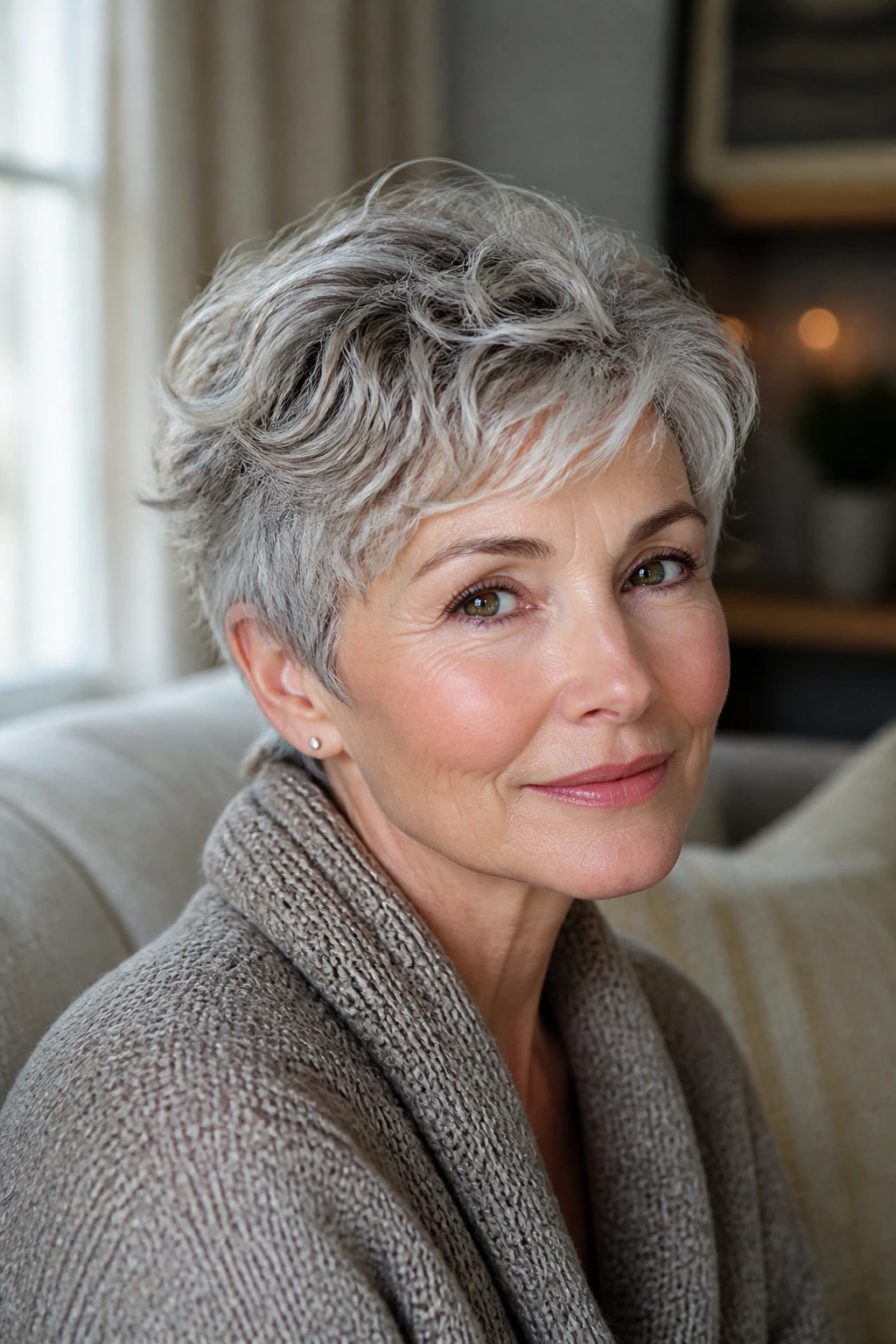
- They keep lift where it matters: A little extra length on top, often just 1½ to 3 inches, keeps the crown from flattening into the scalp.
- They soften the face instead of boxing it in: Waves around the temples and fringe break up hard edges, especially near the forehead and jaw.
- They grow out more gracefully than a blunt crop: A tapered nape and feathered sides buy you a few extra weeks before the shape starts to look shaggy.
- They play nicely with gray and silver hair: Coarser silver strands show movement well, so a bend in the hair reads as texture rather than frizz.
- They work with glasses, earrings, and collars: A short cut that clears the ears and sits clean at the neckline keeps accessories from fighting the hair.
- They don’t need a big styling routine: A dab of mousse, a quick rough-dry, and a tiny bit of paste on the ends is often enough.
1. Soft Side-Swept Wave Pixie
This is the friendliest place to start if you want a pixie that feels soft rather than spiky. The side-swept fringe drapes across the forehead, and the wave through the top keeps the cut from looking flat or overworked. It has that easy, slightly undone shape that still looks deliberate when you tuck one side behind the ear.
Best for a gentle frame
If you have a higher forehead, soft cheeks, or a face that looks better with one side of the hair doing a little more work than the other, this cut helps. Ask for the fringe to stay long enough to brush the brow, not sit above it. That one detail changes the whole mood.
A 1-inch curling iron or a round brush at the front will give the bend its shape. Don’t curl every strand. That’s how you end up with helmet hair. You want a loose sweep, not a row of identical waves.
2. Choppy Crown-Lift Pixie
Why does this one work so well on fine hair? Because the cut puts the energy where the eye wants it — right at the crown. Shorter sides and choppy layers on top create lift without requiring a lot of blow-drying, which is useful when your hair likes to lie down after five minutes.
How to style it
- Mist the roots with a lightweight mousse.
- Rough-dry the crown while lifting hair up with your fingers.
- Pinch a few top pieces with a matte paste once the hair is almost dry.
- Leave the ends a little uneven. That choppy finish is the point.
This style has a bit of attitude, but not the sharp-edged kind. It works especially well when the back is tapered close to the neck and the top keeps enough softness to move.
3. Feathered Pixie with a Long Fringe
There’s a reason feathering keeps coming back. It removes bulk without making the cut look thin. On a wavy pixie, feathered sides let the hair skim the cheekbones, and the longer fringe gives you something to tuck, sweep, or push off the face when you want a change.
A long fringe is useful if you wear glasses. It keeps the top from fighting the frame line. It also means the cut can read a little dressier when brushed forward and a little more relaxed when parted off-center. Two moods. Same haircut.
4. Silver Tapered Pixie with Loose Bend
Silver hair can look stunning in a pixie, but only when the shape is clean. If the sides balloon out or the nape gets fuzzy, the whole cut loses its edge fast. A tapered back keeps the outline neat while a loose bend through the top stops the color from looking too flat.
What to ask for at the salon
- A close taper at the nape.
- Longer, movable layers on top.
- Scissor work instead of aggressive razor thinning if your hair is coarse.
- Enough length around the ears to avoid that hard, shaved look unless that is what you want.
This one is especially good if your gray hair feels wiry. The wave gives it a softer reading without pretending the texture isn’t there.
5. Asymmetrical Wavy Pixie
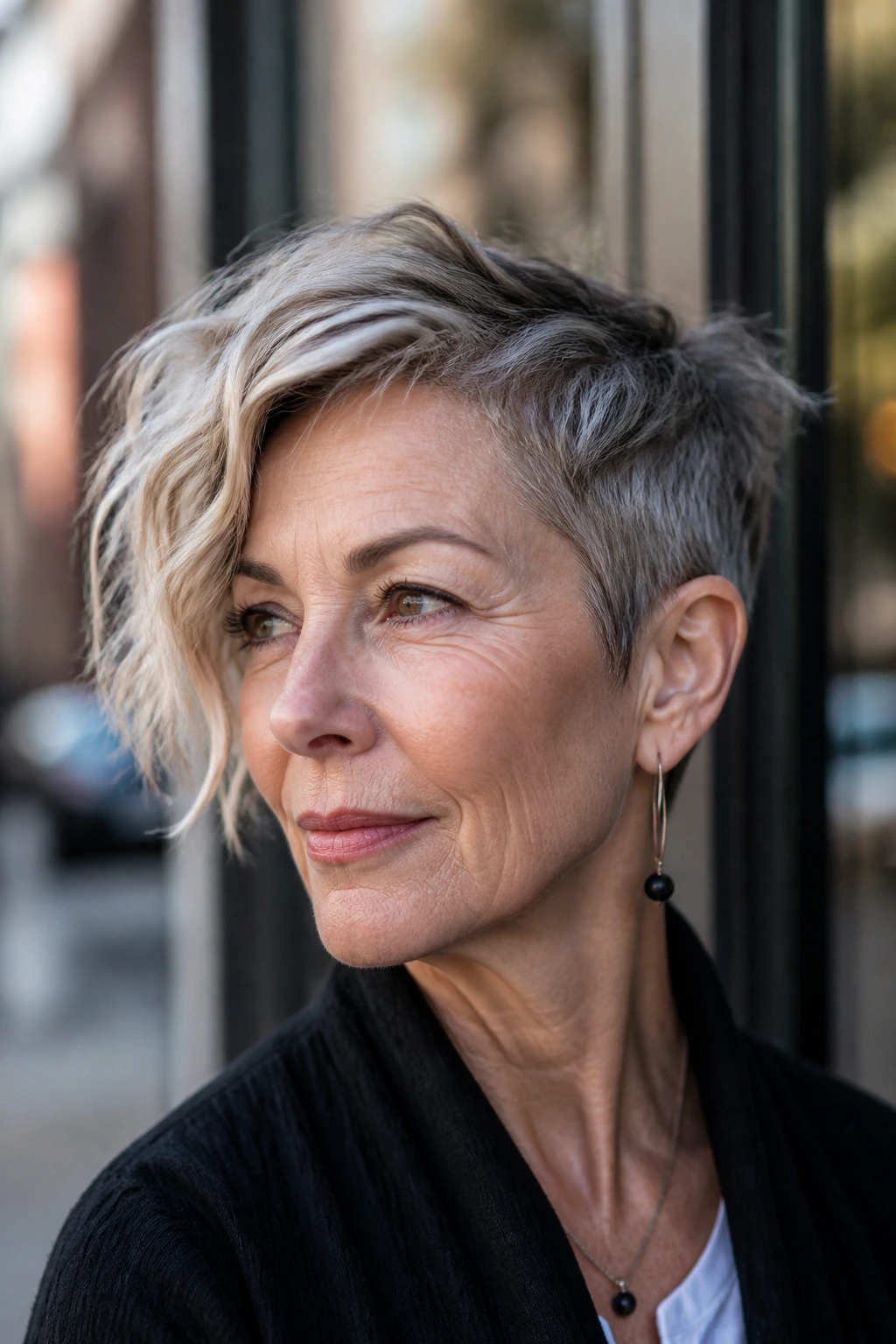
A small length difference between the two sides can do a lot. It breaks up symmetry in a way that feels modern, not loud, and it can draw the eye away from areas you’d rather not emphasize. One side grazes the cheek. The other side stays tighter. That tiny imbalance makes the whole cut feel alive.
This is a smart choice if you like short hair but hate the “same from every angle” feeling. It also works well if one side of your hair has a stronger wave pattern than the other. Instead of fighting it, the cut uses it.
6. Ear-Tucked Pixie with Wispy Temples

If you like a neat ear line and a clean neckline, this cut behaves beautifully. The temples stay soft and wispy, which keeps the sides from looking blocky, and the hair around the ears is long enough to tuck without sticking out in weird little spikes.
It’s one of the easiest styles to live with. You can wear it polished with the ear tucked, or let the pieces fall loose for a softer look. Either way, the wave should stay loose. Tight curl definition is not the goal here.
7. French Pixie with Soft Movement
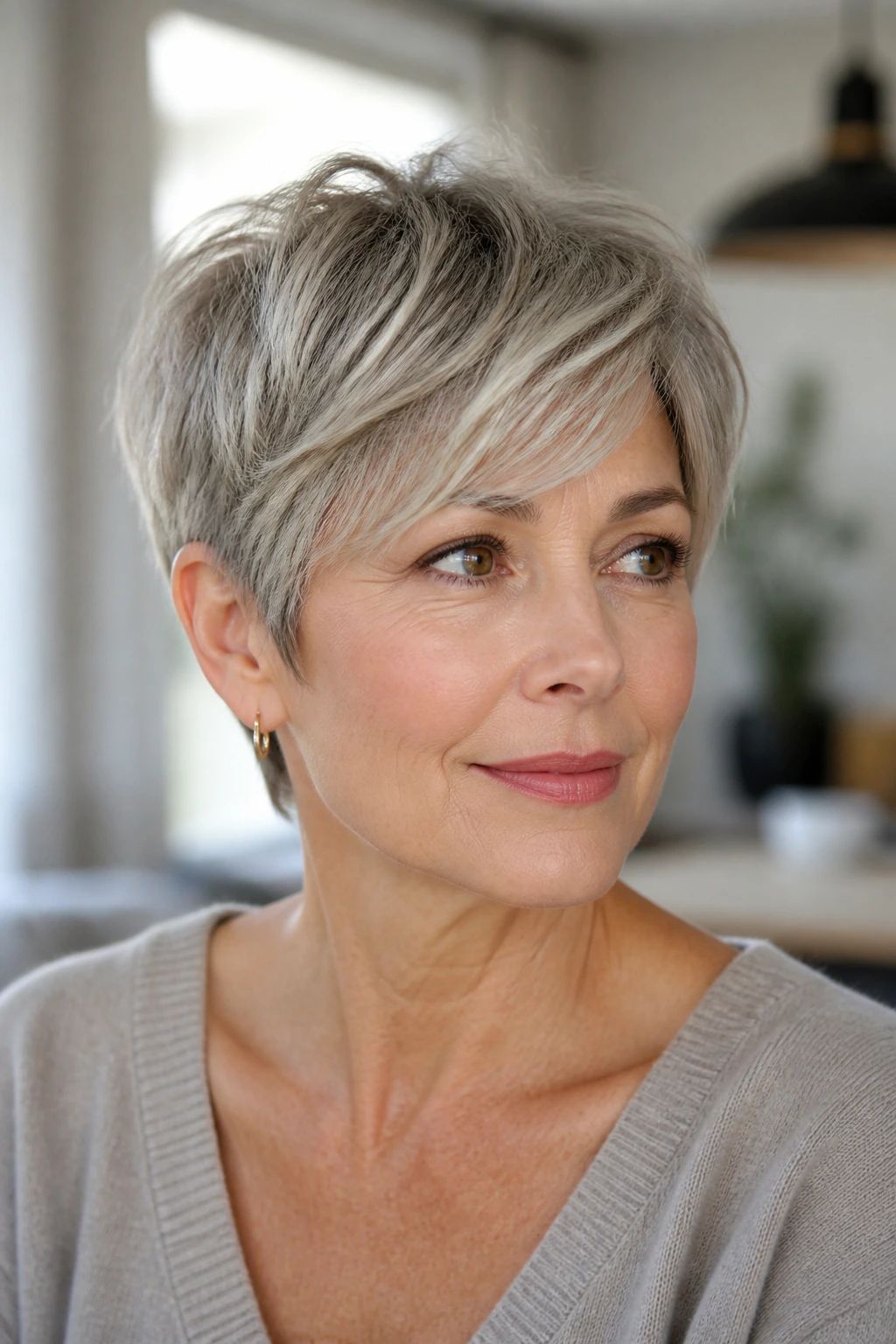
This version has a slightly airy, easygoing shape — short, but not severe. The fringe sits a little longer, the top has a bend instead of a curl, and the sides are shaped so the cut follows the face rather than sitting on top of it. It’s the kind of pixie that looks good with a knit top, a crisp collar, or a plain white shirt.
Why it flatters
The French-style softness works because it doesn’t ask the hair to be perfect. A little separation in the bangs is fine. A little movement at the crown is better. The overall effect should feel relaxed, not messy.
If you like a cut that can air-dry and still have character, this is a strong option.
8. Undercut Pixie with Airy Top
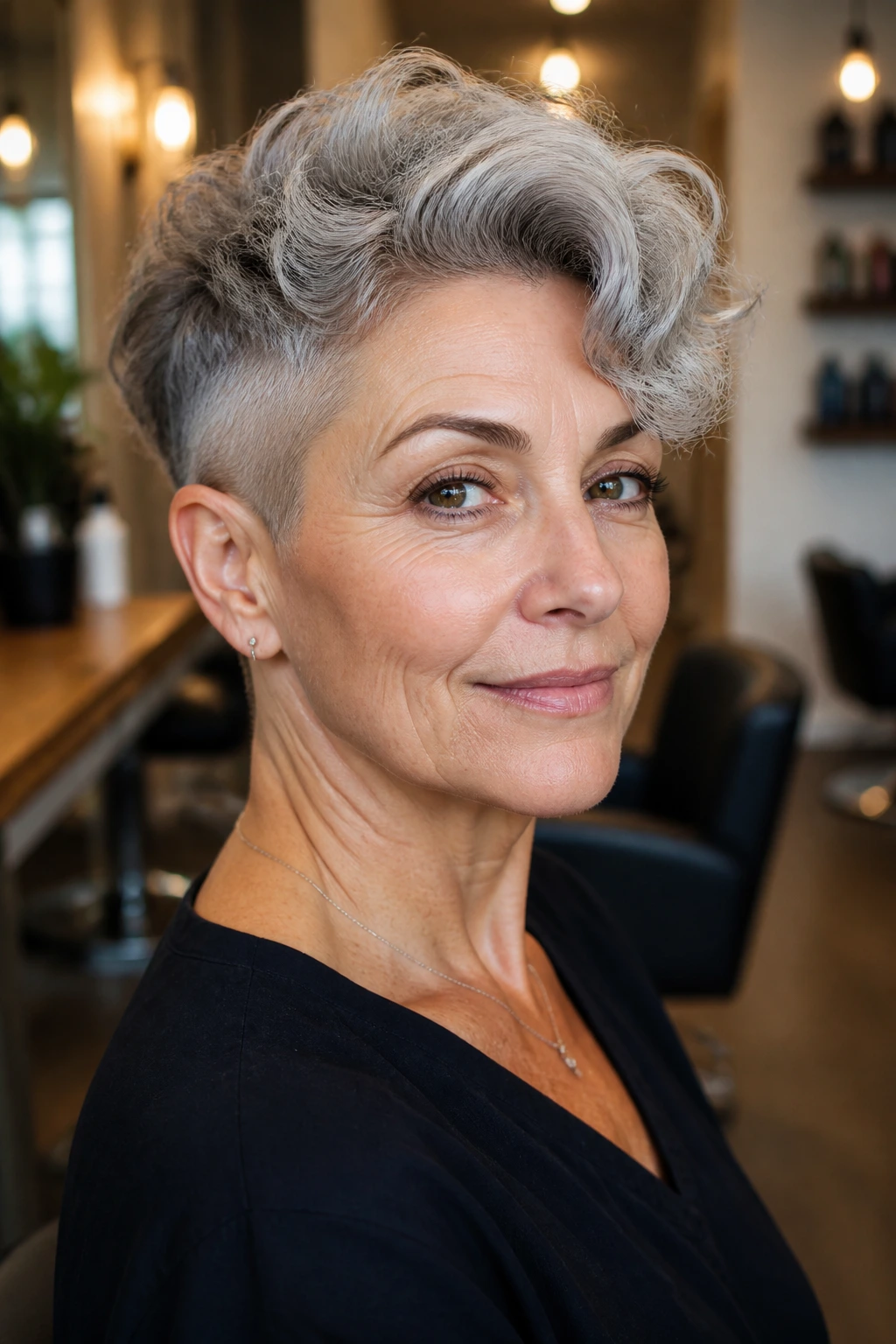
This is the move for thick hair that refuses to stay compact. A hidden or softly visible undercut removes bulk at the sides and back, while the top stays airy enough to wave and lift. You get shape without the old-school mushroom effect that can happen when thick hair is chopped short all over.
A little caution here: the undercut should be subtle unless you want a bolder look. Too much contrast can be harsh. The sweet spot is a light underside with enough top length to flip and bend.
9. Rounded Pixie with Face-Framing Waves

When a face needs softness, a rounded pixie can be a relief. The shape follows the contour of the head, but the waves around the front keep it from looking too neat or too helmet-like. It’s especially useful for sharper jawlines or more angular features.
The important thing is not to overbuild the top. Keep the silhouette gentle, then let a few face-framing pieces fall a little longer than the rest. That tiny shift keeps the cut from feeling boxed in.
10. Salt-and-Pepper Piecey Pixie
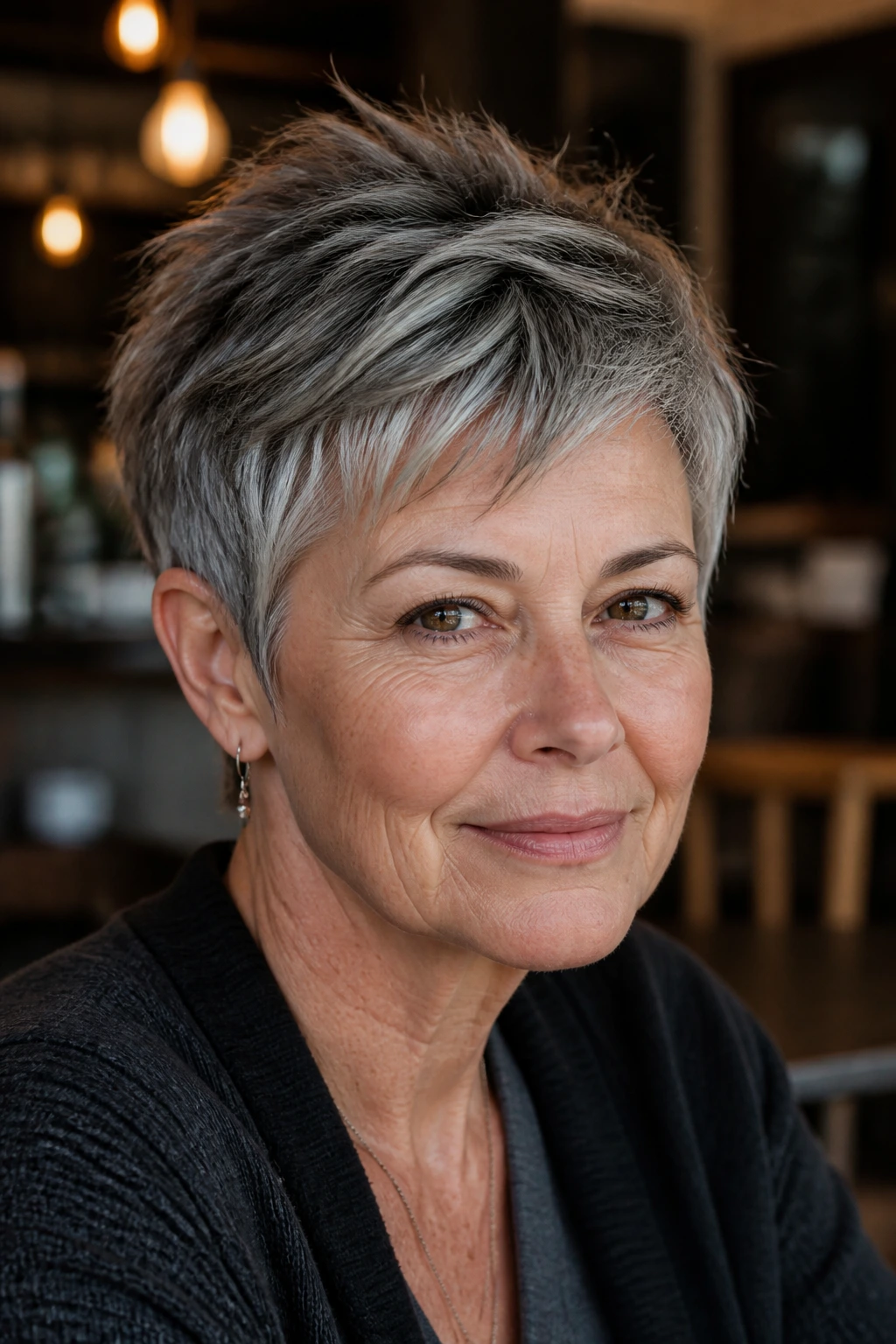
This one looks best when the strands separate a little. You do not want a solid, uniform sheet of hair here. A piecey finish shows off the silver, charcoal, and white tones in salt-and-pepper hair, which is half the point of wearing that color in the first place.
A dab of pomade on the fingertips is enough. Smooth it over the ends, twist a few sections, and stop. If the cut starts to look wet or stiff, you’ve gone too far.
11. Longer Pixie Bob with a Wave
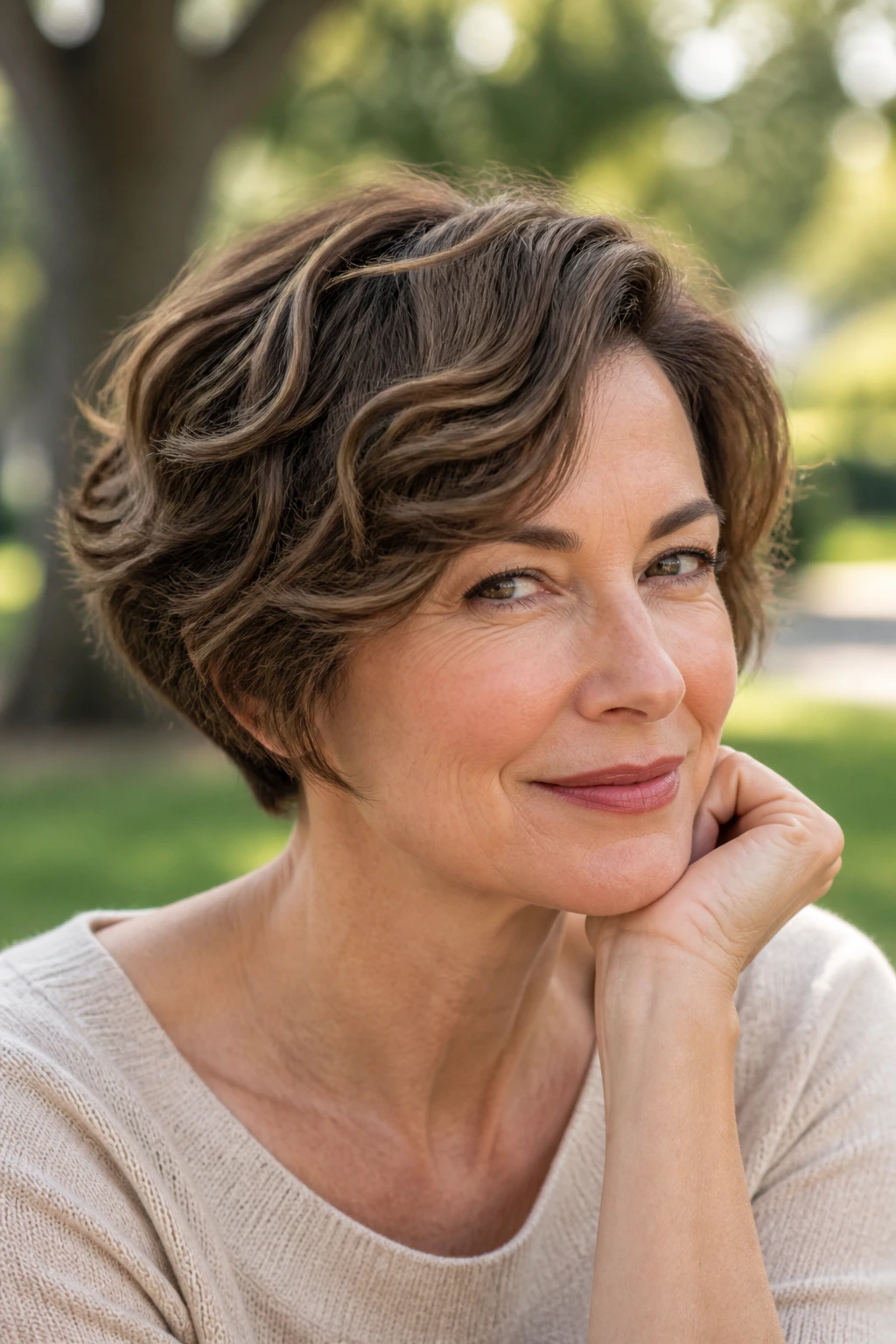
Not everyone wants to go all the way short. Fair enough. A pixie bob hybrid keeps the nape cropped and the top layered, but leaves enough length around the ears and cheeks to feel less exposed. It’s a good bridge style if you’re coming from a bob and don’t want to jump straight into a cropped cut.
This shape is especially forgiving on wavy hair because the extra length gives the bend room to show up. It’s also one of the easier short cuts to tuck, pin, or brush back when you want a change.
12. Swept-Back Glam Pixie
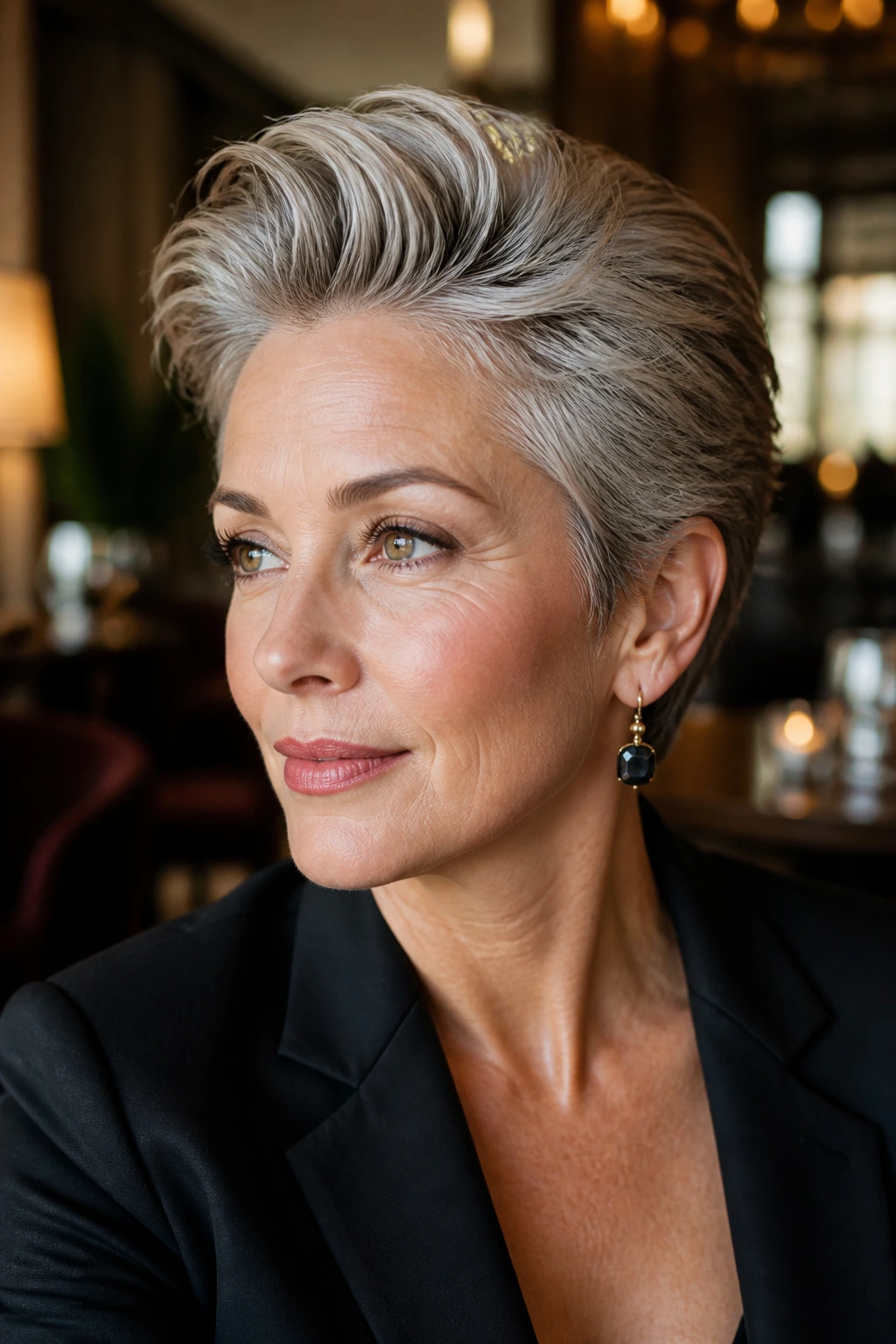
This is the one that likes a little shine. Brush the top back with a light cream, lift the roots, and leave the ends slightly separated so the style doesn’t turn slick. The result feels polished, but not stiff.
It suits nights out, special events, or any day you want your hair to look more finished. A side part can soften it. A little height at the front can make it bolder. The shape does both jobs without asking for much length.
13. Razor-Textured Pixie with Soft Ends
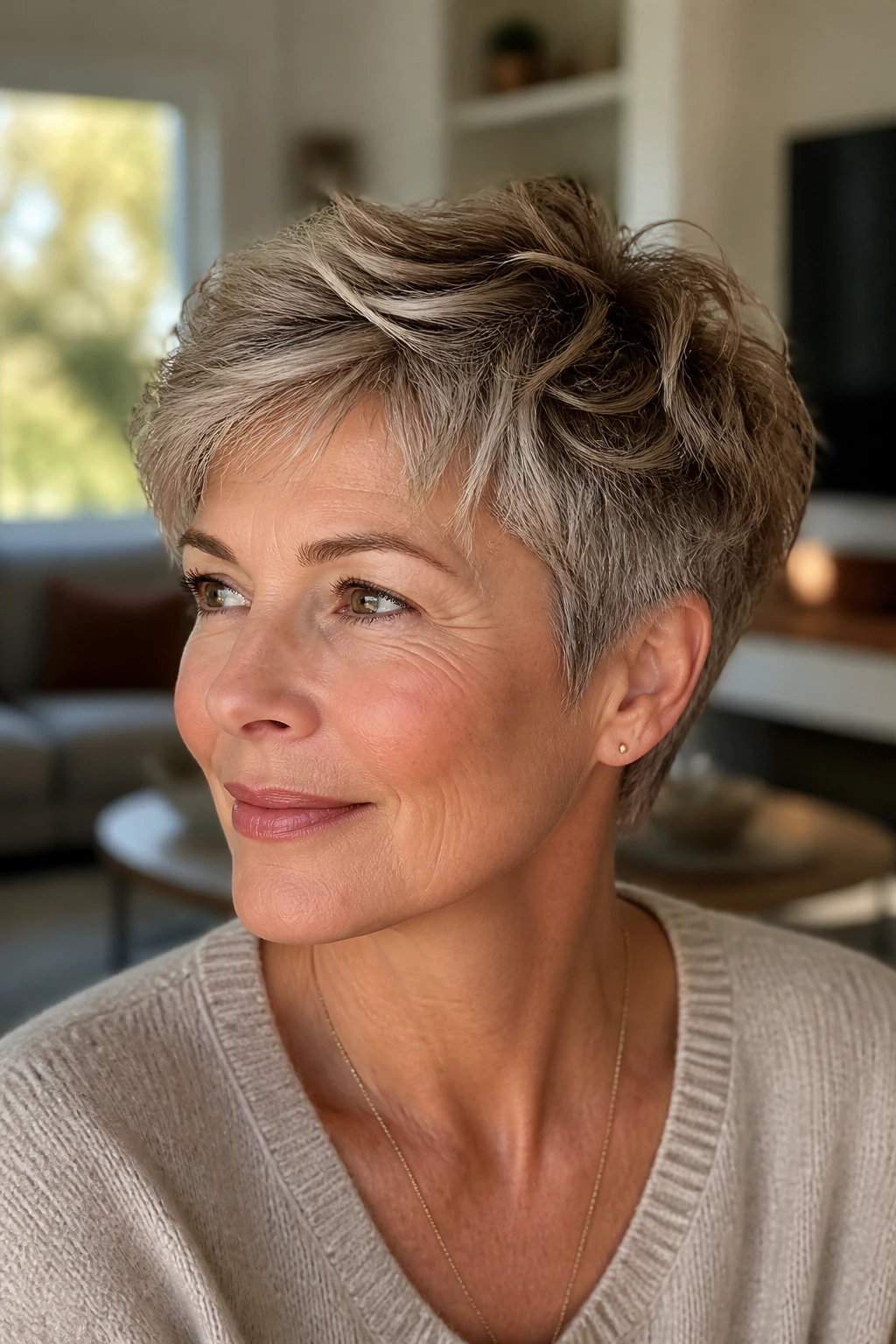
A razor cut can give a wavy pixie that airy, shattered finish people chase, but the trick is restraint. Too much razor work on dry gray hair can make the ends fray and stick out in odd places. Used carefully, though, it removes bulk and gives the wave room to move.
Watch the ends
If your hair is already dry or coarse, ask for soft point-cutting along the perimeter instead of heavy razor thinning. You want separation, not fuzz. That distinction matters more than people think.
This style works best when the top keeps a little swing and the sides are trimmed close enough to stay tidy.
14. Micro-Fringe Pixie with Wavy Crown
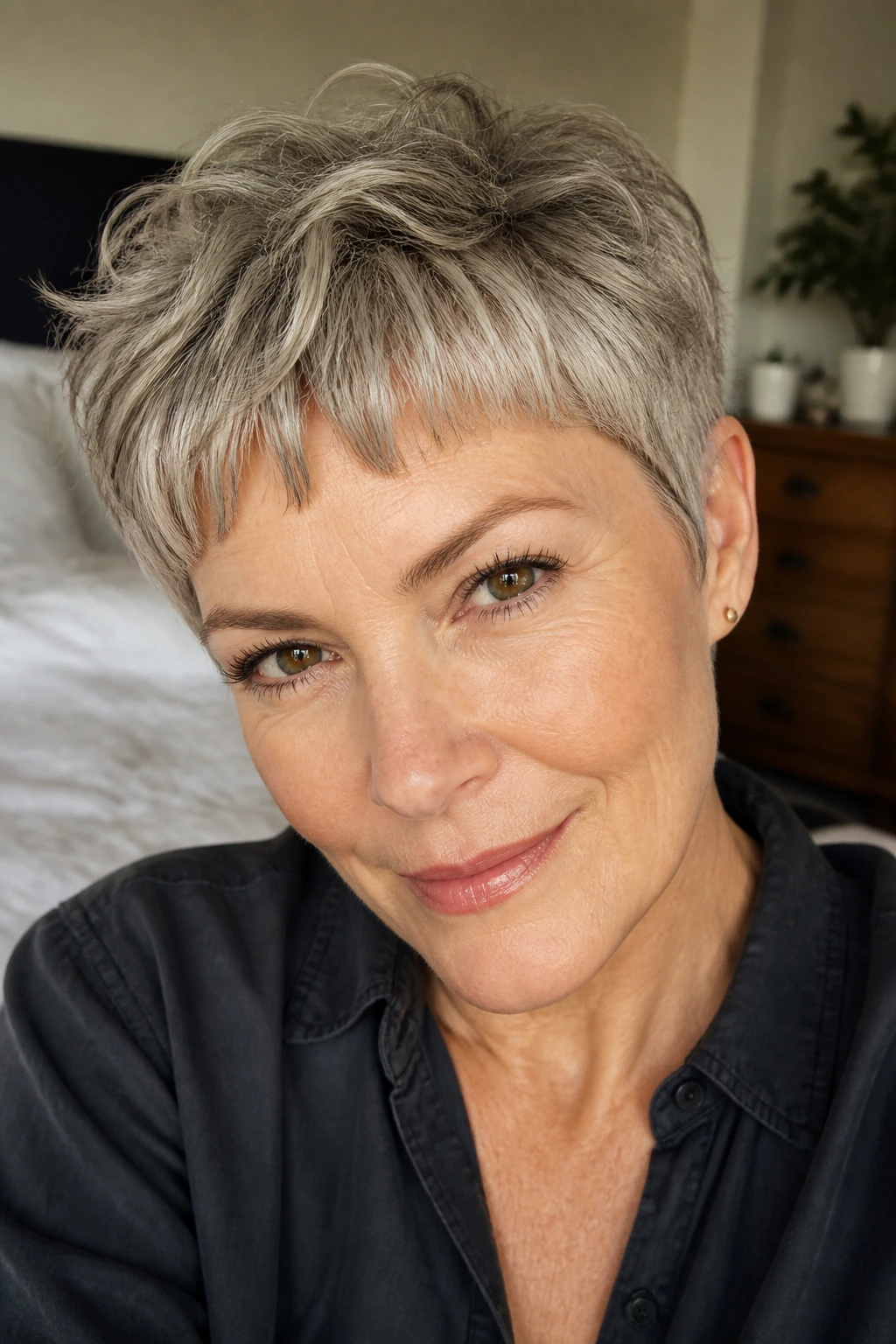
A short fringe changes the whole attitude of a pixie. It puts the focus on the eyes and brows, and the wavy crown adds enough softness to keep the cut from feeling severe. This is a sharp look, but still wearable.
It suits women who like a little edge and don’t mind regular upkeep. A micro-fringe shows growth fast. If you don’t want to trim bangs often, skip this one. If you like a cropped front and a textured top, it can look excellent.
15. Soft Mohawk Pixie
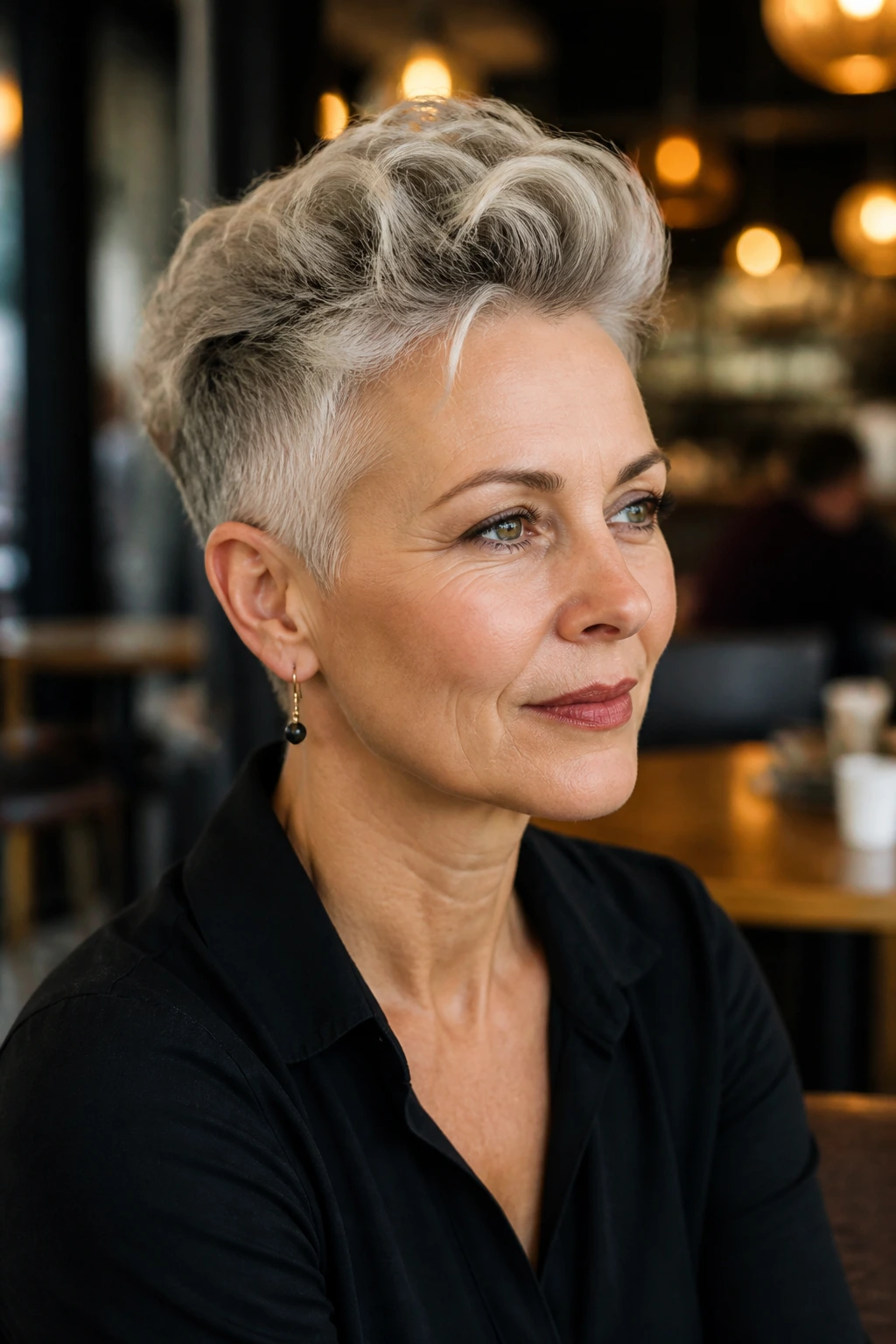
The center strip is longer, the sides are shorter, and the whole cut leans upward instead of outward. That gives the hair a little drama without crossing into punk territory unless you push it there yourself. The wave on top keeps it soft enough for daily wear.
This is one of the better cuts for women who want height at the crown and a slimmer shape at the temples. It can also make finer hair look fuller because the eye reads the lift first.
16. Side-Parted Pixie with Lifted Roots
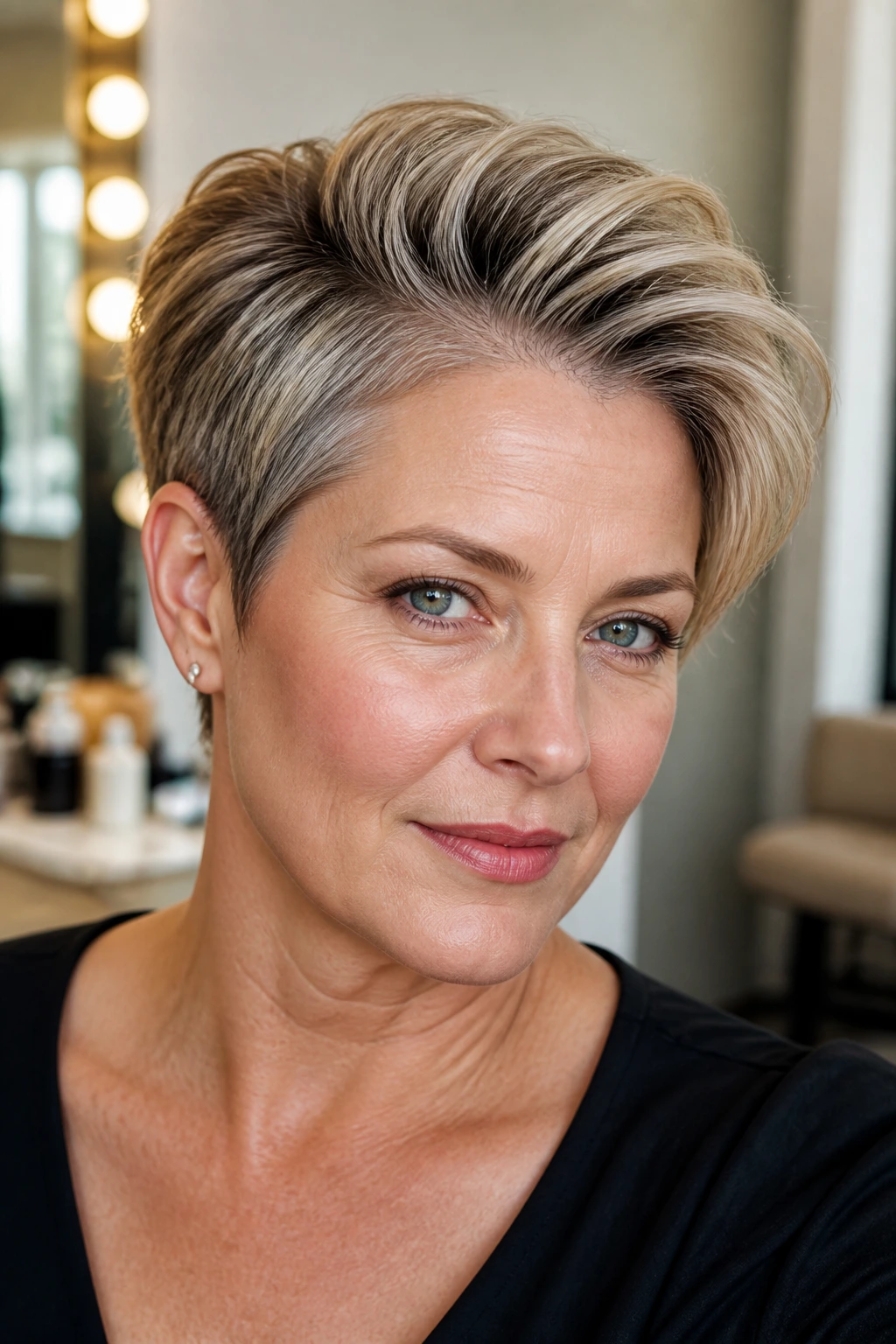
A deep side part is one of the simplest ways to change a pixie. It gives the cut direction, which is useful when your hair grows in a stubborn swirl or when one side needs more coverage than the other. Lift the roots on the heavier side and let the shorter side tuck in.
If you only want one styling trick to remember, make it this: dry the part in place from the start. Changing the part after the hair is mostly dry is harder, and it usually leaves the roots bent in the wrong direction.
17. Nape-Tapered Pixie with Long Top
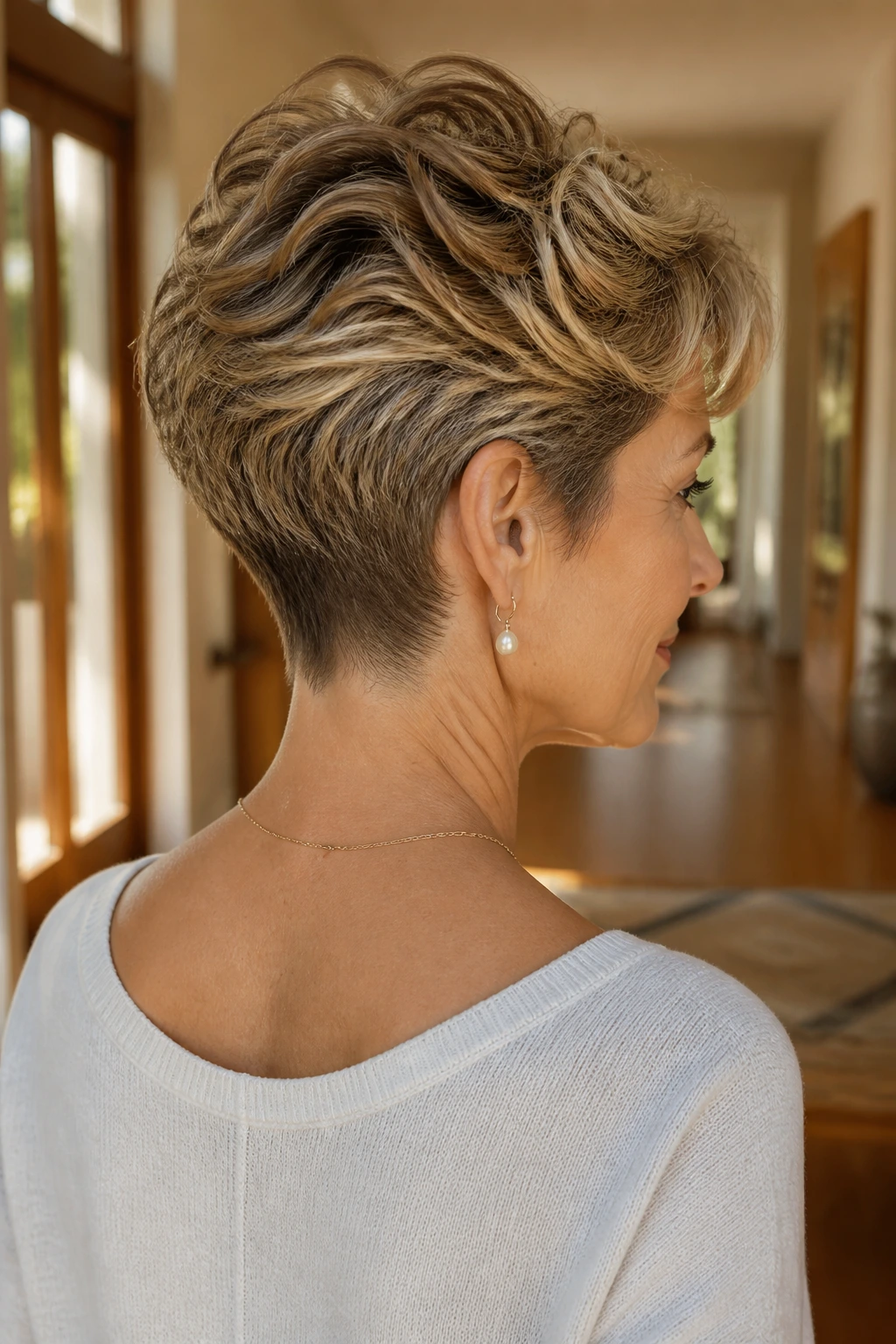
The neckline matters more than people admit. A clean taper at the nape makes a pixie feel finished even when the top is a little tousled. Keep the top longer, around 2 to 3 inches, so the waves have room to bend and flip.
This cut looks tidy from behind, which is a big deal if you hate the fuzzy grow-out phase. It’s also a nice choice if you wear collared shirts, jackets, or scarves, because the back of the hair won’t bunch up against the fabric.
18. Glasses-Friendly Wavy Pixie

If you wear glasses every day, this matters more than the trendy part of the haircut. The temples need room, the fringe can’t sit right on the frame, and the sides should skim rather than crowd your face. A glasses-friendly wavy pixie leaves that breathing space.
Small detail, big difference
Ask your stylist to check the cut with your glasses on. Not after. On. That one step prevents the annoying little collision where the hair falls exactly where the frame wants to sit.
This cut tends to look best with soft waves around the brow and a cleaner shape at the ears.
19. Blended Gray Pixie with Feathered Sides
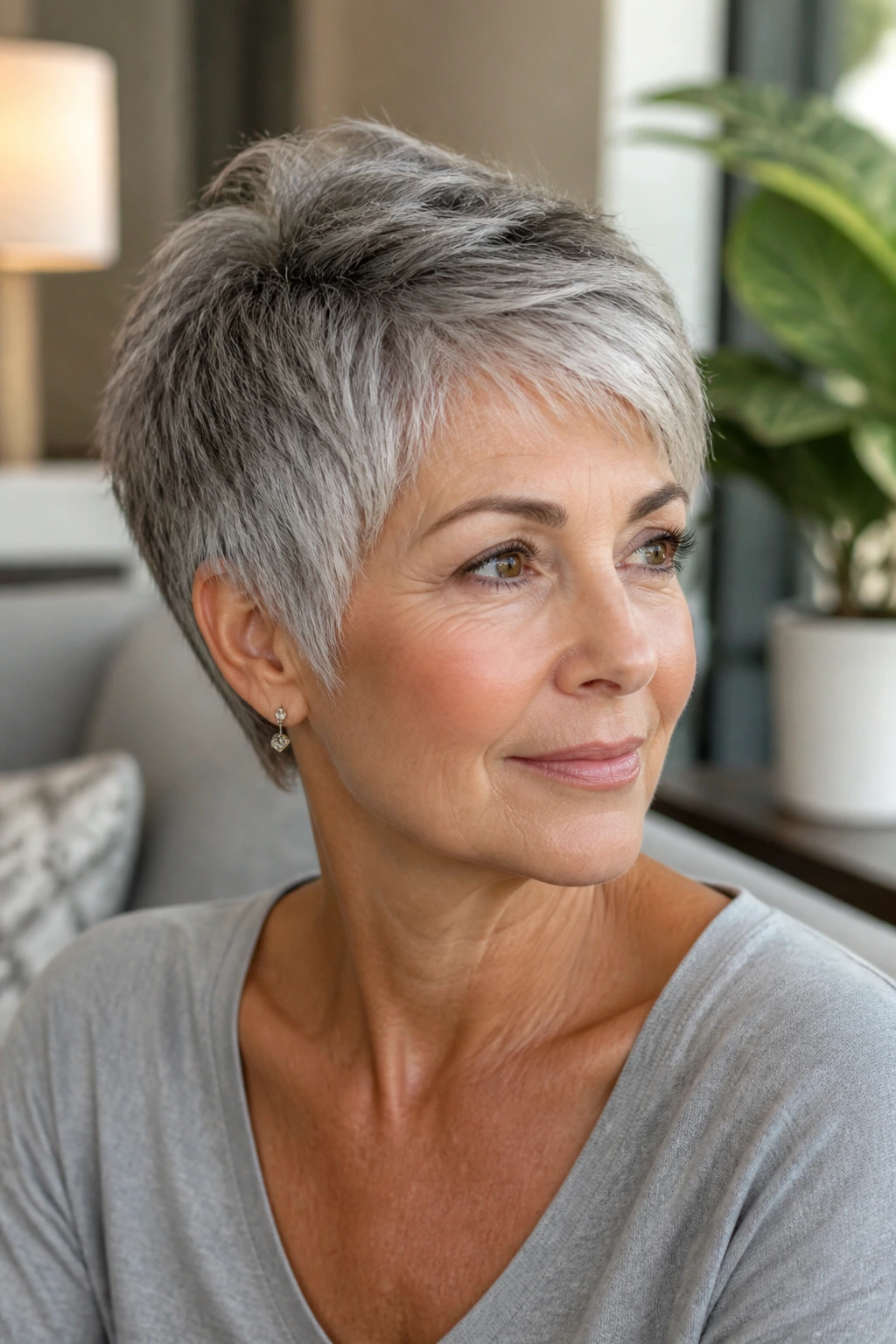
A blended gray pixie works well when the color transition is part of the appeal, not something you’re trying to hide. Feathered sides keep the shape light, and the wave helps the different tones mix visually instead of looking stripey.
If you’re growing out color, this style is a sensible middle ground. It doesn’t need a heavy fringe to cover roots, and it avoids the hard line that can happen when a short cut is too blunt. Let the texture do the blending.
20. Wash-and-Go Wave Pixie
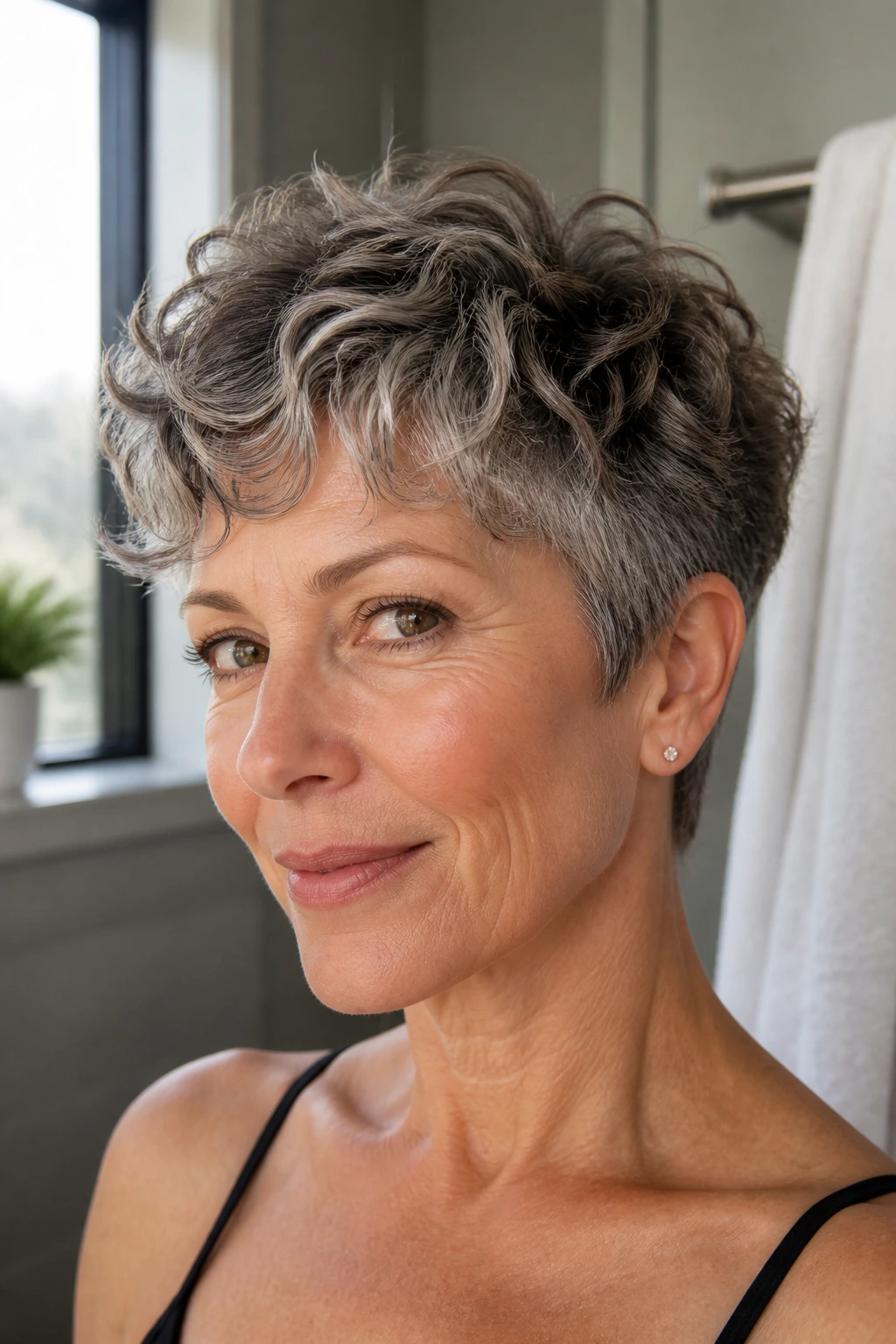
This is the low-fuss cut in the group. You towel it off, add a small amount of mousse, scrunch the top, and let it dry with minimal intervention. The layers are cut to encourage the natural wave pattern, so the hair doesn’t need a lot of coaxing.
A wash-and-go pixie works best when the cut is done properly at the start. If the top is too short or the sides are too heavy, the whole thing loses shape by midday. Ask for movement, not density, through the crown.
21. Sculpted Pixie with Long Bangs
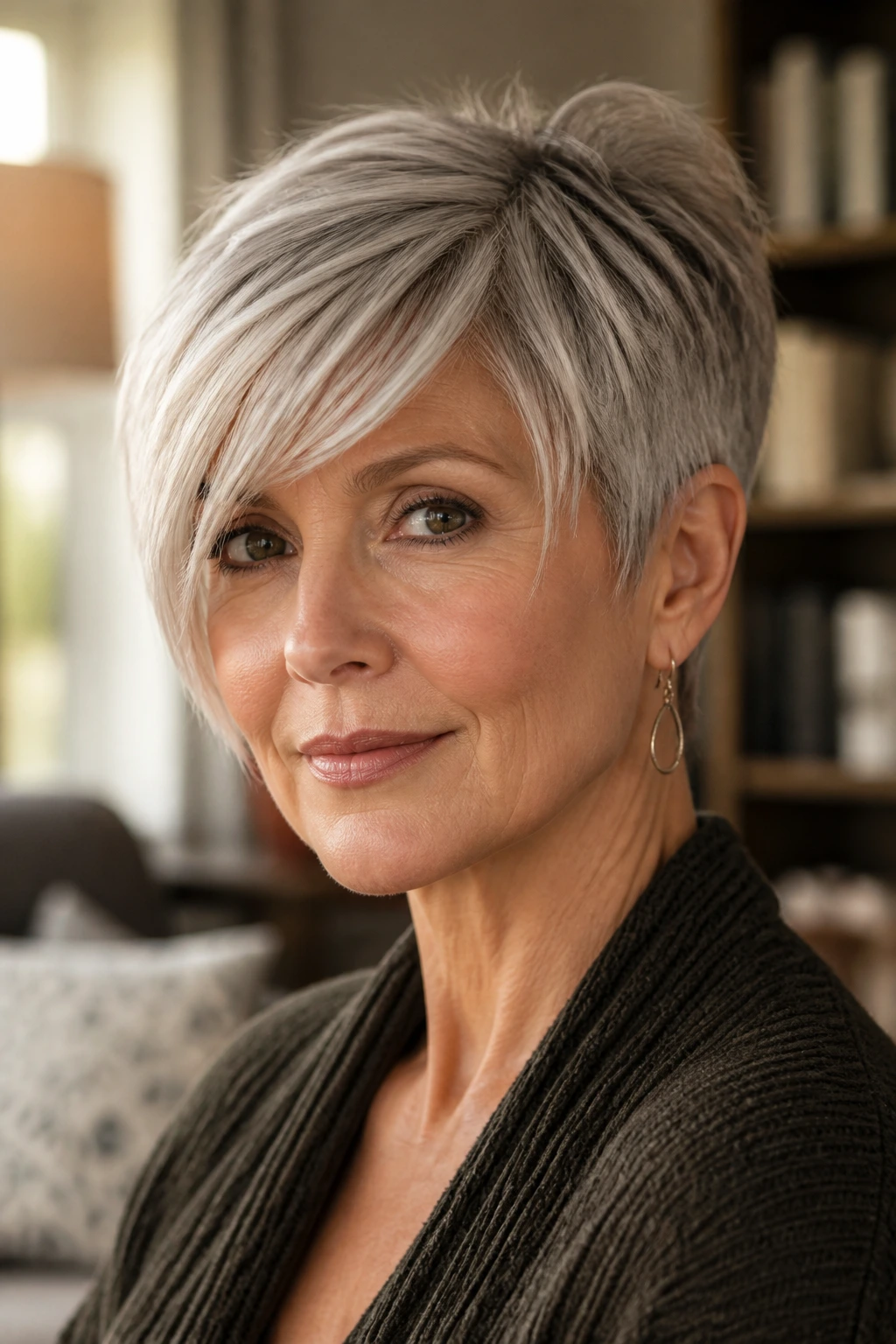
This cut has a little more polish than the tousled versions, but it still stays soft. Long bangs can be swept sideways, tucked back, or bent forward in a single curve. That makes the style flexible without turning into a styling project.
Why it’s a useful compromise
You get face coverage without hiding the whole forehead. You get shape without sacrificing movement. And when the hair grows out, the front can slide into a longer pixie or a small bob without an awkward jump.
A small round brush at the front can be enough to keep the bangs lifted off the face.
22. Tousled Pixie with Neckline Detail

This one is all about texture at the back and movement on top. The neckline is clean and slightly carved in, while the top is left piecey and loose. It gives the cut a casual feel, but the shape still looks considered.
It’s a good pick if you want people to notice the texture before they notice the haircut. That’s not a small thing. The best tousled pixies never look random; they just pretend they do.
23. Elegant Wavy Pixie with a Longer Top
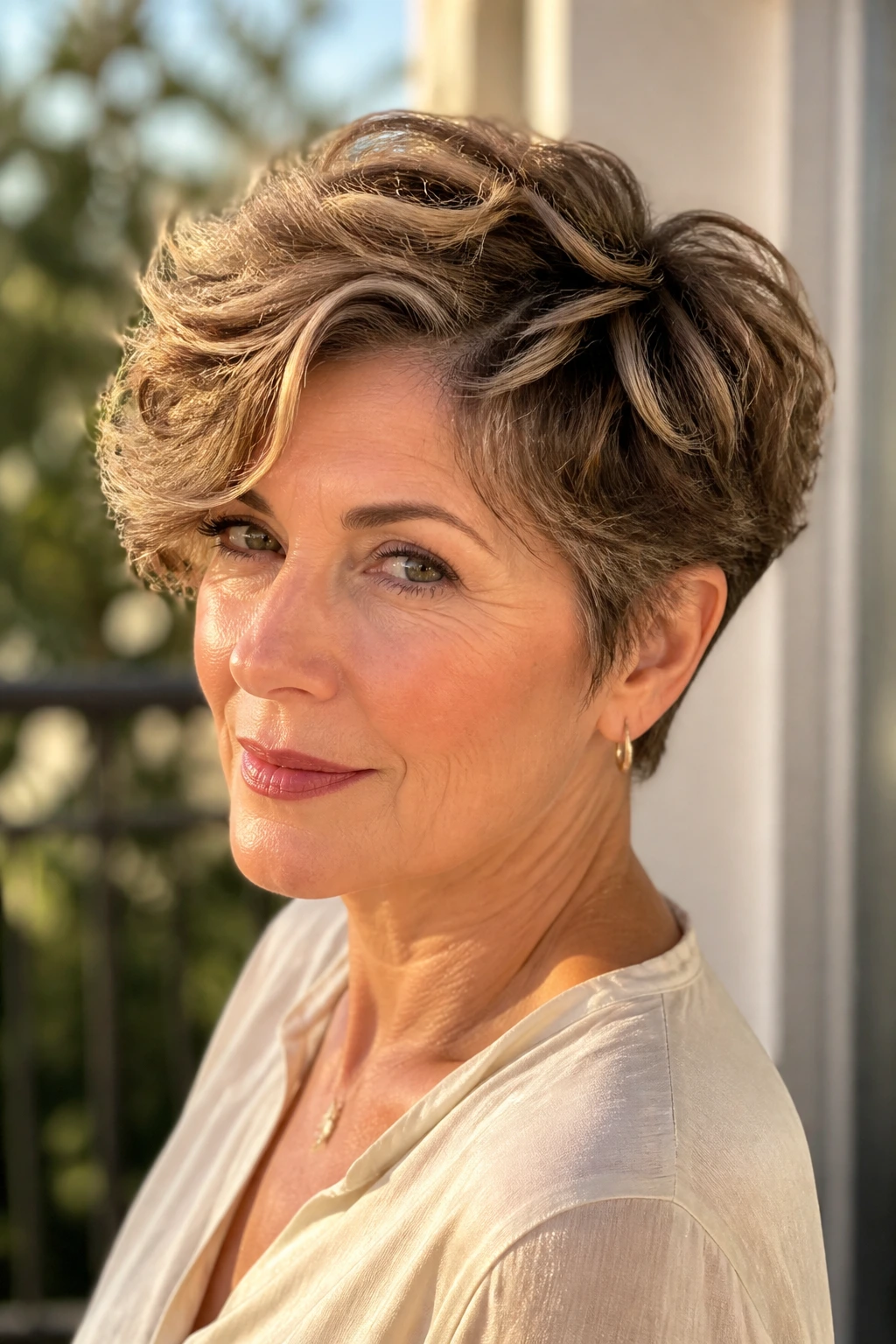
If you want something softer, a little more refined, and less obviously cropped, keep the top longer and let the wave travel forward. The sides can stay close enough to frame the face, but the crown should keep enough length to bend instead of stick up.
This is the pixie for women who want movement and polish in the same haircut. It works with silver, brown, blond, and salt-and-pepper hair alike, though I’d especially keep an eye on the texture around the fringe. A good fringe makes the whole cut feel finished. A bad one makes it look rushed.
Why Wavy Pixie Cuts for Older Women Work So Well With Natural Texture
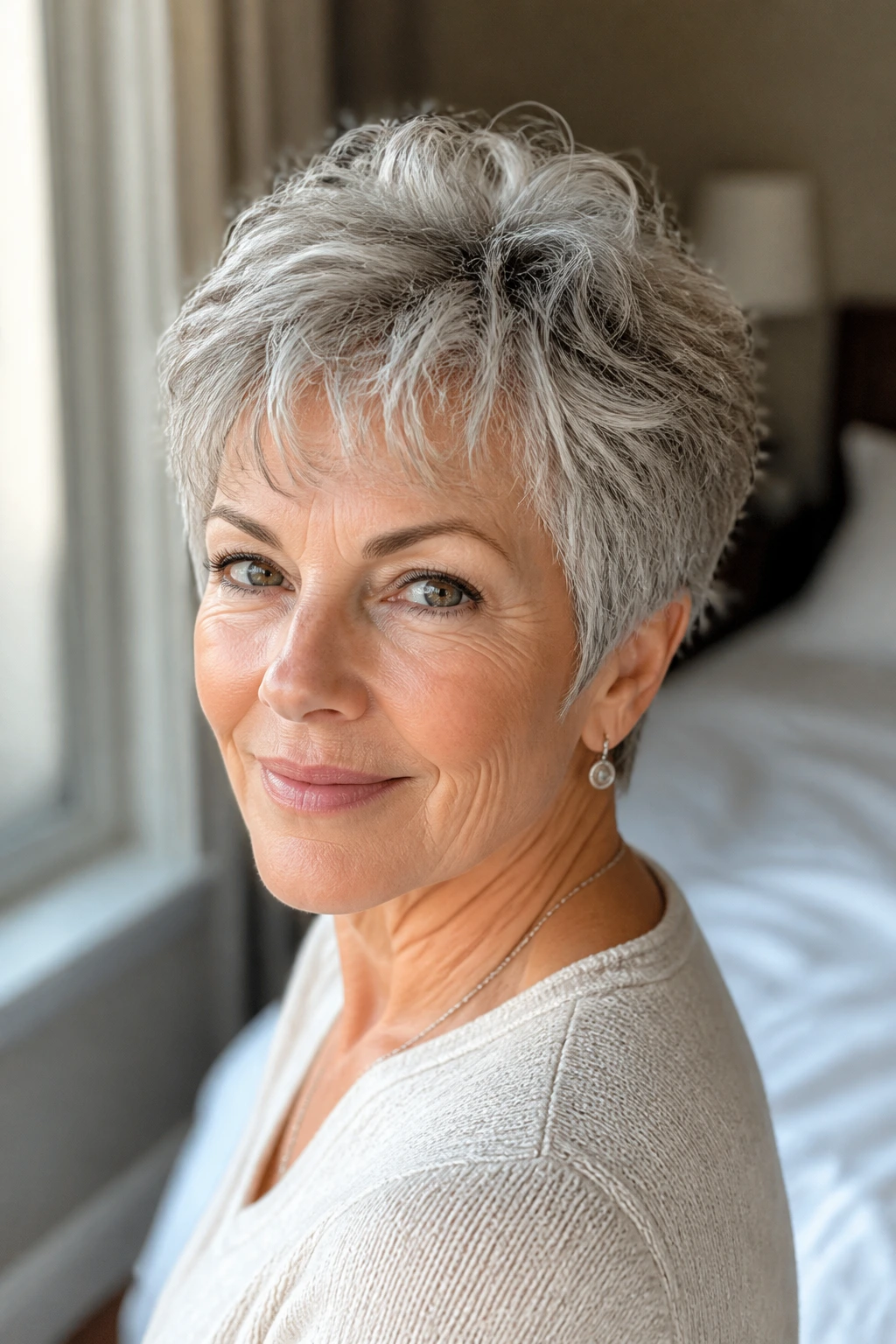
The best short haircuts don’t fight the grain of the hair. They shape it. That’s why wavy pixie cuts for older women tend to look better when they leave a little room for bend, lift, and separation instead of trying to create a hard, packed-down silhouette.
Gray hair is often a little drier and a little coarser, which means it has more memory than it used to. That can be a headache with some cuts. It’s useful here. A wave, a feathered edge, or a side-swept fringe keeps the texture visible, and visible texture usually reads as movement rather than damage.
There’s also the practical side. Shorter hair around the nape and ears grows out in a cleaner way than a blunt, one-length crop. That matters when you don’t want a cut that looks half-expired after three weeks. The right pixie can hold shape longer, especially if the top stays slightly longer than the sides.
And yes, the face benefit is real. Lift at the crown, softness around the temples, and a clean neckline tend to sharpen the whole look without making it severe. That’s the sweet spot.
Tools and Products That Keep the Waves in Place
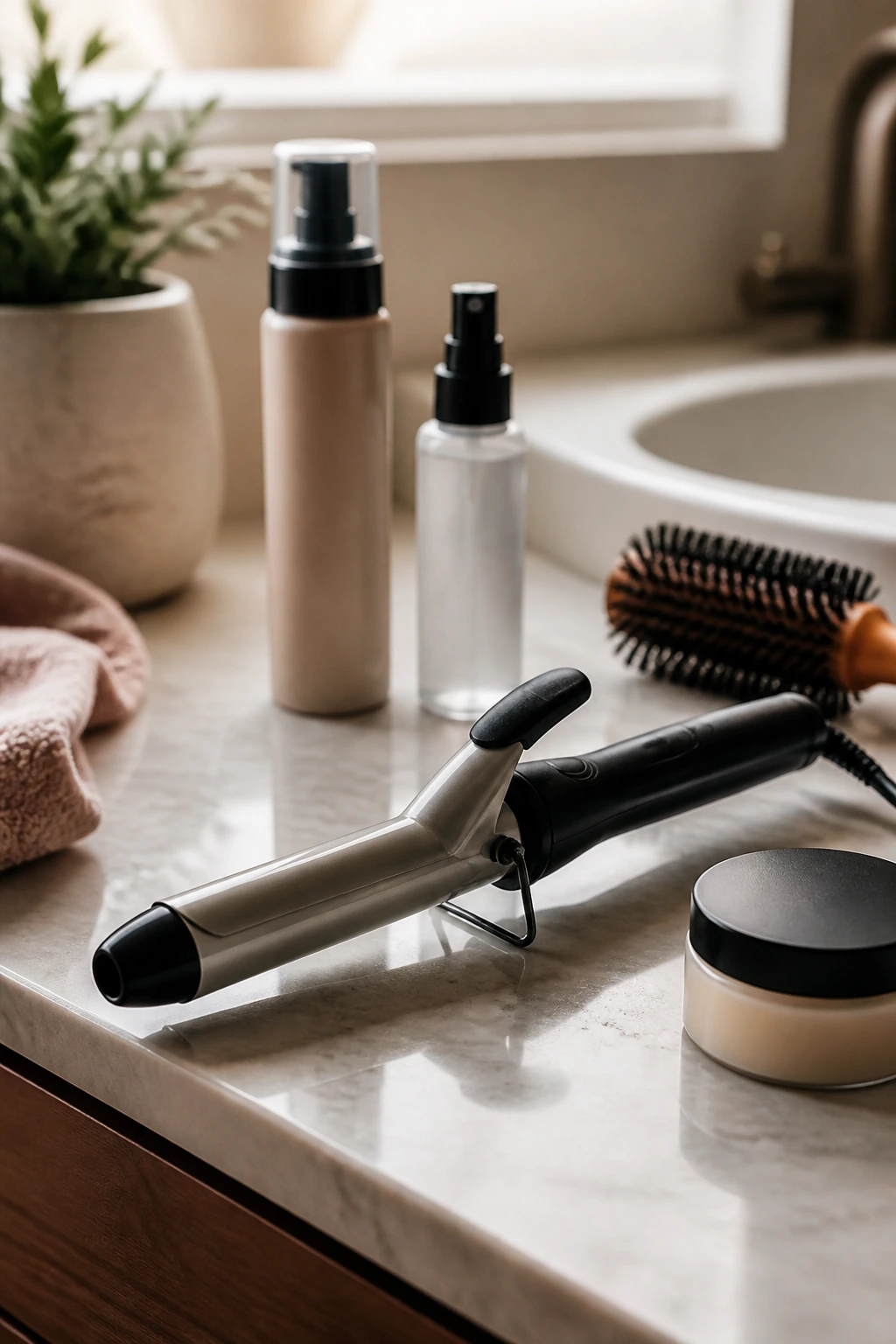
- Lightweight mousse: Use this on damp roots and through the top if your hair needs lift without stiffness.
- Heat protectant spray: Necessary if you use a blow dryer, round brush, or curling iron; short hair still burns.
- 1-inch curling iron or wand: Small enough to add bend to pixie-length pieces without turning them into ringlets.
- Mini round brush: Best for lifting the crown and giving the fringe a soft curve.
- Blow dryer with a nozzle: The nozzle helps direct the air where you want the shape to go instead of blasting it everywhere.
- Texturizing paste or pomade: Good for piecing out ends and keeping the wave from puffing.
- Dry shampoo: Useful at the roots on day two or three, especially if your hair goes limp fast.
- Fine-tooth comb and section clips: Handy for side parts, fringe control, and keeping the top separated while you dry.
How to Choose the Right Pixie for Your Face, Hair, and Glasses
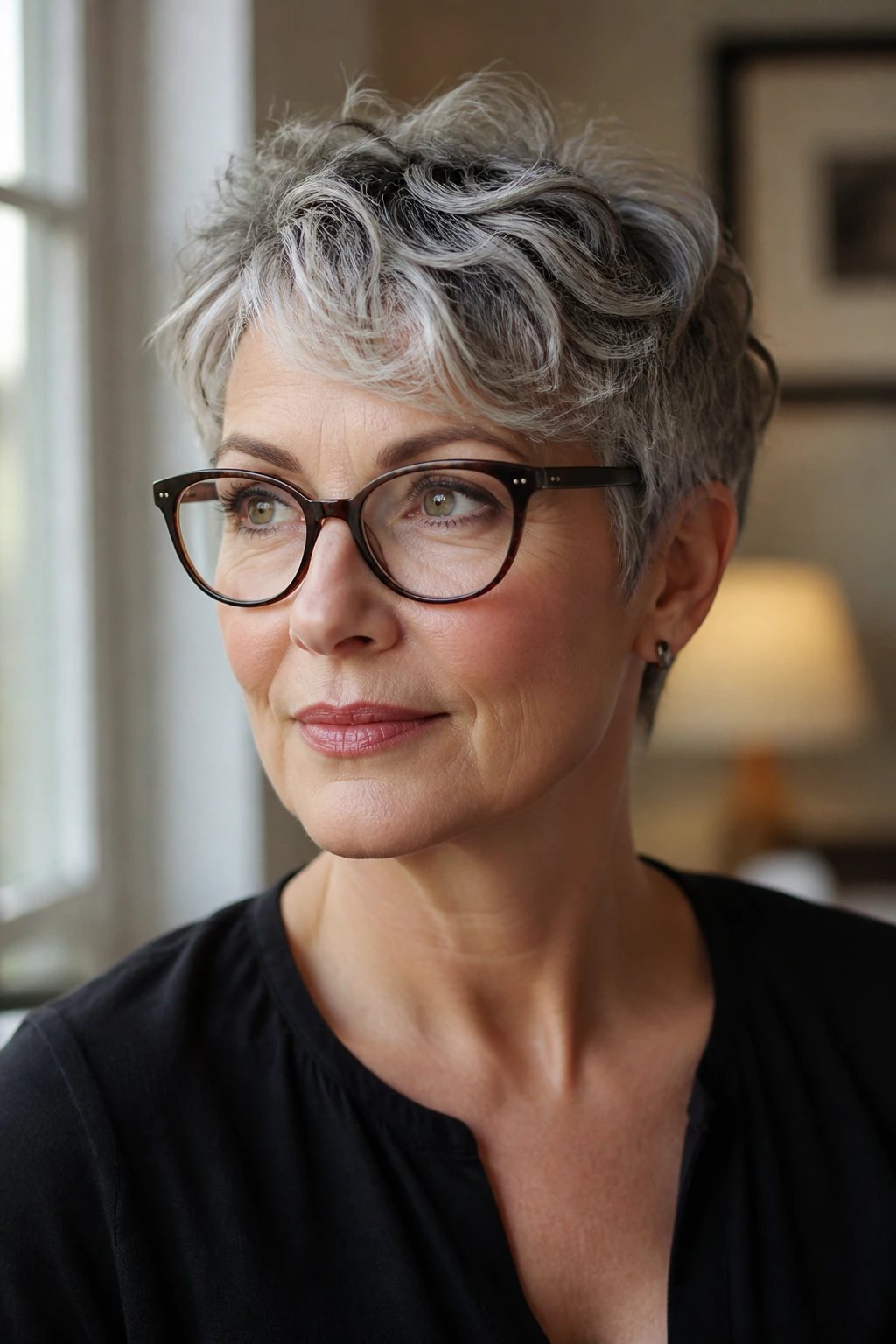
The haircut should follow your hair’s habits, not your wish list from a magazine. Fine hair usually needs a little more root lift and less bulk at the ends. Thick hair usually needs removal at the nape and sides so the shape doesn’t sit like a block. If your hair has a strong wave pattern, keep enough length in the top layers to let it show.
For round or soft faces
A side part, longer fringe, or a little height at the crown helps stretch the face visually. Avoid a too-short, even fringe unless you want the cut to read more graphic.
For angular features
Rounded edges and feathered sides soften sharper cheekbones and jawlines. The goal is contrast. Hard facial lines look better with hair that bends.
For glasses wearers
Leave enough space at the temples and around the ears. Frames need room to sit; otherwise the hair keeps pushing them forward all day.
For gray or silver hair
Use scissor work and point-cutting when the hair is dry or coarse. Heavy thinning shears can leave silver hair wispy in a bad way. That’s not texture. It’s fray.
How to Wear and Style a Wavy Pixie Without Overthinking It

Presentation: Keep the crown slightly higher than the sides, and let the fringe land where it naturally wants to fall. A pixie looks better when the shape follows the head instead of floating above it.
Accompaniments: Glasses with clean lines, small hoops, and open necklines work especially well with a wavy pixie. Crowded collars and oversized earrings can make the whole silhouette feel busy.
Portions: If you want more softness, keep 1½ to 2 inches on top and just enough length in front to sweep the forehead. If you want a sharper, more modern feel, shorten the sides and taper the nape more aggressively while leaving the crown a touch longer.
Style Pairing: A matte paste gives piecey separation; a light cream gives a softer finish; a mist of shine spray can make silver or highlighted hair look crisp at the ends. Pick one lane. Too many styling products at once usually end in flat roots and sticky fringe.
Additional Tips and Texture Boosters
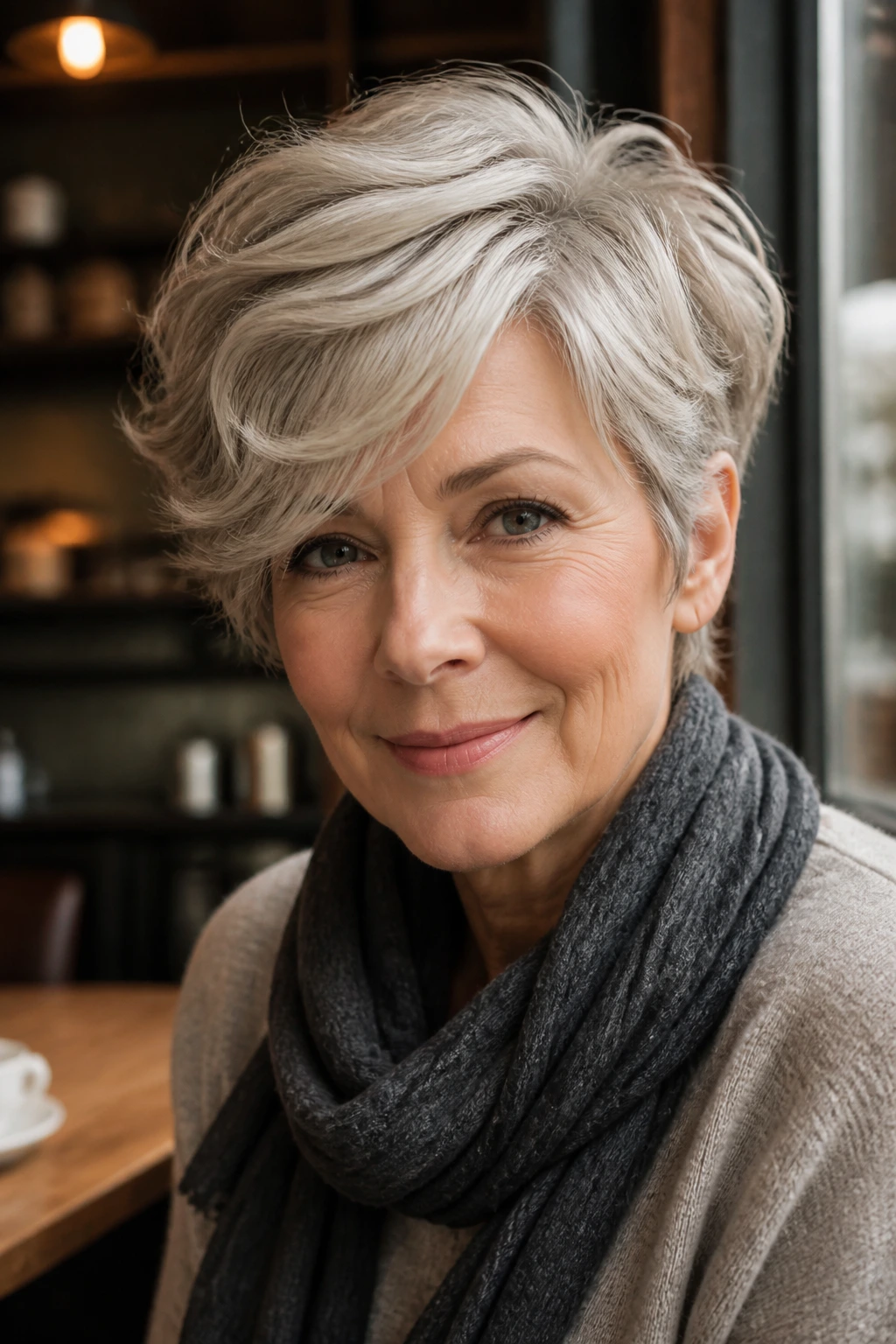
Lift: Dry the crown first, with your head tipped slightly forward, then brush it back into place. That tiny change in direction helps the roots stand up better than air-drying everything from the start.
Texture: Scrunching a small amount of mousse into damp hair gives wavy pixies more memory. If you use too much, the ends get stiff and the wave loses its softness, so start with less than you think.
Framing: Keep a few longer pieces around the temples or fringe if you want the cut to soften fine lines without hiding the whole face. Short does not have to mean bare.
Color: A subtle highlight, a gloss service, or a silver-enhancing toner can make the movement in a pixie easier to see. On short hair, color shows immediately. There’s nowhere for it to hide.
Make-It-Yours: If you like low maintenance, choose a simpler side-swept version with a tapered nape. If you like more edge, go for asymmetry, a stronger undercut, or a sculpted top. Same haircut family. Different attitude.
Common Mistakes That Flatten the Shape
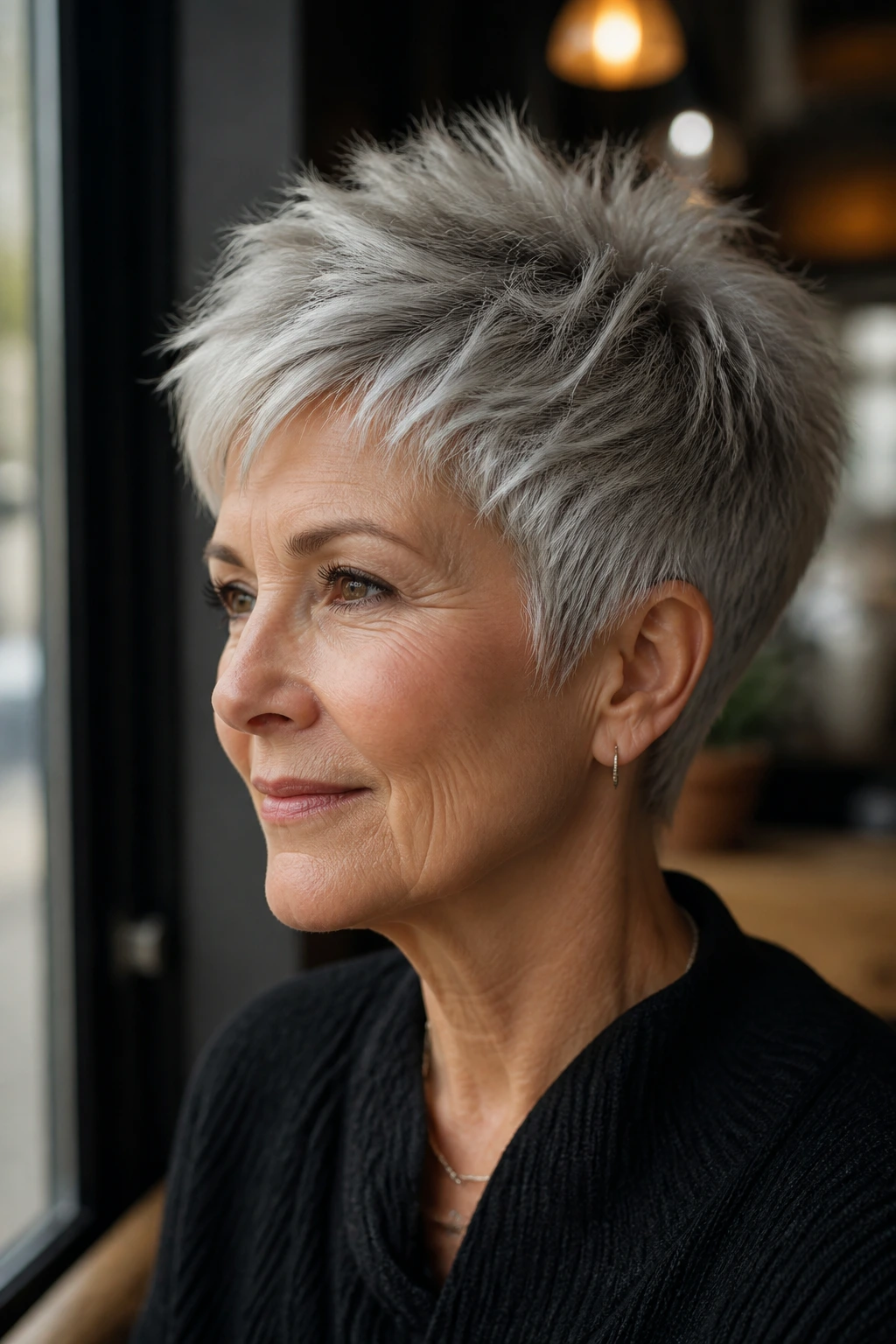
The most common mistake is cutting the top too short. Once that crown length disappears, the hair loses its ability to bend and lift, and the whole style starts reading as close-cropped instead of wavy. The fix is simple: keep a little more length on top than you think you need.
Another one is product overload. A pixie only needs a small amount of mousse or paste. If the hair feels tacky or the waves clump into thin strings, you’ve gone too far. Start with a pea-sized amount, not a palmful.
Ignoring the nape is a mistake, too. A fuzzy neckline can make even a good pixie look tired. If the back grows fast, ask for a tighter taper or a clean neckline trim between full haircuts.
The last problem shows up with cowlicks and strong natural parting. If the cut doesn’t respect the swirl at the crown, the hair fights you every morning. The fix is not more product. It’s a better cut pattern.
Variations and Personal Tweaks to Try
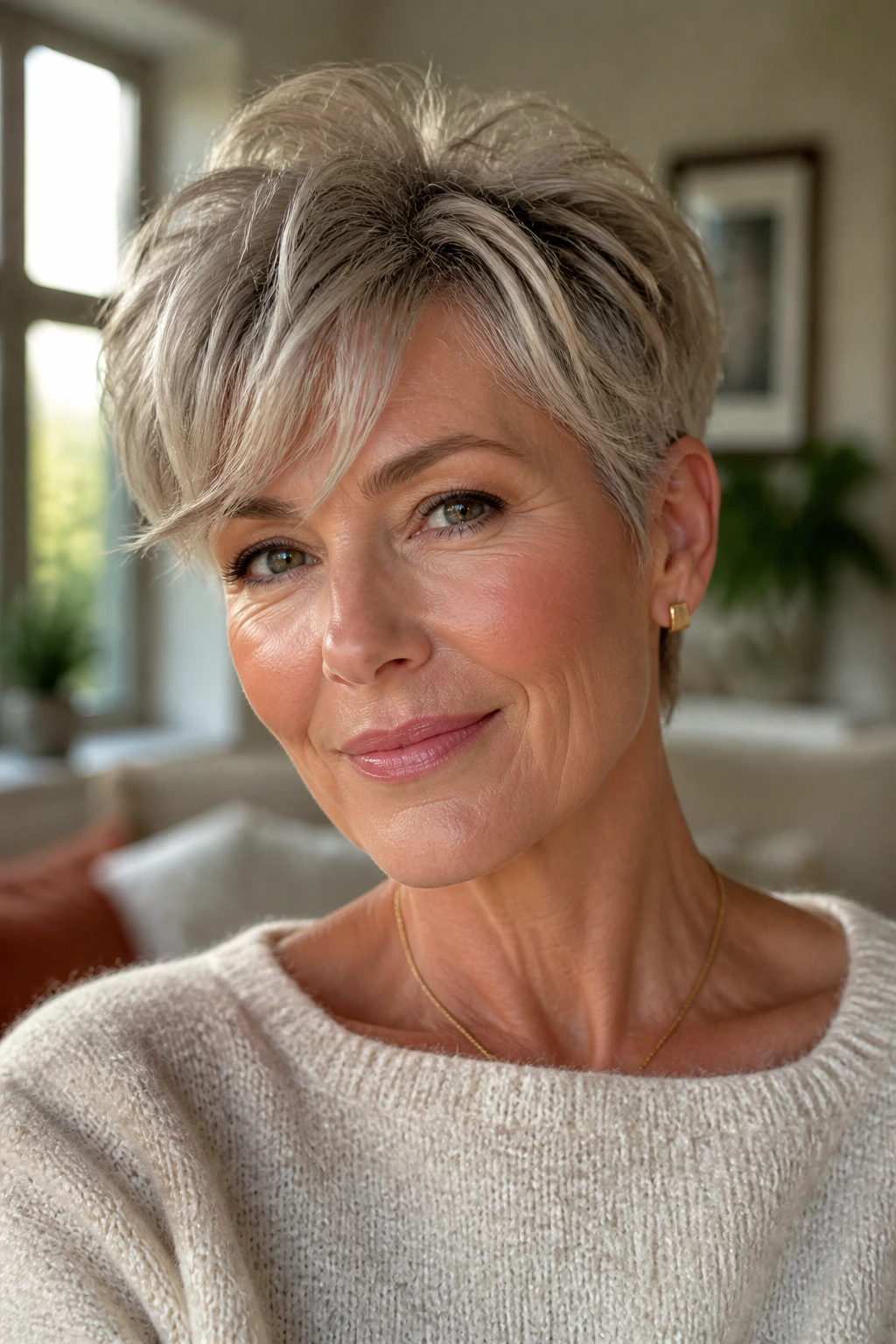
The Softening Fringe: Keep the front a little longer and side-swept if you want the haircut to blur forehead lines and sit gently around the eyes. This version is especially good when you wear glasses or like a softer profile.
The Clean Taper: Trim the sides and nape closer, then leave the top slightly longer. It looks neat and modern, and it grows out with less puff at the neckline.
The Silver Piece-Out: Use a little paste on dry silver hair and separate only the front and crown pieces. The goal is to make the color look dimensional without turning the whole cut shiny or slick.
The Longer Grow-Out Pixie: Keep the sides and top long enough to slide into a small bob later. This works if you want short hair, but not a dramatic jump. It’s also the safest choice if you’re trying a pixie for the first time.
The Edgier Crop: Add a deeper asymmetry or a small undercut for a sharper look. This version suits women who want the cut to have more shape and less sweetness.
Maintenance, Grow-Out, and Bedtime Habits

Pixies need trims more often than people expect. Every 4 to 6 weeks is a solid rhythm if you want the shape to stay crisp. If the haircut has a stronger fringe or a tight nape, you may want the edges cleaned up even sooner.
At home, a silk or satin pillowcase helps the top keep its bend and keeps the nape from getting crushed flat overnight. In the morning, mist the hair lightly with water, then scrunch or finger-comb it back into place. If the roots are tired, a touch of dry shampoo at the crown wakes them up fast.
Washing every day usually isn’t necessary. A pixie can often look better on day two, once the product settles and the wave loosens a little. If the ends start looking dry, use a tiny amount of cream only on the tips, not through the roots.
Growing it out? Ask for gradual length at the top and sides so the cut can turn into a longer pixie or a soft bob without awkward shelves. Short hair grows fast enough to become annoying, but not fast enough to ignore.
Questions People Ask Before Going Short
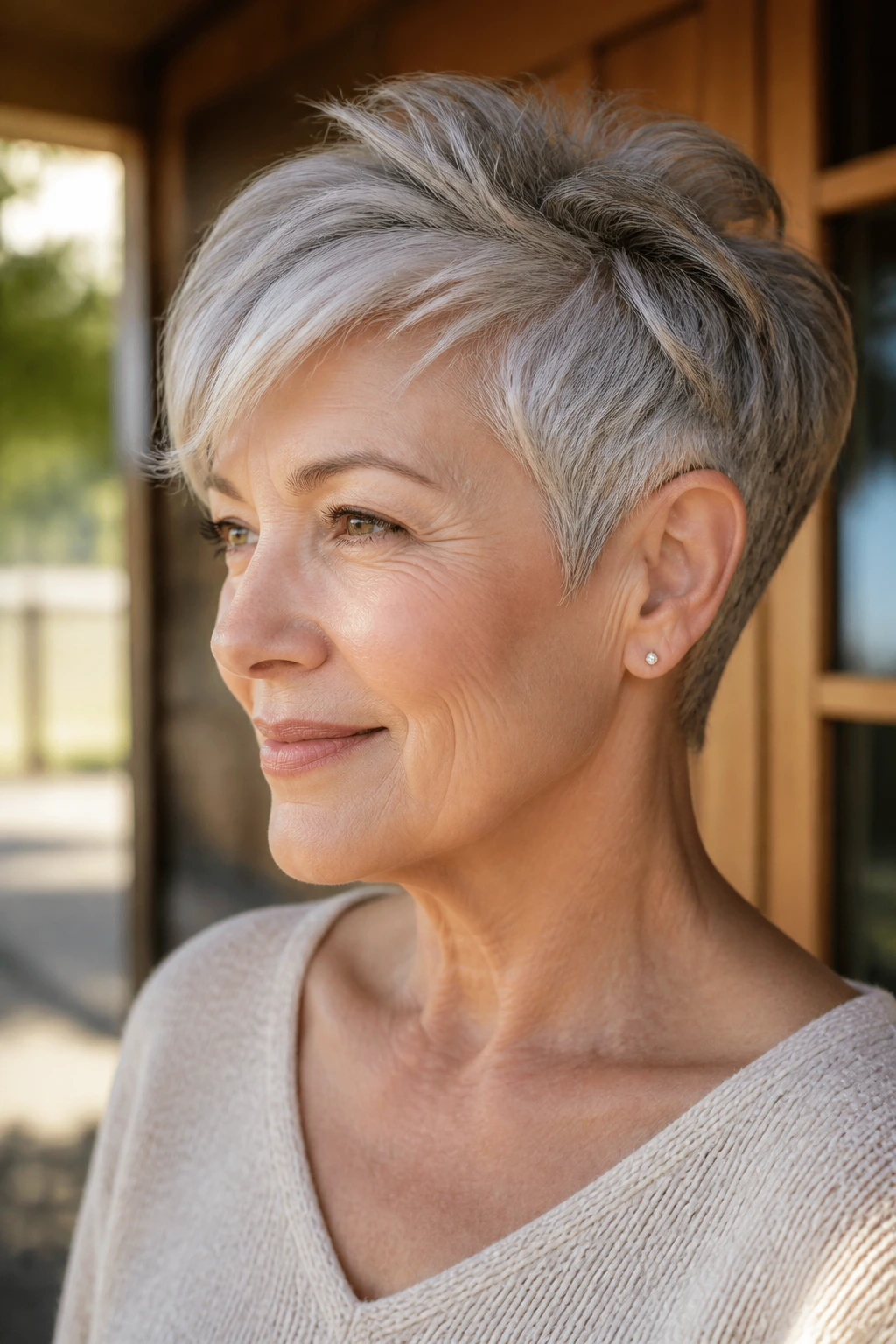
Will a wavy pixie work if my hair is fine?
Yes, if the cut keeps enough length on top for lift. Fine hair often looks better in a pixie than people expect because the shorter length removes drag, but the crown still needs some movement so it doesn’t lie flat.
What if my hair is mostly straight with a little bend?
That’s fine. Ask for a cut that encourages wave through the top and fringe, then use a small iron or mousse where the hair wants a bend. You do not need naturally curly hair for this shape to work.
Can I wear a pixie if I have glasses?
Absolutely, but the sides and temples need space. Bring your glasses to the salon if you can, or wear them during the trim so the stylist can see where the frames land.
How do I keep the top from puffing out?
Use less product than you think, and ask for layers that remove bulk without shredding the ends. Puff usually comes from too much width at the crown or from over-drying the hair upward.
Is this cut hard to style every day?
Not if the shape is cut well. A good pixie should take a few minutes, not half the morning. If styling feels like a battle, the cut may be too short in the wrong places.
What if my hair is coarse and gray?
Go softer with the thinning and more careful with the perimeter. Coarse gray hair can frizz if it’s over-razored, so the best version keeps movement without wrecking the ends.
Can a pixie still look feminine with short sides?
Yes. Softness comes from shape, not length alone. A wavy fringe, a lifted crown, or a feathered temple can keep the cut gentle even when the sides are tight.
A Shape That Still Has Movement
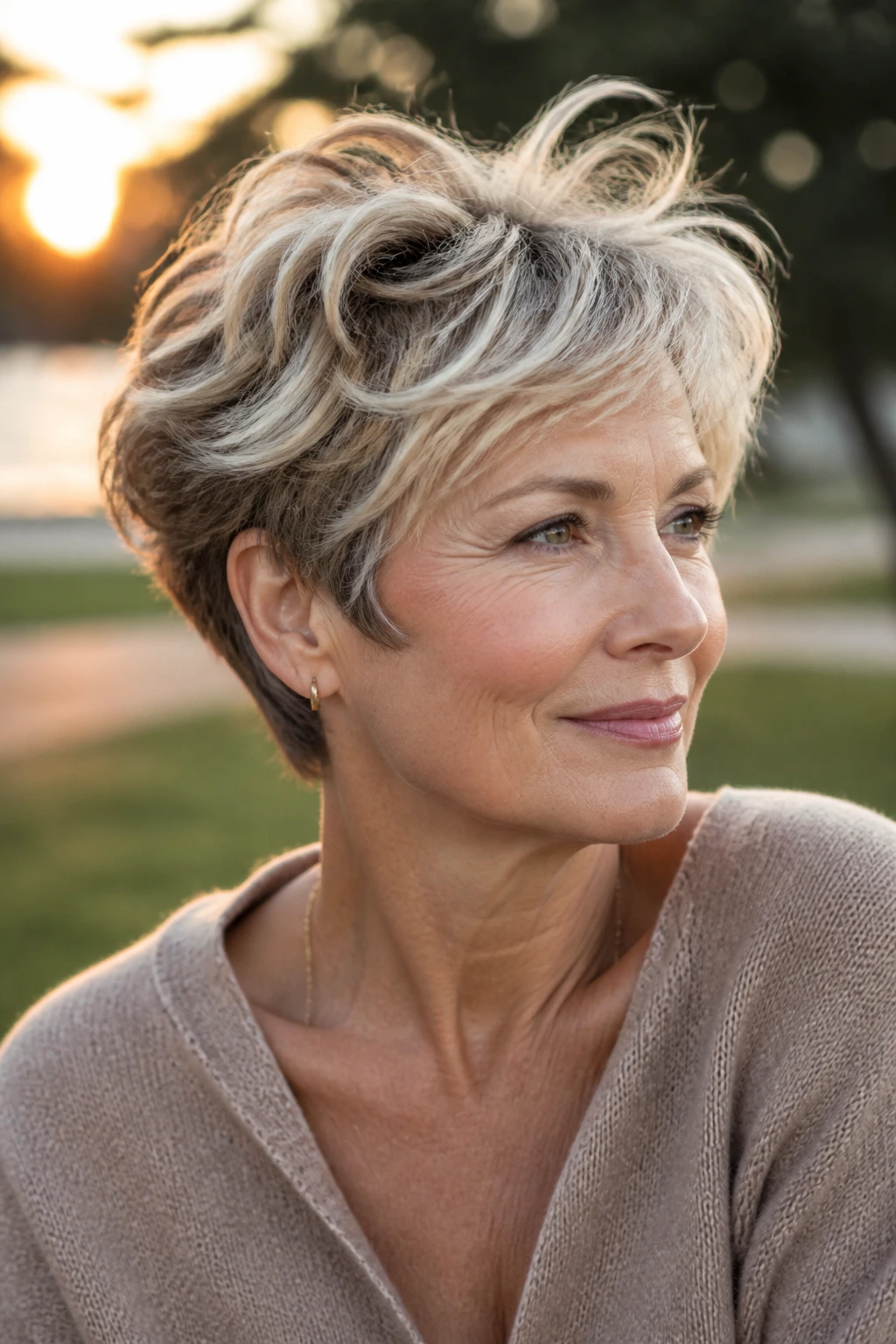
A wavy pixie earns its keep when it gives you shape without turning your hair into a fixed helmet. That’s the whole deal. Clean nape, movable crown, soft fringe, and enough texture to make the cut look alive when you turn your head.
The nicest part is that these cuts don’t chase one single look. They can be polished, silver, choppy, soft, or a little edgy, depending on where you keep the length. Pick the version that suits your texture and your life, and the haircut stops being something you manage. It starts doing its job.
