



Thick hair has opinions. Cut it too bluntly and it balloons at the sides; thin it too hard and the ends go fuzzy, hollow, and weirdly unstable. The best long pixie cuts for thick hair don’t fight that density. They channel it.
That’s the part a lot of people miss. A long pixie isn’t just a shorter haircut with a fancier name. On dense hair, it becomes a shape problem: where the weight lives, how the crown sits, whether the nape hugs the neck or flips out like it’s trying to leave. Get those details right and the whole cut feels crisp, balanced, and easy to wear. Get them wrong and you spend every morning wrestling with a puffball.
What makes this category fun is the range. Some versions are polished and swept back. Some are choppy and a little rebellious. Some keep the front soft enough to tuck behind the ear, which is honestly one of the nicest little tricks in short hair. If your hair is full, stubborn, or just plain heavy, there’s a version here that will behave without looking stiff.
Why These 22 Cuts Work So Well on Thick Hair
-
Bulk goes where you want it: Thick hair holds a line better than fine hair, so a long pixie can keep its shape at the crown and nape instead of collapsing by lunchtime.
-
The length stays useful: Leaving 2 to 5 inches on top gives you enough room for side-sweeping, brushing forward, or lifting at the roots without turning the cut into a true crop.
-
Weight gets removed in smarter places: The best versions take out mass under the crown, around the occipital area, or beneath the top layer, which keeps the surface looking smooth rather than puffy.
-
Grow-out is less annoying: A long pixie can turn into a shaggy short bob shape or a soft crop, so you don’t get that harsh “all awkward, all at once” stage.
-
Styling time stays sane: Once the shape is right, most of these cuts need only a quick blast with a dryer, a dab of paste, or a little mousse at the root.
-
They work with texture instead of against it: Thick straight hair, dense wavy hair, and heavy curls all behave better when the cut gives them a route to follow.
1. Soft Side-Swept Long Pixie
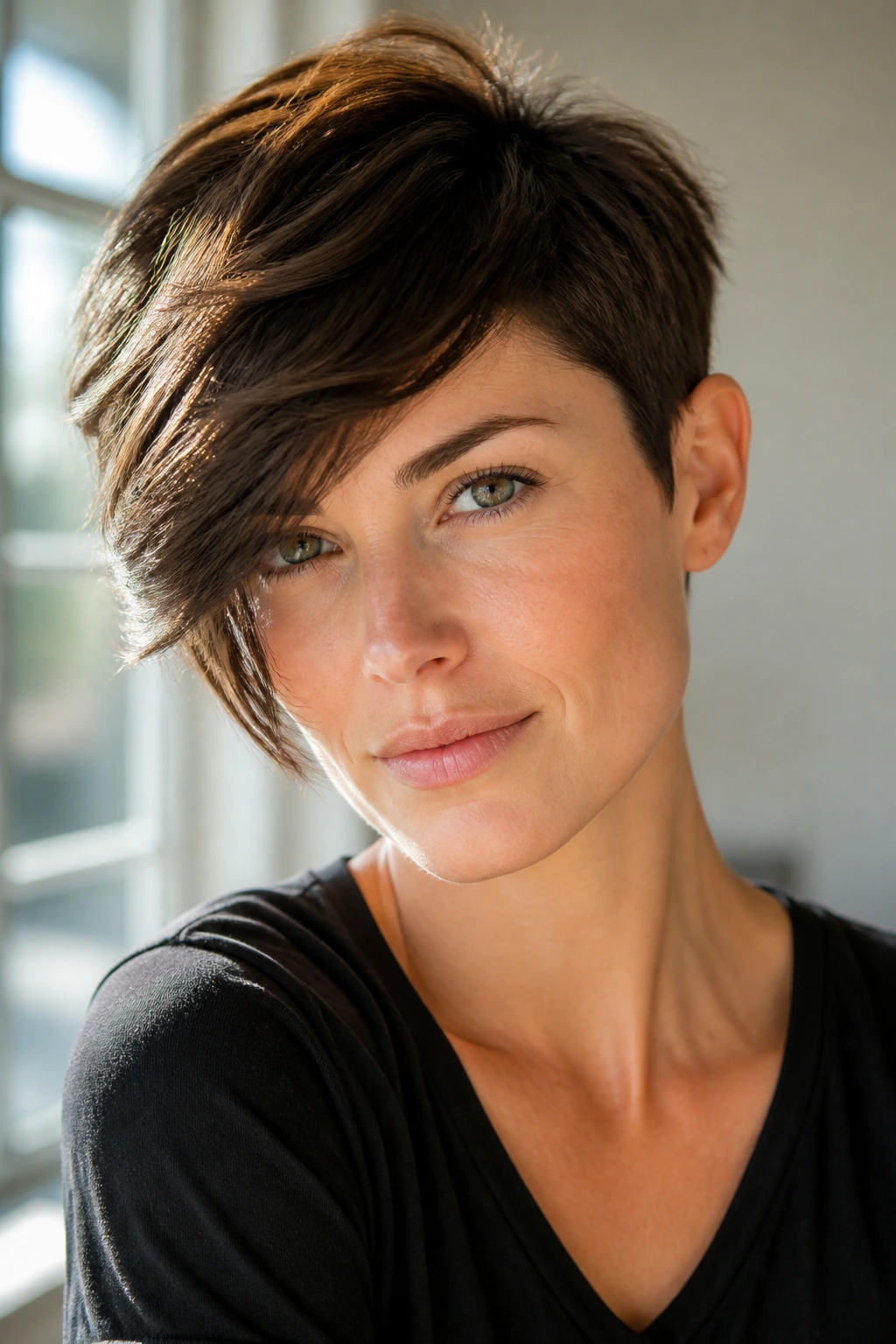
A soft side-swept version is the easiest place to start if you want something forgiving. The longer front section drapes across the forehead, the sides stay trimmed close enough to keep the profile neat, and the crown gets just enough texture to stop it from looking boxy. On thick hair, that diagonal front line does a lot of quiet work.
Why It Flatters Dense Hair
The side sweep breaks up width at the top of the face, which matters when the hair itself already has a lot of body. A blunt front can sit heavy; a slanted fringe moves. That one change keeps the cut from feeling too square.
- Ask for 2 to 4 inches through the top and a longer fringe that can tuck behind one ear.
- Keep the nape tapered, not shaved, if you want a softer finish.
- Point-cut the ends so the front lands in a feathered way instead of forming a shelf.
Best tip: Blow-dry the fringe from the opposite side first, then sweep it across once it’s about 80% dry. That little move keeps the root from splitting open later.
2. Feathered Crown Pixie
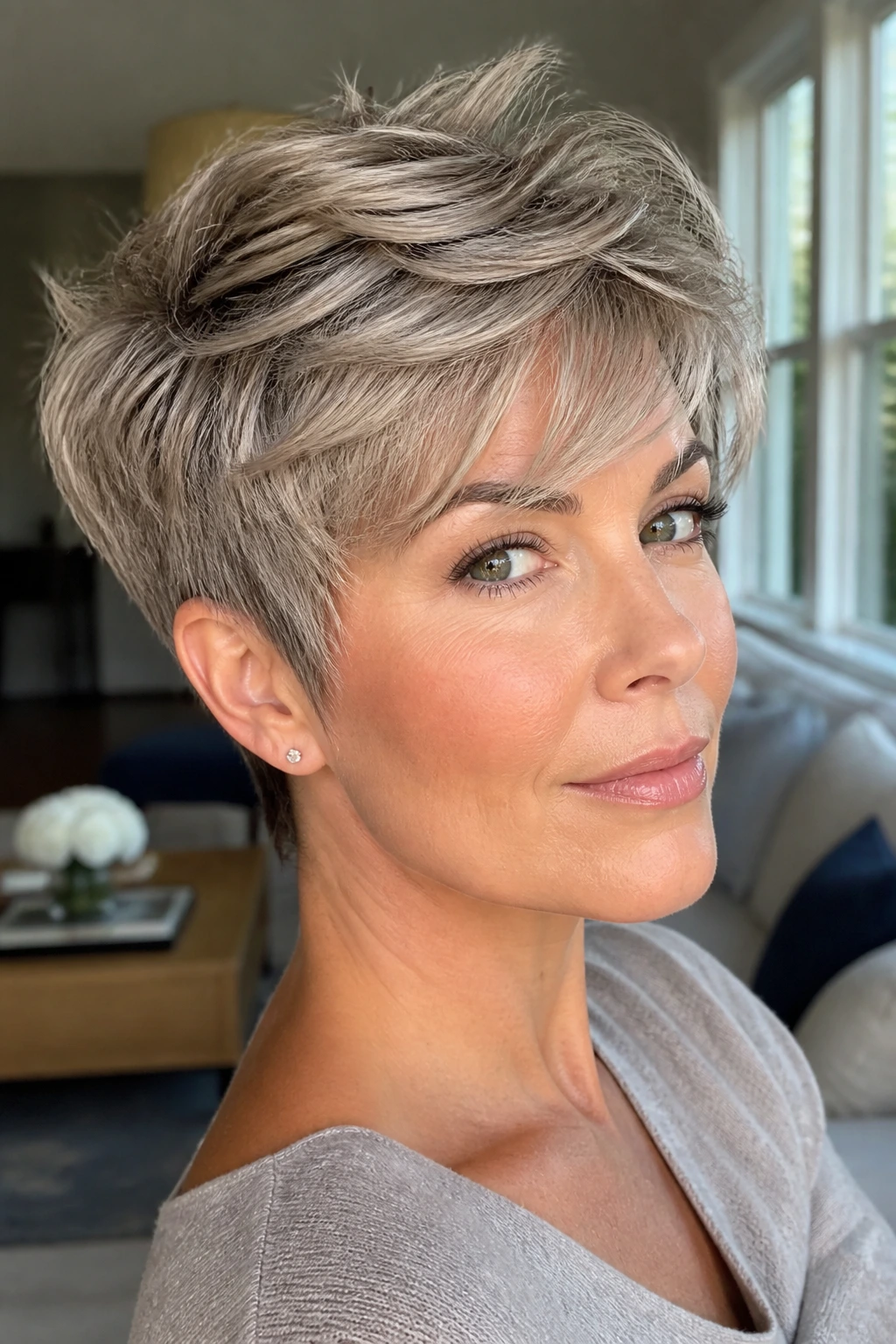
A feathered crown is the haircut equivalent of opening a window in a stuffy room. Instead of building all the fullness on the surface, this version uses short internal layers to spread the density around the head and lift the top. It’s one of the smartest long pixie cuts for thick hair if you hate a flat crown but don’t want a spiky finish.
The trick is restraint. Feathering should soften, not shred. Too much texturizing near the top makes thick hair look wispy in a bad way, especially when it’s dry. A cleaner version keeps the top soft and the crown airy, then lets the sides narrow just enough to define the shape.
This works especially well if your hair grows out with a little bend. A round brush, a medium-hold mousse, and a quick dry at the roots are often enough. If your hair tends to lie like a helmet, ask for feathering concentrated just behind the front hairline and over the crown ridge, not all over the head.
3. Tapered Nape Pixie
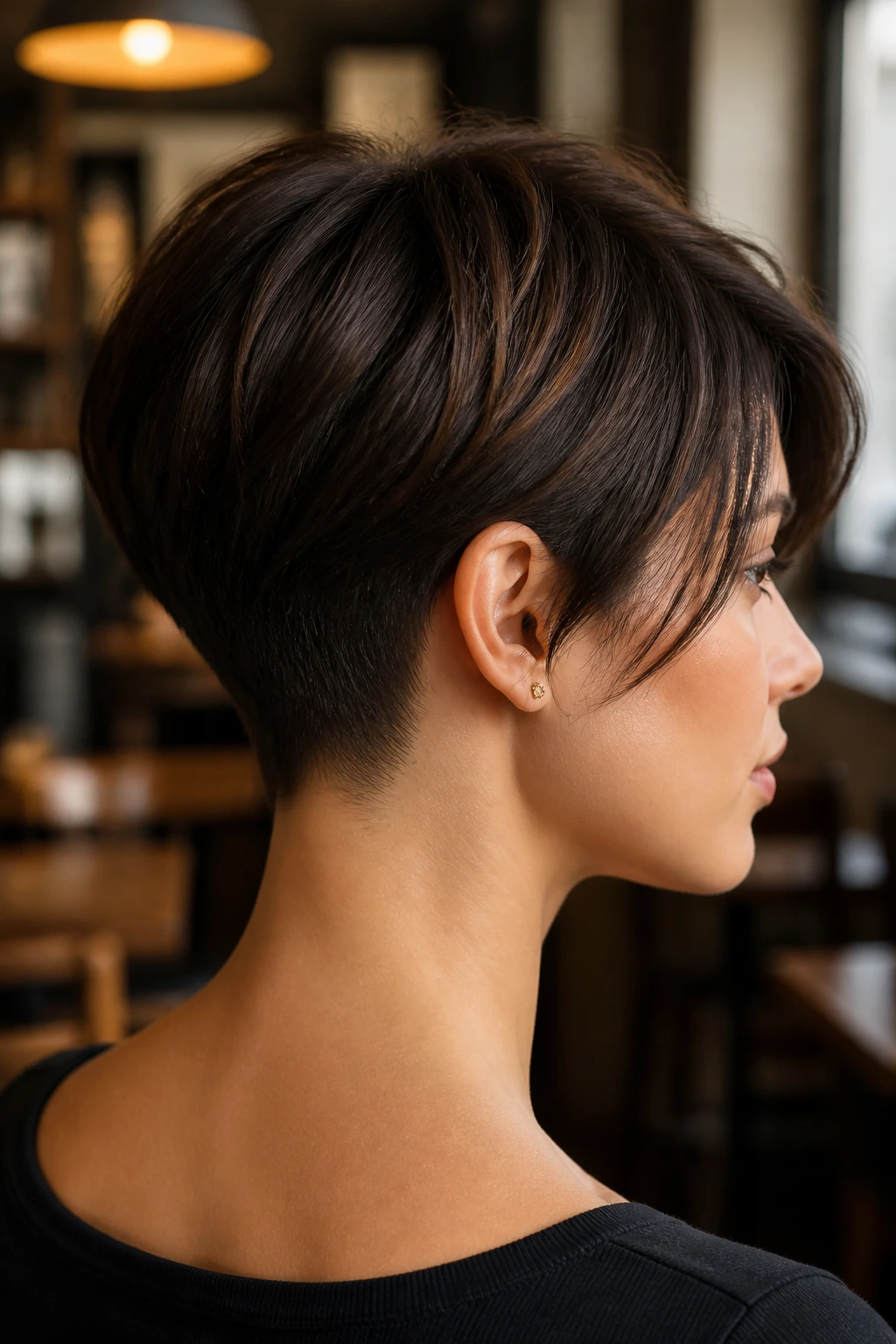
Ever notice how a haircut can look fine from the front and bulky from the back? That’s usually a nape problem. A tapered nape pixie solves it by tightening the lower back section so the hair hugs the neck instead of sitting in a thick ledge.
On dense hair, this shape is a relief. It gives the back of the cut a clean finish, which makes the top feel longer and more deliberate. If you wear collars, blazers, or scarves, the tapered nape keeps the neckline from getting crowded.
What to Ask For
- Keep the nape close and tapered, but not buzzed unless you want a sharper look.
- Leave the top 3 to 5 inches so there’s enough length to sweep or piece out.
- Ask for weight removal below the parietal ridge, not random thinning across the whole head.
A tapered nape is one of those details people notice without knowing why. The back sits better. The whole cut settles down faster.
4. Choppy Razor-Textured Pixie
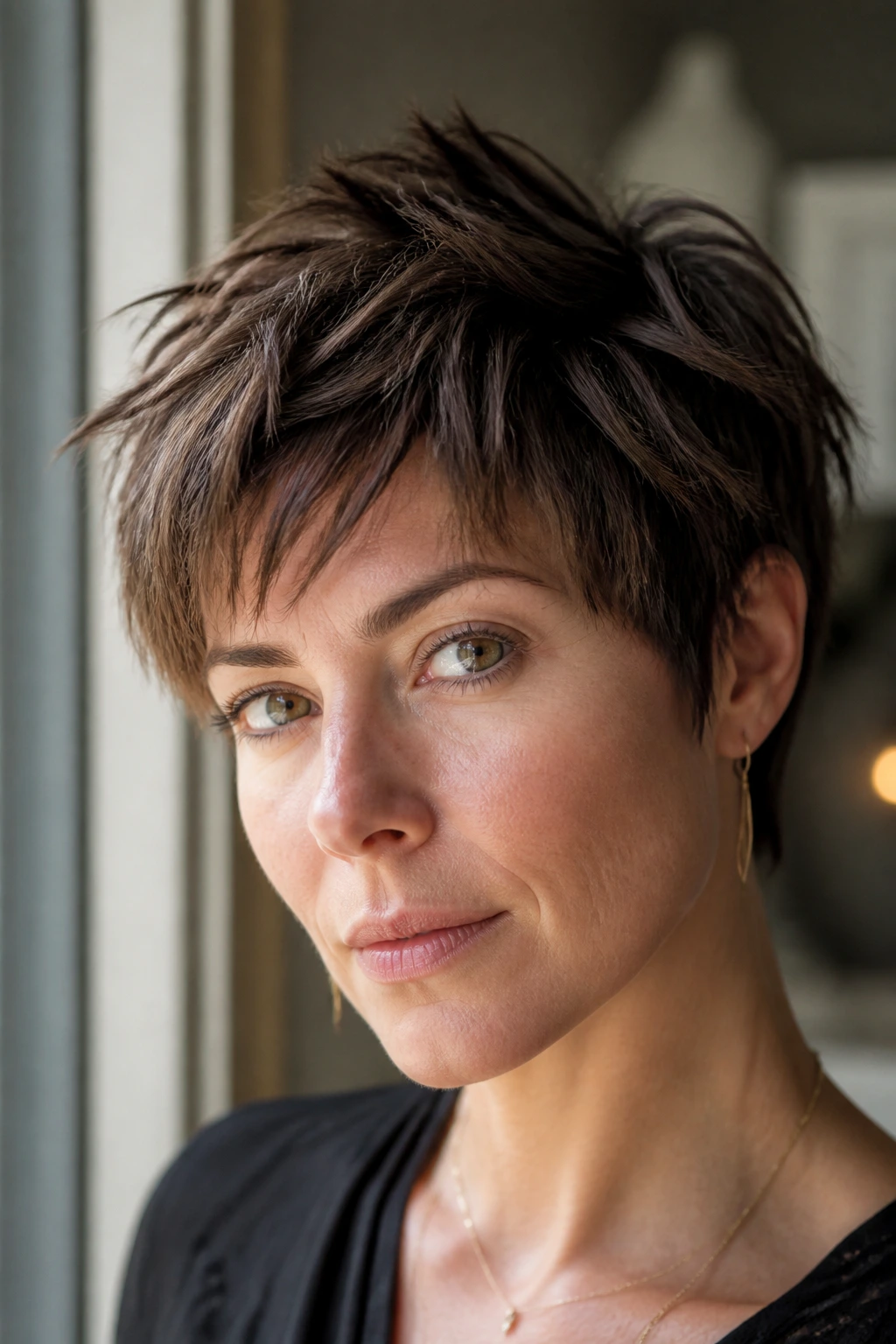
If your hair has a lot of bulk and a blunt cut makes it feel too heavy, a choppy razor-textured pixie can loosen everything up fast. The surface gets broken into irregular pieces, which means the ends don’t sit in one big block. It looks a little undone, in a good way.
This shape is strongest on coarse straight hair or on wavy hair that already has some movement. Razor work can give thick strands a softer edge, but if your hair frizzes at the slightest breeze, go carefully. A heavy-handed razor pass can make the perimeter look fuzzy rather than cool.
Quick reality check
- Best for: thick hair that holds a shape.
- Skip the aggressive razor work if: your ends are already dry or porous.
- Style with: a pea-sized matte paste, worked only into the mid-lengths and ends.
The appeal here is movement. The cut should look a little broken up when you run your fingers through it, not stringy. That’s a real difference.
5. Asymmetrical Long Pixie
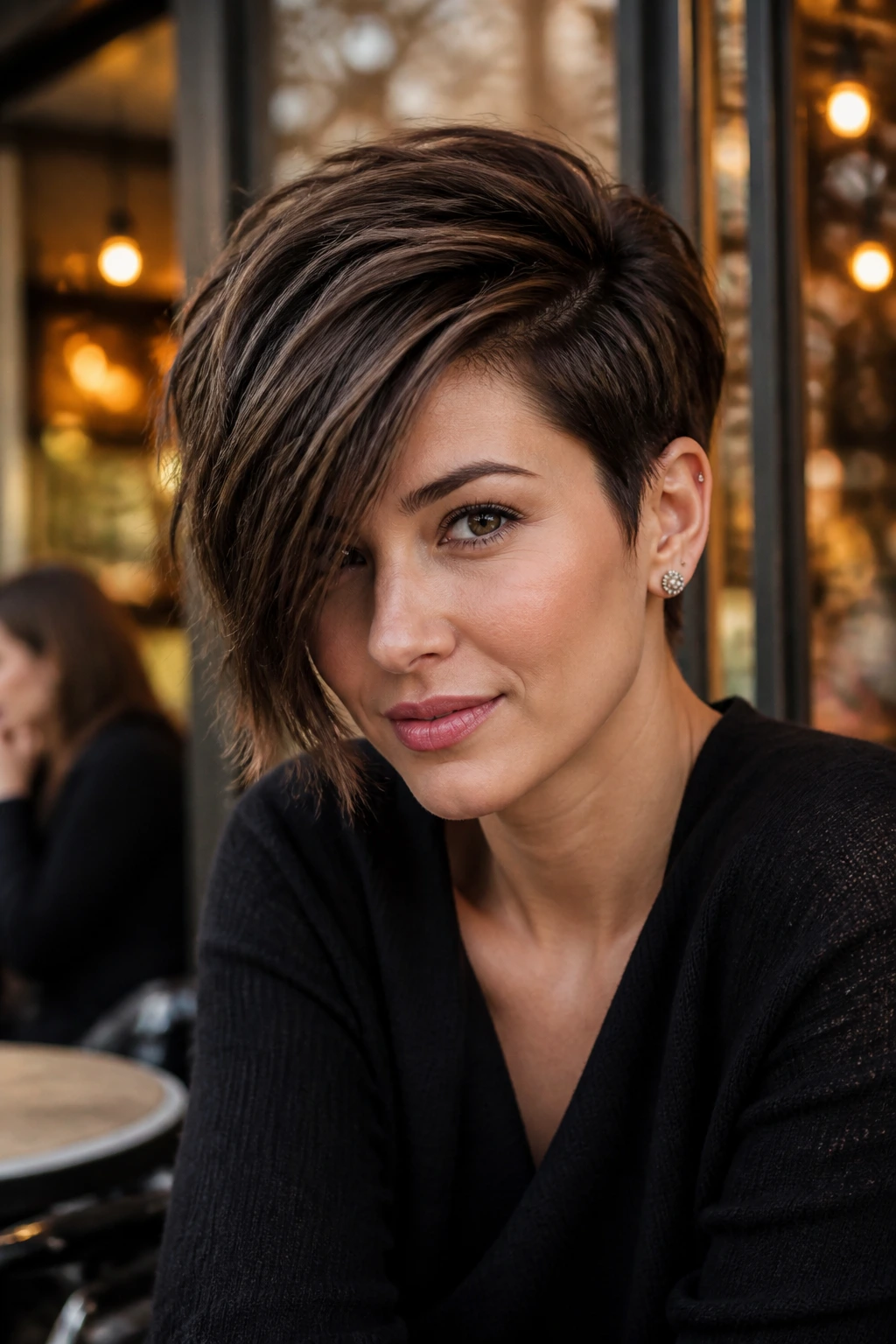
An asymmetrical long pixie is for the person who wants a little edge without going full statement cut. One side stays longer and more visible; the other side gets trimmed tighter so the eye reads a clean diagonal line across the face. On thick hair, that line is useful because it cuts through bulk and gives the style direction.
The asymmetry also helps if one side of your hair naturally behaves better than the other. Lots of people have a flatter temple on one side or a cowlick that pushes hair across the forehead. Leaning into the imbalance instead of forcing symmetry can make the whole cut easier to wear.
Keep the longer side soft, not blocky. I like this best when the long side grazes the cheekbone or jaw, then disappears into texture near the ear. If the length hangs too heavy, the shape starts reading as a grown-out bob instead of a pixie with intention.
6. Curtain Fringe Pixie
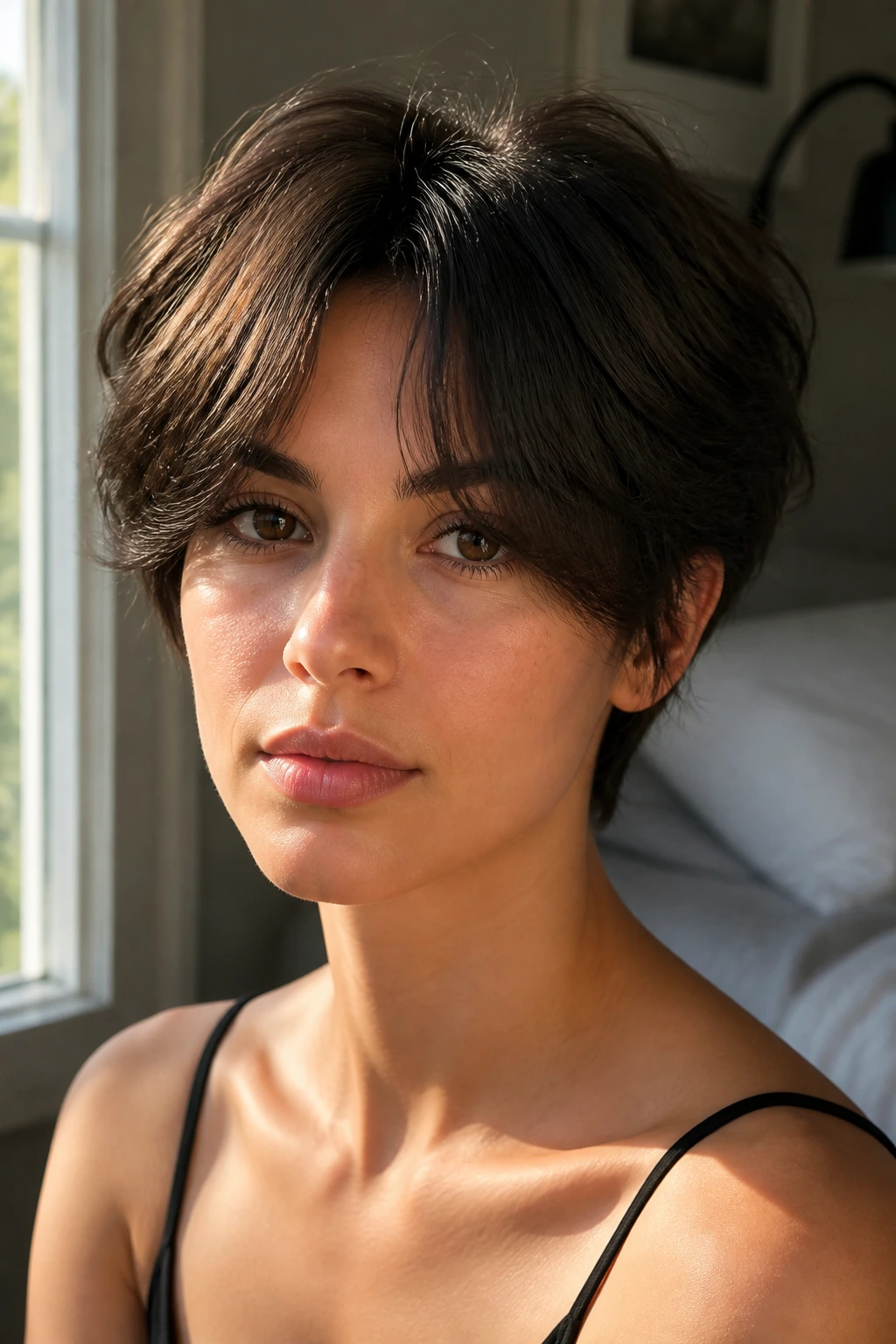
A curtain fringe on thick hair is a sneaky good choice. Split in the middle or just off-center, the front pieces slide away from the face instead of landing as one dense wall. That opening matters, especially if your forehead feels crowded by blunt bangs.
Unlike a heavy straight fringe, the curtain version gives the hair room to breathe. You still keep length at the front, but the weight is divided into two sloping pieces that skim the cheeks or brows. That makes the cut feel lighter without losing coverage.
How to wear it
Part the fringe while the hair is damp, then blow-dry the two front sections in opposite directions for the first minute. After that, finish them with a round brush or even your fingers if you want a softer bend. It’s a tiny routine, but it keeps the fringe from clumping together.
This cut is especially nice if you like glasses. The fringe can sit above the frame or blend into it instead of fighting for space.
7. Undercut Long Pixie
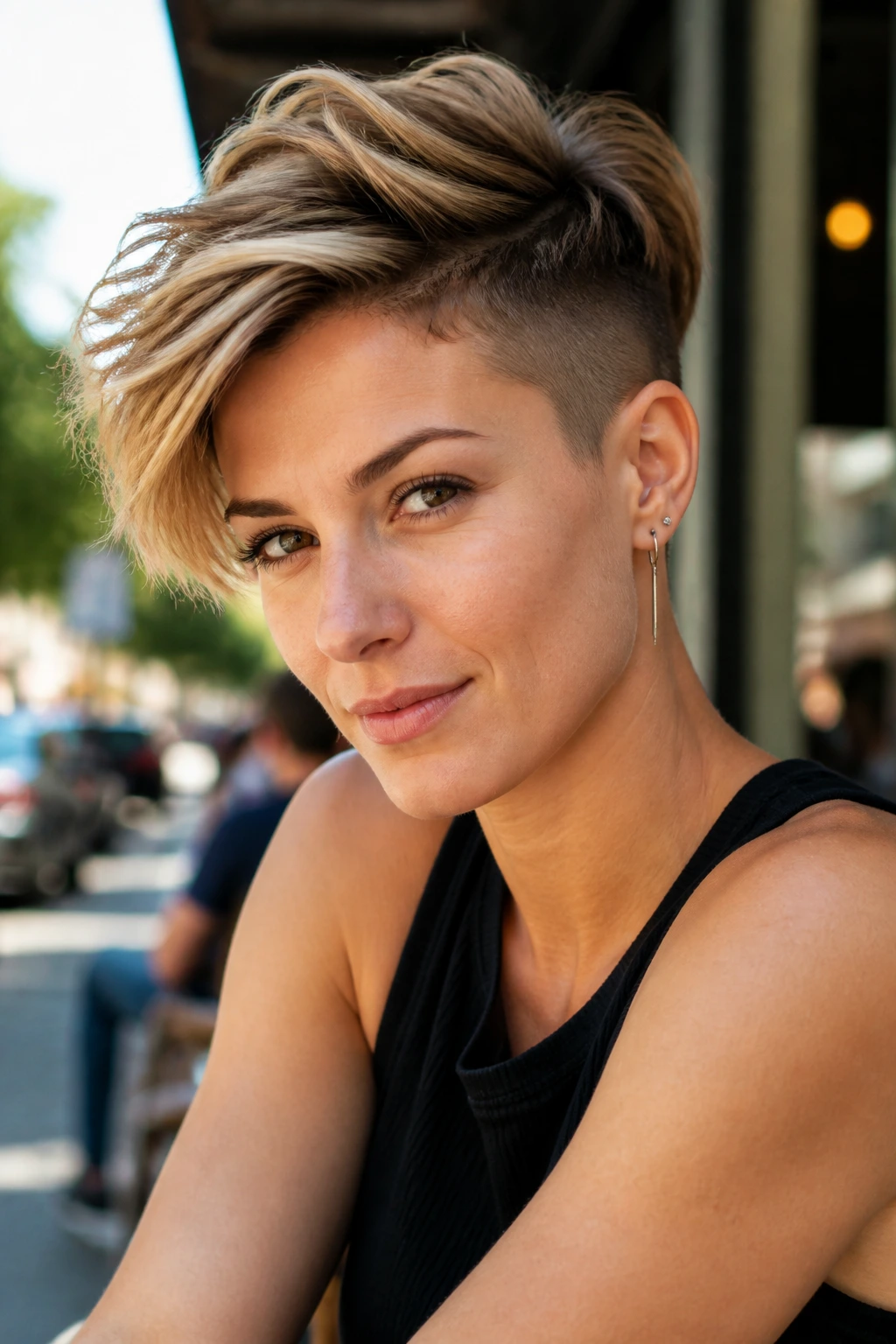
This is the version for truly dense hair that refuses to behave unless you show it who’s boss. An undercut long pixie removes bulk underneath the top layer, usually at the sides, nape, or both, while leaving the top long enough to style. The effect is dramatic, but it’s also practical.
If you’ve ever had thick hair bulge out under a short cut, you know why this exists. The undercut takes away the hidden mass that makes short styles puff out. The result is cleaner, lighter, and much easier to push into shape with a dryer.
You do need to like upkeep. A visible undercut grows in faster than a softly tapered back, and the line starts looking fuzzy once the regrowth gets a few millimeters of lift. If you’re okay with a trim every 3 to 5 weeks, though, this cut is one of the best ways to keep a lot of thick hair feeling under control.
8. Swept-Back Slick Pixie
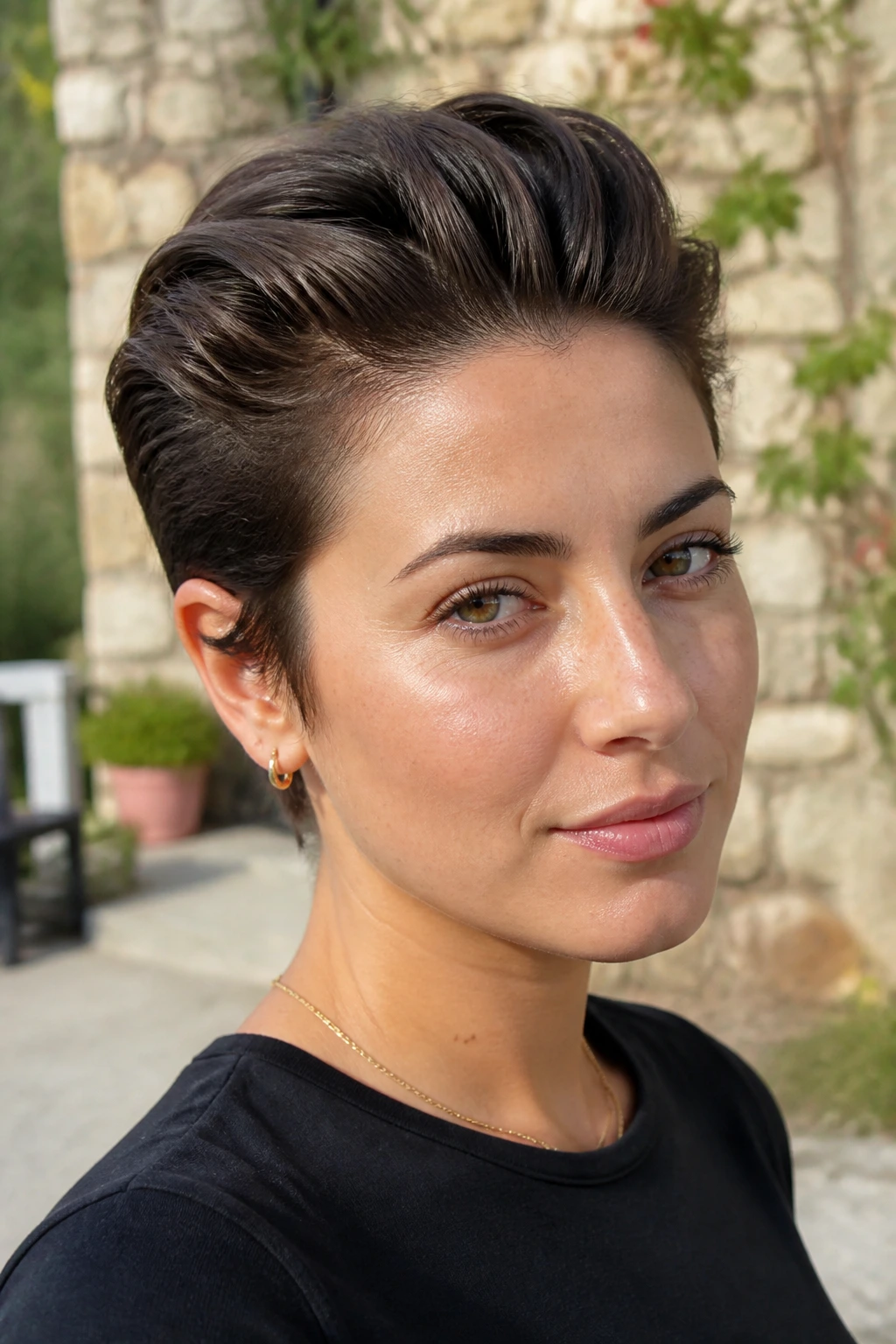
A swept-back slick pixie uses your hair’s density as structure. Instead of trying to disguise fullness, this cut pushes the front and top back from the hairline so the head shape looks deliberate and sculpted. On thick hair, that kind of control comes naturally if the cut is layered correctly.
The key is not to over-thin the top. You want enough hair there to hold the swept-back line, because sparse ends will collapse once product touches them. A light gel or firm cream on damp roots, followed by a blow-dry with the nozzle aimed back, gives the cut its clean shape.
This one shines when you want a polished finish without a lot of fuss. It can look sharp with earrings, a strong brow, or a high-neck top. It can also look a little severe if you go too tight at the sides, so leave a whisper of softness around the temples unless you want a harder barber-style line.
9. Layered Shaggy Pixie
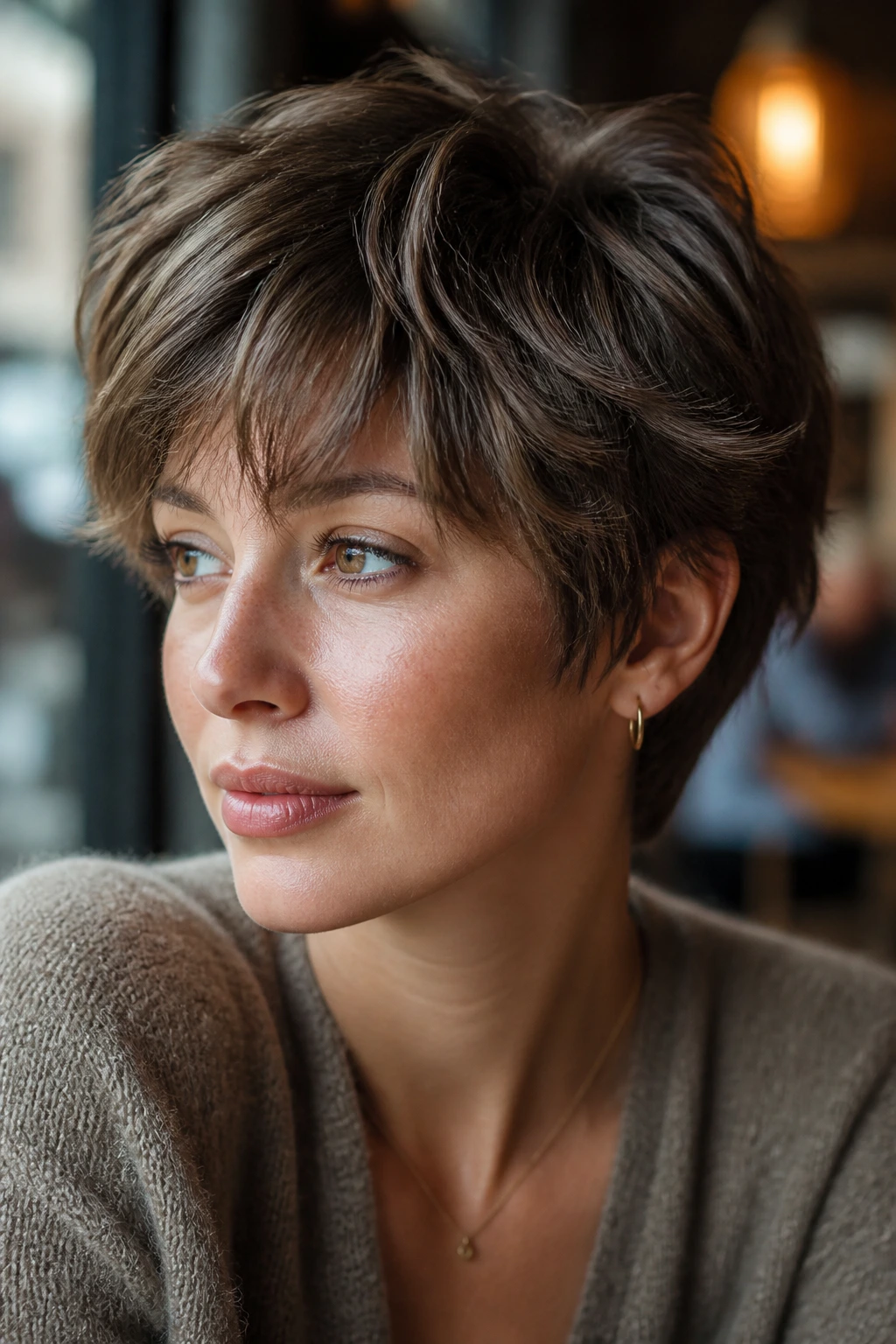
What happens when a pixie steals a little attitude from a shag? You get a layered shaggy pixie. The top stays textured, the sides aren’t too tidy, and the silhouette lands somewhere between playful and easygoing. For thick wavy hair, that looseness is often a gift.
The shag influence keeps the cut from turning into a solid block. Instead of one clean edge all around, you get staggered layers that move when you turn your head. That movement matters more than perfect neatness. A perfectly neat pixie on thick hair can look too helmet-like; a shaggy version breaks the shape up.
Leave enough length around the fringe and temples to let the hair bend, not just spike. If your hair has a little natural wave, this cut can air-dry well with a small amount of curl cream. If it’s straight, a diffuser or rough-dry finish adds enough grit to keep the layers visible.
10. Brushed-Forward Fringe Pixie
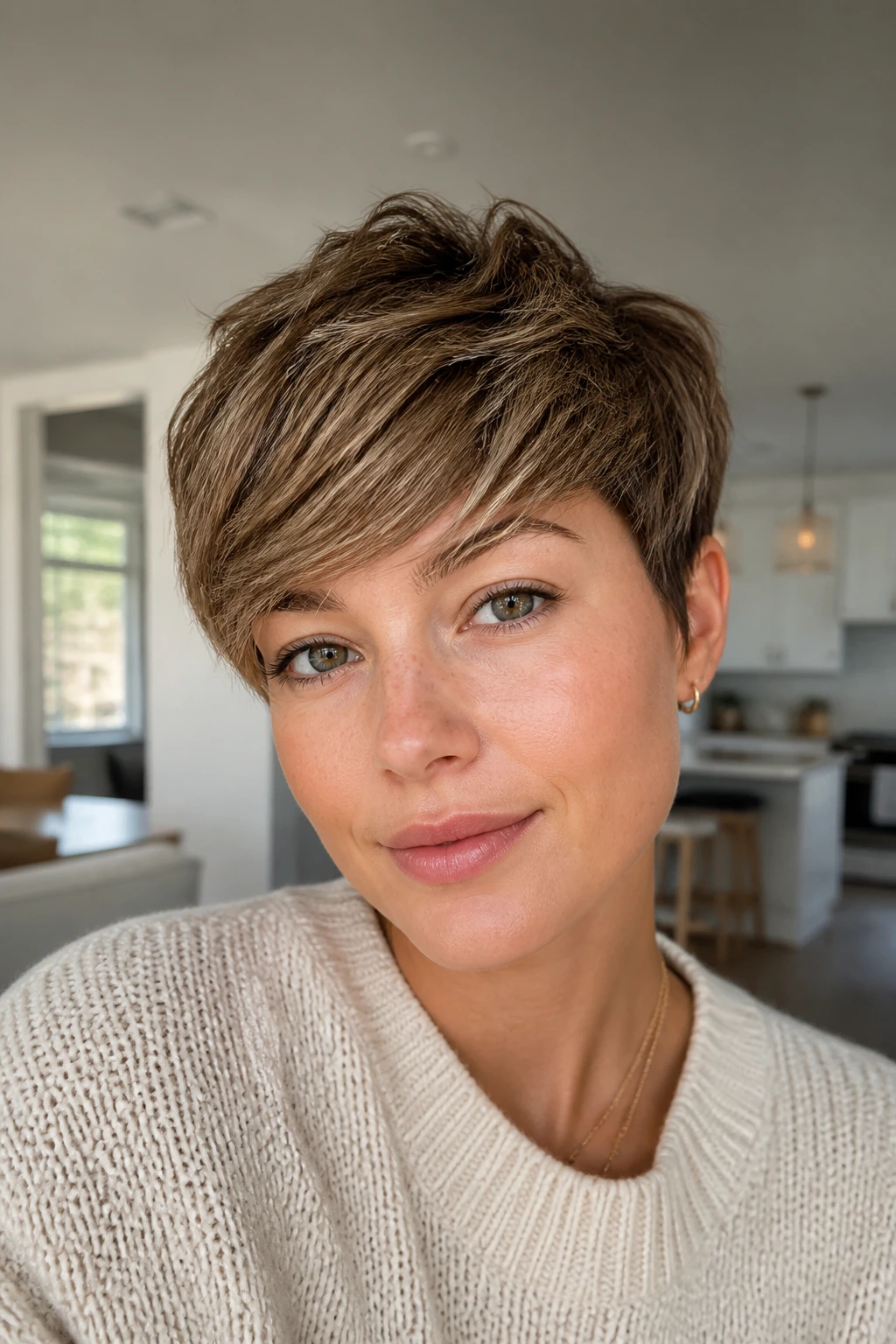
A brushed-forward fringe changes the whole mood. Instead of sweeping away from the face, the longer top pieces come forward and sit across the forehead, which helps if your crown is flat or your hairline needs softening. Thick hair likes this shape because the front has enough body to stay put.
The trick is to keep the fringe piecey, not dense. A forward fringe that lands as one heavy sheet can feel hot and stubborn. A better version is cut with internal texture so the ends separate just enough to let light through. That makes the whole haircut feel lighter, even though the hair itself is still full.
Tiny styling move: dry the fringe from side to side for the first 30 seconds, then bring it forward. That little back-and-forth keeps it from sticking straight down in a clump. If you’ve got a cowlick at the hairline, this one can tame it better than a center part ever will.
11. Curly Long Pixie
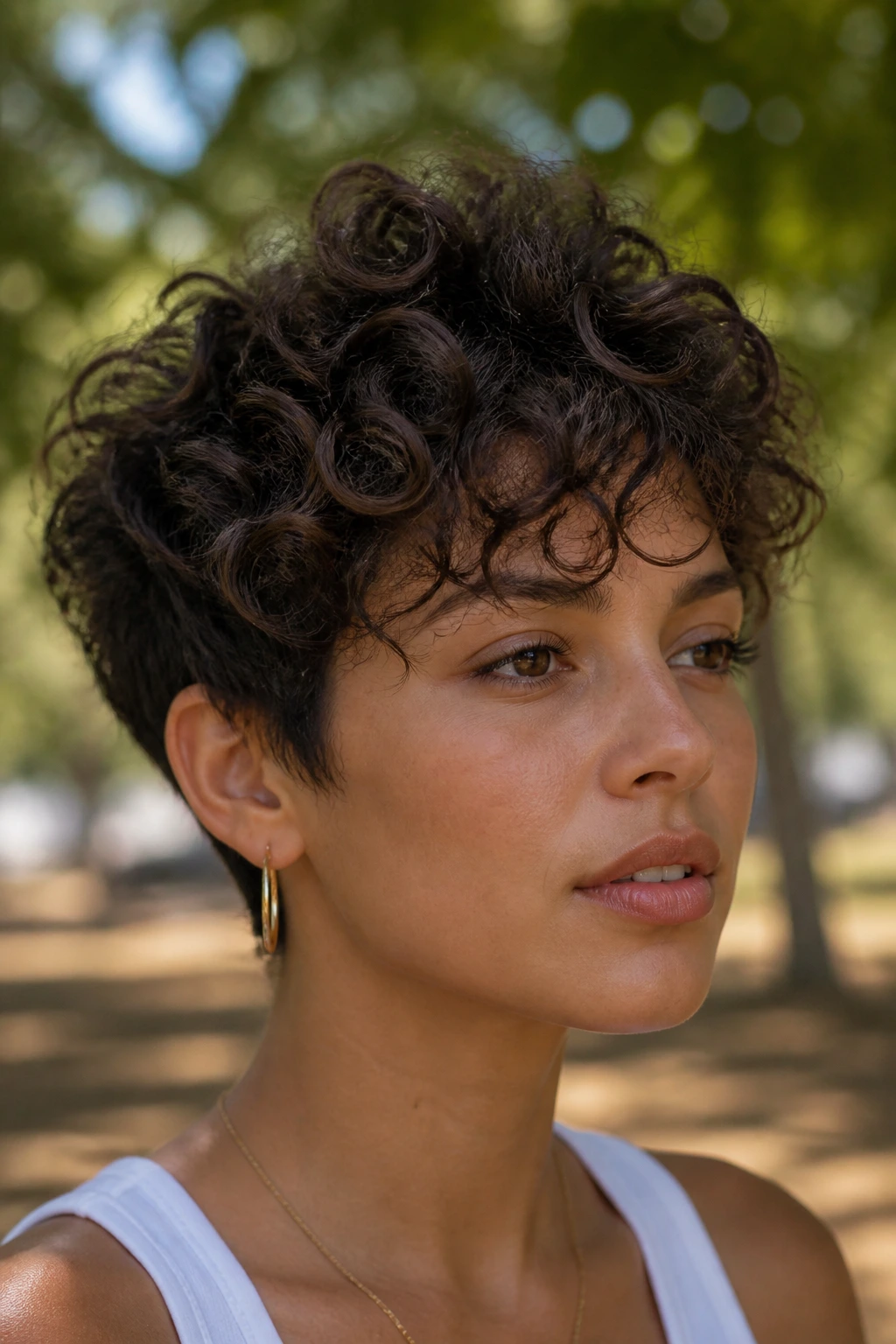
Curly thick hair doesn’t need to be forced into submission. It needs shape. A long pixie cut on curls works best when the curl pattern is respected and the bulk is removed in the right spots, usually under the crown and around the lower sides. Cut it badly and you get triangle head. Cut it well and the curls stack in a soft, rounded halo.
The big mistake is thinning curls too aggressively. That can leave the ends looking frayed and uneven once they dry. A better approach is to keep the perimeter intact, then create shape with layers that follow the curl pattern rather than slicing through it.
How to keep the curl pattern intact
- Ask for a dry cut or curl-by-curl shaping if the stylist offers it.
- Keep a leave-in conditioner and curl cream in the routine.
- Diffuse on low to medium heat with the head tilted slightly side to side.
This cut is best when you want your curls to be visible, not flattened. Let them do the work.
12. Wavy Tousled Pixie
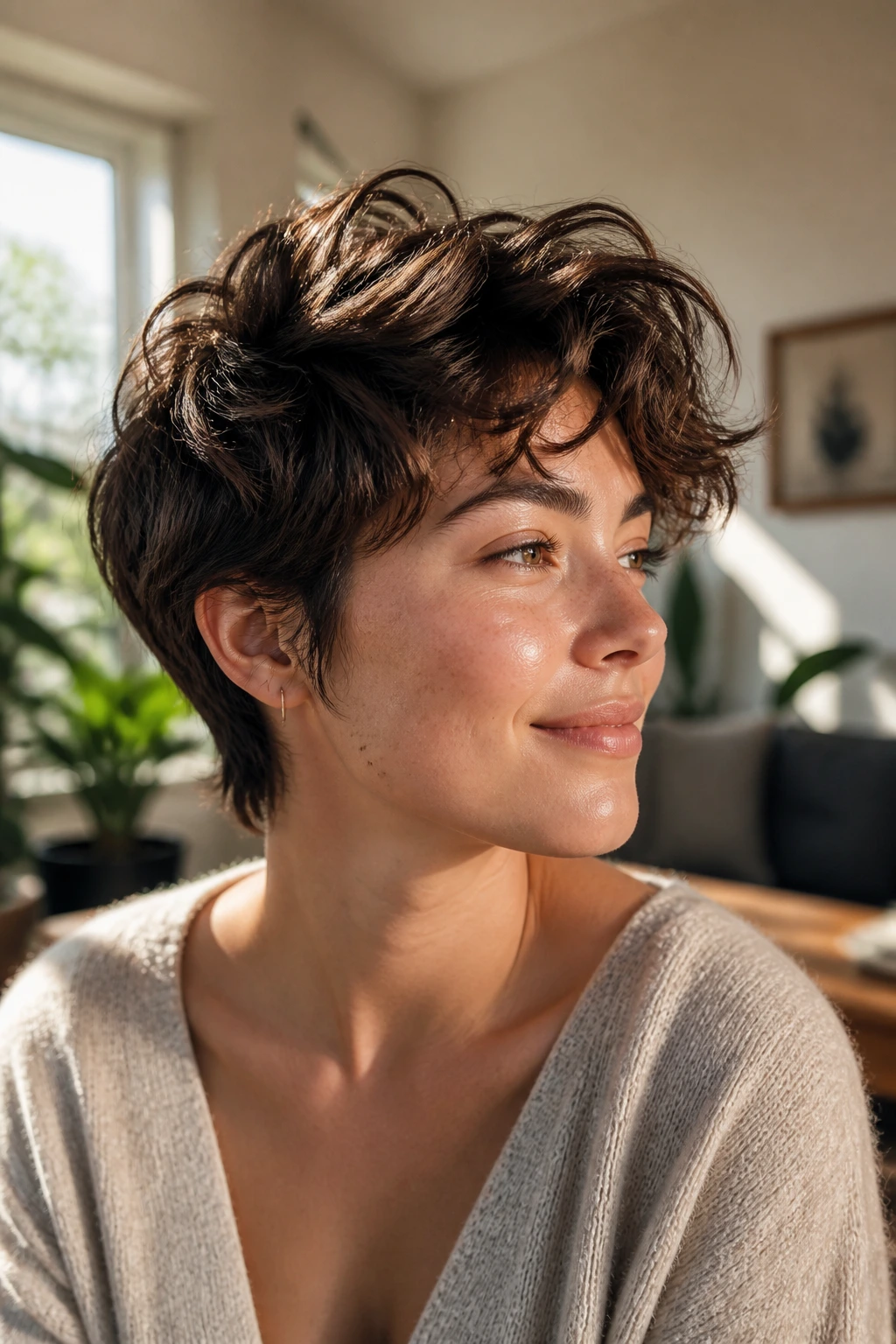
A wavy tousled pixie is the easygoing cousin in this lineup. It doesn’t need a polished blowout, and it certainly doesn’t need every strand sitting in the same place. The point is bend, separation, and that slightly wind-tossed feel that dense hair can hold all by itself.
This version works because waves already have built-in movement. The haircut just needs to give them room to move. Shorter sides, a soft nape, and a little extra length through the top keep the wave pattern from turning into a mushroom shape. If your hair is thick but not quite curly, this is one of the best matches.
Use a lightweight cream or sea salt spray on damp hair, then scrunch and diffuse until the roots are dry. Over-brushing kills the shape fast. Fingers are your friend here. A comb is fine for the part, but not much else.
13. Bixie Hybrid
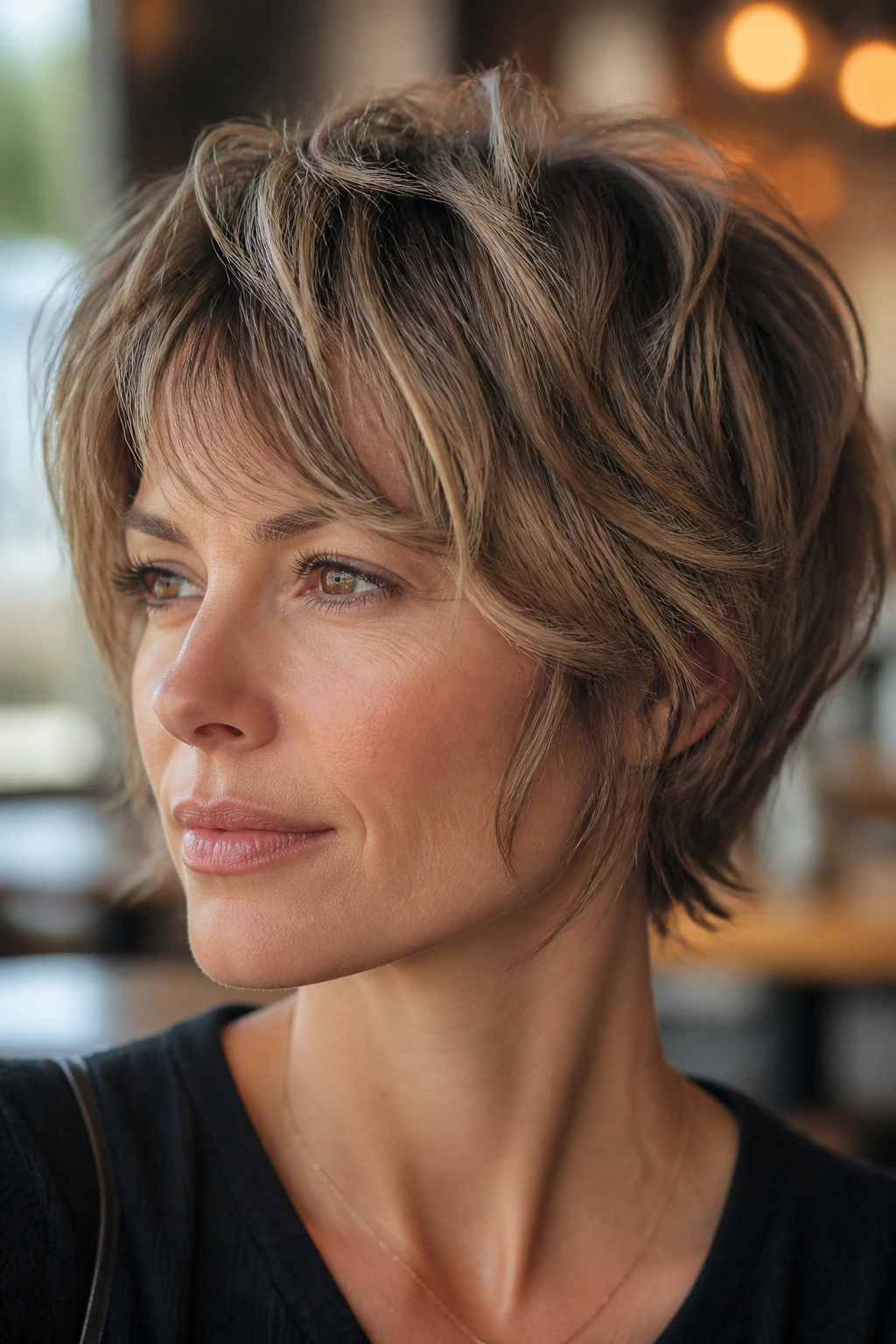
If a bob and a pixie had a sensible conversation, they’d probably land here. A bixie keeps more length through the top and sides than a classic pixie, but it’s shorter and lighter than a bob. On thick hair, that middle ground can be a relief.
The bixie is useful when you want short hair without losing all sense of length around the face. It can frame the jaw, skim the ears, and keep enough body at the crown that the style doesn’t collapse. Because the outline is a little longer, it also grows out in a softer way than a tight crop.
This is a strong choice if you’re nervous about going very short. You still get movement and a visible shape, but there’s enough hair to tuck, part, and style with a brush. If your hair is dense and you want a shorter cut that doesn’t demand daily heroics, start here.
14. Ear-Tucked Elegant Pixie

There’s something quietly smart about an ear-tucked pixie. The front and side pieces are left long enough to slide behind the ears, which opens up the face and neck without making the cut feel severe. On thick hair, that tucked shape keeps the bulk contained while still reading soft.
This cut lives or dies on the front length. Too short, and you lose the tuck. Too long, and it slips into bob territory. The sweet spot is usually around cheekbone to jaw length on the longer pieces, with a close but not shaved nape.
I like this shape for people who wear glasses or earrings, because the hair no longer crowds that area. It also makes the neckline look longer, which is one of those small changes that does a lot of visual work. The finish is neat, but not stiff.
15. Deep Side Part Pixie
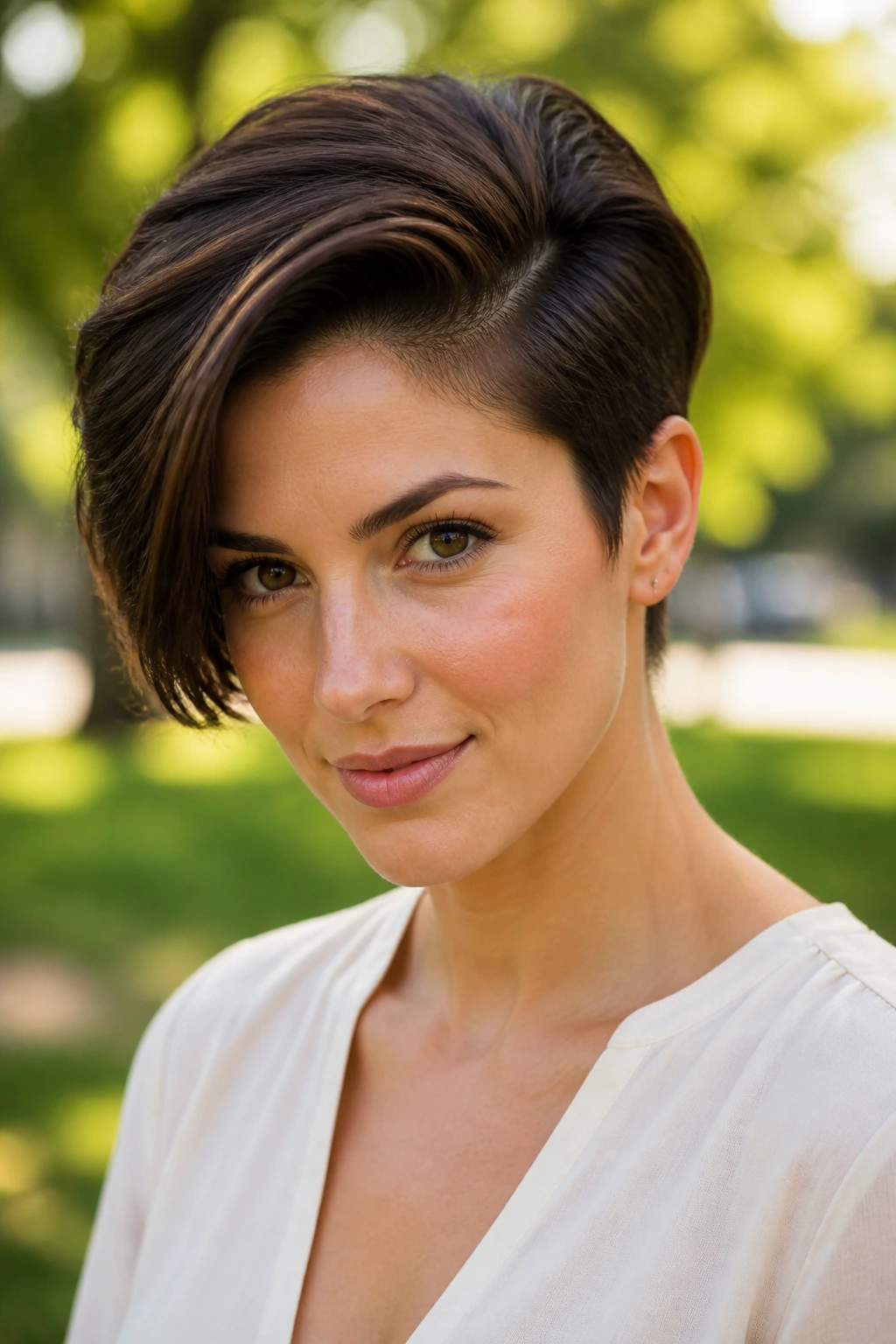
A deep side part can turn a lot of density into structure fast. Push the hair well over to one side and you get height at the root, a cleaner line across the forehead, and a shape that feels less symmetrical and more alive. On thick hair, that extra lift keeps the cut from sitting flat and wide.
The side part also helps if your hair naturally falls in one direction and refuses to change. Instead of trying to flatten the growth pattern, the cut works with it. That makes morning styling much less annoying. A quick blow-dry at the part line, with the hair lifted up and over, usually sets the root enough to hold for the day.
This is one of the easiest long pixie cuts for thick hair to wear if you want the face to look a little slimmer around the temples. The part creates that diagonal line that shortens a wide forehead and softens the overall outline.
16. Mullet-Inspired Long Pixie
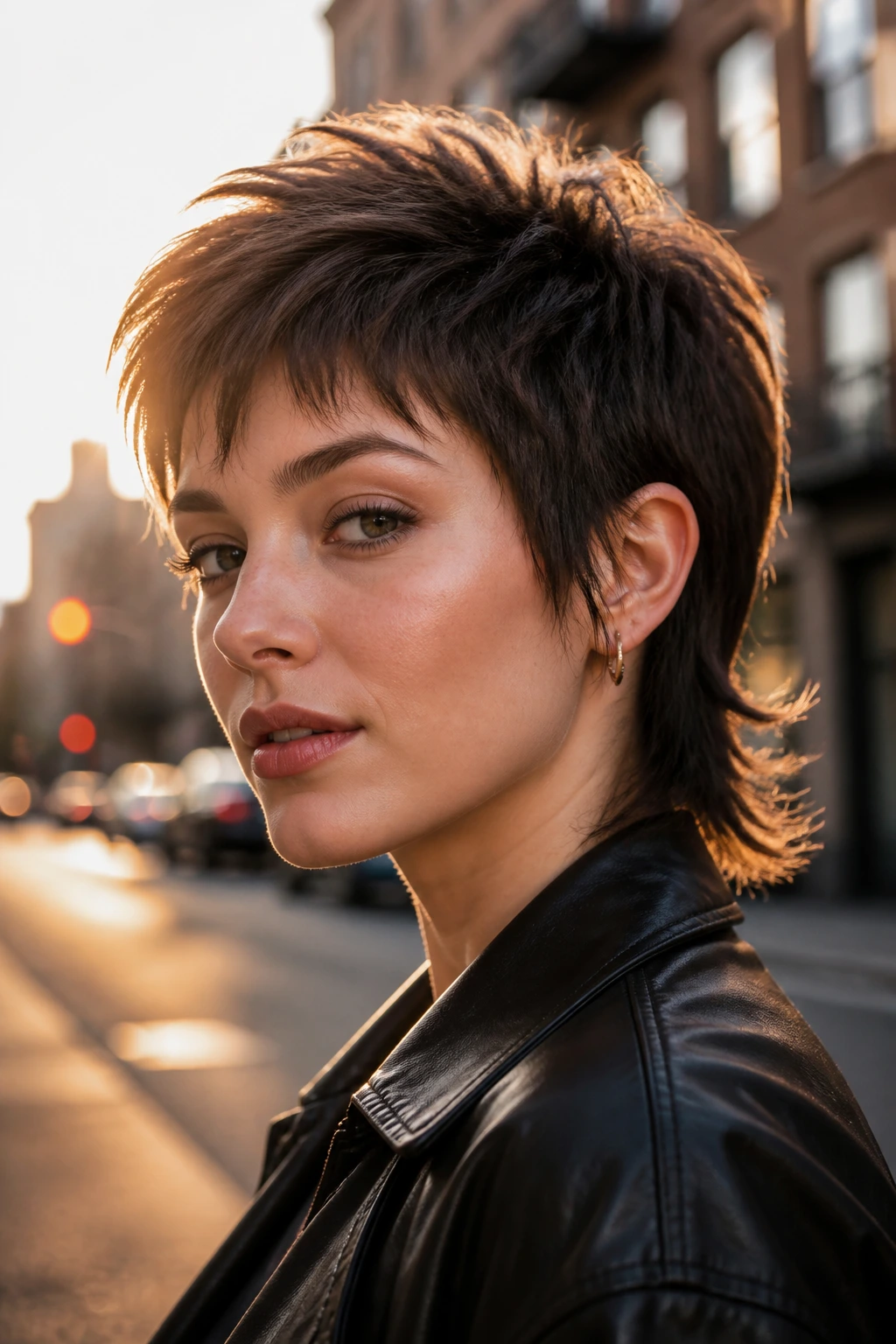
A mullet-inspired long pixie sounds bolder than it is. The front and sides stay short and textured, while the back keeps a little extra length so the silhouette stretches out instead of rounding off. On thick hair, that longer back section is a smart place to let some weight live.
This cut works because it removes bulk from the top and sides without chopping off every bit of length. If your hair is dense enough to feel heavy at the nape, the longer back gives movement. It also makes the cut easier to grow out than a super-short crop, which is nice if you like to change your mind later.
The look can tilt edgy fast, so the difference between stylish and awkward is in the blending. Keep the transition soft. Hard shelf lines at the back make it feel dated. Soft layering makes it feel modern and wearable.
17. Piecey Highlighted Pixie
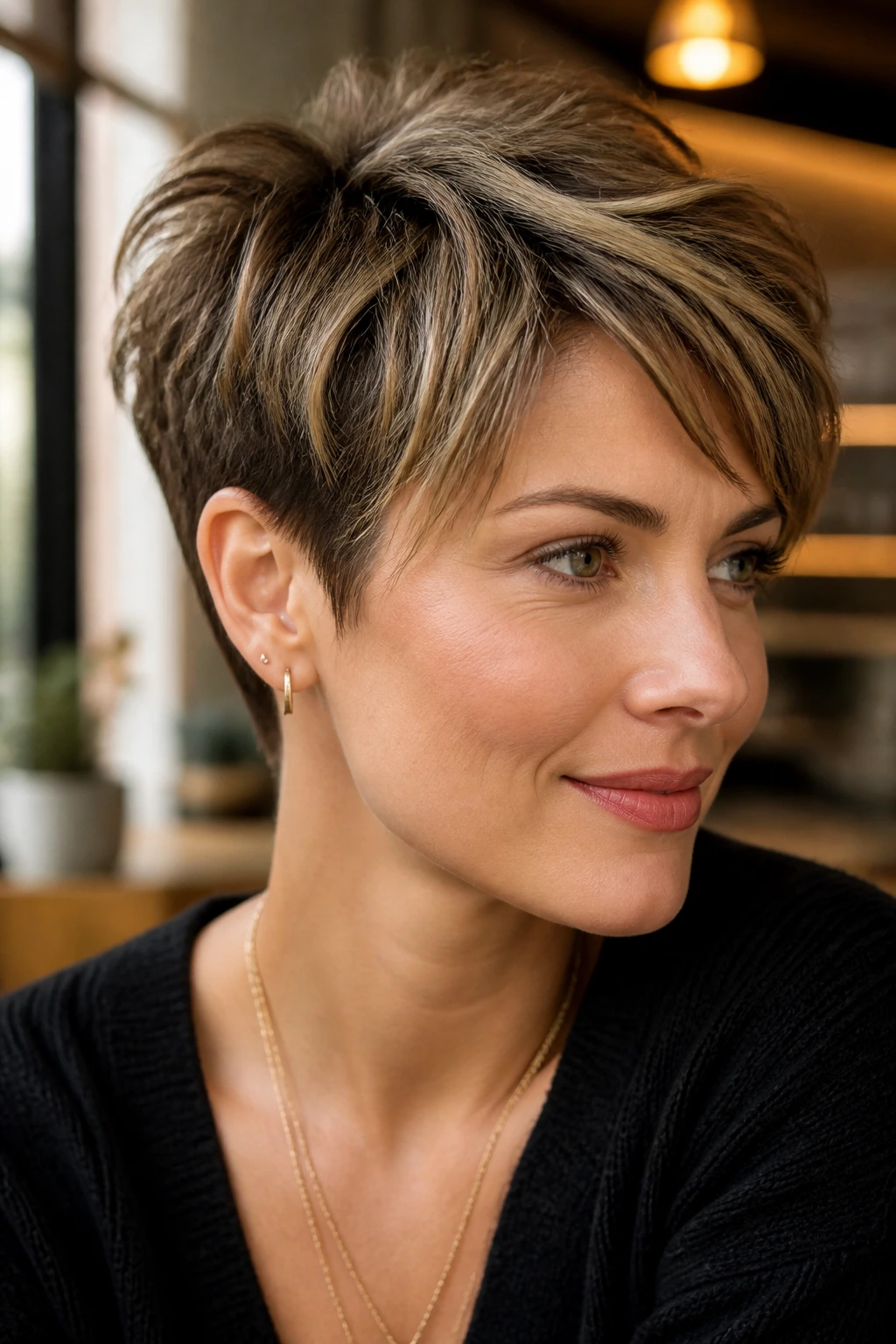
Color changes how a short cut reads. A piecey highlighted pixie uses lighter ribbons or subtle contrast to break up the density visually, which is useful when thick hair can look flatly heavy in one solid tone. The cut itself may not be wildly different from another long pixie, but the dimension does a lot of the heavy lifting.
Highlights show off the ends of the layers, so the texture becomes easier to see. That is why this style often looks fuller without looking bulky. The eye follows the lighter pieces around the crown and fringe, and the hair suddenly seems more separated and less blocky.
Keep the color placement fine and deliberate. Chunky stripes can make short hair look striped, which is not the point. Thin, face-framing lights or subtle brightness through the top usually give the best effect.
18. Rounded Volume Pixie
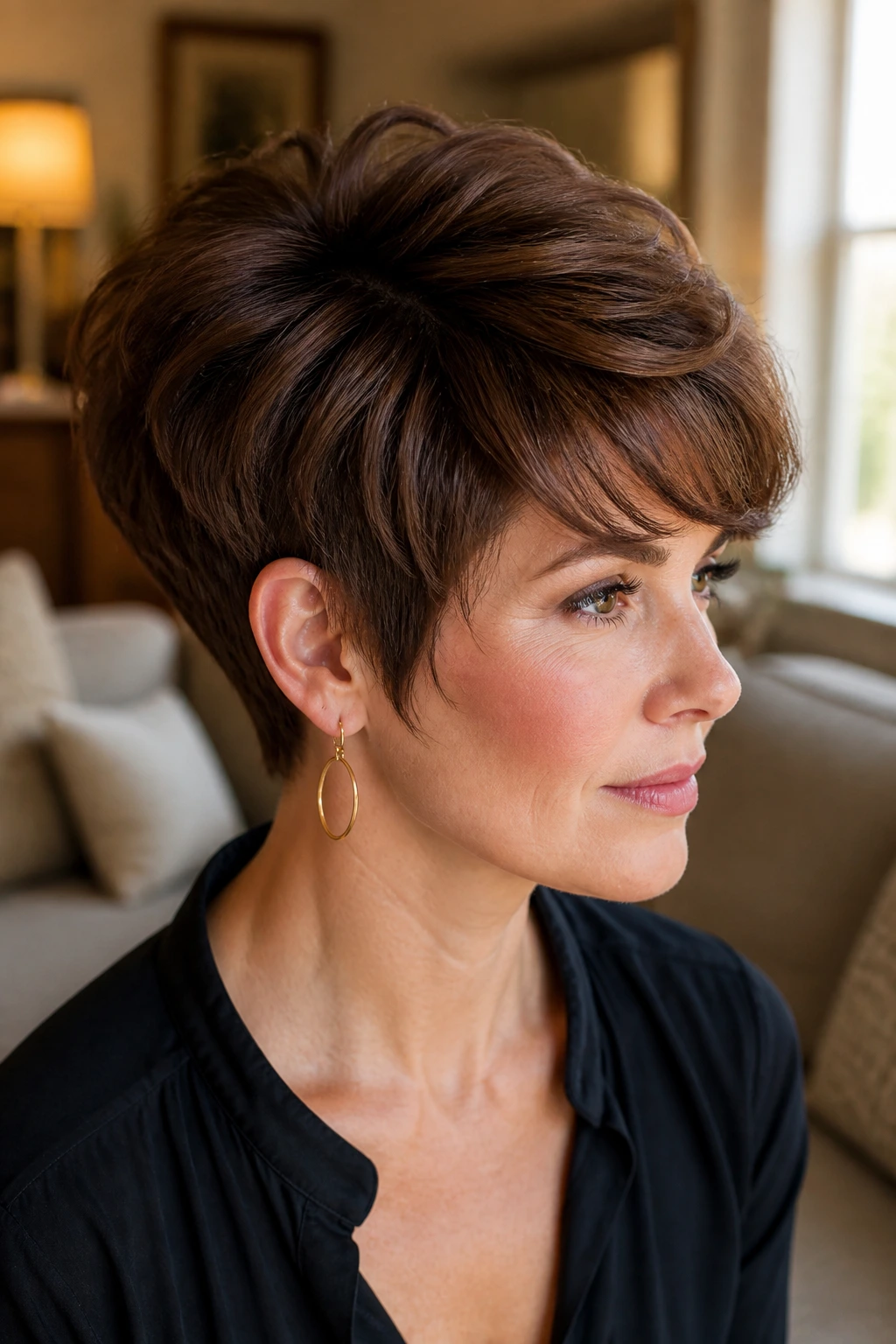
Some thick hair wants to be rounded, not flattened. A rounded volume pixie keeps the outline soft and curved, with the fullness concentrated in a controlled dome rather than pushed outward. It’s the kind of shape that looks deliberate from every angle.
This cut suits people whose hair naturally has body at the crown and who don’t want to fight it every morning. Instead of over-thinning the top, the stylist shapes the perimeter so the volume sits where it belongs. The result is polished, but still has some life in it.
A rounded silhouette also tends to flatter softer facial features because it mirrors the natural curves of the head. If the cut gets too blunt around the ears or too narrow through the crown, the balance falls apart. The best versions keep that curve smooth and the edges clean.
19. Micro-Layered Airy Pixie
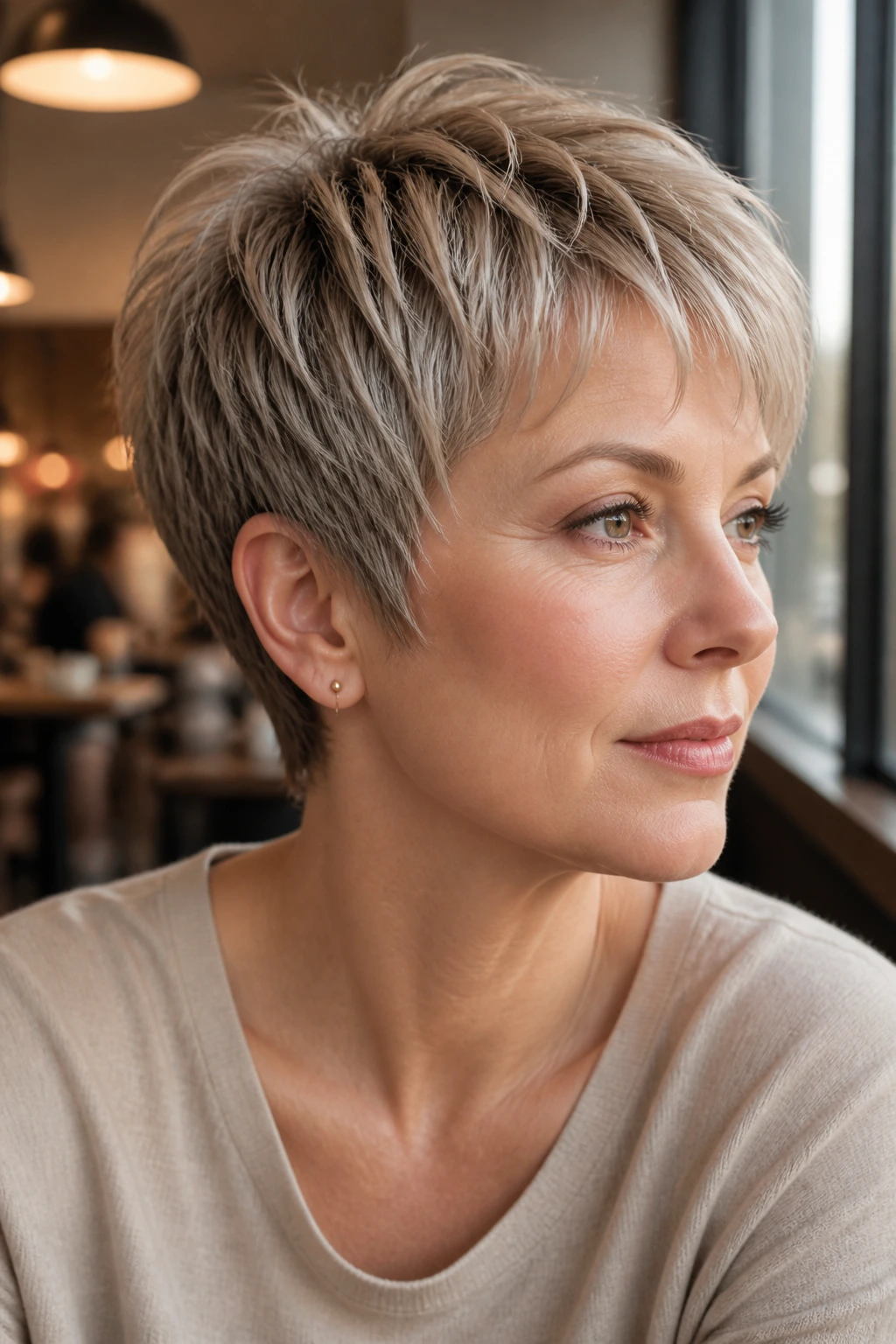
Micro-layers are the quiet overachievers of short hair. Instead of big visible steps, this cut uses tiny, closely placed layers to remove weight without chopping the shape to pieces. On thick hair, that means less bulk at the same length, which is exactly the point.
This style is ideal if you want your hair to look soft and controlled rather than jagged. The layers sit close together, so the surface still looks smooth. You get movement when you lift the hair with your fingers, but you don’t get that chunky, disconnected texture some choppy cuts create.
It’s a good option for people who have thick hair and a low tolerance for fuss. The cut looks tidy even when it’s not freshly styled, and that matters. A lot of pixies look best for the first 20 minutes after styling. This one lasts.
20. Long-Top, Close-Sides Pixie
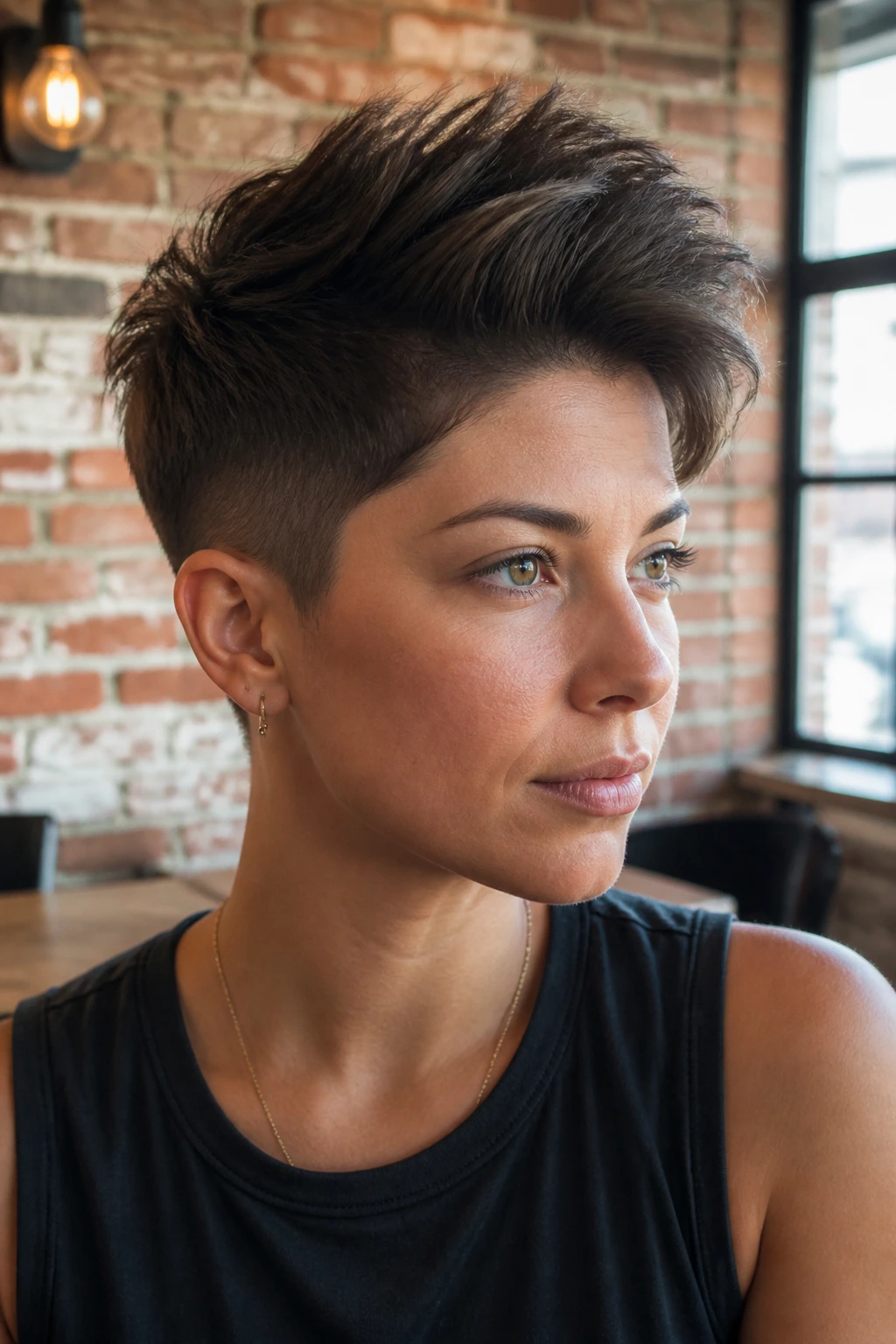
This version is blunt in the best way. The top stays long enough to sweep, lift, or part, while the sides are clipped or closely tapered so the silhouette has a strong contrast. On thick hair, that contrast keeps the cut from turning into a swollen oval.
The shape feels clean and a little barber-inspired. It’s great if you like crisp lines and don’t mind a haircut that shows its bones. The short sides make the top look longer, and the top makes the sides feel sharper. That push and pull is the whole appeal.
This is especially useful if your hair tends to grow outward at the temples. Keeping the sides close reduces that puff, and the long top gives you room to build height or sweep the fringe forward. If you wear this with a matte paste, the texture reads strong without looking crunchy.
21. Sweeping Quiff Pixie
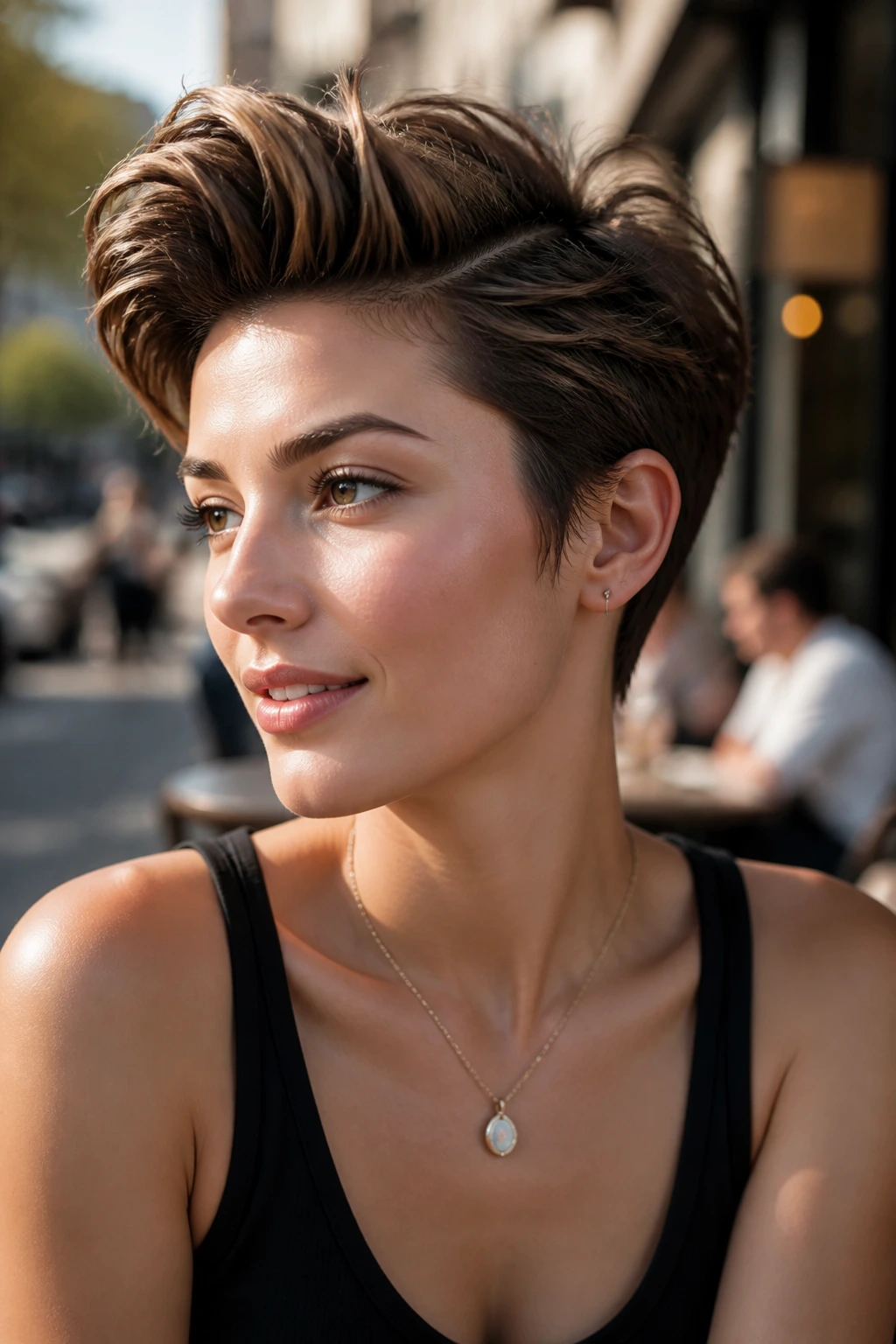
A sweeping quiff is a statement, but not a loud one. The front gets lifted up and across, almost like a tiny pompadour, while the rest of the cut stays compact enough to support it. Thick hair is excellent at holding this shape because there’s enough body to keep the front from collapsing.
The quiff works best when the roots are dried in the opposite direction of the final style. That gives the front some memory and keeps the lift from falling flat. A medium-hold mousse or lightweight gel at the root helps, but don’t plaster it down. The goal is height with movement, not a helmet.
This is a sharp choice if you like your short hair to have a little personality. It opens the face, lifts the profile, and turns heavy hair into something sculpted. A side clip or tucked ear on the other side makes the shape even better.
22. Grow-Out Friendly Pixie
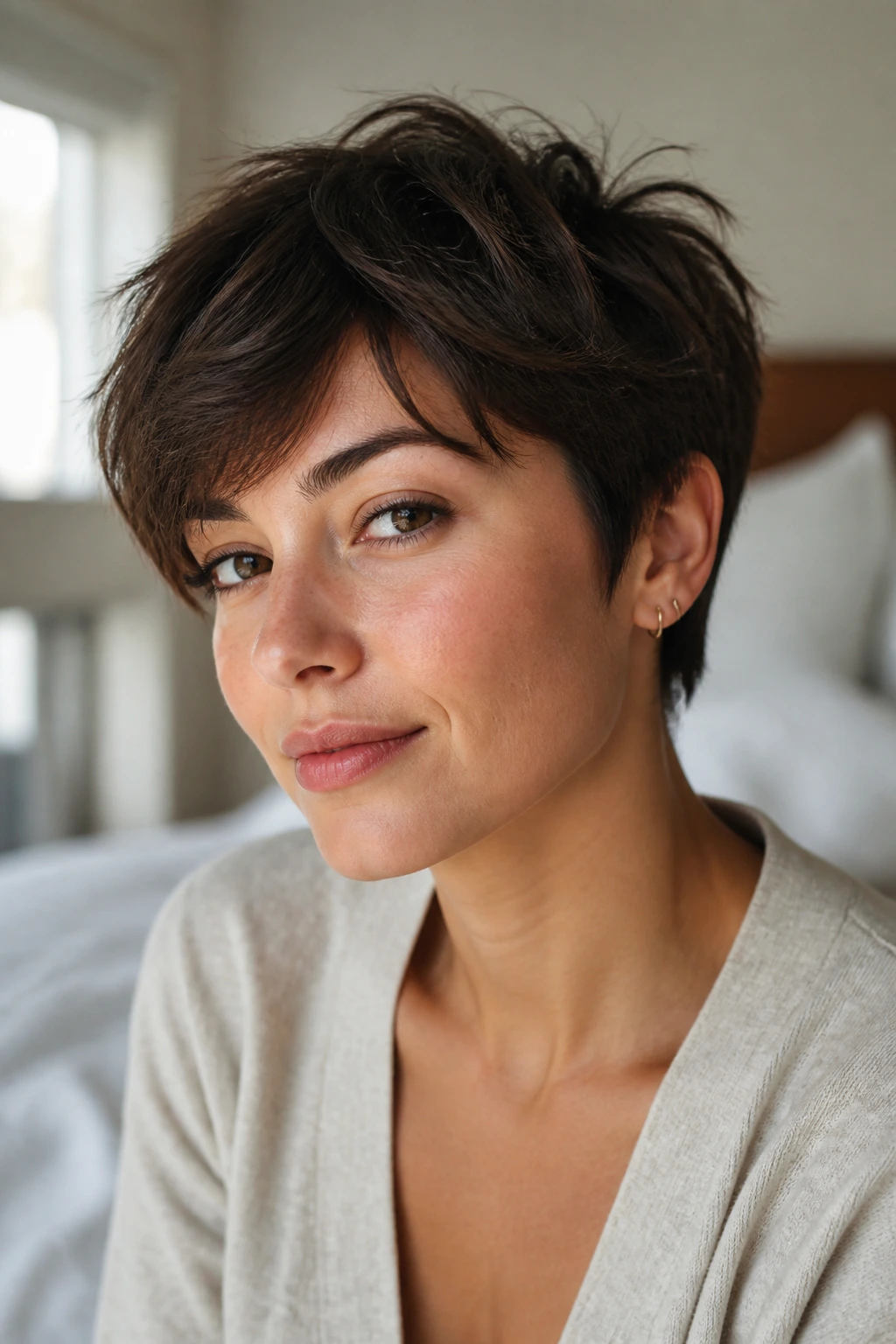
Not every pixie should be cut like it needs to survive a wind tunnel. The grow-out friendly version keeps the front and crown long enough to shift into a short shag or tiny bob once the first trim window passes. That matters if you know you won’t visit the salon every four weeks.
On thick hair, grow-out can go wrong fast if the nape is too tight or the sides are too blunt. A softer perimeter solves that. The cut still feels finished, but it won’t turn into a lopsided problem if you skip a trim by a couple of weeks. That’s a useful kind of freedom.
This is the one I’d point to if you’re nervous about commitment. It gives you the look of a long pixie now and a graceful exit later. Not every haircut needs to live in the salon chair forever.
Why Long Pixie Cuts Work So Well on Thick Hair
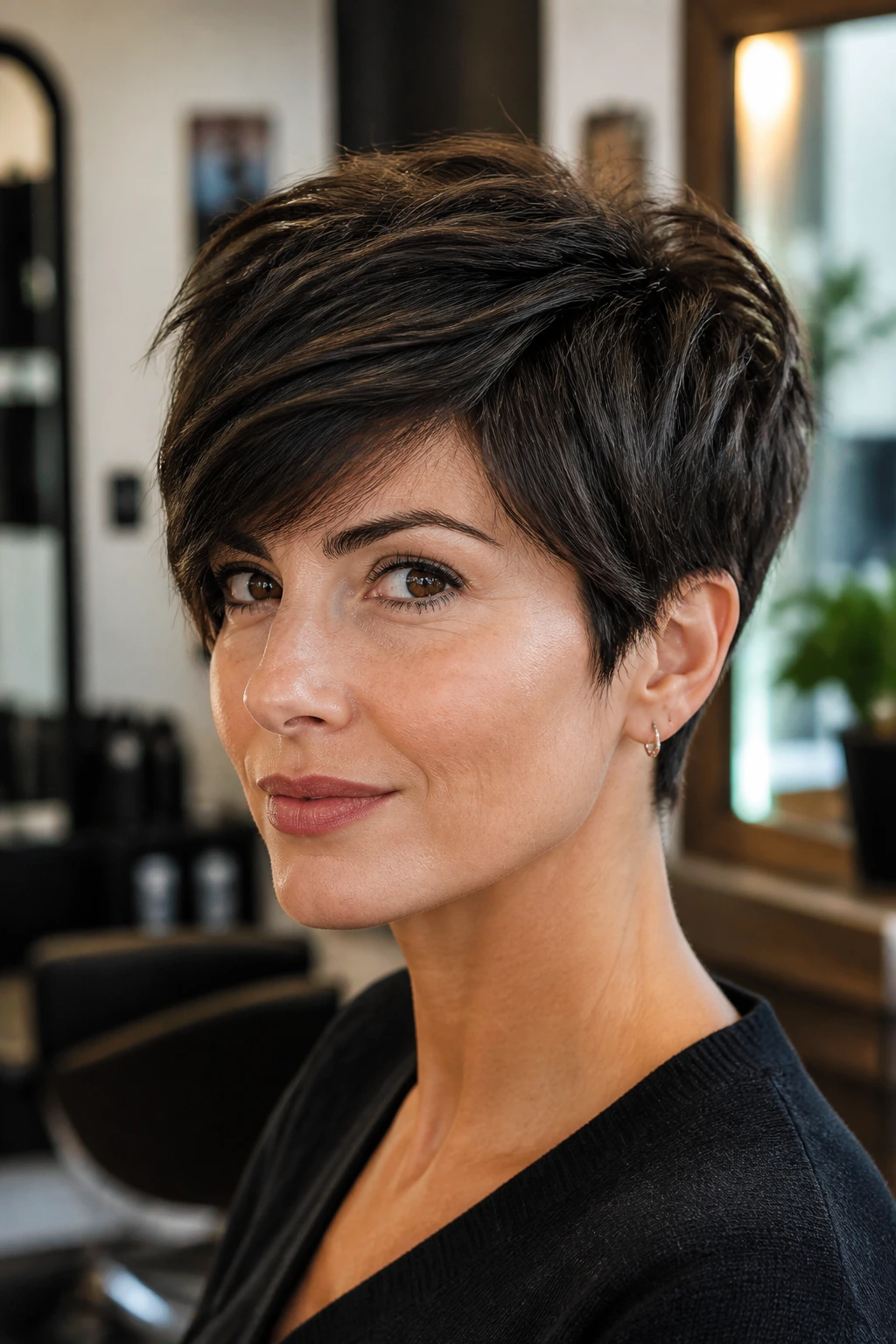
Dense hair is built for shape, which is why a long pixie often behaves better on it than people expect. The extra weight gives the haircut structure, and the short length keeps that structure visible. Instead of dangling flat, the hair sits with intention.
The key is balance. Too much bulk at the crown and the cut balloons. Too much thinning and it turns wispy around the edges, which is a bad trade on full hair because you lose the nice solid outline that made the style work in the first place. The sweet spot is interior weight removal, clean edges, and enough length on top to show movement.
A long pixie also handles day-to-day life with less drama than very short crops. There’s enough length to adjust the direction of the fringe, enough side length to tuck behind an ear, and enough top volume to survive a little humidity. That’s not glamorous language, but it’s the reason the cut keeps getting worn.
What to Ask for at the Salon Chair
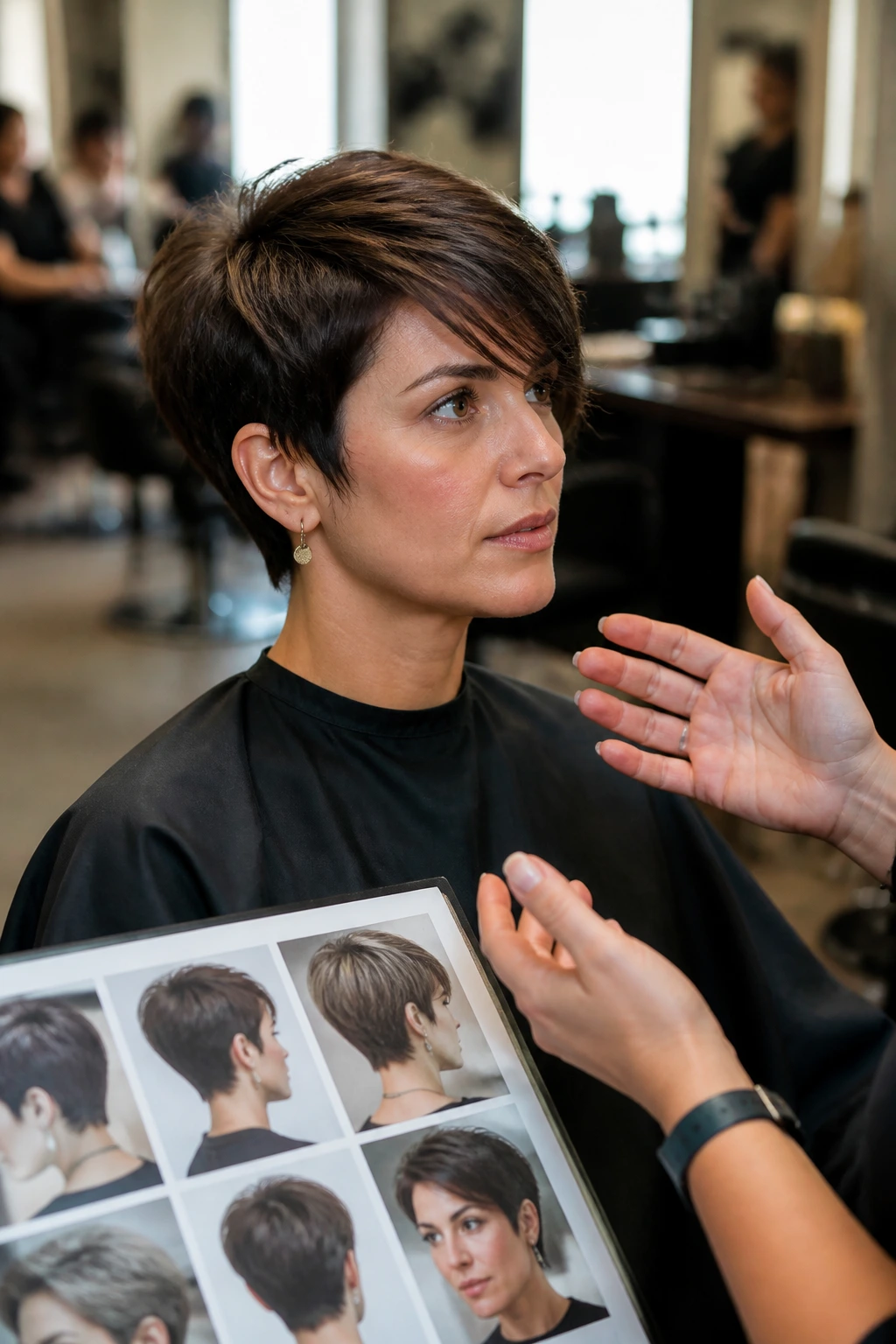
Bring photos, yes, but bring the right kind. Show the stylist pictures that match the shape, not just the color or face in the photo. One image of a side-swept version and one of a tapered nape tells them more than ten screenshots of unrelated short cuts with good lighting.
Say the practical part out loud. Tell them you want the bulk removed from the interior, the nape tapered, and the front left long enough to sweep or tuck. If you have a strong cowlick, mention exactly where it lives. If your hair is very coarse, ask for soft point cutting instead of heavy razor work unless you know your texture can handle it.
A good consultation also covers upkeep. If you only want a trim every 8 weeks, don’t ask for a sharply shaved undercut. If you like a cleaner line and can return more often, say that too. Short hair punishes vague instructions.
Tools and Products That Make Styling Easier
-
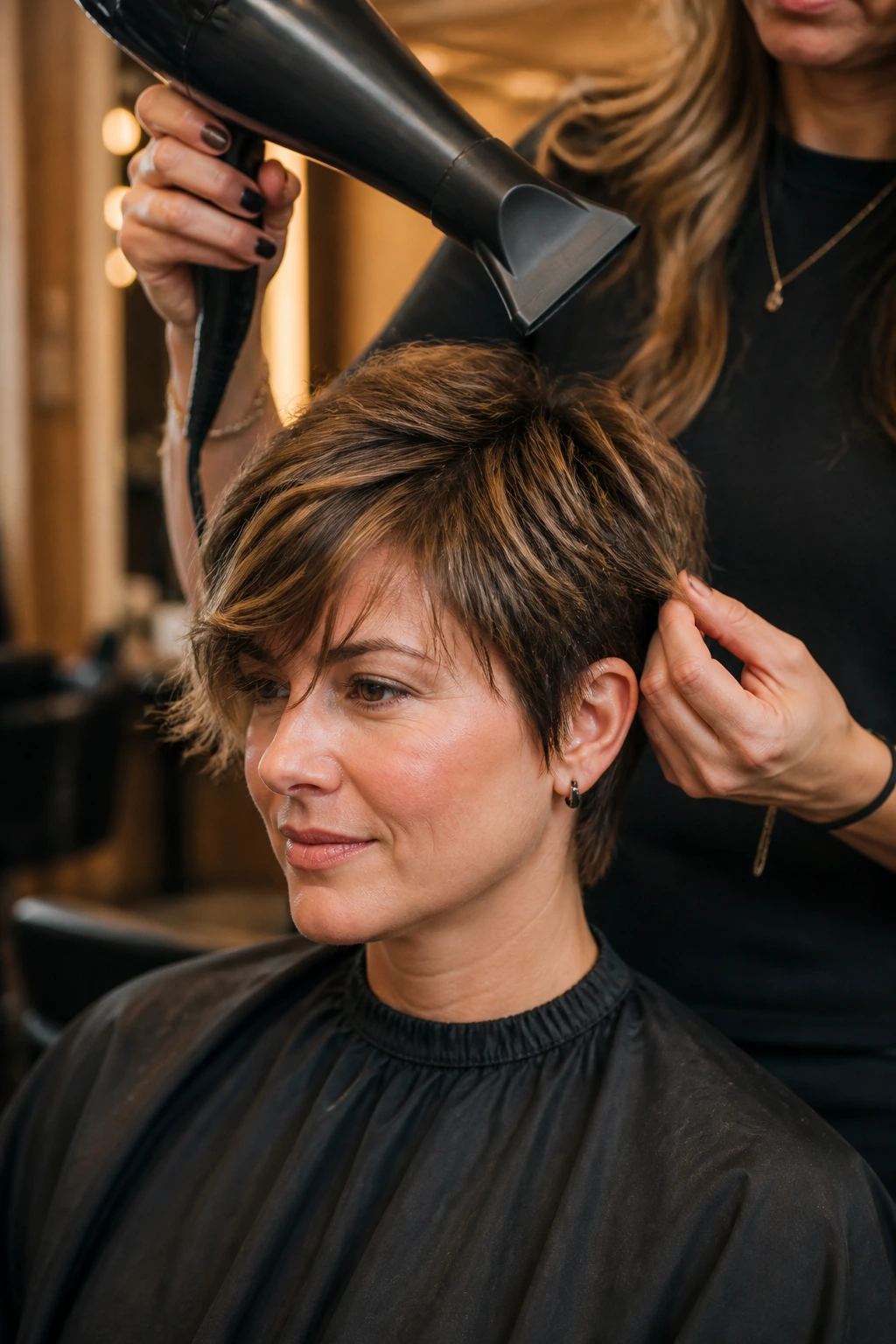
Blow dryer with a nozzle: The nozzle helps direct root lift and keeps the top from frizzing out while you dry.
-
Small round brush, 1 to 1.5 inches: Perfect for bending the fringe and smoothing the crown without stretching the shape flat.
-
Matte paste or texture cream: Use a pea-size amount to separate the ends of a piecey pixie or tame the top layer.
-
Light mousse: Good for thick hair that needs root support without getting crunchy.
-
Heat protectant spray: A must if you use a dryer, brush, or flat iron on the fringe.
-
Wide-tooth comb: Useful for detangling damp hair without pulling the shape apart.
-
Tail comb: Handy for setting a deep side part or dividing the fringe cleanly.
-
Satin pillowcase or bonnet: Reduces friction overnight so the nape and top don’t wake up bent in odd directions.
How to Wear the Shape Without Fighting It
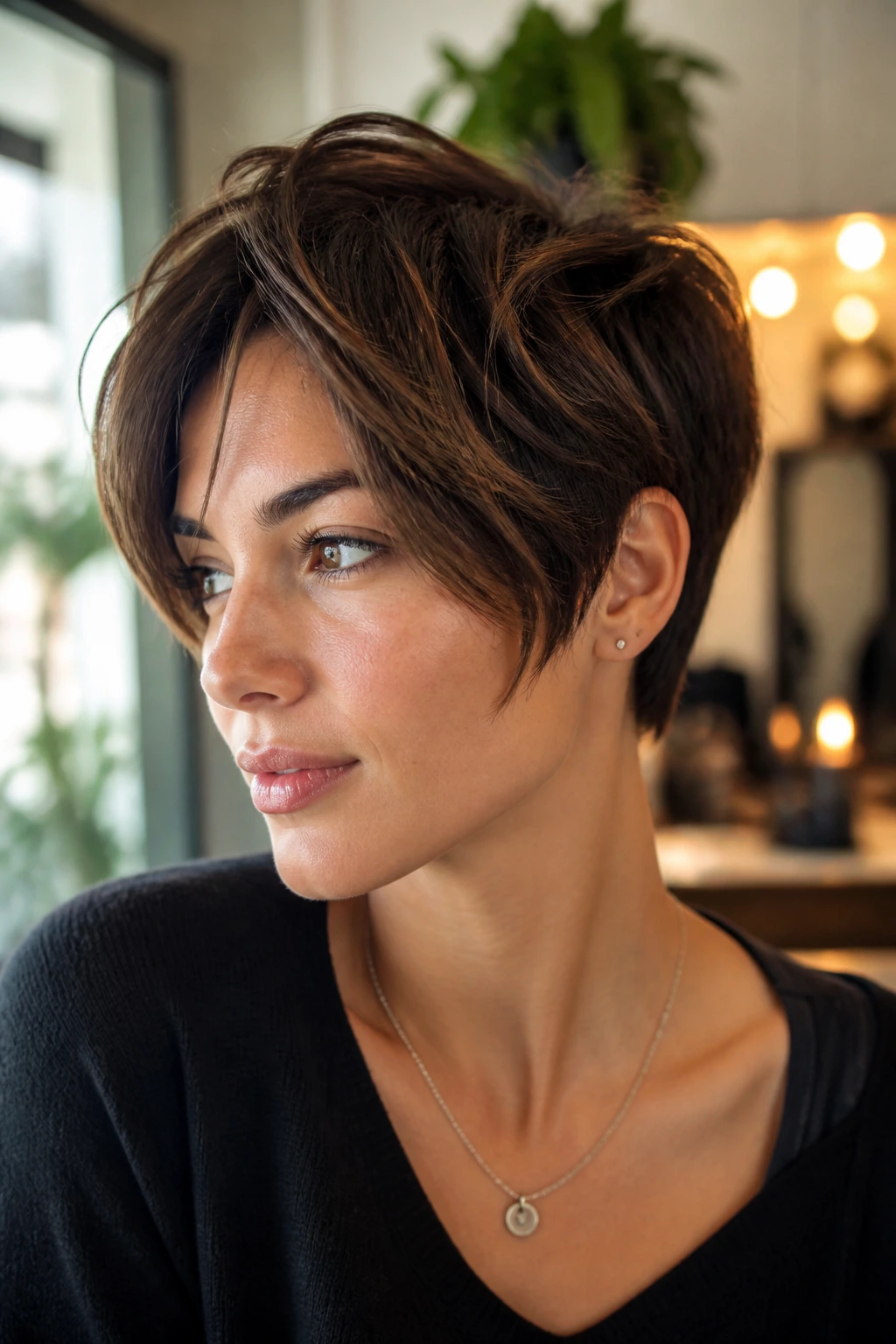
Silhouette: Let the haircut do the heavy lifting. A long pixie should sit close at the nape, keep some height through the crown, and leave enough front length to frame the face instead of sealing it off.
Face Framing: If your jaw is strong, keep the front pieces softer and a touch longer. If your forehead feels wide, a side-swept fringe or curtain shape breaks it up faster than blunt bangs.
Styling Partners: Thick hair usually behaves best with a light mousse at the roots, a touch of paste through the ends, and a dryer nozzle if you want the shape to last. Earrings, glasses, and collar height matter too; short hair puts them in the spotlight.
Best Match: Choose the version that fits your morning routine. A swept-back quiff, an undercut, and a curly long pixie all sit in different lanes. The prettiest cut is the one you can actually wear with your own hairline, texture, and patience.
Additional Tips and Texture Boosters
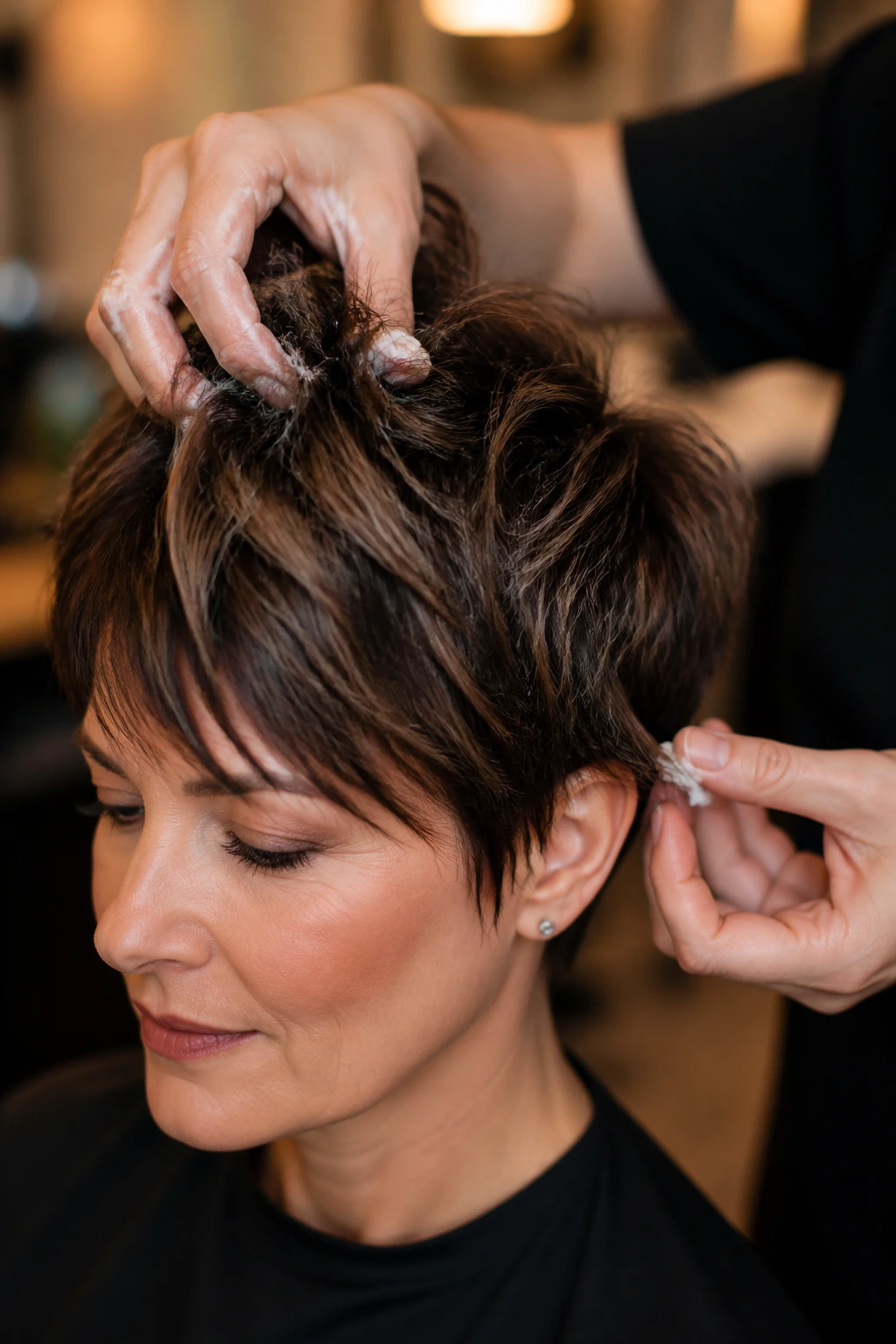
Root Lift: Work mousse into damp roots, then dry the crown in the opposite direction your hair naturally falls. That one move gives thick hair more height without making the ends frizz.
Piece Separation: Warm a tiny amount of matte paste between your fingers and pinch only the last inch or two of the layers. Don’t smear it through the whole head unless you want the cut to look greasy.
Fringe Control: If the front keeps splitting, dry it from side to side first, then settle it into the final direction. Hair that heavy usually needs a little argument before it cooperates.
Color Depth: Soft highlights or lowlights can make layers look sharper. That’s especially useful on very dark or very solid-colored hair, where the cut line can disappear unless you give the eye something to follow.
Common Mistakes to Avoid
-
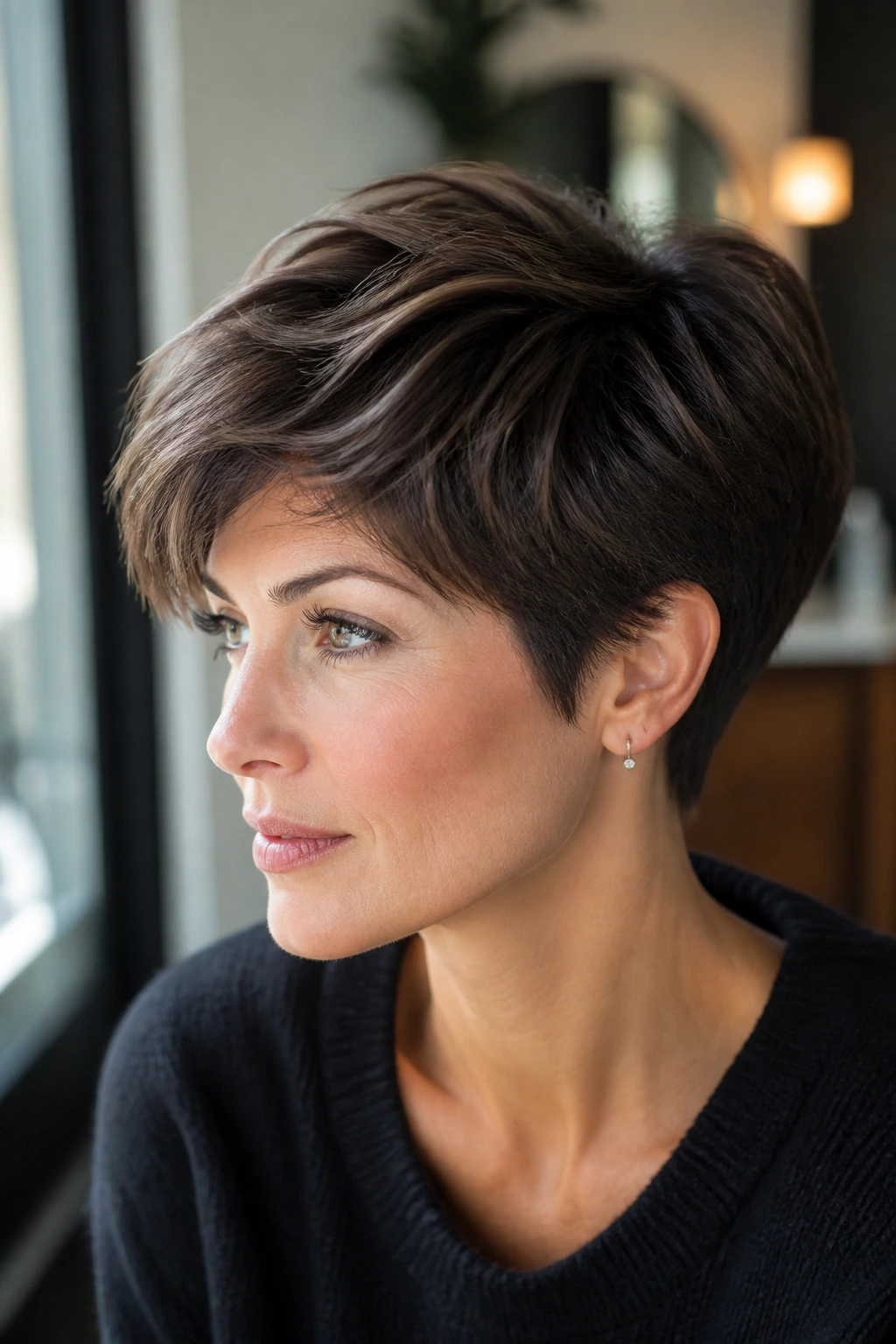
Over-thinning the crown: If the top feels airy but looks see-through, the stylist took too much weight out. Thick hair needs removal in the right zones, not all over the head.
-
Leaving the nape too wide: A boxy back makes the haircut look bigger than it is. Ask for a taper or soft graduation so the neckline stays neat.
-
Using too much product: Thick hair can hold product well, but a heavy hand turns short hair limp and greasy fast. Start with less than you think you need.
-
Ignoring your growth pattern: Cowlicks at the crown or temples will push the hair where they want. Cutting against them without a plan usually creates daily frustration.
-
Choosing a cut that needs more upkeep than you can give it: A sharp undercut is not the same thing as a soft grow-out pixie. Pick the one that matches your trim schedule, not your mood on the day of the appointment.
Variations and Adaptations to Try
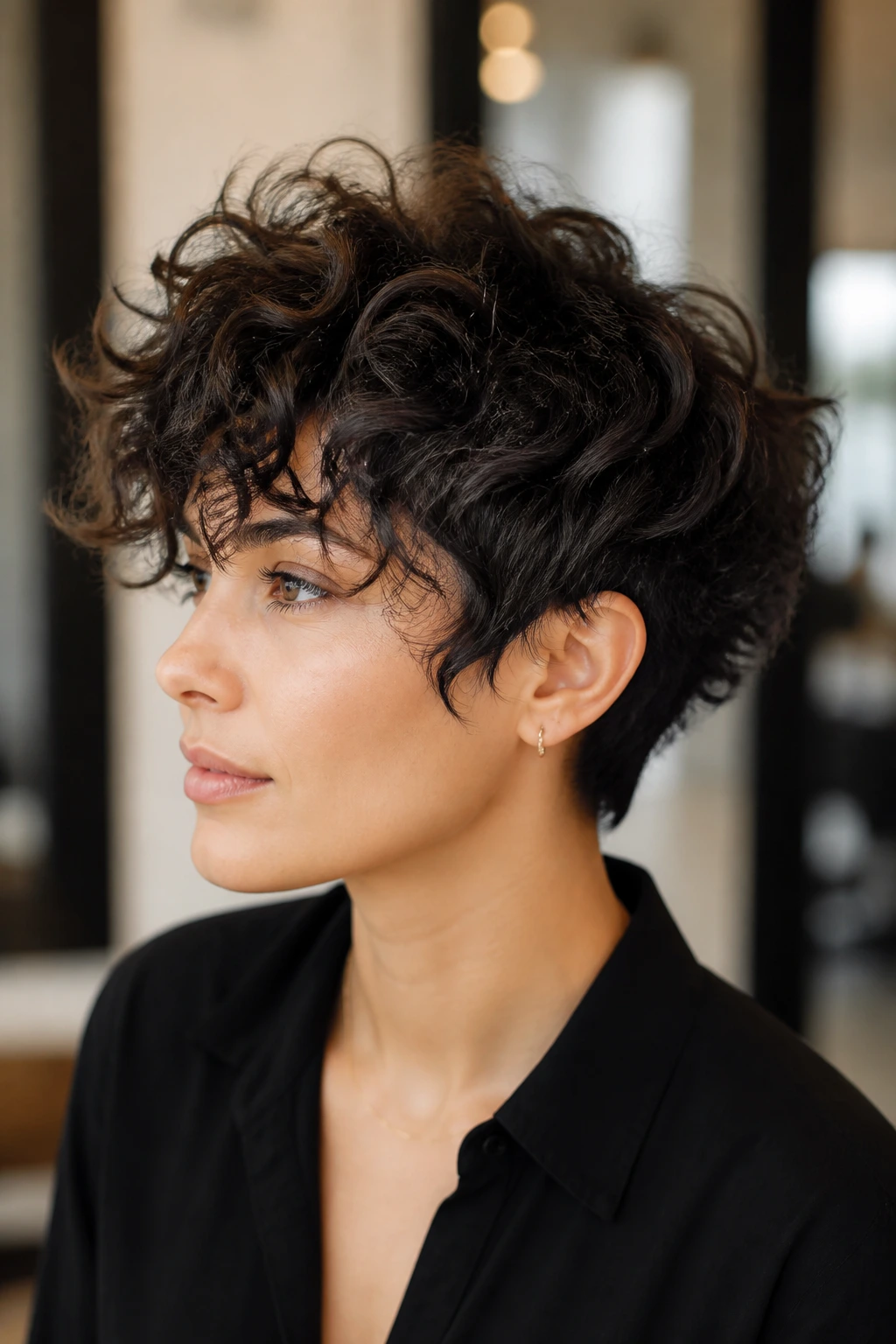
Curly-First Version: Keep the layers long enough to respect the curl pattern and avoid razor work that makes the ends fuzzy. This is the version to choose if your curls spring up more than they stretch down.
Low-Maintenance Air-Dry Cut: Ask for a soft fringe, a tapered nape, and gentle internal layering. It should still look finished when it dries on its own, which is useful if you don’t want to reach for a dryer every morning.
Glasses-Friendly Shape: Leave enough length at the temples and around the ears so the frames don’t crowd the hairline. The fringe should stop above or beside the frames, not jam into them.
Edgier Barber-Inspired Version: Go with close sides, a longer top, and more contrast through the profile. This one looks sharp on thick hair because the contrast keeps all that body from expanding outward.
Soft Grow-Out Version: Keep the perimeter rounded and the fringe longer so the cut can drift into a shaggy short bob later. It’s the friendliest option if you hate a harsh in-between phase.
Keeping Long Pixie Cuts for Thick Hair in Shape Between Trims
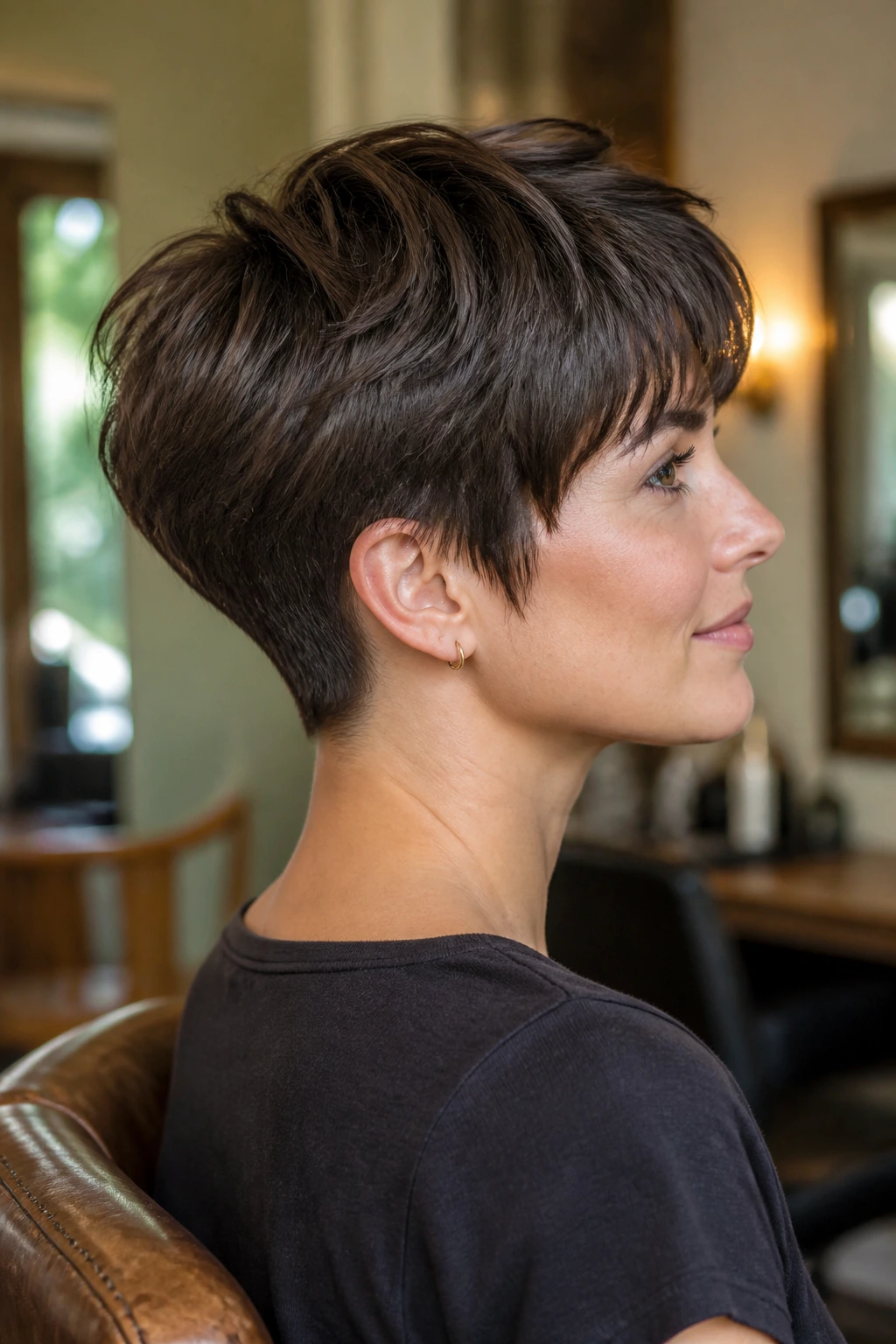
Short hair on dense strands grows loudly. You’ll usually notice the nape first, then the temples, then the fringe deciding it has its own agenda. Plan on a trim every 4 to 6 weeks if you like a crisp pixie shape. If you prefer a softer grow-out, 6 to 8 weeks is more realistic.
Wash frequency depends on product use and scalp oil, but many thick-haired pixie wearers do best washing 2 to 4 times a week. On off days, a little dry shampoo at the roots can revive the crown without turning the ends chalky. Use less than you think; short hair shows powder buildup fast.
At night, a satin pillowcase helps more than people expect. It keeps the fringe from getting bent into a strange ridge and stops the nape from fluffing up. If you wake up with the front smashed, mist it lightly with water, lift the roots with your fingers, and give it 30 seconds of heat from the dryer. That tiny reset often fixes the whole morning.
Frequently Asked Questions
Will a long pixie work if my thick hair is straight and coarse?
Yes, and it often works better than people expect. Straight coarse hair holds a crisp line, so the important part is removing bulk from underneath and keeping the top textured enough to move.
How short should the top be on thick hair?
Most long pixie versions sit somewhere around 2 to 5 inches on top, depending on whether you want a side sweep, fringe, or quiff. Shorter than that, and styling options start shrinking fast.
Can I air-dry a long pixie cut?
You can, especially if your hair has some wave or curl. Straight thick hair usually looks better with at least a quick root dry, because the crown can dry in odd directions if left alone.
What if my crown sticks up no matter what I do?
That usually means the cut is working against your growth pattern. Ask for more controlled layering at the crown and dry it with tension in the opposite direction of the cowlick until the roots cool.
Is an undercut too high-maintenance?
Only if you hate frequent trims. If you’re fine with a cleanup every 3 to 5 weeks, an undercut can make dense hair much easier to live with.
Will a pixie make my face look wider?
Not if the front is shaped well. Side-swept fringe, diagonal lengths, and a little height at the crown usually keep the face from looking wider than it is.
What’s the easiest version to grow out?
The bixie, the soft rounded pixie, and the grow-out friendly version all transition more easily than a tight undercut or a sharply shaved nape.
Can I wear this cut with glasses?
Absolutely. In fact, several of these shapes get better with frames because the hair can sit above the temple line or tuck neatly behind the ears instead of crowding the face.
The Shape That Keeps Giving
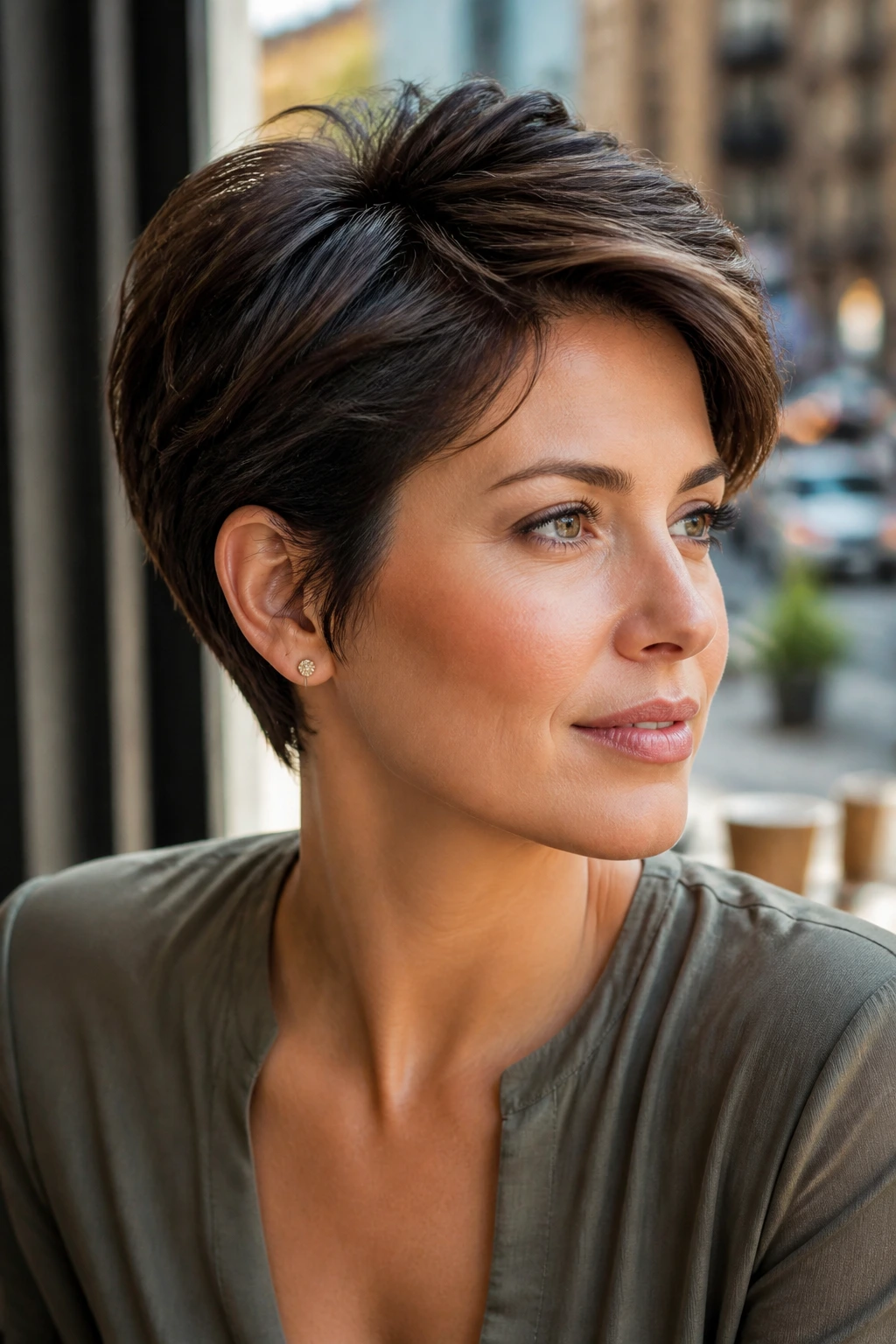
A long pixie on thick hair isn’t a compromise. It’s often the haircut that finally makes the density work for you instead of against you. The right version keeps the nape tidy, the crown under control, and the front pieces useful enough to style in more than one direction.
That flexibility is the whole reason this category keeps hanging around. You can wear it soft, sharp, shaggy, sleek, curly, or pushed back with a little attitude. Pick the silhouette that matches your hairline and your habits, then leave the rest to a good cut and a steady trim schedule.
