



Thin hair can be fussy in a way thick hair never has to think about. One wrong layer, and the ends look see-through. Too much length, and the whole shape sinks into your neck by noon. A good pixie bob for thin hair solves that problem by doing two jobs at once: it keeps enough weight at the edge to fake fullness, and it builds movement where the eye wants to see it most.
That’s why the pixie bob stays so useful. It sits in that narrow sweet spot between cropped and chin-skimming, which gives you room to create lift without asking fragile strands to carry a heavy shape. If your hair is fine, sparse, or just easily flattened, the cut matters more than the product shelf. Shape first. Spray second.
A lot of thin-hair cuts go wrong because they chase texture at the expense of structure. That’s backwards. The styles below keep the outline clean, the crown controlled, and the ends intentional. Some lean soft and pretty. Some are sharp and modern. A few are the sort of cuts that make a flat ponytail look like a memory you no longer need.
Why These Pixie Bobs Work on Thin Hair
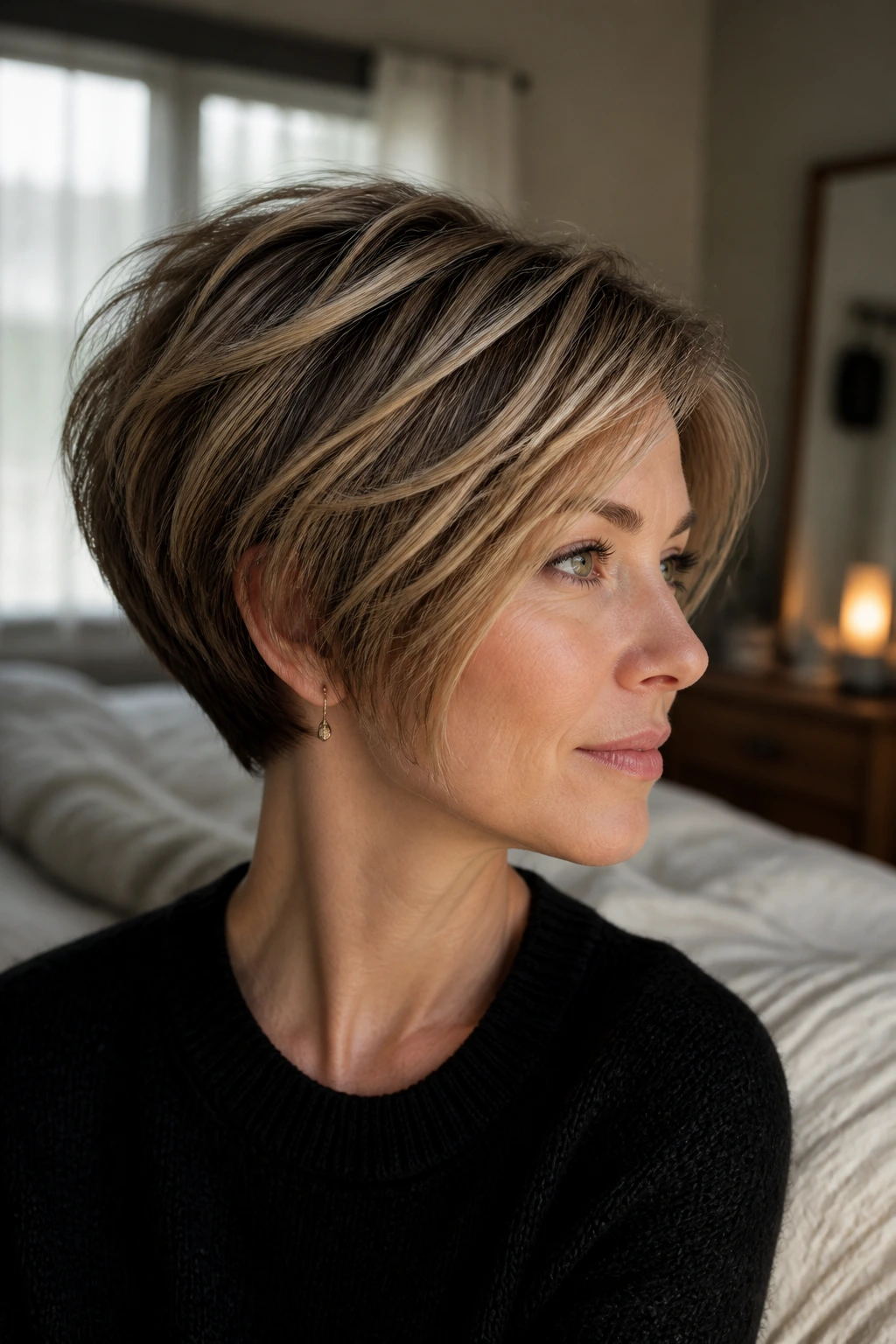
- They keep the perimeter honest: A stronger edge line at the jaw, cheek, or nape makes hair look denser than it is.
- They build lift where it counts: Crown stacking, side parts, and short napes create height without making the top fluffy.
- They avoid over-thinning: Fine hair usually looks thinner when it’s razored to death. These cuts leave enough weight to hold a shape.
- They give you styling options: You can air-dry some of them, blow-dry others, and still end up with a real silhouette.
- They grow out in a useful way: A pixie bob stays readable for weeks, which matters when short hair needs regular trims.
1. Stacked Nape Pixie Bob
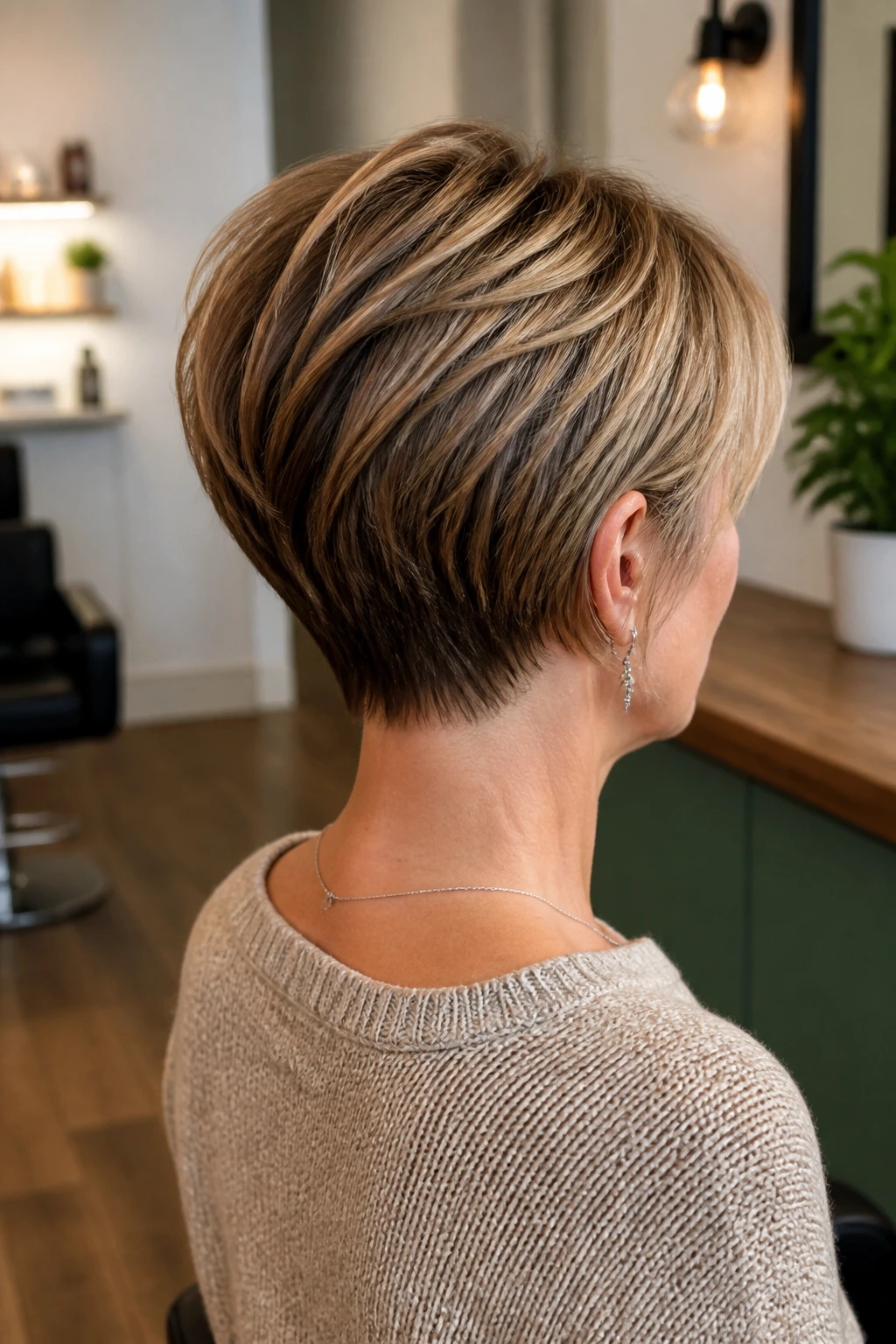
A stacked nape is one of those cuts that quietly does the hardest work. The back is graduated tight, so the hair lifts off the head instead of hanging in a limp sheet, and the longer top keeps the whole thing from looking too severe. On thin hair, that little bit of stacking can make the crown look like it has actual substance.
Ask for the back to be compact, not fluffy. The goal is a curve that hugs the head and pushes the eye upward, not a rounded helmet. A quick blow-dry with a small brush at the roots is enough to bring this one to life.
2. Side-Swept Fringe Pixie Bob
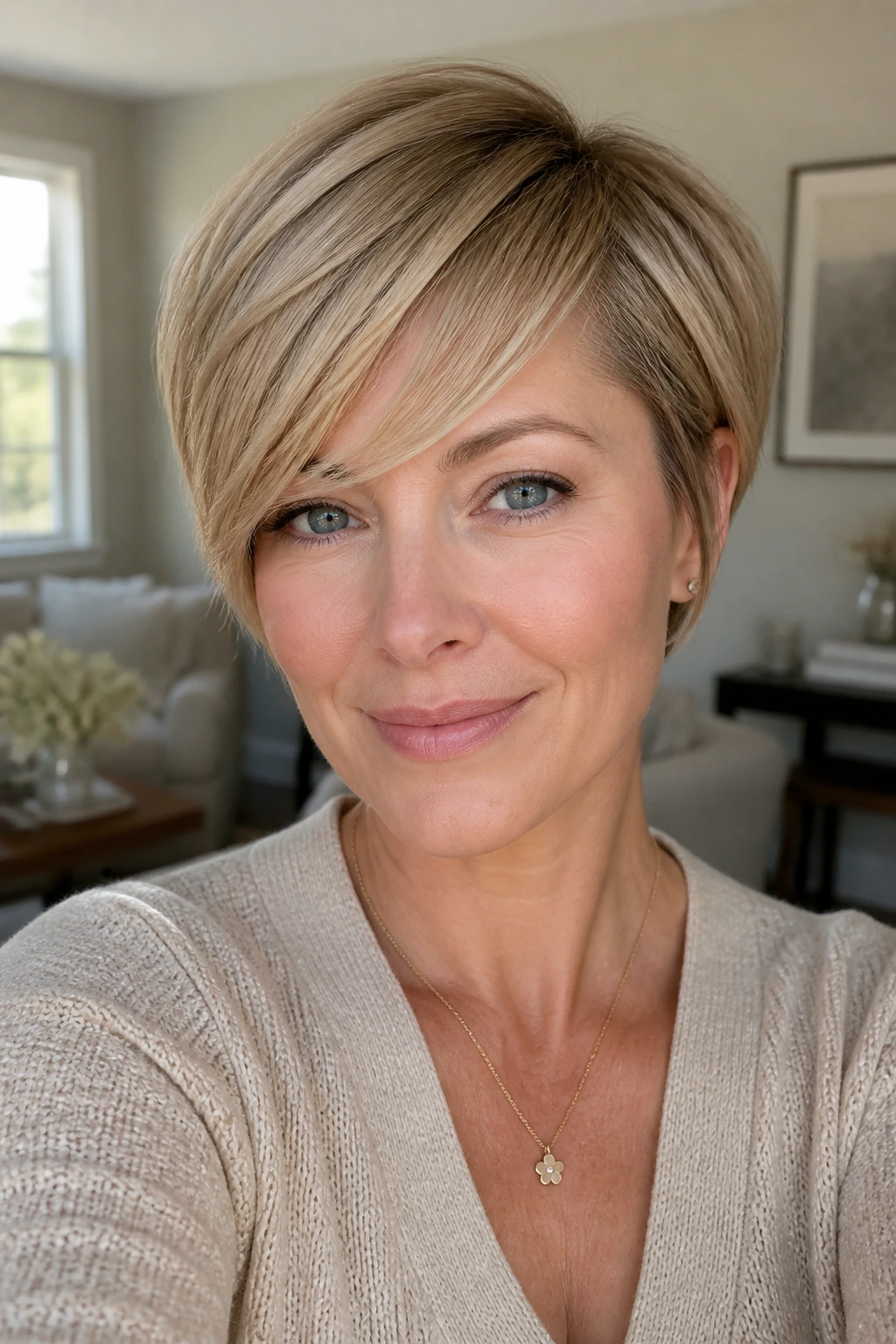
A side-swept fringe is a clever distraction in the best sense. It breaks up a sparse hairline, fills in the front, and gives thin hair a fuller-looking frame without adding bulk to the sides. If your temple area shows too much scalp, this is one of the easiest fixes.
The fringe should slide across the forehead in one clean diagonal, not split into wispy pieces. Keep the rest of the cut slightly longer around the cheekbones, so the front and sides feel connected. That way the shape looks planned, not pieced together.
3. Feathered Crown Pixie Bob
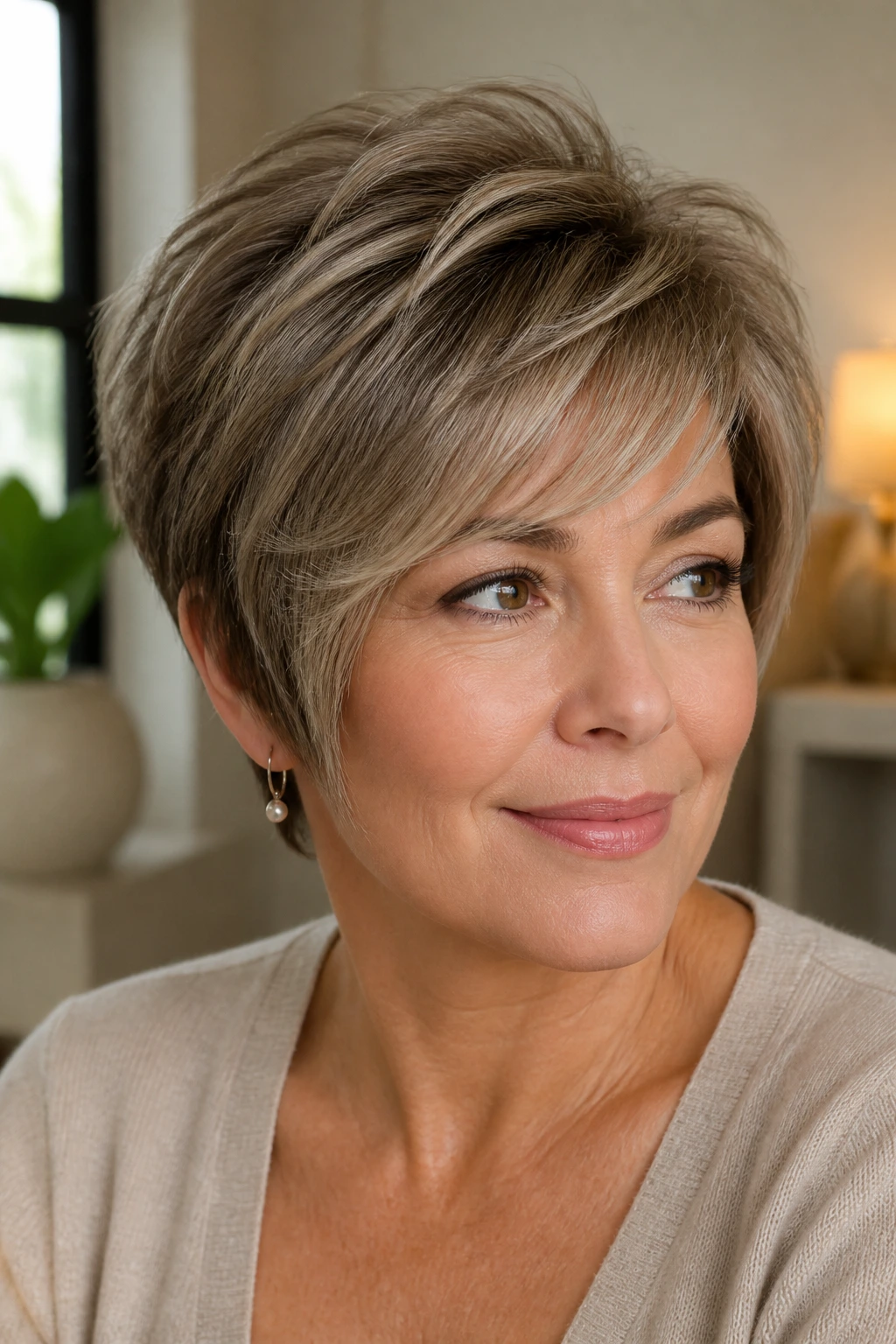
Feathering around the crown can be gorgeous on fine hair when it’s done lightly. The trick is not to shred the top. You want soft movement at the crown, not see-through layers that leave the scalp exposed under bright light.
This version works well if your hair lies flat at the top but still has enough body through the ends. A little mousse at the roots and a lift-dry with your fingers will bring out the shape. Easy. No drama.
4. Tucked-Behind-the-Ear Pixie Bob
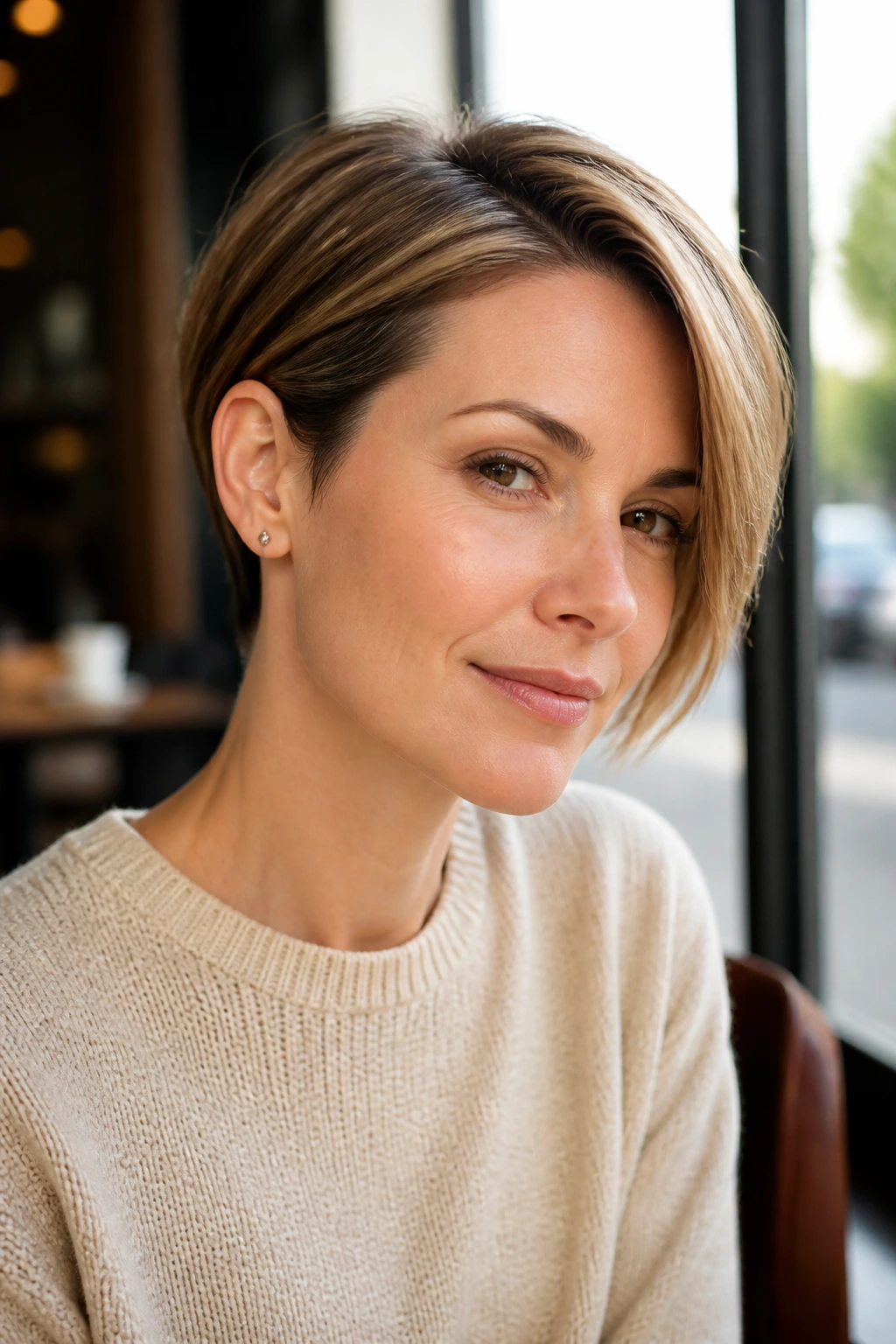
There’s a practical elegance to a cut that looks good when one side is tucked back. Longer side pieces give thin hair a clean line, and the ear tuck creates a little asymmetry that keeps the style from falling flat. It also makes the face look a touch sharper around the jaw.
I like this one for people who want short hair without committing to a full cropped look. The tucked side should still have enough length to bend, not just sit there. If you wear glasses, it plays especially well.
5. Razored Choppy Pixie Bob
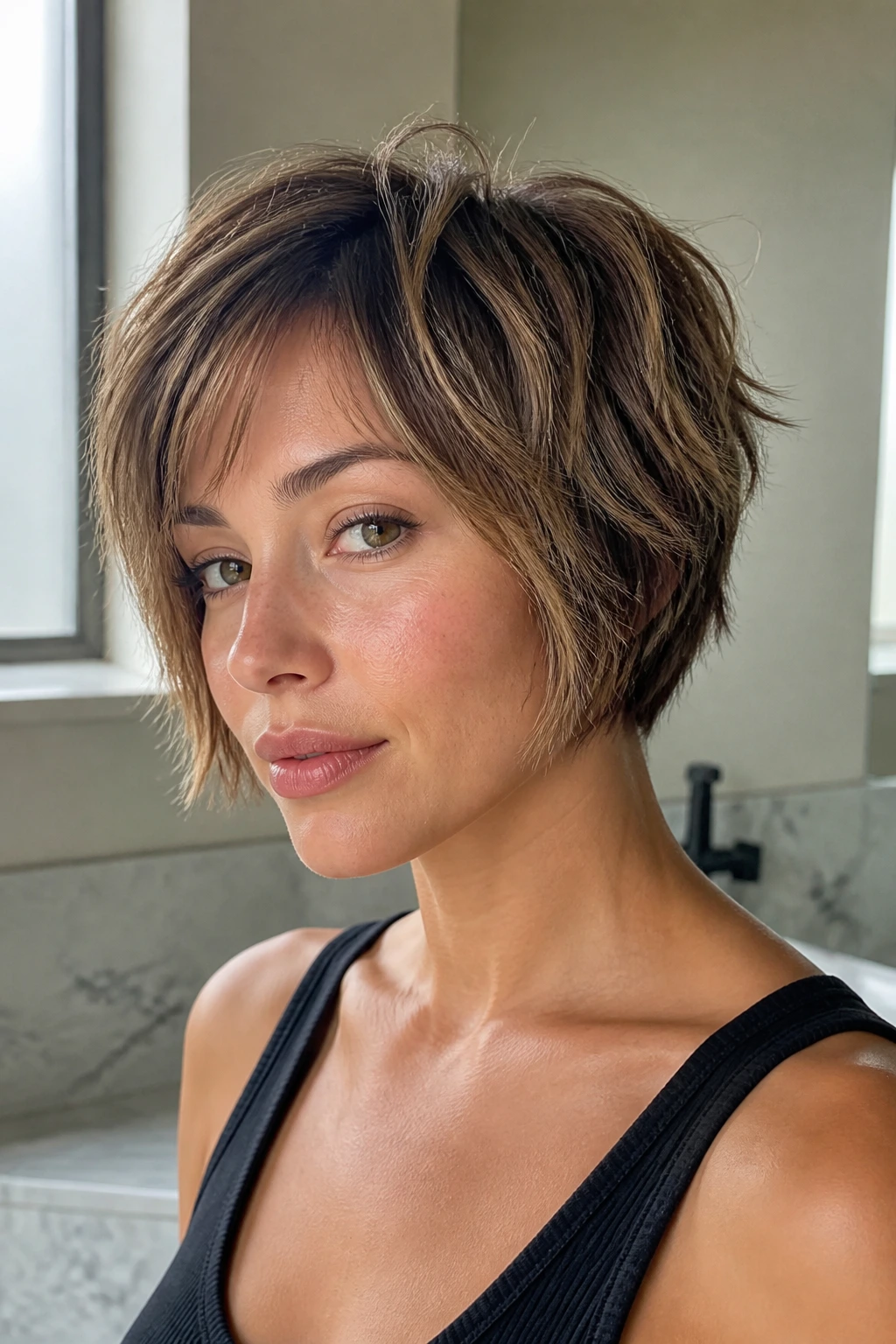
Razoring can be a mess on thin hair if the stylist gets enthusiastic. When it’s controlled, though, it gives straight strands a broken-up edge that looks modern instead of stiff. This cut is all about texture, but texture with a backbone.
The best version keeps the perimeter a little heavier and uses choppy detail through the top and sides. That keeps the hair from looking stringy. A pea-sized amount of matte paste is enough; too much product will make it feel sparse fast.
6. Micro-Banged Pixie Bob
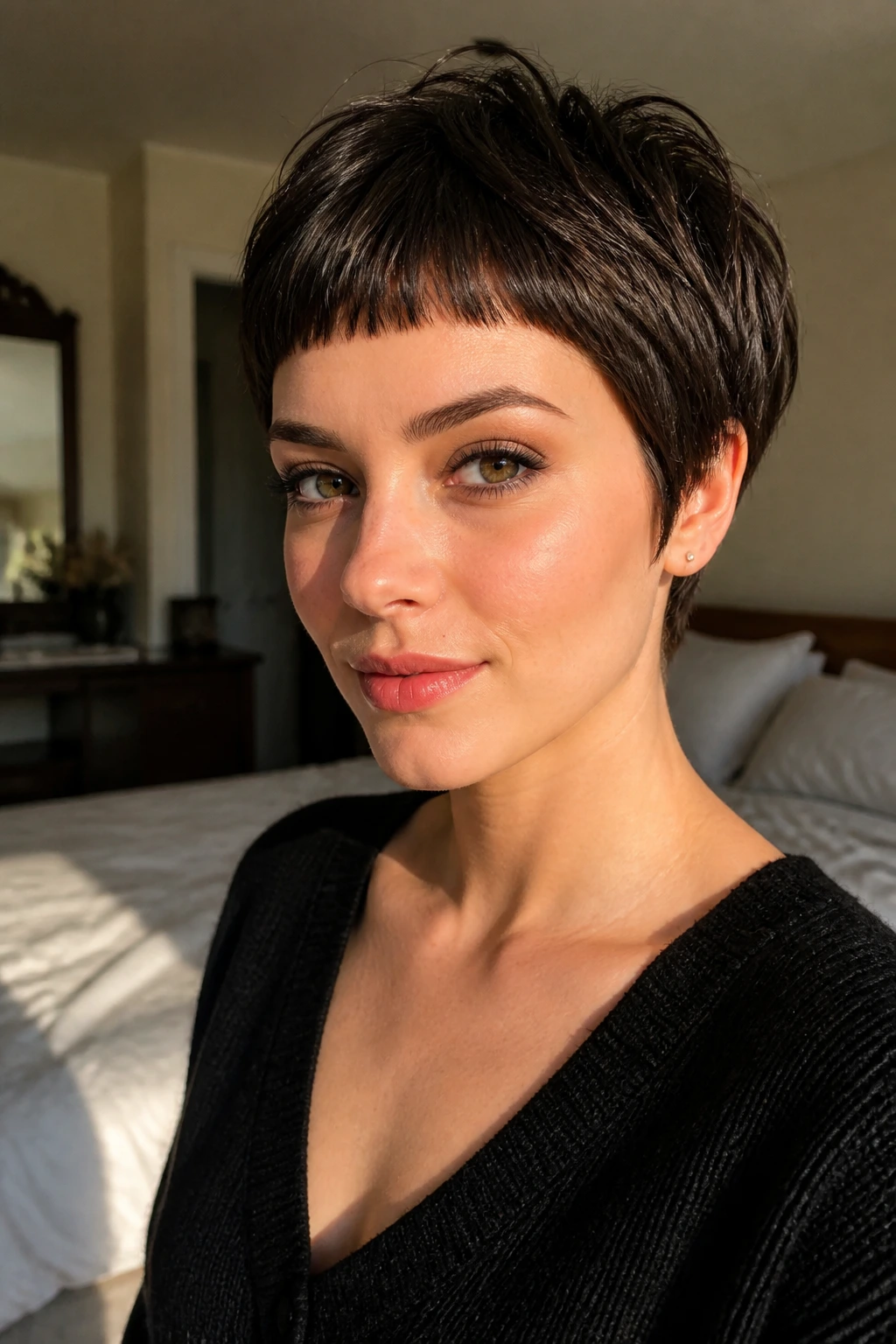
Short bangs change the whole mood of a pixie bob. They pull attention to the eyes, shorten the forehead visually, and leave the rest of the cut free to create volume through the crown and sides. On thin hair, that can be a smart trade.
The bang should sit just above the brows, crisp but not blunt in a harsh way. Keep the sides softer so the short front doesn’t feel abrupt. This works especially well if your hairline is delicate and you want a cut that reads confident, not fussy.
7. Long-Top, Short-Nape Pixie Bob
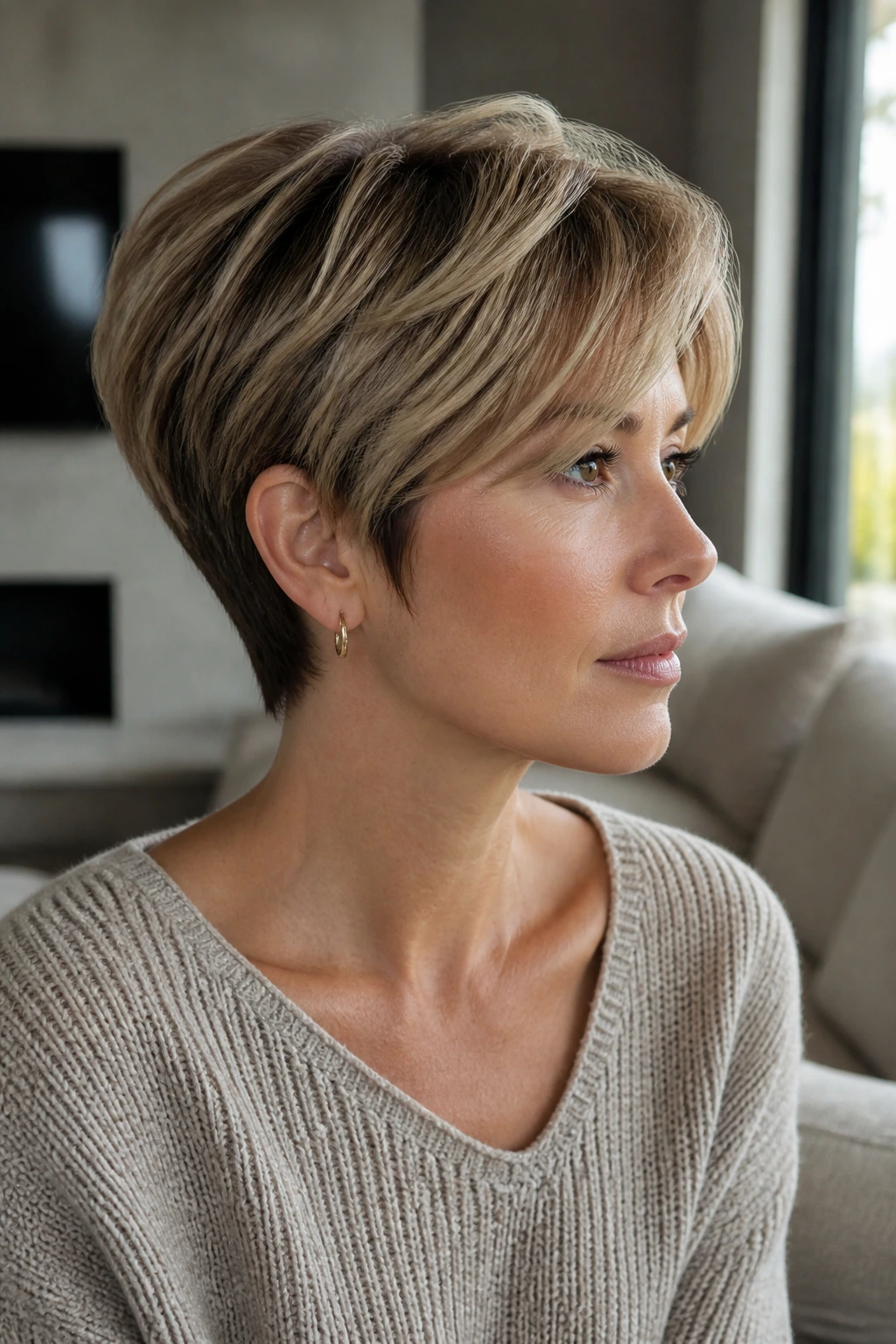
This is the shape I’d call the old reliable of pixie bobs for thin hair. The top stays longer so you have room to lift, bend, or sweep it, while the nape stays short and close so the neck area looks neat and compact. That contrast makes the top appear fuller by comparison.
The cut needs clean graduation through the back and restraint through the layers. Too many short pieces on top will make it fray. Keep the styling simple: a round brush, a root-lift spray, and one directional blow-dry.
8. Soft A-Line Pixie Bob
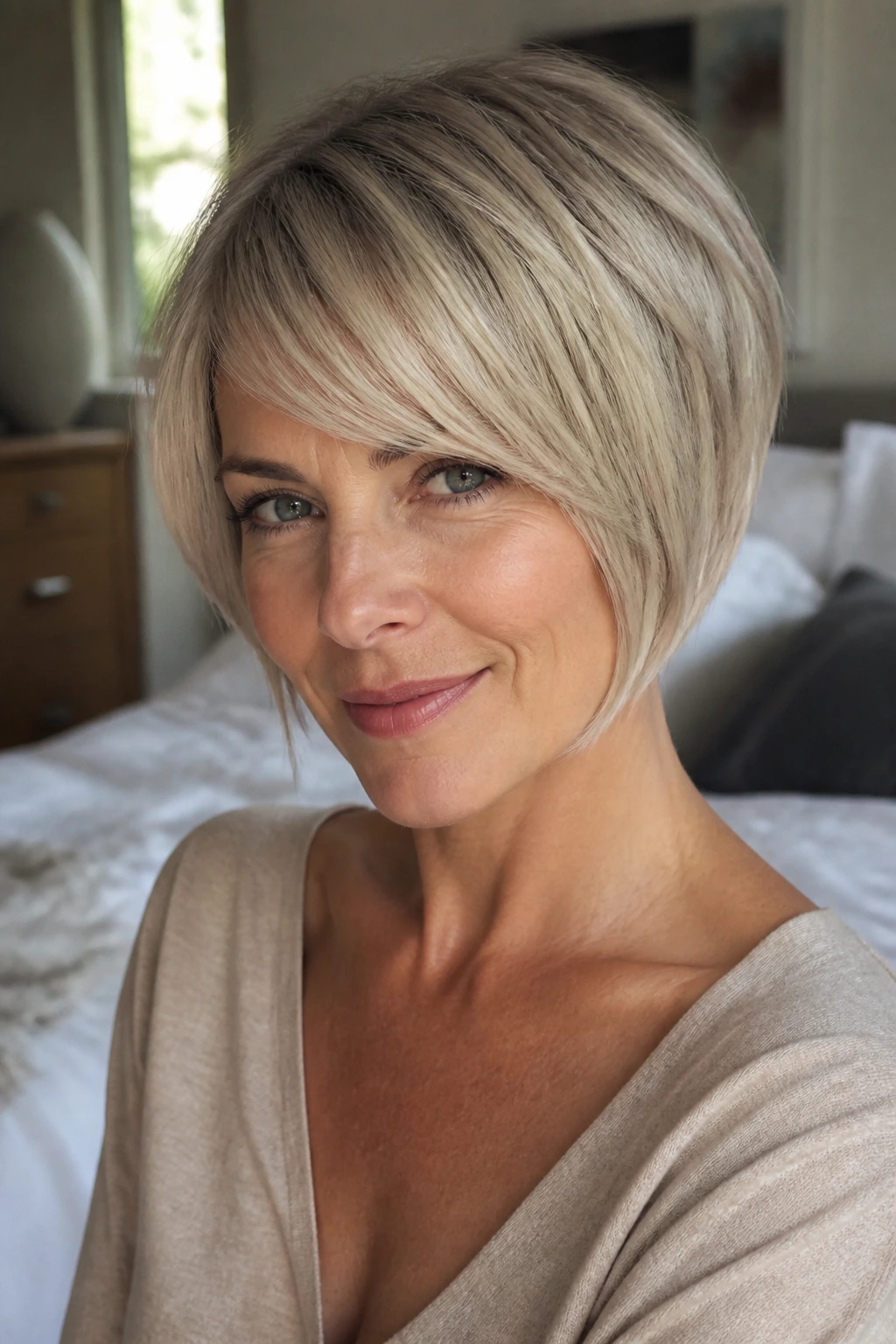
A slight A-line angle can do a lot for thin hair. Longer pieces in the front create the impression of body, while the shorter back keeps the shape lifted and tidy. It’s a good choice if you like the idea of a bob but don’t want to live with a chin-length curtain of hair.
The angle should be subtle. If it gets too steep, the front starts to drag the whole look down. I prefer this cut with a smooth finish and just a little bend at the ends, not a puffy round brush blowout.
9. Ear-Grazing Layered Pixie Bob

This one sits right at the line where short becomes wearable in a softer way. The length skims the ears, the layers are gentle, and the shape gives thin hair movement without slicing it apart. It’s a good middle ground if you don’t want a super cropped look.
The key is to keep the ends light but not wispy. A little movement around the cheekbone keeps the face open. If your hair is slightly wavy, this cut has a nice lazy bend after a quick air-dry and a touch of cream.
10. Curved-Under Pixie Bob
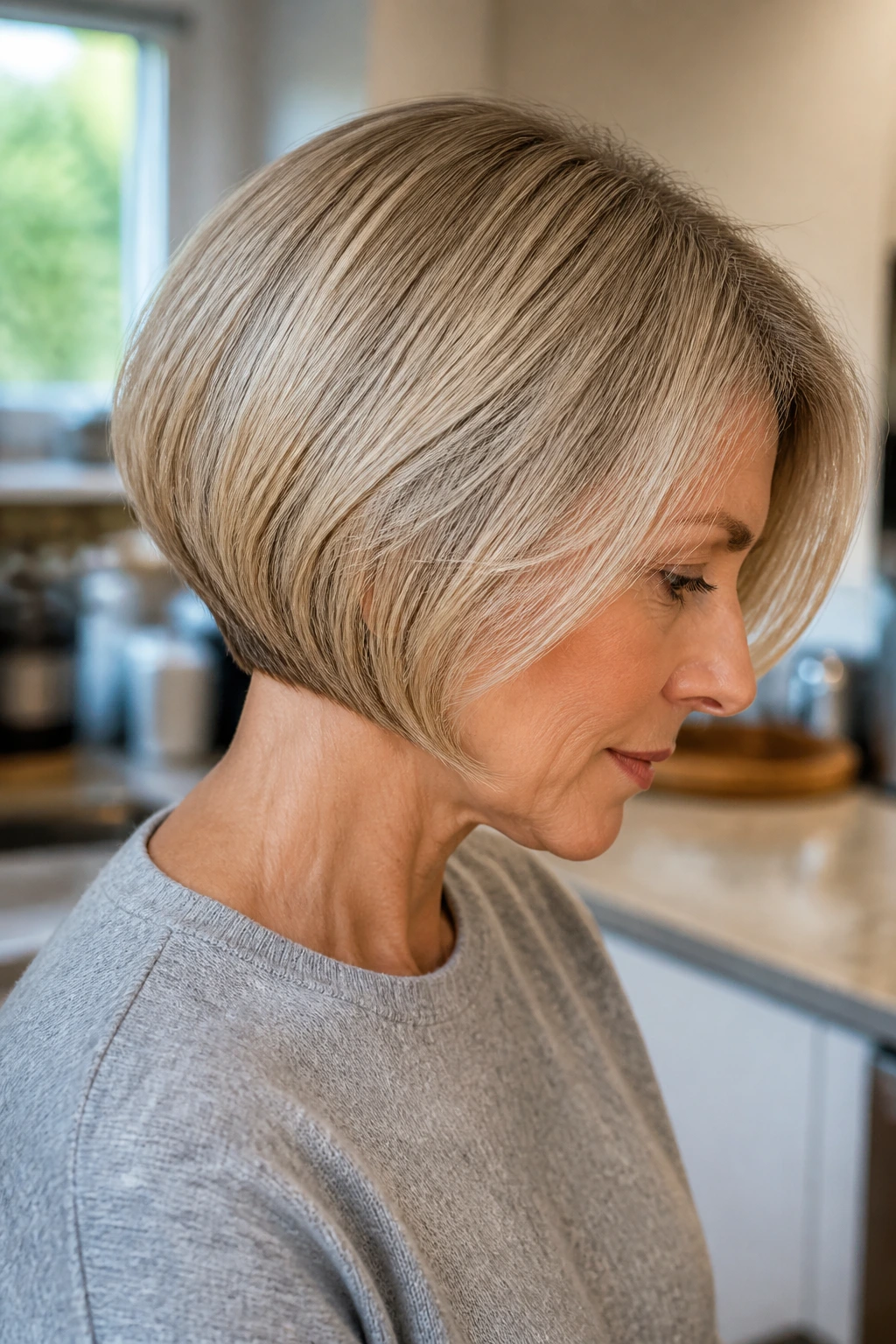
A curved-under finish can make thin hair look fuller in a very obvious, satisfying way. The ends fold inward, so the perimeter reads as one complete line instead of a bunch of separate strands. That matters when the hair is fine and prone to scattering.
A round brush and a blow dryer with a nozzle do most of the work here. Aim the airflow downward first, then roll the brush just at the ends to tuck them in. It looks polished without needing a lot of product, which is half the point.
11. Swept-Over Volume Pixie Bob
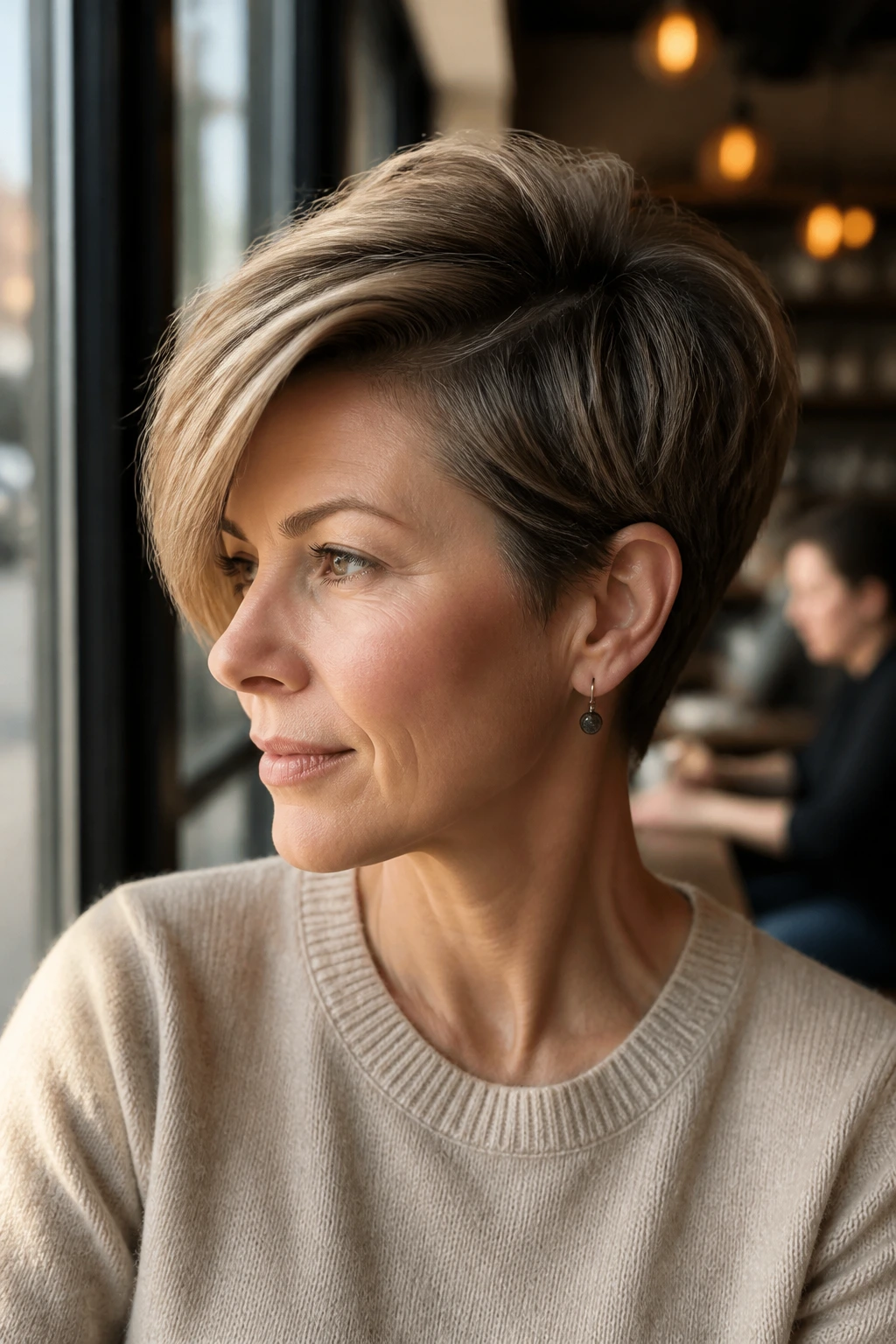
A swept-over top gives thin hair some attitude. The side is longer, the crown is lifted, and the whole silhouette leans a little to one direction, which creates instant shape. It’s the kind of cut that looks more intentional the moment you stop trying to make every strand behave.
Use a side part that lands farther over than you think. Then dry the roots in the opposite direction before sweeping the top back into place. That little trick matters more than another spray can ever will.
12. Shaggy Pixie Bob

A shaggy pixie bob can work on thin hair, but only if the layers are handled with restraint. The best version looks airy, not shredded. There’s movement in the ends, a bit of lift around the crown, and enough length left in the perimeter to keep the cut from collapsing.
This style suits someone who likes a slightly undone finish and doesn’t mind a touch of bend from the dryer or diffuser. A sea-salt spray can help, though I’d keep it light. Too much grit and the ends start looking tired.
13. Sleek Glassy Pixie Bob
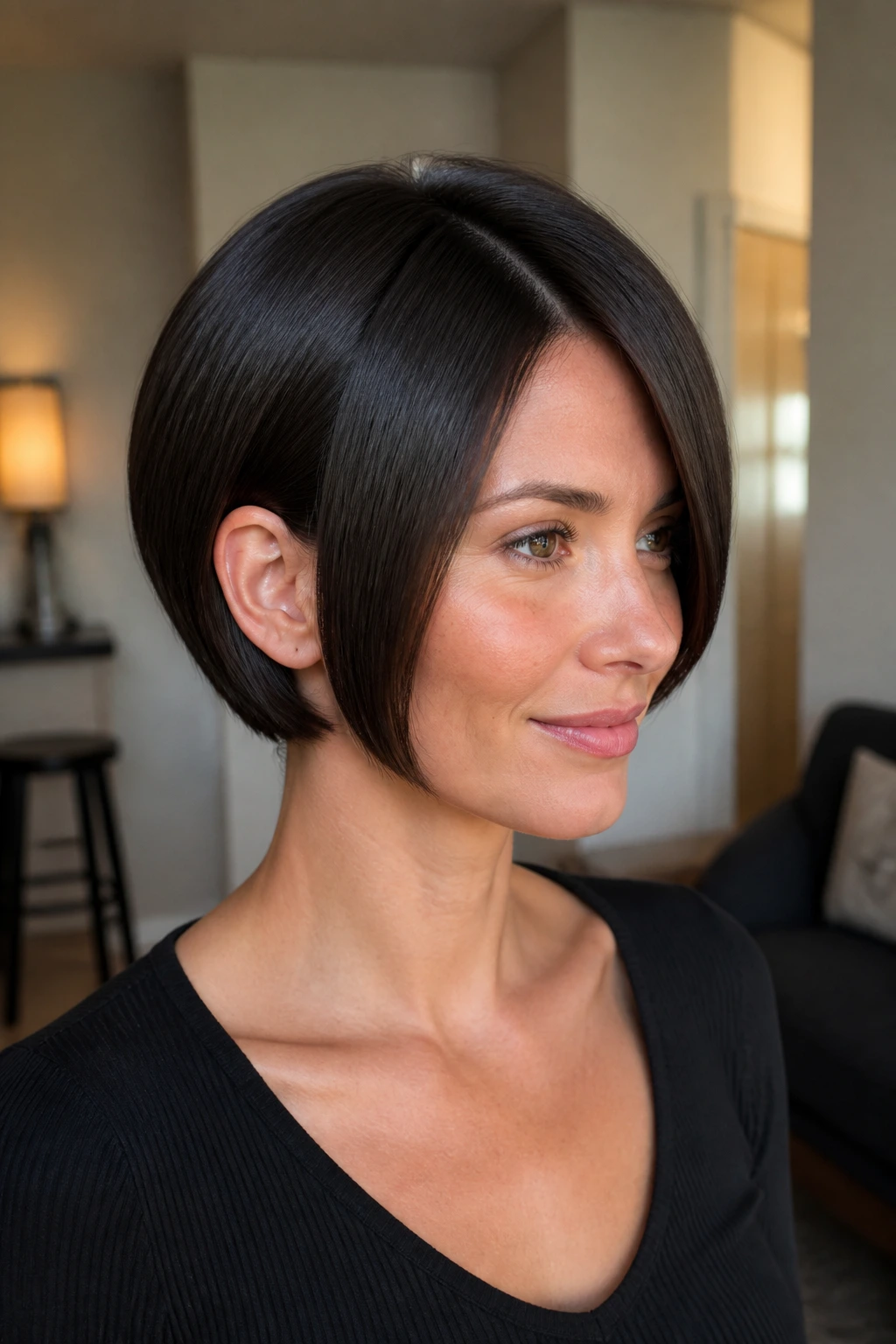
Not every thin-hair cut has to chase texture. Sometimes the cleanest move is a smooth, reflective finish with a sharp outline that makes the hair look healthier and denser than it is. The trick is to keep the layers minimal and the line strong.
This is the style for people who like a neat profile and don’t want to spend much time messing with the crown. A flat brush, a blow dryer, and a touch of serum on the ends are enough. The shine does a lot of the heavy lifting.
14. Piecey Textured Pixie Bob
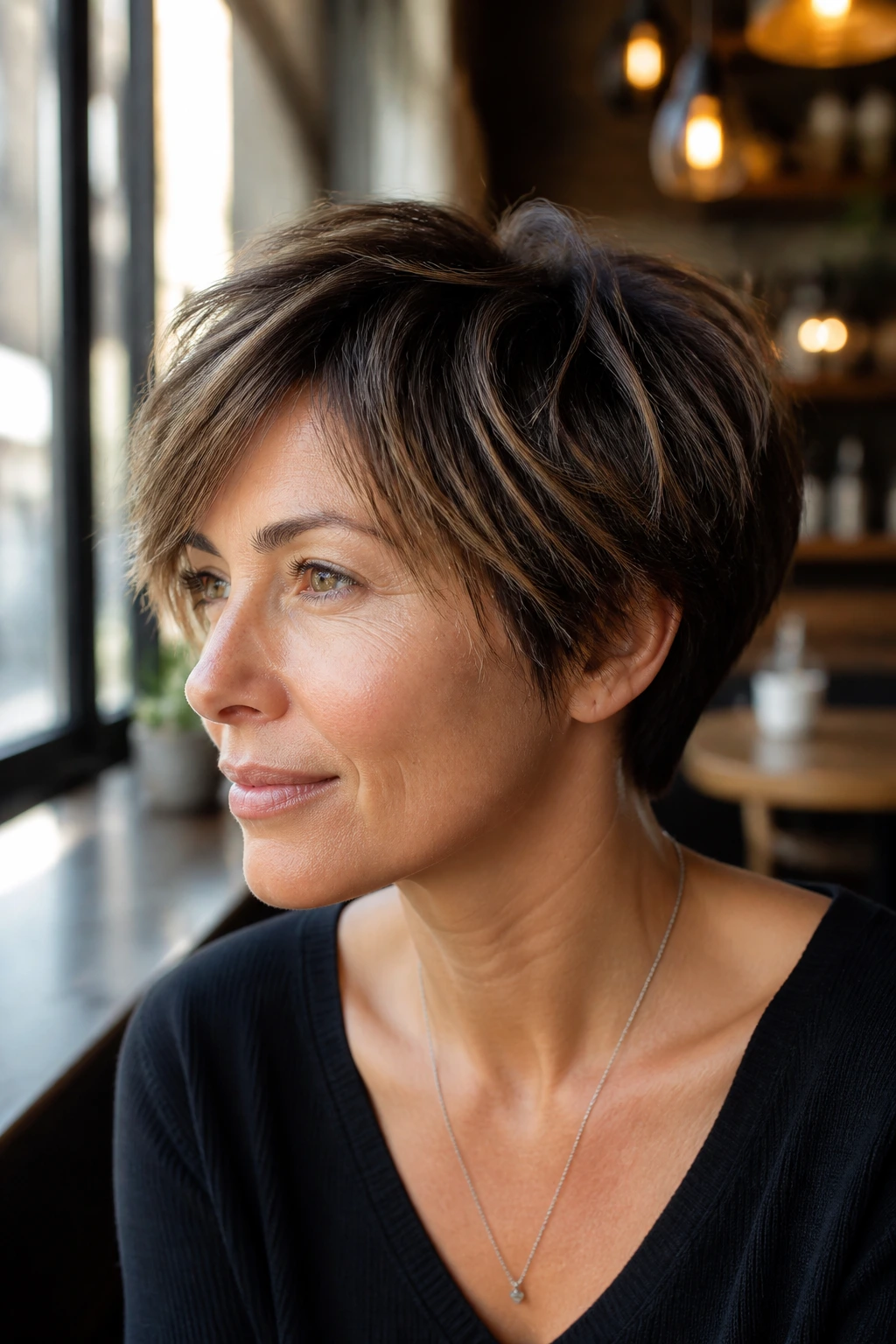
Piecey texture is useful when your hair needs separation, not puff. Instead of broad volume, you get little defined sections that make the hair look fuller because the eye keeps moving across the surface. That’s a smart trick for very fine strands.
The cut should still have a clear outline underneath all that texture. Then you can pinch a few top pieces with wax or paste after drying. Keep your hands off the back. If you overwork it, the style turns into fuzz.
15. Deep Side-Part Lift Pixie Bob
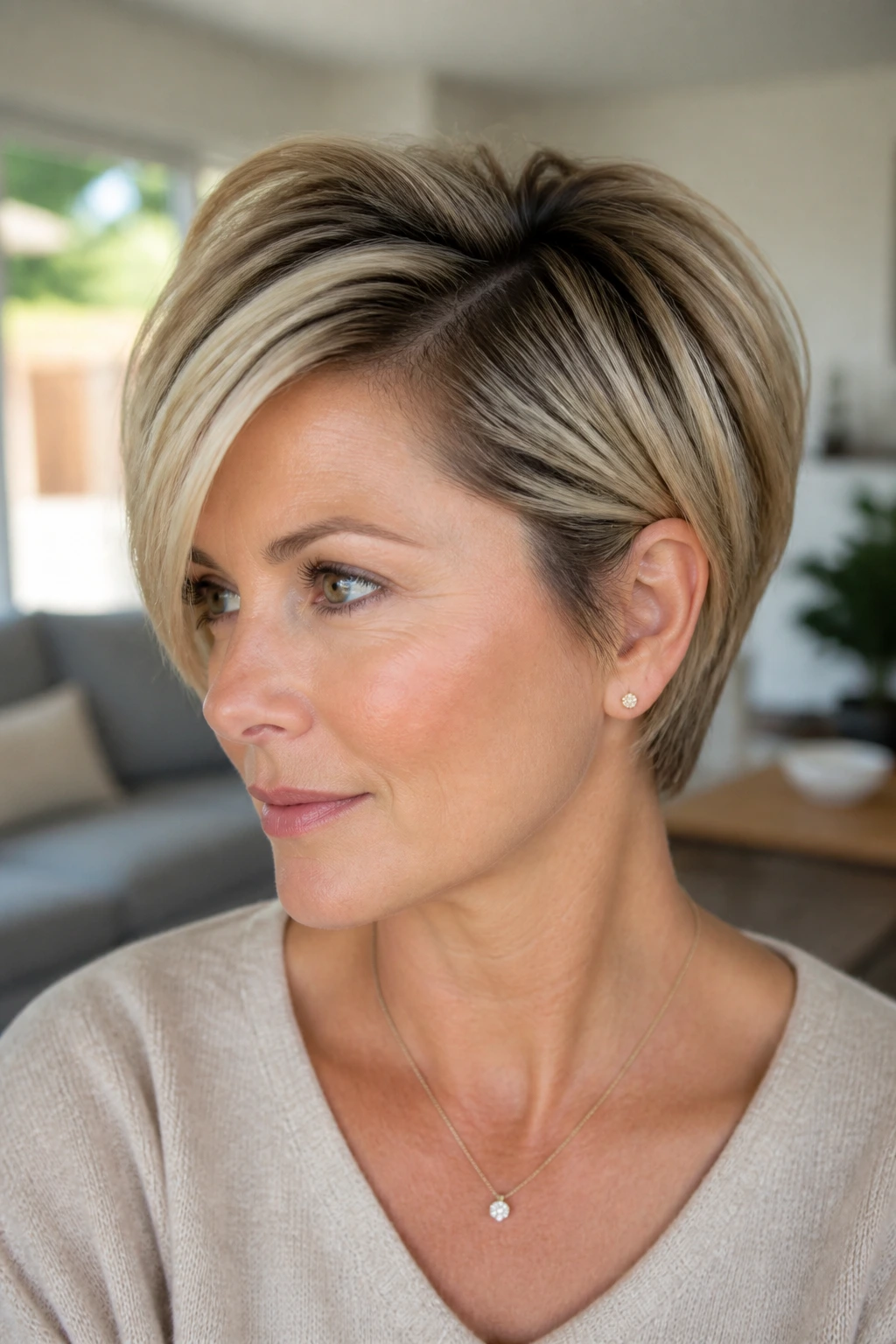
A deep side part can save a flat crown faster than most people expect. It changes the direction of the root, gives one side more lift, and creates an immediate sense of fullness where there wasn’t much before. Thin hair loves the illusion.
This cut usually looks best with a slightly longer fringe and a compact nape. Dry the parting area first, while the roots are still damp, and clip the lifted side until it cools. That one habit makes the shape hold much better.
16. Hidden-Undercut Pixie Bob
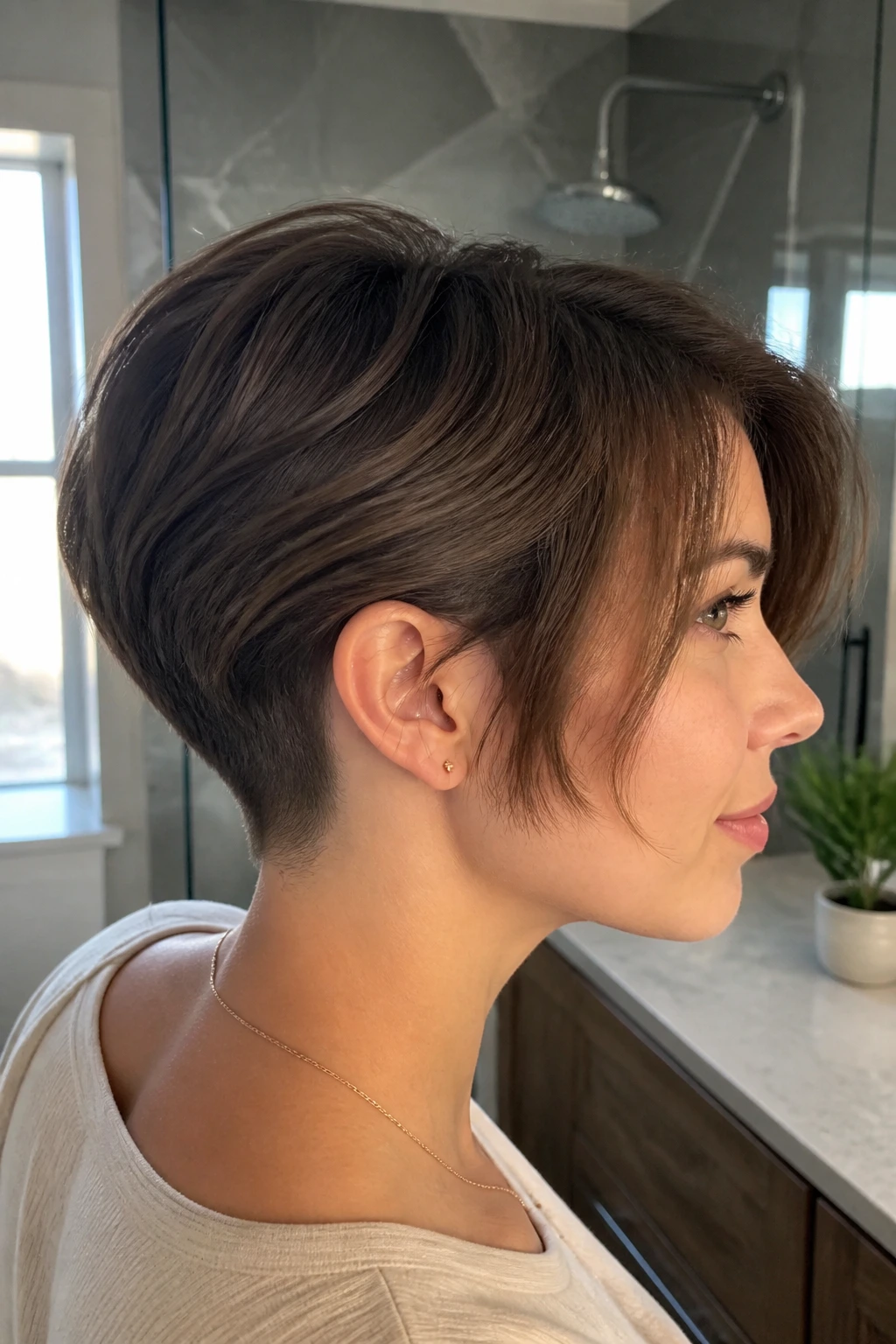
A hidden undercut is a smart fix if the underside of your hair is bulky but the top is fine. Removing a little weight underneath lets the top sit better and can stop the cut from mushrooming out at the sides. You keep the softness on top and the clean line beneath.
This isn’t a shouty undercut. It hides well unless you lift the hair, which makes it feel more wearable. If your hair grows in thick at the nape or around the ears, this can make daily styling a lot easier.
17. Wispy Curtain-Bang Pixie Bob
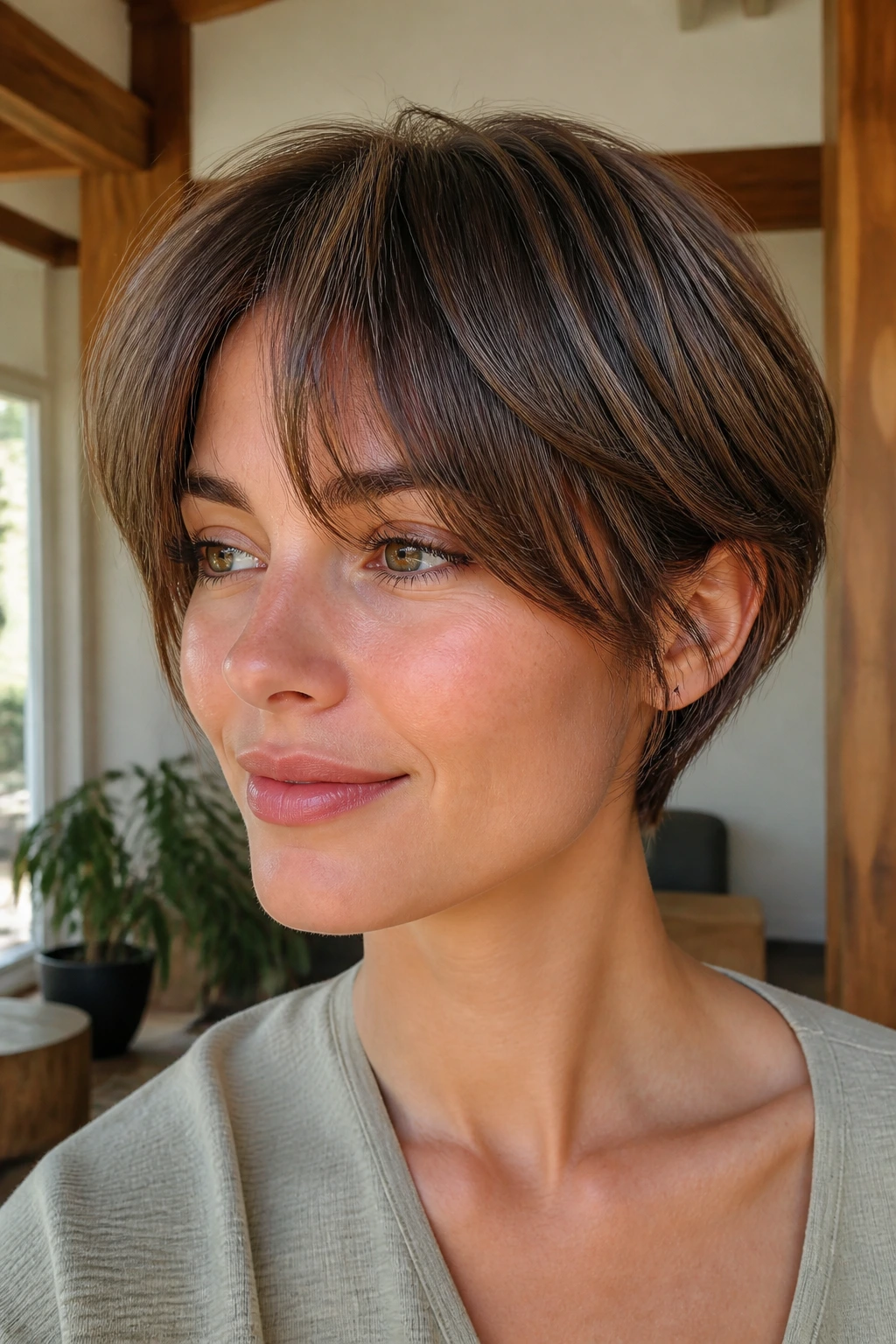
Curtain bangs can be a gift for thin hair when they’re soft and slightly separated. They frame the face, create a fuller look at the front, and blend into the sides so the whole cut feels connected. The best ones are not too blunt.
I’d keep the center a bit shorter and let the edges graze the cheekbones. That gives you a gentle opening around the eyes without eating up too much density. A small round brush is enough to give the bangs their bend.
18. Rounded Halo Pixie Bob
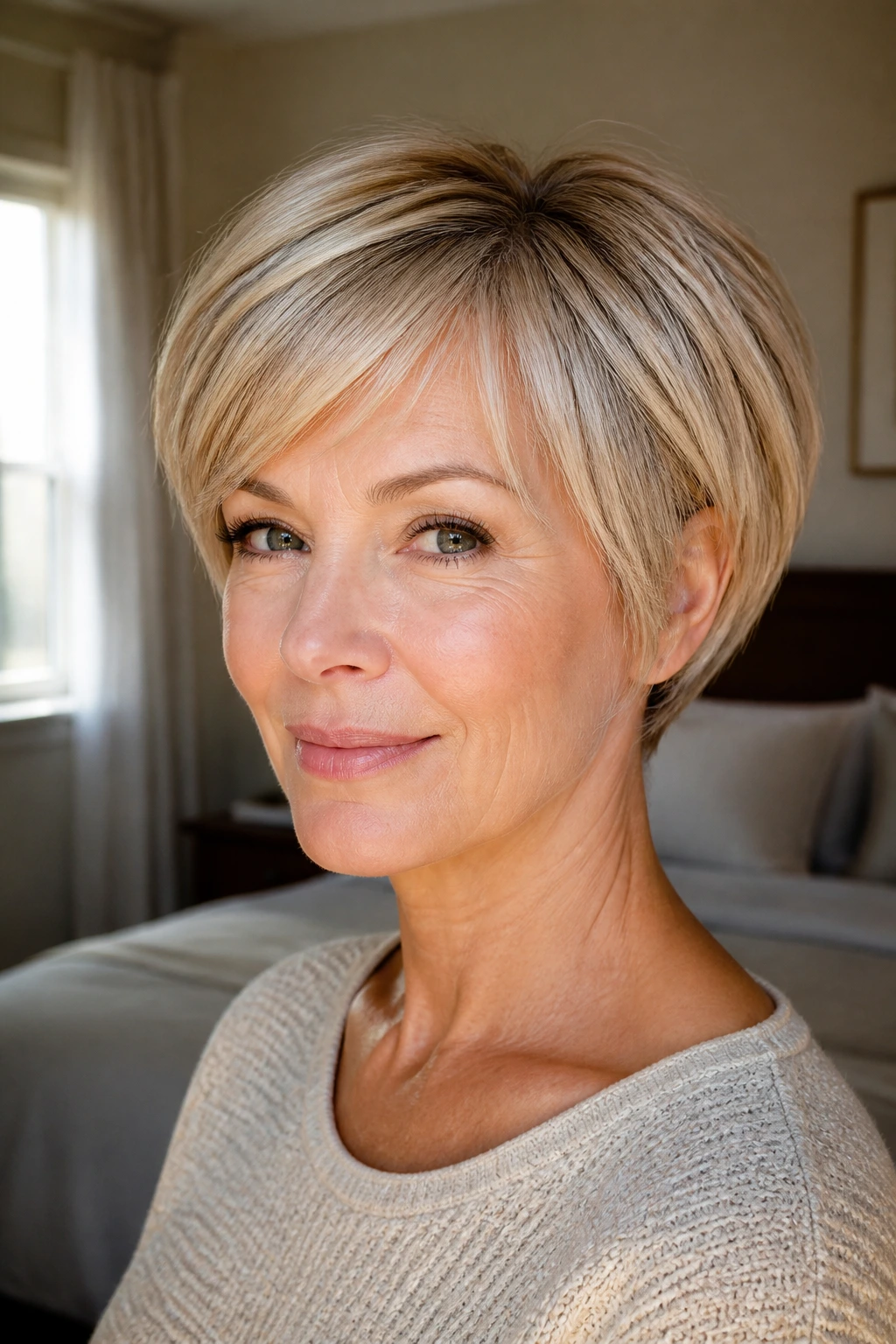
A rounded halo shape gives thin hair a more even-looking silhouette from every angle. Instead of a flat top and stretched sides, you get a soft curve that follows the head and creates a sense of body all the way around. It’s subtle, but it works.
This version is good for hair that tends to puff at the ends and collapse at the crown. The cut should be balanced, not bulky. Think smooth, controlled, and slightly polished. A good gloss or light serum helps the surface stay neat.
19. Tousled Bedhead Pixie Bob
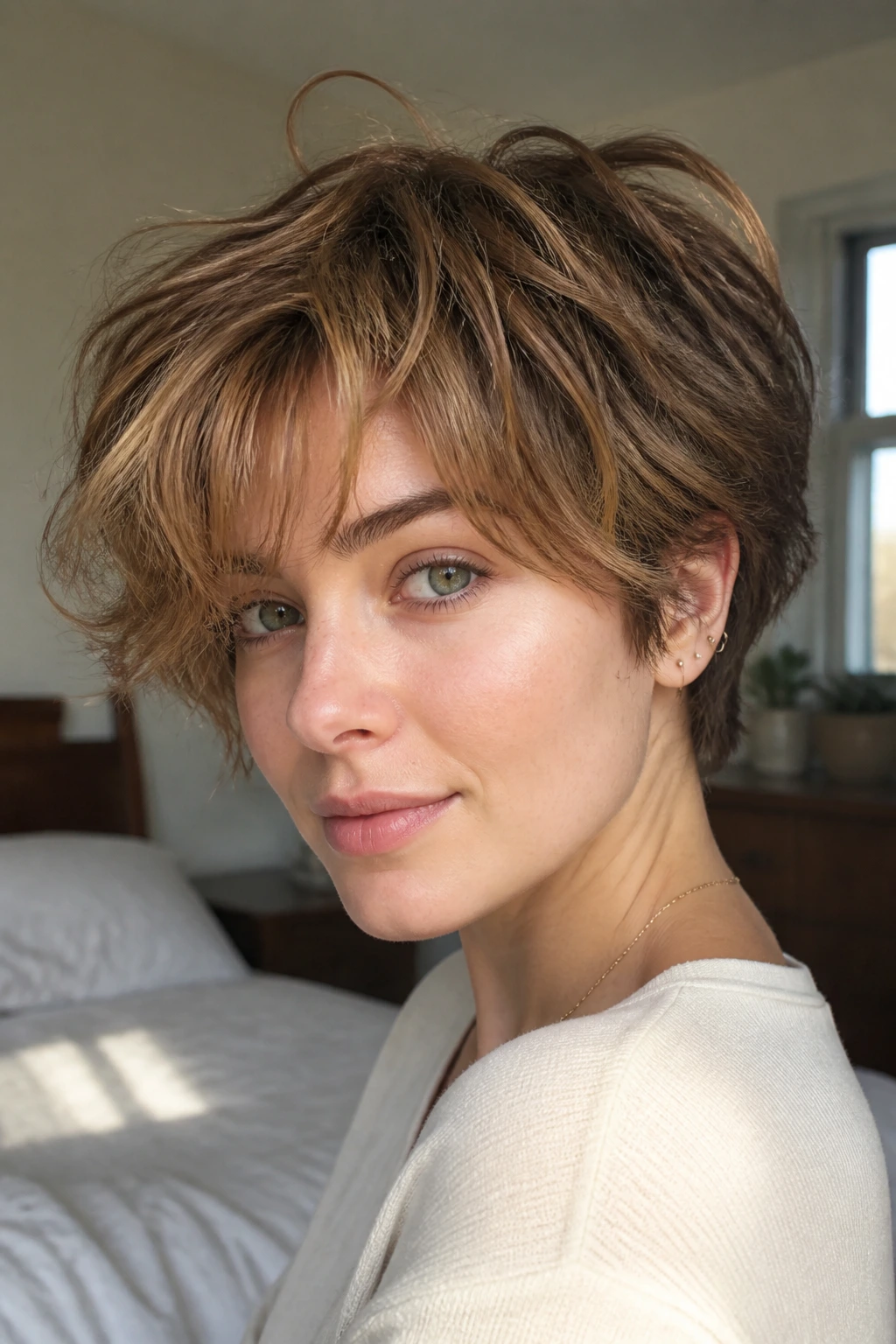
Tousled hair sounds easy, but the good version is deliberate. On thin hair, that means a cut with enough internal movement to look casual without exposing too much scalp between the pieces. You want lift, bend, and a little chaos—not random frizz.
This style shines when your hair has a mild wave or bends easily with heat. Scrunch in a little mousse, rough-dry the roots, and leave the ends soft. If you like waking up and going, this one makes sense.
20. Layered Pixie Bob with Tapered Sides
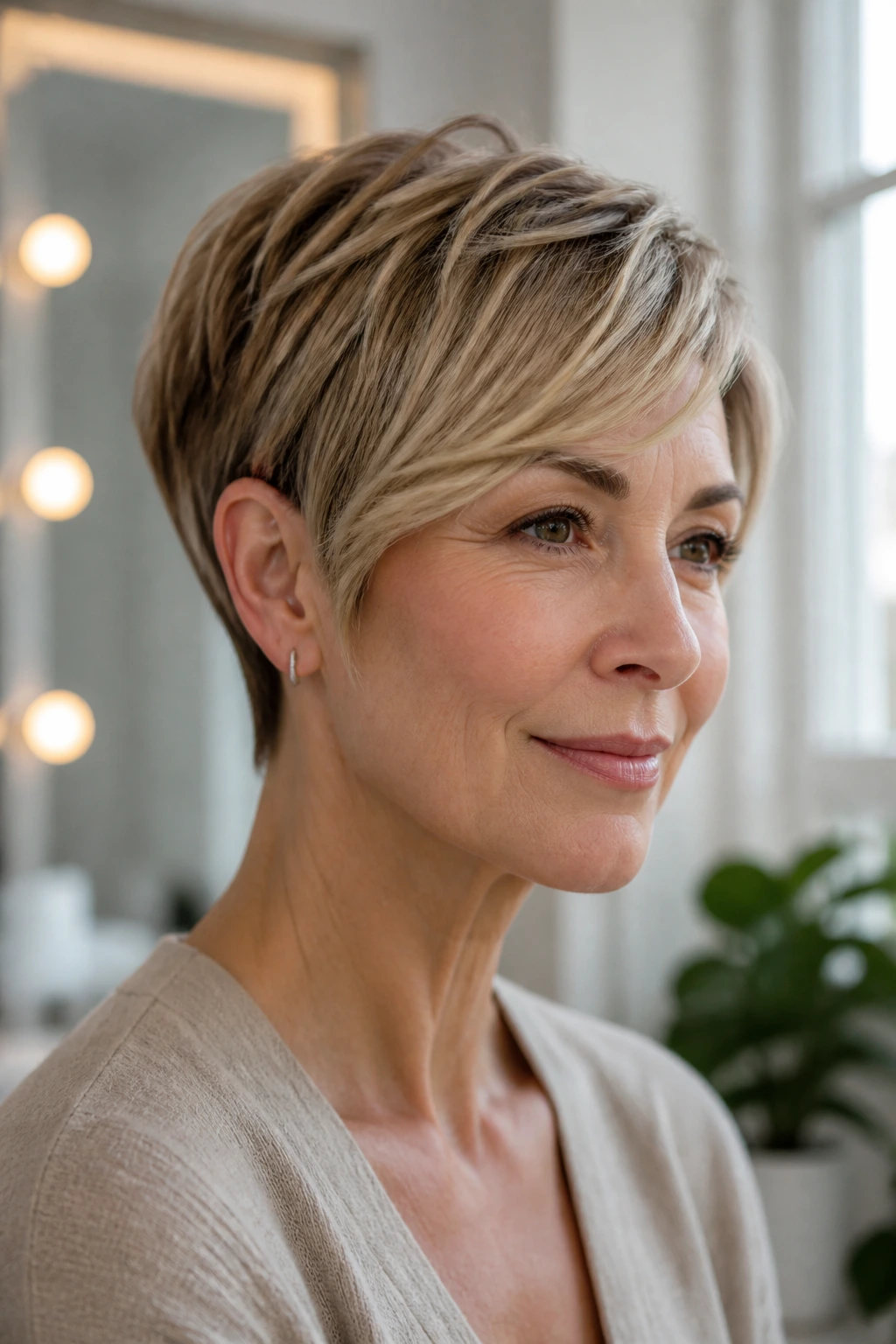
Tapered sides keep the cut from spreading out too far, which is a real problem on fine hair. The top stays a bit fuller, the sides stay close, and the face gets a cleaner frame. That balance makes the whole haircut look more expensive than it needs to be.
The taper should be smooth, not shaved-looking. A soft bend at the front keeps the cut from feeling harsh. If your cheeks or jawline are the features you want to show, this shape does that neatly.
21. Chin-Length Pixie Bob
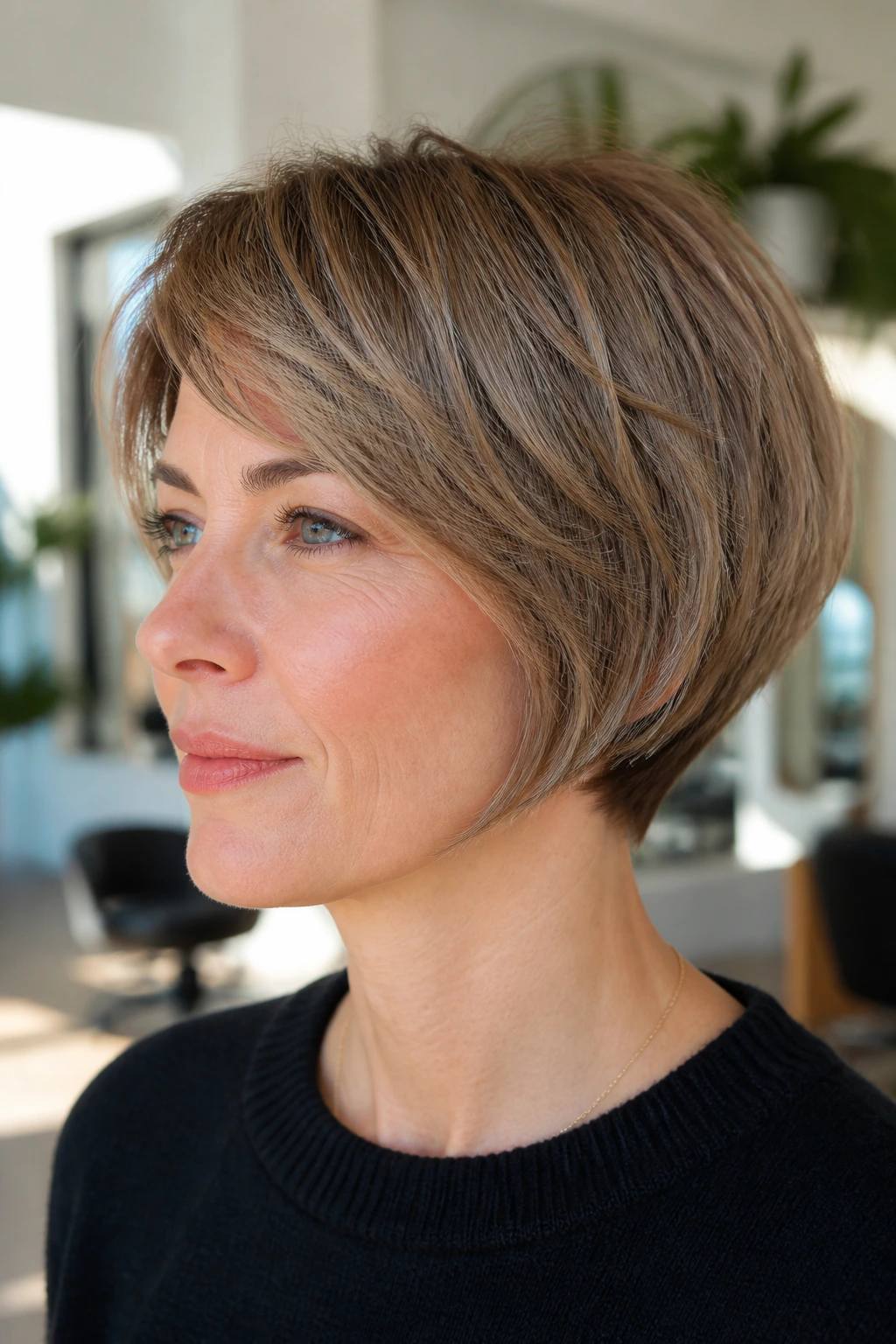
Pushing the length down to the chin gives thin hair more swing. There’s enough hair to move when you turn your head, but not so much that the weight drags the shape flat. It’s one of the more forgiving pixie bob lengths.
The cut needs a clean lower line and light layers near the crown. That keeps the top from collapsing into the longer front pieces. This is a good choice if you’re growing out a shorter crop and don’t want the in-between stage to look awkward.
22. French-Girl Pixie Bob
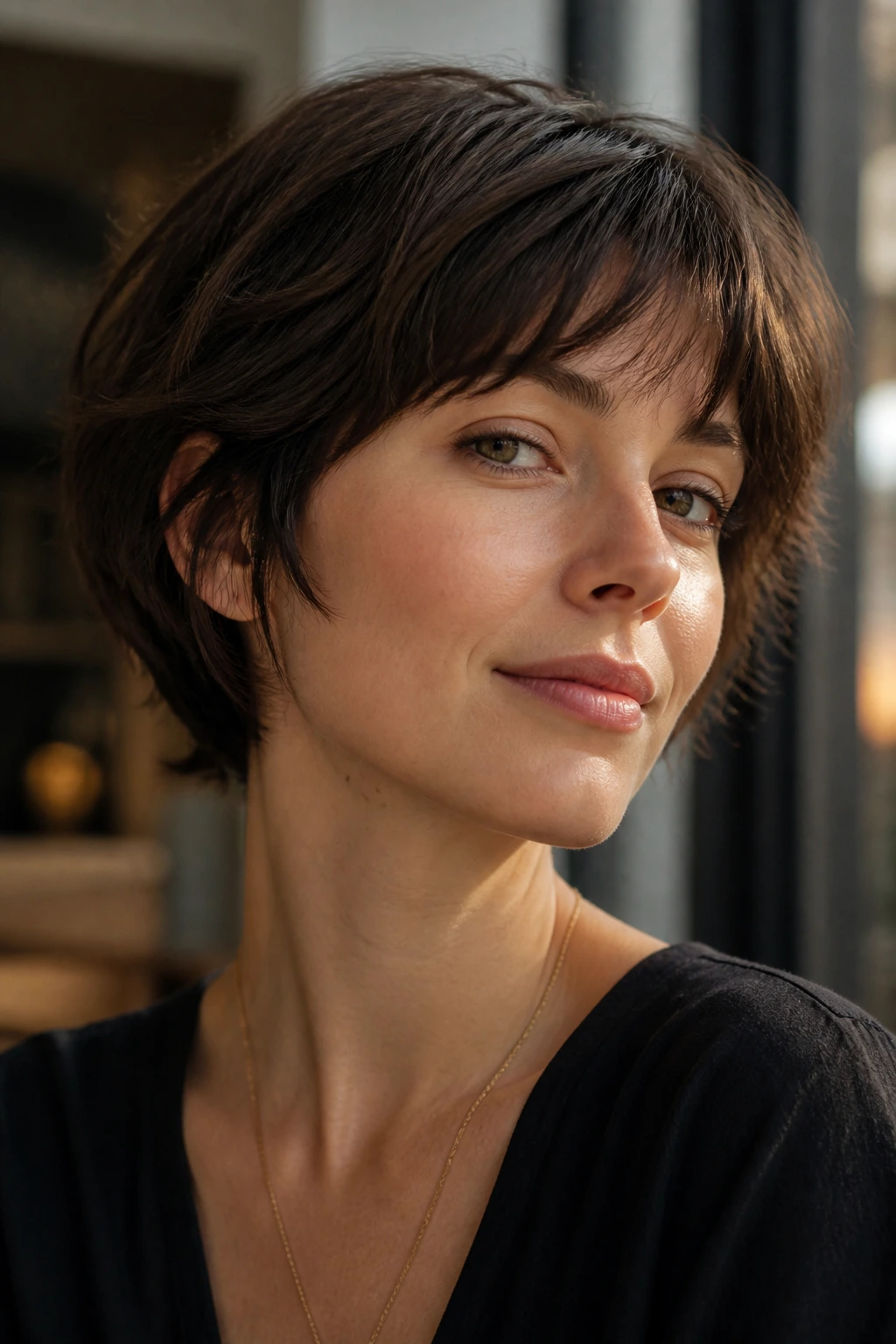
The French-girl version is soft, slightly tousled, and never overworked. It usually has a light fringe, a bit of movement around the cheekbones, and ends that bend instead of sitting stiff. Thin hair often does better in this mode than in anything over-structured.
The charm comes from restraint. You don’t want too many products, too much brushing, or too much perfection. A light cream, a finger-dry finish, and a little separation at the front are enough.
23. Brushed-Forward Pixie Bob
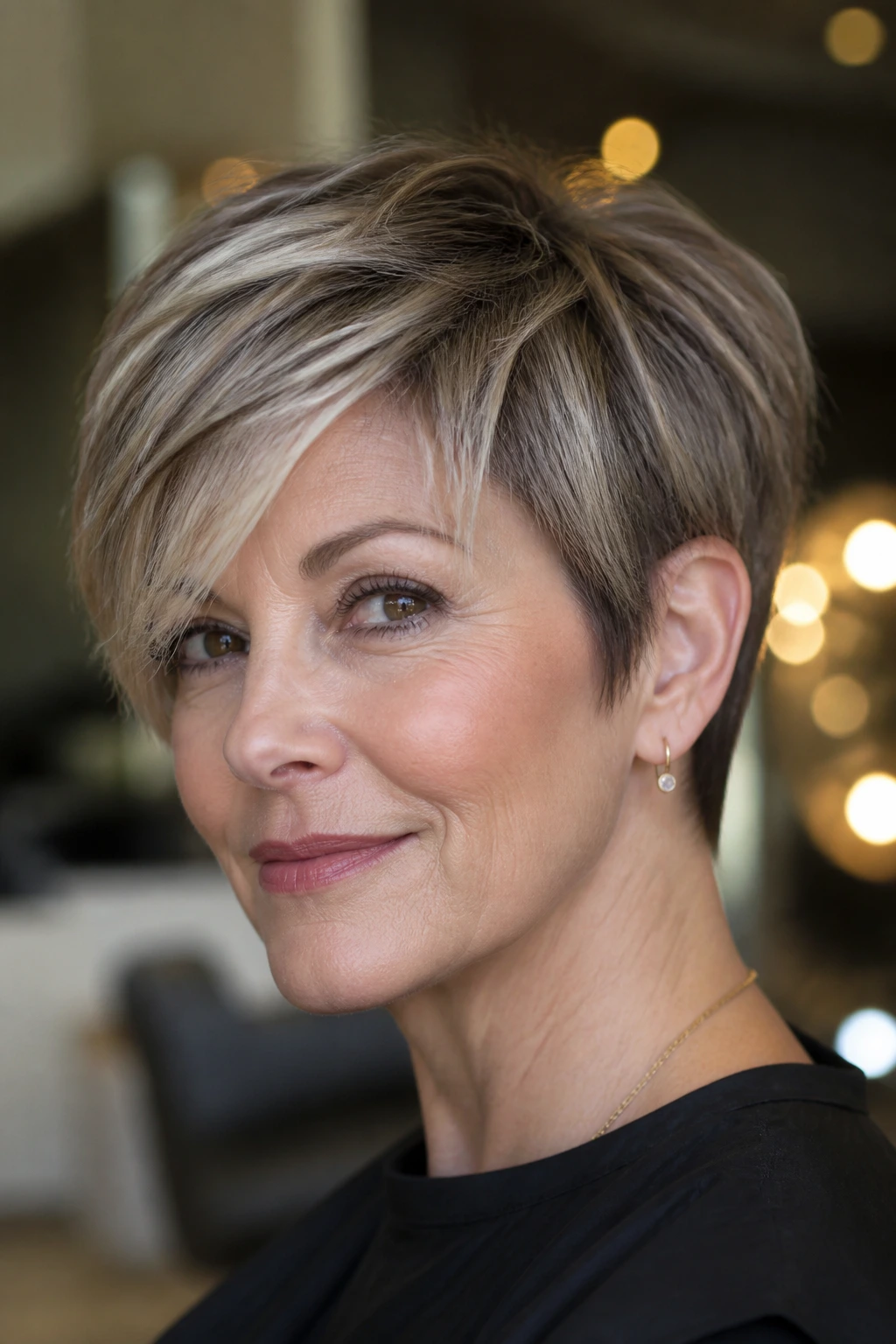
Brushing the hair forward does something useful for thin hair: it puts the visual weight where the eye expects density. The front looks fuller, the crown looks intentional, and the overall shape feels more grounded. It’s a good trick if the back of your head is flatter than you’d like.
This cut works best with a short nape and a slightly longer top that can fall forward without covering the eyes. Dry the roots forward first, then lift and redirect at the very end. That’s the part people skip.
24. Flippy-Ends Pixie Bob

A little flip at the ends gives thin hair movement that doesn’t rely on volume alone. The silhouette feels lively, and the hair reads as thicker because the ends are doing something distinct instead of lying in one flat line. It’s a small detail with a big visual payoff.
The flip can be outward, slightly under, or mixed—just keep it controlled. A flat iron or round brush can create it in seconds. This is a nice choice if you want a cut that feels playful without looking childish.
25. Graduated Pixie Bob
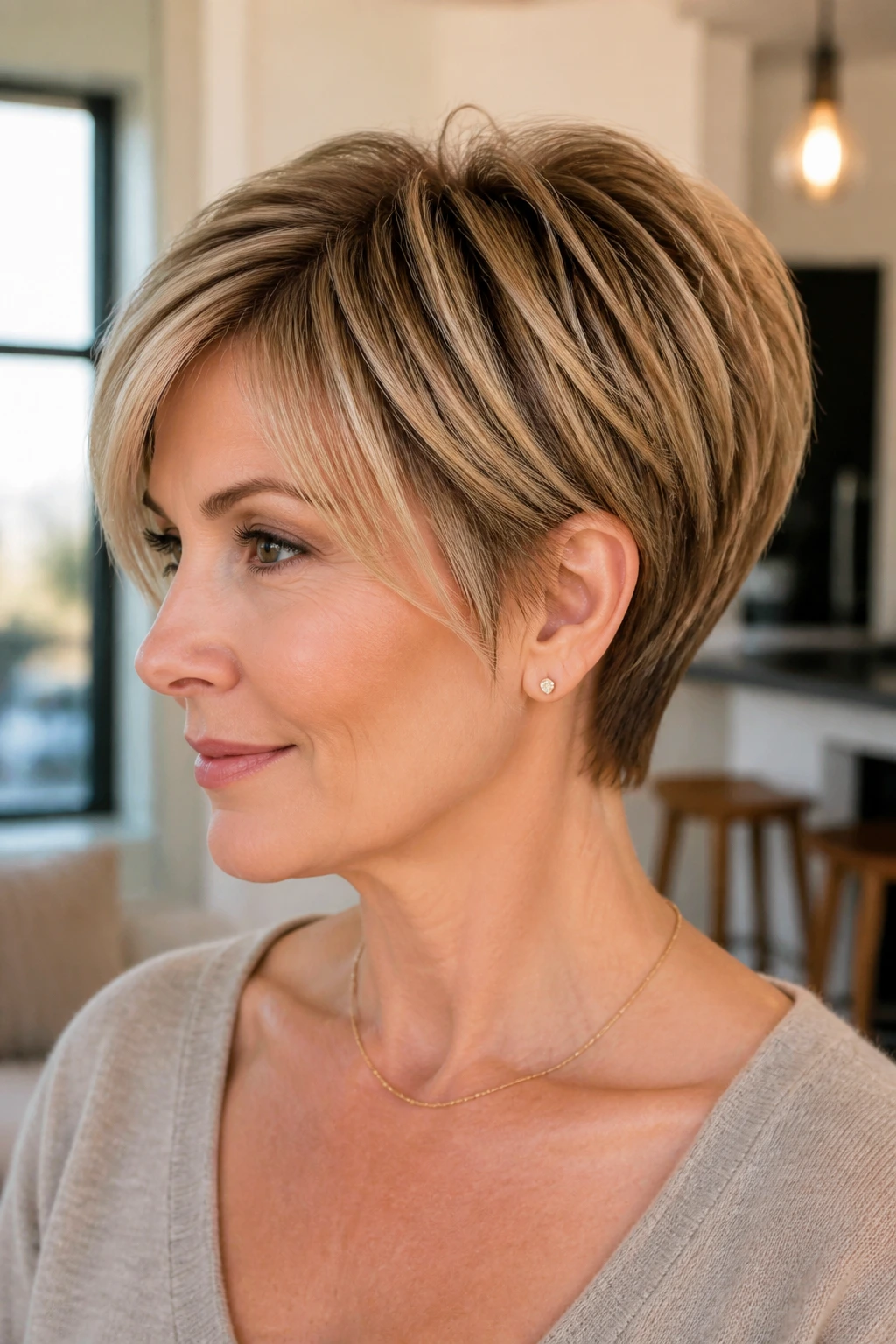
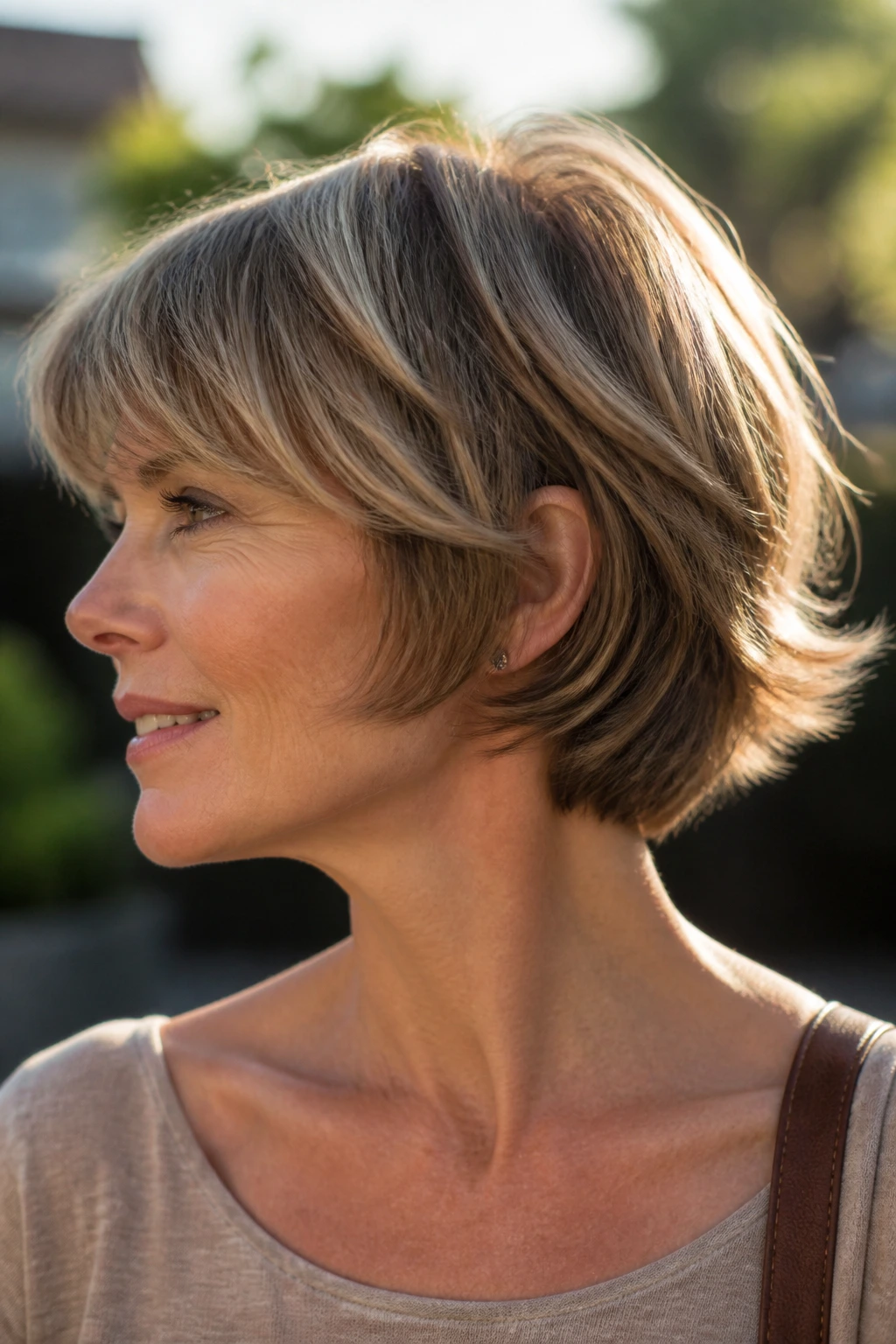
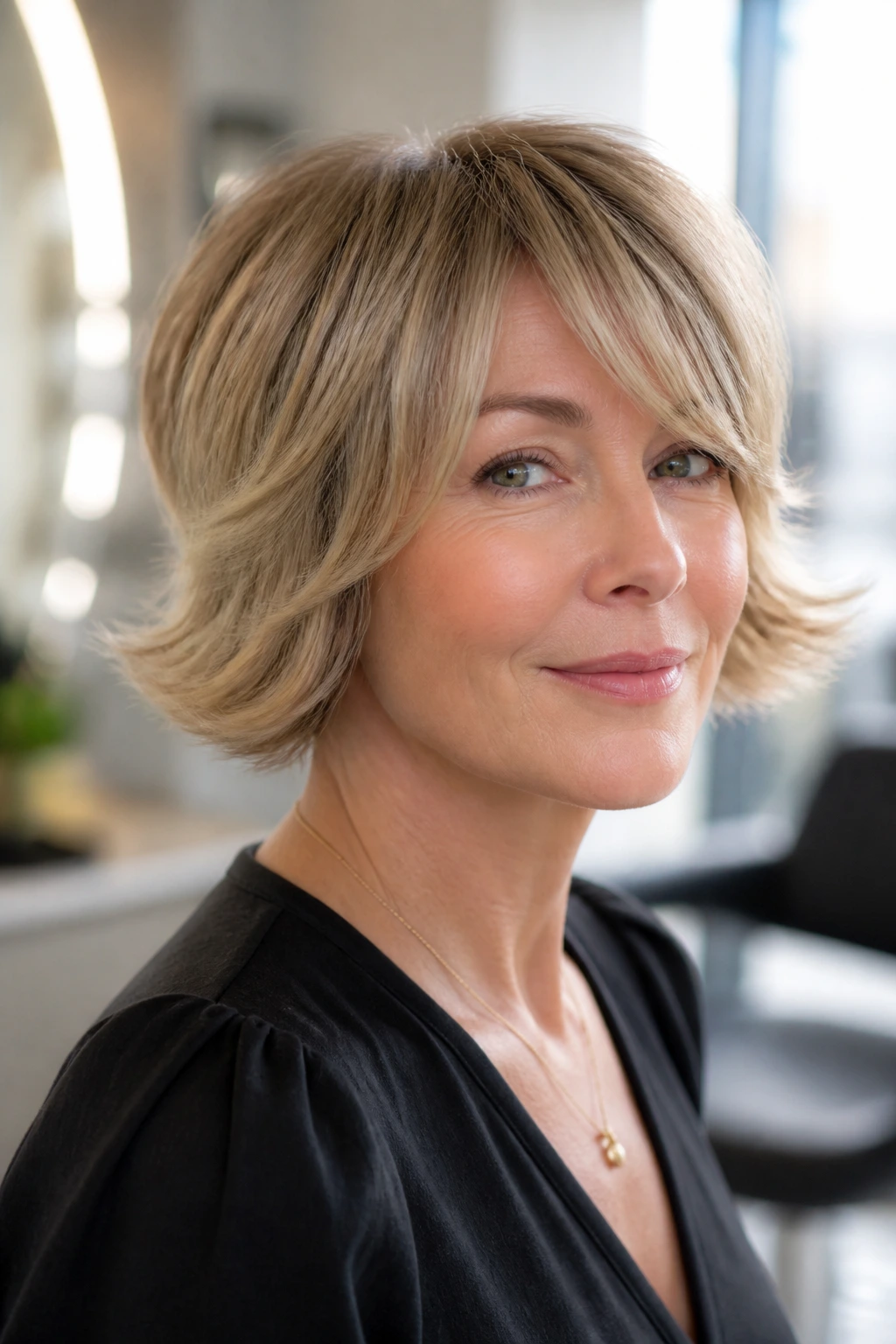
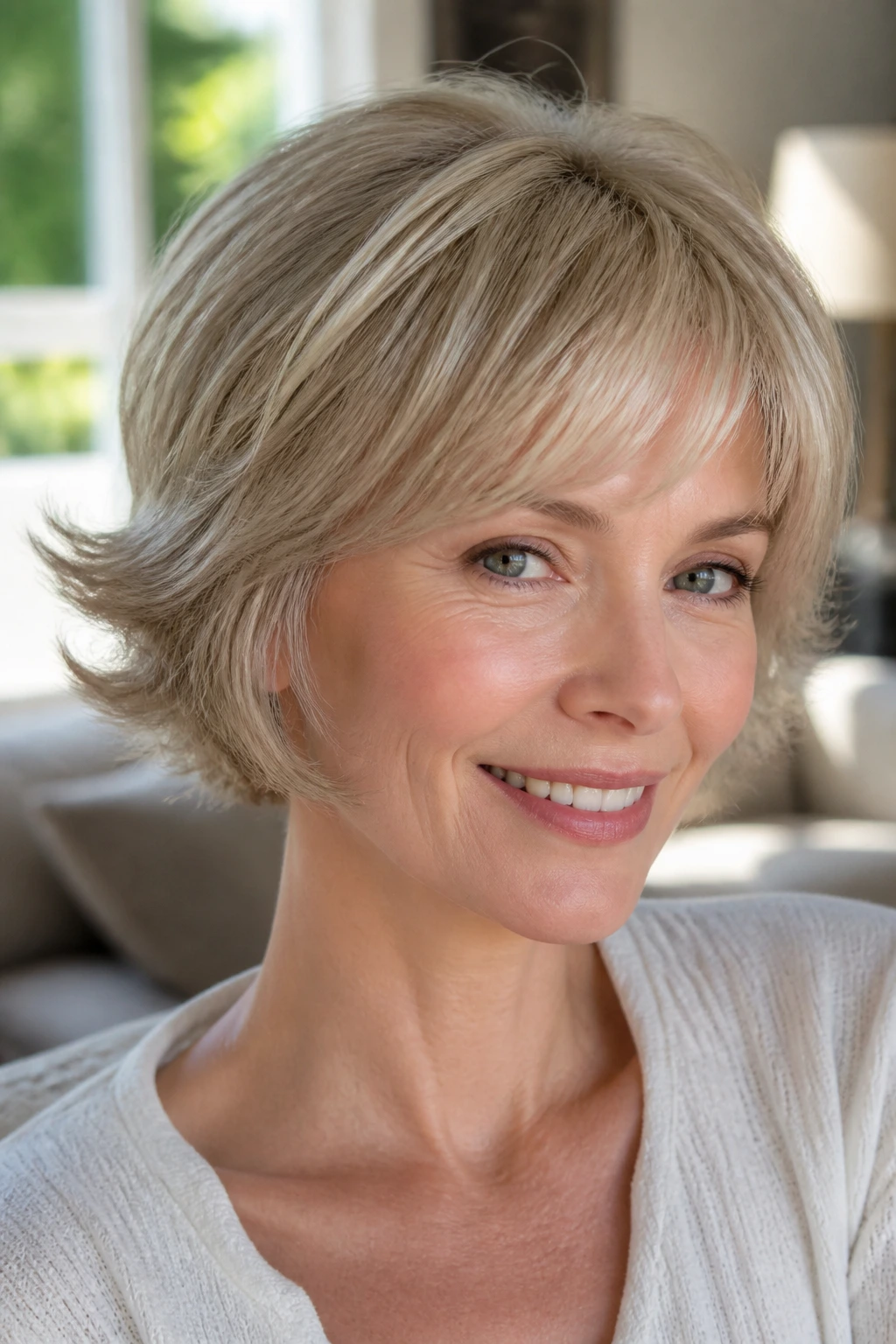
Graduation in the back is the classic answer when thin hair needs shape more than length. The layers build on each other, so the nape gets compact and the crown gets a lift that feels built in. There’s a reason this cut keeps showing up in salons.
It does best with clean lines and regular trims. If the stack grows out too much, the shape loses its bite. Keep the sides soft and the back precise, and it stays tidy without feeling rigid.
26. Soft Mullet-Leaning Pixie Bob
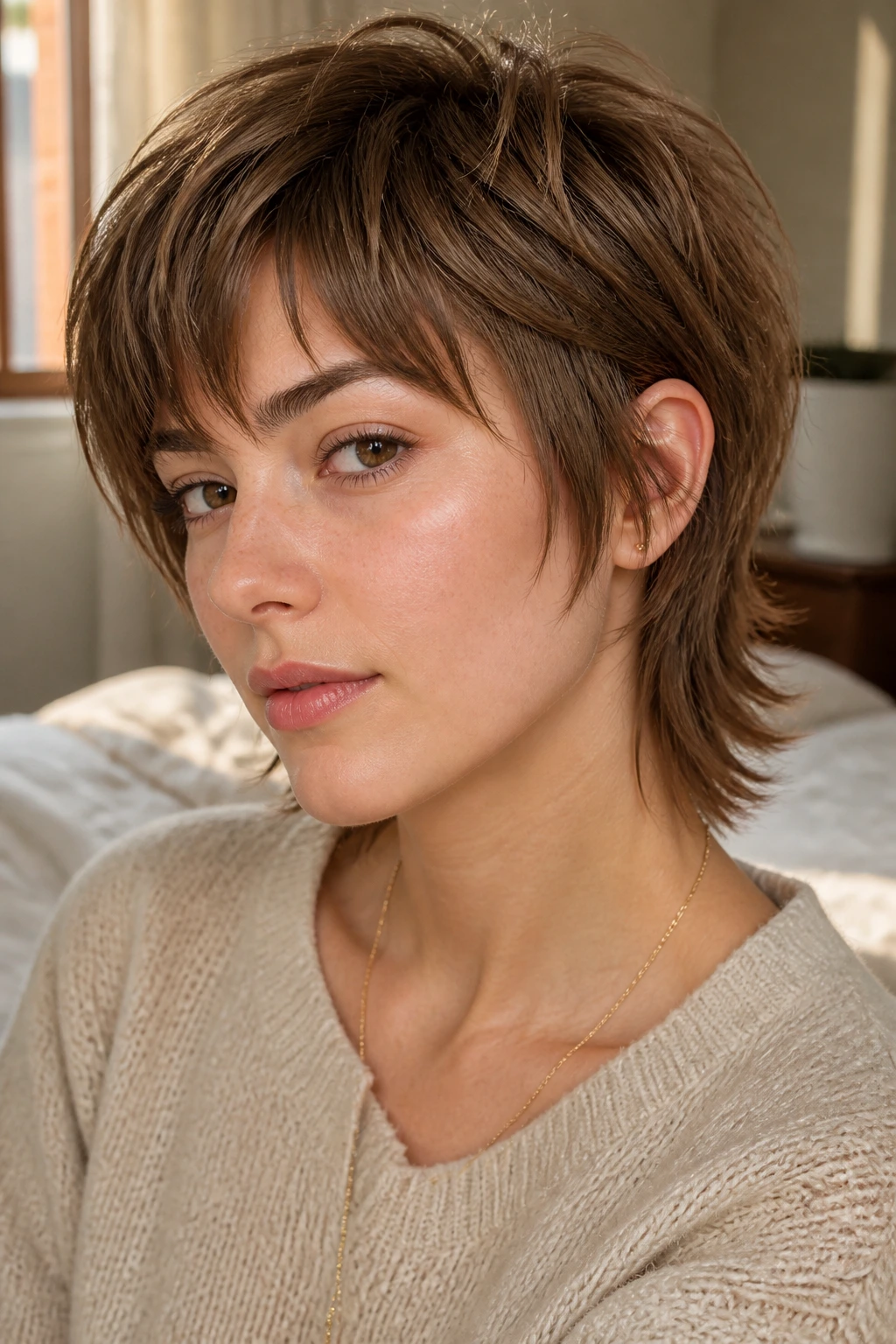
A softer mullet-leaning pixie bob isn’t for everyone, but on thin hair it can add a surprising amount of movement. The nape stays a little longer, the top stays choppy, and the sides taper enough to keep the look light. It gives fine hair an edge without a heavy curtain effect.
The trick is to keep the difference between zones gentle. Too much contrast and the cut looks disconnected. Done lightly, it gives you a shape that feels current and a little rebellious in a good way.
27. Airy Blunt-End Pixie Bob
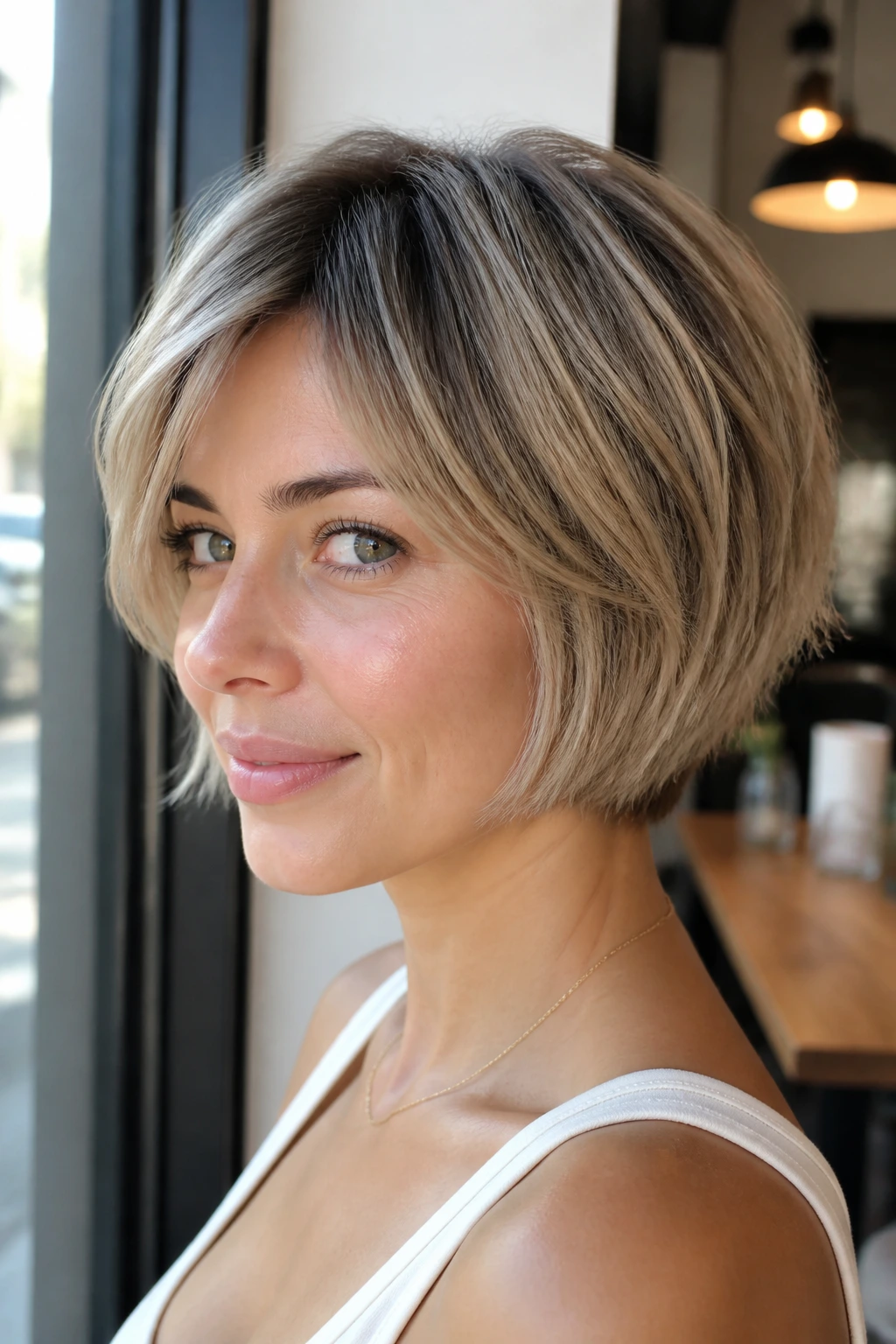
Blunt ends are a friend to thin hair because they keep the perimeter looking solid. In this version, the cut stays soft through the interior but the edge itself remains strong, which tricks the eye into reading more density. It’s a quiet move, but a smart one.
I like this when hair is straight and fine but not fragile. A blunt line can look fuller than lots of slicing ever will. If your stylist wants to thin out the ends, push back a little. You need the weight.
28. Asymmetrical Pixie Bob
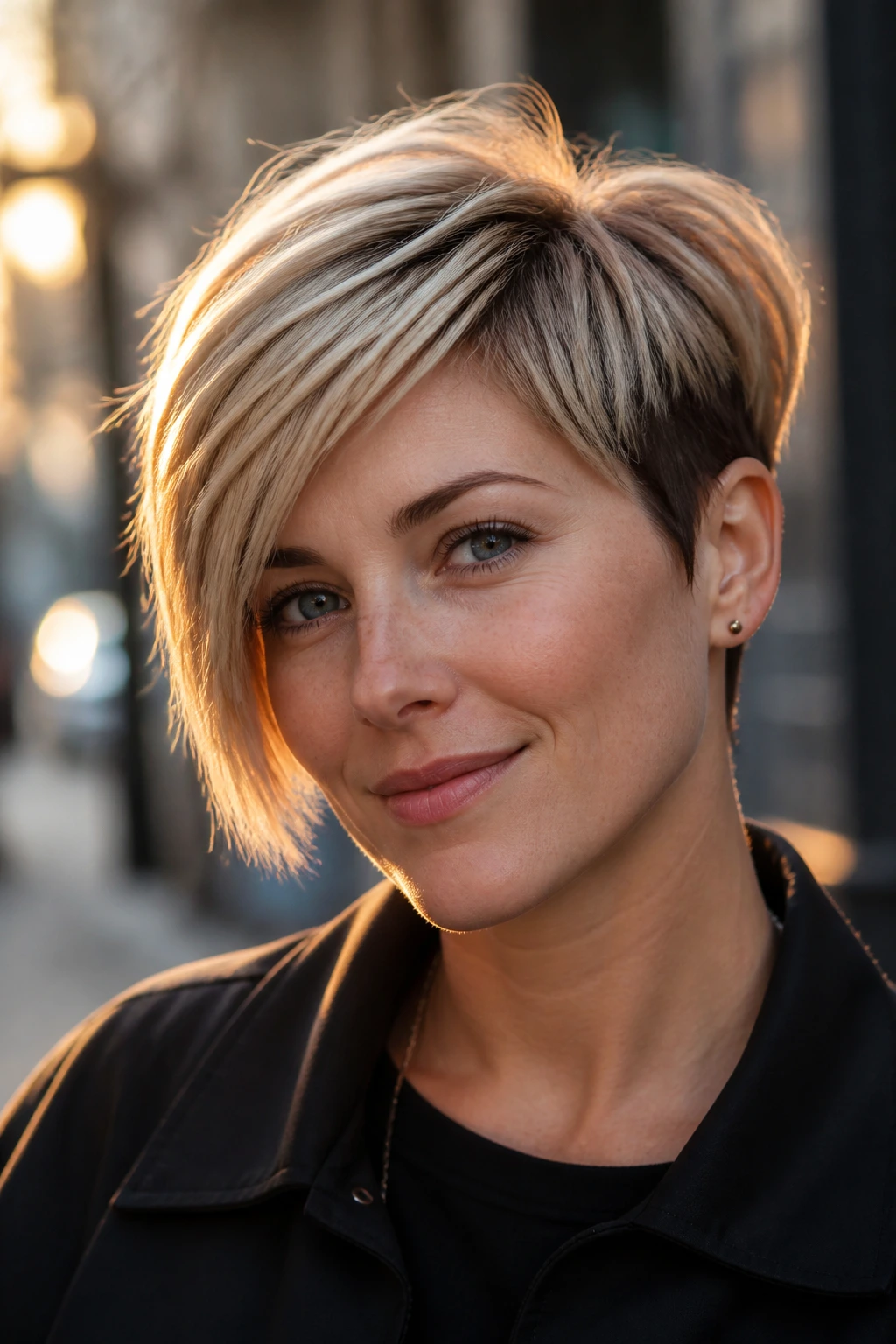
Asymmetry gives the style motion without asking the hair to be big. One side sits a touch longer, which adds visual interest and pulls attention away from any sparse spots at the part or temple. On thin hair, that off-balance line can be useful.
The difference doesn’t need to be dramatic. A small shift is enough. Keep the shorter side clean and the longer side soft around the jaw, and the haircut feels modern without being tricky to wear.
29. Softly Sculpted Pixie Bob
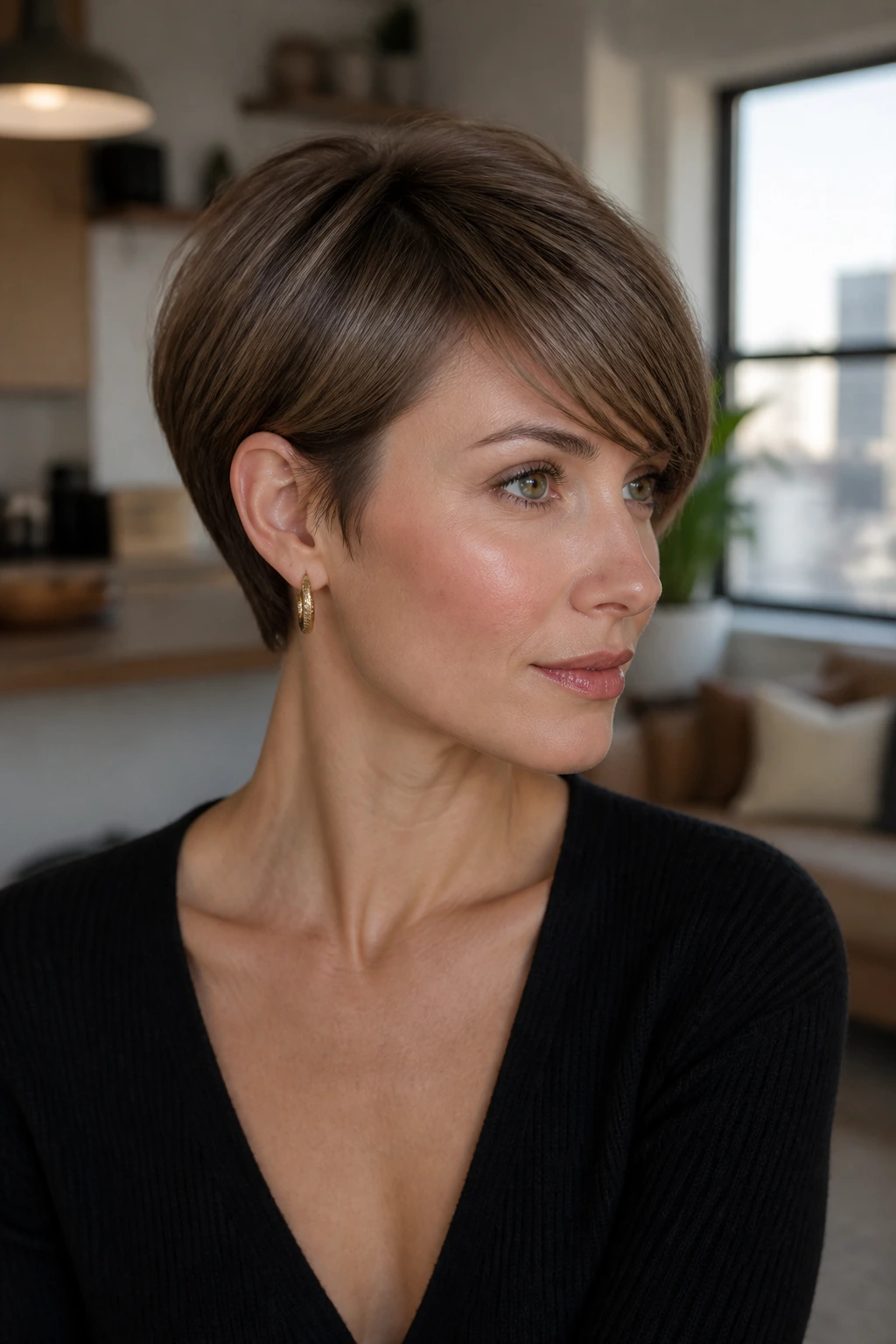
This is the neat, polished version of the pixie bob. The shape is controlled, the edges are smooth, and the silhouette follows the head instead of fighting it. Fine hair tends to look stronger when the shape is defined instead of overly fluffy.
A light styling cream and a round brush are usually enough. The point is not to make the hair bigger. The point is to make it look deliberate, which is a more flattering goal than a lot of volume for volume’s sake.
30. Curl-Boosted Pixie Bob
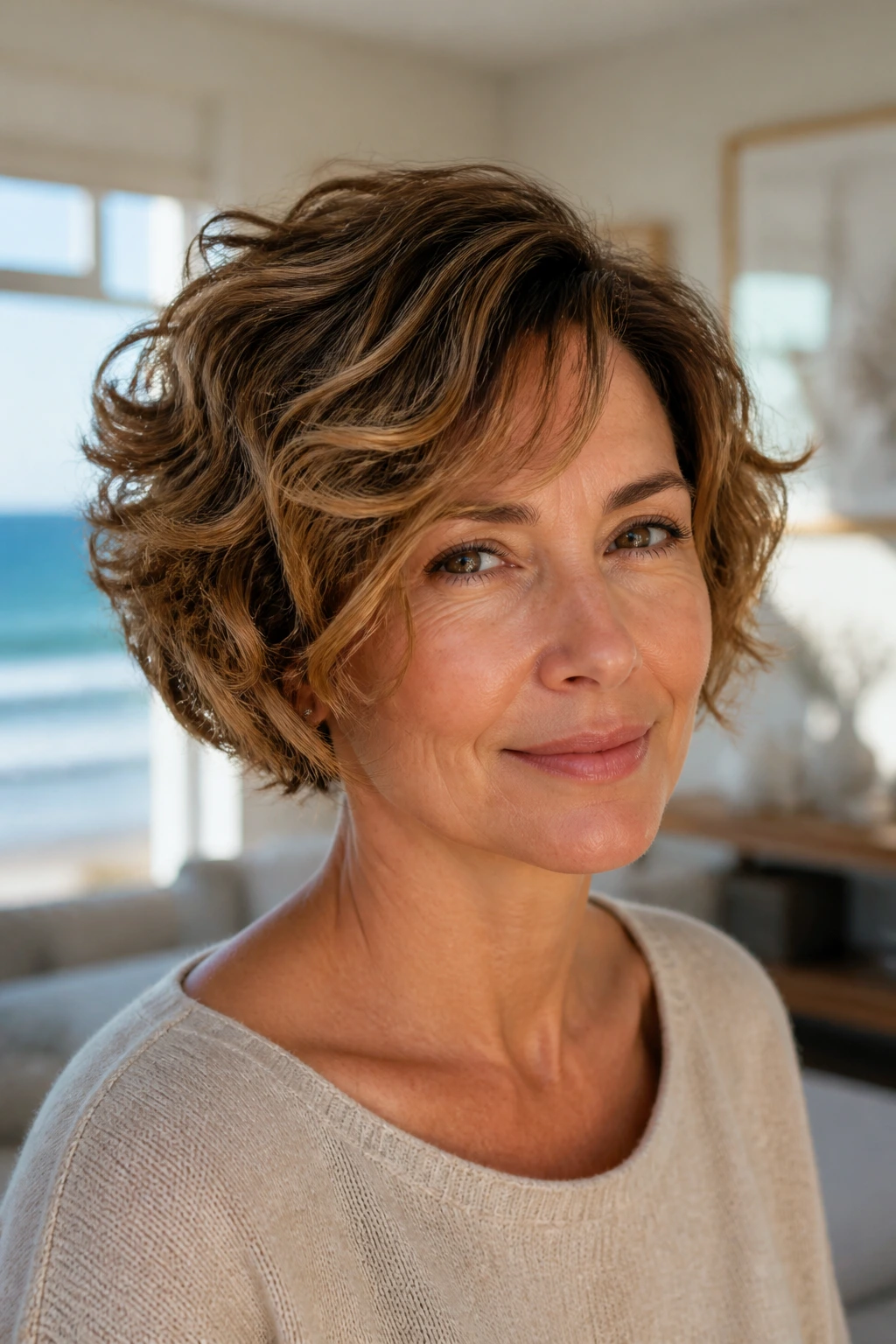
If your thin hair has even a little bend, curl-boosting can make the cut come alive. The shape can sit closer to the head on top and expand a touch through the sides, which gives the illusion of more body without changing the haircut itself.
Use a diffuser or a small curling wand on a few face-framing pieces if needed. Keep the curls loose. Tight curls can make thin hair look sparse between sections, and nobody wants that.
31. Salt-Spray Pixie Bob
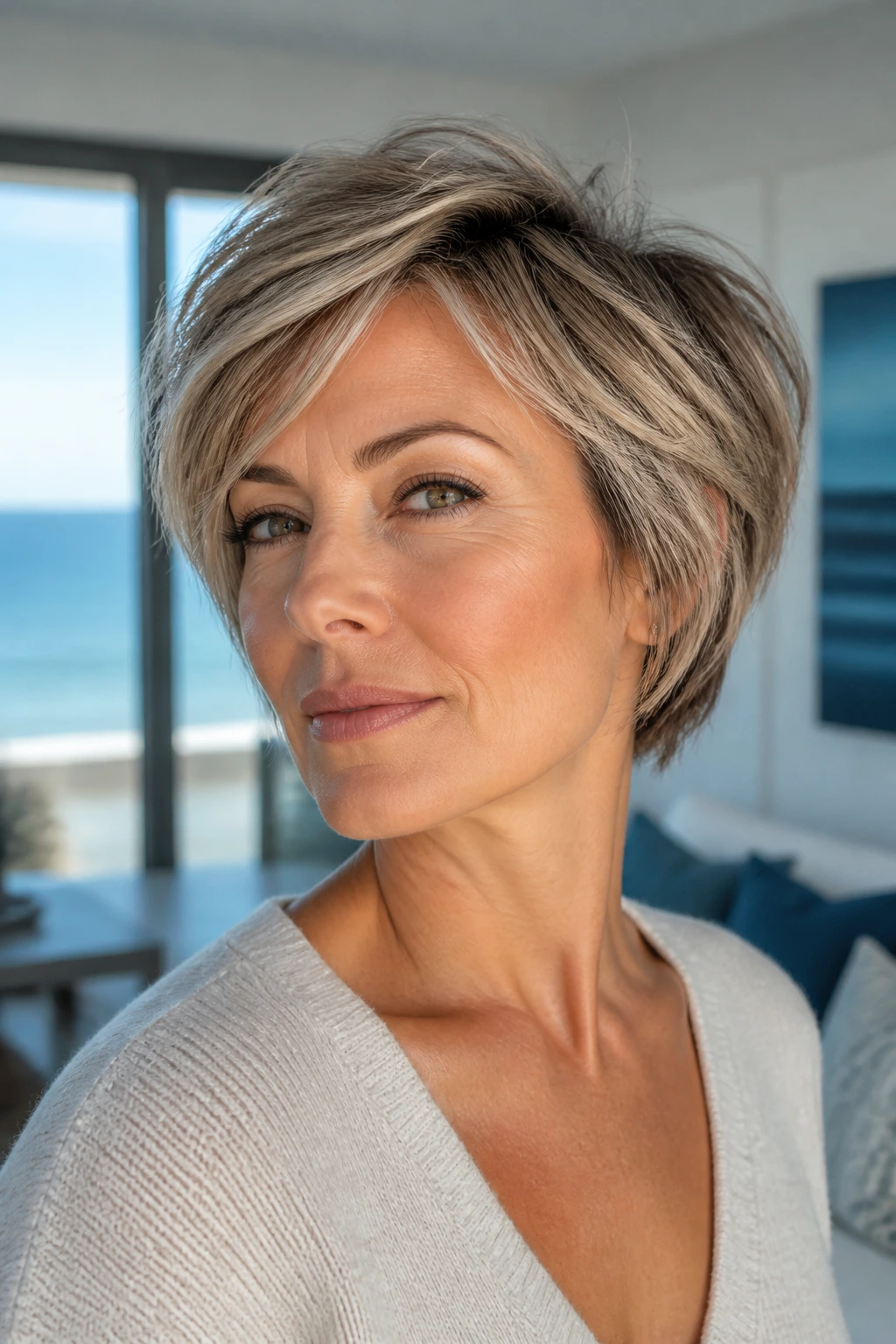
Salt spray sounds easy, but thin hair only likes it in moderation. The good version adds grip, slight roughness, and a bit of lift at the root, which helps the cut hold its shape longer. It’s especially helpful if your hair tends to slide flat after drying.
Mist it lightly on damp hair, not soaked hair. Then use your fingers or a small brush to shape the front and crown. Too much salt spray and the texture turns dry in a bad way. Less is better here.
32. Side-Tucked Pixie Bob
This one depends on the power of a single tuck. One side stays long enough to sweep behind the ear, while the rest of the cut keeps a little lift and curve. The result is clean and tidy, but not severe.
It’s a good pick if you wear earrings, glasses, or want a haircut that looks neat with almost no effort. The tuck should reveal the face, not flatten it. Keep a little bend in the loose side so the shape still breathes.
33. Blended Bang Pixie Bob
A blended bang softens the whole haircut. Instead of a hard line across the forehead, the fringe melts into the side layers, which helps thin hair feel fuller at the front and less chopped up overall. That blend matters more than people think.
This style is especially nice if you don’t want the bangs to become the whole story. The top stays useful, the front stays soft, and the sides don’t look like they were cut off with no plan. Good balance. No fuss.
34. Wash-and-Go Pixie Bob
Some cuts are made for daily styling tools. This one is made for a towel and maybe a little mousse. It works best when the natural texture already has some shape, because the haircut leans into what your hair does on its own instead of forcing a new pattern.
Ask for enough structure that the hair falls into place without much help. The crown should be tidy, the sides should frame the face, and the nape should stay compact. If you hate a long routine, this is a sensible choice.
35. Polished Blowout Pixie Bob
A polished blowout pixie bob has a smooth, finished look that makes fine hair seem denser because every strand is going the same direction. The round brush sets the crown, the ends tuck or curve, and the silhouette stays crisp through the day.
This one does ask for a little styling time, but not a lot. Ten minutes with a round brush can change the whole cut. If your hair looks thin only because it’s flattened, this style fixes that faster than most people expect.
How to Ask for the Cut Without Getting Too Much Layering
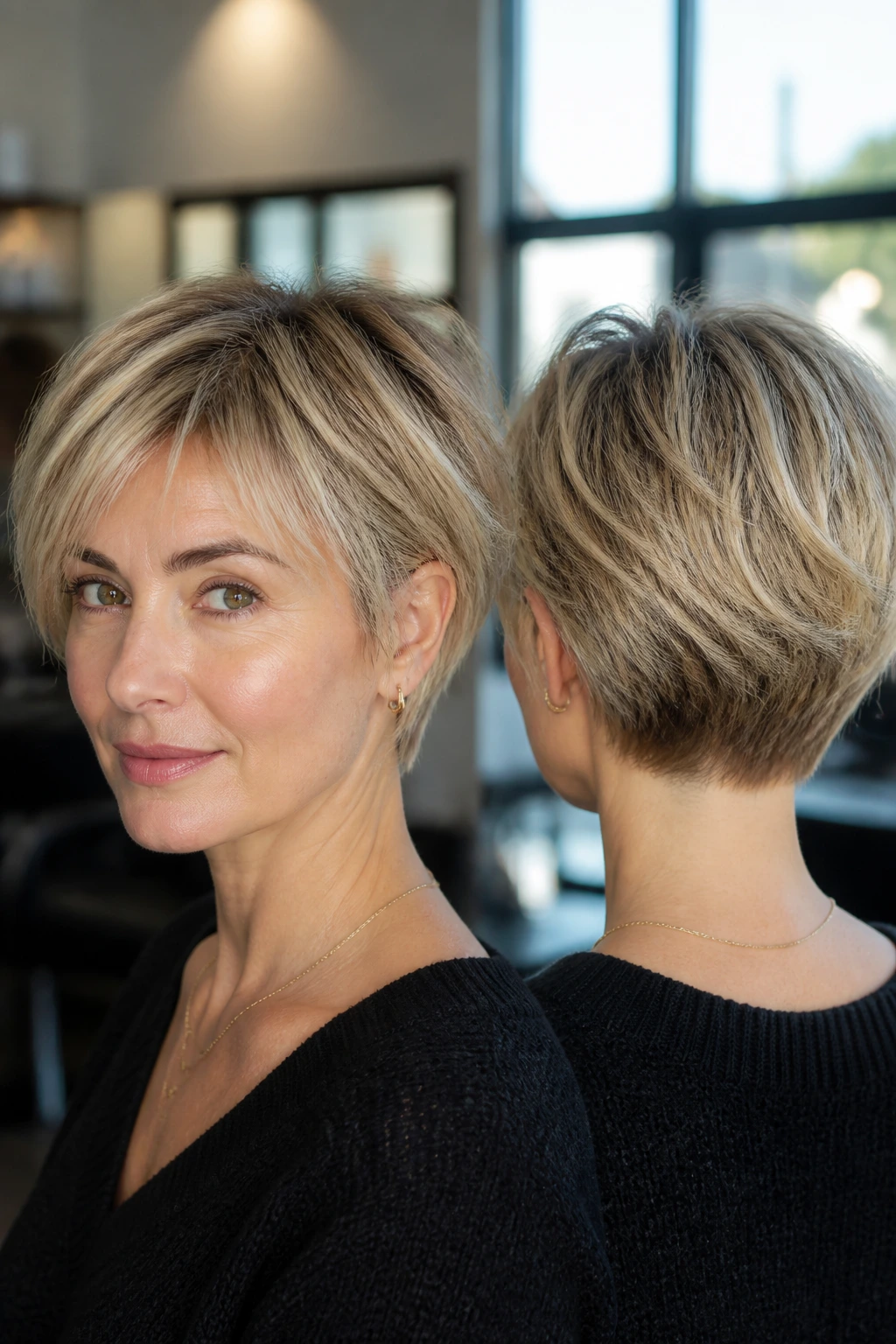
Bring photos from the front, side, and back. One picture never tells the whole story, and with thin hair the back shape matters more than people realize.
Say what your hair actually does. Does it collapse at the crown? Puff at the nape? Separate at the temples? Those details tell a stylist where to keep weight and where to remove it. Ask for a strong perimeter and controlled layering, not aggressive thinning through the ends.
Tell them how you style it. If you air-dry, don’t ask for a blowout-only cut. If you use a flat iron twice a week, say that. If you have a cowlick at the front, say that too. A good pixie bob is built around your hair’s habits, not against them.
Styling Moves That Add Lift Without Heavy Product
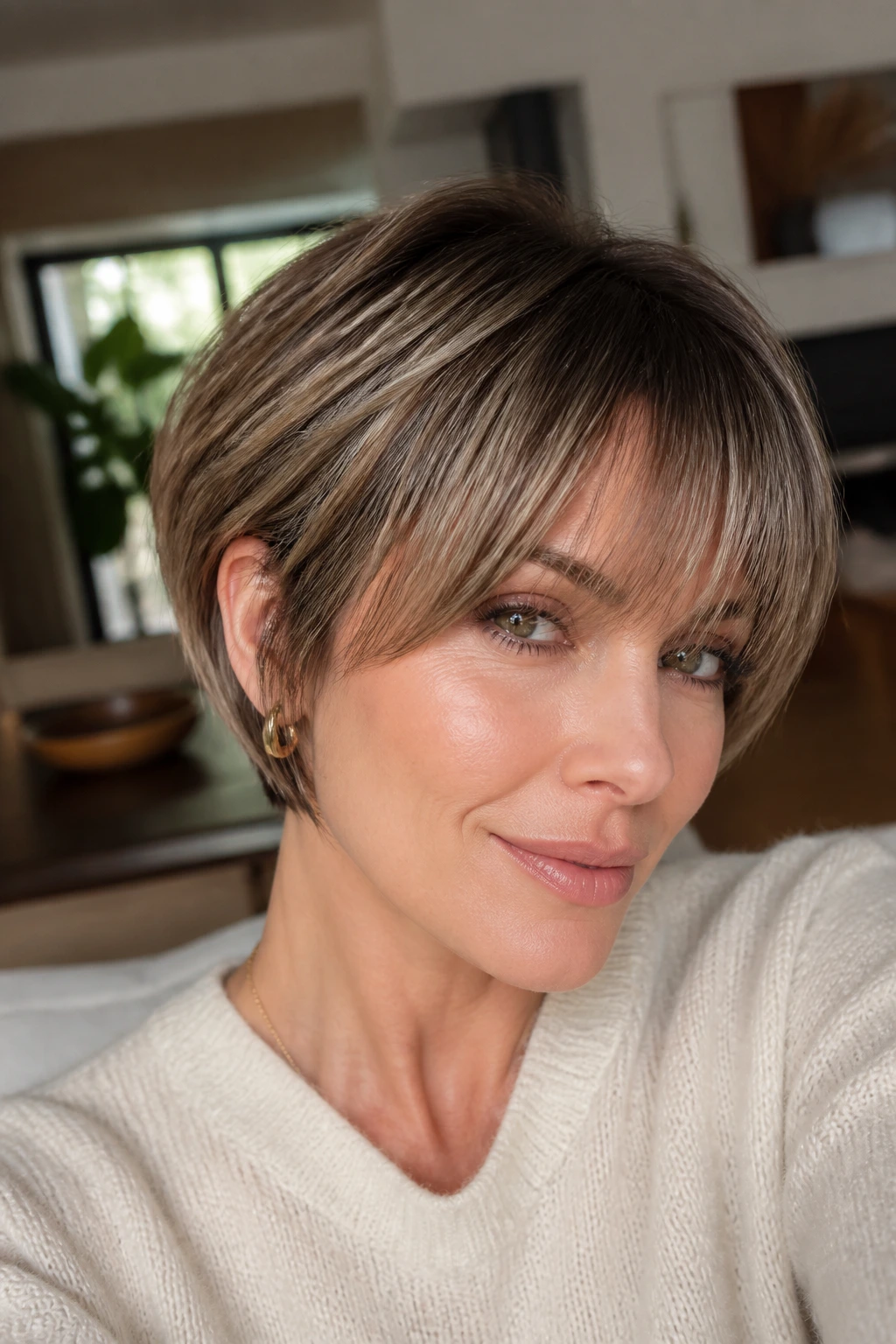
Root lift starts before the dryer. Work a light mousse or root spray through damp hair, then get the roots moving while they’re still wet. That matters more than piling paste on dry hair later.
Dry the crown in the opposite direction first. Seriously. Lift the top section with clips or your fingers, aim the airflow at the roots, and let it cool before settling it into place. That little reset gives fine hair a better memory.
Finish with a small amount of texture product on the ends, not the scalp. The scalp should stay light. Heavy creams, oils, and waxes near the roots are the fastest way to kill a pixie bob before you leave the house.
Common Mistakes That Make Fine Hair Look Thinner
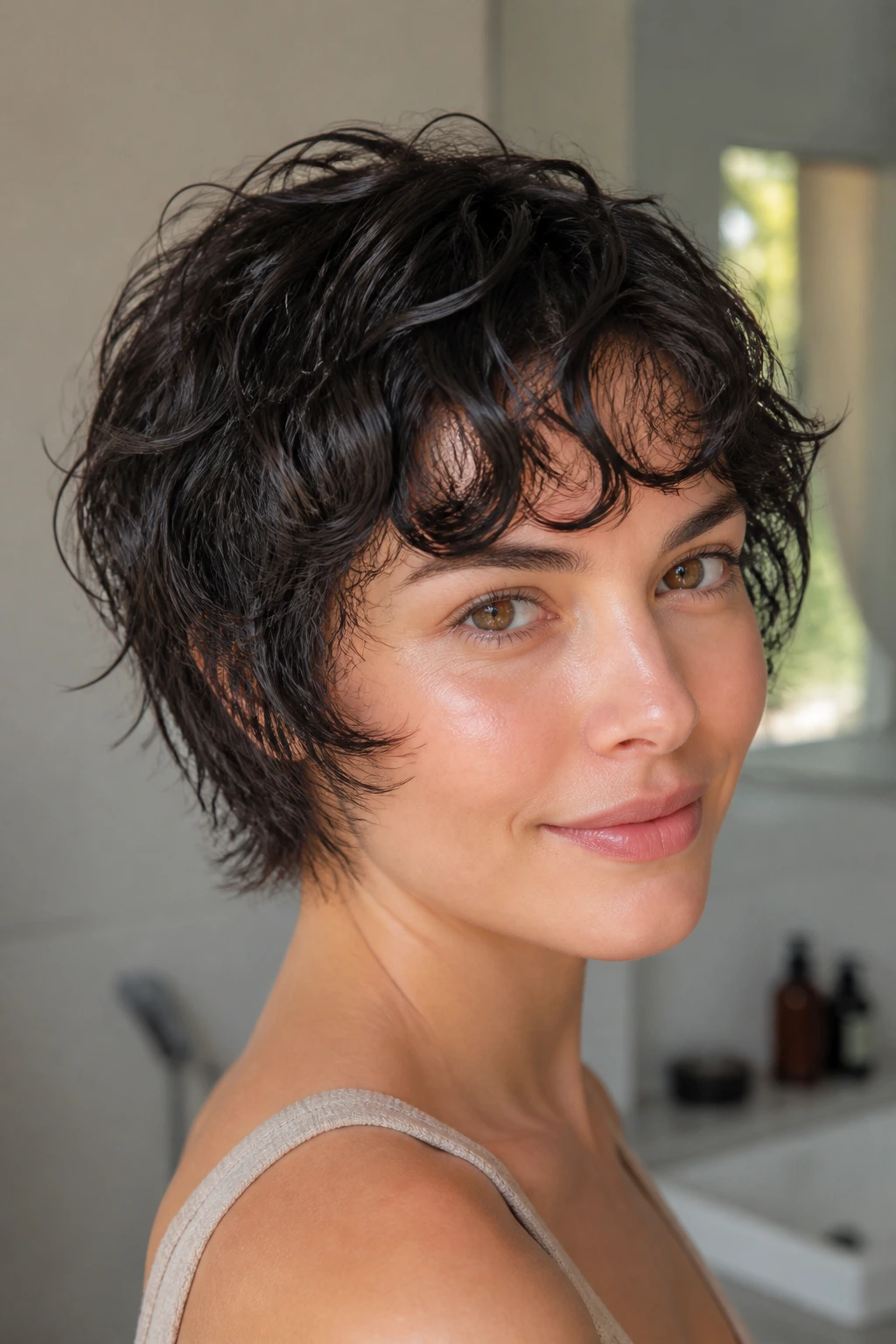
Over-layering is the big one. Hair that’s already fine can turn wispy fast if the perimeter gets shredded. The fix is simple: keep the outline stronger and use softness inside the shape, not all over it.
Too much product causes a second problem. Fine strands don’t need a palmful of cream to look good; they need control. If the hair starts separating into greasy sections, you’ve gone too far.
A bad part can flatten the whole cut. If the hair naturally wants a side part, don’t fight it with a center part just because it looks trendy in a photo. And if the crown is weak, don’t flatten it with a brush that’s too big. Small brush, light hand, better result.
Tools and Products Worth Keeping on the Shelf
- Blow dryer with a concentrator nozzle: Directs airflow at the roots and keeps the cut from puffing out sideways.
- Small round brush, 1 to 1.5 inches: Best for bending the ends and lifting short layers.
- Duckbill clips: Hold the crown up while it cools, which helps the shape last longer.
- Light mousse or root-lift spray: Gives fine hair grip without the sticky feel of heavy creams.
- Dry shampoo: Useful on day two, especially if the roots go flat after a short time.
- Matte paste or soft wax: Good for piecey definition, but use a tiny amount.
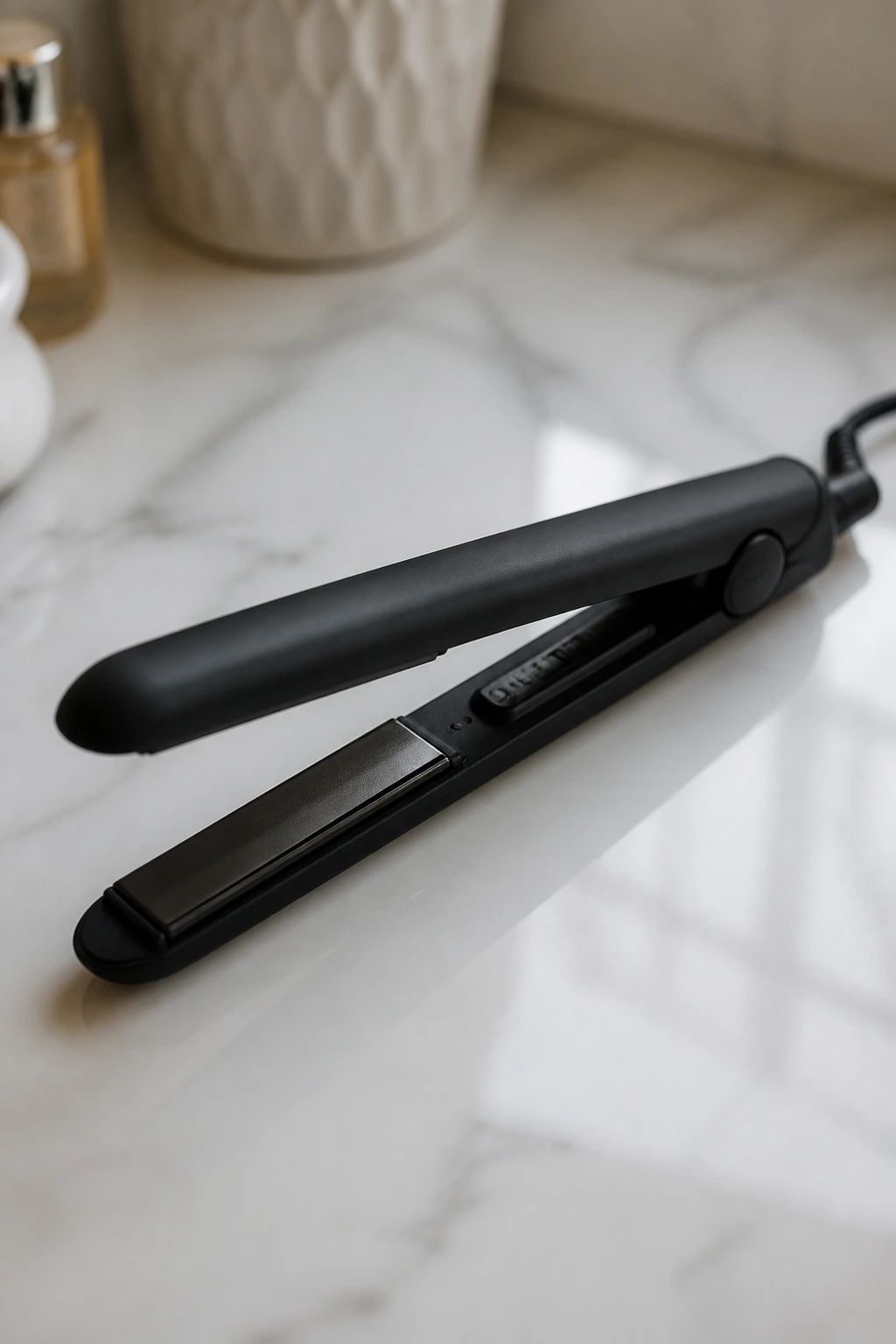
- Flat iron: Optional, but handy for a slight bend or flipped ends.
Trim Rhythm, Grow-Out, and Day-to-Day Care
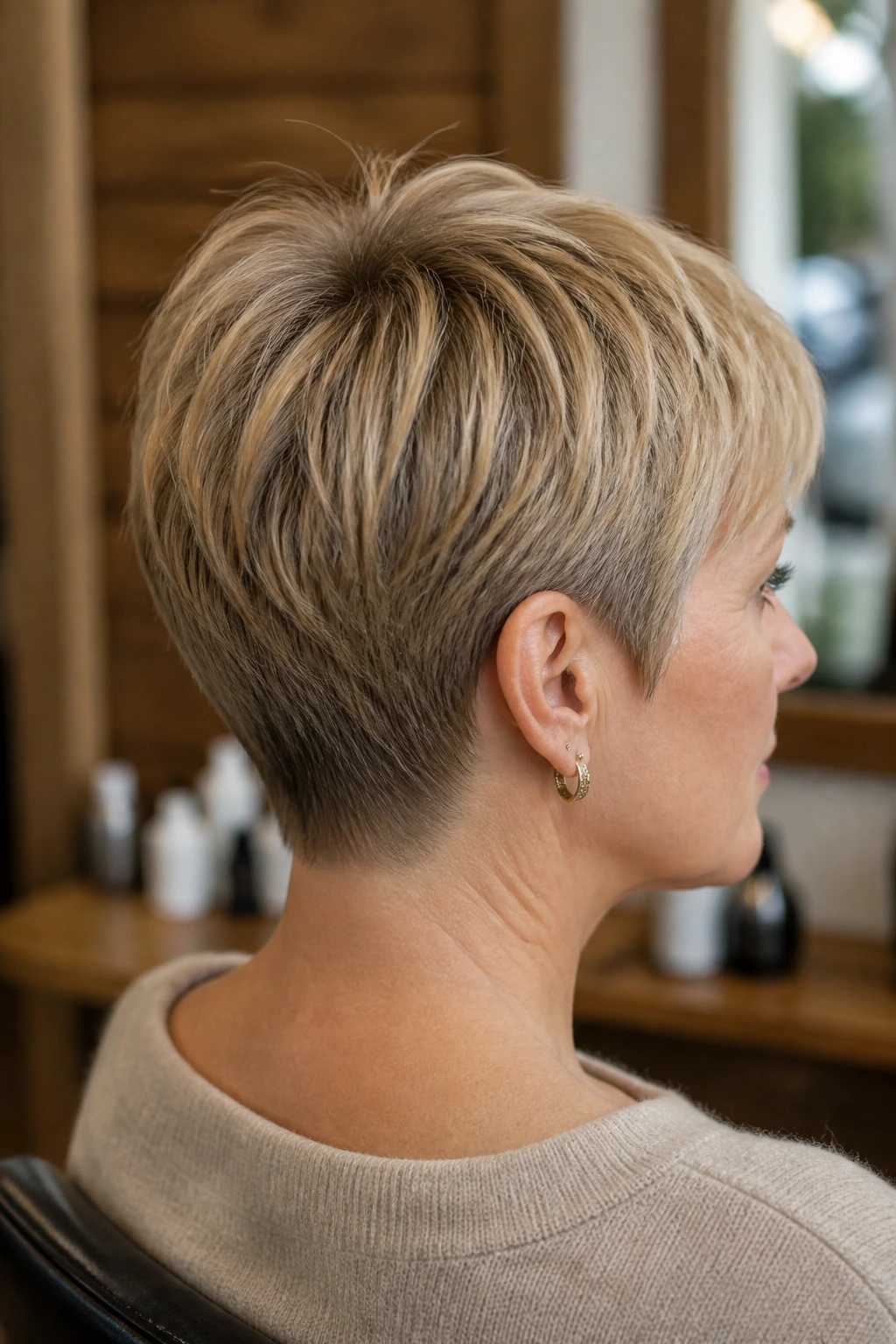
Short hair needs regular clean-up. For most pixie bobs, a trim every 4 to 6 weeks keeps the nape tidy and the crown from drooping into your eyes. If you like the cut sharp and structured, stay closer to 4 weeks.
Fine hair also shows buildup faster than thicker hair. A clarifying shampoo every couple of weeks helps if you use dry shampoo or texture spray often. Don’t overdo oils at the ends; they can make the shape slide flat.
When the cut grows out, don’t panic at the first softer phase. A pixie bob usually goes through a useful middle stage before it gets awkward. If the back starts losing shape, a quick neckline tidy can buy you another couple of weeks.
Variations for Different Faces, Textures, and Routines
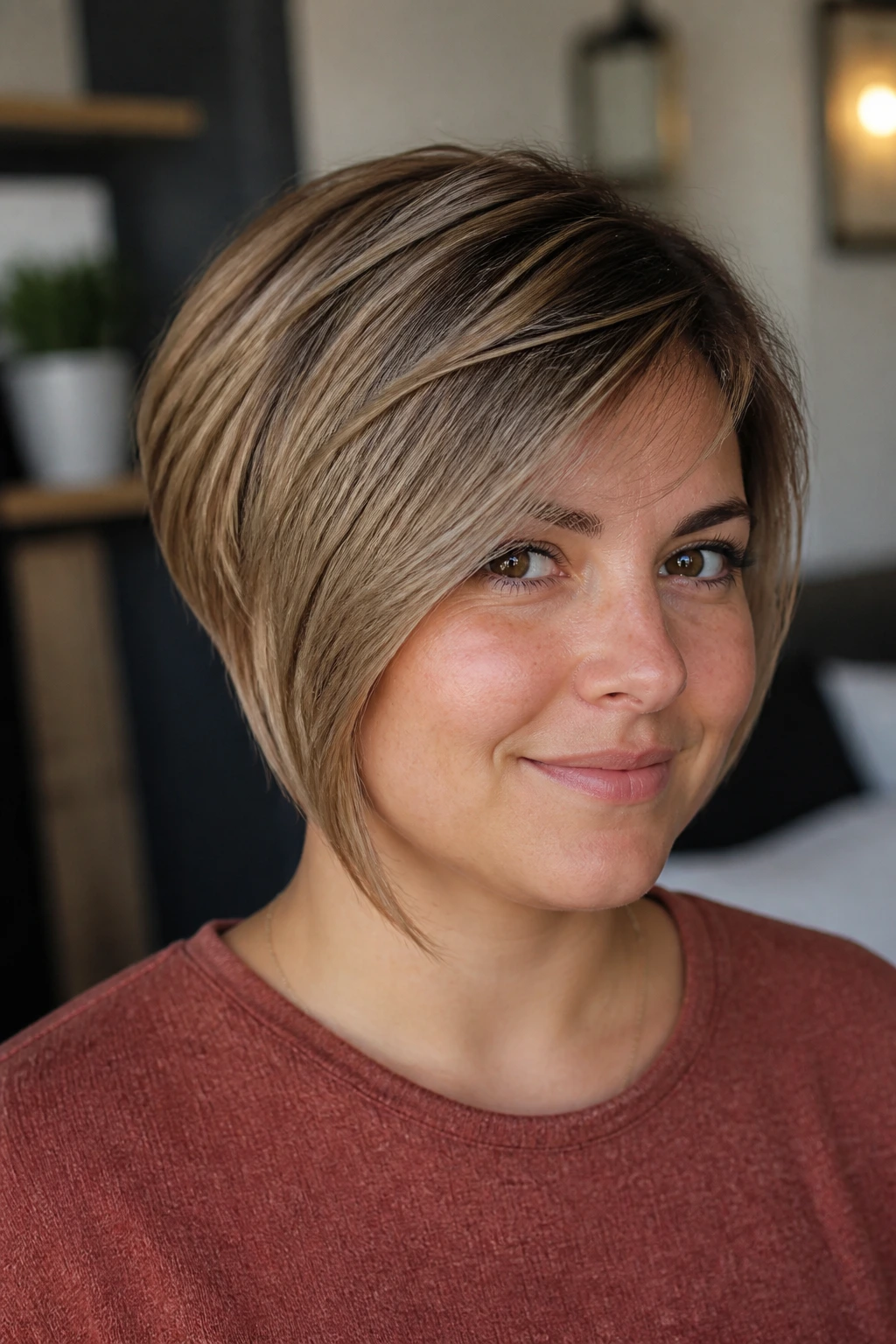
For a round face, try a longer front angle.
A soft A-line or side-swept fringe draws the eye downward and helps the cheeks feel less wide. Keep the sides light and the crown lifted, or the shape can balloon at the widest point.
For a square face, soften the edges.
Curtain bangs, curved-under ends, and a rounded halo shape take the hard line off the jaw. A blunt edge can work too, but it needs a little movement around the front so it doesn’t feel boxy.
For wavy hair, lean into texture.
A shaggy or tousled pixie bob lets the wave do some of the work. Air-dry with a little mousse, then break up the ends with your fingers. Don’t brush it to death.
For straight hair, keep the perimeter stronger.
Blunt ends, a stacked nape, or a sleek glassy finish usually look fuller than a highly feathered shape. Straight fine hair needs structure more than softness.
For low-maintenance routines, keep the crown simple.
A wash-and-go version with a compact nape and a little face framing is easier to live with than a highly sculpted cut. You want the shape to fall into place after a rough dry. That’s the whole point.
Questions People Ask Before Going Short
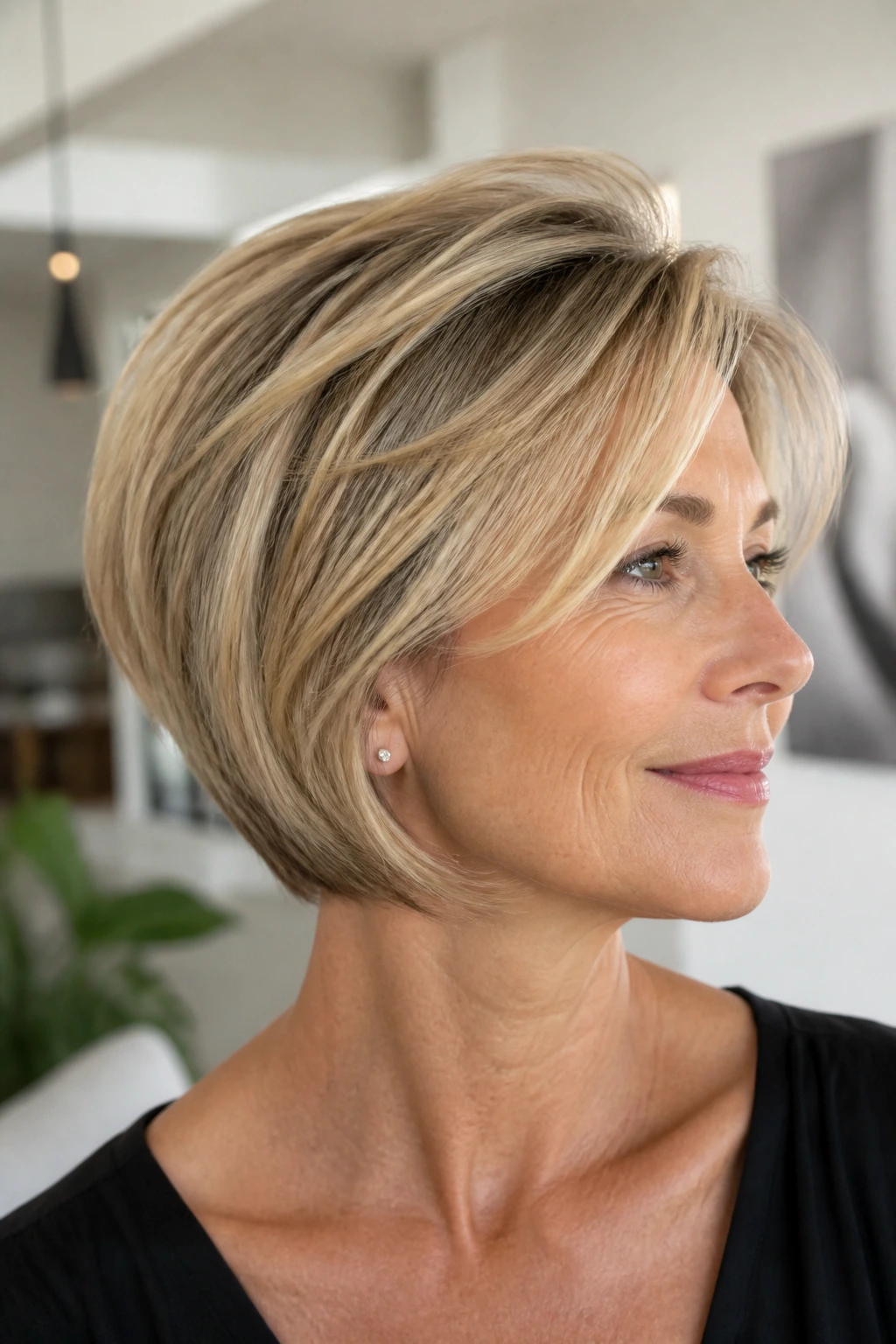
Will a pixie bob make my thin hair look even thinner?
Not if the cut keeps enough weight at the edges. The mistake is usually too much layering, not the short length itself. A good pixie bob uses shape and direction to fake density.
Is this better for fine hair or sparse hair?
Both, but in different ways. Fine hair has small-diameter strands, while sparse hair has less density overall. Fine hair usually needs a cleaner line; sparse hair often needs more strategic layering and part control.
Can I wear a pixie bob if my hair is naturally straight?
Yes, and straight hair often shows the cut’s shape best. The key is to avoid over-texturizing it. A blunt edge, root lift, and a slight bend at the ends usually work well.
What if my crown falls flat by lunch?
Start with root product on damp hair, then clip the crown up while it cools after drying. If that still isn’t enough, ask for more graduation in the back. Styling can help, but the cut has to support you.
Do bangs help thin hair look fuller?
They can, if they’re soft enough to blend and not so short that they expose the forehead in strips. Side-swept or curtain bangs usually give the most forgiving result.
How short is too short for a pixie bob?
If you lose all the weight at the perimeter, the cut can start behaving like a true pixie and show more scalp. For thin hair, keeping a little length around the cheekbones or jaw often makes the shape easier to wear.
Can I air-dry this cut?
Some versions, yes. The shaggy, wash-and-go, and tousled styles do fine with a light product and finger shaping. Sleeker versions usually need a dryer or iron to keep the outline from looking unfinished.
What should I bring to the stylist besides a photo?
Bring one sentence about your routine: how long you’ll style it, how often you wash it, and which side your hair naturally parts on. That gives the stylist more useful information than five saved photos ever will.
A Shape That Keeps Thin Hair Honest
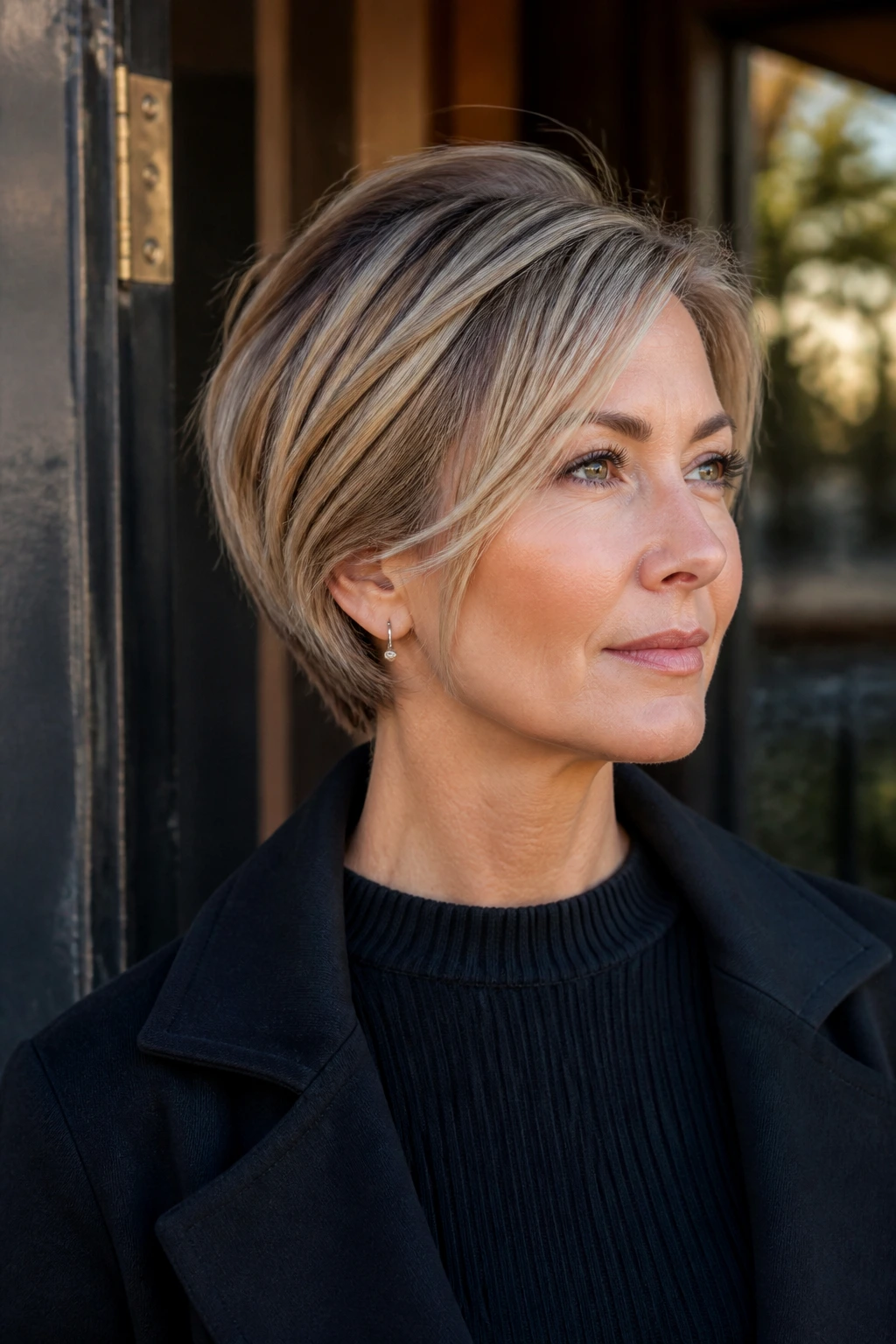
Thin hair does better with a clear idea than with random volume. That’s why the right pixie bob can feel like such a relief: it gives the hair a job, gives the face a frame, and stops the ends from pretending they’re thicker than they are. Clean lines help. So does a little restraint.
Pick the version that matches your routine, not the one that looks hardest to maintain in a photo. The best pixie bob on thin hair is the one that still looks like itself after a windy walk, a long meeting, or a lazy air-dry at the sink. That’s the cut worth keeping.
