



Champagne blonde sits in a very specific sweet spot: brighter than beige, softer than icy platinum, and far less fussy than a pale blonde that needs constant rescue from brass. The best versions don’t look painted on. They look like the hair was lifted by good lighting and a decent toner, with a pale gold shimmer that never tips into yellow cereal territory.
That balance is why champagne blonde hair color ideas keep coming up in salons again and again. On a real head of hair, it can read pearl, neutral gold, soft beige, or a whisper of silver-gold depending on the cut, the root depth, and how much contrast the colorist leaves behind. Put it on a blunt bob and it feels polished. Put it on long waves and it reads expensive in the old-fashioned sense — layered, touchable, and not trying too hard.
The trick is that champagne blonde is not one look. It’s a whole family of looks, and the difference between a flat, washed-out blonde and a rich champagne finish usually comes down to placement, gloss, and the way the root is handled. That’s where the interesting stuff lives.
Why This Shade Keeps So Much Range
-
It sits between gold and pearl: That middle ground keeps the color soft, not brassy, and stops it from looking chalky under indoor light.
-
It grows out with less drama: A beige root shadow or smudge blurs regrowth so you don’t get a hard line two weeks after a salon visit.
-
It works on more base colors than icy blonde does: Light brown, dark blonde, and medium blonde can all wear some version of champagne if the lift and toner are chosen well.
-
It changes with the cut: A blunt bob makes the shade look cleaner and shinier, while layers and waves let the ribbons break up the light.
-
It can lean warm or cool without losing the family resemblance: Push it toward gold for a sunnier feel, or toward pearl-beige for something cooler and softer.
-
It flatters shine when the finish is glossy: Champagne blonde looks best when the strands reflect light evenly, so a toner or gloss matters more here than people think.
1. Soft Champagne Blonde on a Collarbone Lob
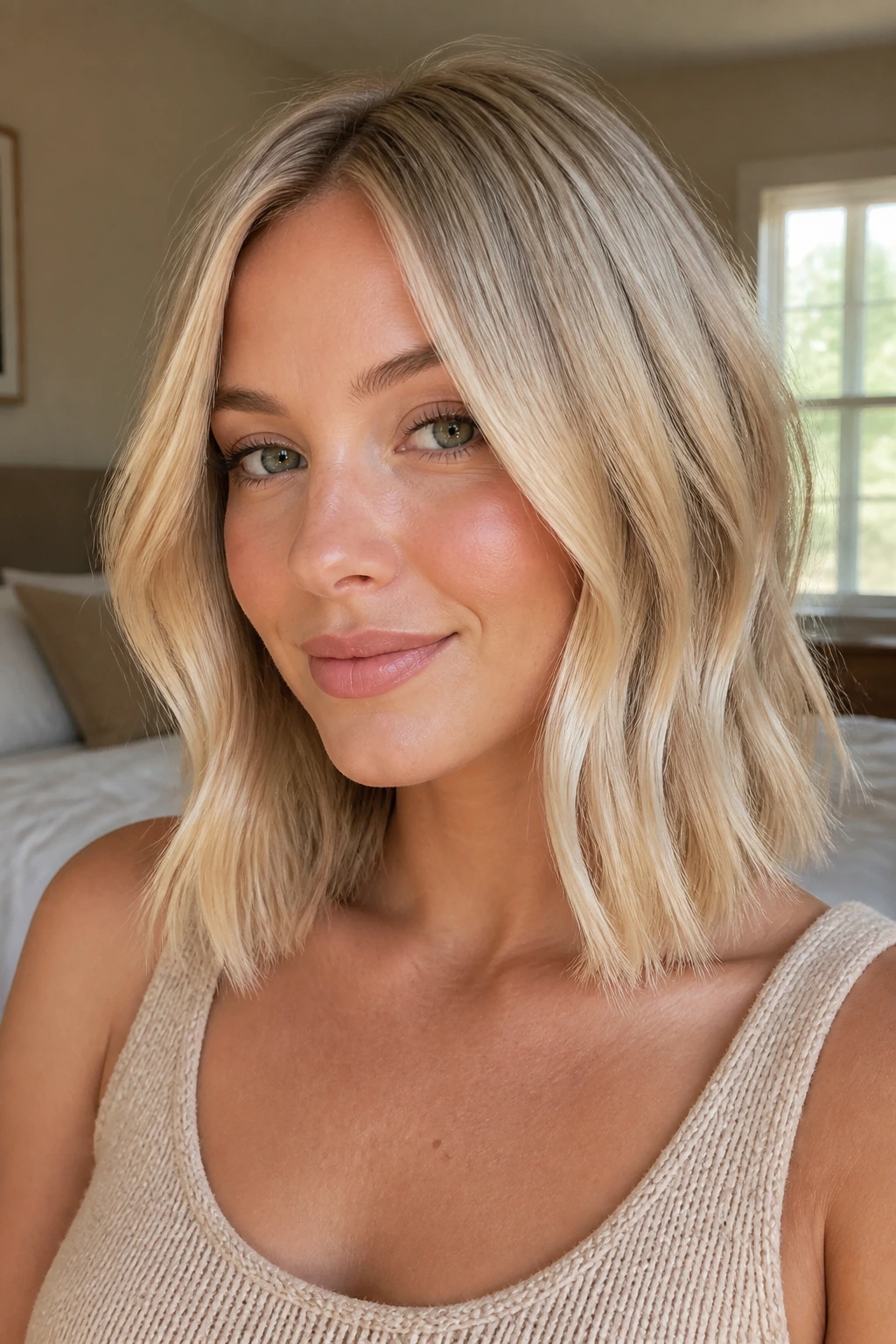
A collarbone lob is one of the cleanest ways to wear champagne blonde because the cut gives the color room to move without getting lost in length. The tone shows up around the face first, then fades into a softer sheen through the ends, which keeps the whole look airy instead of heavy. I like this version when someone wants blonde that reads polished in straight hair and still catches light in a loose wave.
Best for a clean, low-drama finish
This works especially well if your hair sits somewhere between fine and medium. The lob creates a little swing at the shoulders, and the champagne tone keeps the cut from looking flat at the bottom. Ask for a soft beige gloss with just enough gold to keep the ends from looking gray.
A blunt edge makes the tone look richer. A slightly beveled edge makes it feel lighter.
2. Rooted Champagne Blonde with a Shadow Melt
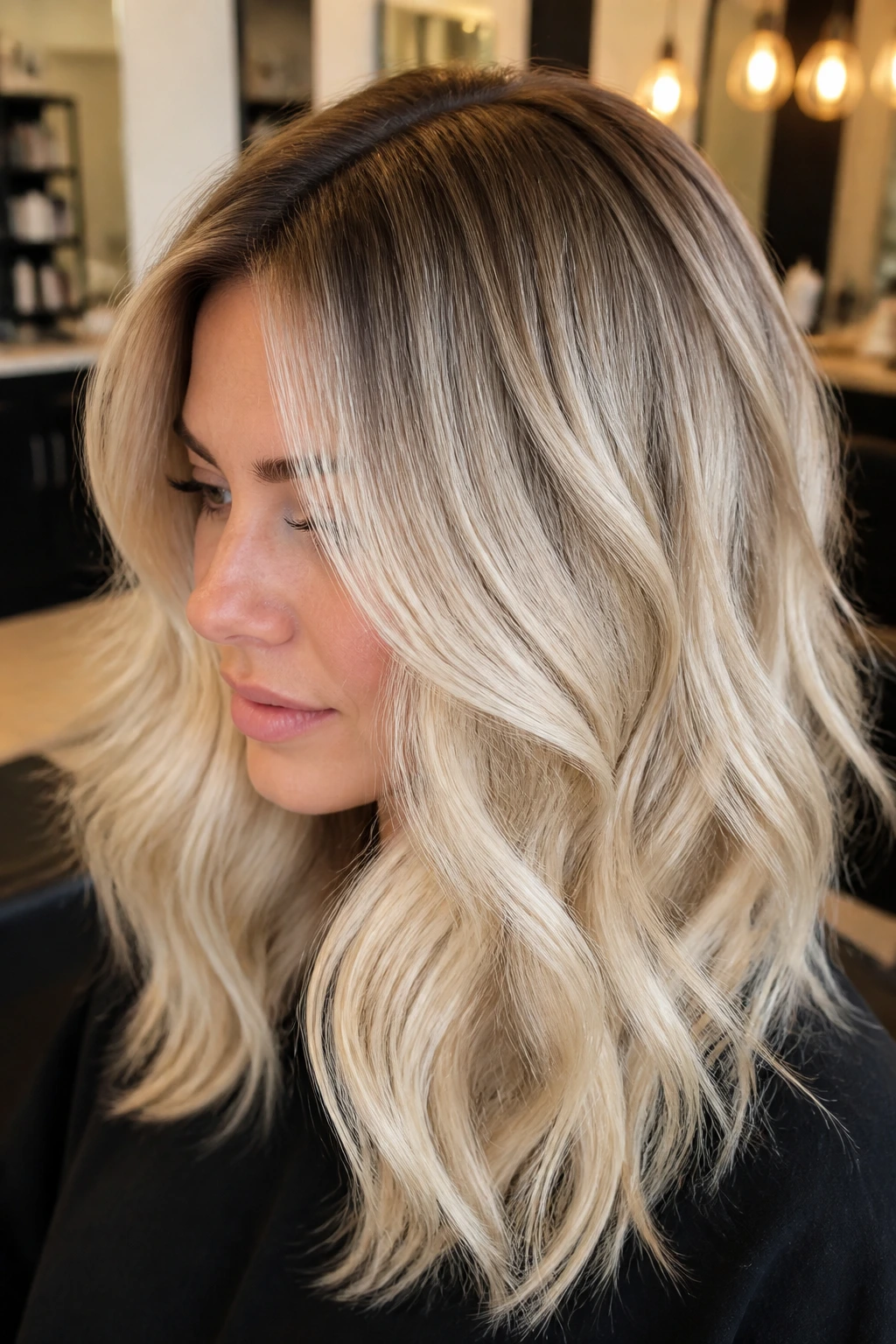
If you want champagne blonde without babysitting the root every few weeks, this is the one to ask for. The darker root gives the mids a place to land, so the blonde doesn’t look like a hard block of color sitting on top of the head. That melt from root to length is what makes the shade feel expensive rather than stripy.
What to ask your colorist for
- A root that stays about 1 to 1.5 levels deeper than the mids
- Beige-champagne lengths with a soft gloss
- Foilyage or balayage placement that avoids a hard demarcation line
The nice part is the grow-out. It stays believable even when the part shifts a little, and that matters more than people admit. Nobody wants a blonde that only looks good on the day it’s done.
3. Beige Champagne Balayage on Long Waves
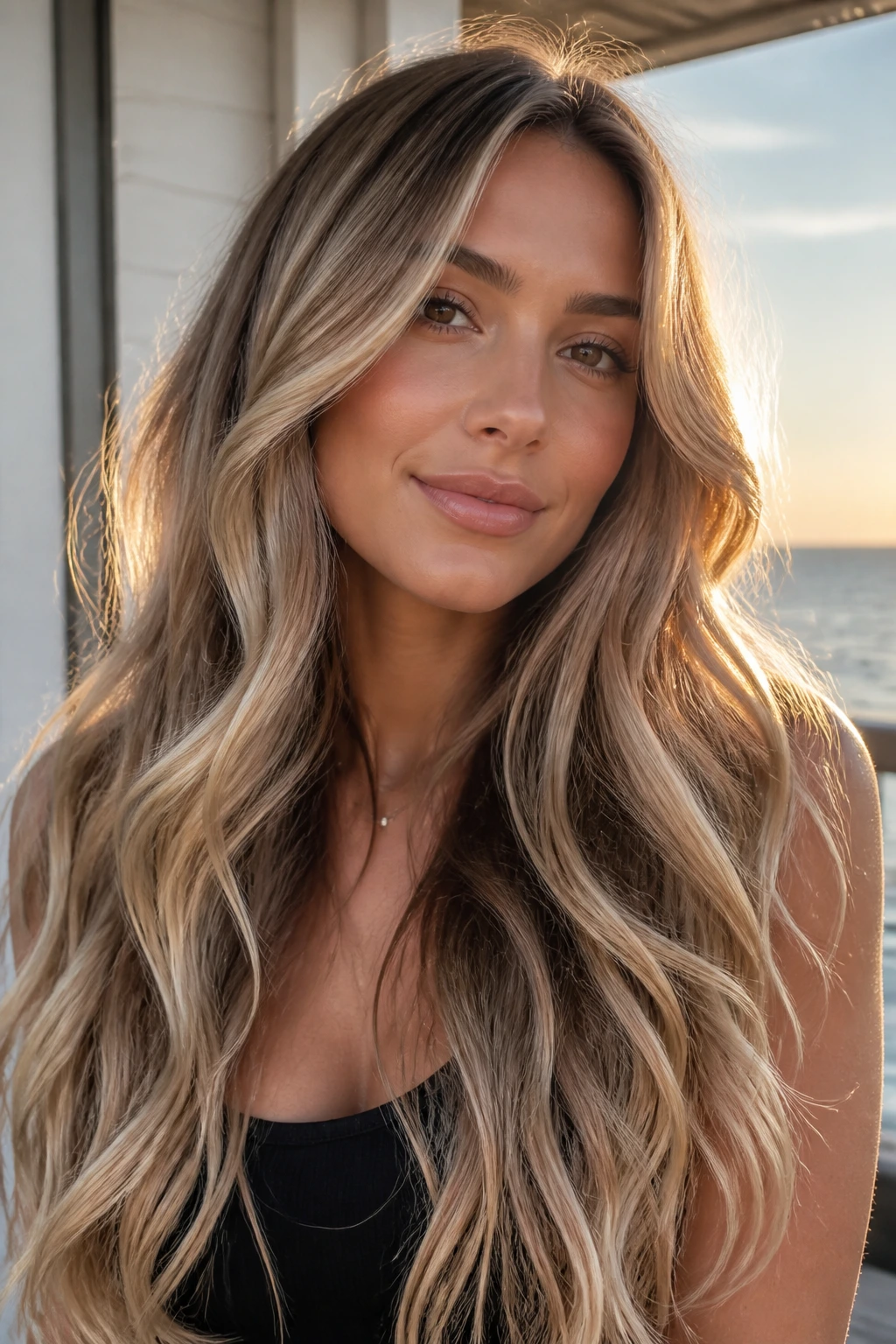
Long waves and champagne blonde get along because the curve of the hair gives every ribbon of color a chance to show up. A beige champagne balayage keeps the highlights soft enough that they don’t scream from across the room, which is exactly the point here. The best version has pale pieces around the face, then a gentler spread through the mid-lengths.
Why it reads softer than regular blonde balayage
The beige base acts like a filter. Instead of bright white streaks, you get a warm-neutral blend that looks more expensive when the waves fall apart a little. On thick hair, this can keep the color from turning into a giant pale block.
If you like air-dried waves with a little salt spray, this is a strong pick. It gives movement without needing perfect styling.
4. Pearl Champagne Pixie With a Glossy Crown
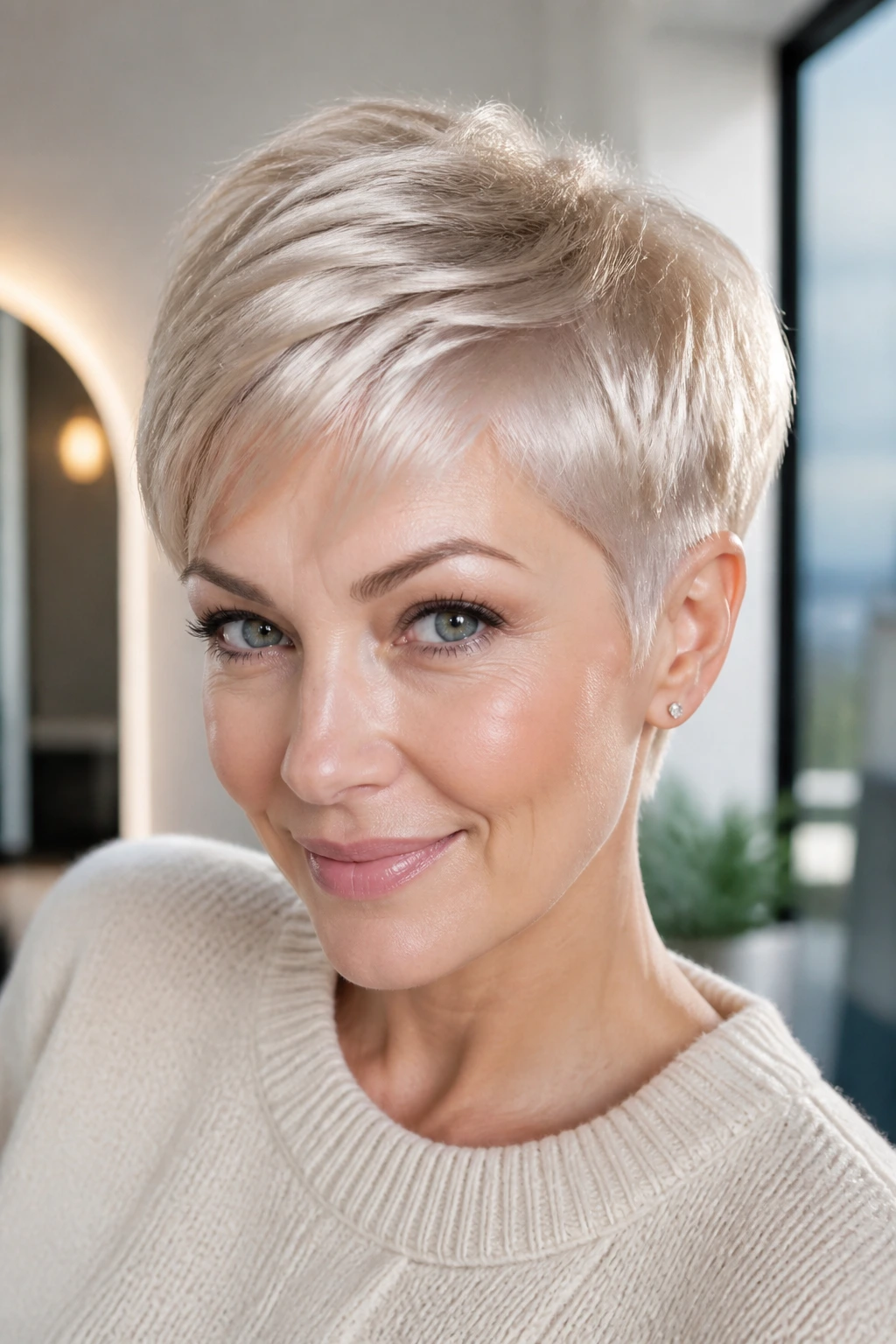
Short hair changes the whole conversation. A pixie cut with champagne blonde needs shine first, color second, because every bit of texture shows up on the surface. Pearl champagne is the version that works best here: pale, reflective, and clean around the edges.
The trick is to keep the top piecey and the sides close enough to the head that the tone doesn’t get muddy. Too much ash and the cut can look dull. Too much gold and it starts drifting buttery, which is a very different mood. I prefer this shade on pixies with a little lift at the crown — the blonde lands better when the haircut has some air in it.
5. Champagne Blonde Face Frame with Bright Front Pieces
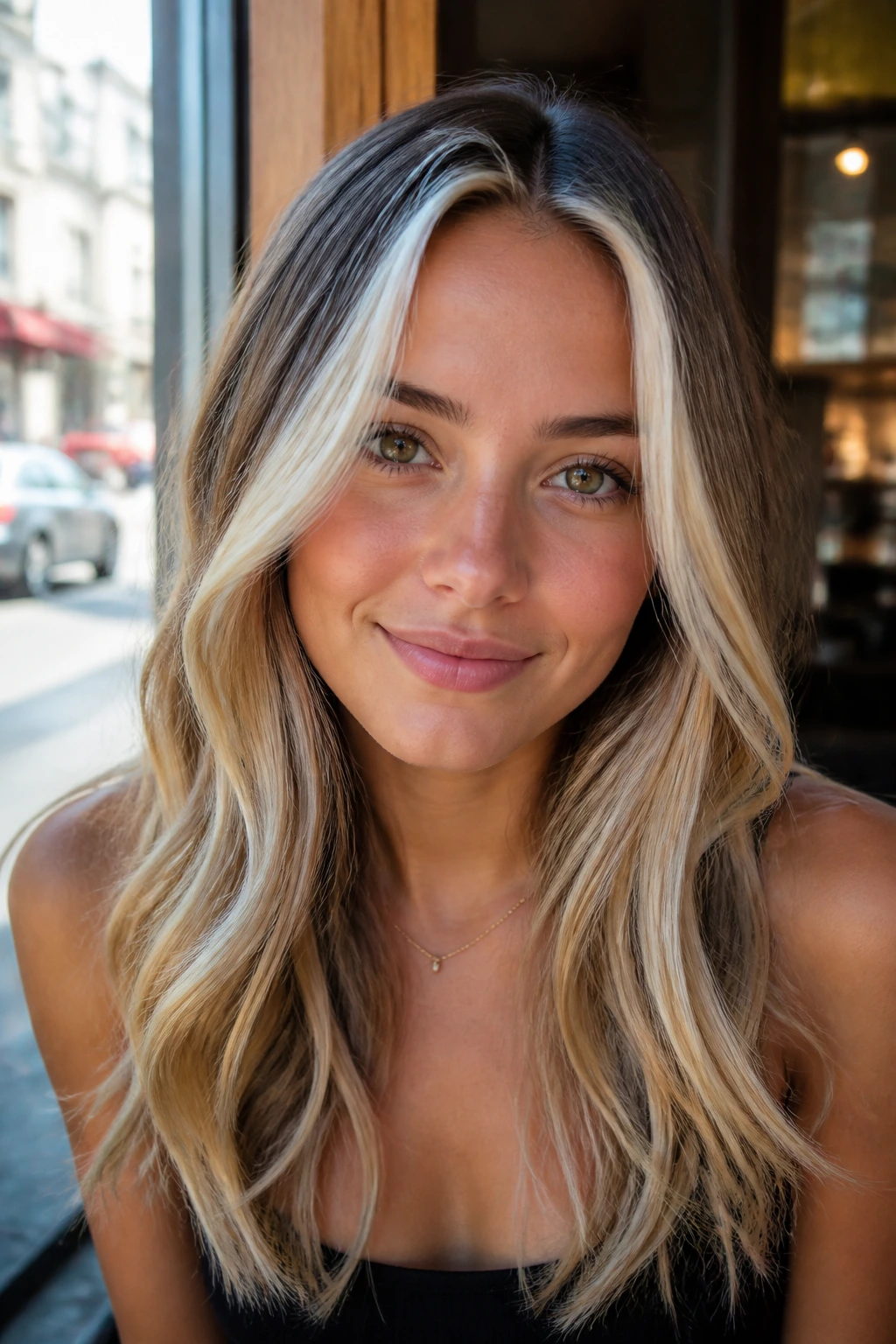
Sometimes the smartest move is not changing the whole head. Bright face-framing pieces in a champagne tone can wake up the complexion fast, especially if the rest of the hair stays one or two steps deeper. This is the version I’d point to for someone who wants a lighter look without a full bleach job.
The placement that matters most
The front pieces should start just off the hairline, not buried too far back. That way the brightness catches the cheekbone area and makes the color feel intentional instead of accidental. Keep the base soft and rooted so the contrast doesn’t turn harsh.
It’s a good choice for people who pull their hair half-up a lot. The money-piece effect still shows, even when the rest is clipped back.
6. Champagne Waves With Beige Lowlights
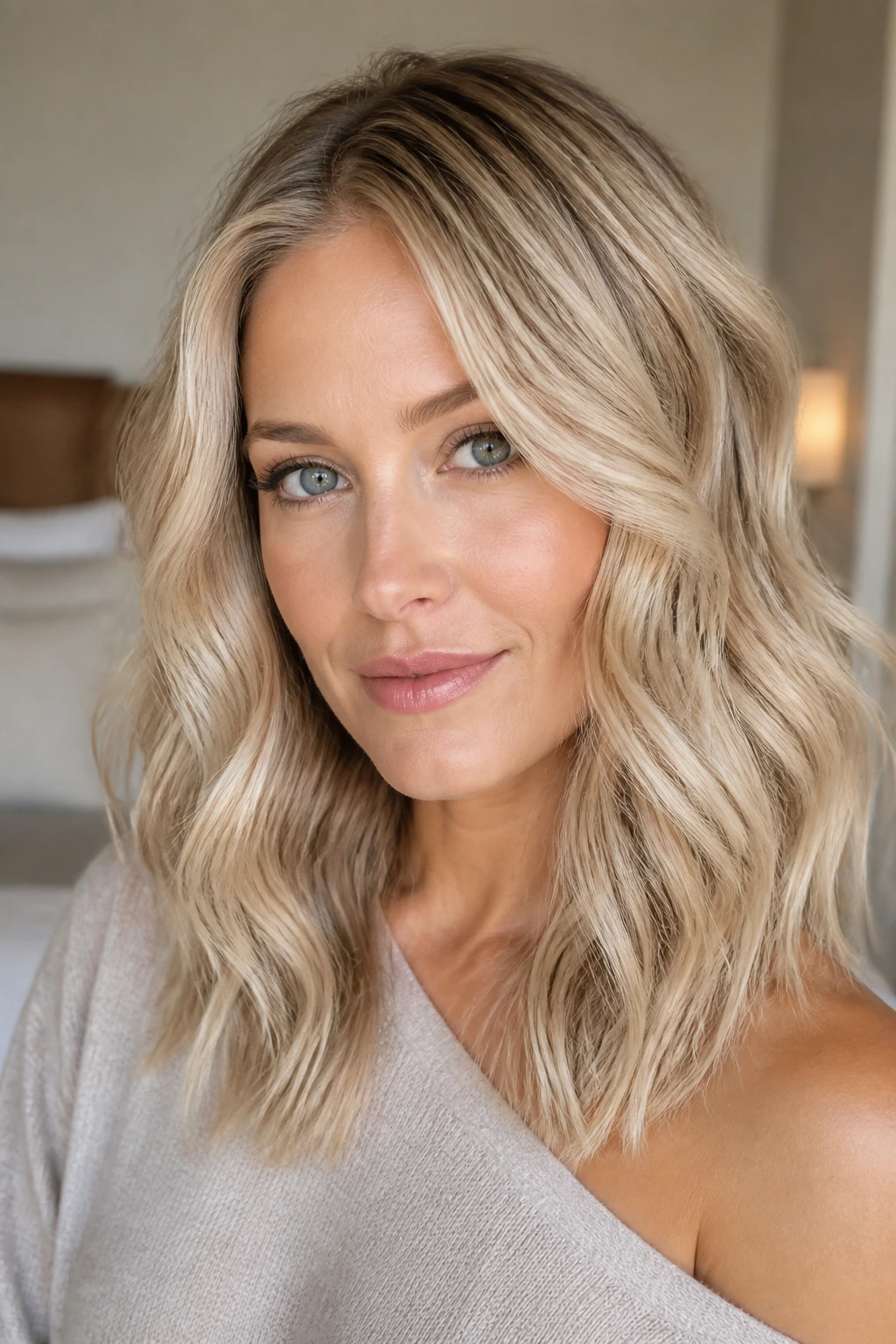
A lot of blonde looks too one-note because the highlights are doing all the work. Beige lowlights fix that. They give the champagne pieces somewhere to breathe, which keeps long waves from looking puffy or over-lightened.
The finish here should feel dimensional, not loud. I like this on medium to thick hair that needs a little visual weight at the bottom. The lowlights also help if your blonde tends to turn flat after a few shampoos, because the darker ribbons keep the shape readable even as the tone softens.
7. Champagne Blonde Bob With a Soft Root Smudge
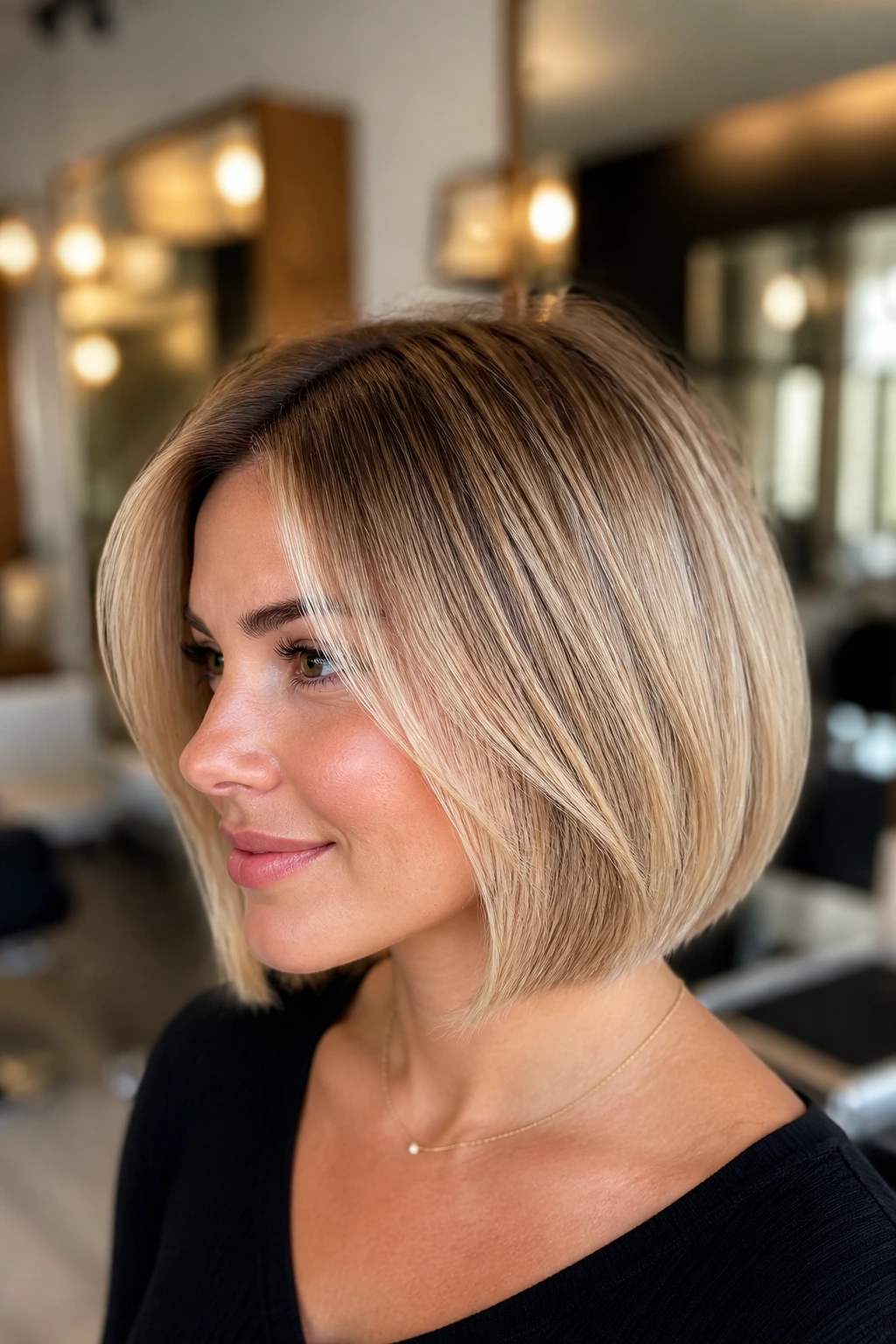
A bob with a smudged root is a good answer for anyone who likes structure but hates obvious grow-out. The champagne tone sits cleanly through the mids, while the root blur keeps the style from looking overly fresh and overworked. That little bit of softness at the part makes a blunt bob feel less severe.
This version is especially strong on straight hair. The cut lines stay crisp, and the blonde reads as smooth rather than patchy. If your color tends to disappear under fluorescent light, ask for a gloss with a beige base and a hint of pearl.
8. Brunette-to-Blonde Champagne Melt
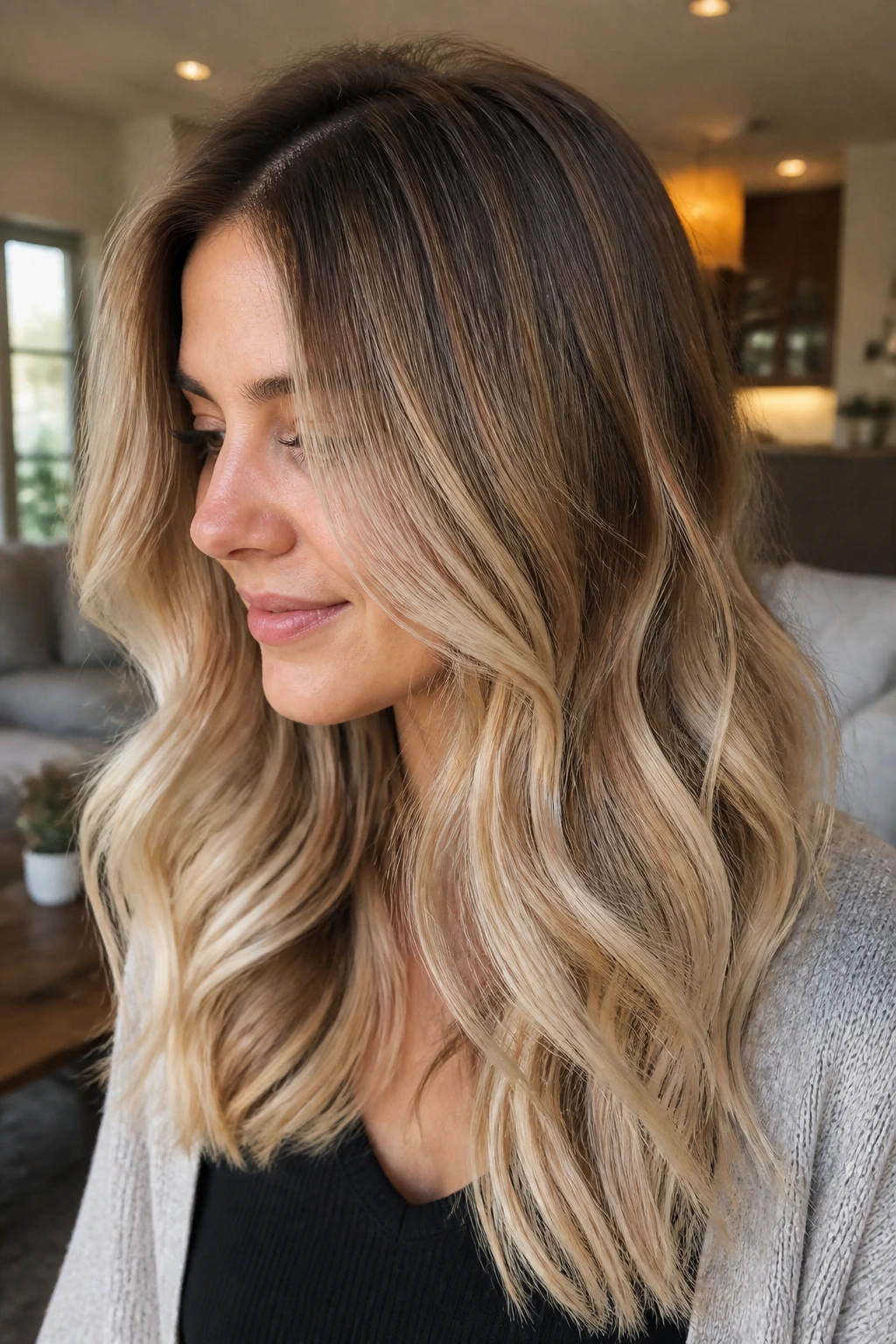
Dark brunettes don’t usually jump straight to pale champagne in one step unless they enjoy maintenance as a hobby. A gradual melt is the smarter path. You keep depth near the root, lift the mids to a warm-neutral blonde, and finish the ends with the lightest champagne tone the hair can handle without feeling brittle.
Why this transition matters
It avoids that awkward band where dark and light meet. More important, it lets the blonde feel like part of the haircut instead of a separate event. The result is easier to wear, easier to grow out, and easier to tone if you want to tweak warmth later.
This is the shade I’d choose for someone who wants noticeable brightness but still likes seeing brunette depth at the crown.
9. Curtain Bangs With Champagne Blonde Layers
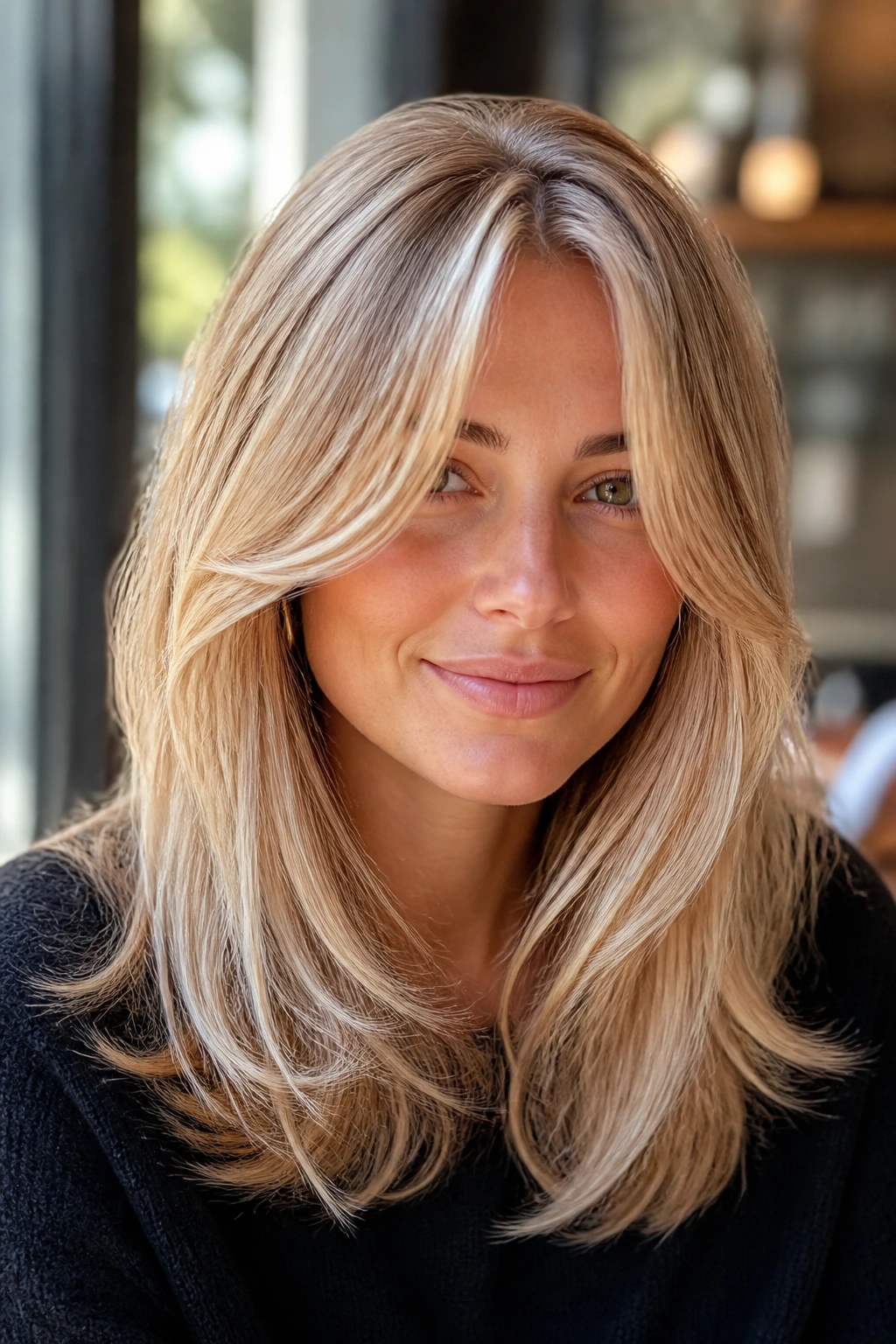
Curtain bangs can make champagne blonde look softer around the face because they break up the bright pieces into something more natural. The bangs catch the lighter tone first, then the longer layers carry the color down in a more relaxed way. That little shift matters a lot on round or square faces.
The tone should stay neutral through the fringe. If the front gets too gold, the bangs can look heavy instead of airy. A clean beige-champagne glaze keeps the movement visible, especially when the bangs are blown back off the cheeks.
10. Champagne Blonde Curls With Ribbon Highlights
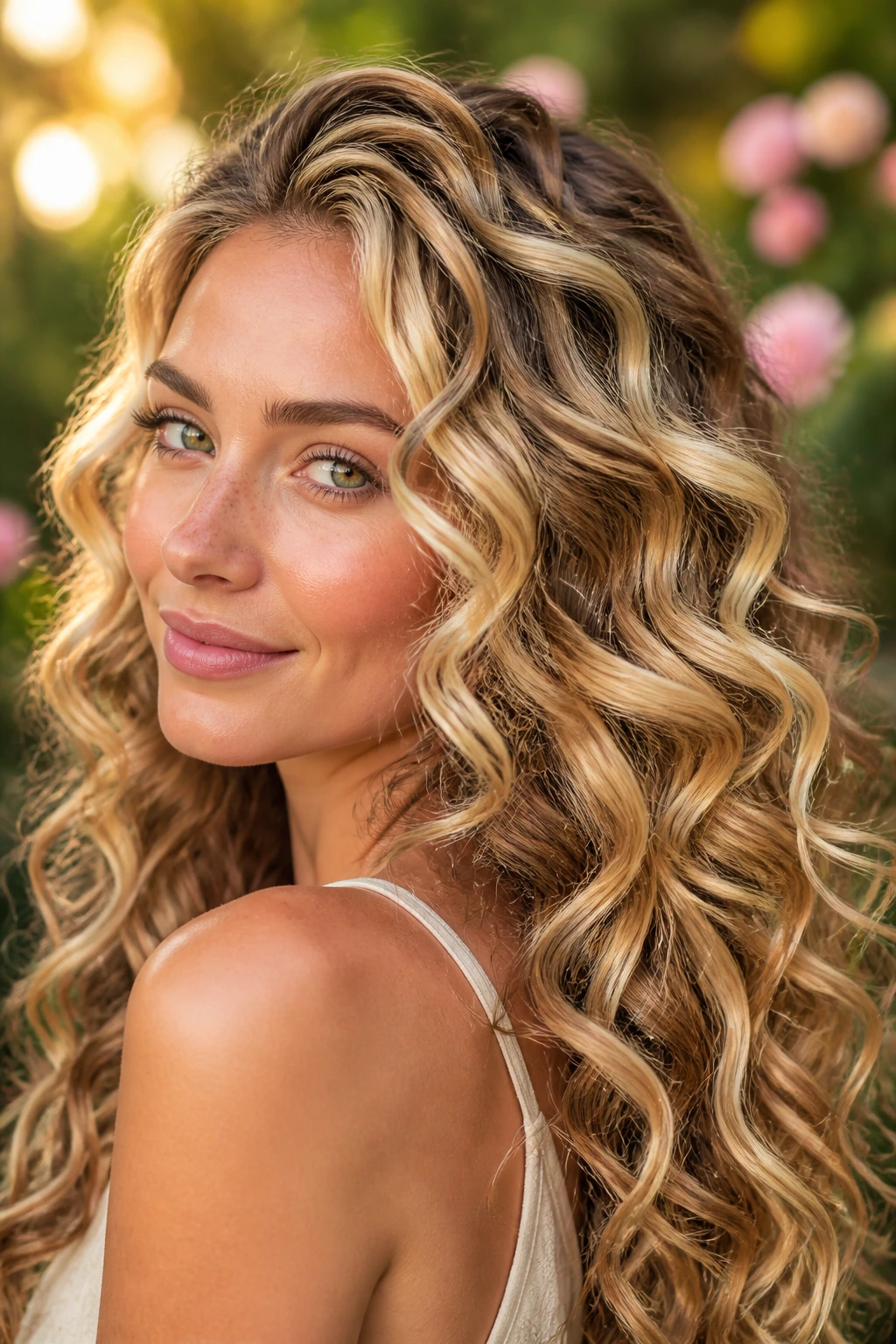
Curly hair wants placement, not blanket brightness. Ribbon highlights in a champagne tone follow the curl pattern instead of fighting it, so the color shows up in soft loops rather than random streaks. That makes the finish look more natural and, frankly, more expensive.
How to place the light pieces
Keep the brightest ribbons where the curls naturally clump and turn outward. Leave some depth underneath so the ringlets have contrast. If every curl is the same tone, the texture gets blurry.
This look is gorgeous when the hair is diffused to about 80 percent dry and then left alone. The less you separate the curls with your fingers, the cleaner the champagne ribbons read.
11. Champagne Shag With Piecey Ends
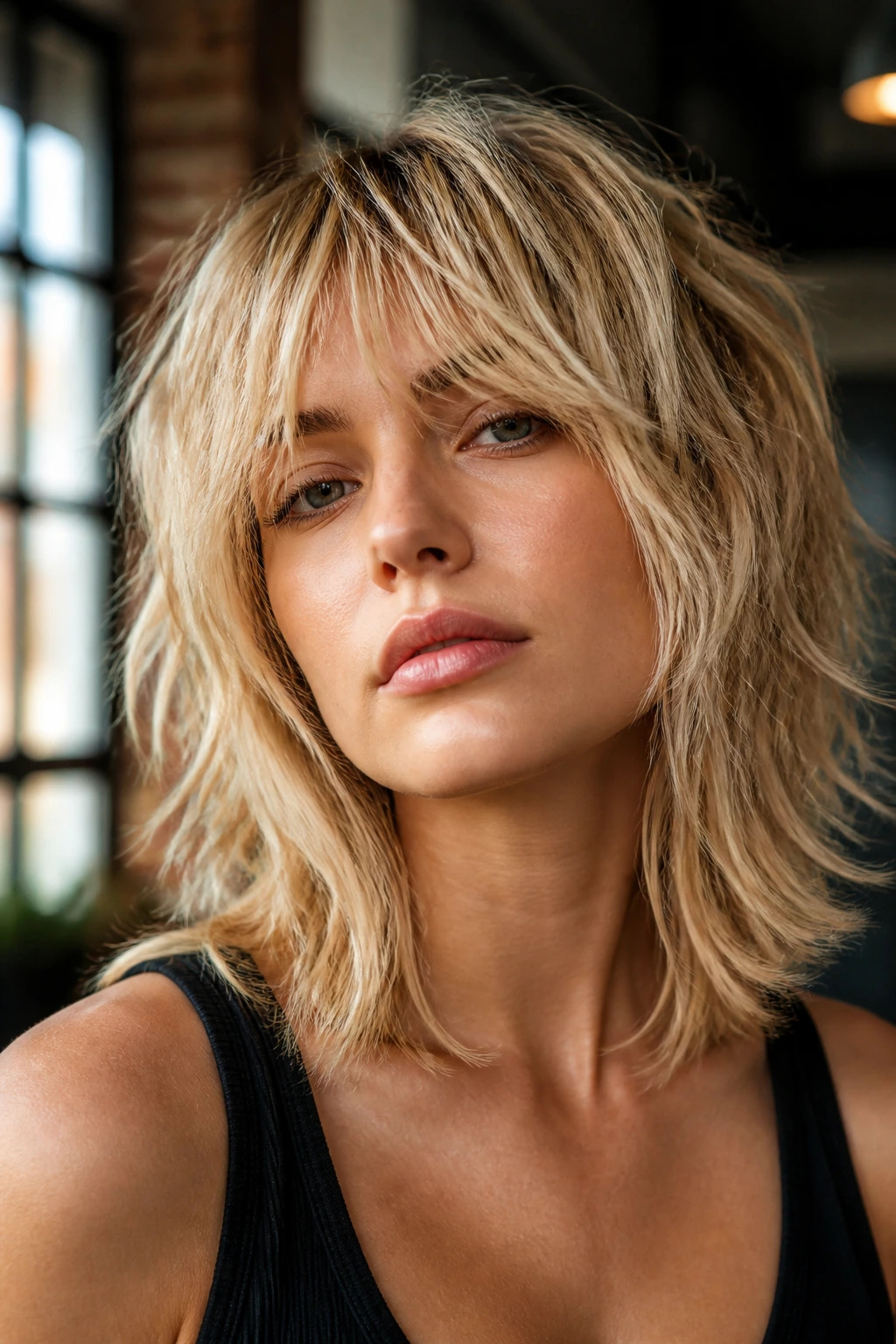
A shag needs dimension. If the color is too flat, the cut can start to look like a shag from a bad photo instead of one with real texture. Champagne blonde fixes that by catching the ends and the face-framing layers in different ways, so the movement looks built in.
The version that works best here is slightly beige with a few brighter pieces through the crown. That keeps the cut lively without turning the top section too pale. Air-dried texture helps, but a quick pass with a round brush at the fringe can make the whole thing read sharper.
12. Butterfly Cut in Champagne Blonde
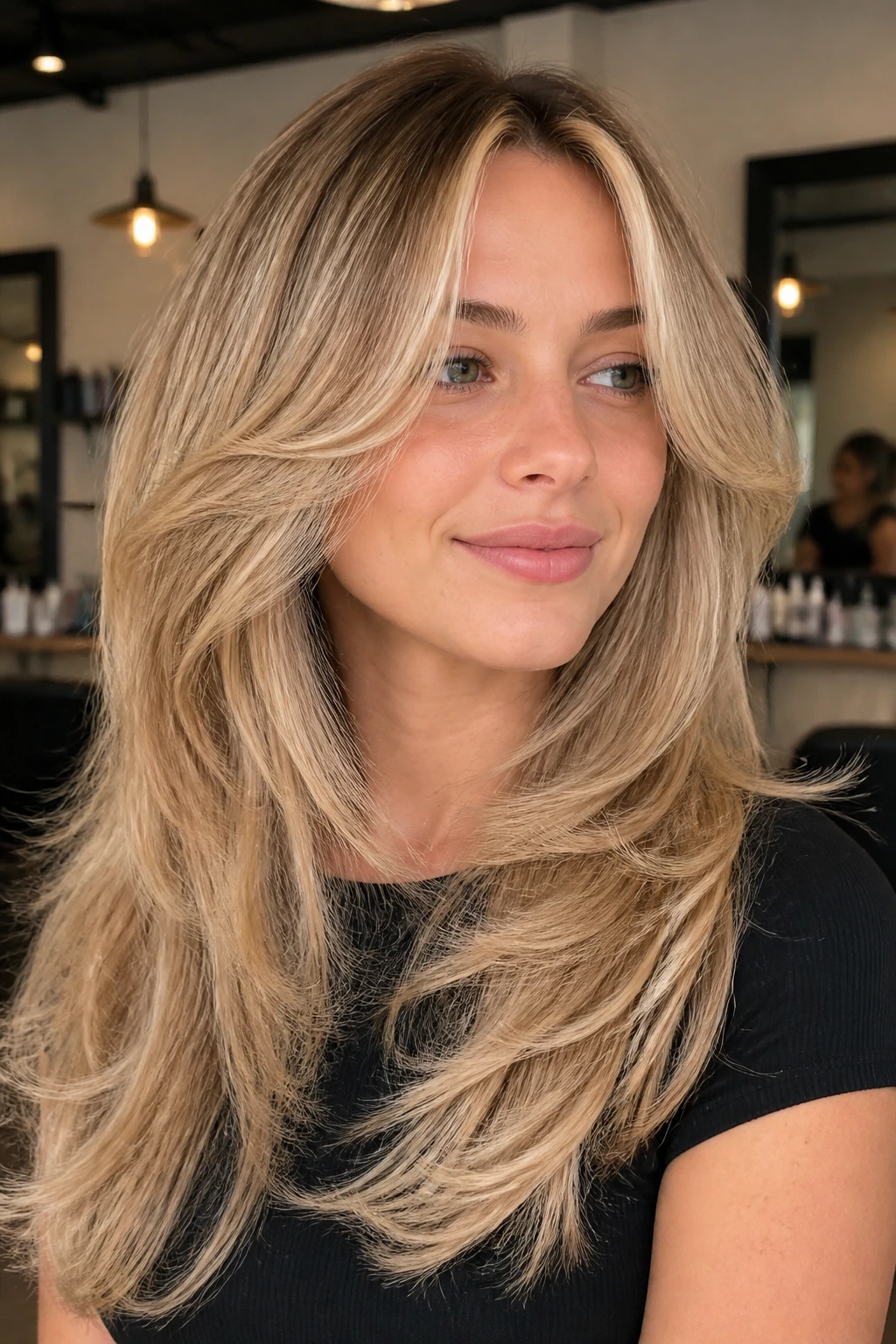
Butterfly layers and champagne blonde are a very good pair because both are about lift and movement. The long layers let the lighter pieces fall across the head in soft arcs, while the shorter top layers bring brightness closer to the face. It’s a cut that likes dimension; flat color wastes the shape.
I’d keep the root a bit deeper here, even if only by half a level. That contrast keeps the layers visible. If the blonde runs all the way to the scalp with no separation, the butterfly effect gets lost.
13. Mid-Length Layers With Champagne Ribboning
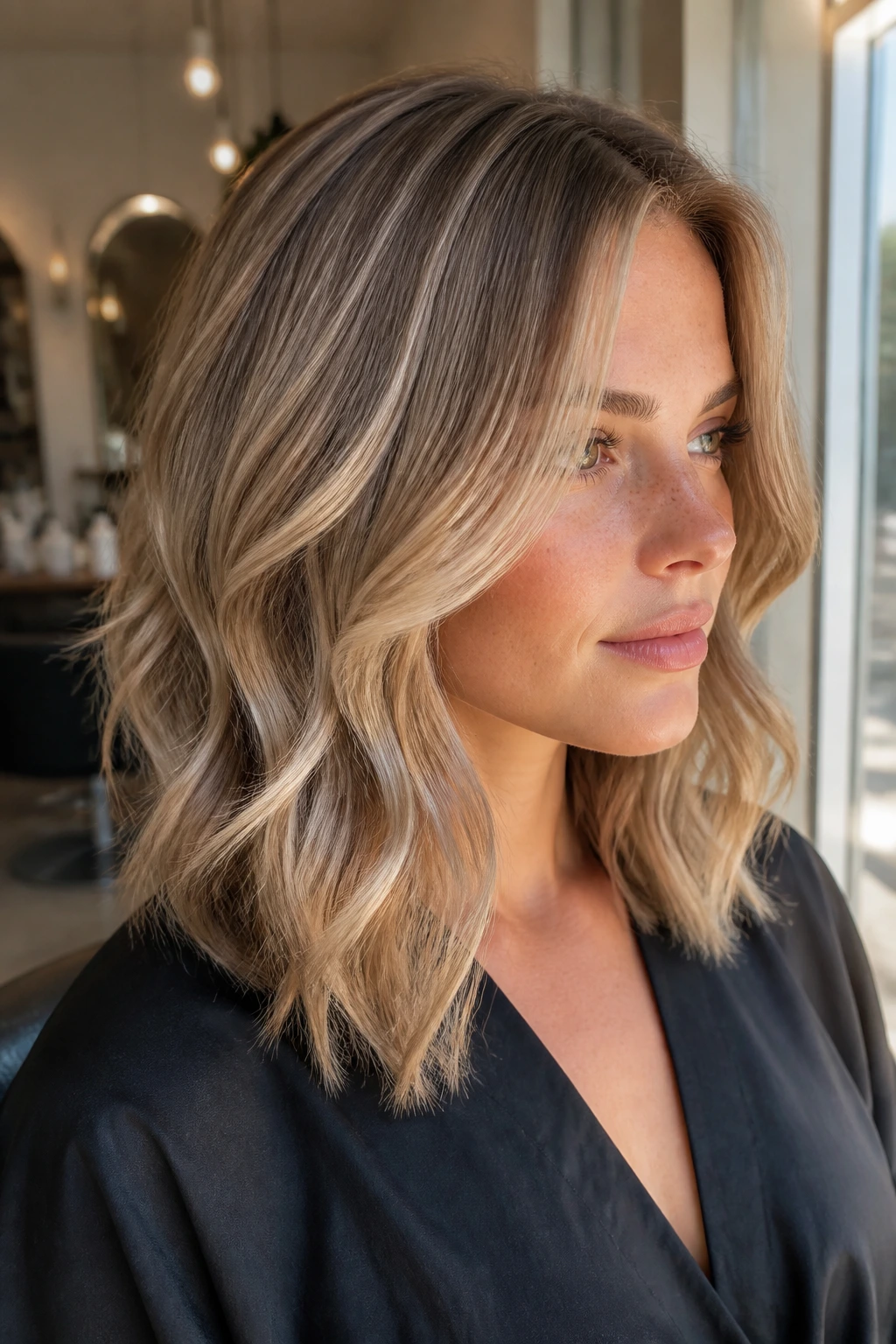
Mid-length layers are one of the easiest canvases for champagne blonde because there’s enough hair to show dimension, but not so much length that the shade disappears at the ends. The color can live in ribbons through the front and sides, then fade into softer beige at the back. That balance looks especially good when the hair is worn in loose bends rather than tight curls.
This is a smart choice if you want movement without a high-contrast money piece. The layering does some of the work for you.
14. Champagne Blonde for Fine Hair With Bright Ends
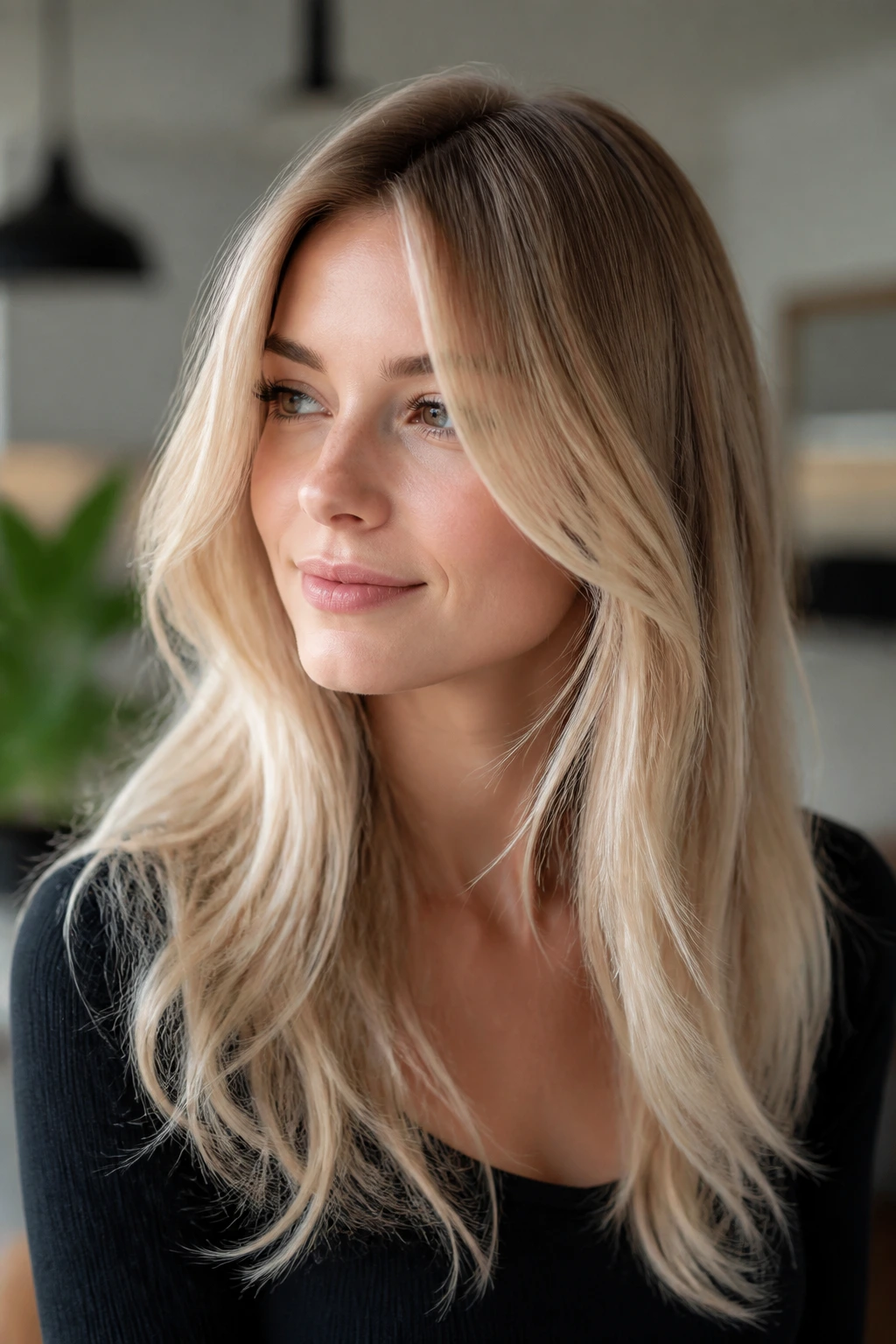
Fine hair can look sparse if the highlights are too chunky, so the better move is a lighter champagne tone concentrated through the lower half. Bright ends make the hair appear thicker because the eye reads the pale tips as more length and fullness. The root stays a touch deeper, which gives the cut a little body.
What to avoid
Skip aggressive ash toning here. Fine hair picks up toner fast, and too much cool pigment can make the ends look dull or slightly gray. A beige gloss with a small amount of gold usually keeps the finish brighter and cleaner.
A one-length cut or soft lob works well with this color. The edge looks denser, and that helps the blonde read full instead of wispy.
15. Champagne Blonde for Thick Hair With Soft Dimension
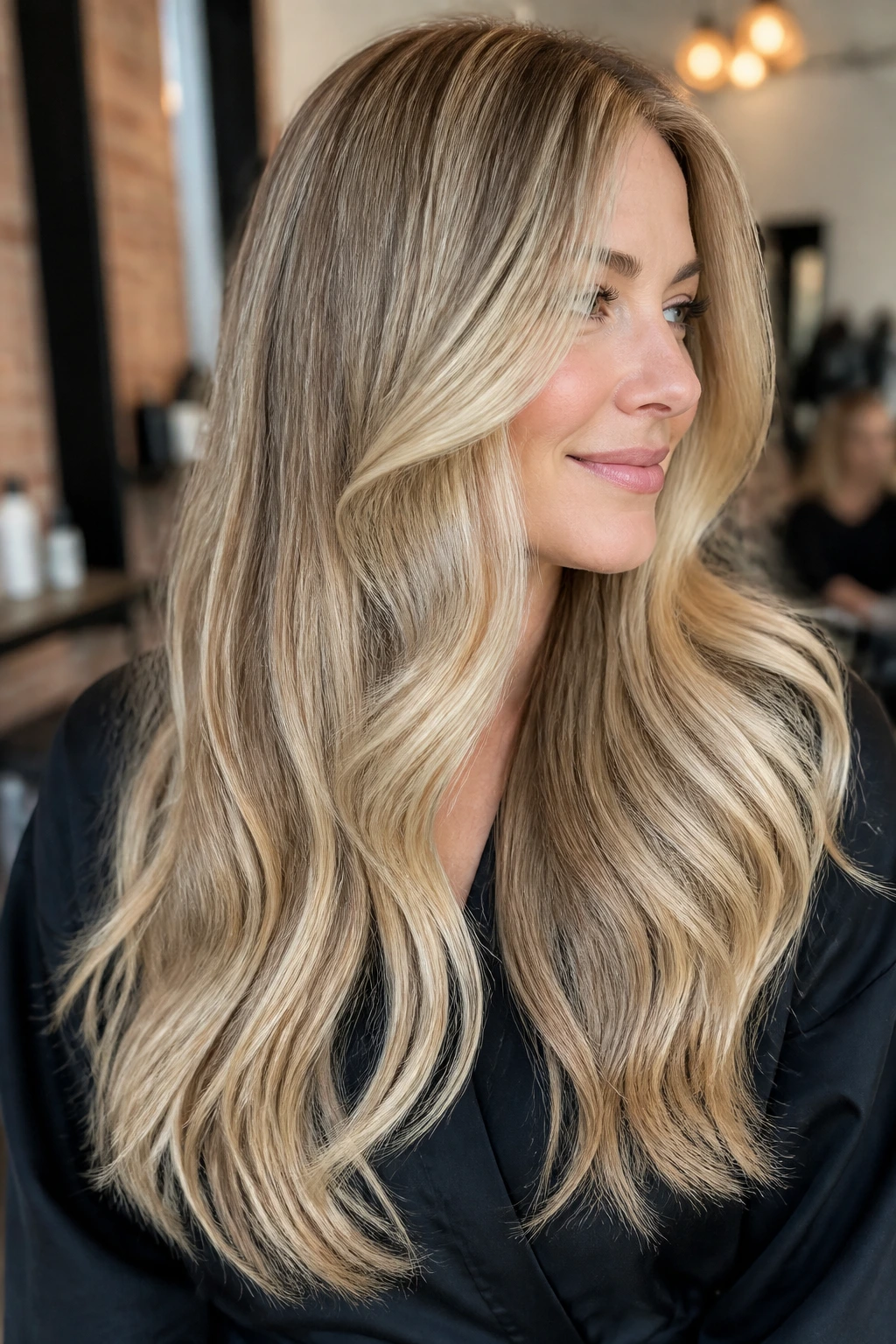
Thick hair can take more contrast, but it still needs thoughtful placement or it turns into a broad, heavy sheet of color. Champagne blonde with soft dimension solves that by mixing pale ribbons with deeper beige sections. The result is movement you can actually see when the hair swings.
This look is best when the stylist leaves some depth underneath the top layer. That prevents the blonde from floating on top like frosting. On very thick hair, I like it with long layers and a blowout that bends the ends away from the face.
16. Vanilla Underlayers Hidden Beneath Champagne Blonde
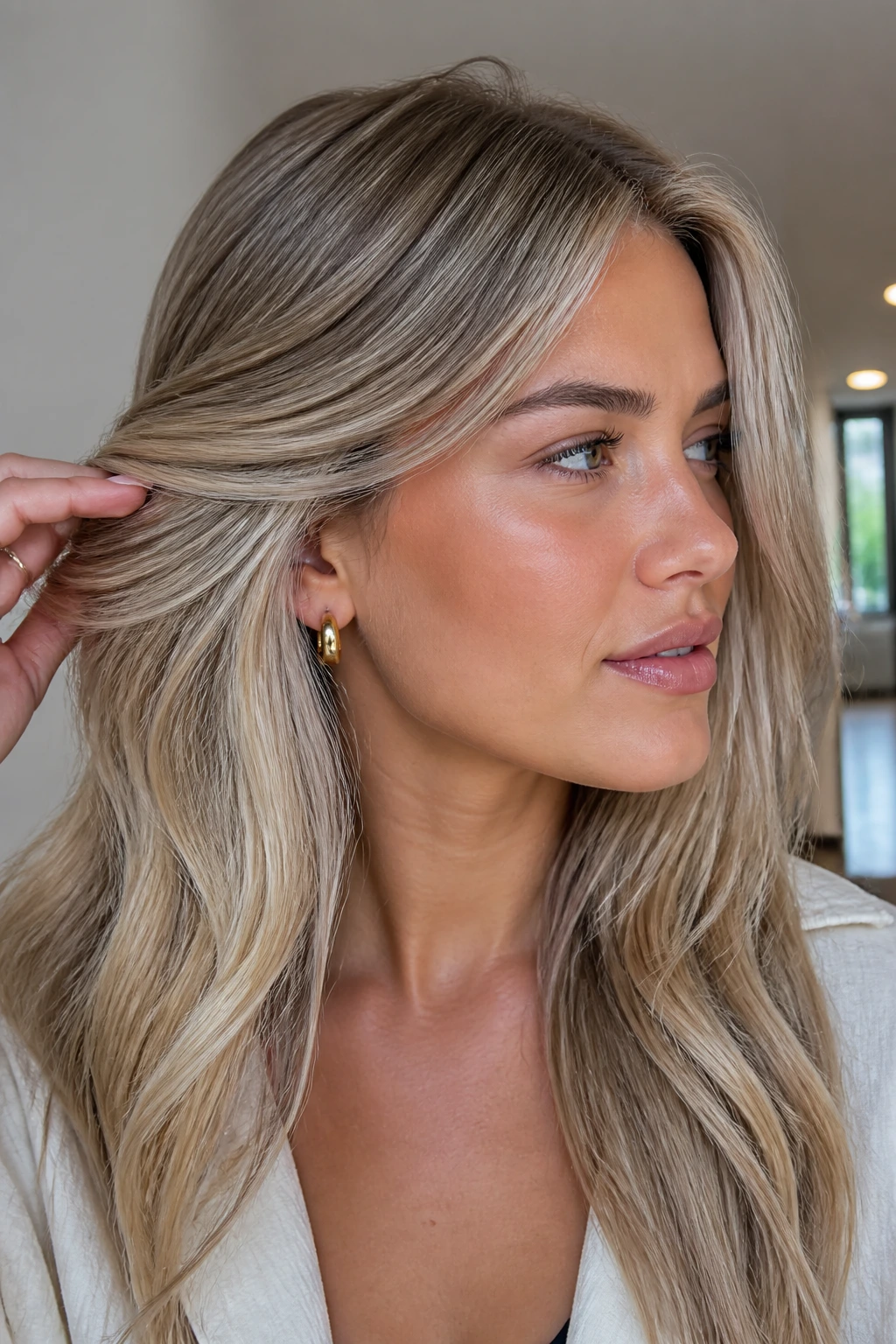
Hidden underlayers are fun because they give you brightness when the hair moves, not just when it’s standing still. A vanilla blonde underlayer beneath champagne top pieces adds a flash of lighter color without making the whole head high-maintenance. It’s a neat trick on mid-length cuts and shoulder-length shags.
The outer layer should stay soft and neutral. That contrast between outer champagne and inner vanilla gives the hair a little surprise when it’s tucked behind the ear or worn half up. It’s subtle, but not boring.
17. French Bob in Champagne Beige
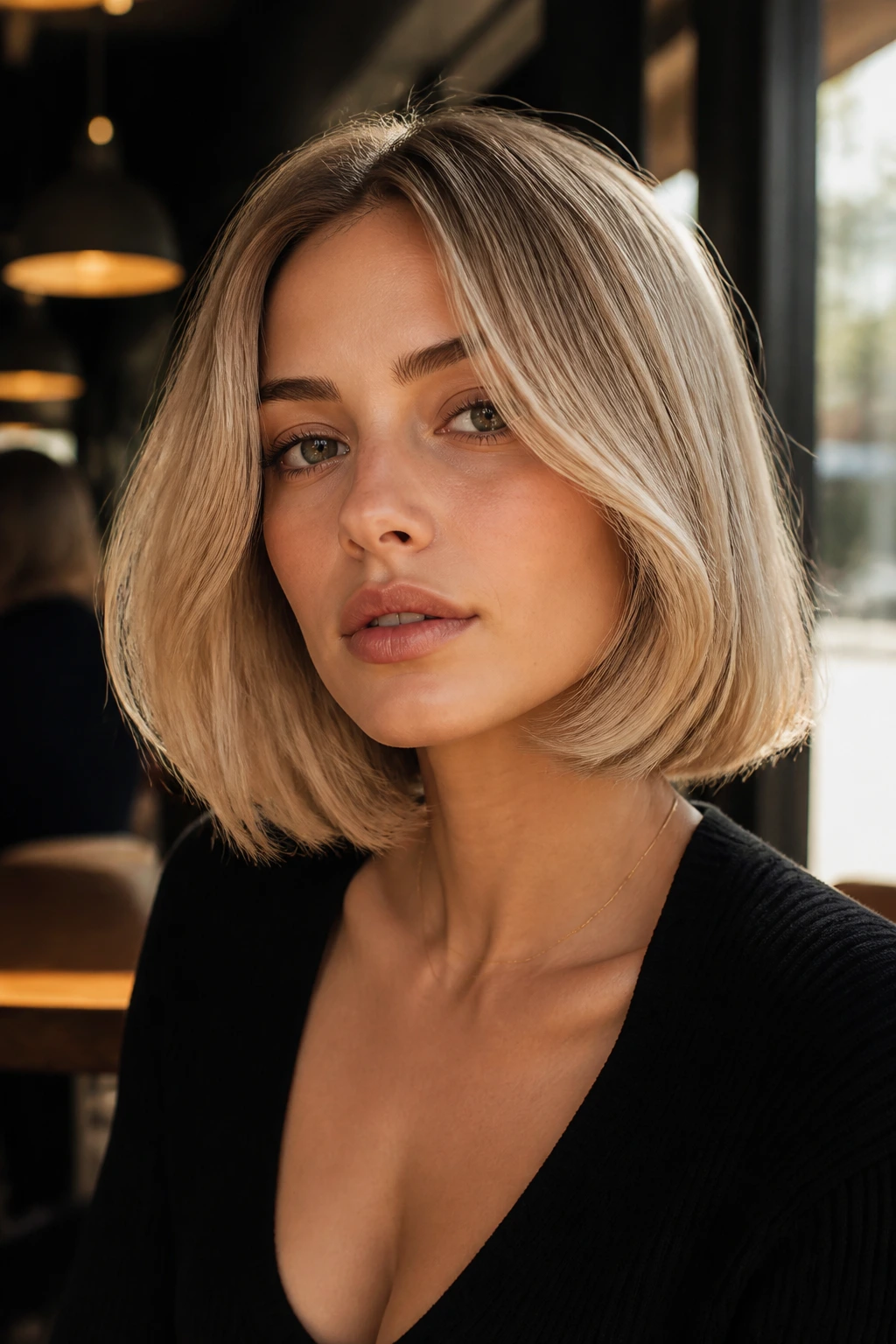
A French bob with champagne beige color feels tidy in the best way. The cut is short enough that every ounce of tone matters, and the beige side of champagne keeps it from looking too icy or too warm. A small bend at the ends and a soft, brushed-out finish make the whole thing read chic rather than rigid.
This works well if you like a center part and air-dried texture. The color should look smooth even when the style is not. That’s the sign the toner is doing real work.
18. Long Layers in a Soft Champagne Glow
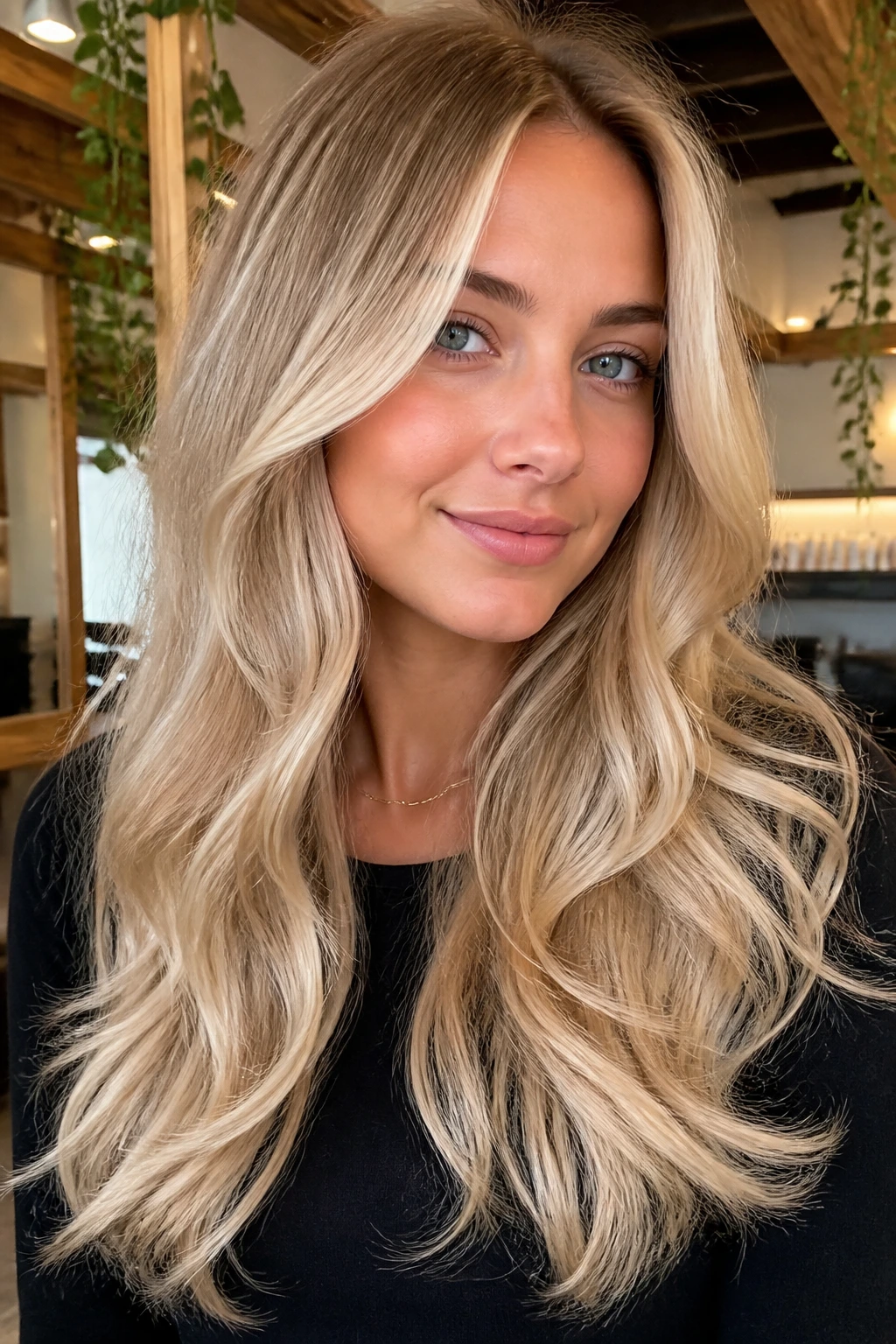
Long layers need lightness in the right places or they can drag the face down. Champagne blonde, placed mostly through the mid-lengths and around the front, gives those layers some lift without sacrificing length. It’s a simple idea, but a smart one.
I’d keep the ends slightly lighter than the root zone. That keeps the long shape from looking too dark at the bottom, which is a common problem with lengthy blonde hair. A soft curl through the front pieces helps the shade show off.
19. Champagne Blonde With Rosé Undertones
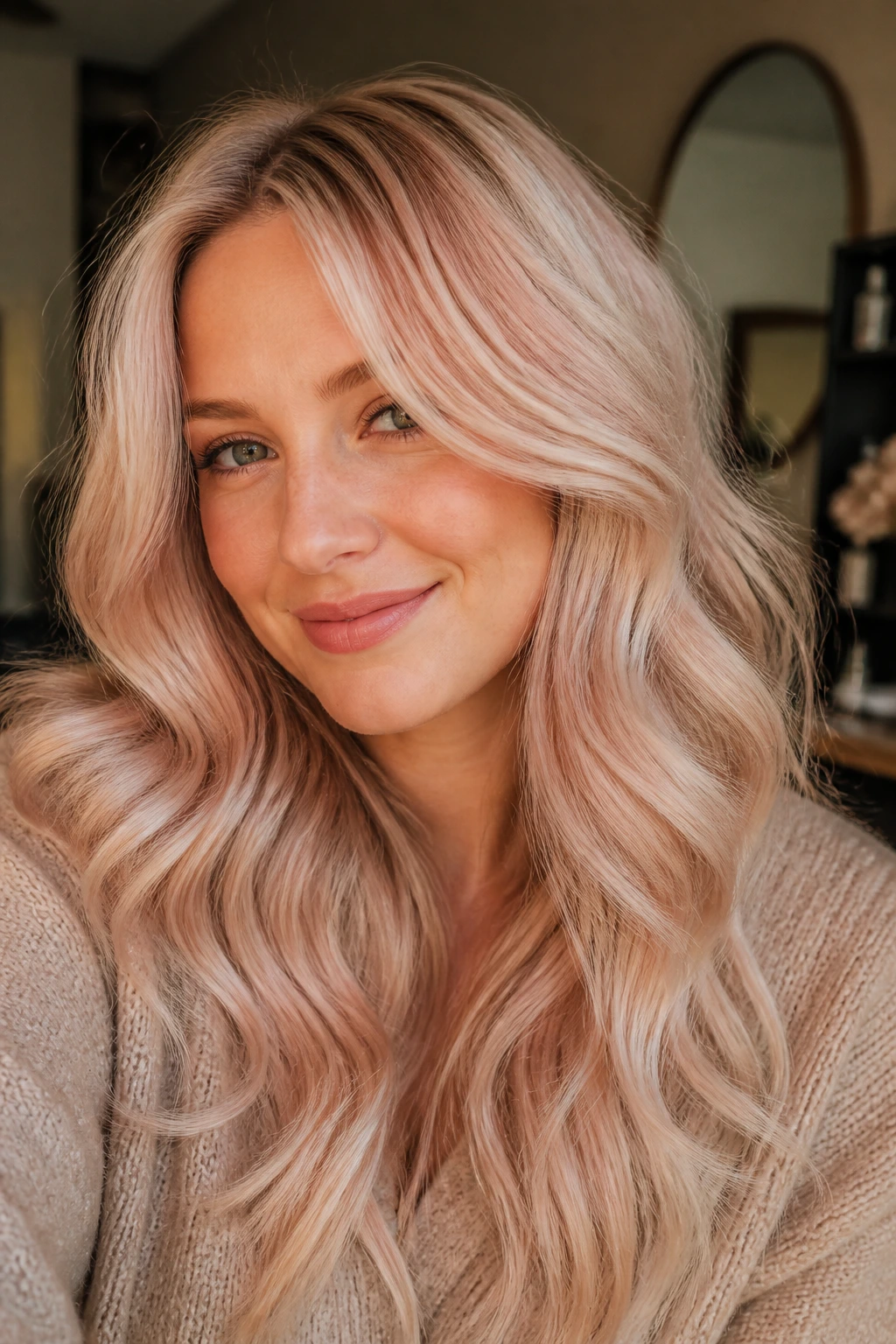
Rosé champagne is for someone who wants the blonde to feel warmer and a little more playful. The pinkish undertone should stay faint — think blush reflection, not obvious rose gold. When handled lightly, it can make pale skin look less washed out and add a little warmth to cool complexions.
This is one of those shades that changes in different light. Under daylight, it reads beige-gold with a hint of blush. Indoors, the rosé note comes forward a little more, especially on soft waves.
20. Mushroom Beige Champagne Blonde
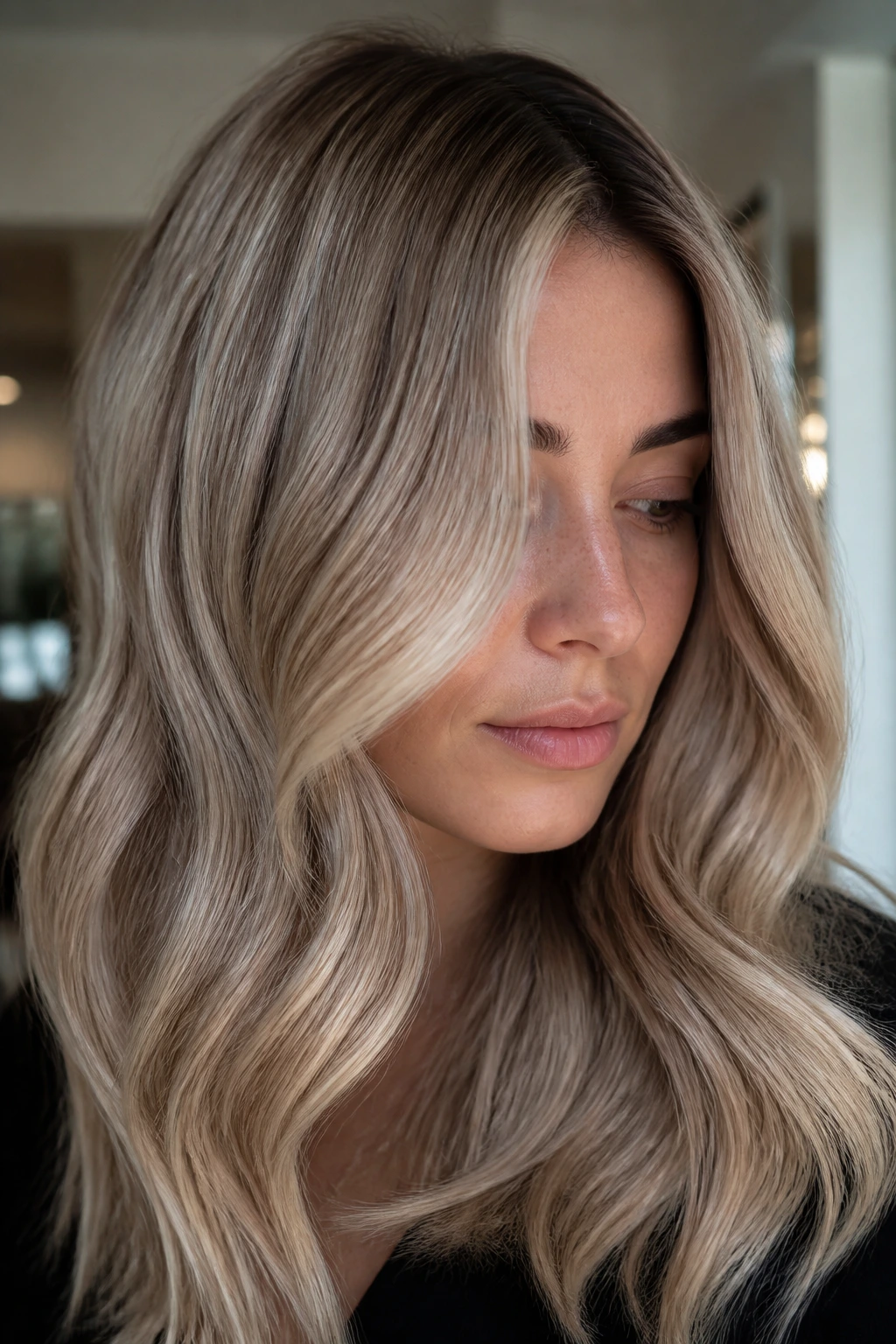
Mushroom beige sounds odd until you see it on the right base. The cooler, earthier beige keeps champagne from getting too sunny, and that can be a relief if golden blonde tends to fight your skin tone. I like this version on darker blondes and brunettes who want a softer lift rather than a bright blonde jump.
The finish should look muted in a good way. Not muddy. Muted. That distinction matters. The best mushroom-beige champagne has enough lightness to shine, but enough ash-beige depth to keep the whole look grounded.
21. Ice-Glow Champagne Balayage
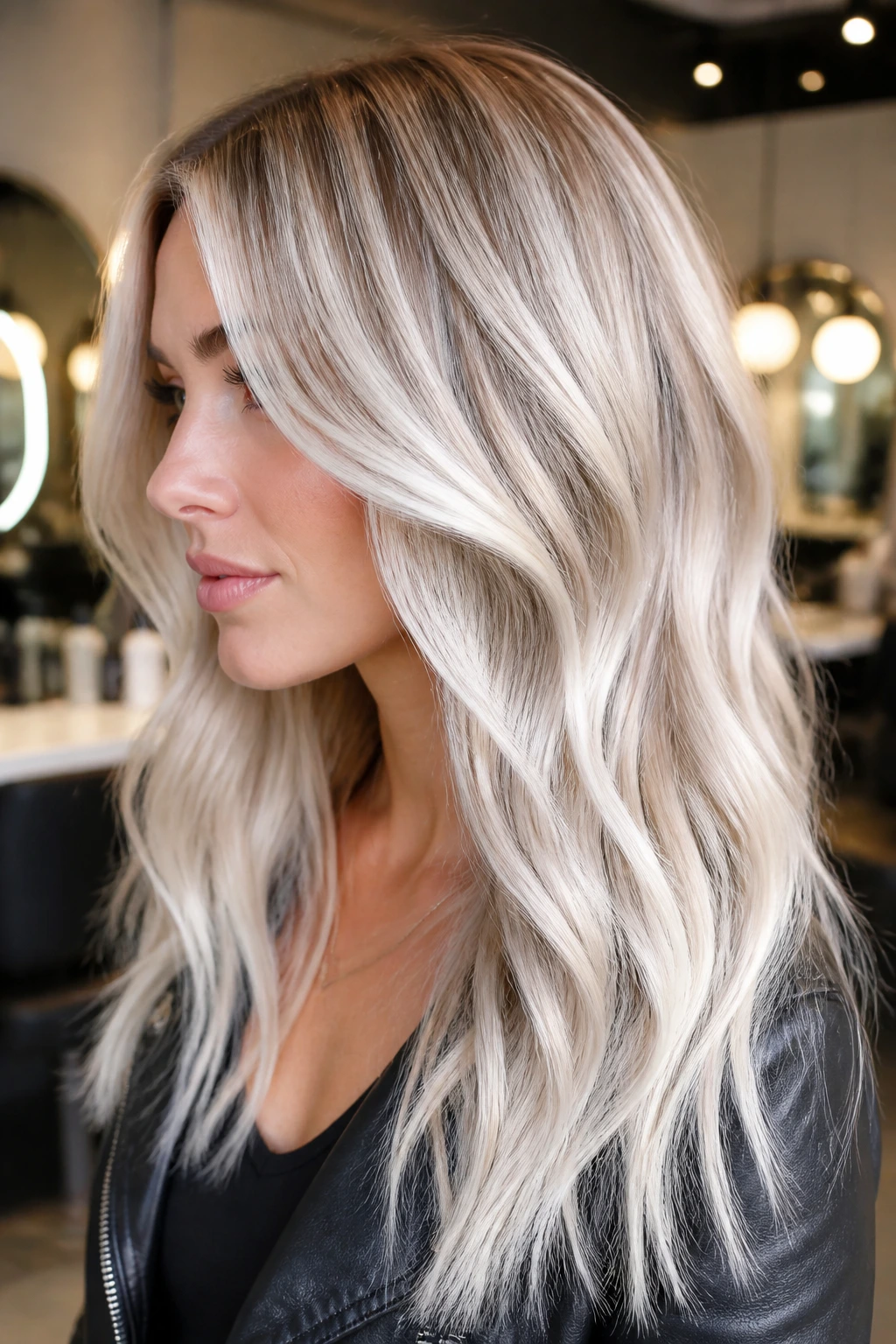
This is the cooler end of the champagne family, and it only works if the hair is lifted enough to stay bright. Ice-glow champagne balayage should look like pearl, beige, and a trace of silver are all sharing the same strand. It’s crisp, but not icy to the point of feeling brittle.
Best on hair that takes tone evenly
Porous ends can go gray fast with this version, so the placement matters. Keep the coolest pieces away from the most fragile ends if your hair tends to soak up pigment like a sponge. A glossy topcoat helps the whole look stay reflective instead of smoky.
If you wear straight styles, this version is especially striking. Every line shows.
22. Champagne Blonde With a Soft Shadow Root
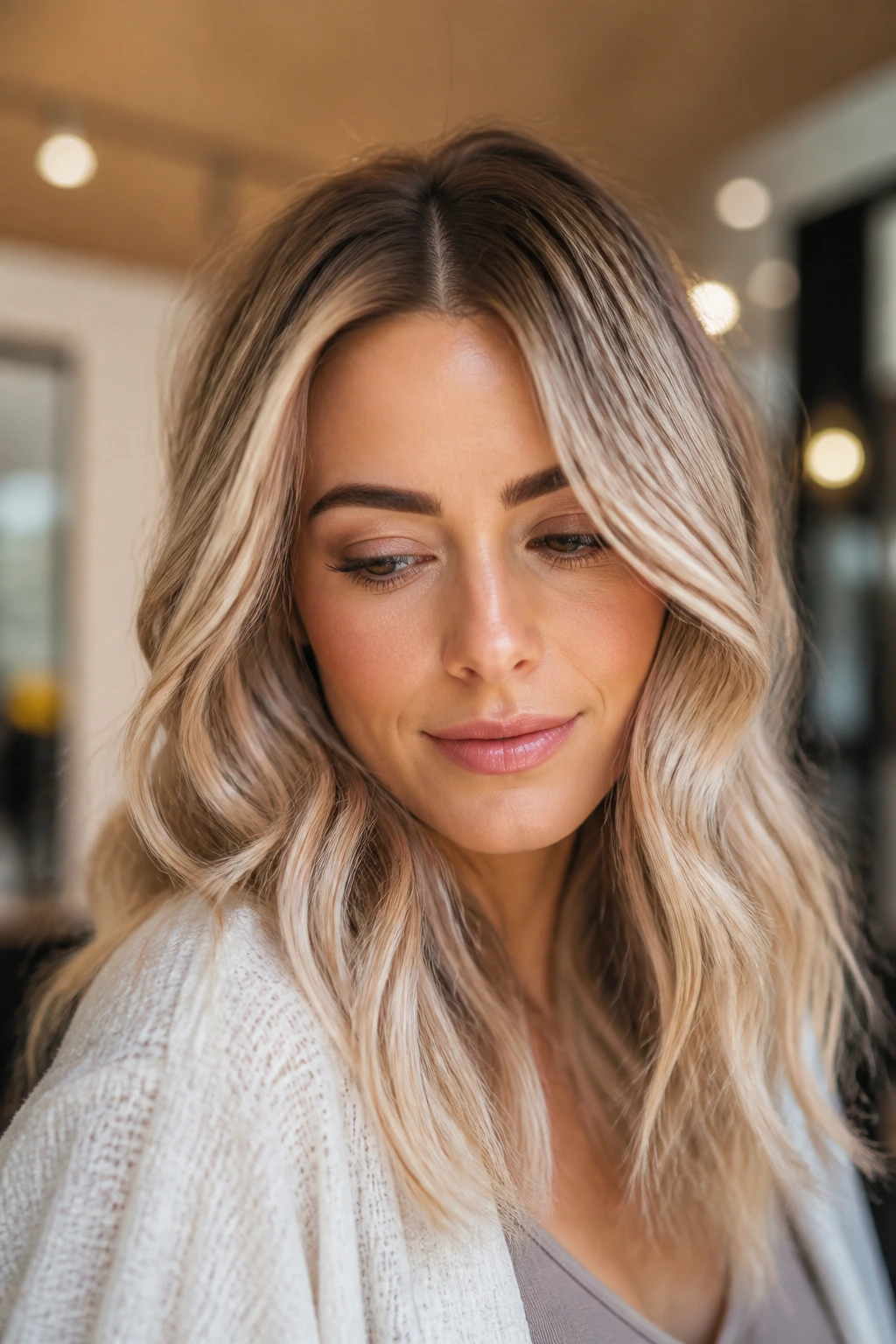
A soft shadow root is one of the easiest ways to keep champagne blonde wearable. It gives the color a little depth at the scalp and lets the lighter pieces look deliberate instead of overprocessed. The root should be soft enough that you barely notice where the darker color stops.
This version suits people who don’t want to visit the salon every six weeks. It also helps if you part your hair in the same place all the time, because the root remains forgiving when the line shifts. Add a few brighter strands around the face and the whole thing comes alive.
23. Straight Glass Hair in Champagne Blonde
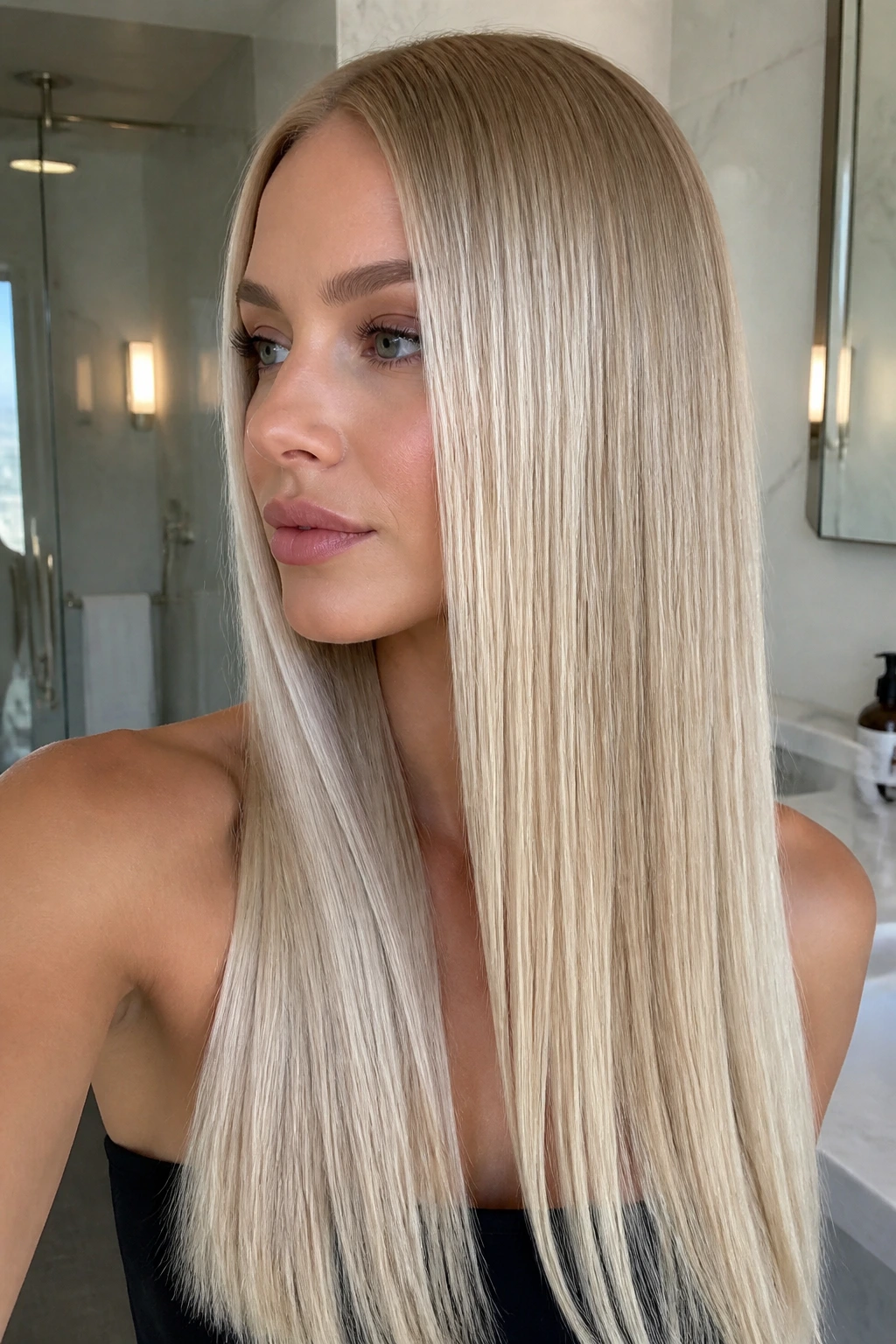
Straight, glossy hair can make champagne blonde look almost liquid. Without texture to break it up, the tone has to do all the work, so shine matters a lot here. The best finish is a clean beige-pearl blonde with no obvious stripes or chunking.
I’d keep the cut blunt or slightly rounded at the ends. That gives the light a clean edge to move across. If the hair is too layered, the straight style can start looking thinner than it really is.
24. Beach Waves With Champagne Blonde Ribbons
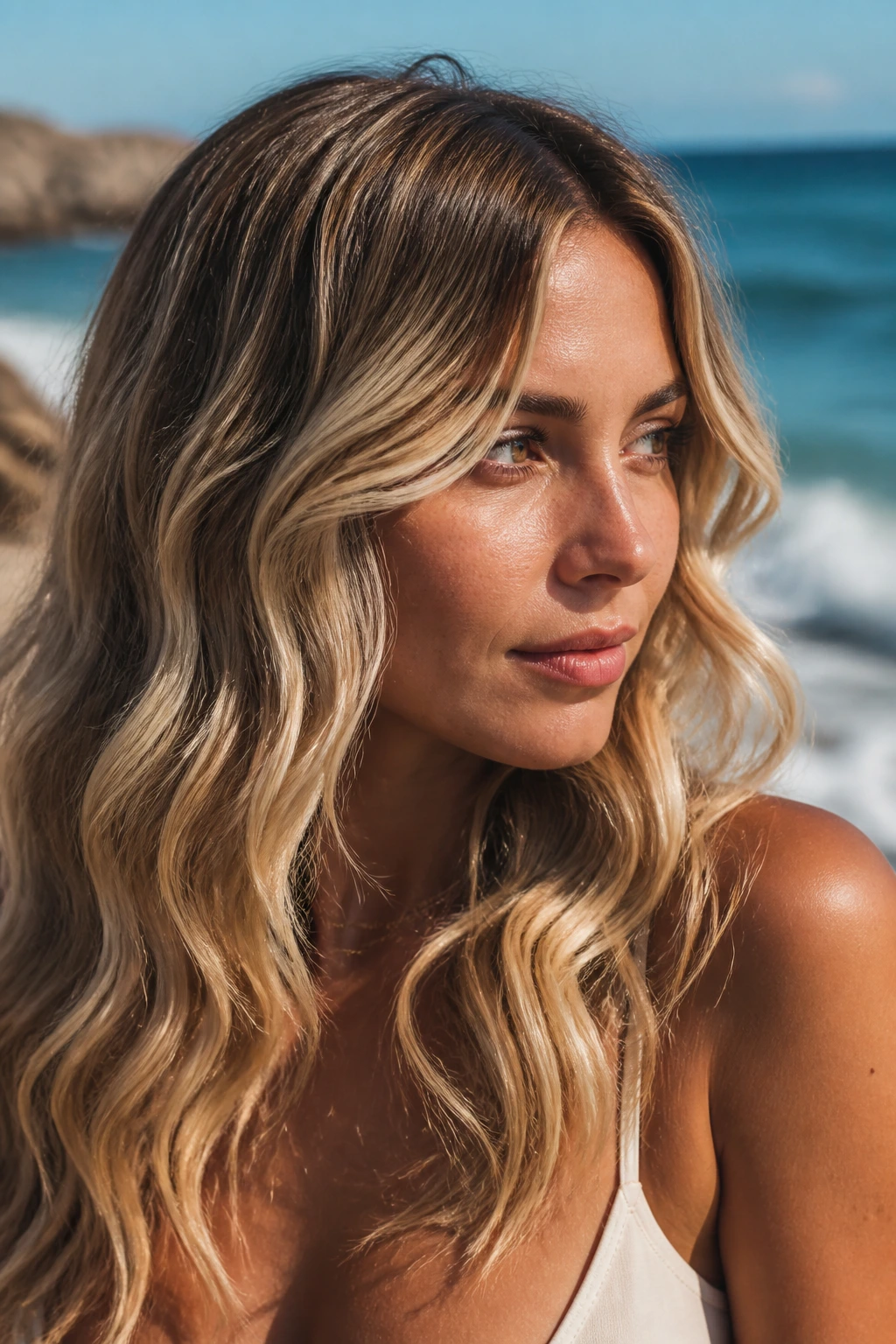
Beach waves are where champagne blonde becomes a little easiergoing. The waves break up the highlights so the color looks sun-softened, not salon-bright. If you want a version that feels relaxed without losing polish, this one is hard to beat.
The trick
Don’t over-texturize the hair before coloring, if you’re talking to your colorist about placement. The highlights should still follow the natural bends, not sit randomly on top. A few brighter strands near the face and a softer spread through the rest of the head keep the wave pattern readable.
Sea spray, yes. Crunchy salt helmet, no.
25. Teasylight Champagne Highlights
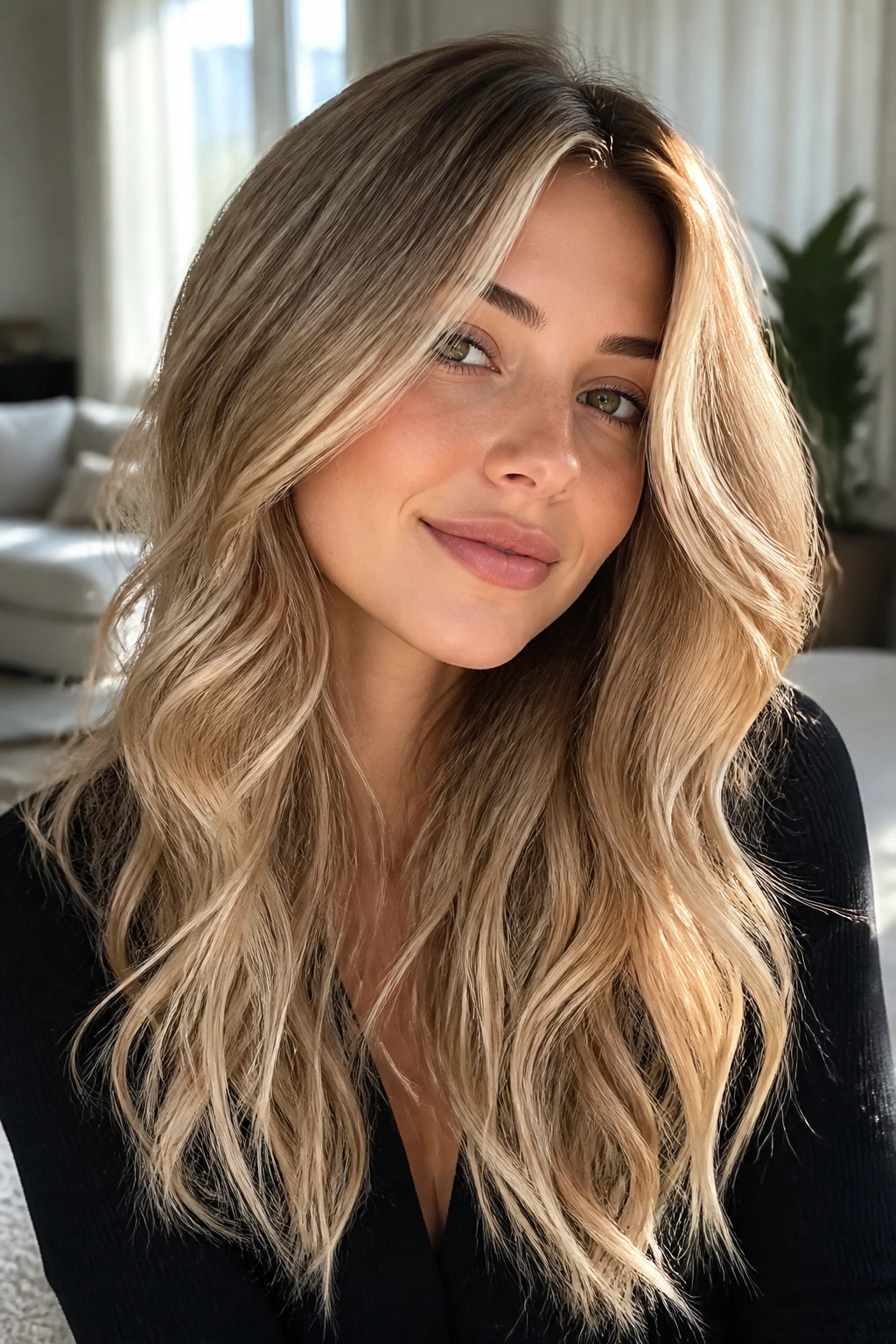
Teasylights are for people who hate obvious foil lines. The hair is teased before lightener goes on, which softens the transition and makes the champagne tone feather out more naturally. That gives a very blended finish that looks especially good on long layers and blowouts.
The result is softer than classic highlight stripes and a little easier to grow out. Champagne works well here because the tone itself already sits in that middle zone between warm and cool. Put the two together and the color looks like it belongs there.
26. Chunky Face Frame in Bright Champagne
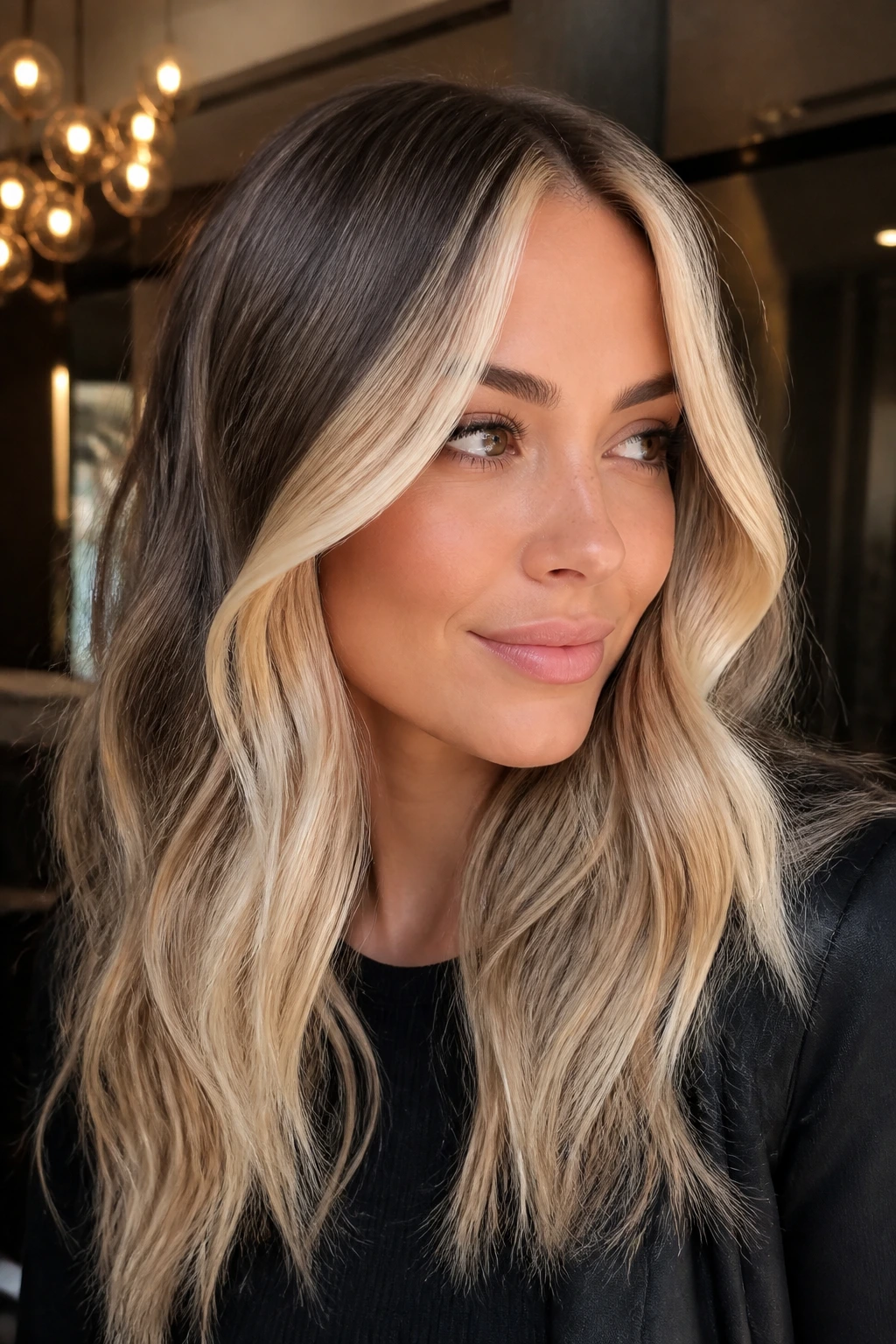
Not every champagne blonde has to be whisper-soft. A chunkier face frame can give the style a sharper edge, especially on straight hair or a sleek bob. The key is to keep the brighter sections intentional and the rest of the hair muted enough that the front pieces do the talking.
This is a stronger look. It suits people who want the face frame to show even when the hair is tucked behind the ears. If you go this route, keep the tone beige-champagne rather than yellow-gold, or it can drift into a dated stripe very fast.
27. Collarbone Waves With a Soft Champagne Finish
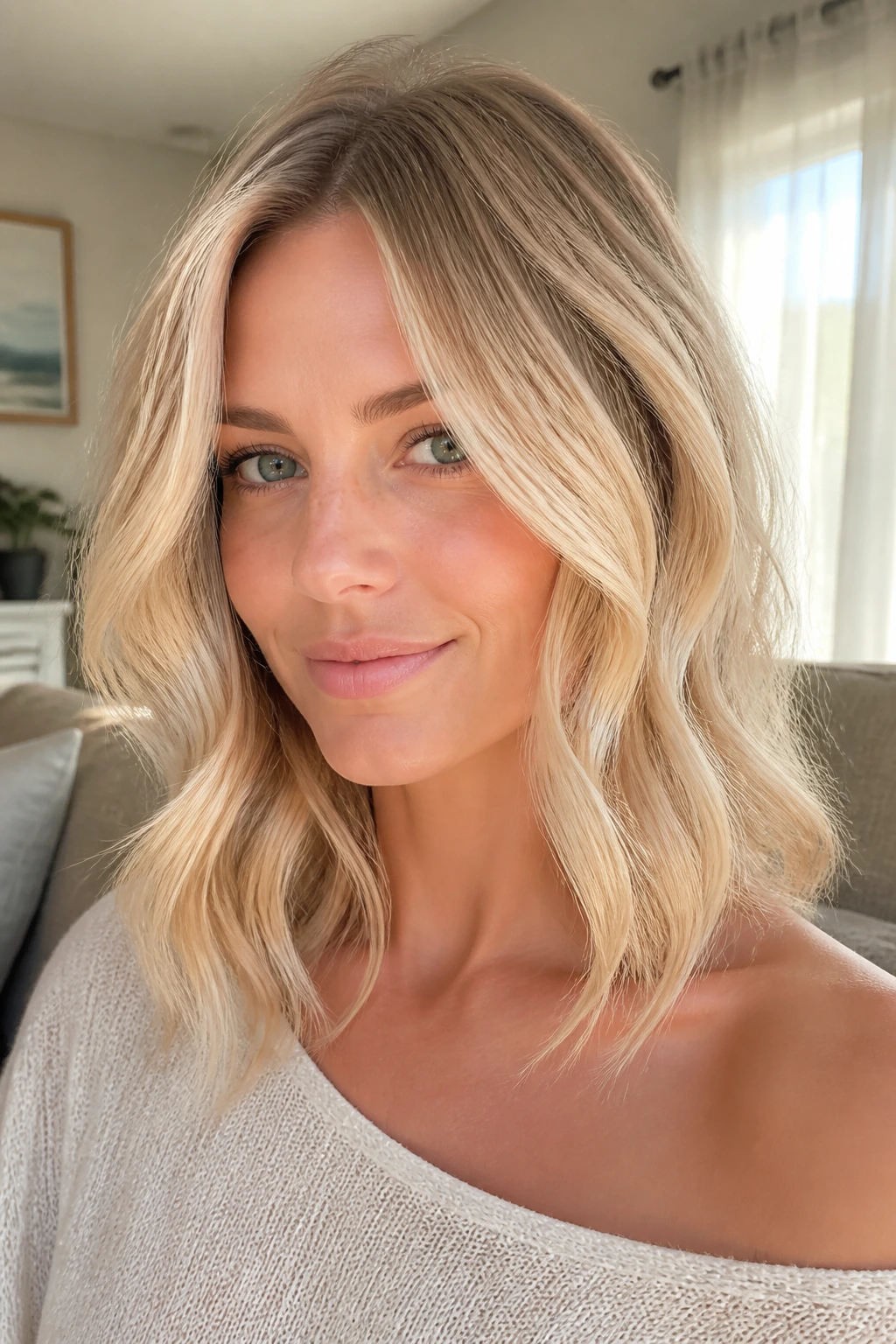
A collarbone cut with waves gives champagne blonde a bit of swing. The length lands right where the tone can reflect light on the shoulders, and the waves keep the color from falling flat. I like this version because it works in both messy and polished styling.
The champagne shade should stay a little brighter through the front sections and softer through the back. That makes the cut feel lighter around the face without over-lightening the whole head. It’s a very practical kind of pretty.
28. Dark Root and Bright Ends Champagne Blonde
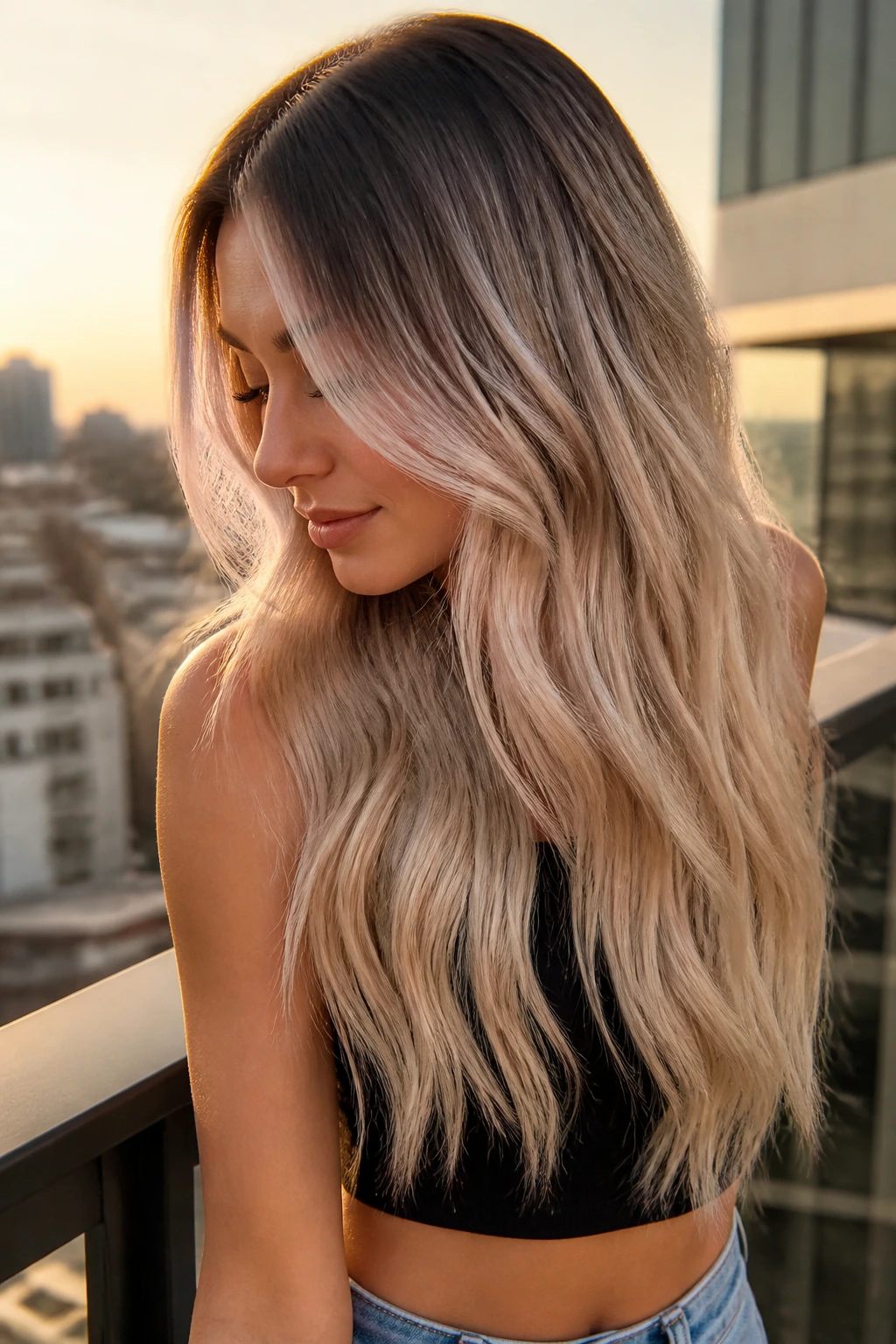
If you like a bit of contrast, this one carries more edge than the soft melts. The root stays noticeably deeper while the ends move into a pale champagne finish. That gradient gives long hair some structure and keeps the blonde from looking washed out.
This is especially good on thick or very long hair. The deeper top gives the style some anchor, which helps the bright ends stand out. It also grows out with more forgiveness than an all-over light blonde.
29. Honey-Only Accents in Champagne Blonde
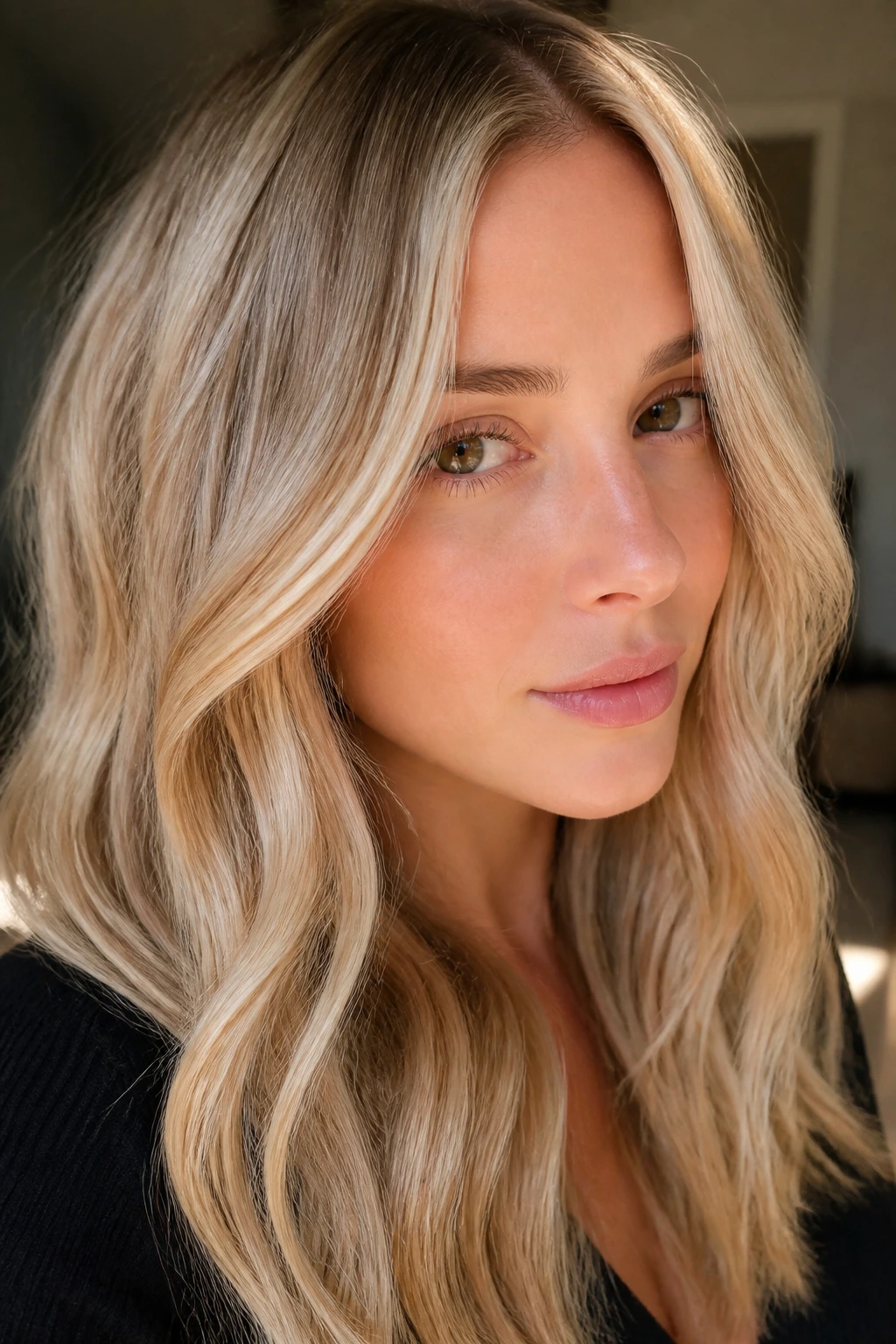
A champagne blonde with tiny honey accents leans warmer without losing the soft, elegant feel of the shade. Think of it as the version for someone who wants glow, not frost. The honey should appear in small ribbons or face-framing pieces, never all over.
I like this when the skin has a golden undertone or the hair naturally pulls warm. Too much gold can take over, so the champagne base needs to stay neutral enough to balance it. The result is softer than honey blonde, but warmer than beige.
30. Pale Peach Reflection in Champagne Blonde
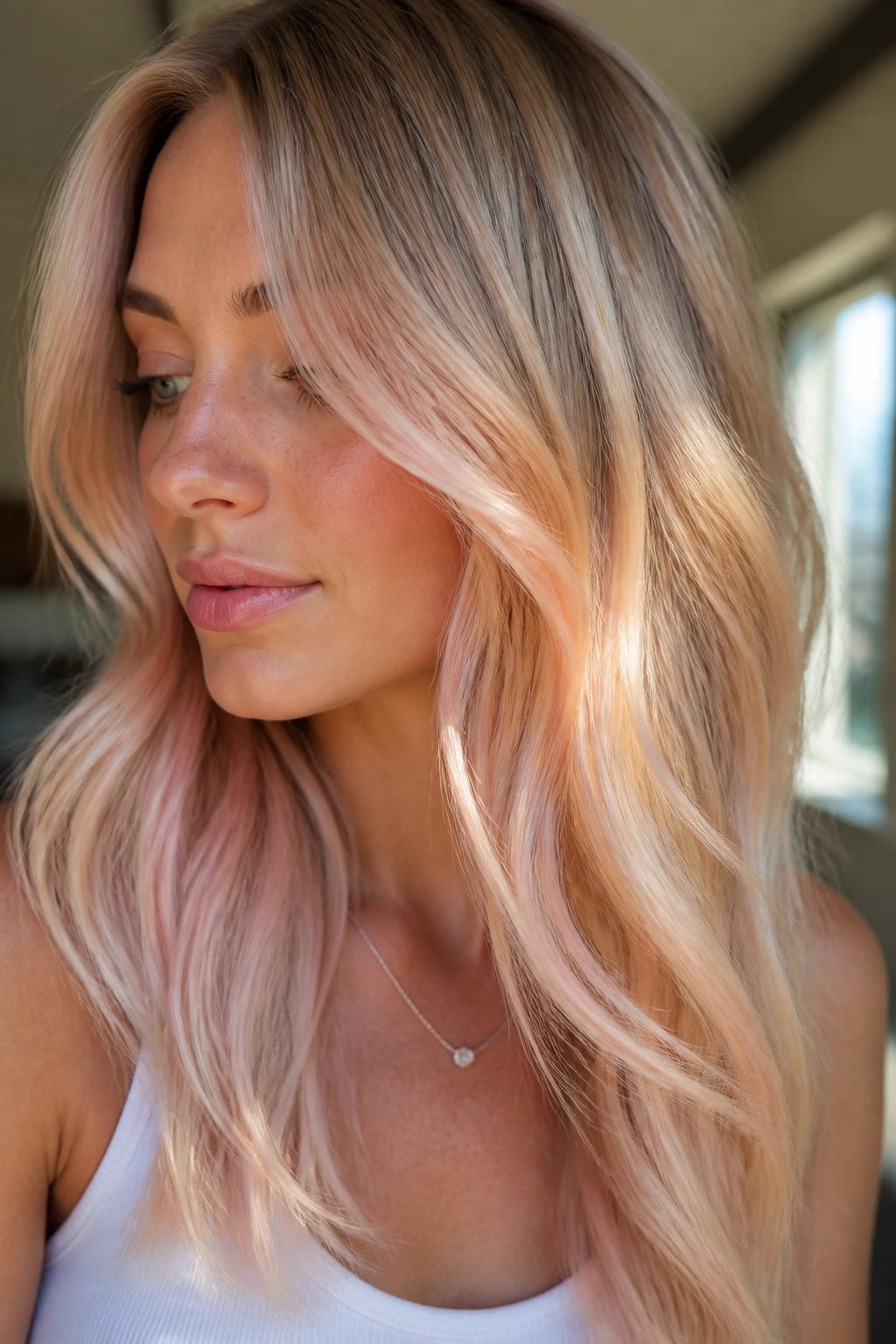
Pale peach is not the same as pink hair, and that matters here. Just a faint peach reflection in the champagne tone can warm the complexion and make the color feel less standard. It’s one of those details you notice more in motion than in a still photo.
Use this when you want warmth without brass
The peach note should be delicate. If it gets too strong, the shade stops reading as blonde and starts reading as pastel. On wavy or layered cuts, a whisper of peach can be very pretty because it catches light on the bends.
This works best when the base is already lifted pale. On darker hair, the reflection can disappear.
31. Beige Ribbon Balayage With Champagne Ends
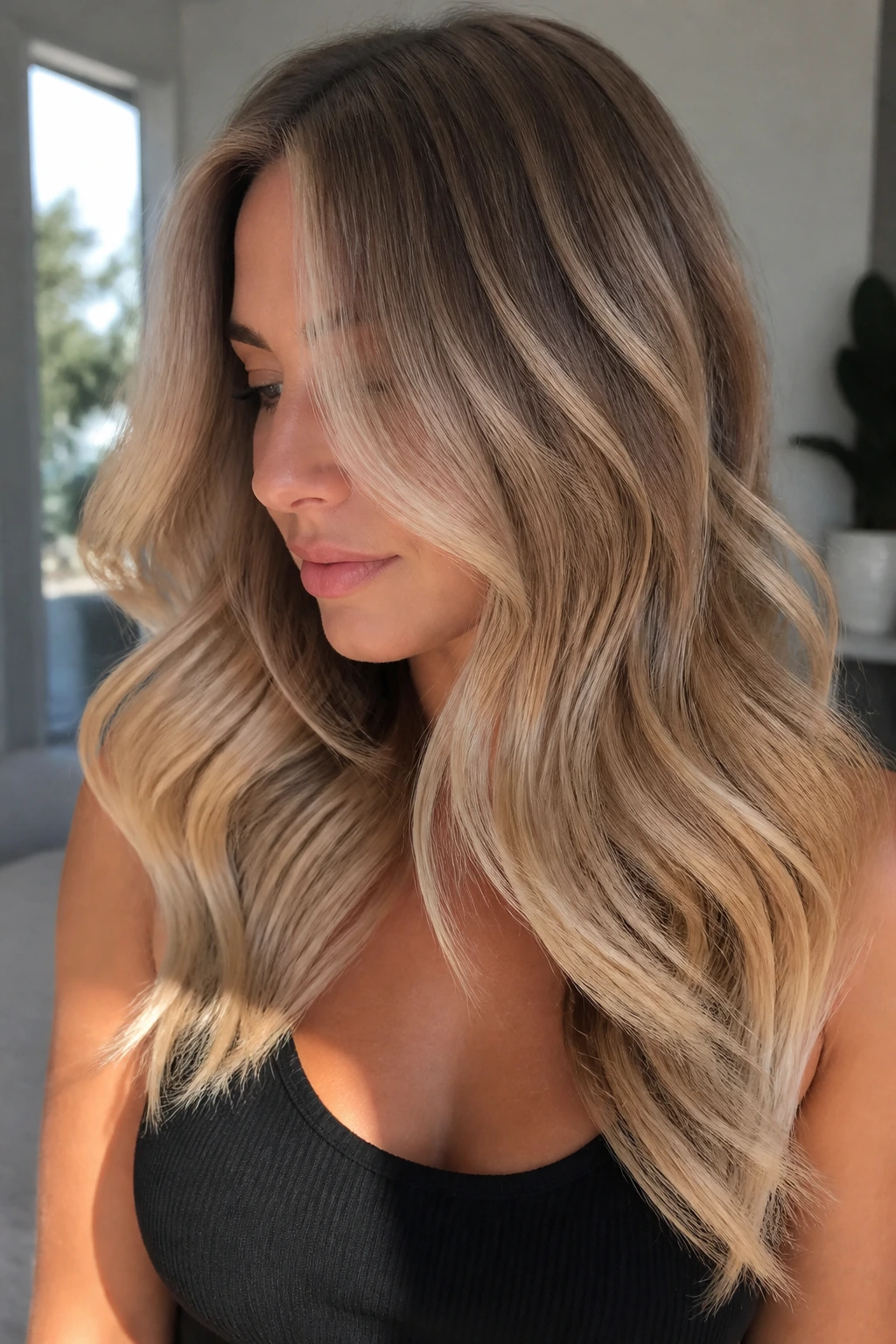
Beige ribbons give the hair a soft backbone, and the champagne ends add the brightness. That combination makes sense on mid-length to long hair because it keeps the top half grounded while the lower half feels lighter and more reflective. The color has movement without shouting.
Ask for the ends to stay a little brighter than the mids. That keeps the overall look from sinking into one beige block. It’s a good one for people who wear their hair in loose waves more than sleek straight styles.
32. Platinum Pop Pieces in a Champagne Base
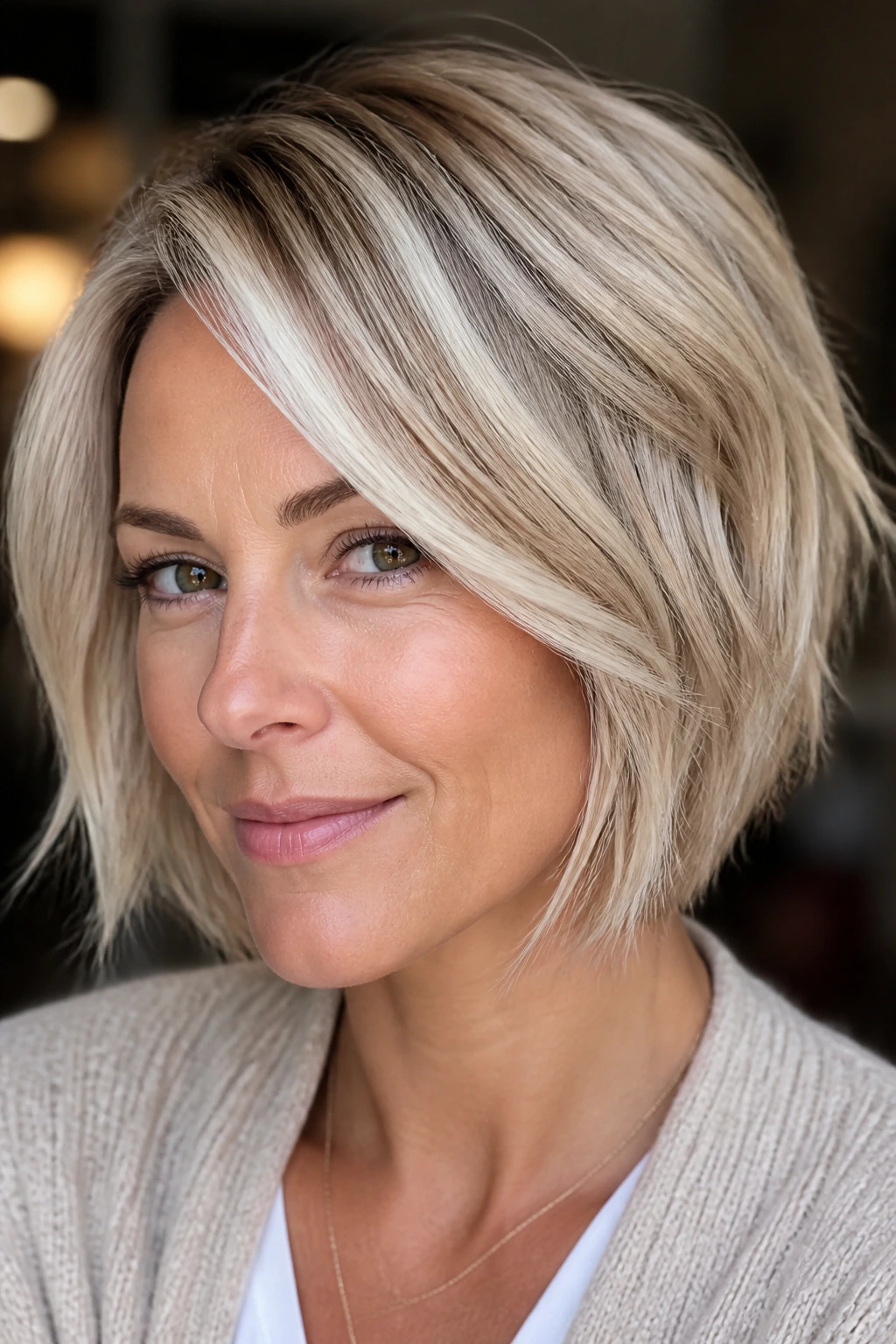
A champagne base with a few platinum pop pieces gives you contrast without committing to a fully icy blonde head. The key is restraint. A few brighter strands at the fringe, maybe a light ribbon through the top layer, and then stop.
The champagne base keeps the look wearable while the platinum pieces create a small flash of brightness. I’d use this on short cuts, bobs, or layered shags where the contrast can actually be seen. Too many platinum pieces and the whole thing loses the champagne feeling.
33. Polished Champagne Blonde on a Collarbone Cut
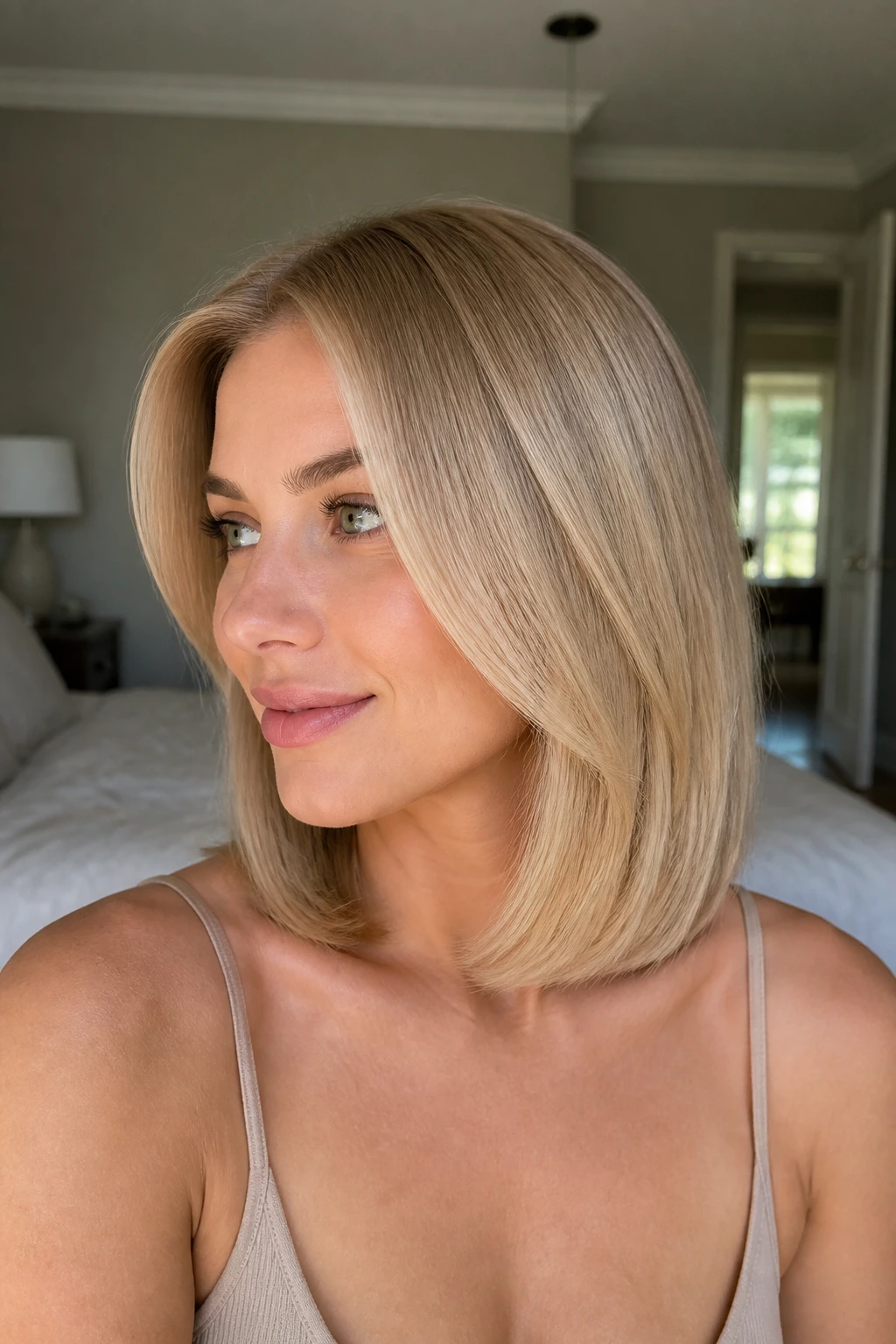
A collarbone cut is one of my favorite shapes for champagne blonde when the goal is sleekness. The length is long enough to feel feminine and short enough that the color stays visible all the way through the ends. With a smooth blowout, the tone looks almost satin-like.
The best version has a tiny bit of depth under the top layer. That gives the hair a thicker look at the perimeter. If the color is lifted evenly from root to tip, the cut can fall a little flat, which nobody wants.
34. Soft Money Piece With Champagne Ends
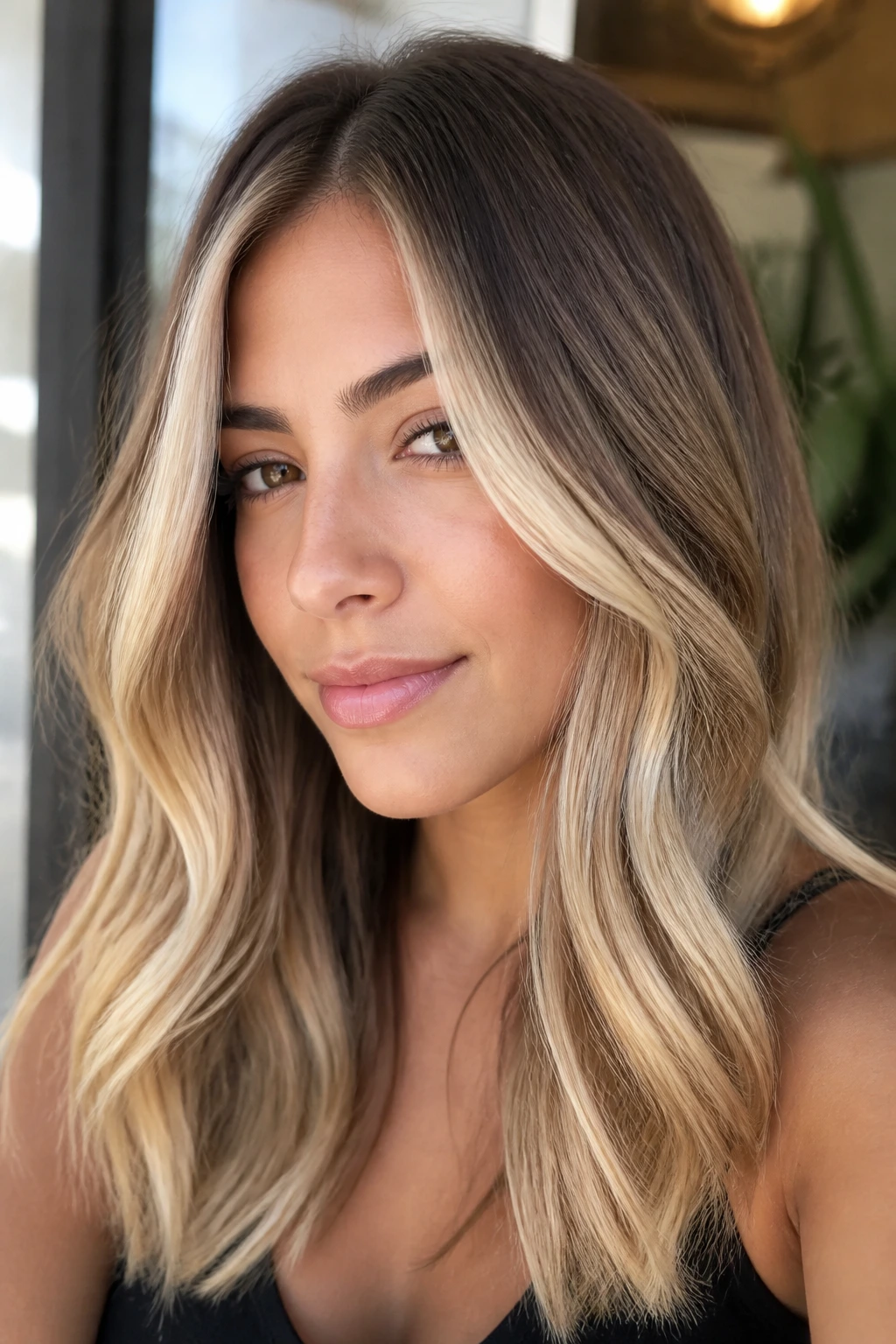
This one is for the person who wants brightness near the face and movement at the bottom. A soft money piece, kept in champagne rather than white blonde, frames the face without making the hairline the only thing you notice. Then the ends pick up a lighter tone so the whole length feels connected.
The payoff is balance. Not too bold, not too quiet. If the haircut already has face-framing layers, the champagne pieces can sit right on top of them and make the style look instantly more finished.
35. Sandy Base With Champagne Glow
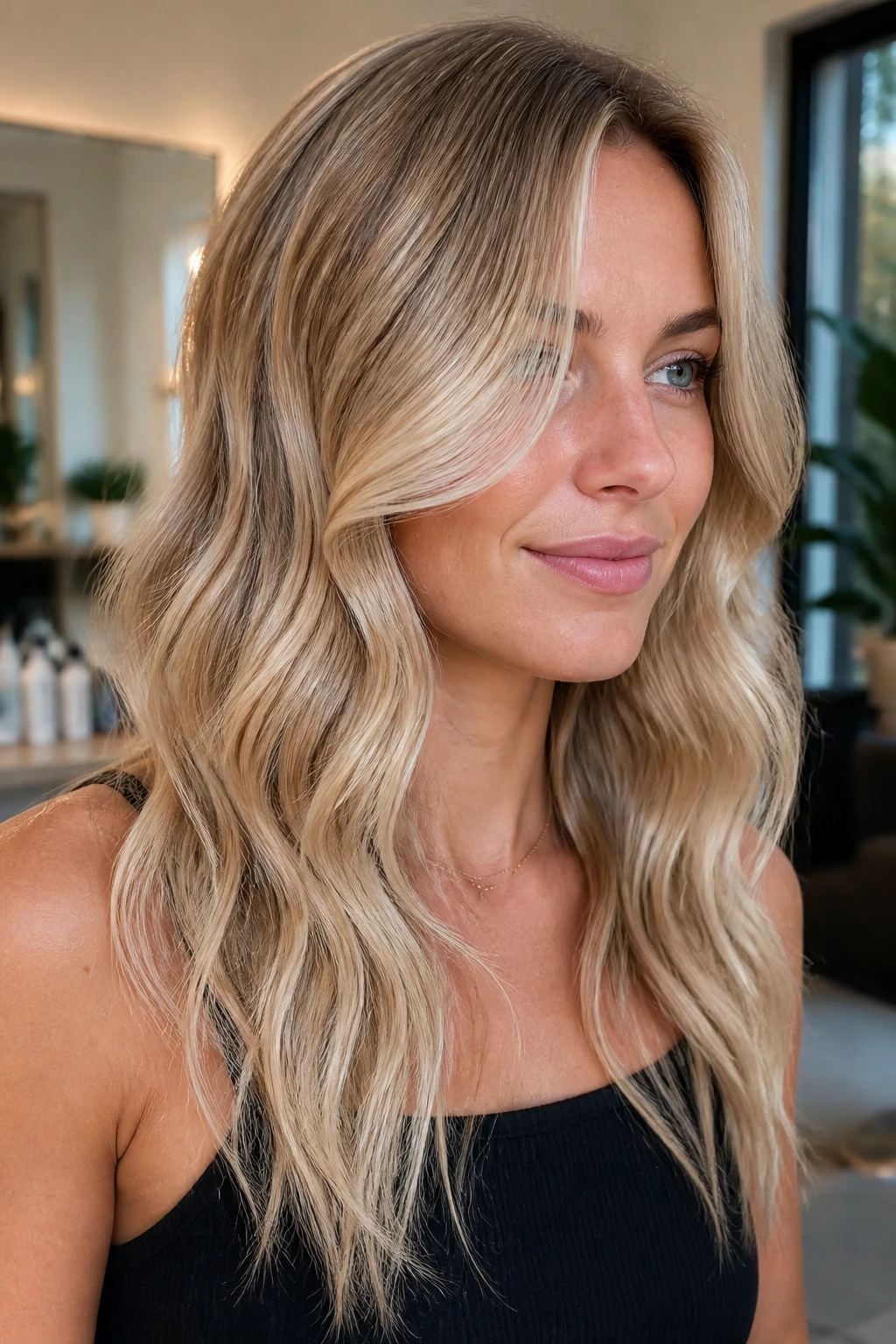
A sandy base keeps the whole shade grounded. It’s a little warmer than mushroom beige, a little softer than golden blonde, and it gives champagne a place to settle instead of floating too pale. That makes the color easier to wear on natural blondes and light brown bases.
This is one of the most forgiving versions for people who don’t want a lot of salon upkeep. The color is already built to look slightly lived-in, so a bit of grow-out doesn’t ruin the effect. If your hair tends to go flat, this base helps keep dimension in place.
36. Airy Layers With a Champagne Gloss
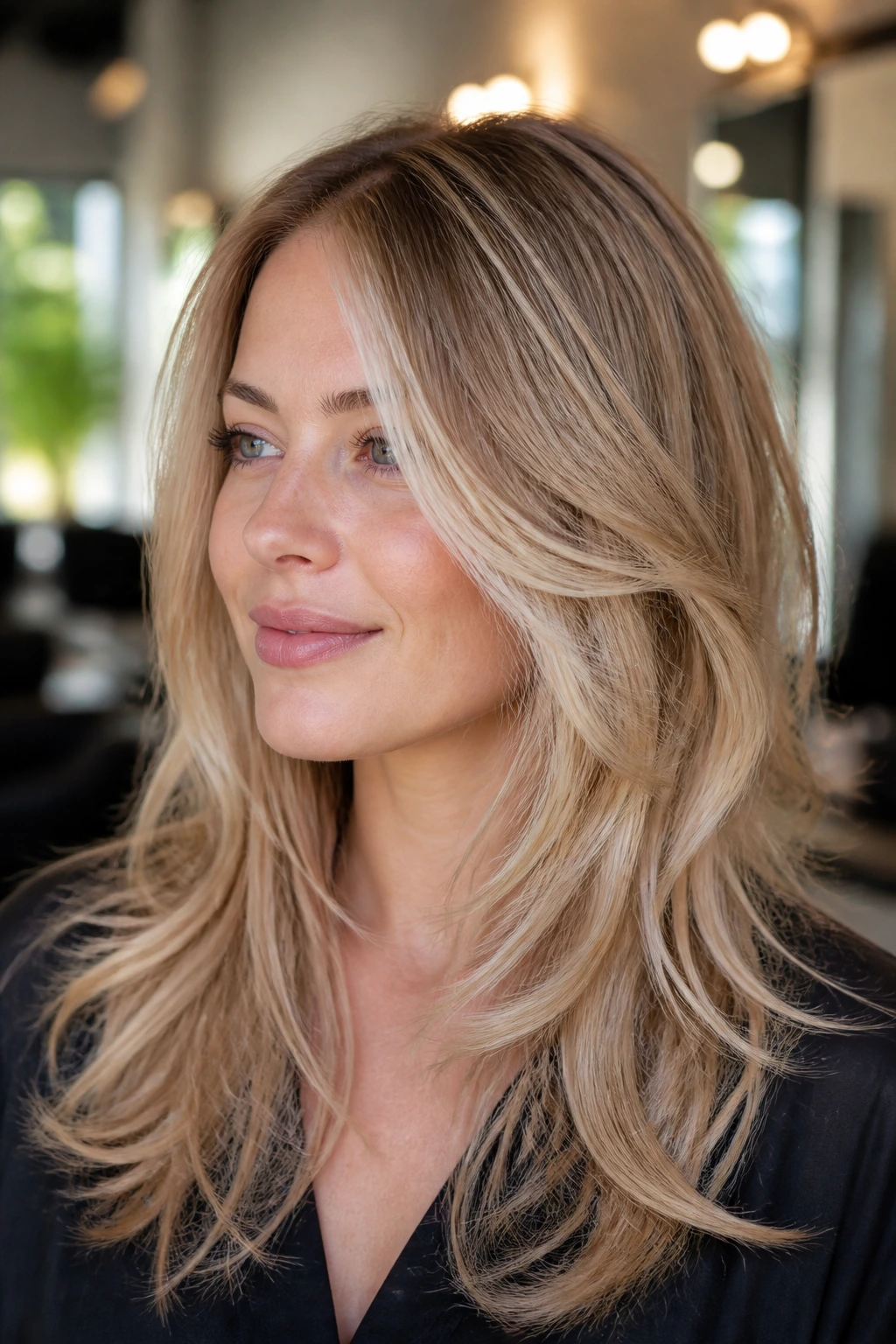
A simple gloss can do more than people think, especially on layered hair. If the blonde is already light, a champagne gloss with a beige-gold balance can wake the whole cut up without adding more bleach. The layers then show the gloss in different places as the hair moves.
Why this works so well on layered cuts
Layers break the light into pieces. A gloss exaggerates that by giving the hair one unified reflective finish. The result is cleaner than a heavily foiled blonde and usually feels easier to maintain.
I reach for this idea when the goal is polish, not drama. It’s quiet in the best way.
37. Dimensional Baby Lights in Champagne Blonde
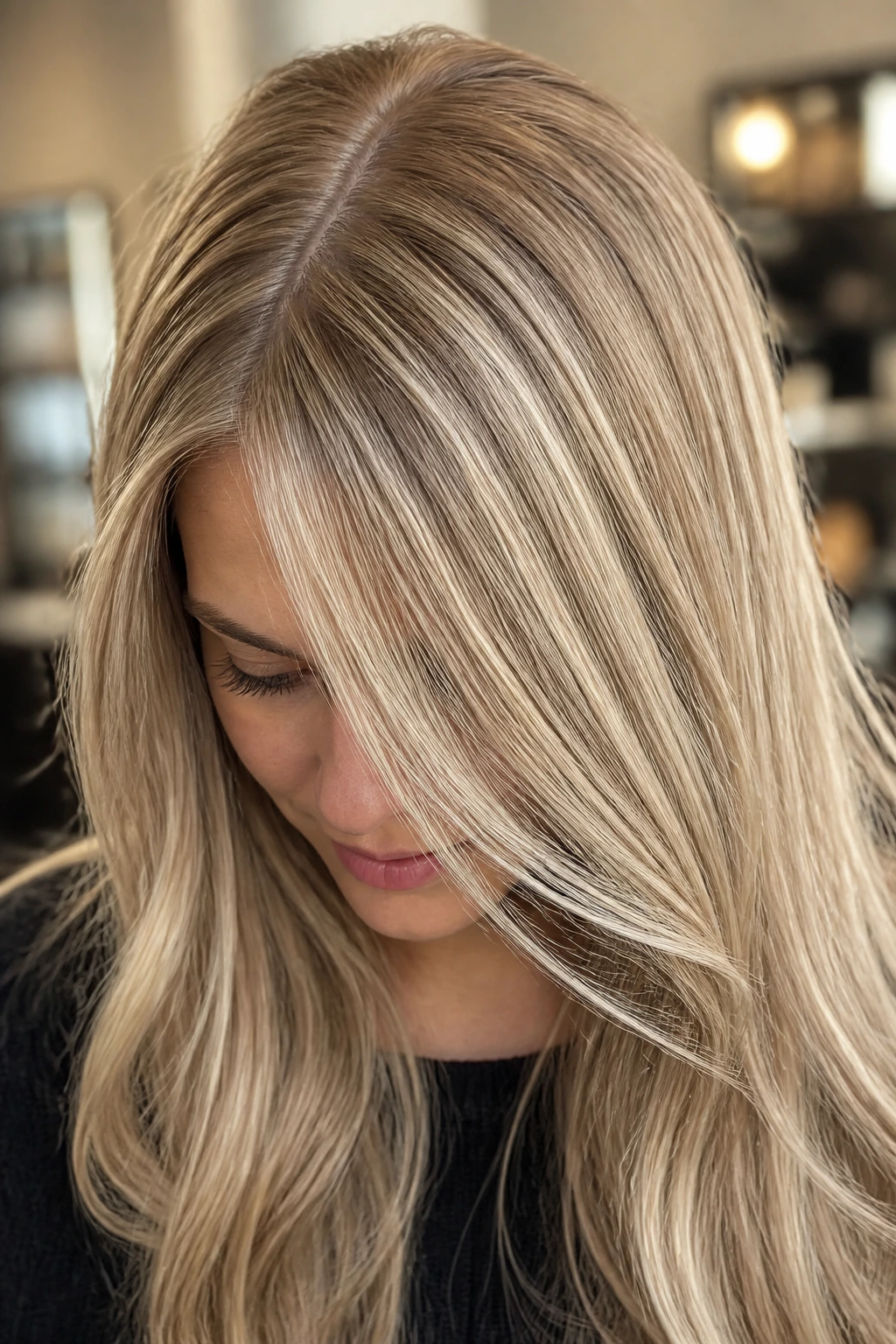
Baby lights are tiny, and that’s the appeal. Champagne baby lights give the hair a soft all-over brightness without the obvious line work of chunkier highlights. On fine hair, they can make the surface look fuller; on thicker hair, they prevent the color from getting too blunt.
The most useful part is the blend. Because the pieces are so small, the transition between light and dark stays soft even when the hair is pulled back. That makes this a good choice for anyone who wears ponytails often.
38. Hollywood Waves in Champagne Blonde
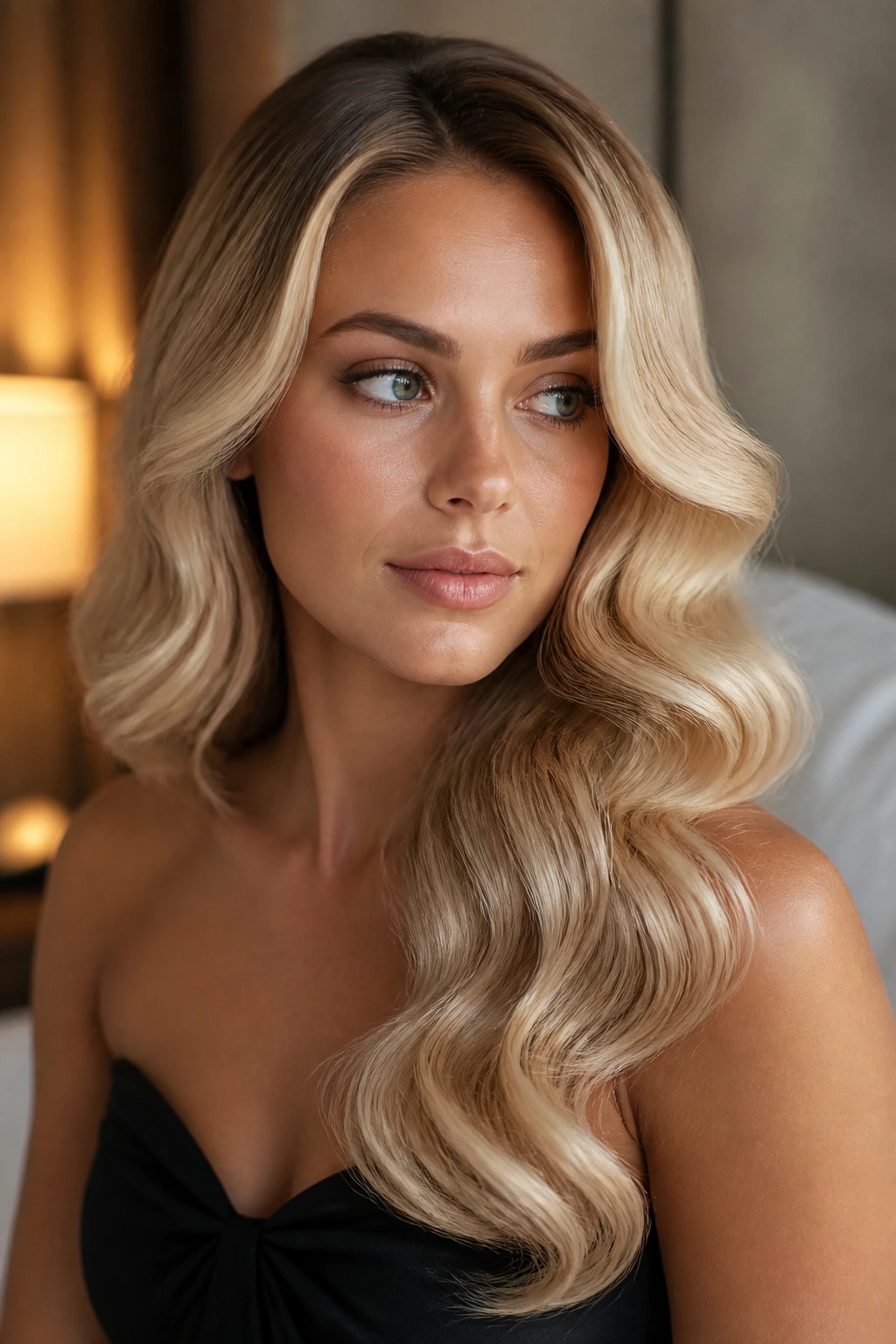
Hollywood waves love a reflective blonde. Champagne works here because the bend in the hair catches the pale gold and pearl tones in a way that reads rich rather than stiff. You want the color to look smooth through the crown and luminous through the wave pattern.
Styling note
A large barrel iron and a soft brush-out make the difference here. The waves should look set, then softened, not crunchy. Champagne blonde with this styling looks especially strong on side parts and long dresses, but it also works with a simple blouse and jeans, which is the better test.
39. Tousled Lob With a Shadow Root
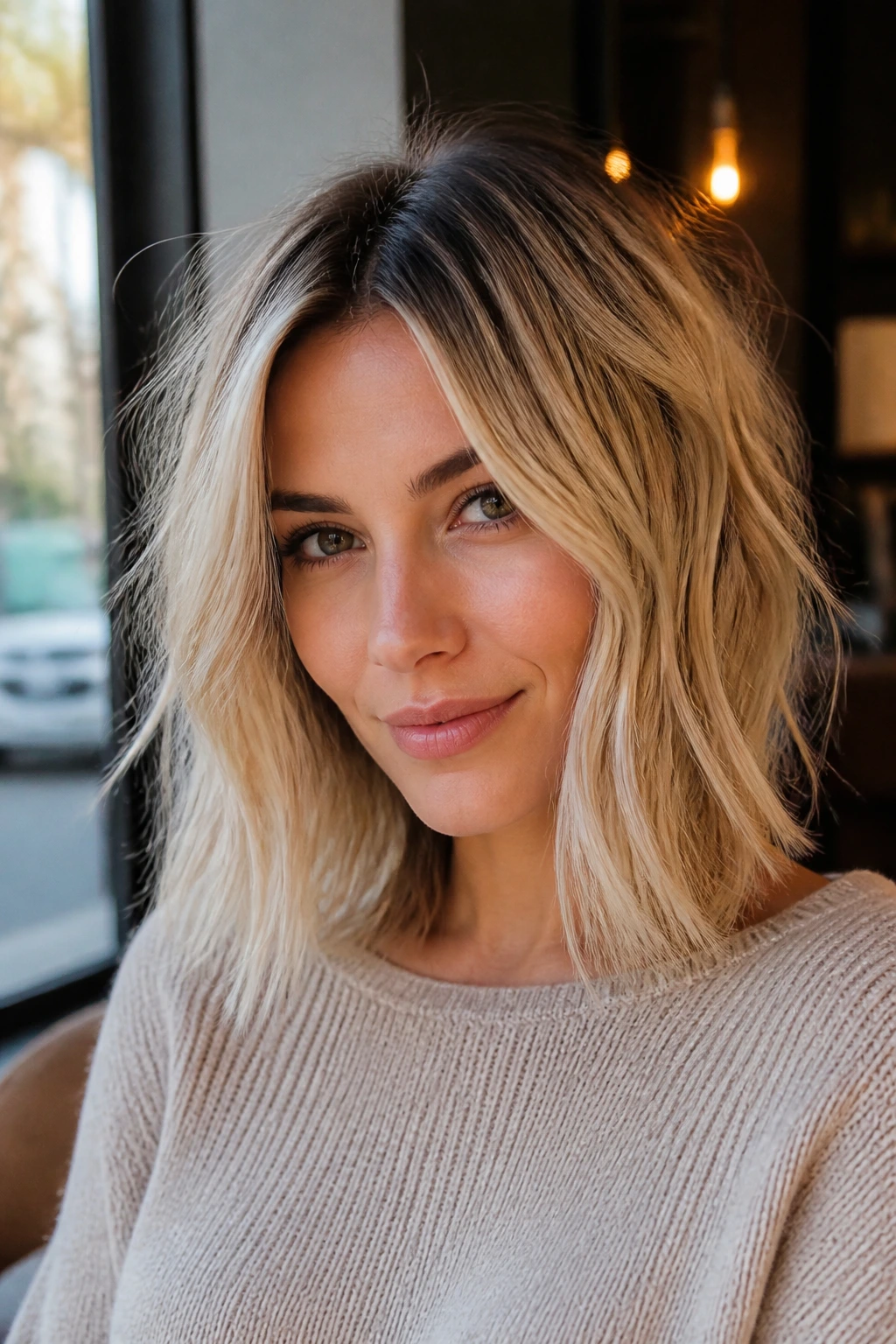
A tousled lob with a shadow root is one of the easiest champagne blonde ideas to live with. The texture keeps the color from looking too precious, and the root softness helps the grow-out stay calm. This is the version I’d recommend to someone who wants movement without daily hot-tool commitment.
The blonde should be brighter through the front and more diffused toward the back. That keeps the style from reading too symmetrical. A quick bend with a flat iron is enough; you do not need a full curl routine to make it work.
40. Cool Champagne Veil Over a Soft Blonde Base
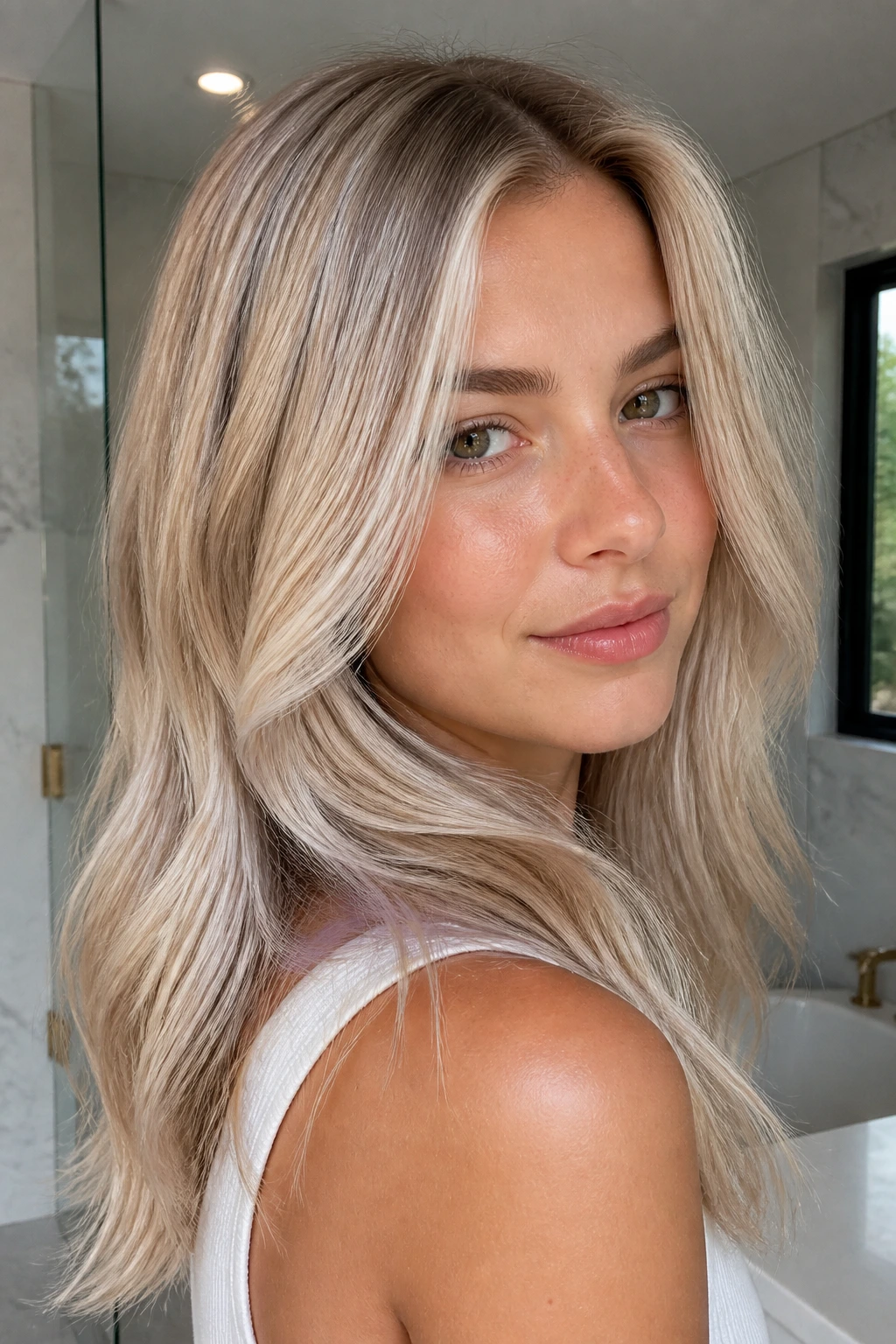
A cool champagne veil is the quietest version in the whole group. It’s not icy, not silver, not beige-heavy. It just gives the blonde a pale, polished cast that looks clean on smooth hair and especially good when the cut is simple.
This is the shade for someone who likes understated lightness and hates anything too yellow. On a natural level 8 or 9 base, a cool champagne gloss can be enough. On darker hair, it needs real lift first, or the veil won’t sit on the surface the way it should.
What Makes Champagne Blonde Read Soft Instead of Yellow
Champagne blonde works when the tone sits in that narrow middle band between pale gold and beige pearl. Push it too far toward butter, and the color starts to look warm in a fast, blunt way. Push it too far toward silver, and the hair can lose the softness that makes champagne flattering in the first place.
The other piece is depth. A tiny bit of root shadow, beige lowlight, or natural base showing through the top layer keeps the blonde from looking like one flat sheet. That matters most on straight hair, because there’s less texture to break the surface.
Glossing also does more than people think. A good beige or pearl toner can pull the whole shade together after lightener has done its job. Skipping that step is how champagne blonde ends up looking unfinished.
Essential Tools for These Looks
-
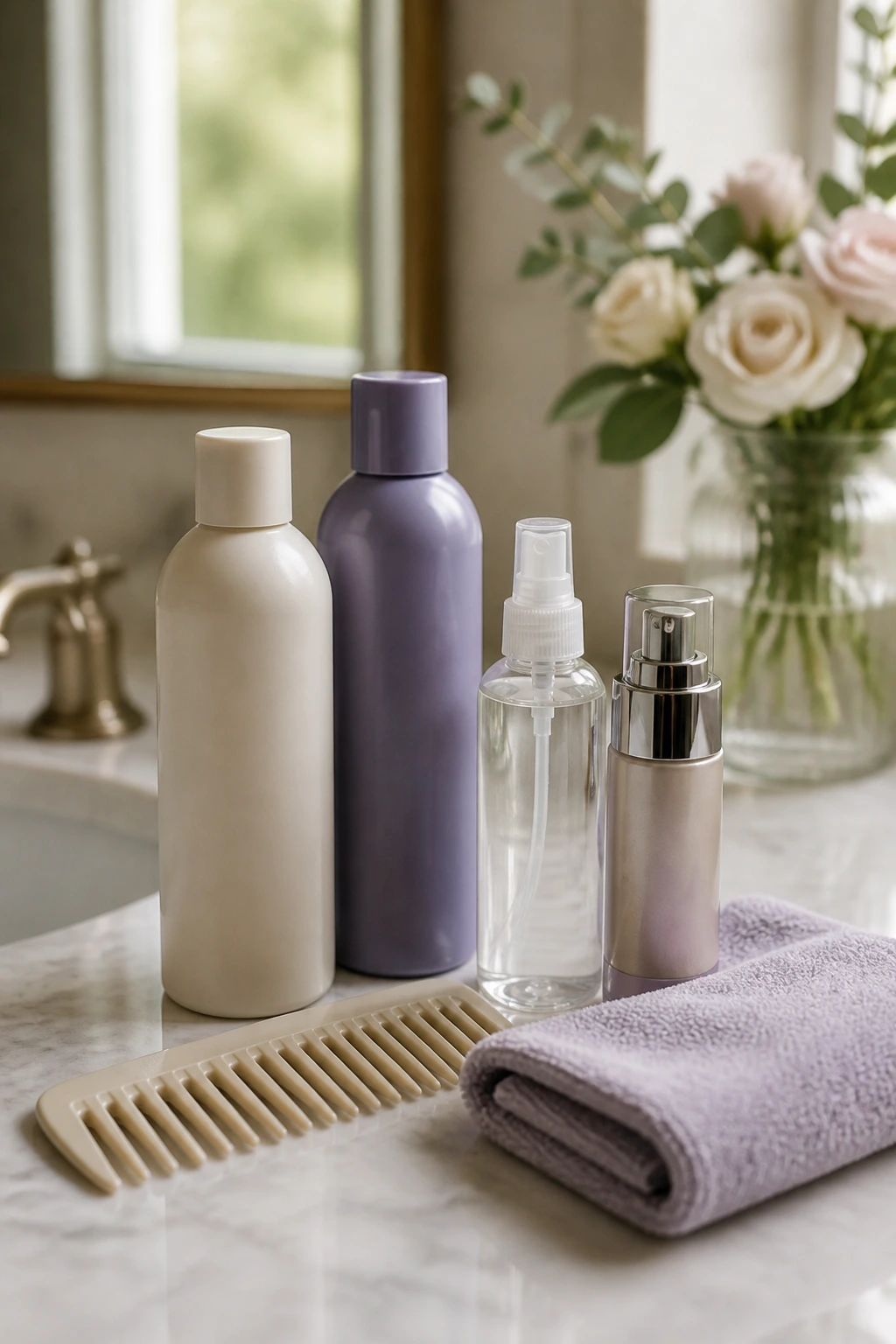
Color-safe shampoo and conditioner: Keep the tone from washing out too fast and strip less pigment from the blonde.
-
Purple or violet shampoo: Use it sparingly when the blonde starts leaning yellow, not on every wash.
-
Heat protectant spray: Blonde hair shows heat damage fast, especially on pale ends.
-
Wide-tooth comb: Helps detangle wet hair without snapping the lightened pieces.
-
Microfiber towel or soft T-shirt: Cuts down on frizz and roughing up the cuticle.
-
Gloss or toner: Useful for keeping beige, pearl, or gold tones where they belong.
-
Salon cape or towel at home: If you’re applying masks or toning products, this saves your shoulders and sink.
-
Root clip or sectioning clips: Handy for drying, styling, and showing off placement when you part the hair.
How to Choose the Right Champagne Blonde for Your Base Color
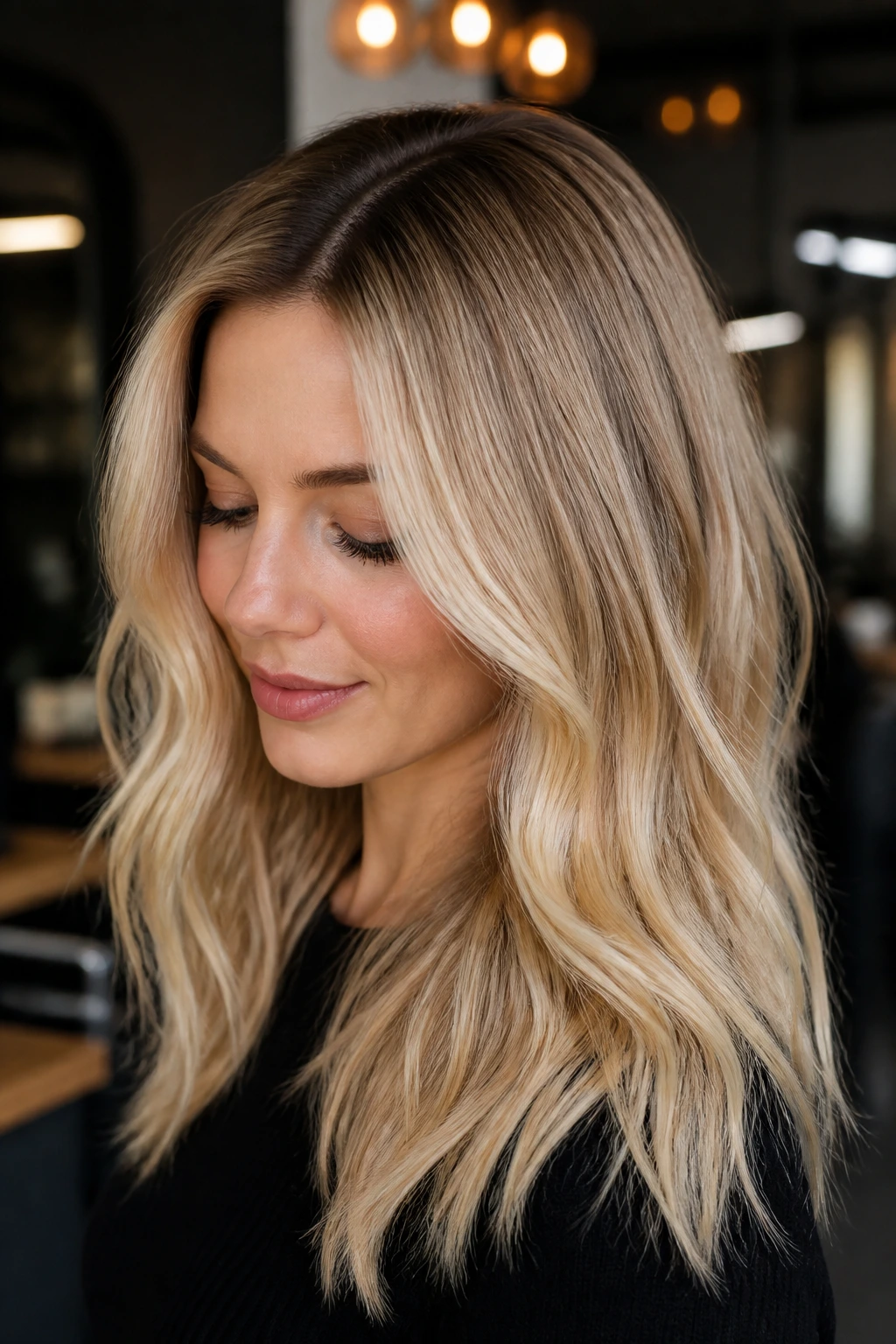
If your natural hair is already light blonde, you can usually get away with a gloss-heavy champagne finish and very little lightening. That’s the easiest path, and it tends to look the softest. If your base sits in the dark blonde or light brown range, ask for a more strategic lift through the top and face frame so the champagne tone can actually show.
The colder your skin tone runs, the more useful pearl-beige or mushroom champagne tends to be. Warmer skin usually likes a bit more gold, honey, or sandy reflection. I’d still keep the tone soft either way; the mistake is usually too much warmth, not too little.
Hair texture matters too. Fine hair usually looks better with tiny lights and a glossy finish, while thick or curly hair can hold stronger ribbons and deeper root shadows. If the hair is porous, the toner may grab faster than you expect, so the colorist has to watch it closely. That’s not a small detail. It changes the whole result.
Styling Moves That Make Champagne Blonde Pop
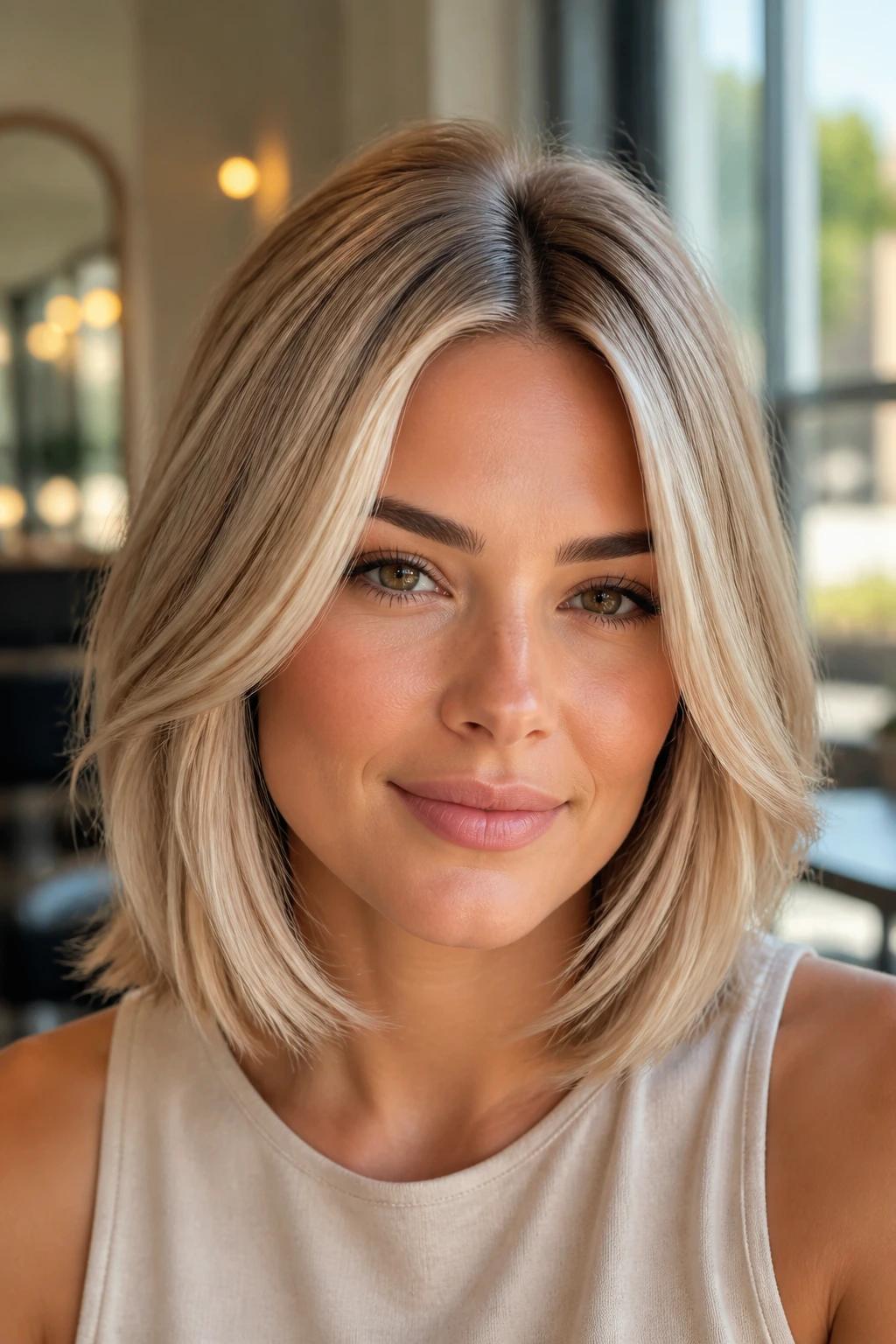
A champagne tone needs shine more than volume spray. That’s the honest version. You can tease the crown and rough up the ends all you want, but if the hair looks dry, the color loses half its appeal.
A round brush blowout will make almost any champagne blonde look more finished, especially on bobs, lobs, and layered cuts. For curls and waves, keep the definition soft so the ribbons stay visible. Hard, crunchy texture steals from the tone.
Parting also changes the look. A center part makes the color feel balanced and modern. A side part throws more light onto one side of the face and makes the blonde look a touch brighter.
Additional Tips and Small Upgrades That Matter
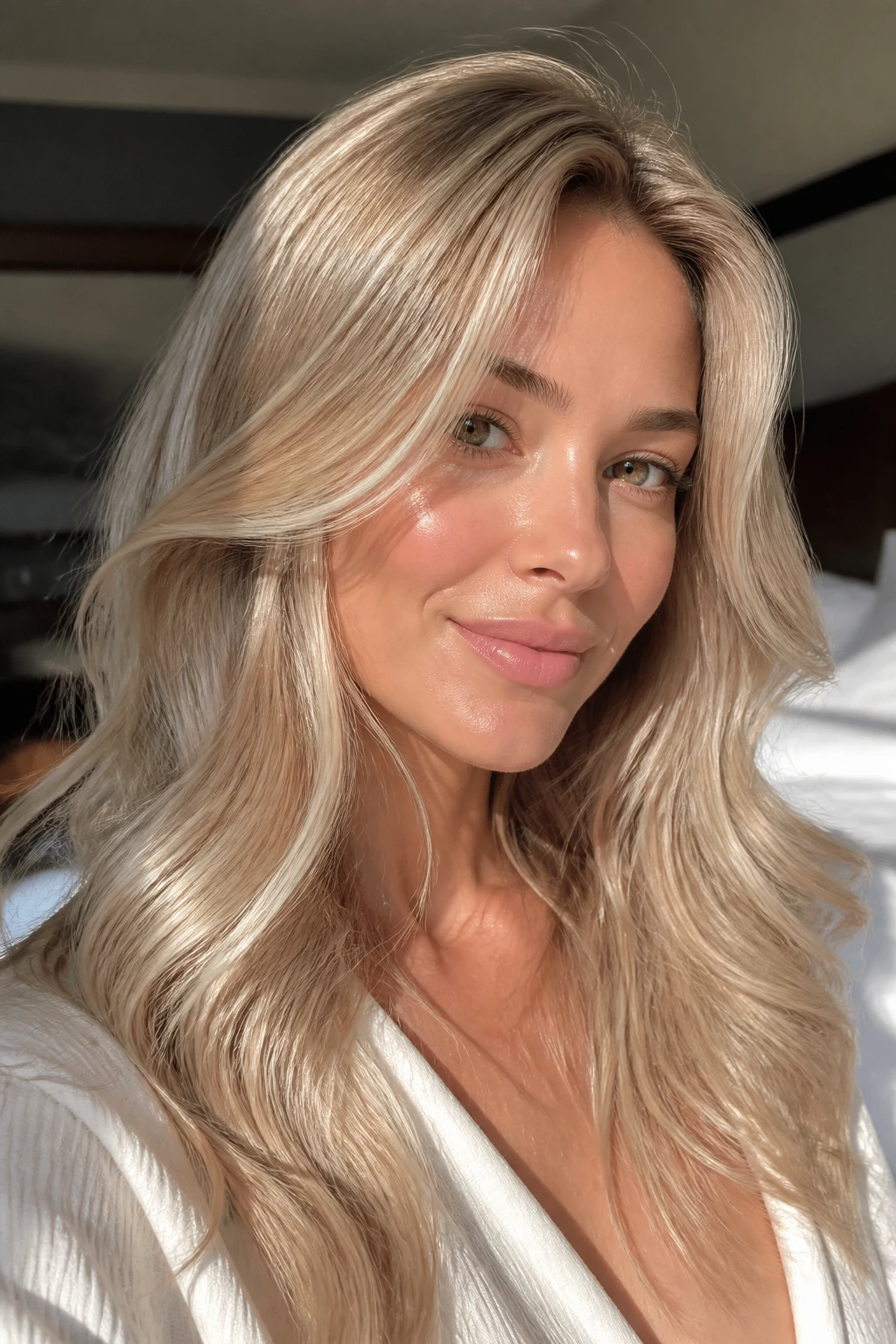
Flavor Enhancement: A clear or beige gloss every 6 to 8 weeks keeps the tone clean without pushing it too ash or too gold. If the hair is porous, ask for a softer formula so the ends don’t grab pigment too dark.
Customization: Add face-framing brightness on the top layer if you want the color to read lighter without committing to a full head of foils. On curls, place the lightest pieces where the curl pattern naturally opens.
Serving Suggestions: Hair oil on the mid-lengths and ends, a smooth blowout, or loose bends with a 1.25-inch iron all make champagne tones look more polished. Tiny finishing details matter here.
Make-It-Yours: If you like warmer hair, nudge the toner toward gold. If you prefer cooler tones, keep the finish beige-pearl and leave the root a half-step deeper so the result doesn’t flatten out.
Common Mistakes That Can Ruin the Tone
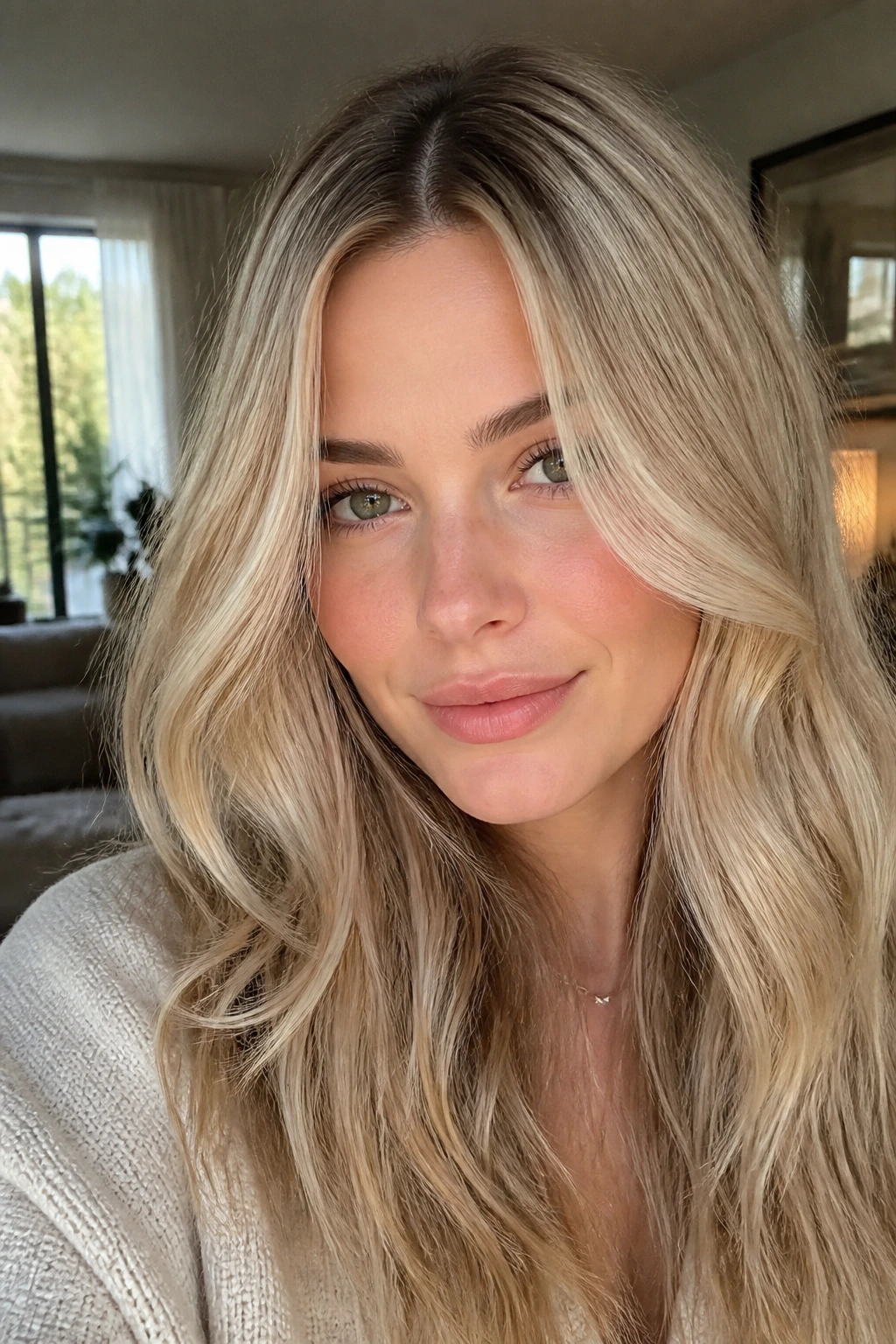
The first mistake is asking for champagne blonde and stopping there. That shade means different things to different stylists, and without a base level, root plan, and toner direction, you can end up with something too yellow or too muted. Bring photos and point out whether you want beige, pearl, gold, or a mix.
Another problem is overusing purple shampoo. A little helps when the hair starts to yellow. Too much can leave pale blonde looking gray, khaki, or flat, especially on porous ends that catch pigment fast.
Hard root lines are another giveaway that the color wasn’t planned with grow-out in mind. If you’re going lighter, ask how the root will blur as it grows. Champagne blonde looks best when it still feels like hair after six weeks, not a color correction waiting to happen.
Variations and Adaptations to Try
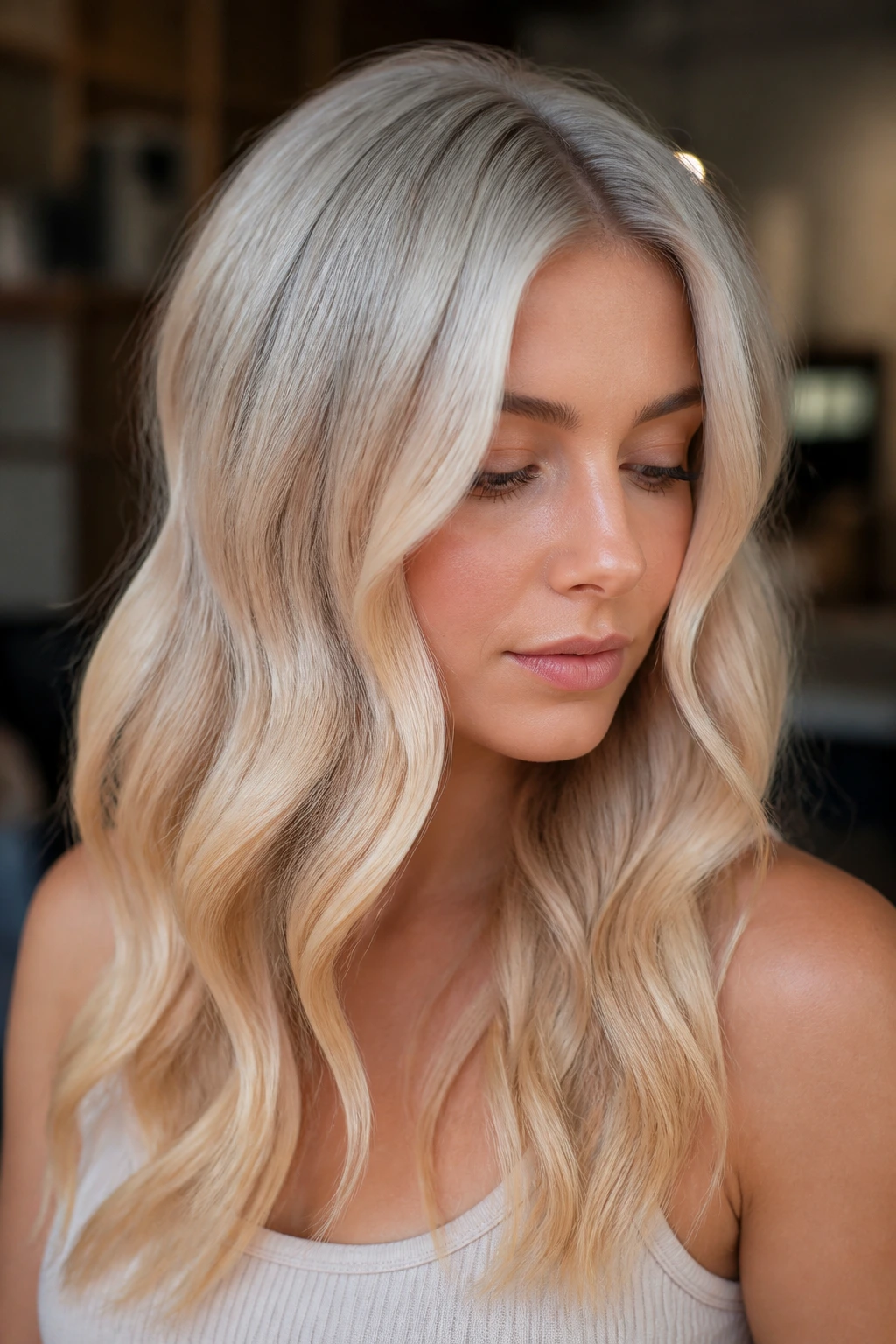
Pearl-First Champagne: Push the toner cooler and keep the gold soft. This version works well on cool skin tones and straight hair that reflects every bit of shine.
Golden Sandy Champagne: Add a little more warmth through the mids and ends. It feels softer on warm or olive skin and reads sunlit instead of frosty.
Brunette-Friendly Melt: Leave the crown deeper and let the blonde build gradually through the lengths. This is the easiest way to wear champagne blonde if you don’t want a dramatic root line.
Curly Ribbon Champagne: Place the lightest pieces where curls naturally separate. The color stays dimensional without fighting the texture.
Low-Maintenance Rooted Champagne: Ask for a soft shadow root and fewer bright foils. The grow-out is calmer, and the tone still looks intentional when it softens.
How to Keep Champagne Blonde Bright Without Losing the Softness
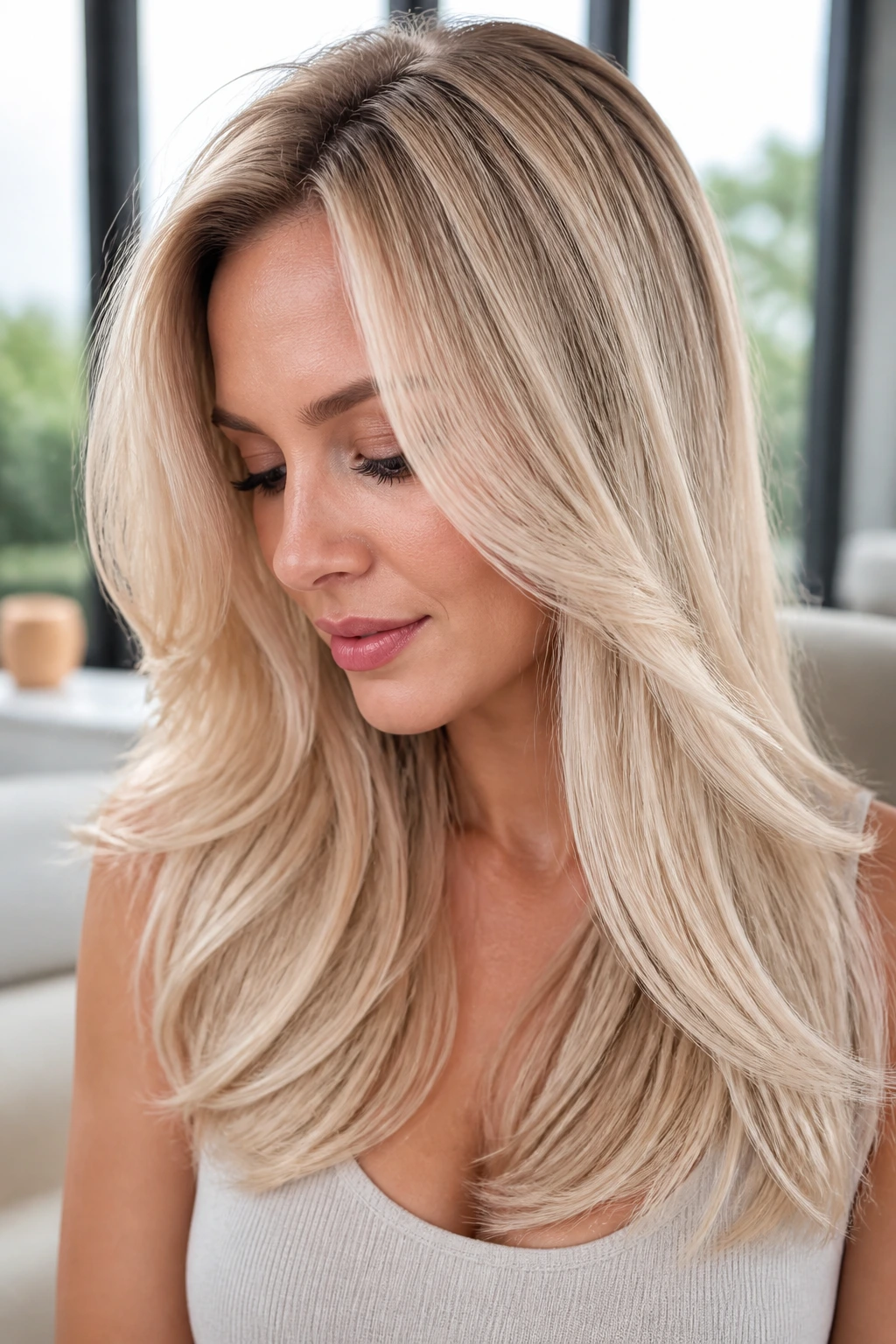
Wash less often if you can. Two to three shampoo days a week is enough for most blonde hair, and it keeps the toner from fading too fast. On the off days, a dry shampoo at the root is usually smarter than another round of cleansing.
Use violet shampoo only when the blonde starts to lean yellow, not as a daily habit. A color-safe mask once a week helps the lightened ends stay smoother, and smooth ends reflect light better than rough ones. That’s the whole game with champagne blonde: keep the surface clean, the tone balanced, and the root soft enough to grow out without panic.
Heat matters too. If you’re flat-ironing or curling often, use protectant every single time. Blonde hair tells on you. It shows dryness before darker hair does.
Frequently Asked Questions
Is champagne blonde warm or cool?
Usually it sits between both. The best versions mix beige, pale gold, and a hint of pearl, which is why the shade can lean warmer or cooler depending on the toner and the base color.
Can dark brunettes get champagne blonde in one appointment?
Sometimes, but not usually in a clean, healthy way. Darker hair often needs staged lightening or a softer brunette-to-blonde melt so the hair stays in decent shape and the tone doesn’t turn brassy.
What’s the difference between champagne blonde and beige blonde?
Beige blonde is the broader family; champagne blonde usually has a little more sparkle from pale gold or pearl. Beige can be flatter and softer, while champagne tends to reflect light a bit more.
Will champagne blonde work on curly hair?
Yes, and it can look excellent when the highlights are placed in ribbons instead of stripes. Curly hair needs placement that follows the curl pattern, or the color disappears into the texture.
How often does champagne blonde need a gloss?
A gloss every 6 to 8 weeks is a good rhythm for most people. If your hair is porous or you wash often, you may want it a little sooner because pale tones fade faster on rough ends.
Can I keep champagne blonde low-maintenance?
You can, if the root is shadowed and the highlights are blended rather than high-contrast. A rooted balayage or soft melt grows out more gracefully than a solid pale blonde.
Does champagne blonde make hair look shinier?
It can, especially when the finish is beige-pearl and the cut is smooth. Shine depends on healthy ends and a reflective toner, so the color alone won’t do the job if the hair is fried.
What if my champagne blonde turns yellow fast?
That usually means the toner faded, the water is harsh, or you’re using too much heat. Try a color-depositing mask, cut back on hot tools for a week, and switch to gentler shampooing before reaching for stronger violet products.
A Shade That Grows Out Softly
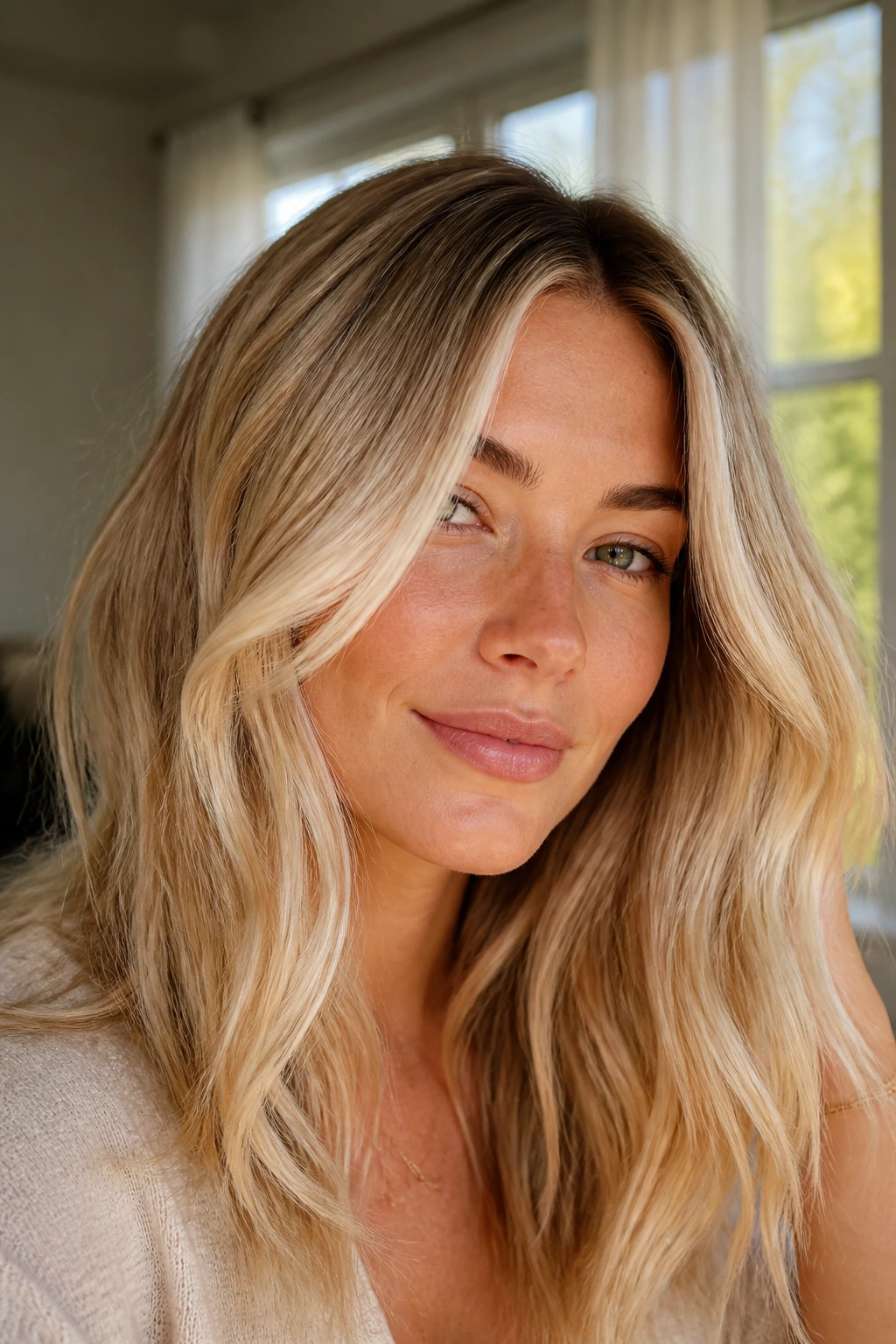
Champagne blonde keeps showing up because it solves a real problem: people want brightness, but they don’t want the color to look stiff, shouty, or high-maintenance. The best versions give you lift around the face, softness at the root, and enough depth that the hair still looks like hair.
The more I look at these ideas together, the more obvious it gets that placement matters as much as tone. A champagne bob, a ribboned curl pattern, a rooted lob, and a glossy pixie all live in the same color family, yet they read completely differently. That’s the fun of it.
Bring the version that matches your cut, your base, and how much upkeep you’re willing to do. The right champagne blonde doesn’t demand attention; it catches it.
