



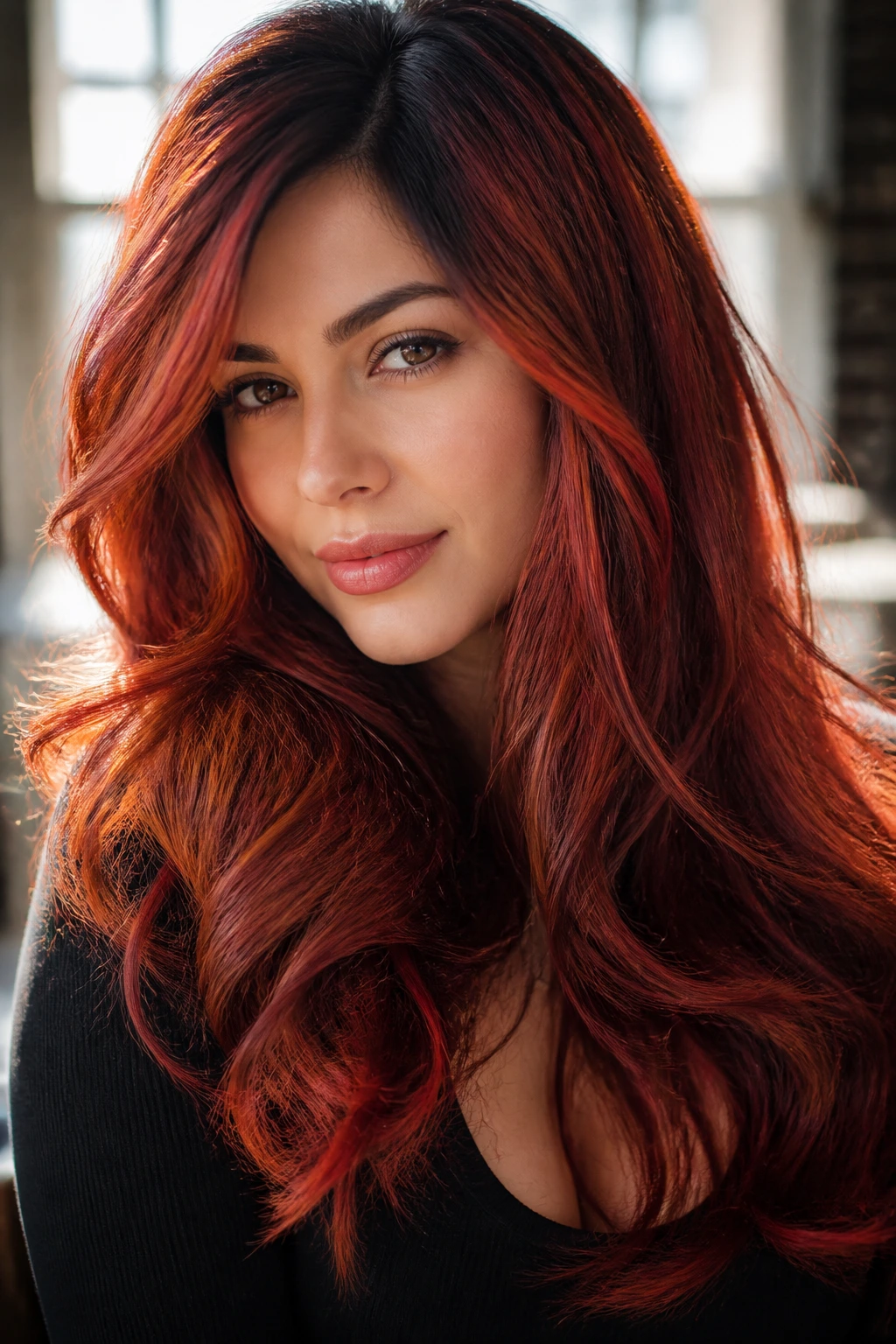
Thick hair can take red farther than people expect. It holds pigment, catches gloss, and gives copper, cherry, and burgundy room to move — yet it can also swallow weak color if the formula is too soft or the placement is too timid. The best red hair looks for thick hair use that density on purpose: deeper roots, wider ribbons, and cuts that let the shade breathe instead of sitting on top like a flat coat of paint.
That’s why so many red shades look better on dense hair than on fine hair. A thick mane gives a colorist more surface to work with, which means balayage, lowlights, and face-framing money pieces can show up in layers instead of one blunt stripe. And because thick hair often needs more shape anyway, the right red can make the cut feel sharper, not heavier.
I keep coming back to red on thick hair because it’s one of the few color families that can look both soft and dramatic without changing the entire haircut. Copper can warm up a blunt bob. Burgundy can make curls look deeper. Cherry can wake up long layers that would otherwise read as a single dark sheet. The trick is choosing the right red, then placing it where the movement already lives.
Why These Red Looks Work So Well on Thick Hair
-
More surface, more payoff: Thick hair gives red pigment a bigger canvas, so copper ribbons, burgundy gloss, and cherry ends show up in a way that doesn’t disappear after one wash and a quick blow-dry.
-
Dimension looks richer: On dense hair, one flat shade can feel heavy fast. These looks lean on layers, shadow roots, and face-framing placement so the color shifts as the hair moves.
-
Shape and color help each other: A layered cut opens windows for red to peek through, while the red keeps the cut from looking bulky or blunt. That pairing matters more than people think.
-
Styling holds better: Thick hair keeps bends, curls, braids, and blowouts longer, which means the red has time to show off. A loose wave can make a whole color formula read more expensive than a stiff straight finish.
-
Grow-out is easier with depth: Root shadow, balayage, and lowlights soften the line when red fades. That matters, because red pigments tend to lose steam faster than brown or black families.
Why Red Hair on Thick Hair Needs Deeper Roots
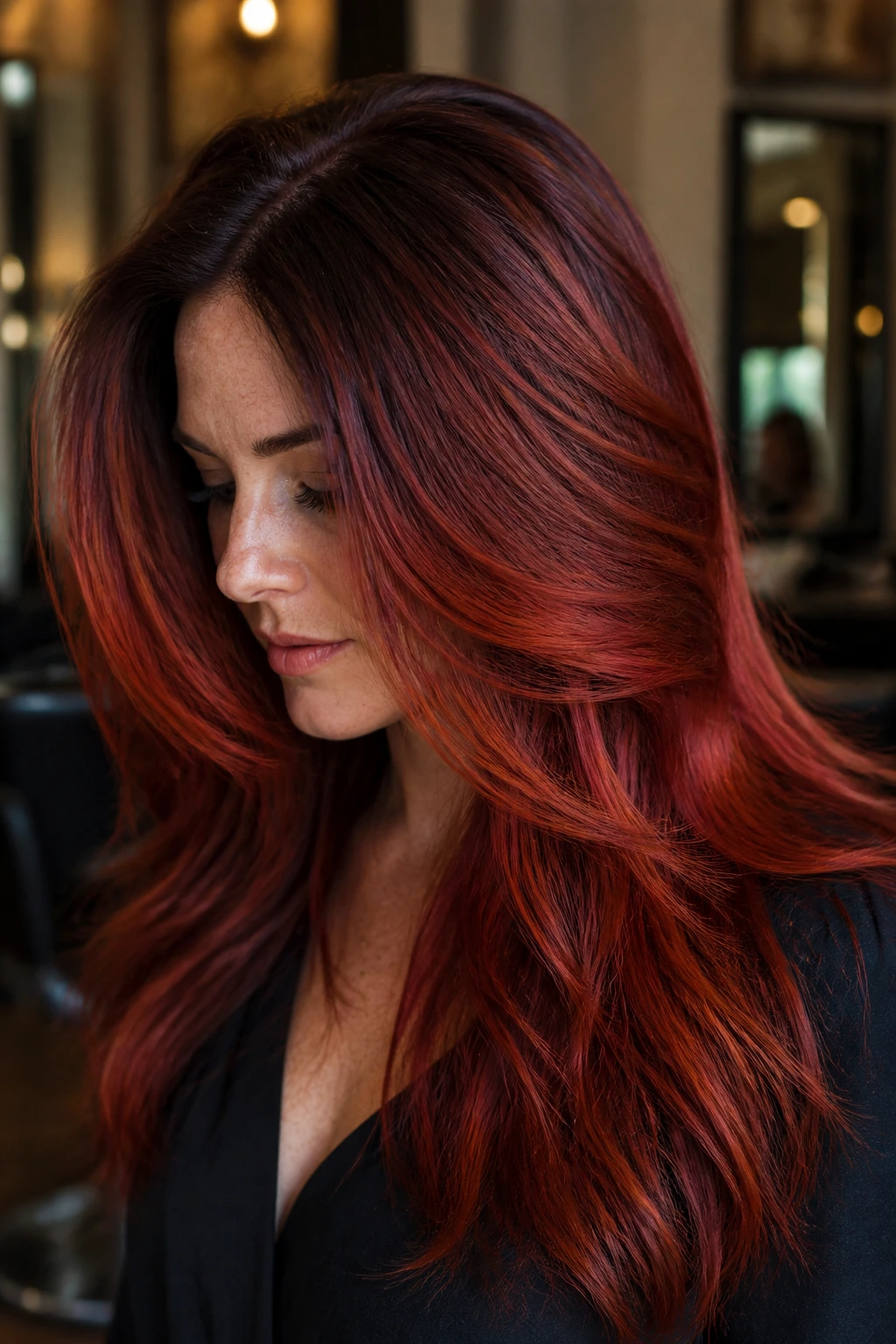
Red on thick hair can go wrong in one of two ways. Either it looks too flat and one-note, or it turns loud in a way that ignores the haircut underneath. Both problems come from the same mistake: not giving the color enough depth.
A dense head of hair needs a little darkness somewhere. Not muddy darkness. Just enough contrast at the root, through the interior, or in the lower lengths so the red has somewhere to sit. When the base is too light or too even, thick hair can start to look like a helmet. When the base is deeper and the red is woven through it, the whole thing moves.
Porosity matters too. The ends of thick hair often grab red faster and let it go faster, especially if they’ve been colored before or sit in the sun a lot. That’s why a good red on thick hair usually looks better with a root smudge, a gloss, or a slightly darker lowlight in the interior layers. It’s not about hiding the red. It’s about letting the red read clearly from six feet away and still look good when you lean in.
How to Pick Red Hair Looks for Thick Hair by Base Shade
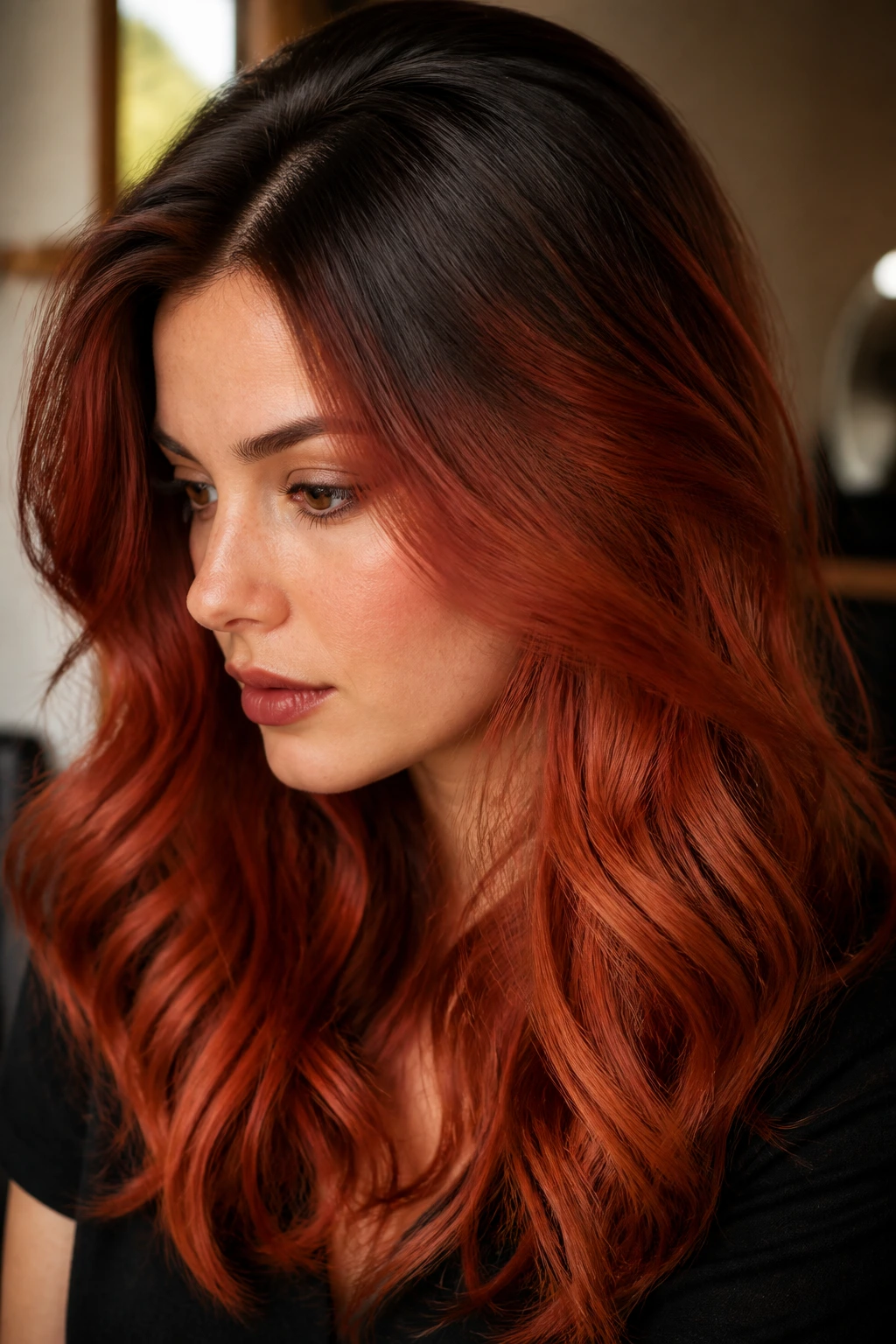
Warm Reds: Copper, Auburn, Pumpkin, and Strawberry
Warm reds are the easiest place to start if your natural hair already leans brown, gold, or chestnut. Copper and auburn feel believable on thick hair because they echo the warmth that dense hair often already has hiding inside it. A little gold in the formula keeps the color from looking brown in low light.
If your skin has peach, olive, or golden undertones, these shades tend to sit well near the face. They also age the most politely on thick hair. A copper balayage can fade into a softer apricot-brown instead of dropping straight out, which means the grow-out still looks intentional.
Cool Reds: Cherry, Burgundy, Merlot, and Cranberry
Cool reds need more confidence, but thick hair handles them better than most textures do. Cherry and merlot are especially good when you want the color to look rich rather than orange. They read deeper in shadow, which is useful on hair with a lot of density because the interior layers can eat light.
I like these shades on thick hair that’s already dark blonde, brunette, or black-brown. The contrast feels cleaner, and the color shows up in movement instead of sitting on the outside like lipstick. If you wear a lot of black, charcoal, navy, or cream, cool reds also look sharp against your wardrobe.
Muted Reds: Mahogany, Rosewood, and Chestnut Red
Muted reds are the sleeper hit. They do not scream for attention, and that’s exactly why they work on thick hair. Mahogany and rosewood give you red without the high-maintenance edge of copper, while chestnut red sits close enough to brunette that you can wear it to work, dinner, or school pickup without feeling overstyled.
These are the reds I’d hand to someone who wants depth first and drama second. On thick hair, that depth matters. A muted red with long layers and a soft blowout looks expensive because the shine has room to travel through the strands.
1. Copper Ribbon Layers
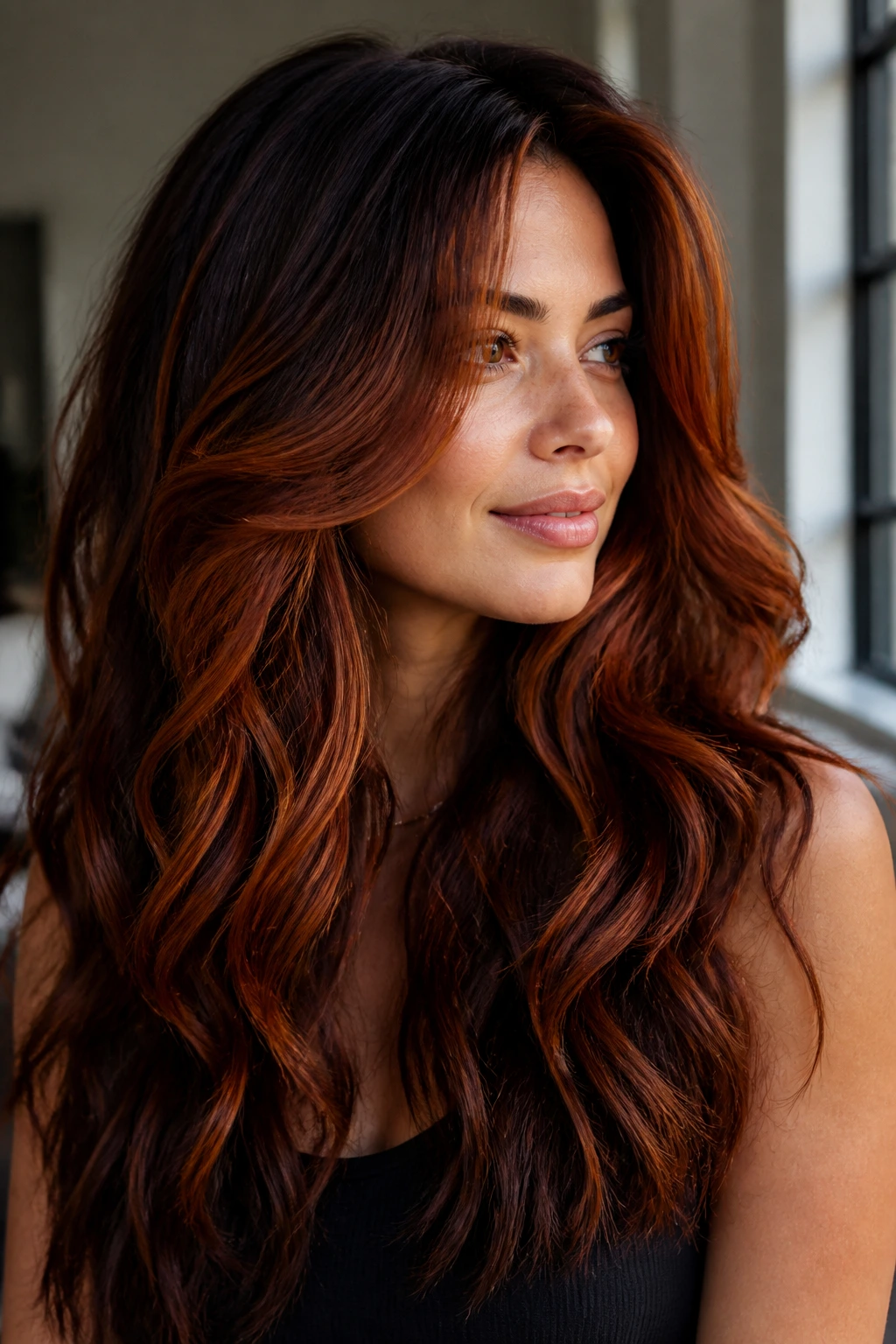
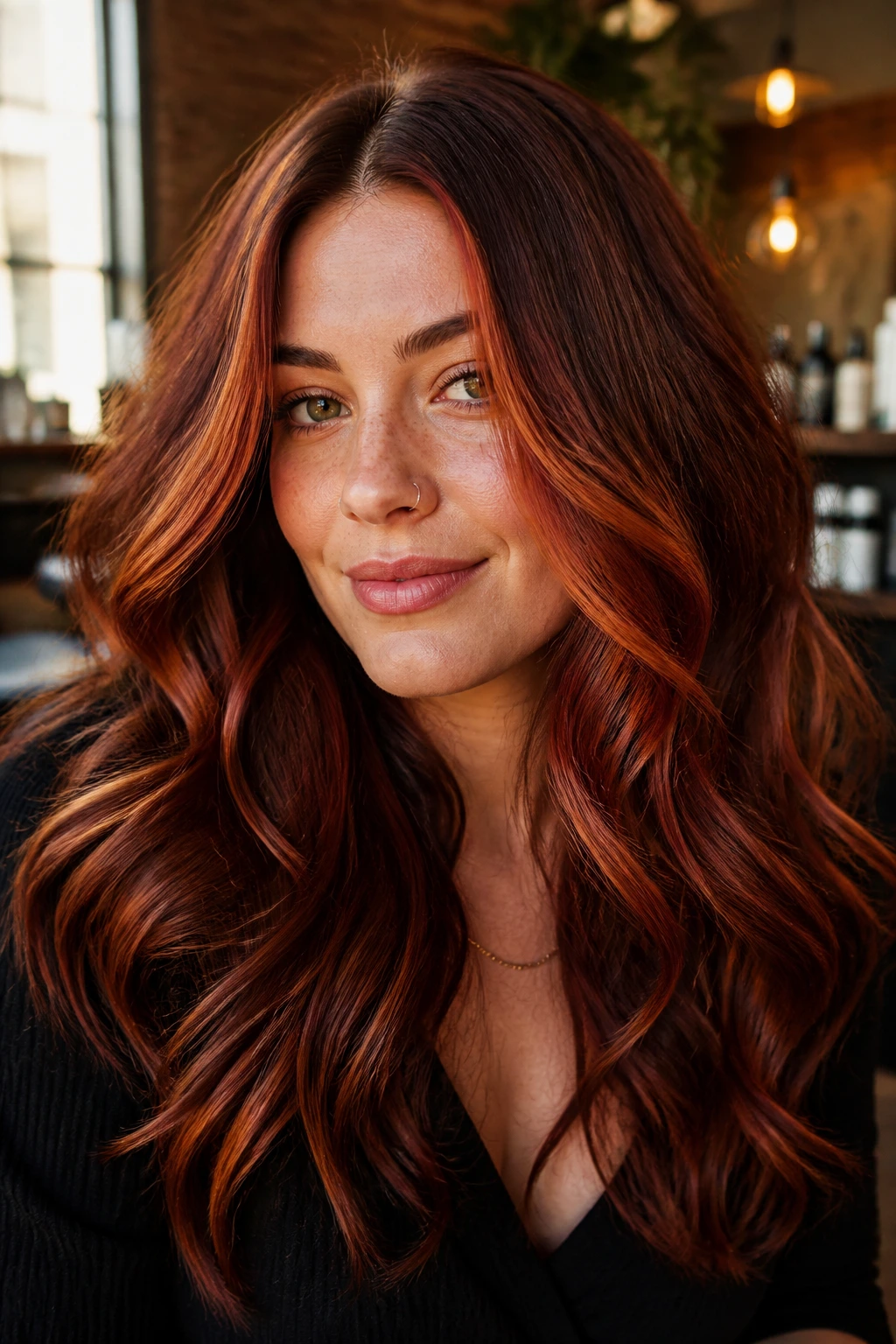
Copper ribbon layers are the look I suggest first when someone wants red that moves. The shade sits in slim, bright ribbons woven through long layers, so the color doesn’t sit there and shout at you from one solid block. Thick hair is ideal for this because there’s enough density to hold the contrast without losing the shape.
Ask for a brunette or deep auburn base with copper ribbons placed more heavily around the face and through the top layer. I’d keep the ribbons a little wider in the mid-lengths and finer near the ends. That keeps the color from reading stripey.
How to Wear It
Loose waves are the sweet spot here. The bends separate the ribbons and let the copper flash in different places as you turn your head. On straight hair, the look is still good, but it can read softer and more subtle.
This is a smart choice if you want red without a full all-over commitment. The grow-out is forgiving, and the layers prevent thick hair from turning into one heavy sheet.
2. Cherry Cola Waves
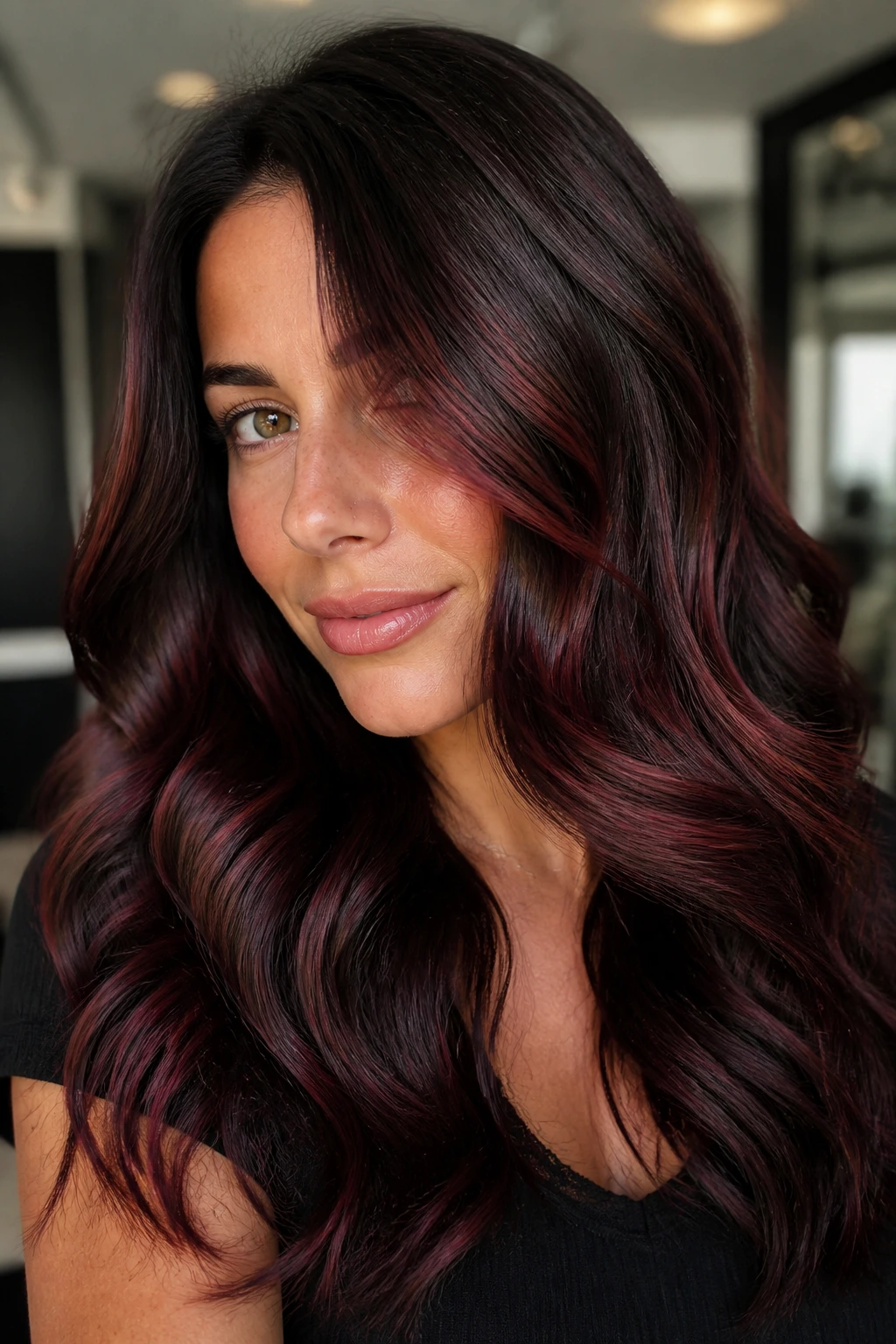
Cherry cola waves live in that deep, glossy space between brunette and red. The color usually starts with an espresso or dark brown base and picks up a cool cherry tone in the light, almost like the red is tucked under the surface instead of painted on top. Thick hair makes that illusion work because the movement creates depth.
I like this look on long hair with medium layers. The waves should be broad and soft, not tight ringlets. That keeps the color from getting too busy and lets the cherry note show up in the middle of the strand.
If you’re worried about red being too loud, this is one of the safest bets in the whole collection. The shade reads polished indoors and richer outdoors. It’s the kind of red that makes people look twice without immediately knowing why.
3. Auburn Curtain Bangs
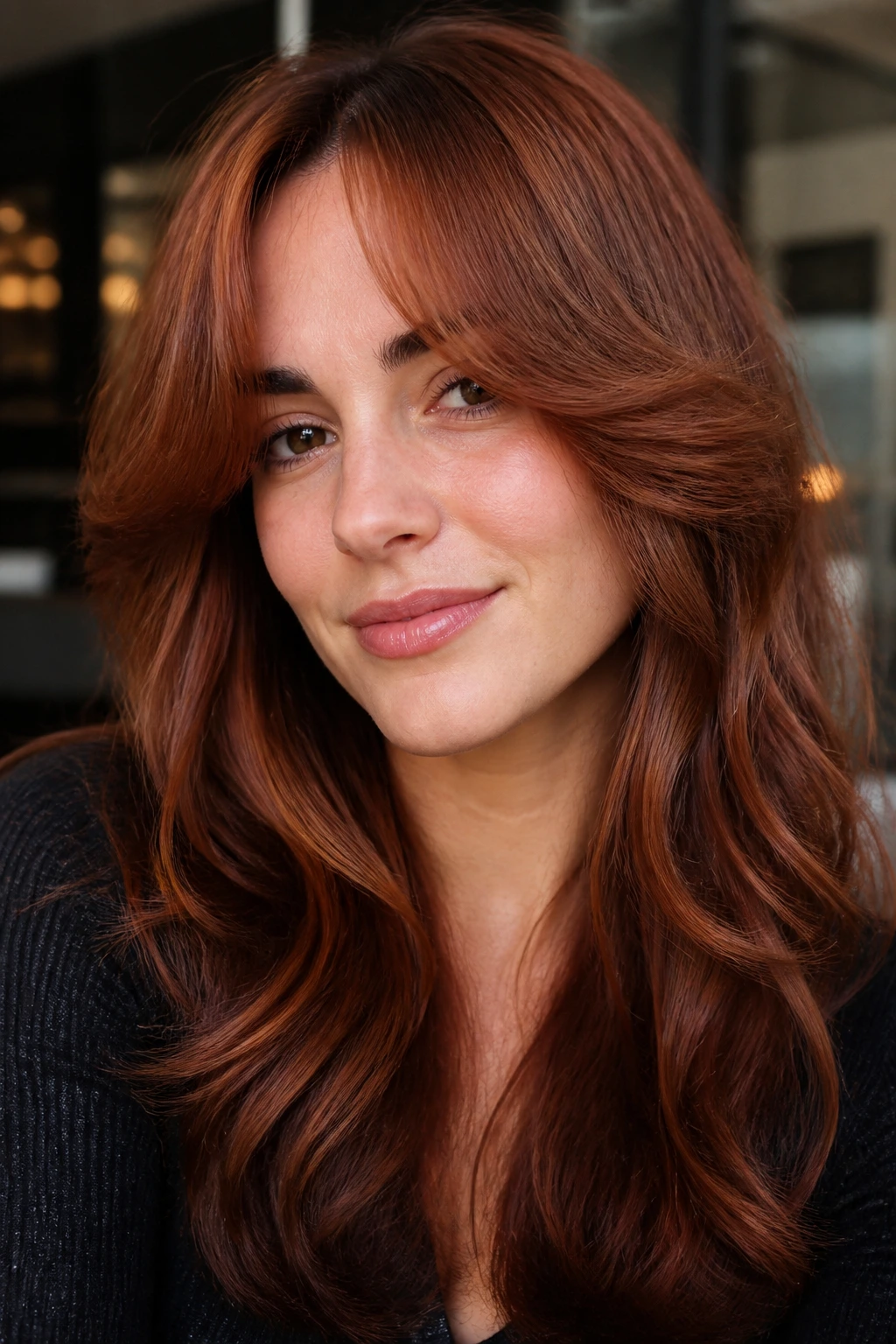
Auburn curtain bangs are a small change with a big payoff. Thick hair can pull a lot of weight around the face, and curtain bangs break that up fast. A soft auburn shade in the fringe, paired with longer auburn layers, draws attention where you want it and keeps the cut from looking blunt.
The best version has a medium brown base with auburn through the bang area and the front third of the hair. Ask your colorist to keep the ends a touch deeper so the fringe doesn’t float away from the rest of the head. Thick hair can support a lot of bang without looking sparse, which is why this style works better here than it does on finer textures.
Blow-dry the bangs with a round brush and a little tension. They should curve away from the cheekbones, not stick straight down. If the rest of your hair is thick and wavy, the contrast between the soft bangs and the heavier lengths looks especially good.
4. Mahogany Blowout
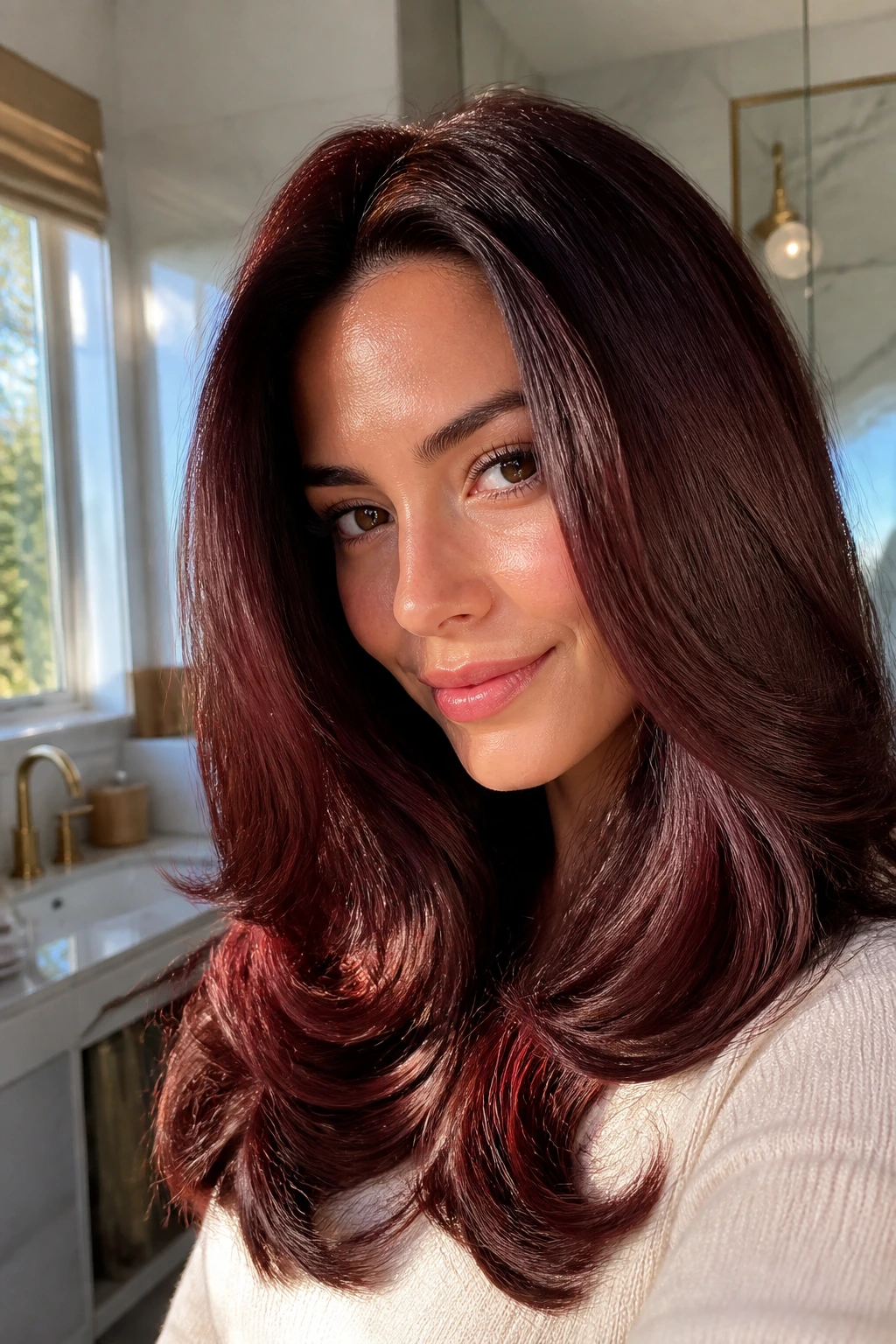
Mahogany is the red I reach for when someone wants polish instead of flash. It sits darker than copper, cooler than chestnut, and deeper than auburn. On thick hair, that depth is a gift — the color drinks in the mass and turns it into shine.
This look depends on a clean blowout. Big round-brush volume at the roots, smooth lengths, and softly turned-under ends make the mahogany read expensive without trying too hard. The color should look even, but not flat. A few lowlights or a slightly darker root can keep the finish from looking like one solid block.
It’s also forgiving if your hair is naturally coarse. Mahogany hides a bit of texture better than bright red does, so frizz and rough cuticle don’t sabotage the whole style. I’d call this one of the best reds for thick hair that needs to look formal without losing body.
5. Strawberry Copper Lob
A strawberry copper lob sits right in the sweet spot between playful and wearable. It’s bright enough to feel red, but not so vivid that every outfit has to compete with it. On thick hair, the lob length keeps the bulk under control while the copper-strawberry mix makes the shape look lighter.
The cut should hit around the collarbone or just below it. Any shorter and thick hair can start to flip hard; any longer and the lob loses the sharp line that makes it feel fresh. Ask for soft internal layers if your hair is very dense, because the color reads better when the movement is not fighting the cut.
This is one of my favorite options for someone who wants to go lighter without crossing into blonde. It’s bright in daylight, coppery indoors, and glossy enough to look deliberate even when you air-dry it.
6. Burgundy Balayage on Long Layers
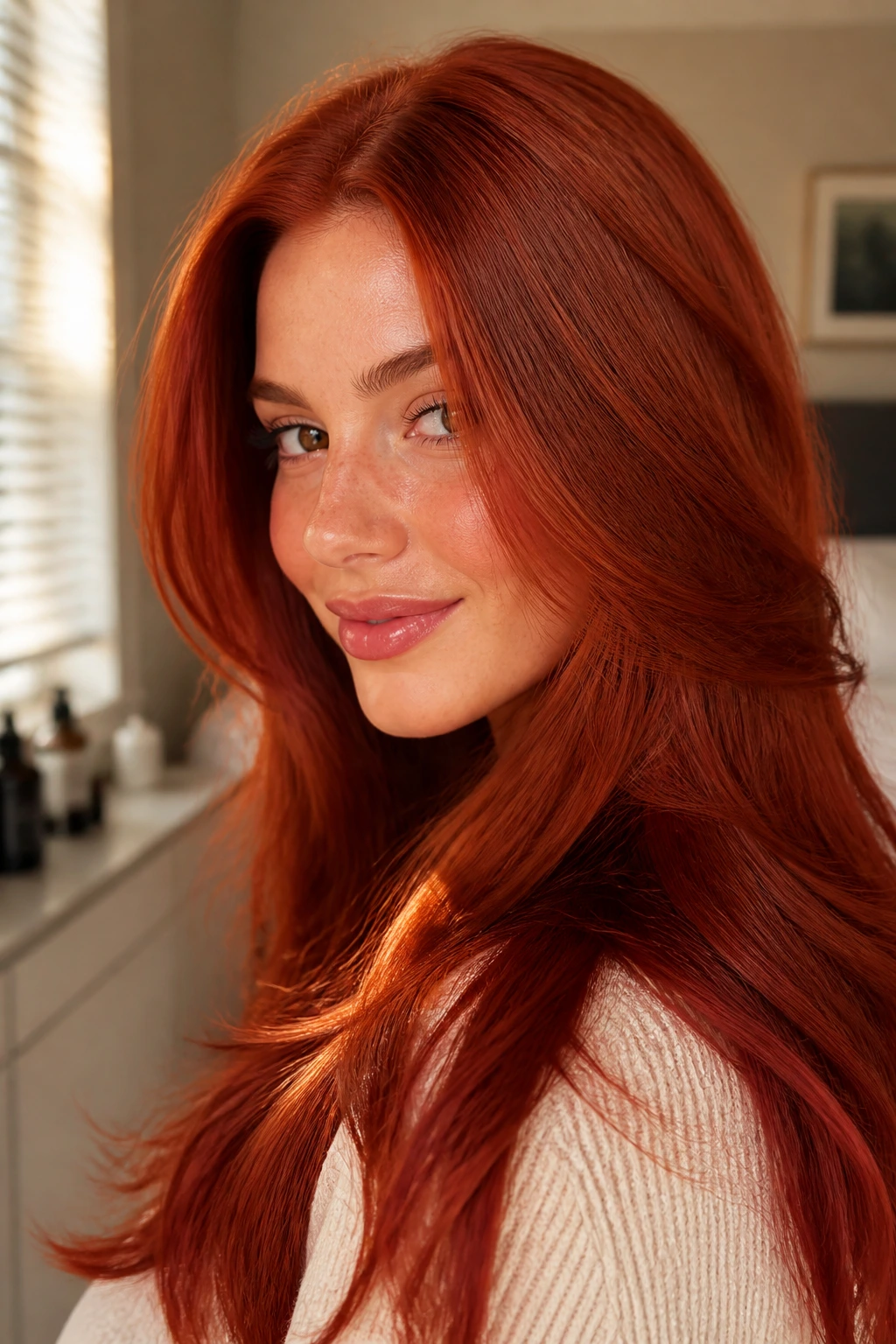
Burgundy balayage gives thick hair the kind of depth it actually needs. The color is painted through the mid-lengths and ends, so the red doesn’t sit as a helmet-shaped cap on top. Instead, it moves through the layers like wine through dark fabric.
Long layers are the key here. Without them, burgundy can sink into thick hair and disappear. With them, the color shows in ribbons when the hair swings. I’d ask for a darker base at the roots, then burgundy placed with a light hand through the surface and heavier through the bottom third.
This look suits someone who wants red to feel moody, not fiery. It also grows out nicely because the balayage keeps the root line soft. On curly thick hair, it’s even better — the bends separate the burgundy and make the color look deeper than it does on a flat finish.
7. Cinnamon Money Piece
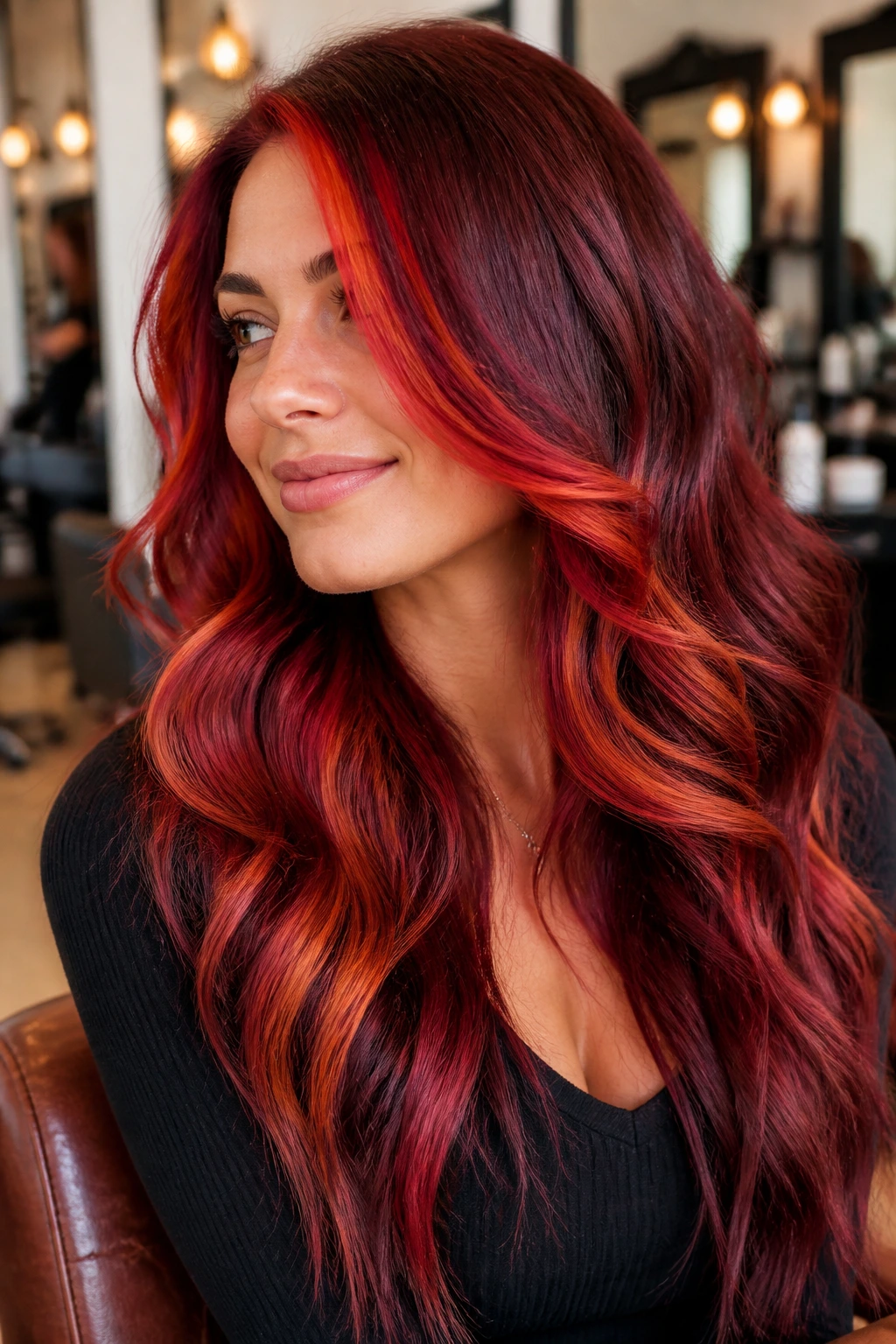
A cinnamon money piece can change the whole mood of thick hair in one appointment. The face frame is where the eye lands first, and thick hair gives you enough canvas to make that placement bold without looking thin or fussy. Cinnamon sits in that warm red-brown range that flatters brunette bases beautifully.
The important part is contrast. Keep the money piece a bit brighter than the rest of the head, then let the lengths stay deeper. If everything around the face is equally bright, thick hair can start to feel overcolored. One strong frame is enough.
Wear it with a center part if you want symmetry, or a soft side part if you want a little lift at the crown. A loose bend through the lengths keeps the face frame visible. I like this look on people who want red but don’t want to color every inch of hair.
8. Burnt Copper Shag
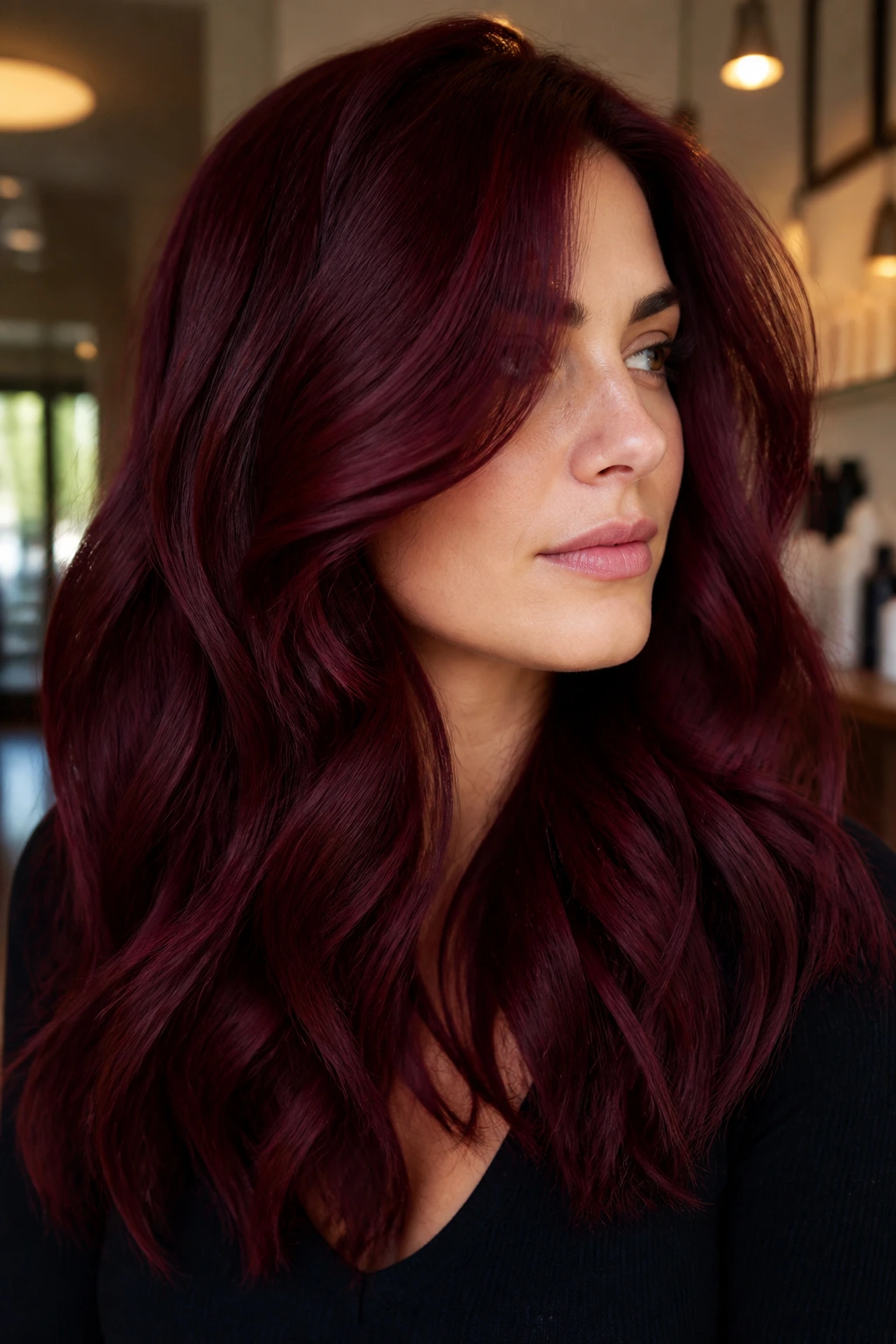
Burnt copper and a shag cut belong together. Thick hair can get heavy fast, and the shag removes that bulk while the copper keeps the layers from disappearing into each other. The color usually sits in a dusty orange-red range, more earthy than bright, which suits the choppy shape.
This is one of the best choices for wavy or slightly curly hair. The broken texture gives the copper places to catch light, and the layers keep the silhouette from puffing out at the bottom. Ask for face-framing pieces that start high enough to create movement around the cheekbones.
I’d style this with a diffuser or a rough blow-dry and a little texturizing cream. Too much polish kills the point. The appeal here is the kind of lived-in edge that only works when the cut and color are talking to each other.
9. Merlot Curls
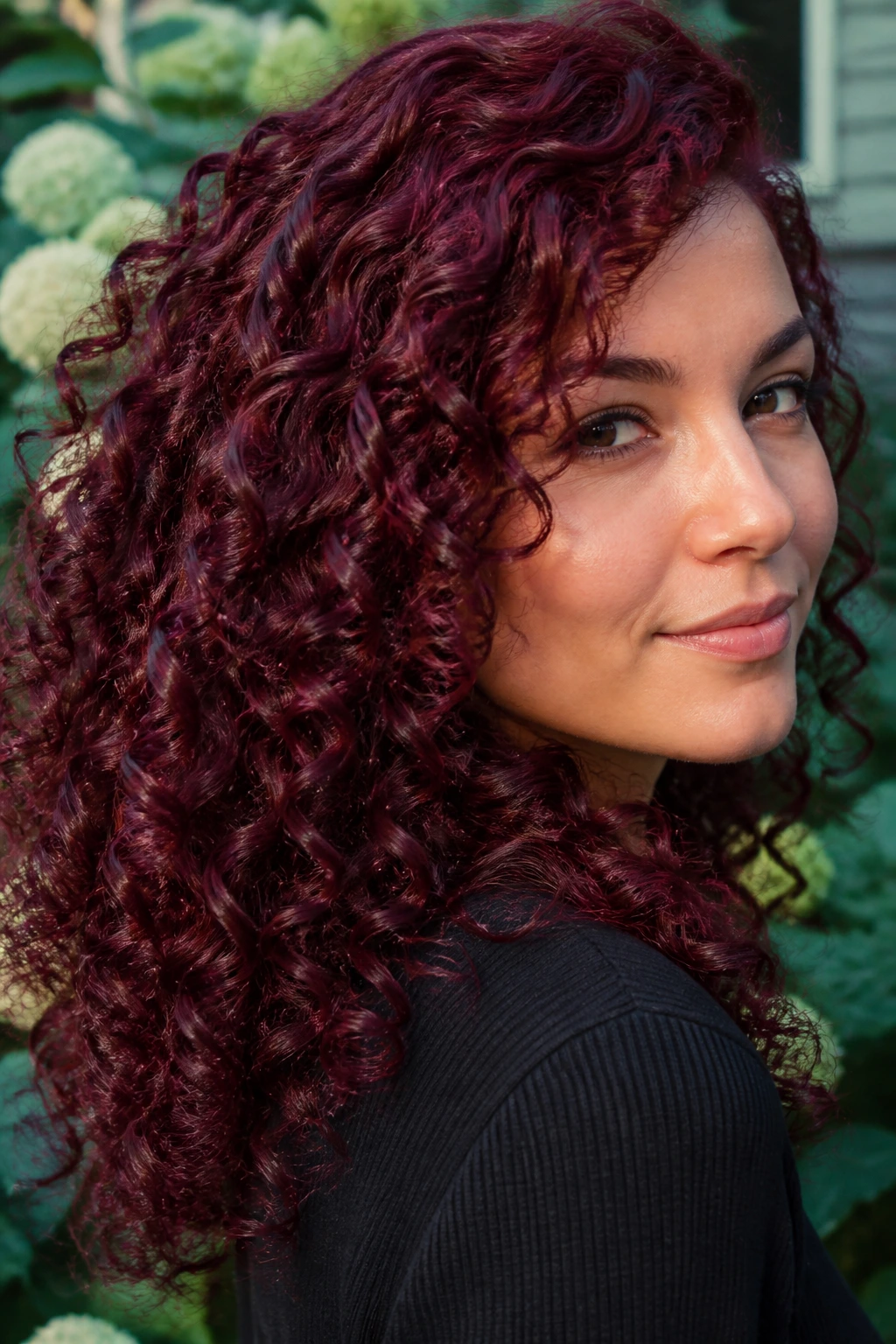
Merlot curls have a plush, wine-dark feel that thick curly hair wears beautifully. The shade is deep enough that the curl pattern matters as much as the color, maybe more. Each coil catches the red at a different angle, so the whole style looks richer as it moves.
If your hair is already curly or coily, ask for a merlot gloss or a red-violet base that doesn’t blow out too orange. The finish should stay glossy and dimensional, not dusty. Thick curls need moisture, so this is one of those looks that gets better with a leave-in and a curl cream rather than a ton of hot tools.
A side part can give the style some lift, but the real job is hydration. Dry merlot curls turn dull fast. Keep the ends soft, and the color does half the work for you.
10. Copper Pixie with Texture
A copper pixie on thick hair has edge, but it also has structure. Thick strands keep a pixie from collapsing into the scalp, which means the top can stay lifted and piecey instead of flat. Copper adds warmth so the short cut doesn’t disappear.
The best version has textured layers on top, shorter sides, and enough length at the crown to sweep forward or to the side. A bright copper or copper-gold tone helps the cut show up from every angle. If you go too dark here, the pixie can look heavy in a hurry.
This cut is low-dry-time, not zero-effort. You still need a little styling paste or cream to separate the top, especially if your hair is coarse. But once it’s in shape, it’s sharp. Short red hair on thick texture has a kind of energy that longer cuts can’t fake.
11. Rusted Red Face-Framing Layers
Rust red face-framing layers are made for thick hair that needs softness near the front. The color sits deeper and earthier than copper, with a slightly weathered tone that feels grounded rather than bright. Placed around the face, it breaks up density and makes the whole haircut look lighter.
I like this look on long hair with lots of movement through the front third. The back can stay darker and quieter, while the framing layers do the talking. That contrast is what keeps thick hair from looking all one thing.
This is a good pick if you like red but live in a wardrobe full of black, cream, denim, and brown. The color doesn’t fight those clothes. It works with them, which matters more than people think when you wear a look every day.
12. Cherry Red Bob
A cherry red bob is not shy, and that’s the point. Thick hair gives a bob enough body that it doesn’t fall limp or boxy, while the cherry shade keeps the cut from feeling too severe. The result is bright, glossy, and clean around the jaw.
Ask for a blunt or slightly beveled bob if your hair is very dense. The line should stay sharp, especially at the perimeter. If the ends get too thinned out, the bob loses its shape and the red starts to look less intentional.
This look asks for upkeep. A bob this precise needs trims, and cherry red needs glosses or refreshes before it turns flat. But when it’s fresh, it has one of the strongest silhouettes in the whole collection.
13. Rose Gold Ends
Rose gold ends are softer than a full red transformation, which makes them useful if you want something playful without changing your whole head. On thick hair, the ends hold color in a way that reads expensive rather than gimmicky, especially when the base stays brunette or dark blonde.
The look works best as an ombré or dip-dye, where the red-pink tone starts lower on the shaft. Too high, and it can look like the hair is growing out awkwardly. Keep the root zone natural or only lightly glazed so the contrast stays smooth.
This is one of the easier red ideas to live with because it grows out well and doesn’t require every inch of hair to stay bright. A loose wave helps the rose gold show through the lengths, but even a straight finish can look polished if the ends are glossy.
14. Deep Wine Half-Up Style
A deep wine half-up style lets thick hair do what it does best: hold volume. The top section lifts the crown, the lower section keeps the length, and the wine-red tone gives the whole style a richer feel than a plain brunette half-up ever could.
This look is less about the color formula alone and more about how the hair is arranged. Pull the top half back with a slight twist or soft knot, then leave the rest in loose waves. The darker red shows up in the layers underneath and around the face, especially if the ends are lighter or more reflective.
I like this for events because it uses the density instead of fighting it. Thick hair can make half-up styles look full in a way that fine hair often can’t. The color just makes that fullness read on purpose.
15. Spiced Auburn Braids
Spiced auburn braids are one of those looks that make thick hair feel like a feature, not a problem. Braids love density because they need enough hair to stay chunky and defined. Auburn gives the weave warmth, so every crossing and twist shows up instead of disappearing.
This can be a single side braid, two loose braids, a crown braid, or a long fishtail. The important thing is the tone. A spiced auburn with a little gold in it keeps the braid from reading muddy. On thick hair, that tonal shift makes the pattern pop.
Braids are also a smart way to wear red when you want the color to last longer between washes. The style holds the shape, the color stays tucked into the weave, and you get a little extra time before the roots start shouting.
16. Flame-Tipped Layered Cut
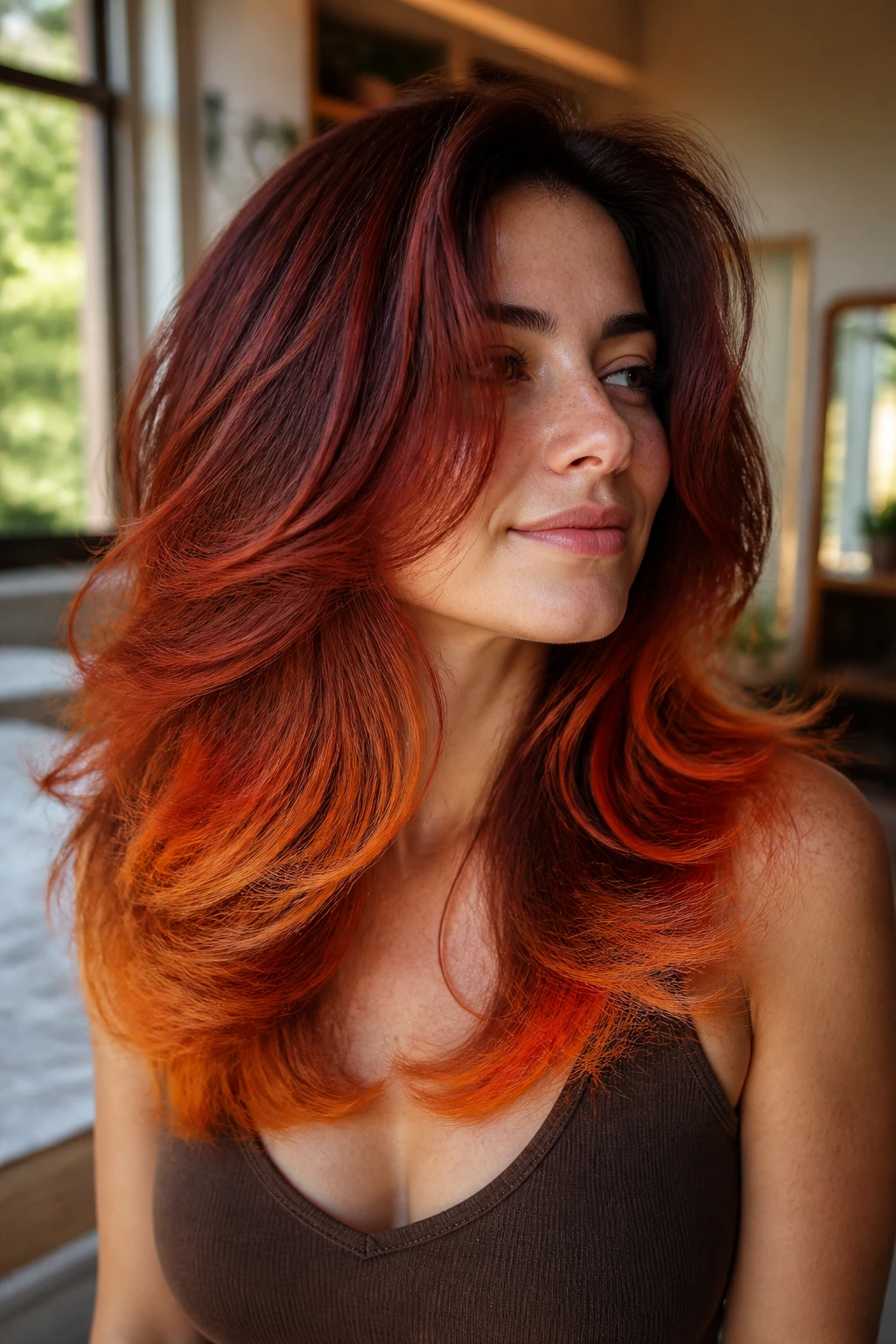
Flame-tipped layers are for people who want movement with a little drama at the ends. The roots stay deeper, the mid-lengths shift into red, and the tips lean brighter — copper, ember, or fire-red depending on how bold you want to go. Thick hair is ideal here because the layers prevent the ends from becoming a heavy block.
The haircut matters almost as much as the color. You want long internal layers or a soft U-shape so the tips can move. If the cut is blunt, the flame effect can look like a hard stripe instead of a gradient.
This is a strong choice if you like the look of dyed ends but don’t want a full head of bright red. The movement is the point. When thick hair swings, the lighter tips catch the eye first, then the deeper base follows.
17. Cranberry Gloss on Thick Brunette Hair
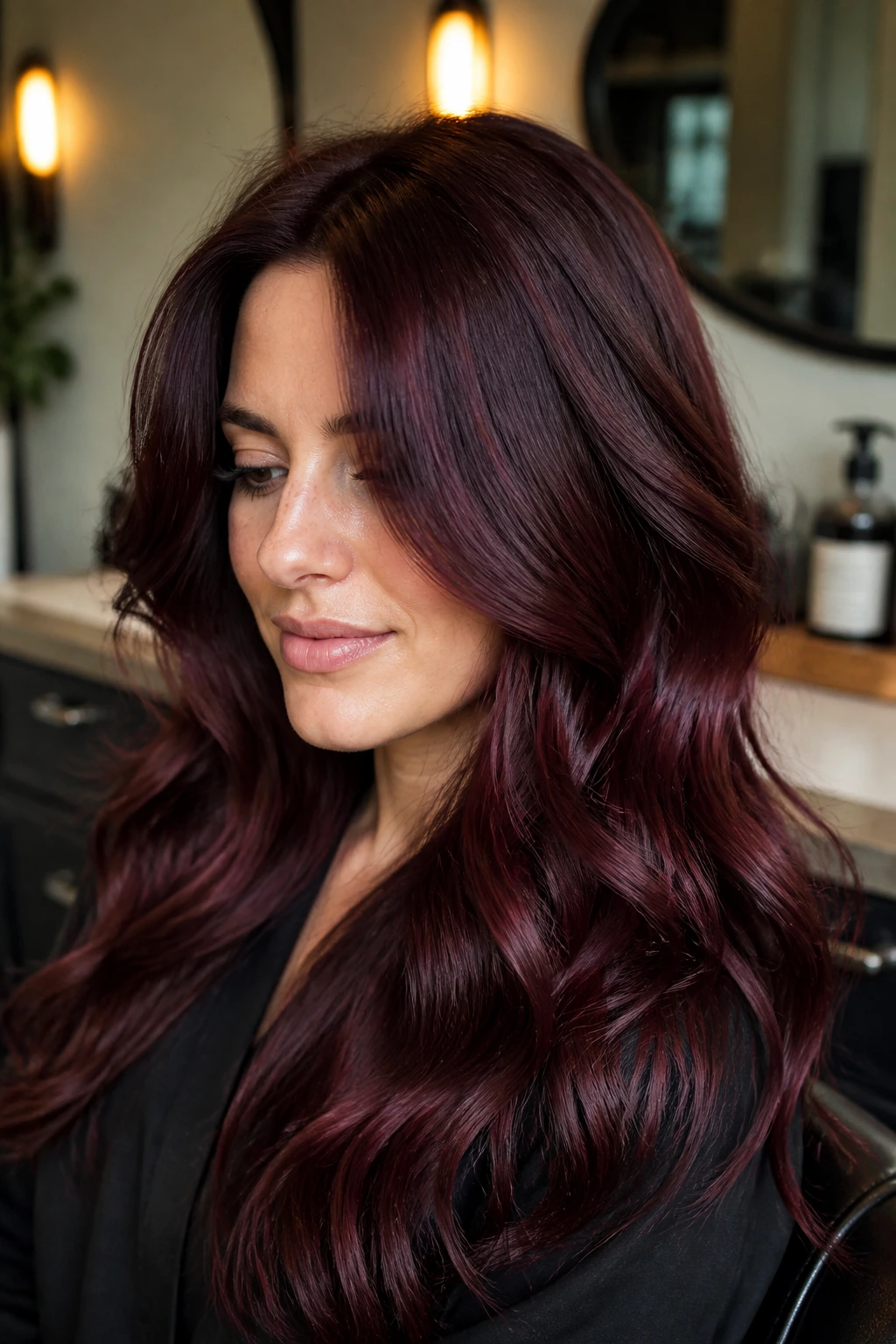
A cranberry gloss is the quietest red in the bunch, and I mean that as a compliment. It doesn’t bleach your identity. It sits over brunette hair and gives it a ruby sheen, especially on thick strands where the light has room to play through the surface.
This is a great option if you want red without a visible color change at every root line. A gloss service can add cranberry warmth through the lengths while keeping the base dark. On thick hair, that makes the finish look expensive and low-stress at the same time.
Use this when you want depth, not brightness. It’s the kind of red that people notice a little later, once the light changes. That delayed reveal is part of the charm.
18. Red Velvet Mermaid Waves
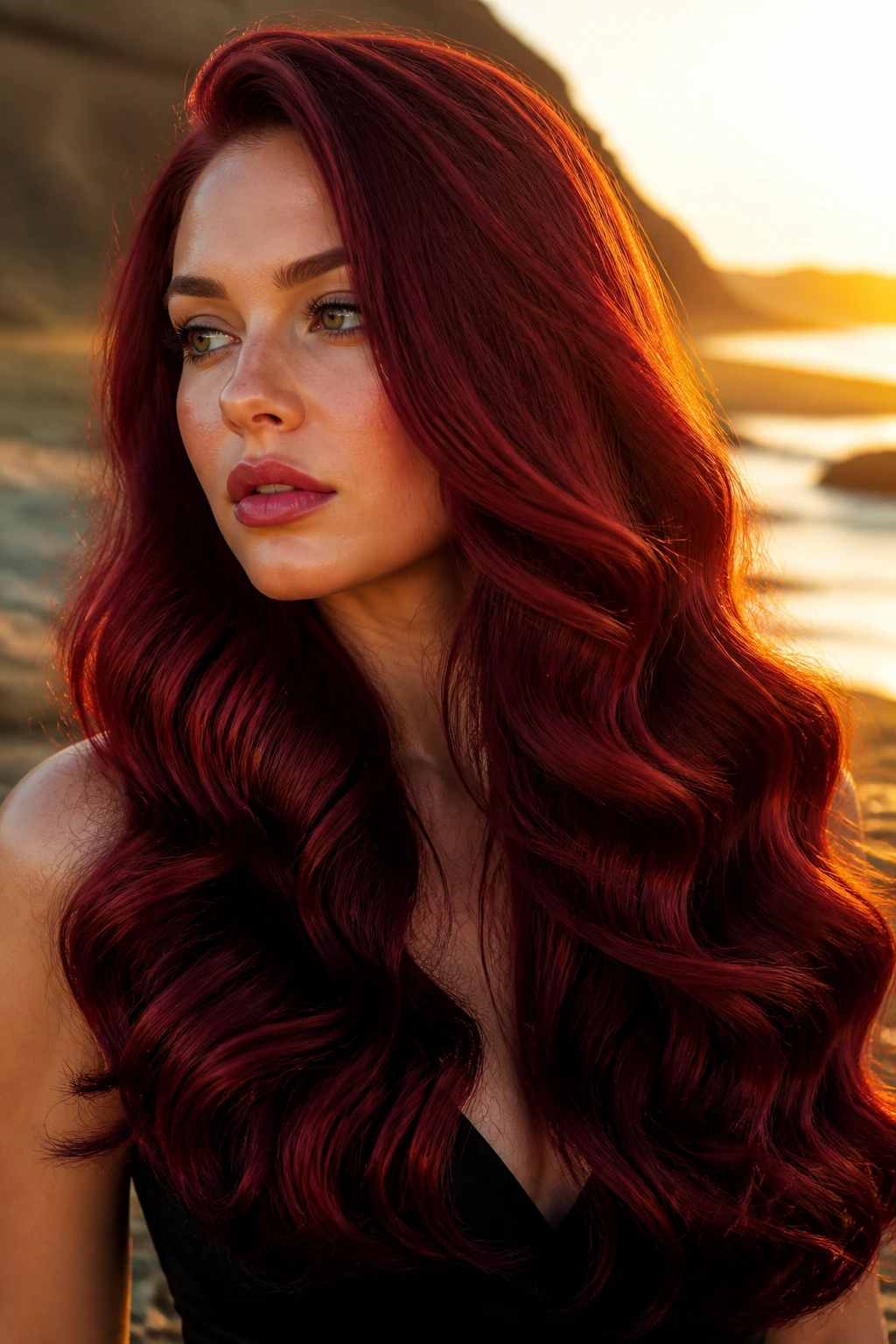
Red velvet mermaid waves are built for length, thickness, and a little bit of vanity. The color should sit somewhere between wine, mahogany, and cool red velvet — rich, deep, and reflective. Thick hair gives the style enough mass that the waves look deliberate rather than thin or straggly.
Use a large barrel iron or set the hair in big bends so the wave pattern stays soft. The point is not curl; it’s movement. A red velvet shade on long thick hair can look almost textile-like, which is why it works so well with loose, sweeping waves.
This is one of the more dramatic looks here, but it’s also one of the easiest to make look polished. Keep the ends healthy. That matters more than people admit. Red shows damage fast, and long thick hair can turn frayed at the bottom if you ignore it.
19. Foxy Copper Wolf Cut
A copper wolf cut has attitude built into it. The wolf cut’s shag-meets-mullet structure removes bulk from thick hair and leaves you with a shape that feels messy in the best way. Copper keeps the whole thing from looking too underground or too dark.
The layers should be choppy, with volume at the crown and movement around the cheekbones. On thick hair, that structure matters because the cut needs room to breathe. A flat wolf cut is a waste. A copper one, with texture and a little lift, looks alive.
This style suits natural waves, bends, or curls. I’d avoid over-smoothing it. A bit of roughness is the point, and the copper shade gets more interesting when the layers separate.
20. Ruby Sleek Lob
A ruby sleek lob is the neat freak of the red family, and it works because thick hair can handle the precision. The line sits around the collarbone, the ends stay blunt enough to feel solid, and the ruby tone adds brightness without needing much styling noise.
This look needs gloss. Lots of it. Thick hair can go dull fast when it’s straightened every day, so a ruby finish should feel smooth and reflective, not crunchy or stiff. A middle part gives the most symmetry, though a deep side part can make the color look even richer.
I like this one for anyone who wants a polished red that still feels modern. It’s the opposite of “done too much.” It’s simple, but not plain.
21. Pumpkin Spice Layers
Pumpkin spice layers have more range than the name suggests. The best version mixes copper, amber, and a little gold so the hair catches light in different places. Thick hair is perfect for this because the layers keep the tones from blending into one muddy orange.
The cut should have movement through the mid-lengths, with enough face-framing to show off the warmer pieces. A soft blowout makes the color feel fuller, while a loose wave pulls out the brighter copper notes. If your hair is very dark, the lighter pumpkin pieces should stay closer to the surface so they don’t vanish.
This is one of the most wearable warm reds in the set. It feels alive without crossing into neon territory. That matters if you want red to show up in a normal day, not only under salon lights.
22. Garnet Ringlet Cut
Garnet ringlets give thick curly hair a luxurious kind of depth. The shade is darker and more jewel-like than copper, so the curl pattern carries a lot of the visual work. Each ringlet catches the red in its own place, and the shape keeps the look from turning into a dark mass.
This cut should be shaped for curl, not fought into submission. Thick curls need room at the crown and layers that keep the bottom from ballooning. Garnet works well because it deepens the silhouette instead of flattening it.
Moisture is non-negotiable here. Dry ringlets can make even a rich red look tired. A leave-in, curl cream, and diffuser keep the finish soft enough for the color to stay reflective.
23. Rosewood Blowout with Soft Ends
Rosewood is the red-brown I recommend when someone wants their hair to look expensive and not obviously colored. On thick hair, a rosewood gloss or all-over color gives the strands a soft brown-red cast that looks especially good in daylight. It’s calm. Not boring. Calm.
The blowout should turn the ends under gently, not flip them out. That softness is what keeps the rosewood from getting too formal. A little round-brush lift at the roots adds enough body to keep thick hair from sitting heavy.
This look is easy to wear with clothes that already live in your closet. Black, navy, olive, camel — it all works. That’s part of the appeal. You get red without needing to rethink everything else.
24. Brick Red Blunt Cut
Brick red and a blunt cut make a strong pair. Brick red sits in that earthy, rust-adjacent zone that feels grounded rather than bright, and a blunt cut gives it a firm outline. Thick hair is one of the few textures that can carry that much weight and still look sharp.
Ask for a clean perimeter and very little internal thinning if you want the line to stay solid. The goal is density with shape, not density with puff. A middle part keeps the look architectural, while a side part softens it a little.
This is a good choice if you like strong silhouettes. It does not need a lot of styling to make sense. Even air-dried with a touch of serum, it reads like a deliberate style.
25. Copper-to-Auburn Sombre
A copper-to-auburn sombre is one of the smartest ways to wear red on thick hair. The transition is soft and gradual, so you get brightness without a hard line. That matters because dense hair can make abrupt color changes look chunky in a hurry.
The lighter copper usually lives around the top layers and face frame, while the auburn deepens toward the ends. Or you can reverse it, depending on your base color. Either way, the blend should feel like it belongs to the haircut, not like a stripe painted onto it.
I like this look for people who want red that grows out gracefully. It’s a color strategy, not a stunt. And thick hair is exactly the kind of canvas that makes a gradual fade look expensive instead of accidental.
26. Sangria Curls
Sangria curls are bold in a way that feels grown-up, not gimmicky. The shade sits between burgundy and cherry, with enough depth to make curls look plush and enough red to keep them from disappearing. Thick curls are the best case for this look because the shape gives the color layers to live in.
Use a diffuser and a curl cream that keeps frizz down without flattening the pattern. Sangria looks best when the curls stay separate and springy. If the finish gets too blown out, the color loses its character.
This is the kind of red that works hard in low light and even harder in daylight. The curls catch the red in different places, and the whole style has a velvety finish that flat straight hair can’t really fake.
27. Mulled Wine High Ponytail
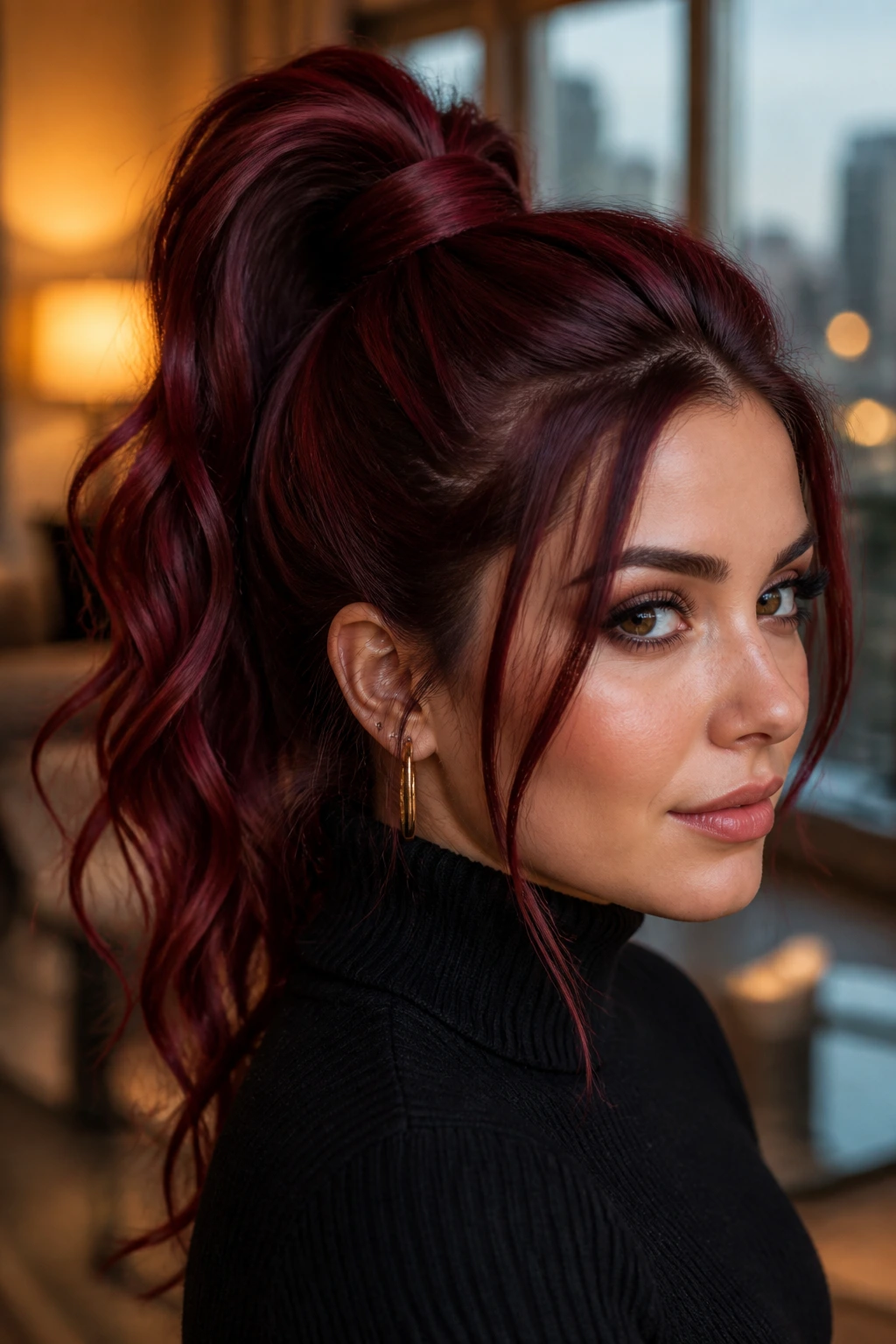
A mulled wine high ponytail is a good reminder that red hair does not need to be worn down to matter. Thick hair gives a high ponytail serious lift, and the deep wine shade makes the style feel richer than a plain black or brown pony. Wrap a section around the base and the whole thing looks cleaner immediately.
The color should stay deeper at the roots and a touch lighter through the pony length so movement shows. If your hair is layered, the shorter pieces around the face can soften the line without making it messy. A little smoothing cream at the crown keeps the finish polished.
This is one of the most practical looks in the group for busy days, but it doesn’t look basic. That’s the trick. Thick hair gives the ponytail enough body to feel intentional, and the mulled wine tone keeps it from looking like an afterthought.
28. Chestnut Red Gloss with Airy Layers
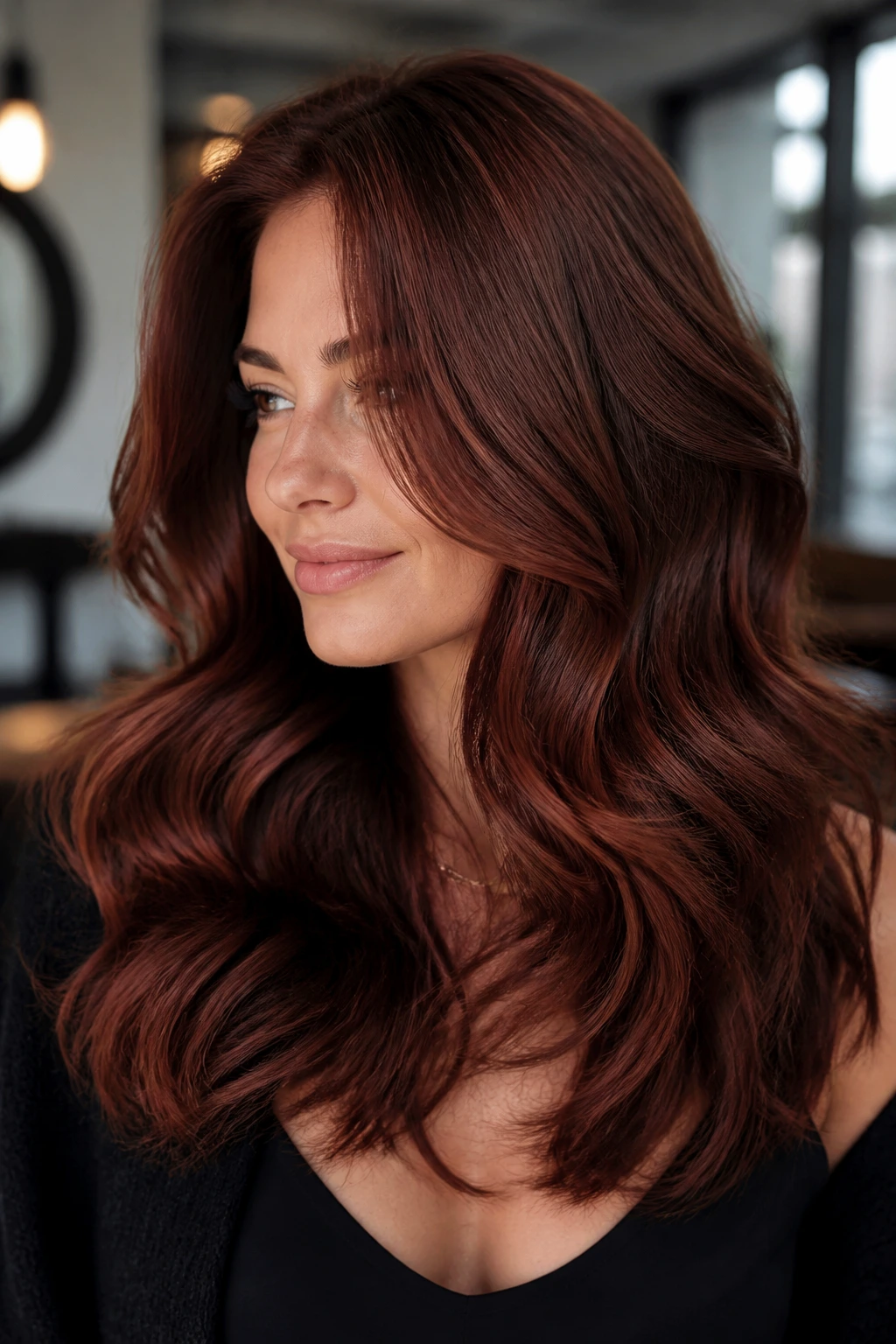
Chestnut red is the easiest red to live with, and on thick hair that matters. The gloss leans brown-red instead of fiery, which means the color can sit close to your natural shade and still do something interesting. Airy layers keep the cut from feeling too heavy, so the whole head moves instead of settling into one solid block.
This is the look I’d recommend if you want a soft red that doesn’t demand a personality transplant. It works with straight hair, bends, and loose waves. It works with office clothes and weekend clothes. It also grows out with the least drama, which is useful if your salon schedule is more practical than perfect.
The shine is the point here. Chestnut red on thick hair looks best when the cuticle is smooth and the layers are visible. If the hair is dry, the color can drift into brown. If it’s glossy, it reads like a rich red-brown with real depth.
How to Wear Red on Thick Hair So It Actually Shows Up
Parting: A center part makes copper ribbons and money pieces look symmetrical and clean. A deep side part adds lift at the crown, which is useful when thick hair tends to sit heavy on top. Pick the part based on where you want the color to frame the face.
Texture: Loose waves, soft bends, braids, and round-brush blowouts show red better than pin-straight hair most of the time. Texture separates the color into visible sections, especially when the red lives in highlights or balayage. If your hair is curly, keep the curl pattern defined so the pigment can move with it.
Accessories: Tortoiseshell clips, matte claws, thin headbands, and simple pins work well because they don’t fight the color. Thick hair already has presence. You do not need shiny accessories pulling attention away from the red.
Clothes and makeup: Cream, black, chocolate, olive, and muted navy make red hair look richer. On the makeup side, a brown liner or soft berry lip usually feels cleaner than a harsh red lip, unless you want the whole thing to lean dramatic.
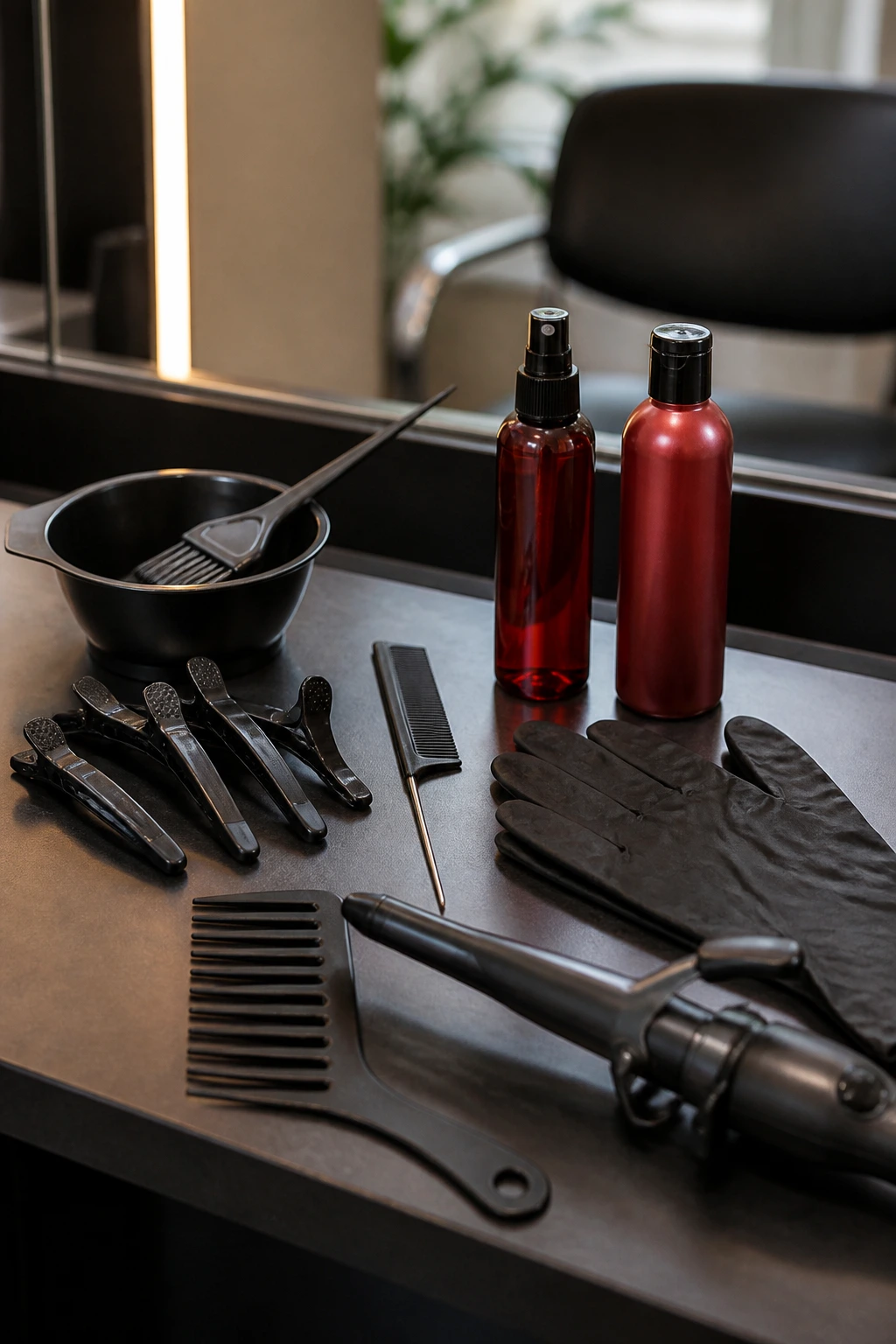
Essential Tools for Coloring and Styling Thick Hair
-
Tint brush and mixing bowl: Useful for glosses, root smudges, and any placement work where thick hair needs sectioning.
-
6 to 8 section clips: Thick hair needs more sections than fine hair, plain and simple. Fewer clips means more mess.
-
Tail comb: Helps carve clean partings and thin slices for highlights or money pieces.
-
Color-safe gloves: Especially important if you’re refreshing red with a depositing conditioner or doing a gloss at home.
-
Wide-tooth comb: Good for distributing conditioner and detangling thick lengths without dragging through the cuticle.
-
1.25-inch curling iron or wand: A medium barrel gives thick hair a bend that shows off red dimension without turning the style into tight ringlets.
-
Heat protectant: Non-negotiable if you style often. Red fades faster when you keep blasting it with hot tools.
-
Sulfate-free shampoo and conditioner: Better for keeping red from washing out too quickly.
-
Microfiber towel or T-shirt: Helps cut down on roughing up the cuticle, which matters when red hair needs shine.
Extra Color Moves That Keep Red from Going Flat
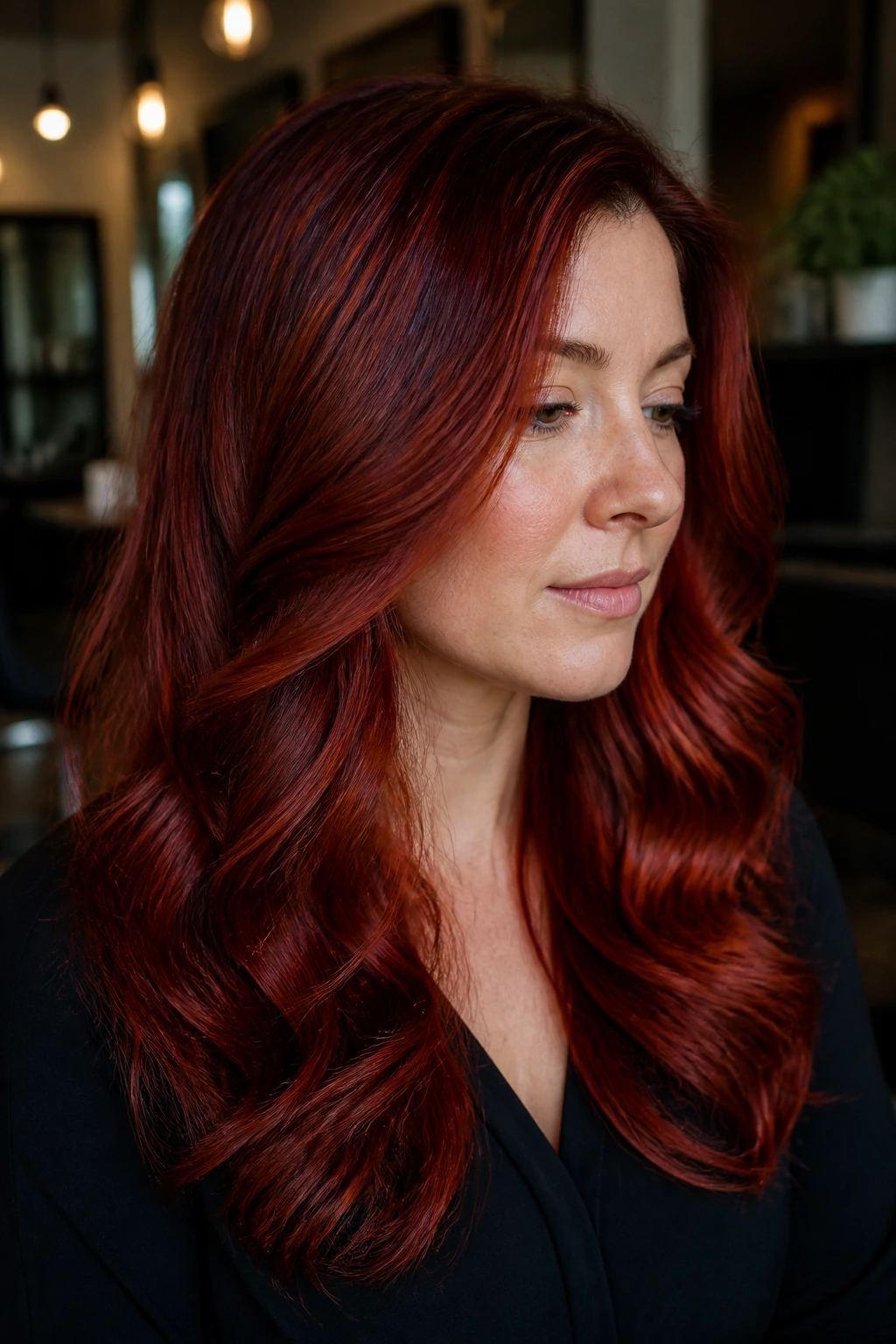
Root Shadow: A deeper root makes thick hair look fuller at the scalp and keeps red from feeling pasted on. I like this especially for balayage and sombré looks because the grow-out stays soft.
Gloss Timing: A demi-permanent gloss every 4 to 6 weeks can pull faded red back into shape before it starts looking dusty. On thick hair, gloss often shows best on the outer layer and face frame first.
Placement: Wide ribbons in the front and finer pieces in the back give the eye something to land on without making the whole head too busy. Thick hair can handle contrast, but it still needs some structure.
Cut First, Color Second: If the haircut is too blunt or too bulky, the red has nowhere to move. Long layers, internal layers, shags, and soft debulking can make a huge difference in how the shade reads.
Heat Control: Keep hot tools in the 300–350°F range when you can. Higher heat strips red faster and dries the ends, especially on porous thick hair that already takes longer to fully dry.
Maintenance, Fading, and Gloss Timing
Red fades. That’s the deal. Thick hair can hide a little fading better than fine hair, but it still needs a plan.
Wash two or three times a week if you can, and use lukewarm water instead of hot. Hot water opens the cuticle and lets red pigments slide out faster. If your scalp gets oily between washes, dry shampoo at the roots is a better move than scrubbing the whole head again.
A sulfate-free shampoo is the cleanest place to start, but it’s not magic. A color-depositing conditioner or mask helps more than people expect, especially on the mid-lengths and ends where thick hair tends to lose red first. Use it every 1 to 2 weeks if your shade is bright copper, cherry, or burgundy.
Glosses and toners are worth scheduling before the color gets tired. For deeper reds, every 4 to 6 weeks usually keeps the shine alive. For softer chestnut or mahogany shades, you can stretch that a bit longer. If your hair is porous, check the ends first — they’ll tell you the truth before the rest of the head does.
Sun, chlorine, and hot tools are the usual offenders. A hat in strong sun sounds boring, but it helps. So does a heat protectant every time you style. Red looks best when the surface stays smooth enough to reflect light instead of scattering it.
Common Mistakes That Make Thick Red Hair Look Muddy
-
Making the red too flat from root to tip: Thick hair can swallow an even color application and turn it into one dark mass. Add depth with a root shadow, lowlights, or lighter pieces around the face.
-
Going too bright without a haircut to support it: A vivid copper or cherry shade on a blunt, bulky cut can look like a single block. Layers or internal debulking give the red places to show up.
-
Ignoring porosity at the ends: Thick hair often has older, drier ends that grab red too fast and fade too fast. If the ends look darker or more saturated than the rest, a gloss or filler step may be needed.
-
Straightening every day at high heat: Red pigment loses steam fast when it’s cooked. Keep the iron reasonable, use protectant, and leave some texture in the style when you can.
-
Choosing the wrong undertone: Copper on a very cool base can look too orange, while a blue-red on warm hair can look muddy. Match the red family to the base and the skin tone instead of chasing a shade from a photo.
-
Skipping trims: Thick hair hides split ends for a while, then one day the bottom looks frayed and the red looks tired. A trim every 8 to 12 weeks keeps the color reading clean.
Variations and Adaptations to Try
Soft Copper Intro: If you want red but you’re nervous about commitment, start with a copper gloss over your natural brunette base. The color gives warmth and shine without needing a full lightening service.
Cherry Bold: Go brighter through the front pieces and keep the back deeper. That creates contrast without forcing the entire head into high-maintenance territory.
Curly-First Red: For thick curls, choose merlot, garnet, or burgundy shades and let the curl pattern do the rest. Strong red plus strong texture is a better match than trying to smooth curls into submission.
Gray-Blending Wine Red: If you’re blending grays, a mahogany or wine-red formula can soften the contrast without making the roots look flat. The result feels richer than standard brown and still grows out gracefully.
Low-Maintenance Rooted Red: Keep the root darker and place red through the mid-lengths and ends. This works especially well on thick hair because the deeper root prevents the color from looking too obvious too quickly.
High-Drama Vivid Red: If you want the full statement, lean into scarlet, cherry, or flame-red with a strong cut and regular glossing. Thick hair can carry that intensity better than finer textures because the density keeps the look from reading thin or patchy.
Frequently Asked Questions About Red Hair on Thick Hair
Will red hair make thick hair look even bigger?
Sometimes, yes — but that can be a good thing if the cut is shaped properly. Layers, root shadow, and selective placement keep the color from puffing out the silhouette.
Which red shade is easiest to live with on thick hair?
Chestnut red, mahogany, and rosewood are usually the easiest. They fade into softer brown-red tones instead of going brassy or neon.
Does red work on naturally dark brown thick hair?
Absolutely, but it usually needs a deeper red family or strategic lightening. Cherry cola, burgundy balayage, and cranberry gloss are strong starting points because they show up without forcing a dramatic bleach job.
What if my thick hair is curly?
Curly thick hair is one of the best canvases for red. The curl pattern gives the shade depth, and colors like merlot, garnet, and sangria look richer when each curl catches light differently.
How often should red be refreshed on thick hair?
A gloss every 4 to 6 weeks keeps brighter reds from fading into nothing. Softer reds can stretch longer, especially if you’re using a color-safe shampoo and keeping heat low.
Can I wear red highlights instead of all-over red?
Yes, and on thick hair that’s often the smarter move. Copper ribbons, cinnamon money pieces, and burgundy balayage give you visible red without committing every strand.
What red looks best if I wear my hair straight most of the time?
Ruby lobs, mahogany blowouts, and cherry cola shades work well because the shine reads clearly even without a lot of texture. A blunt or softly beveled cut helps the color look deliberate on straight hair.
Why did my red fade so quickly?
Usually it’s heat, hot water, or porous ends grabbing and releasing pigment too fast. A gloss, gentler shampoo, and lower styling heat tend to make the biggest difference.
The Red That Thick Hair Carries Best
Thick hair gives red something a lot of textures can’t: room. Room for copper to glow inside layers. Room for burgundy to sit deep and rich. Room for cherry to show up in movement instead of screaming from one flat plane.
The best choice is not the brightest one on the board. It’s the one that fits the haircut, the base color, and the amount of upkeep you’re willing to live with. Get those three things lined up, and red stops being a color you worry about. It starts being the part of the hair people remember.
If you’re heading to the salon, bring screenshots of the looks that match your density and texture, not just your favorite shade. Thick hair tells the truth fast, and the right red always looks better when it’s placed with intention.
