



Medium-length shag haircuts have a useful little trick that blunt cuts never quite manage: they make hair look like it has a life of its own. The ends move. The fringe falls apart in a good way. The layers around the cheekbones and collarbone catch shape as you walk, which is exactly why the shag haircut for medium length hair keeps circling back into style with that easy vintage vibe people keep trying to copy and often miss.
The mistake most people make is asking for “a shag” as if it were one haircut. It isn’t. On medium hair, it can lean feathered and airy, heavy and rock-and-roll, soft and 70s, or glossy and brushed out like an old magazine cover that somehow still looks fresh. The difference lives in small things: where the shortest layers start, how much weight stays at the perimeter, whether the bangs are blunt, broken, or swept aside.
And that’s the fun of it. Medium length gives a shag enough room to show off its shape without becoming fussy. You get movement at the shoulders, fringe that can be styled forward or parted open, and enough length to pull it into a clip when the day gets annoying. The best versions don’t look “done” in the stiff sense. They look lived-in, but not lazy. That line matters.
Why These 28 Shag Cuts Keep the Vintage Energy Without Feeling Costume-y
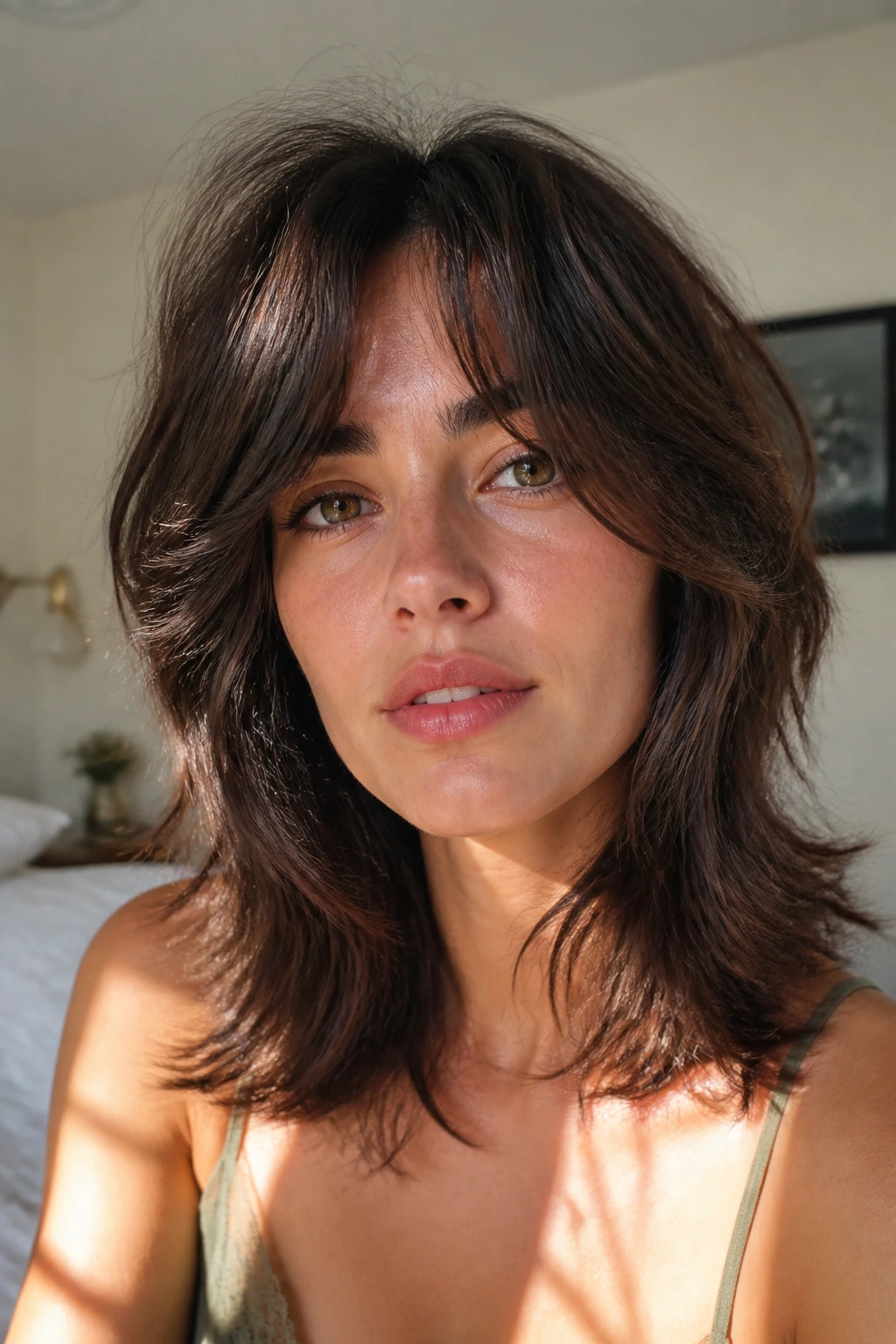
- The layers do the heavy lifting: A good medium shag builds shape into the haircut itself, so you’re not dependent on a curling iron every morning.
- The fringe changes the mood fast: Curtain bangs, Birkin bangs, side-swept bangs, and broken fringe all give the same haircut a different decade’s energy.
- The length stays practical: Collarbone to shoulder-length hair gives you enough swing for retro styling and enough length to pin back when you need it.
- The grow-out is forgiving: A shag can look better at week eight than it did on day three, especially if the perimeter stays soft instead of boxy.
- Texture gets room to show off: Straight hair gets bend. Wavy hair gets shape. Curly hair gets a silhouette that doesn’t fight the curl pattern.
- Vintage doesn’t have to mean high-maintenance: A round brush, a bit of mousse, and a few well-placed face-framing layers can do more than an hour of styling.
1. Feathered Curtain Shag
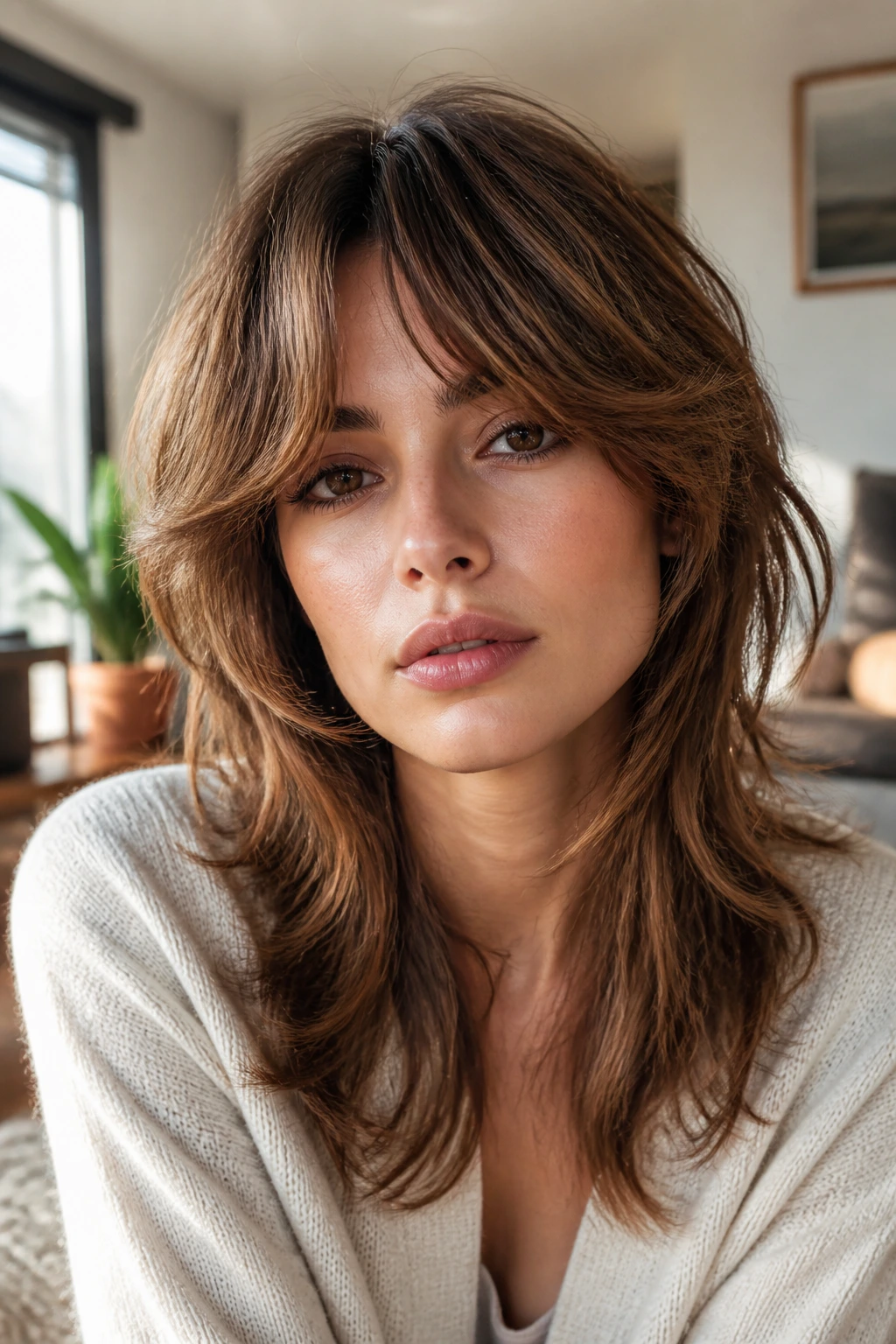
The feathered curtain shag is the one I recommend to people who want retro softness without looking like they’ve stepped out of a costume trunk. The layers start around the cheekbones, then melt outward toward the collarbone, which gives the haircut that light, brushed-through swing you see in old blowout photos.
Why It Works
Curtain bangs open the face instead of sitting across it like a shelf. On medium hair, they blend especially well because the weight at the ends keeps the cut from floating away. Ask for point-cut ends and a soft face frame, not harsh chops.
A little round-brush bend through the front pieces is enough. Too much curl and the whole thing starts reading as pageant hair. Too little and it loses the vintage charm.
2. Razored Wolf Shag
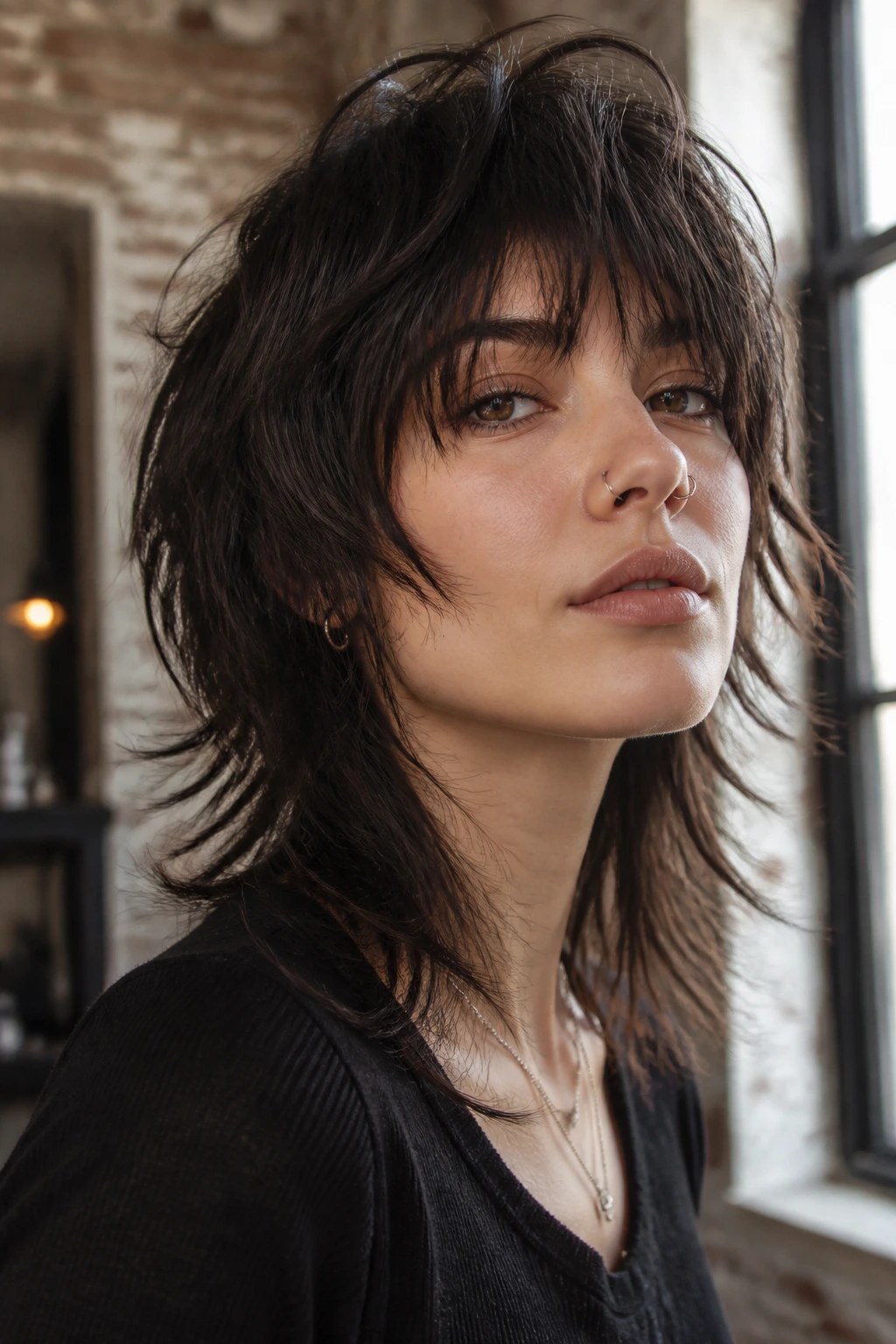
A wolf shag sounds aggressive on paper, but the medium-length version can be surprisingly wearable. It has more attitude at the crown and more separation through the ends, which gives you that slightly slept-in, rock-show feel without needing a dramatic mullet line.
- Best for: medium-thick hair that can hold a shape without collapsing.
- Styling note: a salt spray or lightweight texturizing mist keeps the layers from looking fluffy.
- Ask for: soft razoring through the interior, not shredded ends.
The vintage part comes from the movement. Not the mess. There’s a difference. You want the layers to break up in pieces, not frizz into one big cloud.
3. Soft 70s Disco Shag
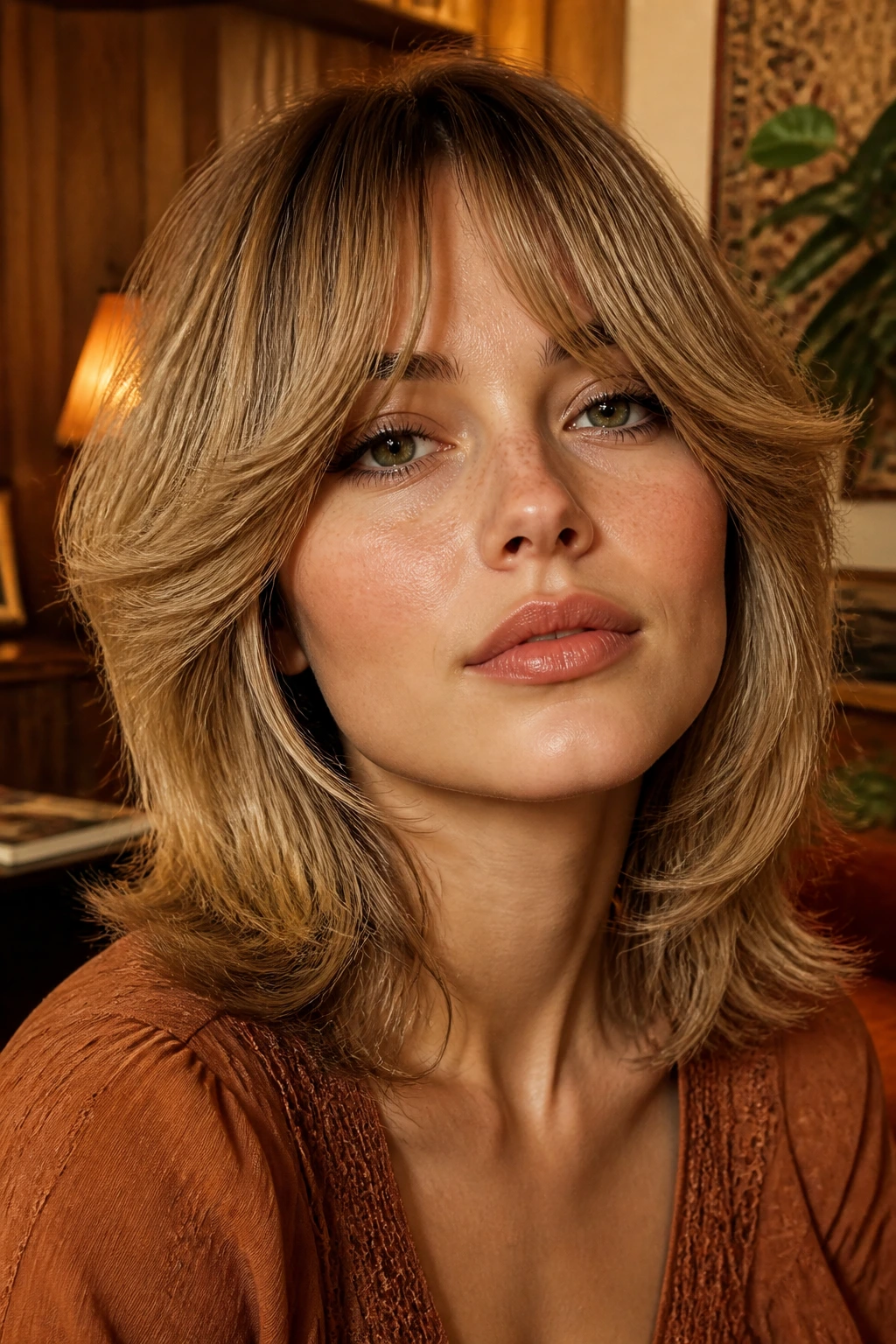
If you like bounce, this is your cut. The soft 70s disco shag keeps the layers rounded and the perimeter full, so when you blow-dry it with a medium round brush, the whole shape lifts off the shoulders and turns under just enough at the ends.
The thing that makes it feel old-school is restraint. The layers are there, but they’re not hacked to pieces. The fringe can sit like a soft veil, and the side sections can be tucked behind the ear for that “I didn’t try that hard” polish.
A little mousse at the roots helps. So does setting the front in large rollers while your makeup is on.
4. Curly Collarbone Shag
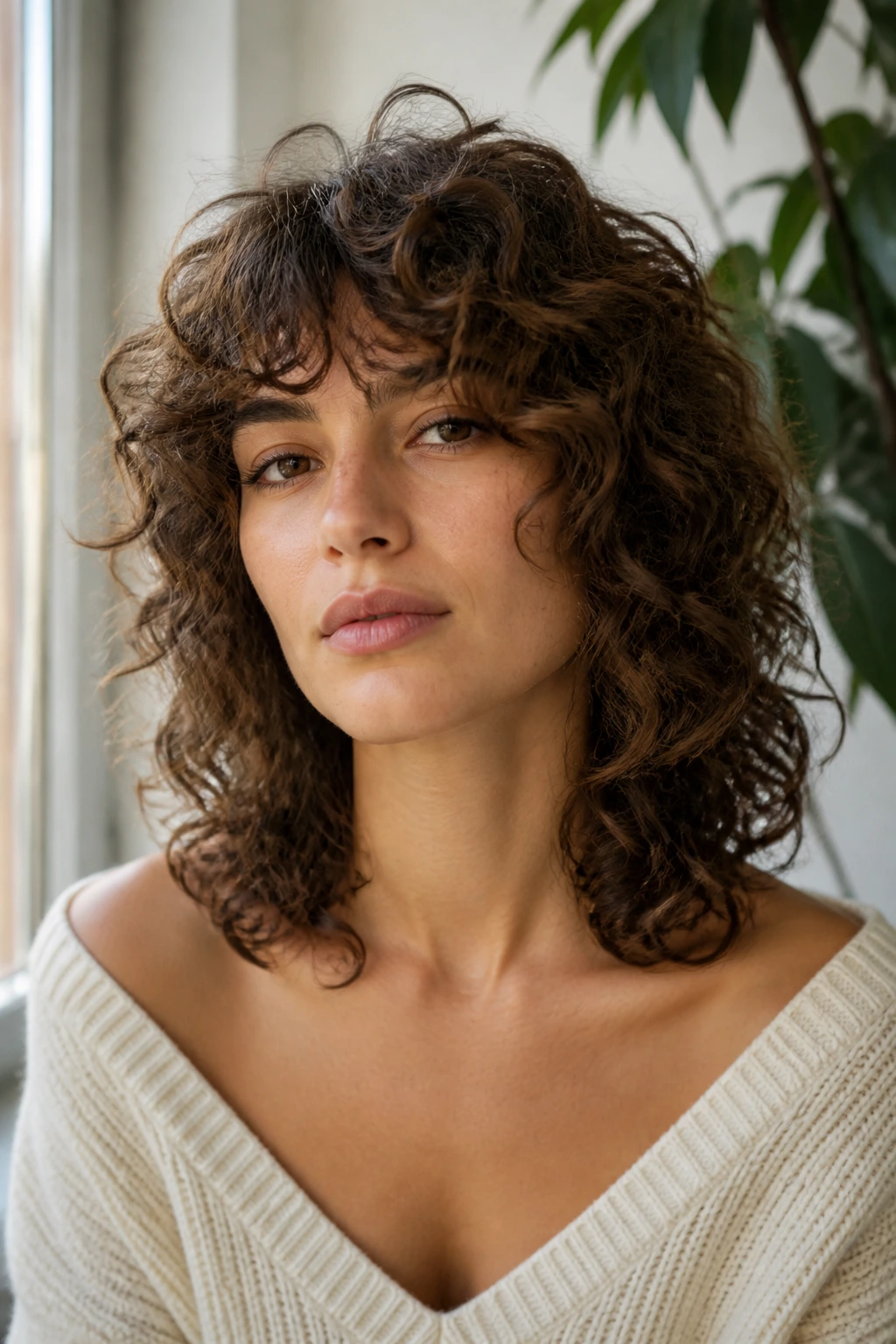
If your curls swell up the minute they meet humid air, a collarbone shag can be a relief. The layers are cut to let the curl pattern stack without building a triangle, and the medium length keeps enough weight at the bottom to stop the crown from going too wide.
What to Ask For
Cut it dry, or at least mostly dry, so the stylist can see where the curl sits. Ask them to keep the shortest pieces longer around the front if your curls spring a lot. That one detail saves a lot of grief.
Curly shags look best when the shape is intentional but not carved to death. Too many short layers and you get halo puff. The sweet spot is movement around the face and a clean outline at the bottom.
5. Bottleneck Bangs Shag
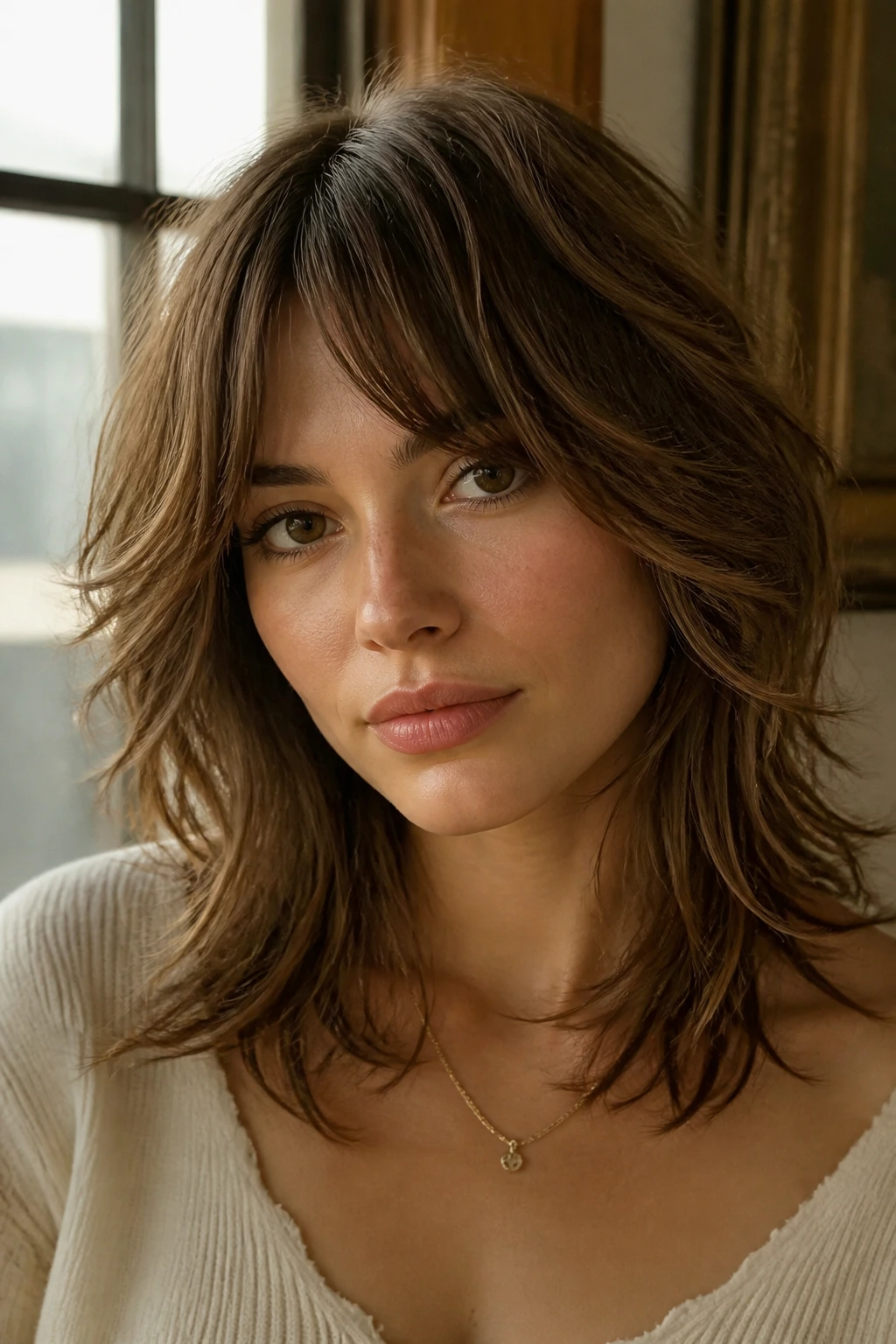
Bottleneck bangs change the whole forehead line. They start narrower in the center, then open wider near the cheekbones, which gives medium shag haircuts a soft vintage frame without the bluntness of a straight fringe.
I like this version on hair that needs a little face structure. It has the kind of balance that makes cheekbones look higher and a jawline look cleaner. That’s not magic. It’s just geometry.
The cut also grows out well, because the bangs can be tucked, parted, or curled under once they pass the brows. No ugly in-between stage. That’s rare enough to deserve attention.
6. Choppy Collarbone Shag
A choppy collarbone shag is the haircut equivalent of a worn band tee and good jeans. Nothing fussy. No heavy symmetry. Just layers that hit around the collarbone and break into pieces as they move.
This version works especially well if your hair has some natural bend. The ends should look a little imperfect, not blunt and sealed. I prefer this on people who want motion more than volume. It gives shape without puffing the whole head out.
Ask for light internal texture and a perimeter that still looks clean when pulled into a low ponytail.
7. Airy Fine-Hair Shag

Fine hair and shag cuts can absolutely get along, but the cut has to respect the weight issue. Too many short layers at the crown and the style collapses by lunch. The airy fine-hair shag keeps the layering subtle and uses the fringe and front pieces to create the illusion of fullness.
Keep It Light
- Ask for longer layers through the back.
- Avoid over-texturizing the ends.
- Style with mousse, not heavy cream.
- Blow-dry the roots first, then bend the front.
That’s the whole game. Fine hair needs lift, yes, but it also needs enough length to look like hair, not confetti.
8. Birkin Bangs Shag
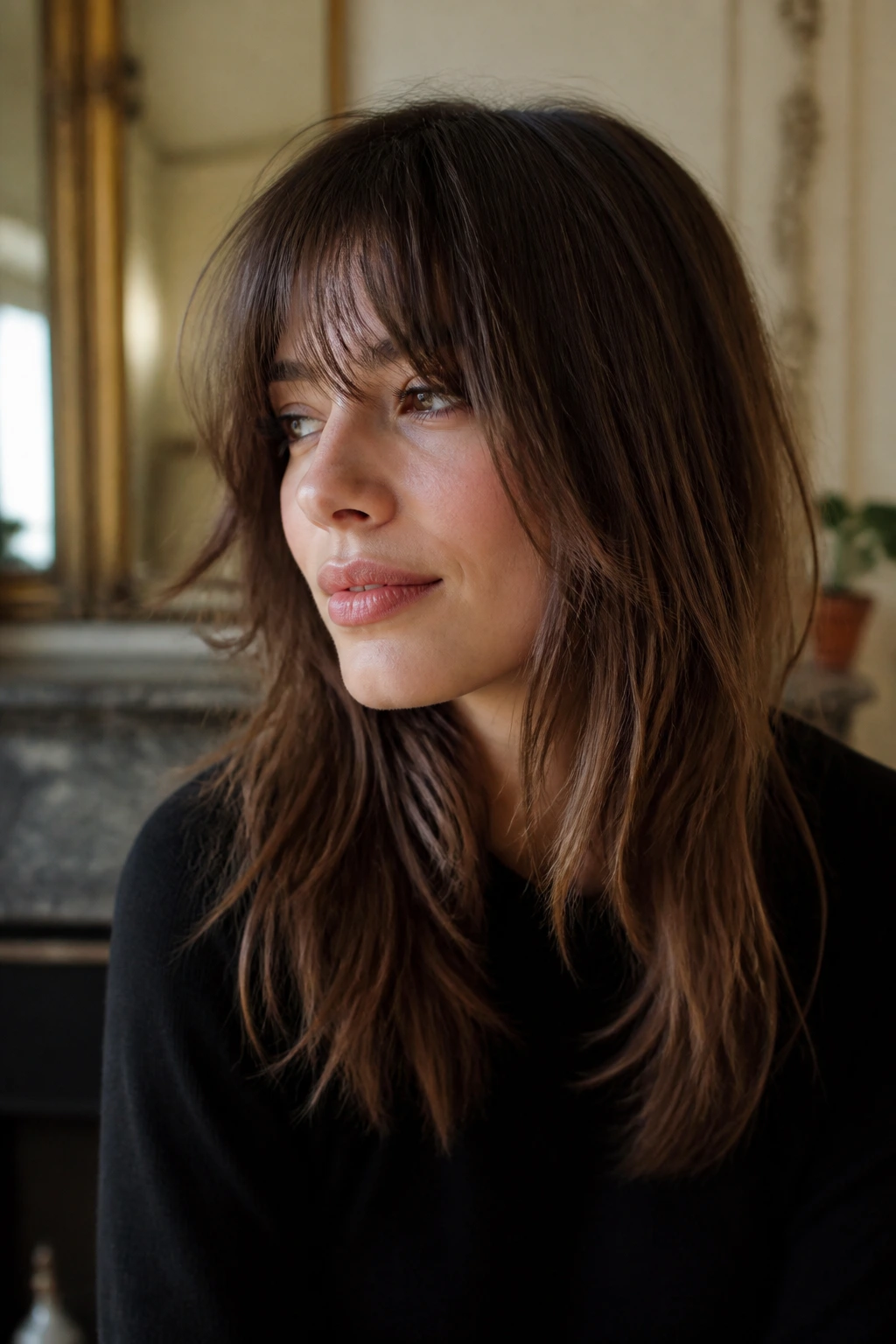
Can Birkin bangs survive a shag? Absolutely, if you keep them soft and a little piecey. The fringe should sit just below the brows or graze them, with the sides feathered into the front layers so the line never looks severe.
This version leans more Paris than rock club. It’s a good choice if you want the vintage mood to feel a little dressed up. The trick is not to make the bangs too dense. If they’re too heavy, the whole cut loses its air.
A quick bend with a round brush is enough. Don’t overthink it.
9. Grown-Out Mullet Shag
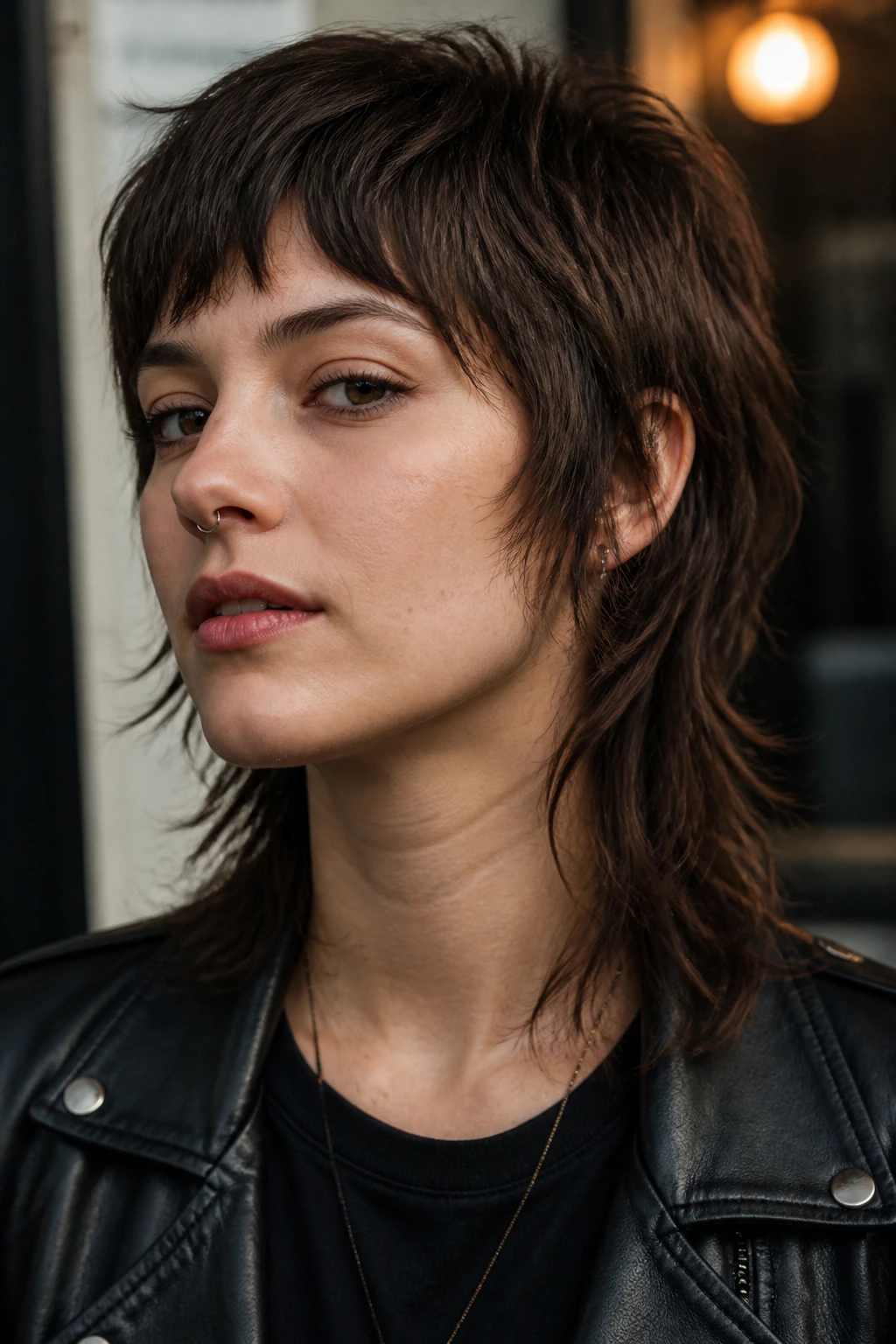
This is the boldest cut in the bunch, but the medium-length version can still be polished. The front layers stay shorter and softer, while the back keeps a little extra length so the silhouette feels elongated and a bit rebellious.
If you like clothes with some edge—leather jackets, boots, sharp necklines—this haircut has a natural place in that wardrobe. It also works when you want a haircut that looks better with texture than with perfect smoothness.
The word to remember here is balance. You want movement, not a hard line between the front and back.
10. Long Fringe Shag
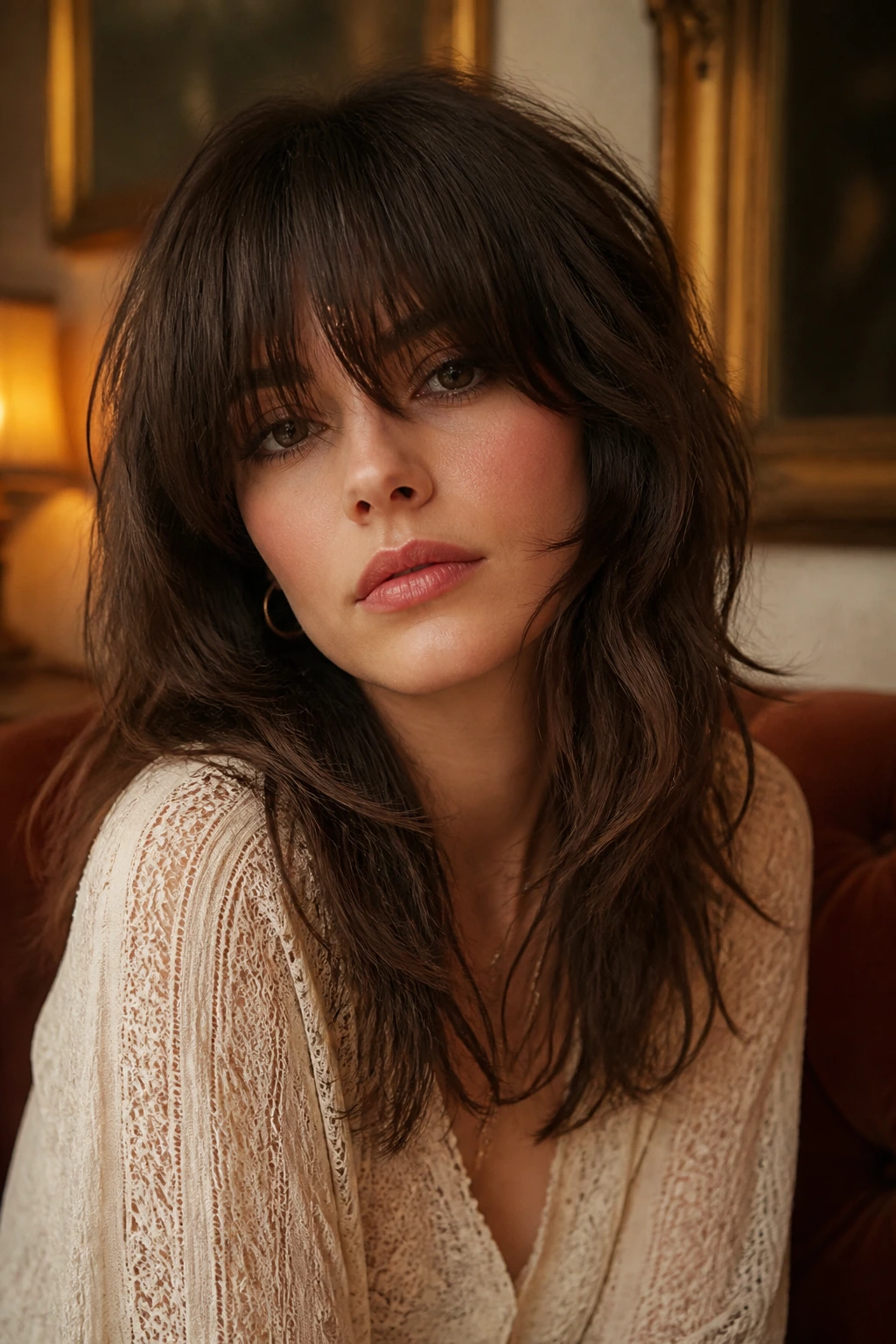
Long fringe shags are for people who like the eyes framed but not boxed in. The bangs fall low, sometimes right at the lashes, then dissolve into the layers around the temples and cheekbones. That soft breakup is what gives the cut its vintage feel.
This one reads especially well on medium hair because the length keeps the fringe from taking over the whole head. It’s dramatic in motion, quieter at rest. I like that. It means you can pin it back on workdays and let it fall forward when you want more shape.
A tiny flat-iron bend at the ends of the fringe keeps it from sticking straight down.
11. Rounded Mushroom Shag

The rounded mushroom shag borrows from the old bowl-adjacent shapes you see in vintage styling books, but it’s softened enough to wear in real life. The crown is rounded, the sides are feathered, and the medium length keeps the outline from feeling too severe.
It’s a good haircut if you want volume that sits close to the head instead of exploding outward. The shape feels tailored when it’s freshly styled and slightly mysterious when it’s air-dried. Weirdly, it flatters glasses well because the roundness of the cut and the frame can work together instead of fighting.
Just don’t make the fringe too heavy. That ruins the whole thing.
12. Copper Retro Shag
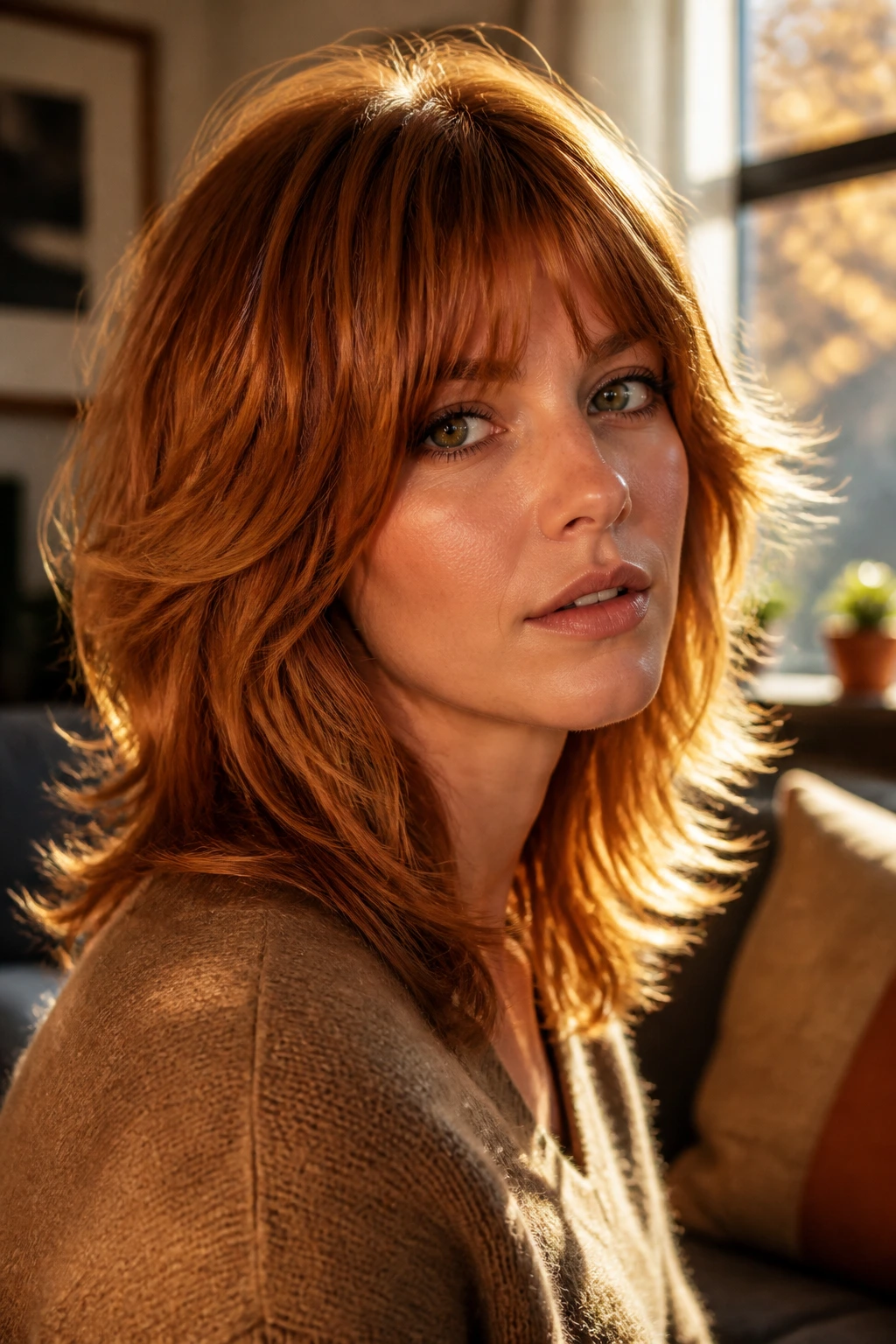
Color changes the cut more than people admit. A copper retro shag turns feathered layers into something warmer and shinier, and medium hair carries that tone especially well because the movement catches light in the ends and fringe.
This one is less about a haircut trick and more about the whole picture. Copper, auburn, cinnamon brown, or deep strawberry tones make the shag look more vintage because they echo old film hair and brushed-out blowouts. If you want the style to feel rich instead of edgy, this is the route.
The cut itself can stay simple. The color does the storytelling.
13. Blunt-Ends Shag

The blunt-ends shag is my favorite answer for anyone who likes layers but hates wispy, shredded bottoms. You get all the lift through the top and sides, then the perimeter stays clean and solid. That contrast makes the haircut look expensive in a very quiet way.
It’s especially useful on medium hair that tends to feel thin at the ends. The blunt line gives the eye something to land on, so the layers above it don’t make the whole shape look scrappy. You can wear it straight, flipped, or brushed under.
If your stylist loves thinning shears, tell them to go easy here. The blunt edge is the point.
14. Flipped-Out Ends Shag
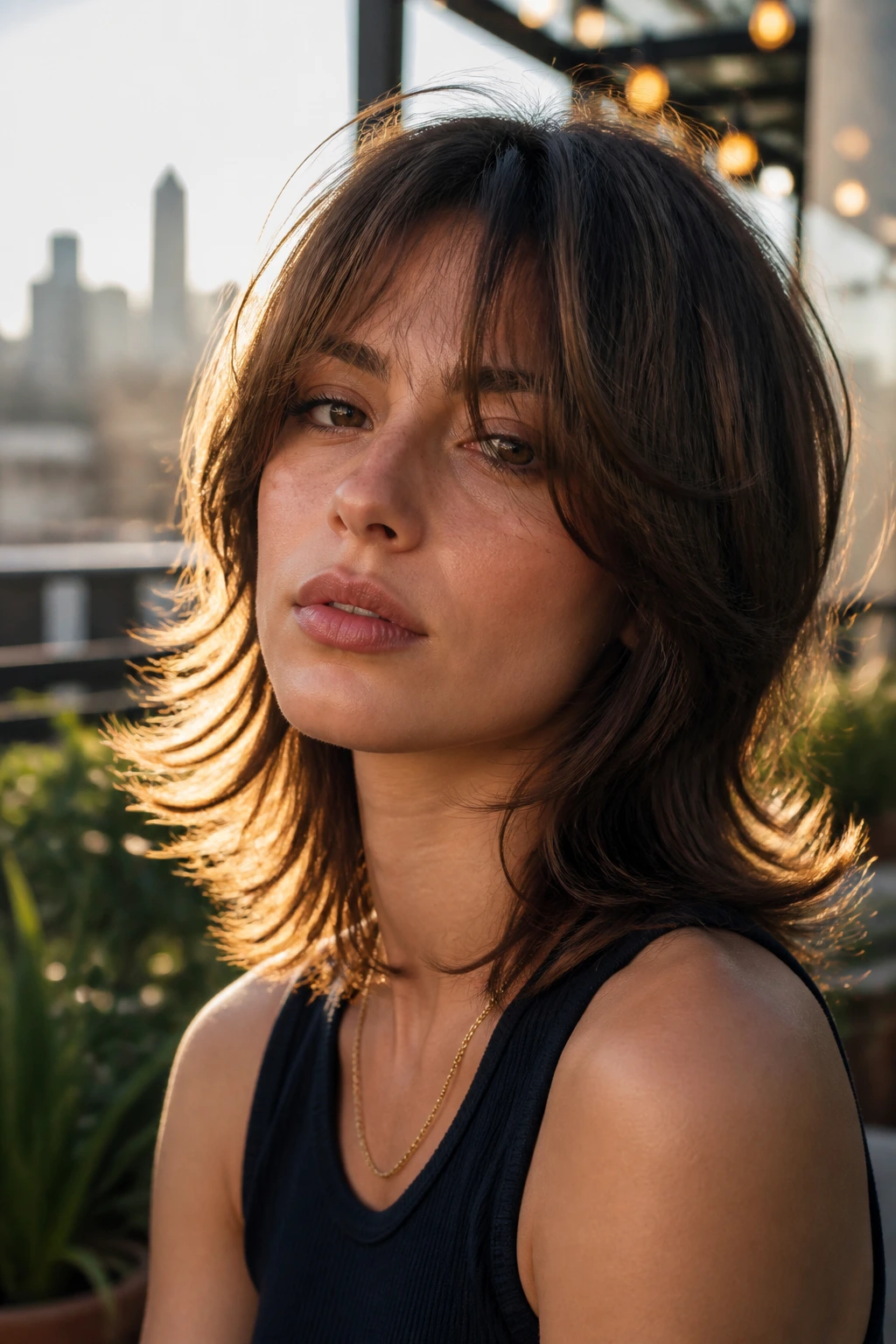
Want the ends to kick out just a little? This is the one. The flipped-out ends shag takes the medium-length shag and gives it that old blowout flick at the bottom, the kind you get from a round brush or a quick pass with a flat iron turned outward.
It feels especially vintage when the front is softly bent away from the face. Not curled. Bounced. That word matters. You want movement with air underneath it.
Styling Cue
Work a heat protectant through damp hair, rough-dry to 80 percent, then finish with a medium brush and a slight outward roll at the collarbone. If the ends land in one flat sheet, you’ve gone too straight.
15. Crown-Volume Shag
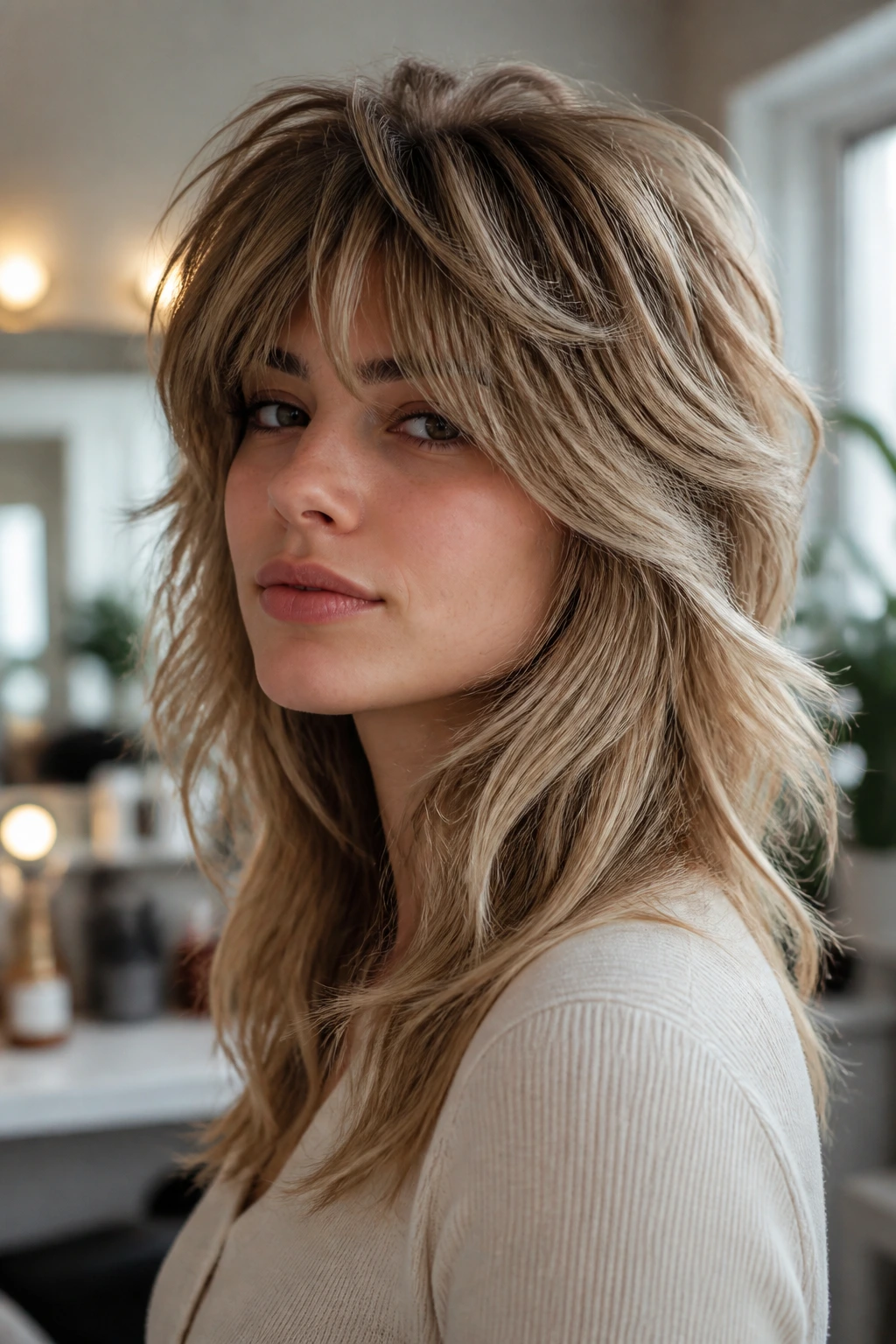
Flat roots can make medium hair look heavier than it is. The crown-volume shag fixes that by keeping lift at the top and softening the layers as they fall down the head, which gives the cut a little retro drama.
This style suits people who want shape from the side profile. The front can still be gentle, but the top needs enough shortness to hold air. A root-lifting mousse or spray at the base helps, and a blow-dryer nozzle matters more than people think. Direct the heat upward at the roots first.
If your hair gets greasy fast, this shape buys you a little extra visual freshness between washes.
16. Face-Framing Tapered Shag

A tapered shag is one of those cuts that quietly makes faces look more sculpted. The layers start softer at the cheekbones and narrow toward the jaw and collarbone, which creates a long line without looking severe.
It’s a smart choice if you want the vintage mood but don’t want blunt bangs sitting on your forehead. The taper gives the haircut a bit of grace. I’d ask for the front pieces to be long enough to tuck behind the ear, because that gives you styling room.
The result lands somewhere between ’70s softness and modern polish. Nice middle ground.
17. Boho Wavy Shag

Boho wavy shags have a loose, undone feel that still looks planned. The layers are cut to encourage waves rather than force them, which means the haircut works with a quick scrunch and a little diffuser instead of a long blowout.
This version is good if you like your hair to look touched by air, not lacquered. The vintage vibe comes from the softness around the face and the broken ends that move like they’ve already lived through a road trip. That sounds silly. It also happens to be accurate.
Keep the layers long enough to preserve a wave pattern. Too much cutting and the wave loses its rhythm.
18. Side-Swept Bangs Shag
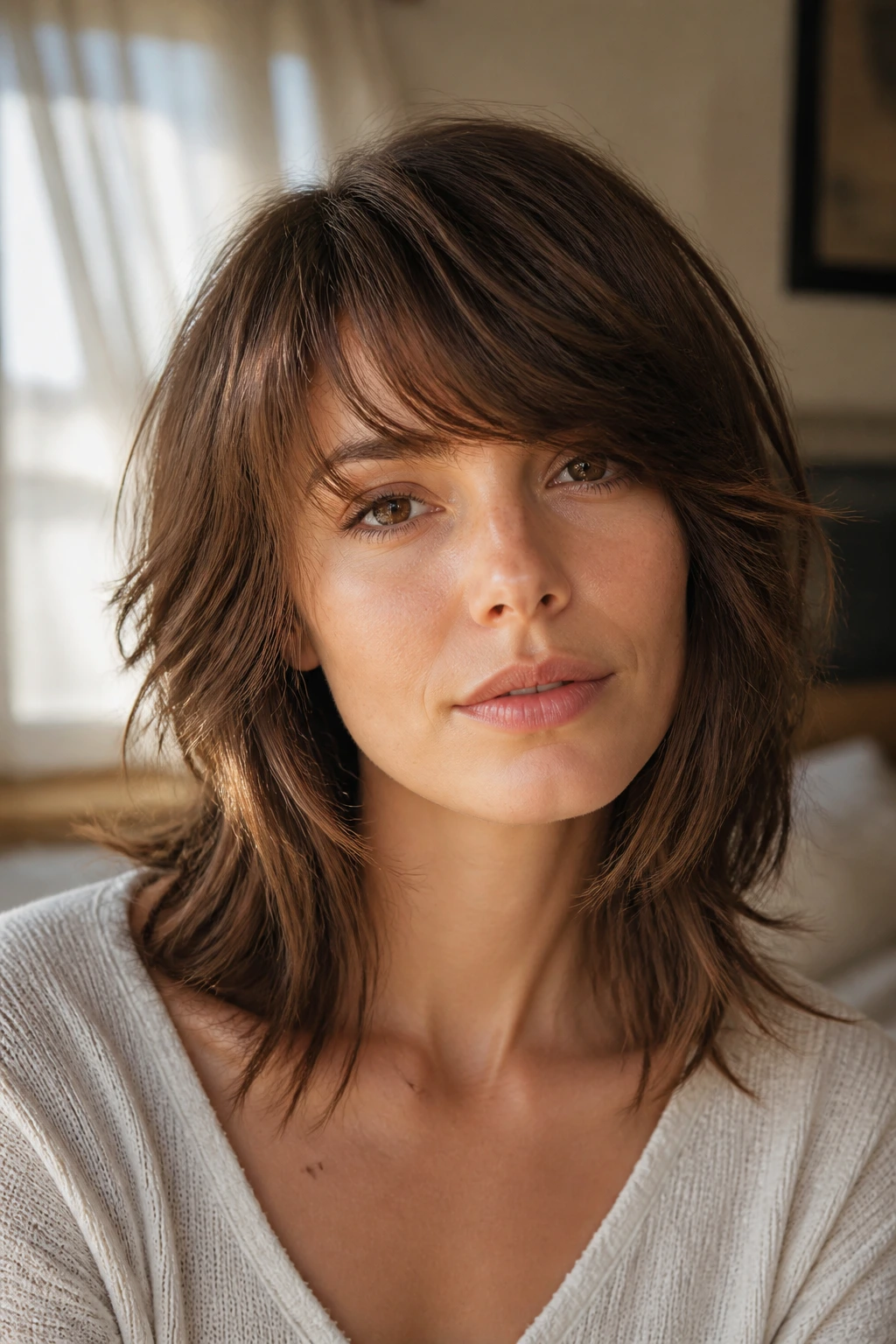
Side-swept bangs bring back the old salon blowout feeling fast. They arc across the forehead, soften a strong hairline, and make the rest of the shag feel a little more romantic than punk. Medium length gives the side sweep enough support so it doesn’t disappear.
This is a nice choice if center-part fringe never sits right on you. The shape is forgiving on busy mornings because the bangs can shift a little without ruining the cut. A round brush and a quick clip while the bangs cool are usually enough.
If your hair has a stubborn cowlick at the front, this version can work with it instead of against it.
19. Rachel-Inspired Shag

A Rachel-inspired shag takes the famous layered 90s shape and loosens it up. The front is still face-framing, the crown still has lift, but the lines are softer and less uniform than the classic layered blowout.
I like this on medium hair because it gives movement without demanding too much styling discipline. The cut should have enough structure to look intentional, but enough slack to survive a messy tuck behind the ear. That’s where it beats a more rigid layered cut.
If you want the nod to be obvious, keep the face frame bright and the ends glossy.
20. Piecey Micro-Fringe Shag
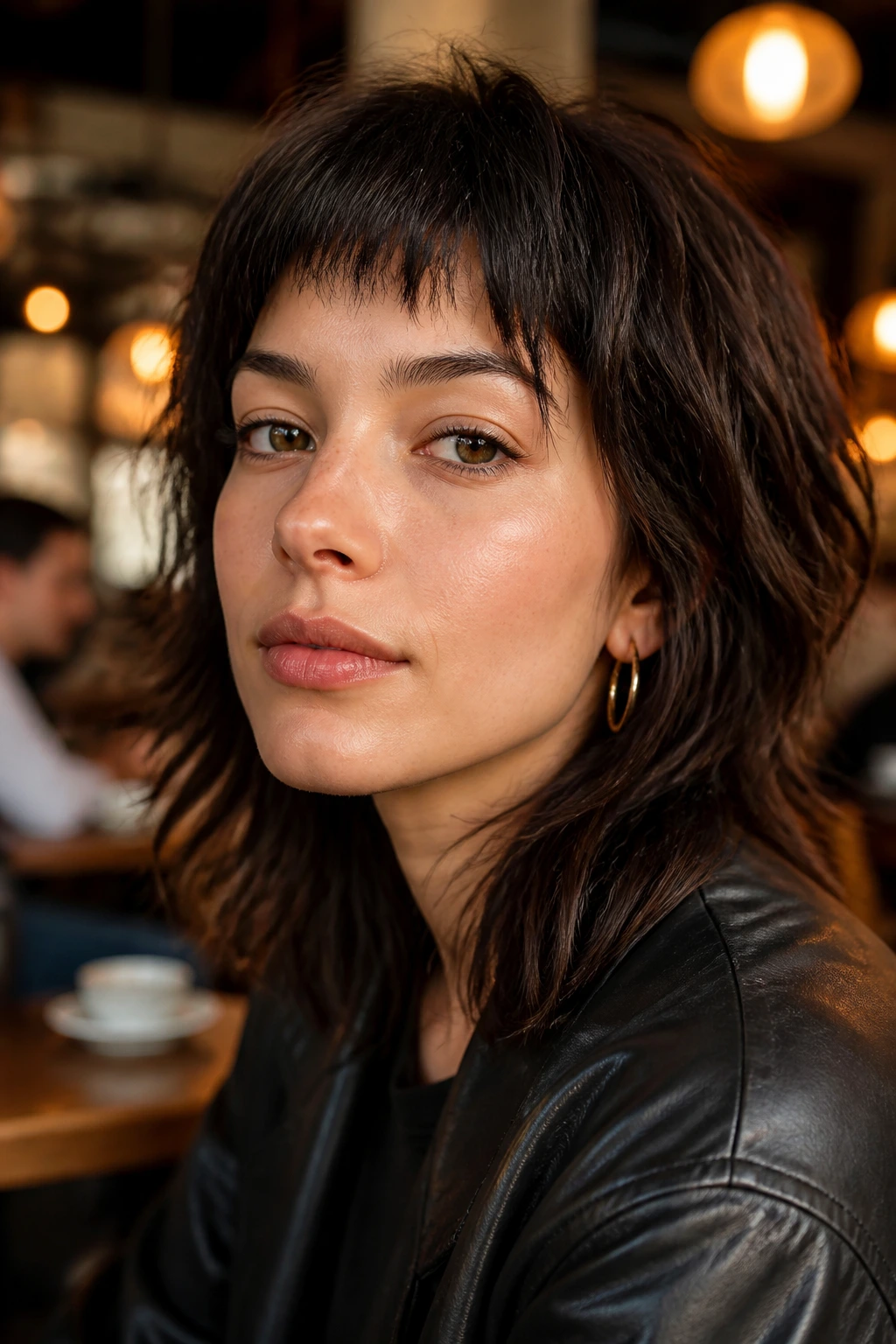
This one is for people who don’t mind a little attitude. A piecey micro-fringe shag keeps the bangs short, broken, and a bit irregular, then pairs them with medium layers that stay loose through the sides and bottom.
It’s not the easiest cut, and I’m not going to pretend otherwise. But when it works, it has that very specific vintage-editorial feel—slightly odd, very chic, and a little sharper than the rest of the list. Keep the fringe dry-styled with a touch of wax on the fingertips, not soaked in product.
The rest of the cut should stay soft so the tiny fringe doesn’t dominate the whole head.
21. Perm-Ready Shag
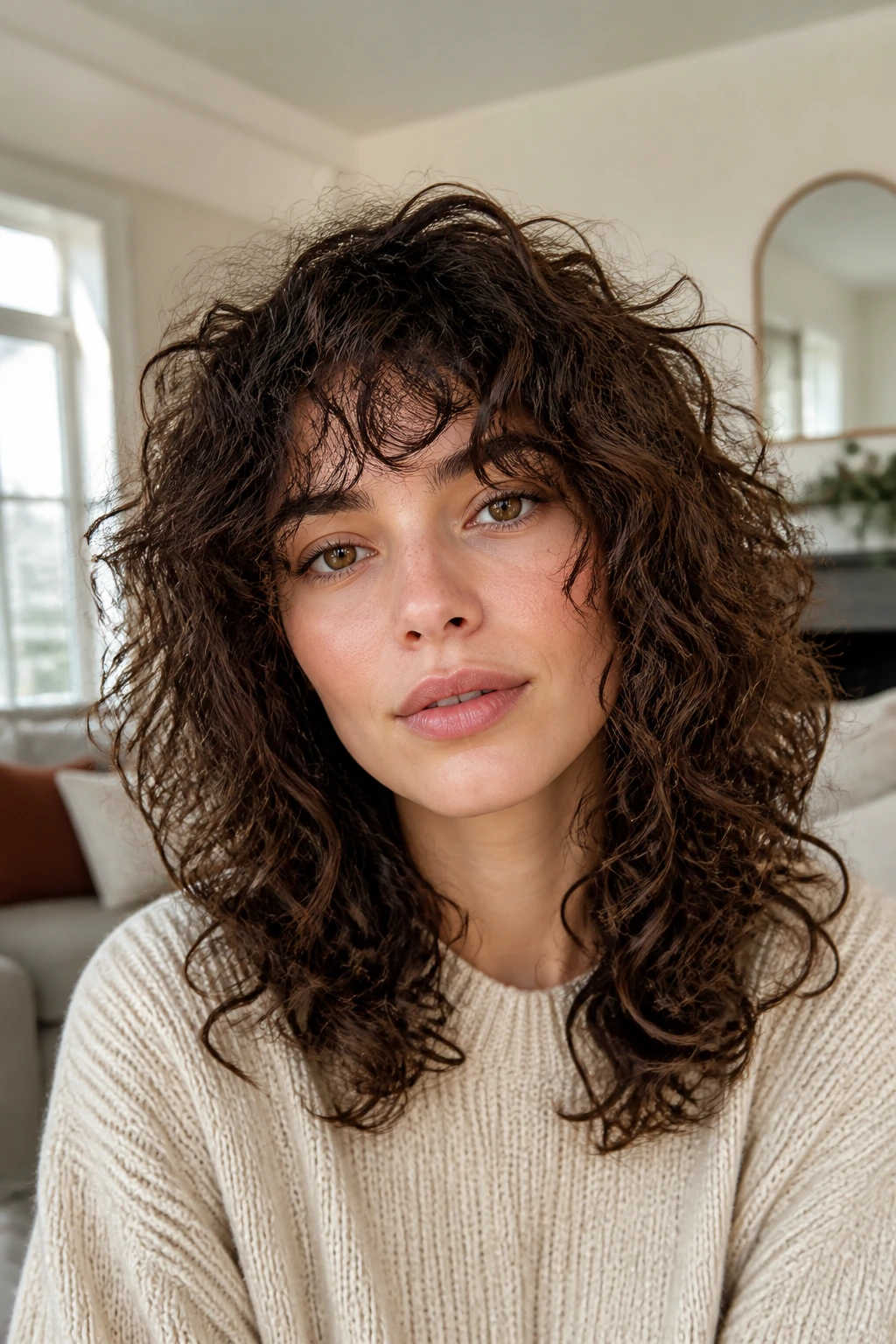
If your hair holds a curl pattern, a perm-ready shag can look fantastic because the layers give the curl room to spring instead of stacking into one block. Medium length is the sweet spot here: long enough to keep the shape grounded, short enough for the curls to read as layers.
The key is not overcutting the interior. You want the curls to clump cleanly. If the cut is too aggressive, the curl pattern frays and the vintage mood turns frizzy fast.
A curl cream and diffuser are usually enough. Sometimes less. That’s the whole charm of it.
22. Air-Dry Shag

An air-dry shag is cut for real life, not fantasy. The layers sit where they can dry into bend and movement on their own, which means you’re not chasing a perfect blowout every morning.
This shape works best when the hair has a little natural wave or texture. Straight hair can still wear it, but you may need a twist or two while it dries to help the ends bend. Ask for soft interior layers and a perimeter that doesn’t get too wispy.
The payoff is easy. Scrunch, tuck, leave it alone for a bit, and let the haircut do the rest.
23. Thick-Hair De-Bulk Shag
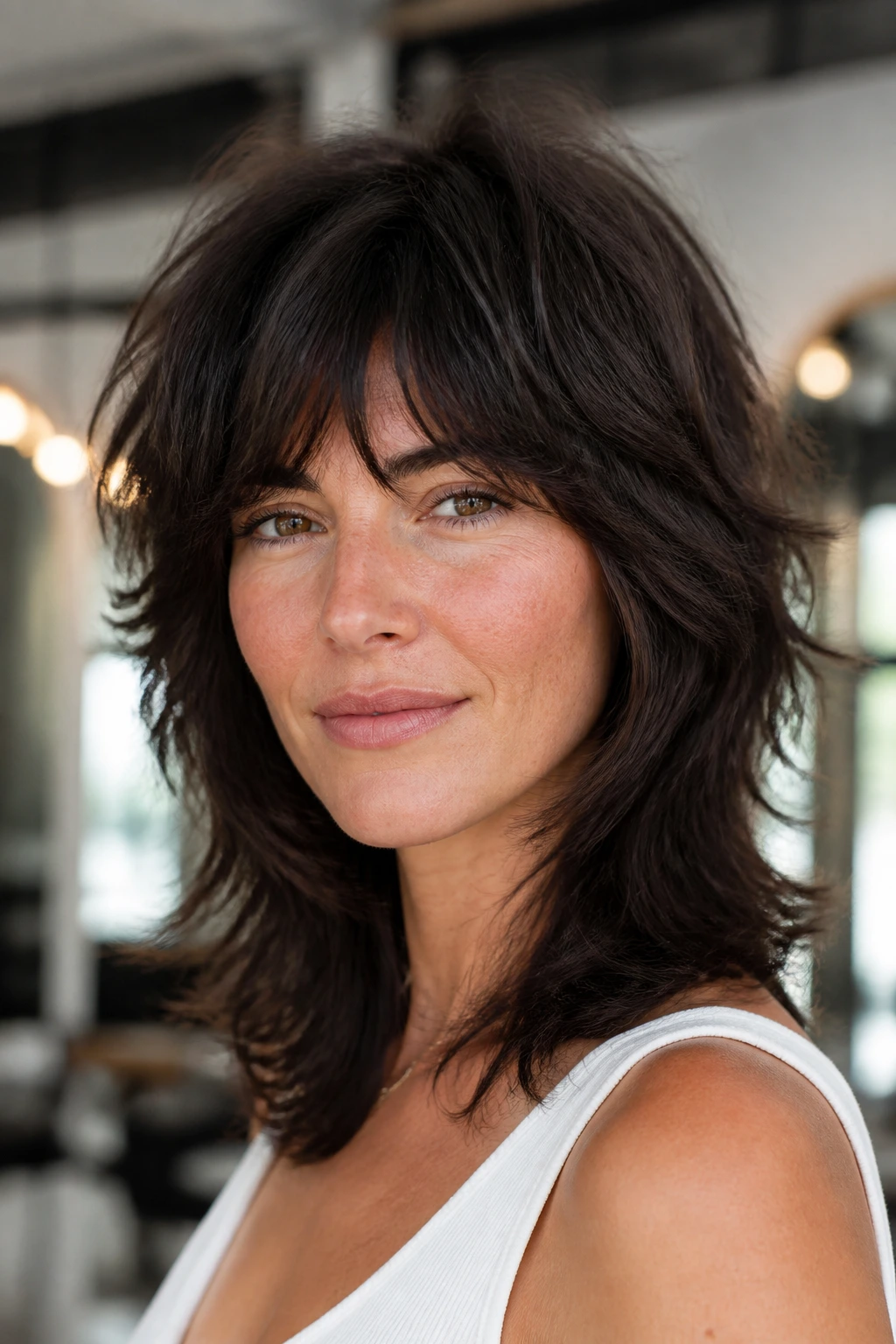
Thick hair can carry a shag beautifully, but only when the cut removes weight in the right places. The de-bulk version keeps the perimeter from ballooning and takes some density out of the interior so the shape falls in layers instead of one giant shelf.
What Matters Here
- Weight removal should live inside the haircut, not at the fragile ends.
- The crown needs a little lift, but not so much that the top frizzes.
- The fringe should stay soft enough to move.
- A blow-dryer with a nozzle helps the cut settle faster.
If your hair is heavy enough to fight itself, this is the practical option. It gives you the vintage outline without the triangle.
24. Center-Part 90s Shag

Why does a center part change everything? Because it stretches the face line and makes the layers fall in a cleaner V around the cheekbones. On medium hair, that little shift can take a shag from bohemian to sharp in one move.
This version feels especially right if you like the less-is-more side of the 90s. The bangs can be split softly, the front can skim the jaw, and the rest of the haircut can stay loose. It’s a clean look without feeling stiff.
If your face is round or short, keep the front pieces long enough to break below the widest point of the cheeks. That keeps the shape from closing in on itself.
25. Uneven Fringe Shag

A little irregularity in the fringe can be a good thing. The uneven fringe shag uses small differences in length to create a broken, hand-cut feel that looks far less formal than a straight band of bangs.
I’d choose this if you like a haircut that feels slightly artful and not too polished. It pairs well with medium layers because the rest of the cut can stay softer while the fringe carries the personality. That contrast is the secret.
Styling Note
Let the fringe dry forward, then piece out just a few sections with your fingers. Do not comb it into one sheet. That kills the effect.
26. Feather Flip Shag
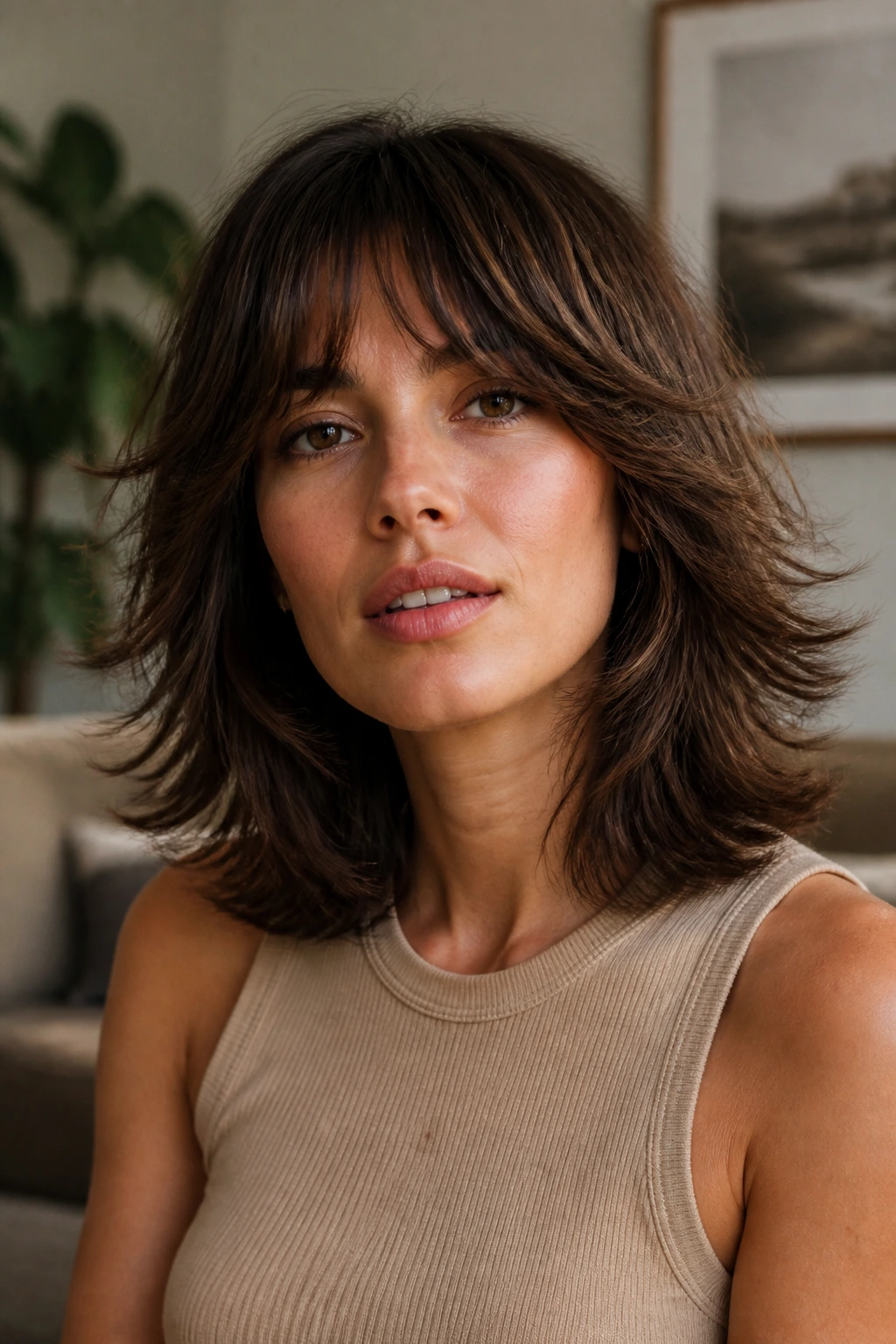
The feather flip shag is all about movement away from the face. The top layers are feathered, then the ends kick outward in a way that feels lifted, breezy, and a little glamorous without tipping into formal styling.
This haircut gets better when the front pieces have room to swing. I like it on hair that holds a bend well, because the flipped ends make the whole shape look animated. A large round brush or a quick flip with a flat iron is enough.
It’s one of the easiest cuts here to make look polished on short notice. That matters more than people admit.
27. Soft Razor Shag for Round Faces
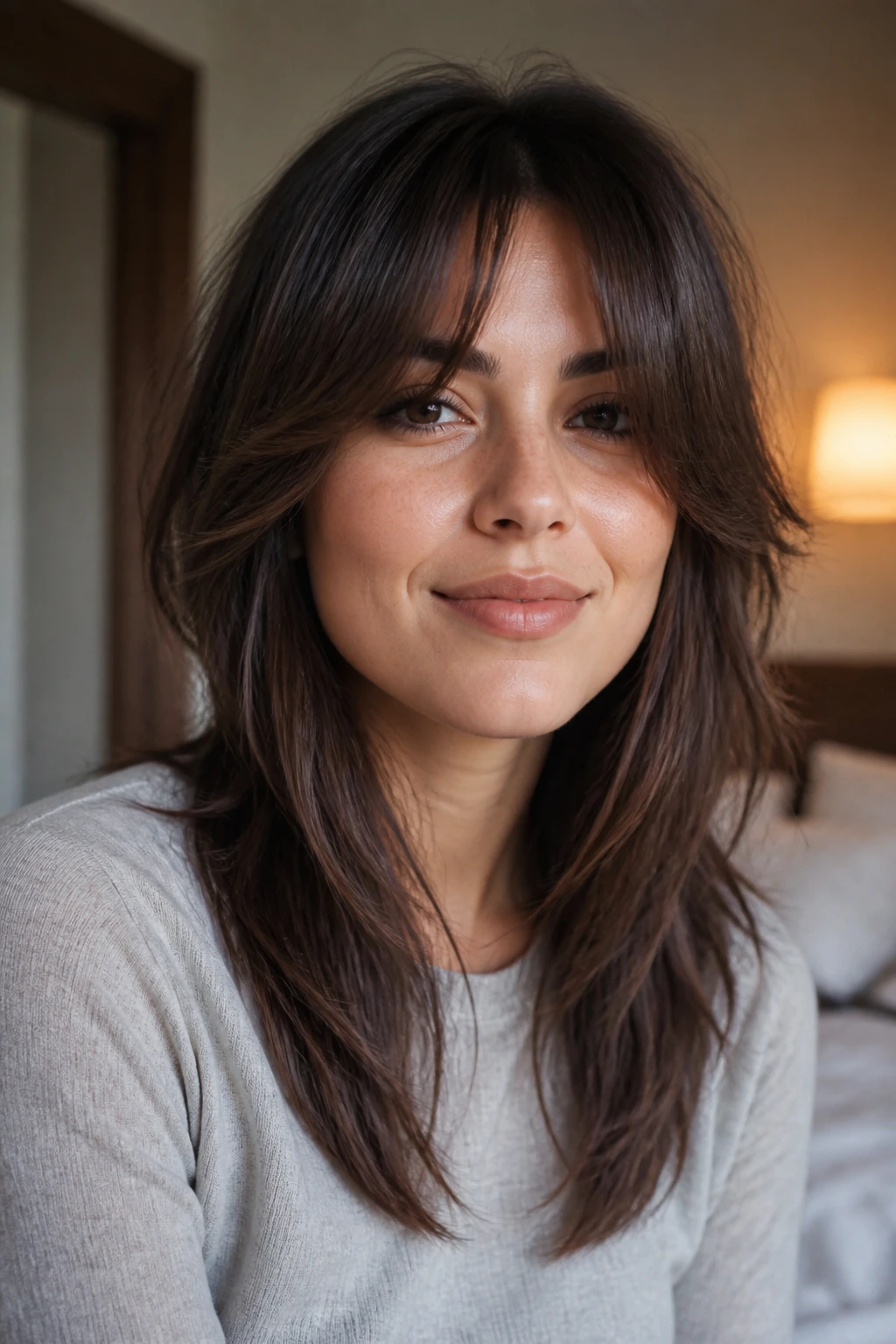
A soft razor shag can be excellent on round faces if the length stays below the widest part of the cheeks. That vertical line matters. It keeps the haircut from widening at the exact point you’d rather narrow.
The razor work should be gentle, not shredded. You want air in the layers and softness around the jaw, not a bunch of sharp bits sticking out in every direction. Medium length helps because it gives the front some downward pull.
If I had to make one rule for this cut, it would be: keep the longest face-framing pieces long enough to create a line, not a puff.
28. Glossy Blowout Shag
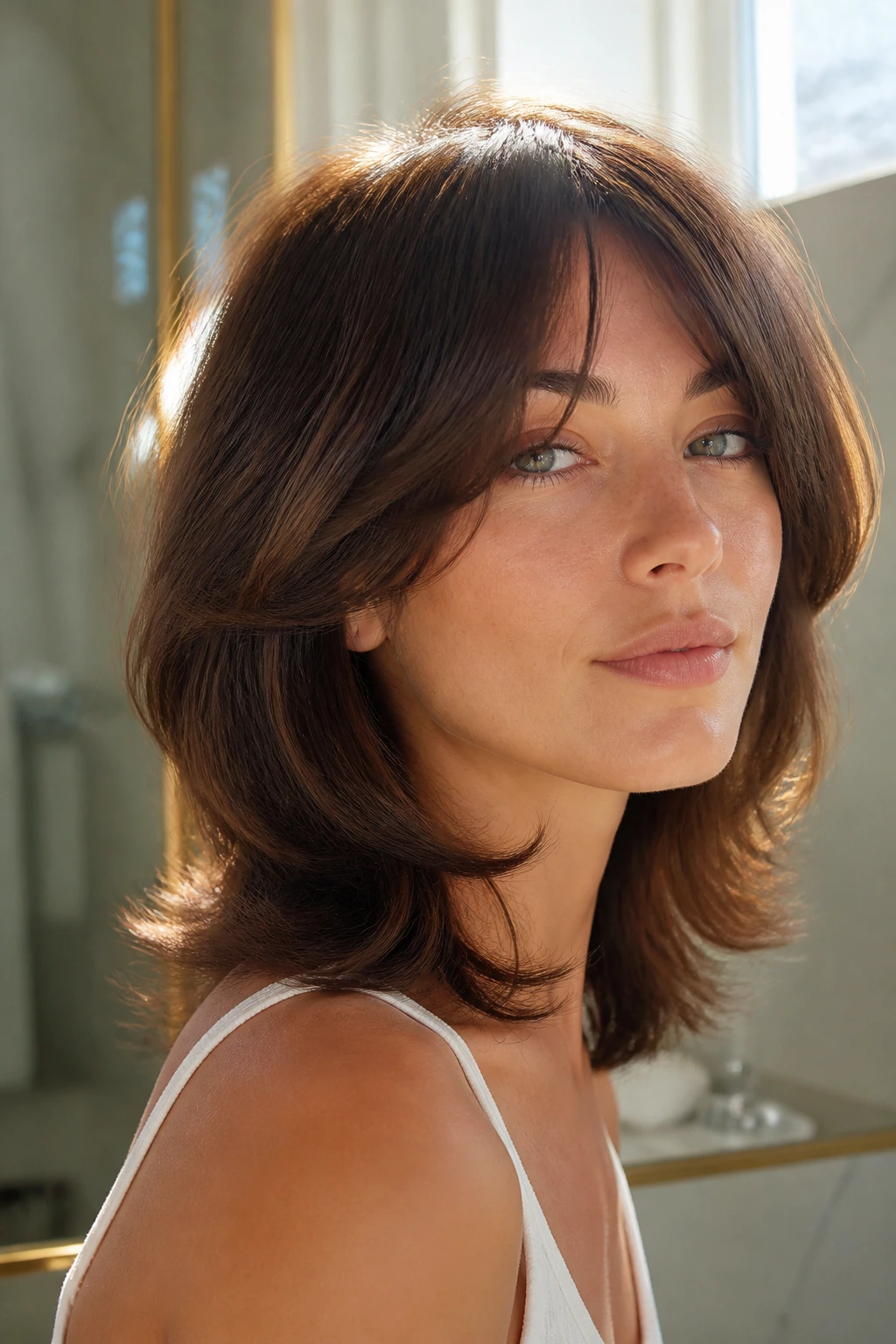
A glossy blowout shag is the polished cousin in the family. The layers are still there, the fringe still moves, but the finish is smooth, shiny, and round-brushed until the whole cut looks deliberate from every angle.
This is the version I’d wear if I wanted the vintage vibe to feel dressed up. The shine matters. So does the bend. Use heat protectant, blow-dry with a brush, and finish with a drop of lightweight serum on the ends—nothing heavy enough to flatten the layers.
It’s proof that a shag does not have to look rough to keep its edge.
Why Medium-Length Shags Keep Their Shape So Well
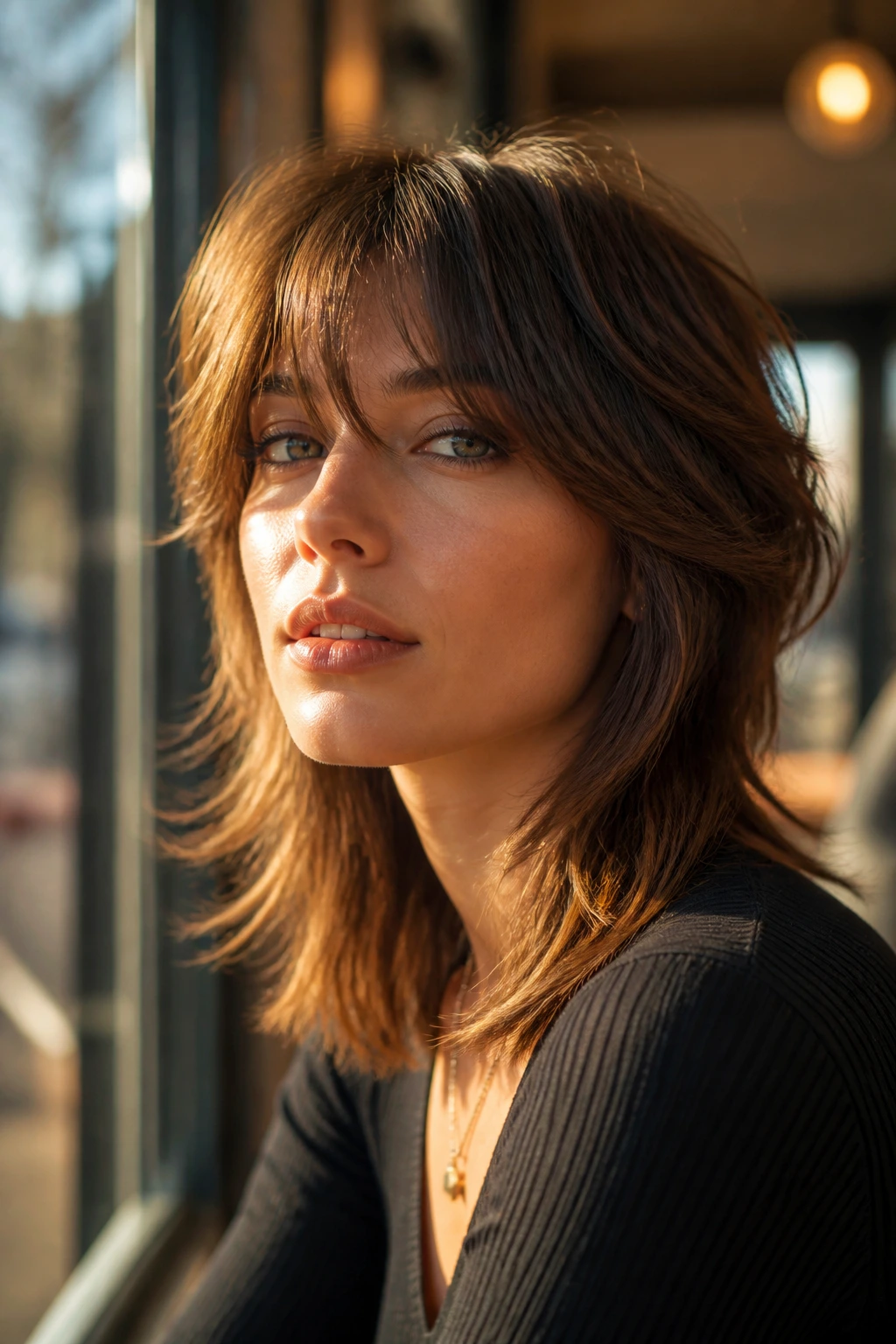
Medium length hair gives a shag something shorter cuts often lose: enough weight for the layers to fall back into place. A chin-length shag can go fuzzy fast. A long shag can drag itself flat. The collarbone-to-shoulder zone is where the structure has room to move and still settle.
That’s why this length works so well with a vintage vibe. Feathered layers, curtain bangs, side-swept fringe, and flipped ends all need a little gravity. Medium hair gives you that. It lets the haircut swing, but it still holds a clean outline around the neck and shoulders.
There’s also a grow-out benefit people overlook. As the cut softens, the layers blend instead of looking broken. If you dislike salon visits every six weeks, that alone makes a medium shag a practical choice.
Essential Tools for Styling and Cutting These Looks
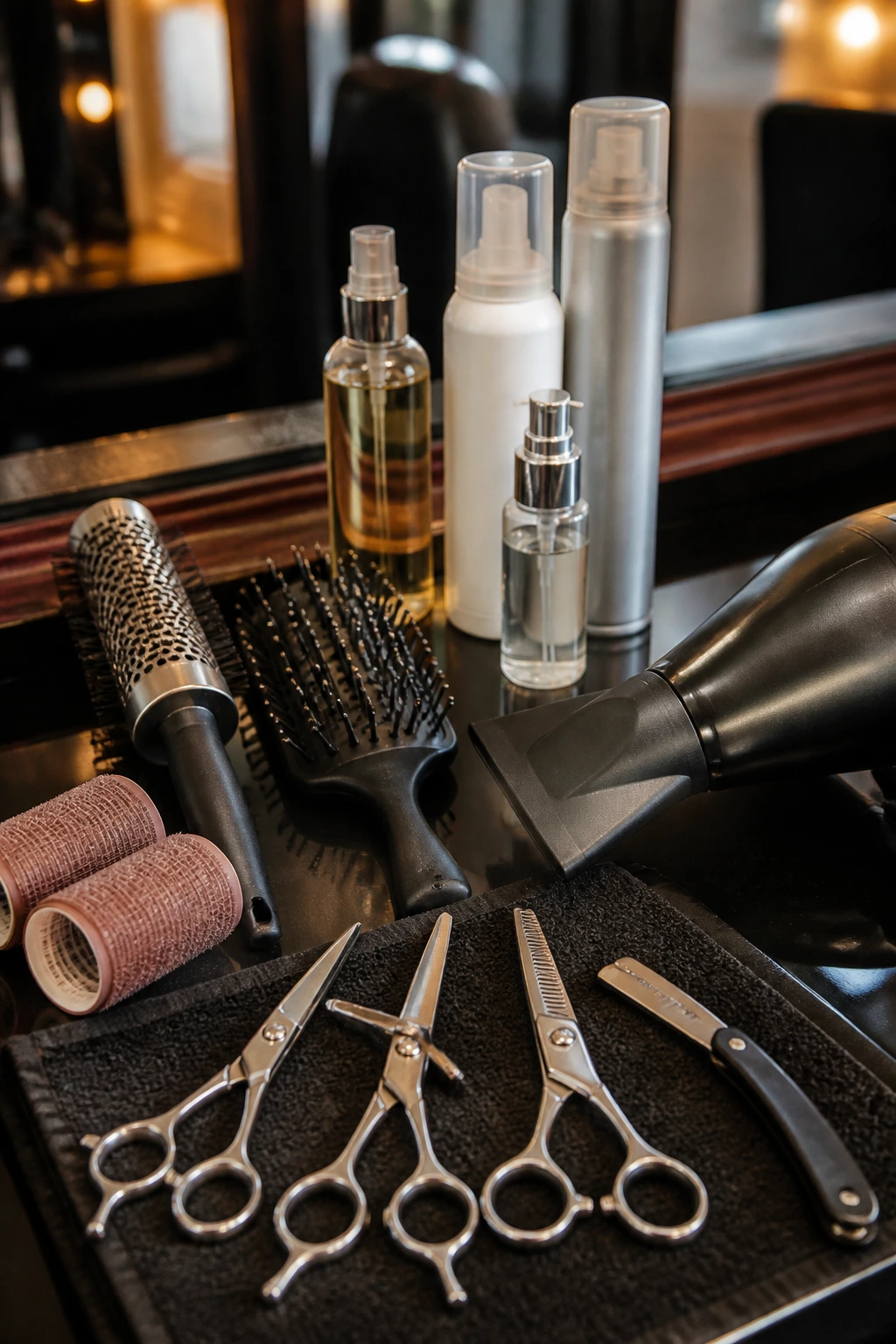
- Sharp haircutting shears: If you’re talking to a stylist, this matters more than most people realize; dull shears chew the ends.
- Texturizing shears or a razor: Useful for removing weight and creating that broken, feathered finish.
- Blow dryer with a nozzle: Direct heat makes the fringe and crown behave instead of frizzing.
- Medium round brush: The workhorse for soft bends, flips, and that old-school blowout shape.
- Vent brush: Good for rough-drying fine or straight hair before you refine the shape.
- Velcro rollers or setting clips: Handy when you want the top to cool in shape.
- Heat protectant spray: Non-negotiable if you use a brush, iron, or rollers.
- Light mousse or root foam: Gives medium shags lift without making them crunchy.
- Lightweight serum or cream: Use a tiny amount on the ends only.
- Dry shampoo: Keeps the crown from collapsing on day two.
How to Choose the Right Vintage Note for Your Hair Texture and Face Shape
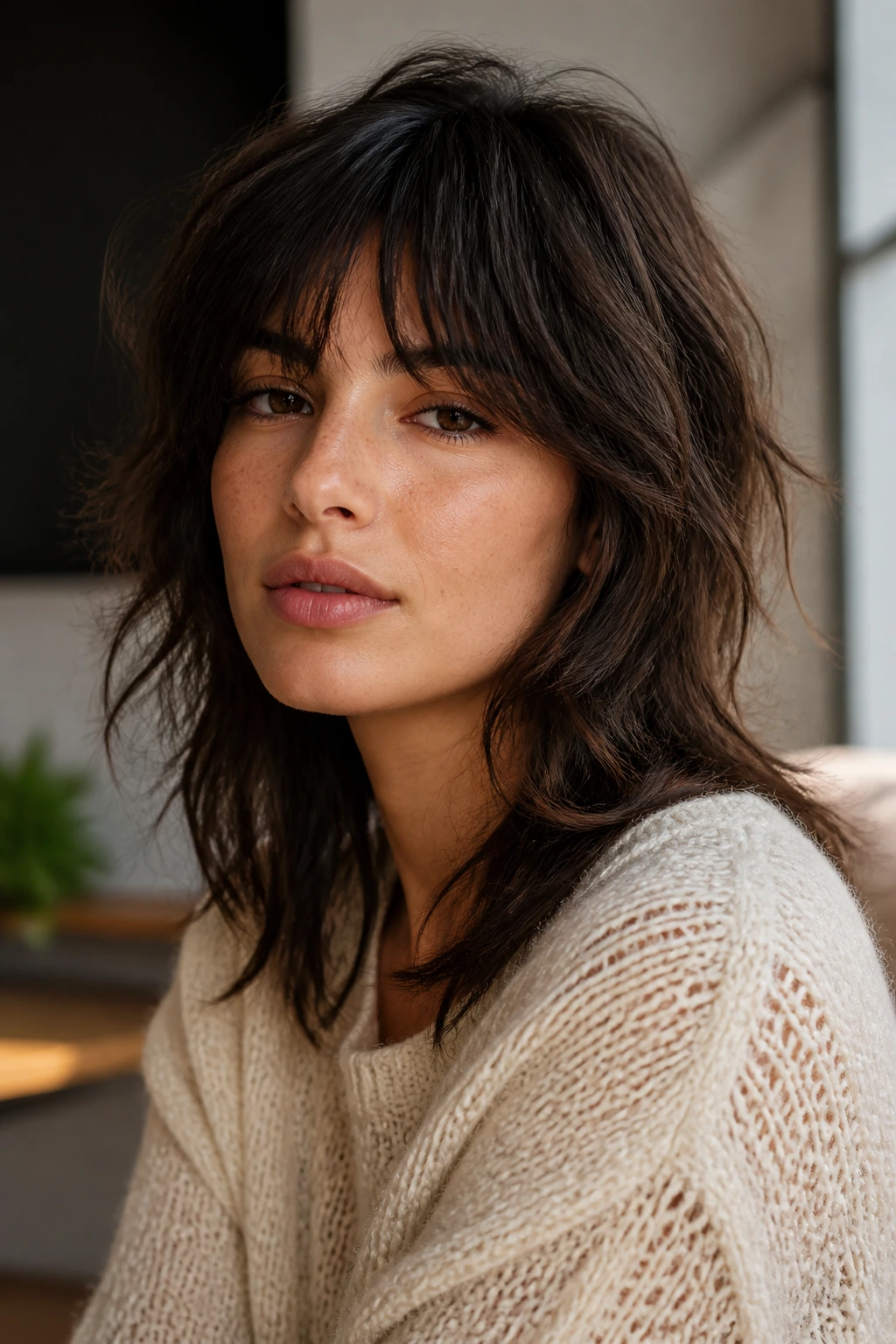
Straight hair usually does best with a shag that keeps some perimeter weight. If every layer gets too short, the shape goes limp or triangular. Fine hair wants longer internal layers and a careful fringe. Thick hair can handle more texture, but it needs weight removed in the right places so the cut doesn’t balloon.
Wavy hair is the easiest client for this style, and I say that with affection. The wave gives the layers a place to land, so the haircut looks like it has depth even when you don’t spend long styling it. Curly hair can do it too, though the layers should be cut with shrinkage in mind. Cut too high and the shape jumps up a full inch or two.
Face shape matters, but not in a rigid way. Round faces usually like vertical lines and longer face-framing pieces. Square faces often soften well with curtain bangs or feathered fringe. Longer faces tend to like fuller bangs, especially Birkin or bottleneck shapes, because they shorten the forehead visually.
What to Tell Your Stylist Before the First Snip
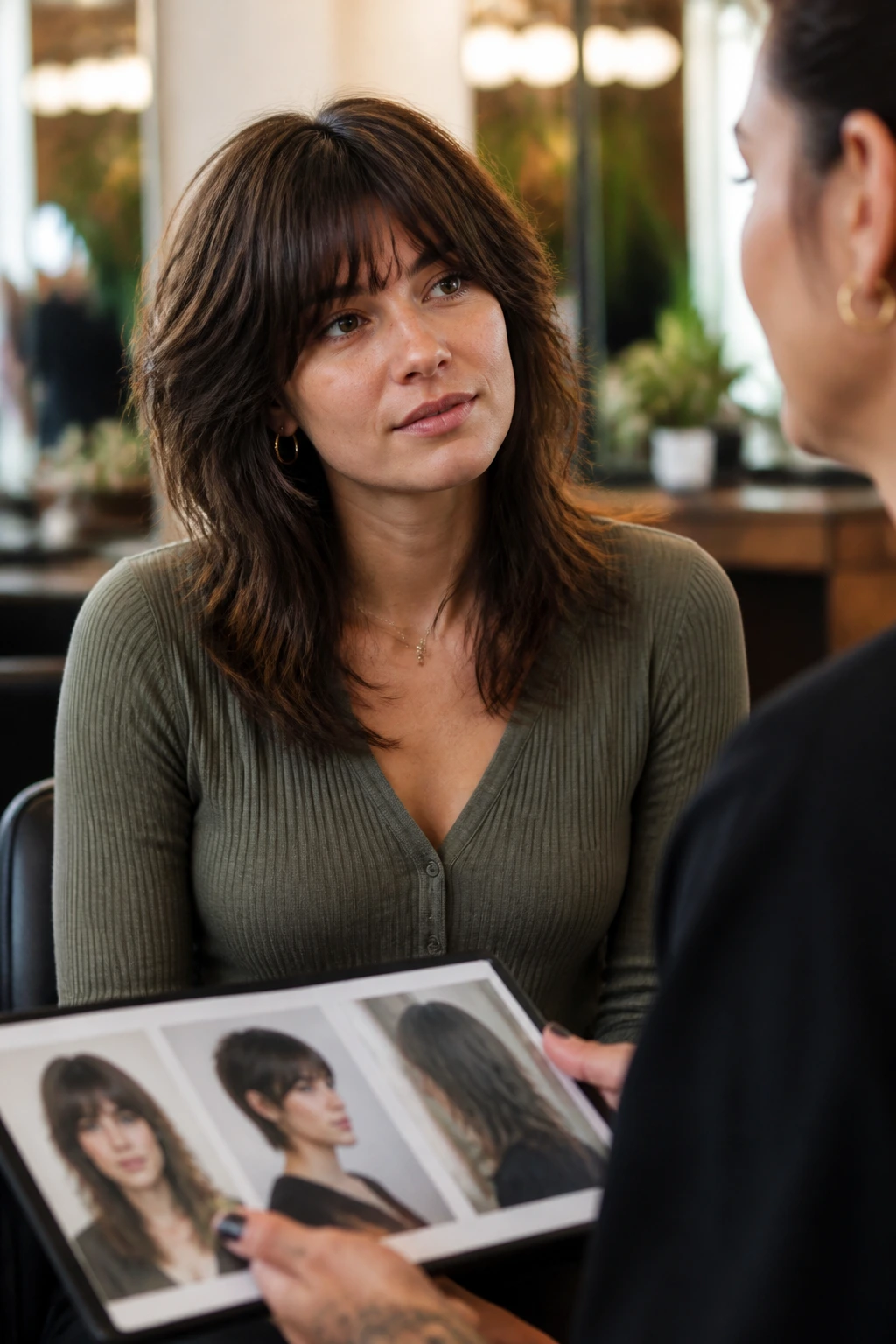
Bring two or three photos, not ten. Too many references make the conversation muddy fast. Pick images that show the same thing from different angles: front, side, and one with the hair moving. That third one matters because a shag can look harmless in a still photo and much more textured in motion.
Be direct about your styling habits. If you air-dry, say so. If you blow-dry once a week and then forget about your hair, say that too. A shag built for round-brush styling will disappoint if you never pick up a brush. Likewise, a heavily textured cut can feel like too much if you want to wear hair smooth.
Ask about where the shortest layers start, whether the ends should stay blunt or feathered, and how much fringe you’re willing to handle in the morning. Those details shape the whole haircut more than the word “shag” ever will.
How to Style the Retro Finish Without Looking Overdone
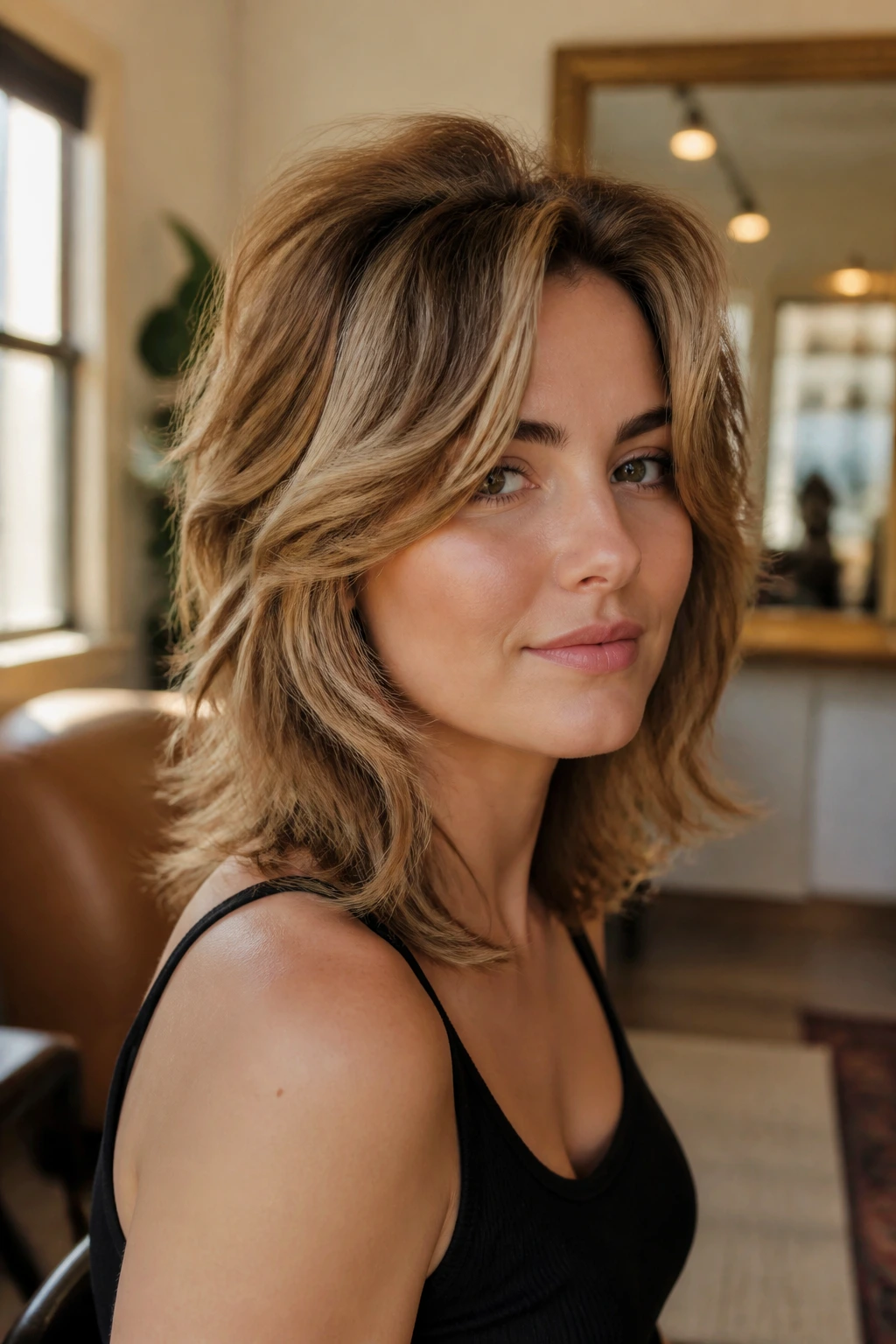
The old mistake is trying too hard to make a shag look vintage. That’s how you end up with helmet volume and stiff bangs. Start lighter than you think you need. Work a bit of mousse through damp roots, rough-dry until the hair is mostly dry, then use a round brush only on the front, crown, and ends that need direction.
The easiest vintage finish is a soft bend, not a curl. Roll the front away from the face, let the ends skim under or flip out slightly, and leave some separation in the layers. If every strand sits in one polished sheet, the haircut loses its shag character. If every strand goes wild, it loses shape.
Day two is often where these cuts look best. Dry shampoo at the roots, a quick mist of water on the fringe, and five minutes with your fingers can wake the whole thing up.
Easy Ways to Make the Cut Work at Home
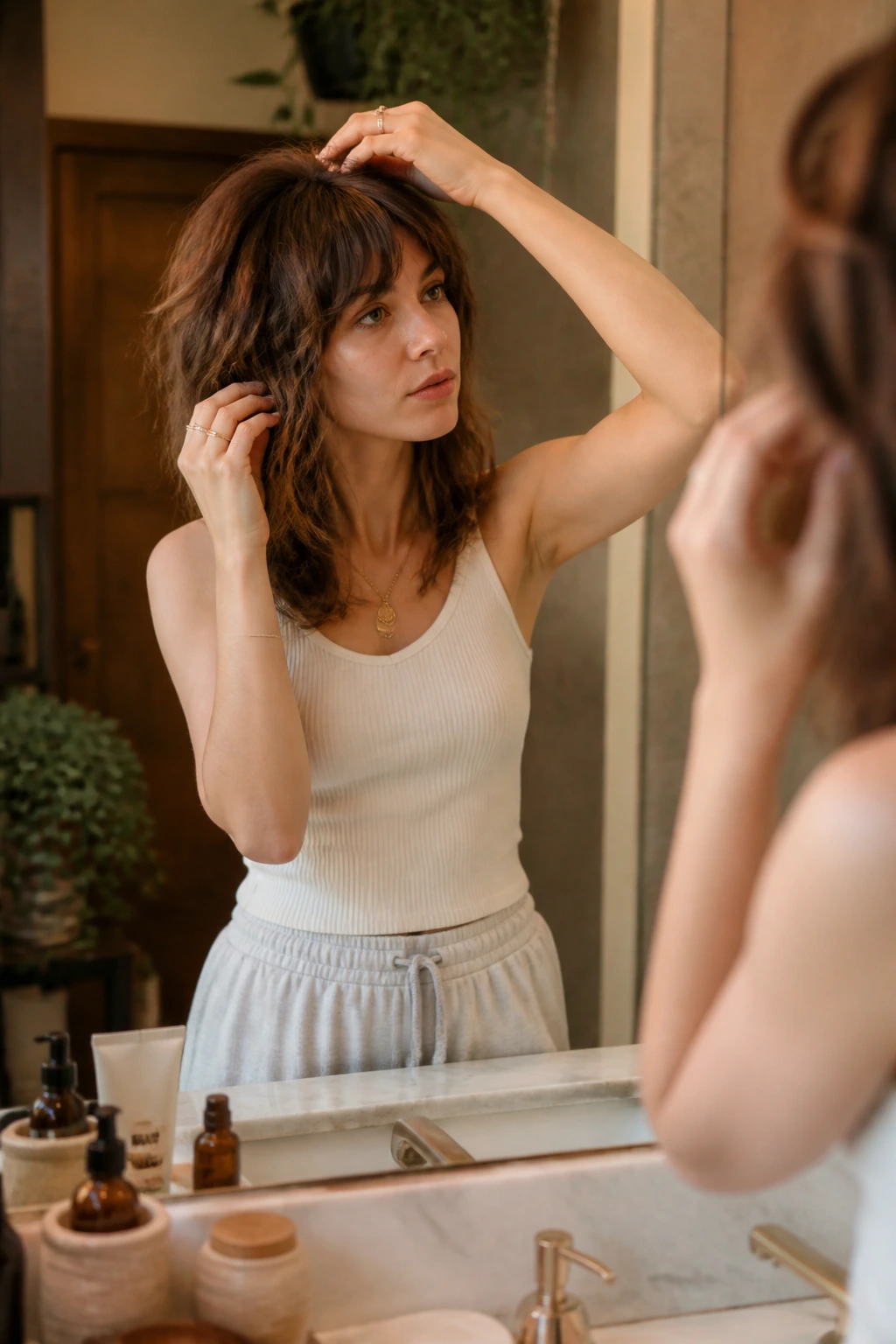
- Sleep with the front pieces clipped loosely back if your fringe bends in weird directions.
- Use a pea-sized amount of cream, not a palmful. Shags need movement.
- Twist the face-framing pieces around your fingers while they’re damp if you want a quicker bend.
- If the roots flatten, flip your head, mist the crown, and blast it with warm air for 20 to 30 seconds.
- A soft setting mist can help the bangs keep shape without feeling sticky.
None of this is complicated. It just rewards a lighter hand than people usually want to use.
Common Mistakes That Flatten a Shag
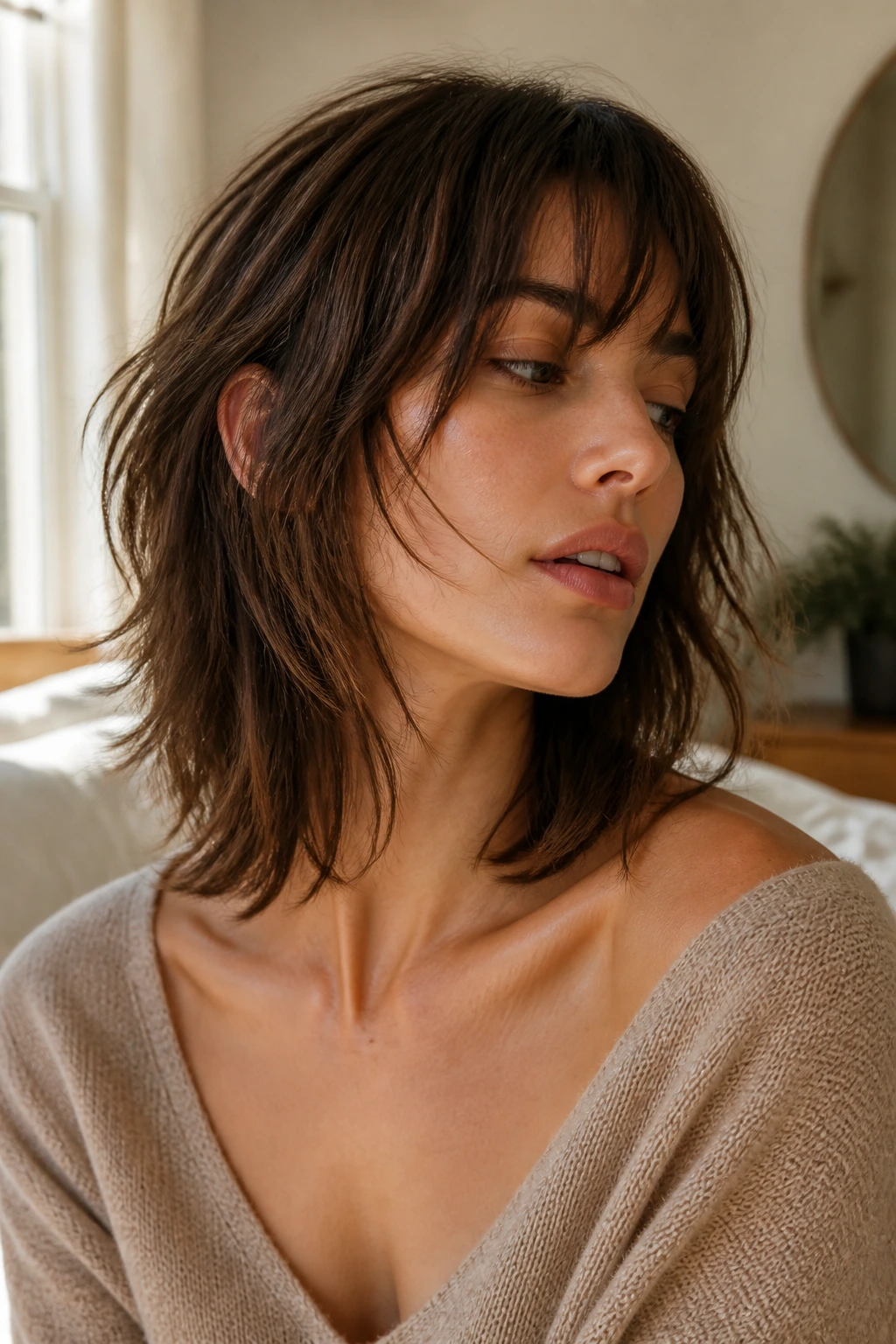
The first mistake is too much thinning at the crown. The haircut looks airy in the chair, then collapses into a skinny top and puffy ends a week later. Ask for shape, not over-thinning.
Second, people often make the fringe too heavy. A dense bang can bury the rest of the haircut, especially on medium hair. If you want a vintage frame, keep the bangs soft enough to move.
Third, using a heavy cream or oil too high up the head will drag everything down. Put product on the ends first. Check the mirror before adding more.
Fourth, styling only the bottom half misses the point. The crown and front pieces are what give a shag its lift. If you ignore them, you get long layers, not a shag.
Variations and Adaptations to Try

Soft Office Shag: Keep the layers long, the fringe light, and the ends blunt enough to tuck behind the ears. It reads polished in a way that still moves.
Rock-Club Razor Shag: Add more separation through the ends and a little rougher fringe. This version likes a matte texture spray and a strong center part.
Curly Halo Shag: Let the layers sit higher around the crown so the curls form a round, cloudlike shape. Best when you want volume without a triangle.
Glossy Blowout Shag: Use a round brush, setting clips, and a tiny bit of serum on the ends. This is the prettiest option if you want the vintage mood to feel dressed up.
Low-Maintenance Air-Dry Shag: Keep the fringe longer, the layers soft, and the perimeter clean. It’s the version that behaves when you don’t want to style much.
Keeping the Shape Between Salon Visits

A medium shag grows out better than a blunt bob, but it still needs some attention. Bangs usually need a trim every 3 to 5 weeks if you want to keep them in the eyes-in-the-right-place zone. The rest of the cut can go longer, often 8 to 12 weeks, depending on how much structure you like.
Dry shampoo at the roots buys you time. So does not overloading the ends with oil. If the haircut starts feeling heavy, refresh the crown first, then re-bend the front pieces. That usually fixes the mood faster than re-washing everything.
At night, a loose clip or a silk pillowcase helps keep the fringe from kinking badly. Tiny habit. Big payoff.
Frequently Asked Questions
What face shape suits a medium shag haircut best?
Almost any face shape can wear a medium shag, but the fringe changes the outcome. Round faces usually do well with longer face-framing pieces, while longer faces often need fuller bangs to keep the proportions balanced.
Is a shag haircut good for fine hair?
Yes, if the layers are handled carefully. Fine hair needs lift without getting stripped bare, so ask for longer internal layers and avoid too much thinning near the crown.
Can curly hair work with a vintage shag?
It can, and when it’s cut well, it looks fantastic. The key is to cut with the curl pattern in mind so the shape doesn’t shrink into a triangle once it dries.
How often should I trim a medium shag?
The fringe usually needs attention every few weeks if you want it precise. The full shape can often go longer, especially if the layers are soft and the perimeter stays a bit blunt.
What should I bring to the salon for this cut?
Bring photos of the exact length you want, the fringe style you like, and at least one picture from the side. A side view shows whether the layers are really feathered or just short.
Can I style a shag without heat?
Yes, especially if your hair has wave or curl. A little mousse, scrunching, and air-drying can give you a workable shape, though straight hair may need a bit of help at the front.
What if the cut feels too choppy after the appointment?
Give it a week of styling before panicking. Fresh shag layers often settle once you wash, dry, and move them a few times. If it still feels too harsh, a small cleanup around the fringe or perimeter can soften the look.
Does a vintage shag require daily styling?
Not really. It needs more intention than a blunt cut, but not a full production. Most people can get it looking right with a quick root refresh, a bend at the front, and a little finger shaping.
The Cut That Keeps Moving

Medium-length shag haircuts have survived so many style cycles because they do something rare: they look better when they move, and they still make sense when they don’t. That’s the vintage appeal in plain clothes. Feathered layers, soft fringe, and a collarbone-skimming length give you shape without locking you into one rigid look.
If you’ve been staring at hair that feels stuck between short and long, this is the kind of cut that gives it a pulse again. Pick the version that fits your texture, your morning routine, and how much fringe you’re willing to live with. The right shag does not need to shout. It just needs to swing a little when you turn your head.
