



Shag haircuts for round faces can do something a blunt cut usually won’t: they break the circle, pull the eye up and down, and give the face a little more length without turning the whole look stiff.
The trick is placement. If the shortest layers land right at the cheekbone or the fringe sits heavy across the forehead, the cut can widen the face instead of softening it. The sweet spot is usually below the widest part of the cheeks, with movement at the crown, broken ends near the jaw, and bangs that split or sweep instead of sitting like a curtain wall.
That’s why the best shags here aren’t random “messy” haircuts. Some are safe and wearable, some are sharp and a little punky, and some lean curly, airy, or cropped. All of them share the same job: make a round face read longer, leaner, and more intentional without flattening the hair into a helmet.
Why You’ll Love This Collection
-
Built-in vertical lines: The right shag creates movement that travels downward, which keeps the eye from parking at the widest part of the face.
-
Bang options that don’t box you in: Curtain, bottleneck, side-swept, and wispy fringes can trim forehead width without cutting a hard line across the cheeks.
-
Works at almost every length: You’ll see collarbone cuts, lobs, pixies, and long layers here, so there’s room to match your hair density and patience level.
-
Texture gets a job to do: Straight hair gets swing, wavy hair gets shape, curly hair gets structure, and thick hair gets some breathing space.
-
Grows out with less drama: A shag can look a little better on week six than it did on day one, which is more useful than a style that falls apart after the first wash.
-
Easy to customize at the salon: Small changes — where the shortest layer starts, how much crown lift you keep, and how the fringe is cut — make a huge difference on a round face.
1. Collarbone Curtain Shag
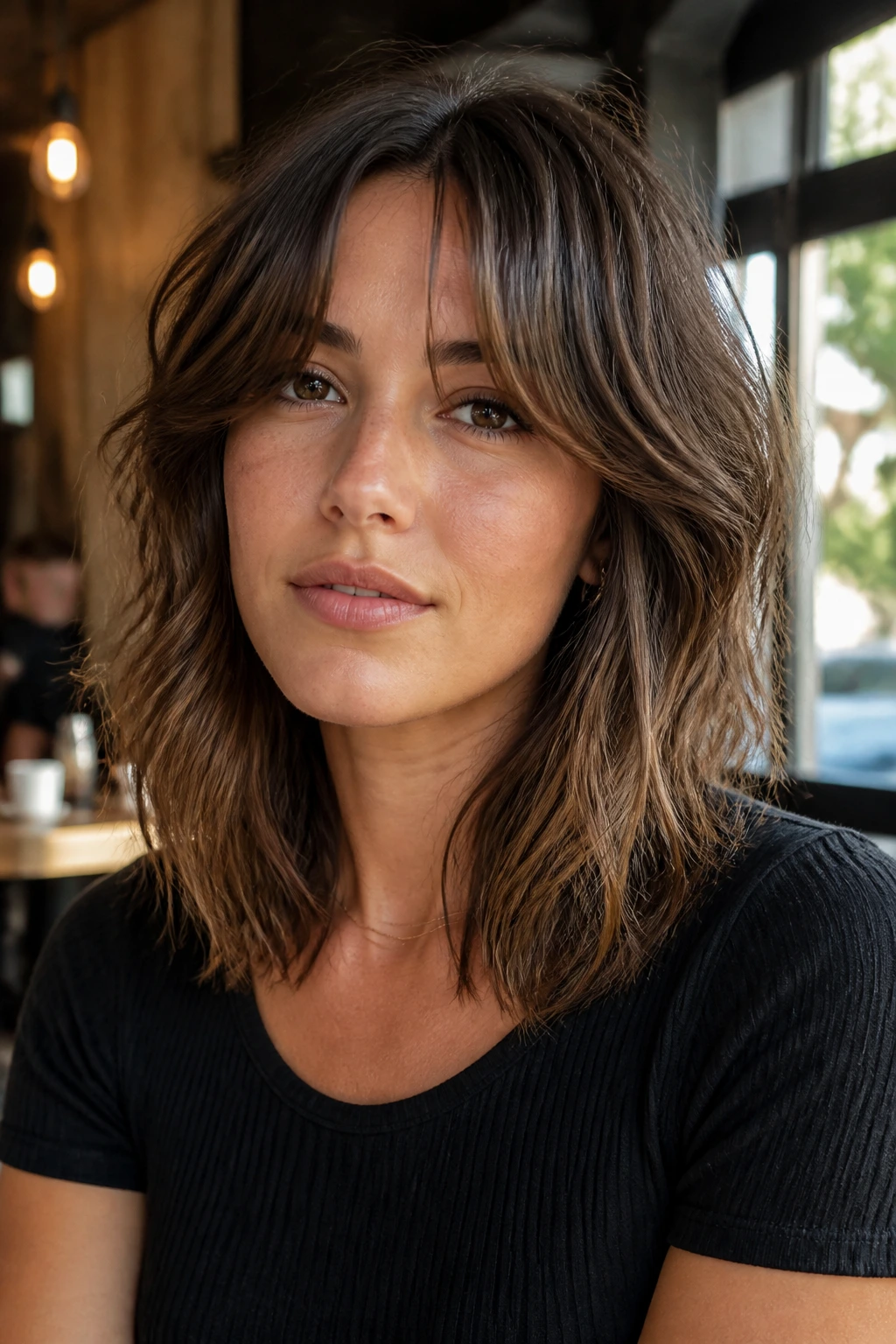
A collarbone curtain shag is the safest “yes, please” cut in this whole group. The length drops below the jaw, so it doesn’t stop at the widest part of the face, and the curtain fringe opens the forehead without trapping the cheeks in a boxy frame.
Ask for long face-framing layers that begin around the mouth or chin, not the cheekbone. That placement matters more than the label “shag.” If your stylist keeps the top soft and gives the ends a little ragged movement, the cut stays airy instead of puffy.
Best for: anyone who wants the shag shape without going too short.
Styling note: a round brush at the crown and a flat brush through the sides keep the outline clean.
Watch out for: bangs cut too short. They can shorten the face fast.
2. Shoulder-Length Layered Shag

Shoulder-length shags are a sweet spot for round faces because the hair still has enough weight to hang down, but the layers stop it from forming one solid block. The shape sits nicely around the collarbone and keeps the sides from ballooning out at cheek level.
This cut works best when the top has a little lift and the face-framing pieces are slightly longer than the rest. That creates a soft diagonal line from the cheek toward the ends, and diagonals are your friend here. Straight-across is the thing to avoid.
If you want something wearable on busy mornings, this is the one. A quick bend with a 1-inch iron or a rough blow-dry gives it enough movement to look finished without fuss.
3. Long Razor Shag
Need to keep your length but lose the heaviness? Go razor shag. The razor-softened ends break up bulk and stop long hair from hanging like a curtain on both sides of the face.
This version is especially useful if your hair is thick, because thick hair can make round faces look wider when it piles up near the jaw. A razor cut removes some of that visual weight, and the result looks lighter without sacrificing inches. I’d keep the shortest layers below the cheekbone and let the longest pieces skim the bust or mid-back.
Ask for: sliced ends, long internal layers, and face framing that starts low.
Skip if: your hair is extremely fragile or prone to split ends; a scissor cut may be kinder.
4. Soft Wolf Shag
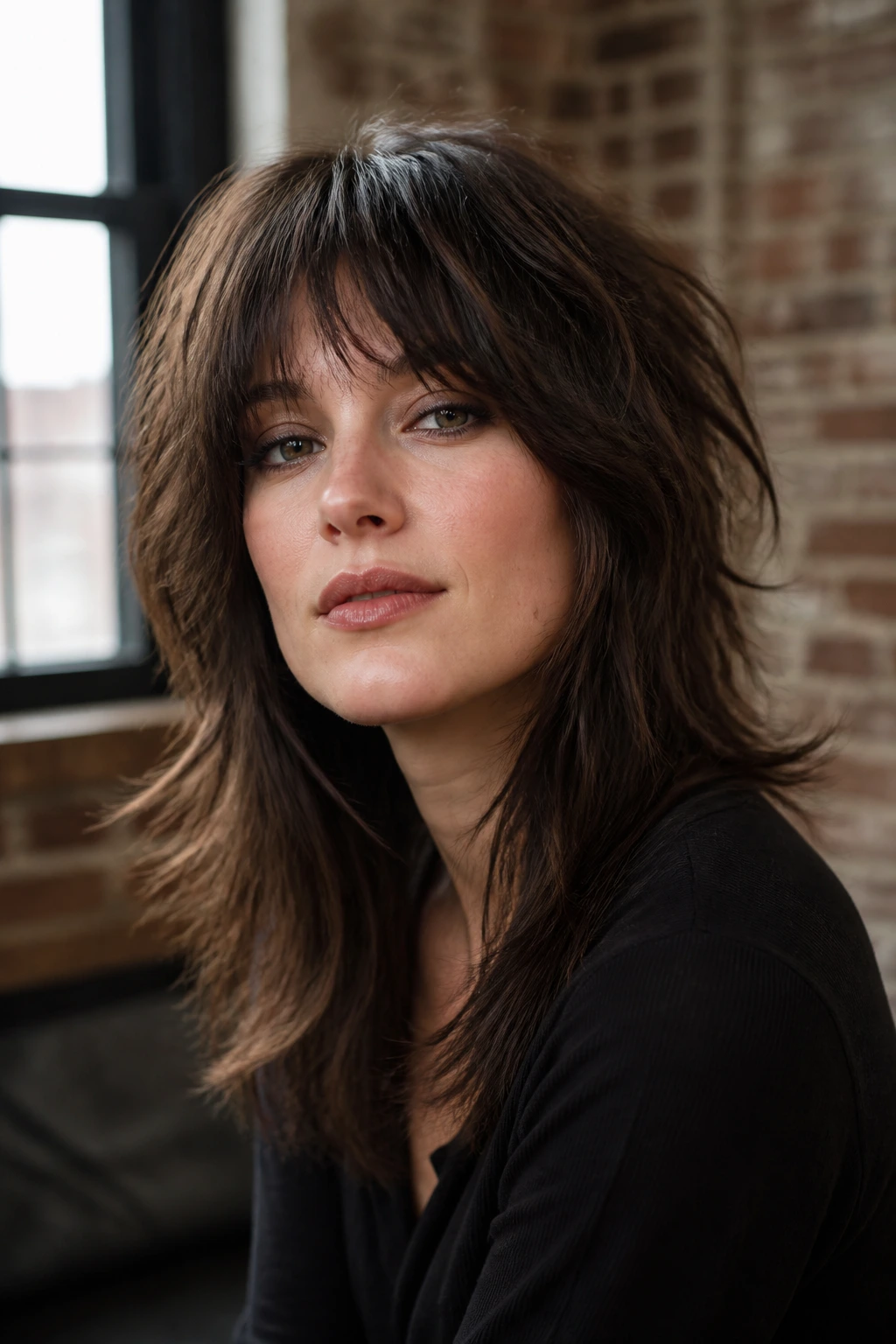
A soft wolf shag gives you the lifted crown and longer nape that make round faces look a little more oval. The vibe is edgier than a classic shag, but it does not have to look wild. If the difference between “cool” and “too much” matters to you, this is one of those cuts where the hand of the stylist matters a lot.
Why It Flatters
The crown volume draws the eye upward. The longer sides keep the width from sitting in the cheeks. That combination is the entire game.
Keep the face-framing pieces soft, not spiky. If the layers around the face are chopped too short, the cut can turn into a halo of fluff. The right wolf shag has movement, not puff.
5. Chin-Length Shag Bob
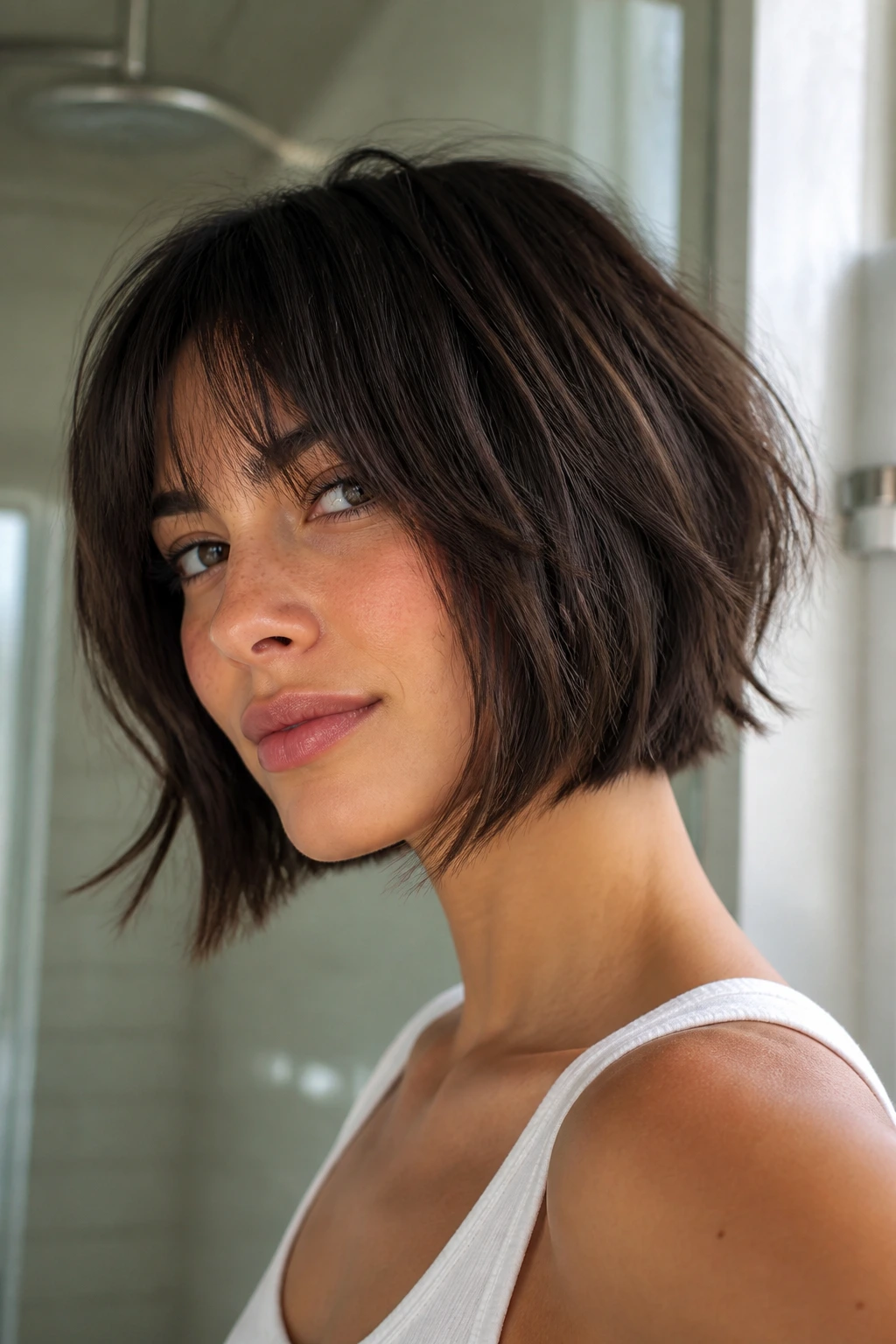
A chin-length shag bob can work on a round face, but only if the line is broken up. A blunt chin-length bob is a troublemaker; it stops exactly where a round face already has width. Add shattered ends, soft layering, and a little forward angle, and the whole thing changes.
This cut is best when the front pieces fall just below the chin and the back is slightly shorter. That tiny wedge creates lift without making the face look boxed in. The texture should feel piecey around the mouth and softer toward the jaw.
Use a texture cream rather than a heavy smoothing balm. Too much polish kills the shag and makes the bob sit like a helmet. Nobody wants that.
6. Feathered Midi Shag

Feathering is one of the oldest tricks in the book, and it still works because it removes bulk without stealing length. On a round face, a feathered midi shag keeps the outline soft while making the ends look lighter and more directional.
What to ask for: layers that are thinnest through the mid-lengths and fuller through the bottom third. That keeps the hair from puffing at the cheeks.
Styling move: bend the ends away from the face with a brush or iron so the shape opens up instead of cupping inward.
Best for: medium-density hair that tends to sit heavy on the sides.
7. Bottleneck Fringe Shag
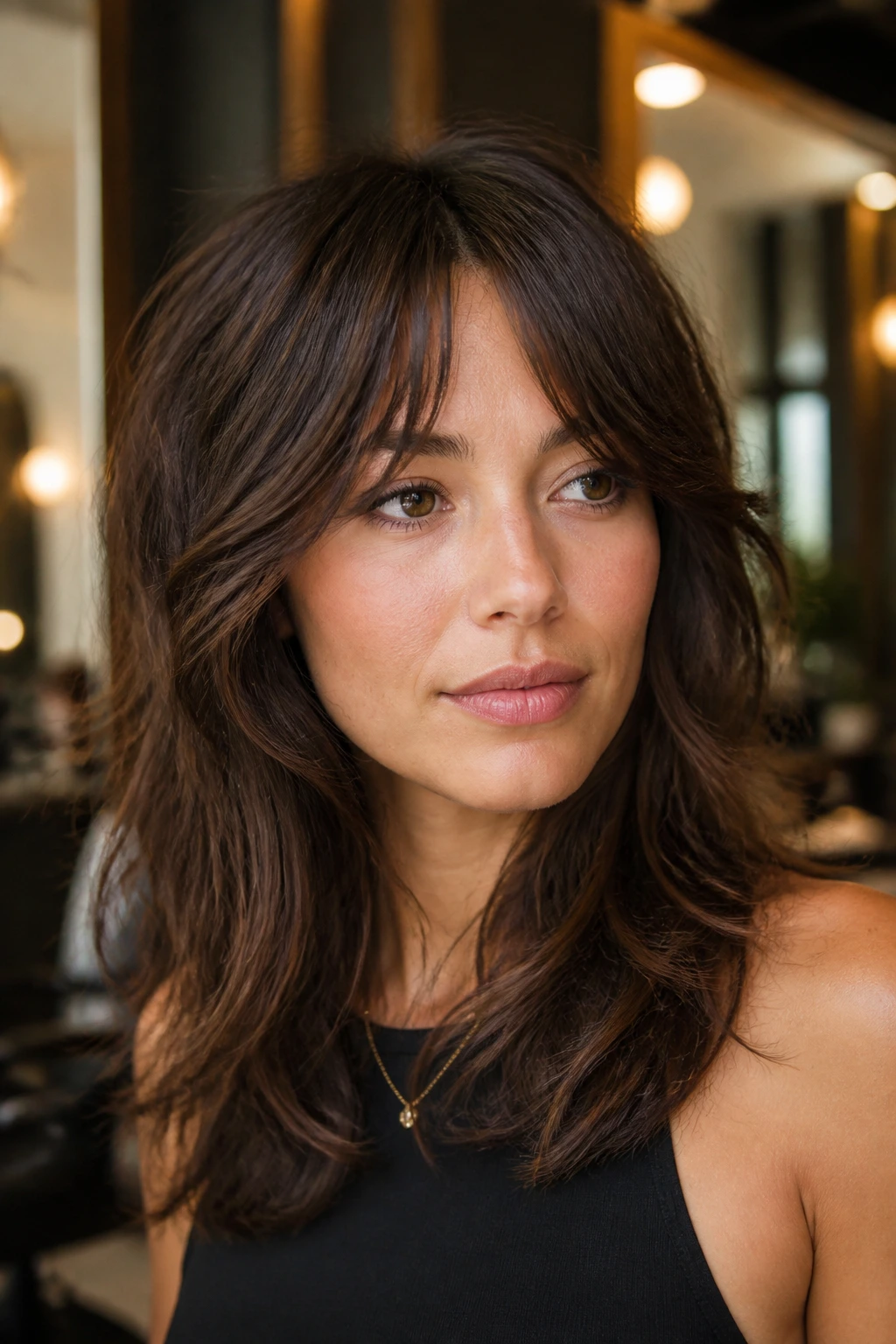
Bottleneck bangs are made for round faces if you want fringe without the blunt wall. They start narrow at the center, then widen softly near the eyes and cheeks, which gives the face room while still adding interest across the forehead.
That soft opening is the whole point. You get the bang shape, but the eyes stay visible and the cheeks don’t get boxed in. Pair the fringe with a shag that keeps the shortest layers low enough to avoid the widest part of the face, and the balance gets even better.
If your forehead is shorter, keep the center piece slightly longer. If it’s taller, you can let the middle open a touch more. That tiny adjustment changes the whole feel of the cut.
8. Side-Swept Bang Shag
Side-swept bangs bring a diagonal line across a round face, and diagonals are one of the easiest ways to create the illusion of length. The cut feels softer than a center part and less strict than full fringe, which makes it a good middle ground.
The shag underneath should stay loose. If the layers are too even, the bang does all the work and the rest of the haircut looks flat. I like this shape when the fringe starts deep enough to move across the forehead but not so far over that it covers the eyes.
A side-swept shag can also rescue a cowlick near the front hairline. That matters more than people think. A bad bang and a stubborn cowlick can ruin each other’s day.
9. Off-Center Part Shag
Sometimes the whole answer is as simple as moving the part an inch or two. An off-center part breaks the symmetry that can make a round face look even rounder, and the shag layers do the rest.
How to Wear It
The heavier side should fall just past the cheekbone, not stop on it. Keep the opposite side slightly tucked back or left softer around the jaw. That tiny imbalance creates a longer, cleaner line.
This is a good choice if you like low-maintenance hair. The part does some of the shaping for you, so you don’t need a full blowout every morning. A mist of salt spray at the roots and a quick scrunch at the ends is often enough.
10. Curly Shag with Rounded Layers
Curly hair and round faces can be an excellent match when the layers are cut to encourage height rather than width. A curly shag with rounded layers lets the curl spring upward and outward in a controlled way instead of building a triangle around the jaw.
Dry cutting helps here. Curls shrink, and cutting them wet without accounting for that shrinkage can leave the front too short or the sides too wide. Ask for layers that start low enough to keep the face open, then have the stylist shape the curls around the cheekbones rather than directly on them.
A good curly shag should feel lively, not bulky. If the ends puff out at the sides, the layers are probably too short or too even.
11. Beachy Wavy Shag
Beachy waves can flatten a round face if they sit too evenly from root to tip. The shag version fixes that by building a little lift at the crown and keeping the waves broken up through the ends.
- Best for: hair that already has some natural bend.
- Ask for: soft internal layers, not a heavy one-length line.
- Styling cue: scrunch in mousse at the root, then twist random sections around your fingers.
- Avoid: overdoing the salt spray. Too much can make the hair dry and puffy.
The payoff is easy movement. Not perfect movement. Better than perfect, actually.
12. Air-Dry Shag
Some cuts ask for a brush. This one asks for patience and a towel. An air-dry shag works well on round faces because the piecey texture keeps the sides from looking bulky while the natural bend builds a loose vertical shape.
The key is control at the roots. Clip the top at the crown while it dries, or you’ll lose the lift that makes the cut read longer. A light curl cream or leave-in should be enough; heavy oils will make the layers clump and sit flat against the cheeks.
If your hair dries with a slight bend already, this cut is easy. If it dries poker-straight, you may need a little help from a diffuser or a few velcro rollers.
13. Fine-Hair Lift Shag
Fine hair needs a different approach. Too many short layers can make it look sparse, which is the last thing you want when you’re trying to build shape around a round face. A fine-hair shag should keep the layers long enough to preserve fullness while still lifting the crown.
Why It Works
The haircut creates movement without stripping away too much density. That means the ends still look soft, but the top does not collapse. A little root lift powder or mousse goes a long way here.
Keep the shortest pieces around the cheekbone area longer than you think you need. Fine hair always shrinks visually when it’s chopped too hard. I’d rather see too much length than too much scalp.
14. Thick-Hair Weight-Removing Shag
Thick hair can make a round face feel wider when it hangs in one heavy sheet. A weight-removing shag changes that by removing bulk from the interior, not just the ends, so the hair stops spreading outward at the jaw.
Your stylist should use point cutting, slide cutting, or razor work carefully through the mid-lengths. The goal is movement, not frizz. Too much thinning at the bottom can make the ends look wispy while the top stays dense, and that is a strange shape no one asked for.
This is one of the best shags for round faces with a lot of hair because it keeps the outline vertical. Thick hair loves to take over the room; this cut tells it to mind its manners.
15. Grunge Razor Shag
A grunge razor shag leans deliberately choppy, which can be useful on a round face because the irregular ends interrupt smooth horizontal lines. The haircut has attitude, but the shape still needs strategy. Keep the strongest texture below the cheekbone and the crown just lifted enough to avoid a helmet.
The beauty of this version is the broken edge. It makes the eye move instead of settling on the widest part of the face. Use a paste or matte cream to separate the pieces, then rake the product through with your fingers rather than combing it smooth.
This is not the cut for someone who wants polished. It is the cut for someone who likes a little mess and knows the difference between messy and shapeless.
16. Blowout Shag
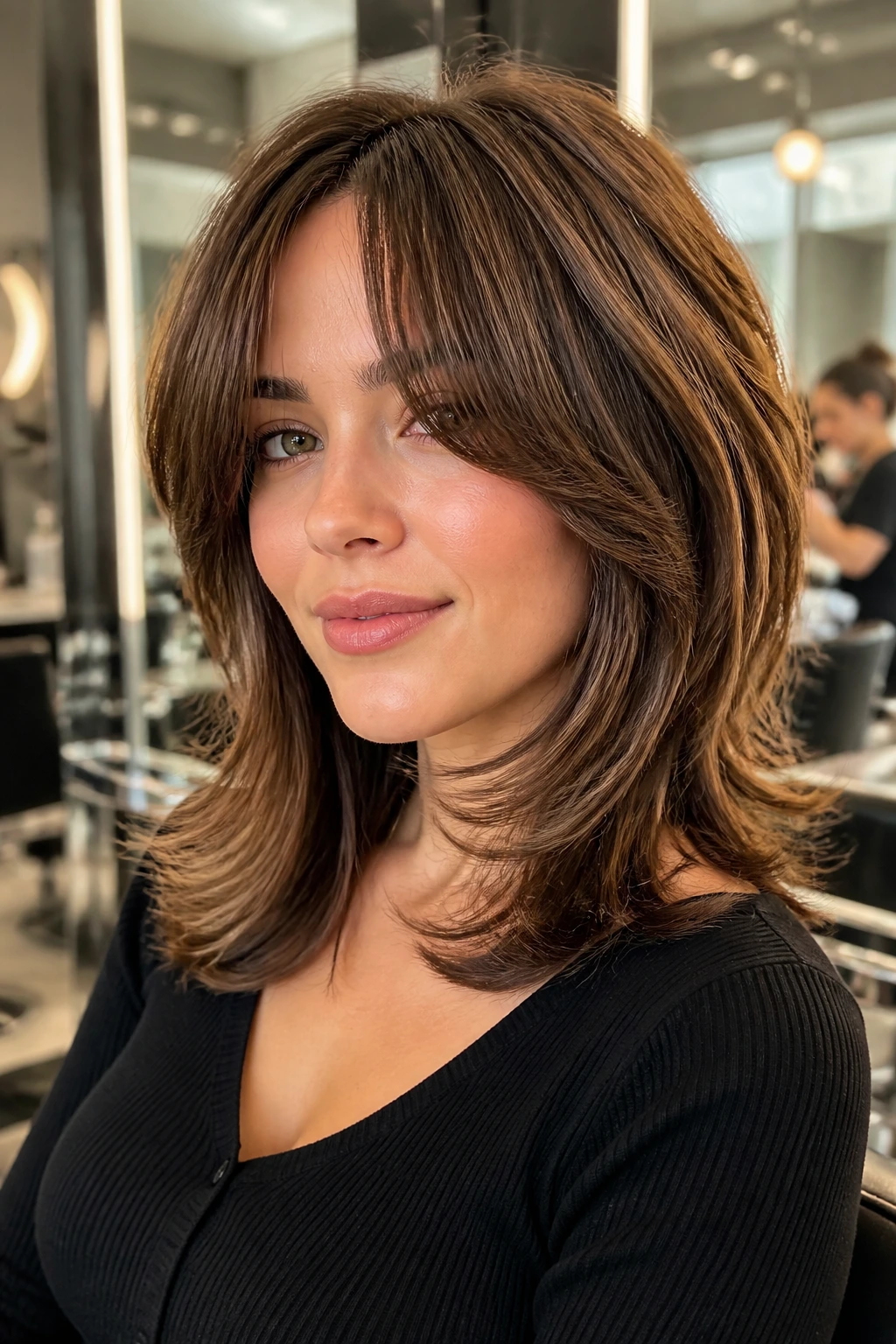
A blowout shag is what happens when you give the shag a little salon polish. The layers still move, but the ends bend in a clean, airy way instead of sticking out in random directions. On a round face, that controlled bend can make the outline look longer and neater.
- Use a round brush at the crown to create lift without puffing the sides.
- Dry the fringe away from the face so it opens instead of sticking flat to the forehead.
- Finish with velcro rollers if you want a smoother, bouncier bend.
- Skip heavy creams that weigh down the movement.
The result is softer than a blunt blowout and cleaner than a scruffy air-dry. It has a nice middle ground energy.
17. Bixie Shag
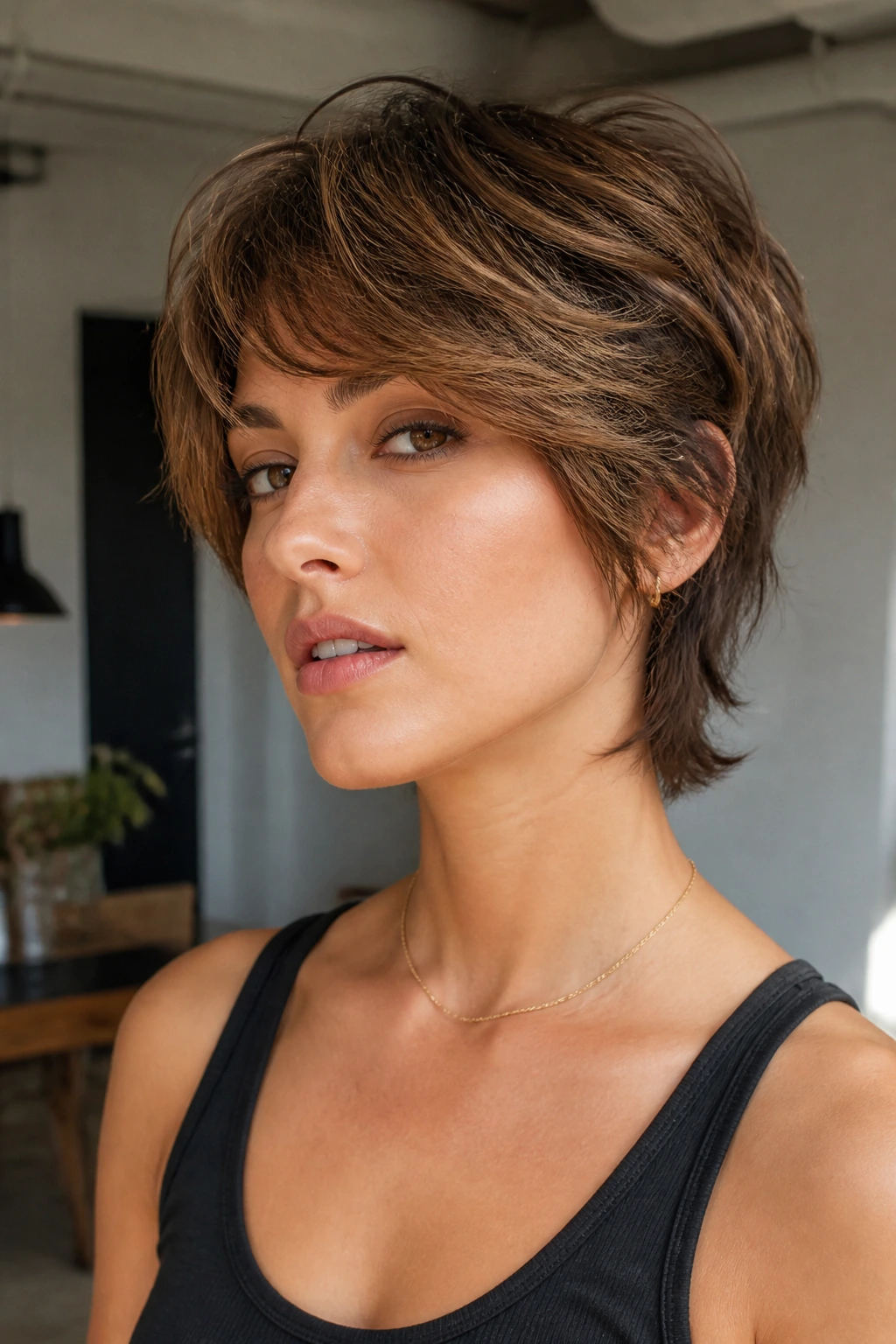
A bixie shag sits between a bob and a pixie, which sounds vague until you see the shape: short at the nape, longer on top, with enough texture around the sides to keep the cut from hugging the face too hard. For a round face, the higher crown is the secret.
Keep the side length slightly longer than you think. That gives the face a frame without making the cheeks the widest point. I especially like this cut when the fringe is side-swept or split slightly off-center.
It’s a small haircut with a lot of attitude. It also grows out more gracefully than a very strict pixie, which saves you from awkward in-between weeks.
18. Tousled Pixie Shag
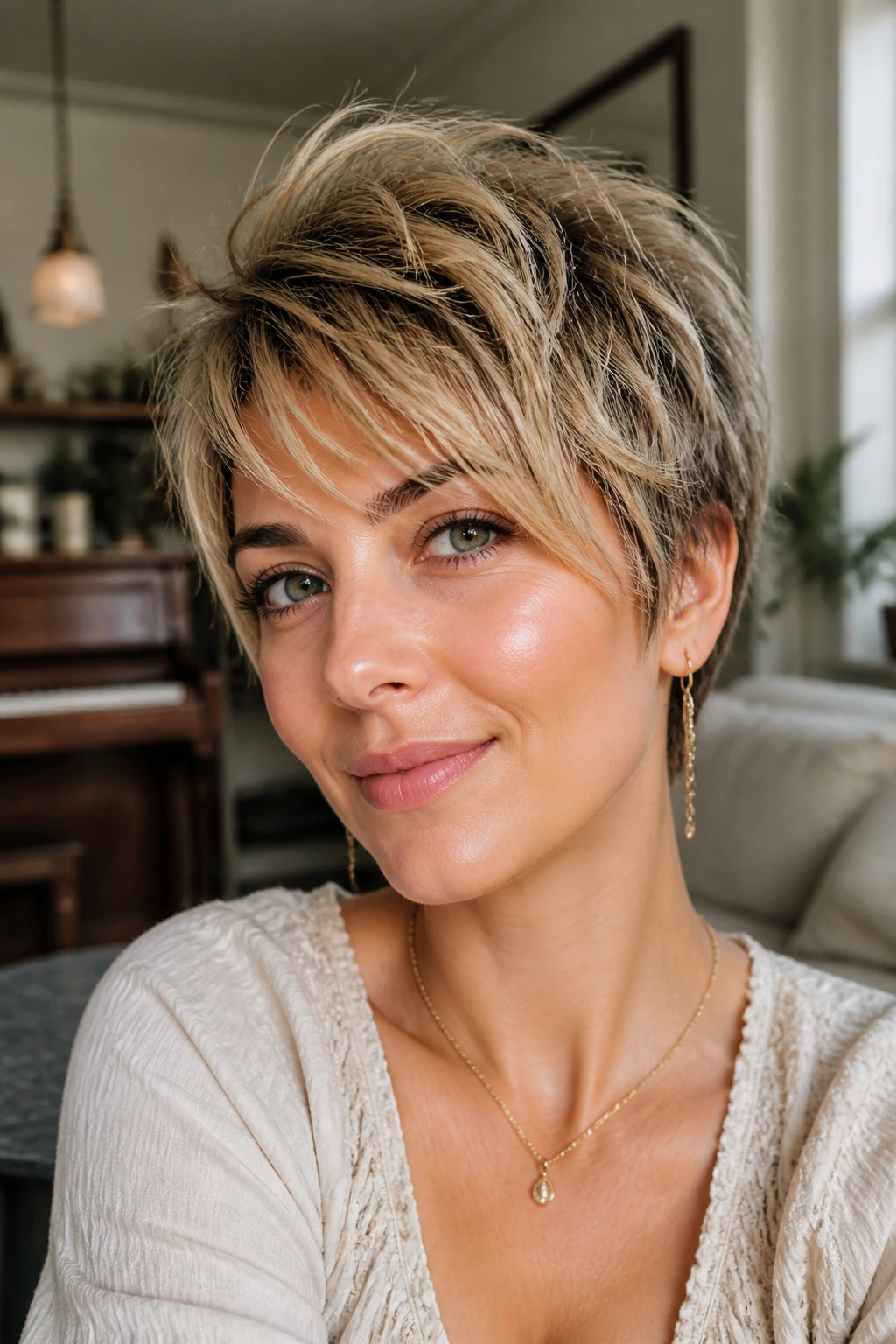
A tousled pixie shag works when you want short hair but still need the face lengthening effect. The top stays textured and lifted, while the sides remain soft enough to avoid adding width at the temples.
This cut is happiest when the layers are cut to move forward and up, not outward. That tiny directional difference changes everything. If the top is too flat, the face can look fuller; if it is too fluffy on the sides, the proportions go sideways fast.
Use a pea-sized amount of styling paste and pinch the top into small pieces. You want definition, not a shiny shell. Short hair can be fussy if it’s overworked.
19. Micro-Fringe Shag
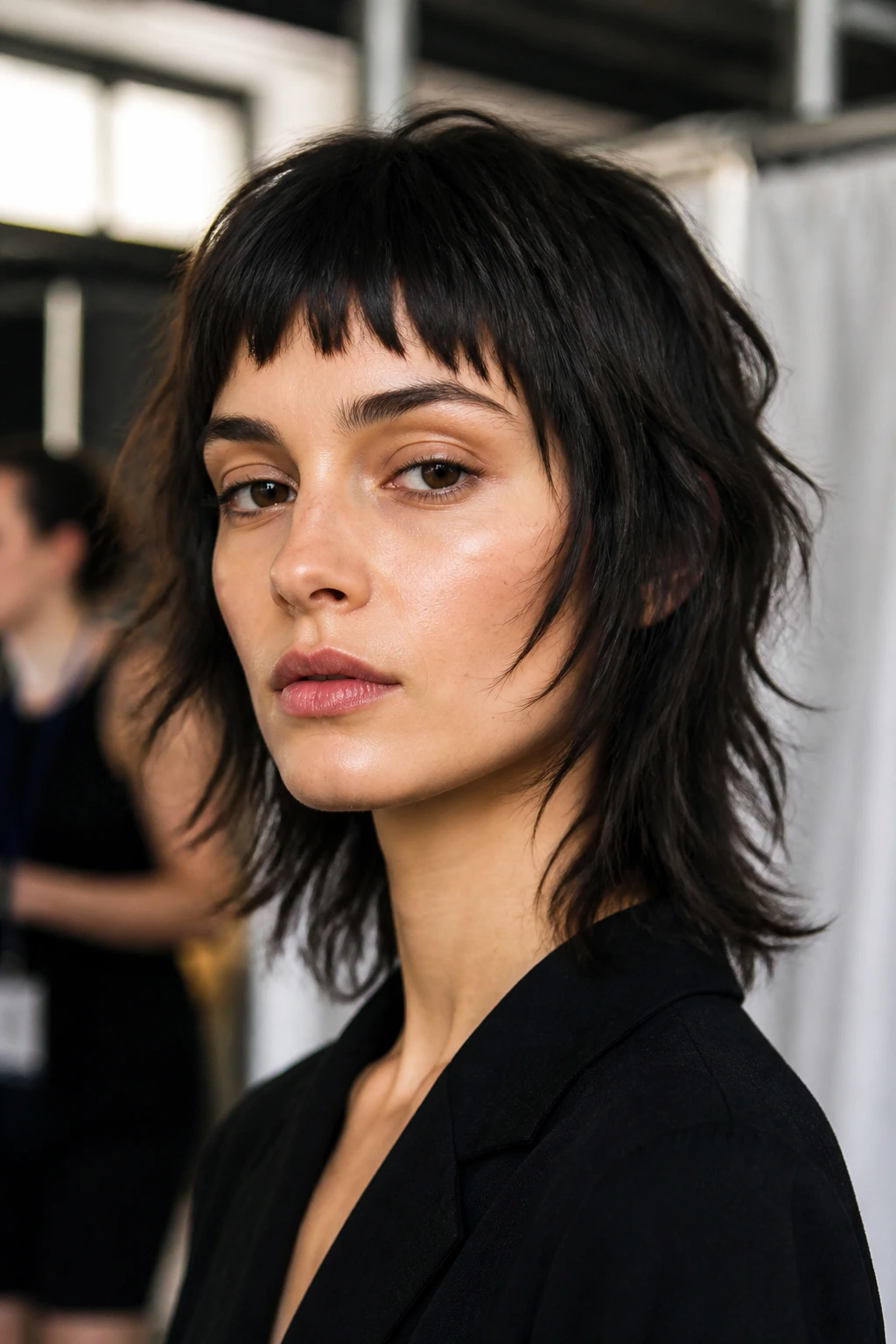
Micro fringe can be gorgeous on a round face, but it’s not a casual choice. The short bang puts a hard line high on the face, so the rest of the shag has to do the balancing work with length, softness, and a little crown lift.
What to Watch For
If the micro fringe is too blunt, it can make the lower half of the face feel heavier. Keep it a touch broken and slightly uneven at the edges. That stops it from looking like a ruler line.
This cut works best when the sides stay longer and the texture around the jaw is loose. It has a fashion-editor feel. It also punishes bad styling fast, so be honest about how much effort you want to put in every morning.
20. Center-Part Curtain Shag
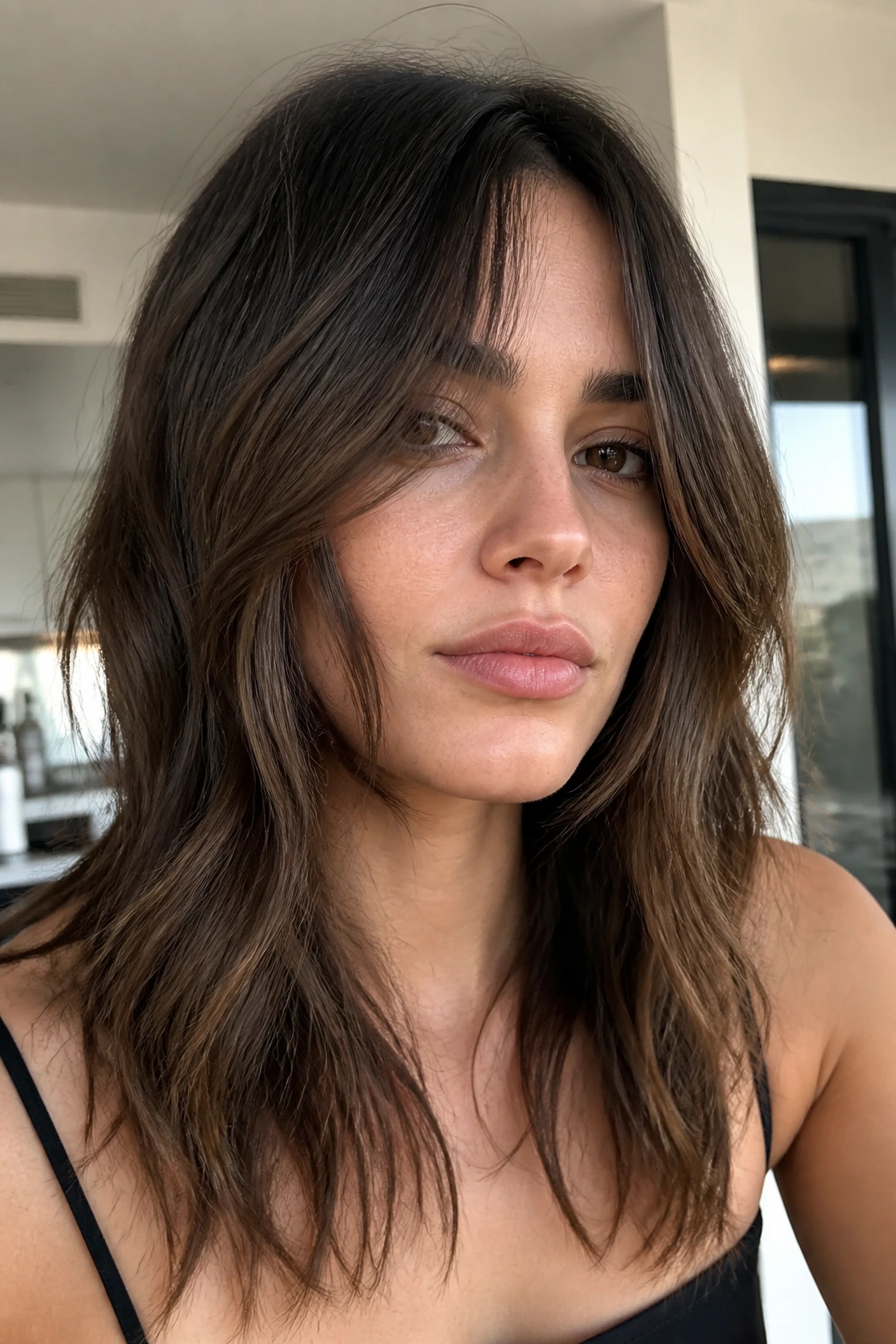
A center part can work on a round face when the curtain pieces are long enough to open around the cheeks. That is the trick. The part itself is symmetrical, but the bangs and layers create movement away from the face instead of across it.
The center-part curtain shag is clean, soft, and a little French-looking when the ends are piecey. Keep the shortest pieces around the eyes or upper cheek, then let the layers fall below the jaw. If the curtain pieces stop too high, the face can read wider.
This shape is good for people who like balance and hate having to wrestle with a deep side part every morning. It is neat without being severe.
21. Glasses-Friendly Shag

If you wear glasses, the temples and the bangs need to cooperate with each other. A glasses-friendly shag leaves room around the frames, keeps the fringe light, and avoids thick side pieces that fight with the arms of the glasses.
- Best frame match: medium or thin frames with a soft-shape shag.
- Ask for: longer side layers that clear the temples.
- Avoid: dense bangs that land directly on the top rim.
- Styling cue: tuck one side behind the ear so the shape doesn’t crowd the face.
This is less about style theory and more about daily annoyance. A cut that constantly bumps your frames is a cut you’ll hate by Thursday.
22. Mature-Face Soft Shag

A soft shag can be a better choice than a severe short cut when you want lift without harshness. The layers should move away from the jaw and cheek, not sit there like a frame. That keeps the face from looking boxed in and gives the whole haircut a lighter read.
The crown should have height, but not a fake, teased-up helmet. Softness matters. A little bend around the face and a feathered fringe can ease fine lines without hiding the structure of the face.
This cut is especially nice when the hair has some natural wave. It sits politely, which is underrated in a haircut.
23. Flipped-End Shag

Flipped-end shags bring the ends out and away from the neck, which sounds small but changes the silhouette fast. On a round face, a little outward flip below the chin can create a longer line from top to bottom.
The key is keeping the flip low. If it happens right at the cheek, the face can widen. If it starts around the collarbone or just below the jaw, it works more like movement than a frame.
This shape has a playful, retro feel. It also looks better when it’s not overstyled. A tiny flick at the ends is enough; no one needs a perfect barrel curl.
24. U-Shaped Long Shag

A U-shaped long shag keeps the length in a soft curve, which is useful when you want to preserve fullness but still avoid a heavy straight line. The center can stay a touch longer than the sides, and that subtle shape draws the eye downward.
Why It Flatters
The U shape keeps the perimeter from looking boxy. The shag layers inside that shape break up density so the hair doesn’t create one big horizontal block at the shoulders or chest.
I like this on round faces with long hair because it feels polished without being rigid. You still get movement, but the overall shape stays smooth and flattering from the front and side.
25. Invisible-Layer Lob Shag
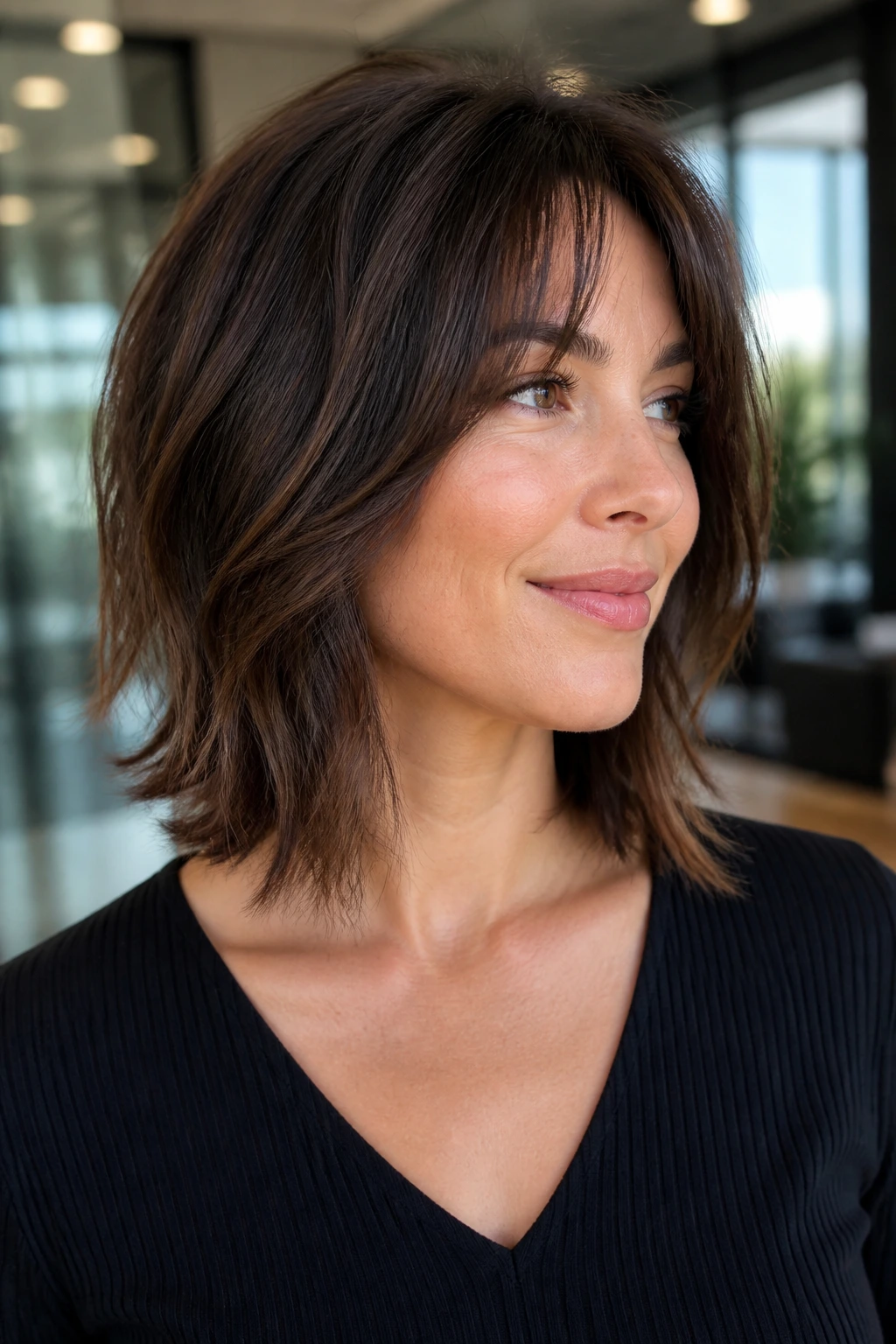
An invisible-layer lob shag is for people who want the haircut to do its work quietly. The outer line looks clean, but the inside has layers that let the hair swing and bend. That keeps a round face from getting swallowed by one solid shape.
This is a smart choice for work settings where you want texture without a visibly choppy cut. The layers are hidden enough to keep the finish neat, but they still stop the lob from sitting flat on the cheeks.
Use a light texturizing spray, not a crunchy one. The whole point is that the movement should look casual, not manufactured.
26. Sliced-End Shag

Sliced ends make the haircut feel lighter at the bottom, which helps on round faces because heavy ends can create a wide base. This cut works best with medium to long hair where the slicing can separate the strands without making the perimeter look thin.
- Best for: hair that tends to feel dense and heavy.
- Ask for: sliced or point-cut ends, plus layers that begin below the cheek.
- Styling note: a rough-dry with fingers keeps the ends from clumping.
- Skip if: your hair already lacks fullness at the tips.
The result is a sharper, airier outline. It’s subtle, but it matters.
27. Asymmetrical Shag
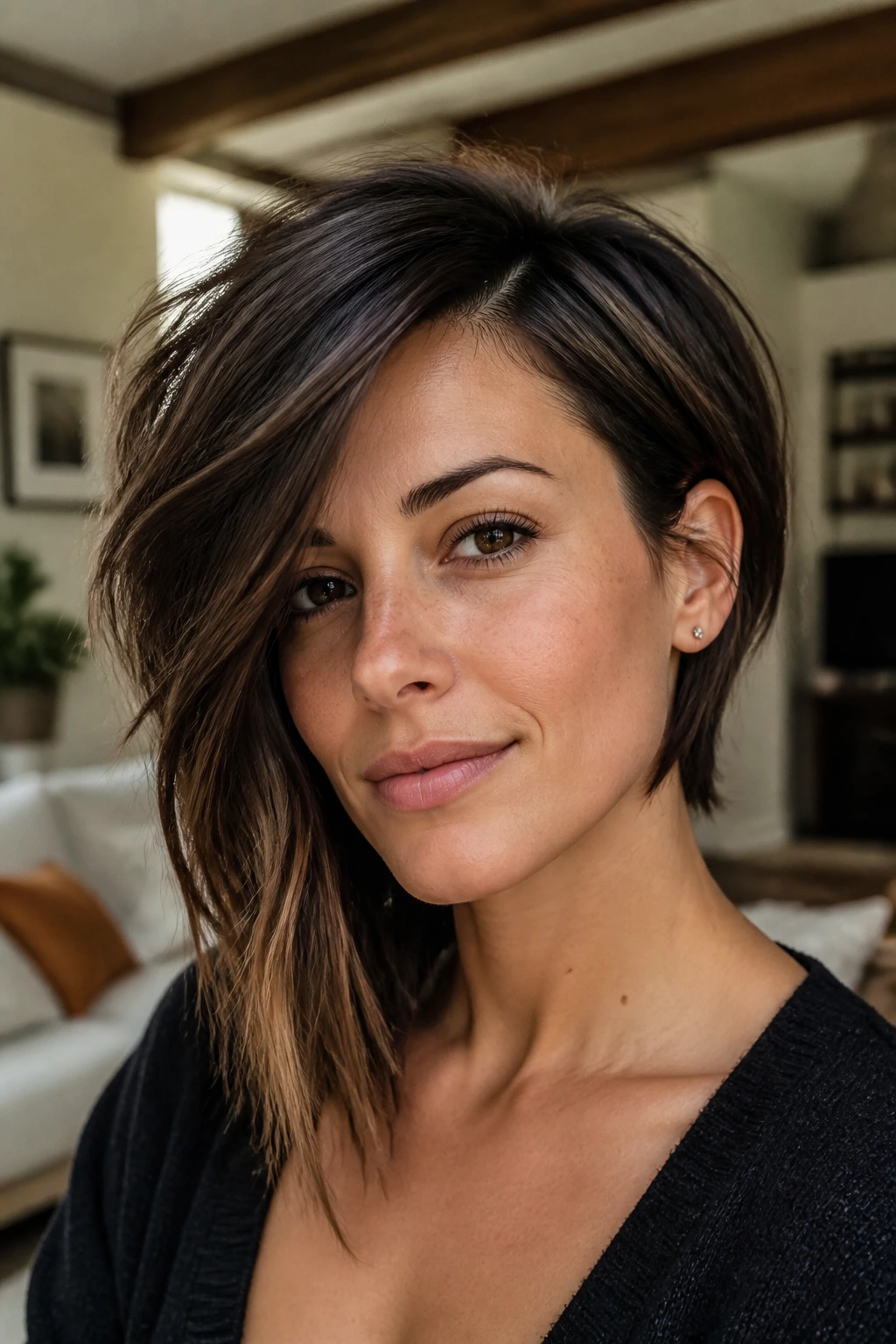
An asymmetrical shag shifts the balance on purpose, and that can be a gift for a round face. A little extra length on one side creates a diagonal line, which interrupts the circle effect and pulls the face into a more oval read.
The asymmetry does not need to be dramatic. Even a half-inch difference can matter when the layers are cut well. Keep the heavier side lower and softer, and let the shorter side stay tucked back or feathered around the cheek.
This is a cut for someone who wants personality built into the shape itself. It looks especially good with a deep side part and a little texture spray.
28. Long Nape Shag
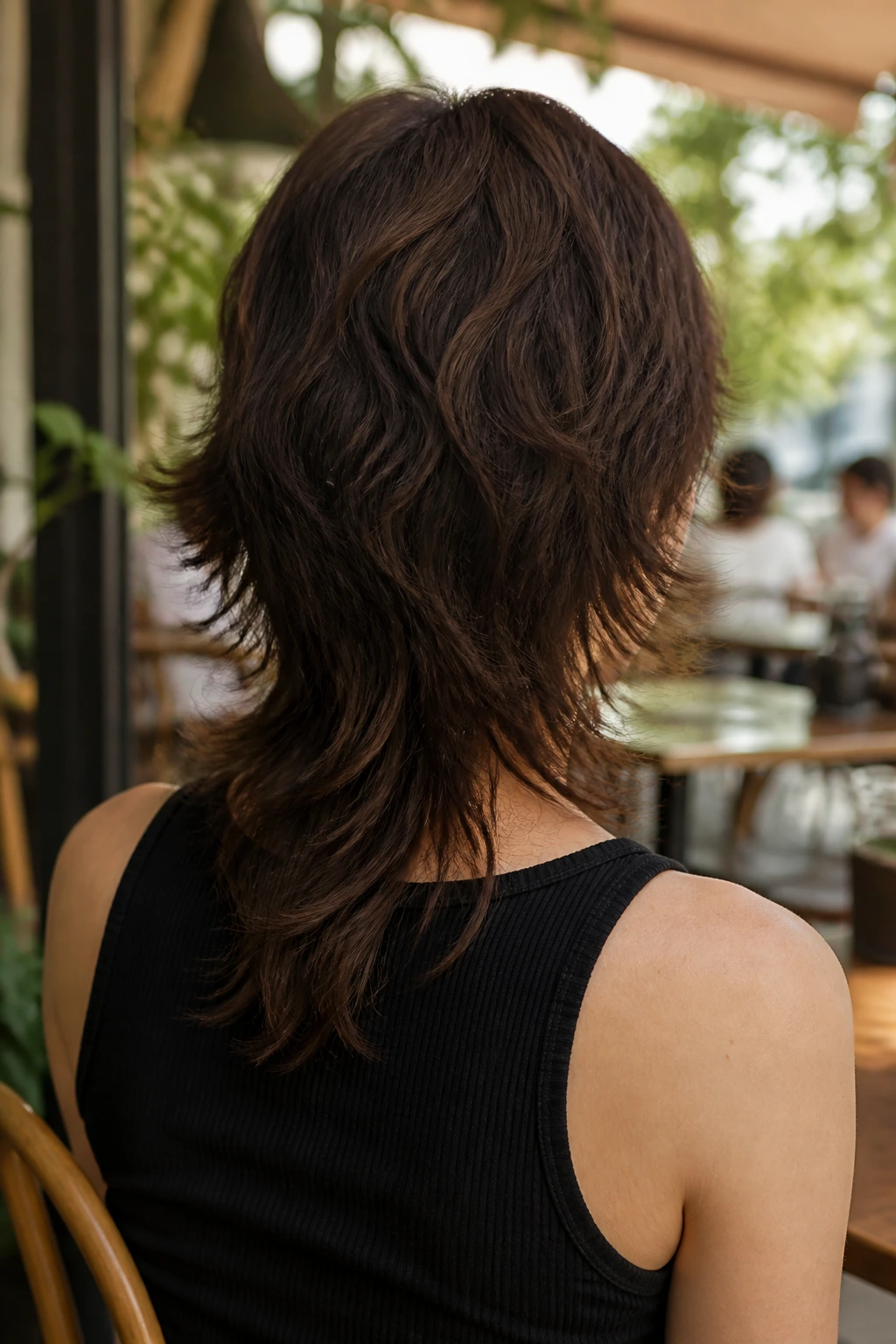
The long nape shag keeps some drama in the back while the sides stay controlled. That matters on round faces because the eye gets pulled down the neck and spine, not out across the cheeks. The effect is subtle from the front and more obvious in motion.
This is one of those cuts that looks better when the back is not too short. A longer nape keeps the shape from puffing out like a triangle. The top can still have lift, but the back anchor holds everything together.
If you want a shag with a little mullet energy without going full mullet, this is the lane.
29. Low-Maintenance Grow-Out Shag

A grow-out shag is built for patience, which is useful because not every haircut should fall apart after six weeks. On a round face, the best grow-out shags keep the layers long enough that they keep framing the face as they lengthen.
How to Get the Most From It
Ask for soft layering rather than very short internal cuts. The ends should stay shaggy, but not so shredded that the shape collapses when it grows. This lets the haircut keep its lengthening effect for longer between trims.
It’s a practical choice if you don’t want to live at the salon. The cut should look intentional at 8 weeks, not accidental.
30. Chin-Grazing Wispy-Fringe Shag
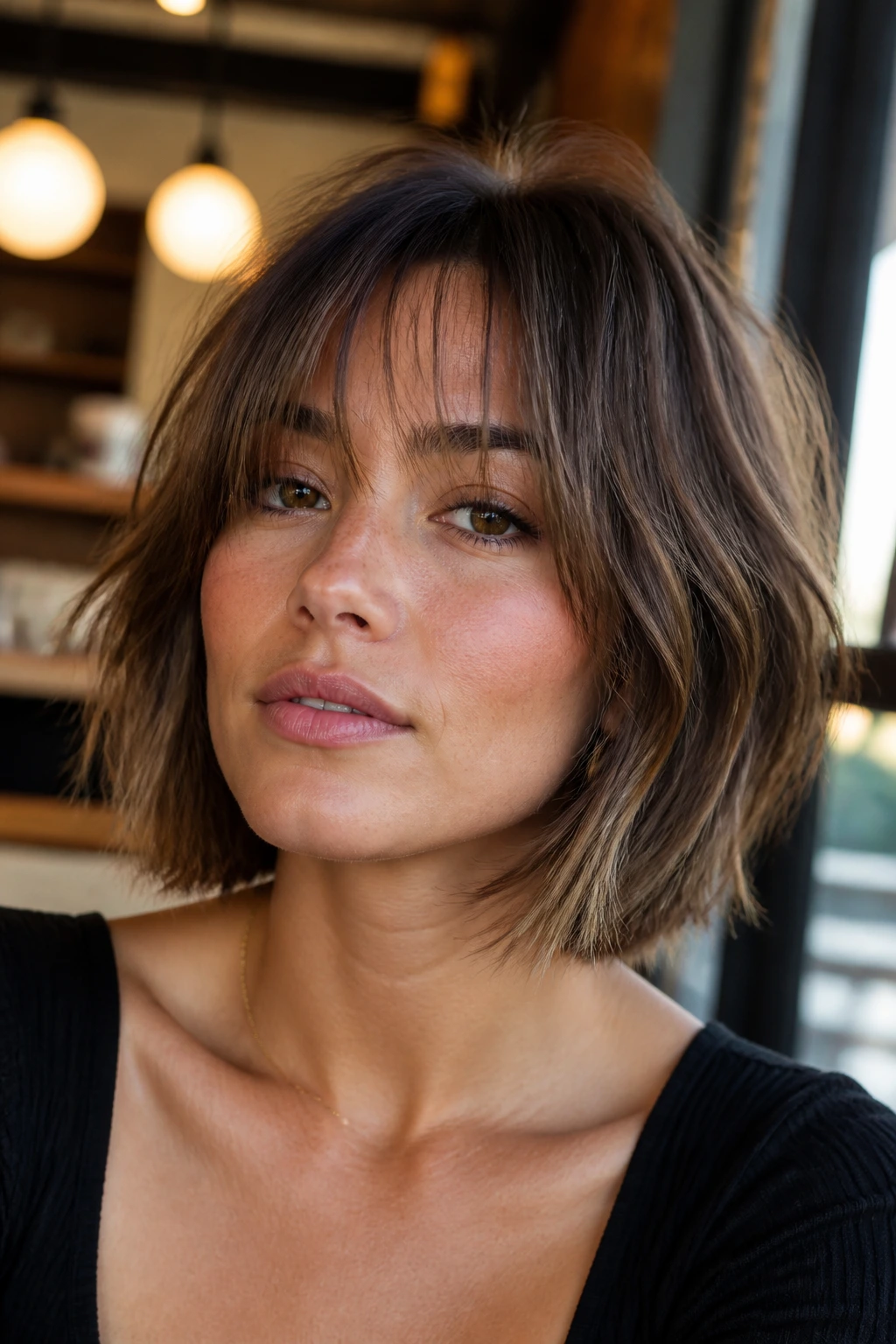
A chin-grazing shag with wispy fringe can work if the fringe is light and the chin length is slightly broken up. The danger here is obvious: if the line gets blunt, the cut can widen the lower face. Keep the fringe airy, and keep the ends soft.
The wispy fringe adds movement near the forehead without sealing the shape shut. That makes the cut feel open. Pair it with longer sides and a little crown lift, and the overall result stays balanced.
This is a nice option if you want something flirty and not too heavy. It needs a stylist who knows how to leave hair with air in it.
31. Crown-Lift Long Shag
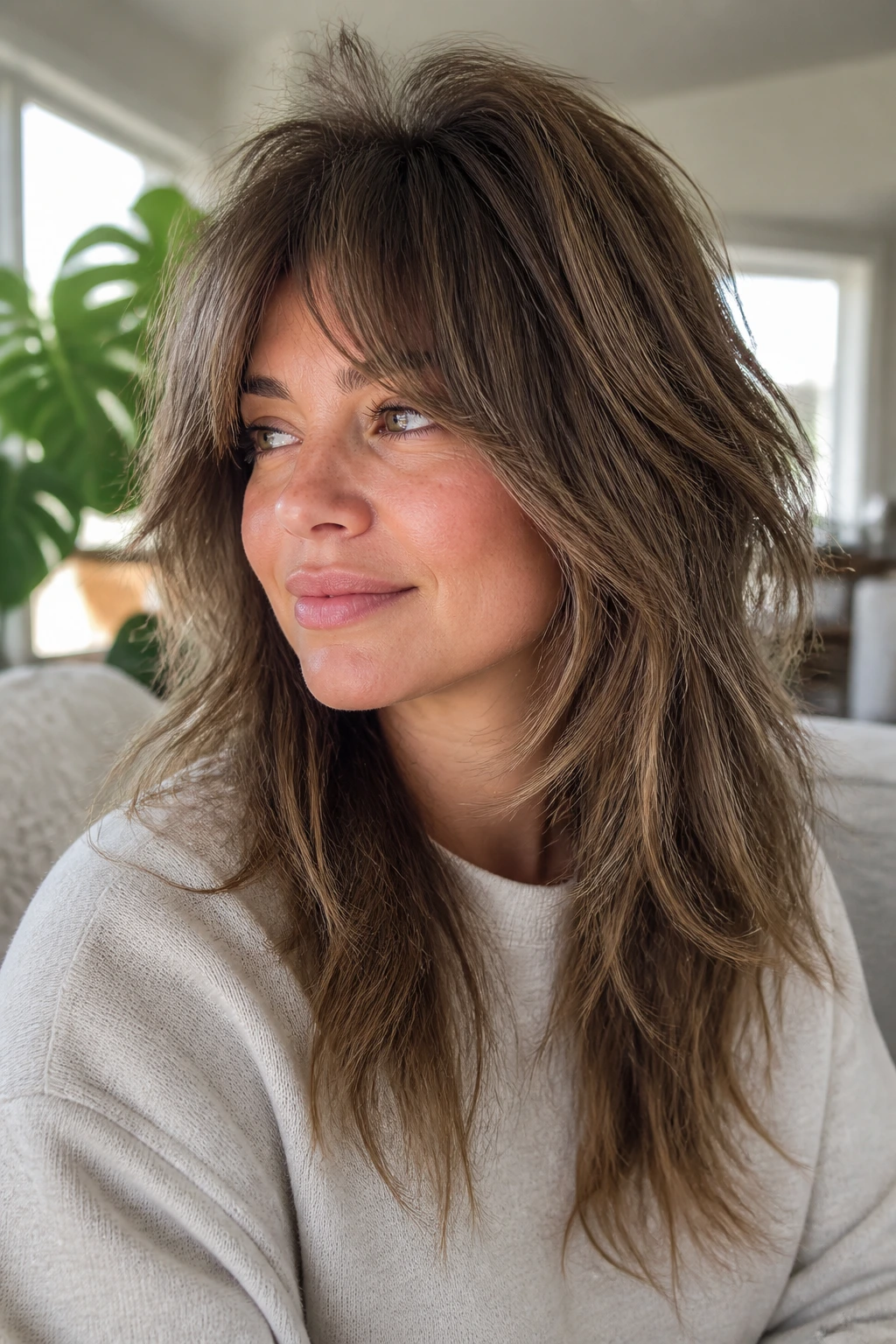
A crown-lift long shag does one job and does it well: it gives height where a round face needs it most. The top should rise a little, the sides should stay controlled, and the length should keep dropping below the jaw.
- Ask for: shorter layers at the crown and longer layers through the sides and back.
- Styling move: blow-dry the root area upward with a round brush or velcro roller.
- Avoid: cutting the side layers too high.
- Best for: anyone who wants long hair but needs more shape near the top.
If your long hair tends to lie flat on top, this is the fix. Not a dramatic fix. A smart one.
32. Coil-Friendly Shag
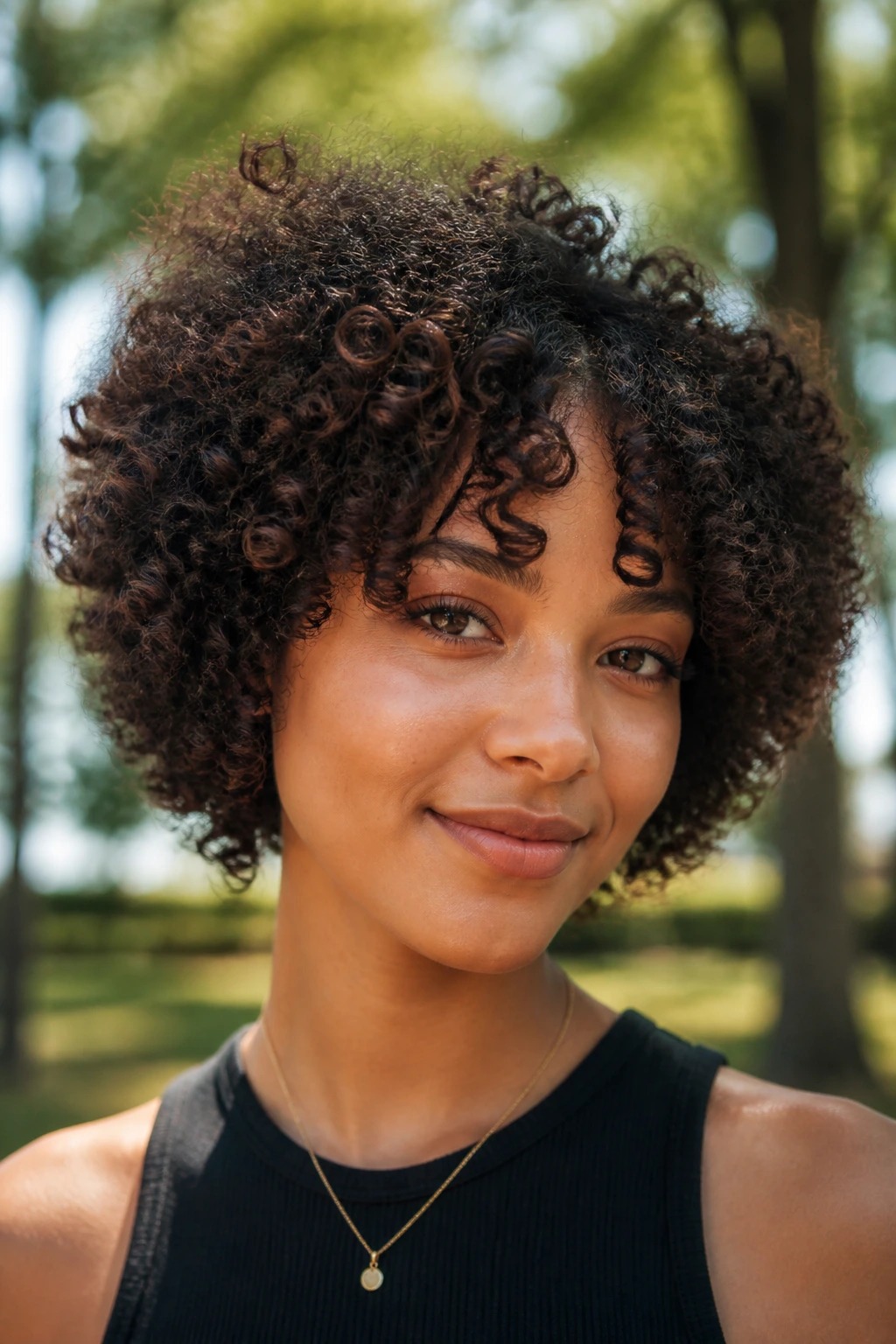
A coil-friendly shag respects shrinkage, and that matters because curls and coils can change the proportions of a round face fast. The cut should create shape in the dry state, not just on the salon floor. If the shortest layers are cut too high, the hair can spring up and widen the face.
The best coil-friendly version keeps the shape rounded through the top and controlled through the sides, with enough length to let the coils stack downward. Dry shaping, curl-by-curl detail, and a gentle side or off-center part can keep the haircut from turning into a triangle.
This is one of the strongest options here if your texture is tight and springy. The cut should make the curl pattern look deliberate, not accidental.
Why These Shags Work on Round Faces

Round faces do not need to be hidden. They need direction.
A good shag gives that direction by keeping the eye moving. Layers that start too high or fringe that lands too blunt can widen the face, but layers placed below the cheekbone, broken ends through the jaw, and a little lift at the crown do the opposite. They create a longer line without turning the haircut severe.
There is also a texture question people skip too fast. Fine hair needs careful layering so it does not go thin at the ends. Thick hair needs weight removed so it does not puff out at the sides. Curly and coily hair need room for shrinkage, or the shape can explode outward after the first wash. That is why one shag never fits every round face in the same way.
The smartest haircuts here share one quiet rule: they move vertically first, horizontally second. That tiny shift changes how the whole face reads.
Essential Styling Tools for Shag Haircuts

-
1-inch curling iron or wand: Good for adding a bend through the mid-lengths without making the ends curl too hard.
-
Round brush: Best for lifting the crown and smoothing the front pieces during a blowout.
-
Diffuser attachment: Useful for curls and waves when you want shape without frizz.
-
Texturizing spray: Gives shag layers separation at the ends so they don’t collapse into one shape.
-
Light mousse: Helps the top hold lift, especially on fine hair that falls flat fast.
-
Razor or point-cutting scissors at the salon: Not for home use unless you’re trained; these are what create the soft, broken edge.
-
Velcro rollers or clips: Handy for setting crown volume while the hair cools.
-
Wide-tooth comb and fingers: Better than a brush for keeping piecey texture intact once the cut is dry.
How to Ask for the Right Shag at the Salon

The salon conversation matters more than the haircut name. “Shag” can mean five different things depending on who’s holding the scissors. On a round face, the safest language is shape language: where the shortest layers start, how much height stays at the crown, and how the fringe should fall.
Tell your stylist you want the shortest face-framing pieces to start below the cheekbone if possible, and that you do not want a blunt line right at the widest part of the face. If you want bangs, ask for curtain, bottleneck, side-swept, or wispy fringe instead of a heavy straight-across bang. If your hair is thick, mention that you want internal weight removed, not just the ends thinned out.
Bring photos, but do not bring only one. Show at least two or three from different angles. A front view alone can hide the part line, the crown height, and the way the ends sit at the jaw — and those are the details that make or break shag haircuts for round faces.
How to Wear These Cuts Without Losing Their Shape
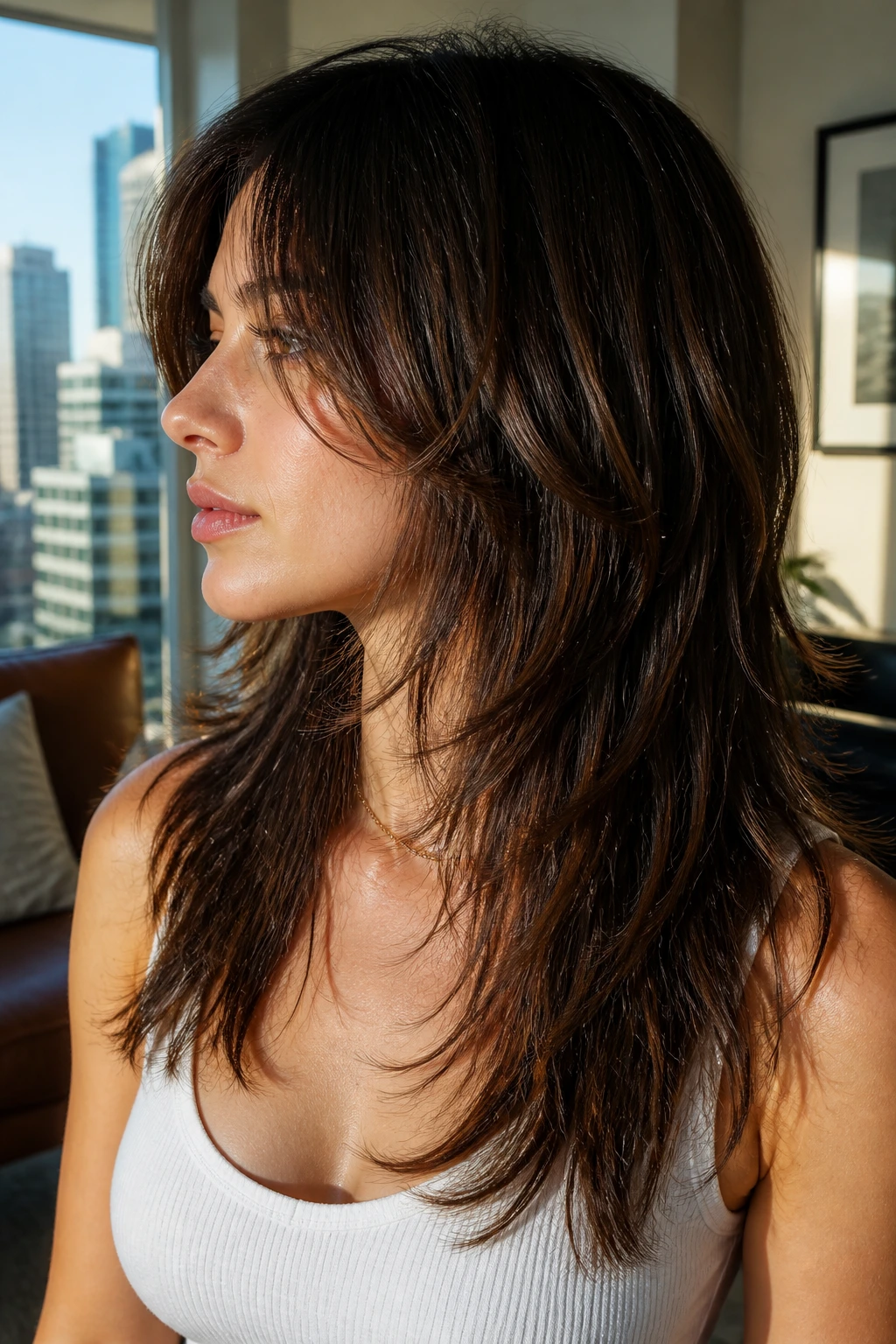
Presentation: Keep the crown lifted and the side pieces soft. A round face usually looks better when the volume sits a little higher than the cheekbone, not right on it.
Accompaniments: Think texturizing spray, dry shampoo at the roots, a light mousse, or a small amount of styling paste. Headbands and thick clips can work too, but avoid anything that compresses the top flat.
Portions: Longer shags can carry more length through the front, while shorter versions need the shortest layers kept a little lower. If your face is very full through the cheeks, ask for more length in front and less bulk on the sides.
Beverage Pairing: Not exactly a beverage situation here, so make it a styling mood instead: polished for the office, rough-dry casual for weekends, or piecey and undone when you want the haircut to look lived-in.
Extra Ways to Tune the Shape

Flavor Enhancement: In hair terms, the equivalent is root lift. A little mousse at the crown before blow-drying gives a round face the vertical line it needs, and it keeps the shag from sagging into the cheeks.
Customization: If your face is full at the jaw, keep the perimeter below the chin. If your forehead feels wide, add a fringe that opens in the center. If your hair is dense, ask for internal layering instead of a heavy thinning session.
Serving Suggestions: Use a tiny amount of shine cream on the ends only, not the roots. That keeps the top airy and the outline clean.
Make-It-Yours: For a softer look, keep the layers longer and the fringe wispy. For a sharper look, ask for more texture at the ends and a deeper side part. For curlier textures, shape the cut dry so shrinkage does not surprise you.
Maintenance Between Cuts and Washes

A shag looks best when it is kept in motion, not over-brushed into submission. Between washes, a little dry shampoo at the crown can revive lift in thirty seconds. If the ends start to clump, mist them lightly with water or a leave-in spray and scrunch them back into shape.
Plan on trims every 6 to 10 weeks if the shape is short or highly layered. Longer shags can stretch a little farther, but if the shortest pieces fall into the cheeks, the cut starts to lose its vertical line. That is usually the first sign it needs attention.
Overnight care matters too. A loose scrunchie or a silk pillowcase can keep the texture from flattening into odd bends. If you sleep on a shag and wake up with a flat crown, flip your part the other way, shake the roots, and revive the ends with a small amount of spray. Quick fix. Much better than starting over.
Variations and Adaptations to Try

The Office-Friendly Shag: Keep the layers long, the fringe soft, and the texture polished. This version works when you want movement without looking choppy under fluorescent lights.
The Curly-Control Shag: Ask for curl-by-curl shaping and keep the shortest layers low enough that shrinkage does not widen the cheeks. It’s a strong choice for coils and strong waves.
The Punky Razor Shag: Lean into sliced ends, a stronger side part, and a rough matte finish. This one uses attitude to interrupt the round shape.
The Soft Romantic Shag: Use curtain bangs, feathered sides, and a little bend at the ends. It reads gentler than the sharper versions and is easy to wear every day.
The Grow-Out Shag: Keep the perimeter longer and the layers soft so the cut still works after several weeks. This is the version to choose if you hate frequent trims.
The Short-But-Tall Shag: For pixie or bixie lengths, keep the height concentrated at the crown and the sides narrow. That creates a stronger vertical line than a flat short cut ever could.
Common Mistakes to Avoid

Cutting the shortest layers at the cheekbone. That is the classic mistake, and you can usually see it in the mirror right away: the face looks wider, not longer. Ask for the shortest face-framing pieces to sit lower unless your stylist has a specific plan to counterbalance them.
Using a heavy blunt fringe. A thick straight bang can make a round face feel boxed in. If you want bangs, choose one that opens — curtain, bottleneck, side-swept, or wispy.
Over-thinning the ends on fine hair. Fine hair needs movement, not emptiness. If the ends look see-through, the haircut loses structure and the face starts to dominate the whole look.
Leaving thick hair too wide at the sides. Thick shag layers should remove bulk where the hair spreads outward. If the shape balloons at the jaw, it needs more internal layering.
Skipping the crown lift. A shag without height on top can fall flat fast. That flat top plus wide sides is a bad combo on a round face.
Letting the grow-out go too far. Once the shortest pieces sit right back on the cheeks, the whole shape can turn boxy. A trim on time keeps the haircut in the sweet spot.
Frequently Asked Questions
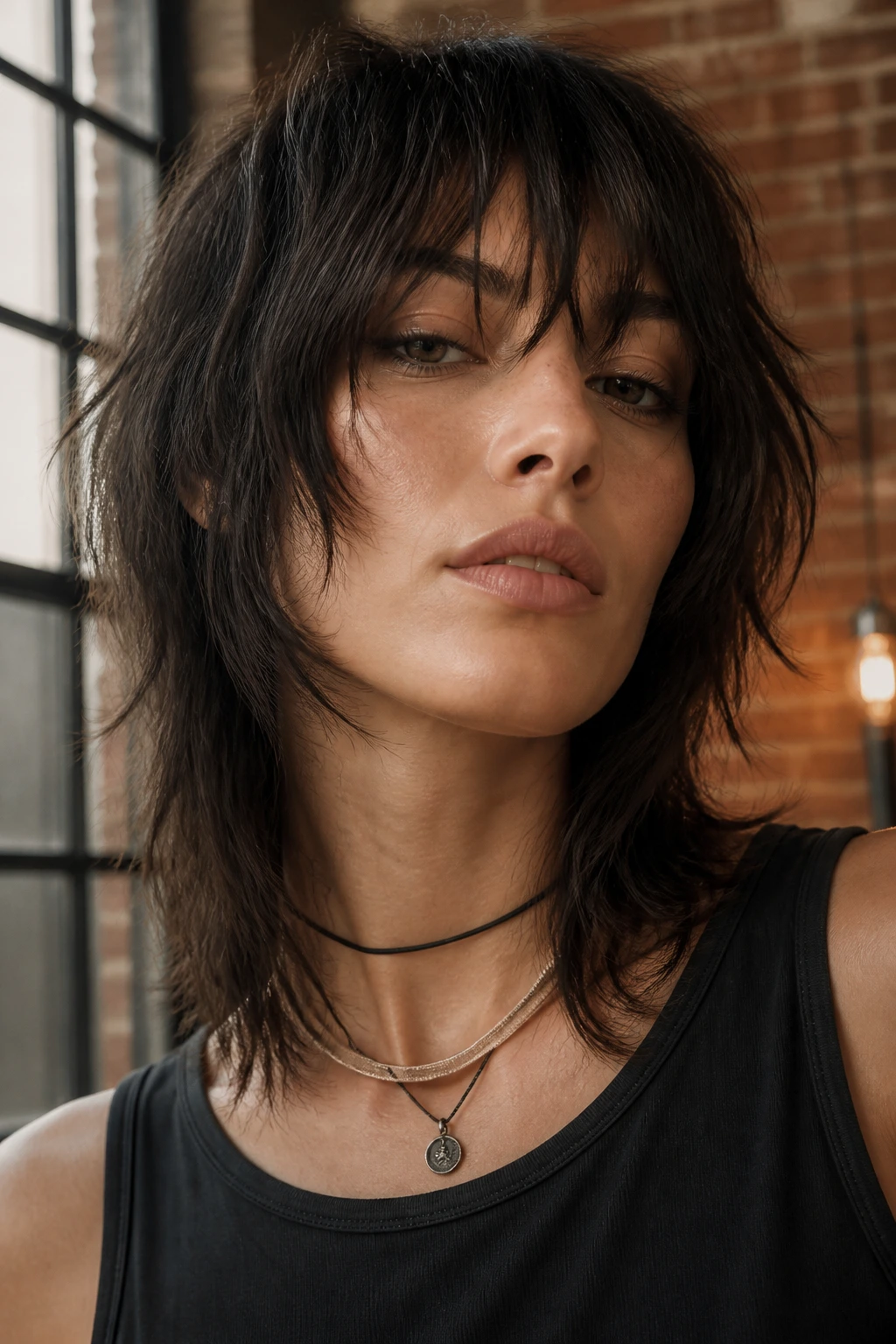
Are shag haircuts good for round faces?
Yes, when the layers are placed carefully. A shag works best when it adds height at the crown and keeps the shortest pieces below the widest part of the cheeks.
Should a round face avoid bangs with a shag?
Not at all. The wrong bangs can widen the face, but curtain bangs, bottleneck fringe, side-swept fringe, and wispy bangs usually help more than they hurt.
Is a shag better on thick hair or fine hair?
It works on both, but in different ways. Thick hair needs weight removed so it stops spreading outward, while fine hair needs gentler layering so the ends do not look thin.
Can curly hair wear a shag on a round face?
Absolutely, and it can look excellent. The cut just needs to respect shrinkage, which usually means dry shaping or curl-by-curl layering.
What length is safest if I’m nervous about the cut?
Collarbone length or a shoulder-grazing shag is the easiest place to start. It gives you movement without making the face feel boxed in.
How often does a shag need trimming?
Shorter or highly layered shags usually need shaping every 6 to 8 weeks. Longer versions can sometimes go 8 to 10 weeks if the outline still holds.
What if my shag makes my face look wider instead of longer?
The layers probably start too high or the fringe is too heavy. Ask to push the shortest pieces lower and keep more softness through the sides, then rework the crown for lift.
Can I style a shag without heat tools?
Yes, especially if your hair has wave or curl already. Use a light mousse, scrunch the roots, and let the cut dry with a little air around it instead of brushing it smooth.
The Shape That Keeps Moving
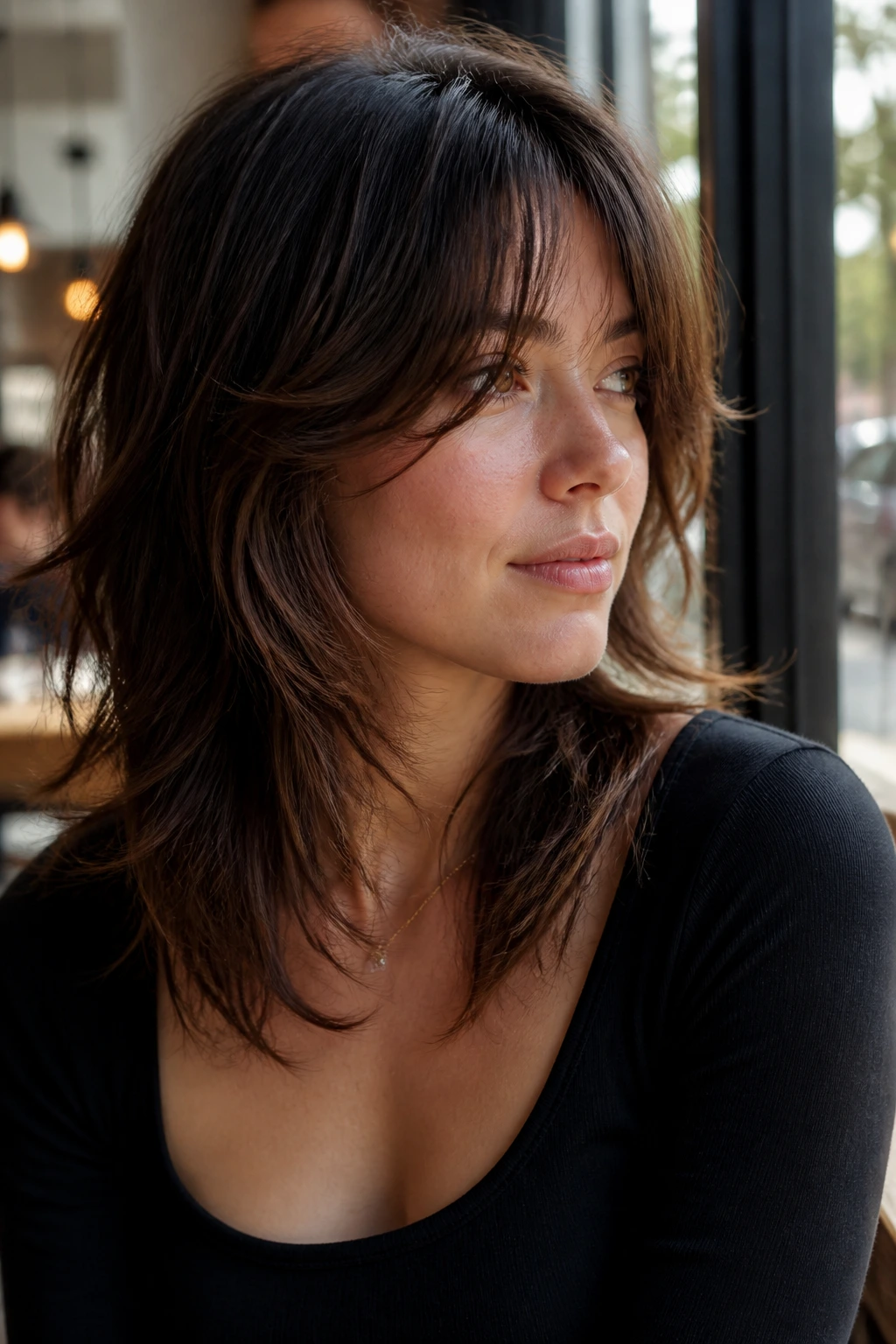
The best shag on a round face never sits still for long. It lifts at the crown, slips past the cheeks, and leaves enough softness around the jaw that the face reads longer without looking carved up.
If you are unsure where to start, the collarbone curtain shag is the easiest entry point. It gives you shape, room to breathe, and enough length to tweak later if you want more edge, more volume, or a sharper fringe.
And that is the part people forget: a good shag is not one fixed look. It is a shape with a lot of room inside it, which is exactly why it keeps working long after the first salon blowout.
