



Wavy hair knows what it wants. The wrong cut just gets in its way.
The best shag rocker haircuts for wavy hair keep the bend, break up the bulk, and stop the ends from hanging in one dead line. A good one looks a little messy in the best possible sense — the crown has lift, the fringe slips across the forehead, and the sides flick out instead of sitting like a helmet.
The trick is not “more layers.” It’s where those layers start. Move them too high and you get puff. Leave them too blunt and the wave gets stuck under its own weight. The sweet spot changes with density, face shape, and how much you actually style your hair on a Tuesday morning.
Some of these cuts lean soft and long. Some are sharp enough to feel like they belong near a backstage door. All 23 are built around the same idea: wavy hair usually looks better when the cut respects the wave instead of trying to flatten it.
Why These Shag Rocker Haircuts Work on Wavy Hair
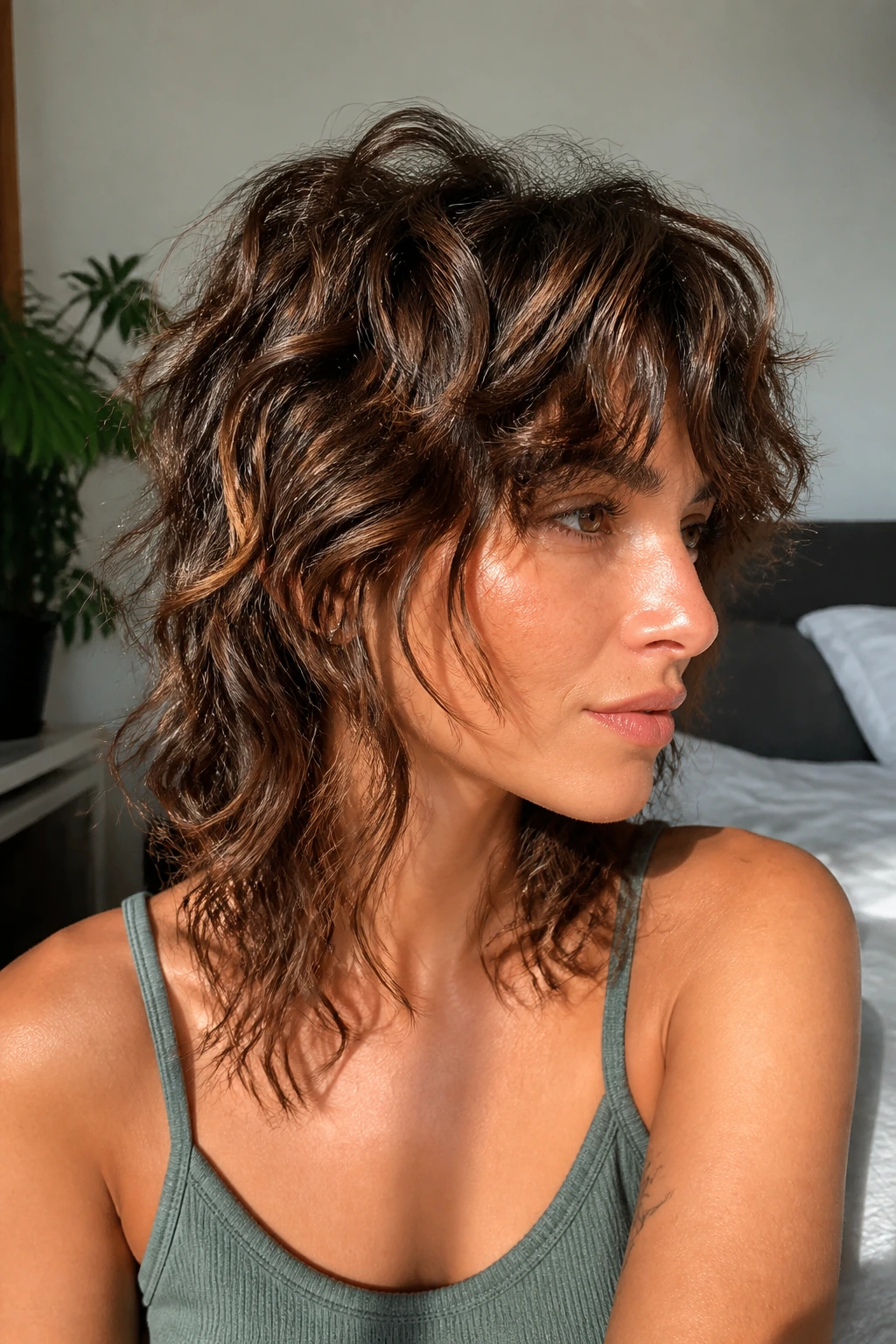
-
Natural bend does the heavy lifting: Wavy hair already bends away from the head, so a shag only needs to remove weight in the right places instead of manufacturing movement from scratch.
-
The crown gets a cleaner lift: Shorter internal layers near the top stop the roots from collapsing into a heavy sheet, which is why these cuts look better after a quick diffuse than a full blowout.
-
Fringe changes the whole mood: Curtain bangs, bottleneck bangs, and feathered face-framing pieces break up a big forehead-to-chin line and make the cut feel deliberate, not just grown out.
-
Grow-out is less awkward: Because the silhouette is built from layers, a shag can stretch past the salon window without turning into a blunt, boxy mess.
-
You can push it softer or sharper: A few centimeters of extra length on the shortest layers turns the same cut from mellow and wearable to choppier and more rock-and-roll.
1. The Collarbone Rebel Shag

This is the easiest place to start if you want the rocker feel without giving up length. The perimeter skims the collarbone, the face frame starts around the cheekbone, and the wave has enough room to kick out at the ends instead of folding under.
Why It Works
Wavy hair loves a cut that keeps some weight in the lower half. That little bit of heaviness helps the bend form into loose S-shapes instead of puffing out at the sides. If your hair gets wide near the shoulders, this version reins that in fast.
Ask for soft internal layers, not a choppy stack. The outline stays clean; the movement lives inside the cut. That’s the part people miss.
- Best for: Medium-density waves that need shape, not drama.
- Styling note: A dab of mousse at the roots and a diffused dry is enough.
- Maintenance: Clean it up every 8 to 10 weeks so the collarbone line doesn’t grow fuzzy.
2. Curtain-Bang Rocker Shag

Curtain bangs change the whole read of a shag. The center part opens the face, and the bangs slide into the cheekbones like they were meant to live there.
The useful detail is length. Keep the shortest pieces around brow to eye level when dry, not wet, because wavy hair shrinks and swings. Too short, and they’ll bounce into your eyes or separate into awkward little flags.
This version is sharpest when the bangs blend into longer side layers. You want a smooth taper, not a clear line between fringe and haircut. That gap is where the style starts looking accidental.
3. Razor-Edged Wolf Shag

Want more bite? This is the one with the roughest mouthfeel, so to speak. The ends are feathered with a razor or point-cut so they look soft and broken up, not sliced into neat little ribbons.
The Texture It Needs
Thick wavy hair handles this shape best. The cut removes enough bulk through the interior that the wave can swing instead of sitting in one heavy block. On fine hair, you’d keep the layers longer so the hair doesn’t lose all its substance.
A razor-shag can go too far if the stylist gets enthusiastic. You still need some solid perimeter around the bottom. Otherwise, the whole thing frays out at the edges and gets fluffy in a way that feels unfinished.
- Best for: Dense waves and anyone who likes a little edge.
- Styling note: Salt spray only on mids and ends. Skip the roots unless you want a dry, crunchy lift.
- Ask for: Broken ends, but not a skinny silhouette.
4. Midi Mullet Shag

This is for the person who wants the back to keep a little length while the crown and sides show some attitude. The shape is shorter on top, longer in back, and a bit more obvious about it.
On wavy hair, that longer nape is the whole point. It keeps the cut from puffing up around the ears and gives the wave somewhere to fall. The contrast is what makes it look intentional rather than just overgrown.
If you’re nervous about mullet territory, keep the transition soft. The best versions don’t have a hard shelf between front and back. They slide. That’s why they work.
5. Long Freefall Shag
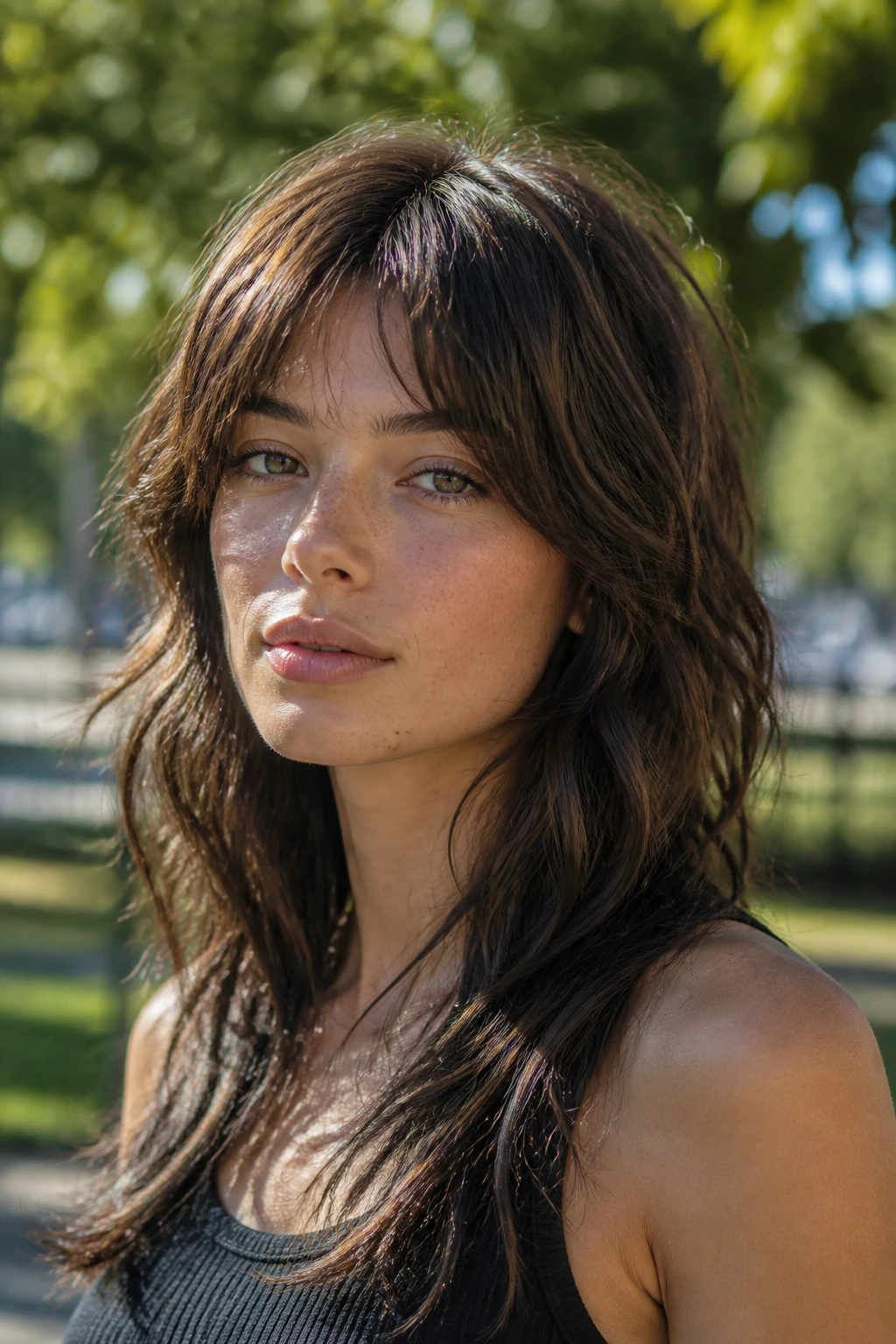
This one keeps the length but refuses to let it sit there like a curtain. Layers begin lower, usually around the jaw or just below it, so the wave can move through the mids without chewing up the ends.
The result is a shag that still swings when you walk. You feel it more than you see it at first. Then you turn your head and the pieces separate in a way that makes the whole cut look lighter than it is.
Long shags can go limp if they’re over-conditioned or cut too blunt at the bottom. The fix is simple: keep the layer pattern soft, and leave a little weight at the perimeter. That extra weight is what keeps the shape from disappearing on day two.
6. Cropped Punk Shag
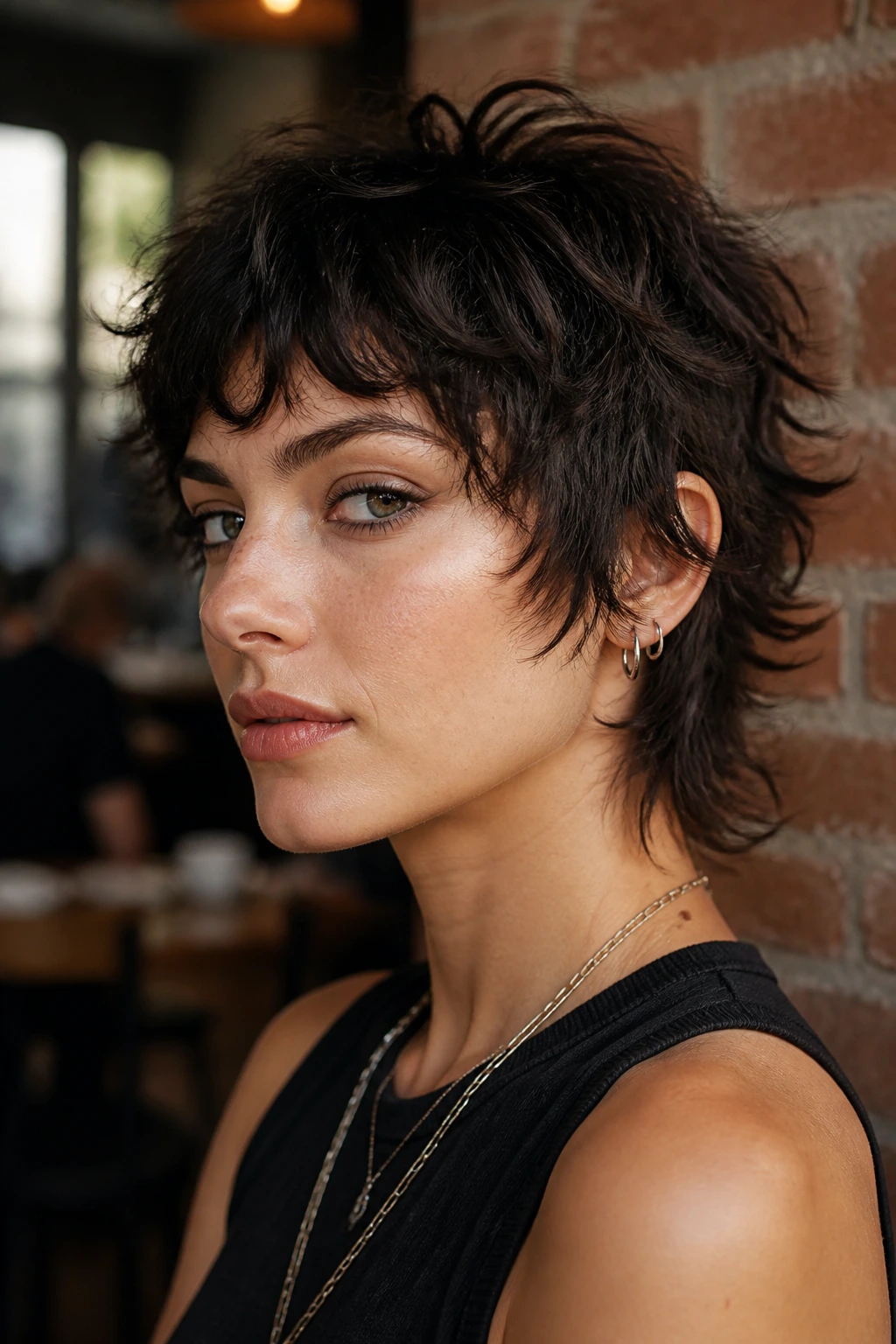
Short hair and wavy texture can be a very good match if the cut is brave enough. This version sits above the shoulders, with choppy layers and a slightly irregular outline that gives the hair a pulse.
Unlike a polished bob, this cut is allowed to look a little wild. The crown gets lift, the nape stays tight, and the sides don’t try to behave. If you like the feeling of hair that dries fast and never needs to be tucked back into place, this one makes sense.
It is not forgiving if you overcut the top. Leave enough length on the crown so the waves can still form. Otherwise you end up with a puffed-up cap instead of a rocker shape.
7. Bottleneck Fringe Shag

A bottleneck fringe makes a shag feel sharper without getting loud. It starts narrow in the center, then opens wider as it reaches the cheekbones, which suits wavy hair that hates a blunt straight-across bang.
Where the Fringe Sits
The sweet spot is usually just below the brows in the center and a little longer at the edges. That gives the wave room to split naturally instead of fighting a hard line. If your forehead feels broad or your features need softening, this is one of the easiest fixes.
The rest of the haircut should stay fairly airy so the fringe doesn’t look disconnected. A good bottleneck shag lets the bangs lead the cut, then the layers answer them.
8. Soft Boho Shag

This is the gentlest rocker shag in the bunch. It still has layering and movement, but the ends aren’t sliced to bits, so the whole thing lands in that loose, lived-in zone.
If you’re the type who hates feeling “done,” this shape makes sense. The face frame is soft, the layers are staggered rather than jagged, and the wave can dry on its own without losing the outline. It’s a good cut for people who want texture but not a hard edge.
A boho shag looks best when the layers begin lower and the fringe stays feathery. If the top is over-texturized, the cut loses the quiet swing that makes it good in the first place.
9. Crown-Lift Shag
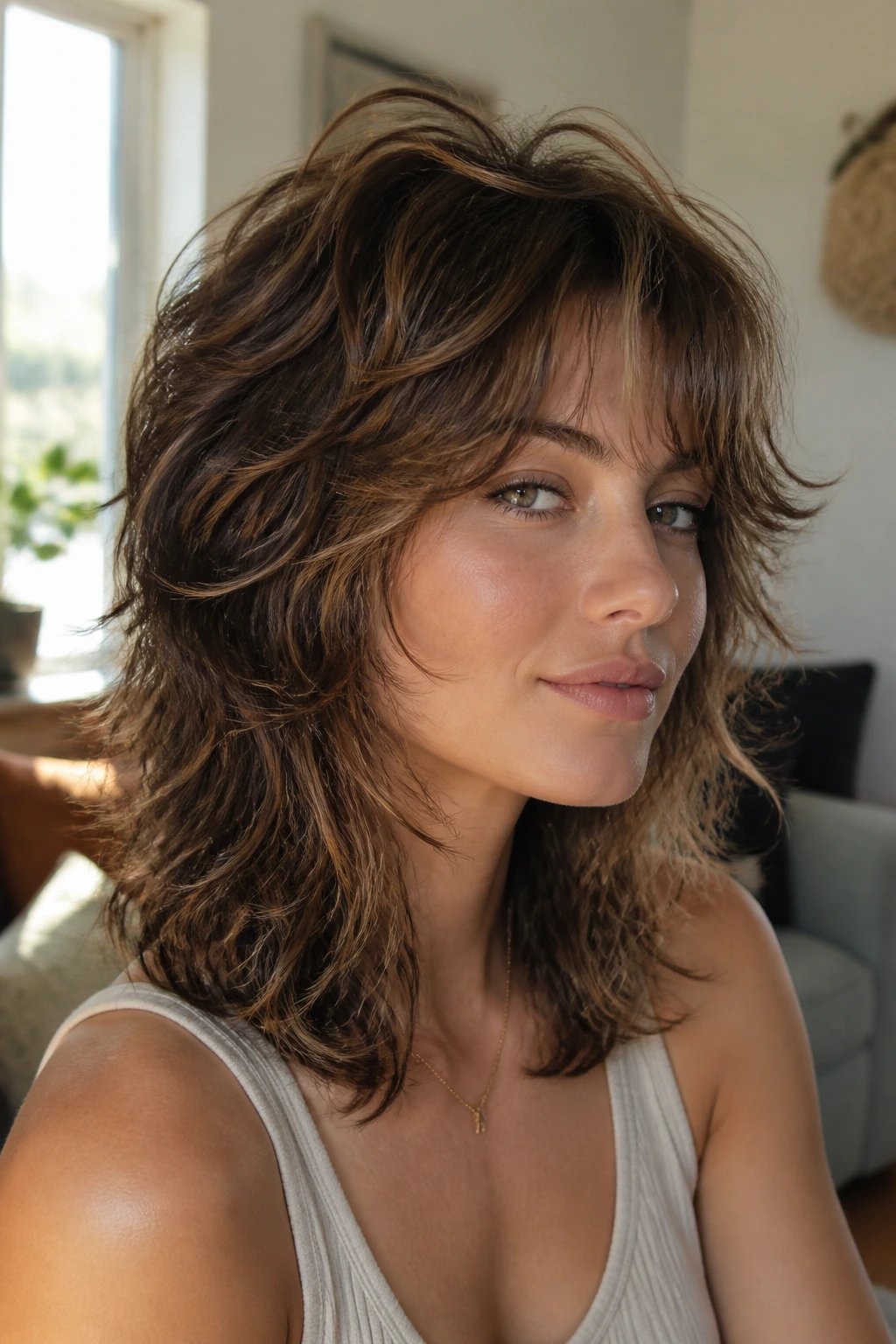
Flat roots make people blame the hair. Usually the cut is the issue.
This shag keeps a little more structure through the lower lengths while removing weight right at the crown, where wavy hair tends to collapse. That change alone can make the hair look like it has a better day, even without a full blow-dry.
The styling part matters here. A diffuser, some root clips, or a quick blast at the roots with your fingers lifting the hair up can turn a decent cut into a strong one. Skip the heavy cream near the scalp. Seriously.
10. Shoulder-Skimming Shag Lob

This is the office-safe version that still has some nerve. The length sits around the shoulders or just below, which gives wavy hair enough room to swing without going full short haircut.
The key here is movement at the face. If the front pieces stop dead, the whole cut can look heavy. Keep the front slightly longer than the crown layers, and the shape reads modern instead of boxy.
It’s also one of the easier cuts to tuck behind the ears or pin back for bad hair days. That matters more than people admit. A haircut that can be pinned in five seconds is a haircut you actually keep.
11. Mixed-Texture Hybrid Shag
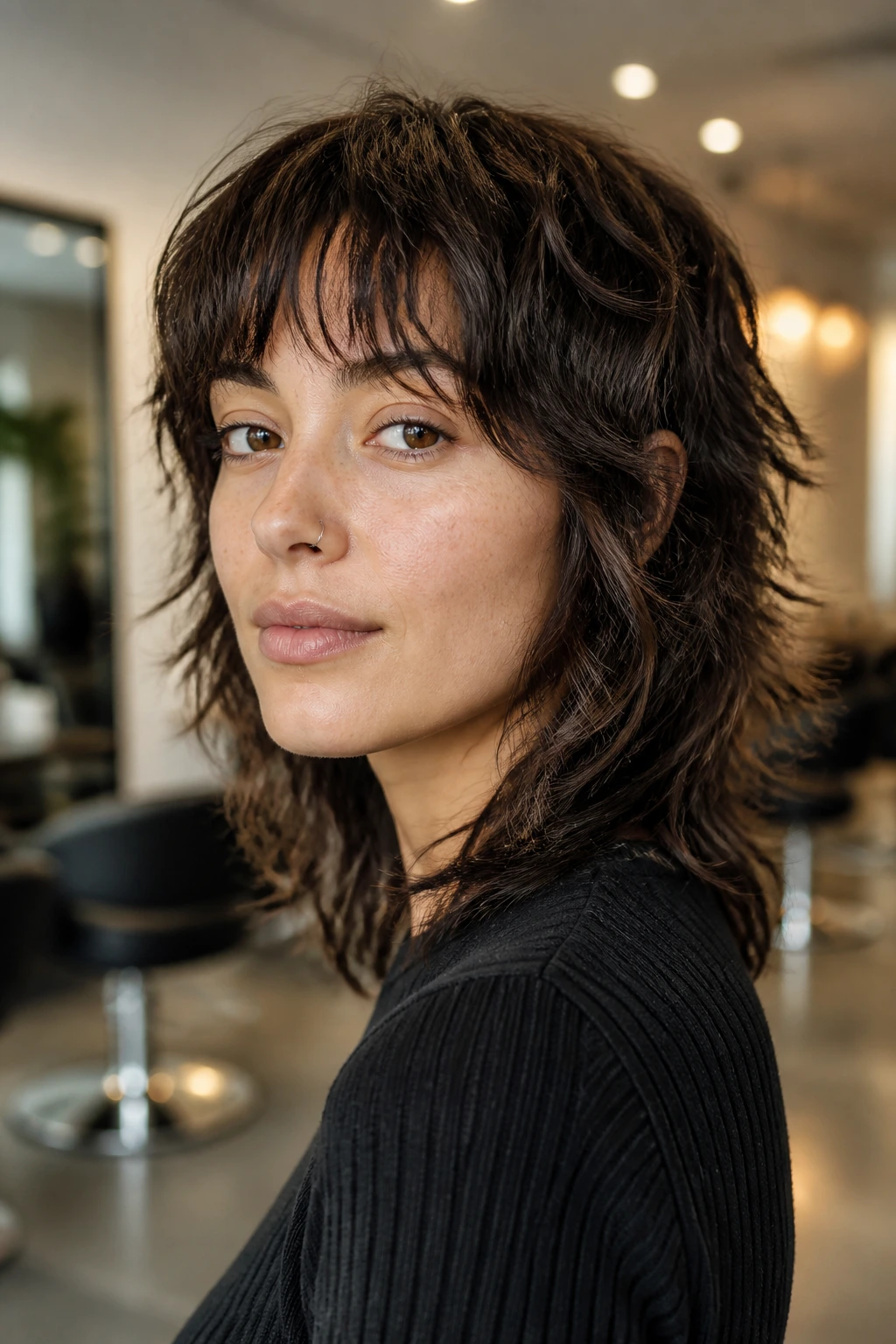
Some heads of hair do not wave evenly. The top might lie flatter, the sides might bend hard, and the back might do its own thing entirely. This cut is for that mess.
Why It’s Different
A good stylist will cut this one according to the strongest natural wave, not the prettiest section in the mirror. That usually means checking the hair dry and adjusting the layers so the straighter pieces don’t get over-thinned trying to match the wavier ones.
The result is less “perfect” and more believable. And that’s the whole point. Wavy hair often looks better when the cut leaves room for a few odd bends.
12. Pixie-Shag Crossfade

Short, sharp, and a little cheeky. This is a shag that has moved in the direction of a pixie but kept enough layered texture to avoid looking severe.
The top stays longer so the wave can still show up, while the sides and nape get trimmed closer. That contrast makes the hair look lighter around the ears and more lifted at the crown.
It’s a strong choice if you hate long styling sessions. It’s also a strong choice if you want your earrings to matter more. Not a joke. The haircut clears the frame so the rest of your look can breathe.
13. Face-Framing Money Piece Shag

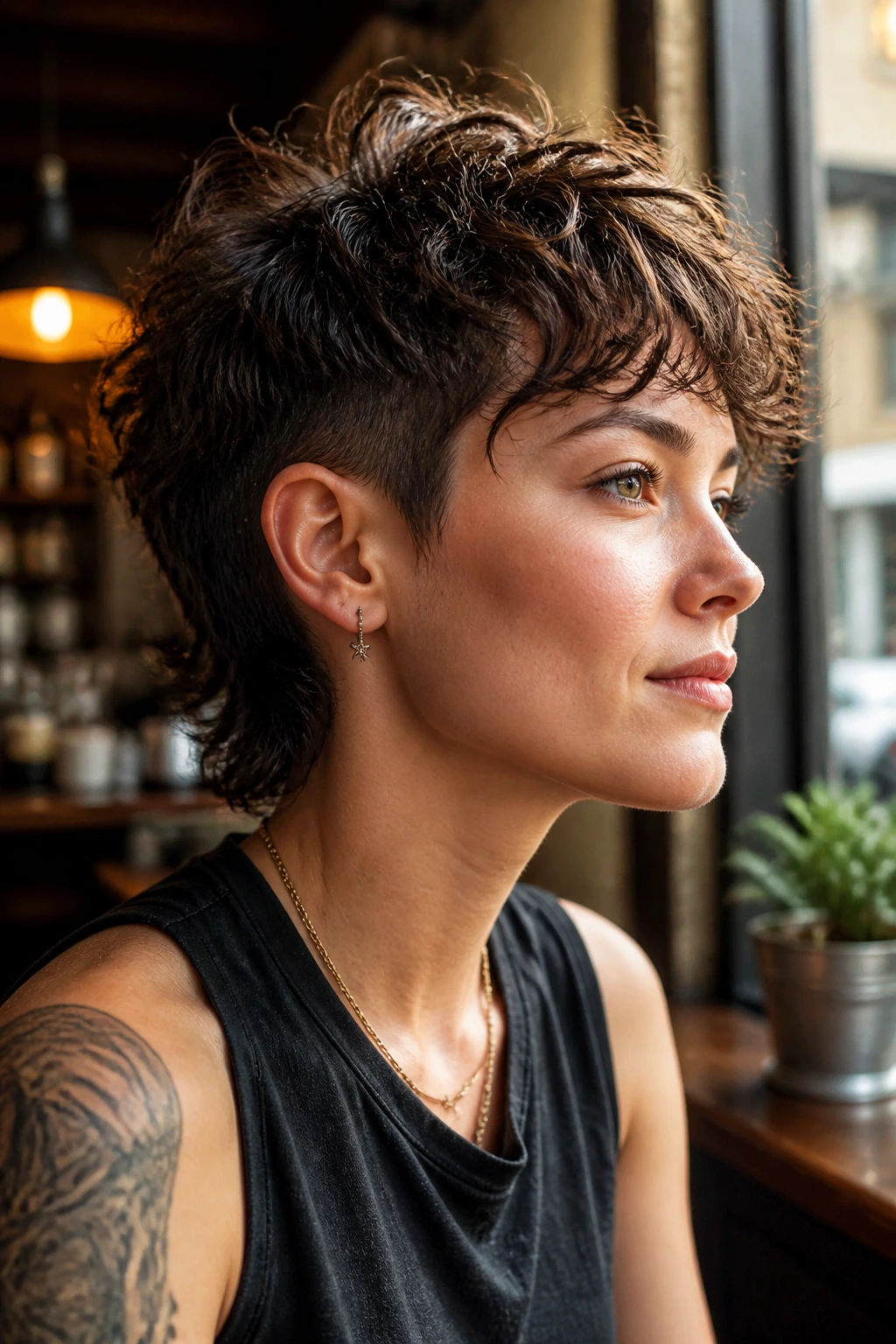
This version puts the spotlight on the front without making the haircut depend on a fringe. The longest face-framing layers land around the cheekbone and jaw, which can sharpen soft features and open up the face.
If you wear glasses, this can be a very good move. Keep the front pieces just long enough to sit around the frames instead of crashing into them. That tiny difference keeps the haircut from looking crowded.
The back can stay softer and longer, which means the shape still reads as a shag instead of a haircut that’s all front. Balance matters here. A lot.
14. Retro 70s Feather Shag
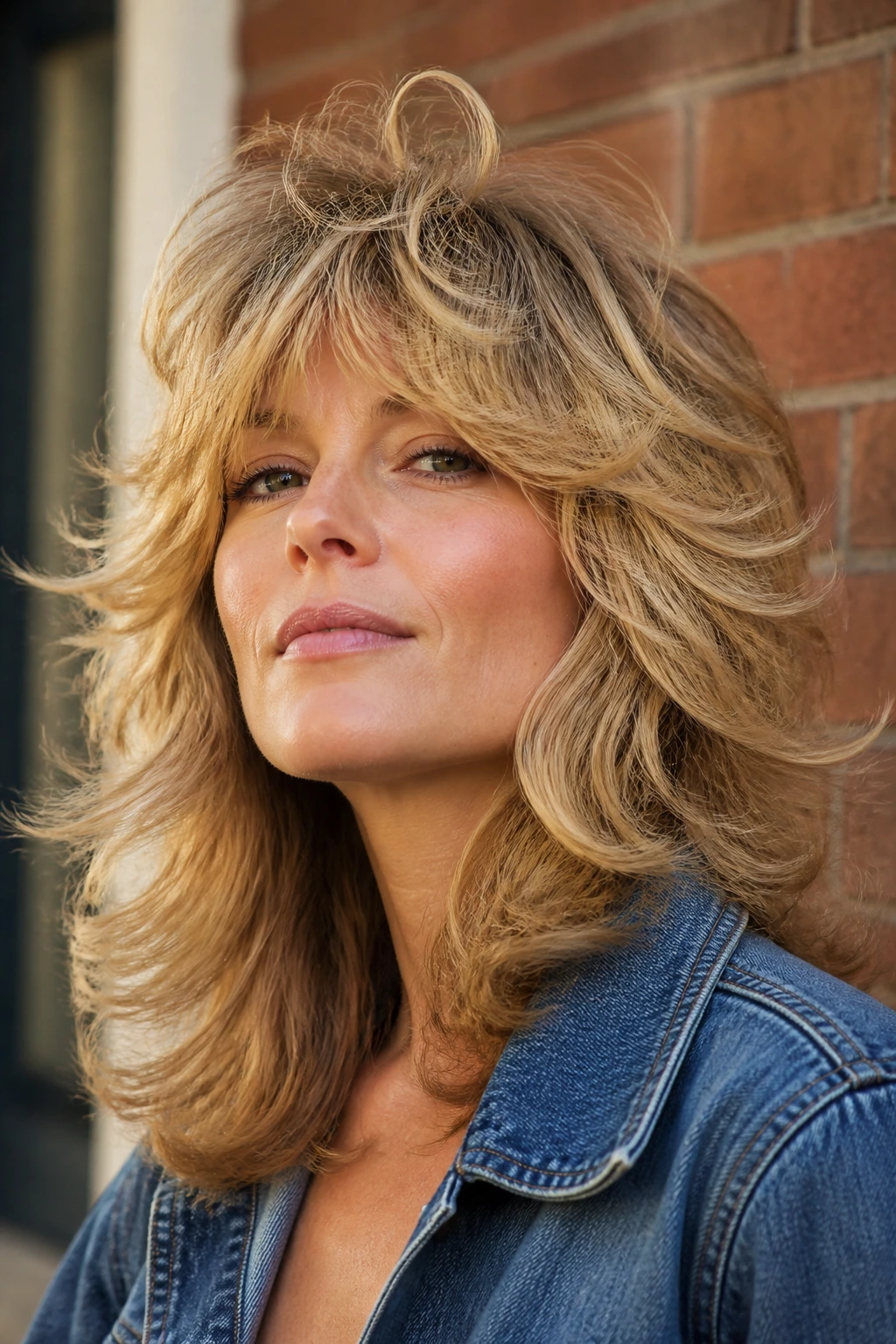
This one nods to old-school feathering, but it works because wavy hair already likes a little swing. The layers are shaped to flick away from the face and sit with a softer, blowout-friendly bend.
The Feel of It
It’s less jagged than the punkier versions and a little more polished, though not by much. Think lifted crown, soft movement at the temples, and ends that turn outward instead of hanging straight down.
If you like using a round brush, this is your lane. If you don’t, the cut still behaves on its own, which is the charm of it. The feathering just becomes more obvious when the hair moves.
15. Grow-Out Friendly Shag

This is the version for people who want a shape but do not want to think about trims every six weeks. The layers are long enough that the haircut keeps its outline as it grows, which saves you from the awkward “what is this becoming” stage.
The smartest move here is to keep the shortest layer below the cheekbones and the perimeter solid. That way, when the top softens over time, the haircut still has a spine.
It’s a good plan if you’re undecided. It lets you live with shag texture without signing up for full commitment.
16. Silver Fox Shag

Gray and silver hair can look stunning in a shag because the texture often has a little extra grip. The layers show up crisply, which gives the haircut a clean, graphic feel even when the styling is minimal.
The trick is not to over-thin it. Coarser or wirier silver hair needs enough structure to avoid turning frizzy at the edges. Ask for controlled layers and point cutting, not a heavy razoring job.
This is one of those cuts that looks especially good when it’s slightly imperfect. The wave catches the shape, the silver tone catches the light, and the whole thing looks more deliberate than you expected.
17. Bedhead Lob Shag

This one knows what second-day hair feels like and plans for it. The lob length keeps the silhouette tidy, while the layered top lets a little mess live in the cut without ruining it.
If you usually wake up with hair that bends in weird places, this is not a problem here. A slight bend is part of the design. A root mist, a quick scrunch, and a dab of dry shampoo at the crown are often enough.
It’s also a quiet winner for people who want texture without looking like they’re trying too hard. The cut does the work, and you can keep your routine simple.
18. Garage Band Shag

This is the roughest, grittiest look in the set. The layers are choppy, the ends are broken up, and the silhouette feels like it belongs under stage lights and sticky summer air.
What Gives It Bite
Thick wavy hair can take this shape better than fine hair, because there’s enough density left after the texturizing to keep it from going limp. The style wants a little dry spray or matte texture paste to separate the pieces.
If your hair already has a coarse feel, don’t overdo the thinning. You want controlled chaos, not a shredded mess. There’s a difference, and your ends know it.
19. Soft Mullet Shag

The soft mullet is for people who want the idea of edge more than the full shout of it. It keeps more length in back, opens up the front, and uses feathered layers so the transition feels smooth.
Wavy hair is good at blurring the line between shapes, which helps here. The result is part shag, part mullet, part “I did something a little different and I’m fine with it.”
Keep the fringe or front layers soft if you want this to stay wearable. Too much heaviness in the bang area can make it feel overdesigned. Softness is the escape hatch.
20. Air-Dry Shag
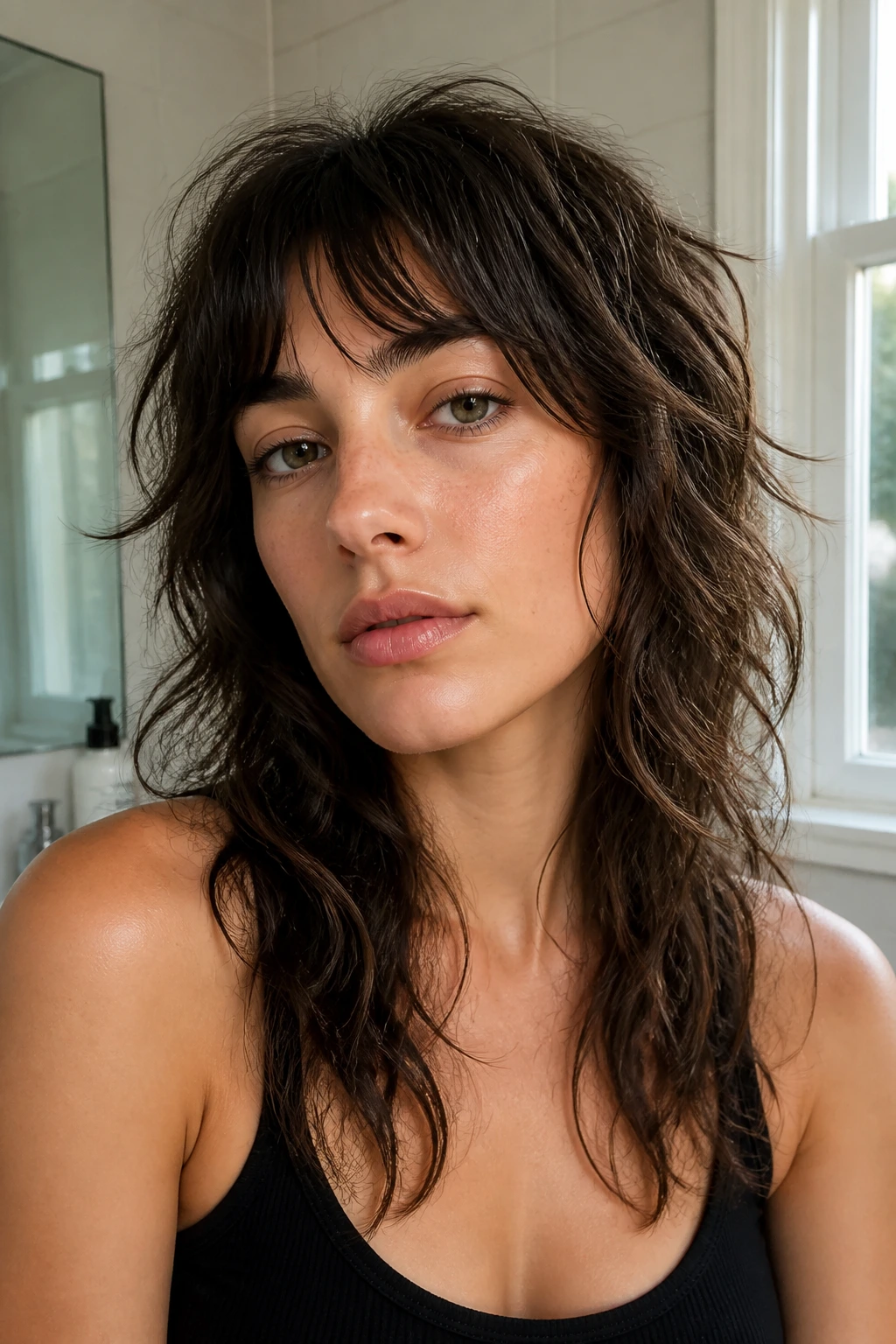
A haircut that only looks good with hot tools is doing too much. This one is built for people who wash, scrunch, and walk away.
The layers are placed so the wave can form on its own, with enough structure at the perimeter to keep the shape from fanning out. That matters if your hair dries in uneven sections or you do not want to spend twenty minutes chasing pieces with a diffuser.
The best versions keep the fringe low-maintenance and the internal layering moderate. A little movement is plenty. The haircut should still look like a haircut when the room is humid and your schedule is rude.
21. High-Contrast Layer Shag

This is the bold version with a stronger difference between the top and bottom lengths. The crown is shorter, the lower pieces hang longer, and the whole shape feels more dramatic because of that separation.
Dense wavy hair handles this beautifully when the stylist controls the bulk. If the layers are cut with intention, the hair moves like it has a built-in stage fan. If the layers are too aggressive, though, the top can puff out while the bottom goes thin. That’s the danger.
I like this cut best when the texture is strong enough to show the lines. Soft wave patterns can wear it, but they need a lighter hand.
22. Deep Side-Part Shag
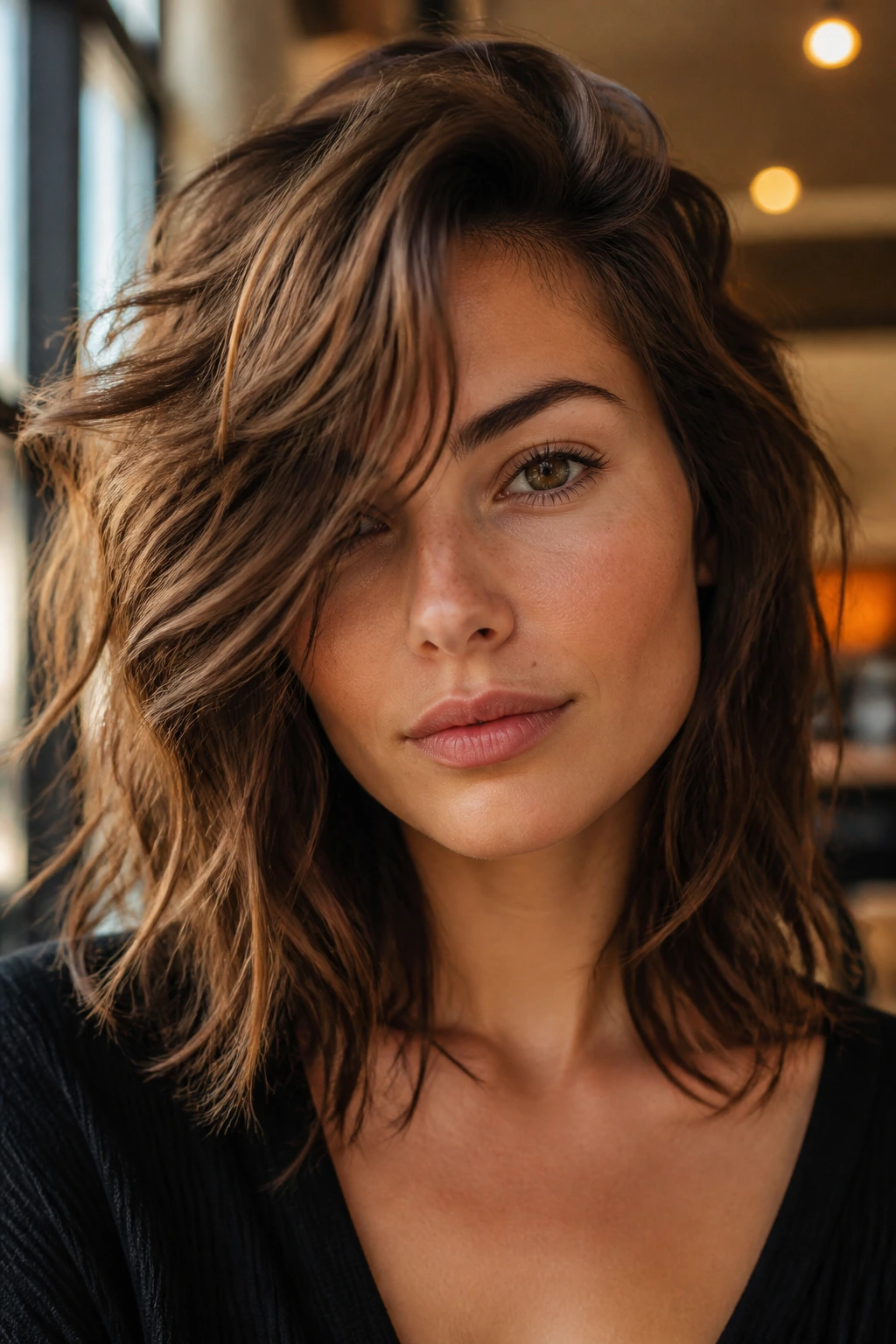
A deep side part can change a shag without changing the cut much at all. It shifts the weight, builds lift on one side, and gives the front a sweep that feels a little dramatic in a good way.
This is a smart move if your face likes asymmetry or if your waves fall flatter in the center. The side part lets the roots rise naturally and gives the hair a stronger shape around the forehead.
It’s also a fast fix on days when the center part feels tired. Flip it over, tuck one side back, and the haircut looks like it made an effort. It did. Barely.
23. The Keep-Your-Length Shag

This is the version for the person who keeps touching their hair and saying, “I want a shag, but I don’t want it too short.” Fair enough. This cut keeps the perimeter long and uses internal layering to add shape without taking away the length you like.
The face frame does most of the visible work here. It softens the outline, pulls some life around the cheekbones, and keeps the cut from looking too plain. The back stays calm. The front gets the personality.
It’s the most conservative option in the group, and I mean that as a compliment. If you’re getting used to rocker texture, this is a clean way in.
What Makes a Rocker Shag Look Good on Wavy Hair
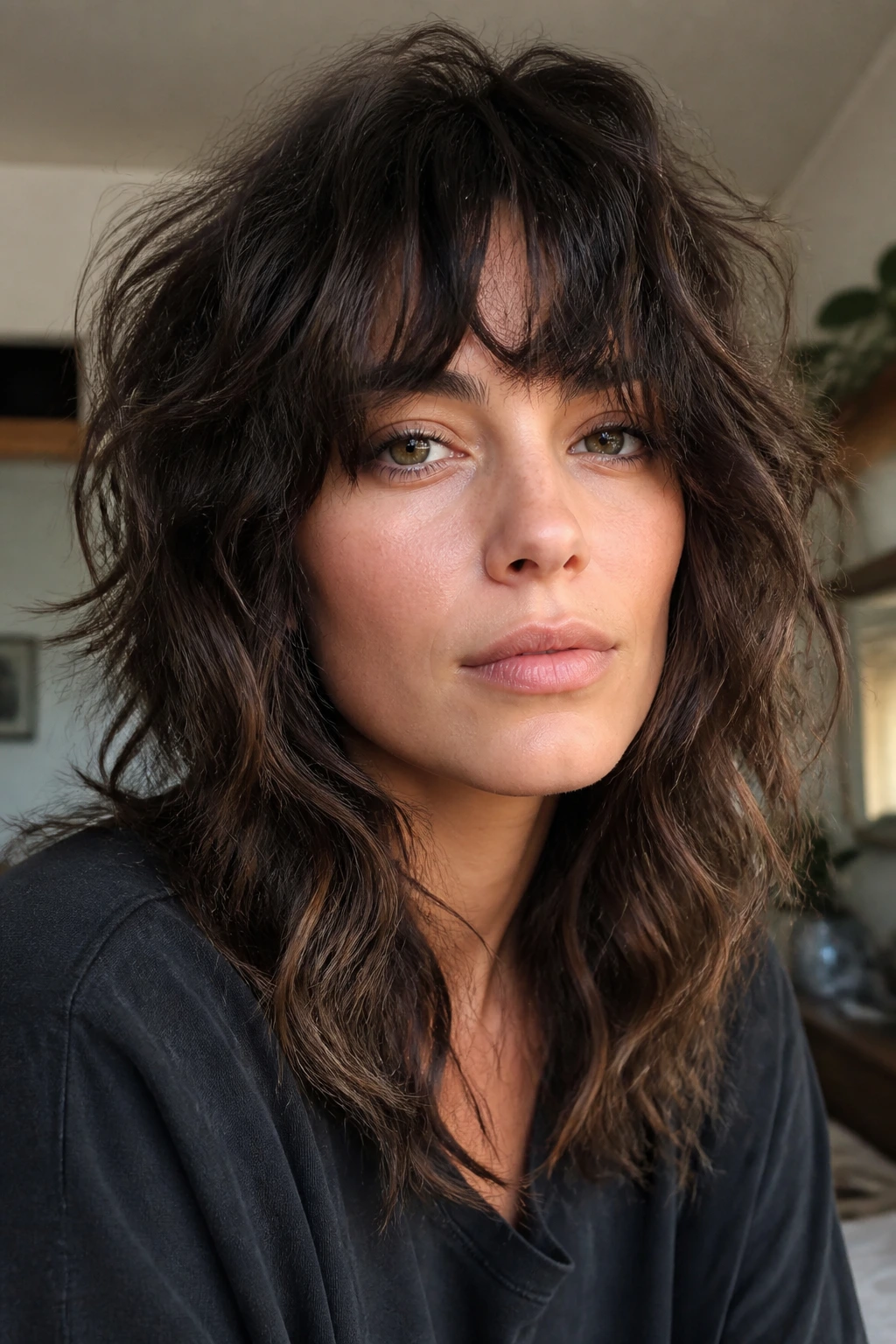
The cut works because wavy hair already has movement built in. A shag just gives that movement a map. Instead of forcing the hair into a smooth sheet, the layers break up the weight so the bend can show up where it wants to show up.
The part people miss is balance. Too much removal at the crown and the hair blows out like a mushroom. Too little removal and the wave gets trapped under a flat outline. The best rocker shag haircuts sit in the middle: enough internal layering to lift the top, enough length left in the lower half to keep the shape from going wispy.
Fringe changes the whole read, too. A curtain bang or a bottleneck fringe can make the haircut feel intentional in five seconds, especially if your waves tend to look more relaxed than polished. That little strip across the front tells the eye where to land.
The Salon Script That Keeps the Layers Soft

Bring pictures, but bring the right pictures. Show your stylist hair that looks like yours when it’s dry and worn the way you actually wear it. A model with pin-straight strands and three hours of styling does not help much.
Say how much length you want to keep. Then say where you want the shortest layer to land. That second part matters more than people think, because “layers” can mean anything from a soft collarbone skim to a full-on cropped top.
A few useful lines:
- “I want movement, not a lot of bulk removal.”
- “Please check the shape dry if possible.”
- “My waves sit flatter here and stronger there.”
- “I need this to work with air-drying, not only with a round brush.”
If your stylist hears those things, you’re already ahead. And if they reach for the thinning shears before looking at your density, pause them. That’s not precision. That’s a shortcut.
The Tool Kit for Styling and Maintenance

- Texturizing shears: Used by the stylist to soften thick sections without carving hard holes in the shape.
- Razor or slide-cutting tool: Helpful on some shags, but only in experienced hands; it creates feathered ends instead of blunt ones.
- Blow dryer with diffuser: Keeps wave clumps intact and gives the crown more lift with less frizz.
- Wide-tooth comb: Best for detangling damp hair without pulling the wave apart.
- Microfiber towel or soft T-shirt: Blots out water without roughing up the cuticle the way a regular bath towel can.
- Duckbill or root clips: Handy for lifting the roots while the hair dries, especially on flatter crowns.
- 1 to 1.5-inch round brush: Optional, only if you want a feathered finish at the front or a softer flip at the ends.
- Dry shampoo: Useful on day two or three when the crown starts to go limp.
- Satin pillowcase or bonnet: Cuts down on sleep friction so the layers don’t wake up bent in weird directions.
Product Picks That Keep Waves Piecey, Not Crispy

The best products for a wavy shag are the ones that support the shape without sealing it shut. That usually means lighter formulas than people expect.
Light mousse is the quiet hero if your roots go flat. Use it on damp hair, especially at the crown and around the part. It gives the wave some memory, which matters when the layers are doing most of the visual work.
Wave cream or leave-in cream is better for coarse ends or hair that frays in humidity. Use a small amount. Not a palmful. A pea-sized amount rubbed between your hands is usually enough to tame the tips without robbing the cut of movement.
Sea salt spray adds grip, but it can dry hair out if you use it everywhere. I like it best on the mid-lengths and not near the scalp. If your hair already feels rough, skip the salt and use a texture spray with a softer finish.
Heat protectant is non-negotiable if you diffuse or touch the fringe with a flat iron. A shag exposes more of the hair surface than a blunt cut, so the ends show damage faster.
Clarifying shampoo belongs in the mix if your waves start clumping in a greasy, stringy way. Product buildup makes these cuts droop.
How to Wear a Rocker Shag on a Normal Morning

-
Start with damp hair, not sopping hair. Blot it with a microfiber towel or T-shirt until it feels wet but not dripping.
-
Work in a light mousse at the roots. Focus on the crown, temples, and the part line. That’s where the shape needs help first.
-
Add a tiny amount of cream to the mids and ends if they frizz. Skip the roots unless your hair is very coarse.
-
Scrunch the wave up toward the scalp. Use your hands or a towel. Don’t twist the hair into coils unless you want a more defined result.
-
Diffuse on low heat and low speed, or air-dry with root clips. If you diffuse, stop when the hair is about 80 to 90 percent dry. Let the rest finish on its own.
-
Break the cast, if you made one. If the hair feels a little stiff from mousse or spray, rub a drop of serum between your palms and scrunch lightly.
-
Adjust the front with fingers, not a brush. The fringe and face frame usually look better when they’re imperfect.
Extra Texture Moves That Don’t Ruin the Cut

Root lift: Clip the crown while the hair dries if your top goes flat. Two or three clips placed at the root can change the silhouette without adding much product.
Second-day reset: Mist the ends lightly with water, then scrunch in a touch of mousse or texture spray. You do not need to start from scratch every morning.
Piece separation: If the layers blur together, warm a trace of lightweight pomade between your fingertips and pinch a few ends. Tiny amounts go a long way.
Fringe control: If the bangs get weird, use a quick blast from the dryer while brushing the fringe side to side with your fingers. That loosens the clump without flattening the rest.
Humidity plan: On muggy days, keep the top lighter and use more control at the ends. Heavy cream near the roots is the fastest way to lose the shape.
Keeping the Shape Between Salon Visits
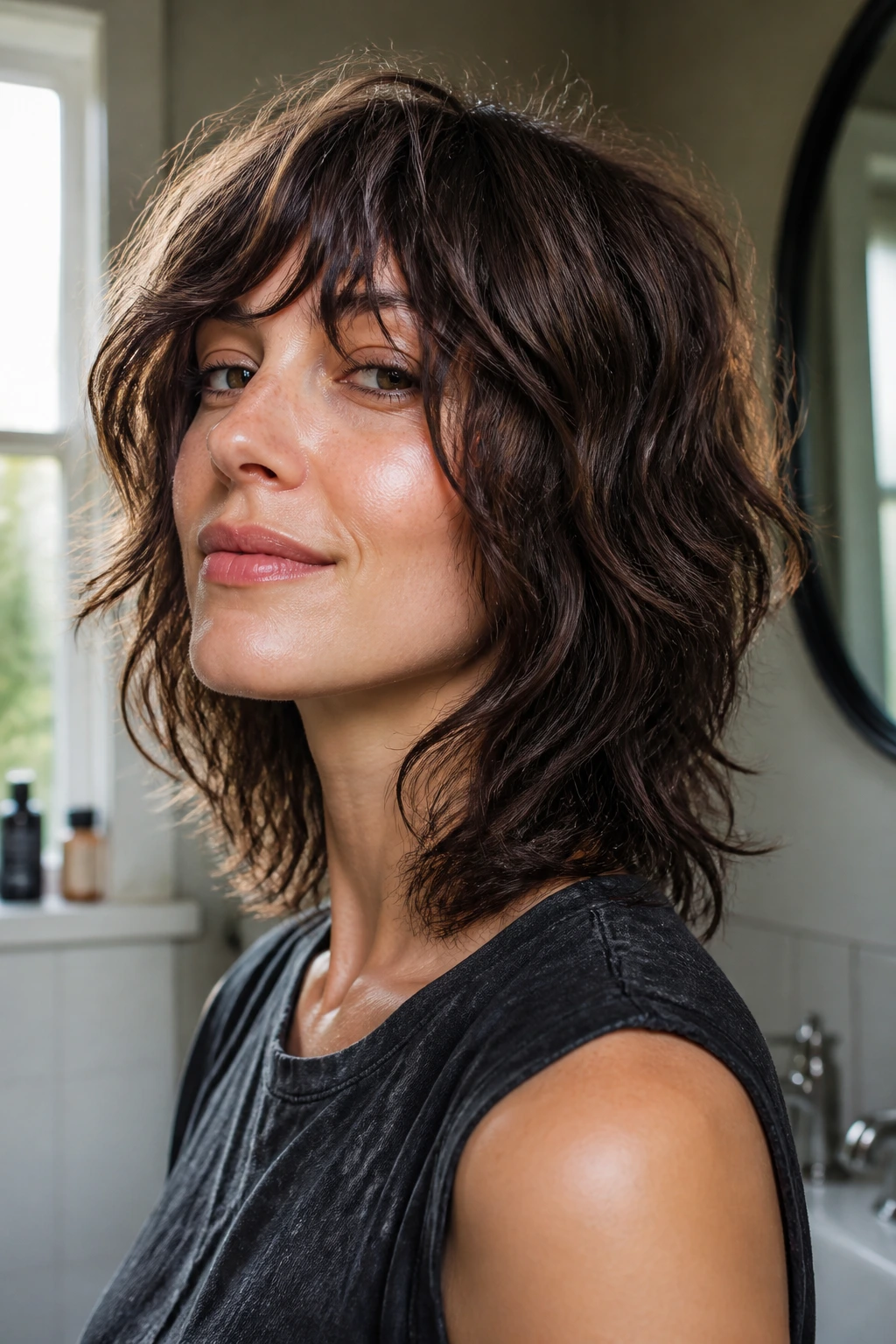
A shag grows out better than a blunt cut, but it still needs some upkeep. The sweet spot for a full reshaping is usually every 8 to 10 weeks. If you wear bangs, the fringe may need attention every 3 to 5 weeks, even if the rest of the cut is fine.
If you’re stretching it, ask for a dusting instead of a reshape. That means taking off only the fuzz at the ends and tightening the face frame a little, not rebuilding the whole haircut. It keeps the silhouette from collapsing while letting the length hang on.
Sleep matters more than people think. A loose topknot, a satin pillowcase, or even just flipping the hair up over the pillow can keep the wave pattern from getting crushed overnight. In the morning, a water mist and a finger scrunch are usually enough to revive the layers.
If the ends start to feel rough or see-through, don’t blame the texture first. Sometimes the haircut just needs a trim. Wavy shags show wear faster at the perimeter because that’s where the movement lives.
Common Mistakes That Flatten a Good Shag
Taking too much from the crown: That’s how you get a puffed-up top and a weak outline below. The fix is simple: keep the shortest layers longer and remove weight in stages, not all at once.
Cutting the fringe too short while the hair is wet: Wavy bangs shrink. A bang that looks fine in the chair can jump up two centimeters after it dries. Ask for a dry check or keep the fringe a touch longer than you think you need.
Using heavy conditioner at the roots: That flattens the lift and makes the haircut sit like it’s tired. Put conditioner from ear level down unless your hair is very dry all over.
Brushing dry waves into a puff: A brush can destroy the separation that gives a shag its shape. Detangle wet, then use fingers or a wide-tooth comb once the wave pattern is set.
Flooding the hair with product: Too much mousse or cream turns texture into sludge. Start small. You can add more. Taking it out is harder.
Ignoring the natural part and cowlicks: A shag cut against the way your hair falls can fight you every morning. The cut should work with your head, not against it.
Variations and Adaptations to Try

The Office-Soft Version: Keep the perimeter longer, soften the fringe, and ask for fewer chopped ends. It still has shag movement, but the shape reads calmer and more polished.
The Full-Wolf Version: Shorten the crown, sharpen the disconnect between top and bottom, and keep the nape longer. This is the loudest option and it suits hair with plenty of density.
The Fine-Hair Lift Version: Leave more weight at the ends and use lighter internal layering near the top. That keeps the cut from going hollow while still adding lift where fine hair tends to collapse.
The Thick-Hair Debulk Version: Ask for controlled removal inside the shape, not just around the outline. This stops the hair from ballooning out at the sides and makes the wave behave.
The Air-Dry-Only Version: Keep the layers soft, the fringe longer, and the perimeter solid enough to hold shape without heat. This is the one for people who want to wash, scrunch, and leave.
Frequently Asked Questions About Shag Rocker Haircuts for Wavy Hair
What’s the difference between a shag and a wolf cut on wavy hair?
A shag is usually softer and more balanced, with layers that blend through the shape. A wolf cut pushes harder on the contrast between short top layers and longer back pieces, so it reads rougher and more extreme.
Will a shag make fine wavy hair look thinner?
It can, if the layers are too short or too many. For fine hair, ask for longer internal layers and keep some weight at the perimeter so the ends don’t turn stringy.
Can I air-dry a rocker shag and still have it look intentional?
Yes, if the cut is built for that. The best air-dry versions keep the fringe soft, the layers moderate, and the crown lightly supported with mousse or root clips.
How often should I trim it?
Most shag shapes hold up for about 8 to 10 weeks. Bangs usually need a smaller cleanup sooner, especially if they sit near the brows.
What should I tell my stylist if my waves are uneven?
Say which areas wave hardest, which areas go flat, and where you lose shape first. That helps them place the shortest layers where they’ll actually help instead of fighting the natural pattern.
Can I wear a side part with a shag?
Absolutely. A deep side part can give the crown more lift and make the front feel more dramatic. It’s a fast way to change the mood of the same haircut.
What if my shag turns frizzy instead of piecey?
Usually that means too much texturizing, too much product, or too much brushing. Cut back on salt spray, use a lighter cream on the ends, and dry the hair with less friction.
Can this haircut grow into a lob later?
Yes, and that’s one reason people keep coming back to it. If you want that path, ask for a strong perimeter and softer layers so the cut can settle into a lob instead of losing its shape.
Salon Notes Worth Keeping on Your Phone
The best shag rocker haircut is not the one that looks wildest in a photo. It’s the one that still looks good when you’ve slept on it, scrunched it, walked through humidity, and skipped a full blowout.
That’s why wavy hair and shag layers get along so well. The wave gives the cut motion. The cut gives the wave a shape. And when those two things are in the right balance, you don’t spend your mornings fighting your hair — you just nudge it and let it do its thing.
