



Medium shag haircuts with bangs are one of those rare cuts that look better when hair has lived a little. The layers sit around the collarbone, the fringe lands at the brows or cheekbones, and the whole shape gets more interesting when it bends, flips, or frizzes slightly at the ends. That is a relief if you’ve ever stared at a one-length medium cut and thought, Well, this is fine, but it’s also not doing anything.
The sweet spot is the length. Go too short and the shag can turn spiky fast. Go too long and the layers lose their bite. Medium length gives the shape enough room to move without swallowing your face, which is exactly why bangs matter here: they pull attention upward, frame the eyes, and stop the haircut from drifting into plain, heavy shoulder hair.
I’ve always liked shags that do not need a perfect blowout to make sense. A little bend is good. A little piecey separation is good. Even a slightly crooked fringe can look intentional when the layers underneath have the right structure. The cut does the work; you just steer it. And that’s why the styles below range from soft and wearable to choppier and more directional — there’s room to choose your mood without leaving the medium-shag lane.
Why Medium Shag Haircuts With Bangs Sit in the Sweet Spot
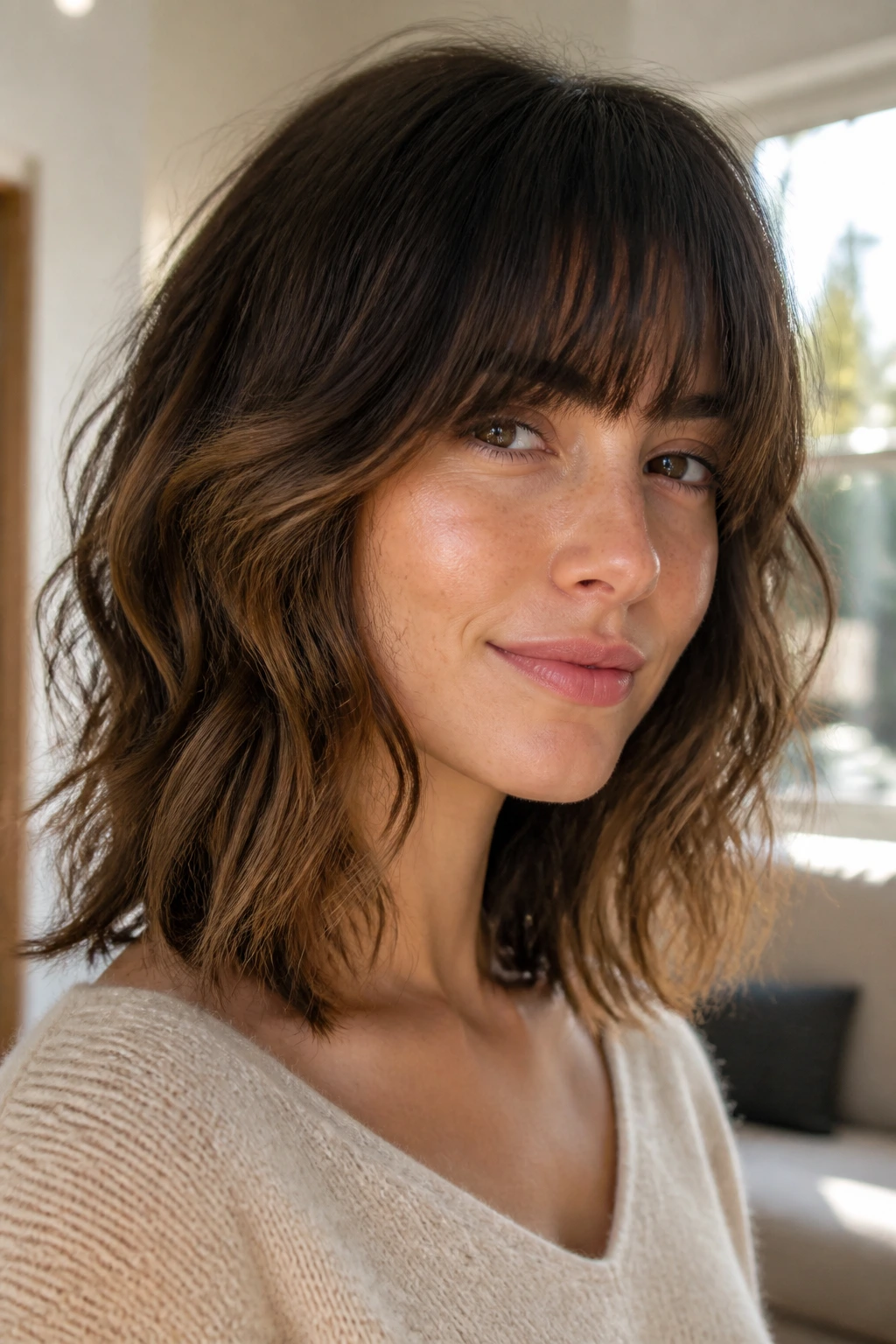
Face-framing without a hard edge: The best medium shag cuts land around the cheekbones, jaw, and collarbone, so they soften the face instead of boxing it in. That matters when bangs are involved, because the fringe and the layers need to work together rather than compete.
Less commitment than a short shag: A medium length gives you actual options when the shape grows out. If you miss the texture a little, you can keep trimming the fringe and let the rest slide a few weeks longer.
Better with real-life texture: These cuts tend to look strongest on hair that bends, waves, or breaks up a bit as it dries. Pin-straight hair can wear a shag too, but it usually needs a round brush, a flat iron bend, or some texture spray to keep the shape from falling flat.
Bangs change the whole mood fast: Curtain bangs, bottleneck bangs, side-swept fringe, and wispy browskimmers each steer the haircut in a different direction. One trim can take the same base from soft to edgy, or from retro to modern, without changing the length.
They keep medium hair from getting heavy: Medium hair can turn into a triangle or a blanket if it’s all one length. Shag layers break that weight up, and the bangs keep the top from feeling empty once the ends start moving.
1. Soft Curtain Bangs and Collarbone Layers
This is the shag I recommend most often to people who want texture but don’t want to feel like they’ve made a dramatic announcement with their hair. The fringe splits in the middle, skims the cheekbones, and falls into layers that rest near the collarbone. It’s relaxed, but not lazy. There’s a difference.
The reason it works is simple: curtain bangs give you shape around the face without trapping you in a heavy fringe. They also grow out in a civilized way, which is a nice bonus if you are not the type to run back for a trim every few weeks. Ask for layers that start around the cheekbone and fan out toward the ends rather than layers that start high on the crown and chew up the density.
If you air-dry this version, the hair looks best with a slight bend through the mid-lengths. If you blow-dry, use a medium round brush and kick the front sections away from the face for a few seconds at the ends. You want movement, not a blown-to-the-ceiling blowout.
2. Brow-Skimming Piecey Fringe on a Wavy Shag
A brow-skimming fringe makes a wavy medium shag look sharper in a good way. The bangs sit right around the eyebrows, then break into little separated pieces instead of forming one flat curtain. On wavy hair, that separation happens naturally, which is why this version feels alive even on a rushed morning.
Why It Flatters Wavy Hair
The slightly shorter fringe gives the eyes a frame, while the waves in the rest of the cut keep the shape from feeling severe. If your hair already bends at the mid-lengths, this cut will play nicely with that texture instead of fighting it. It also works well with glasses, because the fringe can sit just above the frames without swallowing your face.
What to Ask For
- Bangs that hit just above the brows when dry
- Light point-cutting through the fringe for separation
- Layers that start around the cheekbones
- Soft ends, not a blunt perimeter
Best tip: mist the bangs with water, twist them once, and let them dry for five minutes before you decide they need more styling. Half the time, they don’t.
3. Bottleneck Bangs With Air-Dry Texture
Why do bottleneck bangs keep showing up on shag cuts? Because they do two jobs at once. The center is a little shorter, the sides taper longer, and that shape flows straight into the layers around the face. It feels deliberate without looking overworked.
This version is especially good if you hate the look of one solid bang line. Bottleneck fringe gives you a soft opening at the center of the forehead, then drapes into the rest of the cut. On medium shag haircuts with bangs, that means the whole front section feels blended instead of separate, which is a nice trick when your hair wants to puff or split on its own.
Air-dry it with a light mousse at the roots and a touch of cream through the ends. If you scrunch the front too hard, the bangs can shrink up and lose that tapered look. Let them settle. They usually do.
4. Razor-Cut Shag With a Full Fringe
This is the version for someone who likes a little edge and does not mind seeing the cut up close. A razor-cut shag has softer, feathered ends than a scissor-cut shape, and a full fringe gives it a stronger front line. Put the two together, and you get a haircut that looks especially good on straight to slightly wavy hair.
The full fringe matters here because it anchors the haircut. Without it, the razor texture can read a little too airy. With it, the top has weight and the rest of the layers can stay feathered and mobile. If your ends tend to flare out, razor texture can help them taper instead of sitting like blunt shelves.
Just be careful if your hair is already fragile or frayed at the ends. Razor cutting on damaged hair can make it look wispy in the wrong way. A good stylist will know when to switch back to shears.
5. Grown-Out Fringe That Brushes the Cheekbones
This is the shag for people who love bangs but do not love babysitting bangs. The front layers are long enough to brush the cheekbones, maybe graze the jaw when they’re damp, and they can be worn parted, swept over, or tucked away. It has that “I got a haircut six weeks ago and it still looks like a haircut” quality that’s worth paying attention to.
The cut works because it treats the fringe as part of the whole shape, not as a separate event. The layers around the face start softly and stay soft all the way down, so the grow-out phase looks intentional instead of like you forgot to book an appointment. If you wear your hair to work, this is one of the easiest versions to keep looking polished without a lot of fuss.
If you want more definition, add a bend with a flat iron only at the front two sections. Two passes. Not ten. The point is motion, not a crease.
6. Curly Shag With Rounded Bangs
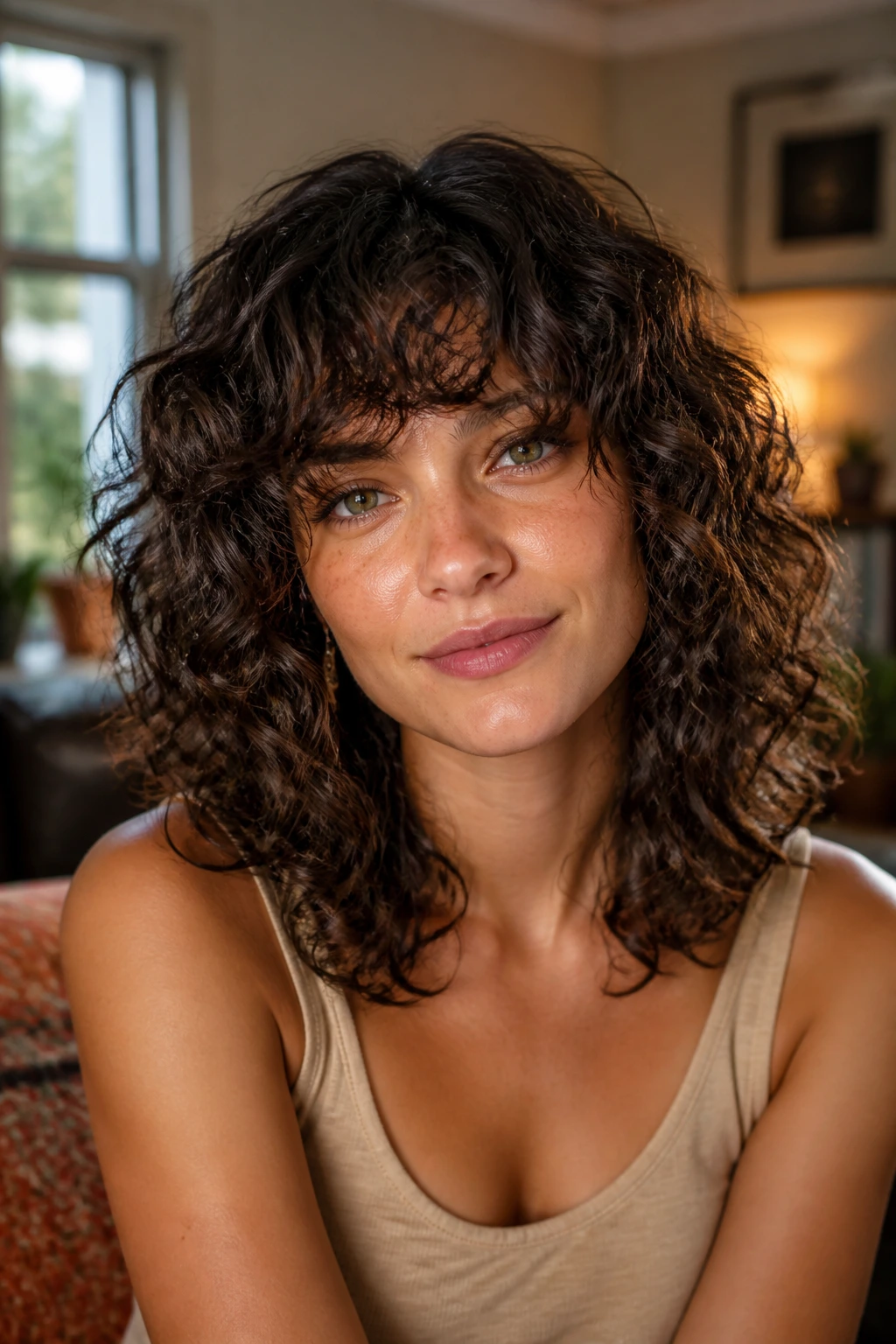
Curly hair and bangs can be a beautiful pairing, but only if the cut respects the curl pattern. A rounded bang shape keeps the fringe from fighting the natural spring in the rest of the hair. Instead of cutting a straight line across the forehead, the stylist follows the curve of the curls so the front sits like part of the haircut, not like an afterthought.
This version helps curly medium lengths avoid the classic triangle. The shag layers lighten the sides and add lift around the crown, while the bangs balance the volume up front. If your curls are loose to medium, the fringe can sit around the brow. If they’re tighter, they may land higher once dry, so the cut has to account for shrinkage.
How to Wear It
- Ask for a dry cut or a curl-by-curl approach
- Keep the fringe slightly longer than you think you need
- Use a diffuser on low heat
- Refresh the front with water and a little leave-in the next morning
This is one of those cuts that looks best when it is not overhandled. Hands off helps.
7. Deep Side Part Shag With Sweeping Bangs
A side part can make a shag feel softer and more expensive-looking without adding any length. It also solves a real problem: not everyone wants bangs sitting squarely across the forehead. Sweeping bangs slide into the side layers, which is useful if you have a cowlick, wear one side tucked behind the ear, or just want a little more drama at the front.
The deep side part gives the crown a small lift, and that lift matters on medium-length hair because it keeps the shape from lying too close to the head. On finer hair, that bit of root height can change the entire read of the cut. On thicker hair, the sweep helps reduce the blocky feeling that can happen when the sides are all cut to the same point.
It is also a forgiving choice for people who change their mind. If the bangs get annoying, they blend into the rest of the cut faster than a blunt fringe does. That matters more than people think.
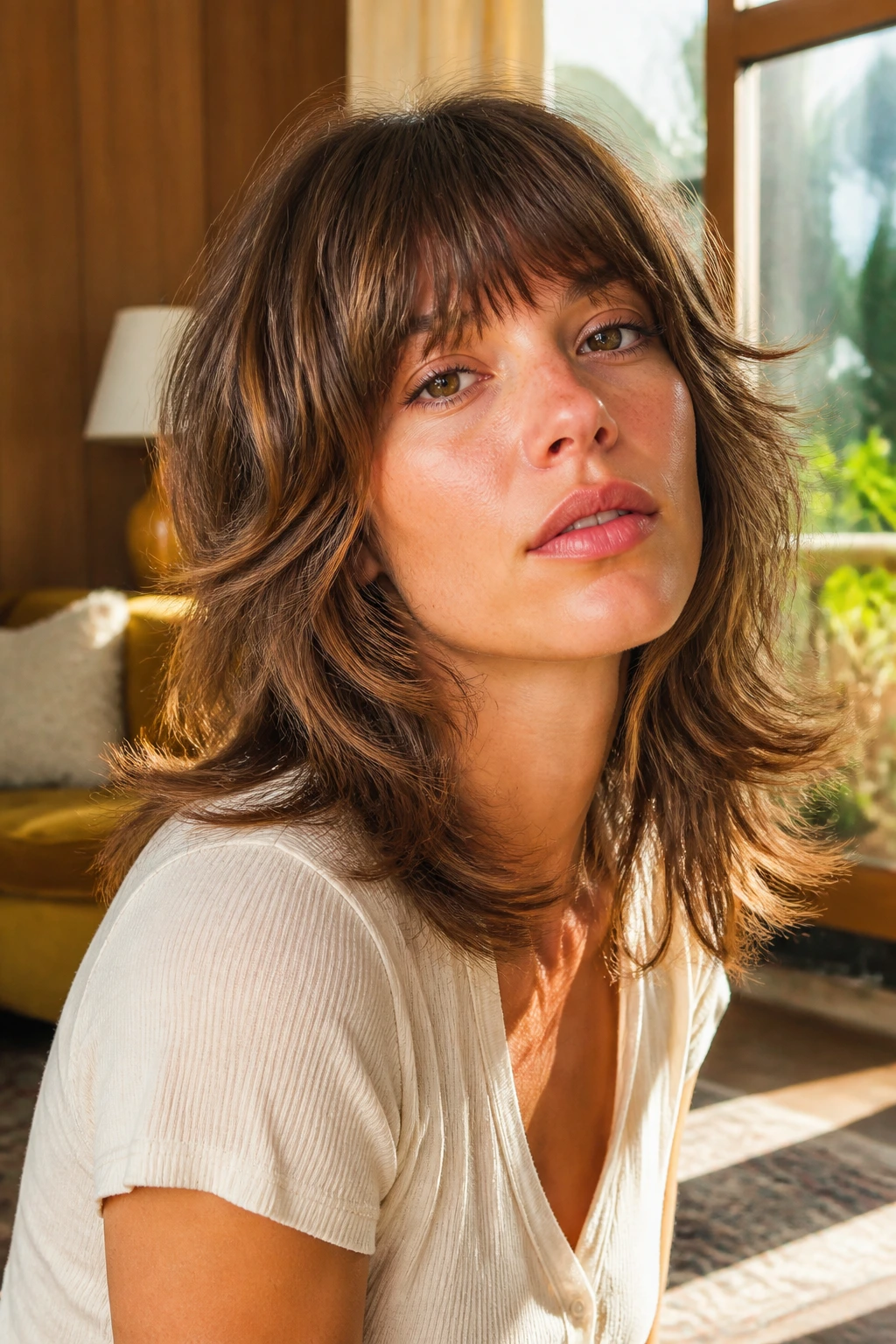
8. Feathered 70s Shag With Flipped Ends
This one leans into the fun part of the shag family. Feathered layers around the face, flipped ends, and a light fringe create that lived-in, slightly retro shape that looks especially good when the hair has a little bounce. A round brush helps, but the cut itself should already know where it wants to move.
The key is not overbuilding the shape. If the layers are cut too short at the crown, the silhouette can look too puffy. You want feathering around the cheekbones and jaw, then longer pieces through the ends so the whole cut still reads as medium length. The bang should be soft enough to blend but present enough to matter.
A blow-dryer with a nozzle, a round brush, and a cool shot at the end will do more here than a dozen styling products. I’d choose a light mousse at the roots and a tiny bit of serum on the last inch of hair. That’s it. The flip should come from the cut, not from a pile of spray.
9. Thick-Hair Shag With Long Debulked Layers
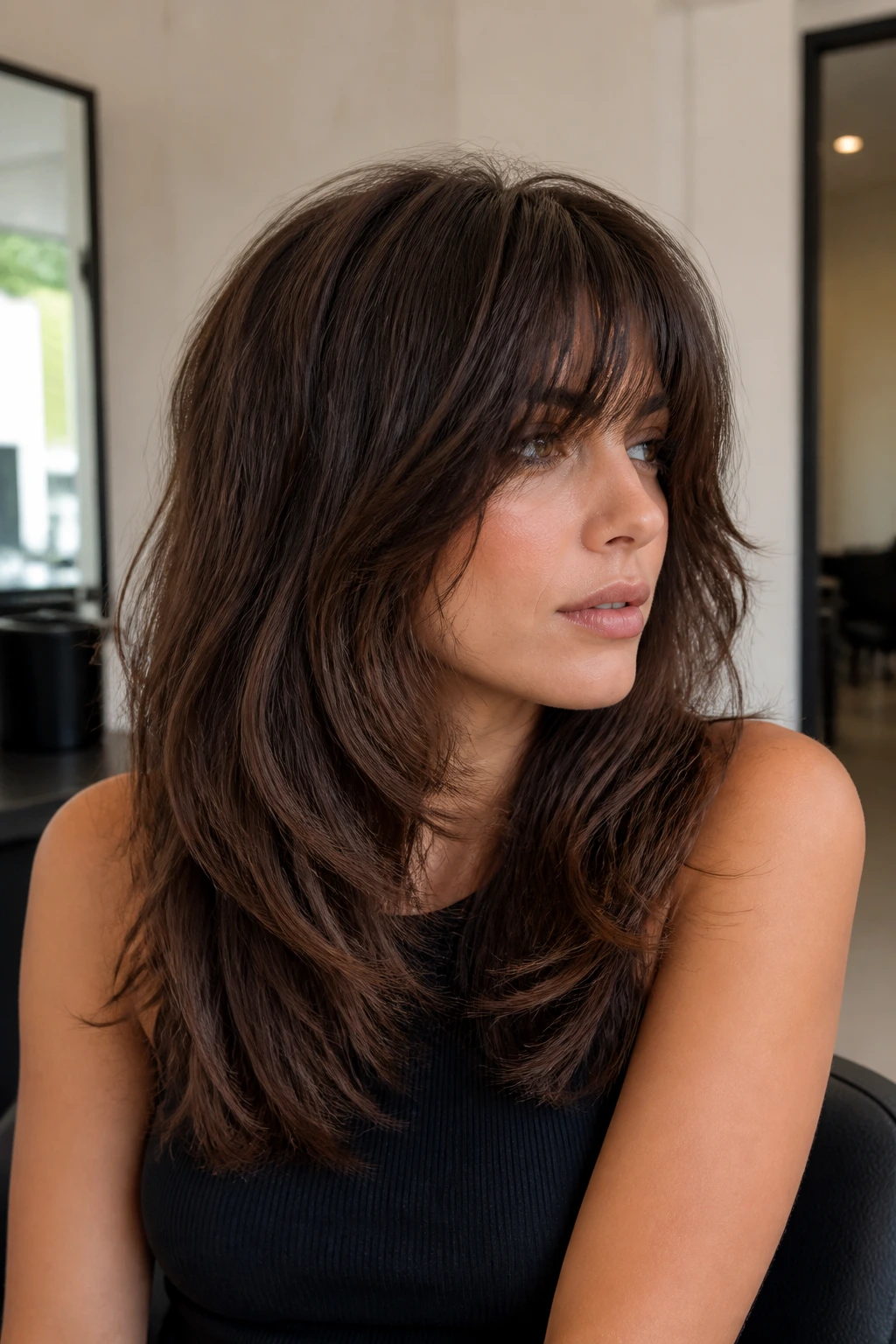
If your hair feels like it eats haircuts, this is the version to look at first. Thick hair needs structure, not just thinning. A good shag for dense hair removes weight from the interior while keeping enough length in the perimeter so the cut still has shape. Long bangs help because they give the front some softness without demanding a blunt, heavy block.
This cut works best when the stylist debulks from inside the shape rather than chipping away the ends until they fray. There’s a big difference. Internal layering lets the hair move, while over-thinning can leave the ends looking see-through and fuzzy. On thick hair, that fuzz shows up fast.
Ask for layers that start lower than you might think, usually around the cheek or jaw, and keep the bangs long enough to tuck if needed. If you want the fringe to sit more lightly, point-cut the edges instead of carving a hard line across the front.
10. Fine-Hair Shag With Short Crown Lift
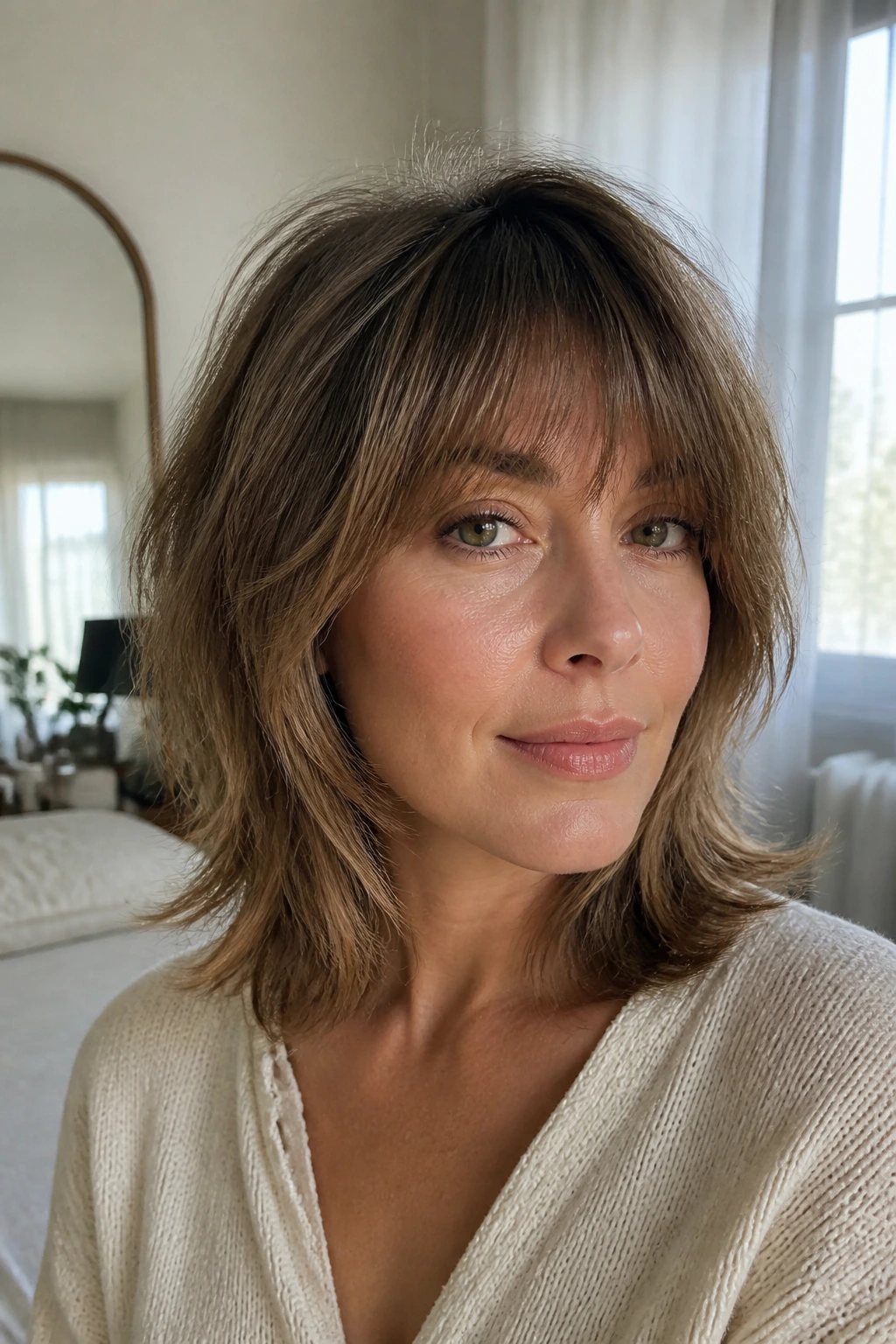
Fine hair can wear a shag, but it needs discipline. Too many short layers and the whole thing turns wispy at the wrong spots. The smarter move is a medium shag with a modest crown lift, a light fringe, and a perimeter that keeps enough density to look full from the back and the sides.
The short crown layers are there to create the illusion of height, not to strip away weight for the sake of movement. On fine hair, movement is easy. Coverage is the tricky part. Keep the bangs soft and not too chunky, and let the rest of the cut drape a little longer around the shoulders so it does not collapse into a thin halo.
A root-lifting mousse helps. So does blow-drying the crown first, while the hair is still damp, and then directing the front sections side to side before you settle the bang shape. That tiny bit of manipulation makes the cut look intentional instead of floppy.
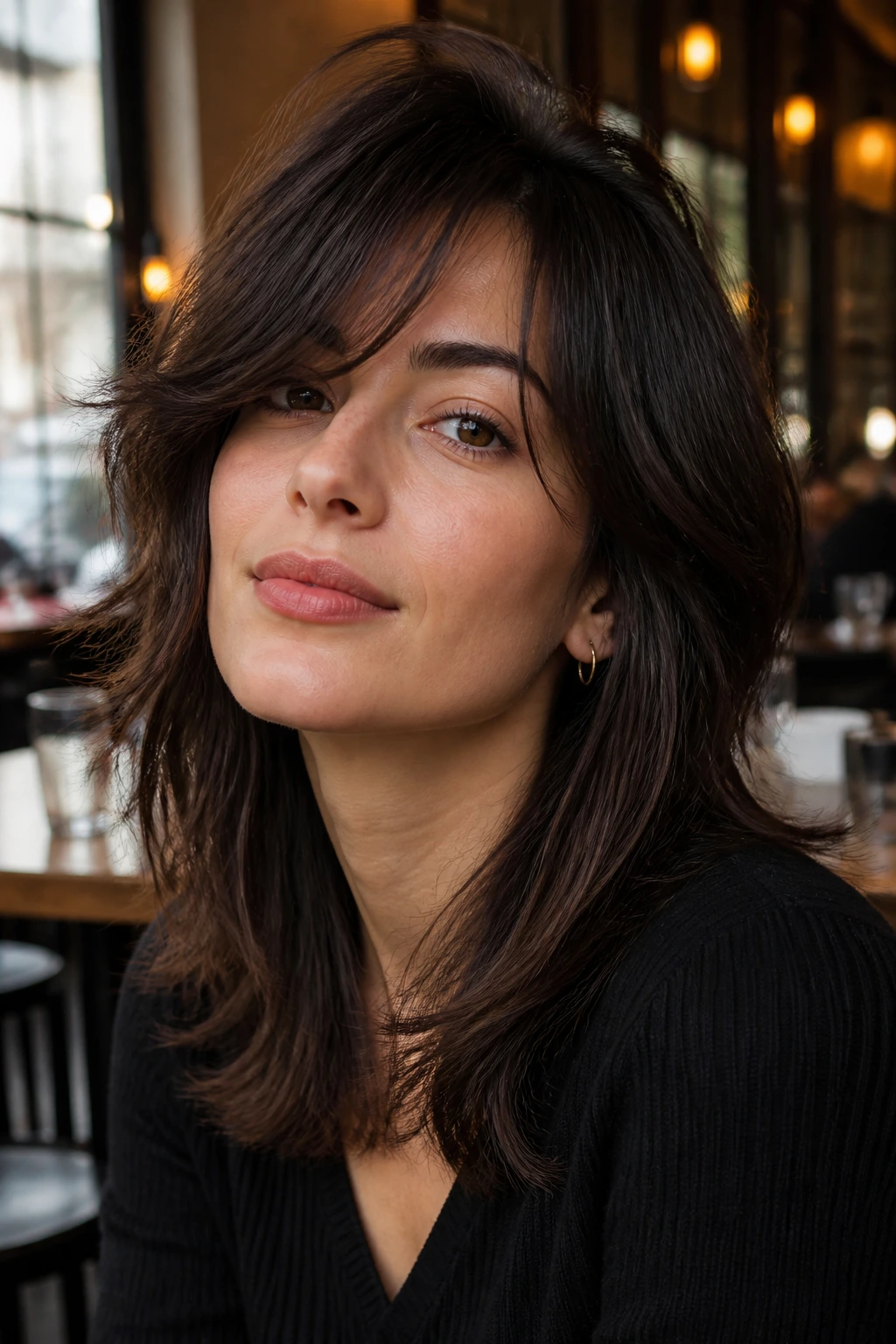
11. Wolf-Inspired Medium Shag With Curtain Bangs
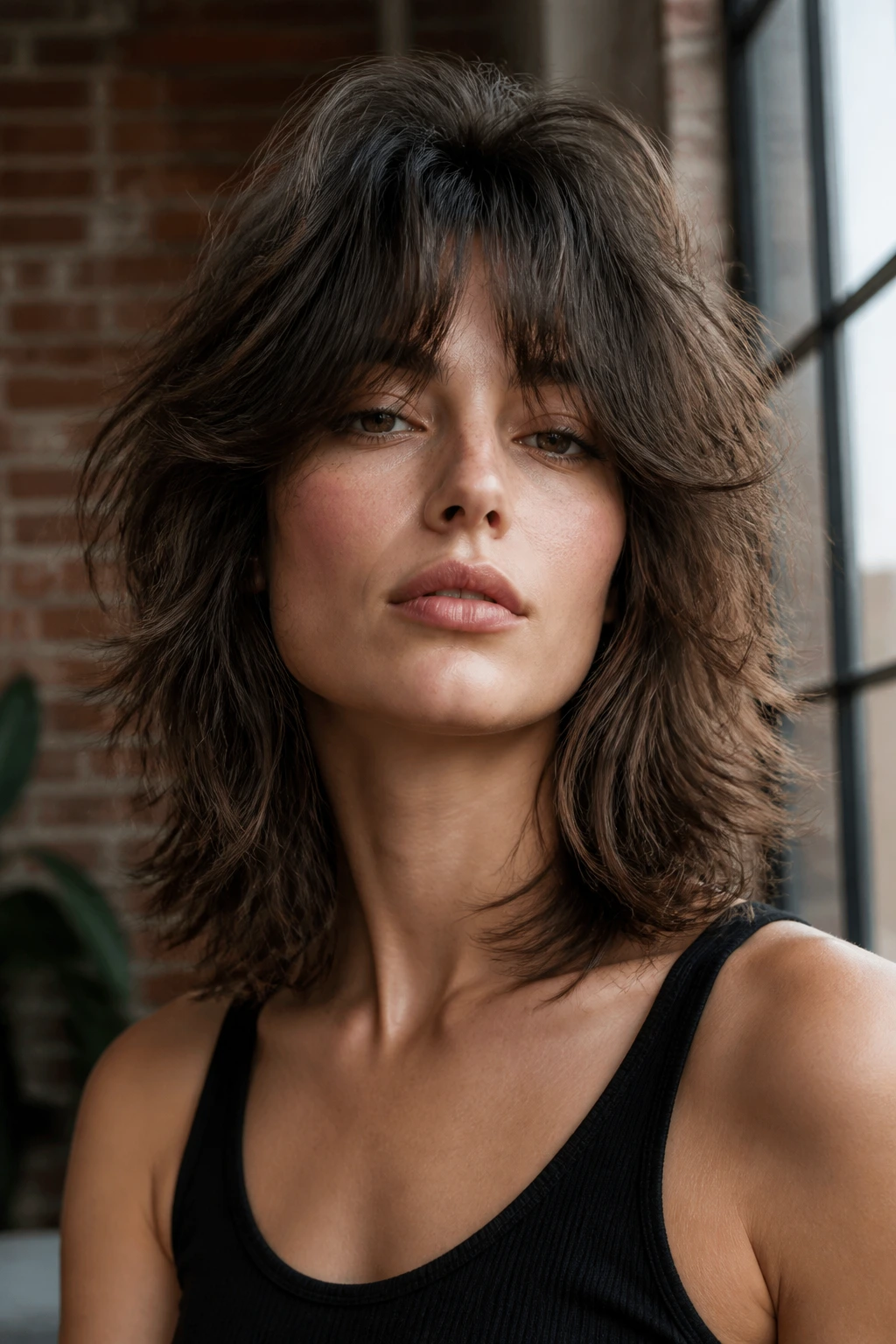
This is the bolder cousin in the family. It keeps the medium length, but the crown sits a little higher and the face-framing pieces feel more decisive. Curtain bangs soften the front so the cut does not drift all the way into mullet territory. That balance is the whole point.
Compared with a soft shag, the wolf-inspired version has more attitude at the top and a little more separation through the ends. It suits people who want the haircut to show up in the room. If you wear mostly black, boots, leather, or just prefer hair with some sting in it, this shape makes sense. If you like hair that disappears into the background, it probably won’t be your favorite.
The trick is to keep the bangs long enough to split rather than sit as a heavy block. Too short, and the cut gets harsh. Too long, and you lose the wolf-ish contrast. Somewhere around the cheekbone is usually the useful zone.
12. French-Girl Shag With Soft, Loose Fringe
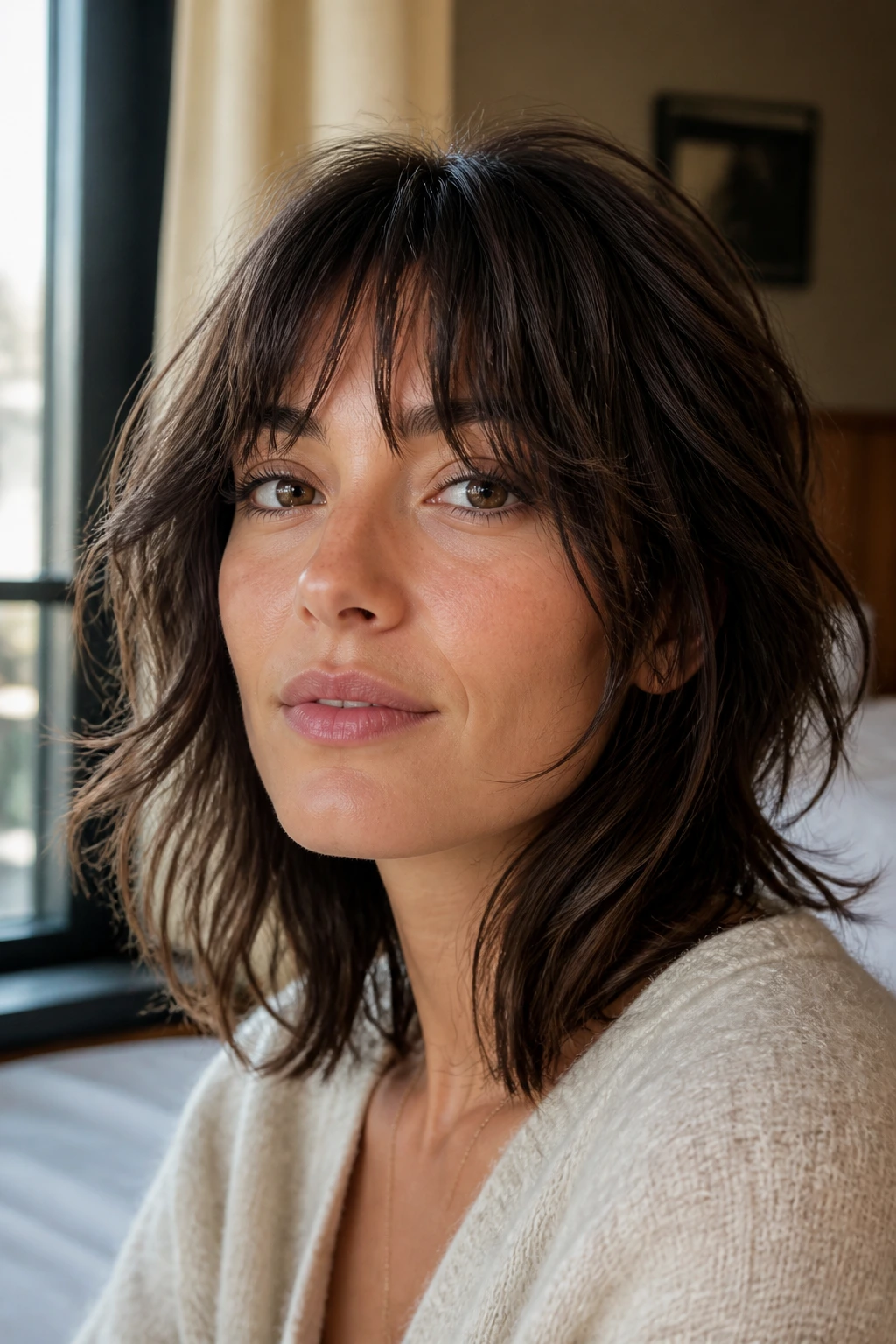
This version is softer than it sounds. The fringe is light, a little separated, and never too perfect. The layers around the cheekbones and jaw are subtle, which keeps the cut from feeling overworked. It’s the kind of medium shag that looks good with a knit sweater, a tucked tee, or a blazer.
What makes it work is the restraint. You do not need the shortest bangs or the chippiest ends to make a shag feel current. A loose fringe that lands around the brows, paired with soft layers that barely kiss the shoulders, can look more polished than an aggressively textured version. There’s a quiet confidence to that.
If your hair has a natural wave, this cut will probably be kind to it. If it’s straight, add a bend with a flat iron only on the front pieces and the ends. The rest can stay soft. The point is a little looseness, not a whole curling routine.
13. Choppy Shag With Shorter Bangs

This one is not subtle. The shorter bangs make the haircut feel sharper, and the choppy layers keep the movement visible even when the hair is dry and a little flat. It is a good choice if you want the fringe to read as a feature, not a whisper.
Shorter bangs work best when the rest of the haircut is layered enough to keep the top from looking boxy. I like this version on people with medium to thick hair, because the density helps the shape hold together. On finer hair, you need a lighter hand or the front can look sparse once it grows a half inch.
Here’s the catch: short bangs need honest maintenance. If you are already annoyed by your eyebrows getting in your eyes, this may not be the cut for you. But if you like that crisp front edge, the haircut has a lot of personality.
14. Feathered Shag With Jaw- and Collarbone-Frame Layers
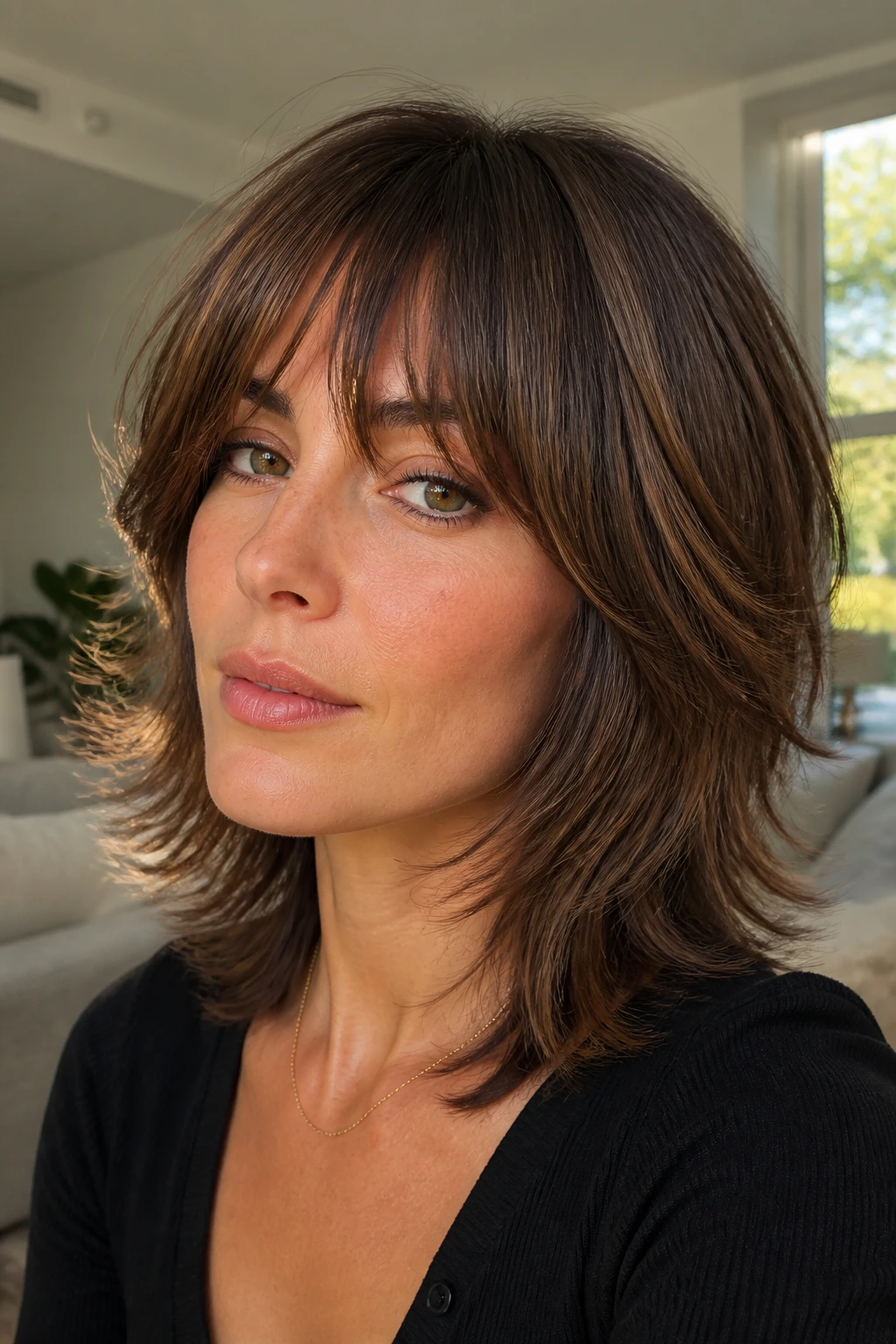
This is the gentlest way to wear a shag without losing the point of the cut. The layers start around the jaw, skim through the cheekbones, and keep feathering down to the collarbone. The fringe is soft enough to blend, but present enough to hold the front of the haircut together.
I like this version on people who want their hair to move when they walk, not only when they style it. That’s a small distinction, but it matters. The feathering creates motion around the face and through the sides, while the collarbone length keeps the overall shape grounded. You do not get a cloud. You get a haircut.
It also behaves well in low heat. A quick blow-dry with a paddle brush, then a bend at the ends with a round brush or curling iron, is often enough. If the layers are cut well, they will do the rest of the talking.
15. Side-Swept Shag With Cascading Fringe
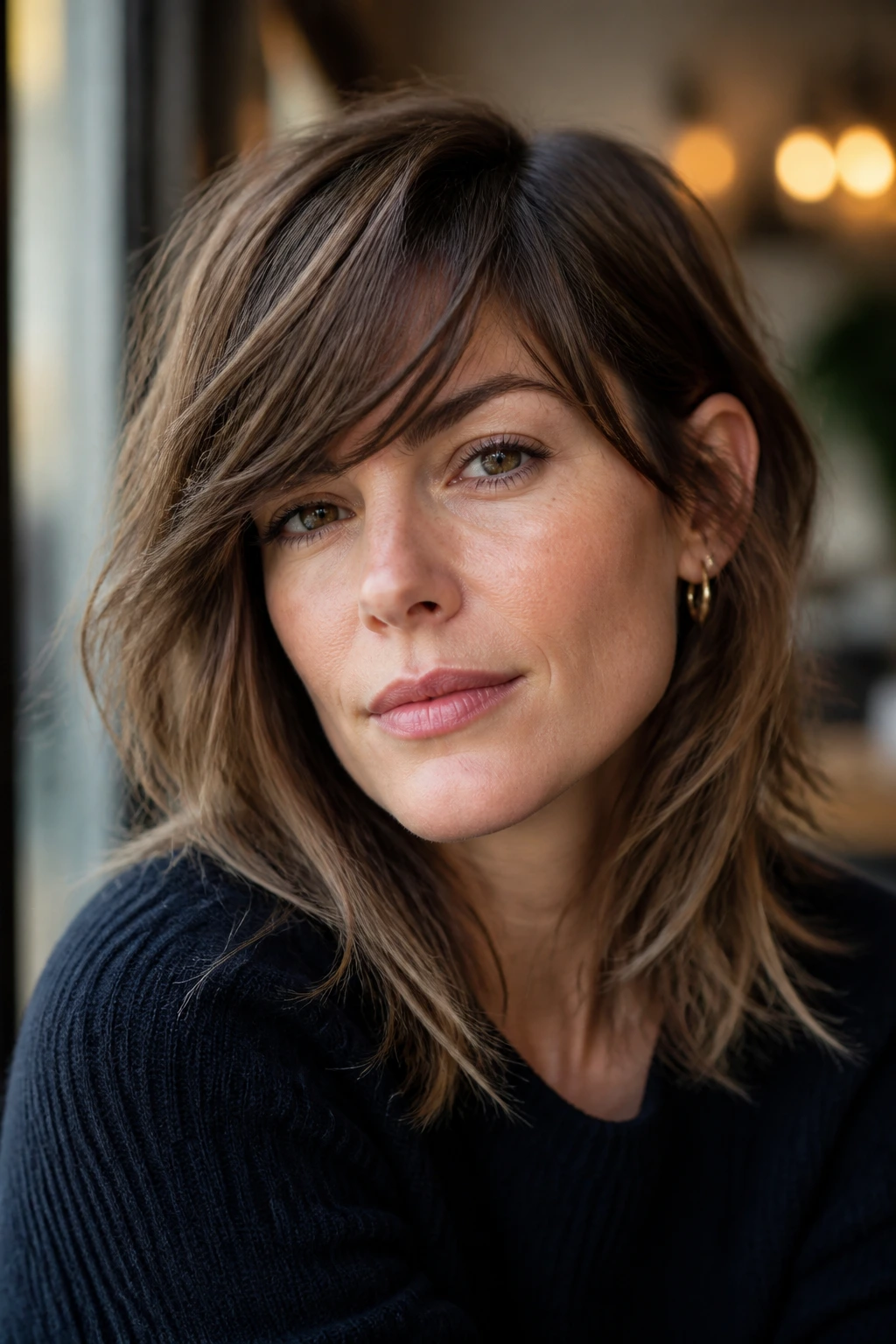
A side-swept fringe gives the medium shag a little drama without making it fussy. One side opens the face, the other side creates a soft fall of hair that can tuck behind the ear or sweep across the forehead. It’s a smart move if you’ve got a strong cowlick, a high forehead, or a strong preference for asymmetry.
The cascading shape makes the haircut look more fluid than a center-part curtain fringe. That can be useful when your hair is thick or has a lot of body, because the side-swept section breaks up the mass. It also helps if you want your bangs to blend into the rest of the cut fast when you’re growing them out.
This is one of the few styles here that can look a little more dressy with very little effort. A side part, a smooth top, and a few flipped ends are enough. Not every shag needs to look scruffy to be interesting.
16. Minimalist Shag With Soft Texture

A shag does not have to look wild to count. This version keeps the layers low-key, the fringe soft, and the perimeter clean enough to wear in a conservative setting. The texture is there, but it isn’t shouting. That’s useful if you want movement without looking like you spent the morning wrestling your hair into a trend.
The haircut lives in the details: a little shortening around the crown, a little face-framing around the cheekbones, and a bang that brushes the brows without becoming a blunt statement. The result is a medium shag that reads polished first and textured second. I like that. A lot of shag cuts try too hard. This one doesn’t.
Styling is easy. A blow-dry cream, a round brush at the front, and a bit of serum on the ends usually do the job. If you let it air-dry, it should still look like a haircut instead of a compromise.
17. High-Contrast Shag With Chunky Ends
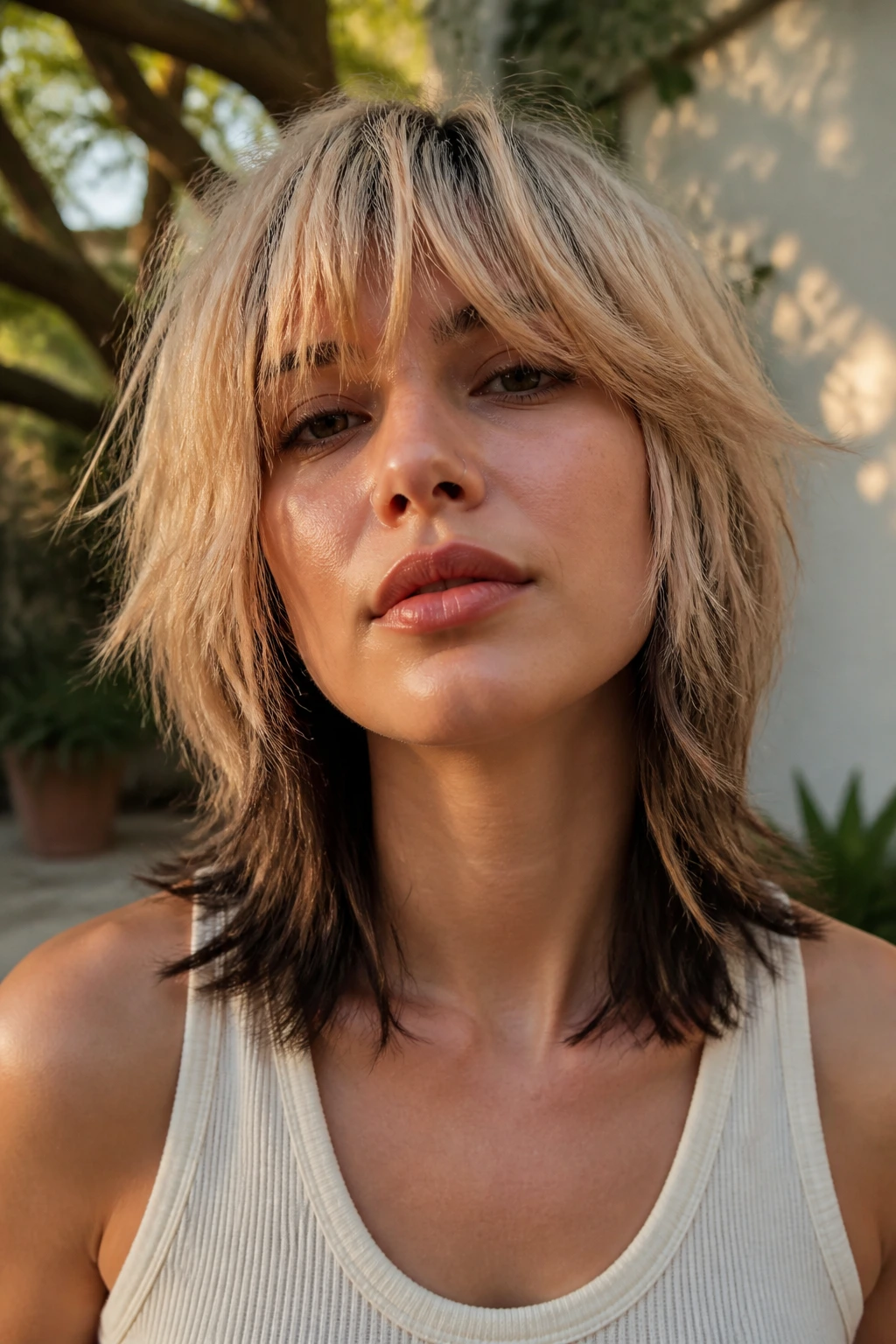
If you want the layers to show from across the room, this is your cut. The top and front are lighter and more broken up, while the ends stay chunkier so the shape has a clear bottom edge. That contrast gives the medium shag more graphic weight, which is especially good on thicker hair or on straight hair that needs a stronger silhouette.
The bangs matter here because they help bridge the gap between the busy top and the heavier ends. A choppy fringe keeps the front from feeling too blunt. If the bangs were too smooth, the whole haircut would turn into a weird half-and-half situation. Nobody needs that.
This version likes texture spray, a bend through the mid-lengths, and a little separation at the ends. If the hair is all one smooth surface, the contrast disappears. Leave some pieceiness in it. That is the point.
18. Curly-Coily Shag With Springy Fringe
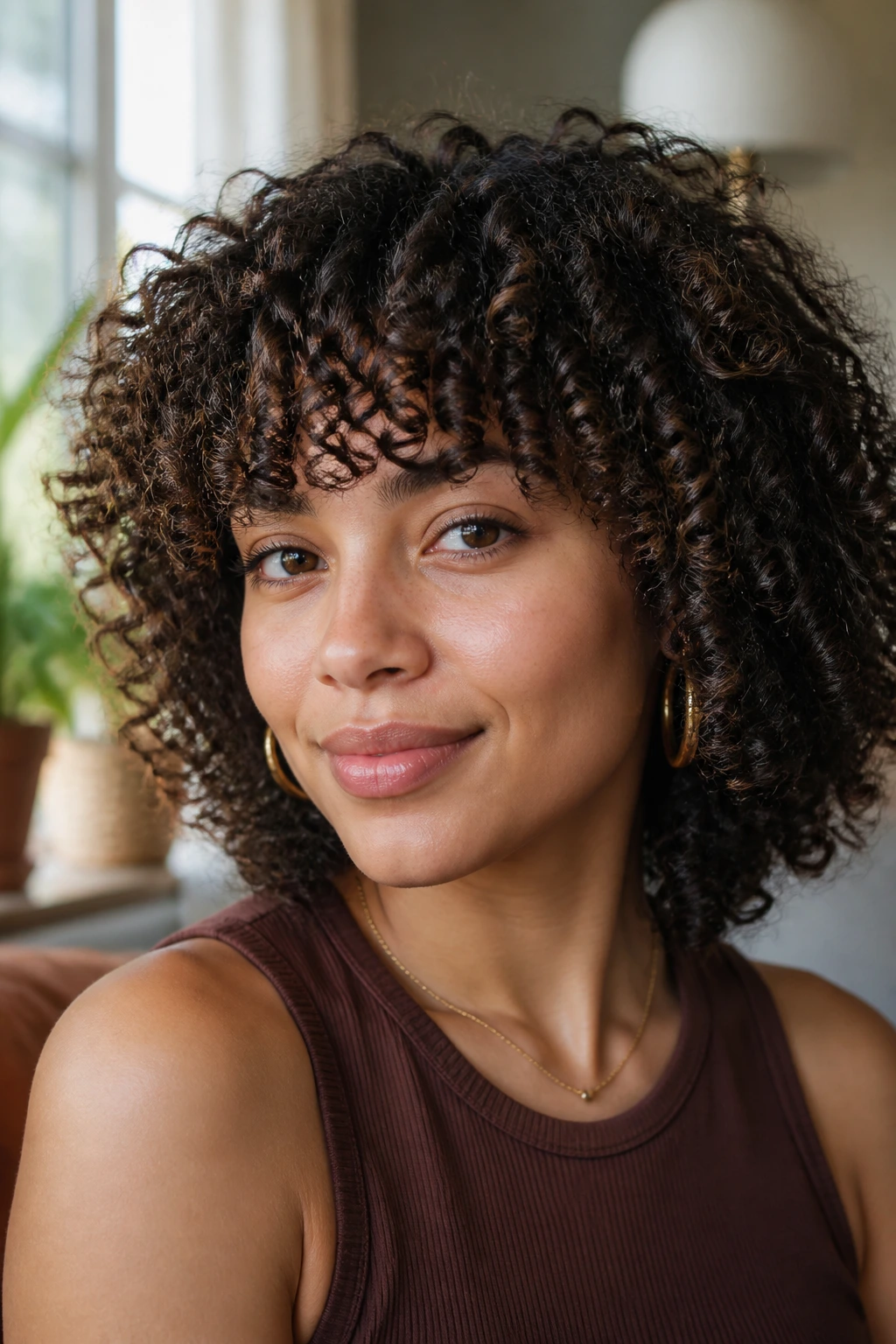
Can bangs work on coily hair? Absolutely, if the cut respects shrinkage and the fringe is shaped to curl, not forced into a straight line. A springy fringe can sit at the forehead or just above it, then bounce upward as it dries. The layers around the head should keep the shape round so the hair does not puff wide at the sides.
The best versions of this cut are usually dry-cut or shaped in a way that follows the curl pattern while the hair is in its natural state. That keeps the fringe from ending up too short, and it helps the medium length hold a balanced outline. The shag layers should lift the crown and lighten the sides without hollowing out the shape.
This is one of those cuts where patience pays off. Let the hair dry, let the curls settle, then decide whether the fringe needs a tiny trim next appointment. Cutting curly bangs too short on day one is a fast way to regret things by lunchtime.
19. Blunt-Perimeter Shag With Wispy Bangs
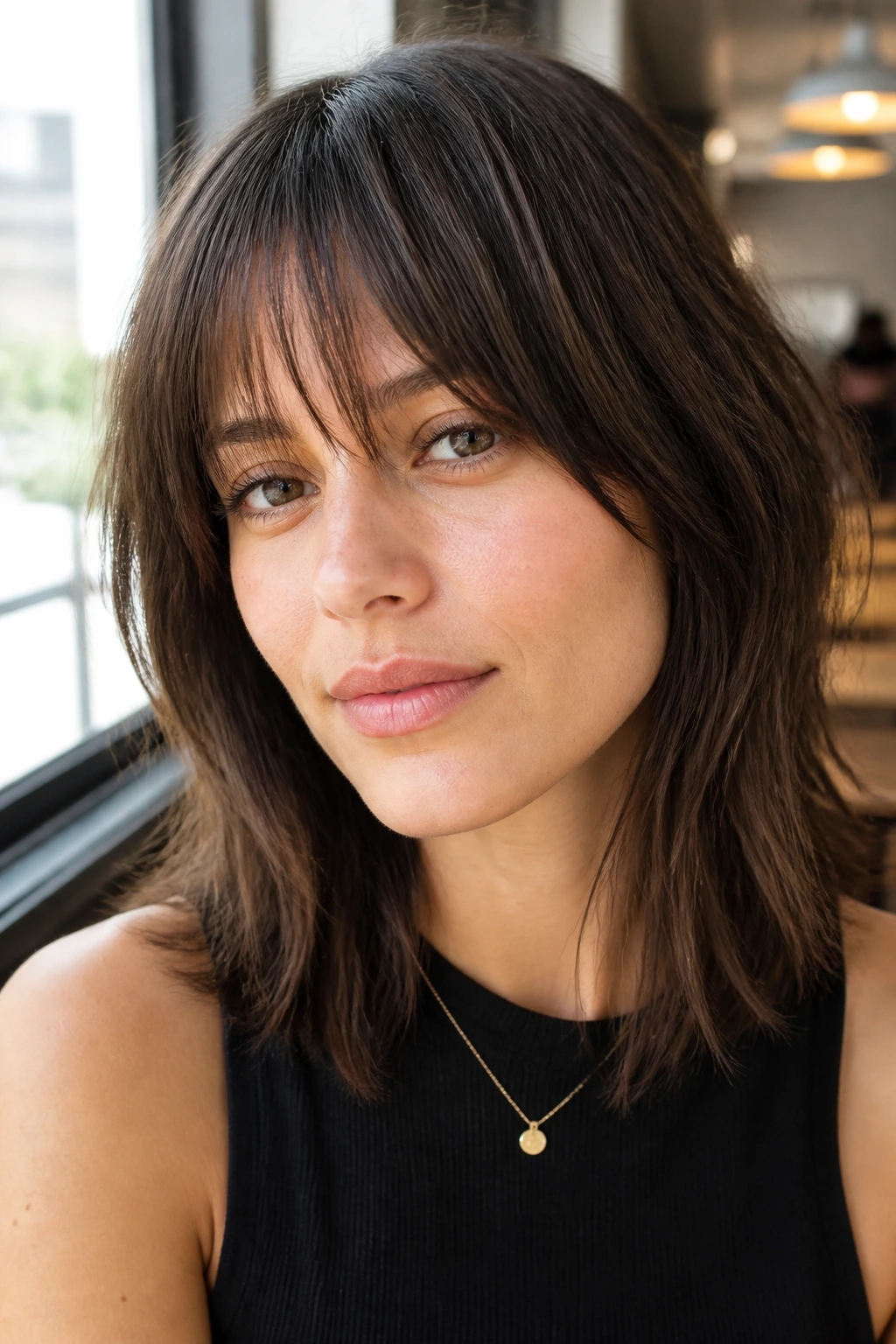
This cut gives you two different moods in one haircut. The perimeter stays a little cleaner and more blunt, which helps medium hair keep a fuller outline, while the bangs stay wispy and soft so the front does not feel heavy. The contrast is the charm.
I like this on straight or barely wavy hair when someone wants the shag movement without giving up a more controlled bottom line. A blunt edge keeps the ends looking healthy and dense. The wispy fringe makes the haircut feel lighter around the eyes, which is the part people notice first anyway.
If you go this route, keep the bangs light enough that they do not sit like a curtain. They should break apart easily with a brush or fingers. That little separation is what prevents the style from looking like a standard medium cut with a random fringe pasted onto it.
20. Round-Brush Shag With Bouncy Layers
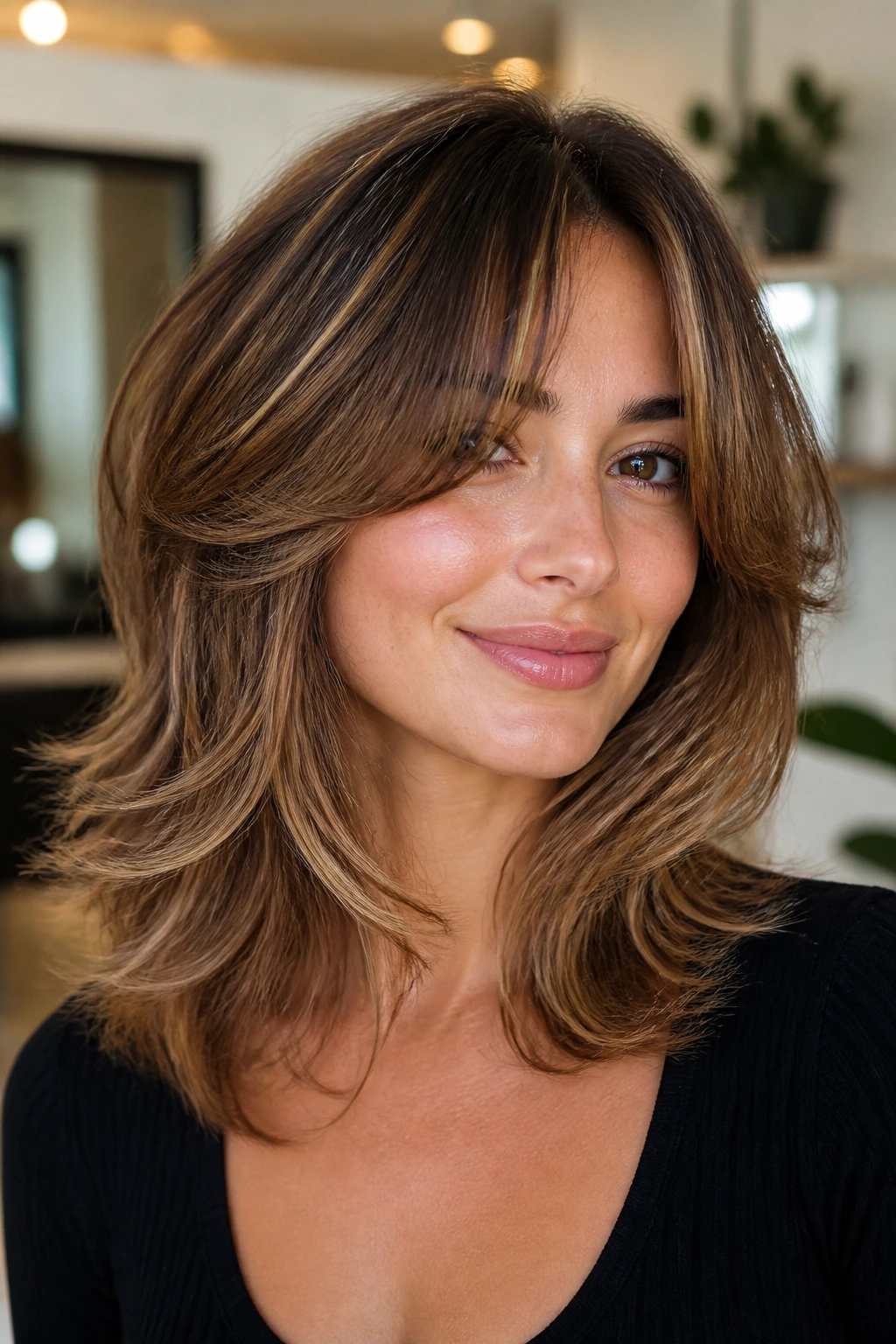
This is the salon blowout shag, the one that gets a little lift, a little swing, and a very clean front shape when styled with a round brush. The layers are cut to flip rather than collapse, and the bangs are long enough to round off with the brush instead of sticking flat to the forehead.
It’s a good fit for people who enjoy styling their hair in the morning and do not mind spending ten or fifteen minutes on the front pieces. The payoff is good. A medium shag with this kind of shaping looks fuller through the crown and more finished around the face. It can even make medium hair look denser than it is.
Use a medium brush, not an enormous one, and direct the bangs side to side first if they have a stubborn cowlick. That small trick helps the fringe fall where you want it instead of where it feels like going.
21. Razor-Textured Shag for Straight Hair
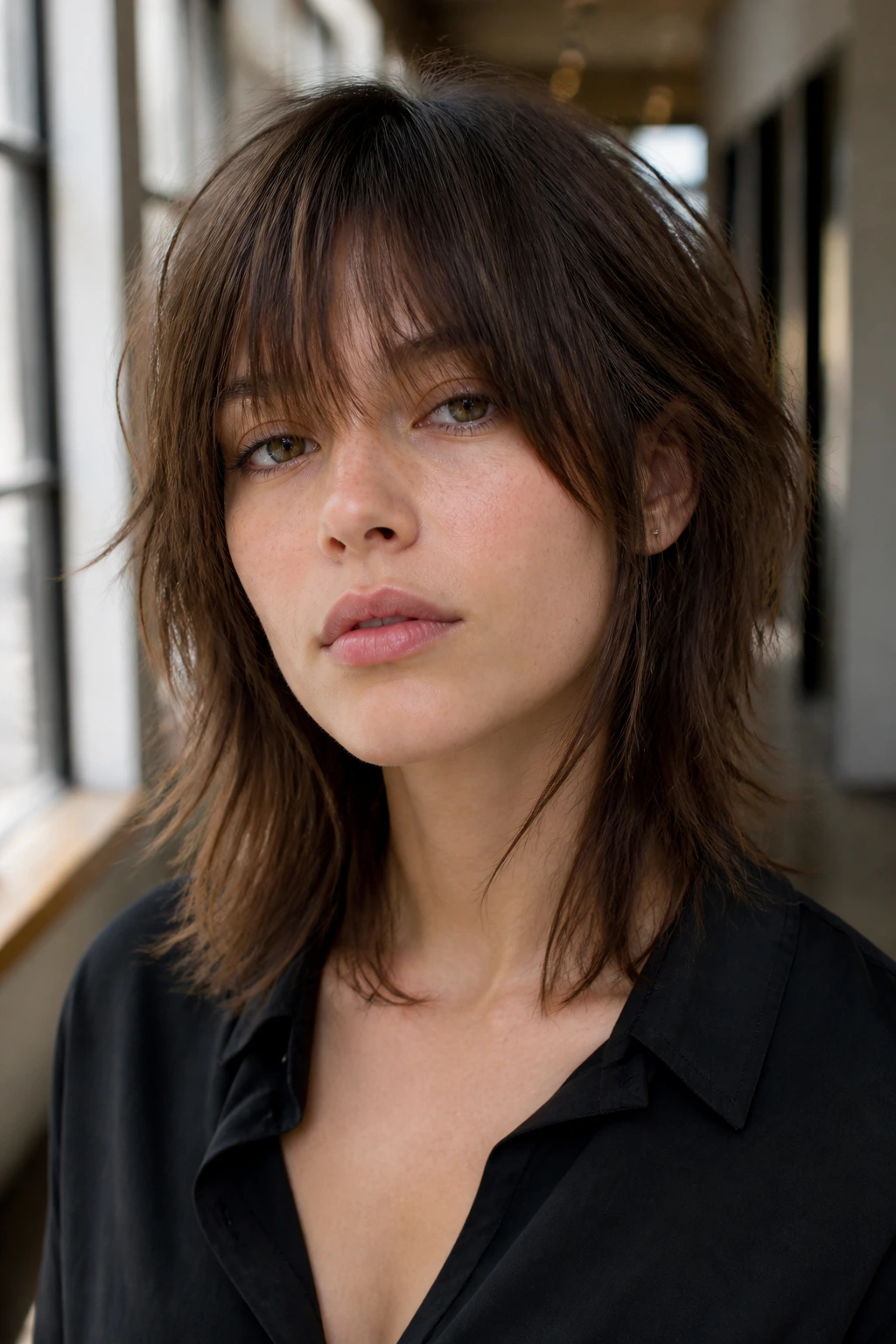
Straight hair can wear a shag beautifully when the cut gives it enough internal separation. Razor texture helps the ends stop behaving like a single sheet of hair, which is the main thing this kind of hair needs. The fringe can be soft and slightly broken, so the whole haircut has movement even before you touch a styling tool.
Compared with scissor-cut layers, razor texture makes the edges look lighter and more feathered. That can be useful if your hair tends to hang heavy or reflect light in a very flat way. The key is not to overdo it. Too much razor work on straight hair can look thin fast, and once the ends start to fray, they stay frayed.
I’d choose this for someone who wants an undone feel but still wants the haircut to read neat at the outline. It’s a nice compromise between sharp and soft.
22. Low-Maintenance Shag for Busy Mornings
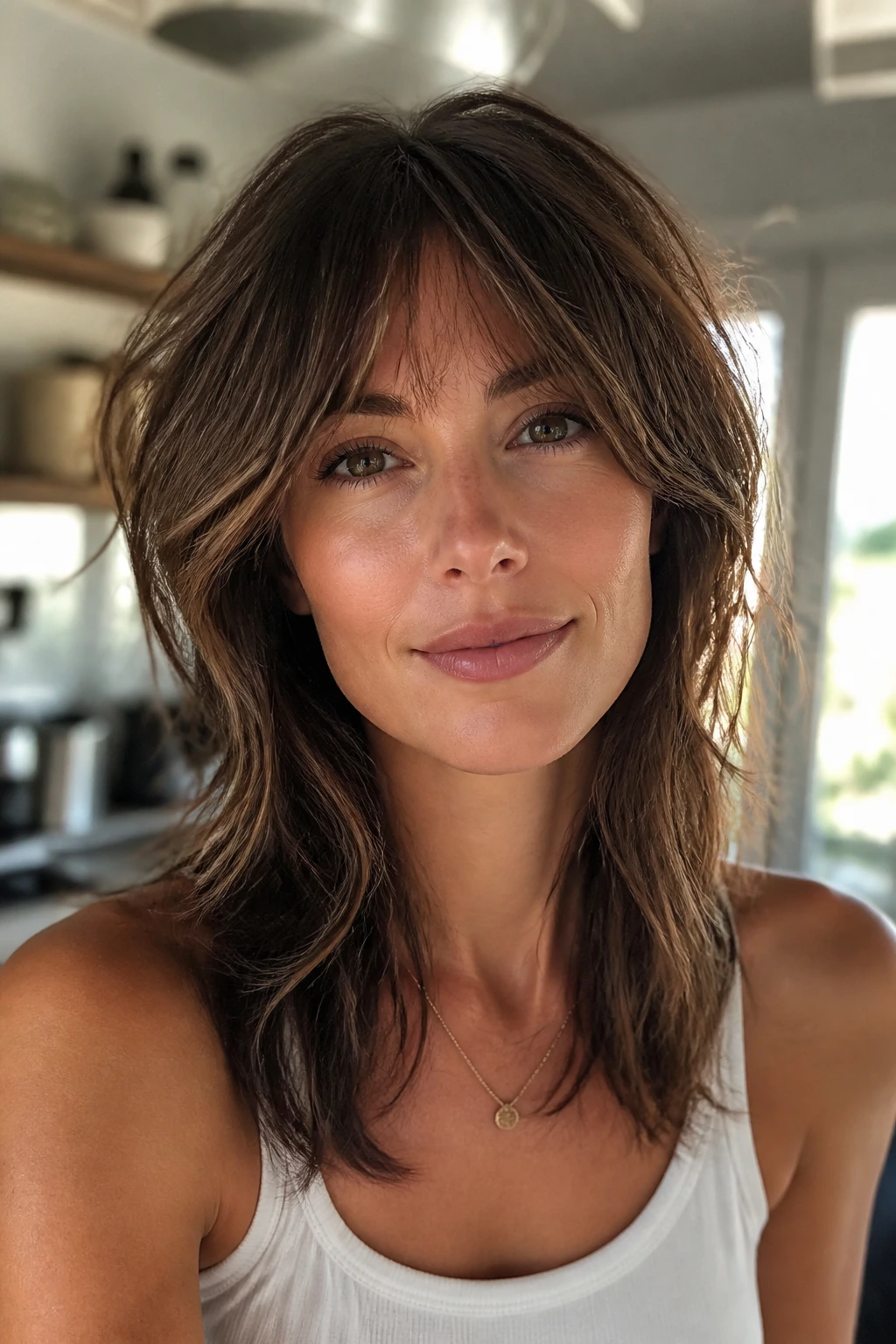
Some shags want a whole styling routine. This one does not. It keeps the layers long enough to fall into place on their own, and the bangs are cut so they can split or sweep without much coaxing. If your mornings are fast and your hair has to cooperate with a coffee and a coat, this is the practical choice.
The trick is to keep the shape forgiving. Ask for layers that start lower on the face and avoid over-chipping the fringe. Long curtain bangs or a soft side sweep are usually easier than a dense, short front. The medium length gives the cut enough body even when it air-dries rough.
A little dry shampoo at the roots and a bit of texture spray at the mid-lengths can carry this haircut a long way. You don’t need a perfect day to make it work. That’s the point.
23. Mullet-Leaning Shag Hybrid
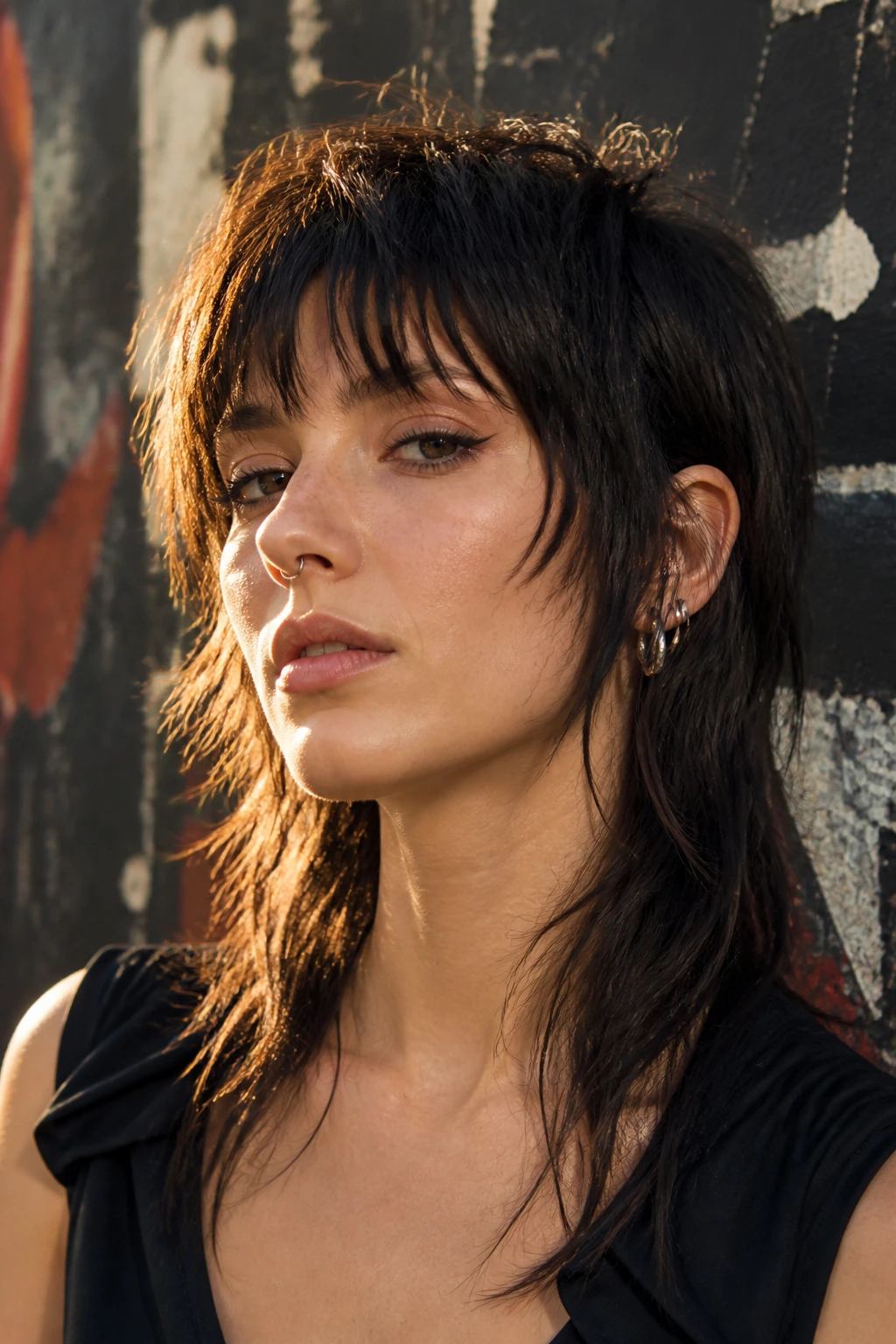
This is the edgier end of the spectrum. The crown is a little shorter, the nape stays a little longer, and the bangs usually have some attitude — curtain, bottleneck, or choppy fringe all fit here. It keeps the medium-length zone, but it pushes the shape toward something more graphic and deliberate.
The hybrid works because it keeps the silhouette moving from front to back. You get lift at the crown, face-framing around the eyes, and a longer line through the nape that stops the cut from looking generic. It’s especially good on hair that likes texture and on people who want the haircut to feel a little rebellious without going full short mullet.
If that sounds like too much, it probably is. But if you want something with edge that still grows out in a manageable way, this version has a better long-term shape than people expect.
24. Tucked-Bang Shag With Ear-Grazing Layers
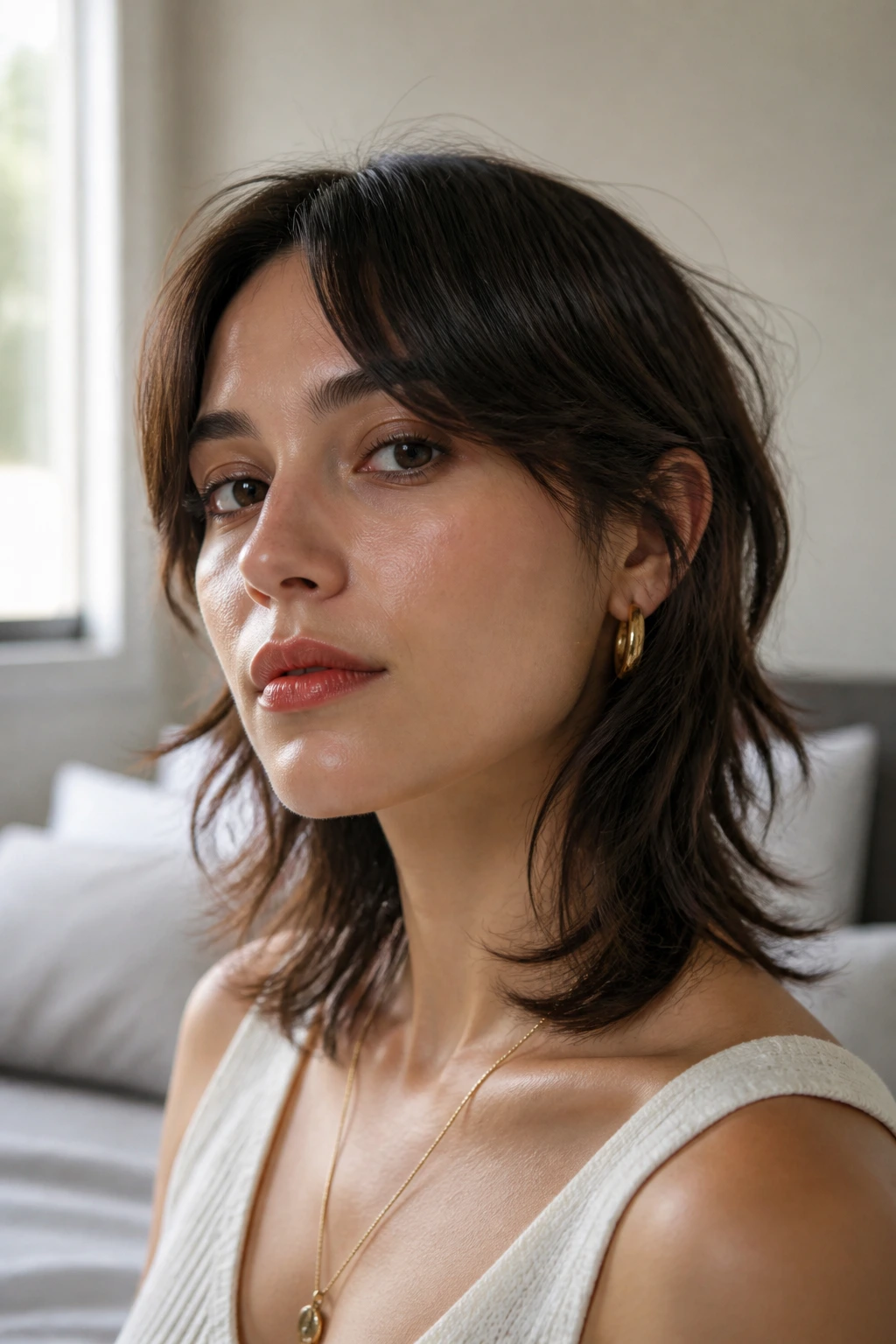
This is the cut for people who tuck their hair behind their ears constantly. The bangs are long enough to move out of the way, the layers skim the cheeks and ears, and the whole shape feels easy to push around. It is especially nice if you wear earrings, glasses, or just like to change the part a lot.
The reason it works is that the haircut keeps the front flexible. You can wear the fringe split, pinned back, swept sideways, or left loose. Because the layers are ear-grazing instead of chin-heavy, the haircut stays light around the face even when it’s a day past wash day.
I’d call this a quiet power cut. It does not scream for attention, but it has enough shape that people notice your hair looks good even if they cannot explain why.
25. Grow-Out-Friendly Shag With Long Curtain Bangs
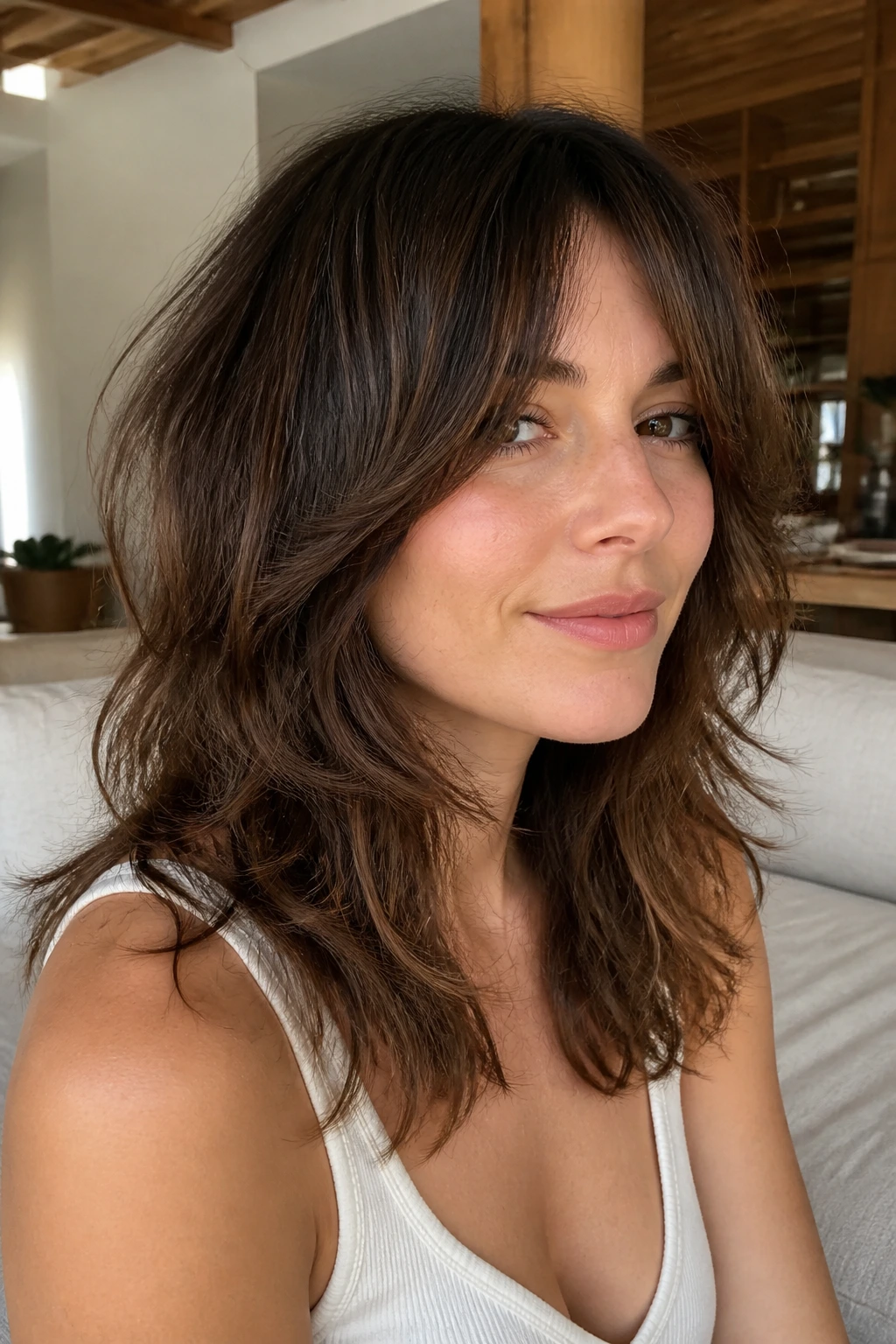
This is the one I’d hand to anyone who likes the shag idea but hates the maintenance bill. The bangs are long enough to part in the middle, sweep to the side, or blend into the front layers as they grow. The rest of the cut stays in that medium-length zone where it can stretch a bit before it loses its shape.
A grow-out-friendly shag needs a soft outline. The layers should be obvious enough to move, but not so short that they explode three weeks later. Long curtain bangs are the best insurance policy here. They give the haircut a face-framing point even when the rest of the shape starts to relax.
If you are on the fence, start here. It is the least fussy version in the group, and it gives you room to decide later whether you want more edge, more fringe, or more length.
Why Medium Shag Haircuts With Bangs Keep Working on Real Hair

The reason this family of cuts stays useful is that it solves a boring but stubborn problem: medium-length hair can get heavy at the ends and flat at the top at the same time. Shag layers break that up. Bangs bring the eye forward. Put them together and the haircut keeps some shape even when you do not style it into submission.
That balance matters more than glossy photos suggest. Real hair moves differently on humid days, second-day days, and days when you slept on one side of your head. A medium shag with bangs can handle that better than a precise one-length cut because the imperfections get absorbed into the texture. The piecey ends are not a flaw. They are the point.
The other reason I keep coming back to these cuts is longevity. A good shag does not die the minute it grows a half inch. It shifts. The fringe softens, the layers drop a little, and the whole thing keeps its shape long enough to feel like money well spent.
What to Bring to the Stylist Chair
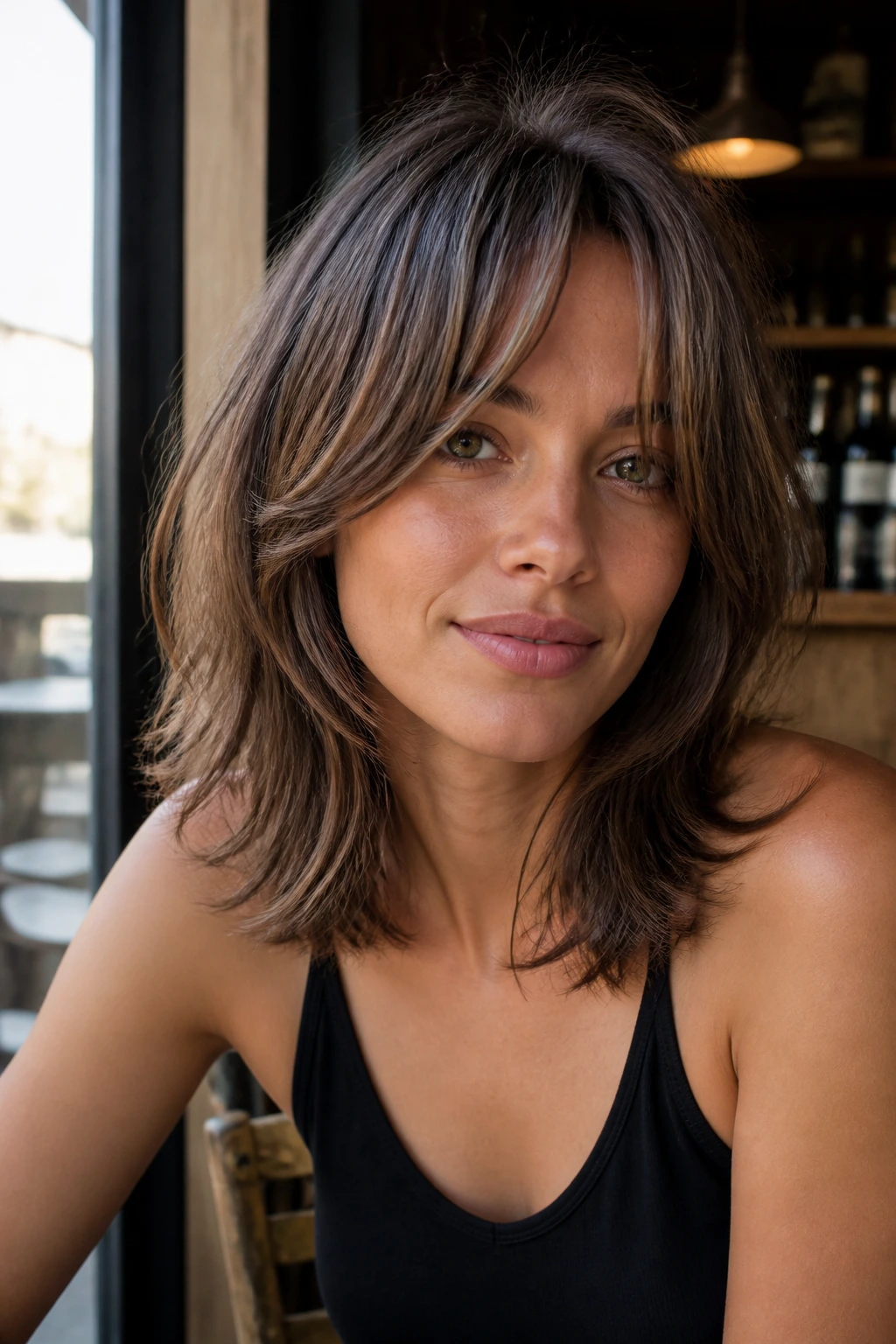
Bring photos from the front, side, and back. One front-facing picture is not enough, because shag cuts are all about distribution — where the weight sits, how short the crown gets, and how the bangs blend into the sides. A stylist can read a lot from a picture, but not everything.
Say what you do with your hair on a normal Tuesday. Air-dry only? Blow-dry the bangs and leave the rest? Flat iron the ends once a week? That tells the person cutting your hair whether the shape needs to survive a round brush or a scrunch and go.
Also say what you do not want. If your face-framing layers grow into a triangle by week three, mention that. If short bangs make you feel trapped, mention that too. The more direct you are, the less likely you are to walk out with a shag that only looks good in the salon mirror.
How to Pick the Right Version for Your Hair Texture
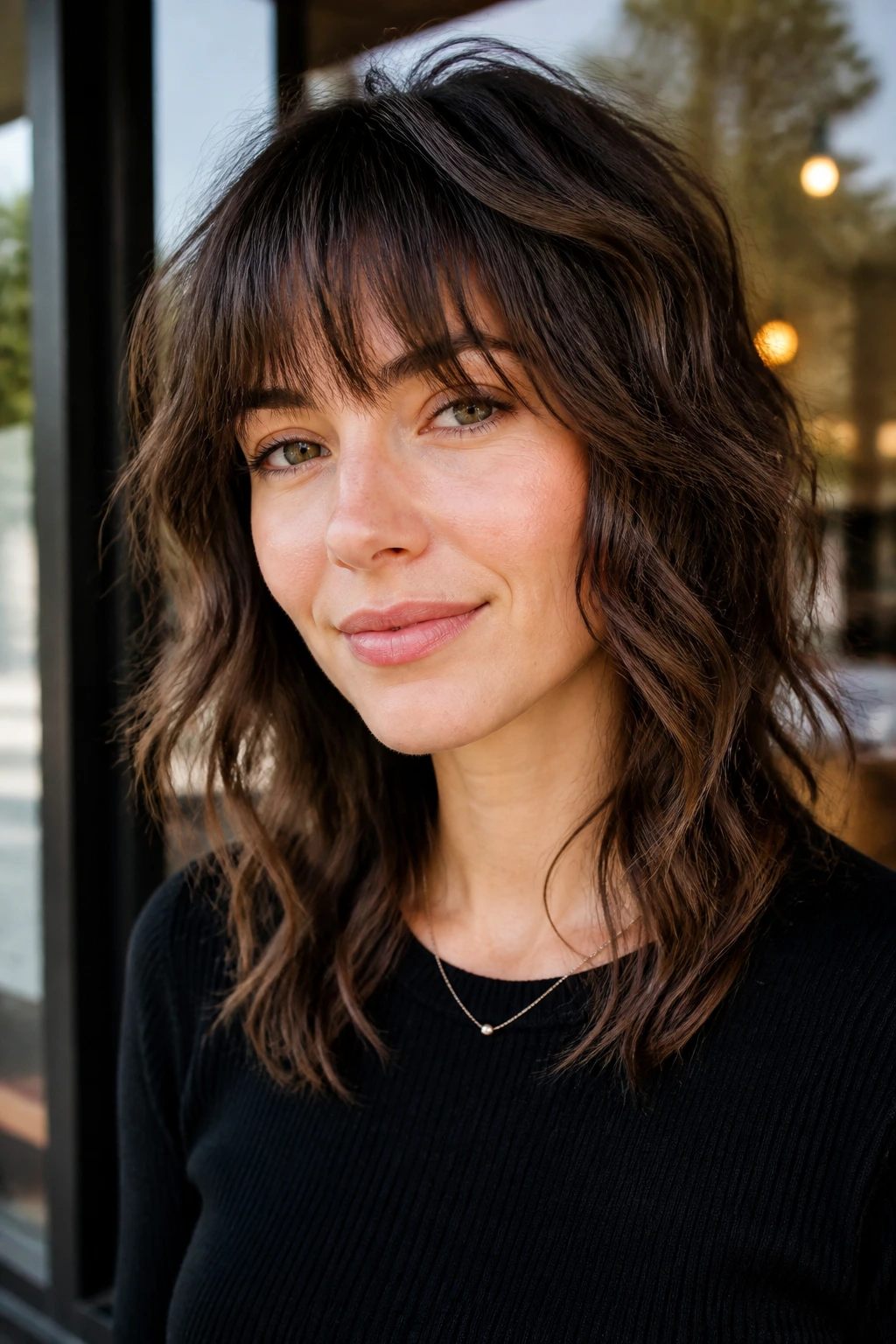
Straight Hair
Straight hair needs a little help keeping a shag from turning into a smooth curtain. Ask for point-cut layers, a soft bend around the face, and enough texture through the ends to break up the surface. Curtain bangs and bottleneck bangs are safer than very short fringe if your hair tends to lie flat.
Wavy Hair
Wavy hair is the easy win here. The bend helps the layers show, and the bangs can settle into a natural split or sweep without much work. If this is your texture, look hard at the softer versions: curtain bangs, brow-skimmers, feathered fringe, and the grow-out-friendly shapes. They tend to behave.
Curly and Coily Hair
Curly and coily hair needs shape planning, not just scissors. Dry cutting, curl-by-curl shaping, and a front fringe that respects shrinkage make the difference between a cute shag and a triangle with bangs. The best versions keep the crown lifted and the edges rounded.
Fine vs. Thick Hair
Fine hair should keep more density at the perimeter and less aggressive layering at the top. Thick hair usually needs the opposite: more interior weight removal, longer bangs, and careful debulking so the shape can move. If you have thick hair and the cut feels like a helmet, too much bulk is still sitting inside the shape. If you have fine hair and the cut feels wispy, the layers went too high.
How to Style Medium Shag Haircuts With Bangs at Home

Air-Dry Route
If you air-dry, start with a light mousse or styling cream on damp roots and a small amount through the mid-lengths. Scrunch the layers, separate the bangs with your fingers, and leave the front alone for a few minutes before you decide it needs more attention. The worst thing you can do is keep touching it.
Blowout Route
A medium round brush or paddle brush with a nozzle attachment gives the bangs and crown a cleaner shape. Blow the fringe from side to side first, then direct it where you want it to sit. That trick helps with cowlicks and keeps the front from splitting too early. Finish with a cool shot. It matters more than people think.
Second-Day Reset
Mist the roots with water or a light leave-in spray, then use your fingers to revive the part and the fringe. Dry shampoo should go at the roots and along the part line, not dumped on the ends like powdered sugar. If the layers have gone flat, clip the crown up for ten minutes while you get dressed. Sometimes that is all it needs.
Texture Boosters and Small Tweaks That Change the Mood
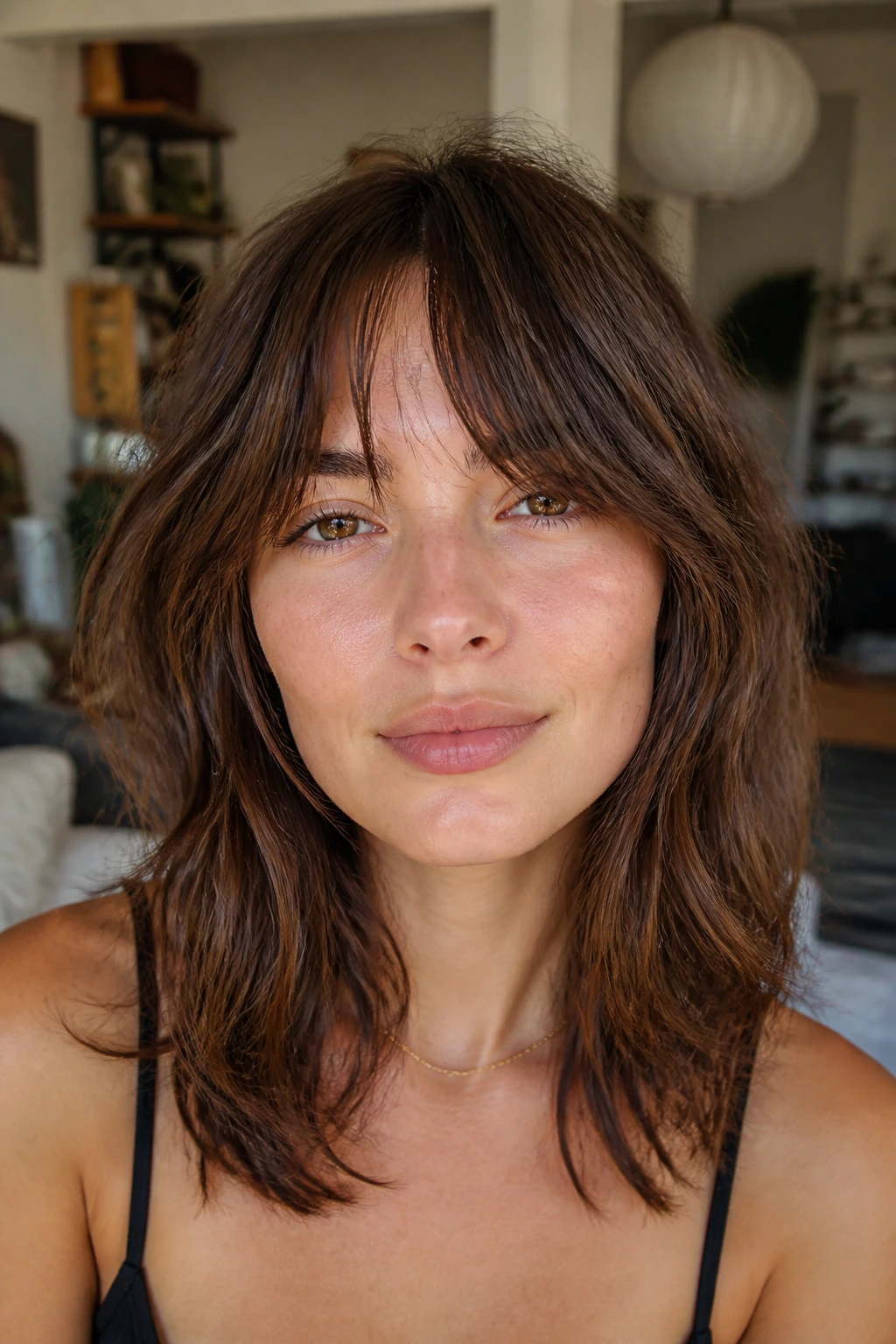
Root lift: A little mousse at the crown and bangs gives the shag the height it needs. Focus the product near the scalp, not halfway down the hair shaft, or you’ll lose the lift before you leave the house.
Fringe softening: If the bangs feel too full, run a tiny bit of cream between your fingers and pinch the ends instead of coating the whole section. That keeps the fringe piecey without making it greasy.
Accessory move: A clip, barrette, or tucked-behind-the-ear moment changes the shape fast. Medium shag haircuts with bangs often look better when one side is controlled and the other is loose. That tiny asymmetry keeps the cut from feeling too neat.
Make-it-yours: If you want less maintenance, keep the fringe longer. If you want more edge, shorten the crown and let the ends stay a little choppier. If you want softness, ask for more feathering around the cheekbones. Same base, very different mood.
Common Mistakes That Make a Shag Look Heavy or Choppy
-
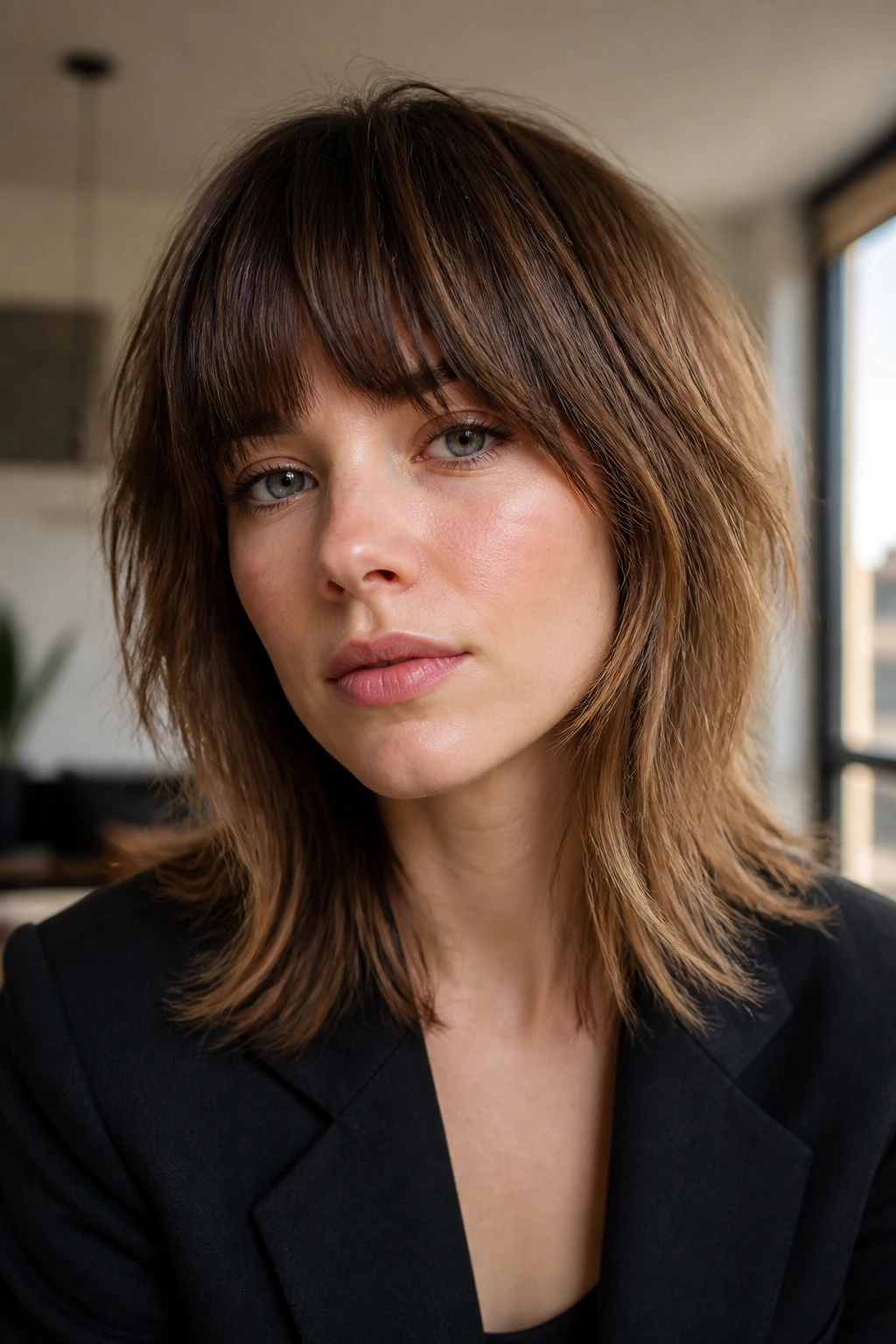
Starting the layers too high: If the stylist removes too much hair from the crown, the top can look thin and the ends can flare out. The fix is simple: keep the first major layer lower, usually around the cheekbone or jaw on medium lengths.
-
Cutting the bangs too short on day one: Short fringe can look cute in the chair and annoying at home. It tends to spring up, especially on cowlick-prone hair. Start longer. You can always trim more.
-
Over-thinning thick hair: Thinning shears used in the wrong place can leave the ends fuzzy and weak. Thick hair needs controlled weight removal, not random destruction at the perimeter.
-
Ignoring the natural part and cowlicks: If your hair pushes itself to one side, a straight-down fringe may fight you every morning. A side-swept bang, bottleneck fringe, or longer curtain shape usually behaves better.
-
Styling the whole cut too uniformly: If every section is blown the same way, the shag can lose its bite. Flip some ends in, some out, and keep the fringe a little less perfect than the rest.
-
Skipping trims and blaming the cut: Shags grow out better than blunt cuts, but they still need maintenance. Once the bangs cover your eyes and the layers lose their shape, the haircut is doing more work than it should.
Variations and Adaptations to Try
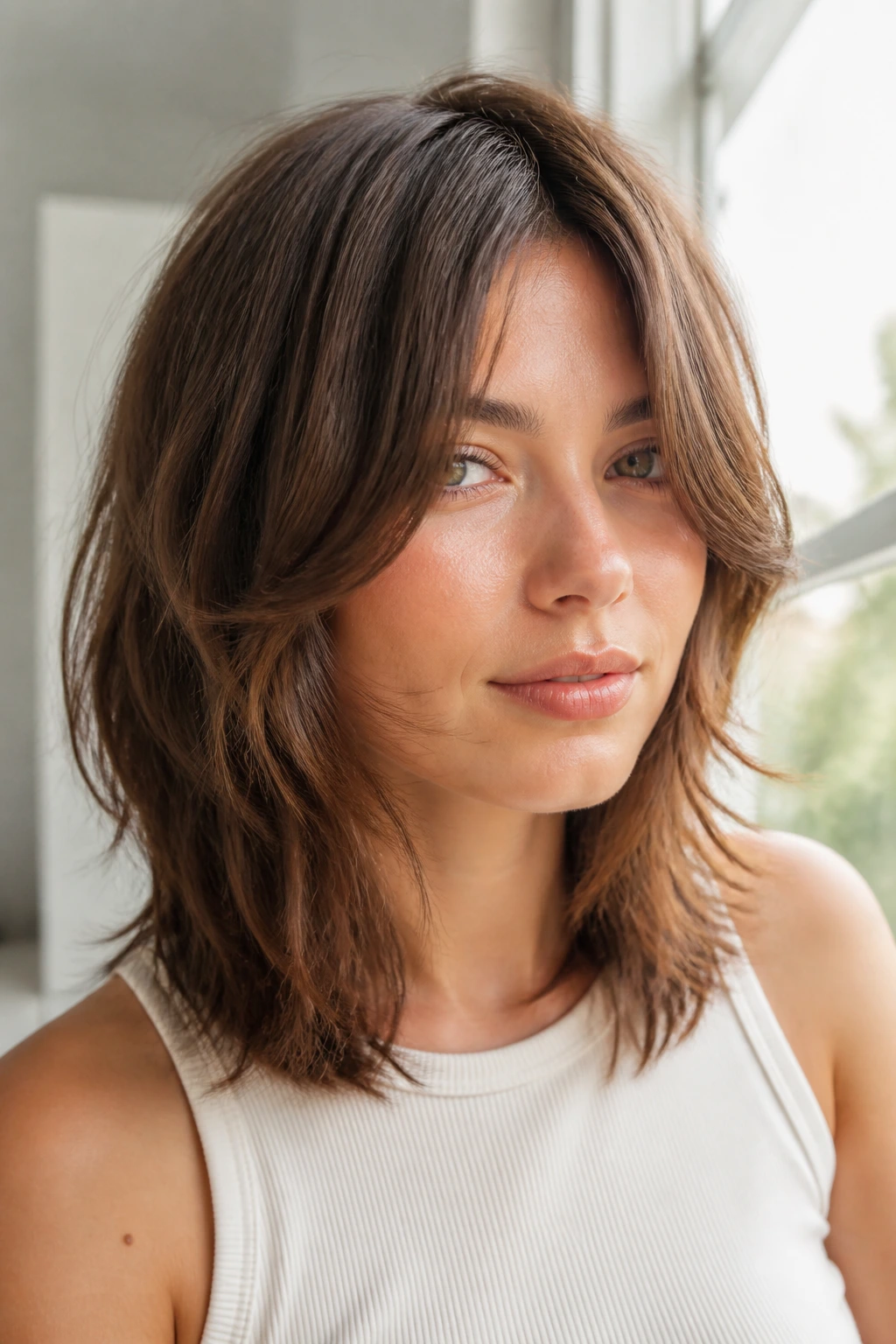
Office-Friendly Soft Shag: Keep the bangs long, the layers gentle, and the perimeter neat. This version still has movement, but it won’t read as edgy in a room full of blazers.
Edgy Razor Shag: Add more separation through the ends and a piecey fringe. Best if your hair is straight to wavy and can hold texture without puffing.
Curly Halo Shag: Shape the cut to the curl pattern and keep the fringe rounded. This works best when the hair is cut dry or in its natural state so shrinkage does not surprise you later.
Thick-Hair Airy Shag: Remove bulk from the interior and keep the bangs longer. The goal is movement without turning the ends into frizz.
Grow-Out Grace Shag: Ask for curtain bangs that start longer than you think you need. That gives you a softer path when the front gets tired of being trimmed every few weeks.
Retro Flip Shag: Add more round-brush styling and feathering at the face. It leans into the 70s without feeling costume-y.
Tools, Products, and Salon Resources Worth Having Nearby
- Reference photos from three angles: Bring front, side, and back shots so the stylist can see how the fringe and layers should connect.
- A blow dryer with a nozzle: The nozzle keeps the airflow focused, which matters when you’re trying to direct bangs and crown lift.
- A 1.25-inch to 2-inch round brush: Smaller brushes give more bend; larger brushes create a softer curve.
- Light mousse or root lift spray: Use this near the crown and fringe if your hair collapses fast.
- Heat protectant: Bangs sit close to your face and get touched often, so they take heat damage quickly.
- Texture spray: Good for the mid-lengths and ends when you want separation without stiffness.
- Dry shampoo: Not only for oil. It adds grip and stops the top from going limp.
- Wide-tooth comb and duckbill clips: Useful for sectioning bangs and pinning the front while it cools.
- A stylist who understands dry cutting or texture work: Not every haircut needs the same hand. Shags usually benefit from someone who cuts with the end result in mind, not just the length.
Keeping the Cut in Shape Between Salon Visits
A medium shag keeps its dignity longer than a blunt bob, but it still needs some upkeep. Bangs usually want attention first. If you wear a short or brow-skimming fringe, plan on a trim every 2 to 4 weeks. Longer curtain bangs can stretch to 4 to 6 weeks before they start hanging in your eyes.
The rest of the cut usually wants a reshaping every 8 to 12 weeks, depending on how fast your hair grows and how much structure you like around the crown. If the silhouette starts to widen at the sides or the bangs stop blending into the face-framing layers, the shape is asking for a clean-up.
Sleeping habits matter more than people admit. A loose clip, a soft pin, or a silk pillowcase can help the fringe keep its direction overnight. So can not going to bed with wet bangs. They dry in whatever shape they please, and they are never polite about it.
If you are growing the cut out, keep the front longer than you want and ask for only the smallest dusting on the layers. Medium shag haircuts with bangs grow best when the fringe can be split, tucked, or swept rather than forced into one job.
Questions People Ask Before They Cut the Bangs
Will a medium shag with bangs work on fine hair?
Yes, if the layers stay controlled. Fine hair usually does better with a softer fringe and fewer short layers at the crown so the cut keeps enough density to look full.
Are curtain bangs or bottleneck bangs better for a shag?
Curtain bangs are easier to grow out and usually feel softer. Bottleneck bangs give a little more shape in the center and can look especially good on wavy hair.
How often do the bangs need trimming?
Short bangs may need a touch-up every 2 to 4 weeks, while longer fringe can stretch longer. If your bangs stop clearing your eyes and start doing the “I live in my eyelashes now” thing, it’s time.
Can curly or coily hair pull this cut off?
Absolutely. The haircut just needs to respect shrinkage and curl pattern. A dry cut or curl-specific shaping makes a huge difference in whether the fringe sits well.
What if my bangs split in the middle every day?
That usually means the hairline or cowlick is steering the cut. Go longer, part the fringe on purpose, or switch to a curtain or side-swept shape rather than fighting it.
Do shag layers make hair look thinner?
They can, if the stylist takes too much weight from fine hair. On the right hair, though, the layers create movement without making the ends look stringy.
Can this cut still look polished enough for work?
Yes. Keep the fringe longer, the layers softer, and the outline cleaner. A medium shag does not have to look messy to be interesting.
What should I do on day two when the fringe goes weird?
Mist the front lightly, re-part it, and use your fingers or a round brush to reset the bend. A little dry shampoo at the roots helps more than drowning the fringe in product.
The Shape That Keeps Its Edge
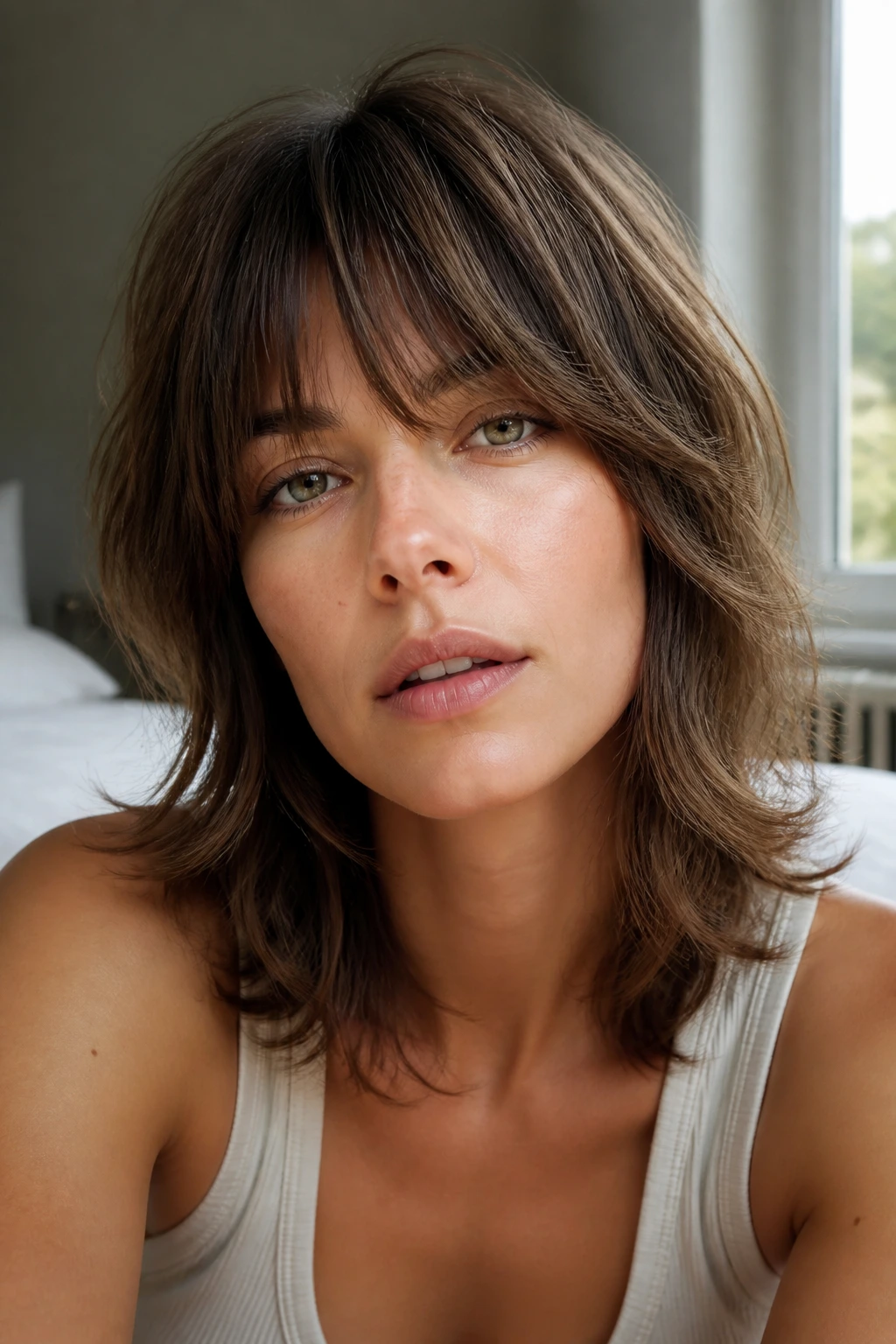
A medium shag with bangs works because it has range. It can be soft, retro, sharp, curly, feathered, or low-maintenance without needing a completely different haircut underneath. That is the real gift of this shape: it gives you room to change your mind without starting from scratch.
If you are choosing one of these, start with your hair texture and your tolerance for fringe maintenance. Those two things will tell you more than a hundred inspo photos. The right version is the one that still looks like you when the styling gets a little loose.
And that, honestly, is what makes the cut worth keeping around. It can look deliberate on a good day and still survive an ordinary one.
