



Short wavy hair has a stubborn little personality. Leave it alone and the bends land in all the right places; push it too hard and the whole shape can puff at the sides, collapse at the crown, or both. That tension is exactly why curly hairstyles for short wavy hair are so satisfying when they’re handled with a light hand and a sharp eye.
I’ve always liked short waves more than people expect me to. They don’t need a mile of length to look interesting. They need a clean outline, a bit of lift at the roots, and enough separation at the ends so the texture can show instead of disappearing into one fuzzy blur. A blunt bob with the wrong cream can look heavy; the same cut with a little mousse, a side part, and a few intentional pieces around the face looks alive.
The real trick is not forcing every strand to behave the same way. Short wavy hair looks best when the style works with the natural bend, not against it. Some of the strongest options here are polished and neat. Others are a little messy on purpose. A few only need a barrette, a claw clip, or a scarf to change the whole mood. That’s the fun part.
Why These 32 Looks Work So Well on Short Waves
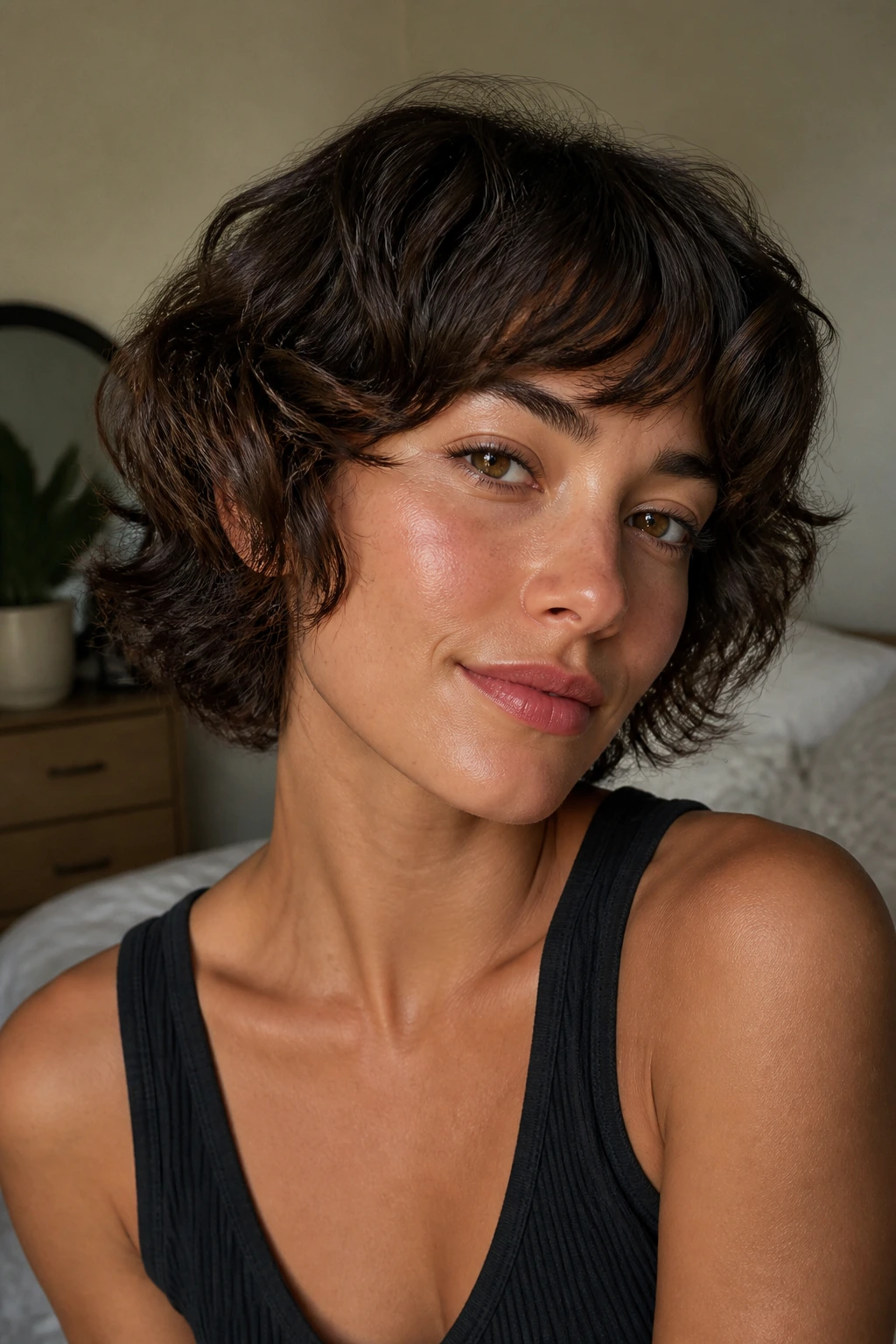
Texture does the heavy lifting: A short cut shows off every bend, flip, and curve, so you do not need complicated styling to make the shape read from across the room.
The styles don’t fight the hairline: These looks lean on side parts, pin-backs, and controlled volume, which keeps short waves from expanding outward like a triangle.
Most of them reset fast: A light mist of water, a dab of mousse, and a few finger-scrunched pieces can bring the shape back in minutes.
They leave room for personality: Clips, scarves, headbands, and tiny braids change the feel fast without needing a fresh blowout.
They suit a lot of hair density: Fine waves, thick waves, loose curls, and in-between textures can all use these ideas with small tweaks.
They’re realistic: No one has time to wrestle every section of short hair into submission before coffee. These styles work with the bend you already have.
1. Deep Side-Part Wave Bob
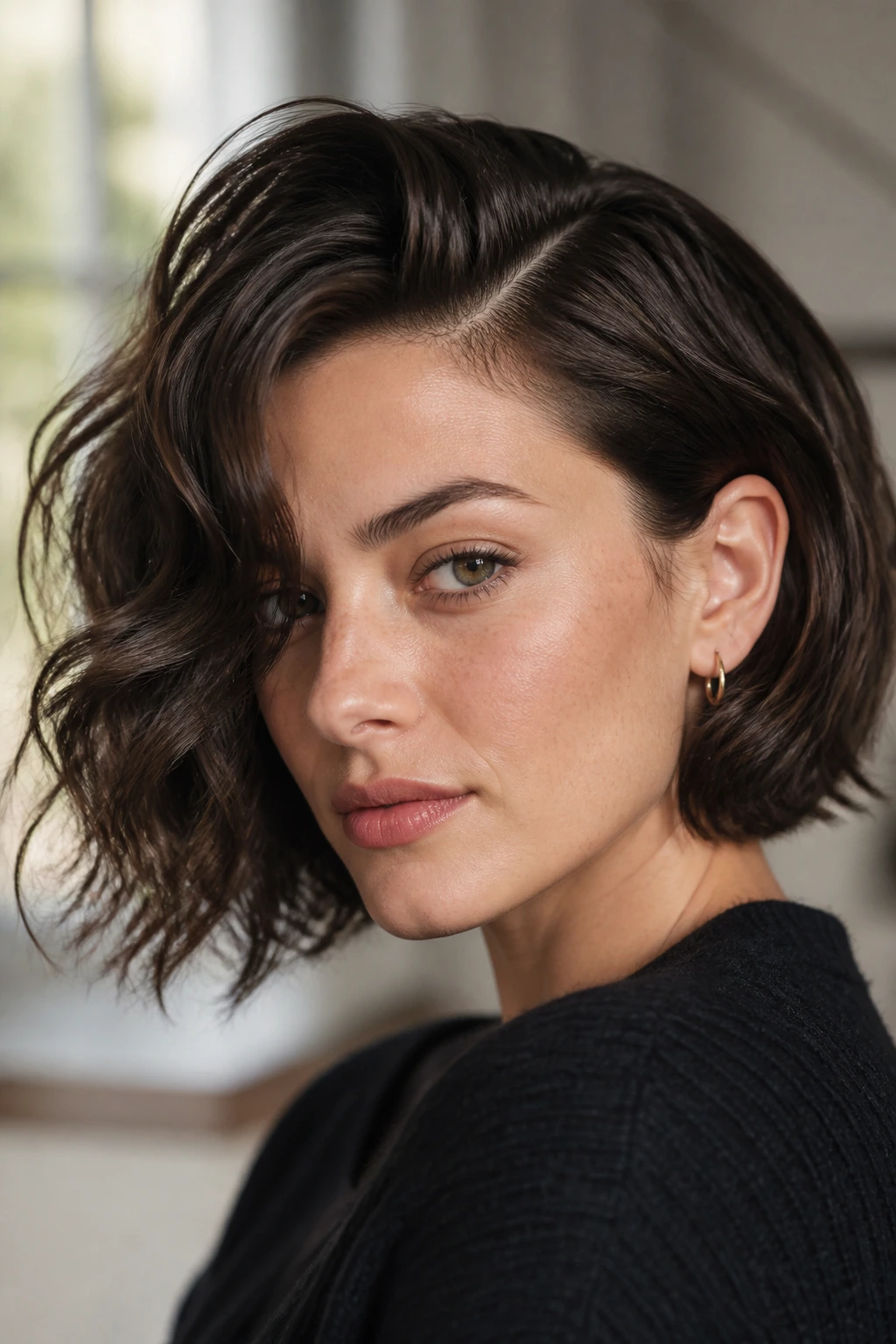
A deep side part can make a short wavy bob look sharper in about ten seconds flat. The heavy side gives you lift at the root, and the lighter side lets the wave fall across the cheekbone instead of hanging straight down. It’s one of those styles that looks like a decision was made, which is half the battle.
I like this one for round faces and anyone whose hair goes flat at the crown by noon. Put a little mousse at the roots, rough-dry or air-dry, then tuck the heavier side behind one ear so the cut line stays visible. A pea-size bit of curl cream on the ends is enough. More than that and the bob starts to droop.
Why It Works
The side part changes the weight distribution. That matters more on short hair than people think. A center part can be lovely, but a deep side part gives the waves a place to stack without turning the whole head into a puffball.
If your hair bends mostly at the ends, this is a smart choice. The style lets the front pieces sweep across the face while the rest stays loose and touchable. A soft mist of flexible-hold spray keeps it from going fuzzy without freezing the shape.
2. Piecey Pixie With a Long Top
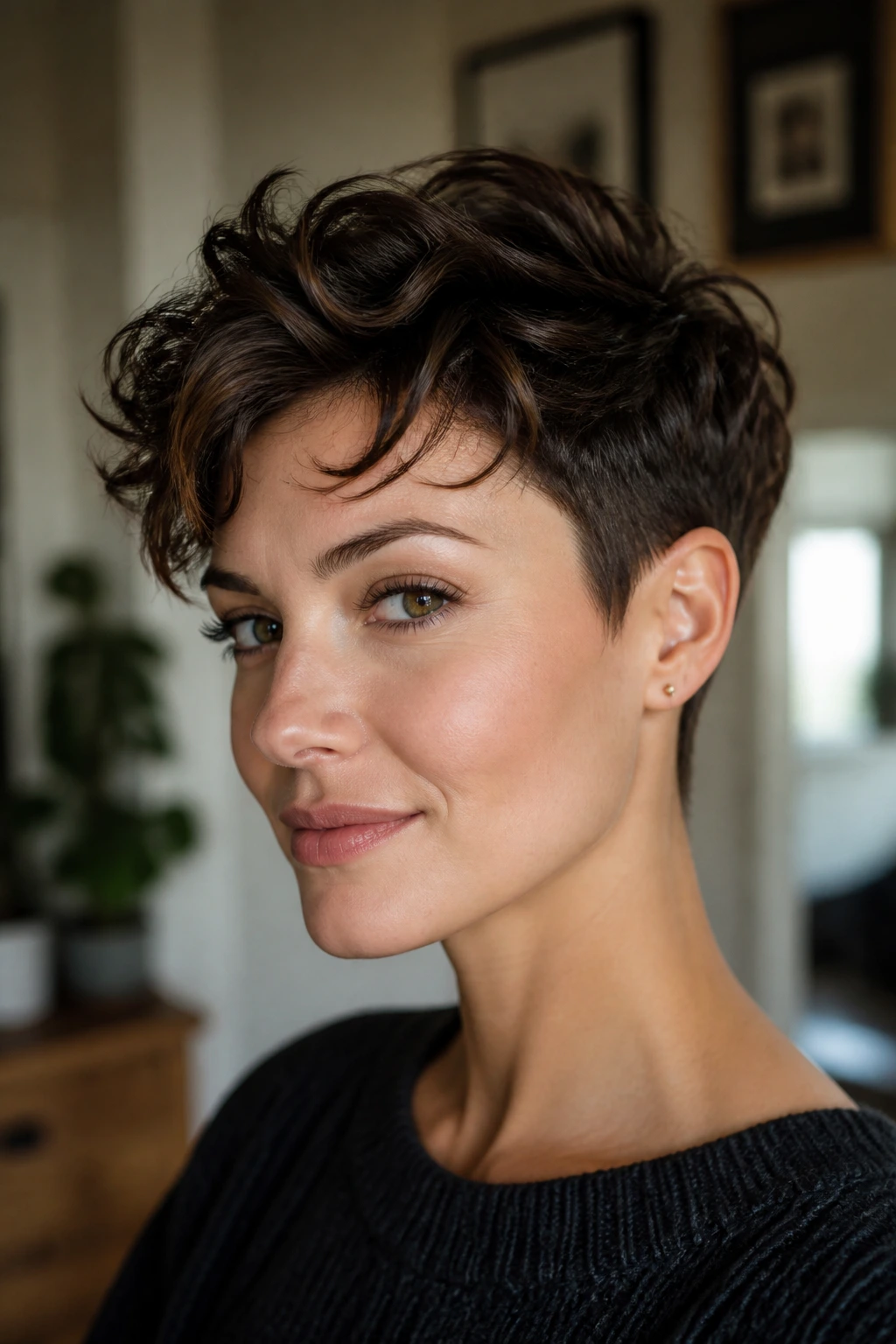
This is the cut I reach for when someone wants short hair with some attitude but does not want to look helmeted. The sides stay close, the top keeps enough length to flip, bend, or spike a little, and the wave pattern does most of the work. It has a bit of edge, but not the shouty kind.
The key is separation. Work a small amount of matte paste through damp or dry hair, then pinch the top section into a few visible pieces rather than smoothing everything into one shape. If your hair is fine, use even less product than you think you need. A little lift goes a long way here.
Best for: softer jawlines, thin density, and anyone who wants a cut that looks intentional even on lazy mornings.
3. Tousled French Bob

A French bob with a wave in it is one of the easiest ways to make short hair look expensive without looking overworked. The length usually sits around the jaw, the ends stay a bit blunt, and the texture is broken up enough that it never feels stiff. It has that slightly undone feel that makes you think the person didn’t spend forever on it—even when they did.
Use a light mousse or foam on damp hair, then scrunch with your hands and let it dry as much as possible before touching it again. If the front pieces need help, bend just the last inch or two with a small curling wand. The point is not uniform curls. The point is a bob that looks like it moved naturally and then decided to stay that way.
4. Curly Bixie
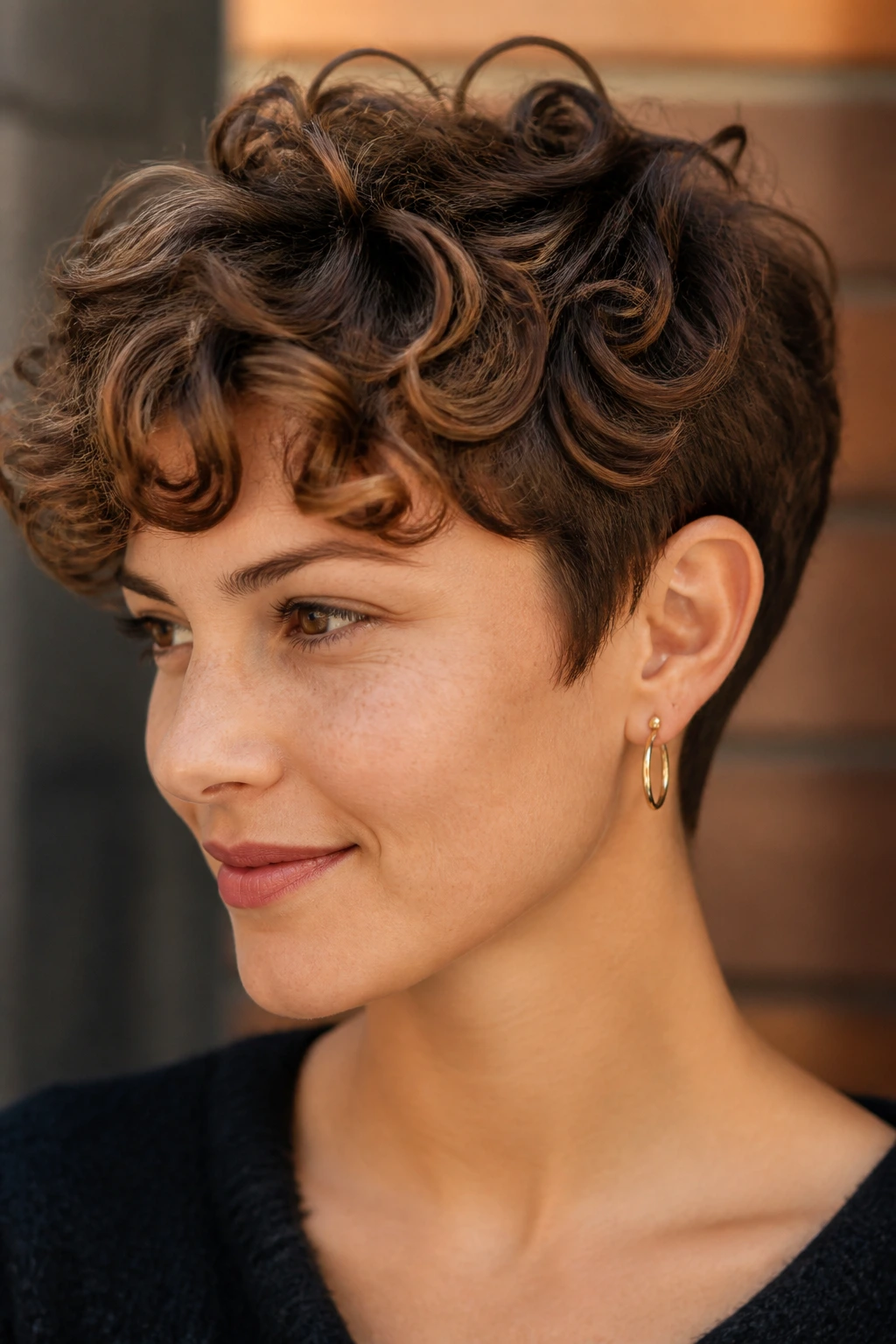
A bixie sits between a bob and a pixie, which is exactly why it works so well on wavy hair. You get enough length on top to show off the bend, but the nape and sides stay neat enough that the shape doesn’t swell up into a triangle. It feels playful, not fussy.
The best version keeps some softness around the temples and a little height through the crown. That little lift matters. It stops the cut from lying too close to the head, which can make waves look limp instead of defined. I’d ask for texture, not thinning, if your hair is already fine. Thinning shears can make the ends look wispy in a bad way.
Styling note
Air-dry the front and diffuse the crown on low heat if you need more shape. Pinching the ends while they’re damp helps the layers separate instead of clumping.
5. Slicked-Back Wet Pixie
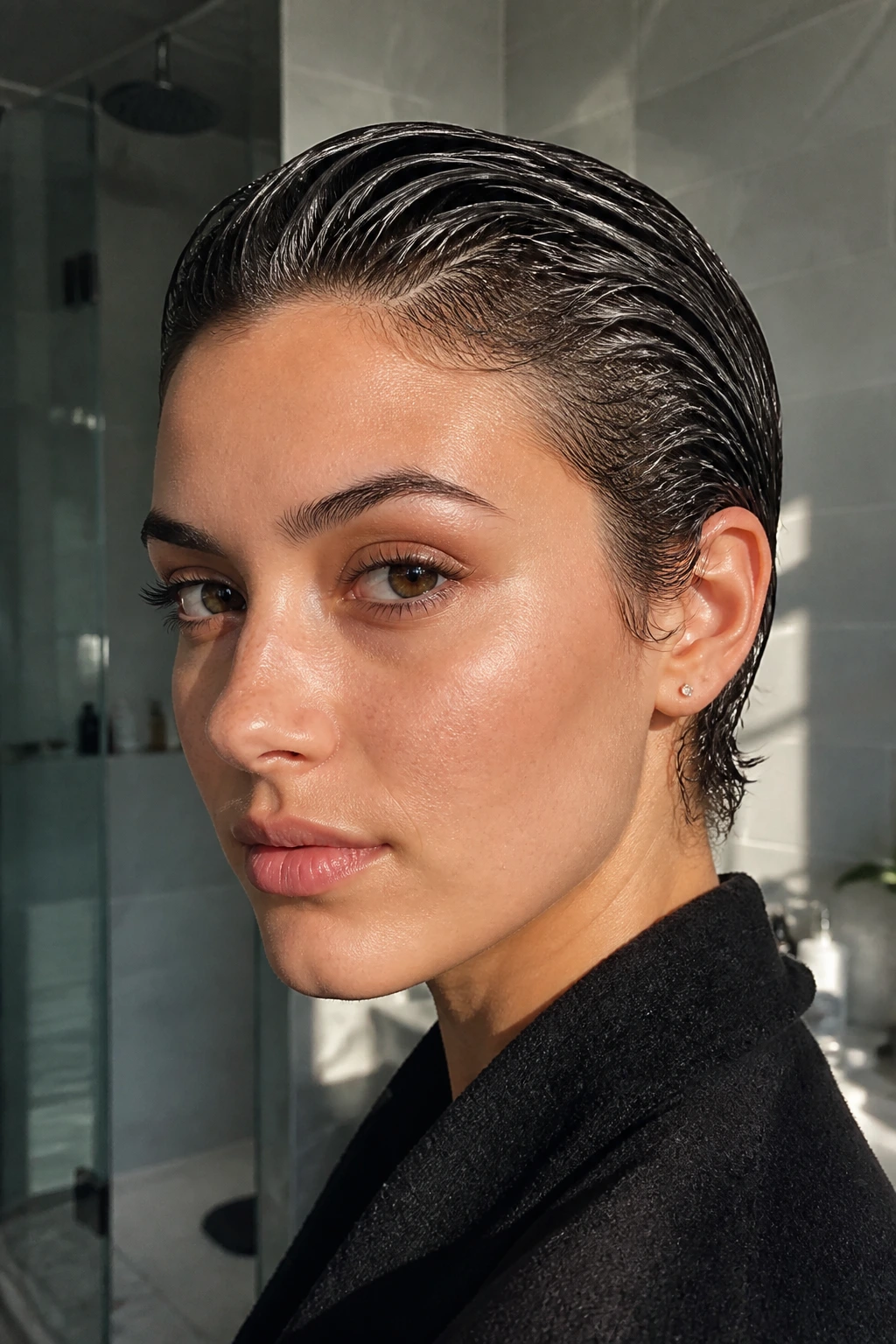
There’s no pretending here. This style is sleek, a little severe, and very good at cleaning up a bad hair day. If your waves have gone uneven, frizzy, or oddly flat on one side, the wet pixie turns all of that into a feature. The shine becomes the point.
Use gel on soaking-damp hair, comb it straight back or slightly off-center, then smooth the sides close to the head. Don’t pile on product at the ends unless you want them to stay crunchy. The look depends on a shiny crown and soft control, not stiff shells. I like it better with a tiny bit of ear exposure and a clean eyebrow. It feels deliberate that way.
6. Air-Dried Face-Framing Crop
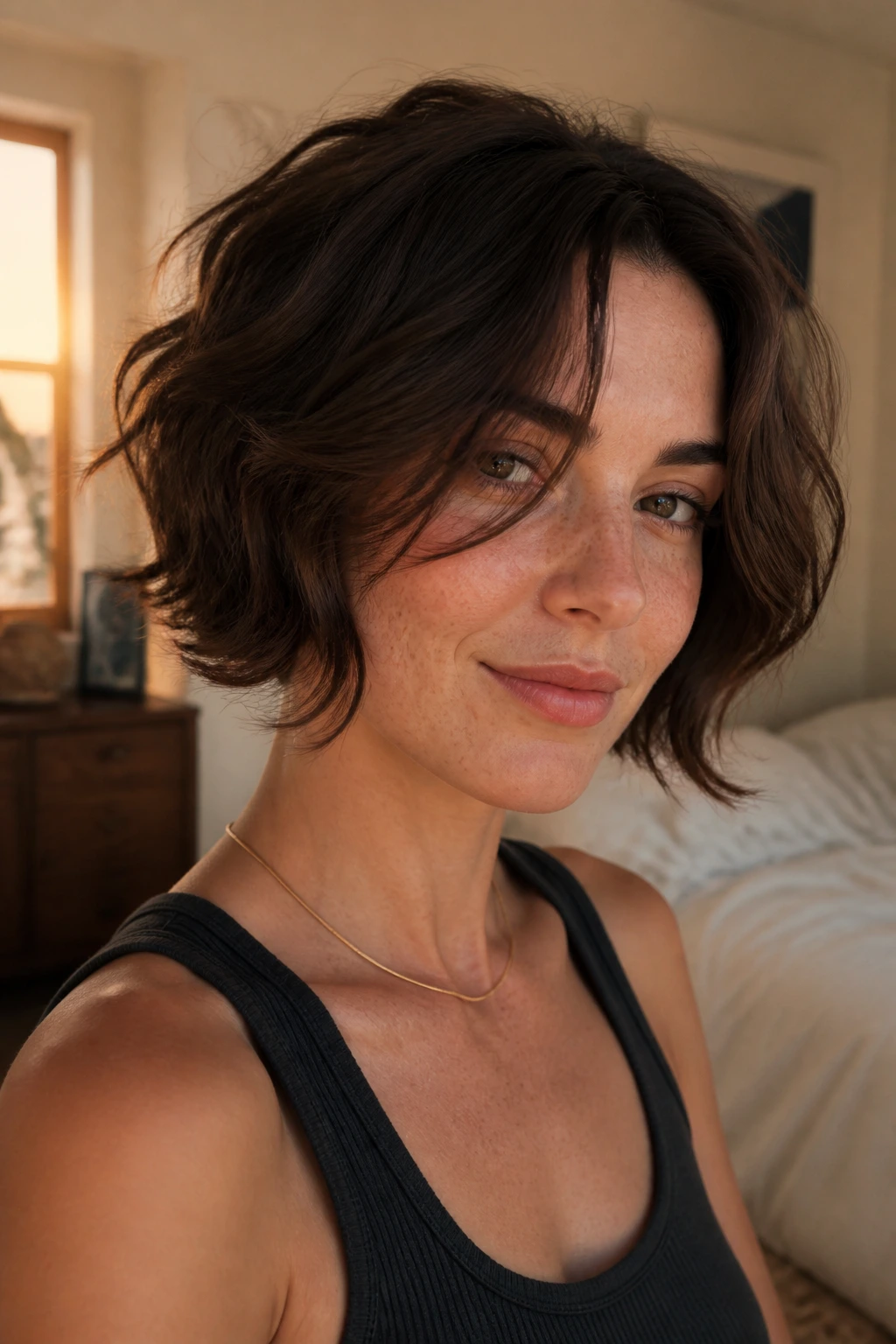
This one is for the person who wants short wavy hair to look soft, not severe. The cut usually lands around the cheek or jaw, with enough length in front to frame the face and enough texture underneath to keep it from lying flat. It’s a very forgiving shape, which is rare and worth keeping.
Work a leave-in conditioner through the mid-lengths, then add a light foam or mousse near the roots. Scrunch only a little. Too much handling creates frizz, and frizz can be lovely in the right place but annoying when it lands across the whole head. Let the face-framing pieces fall where they want, then guide them with your fingers once they’re mostly dry.
Good if you wear glasses: those front pieces soften the frame instead of fighting it.
7. Micro Fringe Shag
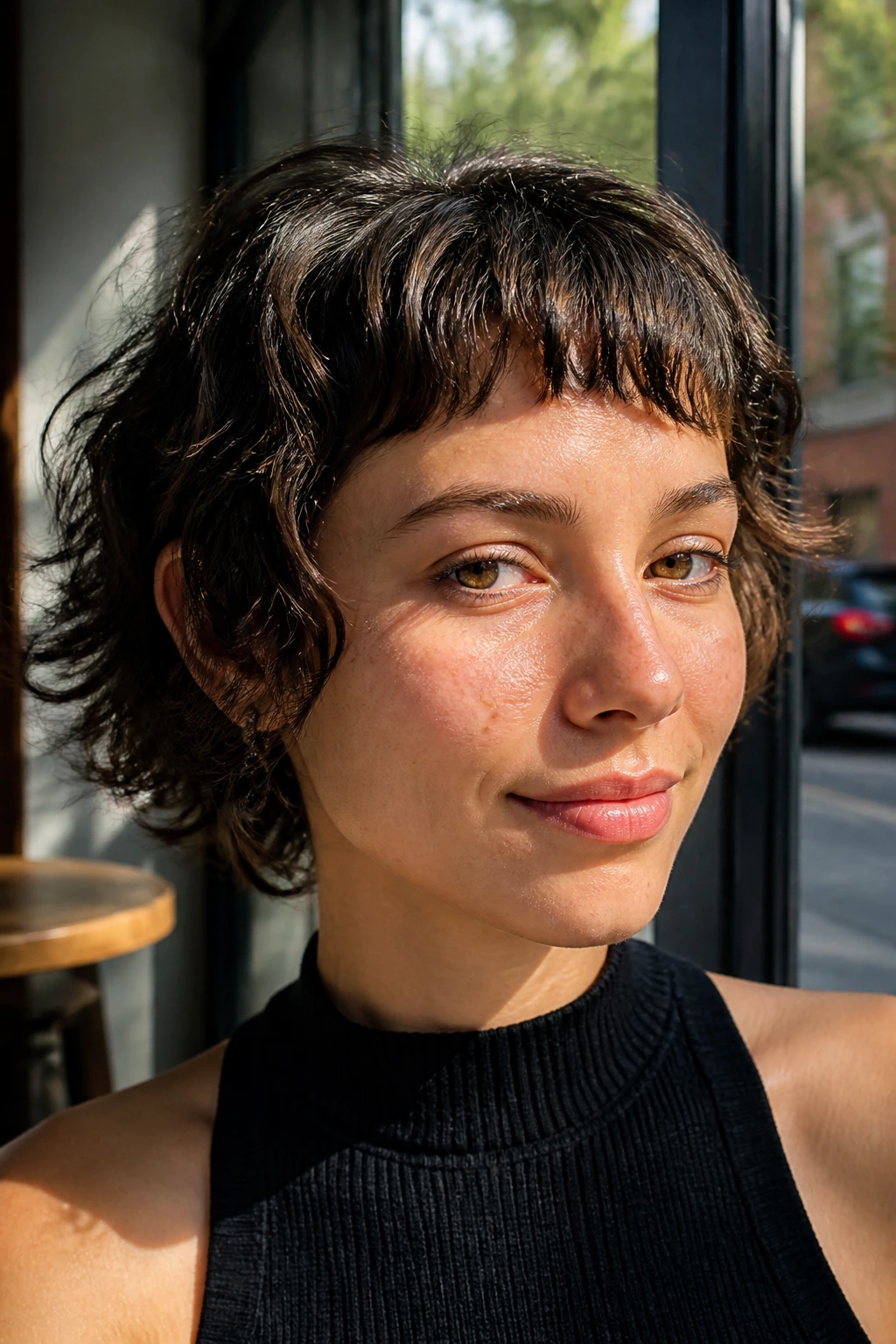
A tiny fringe and choppy layers make short waves look sharper in the front and looser everywhere else. This is not a quiet haircut. It has texture, movement, and a little mischief. If you like styles that look better the second day, this one sits near the top of the list.
The fringe needs to be cut with the wave pattern in mind, though. If it’s too short and too blunt, it can kick up in the morning and refuse to settle. Ask for a micro fringe that can split a little rather than one hard straight line. A touch of styling cream through the bangs keeps them from puffing out.
What makes it work
The shag layers break up the bulk through the crown, so short hair doesn’t sit like a single block. That makes the whole shape lighter and easier to move around.
8. Claw-Clip Twist-Up
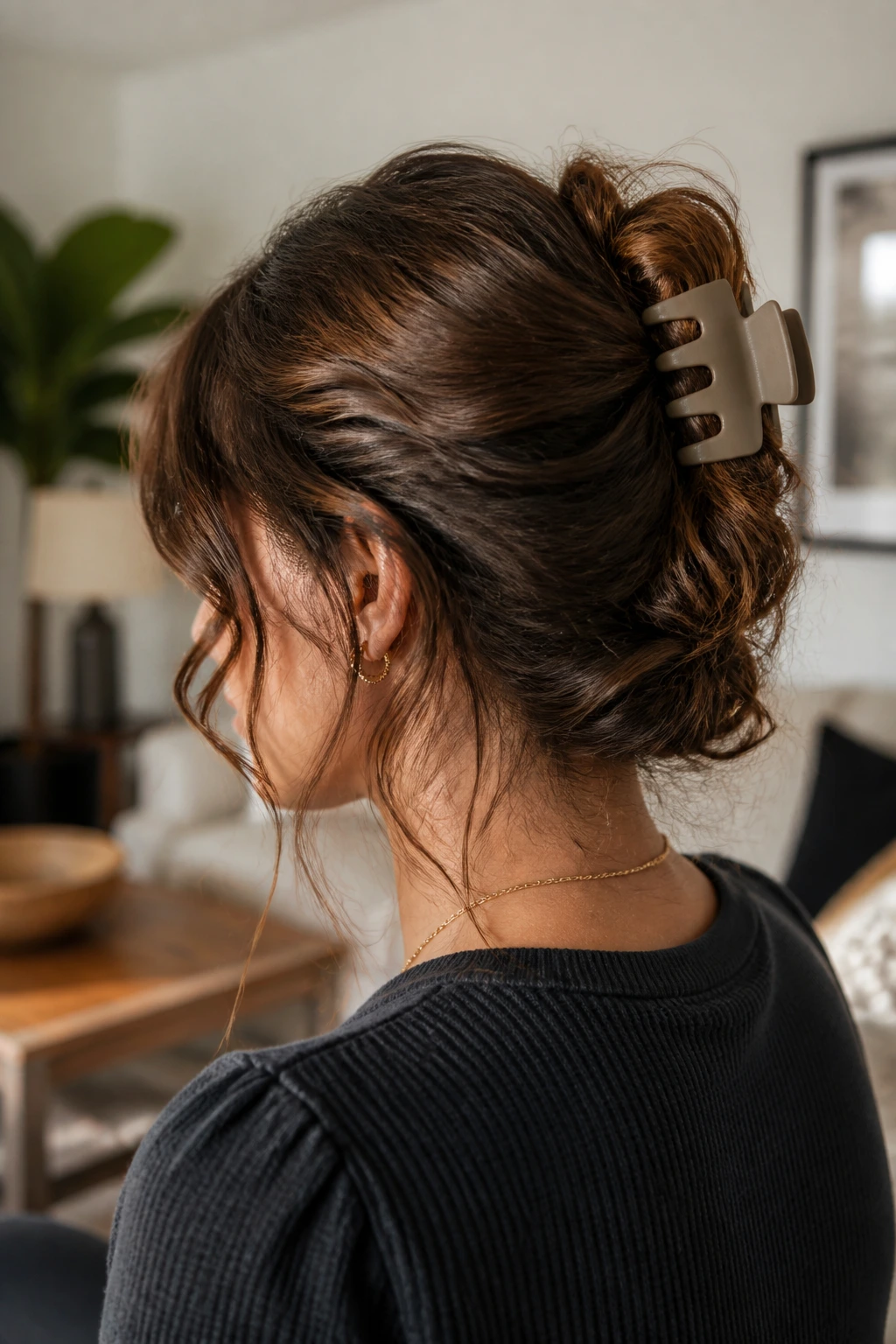
Sometimes the best short wavy hairstyle is the one that gets the hair off your neck and still leaves enough texture to look finished. A claw-clip twist does exactly that. Twist the back section loosely, let the front pieces fall out, and clip it high enough that the waves keep some lift.
This is a good move when your hair is in that awkward half-clean, half-flat state. It also works when you do not want to fight the crown. The twist should be loose. If you pull it too tight, short waves pop out in weird places and the whole style starts looking accidental. Use a medium claw clip with a matte finish so it holds better than the slick plastic ones.
My preference: let a few ends stick out. It looks better than pretending every strand was invited to behave.
9. Half-Pinned Crown
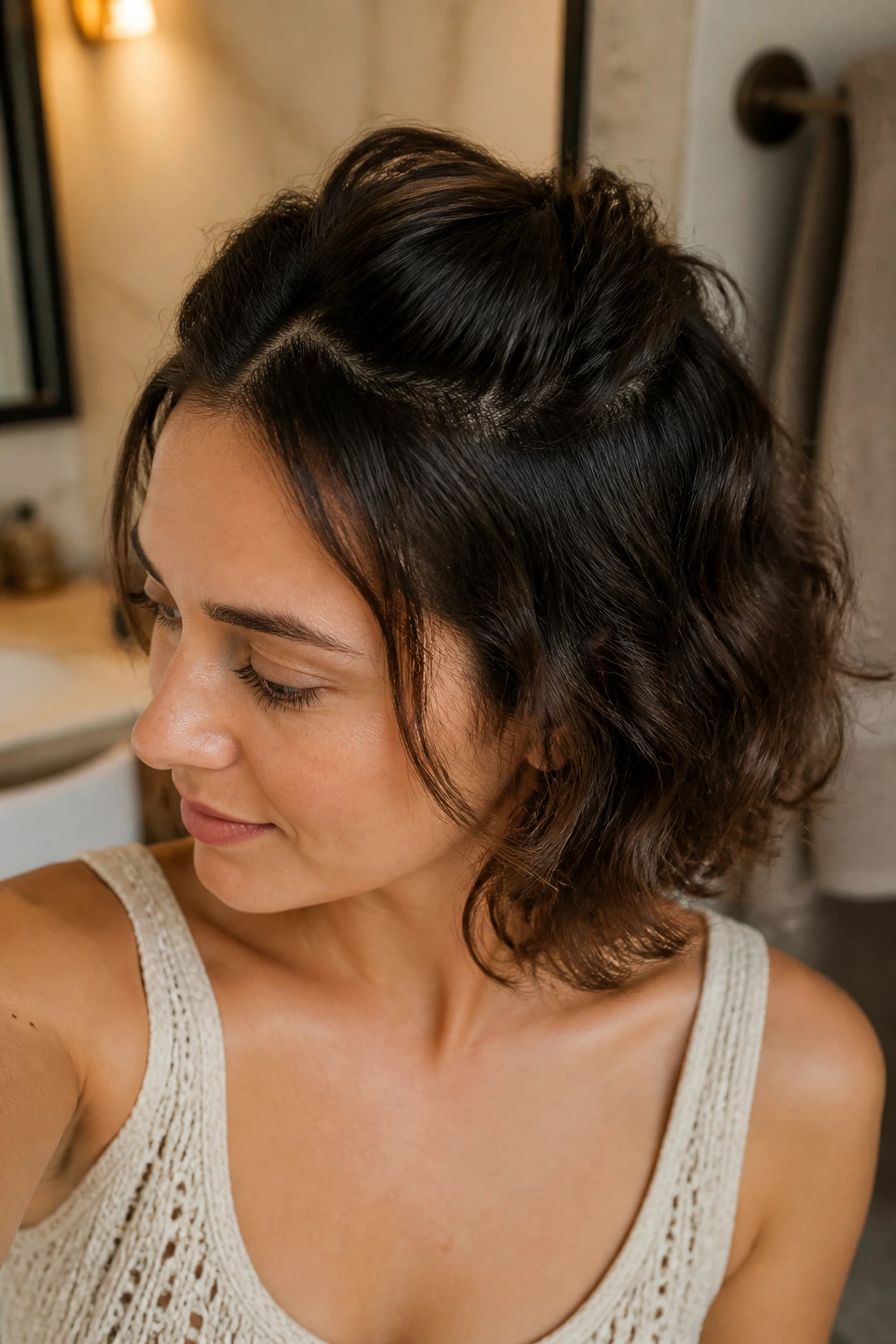
A half-pinned crown is one of those styles that looks more styled than it really is. Pull the top section back just enough to open the face, then pin it in a small lifted shape at the back of the crown. The rest stays loose and wavy. It’s neat without being stiff.
I like this for growing-out bangs, because the front can travel back without losing the softness around the temples. Two crossed bobby pins usually hold better than one, especially if the hair is slick or freshly washed. If you want more height, clip the crown while the hair is still warm from a blow-dry or slightly damp from air-drying.
10. Mini Faux Hawk
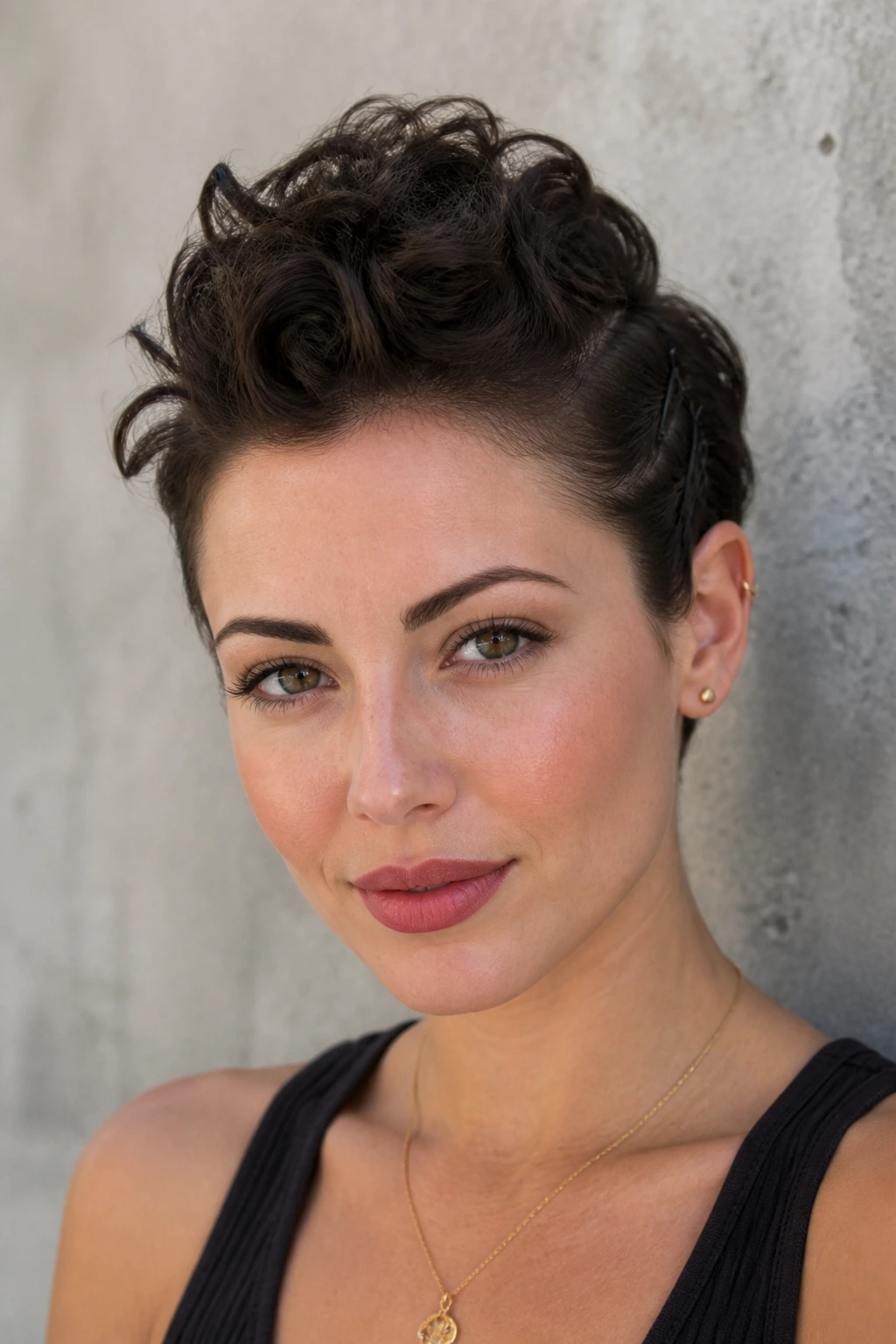
This is the edgier cousin in the group. Pin the sides down or smooth them back, then leave the center section lifted and textured so the wave pattern runs down the middle like a ridge. Short waves do this better than you’d think because the shape can be compact without going flat.
Use a matte paste or a strong styling cream if you want the center to hold. Gel can work too, but it can make the look too shiny if you use too much. The best version keeps some softness at the edges and a little lift at the crown. It should look strong, not glued.
Best for
Thicker waves, stronger jawlines, and anyone who likes a short cut that feels a little rebellious without needing extra length.
11. Flippy Chin-Length Bob

A chin-length bob with flipped ends has a clean, retro feel that still reads modern when the waves are broken up a bit. The ends curve outward instead of tucking in, which gives the whole cut a bit of bounce. It’s one of my favorites for people who want shape without a lot of layers.
You can create the flip with a round brush or a small flat iron. Just bend the last inch of the hair away from the face on both sides. Keep the roots airy and the ends defined. If the whole style gets too smooth, it loses the charm. A little texture spray at the finish helps it stay less polished and more alive.
12. Messy Side Braid Tuck
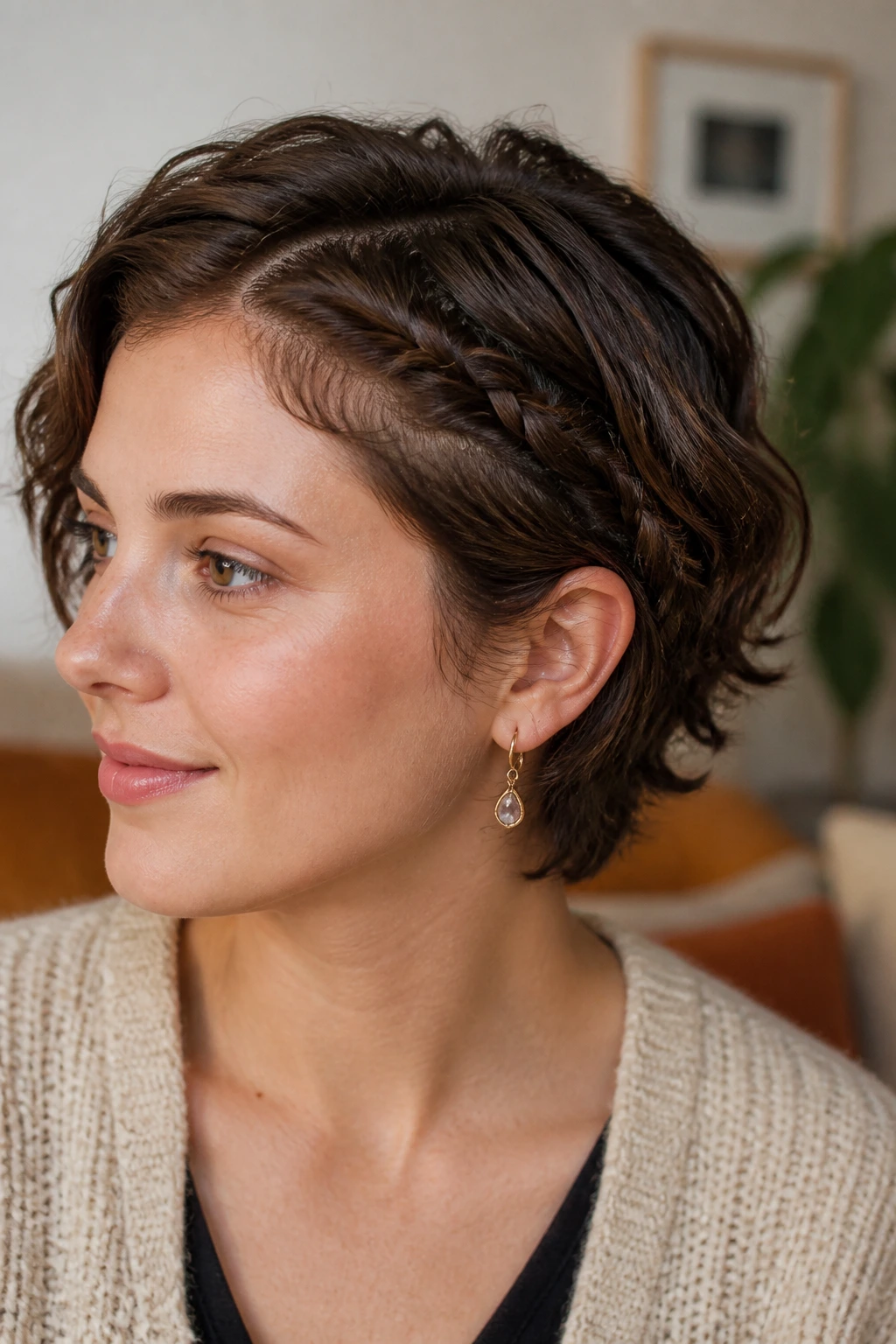
Short hair can still pull off a braid if you’re willing to keep it tiny and loose. Start a braid at the side hairline, braid only a short section, and tuck the rest under or pin it behind the ear. The braid becomes a detail rather than the whole story, which is exactly why it works.
This style is handy when waves are a bit wild at the front or when you want to keep hair off your face without using a headband. Don’t make the braid too tight. A tight braid on short hair tends to look severe and pull the shape backward. Leave some width in the braid so the texture stays soft.
13. Scarf-Wrapped Bob
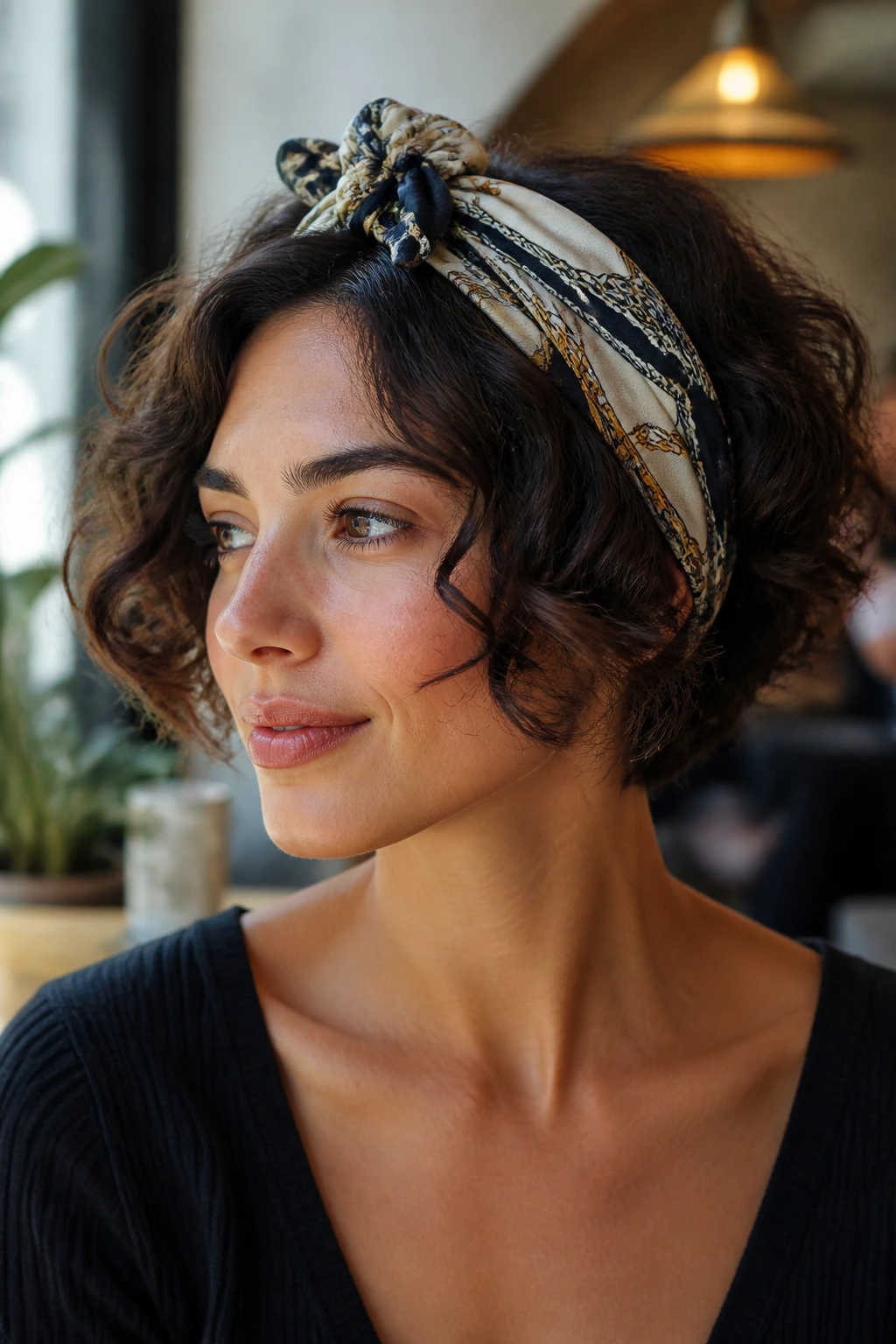
A scarf can save a short wavy bob faster than almost anything else. Wrap it along the hairline, tie it under the crown, or knot it at the nape and leave the waves loose underneath. The style gives the hair a frame, which is useful when the top has gone frizzy or the part won’t sit where you want it.
I prefer a silk or satin scarf because it glides over the hair instead of roughing up the cuticle. Cotton can work, but it grabs more. If the bob is curly at the ends, pull a few strands free near the face so the scarf doesn’t swallow all the texture. That tiny break matters.
How to wear it
Pair it with a simple top, a clean neckline, and one strong accessory—small hoops work better than big, busy earrings here.
14. Barrettes and Side Sweep
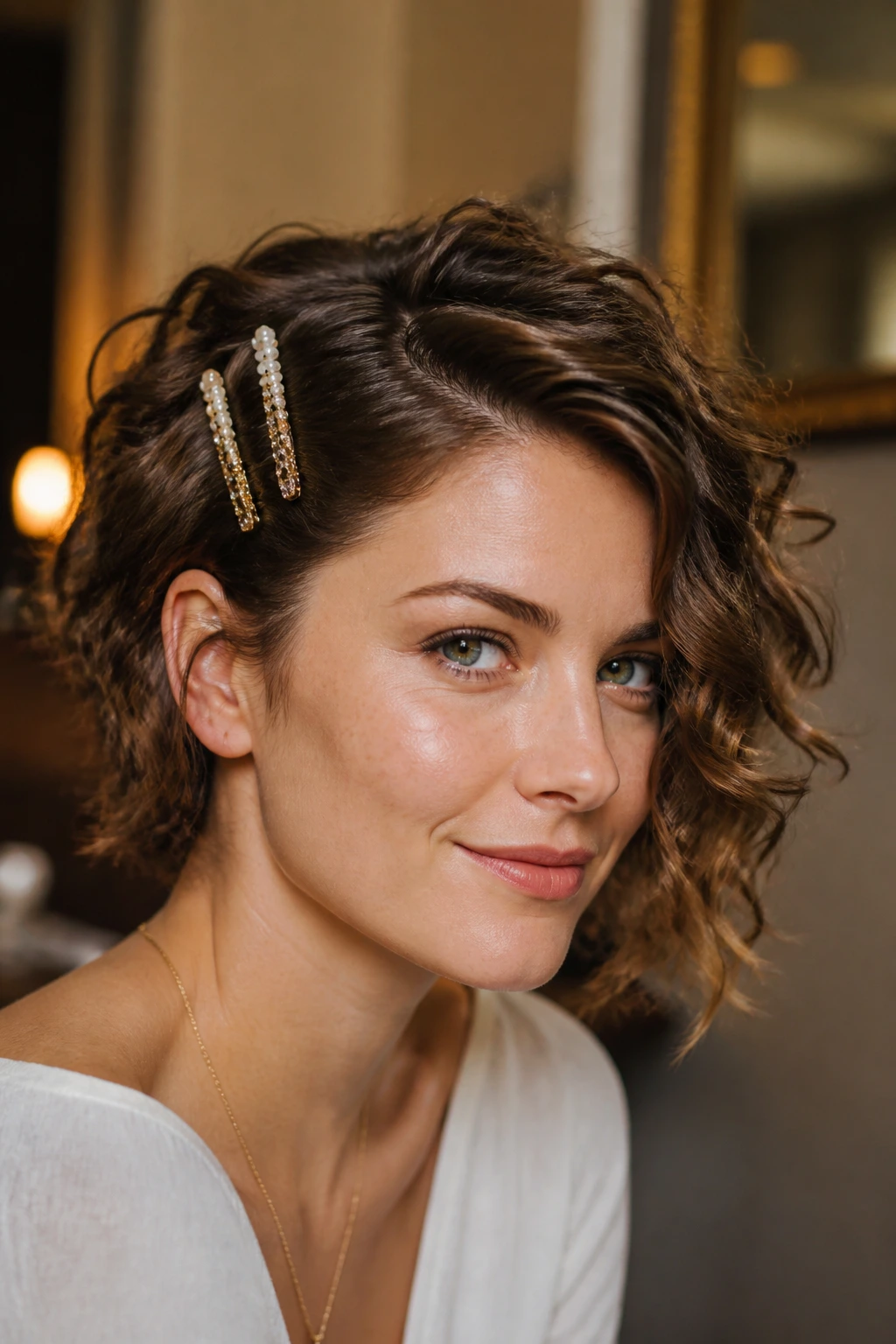
A pair of barrettes can fix short wavy hair without hiding the cut. Sweep one side back, clip it with two decorative pins or a single strong barrette, and let the rest fall into a loose bend. The result is tidy but not old-fashioned, which is harder to pull off than it sounds.
I like this style when the wave pattern is uneven around the face. Instead of fighting that asymmetry, you lean into it. Choose clips that grip well; cheap barrettes slide right out of fine hair. Matte metal, resin, or a coated clip usually stays put better than very slick finishes.
One small trick: clip just above the ear, not right at the temple. It gives the face more open space.
15. Finger-Waved Short Cut
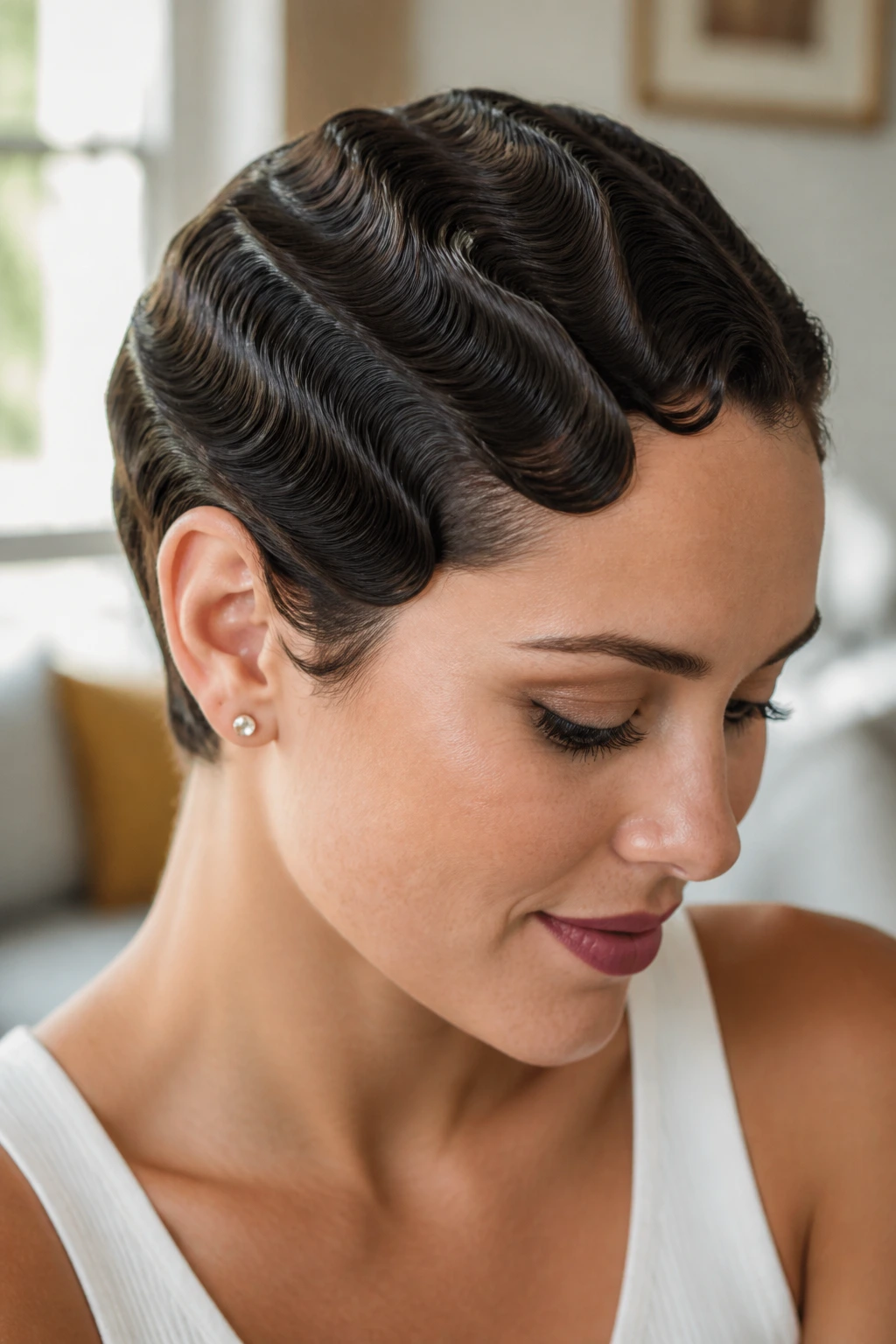
Finger waves are a little more structured than most short wavy styles, and that is the whole point. The sculpted S-shape gives short hair a glossy, old-school line that works especially well when the cut is close to the head. It’s a formal look, but not a stiff one if the wave pattern is done with some softness.
You’ll need gel, a fine comb, and a few duckbill clips to hold the ridges while they set. Make the waves broad enough to read from a few feet away. Too many tiny ripples can look busy on short hair. I love this style for evening events because it looks polished even when the rest of the outfit is plain.
The tradeoff
It takes more patience than a wash-and-go. But when it lands right, it lands hard.
16. Tapered Curly Crop
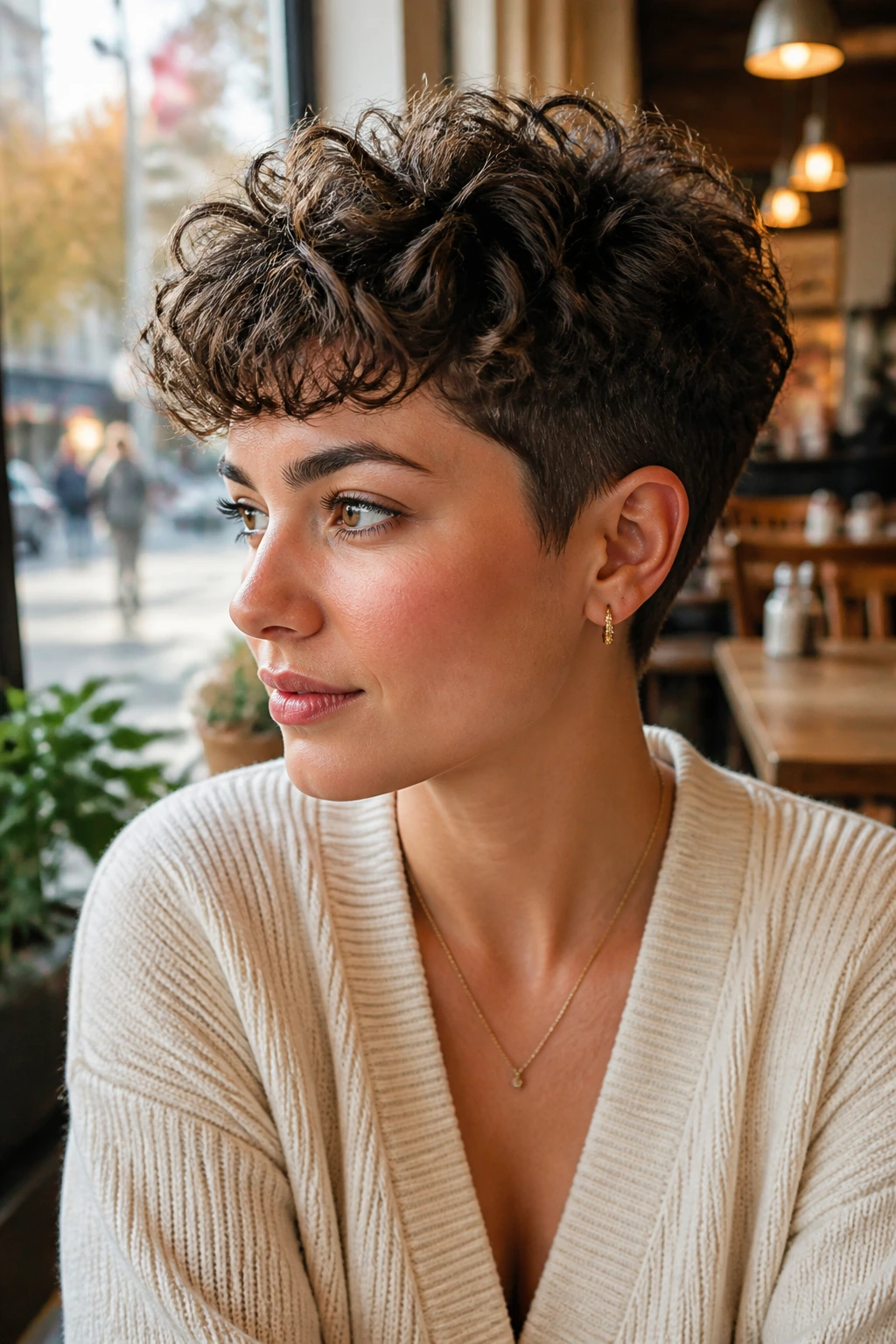
A tapered crop keeps the sides and nape close while leaving the top with enough room to bend and move. On wavy hair, that taper keeps the silhouette clean. No puff at the sides. No weight hanging around the ears. Just shape.
This is one of the easiest short curly hairstyles to live with if you hate spending time on your hair. Use a small amount of curl cream on damp hair, then diffuse or air-dry. If your hair is thick, a taper through the bottom helps the top look fuller by comparison. That contrast is the trick.
Best for
People who want shape without constant styling, especially if the back of the head tends to expand more than the front.
17. Soft Wolf Cut

A short wolf cut has attitude, but the soft version is more wearable than the dramatic photos might suggest. The crown layers stay a little piecey, the back keeps movement, and the ends are broken up enough that the whole shape never feels blunt or boxy. It looks even better when the wave pattern is irregular.
Use a diffuser on low heat if you want the layers to stand out. Then separate a few pieces with your fingers and stop. That’s the part people overdo. The wolf cut only works when the texture looks lived-in, not picked apart strand by strand. If your waves are thick, ask for internal shape so the bulk comes out without losing the outline.
18. Asymmetrical Wave Bob
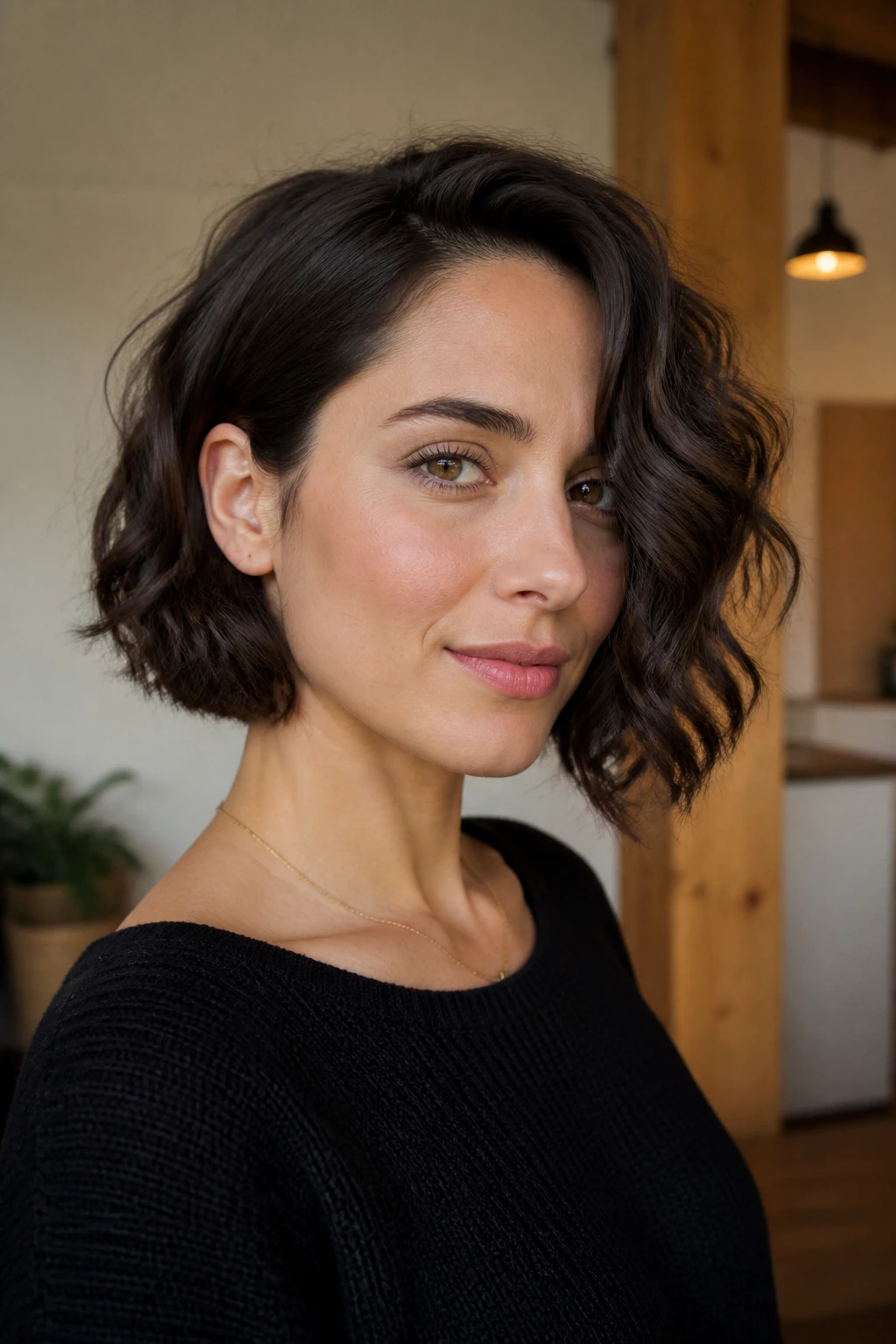
An asymmetrical bob gives short wavy hair a built-in point of interest. One side sits a little longer than the other, which changes how the wave falls and gives the face a longer line. It’s subtle enough for everyday wear, but different enough that people notice something without always naming it.
I prefer this style with a side part, because the longer side gets to sweep across the cheek and the shorter side opens the jaw. It works well on hair that bends more at the ends than at the root. A tiny amount of smoothing cream on the shorter side keeps the outline clean. Don’t overload the longer side with product, or it will drag.
19. Headband Push-Back Style
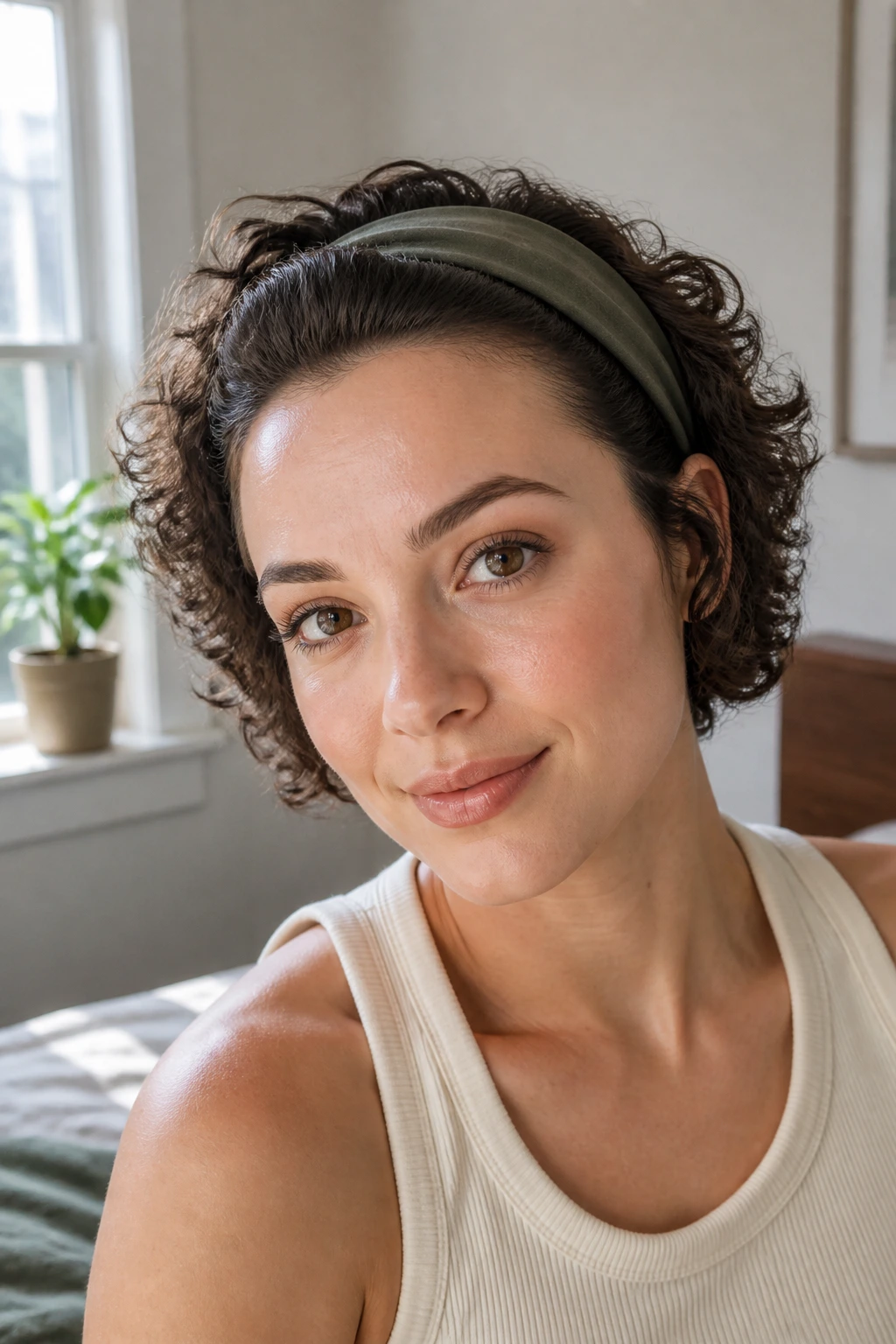
A headband can turn a sleepy wave pattern into a finished look in seconds. Push the front sections back, let the crown lift a little, and keep the lengths loose around the ears. The hairline stays tidy while the texture remains visible, which is the balance you want.
Pick a headband with a soft grip if your hair is fine. Hard plastic bands often slide, especially on silky waves. I like this look for mornings when the front is doing something stubborn. A headband gives the hair a place to sit while you stop thinking about it. That alone makes it worth keeping around.
How to make it nicer
Pull a few face-framing tendrils free so the style doesn’t read too severe. A little bend near the temples helps a lot.
20. Pineapple Puff
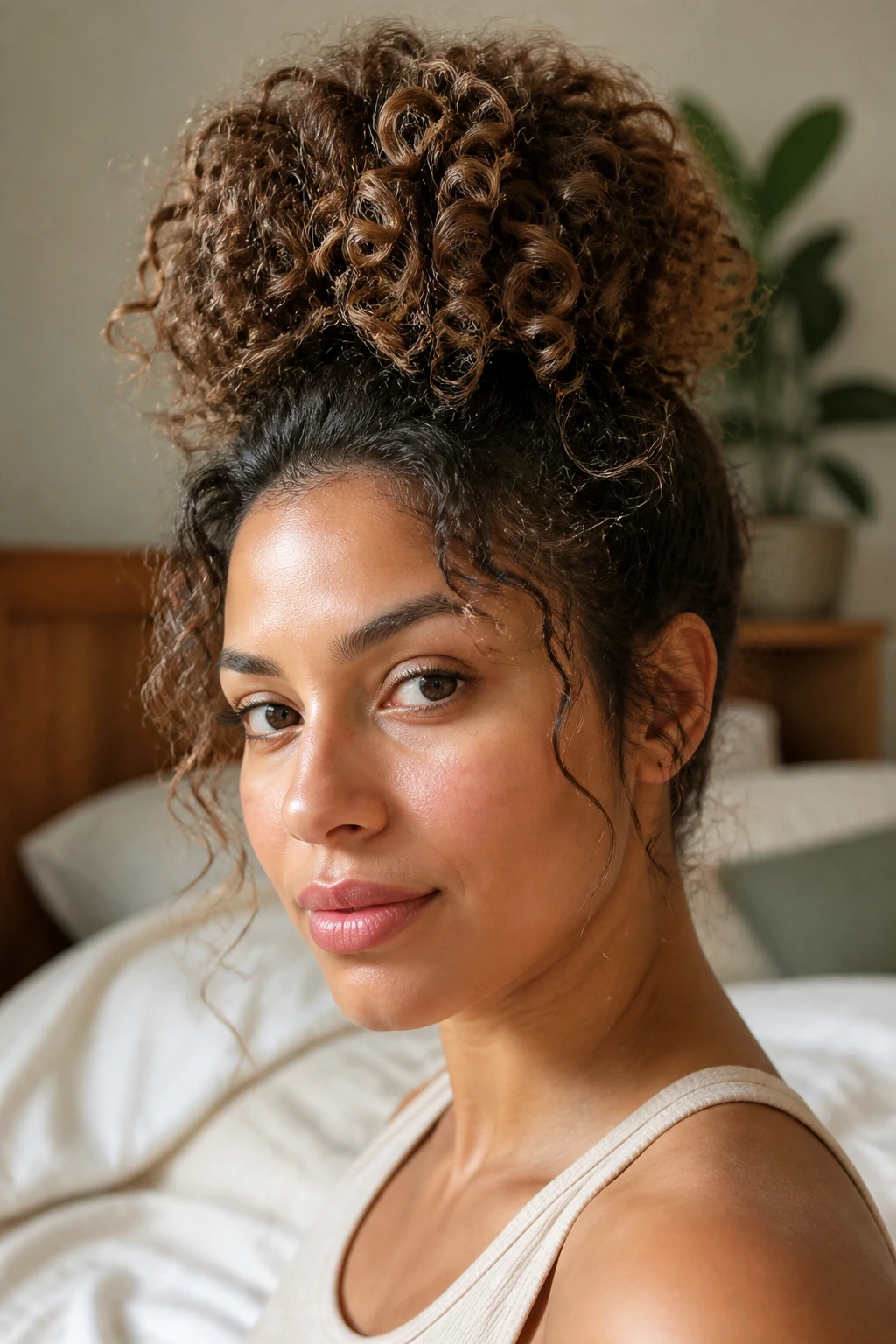
Short hair can still do a pineapple, just in a smaller, looser form. Gather the top section high, let the sides stay soft, and leave the ends free so the shape doesn’t look forced. It’s part style, part practical fix, especially if you want to preserve the wave pattern between wash days.
This is one of the easiest options for sleeping with short wavy hair, too. Use a silk scrunchie if your hair is fragile or prone to dents. The goal is height without pulling the hairline tight. If the puff feels too small, pin the sides slightly upward instead of tightening the tie.
Good on day two: the wave pattern usually looks better after a night in a pineapple than after being flattened on the pillow.
21. Rope-Braid Crown
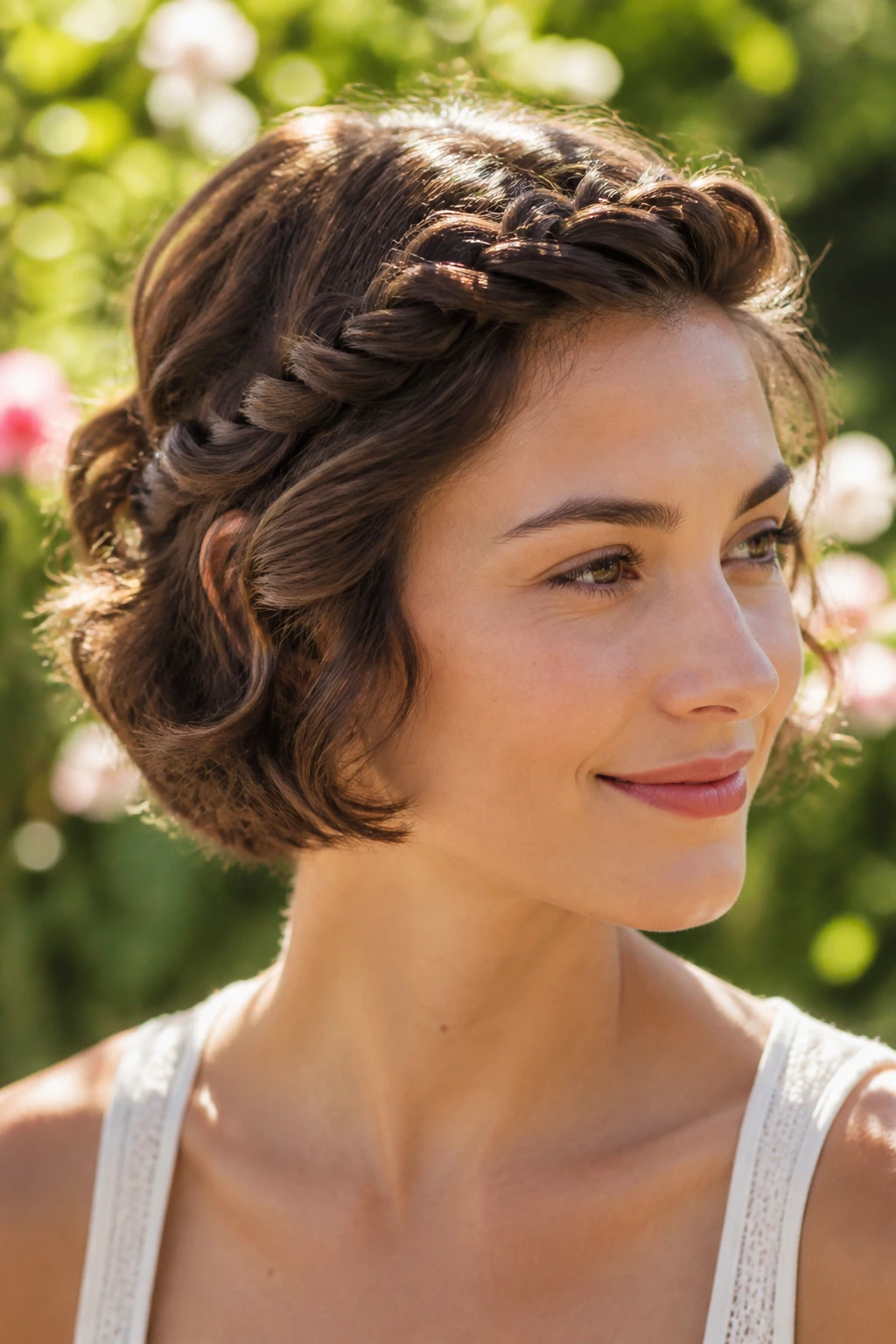
A rope-braid crown on short wavy hair gives you a soft halo effect without needing long lengths. Twist the front sections away from the face, pin them toward the back, and let the rest stay loose. It feels dressy, but not overly styled.
This one depends on grip. If your hair is slick, mist it with texture spray first or work in a little dry shampoo near the roots. The braid should sit close enough to the head to stay put, but not so tight that it pulls all the wave out of the front. I’d use this for a dinner, a wedding, or any day when you want the hair to look intentionally arranged.
22. Side-Swept Pixie
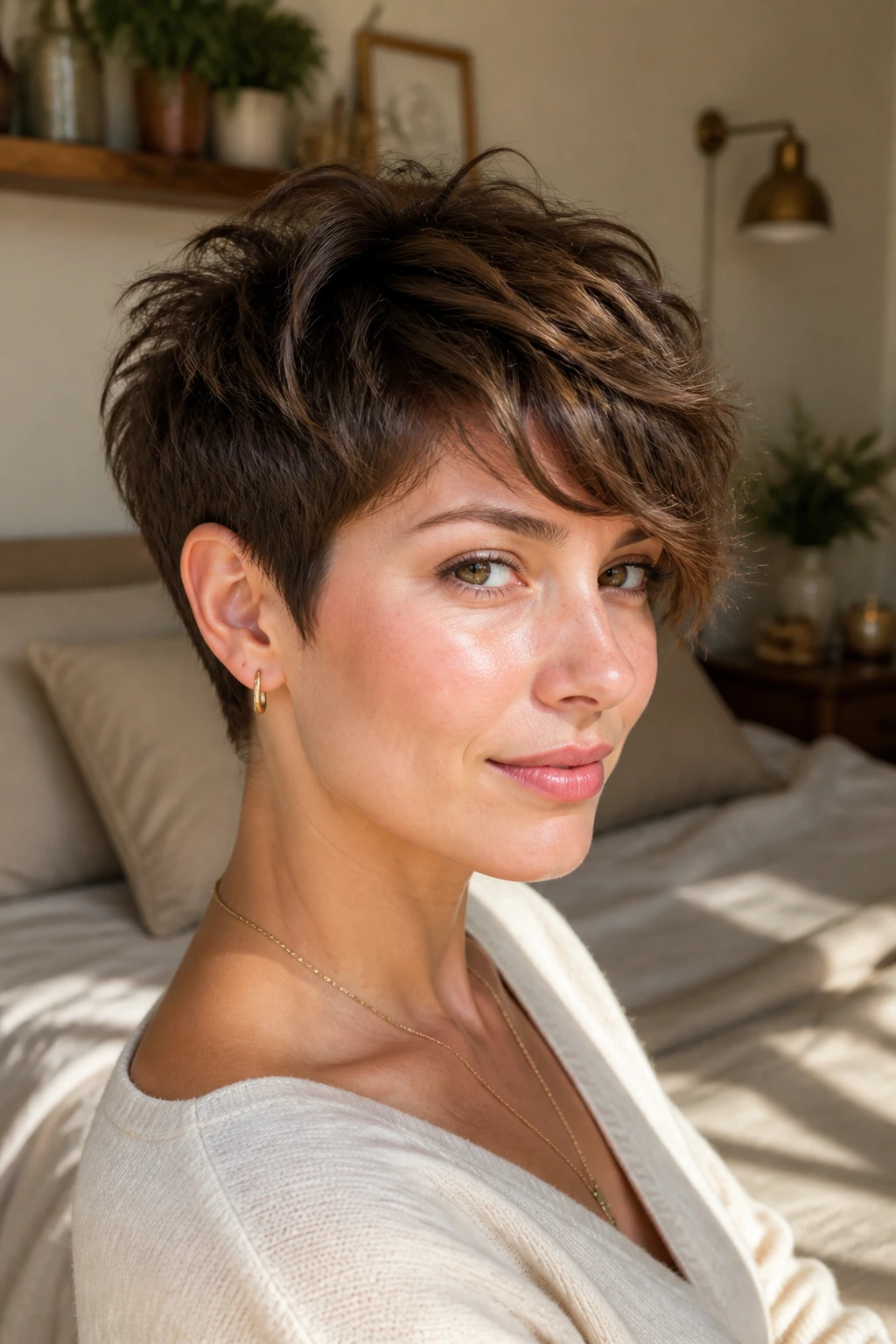
A side-swept pixie gives short wavy hair a soft diagonal line that flatters almost everyone. The fringe travels across the forehead, the top keeps movement, and the sides stay neat enough that the shape never gets bulky. It’s one of the easiest ways to make a pixie feel less severe.
Use a lightweight mousse or styling cream, then guide the front over with your fingers while the hair is still damp. You want the waves to land in one direction, but not lock down like a shell. A little separation at the ends keeps the fringe from feeling heavy. If you wear glasses, this cut plays nicely with frames because it keeps the forehead open without looking too exposed.
23. Round-Brush Blowout Wave

This is the polished option in the bunch. A round brush and a dryer can turn short waves into a smoother, more lifted shape with a controlled bend at the ends. The result looks clean and deliberate, which makes it useful for workdays, events, or any time you want the hair to behave a bit more.
I’d use heat protectant here, then lift at the roots while curling the ends under or away from the face. The trick is not to chase perfection. Leave a few broken pieces around the crown so the style still reads as wavy, not flat-ironed into submission. If the roots collapse, clip them up while cooling. That part matters more than people think.
24. Tucked-Behind-Ears Bob
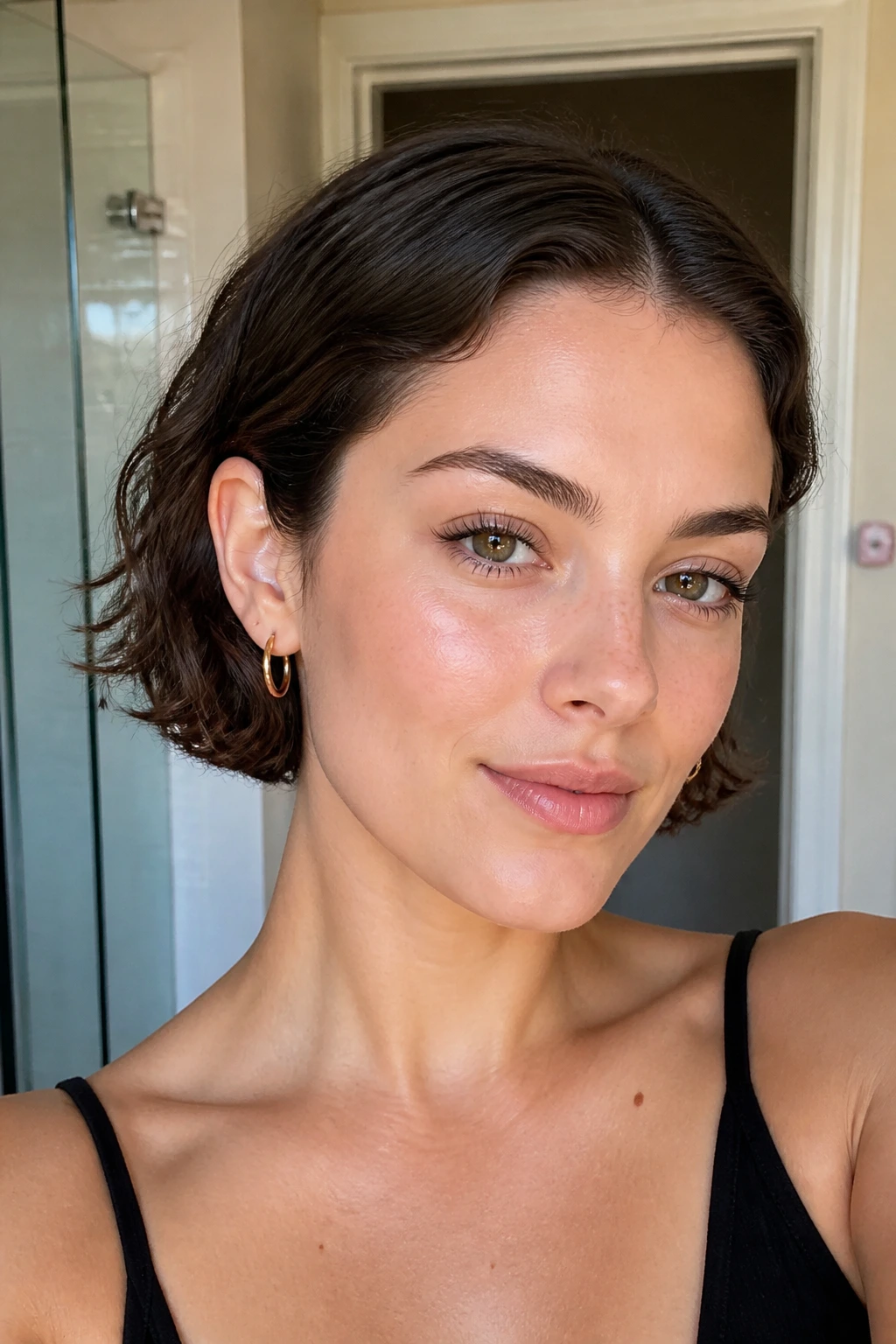
Sometimes the most effective hairstyle is the least dramatic one. Tucking a wavy bob behind both ears opens the face, shows the cut line, and lets the natural bend sit around the jaw. It’s understated, but not boring when the texture is good.
A small amount of smoothing cream on the sides helps the tuck stay in place. If you’re working with a center part, this style feels symmetrical and clean. If you use a side part, one side can stay looser for a little asymmetry. I like it with simple earrings because the ears are part of the shape now. That detail helps the style look finished.
25. Bubble Half Pony
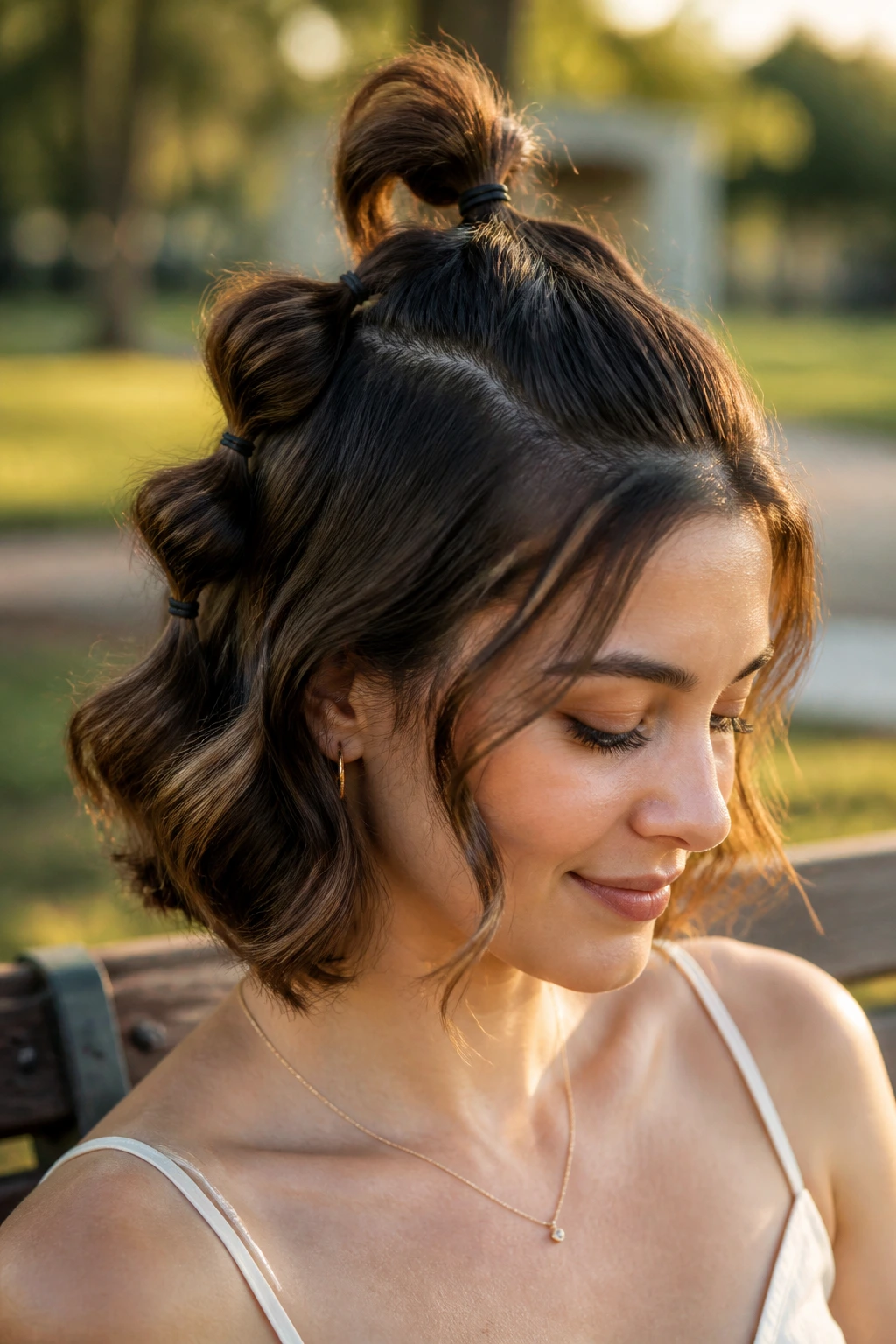
A bubble half pony on short waves looks playful without feeling juvenile. Pull the top half into a small ponytail, then place one or two tiny elastics down the length to create soft “bubbles.” On hair that barely clears the shoulders, the effect is compact and cute in a way that doesn’t need much explanation.
The elastic spacing matters. Keep the bubbles about 1 to 2 inches apart, depending on length. If they’re too close, the pony collapses. If they’re too far apart, the shape looks loose in a sloppy way. A little texture spray before you start gives the sections more grip. I’d use clear elastics unless you want the bands to become part of the look.
26. Crown Clip Volume Look
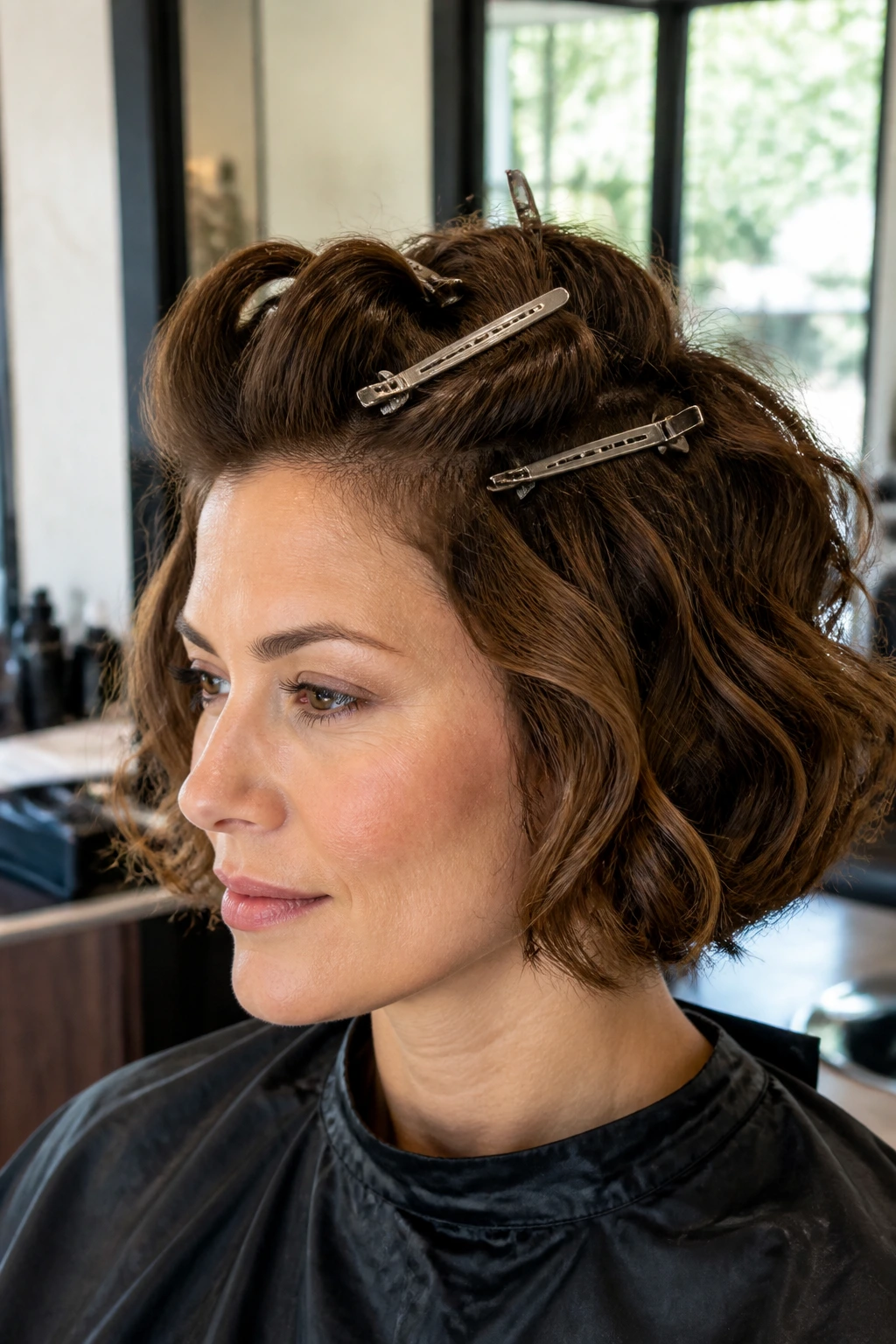
If the crown keeps lying flat, clips can fix it better than product alone. Lift the top section at the root, clip it while it cools or dries, then remove the clips once the bend has set. Short wavy hair loves this trick because the lift stays visible without needing a lot of teasing.
This style works especially well when the ends are already doing something nice and the roots are the part that needs help. Use a mousse at the crown first, then set the shape with duckbill clips or little root clips. The style should look airy, not crimped. If you see a hard bend where the clip was, wait longer before removing it next time.
27. Shaggy Mullet Lite
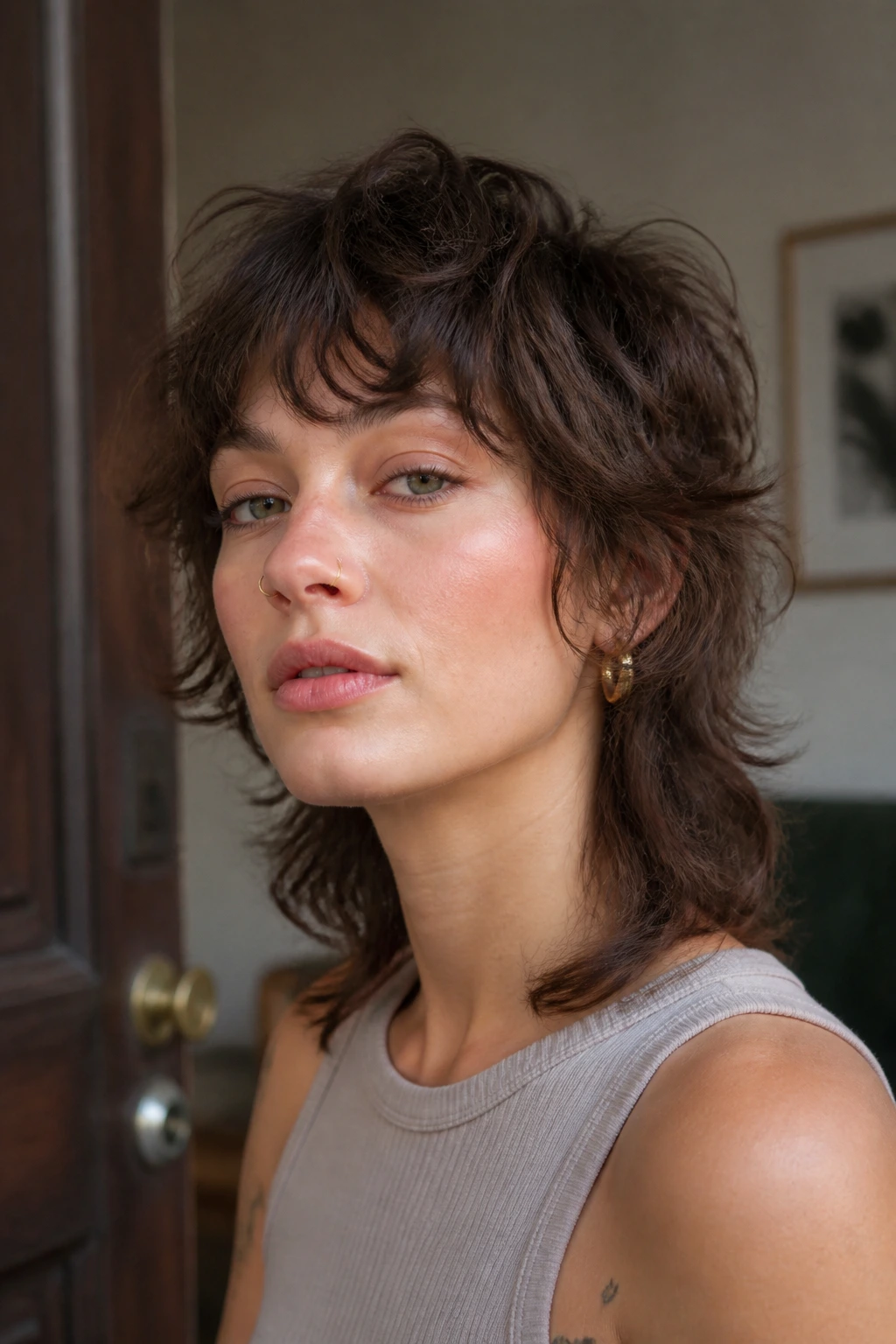
A softer mullet keeps the fun part of the shape without going too far into costume territory. The front and crown stay layered, the nape keeps a little length, and the whole cut looks like it can move in more than one direction. On wavy hair, that movement is the reason it works.
This version is easier to live with than the high-drama kind because the layers are blended instead of chopped into obvious blocks. The result is shaggy, but not chaotic. A diffuser or air-dry with a small amount of styling cream is usually enough. If the back starts to stick out more than the front, ask for the nape to be softened rather than shortened again. The silhouette matters more than the raw length.
Why I like it
It gives short wavy hair some grit. Not every cut needs to be sweet.
28. Low Twisted Bun for Chin-Length Hair
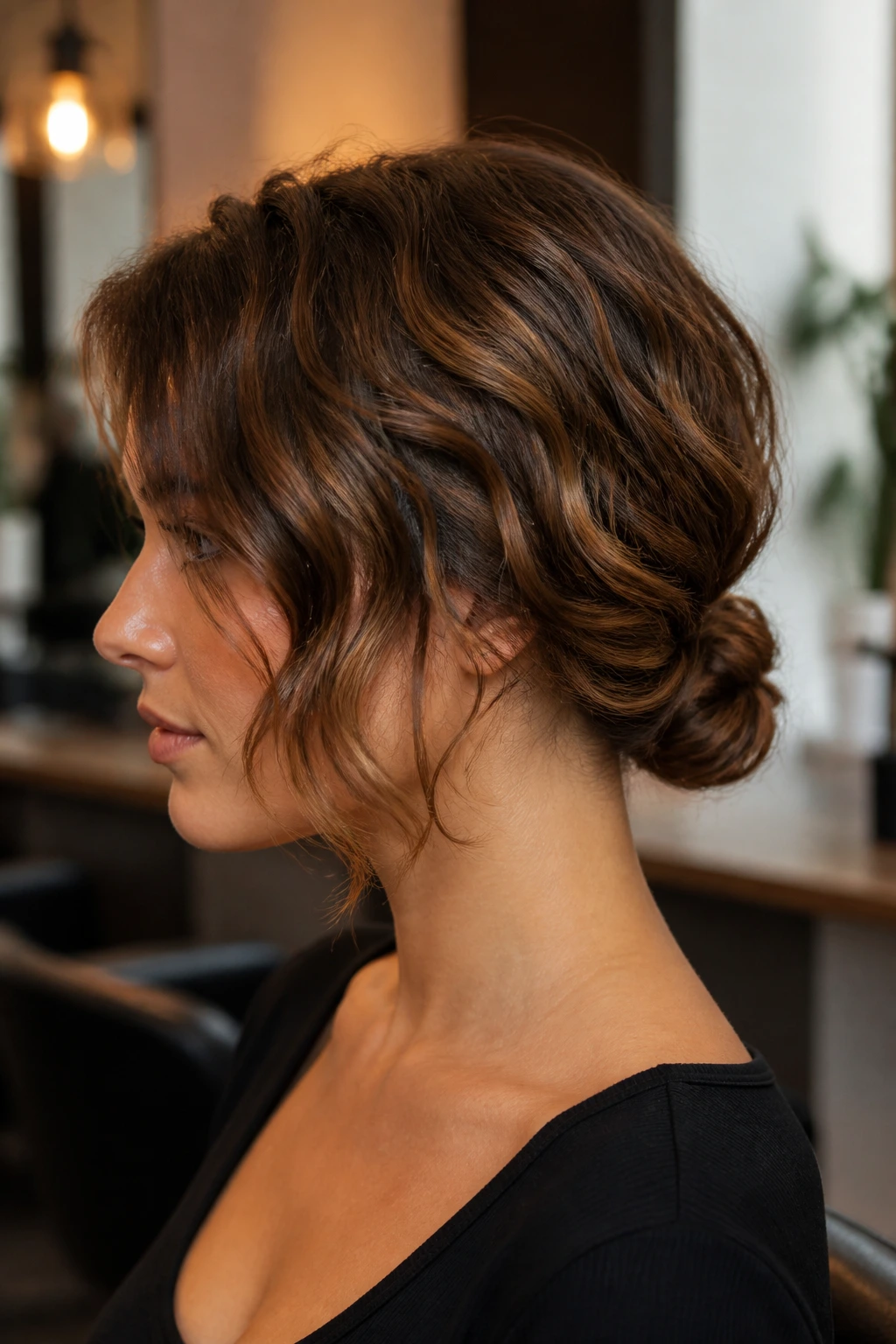
A low twisted bun on short hair sounds impossible until you try it with chin-length or slightly longer pieces. Twist the back into a small knot at the nape, tuck the loose ends under, and pin everything flat enough that the shape reads as intentional. It’s compact, neat, and better than people expect.
This is the style I’d use for formal settings when the hair is not quite long enough for a full bun. A few bobby pins hidden in an X shape usually hold better than one large pin. Leave the front soft unless you want a very strict look. A little wave around the face keeps the whole thing from feeling too severe.
29. S-Curve Flip Out

An S-curve flip out is one of the best ways to make short wavy hair look styled without looking overdone. The ends bend in alternating directions so the line of the hair forms a soft wave shape instead of sitting flat. It works especially well on layered bobs.
Use a small flat iron or a brush and dryer to make the ends flip in different directions around the head. The goal is movement, not symmetry. I’d keep the roots smoother and let the mid-lengths and ends carry the style. Add a light mist of flexible spray so the flips stay visible but not rigid.
30. Wet Pixie With Separation
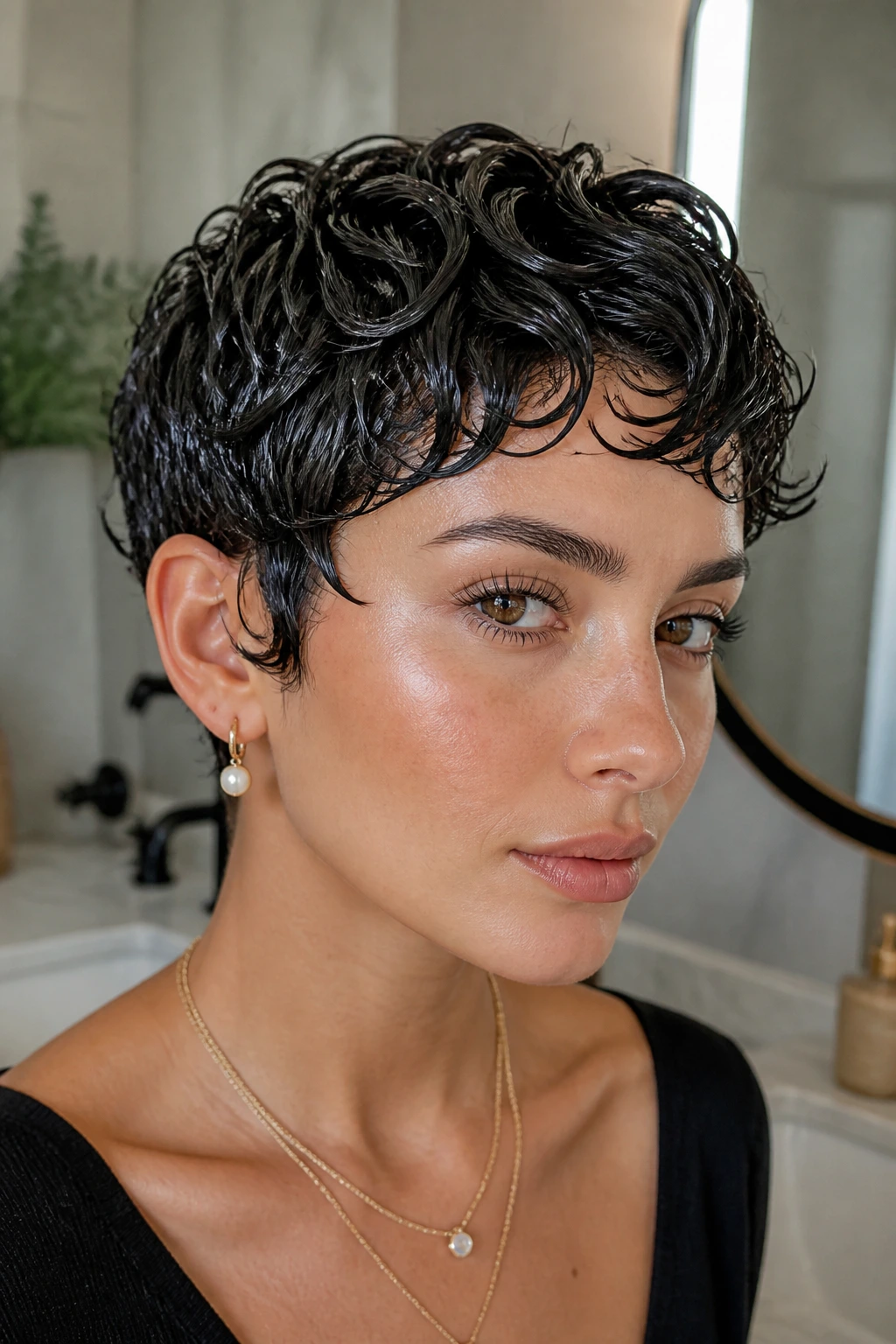
This is the pieceier cousin of the slicked-back wet look. The hair stays close to the head, but the ends are separated into visible sections instead of smoothed into one glossy surface. It’s a little easier to wear during the day because it looks less severe.
Apply gel near the roots and a tiny bit of cream or balm through the ends, then rake with your fingers until the sections look defined. Stop before it turns stringy. That’s the line to watch. The best version has shine at the crown and movement at the edges. On short wavy hair, that contrast can be enough to make the whole style feel modern.
31. Soft Center-Part Bob
A center part on short wavy hair can look plain if the cut is blunt and the product is heavy. But when the waves are soft and the bob has a little internal shape, the middle part gives the style a clean, balanced frame. It’s calm. That’s the appeal.
Use a light cream or foam, then tuck just a little volume into the roots so the part doesn’t collapse. The hair should fall in two loose curtains with enough separation to show the texture. If your face is very round, keep the front pieces a touch longer. If your hair is fine, avoid too much oil at the ends or the shape will slide downward by lunch.
Best use
It’s the easiest option for simple earrings, clean necklines, and days when you want the hair to look neat without trying too hard.
32. Loose Halo Twist
A loose halo twist wraps the front and side sections back in a soft circle while leaving the rest of the hair down. On short wavy hair, it gives the illusion of more styling than there really is. It’s elegant without being fussy, and it’s especially useful when bangs are growing out or the front pieces won’t cooperate.
Keep the twist loose. Tight halo styles on short hair tend to pull too much volume away from the face and can make the back look sparse. Pin the twists low and hide the ends under the top layers. A few loose pieces around the cheeks make the whole style look softer. I like this one when I want polish without losing the wave pattern underneath.
Why Short Waves Need the Right Cut Before the Right Product
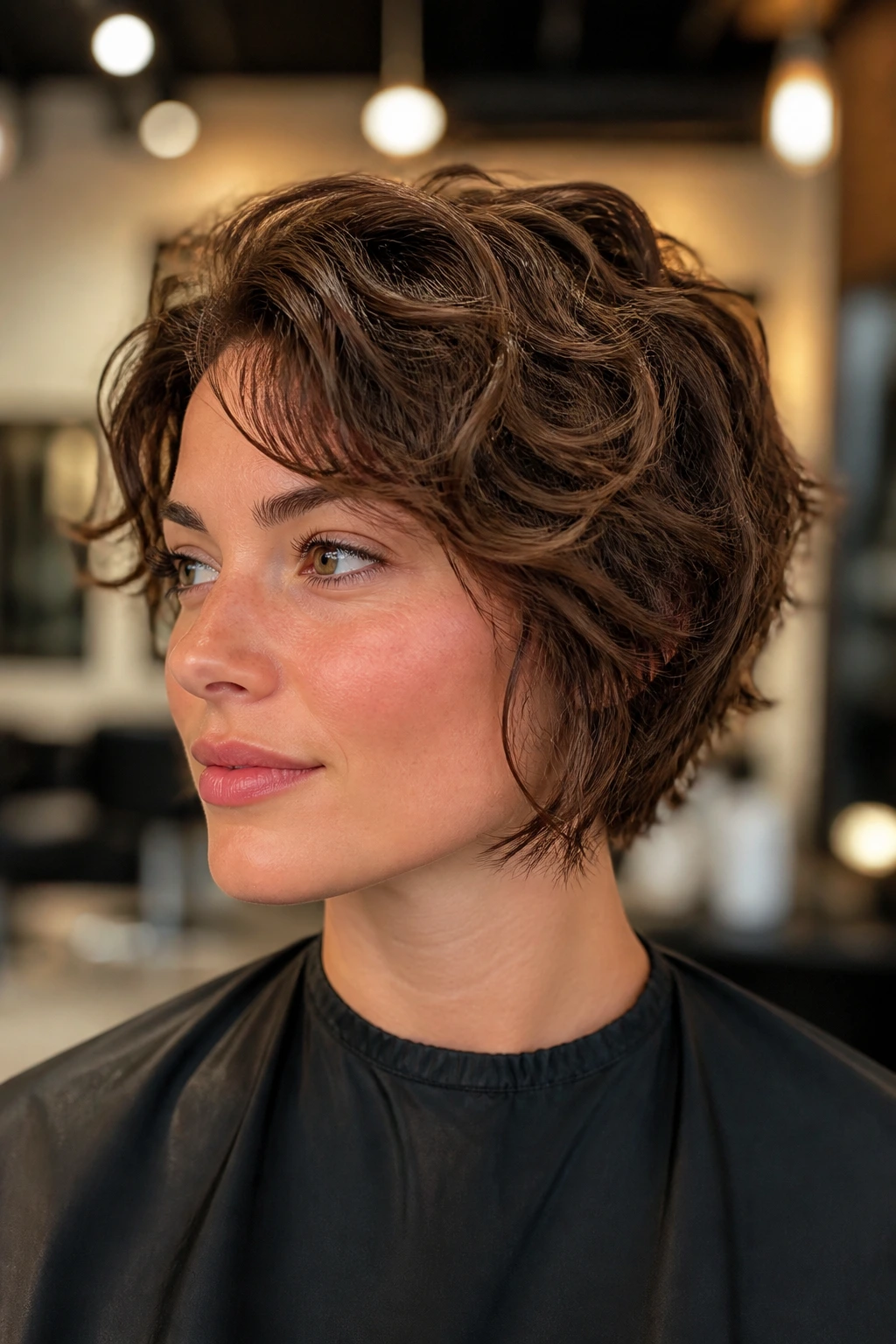
A short wavy style starts with shape, not styling cream. If the cut is too blunt in the wrong place, the hair can balloon at the sides and fall flat through the middle. If the layers are too aggressive, the ends get thin and the whole head starts to look patchy. That’s why a dry cut or at least a texture-aware cut matters so much.
Shape beats control
Short waves do not need to be flattened into obedience. They need room at the crown, a clean outline around the jaw or nape, and enough weight removed in the right spots so the hair can move without sticking out. I’d rather see a bob with a few real bends than a polished shape that fights the texture all day.
Why products matter less than people think
Heavy creams can be the enemy on short hair. They pull the wave down, especially near the roots, and make the ends clump in a way that looks tired by lunchtime. A mousse, foam, or lightweight curl cream usually gives better lift. If you need more shine, add a drop of serum at the very ends only.
The part matters more than usual
On short hair, a part can change the whole face shape. A deep side part adds lift and length. A center part adds balance. A zigzag part can soften a flat crown, though I still use it sparingly because it can look a bit dated if the hair is too sleek.
Essential Tools for These Looks
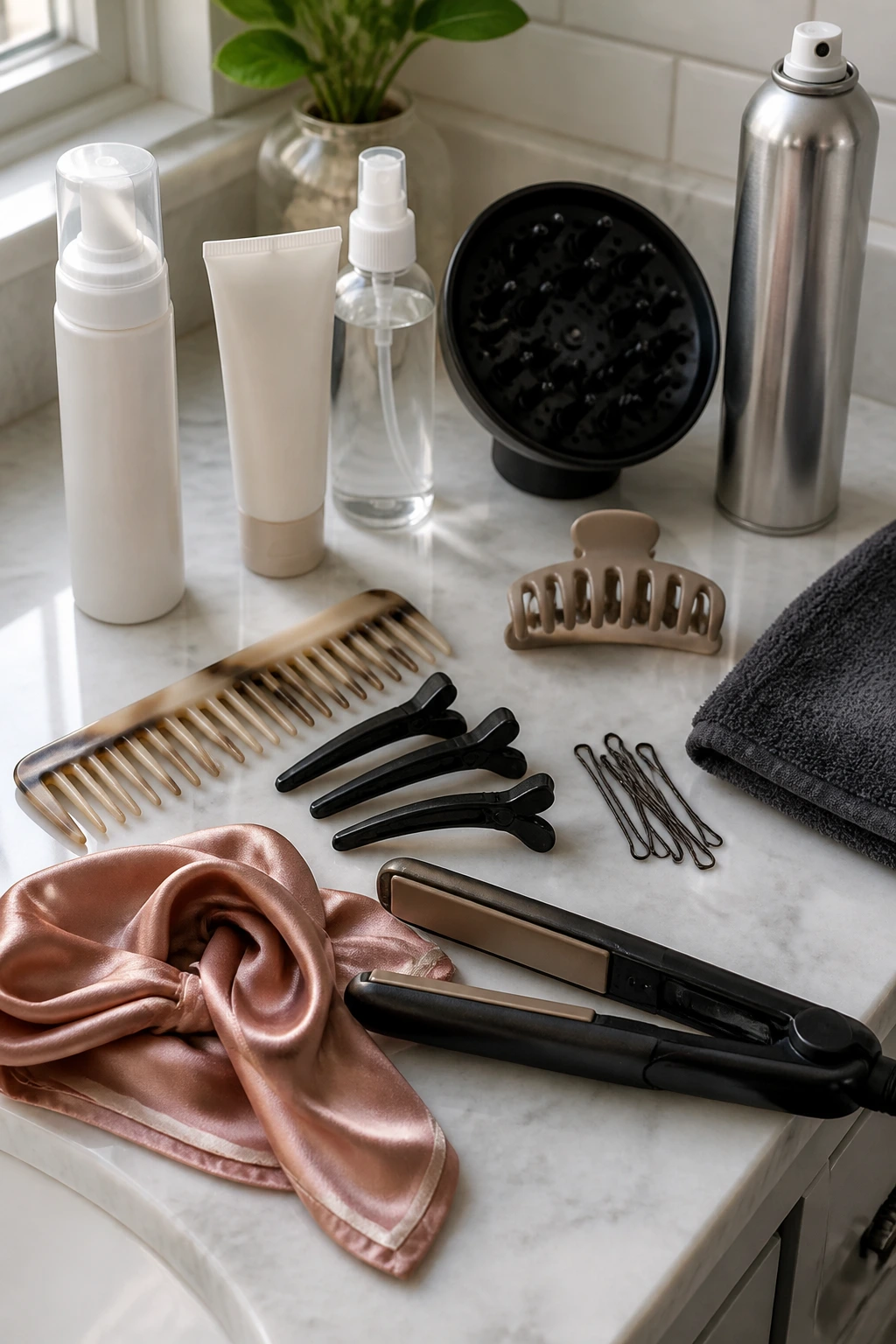
- Wide-tooth comb: Gentle enough to keep waves from breaking apart while you detangle damp hair.
- Mousse or foam: Gives short waves lift at the root without the heaviness of richer creams.
- Light curl cream: Best for the ends and the face-framing pieces; use less than you think.
- Sea salt or texture spray: Adds grip for braids, clips, and tousled styles.
- Diffuser attachment: Helps short waves dry with shape instead of blasting them flat.
- Duckbill clips or root clips: Useful for setting crown lift, finger waves, and blowout bends.
- Bobby pins: Small and boring, yes, but they hold half-pins and halo twists when used in an X.
- Claw clip: Handy for twist-ups and quick half-up looks.
- Silk scarf or bonnet: Keeps short waves smoother overnight and helps reduce friction.
- Microfiber towel or T-shirt: Better than a terry towel for blotting out water without frizz.
- Small flat iron or 1-inch curling wand: Optional, but useful for flips, bends, and polished ends.
- Flexible-hold hairspray: Keeps the shape in place without making short hair crunchy.
Smart Product and Cut Choices for Curly Hairstyles for Short Wavy Hair
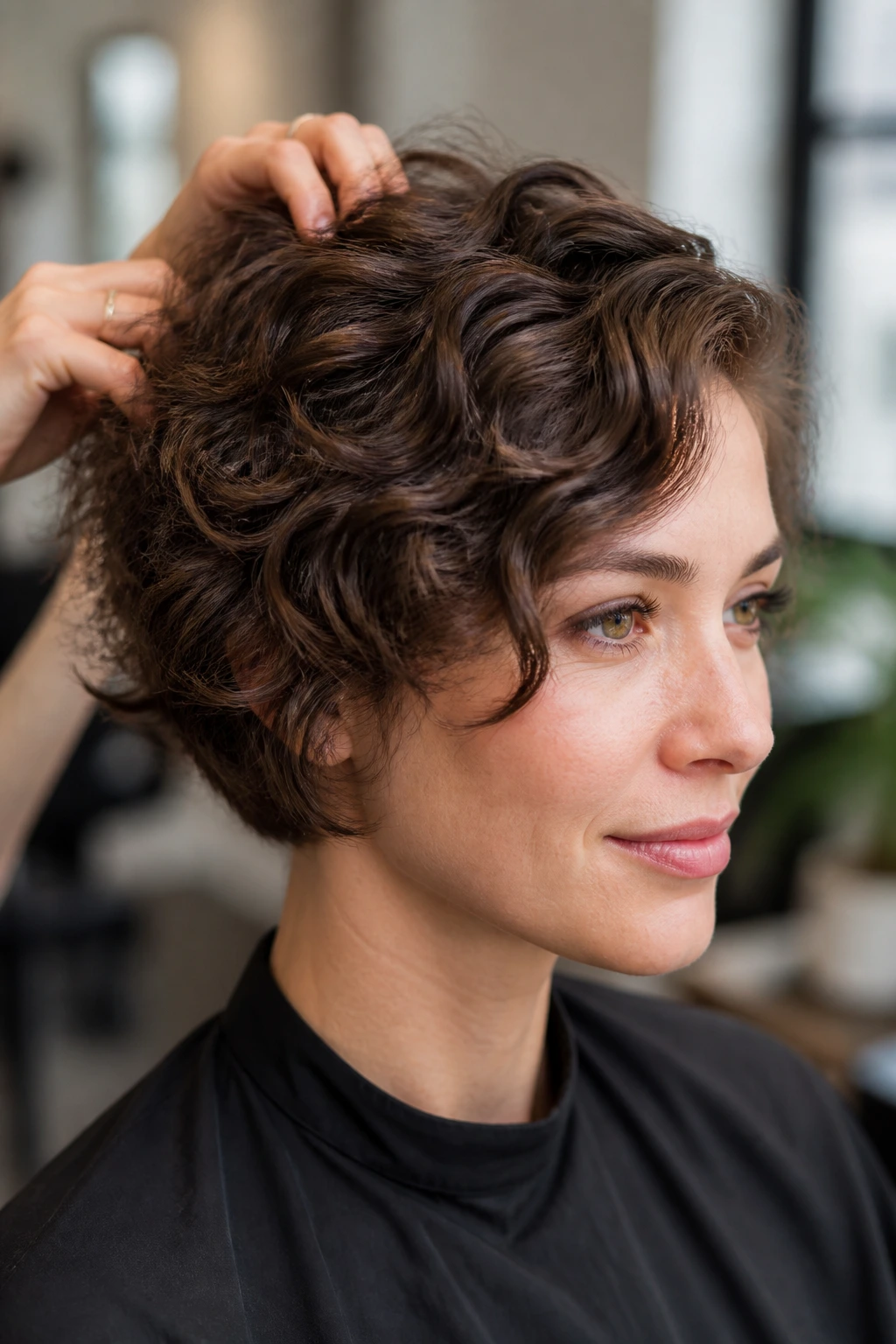
The smartest shopping choice is usually the lightest one that still gives enough hold. Short wavy hair tends to punish heavy formulas fast. A thick butter that looks gorgeous in the jar can flatten a pixie in twenty minutes. A foam mousse or airy curl lotion usually gives a better result because it supports the bend without loading the hair down.
If you’re booking a cut, ask for texture where the hair needs movement and weight where the shape needs control. Those are not the same thing. A good stylist will often work with point cutting, dry cutting, or soft internal layering to keep short waves from ballooning outward. If your hair is dense, ask about reducing bulk through the lower sections rather than carving the top to pieces.
For styling products, I like to think in layers. Start with a leave-in if the hair gets dry or frizzy. Add mousse near the roots. Save the richer cream, if you use one at all, for the very ends. That order matters because short hair does not have much distance between root and tip; one careless pump can spread too far and change the whole shape.
And one more thing: if your hair is naturally fine, avoid over-thinning. It’s tempting when you want movement, but too much thinning can leave the ends looking weak and see-through. Texture is good. See-through ends are not.
How to Wear These Styles in Real Life
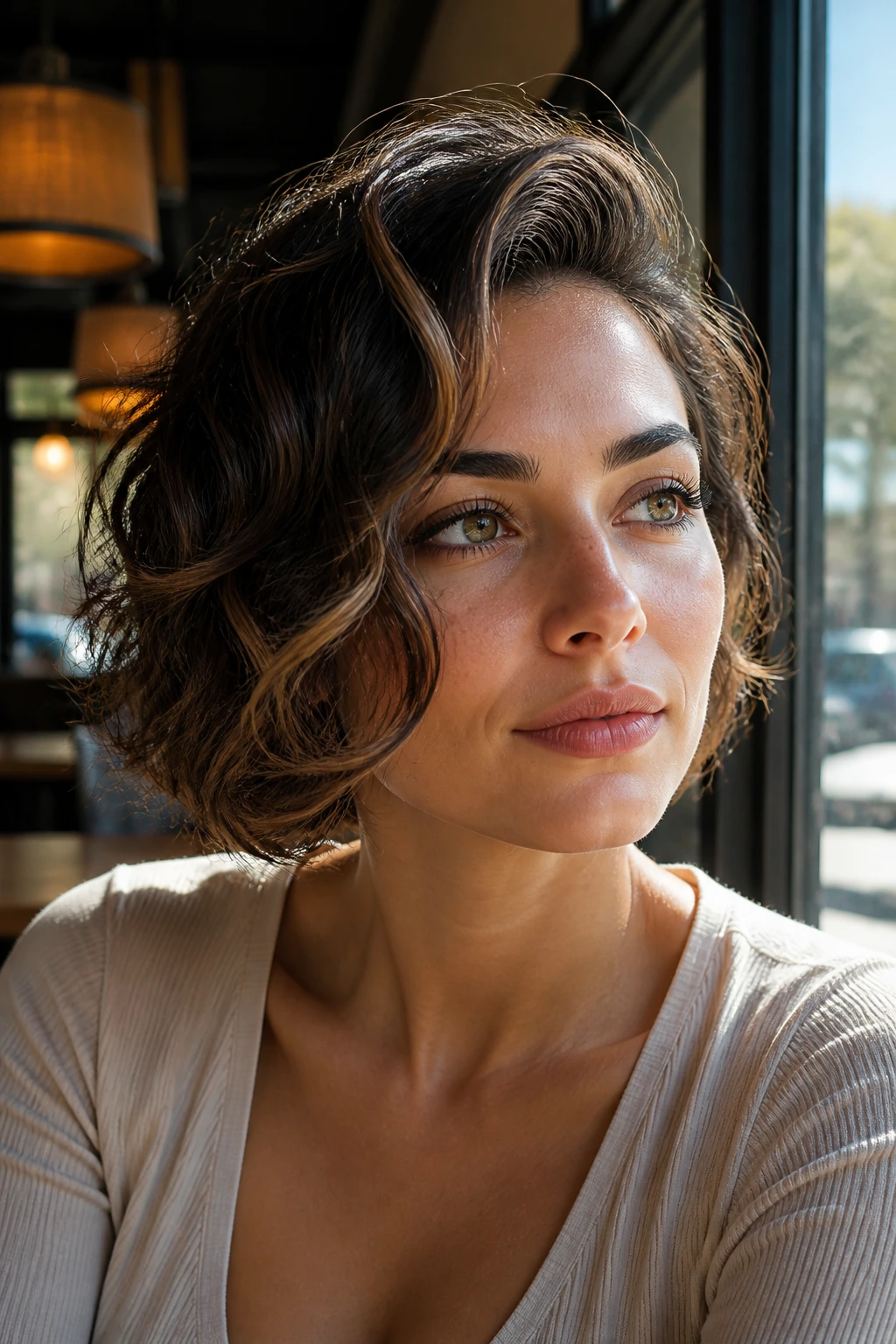
Presentation: Decide where you want the eye to land. A side part pulls attention to the cheekbone, a lifted crown opens the face, and tucked sides make the jawline look cleaner. Short waves always look better when one area of the silhouette feels deliberate.
Accessories: Claw clips, slim headbands, barrettes, scarves, and small pins all change the mood fast. I’d keep a few matte pieces on hand; they tend to hold better in short hair than very slick accessories that slide around.
Outfit match: Soft bob styles work nicely with open necklines and simple earrings. Edgier cuts like the mini faux hawk or shaggy mullet lite can stand up to chunkier jewelry, structured collars, or a jacket with a sharper line. The hair and the clothes should not compete for the loudest seat in the room.
Best moments: Some of these are for clean mornings, some are for day-two hair, and a few are worth saving for dinner, weddings, or a night when the mirror needs to do a little more work than usual. If a style feels too polished for your life, it probably is.
Additional Texture Tricks That Make Short Waves Behave
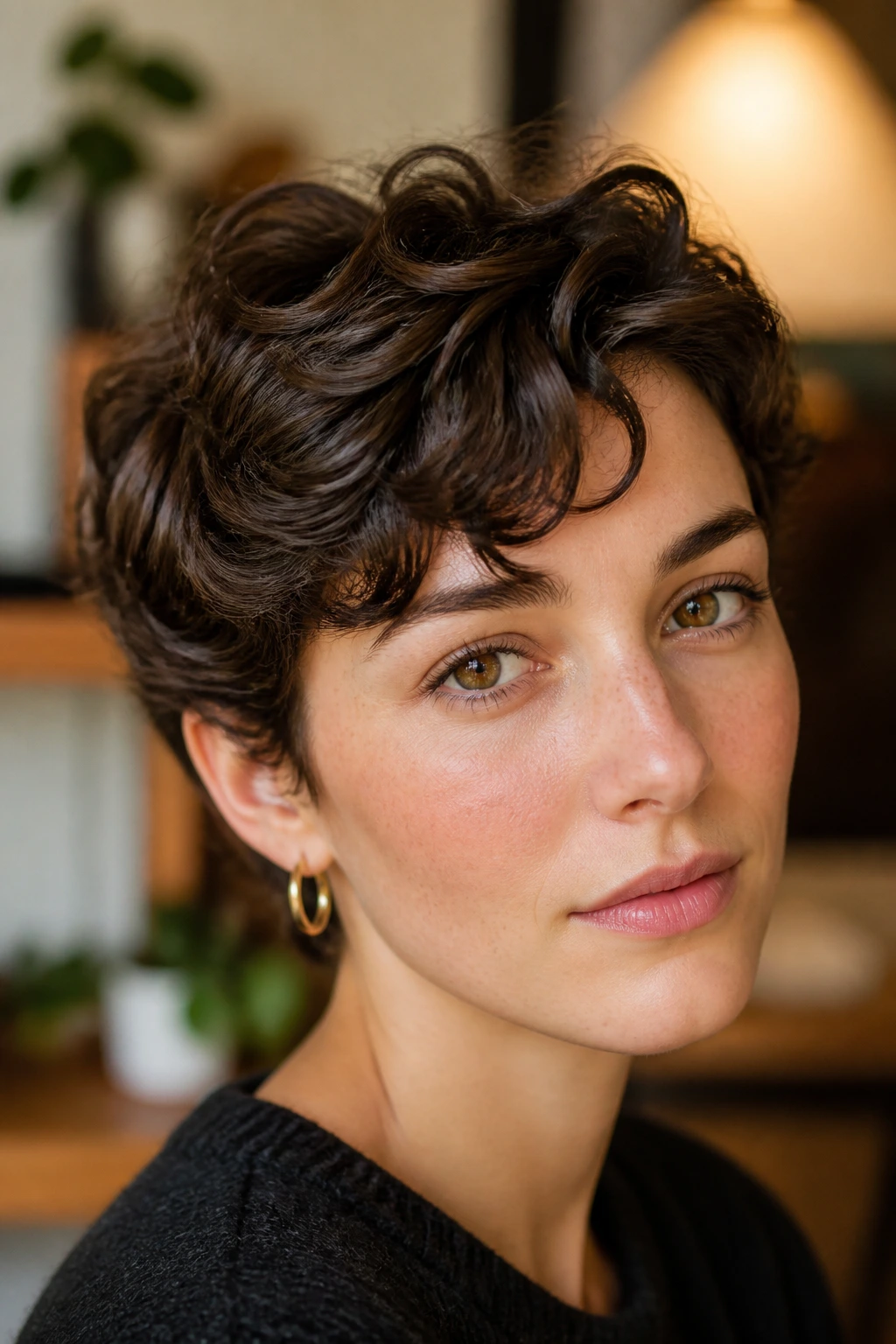
Root Lift: Clip the crown while the hair cools, or mist the roots with water and mousse before diffusing. That small step keeps the top from collapsing and gives the shape a cleaner outline.
Definition: Twist a few face-framing pieces around your fingers while they’re damp, then stop touching them. Short hair frizzes fastest when you keep messing with it after it starts to dry.
Frizz Control: Use serum only on the bottom third of the hair. Put it near the root and the whole style can flatten by noon.
Glam Shortcut: A deep side part, one decorative barrette, and a little shine spray can turn a plain bob into something that looks thought-through in under five minutes.
Make-It-Yours: If your hair is fine, go lighter on the cream and heavier on the spray. If it’s thick, do the reverse and keep the crown lifted. If it’s color-treated or dry, a leave-in on the ends helps more than another layer of styling product.
How to Refresh Short Wavy Hair Overnight and the Next Morning
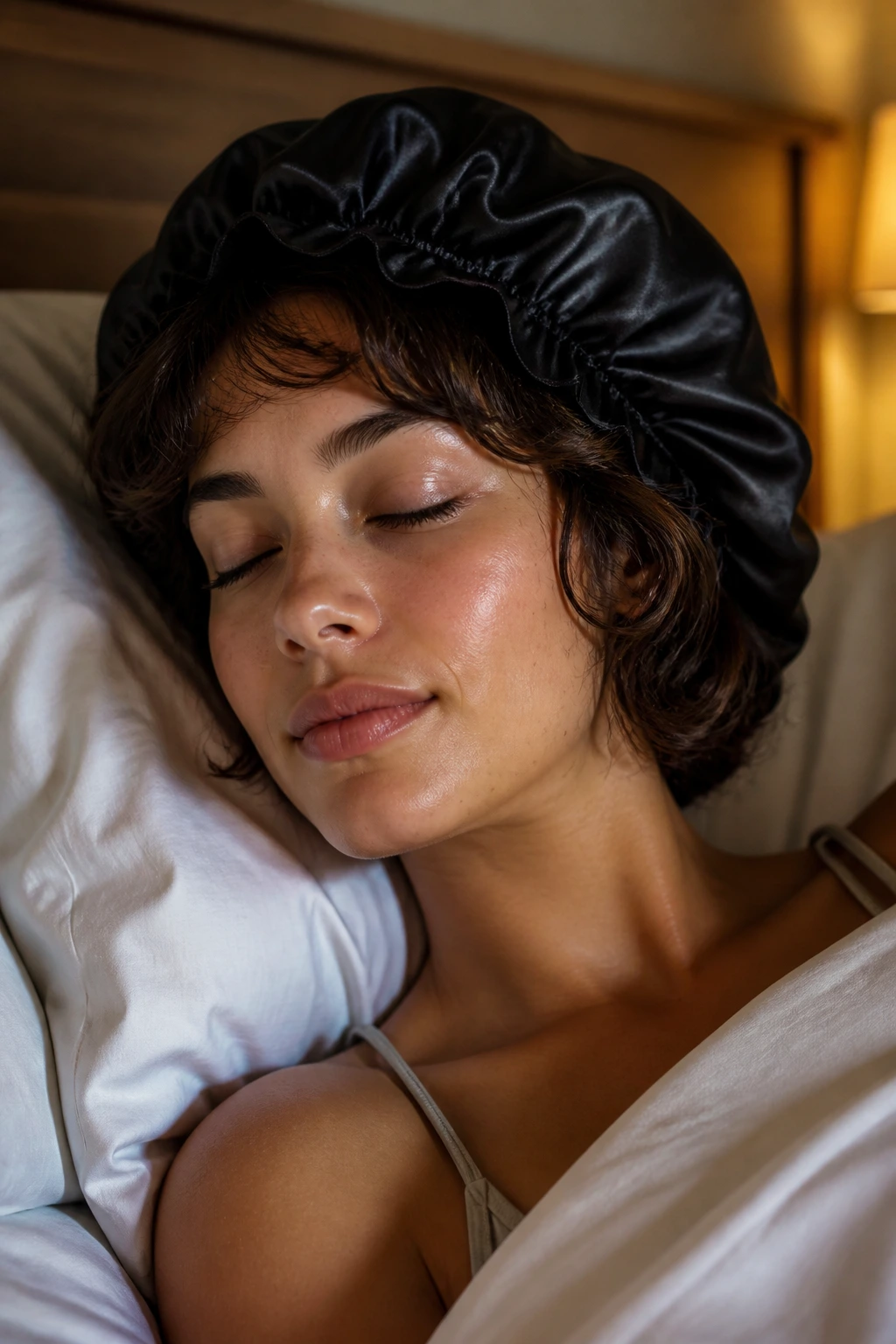
Short wavy styles usually last one to three days before they need a real reset. The exact timing depends on how much product you used and how much you moved around in your sleep. A pixie with strong hold can look decent the next morning with almost no work. A softer bob may need a quick mist and a finger reshape.
A silk bonnet or pillowcase cuts down on friction, which means less fuzz at the ends and fewer dents at the crown. If the hair is long enough, a loose pineapple or tiny top clip can preserve the wave pattern better than letting everything flatten under the pillow. For chin-length styles, a scarf tied lightly around the head often works better than a tight tie-up.
In the morning, do not soak the whole head unless you want to start over. A spray bottle with water and a drop of leave-in is usually enough. Scrunch the ends, lift the crown, and finger-comb the front pieces back into place. If a section has gone weird, dampen only that section. The rest can stay untouched.
If you use hot tools, give the hair a break every few styling cycles. Short waves usually recover fast, but repeated heat on the same bends can make the ends look dry and fuzzy. Every once in a while, let the texture do the work by itself. It’s usually better than trying to force perfection.
Common Mistakes That Flatten Short Wavy Hair

Too much cream: The hair looks shiny at first, then heavy and sad by midday. The fix is to halve the amount and move most of it to the ends, not the roots.
Brushing dry waves: A brush can turn a defined wave into a puffed-out halo. Use fingers or a wide-tooth comb when the hair is damp, then stop.
Ignoring the crown: Flat roots make short hair look narrower than it is, which can throw off the whole shape. Use root clips, mousse, or a side part to keep the top alive.
Cutting too bluntly everywhere: A heavy line around the head can make waves pile up in the wrong places. Ask for texture where needed and keep the outline tailored to your density.
Over-tightening pinned styles: Hair pulled too hard around the temples can kick out in odd spots and leave dents once you take the pins out. Keep the hold firm, not tense.
Using the same part every day: Short hair remembers. If you never move the part, the roots can flatten in one direction and the shape gets lazy. Switch it up now and then.
Variations and Adaptations to Try
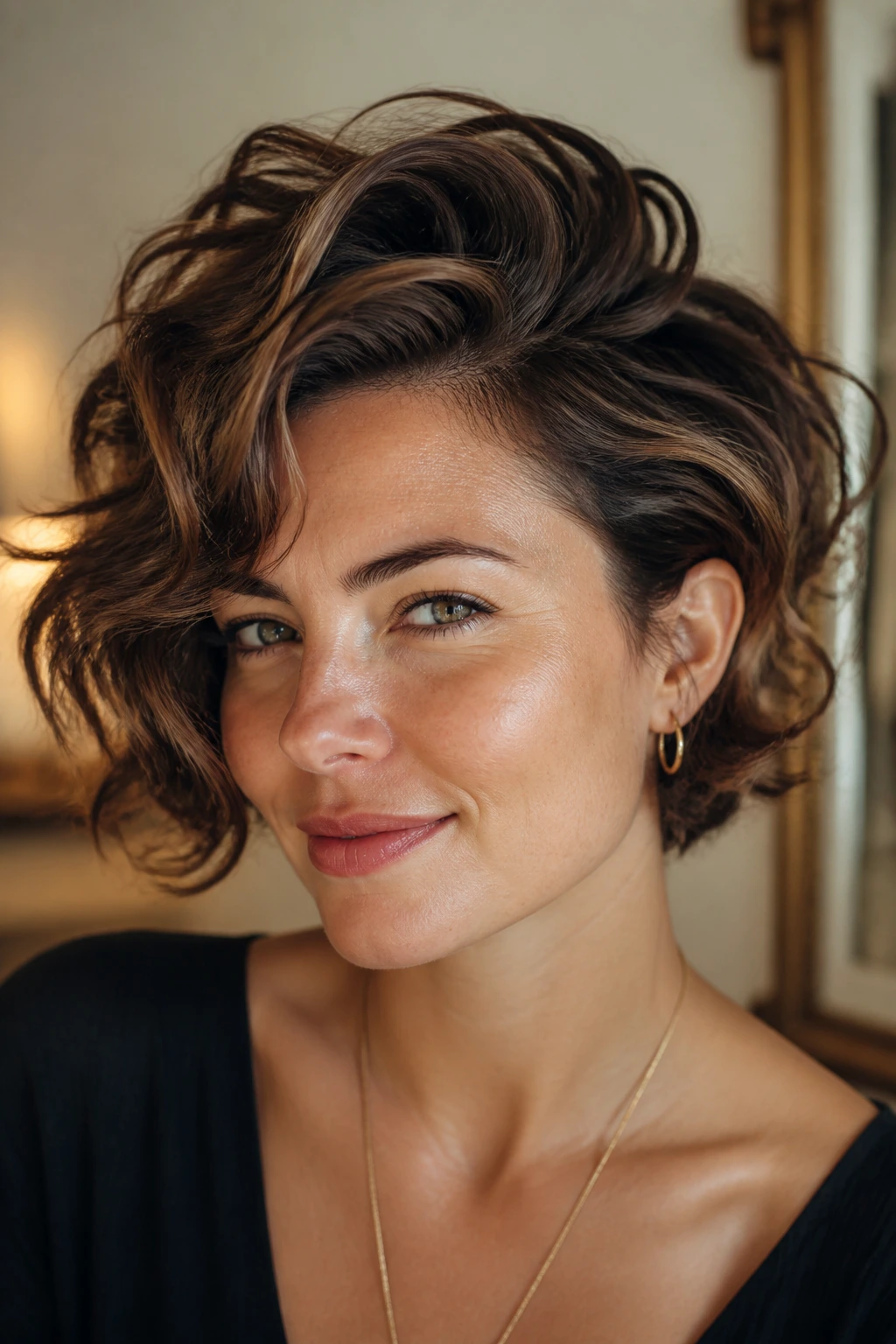
Fine-Hair Lift Plan: Use mousse, root clips, and lighter accessories. Fine short waves usually need air more than cream, so keep product soft and the part slightly off-center.
Thick-Hair Control Plan: Ask for internal shaping and use a diffuser with a stronger hold product. Thick waves often need bulk removed underneath so the top can stay lifted instead of boxy.
Humidity Shield Version: Start with a leave-in, add a light gel or foam, then finish with a flexible spray. In damp weather, the goal is controlled shape, not perfect smoothness.
Bangs-Friendly Version: Keep the front longer and use side-swept or curtain pieces that can be pinned back when they misbehave. Short bangs on wavy hair need a little room to move.
No-Heat Routine: Lean on air-drying, scarves, clips, and finger shaping. This is the easiest route if your ends get dry fast or heat tends to make your texture unpredictable.
Dressy Evening Version: Choose finger waves, a halo twist, or a slicked-back wet look. These styles work because they create one strong line, which reads clean under low light.
Frequently Asked Questions

Can short wavy hair really pull off curly hairstyles?
Yes, and often better than longer hair. The length keeps the texture visible, so a small bend or flip has more impact. The trick is choosing styles that work with the wave pattern instead of trying to smooth it out completely.
What’s the best part for short wavy hair?
A deep side part adds lift and shape, while a center part gives balance and symmetry. If your roots go flat fast, a side part usually gives you more movement at the crown. If your face is long or angular, a center part can soften the whole look.
Do I need a diffuser for these styles?
Not always, but it helps if your waves collapse while air-drying. A diffuser on low heat and low airflow gives more shape without blasting the texture apart. If you already have a good cut and your hair dries well on its own, you may not need it every time.
How do I stop short wavy hair from looking puffy?
Use less product near the roots, keep the outline shaped, and avoid rough drying with a towel. Puff often comes from too much friction or too much heavy cream. A microfiber towel, a light mousse, and a clean part usually help more than another round of styling.
Can I wear clips and barrettes without ruining the wave pattern?
Yes, if you place them where the hair already wants to fall. Don’t force the clip into a fight with the bend. Hold the section loosely, pin it where it naturally sits, and let a few ends fall free so the texture stays visible.
What should I ask for at the salon?
Ask for a cut that respects your wave pattern, with shape built around how your hair dries naturally. Words like dry cut, soft layers, internal shaping, and tapering at the nape are useful starting points. Bring photos, but also point out where your hair puffs, flats out, or flips awkwardly.
How often should short wavy hair be trimmed?
Usually every 6 to 10 weeks, depending on how fast your shape loses its line. Short cuts show grow-out faster than long ones, especially around the nape and fringe. If your bob starts sitting too wide or your pixie loses its lift, it’s probably time.
What if my waves change during the day?
That’s normal. Short hair moves around as the day goes on, especially in humidity or wind. Carry a tiny spray bottle, a barrette, or a claw clip, and refresh only the sections that need help instead of starting over.
Short Waves, Better Shape

Short wavy hair gets interesting when the cut gives it room and the styling respects its bend. That’s the whole game. A good side part, a smart pin, or a little root lift can change the shape more than a full shelf of products ever will.
The best part is how forgiving these looks can be once you learn where your hair likes to sit. Some days you’ll want clean and sleek. Other days you’ll want a little piecey mess around the forehead and nothing else. Short waves handle both, which is why they’re worth keeping around.
