



Fine hair has a way of telling on a haircut. One blunt line in the wrong place, and the whole head looks a little too honest — flat at the crown, see-through at the ends, no real movement when you turn your head. A good shag haircut fixes that by doing the opposite of what people fear: it keeps enough weight in the right spots to make the hair look fuller, then breaks up the shape just enough to create lift, swing, and that slightly undone texture that makes the cut feel alive.
That’s why shag haircuts for fine hair keep showing up on people who want body without a ton of daily effort. The trick is not to carve the hair into oblivion. Too many layers can make fine strands look wispy and tired, especially if the stylist gets aggressive with a razor. The sweet spot is softer, smarter layering — crown lift, cheekbone movement, and ends that still hold a line.
The cuts below range from chin-length and choppy to long and feathered, because fine hair doesn’t all need the same solution. Some heads need a stronger fringe. Some need a deeper side part. Some need internal layers hidden under a clean perimeter so the shape doesn’t collapse by lunchtime. That’s the real game here: not “more layers,” but the right layers in the right places.
Why This Collection Feels Right for Fine Hair
-
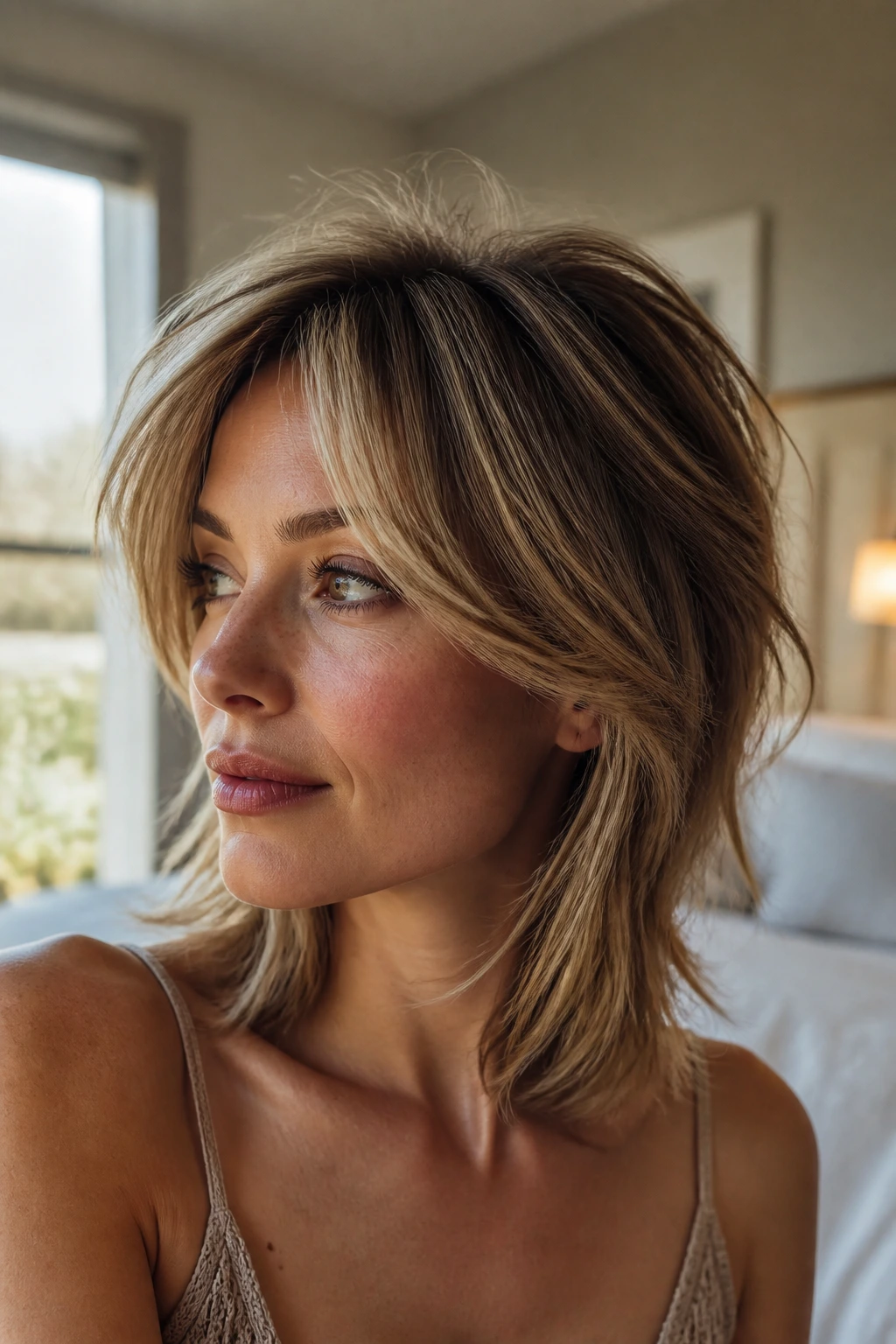
Crown Lift: These shag haircuts build height where fine hair usually goes limp first, so the roots don’t lie flat against the scalp by noon.
-
Soft Ends: The best versions keep the perimeter a little fuller, which stops fine hair from looking stringy or over-processed at the tips.
-
Face Framing: Curtain pieces, bottleneck bangs, and cheekbone layers pull attention upward and make the haircut look deliberate, not sparse.
-
Low-Fuss Texture: A little bend, a little separation, and the cut looks finished; you do not need a huge blowout to make it work.
-
Length Variety: Short, medium, and long shags all show up here, so you can choose the amount of movement without giving up the length you like.
-
Stylist-Friendly Details: Each look can be translated into real salon language — which matters, because “make it shaggy” is not a haircut brief, it’s a plea.
1. The Chin-Length Curtain Shag
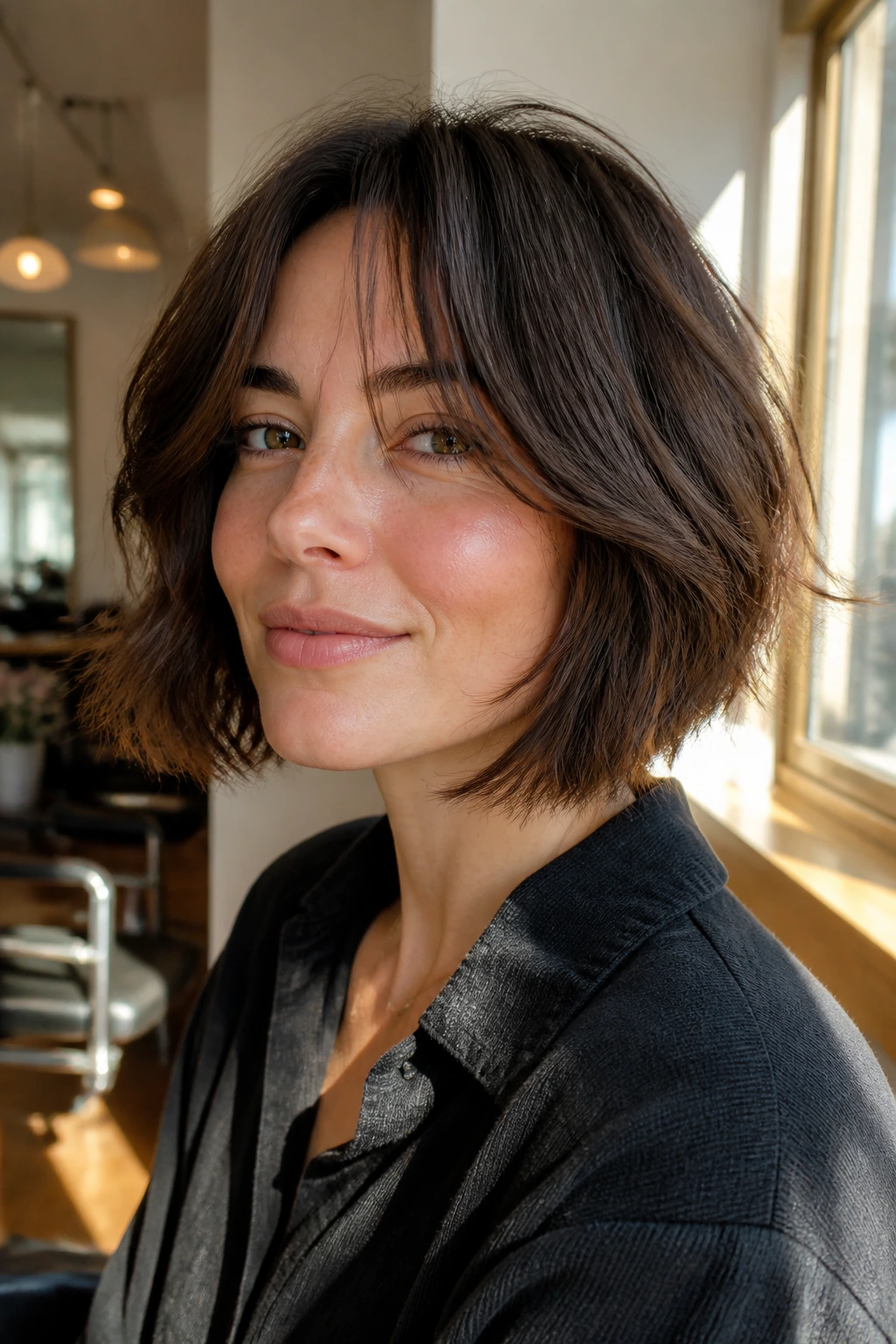
A chin-length shag is one of the sharpest fixes for fine hair because it keeps enough structure at the bottom to avoid that see-through, feathery end that can happen with longer cuts. The curtain bangs split the weight at the front, and the layers around the cheekbones give the whole thing a soft, quick movement when you turn your head.
The key is keeping the shortest pieces just below the cheekbone, not hacked up into the temples. That keeps the face open without exposing too much scalp around the hairline. Ask for point-cut ends and a clean, slightly blunt perimeter. You want lift, yes, but you still want the haircut to look like it belongs to one head of hair, not four different ones.
2. The Collarbone Feather Shag
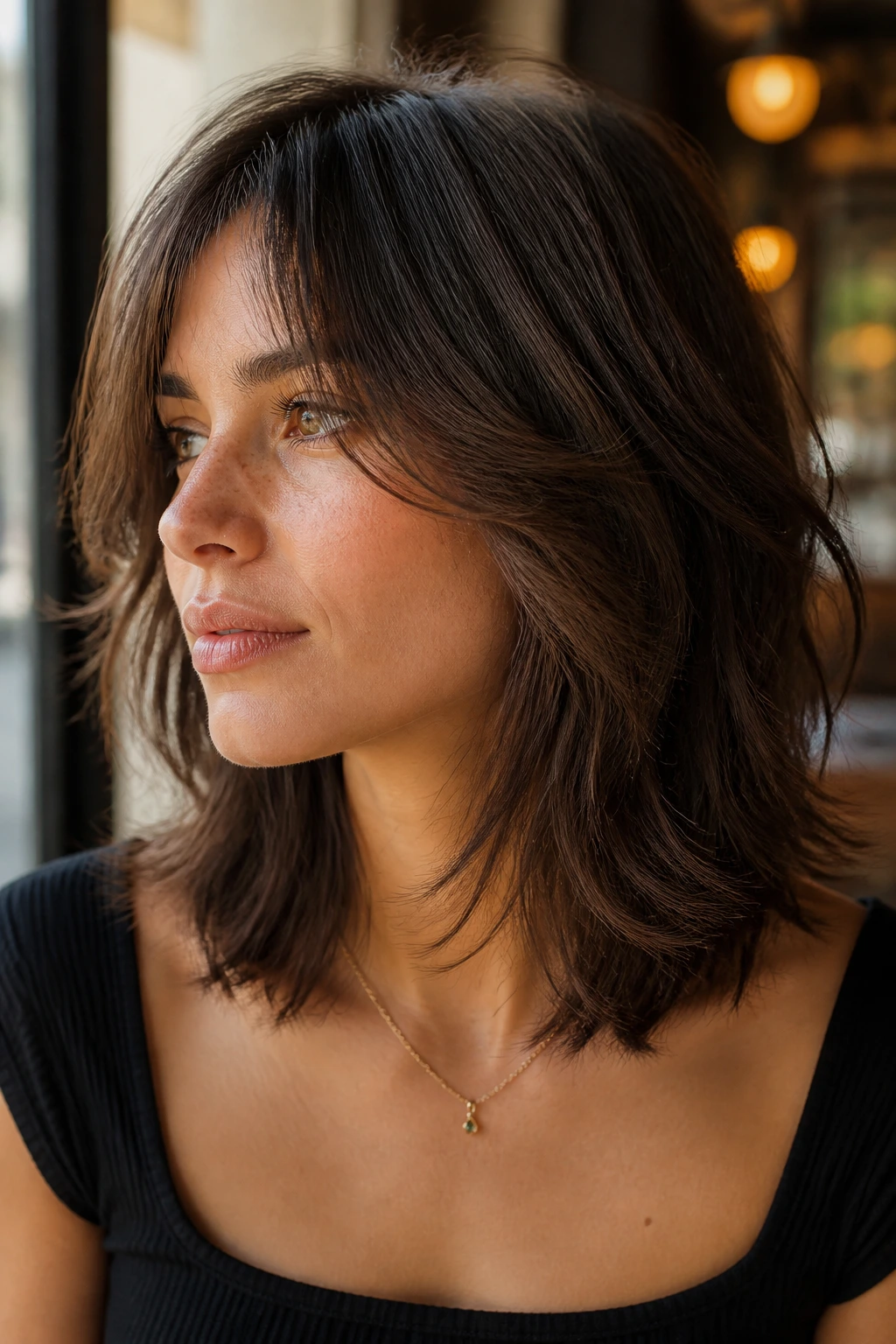
Collarbone length gives fine hair a little more room to move without getting weighed down. This version is all about feathered layers that start around the jaw and fall into softer, longer pieces near the collarbone, so the ends don’t disappear into nothing.
What makes it work is the balance. The top stays light, but the bottom doesn’t get too shredded. That’s the part a lot of people miss. Fine hair needs air, not emptiness. If your hair tends to lie flat after a few hours, this shape is a good compromise because it still looks long, but it doesn’t have the heavy, parked-straight-down feel of a one-length cut.
3. The Cropped Micro Shag
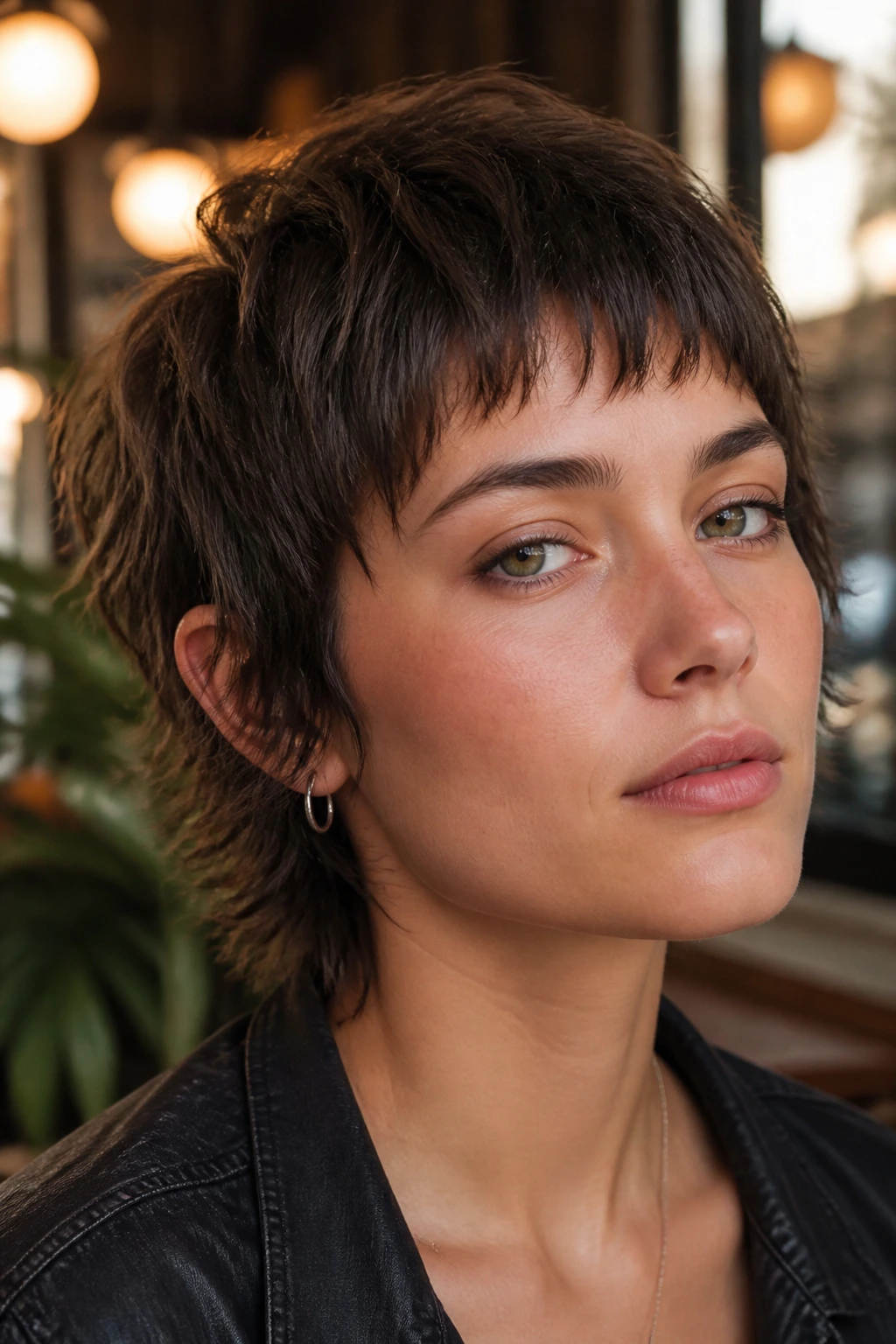
Short hair and fine hair can be a brilliant match when the cut has nerve. The cropped micro shag leans into that energy with short, broken layers, a tiny fringe, and just enough texture to keep the silhouette from reading like a basic pixie.
This one works best when the hair has some natural bend or at least a bit of movement with styling. You can rough-dry it with mousse and lift it with your fingers, then stop. Don’t overthink it. The charm is in the piecey shape, not in forcing every strand into line. If you like a cut that feels fast, punchy, and a little bit cheeky, this is the one.
4. The Soft Wolf Shag

A wolf cut can be too much for fine hair if the layers are too dramatic, but a softer wolf-shag hybrid is a different story. The trick is keeping the shape shaggy through the crown and sides while avoiding that over-thinned mullet effect at the bottom.
Ask for a softer transition from the short front pieces to the longer back length. That keeps the haircut edgy without stripping away density. Fine hair does best when the silhouette still looks full from the side, and this version holds up because it leaves some bulk in the lower half instead of hollowing everything out.
5. The Long Feathered Cascade
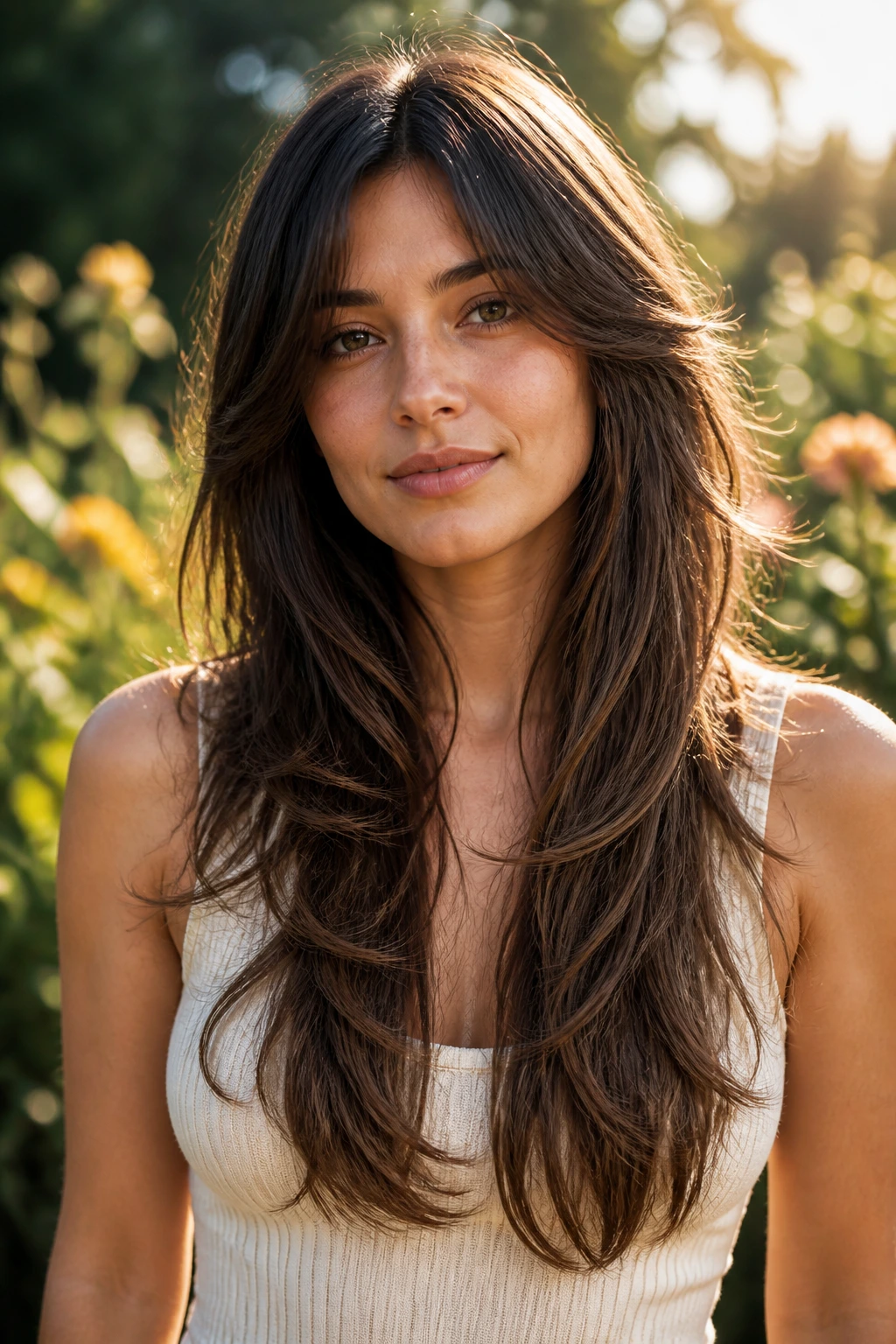
If you’re attached to long hair, this is the version that still gives you movement without making you feel like you gave up half your head in the chair. Long feathered layers fall in soft steps, so the hair bends instead of hanging like one heavy sheet.
The best part is the way it moves near the ends. Fine hair often needs help creating swing, and a long shag does that by taking some weight off the front while keeping the overall length intact. Pair it with a center part or a barely off-center part, then work a small amount of volumizing mousse at the roots. That’s enough. Too much product and the whole thing gets sticky.
6. The Bixie Shag
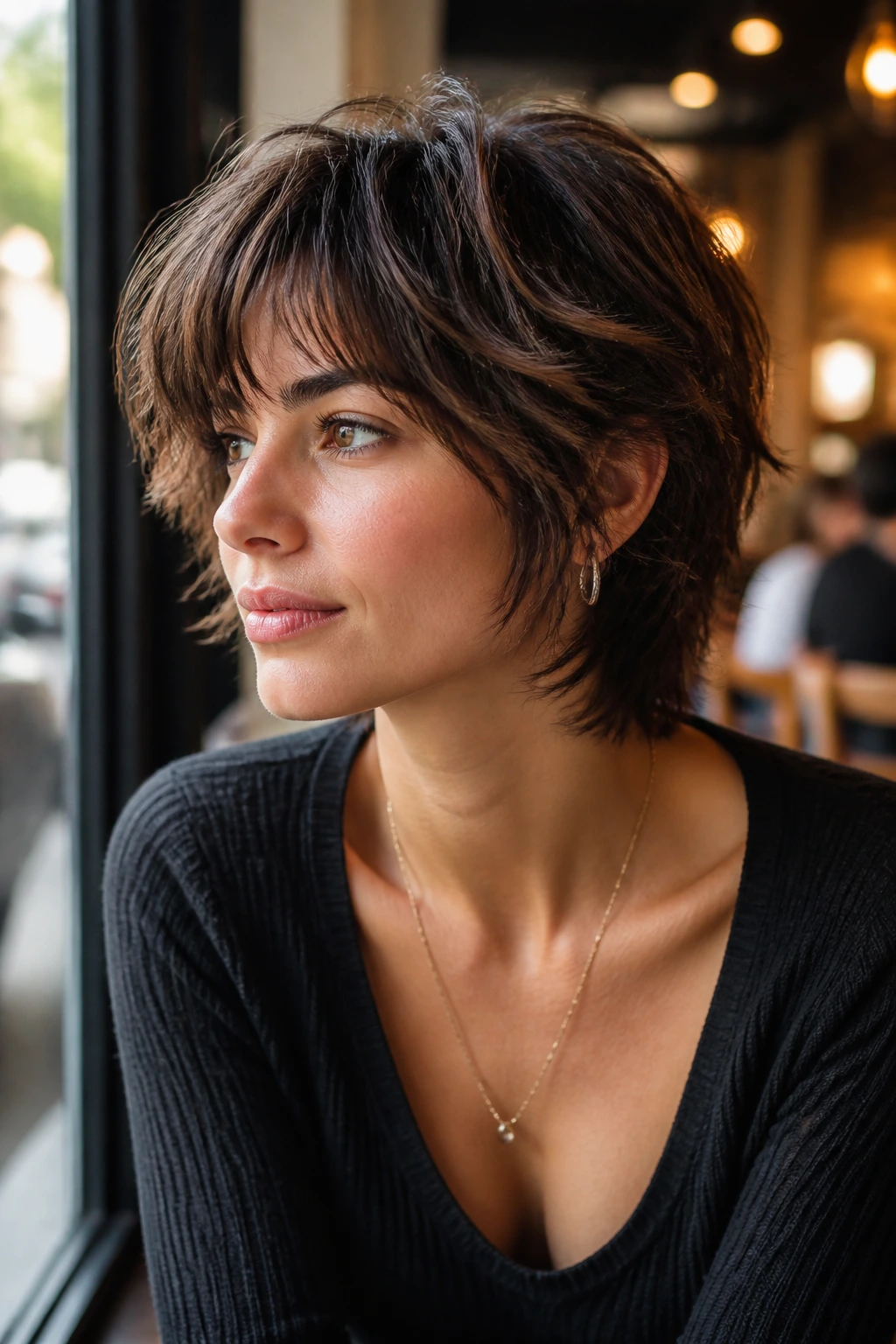
The bixie shag sits between a bob and a pixie, which is exactly why it’s so useful for fine hair. The shape gives you face-framing movement, a little crown lift, and short-to-medium layers that never have to carry too much weight.
It’s a smart choice if your hair gets flatter the longer it gets. The shorter perimeter creates the illusion of density, and the shaggy texture keeps the cut from feeling helmet-like. Ask your stylist to keep some softness around the ears and through the top, otherwise the cut can go too rigid. A bixie should look a little lived-in, not carved.
7. The Bottleneck Bang Shag

Bottleneck bangs are a very good friend to fine hair because they give you fringe without stealing all the density from the front. The bangs stay a touch shorter in the center and soften out toward the cheekbones, which makes the whole haircut feel wider where it matters.
This version is especially kind to people who like to tuck their hair behind one ear or pull a few pieces back. The bangs still do their job. They soften the forehead, frame the eyes, and keep the rest of the shag from feeling too wispy. If you want fringe but hate the look of a blunt bang sitting flat on a fine-haired forehead, this is the safer play.
8. The Razor Bob Shag
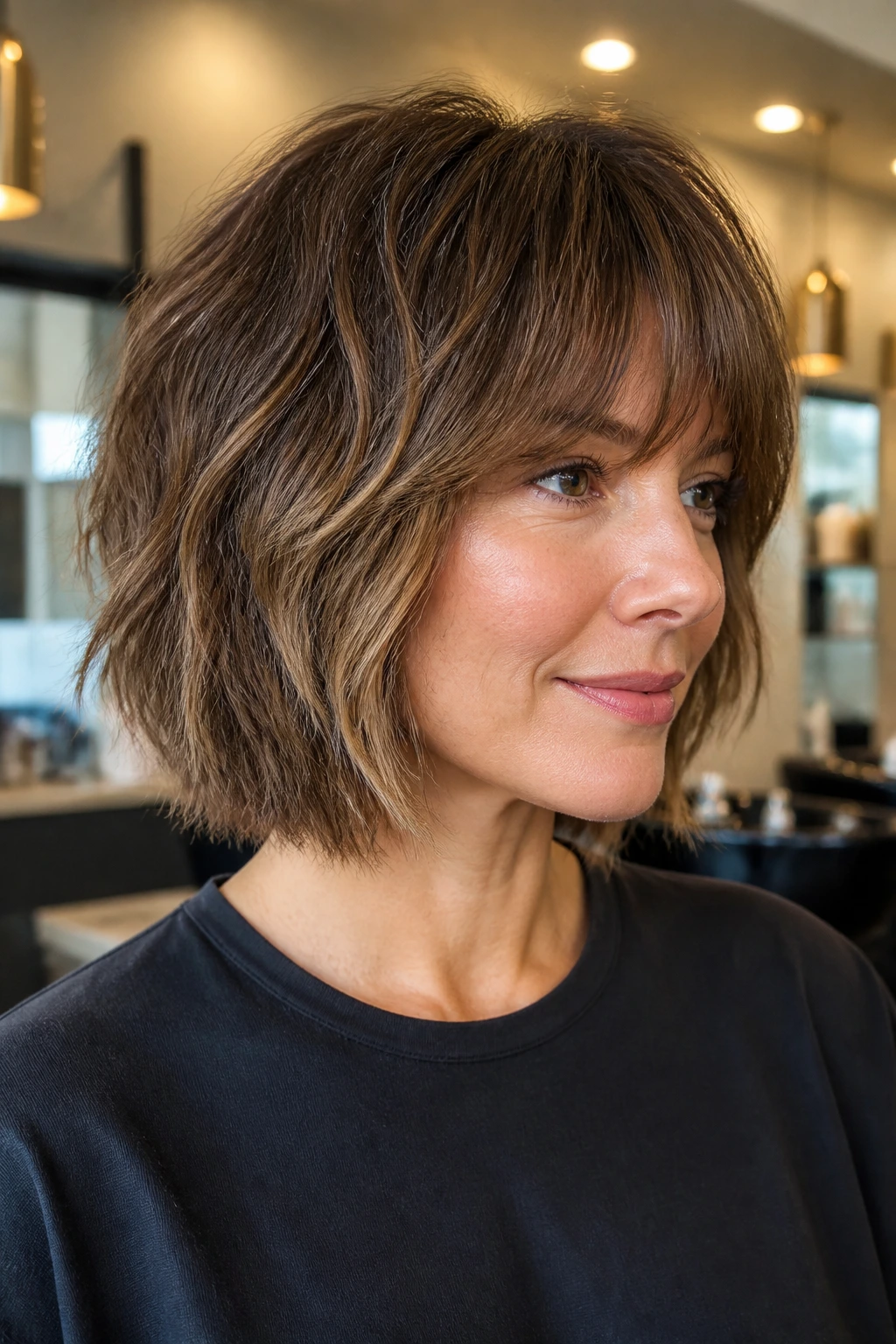
A razor bob shag needs a careful hand. Done well, it gives fine hair movement without turning the ends to fluff. Done badly, it can shred the perimeter and leave the whole cut looking hungry.
The sweet spot is a bob-shaped outline with broken internal layers and soft, beveled ends. The texture should live inside the cut, not just at the edge. That way the hair keeps a denser line around the jaw, which matters a lot on fine hair. It’s a good pick if you want something sharper than a classic shag but less airy than a full wolf cut.
9. The Grown-Out Rockstar Shag
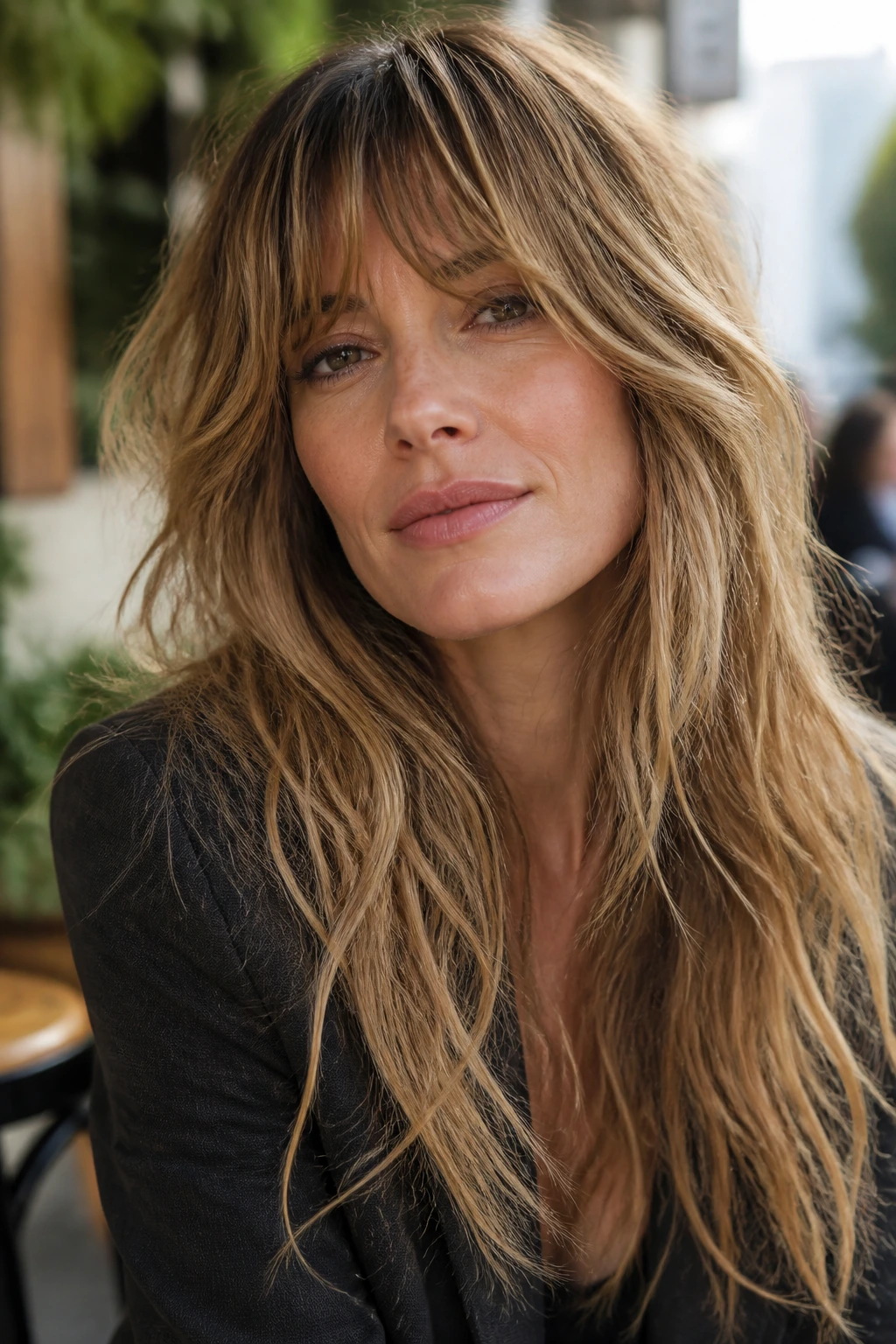
This is the shag that looks best when it isn’t trying too hard. The layers are long, the fringe is loose, and the face-framing pieces have that slightly overgrown, cool-by-accident look that fine hair pulls off better than people think.
What makes it work is restraint. The cut still has movement, but the stylist doesn’t slice the life out of the ends. That means the hair keeps enough weight to look glossy instead of sparse. If you prefer a style that survives skipped wash days and still looks intentional, this is the one to keep in your pocket.
10. The Side-Part Volume Shag
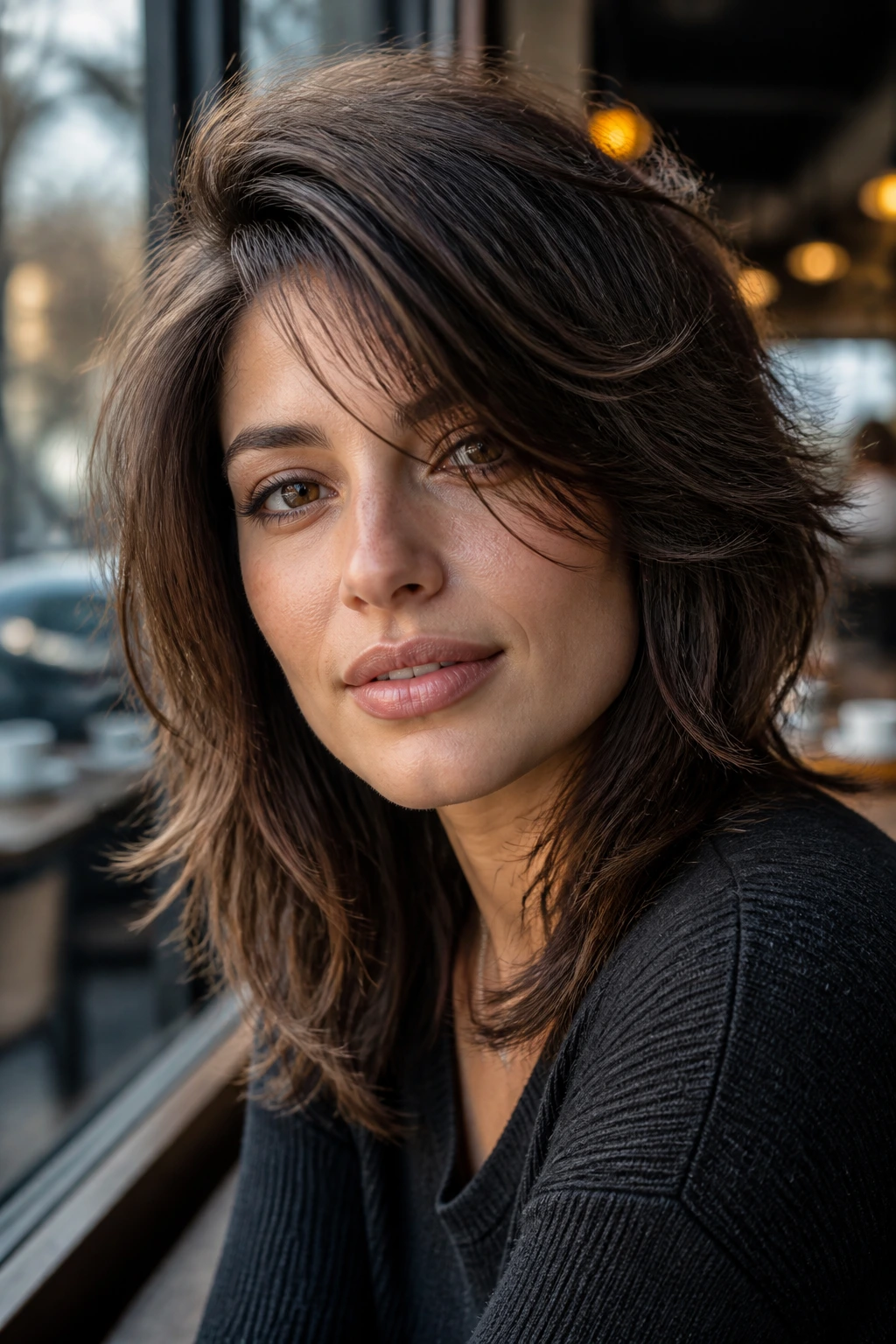
A deep side part can do more for fine hair than a pile of styling products ever will. This shag uses that asymmetry to create built-in lift on one side, then layers the rest of the cut so the hair falls with a loose, brushed-back sweep.
The result feels a little glam, a little old-school, and very useful if your crown tends to pancake. The side part changes where the hair sits on the head, which gives the root area a natural bump. Add soft, face-skimming layers and the cut instantly looks fuller. It’s a sneaky one. Good sneaky.
11. The French Shag
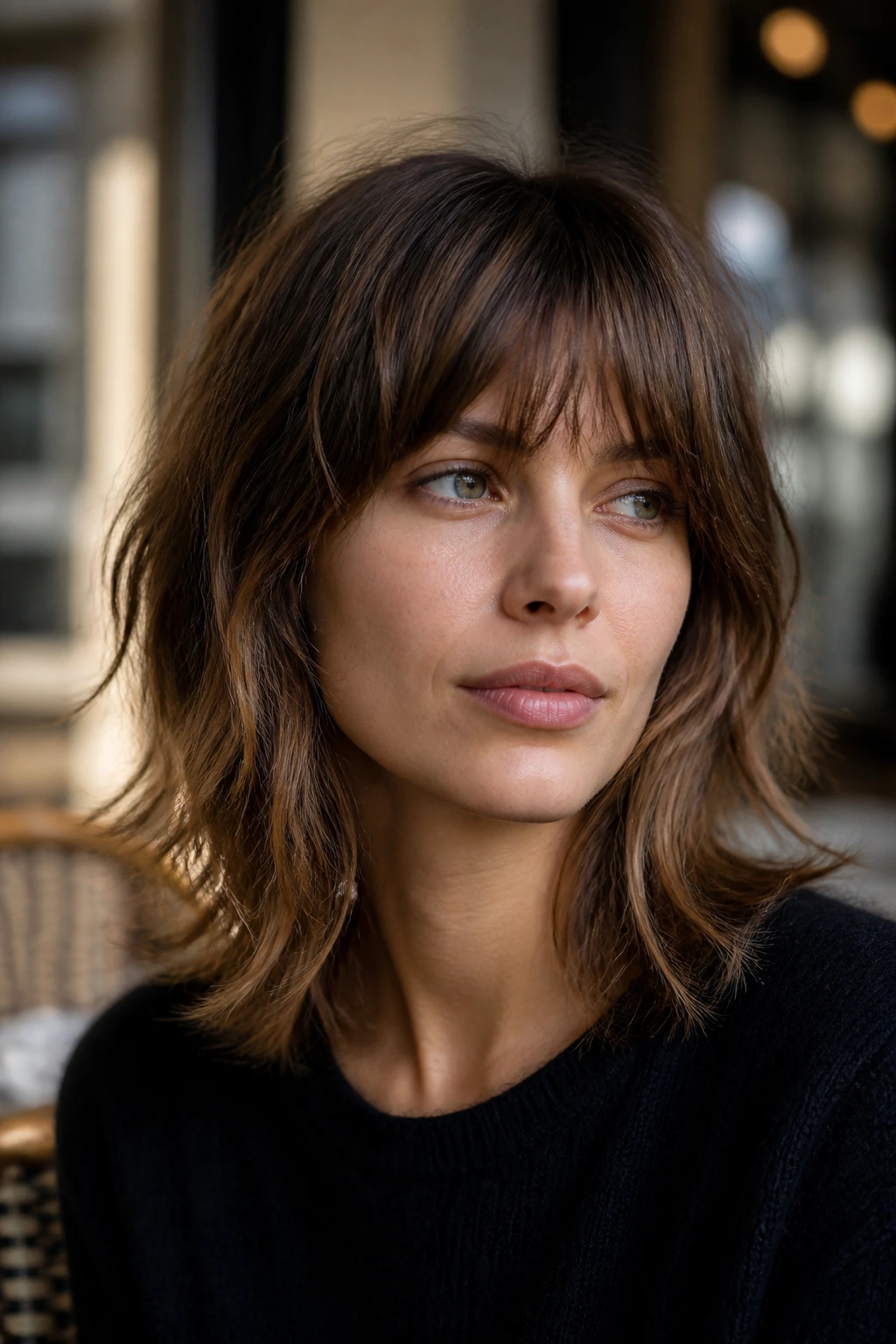
The French shag is all about casual shape. It usually sits around jaw to shoulder length, with soft fringe and layers that seem to fall into place without much persuasion. On fine hair, that looseness is the point.
You do not want a hard-edged, overbuilt shape here. You want a little bend, a little swing, and a clean outline that keeps the style from becoming fuzzy. Fine hair can actually look expensive in this cut because the movement is light and airy rather than bulky. A round brush and a quick bend through the front pieces is usually enough.
12. The Shoulder-Length Piecey Shag
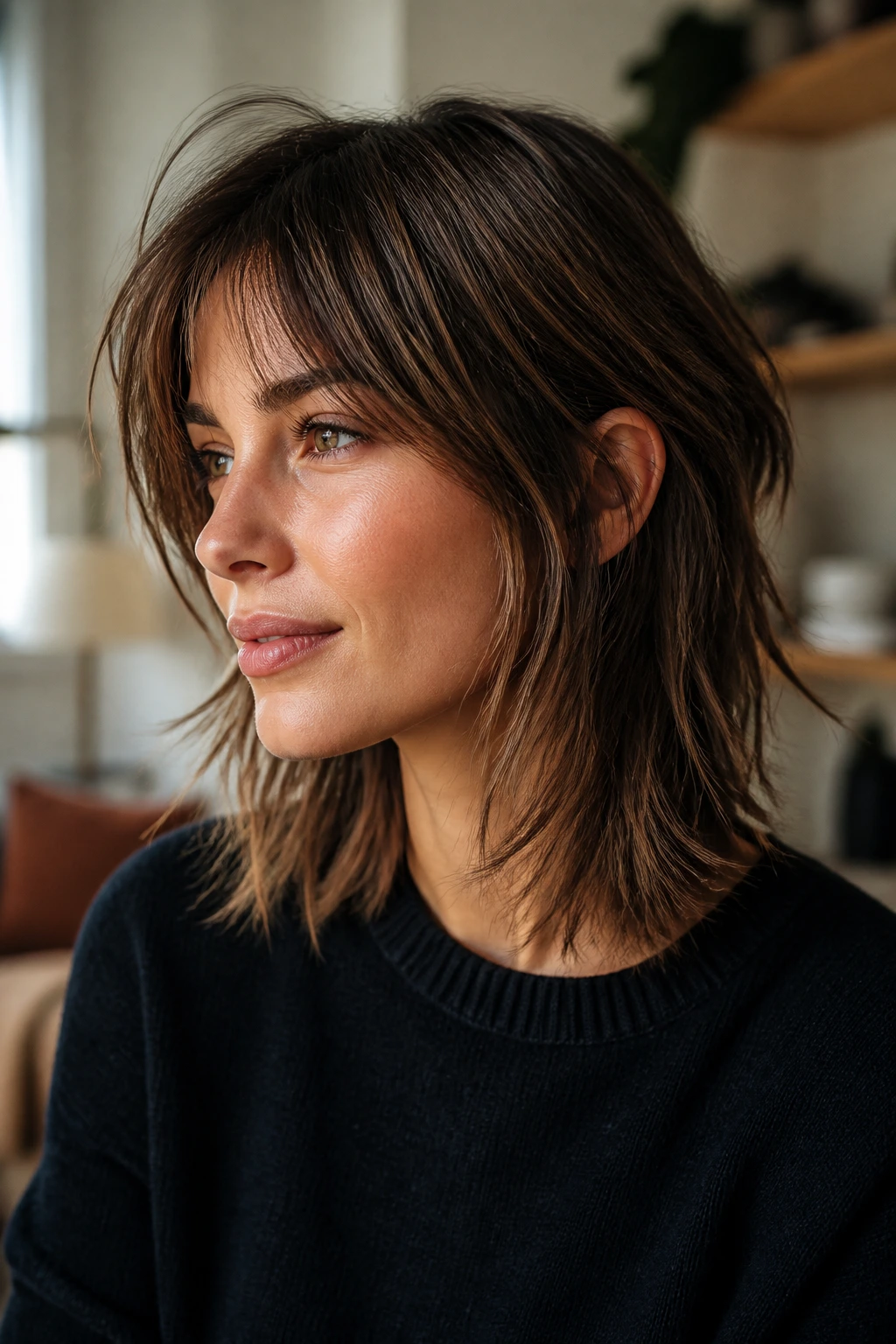
Shoulder length is where a lot of fine hair starts to lose its nerve, so a piecey shag at this length can be a lifesaver. The layers break up the heaviness at the shoulders, and the texture keeps the ends from folding into one flat line.
This is a solid middle-ground cut if you want something wearable every day. It works with air-drying, but it also holds a blowout nicely. Ask for soft slicing through the mid-lengths, not random choppiness. The difference matters. Random choppiness looks accidental; controlled pieceiness looks like the hair has shape on purpose.
13. The Tapered Nape Shag
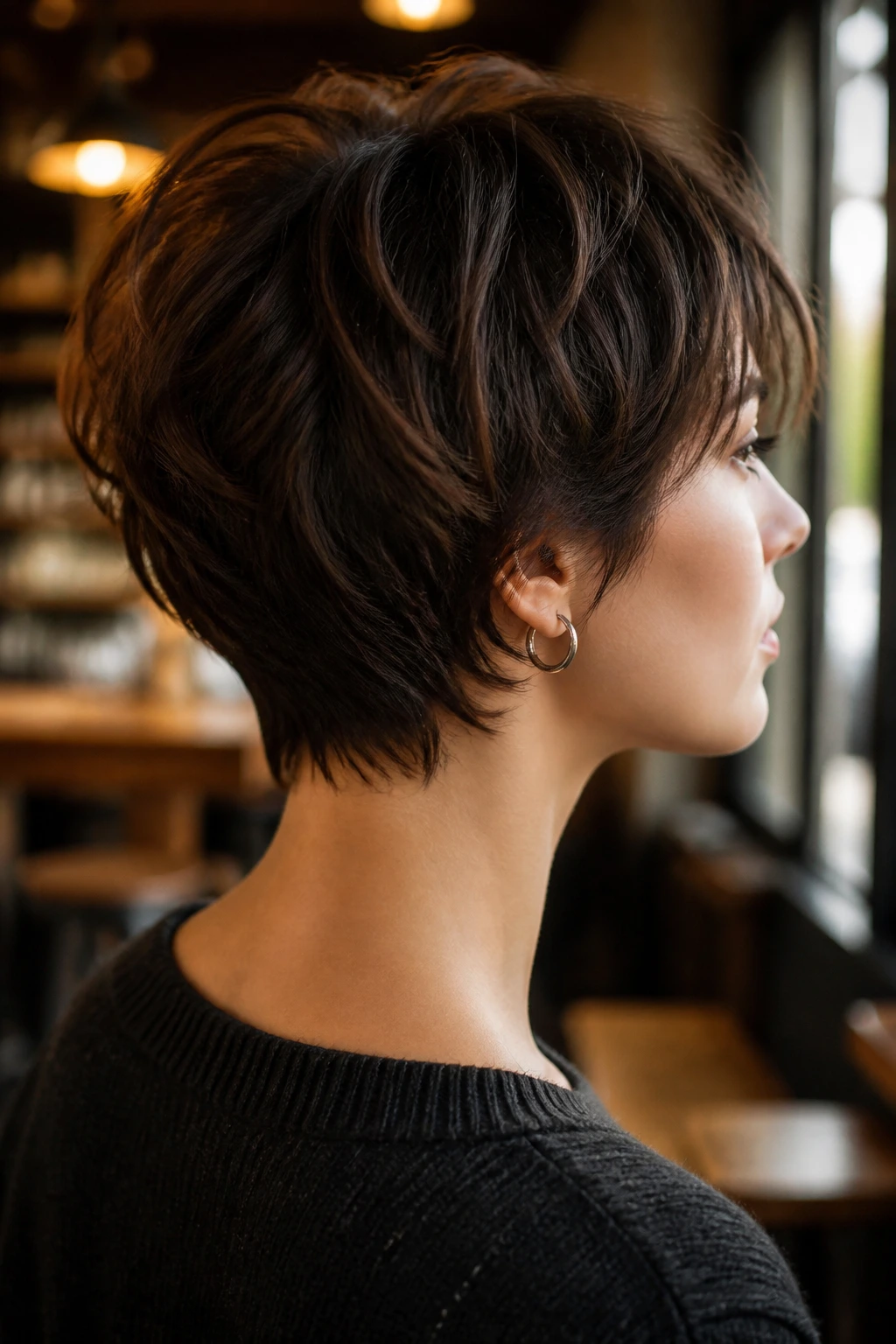
The tapered nape shag gives the back of the head a cleaner, slimmer finish while keeping the top and sides full enough to create lift. That taper is useful on fine hair because the back won’t bulge out or look bulky, especially if your hair grows a little flat where the neck meets the hairline.
This cut is sharpest when the front pieces stay slightly longer than the back. It creates a quiet, flattering sweep that keeps the hair from collapsing into one weighty block. If you wear collars, jackets, or scarves a lot, this cut behaves well because it sits close to the neck and doesn’t snag every five minutes.
14. The Curly Fine-Hair Shag

Fine hair with a curl or wave pattern can look twice as dense when the shag is cut correctly. The goal is to preserve spring without taking off so much weight that the curl turns frizzy and thin at the ends.
A good curly shag should follow the curl pattern, not fight it. That means a stylist who knows how your hair bends when it’s dry, not just when it’s wet. The layers should give the curls room to stack, while the fringe or face frame keeps the shape from ballooning out in odd places. A diffuser helps, but the cut does most of the work.
15. The Sleek Crown Shag
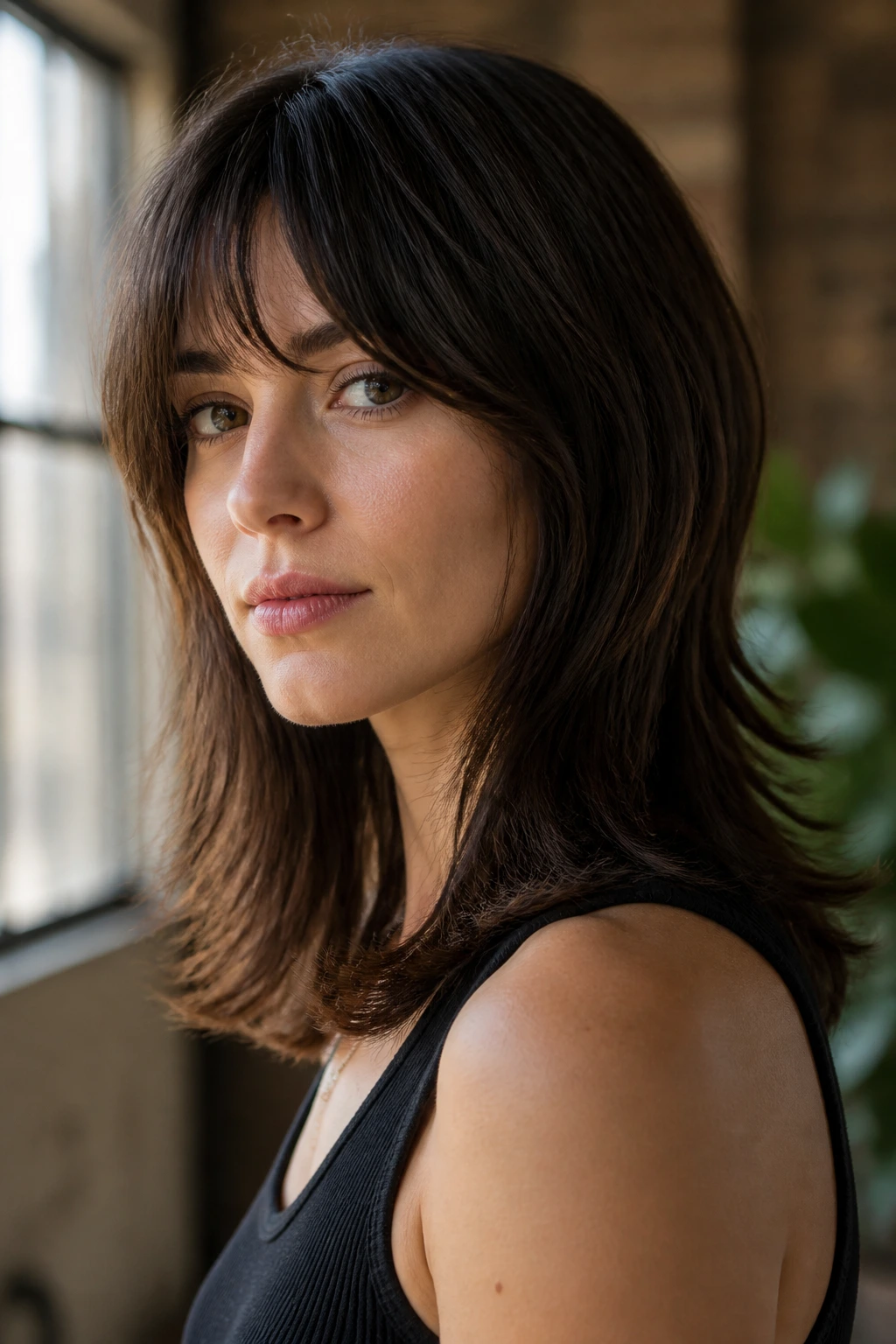
This one is for people who like a cleaner root area and more texture only where it counts. The crown stays smoother and more controlled, while the mid-lengths and ends carry the movement. On fine hair, that contrast is smart because it avoids the over-teased, over-sprayed look that can happen when everything is puffed up at once.
The haircut lands best when the top layers are subtle and the lower pieces are slightly broken up. You get the impression of fullness without turning the whole head into static. A quick pass with a flat iron on the ends — just a soft bend, not a curl — makes the shape feel polished.
16. The Mini Mullet Shag
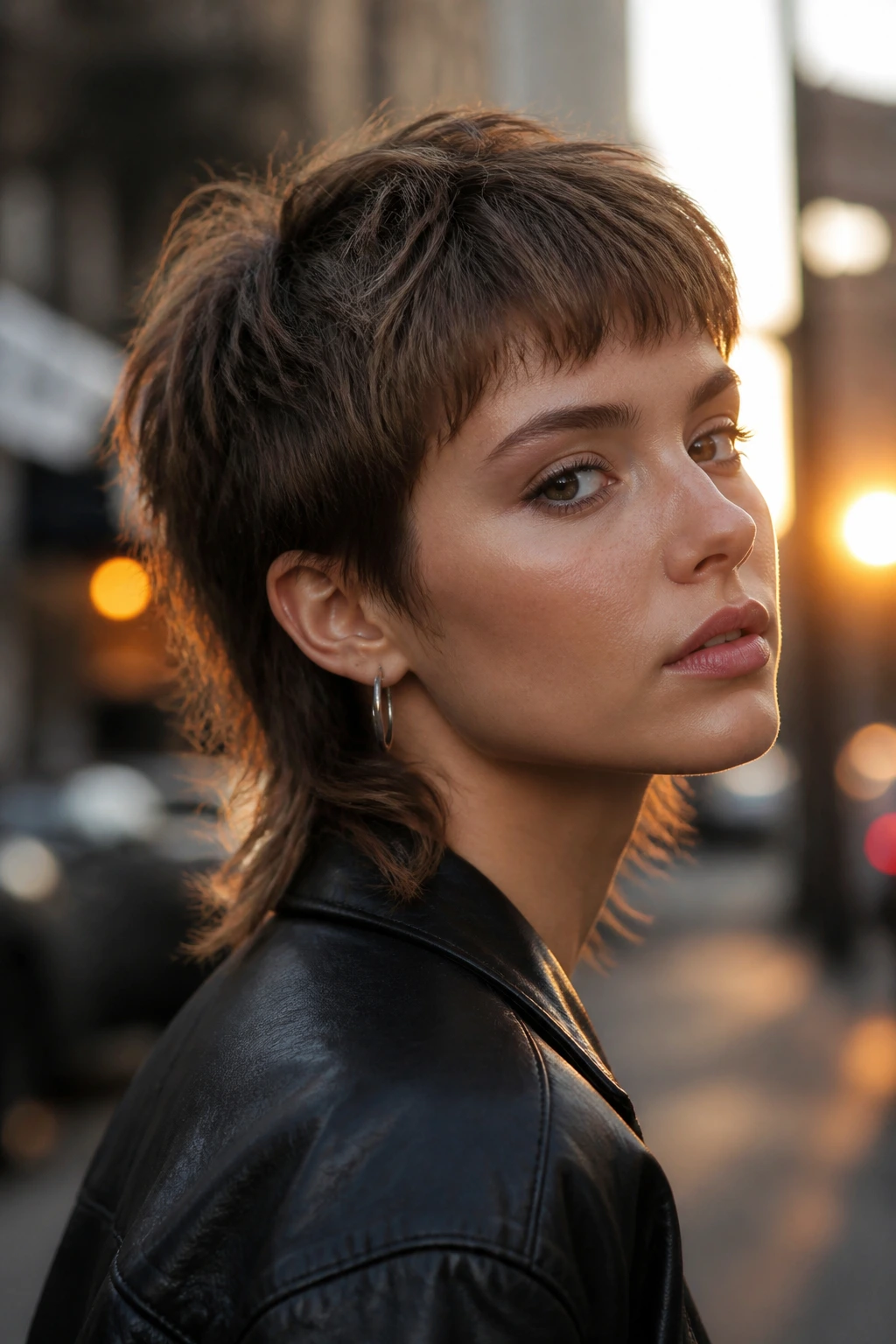
A mini mullet shag isn’t for everyone, and that’s fine. For the right person, it’s one of the best ways to get attitude into fine hair without relying on heavy styling or thick density.
Keep the top short, the crown feathered, and the back only a little longer than the front. The point is contrast, but a gentle one. If the back gets too thin, the whole cut starts to look stringy. Ask for texture that lives in the interior, not just the outline. That gives you the rocker edge without sacrificing the fullness fine hair needs to look healthy.
17. The 70s Flip Shag
This cut borrows the best part of vintage feathering: the ends kick out instead of hanging straight down. Fine hair loves that little outward flip because it creates the illusion of movement at the bottom, which is often where the hair looks least exciting.
It works especially well on shoulder-length hair. The layers should be long enough to flip cleanly with a round brush or a quick pass of a blow-dryer, but short enough to keep the shape lively. If your face shape benefits from width around the jaw, this is a flattering move. It opens the profile up without needing big volume.
18. The Long Curtain Shag
This is the safe bet for someone who wants a shag but doesn’t want to lose length. The curtain pieces frame the face, the layers stay long enough to keep the ends looking dense, and the whole thing keeps a soft, airy rhythm.
Fine hair does well here because the cut doesn’t ask the ends to do too much. Long layers can go limp fast if they’re too sparse, so the trick is keeping the front movement and the perimeter fullness together. The cut should still feel like long hair when you wear it down. Just not boring long hair.
19. The Rounded Halo Shag
A rounded halo shag places the fullness a little higher around the head, which can be a gift for fine hair that tends to fall flat on the sides. The shape feels softer than a square cut and less severe than a razor-heavy shag.
What gives it lift is the curved outline. The layers sweep around the head instead of dropping in straight lines, so the hair appears denser from every angle. It’s especially good if you prefer a gentler, less edgy version of the shag but still want the movement. The haircut should have a soft arc at the back, not a hard shelf.
20. The Asymmetrical Edge Shag
Asymmetry can make fine hair look intentional in a hurry. One side sits a little longer, the part shifts a little deeper, and the haircut suddenly has a point of view.
This version works because the eye reads the unevenness as style, not scarcity. That’s useful when hair density is average or lower, since a symmetric, heavily layered cut can sometimes show too much scalp at the same time on both sides. Ask for the longer side to stay soft and the shorter side to keep movement around the cheekbone. It should feel edgy, not lopsided.
21. The Air-Dried Natural Shag

Some shags are made for styling tools. This one is made for your own hair texture to do the work. If your fine hair has a bit of wave, or if it forms a soft bend on its own, an air-dried shag can be a real time-saver.
The cut needs smart layering and a perimeter that still has shape when dry without brushing. That means the stylist should think about how your hair dries in the real world, not just how it looks blown out in the chair. A little mousse, a little scrunching, and a clean part are usually enough. No heroics. No giant barrel curling iron session at 7 a.m.
22. The Face-Frame Butterfly Shag
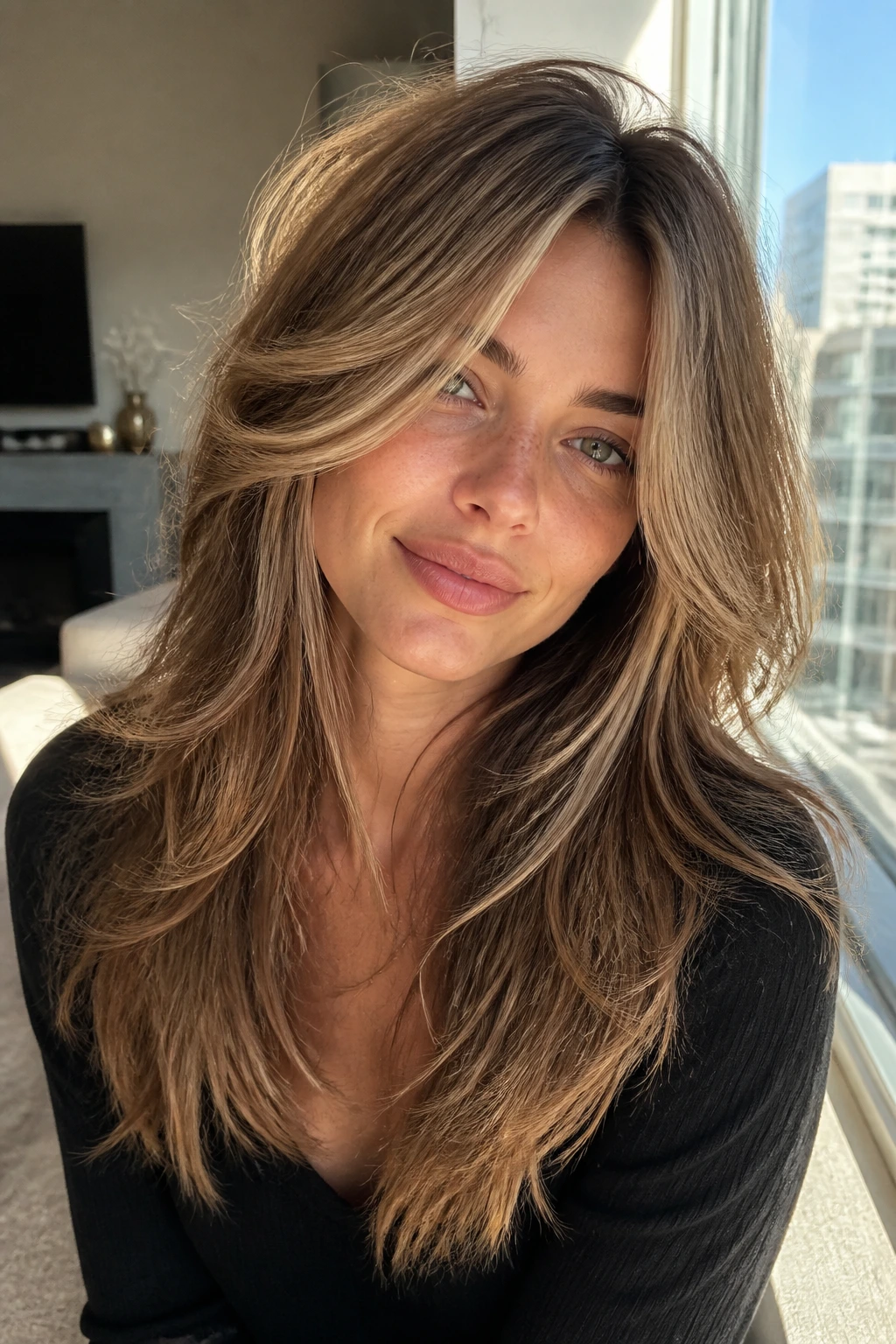
This one takes the airy face-framing idea from butterfly layers and folds it into shag territory. The front sections are longer and more dramatic, while the rest of the cut keeps enough texture to feel lived-in.
Fine hair benefits from this because the bulk stays lower and the movement sits where the eye naturally goes first — around the face. The layers should not be cut so high that the ends lose all density. You want that soft cascade effect, not a thin, see-through hemline. It’s a useful option if you like soft glamour more than edgy texture.
23. The Soft Fringe Shag
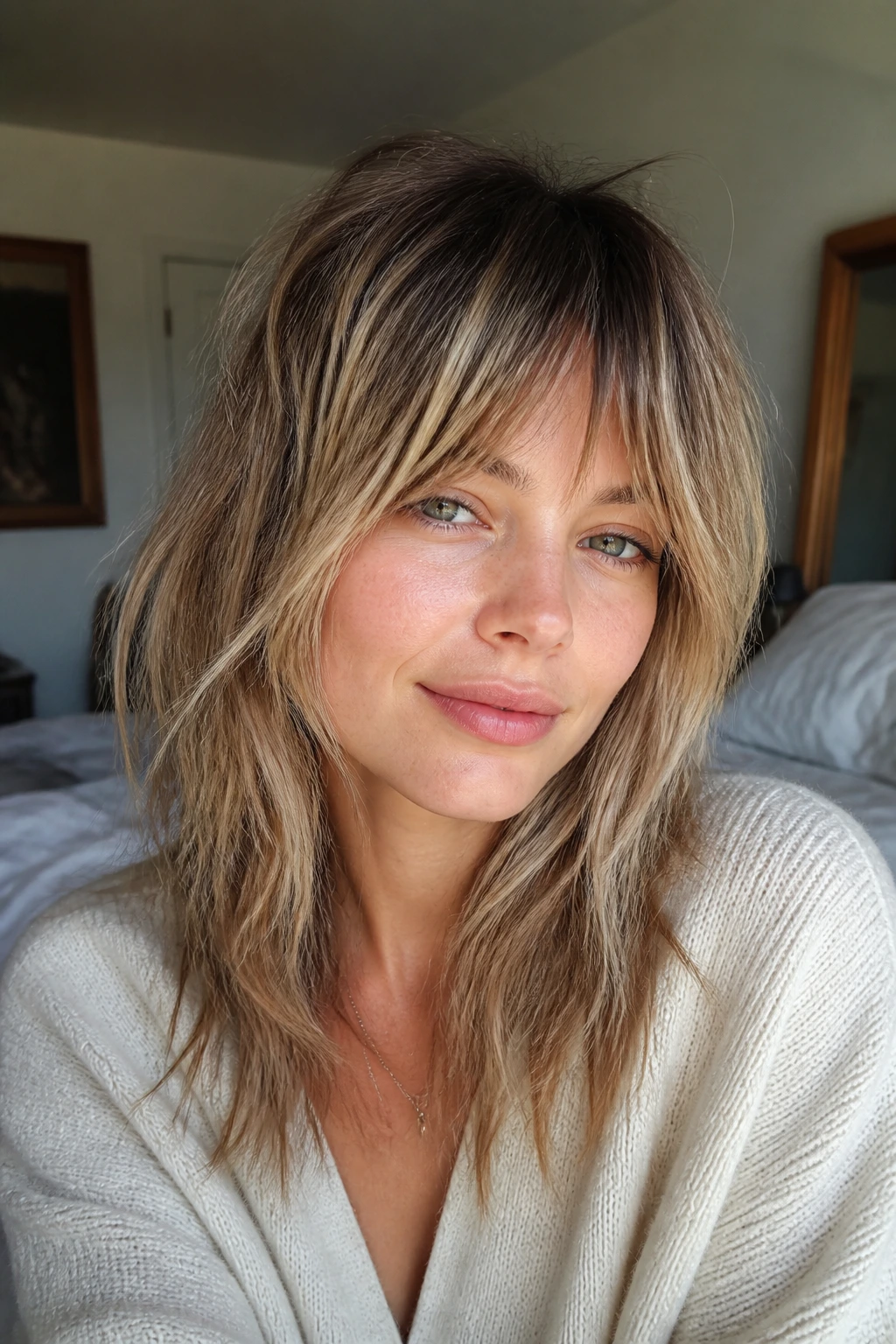
A soft fringe can change the whole mood of a fine-hair shag. Instead of a blunt bang that demands a lot of density, this version keeps the fringe airy, slightly separated, and a little irregular at the ends.
That softness helps the forehead area stay light, which matters on hair that can go flat fast. The fringe should blend into the side layers rather than sit as a hard block across the face. If you want bangs but panic at the idea of heavy upkeep, this is the version to ask about. It grows out better, too.
24. The Razor-Lob Shag
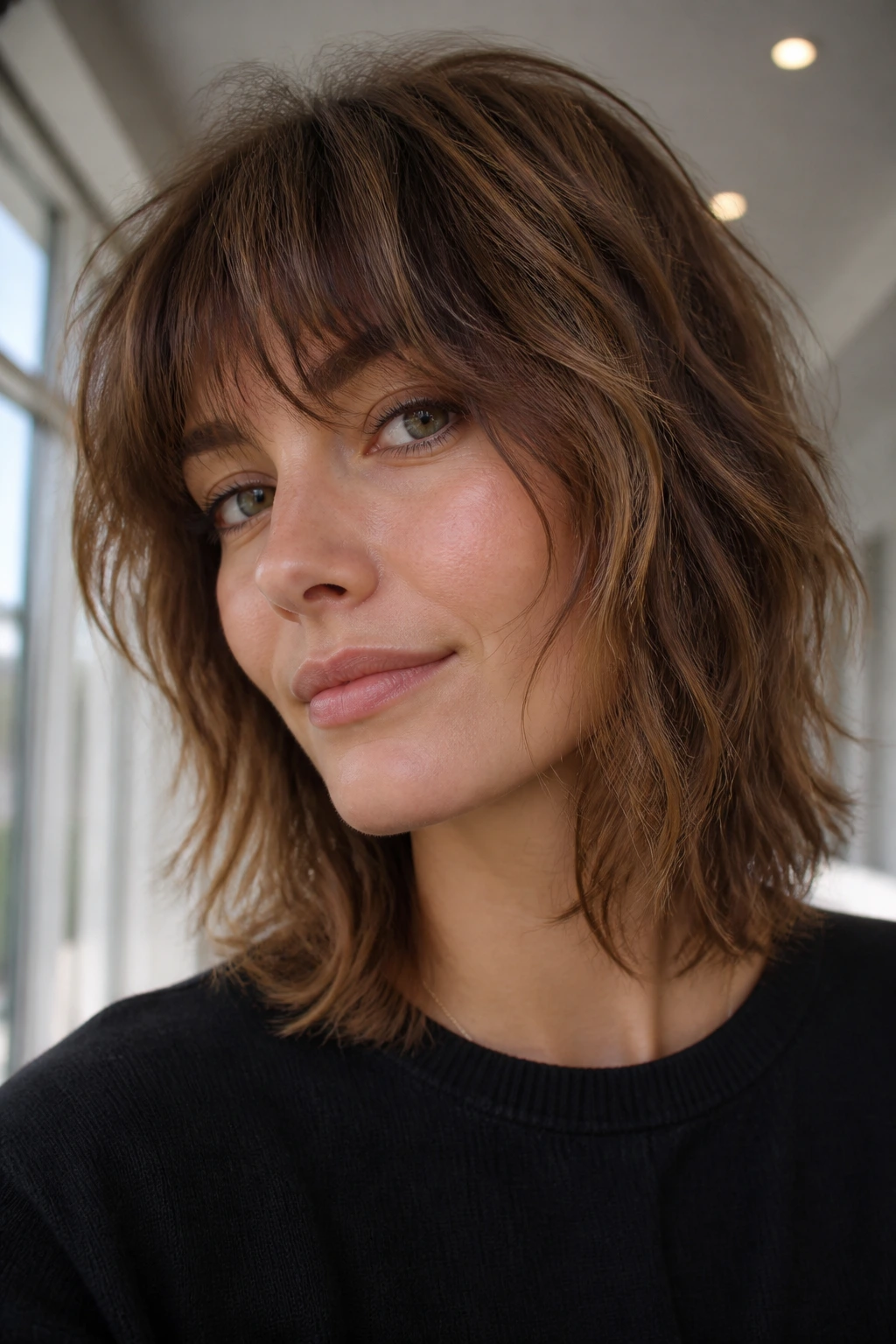
A lob with shag texture can look especially good on fine hair because the length gives the perimeter some weight while the razor work creates movement inside the cut. The result is a shoulder-skimming shape that doesn’t feel blunt or sleepy.
The danger, of course, is over-razoring. Too much can make the ends look pieced apart in a bad way. The better version keeps the line clean, then adds softness through the interior and around the face. It’s a smart cut for anyone who wants a polished base with a little rebellion in the texture.
25. The Tucked-Behind-Ears Shag
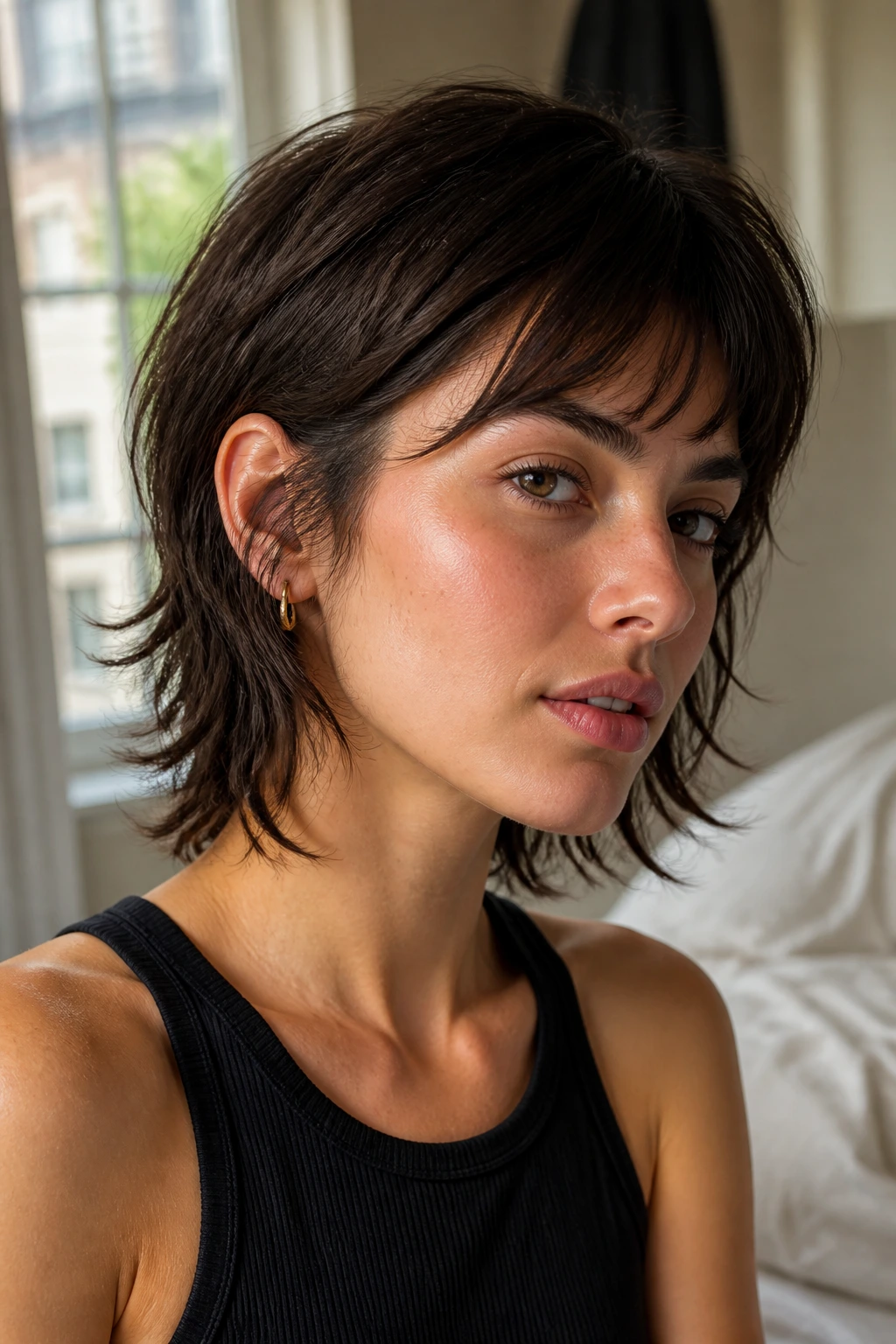
This one sounds simple, and that’s part of the appeal. The cut is designed to look good when one side gets tucked behind the ear, which fine hair often does naturally after a day of moving around.
To make that work, the front layers need to fall in a way that still leaves interest around the cheek and jaw. The haircut should not collapse into a flat shape the second you tuck one side back. If your daily look includes glasses, hoops, or one earring showing, this is a very practical shag. It gives you movement without asking for much.
26. The Feathered Bang Shag
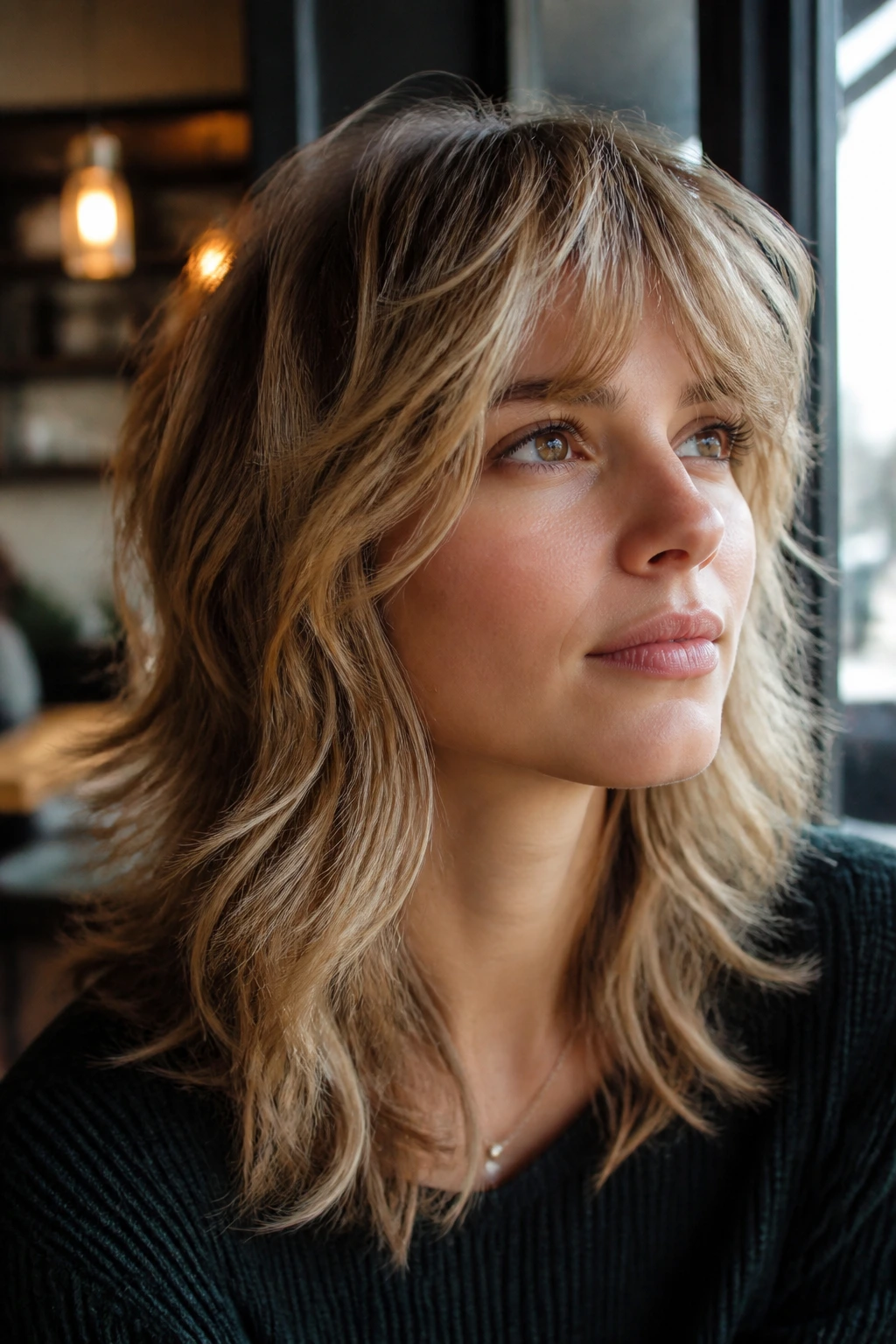
Feathered bangs are a strong move for fine hair because they add texture right where people notice the haircut first. The fringe should separate a little and fall in soft slices, which makes the hair look light rather than sparse.
The rest of the shag can stay fairly simple if the bangs carry enough visual interest. That’s handy if you want a cut with personality but not a lot of maintenance through the mid-lengths. A round brush and a quick blast of heat at the front are usually enough to keep the fringe from sticking to the forehead. Tiny effort. Big payoff.
27. The Deep Side-Part Rockstar Shag
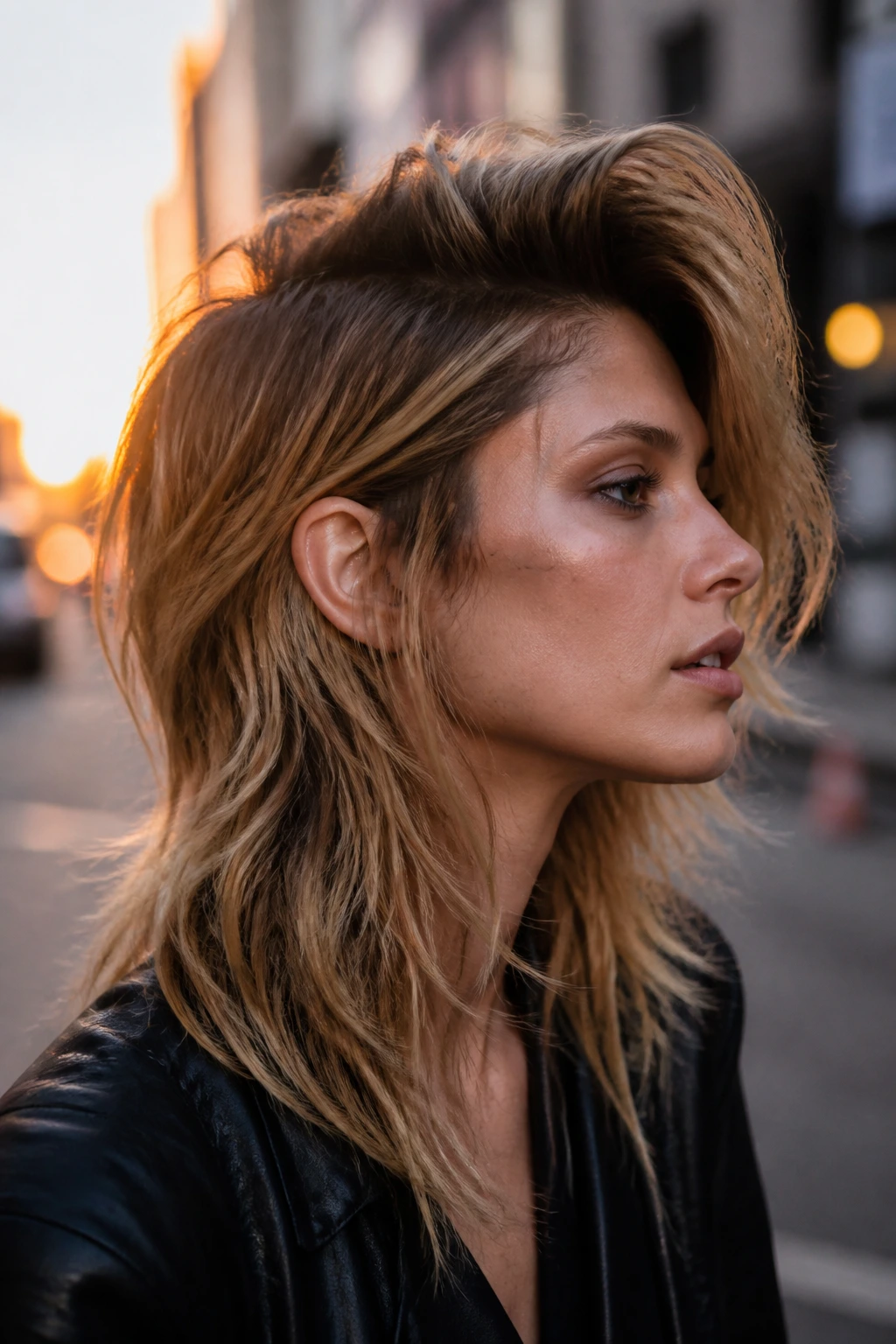
If you want hair that looks fuller without adding actual hair, a deep side part is one of the oldest tricks in the book for a reason. This shag leans hard into that parting shift, with layers that sweep up and over instead of lying straight down.
The result gives the crown an instant lift and makes fine hair look like it has more root volume than it really does. It’s especially nice if your hair has a cowlick or a stubborn flat spot, since the new part can redirect the whole shape. A little root spray helps, but the haircut does most of the lifting.
28. The Soft Shattered Shag
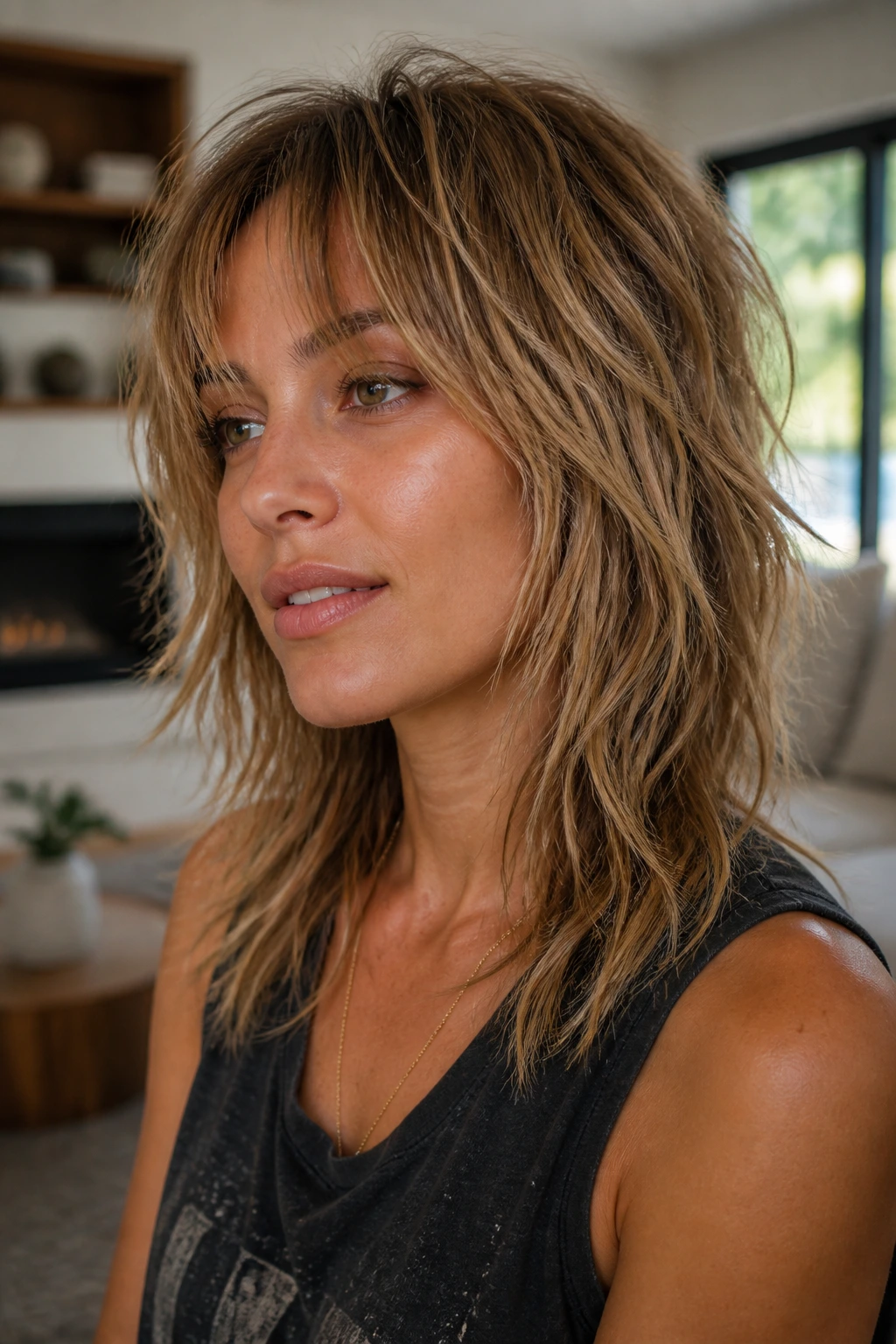
Shattered ends can be dangerous territory on fine hair, so the soft version matters. The cut still has broken movement, but the ends are blurred rather than frayed, which keeps the hair from looking dry and over-thinned.
This is a cut for people who like a messier finish. The hair should move in small pieces, not one heavy curtain. Ask your stylist to keep the line visible enough that the hair still looks intentional when it’s straight. That balance is what makes the cut wearable instead of artsy for the sake of it.
29. The Low-Effort Wash-and-Go Shag
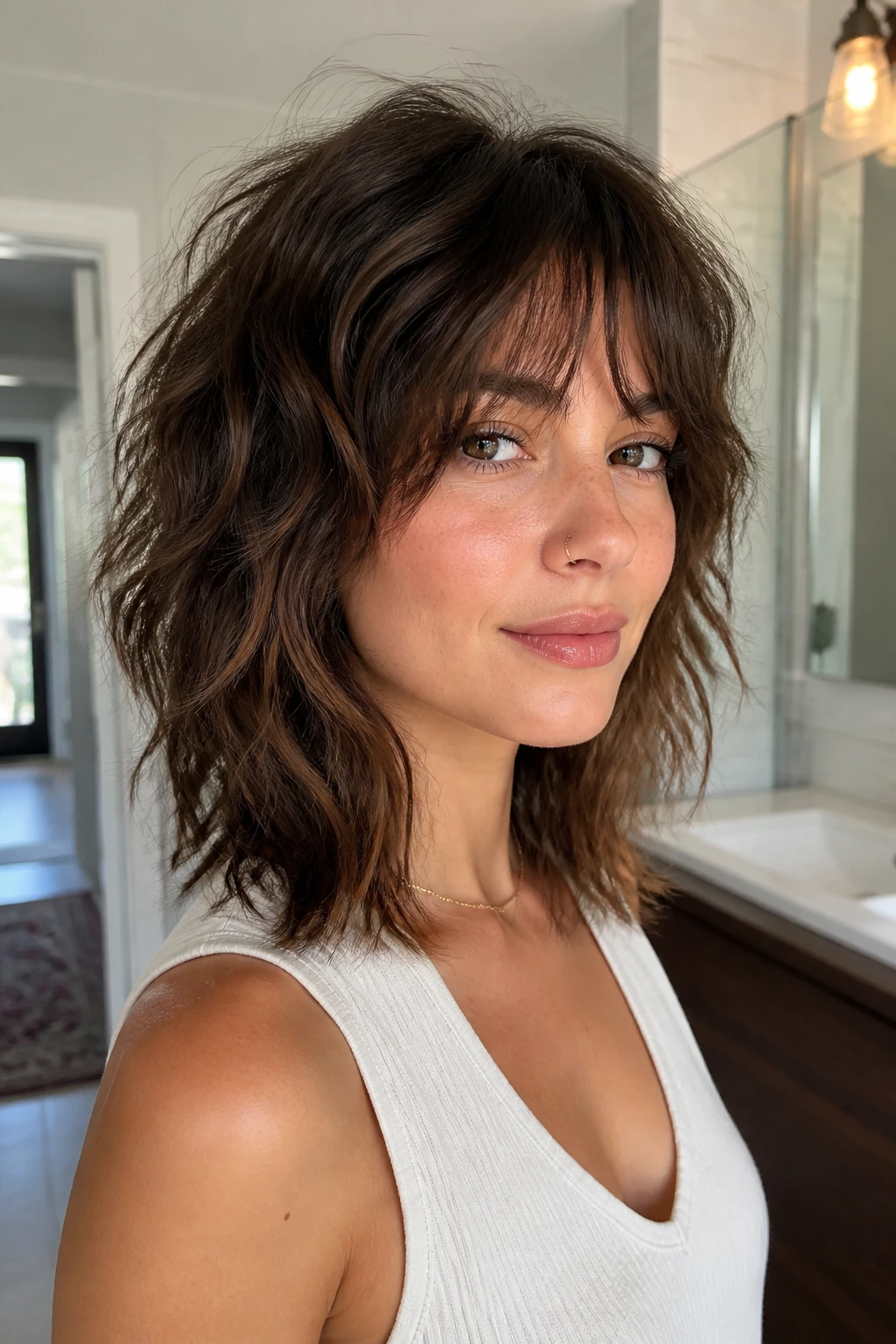
This shag is built around the idea that you do not want to fight your hair every morning. The layers are placed so the haircut keeps its shape when you air-dry, and the ends stay soft enough that a quick scrunch with product is all you need.
It’s a solid choice for fine hair that goes limp when overbrushed or overstyled. The fewer complicated moves required, the better. Ask for texture that suits your natural dry pattern, not a cut that only looks good in a blowout. That distinction saves a lot of frustration later.
30. The Glossy Undone Shag
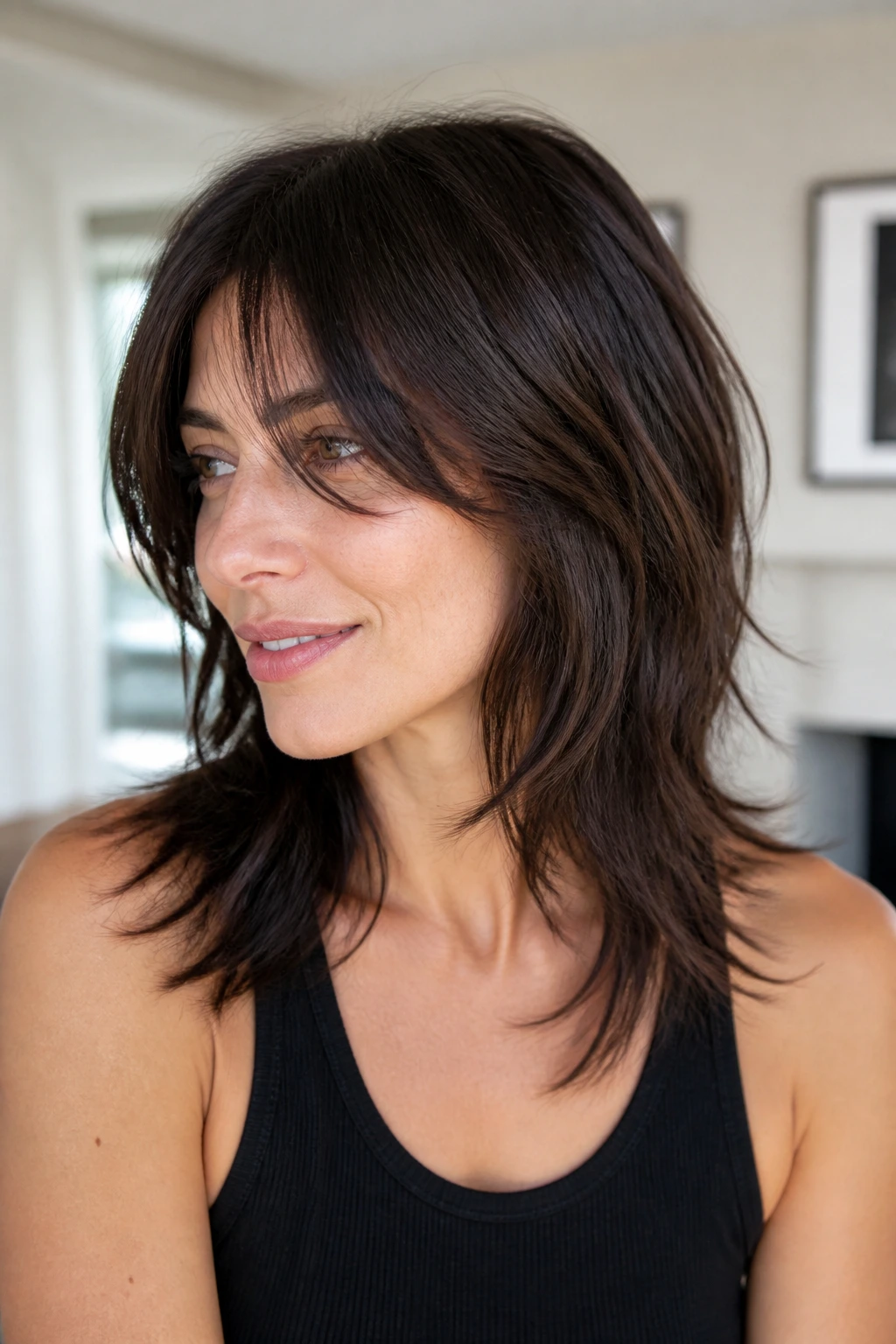
Some shags aim for wild. This one aims for smooth with movement. The hair keeps a glossy surface, but the ends still separate into loose, piecey sections that stop it from feeling stiff.
Fine hair often looks its best when it reflects light cleanly, so this style keeps the texture controlled. You can add a soft bend with a flat iron or large curling iron, then rake it apart with your fingers once it cools. It’s a nice option for anyone who likes the shag shape but doesn’t want the “I slept in a wind tunnel” finish.
31. The Crown-Boost Shag
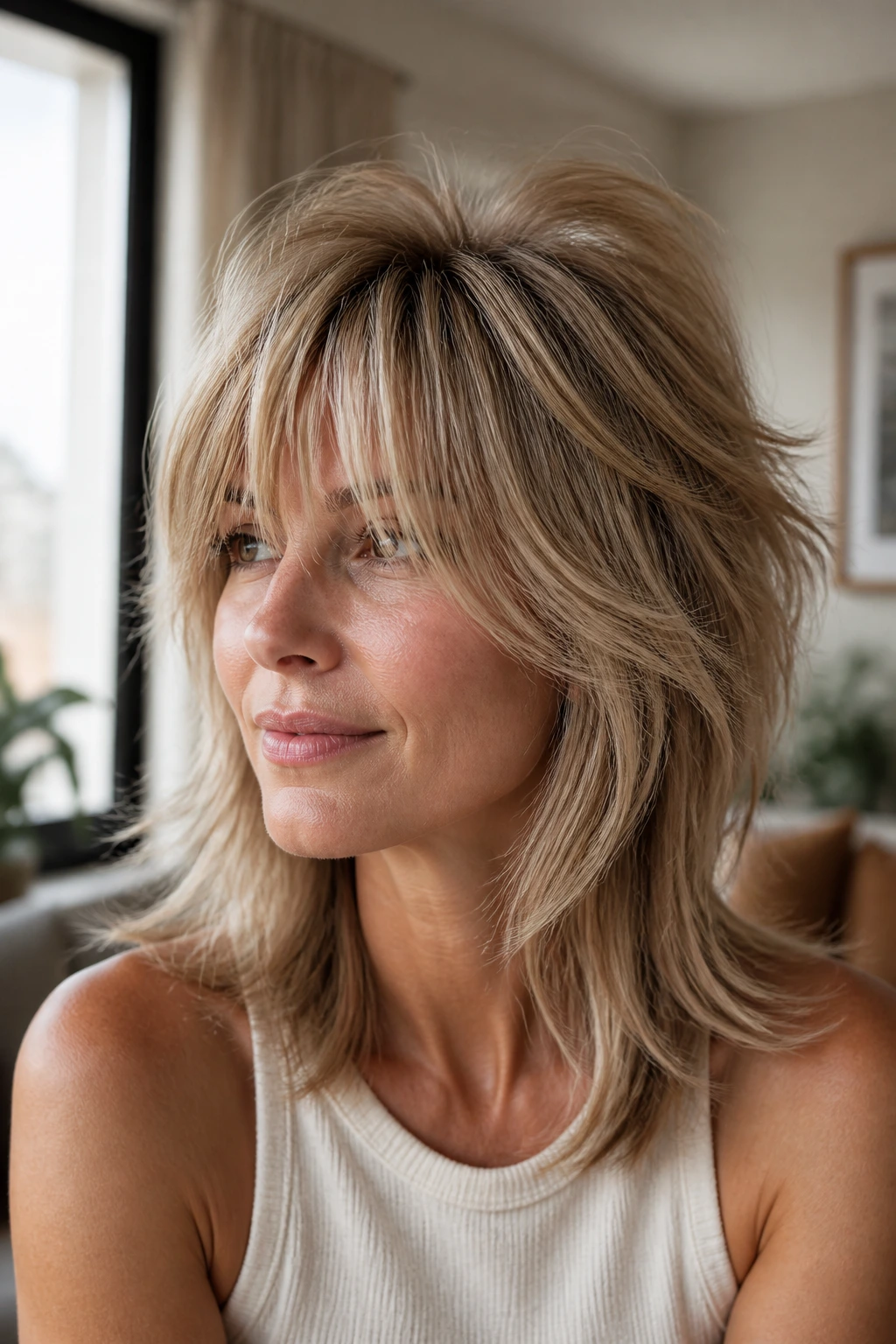
If your crown is the first thing to collapse, this is the cut to study. The upper layers are placed to encourage lift right at the root, while the rest of the cut stays a touch longer and softer to preserve density.
The shape works because it targets the exact place fine hair tends to go flat. You’re not trying to build volume everywhere. That usually backfires. Instead, the crown gets the attention, and the rest of the haircut supports it. A little back-combing at the roots can help, but the shape should live without needing a full tease every day.
32. The Cheekbone-Opening Shag
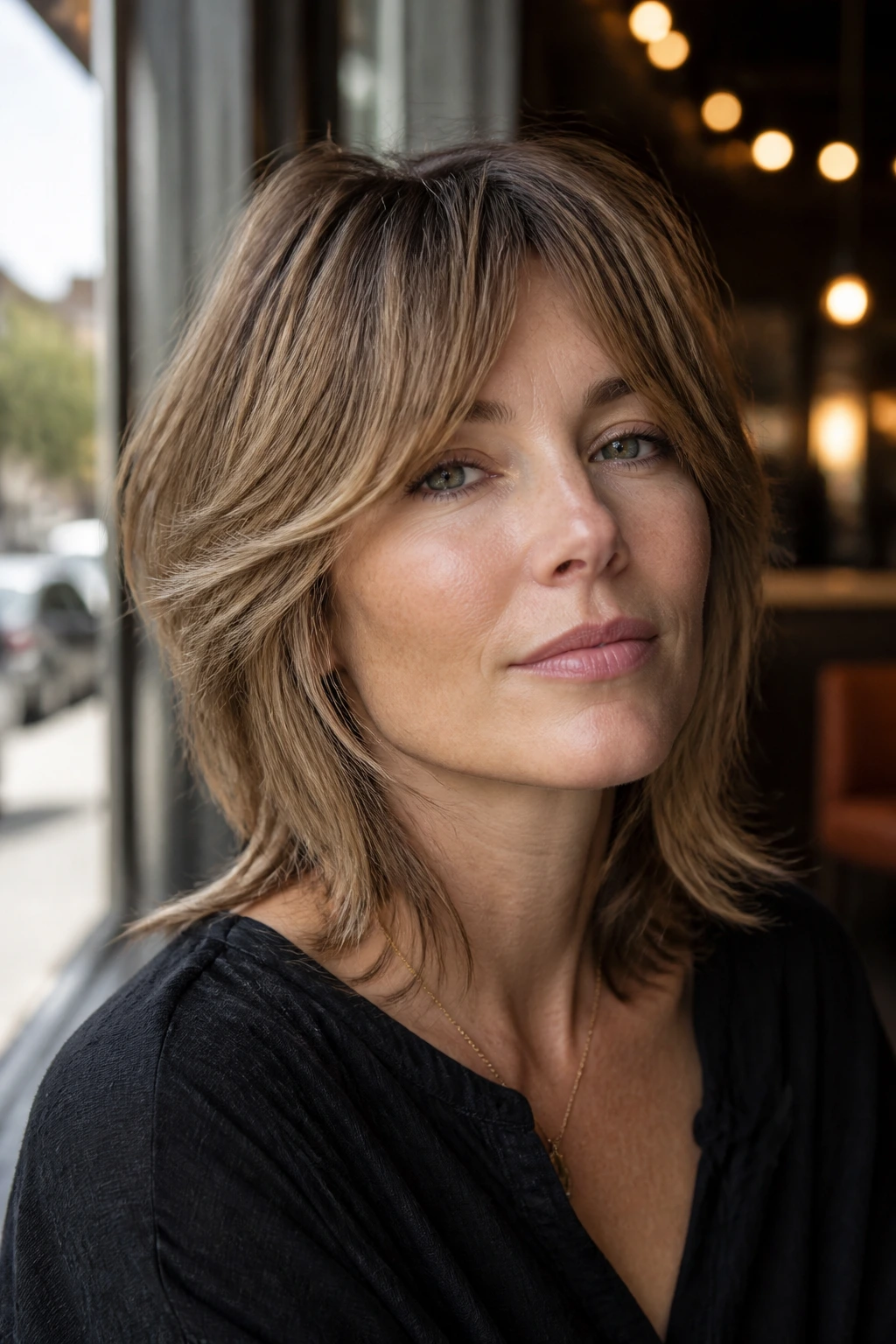
A cheekbone-opening shag uses face-framing pieces to carve out the middle of the face in a flattering way. The layers should skim the cheeks, then fall away toward the jaw, which makes the haircut feel light without losing shape.
That’s a useful design on fine hair because the eye reads the framing as structure. The haircut looks fuller even when the individual strands aren’t thick. If you wear makeup, glasses, or bangs, this version plays well with all of it because it doesn’t crowd the face. It knows where to stop.
33. The Wispy 90s Shag

This cut leans into soft nostalgia: a little airy fringe, a few floppy layers, and enough bend to suggest movement without shouting. Fine hair does well here because the style avoids bulk and keeps the silhouette loose.
The danger with wispy cuts is making them too sparse. That’s why the ends still need some line, even if the top feels light. You want the reference to the 90s, not the haircut mistakes from the 90s. A soft side part and a touch of root lift usually make this one sing.
34. The Whisper-Length Shag
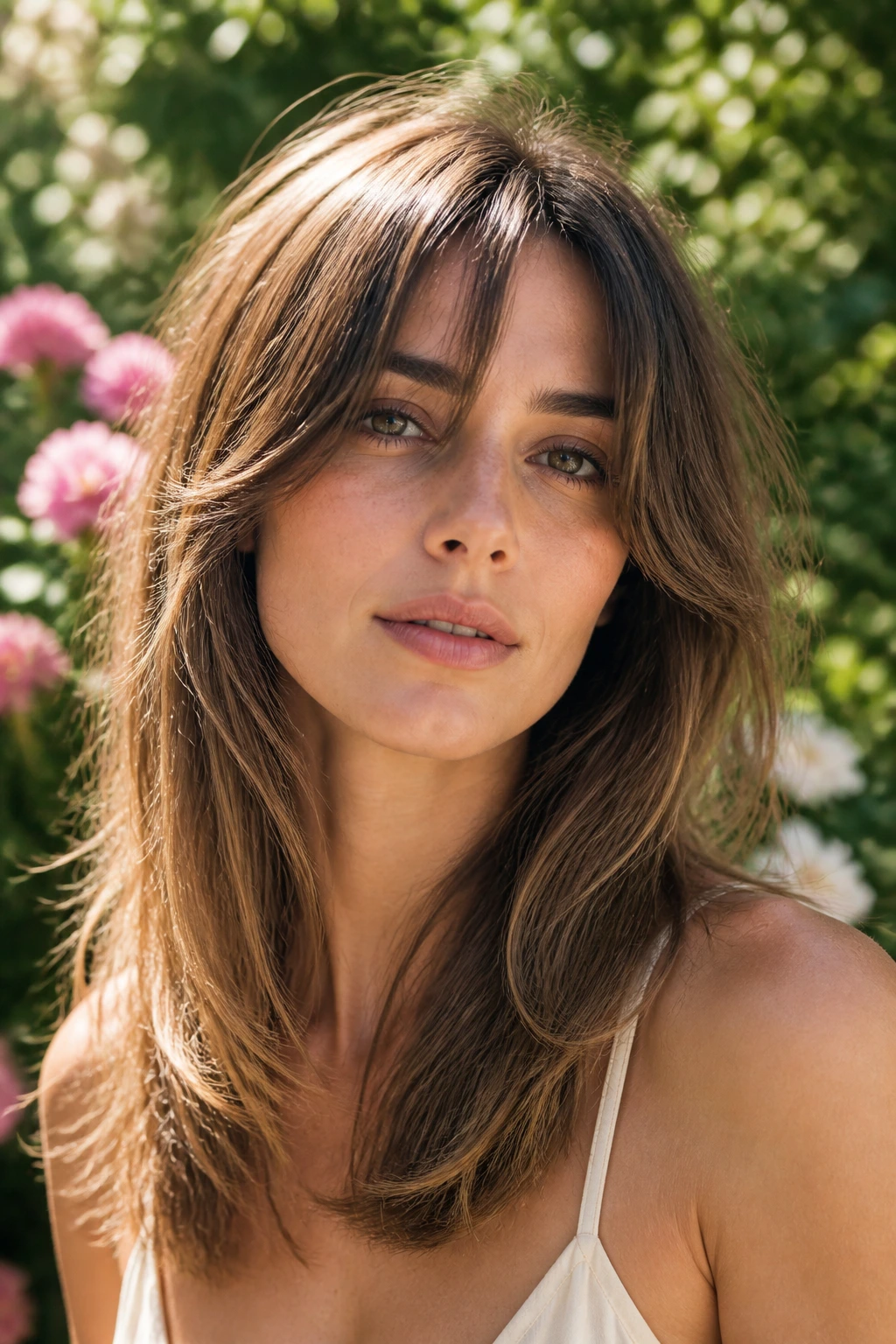
The whisper-length shag is for people who love long hair but want it to stop behaving like a curtain. The layers are subtle, long, and almost hidden until the hair moves, which makes the cut feel refined rather than chopped up.
Fine hair likes this because it keeps density at the ends while still giving you visible movement around the face and shoulders. It’s one of the least risky shag options if you’re nervous about going too short or too edgy. The haircut should whisper texture, not announce it with a megaphone.
35. The Glam Rock Flip Shag
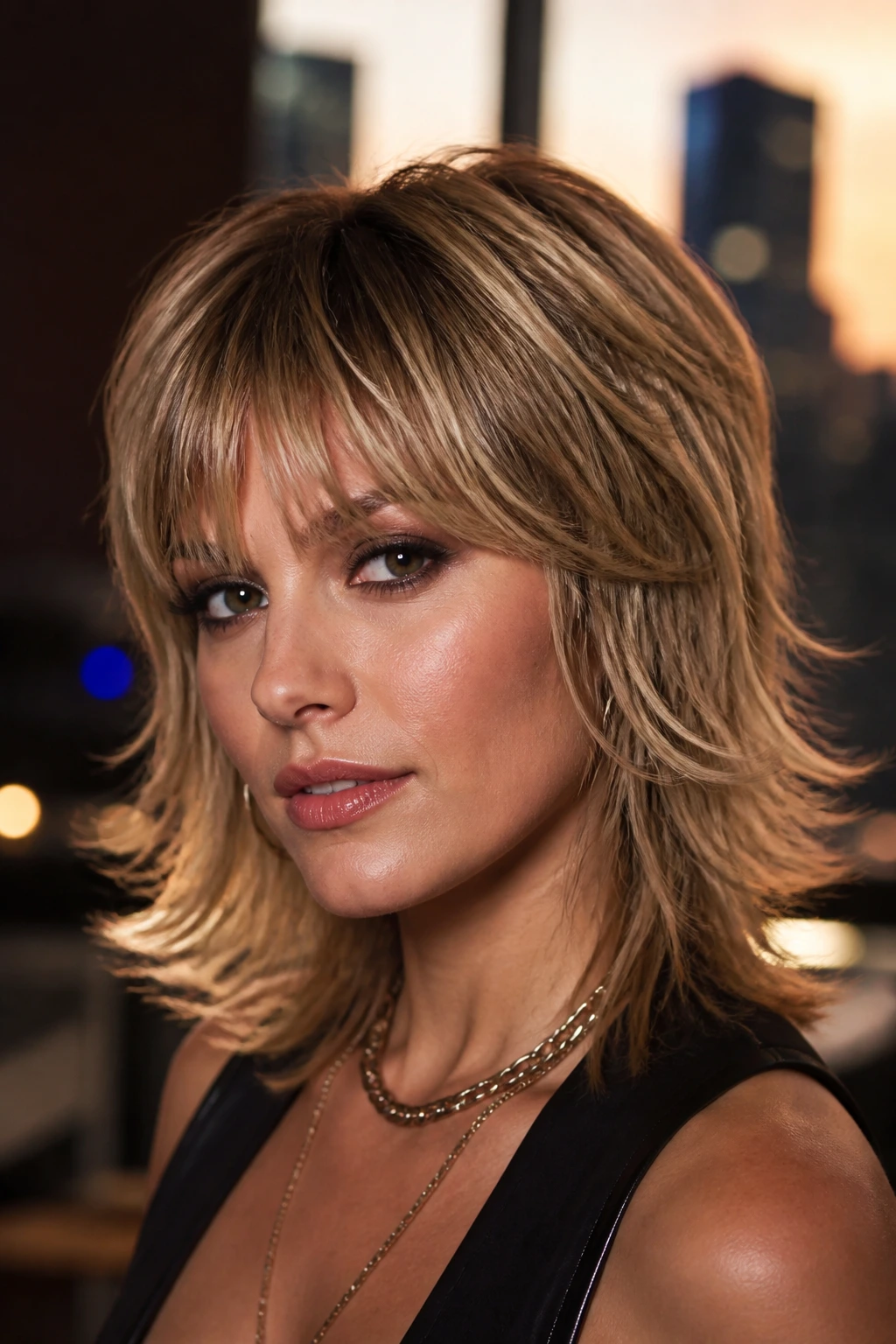
This is the most polished version of the bunch, and honestly, it’s a fun finish for fine hair. The layers flip out just enough at the ends to give the style momentum, while the top stays smooth and controlled.
The reason it works is simple: the eye sees direction. Hair that bends outward looks more alive than hair that drops flat. Use a medium round brush or a flat iron to coax the ends away from the neck, and keep the roots sleek. It’s a little stage-ready, a little downtown, and it makes fine hair look like it has somewhere to go.
Why the Shag Gives Fine Hair More Life Than a Blunt Cut

Fine hair does not need to be buried under a mountain of layers. It needs shape, and shape comes from where the weight is removed and where it’s left alone. A shag haircut does that better than a blunt cut because it creates movement through the crown and around the face while keeping enough substance at the perimeter to stop the ends from looking see-through.
The blunt cut can look expensive on the right hair, but on fine strands it often turns into one long line with no lift. A shag changes the silhouette. Even a small shift — curtain bangs, a feathered face frame, a few internal layers at the crown — can change how the hair sits when it air-dries or falls after a blow-dry. That’s the whole point. Not more hair. Better placement.
There’s also a practical side that people miss. Fine hair often looks thinner when it gets too long, because the weight drags the root area flat and stretches the ends out. A good shag keeps the hair from looking lazy. It moves.
What to Ask for at the Salon Chair
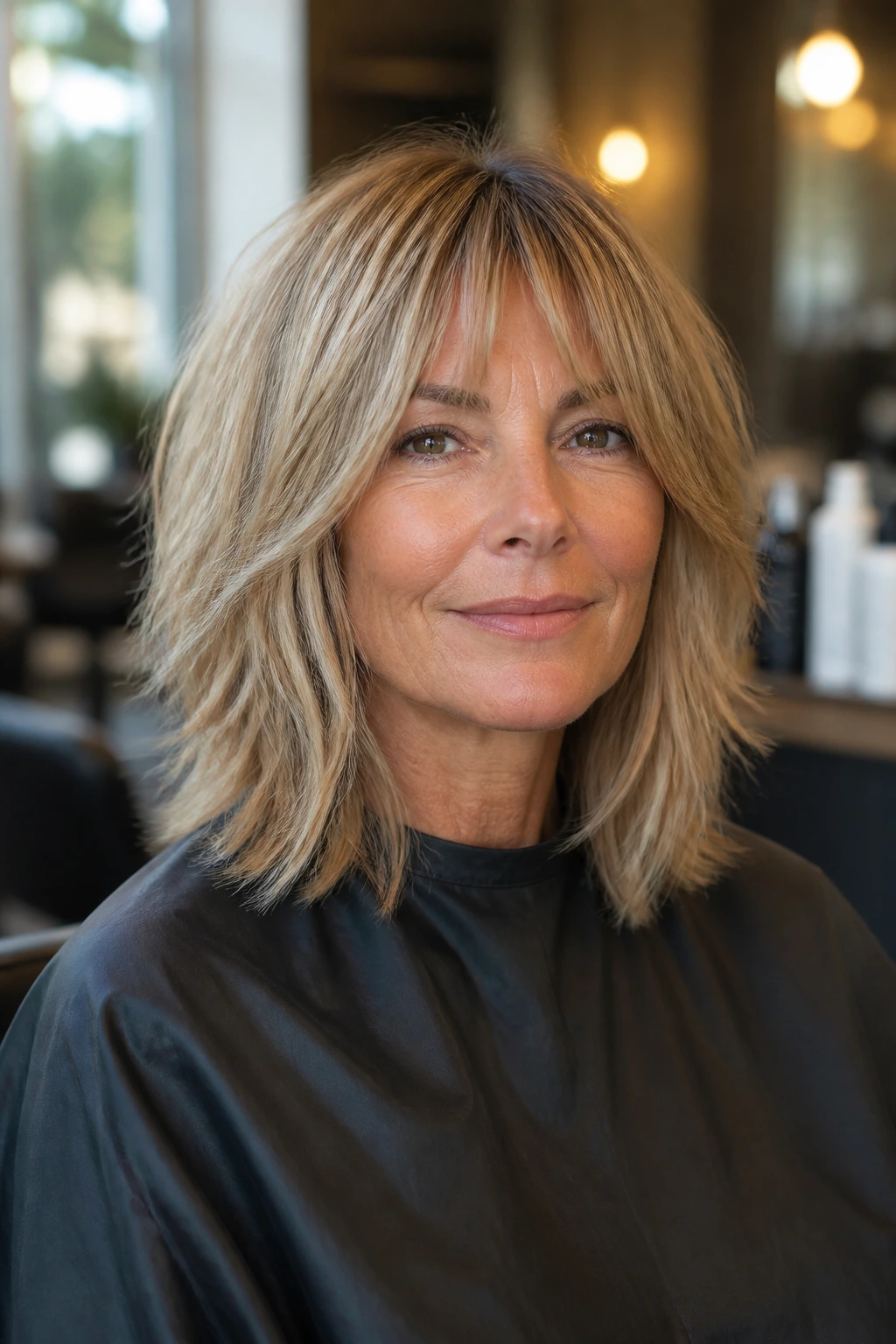
Bring photos, yes, but bring words too. Say whether your hair is fine because the strands are thin, because the density is low, or because both are true. Those are not the same thing, and a stylist who understands the difference will cut very differently.
Ask for soft internal layers, not aggressive thinning. If the stylist reaches for a razor, ask where it will be used and why. A razor can give beautiful movement, but on very fine hair it can also strip away too much visual bulk at the ends. The best request is often: keep the perimeter strong, add movement through the crown and face frame, and leave enough weight so the ends still look full when dry.
Say how much time you actually spend styling. That matters more than your inspiration photo. If you air-dry, the cut needs to fall correctly without heat. If you blow-dry, the stylist can lean a little harder into shape and swing. Be plain about it. Salon chairs are no place for vague poetry.
Styling Tools That Earn Their Spot on the Counter
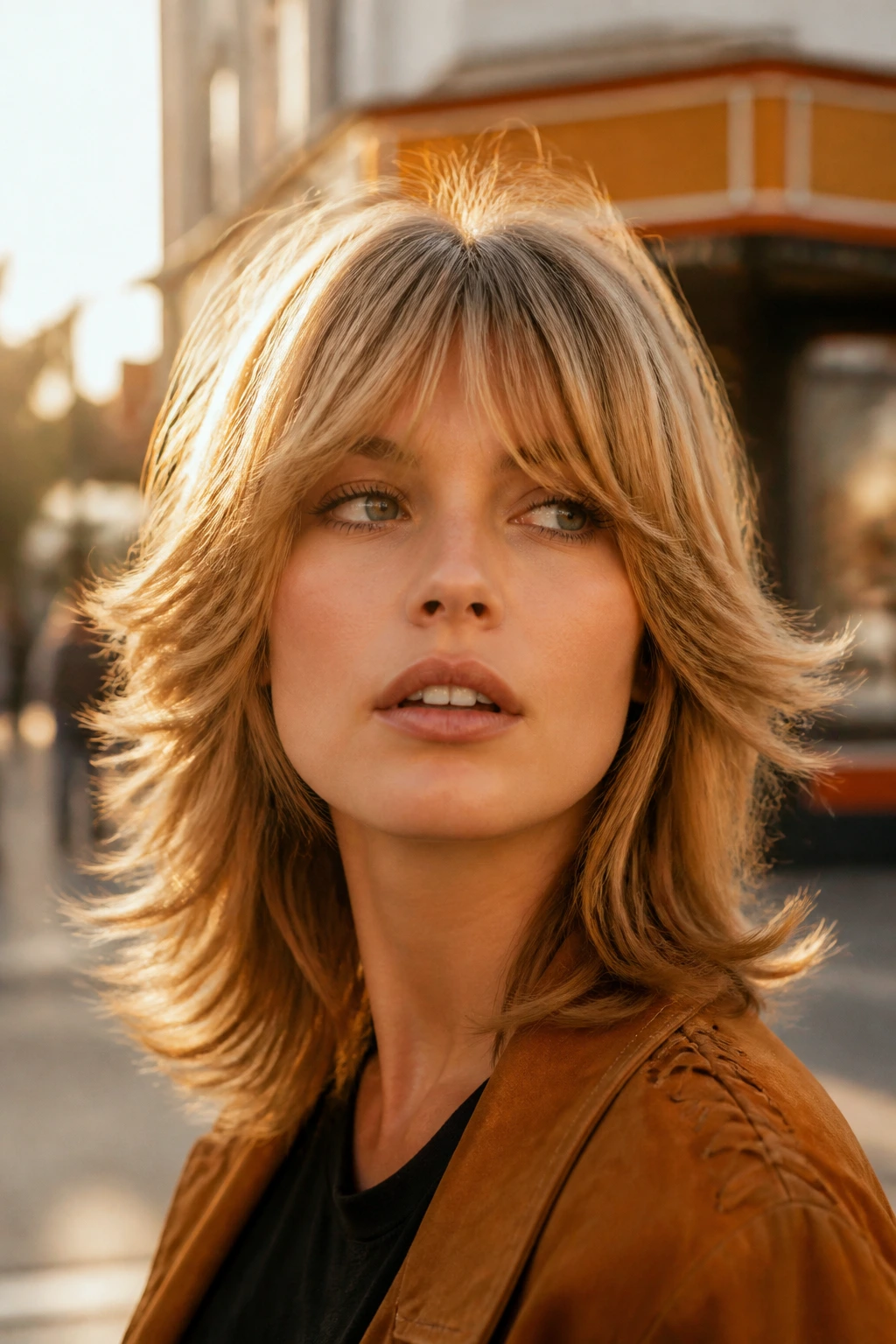
-
A small round brush: Use this at the crown and around the face to create lift without flattening the root area.
-
A vented blow-dryer with a nozzle: The nozzle matters. It pushes air where you want it instead of blasting the hair into a frizzy cloud.
-
Velcro rollers or large clips: Great for setting the front layers while they cool, which helps a shag keep shape longer.
-
A 1-inch curling iron or wand: Best for a few loose bends through the mid-lengths, not full curls.
-
A wide-tooth comb: Better than brushing out every bit of texture, especially on day-two hair.
-
A fine mist spray bottle: Useful for reviving the fringe or reworking one side without re-wetting the whole head.
-
A diffuser: Worth it if your fine hair also has wave or curl. It adds lift without blasting the pattern apart.
-
A clip for root sectioning: A small duckbill or sectioning clip helps you lift the crown while drying. Tiny tool, big difference.
Lightweight Products That Keep the Cut Lifted
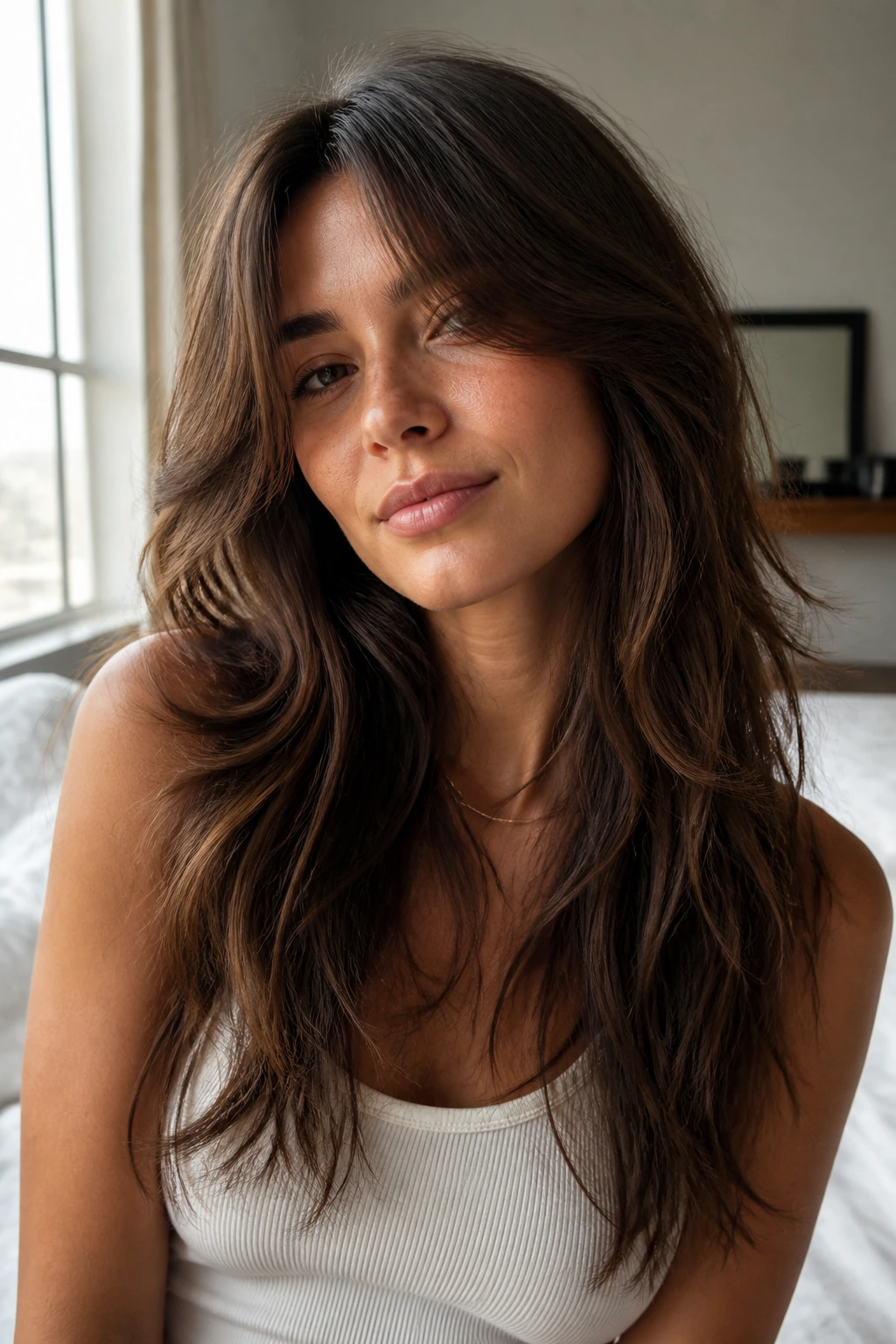
The product aisle can ruin a good shag fast. Heavy creams, rich oils, and sticky serums tend to flatten fine hair before the day is half over. You want products that give a little hold and a little grip, then disappear.
Start with a light mousse or foam at the roots and mid-lengths. That gives the haircut some memory as it dries. After that, a weightless texturizing spray can rough up the layers just enough to show the cut. Dry shampoo works too, but use it as a root product, not a rescue mission after the hair has already collapsed.
If your hair gets squeaky or flyaway, use a pea-sized amount of a light leave-in only from the ears down. Any more and you’ll see the ends fall. Fine hair is unforgiving about overdoing it. A little goes a long way, and then one extra pump goes way too far.
How to Style a Fine-Hair Shag Without Making It Stringy
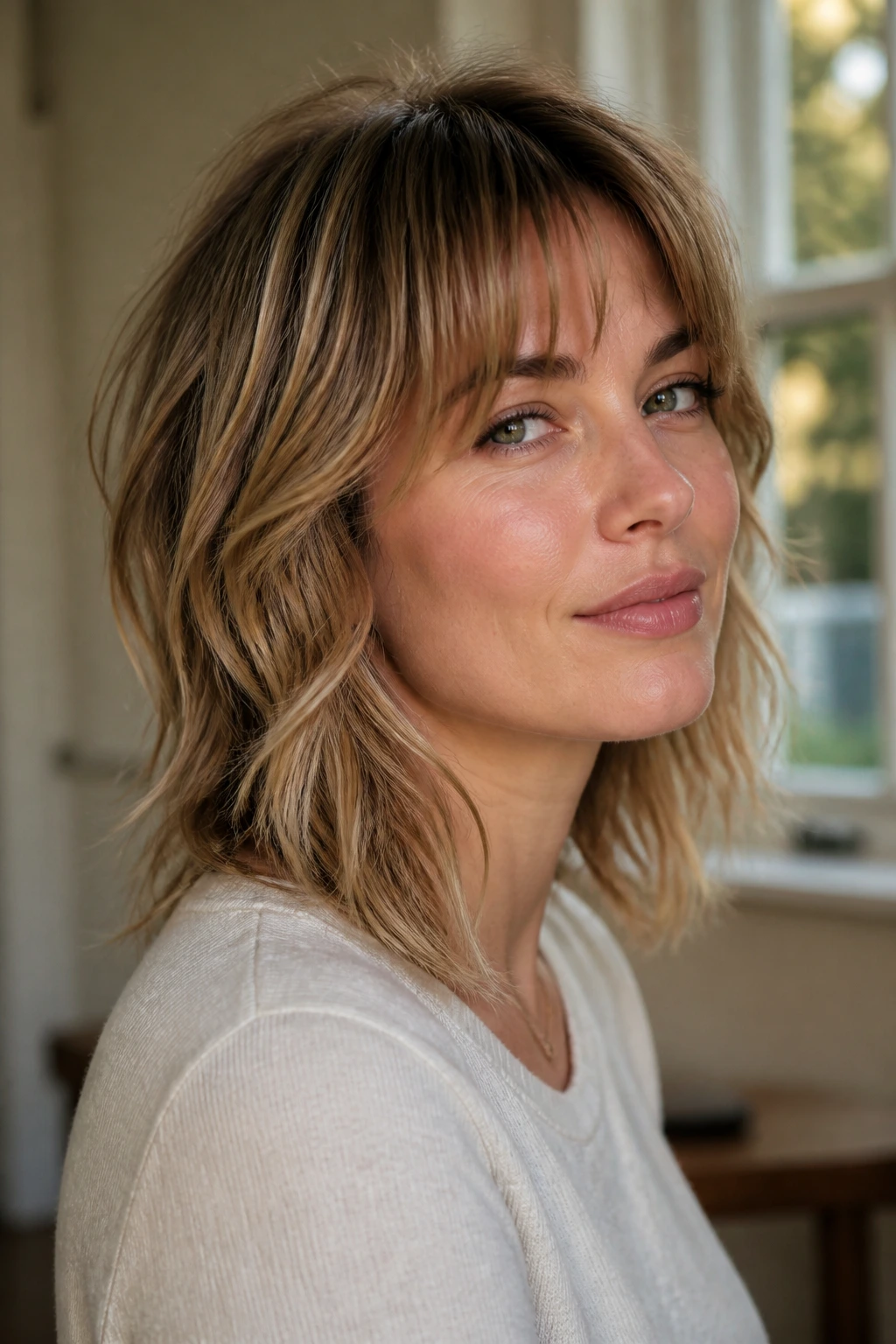
Root lift first: Before you even think about texture, dry the crown in the opposite direction of your part for 30 to 45 seconds. That small move gives the root a memory, and memory beats product when fine hair starts to fall by lunchtime.
Keep the ends soft: If you use a curling iron, wrap only the middle section of the hair for 5 to 8 seconds and leave the ends out on some pieces. Straight ends against a soft wave keep the cut from looking overdone.
Finger-comb, don’t brush to death: A brush can erase the piecey structure you just built. Fingers separate the layers without making the cut fluffy in the bad sense.
Refresh the front, not the whole head: Most shag styles only need help around the fringe and face frame on day two. A quick mist of water, a little mousse, and a few seconds with a blow-dryer usually fix the problem.
How to Keep the Shape Between Cuts
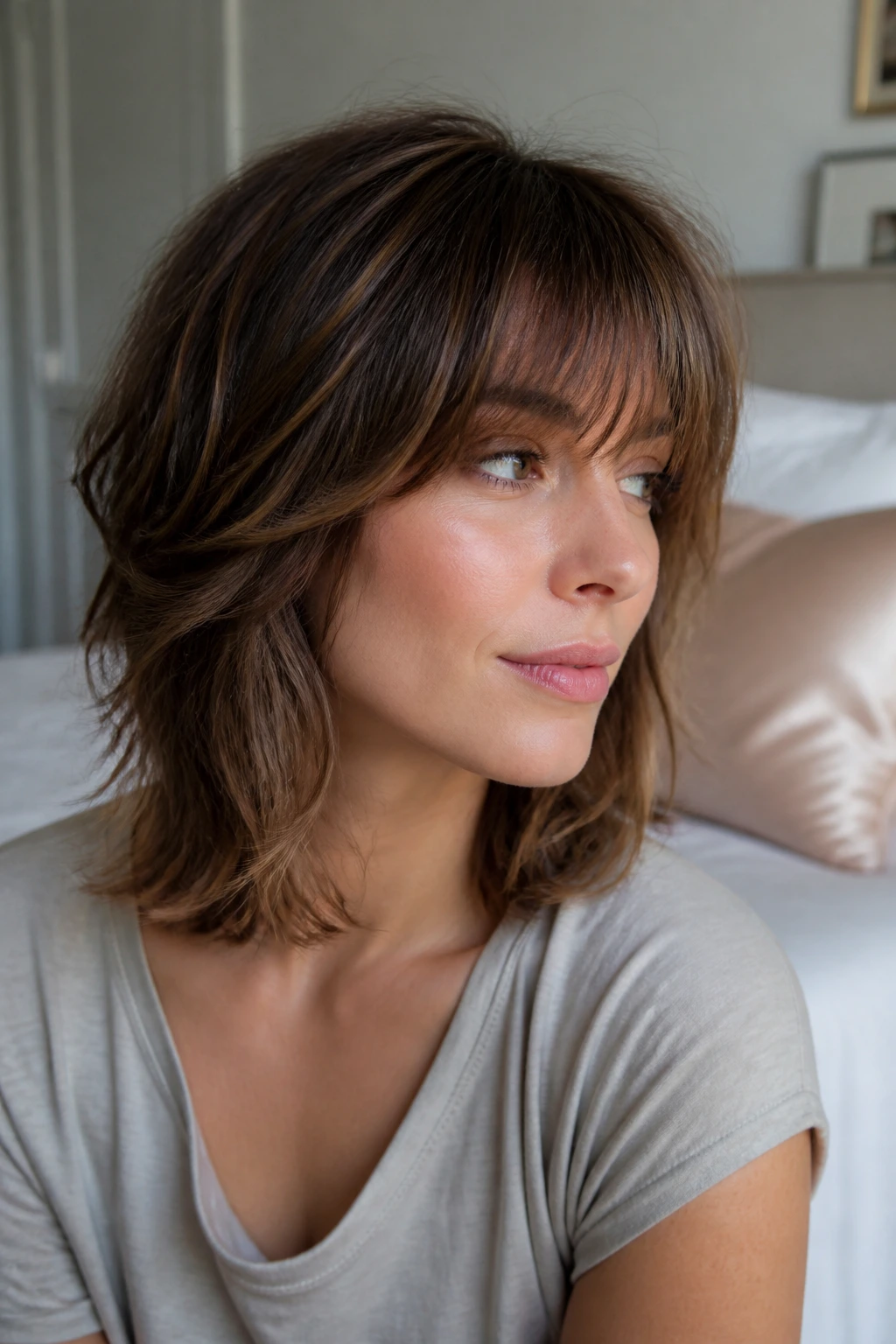
Fine hair grows out in a way that can look both good and bad at the same time. The layers soften quickly, which is nice, but the shape can also lose its edge faster than you want. Plan on trims every 6 to 8 weeks if you want the shag to keep its structure. If you like it a little softer and grown out, you can push it longer, but the crown and fringe will start to fall into each other.
Sleep on a satin pillowcase if your hair tangles easily. That won’t add volume on its own, but it stops the fringe and layers from getting crushed overnight. In the morning, flip the part, shake the roots, and only rewet the pieces that actually need help. You do not need to wash the whole head every time the shape gets a little sleepy.
The Mistakes That Flatten a Fine-Hair Shag

The biggest mistake is over-layering the ends. When the bottom gets too thin, the haircut starts to look airy in a bad way. The fix is to keep some perimeter weight so the ends read as hair, not haze.
Another common miss is using too much product. Fine hair can’t hide a heavy cream or oil. If the roots look separated but the ends look greasy, you’ve already overdone it. Start smaller than you think and build up only if the hair still feels too slippery.
People also ask for a shag and then refuse to change the part or the styling method. That’s a problem. A shag usually needs the part shifted a little, or the crown dried with intention, or the front pieces bent instead of left dead-straight. Small changes. Big difference.
And please, don’t let a stylist slice away all the density in one sitting because you said you wanted “movement.” Movement is not a synonym for thinness. If the haircut gets too wispy, it won’t move — it’ll just collapse.
Variations and Adaptations to Try
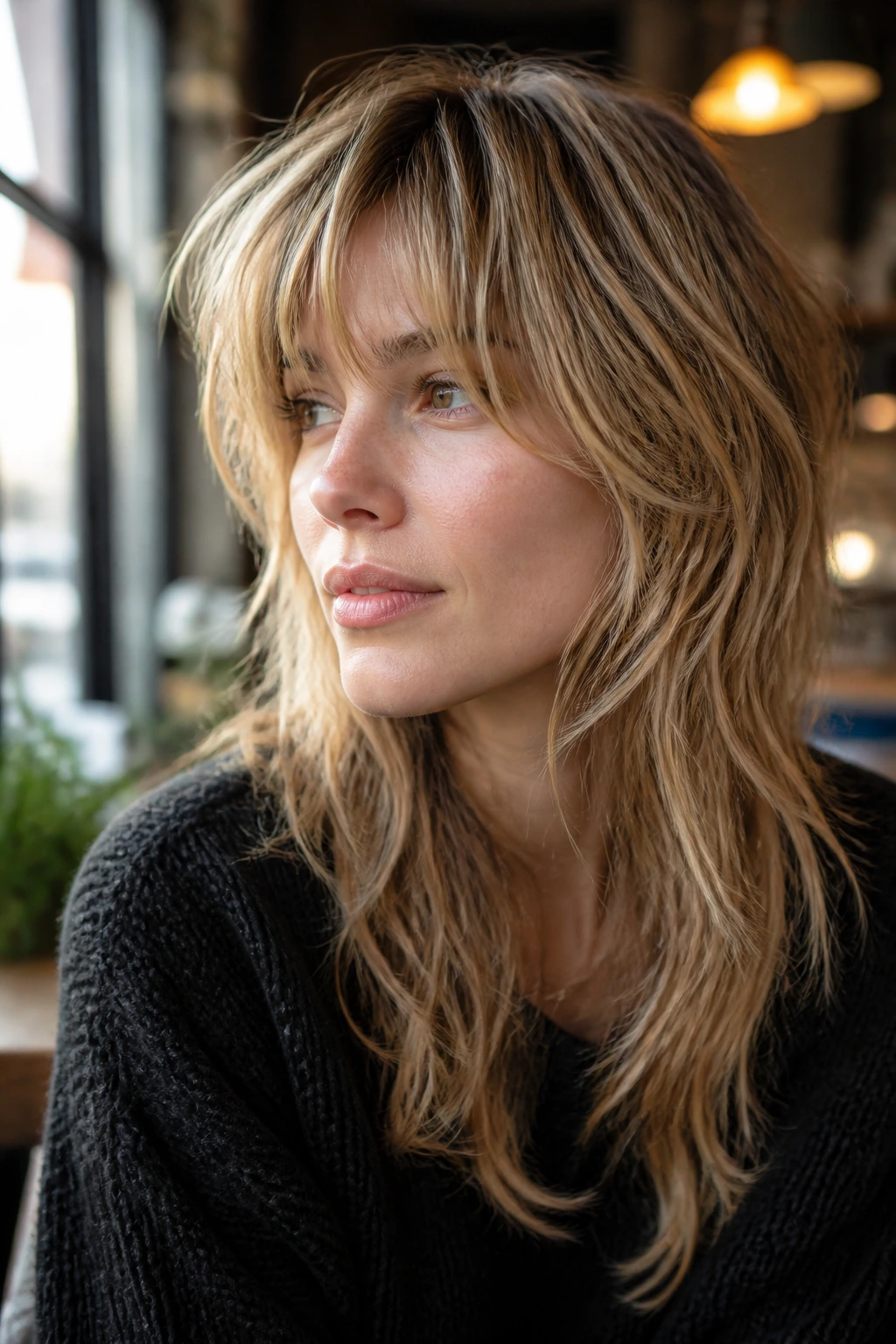
The Office-Friendly Shag: Keep the layers long and the fringe soft, then avoid anything too choppy around the nape. This version gives you the shag shape without making the haircut feel rebellious at work. It’s neat enough for a blazer, loose enough for a weekend.
The Curly-Air Shag: If your fine hair has wave or curl, ask for a dry cut or a curl-by-curl approach. The shape should follow how the hair falls dry, not stretched wet. This helps stop the ends from looking too sparse once the curl springs back.
The Super-Short Rebel Shag: Shorten the back and top, keep the fringe piecey, and let the silhouette get a little edgy. This works well for fine hair that hates length and looks better with a bit of attitude. It needs less daily fuss, but it does need a trim schedule.
The Long, Barely-There Layer Shag: Perfect if you want movement but fear losing density. The layers are subtle, the ends stay strong, and the face frame does most of the talking. It’s a calm haircut with shag energy.
The Soft Romantic Shag: Add curtain bangs, round off the layers, and keep the texture airy rather than jagged. This version flatters fine hair that looks best with a touch of softness around the jaw and collarbone.
Frequently Asked Questions

Does a shag haircut make fine hair look thinner?
It can, if the layers are cut too aggressively. The right shag does the opposite because it keeps enough weight at the ends and adds movement where the eye wants to see it.
Are curtain bangs good for fine hair?
Yes, as long as they’re soft and not cut too heavy. Curtain bangs can add face-framing structure without taking too much density from the front.
How often should a fine-hair shag be trimmed?
Every 6 to 8 weeks is a good target if you want the layers to stay crisp. If you prefer a softer, more grown-out look, you can stretch it a bit longer.
Is a razor cut safe for fine hair?
Sometimes. A razor can create beautiful movement, but on very fine hair it can also leave the ends looking frayed if it’s overused. Ask the stylist where they plan to use it before they start.
Can I air-dry a shag haircut?
Absolutely, but the cut needs to be built for that. Fine hair that air-dries well usually needs soft layering, a good part, and a small amount of mousse or texture spray.
What if my shag looks too fluffy?
Use less product, not more. Fluff usually means the layers are too broken up or the hair was dried too roughly. Smooth the crown a little and leave the ends piecey, not puffy.
Which part works best with a fine-hair shag?
Center parts give symmetry, while deep side parts create instant lift. If your crown is flat, try the side part first. It changes the whole shape fast.
Can a shag work if my hair is pin-straight?
Yes, but it may need a bit of bend through the front and ends to show off the layers. Straight hair can wear a shag well if the cut keeps enough line to avoid looking sparse.
How do I stop day-two hair from looking limp?
Flip the part, mist the roots lightly, and rework the face frame with a small brush or fingers. You usually do not need to wash again; you just need to wake the roots up.
The Cut That Moves When You Do
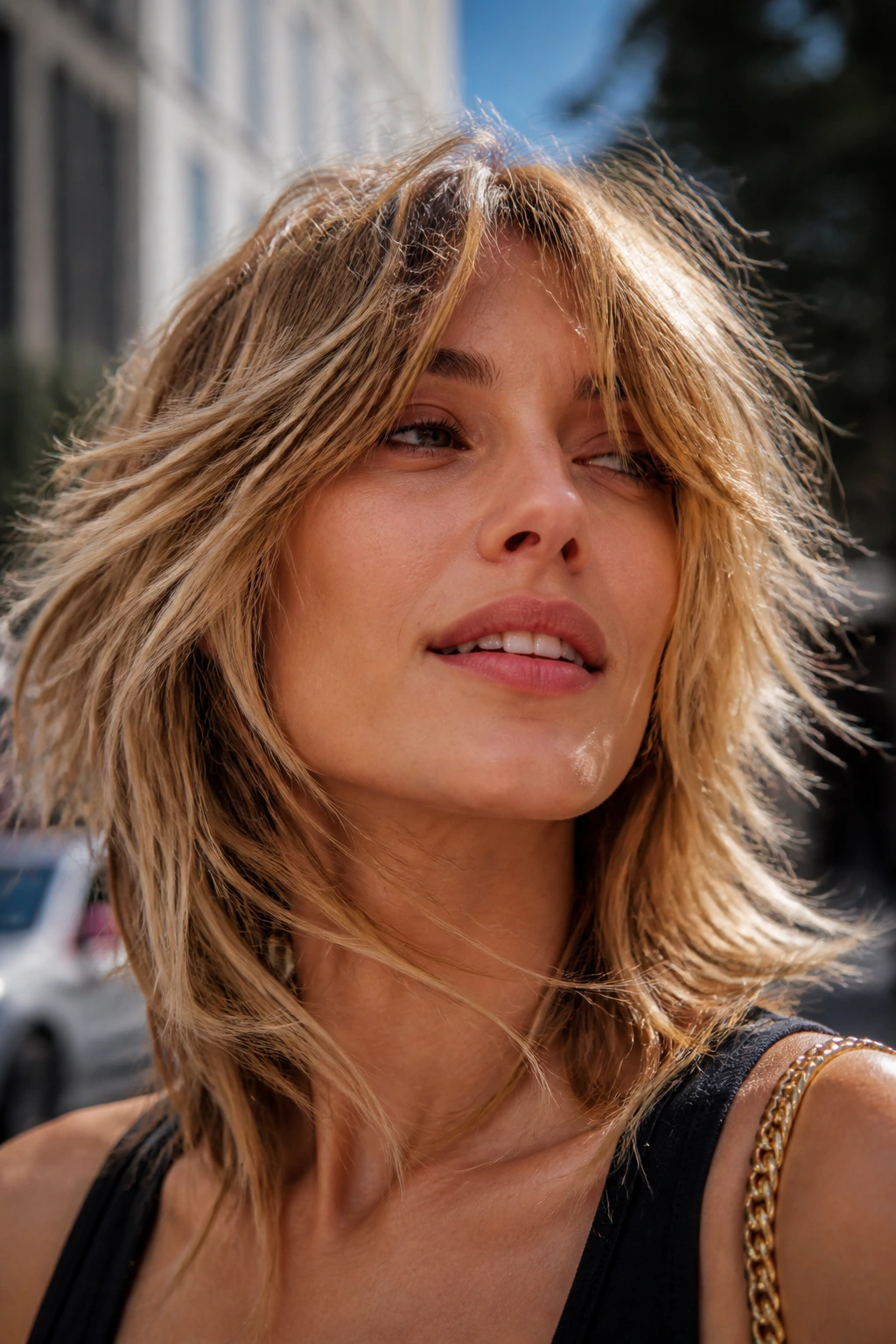
A fine-hair shag works when it respects the hair instead of bullying it. Keep some weight, build movement where the hair wants to fall flat, and let the fringe or face frame do more of the visual work than the ends. That balance is what makes the haircut look fuller, not fussier.
The best version is the one that fits your morning routine. If you live with a blow-dryer, go sharper. If you air-dry, keep the layers softer. If you love texture, lean in. If you hate constant styling, ask for the kind of shag that still behaves on a messy Tuesday.
And that’s the nice surprise with this cut: it can be edgy, soft, romantic, or nearly invisible in the best way. It just has to be cut with intent, then worn like it belongs on your head and nowhere else.
