



Short hair with side bangs for round faces works best when the cut stops trying to sit politely on the sides of the face and starts building a little angle. A fringe that sweeps from temple to cheekbone changes the line instantly. So does a bob that lands at the jaw, a pixie with height at the crown, or a crop with one longer front piece that refuses to behave like a curtain.
I keep coming back to side bangs on round faces because they do a job blunt bangs often don’t: they break up width without making the haircut feel stiff. The face doesn’t need to be hidden. It needs a cleaner path for the eye to follow. Diagonal lines, lifted roots, and slightly longer front sections do that in a way that feels intentional rather than fussy.
That’s the real trick here. Not every short haircut flatters a round face the same way, and not every side bang should be cut to the same length. Fine hair needs a lighter fringe. Thick hair needs internal removal so the sides don’t balloon out. Curly hair needs the bang left longer than a stylist might expect, because curls shrink and spring right back with opinions of their own.
Why These Cuts Earn Their Place
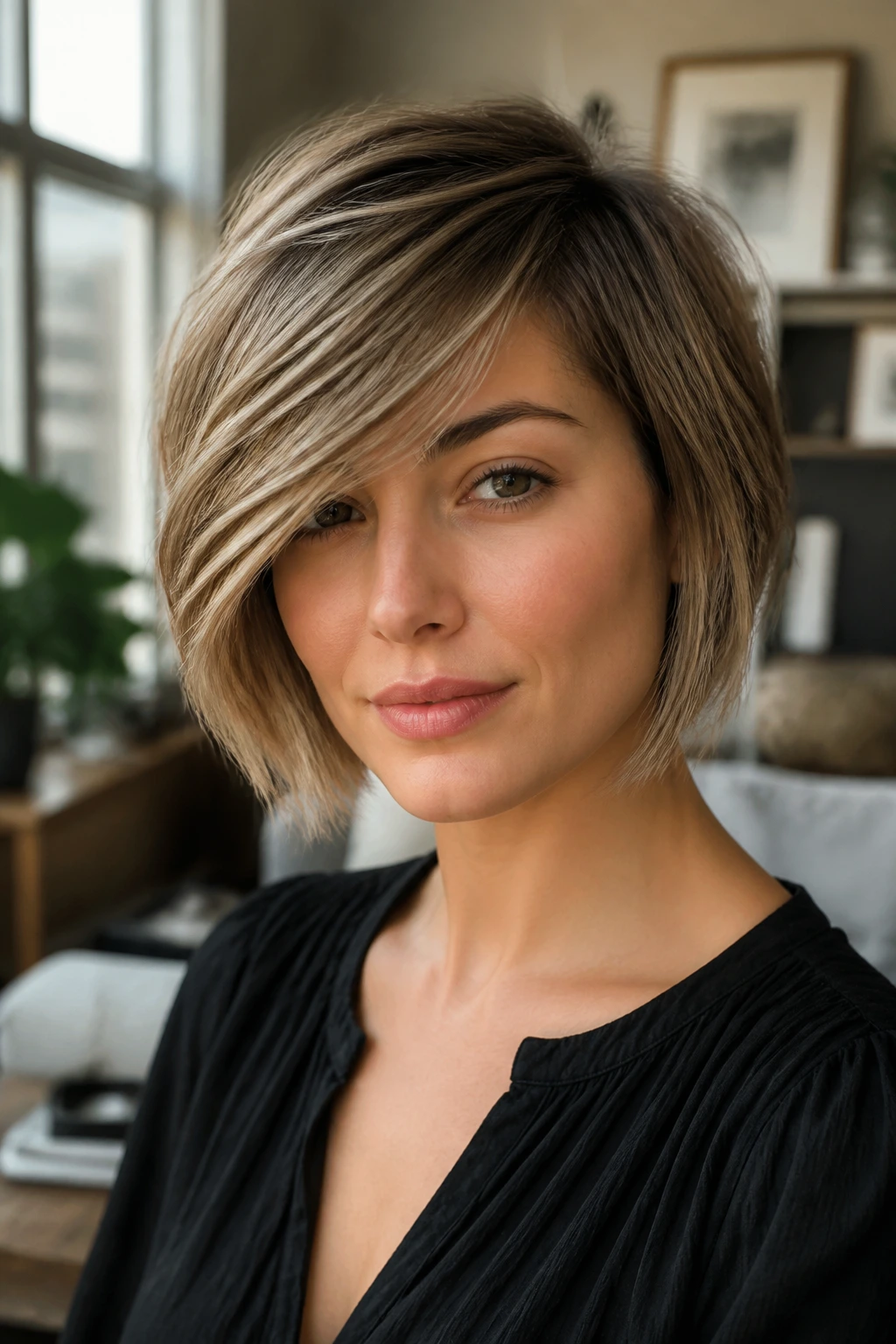
-
Diagonal lines change the shape fast: A side bang pulls the eye across the face instead of straight across the widest part of the cheeks, which is why even a tiny shift in parting can change the whole read of the cut.
-
Short length keeps the silhouette lively: Hair that ends around the jaw, cheekbone, or just under the ear can feel sharper and cleaner on a round face than hair that sits right at the fullest part of the cheek.
-
Crown lift matters more than people think: A little height at the top gives the face more vertical space, and that makes the side bang look like a feature instead of a cover-up.
-
Texture gives you control: Straight hair can be beveled, wavy hair can be bent, and curly hair can be shaped with a longer fringe so the bang follows the curl pattern instead of fighting it.
-
Grow-out is kinder than you’d expect: Side bangs usually blur into layers more gracefully than blunt bangs do, which means these cuts stay wearable longer between trims.
-
You can tailor them to your routine: Some of these styles need a round brush and three minutes. Others look better air-dried with a dab of cream and a crooked part.
1. Jaw-Length French Bob With Sweeping Side Fringe
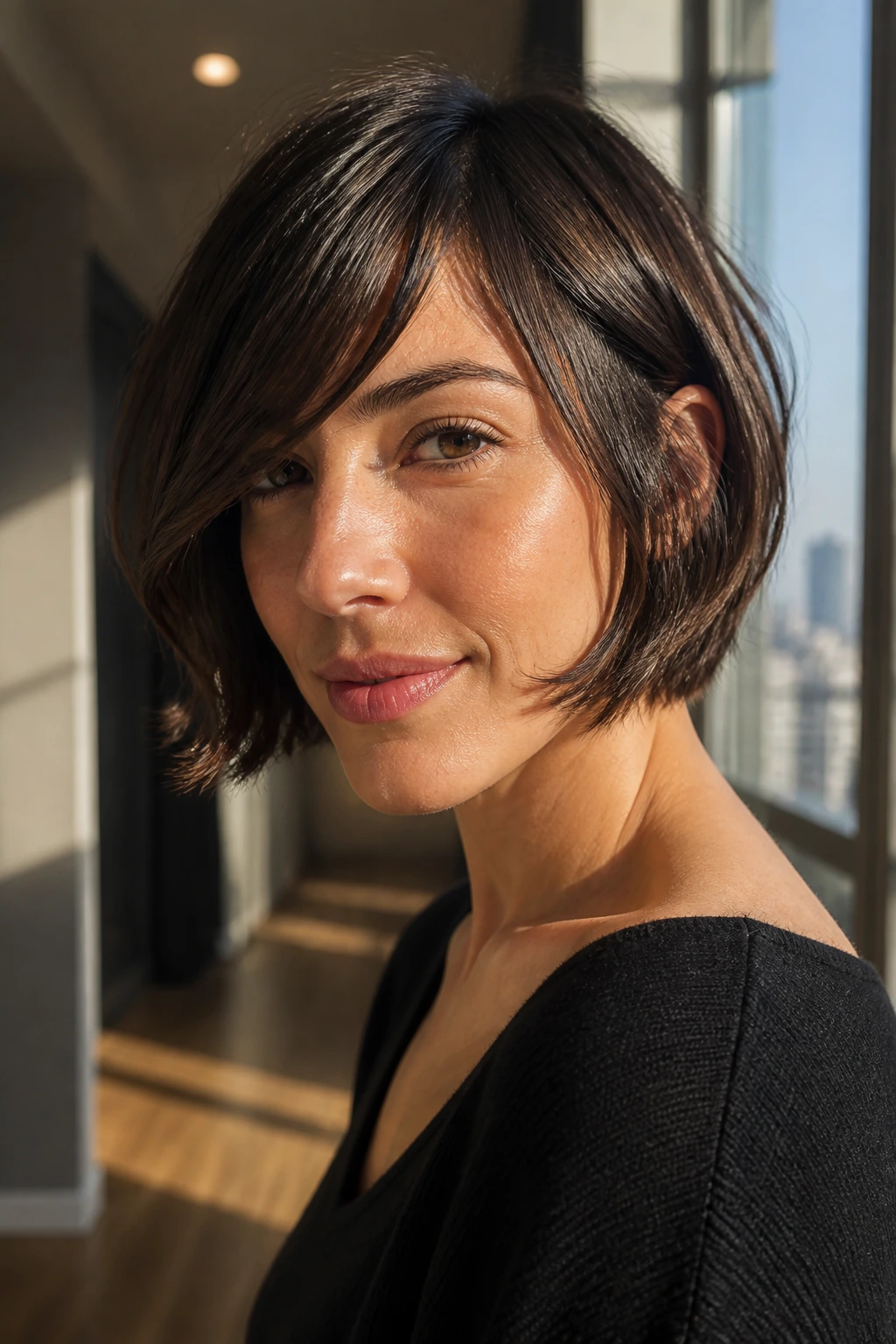
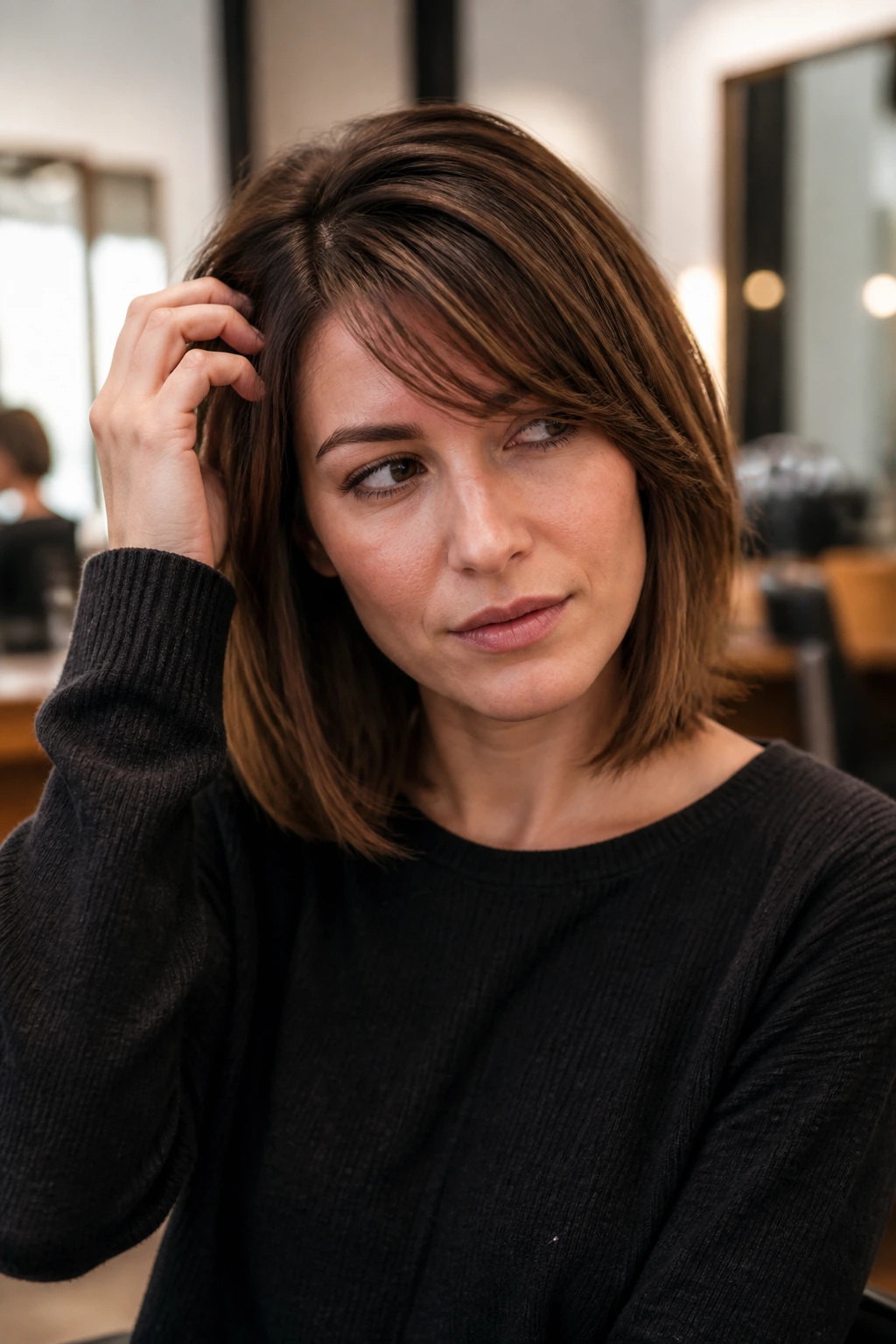
This is the cut I reach for when someone wants short hair to look clean, not crunchy. The jaw-length line gives the style structure, while the side fringe slides past one cheek instead of cutting straight across the face. On a round face, that little sweep matters more than people expect. It keeps the eye moving downward.
The best version lands just at or a hair below the jaw, with the ends tucked under by a brush or left slightly bent for a softer shape. Ask for a fringe that starts around the temple and lands somewhere between the eyebrow and cheekbone. If it’s too short, the bang can spring up and widen the face again. If it’s too heavy, it starts acting like a curtain.
H3: Why it works so well
The French bob is tidy at the bottom, which keeps the silhouette from puffing out around the cheeks. That’s the whole point. A crisp perimeter plus a diagonal fringe creates contrast, and contrast is what makes a round face look longer.
Add a touch of texture cream through the ends and keep the crown flat enough to stay chic, not puffy. This cut wants polish. Not fuss.
2. Choppy Pixie Bob With Long Top Layers
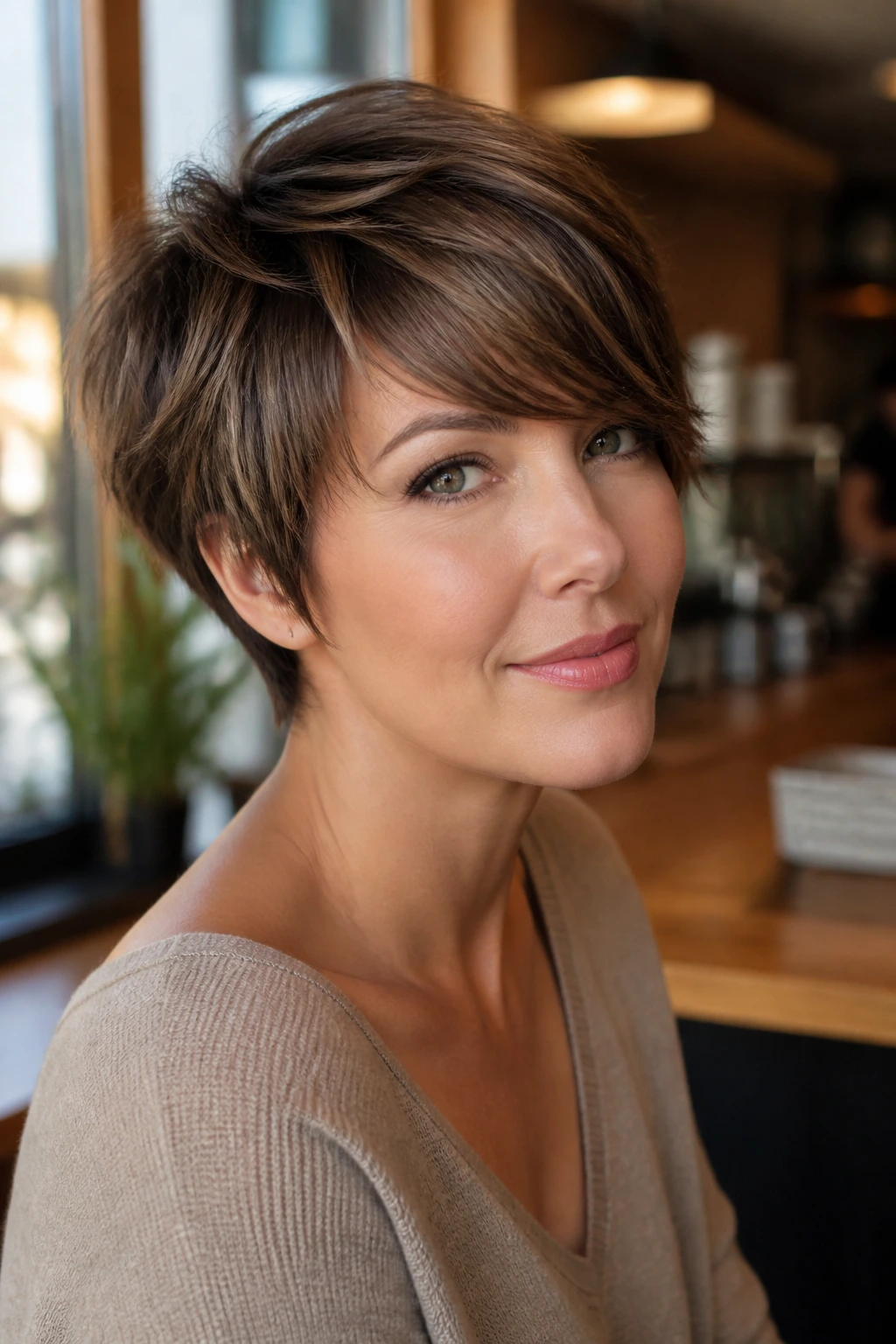
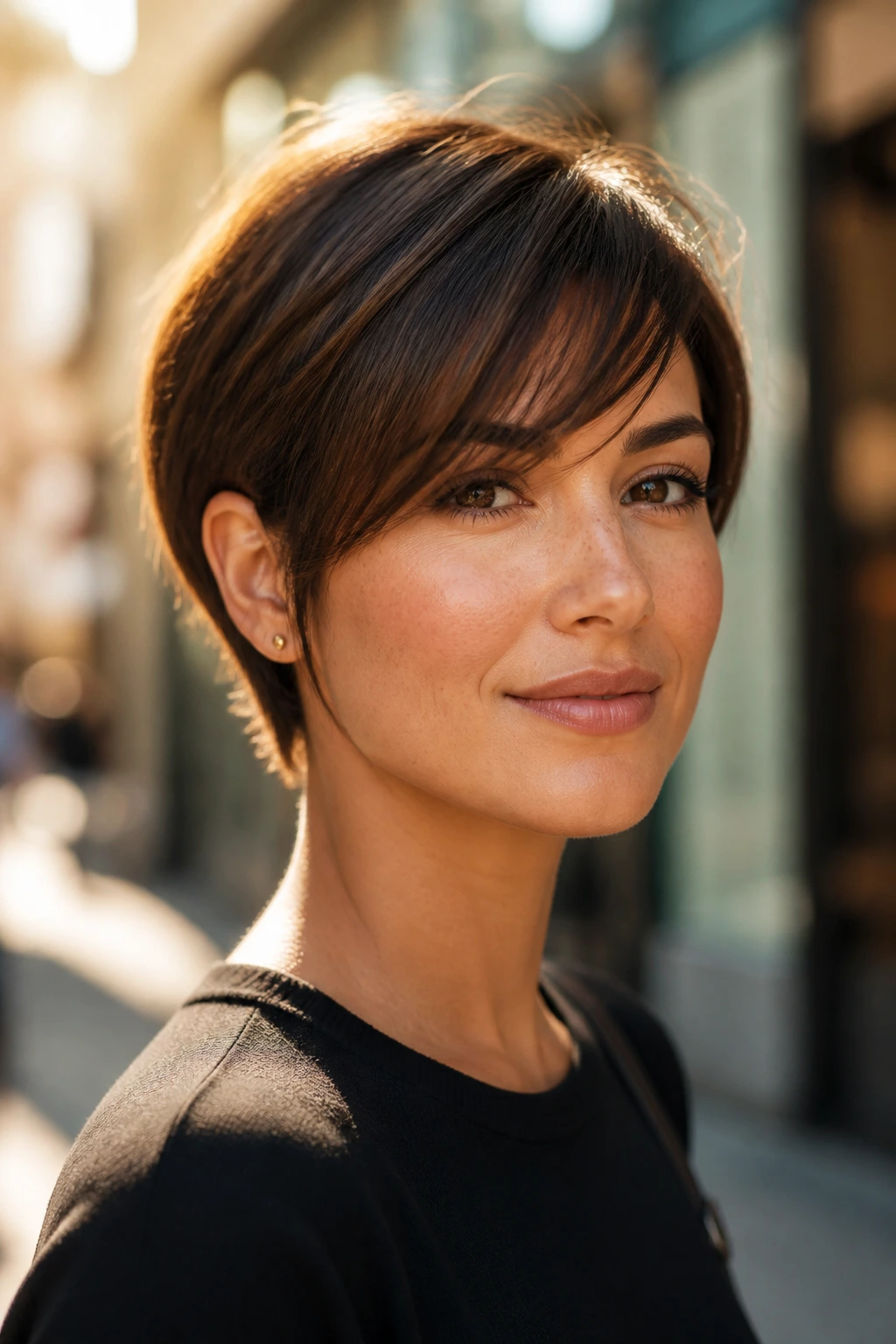
This one behaves like a pixie that borrowed a few inches from a bob. The sides stay close enough to keep the shape neat, while the top layers get left long enough to sweep across the forehead and land softly at the temple. That extra length up top is the part that helps a round face most.
I like this cut for hair that gets heavy when it grows. The choppy texture stops the style from turning helmet-like, and the long top layers give you room to direct the fringe to one side without making it stiff. You can wear it with a finger-styled bend, or smooth it down with a small brush and a pea-size amount of paste.
- Keep the longest front piece near the eyebrow or just above the cheekbone.
- Ask for piecey layers on top, not stacked bulk.
- Leave the nape tight so the shape doesn’t spread sideways.
The result feels sharp but not severe. And yes, that matters.
3. Chin-Skimming A-Line Bob With Side Bangs
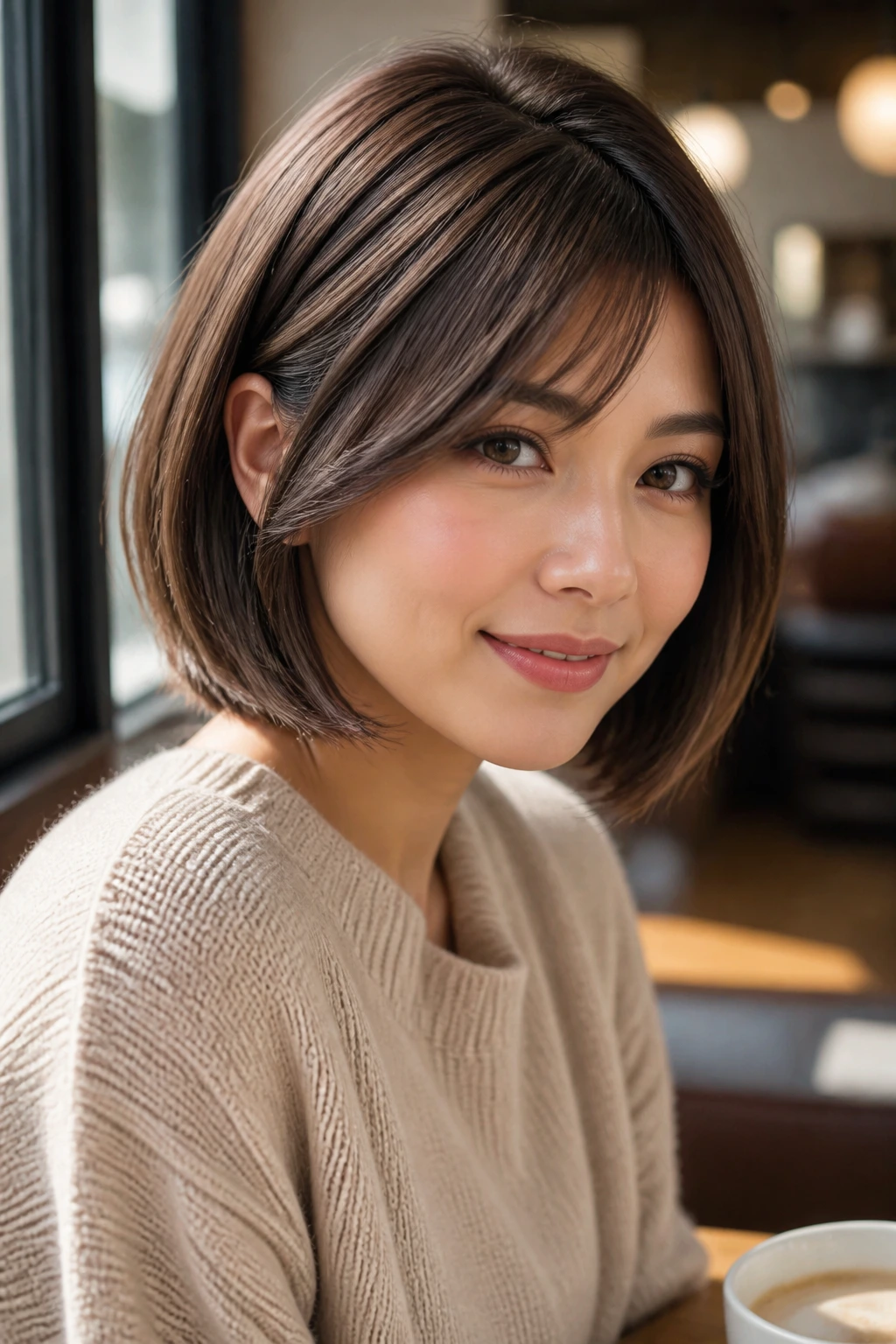
If you want the face to look a little longer without going dramatically short, an A-line bob is a solid move. The back sits slightly shorter, the front pieces dip past the chin, and the side bangs draw the line diagonally instead of horizontally. That diagonal is the thing that helps.
This haircut is especially good when your cheeks are full and your jaw is soft, because the longer front corners create a narrow frame where it counts. Ask for the front to hit at or just below the chin, not right at the cheek. That one inch can make the difference between “structured” and “too round.”
H3: The parting matters
A soft side part works better than a dead center part here. It gives the fringe somewhere to travel and keeps the top from splitting into a flat shelf. If your hair is straight, a quick pass with a flat iron through the ends keeps the line clean. If it’s wavy, let the ends bend a little. The slight movement keeps the cut from feeling blocky.
4. Airy Textured Crop With Feathered Bangs
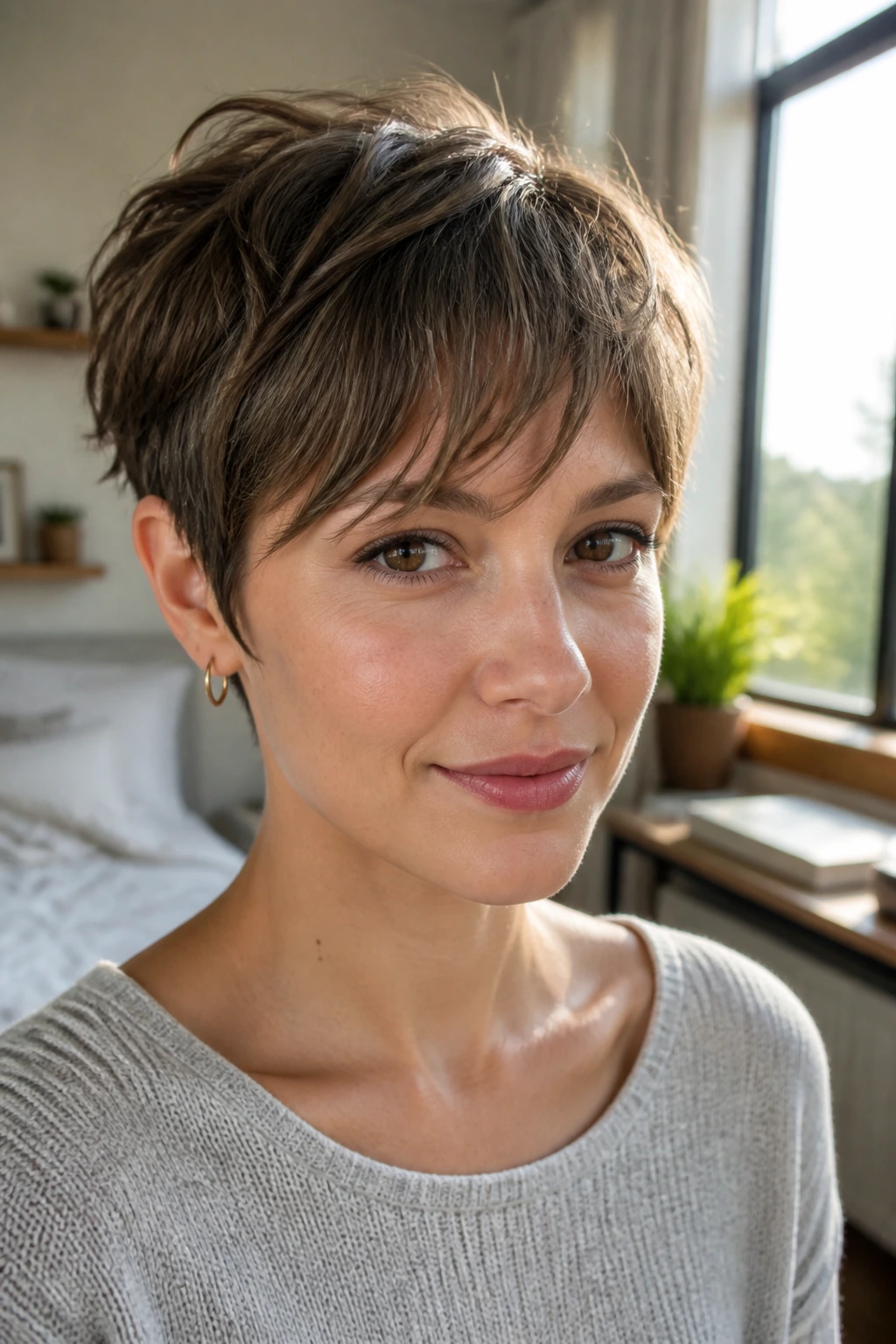
Fine hair can do beautifully with a short crop, but only if the fringe stays light. A heavy side bang on fine hair can look flat at the root and stringy at the end. A feathered bang fixes that by letting little pieces fall at different lengths, so the forehead stays visible and the face doesn’t feel boxed in.
This crop usually sits around the cheekbone or just above the jaw, with the sides soft and the top loose. The styling should look deliberate but not stiff. A round brush can add a touch of lift, but I’d keep the product light — mousse at the roots, a little texture spray on the top layer, and no thick cream near the fringe.
The nice thing about this cut is that it doesn’t need perfect symmetry. A few separated strands make the whole style look airier, and airier is usually better on a round face than dense and heavy. You want movement, not a solid wall of hair.
5. Curly Bob With a Curved Side Fringe
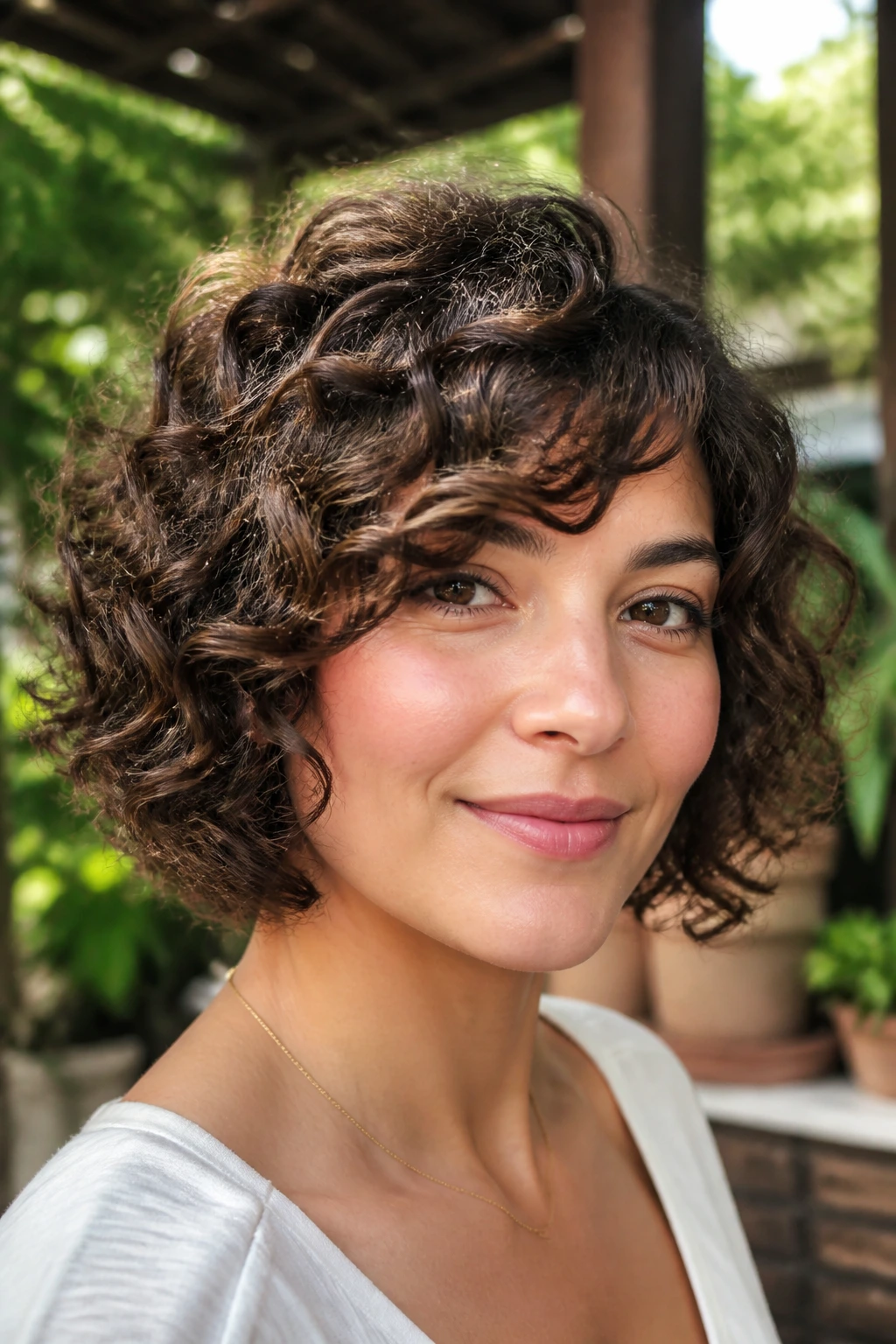
Curly hair and side bangs can get along very well, but only when the fringe is left long enough to behave after shrinkage. A curved side bang that follows the curl pattern instead of cutting straight into it gives the face a soft diagonal line. That line matters. Curls add width fast if they’re cut too short around the cheeks.
I like this bob when the curls sit somewhere between loose ringlet and springy wave. The bob itself can land at the jaw or just below it, but the fringe should start longer than you think you need. Once the curls dry, the bang will rise. Usually more than people expect.
A diffuser helps, but don’t blast the fringe from the front. Lift it slightly to the side and let it dry in that direction. If the curl clumps too tightly, you can break it up with a tiny bit of serum on your fingers. Not much. Too much product turns the fringe sticky.
6. Soft Shag Bob With Face-Framing Pieces
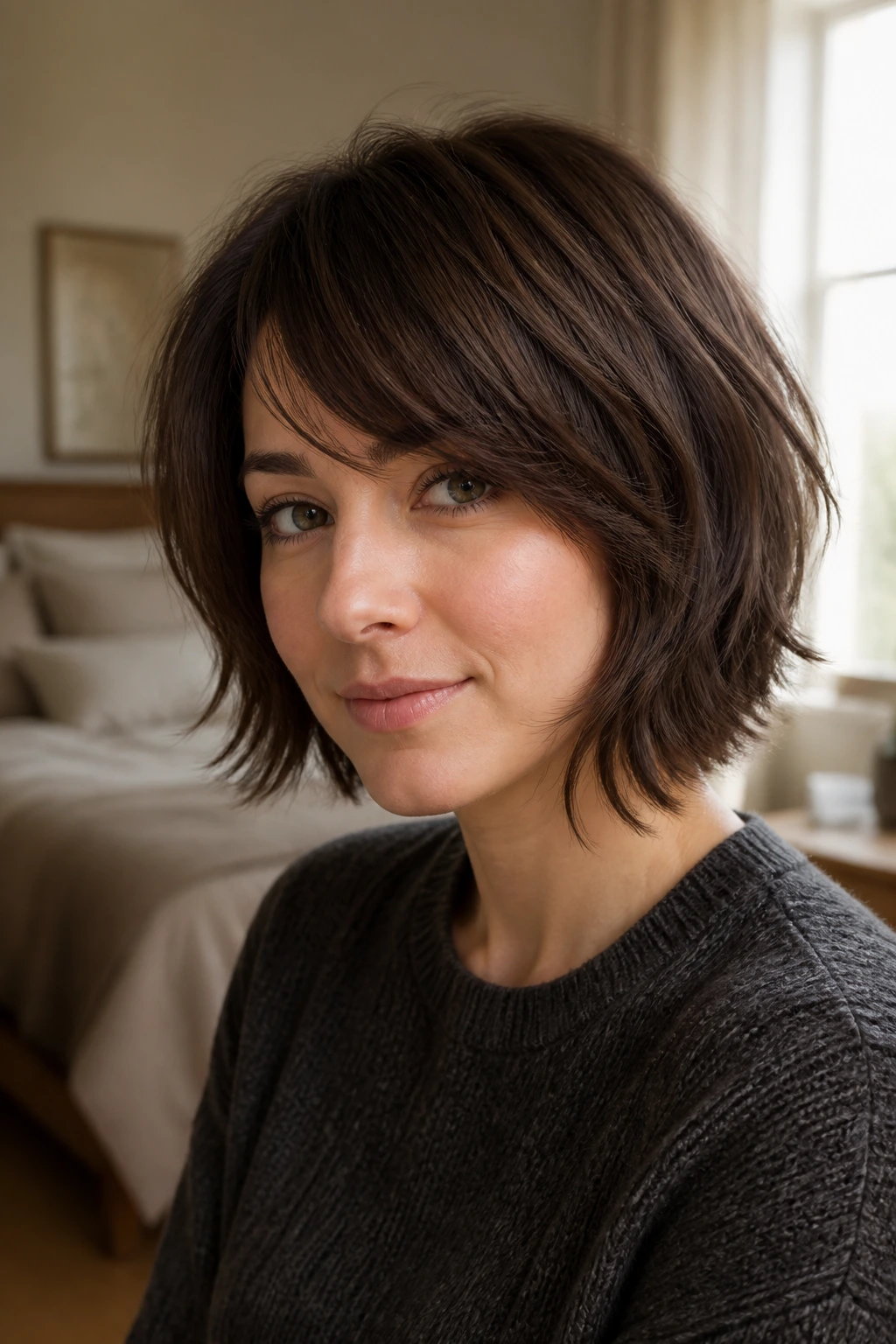
A shag is one of my favorite answers for a round face because it takes the pressure off the perimeter. Instead of one clean line sitting at the cheeks, you get layers that start around the cheekbone and drift toward the jaw. The side bangs blend right into those face-framing pieces, which makes the whole cut look loose and modern.
The key is restraint. A shag that’s too chopped up can spread outward, and that’s not what you want. Ask for a soft shag, not a wild one. The longest face-framing piece should skim the jaw or just below it, while the bangs sweep from a side part and merge into the first layer.
This cut looks best when there’s a little separation in the ends. A quick scrunch with mousse or a bend from a medium-barrel iron can keep the layers visible. Flat, over-sprayed shag hair loses the point. It needs a bit of swing.
7. Asymmetrical Bob With a Deep Side Part
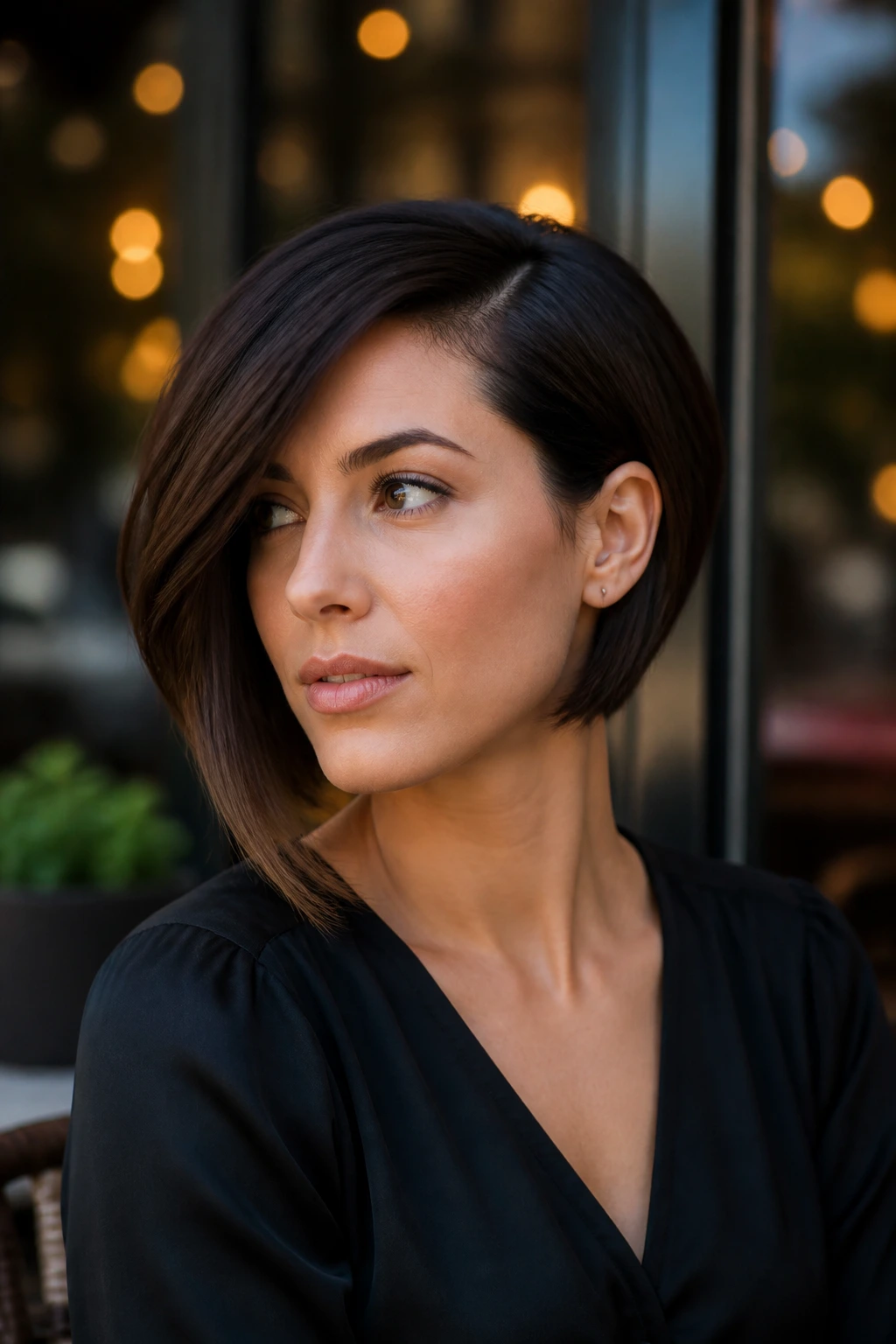
A round face can handle asymmetry better than people sometimes assume. In fact, a strong side part and a clearly longer side can be a smart move because the eye stops seeing a circle and starts seeing an angle. The bob should feel noticeably longer on one side, not by a cartoon amount, but enough that the front pieces break the symmetry.
This cut works especially well if one side grazes the chin while the other sits just under the cheekbone. The side bang should travel into the longer side so the movement feels built in. If the part is soft and the length difference is too subtle, the style can lose its purpose.
I’d only choose this if you like a haircut with some attitude. It’s polished, but it isn’t shy. A flat iron bend at the ends makes the line crisp, and a little root lift at the crown helps keep the top from collapsing into the face.
8. Blunt Bob With a Swooped Bang
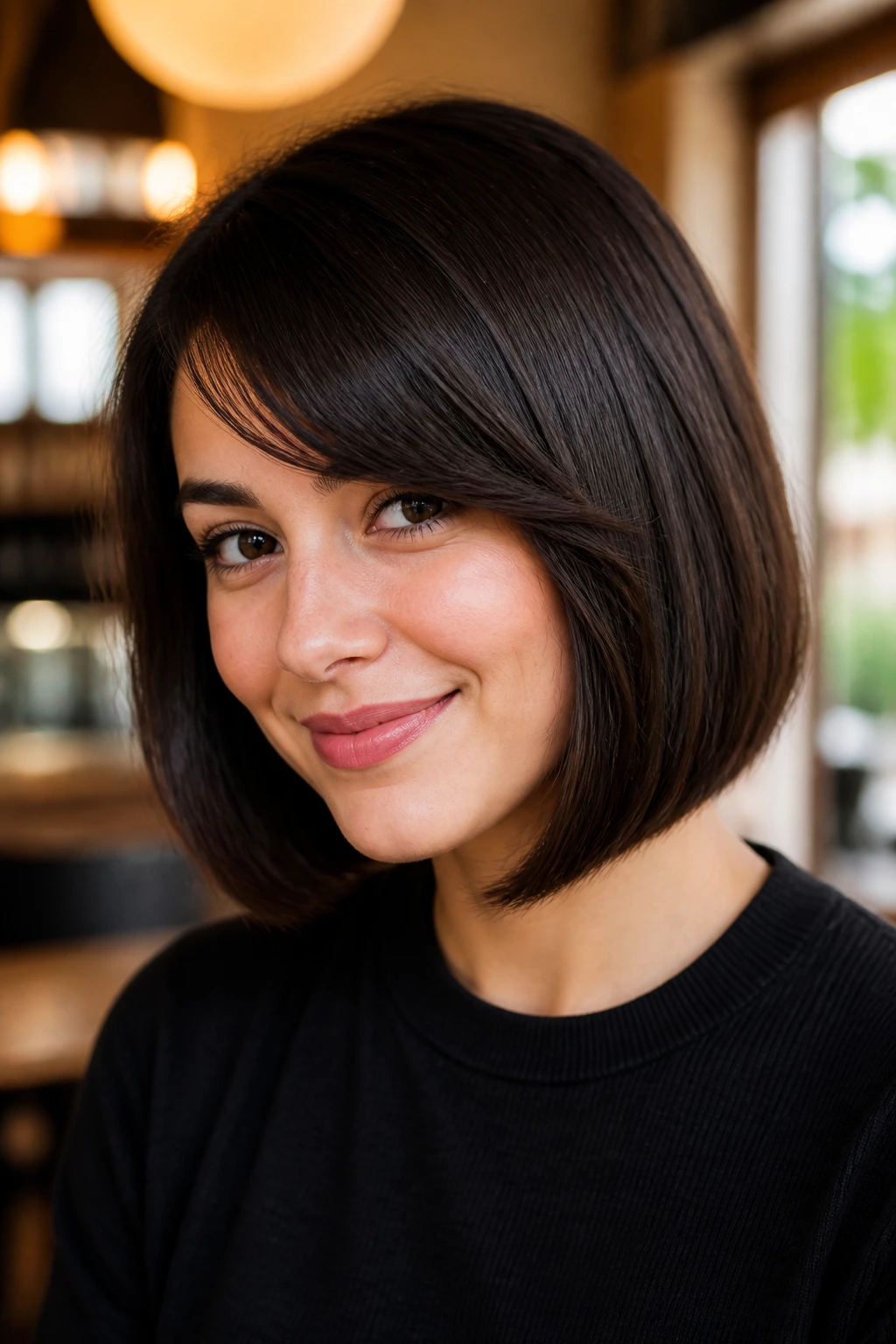
A blunt bob on a round face can work, but it needs one thing to keep it from feeling too boxy: a bang that sweeps away from the cheek instead of sitting straight across the forehead. The blunt edge gives structure, while the swooped fringe softens the forehead line and creates a diagonal path through the top of the haircut.
The secret is balance. Keep the bob clean and even at the bottom, then build movement into the bang and crown. If both the edge and the fringe are heavy, the cut can feel like a block. If the fringe is too wispy, the blunt line can dominate the face. So the balance has to be precise.
This is a good choice if your hair is naturally straight or easy to smooth with a brush. It also looks best when the ends are beveled slightly under, not pinned flat. A blunt bob with no bend can feel hard. A tiny bit of curve changes everything.
9. Layered Pixie With a Long Crown Sweep
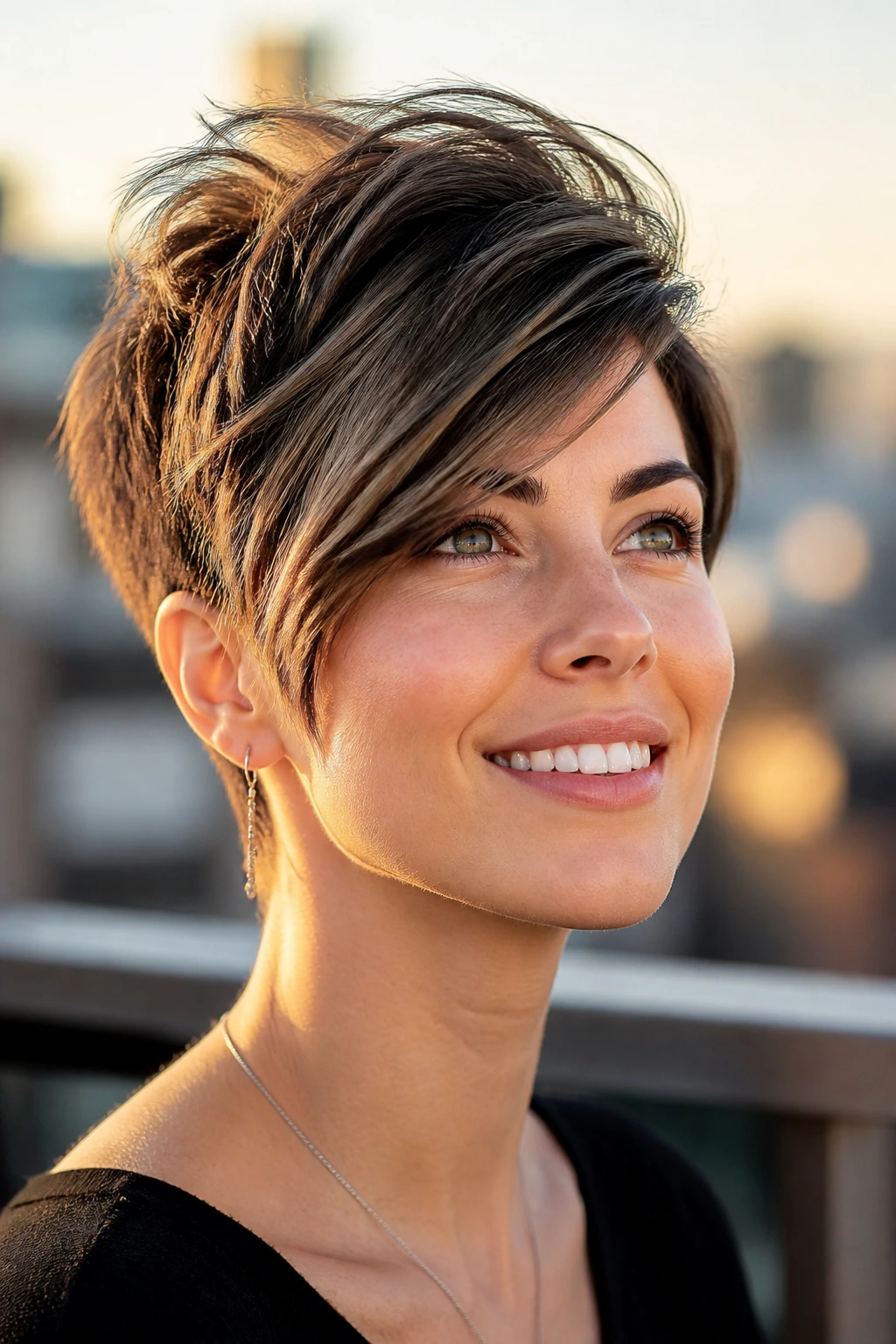
A pixie gets much friendlier on a round face when the crown is a little taller and the side fringe is left long enough to sweep. That extra height does most of the work. It pulls the eye upward, which makes the face read longer and slimmer without looking contrived.
I like this version for someone who wants short hair that still feels feminine and touchable. The sides should stay trimmed close to the head, but not shaved down so far that the top starts to mushroom outward. The front should have enough length to move across the forehead and land near the eyebrow or temple.
H3: Styling note
Use a small round brush or even just your fingers with a little mousse at the root. Direct the bang up and over, then let it fall. If you dry it straight down, it will fight the shape all day. Short hair remembers the direction you gave it.
10. Wavy Ear-Length Bob With Side Bangs
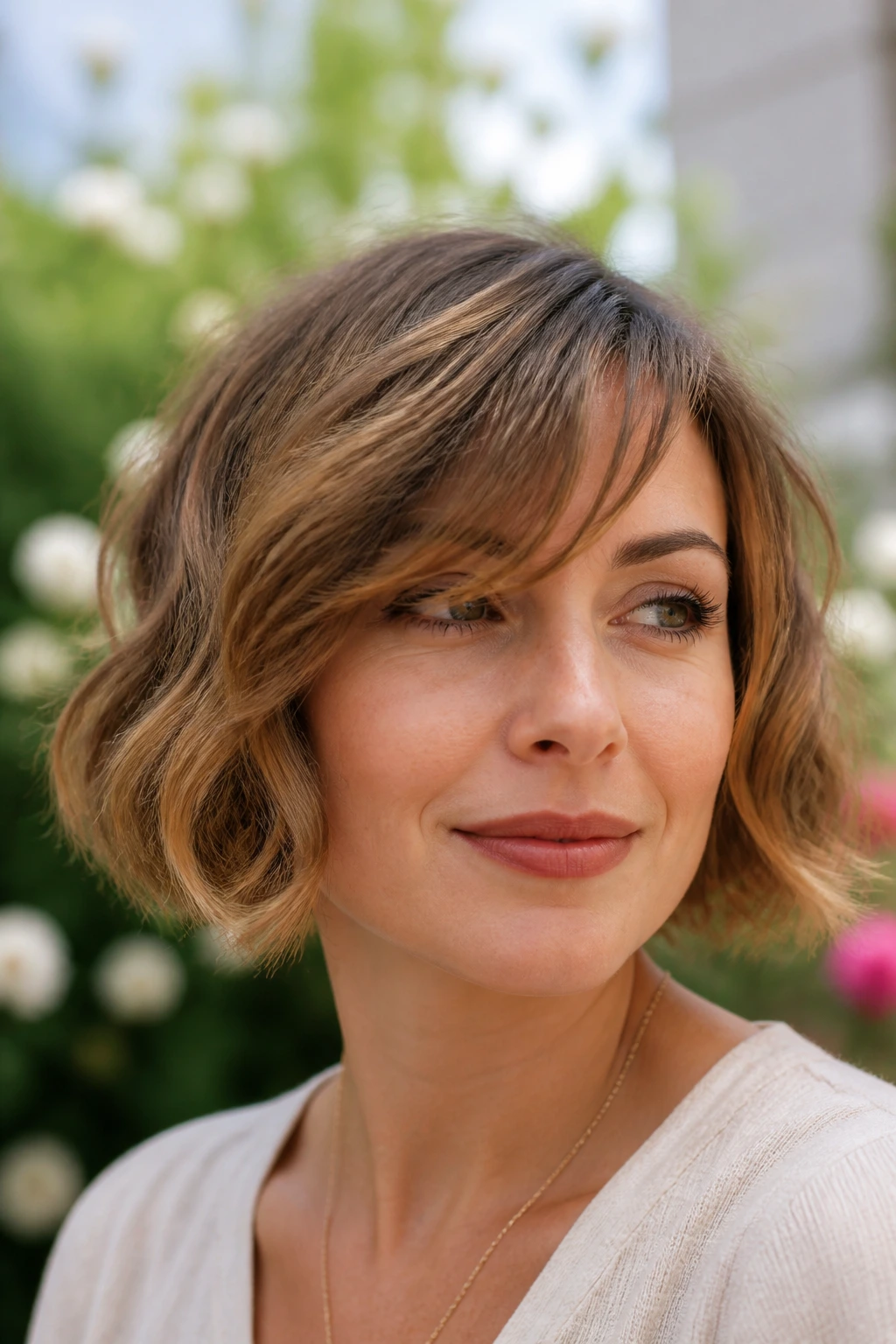
There’s something nice about a bob that barely clears the ears. It feels light, but it still gives enough length in front to work around a round face. The side bangs and loose waves keep the style from turning into a neat little helmet, which is the danger with ear-length cuts.
This works well when the wave pattern is soft and not too polished. The trick is to let the hair move around the temples and jaw instead of tucking everything tight to the head. A side bang that falls over one brow and then breaks apart at the cheekbone adds just enough direction.
If your hair tends to puff at the sides, ask for subtle internal layers so the bob can sit close without becoming bulky. A matte paste or light cream is better here than a shiny serum. Shiny products can make the wave pieces separate in a way that looks stringy rather than textured.
11. Tapered Crop With Tucked Sides
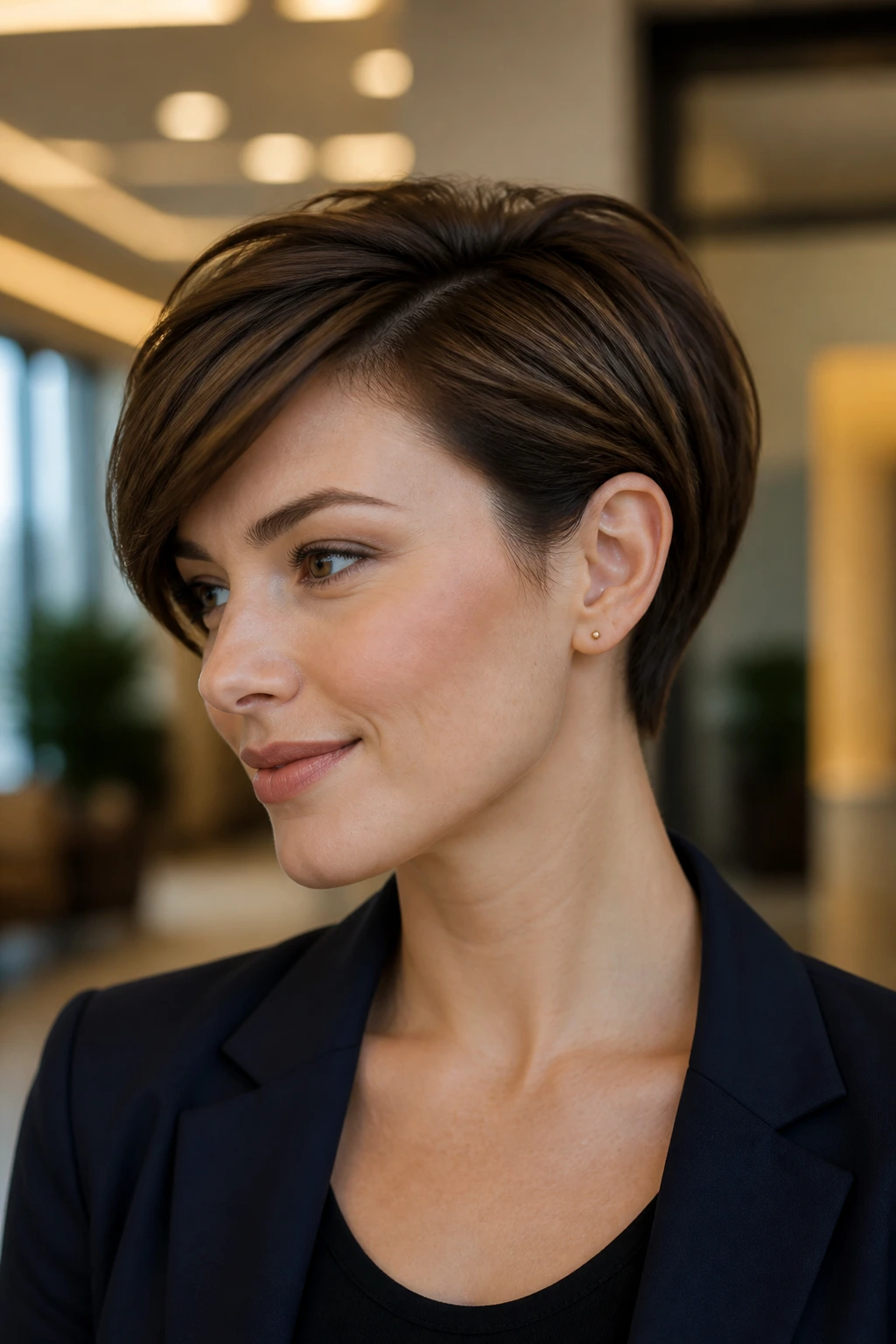
A tapered crop narrows neatly at the nape and around the ears, which makes it one of the cleaner-looking short cuts for a round face. The shape keeps width away from the cheeks, and the side bang adds a little diagonal line up front so the style doesn’t feel too severe.
The crop should be soft on top, not flat. If the crown is too compressed, the cut can sit too low on the face and make the cheeks seem fuller. A little lift at the top balances the tighter sides. The fringe should be long enough to tuck behind one ear if needed, because that gives you options on days when the front starts behaving badly.
I’d recommend this if you like a neat finish and don’t want to spend much time styling. It’s one of those cuts that can look sharp with a quick blow-dry and a brush, or casual with a rough dry and a bit of paste.
12. Rounded Bob With a Carved-Out Side Fringe
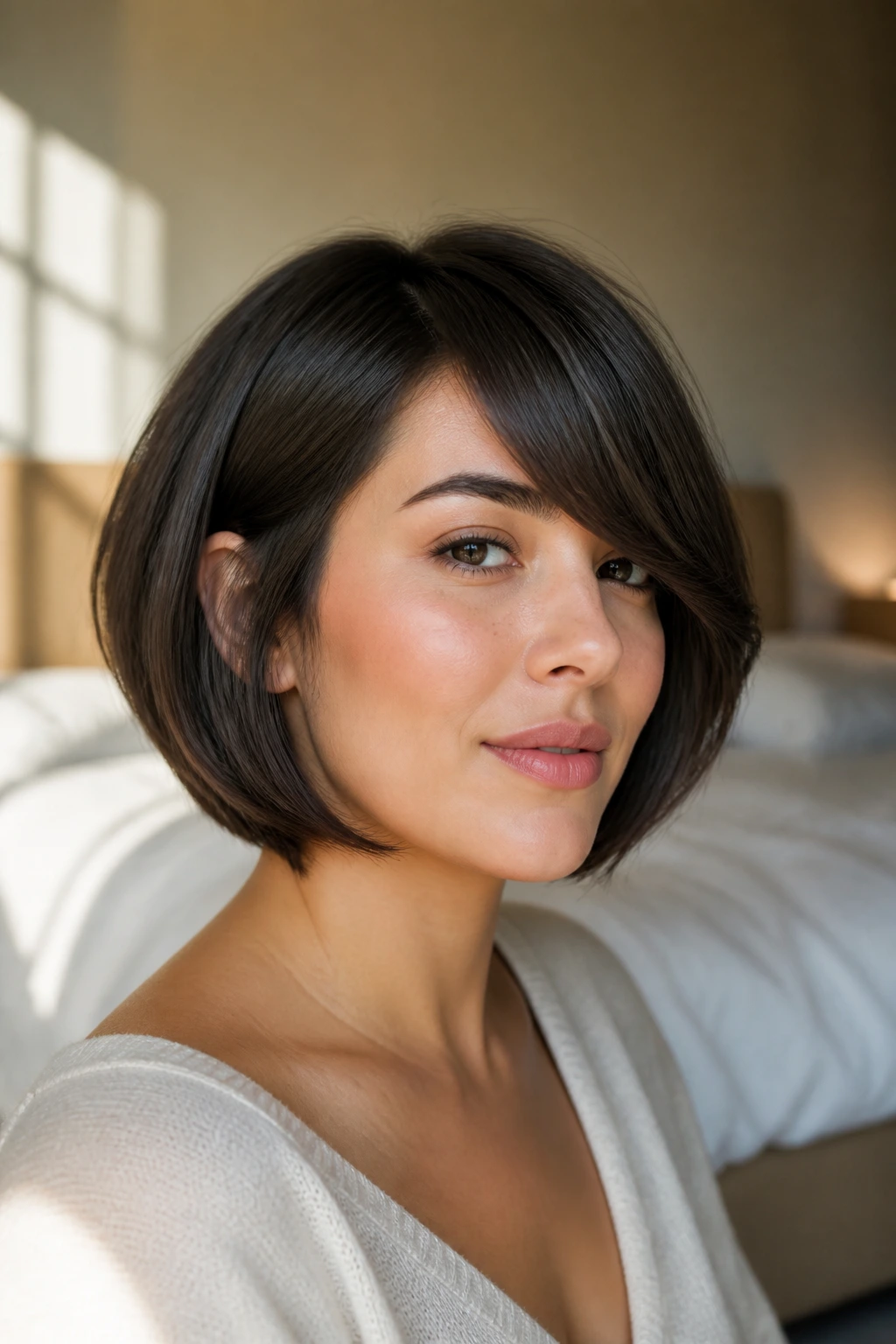
A rounded bob sounds like the wrong choice for a round face until you see the fringe. The trick is to keep the body of the cut softly rounded, but carve out a side fringe that breaks the shape at the forehead and temple. That contrast keeps the style from reading as one big circle.
This cut works best when the bob sits just below the jaw and the fringe has a clear direction. If the bob is too fluffy at the sides, the shape can widen. If the fringe is too short, the whole thing looks puffy. So the bang needs enough length to create a visible diagonal line.
I like this on hair that has a natural bend, because the curve of the bob and the sweep of the bang can feel very balanced. It’s a softer look than an A-line or asymmetrical bob, but it still gives the face some structure where it needs it.
13. Stacked Bob With Side-Swept Volume
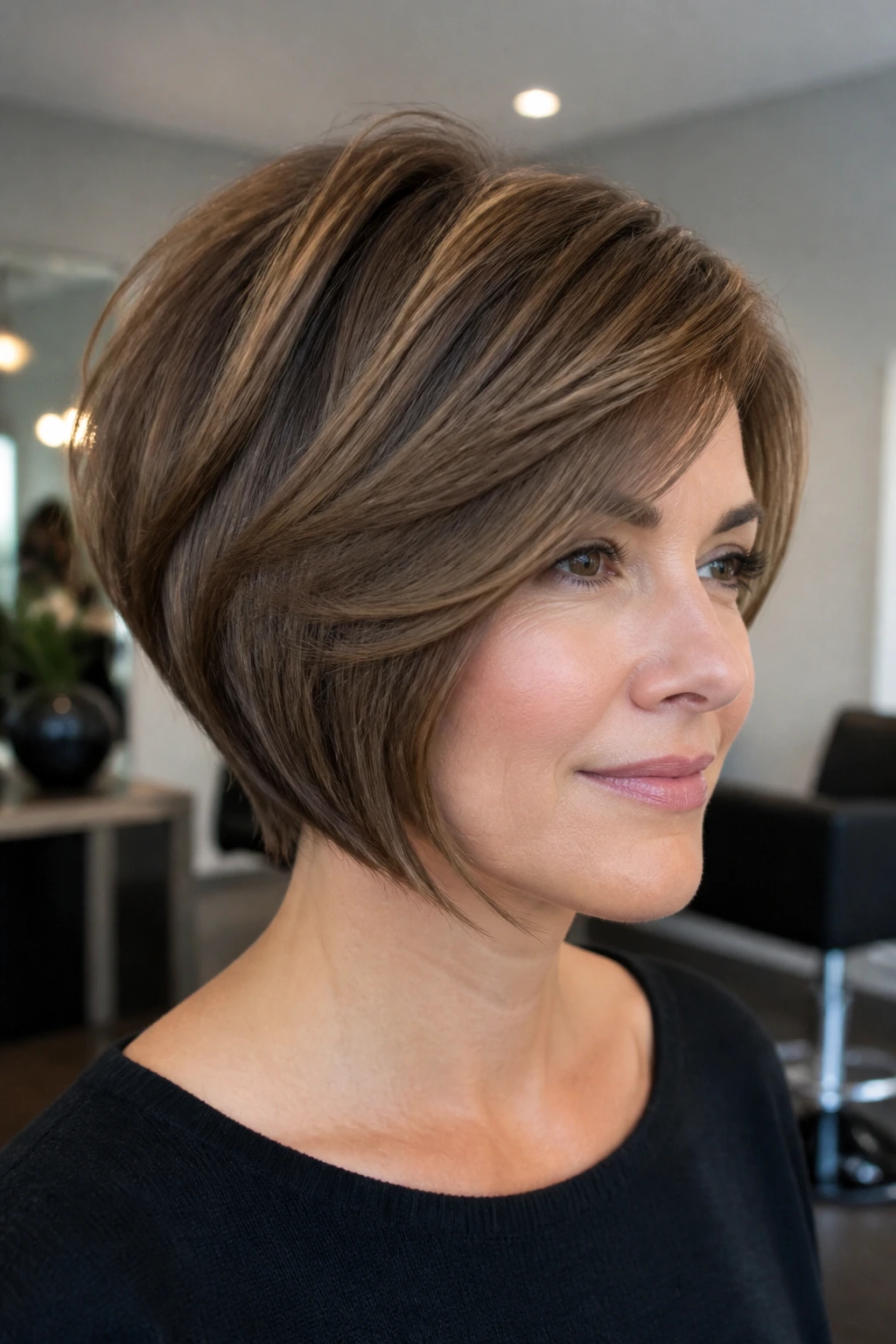
A stacked bob can be a smart move when you want a round face to look longer, not wider. The stacking at the back gives you lift where it matters, while the side-swept bang keeps the front from looking blunt. That combination creates a shape that feels lifted instead of boxy.
The important part is control. Too much stack and the back balloons. Too much width at the sides and the face gets lost in the haircut. You want the back short enough to build height, then the front long enough to glide toward the chin. The side bang should blend into that front length so it doesn’t feel pasted on.
This cut looks especially good with a blowout that lifts the crown and curves the ends in slightly. A round brush or velcro roller at the top can help. Don’t overwork the sides. They should stay close enough to the head to keep the silhouette clean.
14. Undercut Pixie With a Long Front Sweep
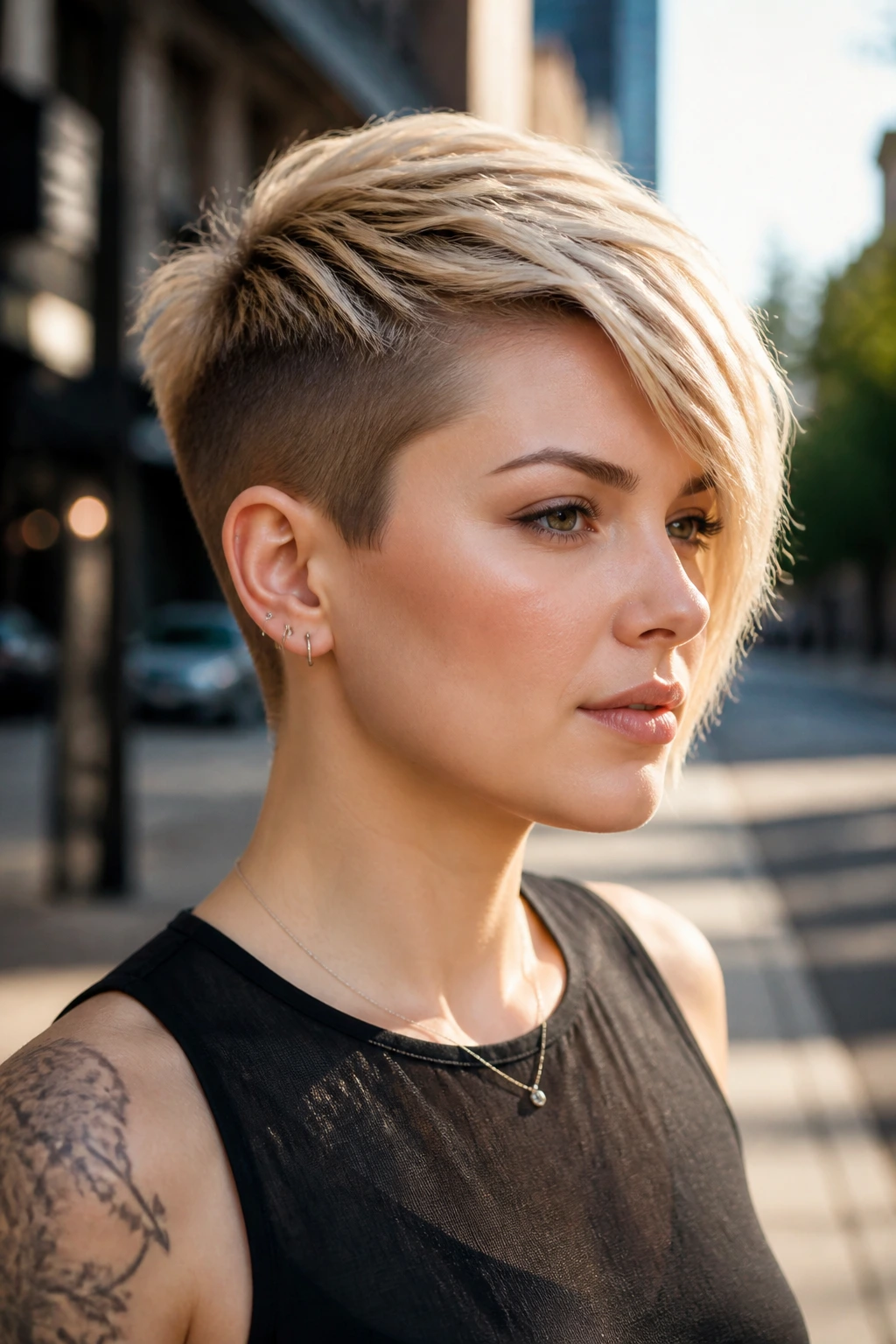
If you want the least amount of bulk around the cheeks, an undercut pixie is hard to beat. The sides and back are clipped short, sometimes very short, which makes the long front sweep feel bold rather than busy. On a round face, that long front piece gives you the angle you need without adding width.
I’d only call this low-maintenance if you like short hair that grows out with a bit of edge. The undercut keeps the silhouette slim, but the front has to be styled. That means a little paste or cream and maybe a quick pass with a flat iron if your hair wants to sit forward.
The nice part is how light it feels. No heavy side volume. No puff at the cheek. Just a strong line across the forehead and a clean outline at the sides. It’s one of the better choices if your hair is thick and you hate having it sit on the face.
15. Tousled French Crop With Choppy Bangs
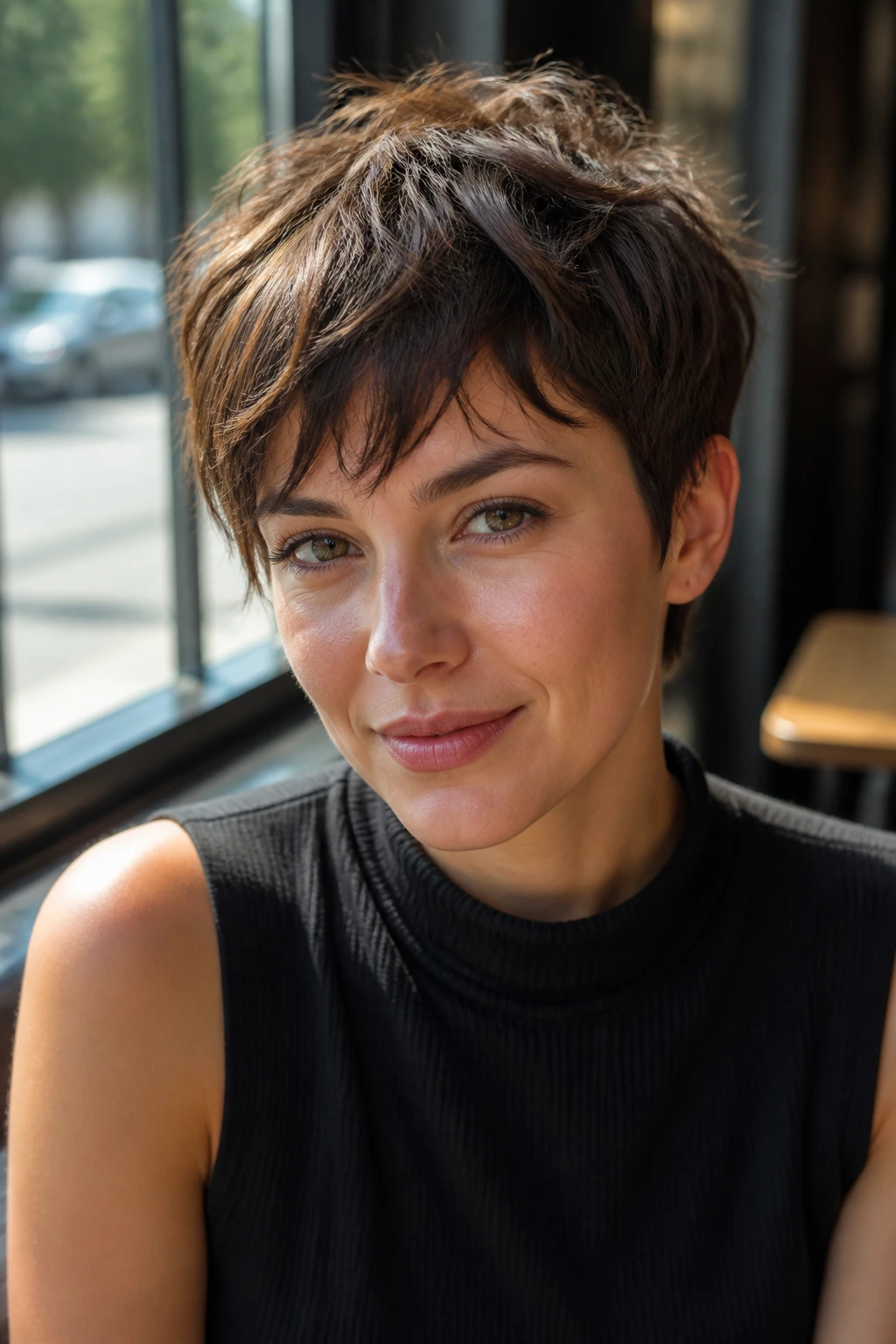
This is the cut for someone who doesn’t want the fringe to look too arranged. A tousled French crop keeps the top short and slightly messy, while the choppy side bangs break up the forehead line in a loose, irregular way. That broken texture helps a round face because it stops the hair from forming one smooth horizontal band.
The best version has tiny variations in length. Nothing severe. Just enough to keep the fringe piecey. The crop itself should stay compact at the sides so the top can carry the movement. If the sides spread out too much, the cut loses that compact, flattering shape.
Salt spray or a dry texture spray works well here, especially if your hair bends naturally. Scrunch it, let it dry a little crooked, and resist the urge to smooth every strand into place. This style looks better with a little mess than with a glossy finish.
16. Sharp Box Bob With Diagonal Bangs
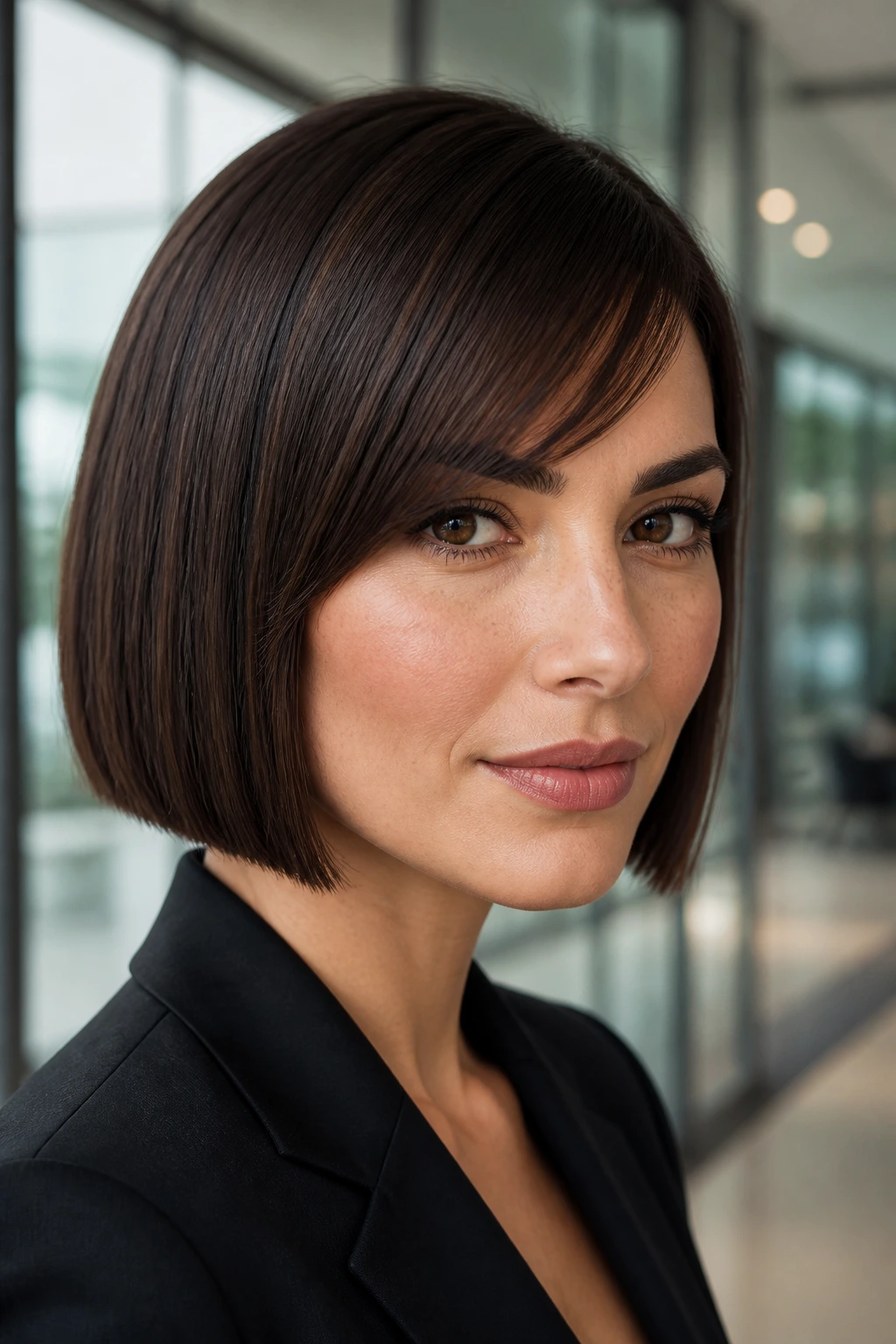
A box bob can feel very crisp on a round face, which is exactly why the bang matters so much. The clean, square edge gives you a strong outline, and the diagonal fringe stops that outline from getting too heavy at the cheeks. It’s a neat contrast: geometric at the bottom, angled at the top.
This is a better option for straight or straightened hair than for highly textured hair, unless you’re happy to style it daily. The ends need to stay clean, almost blunt, so the silhouette doesn’t swell. The side bang should cut across the forehead with a clear slant, not a soft haze.
I like this cut when the goal is polish. It looks smart with a fitted jacket and can go a little sharper with a flat iron bend and a glossy finish cream. But if your hair is naturally huge at the sides, ask for internal thinning so the box shape doesn’t turn into a cube.
17. Feathered Crop With Wispy Fringe
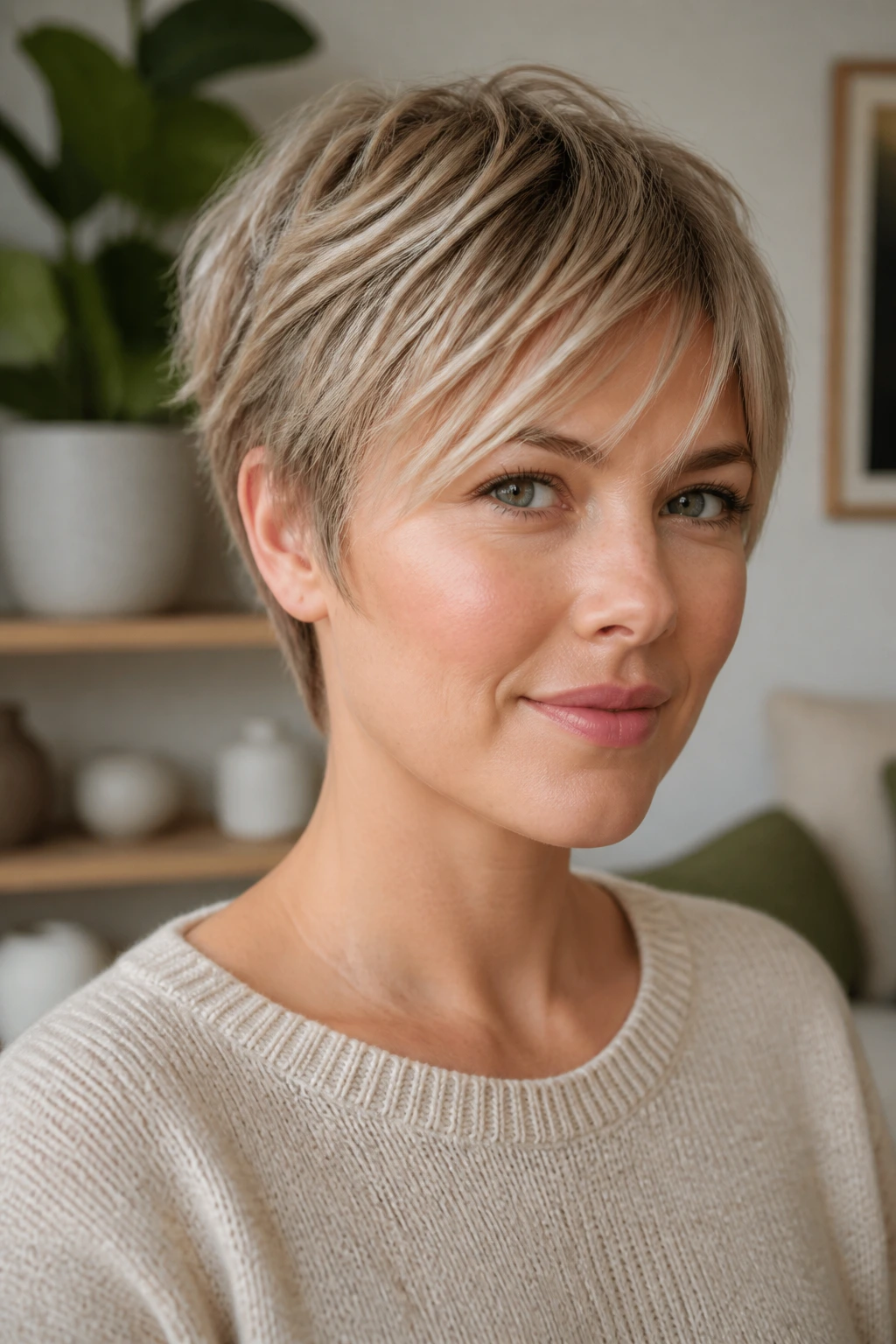
A feathered crop has one job: keep the hair light enough that the face can breathe. The wispy fringe helps a round face by leaving some forehead visible and avoiding the heavy wall that a dense bang can create. The result feels softer than a blunt crop and easier to grow out than a very short pixie.
The feathering should be visible through the top and sides, not just the fringe. Ask for movement through the crown and a bit of piece separation near the temples. That keeps the style from clinging too close to the widest part of the face. If your hair is fine, this cut can make it look fuller without weighing it down.
A tiny amount of lightweight mousse or a root spray is usually enough. More than that, and the softness starts to disappear. The beauty of this crop is in the little bits that fall in different directions.
18. Messy Mini Shag With Side Bangs

A mini shag gives you the looseness of a full shag without the extra length. The layers are short, the ends are flicky, and the side bangs drift into the rest of the cut instead of standing alone. On a round face, that broken-up shape keeps the outline from feeling too circular.
This is one of the better choices if you like hair that looks better with movement than with perfect control. Air-dry it if your texture allows. If not, rough-dry it with your fingers and maybe bend a few pieces with a small curling iron. The goal is not curl. It’s separation.
The crown should have a little lift, but not too much. The sides should stay soft and feathered, not puffed. If the layers get too short around the cheeks, the face can look wider. So keep the shortest pieces away from the fullest part of the face and let the bang slide into the side layers.
19. Curved Inverted Bob With Longer Front Pieces
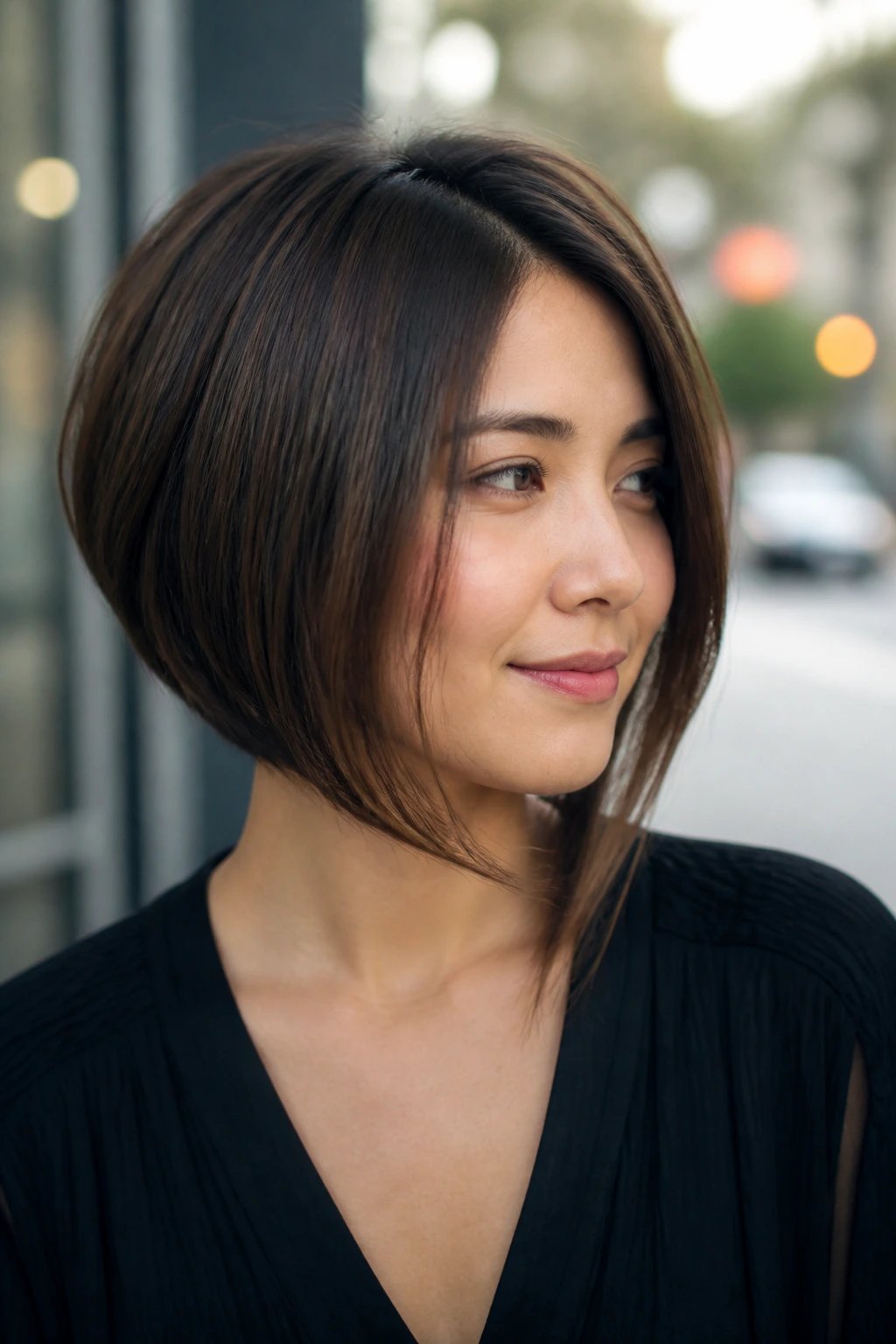
An inverted bob naturally gives you a little angle because the back is shorter and the front pieces fall longer. That front length is what helps a round face most. It pulls the line downward and away from the cheeks, which gives the whole cut a cleaner outline.
The curve of the bob should be soft, not stacked into a hard wedge. Hard wedges can look dated fast and sometimes widen the head shape in an unhelpful way. A gentle inversion, paired with a side bang that leans across the forehead, keeps the look modern and easy to wear.
This is a good choice when you want short hair that still feels a bit dramatic. The front pieces can hit the chin or just below it, and the bang can tuck behind the ear on one side. That tucked side gives the face a nice break. Small detail, big effect.
20. Sleek Side-Part Bob With Tucked-Behind-Ear Ends
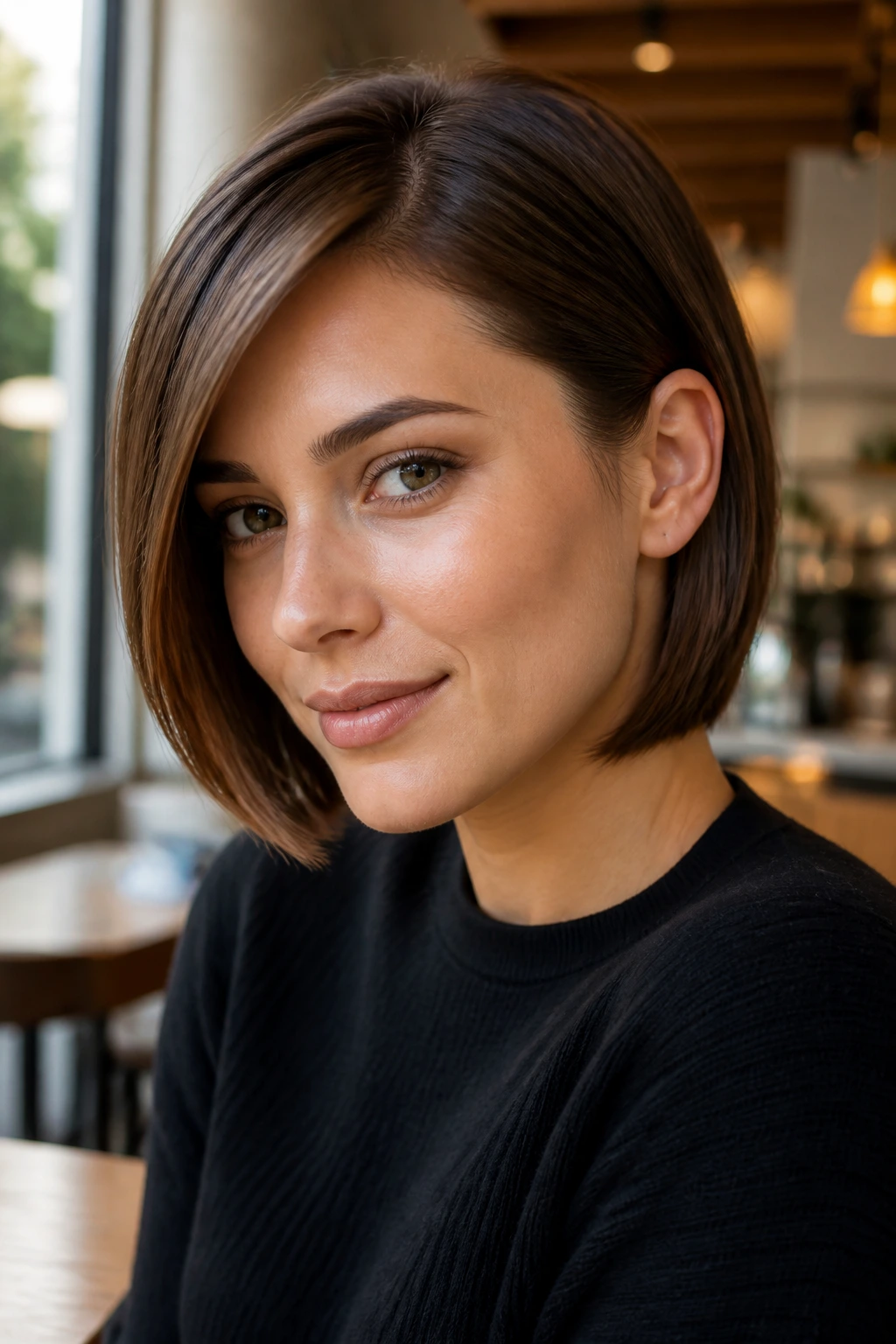
Sleek doesn’t have to mean severe. A side-part bob with ends tucked behind one ear can look very clean on a round face because it opens one side of the face and lets the other side fall in a controlled line. The asymmetry keeps the face from reading too wide.
This cut works best when the bob sits at the chin or just below. Too short, and you lose the lengthening effect. Too long, and it stops feeling like short hair. The side part should be deep enough to create a visible sweep, but not so deep it becomes theatrical.
A smoothing cream and a flat iron can make this look sleek without making it flat. The ends should be curved under just a little. If they stick straight out, the bob widens. If they’re bent softly toward the neck, the whole line feels more refined.
21. Razor-Cut Bob With Broken-Up Fringe
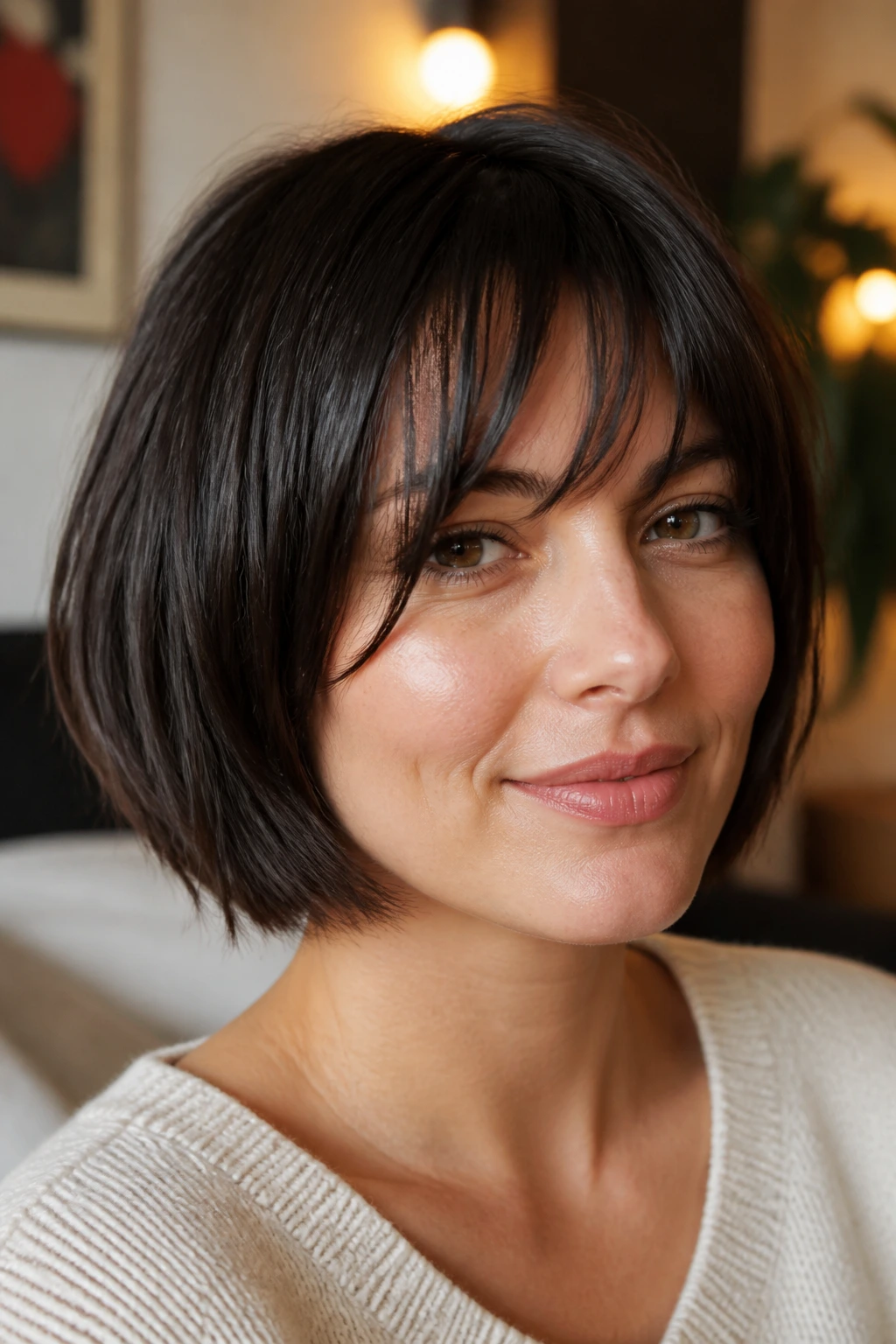
A razor-cut bob has a softer edge than a blunt cut, and that softness is useful on a round face because it breaks the hard line around the cheeks. The fringe should look lightly chipped and separated, not thick or heavy. That broken-up finish makes the top feel lighter and keeps the haircut from sitting like one solid shape.
I like this for hair that has a bit of natural texture. The razor work adds movement without a lot of styling, which is handy if you hate fussing with a brush every morning. Still, it’s not a haircut that should be overly thinned. Too much razor on fine hair can make the ends wispy in a bad way.
The best version has enough weight at the bottom to keep the bob from floating. That balance matters. You want softness, not fray. A small amount of styling paste on the fringe can help define the broken pieces and keep them from collapsing into the forehead.
22. Voluminous Pixie With a Long Bang Arc
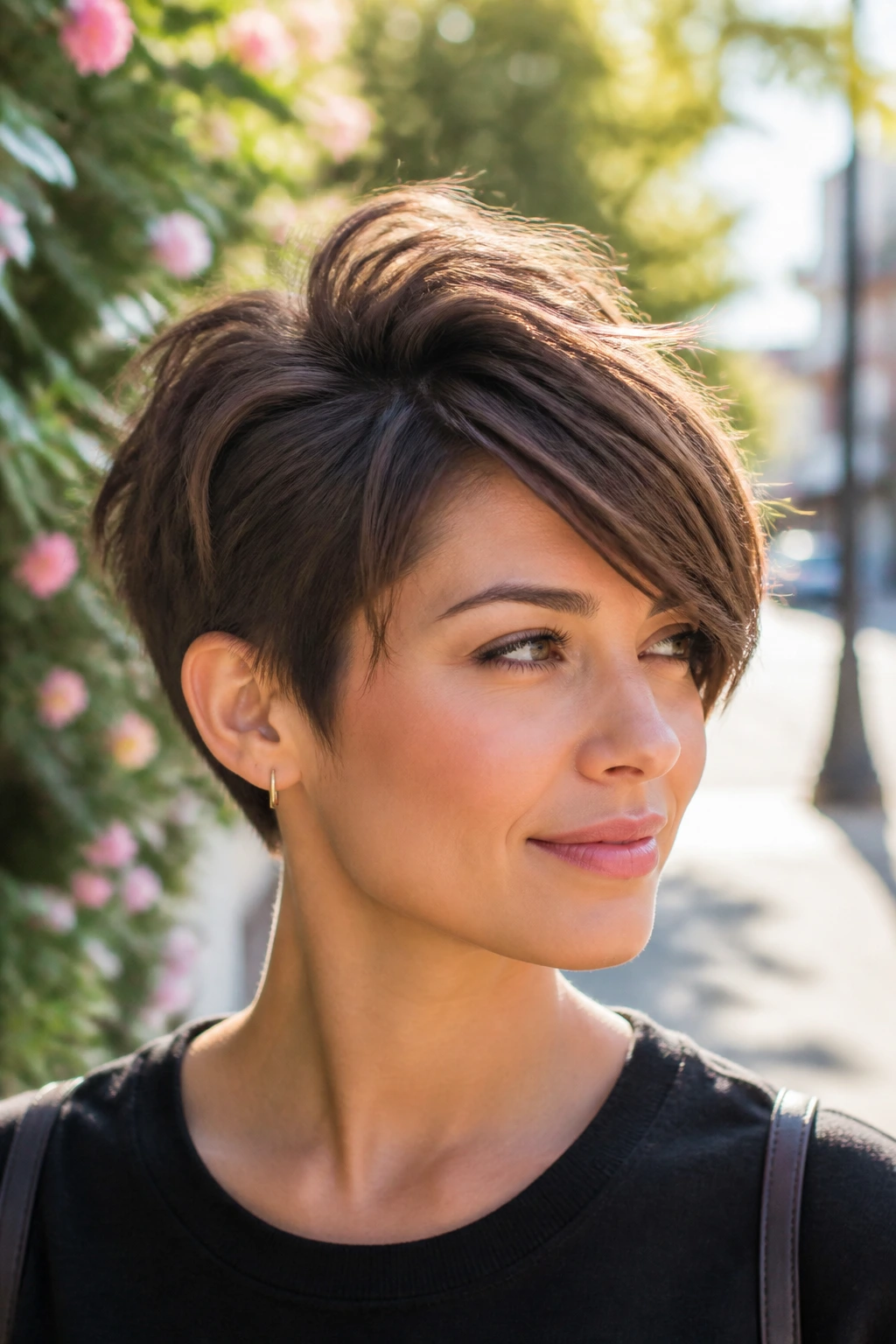
This is the pixie for someone who likes a little lift at the top and doesn’t mind using a round brush for it. The volume on top stretches the face visually, while the long bang arcs across the forehead and softens the front. On a round face, that upward push is doing real work.
The sides should stay lean so the top can do the talking. If the sides puff out, the style stops being elongating. The fringe should start off a side part and travel in a clear arc, not flop forward. That arc is what breaks the face shape.
I’d recommend this cut for thicker hair or hair with enough body to hold height. A little mousse at the roots, blow-dried upward, can make the difference between “cute” and “shapely.” The difference is subtle in the mirror and obvious in motion.
23. Soft Mushroom Bob With a Leaning Fringe
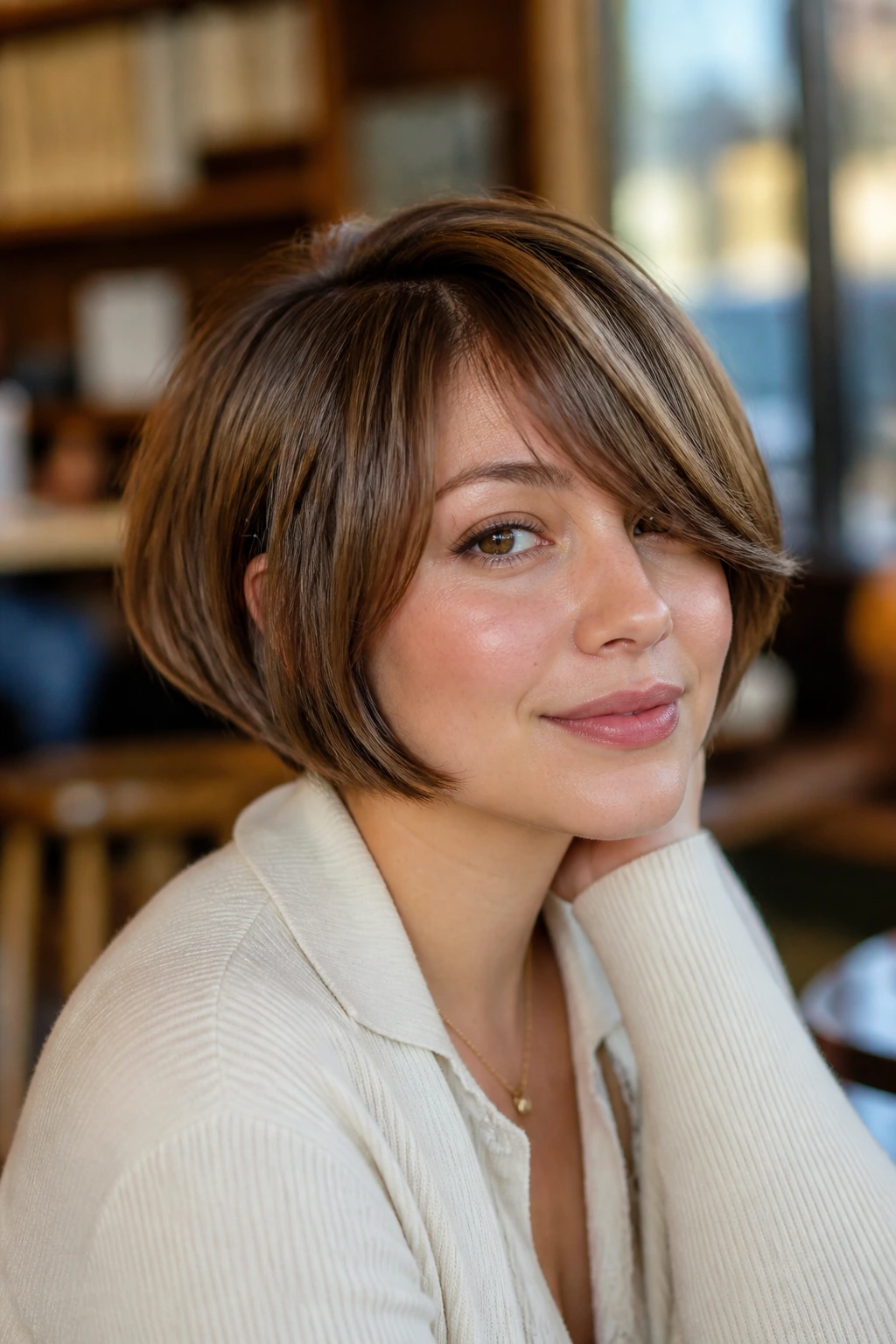
A mushroom bob can go wrong fast on a round face if it becomes too evenly rounded. But softened versions, with tapered sides and a fringe that leans diagonally instead of sitting straight, can actually be flattering. The trick is not to let the shape puff out at the same level as the cheeks.
The top should feel smooth and rounded, while the perimeter stays a little lighter. The side bang helps by breaking the symmetry and pulling the eye to one side. If the fringe is cut too short, the style gets too much like a cap. Longer fringe keeps it modern.
This is not the obvious choice, which is part of why I like it. It has personality. It also asks for a good stylist, because the balance between rounded and lean is picky. A small error in length can shift the whole silhouette.
24. Chin-Length Chop With Piecey Waves
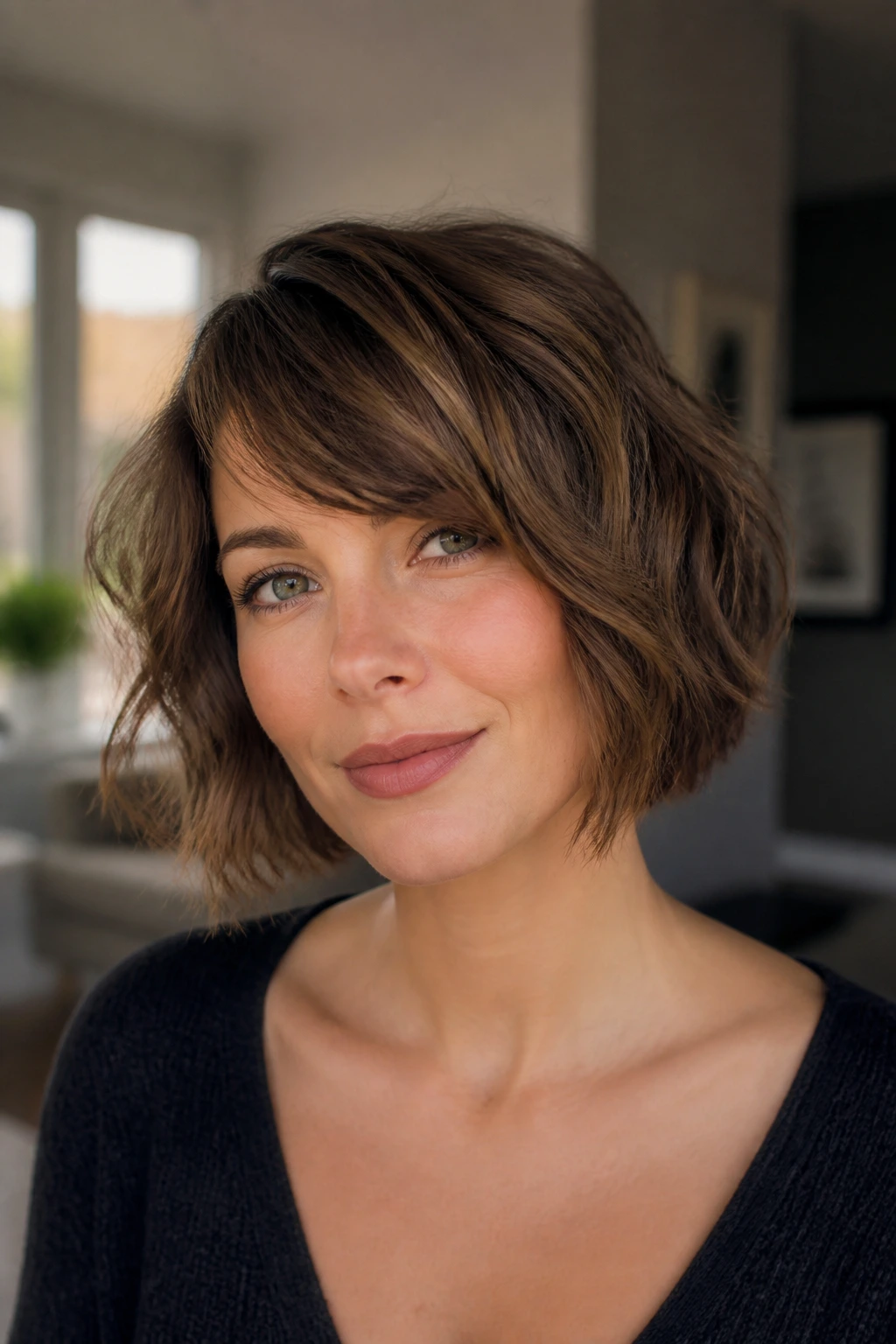
A chin-length chop is one of the easiest short styles to live with, and the side bangs keep it from looking too even. The waves should be piecey rather than smooth, with enough separation that the hair doesn’t sit as one round mass around the face. That separation helps a round face look a little narrower.
This cut works nicely when the wave pattern is loose and the sides aren’t cut too full. The longest pieces should skim the chin, not stop right at the cheekbone. That tiny difference matters because the chin creates a visual point. The cheek does not.
A few bends from a curling wand can wake up the shape, but the whole point is to keep it casual. You don’t need polished curls. You need bends that move away from the cheeks and give the fringe somewhere to fall.
25. Textured Bowl Cut With Side Bangs
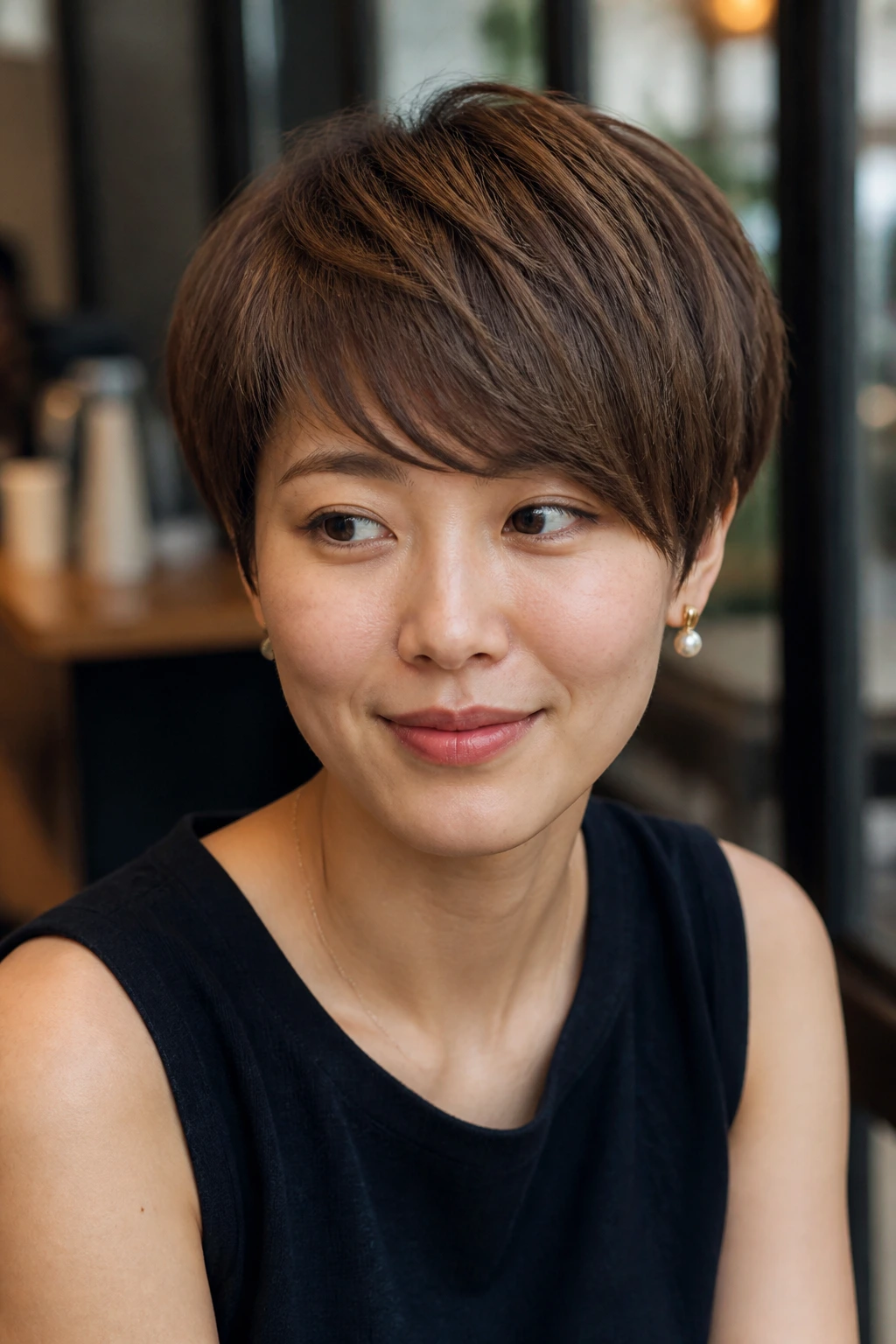
A modern bowl cut can flatter a round face if the edges are softened and the fringe is pushed off-center. I’m not talking about a heavy retro cap. I mean a controlled shape with a tapered nape, piecey texture, and a side bang that breaks the curve.
This is for someone who likes a sharper fashion cut. The texture matters a lot. Without it, the bowl shape can feel too circular. With it, the haircut reads as deliberate and architectural. Ask for a little removal around the sides so the shape doesn’t sit right on the fullest part of the cheeks.
It’s a bold look, and I wouldn’t pretend otherwise. But bold doesn’t mean unflattering. The diagonal fringe and tapered sides are what keep it wearable. The haircut needs a bit of attitude to work.
26. Angled Crop With a Short Nape
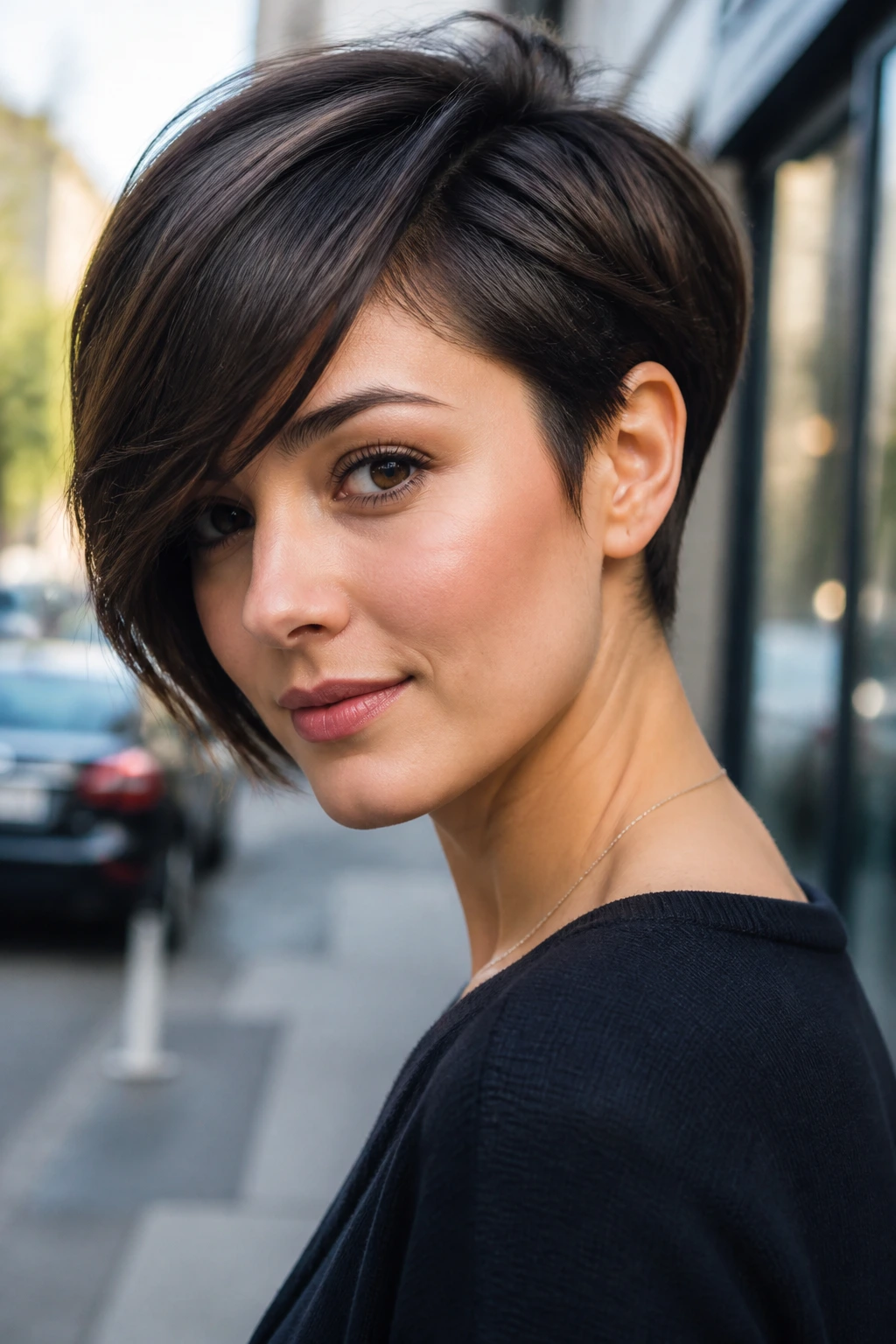
An angled crop with a short nape keeps the back clean and compact while letting the front move forward just enough to shape the face. That front movement is what helps a round face. The nape detail keeps the cut from feeling heavy from behind, which matters more than most people realize.
The top should have a little air in it, not too much. The fringe needs to sweep, not drop. If the front is too short, the crop can feel boxy. If it’s too long, it starts acting like a bob. The sweet spot is right where the side bang can graze the temple and fall into the cheek area without sitting on it.
This is a good haircut for someone who wants a neat shape that still feels soft around the face. It’s practical, but not plain.
27. Mini Shag With Flippy Ends
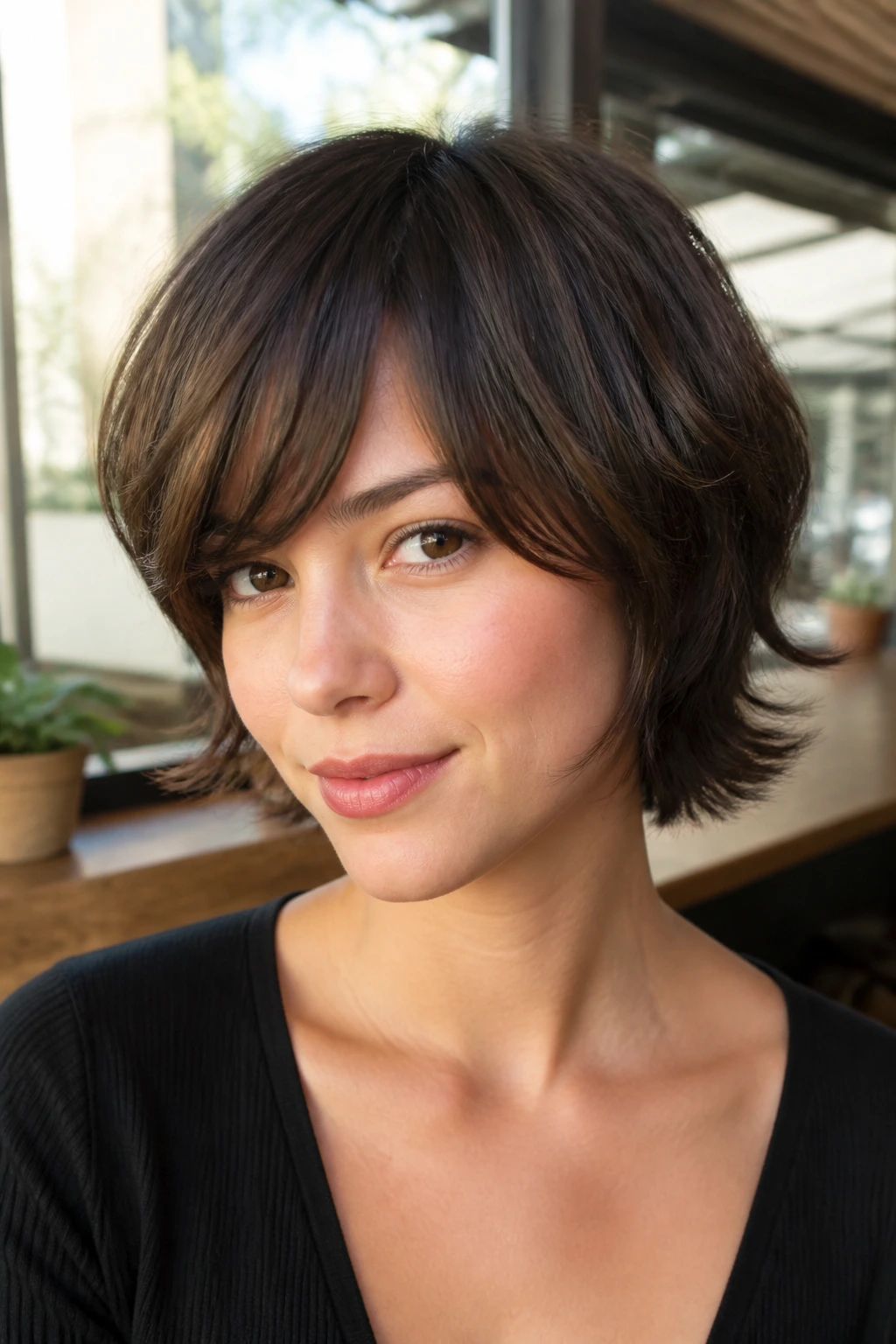
The flippy ends make this one fun. They lift away from the jaw instead of sitting straight against it, which keeps the face from looking too compressed. The side bangs break the front line, and the shaggy texture prevents the haircut from reading as one solid circle.
I like this version for hair that has a little natural bend or can take a quick pass with a small iron. The flips shouldn’t be uniform. A few ends turning out, a few turning under — that’s the rhythm. Too much matching curl and the cut starts to feel deliberate in the wrong way.
The fringe should stay long enough to sweep across the forehead and blend into the side layers. Shorter than that, and it can lose the diagonal line that helps the face.
28. Air-Dried Curly Crop With Diagonal Fringe
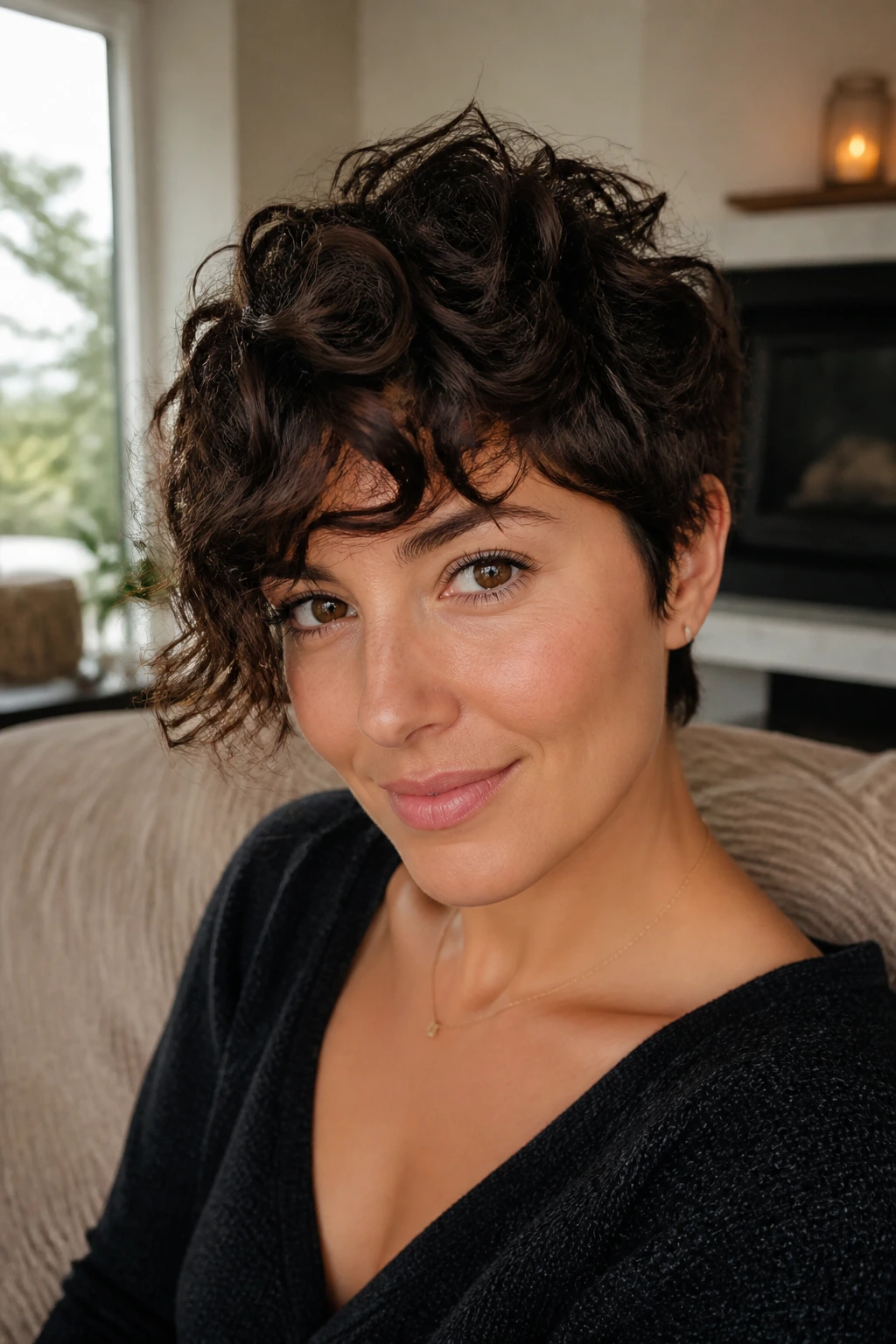
This is the most natural-looking option in the bunch, and it can be one of the prettiest if your curl pattern cooperates. The crop stays short around the sides and back, while the diagonal fringe sits longer and falls into the curl shape rather than against it. On a round face, that angled fringe keeps the front from feeling too open.
The best part is that it doesn’t need much heat. A curl cream, a little scrunching, and the right part can do most of the work. But the bang should be cut conservatively long, because curls shrink when they dry. If you cut it too short, the fringe can spring up and widen the upper face.
I’d use this if you want movement without fighting your texture. It feels easy, but only if the cut is done with shrinkage in mind. That part is non-negotiable.
Why a Diagonal Fringe Changes the Shape of a Round Face
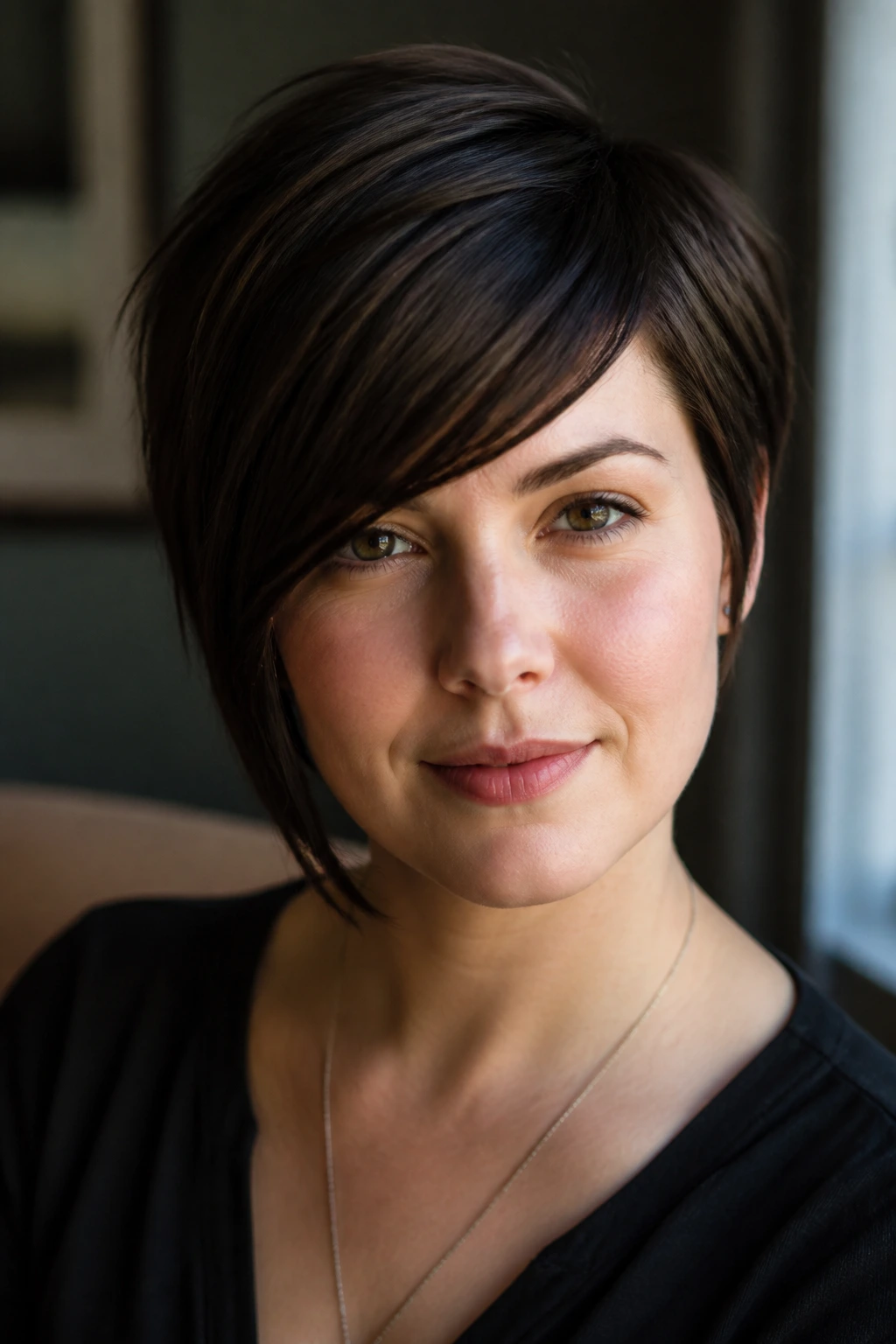
A round face isn’t a problem to fix. It’s a shape to work with. The reason side bangs help is simple: they create an angled line where a round face naturally gives you curves. That line changes how the eye moves. Instead of stopping at the widest part of the cheeks, the eye slides along the fringe and down through the haircut.
Height helps too. A little lift at the crown gives the face more vertical room, which is why so many of these cuts pair side bangs with volume on top and tighter sides around the ears. If the hair gets too wide at cheek level, the face feels fuller. If the sides stay lean and the top gets a little height, the whole shape looks more balanced.
The other piece is weight. Short hair can go fluffy fast, especially if the layers are cut too bluntly or the product is too heavy. That’s why a good side bang is usually longer than a straight fringe and cut with some movement in mind. It can bend, tuck, or fall across the forehead without building a hard line right through the middle of the face.
The Tools That Keep a Short Fringe in Line
-
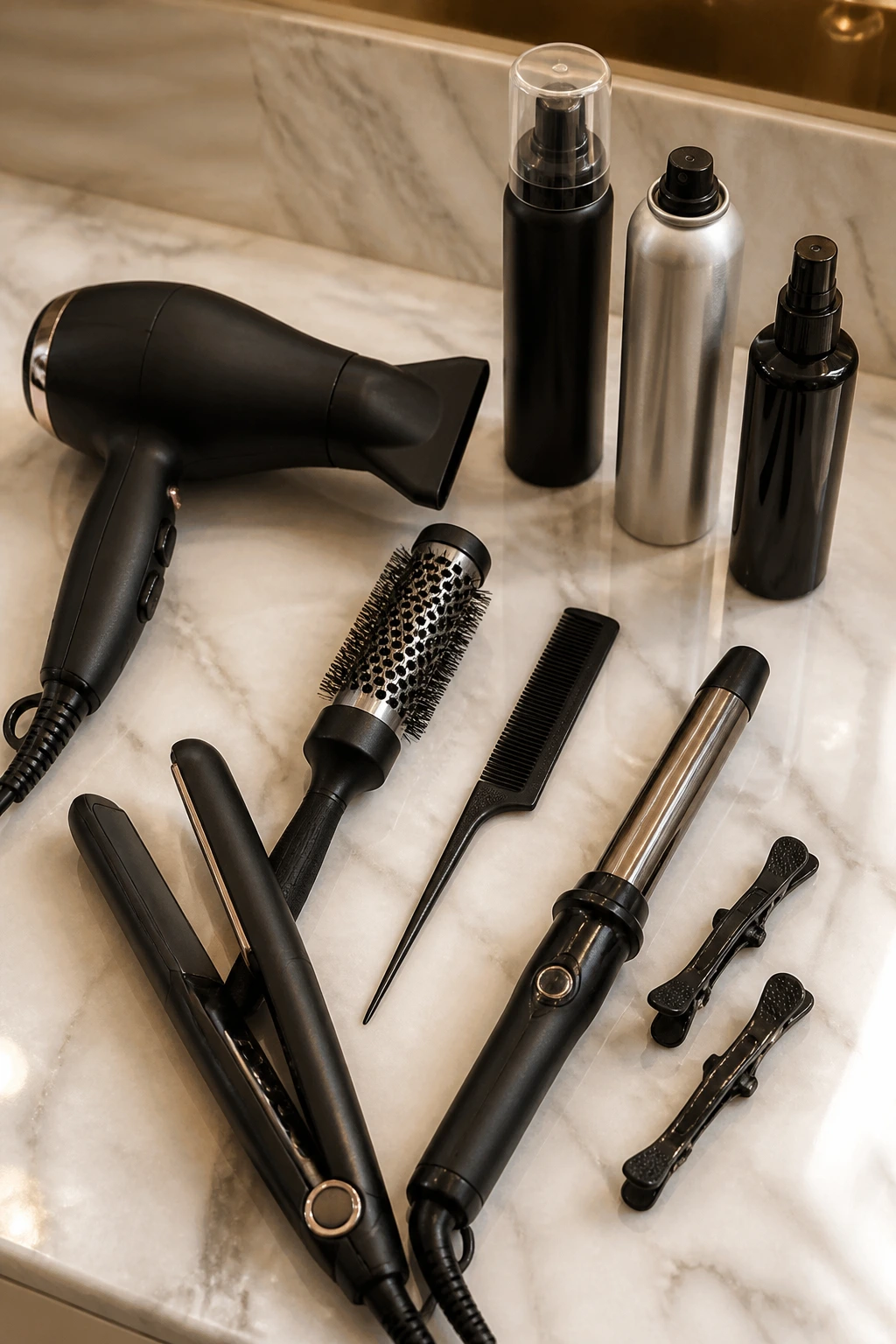
Hair dryer with a nozzle attachment — Directs airflow so the fringe bends where you want instead of puffing out around the temples.
-
Small round brush — Best for lifting the crown and giving side bangs a soft curve without overcurling them.
-
Tail comb — Clean part lines matter more than people think, especially on short hair where every inch shows.
-
Flat iron with rounded edges — Useful for beveled ends on bobs and for smoothing a stubborn fringe without making it stiff.
-
1-inch curling wand — Good for adding one bend to a bob or a little swing to side bangs; bigger barrels can make short hair fall flat.
-
Duckbill clips — Hold the fringe in place while it cools, which helps the direction last longer.
-
Light mousse or root spray — Gives crown lift without turning the top crunchy.
-
Texture spray or dry shampoo — Keeps day-two hair from collapsing into the cheeks.
-
Heat protectant — Worth using every time you touch a hot tool to the fringe or front pieces.
What to Ask for at the Salon, and What to Buy for Home
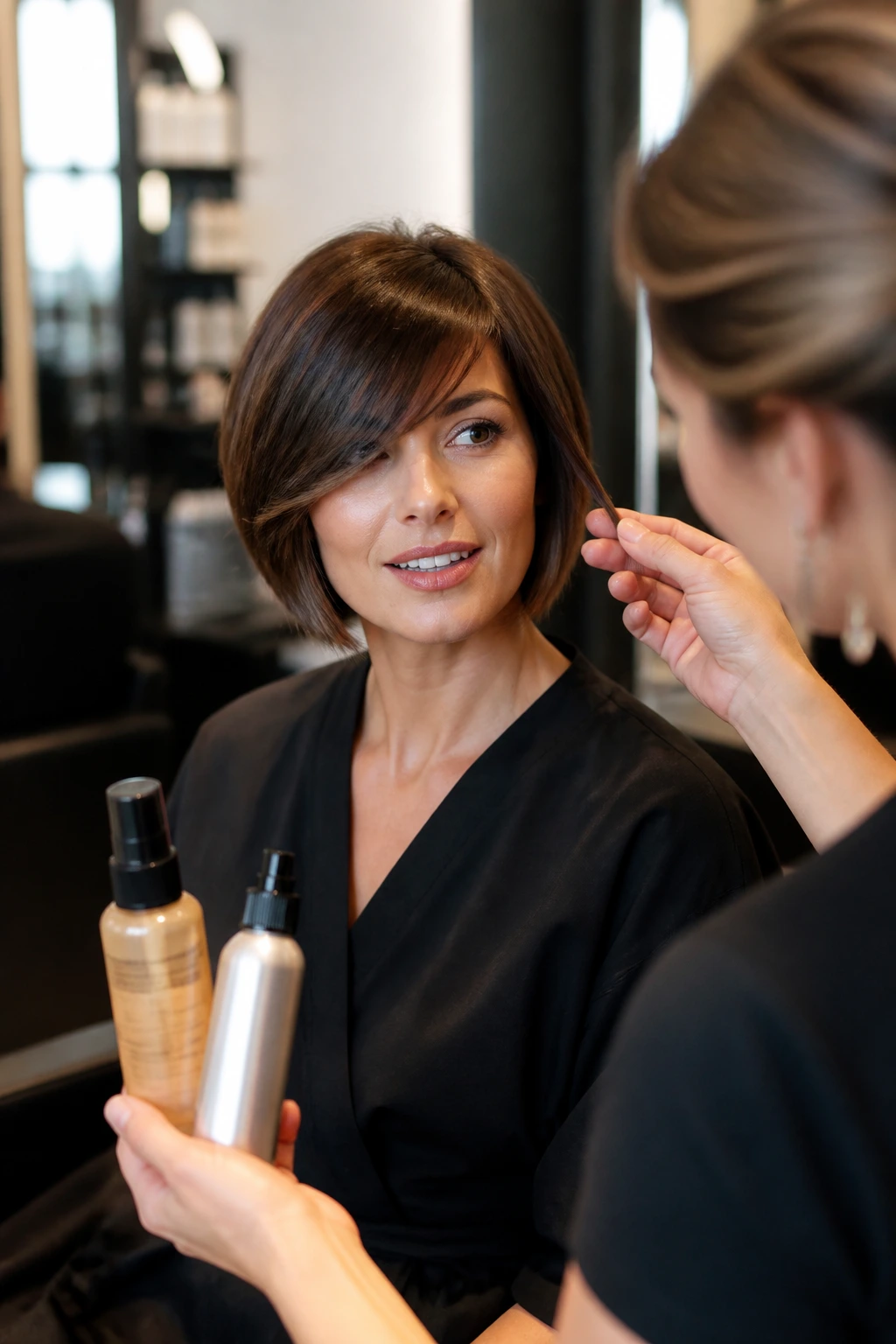
The most useful salon note is also the least glamorous one: tell the stylist exactly where you want the longest front piece to land. Cheekbone, jawline, or just below the chin are three very different lengths on a round face. If you say “side bangs,” some stylists hear a soft sweep; others hear a much shorter fringe. Point to the spot on your face where you want the bang to end.
Ask for internal layering if your hair is thick, or for softer point-cutting if your hair is fine. The goal is to prevent the sides from widening around the cheeks. If your hair grows outward instead of down, say that out loud. It matters. A cut that looks sleek in the chair can puff out after one wash if the weight is left in the wrong places.
For home styling, buy what matches your texture, not what looks nice on a shelf. Fine hair usually likes mousse, root spray, and a light texture mist. Thick hair needs smoothing cream and a good blow-dry. Curly hair tends to do best with a curl cream that defines without freezing the fringe in place. And if you wear side bangs daily, keep a small round brush or vent brush close. You’ll use it more than you think.
How to Wear These Cuts on Busy Mornings, Humid Days, and Dressier Plans
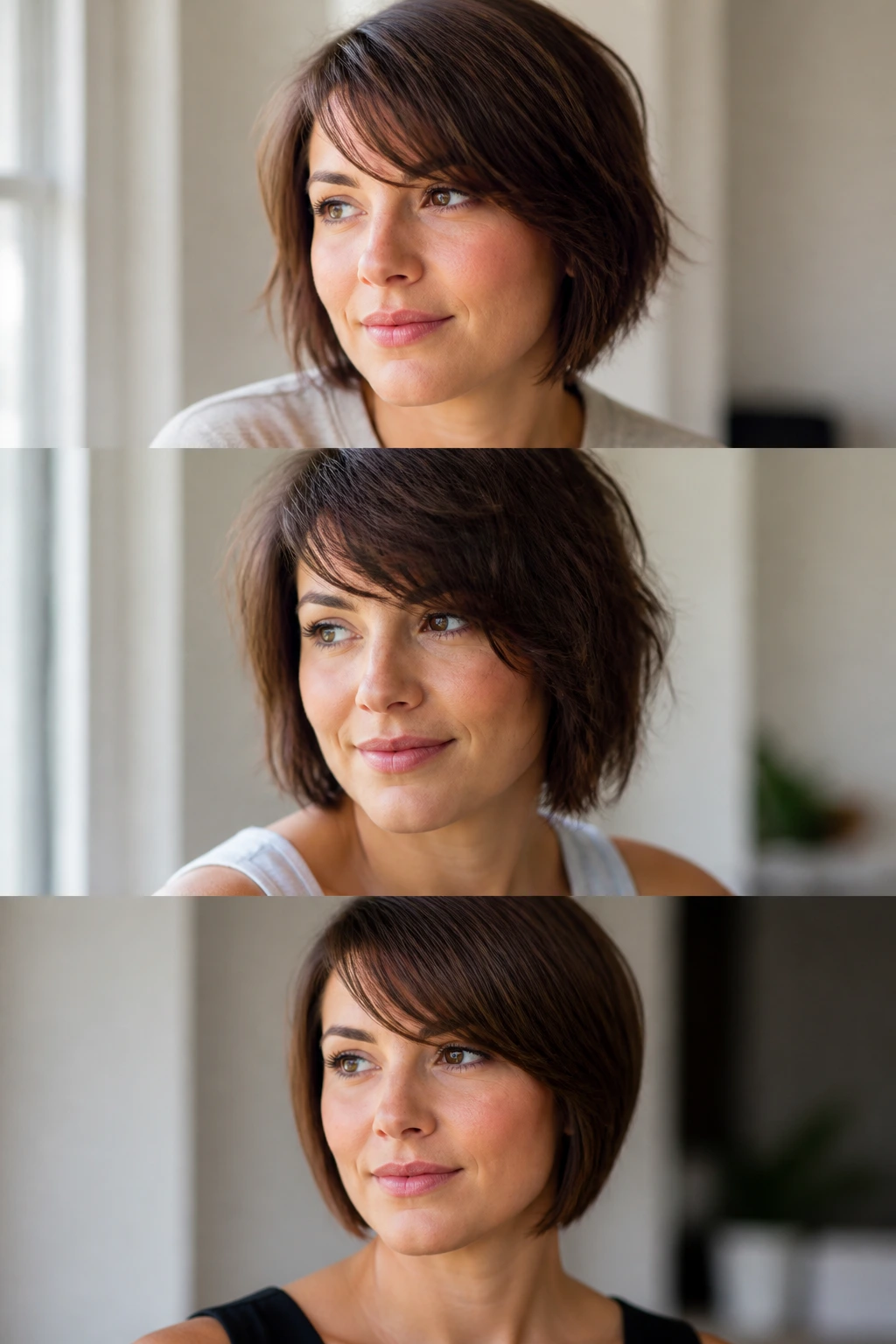
Everyday Wear: Let the fringe fall naturally, then pinch the ends with a little cream or paste so the sweep stays piecey. If the front has lost shape, a 30-second blast from the dryer while you push the bang sideways usually fixes it.
Office or Events: Smooth the top with a round brush or flat iron, keep the side part clear, and tuck one side behind the ear if you want the face to open up a little more. That tiny tuck can make a short cut feel sharper without adding product.
Humid Days: Keep mousse at the roots and skip heavy oils near the fringe. Humidity loves to swell hair at the cheek level, so the goal is to keep the sides controlled and the crown lifted. A little dry shampoo at the root can help the style hold shape longer.
Short on Time: Blow-dry only the front and crown. That’s usually where the shape lives anyway. If the back is a little off, most people won’t see it. They’ll see the bang and the line around the face.
Small Styling Moves That Make the Bangs Work Harder
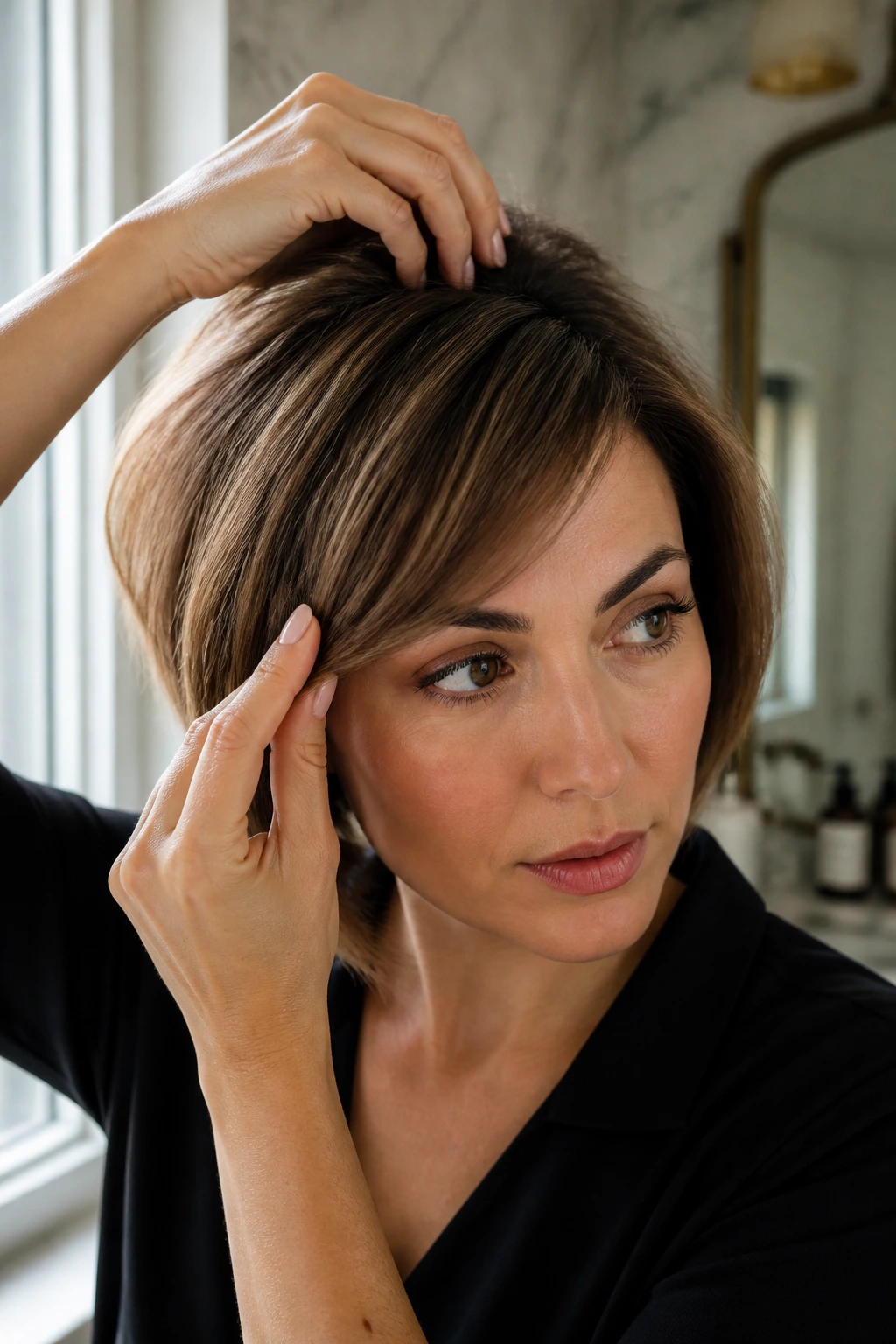
Root Lift: A little lift at the crown changes the whole silhouette, especially on a round face. You do not need big volume. Just enough rise so the haircut doesn’t sit flat across the widest part of the cheeks.
Bang Direction: Dry the fringe in the direction you want it to live, not the direction it arrived in after a shower. A clip while it cools can make the side sweep last through half the day, sometimes longer.
Texture Control: Keep texture where you want movement — on the top and ends — and keep the sides cleaner. If the temples get fluffy, the roundness comes right back.
Color Trick: A few lighter pieces around the side bang can make the diagonal line more visible. It does not need to be dramatic. Even subtle brightness near the fringe changes how the cut reads.
Heat Limit: Short hair does not need a lot of heat. One bend, one pass, one brush-through. Too much styling can make the fringe stiff and smaller in shape, which is the opposite of what you want.
The Mistakes That Make Short Hair Puff Out Around the Cheeks
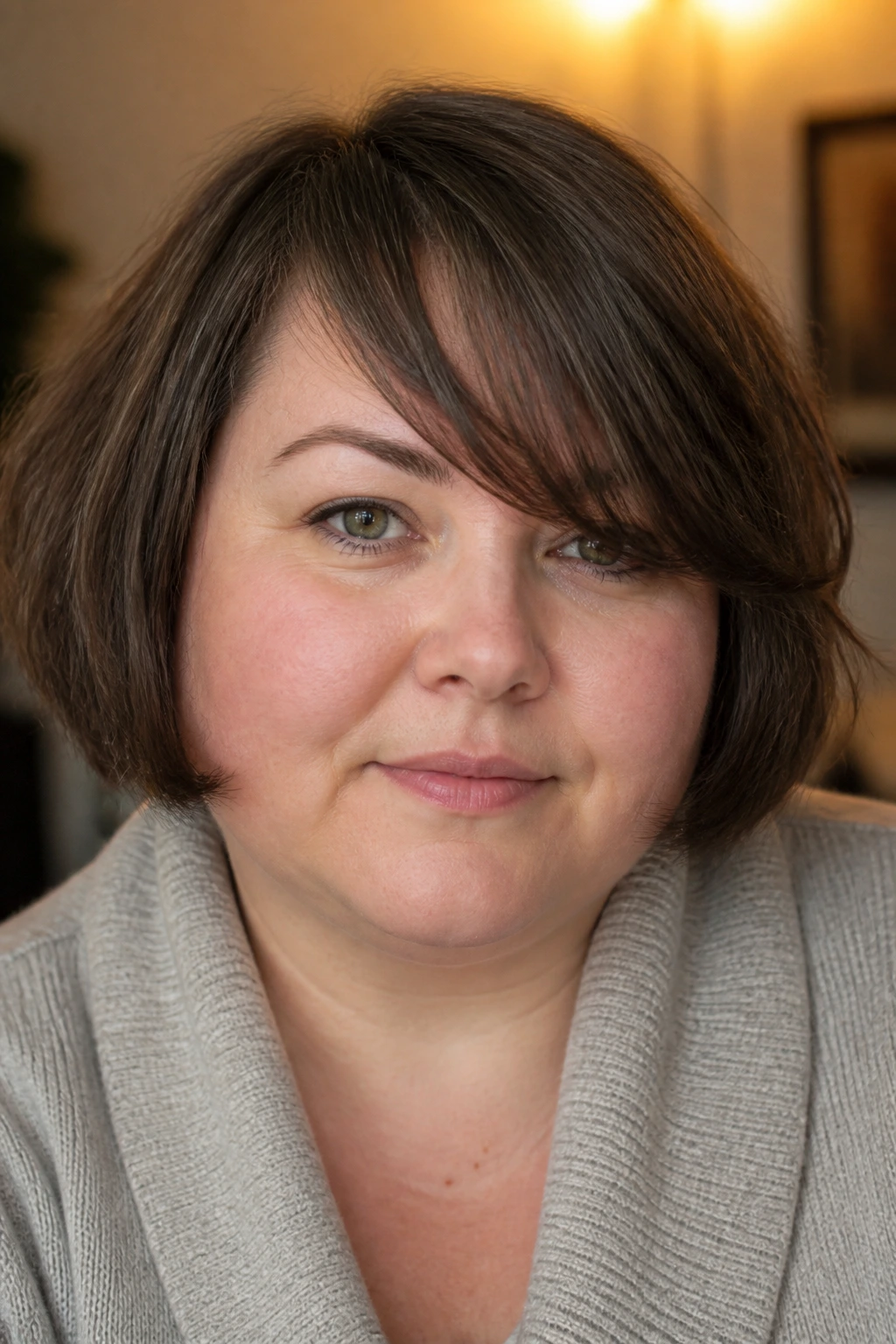
A blunt bang cut too short is the easiest way to lose the effect of the style. It draws a hard horizontal line across the forehead and can make a round face feel wider. The fix is a longer side bang that lands at or below the eyebrow and slides diagonally.
Another common mistake is adding volume at cheek level. That’s the exact place you don’t want extra width. If your bob flips out there, ask for internal layers or a softer perimeter so the shape hugs the head a bit more closely.
Heavy product can also ruin a good cut. Thick creams, waxes, and oils can make the fringe separate in odd ways or collapse into the forehead. Use less than you think. You can always add more. Taking it out is harder.
And yes, trims matter. Side bangs grow into the eyes fast, and once they get too long, they stop looking like a fringe and start looking like accidental face drapery. Bangs usually need a touch-up before the rest of the haircut does.
Variations for Fine Hair, Thick Hair, Curly Hair, and Low-Maintenance Wear
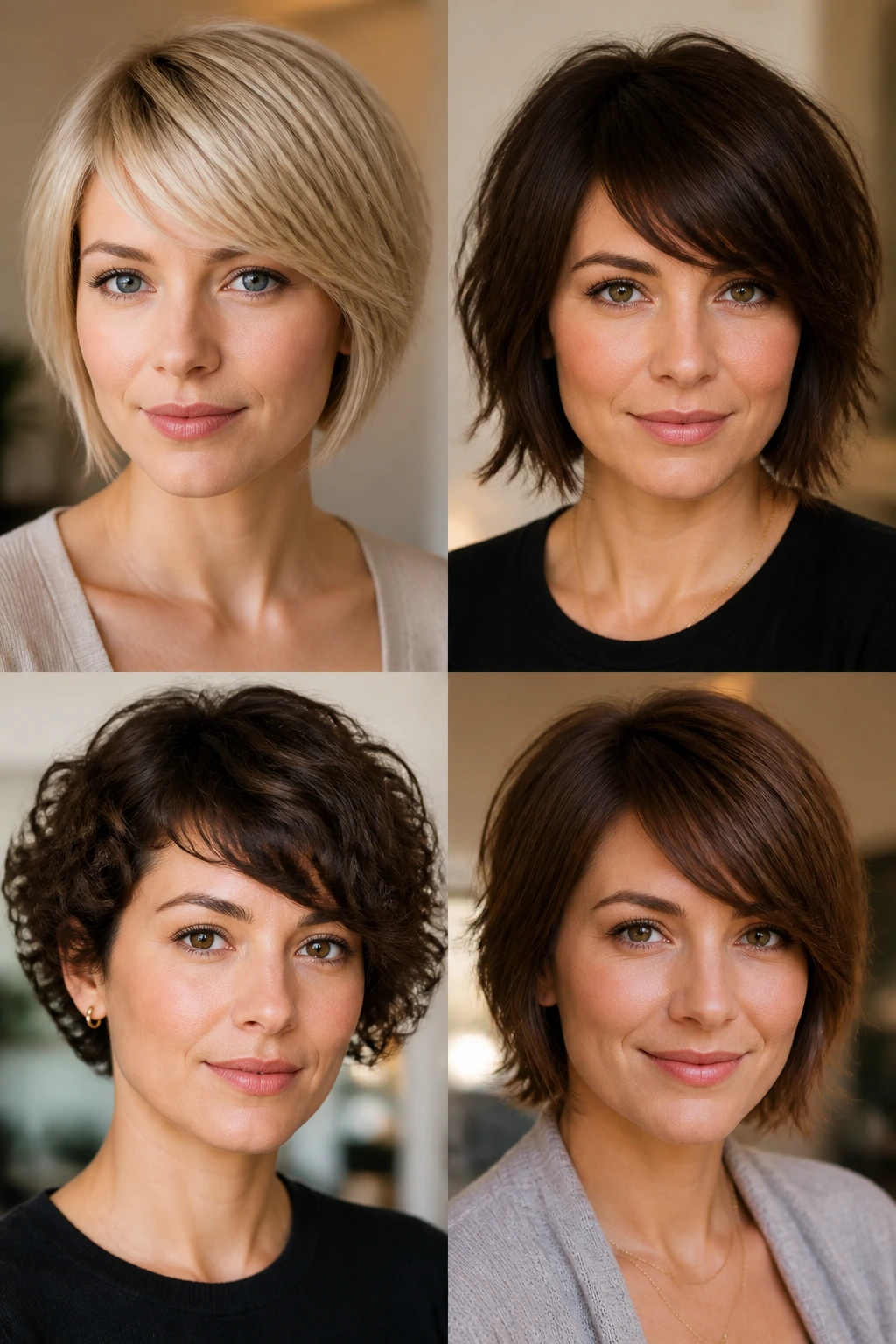
Fine-Hair Feathering: Keep the fringe wispy and the layers light, with a little root spray at the crown. This version makes short hair look fuller without adding the kind of weight that drags fine strands flat.
Thick-Hair Softening: Ask for internal removal and a longer side bang that can sit away from the cheek. Thick hair needs space to move, or it starts bulking up exactly where a round face doesn’t need it.
Curly-Friendly Length: Leave the bang longer than you would on straight hair and cut it dry or nearly dry. Curls shrink, and a side bang that looks perfect wet can spring up far too high once it dries.
Low-Maintenance Grow-Out: Choose a bob or pixie bob with a fringe that blends into the front layers. This version forgives a little extra length between trims and still keeps the diagonal line that flatters the face.
Sharper Editorial Edge: Go for a boxier bob, a stronger part, or an undercut pixie with a long sweep in front. This one suits people who like clean lines and don’t mind a more styled finish.
Keeping the Cut Sharp Between Salon Visits
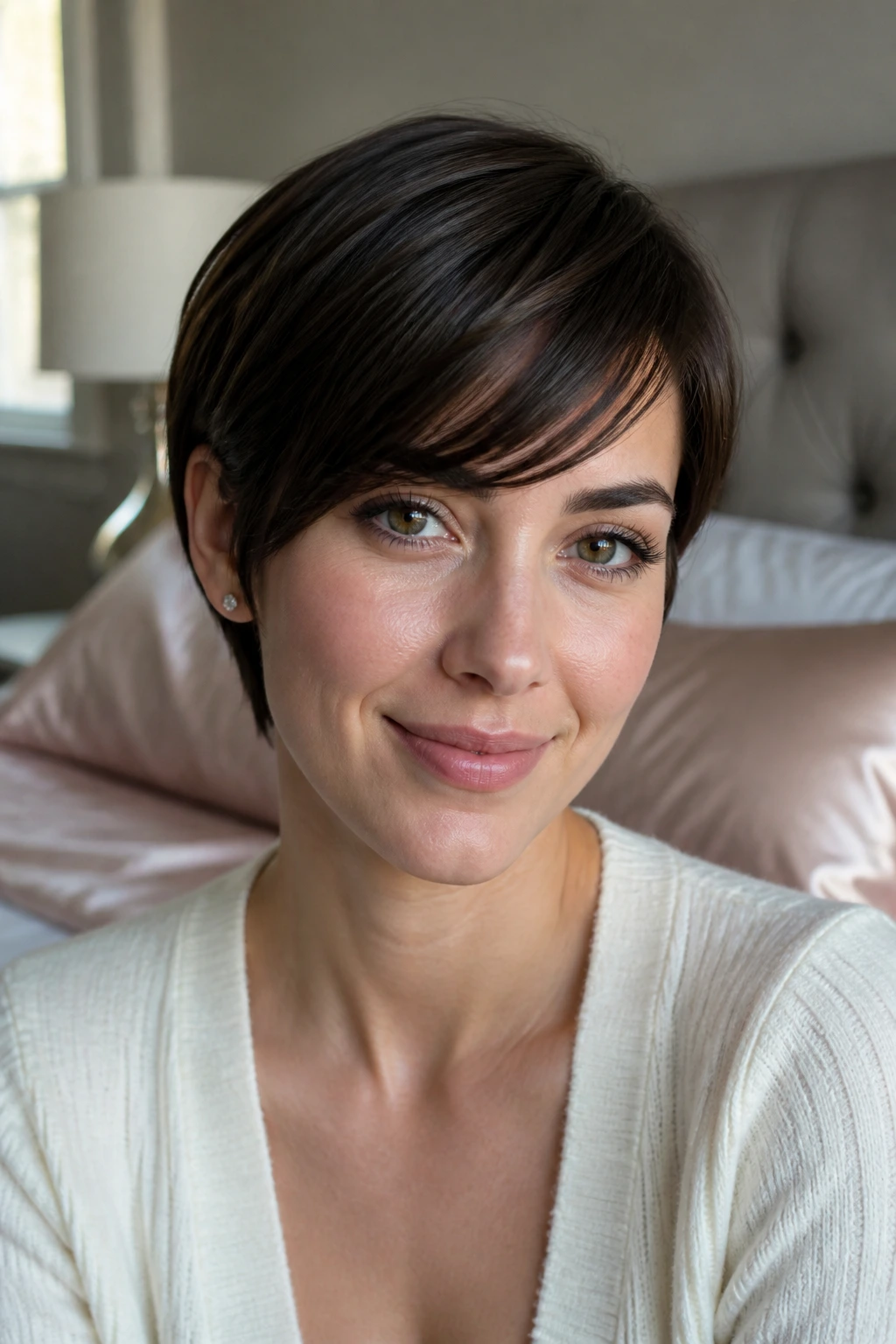
Side bangs behave best when you treat them like their own little haircut. They need attention sooner than the rest of the style, especially if they’re sitting near the eyes. A quick trim every 2 to 4 weeks keeps the sweep visible instead of messy. Bobs and pixies can often go 5 to 8 weeks before the rest needs reshaping, but the fringe usually asks first.
Sleeping on a silk pillowcase helps the front pieces slide instead of bending into a weird kink. If that sounds fussy, fine — a loose clip at the side can do part of the job too. You just want the bang to keep its direction. Once it starts splitting down the middle every morning, the whole face frame looks tired.
For day-two hair, mist the fringe lightly with water, then blow-dry it back into place for 20 to 30 seconds. Dry shampoo at the root can rescue a flat crown, but don’t bury the fringe in it. The front should stay soft enough to move.
Questions People Ask Before They Chop the Length
Are side bangs better than blunt bangs for a round face?
Usually, yes. A side bang creates a diagonal line that breaks up width, while blunt bangs make a straight line across the forehead. Blunt bangs can still work if they’re long and softly beveled, but they need more care.
How short can I go without making my face look wider?
Keep some length in the front, even if the back is cropped. A chin-skimming bob, a longer pixie front, or an A-line shape usually gives enough vertical line to keep the face from reading too wide.
Can curly hair wear short side bangs?
Absolutely, but the bang has to be longer than it would be on straight hair. Curly fringes shrink, and cutting them too short is the fastest way to lose the angle.
Do I need a deep side part?
Not always. A soft off-center part can be enough if the fringe already sweeps diagonally. A deep part gives more drama and often more face length, but it’s not a rule.
What if my bangs split in the middle?
Use a damp brush or your fingers and redirect them while blow-drying. Clip the fringe in the new direction for a few minutes while it cools. Cowlicks are stubborn, but they usually listen if you’re consistent.
How often do these styles need trims?
Short side bangs usually need a touch-up every 2 to 4 weeks. The rest of the cut can often go a little longer, depending on how fast your hair grows and how sharp you like the shape.
What if my hair is thick and puffy at the sides?
Ask for internal thinning, but not so much that the ends go wispy. You want bulk removed from the sides so the haircut sits closer to the head, especially around the cheeks.
A Better Line Around the Face
The best short hair with side bangs for round faces doesn’t hide anything. It changes the line. That’s the whole reason it works. A good cut gives the eye a cleaner path, keeps width away from the cheeks, and lets the top carry a little more shape than the sides.
If you’re taking one thing from all of this, make it this: the exact length of the fringe and the exact place where the shortest side lands matter more than the trend label on the style. Bring those details to your stylist, and the haircut stops being a guess.
The right side bang can turn a simple bob, crop, or pixie into something that feels tailored to your face instead of borrowed from a photo. Pick the angle that suits your texture, keep the sides honest, and the rest falls into place.
