



Short choppy bangs with long hair do something blunt bangs rarely manage: they cut a sharp little dent into all that length without stealing the length itself. The line sits high on the forehead, breaks up the curtain effect, and makes the whole haircut feel lighter even when the hair is past the shoulders, past the chest, past the point where it starts to feel like a blanket. That contrast is the whole trick.
The cut looks casual in photos, but it is fussy in a useful way. The bangs need movement, not a hard shelf. They need broken ends, not a flat ruler edge. And if your hair has a cowlick, a strong bend, or any kind of stubborn texture near the hairline, that matters more here than it would with a longer fringe. Leave too little room for shrinkage and the bangs jump up. Leave too much and they lose the bite that makes them interesting.
That’s why the best versions of this look are never one-size-fits-all. A choppy fringe on straight, fine hair behaves nothing like the same fringe on thick waves or springy curls, and long hair only changes the equation further. The good news is that there are a lot of ways to wear it, and a few very specific ways to get it wrong. The 35 ideas below cover the clean, the messy, the piecey, the grown-out, the bold, and the quietly flattering versions that actually hold up in real life.
Why These Fringe Shapes Earn Their Keep

- They break up heavy length: Long hair can drag the face downward; a short choppy fringe cuts that visual weight right above the eyes.
- They read softer than blunt bangs: The broken edge keeps the front from looking like a hard helmet line, which matters a lot on fine or very straight hair.
- They work with movement: Waves, bends, curls, and even a loose ponytail make choppy bangs look intentional instead of over-styled.
- They give you a fast change without a full haircut: You keep the long hair, but the front starts telling a different story.
- They grow out in a friendlier way: The uneven edges blur into face-framing pieces instead of turning into one awkward slab.
- They still need maintenance: Short choppy bangs are not a “cut once and ignore” situation; they look best when the edge stays light and the ends stay broken up.
1. Razor-Soft Micro Fringe
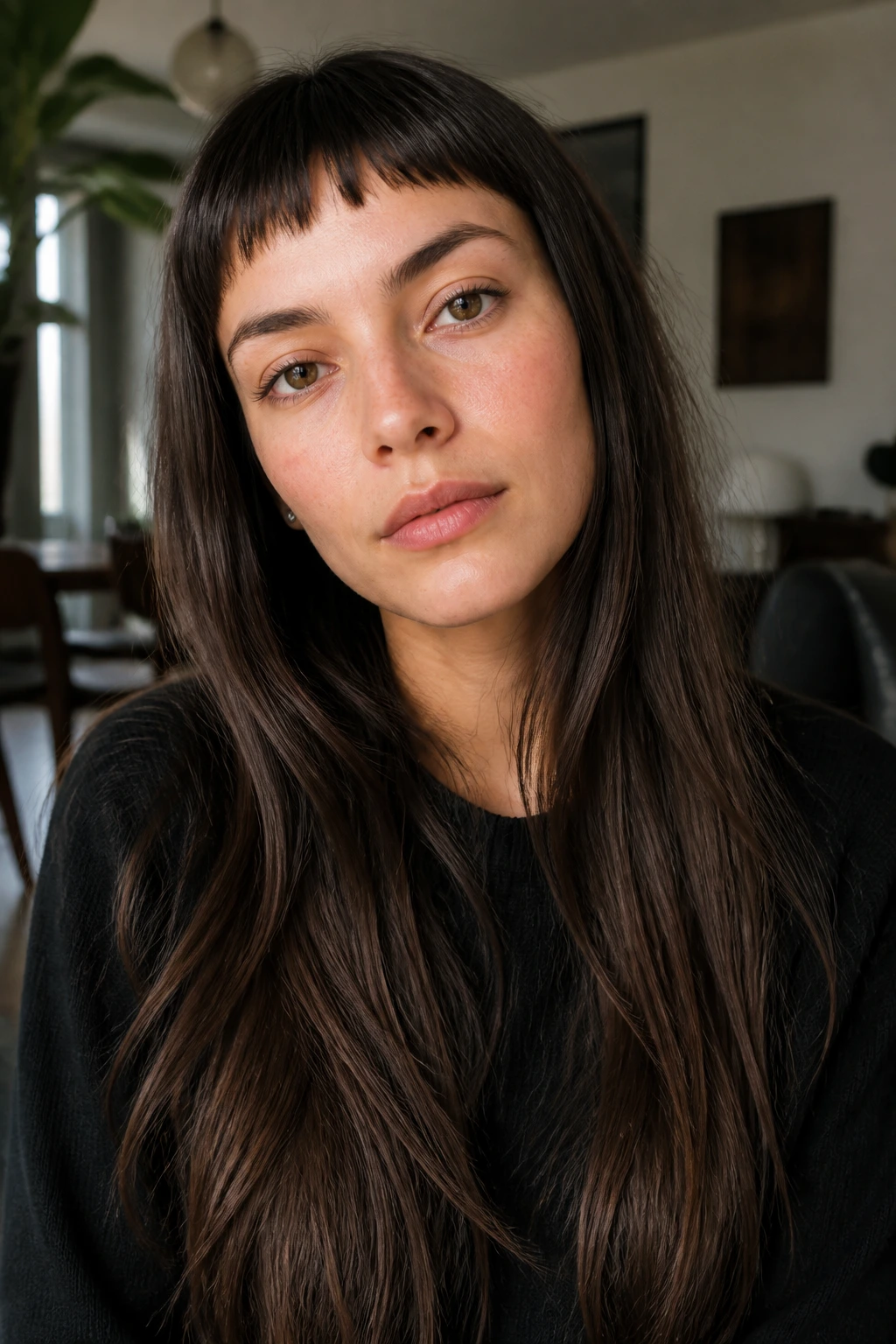
A razor-soft micro fringe with long hair has a little attitude and a lot of neck-baring visual lift. The bangs sit well above the brows, but the ends are chipped rather than blunt, so they never feel severe. On long, sleek lengths, the contrast is the point: the front looks almost graphic while the rest of the hair stays soft and fall-through.
This version suits oval and heart-shaped faces especially well because it exposes the brows and cheekbones instead of hiding them. Ask for point-cut or razor-finished ends if your stylist tends to over-blunt the perimeter. If you have a strong cowlick, keep the center slightly longer than you think you need. Short bangs shrink. Always.
2. Broken Brow-Grazer
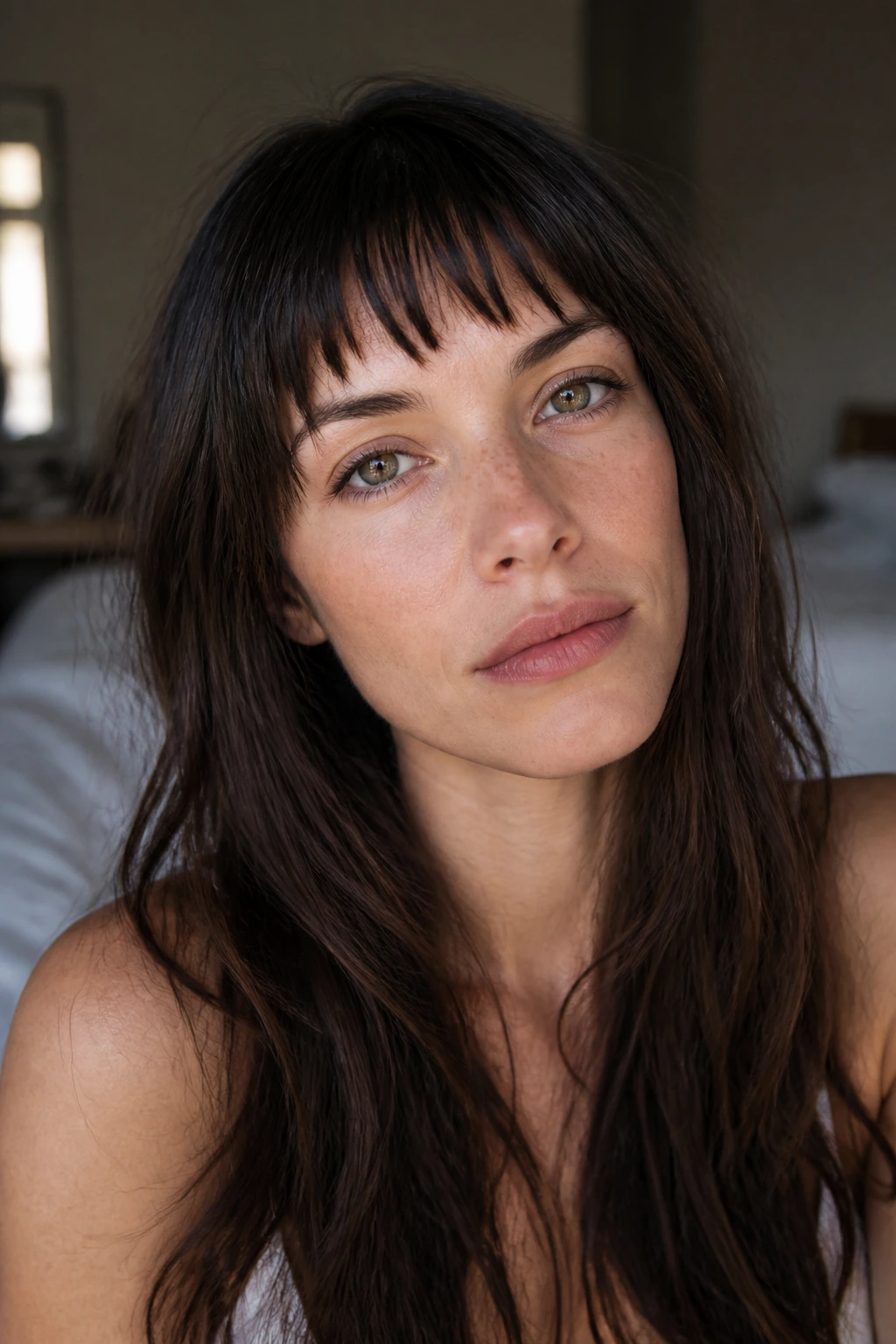
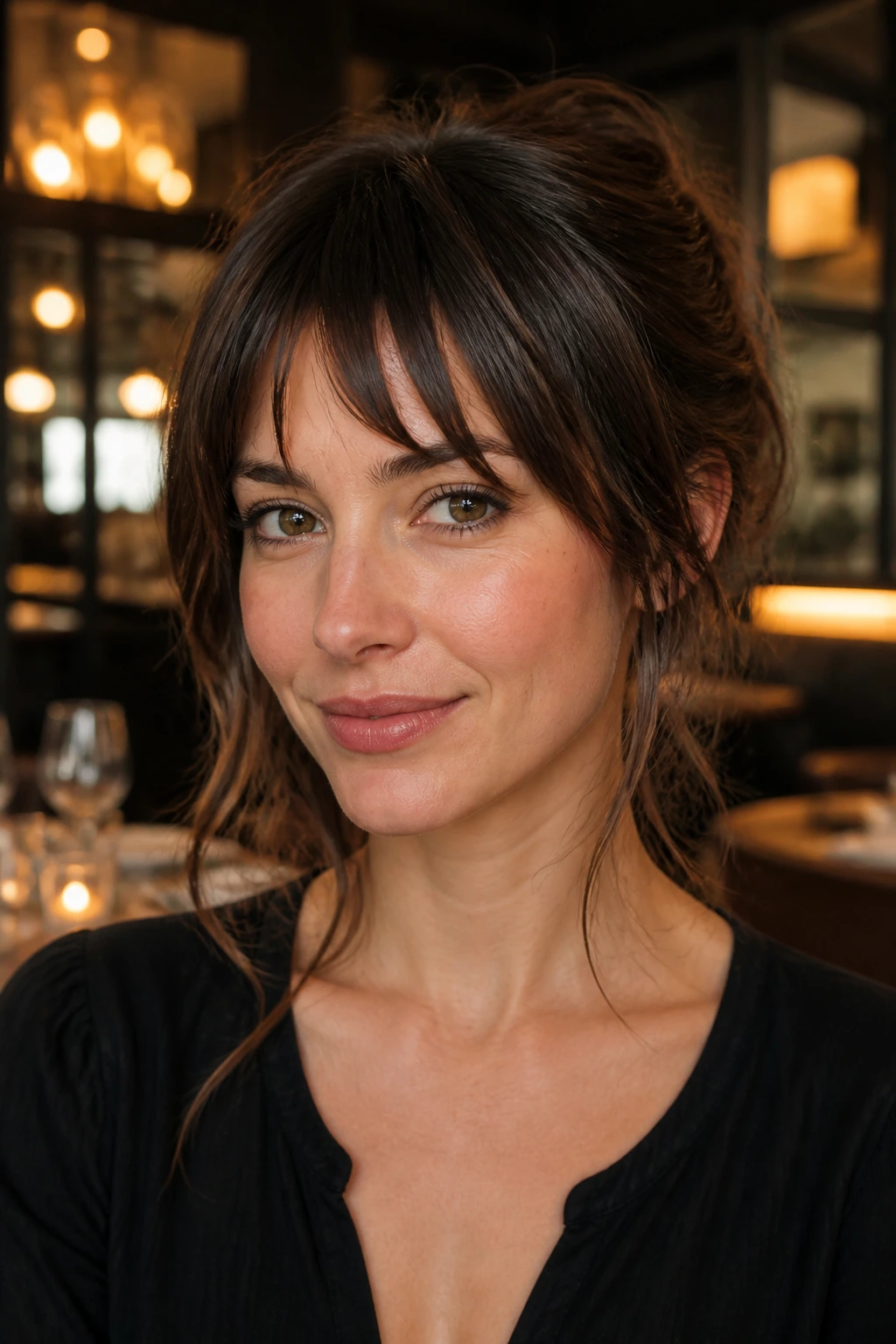
This is the version most people mean when they say they want short choppy bangs without looking like they committed to a full dramatic fringe. The bangs skim the brows, but the ends are broken into little irregular pieces so the line never feels solid. On long hair, that matters because the haircut already has a lot of visual weight in the back.
It works best when the fringe is cut a touch fuller at the center and softened near the temples. That gives you room to tuck, sweep, or split the bangs depending on the day. The best styling move is boring but effective: blow-dry the root forward for 30 seconds, then bend the ends with a small round brush or a 1-inch flat iron. Clean enough to look deliberate. Soft enough to move.
3. Curtain-Flip Fringe
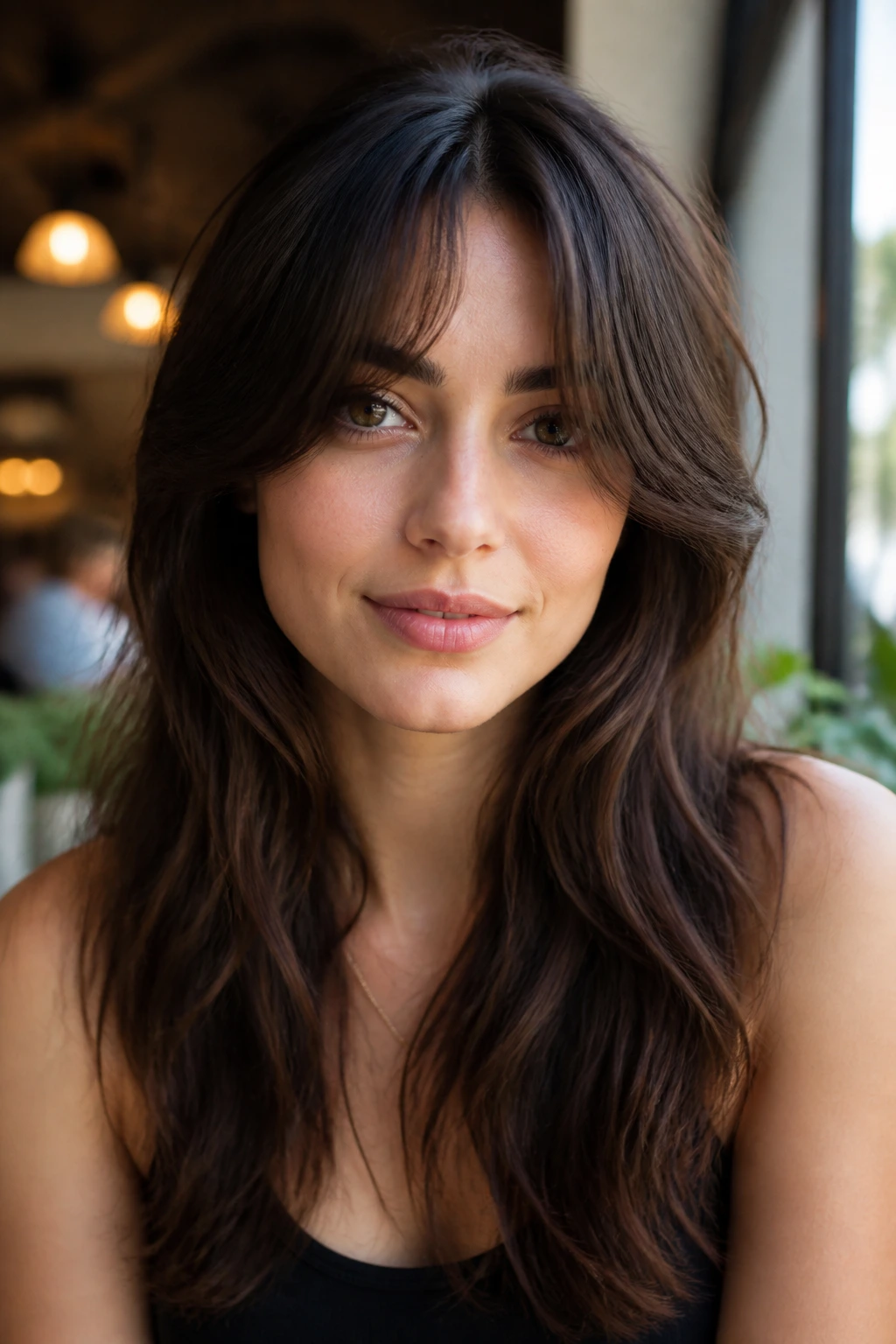
A curtain-flip fringe keeps the middle short and the outer pieces just long enough to turn away from the face. It’s the easiest choppy option for someone who likes the idea of bangs but hates the feeling of being trapped by them. On long hair, the front pieces blend into the rest of the cut instead of sitting there like a separate object.
This one is especially good for round faces and broader foreheads because the center break opens the face, then the outer pieces angle the eye outward. The key is not making the center too thin. If it gets wispy to the point of see-through, the whole shape collapses by lunch. A little density at the root keeps the flip from looking accidental.
4. Feathered Fringe with Beach Waves
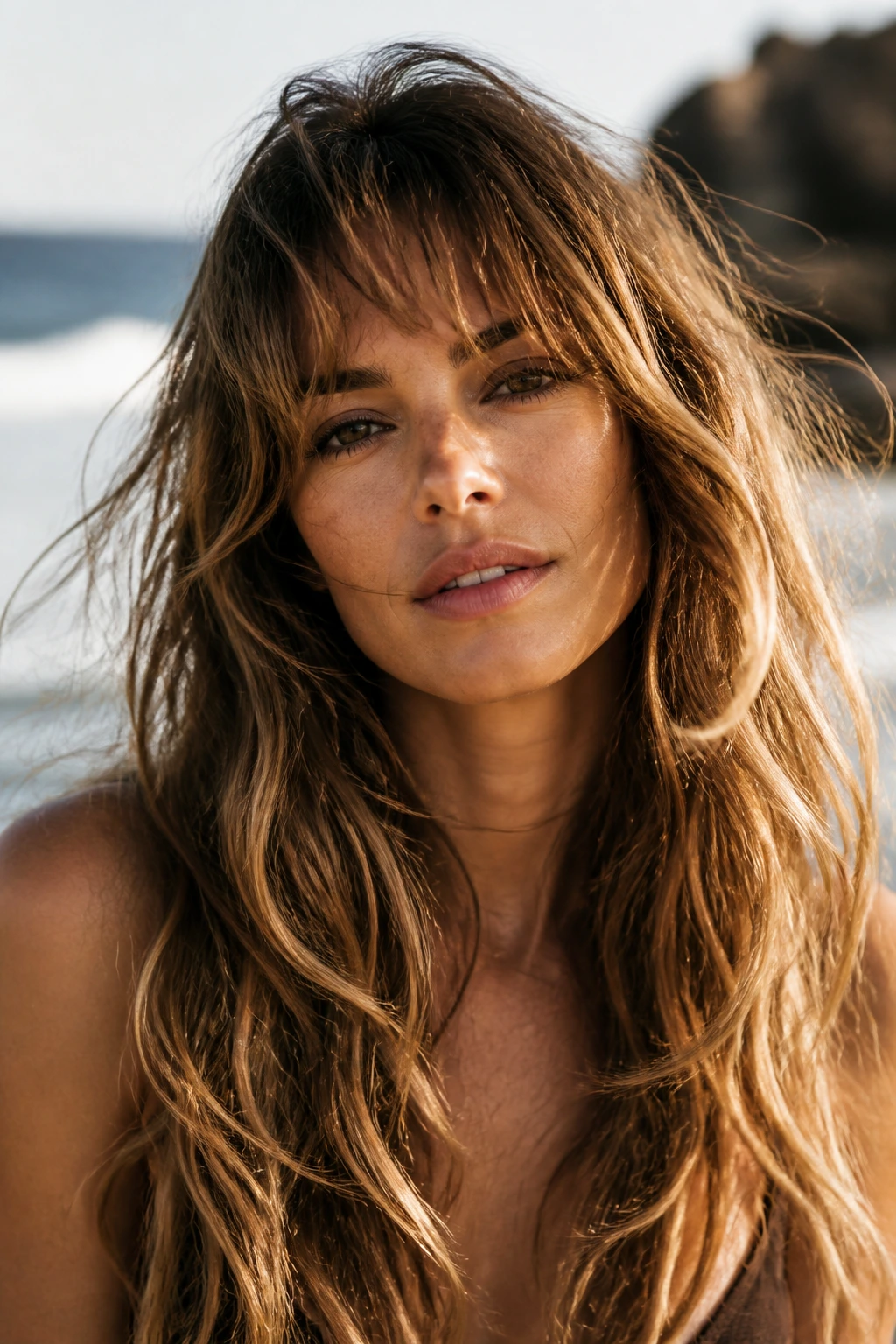
Feathered choppy bangs love long waves because both parts of the haircut are doing the same job: moving, separating, and refusing to sit in one flat sheet. The bangs should look lightly shredded at the ends, not over-thinned. When the long hair is waved with a 1-inch iron or air-dried into bends, the whole cut feels breezy without turning fuzzy.
Thick hair tends to hold this shape well. Fine hair can do it too, but the fringe needs a little root support — a mist of volumizing spray at the roots before drying helps a lot. Skip heavy serum near the forehead. That’s how feathered bangs lose their air and go stringy. Nobody wants that.
5. Thick Choppy Bangs on Pin-Straight Lengths
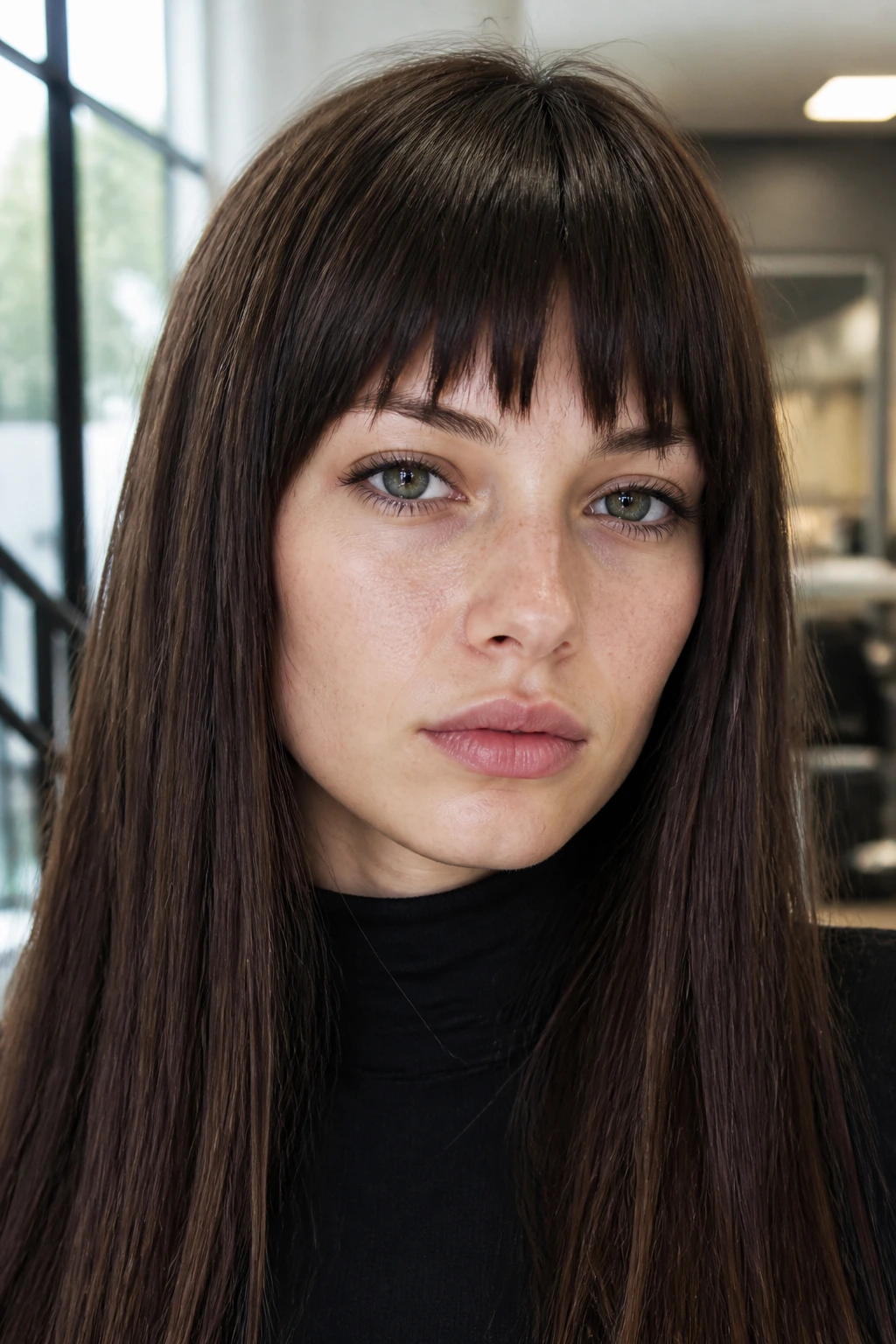
Straight long hair makes a thick choppy fringe look sharper, not harsher, because there’s no wave pattern competing with the line. The bangs need enough density to hold shape, but the ends should still be broken up so they don’t read like a block. That contrast between solid and shattered is what makes the cut interesting.
This version is for people who like a little structure in their haircut. It looks strongest when the fringe is styled forward and then bent ever so slightly at the tips. Use a touch of dry shampoo at the root on day two; straight hair shows oil fast, and oily bangs lose the whole point of the cut. Crisp front, glossy lengths. Good mix.
6. Side-Swept Choppy Bangs
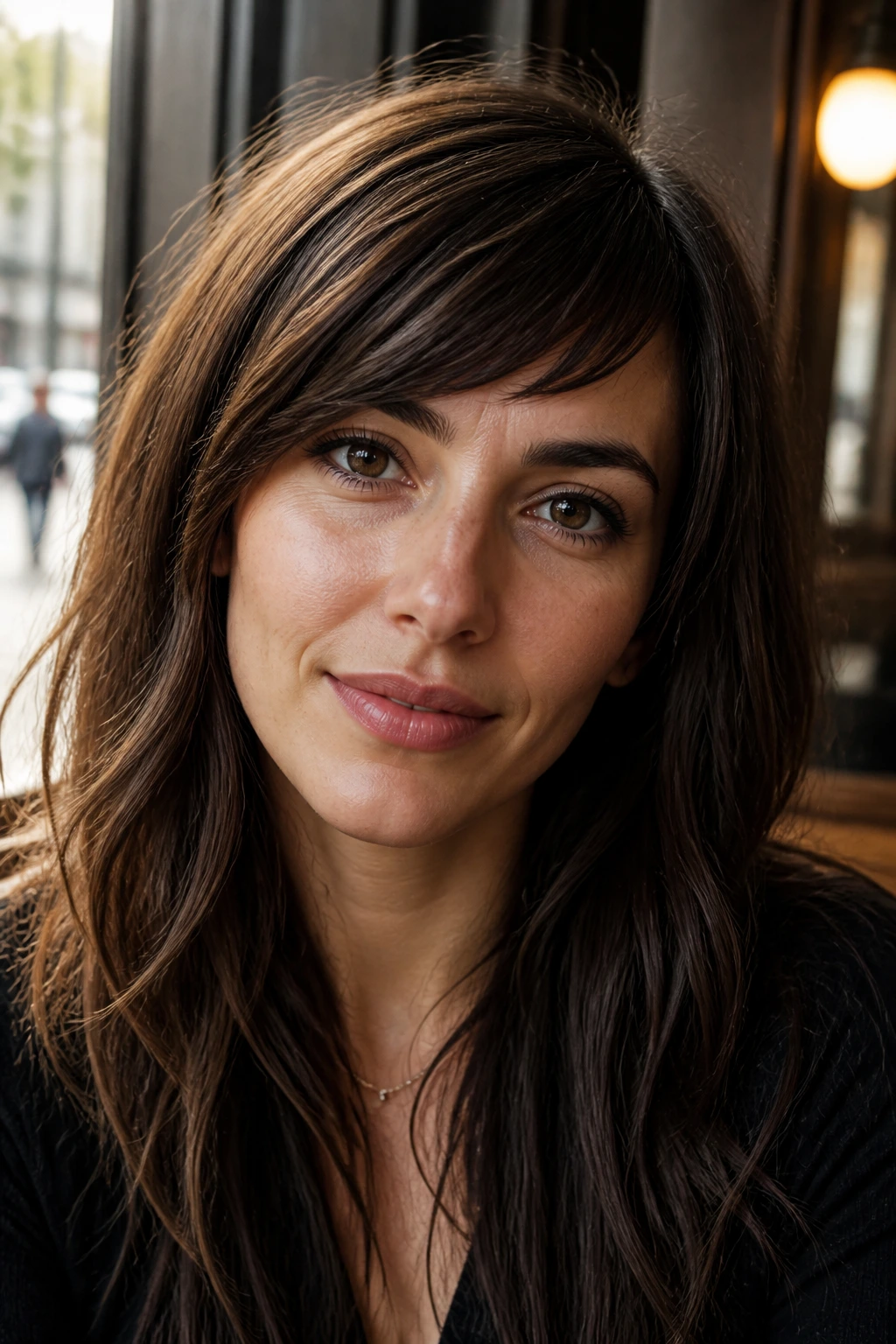
Side-swept choppy bangs are the easiest way to keep a fringe on long hair from feeling too centered or too precious. The cut starts with a short point near one eyebrow and travels diagonally across the forehead, with the ends cut into small broken steps. That diagonal line is kind to a lot of face shapes, especially if your hair naturally parts off-center.
The practical upside is huge: a side-swept fringe is more forgiving on busy mornings and easier to tuck behind one ear or let fall naturally after a workout. It also behaves better if your hairline has a stubborn bend. If you’ve ever fought a bang that wants to split down the middle, this version is the calmer option.
7. Curly Choppy Bangs

Curly choppy bangs should be cut with curl shrinkage in mind, which is a fancy way of saying the bangs need to be longer in the chair than they’ll look once they dry. On long curls, the fringe can sit around the eyes or just above the lashes when wet, then bounce up to the brows as it dries. That’s normal. That’s the whole game.
Ask for the fringe to be cut dry or almost dry if your curls are springy. It helps the stylist see the real pattern instead of guessing. The best result is piecey, not helmet-like, with enough length at the sides to blend into the front layers. Curls and choppy bangs can look adorable together, but only if the cut respects the curl pattern first.
8. Shaggy Fringe with Long Layers
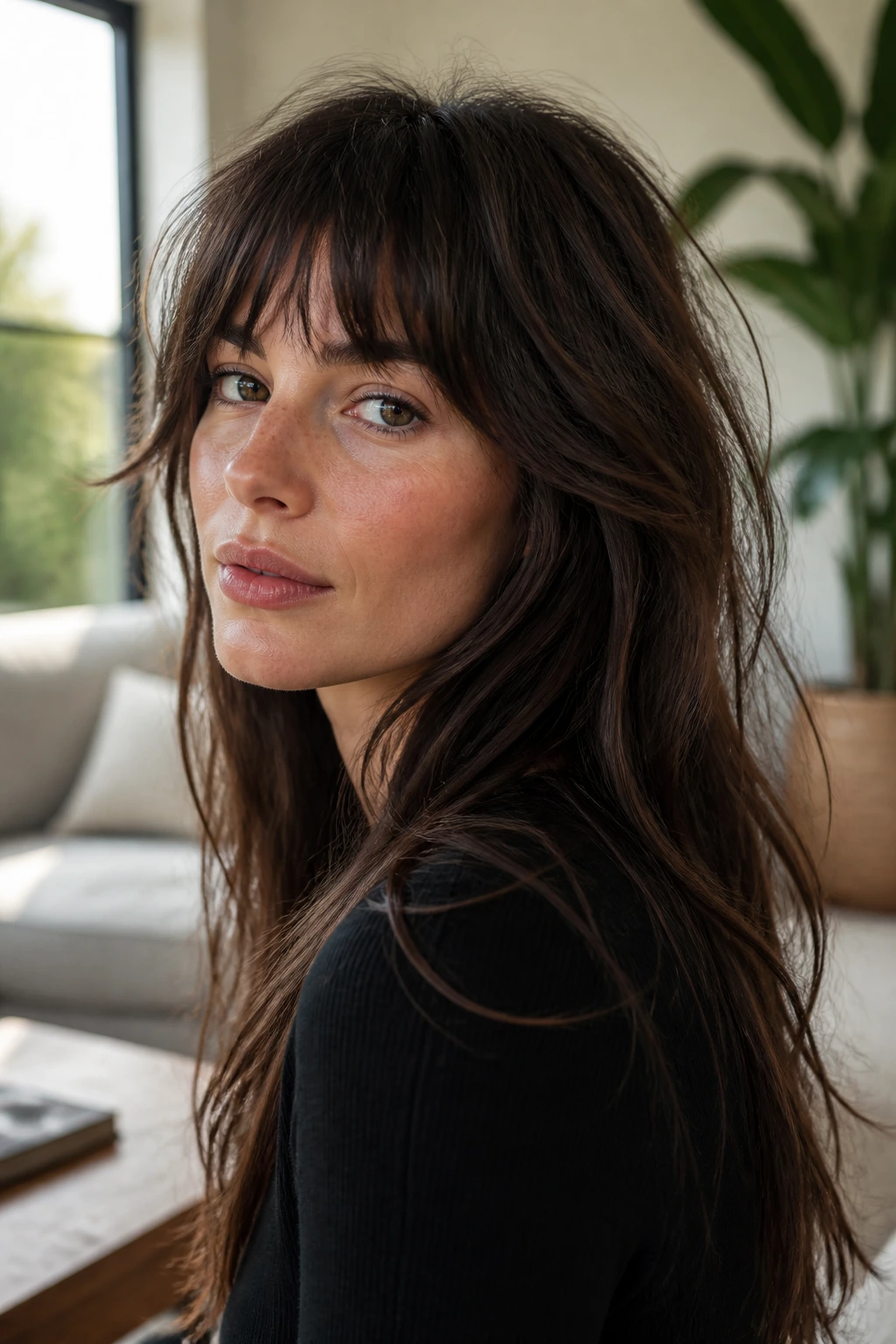
A shaggy fringe belongs with long layers the way boots belong with denim: not mandatory, but the match makes sense fast. The bangs are short, broken, and a little uneven on purpose, and the length behind them carries the same loose energy through the ends. This keeps the haircut from looking like it has a lone fringe bolted onto a separate mane.
Use this when you want movement more than polish. It’s a good fit for thick hair, wavy hair, or anyone who likes to air-dry and walk out. The trick is to keep the bang area light enough to move, but not so thinned out that it disappears. A shag only works when the pieces are still visible.
9. Short Bottleneck Fringe
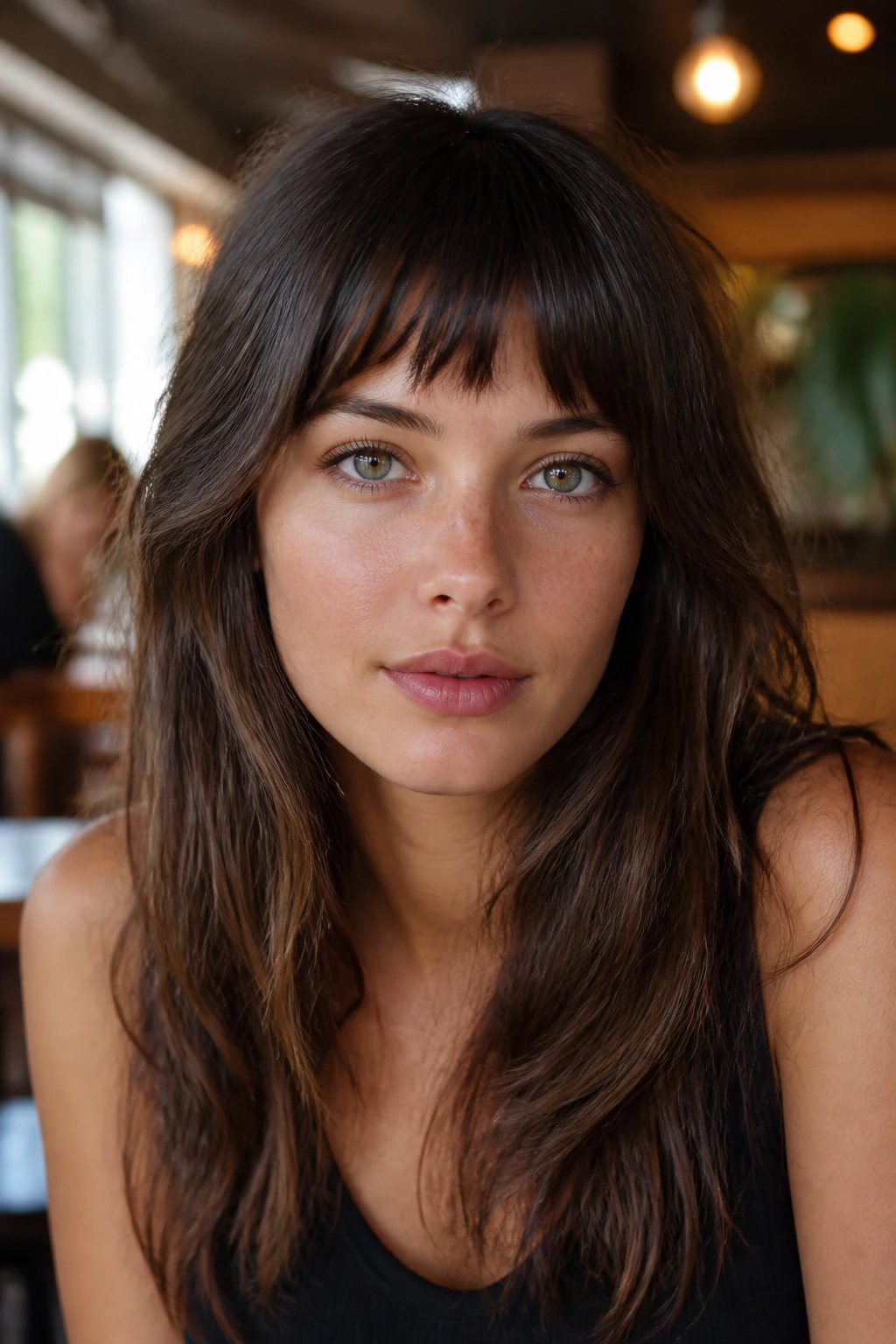
A bottleneck fringe narrows in the center and opens slightly at the temples, which makes it a clever shape for long hair because it breaks the face line without stealing too much space. The choppy version keeps those edges soft and irregular instead of neat and symmetrical. It feels less serious than a polished bottleneck and more wearable with everyday long hair.
This cut can be flattering on longer faces because the shorter center piece shortens the forehead visually, while the side pieces soften the transition into the rest of the hair. Keep the center dense enough to matter. Too airy, and the shape loses its geometry. Too heavy, and it stops reading as bottleneck at all.
10. Wispy Choppy Bangs with Glass-Hair Shine
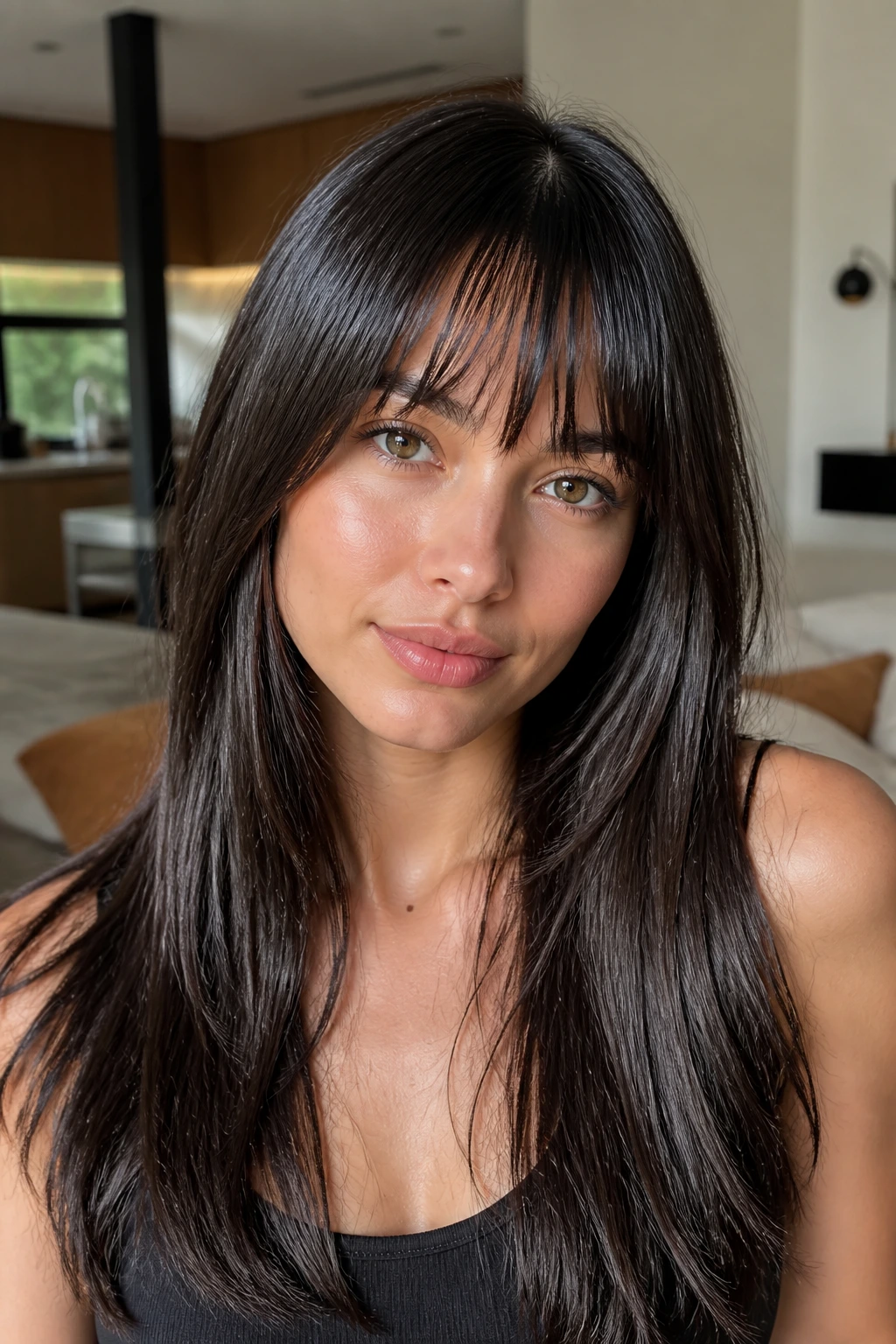
Wispy choppy bangs against glossy, straight long hair are a nice contradiction. The lengths look smooth and reflective, while the fringe has tiny broken ends that keep the front from looking too finished. That contrast matters more than people think. If every part of the hair has the same texture, the style gets flat fast.
This is a smart choice for fine hair because you can create the illusion of movement without asking the whole head to hold big shape. Keep the fringe light, but not see-through. A whisper-thin bang can turn limp by noon. A wispy choppy bang with a little density at the root usually holds better and looks more expensive, even if the word expensive is a terrible word and I regret using it.
11. Deep Side-Part Choppy Fringe
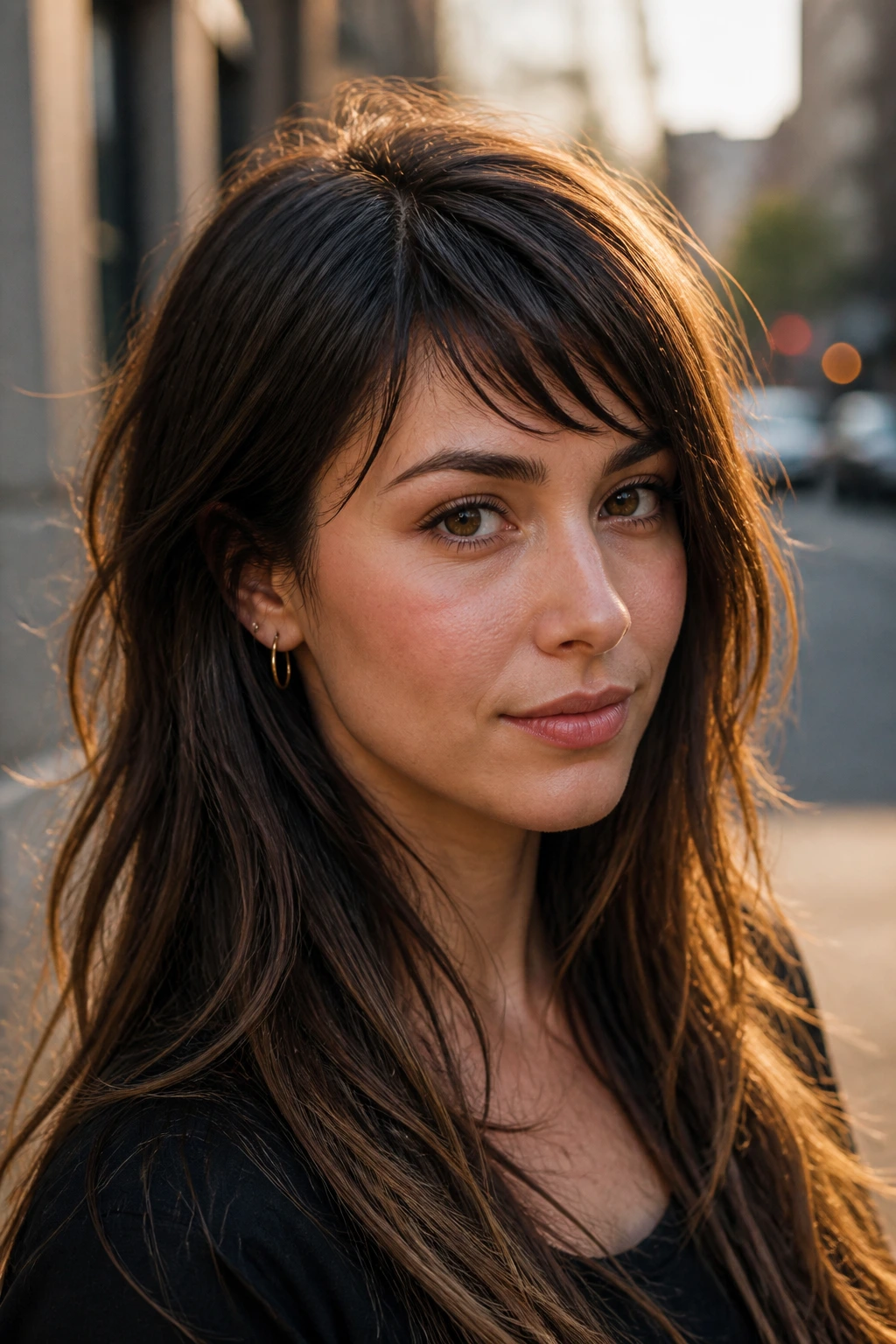
A deep side part shifts the whole bang story. Instead of a centered fringe, you get a short choppy sweep that starts off to one side, falls across the forehead, and lands in pieces. It’s one of the best answers to a cowlick because the part gives the hair somewhere to go, which means less fighting and less puffing at the root.
Long hair with a deep-side fringe tends to look a little more polished than the center-part versions, even when the rest of the hair is loose and messy. That makes it useful for people who wear glasses, suit jackets, or just prefer hair that doesn’t scream for attention. It still has edge. It just whispers it.
12. Disconnected Fringe with Face-Framing Pieces

Disconnected bangs are for people who want the front to feel deliberate without blending everything into one soft sheet. The fringe stays short and choppy in the middle, then the longer face-framing pieces hang just outside the bang line. On long hair, that gap between short and long creates movement you can actually see.
This cut is especially useful on thick hair, where too much blending can turn the front into a heavy curtain. The disconnection gives the stylist room to remove bulk without thinning the whole head to death. Style it by directing the short center pieces forward and letting the longer sides bend away. A little separation goes a long way here.
13. Choppy Bangs with a High Ponytail
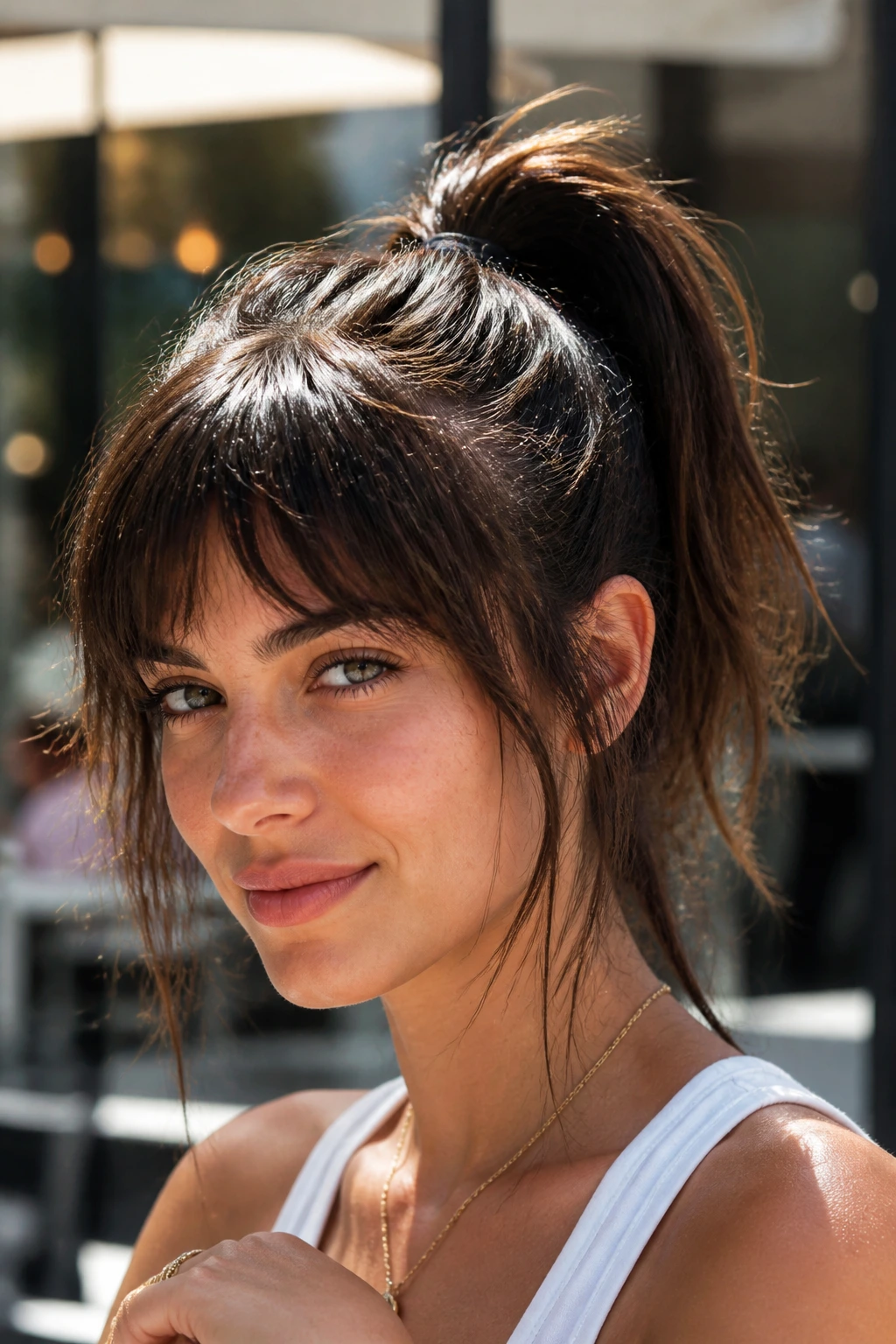
A high ponytail and short choppy bangs make each other look better. The pony lifts the length off the neck, and the fringe keeps the whole style from turning sporty in a boring way. The bangs should sit loose enough to fall in little broken pieces around the forehead, not so stiff that they look glued in place.
This is a good look for second-day hair, workout days, or those mornings when you need a fast clean-up but still want the front of your hair to say something. Leave a few temple pieces out if the pony feels too severe. That tiny bit of escape hair keeps the shape from looking helmeted. Useful. Also a little lazy, which is often the right energy.
14. Choppy Bangs with a Half-Up Knot
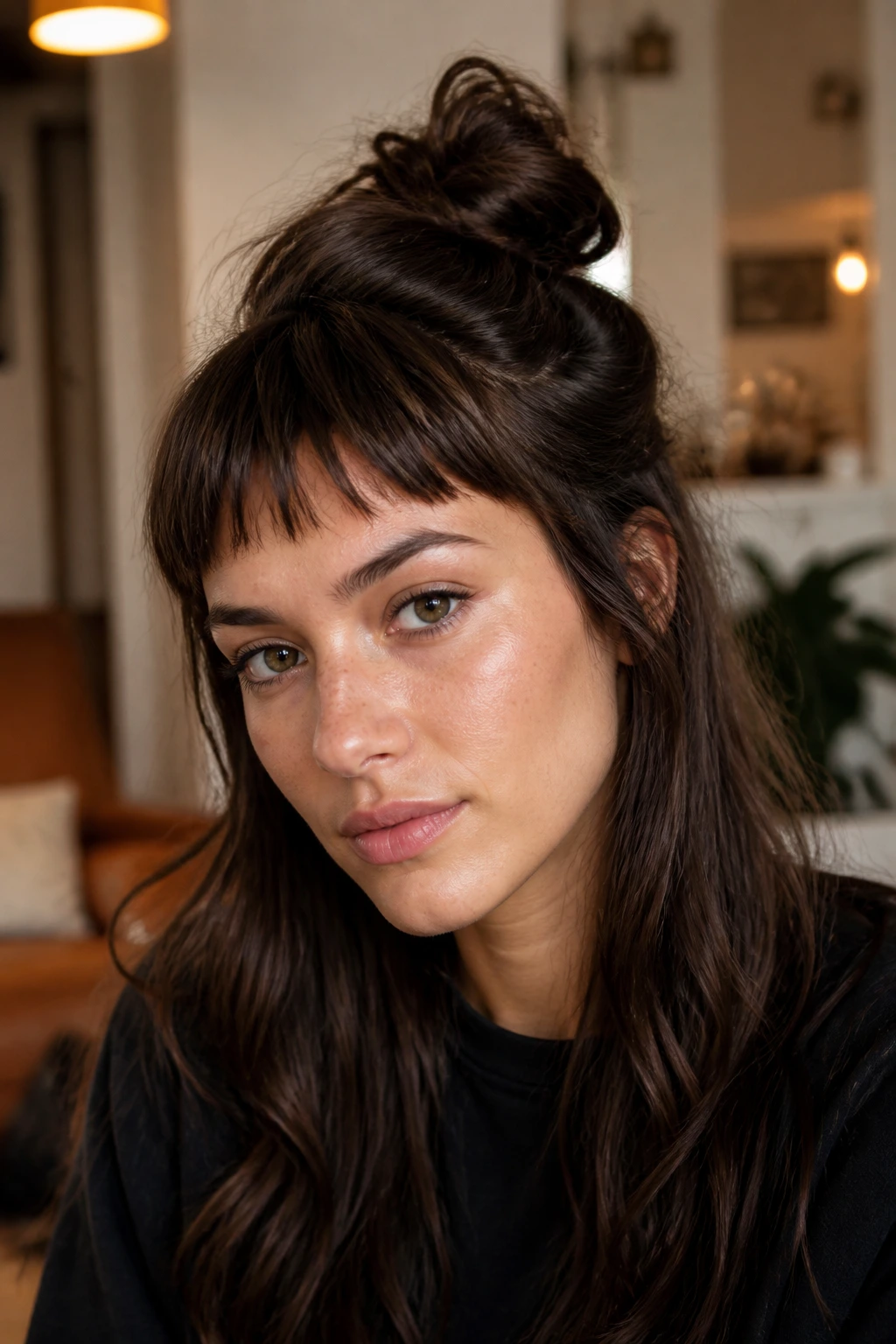
Half-up styles love a short fringe because the bangs keep the front from disappearing into the knot. The choppy edge adds movement around the eyes while the top section is pulled back, which means the hairstyle still has a focal point. Without the fringe, a half-up knot on long hair can feel too plain.
This version works well when the bangs are just short enough to sit above the brows but long enough to split into pieces. Use a light mist of texture spray on the bangs and a smoother cream on the lengths so the contrast feels intentional. Too much product on the fringe is where this look goes limp. Keep the front airy, not sticky.
15. Wolf-Cut Lengths with Short Bangs
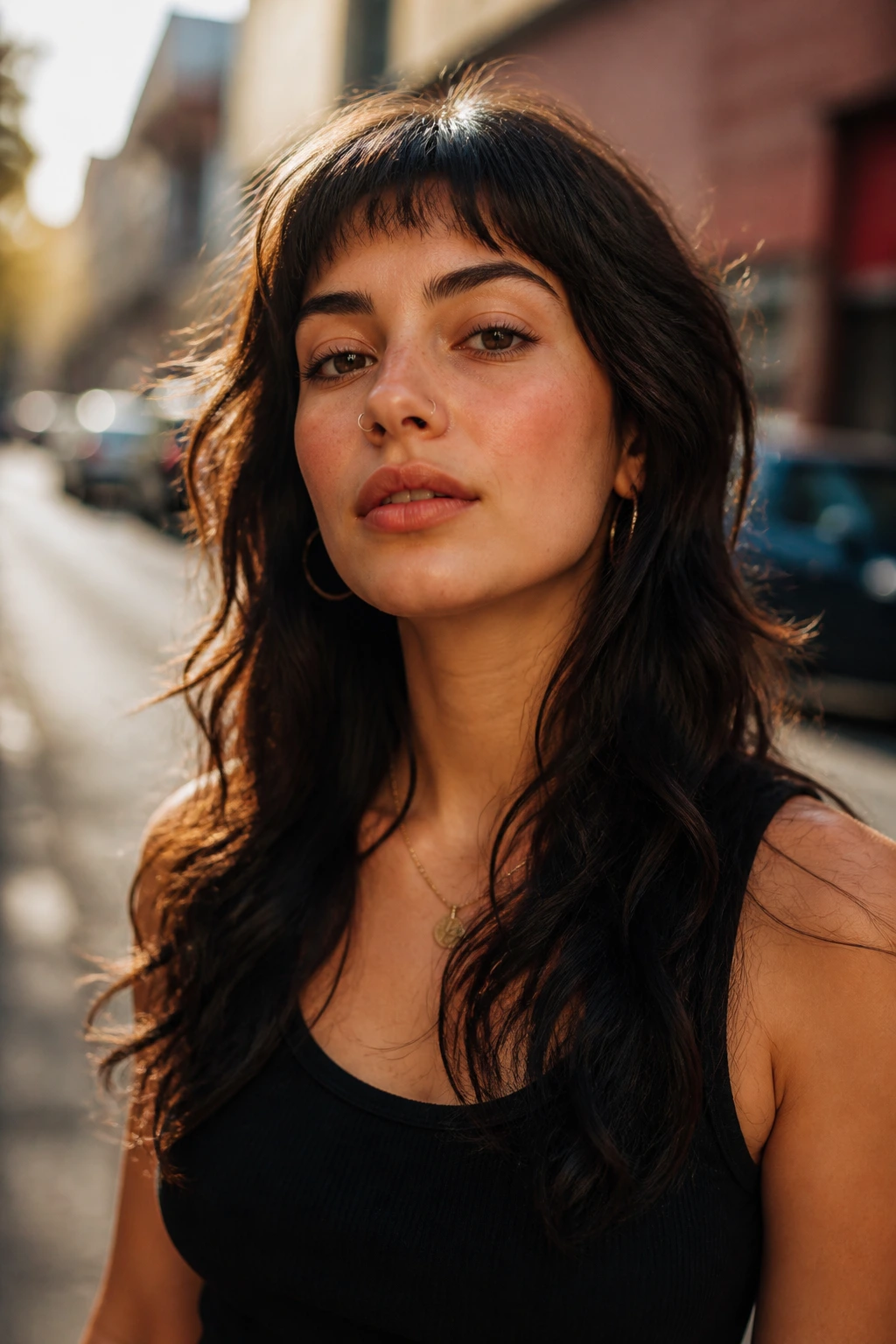
Wolf-cut lengths and short choppy bangs have the same personality: a little wild, a little unruly, and much better when they’re not over-groomed. The fringe is usually fuller in the center and jagged at the edges, while the long layers fall away in a softer, shaggy way. The whole cut moves. That’s why it works.
This one suits thick and wavy hair especially well because the layers create natural bend without needing a lot of styling. If you want the front to look cool instead of just messy, keep the bangs trimmed often. A wolf cut gets shaggy fast. That’s part of the charm, but the fringe should still look like someone meant it.
16. Choppy Bangs with Blunt Long Ends
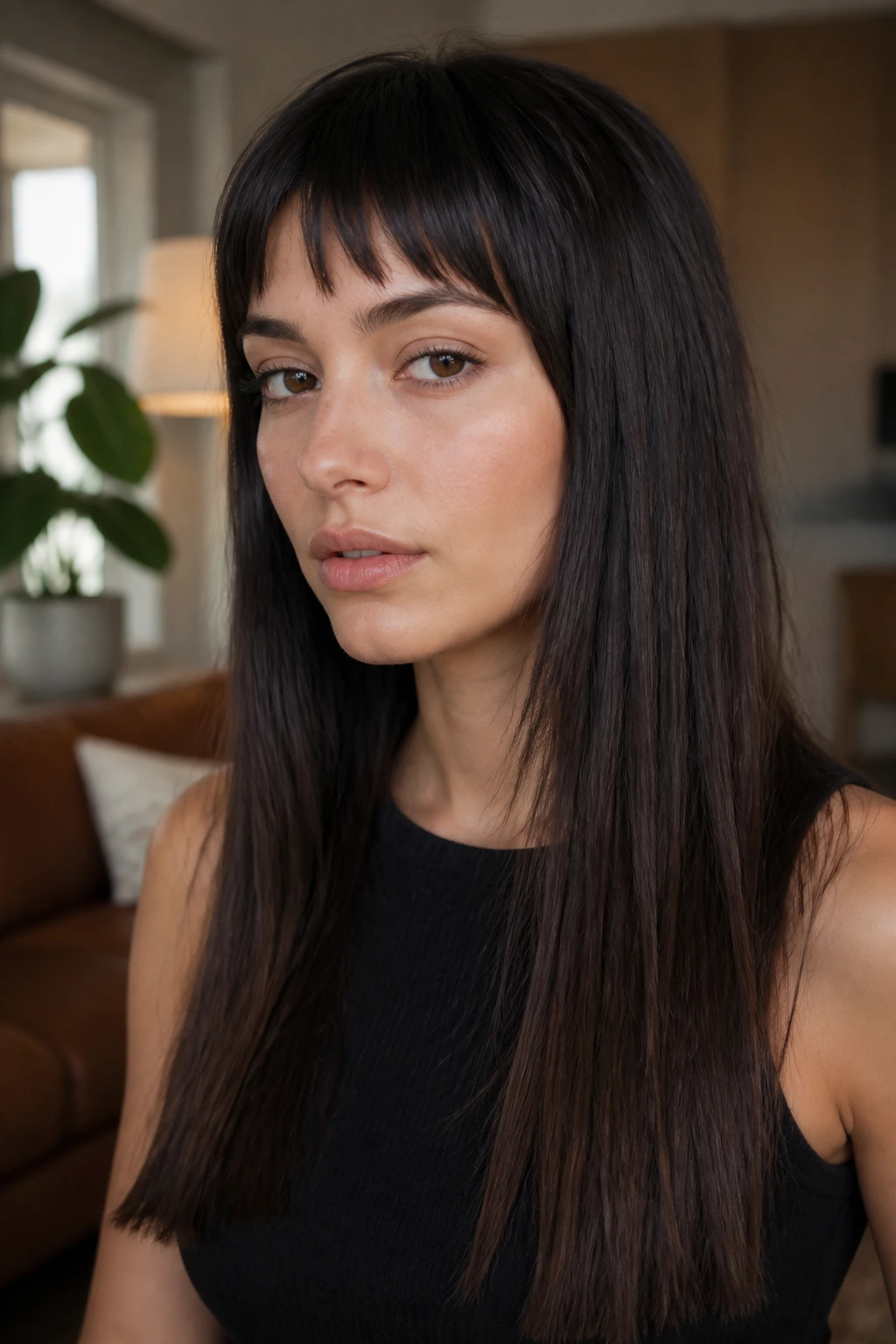
There’s a real contrast in a rough, broken fringe sitting over very clean long ends. It makes the hair look deliberate without making the whole cut edgy from top to bottom. The bangs carry the personality while the lengths stay smooth, glossy, and straight.
I like this pairing when someone wants a visible change but doesn’t want to lose the strong line of long hair. The blunt ends anchor the look. The choppy bangs keep it from feeling too formal. If the fringe gets too shredded, the contrast disappears, so keep the edge light but still defined.
17. Choppy Bangs for Fine Hair

Fine hair can wear short choppy bangs beautifully, but the cut has to respect how little density is actually there. Too much thinning and the fringe goes stringy. Too much length and it falls flat. The sweet spot is a soft, broken edge with enough body at the root to hold shape.
A tiny round brush and a root-lifting mousse do most of the work here. Blow-dry the bangs first, while they’re still damp and cooperative. If you wait until the lengths are dry, the fringe usually loses its bend. Fine hair is honest like that. It tells on you fast.
18. Choppy Bangs for Thick Hair
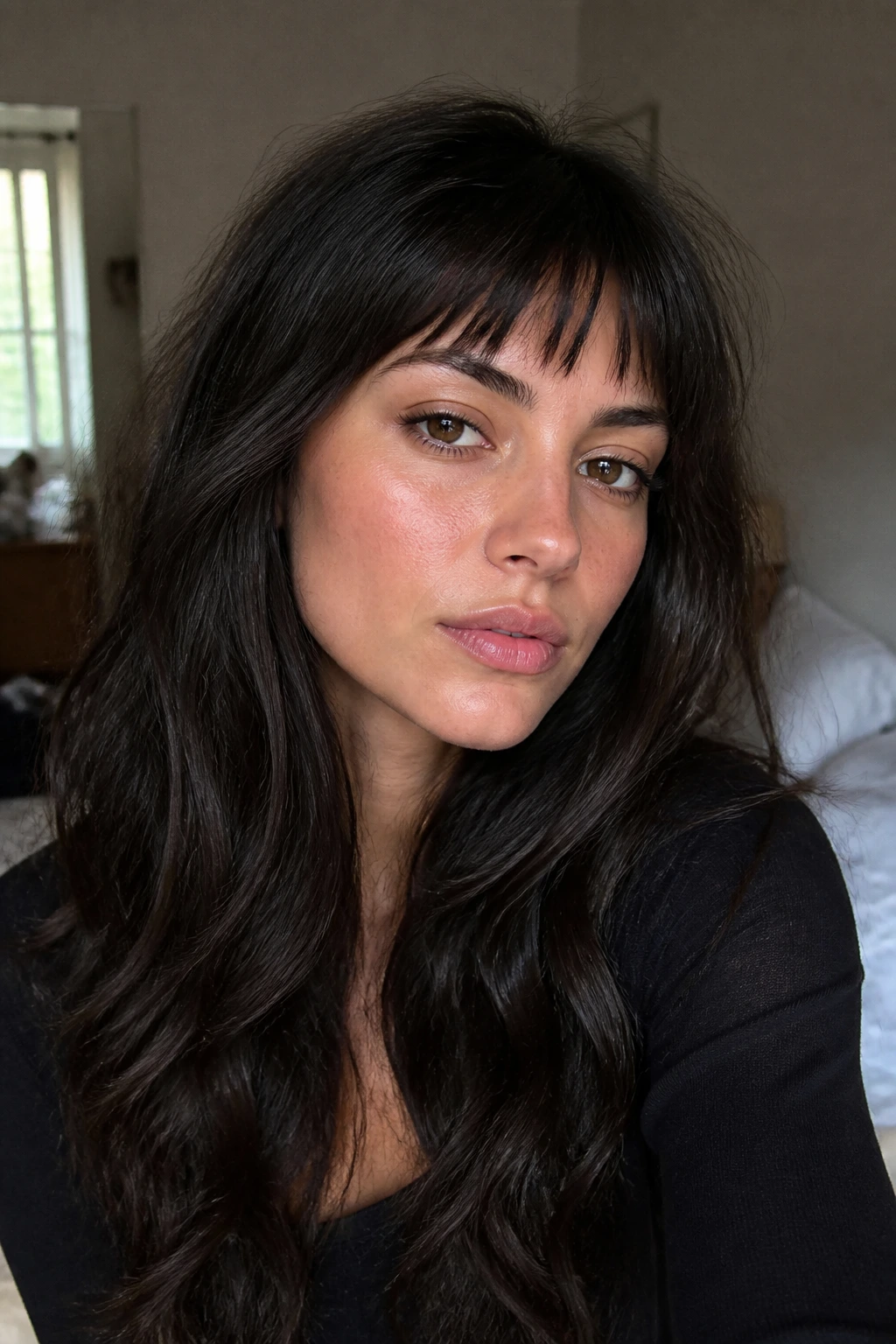
Thick hair gives you more to work with, which sounds like a gift until the fringe starts sitting heavy on the forehead. The answer is internal removal of weight, not just slicing the ends into bits. The bangs need to feel airy at the bottom but still hold a strong enough line to avoid collapsing into the eyes.
This is the version that often benefits most from a slightly longer center and softer corners. It keeps the fringe from puffing out like a shelf. Use a smoothing cream only on the mid-lengths and ends of the long hair; the bang area needs more air than shine. Thick hair and fringe can get along. They just need clear rules.
19. Choppy Bangs for Wavy Hair
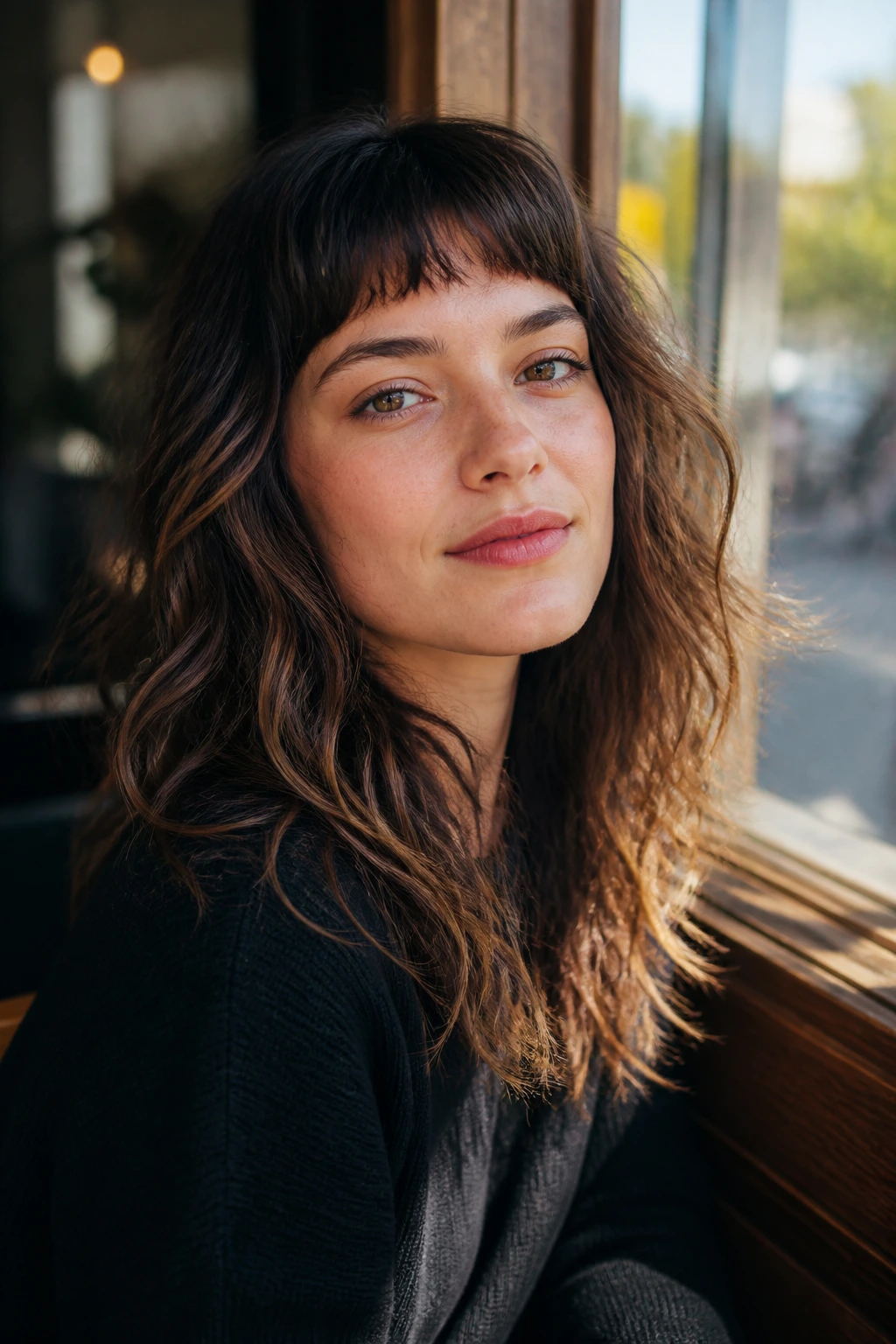
Wavy hair gives short choppy bangs a head start because the natural bend already breaks up the line. The cut should use that texture, not fight it. If the bangs are cut too clean, the wave pattern will push them into odd bends. If they’re cut with a little room and a little texture, they settle into easy pieces.
This is one of the most forgiving versions of the style for day-to-day wear. A little sea-salt spray at the roots, a quick scrunch, and you’re mostly there. Keep the perimeter of the long hair soft too, or the bangs will feel disconnected from the rest of the style. The best wavy fringe looks like it happened on purpose and by accident at the same time.
20. Choppy Bangs for Natural Curls
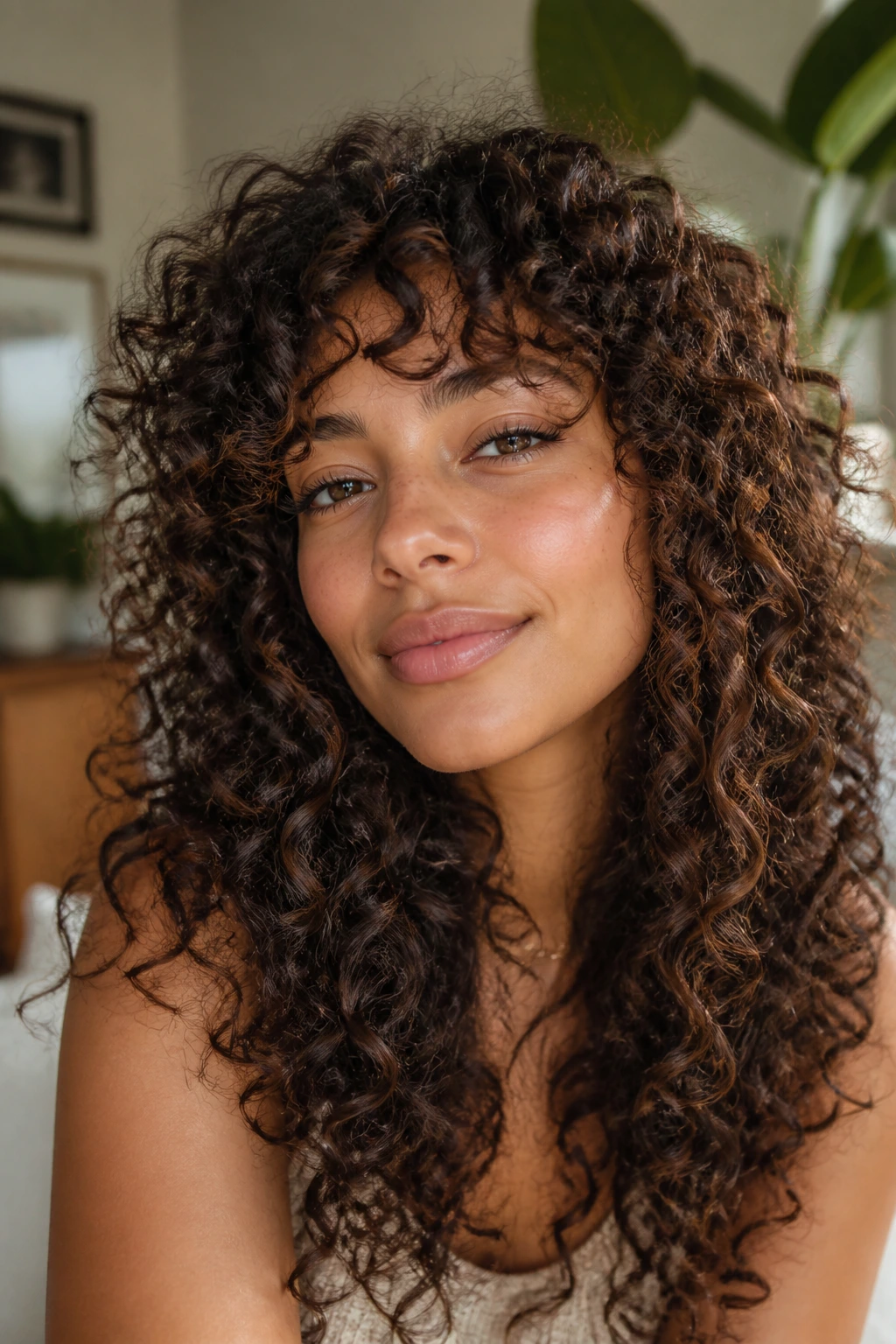
Curly hair and short bangs can be gorgeous, but the cut has to be done with the curl pattern in mind or it turns into a bounce surprise nobody asked for. The fringe should be cut dry or nearly dry, with enough length left for shrinkage. Choppy ends help keep the front from forming one solid arc.
The rest of the long hair can stay loose, braided, or diffused, depending on how much volume you want. A curl cream or gel with hold near the root of the fringe helps more than people expect. And no, you do not need to drown the bangs in product. A little control goes farther than a heavy coat.
21. Micro Fringe with Long Braids
A micro fringe with long braids gives you a sharp front and controlled length in the back, which is a nice combination if you like hair that looks styled without taking over your whole outfit. The fringe brings the focus up to the face. The braids keep the length neat and low-fuss.
This pairing also works because the short bangs stop the braids from feeling too severe. If everything is pulled back tightly, the look can go hard fast. The broken fringe softens that. It’s a useful choice for hot weather, travel, or any day when your hair needs to stay put but your forehead still deserves some attention.
22. Jagged Bangs and a Soft Updo
A soft updo plus jagged bangs is one of those combinations that makes even a basic bun look considered. The hair at the back can be loose, twisted, pinned, or rolled into a low knot, while the fringe stays short and uneven. That broken line at the front keeps the whole style from looking bridal in a way that feels too polished.
This is a smart option for events, dinners, or office days when you want your hair up but not invisible. Pull a few wisps from the side if the bun feels too tight, then let the bangs do the rest. The contrast between pinned hair and broken fringe is where the style gets its charm.
23. Air-Dried Choppy Fringe
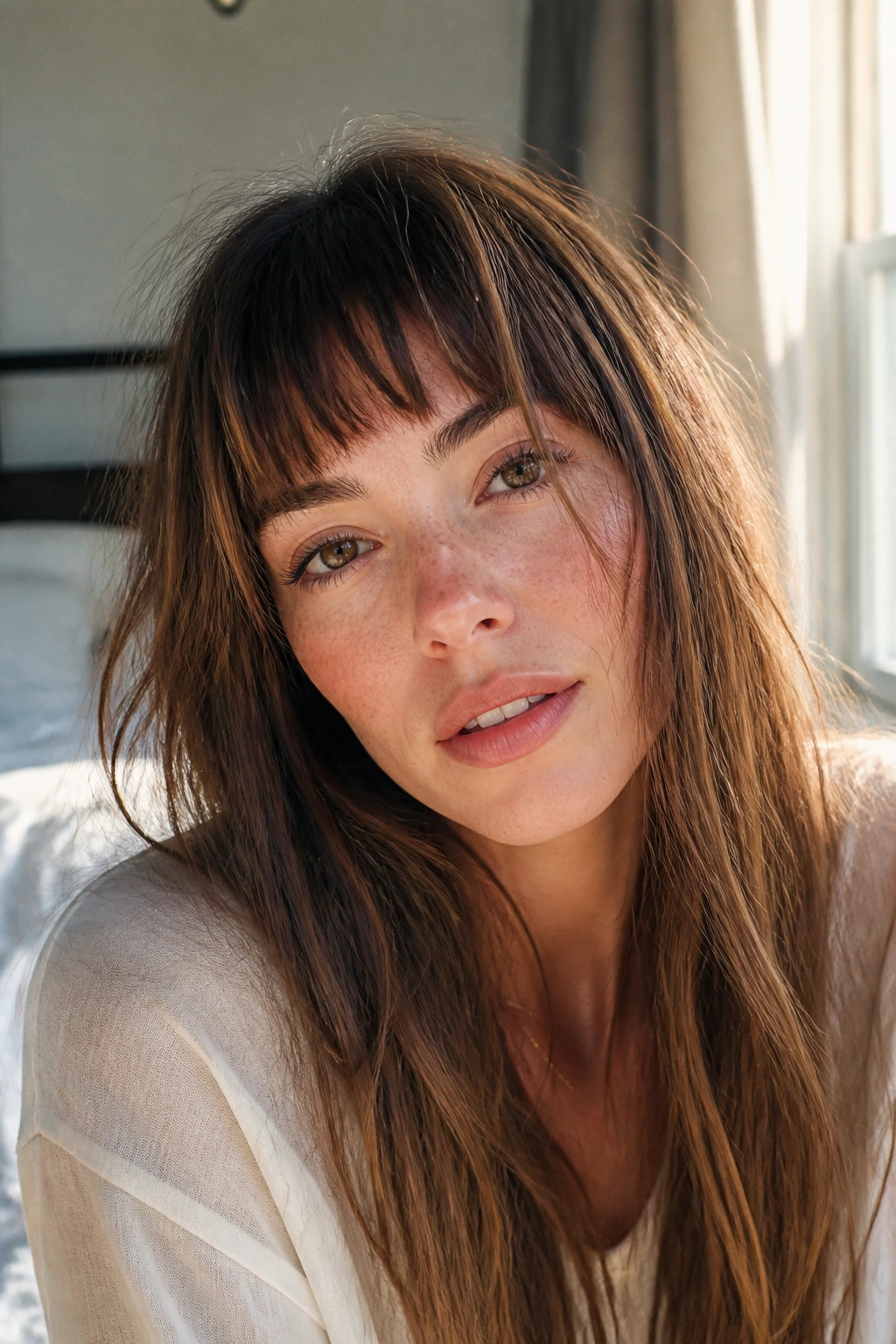
Air-dried bangs sound lazy, but they’re often the most flattering route on long hair if your texture already leans wavy or slightly bent. The fringe should be cut with enough softness to fall into place without constant heat. A little leave-in conditioner and a clip at the root while the bangs dry can keep the shape from splitting early.
The long hair can stay loose, braided, or twisted depending on the day. The important part is not loading the fringe with too much cream or oil. That weighs the front down and makes the choppy edge disappear. Air-dried bangs need a little discipline. Annoying, yes. Worth it, also yes.
24. Blowout Choppy Fringe
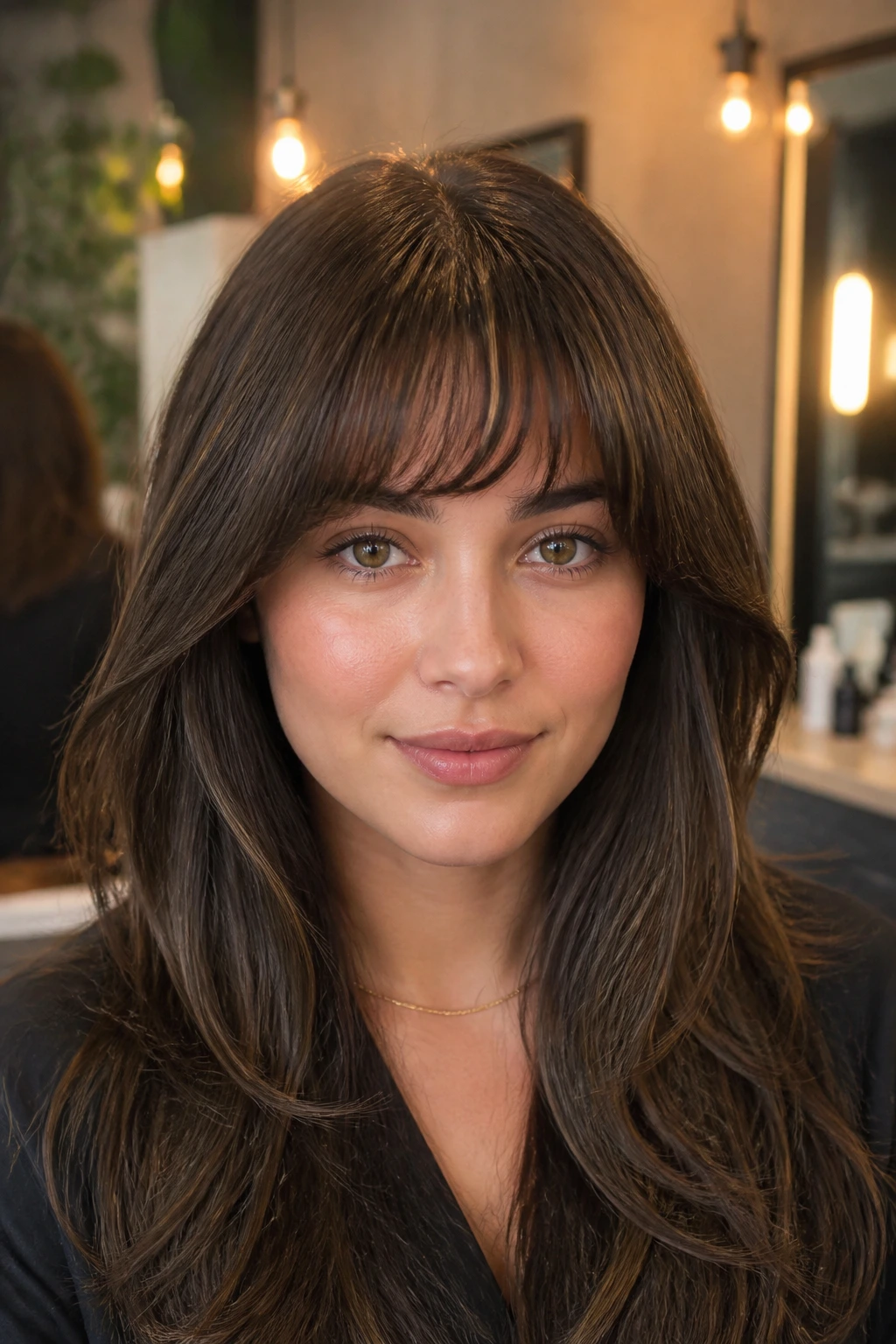
A blowout fringe has lift, bend, and just enough polish to make the short choppy cut look expensive-looking without looking stiff. Use a small round brush, lift the root forward, and then turn the ends under or slightly away from the face. That tiny bend matters. Straight-down bangs can look flat fast.
Long hair with a blowout fringe works especially well when the lengths are soft and shiny, because the front becomes the detail that draws the eye first. This is the version that photographs cleanly, but it also holds up in real life if you use the right amount of heat protectant and don’t overwork the bangs. Three passes is enough. Maybe four if your dryer is weak.
25. Choppy Bangs with Sunlit Highlights

Highlights change the way short choppy bangs read because every little broken edge catches light differently. That means the fringe looks more textured even when the cut itself is simple. On long hair, sunlit pieces around the face can make the bangs feel lighter and less blocky.
The smartest place for brightness is around the bang line and the first few inches of the face frame. You do not need to streak the whole head. A few lighter strands near the front sharpen the shape and make the choppiness easier to see. If the hair is very dark, even a subtle caramel ribbon can make the fringe pop.
26. Copper-Toned Choppy Bangs
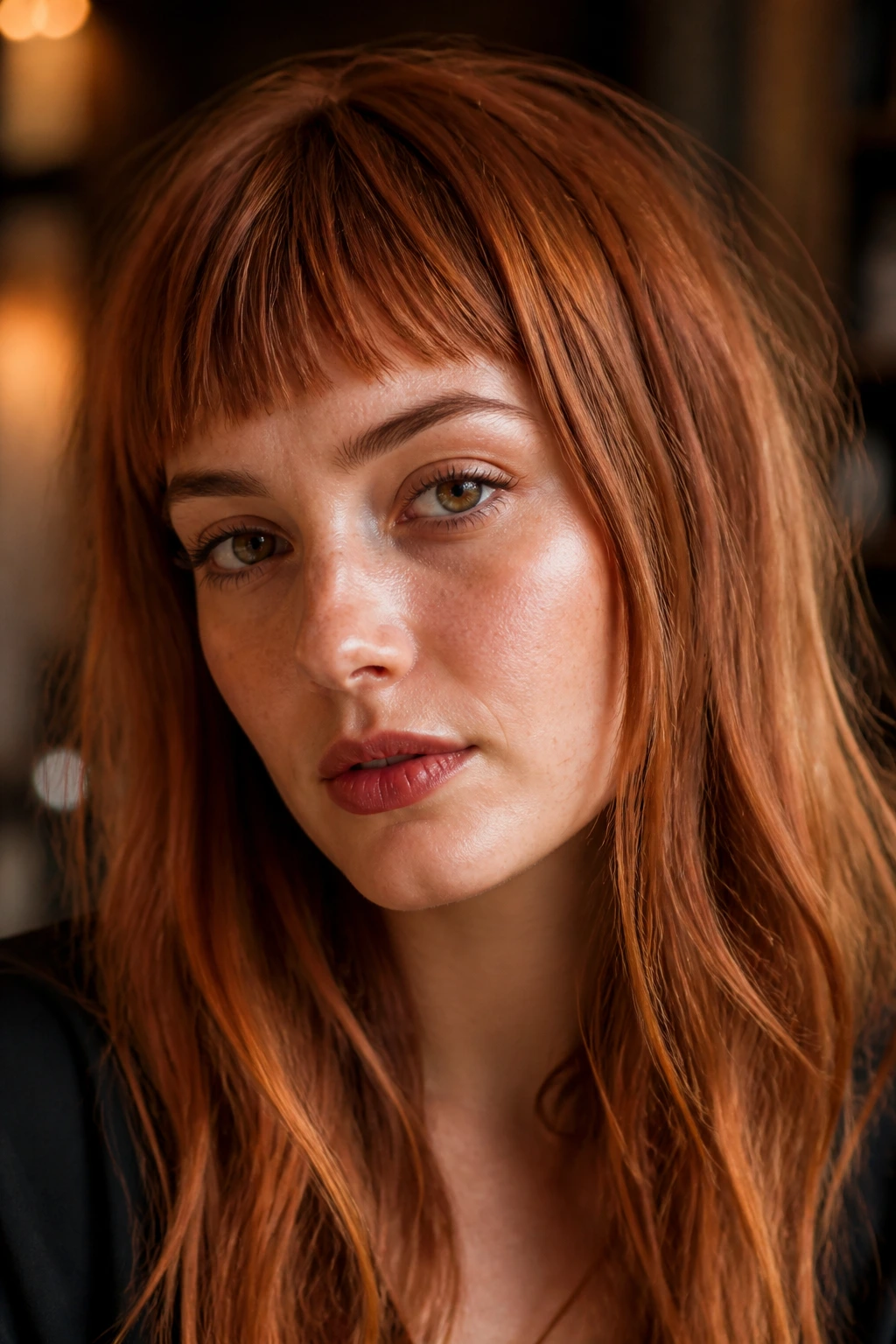
Copper hair gives short choppy bangs a loud little spotlight without needing a fussy cut. The color already has movement in it, so the broken fringe feels even more alive against long lengths. This is one of those pairings that can look soft or sharp depending on how the bangs are styled.
If you like warmth near the face, copper is especially good because it pulls attention upward without the harshness of jet-black contrast. Keep the fringe texture visible with a light styling paste or a touch of matte cream. Too much shine can blur the detail that makes the choppy cut work.
27. Choppy Bangs for Round Faces

Round faces usually do better with a fringe that adds angles instead of a perfectly even line. Short choppy bangs can do that if the center is kept a little denser and the edges are softened toward the temples. The goal is not to hide the face. It’s to stop the front from echoing the same roundness over and over.
Long hair helps because it elongates the silhouette, so the bangs can be the part that creates shape. Keep the bangs a touch more piecey than wispy. That tiny bit of interruption across the forehead breaks up width fast. Side pieces that graze the cheekbones help too, and they’re worth asking for.
28. Choppy Bangs for Long Faces
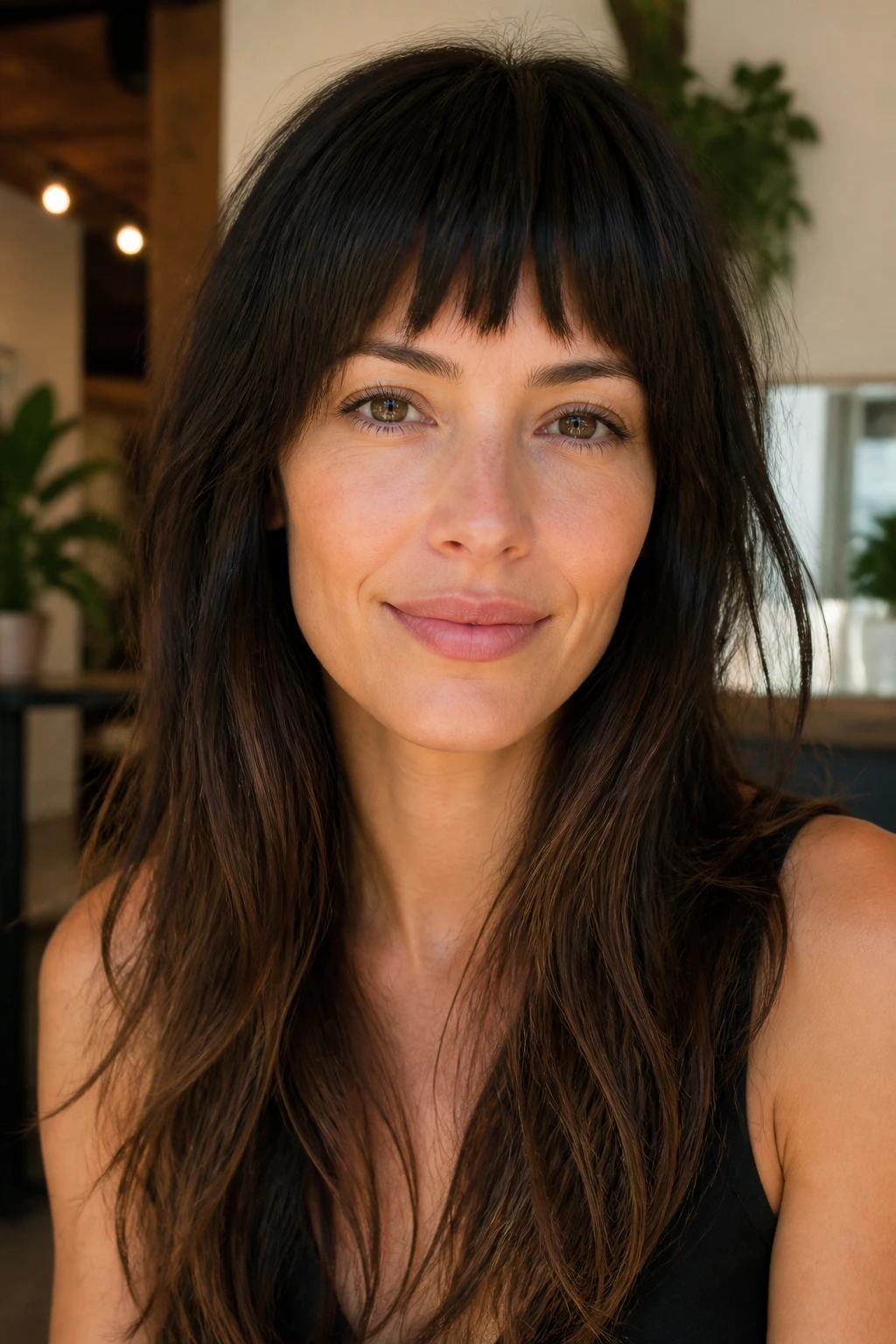
Long faces often benefit from bangs that shorten the forehead visually, which is exactly what a short choppy fringe can do if it’s not cut too see-through. The fringe should sit strong enough to matter, with broken ends that keep it from looking heavy. The side pieces can stay soft, but the center needs some presence.
A slightly fuller fringe is usually better here than a tiny whisper of hair. That gives the face a horizontal break. Long hair keeps the overall shape elegant, while the bangs add balance. If the forehead still feels exposed, the fix is usually density, not extra height.
29. Choppy Bangs for Square Jawlines
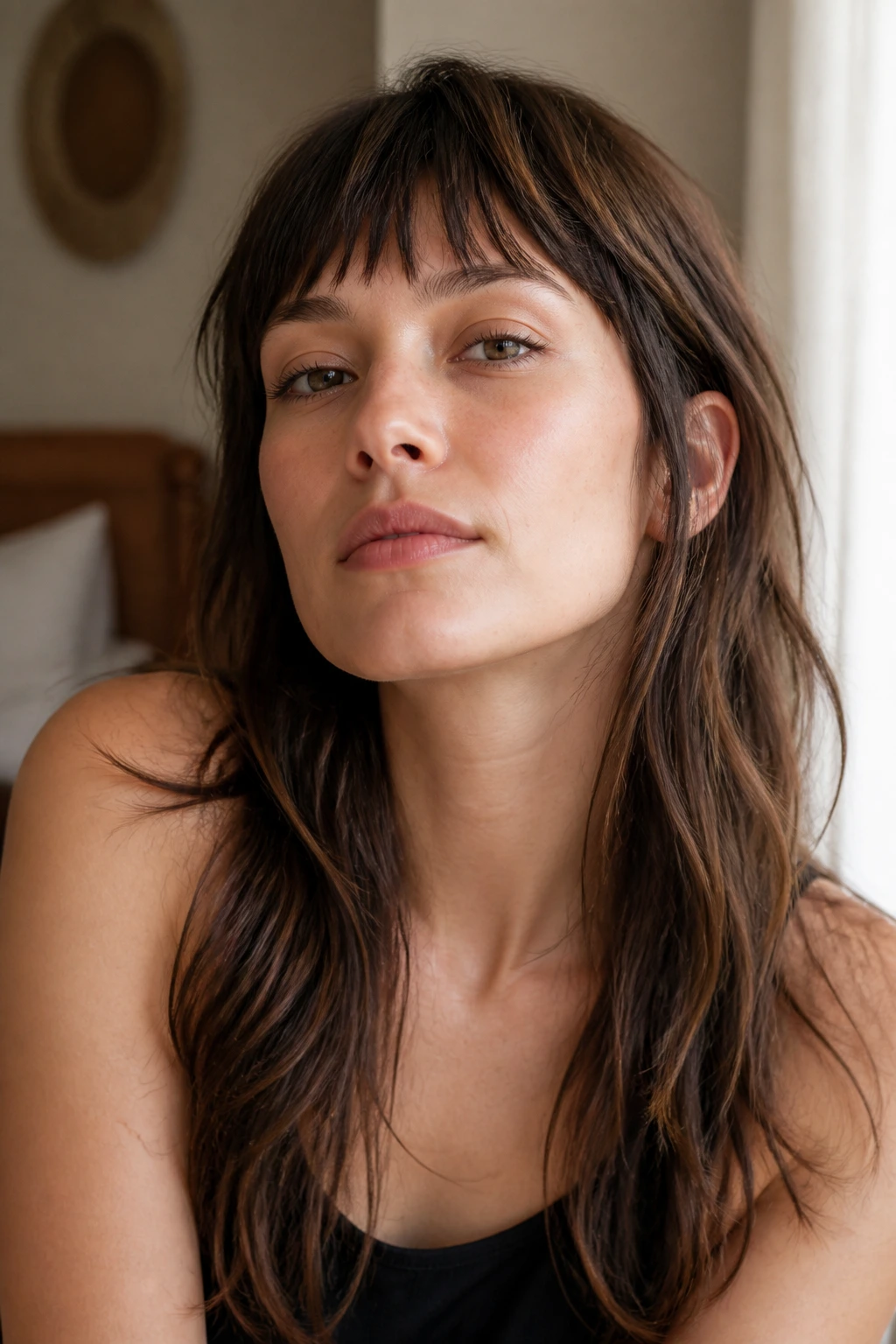
Square jawlines can wear short choppy bangs beautifully when the edges are soft and the cut isn’t too straight across. The broken fringe keeps the eye moving, which helps the face read less boxy. Long hair with bend or movement is a good companion because it stops the whole look from getting too rigid.
Avoid a thick, blunt bang that ends in one hard horizontal line. It can make the whole forehead look wider and the jaw feel stronger. Choppy texture is the friend here. It breaks the geometry just enough. A little angle at the temples helps too.
30. Choppy Bangs for Heart-Shaped Faces
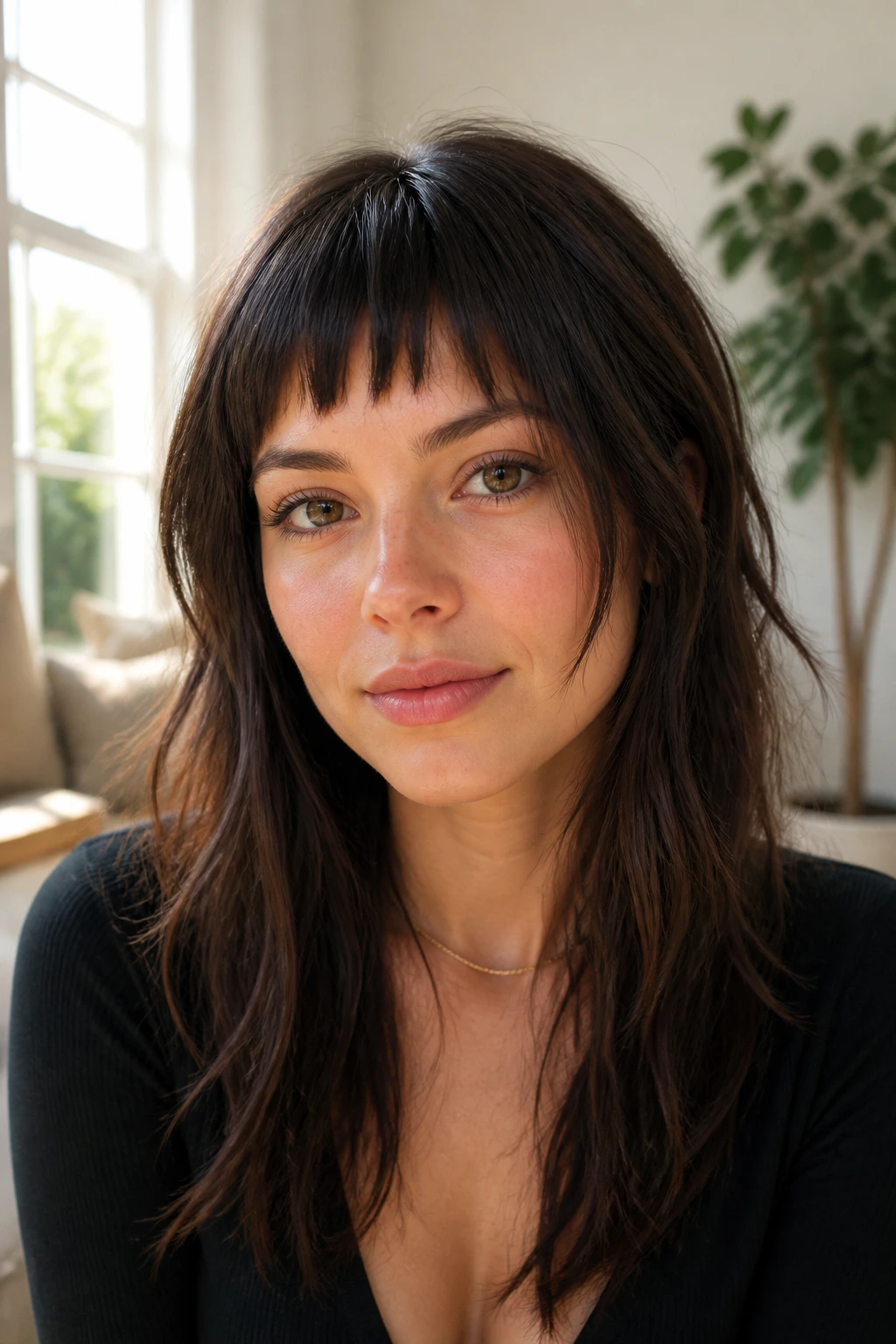
Heart-shaped faces often have a wider forehead and a narrower chin, so the fringe has to balance the top half without crowding it. Short choppy bangs work well when they’re not too sparse. A little density up front makes the forehead feel less dominant, and the broken ends soften the transition.
This is a shape that benefits from side pieces near the cheekbones. They widen the lower half visually without adding bulk. If the bangs feel too cute or too tiny, they probably need more weight at the center. That’s the part that holds the whole balance together.
31. Choppy Bangs and Glasses

Glasses change fringe math fast. Frames already draw a line across the face, so the bangs should sit with them instead of fighting them. Short choppy bangs work best when they clear the top of the frames by a small margin or skim just above them with broken ends.
If the fringe is too heavy, the glasses and bangs start competing for the same space. Keep the center open enough to show the frames, and let the pieces fall in irregular bits rather than one solid curtain. Side-swept or softly broken brow-grazers usually behave best. The result looks intentional instead of crowded.
32. Choppy Bangs with a Sleek Low Bun
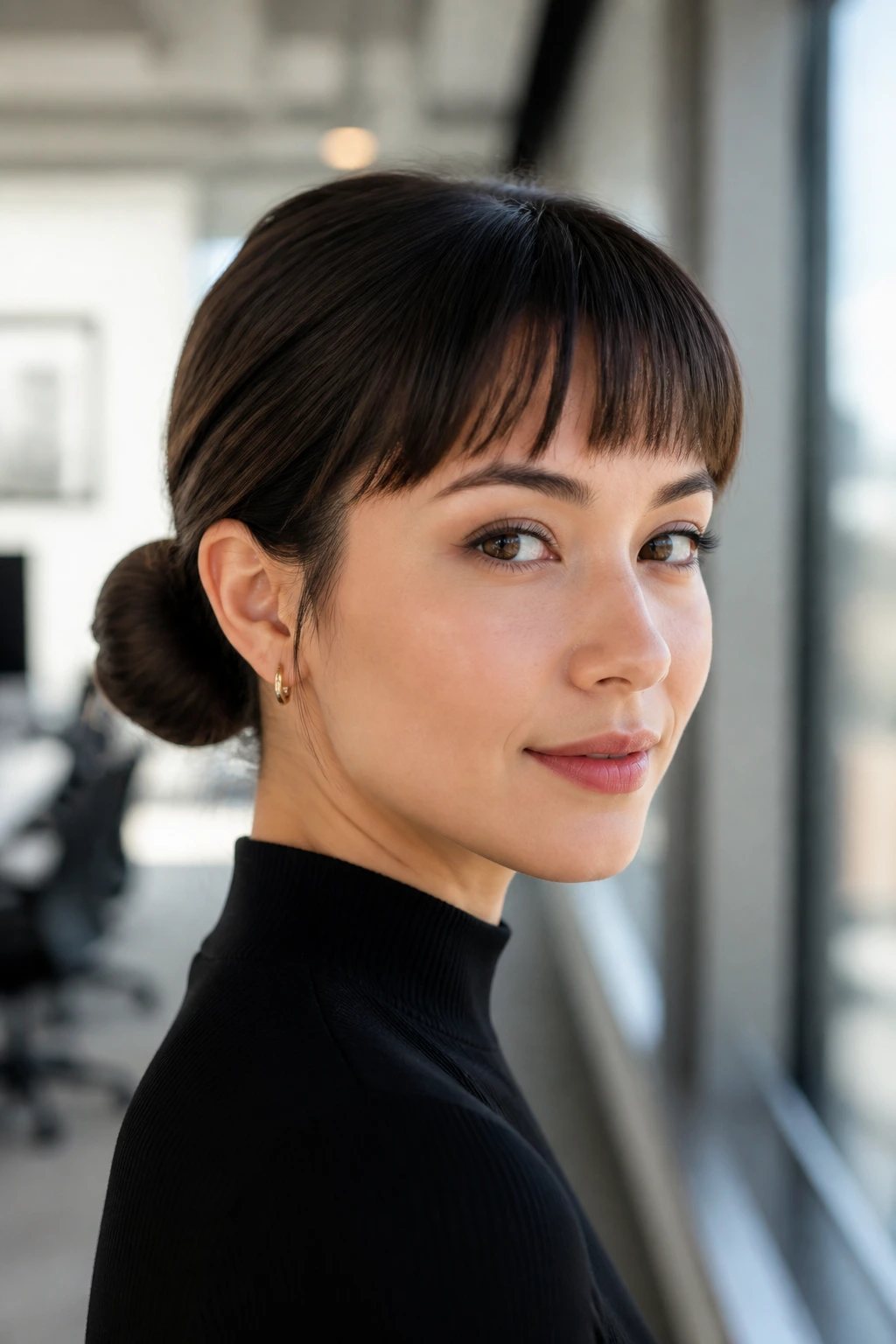
A sleek low bun puts all the attention on the face, which is exactly why a short choppy fringe can be such a good counterbalance. The bun keeps the back tidy, while the bangs prevent the whole look from turning severe. The broken edge softens the polished shape in front.
This combo is useful for work, events, or any day when you want the long hair controlled but not hidden. Smooth the lengths with a light cream, then leave the fringe with a little separation. If you slick the bangs back too hard, you lose the whole point. The front needs room to breathe.
33. Choppy Bangs with Mermaid Waves
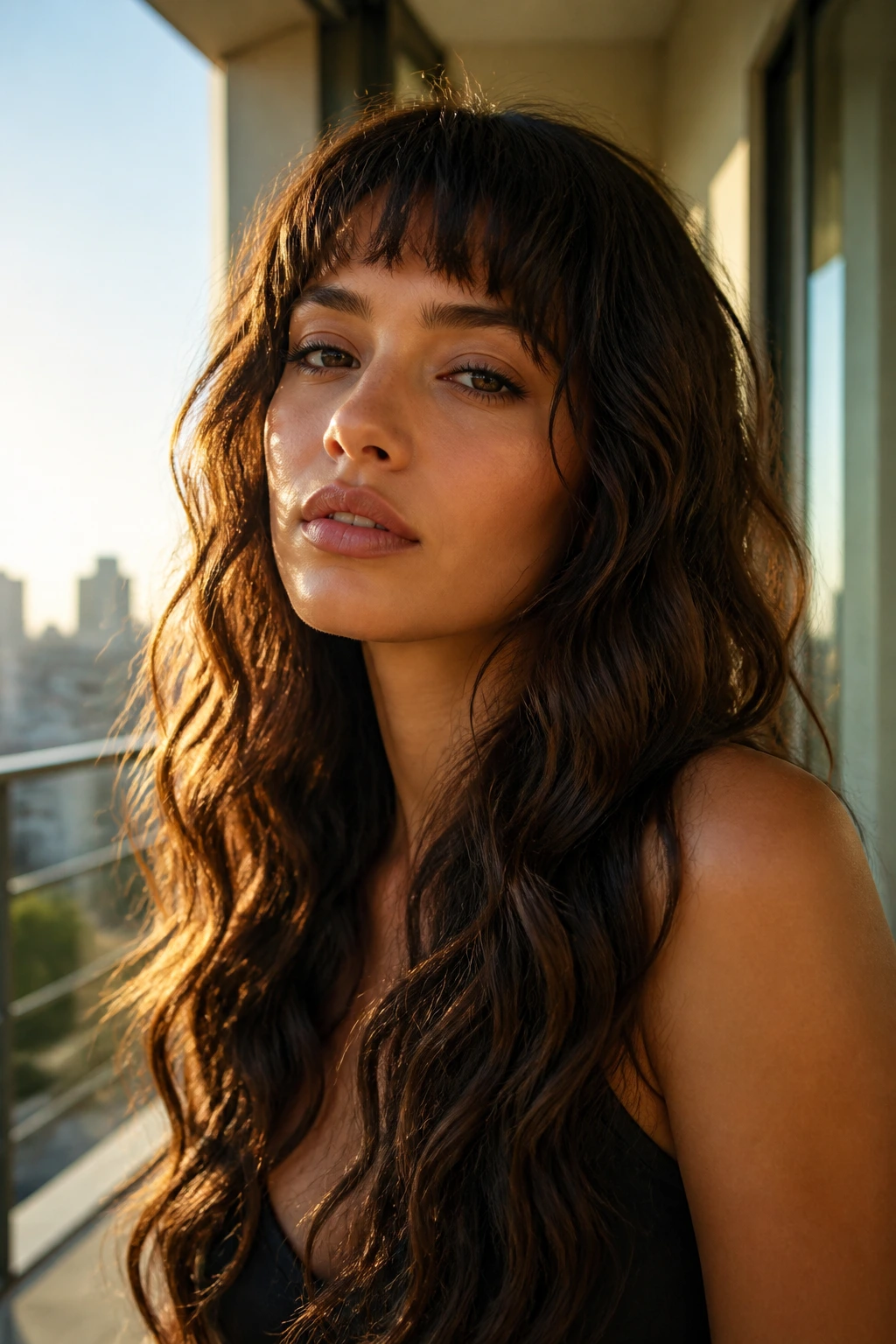
Mermaid waves bring out the playful side of short choppy bangs because both pieces of the hairstyle have movement built in. The waves in the long hair should be loose and stretched, not tiny and crimped. That keeps the fringe from getting lost in the texture.
The best version uses a slightly smaller tool on the bangs than on the lengths. The front needs a more precise bend, while the rest of the hair can be softer and bigger. If everything is waved the same way, the style turns mushy. Give the fringe its own rhythm.
34. Grown-Out Choppy Bangs
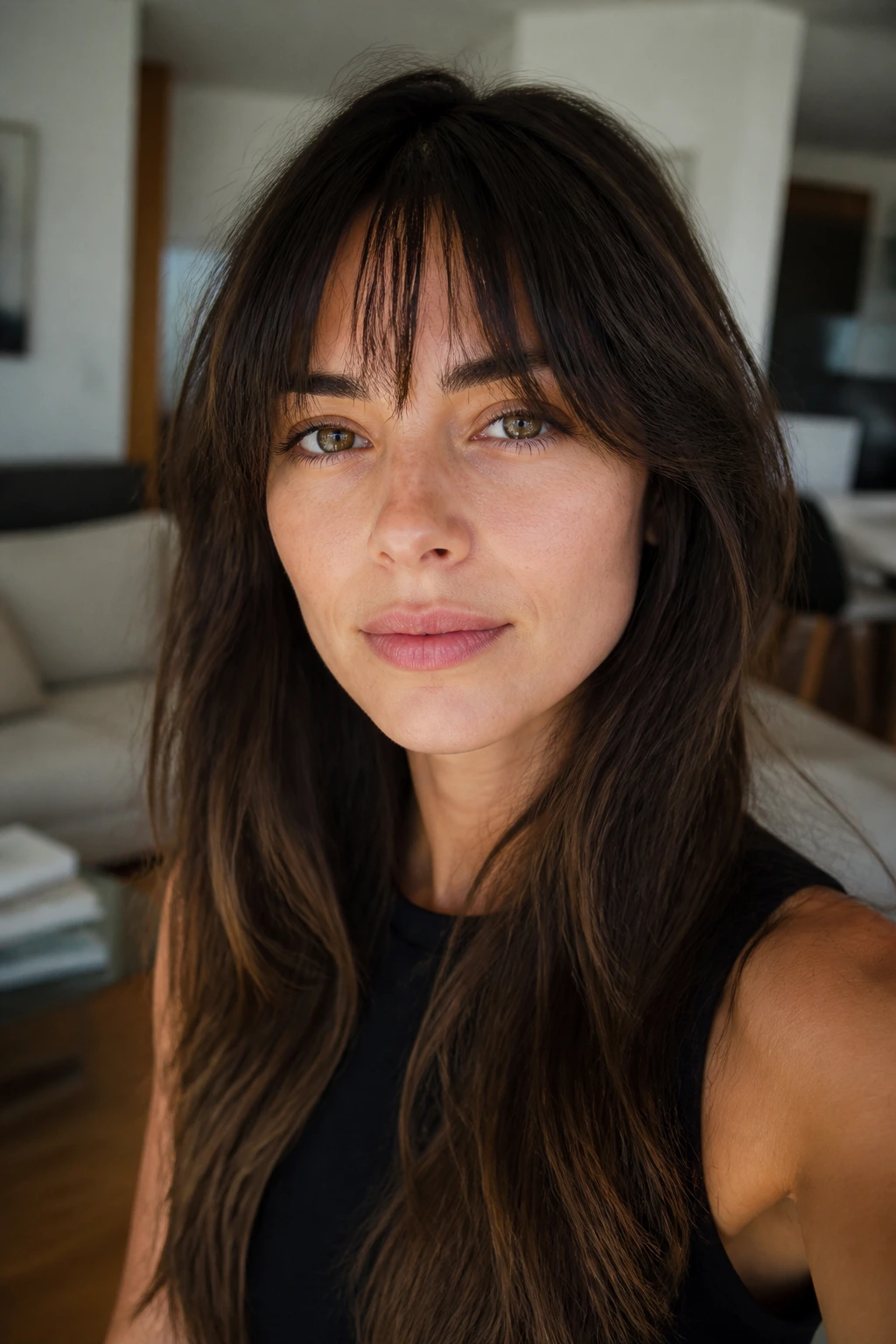
Grown-out choppy bangs are where a lot of people end up, and honestly, they can look better than the original short version if you handle them well. The fringe sits longer, brushes the brows, and starts blending into face-framing layers. The choppy ends still matter because they stop the grow-out stage from looking like one long, sad curtain.
This is the easiest version to wear if you’re not ready for constant trims. A side part, a soft bend at the ends, and a bit of texture spray can make the grow-out phase look on purpose. If the bangs start splitting down the center, pin one side back rather than forcing them straight down. That usually looks better anyway.
35. Soft-Landing Short Choppy Bangs
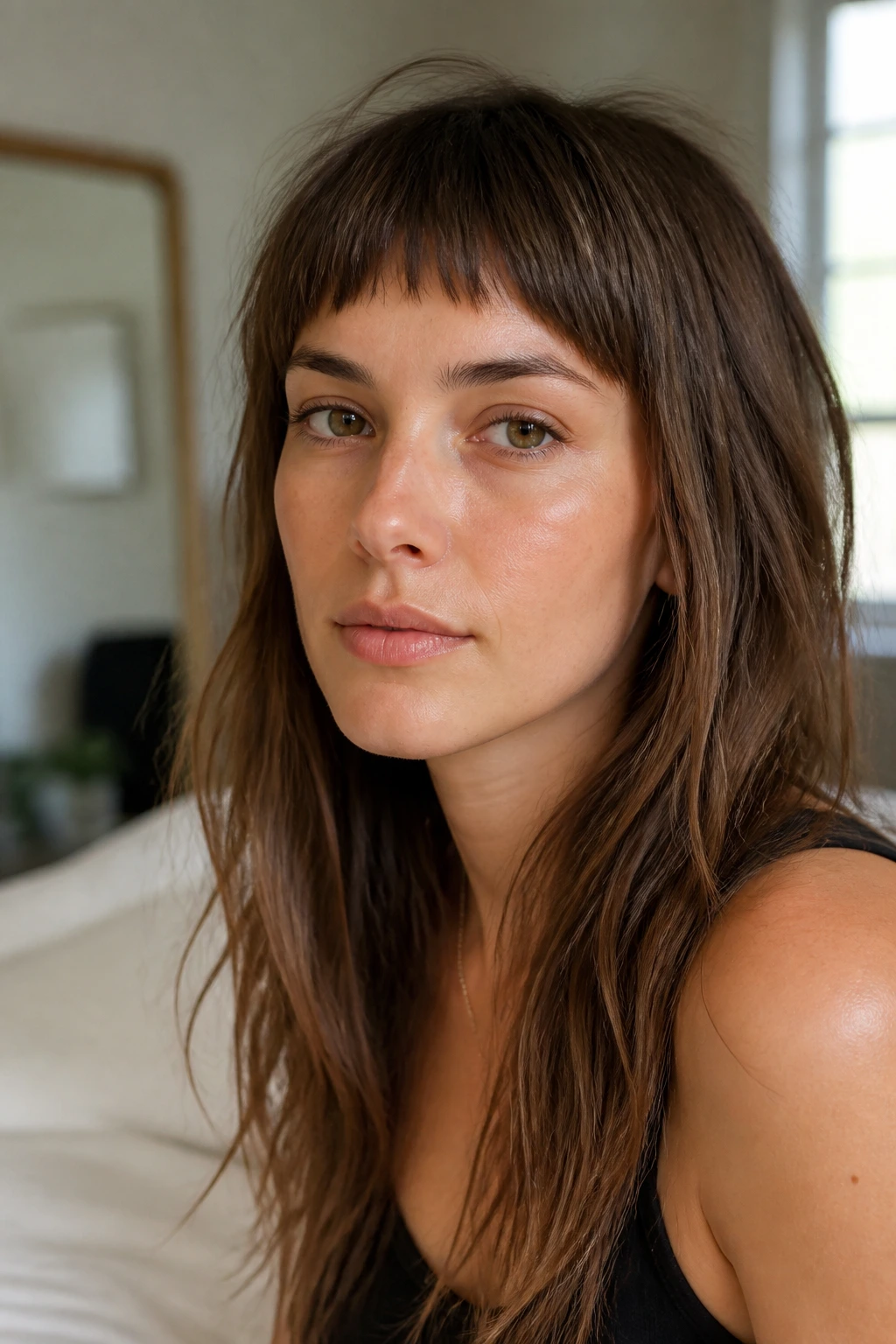
Soft-landing short choppy bangs are the compromise version: short enough to feel fresh, soft enough to grow gracefully, and broken enough to keep the front from looking blunt. The hairline is still visible, the brows still show through, and the long hair behind it stays the main event. It’s a smart cut if you want a change without signing up for a high-maintenance fringe life.
What makes this version useful is the way it absorbs movement. If the hair flips, bends, or separates a little, the cut still looks fine. If it’s perfect, great. If it isn’t, the broken edge hides a surprising amount of chaos. That’s a good place to end the list, because that little bit of forgiveness is what makes a fringe wearable.
What Short Choppy Bangs Change in a Long Cut

Long hair has a way of flattening the face if the front section doesn’t interrupt it. Short choppy bangs fix that by creating a quick hit of texture right where people look first. The eyes move up. The cheekbones look more awake. The whole haircut stops reading as one long line and starts reading as a style with a front and a back, which sounds obvious until you see how much it changes the silhouette.
The other thing they do well is blur the difference between polished and undone. That is useful. A perfectly blunt fringe can feel strict, and a too-light fringe can feel like an afterthought. Choppy bangs sit in the middle when they’re done well — broken enough to move, dense enough to matter. On long hair, that balance keeps the cut from swallowing your face.
Why texture matters more than length
If the ends are too clean, the fringe turns into a straight edge that sits there and stares at you. If the ends are too shredded, the bangs stop being a shape at all. Point-cutting, razor work, and small texture breaks are what make the line shift and catch light instead of lying dead across the forehead.
Why long hair changes the rules
Short bangs on a bob already carry the whole haircut. Short bangs on long hair have to hold their own against a lot more weight, so they need a stronger point of view. That is why the best versions either echo the movement in the lengths or deliberately contrast with them. Anything in between can look like an unfinished salon day.
The Tools That Keep the Fringe Lying the Right Way
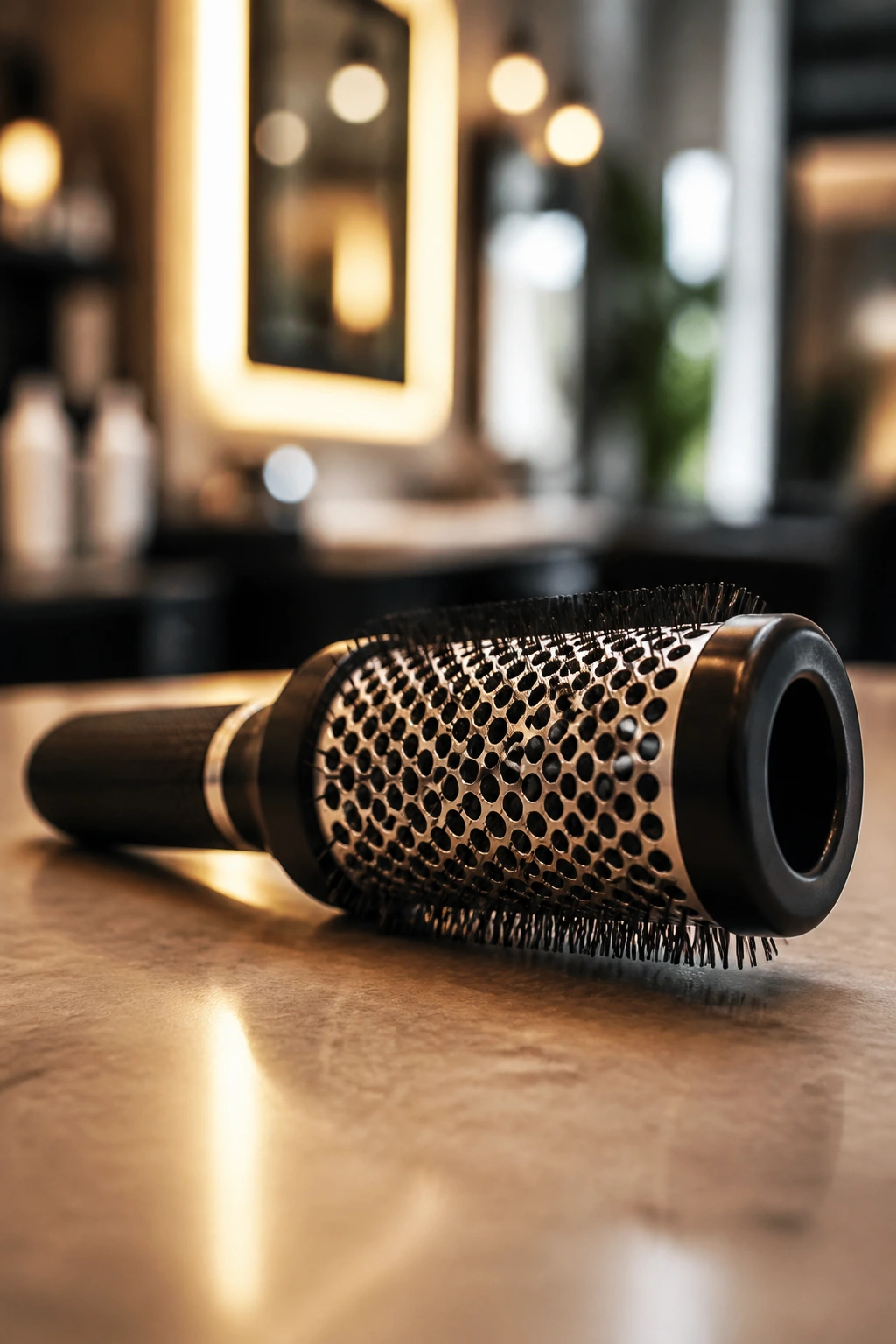
- Small round brush: A 1-inch or 1.25-inch brush gives you control at the root and a gentle bend at the ends without blowing the bangs into a helmet.
- Blow dryer with a nozzle: The nozzle keeps airflow focused so the fringe dries forward instead of in random directions.
- 1-inch flat iron: Useful for touching up the last half-inch of the bangs when they kick out or split.
- Heat protectant spray: A light mist helps if you style the fringe often; bangs get more heat than the rest of the hair because you’re constantly fixing them.
- Dry shampoo: Best on day two or day three when the root starts to separate and the fringe looks tired.
- Texturizing spray: Good for piecey choppiness, but use a little. Too much and the bangs feel dusty.
- Rattail comb: Handy for sectioning the bangs cleanly so you’re not fighting the rest of the hair.
- Small clips or duckbill clips: These hold the fringe forward while it cools, which helps the shape stay put.
- Light styling cream or mousse: Use one or the other, not both in heavy amounts. The fringe needs control without weight.
- Sharp haircutting shears: Only for tiny maintenance trims if you know what you’re doing. Kitchen scissors are a mess waiting to happen.
How to Pick the Right Choppy Fringe for Your Face and Texture

The safest way to choose short choppy bangs is to think about two things at once: how much forehead you want to show, and how much daily fuss you’ll tolerate. Those are not the same question. A face shape can love a fringe that your texture hates, and a texture can handle a fringe that your morning routine will absolutely resent.
For round or fuller faces
A slightly denser center with soft, broken sides tends to work best. The goal is to create a small vertical break without making the face look wider. Avoid a bang that ends in one perfect horizontal line across the forehead. That line can widen the face faster than people expect.
For long or narrow faces
A fuller, slightly shorter fringe usually helps because it shortens the forehead visually. The side pieces should stay soft so the cut doesn’t feel boxed in. If the bangs are too airy, they won’t do the balancing job you want from them.
For straight hair
Straight hair shows every line. That means the fringe needs texture built in from the cut itself, not just from styling. Ask for point-cut ends or light razoring, and keep a small iron nearby for the few pieces that refuse to sit.
For wavy or curly hair
The cut has to respect shrinkage and movement. Leave more length than you think, and do not overthin the fringe. A choppy edge on textured hair should look broken, not sparse.
Styling Short Choppy Bangs Without Fighting Them Every Morning

Bangs are the first thing you see in the mirror and the first thing that goes wrong if you rush. So dry them first. Seriously. Even if the rest of your hair is still wet and clipped back, get the fringe under control while it’s damp, because once it sets in the wrong direction, you’ll spend the next ten minutes trying to persuade it to behave.
A light mousse at the root or a small amount of styling cream can help, but the product should disappear into the hair. If it leaves a visible film, there’s too much. The bangs need movement and grip, not a wet finish that drags the ends together.
On day two, use dry shampoo at the root and tap it in with your fingers instead of over-brushing. Over-brushing breaks up the choppy pieces and makes the fringe puff. If a single piece flips badly, a flat iron touch-up on the last inch is faster than rewetting the whole section.
Extra Tricks for More Lift, Separation, and Softness
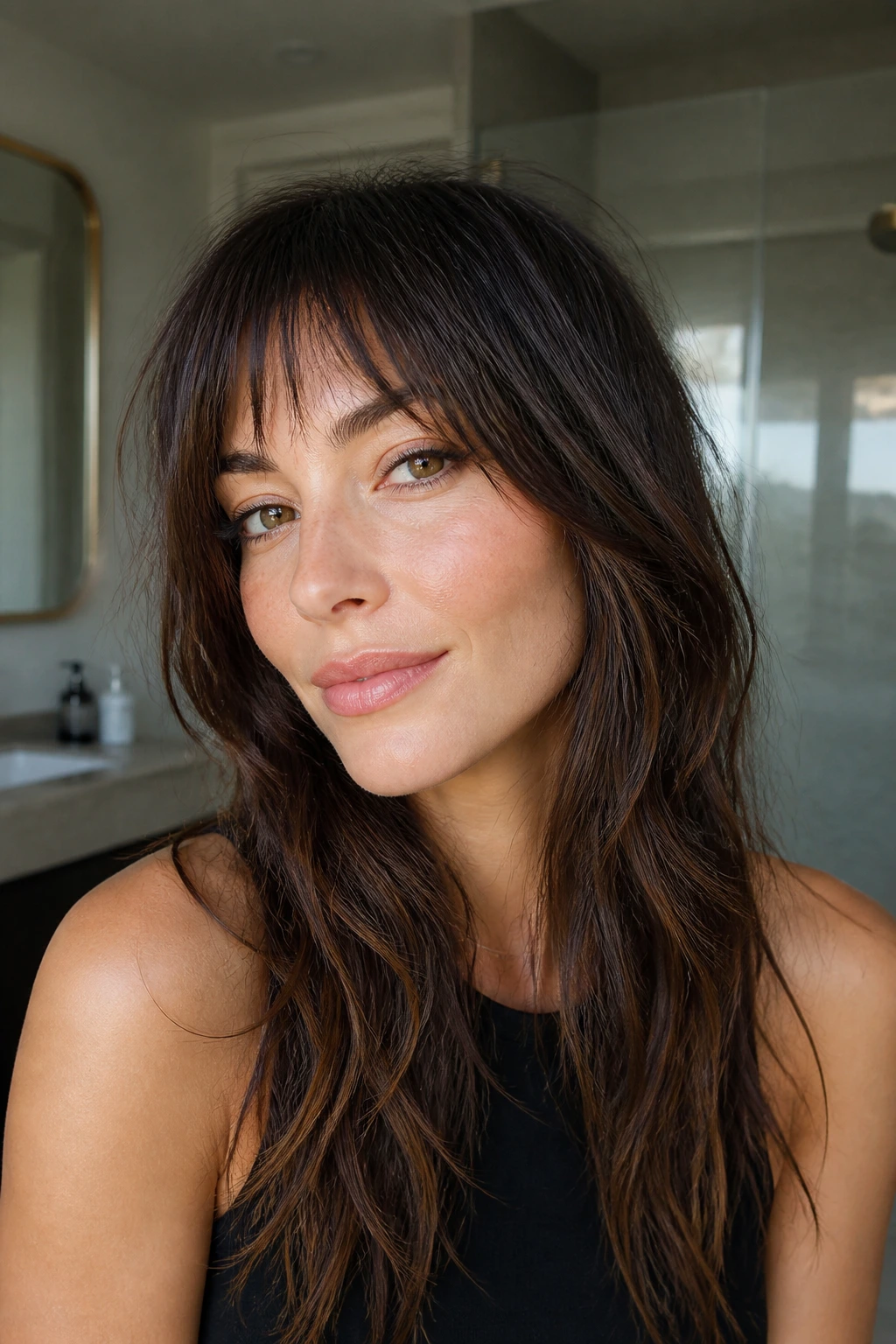
Root Lift: Clip the bangs forward while they cool after blow-drying. That tiny set at the root helps them stay lifted instead of collapsing into the forehead by noon.
Piece Separation: Rub a trace amount of texture paste between your fingertips and touch only the ends. If you use it near the roots, the fringe starts clumping and loses that broken edge.
Heat-Free Reset: If the bangs get flat during the day, mist them lightly with water, comb them forward, and clip them in place for ten minutes. It’s slower than a blow dryer, but it works when you’re out of the house.
Softness at the Temples: Leave the outer corners of the fringe a touch longer if you want the bangs to blend into long hair instead of landing like a separate block. That is the detail that stops a short fringe from feeling abrupt.
Humidity Backup: Keep a travel-size dry shampoo or texturizing spray in your bag if your hair frizzes fast. The bang area is the first place humidity shows up, and it never hides politely.
Common Mistakes That Make Choppy Bangs Look Off
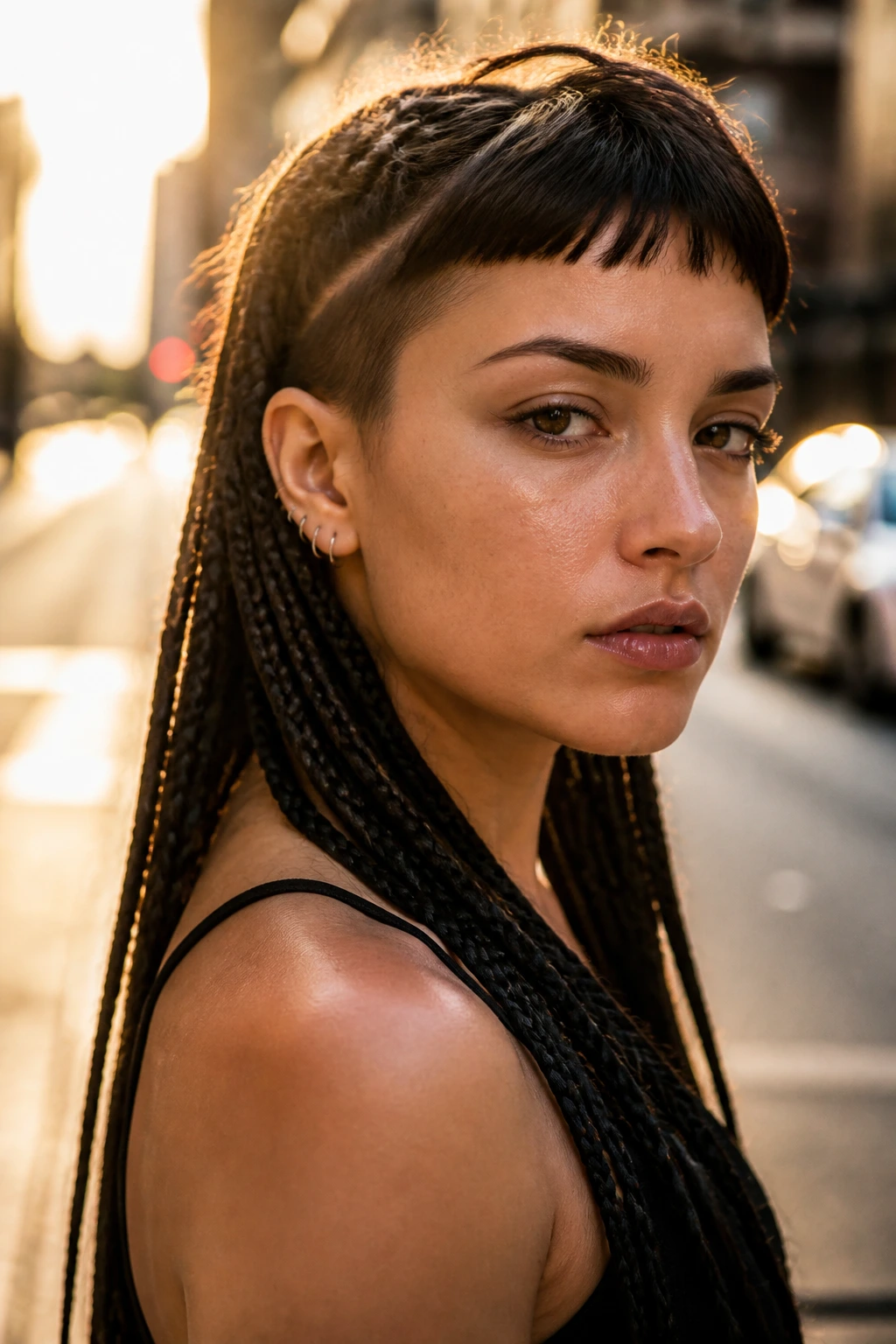
- Cutting them too blunt: A hard, straight edge removes the whole point of the style. The fix is point-cutting or soft razoring so the ends separate a little.
- Ignoring the cowlick: If the front hair grows in different directions and you cut it too short, the bangs will split or puff. Leave more length at the center and style the root while it’s wet.
- Using too much oil or serum: Bangs sit on the face, so product buildup shows fast. A greasy fringe goes flat, strings together, and starts sticking to skin.
- Letting them grow too far past the trim window: Choppy bangs lose their shape faster than long layers do. Once they start brushing the lashes, the line usually stops reading as intentional.
- Styling only the ends: The root determines the shape. If you curl just the tips and ignore the lift at the scalp, the bangs still collapse.
- Thinning the fringe too hard: A fringe that’s too sparse can look choppy in the wrong way — patchy, not piecey. The fix is keeping some density and adding texture with the ends, not by removing too much hair.
Variations and Alternatives Worth Trying
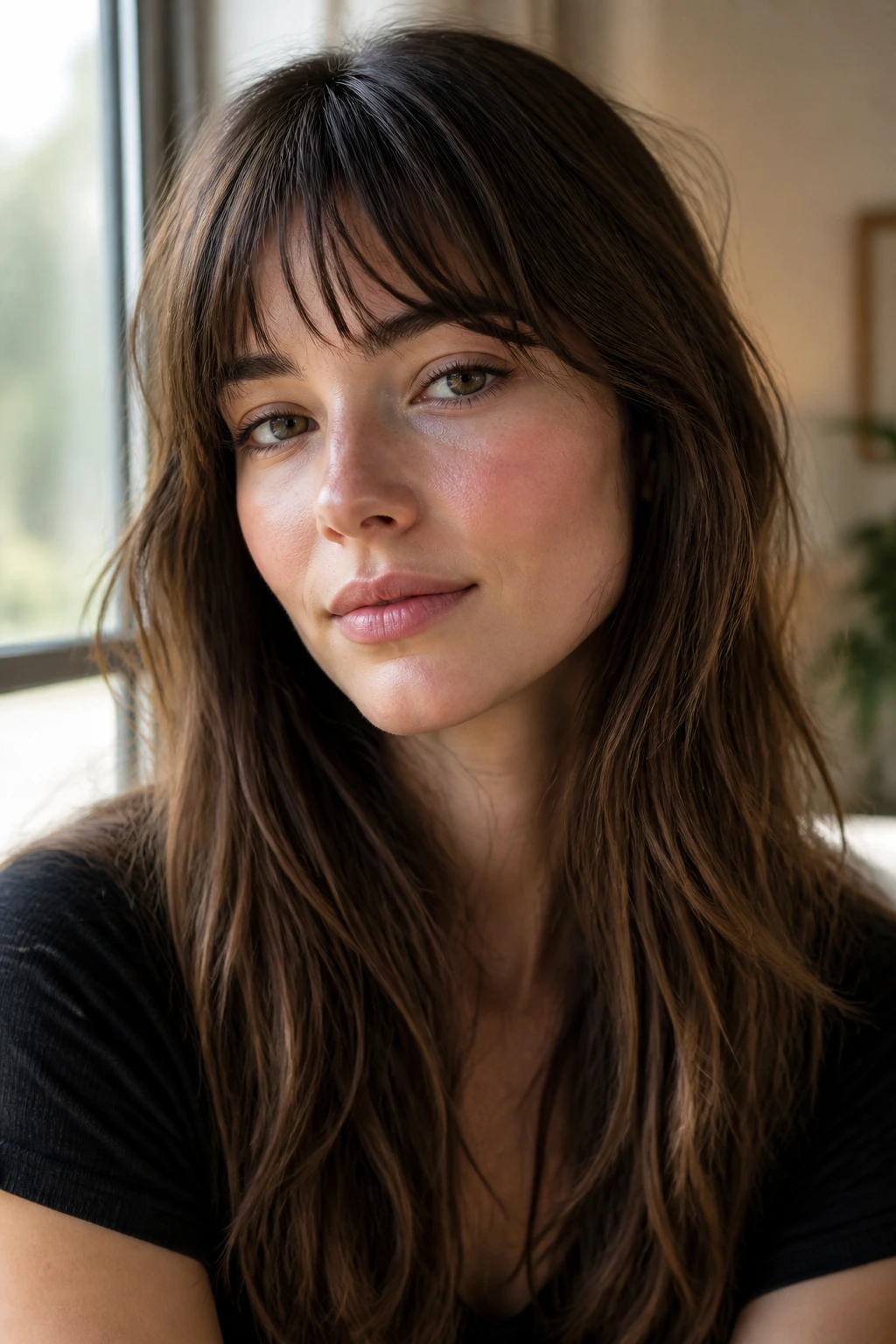
The Softer Break: Keep the fringe slightly longer and less chopped if you want the look without constant trimming. It still breaks up long hair, but it grows out more politely.
The Hard Edge: Go shorter and more graphic if your hair is straight and dense. This version looks sharp, but it needs regular maintenance to stay clean instead of shaggy.
The Curly Halo: Let curly bangs sit longer and cut them dry so shrinkage becomes part of the shape. This is the version that makes curls look framed instead of forced.
The Side-Slip: Bias the fringe to one side when you know you have a stubborn part or a cowlick. It’s the easiest adaptation for people who want bangs but hate symmetrical bangs.
Trims, Wash Days, and Growing Them Out
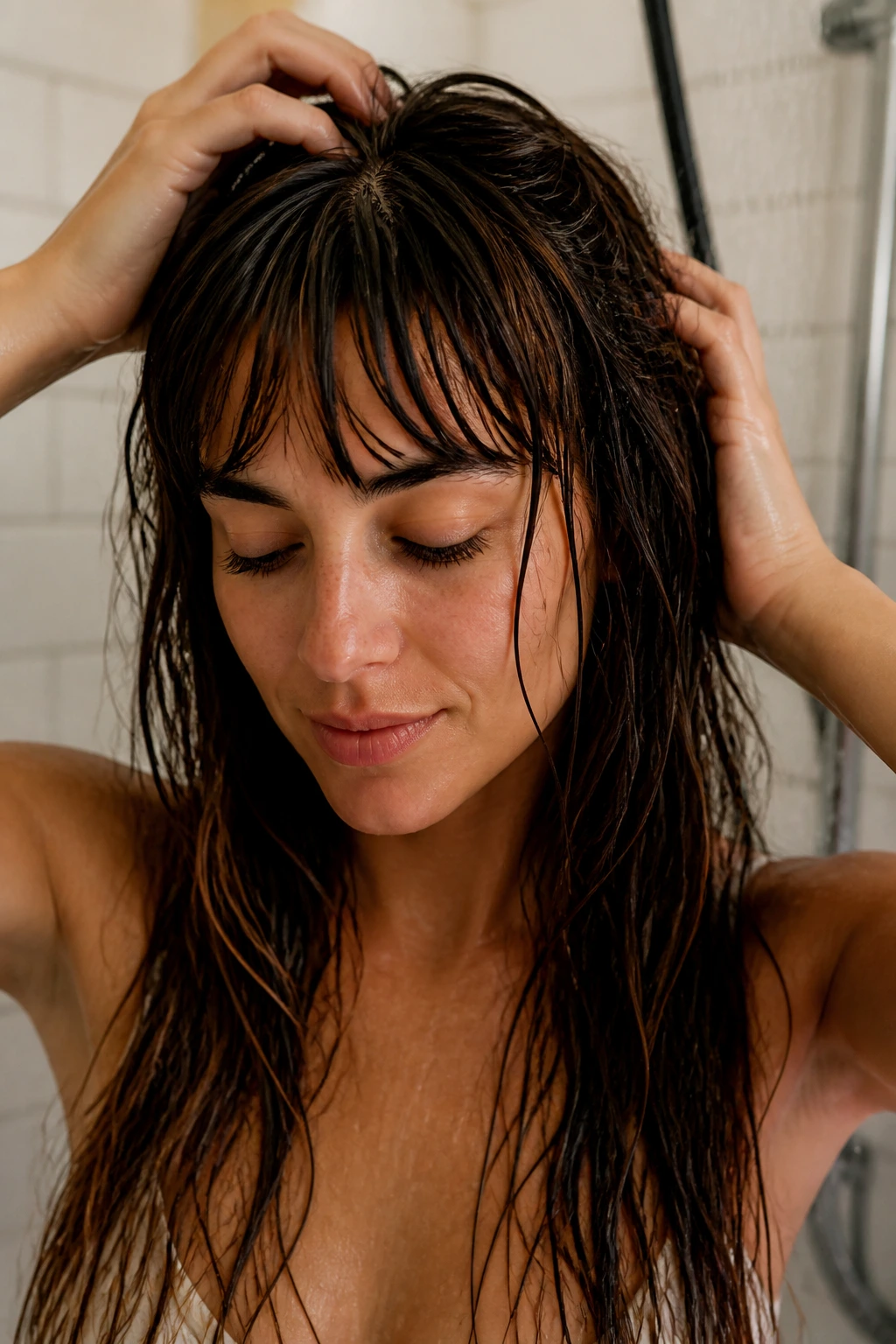
Short choppy bangs need trims more often than the long lengths do. A four-to-six-week window is the sweet spot for keeping the shape clear, though tighter fringe styles may need attention sooner. If the cut is very short, a tiny trim in between salon visits can keep it from creeping into your eyes and making you angry every time you leave the house.
Wash days matter too, because bangs pick up oil faster than the rest of the head. Some people wash only the front section in the sink and leave the lengths alone. That’s not weird. That’s practical. It keeps the fringe light without stripping the whole head every day.
Growing them out is easier when you stop trying to force them to stay bangs forever. Let the shortest pieces meet the face frame, push them to the side sometimes, and use clips when the shape feels awkward. The ugly stage is shorter when the cut is choppy, because the broken ends disguise the transition. Pinning the fringe back for a week or two at a time can help the front settle into the longer layers without looking like you gave up halfway through.
Frequently Asked Questions About Short Choppy Bangs With Long Hair
Will short choppy bangs work with thick long hair?
Yes, but the fringe needs weight removal in the right places. Thick hair usually looks best when the bangs are broken up at the ends but still dense enough to hold a visible shape.
Do they work on fine hair?
They can, as long as the cut doesn’t get over-thinned. Fine hair often does better with a fringe that has a little more body at the root and slightly jagged ends rather than a wispy veil.
How short is too short?
Too short is when the fringe jumps up because of shrinkage, a cowlick, or a strong bend and sits much higher than you planned. If you’re unsure, start longer. You can always shorten it later; you cannot glue it back on.
Can curly hair wear this style?
Absolutely, but the bangs need to be cut with the curl pattern in mind. Dry cutting or near-dry cutting usually gives a more honest result because the curls show their real length and spring.
How often do they need trims?
Most choppy fringes need a tidy-up every four to six weeks, sometimes sooner if they’re cut very short. The more texture the fringe has, the more forgiving the grow-out, but the front still changes faster than the rest of the cut.
What if my bangs split in the middle every time I style them?
That usually means the root wants a different direction than the one you’re forcing. Dry the fringe forward, clip it in place while it cools, and consider a deeper side part or a slightly longer center section if the split keeps coming back.
Can I cut them myself?
You can trim tiny bits if you know the shape already and you have proper hair shears, but a fresh fringe is not the place to freestyle with kitchen scissors. Choppy bangs look intentional when the edges are controlled. A bad at-home trim usually looks accidental for weeks.
What’s the easiest way to style them on busy mornings?
Blow-dry the root forward, give the ends a tiny bend with a brush or flat iron, and stop before you overwork them. The cut should look piecey, not polished into submission.
The Fringe That Changes the Whole Cut
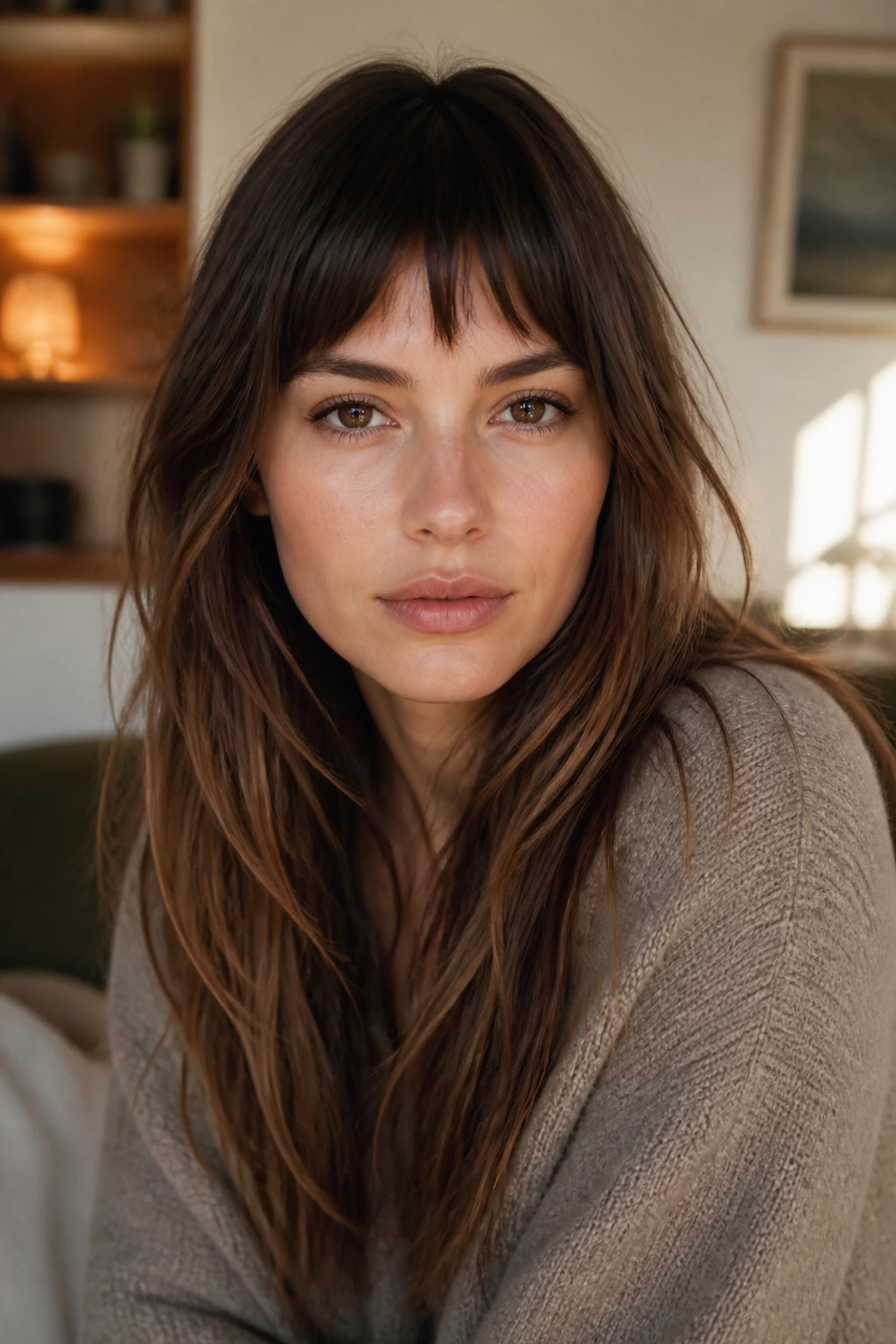
Short choppy bangs with long hair work because they create tension in the best possible way. The length stays dramatic, but the front gets a little bite. The hair reads softer, younger, sharper, or just more awake depending on how the fringe is cut and how much texture you leave in it.
If you want the style to last, don’t chase perfection. Chase shape. A fringe that moves, separates, and still sits in the right place after a messy day will always beat one that looks tidy for five minutes and then gives up. That little broken line across the forehead is doing more work than it looks like it is.
