



Bottleneck bangs do something blunt bangs never quite manage: they open the middle of the forehead, then let the sides fall away in a soft curve that skims the cheekbones. That shape matters. A hard fringe can sit there like a line drawn with a ruler; bottleneck bangs feel closer to a frame, a little more fluid, a little less bossy.
That’s why they’re such a smart pick if you want a soft face frame without losing structure. The center stays narrow enough to lift the face, while the longer corners blur the jaw and bring the eye back toward the cheeks. I’ve always liked that they look deliberate even when they’re not perfectly polished. A slight bend, a bit of air-dried texture, a clean part. That’s enough.
The catch is that bottleneck bangs only look easy when the cut is right. Too short in the middle and they start acting like a blunt fringe. Too heavy at the sides and the softness disappears. The best versions are about proportion, not drama, and that’s where the shape earns its keep.
Why Bottleneck Bangs Work So Well for a Soft Face Frame

- The center stays open: A narrow middle section leaves some forehead visible, which keeps the fringe from feeling boxy or crowded.
- The sides do the shaping: Longer temple pieces slide toward the cheekbones and jaw, which gives the face a gentler outline.
- They move with the rest of the haircut: Bottleneck bangs can blend into layers, a bob, or a shag without looking pasted on.
- They’re forgiving between trims: The longer outer corners can tuck, split, or sweep aside once the cut grows out a bit.
- They work with texture, not against it: A soft wave, bend, or curl usually looks better here than a stiff, over-smoothed finish.
How to Ask for the Cut Without Ending Up with Blunt Bangs
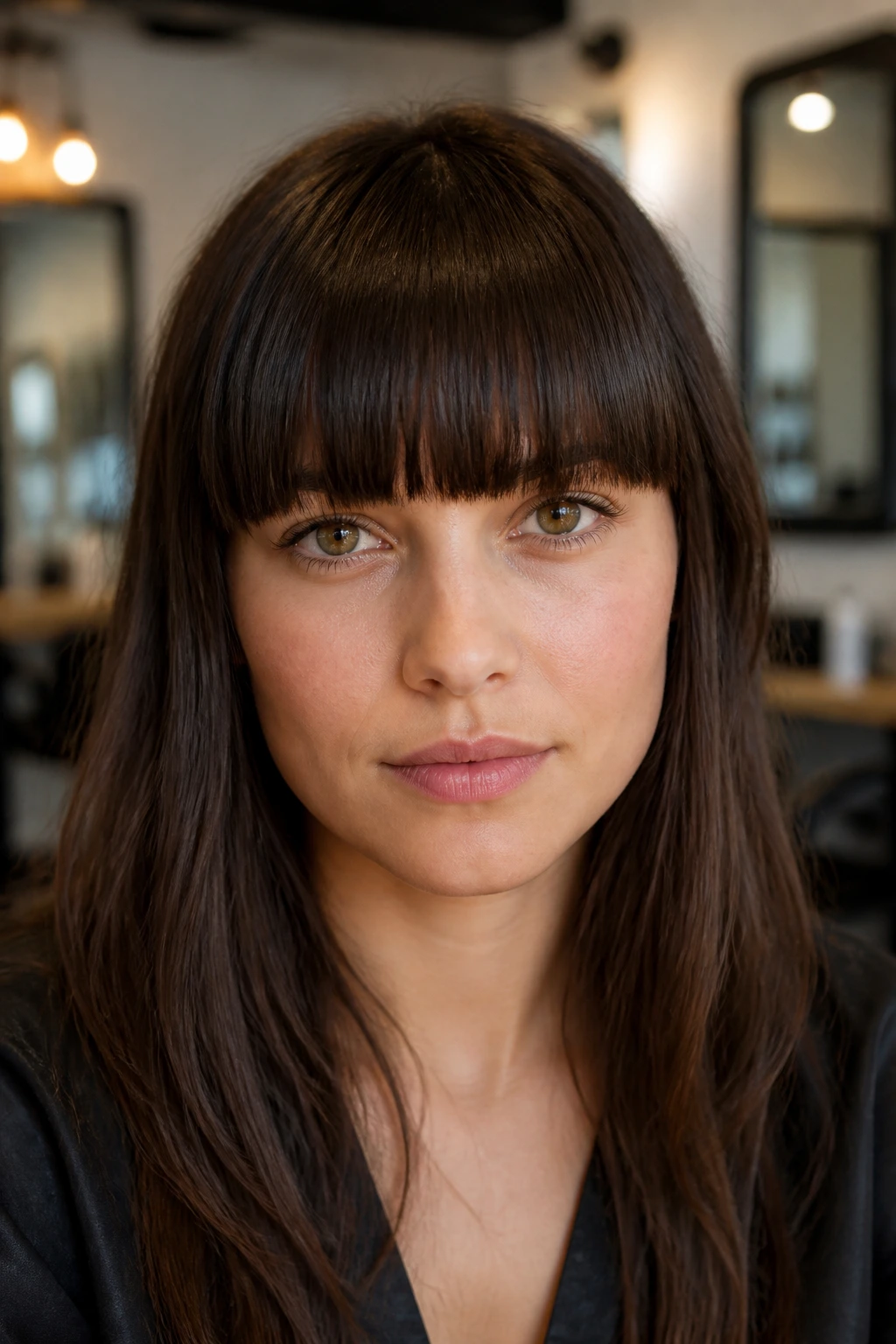
Bring a photo, yes, but say the words too. “I want bottleneck bangs with a shorter center and longer sides that start to blend around the cheekbones” is the kind of sentence a stylist can actually use. Vague requests are how people walk out with a fringe that sits too straight across the forehead.
The details that matter
Ask for the shortest point to sit around the middle of the brow or just below it when dry-styled, then let the sides lengthen toward the outer lash line, cheekbone, or upper lip depending on how much face you want to frame. If your hair is curly or wavy, the center usually needs a little extra length because shrinkage is not subtle. It bites.
Ask for soft point-cutting at the ends, not a blunt straight edge. That one detail makes a huge difference. A clean line can look heavy fast; broken edges let the fringe bend and separate in a nicer way.
And if you have a cowlick or a strong center part, say so before the scissors come out. That’s not a footnote. It’s the whole game.
1. Brow-Grazing Bottleneck Bangs
This is the version most people picture first, and for good reason. The center sits around the brow line, the sides taper down toward the cheekbones, and the whole front feels light without disappearing. It’s the cleanest entry point if you want bottleneck bangs without a big style commitment.
What makes it work
The brow-grazing center creates a small visual break in the forehead, which helps soften longer faces and narrow the eye line. The longer corners keep it from turning rigid. You get shape, but not a wall of hair.
On straight hair, this cut can be blown under with a small round brush and a quick bend away from the center. On wavy hair, it’s often better to let the fringe dry with a loose curve and then touch only the ends with heat. Too much flattening here can strip out the softness that makes the cut good in the first place.
If you want a classic, low-risk version of bottleneck bangs, this is the one I’d start with. It reads clean, not severe.
2. Cheekbone-Skimming Bottleneck Fringe
Want the fringe to act like face contour without looking carved? This is the one. The center still opens the forehead, but the side pieces stretch lower so they skim the cheekbones and guide the eye outward in a diagonal line.
Why the extra length matters
Longer corners bring more movement around the face, which is useful if your cheekbones are one of your best features and you want them noticed without a hard line sitting on top of them. The cut works especially well if your hair is medium to thick, because the extra length keeps the front from puffing out.
Best for
- Faces that need a little more vertical balance
- Haircuts with long layers or collarbone-length ends
- People who hate the feel of short bangs touching the forehead all day
A light blow-dry with the nozzle pointed downward keeps this version from flaring out at the sides. The trick is to bend, not curl. Think soft elbow, not spiral.
3. Long Bottleneck Bangs with an Easy Grow-Out
This is the version for anyone who likes the idea of bangs but not the maintenance spiral that can follow. The center sits longer—often near the top of the cheekbone or just past the brow—while the sides blend so gradually that they can disappear into the haircut.
Long bottleneck bangs are the least fussy when you miss a trim by a few weeks. They tuck behind the ears, split naturally, and can be swept into a center part without much drama. That makes them a good match for people who want fringe that behaves on lazy mornings.
The best part is that they never look like an accident. Even when they’ve grown out a little, the shape still feels intentional because the outer corners already carry the weight of the frame. A blunt fringe in the same stage just looks neglected. This one looks lived-in.
4. Curly Bottleneck Bangs with a Soft Bend
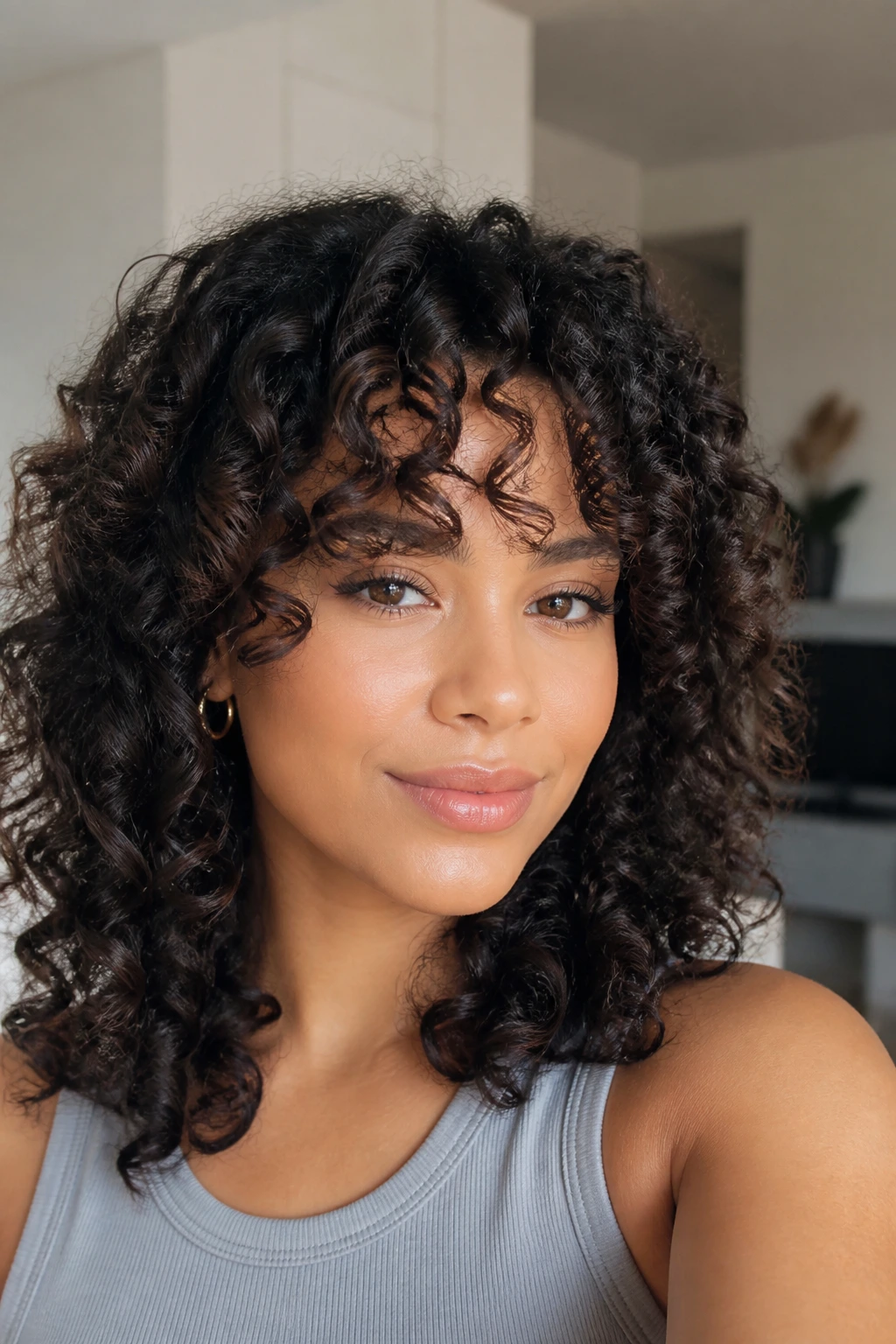
Curly hair and bottleneck bangs can be a lovely pair, but only if the cut respects shrinkage. Dry cutting is usually the safer move here, because curls spring up more than people expect. A center that looks long enough in the chair can end up sitting far too high once it dries.
What to ask for
Ask your stylist to cut the fringe with your curl pattern in its natural shape, not stretched straight. The shortest point should usually sit lower than you think, and the outer pieces should taper into the face-framing layers rather than stop like a shelf.
How to style it
A little curl cream, a wide-tooth comb, and a diffuser on low heat are usually enough. If the front wants to separate in the middle, use a fingertip twist while it’s still damp, then leave it alone. Too much touching makes curly bangs frizz faster than almost any other section of hair.
Curly bottleneck bangs soften the face frame in a very different way from straight fringe. They feel rounder, looser, and a bit more casual. That’s the charm.
5. Air-Dried Wavy Bottleneck Bangs

This is the version I think more people should try, honestly, because it lives nicely in real life. You don’t need a perfect blowout. You need a decent cut, a light hand with product, and a bend that falls where it wants to.
Wavy bottleneck bangs usually look best when the center is long enough to split naturally and the sides fall into a loose S-shape. A little leave-in conditioner or lightweight mousse is enough. Heavy cream products can make the front collapse into separate strings, and nobody wants that clumpy look around the eyes.
Quick shape cues
- Keep the center soft, not chopped
- Let the corners drift toward the cheekbone
- Use fingers more than a brush when drying
- Clip the bangs up for ten minutes if they want to dry flat against the forehead
The whole point here is movement. If the hair wants to bend, let it bend.
6. Sleek Center-Part Bottleneck Bangs

This is the polished version, and it has a sharper personality than the air-dried styles. The center part opens the forehead right down the middle, while the longer sides curve out and down so the face still gets that soft frame.
It works especially well if you like a smooth, clean finish with a little edge. The key is not to over-flatten the fringe. If the root sits too slick against the scalp, the bangs can look thin and pasted down. A round brush or a small flat iron bend at the ends is usually enough to give it shape.
What makes it different
Unlike curtain bangs, which can get very wide and drapey, sleek bottleneck bangs keep a little more structure in the center. That’s useful on longer foreheads or on haircuts that already have a lot of side movement. You get openness without losing the frame.
This version also plays nicely with glassy, straight finishes. If you like your hair smooth and shiny, keep the serum off the roots and work only a pea-sized amount through the very ends.
7. Feathered Bottleneck Bangs for Fine Hair

Fine hair needs a careful touch here. Too much thinning and the fringe starts to look wispy in the wrong way, like it ran out of hair halfway through the cut. Feathered bottleneck bangs work because they keep a little density at the center while the sides are softened with point-cutting.
The secret is shape, not sheer thinness. A fine-hair fringe should still look like bangs from the front. It should just breathe a bit more around the edges.
The practical part
Use a root-lifting spray at the base of the fringe before drying. Then wrap the center around a small round brush for a few seconds, just long enough to create a bend. The outer corners should be directed away from the face so they don’t cling in two skinny strips.
This is one of those cuts that looks better with a little lift than with extra product. Heavy oils and creams flatten fine hair fast. If your hair goes limp by lunch, skip the rich stuff and stick to light sprays.
8. Bottleneck Bangs with a Shag Cut

A shag and bottleneck bangs speak the same language. Both like movement. Both work better when the pieces are a little broken up. Both lose their charm when they’re over-styled into a rigid shape.
The shag gives the fringe a place to go, which matters. Bottleneck bangs without enough surrounding layers can feel isolated. In a shag, the shorter center and longer corners connect to the rest of the haircut, so the face frame looks like part of the whole shape instead of a separate add-on.
This combo is especially good if you hate stiff styling. Air-dry it, scrunch it, diffused it a little, then stop touching it. The messier it gets, the more it looks like it belongs there. That’s not a defect. It’s the point.
9. Bottleneck Bangs with a Blunt Bob

A blunt bob and a soft fringe create a really nice tension. The bob brings the hard line. The bottleneck bangs break it up. That contrast keeps the haircut from feeling blocky around the face.
The danger with this pairing is making the bangs too short or too wide. If the fringe stops high on the forehead and then fans out too fast, the bob can start to look boxed in. Better to keep the center modest and let the corners skim the outer cheek area.
Why I like this match
A bob already has strong geometry. Bottleneck bangs soften it just enough that the face doesn’t disappear inside the shape. If your hair is straight and dense, this pairing can look crisp and expensive without being stiff.
If you wear a side part, you can still do it. The fringe will sit a little more off-center, which actually helps the bob feel less severe.
10. Bottleneck Bangs with Long Layers

Long layers and bottleneck bangs are a quiet, good-looking pairing. Nothing shouts. The bangs frame the face, then the layers take over and carry that softness down through the ends.
This is the cut I’d point to if someone wants bangs but doesn’t want a dramatic change. The fringe can sit around the brow to cheekbone range, while the rest of the hair keeps its length and movement. You get shape at the front without losing the line in the back.
It also makes styling easier. The front doesn’t have to do all the work. If the rest of the haircut has movement, the bangs can stay fairly simple—a quick bend, a smooth part, maybe a touch of texture cream on the sides. That’s enough.
11. Bottleneck Bangs for a Round Face

Round faces often look best with lines that create a little lift and a little length, and bottleneck bangs can do that nicely when they’re cut with restraint. The center should open the forehead without collapsing it, and the outer corners should angle down instead of sitting wide across the face.
Good shape cues for this face shape
- Keep the center slightly longer than you think
- Let the sides land near the cheekbone or just below it
- Avoid a thick, full curtain that pushes outward at the temples
- Use soft vertical movement through the rest of the haircut
The goal here is not to hide the face. It’s to guide the eye. A strong center opening plus diagonal side pieces creates that gentle pull downward and inward, which is what helps the fringe feel flattering instead of wide.
On round faces, I’d skip any version that puffs out at the temples. That extra width works against the shape you’re trying to build.
12. Bottleneck Bangs for a Square Jaw

Square jaws look great with softness near the temples and cheekbones, because that breaks up the stronger angles below. Bottleneck bangs can do this well if the sides are long enough to skim instead of stop abruptly.
The easiest mistake is making the corners too blunt. Then the fringe ends at the wrong point and echoes the jaw instead of softening it. A point-cut end and a little bevel away from the face fix that.
What helps most
A side-bent finish often looks better than a straight-down one. Even a small curve through the front can keep the cut from feeling too geometric. If your hair is thick, that movement is even more useful, because dense fringe can read heavy fast around a strong jawline.
This version works best when the rest of the haircut has some motion too. One still shape on a square face can feel very square. Two soft ones can feel balanced.
13. Bottleneck Bangs for an Oval Face

Oval faces have the easiest time wearing bangs, which sounds nice until it turns into vague advice. Here’s the practical version: oval faces usually handle a wider range of bottleneck lengths, so you can choose the finish based more on hair texture and personal style than on correction.
That means you can go a little shorter in the center if you want more forehead openness, or keep the sides longer if you want more cheekbone emphasis. The shape doesn’t need much fixing. It needs deciding.
A polished oval-face version looks especially good when the center is controlled and the corners are lightly feathered. If the fringe gets too long everywhere, it can drag the face down a bit. Keep some lift at the root and a clean bend through the ends, and the cut stays lively.
14. Bottleneck Bangs for Thick Hair

Thick hair can make bottleneck bangs look rich and full, but only if the bulk is removed in the right places. You want weight taken out inside the fringe, not a ragged end that frizzes up by noon.
The part that matters
Ask for internal softening and point-cutting through the center and temples. That keeps the shape from turning into a heavy shelf. The outer pieces should still move; they just shouldn’t puff.
What works in styling
- Blow-dry in small sections, not one wide chunk
- Use a smoothing cream from mid-length to ends
- Keep the nozzle pointed down to stop flyaway lift
- Finish with a light brush-through once the bangs cool
Thick hair is the place where bottleneck bangs can look especially flattering because the front has enough body to hold the shape. The downside is that they can get bulky fast. Good cutting solves most of that.
15. Bottleneck Bangs for Fine Hair

Fine hair needs a different kind of discipline. The fringe should look airy, yes, but it still needs enough substance to register as a face frame. If the cut gets too fragmented, the bottleneck shape disappears.
This version usually works best when the center is kept a touch fuller and the sides are feathered lightly rather than stripped down. A bit of root spray at the front and a small round brush can create the lift that fine hair doesn’t supply on its own.
The real mistake with fine hair is overhandling. Too much serum, too much brushing, too much hot tool work, and the fringe breaks apart. Then you spend the whole day trying to put it back together. Better to keep the finish light and let the cut do most of the work.
16. Side-Part Bottleneck Bangs

Why does a side part change the whole mood? Because it turns the fringe into a sweep instead of a split. The center still has that narrow bottleneck shape, but the side part gives the bangs an easier fall across the forehead and cheekbone line.
This is a good fix if you have a stubborn cowlick or if straight-down fringe feels too formal on you. The side part breaks the symmetry a little, which often makes the face frame feel softer. It also helps the bangs blend into the rest of the haircut more quickly.
A side-part version usually wants a diagonal blow-dry. Push the root in the opposite direction first, then sweep it into place and cool it there. That extra step sounds fussy. It isn’t. It keeps the fringe from splitting into two tiny curtains by noon.
17. Bottleneck Bangs with Crown Volume

A little lift at the crown changes the whole silhouette. The bangs stop looking flat and start looking airy, which matters if you want softness around the face without losing shape at the top.
This style works especially well on medium to long hair, where the front can look heavy if the root collapses. A round brush at the crown, a velcro roller for ten minutes, or a quick blast with the dryer against the growth pattern can give the fringe some upward push before it settles.
The trick is to keep the volume near the root and not drag it through the ends. Puffy ends make the bangs lose their clean frame. Root lift only. That’s the move.
18. Grown-Out Bottleneck Bangs

Grown-out bottleneck bangs are what happen when a good fringe relaxes a little and still looks on purpose. The center sits lower, the sides get longer, and the cut starts to behave more like a face-framing layer than a fresh bang.
I like this stage because it’s forgiving. You can center-part it, side-part it, tuck it back, or let it fall where it wants. The shape is still there, but the maintenance has eased off. That’s a rare and useful combination.
If you’re trying to keep bangs in your life without constantly trimming them, this is the version to ask for in the first place. It gives you room to grow, and room matters more than people think. Hair has a way of changing its mind after the cut.
The Styling Moves That Keep the Fringe Soft and Swingy

The best bottleneck bangs rarely come from a heavy styling routine. They need a few precise moves, then they need to be left alone. Start with damp hair and a heat protectant, then choose the smallest brush you can manage comfortably—usually a 1-inch or 1.25-inch round brush is enough for the front.
Dry the center first, guiding it down and slightly forward, then bend the sides away from the face so they open at the temples. That direction matters. If you blow everything straight down, the fringe can sit heavy and flat. If you blow everything back, you lose the face frame. The sweet spot is a soft curve.
A cool shot at the end helps a lot. So does waiting ten minutes before deciding you need more product. Bangs often look wrong while they’re still warm. Then they cool, settle, and behave. Annoying, but true.
If your hair is naturally wavy or curly, don’t chase every little kink with a flat iron. A small bend is enough. A little movement reads softer than a rigid finish ever will.
Tools That Make Bottleneck Bangs Easier to Live With
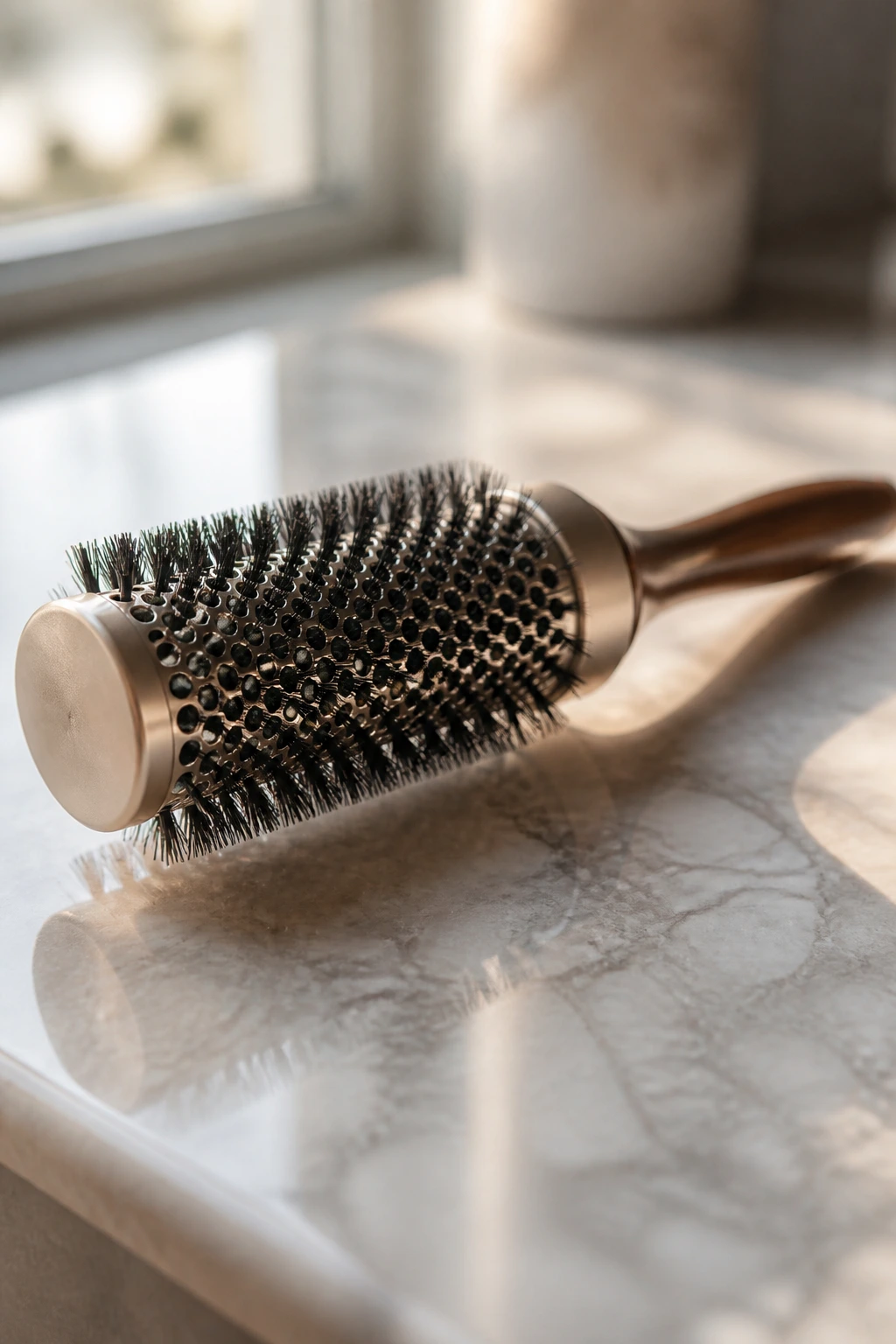
- 1-inch round brush: Small enough to shape the center and corners without flattening the whole fringe.
- Blow dryer with a narrow nozzle: Keeps the air focused so the bangs bend where you want them to.
- Heat protectant spray: Helps the front survive regular styling without getting brittle at the ends.
- Lightweight mousse or root spray: Adds a bit of lift at the base, especially useful for fine hair.
- Small flat iron: Handy for correcting a stubborn bend or polishing just the ends.
- Duckbill clips or sectioning clips: Useful for holding the rest of the hair out of the way while you dry the fringe.
- Dry shampoo: A front-of-head lifesaver when the bangs pick up oil faster than the rest of your hair.
- Light hairspray: Best used on the brush or fingertips, not blasted directly on the fringe.
Common Mistakes That Make Bottleneck Bangs Fall Flat

The first mistake is cutting the center too short. That’s the fastest way to turn a soft bottleneck shape into a blunt fringe with a split down the middle. If the center is too high, the whole front feels abrupt. The fix is simple: leave the shortest point long enough to move, not just sit there.
The second mistake is making the side pieces too thick. Heavy corners can crowd the cheeks and make the fringe feel like a curtain that forgot its assignment. Point-cut the ends and keep the bulk under control.
Product overload is another easy one. Creams, oils, and hard hairsprays can stick the fringe to the forehead or make it separate into greasy pieces. Use less than you think you need. Then stop.
Cowlicks cause trouble when they’re ignored. If the front wants to split or jump to one side, cut and style with that in mind instead of fighting it every morning. A stronger part, a tiny root clip, or a different center length often fixes the problem better than more heat.
And if the bangs keep turning boxy, the problem may be the lack of blend. Bottleneck bangs need a path into the rest of the haircut. Without that, they sit there like a separate object.
Variations and Alternatives If You Want a Different Finish

Curtain-Bang Crossover: This version keeps the bottleneck center but pushes the sides longer and looser, closer to a classic curtain fringe. It’s a good choice if you want more drama around the cheekbones and less forehead coverage overall. The cut also grows out cleanly, which makes it a safe bridge if you’re moving away from full bangs.
Shaggy Bottleneck: Add choppier texture through the ends and let the fringe break up a little more. This works best with layered cuts and hair that has some natural movement. It looks casual fast, which is either the charm or the warning, depending on how neat you like your hair.
Polished Bottle Sweep: Keep the center controlled, then style the corners into a smooth outward bend. This feels cleaner and more dressed-up than the messier versions. It suits straight hair, finer textures, and anyone who likes a neater face frame.
Soft Side Fringe Hybrid: Shift the part and let the bottleneck shape lean to one side. You still keep the shorter center and longer corners, but the overall mood gets gentler and less symmetrical. This is a smart move if your hairline or cowlick makes a strict center part difficult.
Keeping the Cut Fresh Between Trims

Bottleneck bangs usually need a trim every 4 to 6 weeks if you want the shape to stay crisp. If you’re comfortable with a softer, grown-out look, you can stretch that to 6 to 8 weeks and let the side pieces do more of the framing work. The center is the part that shows growth first, so that’s the piece to watch.
Dry shampoo helps more here than almost anywhere else on the head. Bangs touch skin, pick up oil, and flatten faster than the rest of the haircut. A tiny mist at the roots, left to sit for a minute before brushing through, usually keeps the front from collapsing.
At night, pinning the fringe back with a soft clip or tucking it into a loose wrap can stop it from waking up bent in odd directions. Morning water alone is sometimes enough to reset them. Sometimes. If the fringe is stubborn, a quick round-brush pass for 60 seconds usually fixes it faster than a full restyle.
Questions People Ask About Bottleneck Bangs

Are bottleneck bangs the same as curtain bangs?
Not quite. Curtain bangs are usually longer and more open from the start, while bottleneck bangs are shorter in the center and taper out more deliberately at the sides. The shape is narrower through the middle, which gives it a more tailored feel.
Do bottleneck bangs work on curly hair?
Yes, but the cut needs to respect shrinkage. Curly versions usually look best when they’re cut dry or nearly dry so the center doesn’t spring up too high once the curl pattern settles.
Can fine hair wear bottleneck bangs without looking sparse?
Absolutely, as long as the fringe keeps enough density at the center. Feathering should happen at the edges, not so aggressively through the middle that the bangs break apart.
What if my bangs separate at the center all day?
That usually means the hair wants a center part, or the root is too flat. Try a tiny root clip while the bangs cool, then style them with a slight bend instead of forcing them straight down.
How often do bottleneck bangs need trimming?
Most people need a shape-up every 4 to 6 weeks if they want the fringe to sit cleanly. If you prefer a softer grow-out, you can let them stretch longer and treat them more like front layers.
Do they suit a round face?
They can, especially when the sides taper downward and the center stays open. What you want to avoid is extra width at the temples, since that can make the face look broader.
Can you wear bottleneck bangs with a bob?
Yes, and the contrast can be sharp in a good way. A blunt bob gives the haircut structure, while the bottleneck fringe softens the front so it doesn’t feel too square.
The Fringe That Softens the Whole Face

Bottleneck bangs earn their reputation because they do two jobs at once. They open the forehead and they frame the face, but they do both with a light touch that feels easier to wear than a hard fringe. That’s the difference between a cut that looks good on a model and a cut that lives well on your actual head.
If you want softness around the face without losing shape, this is a strong place to start. Keep the center narrow, let the sides taper with purpose, and don’t ask the fringe to be perfectly still. A little bend is the point. A little movement is what keeps it human.
