



Short curly hair bangs for round faces have one job: break the circle without fighting the curl. That sounds simple, but the cut is doing a lot more than people think. A good fringe can pull the eye upward, carve a little space around the cheeks, and keep the front of the haircut from turning into one big puff ball that sits right where you do not want it.
Curly bangs are not a blunt, one-size-fits-all shape. A 2C wave, a springy 3B coil, and a tight 4A curl all fall differently, shrink differently, and frizz differently. If you’ve ever watched a fringe that looked tidy when wet leap up an inch and a half after drying, you already know the problem. The answer is rarely “cut shorter.” The answer is usually shape, weight, and where the bulk lands.
The styles below are built for short curly cuts and round faces that need a little more vertical line, a little more edge, or just a better front shape. Some are soft and airy. Some are sharp and cheekbone-led. A few are a touch rebellious. All of them are about making the curls do useful work up front instead of sitting there like decorative clouds.
Why Short Curly Hair Bangs Work on a Round Face
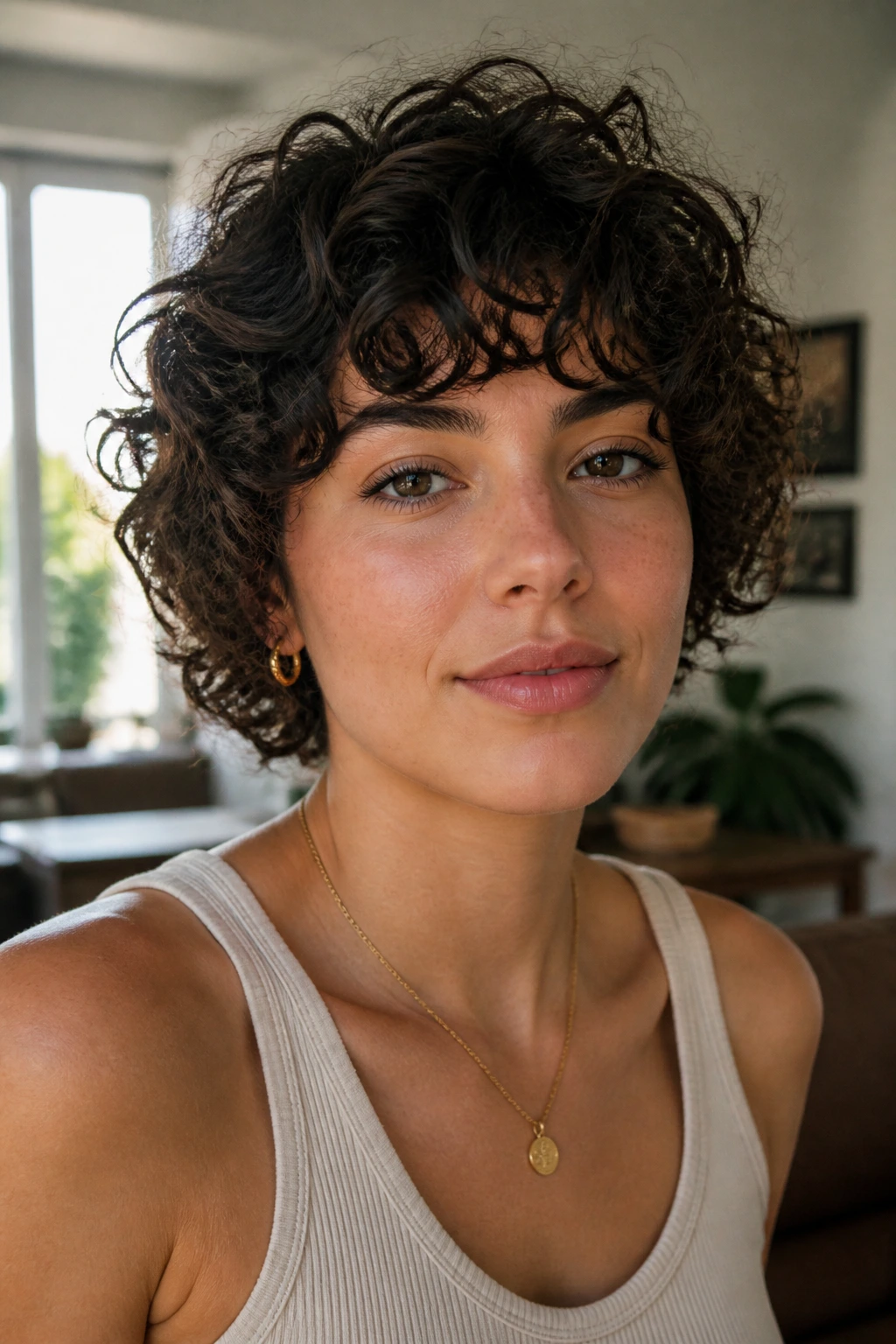
Face-Balancing Shape: The best curly fringe for a round face creates broken verticals and diagonals, which keeps the eye moving instead of stopping at the widest point of the cheeks.
Curl-Friendly Length: Curls shrink, sometimes by more than you expect, so a good cut usually starts with the curl in its dry state or close to it. That keeps the front from bouncing too high and turning stubby.
Less Box, More Movement: Short curly bangs work when they have air between the pieces. A solid block of curls across the forehead tends to widen the face; separated pieces, temple length, and a softer corner shape do the opposite.
Short Hair Loves a Front Focus: If the rest of the cut sits above the shoulders, the fringe becomes a real design feature instead of an afterthought. That’s useful. It can make a bob look sharper, a crop look more intentional, and a shag look less like it was left to chance.
They’re Easier to Personalize Than People Think: Round faces do not need the same bang map. A fuller forehead, stronger cheekbones, glasses, cowlicks, and curl density all change the answer. The right version is the one that puts the bulk where it flatters and removes it where it crowds.
Why This Collection Is Different
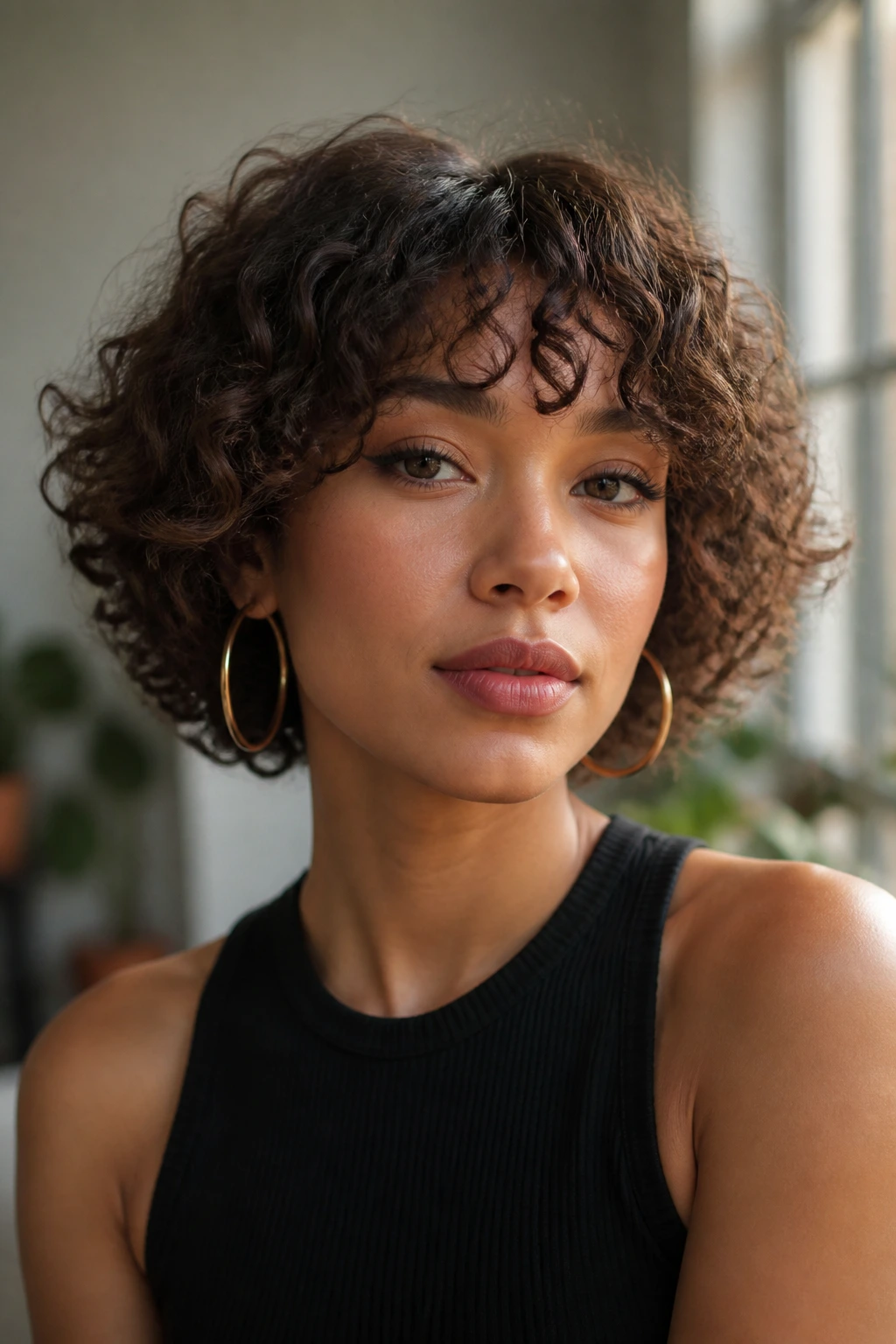
-
Shape First, Trend Second: Every style here is chosen for how it changes the outline of the face, not just because it looks cute in a mirror.
-
Built for Shrinkage: These bangs assume your curls will spring up after styling, so the shapes lean into that instead of pretending shrinkage doesn’t exist.
-
Short-Hair Friendly: None of these cuts depend on long lengths hanging past the jaw. They work with bobs, pixies, curly crops, and clipped sides.
-
Room for Texture: The goal is not to flatten your curls into obedience. The right fringe keeps texture visible while still making the front look clean.
-
Easy to Tweak: Many of these looks can be adjusted with one tiny change — a longer corner, a deeper part, a softer center piece — which matters when you are working with real curls, not a studio photo.
-
Made for Real Mornings: These ideas assume you are not spending 45 minutes negotiating each curl. A good shape should hold with a diffuser, a clip, or a quick refresh and a little patience.
1. Center-Part Curly Curtain Bangs
A center-part curly curtain bang is one of the easiest ways to open a round face without giving up the softness people love in curls. The middle split breaks the forehead line in half, and the longer front pieces draw the eye down along the cheeks instead of across them. That’s the whole trick, and it works fast.
The key is keeping the center short enough to show face but long enough to bend, not bounce into a little mushroom. If your curls have a strong spring, ask for the shortest point to land around the brow when dry, then let the sides graze the top of the cheekbone. That small difference keeps the shape from looking heavy.
This one is especially good on curly bobs that need a little movement up front. It feels polished without being stiff. And if your part naturally wants to sit in the middle, don’t fight it — use it.
2. Deep Side-Swept Spiral Fringe
A deep side-swept fringe can be a round face’s best friend when you want a little more angle and a little less width. The diagonal line slices across the forehead and gives the face a longer look, especially when the front curls are allowed to fall in loose spirals rather than being brushed flat.
Why It Flatters So Well
The side sweep shifts the visual weight off the center of the face. That matters more than people realize. A fringe that starts high on one side and drops toward the opposite brow creates a long path for the eye, and that path is what keeps the face from feeling too circular.
Keep the side with the most volume just a touch higher at the root, then let the curls settle where they want. If you force them down with too much cream, they clump and lose the airy diagonal that makes this shape work.
This style is a good answer when your curls are medium to dense and you want movement without a full curtain effect. It also plays nicely with a bob that has a little asymmetry in the cut.
3. Brow-Skimming Piecey Bangs

Piecey bangs are the opposite of a heavy, full curtain, and that’s why they suit round faces so well. You get little separated curls or curl clumps resting near the brows, which leaves skin visible and keeps the forehead from feeling boxed in. The gaps matter as much as the curls themselves.
A point-cut finish helps here. You do not want a straight line. You want the ends to look broken, slightly irregular, and alive. The easiest way to describe the goal is this: the fringe should look like it was arranged by your curl pattern, not painted on with a comb.
This style is a good pick if your hair is on the finer side and a fuller fringe would swamp your face. It also works when you like bang shape but hate the feeling of a dense wall of hair touching your forehead. Light mousse, a diffuser on low, and a tiny pinch of separation cream at the ends are usually enough.
4. Bottleneck Bangs with Softer Corners

Bottleneck bangs earn their keep because they narrow at the center and widen slightly at the edges, which is a very useful shape on a round face. The middle gives you that little bit of forehead coverage, then the longer corners soften into the sides and make the cheeks look less dominant. It’s a neat bit of geometry.
What to Ask For
Tell the stylist you want the shortest point to sit near the brow and the outer pieces to reach toward the cheekbone. That gives the fringe a taper instead of a shelf. On curly hair, the corners usually need a little more length than you think because they shrink less predictably once they dry.
This is a strong choice if you like structure but do not want anything severe. The corners keep it friendly. The center keeps it tidy. And because the shape is already built to flare outward, it does not feel cramped on short hair the way a blunt bang can.
5. Curly Shag Fringe for Short Crops
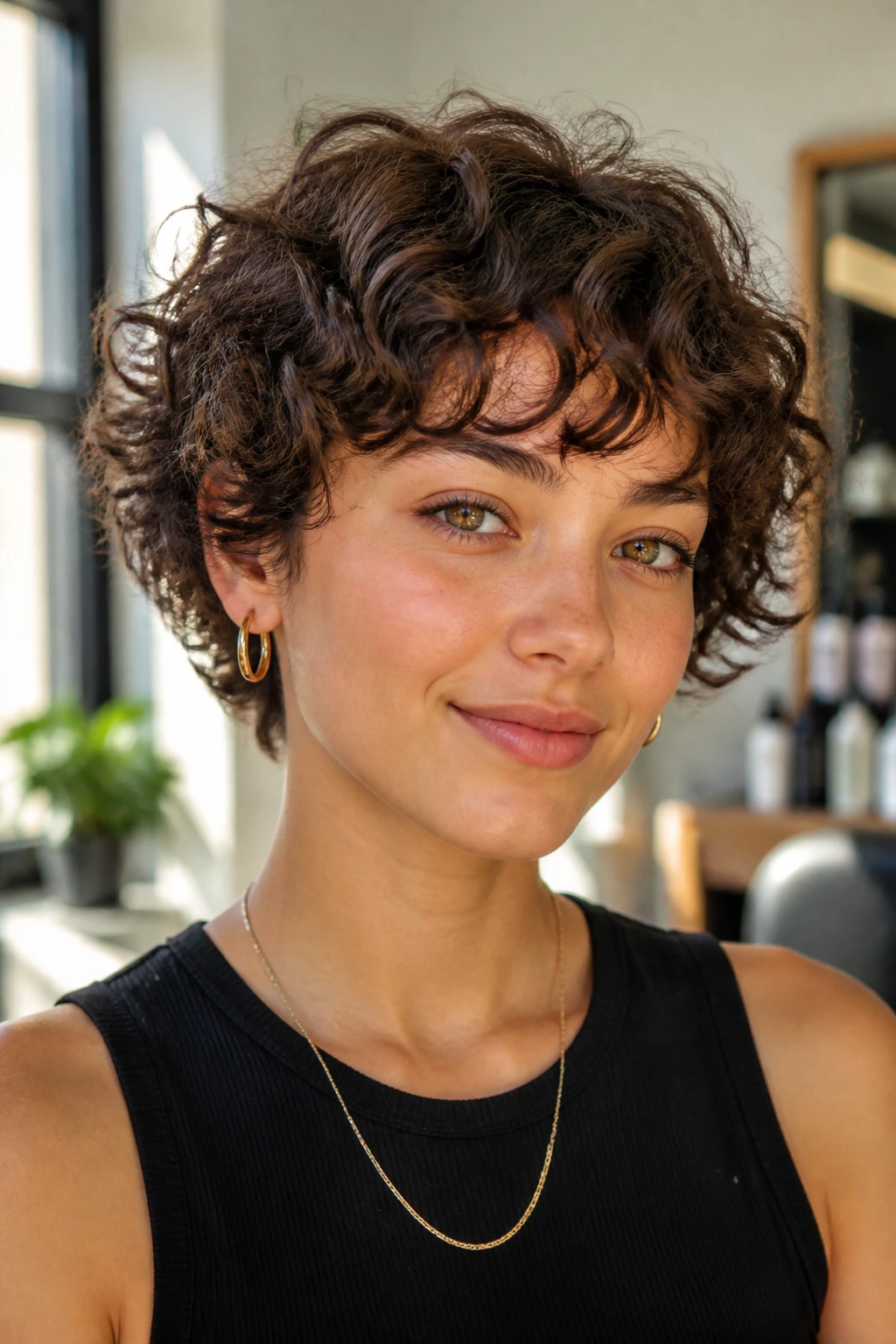
A curly shag fringe brings a little grit to the front of the haircut, which is exactly why it works on round faces. The layers keep the front from sitting in one flat line, and the texture gives the eye a place to bounce instead of simply stopping at the widest part of the cheeks.
The shag is not about perfection. Good. Perfection would ruin it. You want the fringe to look lightly broken up, with a few curls leading and a few tucking back into the shape of the cut. If your stylist leaves the front too heavy, the whole thing loses that airy, lifted feel and starts to crowd the face.
This works especially well with short curly cuts that already have movement through the crown. The front can be a bit shorter and still feel balanced because the rest of the cut is doing the work. It’s one of my favorite options when someone wants bangs but refuses to look like they are wearing a helmet made of curls.
6. Temple-Length Bangs That Thin the Sides
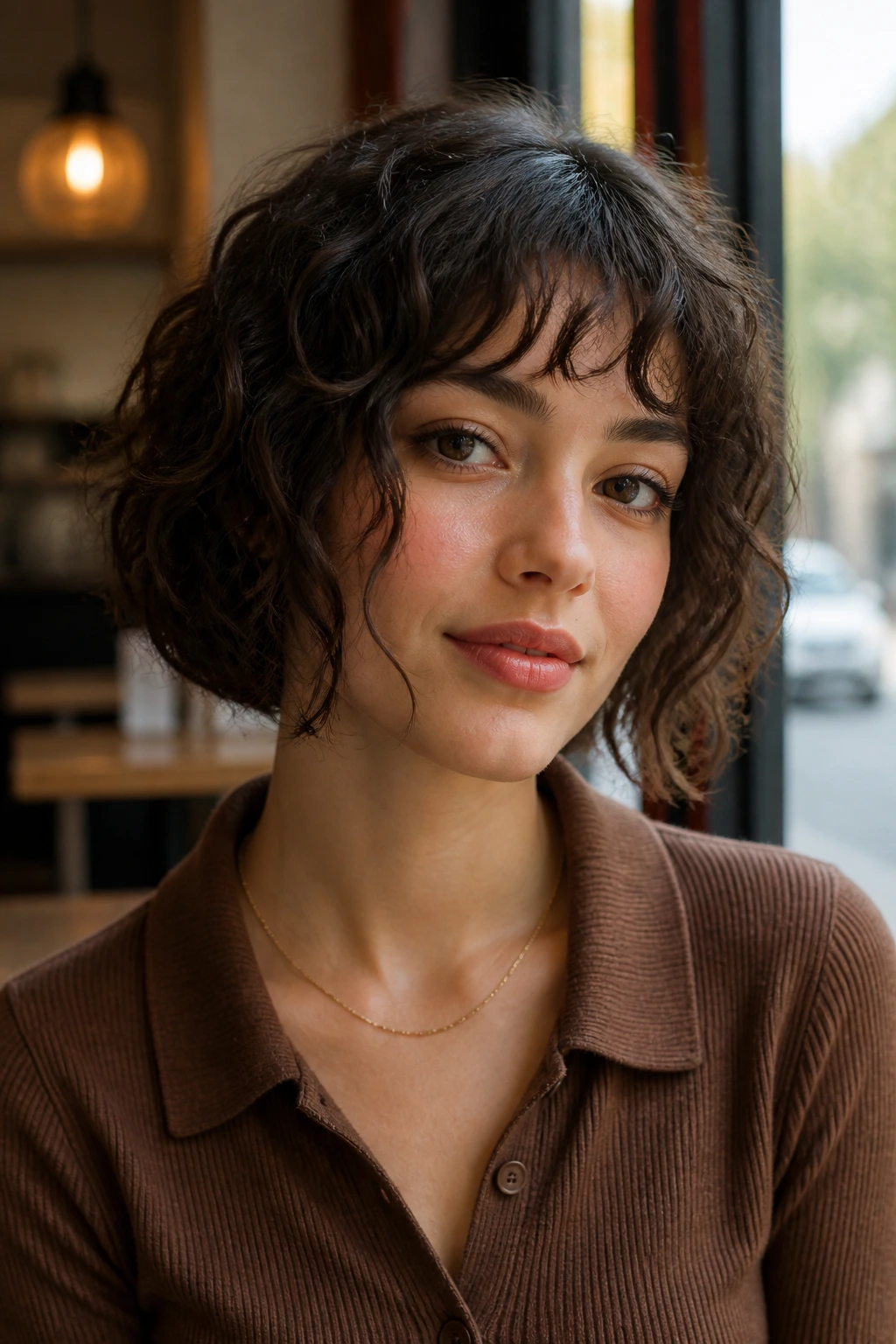
Temple-length bangs are sneaky in the best way. They keep the front soft, but the real magic is the length at the temples, which helps visually slim the sides of a round face. Instead of ending right at the cheek’s fullest point, the curl pieces drop past it and create a longer frame.
This shape is useful if your face has round cheeks and a shorter chin. That combination can read very full at the center, so temple pieces help stretch the look. They also blend nicely into a bob, because the front pieces can be tucked behind the ear on one side without making the shape collapse.
Ask for a gentle diagonal from brow to temple, not a hard angle. Hard angles can look carved in a way that fights curly texture. Softness here is better. It lets the fringe move when you move, which is half the appeal.
7. Ringlet Micro Fringe
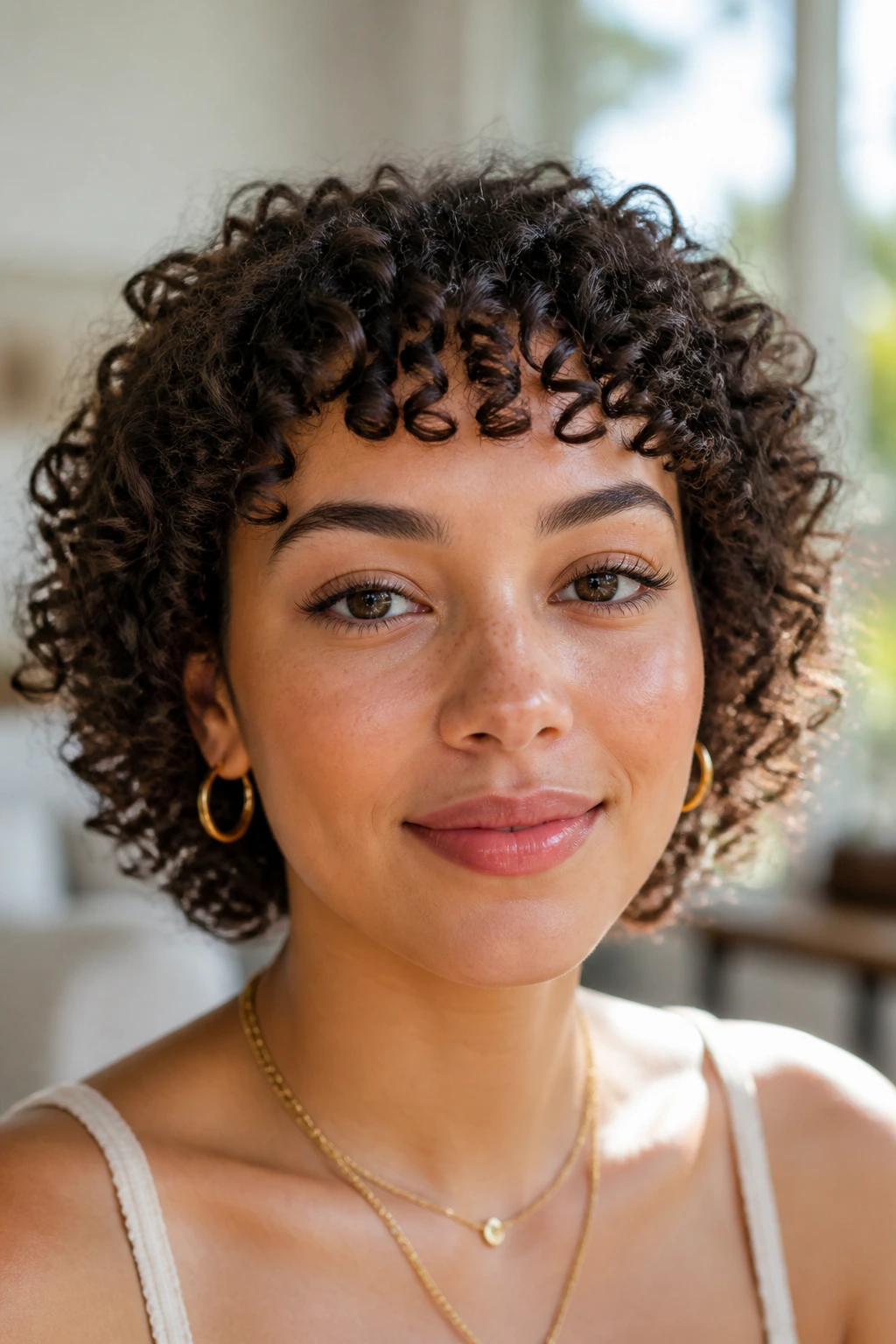
A ringlet micro fringe is not timid. It sits shorter, lets the curls spring up, and puts a tiny cluster of defined curls right above the forehead. On a round face, that small amount of forehead exposure can be surprisingly effective because it keeps the center open instead of closing it off with a big, heavy band.
This style depends on predictable shrinkage. If your curls jump all over the place, a micro fringe can turn into a surprise. But if you know how your ringlets settle, it can be sharp, playful, and a little bit cheeky in the best way.
The trick is keeping the rest of the cut tidy enough to support it. A micro fringe looks strongest when the bob or crop beneath it has clean edges. Otherwise the front and the sides fight each other. When it works, though, it gives short curly hair real personality.
8. Tapered Pixie Bangs
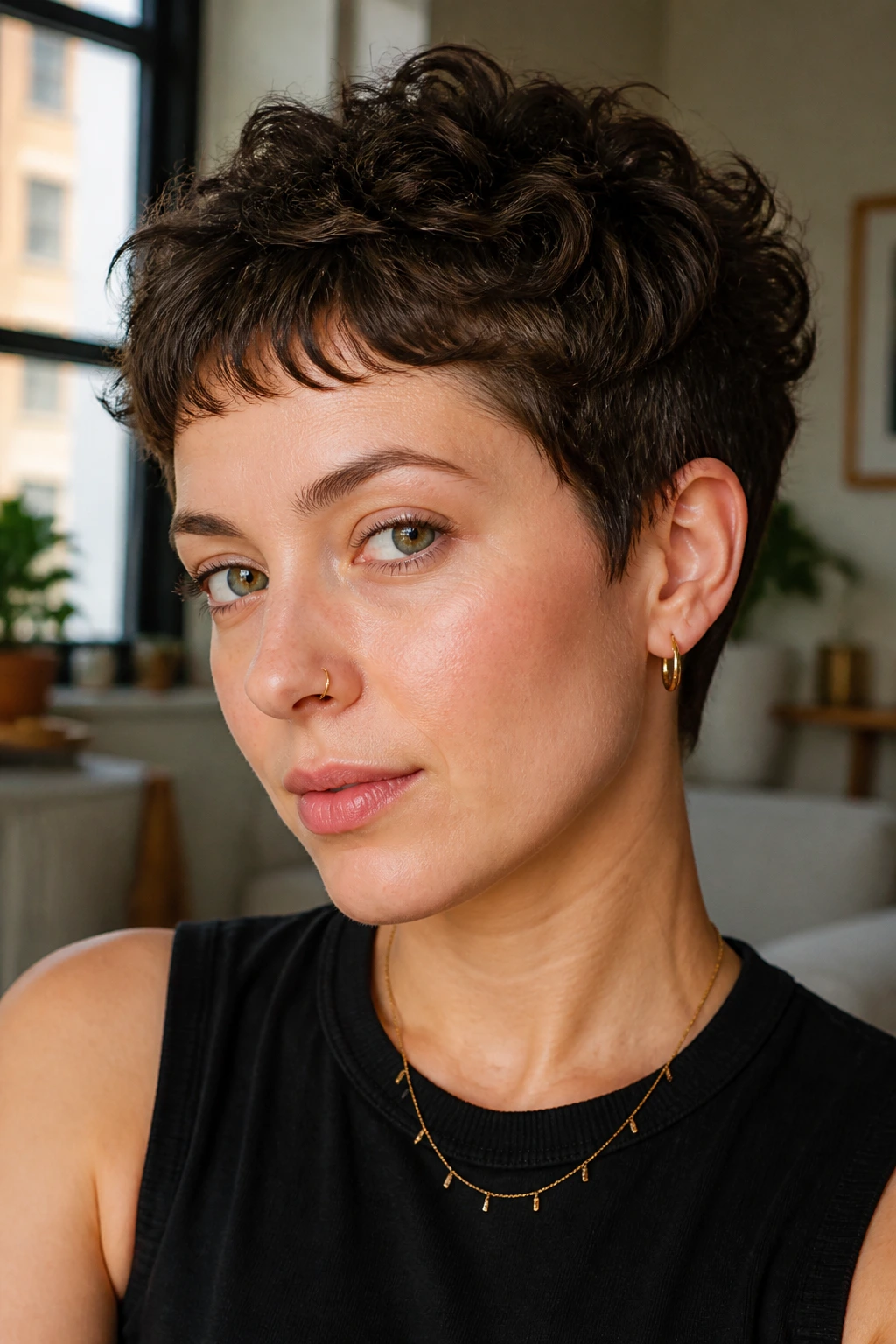
Tapered pixie bangs are for people who want the front to feel light, cropped, and purposefully shaped rather than full of fluff. The taper removes bulk as the bang moves into the side, which helps a round face avoid that wide, circular outline some short cuts can create.
Why They’re Smart on Dense Curls
Dense curls can turn a tiny bang into a wall if the interior is not thinned out. A tapered pixie fringe solves that by reducing weight where the curls pile up. You still get texture, but not that heavy shelf that sits across the forehead and makes the face look wider.
This one is especially good if you wear your hair short at the sides or nape. The front feels matched to the rest of the cut, not bolted on. Ask your stylist to keep the center area slightly shorter and let the corners feather into the temples. The result should feel crisp, not boxy.
9. Cheekbone-Frame Bangs
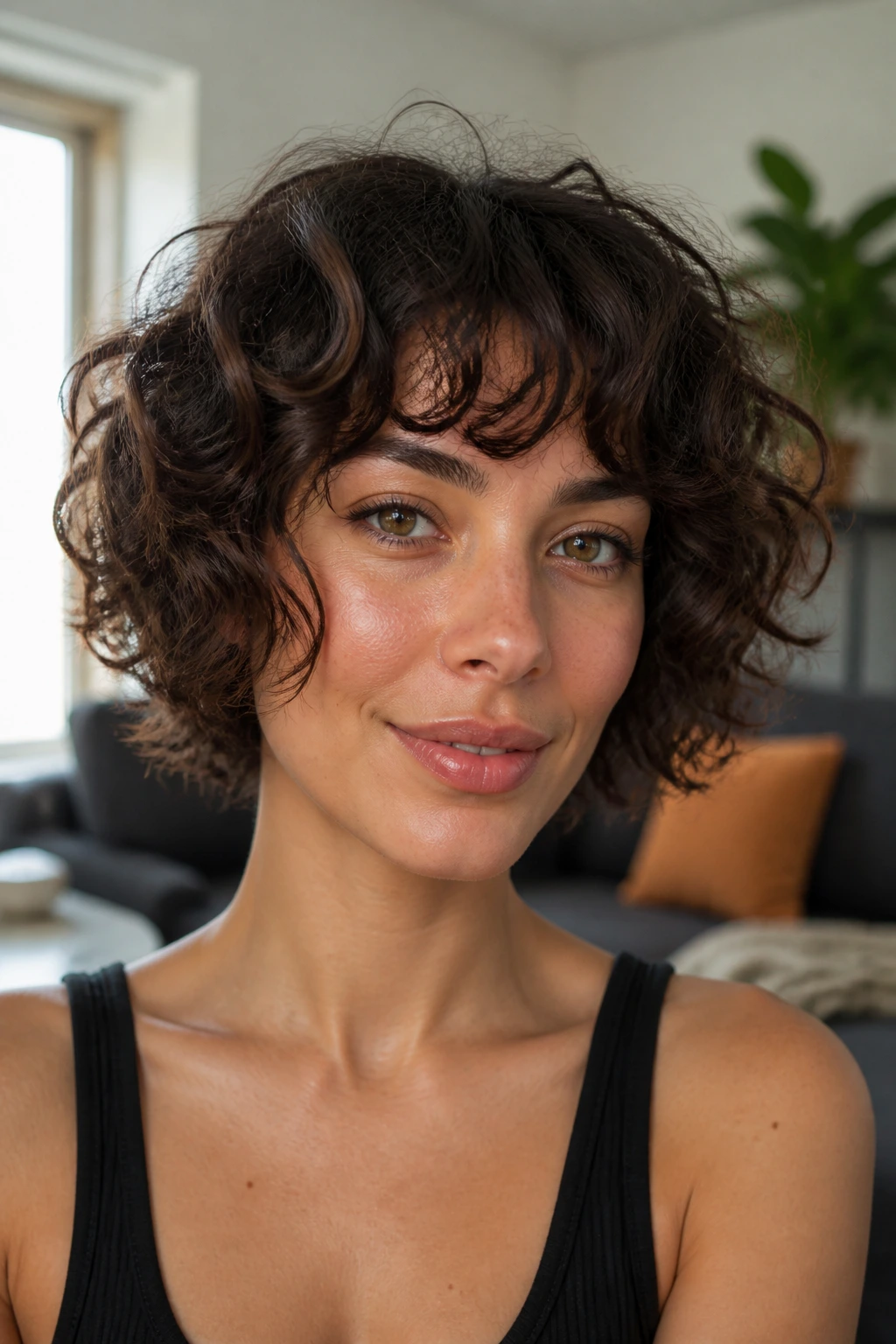
Cheekbone-frame bangs do exactly what the name says: they lead the eye to the cheekbone and then away from the broadest part of the face. That makes them one of the most useful short curly bang shapes for round faces, especially if you want a bit of definition without a dramatic side sweep.
The length matters here. Too short, and the fringe floats awkwardly above the features. Too long, and it drags down into the mouth area, which can be fussy on short cuts. The sweet spot usually sits right where the cheek starts to angle inward.
I like this shape when a curly bob needs a little architecture. It adds lines without looking hard. And because the pieces frame the cheek rather than hiding it, the whole face ends up looking more open, not less.
10. Asymmetric Curly Fringe

Asymmetry is your friend when a face already has a soft, circular outline. A fringe that’s longer on one side and shorter on the other creates a built-in diagonal, and that diagonal does a lot of the visual work. It keeps the eye moving and prevents the front from reading as one solid curve.
This cut can be subtle or obvious. A tiny half-inch difference across the front gives a quiet lean. A more dramatic difference feels bolder and a little editorial. Either way, the shape is doing something helpful: it keeps the center from becoming too uniform, which is where round faces can start to feel extra round.
If your curls have a strong clump pattern, ask for the longer side to preserve the curl definition. That way the asymmetry looks intentional rather than accidental. It’s a good style when you want edge without harshness.
11. French-Inspired Short Bangs

French-inspired short bangs are airy, slightly imperfect, and never too precious. That looseness is exactly why they work on curly hair. The front stays light, the brow stays partly open, and the curls keep their own shape instead of being dragged into a straight, stiff line.
The best version of this look is cut with a soft hand. Not blunt. Not over-layered either. Just enough removal of weight so the bangs settle in little curved pieces that skim the forehead and lift away from the skin. On a round face, that touch of openness makes a real difference.
This style likes a bob or crop with some movement through the top. If the rest of the cut is too round, the front loses its charm. But when it’s balanced right, the result feels polished in a way that still looks relaxed.
12. Rounded Soft Bangs
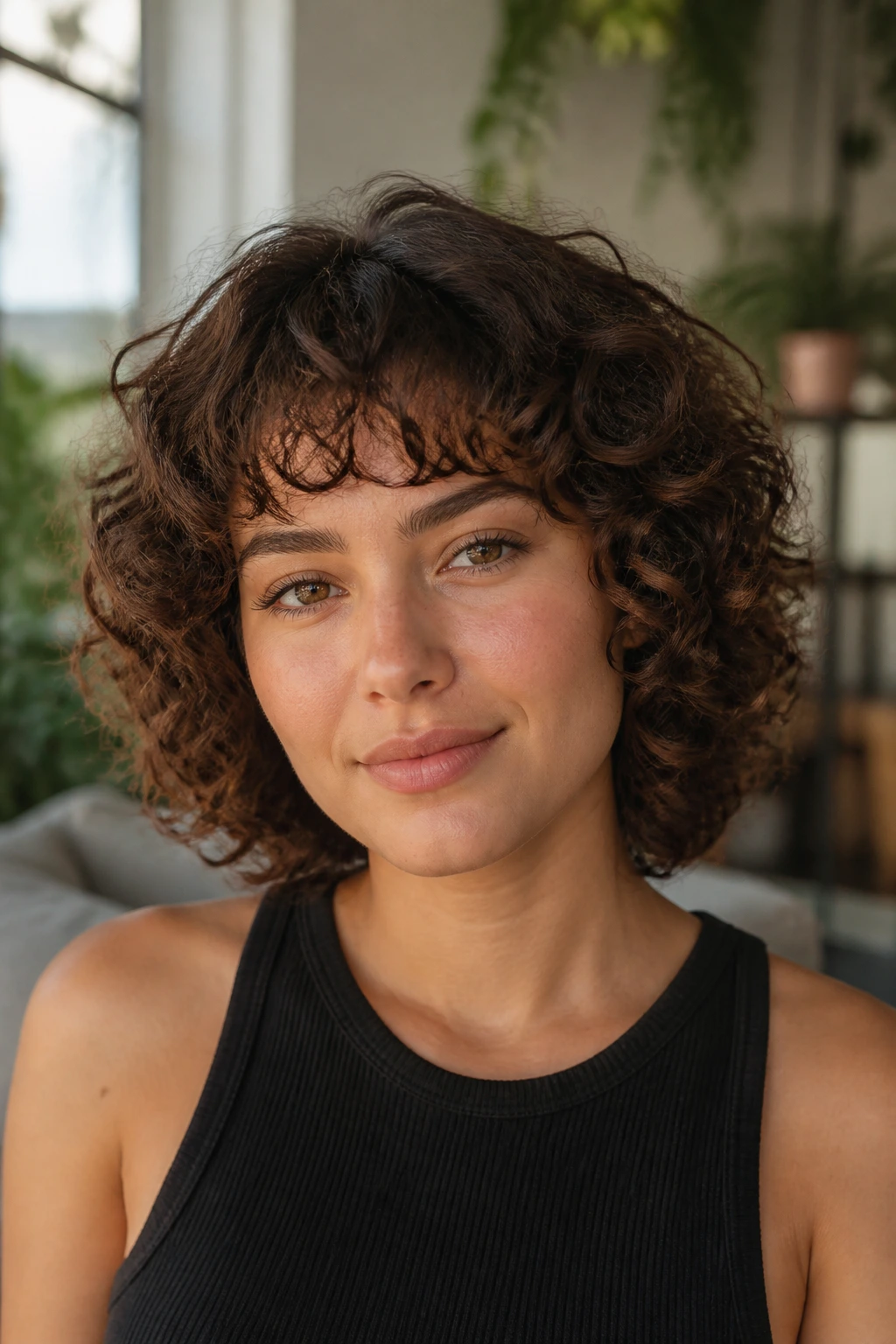
Rounded soft bangs are tricky, because “rounded” can go wrong fast on a round face. The reason this version works is that the curve is soft and broken, not a perfect arc. That little bit of uneven texture keeps the fringe from echoing the face shape too closely.
Think of it as a gentle ceiling for the forehead, not a hard cap. The center can sit a touch shorter, with the sides drifting longer toward the temples. Curls do the rest. A few pieces will spring up more than others, and that irregularity helps the style feel lighter.
This is a nice option for someone who wants a fuller fringe without a thick wall of hair. The shape still covers the forehead, but it does so in a way that keeps the cheeks from looking overemphasized. It’s softer than a blunt bang and less fussy than a full curtain.
13. Airy Wispy Fringe
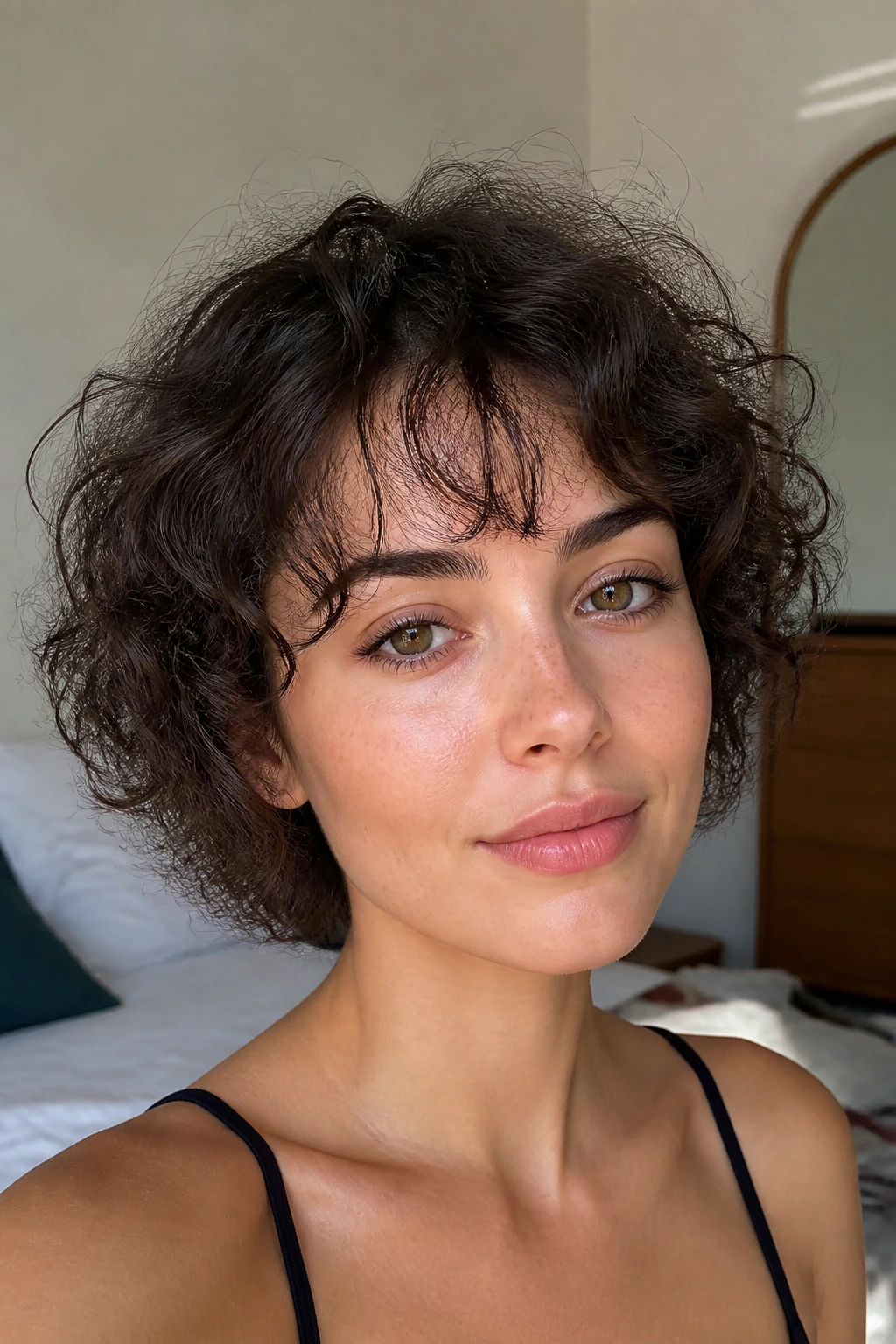
Airy wispy bangs are for curls that naturally sit on the lighter side or for anyone who wants a front fringe without much density. The wispy finish leaves skin showing through, which matters on a round face because it prevents the forehead from disappearing under one solid mass of hair.
Best Styling Move
Use a small amount of lightweight cream or mousse, then separate a few pieces with your fingers while the hair is still damp. A comb can make this fringe too tidy. Fingers keep the gaps that make it work.
This style is especially nice if your hair is fine but curly. Fine curls can lose shape fast under too much product, so a wispy fringe gives you softness without collapse. It also grows out gracefully, which is a quiet advantage people tend to ignore until they are stuck with bangs that need a trim every two weeks.
14. Lifted Volume Bangs
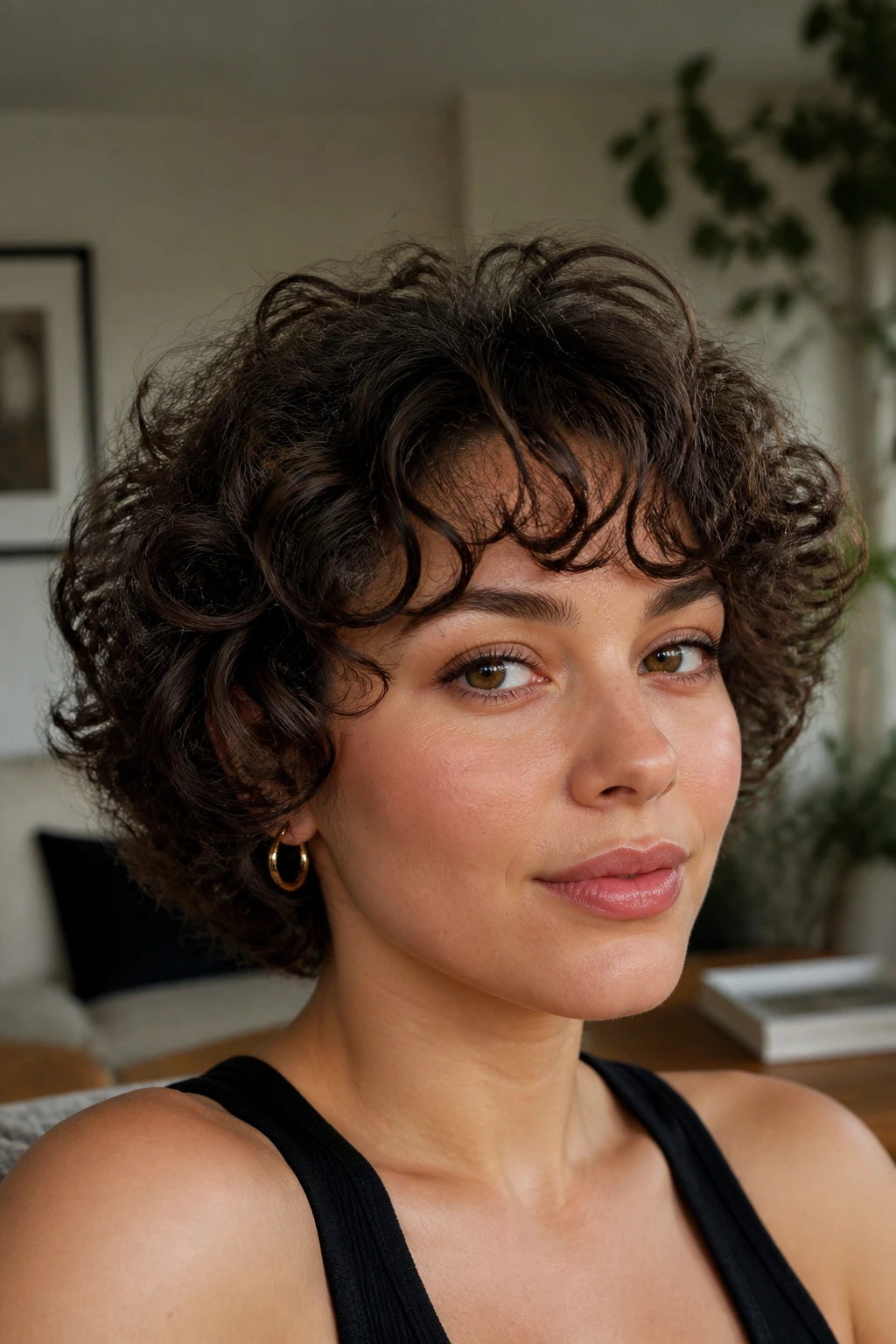
Lifted volume bangs are about root direction, not just curl shape. If the roots rise slightly before the curls settle, the front gains height instead of width, and that’s useful on a round face. You are not trying to build a tower. You are just trying to avoid a flat piece that spreads sideways.
A diffuser helps here, especially if you keep it pointed upward at the front for the first few minutes of drying. Clip the bangs up at the root while they set if they tend to sit low. That tiny bit of lift makes the face look a little longer, and the fringe stops hugging the forehead in a heavy sheet.
This style is good for thicker curls that want to sit down. It adds shape without pushing the bangs too far into the eyes. The result feels lively, but not messy.
15. Halo Fringe
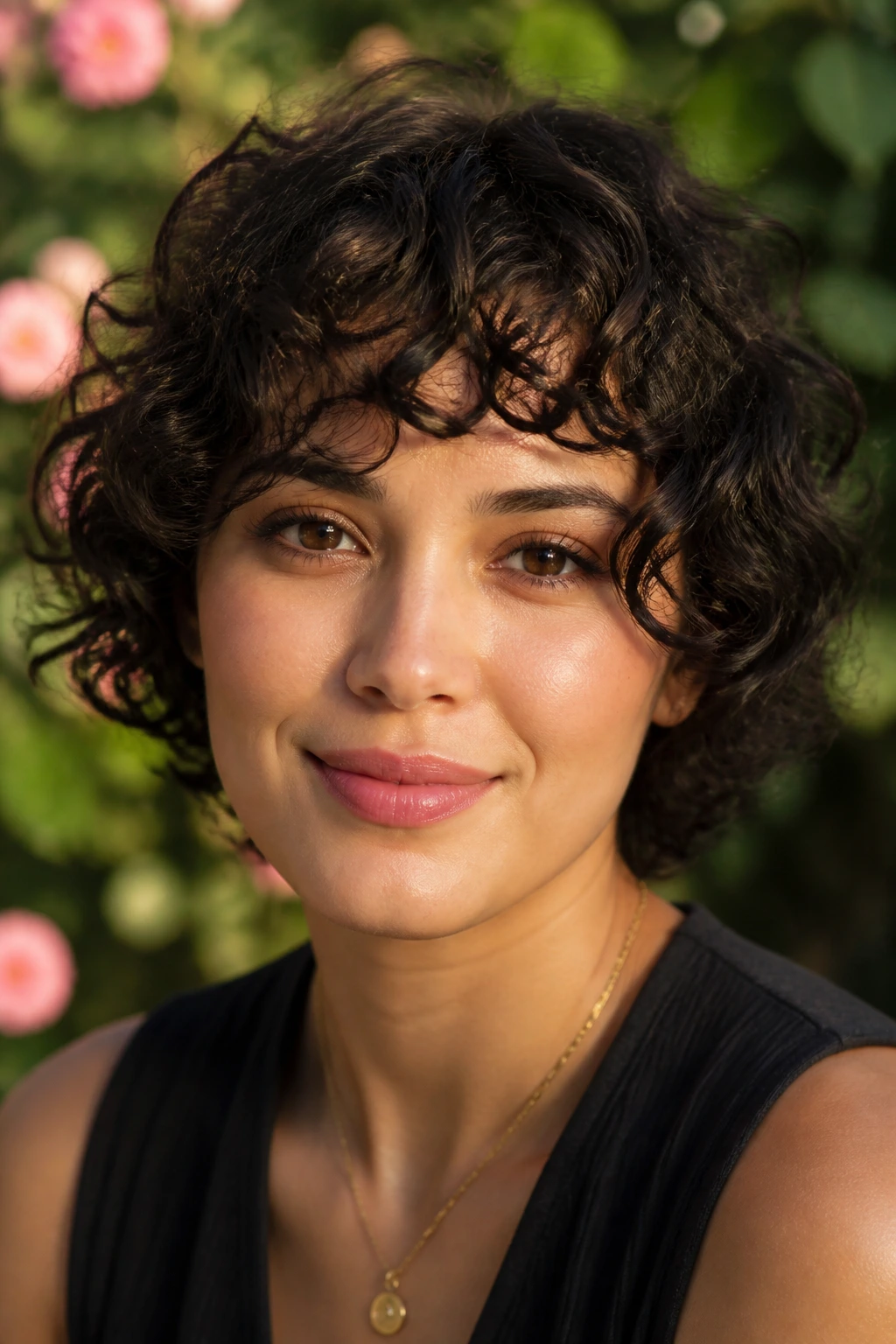
A halo fringe curves around the forehead and then releases at the temples, which gives the front a soft frame without enclosing the face. On a round face, that release at the sides is the part that matters most. It keeps the silhouette from turning into a perfect circle, which is exactly what you want to avoid.
Where It Shines
This shape works beautifully on short curly bobs with a bit of crown lift. The halo effect looks strongest when the curl pattern is defined but not crunchy. If the product makes the bangs too stiff, the curve loses that floating quality and starts to feel dated fast.
Ask for the inner front pieces to be lightened a little, especially if your hair is dense. The whole look depends on movement. Too much weight and the halo becomes a curtain. Too little and it falls apart. There’s a narrow lane here, but it’s a good one.
16. Coily Curved Bangs
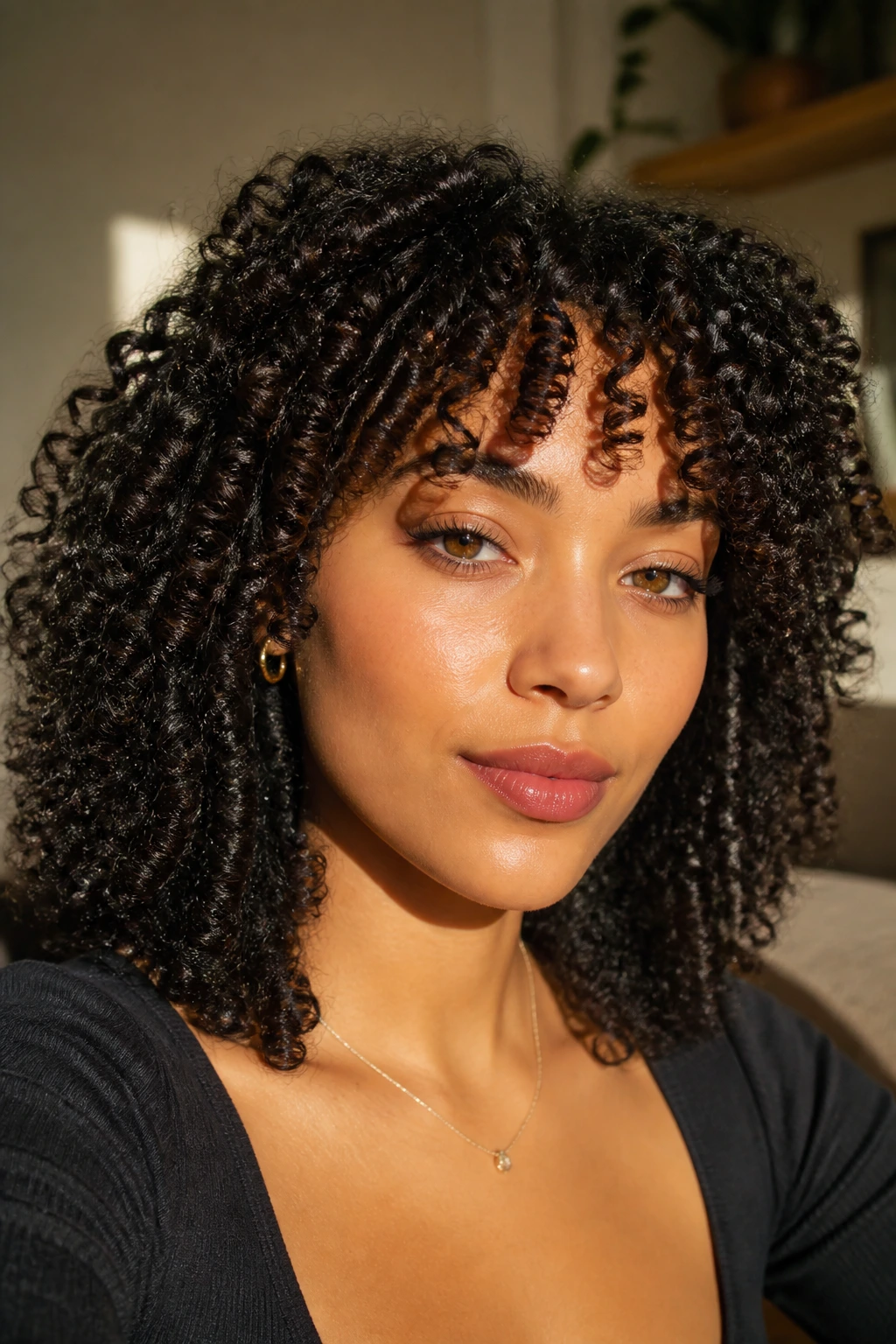
Coily curved bangs are built for tighter textures that need shape, not flattening. The curve should follow the natural coil pattern instead of fighting it, which keeps the fringe from shrinking up into a blunt patch that sits too high on the forehead.
With coily hair, the face-framing shape matters even more. A round face can take on extra width if the bang is cut too short all the way across. A curved shape lets the center sit slightly shorter while the outer pieces fall a little longer at the temples. That keeps the front controlled and flattering.
This is one of those cuts where a dry shape check is non-negotiable. Wet coils lie. They always do. A stylist who understands that will cut with shrinkage in mind and leave you with bangs that still look like bangs after they dry.
17. Hidden-Middle Split Fringe
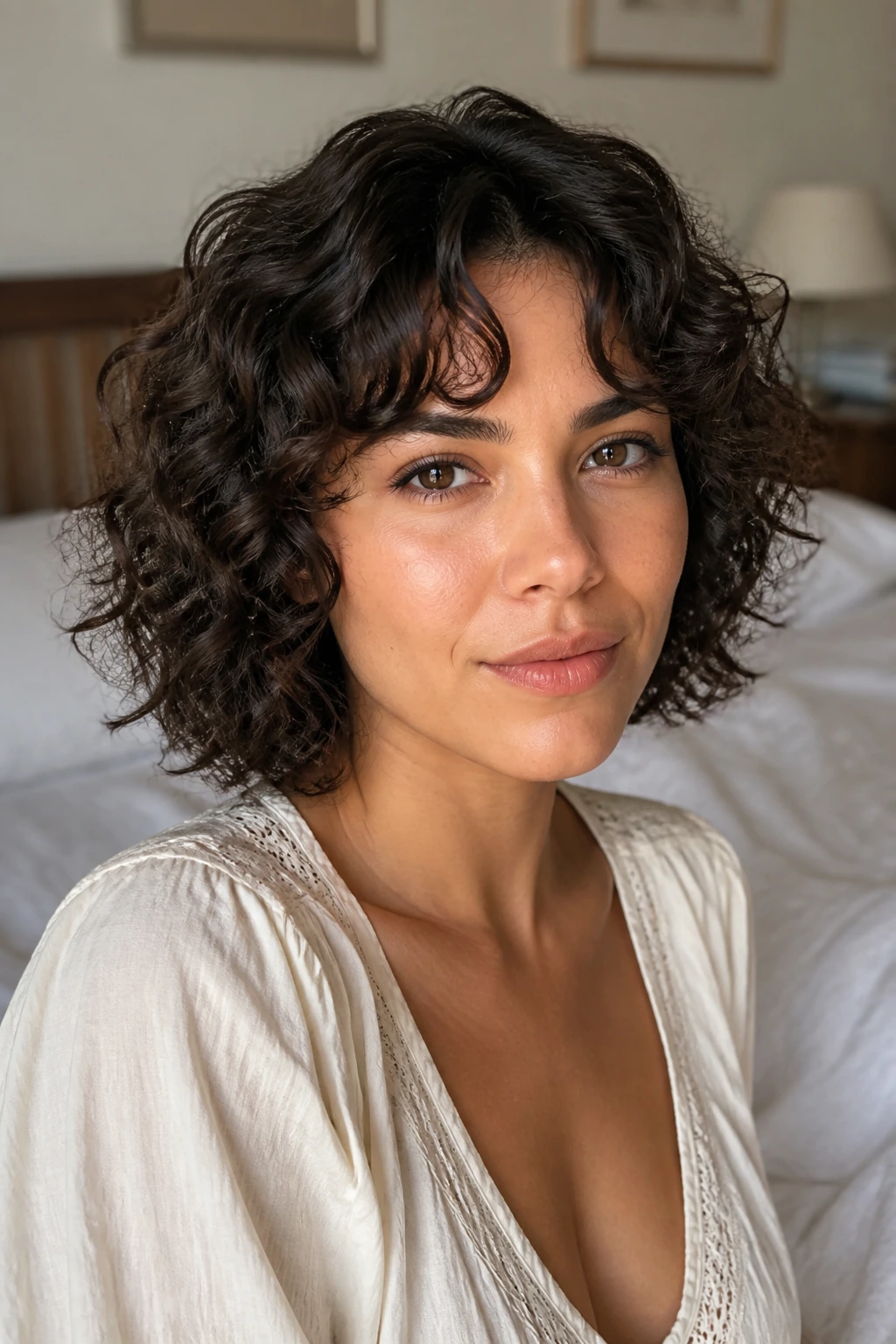
A hidden-middle split fringe is a nice compromise if you want the look of bangs without the constant commitment of a full fringe. The center part is there, but it’s tucked and softened so it doesn’t read as obvious. On a round face, that hidden split opens the forehead and adds a vertical line right where you need it.
The sides can still carry enough curl to feel like a fringe. They just don’t crowd the center. That gives you flexibility on days when your curls are doing their own thing. You can wear the split more clearly, fluff it wider, or let it collapse into a soft face frame.
This shape also grows out well, which is not a tiny detail. Short curly bangs can become annoying fast if the cut demands perfect styling every morning. A hidden split is more forgiving. It gives you some room to be lazy, which is a real styling advantage.
18. Flipped-End Bangs

Flipped-end bangs bring movement at the edges, and movement is useful when the face shape needs a bit of length. The slight flip at the ends pulls the eye outward and downward, which stops the forehead from looking too squared off by the fringe.
This one has a little retro flavor, but on short curly hair it feels fresh when the flip is soft rather than stiff. The curls at the end should turn just enough to be visible, not so much that they look overstyled. A diffuser and a light scrunch at the finish usually do the job.
I like this on bobs that already have a bit of swing in the shape. It keeps the bangs from sitting dead still. And dead still is the enemy here. Curly bangs always look better when a few pieces move off the line.
19. Glasses-Friendly Short Bangs

Glasses change the game. Frames add a strong horizontal line across the face, so curly bangs have to work around that instead of fighting it. Glasses-friendly short bangs usually sit a little higher in the center and a little longer at the corners, which keeps the lenses from getting crowded.
The safest move is leaving enough room between the brow and the top of the frame so the hair doesn’t snag every time you push your glasses up. That tiny annoyance can ruin an otherwise good cut. If the curls are dense, ask for the fringe to be thinned with point cutting rather than chopped bluntly.
These bangs are practical without looking plain. They let the glasses become part of the frame instead of a collision point. That matters more than people think, especially when the curls themselves already have strong personality.
20. Undercut Fringe
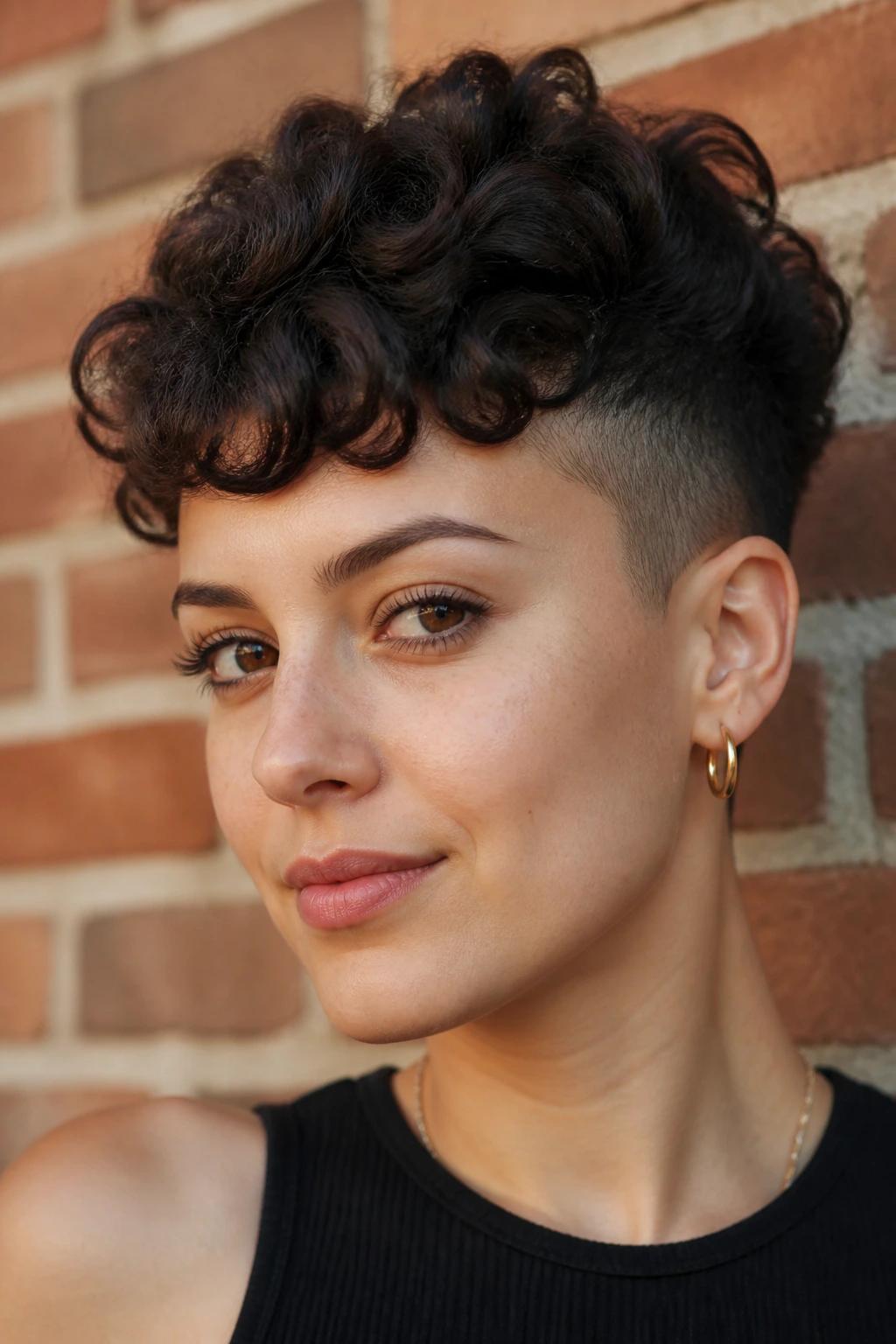
An undercut fringe is a smart fix for thick curly hair that wants to spread outward instead of down. By removing bulk underneath, the front can sit closer to the forehead and keep the shape cleaner. On a round face, that restraint helps a lot.
This is not a timid cut. It has edge. But the edge is useful, because thick curls can make a bang feel wider than the face if the weight isn’t controlled. An undercut or hidden reduction inside the fringe lets the top layer look full while the base stays lean.
It works especially well with short pixies and curly crops. The cut keeps the fringe from overwhelming the features, and that means the face still leads the look. If your hair is dense and heavy up front, this is one of the most honest fixes on the list.
21. Grow-Out-Friendly Bangs
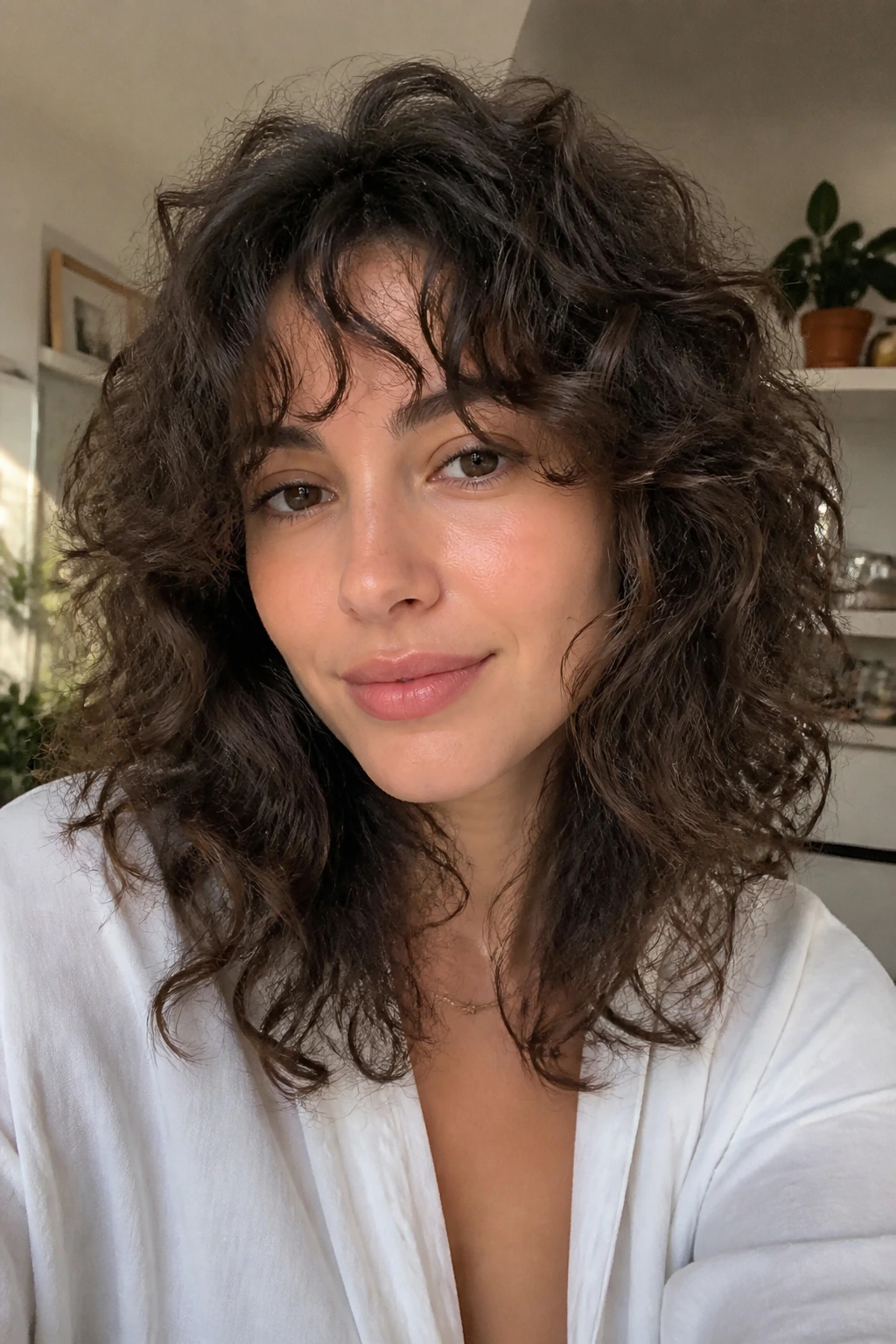
Not every bang needs to be a high-maintenance little project. Grow-out-friendly bangs are cut with a bit more length from the start, which means they move from fringe to face frame without that awkward stage where everything sits in your eyes. For a round face, that extra length also helps stretch the silhouette.
The shape usually starts around the brow or slightly below when dry, then blends into the sides with no hard break. That gives you options. You can wear them straight down, split them, or tuck them back on a lazy day. Useful. Rarely glamorous. Still useful.
I think this is a strong choice for anyone who likes the idea of bangs but does not want monthly panic trims. Curly hair changes. The grow-out-friendly version respects that and leaves a little room for the cut to evolve instead of collapsing.
22. Wet-Set Defined Bangs
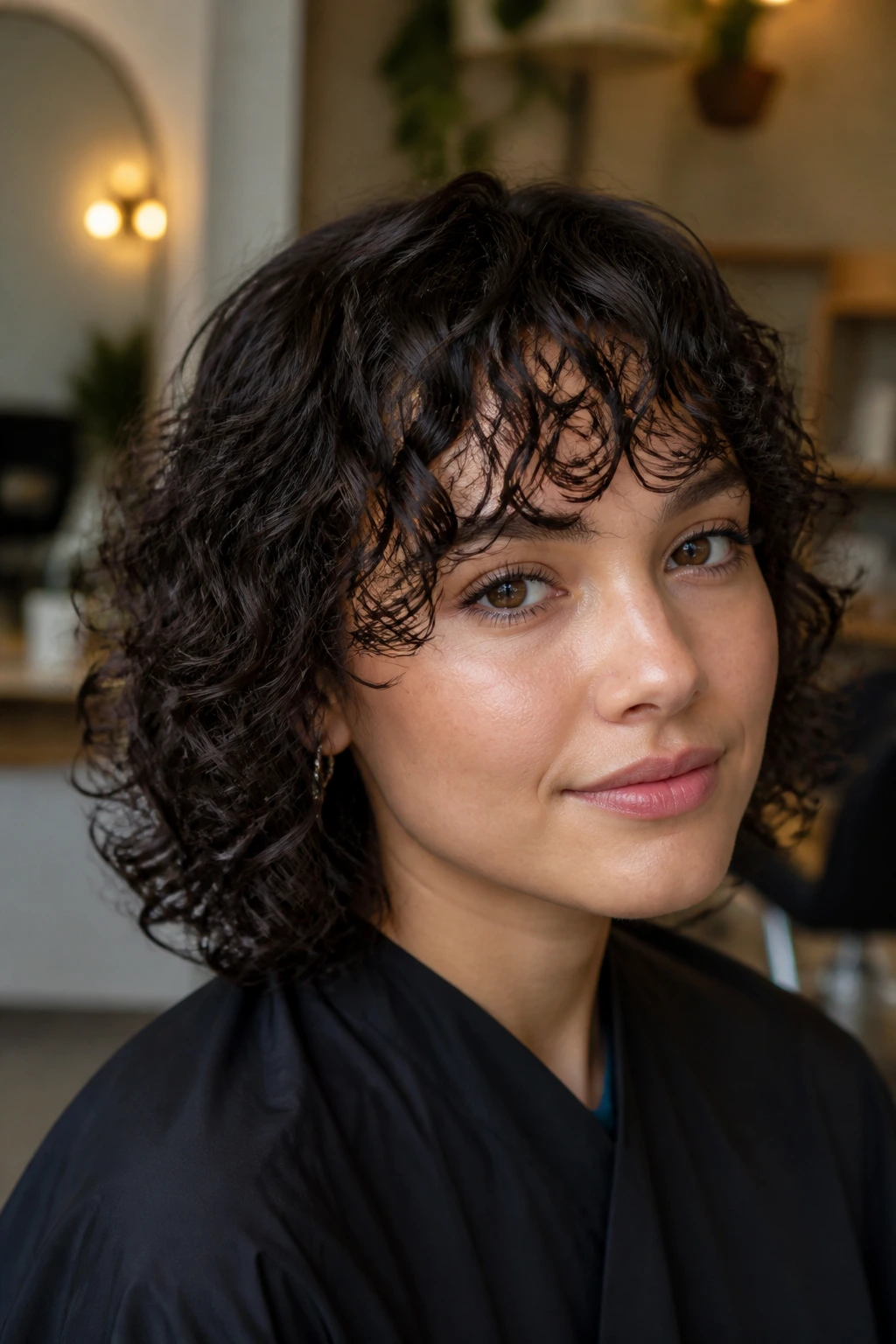
Wet-set bangs are for people who like their curls defined and are willing to spend a few minutes setting the shape while the hair is damp. The result can be gorgeous on a round face because the front stays controlled, narrow at the root, and clean along the brow line. You get shape, not puff.
How It Works
The fringe is brushed or finger-placed into position while damp, clipped lightly if needed, then allowed to dry in place with a diffuser or air. That initial direction matters. Curls remember where they were told to go, at least more than people assume.
This style does not forgive chaos early on. If the pieces are tossed around while drying, the shape gets fuzzy fast. But if you’re willing to set the front properly, the fringe can hold a neat, lifted frame that makes a round face look more sculpted.
23. Diffused Puff Fringe
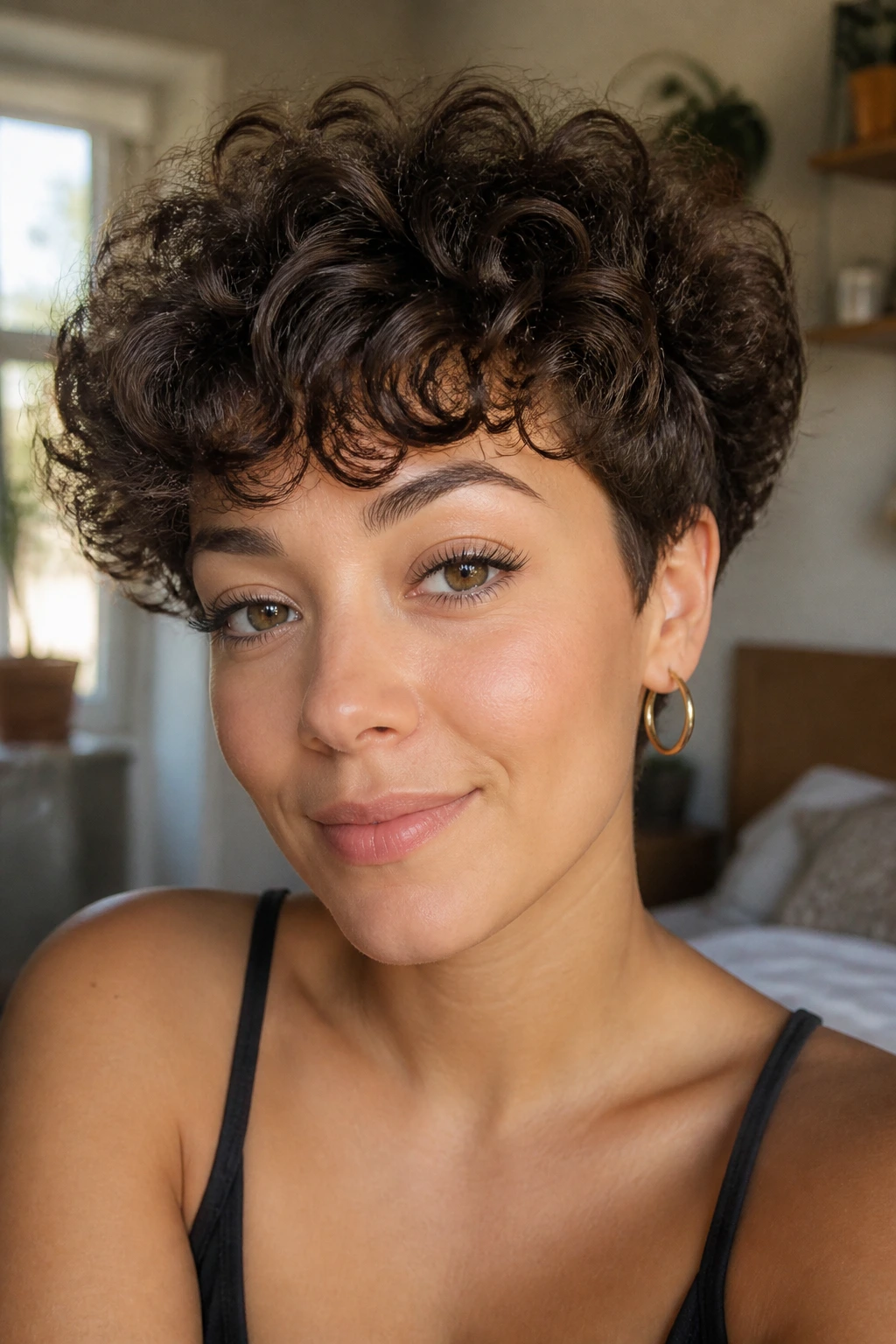
A diffused puff fringe sounds airy, and that’s the point. The curls are dried with a diffuser in a cupped, lifted position so the front keeps volume without becoming a big round bubble. On a round face, the trick is to keep the puff narrow at the base and loose at the ends.
Low heat helps. High heat tends to force frizz outward, and frizz is not the same as volume. I say that because people confuse them all the time. Good volume has shape. Frizz has opinions.
This fringe works well if your curls naturally like to expand a bit and you want to keep that energy up front. It’s a good match for shorter cuts that need the front to feel alive, not flattened. The whole look reads relaxed, but not careless.
24. Layered Bob Bangs with Fringe
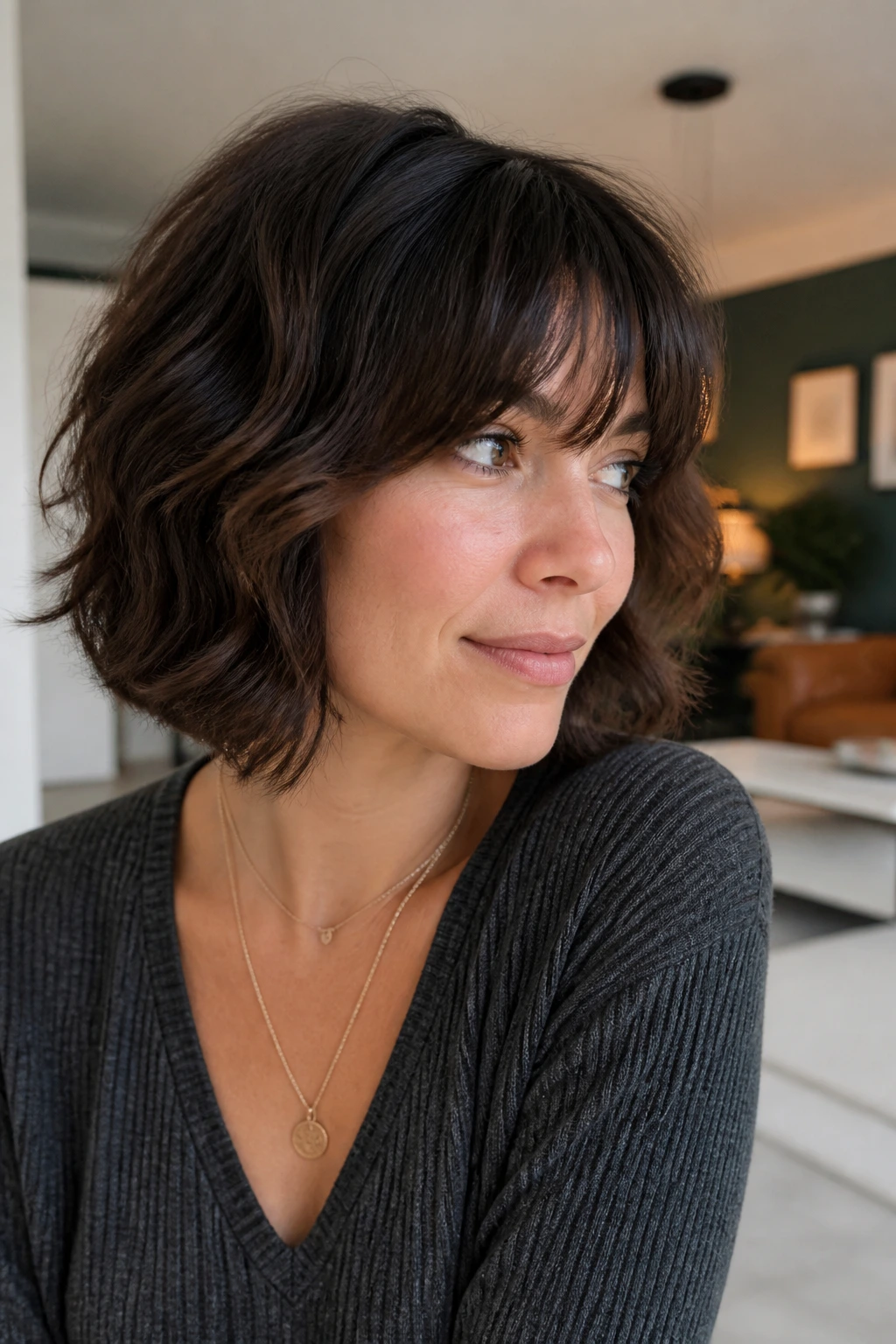
A layered bob with bangs gives the fringe a built-in support system. The layers around the sides and crown keep the front from becoming the only thing that matters, which is helpful on a round face because the eye gets more than one line to follow. That spreads out the shape in a good way.
The fringe itself can be soft, piecey, or slightly split. What matters is that it blends into the bob instead of sitting on top of it like a separate object. When the layers and bangs are connected properly, the haircut has a cleaner line and less width at the cheeks.
This is one of the easiest styles to wear if you want bangs but also want your bob to feel modern. It’s not fussy. It just works with the haircut rather than against it.
25. Open Brow Bangs

Open brow bangs leave a little of the eyebrow visible, and that tiny gap changes the whole expression. On a round face, that open space keeps the front from feeling heavy and lets the brows do some of the framing work. The face looks more awake, less enclosed.
Best for a Softer Forehead Line
If your forehead is on the shorter side, a fully covered fringe can feel crowded fast. Open brow bangs avoid that. They sit close enough to count as bangs, but not so low that they swallow the top half of the face.
I like this shape when the goal is ease. You can still let curls fall forward, but the cut doesn’t demand a perfect finish. A few separated pieces across the brow are enough. That kind of loose control looks especially good on short curly hair, where a little lift often beats a lot of density.
26. S-Curve Bangs
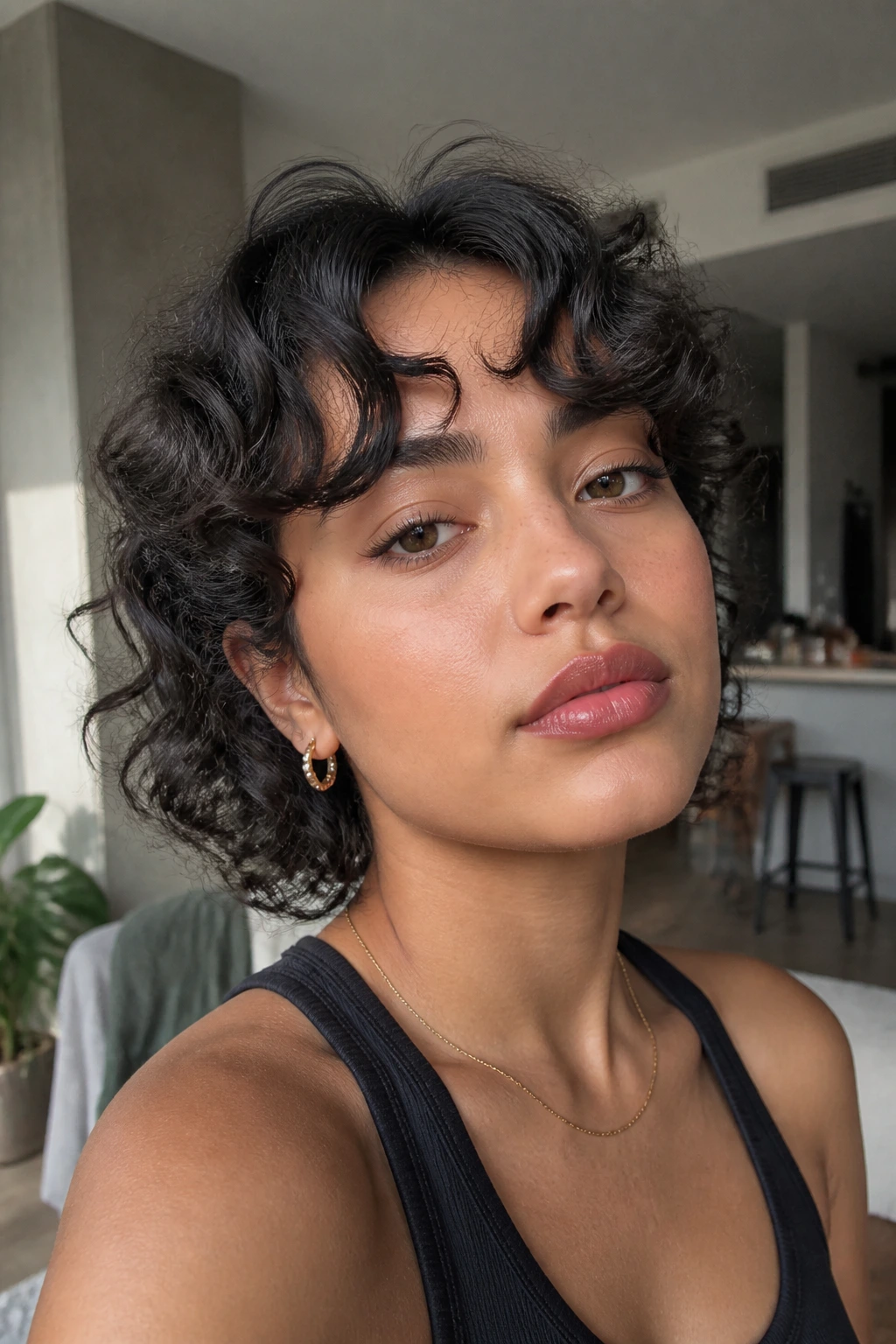
S-curve bangs bend instead of falling straight, and that bend is exactly what gives them their face-slimming quality. The line starts with a small lift at the root, dips through the middle, then curves again near the ends. On a round face, that S shape creates movement where a blunt line would just widen things.
This one works best when the curls are loosely defined or medium in texture. Tight curls can create too much bend too quickly, while looser curls can follow the curve more naturally. A light styling product helps keep the shape readable instead of fuzzy.
The look feels a little unexpected, which I like. It keeps the fringe from becoming predictable. And on short cuts, predictability can be a problem because it makes the whole haircut look more static than it needs to be.
27. Short Fringe with Temple Pieces
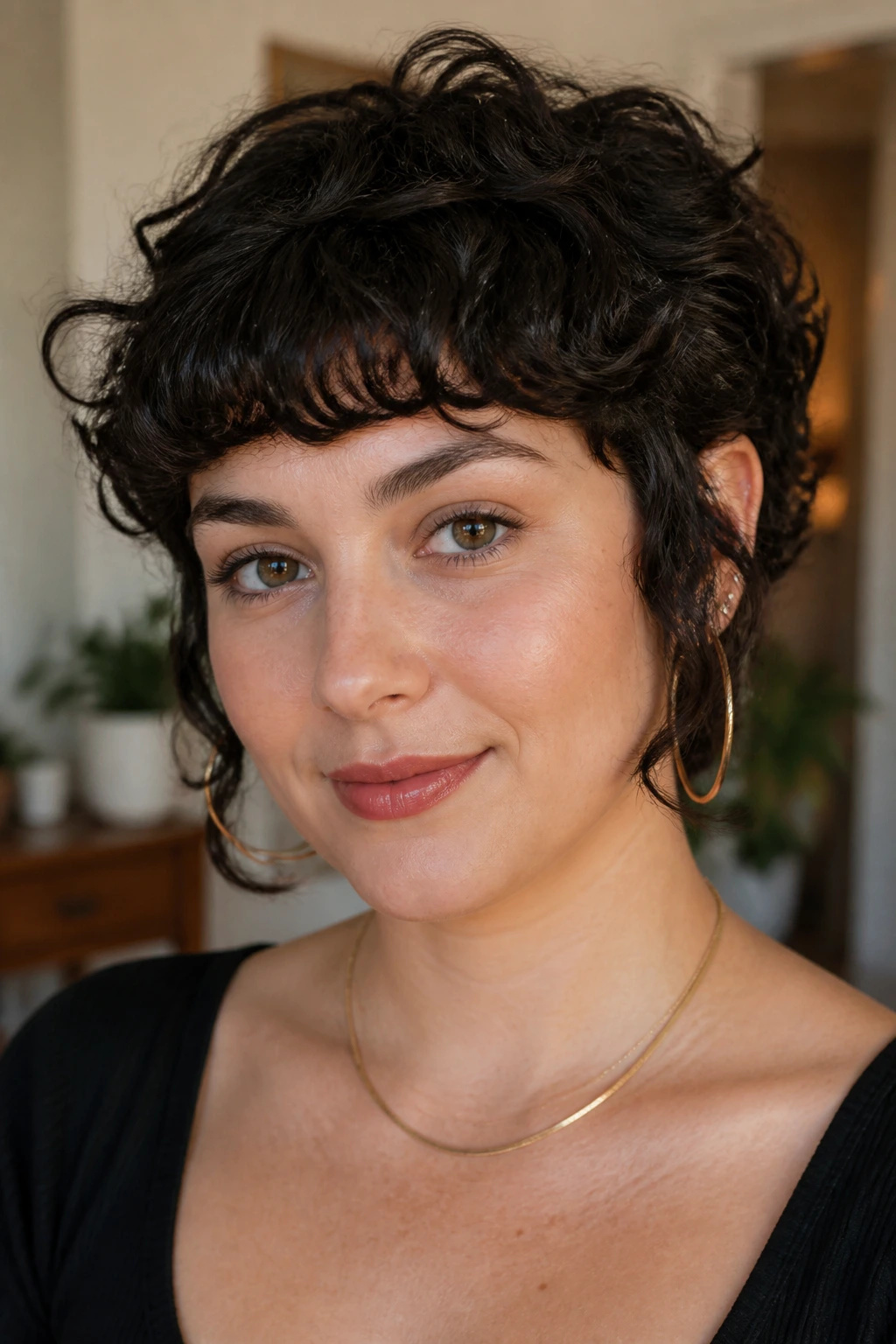
Short fringe with temple pieces is one of the most practical shapes on this list. The front stays short enough to show the face, while the longer temple pieces pull the outline downward and outward, which is exactly what round faces usually benefit from. You get openness plus structure.
The temple pieces should not be afterthoughts. They’re doing real work. Ask for them to fall at or just below the cheekbone, depending on shrinkage. That little length creates a line that helps the front blend into the rest of the haircut instead of ending abruptly.
This is a good shape if you want a short bang without a lot of maintenance drama. It’s balanced, easy to refresh, and flattering in a way that doesn’t scream for attention. Sometimes that’s the smarter move.
28. Softly Blended Bangs

Softly blended bangs are the quietest option here, but they’re not boring. The fringe melts into the front layers so there’s no hard edge to the cut. On a round face, that blending helps the haircut feel longer and lighter because the eye never hits a single obvious line.
This is the choice for someone who wants bangs but hates the idea of looking “bang-y.” The front still has shape, but the transition into the sides is smooth. That matters on short curly hair, where a hard line can make the curls seem heavier than they are.
If you are nervous about commitment, this is the one I’d point to first. It gives you the feeling of a fringe without locking you into a dramatic wall across the forehead. And when the curls are cut well, the softness looks intentional, not timid.
Why These Bang Shapes Work Better Than a Heavy Block
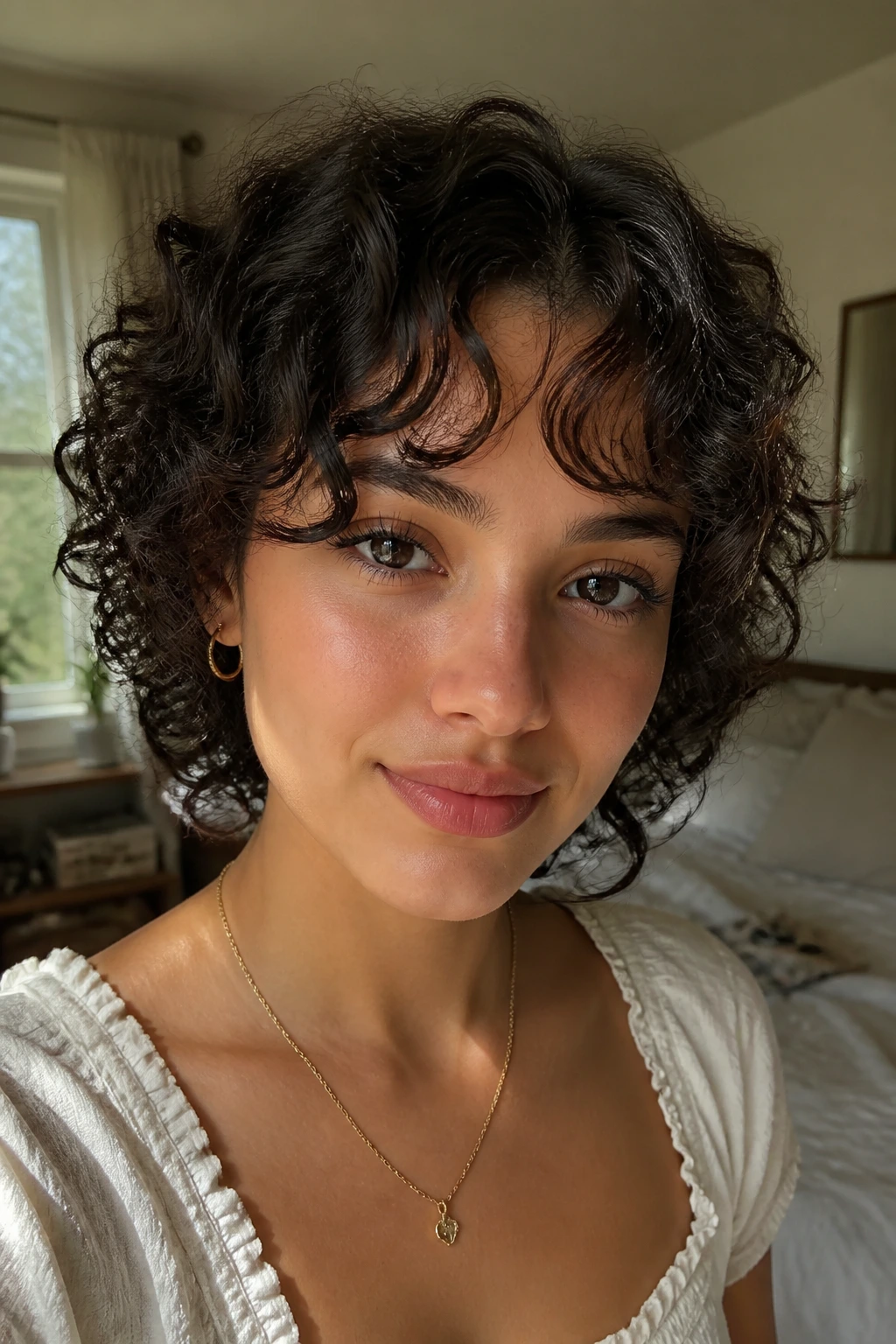
A round face does not need the front of the haircut to become a solid curtain. That’s where a lot of curly bang mistakes start. People see bangs, think “more hair,” and ask for density instead of shape. Density across the forehead tends to widen the face and flatten the curl story. Shape does the opposite.
The most useful short curly bangs are the ones that create a path for the eye: center splits, side angles, temple pieces, cheekbone hits, and soft openings over the brow. Those little movements change how the whole haircut sits. You end up with more structure, not more bulk. That’s the important distinction.
And yes, curl pattern matters. A looser wave can sit in a longer fringe with less shrinkage drama. A tight coil may need a little extra room and a cleaner internal layer. If you remember nothing else, remember this: the right front shape should look like it belongs to your curl pattern, not like it was borrowed from someone else’s head.
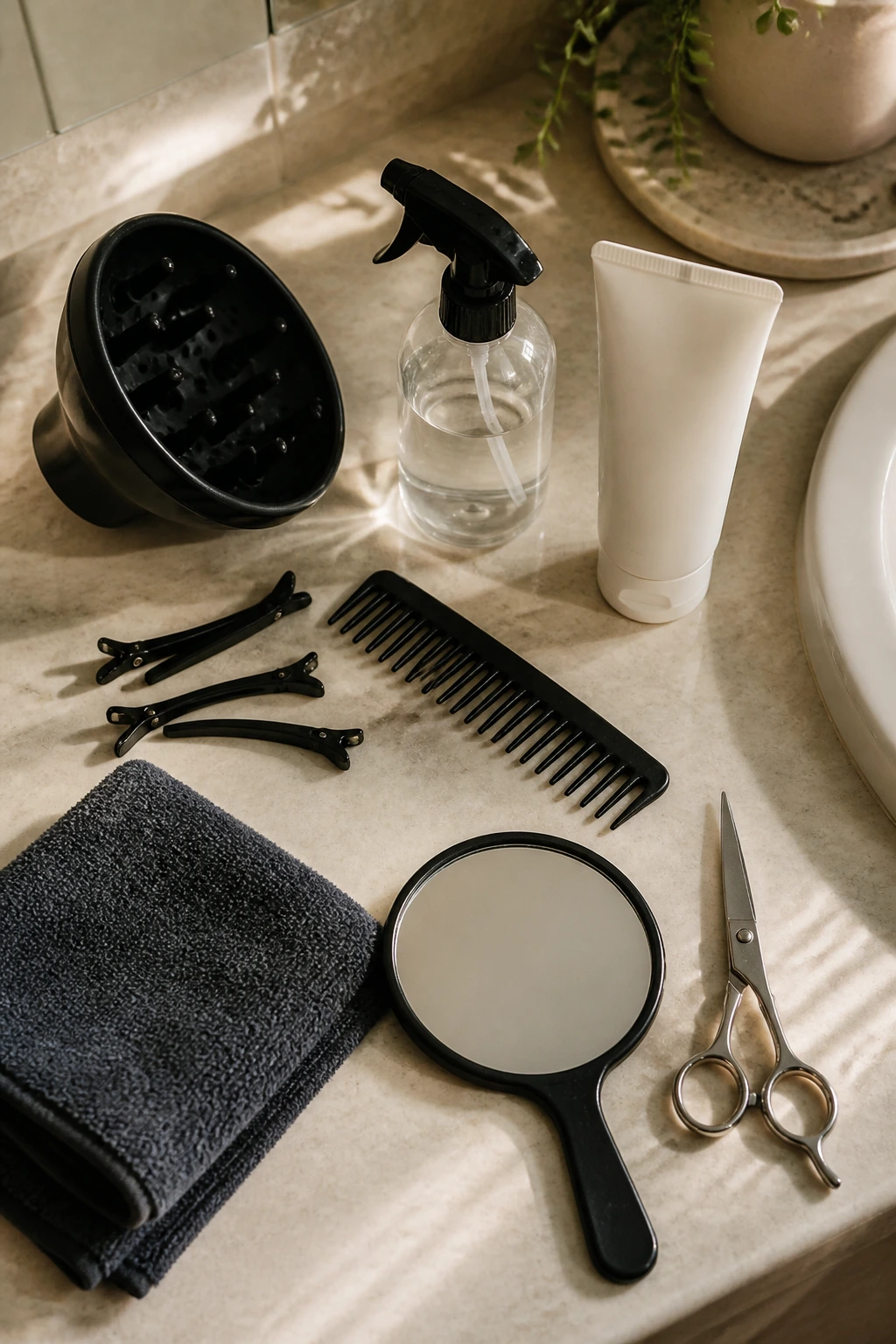
Essential Tools for Curly Fringe Days
-
Diffuser Attachment: This keeps the front lifted and set without blasting the curls into frizz.
-
Spray Bottle with Water: A few mists are enough to wake up the fringe on second-day hair; you do not need to soak the whole front.
-
Lightweight Curl Cream or Mousse: Use one product with enough hold to keep definition but not so much that the bangs turn greasy by noon.
-
Duckbill Clips or Small Section Clips: These help train the fringe while it dries, especially for side-swept, curtain, or wet-set shapes.
-
Wide-Tooth Comb: Best for shaping damp curls gently before they dry; a fine comb can break the pattern and add frizz.
-
Microfiber Towel or T-Shirt: A rough bath towel roughs up the cuticle fast. A softer fabric keeps the front neater.
-
Hand Mirror: Useful for checking how the fringe sits from the side, which is where round-face balance often shows up most clearly.
-
Small Pair of Curl Scissors or Professional Shears: If you trim at home, use actual shears. Kitchen scissors are a fast route to frayed ends.
What to Ask for in the Salon Chair
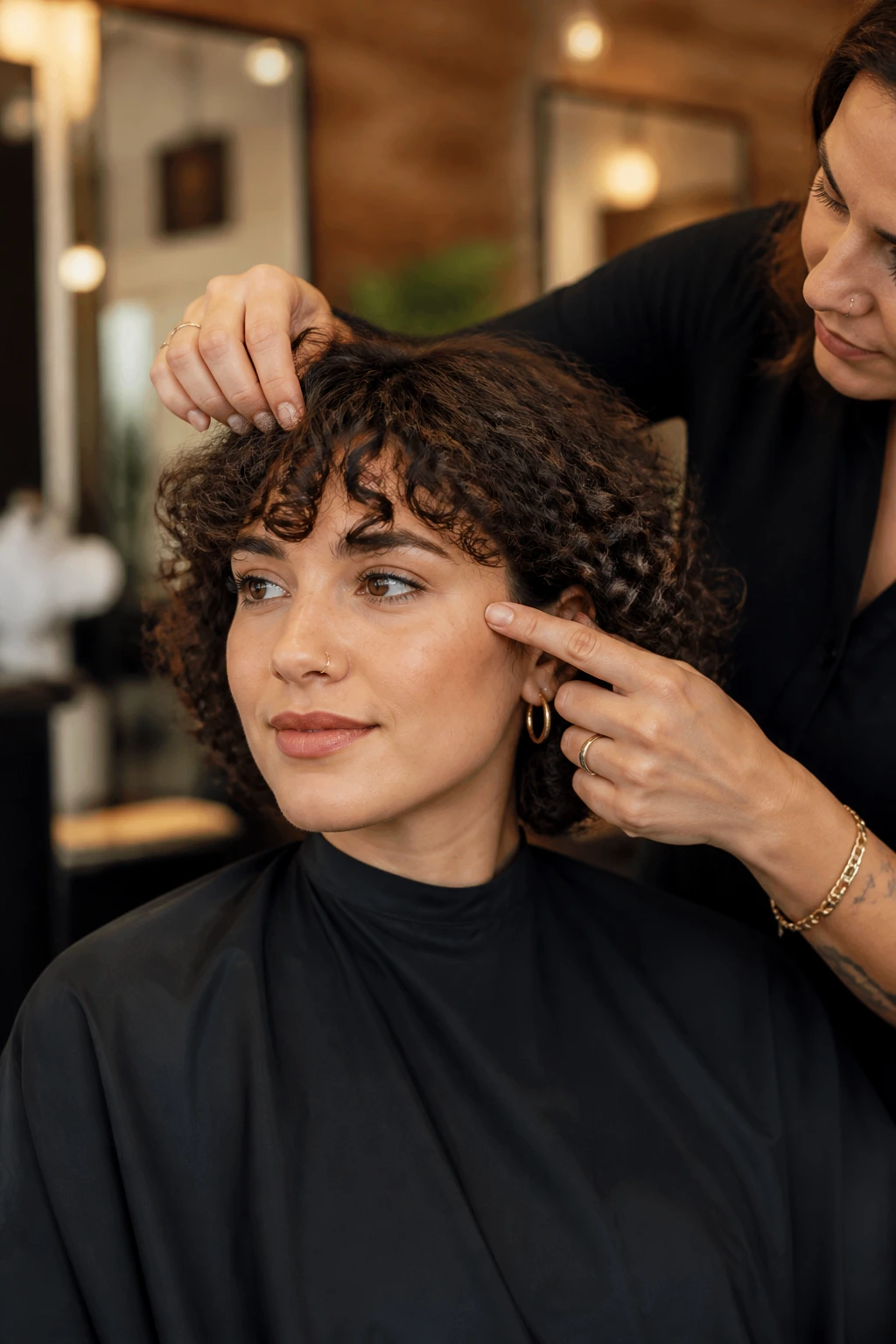
Tell the stylist you want the bangs cut for the way your curls dry, not just the way they look when wet. That sentence alone saves a lot of heartbreak. If they only shape the fringe while it’s stretched out and damp, the dry result can jump higher and wider than expected.
Bring your hair down in its natural part, if possible, and point to the part line, the brow line, and the cheekbone. Those landmarks matter more than “short” or “long.” Say whether you want the center open, the corners longer, or the fringe to blend into temple pieces. Those details tell the stylist where to keep weight and where to remove it.
Ask for dry or curly-state refinement, point cutting instead of a blunt chop, and extra length for shrinkage if your curls spring up aggressively. If your face is very round, mention whether you want the fringe to open the center of the face or lean side-to-side. That helps the stylist decide between curtain, side-sweep, or bottleneck shapes.
Small Moves That Make Curly Bangs Sit Better
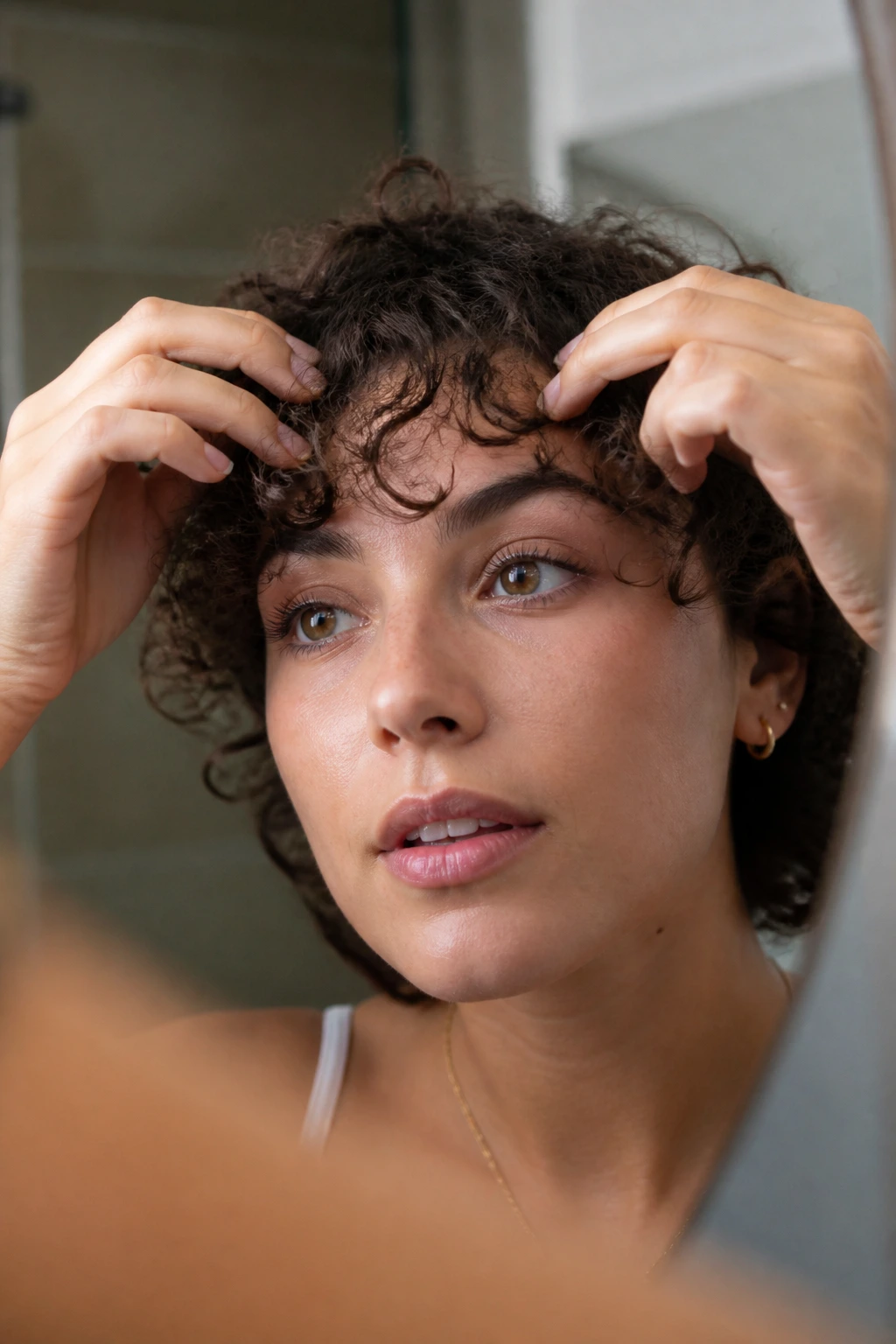
Root Direction: Clip the fringe in the direction you want it to live for the first part of drying. Curls are stubborn, but they listen more than people think when they’re damp.
Product Choice: Keep the product light at the front. Heavy cream near the brow tends to collapse the shape and make the bangs cling. A small amount at the ends is safer.
Drying Method: Use low heat and medium airflow with the diffuser. High heat can lift the root too much and leave the ends frizzy, which is a bad bargain.
Refresh Trick: On second-day hair, mist only the fringe, scrunch once, and let it dry for a few minutes before touching it again. Constant poking is usually what ruins the front.
Stylist Move: Ask for a few pieces at the temple to stay longer than the center. That tiny choice does more for a round face than most people realize.
Common Mistakes That Make Curly Bangs Look Wider
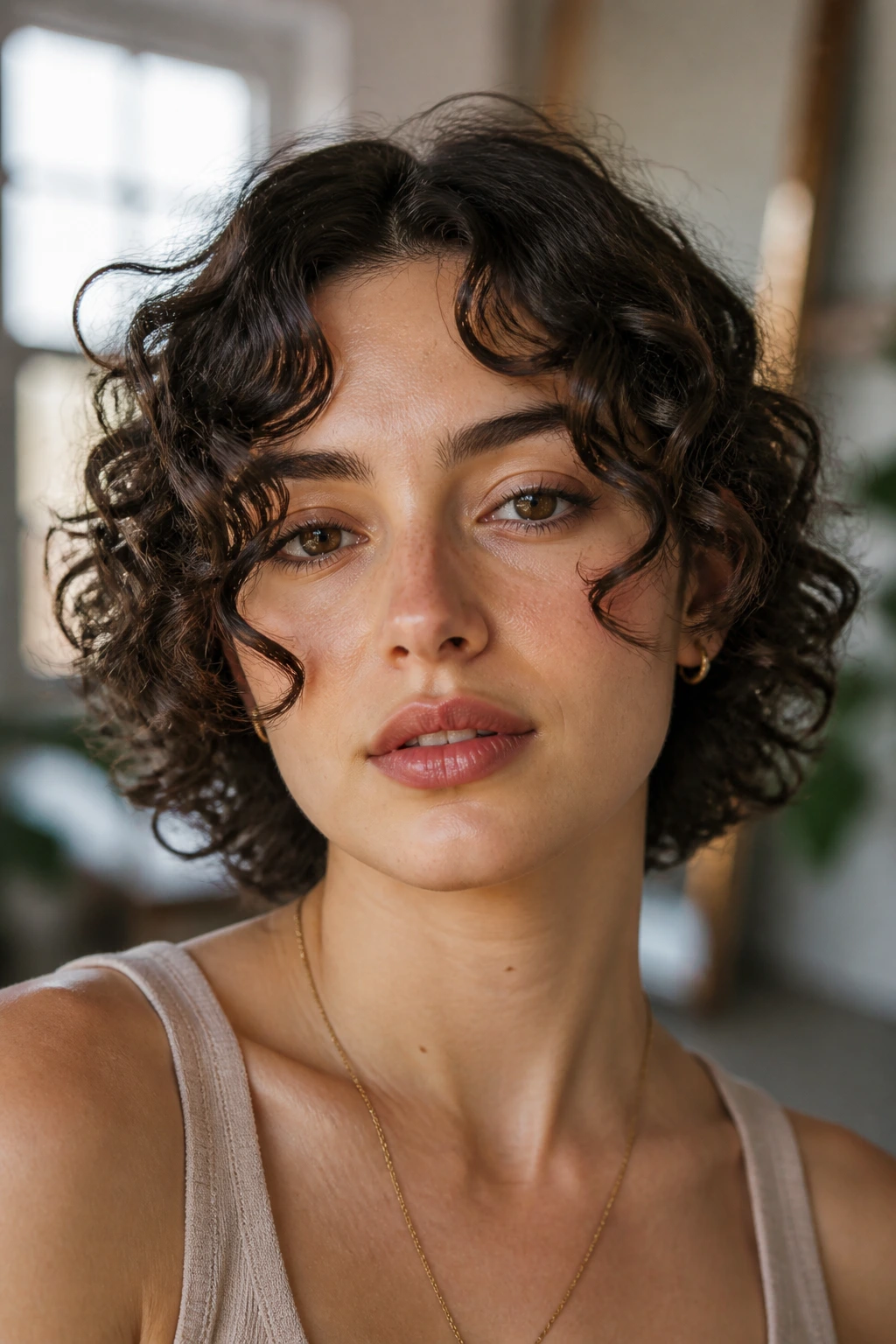
Cutting the fringe too blunt across the forehead. The symptom is a heavy block that sits like a shelf. The fix is point cutting, soft corners, or a center opening so the line breaks up.
Ignoring shrinkage. If the bangs look perfect when wet and laughably short when dry, shrinkage got you. The fix is to cut closer to the curl’s dry length and leave extra room for bounce.
Using too much product near the roots. The hair clumps, then spreads outward as it dries, which makes the forehead look wider. Keep heavier product on the mids and ends, and use the lightest possible amount near the scalp.
Letting the bangs sit flat against the forehead. Flat bangs draw a horizontal line, and round faces do not need more horizontal lines. Clip or diffuse the front upward first, then let it settle.
Cutting the corners too short. This removes the length that helps slim the cheeks. If the shape needs softness, the outer pieces should usually stay longer than the center, not the other way around.
Treating the fringe like a separate haircut. Bangs should connect to the bob, crop, or shag beneath them. When the front is cut in isolation, the whole style can feel unfinished.
Other Fringe Shapes and Alternatives to Try
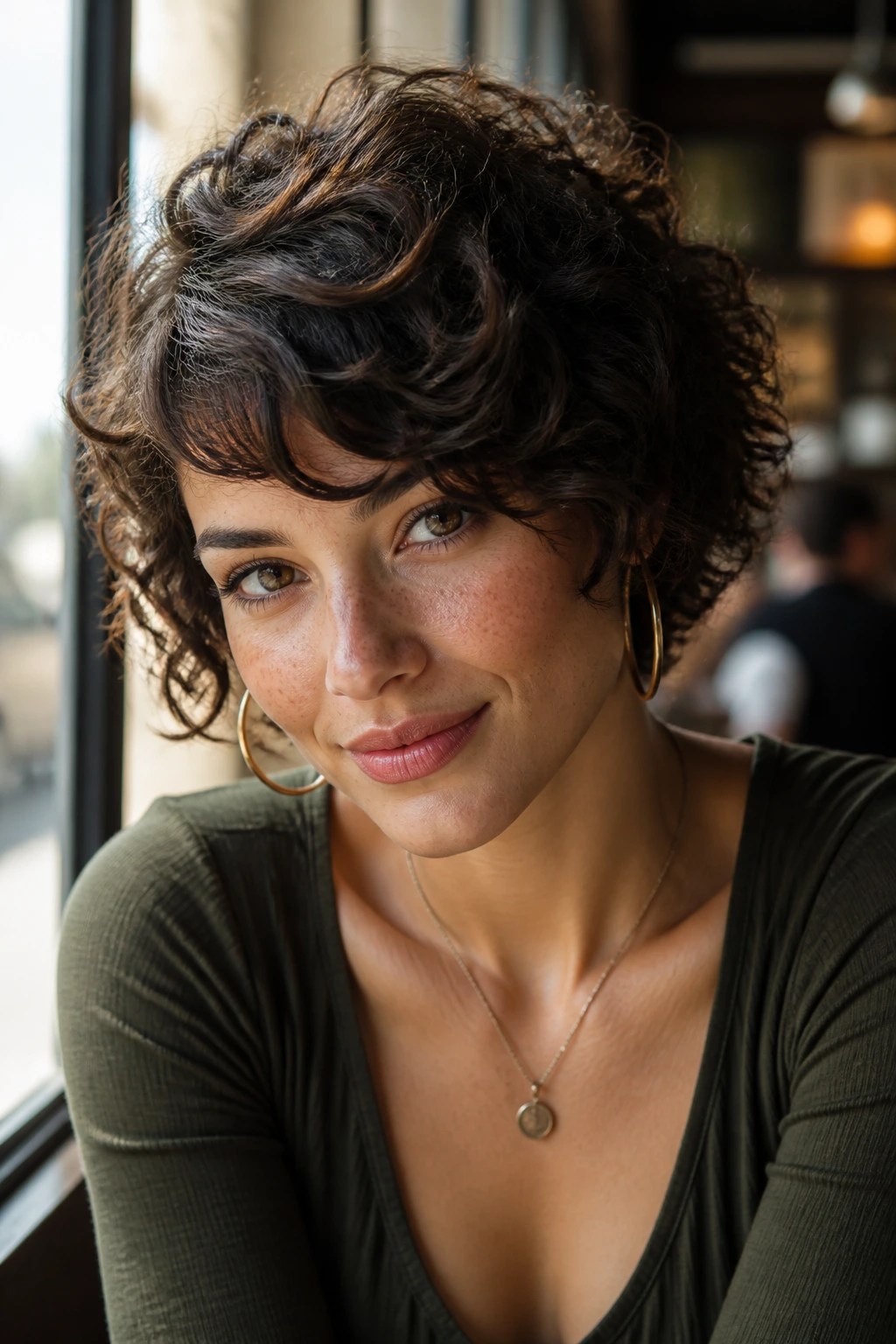
The Longer Corner Reset: If you want less attention at the cheeks, keep the center shorter and let the corners fall to the cheekbone. It’s a quiet fix that changes the face frame more than a dramatic cut does.
The Barely-There Fringe: This is a soft, sparse front that behaves almost like face-framing texture. It suits round faces that only need a little break in the forehead line, not a full bang story.
The Coily Crop Frame: Tighter curls do well with a short front that blends into the sides through small, curved pieces. It feels crisp without being rigid, and it keeps the face open.
The Side-Fall Split: A side-heavy fringe can be easier to live with than a center shape if you wear glasses or have a strong cowlick. It gives you a line that can move but still controls width.
The Grow-Out Blend: If you are nervous, start with more length and less density. You can always trim the front shorter later; you cannot glue length back on.
How to Keep Curly Bangs Fresh Between Washes

Curly bangs usually need a quick refresh every morning, but that does not mean a full rewash. A light mist from a spray bottle, a tiny scrunch, and a few minutes of air-drying can reset the front without stripping the rest of the style. If the bangs start to puff, dampen only the outer surface and pinch the curl groups back into place.
Night care matters too. A soft clip, a silk pillowcase, or a loose twist can keep the front from being crushed flat while you sleep. If your bangs flatten at the root, re-wet just the base and lift with your fingers. Don’t soak the whole head unless the whole head needs it.
Most curly fringes want a trim every 4 to 8 weeks, depending on shrinkage and how fast your hair grows. Dense curls and micro fringes usually need the tighter end of that range. Softer curtain shapes and grow-out-friendly fringes can go longer. If the front starts dropping into your lashes or flaring into your cheeks, that’s your cue.
Frequently Asked Questions
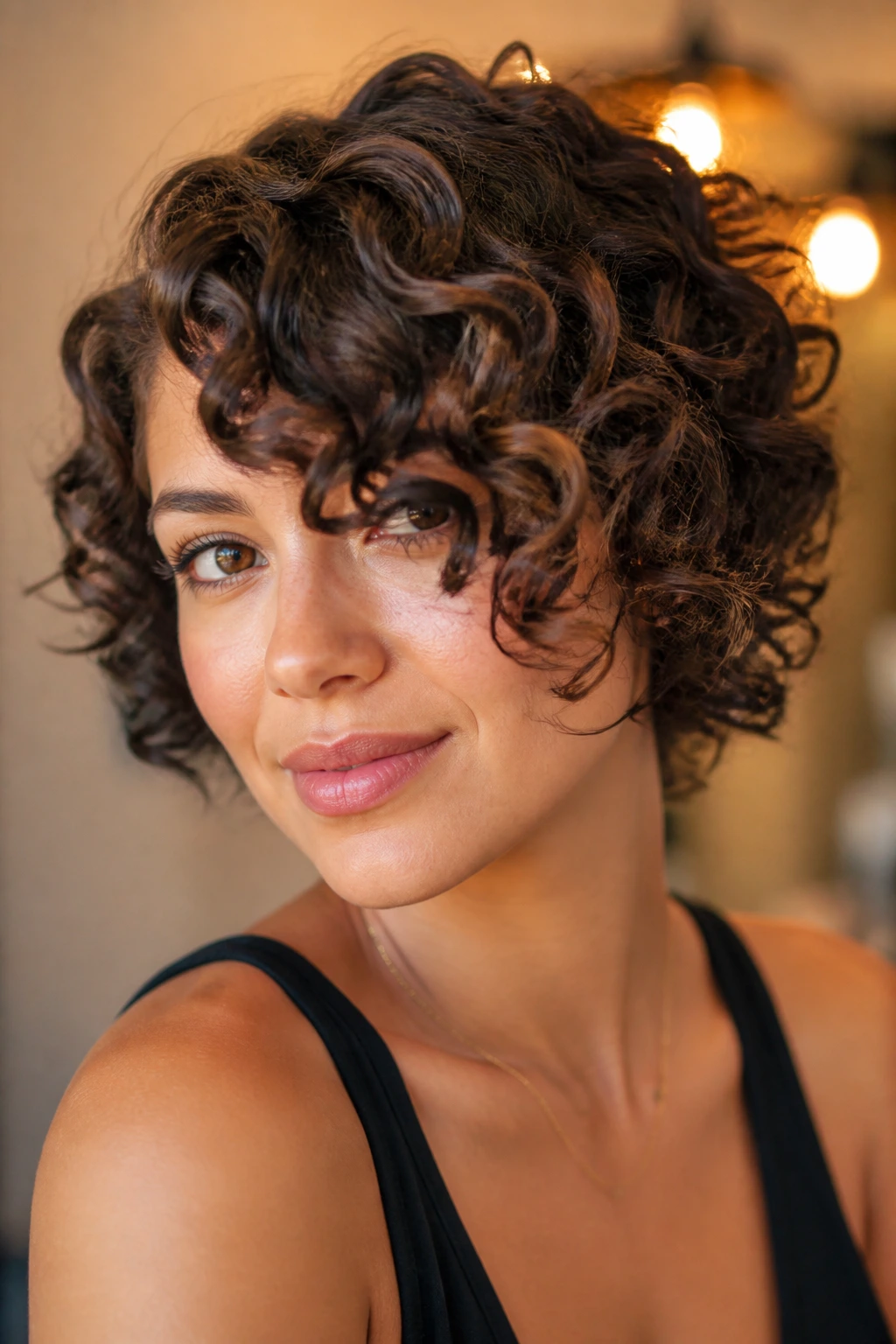
Do short curly bangs work on every round face?
Not every version, no. The best ones use length changes, diagonal lines, or temple pieces to keep the widest part of the face from looking wider. If your curls are very dense or your forehead is very short, a softer split or side-swept shape usually works better than a full block.
Should curly bangs be cut wet or dry?
Dry, or at least close to it, is usually safer for curly hair. Wet curls stretch out and lie to you about where they’ll land once they shrink, so the final shape can end up much shorter than expected. A good stylist will either cut them dry or check the dry shape before they finish.
How do I stop curly bangs from puffing out?
Keep product light at the roots, use a diffuser on low heat, and clip the fringe in the direction you want while it sets. Puff usually comes from too much movement during drying or too much product at the scalp.
Can I wear curly bangs with glasses?
Yes, but the shape needs room around the frame. Shorter centers, longer corners, or a soft side split usually work better than bangs that sit right on top of the lenses. The frame line and the fringe line should not fight each other.
What if my bangs shrink way higher than I expected?
Ask for more length next time and have the stylist cut with your dry curl pattern in mind. In the meantime, try a light wet refresh and clip the front down while it dries if the shape can handle it. The main fix is planning for shrinkage before the cut, not after.
Are short curly bangs high-maintenance?
They can be, but the right shape lowers the work. A grow-out-friendly fringe, a side sweep, or a blended temple piece needs less daily correction than a blunt front. The more your cut follows your curl pattern, the less you wrestle with it.
What if my curls separate into awkward little chunks?
That usually means the cut or the product is too heavy in the wrong places. Separate chunks are not always a problem — a piecey fringe can look great — but if the chunks feel random, ask for more blending at the next trim and use less cream at the front.
Can I straighten curly bangs sometimes and still keep the cut?
You can, but the fringe should be cut with enough room to behave both ways. A bang that only works when ironed flat is not a very curly-friendly bang. If you plan to smooth it out now and then, leave extra length and avoid a super-short center.
The Fringe That Fits the Face
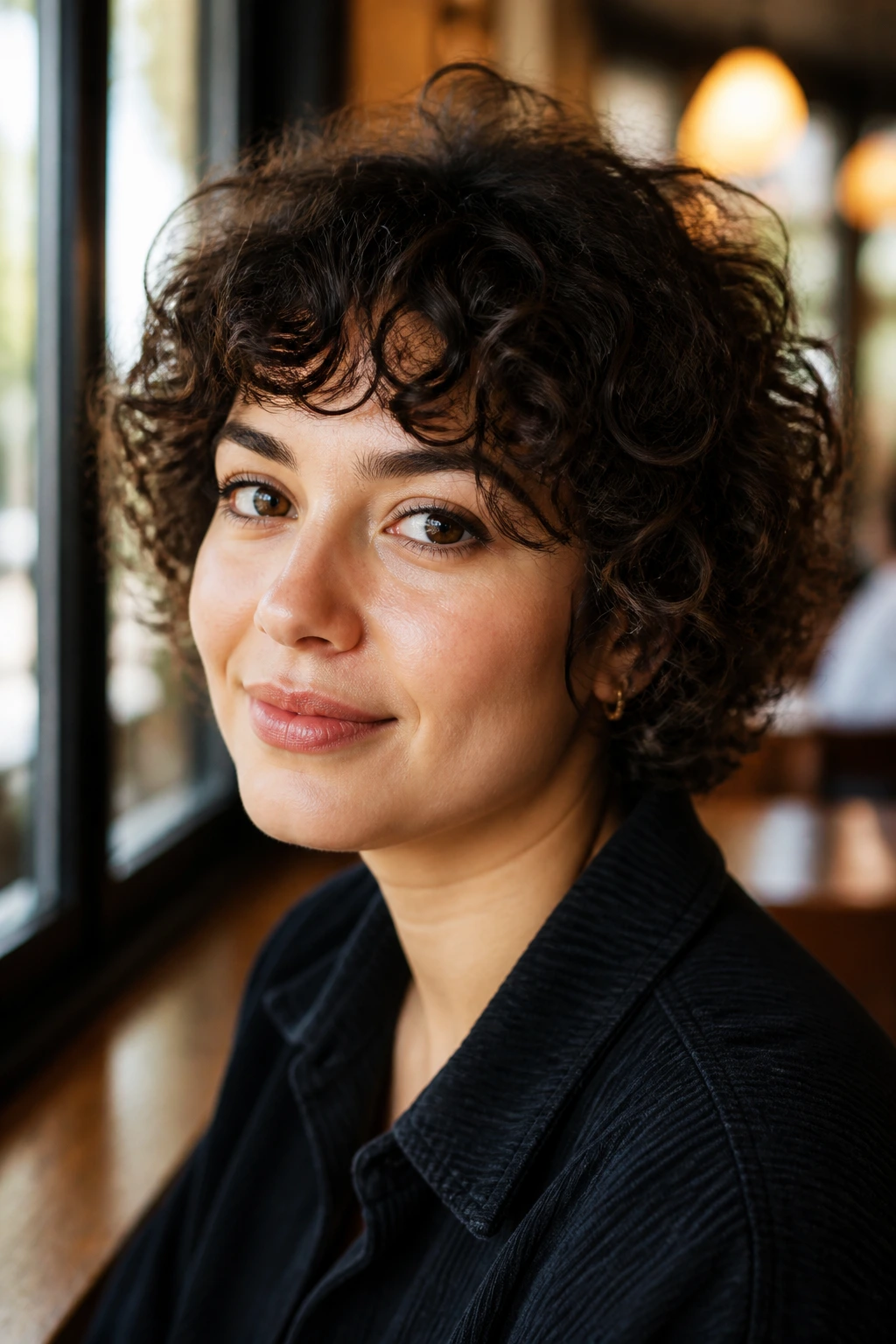
Short curly bangs are at their best when they do something specific: open the center, soften the cheeks, or create a line that pulls the eye where you want it to go. That’s the difference between a cute front piece and a real haircut shape. Round faces need that intention. Curls need room to spring. Put the two together and the result can look far more precise than people expect.
The good cuts are rarely the most obvious ones. A soft split, a cheekbone hit, a little temple length, or a borrowed inch of asymmetry often does more than a heavy set of bangs ever will. And once the shape is right, the styling gets easier. Less wrestling. Fewer surprises.
If you’re thinking about a curly fringe, start with the shape your hair already wants to make, then nudge it toward the face frame you want to see. That’s where the sweet spot lives.
