



Side bang styles for short hair are sneaky little shape-shifters. A two-inch sweep across the forehead can soften a blunt bob, break up a strong jaw, hide a stubborn cowlick, or make a pixie feel less severe without turning it fluffy or fussy. Short hair shows everything — the growth pattern, the density, the part, the tiny mistakes — and that’s exactly why the right fringe matters so much.
The part people miss is that short bangs behave differently from long ones. On a lob or longer cut, a fringe has weight to hang down. On a bob, bixie, or cropped pixie, the front pieces are lighter, springier, and much easier to push the wrong way if the cut doesn’t respect the hairline. A good side bang works with the grain of the hair, not against it. That’s the difference between “I meant to do that” and “I wore a barrette all day because my fringe kept splitting.”
If you’ve ever stood in front of a mirror with a round brush in one hand and a flat iron in the other, wondering why the front of your hair refuses to cooperate, you’re in the right place. The sweet spot is narrower than most people think, but when it lands, it makes the whole cut look more deliberate, more relaxed, and a lot more expensive than the salon receipt said it should.
Why These Side Bang Styles Keep Short Hair Interesting
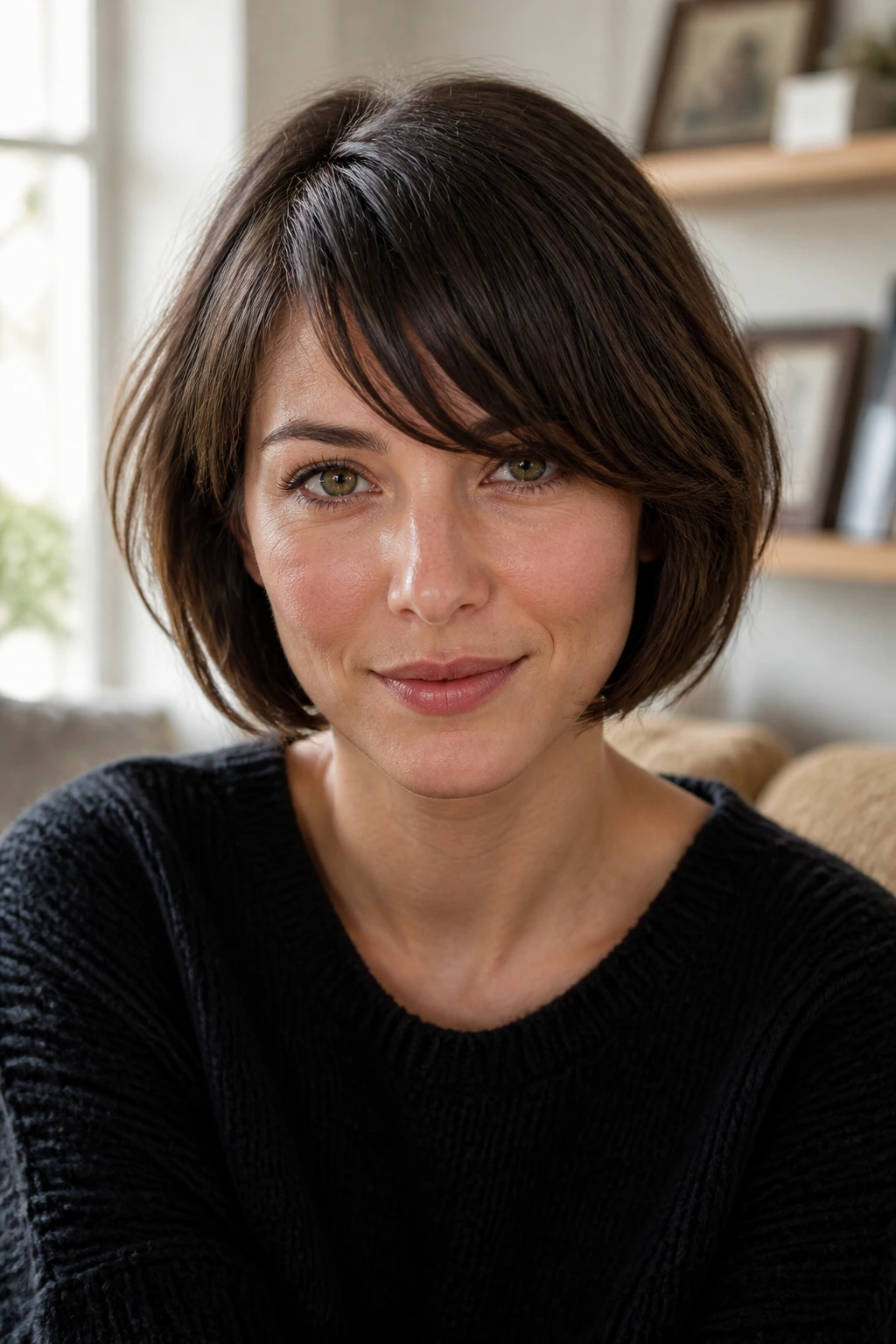
-
They change the silhouette without a full haircut: A side fringe can make a chin-length bob look sharper, softer, or more layered with nothing more than a small shift in the front section.
-
They help short cuts grow out cleaner: A blunt bang on short hair can go awkward fast; a side sweep usually slides into a longer fringe or face-framing layer with less drama.
-
They work with cowlicks better than center parts do: If your hair pushes forward or splits at the front, a side bang can redirect that motion instead of fighting it all morning.
-
They give fine hair a little shape without overloading it: A wispy side fringe can add movement near the eyes and cheekbones while keeping the rest of the cut light.
-
They let curly and wavy textures keep their own personality: A good side bang on textured hair should bend, not freeze. That’s where the charm lives.
-
They make short hair feel finished: A pixie or crop can look bare around the face. A side fringe closes that gap and ties the front to the rest of the cut.
1. Soft Swoop on a Chin-Length Bob
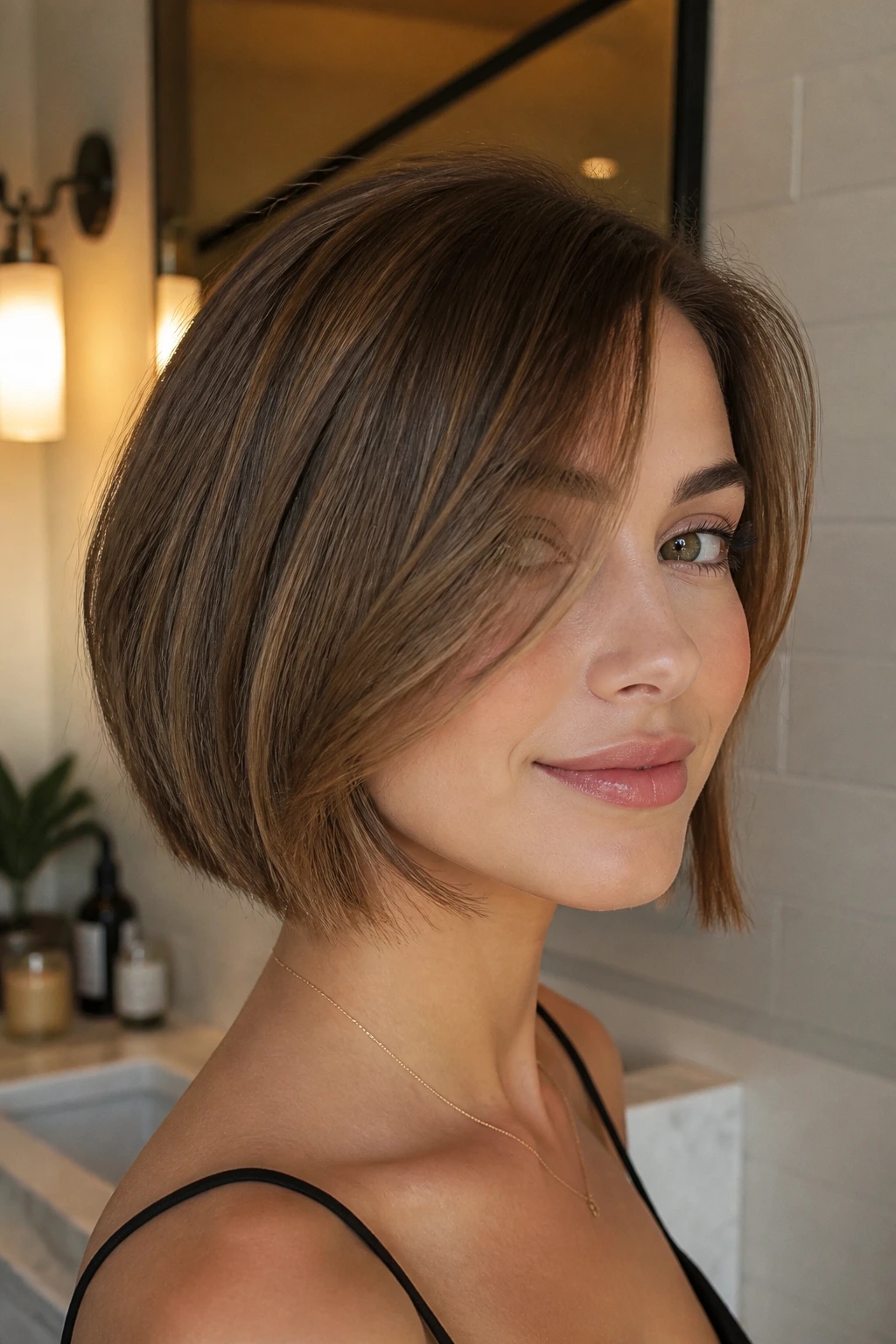
A soft swoop on a chin-length bob sits right in the sweet zone between polished and easy. The front piece usually lands somewhere between the eyebrow and cheekbone, then slides diagonally across the face so the bob doesn’t stop in a hard line. That little angle matters. It gives the cut some motion and keeps a straight bob from looking boxed in.
Why It Works
The bob already has a clear shape, so the side bang doesn’t need to do heavy lifting. It just needs to soften the edge. I like this version on square and heart-shaped faces because the diagonal line pulls the eye down instead of out. Blow-dry it with a 1 to 1.25-inch round brush and a quick bend at the ends, not a full curl. If the front flicks too high, it starts looking precious.
2. Deep Part Pixie Sweep
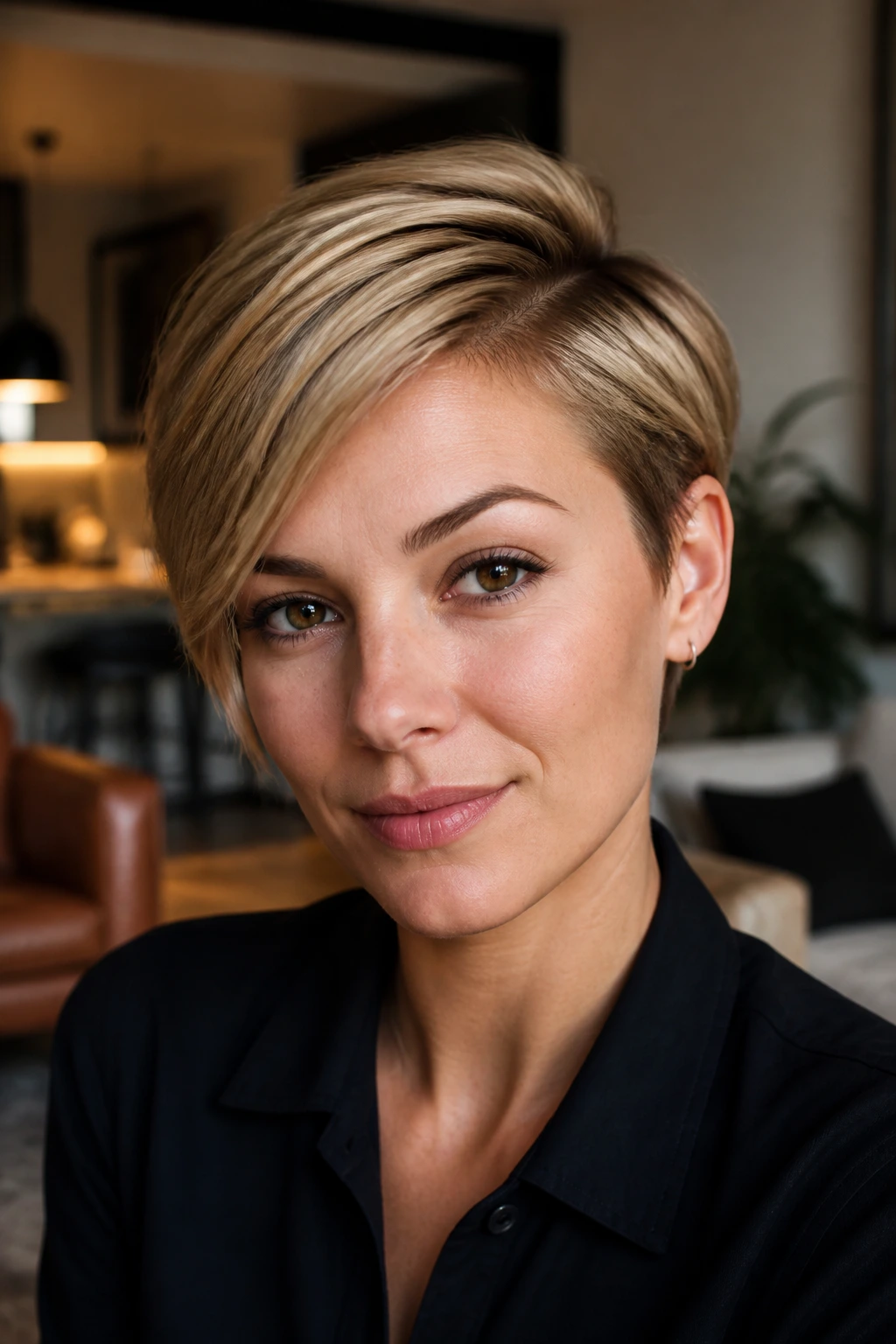
A deep side part on a pixie is not subtle. Good. It adds instant lift at the crown and pushes the front across the forehead in a clean, dramatic line. The hair on the heavy side should fall with enough length to skim the brow or just miss it, while the shorter side stays tucked and close.
This one shines when you want the pixie to look intentional instead of sporty. The part creates shadow and height, and that combo is doing more work than people realize. If your roots lie flat, a dab of mousse at the crown and a blast of warm air while lifting the section with your fingers will matter more than the styling cream. Less product, more direction.
3. Razor-Feather Fringe on a French Bob
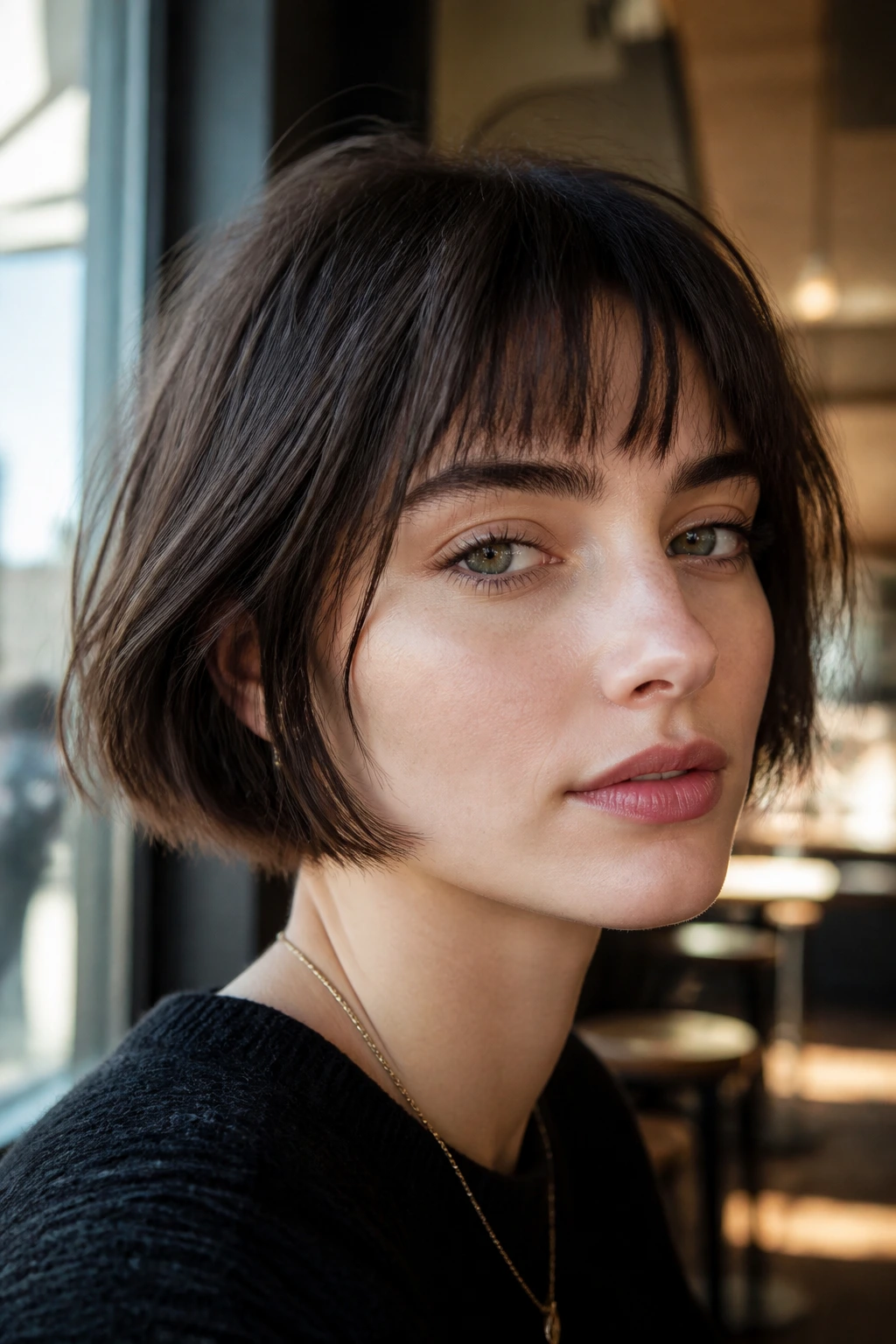
A razor-feather fringe has that broken, airy edge that makes short hair look like it moved before you even touched it. On a French bob, the side bang usually starts heavy near the part and tapers into thinner ends around the temple. It feels lighter than a blunt side bang, but it still has enough shape to frame the eyes.
Best for the right kind of softness
This is the version I reach for when hair is dense but not coarse. A razor cut removes weight without chopping the whole front into pieces, so you get motion instead of bulk. The catch: it needs a careful hand. On very fine hair, too much razor work can make the bang look stringy by lunch. A little texture spray at the roots, then a quick finger-tousle, is enough.
4. Long Diagonal Bang on a Bixie
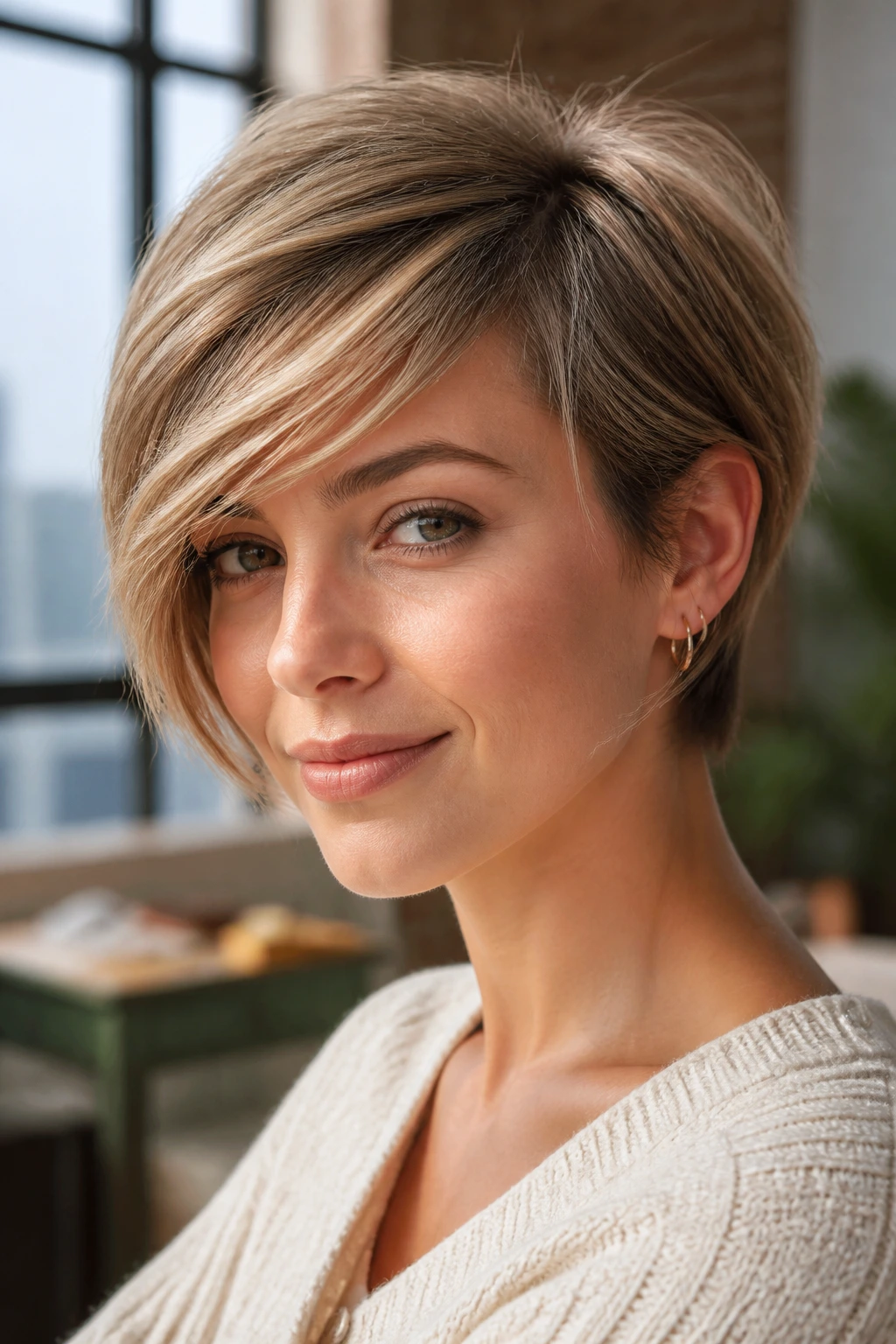
A bixie gives you pixie energy with just enough length to play with, and a long diagonal side bang is the move that makes the shape click. The front can fall past the outer corner of the eye and melt into the side layers, which gives you a lot more styling room than a shorter crop.
That extra length is not just for looks. It buys you time between trims. If you want a side bang that can be tucked, pinned, or brushed across the forehead depending on the day, this is a smart place to start. It grows out into a face-framing layer instead of a weird mini curtain, which is a small miracle in haircut terms.
5. Wispy Veil for Fine Hair
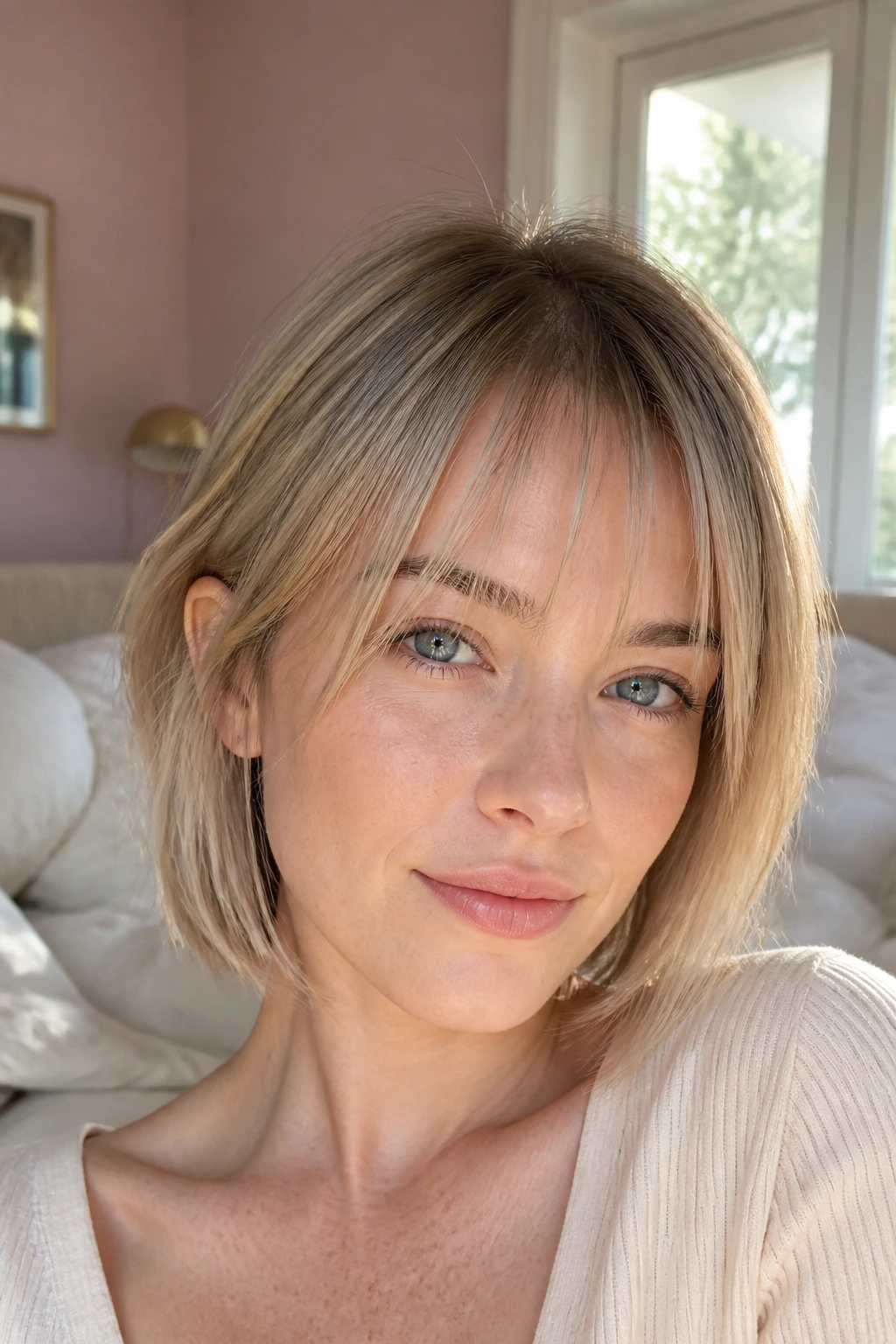
Fine hair does not need a heavy bang sitting on top of it like a curtain rod. It needs a wispy veil — see-through density, soft ends, and enough separation to show the forehead through the strands. This keeps the front light and stops the whole cut from collapsing.
A tiny round brush or even a flat brush plus a finger twist works better than a big blowout here. The trick is to dry the roots first, then shape the ends last. If you put too much cream on the fringe, it clumps and starts sticking to the skin. A pea-sized amount of lightweight mousse at the base is usually plenty.
6. Curly Side Fringe on Natural Texture
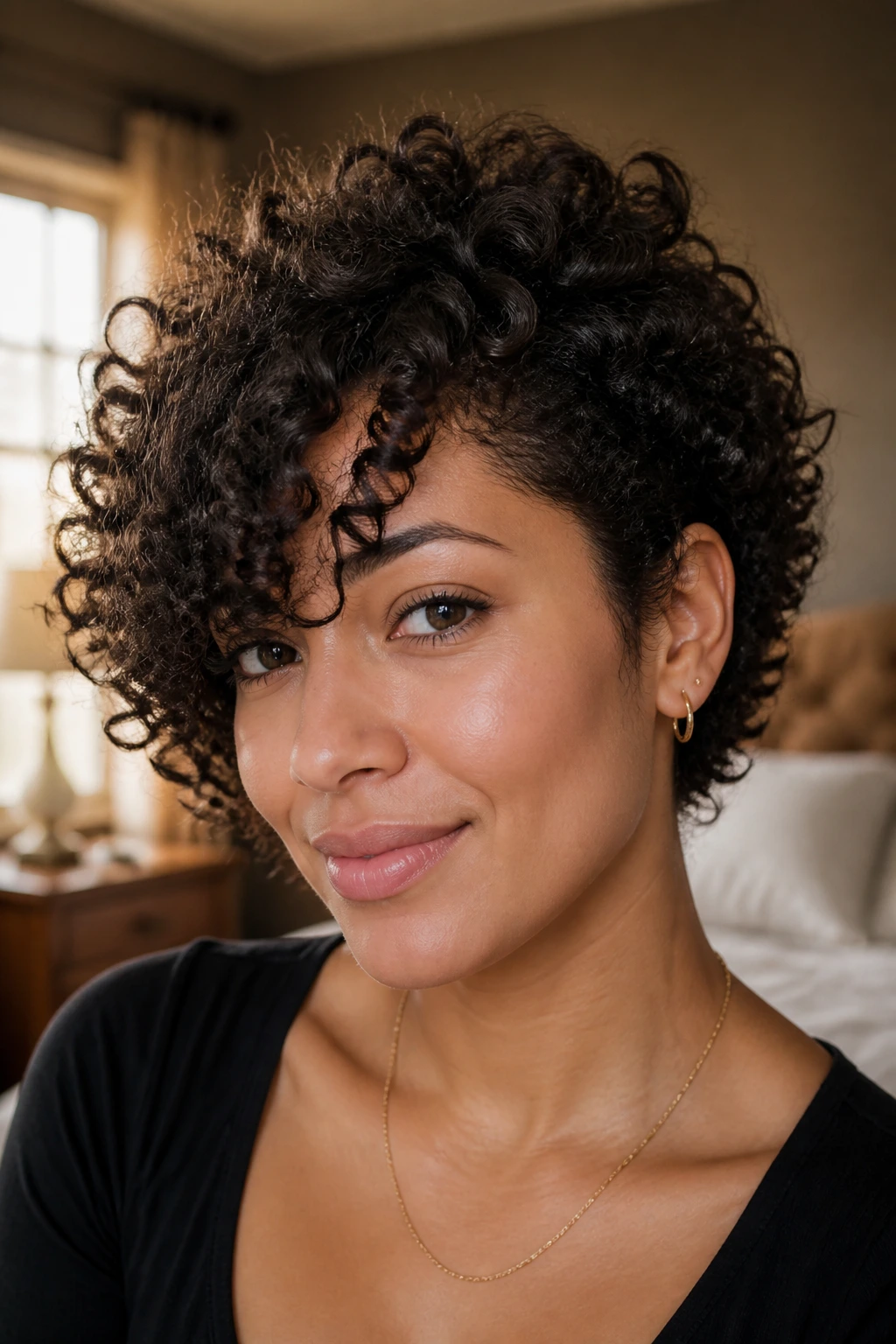
Curly side bangs look best when they’re allowed to curve, not forced into a fake straight line. On short hair, that usually means the front pieces are cut a touch longer than you think you need, then refined once the curls are dry and in their real shape. Shrinkage is not a theory. It’s the whole game.
What to ask for
-
Dry shaping: Ask for the fringe to be checked dry, because a wet curl can spring up by an inch or more.
-
Longer front pieces: The shortest curl often lands higher once it dries, so a little extra length prevents accidental baby bangs.
-
Soft point cutting: This keeps the edge from turning blunt and boxy when the curl clumps.
The best part is the movement. A curly side fringe frames the eye without pretending to be straight hair in a wig. That honesty looks good.
7. Ear-Tuck Bang for Easy Reset
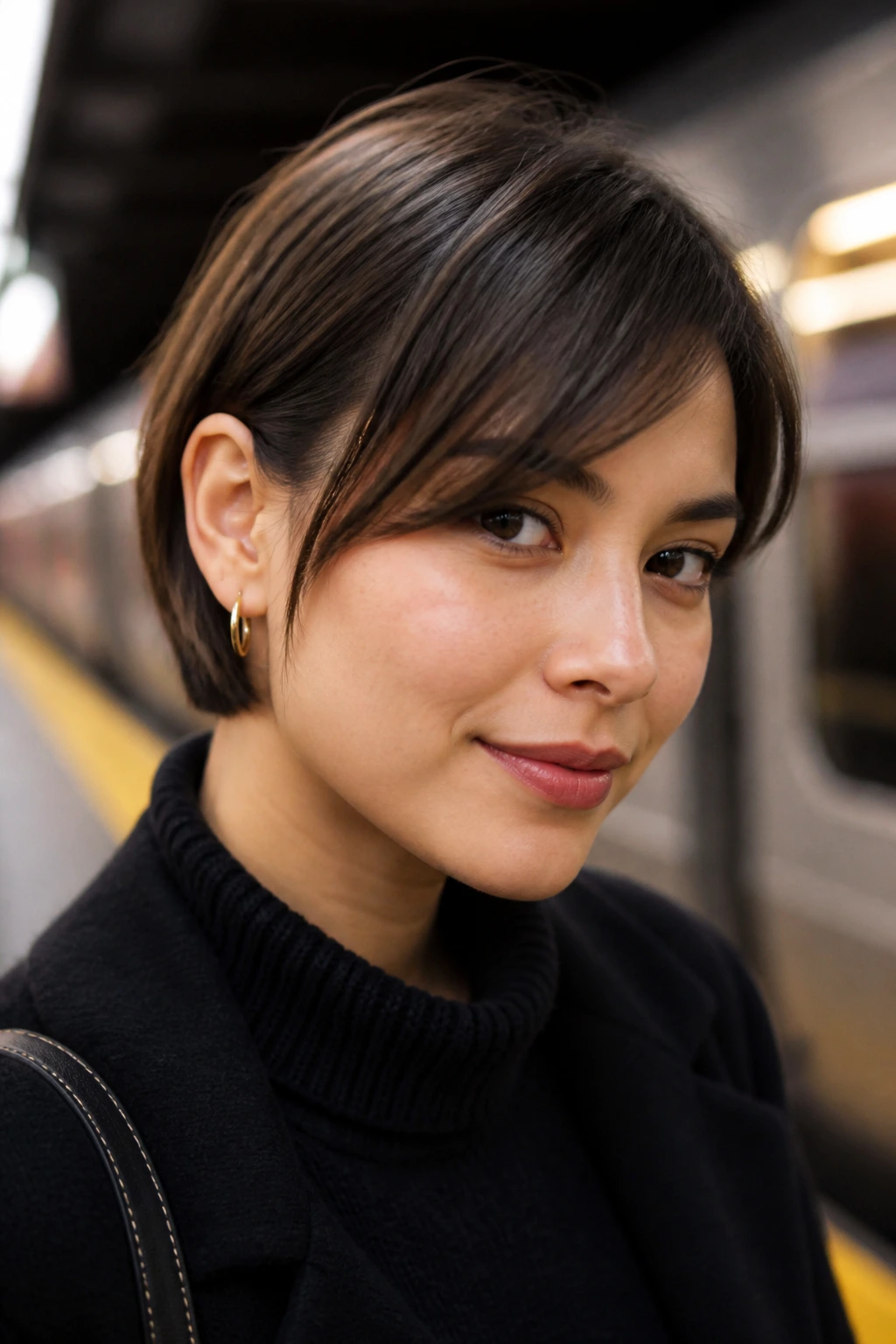
If you want a side bang that can be worn forward, tucked, and then worn forward again without the whole front breaking apart, this is the one. The shape starts with enough length to brush the cheekbone, then narrows slightly toward the temple so it slips behind the ear cleanly.
It’s one of the most practical side bang styles for short hair because it handles real life. Wind. Headphones. A hot subway platform. If the front gets flat, a quick mist of water at the roots and a one-minute blast with the dryer resets it. Nothing fancy. Just enough bend to bring the line back.
8. Retro Brush-Out Swoop

A retro brush-out swoop gives short hair that lifted, polished shape you see in old salon photos — but only if the front is cut with enough length to take a round brush. Think smooth root lift, a soft C-curve through the midsection, and ends that flip just a little off the cheek.
This style works because it uses structure, not stiffness. A vent brush or round brush plus medium heat will set the bang without making it puffy. I like a light mist of heat protectant and a touch of flexible hairspray sprayed onto the brush, not directly onto the hair. That gives hold without freezing the front into a helmet.
9. Hidden Undercut Fringe
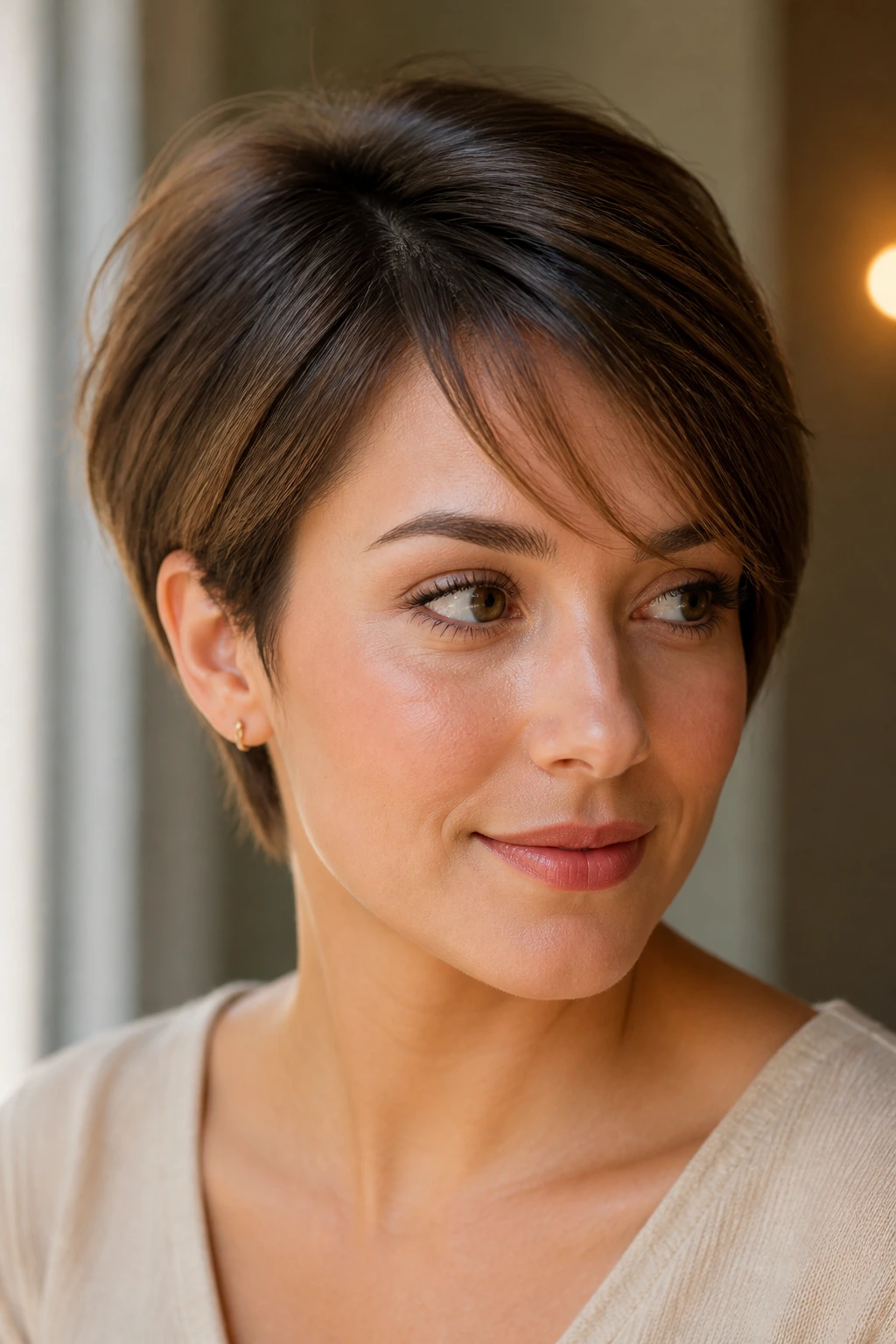
A hidden undercut fringe is for people who like a lot of hair on top but hate bulk around the temples. The undercut takes weight away beneath the surface, so the side bang can stay long and drapey without exploding outward. It’s especially useful on thick hair that wants to puff at the sides.
The shape looks even better when the bang falls over a clean side part and the shorter side is tucked close to the head. There’s a nice contrast there — soft front, tight sides. If your hair is dense or coarse, this is one of the few side bang options that can stay sleek without needing half a jar of cream.
10. Peek-A-Boo Angle on a Short Crop
A peek-a-boo angle is the flirtier cousin of the classic side sweep. The front section drops just enough to shadow one eye, then slides away from the face instead of staying parked across it. On a short crop, that gives the haircut some mystery without making it look heavy.
This version is good when you want movement but still need your bangs out of your eyes most of the time. It’s also forgiving if you’re between trims. As the fringe grows, the angle just gets longer and softer. A quick pass with a flat iron at a slight diagonal is usually enough to wake it up.
11. Piecey Fringe on a Shaggy Crop
Piecey side bangs love a shaggy crop because both cuts already lean a little undone. The front is broken into separated bits rather than one solid curtain, which means the bang doesn’t steal all the attention from the rest of the cut. It should look touched, not overworked.
How to style the pieces
Work a tiny bit of paste or pomade between your fingertips, then pinch the front in two or three sections instead of smoothing everything together. That separation keeps the fringe from turning into a flat strip. On day two hair, a little dry shampoo at the roots gives the pieces enough grip to hold their shape.
12. Clean Diagonal on a Sharp Bob
A clean diagonal side bang makes a sharp bob look even sharper. The line usually starts fuller near the part and angles down so the longest piece lands around the cheekbone. It’s a neat look. No fuss, no fluff, just a crisp front edge that cuts across the face.
This is the style for anyone who likes a blunt bob but wants something less severe than straight-across bangs. The diagonal changes the mood without softening the cut too much. I’d keep the finish smooth here — a flat brush, a blow dryer nozzle, and a quick bend at the ends. If the bang gets too airy, you lose the precision.
13. Micro-Layer Fringe for Thick Hair
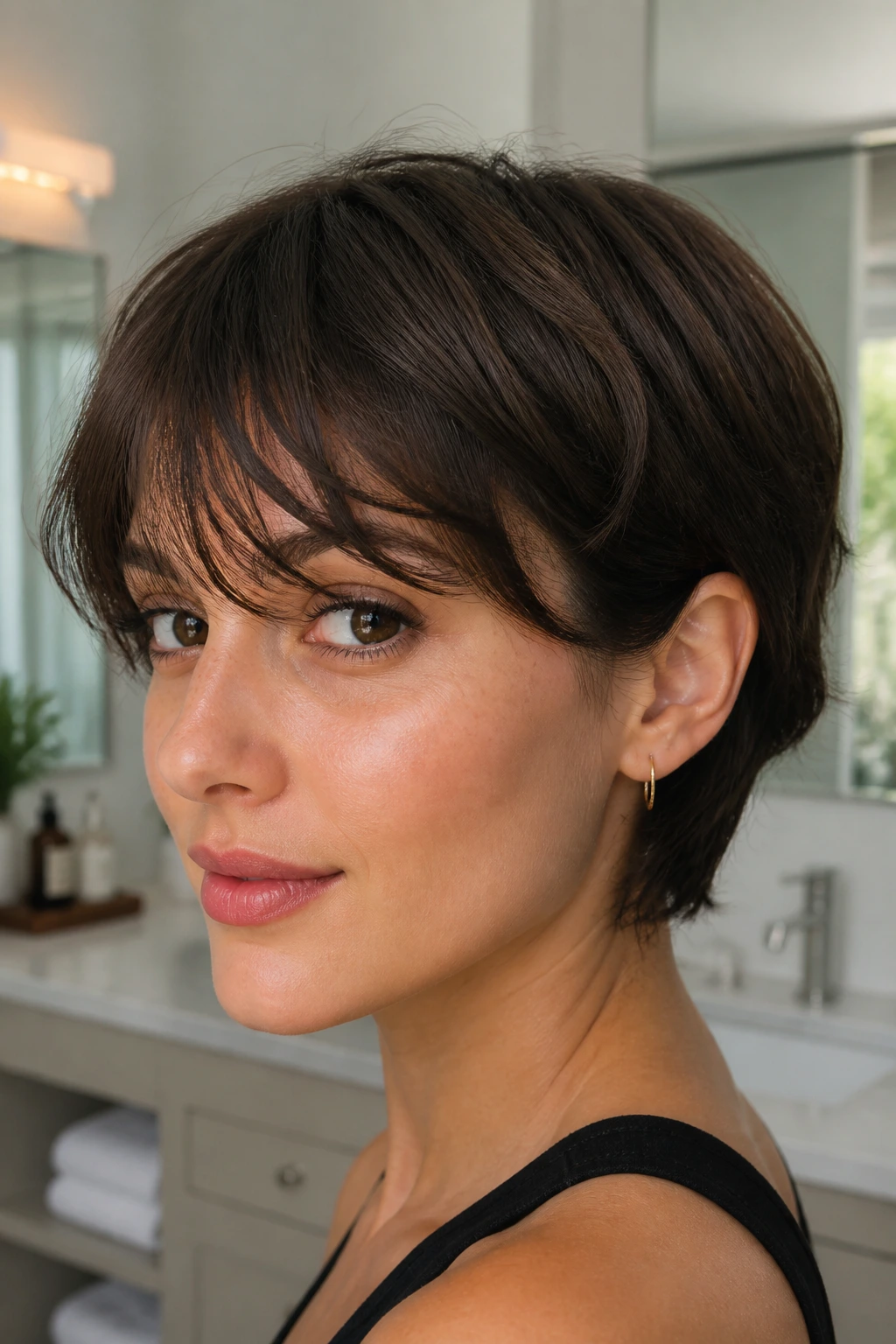
Thick hair can swallow a side bang if the front is left too solid. Micro-layers solve that. They remove tiny bits of weight inside the fringe so the hair can move instead of sticking out in one heavy wedge. On short hair, that small adjustment makes a huge difference.
You want this cut to feel controlled, not chopped up. The best version has a little internal softness and a smooth outer line. Ask for the bang to be checked dry so the stylist can see where it bulks up near the part. If the fringe starts puffing in humidity, a light anti-frizz cream on the ends — not the roots — keeps it from ballooning.
14. Brow-Grazing Side Bang
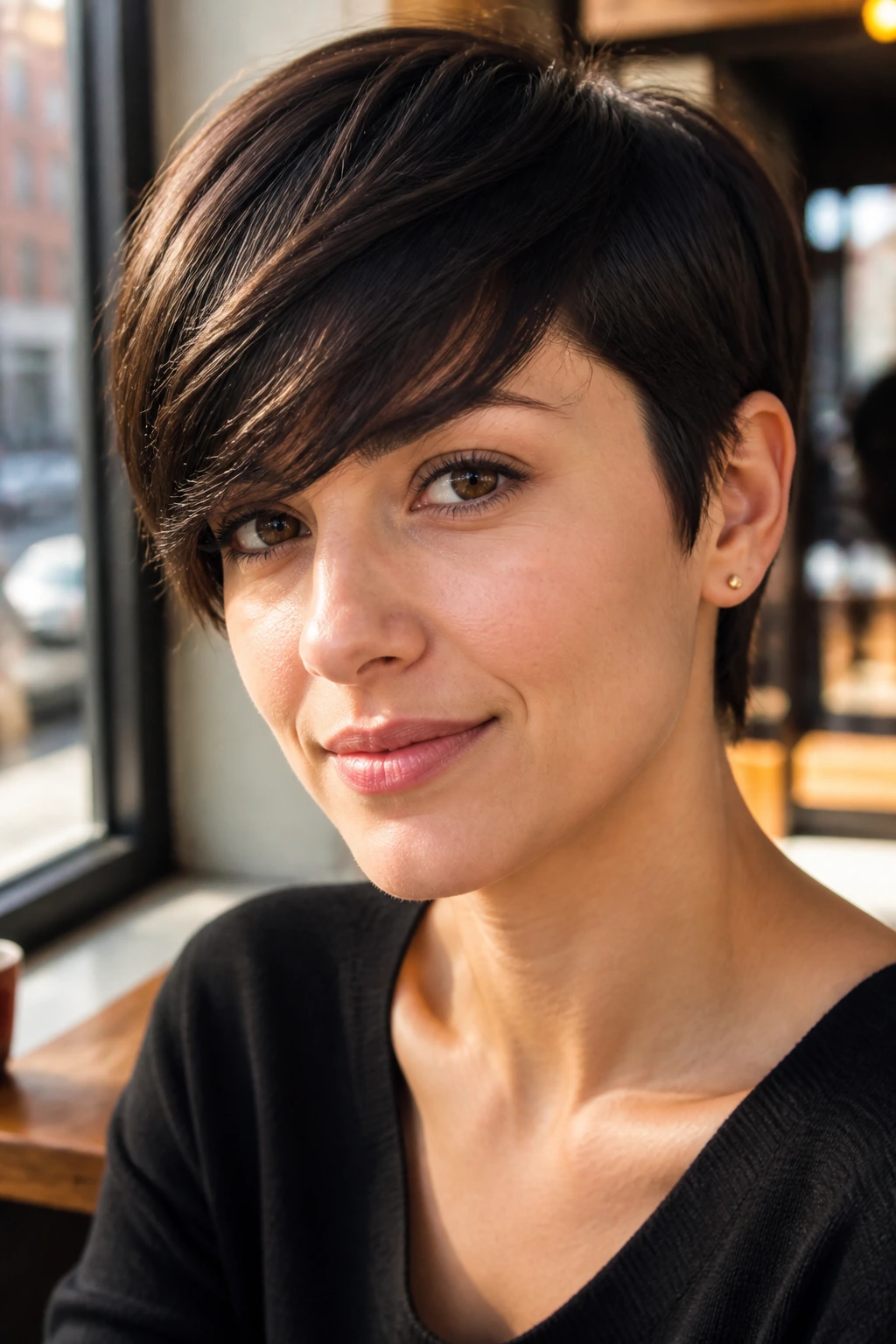
A brow-grazing side bang is the classic everyone returns to when they want a front section that feels easy and familiar. It sits right at the eyebrow or a hair above it, then falls diagonally so the eye area gets framed without being buried. On short hair, that length is often the most forgiving.
This style gives you a clear line without committing to a full fringe. It works on pixies, short bobs, and cropped shags because it doesn’t need a lot of extra length to make sense. If you part the hair where it naturally wants to split and dry the bang across the forehead first, it usually settles faster than a forced side part.
15. Cheekbone Sweep with Face-Framing
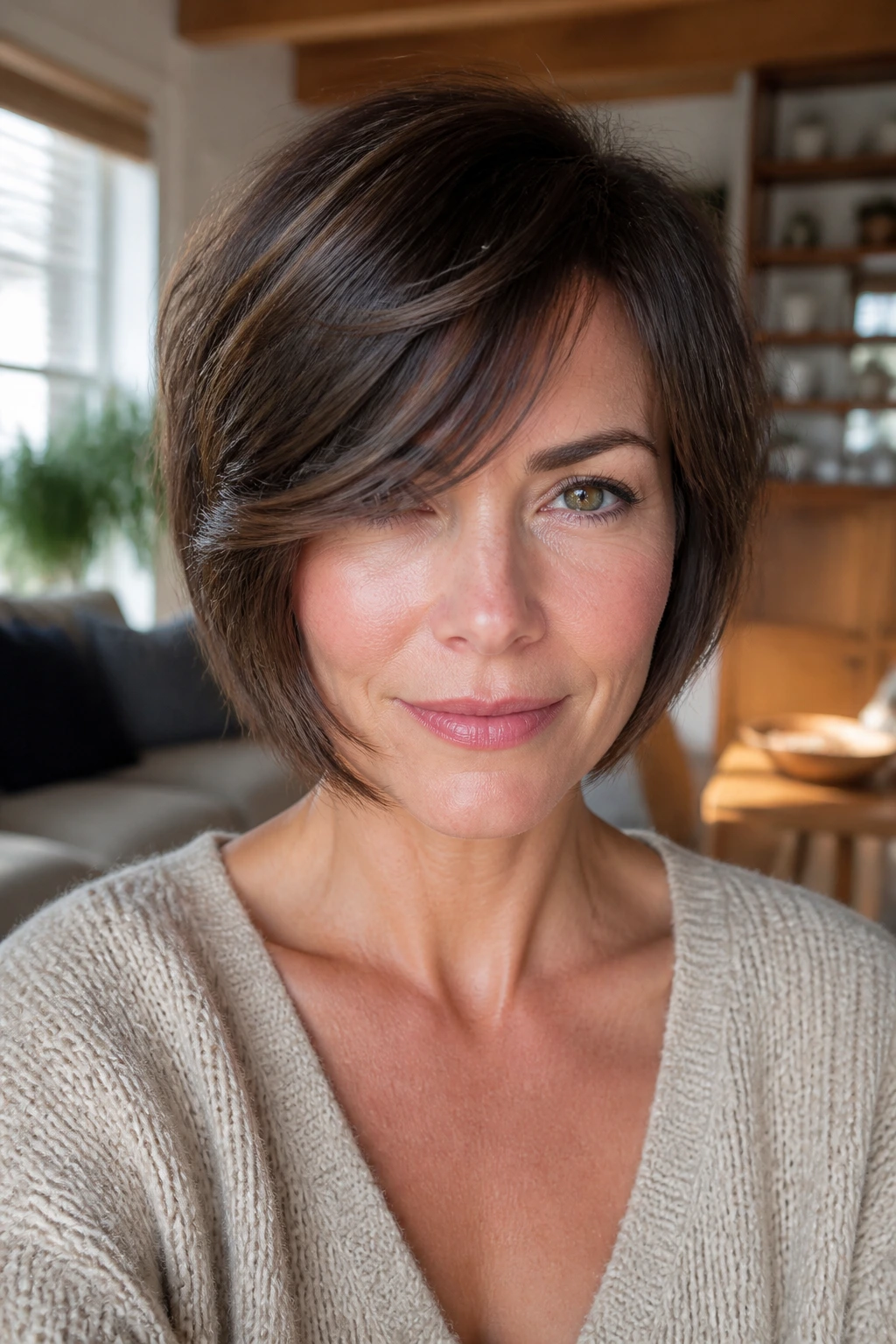
A cheekbone sweep starts where the face actually wants shape. The front piece is long enough to hit the high point of the cheek, then it folds into the layers around the jaw. That gives the cut a soft diagonal line that feels flattering without being sugary.
This one is especially good if you like short hair but want the front to do more than sit there. It adds shape to round faces, and it softens strong foreheads too. A little round-brush lift at the root helps, but the key is not to curl the ends under too aggressively. The bang should skim, not cling.
16. Flat-Iron Bend Bang
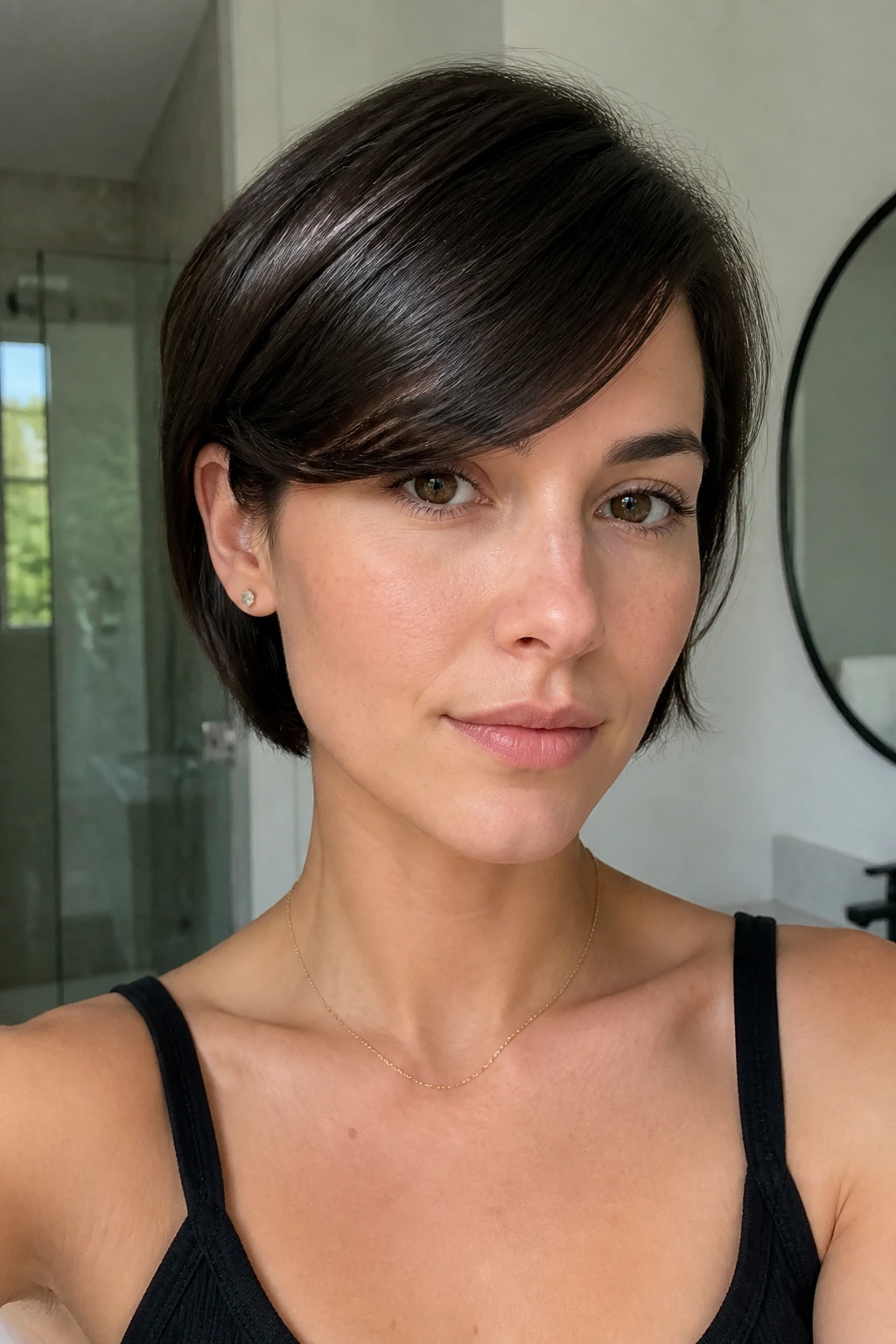
Sometimes the best side bang is the one you shape with a flat iron in under 90 seconds. Clamp the front section near the root, slide halfway down, then rotate your wrist a touch so the strand bends off the face instead of kinking. That gives you a clean arc with almost no puff.
Why it works
This technique is good when the hair is naturally straight or slightly wavy and refuses to hold a brush set. A single bend creates movement without changing the whole cut. Keep the iron moving. If you pause too long, you get a ridge right where the bang should look smooth. Finish with a drop of serum on the very ends, not near the scalp.
17. Air-Dry Fray for Wavy Hair

An air-dry fray is the least precious version of a side fringe, and that’s exactly why it works on wavy short hair. The front is cut to fall into a side sweep on its own, then left alone enough that it keeps a little raw texture. It should look lived in, not rough.
I like this approach with a soft mousse or wave cream worked through damp hair, then a quick finger-sweep to the side. Don’t keep touching it while it dries. That’s where the frizz starts. If the front gets too flat at the root, clip it up for 10 minutes while it’s drying so the bend sets away from the face.
18. Pin-Curl Side Wave
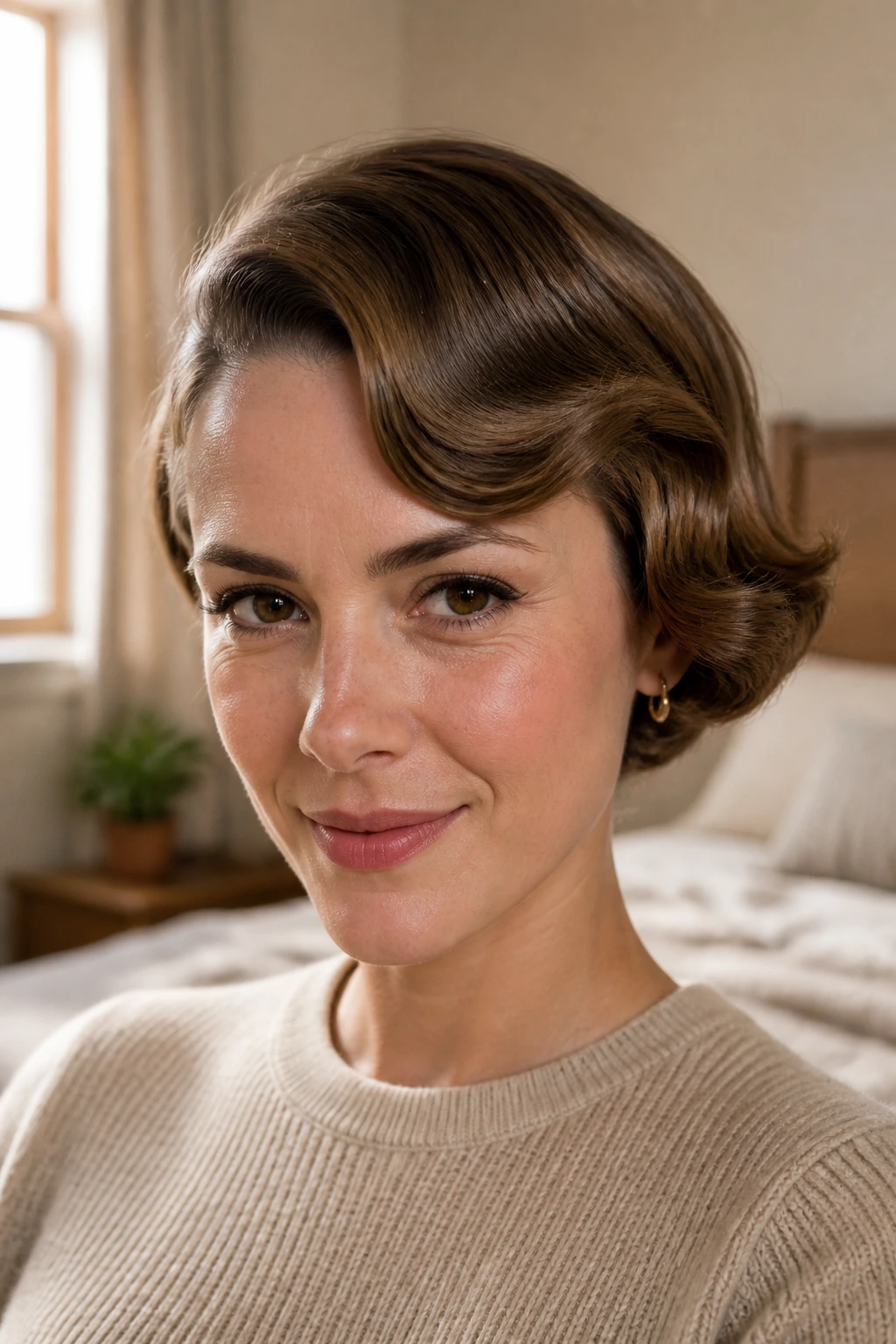
A pin-curl side wave is the fancy version of a side bang, and it earns every minute it takes. After blow-drying, roll the front around two fingers, pin it flat for a few minutes, then unpin and brush it into shape. The result is a soft wave that curves elegantly across short hair.
This is one of those styles that turns a simple bob into something a little more dressed up without needing a full set. The shape holds best when the front isn’t overloaded with product. A light mist of setting spray before the pin-curl helps, but too much makes the bang sticky. Clean, soft, controlled. That’s the goal.
19. Crown-Lift Side Swoop
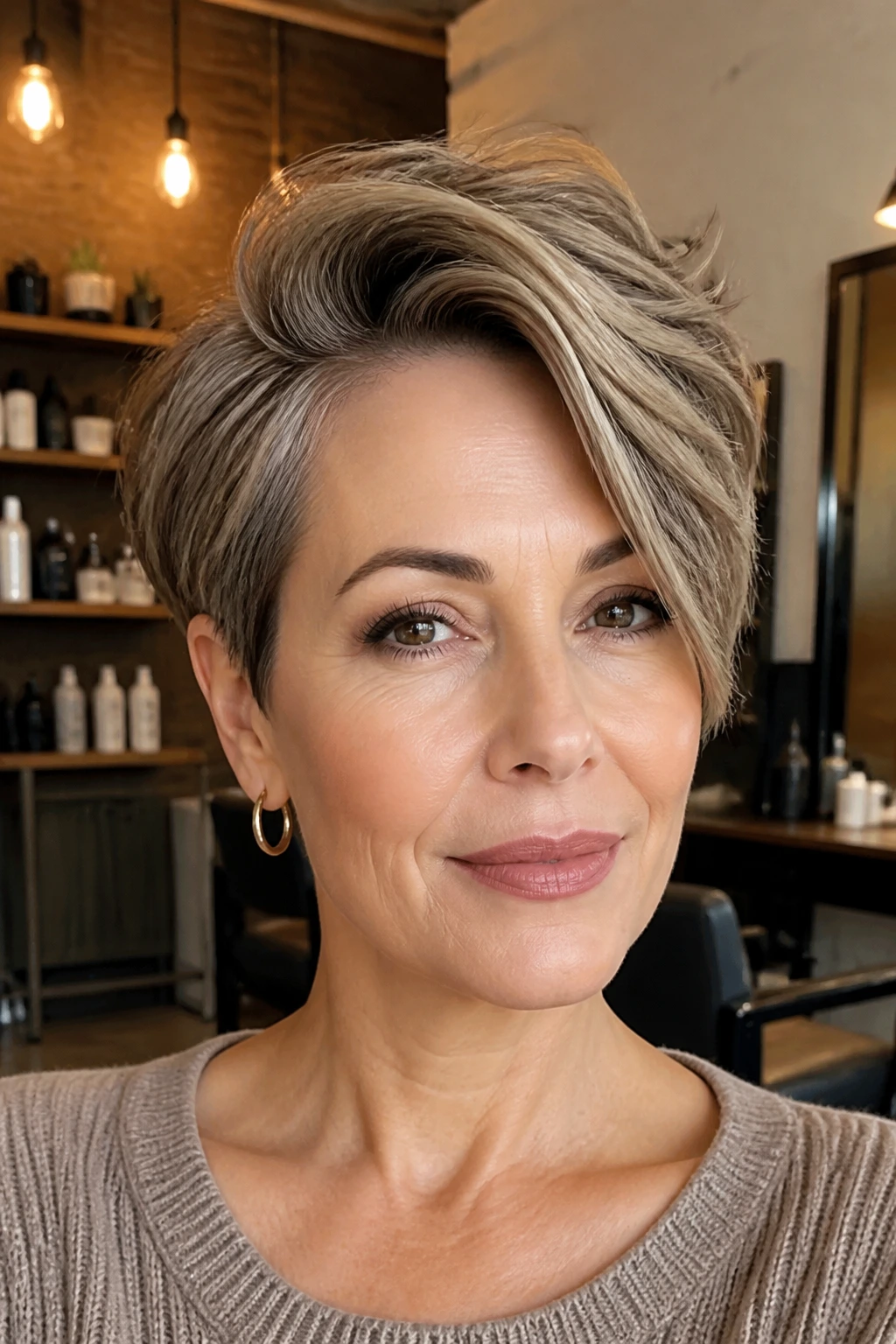
If your short hair tends to sit close to the head, a crown-lift side swoop gives you the height you’re probably missing. The lift starts at the root near the part and carries through the front so the bang doesn’t collapse into the forehead. The effect is subtle, but it changes the whole profile.
A root-lifting mousse, dried upward with a nozzle attachment, does most of the work. Then the front is guided sideways with a brush or fingers. What you don’t want is width without height. That turns into helmet hair fast. Keep the lift near the crown and let the fringe fall with a bit of air between the strands.
20. Tapered Nape with Soft Front Sweep
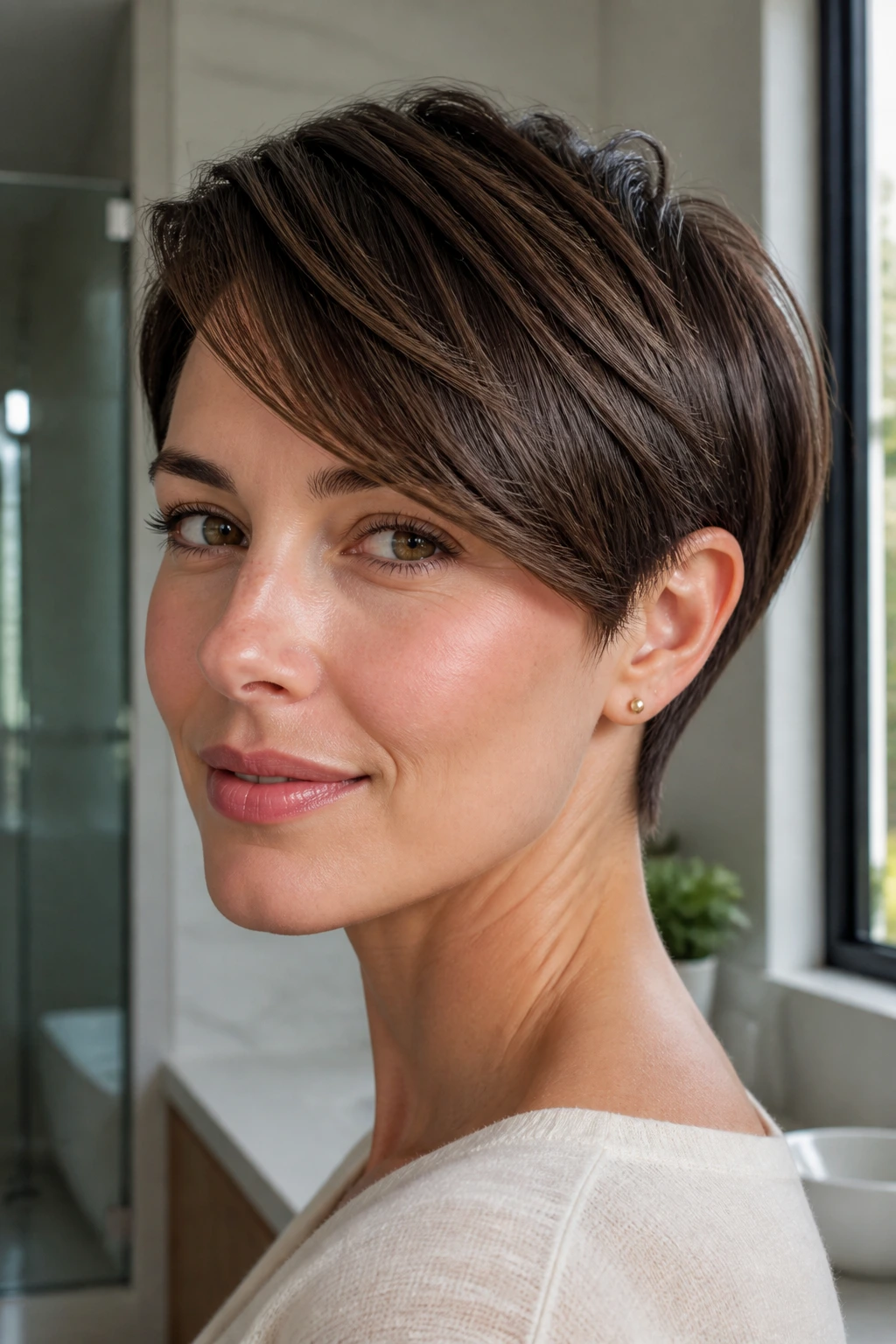
A tapered nape lets the front do more visual work. When the back is tight and close to the head, a soft side sweep at the front balances the whole cut so it doesn’t feel too severe. The contrast is clean. The shape reads fast.
This is a strong choice if you like cropped cuts but want them to look less hard around the face. The side bang should be soft enough to move, but not so loose that it loses connection to the nape. A little bend at the cheekbone helps link the front to the rest of the cut. It’s a small detail. It matters.
21. Wedge Cut Side Bang
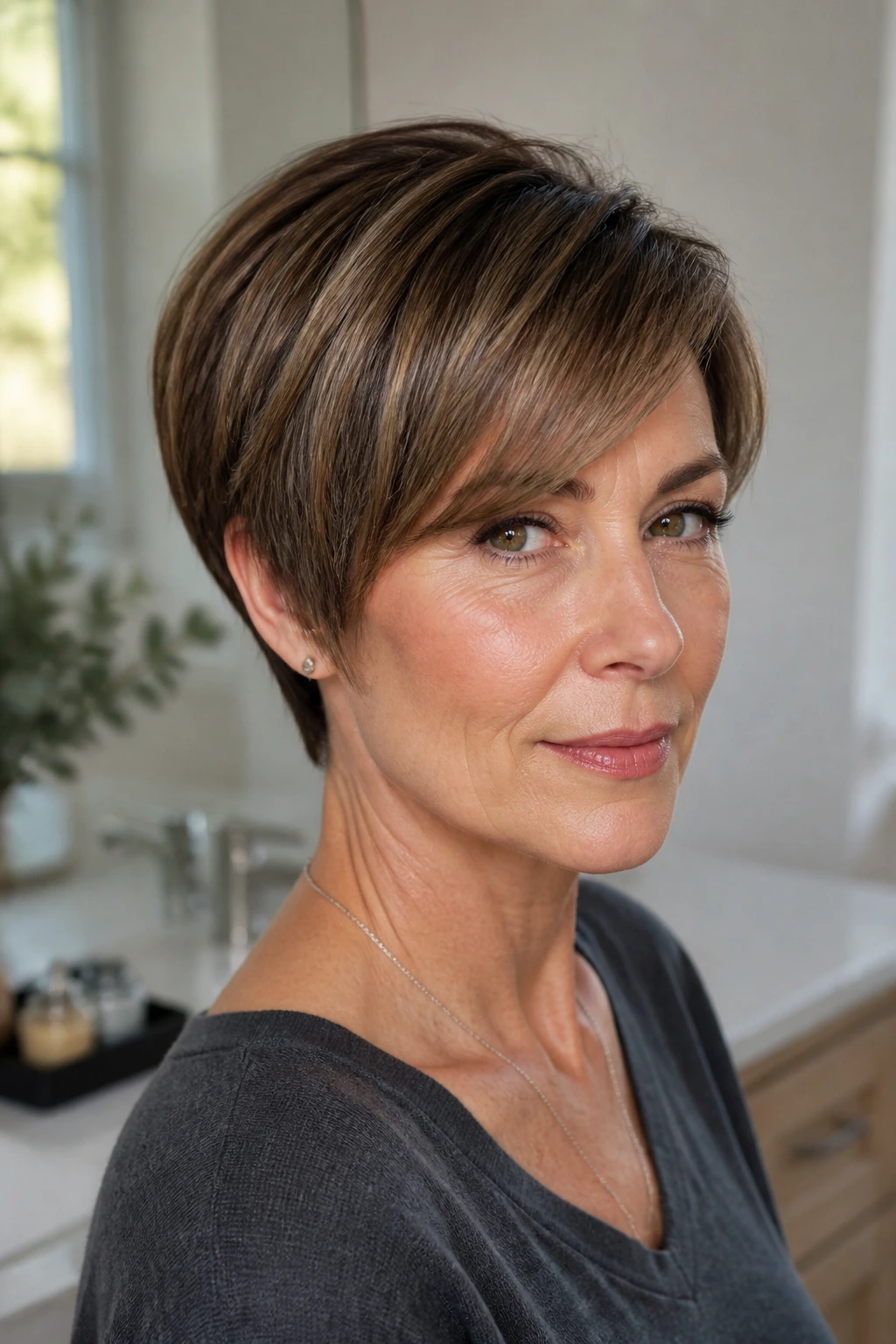
A wedge cut already has built-in geometry, so the side bang should follow that logic. The front angle can be precise and slightly lifted, with the shortest point near the part and the longest point tapering toward the temple. It keeps the wedge from feeling dated.
This is not the bang for someone who wants sloppy texture. It looks best when the lines are clean and the finish is smooth. A round brush can help, but I’d stop before the ends curl too much. The idea is angle, not fluff. If the bang flips away from the face at the very tip, that’s enough.
22. Rounded Pixie Fringe

A rounded pixie fringe softens a pixie without erasing its shape. The side bang curves gently over the forehead like a small arc, then blends into the crown and side layers. It’s less dramatic than a deep sweep, which makes it good for people who want something quiet but not flat.
The curve should follow the head, not sit on top of it like a sticker. That means the stylist needs to check how the hair falls dry, especially around the front hairline. A tiny bit of lightweight wax on the ends can help the arc stay visible. Not too much. Pixies turn mushy fast when overloaded.
23. Pixie-Mullet Side Sweep
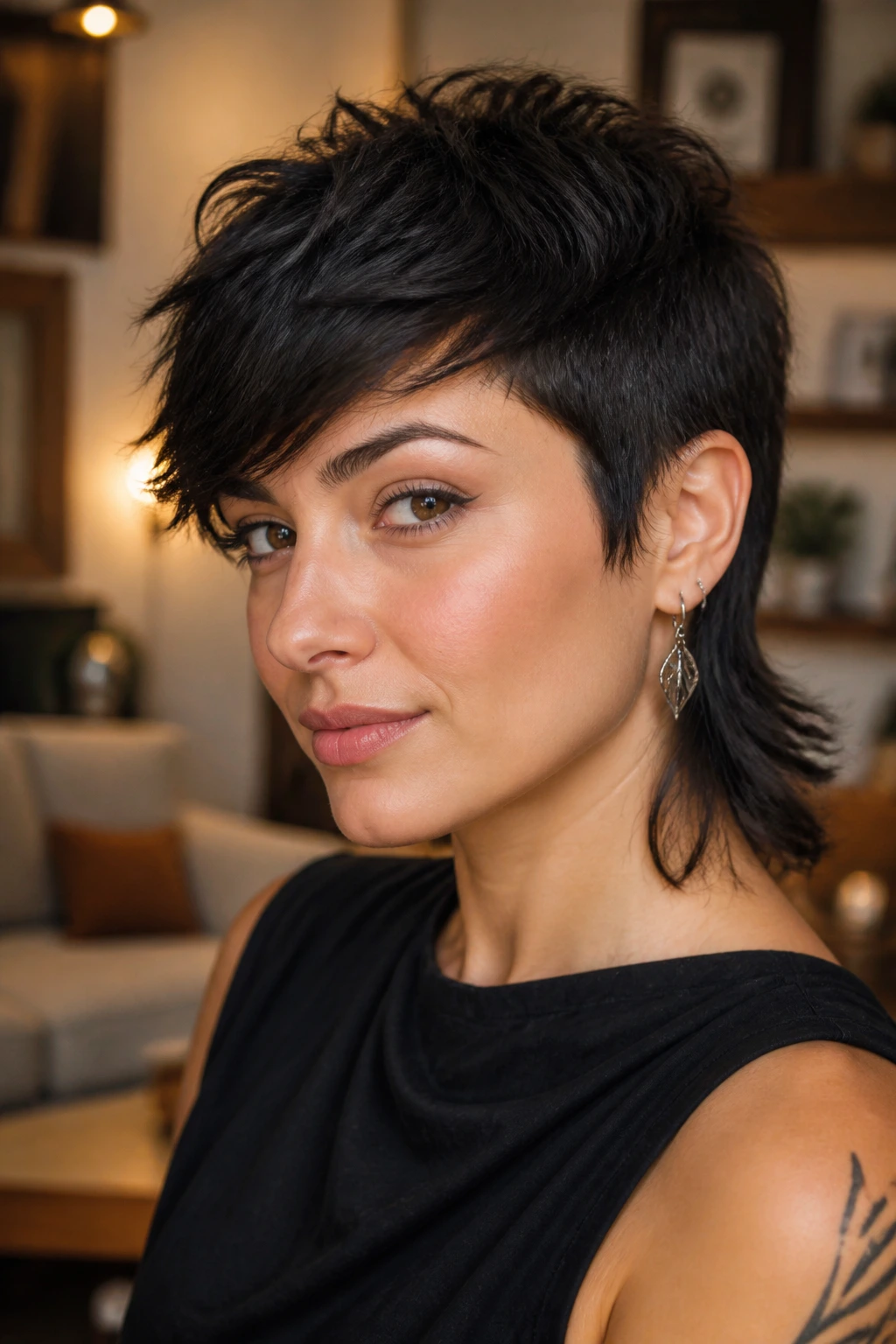
A pixie-mullet side sweep is one of the bolder options in this group. The front is soft and directional, but the back and sides carry a little extra length, which gives the whole cut a more layered, less polished finish. It’s edgy without needing a dramatic color job to sell it.
This style works because the side bang connects to the longer perimeter instead of sitting alone. That means the front feels part of the cut, not pasted onto it. A little texture cream through the ends and a quick pinch with the fingers is usually enough. If you want it sleeker, use a flat iron to smooth the bang while leaving the back alone.
24. S-Curve Bang for Short Hair
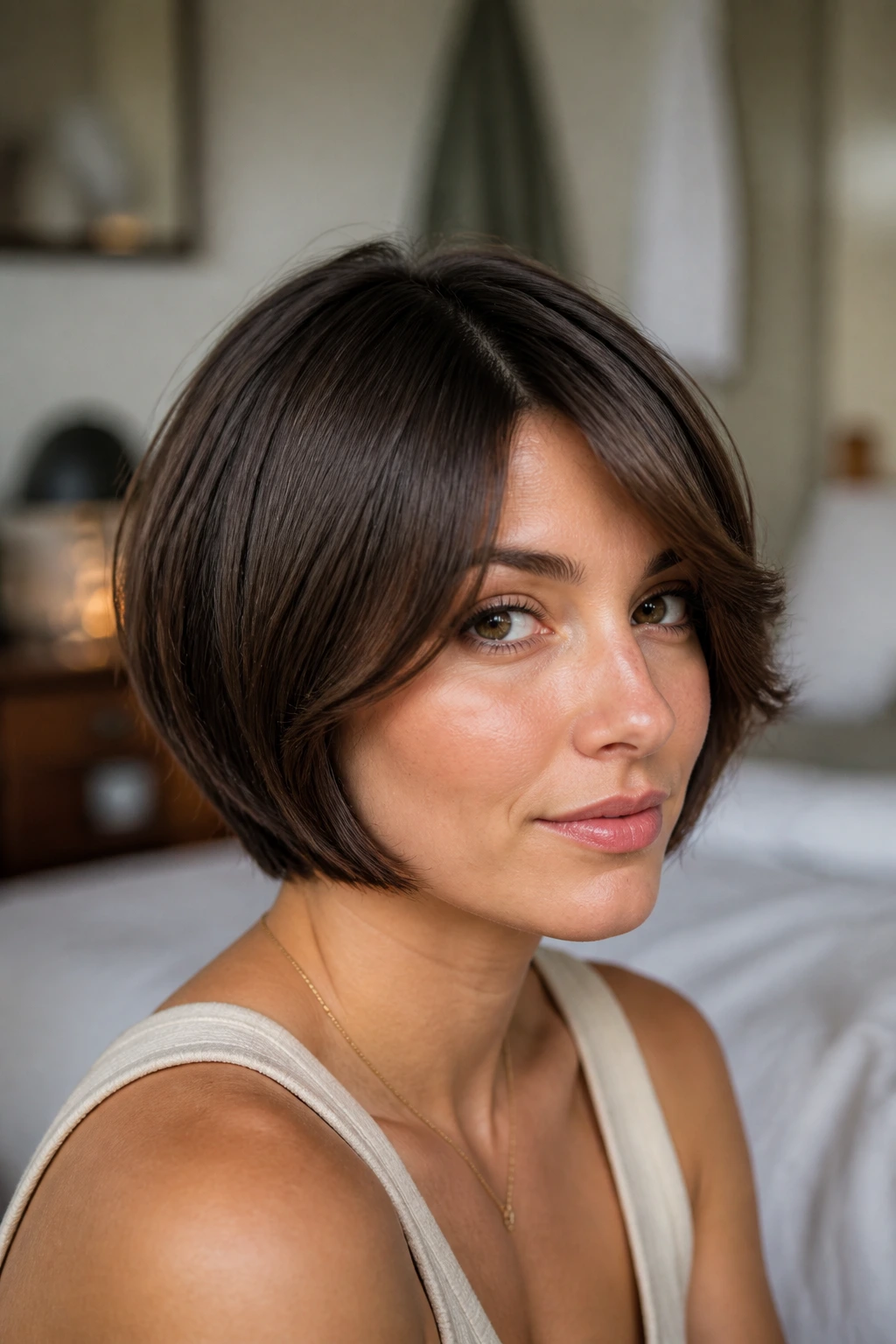
An S-curve bang sounds fussy until you actually see it moving. The front takes a soft bend away from the face, then folds back in slightly near the ends. On short hair, that curve keeps the bang from looking stiff or overly flat.
It’s a good option when you want shape with a little drama. The curve catches light in a way a straight side bang does not, especially on smooth bobs and crops. I’d use a round brush or a medium barrel brush and set the roots first. If the whole bang curls too much, it starts reading like a vintage roll rather than a side fringe.
25. Face-Frame Merge Fringe
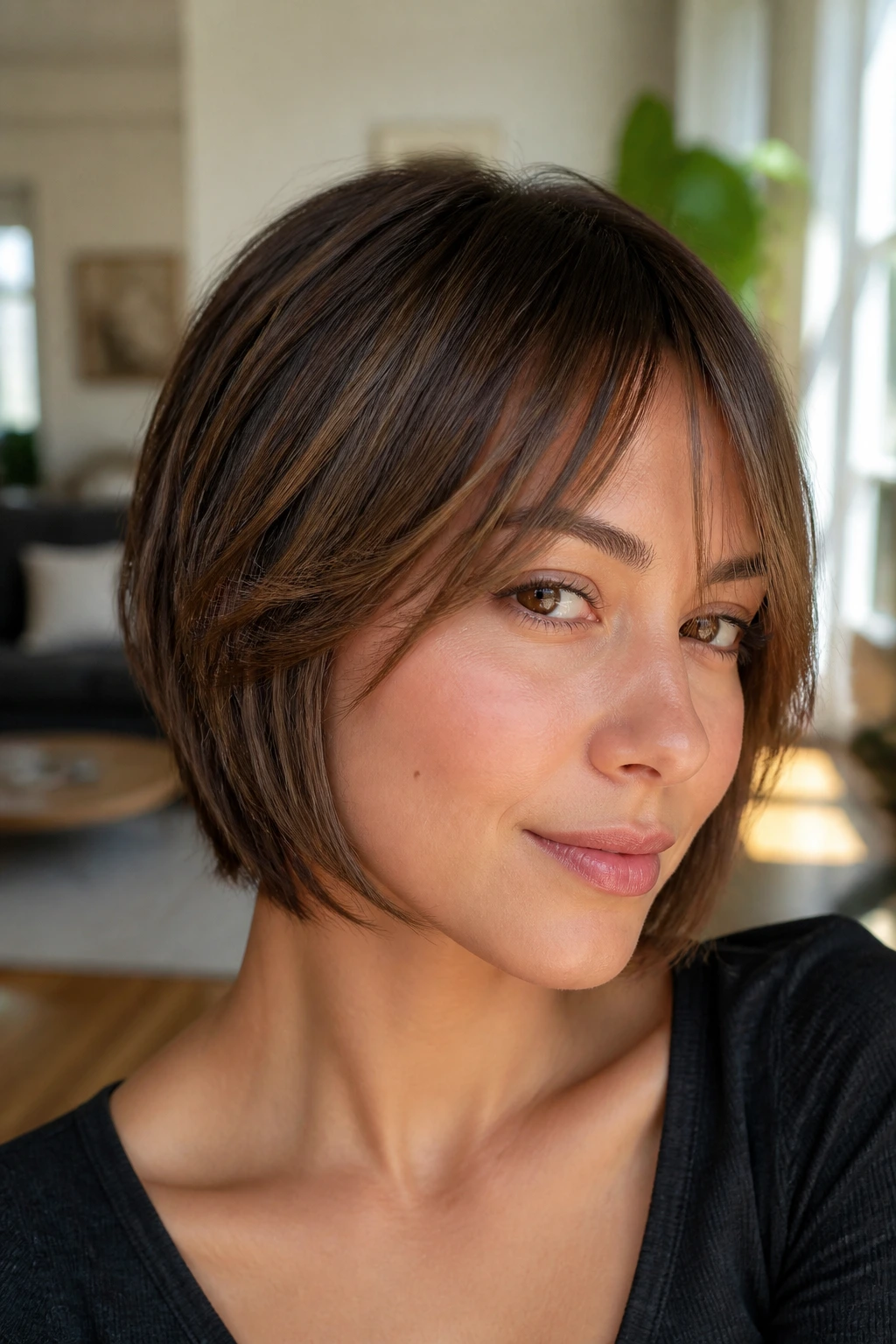
This is the most natural-looking option if you hate obvious bangs. The side bang blends straight into the face-framing layers, so there’s no hard line where the fringe stops and the rest of the cut begins. It grows out well because the layers already know what to do.
The nice part is how easy it is to wear. You can brush it forward, tuck it back, or let it fall into the rest of the style without needing a full reset. On short hair, that flexibility is gold. Ask for soft layering around the cheekbone and temple so the bang has somewhere to disappear when you want it gone.
26. Tiny Flip-End Bang

A tiny flip-end bang is a small move that changes the mood of short hair fast. The front section lands on the cheek or a touch above it, then the ends flick away from the face instead of hugging it. That tiny flip keeps the fringe light and a little playful.
This works best when the hair is smooth enough to hold a bend but not so silky that it drops the second you walk outside. A quick pass with a flat iron or round brush is usually all it needs. If the ends keep turning inward, switch the direction of your blow-dry for the final 10 seconds. That usually fixes it.
27. Matte Textured Sweep
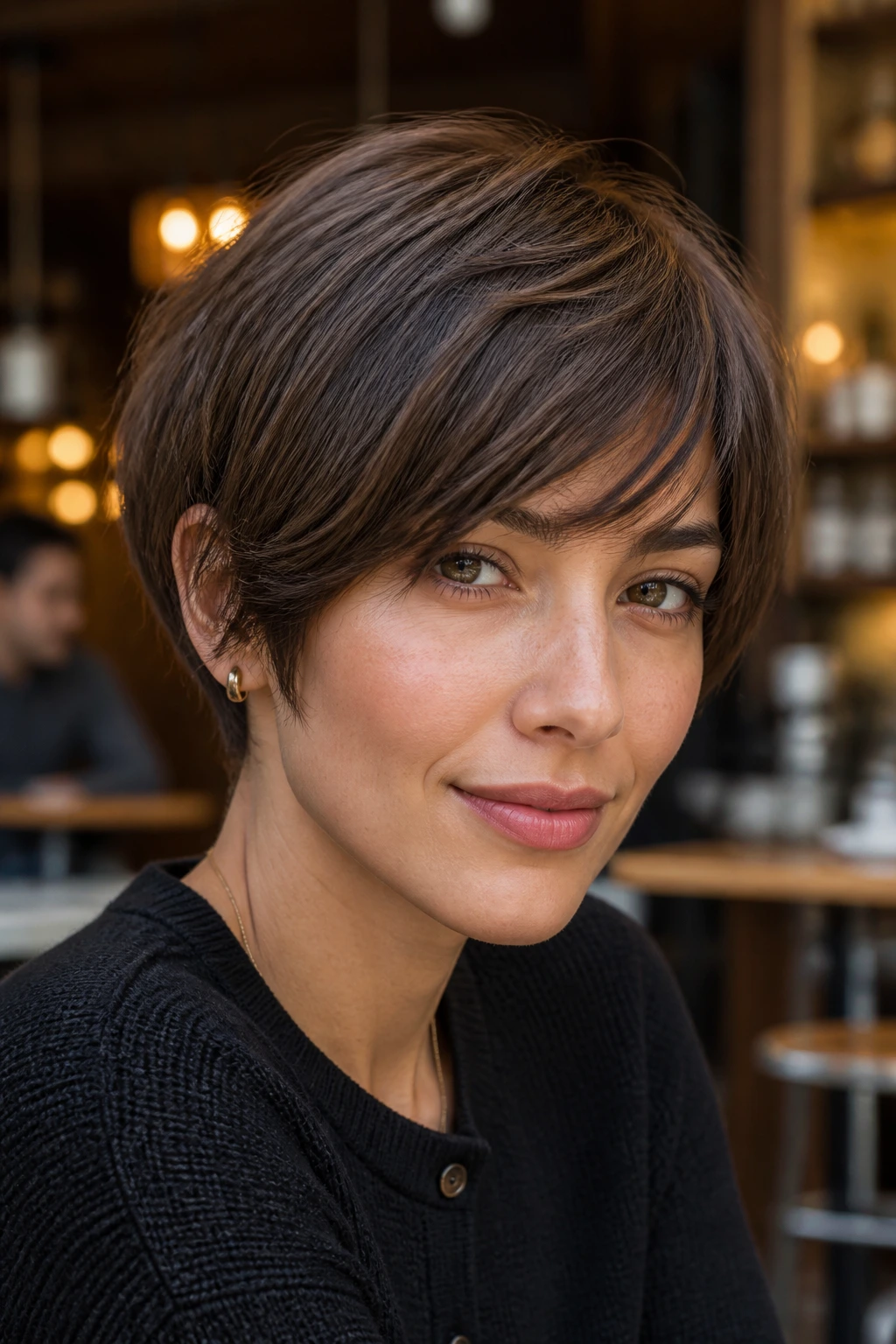
A matte textured sweep is the rougher, drier cousin of the polished side bang. It suits short cuts that already have a little grit — think cropped shags, choppy bobs, or a pixie with uneven layers. The front should separate into soft strands, not one glossy sheet.
Dry shampoo at the roots and a tiny amount of texture paste through the mid-lengths give this style its hold. Shine isn’t the point here. Shape is. If the bang starts looking greasy, too much oil or serum is usually the culprit. Keep the finish dry and touchable, and the cut reads cleaner.
28. Thick-Hair Feathered Fringe
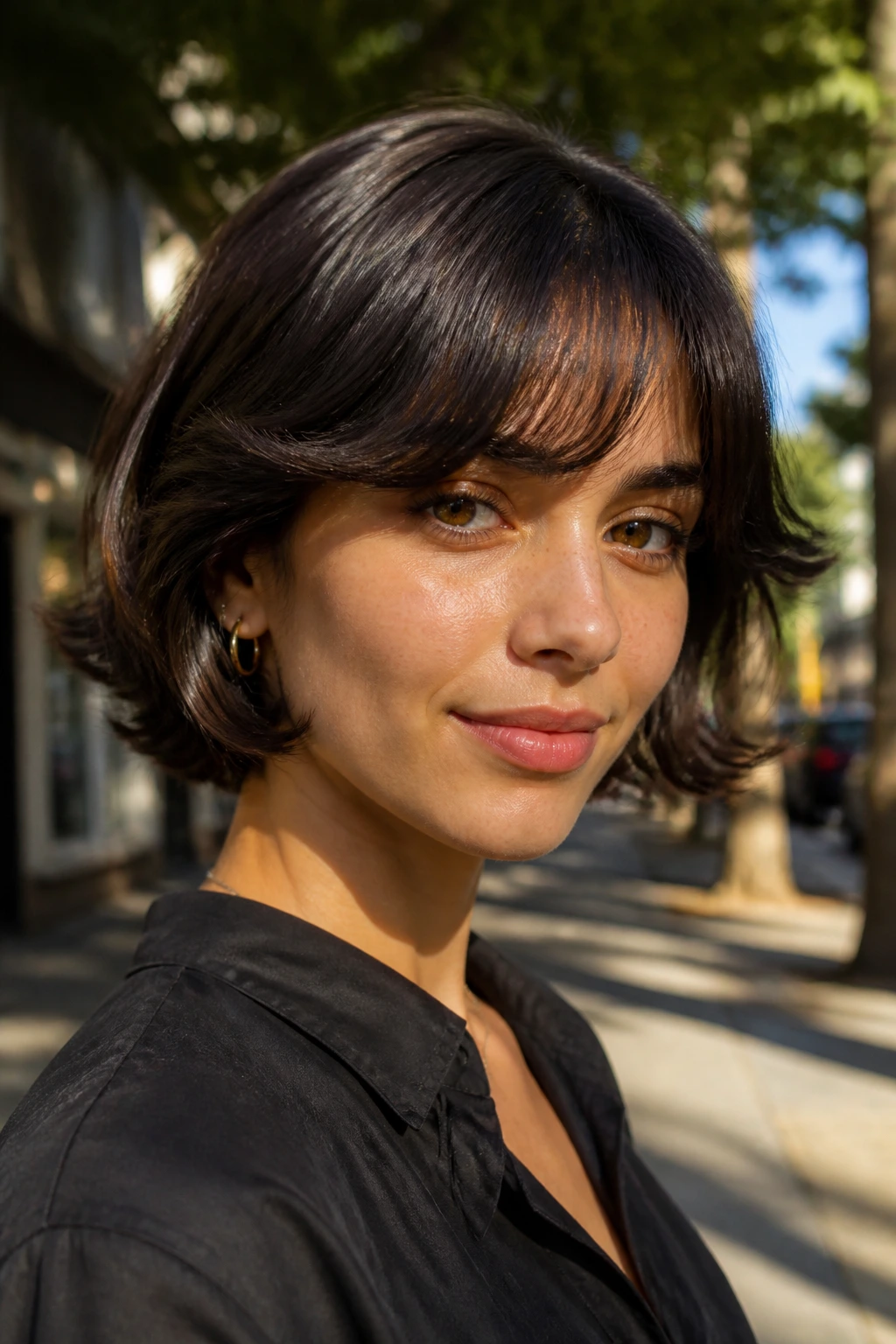
Thick hair needs air in the front, or the bang can sit there like a solid block. A feathered fringe breaks up that bulk with soft, tapered ends that sit closer to the forehead and move more easily. The line still feels full, but not heavy.
This is where careful layering matters. Too much thinning can make the front frizzy. Too little leaves you with a dense curtain that refuses to sit to the side. A stylist who knows how to point-cut thick hair will leave enough weight for control and enough softness for motion. That balance is the whole trick.
29. See-Through Fringe for Fine Hair

A see-through fringe is the opposite problem: too little density, too much scalp showing if the bang is cut too thick. On fine hair, the side bang should be airy, spaced out, and narrow enough that it doesn’t overpower the rest of the cut. Think soft veil, not solid panel.
This style needs root lift more than product. A little mousse near the base and a blast of air while lifting the fringe with your fingers usually does more than heavy spray ever will. If you have fine hair and a short cut, avoid loading the front with cream. It makes the bang collapse and separate in thin, sad strings.
30. Cowlick-Friendly Side Bang
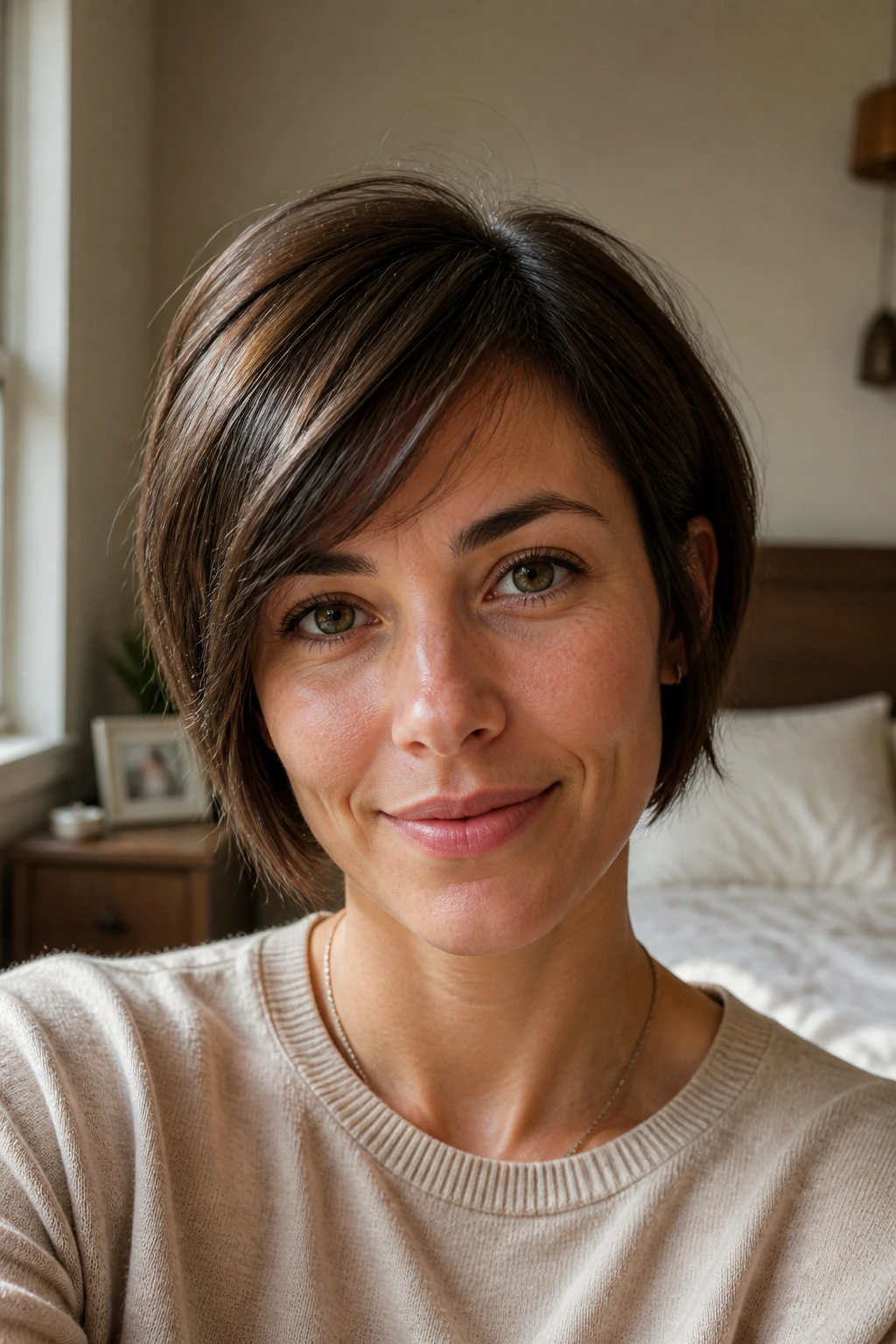
A cowlick-friendly side bang does not try to bully the hairline into submission. It works with the direction the roots already want to go, which sounds obvious until you see how often people ignore it. The front is cut to follow that bend and then guided into a side fall.
This is one of the smartest options for short hair because a strong front cowlick can wreck a cleaner fringe in minutes. Ask the stylist to check the dry fall and cut with the grain of the hair, not against it. At home, dry the cowlick first. If you wait until the rest of the hair is done, the front will already have picked its own shape.
31. Hybrid Curtain Side Bang
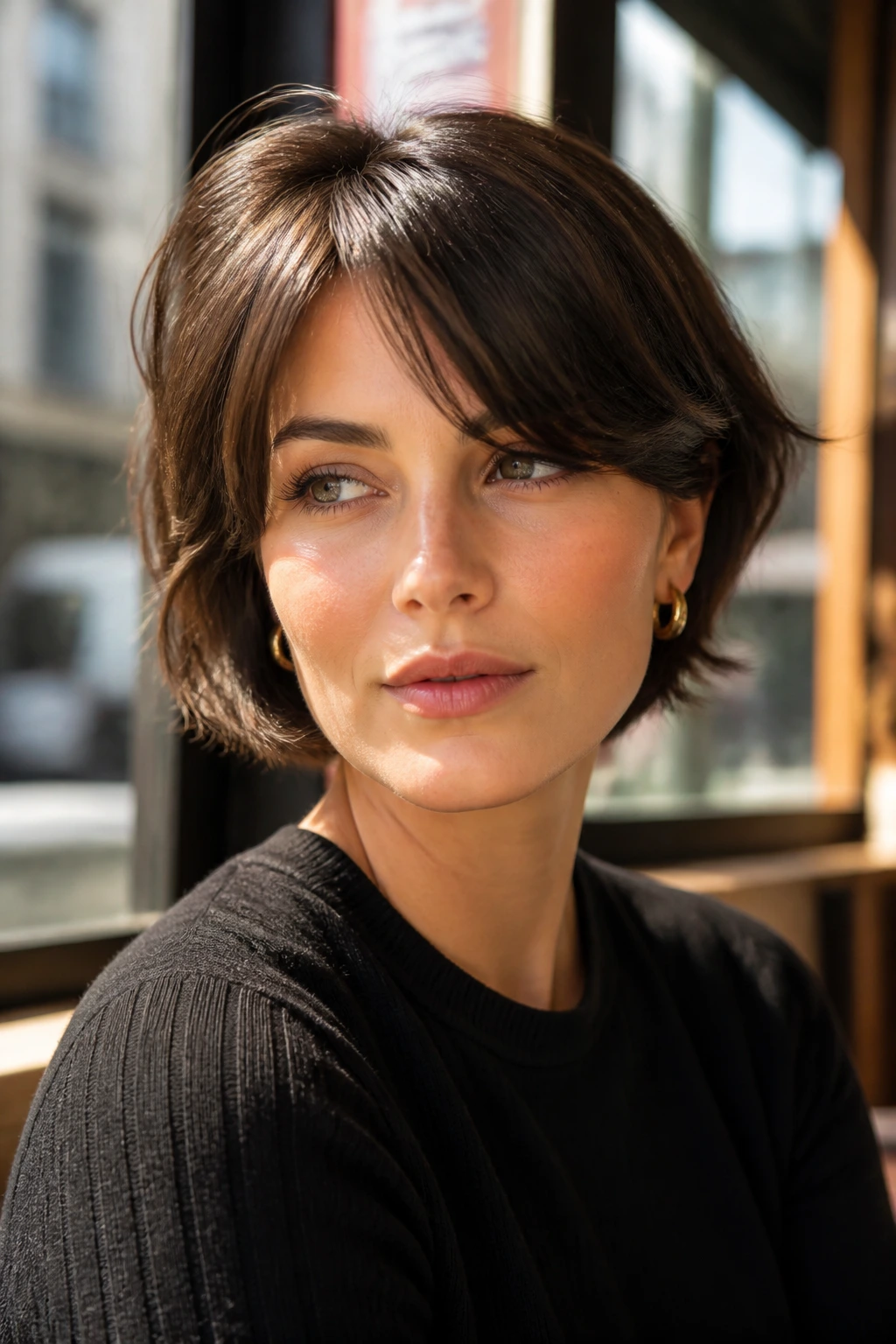
A hybrid curtain side bang starts with a tiny split near the crown, then drifts to one side so it reads like a side fringe with a softer center balance. It’s a good bridge style for people who like the movement of curtain bangs but need the practicality of a side sweep on short hair.
The useful part
This version grows out in a friendly way. As the hair gets longer, the front can separate a bit more and still look intentional. It’s especially nice on bobs and bixies because the two front halves help frame the face without swallowing it. Use a round brush to lift the roots away from the part, then direct both sides outward. Don’t over-direct. That’s when it gets too blown open.
32. Sideburn Blend Bang
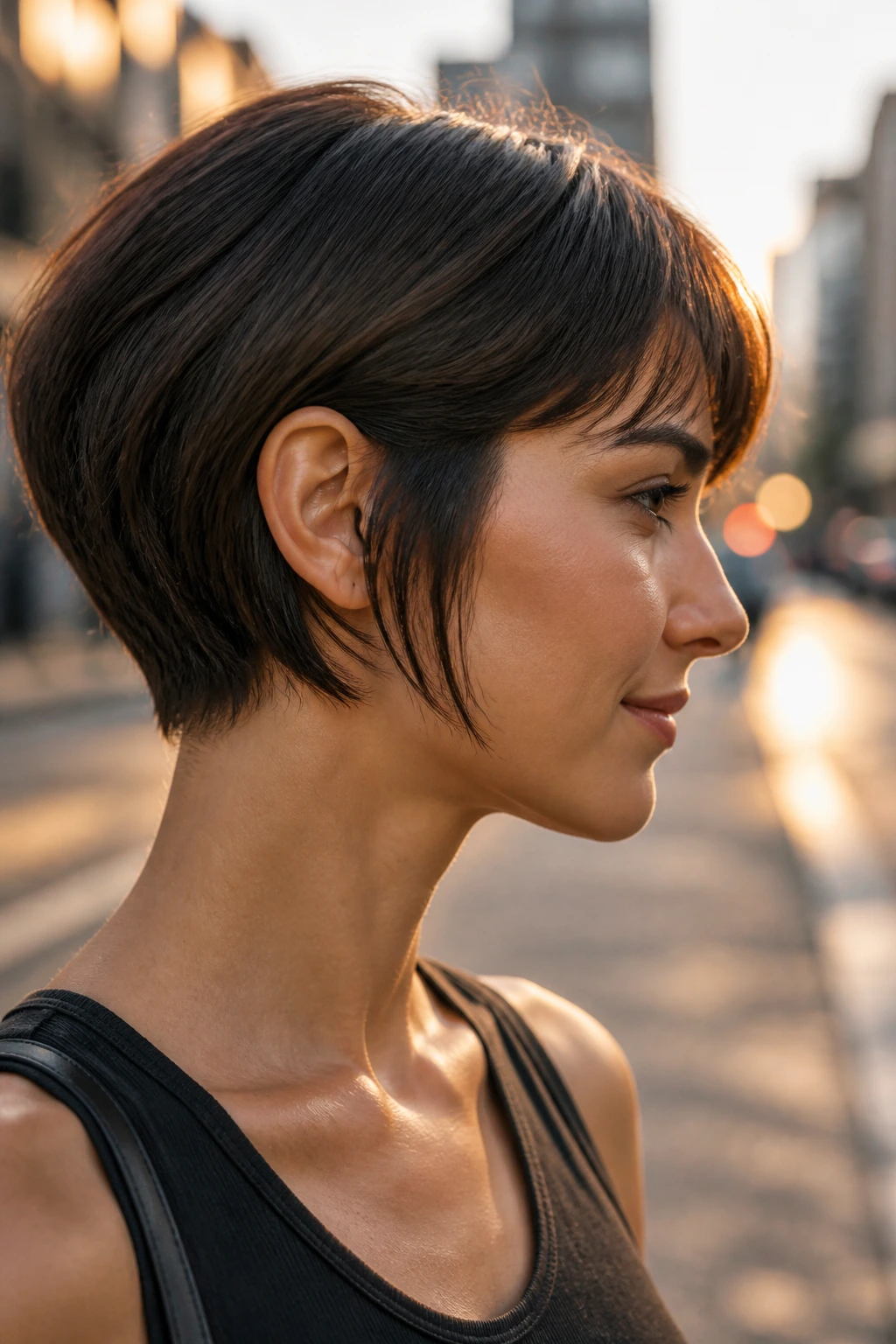
A sideburn blend bang uses the sideburn area as part of the shape, which makes the front feel more connected to the haircut. Instead of stopping at the temple, the fringe eases into the hair around the ear and jaw. It’s small, but it makes the cut look more designed.
This is a good move if your face shape benefits from a little vertical line near the jaw. It also helps short hair grow out without a harsh corner near the ear. A light styling cream is enough to keep the sideburn area smooth. If you use too much, it turns slick in a way that looks accidental.
33. Curly Bob Side Sweep
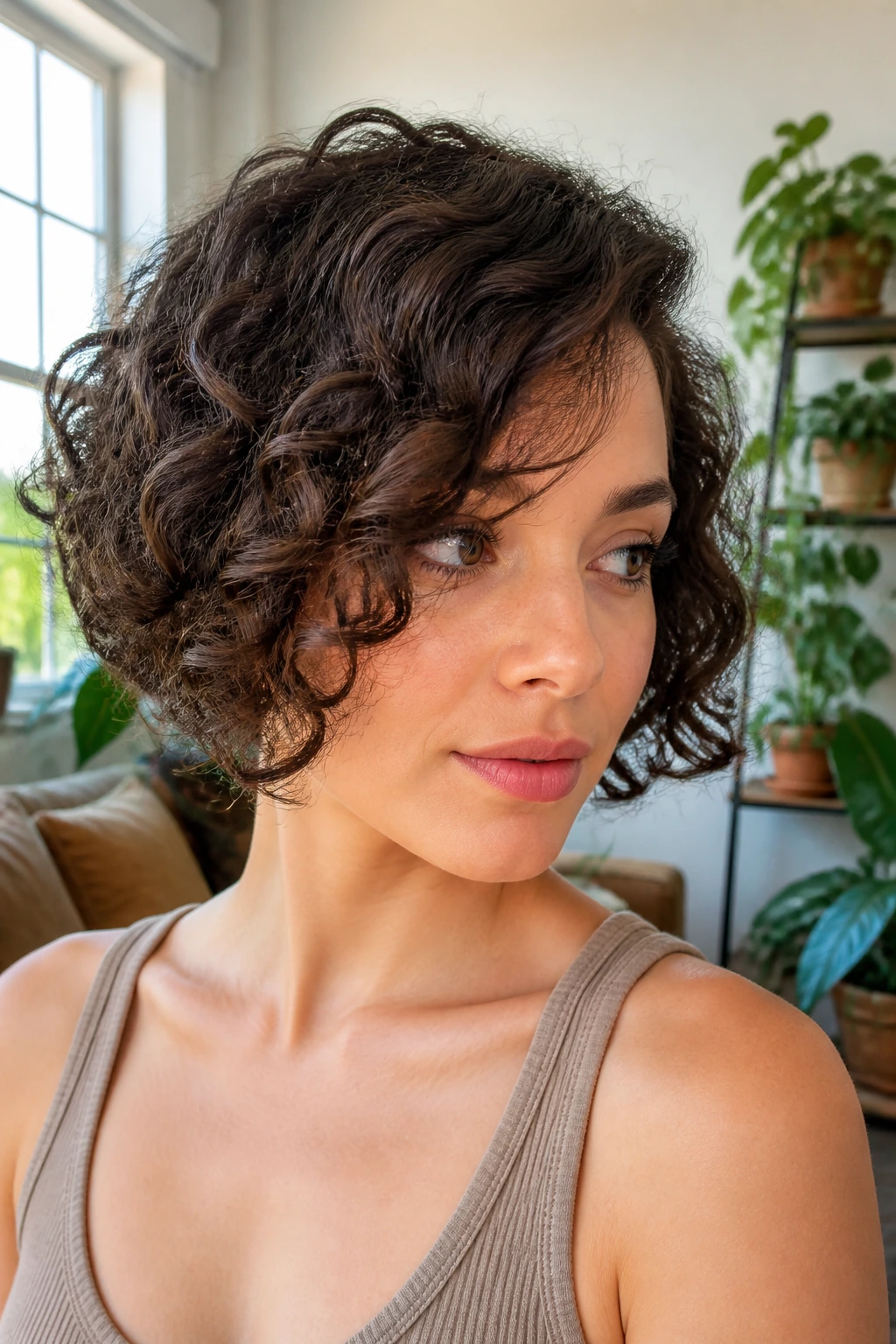
A curly bob side sweep should move with the curl pattern instead of flattening it. The front pieces are left long enough to form a sideward curve, then allowed to spring naturally across the forehead or cheek. On curls, the shape changes from day to day. That’s normal.
The best cut is usually made with the hair dry or mostly dry so shrinkage doesn’t surprise anyone later. Use a diffuser on low heat if you need to speed things up, and stop before the curls get fluffy. A bit of gel on the ends can keep the side bang defined without taking away the bounce. Too much gel, though, and the front turns crunchy. Nobody wants that.
34. Straight Bob Side Panel
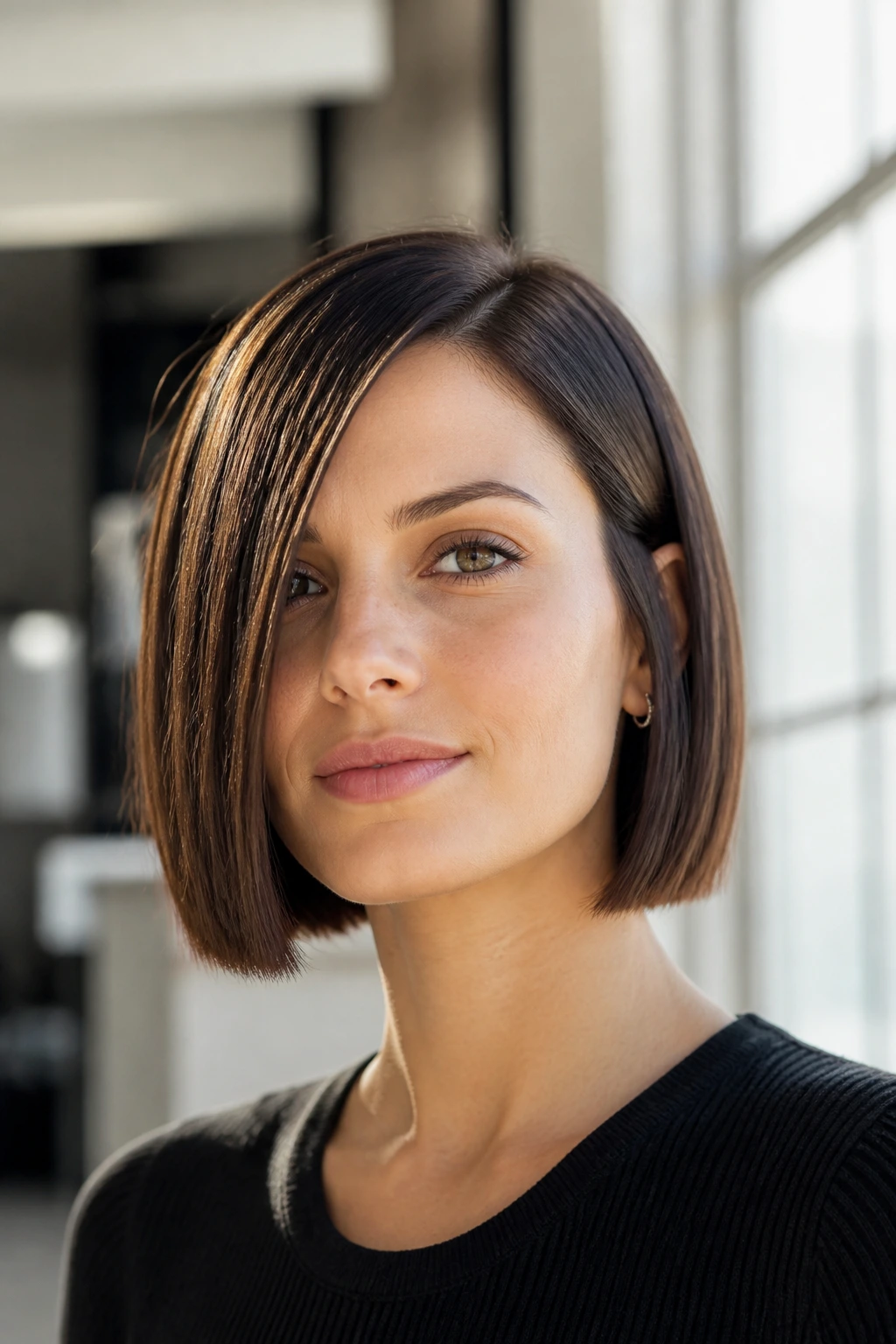
A straight bob side panel is clean, linear, and a little architectural. The front sits as a smooth side section rather than a wispy fringe, which is a nice option if you like order more than texture. It creates a strong line across the face and keeps the bob looking sharp.
This style depends on a neat part and a smooth finish. Blow-dry with a nozzle, brush the front across with tension, and let it settle before you touch it again. If the hair has a tendency to puff, a single pass with a flat iron over the surface is enough. No need to flatten every inch. A little movement keeps it from looking too rigid.
35. Sculpted Side Bang Finish
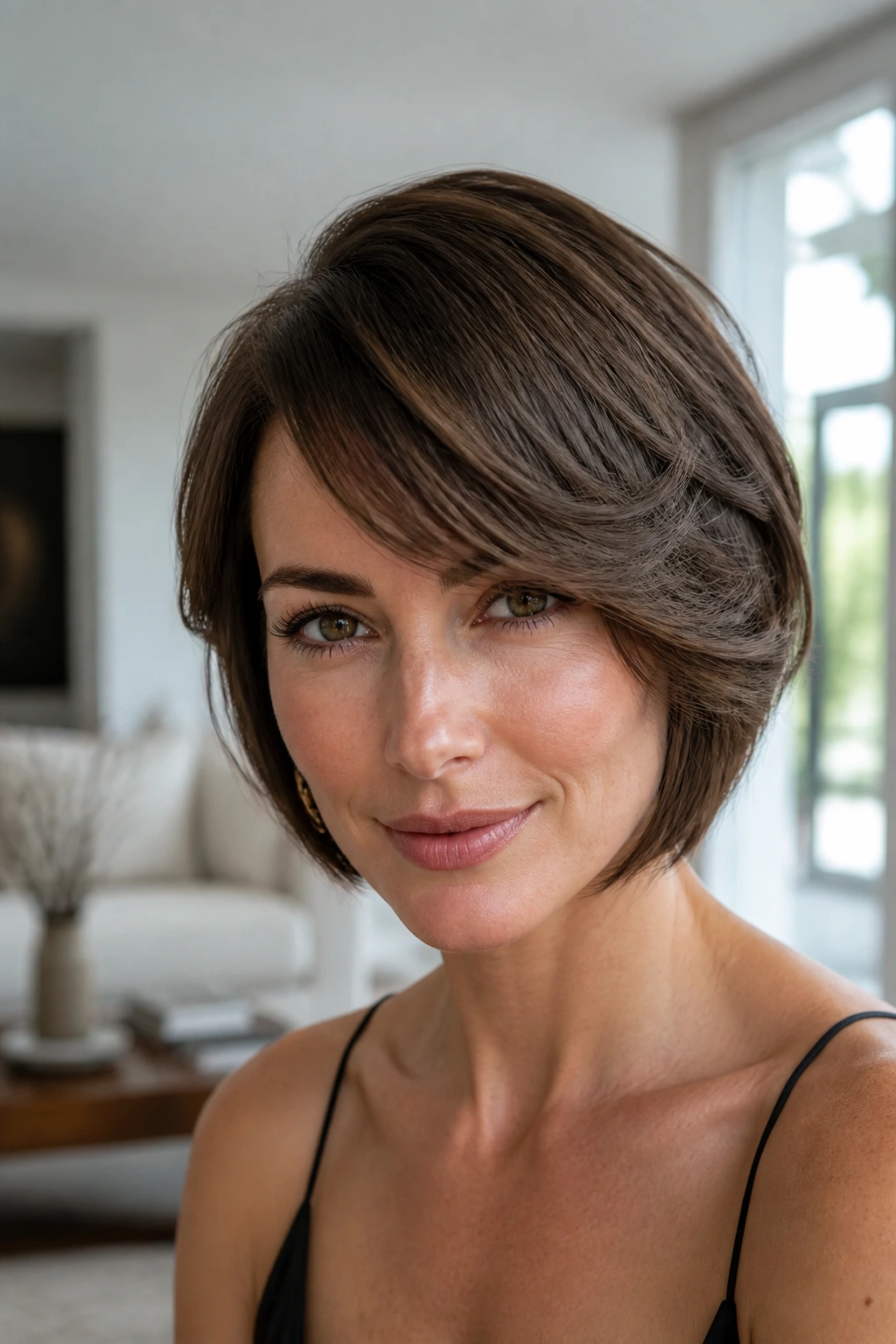
A sculpted side bang finish is the polished end of the spectrum. The front is guided into place with a round brush or flat iron, then held there with just enough product to keep the line clean through the day. It’s the version you wear when you want the haircut to look deliberate from every angle.
What makes it work is restraint. The bang should have shape, not armor. A light spray of flexible hairspray and a smooth stroke of the hands along the top layer usually finish it. If the ends start flipping in odd directions, a quick re-bend with a low-heat iron fixes the problem faster than redoing the whole front. Clean. Calm. Done.
Why Short Hair Loves a Side Fringe
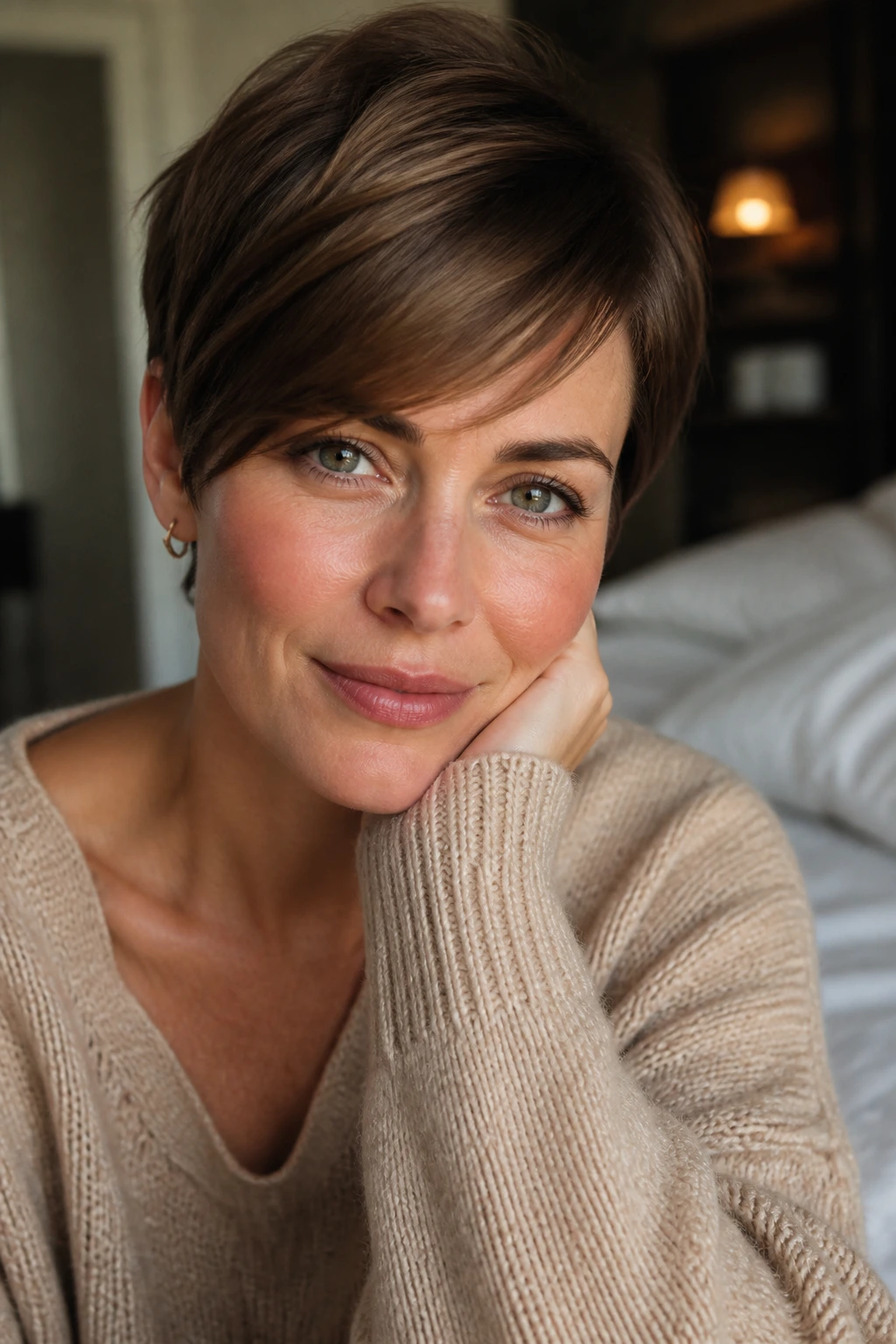
Short hair is unforgiving in the nicest possible way. It shows the cut line, the density, the forehead balance, and every inch of growth as it happens. A side fringe matters because it gives the front of the haircut a job to do. Instead of ending in a hard stop, the shape moves across the face, which makes the whole cut feel more complete.
There’s also a practical side to this. A side bang is easier to redirect than a full blunt fringe, and it usually grows out with fewer awkward phases. That matters a lot when the haircut itself is short. Once the front is too heavy or too short, you notice it immediately. A diagonal line gives you more room to tweak the shape at home with a dryer, brush, or flat iron.
And then there’s the part no one likes to talk about: hairlines have opinions. Cowlicks, temple growth, widows’ peaks, and bends in the front section all change how a side fringe sits. The best short-hair bangs respect that. They don’t fight the scalp. They guide it.
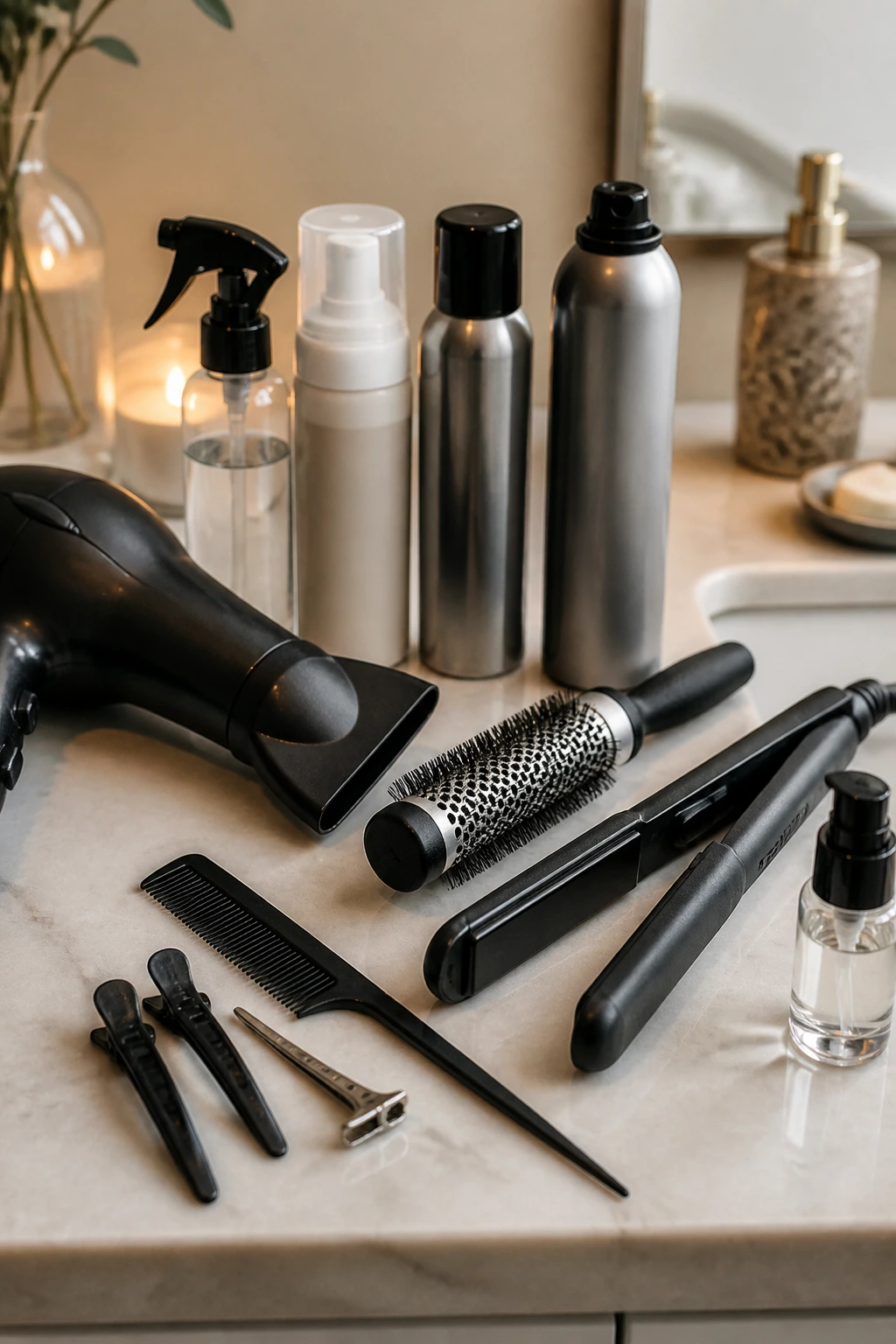
Essential Tools for Styling Side Bangs
-
Blow dryer with a nozzle attachment: The nozzle gives you control at the front hairline, which matters more on short hair than it does on longer cuts.
-
Small round brush, 1 to 1.25 inches: This is the sweet spot for lifting roots and curving short side bangs without over-rounding them.
-
Flat iron with rounded edges: A narrow iron makes it easier to add a soft bend or flip at the ends without leaving a hard crease.
-
Tail comb: Use it to place a clean side part and separate the bang section without wrecking the rest of the hair.
-
Heat protectant spray: Short bangs sit close to the face and get styled often; don’t skip this just because the section is small.
-
Lightweight mousse or root lift spray: A little volume at the base helps the fringe stay in place without heavy buildup.
-
Texturizing spray or dry shampoo: Good for piecey, lived-in styles and for reviving the front on day two.
-
Flexible-hold hairspray: Keeps the shape from falling apart while still allowing movement.
-
Small clips or duckbill clips: Useful for pinning the bang while it cools or while you’re finishing the rest of the head.
-
Mini smoothing cream or serum: Use a tiny amount on the ends only if the front is frizz-prone or the weather is damp.
How to Choose the Right Length and Weight
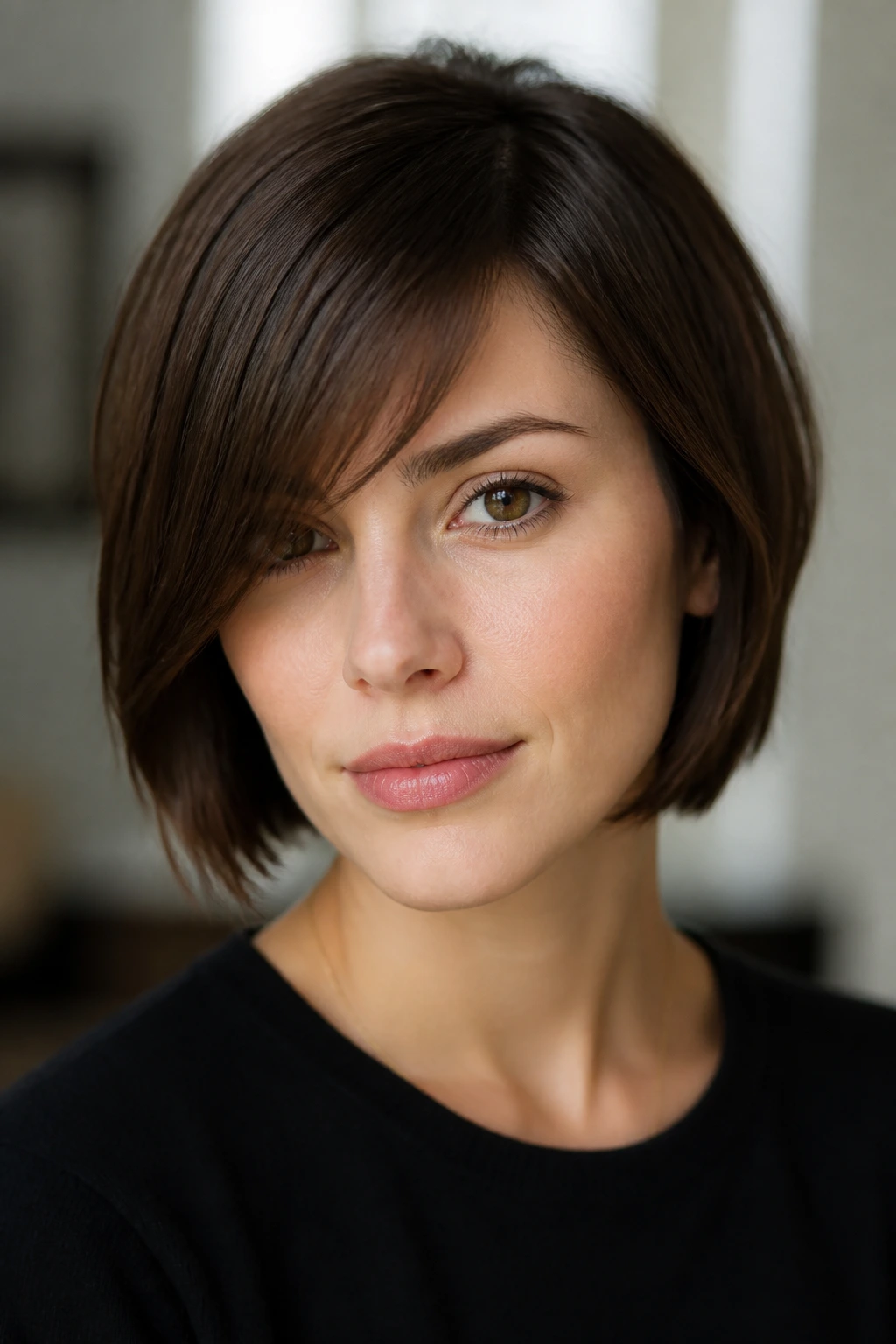
Front Length: On short hair, the shortest point of a side bang usually works best when it lands somewhere between the brow and the cheekbone. Above the brow can look cute, but it can also become high-maintenance fast. Past the cheekbone gives you more styling room and a softer grow-out.
Density: If your hair is thick, ask for weight removal inside the bang so it doesn’t puff. If it’s fine, keep the fringe narrower and lighter so it doesn’t disappear into the forehead. The goal is not “more bang.” It’s the right amount of bang for the amount of hair you actually have.
Texture: Straight hair tends to show every line, so the angle needs to be clean. Wavy and curly hair need a little extra length because shrinkage will shorten the bang once it dries. This is where dry cutting helps a lot; wet hair lies. Hair does not.
Parting Direction: Follow the direction your front hairline already wants to go. If the roots push left, forcing a deep right side part can create a fight you’ll lose by lunch. A stylist who checks the dry fall before cutting is worth listening to.
How to Style Them on Real Mornings
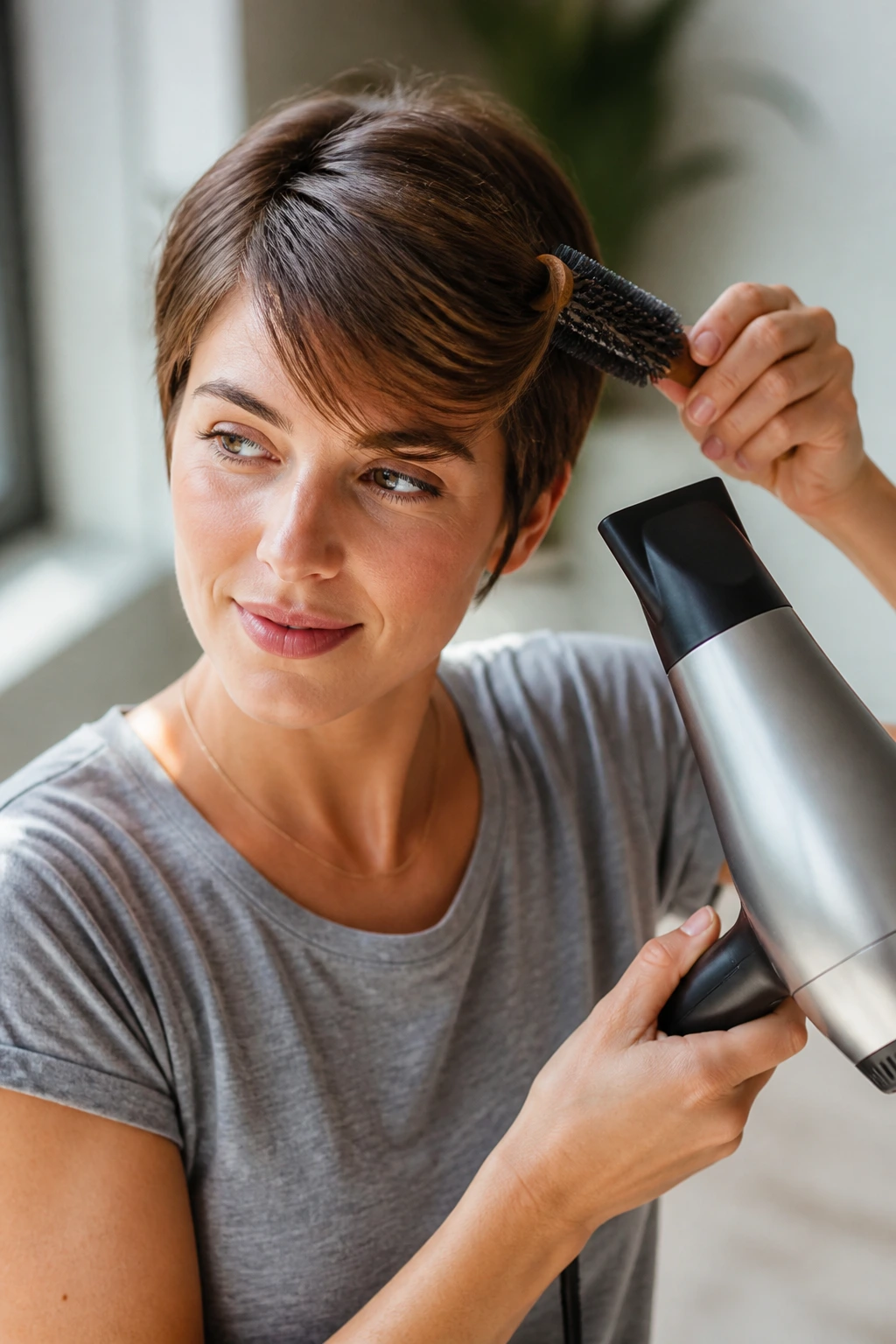
Quick Blow-Dry: Rough-dry the roots first until the front is about 80 percent dry, then use a small round brush to guide the bang sideways. Aim the dryer nozzle down the hair shaft so the cuticle stays flatter and the fringe doesn’t frizz. Thirty seconds of shape is better than five minutes of overworking it.
Air-Dry Shortcut: If your hair has natural bend, clip the front into the direction you want while it dries. A duckbill clip or a small roller at the root can train the bang without heat. This works best on wavy hair and soft curls. Straight hair usually needs at least a little brush help.
Flat-Iron Rescue: When the front flips the wrong way, run a small flat iron through only the bang section and bend the ends outward in one pass. Don’t redo the whole head. That’s a waste of time, and it makes the rest of the hair too flat.
Midday Reset: A spritz of water at the roots, a finger-comb, and a blast of warm air for 20 to 30 seconds usually brings short side bangs back to life. Dry shampoo helps if the front is greasy. Use it sparingly; too much turns the bang chalky.
Extra Tips That Keep the Fringe from Misbehaving
Volume Boost: If the front goes flat, dry the bang in the opposite direction first, then sweep it back. That little trick creates lift at the root without teasing the hair into a mess.
Softness: For a softer line, brush the bang while it cools instead of while it’s piping hot from the dryer. Heat sets the shape; cooling locks it in. Rush that part and the front won’t hold.
Control: Use product on the mid-lengths and ends, not the roots, unless you’re specifically trying to lift the bang. Heavy product at the scalp makes the fringe droop and separate.
Shine Without Slip: A single drop of serum rubbed between your palms and pressed over the top layer can tame flyaways. Keep it away from the hairline itself, or the bang starts sticking to your forehead.
Make It Yours: Tuck one side behind the ear, clip the bang with a tiny barrette, or let a longer piece fall loose near the cheekbone. Small changes matter more than a lot of product ever will.
Trims, Growth-Out, and Between-Salon Care
Short side bangs usually need a trim every 3 to 5 weeks if you want the line to stay crisp. If you’re wearing a softer, longer sweep, you can stretch that a bit, but once the front starts dropping into your eyes or flipping into the wrong direction, it’s time to clean it up. Bangs do not politely wait for your schedule.
The best grow-out plan is a slow one. Let the shortest point drift toward the cheekbone, then nudge the side pieces into face-framing layers instead of chopping them back into a hard fringe. That keeps the shape useful as it lengthens. If you want to avoid the awkward middle stage, pin the front to the side while it grows and ask your stylist to blend the edges rather than removing too much length at once.
At home, use dry shampoo at the roots on the second day and a tiny reset with water or a low-heat dryer when the bang starts to separate. Don’t keep trimming the front yourself unless you’ve done it before and know your hairline. One small uneven cut can take weeks to forgive you.
Variations and Adaptations to Try
Fine-Hair Feather: Keep the fringe narrow, light, and point-cut so it doesn’t overpower the rest of the cut. Add root lift at the crown and skip heavy creams.
Thick-Hair Control Cut: Ask for internal weight removal and a longer front so the bang can move instead of puffing out. A smooth blow-dry with a nozzle helps keep the shape under control.
Curly-First Version: Cut the front with the hair dry or mostly dry, then let the curl decide where the fringe actually lands. This avoids the too-short surprise that happens when wet curls spring up.
Low-Maintenance Grow-Out: Start the bang at cheekbone length instead of eyebrow length. You’ll get more styling options and fewer weeks where it looks too short to do anything with.
High-Drama Sweep: For a bolder look, deepen the side part and carry the fringe farther across the forehead. Use a round brush or flat iron to create more root lift and a stronger diagonal line.
Common Mistakes That Flatten the Whole Look
-
Cutting the bang too short at the start: If the front sits above the eyebrow on day one, it can lose shape fast and feel stiff. Start longer and refine later.
-
Loading the roots with too much product: Heavy cream or oily serum at the scalp makes the fringe drop and separate. Keep product on the ends unless you need lift.
-
Ignoring the hairline direction: Fighting a strong cowlick or natural split usually leads to a bang that opens up halfway through the day. Follow the growth pattern and work with it.
-
Smoothing the front until it goes flat: A side bang needs some air and movement. If you press every strand into the same direction, the shape turns hard and lifeless.
-
Skipping trims for too long: Short side bangs grow out unevenly. Once the front starts hitting the eyes in a sloppy way, it’s time to tidy it up.
Frequently Asked Questions About Side Bang Styles for Short Hair
How short can side bangs be on a pixie cut?
Short enough to skim the brow or temple, but not so short that the front sticks straight up when it dries. On a pixie, the safest starting point is a little longer than you think you need.
Do side bangs work on curly short hair?
Yes, as long as the cut respects shrinkage. Curly side bangs should be shaped longer and checked dry so the front doesn’t spring too high once the curls set.
What if I have a strong cowlick at the front?
Don’t fight it head-on. Ask for the bang to follow the natural direction of the hairline, then dry the roots first while guiding them into the side sweep you want.
Should side bangs be cut wet or dry?
For straight hair, wet cutting can work, but the final check should happen dry. For wavy or curly hair, dry or mostly dry cutting usually gives a better result because the real shape shows up then.
How often do short side bangs need trims?
Most need a cleanup every 3 to 5 weeks. Softer, longer side sweeps can stretch a little longer, but the front line changes fast on short cuts.
Can I style them without heat?
Yes, especially if the hair already has some bend. Clips, rollers, and air-drying in the correct direction can do a lot, though very straight hair usually needs at least a small bit of brush work.
What’s the easiest way to fix a bang that keeps splitting?
Dry the roots in the opposite direction first, then sweep the fringe back to the side. A small amount of dry shampoo at the roots can help it grip better.
How do I grow side bangs out without a weird stage?
Let the front drift toward cheekbone length and blend the edges into layers. Tuck, clip, and redirect the fringe instead of cutting it back every time it annoys you.
The Shape That Sticks With You
Short hair can feel bare when the front is missing a clear shape. A side bang changes that in a way that’s hard to beat: it adds movement without adding bulk, and it keeps the haircut from looking like it ended halfway through the thought.
The best version is the one that works with your hairline, your texture, and your patience level. Some people want a deep sweep they can brush into place in thirty seconds. Others need a feathered fringe that survives humidity, headphones, or the sort of day that starts with bad coffee and ends in a hat. Either way, the right side bang gives short hair a little more attitude and a lot more range.
