



Side bangs do one useful thing better than almost any other fringe: they break up a face without carving a hard line across it. In layered haircuts with side bangs, that diagonal sweep keeps the front soft while the layers do the heavy lifting underneath. When the cut is right, the whole shape moves when you turn your head; it doesn’t sit there like a block.
The catch is that side bangs are only as good as the haircut around them. A too-short fringe can flip up at the wrong time. Layers cut at the wrong angle can leave the ends puffing out like a bell. And if the front pieces are sliced to match a photo instead of your actual growth pattern, they can fall into your eyes by noon and start feeling annoying fast. The best versions of these cuts look easy, but they’re built on very specific choices: where the shortest piece lands, how much weight stays at the cheekbones, and how much movement is left through the ends.
That’s why this hairstyle stays in the conversation. It works on collarbone-length hair, long hair, fine hair, thick hair, straight hair, waves, and curls — but not in the same way for each one. The shape changes depending on texture, density, and how much styling you’re willing to do. Some versions are airy and polished. Others are shaggy and piecey. A few are plain old clever, the kind of cut that grows out in a civilized way instead of turning into a fight with a flat iron.
Why These Cuts Keep Working
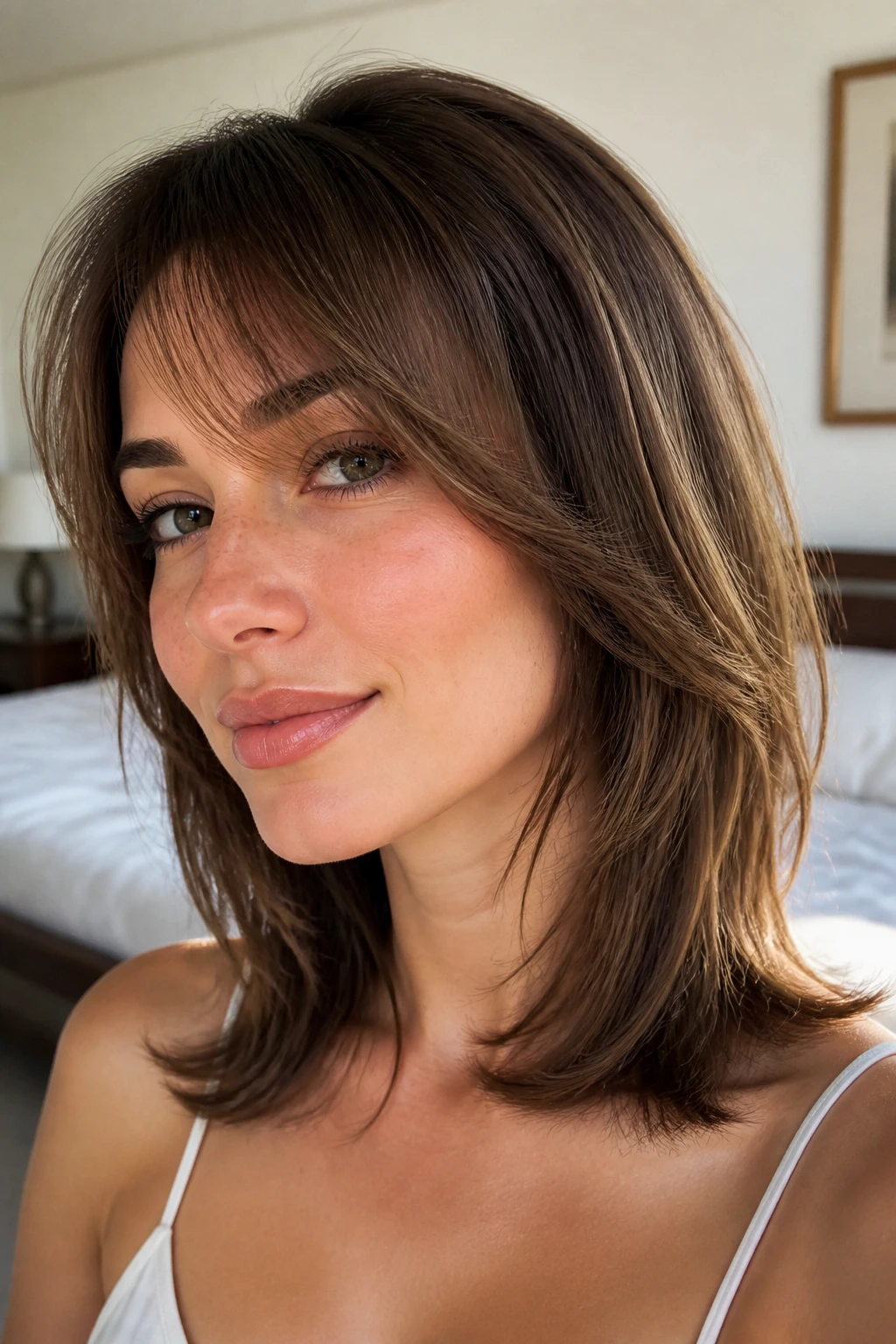
- The fringe softens the front: A side sweep breaks up a wide forehead or a strong hairline without creating the hard edge of blunt bangs.
- The layers keep the shape moving: Shorter pieces around the face and longer lengths through the back stop the cut from feeling heavy at the bottom.
- They grow out with less drama: Side bangs can be tucked, pinned, or merged into face-framing layers when you’re not in the mood for a strict fringe.
- They flatter different textures: A blunt bob and a wavy shag need different handling, but both can use the same diagonal front shape.
- They work with real life: Glasses, clips, ponytails, hats, and messy bun days all play nicer with a side fringe than with a hard straight-across bang.
1. Soft Collarbone Layers With Airy Side Bangs
A collarbone cut has a nice little trick to it: it brushes the neck, swings when you turn, and never feels weighed down by too much length. Add a soft side bang that lands around the cheekbone, and the whole shape starts to look lighter right away. This is one of my favorite versions for someone who wants movement without going full shag.
The reason it works is simple. Collarbone length gives the layers enough room to bend, and the side fringe keeps the front from looking blunt. Ask for the shortest face frame to start at the cheekbone, then let the longest pieces skim the collarbone so the silhouette stays clean. Blow-dry the bang section first with a round brush, rolling it away from the face; that tiny bend matters more than people think.
Best for: medium-density hair that needs softness without a lot of thinning.
Styling note: a 1.5-inch round brush and a light mist of heat protectant are enough. Don’t drown the front in product. It collapses fast.
2. Long Butterfly Layers With a Sweeping Fringe
Butterfly layers are all about the lift near the front and the length left in the back. When you add a sweeping side fringe, the cut gets that airy, face-opening shape people keep trying to fake with hot rollers. The front pieces flip away from the face, then the longer ends keep the length dramatic.
What I like here is the contrast. You get movement around the cheekbones, but you still keep the feeling of long hair. The fringe should be long enough to tuck behind one ear without looking accidental. If the shortest front piece sits around the bridge of the nose to cheekbone zone, it usually grows out more gracefully than a bang cut too high.
This one shines on hair that holds a bend. If your hair goes flat as soon as it cools, you’ll need a root-lift spray at the crown and a quick pass with a large round brush. Not a huge deal. Just don’t expect the shape to appear on its own.
3. Shoulder-Grazing Shag With Side Bangs
If you want texture, this is the cut that actually delivers it. A shoulder-grazing shag with side bangs has that slightly undone, piecey look where the front falls in soft slants and the ends never feel too precious. It looks better with a little grit than with a glossy blowout.
The side bangs here usually stay longer and looser than in a polished layered cut. That keeps the fringe from fighting the shaggy texture. Ask your stylist for layers that move around the cheekbones and crown, then keep the perimeter close to the shoulders so the cut still has shape. If the layers start too low, the whole thing turns into a heavy triangle.
What makes it click
- The crown lift keeps the top from going flat.
- The side fringe gives the shag a cleaner frame near the face.
- A salt spray or texture spray helps the separation show up.
- Air-drying works fine if your wave pattern already has some bend.
This is a good one when you want hair that looks lived-in, not overworked.
4. Deep Side-Part Layers That Brush the Cheekbones
A deep side part changes the whole mood of a layered cut. It gives the hair a little drama, then the side bangs fall across the forehead in a clean diagonal that brushes the cheekbones instead of sitting in a stiff line. That single shift in parting can make the cut feel longer, sharper, and a bit more grown-up.
This version suits people who want their fringe to blend into the rest of the haircut instead of announcing itself. The bang area should be long enough to swing across the brow and still disappear into the face frame. If you wear glasses, this shape is especially useful because the bang won’t fight the frames; it slides around them.
A good styling move here is to dry the part first, then direct the bang section away from the face while it’s still warm. Once it cools, finger-comb it back into place. Sounds fussy. It isn’t. It’s the difference between a polished sweep and a bang that keeps clinging to your pupil.
5. Textured Lob With Side Bangs and a Soft Bend
The lob is the haircut people keep coming back to for a reason: it looks finished even when the styling is lazy. Add side bangs and a soft bend through the ends, and it gets a little more personality without losing that easy shoulder-skimming shape. It’s neat, but not stiff.
This cut works especially well when the layers start below the chin and the fringe lands at the cheekbone or just under it. Too much layering in the top half can make a lob flip outward in an awkward way. Keep the bend loose. A flat iron turned a quarter inch away from the face is enough; you’re after a curve, not a curl.
Best for: straight or slightly wavy hair that can hold a bend for most of the day.
Styling move: use a texturizing spray only on the mid-lengths. If you spray the bangs, they separate too much and get stringy.
The whole thing should look touchable. If it starts looking crunchy, too much product is the usual villain.
6. Curly Layers With a Longer Side Fringe
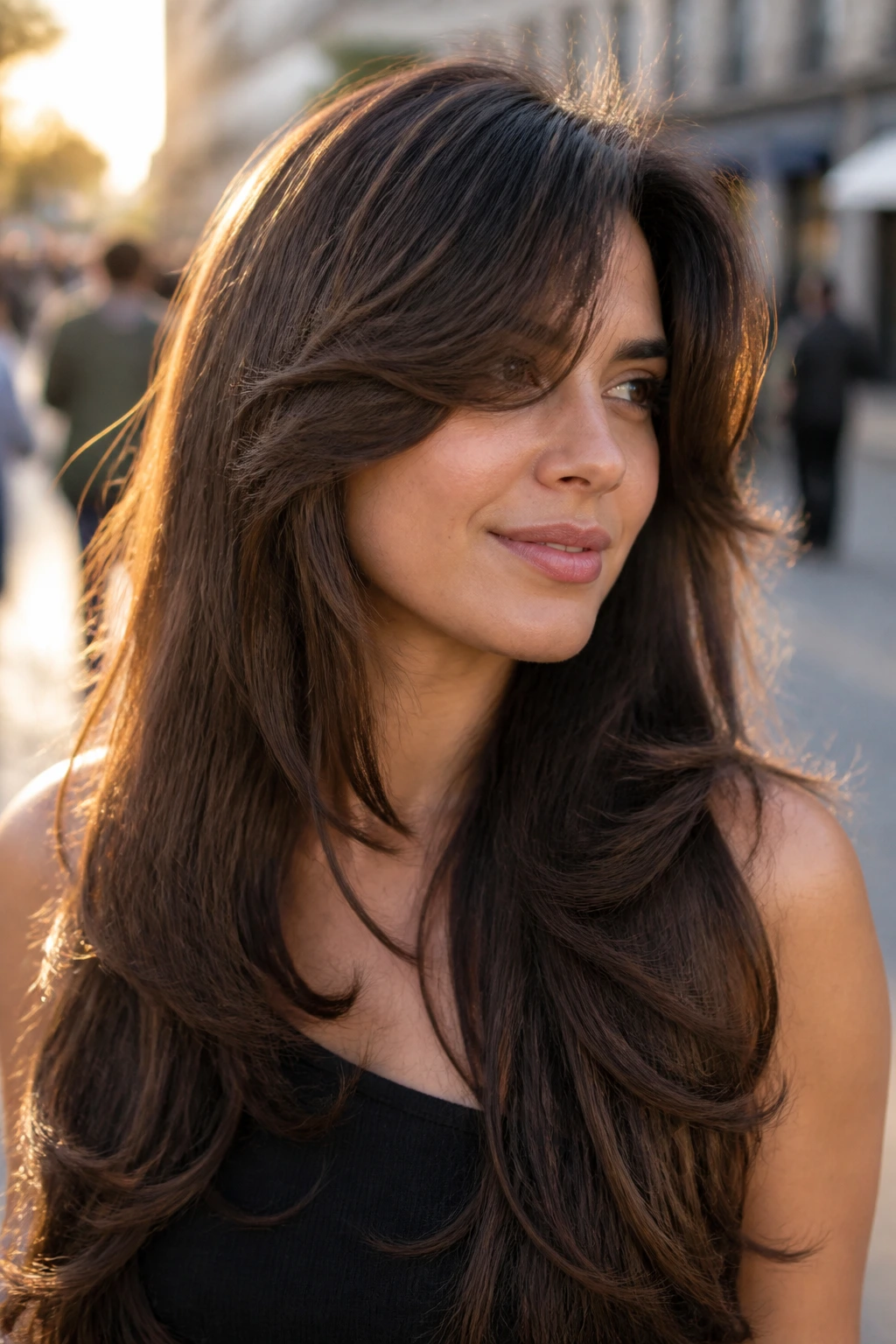
Curly hair can wear side bangs beautifully, but the fringe needs room. A longer side fringe that begins at cheek level, not the brows, has a much better chance of blending into the curls as they spring up. Cut it too short and it can bounce way above the face in the weirdest possible way.
This is one of those cuts where dry cutting makes sense. Curls shrink, and they don’t all shrink the same amount. The layering should remove bulk where the shape gets puffy — usually around the sides — while leaving enough weight in the ends for the curl pattern to hang together. The front should frame, not frizzle.
I’m partial to a side bang that can be worn almost as a curl pattern of its own. It feels intentional when it’s long enough to arc across the forehead and blend into the next curl. Use a cream that defines without dragging the hair down. Then leave the fringe alone until it dries.
7. Fine-Hair Layers That Keep the Ends Light
Fine hair needs a gentler hand. Too many short layers can leave the cut looking see-through at the ends, which is a fast way to make the whole style feel thinner than it really is. The smarter version keeps the layers long and the side bangs soft, with just enough shaping to give movement near the face.
Ask for face-framing pieces that start around the cheekbone and a perimeter that stays solid. That’s the trick. You get lift without shaving away all the density. On fine hair, the fringe should be light, not wispy in a sad way. There’s a difference. One looks airy; the other looks like it lost a fight with a pair of scissors.
Styling note
- Blow-dry the roots first.
- Use a mousse at the crown, not the ends.
- Keep the side bangs long enough to pin back on greasy days.
- Avoid heavy oils near the fringe; they flatten the front in minutes.
This cut is best when you want your hair to move without looking overstyled.
8. Thick-Hair Layers With Weight Removed Through the Interior
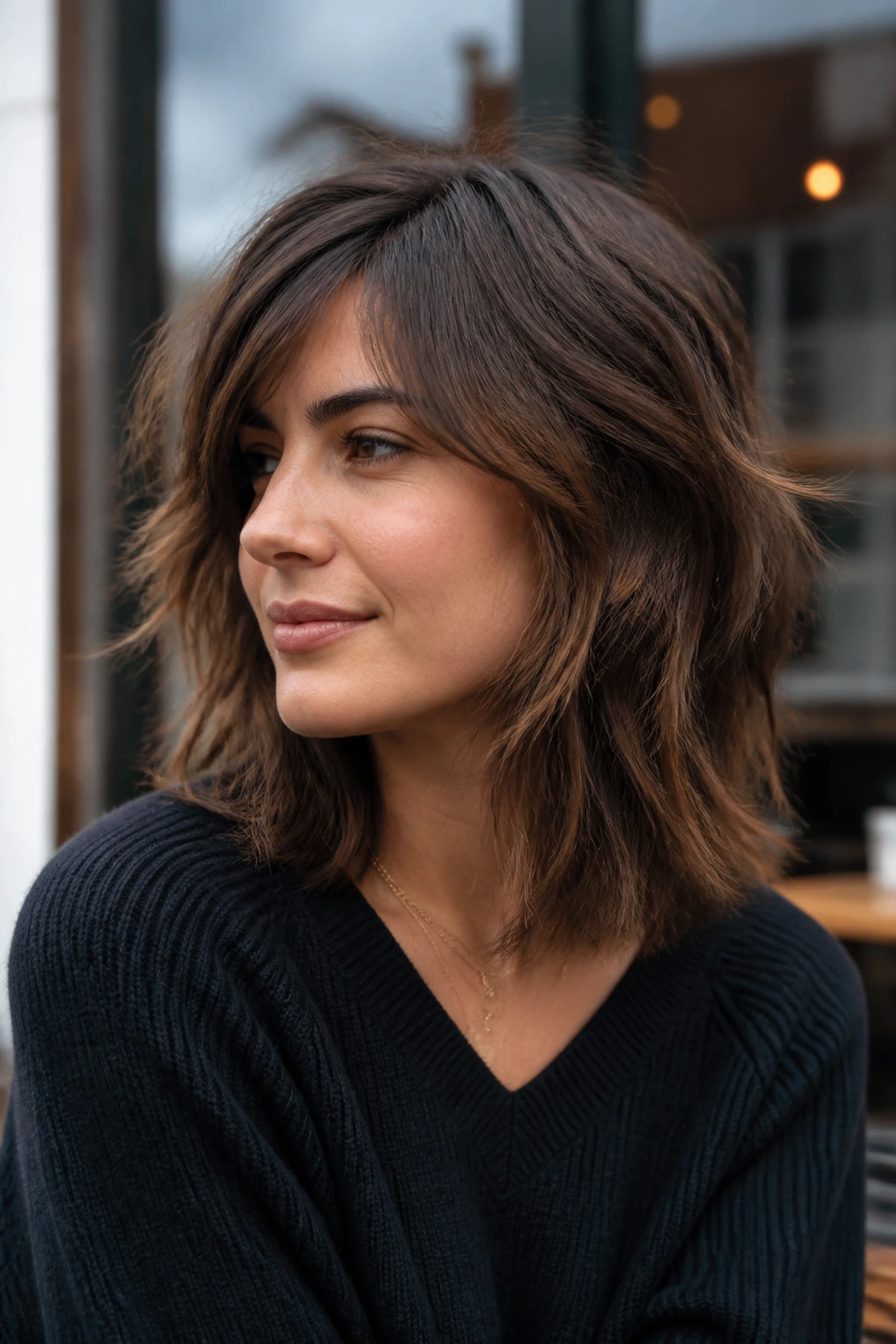
Thick hair can hold a gorgeous layered shape, but it turns bulky fast if the weight is all left on the surface. The fix is interior removal, not random choppy cuts. Think hidden reduction through the middle, then a side bang that breaks up the front line so the haircut doesn’t feel like a wall.
This version works because it lets the bulk live where it belongs — in the body of the hair — while clearing space around the face. The side bang should be long enough to sit against the cheek, not spring outward like a shelf. If your hair has a lot of wave, ask for the layers to be checked against the natural bend so the shape doesn’t balloon at the ends.
A good thick-hair cut never feels hollow. It feels lighter. That’s the difference between removing weight and thinning the life out of it.
9. Chin-Length Bob With Side-Swept Bangs
A chin-length bob with side-swept bangs is sharp in the nicest way. It puts the jawline on display, keeps the neck open, and lets the fringe soften the front without turning the cut into a helmet. The side bang matters here because a straight bob can feel severe fast.
This version is best when the bob has a slight internal layer, not a bunch of random pieces. The bangs should land around the brow or cheekbone depending on how much lift you want. If they’re too short, the face looks chopped. If they’re too long, the bob starts losing its crisp edge. Balance is the whole game.
How I’d wear it: with the ends slightly under-curved, not flipped out. That tiny bend keeps the cut from looking boxy.
A flat iron can help, but I’d rather see this cut blow-dried with a paddle brush and then bent lightly at the tips. Cleaner. Less obvious.
10. Feathered 70s Layers With a Soft Fringe
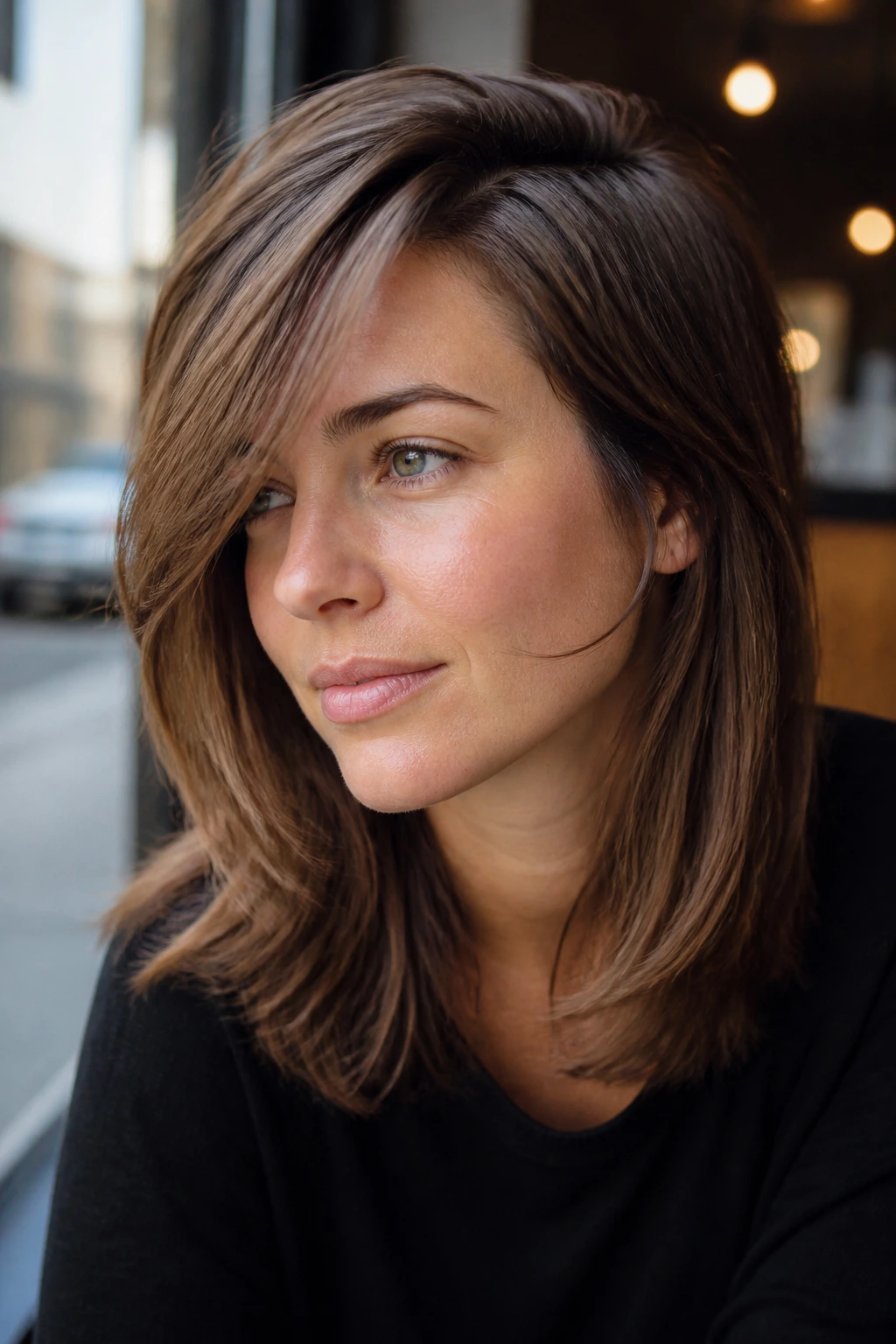
Feathered layers have a very specific charm: the hair seems to float out from the face instead of sitting flat against it. Pair that with a soft fringe swept to one side, and you get a cut that feels nostalgic without looking like a costume. It’s not a hard retro nod. It’s a civilized one.
The key is direction. The layers should be cut so they turn away from the face, especially around the cheekbones and jaw. The side bang should be long enough to feather into the front pieces. When the cut is styled with a round brush, the ends lift just enough to show movement. That’s the whole point.
Why it still works
- It opens the face without sacrificing length.
- It flatters medium to thick hair that can hold a bend.
- It gives straight hair a shape that lasts past the first hour.
- It looks especially good with blowouts that aren’t too stiff.
This is one of the few styles that looks better with a little roundness. Flat is the enemy here.
11. Razor-Cut Midlength Layers For Movement
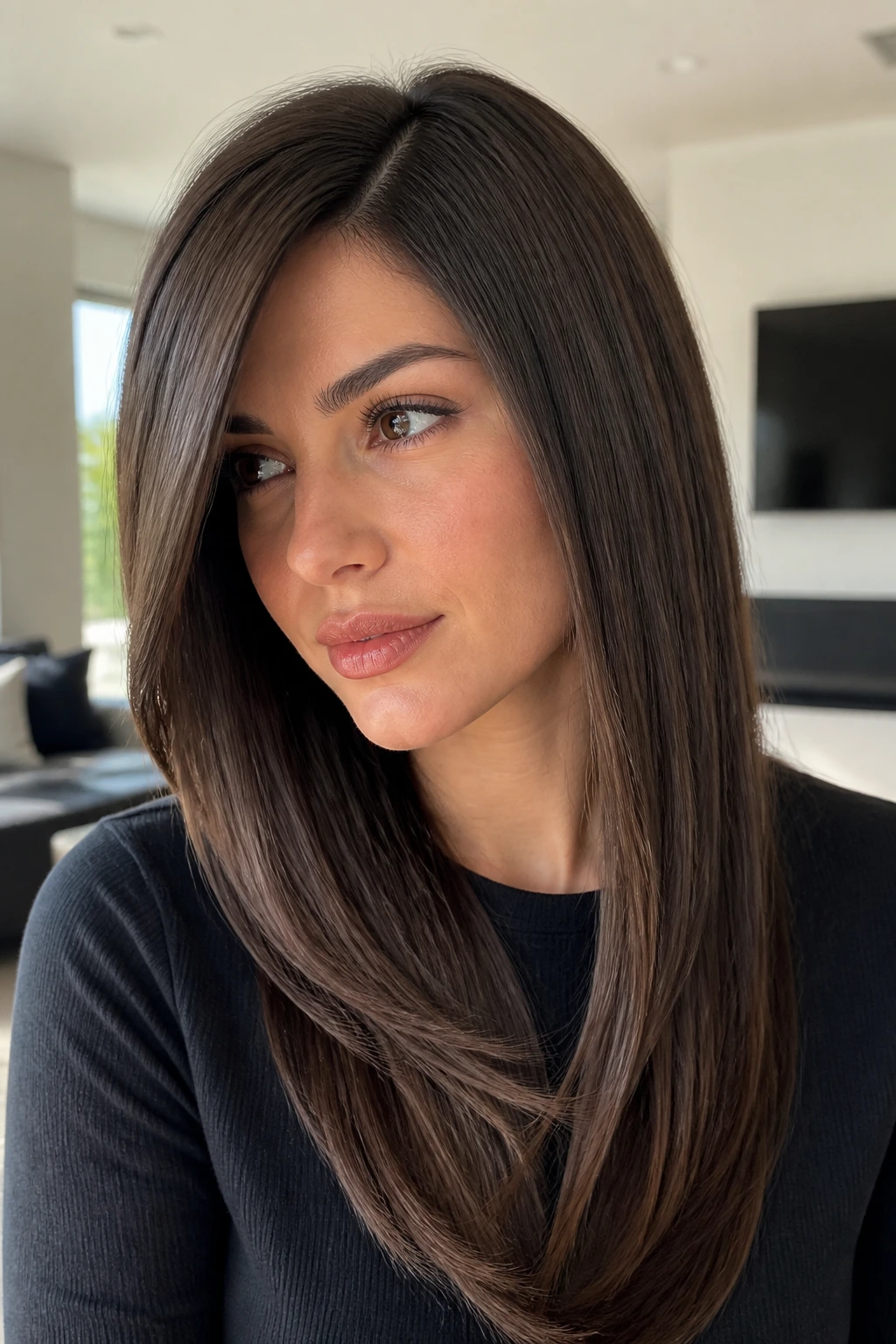
Razor cutting gives midlength hair a softer edge, and that softness matters when you add side bangs. Instead of a hard line, you get broken ends, a lighter feel, and a fringe that melts into the front pieces. The result is movement, not bluntness.
I like this cut on hair that already has some texture. The razor can wake up dead-looking lengths, but it can also make fragile hair feel too feathery if it’s overdone. The side bangs should be shaped to slide rather than sit. That means they need enough length to tuck into the rest of the cut, especially on days when the hair wants to part itself differently.
If you’re drawn to a casual finish, this one is worth a close look. It doesn’t need perfect styling. A bend through the front and a little rough-drying are often enough. That makes it a little more forgiving than a polished layered cut, which is handy if you do not want to spend twenty minutes with a brush every morning.
12. U-Shaped Long Cut With Face-Framing Side Bangs
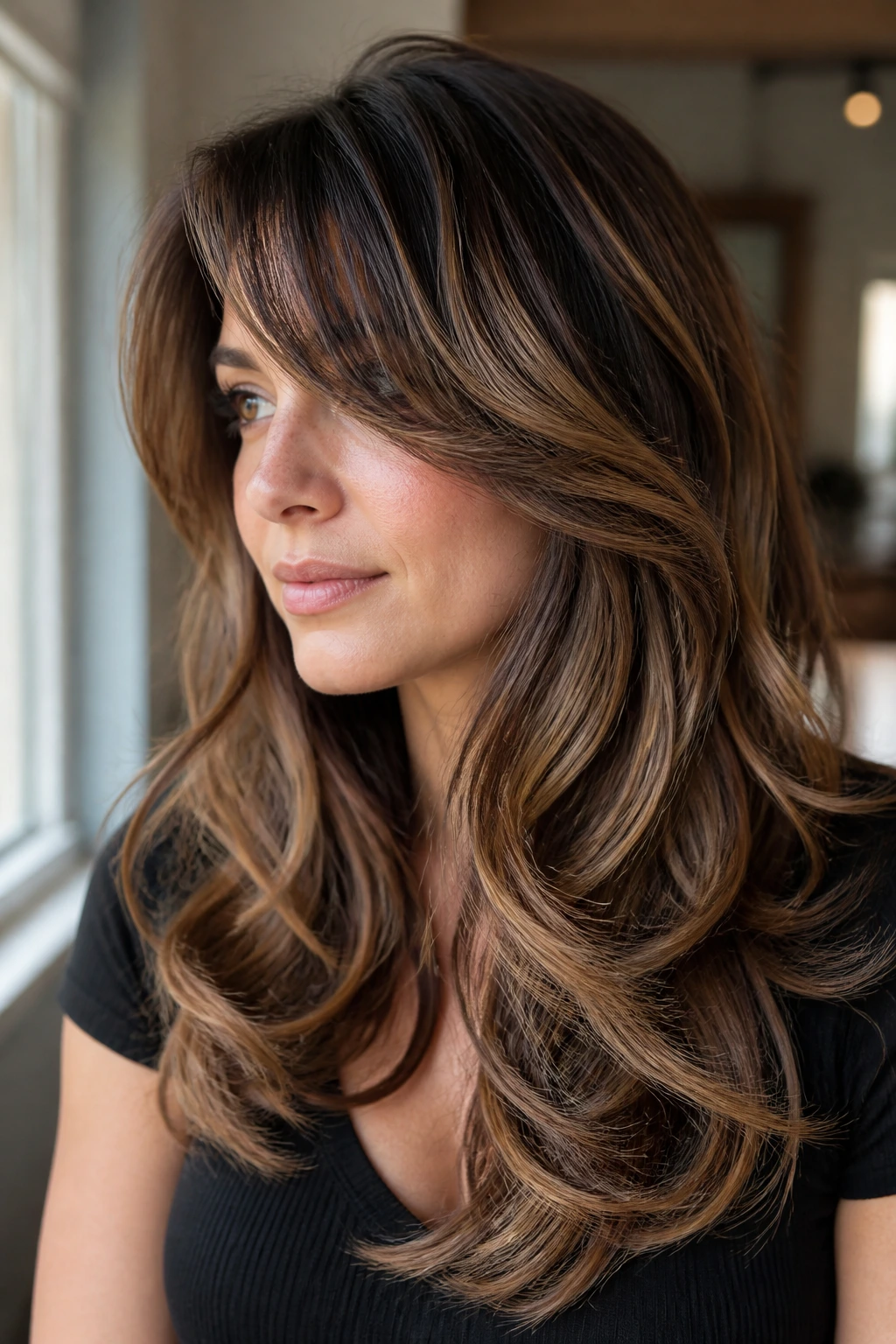
A U-shaped cut keeps the perimeter soft and rounded, which is exactly why it pairs so well with side bangs. The longer sides drape, the back keeps its length, and the face-framing pieces land in a gentle slope that doesn’t feel choppy. If you like long hair but hate the feeling of a blunt curtain, this is the move.
The side bangs should begin high enough to matter — usually around the cheekbone — but not so high that they separate from the rest of the front pieces. The cut needs a clear transition from fringe to layers. Otherwise the front starts looking disconnected, and that’s never a good look on long hair.
This shape is especially nice if you wear your hair partly up a lot. The bangs soften a ponytail, and the front layers keep the style from looking severe. I’d keep the front pieces long enough to fall out of a low bun on purpose. That’s where this cut earns its keep.
13. Wolf Cut With Softened Side Bangs
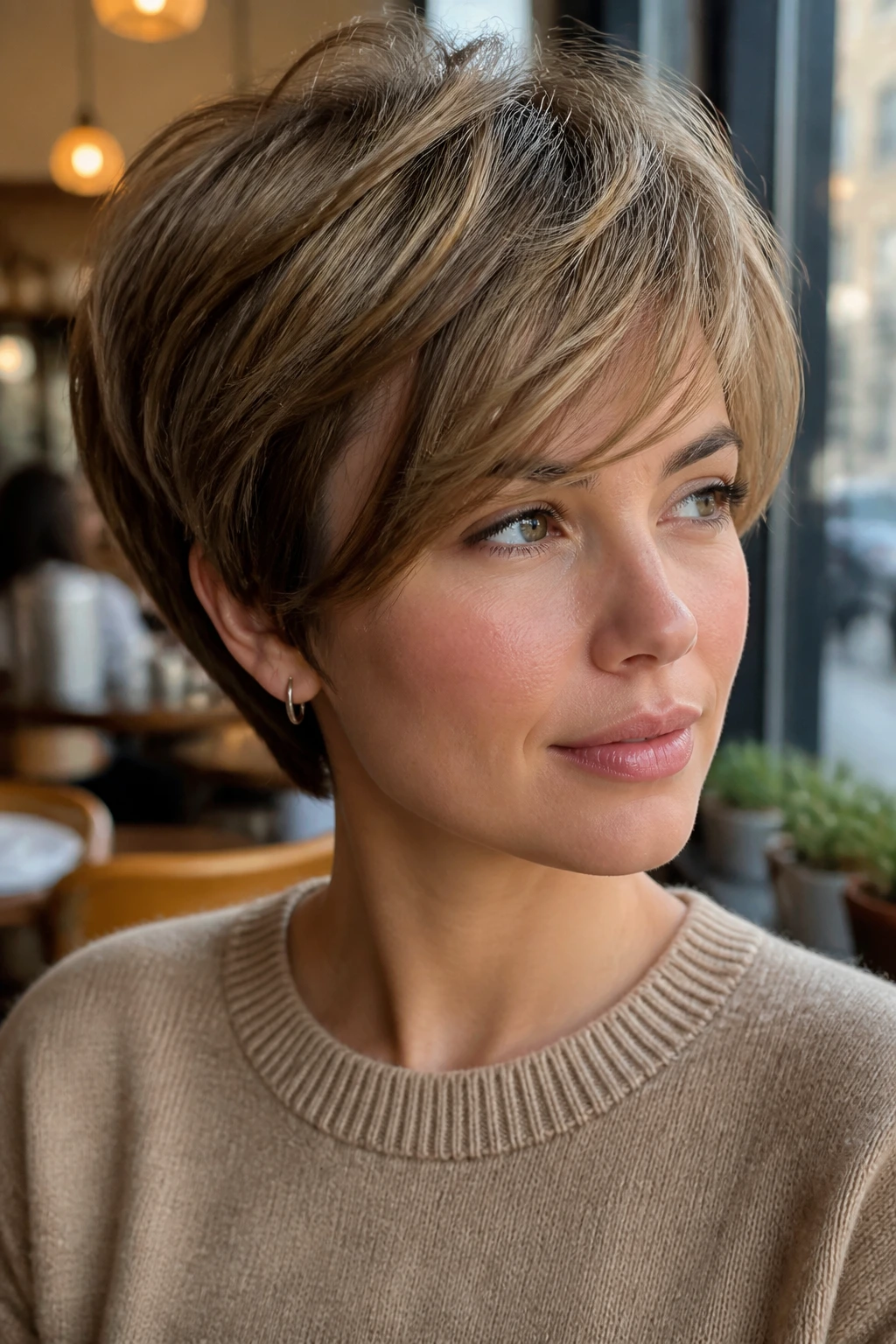
The wolf cut can get loud fast, so the softened side bang is what keeps it wearable. Instead of a blunt fringe, you get a sweep that slides into the layers and keeps the top from looking too wild. It still has edge. It just doesn’t shout.
The shape is built on contrast: shorter, lived-in layers through the crown and stronger length at the bottom. The side bangs should be piecey, not dense. If the fringe gets too heavy, the cut loses air. On wavy or slightly curly hair, this style can be air-dried and left alone. Straight hair needs a bit more help, usually a texturizing spray and some bend at the front.
This is a good option if you want your haircut to feel a little rebellious but not costume-y. The softened fringe stops it from drifting into full mullet territory. That’s the line, and it matters.
14. Air-Dry Layers for Natural Waves
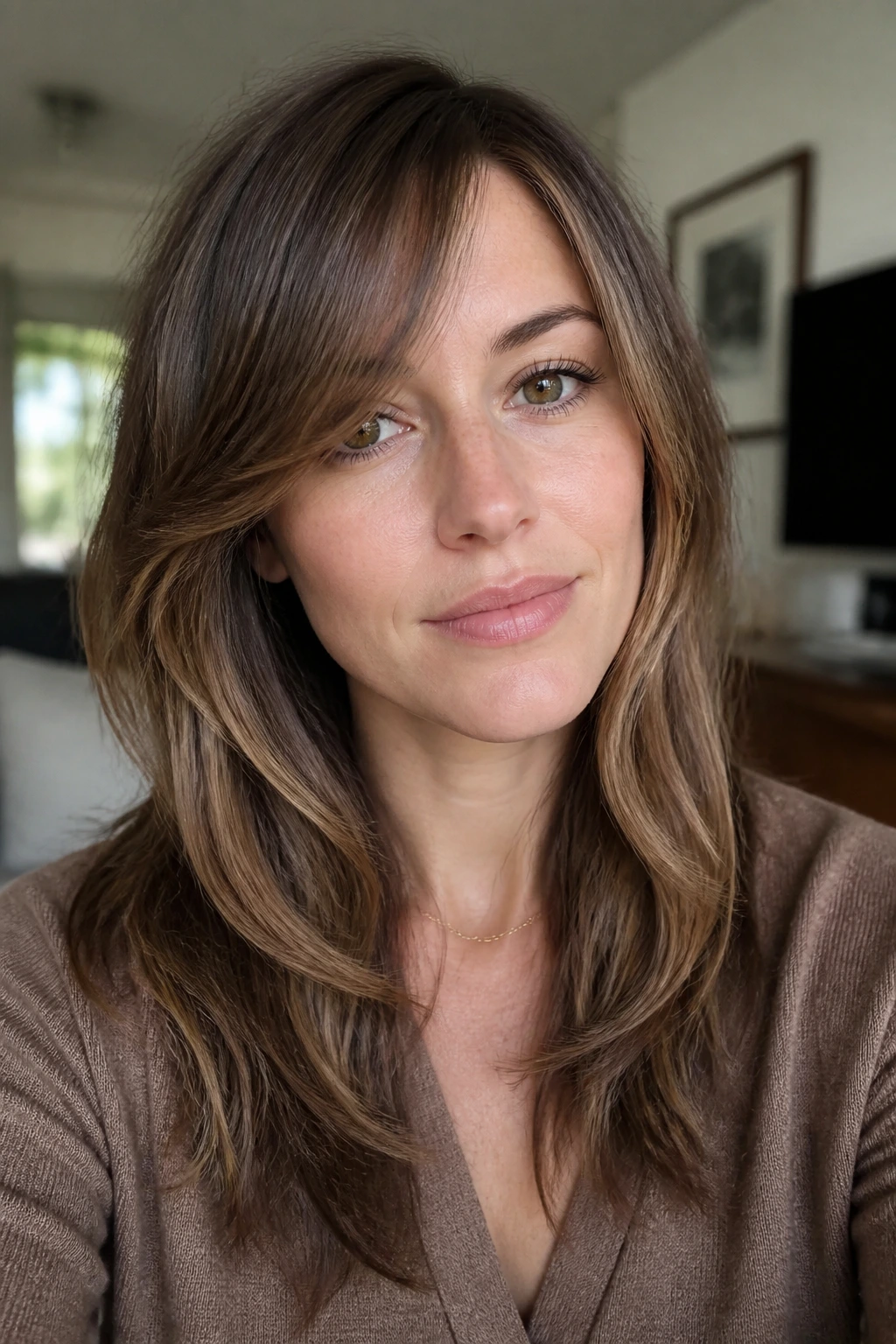
Some hair looks best when it’s not asked to behave. Air-dry layers with side bangs lean into that. The layers need to be light enough for wave to show through, and the fringe should be long enough to fall naturally to one side instead of insisting on a fixed shape.
The haircut itself should do the work. Shorter pieces around the face keep the front open, while the rest of the cut stays long enough to let your natural texture form its own bends. A little leave-in conditioner and a small amount of curl cream are usually enough. Heavy product kills the movement. So does touching it too much while it dries.
When this cut is done well, it has that soft, easy shape people think they want but often overstyle away. The bangs don’t need to sit perfectly. They need to land in the right general place and then leave the rest alone.
15. Glamorous Blowout Layers With a Dramatic Sweep
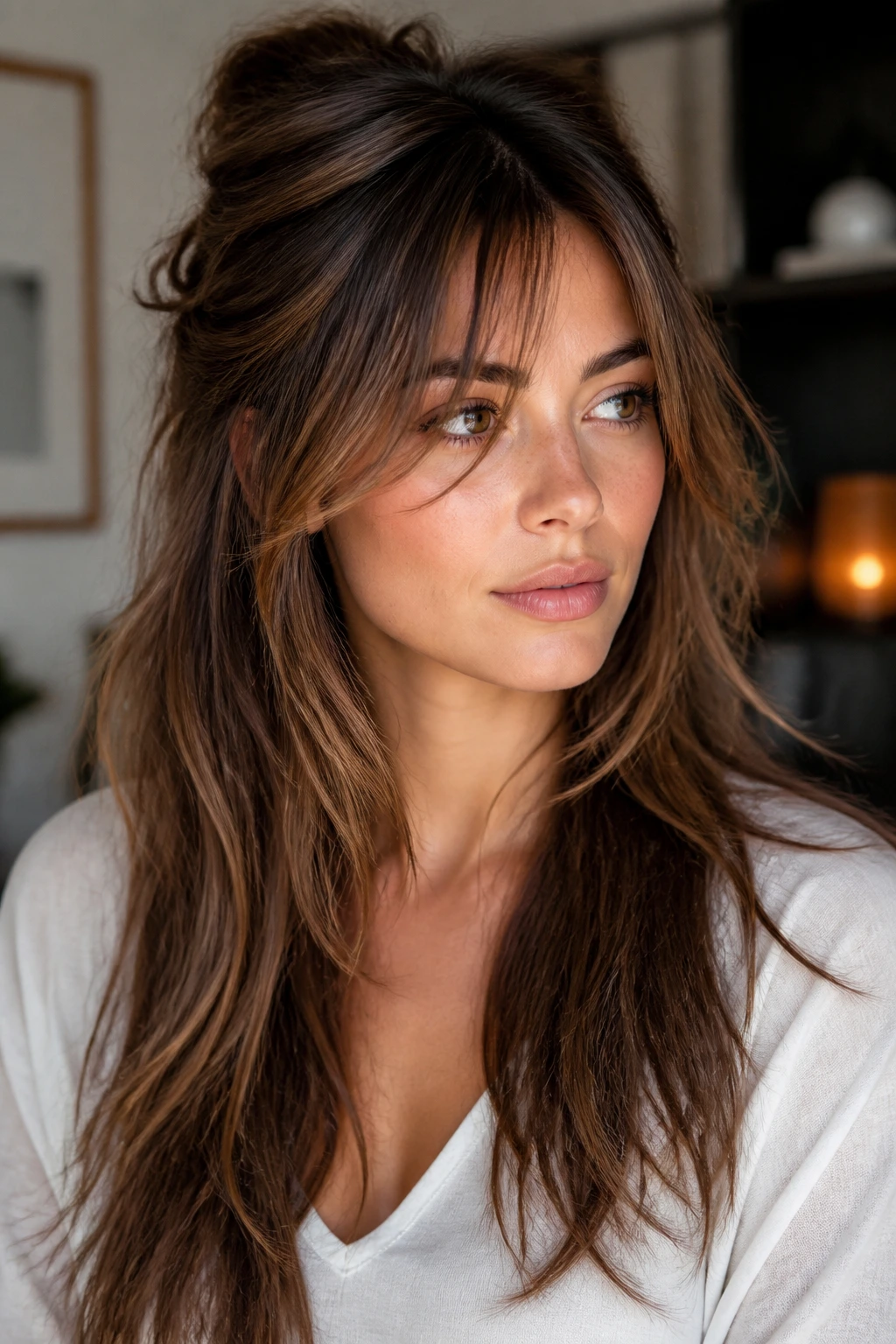
This is the polished cousin in the family. Glamorous blowout layers with a dramatic side sweep are built for lift, shine, and a front section that falls in one clean line across the forehead before turning softly at the ends. The whole thing feels deliberate.
The layers need enough structure to hold a round-brush finish. The side bangs should start deeper on one side so the sweep has room to travel. If the bang section is too short or too narrow, you won’t get that smooth arc. You’ll get a little flap. Nobody wants the flap.
Styling essentials
- Use a round brush with some tension at the roots.
- Direct the bang section away from the face while it cools.
- Finish with a light serum on the mids and ends only.
- Clip the front section up for a few minutes after drying if you want more lift.
This cut is not casual, and that’s fine. It’s for days when you want hair that looks brushed, finished, and a touch theatrical.
16. Round-Face Layers That Start at the Cheekbones
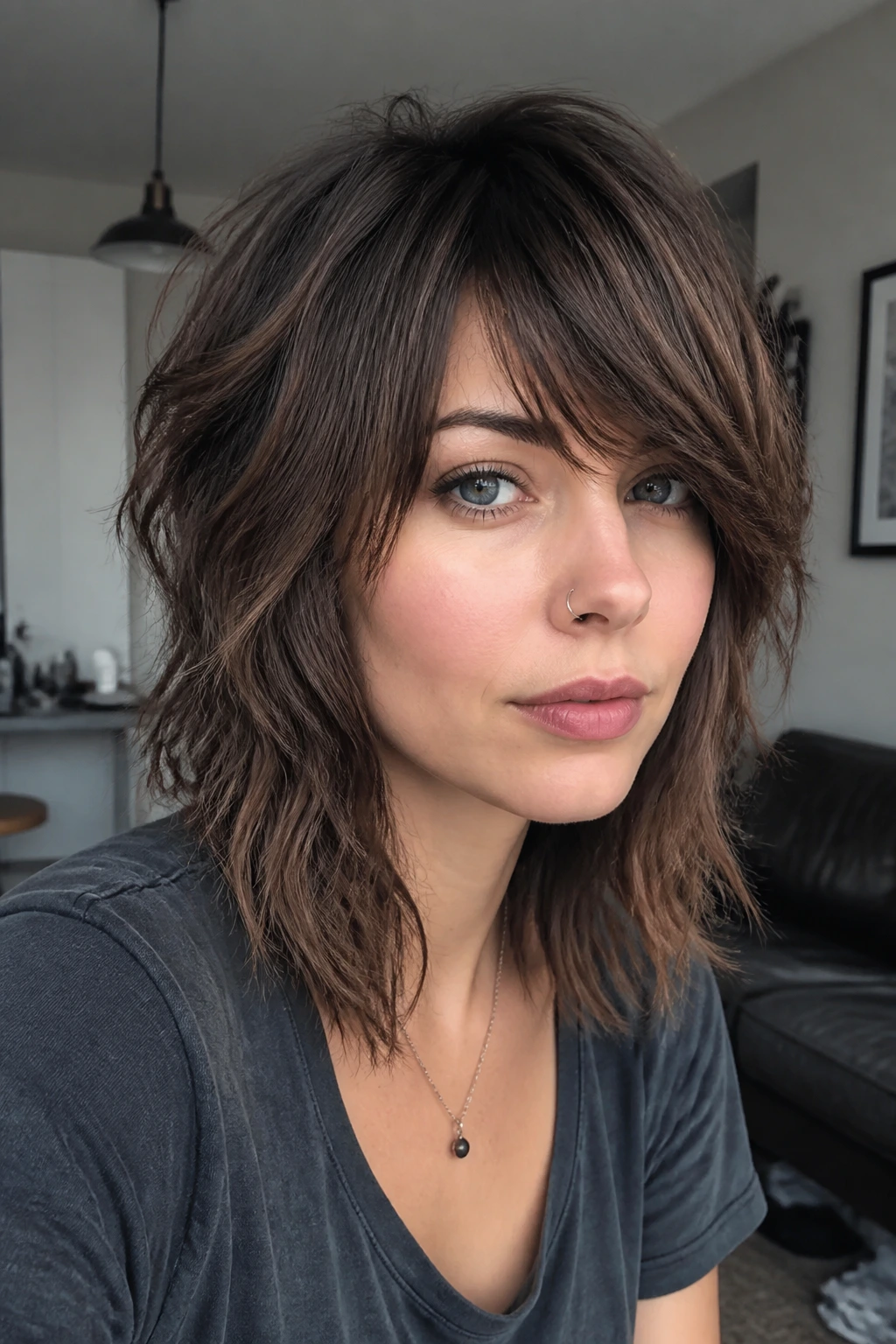
For round faces, the best layered haircut with side bangs usually creates length through the front and keeps fullness away from the widest part of the cheeks. Starting the layers at the cheekbones helps pull the eye downward and outward in a diagonal line, which changes the balance of the face without looking obvious.
The side fringe should not be too short. A bang that ends around the cheekbone or just below gives more length than one sitting high on the forehead. That little shift makes a lot of difference. Keep the face frame soft, and avoid piling too much volume right at the sides of the face. That’s the part people often miss.
This cut can be styled smooth or wavy. The important part is the angle. A straight-across fringe shortens the face; a side sweep lengthens it. That’s the reason this version keeps showing up in salons. It works with the geometry of the face instead of fighting it.
17. Sleek Straight Layers With a Clean Side Part
Straight hair doesn’t need extra fluff to look good. A sleek layered cut with a clean side part and side bangs can look crisp, modern, and expensive-looking without trying too hard. The layers should be long enough to keep the ends tidy, while the front sweep brings just enough motion to stop the cut from feeling severe.
This style lives or dies on the quality of the line. If the side part is sloppy, the fringe falls weird. If the layers are too aggressive, the hair starts looking stringy. Ask for a subtle bend through the front and a crisp perimeter. The result is a haircut that gleams when it’s freshly brushed and still behaves on day two.
I like this one for hair that naturally falls straight and shiny. No need to force texture where it doesn’t belong. Let the shape be the point.
18. Balayage Layers That Show Every Bend
Color and cut can work against each other if one of them is too busy. Balayage layers with side bangs avoid that problem when the highlights are placed to trace the movement of the haircut. The layers catch the light, the fringe softens the front, and the whole thing reads as dimensional instead of striped.
This shape looks best when the face-framing pieces are light enough to show separation. A side bang that sweeps across highlighted hair gives the front a soft flash of contrast. That can make the cheekbones look higher and the haircut look more expensive, even when the styling is simple. Dry shampoo helps here too, because a little lift at the root keeps the color from flattening.
The important thing is not to over-style the ends. The color already does some of the visual work. A loose wave or a bend through the front is enough.
19. Layered Pixie Bob With Side Bangs
A layered pixie bob is short enough to feel fresh and long enough to stay useful. Add side bangs, and the cut loses the hard edge that short hair can sometimes pick up. The front sweep softens the forehead, while the layers keep the crown from sitting too heavy.
This is a great cut if you want something compact but not severe. The side bang should be long enough to tuck behind the ear on one side, and the layers at the top need just enough lift to avoid a helmet shape. That’s the danger zone with short cuts: too much weight left at the crown, and the whole thing flattens into a helmet by day three.
Best styling move
Use a small round brush or even your fingers with a little volumizing spray at the roots. Short hair does not need much. It just needs direction.
This cut is neat, practical, and a little sharper than people expect from a bob.
20. Low-Maintenance Grow-Out Layers
Some layered cuts are designed to look best only on the day they’re fresh. I don’t care much for those. A better plan is a grow-out cut with side bangs that keeps its shape as the fringe softens and the layers lengthen. The goal is not perfection. It’s survival.
Ask for side bangs that begin around the cheekbone and taper into the front layers instead of stopping abruptly. Keep the longest layers long enough to turn into face-framing pieces later. That way the haircut changes shape slowly, not all at once. On a busy month, that matters more than a flawless salon finish.
This is the version I’d recommend if you want the haircut to keep looking like itself between trims. It can go a few weeks past its ideal appointment and still read well. That’s a rare quality. And a useful one.
21. Romantic Long Layers With Piecey Fringe
Long hair can sometimes swallow the face. Piecey side bangs fix that without taking away the length people love. The layers should be soft and flowing, with enough separation in the front to keep the fringe from turning into a heavy curtain.
This version is pretty in a very practical way. The side bangs create a little motion around the eyes and cheekbones, while the long layers keep the ends from looking blunt. A bend through the front pieces is enough. You do not need curls everywhere. That’s how it starts to feel dressed up in a strange, dated way.
The best thing about this cut is how it works in half-up styles. The bangs stay out front, the length goes back, and the face gets a frame that doesn’t look forced.
22. Choppy Layers For an Edgy Finish
Choppy layers are not for everyone, and that’s exactly why they’re useful. When you pair them with side bangs, you get a cut that feels less sweet and more direct. The pieces are broken up, the ends are lighter, and the fringe carries a little attitude instead of just softness.
The trick is restraint. Too many short bits and the cut starts to look jagged. Keep the side bangs long enough to cross the forehead in one motion, then let the layers stagger underneath. On straight or slightly wavy hair, a matte texture spray can help the separation show. On thicker hair, use less product than you think. Heavy styling cream ruins the point.
This is the haircut for someone who likes a bit of edge but still wants the front to be wearable at work or on a normal Tuesday. Sharp doesn’t have to mean fussy.
23. Office-Friendly Midlength Layers With Side Bangs
There’s something useful about a haircut that still looks composed after you’ve tucked one side behind your ear three times. Midlength layers with side bangs are that haircut. The layers add movement, the bang softens the forehead, and the whole thing stays polished enough for a blazer without feeling stiff.
The shape should be clean. No dramatic choppiness. The side fringe should blend into the front pieces and land in a place that still works if you part your hair on the opposite side once in a while. That flexibility is what makes this version so easy to live with.
If your hair tends to puff out around the sides, keep the layers below the jaw and use a smoothing cream just on the mids. The fringe should stay light. That front section is the thing people notice first, and it should look intentional, not rescued.
24. High-Volume Layers For Flat Hair
Flat hair needs lift, but not the kind that makes the ends kick out like a bad prom blowout. High-volume layers with side bangs create lift at the crown and around the face, while keeping the lower lengths controlled. That balance is the whole point.
Ask for shorter face-framing layers and a bit of internal support near the top. The side bangs should be long enough to sweep, not short enough to stick up. A root-lift mousse or spray can help, but the cut itself has to do most of the work. Otherwise you’ll spend every morning chasing volume that disappears by lunch.
I like this cut because it gives flat hair a shape that looks awake. Not overdone. Awake. There’s a difference, and it matters.
25. Soft Face-Frame Layers That Make Glasses Work

Glasses can change a haircut faster than people expect. Soft face-frame layers with side bangs are one of the easiest ways to make the frame of the glasses and the frame of the hair stop fighting each other. The side fringe slides around the lens area, and the layers keep the hair from bunching at the temples.
The best version starts the front pieces a little lower than you might think, usually around the cheekbone or just below. That gives the glasses room. The fringe should stay soft enough to move, but not so wispy that it gets lost behind the frames. A bend away from the face at the front section helps the hair and glasses sit together instead of nesting into each other.
This is one of those small haircut decisions that pays off every day. Not dramatic. Just smart.
What Gives Side Bangs Their Shape In A Layered Cut
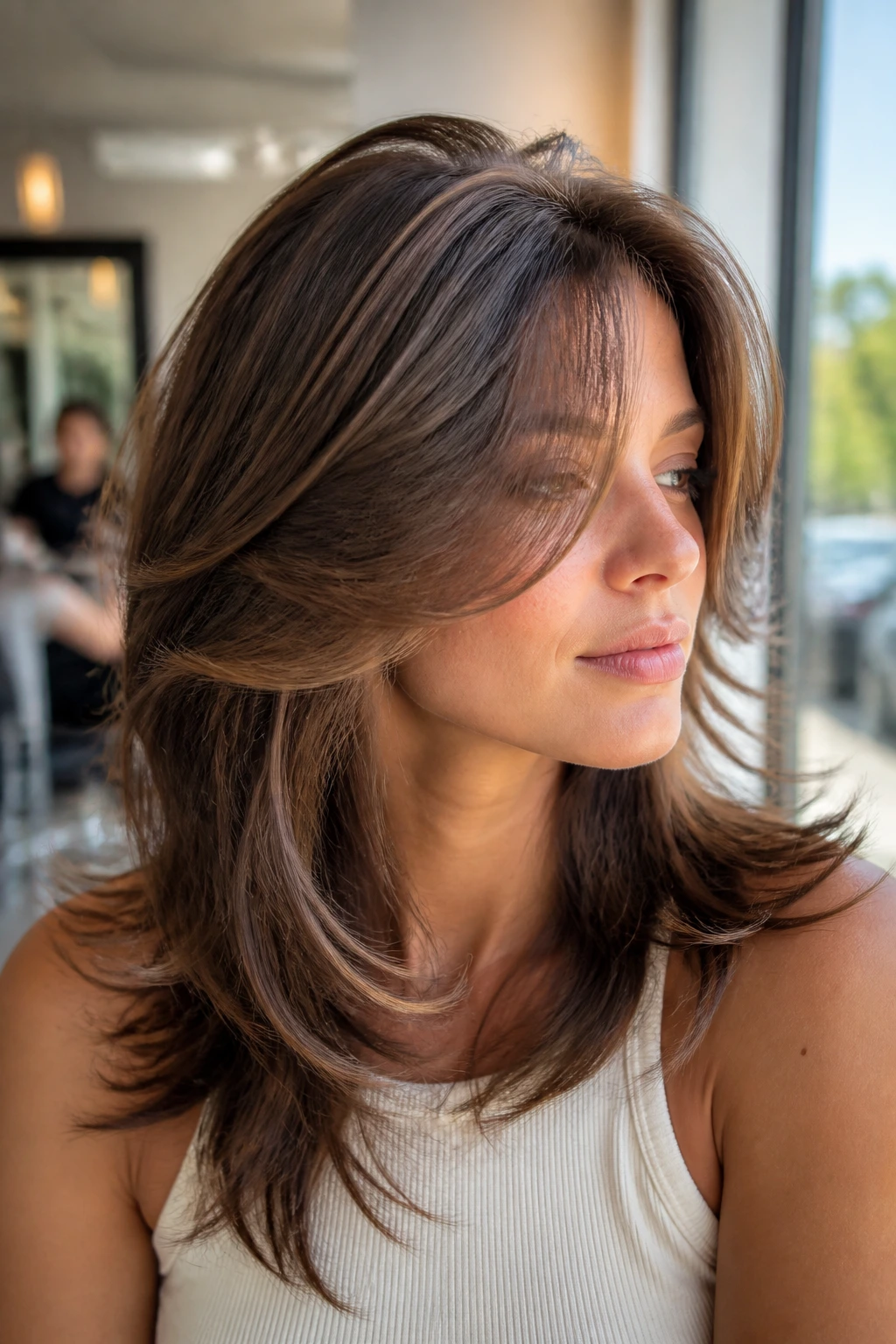
A side bang is a diagonal line. Layers are movement. Put them together and the haircut stops looking boxed in. That’s the part people feel before they can name it. The eye travels across the face instead of getting trapped by a blunt edge, and the layers keep the length from pooling at the bottom like a heavy curtain.
The angle matters more than the label. A side fringe can be soft and long, or short and sweepy, or nearly curtain-like if it’s cut to grow into the face frame. The right version depends on your texture and how much you style. Fine hair usually needs less fragmentation, because too much slicing leaves the ends thin. Thick hair needs more internal shaping, or the cut turns into a triangle by noon. Curly hair needs extra length in the front because the curl spring changes everything once the hair dries.
What I love about this combination is that it solves two separate problems at once. The bangs open the front. The layers control the bulk. That’s why this shape keeps showing up across hair types, length ranges, and face shapes. It does a lot of quiet work.
Essential Equipment for These Cuts
- Blow dryer with a concentrator nozzle — directs airflow so side bangs stay smooth instead of puffing out.
- Round brush, 1.5 to 2 inches — the sweet spot for bending fringe away from the face and adding a little root lift.
- Tail comb — handy for creating a clean side part and sectioning off the bang area.
- Duckbill or sectioning clips — keep the top layers out of the way while you dry the lower section.
- Heat protectant spray — worth using every time you heat-style the front pieces.
- Light mousse or root-lift spray — gives fine hair and flat roots a bit more structure.
- Texturizing spray — useful for shaggy, piecey, or choppy layers; skip heavy application near the bangs.
- 1-inch flat iron or curling iron — for a soft bend at the ends, not stiff curls.
- Microfiber towel or cotton T-shirt — cuts down frizz before the hair even hits the dryer.
- Salon shears for fringe trims, optional — only if you actually know how to use them; otherwise let a stylist handle the bangs.
How to Choose the Right Layers and Fringe for Your Hair
Texture: Straight hair usually handles cleaner lines and smoother side bangs. Wavy hair likes layers that follow the bend instead of fighting it. Curly hair needs longer front pieces because shrinkage changes the finished look by an inch or more, sometimes more than that if the curl pattern is tight.
Density: Fine hair does better with longer layers and a lighter fringe. Thick hair needs interior weight removal so it doesn’t swell at the sides. If your ponytail feels heavy in the hand, you probably need shaping through the interior, not just trimming the ends.
Parting: If you always part your hair on the same side, work with it. Forcing a side bang against a stubborn cowlick is a losing battle. A good stylist will cut the fringe to match your natural fall instead of pretending your hair obeys a diagram.
Maintenance: Side bangs are forgiving, but they’re not invisible. If you want a sharper shape, plan on a fringe trim every 3 to 5 weeks. If you want a softer grow-out, keep the longest front pieces at cheekbone length so they can slip into the rest of the cut.
How to Style the Cut So It Keeps Its Shape
Blow-Dry the Bang First
Dry the fringe before the rest of the hair gets heavy. A damp side bang dragged along by wet lengths tends to separate in the wrong direction, and then you’re fixing it all morning. Use a round brush or even a flat brush, directing the hair away from the face and letting it cool in that position.
Keep the Layers Moving
The layers don’t need a full salon blowout every day. They need a bend. A large barrel iron, a quick pass with a straightener, or a rough dry with a bit of mousse can give the ends enough movement to keep the shape alive. Aim for softness at the front and a little swing at the ends. Not crisp curls.
Use Product Sparingly
Heavy cream near the bangs is a trap. It clumps the fringe, flattens the root, and makes the cut look older than it is. Use light product near the front and save richer creams or oils for the mids and ends. That one habit fixes a lot of bad bang days.
Reset the Front, Not the Whole Head
If the bangs fall flat after lunch, dampen just the front section and restyle that piece alone. You do not need to restart the whole haircut. Most of the time, the front is what people notice first anyway, so a five-minute reset can carry the whole look.
Small Tweaks That Make the Cut Look Intentional
Root Lift: Clip the front roots up while they cool after blow-drying. Even five minutes can give side bangs and top layers a bit more memory.
Part Shift: Move your part a half inch one way or the other if the fringe starts splitting down the middle. Sometimes that’s all it takes to stop a cowlick from winning.
Face-Frame Direction: Bend the front pieces away from the face on the heavier side and slightly toward the face on the lighter side. That keeps the cut from floating off like it’s detached from your head.
Texture Balance: If the cut feels too fluffy, smooth only the top layer with a paddle brush or flat iron. Leave the lower layers alone so you don’t erase the movement.
Finish Touch: A tiny drop of serum rubbed through the mids and ends gives shine without making the bangs stringy. Tiny. Not a teaspoon. A few drops is enough.
Keeping Side Bangs in Shape Between Salon Visits
A layered cut with side bangs is happiest when it gets small maintenance jobs instead of big rescue missions. If you want a sharper fringe, plan on trimming the bang area every 3 to 4 weeks. If you like the softer sweep, 5 to 6 weeks is usually enough. The layers themselves can often go 8 to 12 weeks before they start losing shape, though thick or fast-growing hair may ask for a dusting sooner.
Sleeping habits matter more than people want to admit. A loose clip or a silk scrunchie can keep the front from getting mashed into the wrong direction overnight. If the fringe wakes up bent, mist it lightly, roll it around a brush for a minute, and let it cool. That’s usually enough. You do not need to wash the whole head because one bang decided to rebel.
For grow-out, side bangs are kinder than blunt bangs. They can be tucked behind the ear, pinned diagonally, or merged into a longer face frame with very little awkwardness. That’s why I’ll take a soft side fringe over a strict straight line when someone knows they’re not booking a trim every few weeks. The haircut should match your life, not the other way around.
Variations and Adaptations to Try
The Curtain-Soft Swap: Let the side bangs grow a touch longer and split them closer to the center so they act more like curtain bangs. This is useful if you want less maintenance and a softer line around the eyes. It works especially well on midlength and long cuts.
The Feather-Light Fine-Hair Version: Keep the layers long and the fringe delicate, with almost no short pieces at the crown. That gives fine hair movement without stripping away the density that makes it look full. A mousse at the roots will help more than a heavy cream ever could.
The Curly Lift Version: Ask for the front to be cut longer than you think you need, then let the curls spring up into place. This keeps the side bangs from bouncing too high and lets the face frame blend into the natural curl pattern. Dry cutting is the safer choice here.
The Choppy Edge Version: Add more separation through the layers and keep the side bang piecey. This one suits straighter hair that wants shape but not softness. A matte texture spray and a quick bend through the ends make it feel deliberate.
The Polished Blowout Version: Build more structure through the front and keep the layers clean and glossy. This is the version for someone who likes a sleek finish and doesn’t mind using a round brush. It looks especially sharp on collarbone cuts and longer lobs.
The Low-Maintenance Grow-Out Version: Leave the fringe longer so it can slide into the layers as it grows. The cut will look softer from day one, and it won’t get weird as fast. This is the one I’d choose if you dislike being trapped by bang trims.
Common Mistakes That Flatten the Shape
The first mistake is cutting the side bang too short. The symptom is obvious: it flips up, separates too early, or sits on the forehead like a tiny shelf. The fix is to keep the fringe long enough to bend across the face and still merge into the layers.
The second mistake is over-thinning the front. That can make the bangs look sparse and fragile, especially on fine hair. Ask for soft shaping instead of aggressive texturizing unless your hair is truly dense and bulky.
Another one: ignoring your natural part or cowlick. If your hair wants to split a certain way, fighting it every morning is a waste of time. Work with the growth pattern, then cut the fringe so it falls where your hair already wants to land.
People also make the cut too layered at the top. On fine hair, that leaves gaps. On thick hair, it can create a puffed crown with wispy ends. The better move is balanced shaping — enough movement to breathe, enough weight to keep the line intact.
Last, there’s using too much product in the bangs. The fringe gets oily first. Keep heavy creams and oils away from the front section, or you’ll spend half the day trying to fluff it back up.
Frequently Asked Questions
Can layered haircuts with side bangs work on curly hair?
Yes, but the fringe should usually be cut longer than a straight-haired version. Curls shrink as they dry, so the side bang needs room to settle into place instead of bouncing too high.
How often should side bangs be trimmed?
If you like a crisp fringe, every 3 to 4 weeks keeps the shape tidy. If you prefer a softer sweep, 5 to 6 weeks usually works better, especially when the bangs are blending into face-framing layers.
Are side bangs good for fine hair?
They can be, as long as the haircut doesn’t get over-layered near the crown. Fine hair looks fuller when the layers stay long and the front pieces are soft rather than shredded.
What should I ask for at the salon?
Ask for the shortest face frame to start around the cheekbone or lip line, depending on your texture, and have the layers tailored to your natural part. Bring photos with hair that matches your density and texture, not just the color.
Can I air-dry this kind of haircut?
Absolutely, especially if your hair already has wave. The cut needs to be shaped so the fringe falls naturally to one side and the layers follow your texture instead of fighting it.
What if my side bangs split in the middle?
A small shift in your part can fix that. If the split keeps happening, the bangs may be too short or too heavy at one point, and a stylist can soften the section so it settles better.
Can I grow out side bangs without a weird stage?
Yes, and this is where side bangs beat blunt bangs by a mile. Pin them diagonally, tuck them behind the ear, or let them blend into longer face-framing pieces as they get past the cheekbone.
Do these cuts work with glasses?
They can work very well. The key is keeping the fringe long enough to sit around the frames instead of crashing straight into them. Soft face-framing layers help too.
The Shape That Keeps Moving
The best layered haircut with side bangs is the one that still looks like itself after a long day, a little humidity, and one too many times tucking the front behind your ear. That’s the real test. Not the first mirror check after the salon blowout. The second one. The one at lunch, after your hair has lived a little.
That’s why this collection has so much range. A side sweep can be soft or sharp, polished or shaggy, long or short, but the good versions all do the same thing: they give the face a diagonal line and keep the rest of the haircut from sitting there like a lump. Bring that idea to your stylist, show them the texture your hair actually has, and the cut gets a lot easier to get right.
