



Cute girls hairstyles for every day need to earn their place. They have to survive backpack straps, a curious hand reaching for a ribbon, and that one stretch of the afternoon when hair goes from neat to feral in about nine minutes. A style can be sweet and still practical. If it falls apart the moment a child shakes her head, it’s not an everyday style — it’s a brief performance.
The versions worth repeating are the ones that work fast, feel comfortable, and look intentional even when the part isn’t perfect. I’ll take a clean braid with a little frizz at the crown over a stiff, overdone style any day. Tiny elastics, a decent brush, and a calm hand around the hairline matter more than fancy tools or complicated parting tricks.
You’ll see styles here for straight hair, curls, thick hair, fine hair, short layers, and the mixed-up, half-one-thing-half-another hair that shows up after sleep. Some take two minutes. Some need a little patience and a mirror that doesn’t fog up while breakfast is still happening. All of them are meant to live in the real world — the one with school drop-off, playdates, sports, naps, and somebody saying, “I want braids, but not tight ones.”
Why These Everyday Styles Keep Getting Repeated
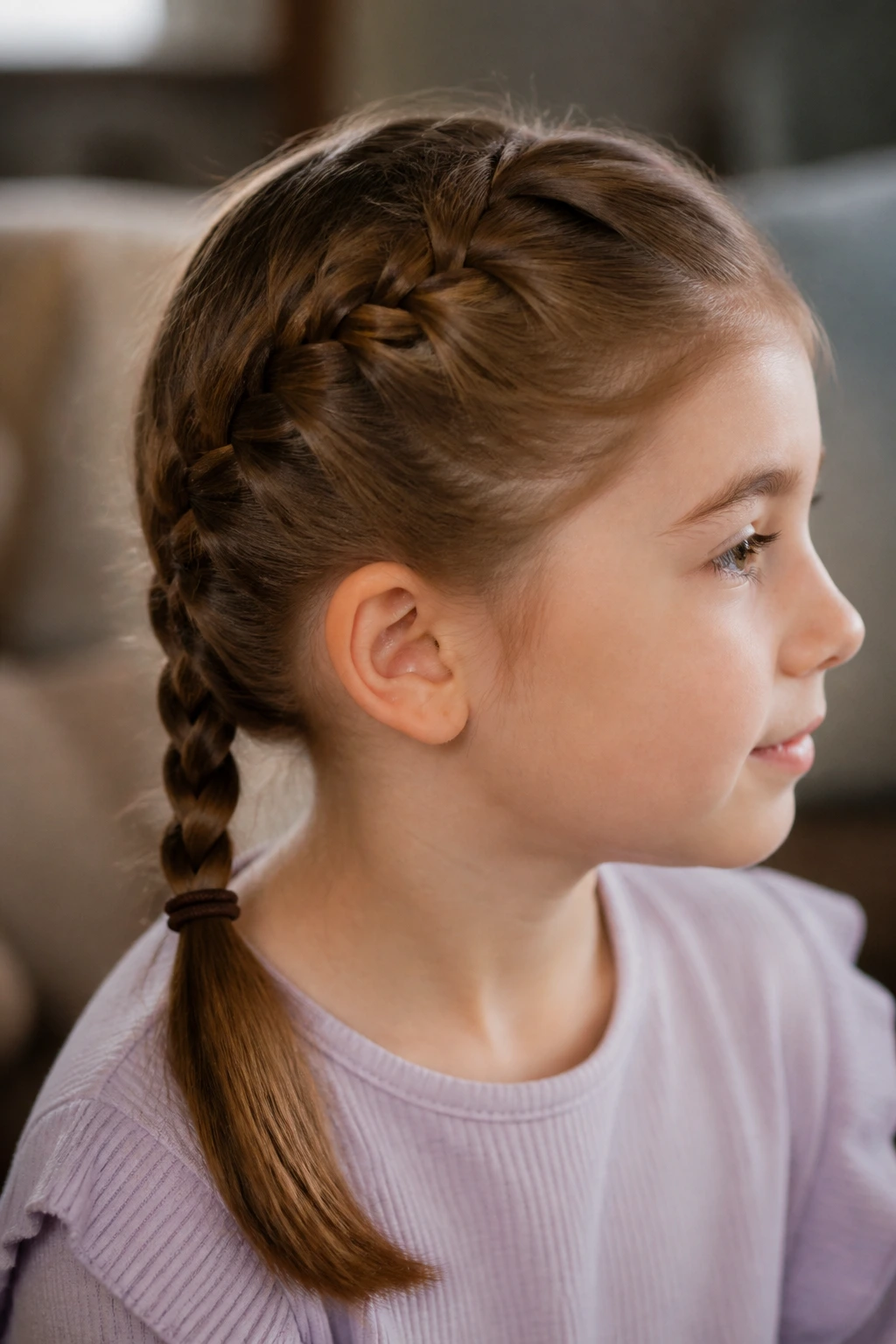
-
Fast to Build: Most of these styles can be finished in 3 to 7 minutes once the sections are set, which is the difference between a calm morning and a wrestling match with a brush.
-
Comfort Comes First: The styles lean on soft tension, low-snag elastics, and flatter shapes around the hairline, so they stay wearable all day instead of feeling tugged tight by noon.
-
Works With Different Hair Types: Fine hair, thick hair, curls, and layered cuts all show up here, because a daily style should fit the hair on your child’s head, not the hair in a tutorial thumbnail.
-
Easy to Dress Up or Down: A bow, ribbon, snap clip, or scrunchie can make the same base style look playful, tidy, or a little more polished without starting over.
-
Built for Real Movement: These styles are meant to hold through recess, car seats, backpacks, and a surprising amount of head-shaking. That matters more than perfect symmetry.
-
Low Drama, High Repeatability: Some hairstyles are lovely once and impossible twice. These are the opposite — the kind you can do on a sleepy Monday and again on a rushed Friday.
1. High Ponytail with a Wrapped Strand
A high ponytail gets used so often because it clears the face, lifts the hair off the neck, and takes about as long as finding the elastic. Wrapping a small strand of hair around the base hides the plain band and makes the whole style look deliberate instead of thrown together. It’s a small detail, but that little wrap does a lot of visual work.
Why it keeps coming back
The crown sits high enough to avoid backpack straps and hoodie collars, which is half the battle on busy days. It also works on straight hair, wavy hair, and hair that only behaves after a brush and a light spray of water.
A quick tease at the crown adds grip if the hair is extra silky. If your child hates tight styles, loosen the elastic just a touch and let the pony sit an inch lower; the shape still reads clean.
2. Low Side Braid
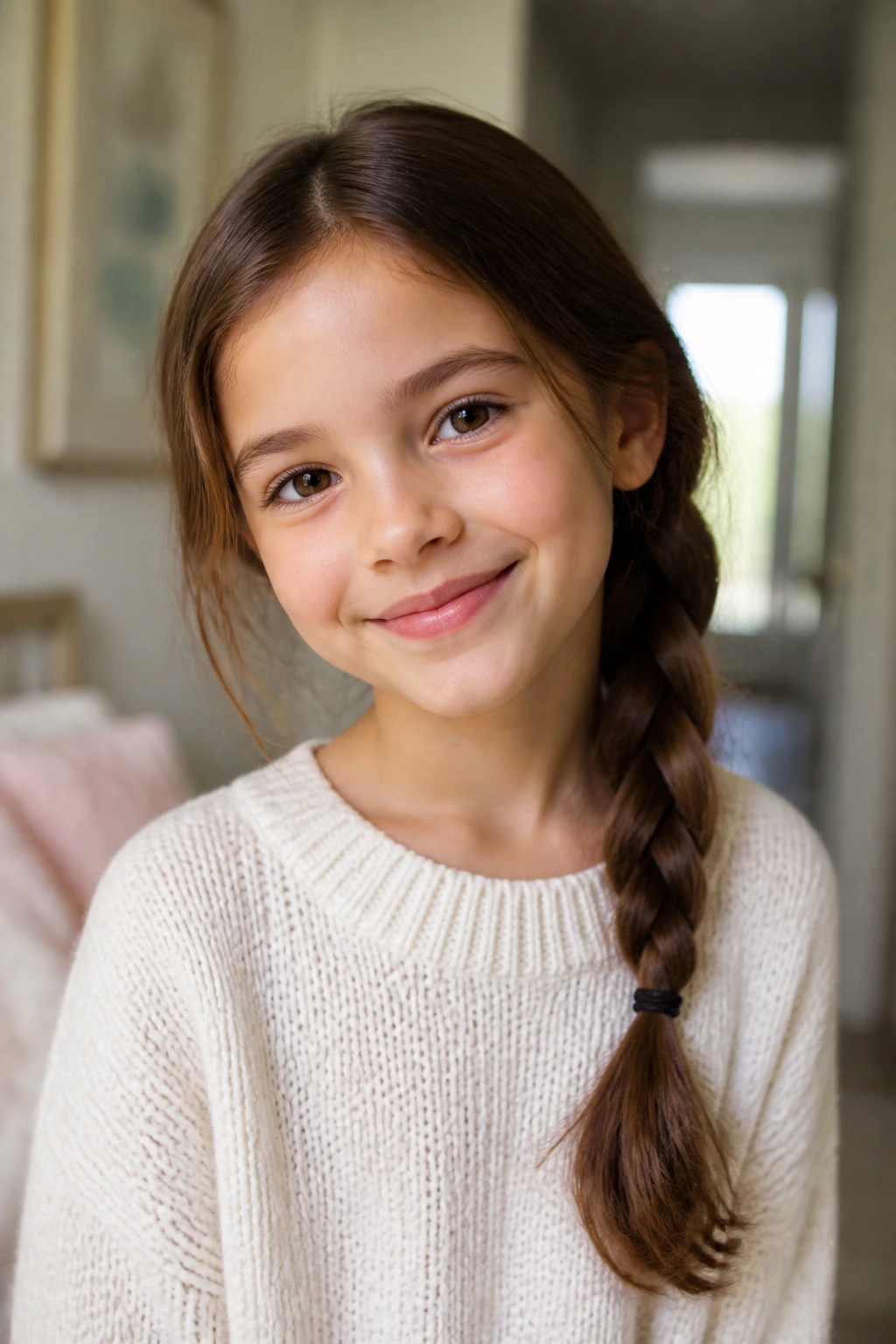
A low side braid is one of those styles that looks soft but behaves like a workhorse. It keeps the hair together without pulling everything back from the face, and the side placement gives it a little more shape than a plain braid down the back.
The reason I like this one is simple: it’s forgiving. If one section is slightly thicker than the other, the braid still looks fine. If the hair is layered, a few pieces escape at the cheek and make it feel lived-in instead of strict. A side braid is especially good on hair that slips out of ponies by lunchtime. The braid structure holds the length together better than an elastic alone.
3. Double Dutch Braids
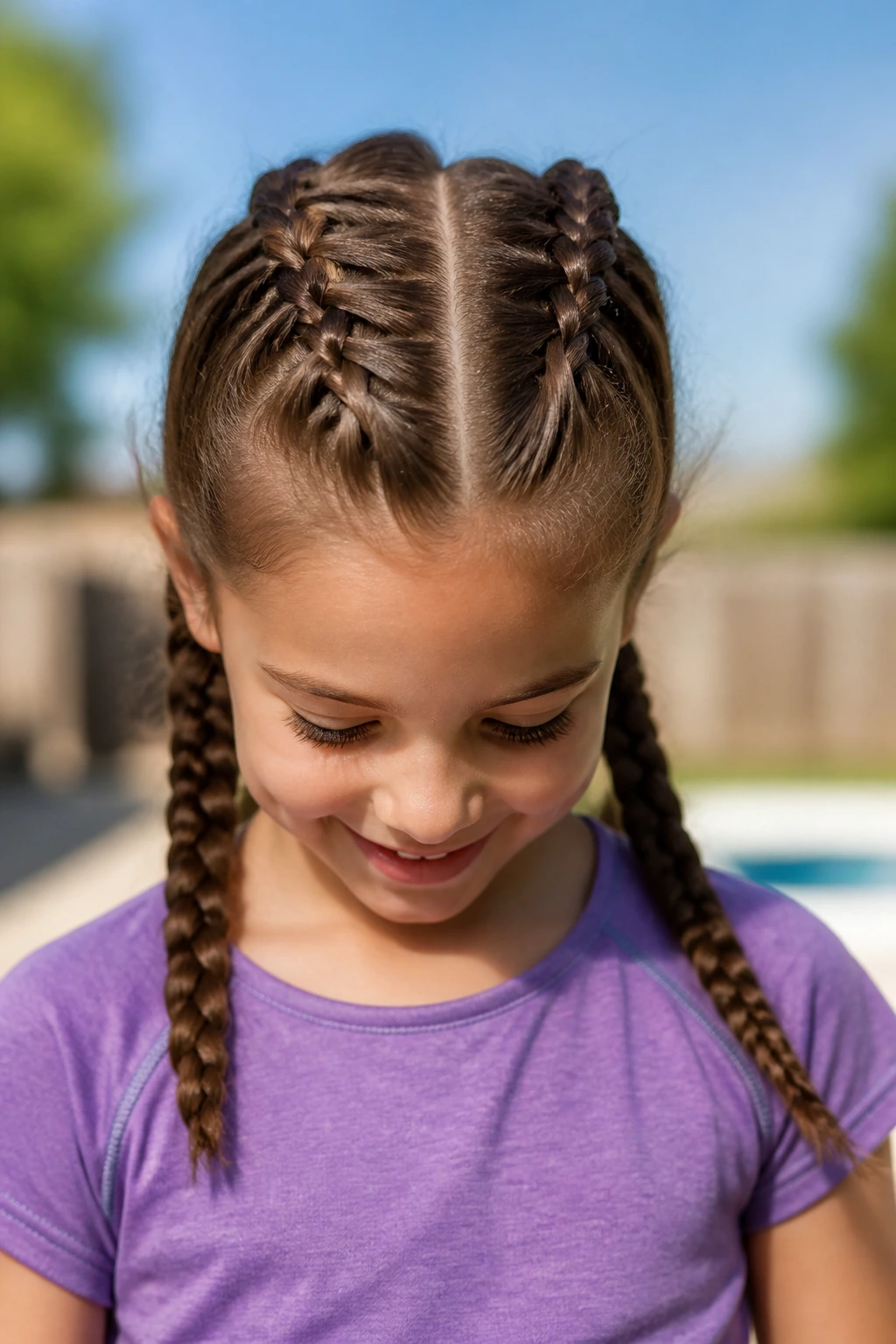
Want a style that can survive a whole day and still look neat at pickup? Double Dutch braids are hard to beat. The raised braid pattern sits on top of the hair instead of sinking into it, so the shape stays visible even after a hoodie comes off and on three times.
What makes them so sturdy
They anchor the hair close to the scalp, which helps with thick hair that bulks up fast in a regular braid. I also like them for active days because the weight gets distributed evenly instead of hanging from one ponytail point.
Keep the sections even, but do not obsess over perfection. A slightly imperfect Dutch braid often looks better on a child than an overly tight one. That softer, touchable look is part of the charm.
4. Bubble Ponytail
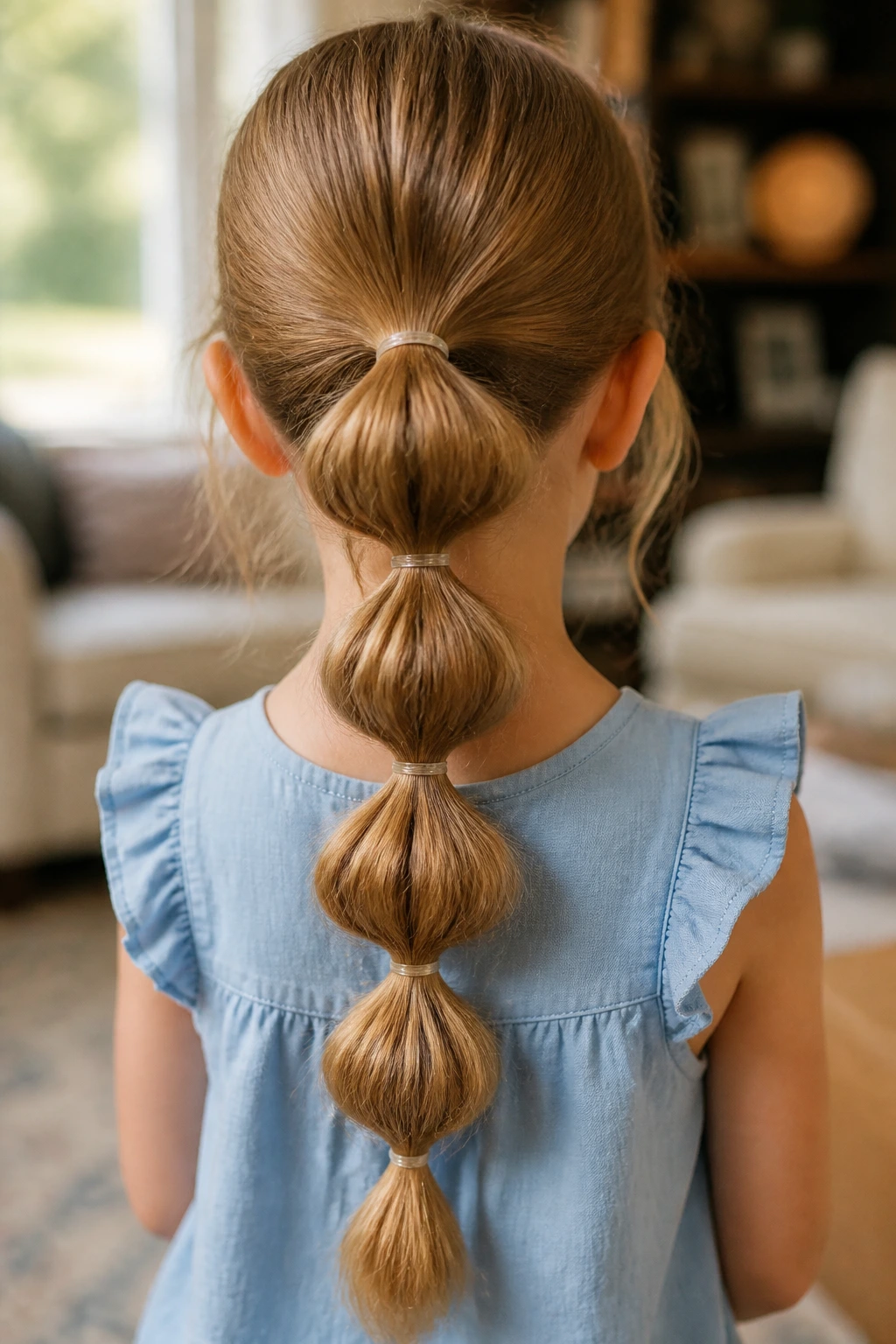
A bubble ponytail is the style I reach for when I want something playful without needing braid skills. You make one ponytail, add small elastics down the length every 1 to 2 inches, then gently tug each section to puff it into a round bubble.
It works best on medium to long hair, and it can make fine hair look fuller because the bubbles add shape. If the hair is thick, the sections should be a little wider so the pony doesn’t look squeezed. I like this one for kids who fidget, because once the elastics are in place, there’s not much else to do. It’s one of the easiest ways to make a plain ponytail feel finished.
5. Half-Up Top Knot
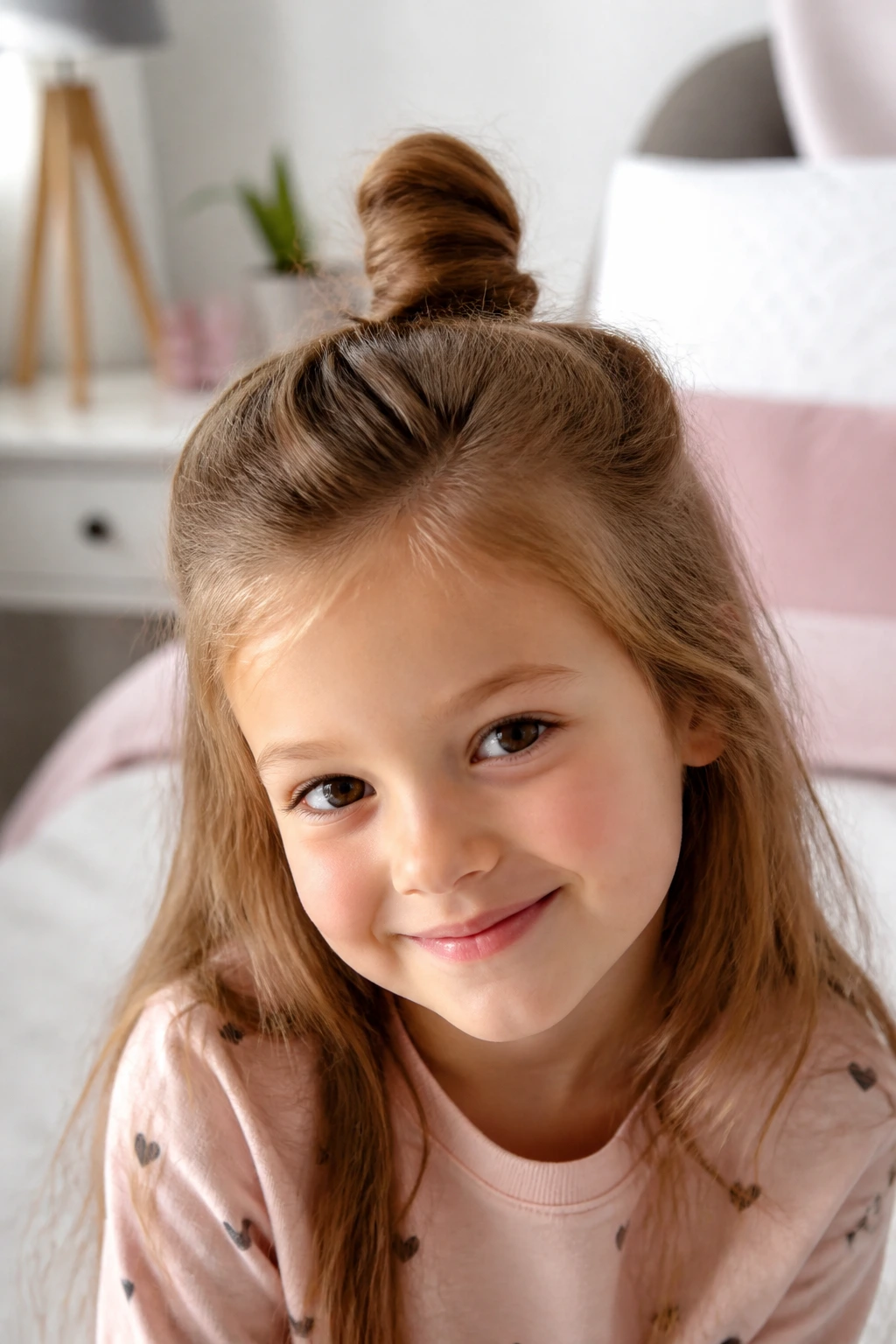
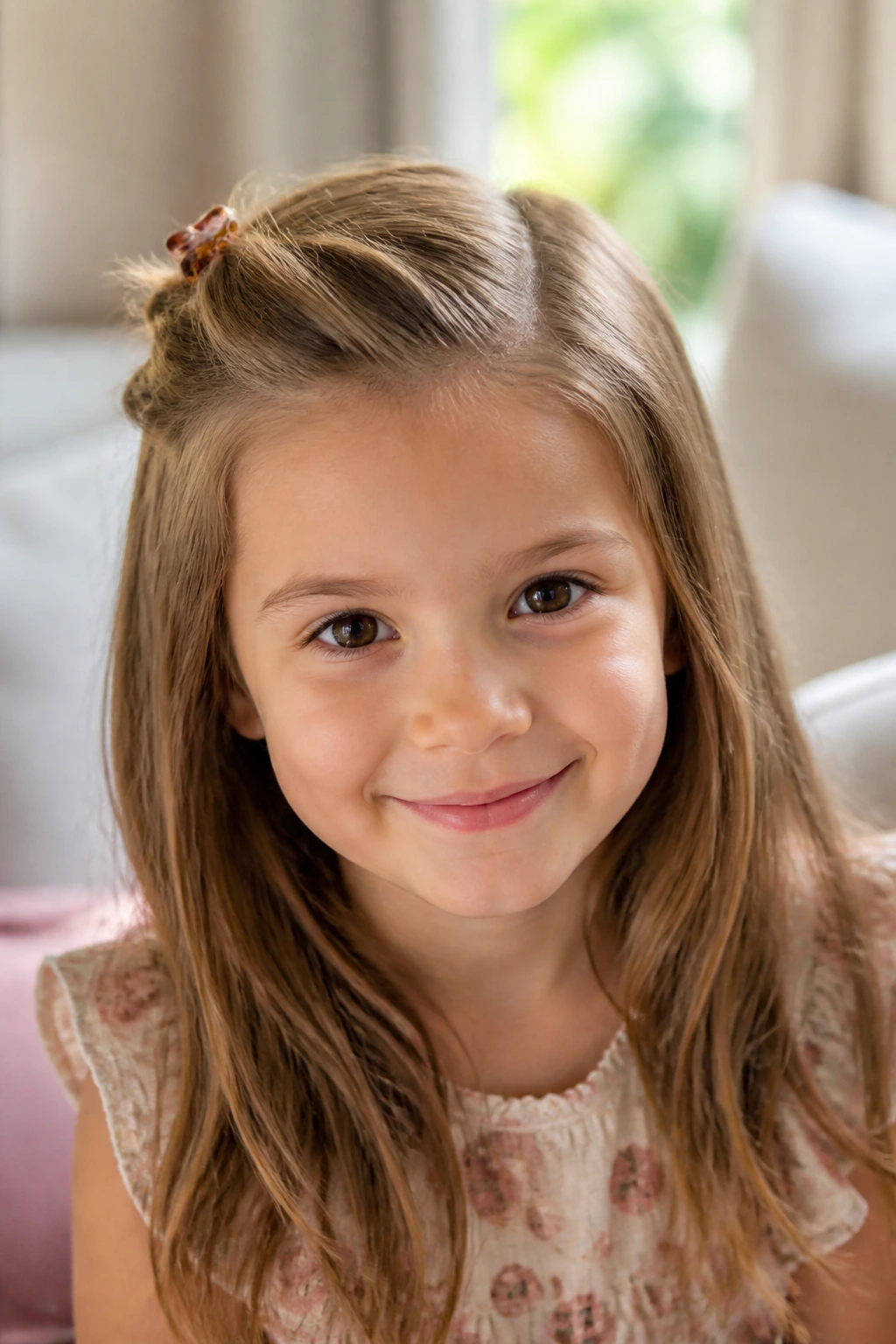
A half-up top knot solves the “hair in the eyes, but I still want length” problem in one move. Pull the top section up, twist it into a small bun, and let the rest fall loose. It keeps the front hair under control while leaving enough down to feel soft and not overly done.
This style is especially handy for layered hair, because the shorter pieces around the face can stay lifted while the longer lengths stay loose. If the bun feels too tiny, fan it out a little after pinning or securing with a small elastic. One neat trick: leave the bun slightly off-center. It looks less severe and a little more childlike in the best way.
6. Side Part with Snap Clips
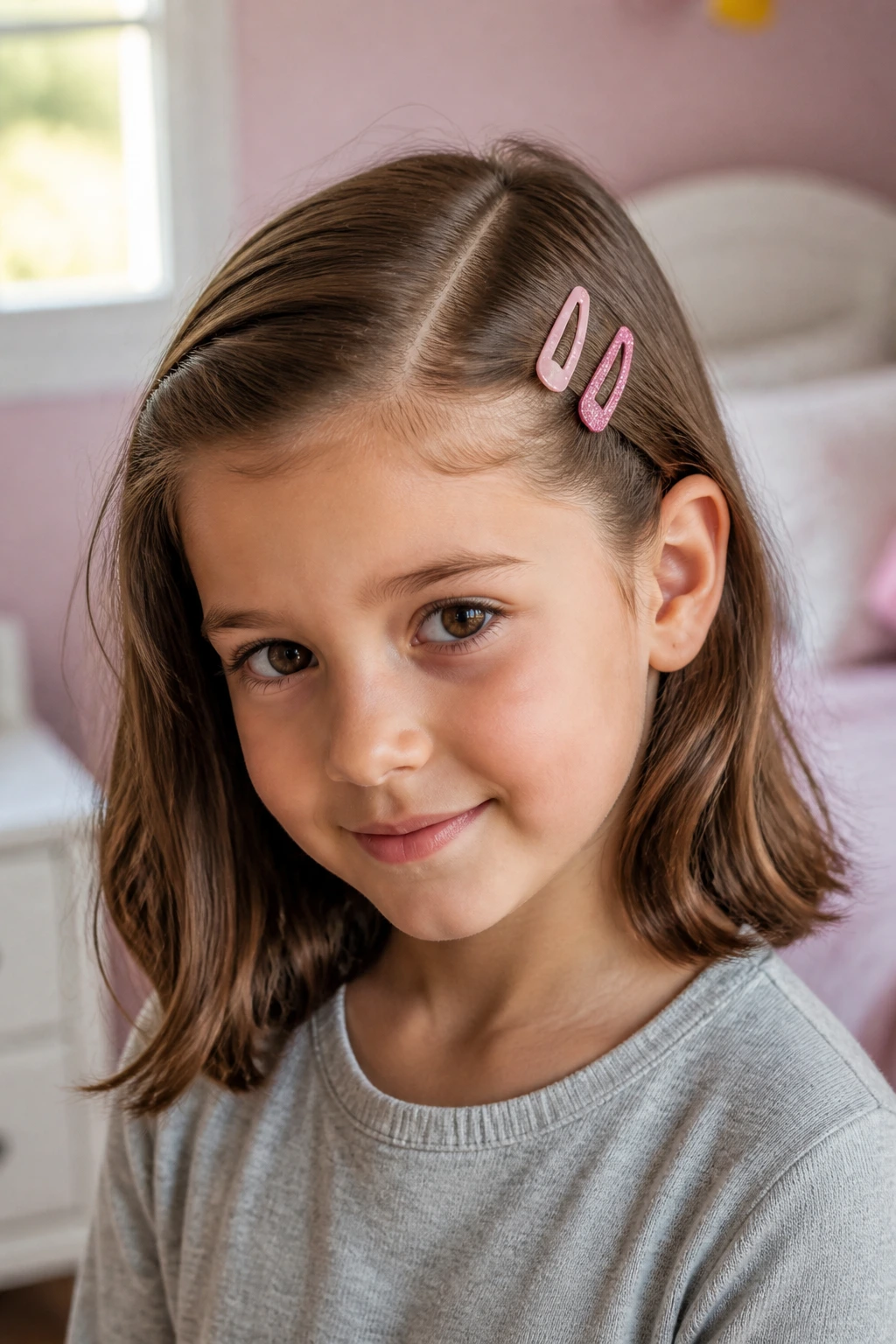
Sometimes the cutest answer is the plainest one. A deep side part paired with two or three snap clips can tame a stubborn fringe, keep layers out of the eyes, and still look like a style instead of a fix.
I prefer this for short hair, growing-out bangs, and those in-between cuts that don’t quite reach a ponytail. The clips should sit flat and close to the scalp so they don’t catch on sweaters. If the hair is very fine, mist the roots with a tiny bit of water before placing the clips; they grip better. You’re not fighting the hair here. You’re just giving it a direction.
7. Twin Low Buns

Twin low buns are tidy without feeling too formal, which makes them useful for school days, family outings, or any morning where the hair needs to stay put and stay out of the way. Part the hair down the middle, twist each side into a low bun, and secure them with covered elastics or pins.
They work especially well for thicker hair because the buns spread the weight across two points instead of one. If your child has fine hair, keep the buns smaller and flatter so they don’t collapse. The center part makes the whole style look balanced, even if each bun is built a little differently. That’s normal.
8. Rope-Braid Pigtails
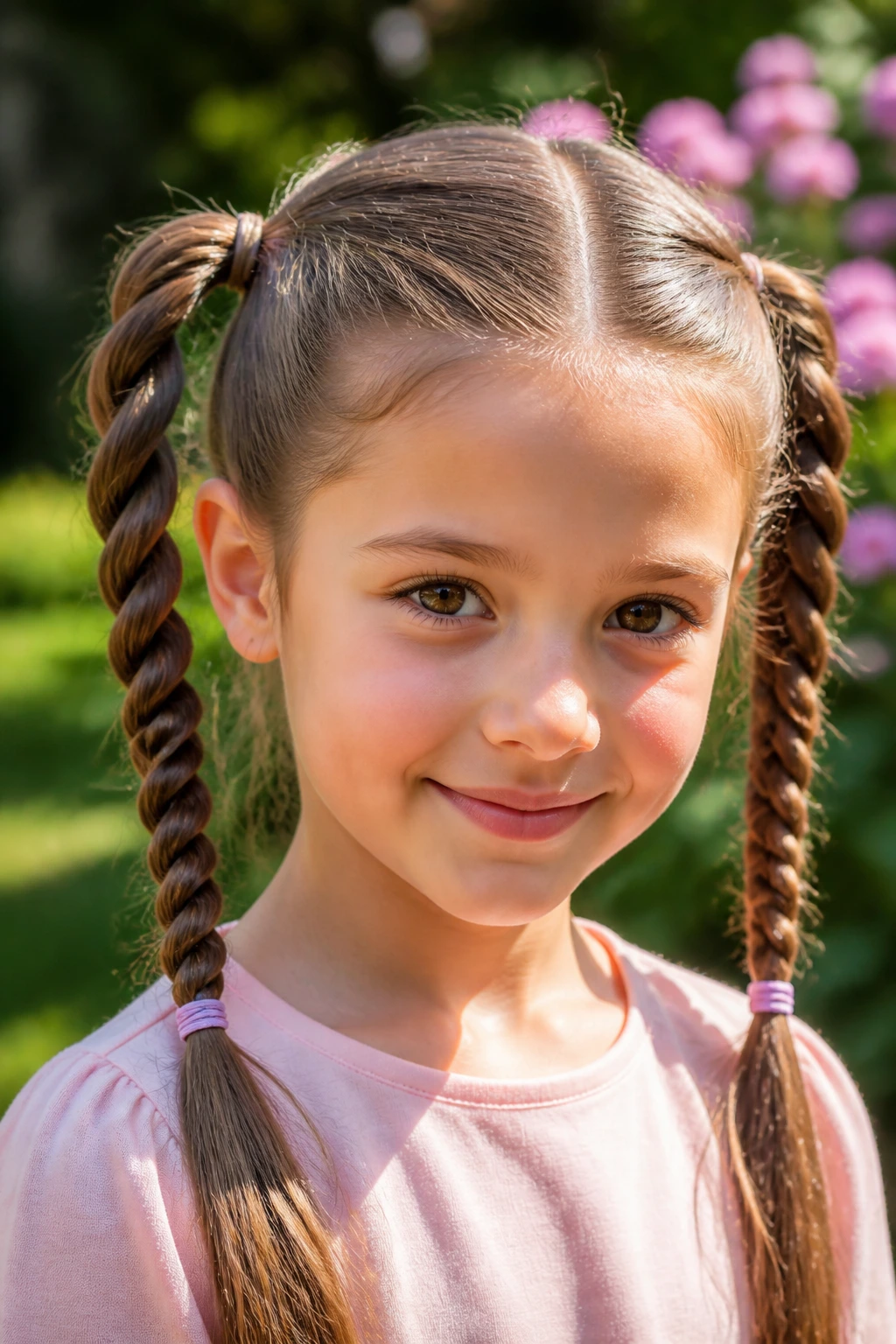
Rope-braid pigtails have a neat, spiraled look that feels a little different from regular braids. Split each side into two sections, twist both sections in the same direction, then wrap them around each other in the opposite direction. That opposite twist is what keeps the rope braid from unraveling.
This is a smart choice for silky hair that tends to slide apart in a regular three-strand braid. It also gives a polished finish without taking forever. The only thing to watch is tension: twist firmly enough to hold shape, but not so hard that the pigtails look stiff. A ribbon at the end looks cute here, but it isn’t required. The braid itself already does enough.
9. French Braid into a Ponytail
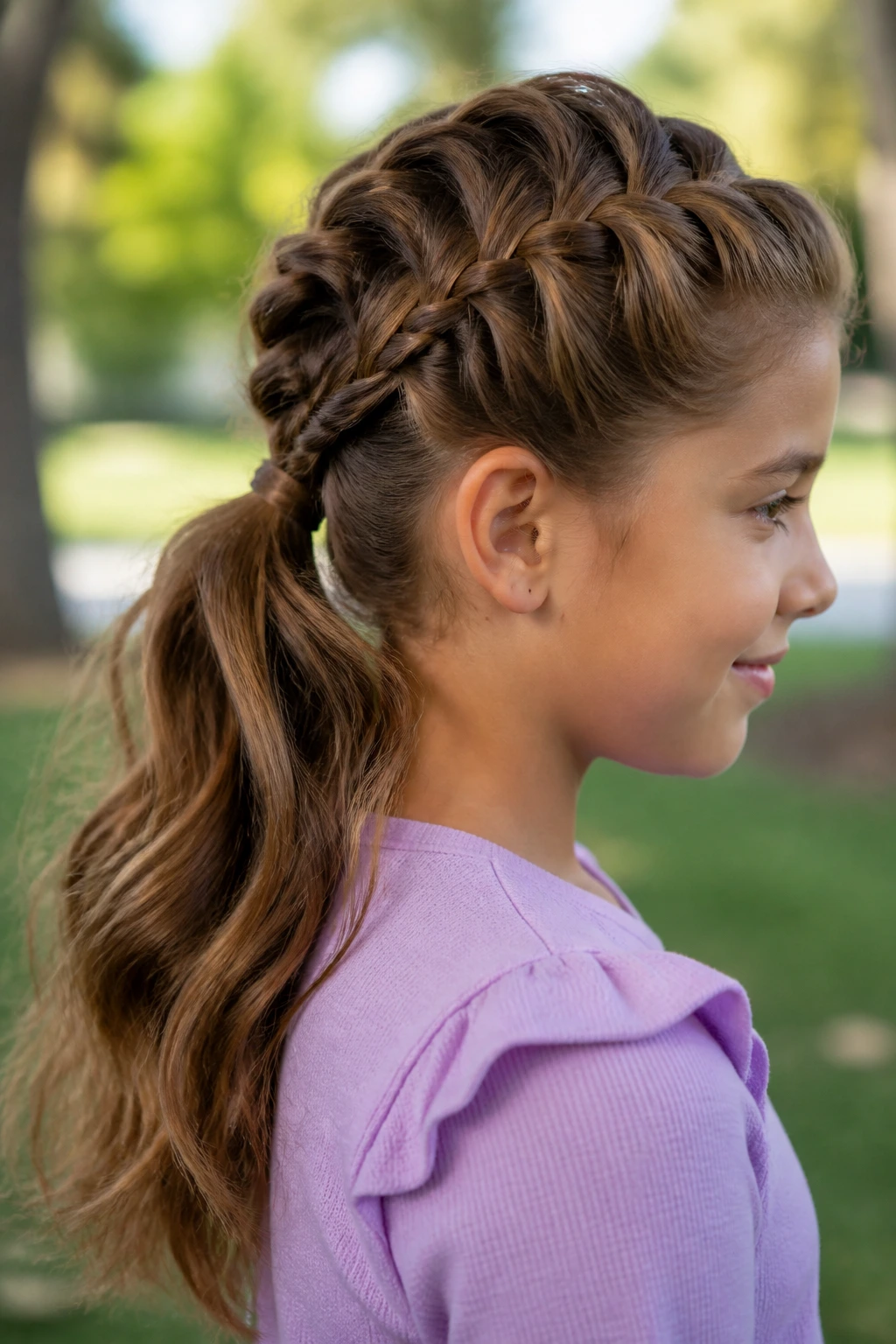
A French braid into a ponytail is one of the best hybrid styles for mornings when you want neatness near the crown and speed at the ends. Braid down from the hairline for a few inches, then stop and gather the rest into a ponytail. It keeps flyaways under control on top while still giving movement through the length.
The braid portion is doing the heavy lifting, so the ponytail can stay relaxed. That’s what I like about it. It looks more detailed than a plain ponytail, but it doesn’t demand a full head of braiding. Works especially well when the front sections always pop loose by midmorning.
10. Half-Up Twist-Back
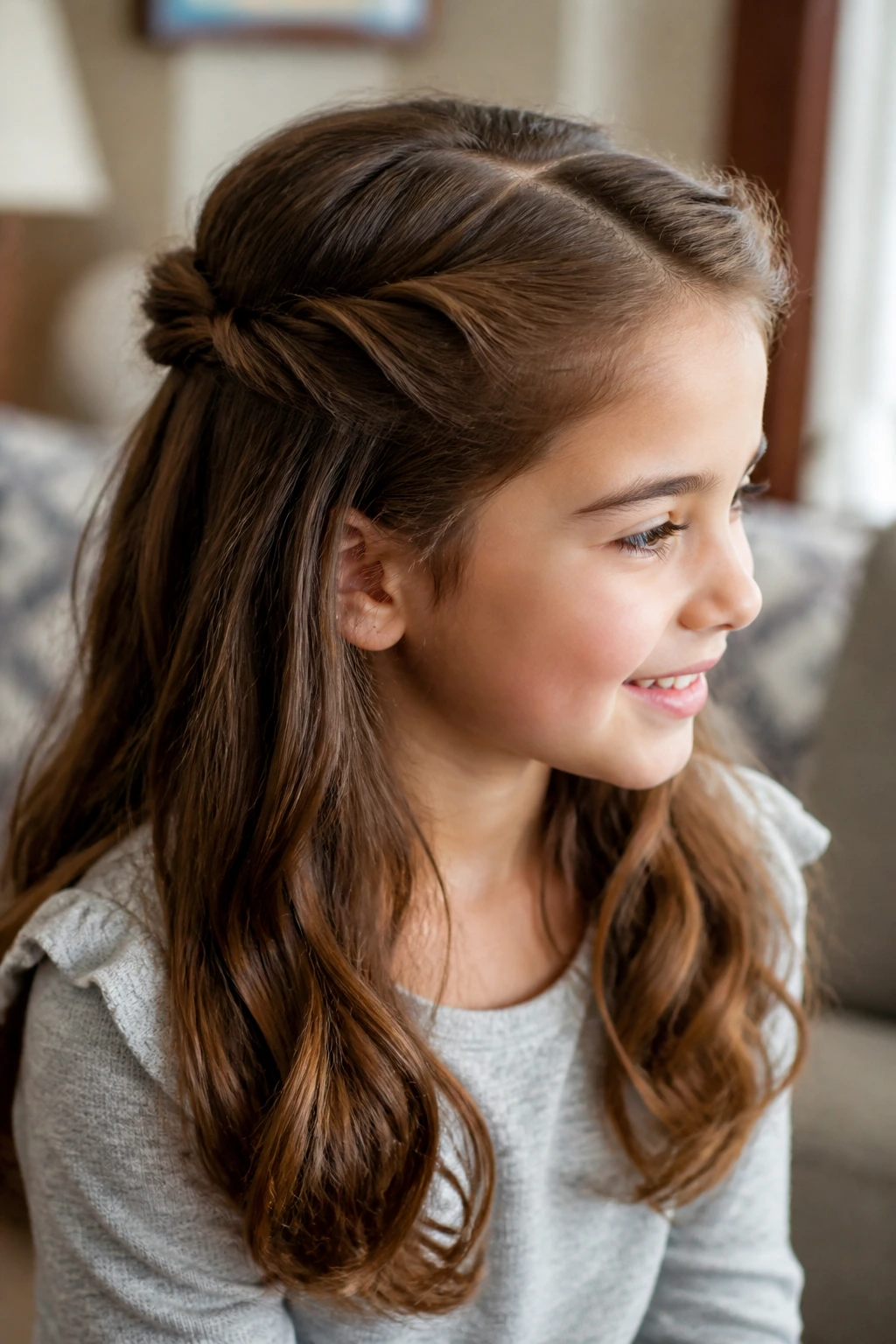
Half-up twist-backs are gentle, quick, and very hard to mess up. Take a section from each side, twist them back toward the crown, and meet them in the middle with a clip or small elastic. The rest of the hair stays loose, which makes it a nice option for kids who don’t want everything pulled away from their faces.
This style is friendly to curls because it doesn’t ask the whole head to lie flat. It’s also a useful fix for layered hair, where the front pieces want to escape no matter what you do. If the twists are slipping, work with slightly day-old hair or add one tiny dab of styling cream to your fingertips before twisting. Not much. Just enough.
11. Crown Braid Headband
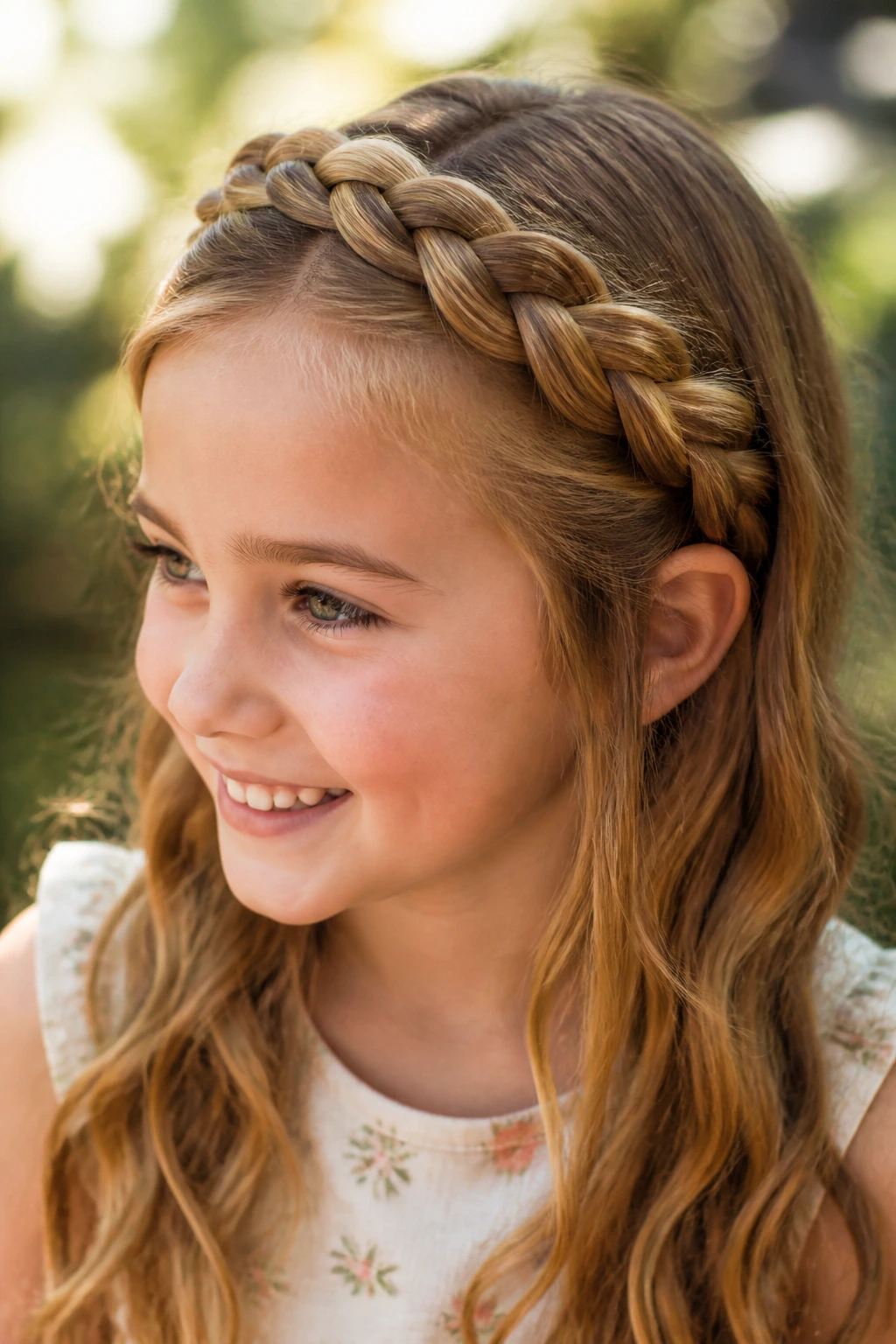
A crown braid headband is basically a braid doing the job of a headband, only with more grip and a nicer finish. Braid a strip of hair from one side, sweep it across the top of the head, and pin it on the other side. The rest of the hair can stay down, up, curly, brushed, or slightly wild.
I like this for days when bangs are in the eyes but a full updo feels like too much. The braid keeps the front neat while leaving the back loose, which gives the whole style a softer feel. If your child has thinner hair, braid a little more loosely so the headband part looks full enough to matter. Tiny braids can disappear if they’re too tight.
12. Messy Bun with a Scrunchie
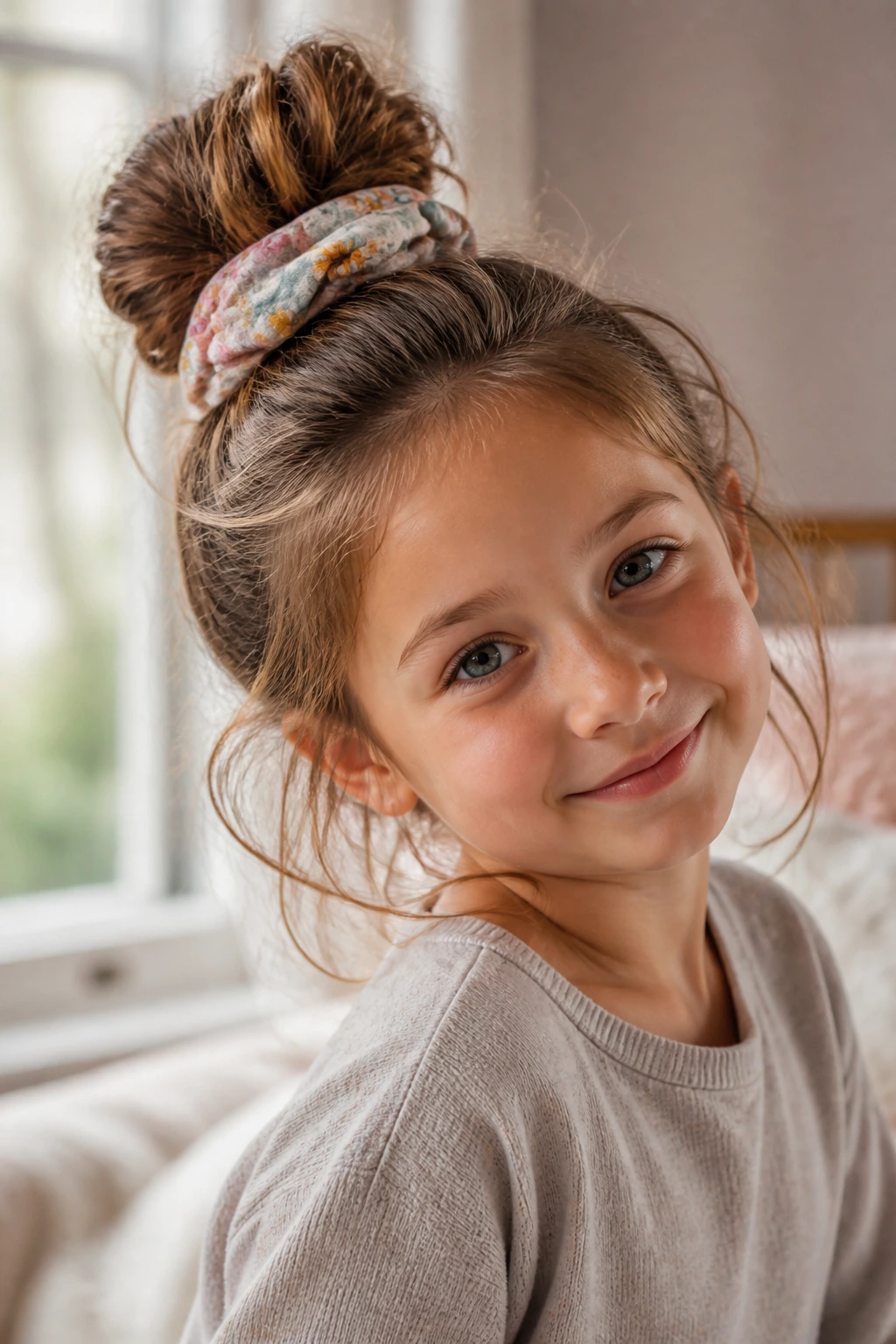
A messy bun with a scrunchie sounds casual because it is casual, and that’s why it works. Twist the hair up, secure it, then let a few ends and pieces fall on purpose. The scrunchie gives it a little color and keeps the style from looking severe.
This is one of my favorite day-two styles because hair with a little texture usually holds the bun better than squeaky-clean hair. If the bun is too polished, it can look stiff; if it’s too loose, it turns into a shrug. The sweet spot is a bun that looks soft but still intentional. A cotton or satin scrunchie both work. Use the one that doesn’t pull.
13. Crisscross Pigtails
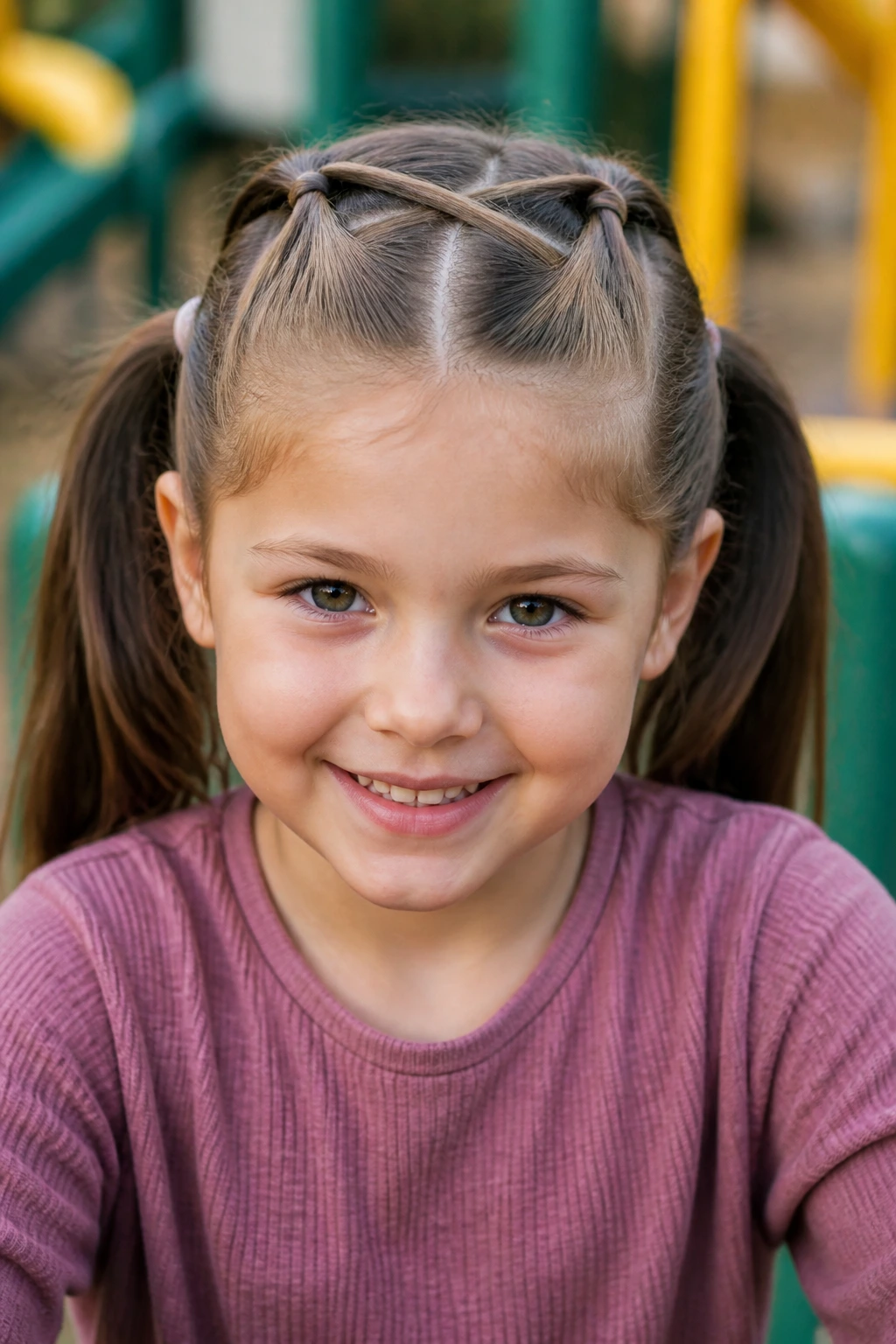
Crisscross pigtails add interest without needing braid skill. Part the hair into two sections, then cross small front pieces over to each side before securing the pigtails. It creates a neat pattern around the top of the head and helps keep shorter front layers from escaping.
This style is especially nice for younger kids, because it looks playful but stays comfortable. The crossed pieces should lie flat, not tug the scalp. If the hair is slippery, secure each crossing with a tiny elastic before finishing the pigtails. That extra step sounds fussy, but it keeps the front from slipping apart ten minutes later.
14. Pull-Through Braid
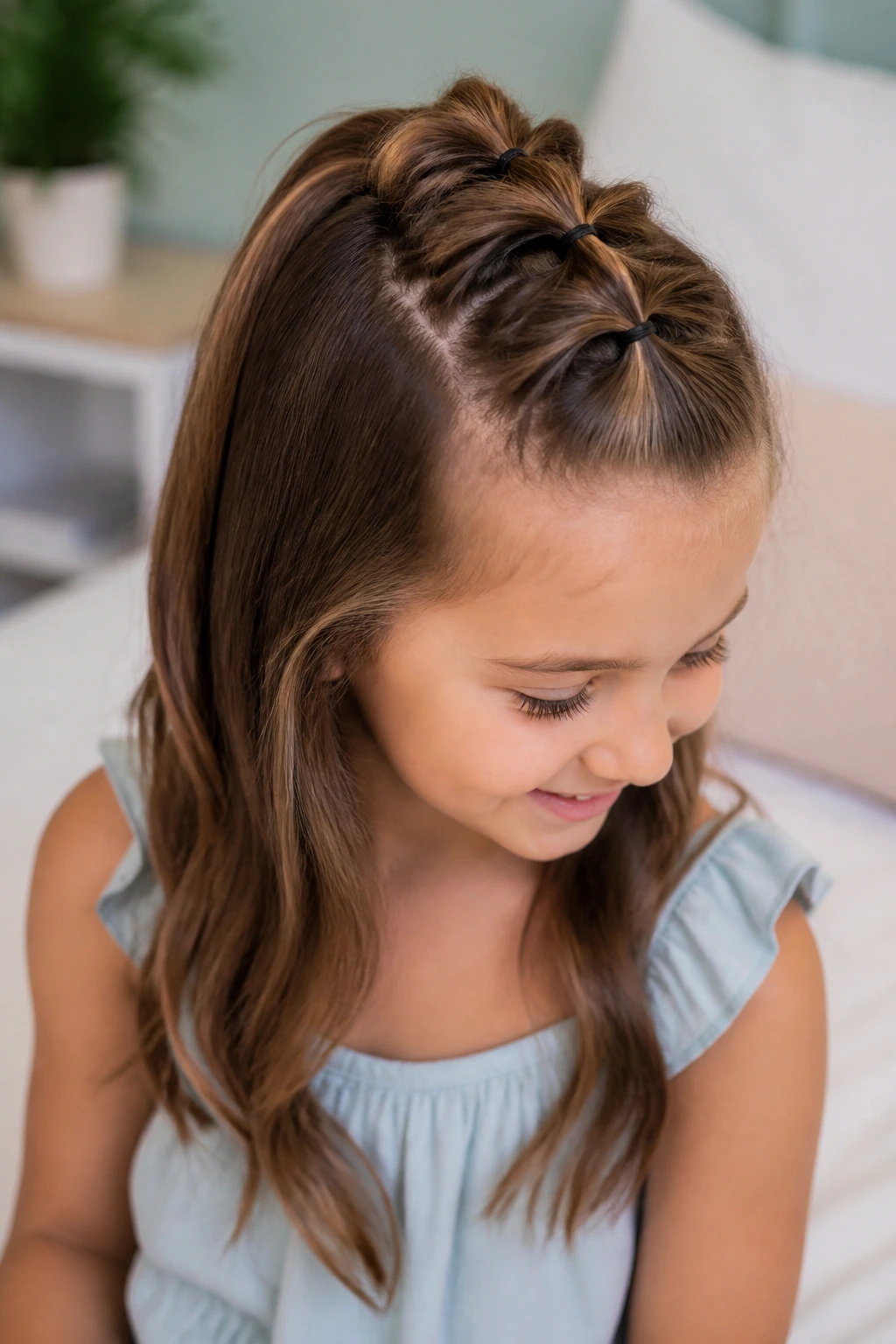
A pull-through braid gives you the look of a big braid without needing braid fingers that cooperate before coffee. You build it from a series of little ponytails, then pull each section through the one above it. The result is thick, full, and easy to fluff with your hands.
I like this on fine hair because it makes the braid look larger than the actual amount of hair suggests. Thick hair can use it too, but the sections should be smaller so the braid doesn’t become bulky near the crown. It takes a few elastics, yes, but the shape is worth it. If your child likes big, rounded styles, this one’s a keeper.
15. Heart Part Ponytails
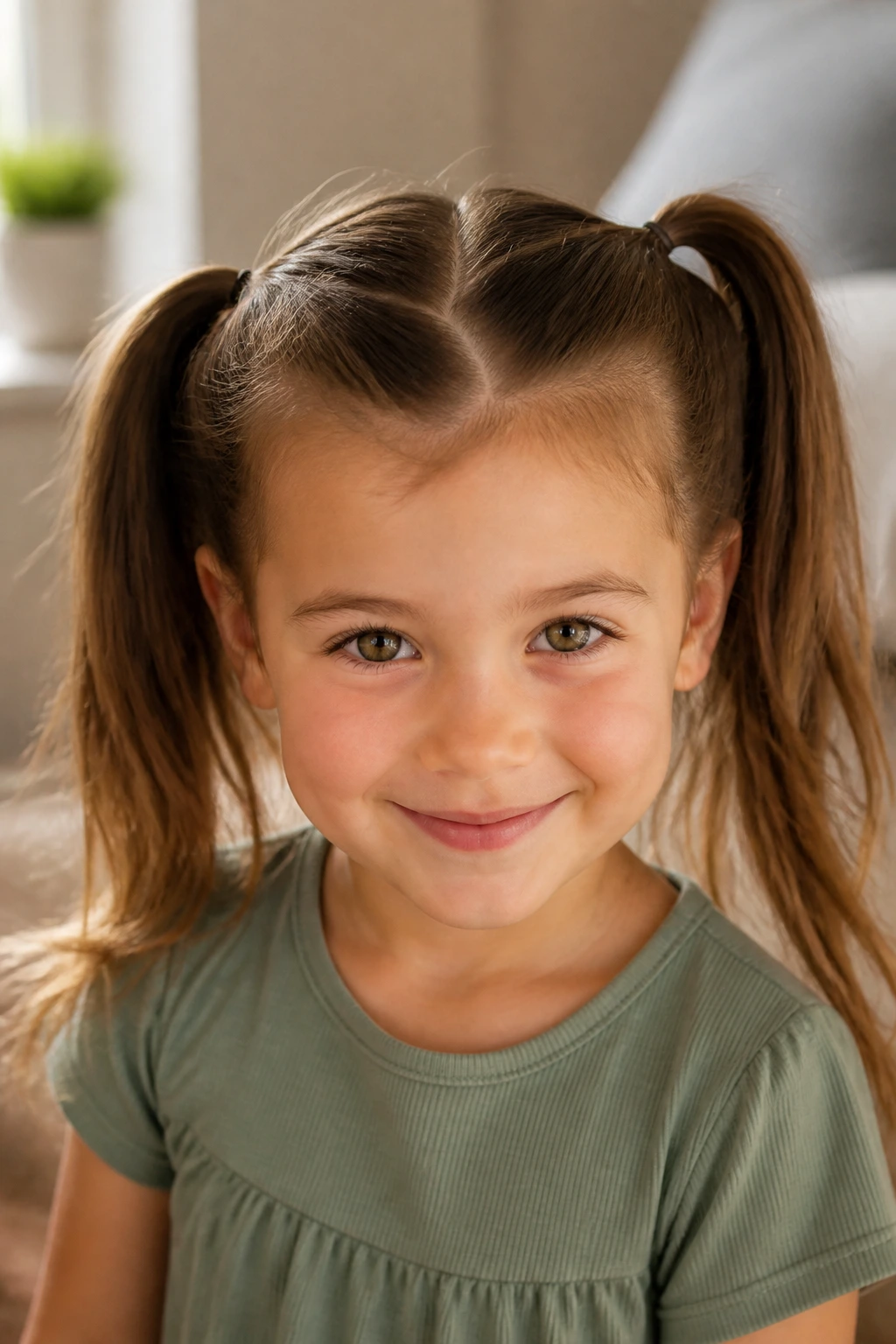
A heart part is one of those details that turns a basic hairstyle into a little event. The hair is parted into a heart shape at the crown, then gathered into ponytails, pigtails, or even a single ponytail depending on the length. It sounds fancy, but the actual effect is sweet rather than fussy.
This one works best when you have a rat-tail comb and enough time to make the part even on both sides. The shape matters more than perfection, though. If one curve is a little wider, it still reads as a heart. I’d save this for mornings when the child wants something special without committing to a complicated updo. The part does most of the talking.
16. Sleek Side Part with a Bow Clip
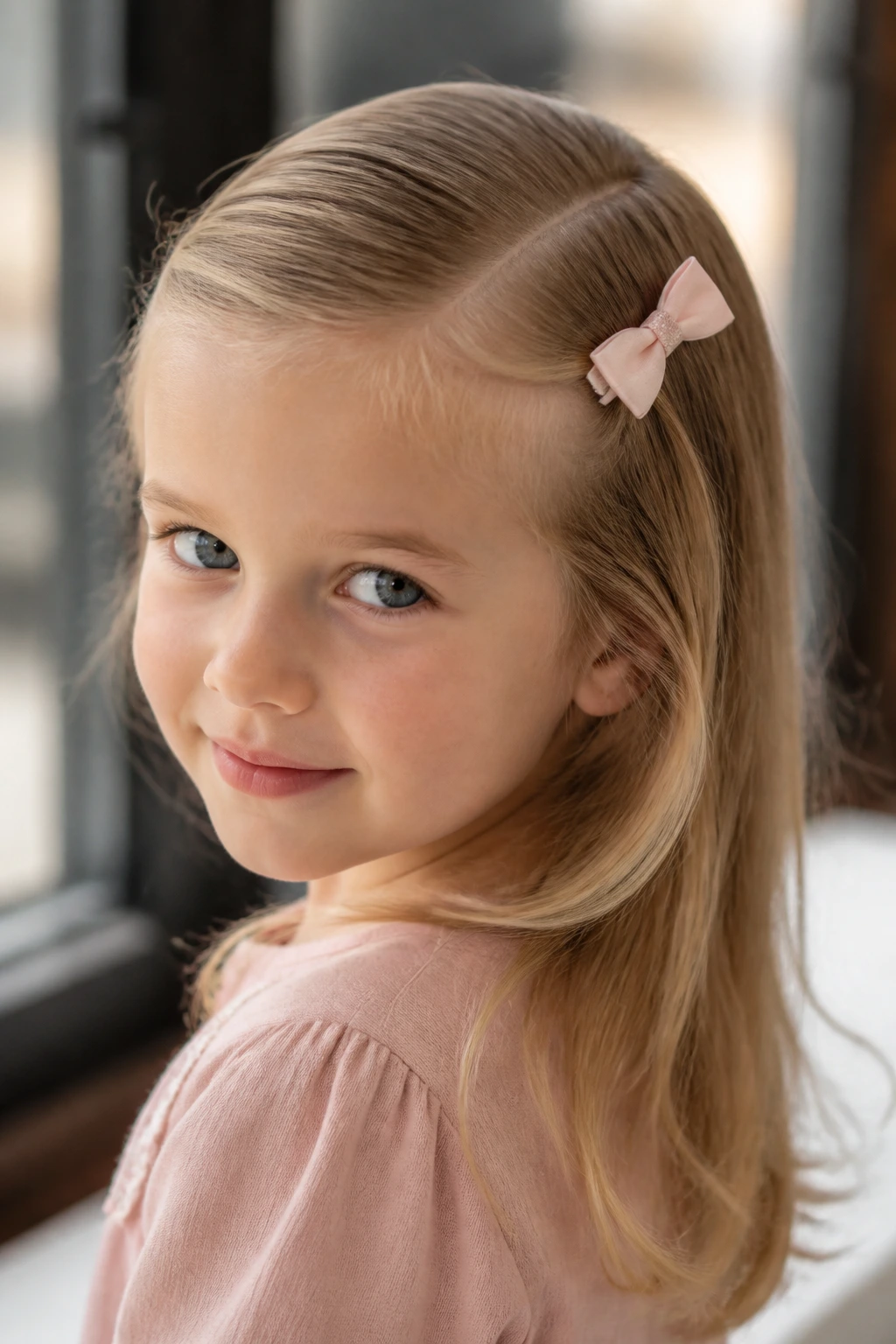
A deep side part and a bow clip can look polished in the simplest possible way. Smooth the hair, make the part clean, tuck one side back if needed, and clip the bow where the front layers would otherwise fall forward. That’s it. No drama.
The key is not making the bow too large for the amount of hair around it. On fine hair, a huge bow can feel heavy and slide. On thick hair, a tiny clip can disappear. Match the size to the hair. A side part also helps a cowlick behave, which is one of those small morning victories that deserves respect.
17. Boxer Braids into Low Tails
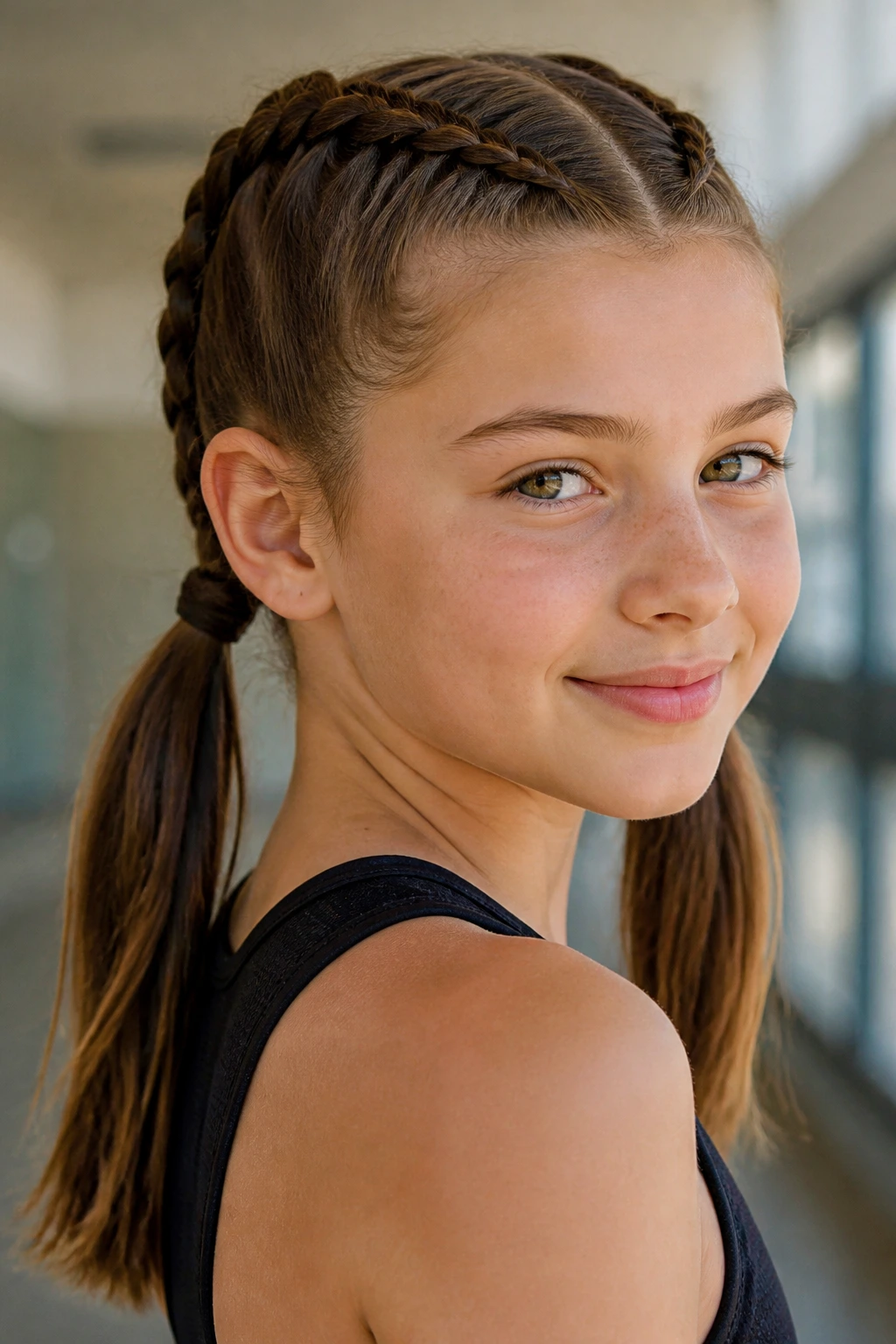
Boxer braids into low tails give you the security of tight-to-the-scalp braids without trapping every inch of hair all the way down. Braid close to the head from the front and stop near the nape, then tie the rest into two low ponytails.
This style is useful for sports days, school events, or any morning when the hair needs to stay put but still move a little at the ends. It works well on thick hair because the braids anchor the front sections where bulk usually starts to fight back. Keep the braids even, but don’t yank them so tight that the scalp looks strained. The style should feel calm, not stern.
18. Fishtail Side Braid
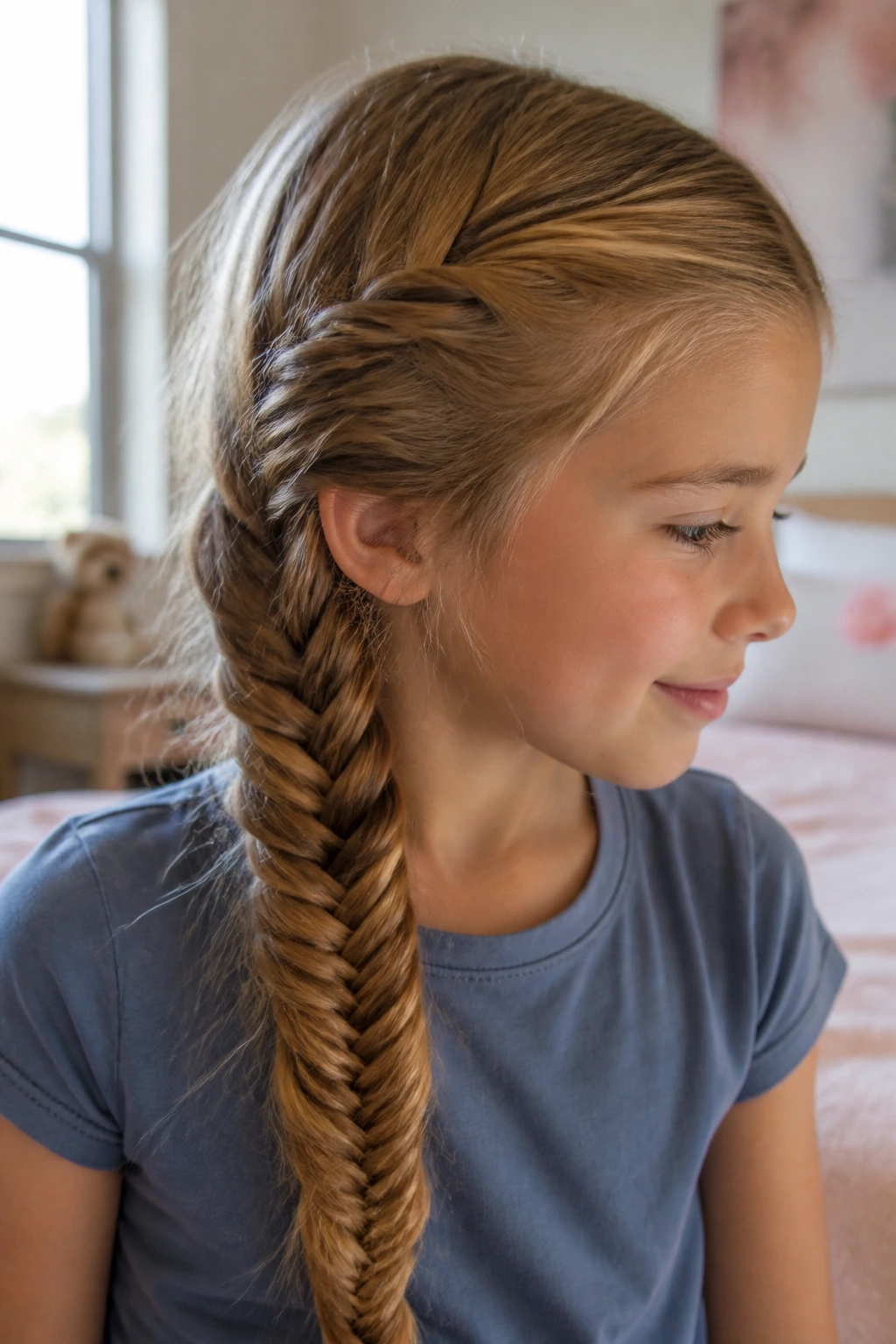
A fishtail side braid has a soft, woven texture that looks much fancier than the steps it takes to build it. Split the hair into two sections, move tiny pieces from the outer edge of one section to the other, and keep going until the braid reaches the end.
It’s lovely on long hair because the pattern shows best when there’s length to work with. It also handles thick hair well, since the braid can spread the bulk instead of compressing it too hard. If your hands get tired halfway through, that’s normal; fishtails are more about patience than speed. Keep the pieces small. Big chunks make the braid look chunky instead of woven.
19. Half-Up Double Buns
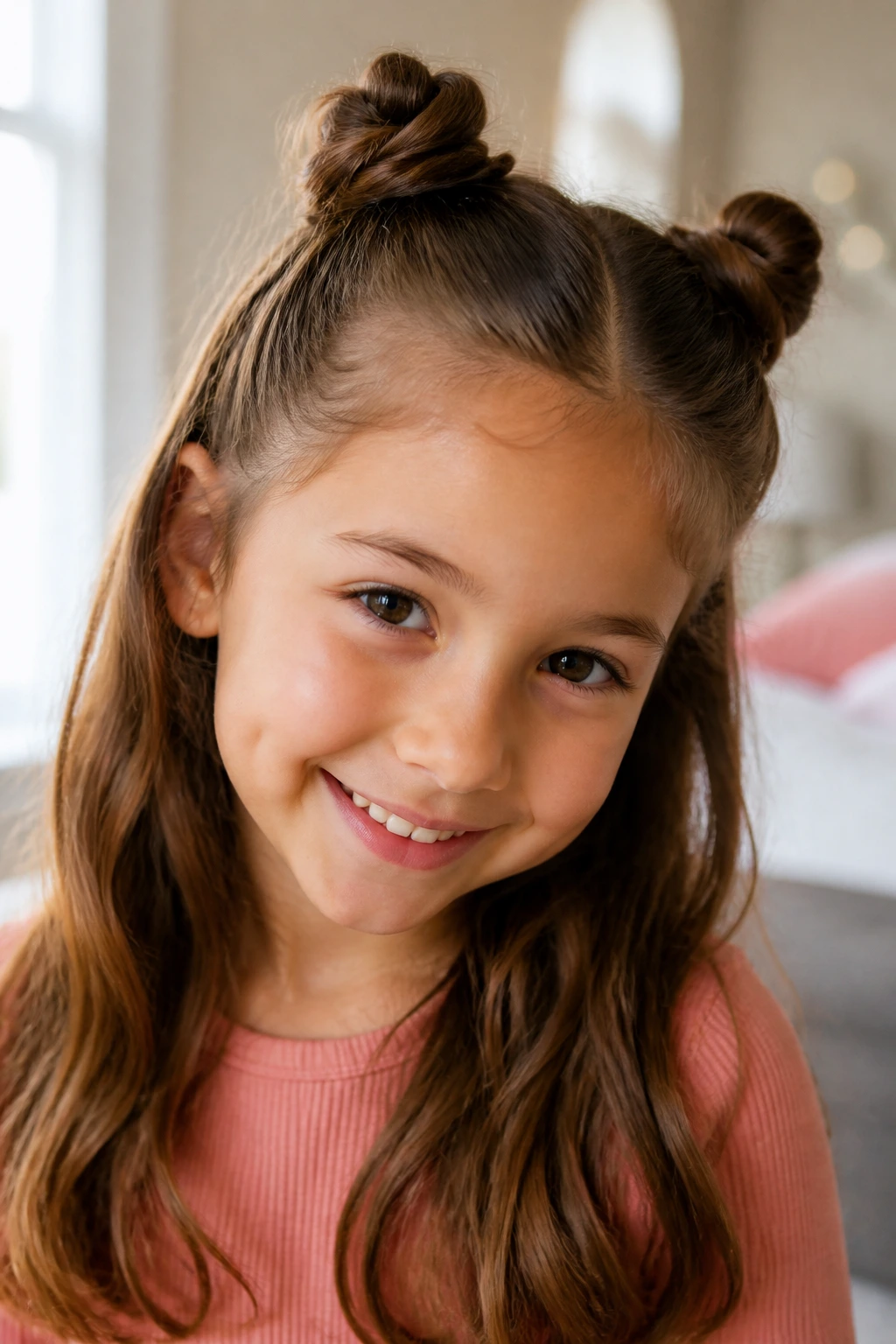
Half-up double buns are playful without taking over the whole head. Gather two top sections, twist each into a small bun, and leave the rest loose. The result feels light and fun, which is exactly why kids tend to like it.
This works nicely on medium-length hair and layered cuts, where a single bun might disappear but two smaller buns can still hold shape. If the buns look uneven, resist the urge to rebuild everything. Shift one slightly higher or add a clip, and they’ll balance out enough. The style has a casual energy. It’s supposed to.
20. Braided Headband with Loose Hair
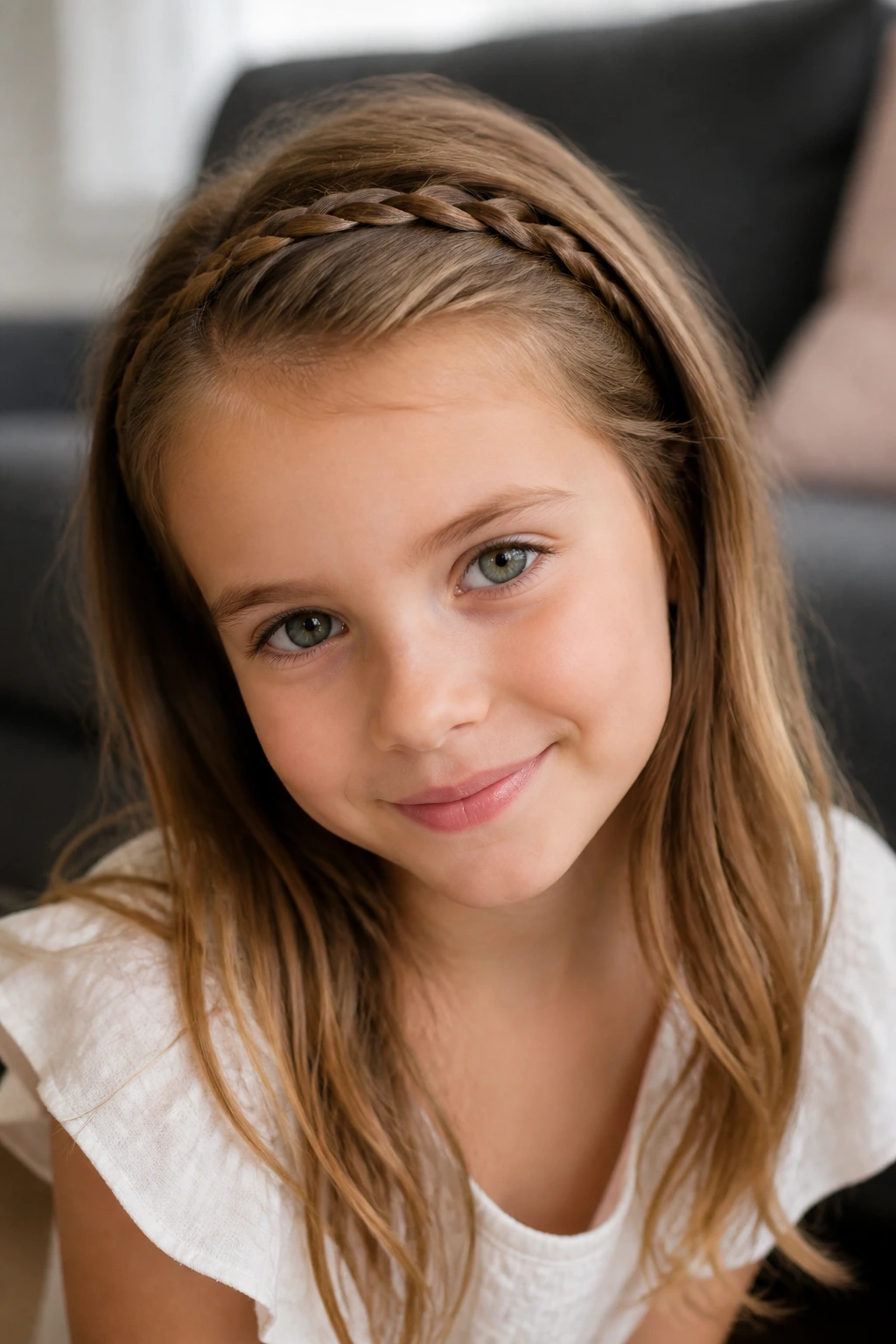
A braided headband with loose hair gives you the face-framing control of a braid and the softness of wearing hair down. Braid a narrow strip from one side and lay it across the front like a band, pinning it discreetly near the ear on the far side.
I reach for this when a child wants her hair down but the front pieces keep sliding into her eyes. It works especially well on straight or wavy hair, where the braid can stay visible against the rest of the length. If the braid gets swallowed by the loose hair, loosen it slightly after pinning. A little fullness helps it stand out.
21. Twisted Pigtails
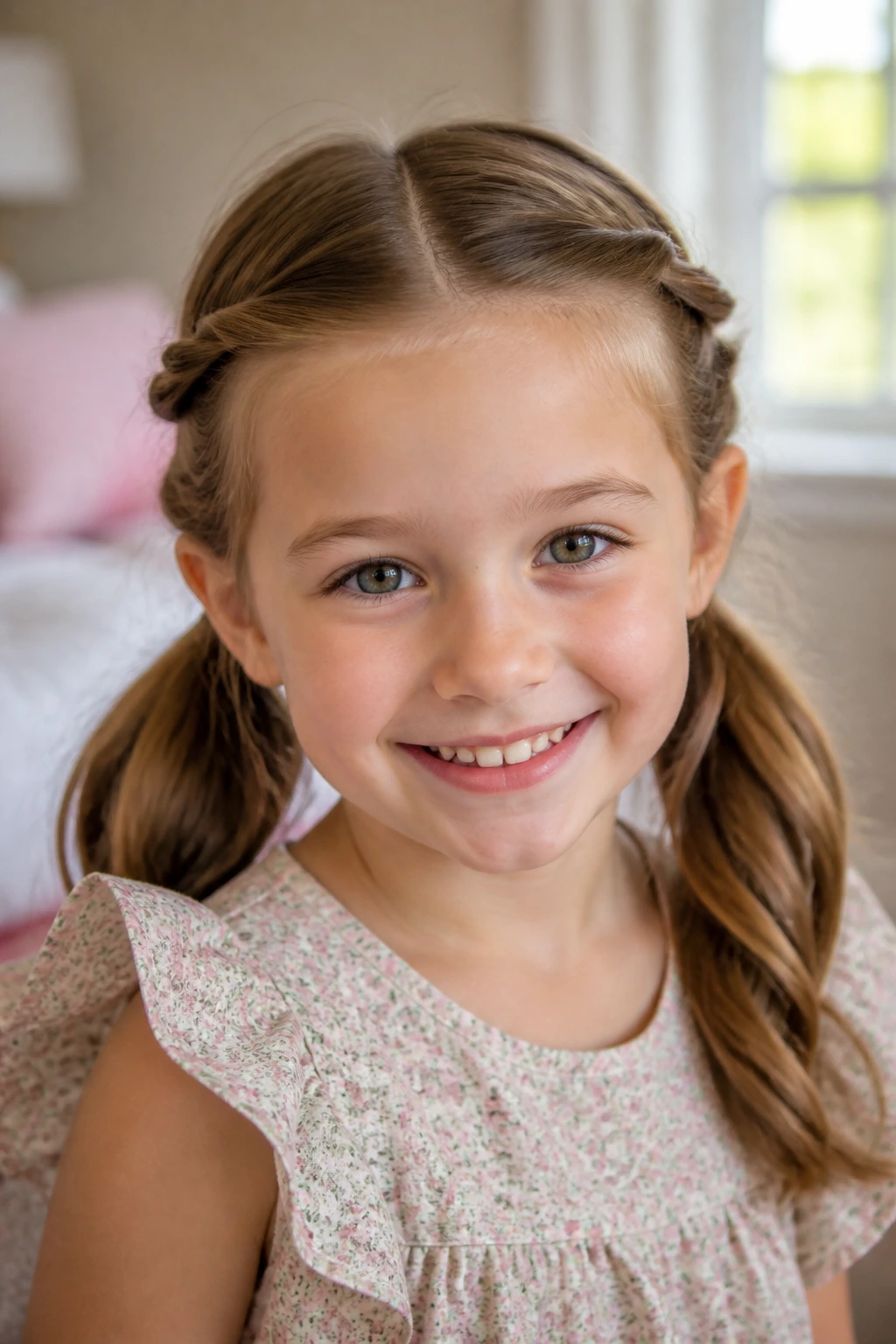
Twisted pigtails are the easiest answer for a morning that is moving faster than your brush can keep up. Split the hair down the middle, twist each side back from the front, then secure into low pigtails. The twist at the top keeps the front neat, and the tails stay soft.
This is a good starter style for younger children because it looks put together without needing clean braid sections. It also works on hair that doesn’t hold a braid well. If the twists slip, slightly damp hair or a touch of detangler on the fingertips gives them more grip. Simple. Fast. Repeated often for a reason.
22. Low Bubble Pigtails
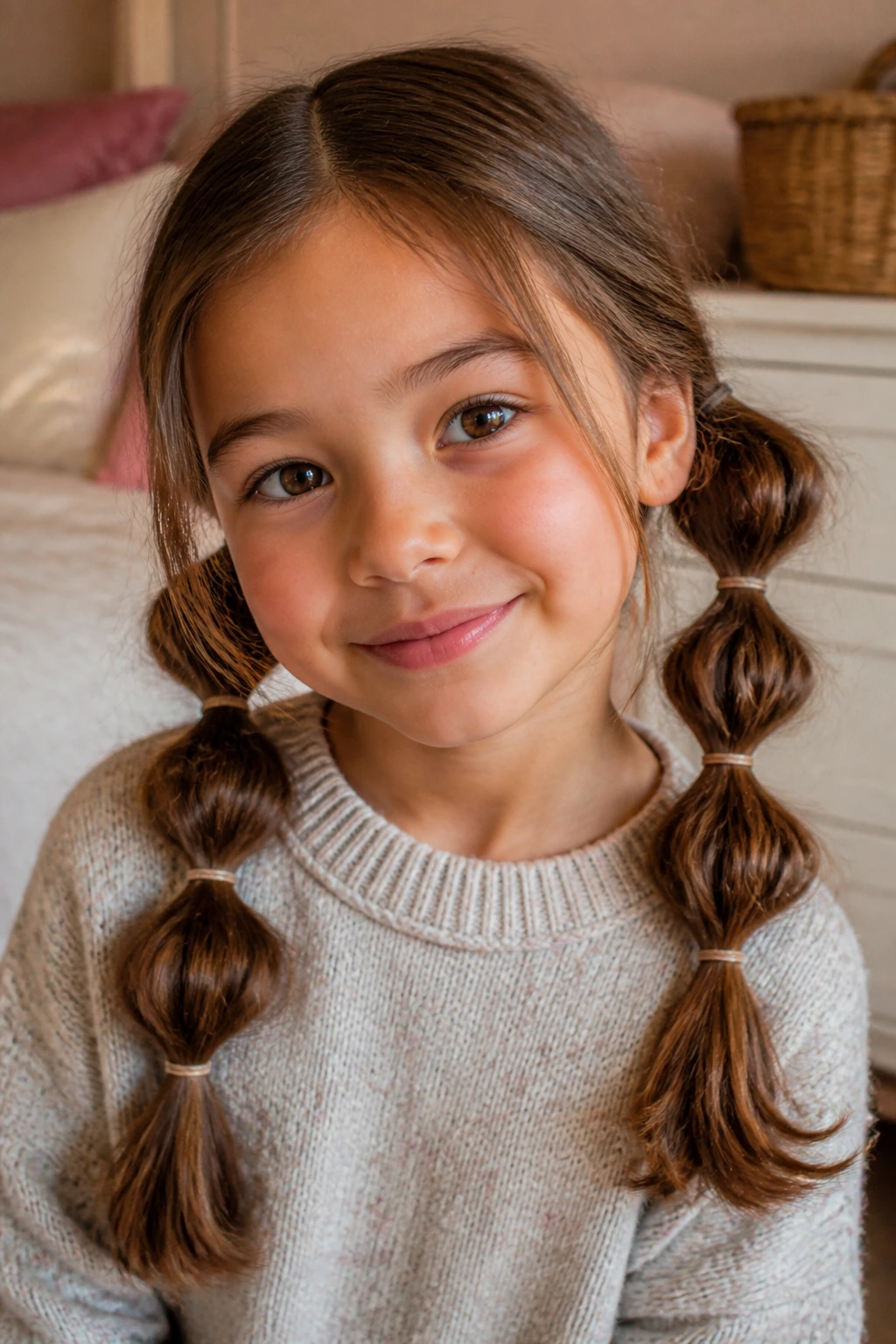
Low bubble pigtails take the playful bubble ponytail idea and make it twice as useful. Split the hair into two low ponytails, then add small elastics down each length and puff the sections out gently. Because the tails sit low, the style stays comfortable against car seats and hoodie collars.
This one is especially nice for thick hair, where the low placement helps keep the shape from feeling too high and heavy. Fine hair can use the same idea with smaller bubbles and closer elastic spacing. I like that it feels neat without looking formal. There’s movement in it. That matters.
23. Topsy Tail Ponytail
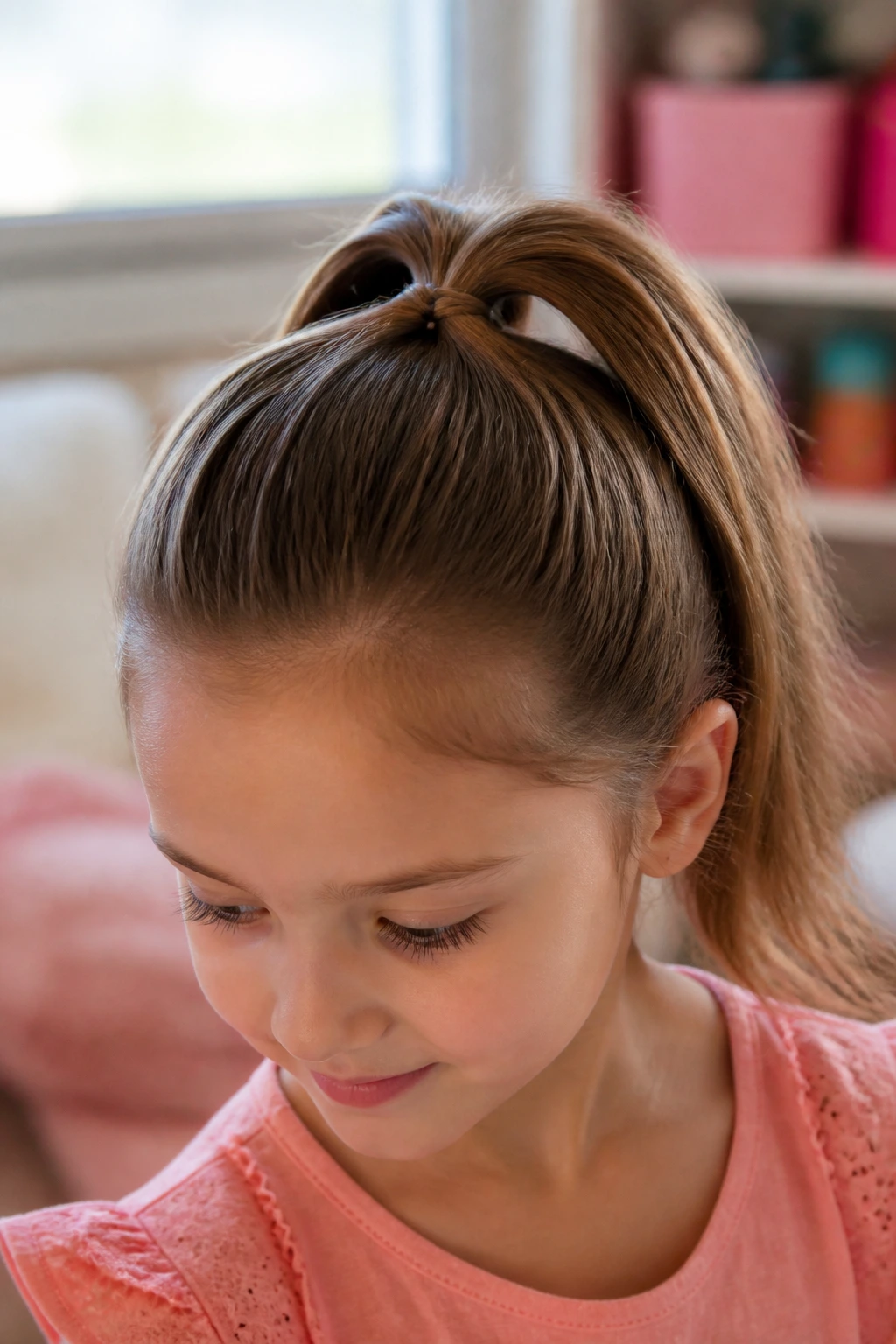
A topsy tail ponytail is one of those old tricks that still earns its keep. Make a ponytail, split the hair just above the elastic, and flip the tail through the opening. The result is a little twist that makes a plain ponytail look more finished.
This style is good when you want speed and a small visual upgrade. It works best on medium-length hair, but longer hair can handle it too if you keep the flip loose. A topsy tail can be repeated down the length for a longer pattern, though one flip is usually enough for everyday wear. I like it because it looks like effort without actually asking for much.
24. Waterfall Braid Half-Up
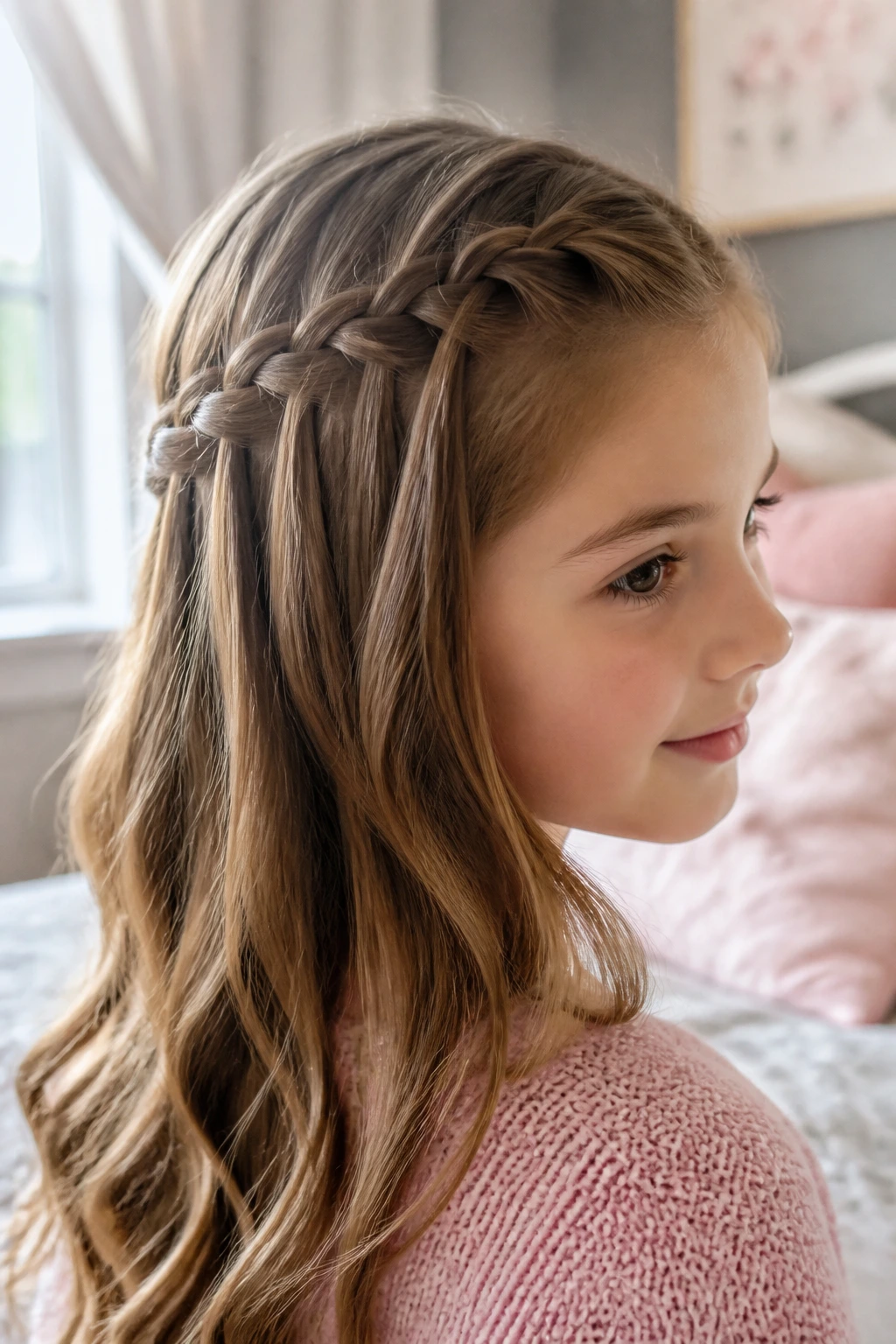
A waterfall braid half-up has enough detail to feel special and enough loose hair to stay easy. The braid drops one strand each time you cross, which creates that draped look across the back of the head. Keep the rest of the hair flowing down and the style stays light.
It’s a good choice when you want a braid that shows up from the front and sides without taking over the whole style. Straight and wavy hair show the pattern most clearly. If the braid seems too delicate, pull it apart a little with your fingertips after it’s secured. That makes the braid edges broader and easier to see.
25. Accent Cornrows Into a Puff
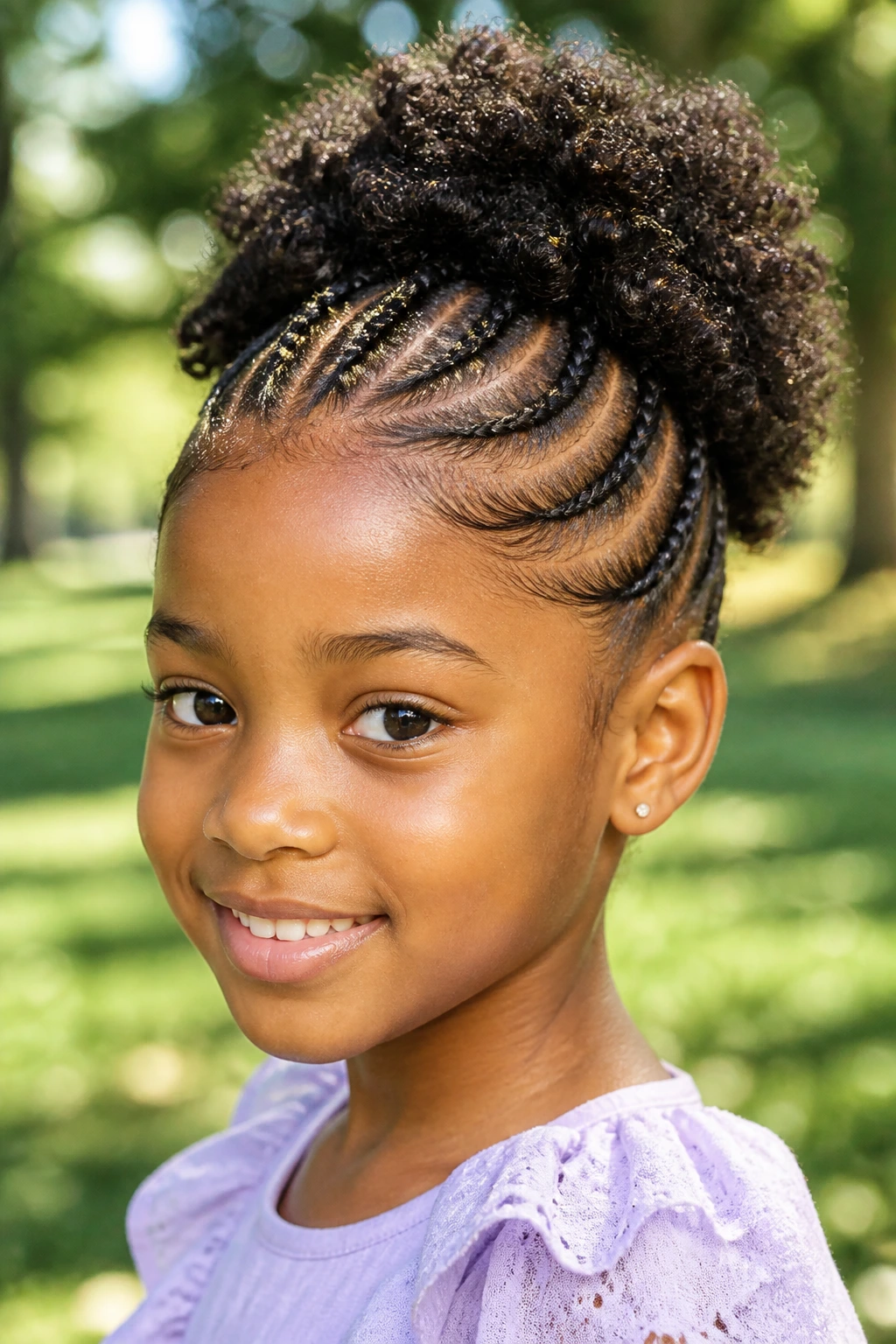
Accent cornrows into a puff are a strong everyday option for coily and curly hair, especially when you want the front controlled and the texture celebrated instead of flattened. Braid a few small rows near the hairline, then gather the rest into a puff or ponytail at the back.
This style keeps the front secure while leaving the curl pattern intact where it belongs. It can also make mornings easier because the roots near the part stay tidy longer than loose styles do. I like accent rows because they give structure without asking the whole head to be braided up. If you’re comfortable braiding close to the scalp, they’re useful. If not, small flat twists can play the same role.
26. Single Side Braid with Ribbon
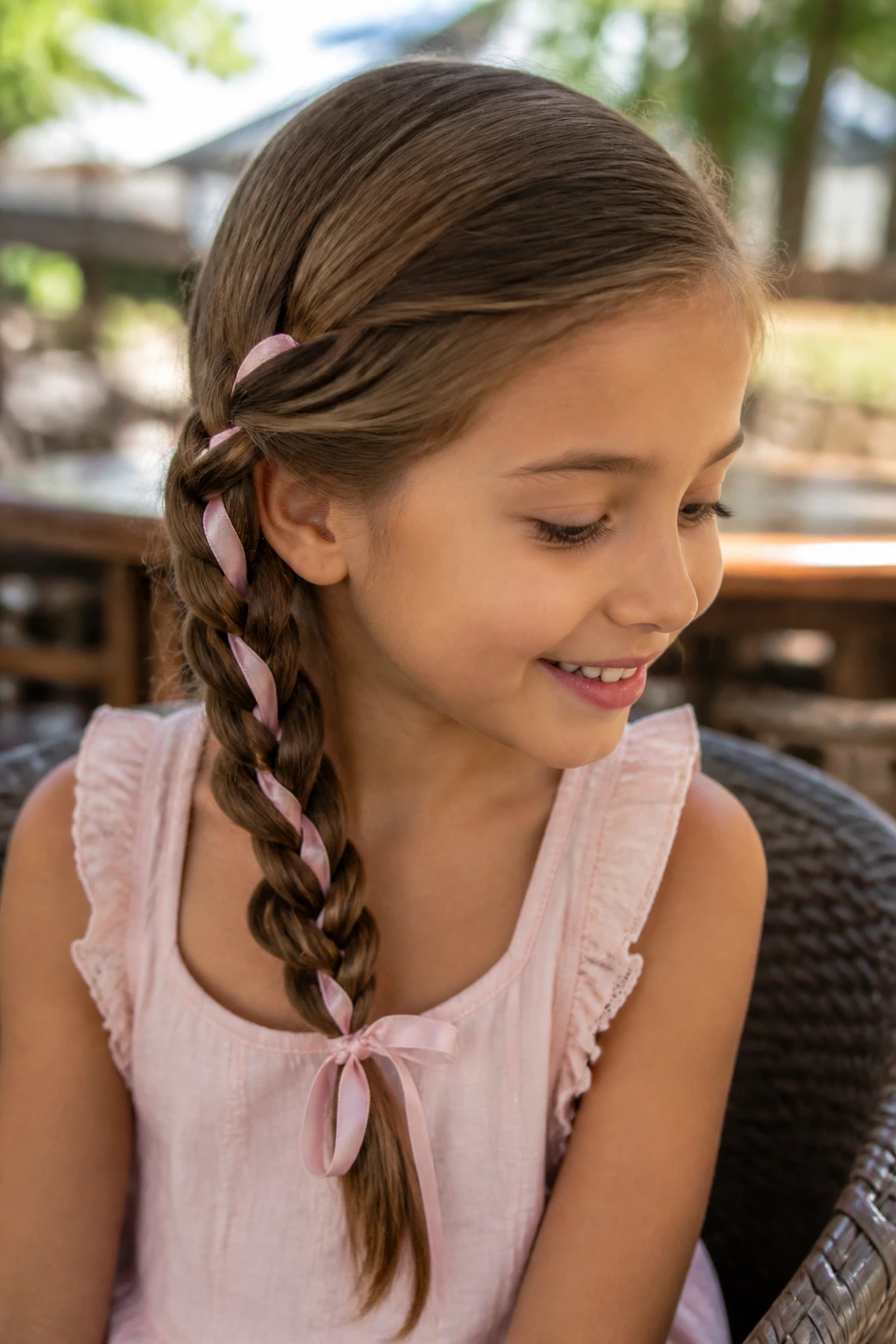
A single side braid with a ribbon feels sweet without being overly precious. Braid the hair over one shoulder, then weave a narrow ribbon through the strands or tie it at the end for a softer finish. The off-center placement keeps the style relaxed.
This is a good everyday pick for longer hair that needs a little control but not a full updo. Ribbon width matters more than people think: a thin ribbon sits better in the braid and doesn’t make the plait bulky. If the ribbon is slippery, tie it around the elastic at the end instead of weaving it all the way through. Less fuss. Same effect.
27. Double Twists Into a Ponytail
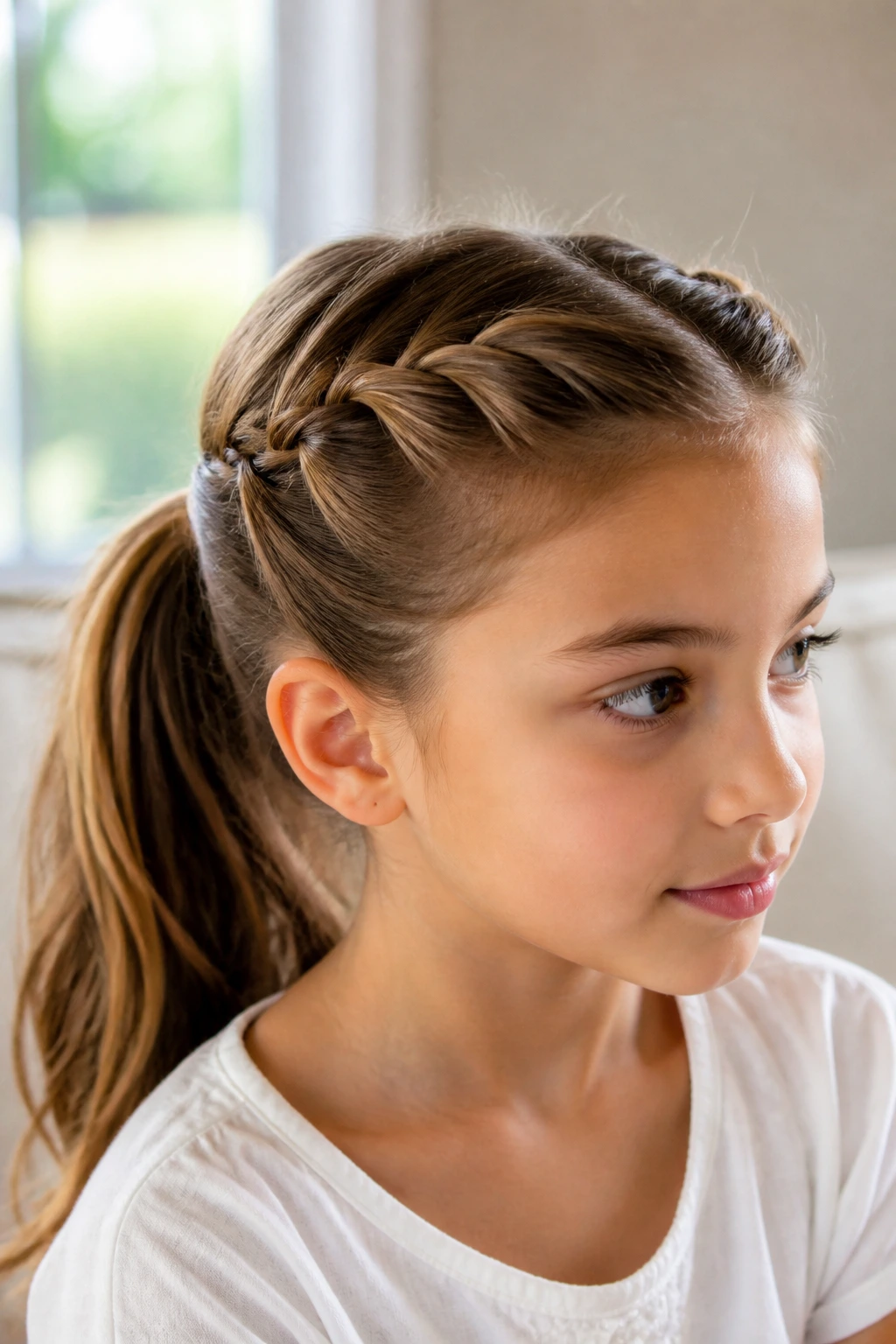
Double twists into a ponytail are a quick way to make a ponytail look like you did something more thoughtful. Twist two front sections back from each side, meet them at the crown or nape, then gather everything into one ponytail.
This works especially well on layered hair, since the twists catch the front pieces that otherwise fall loose. It also gives a little lift at the top without needing backcombing or a lot of product. If the hair is thick, keep the twists narrow so the ponytail base doesn’t get too bulky. The whole style should look smooth where it matters and soft where it can be.
28. Mini Braided Front Pieces
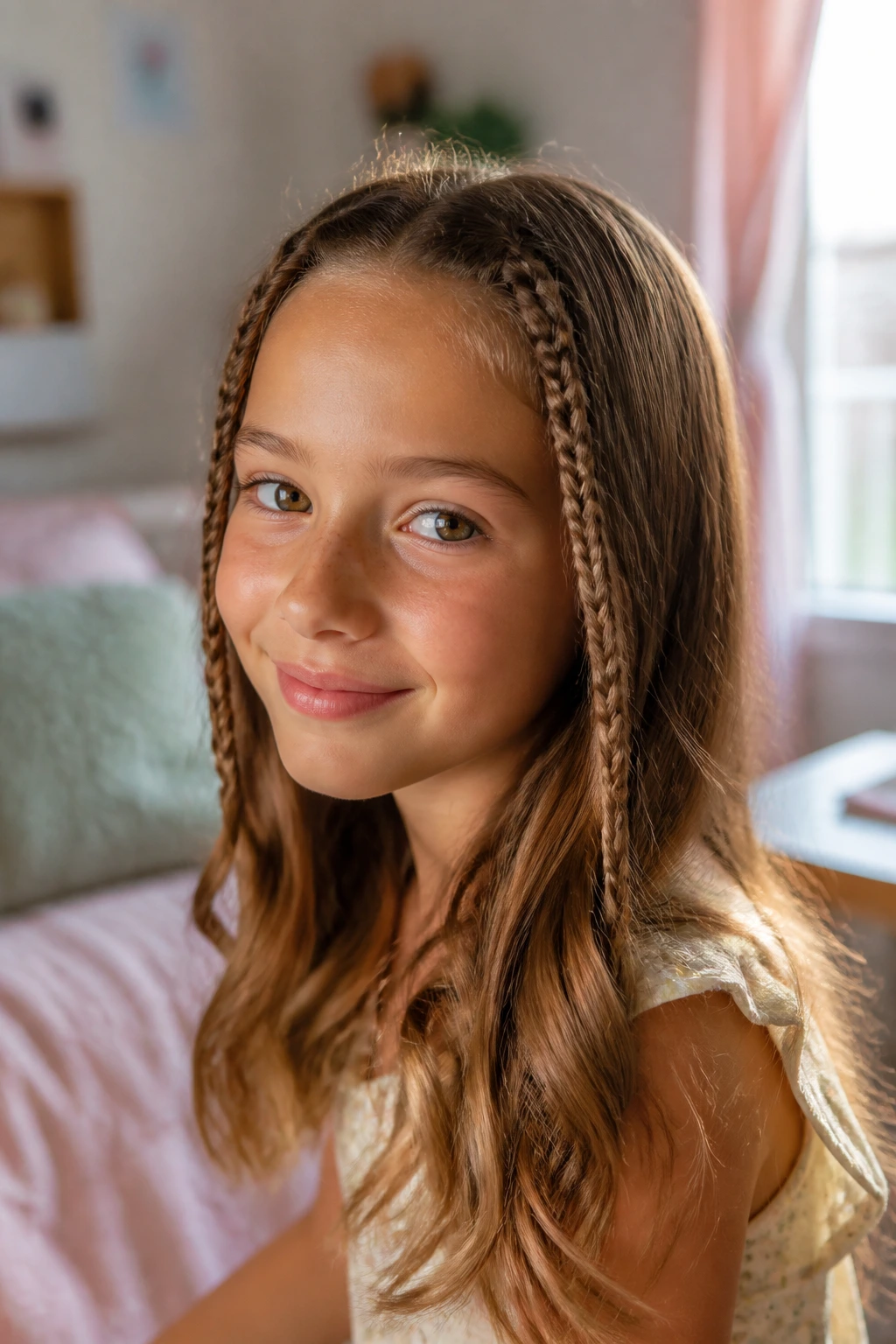
Mini braided front pieces are a very useful small detail. Braid two tiny sections at the temples and leave the rest of the hair down, half-up, or tied back. The little braids keep the front hair out of the face while adding a bit of texture near the eyes.
I like this on days when a child wants her hair down but the front strands keep bothering her. It’s also a nice add-on to almost any other style. Two tiny braids can sit beside a ponytail, a bun, or loose curls without fighting the rest of the look. Use clear elastics or tiny bands so the braids don’t feel bulky. Small matters here.
29. High Bun with Face-Framing Pieces
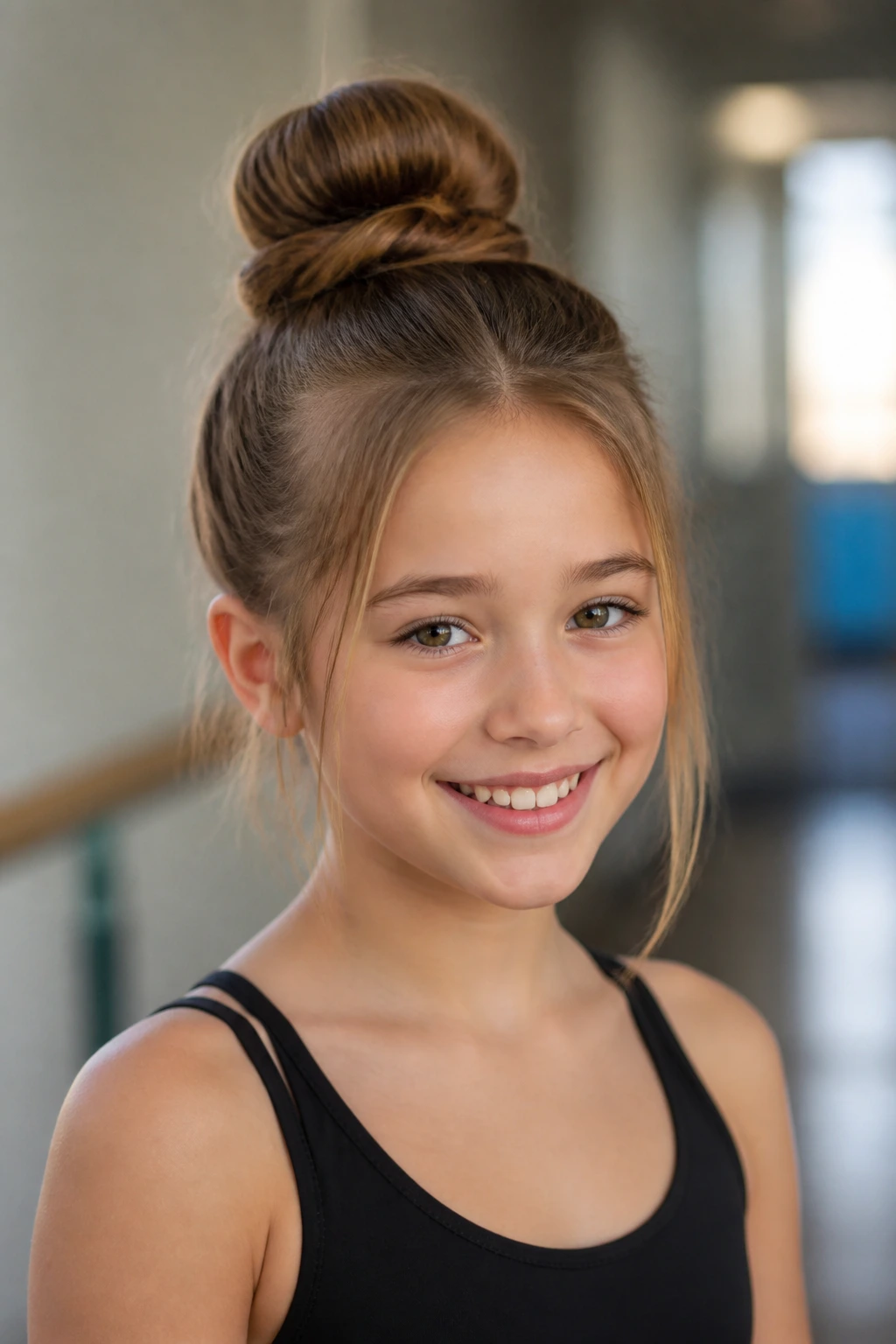
A high bun with a few face-framing pieces gives you the clean shape of an updo without making the face look severe. Pull the hair high, twist it into a bun, and leave two small front sections out on purpose. Those pieces soften the style and keep it from looking too strict.
This is one of the easiest ways to handle warm days, dance class, or school events where hair needs to stay off the neck. If the bun is too perfect, it can feel older than the child wearing it. A little looseness around the temples keeps it age-appropriate and gentle. I’d call that the whole point.
30. Pigtail Braids with Ribbons
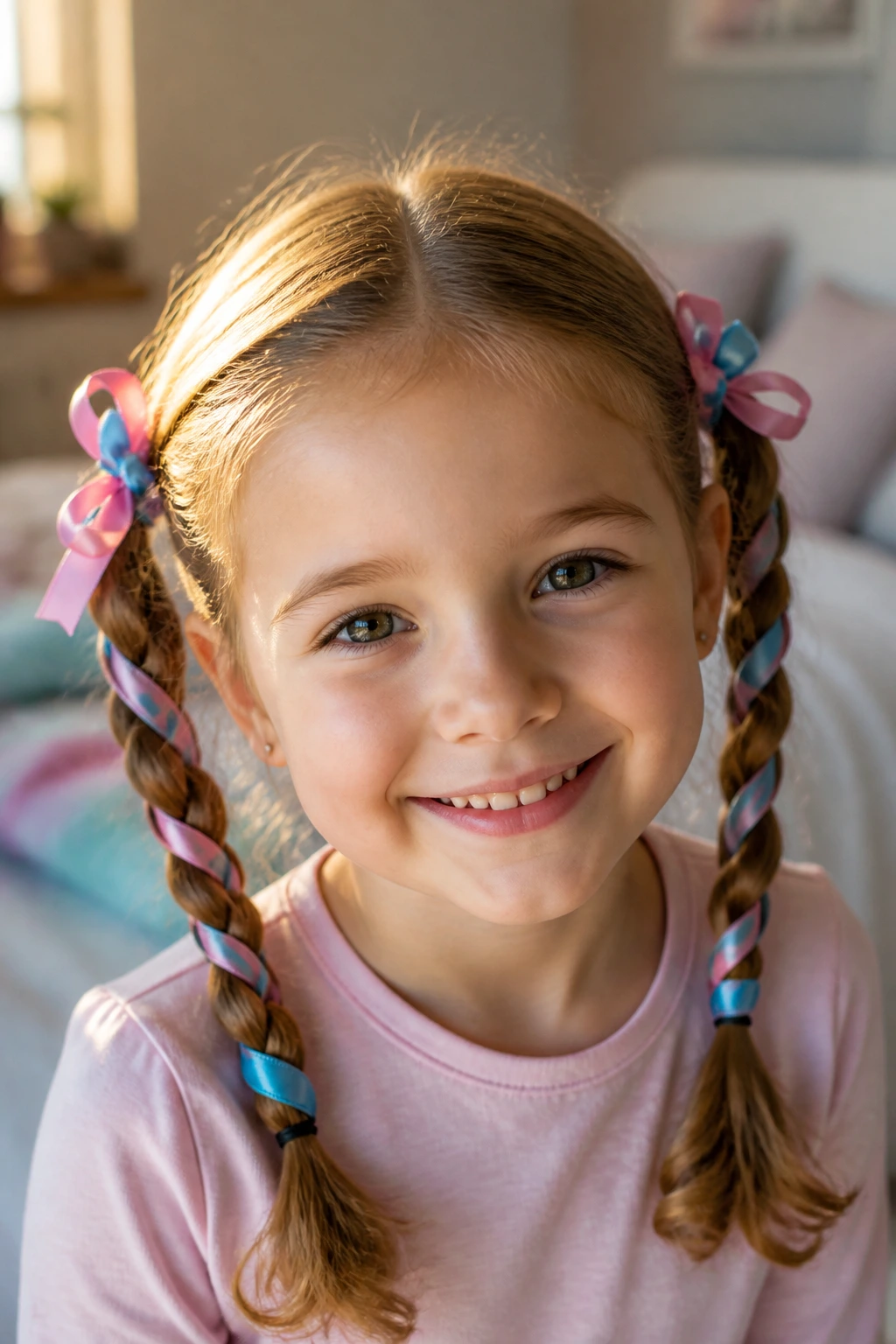
Pigtail braids with ribbons are classic for a reason. Two braids are easy to manage, the ribbons add color, and the overall shape stays balanced even if the hair is not perfectly even from side to side.
This style is especially practical for medium to long hair because the braids keep the length from tangling during the day. If the child has a favorite color, the ribbon becomes the detail she notices most. Tie it near the ends, or weave it through the first few braid passes if you have the patience. Either way works. The important part is that the ribbons don’t pull on the braid too hard.
31. Claw-Clip Twist for Thick Hair
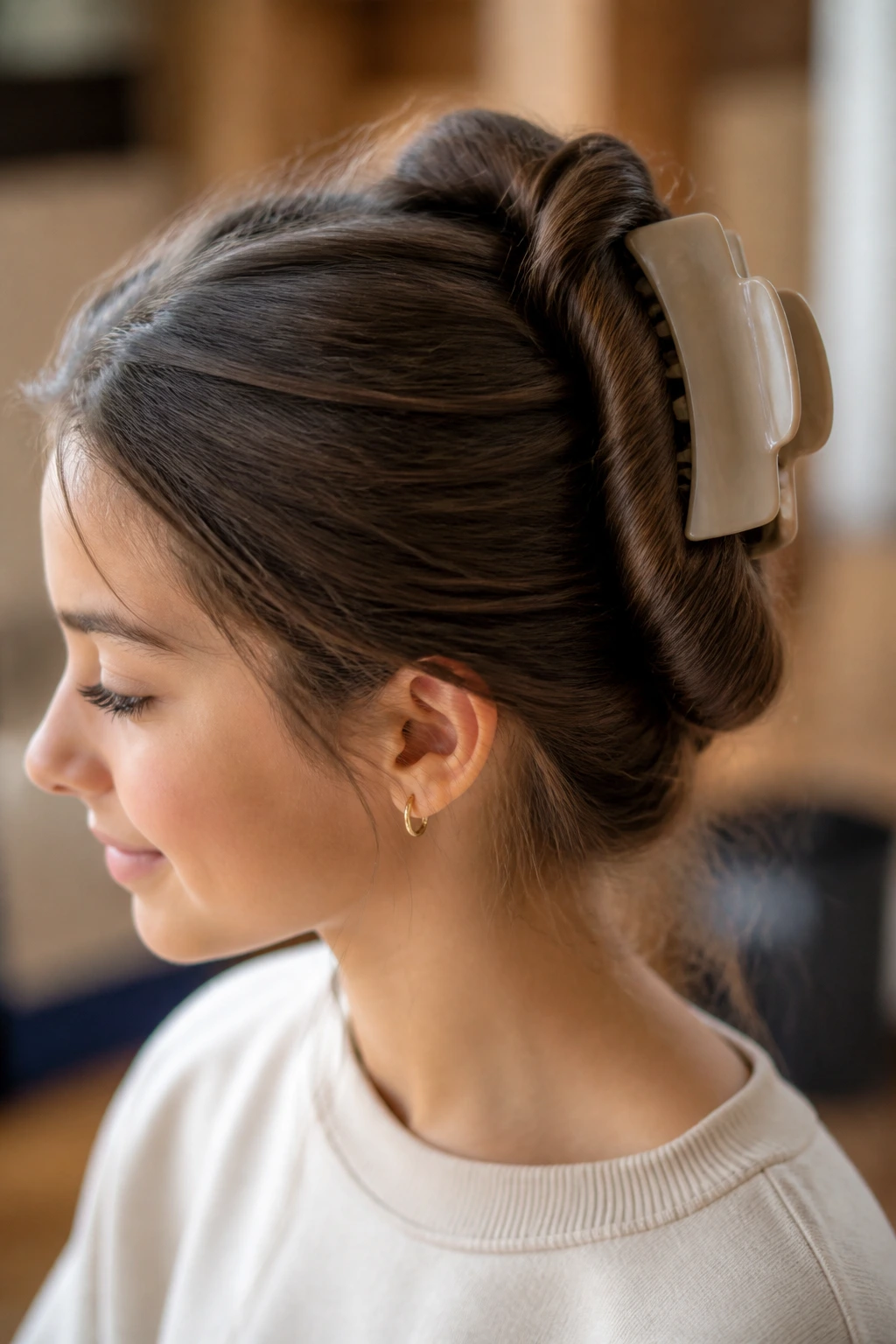
A claw-clip twist is one of the few styles that can actually feel easier on thick hair than a ponytail. Twist the length upward, fold it once, and secure it with a sturdy clip that can hold the mass without digging in. The style lets the hair live off the neck while keeping the shape loose.
This is a good option when elastics make thick hair feel too compressed. It also works when you need a fast style that can be redone in seconds. I’d choose a medium or large clip with smooth edges so it doesn’t snag. The trick is not overloading the clip with too much hair at once. Twist first. Clip second. That order matters.
32. Side Ponytail with a Braided Wrap
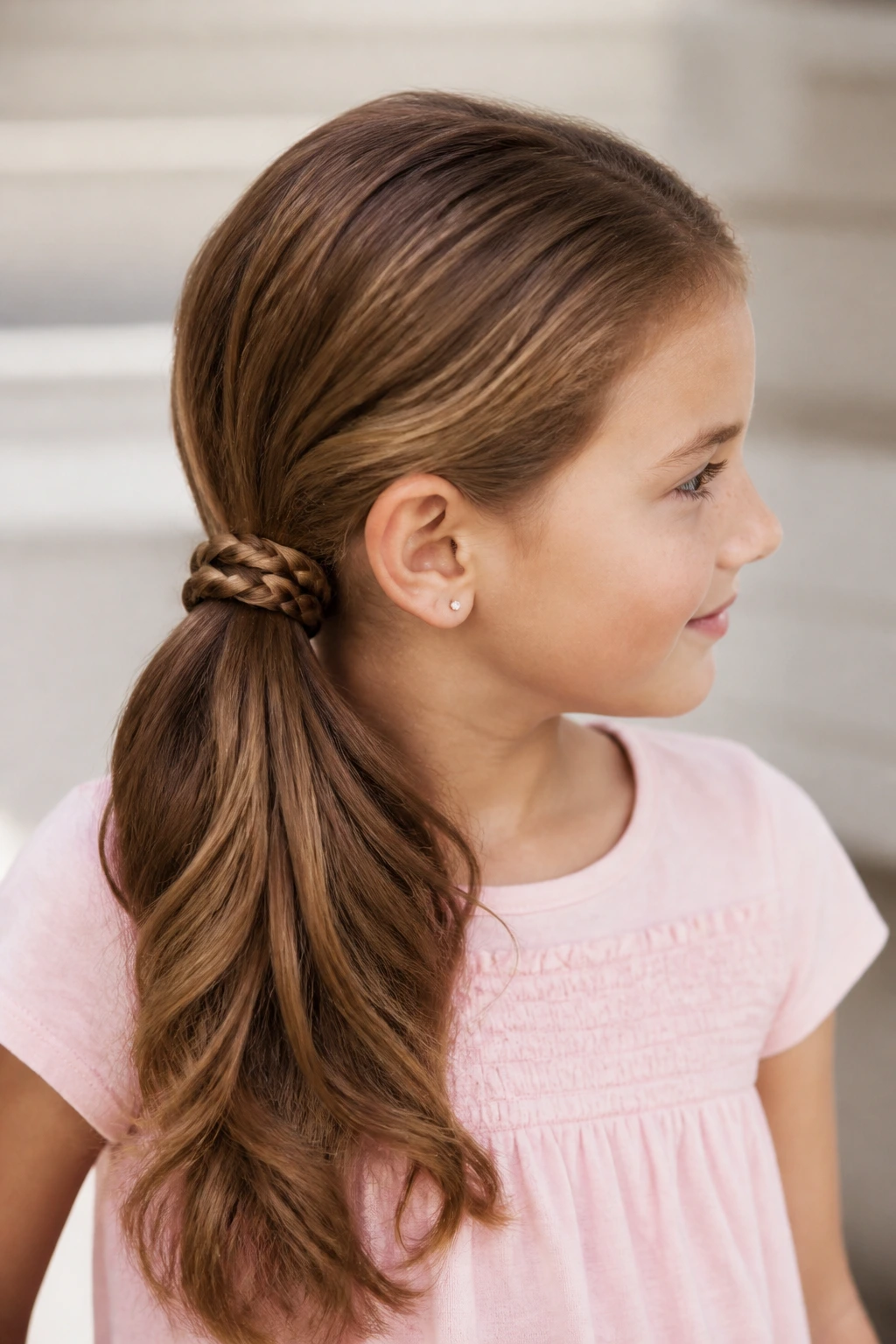
A side ponytail with a braided wrap takes a basic pony and gives it a little polish. Pull the hair to one side, secure it low near the shoulder, then wrap a thin braid around the base to cover the elastic. The whole look feels softer and more finished.
This is especially nice for long hair because the side placement lets the length fall over one shoulder instead of getting crushed under a collar. It also photographs nicely without needing a lot of extra work, though it’s not a style that needs to be “for photos” to earn its spot. The braided wrap is the small detail that lifts it above ordinary.
33. Twisted Crown Into a Low Bun
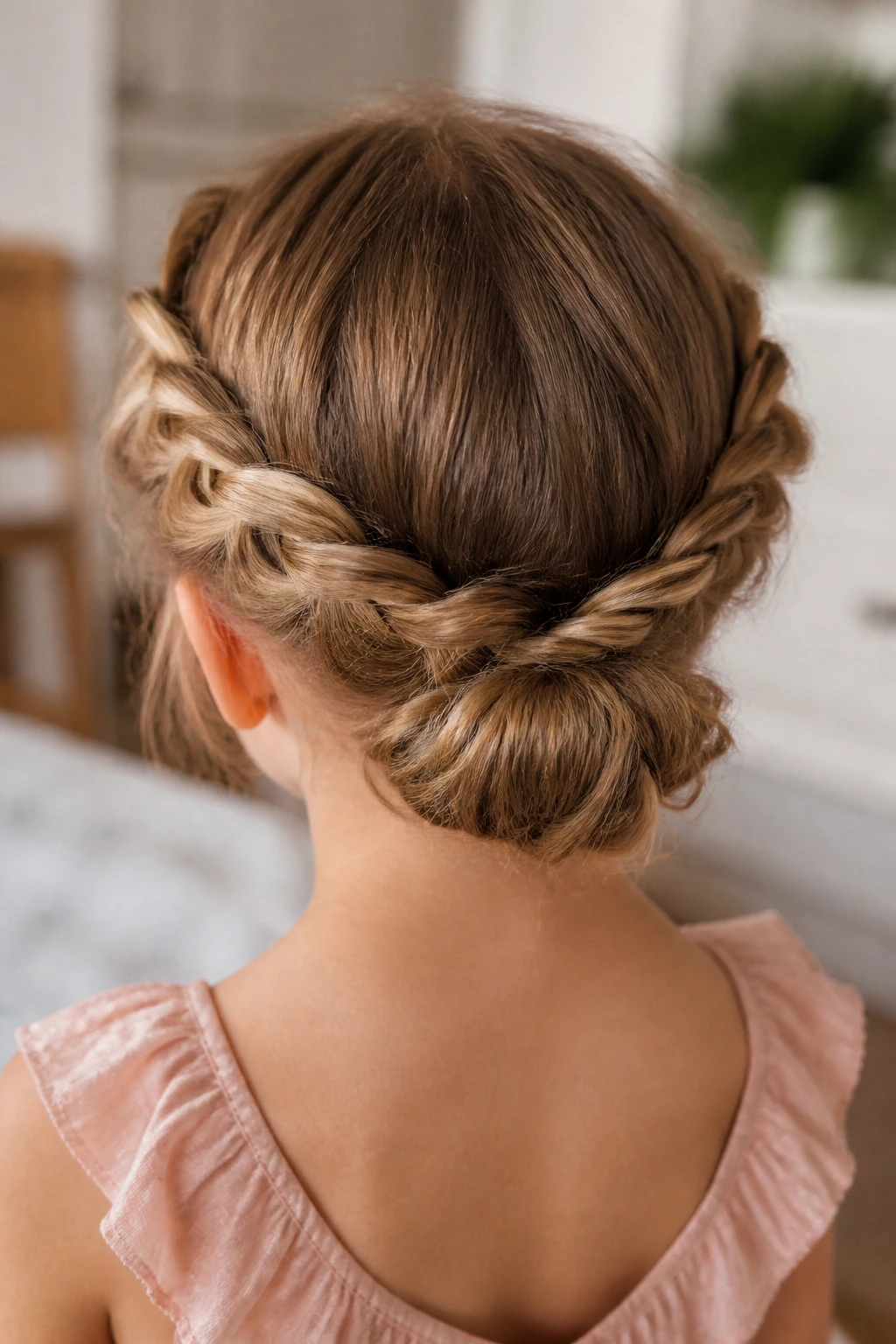
A twisted crown into a low bun has a tidy shape that still feels child-friendly. Twist sections from each side back toward the center, bring them together at the nape, and tuck the ends into a low bun. The crown area stays smooth, and the bun keeps the length controlled.
I like this for hair that tends to puff around the temples or grow fuzzy near the part. The twists give structure without the crisp line of a braid. If you want the bun to look fuller, gently loosen it after securing. If you want it to stay sleeker, keep the twists snug and use fewer flyaway products. The style can go either way.
34. Three-Strand Braided Headband
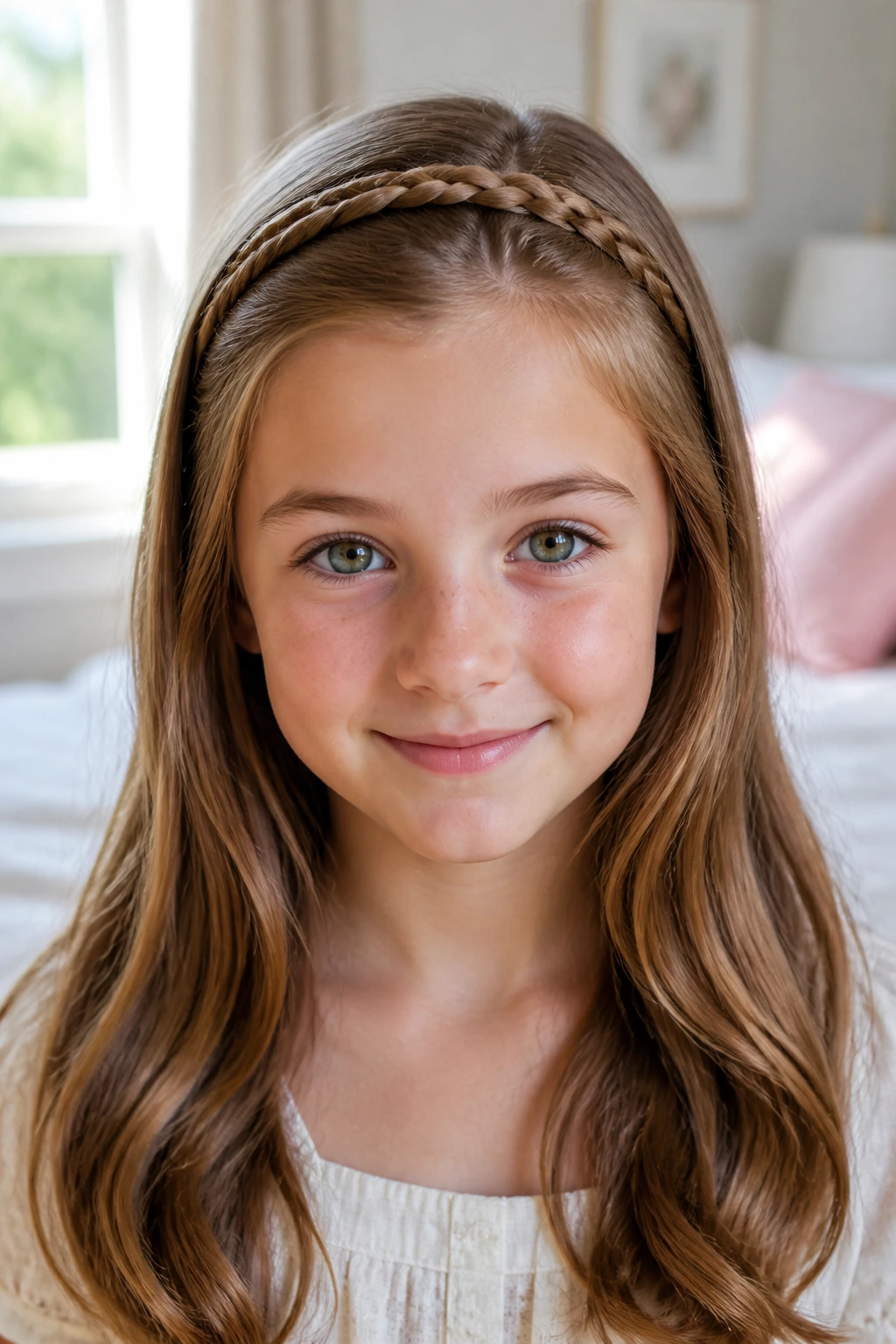
A three-strand braided headband is one of the smartest answers to bangs and front layers that will not stay where you put them. Braid a narrow section from one side, sweep it across the forehead, and pin it on the opposite side so it sits like a soft band.
It’s simple, but it solves a real problem. The braid keeps the front clean while leaving the rest of the hair free, which is a nice balance for kids who do not want a full updo. If the braid looks too thin, braid a slightly wider section and loosen it a touch. The goal is a visible band, not a tiny rope hiding in the hair.
35. Half-Up Clips on Layered Hair
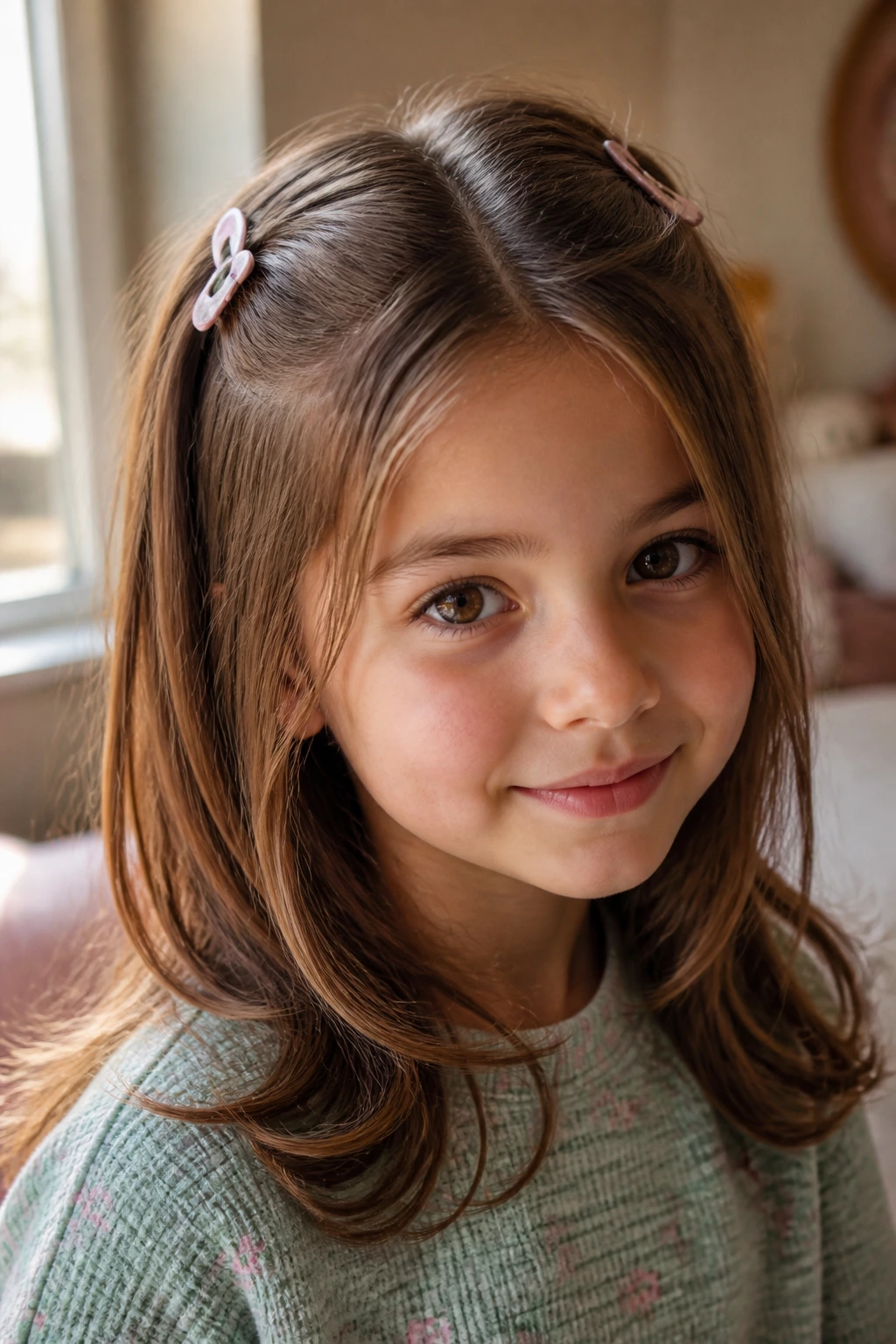
Half-up clips on layered hair are proof that a good accessory can do a lot of heavy lifting. Gather the top section loosely and secure it with two clips, one on each side or stacked slightly apart. Layers stay controlled, and the style still looks airy.
This is one of the fastest styles in the whole collection, which makes it useful on mornings when the hair is doing three different things at once. The clips should catch enough hair to hold, but not so much that they pull. On short layers, use smaller clips; on thicker hair, use sturdier ones with a stronger grip. It’s a tiny adjustment, but the hold changes a lot.
36. Curly Puff with a Clean Side Part
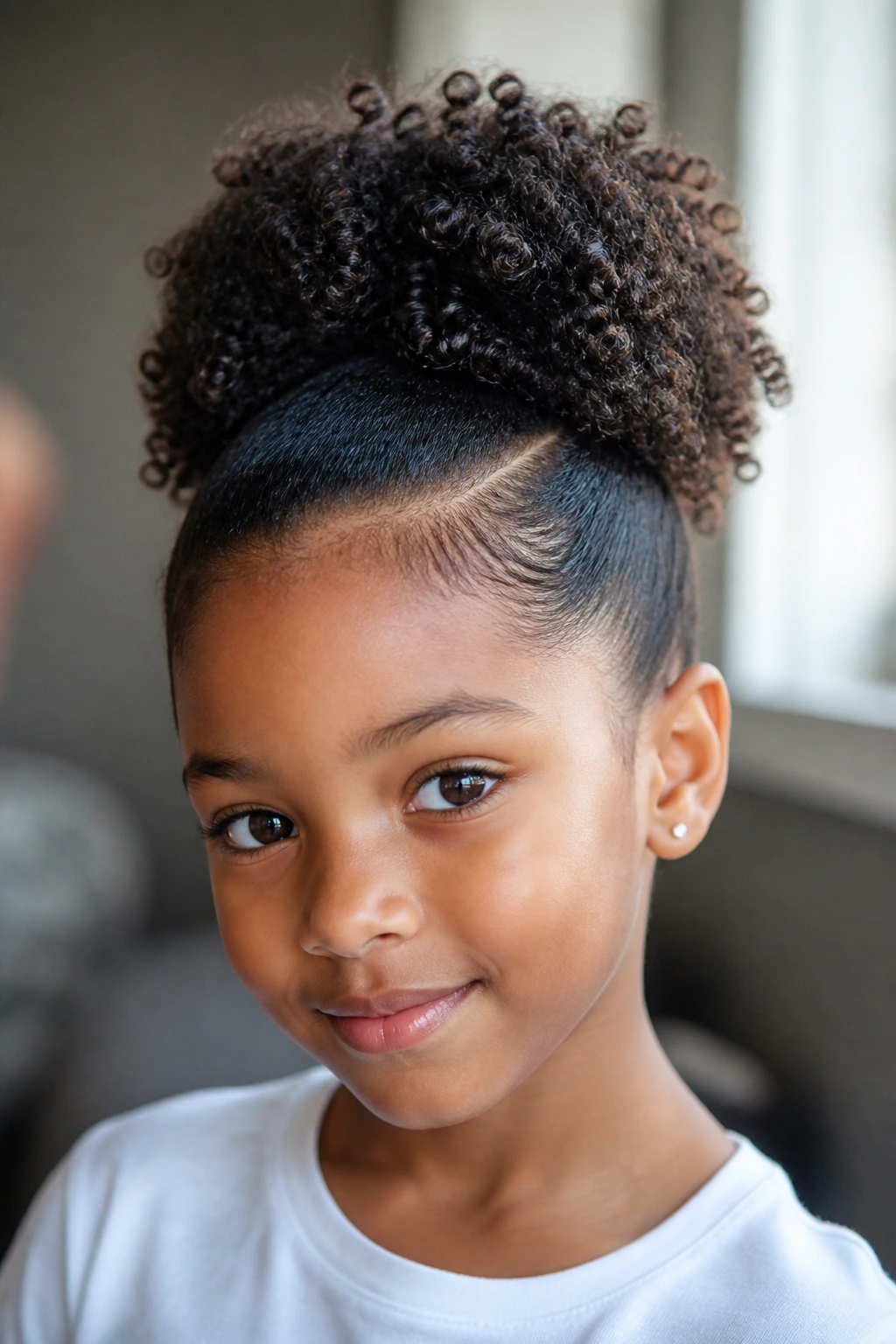
A curly puff with a clean side part lets curls look like curls and still gives them a clear shape. Smooth the roots into a neat side part, gather the curls into a puff, and let the texture stand up and out the way it wants to. The style is neat at the roots and full everywhere else.
This is a lovely everyday look for coily and curly hair because it respects the curl pattern instead of flattening it. A little leave-in conditioner at the edges keeps the part looking fresh without making the whole head damp or sticky. If the puff is too tight, loosen the base slightly and let the curls spring a bit higher. The texture is the point.
37. Ladder Braid Accent
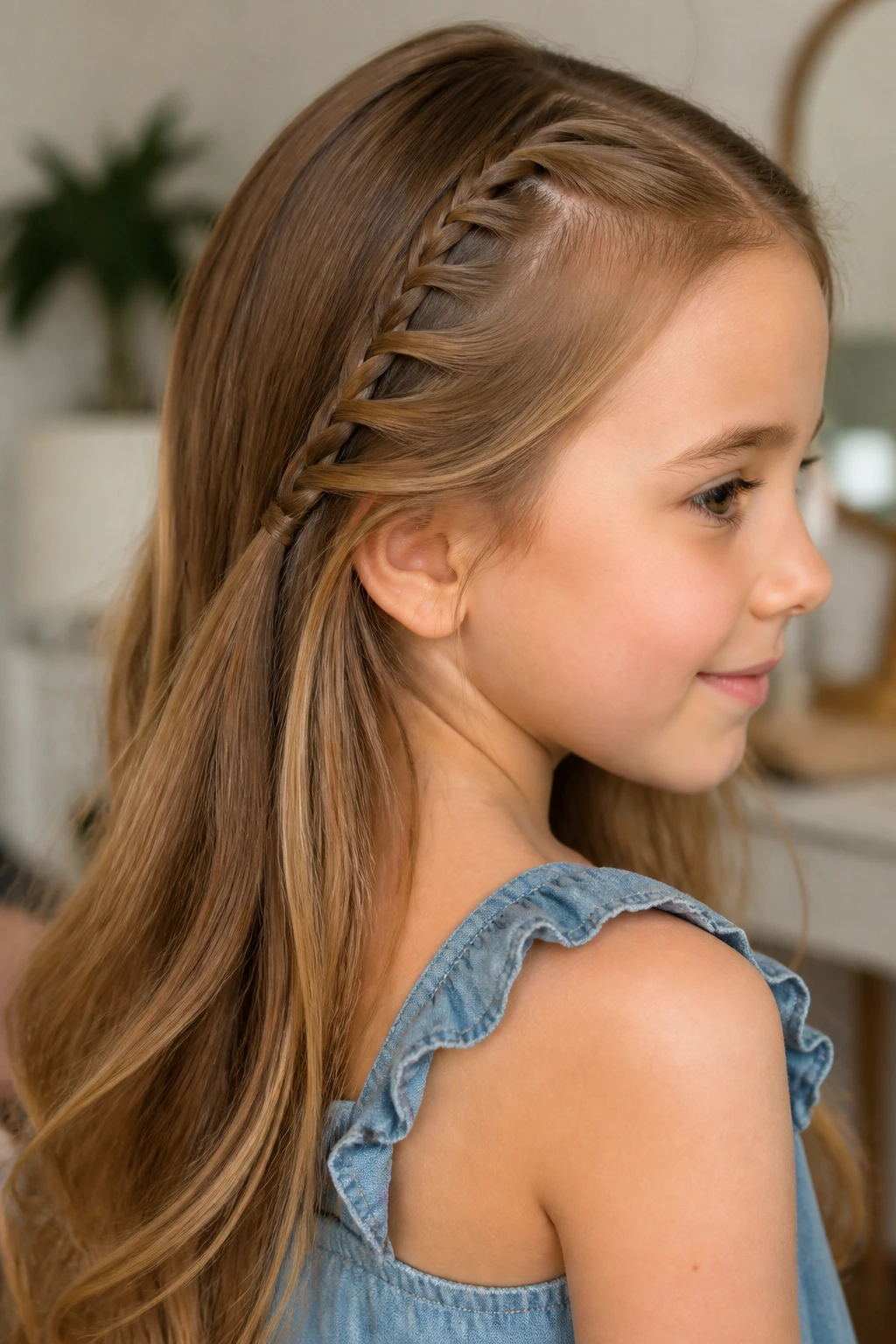
A ladder braid accent is one of those styles that gets attention because it looks intricate, even though you can use it as a small side detail. Build a braid across a section, then feed it with little crossing pieces to create the ladder effect. You do not need the entire head to be braided for this to matter.
I like it as a side accent on long hair or as a bridge into a ponytail. It gives you pattern without locking the hair into a full braid set. If you are short on time, make the ladder section narrow and let the rest of the hair stay loose. Small braid, big payoff. That’s the whole appeal.
38. Mini Space Buns
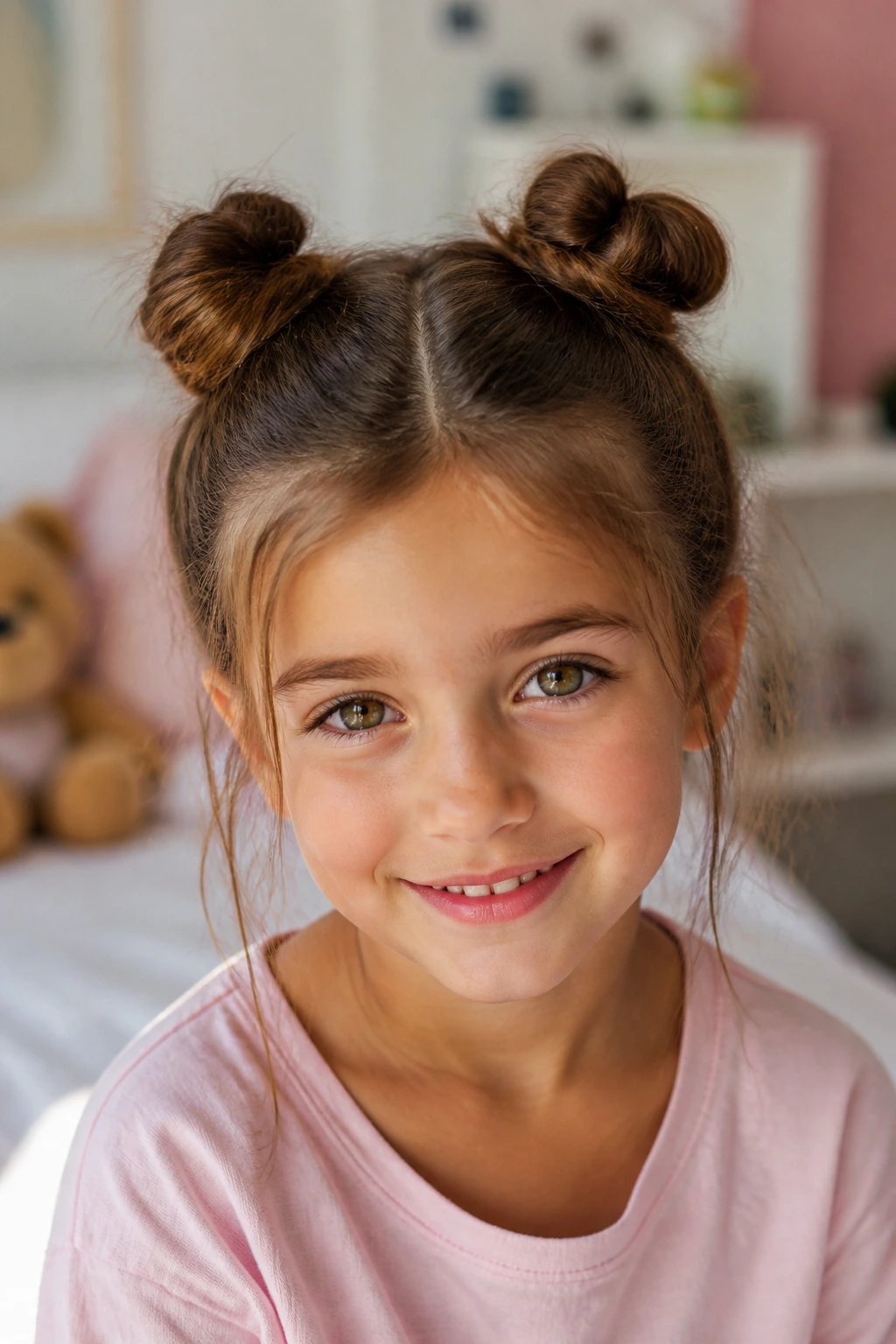
Mini space buns are cheerful, easy to spot, and not nearly as hard as they look. Split the hair into two high sections, twist each into a small bun, and leave them a little loose so they don’t feel too rigid. They work best when the buns are symmetric enough, not perfect.
This style is good for short-to-medium hair because the buns don’t need a huge amount of length to look cute. It also pairs well with playful outfits and days when a child wants something a little more fun than a plain ponytail. If the hair is fine, tease the base just a touch. If it’s thick, keep the buns smaller and more compact so they don’t droop.
39. Low Sleek Ponytail with Center Part
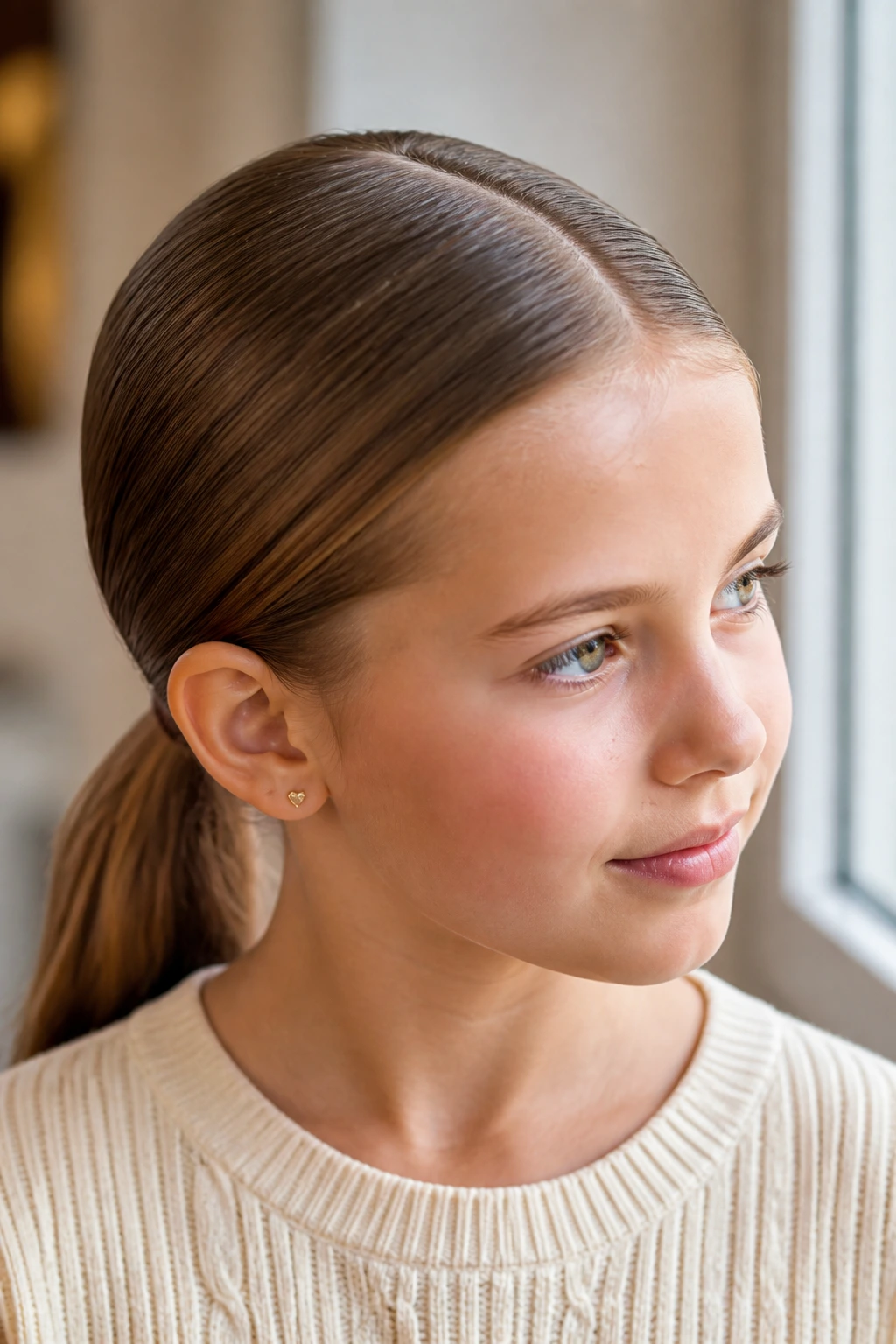
A low sleek ponytail with a center part is tidy, calm, and useful when you want the hair to look smooth without piling it high. The center part makes the style feel balanced, and the low placement keeps it comfortable against the headrest or collar.
This is a good choice for straight hair and hair that gets bulky fast at the crown. A little smoothing cream on the top layer can help the part stay crisp, but do not overdo it or the ponytail will look oily. If you want it more polished, wrap a tiny strand around the elastic. If you want it more relaxed, leave the band visible. Both work.
40. Half-Up Braided Ponytail
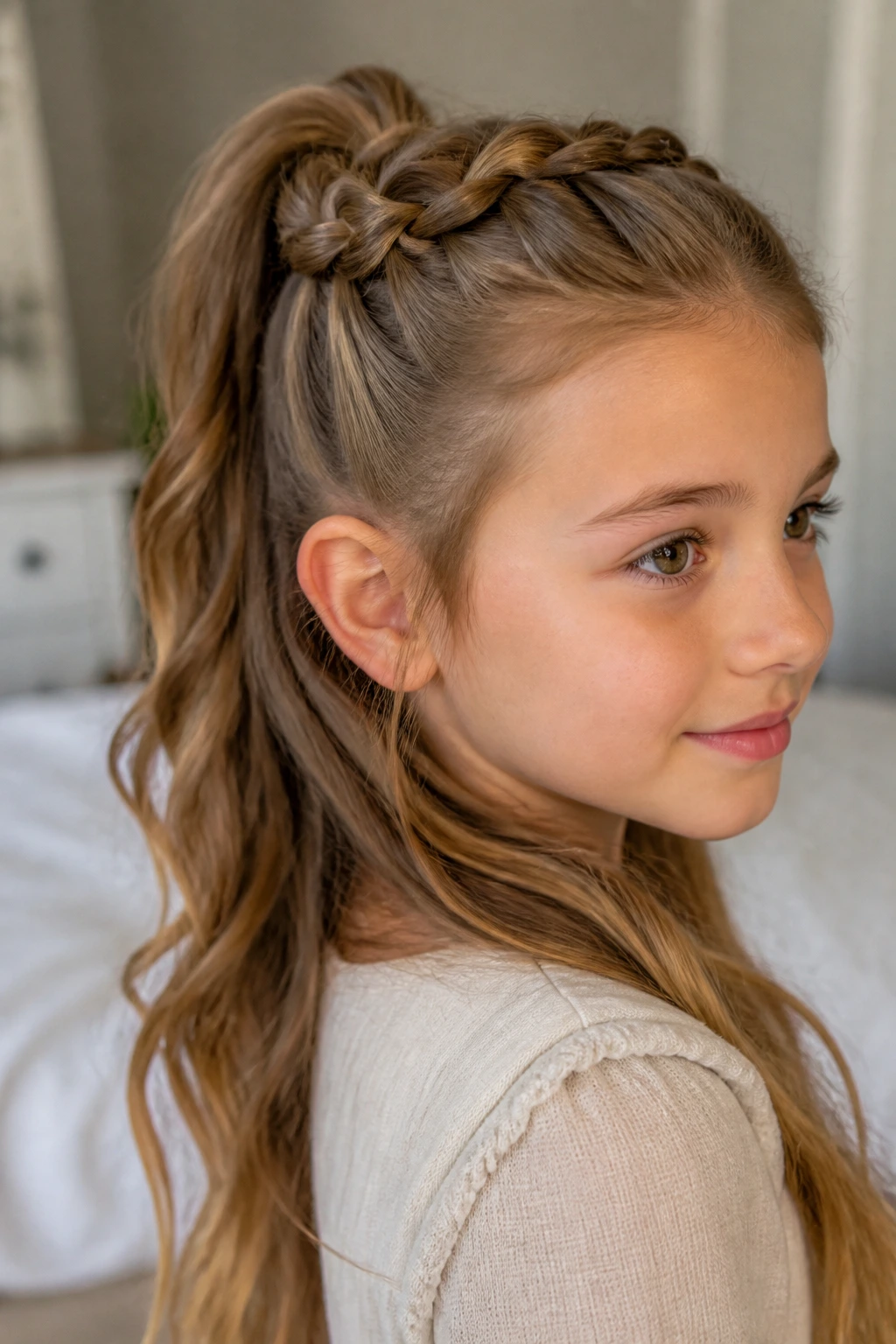
A half-up braided ponytail gives you the face control of a half-up style and the movement of a ponytail. Braid the top section back from the front, then gather it into a small ponytail at the crown or mid-back. The rest of the hair falls loose beneath it.
This one works well on medium to long hair, especially when you want something that feels a little more built than a simple half-up clip. The braid keeps the top from slipping, and the ponytail adds a nice bit of bounce. It’s a solid option for school days because it stays out of the eyes without feeling stiff. I like that balance.
41. Side Braid with a Scarf
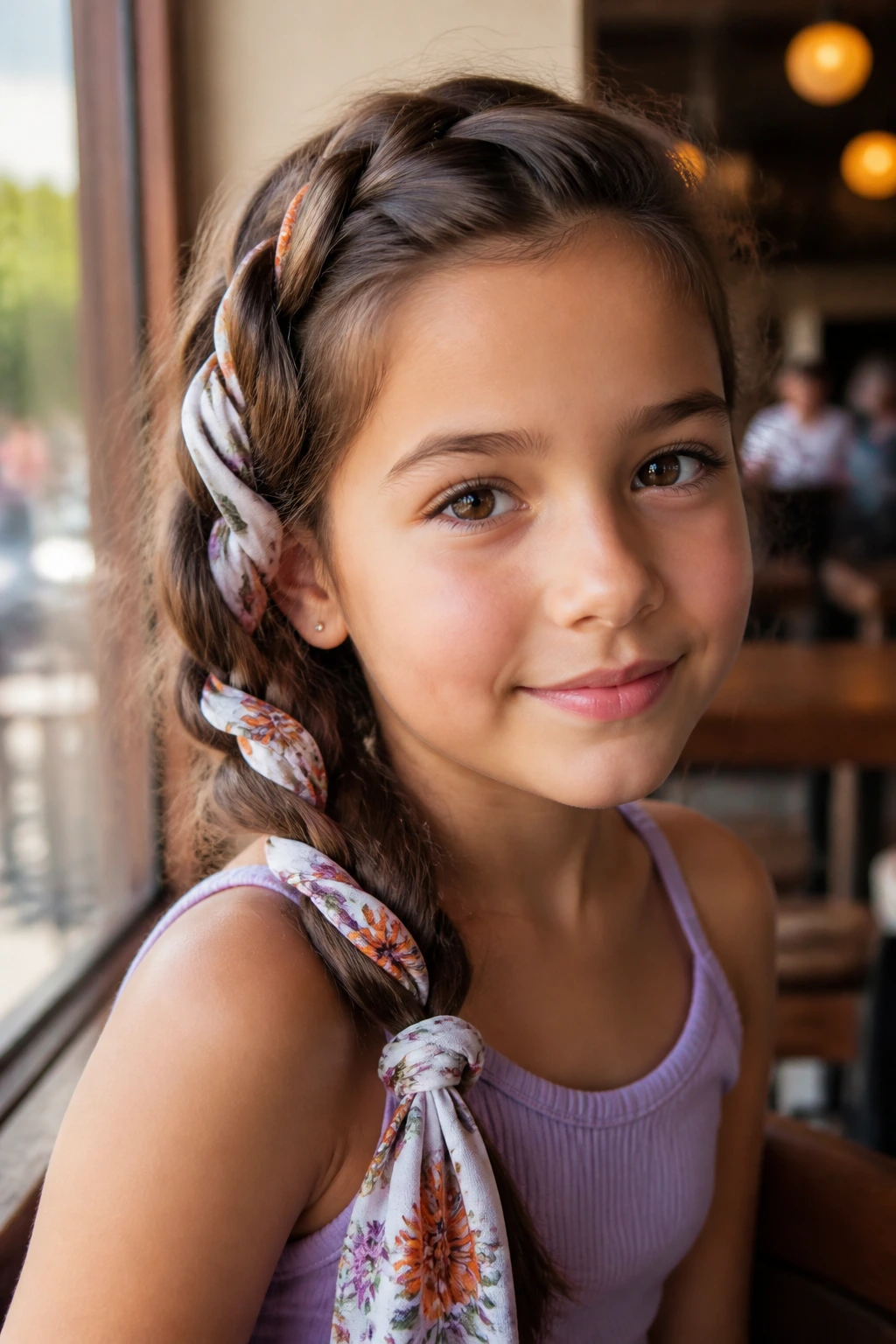
A side braid with a scarf brings color into the style without asking for anything complicated. Braid the hair over one shoulder and either weave a slim scarf through the braid or tie it around the base and let the ends trail. The scarf does most of the visual lifting.
This is especially useful if the hair itself is plain that day and you want the style to carry a little more personality. A scarf with a smooth fabric works better than a thick, slippery one that keeps sliding out. If the child has sensitive skin, keep the knot away from the neck. The braid stays the same; the scarf changes the mood.
42. Easy Twisted Ponytail
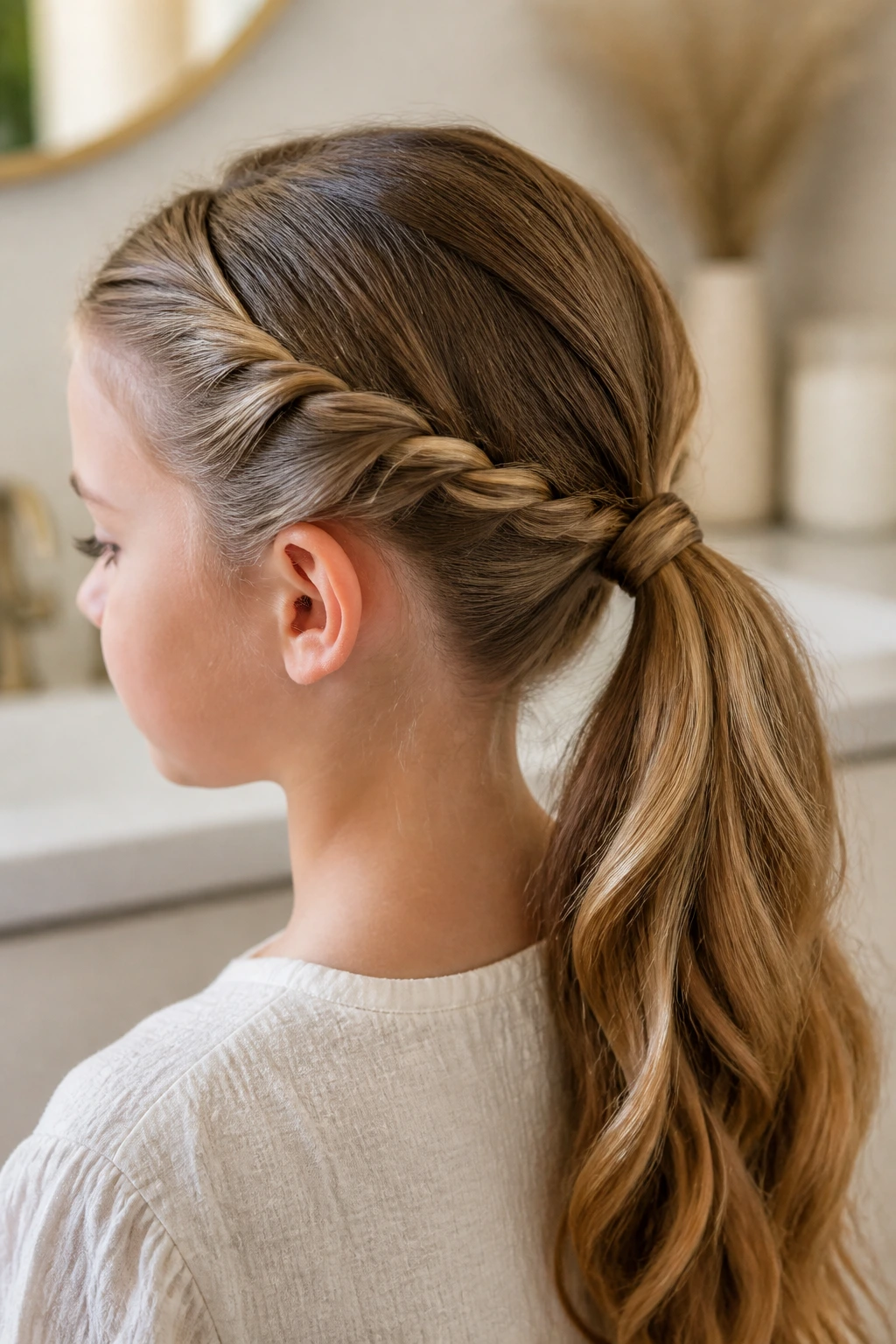
An easy twisted ponytail is the sort of style that saves mornings. Twist two sections from the front or sides, bring them together, and secure everything into one ponytail. You can keep the twists loose for softness or tighter if the hair needs more control.
It’s a good fallback when the brush says no and your child wants hair down but not in her face. It also works well on layered hair because the twists catch the shorter pieces that otherwise fall free. If you want a little more finish, wrap a strand around the elastic. If you want speed, stop at the ponytail. Both are valid.
What Makes a Style Survive School, Recess, and the Back Seat
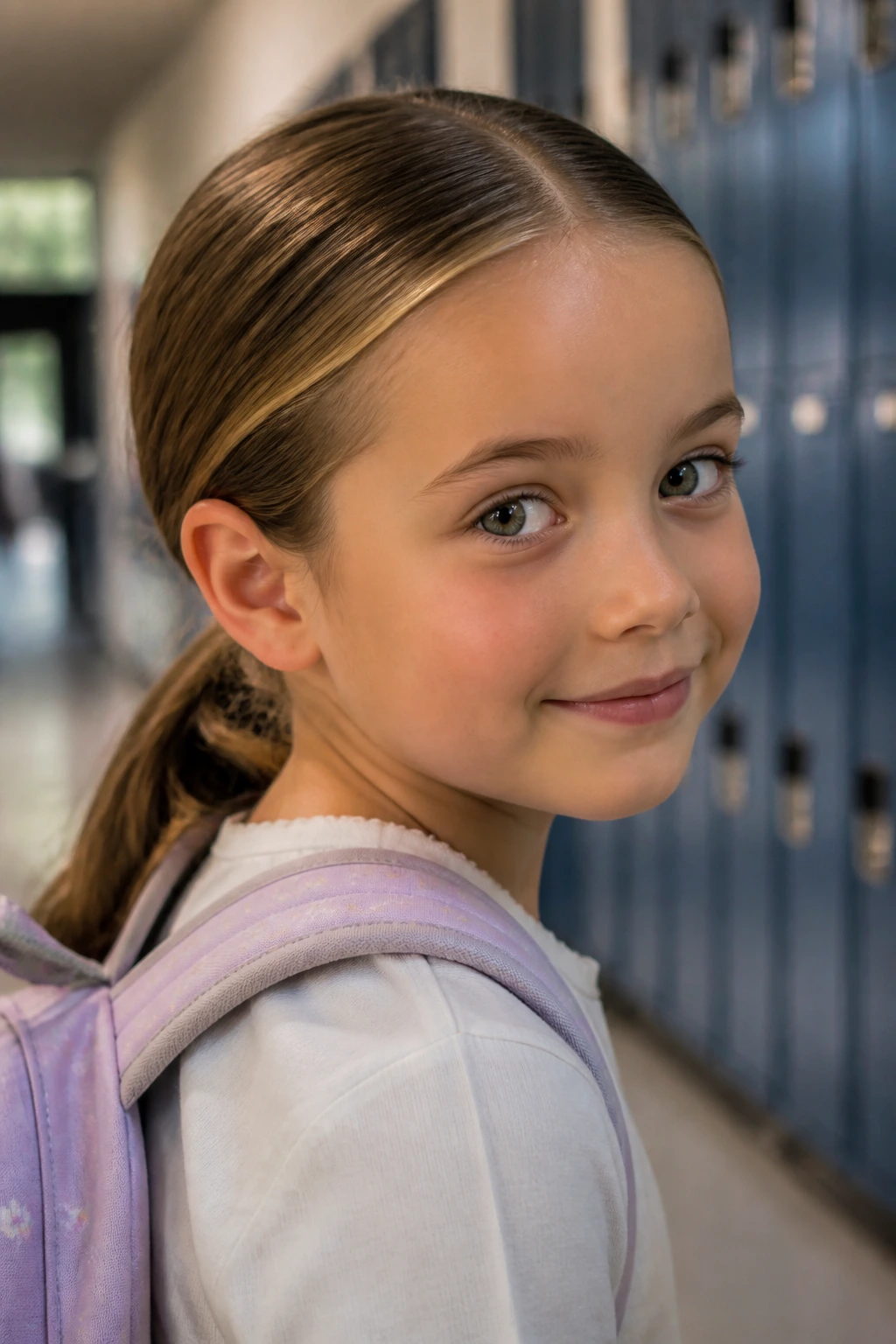
The hairstyles that last are usually the ones that start with a clean base and a realistic amount of tension. Hair that has been detangled from the ends up, not ripped from the crown downward, holds shape better and hurts less. That’s the unglamorous part. It matters.
I also pay attention to where the weight sits. High styles are useful because they dodge collars and backpacks, but low styles often feel better for long wear because they don’t drag on the scalp. Braids win when hair is slippery, while twists and clips work nicely when you do not want a full braid session before breakfast.
And then there’s the boring little truth nobody wants to hear: a style usually fails because the elastic or clip is wrong, not because the hairstyle itself is bad. Too loose, and it slides. Too tight, and the child complains before first bell. The sweet spot is a hold that stays put without turning the hairline into a battlefield.
Essential Equipment for These Hairstyles
-
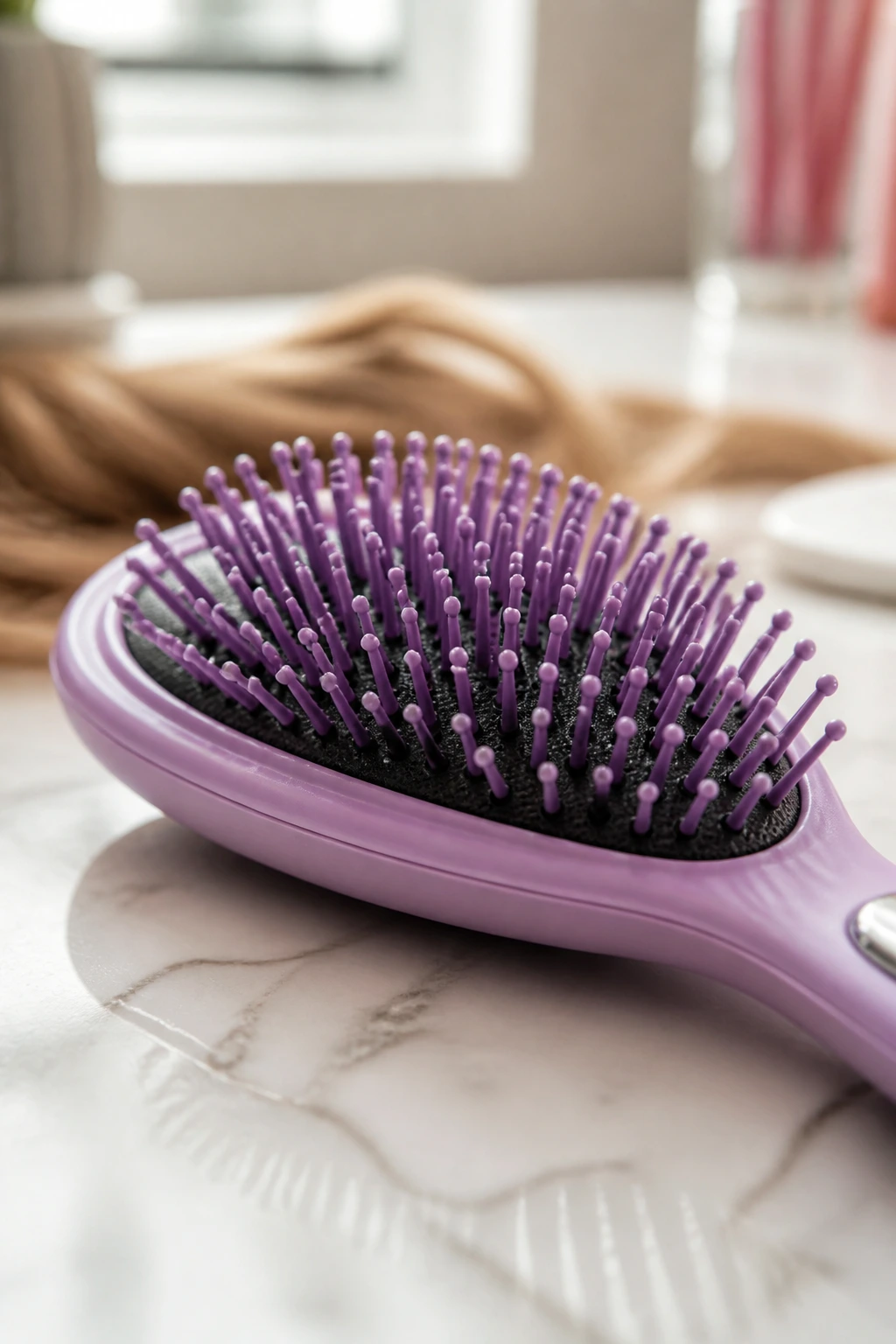
Detangling brush: A flexible brush helps work through knots without snapping the ends, especially on wavy or curly hair.
-
Rat-tail comb: Perfect for clean parts, heart shapes, and small sections that need to look even at the scalp.
-
Wide-tooth comb: Useful for curls, thick hair, and dry detangling after a braid or twist is taken out.
-
Spray bottle with water: A light mist calms flyaways and gives slippery hair a little more grip before styling.
-
Leave-in conditioner or detangler: Helps with brushing and keeps the hair from catching while you section it.
-
Small silicone elastics: Best for braid ends, bubble styles, and tiny sections that need a secure hold.
-
Regular covered hair ties: Better for ponytails and buns when you need a soft but stronger anchor.
-
Bobby pins: Handy for buns, crown braids, wrapped strands, and anything that needs a discreet little lock.
-
Snap clips and barrettes: Great for bangs, side parts, and small front sections that just need to be told where to go.
-
Scrunchies: Good on buns and ponies when you want less snagging and a softer finish.
-
Ribbon or scarf: Optional, but useful when you want to change the look without changing the hairstyle.
-
Fine styling cream or light gel: A tiny amount helps smooth edges and keep a part from fraying by lunch.
How to Choose Accessories That Won’t Fight the Hair
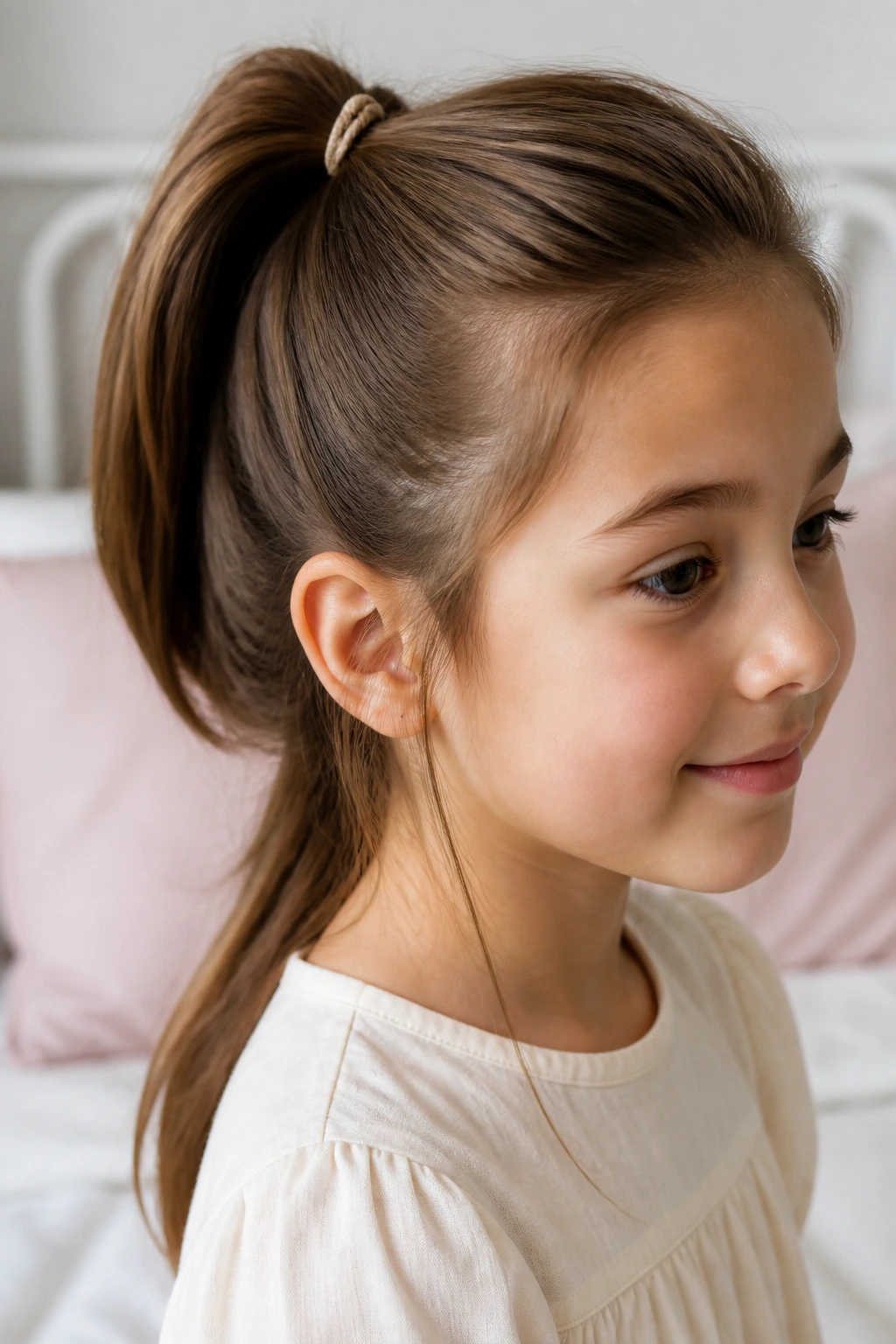
The best accessories are the ones that sit flat, grip cleanly, and do not yank when they come out. Snaggy elastics are the enemy here. You want bands with a smooth seam and enough stretch to hold shape without cutting into the hair shaft. If the hair is fine, tiny silicone elastics usually work better for the little sections and a softer covered tie works better for the main ponytail.
Match the accessory to the hair, not the mood board. A giant bow on very thin hair tends to slide. A tiny clip on thick hair disappears. Ribbons are lovely when the hair is medium or long enough to show them, but they should be narrow enough that they don’t bulk up a braid. I like satin or grosgrain for everyday wear because both sit more smoothly than stiff decorative fabric.
For curly or textured hair, choose accessories with rounded edges and enough give to sit comfortably against volume. A clip that looks pretty but pinches is not a good clip. Plain and comfortable wins more mornings than glitter does.
How to Wear These Hairstyles in Real Life
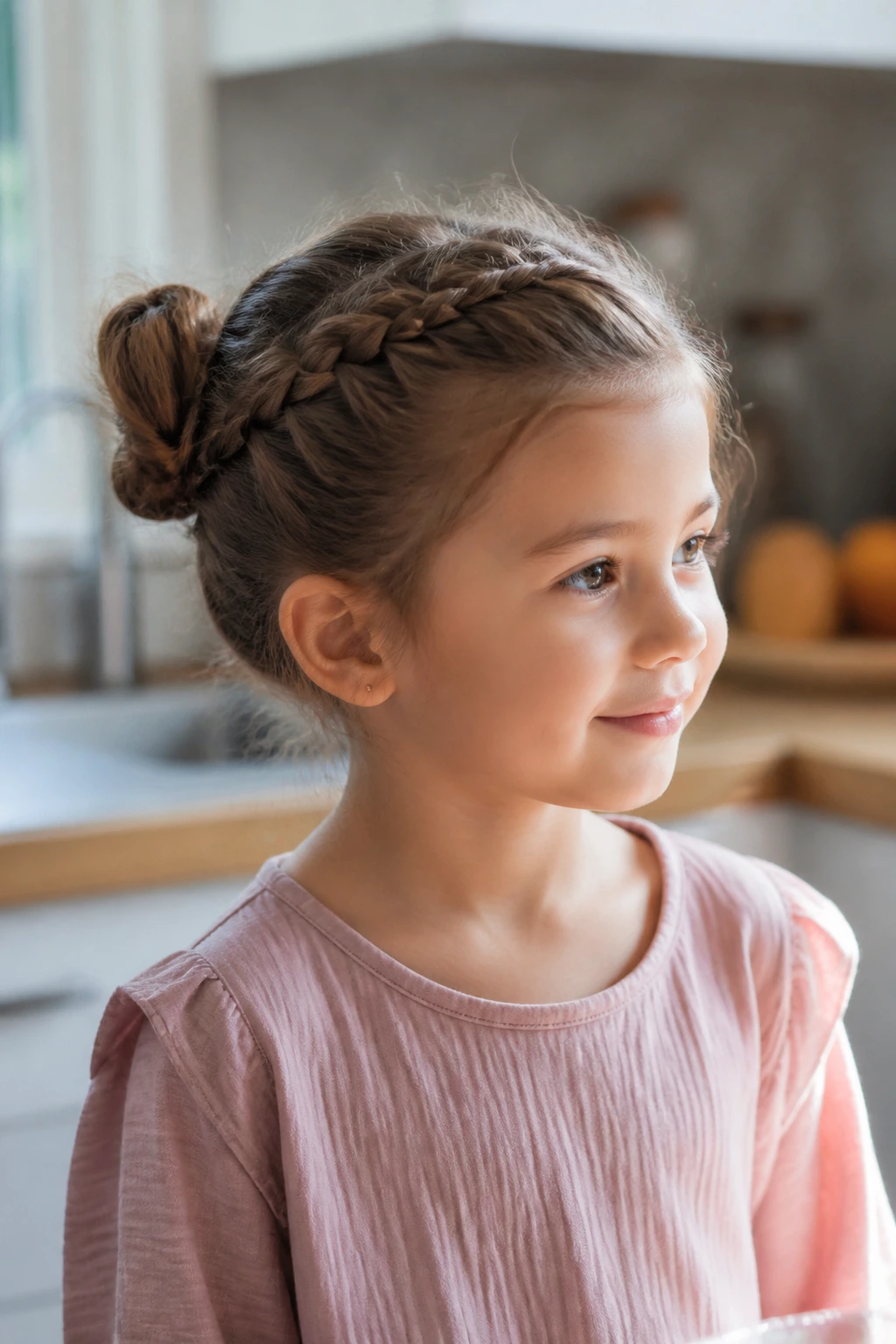
Presentation: The prettiest everyday hairstyles are the ones that look neat at the front and relaxed at the ends. A slight looseness around the crown, a clean part, or one small wrapped strand makes a style read as intentional without turning it formal.
Accessories: Use clips, bows, ribbons, and scrunchies as the finishing move, not the foundation. A good accessory should fit the hairstyle’s shape, not fight it. If the hair is already busy, choose one detail and let the rest stay simple.
Best For: High ponies and buns work best when hair needs to stay away from the neck. Braids and twists are better when the hair is slippery or active days are ahead. Half-up looks make sense when a child wants hair down but can’t stand the front pieces in her face.
Hold and Refresh: Most of these styles last through a school day if the base is secure. By afternoon, a quick finger-comb at the crown and a tiny mist of water can bring a style back to life without starting over. Replace stretched elastics before they fail. That’s where many styles go sideways.
Small Changes That Make a Big Difference
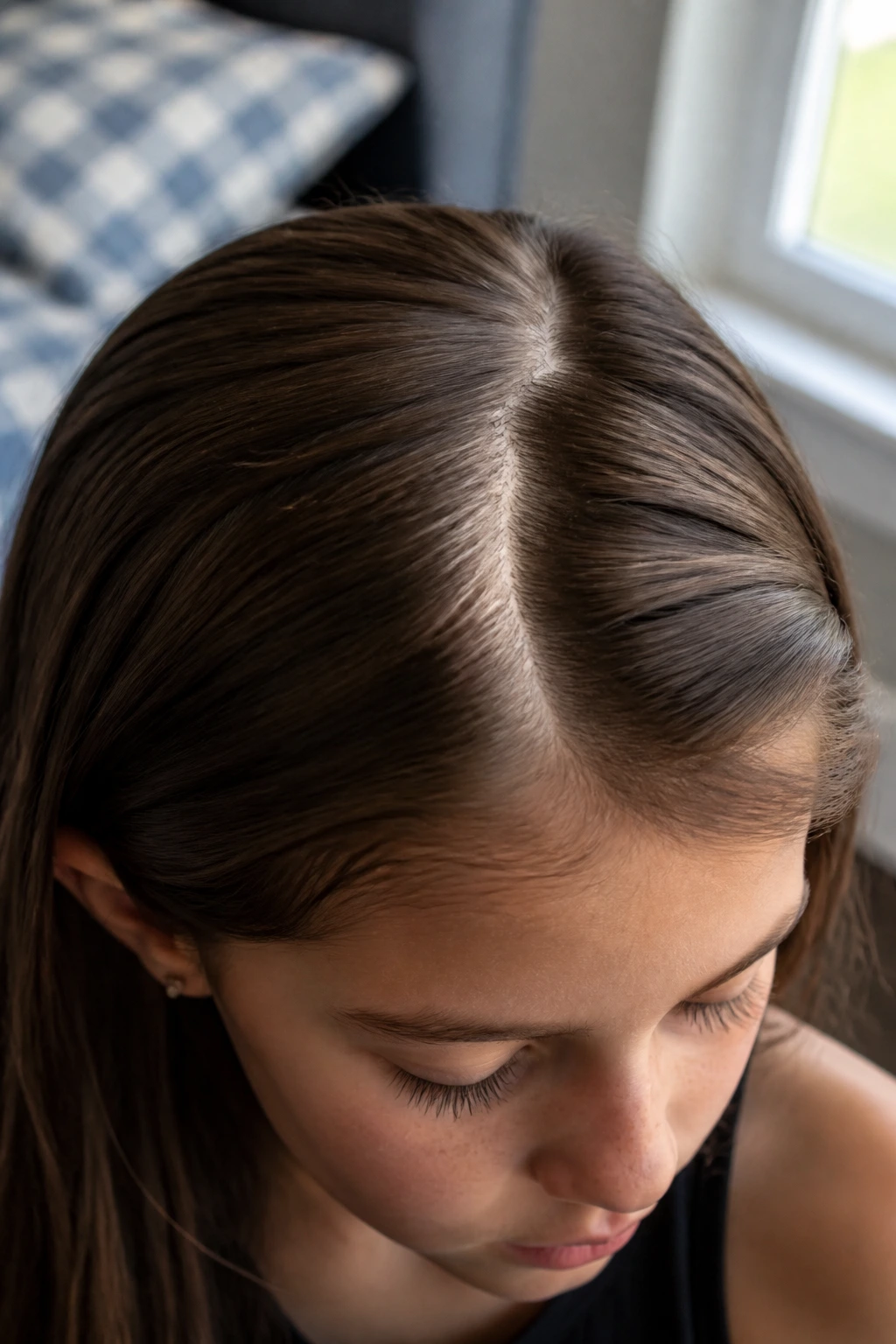
Part Placement: Move the part a half-inch left or right when a cowlick keeps pushing the hair open. That tiny shift can save a whole hairstyle.
Texture: Day-old hair often grips braids and twists better than freshly washed hair. If the hair is silky and slippery, use a little leave-in or a light mist of water to give your fingers more control.
Accessory Swap: The same braid can feel sweeter with a ribbon, cleaner with a clear elastic, or more playful with a bow. I use accessories to change the mood, not the structure.
Finish: A pea-sized amount of styling cream on fingertips can tame flyaways at the hairline. Use less than you think. Too much product makes the roots look heavy fast.
When to Choose Loose Over Tight: If a child is sensitive around the scalp, pick low buns, bubble styles, or half-up twists before you pick a tight braid. Cute should not come with complaints before lunch.
Make-Ahead, Overnight Wear, and Quick Refreshes
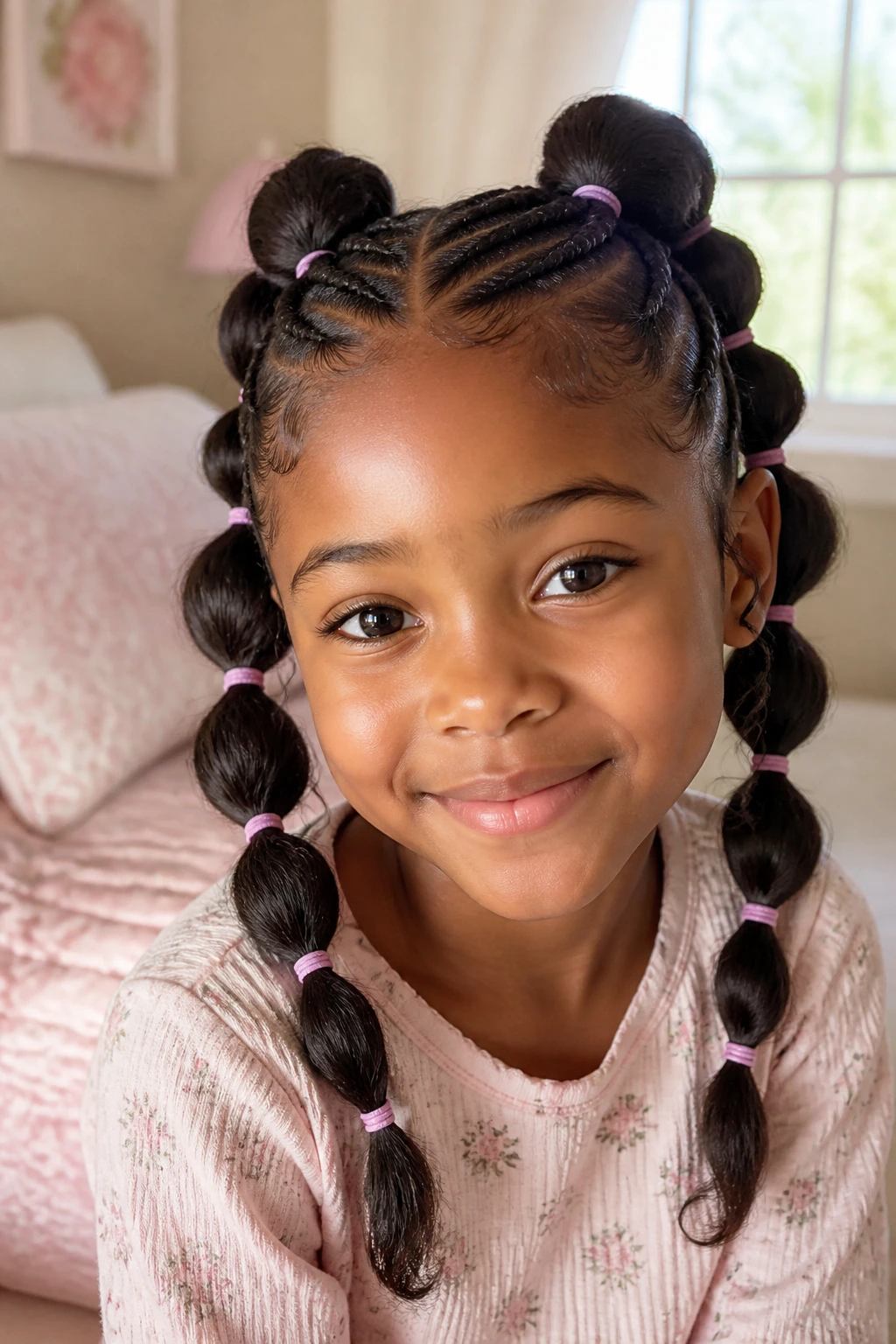
Braids and bubble styles are the easiest to carry from one day to the next. If you know the morning will be rushed, start the style the night before and leave the final polish for morning. A satin pillowcase or bonnet helps reduce frizz, and it keeps the ends from getting rough while the child sleeps. Low buns and clips usually need a bigger refresh than braids do.
If you’re prepping ahead, stop short of over-tightening. A style that is pulled hard at 7 p.m. tends to look flattened and unhappy by breakfast. I’d rather make the sections secure and leave the edges a touch soft. In the morning, smooth the part with damp fingertips, tighten only the pieces that have sagged, and re-tie the elastic if it feels stretched.
For very fine hair, a small puff of dry shampoo at the roots can bring back grip and help a ponytail or braid hold its shape. For curls, a little water and leave-in on the outer layer is usually enough. The point is not to rebuild the hairstyle. It’s to wake it up.
Variations and Adaptations to Try
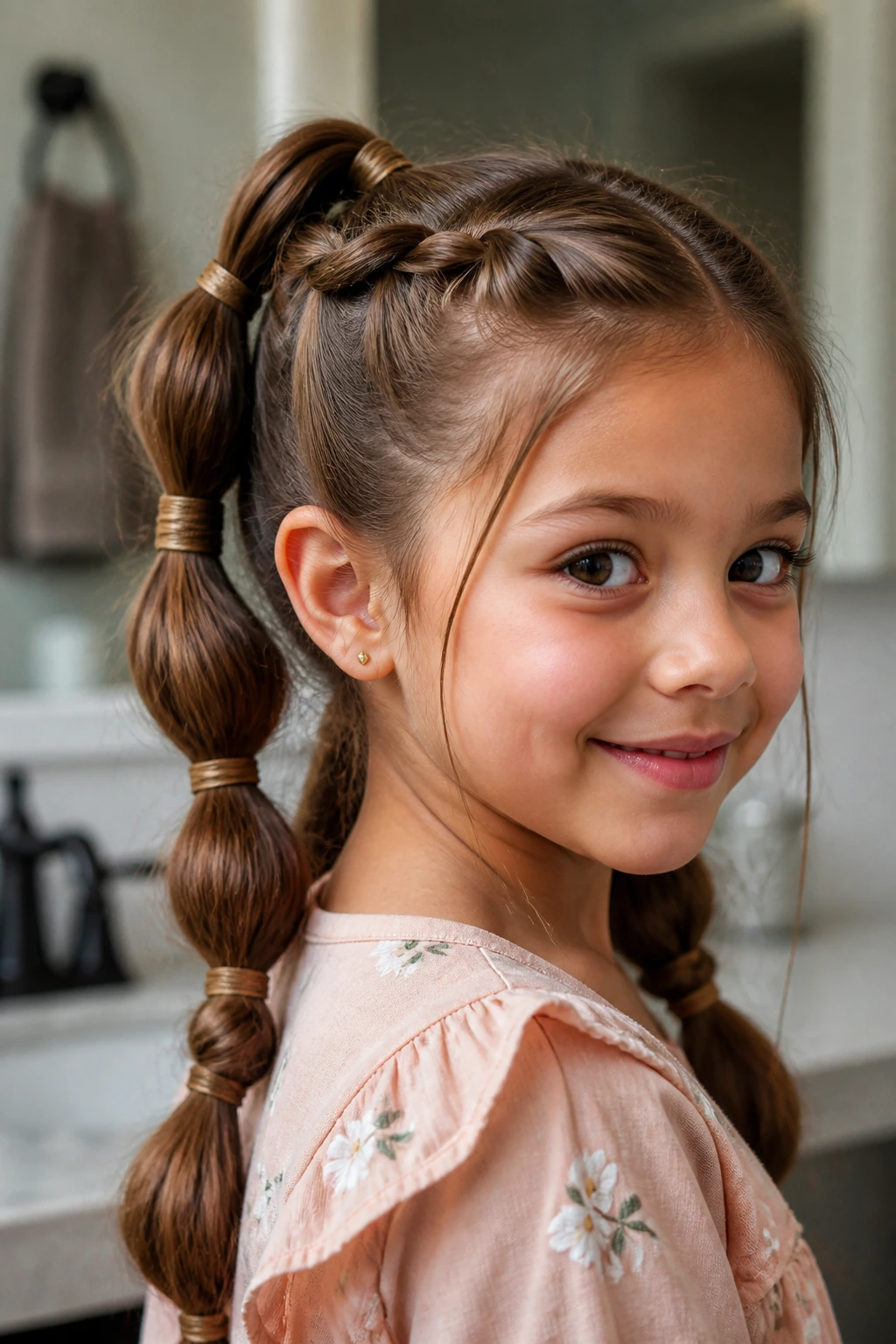
Fine-Hair Fixes: Choose bubble ponytails, pull-through braids, and wrapped ponies when the hair needs more visual fullness. A tiny bit of texture spray at the roots can help the sections hold shape without making them crunchy.
Thick-Hair Taming: Use twin braids, low buns, twists, and claw-clip styles when the hair has too much weight for small elastics alone. Sectioning the hair into smaller parts keeps the style from feeling like a wrestling match.
Curly-Hair Friendly Swaps: Swap sleek styles for puffs, half-up twists, or accent braids that work with curl pattern instead of flattening it. A little leave-in on damp hair helps the style hold without making the curls frizzy or stiff.
Short-Length Workarounds: If the hair won’t reach a full ponytail, lean on clips, mini braids, side parts, and half-up sections. Short hair can look intentional fast when the front is controlled and the shape is clean.
Sensory-Friendly Versions: Loosen the base, skip tight hairline pulls, and choose soft scrunchies over hard elastics when comfort matters more than polish. A style can be neat without being snug.
Ribbon-and-Clip Remix: Start with the same braid or ponytail, then swap in ribbons, bows, or snap clips to change the feel. This is the easiest way to make one style look fresh across the week without relearning anything.
Common Mistakes to Avoid
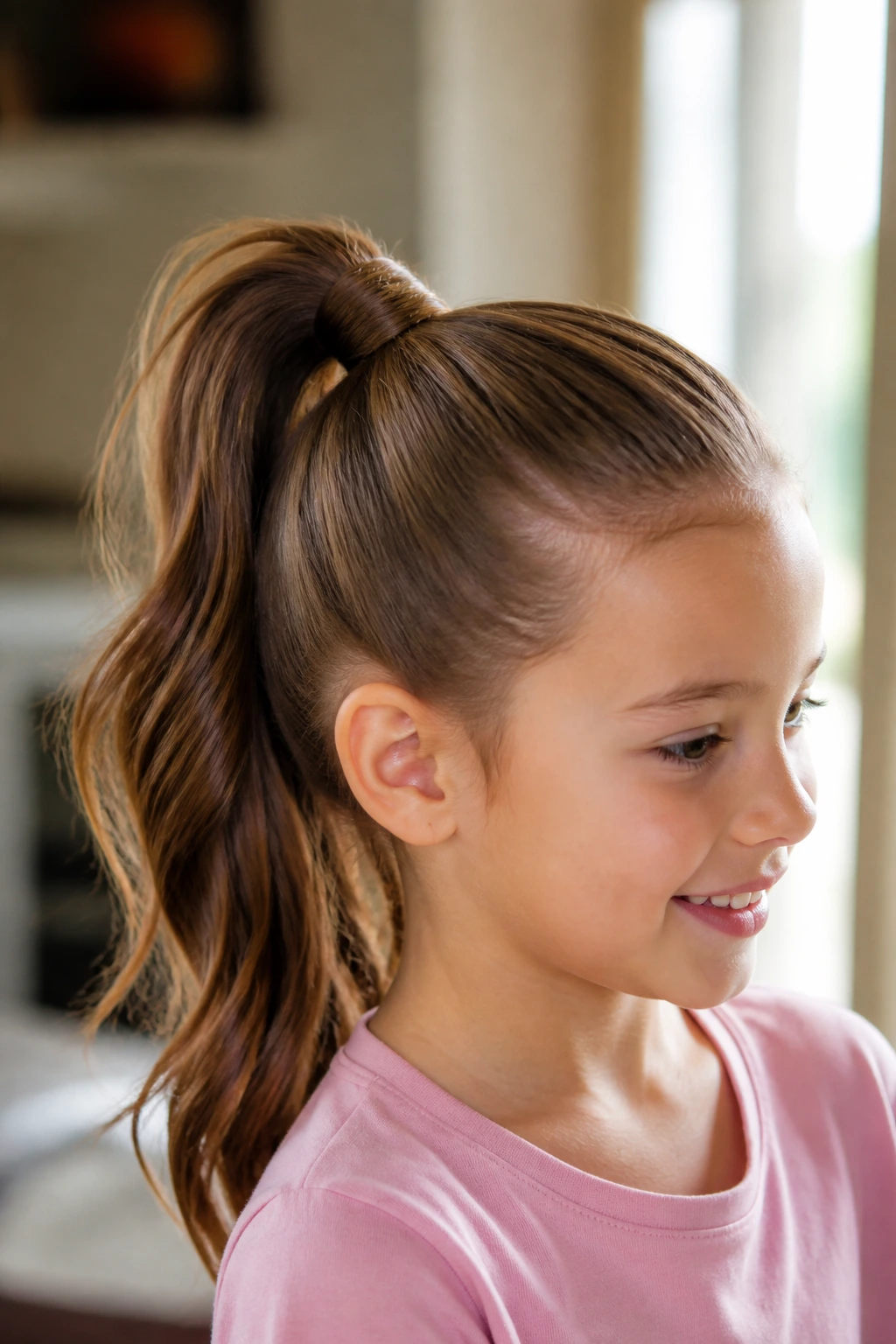
The first mistake is pulling everything too tight. You can see it right away — the hairline looks strained, the child reaches up to touch it, and the style starts to loosen at the temples anyway. Keep the hold firm, not harsh.
The second is skipping detangling before you start. Small knots turn clean sections into lumpy ones, and lumpy sections make braids and twists look patchy. Brush from the ends upward and you’ll spend less time fighting the hair in the middle of the style.
Another common miss is using the wrong elastic for the job. Tiny clear elastics are great for braid ends, but they can break if you try to use them for the whole ponytail. Large elastics are stronger, but they can make small styles look bulky. Match the band to the section size.
Product overload causes its own trouble. Too much gel or cream flattens the roots and makes the style look greasy before noon. Use a little, then stop. If you need more, you can always add a touch later.
And please do not ignore the ends. A style can look neat at the scalp and still look messy if the tail is frayed or not secured well. Smooth the ends, tie them cleanly, and trim old elastics before they snap.
Frequently Asked Questions
Which of these hairstyles is fastest on a truly rushed morning?
The quickest choices are the half-up top knot, side part with snap clips, easy twisted ponytail, and low sleek ponytail. Each one can be done in a few minutes once the hair is brushed and parted, and none of them needs perfect sectioning to look decent.
What styles work best on fine hair?
Pull-through braids, bubble ponytails, wrapped ponies, and half-up clips give fine hair more shape without needing huge volume. A little texture at the roots helps the style hold, but the big win is keeping the sections small and the elastics snug.
How do you keep braids from getting loose by lunch?
Start with hair that’s fully detangled and slightly textured, not ultra-slippery. Hold the sections evenly, keep the braid tension consistent from top to bottom, and use a small elastic that actually grips the end instead of sitting there for decoration.
Can these styles work on curly hair without flattening it?
Yes. The best options are accent braids, half-up twists, puffs, buns, and side clips. Those styles keep the shape at the roots while letting the curls stay full where they naturally want to be.
What if my child hates tight hairstyles?
Choose styles with softer anchors: low buns, side parts with clips, bubble pigtails, and half-up looks. Avoid pulling the hairline hard, and stop a bit earlier on the tension than you would for an adult style. Comfort usually wins the long day, anyway.
How do you make a simple ponytail look cuter without changing the whole style?
Wrap a strand around the elastic, add a ribbon, or switch to a side ponytail with a bow clip. Those small changes do more than people expect, and they keep the hairstyle from looking like a default choice.
Can I do these styles the night before?
Braids, twists, and low buns are the easiest to prep ahead. Leave the last bit of polish for the morning, sleep on a satin pillowcase if you can, and plan to refresh the part or edges before leaving the house.
What should I do if a style keeps slipping out?
Usually the problem is either hair that’s too smooth or an elastic that’s too weak. Add a touch of texture with a mist of water or a light product, then swap in a better-gripping band. If that still fails, choose a braid or twist instead of a ponytail.
Styles Worth Reaching For Again
The nicest thing about everyday hairstyles is that they don’t need to be elaborate to work. A clean part, a decent elastic, and one small detail — a wrapped strand, a ribbon, a twist, a clip — can be enough to make hair feel finished without turning the morning into a project. That’s the sweet spot.
I trust styles that can survive ordinary life. If they can handle a school day, a seatbelt, a sweater, and one ill-advised headstand on the carpet, they’ve earned their place in the rotation. Start with the few that fit your child’s hair texture and temperament, then keep the ones that hold up in the real world.
