



A short shaggy bob can do a lot of heavy lifting for a round face. The ends move, the layers break up the outline, and the bangs pull the eye upward instead of letting it sit on the widest part of the cheeks. Done well, the cut looks airy and a little undone; done badly, it turns into a puffed-out mushroom that only makes the face look wider. That difference is all in the shape.
The good versions have tension in the right places. A bit of length under the jaw. Bangs that split, skim, or feather instead of sitting in one solid line. Texture at the crown so the cut doesn’t collapse. I’ve always thought this family of haircuts works best when it looks like it could move if you turned your head fast. Still. That movement needs a plan.
Hair texture changes the game, too. Fine hair wants lighter layers and a softer fringe so it doesn’t go flat by noon. Thick hair needs enough debulking that the shape doesn’t balloon out at the sides. Curly hair needs the bangs cut with the curl pattern in mind, not against it. Round faces can wear all of that, but the balance has to be right.
Why These Short Shaggy Bobs With Bangs Work on Round Faces

- They break the circle: Choppy layers and piecey bangs interrupt the smooth curve of a round face, which keeps the shape from feeling too uniform.
- They add vertical movement: The best versions push the eye down through the ends and up through the fringe, so the face reads a little longer.
- They create air around the cheeks: A flat, blunt line at cheek level can widen the face fast. Soft texture keeps the sides lighter.
- They play nicely with natural texture: Wavy, bendy, and slightly messy hair looks intentional here because the cut already wants movement.
- They grow out better than a strict bob: A shaggy bob keeps its shape longer between trims, especially if the bangs are cut with a little give.
1. Chin-Grazing Shag with Curtain Bangs
This is the easy crowd favorite for a reason. The cut sits right around the jaw, but the curtain bangs open at the center and sweep toward the cheekbones, which keeps the face from feeling boxed in. It has enough swing to look modern, not so much volume at the sides that it flattens your features.
Why It Flatters a Round Face
The chin length gives a little downward line, and that matters. A round face tends to read widest across the cheeks, so anything that drops below that point helps stretch the look. Curtain bangs are doing a lot of the work here, too; they split the forehead and draw the eye diagonally instead of straight across.
Best on hair that has a little bend or can hold a wave with a round brush. If your hair is pin-straight, ask for soft internal layers so it doesn’t hang like a block.
2. French Bob with Choppy Fringe
A French bob can be cheeky and sharp, but the shaggy version keeps it from feeling too severe. The fringe is short and broken up, not stiff, and the perimeter lands just under the cheekbone. That tiny bit of extra length is the difference between “fashionable” and “why does my face look wider?”
The trick is texture. Ask for point-cut ends or razor softness so the bob doesn’t form one heavy line around the face. It works beautifully on fine hair that needs a little lift, though thick hair can wear it too if the stylist removes bulk around the lower sides.
3. Razored Bob with Feathered Bangs
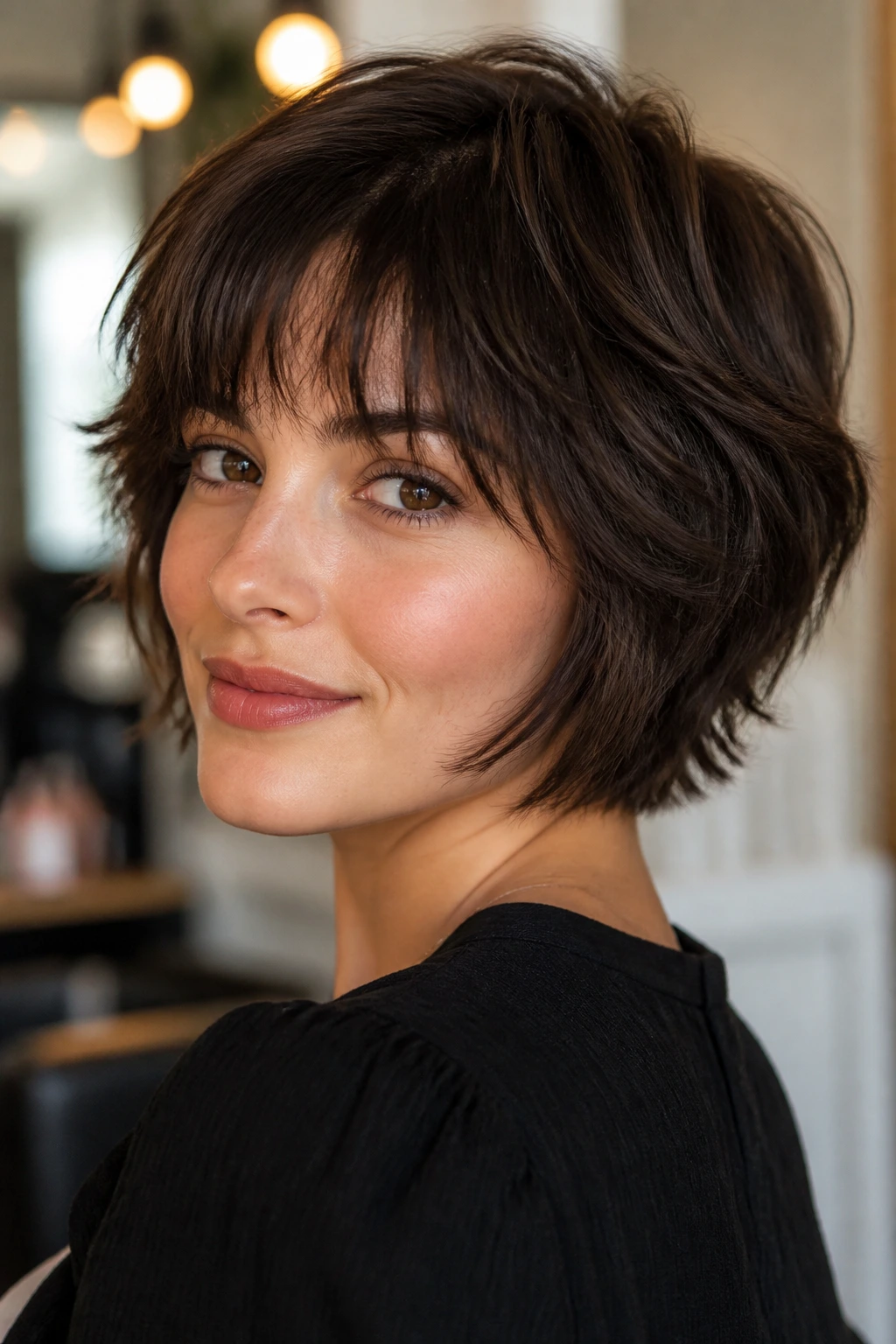
A razored bob has a little edge to it, and the feathered bangs keep the front from looking blunt or dense. The whole cut feels light in motion. When you turn your head, the pieces separate instead of clumping together, which is exactly what a round face needs.
What Makes It Different
Unlike a rounded bob, this one doesn’t follow the curve of the face. The shaggy ends and separated fringe make the shape look more angular. If your hair is thick or coarse, this is one of the better options because the razor work can remove some of that weight without making the cut look chopped up in a bad way.
4. Wavy Mushroom Shag with See-Through Bangs

This sounds riskier than it is. The key is keeping the top airy and the bangs sparse enough that they don’t form one solid curtain. Done right, the cut has a soft mushroom outline with enough piecey texture to stop it from feeling retro in the wrong way.
The see-through bangs are the real fix for a round face. They give forehead coverage without closing off the whole front, which leaves the eyes and brows visible. That small bit of transparency keeps the style from swallowing the face.
5. Layered Pixie-Bob with Side-Swept Fringe
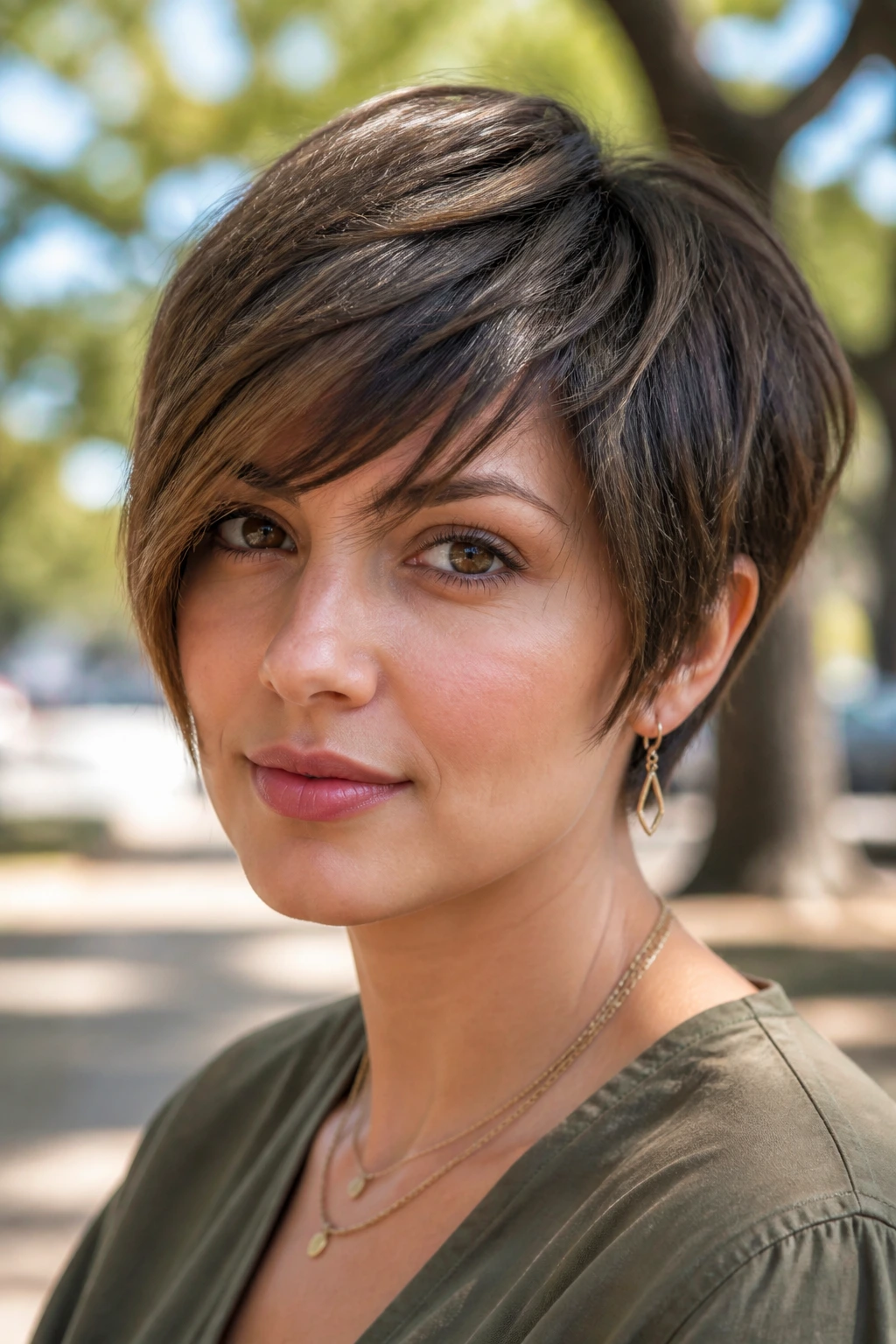
If you like short hair but hate anything helmet-like, this is a smart move. It lands between a pixie and a bob, with soft layers around the crown and a side-swept fringe that cuts across the face instead of boxing it in. The side part helps, too. It gives the style a diagonal line right where round faces need it most.
This one works especially well if you want lift at the top without a lot of width at the sides. Keep the back neat and let the front pieces wander a little. That imbalance is what makes it flattering.
6. Tousled Box Bob with Wispy Bangs
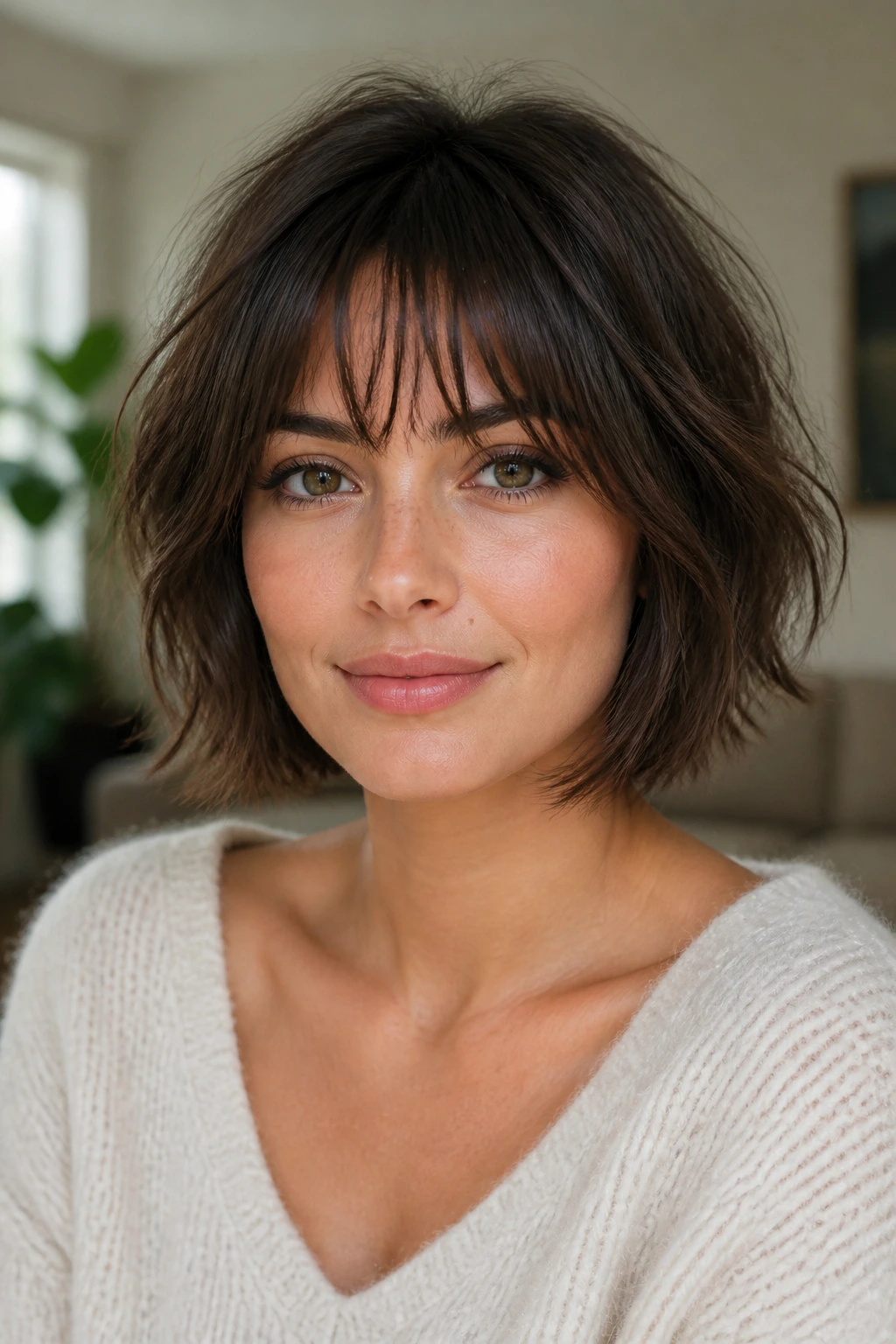
A box bob usually sounds blunt, and blunt is not always the friend of a round face. But when the edges are broken up and the bangs are wispy, the shape becomes much softer. You still get structure, just not the hard wall that can make the lower half of the face look wider.
Fine hair does well here because the wispy fringe doesn’t drag the front down. A texturizing spray at the roots and a quick bend through the ends keeps it from going flat. Skip heavy creams unless your hair is dry enough to need them.
7. Collarbone Shag Bob with Bottleneck Bangs

This is the safest choice if you want to stay on the shorter side but still keep some length under the chin. Bottleneck bangs are shorter in the center and longer at the sides, so they open the forehead while sliding toward the cheekbones. That shape is flattering on round faces because it guides the eye down and out, not straight across.
It’s also a nice cut if you’re not ready for a super short bob. The extra length gives movement and makes the grow-out less awkward. A blunt mini-bob can feel boxed in after a few weeks; this one usually doesn’t.
8. Piecey Inverted Bob with Soft Micro-Bangs
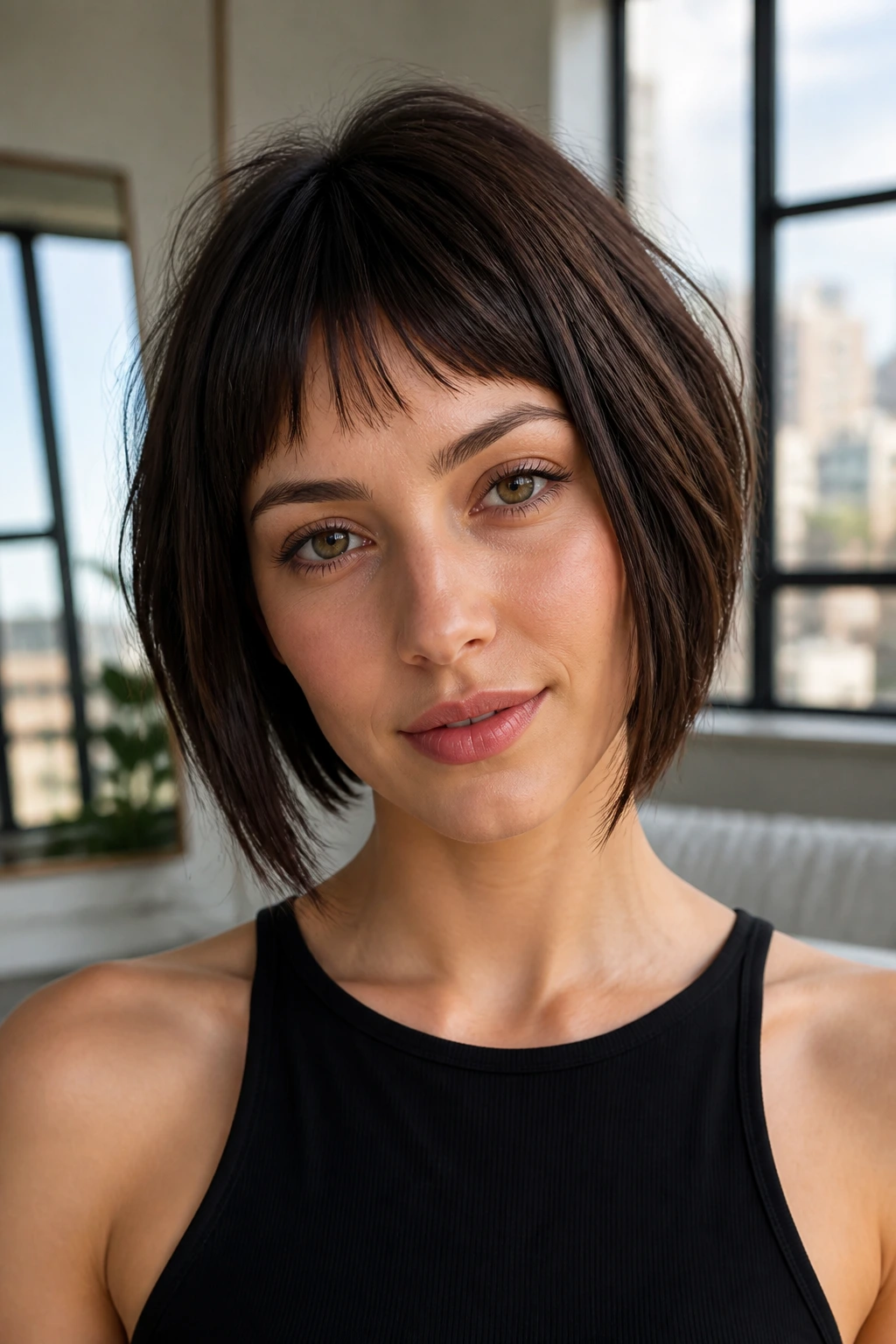
This one is for someone who likes a little attitude. The inverted line gives slight lift in the back and more length in the front, which already helps a round face. Add soft micro-bangs—not hard, sharp ones—and the look becomes editorial without turning harsh.
A caution, though: micro-bangs are not forgiving if the rest of the cut is too full at the cheeks. Keep the sides light. If you’ve got thick hair, ask for internal thinning near the ear line so the bob doesn’t puff out like a triangle.
9. Curly Shag Bob with Curl-Skimming Fringe

Curly hair and round faces can get along just fine. The mistake is cutting the fringe too short or too dense, which creates a little shelf across the forehead. A curl-skimming fringe, cut with the curl pattern in mind, lets the front pieces bounce instead of sitting stiffly.
This cut looks best when the curls are shaped, not flattened. A diffuser, a light gel, and a bit of hand-scrunching are usually enough. If the curl pattern is looser at the front than the sides, that’s okay. The asymmetry helps more than you’d think.
10. Sleek Shaggy Bob with Long Layered Bangs

Not every shaggy bob has to look messy. This one stays smoother, with long bangs that blend into the front layers and a more polished finish through the ends. The length around the face is doing the flattering work here; it creates a slim, falling line that counters the width of a round face.
It’s a good fit if you need a haircut that can move from office to dinner without a full restyle. A blow-dry with a paddle brush or medium round brush is usually enough. The texture is softer than a classic blunt bob, but the silhouette still reads clean.
11. Bixie-Bob Hybrid with Fluffy Fringe
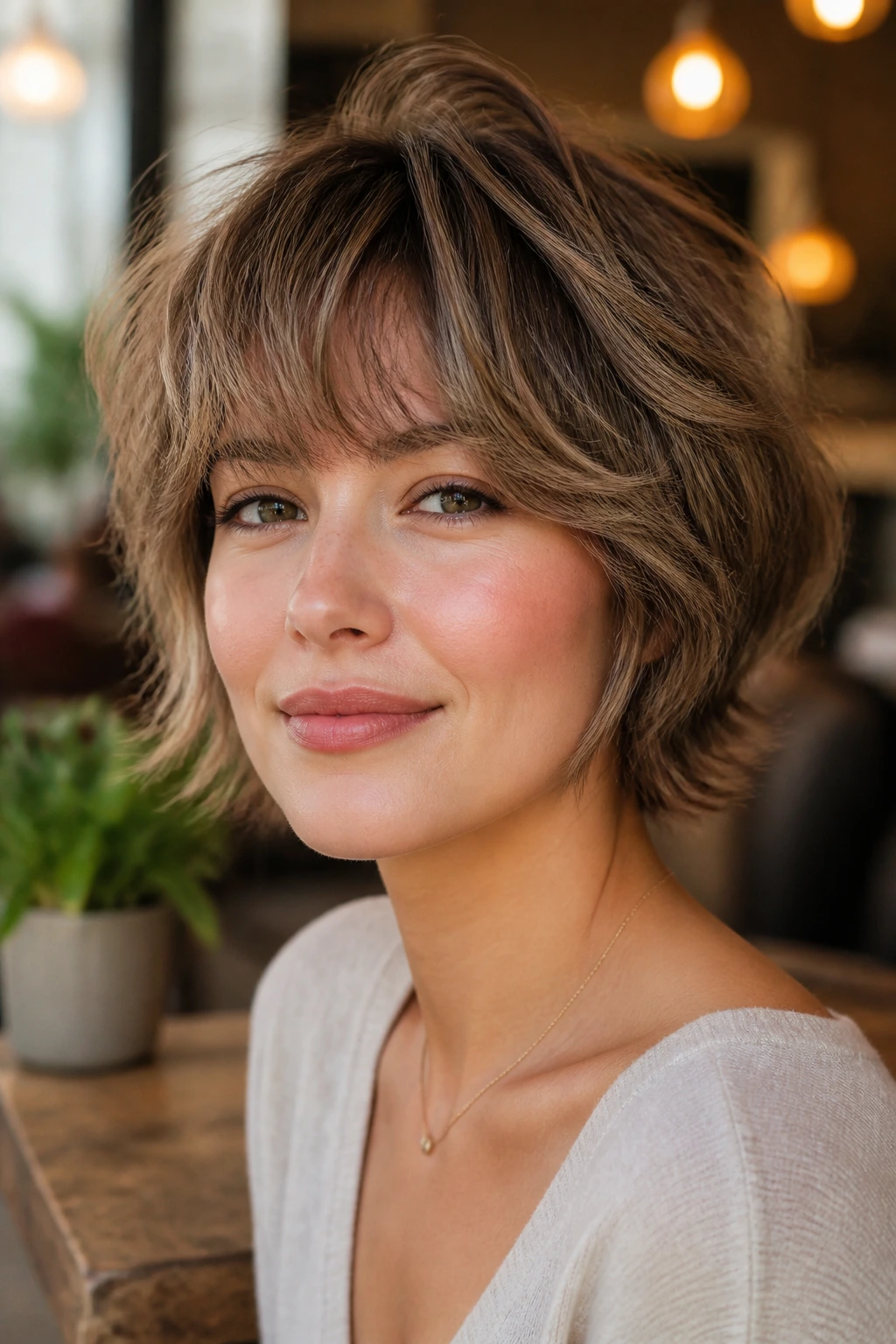
Somewhere between a bob and a pixie, this shape sits close to the head without feeling flat. The fluffy fringe gives softness at the forehead, and the short, layered sides keep the face open. On a round face, that openness matters. You want the cut to show some neck and some brow.
This works especially well if your hair has a bit of natural body. Too limp, and it can lose the airy quality. Too dense, and the fringe starts stealing the whole show. A little mousse at the roots goes a long way.
12. Side-Parted Shag Bob with Sweepy Bangs
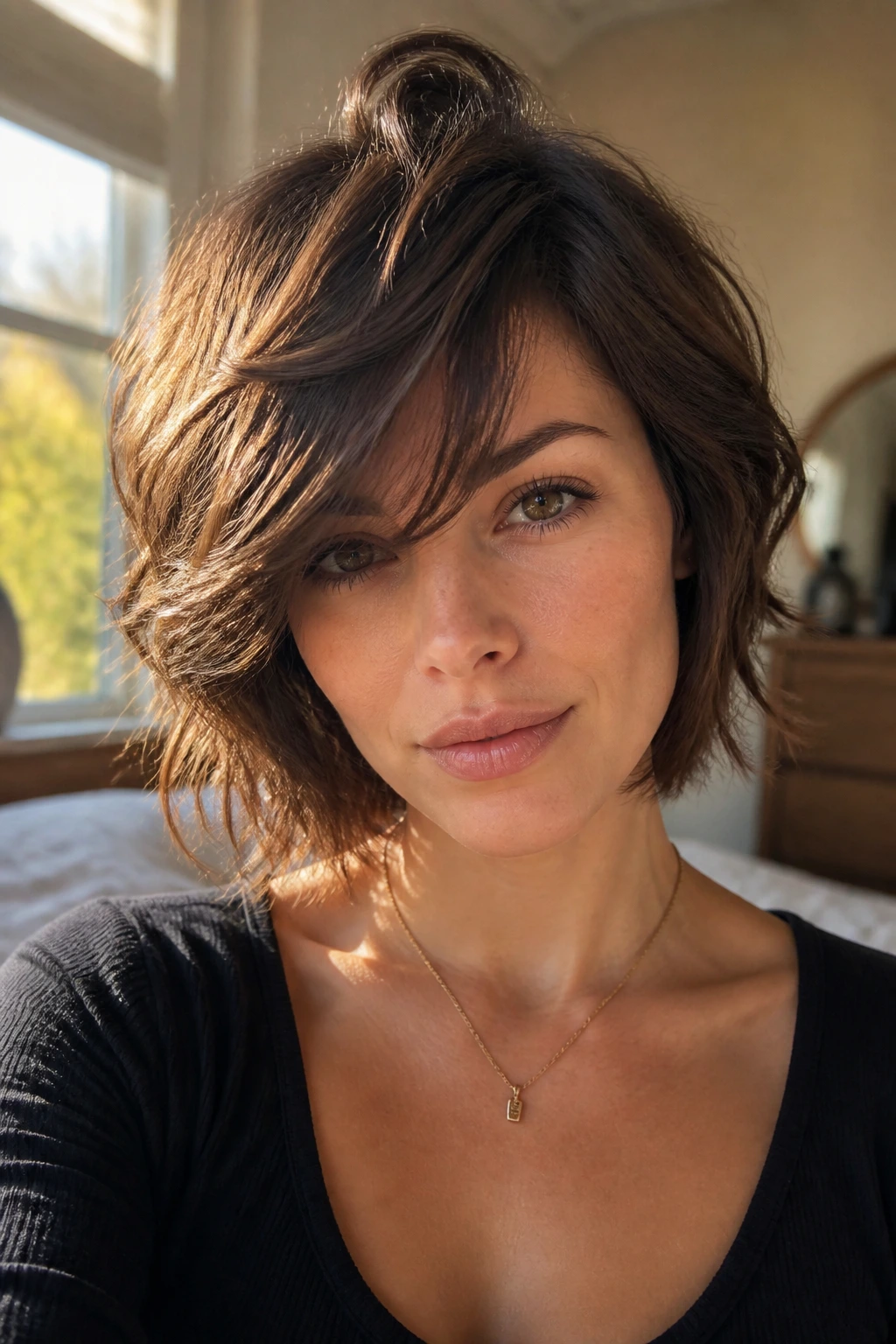
A deep side part can change the whole geometry of the face. It creates a diagonal line that breaks the symmetry of a round shape, and the sweepy bangs extend that line across the forehead. The result feels longer, leaner, and a touch more dramatic.
How to Wear It
Keep the heavier side soft around the cheekbone, not chin-level thick. That’s where people go wrong. If the front piles up beside the cheeks, the face looks wider; if it drapes lightly over the temple, it looks intentional and easy.
13. Italian Bob with Broken-Up Bangs
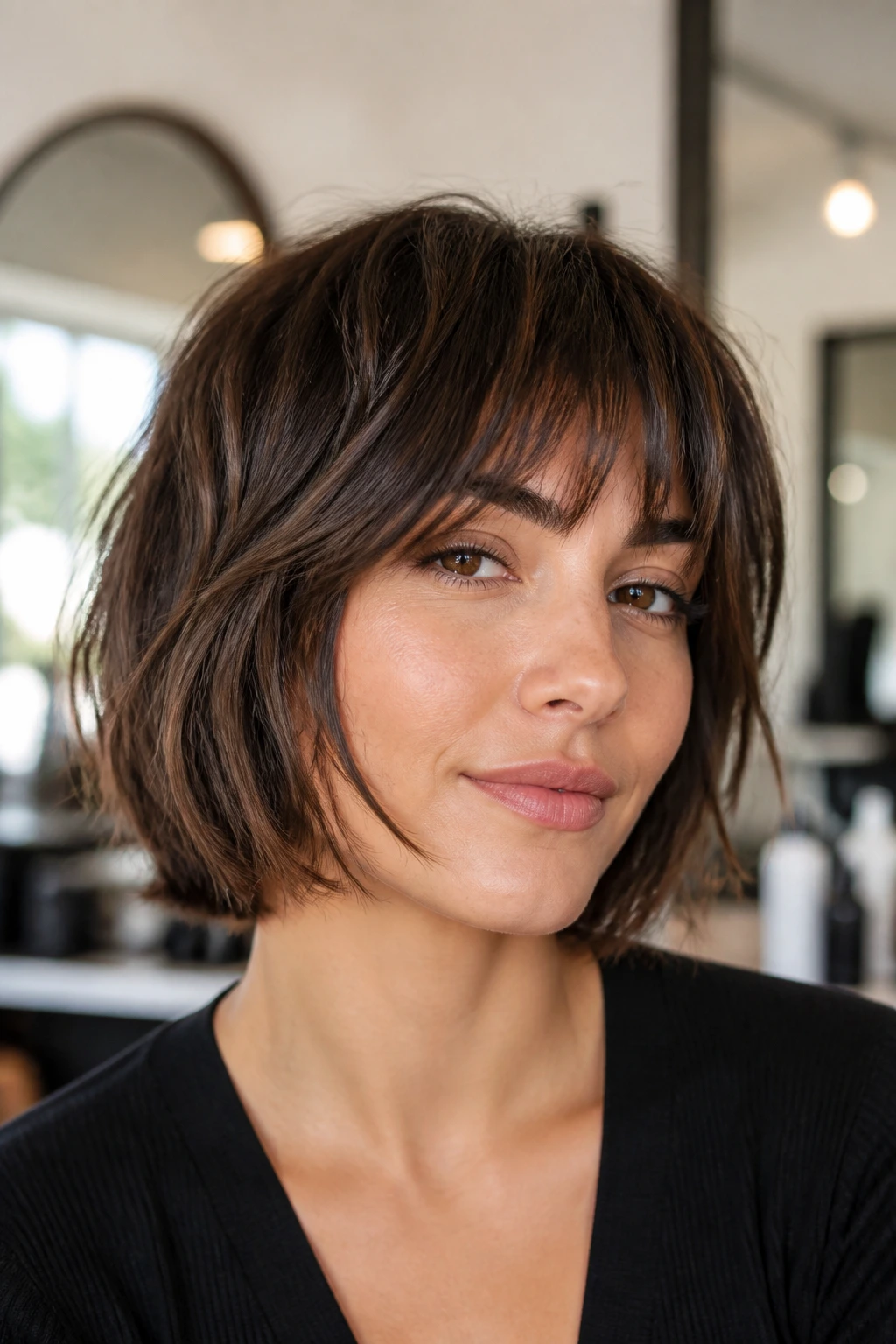
The Italian bob is plush, but the shaggy version takes some of that richness out through the ends. Broken-up bangs stop the front from feeling too solid, which is important on a round face. You still get that expensive, full-looking bob shape, only with more movement and less weight.
It’s a good choice if your hair is medium to thick and you want body without a poof. Ask your stylist to keep the shape slightly longer in front than in back. That subtle angle gives the face room.
14. Tapered Bob with Airy Curtain Fringe

A tapered bob narrows gently as it moves toward the neck, which keeps the silhouette light. Pair that with airy curtain fringe, and the whole cut starts to act like soft architecture around the face. There’s structure here, but not the rigid kind.
The airy fringe is what saves it from looking too dense. You can see skin through the bangs, which sounds like a small detail and isn’t. That bit of spacing matters on a round face because it stops the forehead from being fully covered.
15. Choppy Blunt Bob with Feathered Bangs

This is a nice contradiction: a blunt base with feathered bangs. The blunt line gives the haircut a clean edge, while the bangs keep it from feeling boxy. On round faces, that mix can be useful because you get shape without too much width.
The key is keeping the ends choppy enough that the perimeter doesn’t curl inward like a bowl. A flat iron pass at the front or a quick bend with a brush can keep the line from puffing out at the cheeks. If you like a neater look, this one has enough polish to work.
16. Wedge-Inspired Shag Bob with Face-Framing Layers
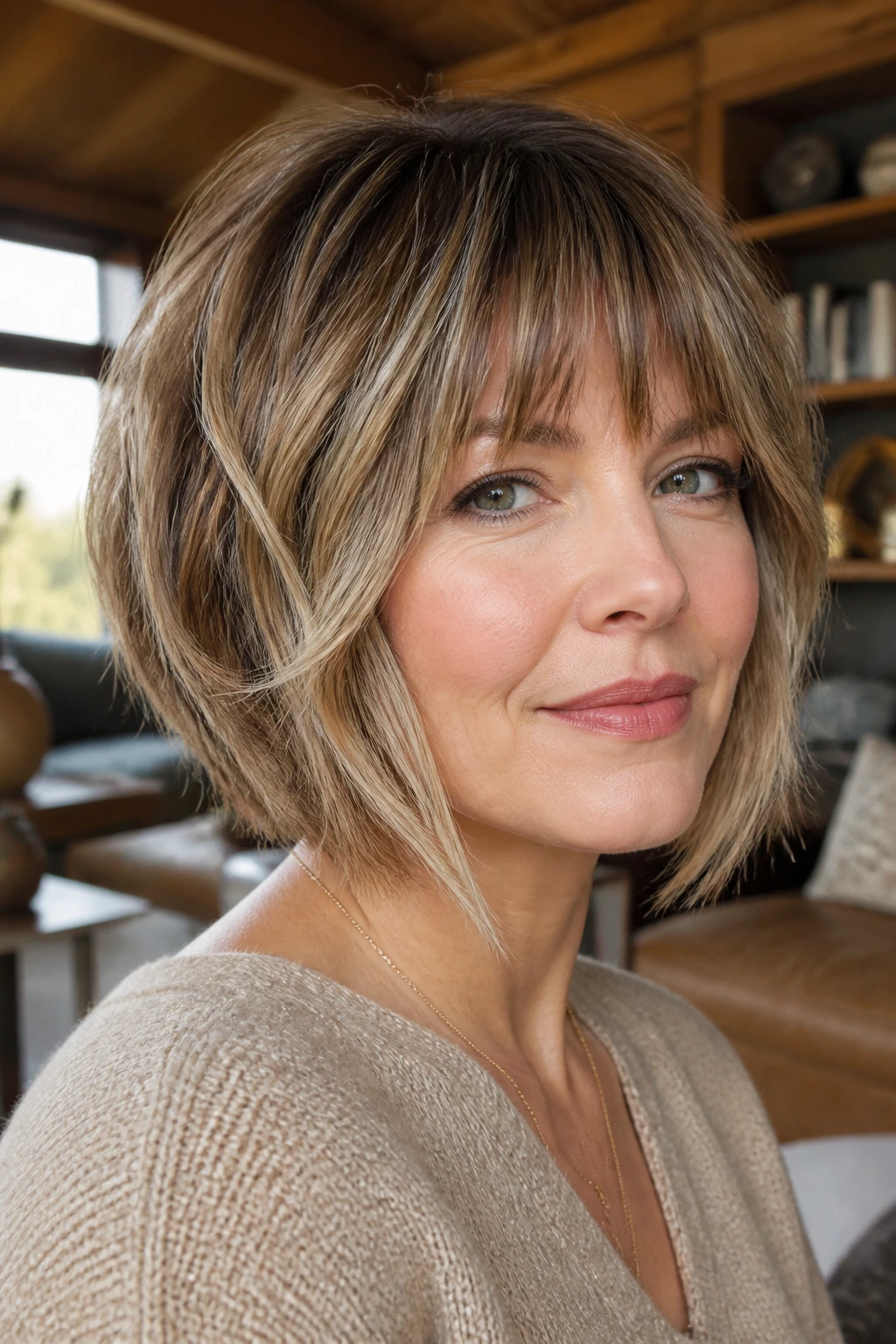
A wedge bob can feel retro, but the shagged-out version brings it forward. The stacked back gives lift, and the face-framing layers cut downward beside the cheeks. That diagonal framing is the whole point. Round faces need some kind of visual pull, and this cut gives it.
Keep the face-framing pieces cheekbone-length or a touch longer. Too short, and you lose the slimming effect. Too long, and the haircut starts looking like an in-between grow-out instead of a deliberate shape.
17. Shaggy Lob Cropped to the Jaw with Piecey Bangs

This one sits on the edge of short and medium. The jaw-length crop keeps it fresh, while the piecey bangs prevent the front from turning into a solid curtain. It’s a nice option if you want a short feel but don’t want to expose too much of the cheek line.
The shape is more forgiving than a blunt chin bob. That matters for round faces, because even a small bit of extra length can soften the widest point. A little tousle at the ends keeps the cut from feeling too neat.
18. Air-Dried Wavy Bob with Bottleneck Fringe

This is for people who want hair that behaves with almost no argument. The cut is built so air-drying works in its favor: the waves separate naturally, the fringe falls in that split bottleneck shape, and the overall look stays loose instead of overdone.
If your hair tends to get fuzzy when it dries on its own, use a light curl cream or mousse while it’s damp, then scrunch once and leave it alone. The round face benefit here comes from the broken-up front and the bend in the lower half of the cut. No hard line, no extra width.
19. Razor-Cut Bob with Shattered Ends and Bangs

A razor-cut bob can look almost too casual when it’s done right, which is the point. The shattered ends keep every piece from sitting in the same place, and the bangs do the same thing at the forehead. You get a lot of movement with very little visible bulk.
This works best on hair that can hold some separation. If the strands are very silky, you may need a dry texture spray to keep the pieces from falling together. That little bit of grit is what keeps the shape alive.
20. Voluminous Crown Bob with Long Curtain Layers
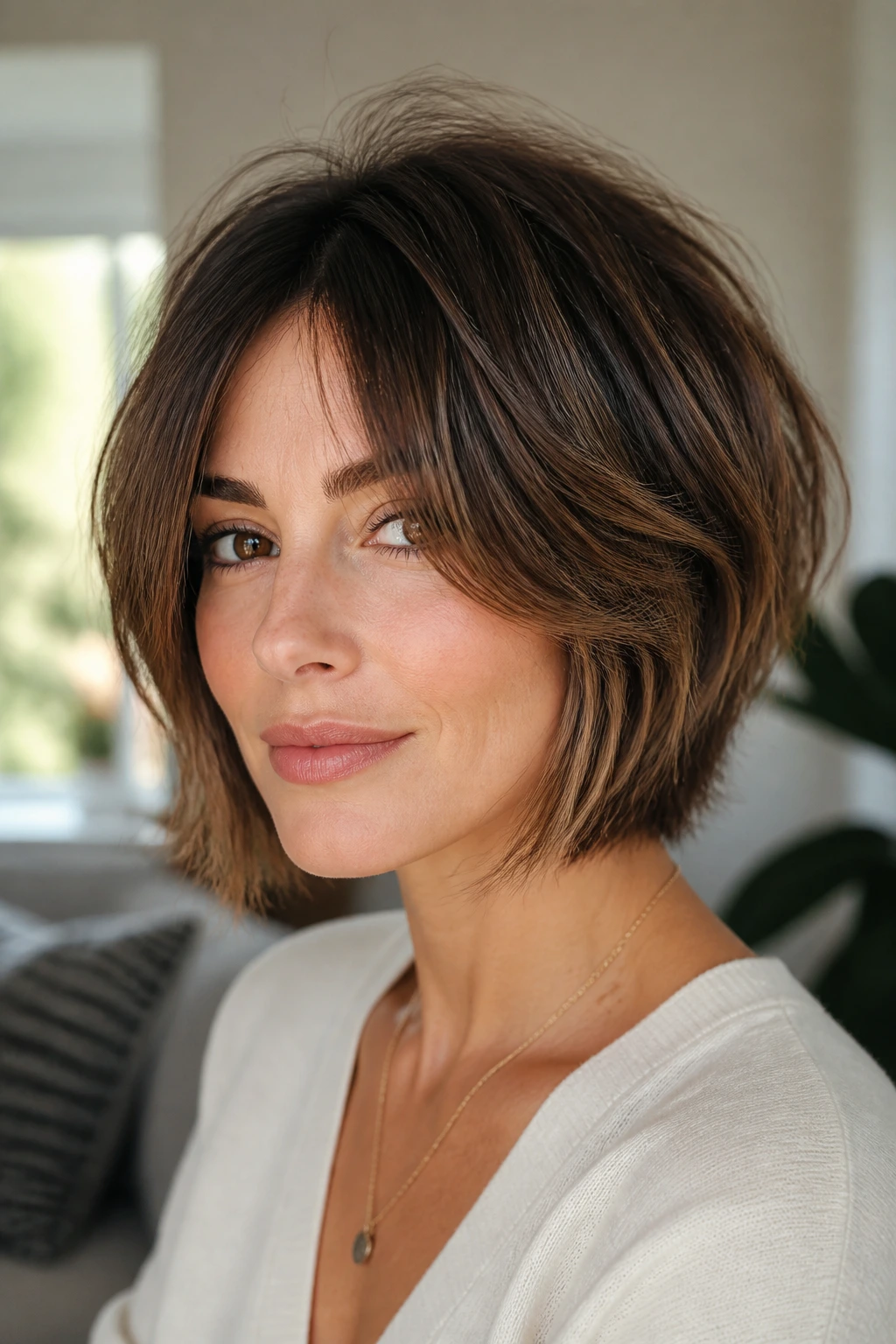
Volume is not the enemy. Volume in the wrong place is. This cut puts lift at the crown, where it helps lengthen the face, and keeps the sides softer. Long curtain layers then fall toward the cheeks without landing as one solid block.
That crown lift matters more than people think. A little height on top changes the whole proportion of a round face, especially when the ends stay loose. If your hair is fine, a root mousse before blow-drying can give you the shape without backcombing.
21. Soft Wolf Bob with Wispy Fringe
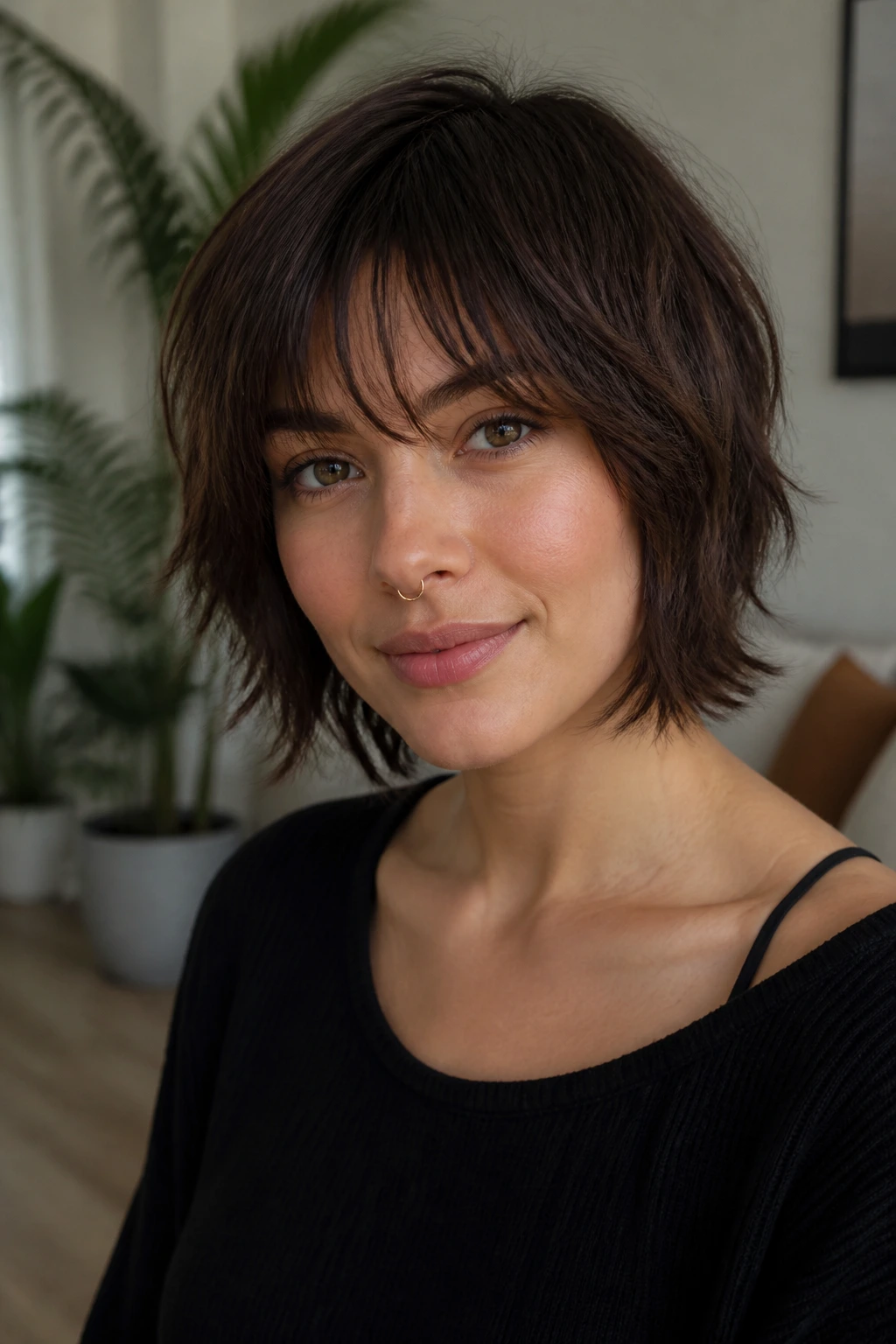
The wolf cut’s shaggier cousin works nicely in bob form when the layers are controlled. A soft wolf bob keeps the crown a touch fuller and the ends feathered, while the wispy fringe keeps the front from feeling heavy. It has a little attitude, but not the extreme spikiness some wolf cuts bring.
Round faces benefit from the broken lines here. Nothing sits in one neat circle. The bangs are light enough to show some forehead, and the layers around the jaw stay loose instead of clinging to the cheeks.
22. Rounded Shag Bob with Side Bangs

A rounded shape can be tricky on a round face, so this cut needs the bangs to do some work. Side bangs create the angle the perimeter doesn’t. The result is softer than a razor cut and less severe than an angular bob, which makes it a good middle ground.
If your face is very full through the cheeks, keep the side bang longer and sweep it back a bit more. That keeps the front open and avoids the “everything hangs at cheek level” problem. It’s a small adjustment, but it changes the whole read of the haircut.
23. Asymmetrical Shag Bob with Angled Bangs

Asymmetry is one of the easiest ways to flatter a round face because the eye never gets stuck in one loop. One side sits a little longer, the bangs angle across the forehead, and the whole cut feels less static. That motion is the point.
This cut does not need to be extreme to work. Even a subtle difference in length can add the right amount of edge. If you want something that looks styled even when it’s a little messy, this is a strong pick.
24. Texture-Heavy Bob with Brow-Grazing Fringe
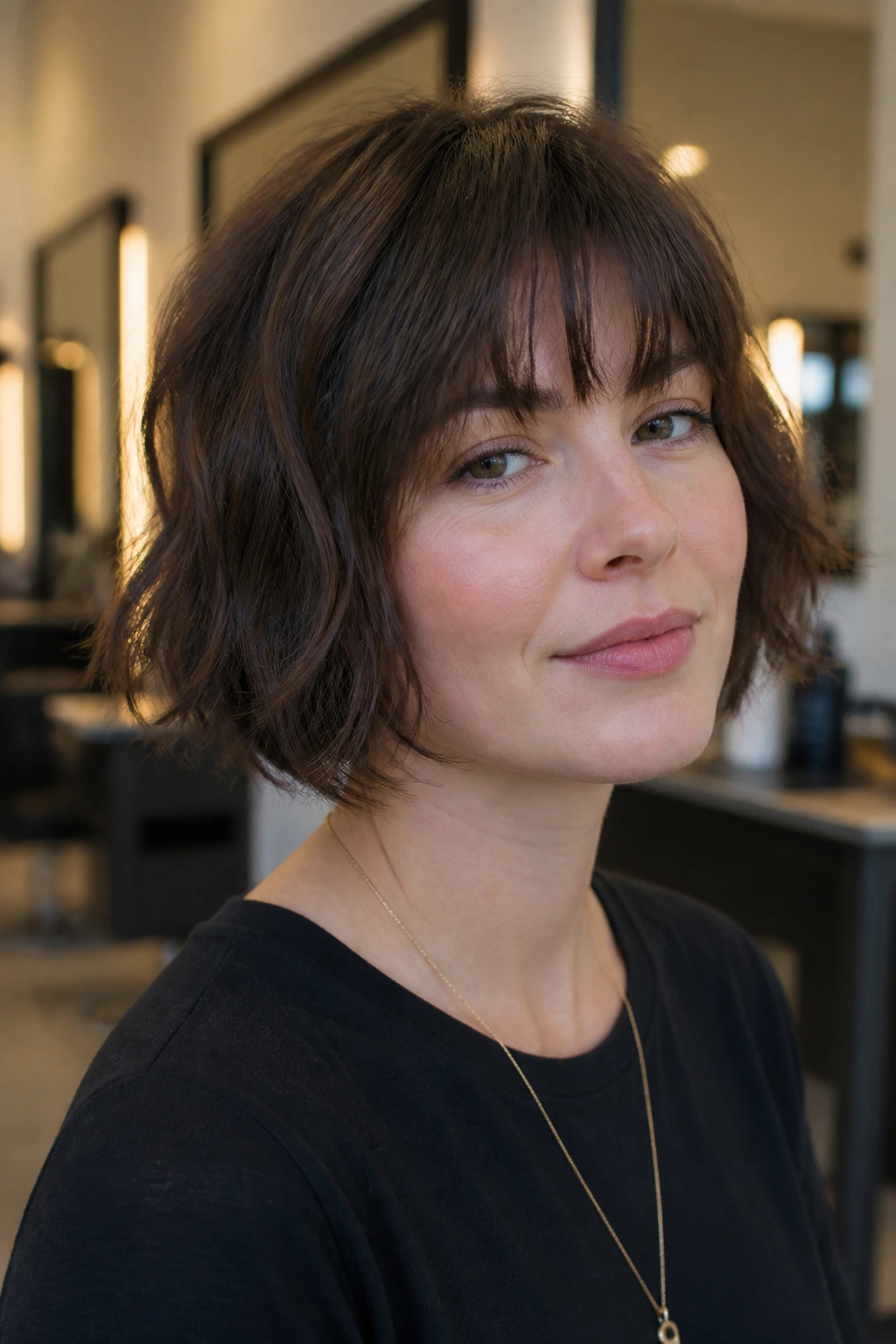
Texture-heavy sounds dramatic, but here it just means the cut depends on separation. The brow-grazing fringe gives coverage without swallowing the forehead, and the choppy body around the sides keeps the shape from feeling dense. On a round face, that lightness is worth more than a perfectly neat outline.
A good styling cream or sea-salt spray helps if your hair is too soft to hold the piecey finish. Don’t overdo it. You want the fringe to move when you blink, not sit in one flat strip across the brows.
25. Low-Maintenance Air-Dry Bob with Face Framing

This is the cut for people who would rather not wrestle with a brush every morning. Face-framing layers keep the shape flattering, and the length stays short enough to feel tidy. If your hair dries with natural texture, this cut can look better on day two than on day one.
The face-framing pieces are doing the slimming work. They drop beside the face instead of curving around it, which helps balance out round cheeks. A tiny amount of leave-in conditioner on the ends is often enough.
26. Glossy Center-Part Bob with Split Bangs

A center part can work on a round face when the bangs split and slide away from the forehead. The key is gloss and movement, not flatness. The bob stays smooth, the fringe breaks open, and the result looks polished without becoming stiff.
This style can be especially good if your hair is naturally straight or lightly wavy. Keep the ends soft, not tucked under too sharply. A subtle bend away from the chin helps the face look longer.
27. Messy Salt-Spray Bob with Light Fringe

This one has beach energy, but not in a cliché way. The salt spray roughs up the ends, the light fringe stays airy, and the overall shape feels casual in a smart way. On a round face, that messiness keeps the outline from turning too round and tidy.
It’s a strong choice for summer humidity or anyone whose hair likes to swell a little. The trick is keeping the fringe light enough that it doesn’t collapse into the forehead. If it does, the whole cut loses its lift.
28. Sculpted Shag Bob with Longer Temples
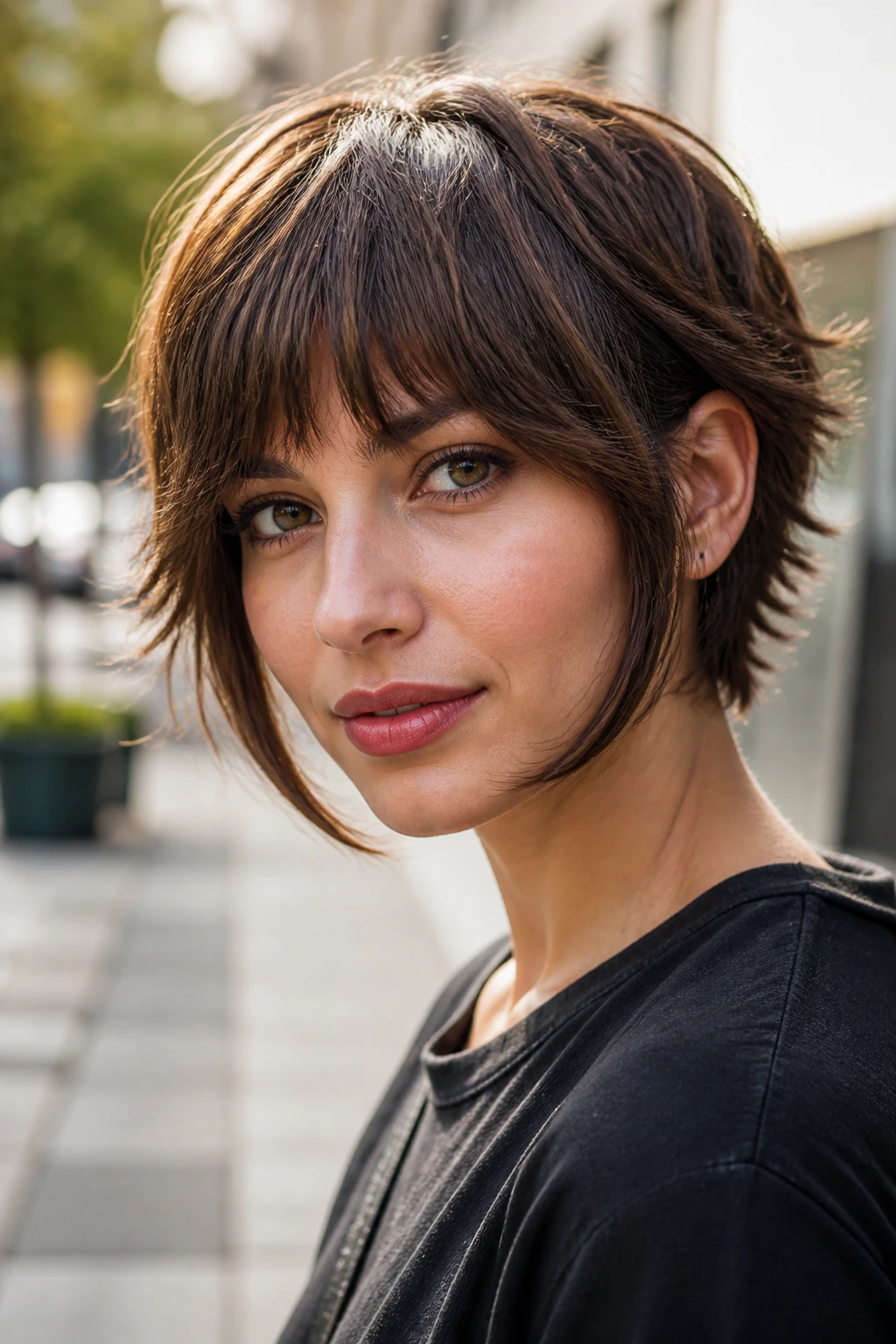
The longer temple pieces are the quiet hero here. They narrow the face visually, especially when the rest of the bob is cropped a bit shorter in the back. The sculpted shape gives you order; the shagging keeps it from feeling stiff.
I like this version for people who want a bob that looks deliberate even on busy mornings. The longer temple pieces can tuck behind the ears or fall forward, and both options work. That flexibility is handy, because some days you want the face open and some days you don’t.
The Shape Behind the Cut
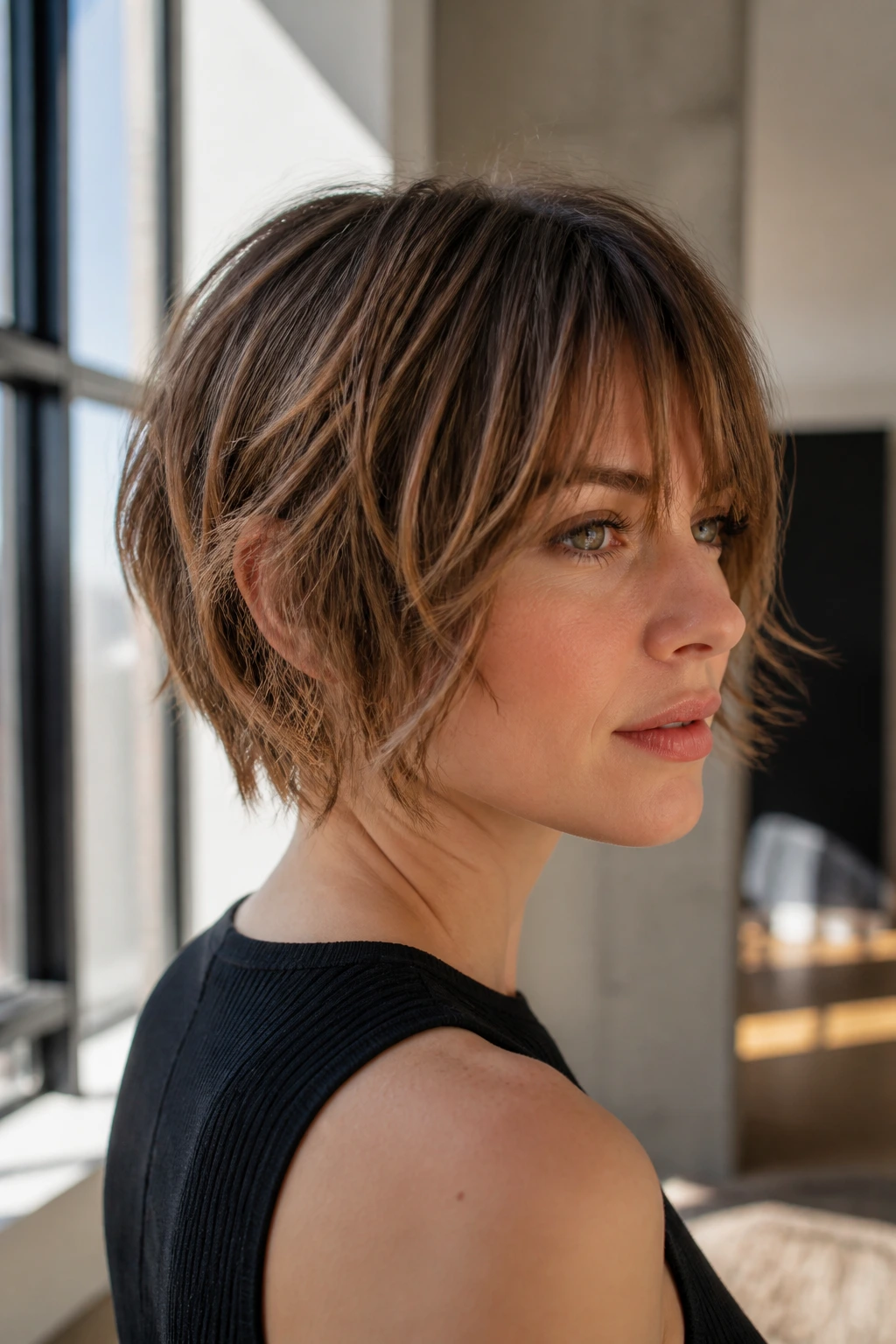
The reason these short shaggy bobs keep showing up in flattering round-face photos is not magic. It’s geometry. The cuts add angles where the face is naturally soft, and they keep the widest part of the hair from sitting right on the widest part of the face.
A good shaggy bob also leaves room for air. That sounds airy and vague, but I mean it in a very literal way: space between the pieces, separation in the fringe, lift at the roots, movement at the ends. If the haircut looks like one solid shell, the face gets boxed in. If it looks like three or four soft layers stacked with intention, the whole thing breathes.
The Brushes, Sprays, and Creams That Make the Texture Behave
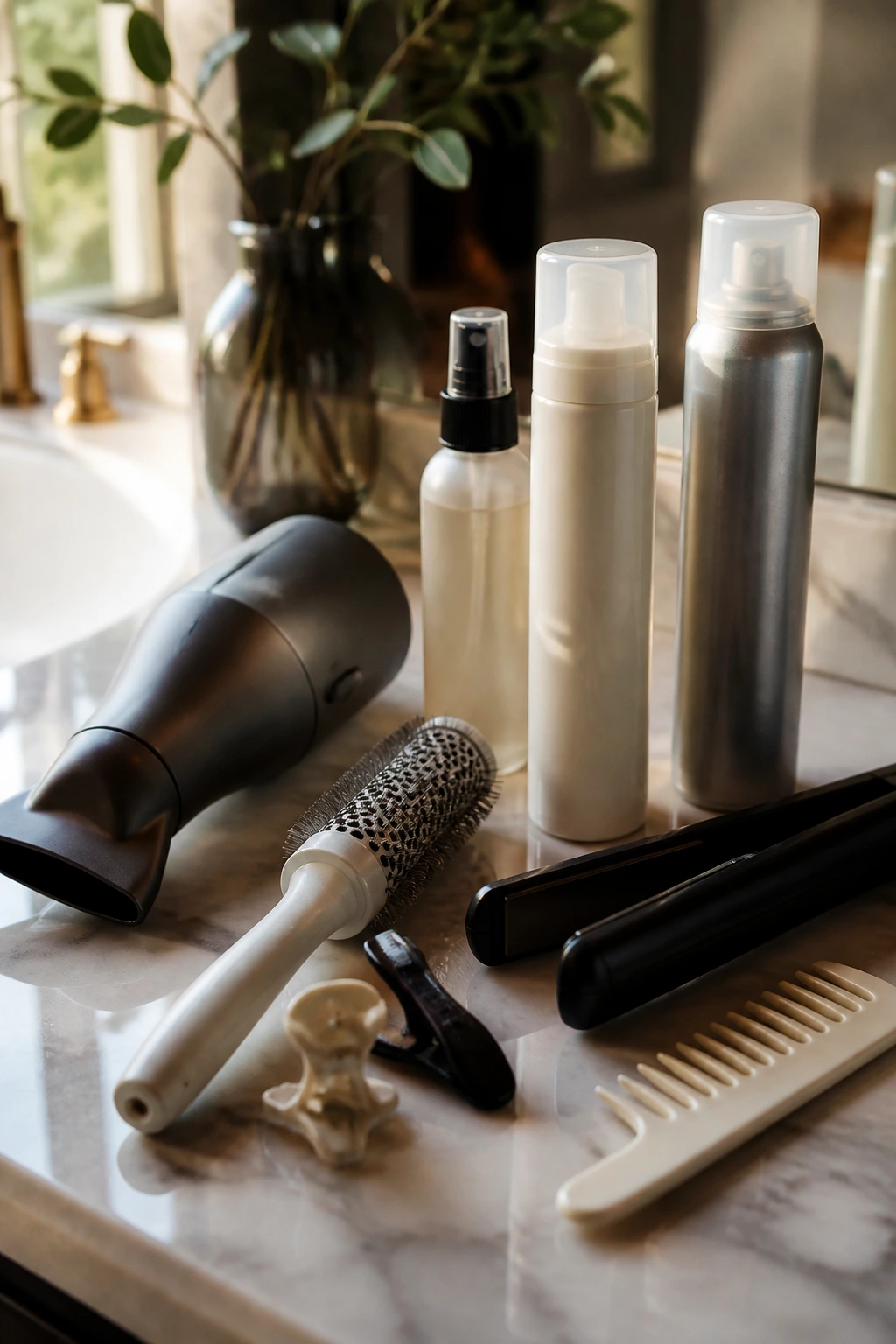
Some products are worth owning. Others are just expensive clutter.
For this haircut, I’d rather have five useful things than a drawer full of shiny ones you never touch:
- A blow dryer with a nozzle: It helps aim the air downward or upward where you need it, which keeps the top smooth and the crown lifted.
- A small round brush, around 1 to 1.5 inches: Best for bending bangs and giving the front a curve without turning the ends under too hard.
- Texturizing spray: Use it on dry hair at the mid-lengths and ends to separate layers and keep the shag piecey.
- Light mousse or root lift spray: Fine hair usually needs this at the roots, not a heavy cream that smothers the movement.
- Dry shampoo: Helpful on day two when the fringe starts to look oily or the crown goes limp.
- A flat iron or small curling iron: Optional, but handy for pushing face-framing pieces away from the cheeks.
- Wide-tooth comb and a clip set: Not glamorous, but useful for sectioning the bangs and keeping the top clean while you dry underneath.
Shopping for products is less about the label on the bottle and more about what your hair actually does. Fine hair wants airy hold. Coarse hair often wants a little cream or leave-in before the texture spray so it doesn’t get brittle. Curly hair needs slip and moisture first, then shape. If a product leaves your bangs sticky by lunch, it’s too heavy for this cut. Simple as that.
How to Ask Your Stylist for the Right Version
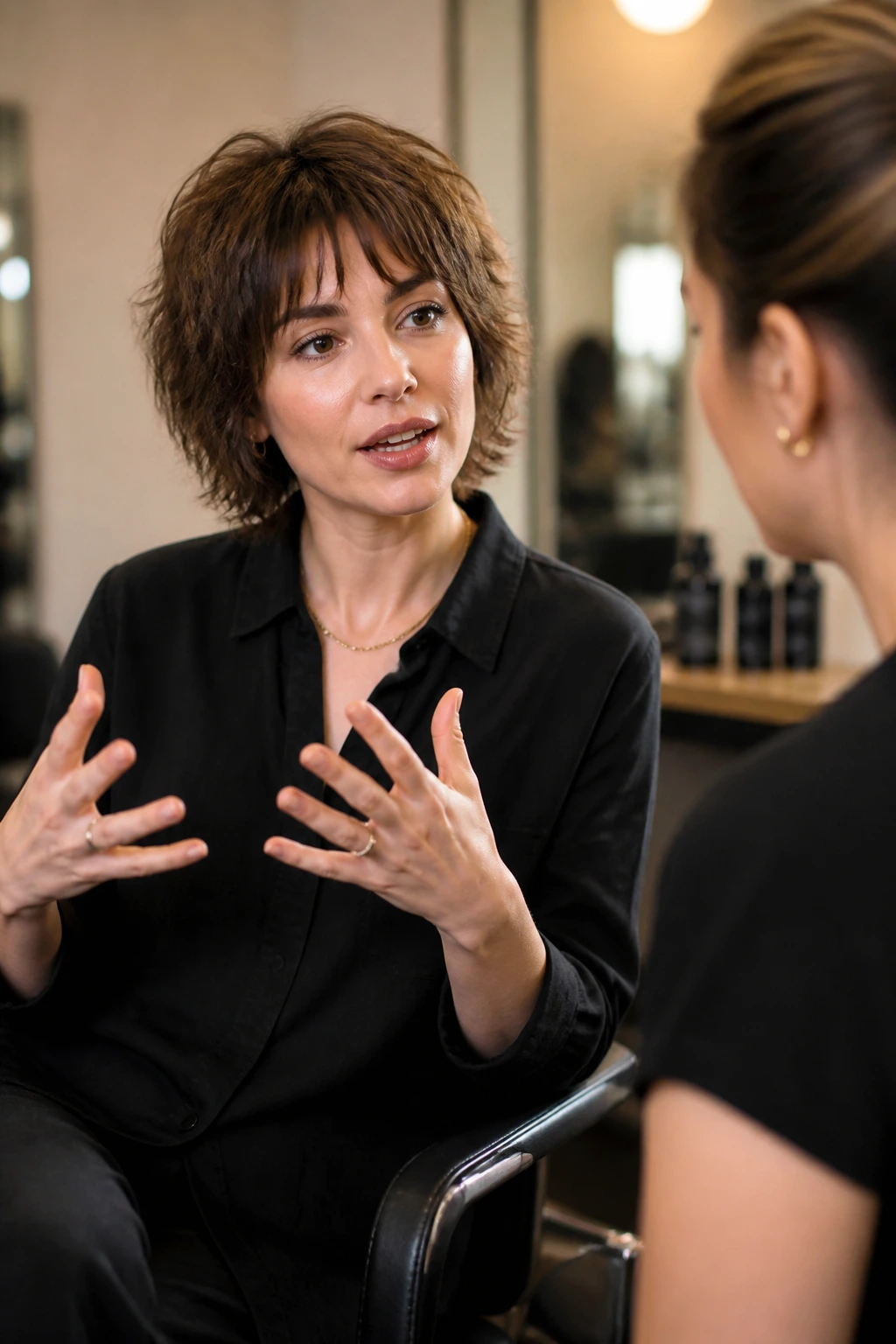
Bring photos, yes, but don’t stop there. Say what you want the haircut to do. That matters more than name-dropping “shaggy bob,” because one person’s shag is another person’s triangle.
Use plain instructions: “I want the length to hit between the jaw and chin, with softness around the face and bangs that don’t sit as one solid line.” If you have a round face, mention whether you want to make it look longer, slimmer, or just a little more angular. Those goals change where the layers should sit.
A few useful phrases:
- “Keep the bulk off the sides.”
- “I want lift at the crown.”
- “Can the bangs open around the center?”
- “Please don’t let the fringe stop straight across the cheekbones.”
That last one saves a lot of regret.
Styling It at Home Without Fighting the Cut

The easiest way to ruin a shaggy bob is to try to flatten it into obedience. Don’t. The cut needs some direction, not control.
Start with damp hair and work a light mousse or leave-in through the roots and mid-lengths. Rough dry until it’s about 80 percent dry, then use a round brush or your fingers to push the fringe where you want it. If the front pieces are too straight, bend them away from the cheeks. If they’re already wavy, leave them alone and just shape the bangs.
Day two is often better than day one. A mist of water on the fringe, a bit of dry shampoo at the crown, and a quick scrunch at the ends usually brings the shape back. You do not need to restyle the whole head. Just wake up the pieces that collapsed.
Maintenance, Trims, and Grow-Out

This style stays flattering longer than many blunt cuts, but it still needs trims. Bangs usually need a touch-up every 3 to 5 weeks if you wear them full across the forehead or at brow length. The bob itself can often go 6 to 8 weeks before it starts losing the outline.
The grow-out phase is part of the charm. Shaggy ends soften as they get longer, and the bangs can be pushed to the side or split more easily. That said, if the front gets too heavy, the face can start to look wider again. When that happens, it’s usually not the length that’s the problem. It’s the weight sitting too low around the cheeks.
If you color your hair, keep an eye on the ends. Lightened shaggy bobs can fray faster at the perimeter because the texture encourages movement. A little trim goes a long way.
Common Mistakes That Make the Cut Work Against a Round Face
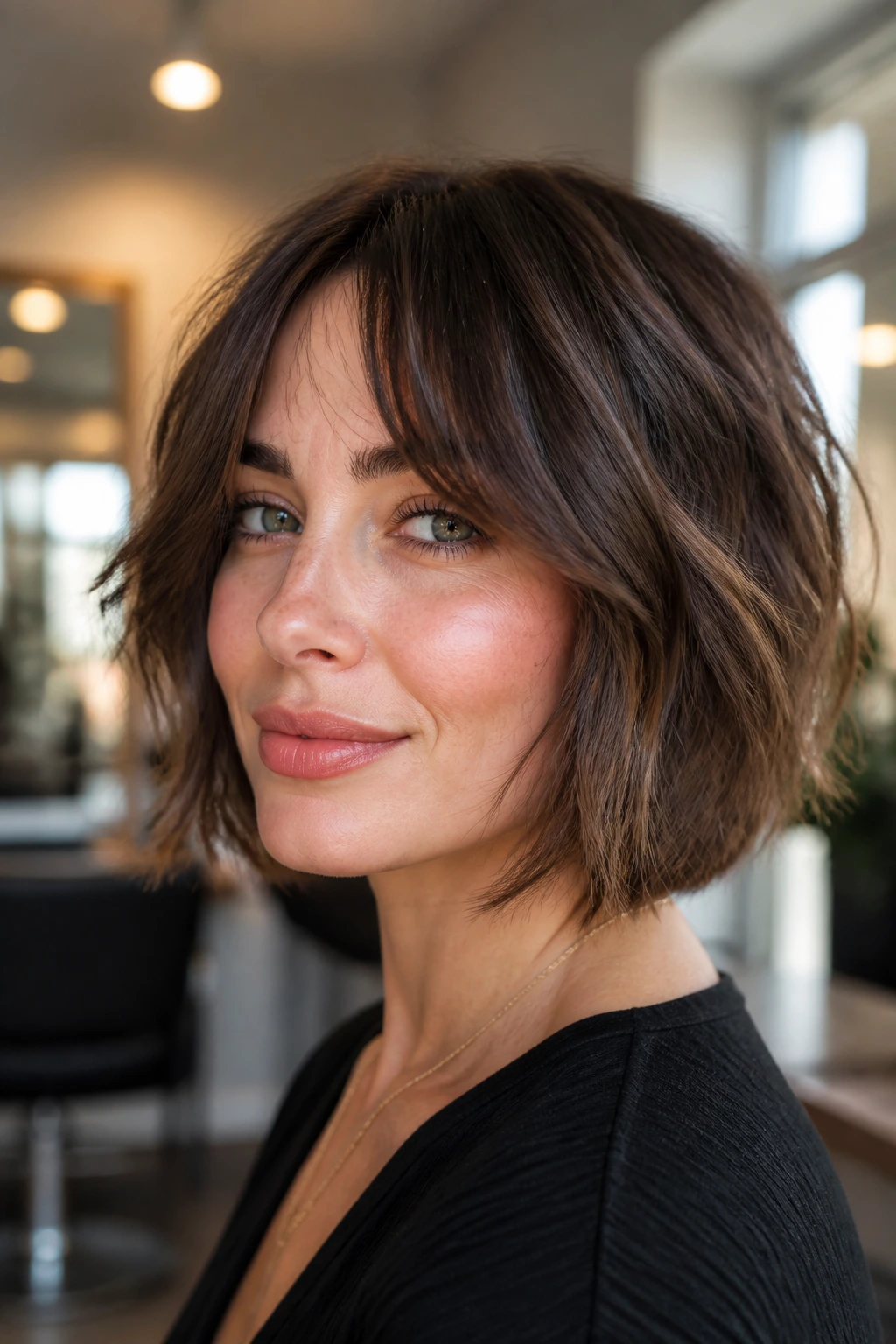
Mistake: bangs that stop in a hard horizontal line.
The symptom is obvious. The face suddenly feels shorter and wider. Fix it by asking for curtain, bottleneck, or softly broken bangs instead of one straight fringe.
Mistake: too much width at cheek level.
This happens when the sides puff out on thick hair or when fine hair gets layered too bluntly. Ask for internal shaping and keep the outer line slightly longer in front.
Mistake: over-styling the ends inward.
A bob curled too neatly under can act like a bowl around the face. A soft bend out, or just a broken texture through the ends, usually works better.
Mistake: skipping crown lift.
Flat roots make a round face look fuller. A little root mousse or quick blow-dry lift at the top changes the balance fast.
Mistake: choosing bangs that are too heavy for your density.
Dense bangs on a dense bob can swallow the forehead. If your hair is thick, ask for weight removal inside the fringe so it stays airy.
Variations and Adaptations to Try
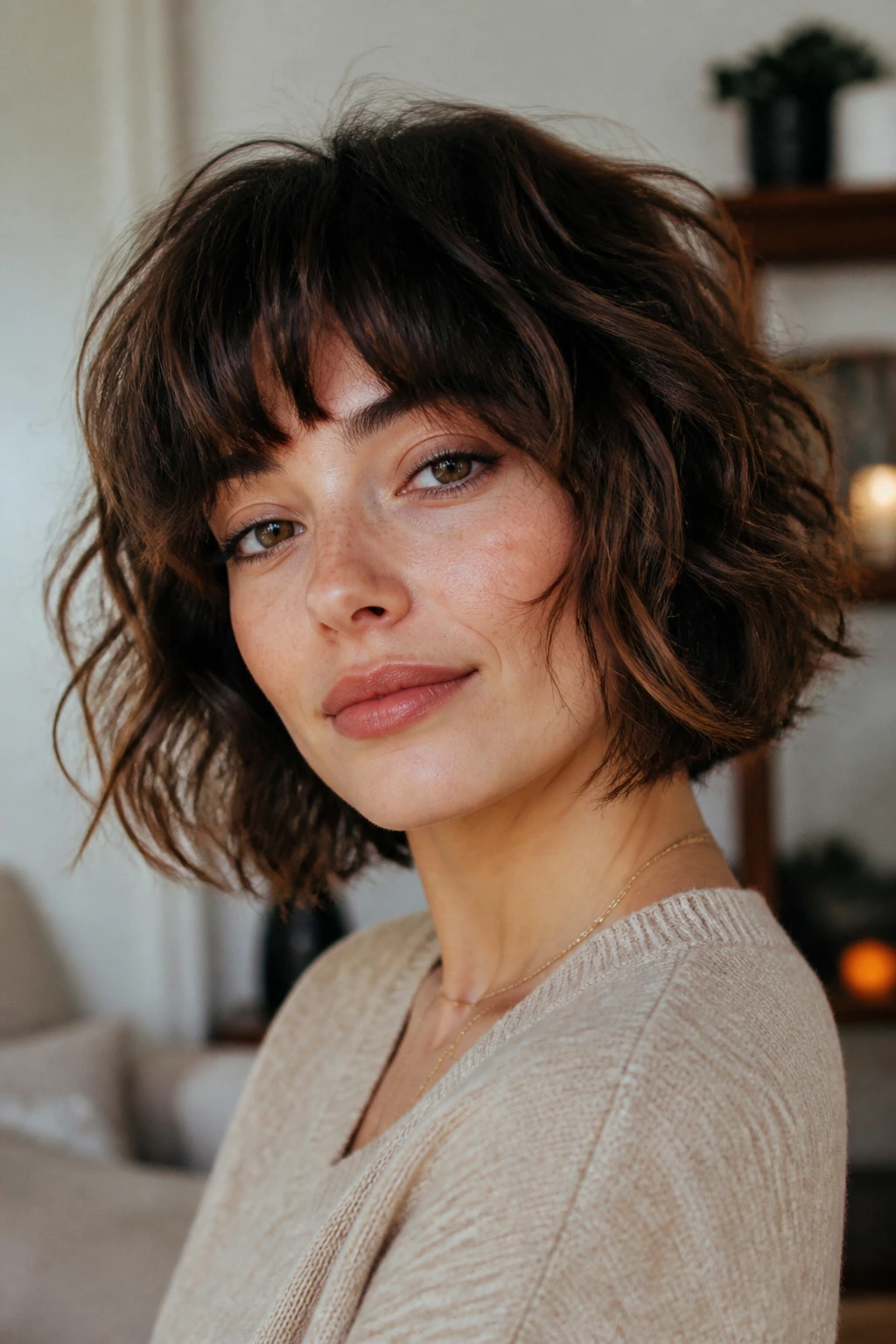
Soft Curly Version: Keep the bob short, but let the curls sit a little longer around the face so the pattern can spring without shrinking too much. A curl cream and diffuser are enough; don’t chase perfect separation.
Fine-Hair Lift Version: Ask for lighter layers, a shorter crown, and a fringe that skims the brows rather than covering them fully. The goal is to keep the cut from collapsing by midday.
Thick-Hair Control Version: Remove bulk through the inside of the bob and keep the outside line a touch longer. This stops the shape from ballooning and gives the bangs room to move.
Softer Grow-Out Version: Start with curtain bangs and a jaw-to-chin length so the shape can drift longer without looking awkward. This is the version I’d pick if you hate frequent trims.
Edgier Editorial Version: Go with micro-bangs or a stronger asymmetrical fringe, but keep the sides shattered and light. That contrast keeps the cut from reading heavy.
Frequently Asked Questions

Do short shaggy bobs with bangs make a round face look wider?
They can, if the bangs are blunt and the sides sit full at cheek level. The flattering versions use angle, texture, and some length under the chin to keep the face from reading too circular.
Are curtain bangs better than straight bangs for round faces?
Usually, yes. Curtain bangs open the center of the forehead and taper toward the cheeks, which gives a more lengthened look than one straight bar across the brow.
Can curly hair pull off a shaggy bob with bangs?
Absolutely, but the fringe needs to be cut for curl shrinkage. Curly bangs should be shaped to the pattern and kept light enough that they don’t form a dense curtain.
What if my hair is very fine?
Keep the layers soft and ask for root lift through the crown. Heavy bangs or too many short layers can make the style fall flat, which is the one thing fine hair does not need here.
How often do I need a trim?
The bangs may need cleanup every 3 to 5 weeks, while the bob itself can usually go 6 to 8 weeks. If the fringe starts touching the lashes and getting oily fast, it’s time.
Can I wear this cut without styling tools?
Yes, if your hair has natural wave or texture. The best low-effort versions are the air-dry bob, the soft wolf bob, and the shag with bottleneck bangs, because they’re built to look a little undone.
Will a center part work on a round face?
It can, as long as the fringe is split and the layers keep the sides light. A flat center part with one heavy curtain of hair on each side usually adds width; a split fringe with movement does not.
Which version is the safest if I’m nervous about going too short?
The collarbone shag bob and the shaggy lob cropped to the jaw are the easiest entry points. They give you the shape and fringe benefits without committing to a very short perimeter.
The Shape That Stays Moving
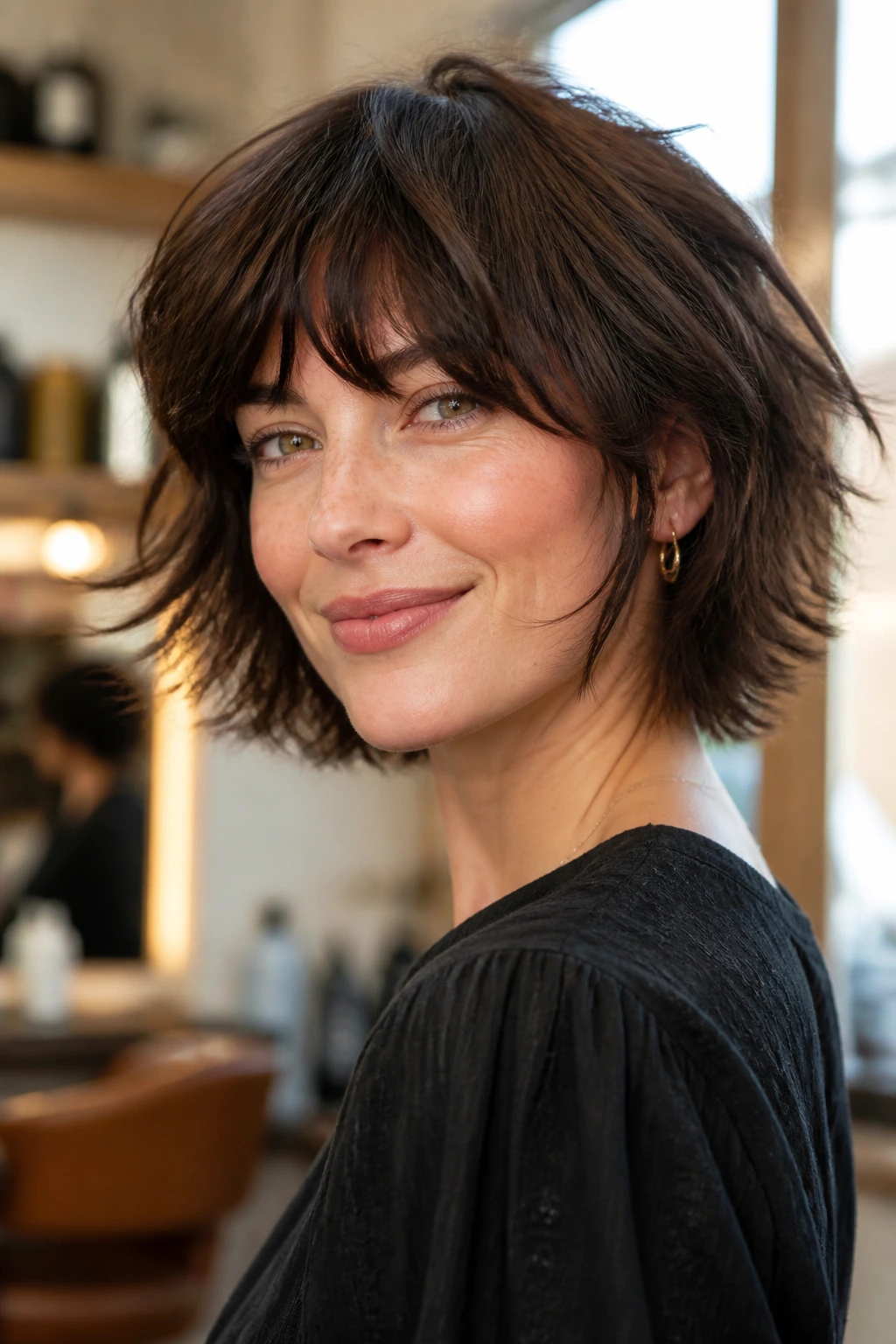
The best short shaggy bob on a round face never looks frozen. It bends, breaks, and shifts a little when you move, and that’s exactly why it works. The bangs soften the front, the layers keep the sides from puffing out, and the length gives the face some breathing room.
If you’re heading to the salon, bring a photo of the shape you want, but also describe the feeling: lighter at the cheeks, longer in the front, softer through the fringe. That’s the part that keeps the haircut from turning into a blunt little ball. And once you find the right version, it’s the kind of cut that makes getting dressed easier because the hair is already doing some of the work.
