



Thin hair changes the math. A cut that looks chic on a thicker head of hair can turn see-through fast when the ends start feathering out, which is exactly why blunt bob cuts for thin hair keep earning their place in real salons. The line does the heavy lifting. Keep the edge clean, and the whole shape reads denser before you touch a single product.
There’s also a useful distinction people skip over: thin hair usually means less density, while fine hair means each strand is smaller in diameter. You can have one without the other. That matters here, because a blunt perimeter helps both problems in different ways — it gives sparse hair a firmer outline and gives silky fine hair a stronger edge so it doesn’t melt into nothing by lunchtime.
The sweet spot is almost never “more layers.” That’s the trap. A blunt bob wants a solid hem, a smart length, and a part that works with your growth pattern instead of fighting it. Get those three things right and the haircut stops behaving like a compromise and starts behaving like a shape with purpose. The good ones below do exactly that, each in a slightly different way.
Why These Blunt Bob Cuts Make Thin Hair Look Denser
-
A hard edge creates the illusion of bulk: When the last inch of hair stays one length, the eye sees a thicker line instead of wispy ends that taper off to nothing.
-
The right length changes everything: A chin-length bob, a jaw-skimming cut, and a collarbone lob all read differently on thin hair because each one lands on a different part of the neck and face.
-
Parting is not a small detail: A center part can make hair look sleek and intentional, while a deep side part can lift the crown and steal a little volume from the flatter side.
-
Less texture usually helps more than more texture: On thin hair, too much slicing or razor work often makes the bottom edge look broken and soft, which is the last thing you want.
-
These cuts are built for clean styling: A round brush, a flat iron, or even a careful air-dry can keep the hem in one piece. That’s the whole point.
-
They grow out in a readable way: A blunt bob usually looks “grown out” instead of “ruined” for a few weeks, which is a gift if you do not want to live in the salon chair.
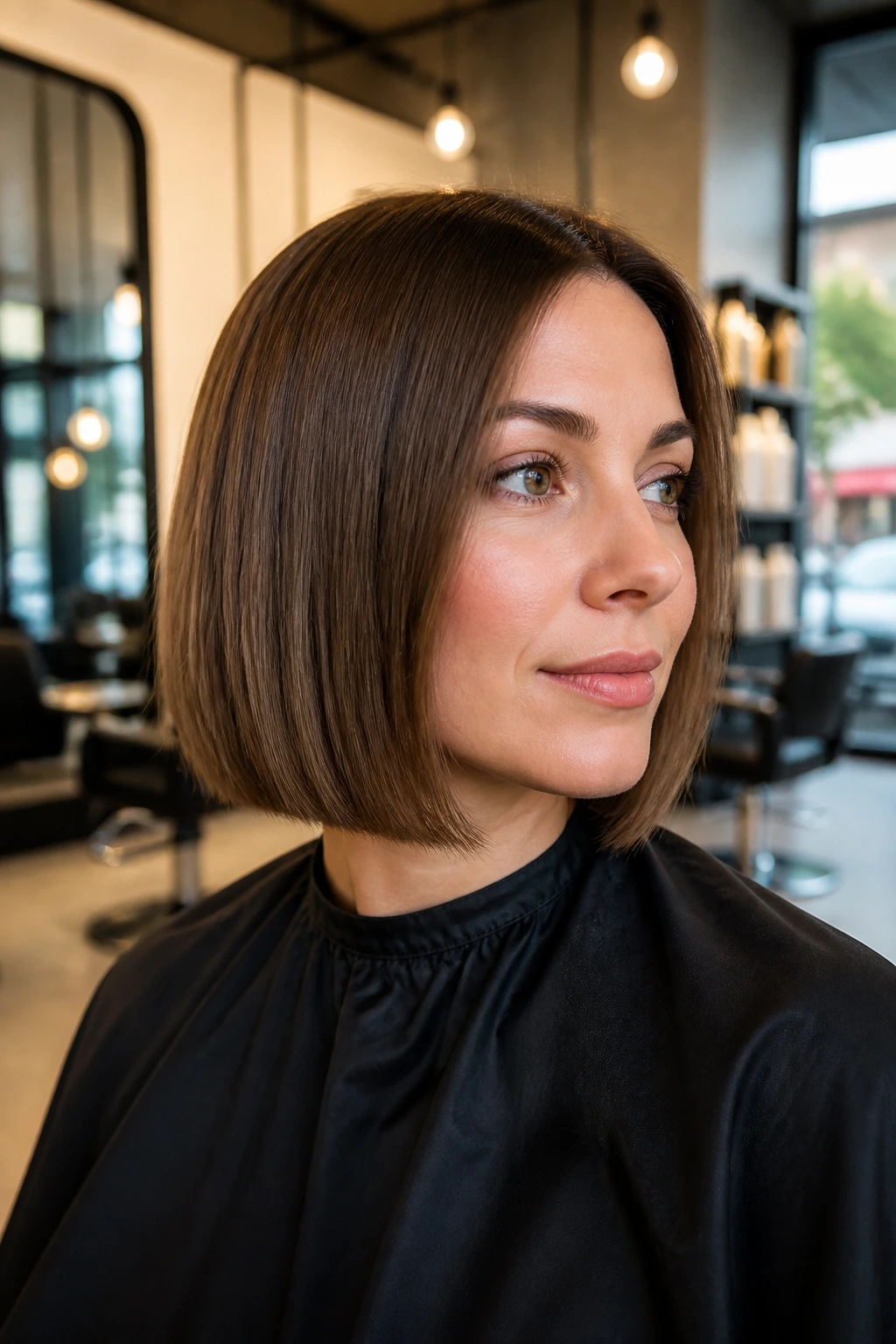
1. Chin-Grazing Classic Blunt Bob
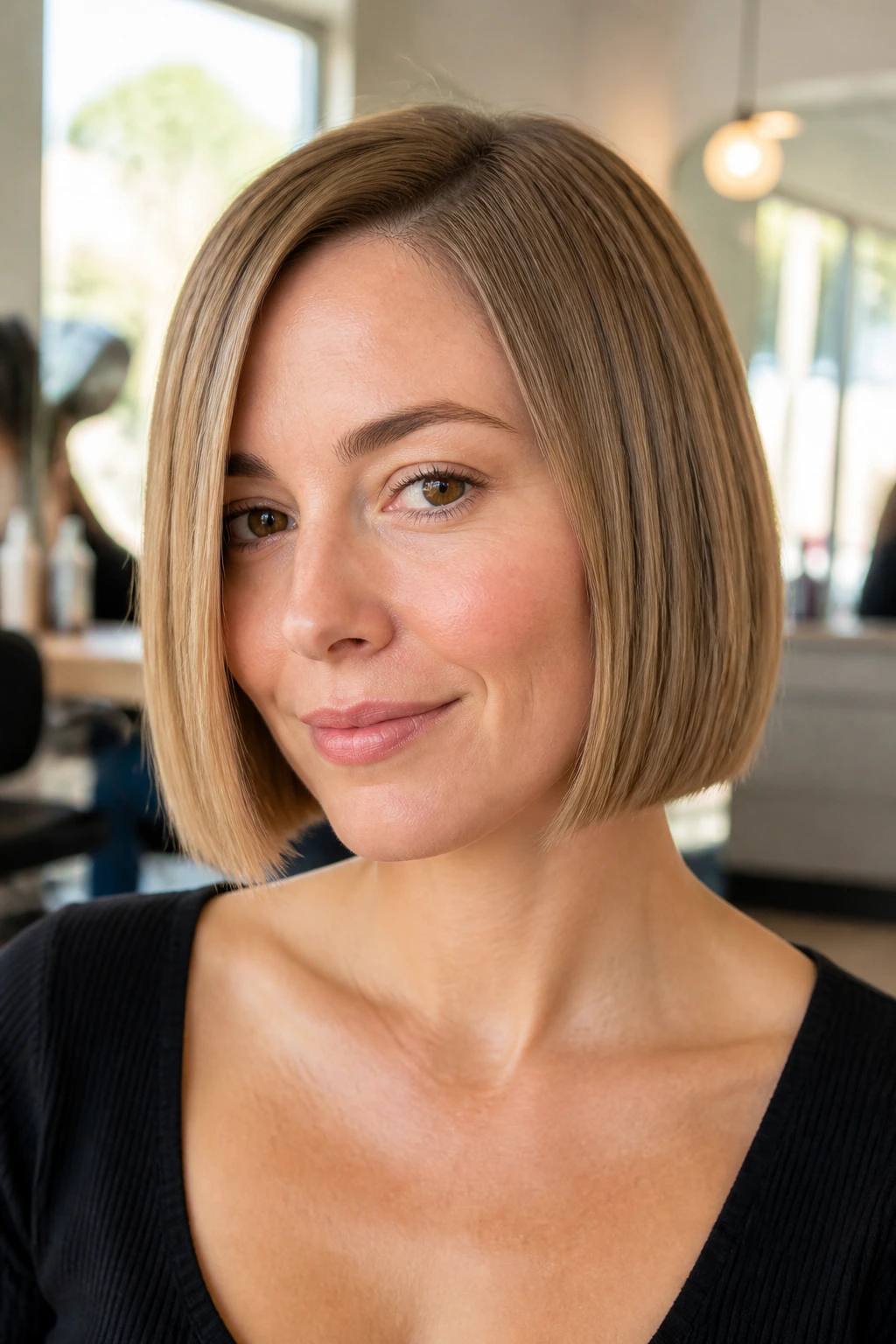
This is the version I’d hand to someone who wants the safest, smartest starting point. The hem lands right at the chin, the ends stay squared off, and the whole silhouette sits in one clean block instead of tapering into airy bits. On thin hair, that block matters. It gives the eye a solid finish.
The chin length also does a nice trick on the neck and jawline. It makes the haircut feel deliberate, not accidental, and it gives you enough length to tuck one side behind the ear without the shape collapsing. Keep the part slightly off center if your crown is flat. Straight down the middle can work, but a tiny shift often gives the front a little more lift.
Best for: anyone who wants a blunt bob that looks fuller without flirting with micro-length.
Styling note: blow-dry the ends under with a medium round brush so they sit like a neat shelf, not a flip.
2. Collarbone Blunt Lob
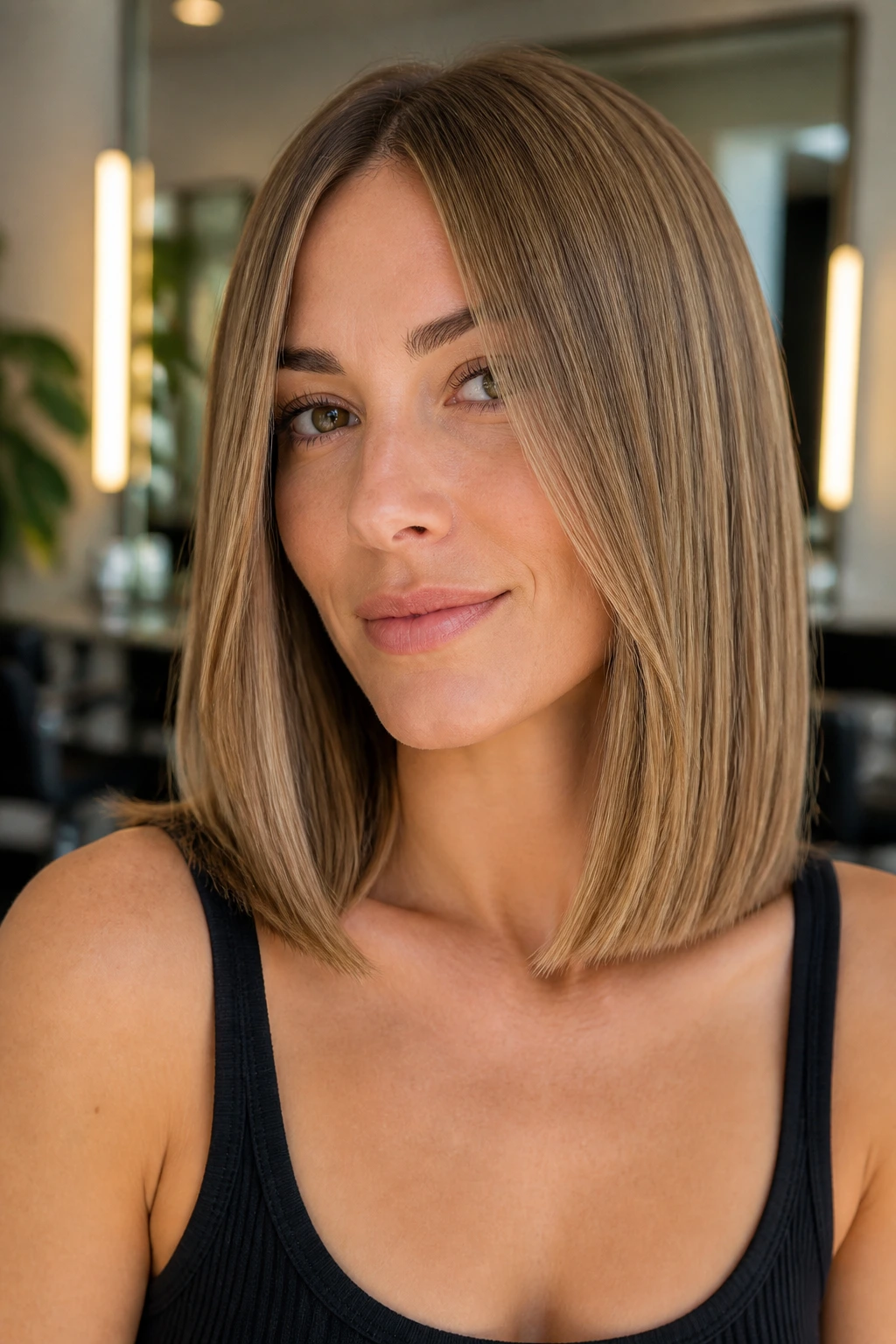
A collarbone-length lob gives thin hair a little more movement while still keeping the perimeter blunt. That extra inch or two can be useful if you hate short hair touching your cheeks, and it gives the cut a longer line through the neck. It also grows out more slowly, which matters if you do not want to trim every month.
The catch? It has to stay honest. If the ends get choppy or overly textured, the longer length starts to look stringy. I prefer this lob when the hair is blow-dried smooth and the front pieces skim the collarbone in one continuous line. It feels modern without trying too hard.
- Best for: thin hair that needs a little more swing and face-framing room.
- Ask for: one length through the bottom with very light internal weight control, not heavy layering.
- Style it with: a heat protectant, a paddle brush, and a final pass with a flat iron on the ends only.
3. Center-Part Precision Bob
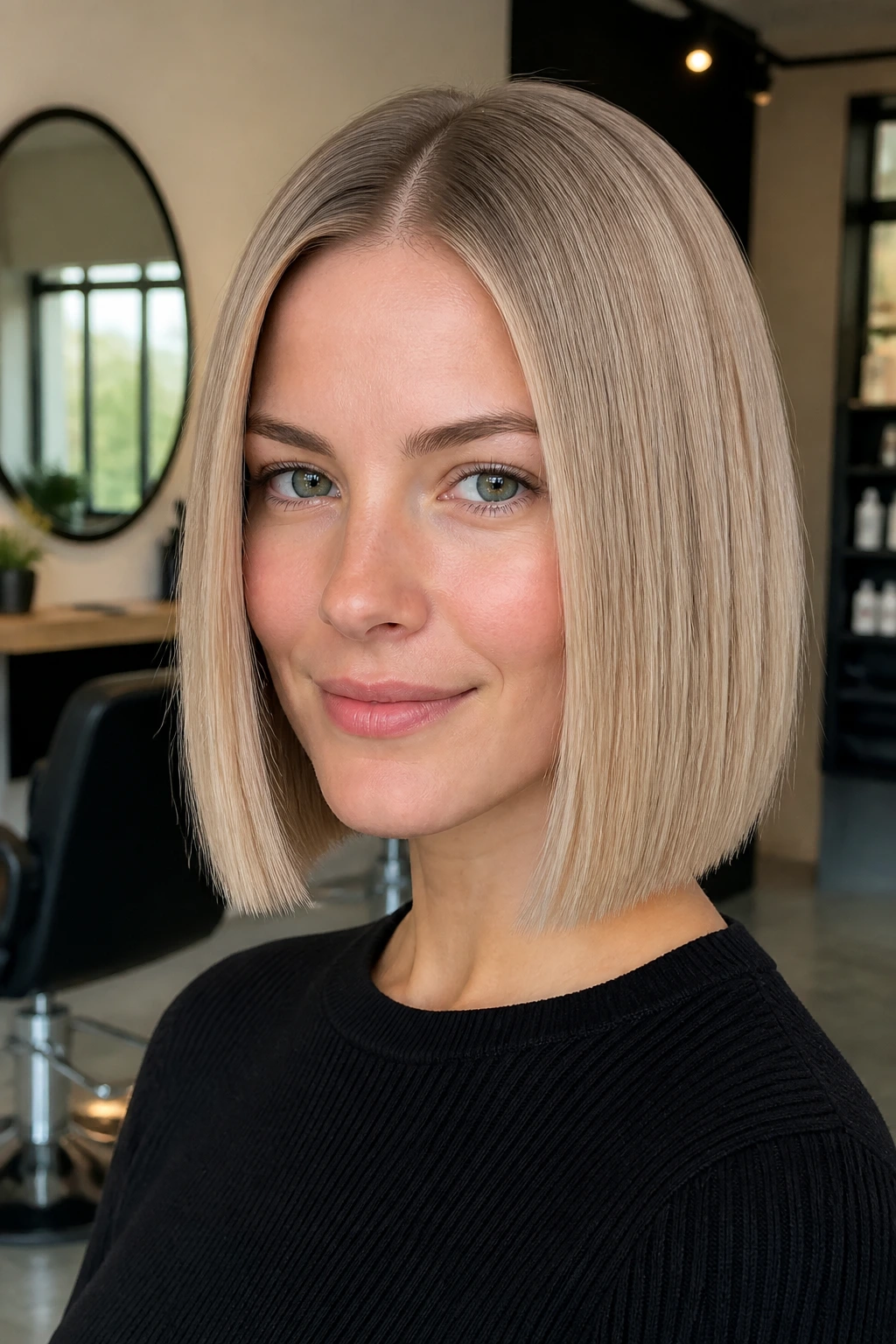
Why does a center part work so well here? Because symmetry makes a blunt line look sharper. When the hair falls evenly on both sides, the perimeter reads like a deliberate shape, not a fallback cut. That’s useful for thin hair because the eye notices the outline first and the density second.
This version looks especially good when the ends are cut absolutely straight and the crown is dried forward, then flipped back into place. You do not need a ton of root spray. You need a clean part, a dry scalp, and enough polish that the cut line stays visible. If your face is longer, this bob can feel balanced and slightly graphic in the best way.
Why It Flatters Thin Hair
The center part splits the visual weight evenly, which makes the sides feel fuller than a deep part sometimes does. It also works well if your hair naturally falls flat on one side, because the center line resets the whole shape. No drama. Just clean geometry.
4. Deep Side-Part Blunt Bob
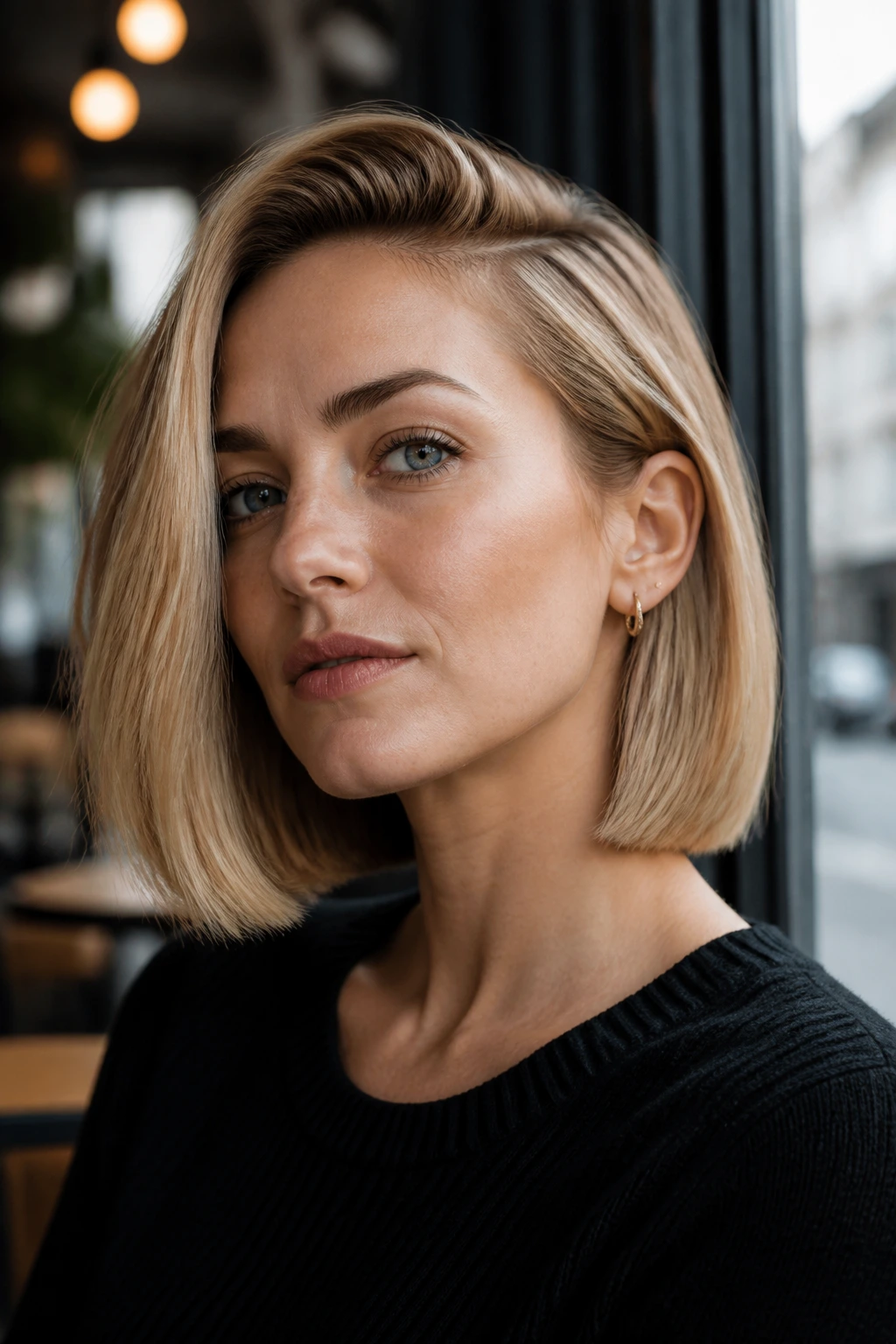
If your crown goes limp the minute you stop staring at it, a deep side part is a good move. The shift creates lift at the roots on the heavier side and gives the opposite side a strong sweep, which makes thin hair look less pasted to the scalp. It’s one of those little changes that looks bigger than it sounds.
The cut itself can stay one length. That’s the useful part. You are not relying on layers to fake volume; you are letting the parting do the work. I like this bob on hair that has a little natural bend, because the side sweep keeps the shape from feeling too severe. It also plays nicely with statement earrings.
Best for: flat crowns, rounder faces, and anyone who likes a little movement near the forehead.
Pro move: set the part while the hair is still damp. Once it dries in the wrong direction, it’s annoying to fix.
5. Micro Blunt Bob
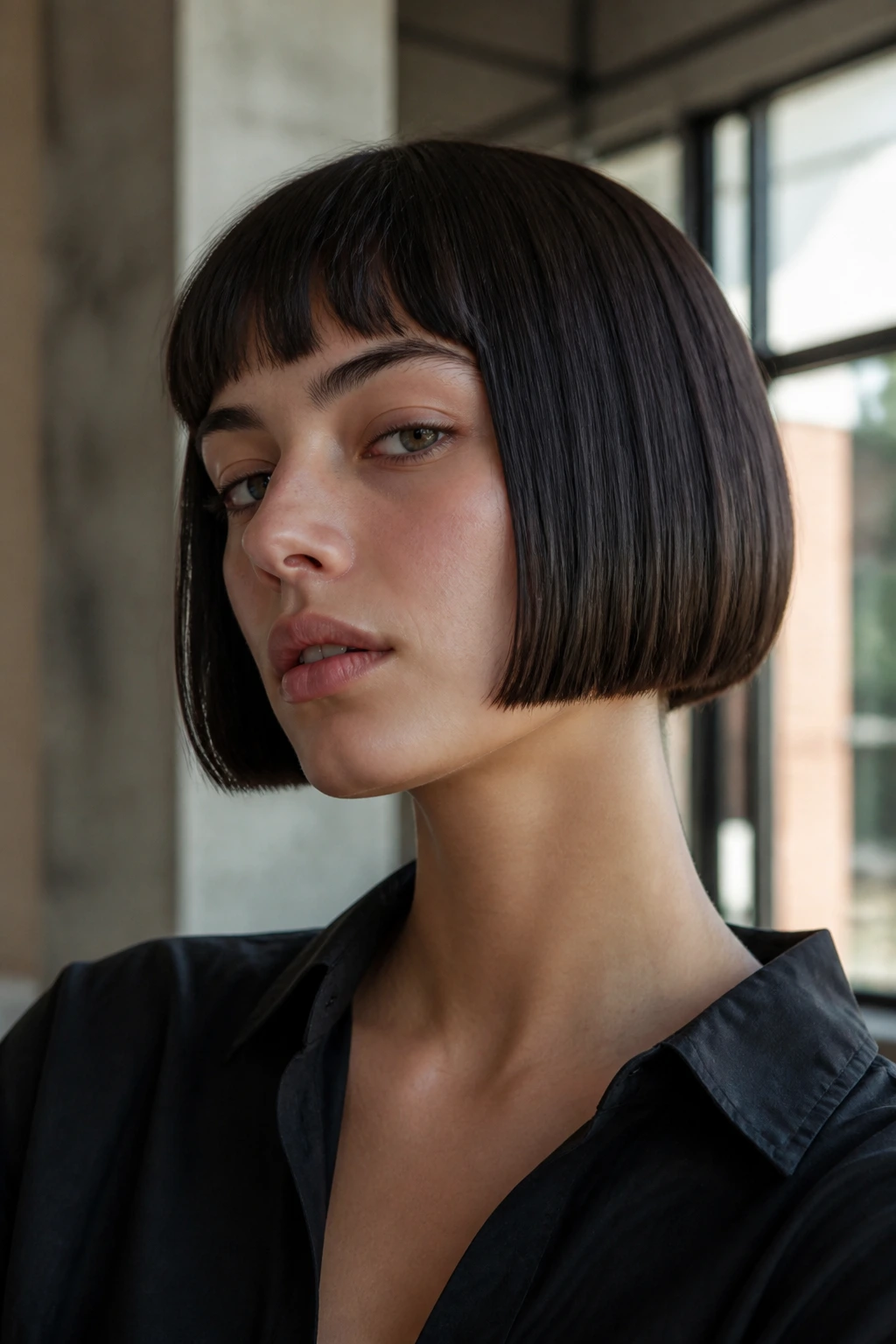
A micro bob is short enough to feel sharp and long enough to keep the head shape looking tidy. On thin hair, that shorter length often reads thicker because the strands are not hanging far enough down to separate into wisps. The line sits above the jaw or right on it, and that gives the hair a small but important visual density boost.
This is not a shy haircut. It exposes the neck, the jaw, and a bit more face, which is why it works best when the perimeter is immaculate. I like it with a little bit of bevel under the ends so it doesn’t look boxy in a bad way. The result is crisp, not puffy.
What Makes It Different
A micro bob takes the “weight line” and pulls it up. That changes everything. Thin hair usually looks heavier when the cut stops before the ends can drift apart, and this one does exactly that. It’s a strong choice if you like short hair and do not mind some upkeep.
6. French Bob with Eyebrow-Grazing Bangs
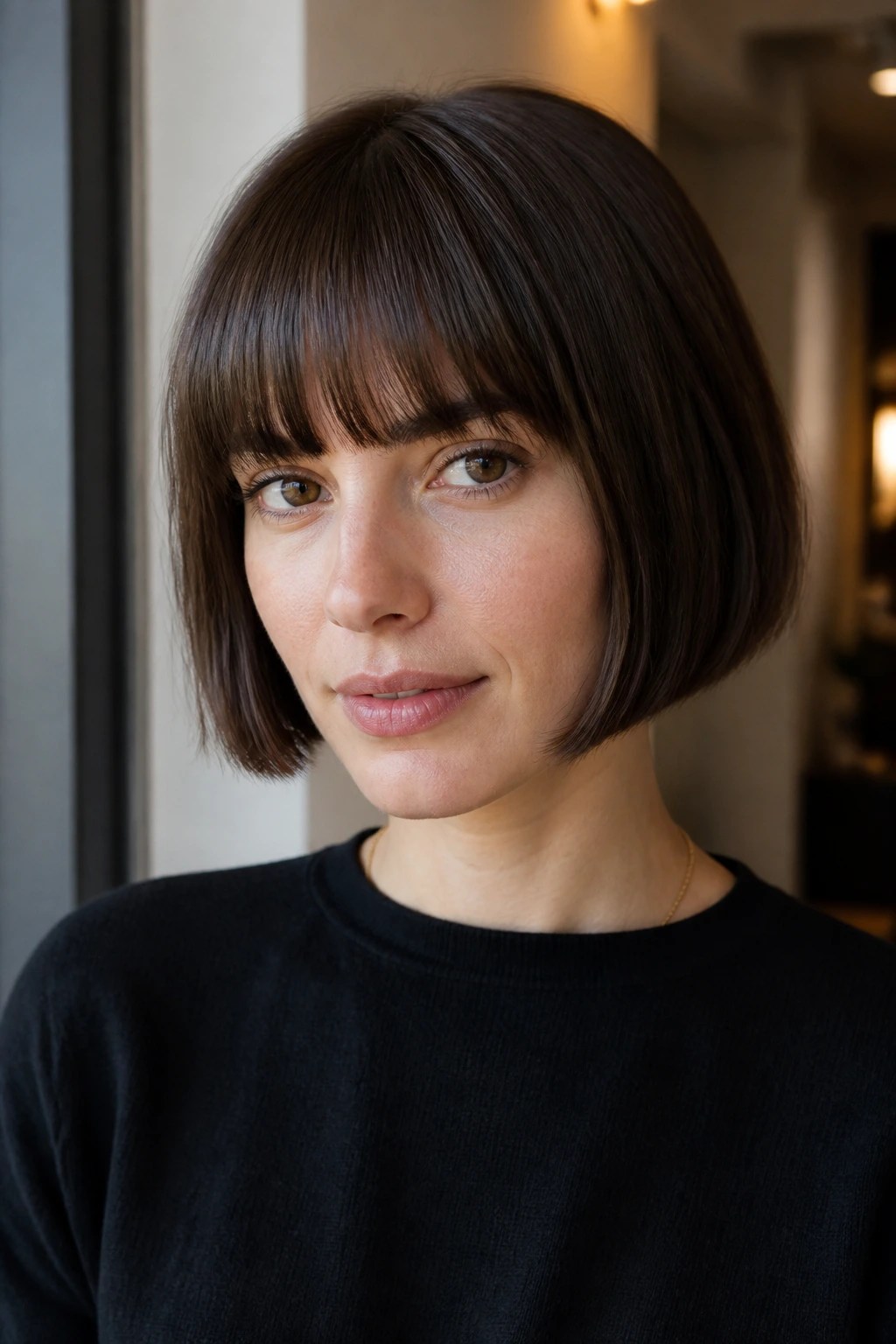
This bob has a compact, slightly cheeky shape that can be very kind to thin hair. The bangs frame the face, the length stays short, and the whole look feels intentional because everything lands in a tight zone. On sparse hair, that compactness matters more than people think.
The bang length is the real decision here. Brow-skimming fringe can make the front look denser, but it should still move a little. I would avoid super wispy bangs on very fine hair; they can disappear. Keep the fringe blunt enough to read as a feature and not as a soft afterthought.
- Best for: small foreheads, fine strands, and faces that can handle a little French-girl edge.
- Ask for: a blunt bob that sits at the jaw or just below it, plus a full fringe that can be styled slightly piecey.
- Style it with: a quick bend at the ends and a touch of dry shampoo at the roots.
7. Jaw-Length Box Bob
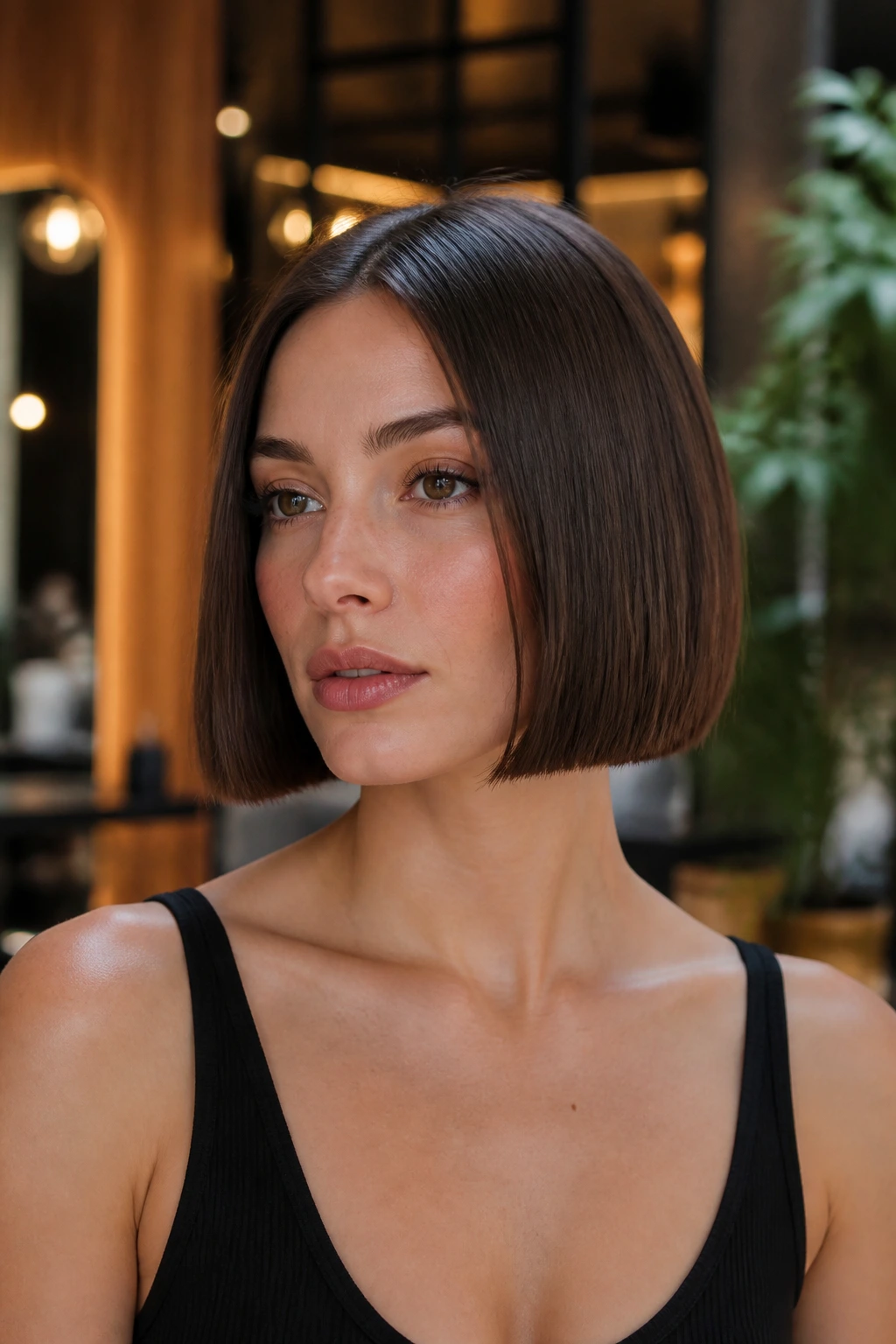
A box bob gives thin hair an almost architectural shape. The length sits right around the jaw, the sides feel compact, and the outline is square enough to make the hair look denser than a softer bob would. This is one of the strongest options if your hair tends to lie too flat and you want the silhouette to do more work than your styling routine.
The box shape can feel a little blunt in the best possible way. It keeps the bulk at the bottom and does not waste any density in long, weak ends. I like it on straight hair, but it can also work on slight waves if you are willing to smooth the surface. The result is polished and a little severe, which is a nice change from floppy, over-layered cuts.
Quick Notes
- Ask for a firm perimeter with minimal internal removal.
- Keep the hem at the jaw or half an inch below it.
- Use a paddle brush if you want the cleanest line possible.
8. Rounded Blunt Bob
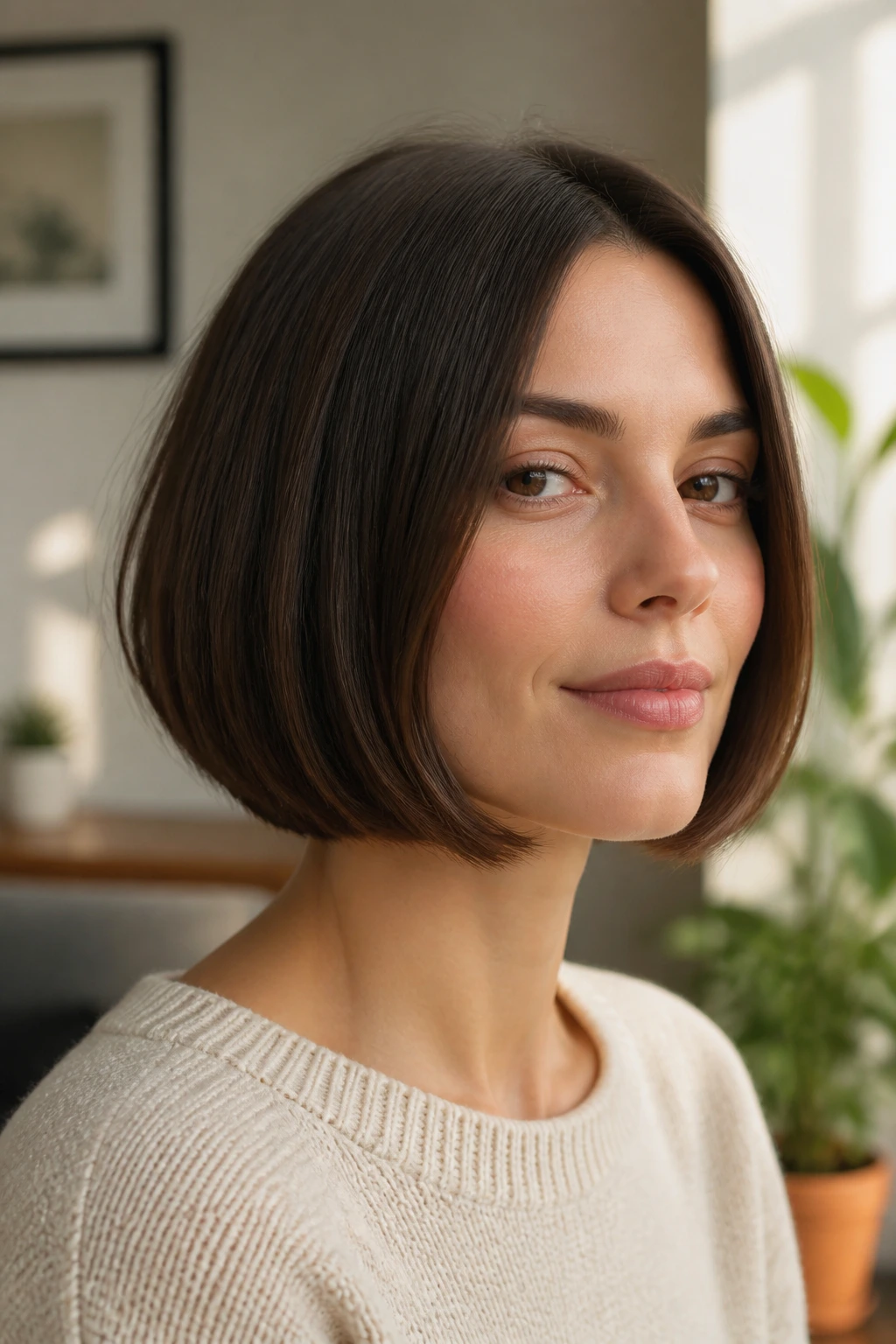
A rounded bob softens the corners without losing the blunt edge. That’s the trick. The bottom still reads as one line, but the shape curves in slightly toward the neck, which can make thin hair look less flat and a little more controlled. It is one of the easiest blunt bobs to live with if your hair wants to turn out at the ends.
The slight roundness also helps on faces that feel a little sharp or long. It gives you fullness where you need it without turning the haircut into a layered mess. I’d keep the styling smooth and avoid too much separation. The point is shape, not frizz posing as texture.
Best for: straight to slightly wavy hair that flips out at the hem.
Styling note: brush the ends inward while the hair is still warm from the dryer, then let it cool before touching it again.
9. Curved-In Blunt Bob

Why do I like a curved-in bob on thin hair? Because it makes the perimeter look deliberate from every angle. The ends bend just enough under the chin or jaw to keep the outline tight, and that little turn inward gives the illusion of a heavier bottom edge.
It also behaves well on days when the hair is not in the mood. A fully straight bob can show every bend and dent; a slightly curved-in one is more forgiving. The curve should be subtle. If you overdo it, the haircut starts looking old-fashioned in a hurry. Keep it gentle, especially if your hair is fine and naturally soft.
How to Use It
This cut shines with a round brush or a flat brush plus a low-pass flat iron. Direct the air downward, then finish with a tiny turn under at the ends. You want a clean curve, not a curl.
10. Glass-Straight Bob
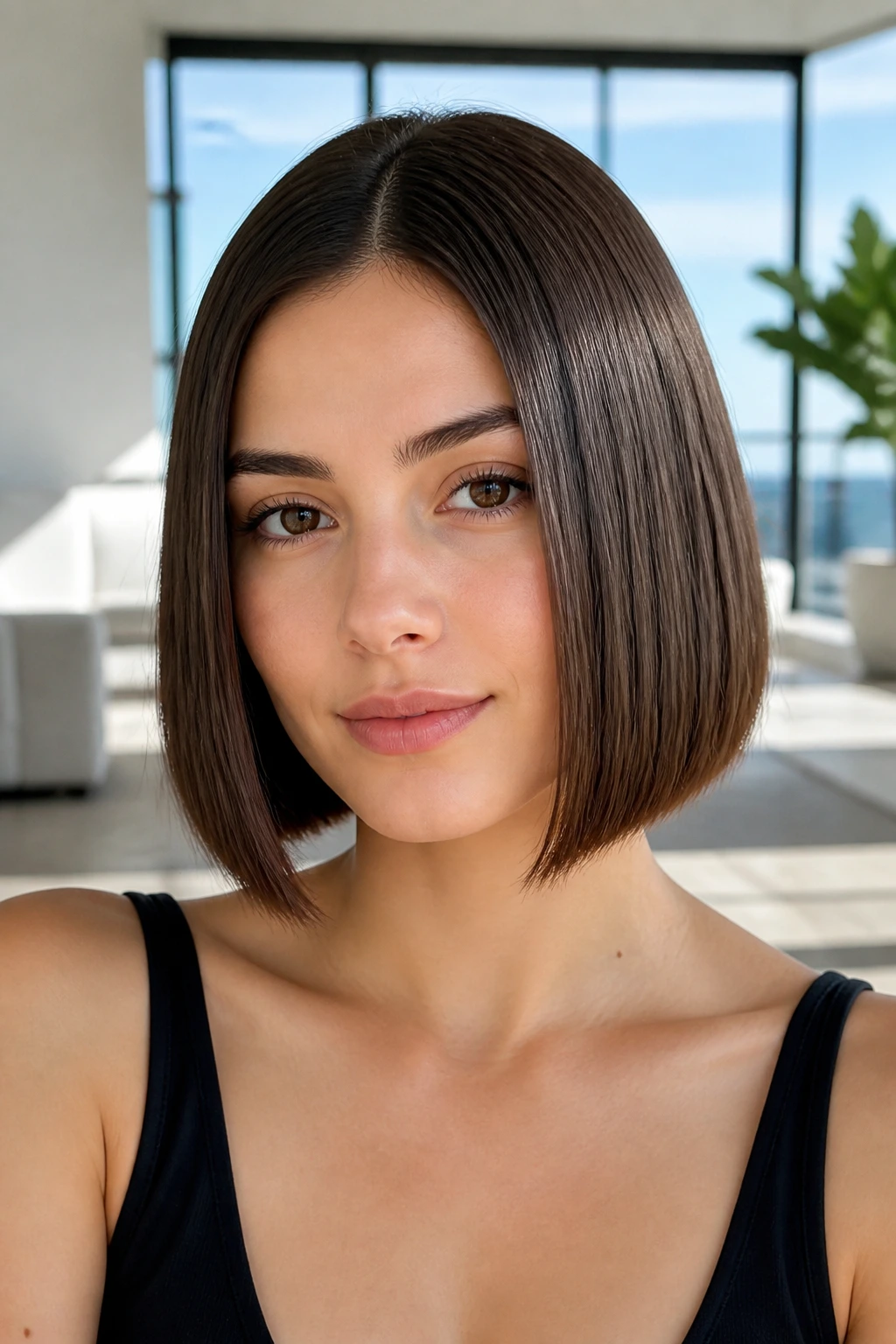
A glassy bob is one of the best looks for thin hair if your strands are naturally smooth or can be smoothed without much effort. The shine makes the hair look healthier and denser, and the straight, reflective surface helps the cut line stand out. It is not fluffy. That’s the appeal.
This one lives or dies on prep. A lightweight smoothing cream, a heat protectant, and a nozzle on the dryer matter more than expensive products. Keep the ends blunt, keep the surface flat, and avoid piling on heavy oil near the roots. A little shine goes a long way. Too much and the hair can look greasy instead of polished.
Best for: straight fine hair, cool climates indoors, and anyone who likes a crisp, modern finish.
Pro tip: run the flat iron through the last inch only. That is usually enough to sharpen the hem without cooking the whole head.
11. A-Line Blunt Bob
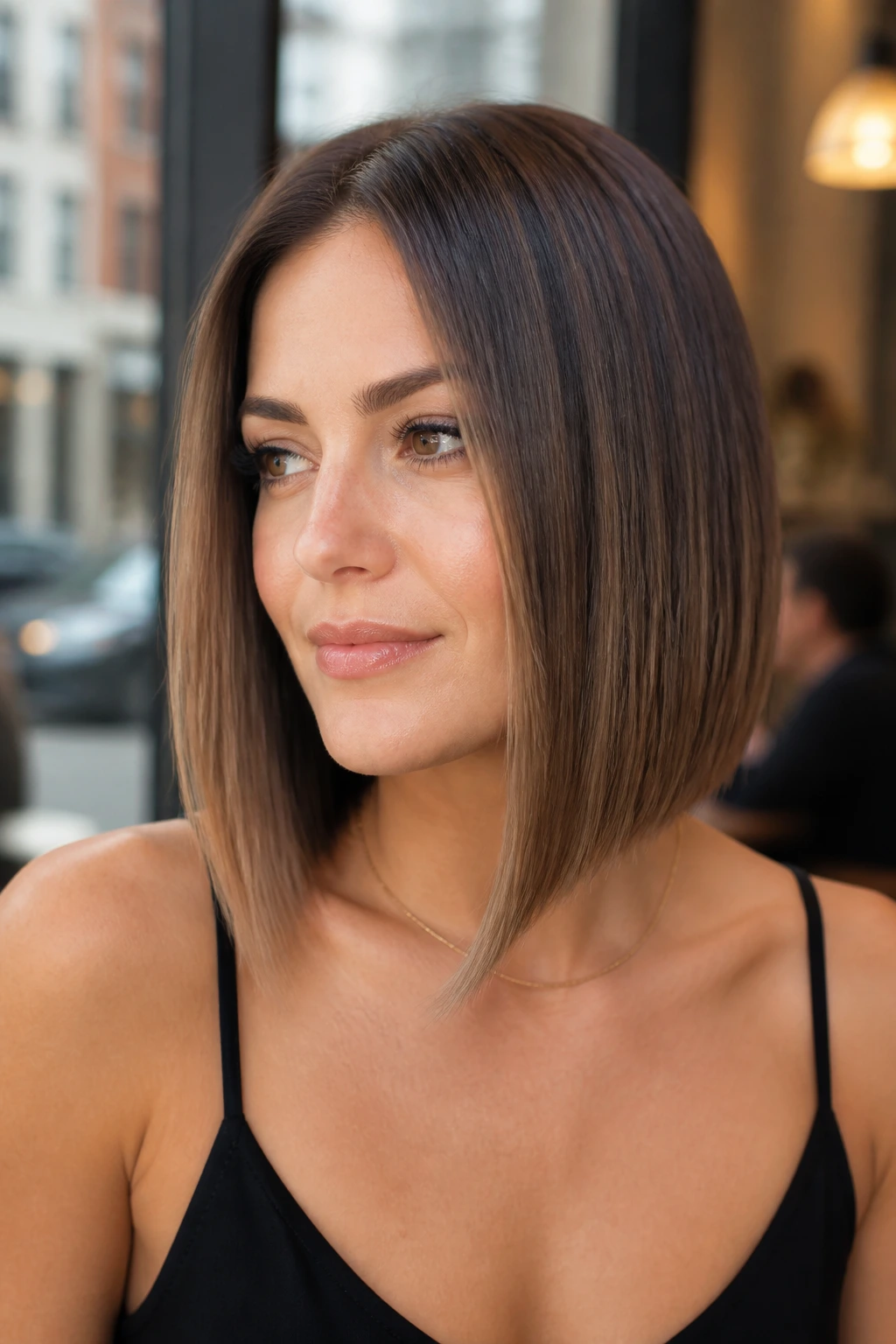
An A-line bob keeps the front slightly longer than the back, and that small angle can be a gift for thin hair. It adds forward movement around the face while leaving the nape a little lighter and cleaner. The shape is still blunt, but it is not static.
This works especially well if you want the bob to feel a bit longer without going full lob. The front pieces skim the jaw or even graze the top of the collarbone, while the back holds a neat, shorter line. I like this cut on people with slimmer faces because the front angle adds a bit of visual width where the face needs it. It can also be helpful if you like tucking hair behind one ear.
Best Use
Ask for a soft angle, not a dramatic wedge. On thin hair, the line should be readable but not severe. The difference between “smart” and “too much” is often half an inch.
12. Tucked-Behind-Ears Bob

This is the blunt bob for people who live with glasses, earrings, or hands that keep tucking hair away from the face anyway. The cut stays crisp, but the styling invites a little asymmetry through the ears. Thin hair often looks fuller this way because the hair is not spreading itself too thin across the face.
The real advantage is simplicity. You can wear it with a center part, a side part, or pushed behind both ears and it still keeps its shape. The ends need to be blunt enough to hold up when tucked. If they are wispy, the whole look goes limp fast. That’s the line to watch.
- Best for: people who like low-effort styling and wear jewelry or glasses often.
- Ask for: a blunt perimeter that can sit tucked without collapsing.
- Style it with: a little root lift at the crown so the ears do not flatten the whole head.
13. Blunt Bob with Curtain Bangs

Curtain bangs can soften a blunt bob without stealing too much density from the sides. On thin hair, that matters. You get movement around the face, but the perimeter still does the heavy visual work. The bangs should part easily and fall into the cheekbone area, not break into stringy little pieces.
I like this version when someone wants their forehead softened but doesn’t want a full fringe maintenance schedule. Curtain bangs also play well with a bob that lands at the chin or just below. They help the haircut feel less boxy, which can be useful if your jaw is strong or your face is narrow.
Best for: anyone who wants some face-framing without giving up the blunt edge.
Styling note: bend the curtain pieces away from the face with a round brush or a large iron, then leave the rest straight.
14. Blunt Bob with Full Fringe
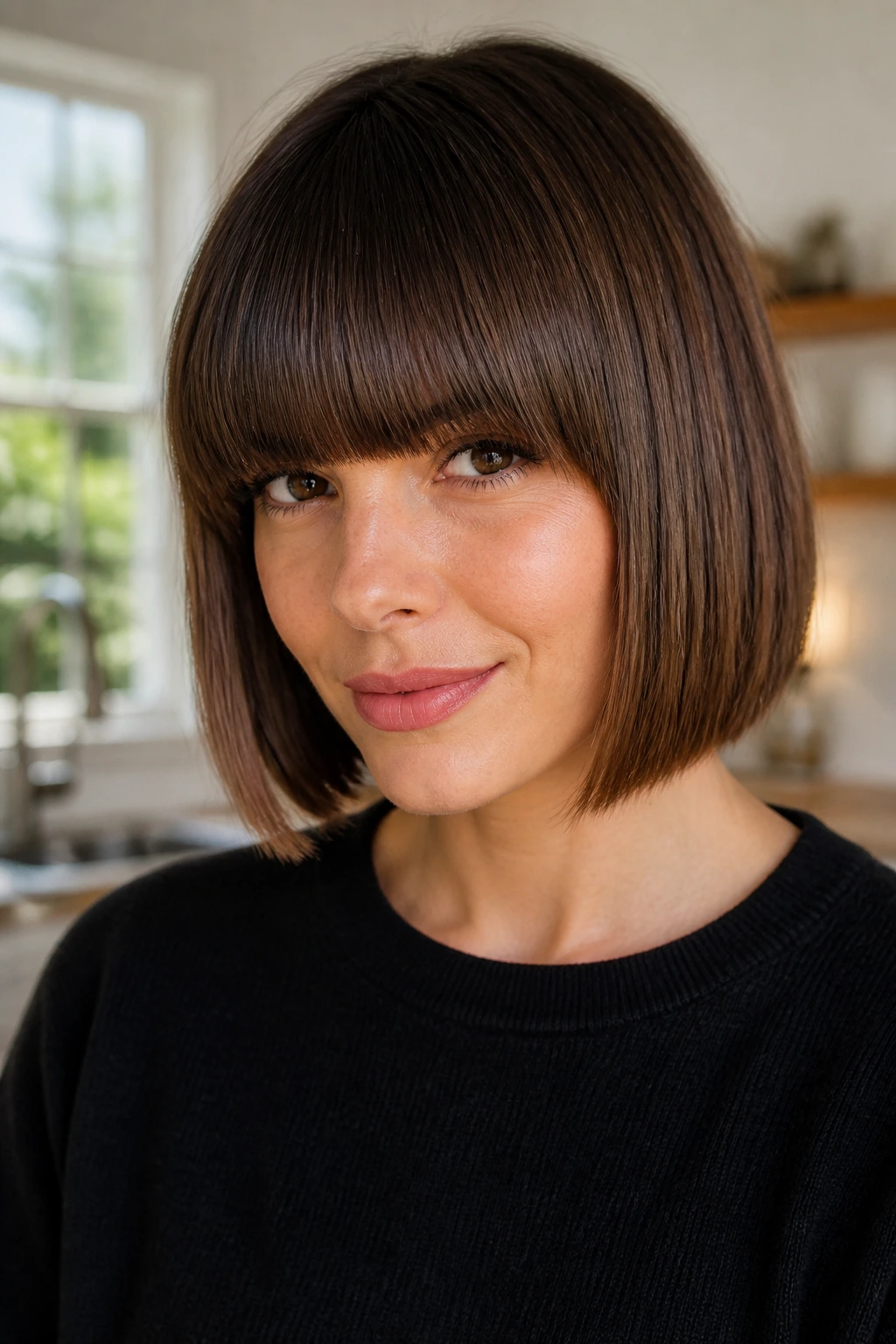
A full fringe brings weight to the front, which can be a smart move on thin hair if the rest of the bob stays clean. The bangs create a compact visual block that makes the haircut look thicker overall. The key is not to make the fringe too airy. It should read as a feature, not a few scattered strands pretending to be bangs.
This is one of those cuts that looks best when the line is confident. The bob and the fringe should feel linked, not separate. I like it on straight hair and on very light waves that can be smoothed easily. If your hairline has cowlicks, talk that through before the scissors come out. Fringe and cowlicks can absolutely coexist, but the cut needs to account for it.
What to Watch For
A heavy fringe on thin hair can go flat fast if it’s overloaded with products. Keep the root area light, dry it from side to side, and let the fringe set before you start fussing with it.
15. Bottleneck Bang Blunt Bob

Bottleneck bangs are a clever middle ground. They’re shorter at the center, longer at the sides, and that shape keeps the front from feeling too heavy on thin hair. The bob underneath can stay blunt and strong, while the bangs soften the upper face without swallowing it.
This cut works especially well if a full fringe feels too committed and curtain bangs feel too easy. The bottleneck shape gives you some structure with a bit of air. It also tends to grow out in a less annoying way than a straight, blunt bang. Good news for anyone who does not want to trim bangs every two weeks.
Why It Flatters Thin Hair
The center is dense enough to read as fringe, but the sides taper in a controlled way so they do not compete with the bob’s perimeter. That balance keeps the haircut from looking top-heavy. It’s a nice trick, and a useful one.
16. Blunt Bob with Invisible Internal Layers
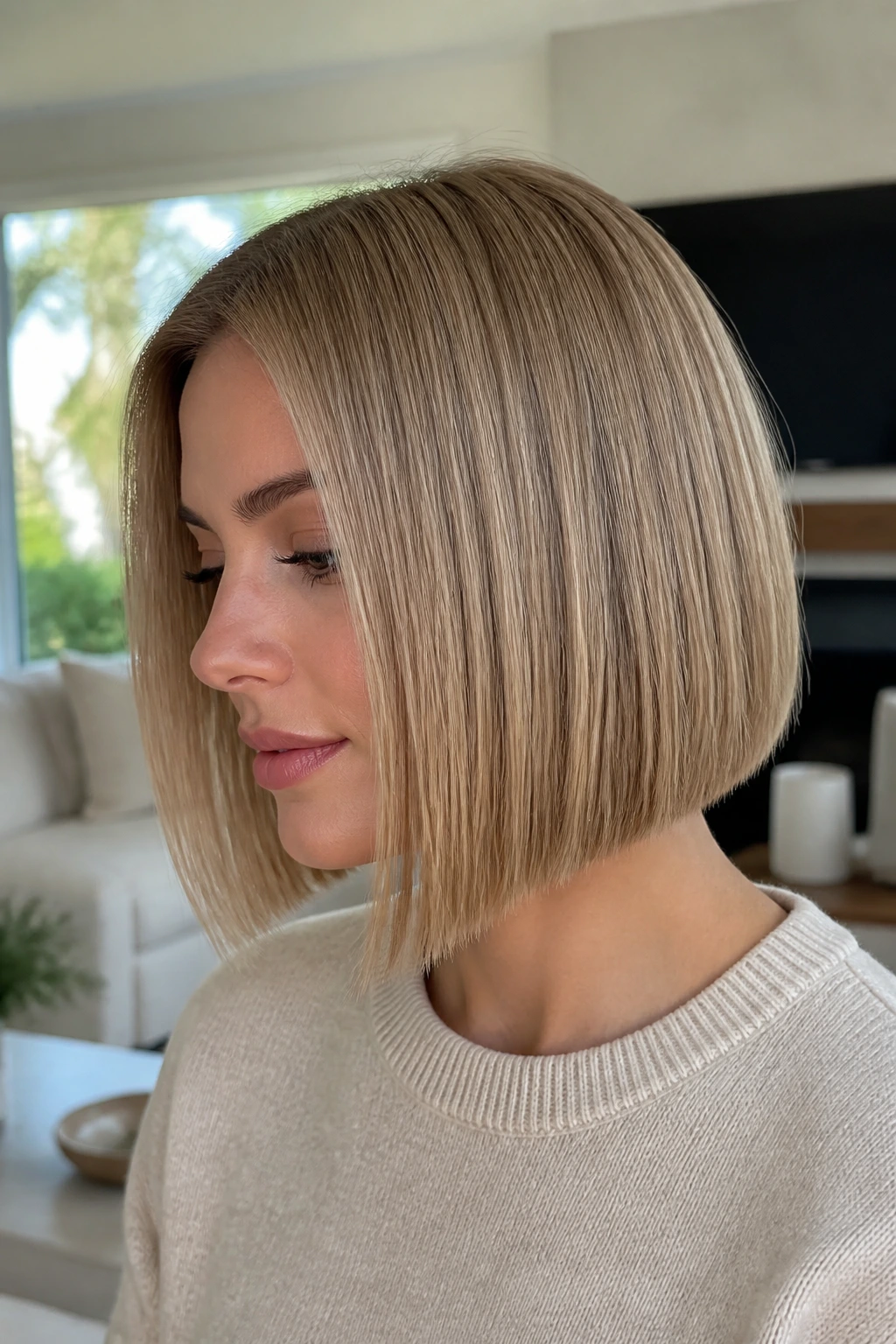
This is the version for people who hear “layers” and immediately start worrying, because the word can mean too much cutting on thin hair. Here, the layers live inside the shape. The perimeter stays blunt, but the stylist removes a little weight underneath so the cut sits better and doesn’t puff in the wrong places.
That internal shaping is subtle. You should not be able to spot it from across a room. What you do notice is that the bob bends more cleanly and lies flatter where it should. I like this approach if the hair is fine but dense enough to feel bulky at the nape. It gives control without breaking the line.
Best for: hair that is thin in strand size but oddly puffy at the ends.
Ask for: hidden weight removal only, no visible choppy layering through the perimeter.
17. Air-Dry Blunt Bob
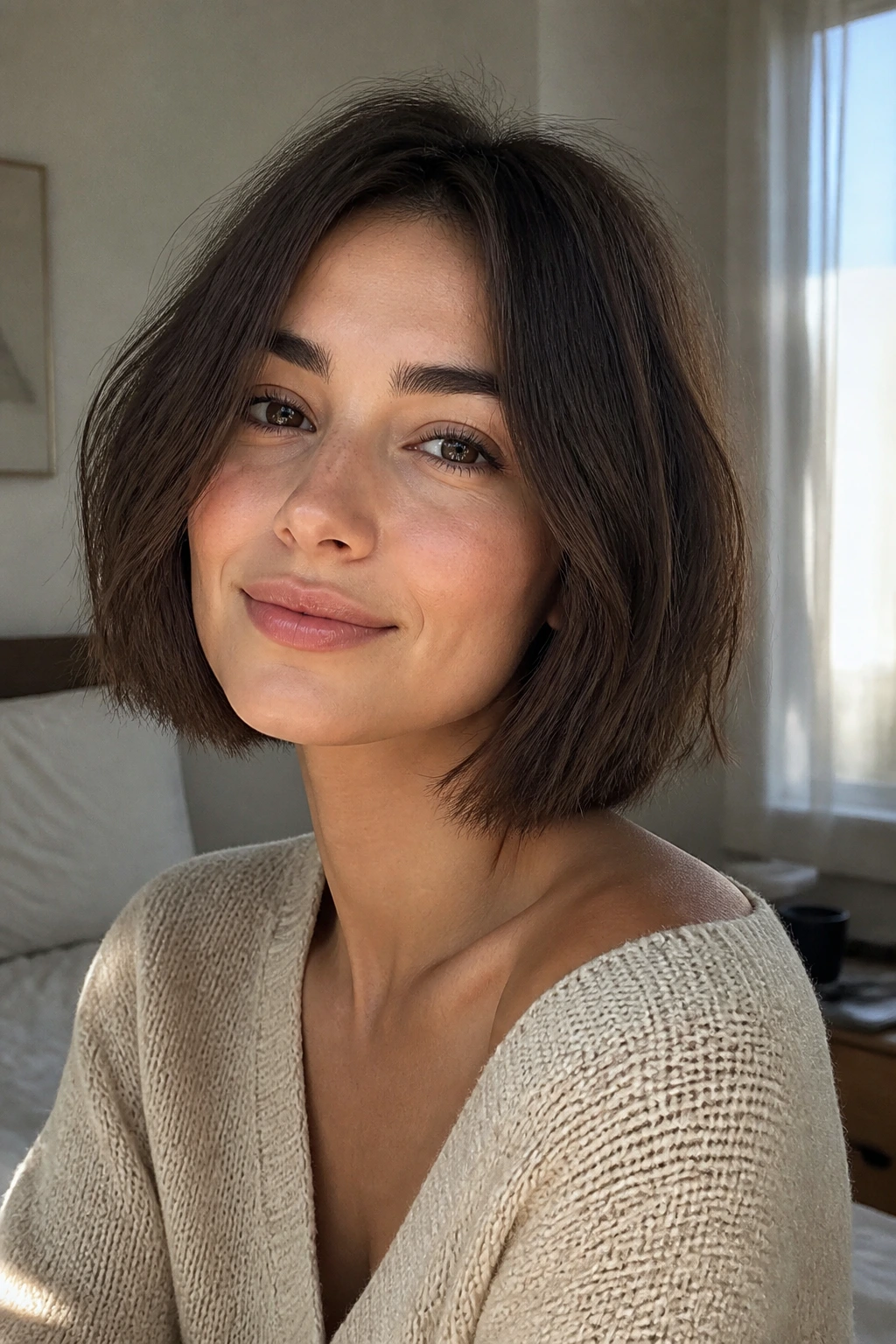
A good air-dry bob is not about chaos. It’s about letting the hair settle into a blunt shape with as little fuss as possible. On thin hair, that can be a relief, because too much heat styling sometimes makes the ends look overworked and see-through. This cut needs a perimeter that can survive natural drying without going limp.
The trick is a little length control and a touch of product. A leave-in cream or light mousse helps the hair keep some body as it dries, but the cut itself should do most of the work. I prefer this on hair with a soft wave or just enough bend to hold shape on its own. If your hair dries pin-straight and flat, you’ll probably want a little more structure.
How It Differs
The cut is still blunt, but the styling is softer. That makes it useful for people who do not want a polished blowout every day and still want the bob to read full.
18. Wet-Look Sleek Bob
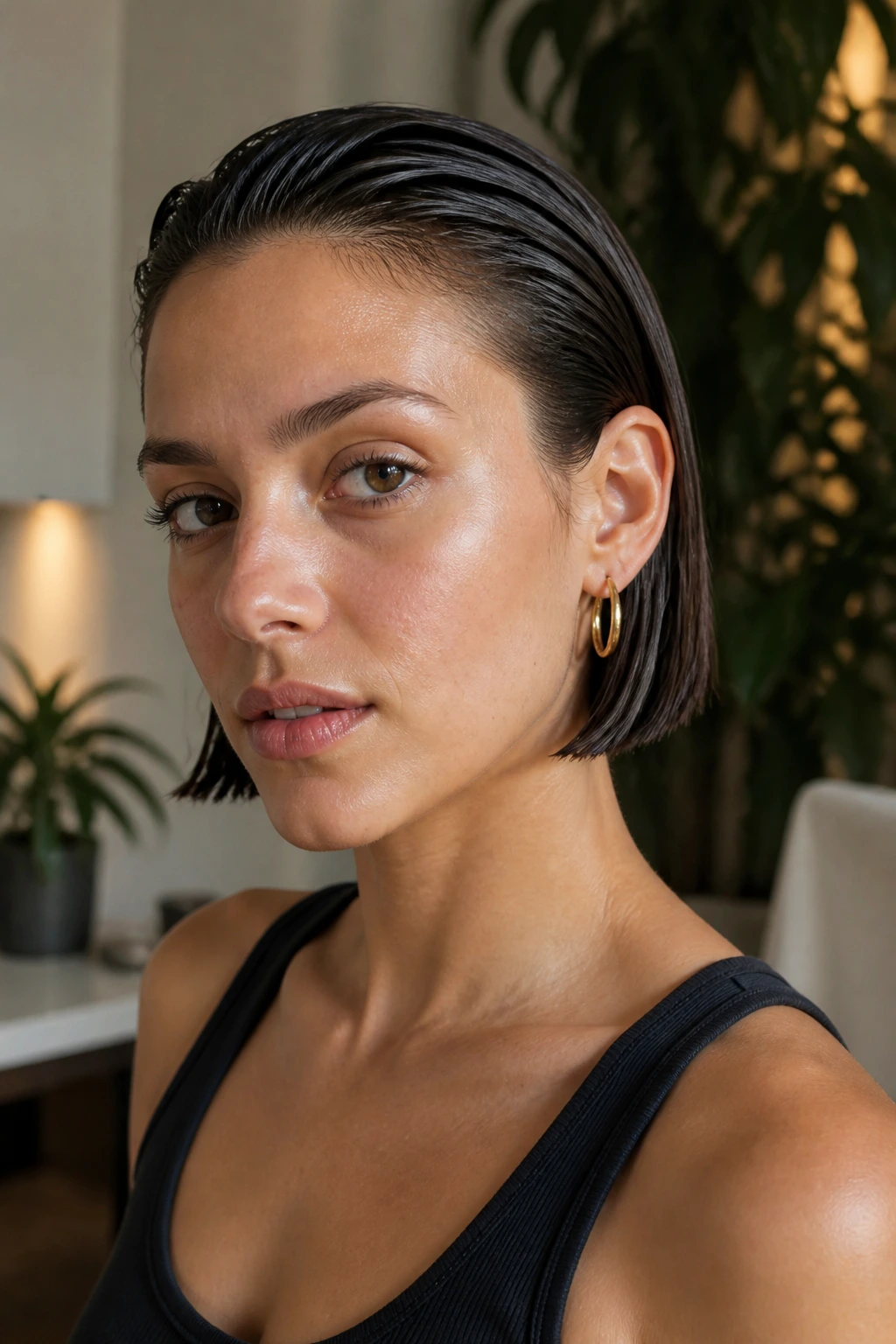
A wet-look bob can be a sneaky good match for thin hair. Since the style is meant to stay close to the head, it does not rely on puff or volume to look finished. The blunt line becomes the star, and the shine draws attention to the shape rather than the thickness.
This one is strongest when the hem is very clean and the hair is tucked neatly behind the ears or swept slightly off the face. Use a lightweight gel or styling cream, not a heavy paste that clumps the ends together. You want glossy, not crunchy. It’s a sharp look, and it works especially well when you want the haircut to feel intentional and a little fashion-forward.
Best for: evenings, short hair, and anyone who likes a polished finish with a bit of edge.
Pro move: comb the product through with a fine-tooth comb so the surface stays smooth and even.
19. Side-Swept Volume Bob

A side-swept bob is a volume play without the usual over-layering nonsense. By pushing the front across one side, you get lift at the crown and a little softness through the face. Thin hair often needs that shift more than it needs more product.
The cut stays blunt, which is the important part. The sweep gives movement; the hem gives density. If your hair falls flat on top, this shape can wake it up fast. I like it with a subtle bevel under the ends and a side part placed just outside the highest point of the eyebrow. That little placement tweak can change the whole balance of the haircut.
Good To Know
If the side sweep keeps falling, the problem is often the part, not the cut. Move it a half inch deeper and dry the roots in the opposite direction first.
20. Shoulder-Grazing Blunt Lob
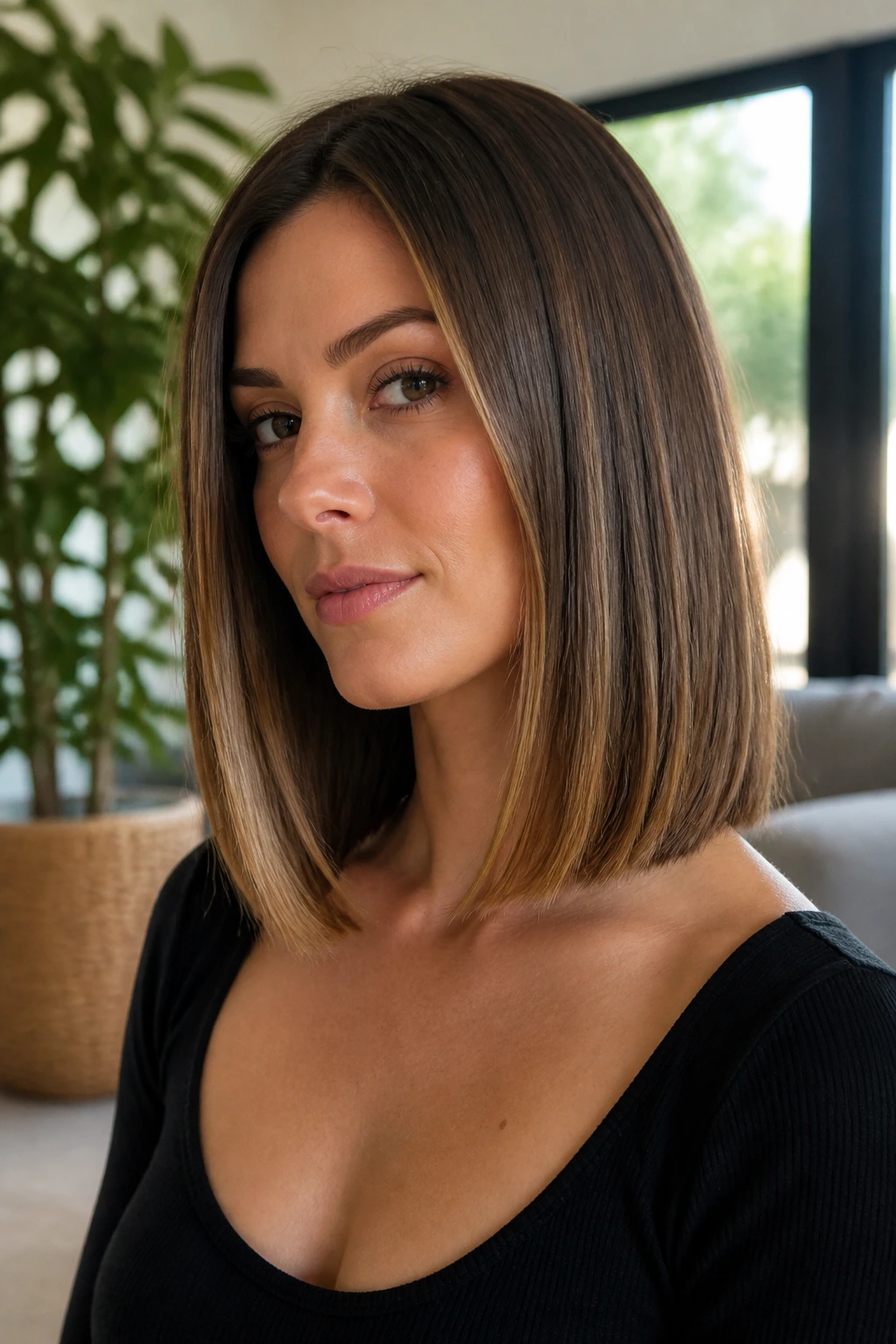
A shoulder-grazing lob is the friendliest long version of a blunt bob. It gives thin hair a little more body than waist-length or mid-back hair ever will, and it stays blunt enough to keep the ends looking thick. It is also the easiest of the bunch to tuck, clip, braid, or throw into a small low knot when you’re over it.
The shoulder line can be tricky because hair sometimes flips at that length. If that happens, it’s worth asking for the cut a touch above or below the shoulder, not right in the danger zone. That tiny adjustment can save you from constant awkward flips. I prefer this when someone wants to keep some length but needs their hair to stop looking threadbare.
Best for: people transitioning from longer hair who want a denser outline without going short.
Styling note: a round brush at the ends keeps the hem from turning ragged by midafternoon.
21. Nape-Short Stacked Bob with Blunt Ends
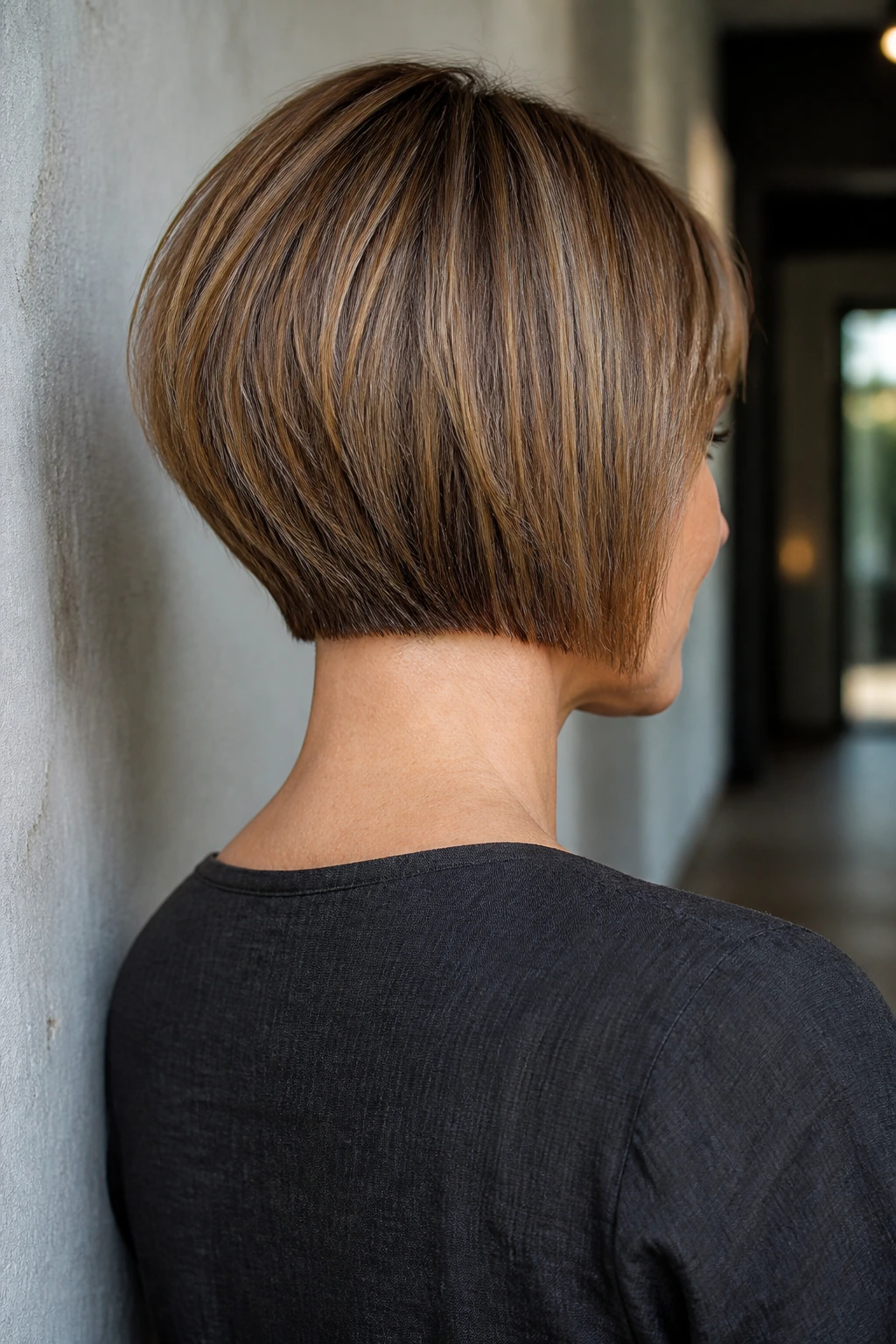
This version uses a little lift at the back to help the silhouette stand up. The stacking is subtle, not chunky. The perimeter still looks blunt, but the nape gets a cleaner, slightly shorter shape that lets the crown feel fuller. On thin hair that lies flat at the back of the head, this can be a very practical fix.
The danger is over-stacking. Too much and the haircut starts looking dated or puffed out. Keep the graduation modest and the bottom edge straight. I like it if the head shape needs a bit of support and the hair itself doesn’t hold volume at the back. It gives you structure where thin hair often gives up.
Best For
People who want the back of the head to look less flat without turning the whole bob into a layered wedge. This is a shape haircut, not a texture haircut.
22. Asymmetrical Blunt Bob
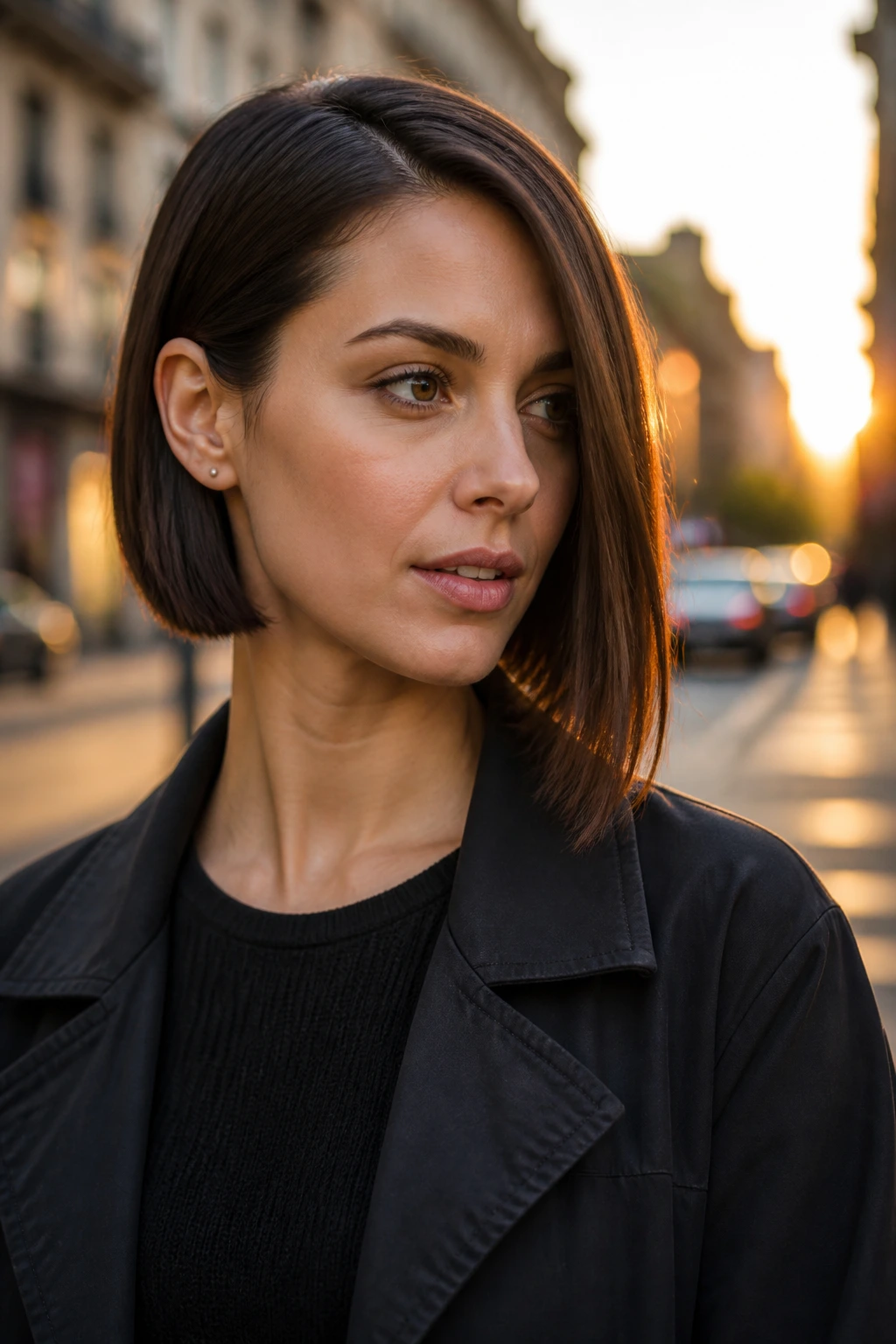
An asymmetrical bob gives one side a little more length than the other, and that small imbalance can make thin hair look more interesting without losing the blunt edge. The line is still crisp. It’s just not perfectly mirrored. That slight shift can be enough to create movement and keep the haircut from feeling static.
I like this on people who wear one side behind the ear more often or who want to soften a strong part of the face. The longer side should not be wildly longer. Even a half inch can be enough. The point is subtle asymmetry, not drama for its own sake.
Best for: straight hair, side parts, and anyone who wants a sharp shape with a little less predictability.
Styling note: keep the shorter side tucked or smoothed so the angle stays visible.
23. Wavy Blunt Bob

A blunt bob and a soft wave are not enemies. On thin hair, that light bend can create the illusion of more thickness because the hair occupies a little more space without needing layers. The key is to keep the bottom line blunt even if the middle of the hair has a gentle bend.
This is not beach wave chaos. The wave should be loose and controlled, almost like a soft bend made with a 1-inch iron or a quick braid-out that gets brushed lightly. The perimeter needs to stay visible under the movement. If the texture gets too messy, the density illusion disappears. You want body, not frizz pretending to be body.
Why It Works
The wave creates shadow and movement, while the blunt end keeps the overall shape grounded. Thin hair often looks fuller when there’s a little mismatch between the straight hem and the softly bent body.
24. Straight Lob with Minimal Bend
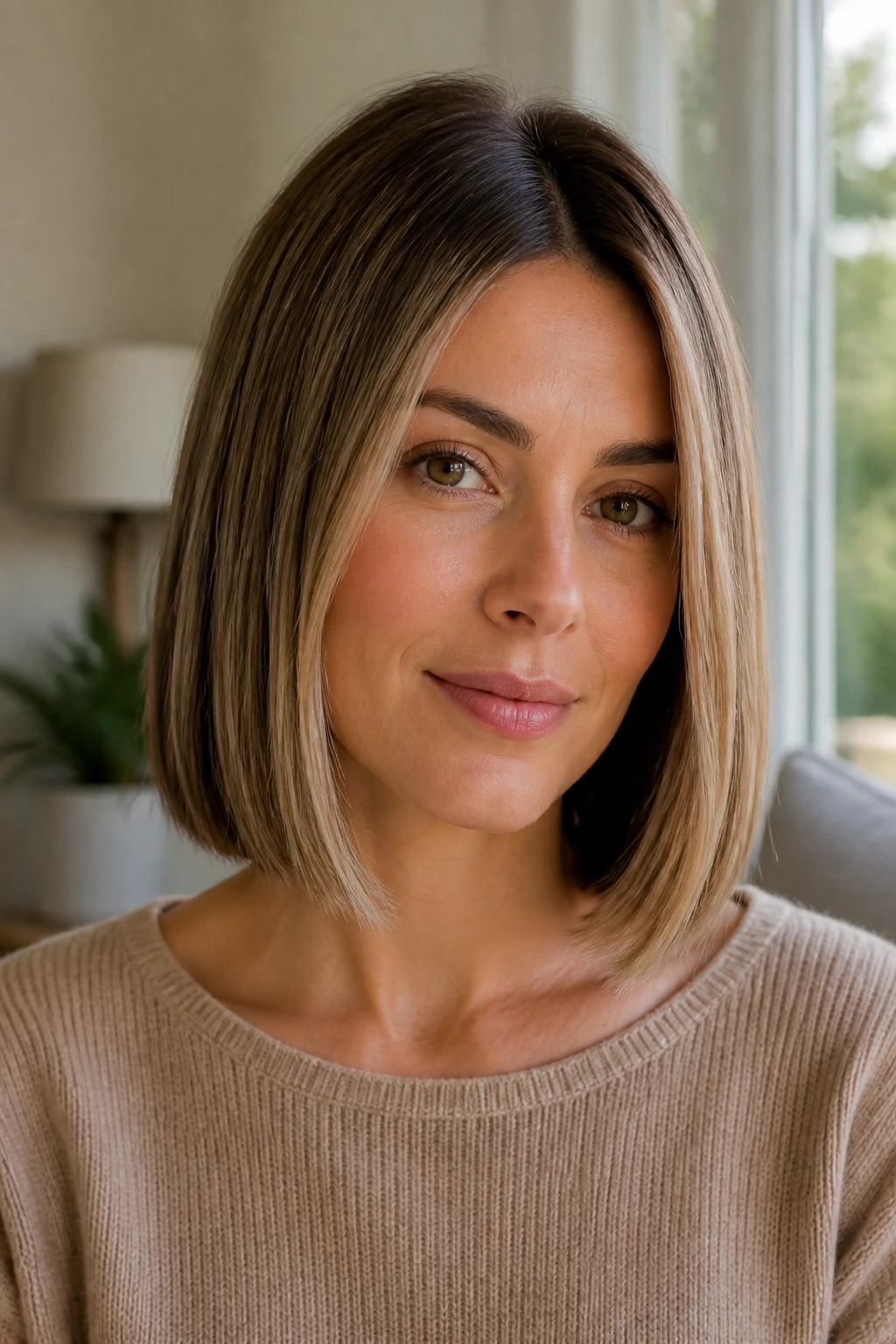
This cut lives in the narrow space between strict and soft. The line is blunt, the length is just past the jaw or around the collarbone, and the finish is mostly straight with only the slightest bend under the ends. On thin hair, that tiny bend can keep the cut from looking severe while still preserving the density of the perimeter.
I like this when someone wants a bob that behaves well with minimal daily work. It’s clean enough for office wear, but it still looks relaxed if you let it air-dry with a little smoothing cream. The trick is avoiding too much curl or too much flip. One small curve is enough.
- Best for: low-maintenance styling with a polished finish.
- Ask for: a blunt perimeter and a whisper of bevel at the ends.
- Style it with: a wide paddle brush and a low-heat pass on the bottom inch.
25. Soft Beveled Blunt Bob
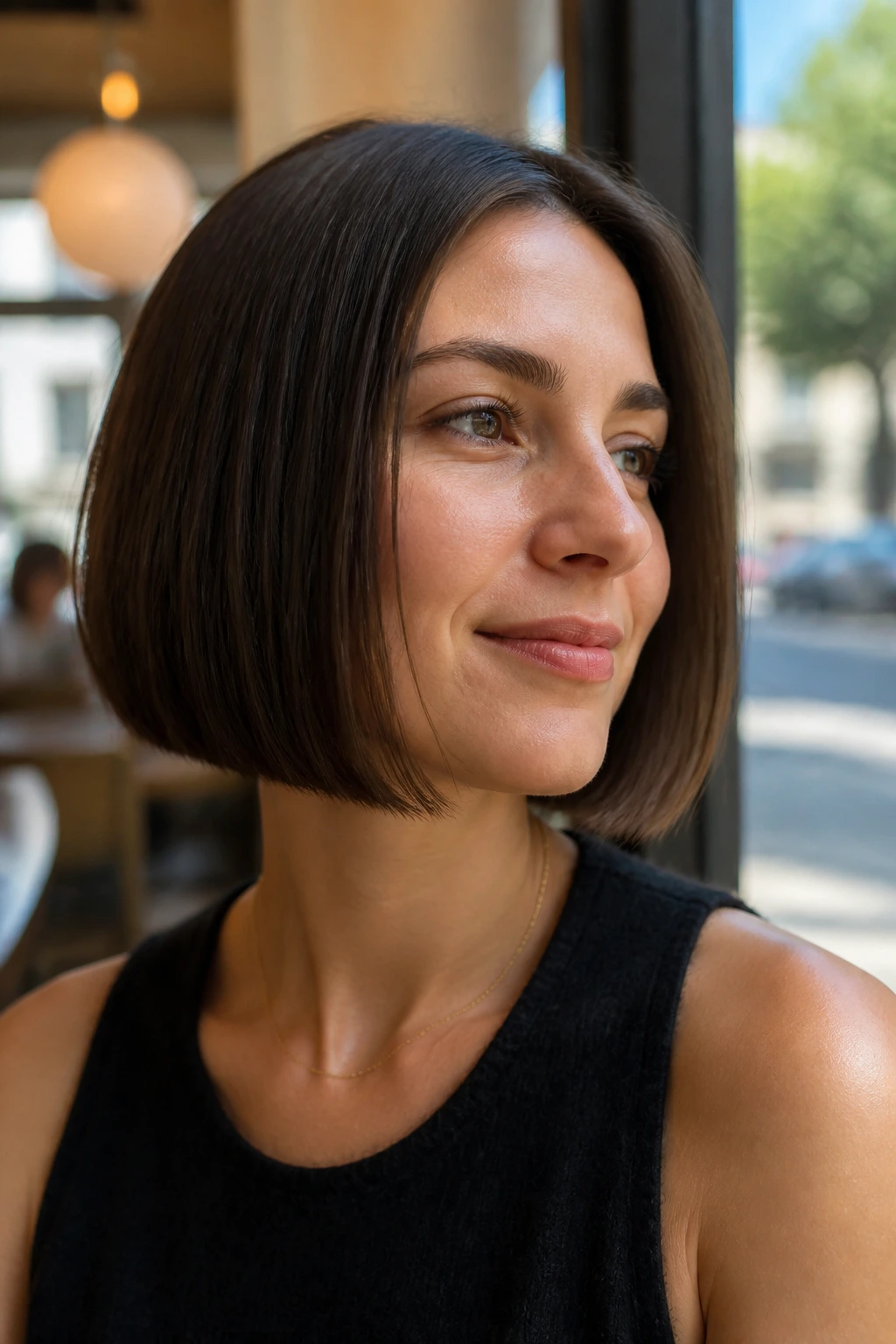
A beveled bob turns the ends in just enough to keep the shape compact. That’s useful on thin hair because the bevel makes the cut look neat without destroying the blunt outline. It has a little movement, but it still behaves like a one-length haircut.
This version is especially good if your hair tends to kick outward when it hits your shoulders or jaw. The bevel acts like a quiet correction. It reins the shape in. I’d keep the bevel soft, not dramatic. A hard curl under can make the bob look dated; a light bevel keeps it current and easy to wear.
Best for: hair that flips out, faces that like a softer line, and anyone who wants a tidy finish.
Pro tip: dry the roots first, then direct the last two inches inward with the brush so the bend stays clean.
26. Polished Minimal-Texture Bob
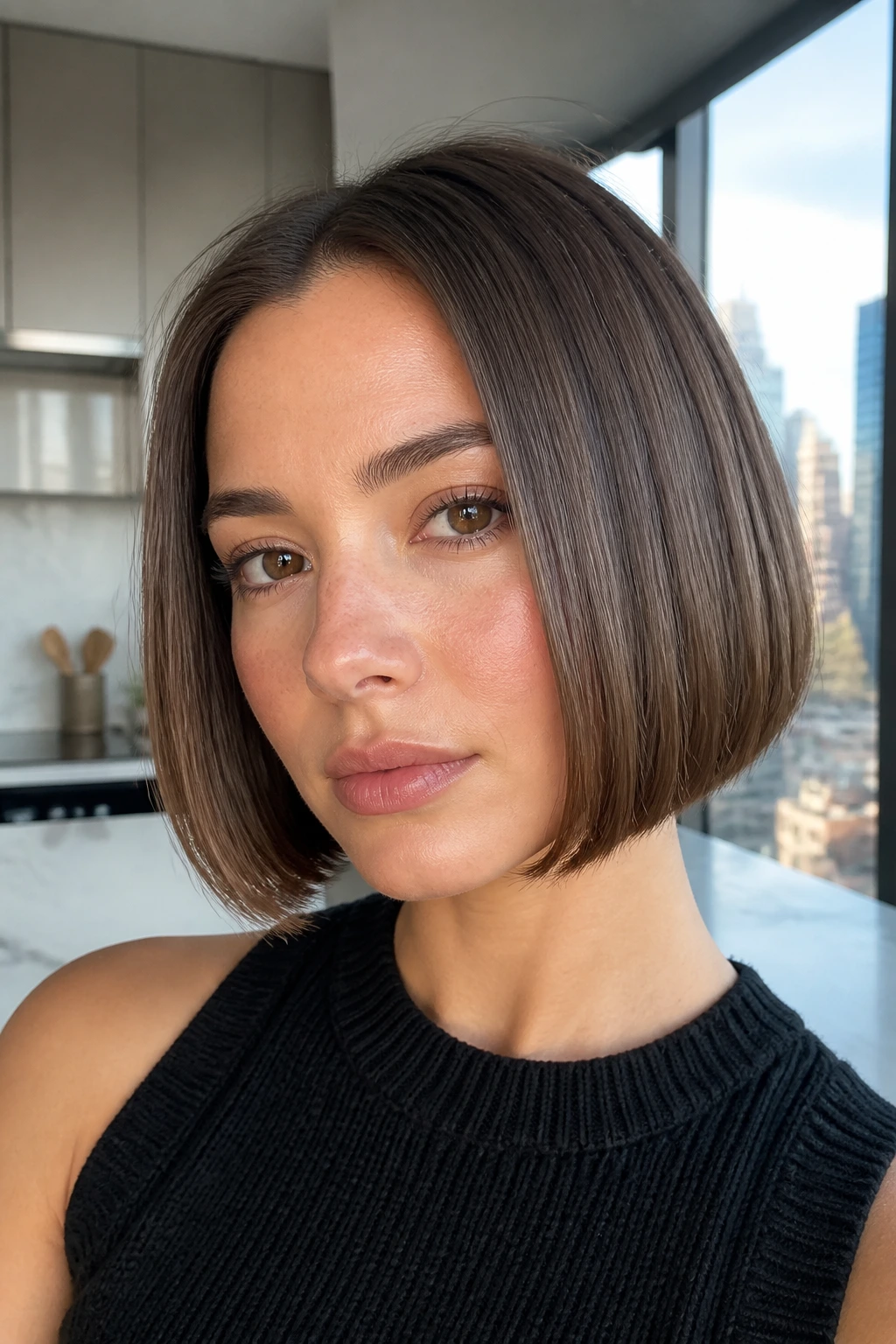
This is the blunt bob for people who hate the shredded, over-textured look that shows up on fine hair far too often. The perimeter stays solid, the surface stays smooth, and any internal adjustment is kept barely there. The haircut looks expensive because it looks controlled. No puff, no fray, no broken ends.
That restraint matters more on thin hair than dramatic cutting ever will. A lot of people think they need more shape. Often they just need less interruption in the line. This bob works when the hair is shiny, clean, and handled with a light touch. It is not a “piecey” cut. It’s a tidy one.
Best For
Anyone with naturally straight fine hair who wants the ends to read thicker without styling tricks. If your hair already lies flat and sleek, this is one of the safest bets.
27. Longer Front Blunt Bob
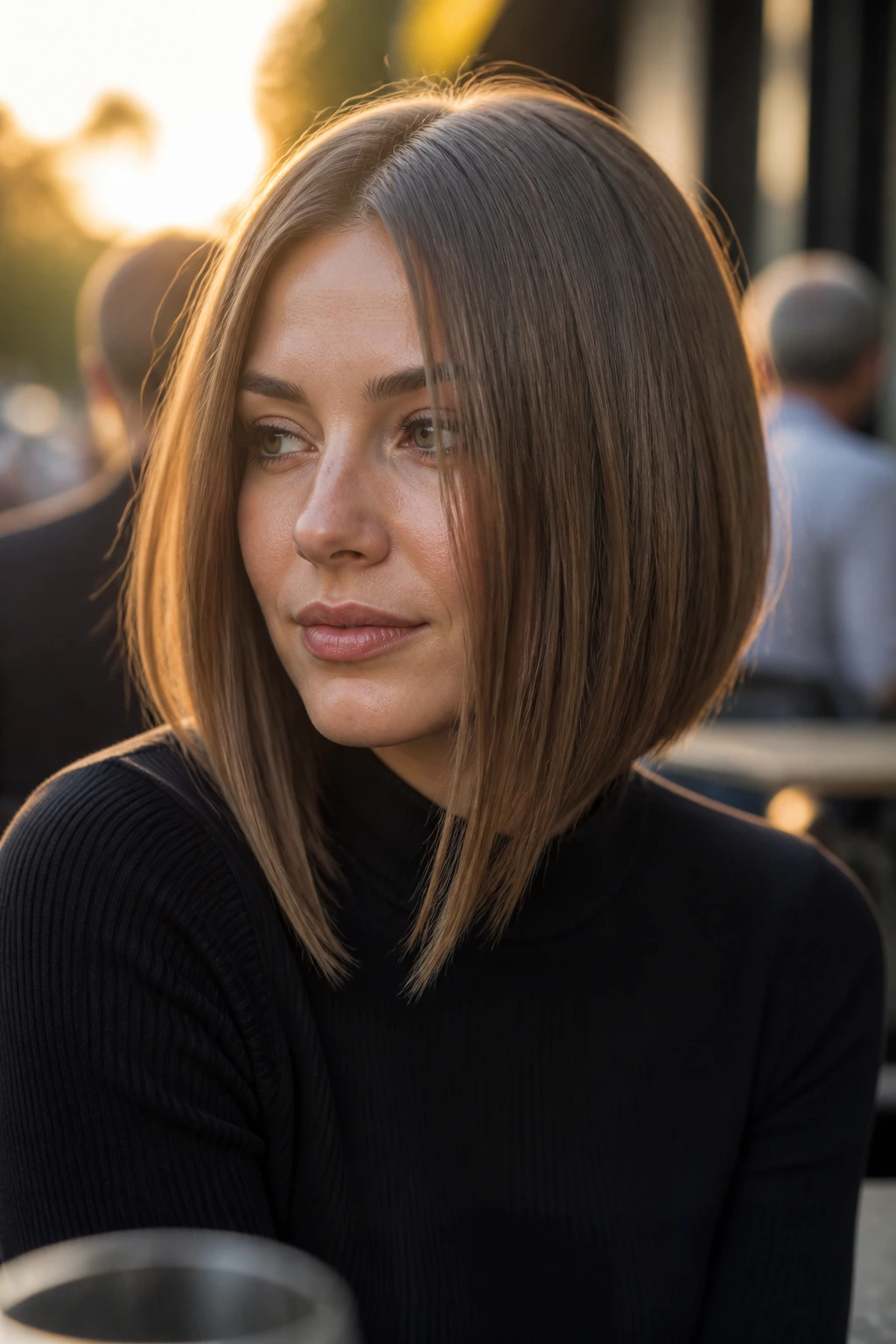
A longer front bob keeps the front pieces slightly extended while the back stays shorter and clean. That subtle front weight can flatter thin hair because it gives the cut a little sweep around the face without removing fullness from the perimeter. It also creates the sense that the hair has more presence than it really does.
I like this shape when the neck is something you’d rather not show off too much or when you want the bob to feel a touch softer than a classic chin cut. The front should still be blunt at the ends. Long does not have to mean wispy. Keep the outline tidy and the shape will do the rest.
Why It Flatters Thin Hair
The longer front pieces create visual length, while the shorter back keeps the hair from looking stringy. It’s a nice compromise for people who want shape and coverage at the same time.
28. Face-Framing Blunt Bob with Cheekbone Pieces
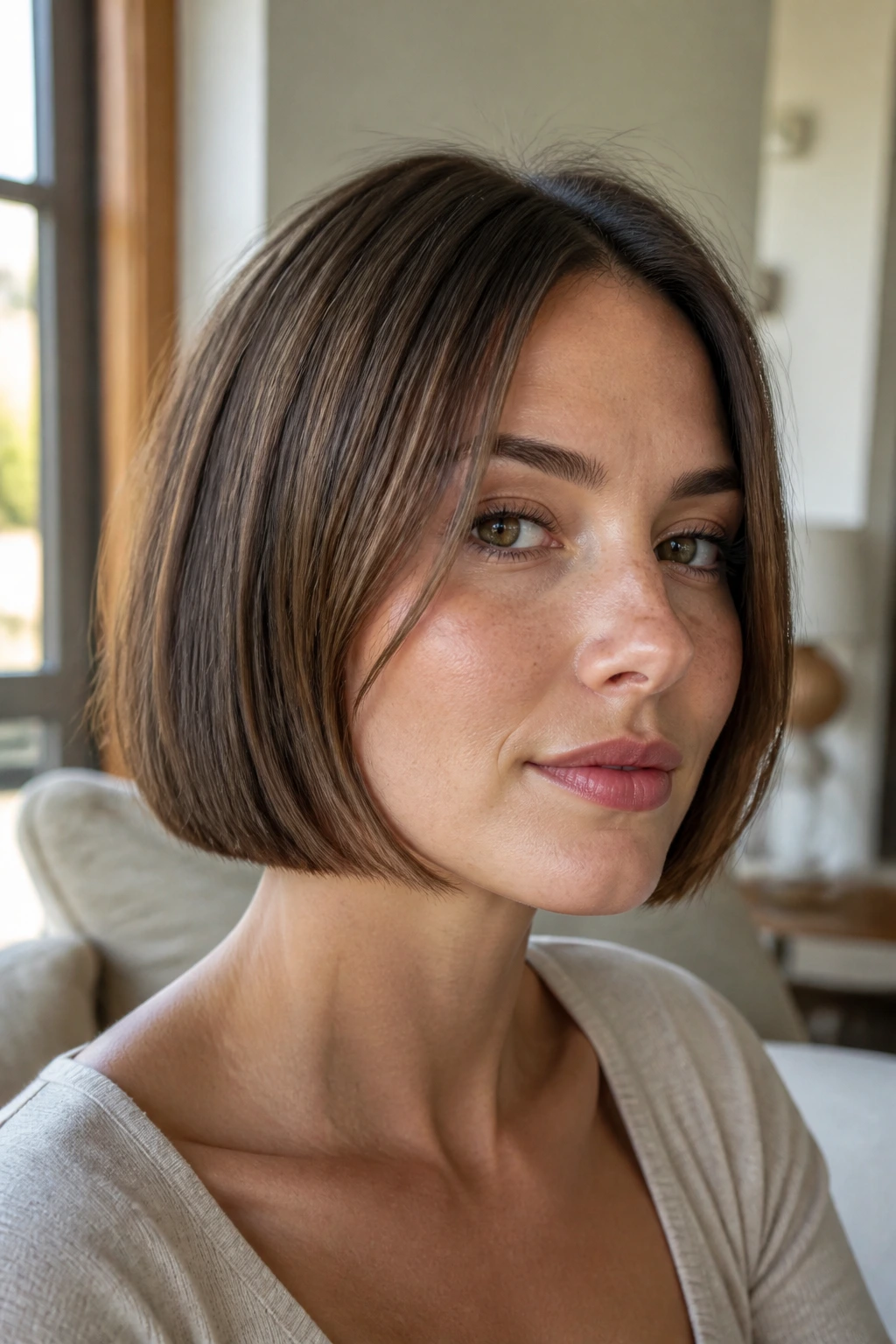
This one adds a couple of deliberate face-framing pieces without turning the whole cut into layers. The perimeter stays blunt, but the front gets a controlled opening around the cheekbones. That can be a good move on thin hair because it gives you softness where you want it and density where you need it.
The key is restraint. Two short pieces can do a lot; ten choppy ones can ruin the hem. I like this if the face needs a little shape around the cheeks or if the jaw is narrow and the hair needs to widen the frame a touch. It’s a small detail, but it changes the read of the whole haircut.
Best for: people who want a little face-framing without losing the one-length feel.
Styling note: bend the front pieces away from the face so they don’t collapse into the rest of the bob.
29. Sleek Bob with Tucked Nape
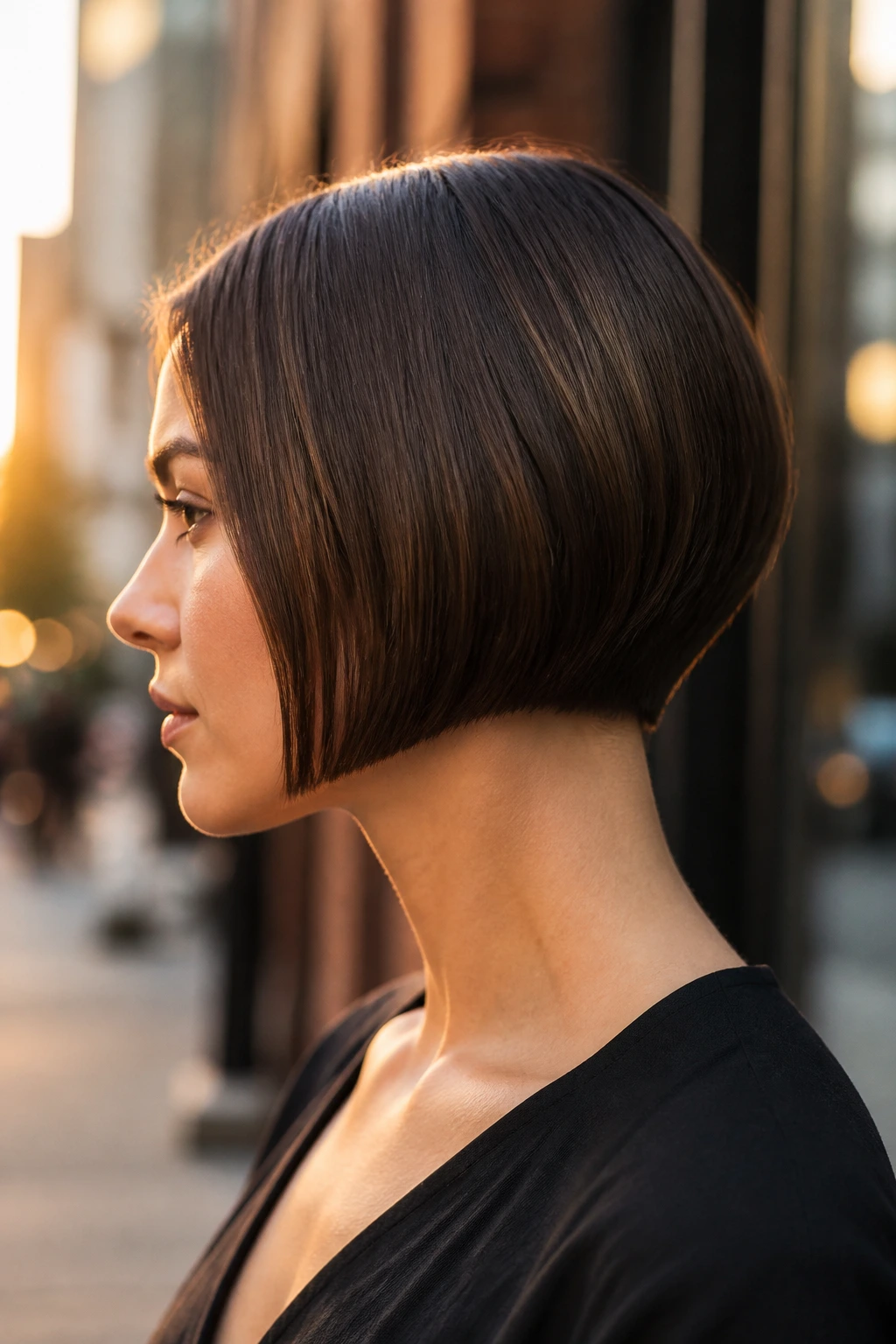
A tucked nape keeps the back clean and close to the head, which can make thin hair look much more controlled. The front can stay blunt and smooth, while the back sits almost flat against the neckline. That gives you a neat shape that does not puff at the collar.
This works especially well if the hair is fine and tends to swing around when it gets touched by coats, scarves, or humidity. The tucked nape keeps the silhouette disciplined. I like it with a slight side part and a glossy finish, because the shine helps the cut look fuller. The back should not be over-thinned. That’s where the shape can fall apart.
Quick Take
If the back of your bob is always the part that goes weird first, this version is worth asking for. It keeps the neckline under control without losing the blunt edge that makes the cut work.
30. Center-Part Lob with Hidden Weight Line
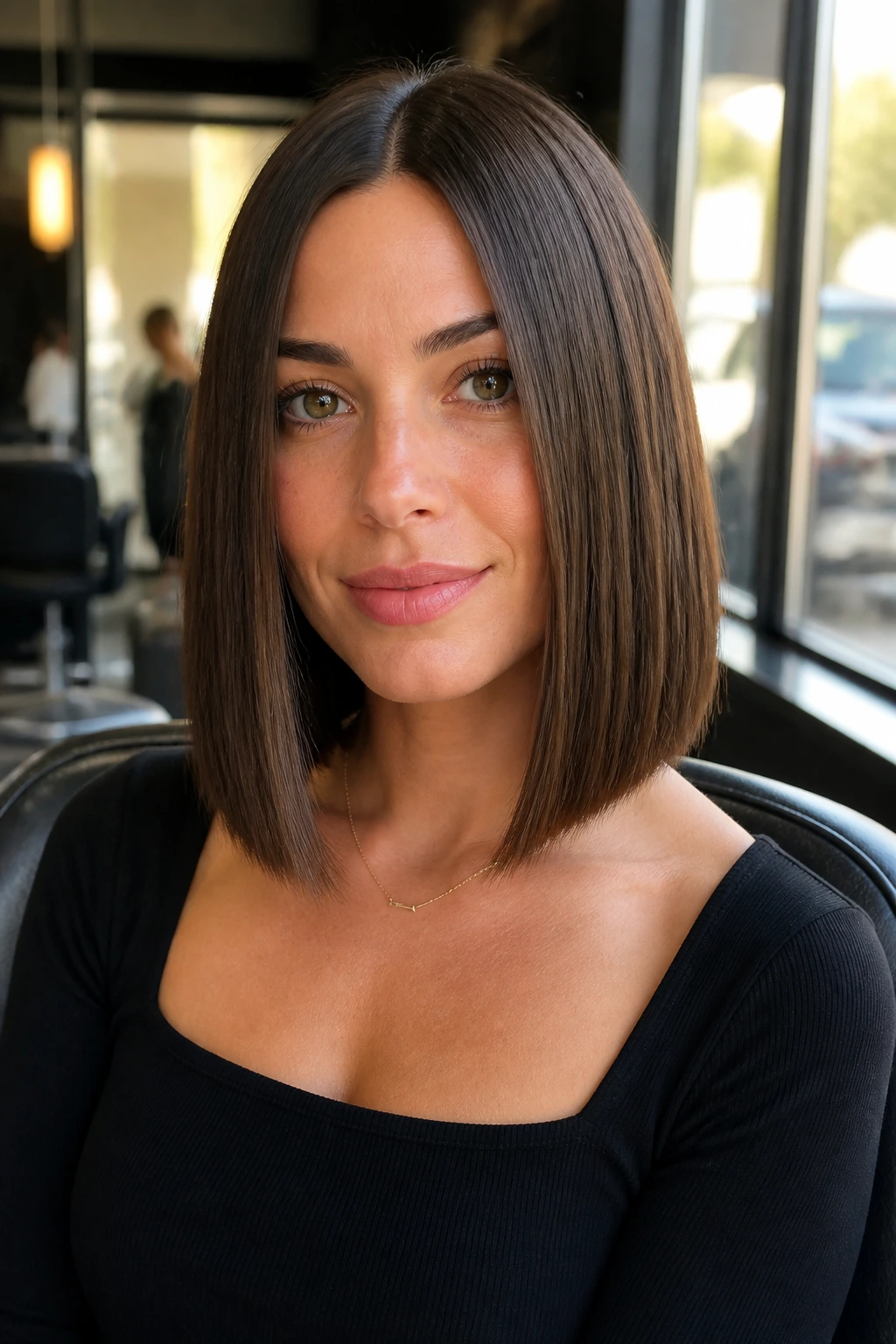
A center-part lob with a hidden weight line can make thin hair look calmer and fuller at the same time. The length gives you room to move, the center part creates symmetry, and the concealed weight keeps the ends from looking scraped down. It’s a very practical shape, which is probably why I like it so much.
The hidden weight is the quiet part of the haircut. It’s not visible, but it keeps the bottom from looking too airy. That makes the whole lob sit better on fine hair. The line should remain blunt on the surface, even if there’s a bit of internal support underneath. It’s one of those cuts that rewards a good stylist more than a flashy one.
- Best for: thin hair that needs extra steadiness through the ends.
- Ask for: a blunt surface with weight preserved at the perimeter.
- Style it with: a clean center part and a small amount of smoothing cream.
31. Thin-Hair Bob with Micro-Bangs
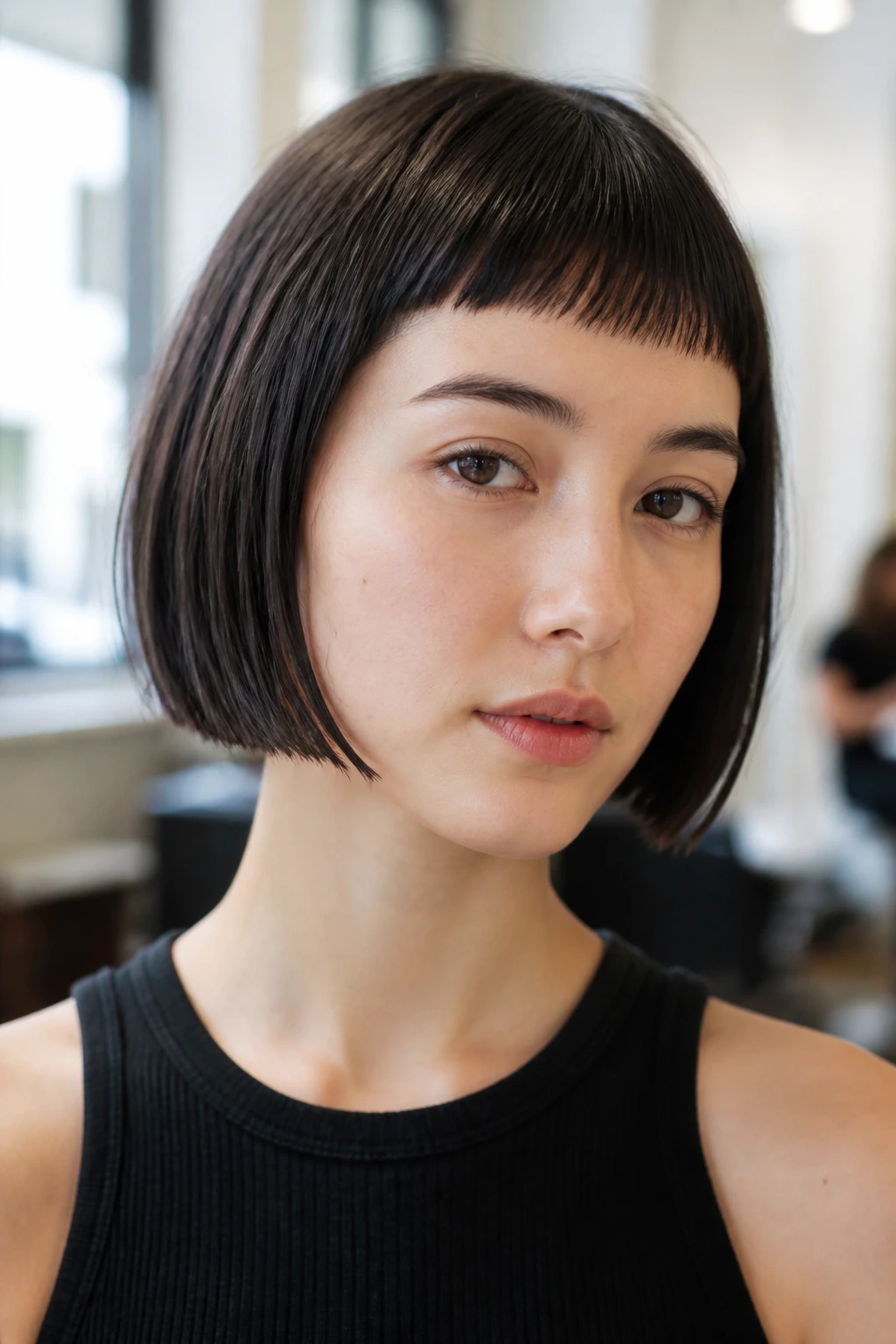
Micro-bangs are not for everyone, and I’m glad about that. They’re sharp, a little quirky, and excellent when the rest of the bob is kept clean and compact. On thin hair, the short fringe creates a compact visual block up front, which can make the haircut feel denser and more defined.
The rest of the bob should stay simple. If both the fringe and the perimeter try to make a statement at the same time, the haircut can feel choppy. Keep the hem blunt and the bangs crisp. This look works best on straight or mostly straight hair and on people who do not mind a little edge. It’s bold, but not fussy.
How to Wear It
Keep the makeup and clothes simple if you want the haircut to lead. A micro-bang bob already has enough personality; it does not need a lot of extra noise.
32. Side-Volume Bob with Root Lift
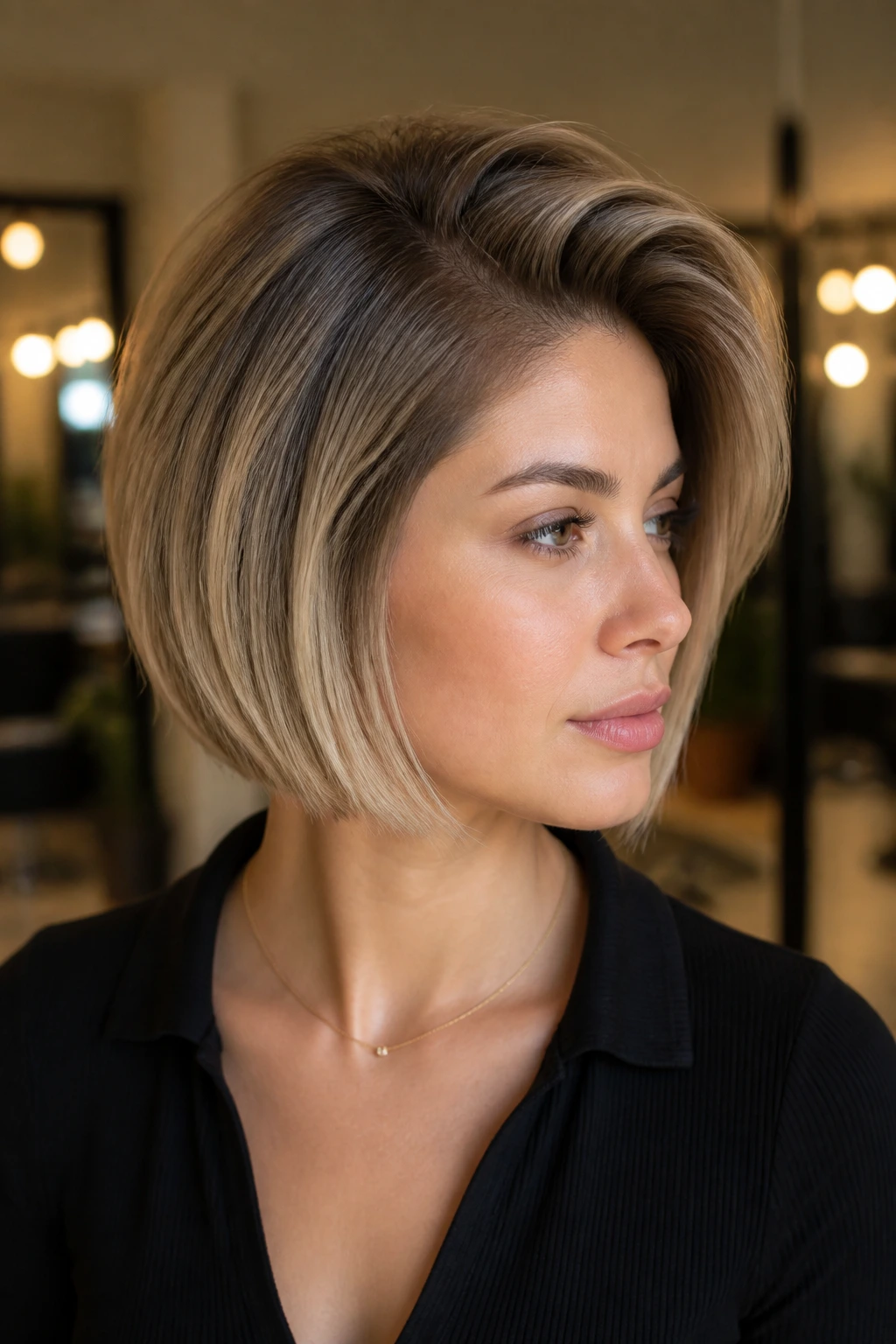
A side-volume bob is built around the crown. The cut itself can stay blunt, but the styling and parting should encourage one side to rise a little higher than the other. That gives thin hair more body where it usually lacks it. It also keeps the top from sitting flat, which is often the real problem.
This bob is useful when the hair is fine but plentiful enough that it can still hold shape with the right direction. Dry the roots against the part first, then sweep the hair into place. That little bit of resistance creates lift. The perimeter should remain clean so the volume at the top doesn’t make the whole look feel puffy.
Best for: flat crowns and anyone who wants a little height without a teasing comb.
Styling note: focus the blow-dryer at the roots for the first 60 to 90 seconds before smoothing the lengths.
33. Soft-Undercut Blunt Bob
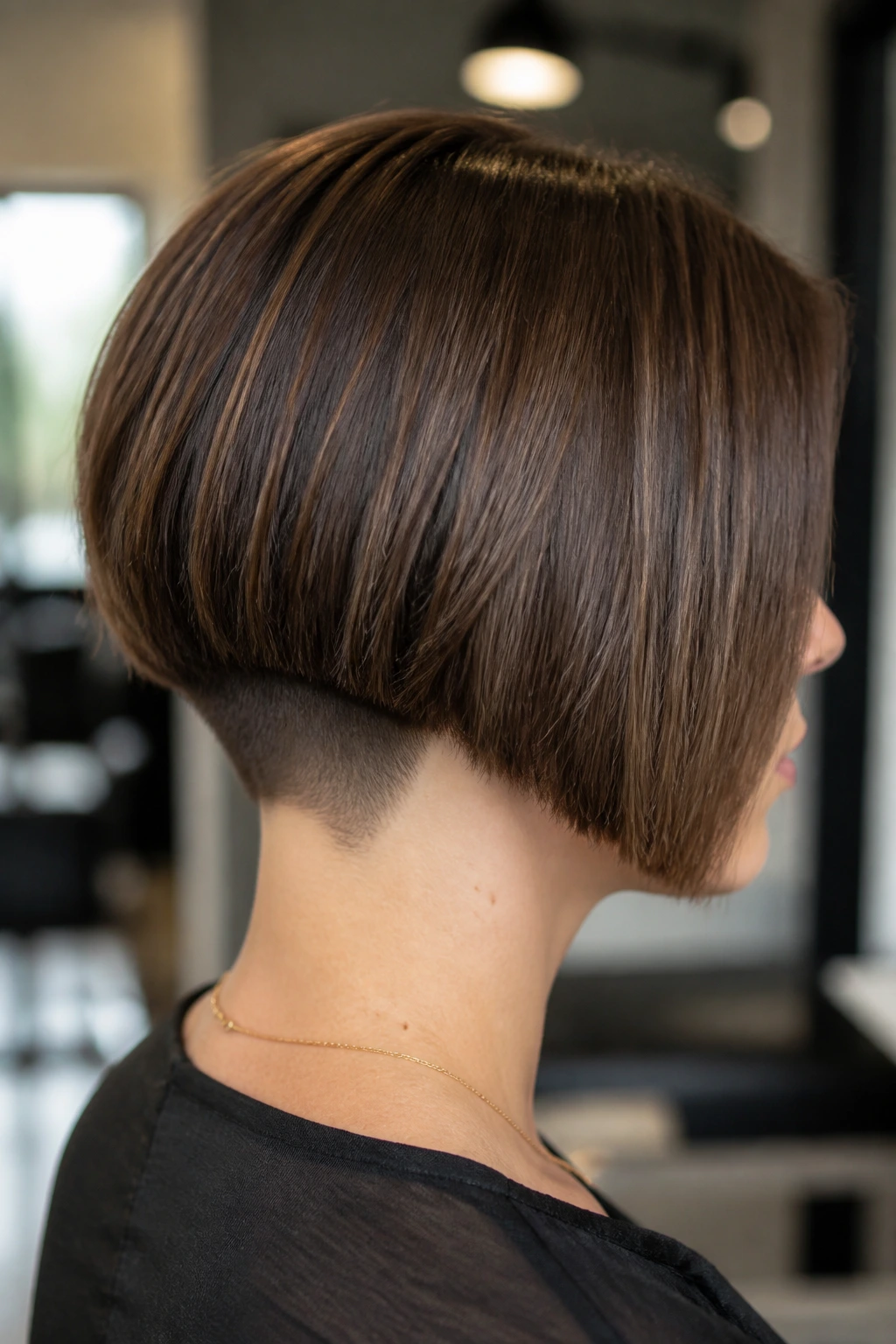
A soft undercut can be a quiet miracle for thin hair that still puffs or bulks up under the surface. The top keeps its blunt, visible line, while a little interior removal at the nape helps the bob sit flatter and cleaner. The result is lighter where it needs to be, but still solid from the outside.
This is not the kind of undercut that screams for attention. It’s hidden support. That makes it useful if your hair is fine but has a stubborn back section that bulges out under scarves or at the neckline. I like it when the head shape needs help but you still want the blunt bob to read as one piece. It’s one of the smartest quiet fixes in the whole list.
Why It’s Worth Considering
You get the polish of a blunt bob without the thick, bulky back that some fine-haired bobs develop. That’s a real difference, and you feel it every time you dry your hair.
The Shape Logic Behind a Blunt Bob on Thin Hair
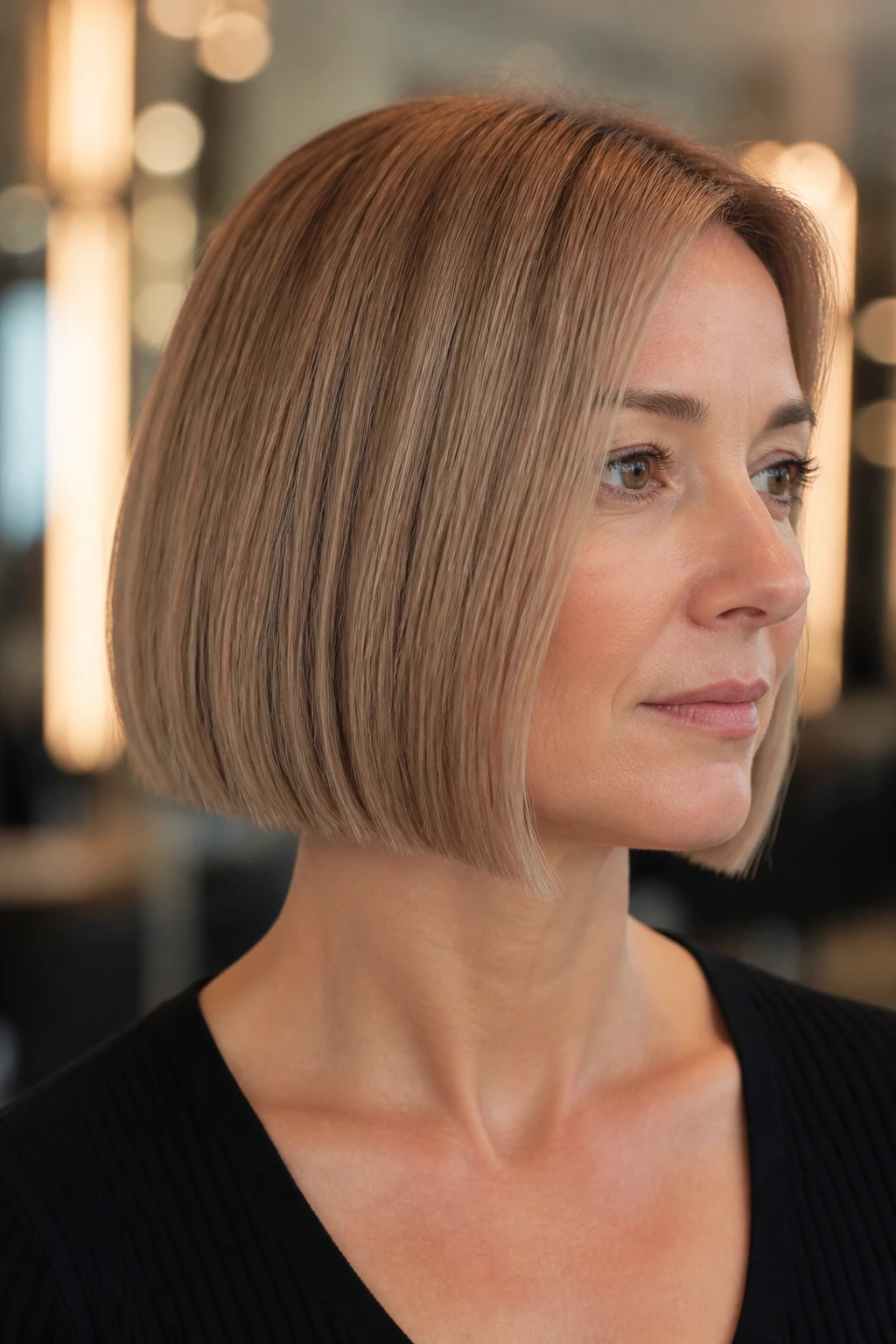
A blunt bob works on thin hair because it protects the bottom edge. That sounds almost too simple, but the simplicity is the point. Thin hair usually looks thinner when the ends are too long, too layered, or too shattered. The line starts to fray. Once that happens, no amount of mousse can pretend the outline is full.
The best blunt bobs solve the problem at the cut level. They keep the perimeter one length, or close to it, and they place the hem where the hair can actually hold a shape. Chin, jaw, collarbone, just below the jaw — those landmarks matter because they change how much hair is seen at once. Shorter often looks thicker. Slightly longer often looks softer. The sweet spot depends on your face, your neck, and whether your hair lies flat or bends with a mind of its own.
Why the Hem Matters More Than the Layers
A lot of salon language can get weirdly fancy around this. Strip it down, and the rule is plain: the edge is the volume. If the ends are solid, the haircut looks denser. If the ends are wispy, the haircut looks tired. That’s why some people with thin hair do better with almost no layers at all, while others need just enough hidden weight removal to keep the shape from puffing up.
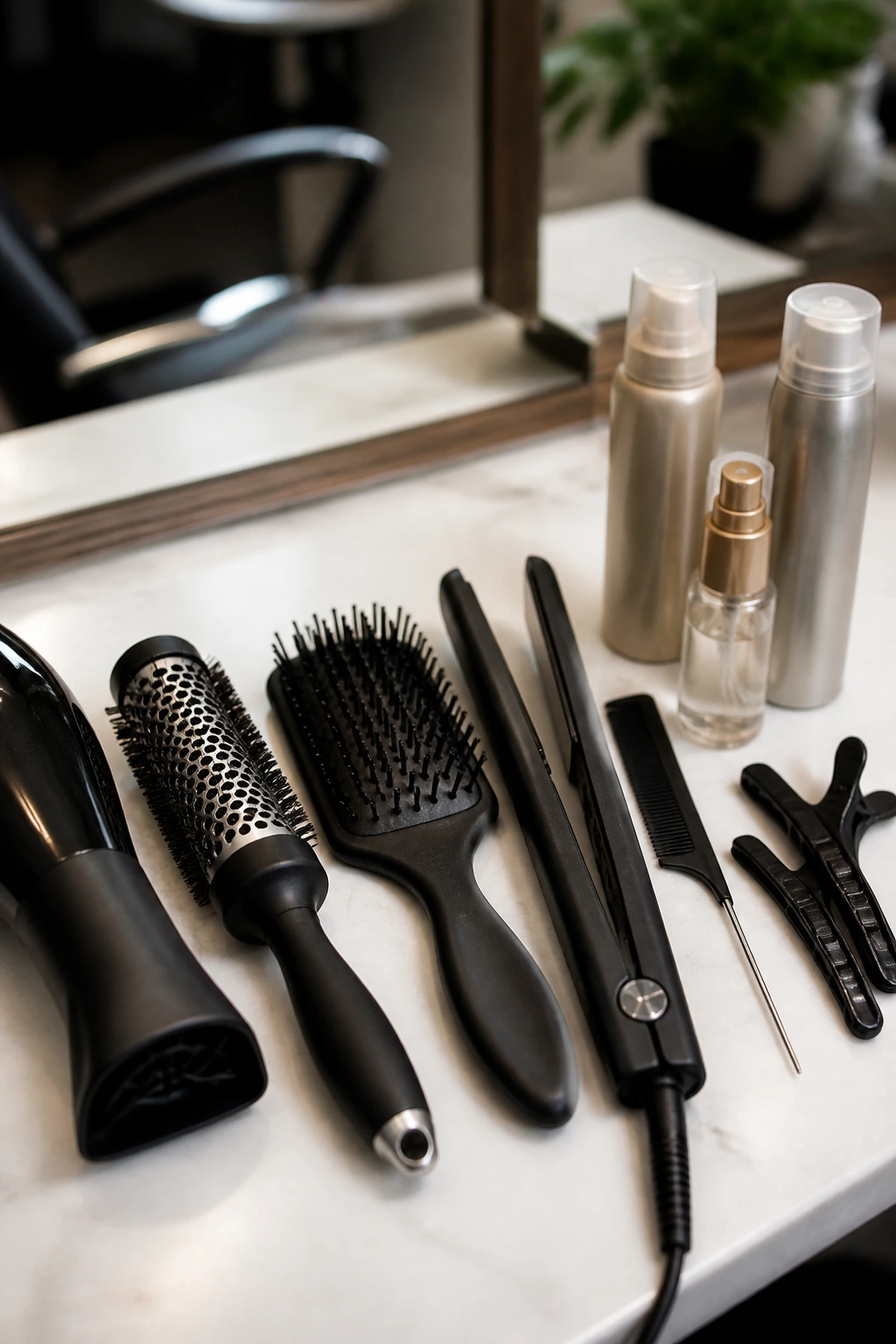
The Tools That Keep the Line Clean
-
Blow dryer with a nozzle attachment: The nozzle directs airflow along the hair shaft, which helps the ends lie flat instead of frizzing outward.
-
Medium round brush: Good for turning the ends under and adding a little root lift without creating curl.
-
Paddle brush: Better when you want a sleek, straight finish with very little bend.
-
Flat iron with adjustable heat: Useful for sharpening the hem and smoothing the top layer; keep the temperature moderate, not scorching.
-
Tail comb: Helps make a clean part and section the hair neatly around the crown and nape.
-
Volumizing mousse or root lift spray: Adds support at the roots before blow-drying, where thin hair usually needs it most.
-
Lightweight heat protectant: Fine hair gets weighed down fast, so choose a spray or mist that doesn’t leave a greasy film.
-
Dry shampoo: Best for day-two lift at the roots, especially around the part and crown.
-
Clips: Keep sections separated while drying so you don’t accidentally flatten the whole head at once.
What to Ask for in the Salon Chair
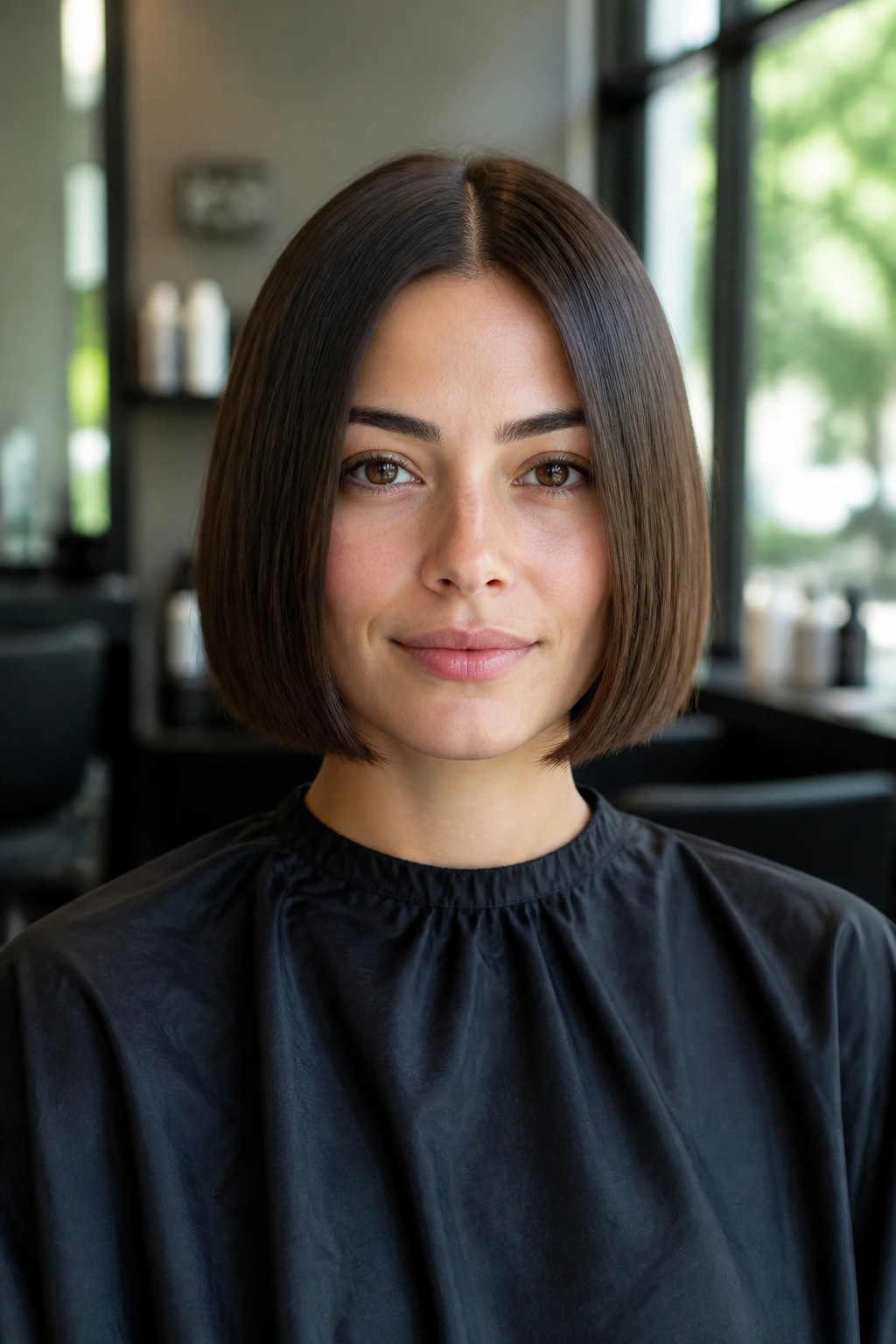
Bring reference photos, yes, but bring the right kind. A filtered selfie from a dim bathroom does not help much. What helps is a front view, a side view, and, if possible, a back view of the bob you like. Then say what you like about it in plain language: the length, the part, the bluntness, the way the ends sit.
Ask for a solid perimeter if density is your main issue. If the stylist starts talking about “movement,” clarify how much movement they mean. On thin hair, movement can mean a few hidden adjustments under the surface, or it can mean slicing the bottom into little frayed bits. Those are not the same thing. Be picky.
If your hair is very fine, ask whether the cut should be checked dry around the face and hem. Wet hair can lie to everyone in the room. It stretches, it darkens, it looks longer, and then it bounces up when it dries. That bounce matters on a bob. A half inch can change whether the cut lands at the chin or above it.
How to Wear These Bobs Without Letting Them Collapse
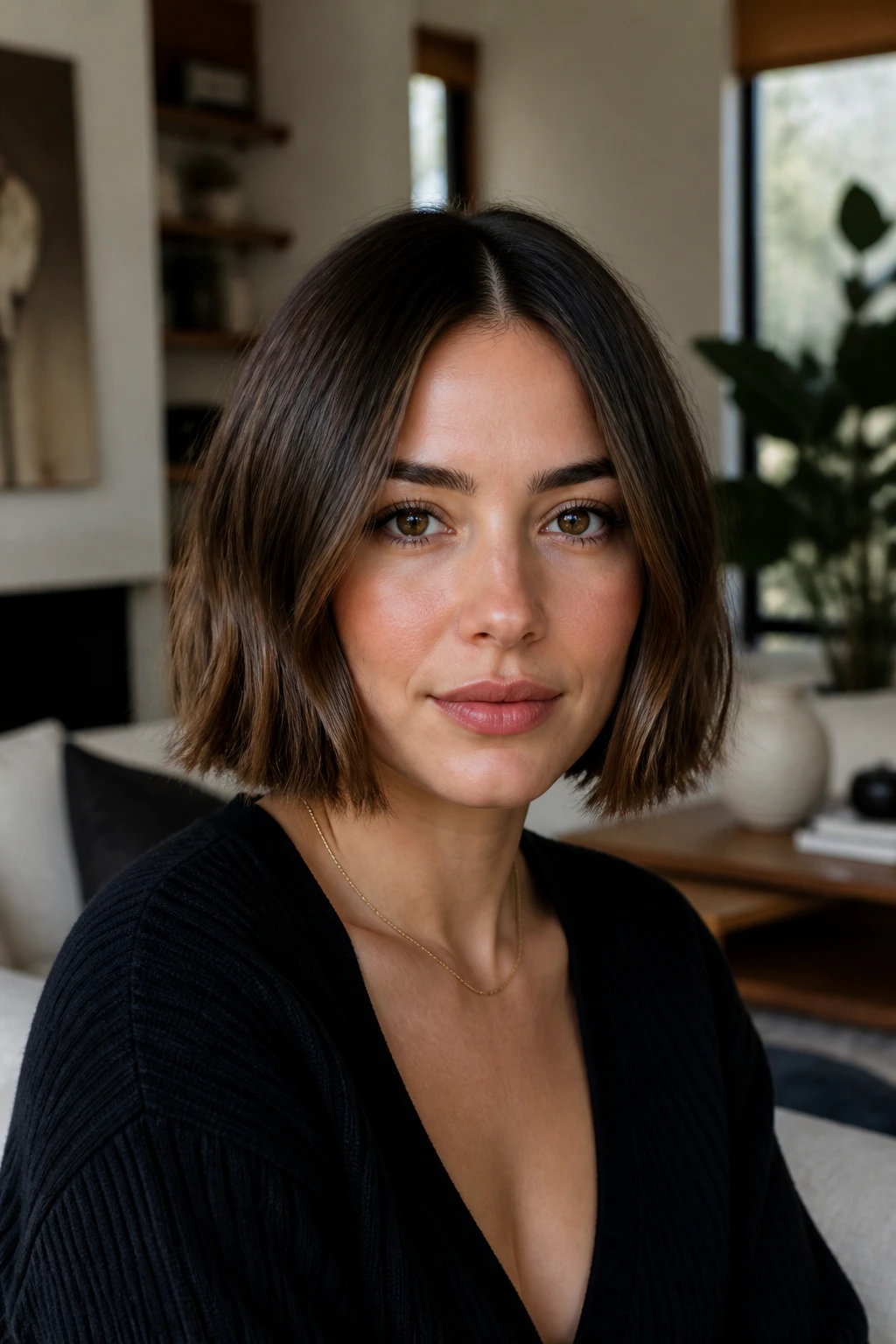
Parting: A center part gives the cleanest symmetry for precision bobs, while a deep side part can lift the crown and make thin hair feel less scalp-heavy. If your hair falls naturally to one side, fight that only if you enjoy a daily battle.
Texture: Straight, glossy styling makes the perimeter look strongest. A soft wave can add the illusion of thickness, but keep it controlled so the ends still read as one line. Too much piecey texture and the bob starts to unravel visually.
Accessories: Earrings, glasses, and collars matter more than people think. A chin-length bob looks sharper when it clears a thick necklace or a high collar. Tucked-behind-ear styling can open the face and keep the shape from swallowing your features.
Finish: A slightly matte finish can work if your hair is very fine and prone to looking greasy, but a light sheen usually helps the cut look healthier. Use just enough shine to make the edge visible.
Small Styling Tweaks That Add Lift
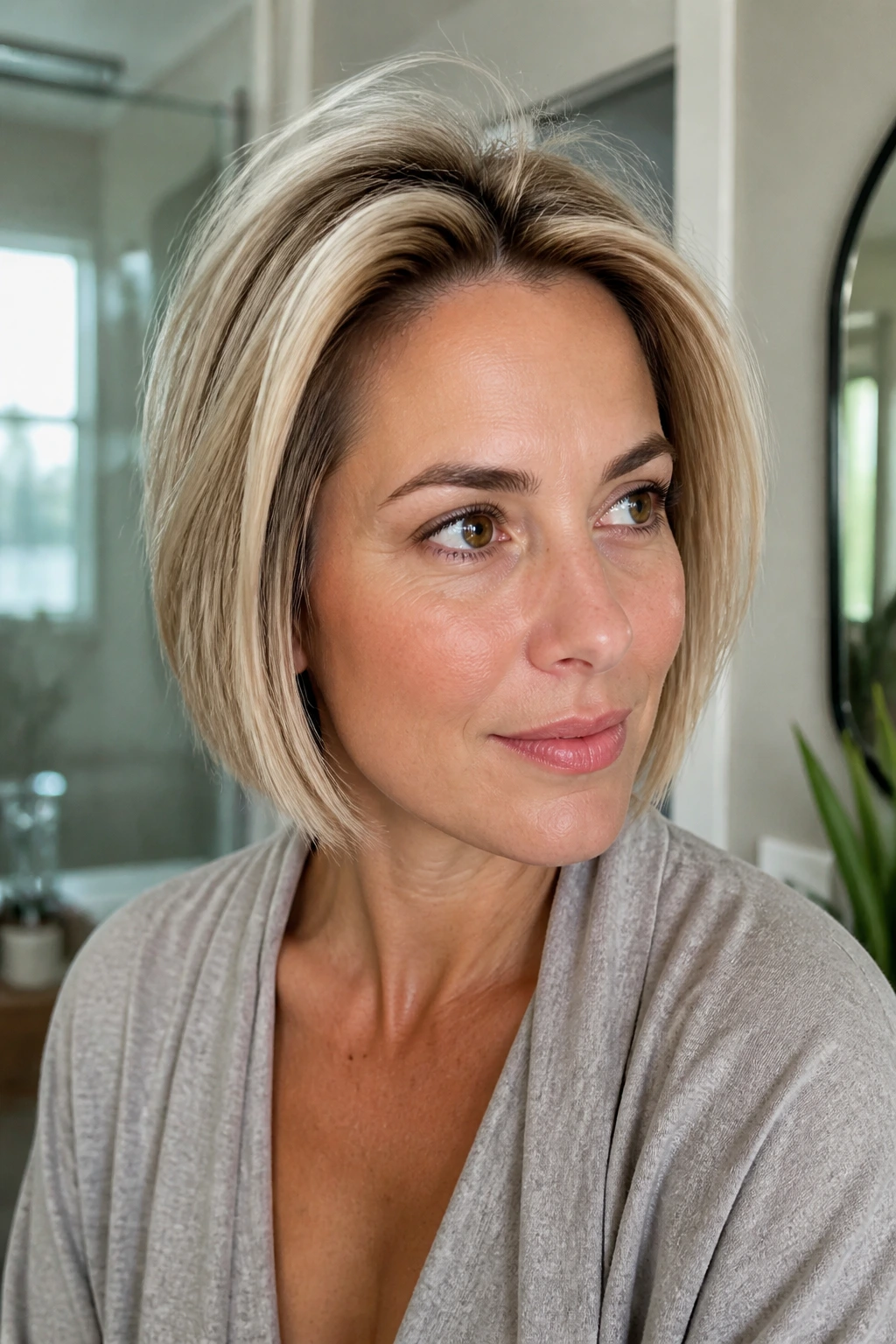
Root Lift: Put the lift where the problem starts — at the crown and along the part, not halfway down the ends. A mousse or root spray works better there than heavy cream ever will.
Direction: Blow-dry the front sections in the opposite direction of the part first, then settle them back. That little trick gives a small but real bump at the scalp.
End Control: If the ends flip outward, wrap them around a brush or tap them with a flat iron on the last inch only. Don’t overwork the whole head. Thin hair shows fatigue quickly.
Fast Fix: If the bob falls flat by lunch, dry shampoo at the roots and a quick blast of cool air can revive it. Use your fingers to lift the section near the crown, then stop touching it.
Keeping the Bob Sharp Between Trims
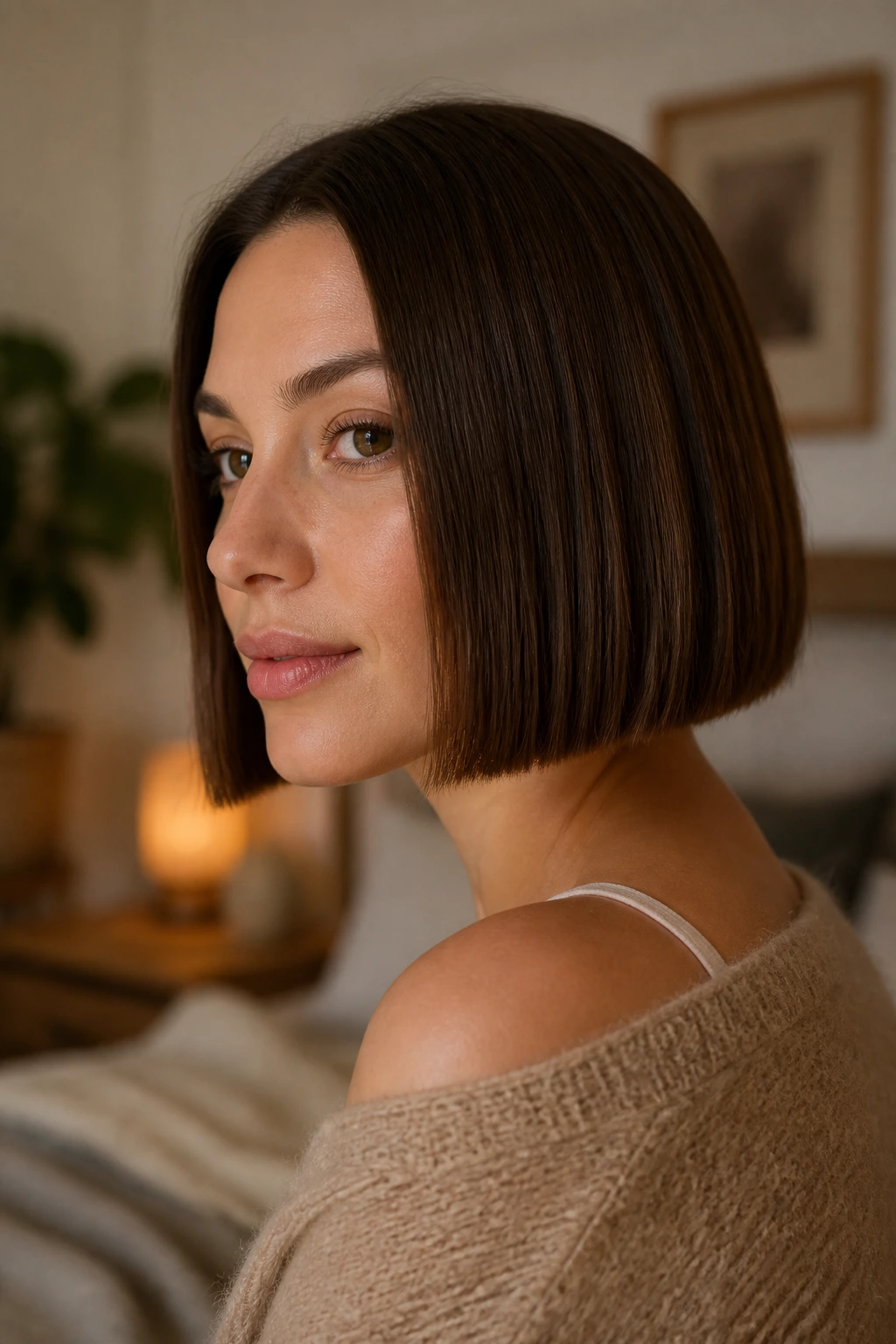
Blunt bobs live or die on trim timing. Let the line grow too long and the hem starts to separate. On thin hair, that separation shows earlier than people expect. For most of these cuts, a trim every 6 to 8 weeks keeps the shape honest. If you choose a micro bob or a very precise jaw-length line, you may want to be closer to 5 to 6 weeks.
At home, treat the bottom edge carefully. Heavy oils near the ends can make the hair stringy, and heavy masks can flatten the crown if they’re dragged too high. Apply conditioners from mid-length down, rinse well, and keep the scalp product-light unless your scalp genuinely needs moisture. Fine hair doesn’t forgive sloppy product placement.
Night care matters too. A silk or satin pillowcase helps the ends stay smoother, and a loose clip or tuck can keep the hem from getting crushed on one side. If you wake up with the bob bent in odd places, a light mist of water and a quick brush-through is usually enough. You do not need to start from scratch every morning.
Variations and Adaptations to Try

The French Office Bob: Keep the length at the jaw, add a soft fringe, and style it with a little bend under the ends. This version feels neat enough for daily wear but has enough shape to keep thin hair from looking flat.
The Glass-Hair Lob: Stretch the length to the collarbone and lean into a glossy, straight finish. It works well if your hair is naturally smooth and you want a bob that looks polished without much volume fuss.
The Air-Dry Bob: Ask for a blunt perimeter with very light internal support, then let the hair dry with mousse and a center part. This version is better for people who dislike hot tools and are fine with a softer finish.
The Deep-Side Lift Bob: Shift the part hard to one side and keep the hem blunt. This adaptation is especially good if the crown is flat and the face needs a little asymmetry.
The Curly-Friendly Blunt Bob: Cut it a touch longer and check the line dry if your hair has waves or loose curls. The perimeter can still stay blunt, but the length needs room to account for shrinkage.
The Nape-Control Bob: Keep the front blunt and let the interior at the nape sit slightly shorter so bulky back sections stop puffing out. That’s a smart move for hair that’s fine but stubborn at the neckline.
Common Mistakes That Make Thin Hair Look Thinner
-
Going too long without enough structure: A bob that drifts past the shoulders without a solid line can start to look stringy. The fix is either a shorter hem or a clearer perimeter.
-
Over-layering the bottom half: Feathered ends steal density from the exact place thin hair needs it most. If the bottom looks broken up, ask for a cleaner edge next time.
-
Using heavy products at the roots: Thick creams and oils can make fine hair collapse before you leave the house. Keep the root area light and save richer products for the mid-lengths and ends.
-
Ignoring the part: A bad part can flatten the whole cut, even if the haircut itself is good. Move it a half inch, dry it in the right direction, and see how much changes.
-
Skipping trims until the line frays: Once the blunt edge turns soft and uneven, the haircut loses the reason it works. Trim earlier rather than later.
Frequently Asked Questions
Is a blunt bob actually good for thin hair?
Yes, when the perimeter stays solid. Thin hair usually looks fuller when the ends are kept one length instead of chipped into layers that separate.
Should thin hair avoid layers completely?
Not always, but the layers need to be hidden or minimal. A little internal weight control can help the shape sit better; visible layering through the hem usually works against you.
What length makes thin hair look thickest?
Jaw length and chin length are often the strongest options, with collarbone length close behind if the hair is dense enough. The best length depends on how much your hair spreads out when it’s dry.
Can I wear a blunt bob if my hair is wavy or curly?
Yes, but the cut usually needs to be checked dry or cut a touch longer. Waves and curls bounce up, so the blunt line has to account for shrinkage or it will end up shorter than you meant.
Do bangs help thin hair look fuller?
They can. A full fringe or bottleneck fringe adds visual weight at the front, while curtain bangs soften the face without taking too much from the perimeter.
How often should I trim a blunt bob?
Every 6 to 8 weeks is a good rhythm for most versions. Very short or very precise bobs may need a touch-up sooner to keep the line clean.
What if my bob falls flat by noon?
Focus on the roots, not the ends. A little root-lift product, a quick dry with the dryer aimed at the scalp, and a side or center part adjusted slightly off its usual track can bring the shape back.
Can I air-dry a blunt bob and still keep it looking full?
You can, if the cut is made to behave that way and you use a light mousse or leave-in cream. Air-drying works best when the perimeter is blunt enough to hold its own.
The Shape That Holds
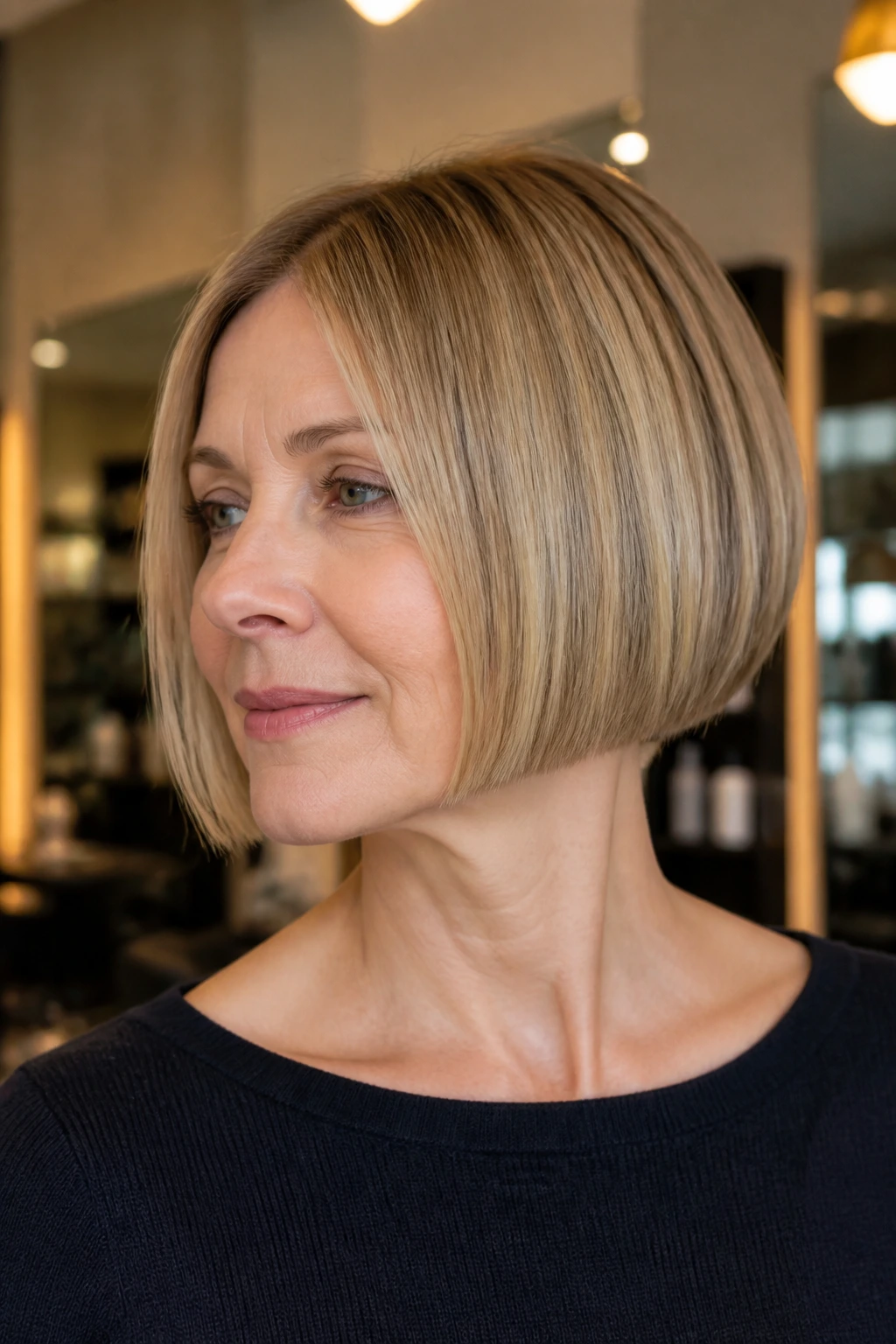
A good blunt bob does something thin hair often needs and rarely gets: it gives the ends a clear job. No frayed tips. No wispy excuses. Just a clean line that makes the hair look more deliberate, more solid, and a lot less overworked.
If you’re choosing between lengths, start with the shape that gives your hair the strongest edge, not the one that sounds safest on paper. Bring reference photos, ask for the perimeter to stay honest, and keep the styling light enough that the cut can still show through. That’s where the best versions live.
