



Fine hair has a way of tattling on a bad cut. Give it a blunt bob with too much weight at the bottom and it can hang like a damp napkin by lunchtime; add heavy bangs and the front starts splitting in all the wrong places. A messy shaggy bob with bangs for fine hair solves that only when the shape is cut with restraint. Too many layers, and the ends disappear. Too few, and the whole thing sits there like it’s waiting for permission to move.
What works instead is a haircut that keeps some edge at the perimeter and breaks up the inside with soft, deliberate texture. The bob still reads as a bob. The shag gives it lift. The bangs do the framing work so the face doesn’t feel swallowed by a flat curtain of hair.
That balance matters more on fine strands than on thick ones. With fine hair, every cut line is visible. Every extra inch of weight shows up. A good shaggy bob doesn’t fake volume; it creates the illusion of denser hair by letting the ends flick, bend, and separate in a way a one-length shape never can.
Why These 23 Messy Shaggy Bobs Work So Well on Fine Hair
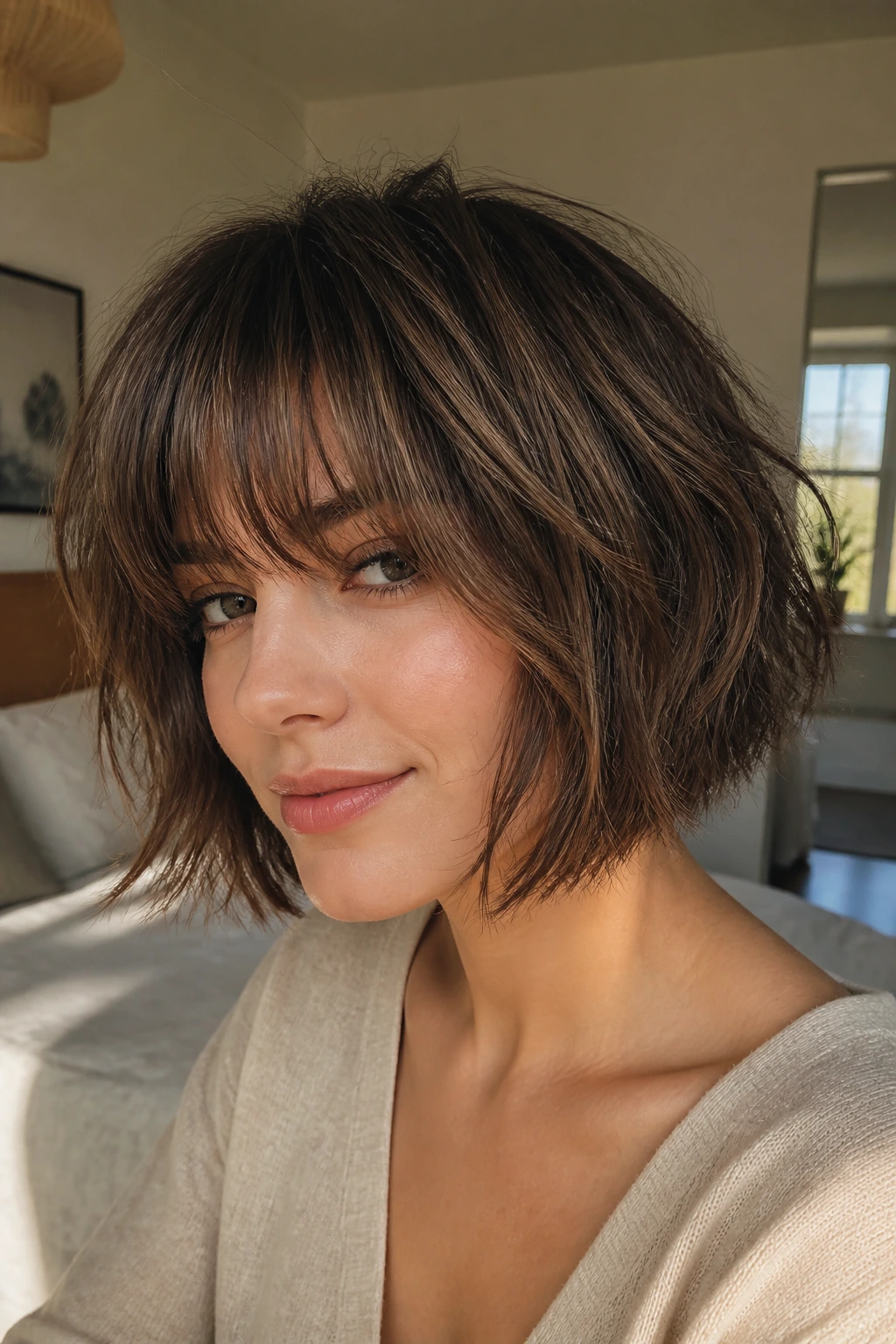
- They keep the outline intact: A clear bob line at the chin, jaw, or collarbone stops fine hair from looking stringy at the ends.
- They build lift where it shows: Shorter layers around the crown and cheekbones create movement without shredding the whole shape apart.
- The bangs do useful work: Curtain, bottleneck, wispy, and side-swept bangs give the front a frame so the haircut feels intentional even on flatter days.
- They grow out cleanly: These cuts still look believable at six to eight weeks, which matters when your hair shows every millimeter of overgrowth.
- They’re easier to restyle: A rough blow-dry, a quick bend with a small iron, or even a solid air-dry can bring the shape back without a long morning ritual.
1. Curtain-Bang Bob With Feathery Ends
This is the safest place to start if you want movement without losing the bob shape. Curtain bangs split away from the center, skim the cheekbones, and blend into feathery ends that keep fine hair from looking chopped into a hard block. The result feels airy, not sparse.
Why It Flatters Fine Hair
The bangs create a visual frame across the face, which helps the haircut read fuller even when the body of the hair is naturally light. Ask for soft point cutting at the fringe and a slightly beveled perimeter so the ends don’t sit like one stiff line.
Best for: center parts, soft waves, and anyone whose hair falls flat at the temples.
Styling note: Blow-dry the bangs first with a small round brush. If they dry crooked, the whole cut looks tired.
2. Chin-Length Shag Bob With Bottleneck Bangs
Bottleneck bangs are narrower at the center and open out toward the temples, which is why they’re so useful on fine hair. They add shape without swallowing the forehead, and chin length keeps the outline compact enough to feel dense.
What I like here is the balance between softness and edge. The shagging inside the bob makes the hair bend instead of hanging straight, but the cut still lands neatly around the jaw. That matters if your hairline is fine or your ends get wispy fast.
This version is especially good when you want a little cheekbone emphasis. The longest pieces of the bangs sit right where the face starts to narrow, so the haircut does some quiet contouring work without looking overly styled.
3. Razor-Cut Lob With Wispy Fringe
If you’re not ready to go fully short, this is the calm, grown-up answer. A razor-cut lob leaves a little more length in the front, which helps fine hair keep visual weight, while the wispy fringe keeps the top from feeling heavy or helmet-like.
The razor work is the point. It breaks up the ends just enough to create separation, and separation is your friend when strand diameter is fine. You want pieces that move when you turn your head, not a solid sheet that droops by 2 p.m.
How to Wear It
Air-dry it with a pea-sized amount of mousse, then bend only the last 2 inches of the front sections with a 1-inch curling iron. That tiny bit of shape does more than a full curl ever will.
4. French Bob With Broken Baby Bangs
This one has attitude, but it works because the baby bangs are softened, not carved into a hard shelf. Broken baby bangs leave small gaps and irregular ends, which keeps the front from looking too dense for fine hair. The bob itself stays short and sharp at the jaw.
It’s a strong choice if your hair holds a little natural bend. Fine hair can look richer in this cut when the edges are slightly chipped and the nape is neat. Too much layering would ruin it; the trick is to keep the perimeter solid and let the fringe carry the texture.
Watch this one if your hairline is sparse. A very short fringe shows everything. If your forehead has a lot of soft baby hairs, ask for a slightly longer, feathered version instead of a blunt micro-bang.
5. Collarbone Shag With Long Bardot Bangs
This is the easy-breathing option. The collarbone length gives fine hair enough weight to stay visible, while Bardot bangs split in the middle and feather out around the eyes in a way that feels relaxed instead of overworked.
The long fringe matters because it can be pushed aside, tucked back, or left loose on days when your hair doesn’t want to cooperate. That flexibility is useful. Fine hair often behaves differently from one wash to the next, and this cut doesn’t punish you for it.
Best for people who hate a strict part line
The longer front pieces blur the transition from bangs to bob, so the haircut looks good even when you’ve been wearing one side behind your ear all day. That kind of soft control is hard to beat.
6. Rounded Fluffy Bob With Side-Swept Fringe
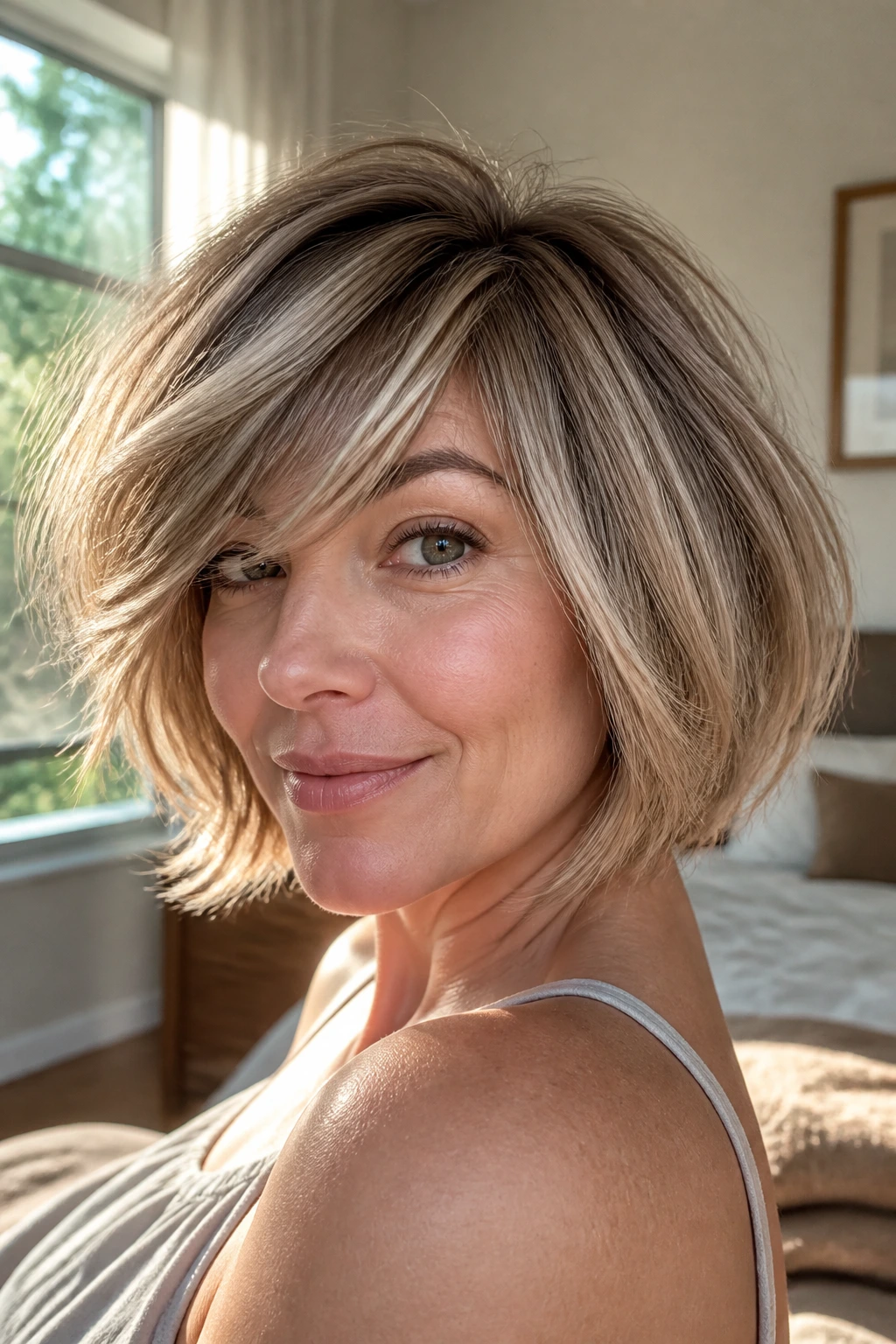
A side-swept fringe is still underrated for fine hair. It gives lift at the front, disguises a tricky cowlick, and lets the bob sit in a rounder, fuller shape instead of hanging flat around the jaw.
This version works because the crown is cut with some softness and the side part shifts the weight where you can actually see it. On fine hair, that visual move matters. You’re not creating volume out of nowhere; you’re moving what you already have into a better place.
The rounded shape also makes this cut friendlier if you wear glasses. The sweep keeps the fringe from fighting the frames, and the soft edge avoids the heavy, boxed-in look that can happen with blunt bangs.
7. Inverted Shag Bob With Piecey Curtain Bangs
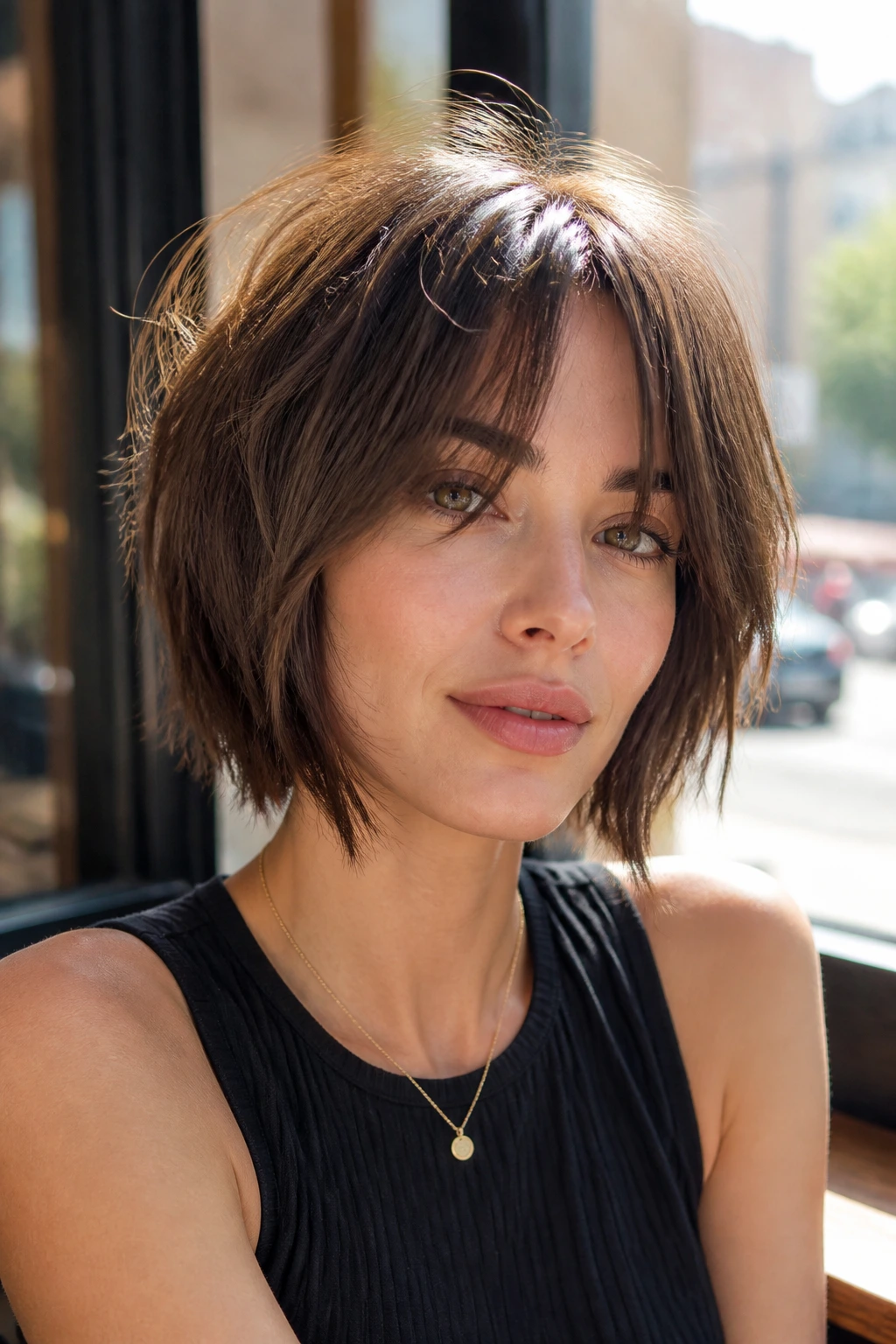
This cut sneaks in extra fullness by shortening the back just enough to let the front swing. An inverted bob can go very sharp very fast, but the shaggy version keeps the line broken and piecey, which is much kinder to fine strands.
The curtain bangs help the front feel soft while the back gives the illusion of a thicker base. That visual contrast is the whole game here. Fine hair often looks best when the silhouette does some of the heavy lifting, and this shape does that without feeling stiff.
Quick shape note
Ask for light stacking in the back, not a dramatic wedge. Too much angle will make the ends look thin. A little lift is enough.
8. Cropped Bixie Bob With Feathered Micro Bangs
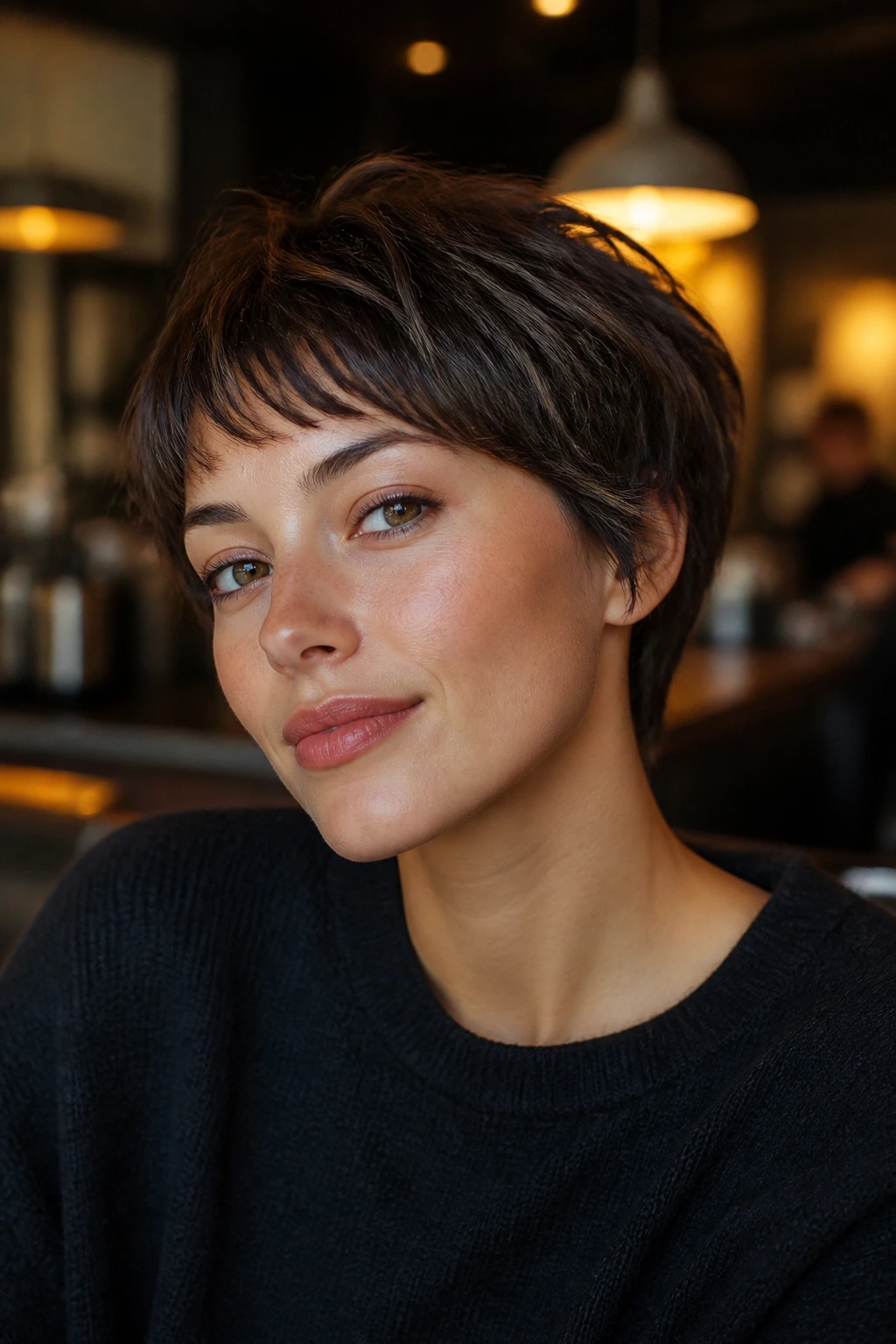
This is the shortest cut in the bunch, and it’s not shy. A bixie-bob hybrid works on fine hair because the shorter length removes the dead weight that usually drags strands down, and the feathered micro bangs give the face a crisp front edge.
It’s a strong option if your hair is fine but you still have a decent amount of it. That difference matters. Fine hair with decent density can handle a cropped shape; fine hair that’s also sparse around the hairline may need more softness at the fringe.
Styling reality: this cut needs the least product and the most shape. A fingertip of mousse at the roots, a quick blow-dry, and a tiny bit of paste at the ends is usually enough. Anything heavy will flatten it.
9. Sliced Jawline Bob With Straight-Across Light Bangs
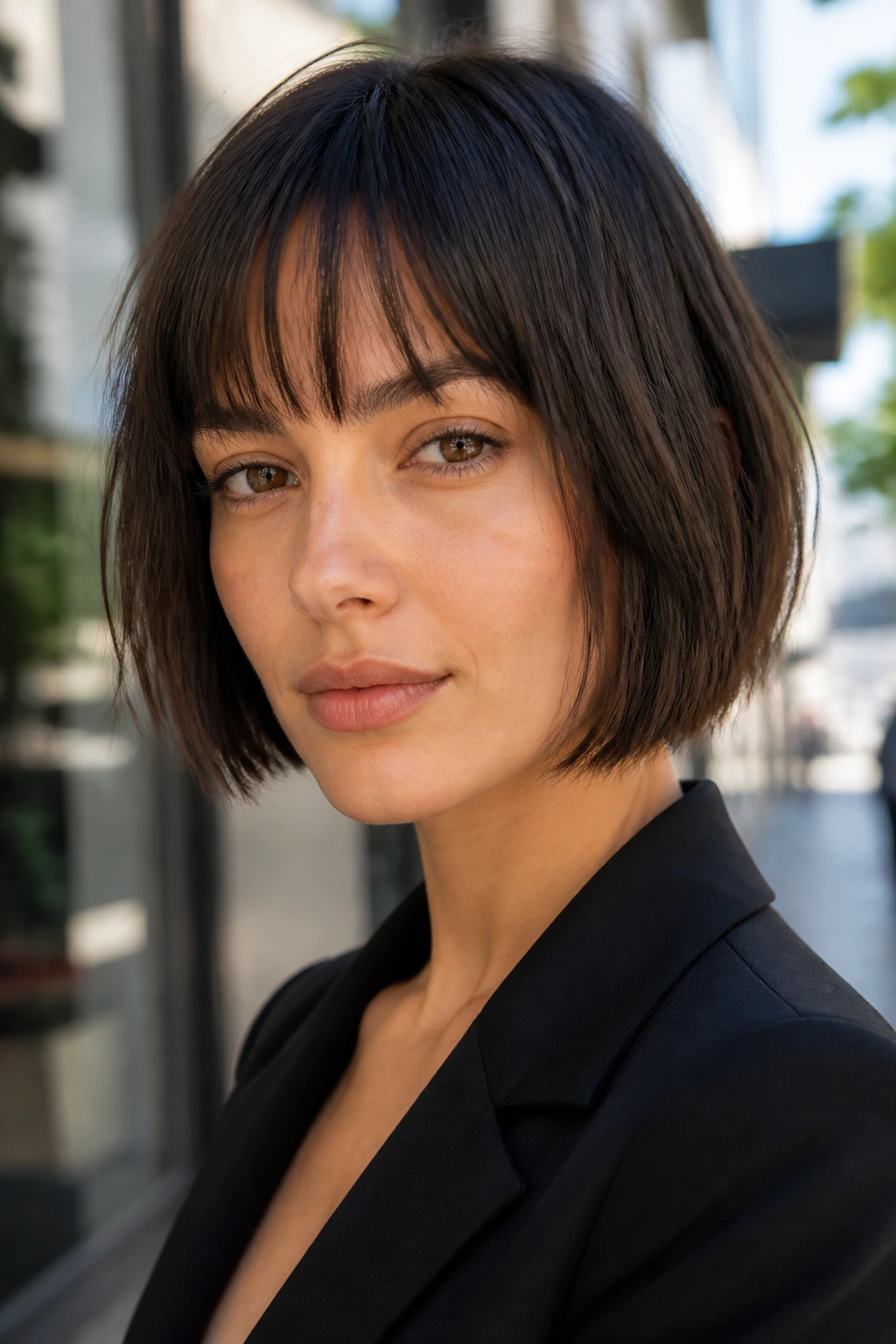
A straight-across bang can be risky on fine hair if it’s cut too heavy. Keep it light, sliced, and just barely full enough to skim the brows, and the result gets a sharp, graphic edge without stealing too much density from the rest of the cut.
The bob line sitting at the jaw gives the hair a clean landing strip. That’s useful when strands are translucent at the ends. You want one strong perimeter, then enough internal texture to keep the bob from feeling like a helmet.
A good clue: if the bangs look thick enough to cast a shadow over your eyes, they’re too heavy. Fine hair needs a lighter hand here.
10. Mushroom Bob With Soft Arched Bangs
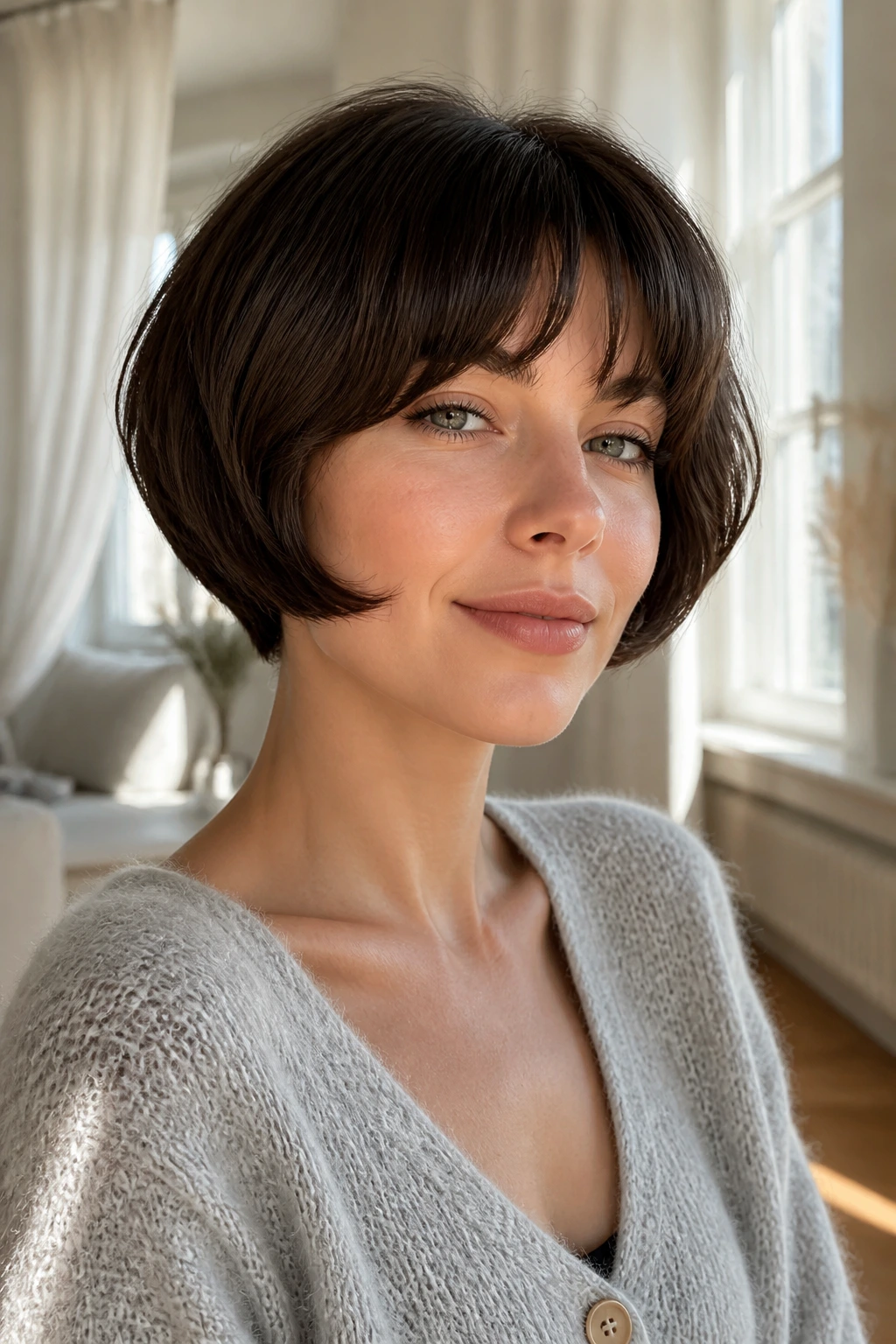
The mushroom bob sounds retro because it is, but the shaggy version is much easier to wear than the old-school bowl-cut cousin. The softened arch in the bangs opens the face, and the rounded shape makes fine hair look more abundant from every angle.
This works especially well when you want the haircut to feel structured without being severe. The perimeter curves around the head, but the internal texture breaks the outline just enough that it doesn’t read as a solid cap. That’s the difference between chic and dated.
Styling tip: use a small round brush to lift the fringe away from the forehead, then mist the mid-lengths with dry texturizing spray. It gives the cut a little airy grit without freezing the shape.
11. Grown-Out Wolf Bob With Split Fringe
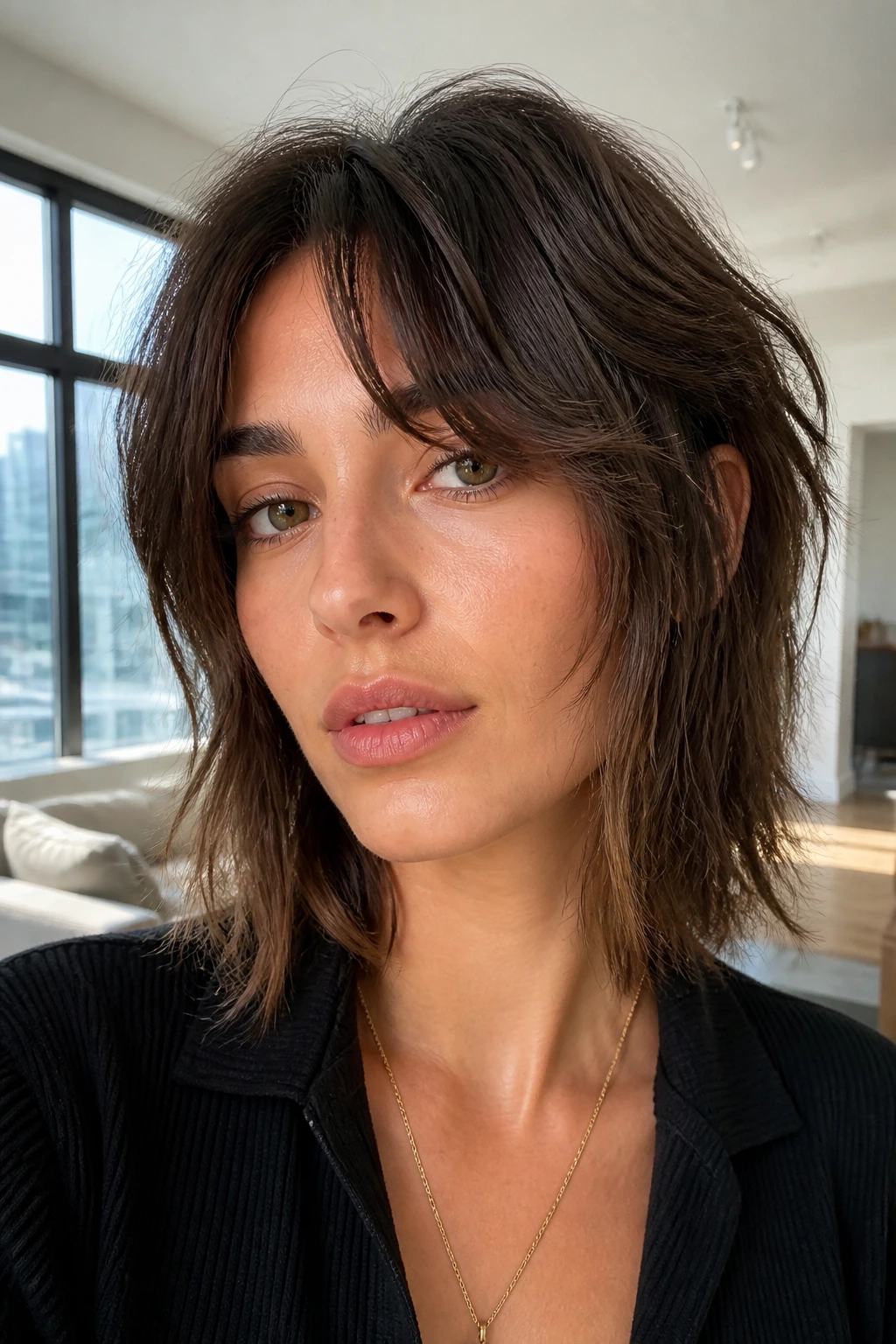
If you like a little edge, this one gives you the shag energy without sending you fully into mullet territory. The split fringe opens the face, while the bob-length body keeps the cut wearable and neat enough for everyday life.
Fine hair benefits here because the layers are intentionally broken up. The hair doesn’t have to sit in one smooth sheet, which is usually where thin-looking ends become obvious. A bit of internal mess reads as fullness.
This is also a smart cut if you hate frequent salon visits. The grown-out shape still looks deliberate when the fringe gets a little longer and the layers soften. It’s one of the few edgy cuts that doesn’t fall apart the second it grows.
12. Beach Bob With Long Shag Bangs
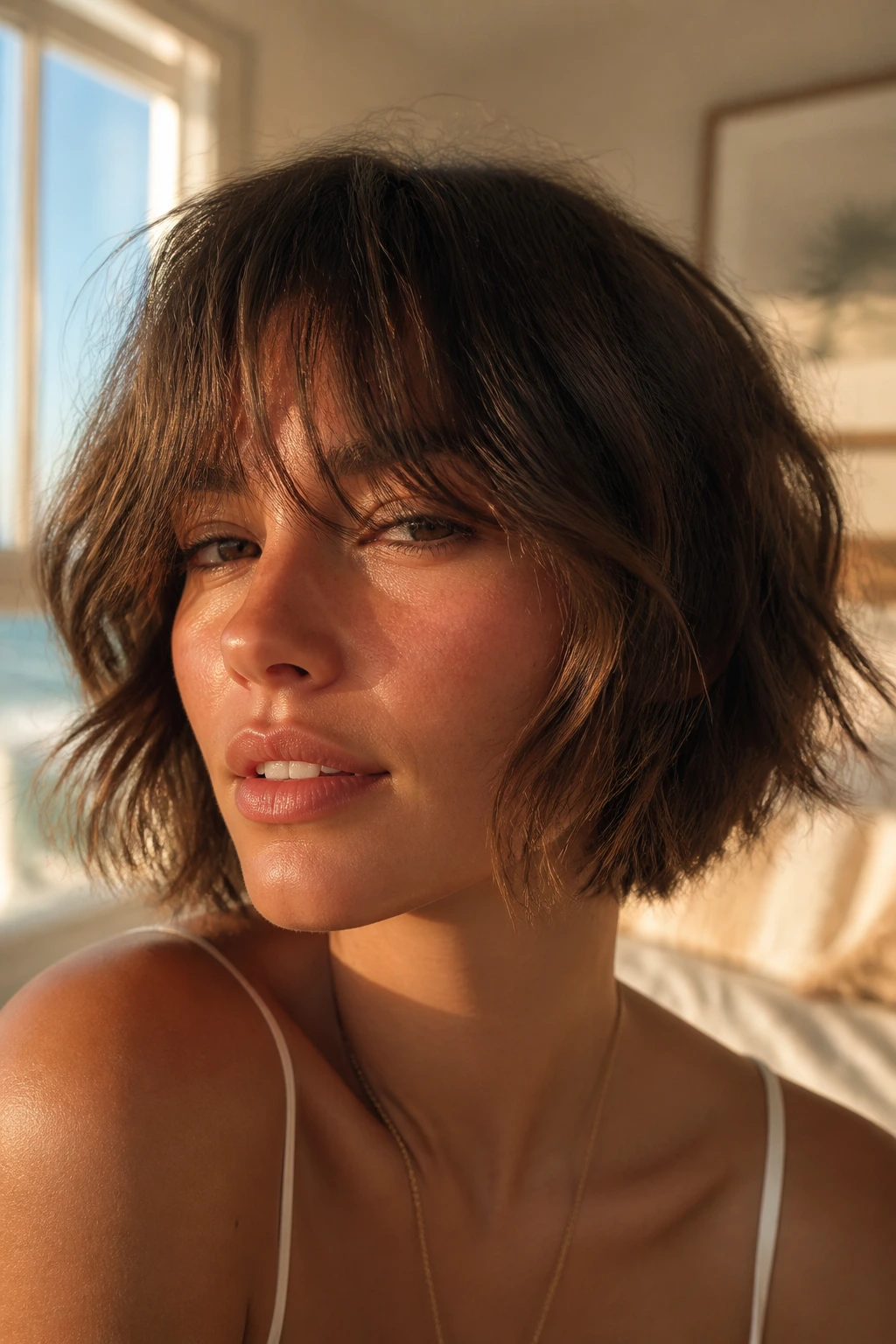
This is the easiest cut to air-dry. Long shag bangs leave enough weight to bend around the eyes, and the bob itself usually lands around the chin or just below it, where fine hair still has enough visual substance to hold a shape.
The finish should look loose, not crunchy. I’d skip heavy creams here. A light mousse at the roots, a salt-free texture spray through the middle, and a little finger-twisting at the front is plenty. You want separation and a soft bend, not beach-waved stiffness.
This one works especially well if your hair has a tiny bit of natural wave. Straight, slippery fine hair can still wear it, but the cut looks better when there’s a little movement in the ends.
13. Feathered A-Line Bob With Eyelash Bangs
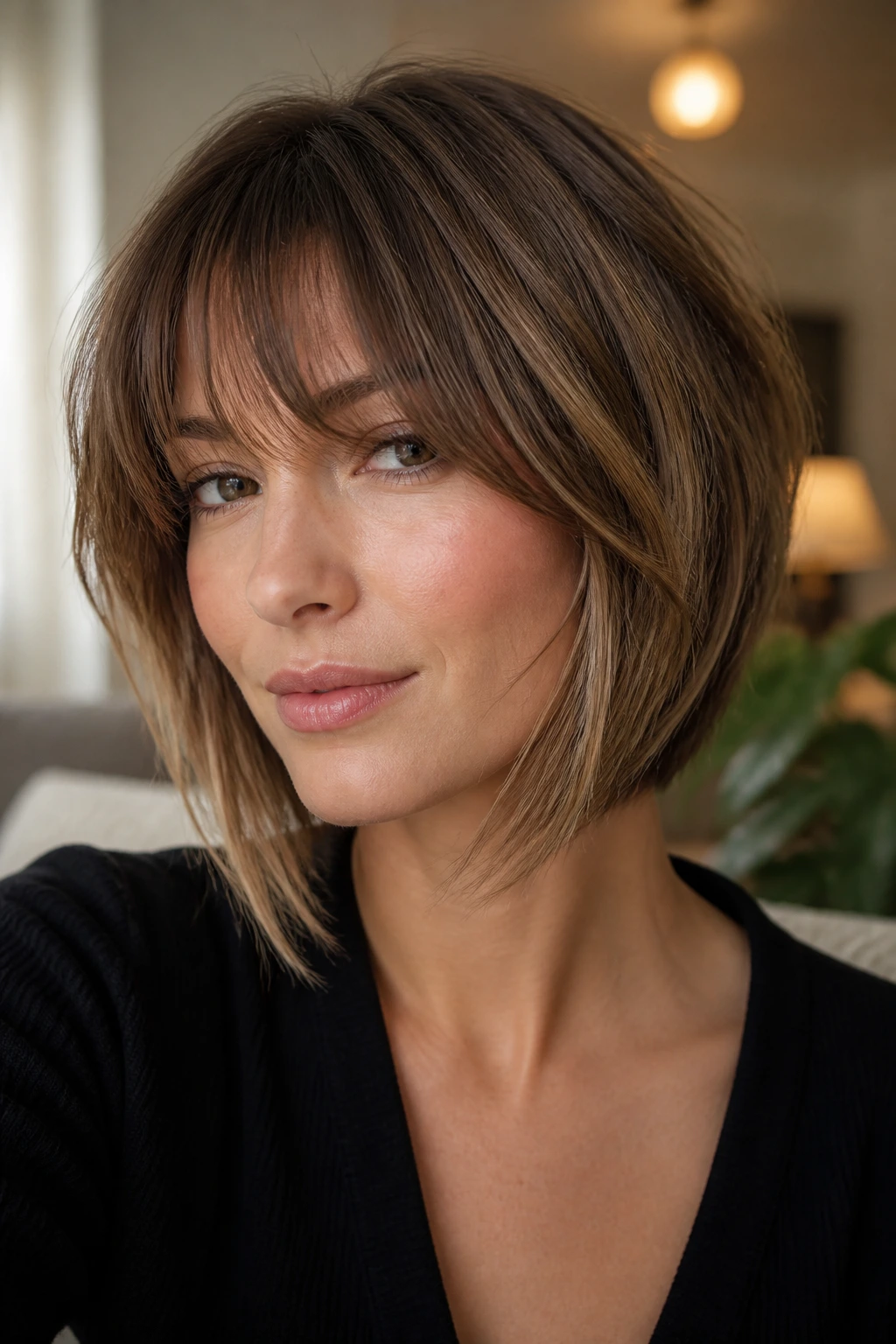
The A-line shape gives you a little more length in front, which is useful if you don’t want to show every bit of the jaw. Feathered layers keep that front length from feeling heavy, and eyelash bangs add a soft line across the eyes.
Why It Helps Fine Hair
Length in the front can make fine hair seem richer because the eye sees a more substantial curtain of hair. The feathering keeps it from collapsing into one flat layer. That’s the balance you want.
Best for: people who like a little drama but not a lot of maintenance.
Styling note: round-brush the front away from the face, then let the rest dry with a slight bend. Don’t over-smooth it; a bit of roughness is the point.
14. Soft Undercut Bob With Textured Bangs
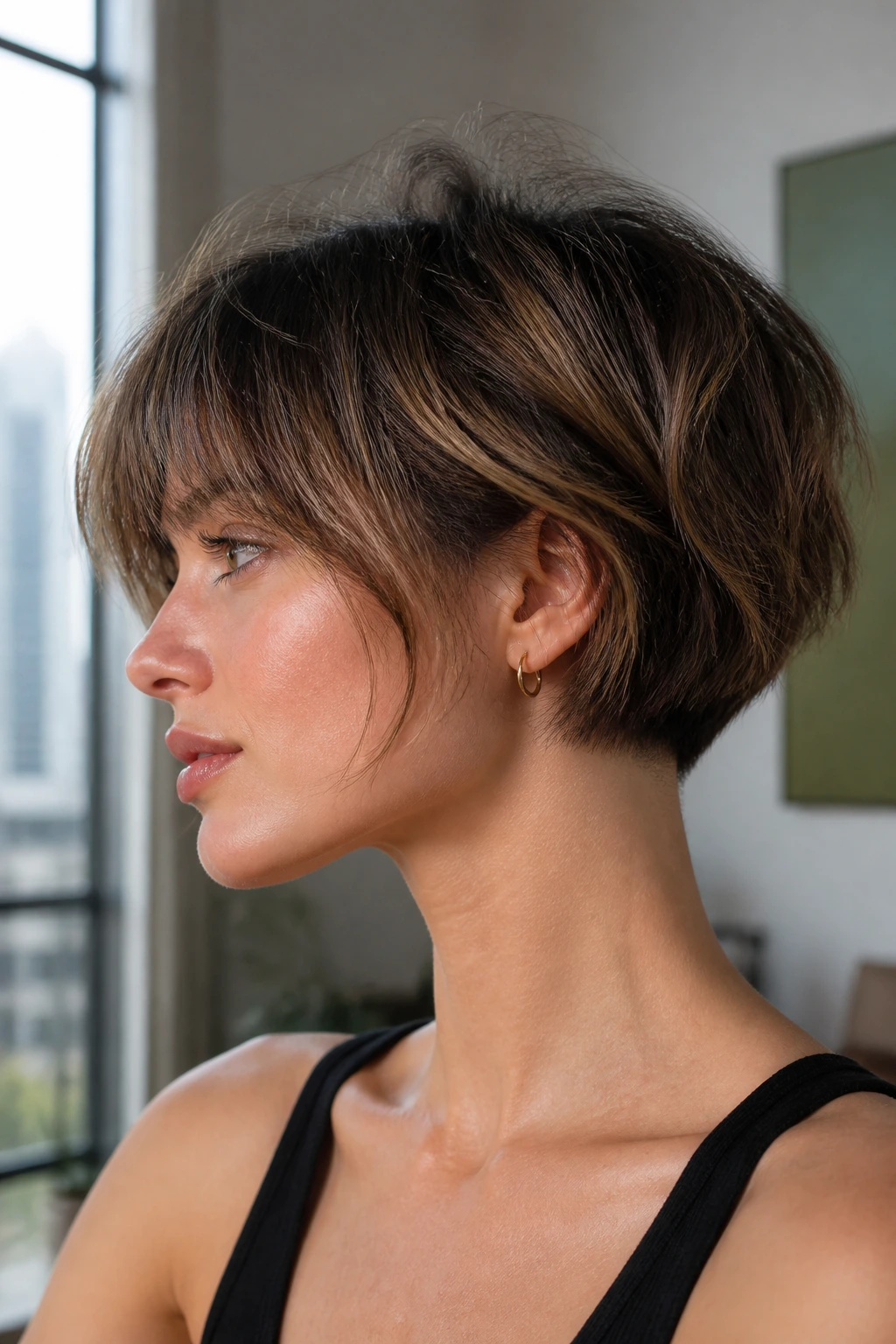
An undercut sounds aggressive, but the soft version is actually a smart move for fine hair with a dense nape or a bulky lower half. Removing some weight underneath lets the top layers sit with a little more lift, and the textured bangs keep the front from looking severe.
This is a cut for people who know exactly where their hair gets puffy. The undercut clears out the hidden bulk you can’t see in photos but can definitely feel when you try to tuck the hair behind your ear. Fine hair often needs less hair overall, not more layers everywhere.
The bangs should stay feather-light. If the fringe gets heavy, the whole cut loses the airy feel that makes the undercut worthwhile in the first place.
15. Flip-End Retro Bob With Curved Fringe
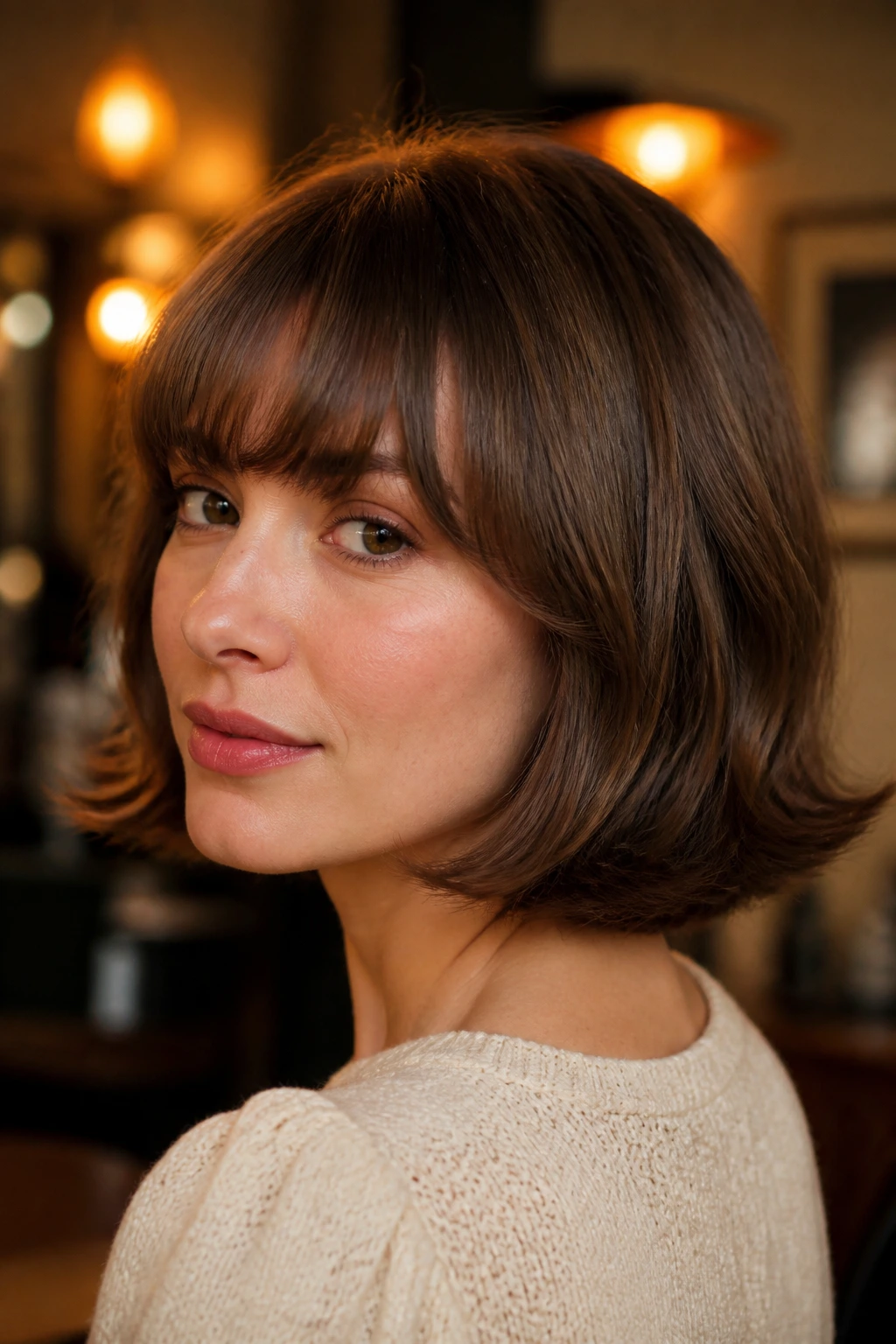
The little flip at the ends is doing more work than people realize. On fine hair, a turned-under or turned-out edge keeps the perimeter from looking limp, and the curved fringe brings the eye back to the face instead of straight to the scalp.
This is a good one if you like a clean shape with just enough retro flavor. It doesn’t depend on a lot of volume at the roots. The styling is mostly about guiding the ends into a bend and letting the fringe arc gently across the forehead.
A round brush and a cool shot from the dryer are enough for most hair types here. You’re not chasing a big blowout. You’re just giving the ends a reason to stay visible.
16. Layered Pageboy Bob With Brow-Grazing Bangs
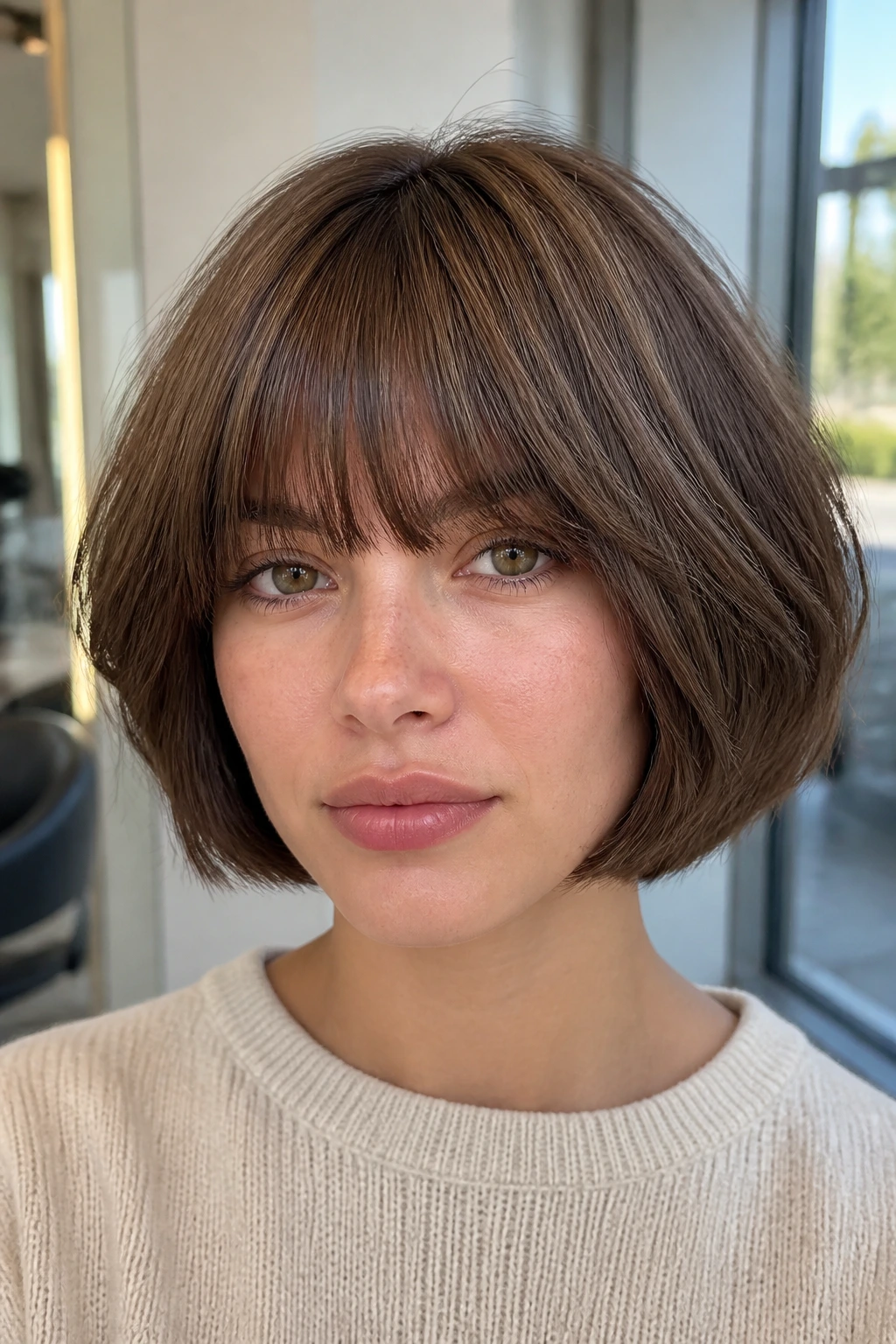
The pageboy gets a better reputation when it stops being stiff. In this version, the rounded shape stays, but the layers are softened and the bangs hit just at the brows instead of sitting like a rigid shelf.
That small change matters on fine hair. Brow-grazing bangs let you keep the front full enough to frame the face without shaving too much density off the top. The rounded body gives the bob a neat outline, which is helpful if your hair tends to look irregular when it’s layered too aggressively.
Good for readers who like polish
This is one of the more tailored cuts in the set. It still feels messy at the ends, but the overall shape is tidy enough for people who don’t want their hair to look “undone” on purpose.
17. Collarbone Shag With Jagged Fringe
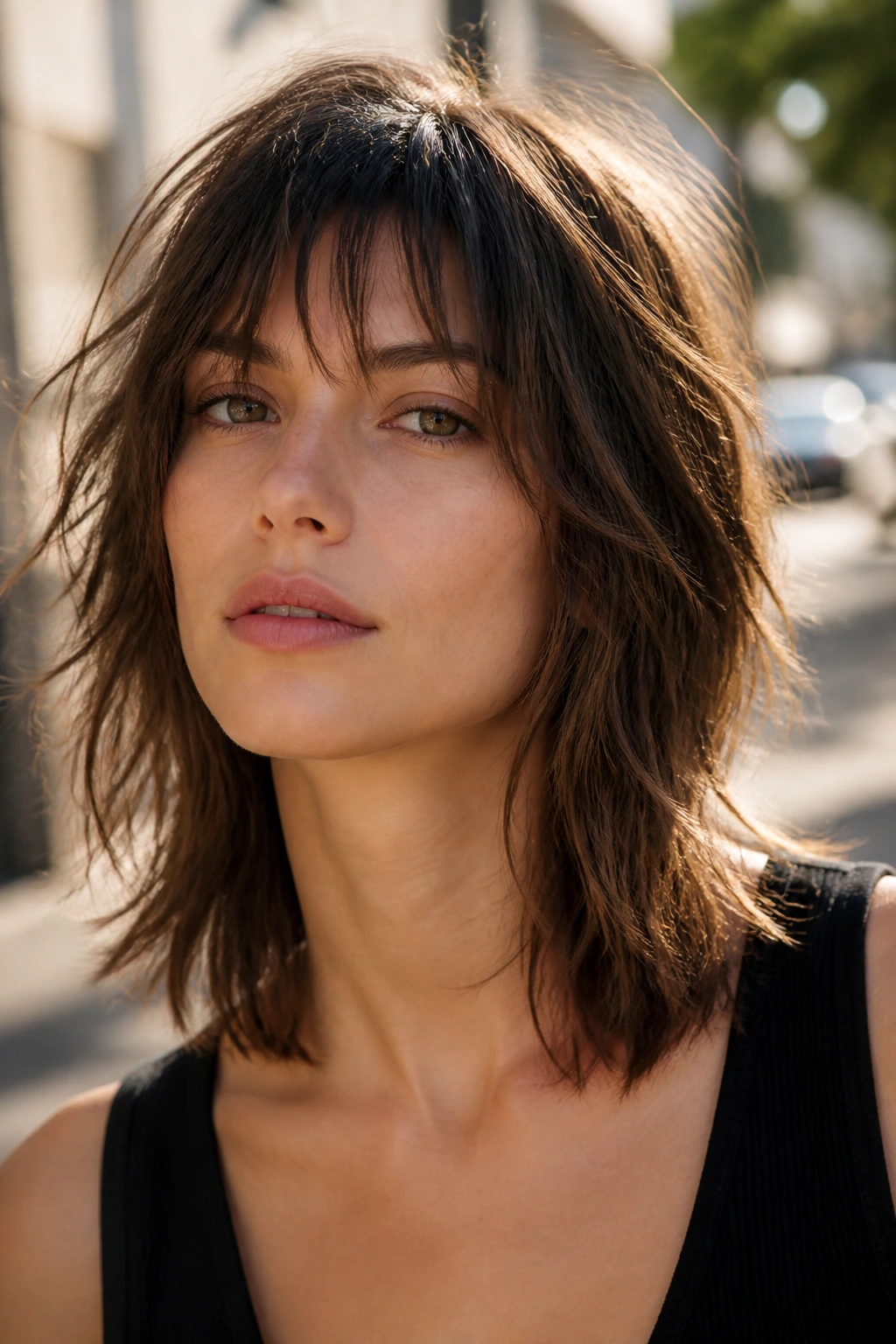
If you want a shag that doesn’t feel too short, start here. The collarbone length gives fine hair enough weight to hold a shape, and the jagged fringe keeps the face frame from looking too sweet or too neat.
The great thing about this cut is how forgiving it is on off days. A couple of bends in the front pieces and a little scrunching through the ends are usually enough. You don’t need the kind of flawless styling a blunt lob demands.
It’s also one of the easier cuts to grow out. When the layers soften, the shaggy edges still make sense. That makes a difference if you’re not the kind of person who gets a trim the minute the ends start whispering.
18. Blunt-Edge Messy Bob With Internal Layers
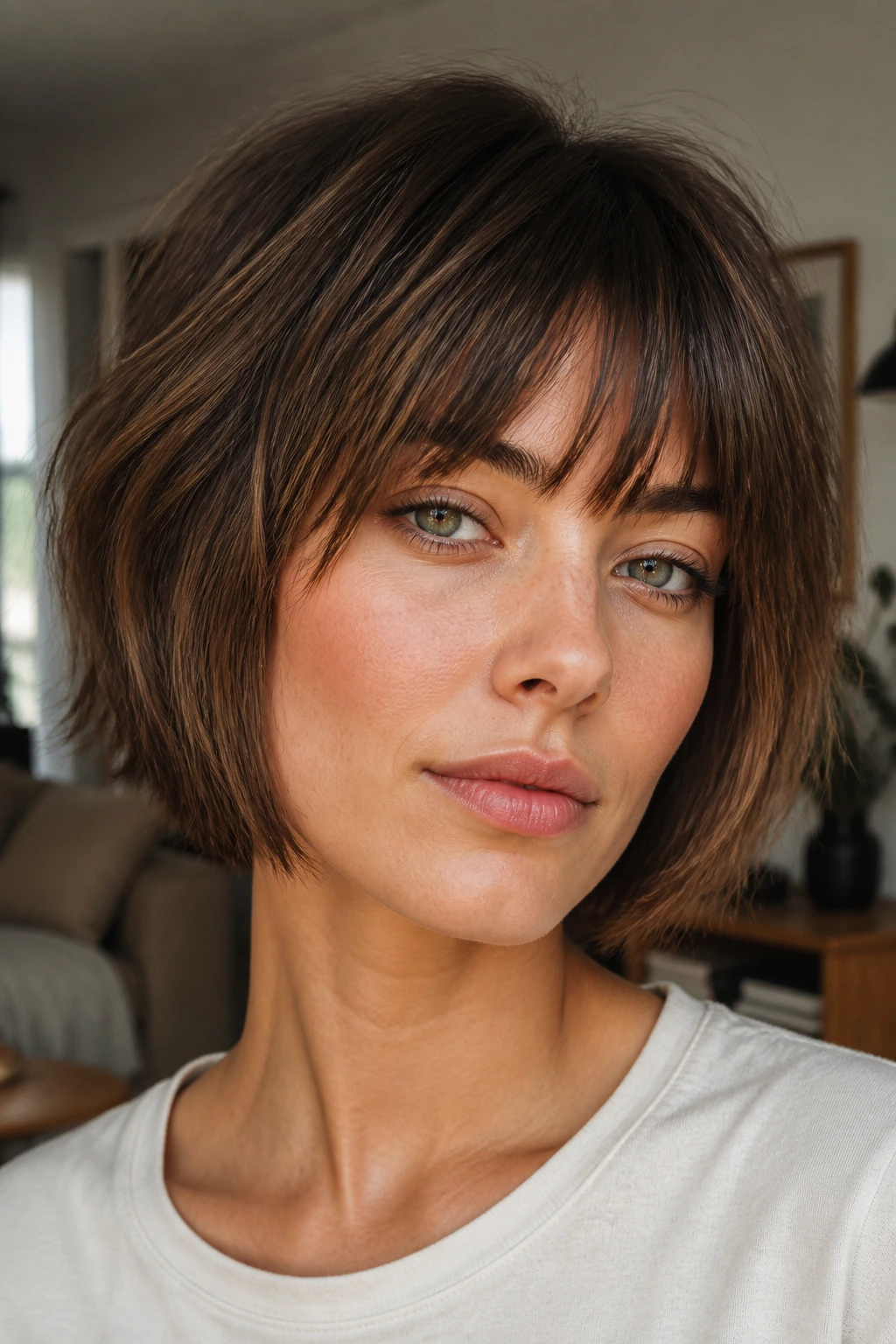
This one is for the fine-hair skeptic. Keep the outside line blunt so the ends read as thick, then hide the texture inside the cut where it can create movement without thinning the silhouette. Add bangs, and the whole thing gets a clean front edge with some attitude underneath.
That hidden-layer trick is one of my favorites for very fine hair. Too many shag cuts eat the perimeter alive, and then the hair looks wispy instead of full. This version keeps the shape honest.
If your hair is see-through at the ends, pick this one. It may look less “shaggy” in the salon chair, but it often looks fuller in real life than a more shredded cut.
19. Chin-Length Curly-Texture Bob With Spiral Bangs

Fine hair can still be curly, and curly fine hair has its own rules. This bob keeps the length short enough that the curls can spring up, while the spiral bangs stay soft and separate instead of being forced into a straight fringe.
How to ask for it
Ask for shape around the curl pattern, not against it. That means fewer aggressive layers, more curl-by-curl attention, and bangs that can fall in little spirals instead of one solid curl clump.
A diffuser on low heat helps here, but the cut does a lot of the work on its own. If your curls are fine and easily weighed down, this length can look much thicker than a longer style that stretches them out.
20. Side-Parted Piecey Bob With Swept Bangs
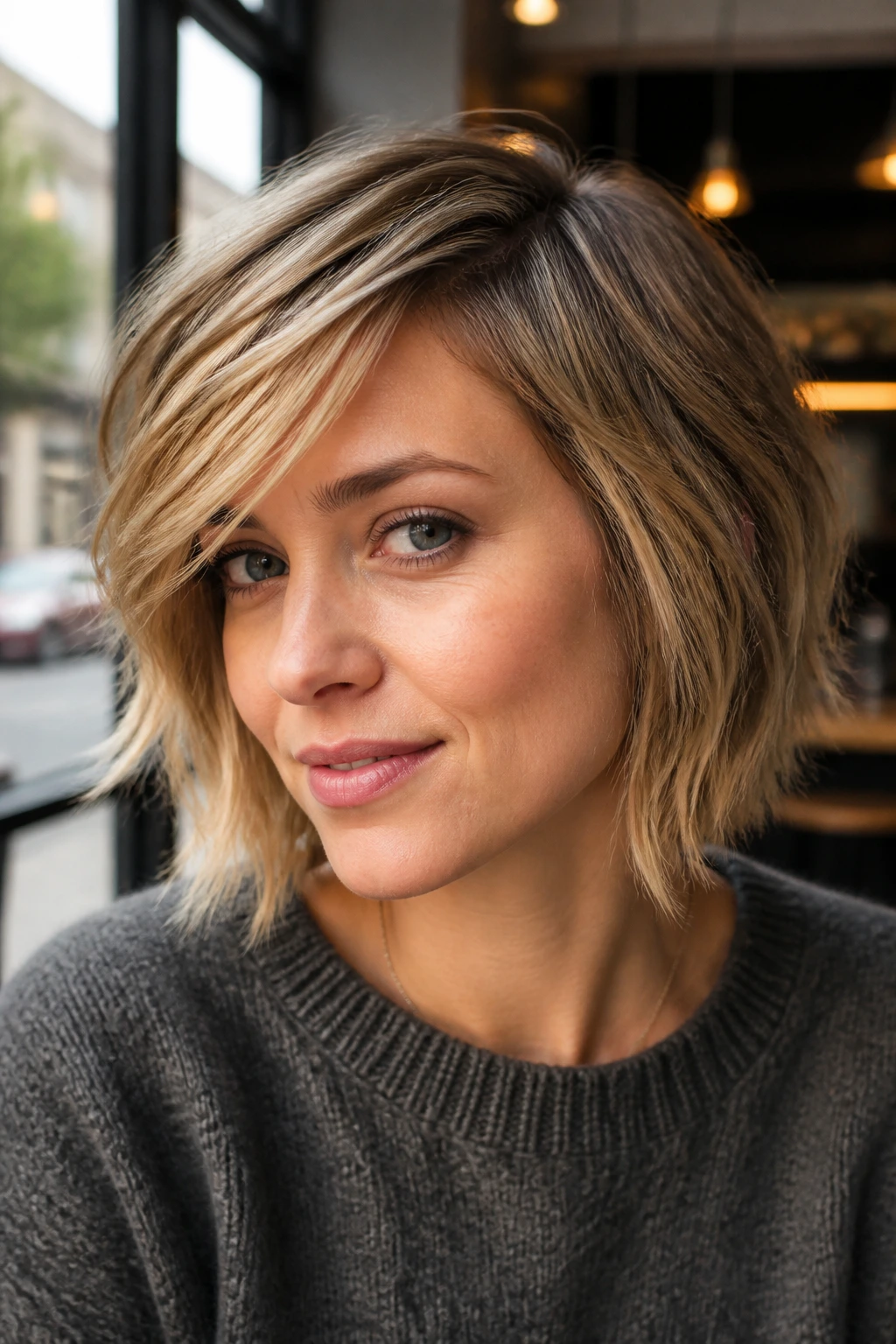
A side part is often the fastest fix for hair that wants to lie flat. It gives fine hair an automatic lift at the root, and swept bangs move the eye across the face instead of straight down the center line.
This cut is especially nice if your hairline is uneven or if one side naturally has more bend than the other. The asymmetry hides a lot. Not in a fake way — just in a smarter way. The haircut looks more relaxed because it isn’t fighting your growth pattern.
I’d keep the pieces around the face a touch longer here. That makes the side sweep feel soft instead of helmet-y. A few bent ends are enough to finish the look.
21. Tapered Neckline Bob With Loose Curtain Bangs
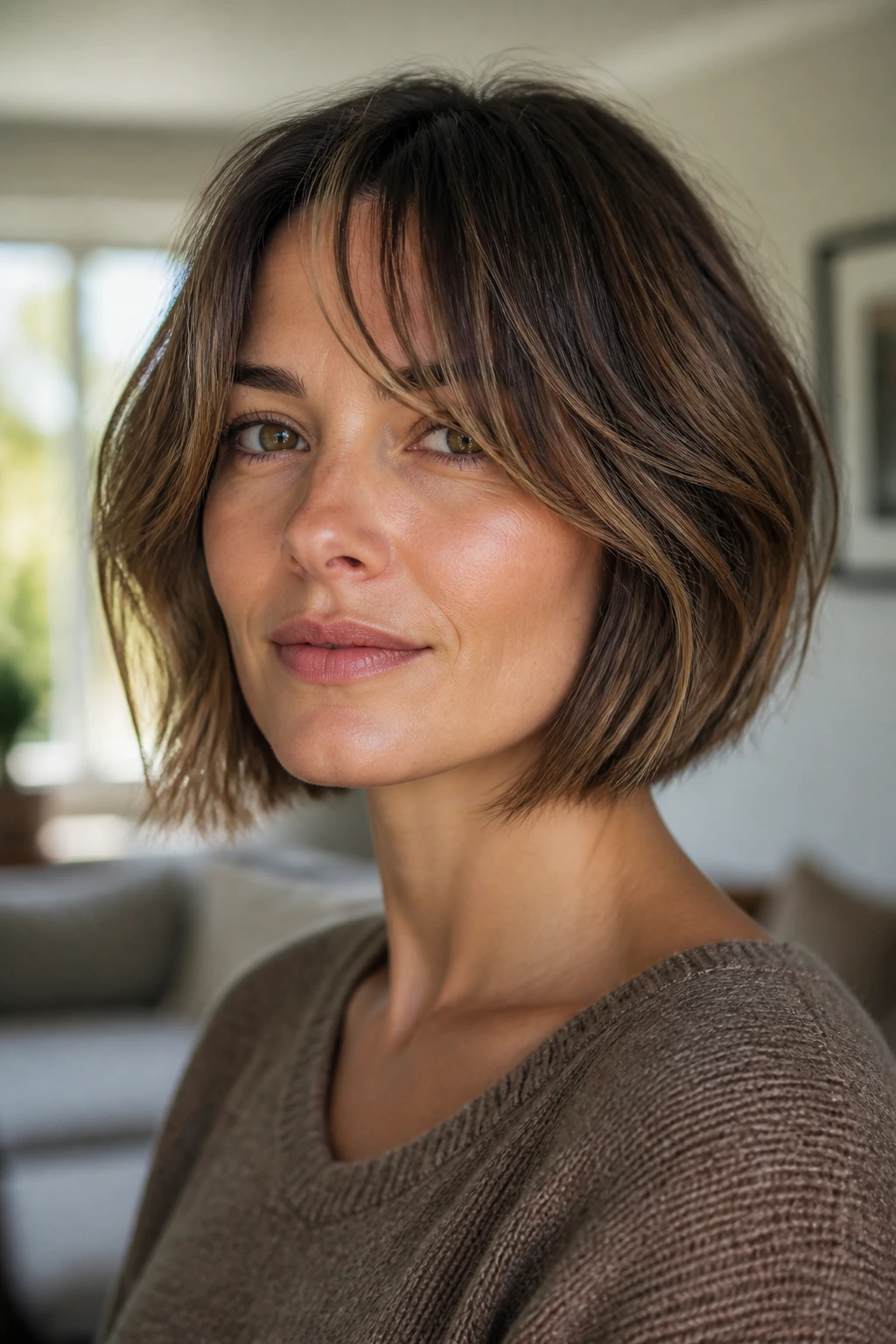
The neckline taper keeps the bob from feeling boxy. It follows the shape of the neck, which makes the whole cut look lighter, and the loose curtain bangs echo that softness at the front.
This one is good if you like a neat shape that still moves. The taper removes visual bulk at the nape, but not so much that the back starts to look skinny. That’s the trap with fine hair: too much slimming can leave the cut looking hollow. Here, the taper is controlled.
The bangs should stay long enough to tuck behind the ears on days when you want your face more open. That flexibility gives the style real staying power.
22. Razor-Mullet Bob With Shattered Fringe
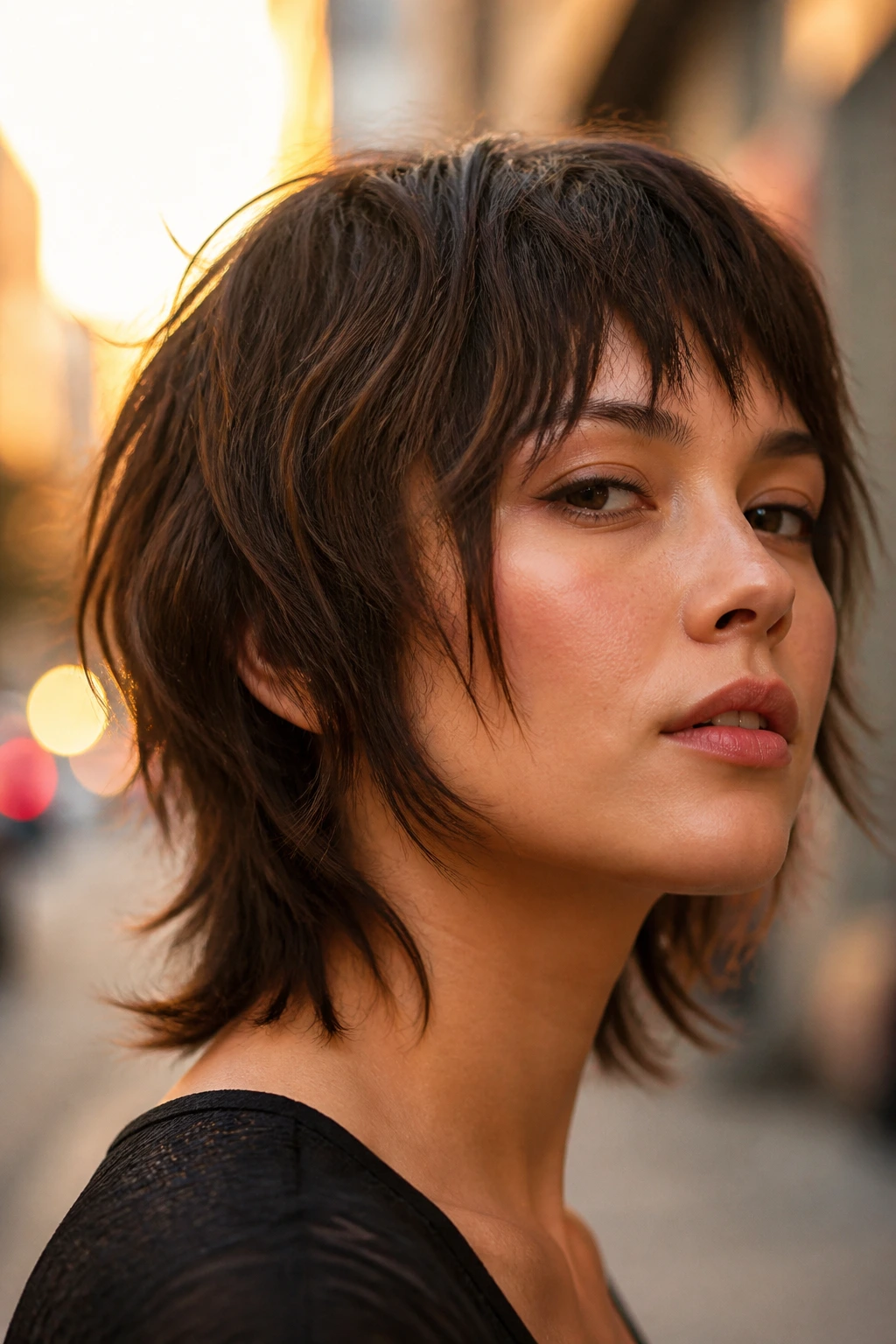
This is the boldest cut in the group, and it’s not for someone who wants hair to sit politely. The razor work creates an irregular edge, the shattered fringe keeps the forehead soft, and the slightly longer back adds movement without turning the whole thing into a true mullet.
Fine hair can wear this well because the cut never pretends to be thick. It leans into texture. That honesty is part of why it works. If you try to make fine hair behave like a dense blunt bob, it often loses. If you let it be piecey on purpose, it usually looks much better.
Small warning
Keep the nape length modest. If the back gets too long, the hair can start to look stringy instead of shaggy.
23. Soft Halo Shag Bob With See-Through Bangs

This is the quiet, easygoing version to end on. The halo shape lifts around the crown, the bangs stay light enough to show some forehead through them, and the bob line keeps enough structure that the cut doesn’t dissolve into fluff.
It’s one of the best choices for fine hair that hates product. The style is built to look soft even when you do very little to it. A little root lift and a bit of separation at the ends are enough.
If you like a haircut that looks better when it’s not trying too hard, this is probably your shape. It has that loose, slightly lived-in feel people chase for months. Here, the structure is doing the work behind the scenes.
The Cut Rules That Keep Fine Hair Looking Full
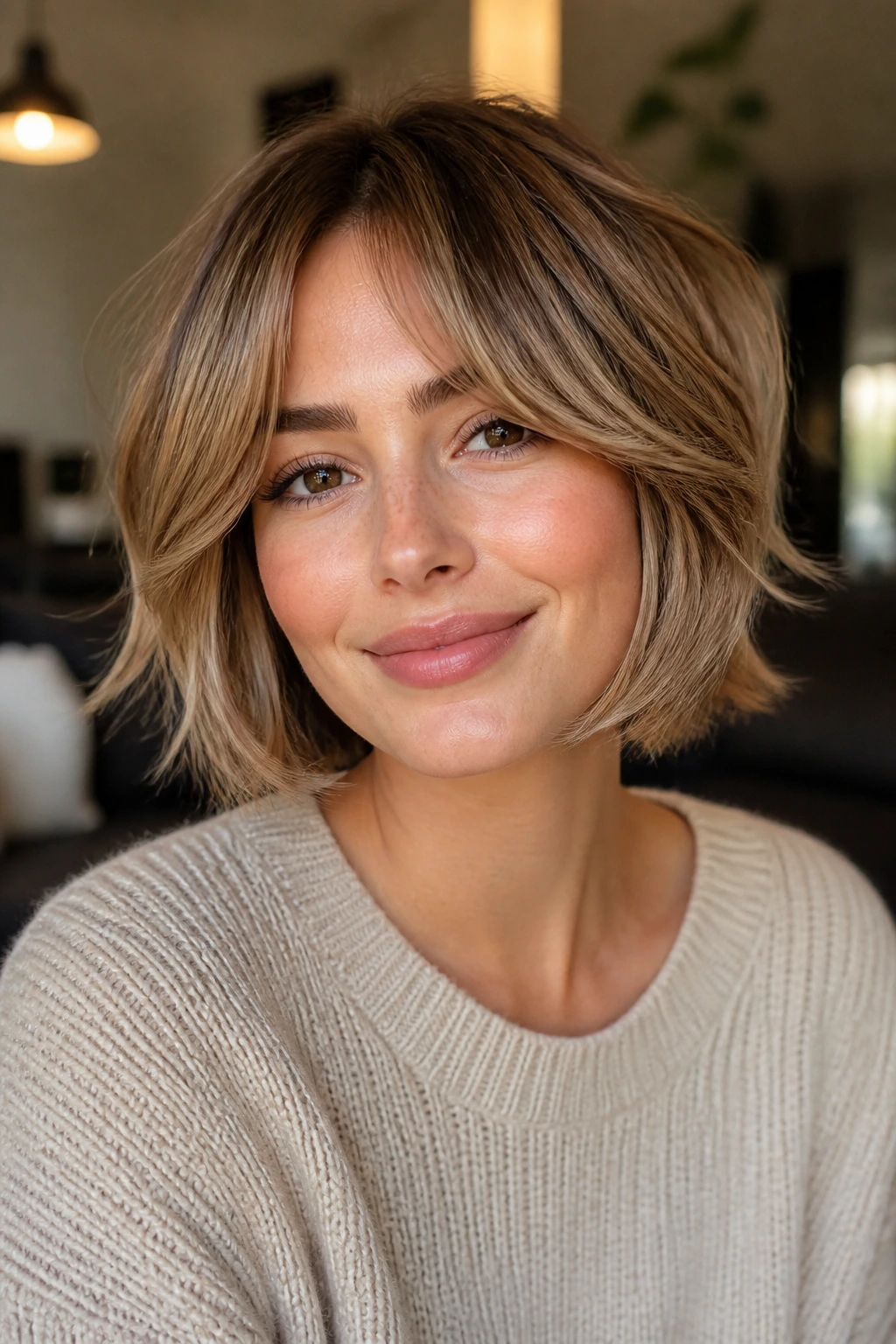
The biggest mistake people make with a shaggy bob on fine hair is stripping away too much weight everywhere. Fine hair does not need to be shredded from root to tip. It needs a perimeter that still reads as solid and enough internal texture to keep the hair from lying like a single sheet.
That means the shape should usually be built in two layers of thinking. First, there’s the outline — chin, jaw, or collarbone. That line gives the eye something to hold on to. Then there’s the soft internal movement, usually created with point cutting, slide cutting, or razor work. The inside should move. The outside should still look like hair.
Bangs matter here more than people admit. A heavy fringe can steal density from the rest of the haircut, especially if the hairline is already fine. Curtain bangs, bottleneck bangs, and wispy fringes all work because they borrow softness from the face instead of eating up bulk at the front.
How to Style Them Without Crushing the Shape
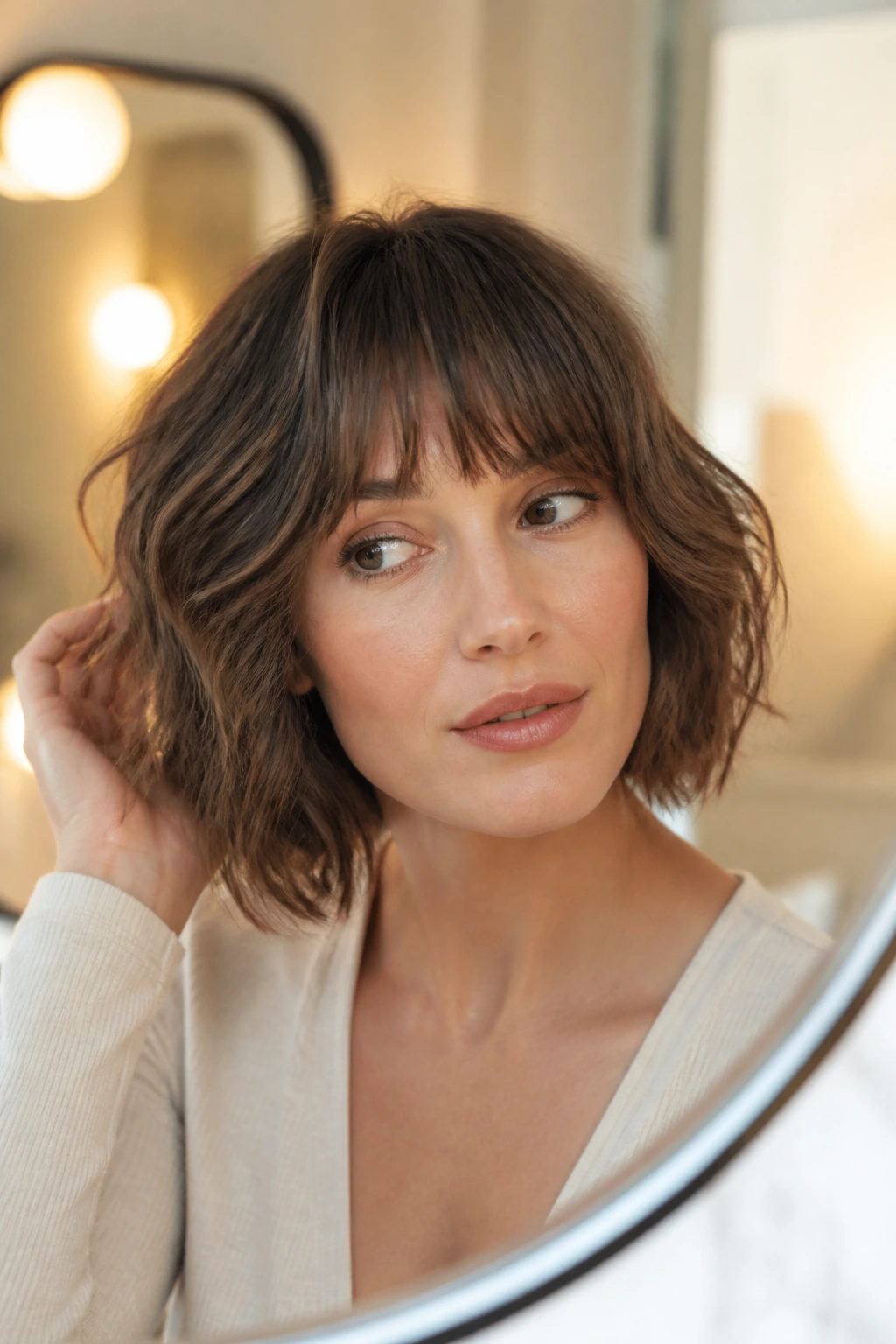
Root Lift: Start with a lightweight volumizing mousse at the roots, not the ends. Work it in while the hair is damp, then blow-dry the top section first so the crown doesn’t settle flat under its own weight.
Bangs First: Dry the fringe before the rest of the hair. Use a small round brush or a vent brush and direct the roots left, right, and then down. That little back-and-forth stops bangs from splitting in one stubborn line.
Texture, Not Crunch: A 1-inch curling iron or wand is enough for most of these cuts. Bend only the mid-lengths and the last inch or two. You want pieces that move apart, not ringlets that make the bob look overdone.
Finish Lightly: Use dry texturizing spray or a whisper of dry shampoo at the crown. Keep heavy oils and rich creams away from the roots; they flatten fine hair fast and make the layers collapse by noon.
How to Choose the Right One for Your Face, Part, and Cowlicks
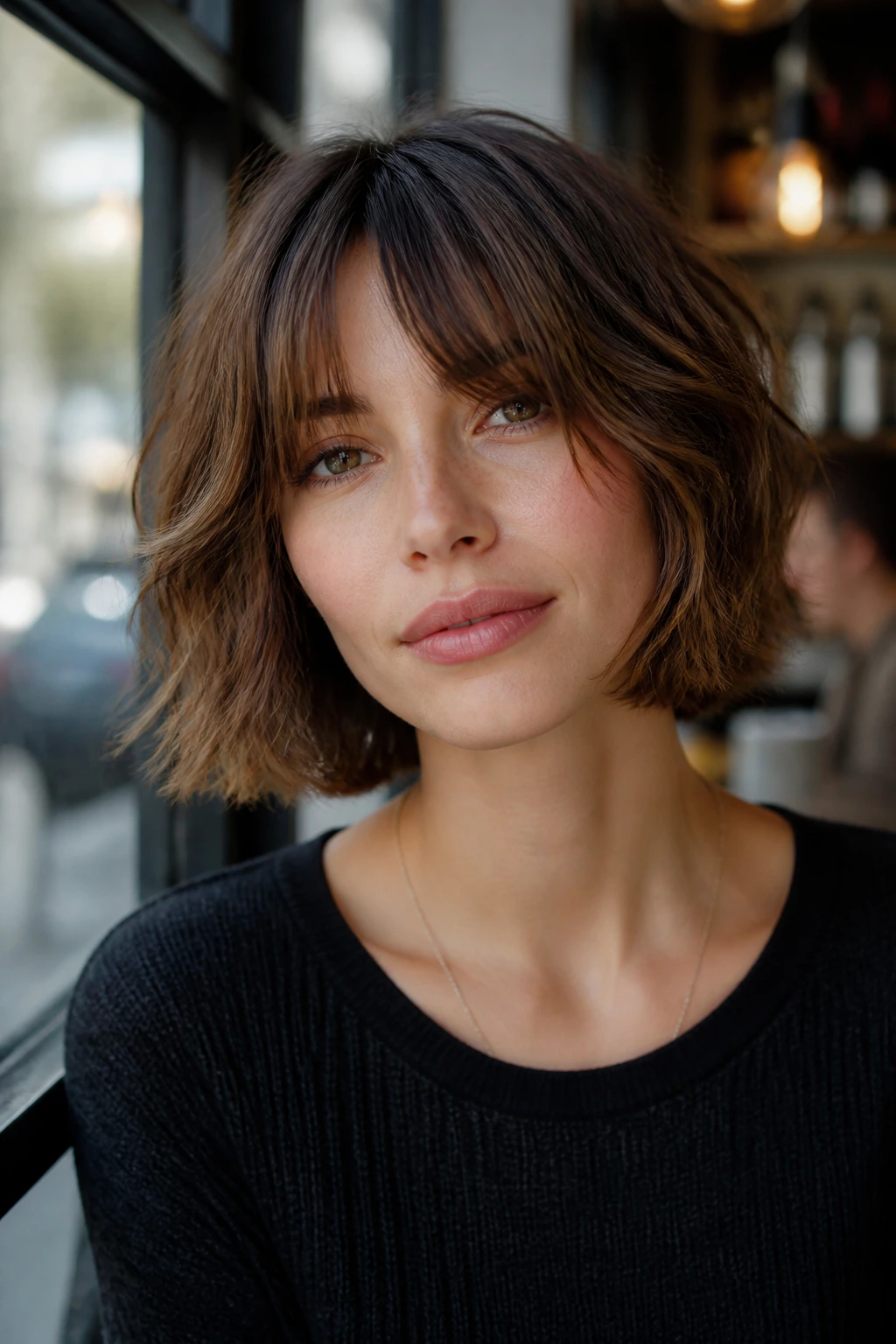
Round faces usually do better with longer front pieces, side parts, or curtain bangs that stretch the face a bit. Chin-length can still work, but keep the ends soft and don’t make the fringe too wide. A little angle in front helps more than a lot of top volume.
Longer faces often look great with fuller bangs or a rounder bob shape that softens the length. If your face is already long, I’d avoid a super narrow fringe unless you really want that sharp look. The wrong bangs can make the face feel taller than it is.
Cowlicks and widow’s peaks are the real test. A side-swept fringe or bottleneck bang usually behaves better than a heavy straight-across line. And if your hair splits at the crown no matter what you do, ask for layers that respect that growth pattern instead of fighting it. A haircut that works with the cowlick is worth more than a cute haircut that needs a daily argument.
Tools That Make These Cuts Behave
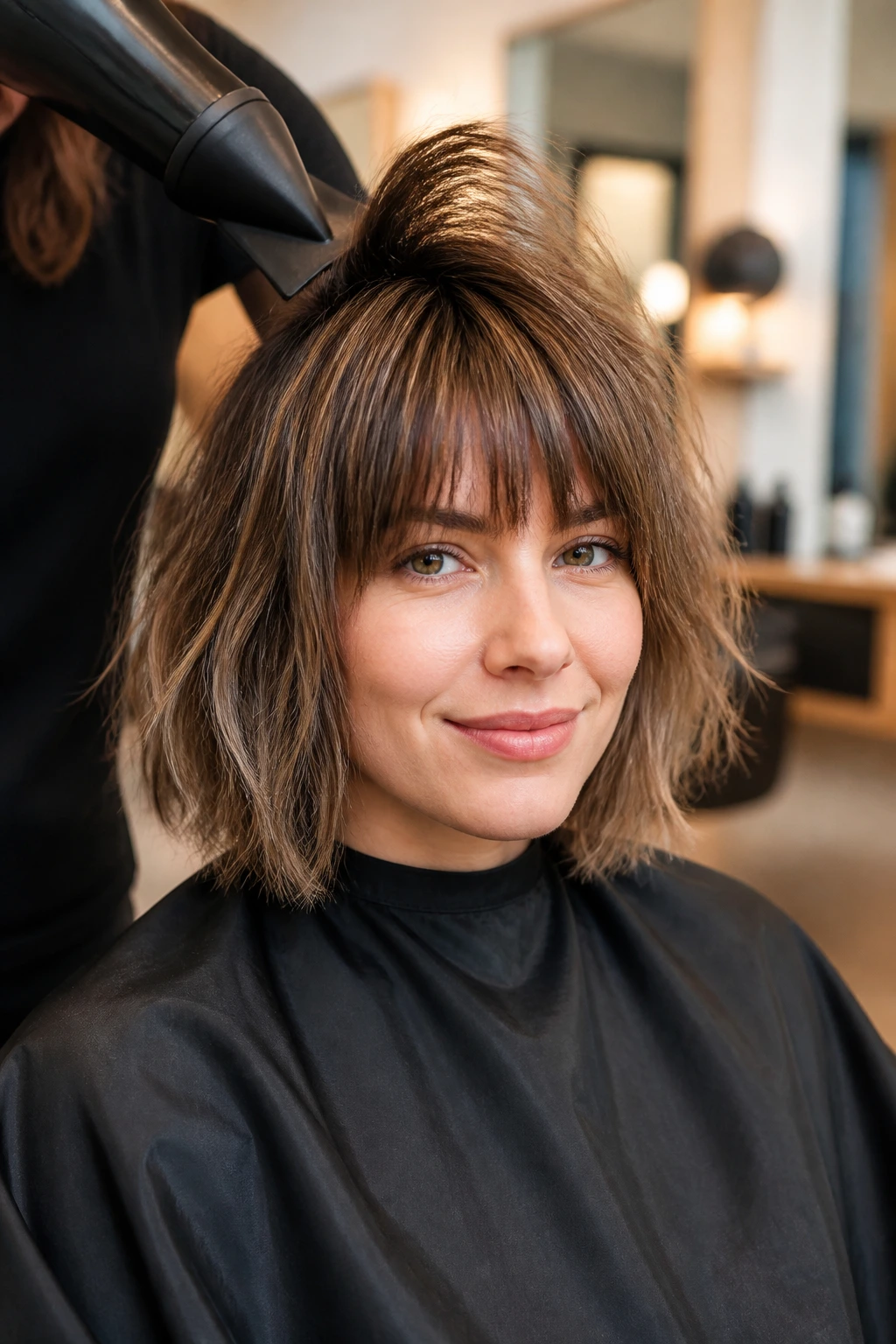
- Blow dryer with a nozzle: The nozzle directs airflow at the root so you can lift the crown instead of blasting the whole cut flat.
- Small round brush, 1 to 1.5 inches: Best for bangs and the front pieces where shape matters most.
- Vent brush or paddle brush: Good for rough-drying fine hair fast without overworking it.
- Texturizing spray: Adds grip to the mid-lengths and helps the shaggy pieces stay separated.
- Light mousse: Gives fine hair body without the sticky finish that heavy creams leave behind.
- Dry shampoo: Useful on day two for the crown and bang line, where oil shows first.
- Duckbill clips: Handy for setting the bangs while they cool after blow-drying.
- 1-inch curling iron or wand: Enough to add a bend to the ends without turning the bob into full curls.
How to Wear These Bobs So They Read Full, Not Fussy

Presentation: Aim for a broken part, soft movement around the face, and ends that flick instead of hanging straight. A bob like this looks best when the front has a little swing and the crown has visible lift.
Pairings: Glasses, hoop earrings, sharp collars, and necklines that leave the jaw visible all make the haircut look more deliberate. If you like turtlenecks or high collars, keep the neckline of the bob a touch longer so the hair doesn’t disappear into fabric.
Length Choice: Chin length gives the most visible fullness on very fine hair. Collarbone length is safer if your strands are ultra-soft or slippery. The shorter version shows shape faster; the longer one forgives a bad wash day.
Finish: A touch of texture spray or dry shampoo at the roots gives the shape some grit. Skip glossy serums near the scalp. Fine hair doesn’t need shine to prove it’s healthy — it needs lift.
Common Mistakes That Make Fine Hair Fall Flat

The first mistake is over-layering. If the stylist takes too much weight out of the perimeter, the ends go thin and the whole bob loses its outline. You’ll notice it when the haircut looks good only for about five minutes after styling.
The fix is simple: ask for texture inside the cut, not all over the edges. Keep enough hair at the bottom so the line still reads full.
Another common problem is bangs that are too thick. Heavy fringe can make the top of the haircut look smaller and push the rest of the hair backward. The symptom is a forehead line that feels dense while the bob behind it looks starved.
Product is the next trap. Rich creams, heavy oils, and too much leave-in conditioner can flatten fine hair fast. Use them only from mid-length to ends, and use less than you think you need.
Finally, a lot of people skip bang maintenance. Fine hair shows overgrowth early, especially in the front. A quick fringe trim every 2 to 3 weeks keeps the style from sliding into awkward territory.
Variations and Tweaks Worth Trying
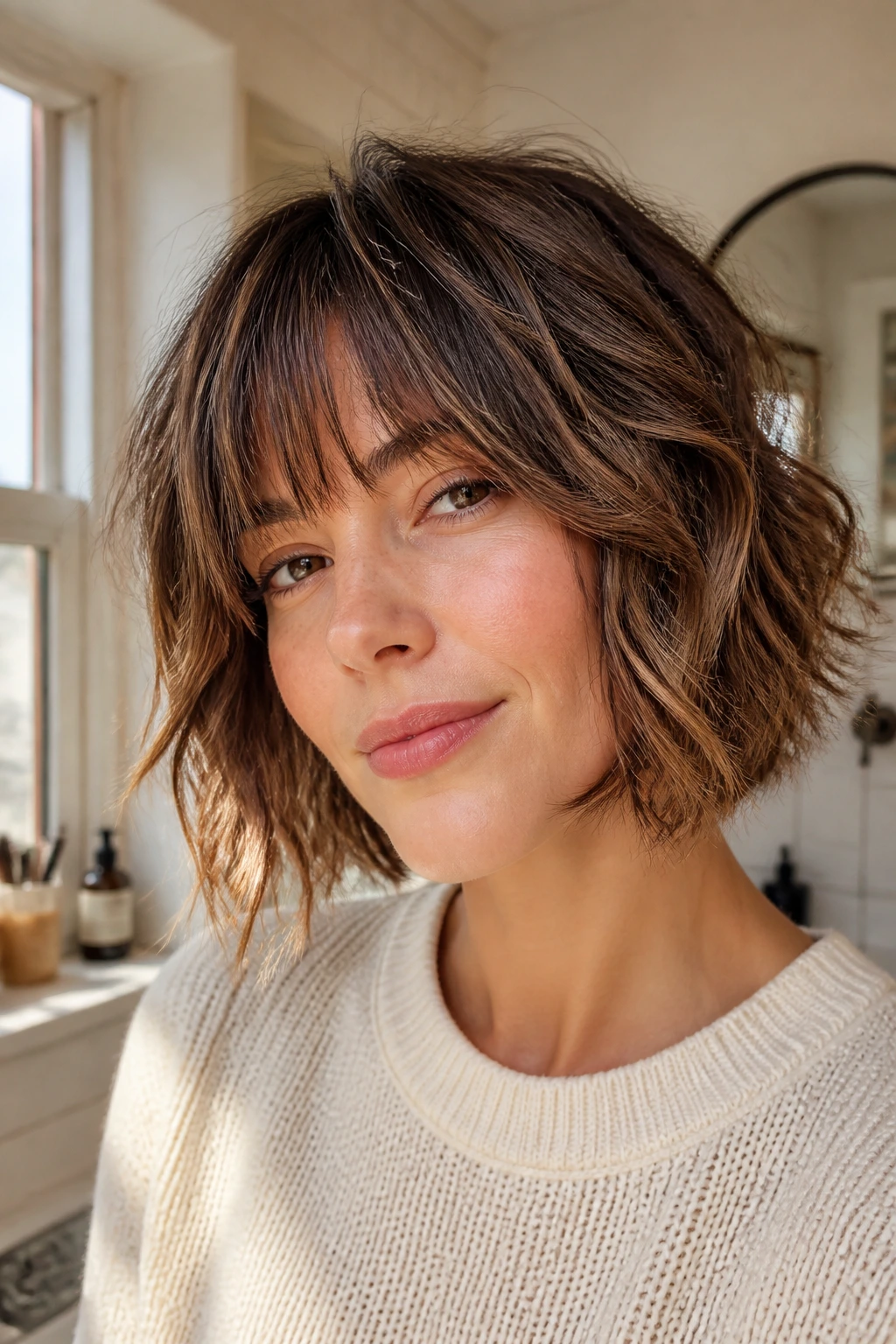
The Air-Dry Version: Keep the layers slightly longer and the fringe softer if you want a cut that can dry on its own. This works best with curtain bangs or long Bardot bangs and a little natural wave.
The Glossy Office Version: Ask for less shattered texture and a cleaner outer line. You still get movement, but the bob looks neater under bright office lights and holds up better with a blazer or blazer-like life.
The Short-Edge Version: Go chin length or shorter, with micro bangs or a cropped fringe. This is the sharpest version and the one that makes the most of fine hair with decent density.
The Glasses-Friendly Version: Choose side-swept bangs or a split fringe that doesn’t fight the frames. Leave the temples soft so the hair and glasses don’t crowd each other.
The Grow-Out Version: Keep the front slightly longer than the back and avoid too much razoring at the ends. That way the haircut stays wearable when you miss your trim by a couple of weeks.
Maintenance, Trims, and Grow-Out Timing
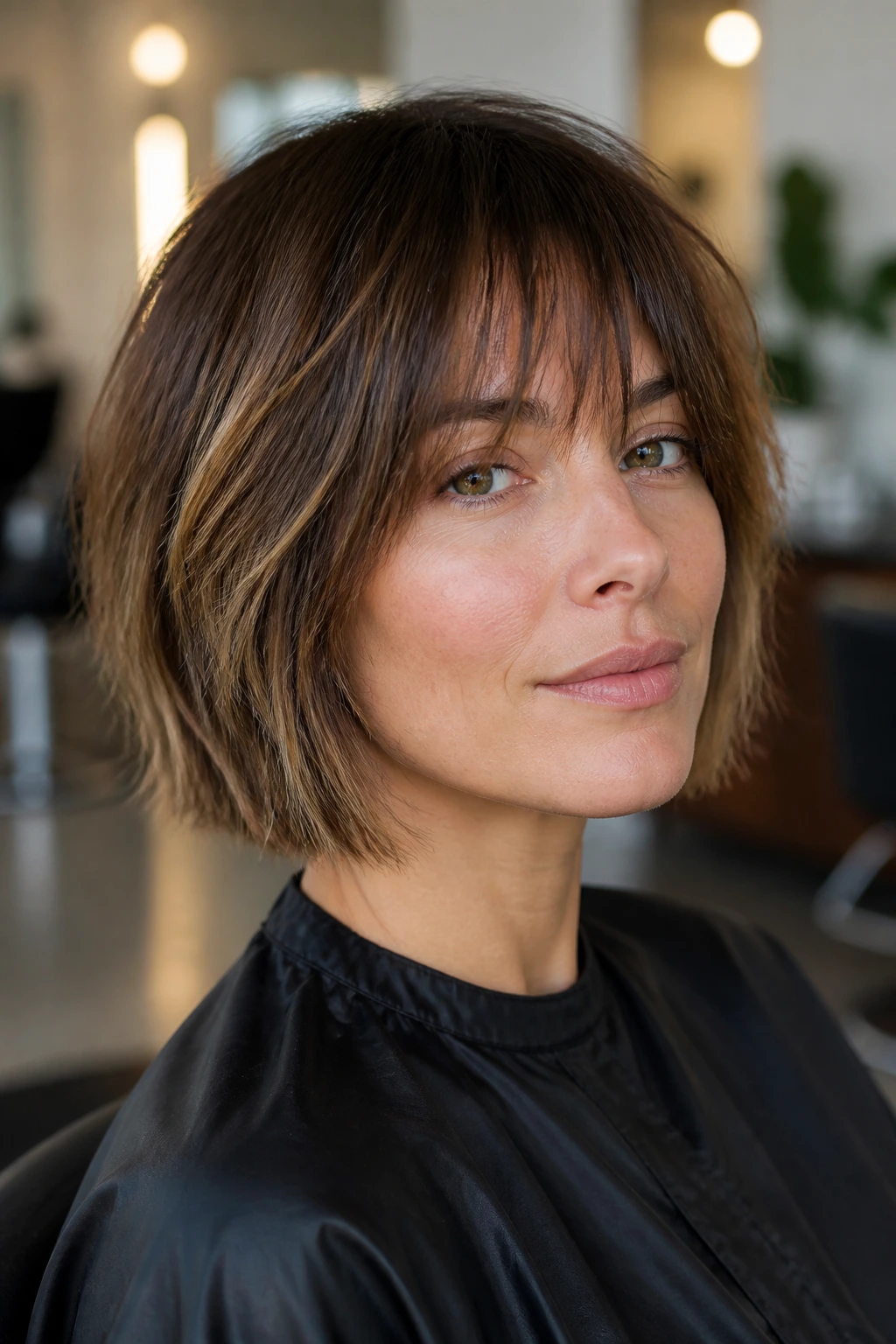
Fine hair shows shape changes quickly, which is both a curse and a gift. You’ll notice when the bangs need trimming, but you’ll also notice when the cut starts losing its lift. For most shaggy bobs, a full trim every 6 to 8 weeks keeps the outline from collapsing.
Bangs usually need attention sooner. Curtain bangs can go 3 to 4 weeks if they’re long, but shorter fringe often wants a tidy-up every 2 to 3 weeks. If you cut them yourself, take off tiny amounts only. Half an inch on fine hair can feel like a lot.
Light conditioner belongs from the ears down, not on the roots. Clarifying shampoo every 2 to 4 weeks helps if you use texture spray or dry shampoo often. And if you want the haircut to keep some bounce overnight, sleep on a silk or satin pillowcase or clip the top layer loosely so the crown doesn’t flatten into the mattress.
Frequently Asked Questions

Are messy shaggy bobs with bangs good for very thin hair?
Yes, if the cut keeps a strong perimeter and doesn’t get shredded too deeply. Very thin hair usually looks better with controlled texture and a clear outline than with a lot of internal thinning.
Should fine hair have blunt bangs or wispy bangs?
Wispy, curtain, bottleneck, and split bangs are usually safer. Blunt bangs can work, but they need enough density at the front, or they start looking see-through and tired.
Can I air-dry a shaggy bob with bangs?
You can, especially if your hair has a little natural wave. Use a light mousse and finger-comb the bangs into place as they dry so they don’t separate in odd directions.
How often do I need a trim?
Plan on a full shape cleanup every 6 to 8 weeks. Bangs usually need a touch-up earlier, especially if they skim the brows or sit right at the eyes.
Will a shaggy bob make my hair look thinner at the ends?
It can, if the layers are too aggressive. Ask your stylist to keep enough weight in the perimeter so the ends still look substantial when the hair moves.
What if my hairline has a widow’s peak or strong cowlick?
Choose a fringe that can split or sweep to the side rather than one that has to sit perfectly straight. Bottleneck bangs and curtain bangs handle growth patterns better than a hard blunt bang.
Is this cut better for straight or wavy fine hair?
Both can work. Straight fine hair usually needs a little more lift spray or a soft bend at the ends, while wavy fine hair can wear the texture with less effort.
How do I ask for this at the salon?
Ask for a bob with internal texture, a perimeter that keeps its density, and bangs that suit your hairline. If you want a specific version, bring 2 or 3 reference photos and point out what you like about each one — the bang shape, the length, or the amount of layering.
The Shape That Keeps Moving

The best thing about these cuts is that they don’t ask fine hair to be something it isn’t. They work with what’s already there: soft strands, visible movement, and a need for shape that doesn’t disappear the second the air gets humid or the roots get touched. A good shaggy bob with bangs leaves enough structure to look finished and enough looseness to look alive.
Pick the version that matches your part line, your forehead, and your patience level. That last one matters more than people admit. A haircut you can actually restyle on a rushed morning will always beat a prettier shape that only works on the salon’s best day.
