



Fine hair has a habit of looking polished for about twelve minutes and then collapsing like it heard bad news. A blow-dry gives you lift, the crown looks airy, and then gravity starts taking notes. That’s why short texture haircuts for fine hair do so much heavy lifting: they remove the dead weight that drags the shape down, and they do it without making the ends look stringy or empty.
The trick is not “more layers” in the sloppy, over-thinned sense. It’s smart texture. A good short cut keeps a clean outline where the eye needs structure, then breaks up the inside just enough so the hair can move. Fine hair is usually smaller in diameter, which means one blunt line can look fuller than a lot of people expect, but the wrong blunt line can also sit flat and helmet-ish. The best cuts walk that narrow path in the middle.
And that’s the whole game here: lift at the roots, movement through the middle, and a perimeter that still looks deliberate when you step away from the mirror. If you’ve ever looked at a photo and thought, “That cut is cute, but mine would go limp in an hour,” you’re in the right place. A good short shape can fix that faster than another round of volumizing spray ever will.
Why These Cuts Matter for Fine Hair
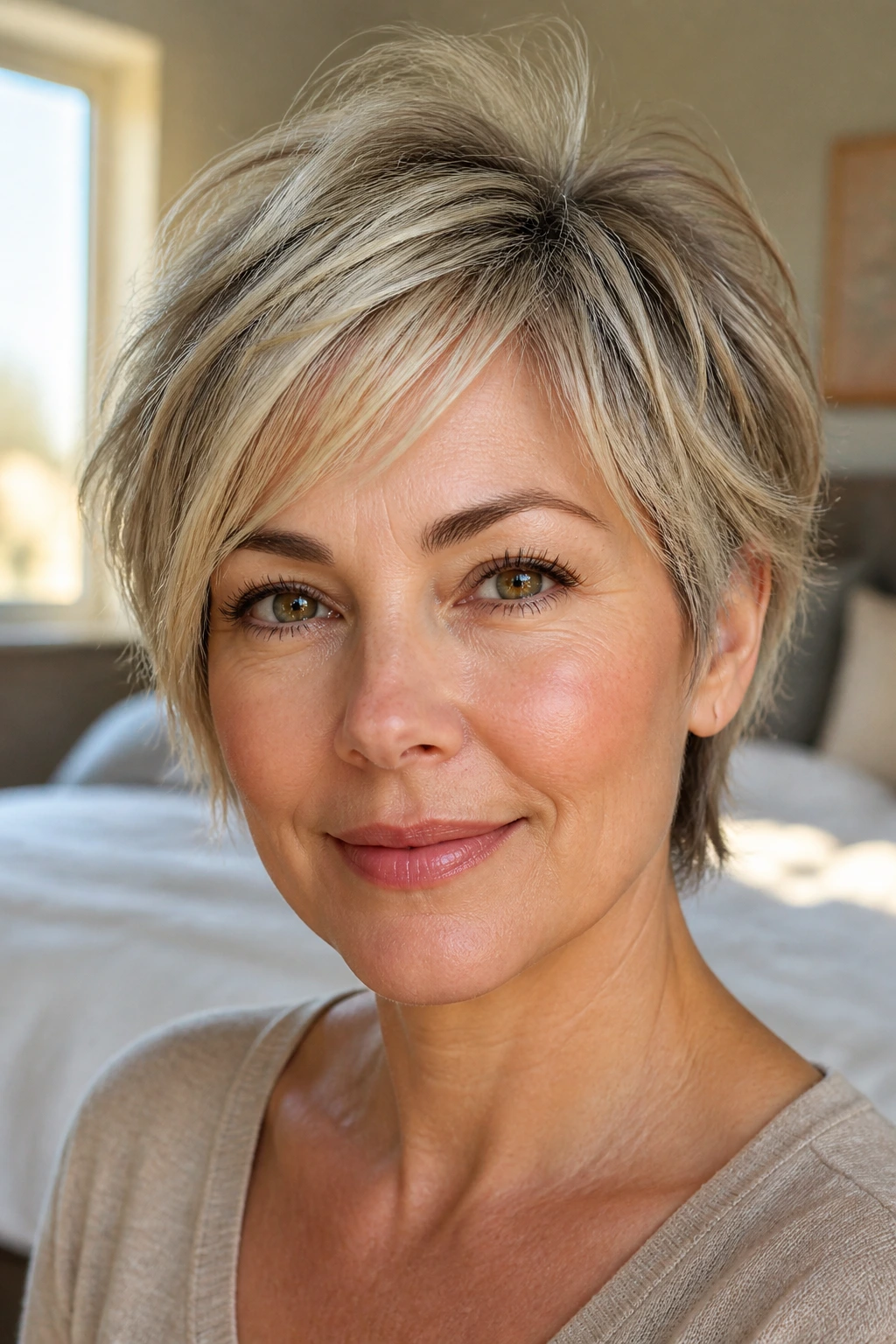
Root lift without a wrestling match: Shorter lengths take less effort to hold up, which means your blow-dry or air-dry has a fighting chance after lunch.
Texture hides see-through ends: Choppy pieces and broken edges interrupt the eye, so the hair reads as fuller even when the individual strands are fine.
The shape stays cleaner: Fine hair can look wispy when it’s over-layered; the right texture keeps the outline sharp while the inside moves.
Styling time drops hard: Most of these cuts need a quick bend, a bit of mousse, and maybe a touch of paste at the ends — not a 45-minute salon-level blowout.
They work with real life hair: Cowlicks, flat crowns, and sleepy napes behave better in shorter shapes because there’s less length fighting the direction of growth.
How to Read Your Hairline, Crown, and Part Before You Cut
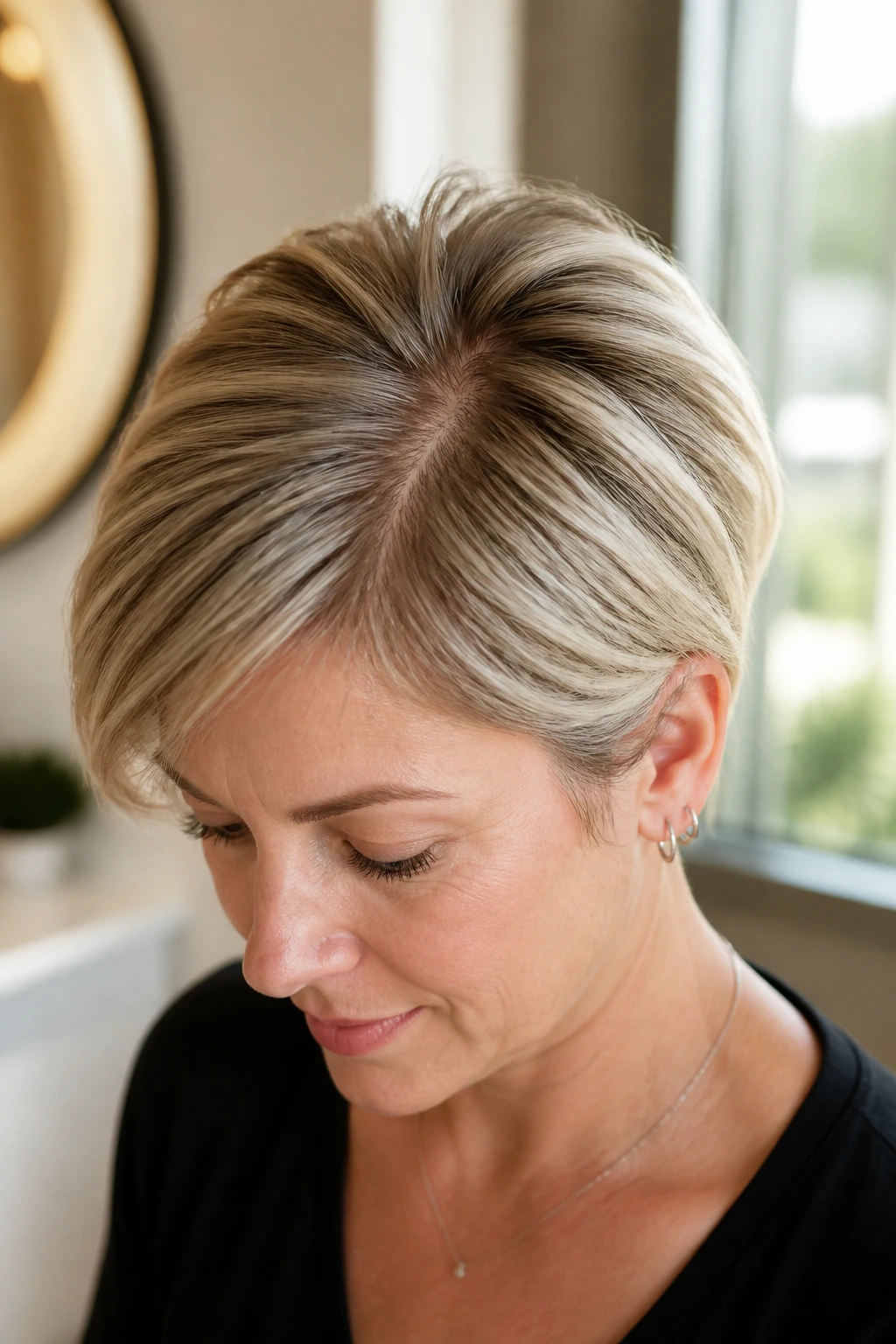
A short cut only looks effortless when it’s doing something specific for your head shape. Fine hair is one thing. Fine hair with a high hairline, a stubborn crown swirl, or a part that refuses to stay put is a different animal.
The cleanest way to choose is to study where your hair already wants to fall. If the crown lies flat no matter what you do, you need lift through the top and some softness around the nape. If your part opens wide and exposes scalp, a blunt perimeter with texture only through the interior usually behaves better than a heavily razored edge. If you’ve got a cowlick at the fringe, a full straight-across bang can become a daily argument you never win.
What to Notice in the Mirror
- Crown direction: If the crown grows forward, short layers can kick up at the back. If it grows in a swirl, don’t fight it with a precision cut that demands perfection.
- Temple density: Thin temples can look bare with aggressive side layers, so keep the front a little softer and more deliberate.
- Nape growth: A strong nape hairline can handle tighter crops. A patchy one usually looks better with a slightly longer neckline.
- Part behavior: If your part keeps drifting, choose a cut that still looks good when it moves an inch either way.
The Salon Phrase That Helps
Tell the stylist you want the cut to look full at a standstill and move when you shake your head. That sentence matters more than “I want volume,” which can mean twenty different things in a chair.
1. Tapered Pixie With Crown Lift
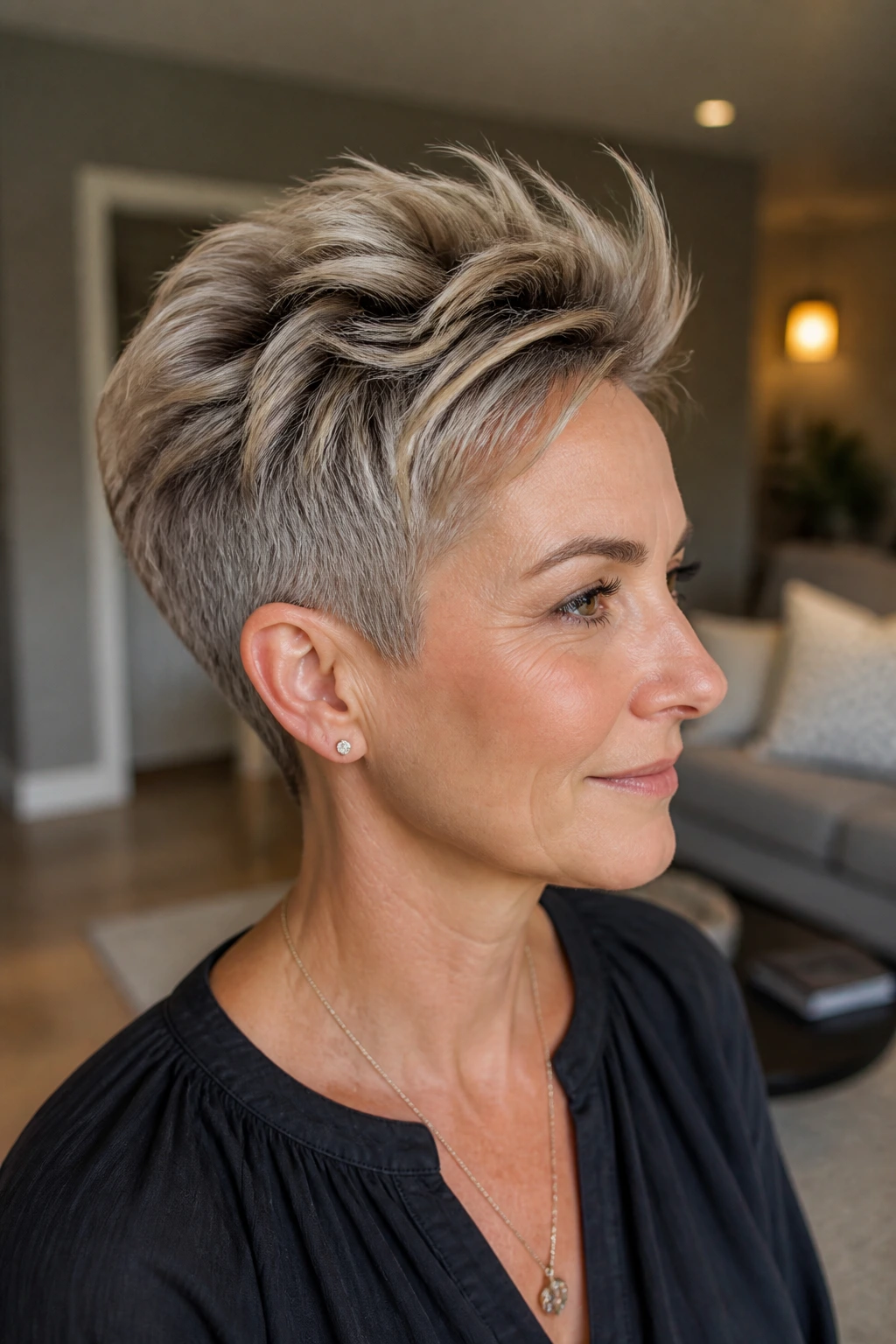
This is the cut I reach for when fine hair is so soft it almost apologizes for existing. The sides stay neat, the nape hugs the neck, and the top keeps just enough length to stand up with a little mousse and finger-drying. It’s short without feeling severe. That matters.
Why it works
The tapered sides remove visual bulk, while the extra length on top creates the illusion of density where you want it most. Ask for the crown to be cut with light point-cutting, not shredded with thinning shears. Too much removal at the top leaves gaps. Too much weight on the sides drags the shape down.
This cut also handles cowlicks better than a tidy little helmet crop. If your hair wants to stand up at the crown or kick left at the fringe, this shape can work with that instead of pretending it’s perfectly obedient.
A pea-sized amount of styling paste through the ends is enough. More than that and the hair starts to separate in a cheap, crunchy way.
2. Choppy Micro Bob
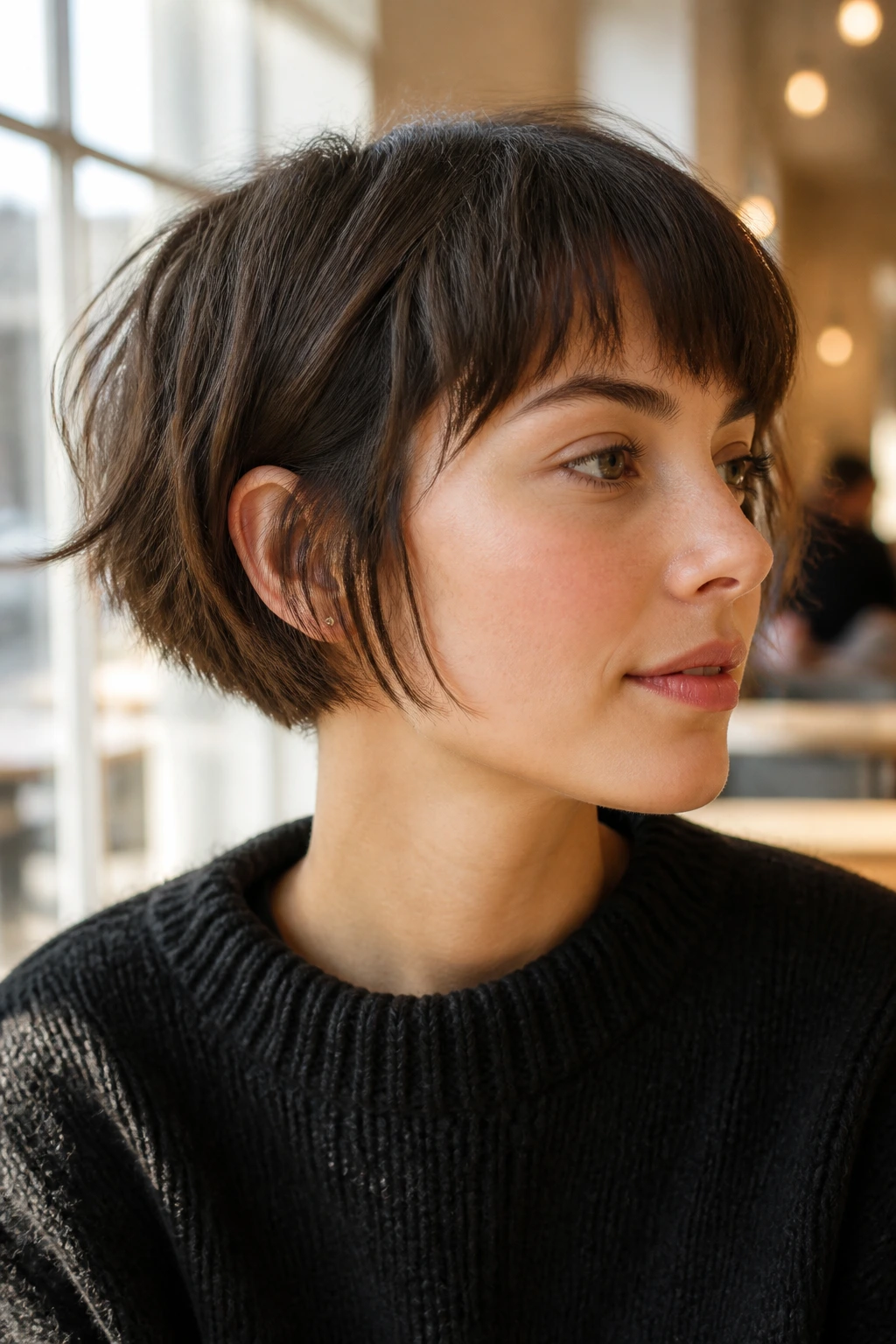
The micro bob sits at the jaw or just below it, and that length is doing a lot of work. It’s short enough to keep fine hair buoyant, but long enough to avoid the full pixie commitment. The trick is the ends: they should look broken and lively, not sliced like a ruler.
What makes it different: a blunt base with a little irregularity through the surface. That combination gives the impression of thickness at the edge while keeping the interior from lying like a sheet.
I like this cut on straight fine hair because it behaves well on day two. A quick bend with a flat iron at the front pieces, plus a dab of dry texture spray, is usually enough. If your hair is a little wavy, even better — the ends take on a nice soft flick.
Keep the neck area clean. When a micro bob gets too heavy at the nape, it starts to look tired instead of chic.
3. Bixie With Broken Layers
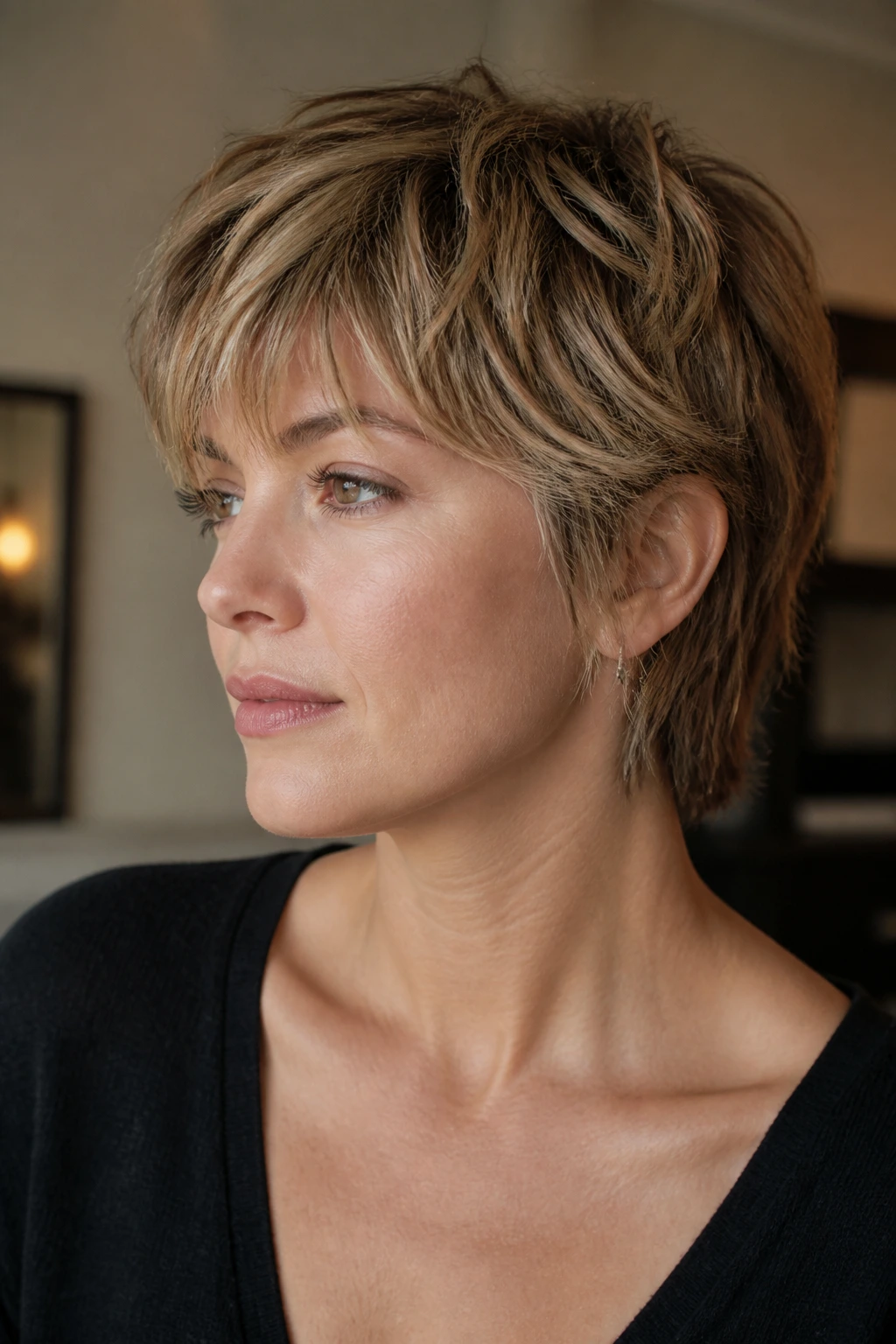
A bixie is the sweet spot between a bob and a pixie, and fine hair often looks happier here than it does in either extreme. You keep the softness around the ears and jaw, but the top has enough length to create lift and shape. The broken layers matter. They’re what keep it from sitting like a chunk.
Why it flatters fine hair
The bixie gives the crown some room while still leaving enough perimeter to read as a haircut, not a fuzzed-out grow-out. Ask for the top to stay slightly longer than the sides, with texture concentrated in the mid-lengths rather than the tips. That keeps the ends from looking see-through.
It’s also a good choice if you’re nervous about going very short. You get the neck-baring freshness without losing the feeling of having hair around your face.
A little root spray and a round brush at the front are all this cut usually needs. If you style it with heavy cream, the shape goes soft fast.
4. French Bob With Wispy Fringe

A French bob on fine hair can be gorgeous, but only when it’s cut with restraint. The line usually sits at the cheekbone or jaw, and the fringe lands somewhere between airy and cheeky — not full, not blunt, just there enough to frame the face and make the rest look fuller.
The fringe is the secret. It pulls attention forward, which means the eye doesn’t park on the crown or stare at the part line. Fine hair likes that kind of trick. It prefers elegant misdirection.
Keep the texture soft, not over-chipped. If the perimeter gets too jagged, the cut loses its French-bob shape and starts looking accidental. I’d ask for a clean outline with tiny internal texture through the front only.
A shallow side part can make this one feel a little more lived-in. A middle part sharpens it up.
5. Razor-Shag Crop
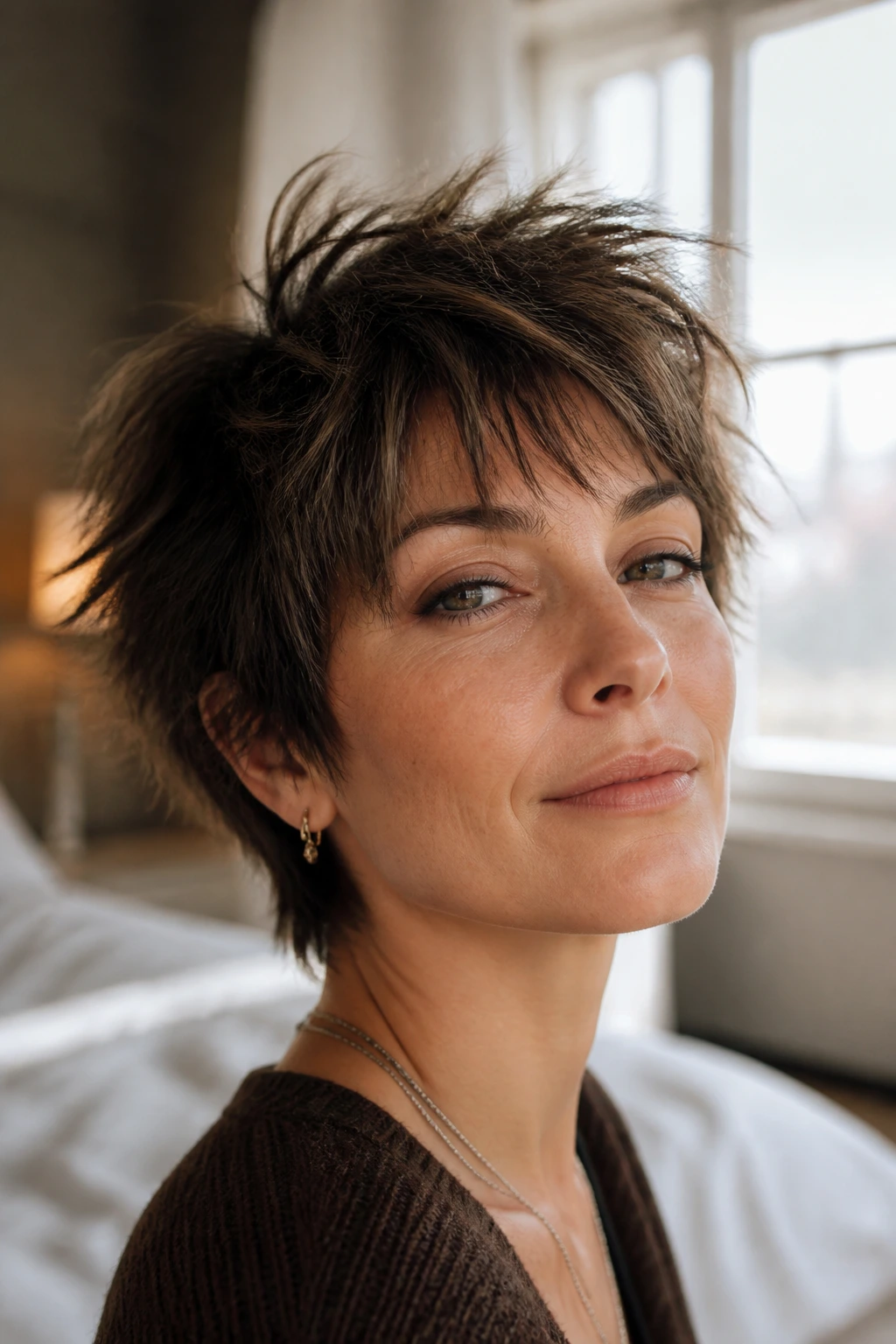
The razor-shag crop has attitude, and it works because it refuses to weigh fine hair down with anything fussy. The ends are feathered, the top has movement, and the whole cut looks like it was meant to be tossed around a little. Not polished. Tossed.
What to tell the stylist
Request a soft razor finish on the surface, not through the whole head. That distinction matters. A full razor-cut on fine hair can go wispy fast, especially around the perimeter. A good razor-shag keeps the edge light while preserving enough density underneath to stop the cut from going hollow.
This one suits natural wave and a bit of bend. Straight hair can wear it too, but it usually needs a small bend with a round brush or a quick pass of a flat iron to stop the layers from lying flat.
A salt spray can help, though I’d use it lightly. Too much and the hair feels dry before it even leaves the bathroom.
6. Jaw-Length Blunt Bob With Hidden Texture
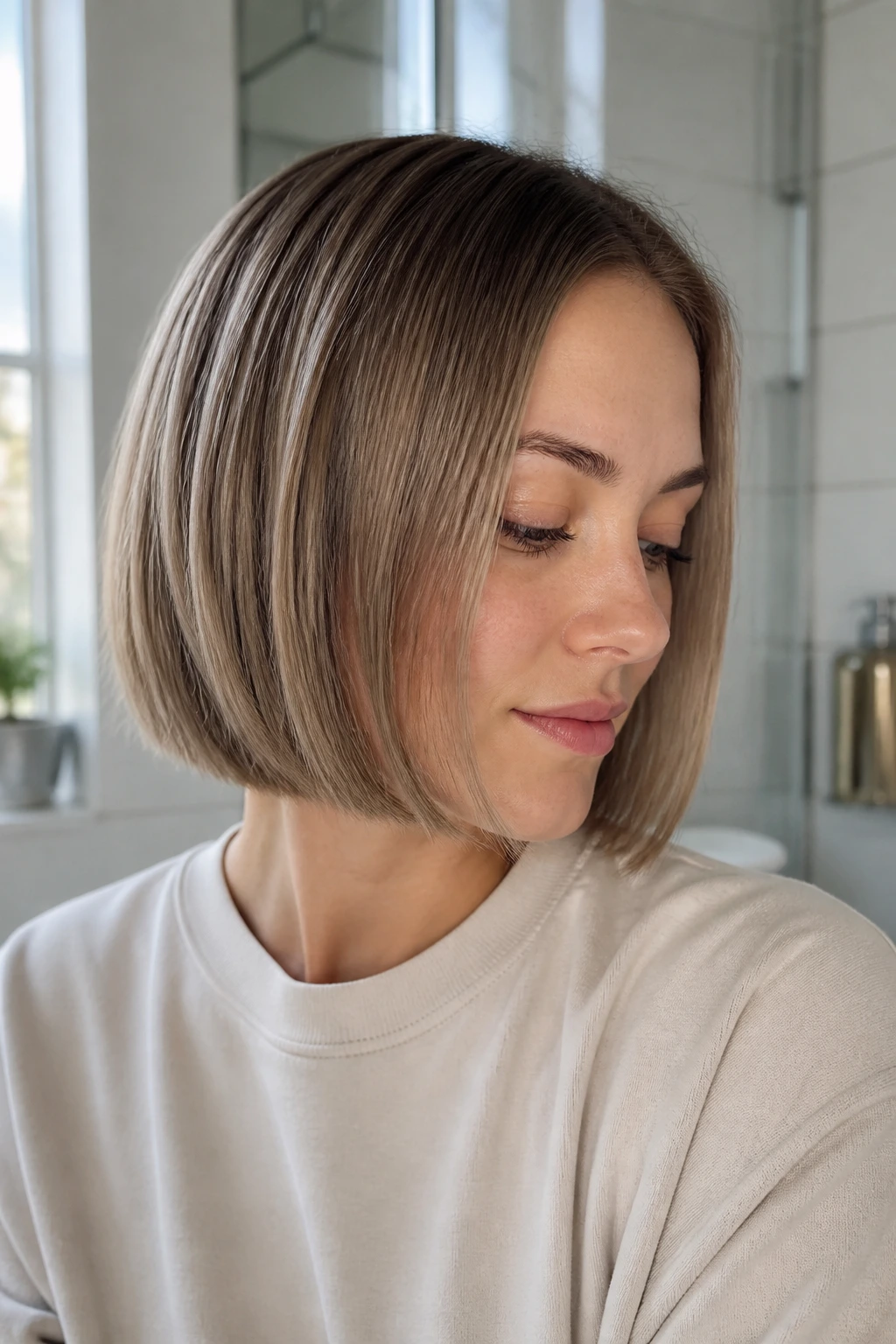
This is the answer to the person who says fine hair needs lots of layers. Sometimes it does not. Sometimes what fine hair really needs is a blunt edge that gives the ends a thicker visual line, plus a tiny bit of hidden movement inside the shape so it doesn’t sit like a block.
The best version lands right at the jaw, maybe a finger below, with the interior lightly texturized. From the outside, the cut looks full. From underneath, it can breathe.
That hidden texture should be subtle. If you can see obvious short pieces sticking out, the haircut has gone too far. Fine hair usually looks better with a strong outline and tiny adjustments inside the body of the cut.
This one is especially good if your hair is straight and slippery. The blunt edge helps it hold a shape longer between washes.
7. Side-Swept Crop With Long Bangs
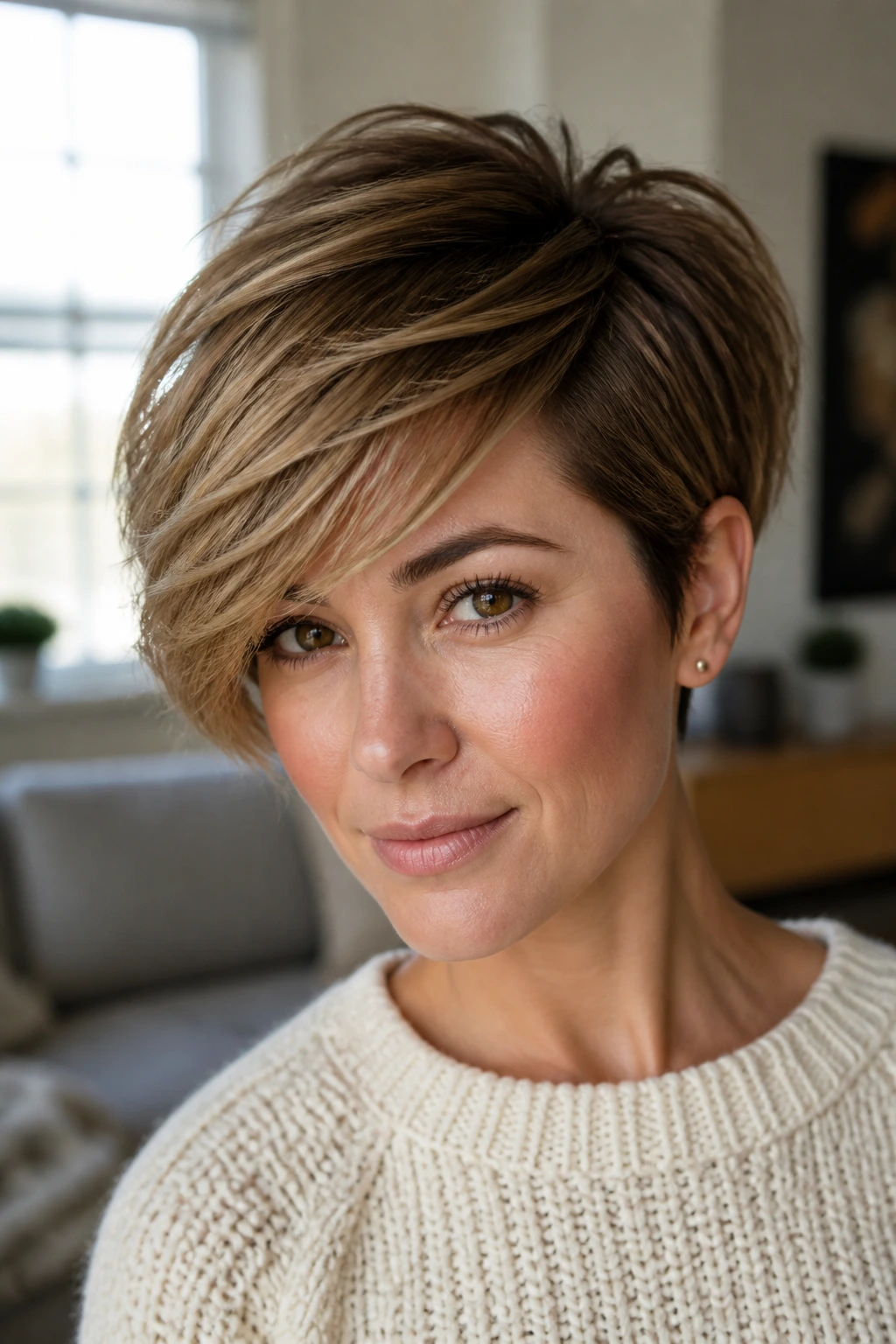
If your forehead feels long or your hairline recedes at the temples, a side-swept crop can be a small miracle. The top stays short enough to keep the cut lively, but the fringe sweeps across instead of falling straight down. That soft diagonal line creates fullness where the face needs it.
Why it works
A long bang lets fine hair collect itself into one visible shape instead of breaking into tiny strands. Ask for the fringe to be cut dry if your stylist is comfortable with that; it helps prevent a bang that looks great wet and flimsy once it dries. Keep the sides blended, but not over-thinned.
This is one of those cuts that looks better when the hair has a little second-day grit. Clean hair can be too slippery. A dry shampoo mist at the roots gives the fringe something to grip.
I like this cut on people who hate fuss. It takes twenty seconds to sweep into place and still looks intentional when it gets a little crooked.
8. Undercut Pixie With Long Top
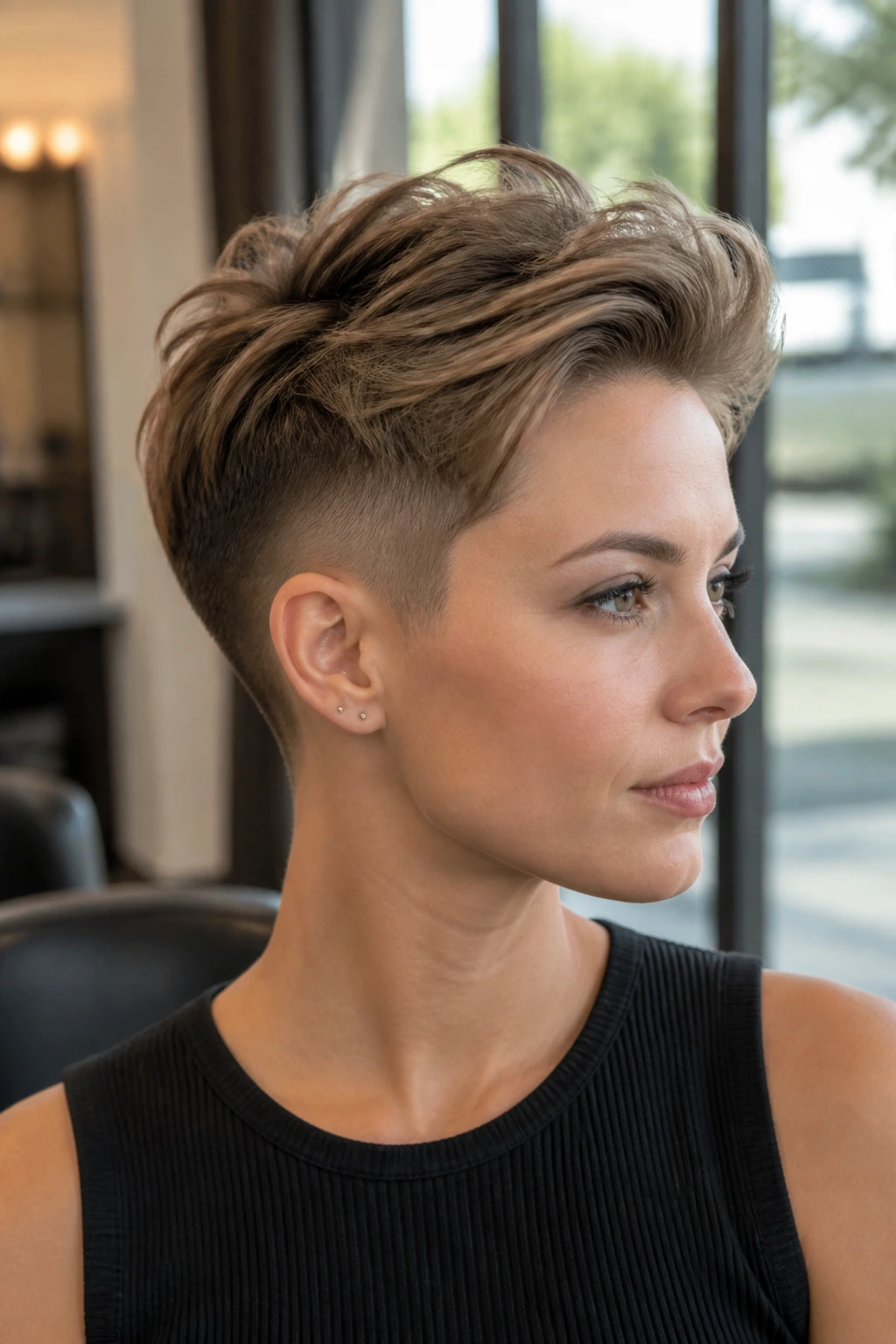
An undercut pixie is not subtle, and that’s the point. For fine hair that also carries a lot of bulk underneath, removing weight at the nape and around the sides can make the top feel twice as full. The long top gives you styling options; the undercut does the boring work behind the scenes.
The important part is balance. Leave enough top length to brush forward, spike up, or sweep to the side, depending on the day. If the top is too short, the cut loses its point and just looks clipped.
This works especially well for dense fine hair — hair that is soft in diameter but packed in. The undercut removes heaviness without making the head look smaller. That’s a nice trick when you want shape and edge at the same time.
A matte paste gives it a little grip. Shiny products can make the scalp show more.
9. Wavy Shag Bob
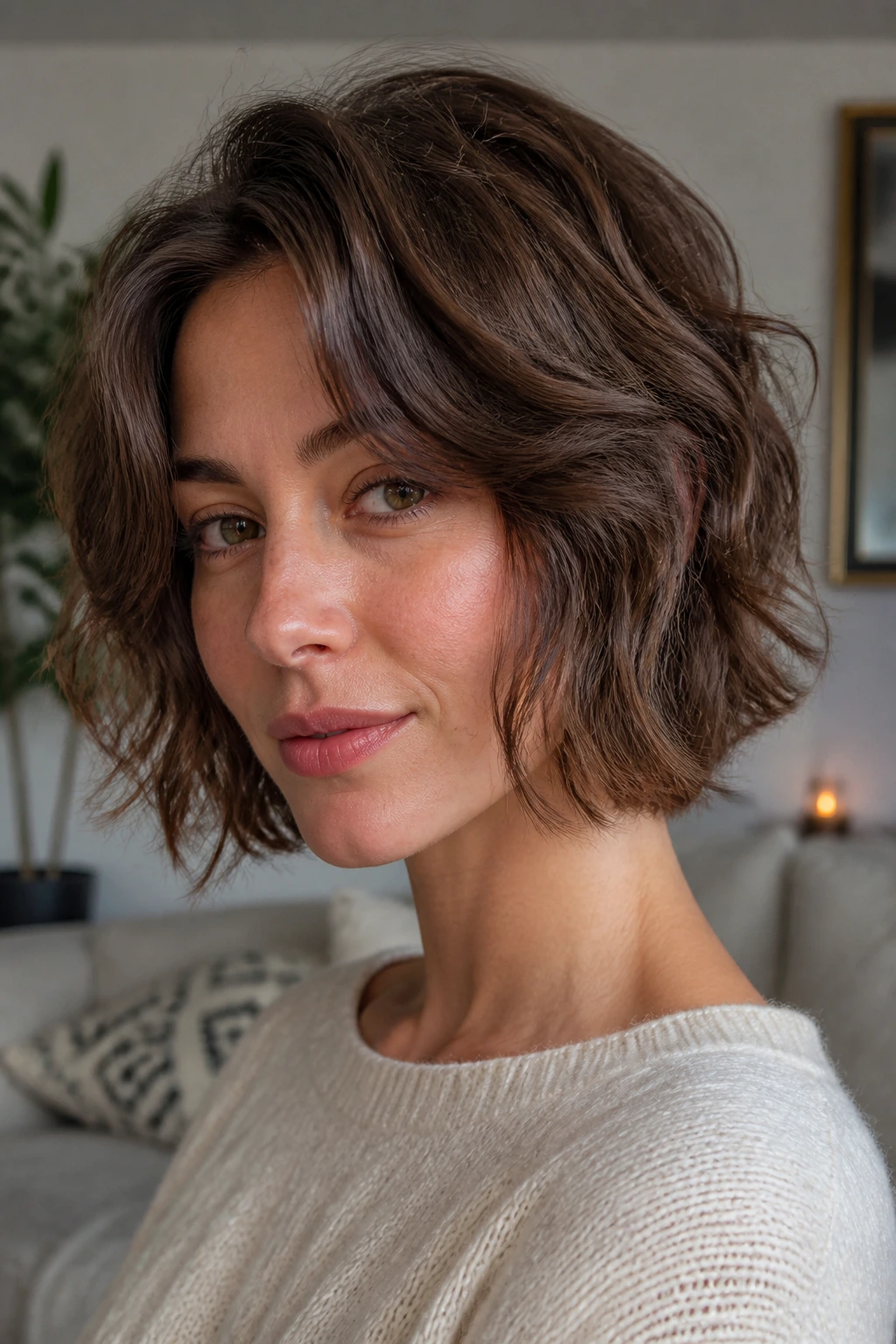
The wavy shag bob is for hair that already bends a little but refuses to do anything dramatic without a fight. You keep the length around chin to just above the shoulders, then add soft layers that encourage the wave instead of flattening it.
What I like here is the messiness with a purpose. The shape should feel loose, not unfinished. If the layers are cut too high, the ends go thin. If they’re too long, the wave collapses into a triangle. The sweet spot sits in the middle, where the sides move and the bottom line still feels full.
If you air-dry, scrunching in a lightweight mousse goes a long way. If you blow-dry, use a diffuser or a big brush with very little tension. Fine waves tend to frizz before they bloom, so don’t over-handle them.
10. Asymmetrical Bob With Deep Side Part
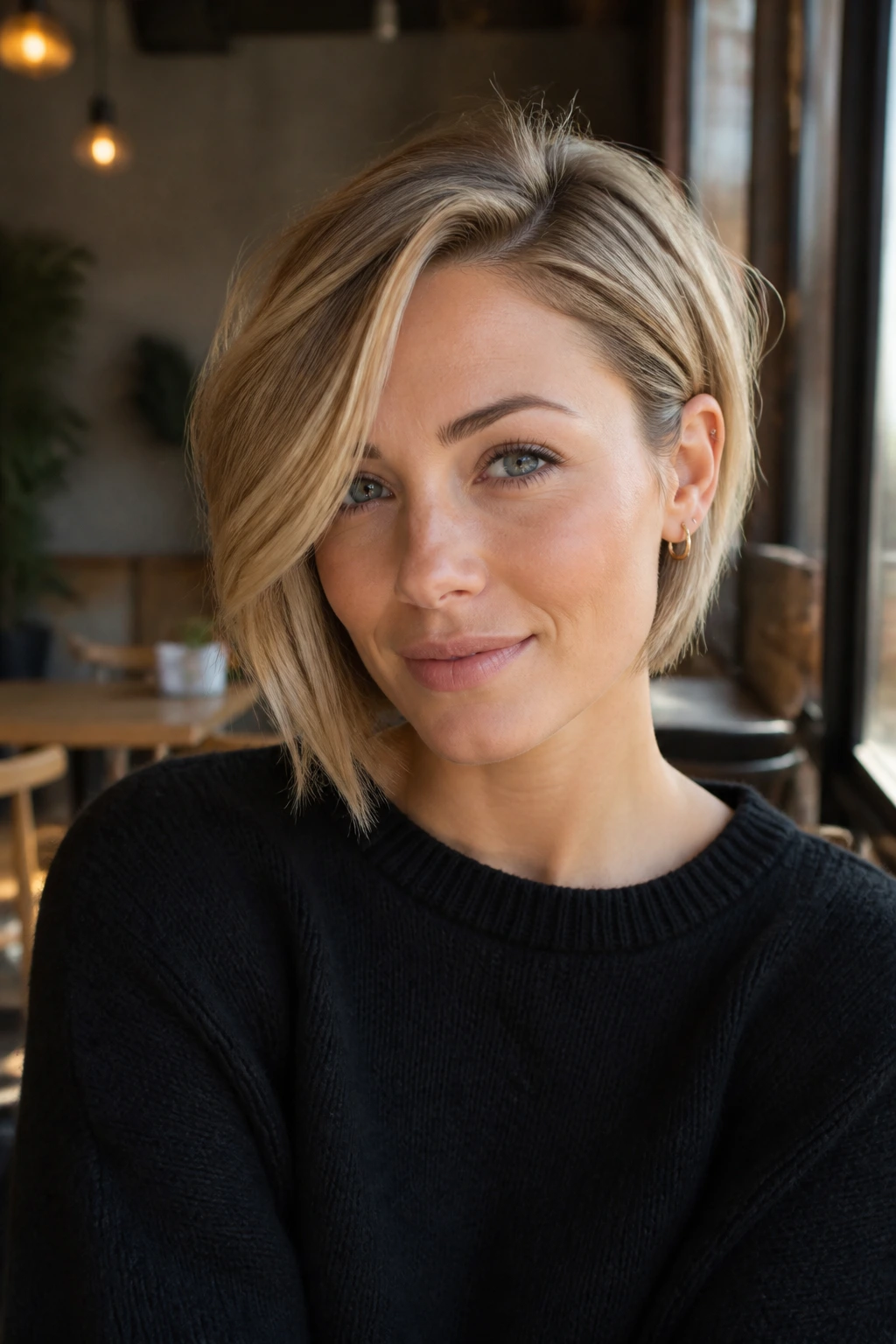
A little asymmetry can do more for fine hair than a lot of people expect. When one side is slightly longer or the part is deeply shifted, the cut gains visual weight. It also makes the hair look thicker on the fuller side, which is useful if one temple or one side of the crown is weaker than the other.
The asymmetry should be measured, not dramatic enough to shout from across the room. A half-inch to an inch difference is plenty. That small shift gives the bob movement and makes the outline less rigid.
This cut is especially useful if your hair falls flat in the middle part but perks up with a side part. Let the part work for you. Don’t force symmetry if your hair hates symmetry.
A round brush at the roots and a quick tuck behind one ear can make the whole shape look more deliberate.
11. Mixie With Soft Tail
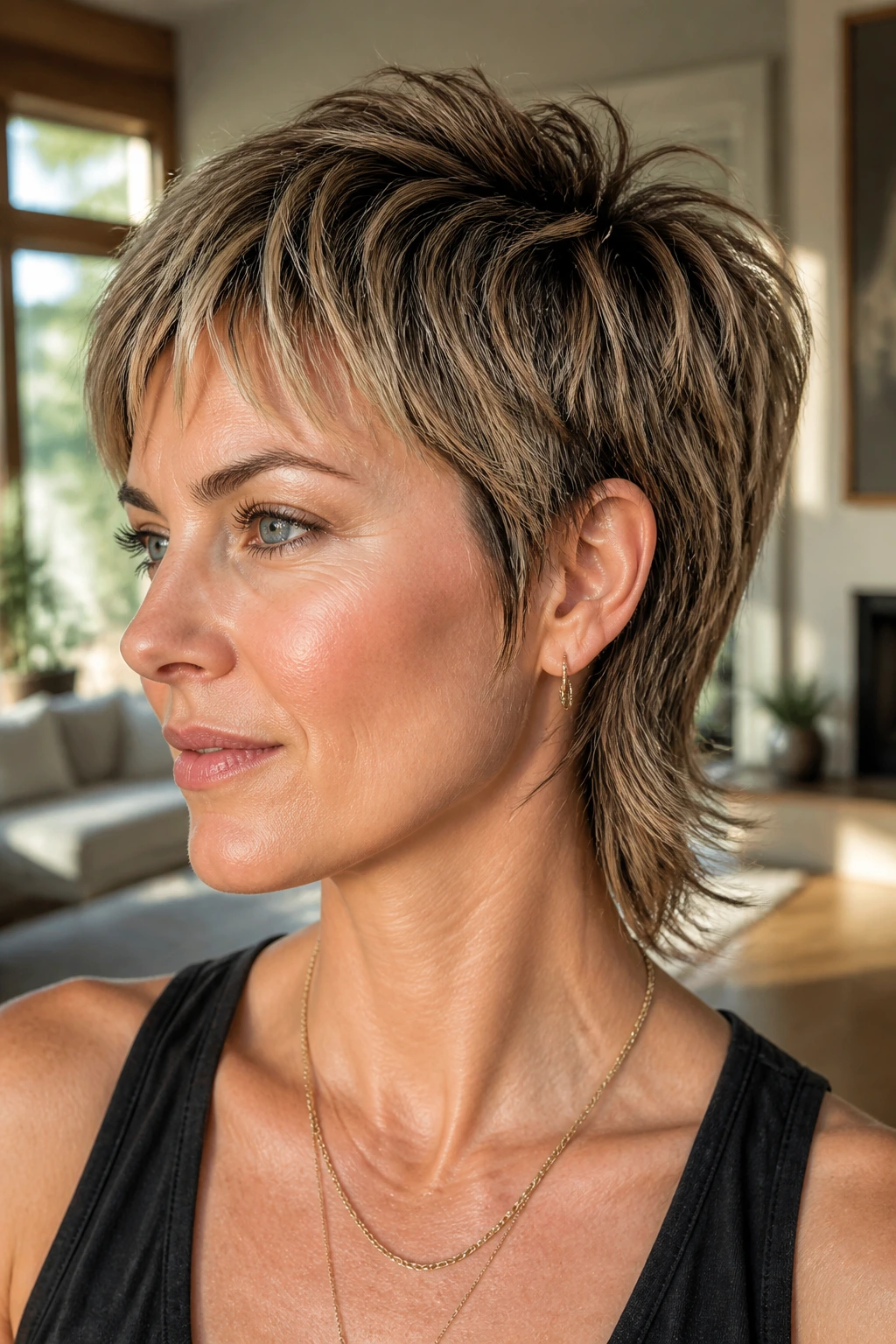
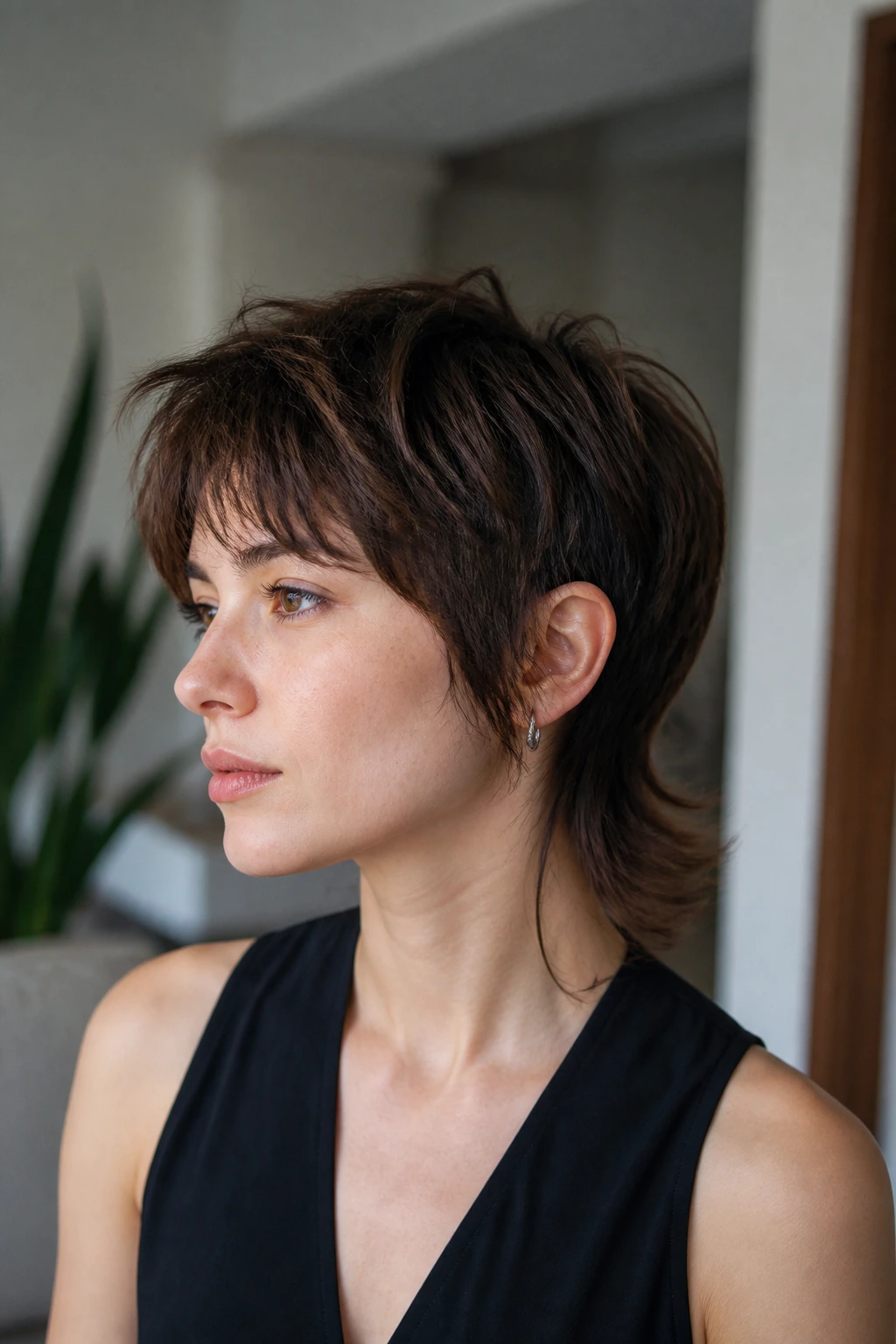
The mixie sits between a mullet and a pixie, and it can be weird in the best way. On fine hair, the appeal is that it keeps the top and front short enough to stay lifted, while leaving a bit of tail or softness at the nape so the cut doesn’t vanish from the profile.
Why it behaves well
The short crown gives volume. The longer nape gives shape. That combination makes fine hair read as full from every angle, not just from the front. Ask for soft transitions, not hard disconnects, unless you want the cut to look intentionally punk.
This is one of the few textured short cuts that can look good with a little air-dry chaos. It doesn’t need perfect polish. In fact, perfect polish can flatten the personality right out of it.
If you want the edge without the commitment, this is a strong choice. It grows out in a forgiving way, too, because the longer back keeps the silhouette from going dead between appointments.
12. Rounded Crop With Lifted Crown
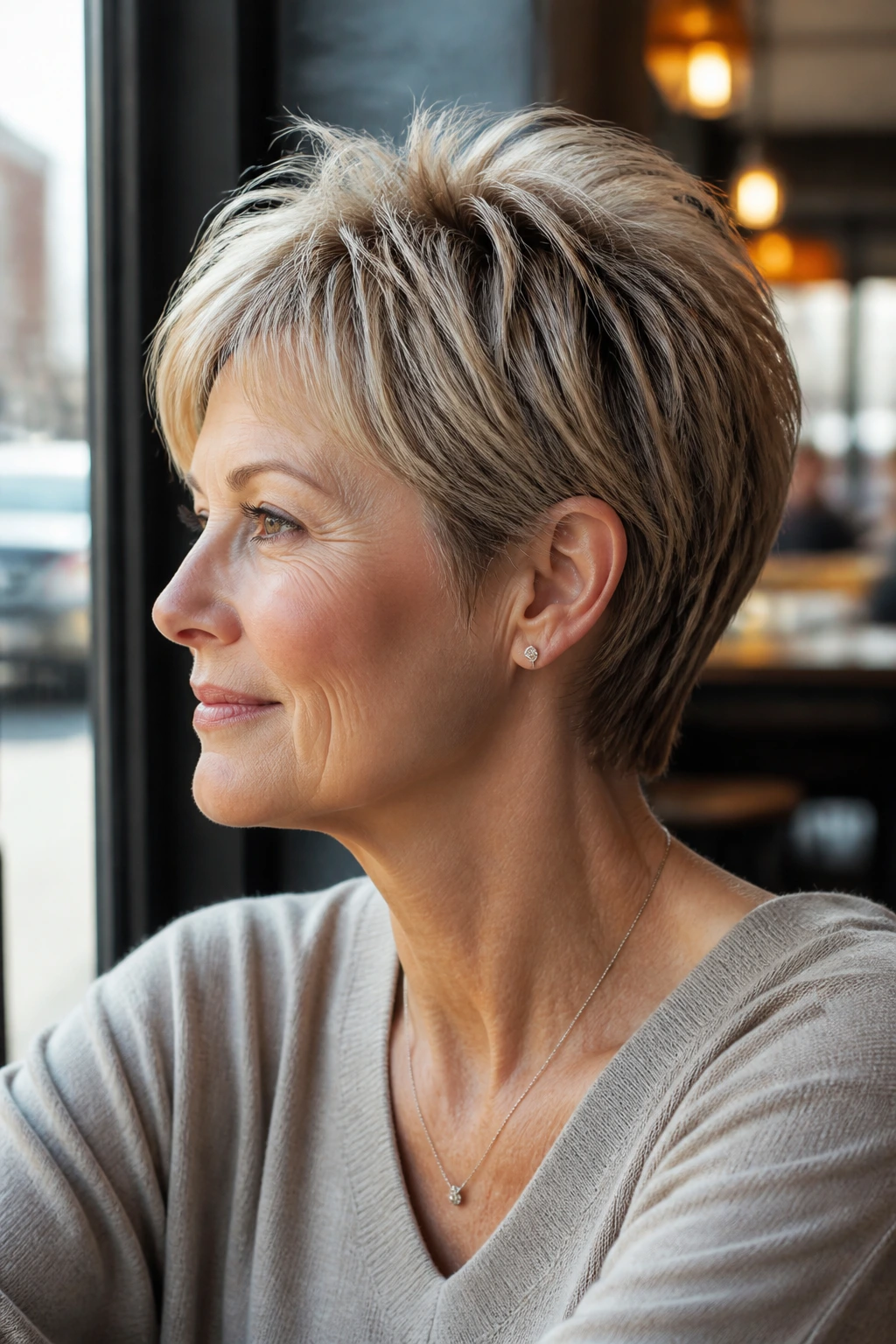
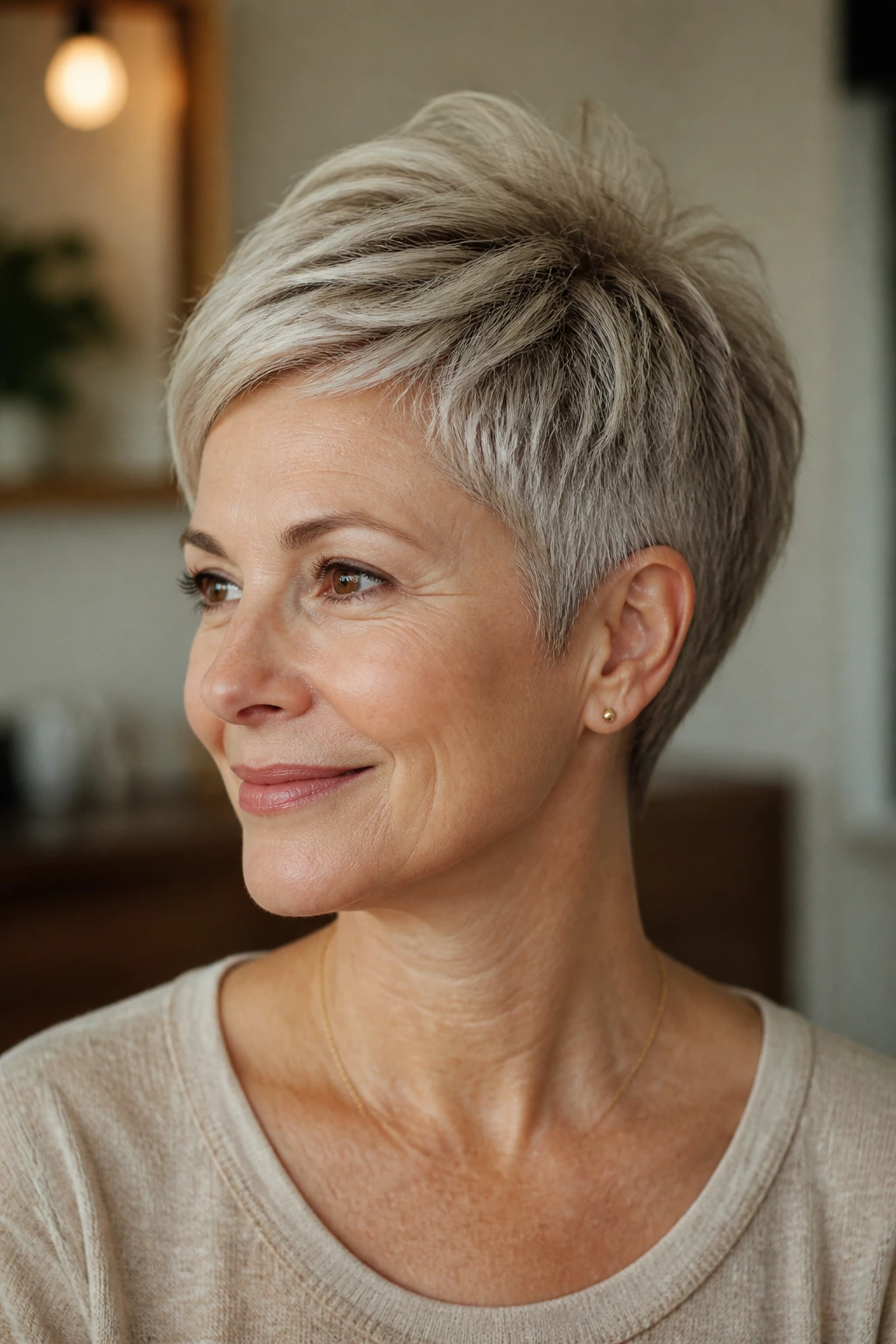
A rounded crop is a quiet haircut, which is exactly why it can look rich on fine hair. The shape follows the head gently, with soft fullness at the crown and a neat edge around the ears and neck. Nothing is over-thinned. Nothing is shouting.
This cut works because it creates the sense of density in one smooth contour. A lot of fine hair looks better when it’s encouraged into a single rounded shape instead of scattered into little pieces. The crown can be lightly lifted with a round brush, but the rest should stay close and clean.
I like this one on people with fine hair and a smaller face. It can make the hair feel plush without making the head look oversized. If your hairline is delicate, keep the front a touch longer so the crop doesn’t feel too boyish.
13. Collarbone Lob With Invisible Layers
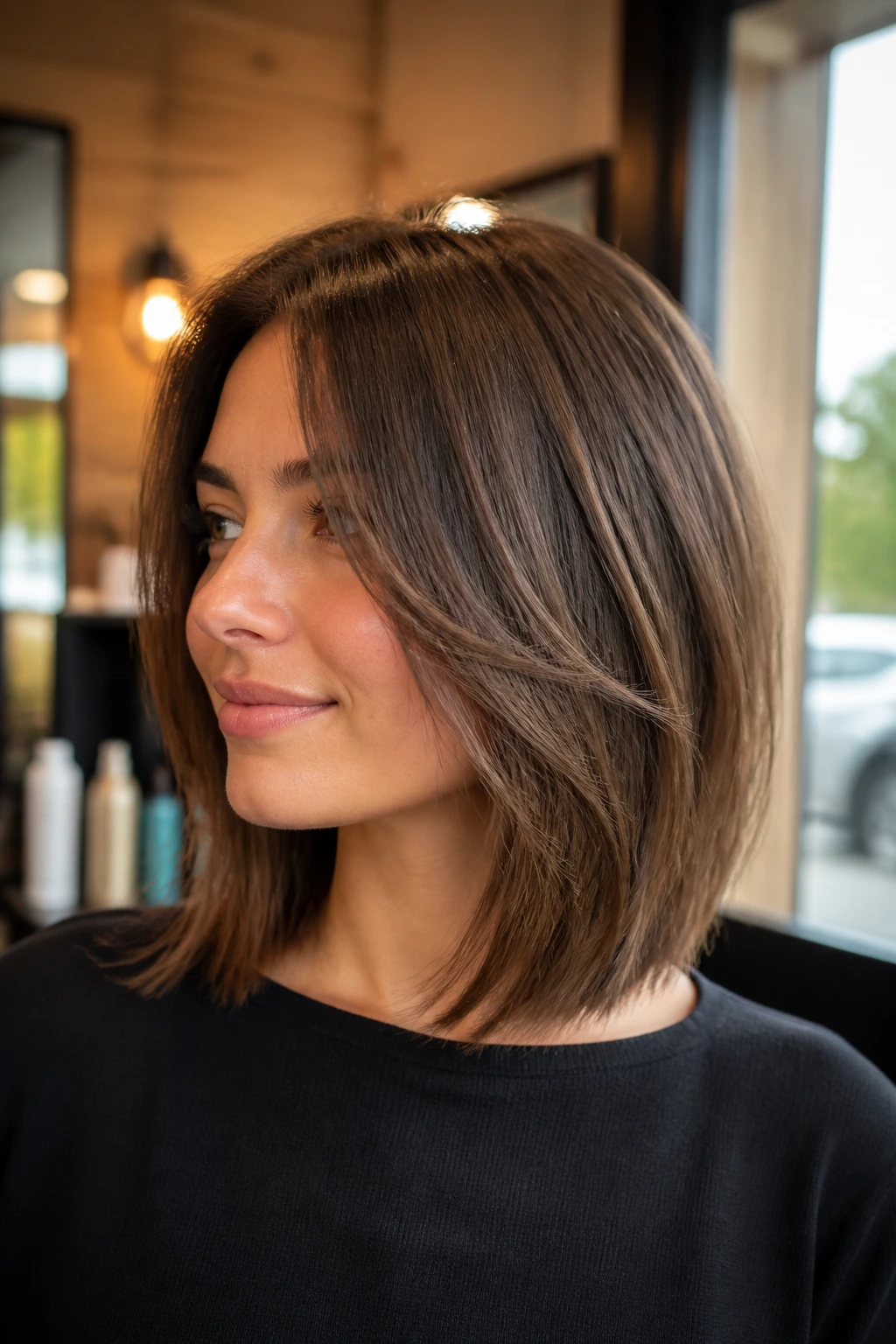
Not everyone wants truly short hair, and that’s fair. The collarbone lob is the long end of “short texture” here, but on fine hair it can be the safest way to get movement without losing the option to tuck it behind your ears or pin it back.
The reason it works is the invisible layering. The outline stays mostly solid, which keeps the ends looking dense, while the inside gets just enough removal to stop the whole thing from hanging heavy. That makes a huge difference on fine strands. You keep the feeling of hair, not fluff.
This is the cut for someone who wants shape but isn’t ready to give up ponytail length entirely. It also handles grow-out well. A slightly overgrown lob still looks like a haircut, which is more than I can say for some shorter shapes.
14. Ear-Length Tucked Bob
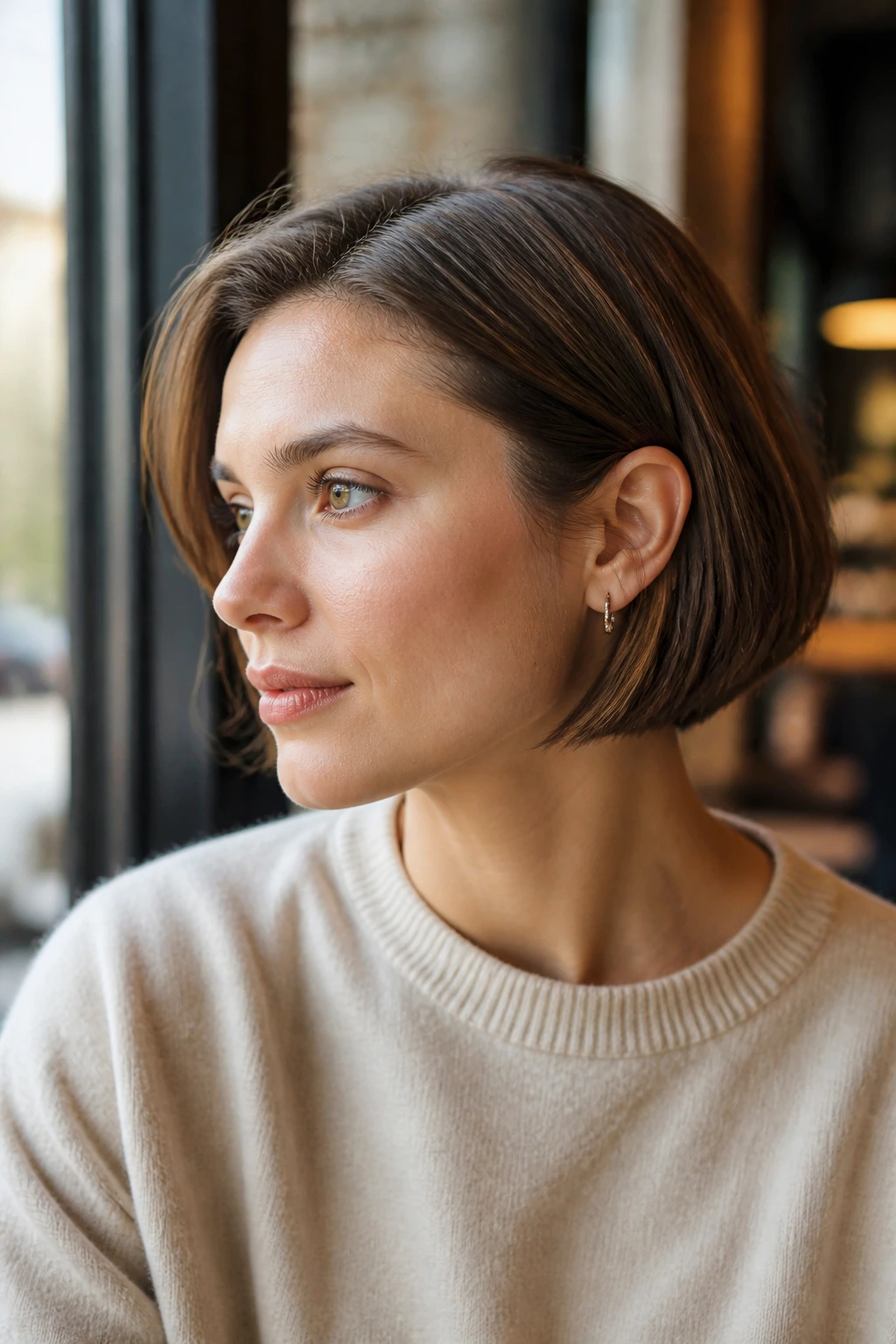
The ear-length bob is sharper than people expect. It can look fragile on the wrong hair, but on fine hair with good density it gives a beautiful clean line and a lot of visual thickness at the edge. The trick is keeping enough weight in the perimeter so the ear line doesn’t go patchy.
This is a very honest haircut. There’s nowhere to hide, which is why the cut has to be clean. Ask for blunt ends with a tiny bit of texturing only where the hair naturally bends. If your ears stick out or you like to tuck hair behind them, this cut makes that movement part of the style rather than a compromise.
It does need regular shaping. Let it drift too long and the crispness disappears first, which is the whole point of the cut in the first place.
15. Curtain-Bang Bob
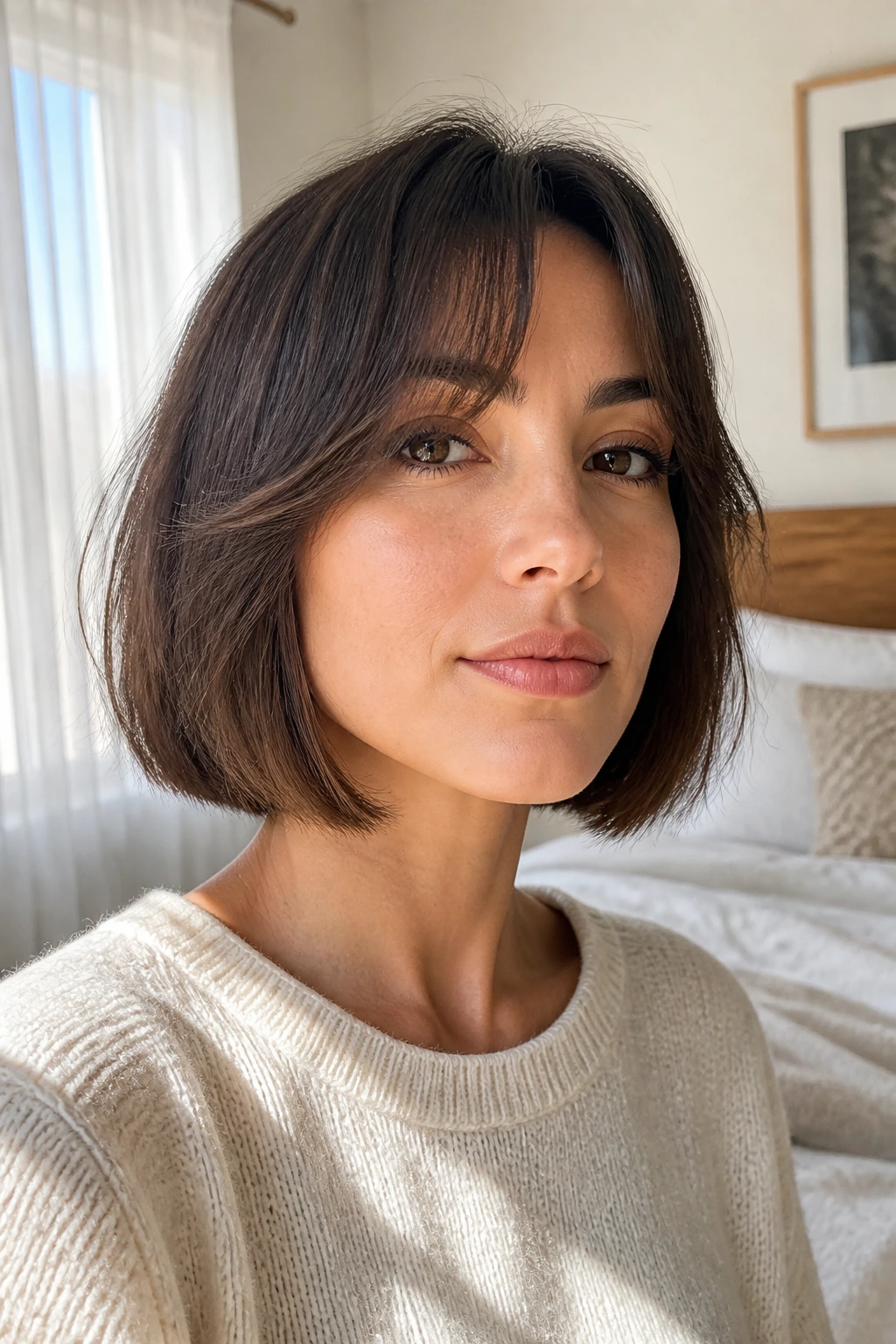
Curtain bangs can rescue a bob that feels too plain on fine hair. They open the face, add movement around the eyes, and make the top half of the haircut feel fuller without stacking layers everywhere. The bob underneath can stay blunt or lightly textured, depending on how much softness you want.
What to ask for
Ask for the fringe to start long enough to split naturally, usually around the bridge of the nose or a little lower when dry. That gives you room to style it both ways. Keep the center section light, but don’t let the side pieces become so thin they vanish into the hairline.
I’m partial to this shape on straight or slightly wavy fine hair because the curtain pieces create a little bounce even when the rest of the hair is behaving itself. It’s also one of the kinder ways to wear a bob if your forehead is the first place your hair goes flat.
A quick blow-dry with the nozzle pointed up at the roots makes the bangs behave. Ten seconds matters here.
16. Sliced Pageboy
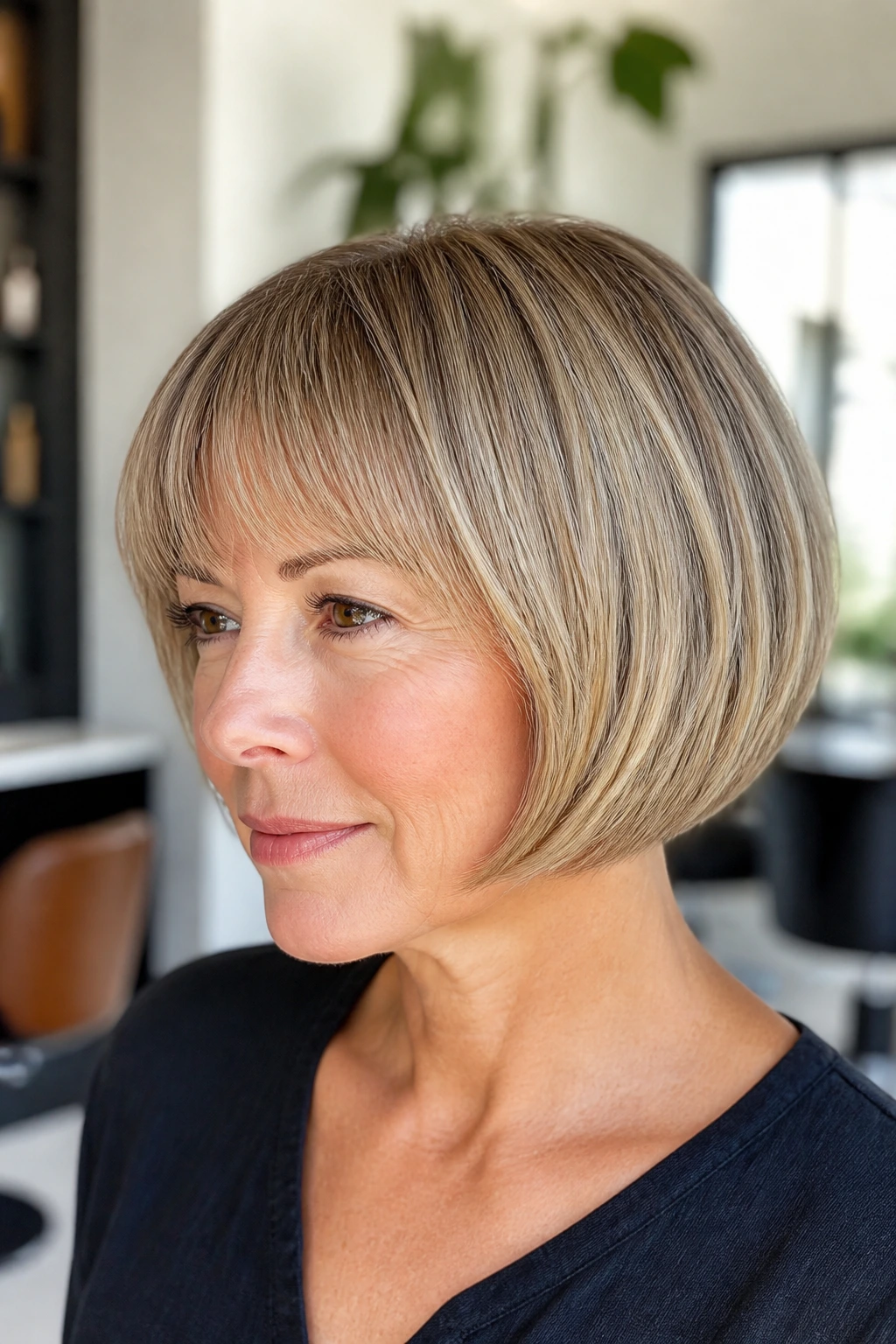
The pageboy is back in a more wearable form, and fine hair is one of the best places to use it. The modern version keeps the curved outline, but the ends are sliced instead of bulky, so the shape moves instead of sitting like a bowl. That curvature makes the hair appear thicker along the edge.
This cut likes straight hair. A little bend at the ends, tucked under with a round brush or mini flat iron, gives it that smooth finish without making it stiff. If your hair is very fine, keep the back slightly shorter than the front so the cut doesn’t drag.
The pageboy can look old-fashioned if it’s too precise. The sliced version avoids that. It feels clean, not costume-y.
17. Soft Wolf Cut
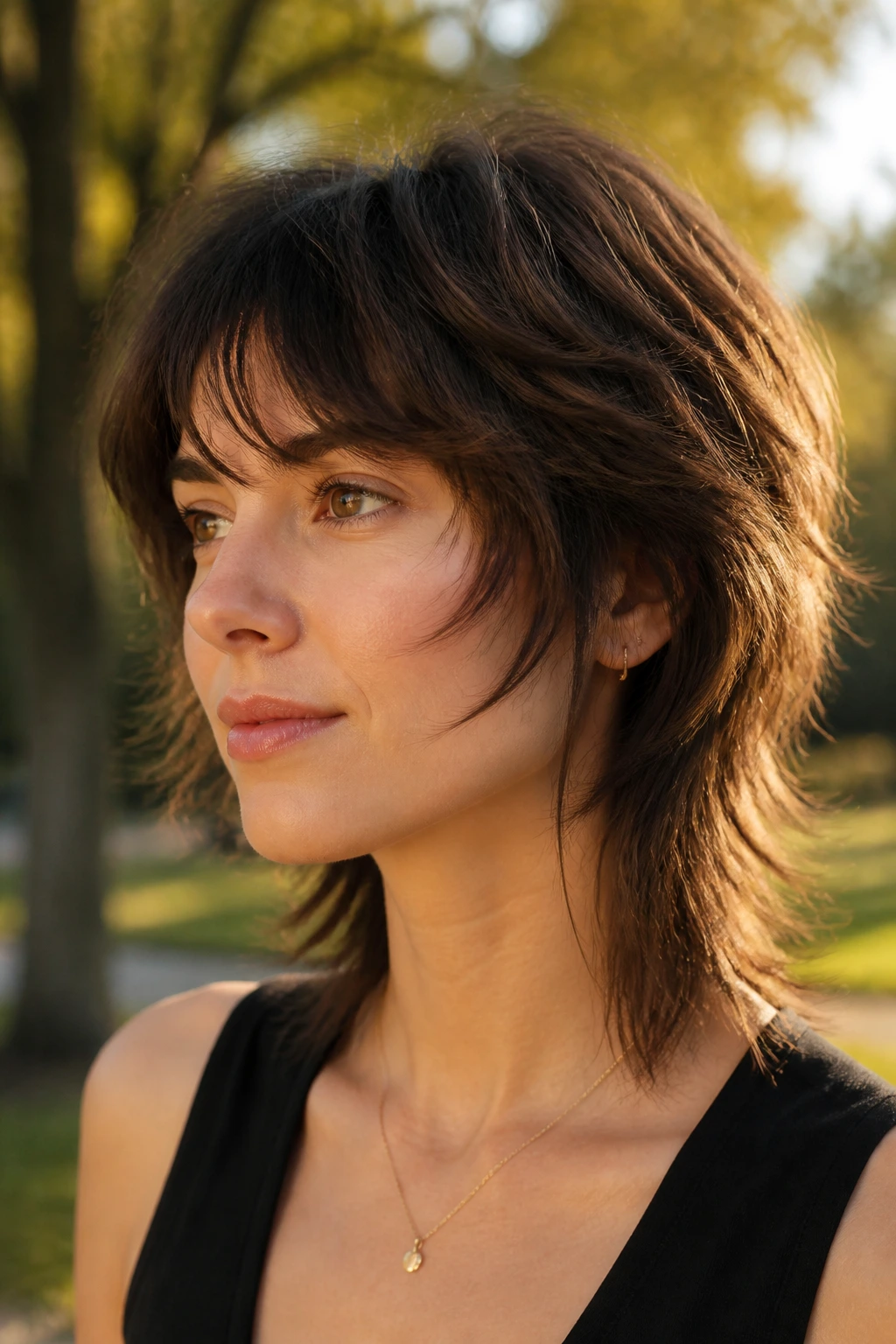
A wolf cut can absolutely work on fine hair, but it has to be softened. The full version can eat too much density and leave the ends whisper-thin. The soft version keeps the shaggy attitude while protecting the perimeter.
Why it works better in this softened form
The crown gets some lift, the sides gain broken texture, and the nape keeps enough length to anchor the whole thing. That anchor matters. Without it, fine hair can look exploded instead of styled.
I’d keep the layers more connected than disconnected. The point is movement, not chaos. If your hair is naturally wavy, this one can air-dry with a little mousse and look surprisingly alive. If it’s straight, use a round brush at the face-framing pieces and leave the back a little rough.
This is the cut for somebody who wants edge without the maintenance of a true mullet. It’s easier to wear than it looks in photos.
18. Textured Bowl Cut
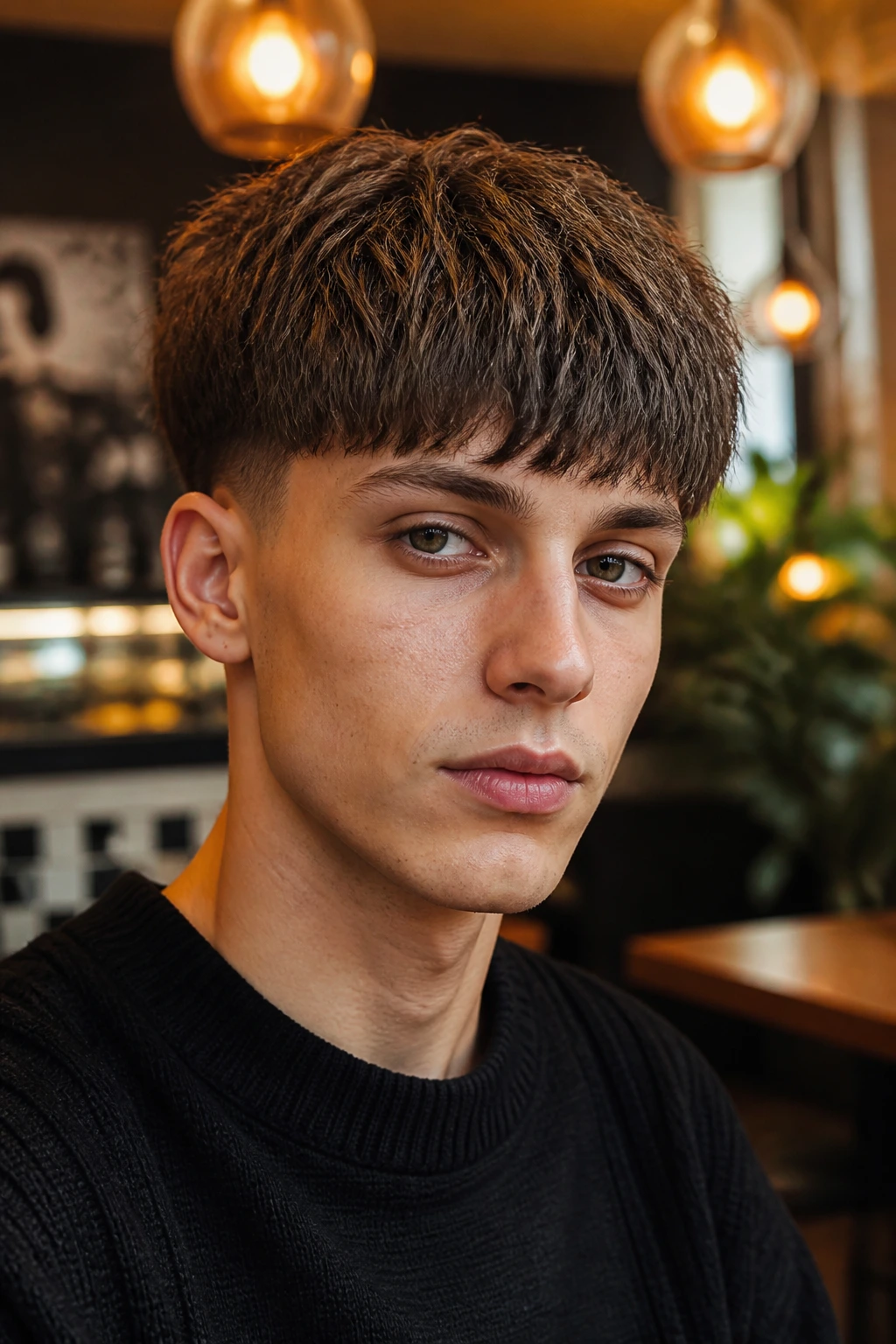
A modern bowl cut on fine hair is a commitment, but when it’s done right, it’s sharp and surprisingly flattering. The shape hugs the head with a clean outline, then breaks just enough at the edge so it doesn’t feel too hard. Fine hair benefits from that controlled structure because it creates the impression of density.
The key is restraint. The fringe should be crisp, but the perimeter needs soft movement at the tips. If the bowl line gets too heavy, the cut can feel flat; if it gets too shattered, it loses the whole point. That’s a narrow lane, and a good stylist knows it.
This cut makes a statement. It isn’t a background haircut. If you like minimal styling and a strong silhouette, it’s worth considering.
19. Italian Bob With Broken Ends
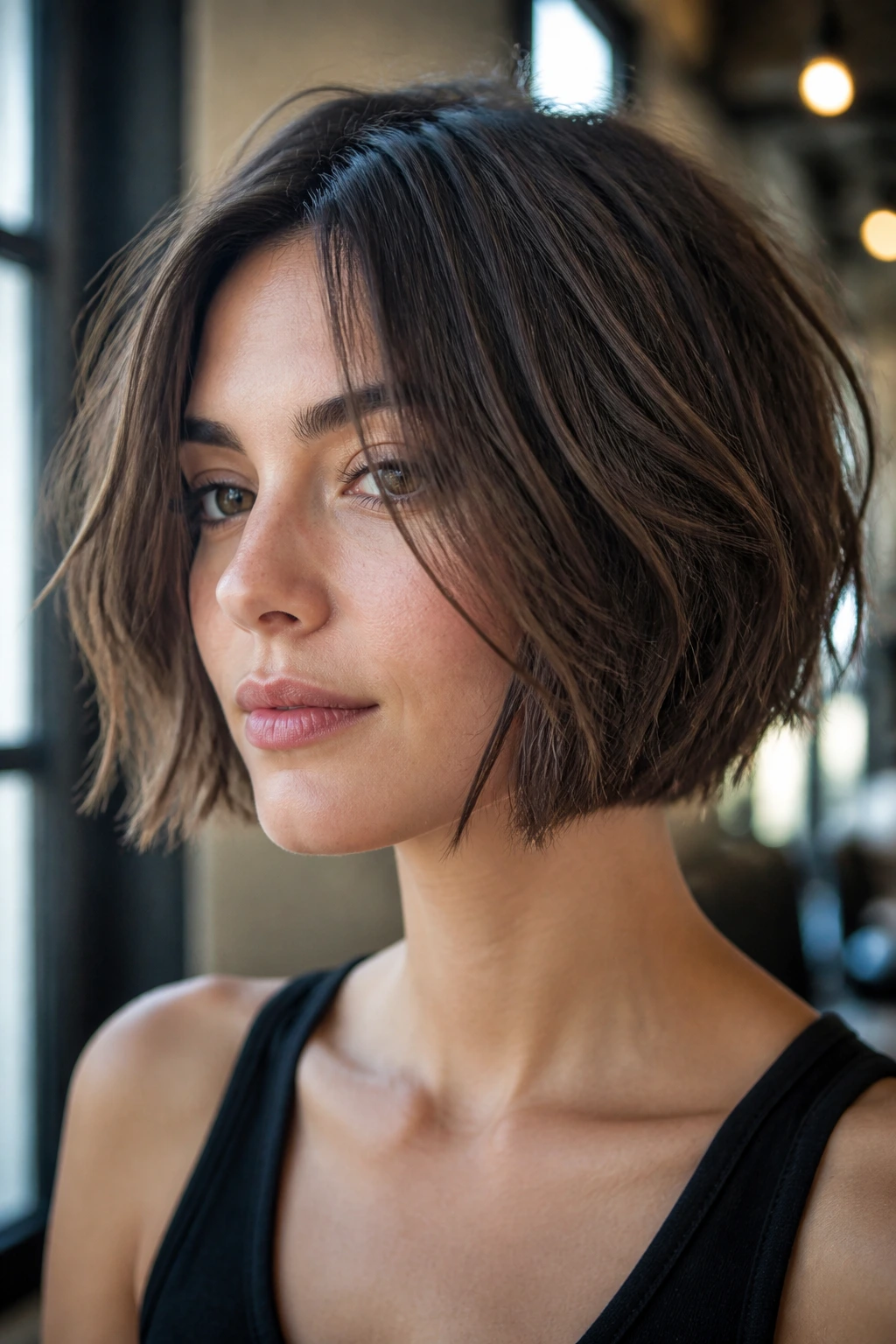
The Italian bob is fuller and looser than a strict French bob, which is part of why fine hair often likes it. It sits around chin length, with a little air through the ends and a shape that feels expensive without trying too hard. The broken ends keep it from looking too blocky.
I prefer this one when the hair has some natural swing but not a lot of density at the tips. The shape gives the eye a thick outline, then softens just enough around the front to stop it from reading severe. You can wear it with a middle part, but I like a slightly off-center part better. It lets the volume land where the hair is strongest.
A small round brush and a pass of texturizing spray at the mid-lengths are enough. No need to turn it into a beach-wave project.
20. Air-Dried Crop
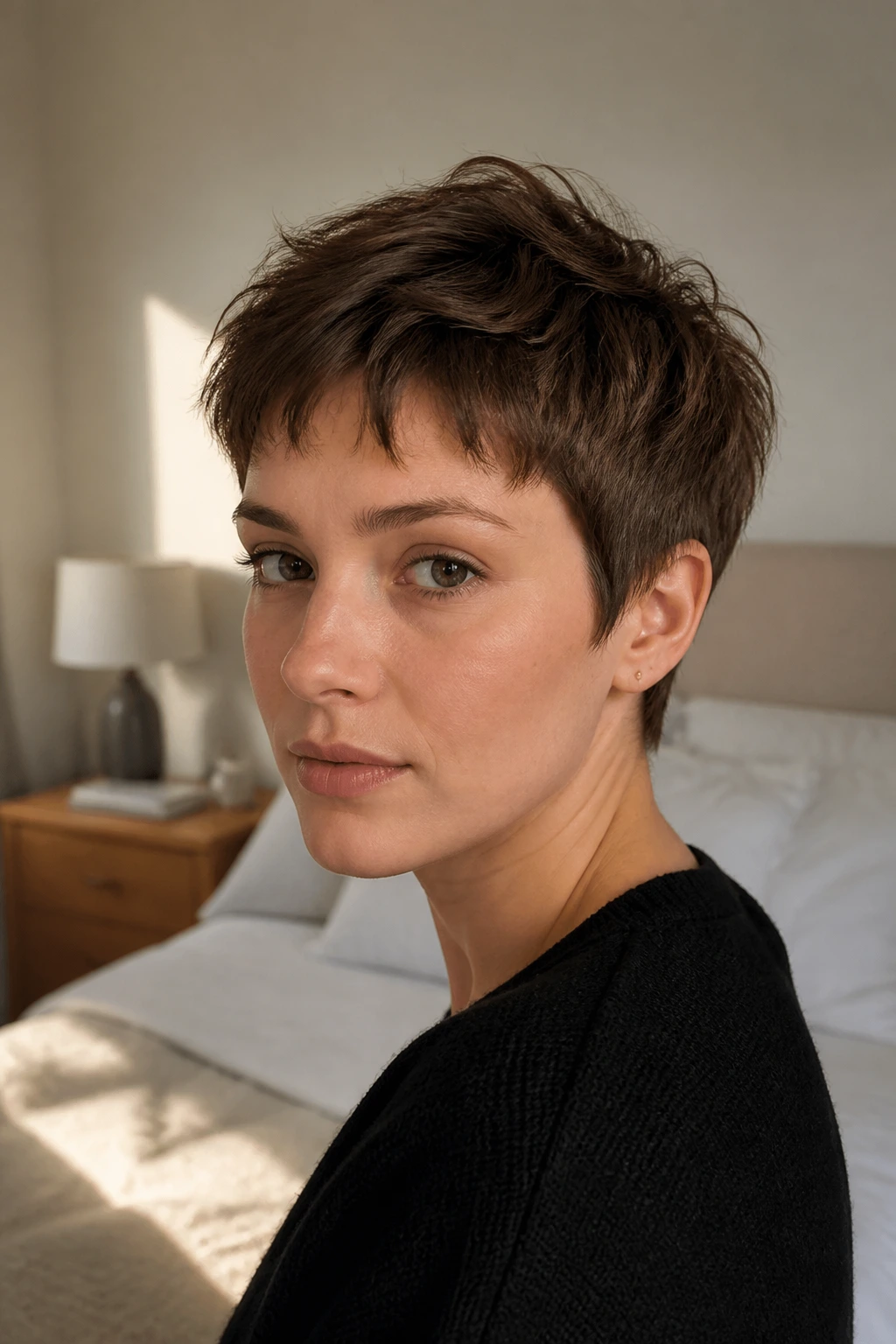
This is the cut for people who want the hair to look decent with almost no effort. The air-dried crop stays short enough to dry fast, but it still has enough shape on top to avoid the mushroom effect. Fine hair benefits because it doesn’t sit there soaking up water and then collapsing under its own weight.
The right version has a tidy nape, some movement through the top, and a front that can fall forward or to the side. Ask for a cut that looks good with its natural bend, not one that depends on a hot tool every single morning.
I like a little curl cream mixed with mousse for this one — very little. Enough to separate, not enough to weigh the strands down. If the hair is straight, rough-drying and then pinching the ends with paste can give it just enough shape to stay interesting.
21. Feathered Crop With Brush-Forward Fringe
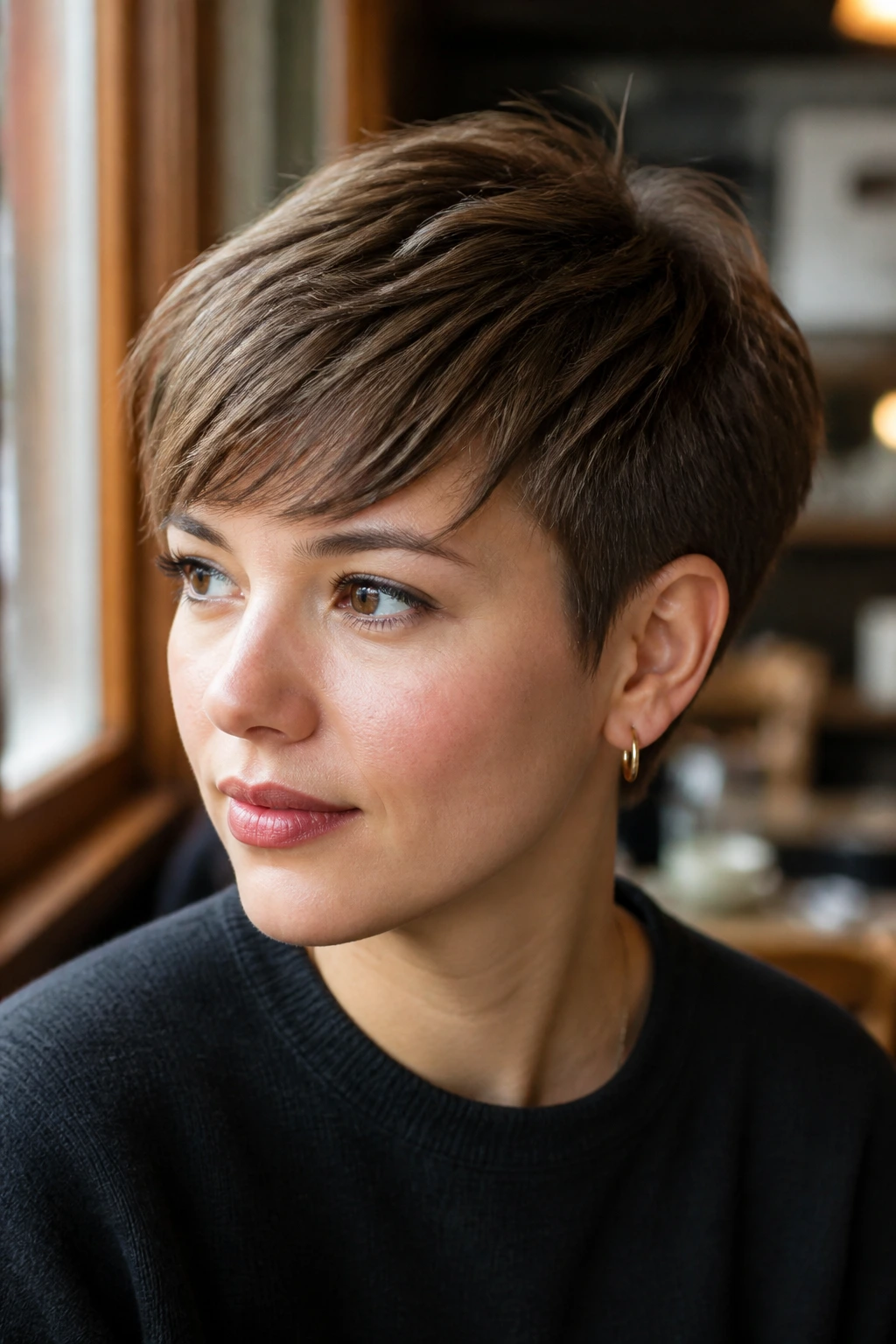
A brush-forward fringe gives the haircut direction. Instead of letting fine hair drift back and disappear, it nudges the movement toward the face, where it can create fullness. That’s what makes this feathered crop so useful: the shape feels animated even when the rest of the hair is calm.
The feathers should be soft, not wispy. I’d avoid aggressive layering through the perimeter and keep the texture focused on the top half. That keeps the cut from losing too much mass around the cheeks.
This is a smart choice if your hairline is high or if your forehead feels too exposed in shorter cuts. The fringe adds coverage without heaviness. A small round brush and a quick blast of heat at the root are enough to get it sitting the right way.
22. Short Curly Shag
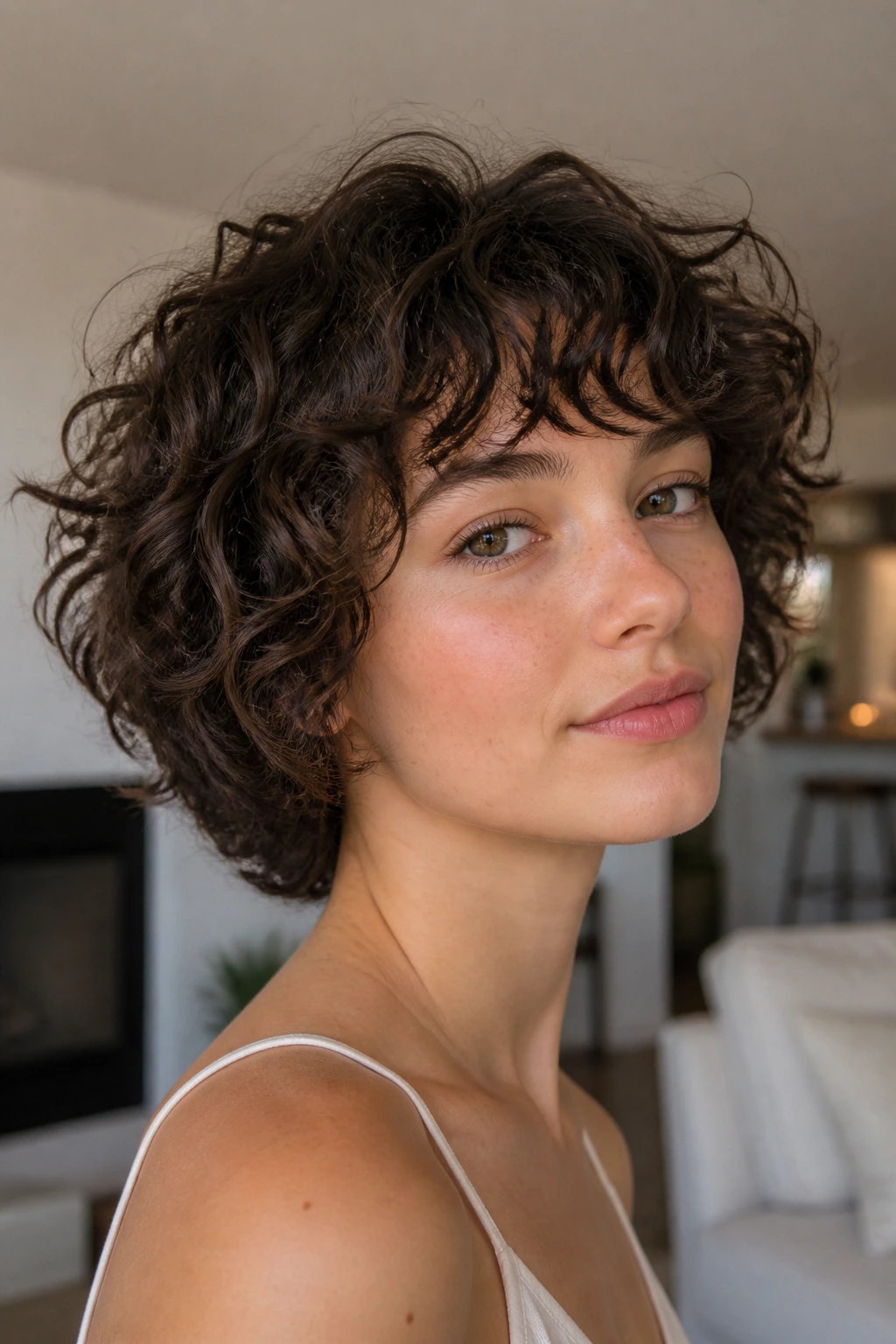
Fine hair that’s also curly needs a different kind of attention. The curls can be delicate, and heavy layers can make the shape puff out in the wrong places. A short curly shag solves that by keeping the length compact and the layers soft enough to encourage the curl pattern instead of scattering it.
The best version sits around the cheekbone to jaw area, with the top cut to support the curl’s natural spring. Ask for dry cutting if your stylist knows how to do it well; curls change shape a lot when they dry, and wet cuts can lie to you. The fringe should be light and bendy, not chopped straight across unless that’s a look you genuinely want.
A diffuser helps, but don’t blast the hair until it’s frizzy. Stop when the curls are set and still a little cool to the touch.
23. Stacked Bob With Soft Graduation
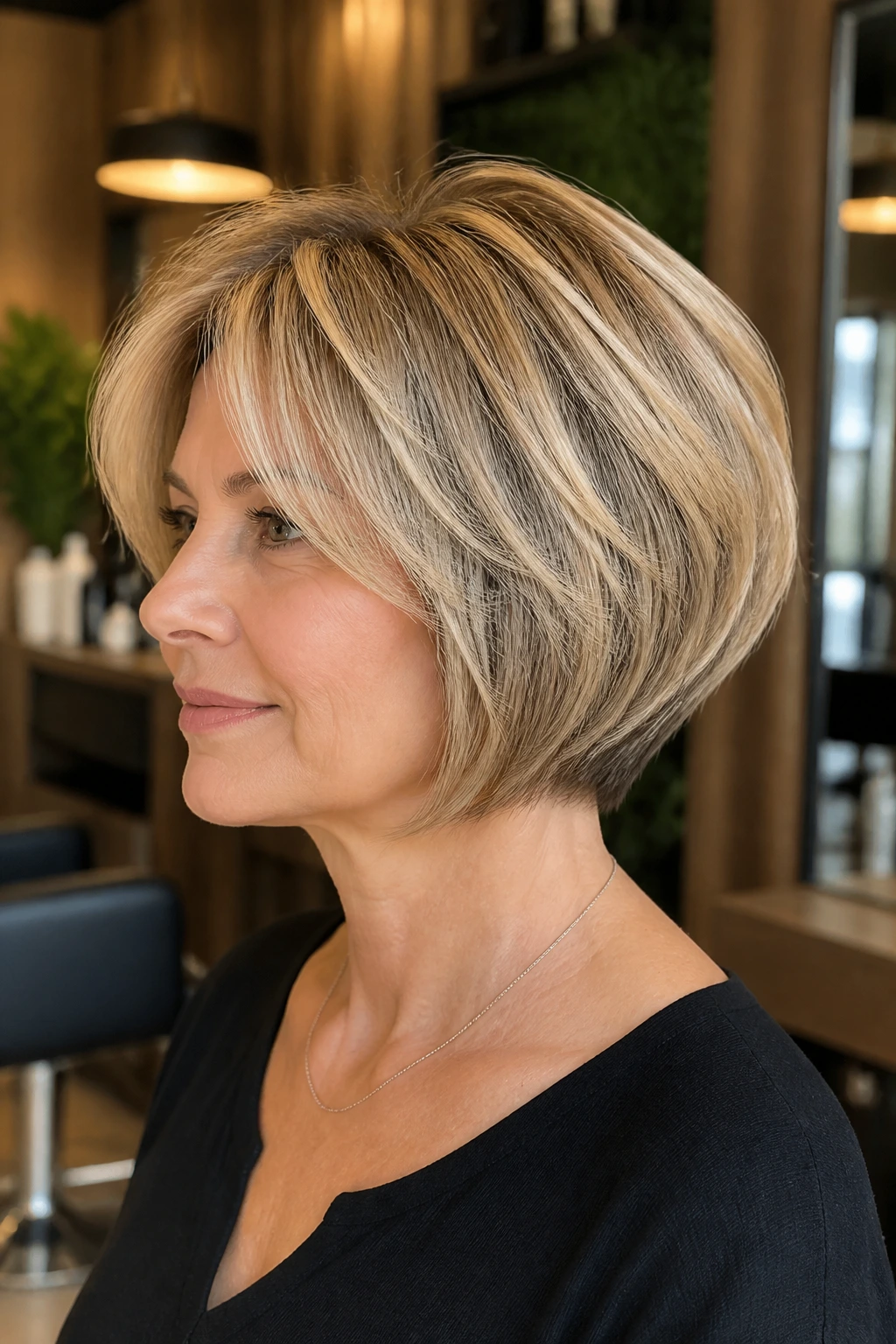
A stacked bob gives fine hair a lift in the back that a flat one-length bob cannot fake. The graduation builds a little shelf at the nape, which pushes the crown up and gives the whole shape a fuller profile. On thick hair, stacked bobs can get bulky. On fine hair, they often just look tidy.
The soft version is the one I like. Keep the stack gentle, not dramatic, so the silhouette stays rounded rather than wedge-like. That shape helps the hair appear denser from the side and back, which matters more than people admit. A haircut is not just the front view.
If your hair tends to collapse at the occipital bone — the back curve of the head — this is a useful fix. The graduation gives the style memory.
24. Swooped Side-Part Bob
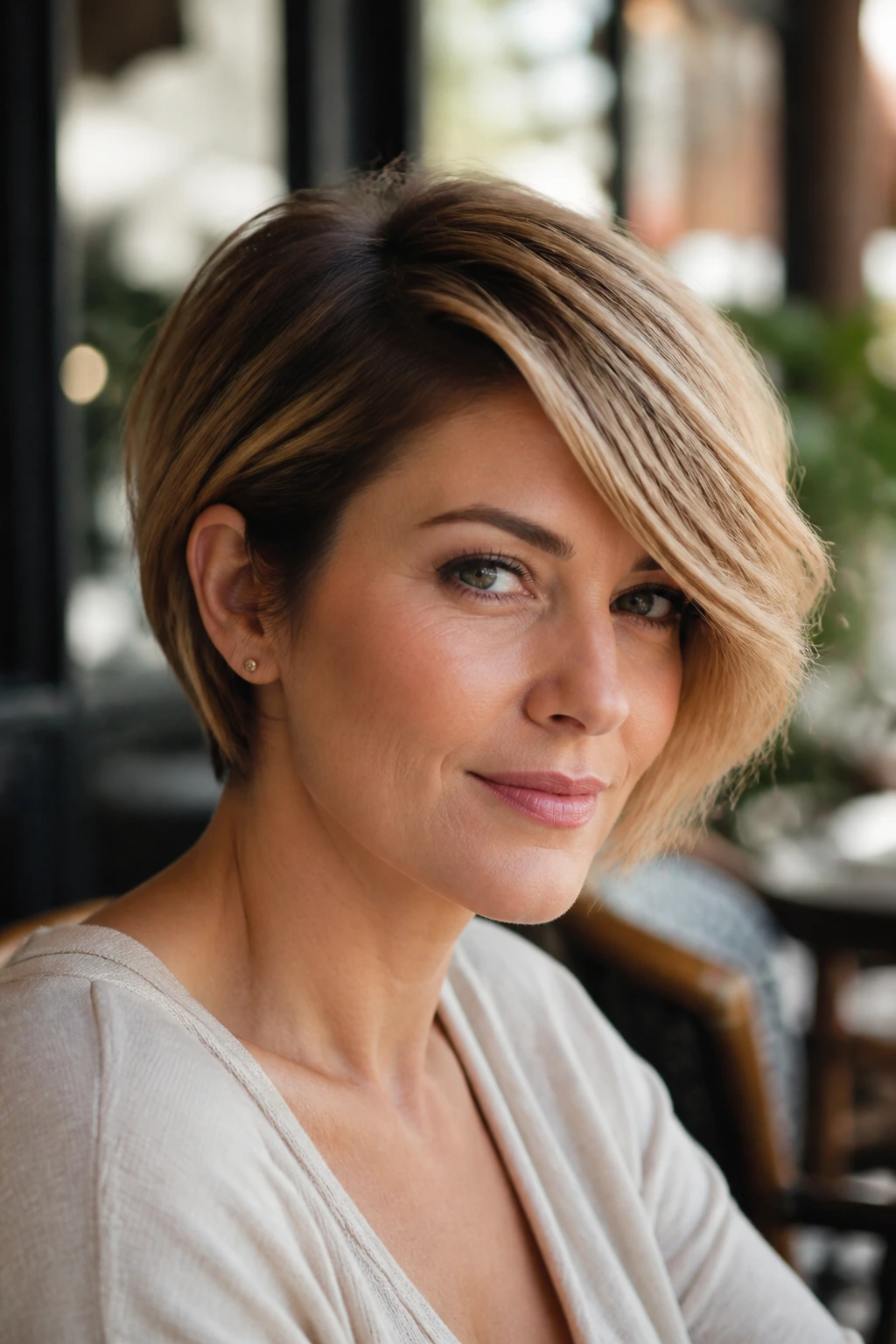
The swooped side-part bob uses asymmetry to build lift. One side stays a little fuller, the front sweeps over, and the result is a shape that looks intentional even when the hair is not freshly styled. Fine hair often looks better when it has one obvious direction. It gives the eye a place to land.
This cut can feel elegant without being stiff. The secret is not over-layering the front. You want movement, yes, but not so much that the side part loses its clean line. Keep the ends slightly beveled so the bob still has a defined edge.
I like this on hair that sits flat at the roots but has decent body through the mid-lengths. The part shift gives you instant volume without a lot of product. A root spray at the base and a cool shot from the dryer are enough to lock it in for a while.
25. Buzzed-Back Pixie With Long Top
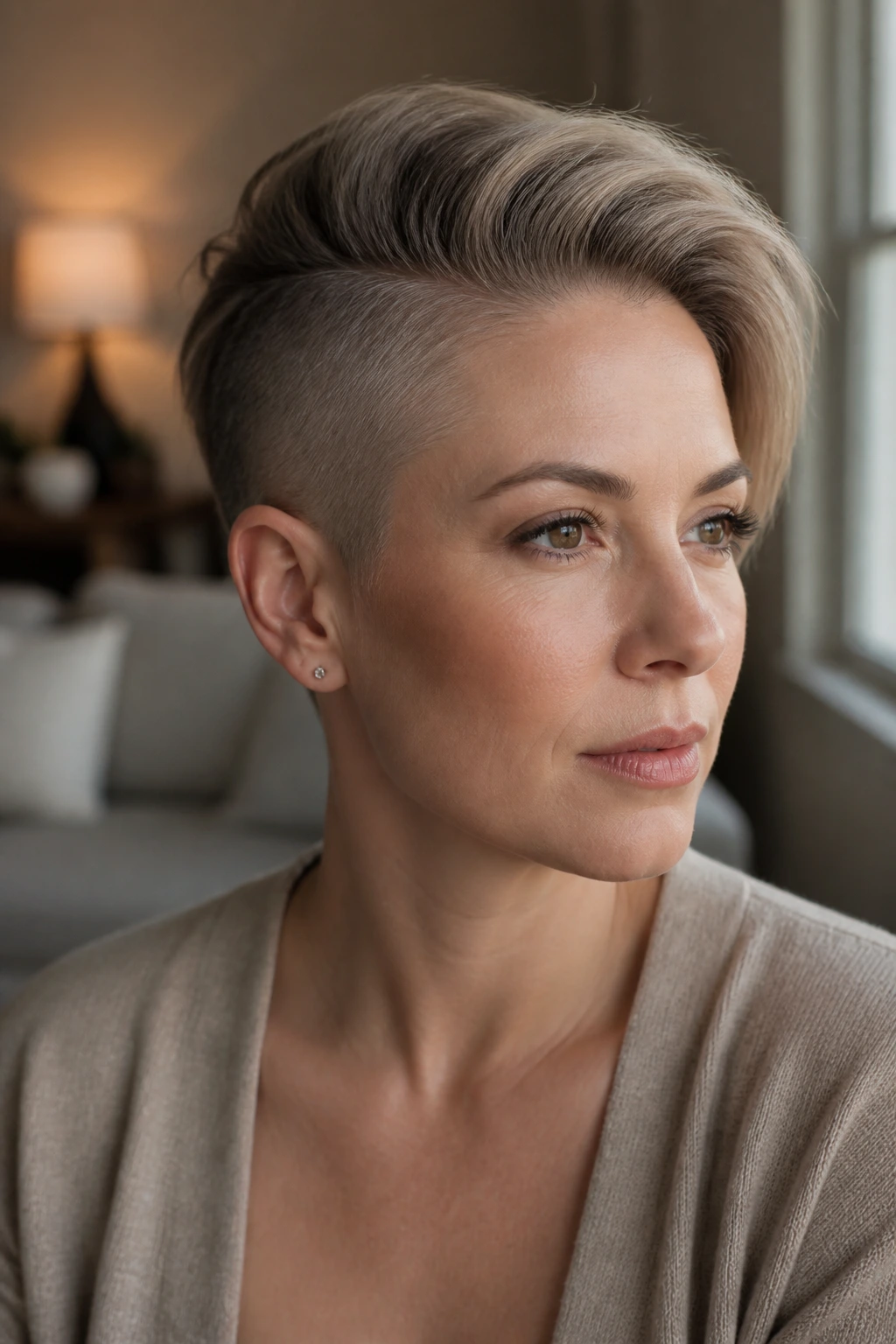
This one is unapologetic. The back and sides are clipped tight, almost to the scalp in spots, while the top stays long enough to sweep, spike, or lay forward. On fine hair, that contrast can be fantastic because it removes everything that drags the head shape down and leaves the top to do the visual work.
It’s a strong choice for someone who likes clean lines and hates fiddling with hair in the morning. It does, though, need regular cleanup. The short back grows out fast and loses its edge the moment it gets fuzzy around the ears.
If you’re nervous, leave the top a little longer than you think. You can always take more off later. Hair that has been buzzed too short on the sides and too short on top has very few rescue options.
26. Curved-Under Bob
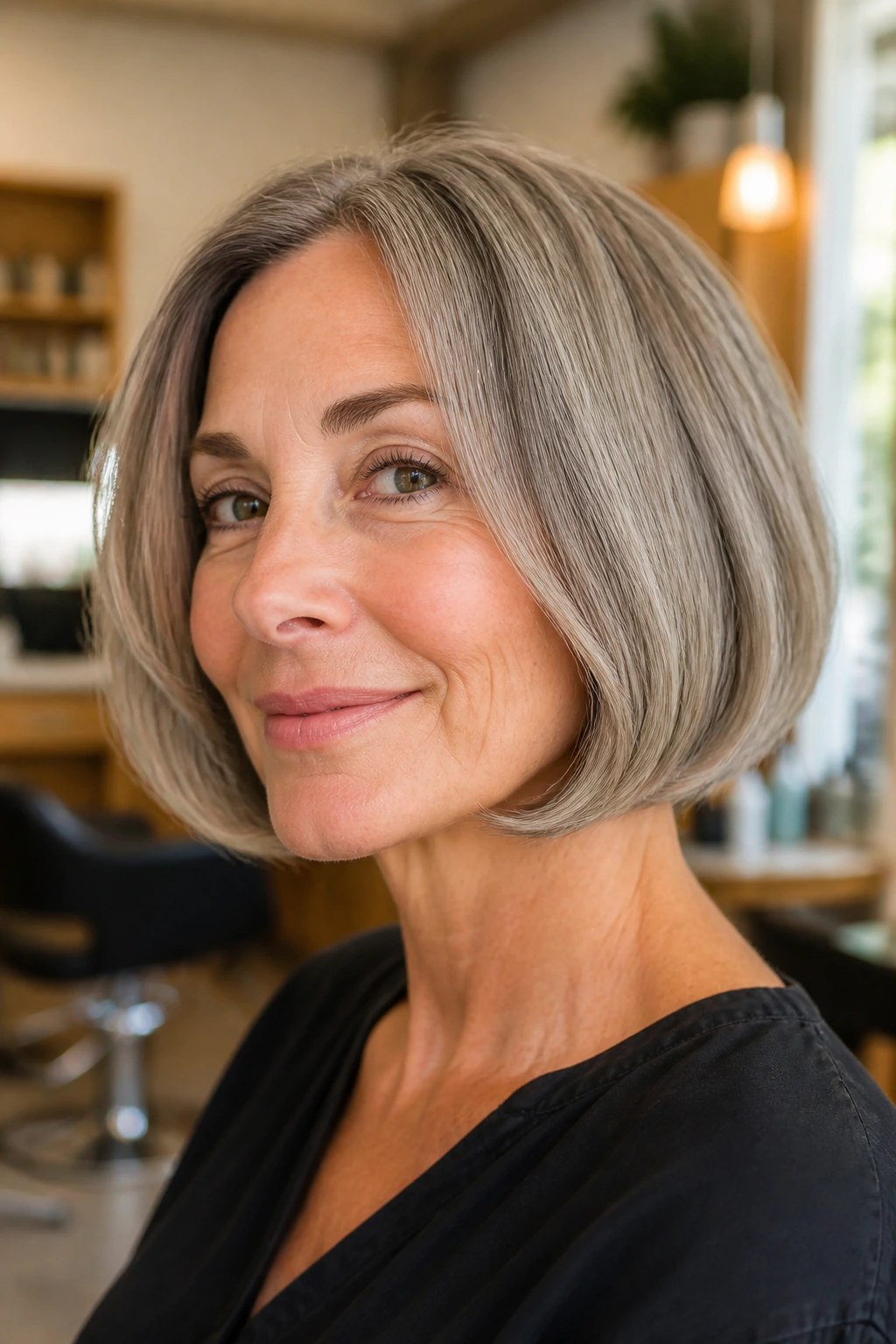
A curved-under bob is one of those cuts that looks simple and quietly expensive when it’s done well. The ends bend in toward the neck or jaw, which creates a thicker visual line at the bottom. Fine hair often benefits from that kind of finishing move because it makes the perimeter read as solid.
The curve should be soft, not stiff. If the hair is too heavily stacked or curled under too hard, it can look dated. Keep the outline smooth and the interior lightly textured, so the bob holds the shape but still moves.
This cut works nicely on straight hair with a round brush, but it can also be air-dried and then nudged inward with a small brush at the very ends. Easy. No drama.
27. Broken-End Lob With Fringe

The broken-end lob gives fine hair a little more length while still keeping the edges lively. It’s a good middle ground if you want shape but aren’t ready to live fully above the shoulders. The broken ends prevent the lob from hanging like a curtain, and the fringe helps keep the front from going flat.
Best way to wear it
Let the fringe be a little irregular — not blunt, not wispy to the point of disappearing. That balance is what keeps the whole cut from looking too soft. If your hair falls limp in humid weather, this lob can still behave because the length gives it some weight, while the broken edge stops it from feeling heavy.
I like this on people who want room to tuck pieces behind the ear or pin the front away from the face. It’s flexible without being shapeless.
28. Soft Nape Crop
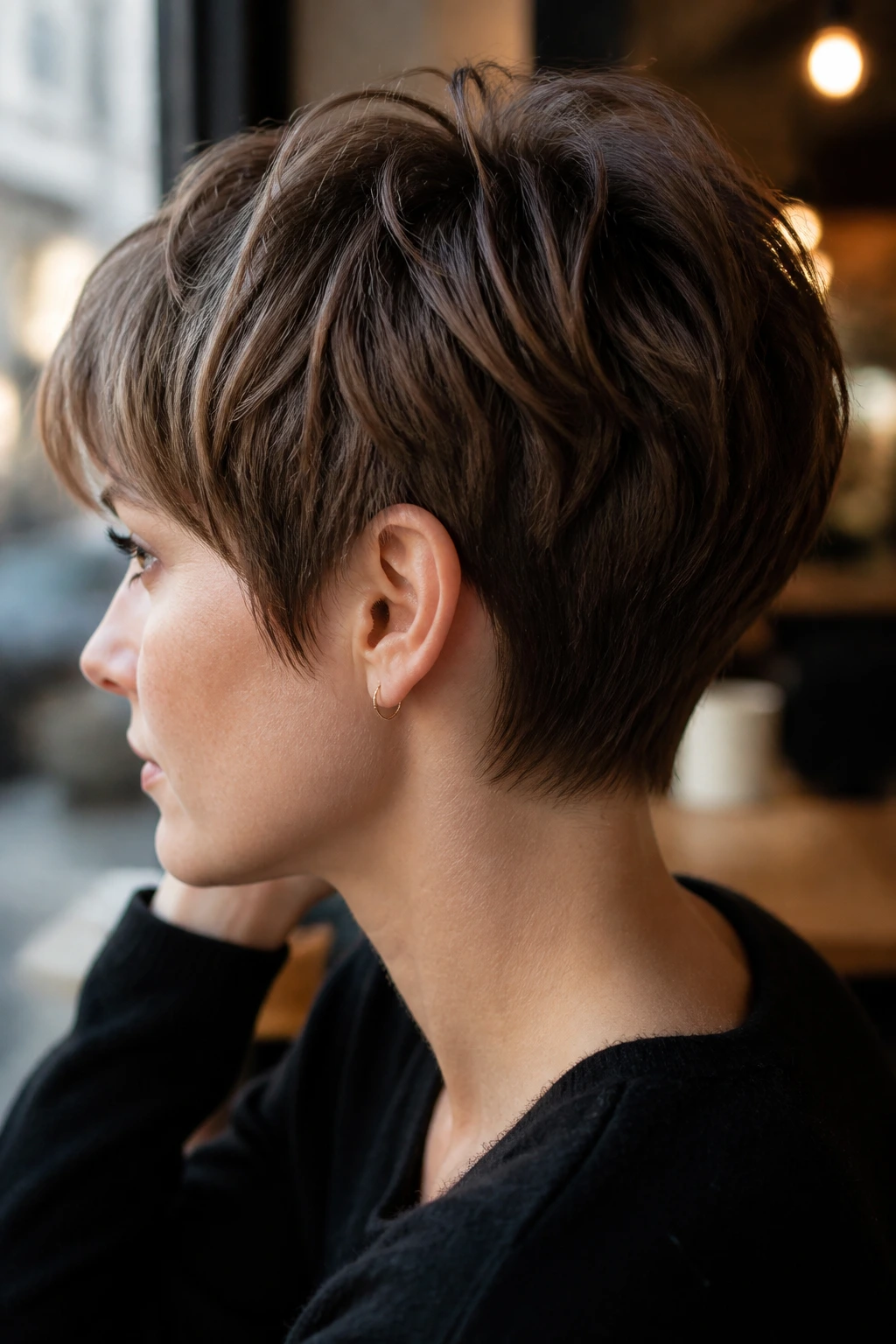
The soft nape crop finishes the list because it’s one of the most useful shapes for fine hair that wants to look neat without looking severe. The nape stays close, the top carries the movement, and the whole silhouette feels light but not thin. There’s no wasted length hanging off the back.
What saves this cut is softness at the hairline. If the nape is cut too bluntly, it can look harsh against fine hair. Too long, and the back loses its clean line. The right version sits in between, with a little touchable texture through the crown and a tidy neckline.
If you’re after a short cut that can look polished with almost no effort, this is the one I’d keep in the conversation. It grows out in a civilized way, too. That alone is worth a lot.
How to Style Short Texture Haircuts for Fine Hair Without Crushing the Roots
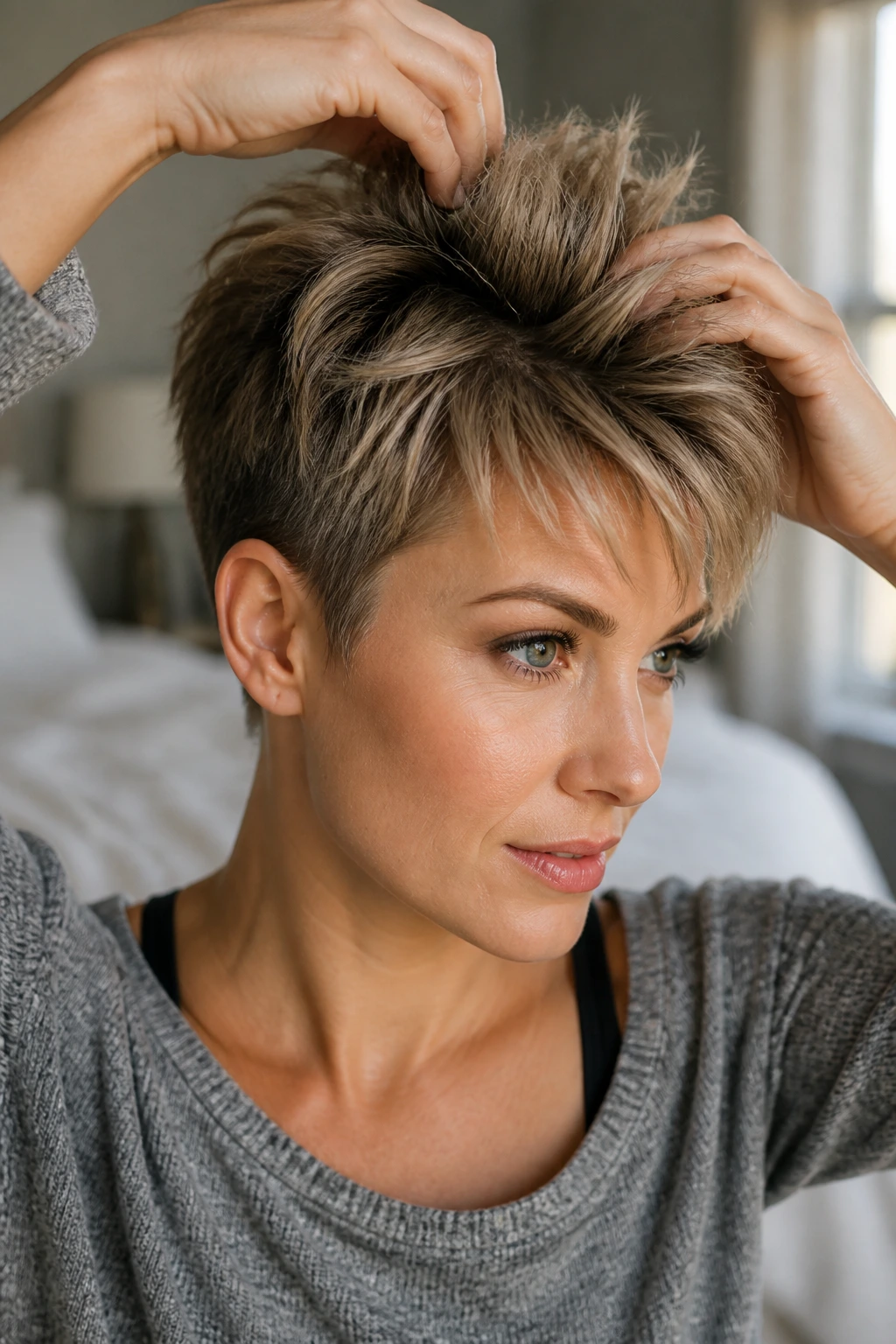
Fine hair usually doesn’t need more product. It needs the right product in the right place, and then someone to stop touching it. Start with a lightweight mousse or root-lift spray at the crown on damp hair, then rough-dry the roots first. That order matters. If you saturate the lengths and then try to build lift, the ends get soft while the roots stay lazy.
A round brush is useful, but don’t overwork the whole head. Concentrate on the front pieces, the crown, and the top layer that people actually see. The back can often be left slightly rough. That little imperfection is part of the texture, and it keeps the cut from looking sprayed into place.
My blunt opinion: heavy creams and oils are the fastest way to ruin a short cut on fine hair. Use them only on the driest ends, and use less than you think you need. A pea-sized amount can already be too much if the hair is very fine.
If you air-dry, clip the roots up for ten minutes while they set. That tiny habit can buy you an extra half-inch of lift.
Tools and Products That Make These Cuts Behave
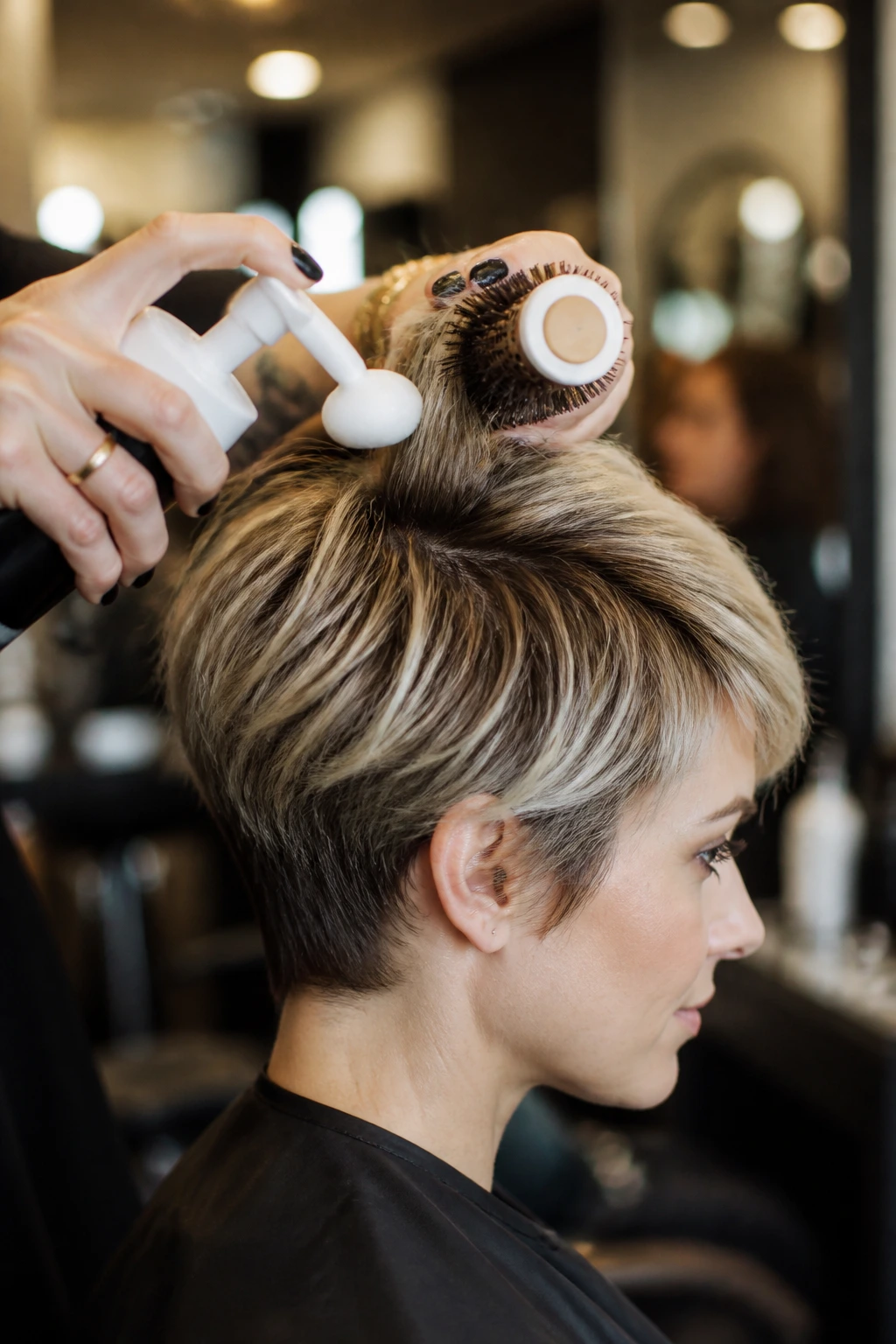
- Blow-dryer with a narrow nozzle: Directs air at the roots instead of blasting the whole cut flat.
- Small round brush, 1 to 1.25 inches: Best for lifting short layers and curving the ends under.
- Vent brush: Good for rough-drying the crown fast without flattening the shape.
- Lightweight mousse: Gives the roots memory without turning fine hair sticky.
- Root-lift spray: Useful at the crown and fringe, especially on second-day hair.
- Texturizing spray: Adds separation to pixies, bixies, and shags; use sparingly.
- Matte paste or soft pomade: Helps piece out the ends of crops and short bobs.
- Duckbill clips: Handy for setting the crown while it cools.
- Mini flat iron: Excellent for bending just the front pieces or polishing a bob edge.
- Satin pillowcase: Not glamorous, but it helps stop short styles from frizzing up overnight.
Common Mistakes That Make Fine Hair Look Flatter
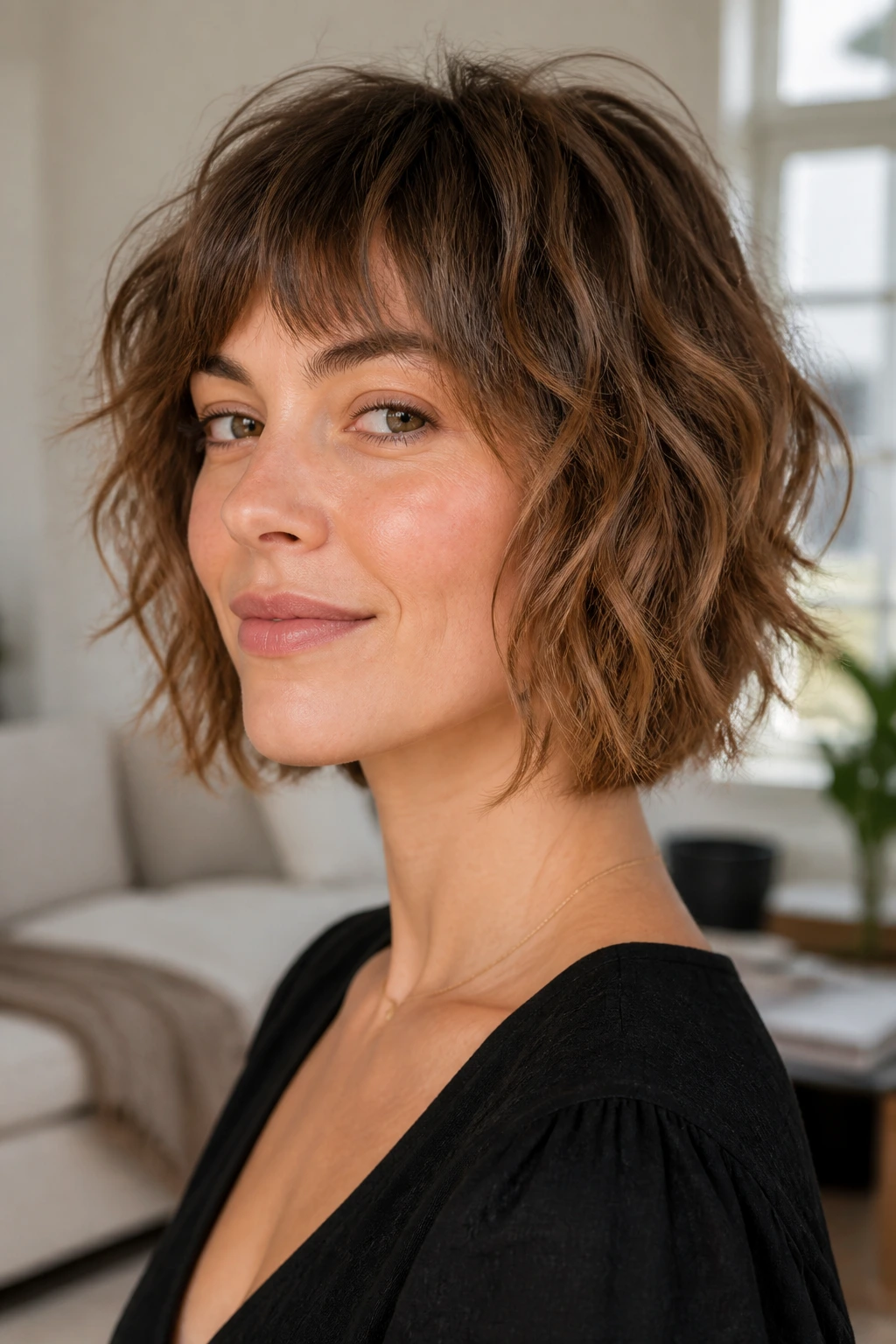
The first mistake is over-thinning the perimeter. Fine hair can handle texture, but when the ends get chewed up with thinning shears or heavy razor work, the haircut starts to look see-through. The fix is simple: keep the outline solid and let the texture live mostly inside the shape.
Another trap is choosing too much length because you’re nervous. Fine hair often looks thinner when it gets long, not because the hair has changed, but because the weight pulls it straight down. If you want fullness, a shorter line usually helps more than another inch or two.
Heavy product is its own problem. Thick creams, too much oil, and sticky texture sprays can turn airy hair into a clumpy mess that separates into little strings. Start with half the amount you think you need. If the hair still feels dry, add a touch more only where it’s necessary.
Skipping maintenance is the last big one. A textured crop that looks sharp at six weeks can start looking fuzzy at ten. That fuzzy stage is where fine hair seems to lose density first, because the shape disappears before the hair has actually changed.
Variations and Adaptations to Try
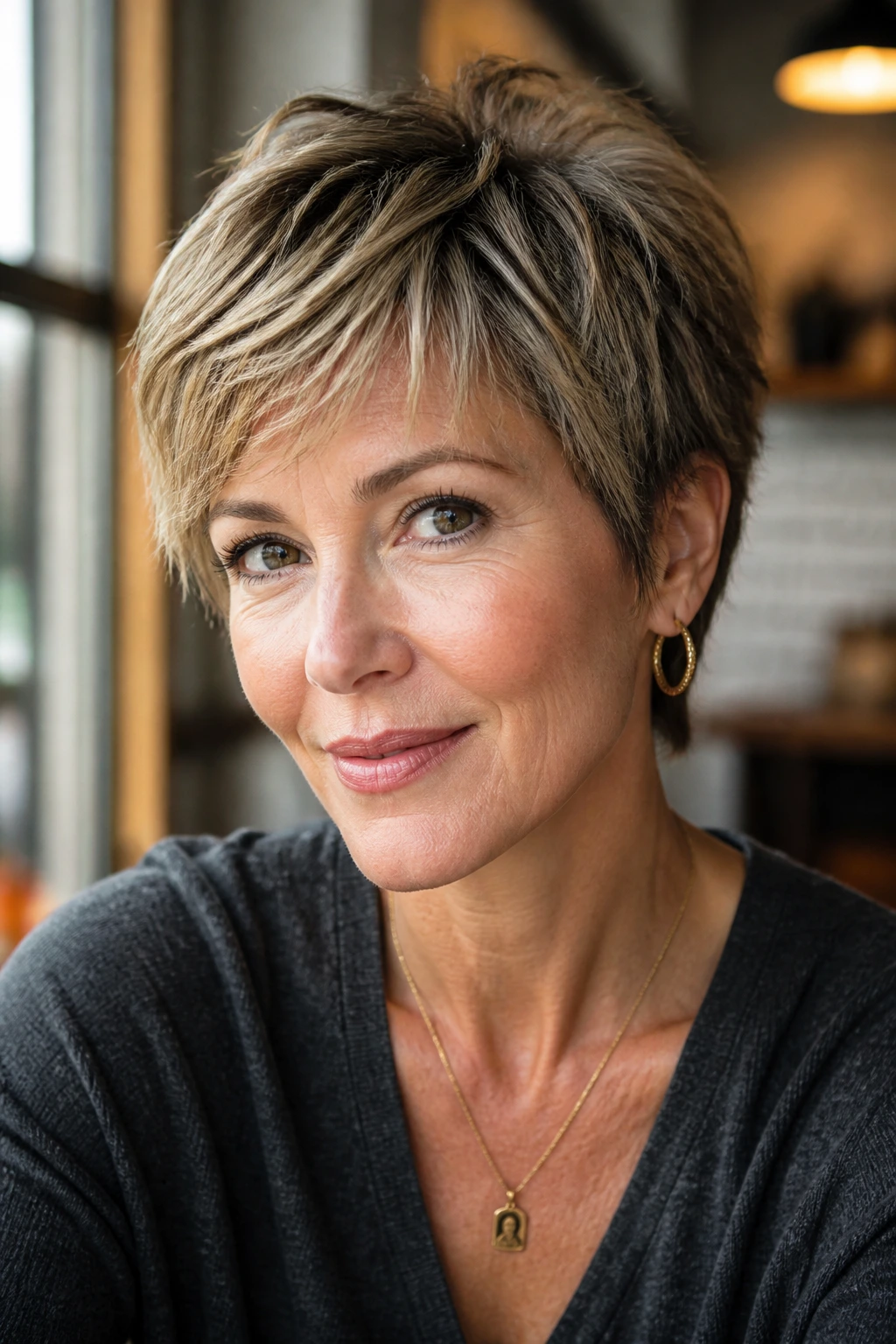
Soft and Polished: Keep the perimeter blunt, soften the top only slightly, and use a side part. This version works when you want a short cut that still looks clean in a blazer or at a formal event.
Edgy and Piecey: Ask for more separation through the ends and a bit of wax at the finish. This suits pixies, mixies, and shaggy bobs that need a little grit.
Face-Framing First: Leave the front pieces longer than the back and keep the fringe feathered. If your cheeks or jawline are the part you want to highlight, this version does that without making the crown too busy.
Air-Dry Friendly: Keep the layers soft and connected, then choose a shape that still sits well after scrunching. This is the most forgiving option if you hate hot tools.
Curly and Wavy Friendly: Preserve length where the curl needs weight and keep the top from being over-layered. Fine curls need support more than they need extra chopping.
Keeping the Shape Sharp Between Salon Visits
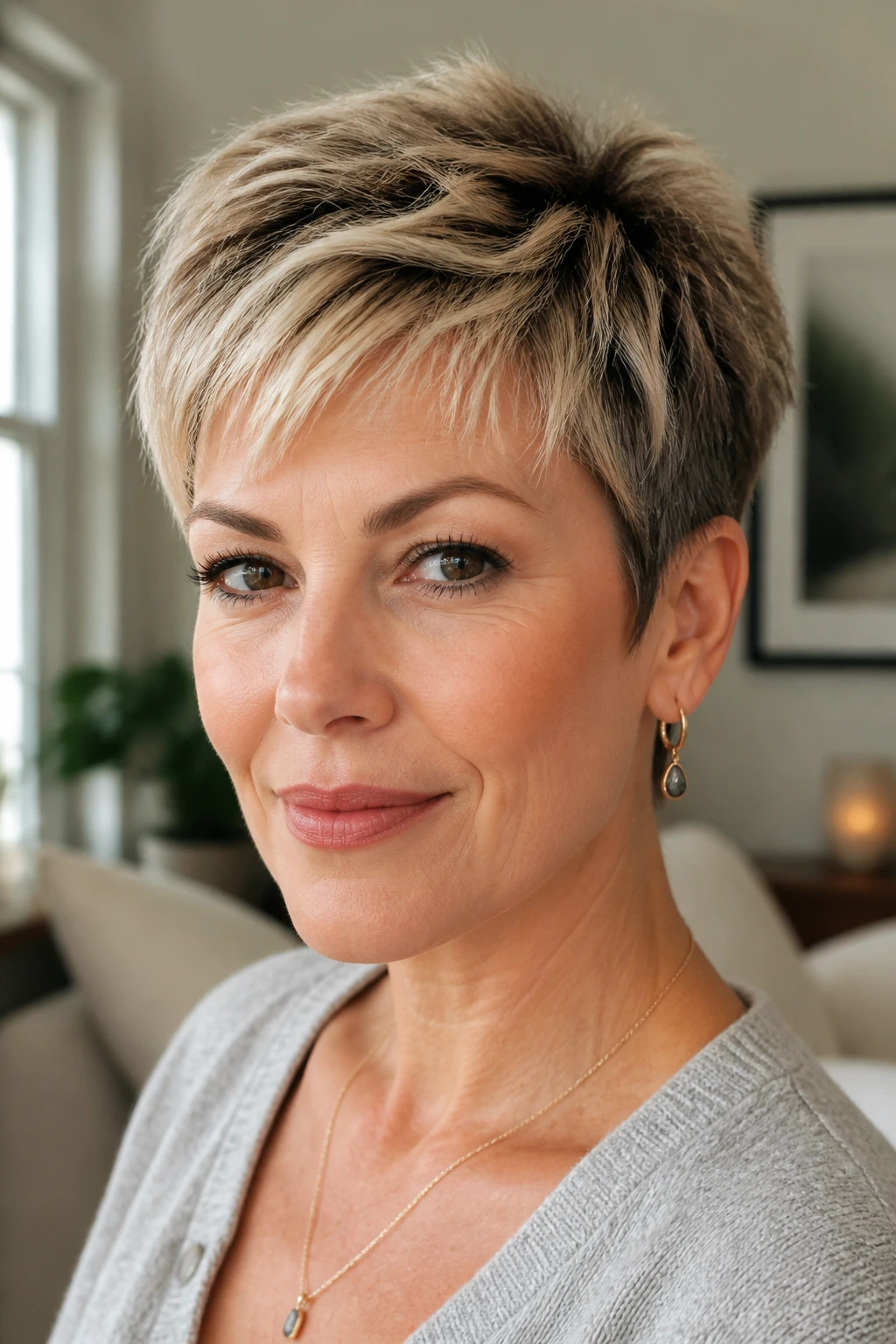
Short textured cuts for fine hair usually want more frequent trims than longer shapes. Pixies and crops often need cleanup every 4 to 6 weeks, because the nape and fringe show grow-out first. Bobs and bixies can stretch to 6 to 8 weeks if the outline is strong. Lobs tend to give you a little more room, but once the layers settle, the shape goes soft in a hurry.
The trick at home is simple: don’t let the roots get greasy and don’t let the ends get rough. Fine hair shows both problems fast. A gentle wash schedule, a lightweight conditioner only from mid-length to ends, and a small amount of dry shampoo at the roots can keep the cut from flattening between washes.
At night, a loose tuck behind the ears or a satin pillowcase helps more than people think. If the front goes weird while you sleep, mist it lightly with water in the morning and re-bend the pieces with your fingers. You do not need to re-style the whole head every day. A few targeted fixes are enough.
Questions People Ask Before Cutting It Short
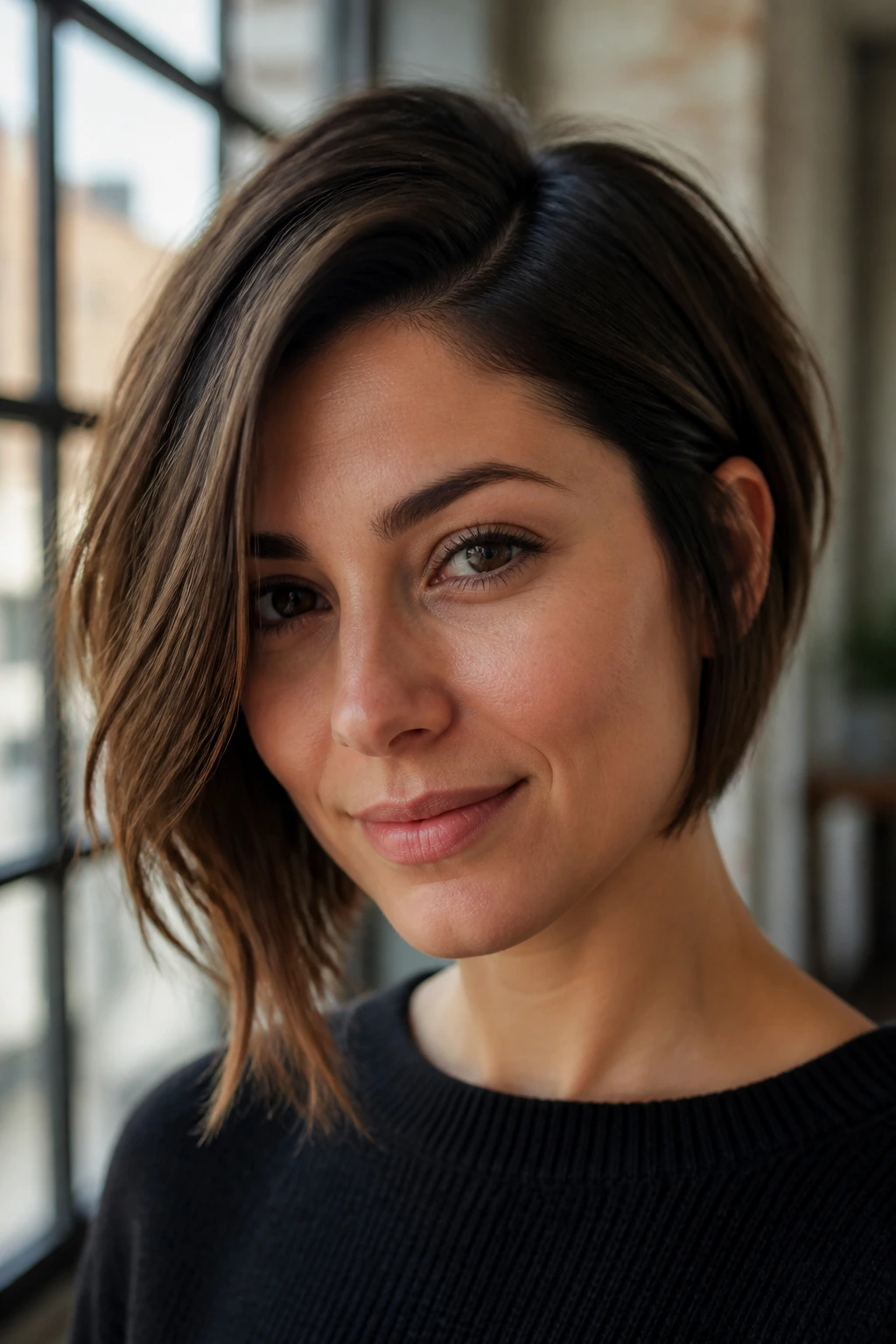
Will a short textured cut make fine hair look thinner?
Not if the outline is kept strong. Fine hair tends to look thinner when it’s long and hanging under its own weight, or when it’s over-thinned at the ends. The right short cut does the opposite: it tightens the shape and makes the hair read fuller.
Should fine hair avoid lots of layers?
Aggressive layering, yes. Gentle internal texture, no. The difference is whether the cut removes weight in a controlled way or just leaves short, wispy ends everywhere.
Is a blunt bob better than a shag for fine hair?
Usually, the blunt bob wins if your hair is very straight and sparse at the ends. The shag wins if your hair has natural wave or you want movement around the face. The wrong shag can eat density fast, though.
Can I wear bangs with fine hair?
Absolutely, but the bangs need to be chosen carefully. Curtain bangs, side-swept bangs, and wispy fringe usually behave better than a thick straight bang, which can split or separate.
What if my crown is flat all the time?
Choose a cut with shorter pieces at the crown or a shape that keeps lift built into the top, like a pixie, bixie, or soft stacked bob. Then style the roots first every time. The crown is not going to fix itself.
Do texturizing shears help?
Sometimes, yes, but they’re easy to overdo on fine hair. I’d use them sparingly, and only where the hair has enough density to lose a little weight without going hollow.
Can fine hair handle a razor cut?
It can, but only if the stylist knows when to stop. A razor is useful for softening ends and breaking up bulk; it’s not a license to shred the whole head.
How do I keep the cut from looking flat by afternoon?
Use less conditioner near the roots, dry the crown first, and refresh with a dry shampoo or root spray instead of adding more cream. Most flatness comes from weight and handling, not from some mysterious failure of the haircut.
The Shape That Stays Light

The best short haircut for fine hair is the one that makes the hair look like it has a plan. Not a lot of fuss. Not a cloud of product. Just a clean outline, some smart texture, and enough lift in the right places to stop the whole thing from sinking back toward your scalp.
That’s why these cuts work. Some are sharp, some are soft, some lean polished and some lean messy, but they all respect the same rule: don’t ask fine hair to carry more weight than it wants to. Give it a shape it can actually hold, and it stops looking fragile.
If you’re heading to the salon, bring a photo, mention how your crown behaves, and say what you want the cut to do by the end of the day — not just when you step out of the chair. That one detail changes everything.
