



Fine hair has a talent for looking polished for about ten minutes and then collapsing into a damp-looking sheet if you breathe on it the wrong way. That’s why hairstyles for fine hair live or die by shape, parting, and the weight of the ends. A blunt line at the chin, a lifted crown, a side part that gives the roots somewhere to go — those details do more for the finish than any miracle serum ever will.
Fine hair is not the same thing as sparse hair, and that distinction matters. You can have a lot of fine strands and still need density tricks, or you can have genuinely low density and need a cut that stops the ends from looking see-through. Either way, the wrong layers can chew the fullness right out of the style. Too much thinning. Too much length. Too much product. It all shows up fast.
The good news is that fine hair can look expensive when the cut is working with it instead of against it. Clean edges, controlled texture, and a little bit of root lift can make a style look denser, tidier, and more intentional than hair that’s simply long for the sake of being long. And once you know which silhouettes do the heavy lifting, the whole thing gets easier.
Why These Styles Work Better on Fine Hair
Clean outlines matter: A blunt edge makes the ends look fuller because the eye reads one solid line instead of wispy transparency.
Lift beats weight: Root volume, side parts, and crown teasing give fine strands the illusion of more hair without asking each strand to do more than it can.
Shorter can be smarter: A collarbone lob, chin-length bob, or pixie removes dead weight, so the hair doesn’t drag itself flat by noon.
Texture needs to be controlled: A soft bend or piecey wave adds body; random frizz just looks tired and makes the scalp show more.
The right products are light: Mousse, dry shampoo, and root spray help. Heavy oils, thick creams, and greasy masks usually sink the style.
Shape is the real secret: The best looks below all use one of three tricks — an angled outline, a lifted crown, or a moved part — and fine hair tends to cooperate when it has one clear job.
1. The Blunt Chin-Length Bob
A blunt chin-length bob is one of those cuts that looks almost suspiciously simple, which is exactly why it works. Fine hair loves a hard line. When the ends are all the same length, the perimeter looks denser, and the whole cut reads as deliberate instead of wispy.
The Shape Does the Heavy Lifting
The chin-length part matters. Go too long and the ends start to taper out; go too short and you risk a boxy triangle if your hair has any natural bend. Chin level is that sweet spot where the bob can swing a little when you turn your head, but still stay compact enough to look full at the bottom.
Keep the styling plain. A quick blow-dry with a small round brush, then a touch of bend at the ends, is enough. If you curl it into a tight wave, you lose the crisp edge that gives this bob its density trick.
Best cue for this cut: if the ends look thick enough to form a clean shelf, you’re in the right zone.
2. The Collarbone Lob with a Deep Side Part
A collarbone lob gives fine hair room to move without dragging everything into stringy territory. The deep side part is the real trick here. It forces one side of the root to lift and makes the crown look taller, which is gold when your hair wants to lie flat the second it’s dry.
This cut looks best when the ends are blunt or only lightly textured. Don’t let a stylist go wild with thinning shears. Fine hair rarely needs that kind of help, and the result is usually a see-through bottom line that looks worse in daylight than it did in the chair.
Wear it with a soft bend from mid-length to the ends. The goal is movement, not curl. A one-inch iron or a flat iron bend away from the face gives the lob a little swing and keeps it from looking like a straight sheet.
3. Curtain Bangs and Soft Long Layers
Do curtain bangs work on fine hair? Yes — if they’re cut with restraint. The biggest mistake people make is asking for bangs that are too thin through the center and too short at the sides. That gives you little fluttery pieces that separate and expose the forehead in the harshest way possible.
A better version keeps the curtain fringe full enough to split naturally in the middle, with the shortest point around the cheekbone and the longest pieces blending below the jaw. The layers should start lower, not at the cheek. That lets the hair keep some weight at the ends, which fine hair needs if you don’t want it floating away into a feather duster effect.
How to style it
Blow-dry the bangs first with a round brush, brushing each side away from the face. Then add a small amount of mousse through the mids and ends, not the roots. If the front pieces cling to your forehead, they’ll separate before lunch. If they stay lifted and soft, the whole haircut looks fuller.
4. The Tousled Pixie with a Long Top
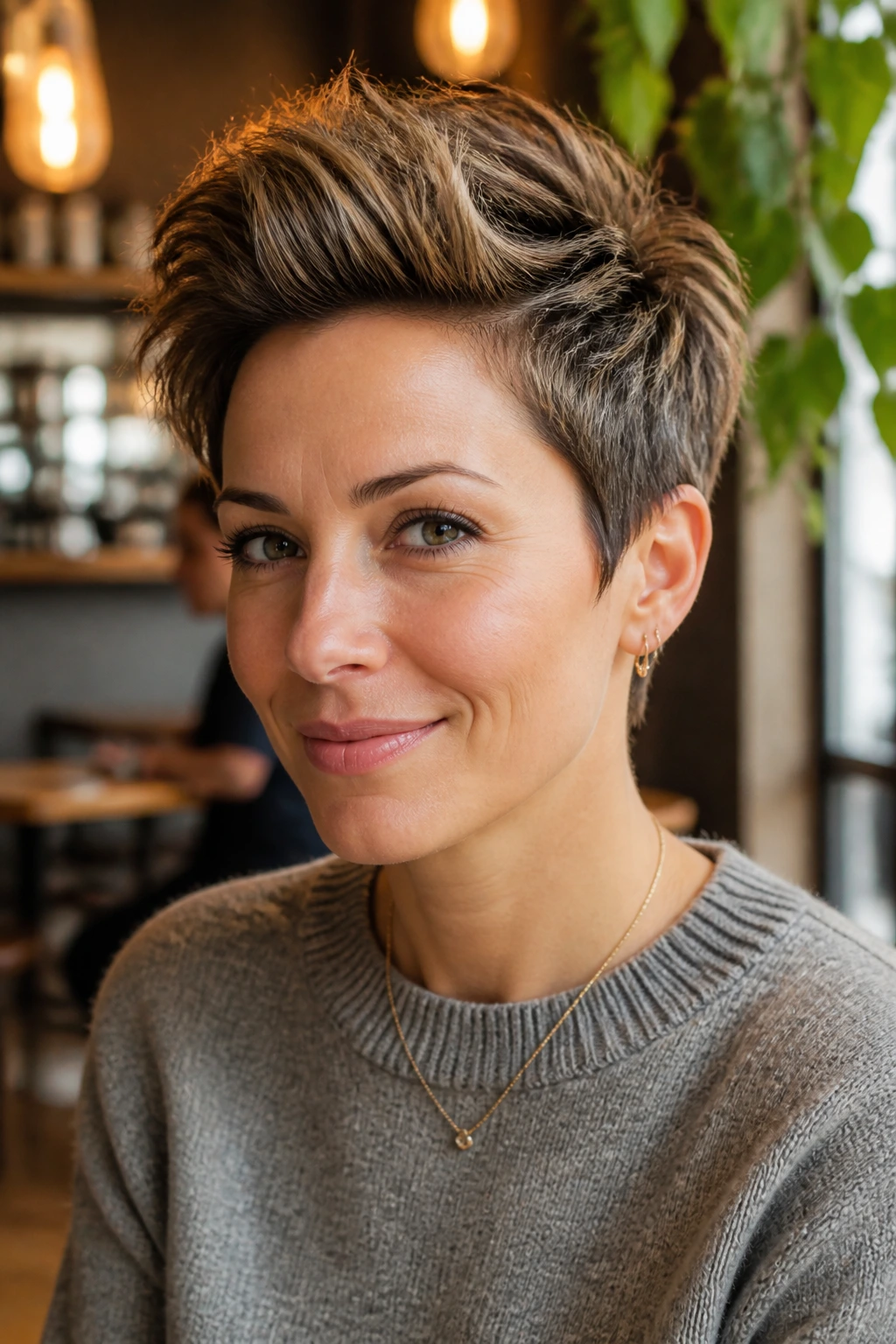
A pixie cut is one of the best answers for fine hair because it removes the dead weight that pulls everything down. The long top gives you styling range, but the sides stay close enough to the head that the shape never looks limp.
This is not the pixie that needs constant fluffing or eight products. It needs one good paste or lightweight cream, a quick blow-dry, and a finger-combed finish. The hair on top should look pushed upward and slightly forward, with a little separation between pieces. Too sleek, and it can look thin. Too messy, and it turns into static with a haircut attached.
Why this one wins
The length is short enough that the hair can stand up for itself. That sounds dramatic, but it’s the truth. Fine hair often looks better when it’s cut into a shape that doesn’t give gravity time to win.
5. The French Bob with Airy Texture
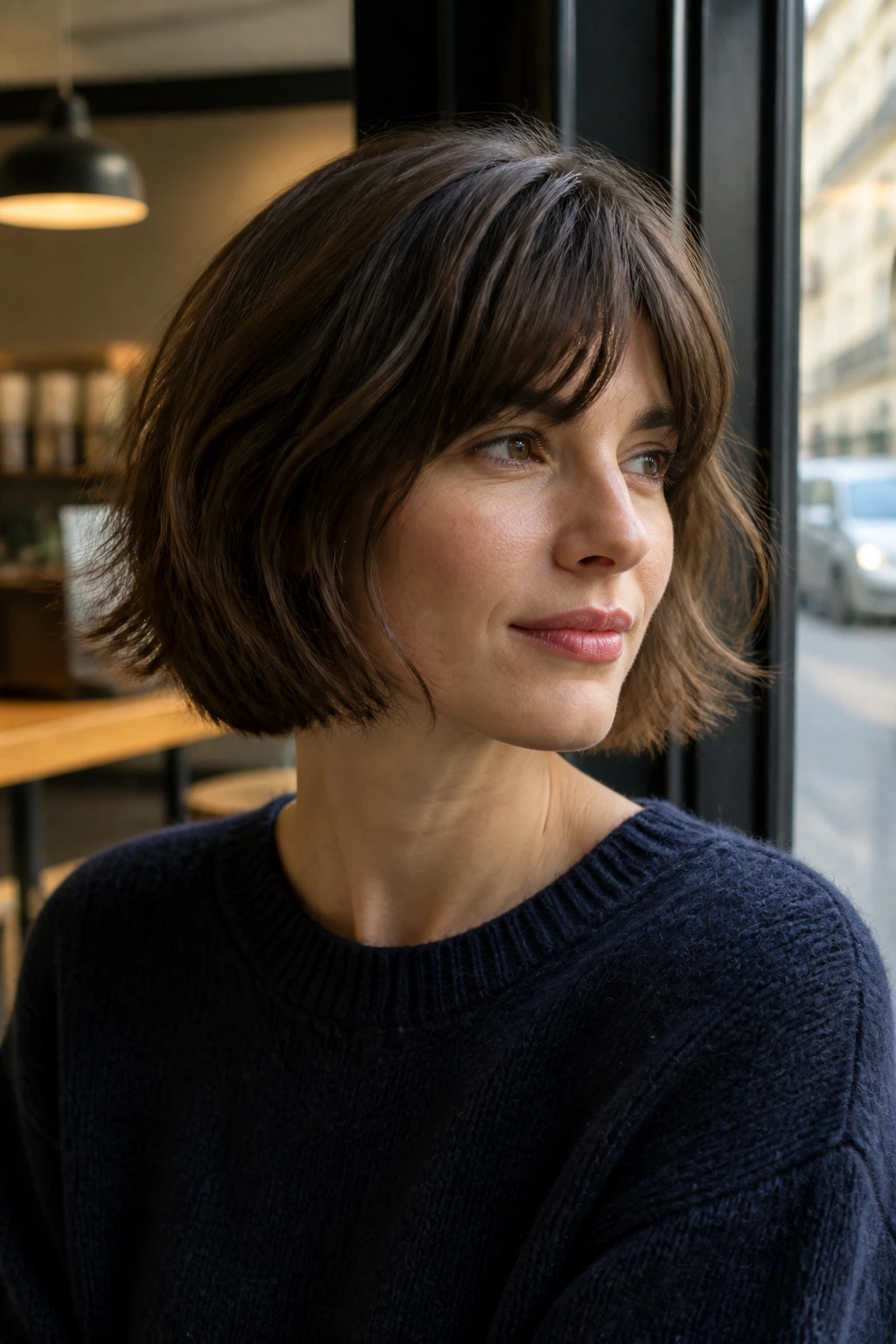
The French bob has that neat, cheeky shape that makes fine hair look almost chic by default. It usually sits around the jaw, sometimes with a tiny bit of fringe, and it works because the cut is compact. Fine hair doesn’t have to stretch to fill a long shape, so it can look thicker in a small frame.
What I like here is the slight imperfection. Not frizz. Not chaos. Just a few bends in the ends and a little separation around the face. A mousse on damp hair, followed by a rough blow-dry with fingers, usually gives enough body without killing the natural swing.
Skip overly polished finishes. Fine hair in a French bob looks best when it still has some air between the strands. If every piece is glued into place, the cut loses the lived-in feel that makes it interesting.
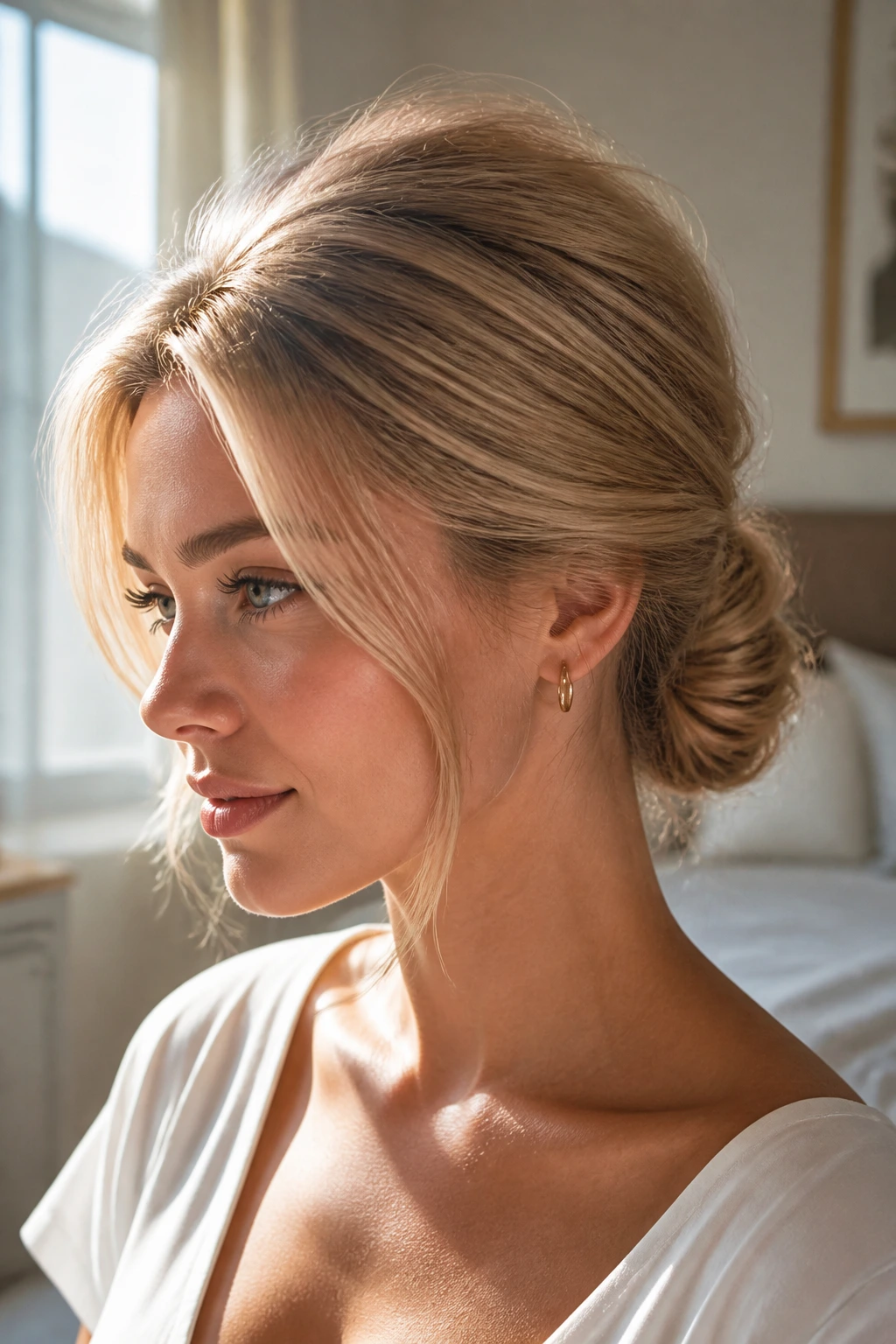
6. The Lifted Low Bun
Most low buns on fine hair fail because they’re built too close to the scalp and too tightly. You end up with a tiny knot and a lot of visible head shape. The lifted low bun fixes that by creating height at the crown first, then gathering the hair low and loose enough to keep a little fullness.
Start by roughing up the roots with dry shampoo or texturizing spray. Then bend the front sections back with a brush, not your hands, so the crown stays airy. Pin the bun low at the nape, but leave the top slightly relaxed. A few soft pieces around the face help the style look fuller and less severe.
This one is especially good on second-day hair. Day-one fine hair can be too slippery. Day-two hair has a little grip, which makes the bun hold better and the crown stay lifted.
7. The Claw-Clip Half-Up Twist
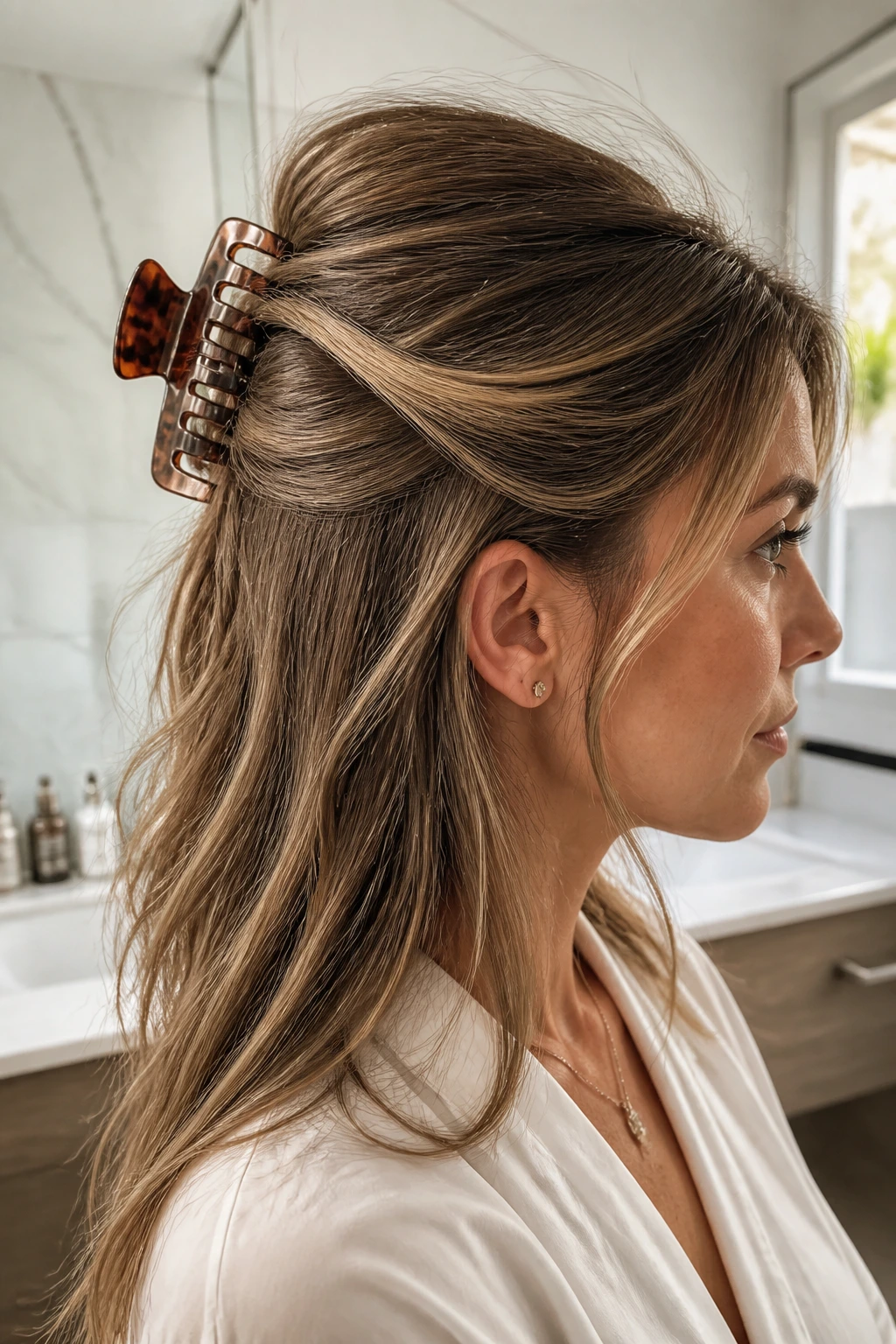
The claw clip half-up style gets used a lot because it’s fast, but on fine hair it has a real job to do: it lifts the crown without crushing the rest of the head shape. The trick is to twist only the top third of the hair, not half the head by volume.
If you grab too much, the clip slides. If you grab too little, the style disappears. The best version leaves the lower hair loose and keeps the top twist soft, with a bit of space between the scalp and the clip. That tiny gap makes the crown look fuller from the side.
What to watch for
- Use a medium clip with teeth that grip fine hair.
- Rough up clean hair with dry shampoo first if it’s too slippery.
- Leave the front pieces out if your hairline is sparse; it softens the silhouette.
- Pin the twist first, then add the clip if your hair tends to slip.
8. Loose Shoulder-Length Waves
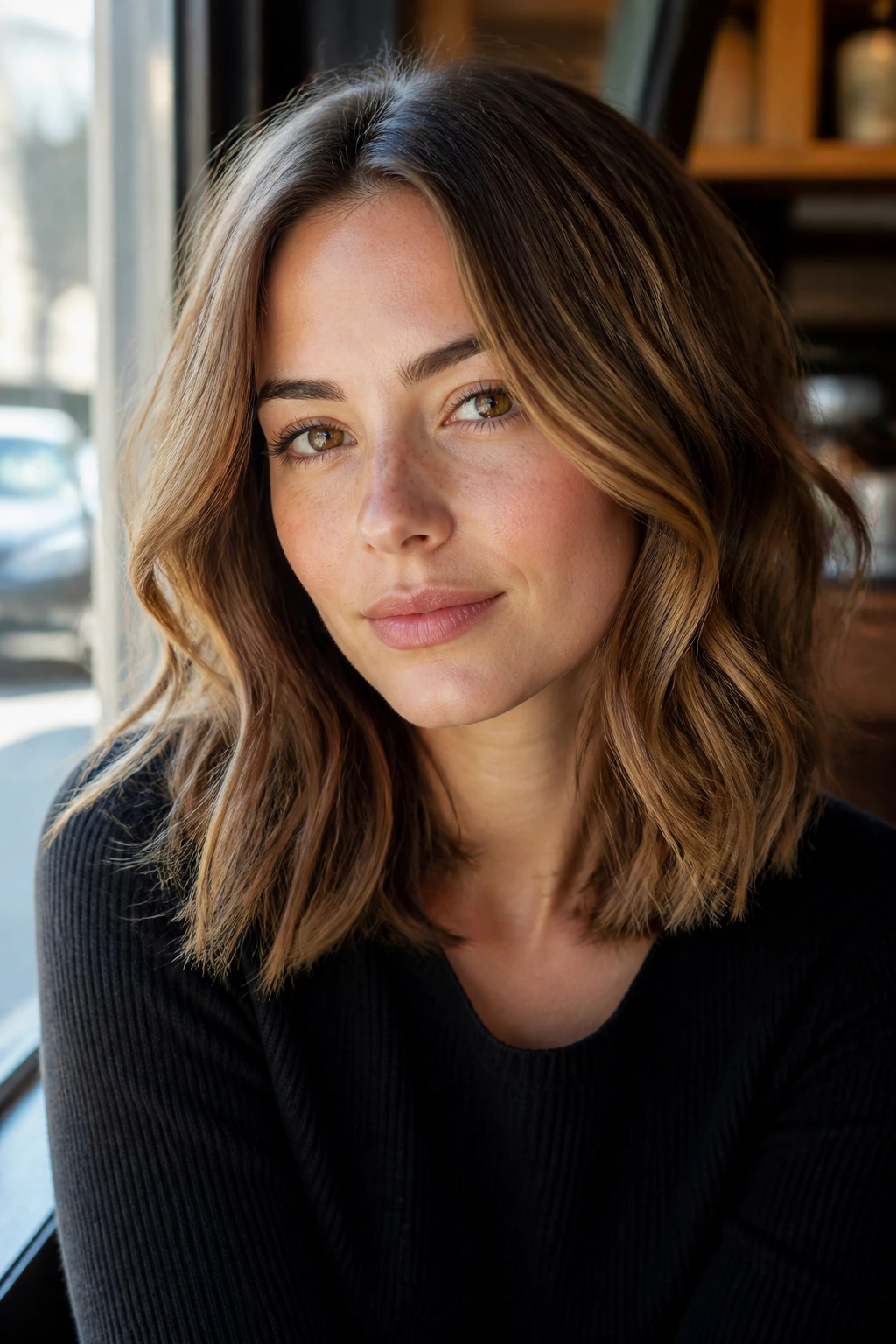
Shoulder-length waves are the safe harbor of fine hair. Not because they’re boring. Because they’re forgiving. The length is long enough to move, short enough not to drag the ends into thin territory, and the waves add the bend that fine hair needs to look like it has more body than it does.
The key is keeping the wave pattern loose. I’m talking one-inch sections, a single wrap around the iron, and an end that’s left slightly straighter so the style doesn’t turn into spirals. If every wave is identical, the look can feel dated fast. A little variation makes it feel fuller.
Finish by brushing through with a soft paddle brush or your fingers. You want the waves to separate into bigger pieces. That kind of separation makes the hair appear thicker because it stops the scalp from showing through in neat stripes.
9. The Airy Shag with Razored Ends
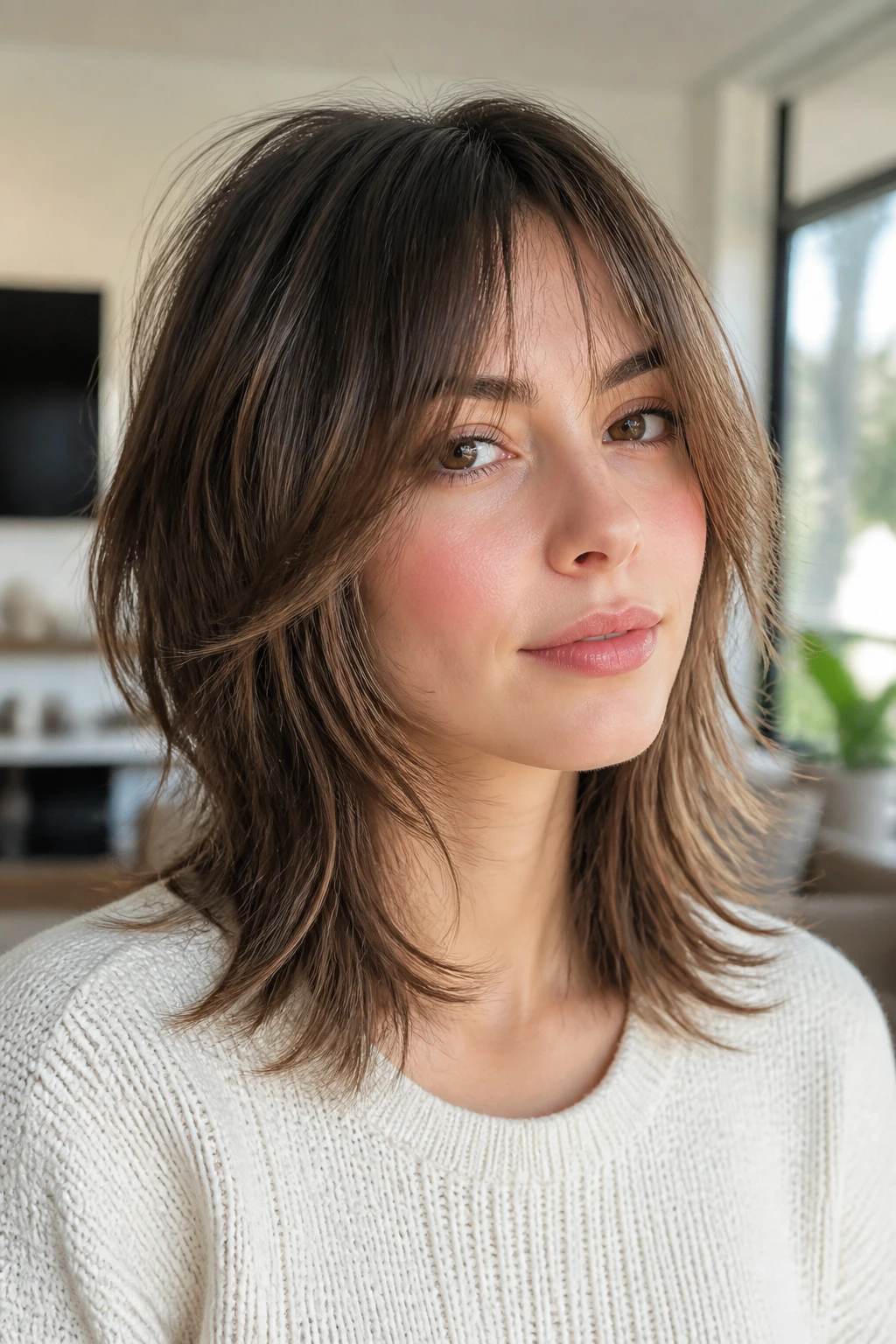
A shag on fine hair is one of those haircuts that people either understand immediately or get very wrong in the salon chair. Done well, it gives movement around the face, a little lift through the crown, and texture that keeps the style from falling flat. Done badly, it can turn the whole head into weak, frayed ends.
The difference is restraint. You want layers, yes, but not so many that the bottom disappears. Fine hair needs pieces with some weight left in them. A soft shag with longer face-framing layers and lightly razored ends can work beautifully if the density is there to support it.
This cut especially shines if your hair has a slight wave already. The texture helps the layers separate without needing much product. Straight fine hair can wear a shag too, but it usually needs a root spray and a bit of round-brush lift to avoid looking too stripped down.
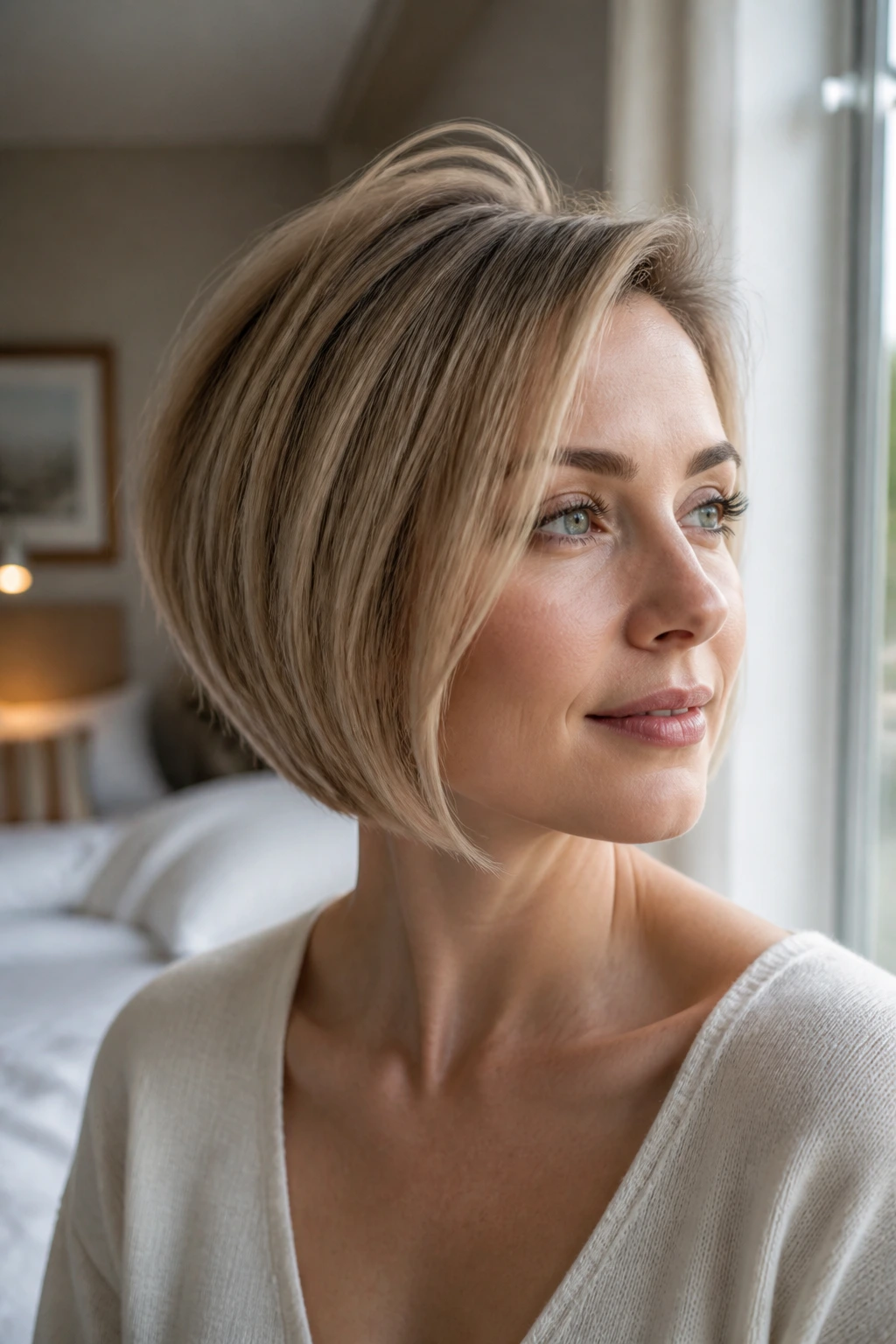
10. The A-Line Bob Tucked Behind One Ear
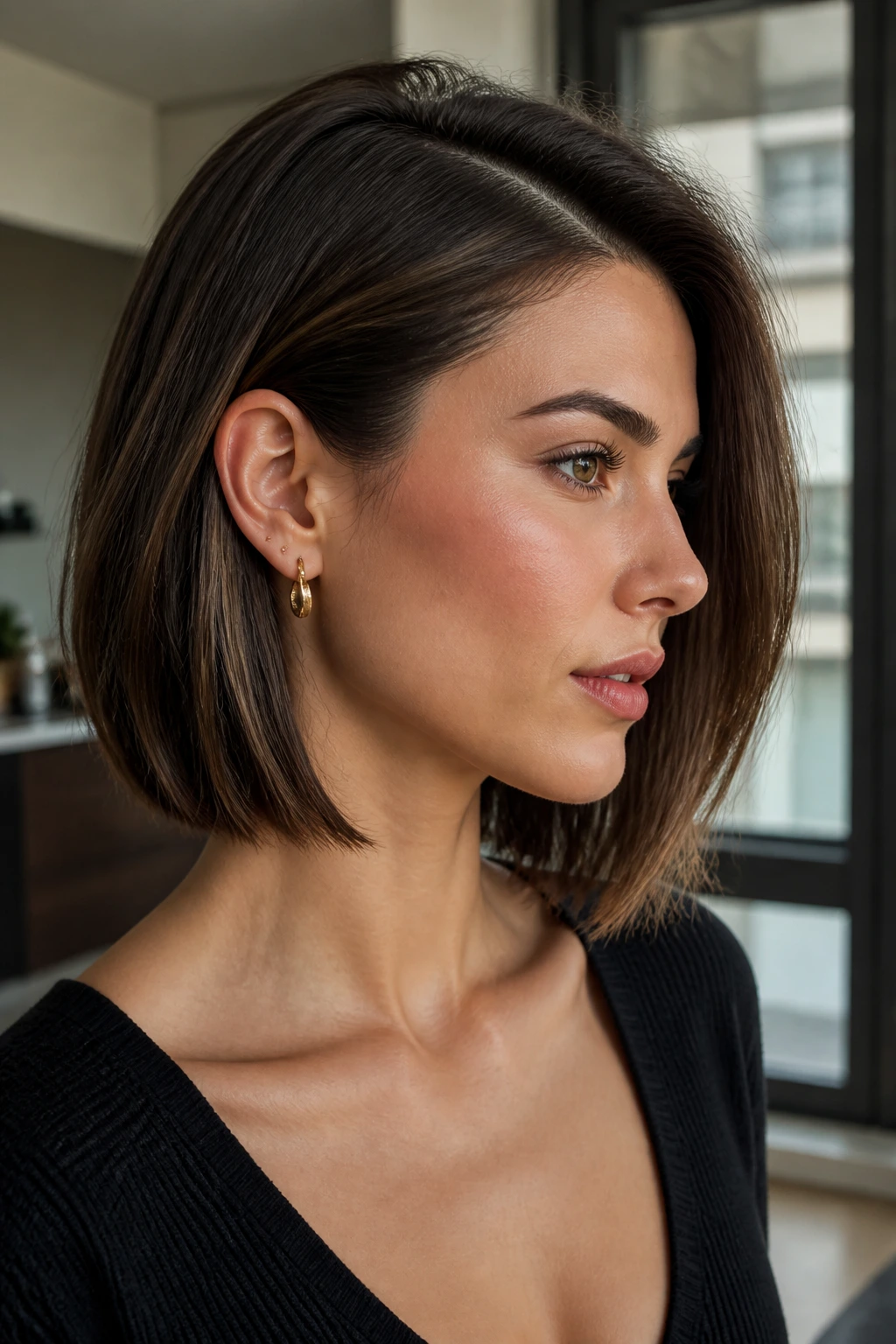
An A-line bob gives fine hair a clean shape from the side, and tucking one side behind the ear makes the silhouette feel sharper. The angle — slightly shorter in the back, longer in the front — gives the front pieces enough weight to hang well, which is what keeps the style from floating away.
This is a neat haircut. Not fussy. It reads polished because the line is obvious, but the tucked side adds a little asymmetry that makes the hair seem fuller. That extra difference between one side and the other gives the eye more to look at, which helps when the strands themselves are fine.
A tiny side part works here too. It keeps the hair from splitting down the middle and exposing the scalp at the crown. And if you want more movement, a gentle bend through the front pieces is plenty. No need to curl the whole head.
11. Face-Framing Layers at Mid-Length
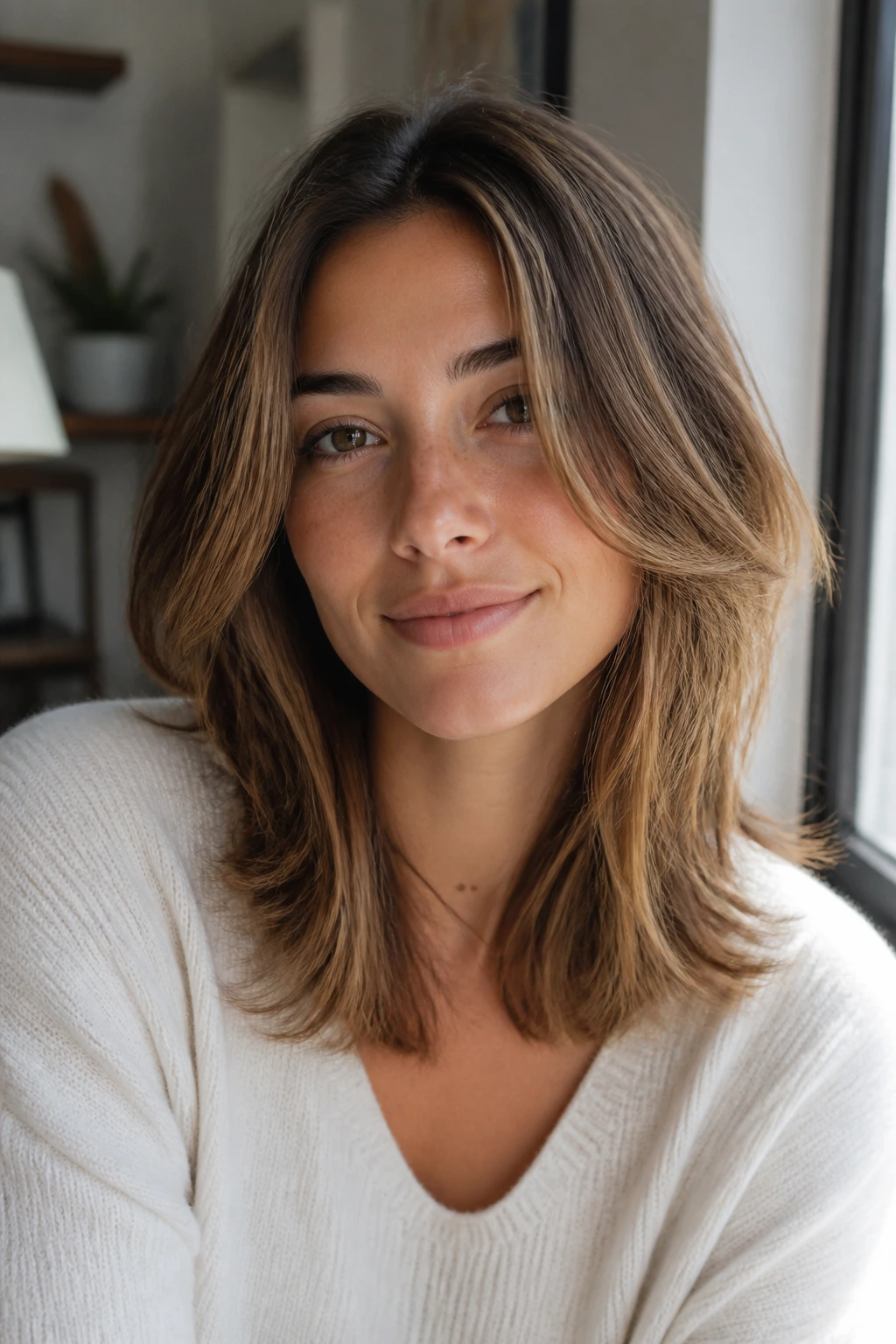
Face-framing layers at mid-length are useful only if they’re cut with a light hand. Fine hair does not need face pieces that start at the nose and vanish at the ends. That’s a fast route to a thin-looking perimeter and a style that frays out under its own weight.
The better version starts the framing around the chin or just below it, then blends softly into the rest of the length. That keeps the front from looking heavy while leaving enough density at the bottom to make the style feel full. Mid-length hair, especially around the collarbone, can carry this kind of shaping well because there’s still enough weight in the center line.
Why it works on fine hair
The haircut creates motion near the face without hollowing out the ends. That’s the whole game. You get softness where you want it and bulk where you need it.
12. The Bubble Ponytail
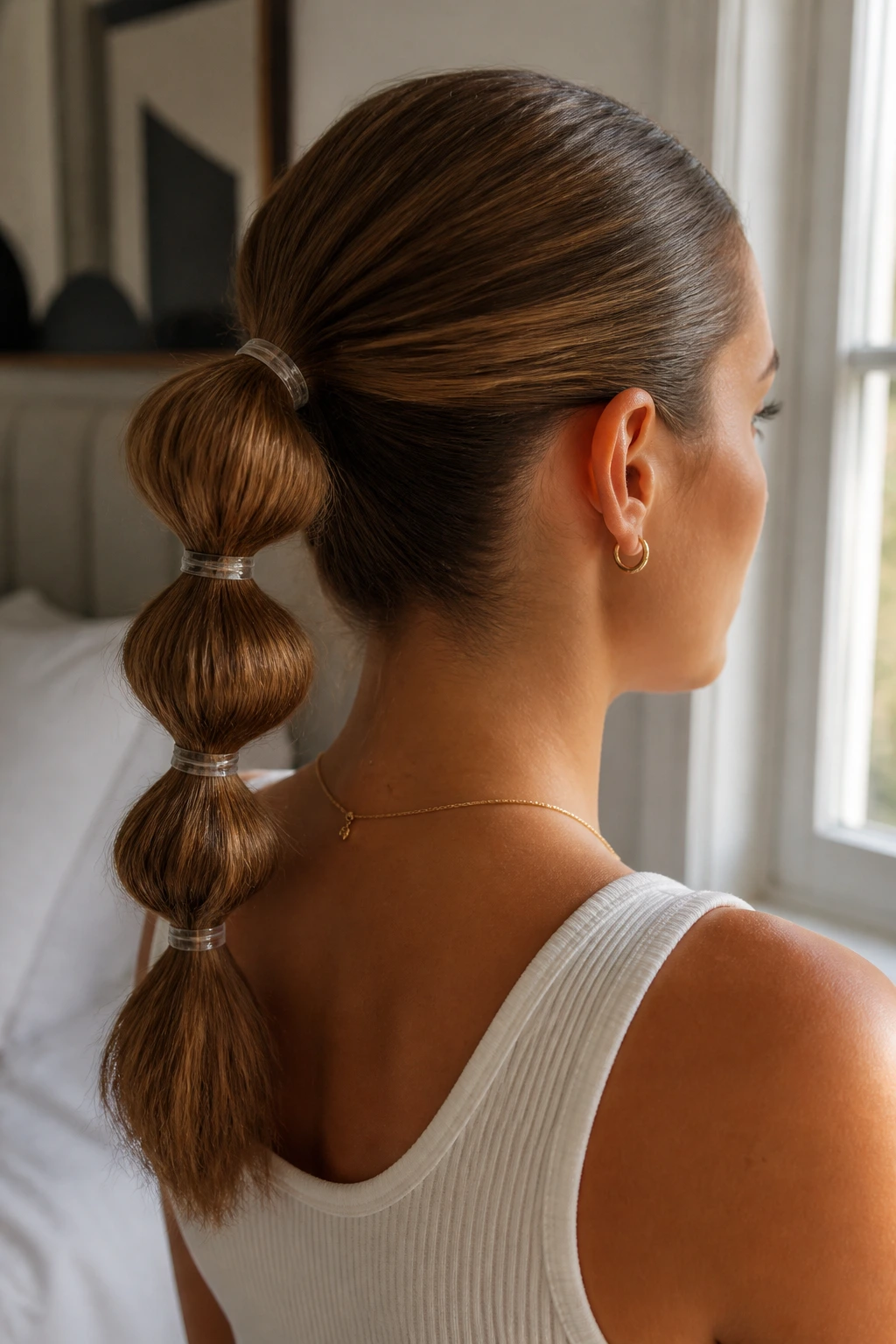
A bubble ponytail is one of the few ponytails that makes fine hair look fuller without lying about what’s there. The elastics do the work. Each section between the ties puffs out a little, so the ponytail reads as bigger and more sculpted than a standard smooth tail.
Start with a regular ponytail, then place small clear elastics every 2 to 3 inches down the length. Gently tug each section outward to create the bubble shape. If your hair is very fine, tease each segment lightly before you pull it wider. A whisper of texturizing spray helps the bubbles hold their shape instead of shrinking back.
This style looks best when the crown is smooth and slightly lifted. That contrast between sleek top and segmented tail is what makes it feel finished.
13. The Crown Braid Into a Low Tail
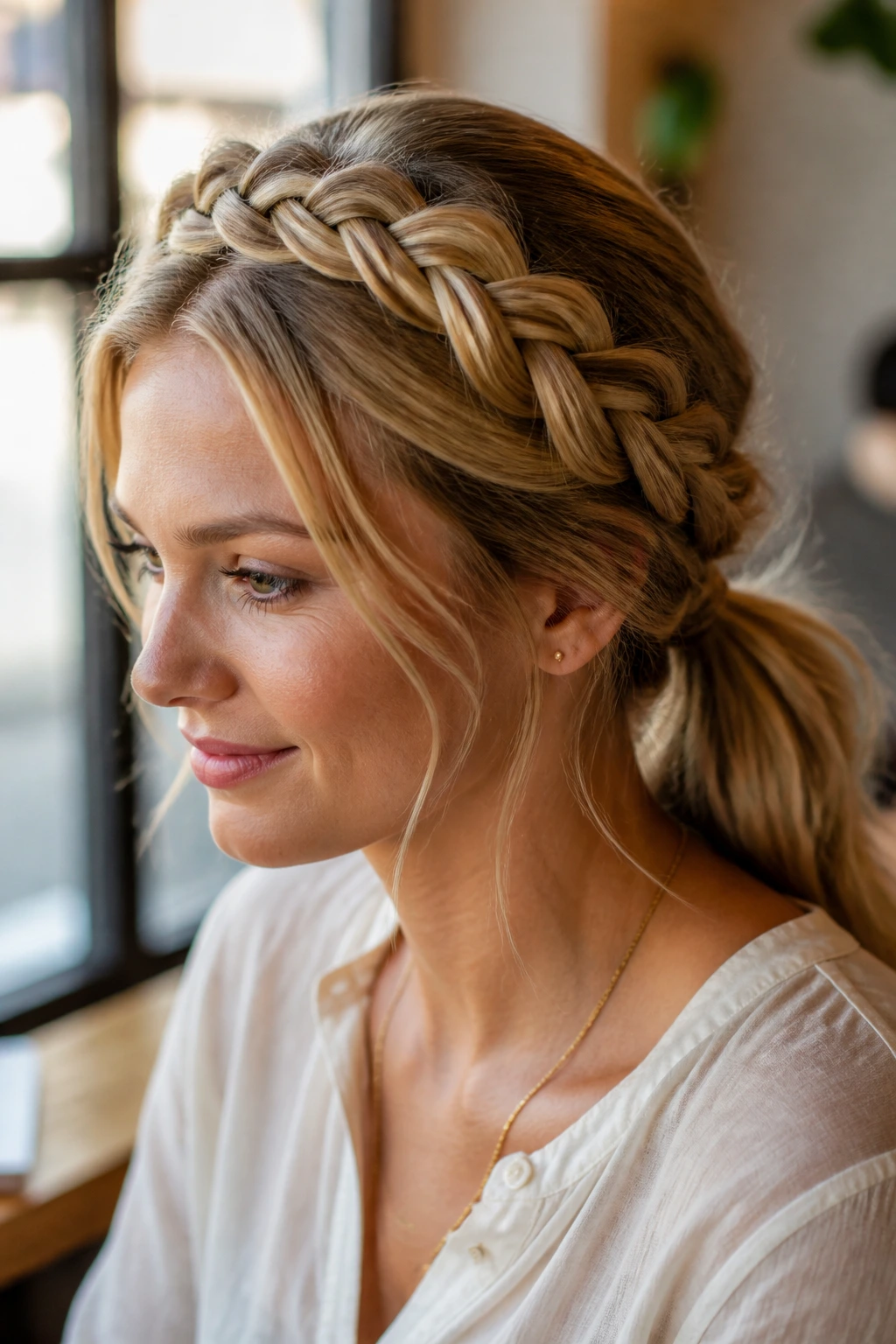
A crown braid into a low tail is a sneaky-good option for fine hair because the braid itself creates visual thickness at the front and sides, even if the actual braid isn’t huge. The trick is to keep the braid shallow and loose enough to have a little width. A tight braid on fine hair can shrink down and expose every strand.
Once the braid runs across the crown, gather the rest into a low tail at the nape. You can curl the tail slightly or leave it straight, depending on how polished you want the result. The braid gives structure; the tail keeps the style from looking overworked.
A tiny bit of backcombing at the roots before you braid helps a lot. Not a nest. Just enough grip that the braid doesn’t slide. Fine hair has no patience for slippery prep.
14. The Slicked-Back Wet Look
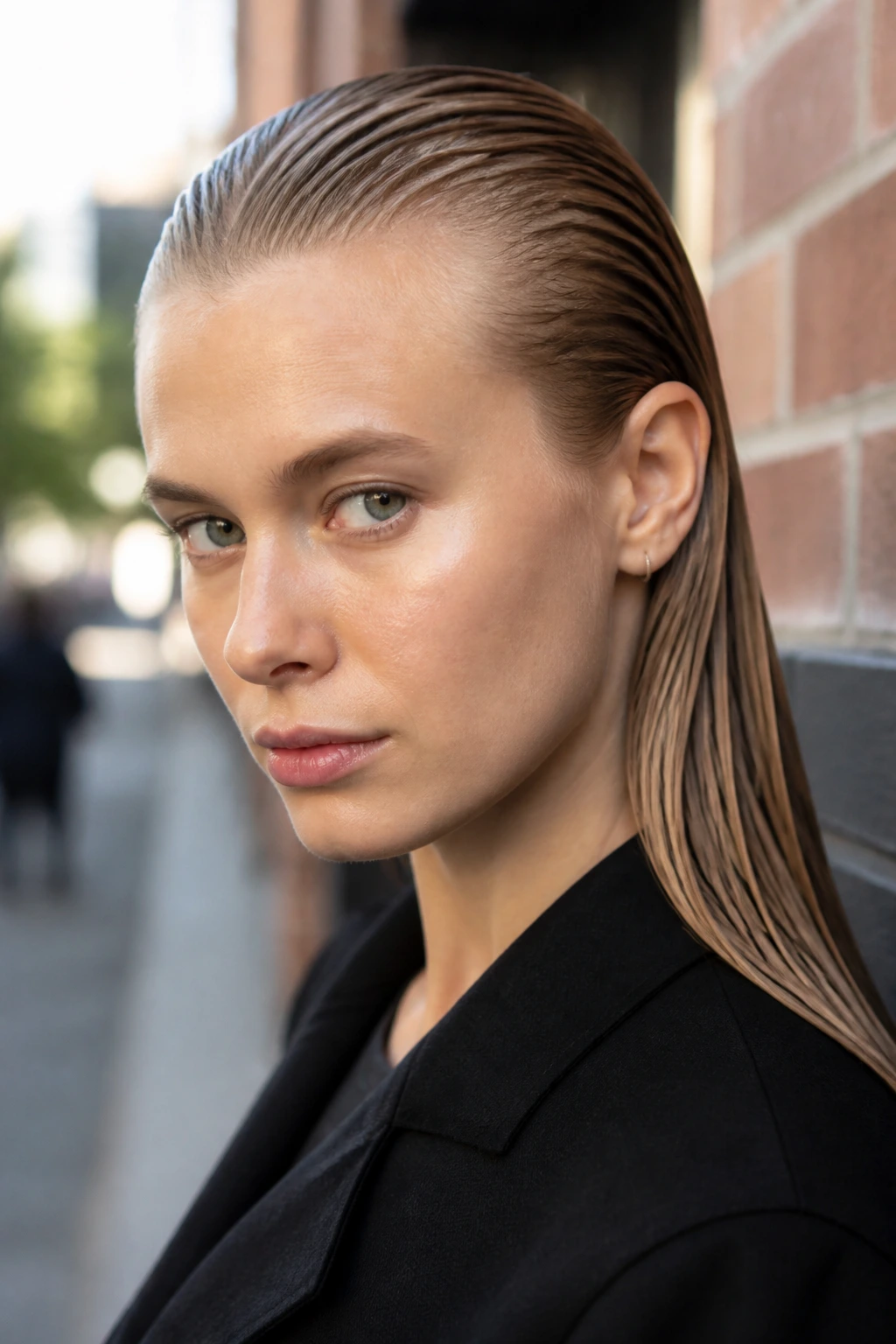
The wet look works on fine hair because it asks the strands to do less. Instead of trying to build volume that won’t stay, you lean into clean lines, shine, and a close-to-the-head finish. It’s blunt. A little cool, too.
Use a lightweight gel through damp hair and comb it straight back or with a deep side part, depending on your face shape. The root area should lie flat and glossy, but the ends can stay slightly separated so the style doesn’t look greasy. That separation matters. Too much product and it reads like you skipped shampoo, not that you made a choice.
This style is especially useful when fine hair is fighting humidity. It turns the battle into part of the look. And that’s a relief sometimes.
15. The Flipped-Ends Lob

A flipped-ends lob has a bit of retro energy, but the appeal is practical. The flip at the ends creates the illusion of width, which helps fine hair look less stringy. You’re not trying to make the hair big everywhere. You’re giving the bottom edge some attitude.
A flat iron or round brush can create the flip. Keep the rest smooth, then bend the last inch or two outward. That small movement changes the whole silhouette. It gives the lob a finish that feels more alive than a straight blowout, and it’s easier to maintain than a full wave set.
If your ends tend to thin out fast, this style is worth keeping in rotation. The outward bend makes the line seem fuller because the eye reads the flip as volume.
16. Tiny Accent Braids in Straight Hair
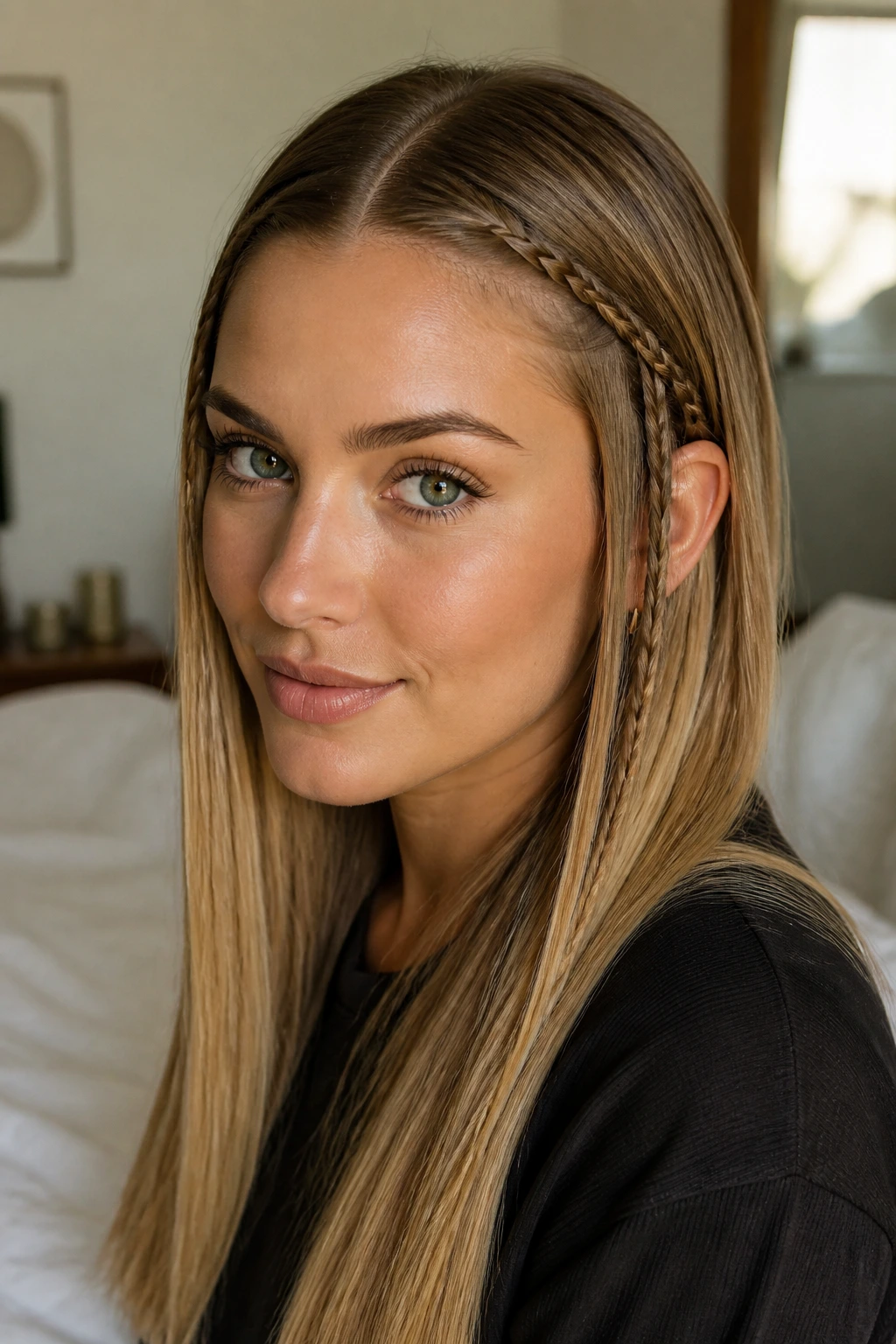
Tiny accent braids are one of those details that look modest until you realize how much work they’re doing. On fine hair, they add texture in a controlled way without taking a big bite out of the overall fullness. That’s the main win. You get interest without sacrificing body.
A single braid near the temple, two braids tucked behind one ear, or a braid woven into a low ponytail can all work. Keep them small. If the braid is too wide, it can dominate the style and make the rest of the hair look flatter by comparison.
Best use
- Add one braid to already straight hair when you want detail.
- Use them around the face to break up a plain blowout.
- Pair them with a light wave so the finished look has more texture.
- Keep the braid loose enough that it doesn’t create a hard scalp line.
17. The Soft Side-Swept Updo
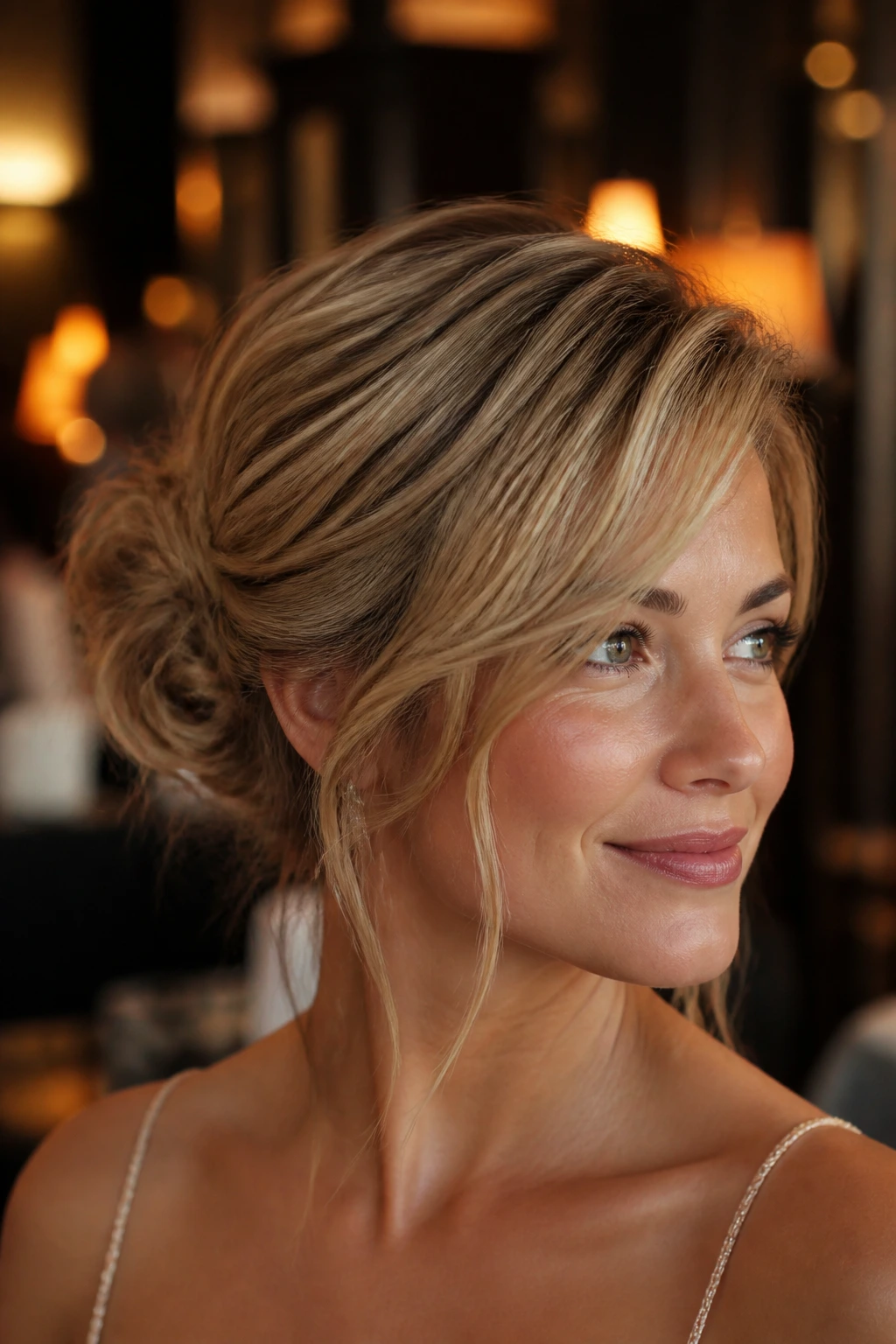
A side-swept updo is kinder to fine hair than a tight, centered knot because it uses asymmetry to create the illusion of more volume. The sweep gives the front a little lift, and the gathered section at the side can look fuller than a bun placed dead center on the back of the head.
This style benefits from loose pinning. If you clamp everything down, the result can look small and severe. Instead, twist the hair lightly, pin it in sections, and leave a few face-framing strands loose. Fine hair does better when the style has some softness around the edges.
I like this for occasions where you want the hair up but not stiff. It’s one of those styles that can look a bit undone in the best possible way. Not messy. Just not overcontrolled.
18. The High Ponytail with Texture
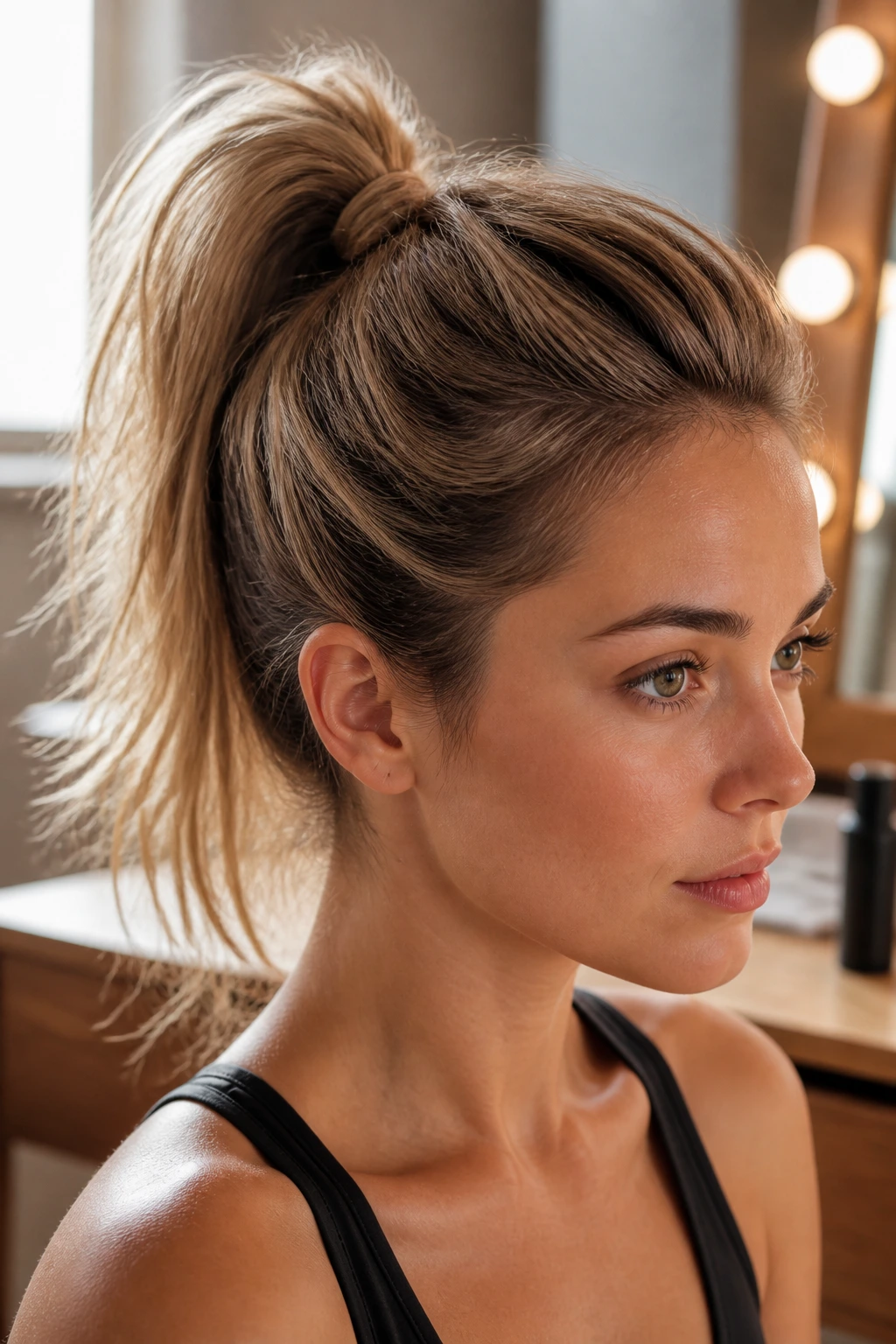
A high ponytail can look thin if it’s pulled back too tightly and too cleanly. The fix is texture at the crown and a little roughness through the tail. Tease the roots lightly, spray a touch of dry shampoo, then gather the ponytail high enough to lift the face without flattening the sides into your head.
Once it’s secured, wrap a small piece of hair around the elastic. That one move does more than most people think. It hides the tie, tightens the finish, and makes the whole ponytail look more intentional. If the tail itself is sparse, add a few soft bends with a curling iron so it doesn’t hang like a rope.
This is a strong choice when you need something that reads energetic but still clean. A flat high ponytail on fine hair can feel disappointing. A textured one has more presence.
19. The Half-Up Knotted Crown
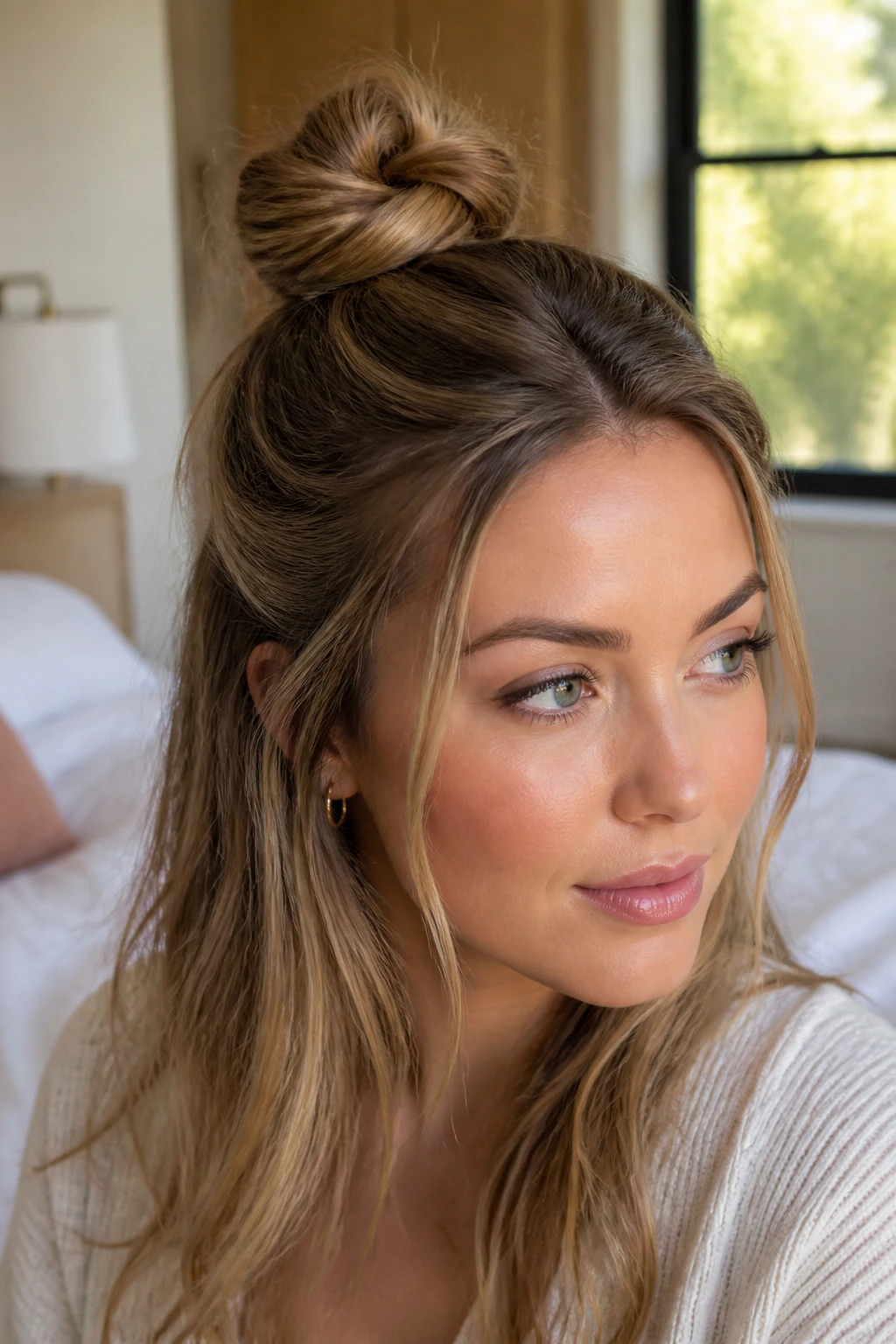
The half-up knotted crown style gives fine hair lift exactly where it needs it: at the top of the head. You pull back a section from each temple, knot or twist them together, and pin the knot slightly higher than you think. That tiny bit of height changes the profile in a big way.
The rest of the hair stays down, which keeps the overall look soft and stops the style from exposing too much scalp. The knot itself doesn’t have to be large. In fact, a smaller knot often looks better on fine hair because it doesn’t overwhelm the rest of the shape.
A quick note
If the knot slips, prep the top with a bit of texturizing powder first. Fine hair likes grip. Without it, the style can slowly sag while you’re still putting on earrings.
20. The Tapered Pixie with Side Fringe
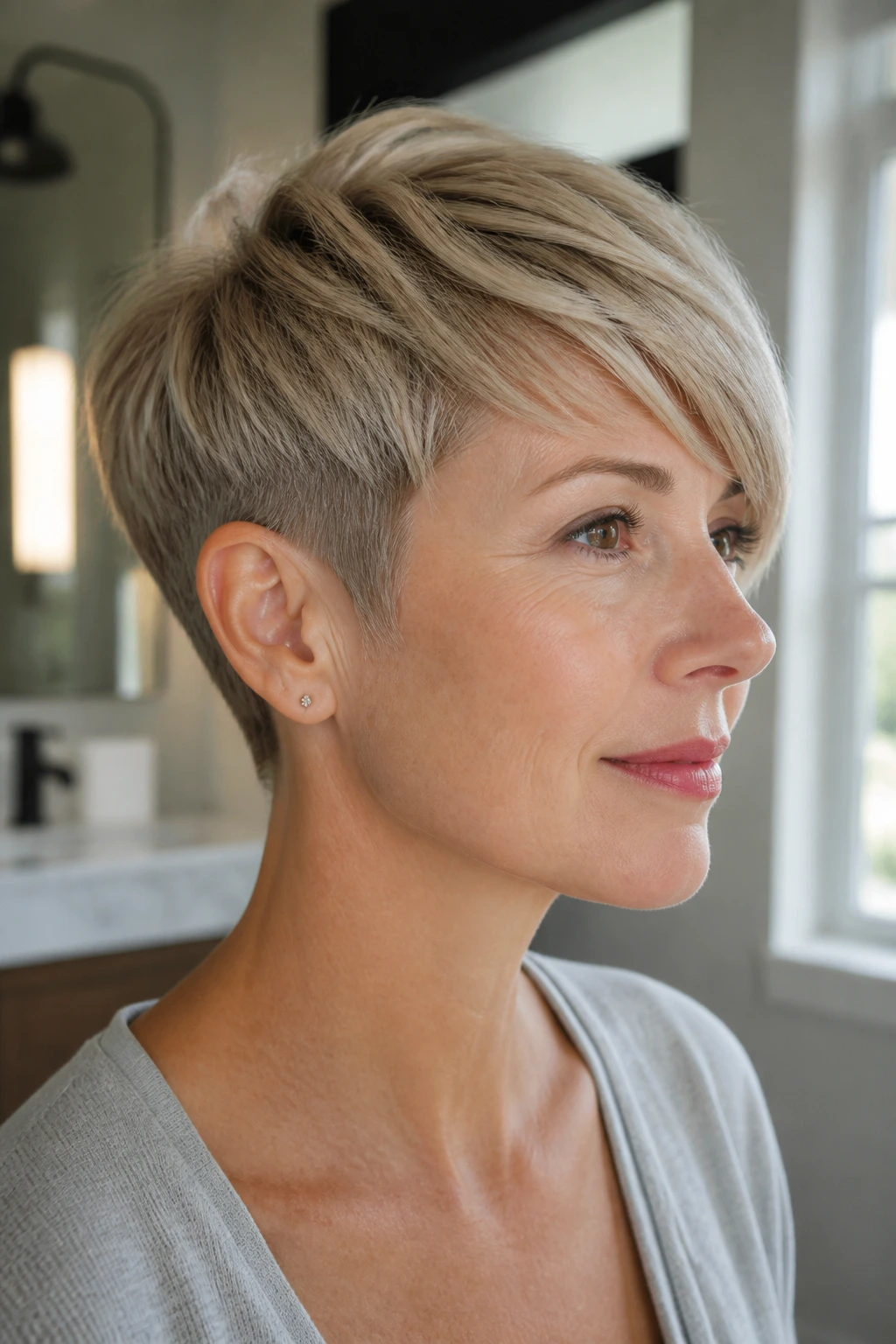
A tapered pixie with a side fringe is cleaner and more refined than a messy pixie, and fine hair often benefits from that discipline. The tapered sides keep the outline neat, while the side fringe gives just enough softness across the forehead to prevent the cut from feeling severe.
The fringe should be long enough to sweep, not flop. If it gets too short, it can stand up in odd directions. If it gets too long, it blocks the eye and makes the style feel heavier than it is. A side-swept piece that brushes the brow usually lands in the right place.
This cut is one of the best if you want a low-maintenance shape that still looks styled. It needs occasional product, sure, but it doesn’t need constant rescue.
21. The Deep Middle-Part Lob
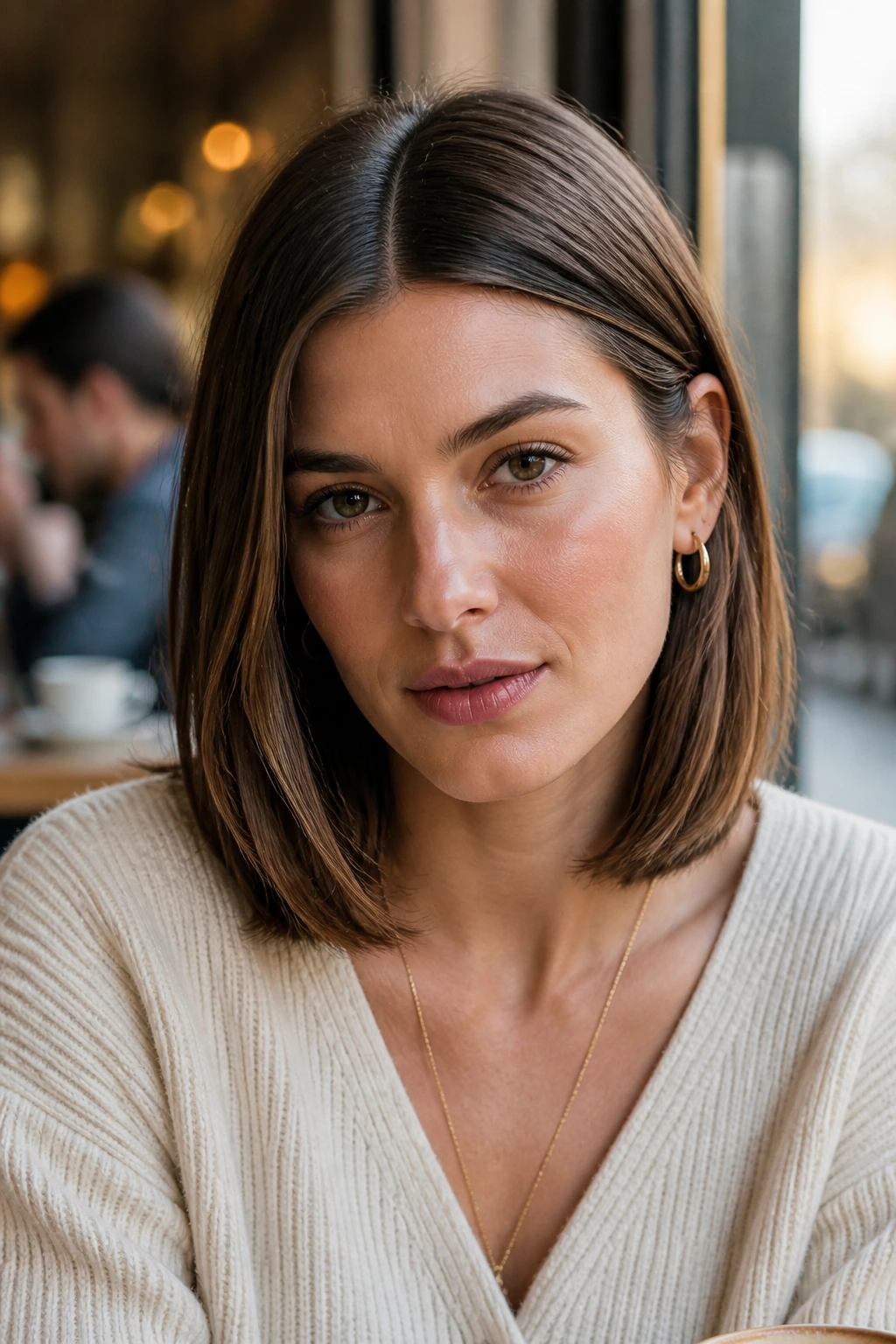
A deep middle-part lob is cleaner than people give it credit for. On fine hair, the middle part can look a little stark if the roots are flat, but once the crown has a touch of lift, it gives the hair a modern line that makes the ends seem thicker.
The lob length — again, around the collarbone — helps here because the hair has enough weight to hang in a straight, solid shape. Add a soft bend at the very ends or tuck one side behind the ear if you need more movement. The middle part doesn’t have to mean poker-straight hair. That’s the mistake.
This is a good style for anyone who wants something quiet but not boring. It depends on precision. A crooked part or a limp crown will show. Get those right, and the whole thing looks sharper.
22. Roller-Set Waves with a Soft Brush-Out
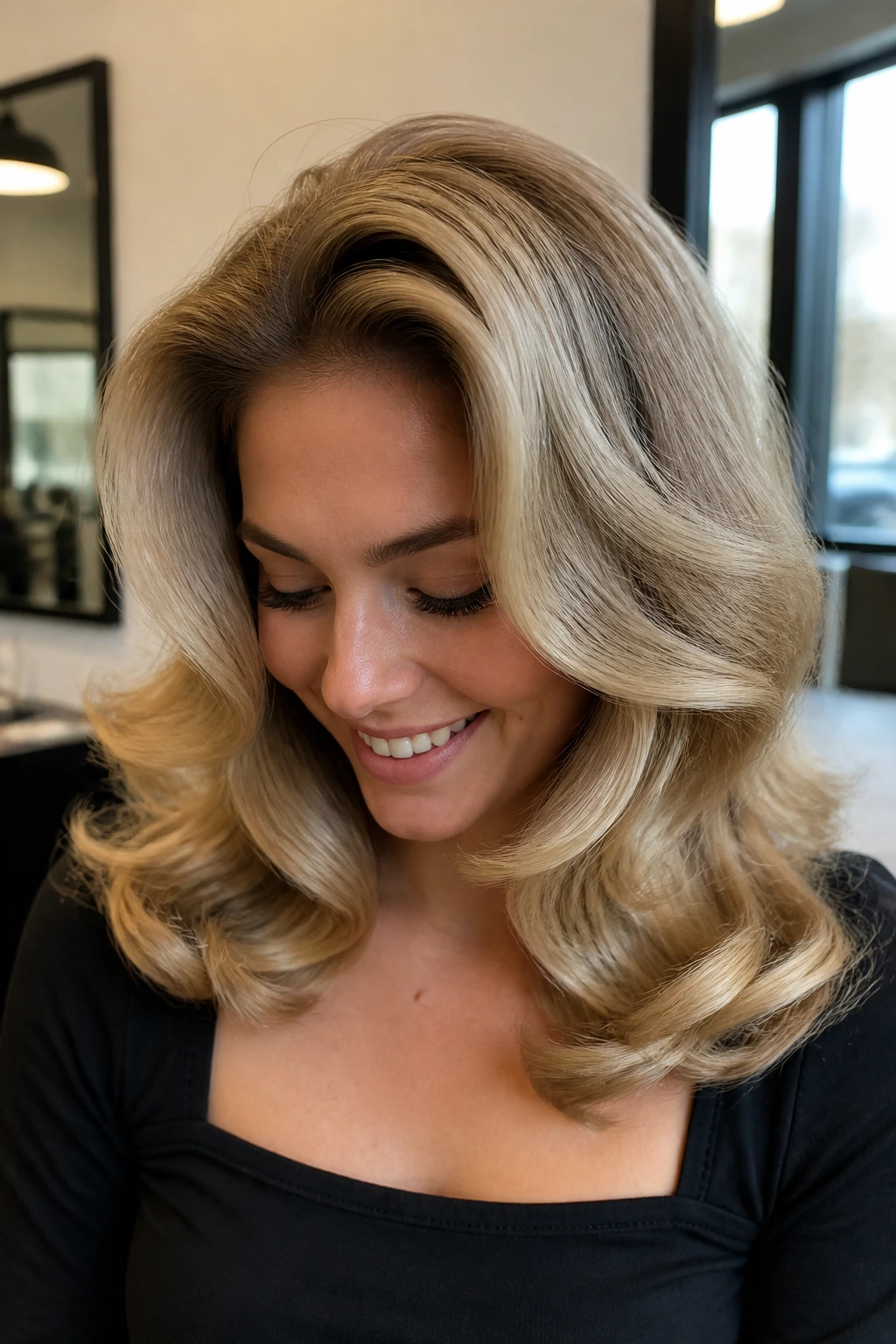
Roller-set waves are old-school for a reason: they make fine hair look fuller from the root down. Hot rollers or Velcro rollers give the crown a lift that curling irons sometimes miss, especially when the hair is naturally slippery. Then the brush-out softens the curls into wide waves that hold a lot of air.
Set the hair in medium sections, let the rollers cool completely, and then brush through with a soft paddle brush or wide-tooth comb. That cooling step matters more than most people think. If you take the rollers out too early, the shape falls before it has time to settle.
This style is the closest thing to cheating that fine hair gets. It makes the hair look denser without turning it into hard curls. And on the right day, that’s enough.
Why Shape Beats Length When Hair Is Fine
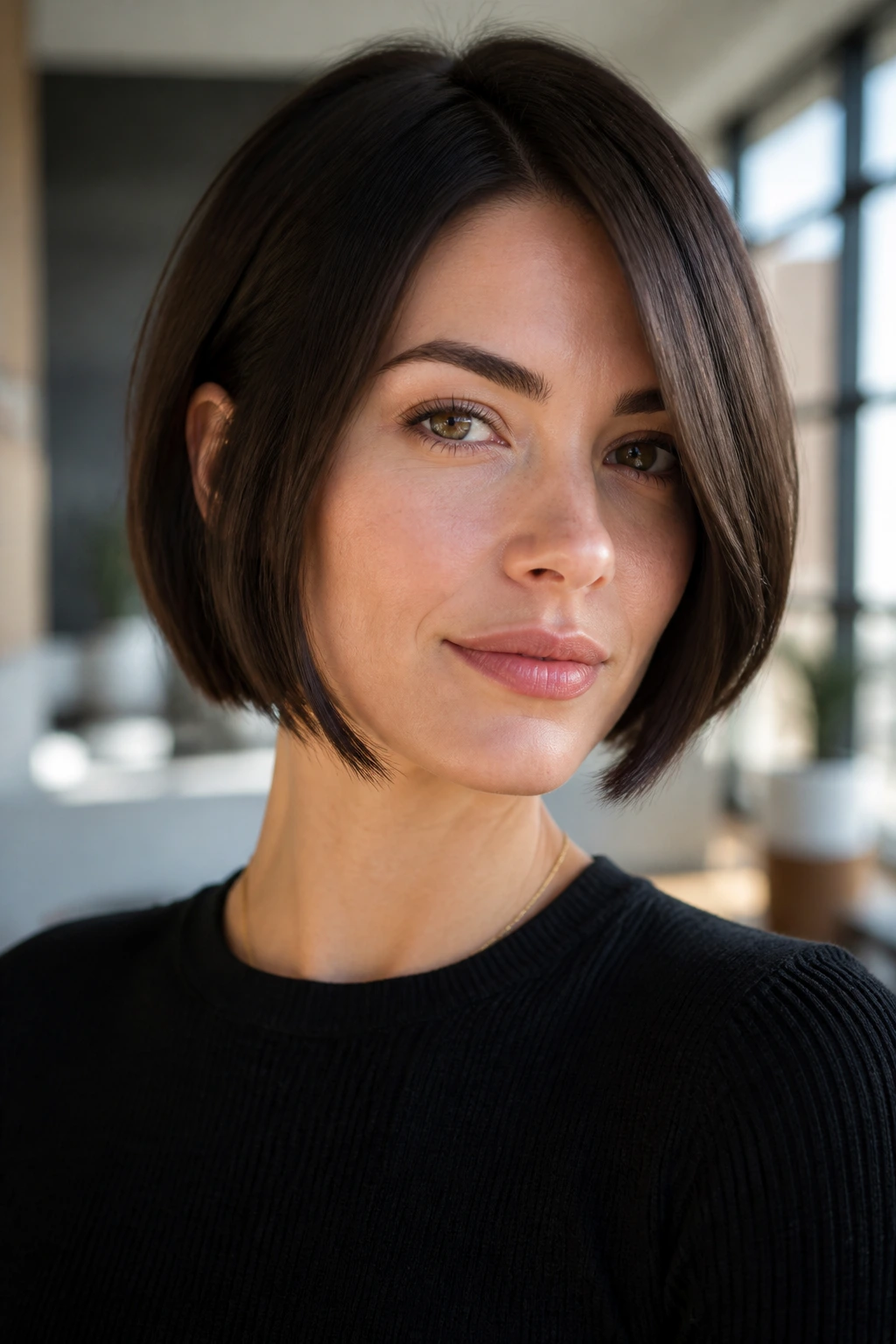
Fine hair can handle length, but length comes with a tax. Every extra inch adds weight, and weight pulls the crown down while thinning the ends visually. That’s why so many long styles on fine hair look nicer in the mirror at home than they do by lunchtime.
A good shape changes that. A blunt bob keeps the edge thick. A lob lets the hair swing instead of hanging. A pixie removes weight entirely. Even the updos and ponytails above use structure — a lifted crown, a braid, a twist, a bubble section — to fake density in places where the hair naturally wants to collapse.
There’s another thing people overlook: shape keeps the haircut from looking accidental. Fine hair can drift into that accidental territory fast. A few strands here. A limp corner there. The right silhouette brings the eye back to where it should be.
Essential Tools for These Looks
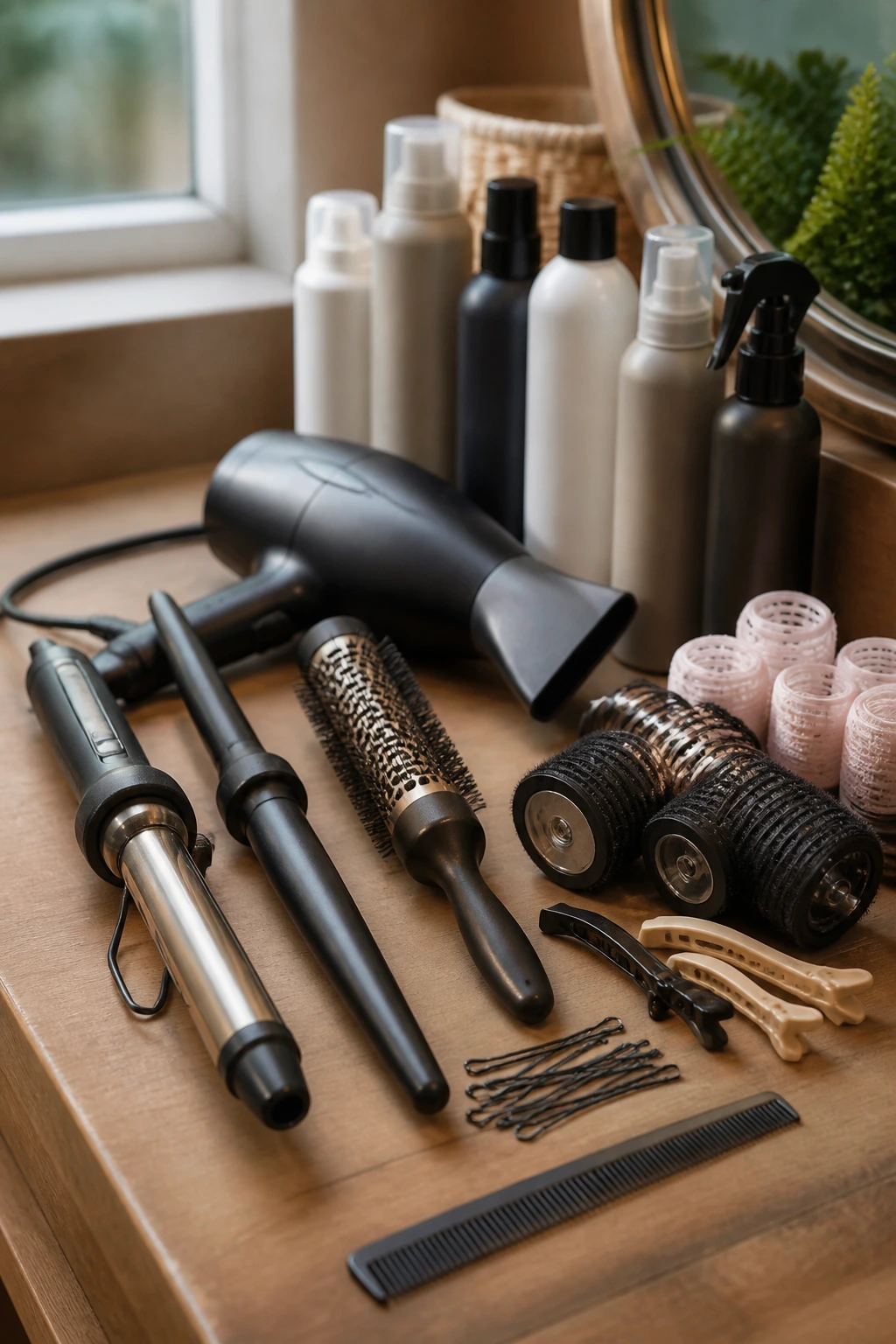
- 1-inch curling iron or wand: Best for soft bends and loose waves that don’t overcook fine strands.
- Small round brush: Useful for lifting the roots and turning ends under or out without adding bulk.
- Blow dryer with a nozzle: The nozzle keeps airflow directed so the cuticle lies flatter and the style looks smoother.
- Volumizing mousse: A golf-ball-sized amount is usually enough for shoulder-length hair; it gives shape without the greasy drag.
- Root-lift spray: Target the crown and part line only. Fine hair doesn’t need it everywhere.
- Dry shampoo: Works on clean hair for grip, not just on oily hair for rescue.
- Texturizing spray: Adds grit to braids, ponytails, and buns so they don’t slip apart.
- Bobby pins and duckbill clips: Fine hair holds better with small pins that have a little tension.
- Velcro or hot rollers: Very useful when you want root lift and a brushed-out wave.
- Fine-tooth comb: Good for parts, teasing, and slicked styles, but don’t rake it through the ends.
Smart Product and Cut Notes for Fine Hair
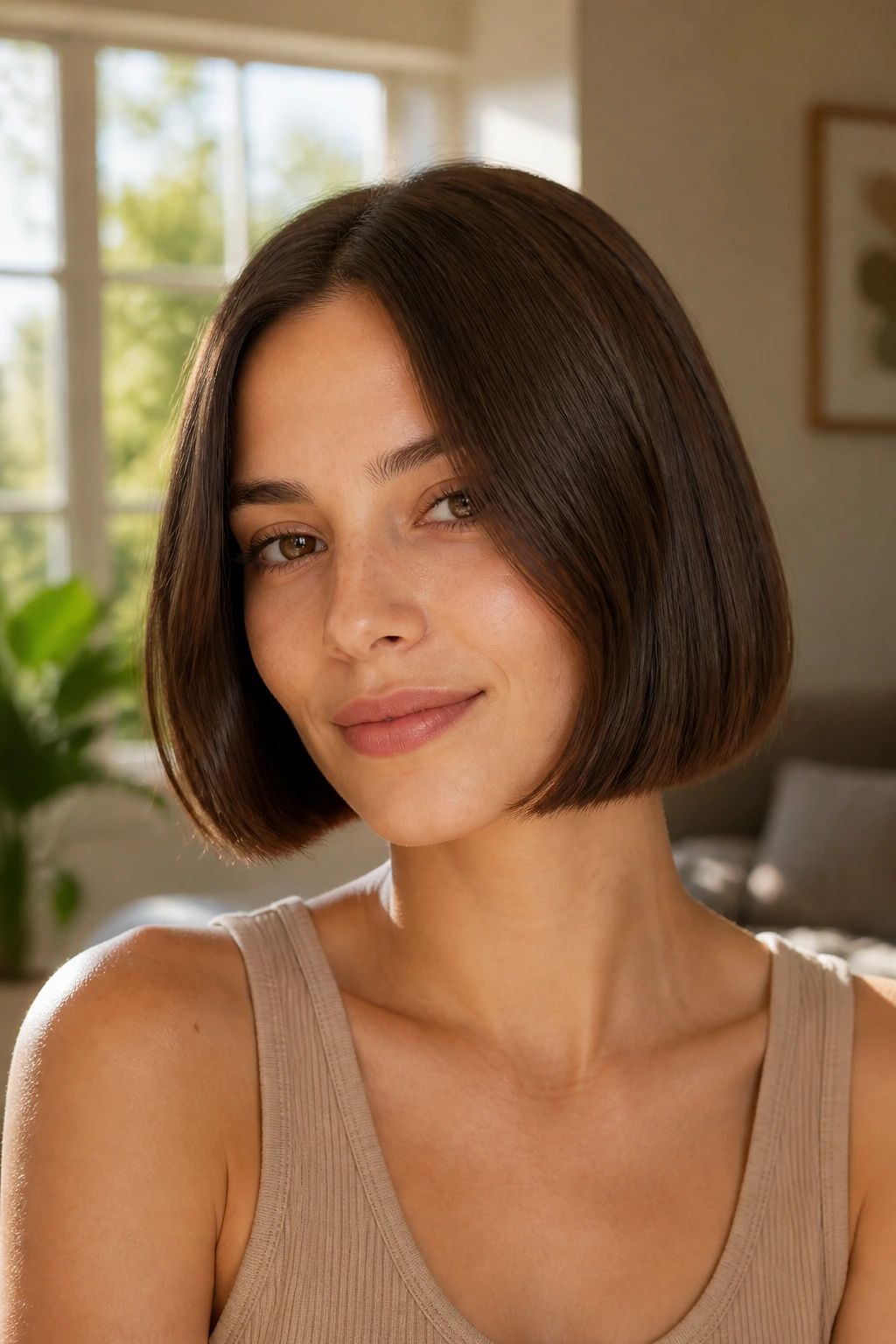
Lightweight products first: Fine hair usually needs mousse, sprays, and foams more than rich creams. If a product leaves your hands feeling coated, there’s a decent chance it will flatten the hair by afternoon.
Ask for the perimeter, not just layers: A blunt or slightly angled outer line gives fine hair a visual wall to stand on. Too much internal layering can make the ends look thin and choppy.
Silicone-heavy serums can backfire: A tiny amount on the ends can help with frizz, but too much will make the style slip and collapse. Use less than you think. Then use less again.
Clarifying washes help: Fine hair collects residue faster than people expect. If your roots feel coated after two washes, product buildup may be the reason your styles stop holding.
Density matters more than length at the salon: Fine hair that’s dense can carry longer shapes better than sparse hair. Tell your stylist how your hair behaves when it’s clean, day-two, and humid. That matters more than a vague description like “I want volume.”
How to Wear These Styles Without Them Falling Flat
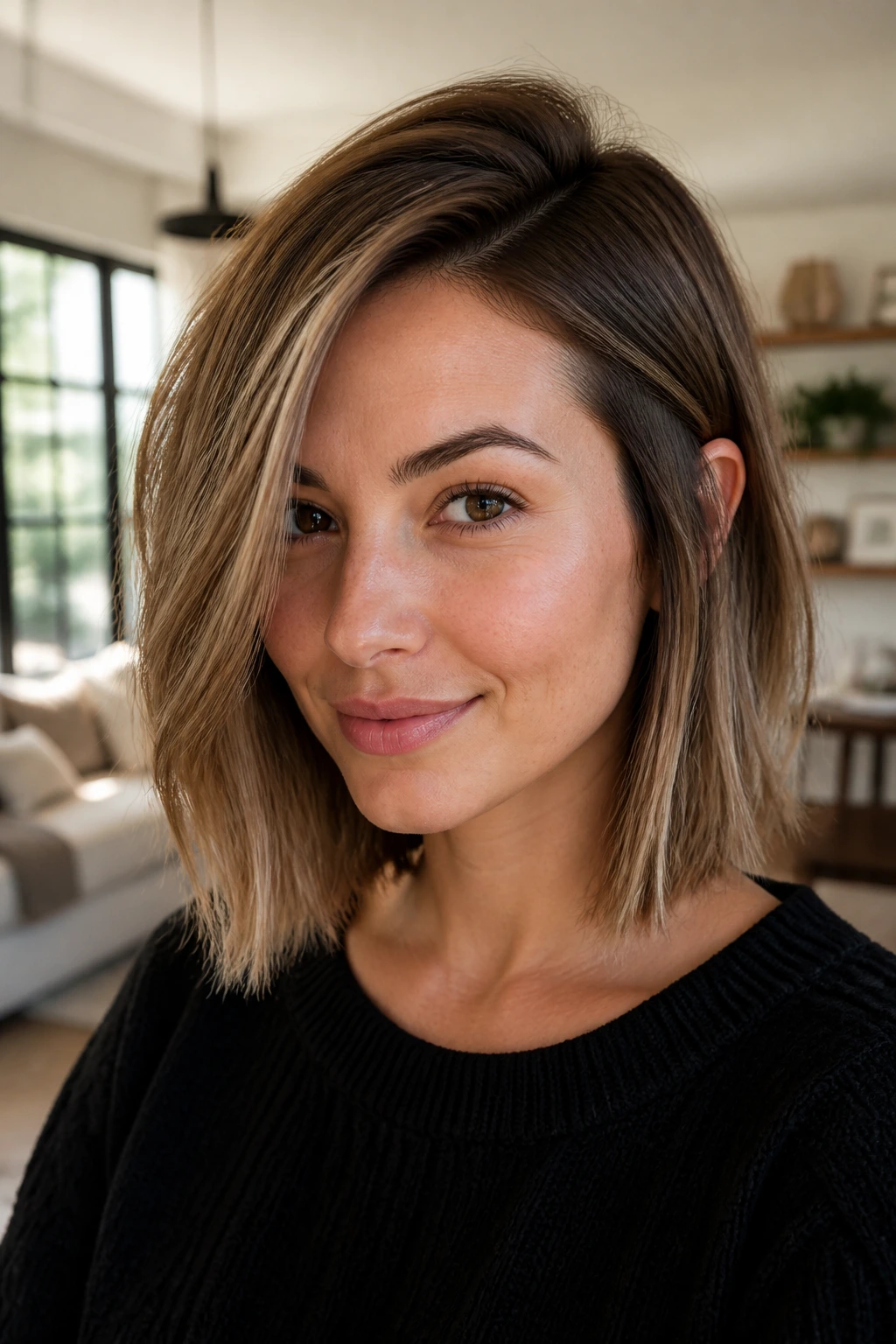
Presentation: Keep the finish deliberate. A blunt line, a lifted crown, or a soft bend at the ends tells the eye where to look. Fine hair always looks better when one part of the style is clearly in charge.
Accompaniments: Small hoops, narrow headbands, slim clips, and tucked-behind-ear styling suit these looks better than oversized accessories. Bulky pieces can swallow the hairline and make the hair seem even finer.
Portions: Use less product than you think, then build only where the style needs support. A dime-size mousse for a short bob, two pumps of root lift spray for the crown, and a pea-size dab of paste for a pixie usually go further than most people expect.
Beverage Pairing: A polished bob handles a workday coffee run. A lifted ponytail reads easy for errands. A sleek bun or wet look can carry you through a dinner reservation, a meeting, or a long day when you need the hair to stay put and not demand attention.
Additional Tips and Lift Boosters
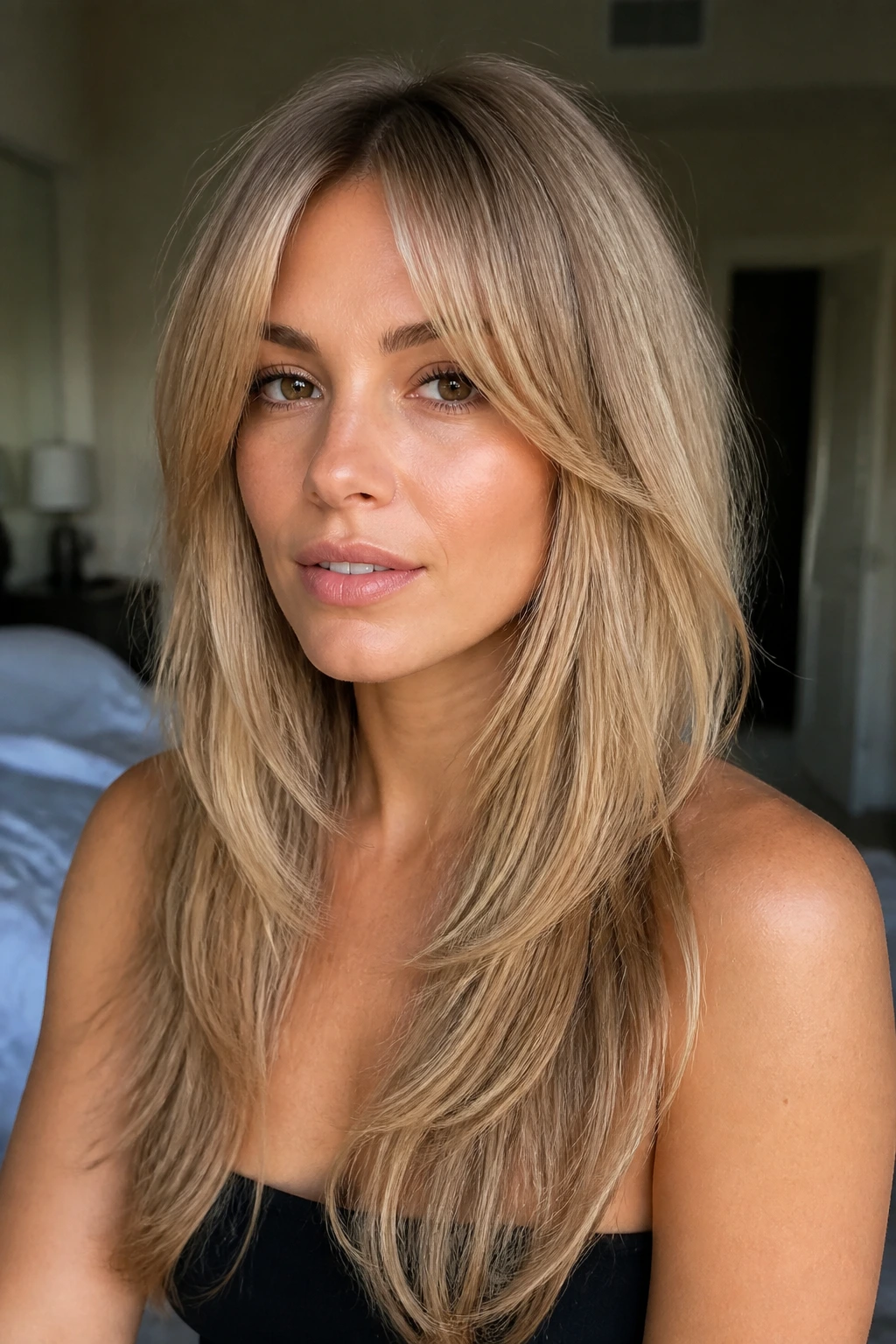
Flavor Enhancement: A tiny dusting of texturizing powder at the roots can rescue a flat crown in seconds. Tap it in with your fingertips, then shake the hair at the part. Don’t dump it on. Fine hair shows everything.
Customization: If your hair is fine but plentiful, you can wear slightly longer shapes and still keep the ends blunt. If it’s fine and sparse, stay closer to chin length, jaw length, or a structured lob so the perimeter never looks stringy.
Serving Suggestions: Swap the middle part for a deep side part when the roots are sleepy. Tuck one side behind the ear for asymmetry. Add one pin, one clip, or one braid — not five. Fine hair usually looks better when the styling choice is clear.
Make-It-Yours: For heat-free days, use braids, twists, or a roller set overnight. For humidity-prone weather, reach for slicked looks, bobs, and low buns. For cowlick-heavy crowns, avoid fights you can’t win; work with the growth pattern and choose a part that lets the hair lie naturally.
Common Mistakes That Make Fine Hair Look Thinner
Over-layering the ends: The symptom is a see-through bottom line that looks frayed in bright light. The fix is a cleaner perimeter and fewer layers below the cheekbone.
Using heavy conditioner at the roots: The hair goes limp almost immediately and can feel coated by afternoon. Keep conditioner from ears down, and choose lighter formulas if buildup is a regular problem.
Curling every section the same way: Uniform curls can make fine hair look sparse because the spacing becomes too obvious. Alternate directions or brush the curls into a looser wave so the style looks fuller.
Teasing the crown into a nest: A little lift helps. A tangled cushion of backcombed hair does not. Tease only the top layer, smooth the surface lightly, and stop before the roots get rough.
Pulling updos too tight: Tight styles expose the scalp and shrink the silhouette. Leave a bit of softness at the crown and around the face, then pin in sections instead of yanking everything into one knot.
Wearing the same part every day: The part line can get wider over time simply because the hair learns it. Switch sides now and then. It gives the roots a break and makes the hair appear fuller without changing the cut.
Named Variations and Ways to Change the Mood
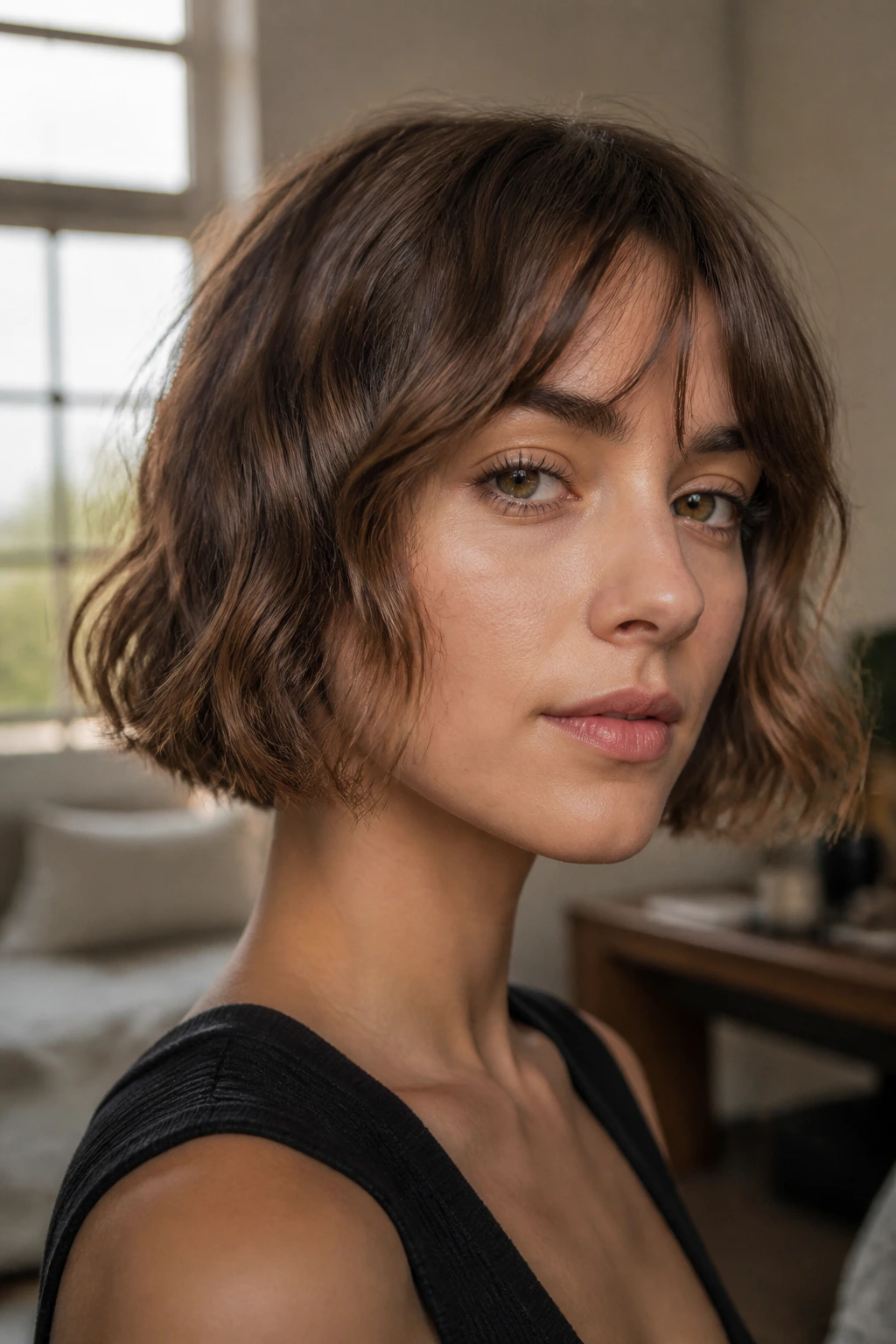
The Air-Dry Version: Choose a blunt bob, lob, or shag and let it dry with a light mousse and a touch of scrunching. This works best if your hair has a natural bend. Fine straight hair may need one or two twists around the face to keep it from drying too flat.
The Office-Polished Version: Go for a sleek lob, a low bun, or a deep side-part ponytail. Use a small amount of gel or cream just on the surface, then tuck the ends or wrap the elastic so the style looks finished rather than hurried.
The Weekend Texture Version: Pick the bubble ponytail, claw-clip half-up, or tiny accent braids. These styles look better a little imperfect, which is useful when you don’t want to spend 30 minutes on a blowout.
The Event Version: A soft side-swept updo or roller-set waves give fine hair enough shape to hold through photos, movement, and a long evening. Pin in sections and let a few pieces move. Hard, shellacked hair tends to look thinner under bright light.
The Short-and-Sharp Version: If long hair keeps collapsing, move to a French bob, chin-length bob, or tapered pixie. These cuts stop the weight problem at the source, and that alone can change how full the hair looks.
The Heat-Free Version: Braids, knots, and rolled twists can all build shape without a curling iron. Just start with slightly damp hair or second-day texture so the style holds its outline instead of slipping out in ten minutes.
Make-It-Stay: Washing, Refreshing, and Overnight Care
Fine hair usually needs more frequent washing than thick, coarse hair, especially if you use mousse or dry shampoo. A light wash every day or every other day is common, and that’s not a failure. It’s just how the hair behaves when the strands are small and product buildup shows fast.
At night, a loose silk scrunchie, a soft clip, or a silk pillowcase can save a style from getting crushed. Bobs and lobs often do well if you tuck the ends under the pillow instead of smashing them straight down. Pixies need less protection, but a tiny dab of paste in the morning can wake the shape back up.
For waves, the fastest refresh is a few misted sections with water or a light spray, then a quick pass with a curling iron on the pieces that bent out of shape. Don’t reheat the whole head every day. That’s how fine hair starts to feel dry and lose the texture you wanted in the first place.
Frequently Asked Questions
What haircut makes fine hair look thicker?
Blunt bobs, chin-length cuts, and collarbone lobs usually give the strongest density illusion because they keep a hard perimeter. If you want movement too, ask for soft face-framing pieces rather than lots of layers through the bottom.
Are layers bad for fine hair?
Not always, but too many layers can strip the ends and make the hair look sparse. Fine hair usually does better with controlled layering that starts lower and leaves enough weight in the outline.
Can I wear long hair if my hair is fine?
Yes, but long fine hair needs more shape than most people think. A deep side part, subtle layers, or a soft wave pattern keeps it from hanging in one flat sheet.
What products should I avoid on fine hair?
Heavy oils, thick creams, and rich butters often flatten the hair before lunch. Choose lightweight mousse, spray volume products, and dry shampoo instead, then keep the amount small.
How do I make a ponytail look fuller?
Tease the crown lightly, use two elastics instead of one if needed, and wrap a small section of hair around the base. A bubble ponytail is even better when the tail itself is sparse, because the shape creates volume where the hair doesn’t naturally have it.
What if my curls fall out fast?
Start with a smaller iron, let each curl cool fully before touching it, and spray the curl lightly while it’s still pinned or clipped in place. Fine hair often needs the cooling step more than a stronger product.
Is a pixie cut hard to maintain on fine hair?
It can be low-effort if you like a piecey, clean shape and don’t mind a trim every 4 to 6 weeks. The upside is that fine hair often looks fuller short because there’s less weight pulling it down.
Should I switch my part if my roots look flat?
Yes. Even a small shift — a half-inch off center — can wake up the crown and make the style look less stamped into place. It’s one of the fastest fixes for sleepy fine hair.
Can fine hair hold braids?
It can, but the braid usually needs grit first. Start with dry shampoo or texturizing spray, braid a little looser than you think, and secure the ends with a small elastic so the shape doesn’t collapse.
Last Mirror Check
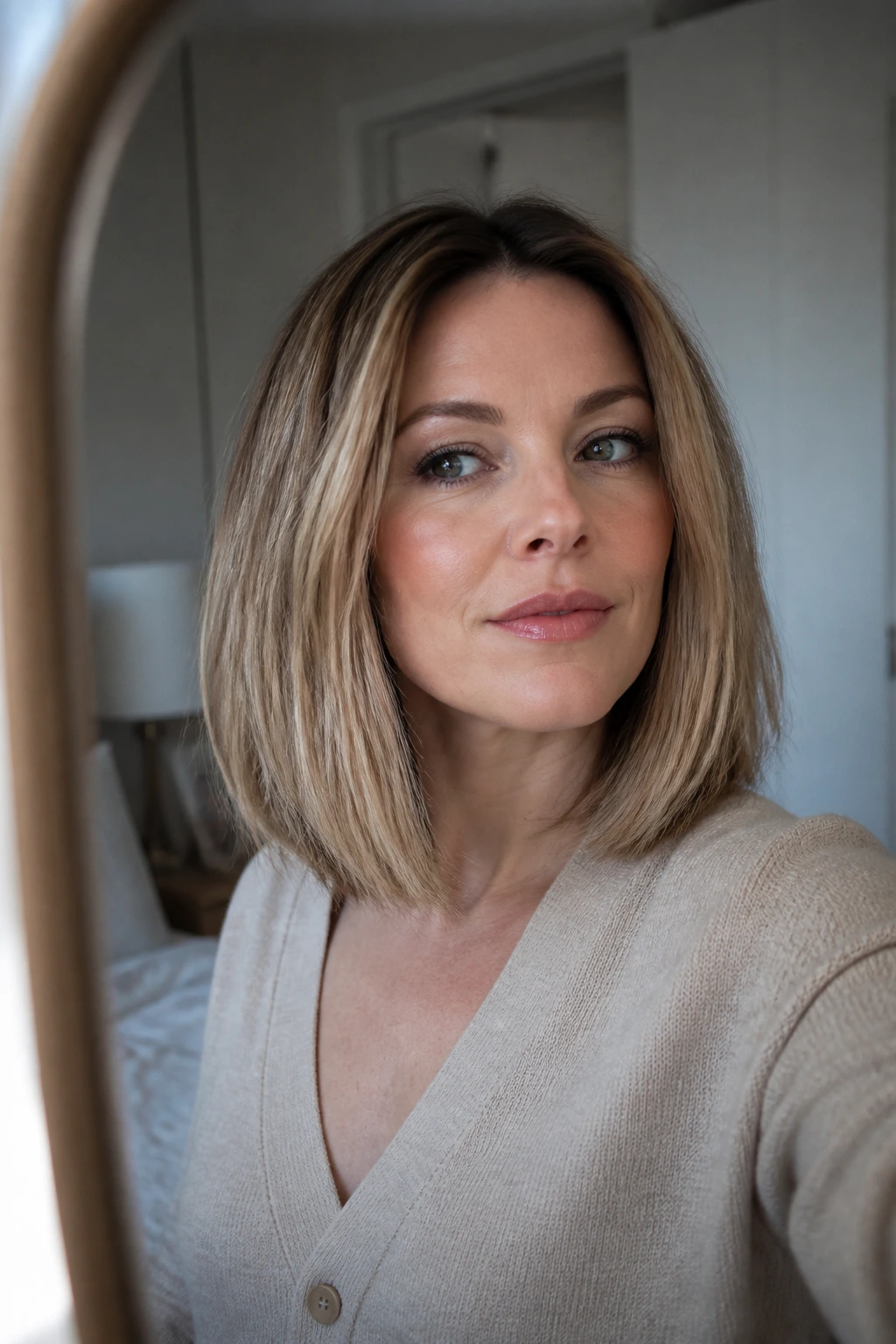
Fine hair doesn’t need apology cuts or product piles that leave it feeling sticky by noon. It needs line, lift, and a little discipline. When the silhouette is clear — chin-length bob, lifted lob, soft pixie, textured ponytail — the hair reads fuller almost by default.
The styles above work because they respect what fine strands can actually do. They don’t force bulk where there isn’t any. They build shape instead, which is smarter and usually looks better once you’re out in real light, not just the bathroom mirror.
