



Wavy pixie hairstyles for round faces work because they do something blunt, one-length crops often refuse to do: they break the face’s widest point into angles, movement, and little shifts in shadow. A soft wave near the crown, a side-swept fringe, or a tapered temple can change the whole read of a cut. That sounds subtle. It isn’t.
The wrong pixie on a round face usually has one of two problems. It sits too even all the way around, or it puffs out at the cheeks and turns the head into a tidy little circle. The right version keeps the sides lean, gives the top some lift, and lets the waves bend instead of balloon. That’s the game here.
If your hair already has texture, you’re halfway there. If it’s straighter than you’d like, a small amount of bend from a wand or finger-drying can still create the same effect, as long as the shape underneath does its job. A pixie cut is never only about short hair. It’s about where the eye lands first, and where it doesn’t.
Why These Wavy Pixies Earn Their Place on Round Faces
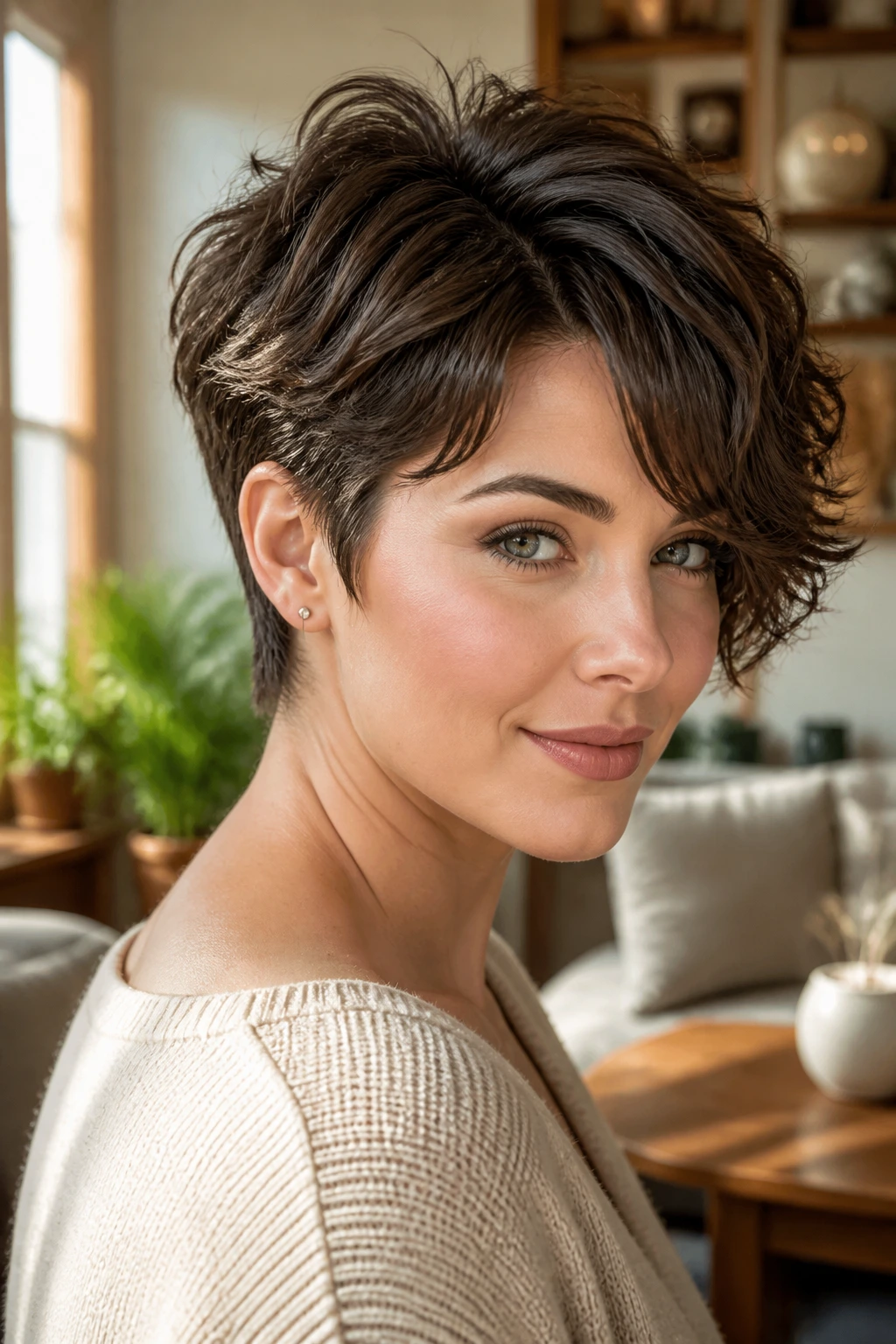
Height changes everything: A little lift at the crown pulls the eye upward, which keeps the widest part of the face from doing all the talking.
Asymmetry softens the circle: A deep side part, an off-center fringe, or one longer temple piece interrupts symmetry in a way a round face usually loves.
Texture beats bulk: Soft bends and piecey waves give movement without adding the shelf-like width that can happen when short hair is cut too bluntly.
The nape matters more than people think: A tapered back keeps the silhouette clean, so the top can stay playful without the whole cut looking puffy.
Small details carry the look: Temple length, fringe direction, and how the sideburns are shaped matter more here than they do in a longer cut.
1. Deep Side-Parted Wavy Pixie
A deep side part is the oldest trick in the book for a reason. On a round face, it cuts across the forehead with intention and sends one side of the fringe sweeping low over the brow, which narrows the upper half of the face just enough to matter. Add loose waves, and the whole cut feels less like a crop and more like a shape.
Why it works on round faces
The heavy side creates a diagonal line, and diagonals are flattering when you want to break up softness. Keep the top around 2.5 to 4 inches so the wave has room to bend without collapsing flat.
Styling note
Use a pea-sized amount of lightweight cream, then bend the front section with your fingers while blow-drying on low heat. The goal is not a perfect curl. It’s a soft, irregular sweep that falls a little differently each day.
2. Crown-Lifted Choppy Pixie
This is the cut for someone who wants energy at the top and clean lines everywhere else. Choppy layers near the crown keep the silhouette from sinking, which is the mistake that makes many short cuts read wide instead of vertical. The waves give it bite. The choppiness gives it direction.
A round face usually benefits when the top feels a touch taller than you expect. Ask for short, tapered sides and a crown that’s layered with point cutting rather than blunt slicing. That keeps the texture airy instead of helmet-like.
3. Long Fringe Wavy Pixie
Long fringe is a cheat code for round faces because it lets the forehead do less. A fringe that hits around the eyebrow or just below it softens the front edge of the haircut and builds a line across the face instead of around it. The wave keeps that line from looking heavy.
If your hair grows out fast, this is a forgiving option. The fringe can shift from brow-skimming to cheekbone-grazing without the whole cut falling apart. I like it best when the sides stay close and the fringe carries the style.
4. Tapered Nape Wave Crop
A tapered nape does quiet work. It keeps the back of the head neat, which makes the top feel even fuller by comparison, and that little contrast helps a round face look longer. Let the waves sit mostly up top, not all the way through the sides.
This is one of those cuts that looks better with a little mess in it. Dry it with the head upside down for the first minute, then smooth the outer layer with your palms. You want separation, not puff.
5. Undercut Pixie With Loose Waves
An undercut removes bulk where round faces often don’t need it: around the lower sides and back. That leaves the waves free to live on top without spreading out into a mushroom shape. The contrast can look sharp, but the wave keeps it from feeling severe.
Best for
Thicker hair, dense waves, and anyone who hates spending time removing bulk with a brush and blow-dryer.
Watch for
If the undercut sits too high, the top can look disconnected. Keep the shaved or clipped section low enough that the wave layer falls naturally over it.
6. Asymmetrical Wavy Pixie
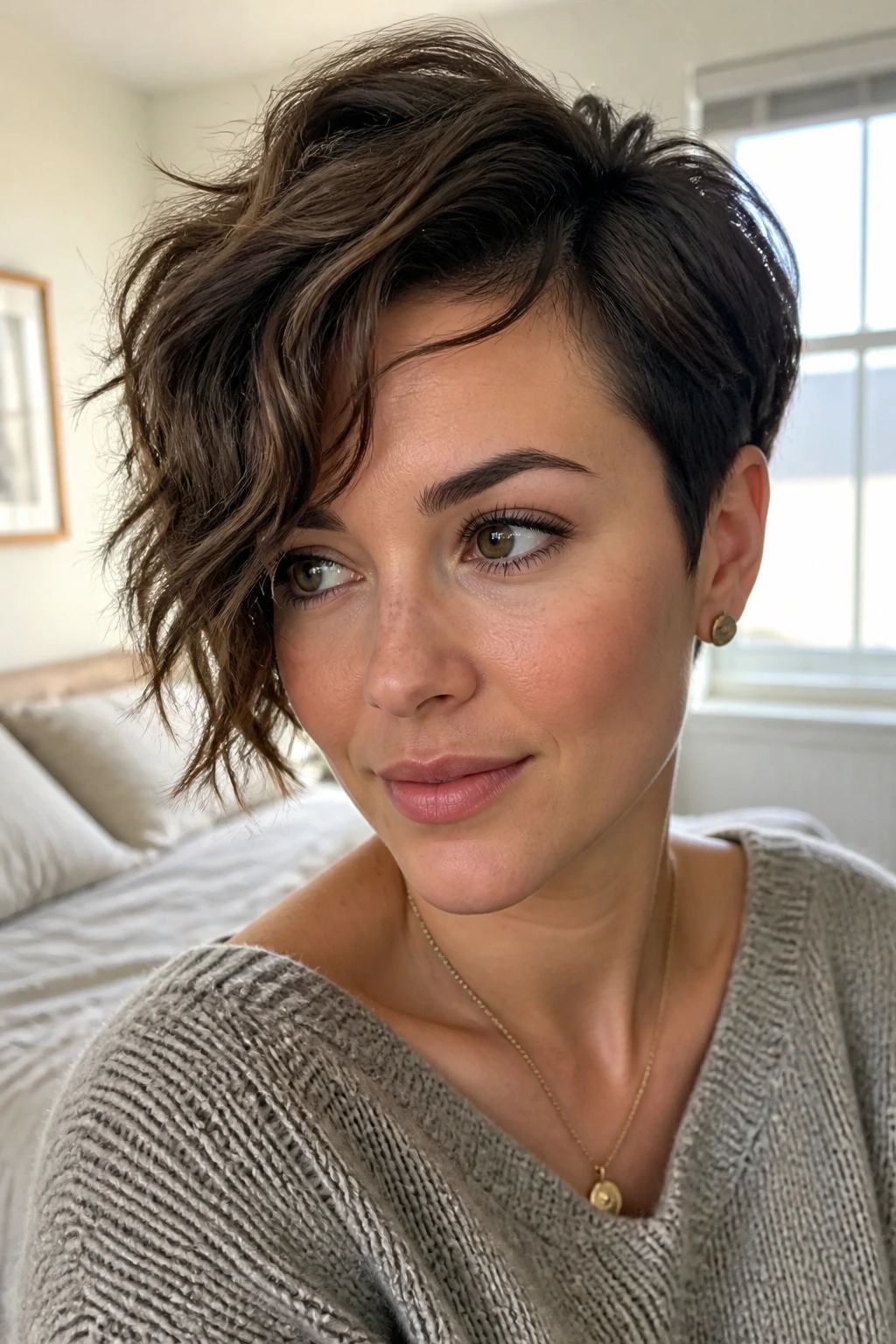
One side longer than the other changes the whole balance of a round face. The eye travels across the shorter side and then lands on the longer sweep, which creates movement and tension without needing length everywhere. It’s a smarter cut than people give it credit for.
The asymmetry doesn’t have to be dramatic. Even a one-inch difference at the front can change the read of the face. Keep the longer side soft and piecey, not straight and blunt, or you’ll lose the point.
7. French-Girl Tousled Pixie
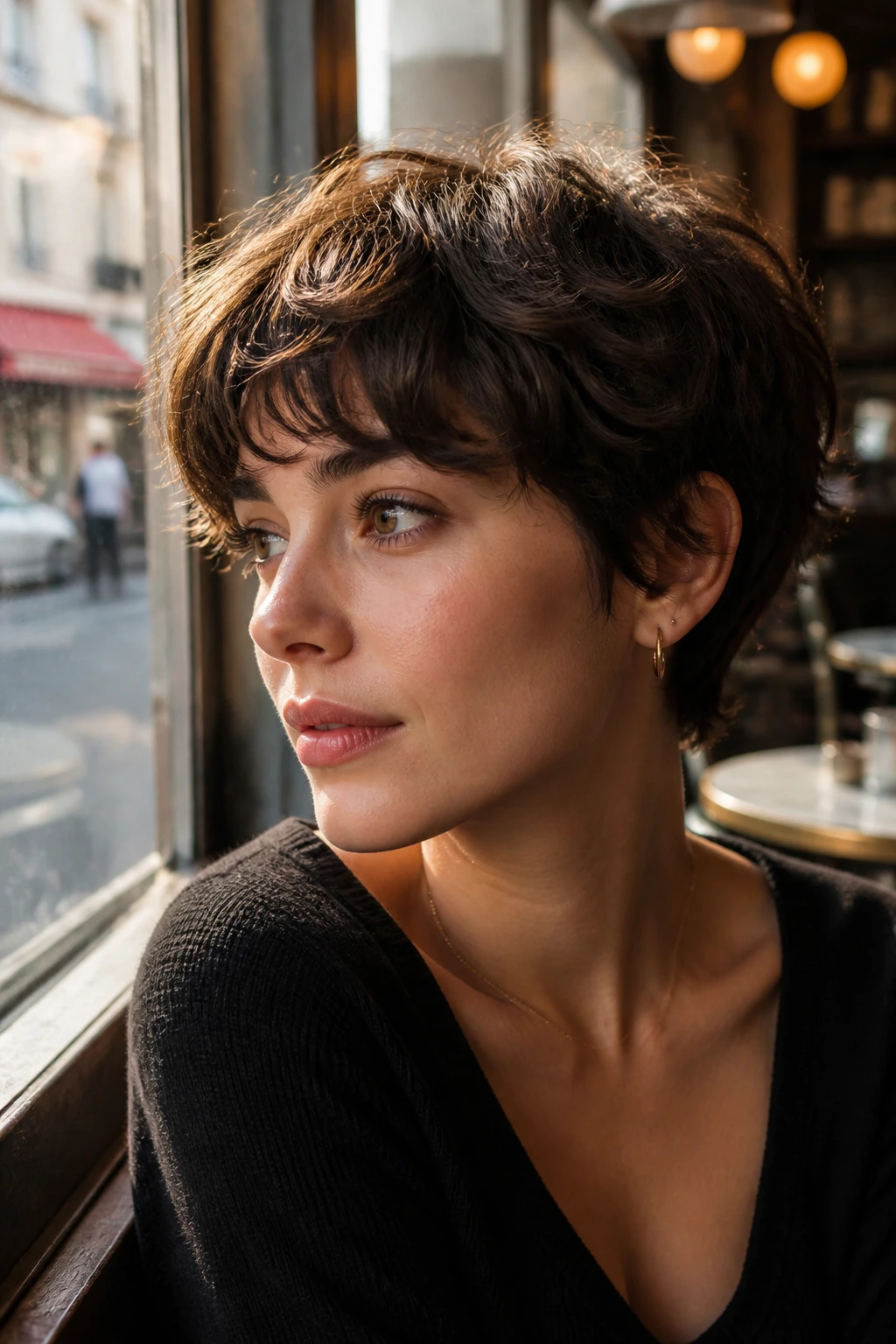
There’s a reason this version keeps showing up in salons and street style shots. It feels a little undone, but not lazy. The top is soft, the fringe is relaxed, and the ends stay airy enough that the face doesn’t get boxed in.
On a round face, the key is restraint. Too much fullness around the cheeks ruins the effect. Ask for a shorter nape, a light fringe, and textured ends through the top third of the cut so the wave has places to land.
8. Piecey Micro-Layer Pixie
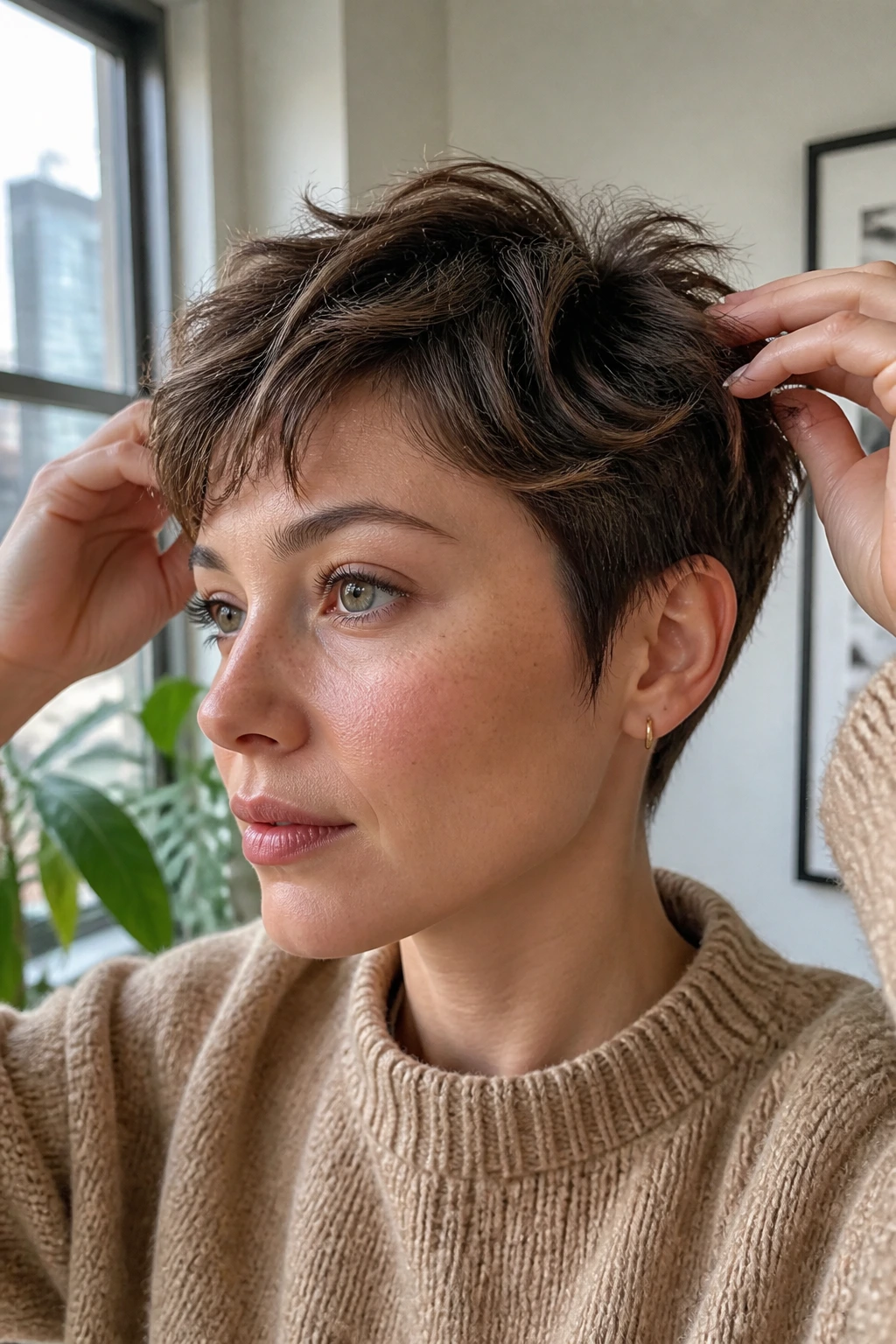
Piecey micro-layers give short hair a broken-up finish that round faces wear well. Instead of one smooth curve around the head, you get tiny shifts in length that stop the cut from looking too round. It’s subtle, and that’s why it works.
A small amount of matte paste goes a long way here. Rub it between your fingertips, pinch the ends, and avoid coating the whole head. If the product reaches the roots, the cut can collapse into a flat cap by noon.
9. Pixie Bob Hybrid With Movement
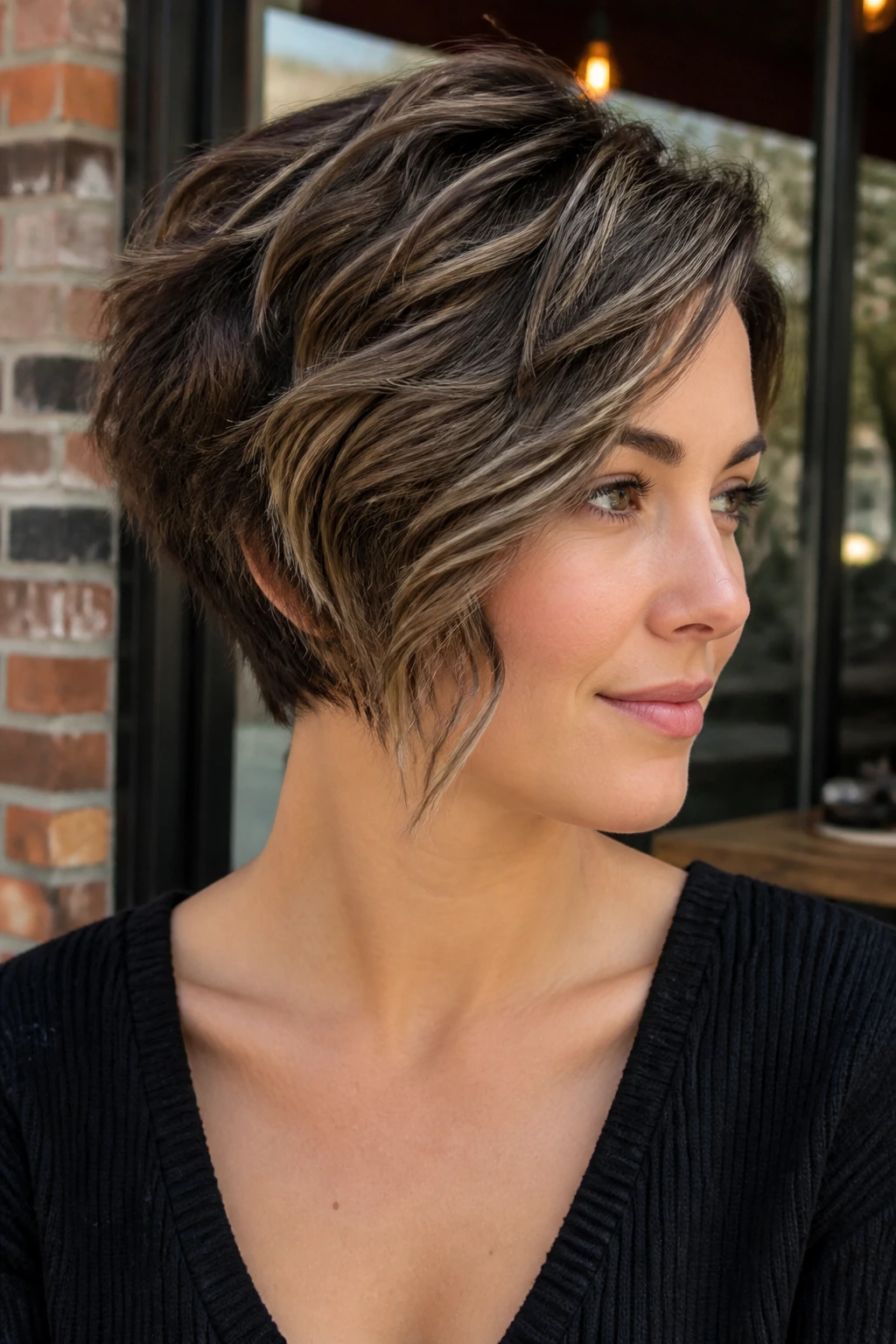
If you’re nervous about going too short, a pixie bob hybrid is the safe edge of the pool. The neckline stays cropped, but the front and sides keep a little more length, which gives a round face a cleaner vertical line. Waves help the in-between length look intentional instead of grown out.
This is a useful option when your hair is thick and you want shape without a lot of scalp exposure. It also behaves well with glasses, because the longer front sections frame the frames instead of fighting them.
10. Sideburn-Heavy Pixie
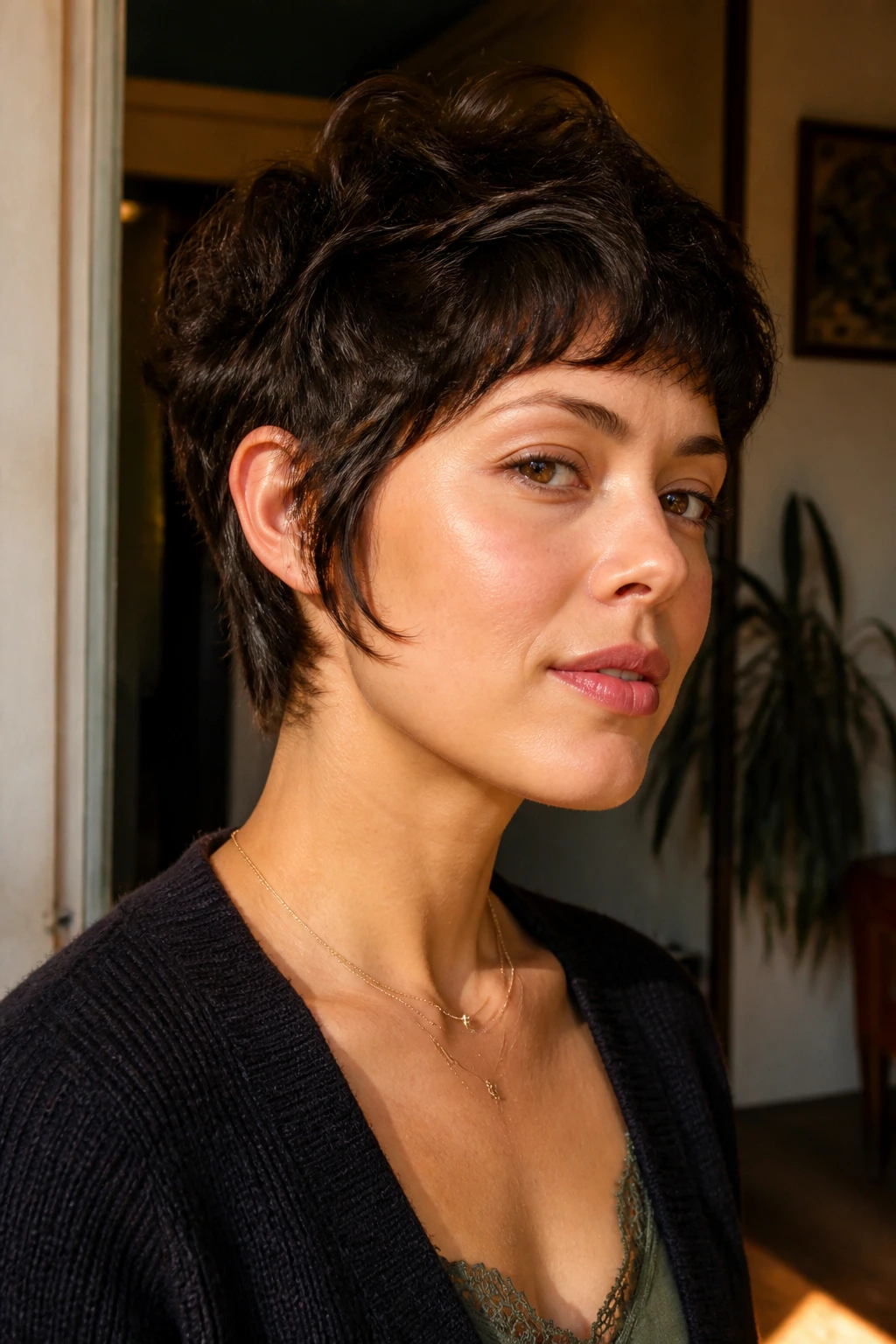
Sideburns are underrated. A slightly longer, tapered sideburn can narrow the cheek area in a way that feels almost invisible, which is exactly the point. The waves above them keep the cut soft, while the vertical line near the jaw adds control.
Ask the stylist not to clip the sideburn area too aggressively. If the taper disappears completely, you lose one of the best tools for balancing a round face. A little length there is not laziness. It’s strategy.
11. Wet-Look Wavy Pixie
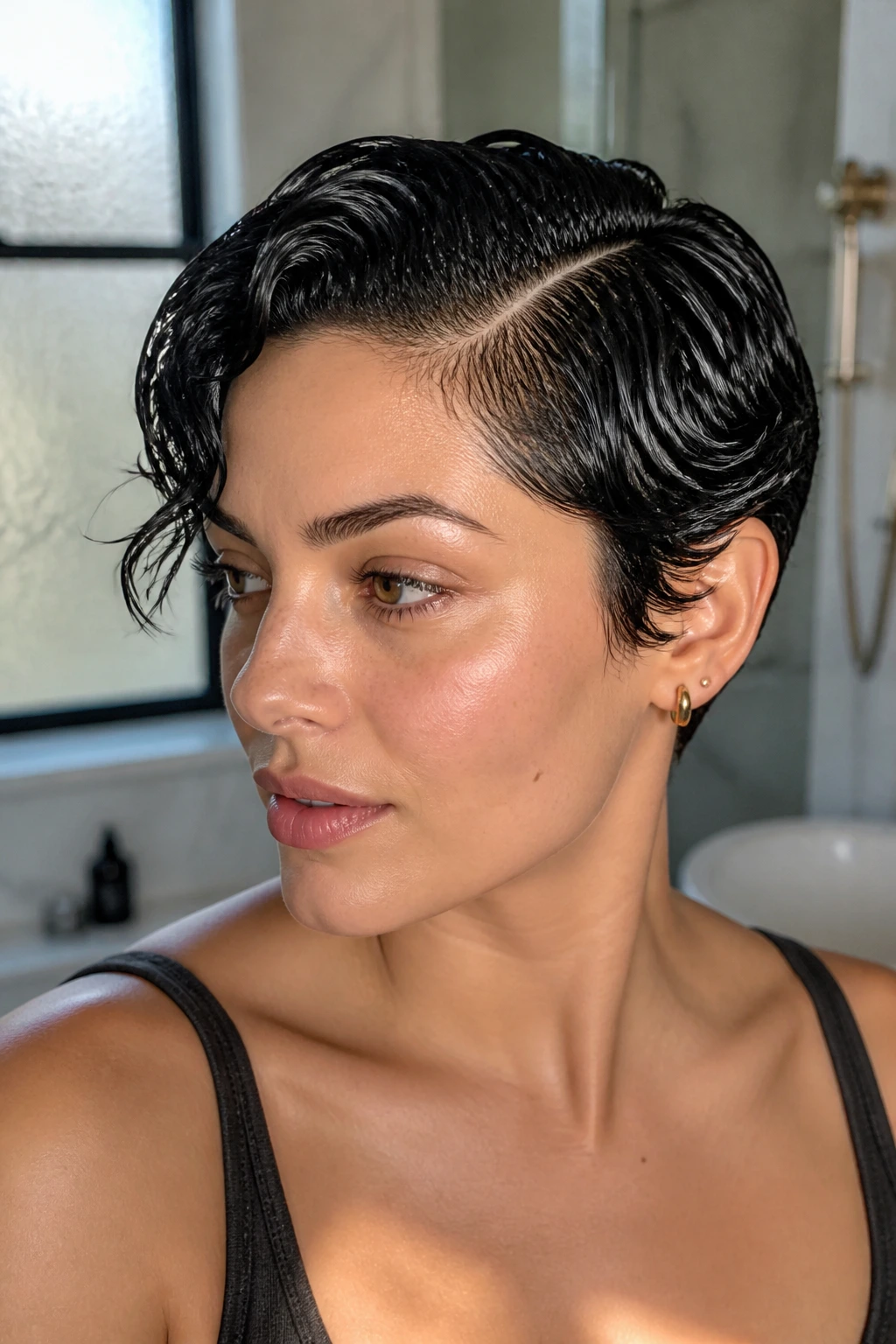
Wet-look texture sounds dramatic, and it is, but on a round face the shine actually helps because it keeps the shape sleek instead of fluffy. The waves should still be visible, just compressed and glossy, with the part pushed hard to one side or slightly back.
Use a gel-cream mix rather than a stiff gel. Hard shell texture can make short hair look helmeted. You want the wave pattern to stay visible in the light, not disappear under crunch.
12. Feathered Airy Pixie
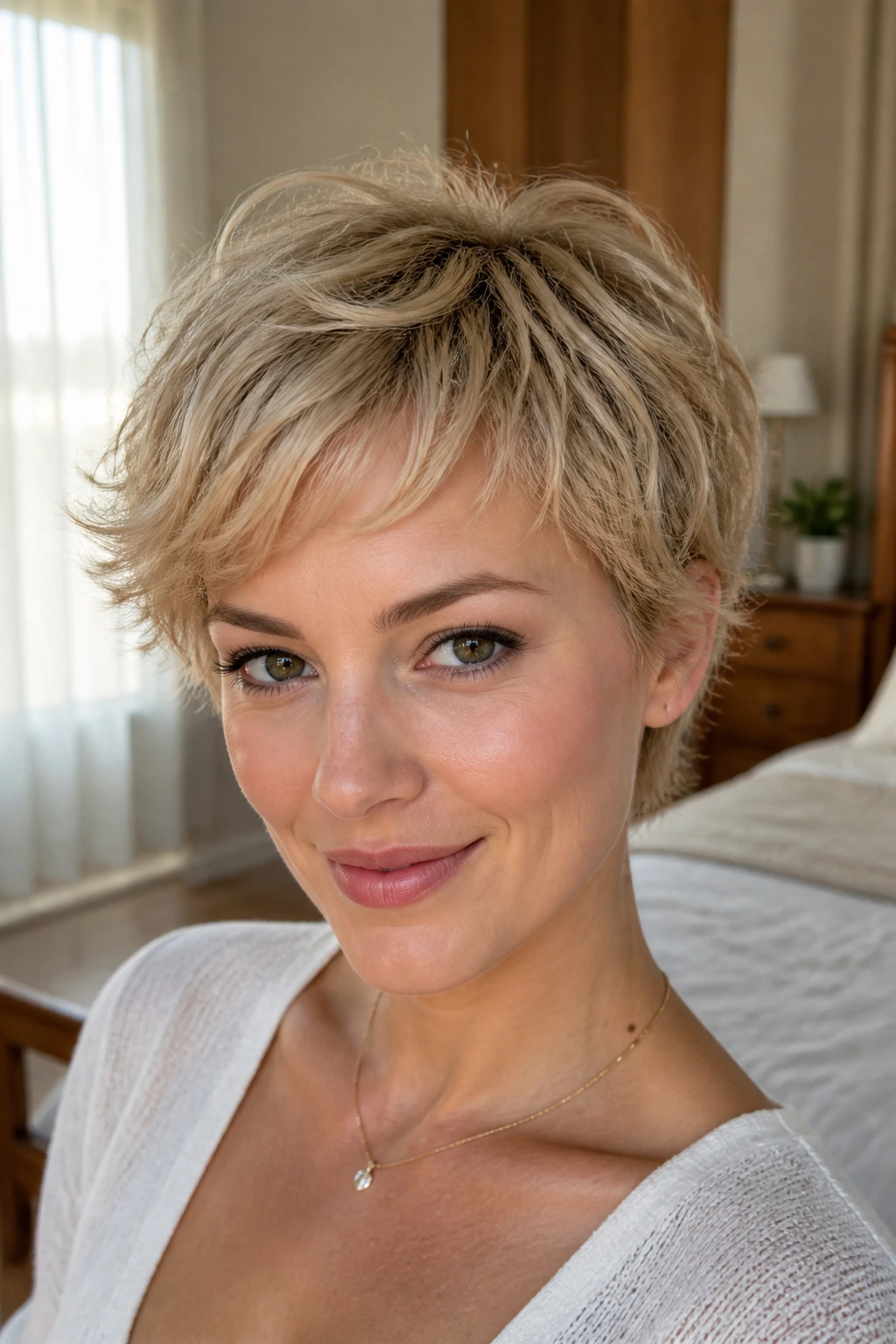
Feathering does one useful thing: it removes heaviness from the edges. Around a round face, that matters because soft but dense ends can widen the silhouette faster than most people expect. Feathered layers keep the movement light and the outline narrow.
This cut behaves best when dried with a vent brush or fingers, not a big round brush. Let the ends flick outward just a little. That tiny bend keeps the haircut from looking too tidy.
13. Shaggy Wavy Pixie

A shaggy pixie is for someone who likes texture with a bit of attitude. The layers are irregular, the wave pattern is loose, and the whole style has more edge than polish. On a round face, that irregularity helps because it breaks the smooth outline.
Why it flatters
The uneven layers pull attention upward and outward, but not in a blunt circle. Keep the sides lighter than the crown, or the shag reads as fullness instead of texture.
Styling note
Scrunch in a foam or salt spray, then twist 2-3 front pieces while they’re damp. That gives the cut some direction without turning it into a uniform curl pattern.
14. Quiff-Top Pixie
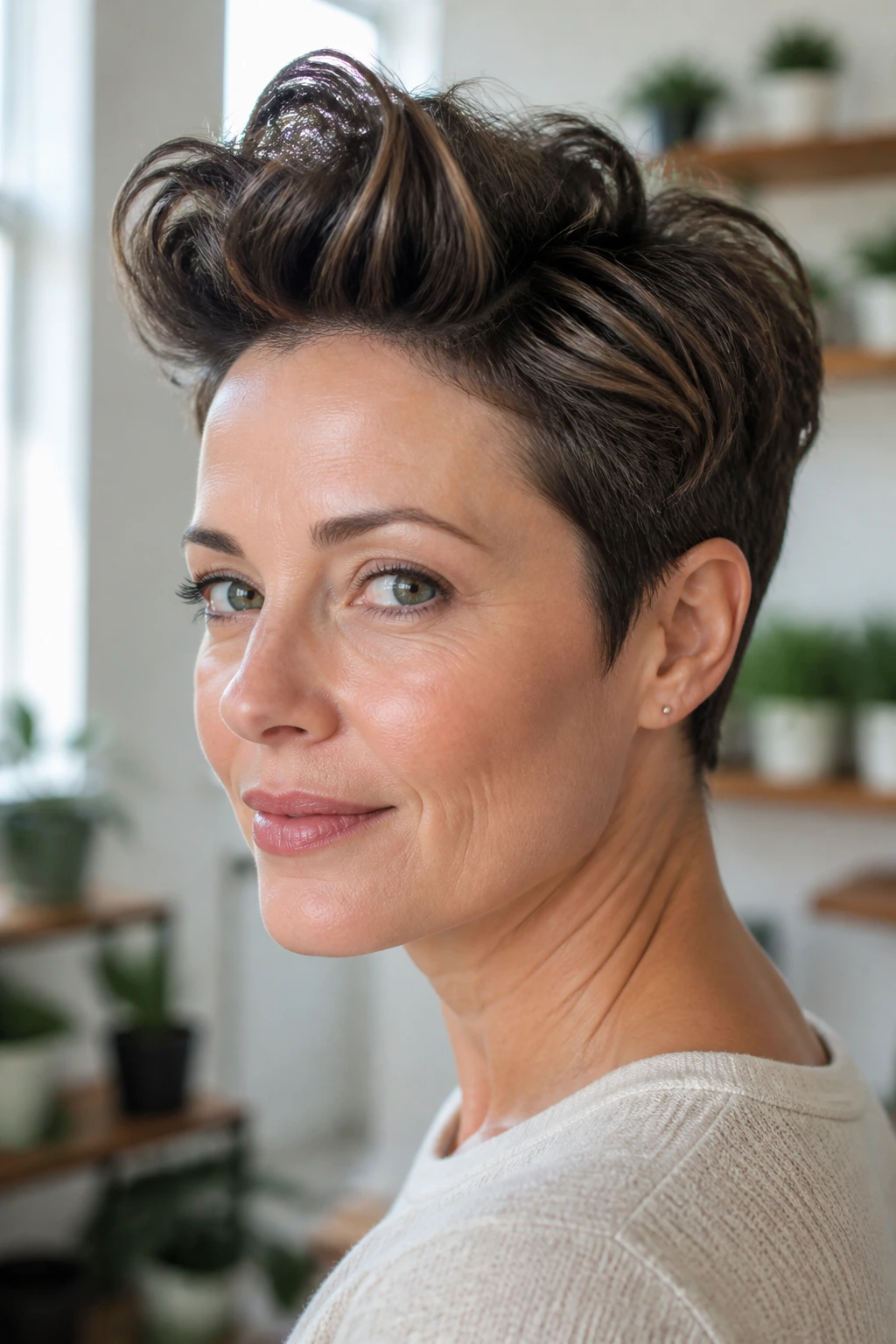
The quiff-top pixie pushes the height where a round face needs it most: above the forehead. It’s a little bolder than a regular textured crop, and that’s the point. The front rises, then softens into waves so the style doesn’t look stiff.
This is the cut I’d pick for someone who wants a sharper, more editorial shape. It works best with medium-density hair and a blow-dryer. If your hair is very fine, use mousse at the roots and dry in sections.
15. Ear-Tuck Side-Swept Pixie
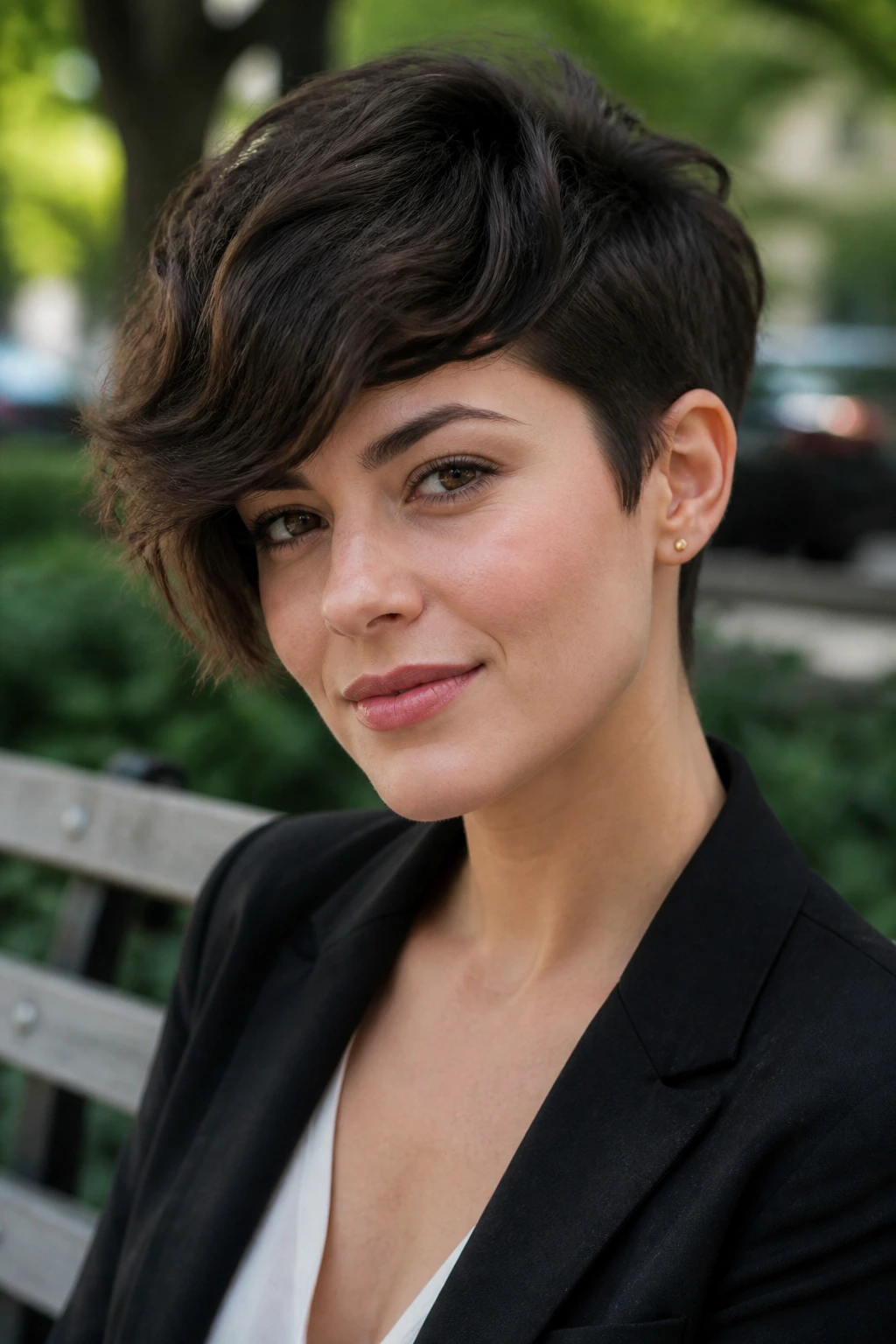
Tucking one side behind the ear creates a small, clean line that opens the face without exposing everything. The other side stays longer and wavier, which gives the cut a little tension. Round faces often look good with that kind of asymmetrical openness.
The trick is to keep the tucked side soft at the temple. If the hair is cut too short there, the tuck becomes severe instead of elegant. Leave enough length to graze the ear, not erase it.
16. Soft Mohawk Pixie
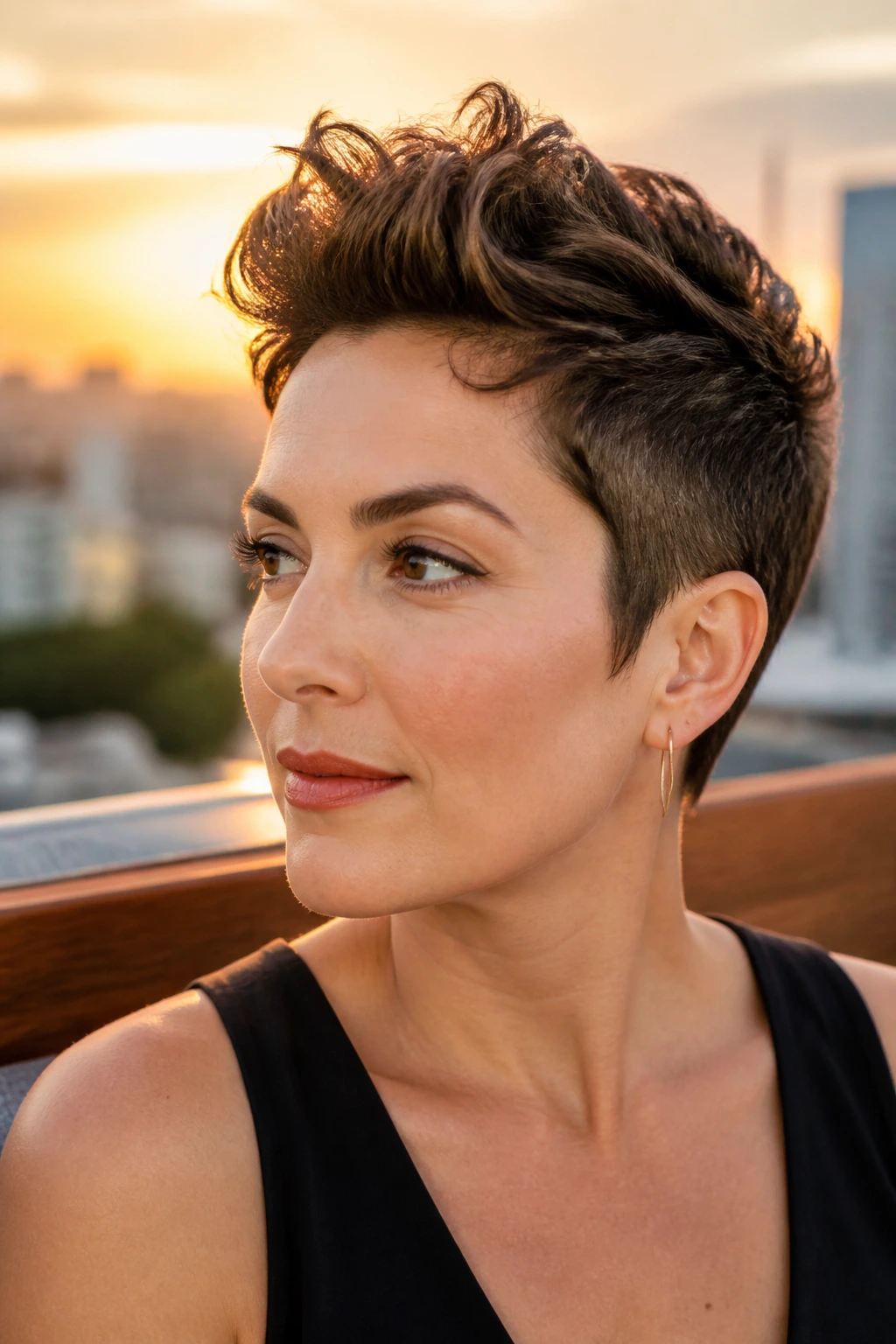
A soft mohawk pixie sounds louder than it is. The central ridge is lifted, the sides are clipped tighter, and the waves through the middle give the style its shape. On a round face, that upward line is useful because it creates the longest possible silhouette without adding width at the cheeks.
No need to go punk-rock with it. A narrow top strip, 1 to 2 inches of extra height, and tapered sides can be enough. Keep the ridge textured, not spiky.
17. Rounded Crown Pixie With Tapered Sides
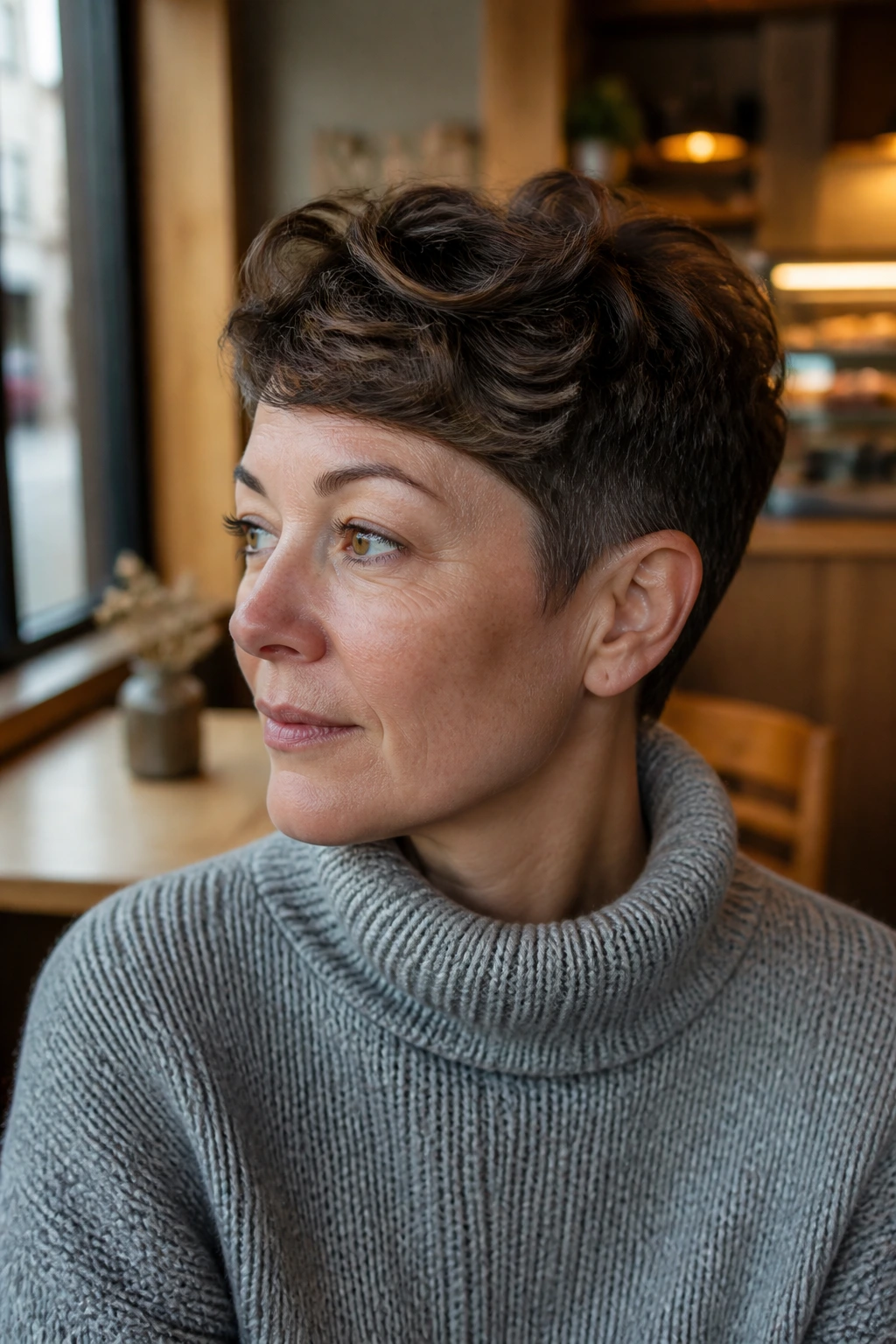
This cut balances a lifted crown with sides that stay slim and close. The name sounds symmetrical, but the shape should not be. The crown gets enough roundness to hold the wave, while the temples and jawline stay neat so the face doesn’t widen.
It’s a nice choice if you want softness without the bulk. Ask for internal layers at the top so the crown can sit higher. If the whole cut is cut to the same short length, the wave won’t have anywhere to build.
18. Balayage Layered Pixie
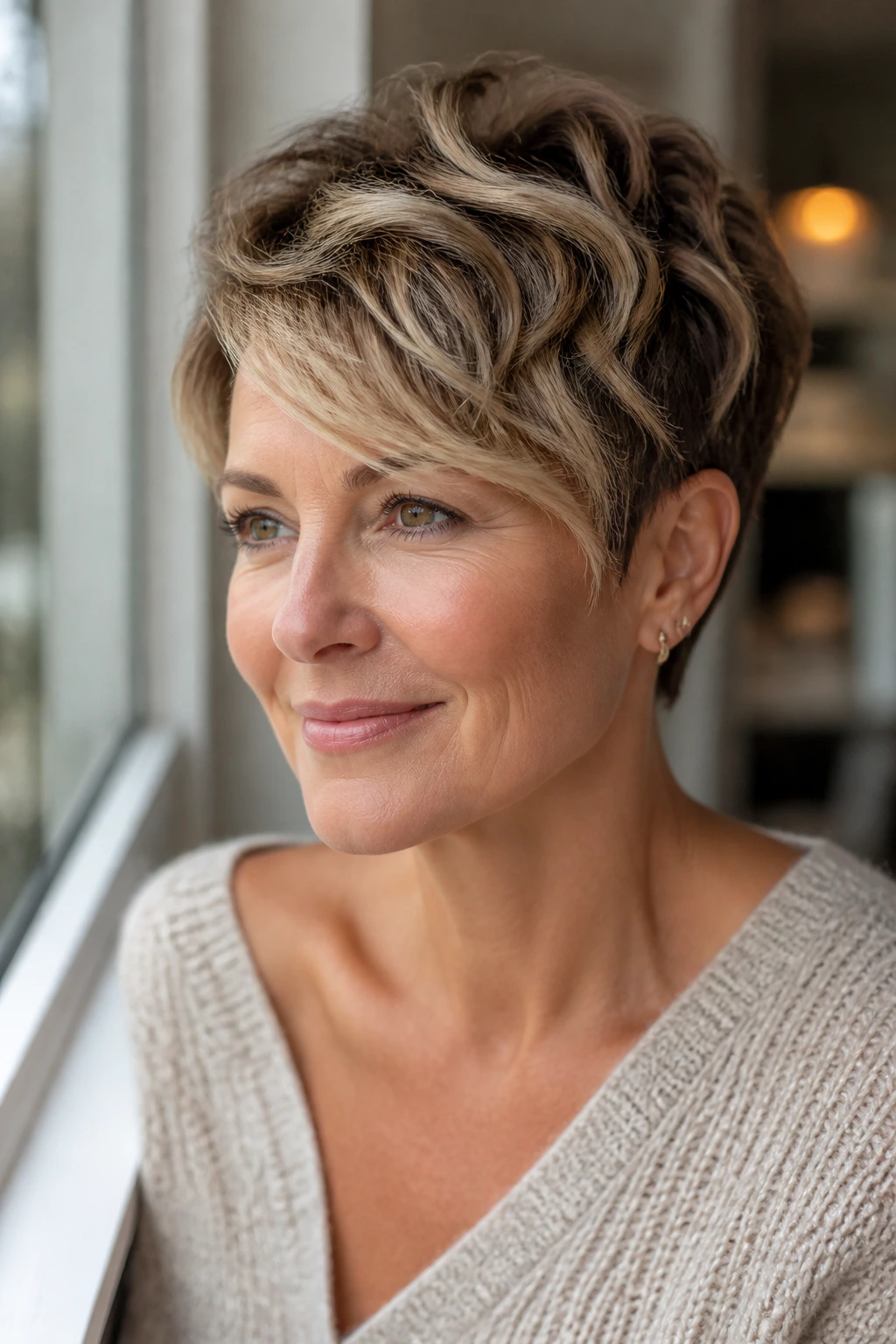
Color changes the read of a cut, and balayage can make a wavy pixie feel lighter right away. Soft highlights through the top and fringe create movement by eye, not just by shape. On a round face, that extra vertical shimmer helps draw attention upward.
The cut still matters more than the color. But if you like dimensional hair, this version looks especially good when the light pieces sit on the crown and front fringe. Avoid placing the brightest bits too low around the cheeks; that can widen the face visually.
19. Curtain Fringe Pixie
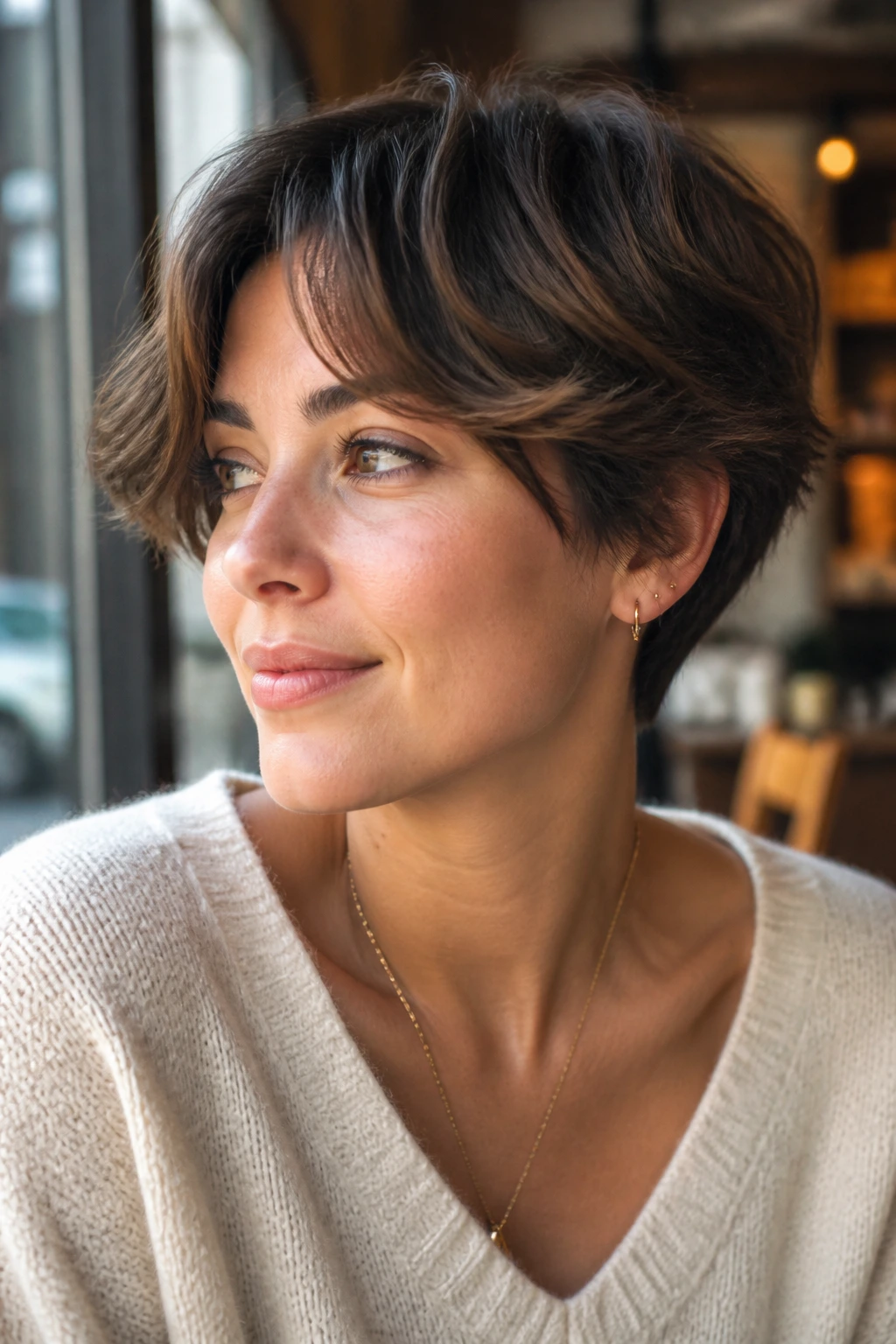
Curtain bangs on a pixie sound tricky, but they’re useful on round faces because they split the forehead softly and leave a center or off-center opening. The fringe falls away from the face, which makes the cheeks look less dominant. Add a wave, and the movement feels easy instead of heavy.
This is one of the more forgiving styles for grow-out. If the fringe gets a little long, it simply looks more lived-in. That’s not a problem. It’s a built-in grace period.
20. Razor-Cut Wave Pixie
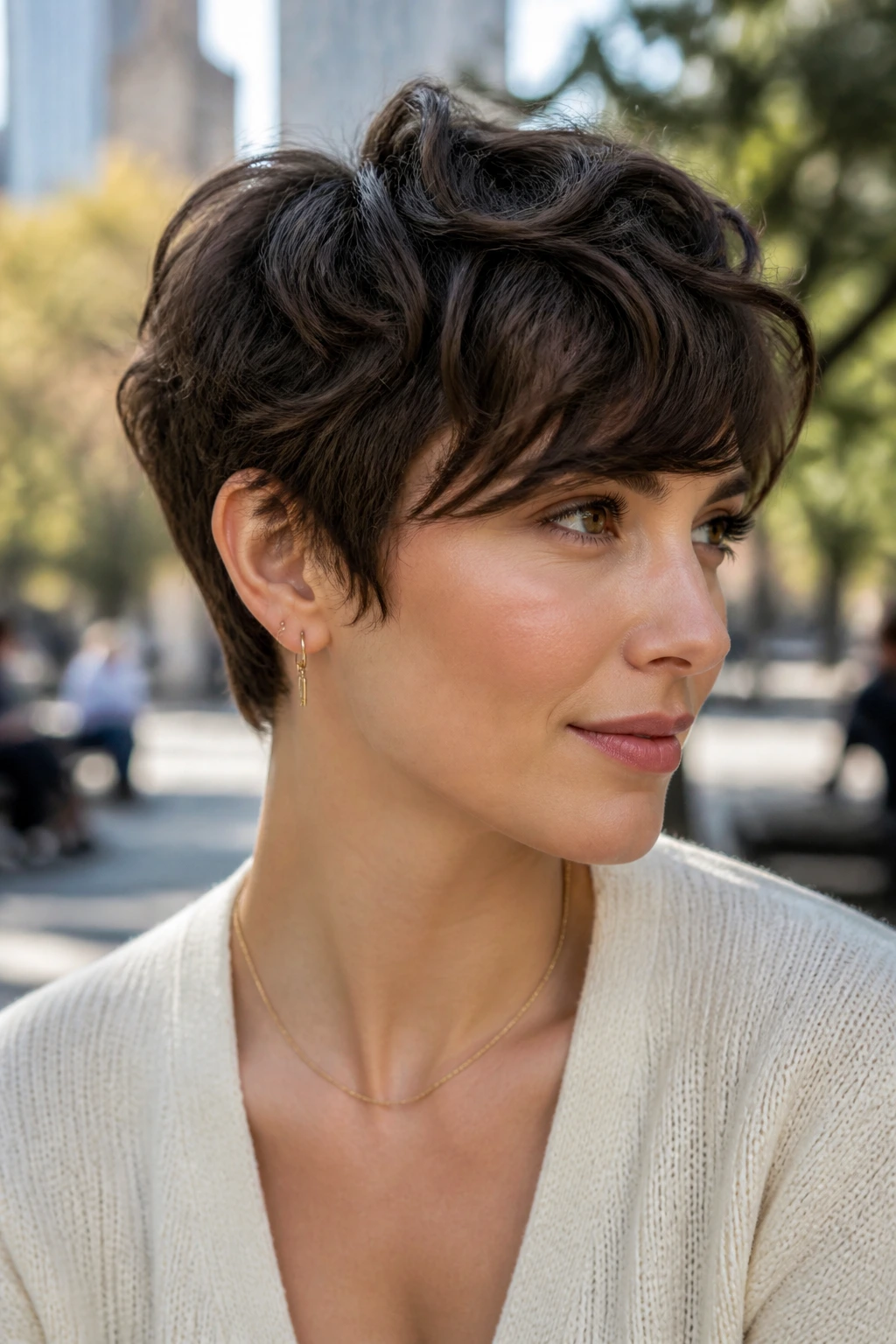
Razor-cut ends create a softer edge than blunt scissors, and that softness matters when you’re trying to avoid a boxy short cut. The wave slips through the layers more easily, so the shape stays light at the sides and back. Round faces need that kind of air around the perimeter.
Be cautious if your hair is already frizzy or very porous. A razor can make that texture flare if it’s used carelessly. The cut should look broken up, not fuzzy.
21. Grown-Out Nape-Hugging Pixie
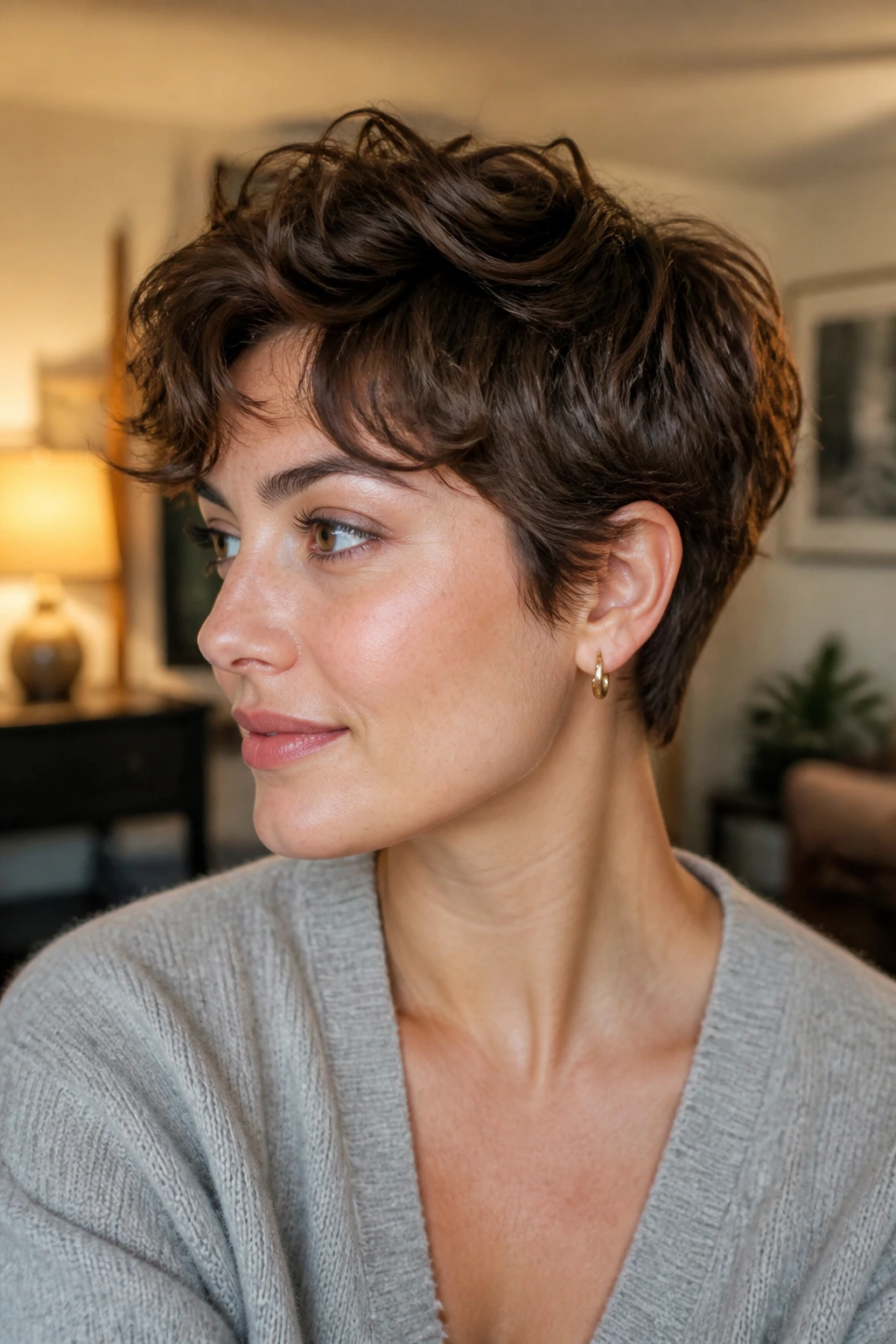
A grown-out pixie can be better than a freshly cut one, especially when it hugs the nape and keeps the top a bit longer. That extra length lets the waves fall with more shape, and a round face gets a cleaner line from forehead to neckline.
This version works when you don’t want the maintenance of a super-short crop. It looks intentionally soft, not unfinished, if the nape stays neat. A small trim every 5 to 7 weeks keeps it from turning lumpy.
22. Baby Bang Pixie

Baby bangs are a risk, but a controlled one. On a round face, a short fringe can add a strong horizontal line that keeps the style from leaning too sweet. The rest of the cut needs softness, though, or the whole thing can feel hard.
If you try this, keep the waves loose and the sides tapered. The fringe should sit above the brows with a bit of texture, never perfectly straight. That tiny irregularity keeps the face from looking wider than it is.
23. Temple-Length Textured Pixie
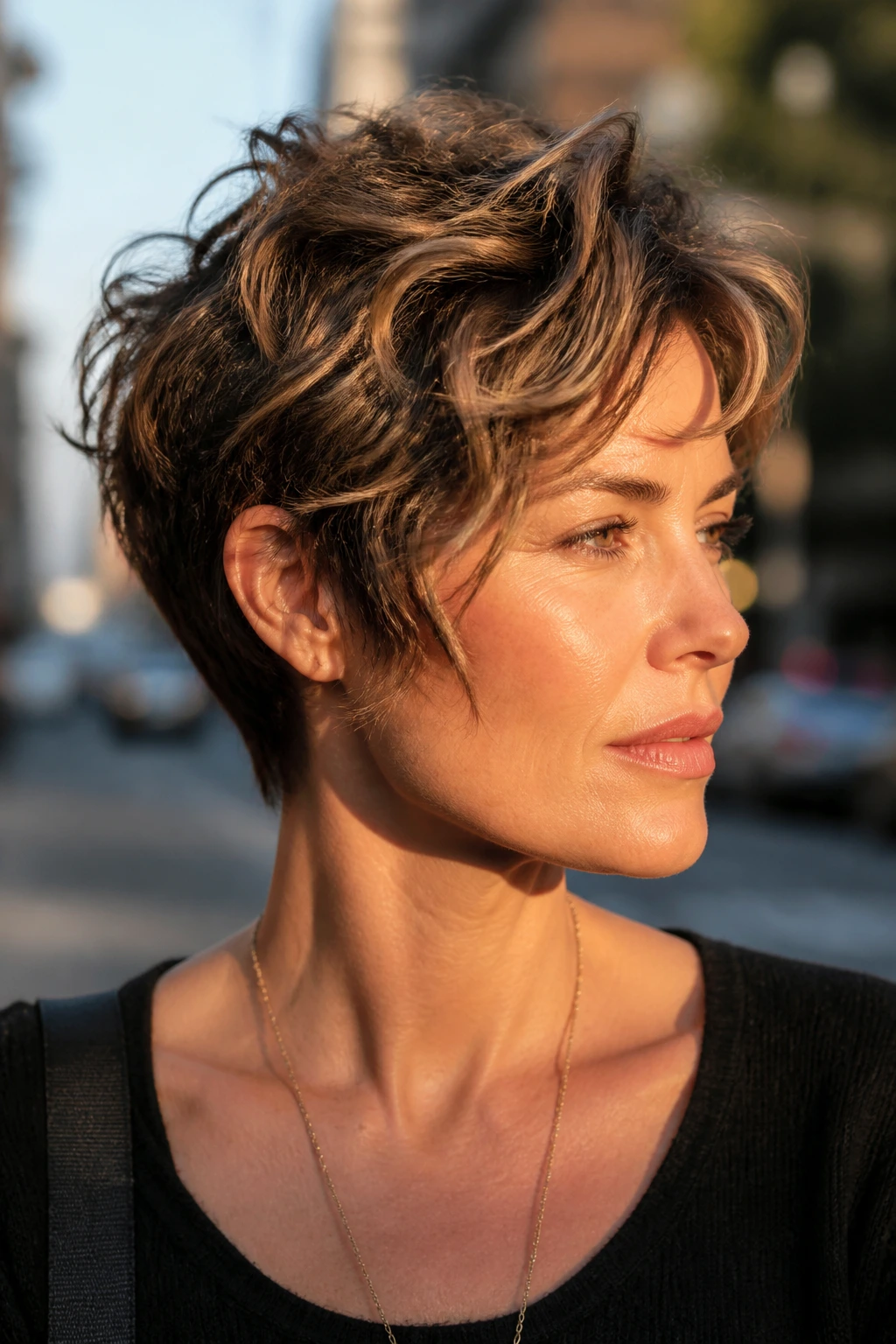
Temple-length pieces are one of my favorite tools for round faces because they frame the outer edge of the face without swallowing it. When they’re textured and slightly bent, they create a narrow corridor down the cheek rather than a full halo of hair.
This is a smart compromise for people who want short hair but hate feeling too exposed. It also works well with side parts and small earrings, because the temple pieces act like a soft border.
24. Side-Shaved Wave Pixie
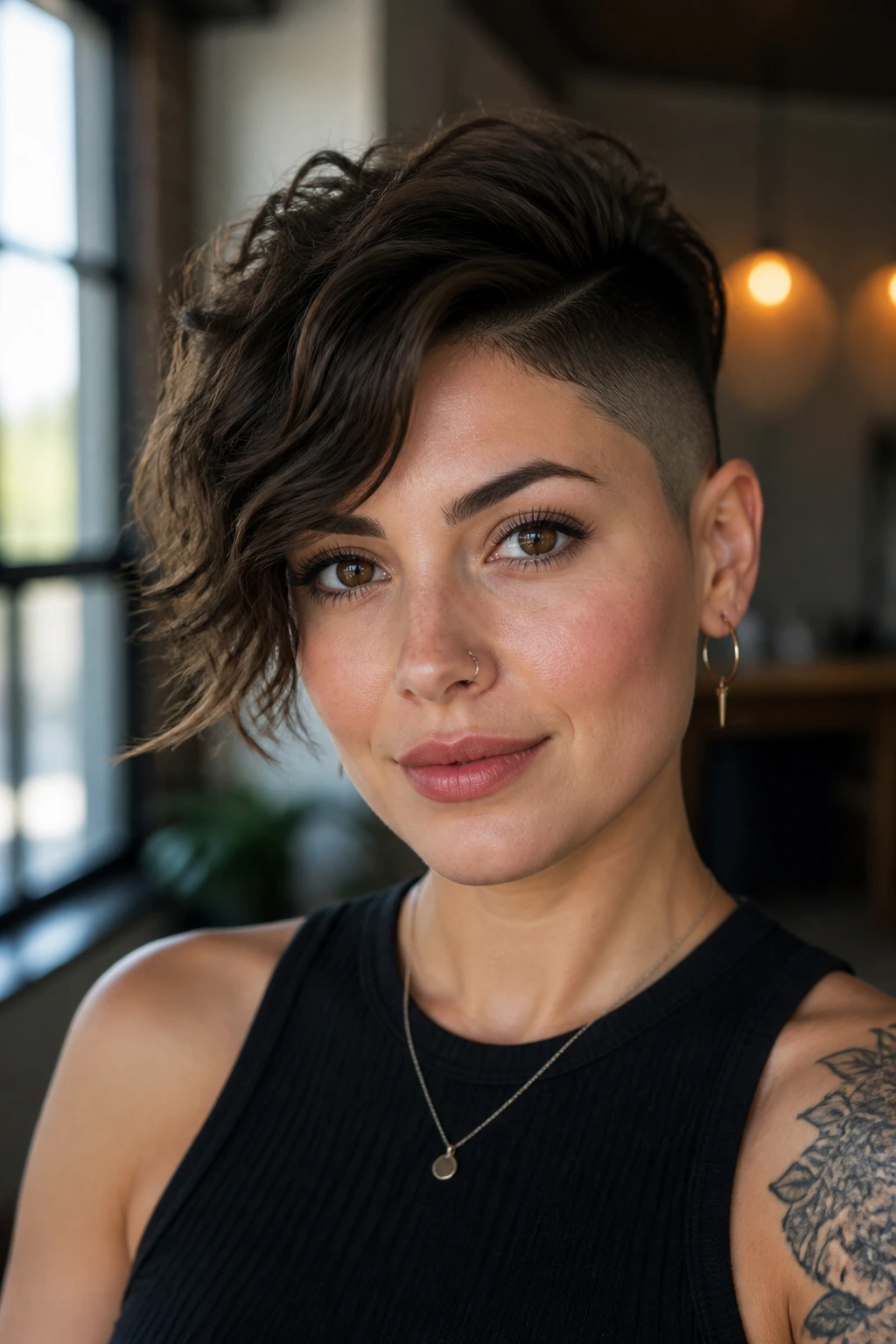
A side shave gives the face a sharp anchor point. The contrast between the clipped side and the wavy top makes the head shape look longer, which is exactly what a round face often needs. You can keep the shave subtle or push it further, depending on how bold you like your haircut.
The top should carry most of the texture. If the shaved section is too wide and the top is too short, the style loses its balance fast. Keep one side disciplined, one side loose. That tension is the whole appeal.
25. Romantic Soft-Wave Pixie
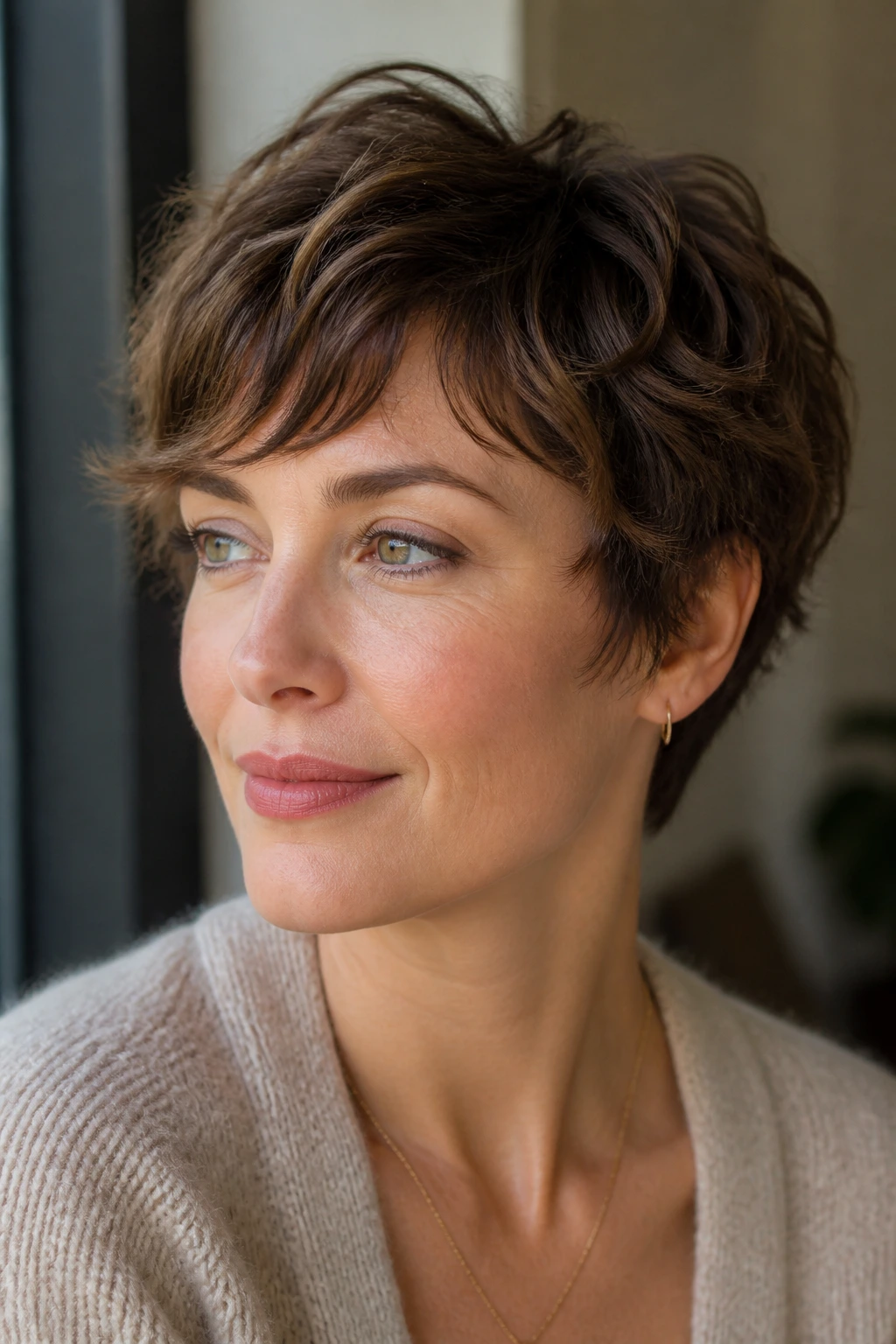
This is the gentlest version in the mix. The waves are looser, the fringe is softer, and the whole cut feels airy rather than sharp. On a round face, the benefit comes from the face-framing movement near the temples and the slight lift at the crown.
It’s a nice choice if you wear little makeup and want the cut to do the framing work. A light mist of flexible hold spray keeps the wave from disappearing, but don’t drown it. A soft wave should still look touchable.
26. Retro Sculpted Pixie
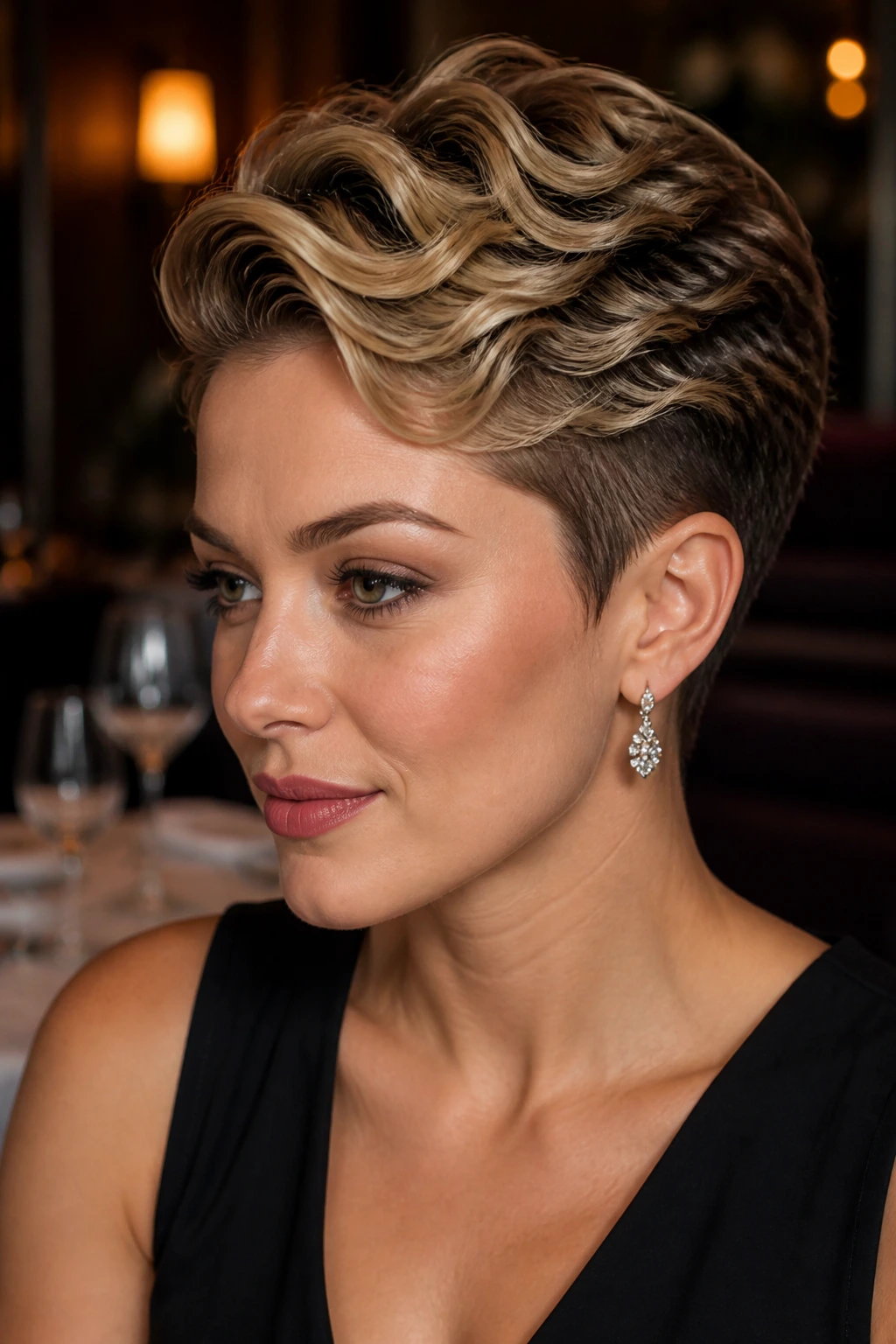
Retro sculpted pixies borrow from old-school finger waves and polished side parts, but the shape still needs modern restraint. On a round face, the sculpted top can add height while the side pieces stay close enough to avoid bulk. It’s structured, not stiff.
This is the style for dinners, events, and days when you want the haircut to look deliberate from every angle. Keep the wave pattern clean, and make sure the nape stays tapered. A sculpted top without a clean back can look unfinished.
27. Air-Dry Low-Maintenance Pixie
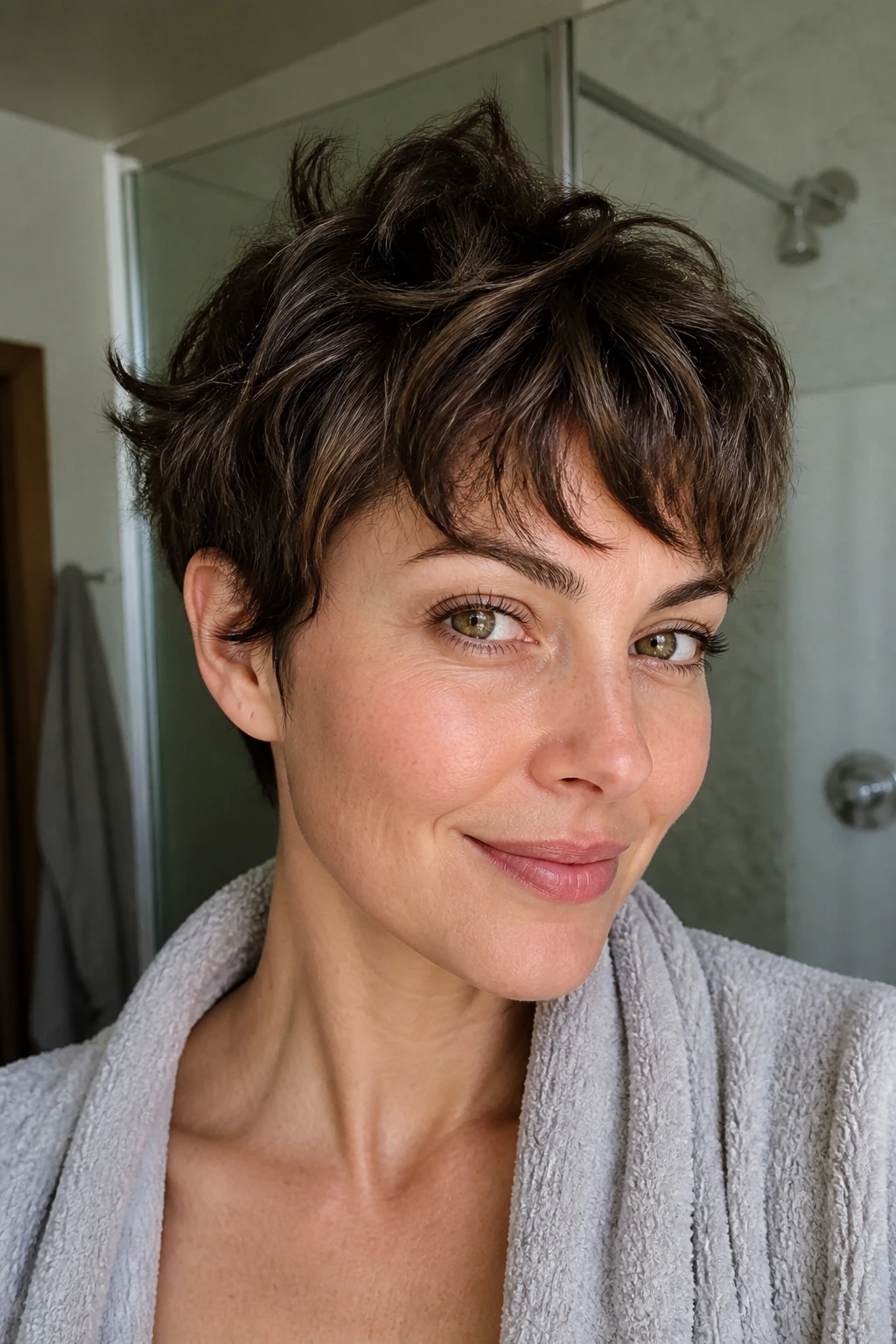
Some pixies need a blow-dryer. This one doesn’t. The cut relies on natural wave pattern, light layering, and a shape that falls into place once towel-dried and scrunched. For round faces, that matters because the hair can keep a bit of lift without being forced into one neat shape.
Use a leave-in spray or lightweight curl cream, then let the hair dry where it wants to. If the front collapses, clip the crown up for 10 minutes while it dries. That little lift changes the outcome.
28. Evening-Ready Polished Pixie
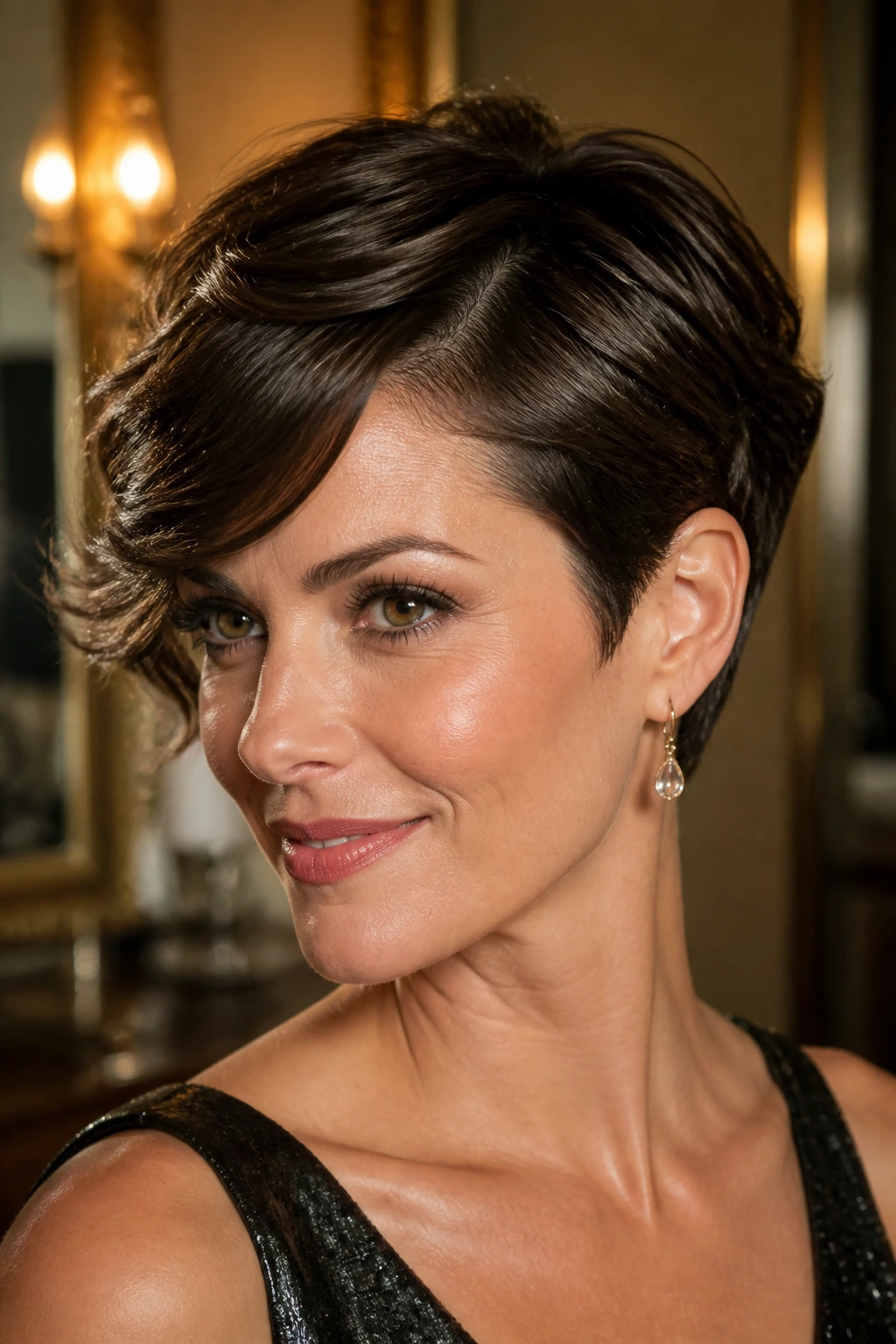
A polished pixie with waves can look surprisingly dressy. The sides stay close, the fringe is smoothed into a clean curve, and the top gets a controlled wave rather than a messy one. On a round face, that precision gives structure without losing softness.
I like this version with a slightly deeper part and a shine serum only on the mid-lengths and ends. Too much product at the roots turns the top flat. Keep the crown lifted and the wave visible, and the cut does the rest.
How to Ask for the Right Pixie Shape at the Salon
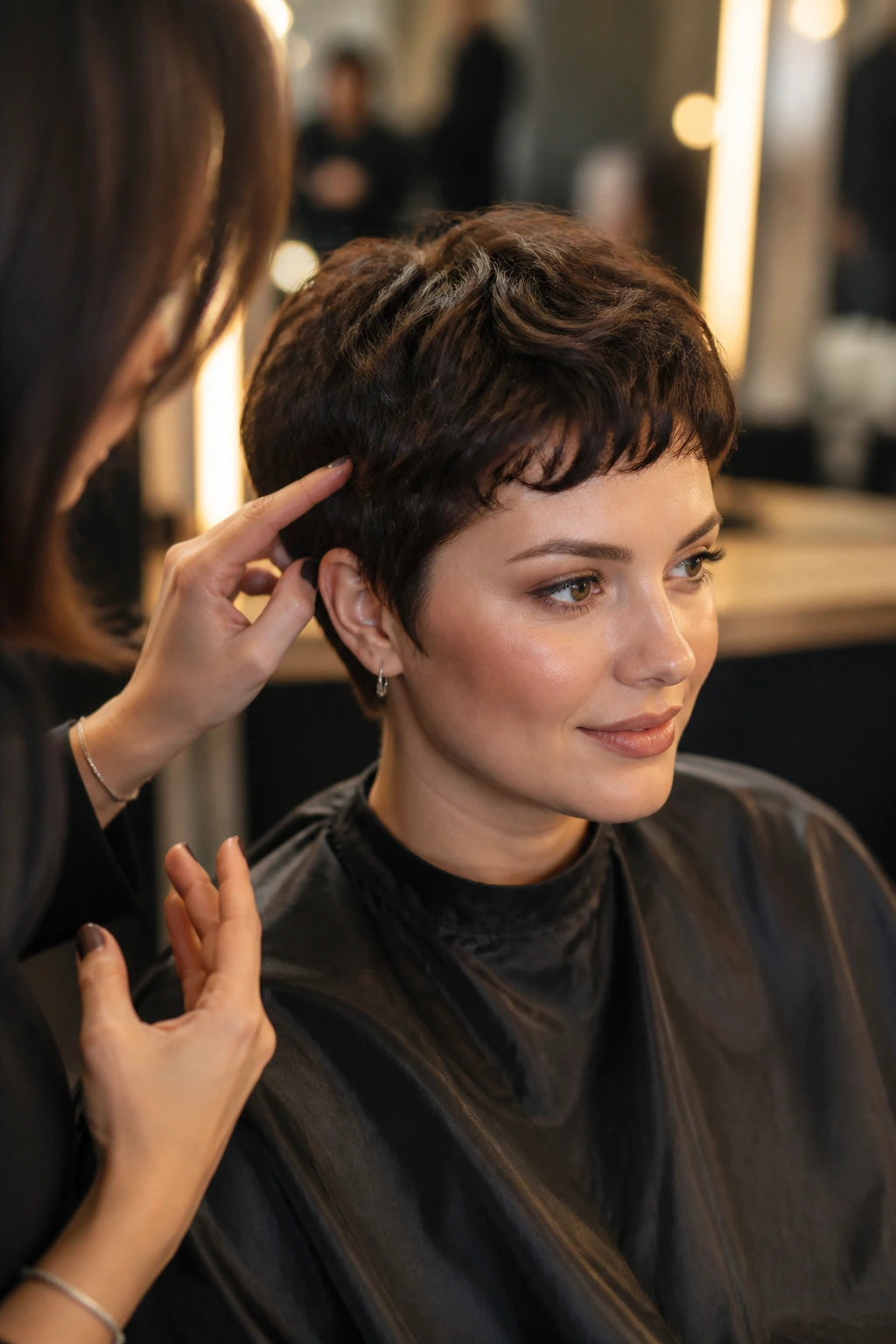
A good wavy pixie starts with a good conversation. Tell the stylist that you want height at the crown, slim sides, and movement through the top, not a round silhouette. That phrasing matters because “short and textured” can mean almost anything in a salon chair.
Bring 2 or 3 photos, but point out the parts you want, not just the overall vibe. Say whether you want the fringe to hit the eyebrow, the cheekbone, or the top of the ear. If your face is round, the difference between those landing points is not minor. It changes the whole geometry of the cut.
I’d also ask for point cutting or razor softening on the ends, plus a taper around the nape and temples. If your hair is thick, ask where bulk should be removed; if it’s fine, ask where weight should be left so the shape doesn’t go wispy. The best pixies are built on purpose. They do not happen by accident.
Essential Tools and Products for Styling Wavy Pixies
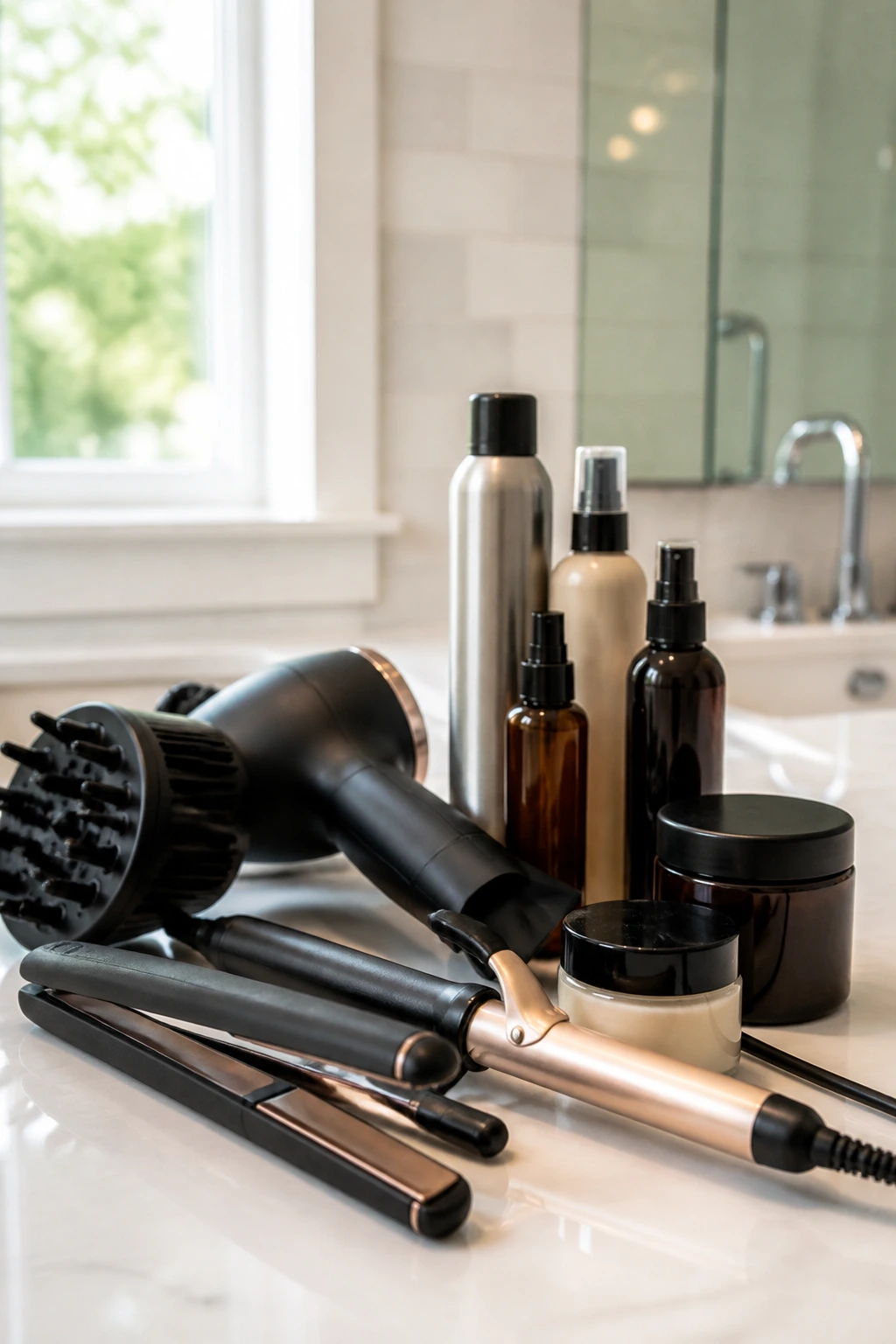
- Blow-dryer with concentrator nozzle: Helps direct the fringe and crown so the top doesn’t puff in every direction.
- Small round brush, 1 to 1.5 inches: Useful for creating lift at the roots and a bend in the front sections.
- Flat iron or 1-inch curling wand: Either one can add a quick wave to a flat piece or a stubborn fringe.
- Light mousse: Gives the crown enough grip without turning short hair sticky or crunchy.
- Sea salt spray: Good for airy texture, especially on finer waves that need a little bite.
- Flexible-hold hairspray: Keeps the shape in place while still letting the hair move.
- Matte paste or light styling cream: Best for piecey definition on ends and side sections.
- Duckbill clips: Handy for setting the part or lifting the crown while hair dries.
- Wide-tooth comb: Better than a brush for keeping wave pattern intact after washing.
- Diffuser attachment: A smart add-on if your natural wave frizzes when blasted with plain air.
Choosing the Right Length and Texture for Your Hair

Round faces need shape, but your hair type decides how that shape behaves. Fine hair usually does better with a little more top length, because 2.5 to 3.5 inches gives waves enough room to show up without disappearing into the scalp. Thick hair can go shorter on the sides and still keep body on top, which is why undercuts and tapered napes often work so well there.
If your waves are loose, lean into a side part and a longer fringe. Tighter waves need more internal layering so the cut does not turn into a puffy dome by midmorning. Straight hair can still wear these styles, but it usually needs a hot tool or a good bend made with a brush and dryer.
Product choice matters too. Heavy creams can make short hair sit too low, especially around the cheeks. Lightweight mousse, spray texture, and a small amount of paste are usually enough. I’d rather underdo product on a pixie and refresh it once than drown the crown and spend the day trying to save it.
How to Style and Wear These Pixies Every Day
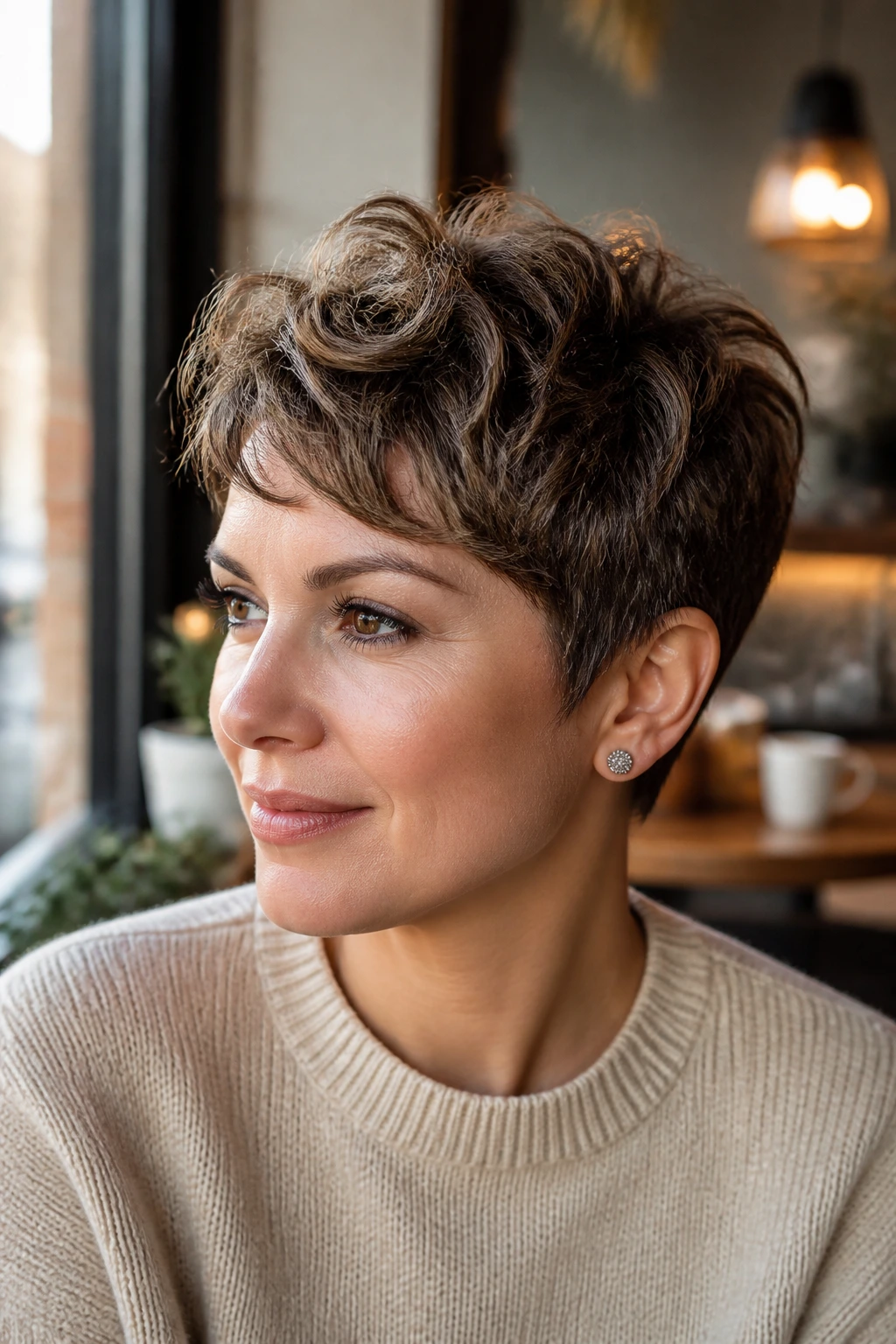
Presentation: Keep the crown a little lifted and the sides close. That’s the silhouette that flatters a round face without making the haircut look severe.
Accessories: Small hoops, narrow frames, and earrings that hang just below the jawline tend to work better than wide, round accessories that echo the face shape.
Outfit Pairing: Higher necklines can look sharp with a wavy pixie if the cut has enough lift; open collars and V-necks make the neckline feel longer and keep the whole look light.
Day-to-Night Switch: Add a touch of shine serum and smooth the fringe with a comb for evening, or rough it up with a fingertip and sea salt spray for daytime. Same cut. Different mood.
Product Amount: Start with less than a nickel-sized amount of cream or paste. Short hair magnifies every extra bit of product, and that’s how good texture goes limp fast.
Additional Tips and Texture Boosters
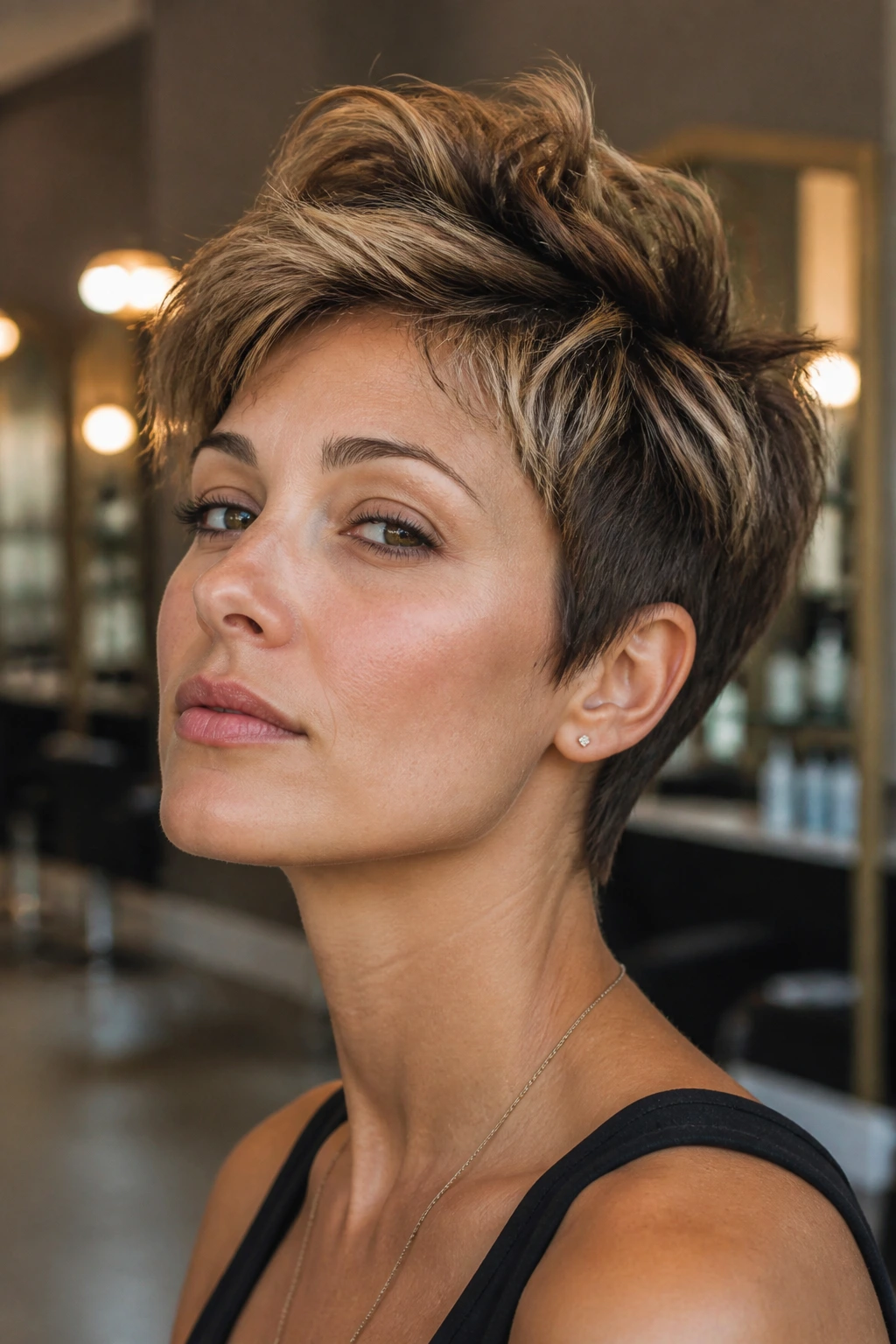
Flavor Enhancement: A tiny drop of shine serum on the ends makes waves look intentional, especially when the top has been rough-dried and needs one polished detail to keep it from feeling unfinished.
Customization: If your face is round and your hair is dense, ask for a narrower side panel and a bit more length at the front. If your hair is fine, keep the crown layers soft and use mousse at the roots instead of adding more length.
Serving Suggestions: Tuck one side behind the ear, leave the other side loose, or set the fringe in a soft S-wave for a more styled finish. Those small moves change the face framing without changing the cut.
Make-It-Yours: Want a lower-maintenance version? Skip the heavy fringe and keep the top textured enough to fall naturally. Want more edge? Add a side shave, an undercut, or a sharper asymmetrical line through the front.
Common Mistakes That Make a Round Face Look Wider
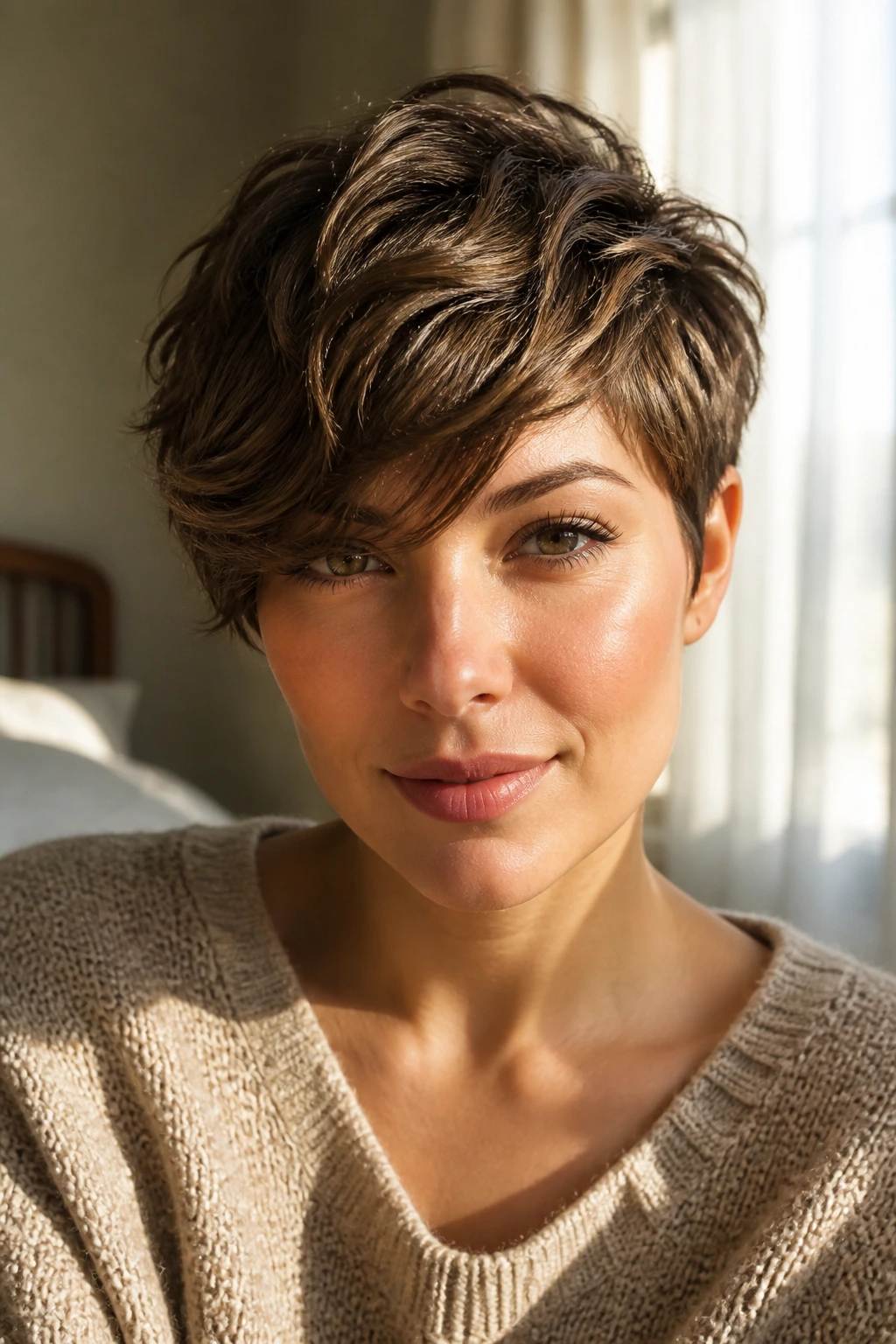
A lot of pixie cuts fail for one boring reason: they’re too even. If the length sits at the same point all the way around the head, the eye sees a circle, not a shape. The fix is simple but specific: leave more length on top or in the front, then taper the sides and nape.
Another common problem is too much volume at the cheeks. That can happen when the side sections are dried outward or when a heavy cream spreads the hair like a little fan. Keep product off the lower sides and direct the wave upward or diagonally instead.
Blunt bangs are another trouble spot. A straight line across the forehead can shorten the face and make the cheeks feel wider by comparison. If you want fringe, go side-swept, curtain-like, or softly broken up.
The last mistake is over-styling the wave into a perfect curl. Perfect curls can turn a pixie rounder than it needs to be. A little irregularity is better. Always.
Variations and Adaptations to Try
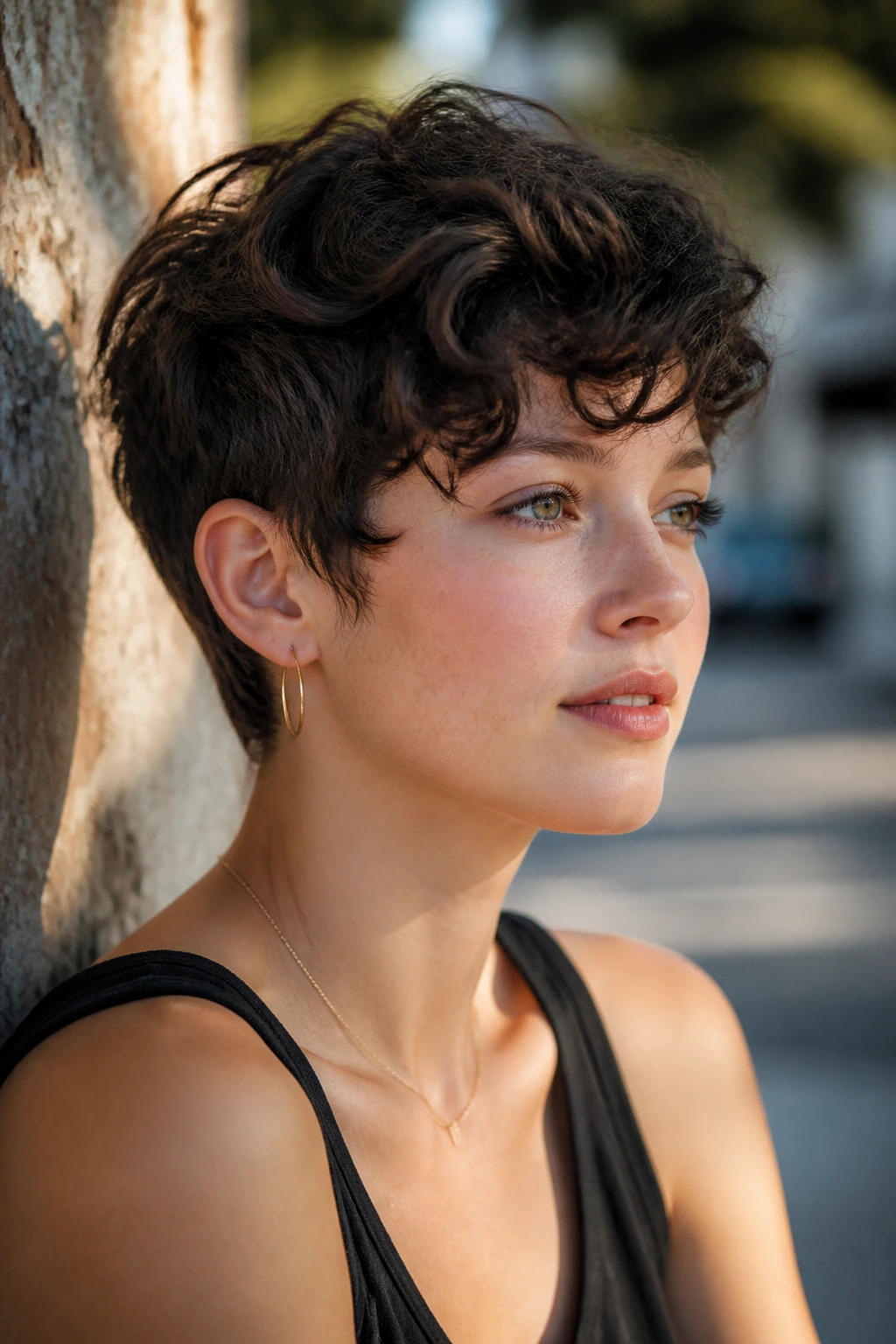
The Fine-Hair Lift: Keep the sides shorter and the crown longer, then use mousse and root-drying for a little extra height. Fine hair needs shape more than product.
The Thick-Hair Taper: Ask for internal debulking under the top layer so the cut doesn’t sit like a cap. This one lives or dies by removing weight in the right places.
The Curly-Wave Hybrid: If your hair sits between wavy and curly, keep the fringe longer and let the texture do the work. Diffuse on low speed so the shape stays soft.
The Grow-Out Pixie Bob: Let the front reach cheekbone length and keep the nape neat. This version buys you time between trims without losing the face-framing effect.
The Color-Framed Crop: Add soft highlights or a darker root shadow to show off the bends. Dimension makes short hair look fuller, especially when the wave pattern is loose.
Trims, Grow-Out, and Day-to-Day Maintenance
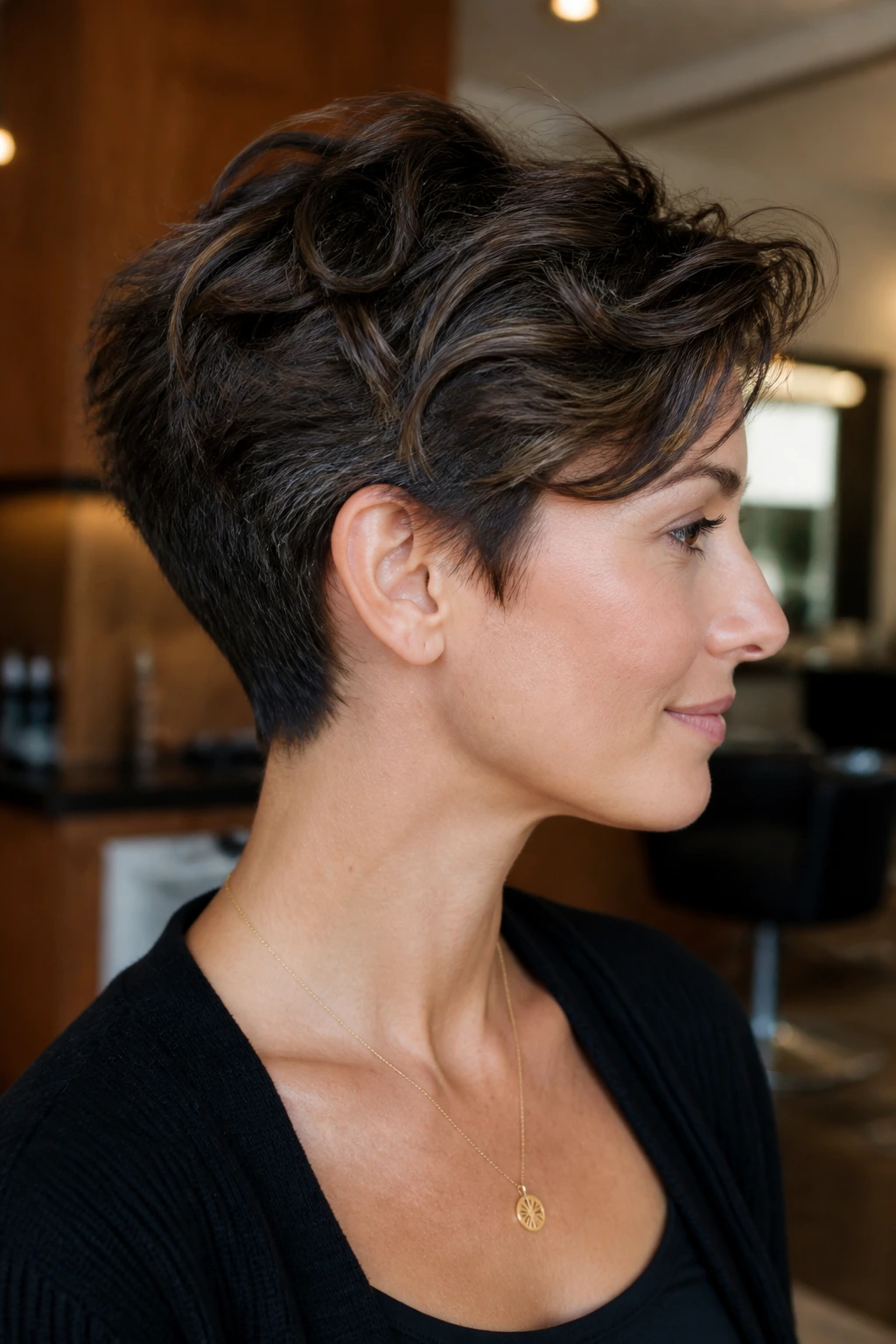
A wavy pixie on a round face usually looks its best with trims every 4 to 6 weeks. That keeps the nape clean, the sides slim, and the crown from getting heavy. If you wait too long, the cut can blur into a shape that feels wider than it should.
At home, sleep on a silk pillowcase or wrap the top loosely with a scarf if the front collapses easily. You do not need a fancy routine, but you do need to keep the fringe from getting flattened against the pillow for eight hours straight. In the morning, a mist of water plus a dab of cream is usually enough to reset the wave.
Wash frequency depends on product use, but most pixies behave better when the scalp stays clean and the ends don’t get coated in layers of old styling paste. If the hair starts sticking together at the crown, it’s probably product buildup, not a bad cut.
Frequently Asked Questions
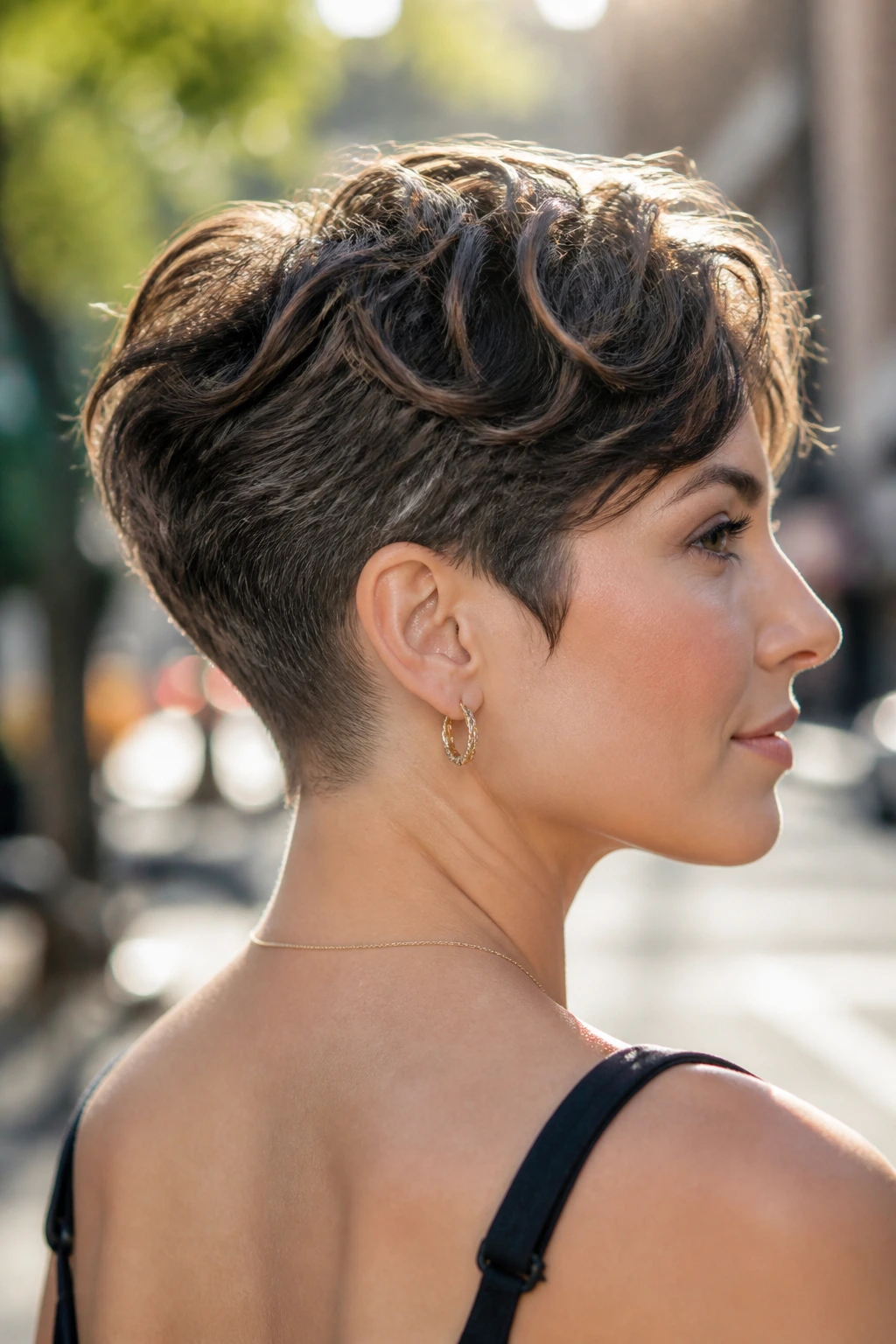
Do wavy pixie hairstyles make round faces look wider?
They can, if the cut is too even or too full at the sides. The safer version keeps height at the crown, narrowness at the temples, and movement through the fringe so the face reads longer.
What fringe works best on a round face?
Side-swept fringe, curtain fringe, and soft broken bangs usually work best because they interrupt the width of the face without drawing a hard line across the forehead. Blunt baby bangs can work too, but they need texture and some lift elsewhere in the cut.
Can fine hair wear a wavy pixie?
Yes, and fine hair often does well with a pixie because it doesn’t have to carry much weight. The key is to keep the top long enough for movement and use lightweight mousse or spray instead of heavy cream.
How do I keep the crown from falling flat?
Dry the roots first, lift the hair with duckbill clips for a few minutes, and keep conditioner away from the scalp. A small amount of mousse at the roots helps more than piling on extra hairspray after the fact.
Is a pixie bob better than a classic pixie for round faces?
If you want more softness around the cheeks, yes. A pixie bob gives you a little extra length in front, which can be useful if you’re easing into shorter hair or want more room for side-swept movement.
What if my waves turn frizzy instead of piecey?
Use less product, not more, and stop roughing the hair once it starts to dry. Frizz usually gets worse when short hair is touched too much while it’s drying. A diffuser on low heat can help keep the wave pattern together.
How short can the sides be on a round face?
Pretty short, as long as the top has enough length to create contrast. A close taper at the temples and nape often makes the face look slimmer because it removes side bulk where width tends to sit.
What’s the easiest version to maintain?
A nape-tapered, side-swept pixie with loose waves is the least fussy. It grows out gracefully, doesn’t need perfect styling, and still gives the face that angled frame round faces tend to like.
Why This Shape Stays in Rotation
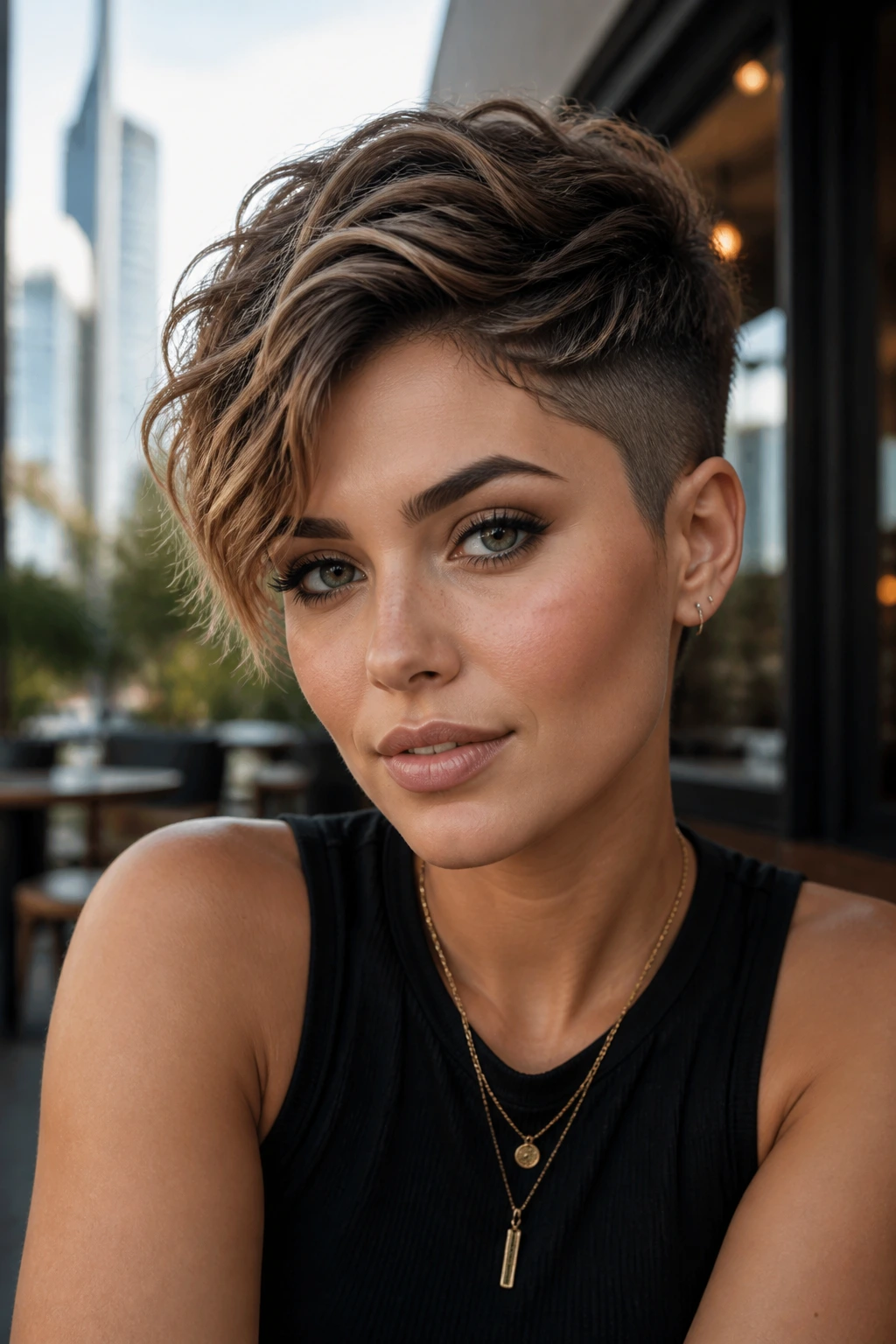
The best wavy pixie isn’t the shortest one or the boldest one. It’s the one that gives your face a little lift, a little edge, and a shape that feels deliberate from the front and the back. On a round face, that usually means keeping the sides slim, the top alive, and the fringe moving.
That combination holds up whether the style is soft, sharp, polished, or messy. Change the product, tweak the fringe, shorten the nape, or keep the top a touch longer — the logic stays the same. Give the haircut structure first, then let the waves do the rest.
