



A good pixie bob does something most short cuts miss: it keeps a little swing around the jaw while letting the nape stay neat and close. That small stretch of extra length matters. It softens the face, gives you room for side parts and bangs, and keeps the haircut from turning boxy the moment you stop fussing with it.
The shape works because the weight sits where the eye likes to land. The bob side gives you a line at the cheek or jaw; the pixie side removes bulk from the back and around the ears. On straight hair, that can read crisp and tailored. On wavy or curly hair, it can look airy and soft, provided the layers are cut for the texture instead of forced into a one-size-fits-all pattern.
The best versions do not look like a compromise. They look chosen. A stacked nape, a side-swept fringe, a broken-up fringe, a deep side part — each one nudges the same base cut into a different mood, and that’s where the fun starts.
Why These Pixie Bobs Earn a Real Place in the Rotation
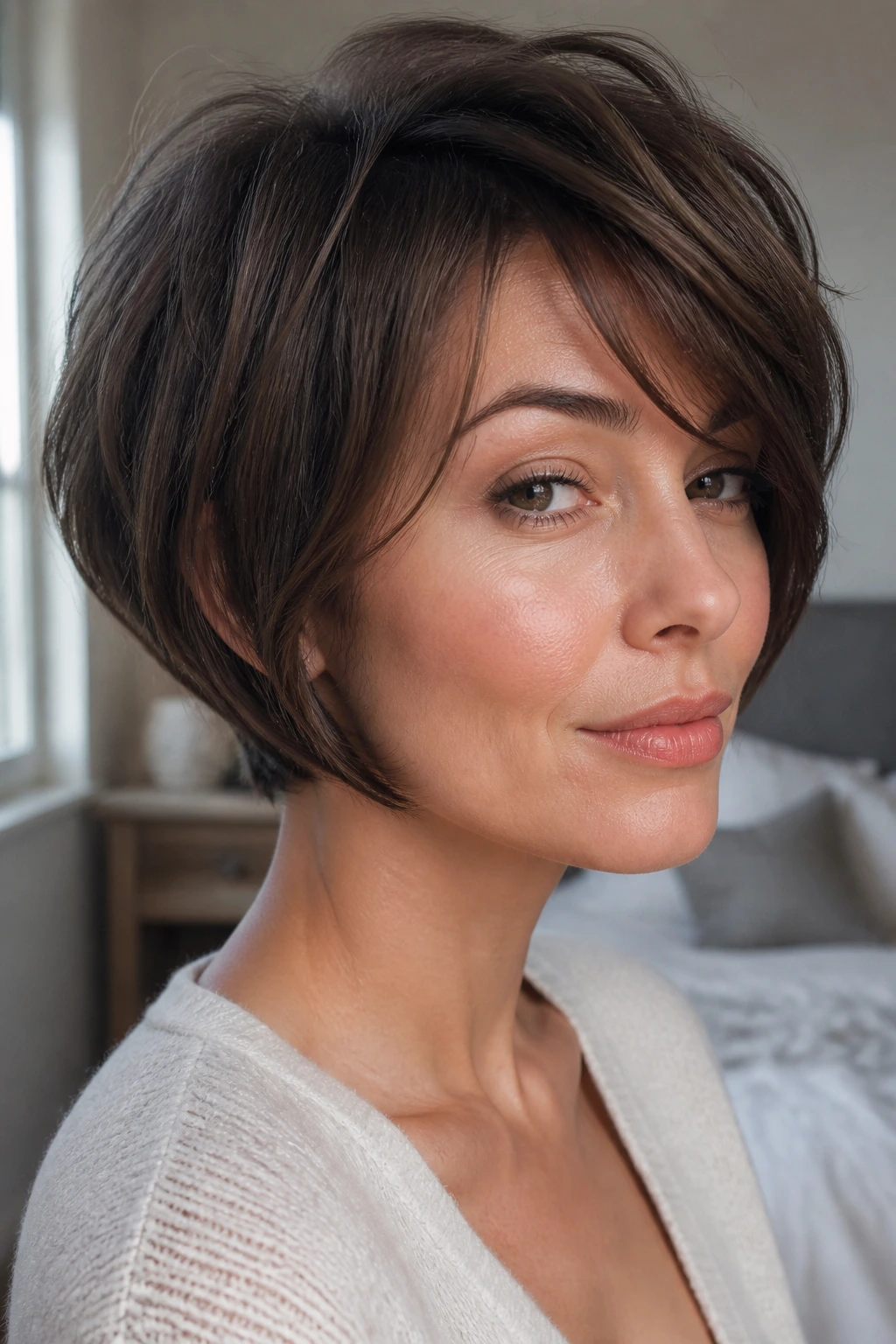
- Face-framing is built in: The length around the cheekbones and jaw gives you room to soften a strong chin, balance a wider forehead, or draw attention to the eyes without needing long layers.
- The shape trims bulk without losing movement: A pixie bob takes weight off the back and sides, but the bob length keeps the cut from collapsing into a close-cropped crop.
- Styling time stays sane: Most versions need 5 to 15 minutes with a blow-dryer, a round brush, or a dab of paste; you are not negotiating with a full head of long hair here.
- Grow-out is kinder than a classic pixie: The extra length buys you a few more weeks before the silhouette goes fuzzy, which matters if you do not want to live in the salon chair.
- Texture actually has room to show up: Straight hair gets polish, wavy hair gets bend, curly hair gets shape. The cut does not flatten texture if the layers are cut with some intelligence.
- Color makes sense on this cut: Highlights, root shadow, silver strands, copper, and peekaboo panels all show better when the cut has short pieces with movement around the face and crown.
1. Feathered Honey-Blonde Pixie Bob
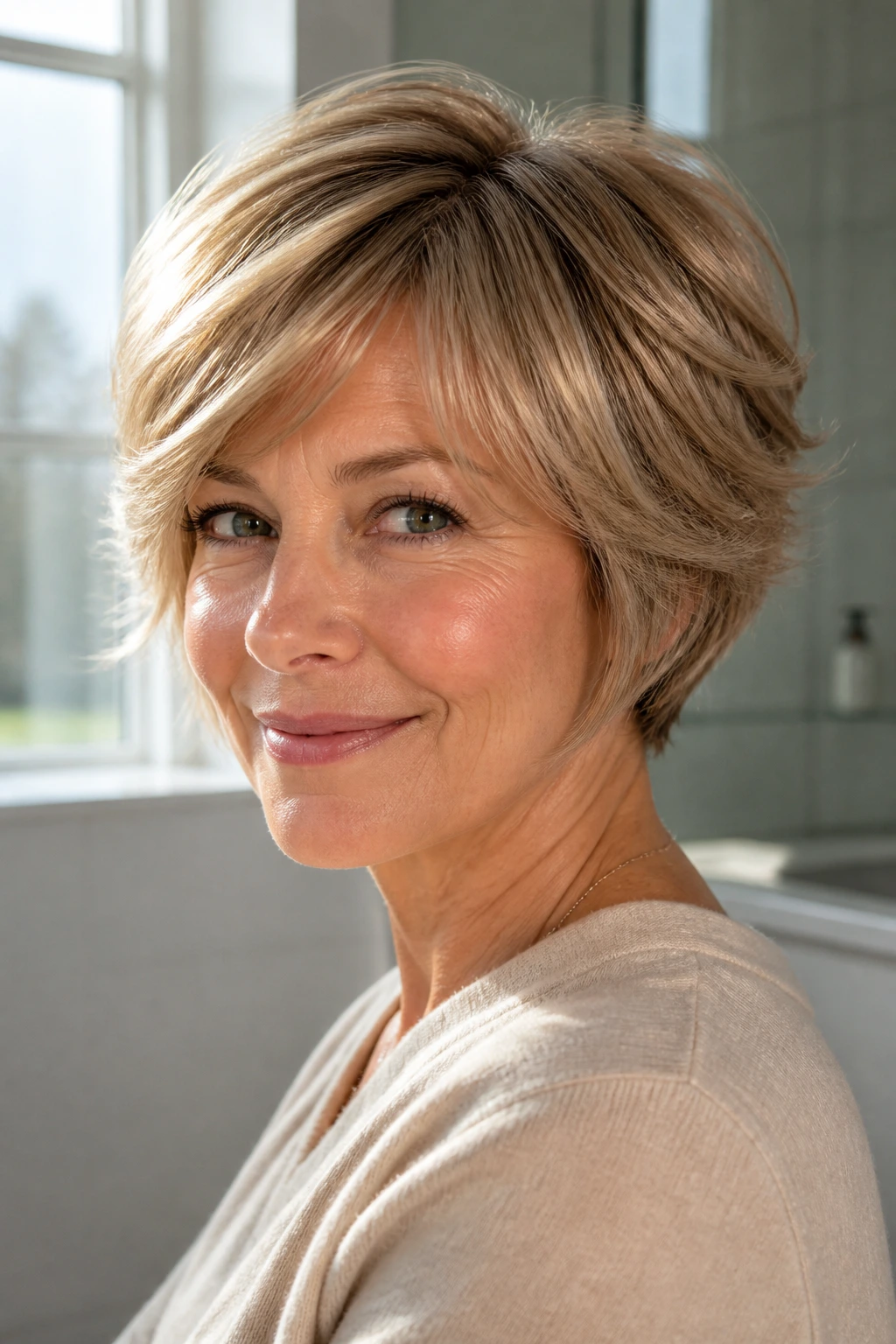
This version feels light right away. The feathering around the crown and cheekbones keeps the cut from sitting in one solid block, and the honey-blonde tone makes the layers show up even when the hair is fine. It works especially well if your hair tends to lie flat at the roots and then puff out at the ends.
Why It Works:
The soft feathering lets the hair bend instead of sticking out. A 1-inch round brush and a quick root lift with mousse are usually enough to give it shape. The honey tone adds warmth near the face, which keeps the short length from looking harsh.
Best styling move: Blow-dry the top forward, then flip the front pieces back with your fingers. That tiny reversal gives the cut some lift without making it look overdone.
2. Tapered Brunette Pixie Bob with a Side Sweep
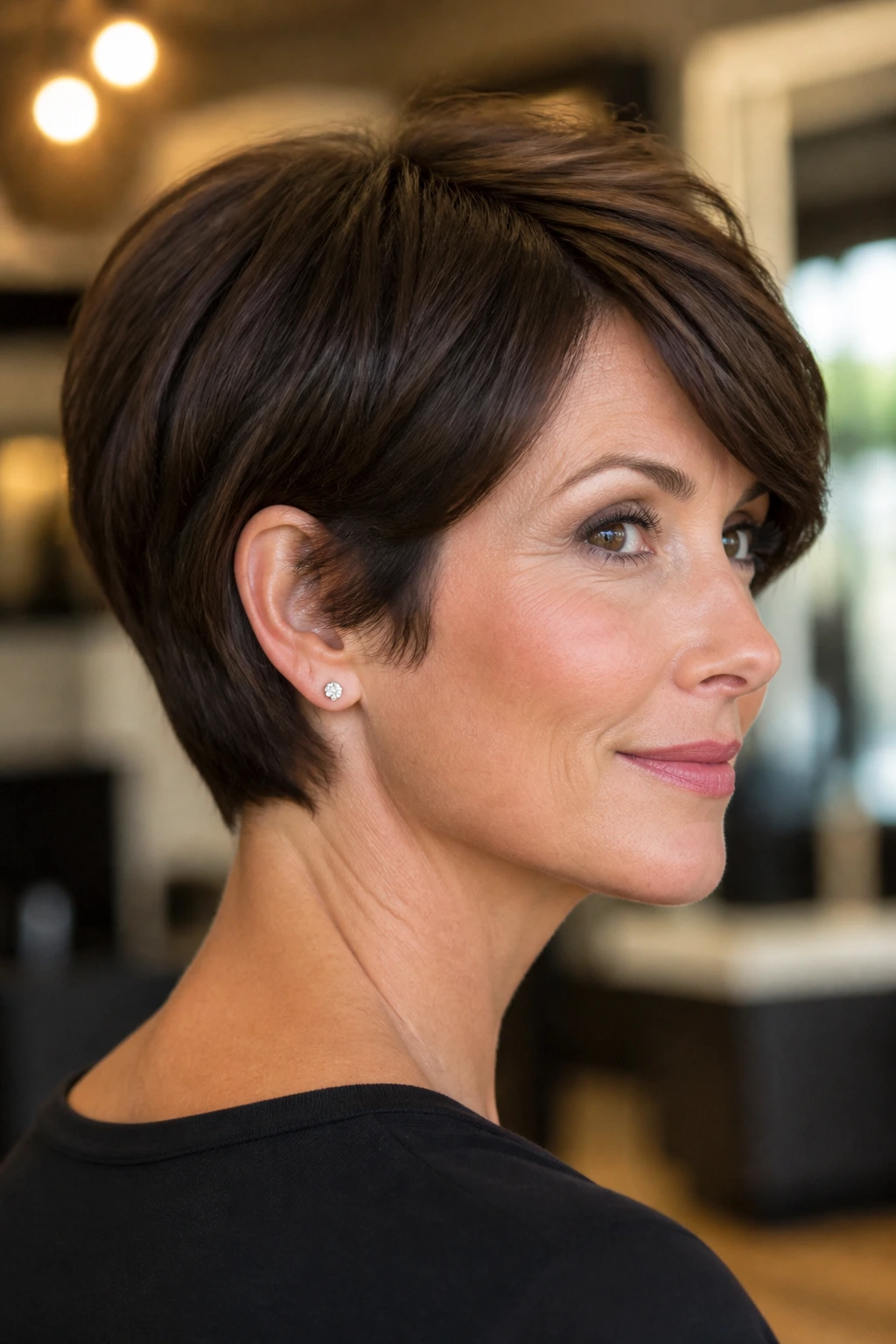
A deep brunette color makes the line of the cut look sharper, and the tapered nape keeps the back close to the neck so the shape stays neat. The side sweep is doing the heavy lifting here; it softens the forehead and keeps the whole cut from feeling too severe.
The cleanest part of this cut
The taper matters more than people think. If the back is left too bulky, the whole shape starts to look like a short bob that gave up halfway. Ask for the back to hug the neckline, then leave enough length on top to sweep over with a paddle brush or a medium round brush.
This is one of those cuts that looks expensive when it is done well, even if the styling is minimal. A little shine cream on the ends and a side part set while the hair is still warm is often enough.
3. Choppy Textured Pixie Bob
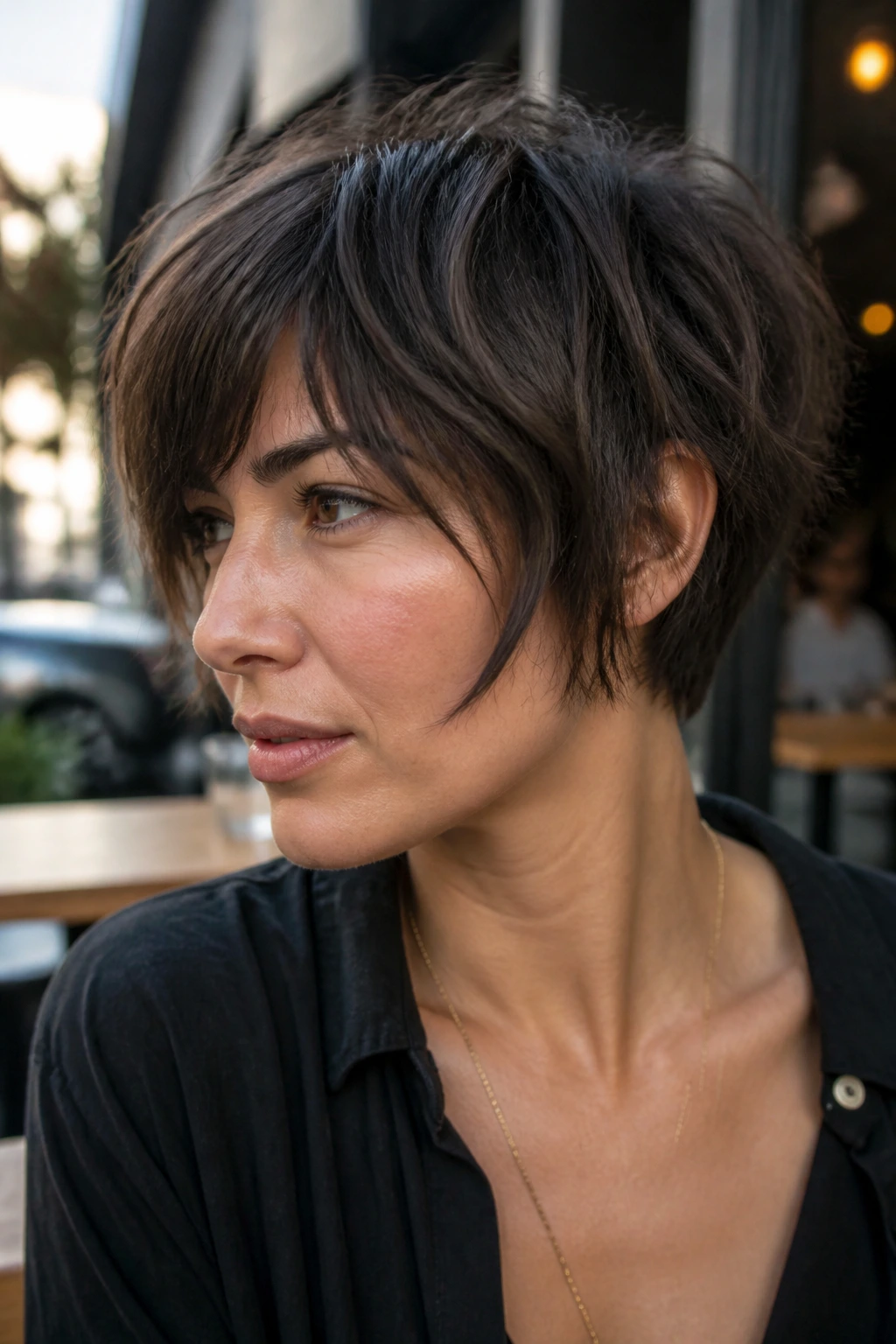
If you like hair that looks a little lived-in, this is the one. The ends are cut into small, broken pieces, so the shape never feels too polished or too round. Thick hair benefits the most, because the choppy internal layers take out the puff without making the cut fall flat.
What to ask for:
- Short, uneven layers through the top
- Piecey ends around the cheekbones
- A soft, tapered back, not a blunt shelf
Use a matte paste or a light clay, not a heavy cream. Work it through the ends with your fingertips and pinch out a few random pieces around the fringe. The point is movement, not helmet hair.
4. Curly Pixie Bob with Soft Bangs

Curly hair can wear a pixie bob better than people expect, but the shape has to follow the curl pattern. The soft bangs keep the front from looking too dense, and the slightly longer sides let the curls collapse into a rounded frame instead of sticking out at the temples.
Why the curl pattern matters
Cutting curly hair dry, or at least mostly dry, helps the stylist see where each curl wants to land. If the bangs are cut too short while the curl is wet, they can jump up and sit far above the brows. That is not a fun surprise.
A curl cream and a diffuser on low heat are usually enough. Let the hair cool before you touch it. Seriously. Disturbing it while it is still warm is how you lose the shape and end up with fuzz.
5. Sleek Ear-Tucked Pixie Bob
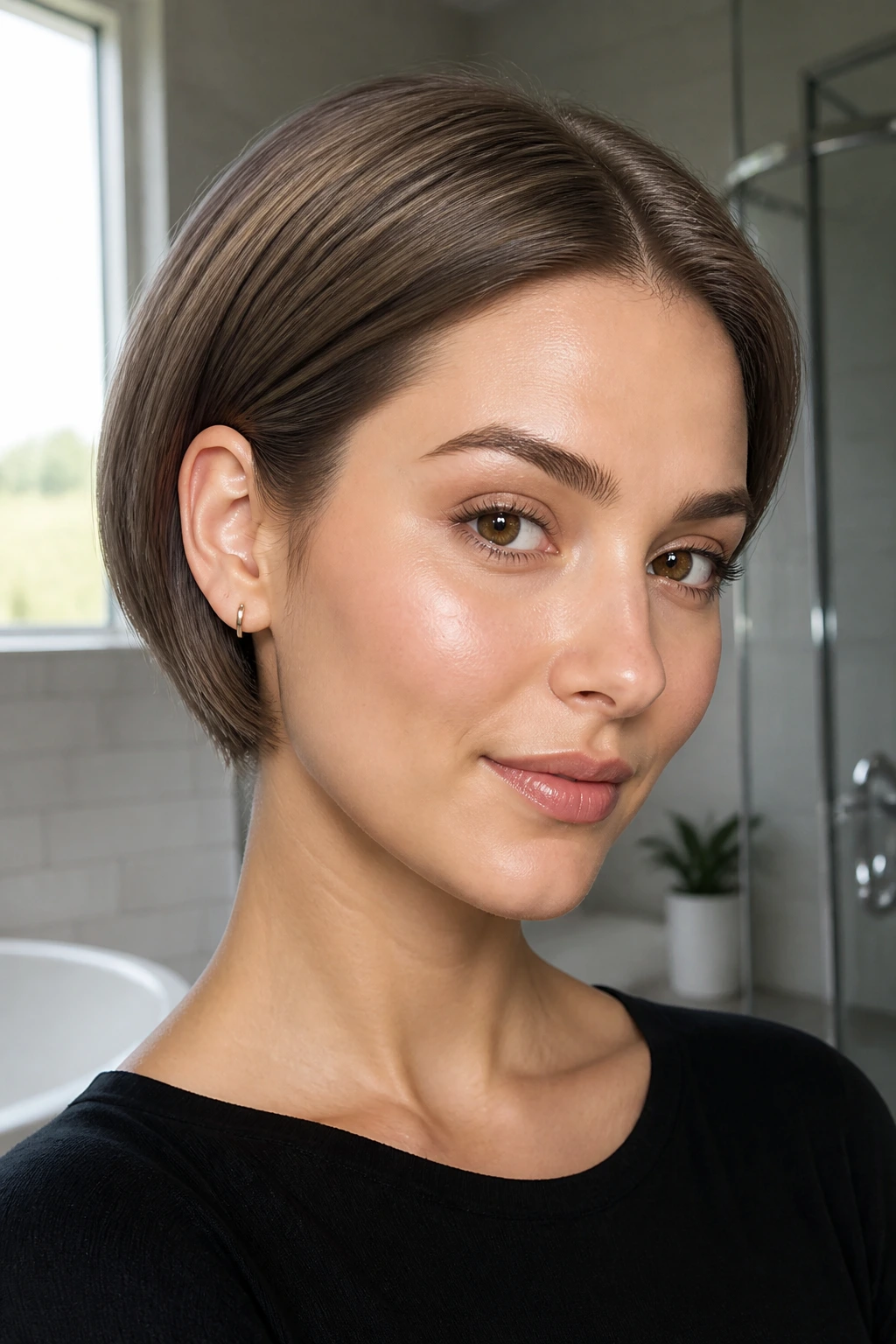
This is the neat one. The hair sits smooth against the head, slips behind the ears, and leaves the neck open, which gives the cut a clean outline. It is a strong choice if your hair is straight or only slightly wavy, because the shape depends on smooth lines more than volume.
A flat brush, a blow-dryer with a nozzle, and a small drop of serum are the whole story here. Brush the sides back while the roots are still warm, then tuck them and let them cool in place. That gives the cut the faint bend that keeps it from looking stiff.
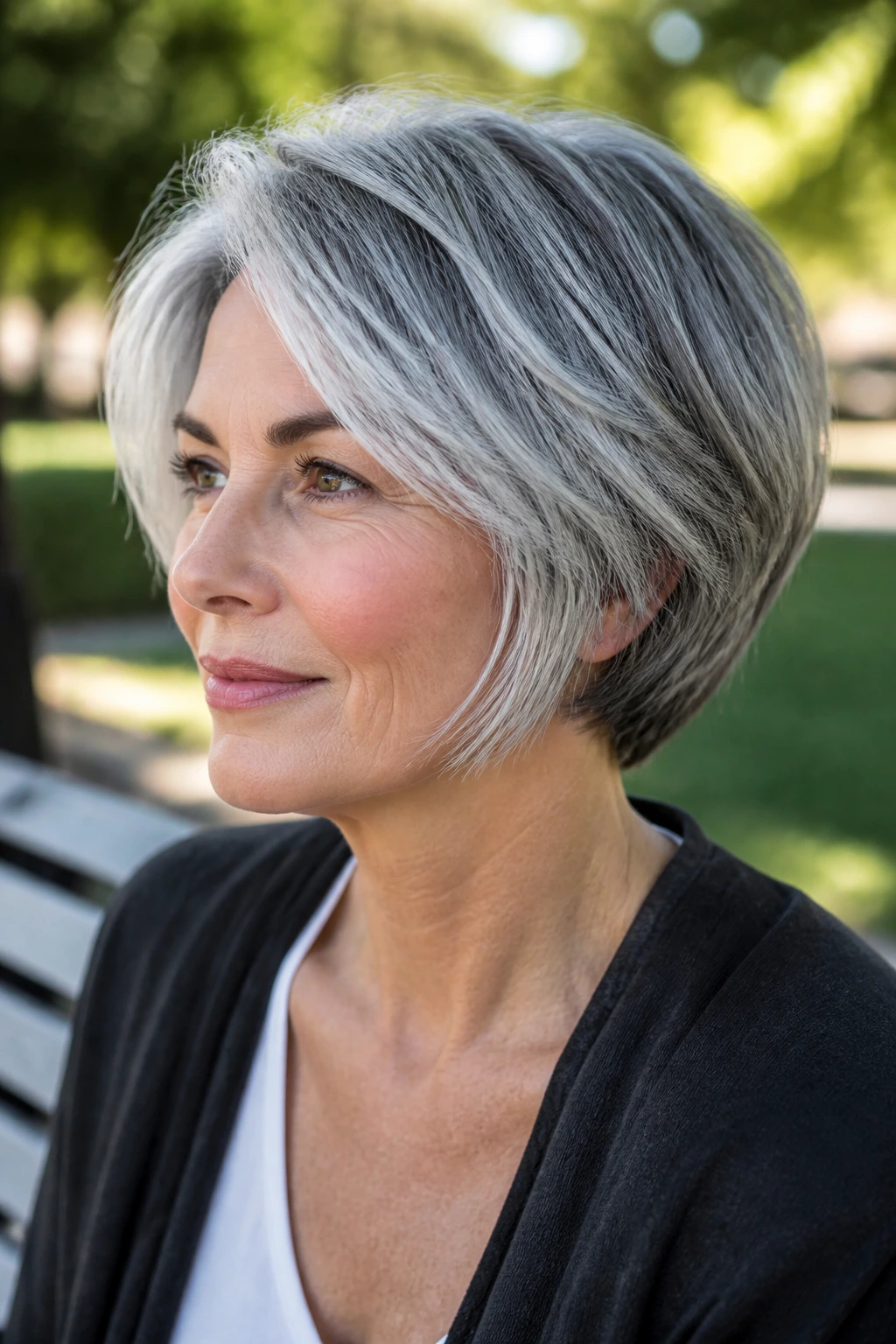
6. Silver Pixie Bob with a Stacked Nape
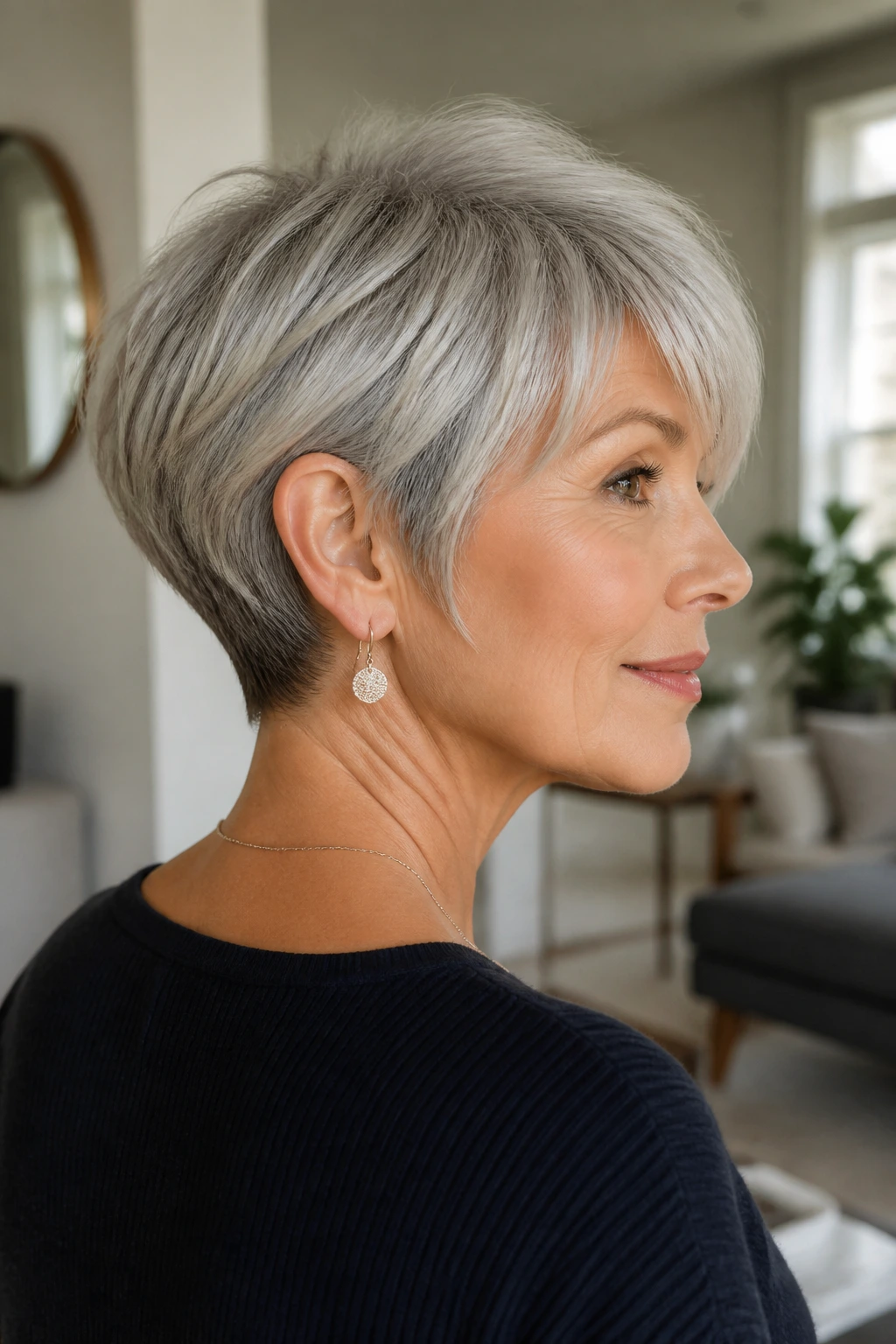
Silver hair loves a short cut that shows off the tone instead of hiding it. A stacked nape gives the back lift, while the longer top keeps the shape from becoming too round or too old-fashioned. The result feels sharp, not fussy.
Practical note:
Keep the neckline clean. A stacked cut loses its edge fast if the back grows out even half an inch too much, because the whole silhouette starts to droop. Trims every 4 to 6 weeks make a real difference here.
A violet-toning shampoo can help if the silver is drifting yellow, but do not overuse it. The hair can pick up a gray-blue cast if you leave purple shampoo on too long.
7. Undercut Pixie Bob with a Long Crown
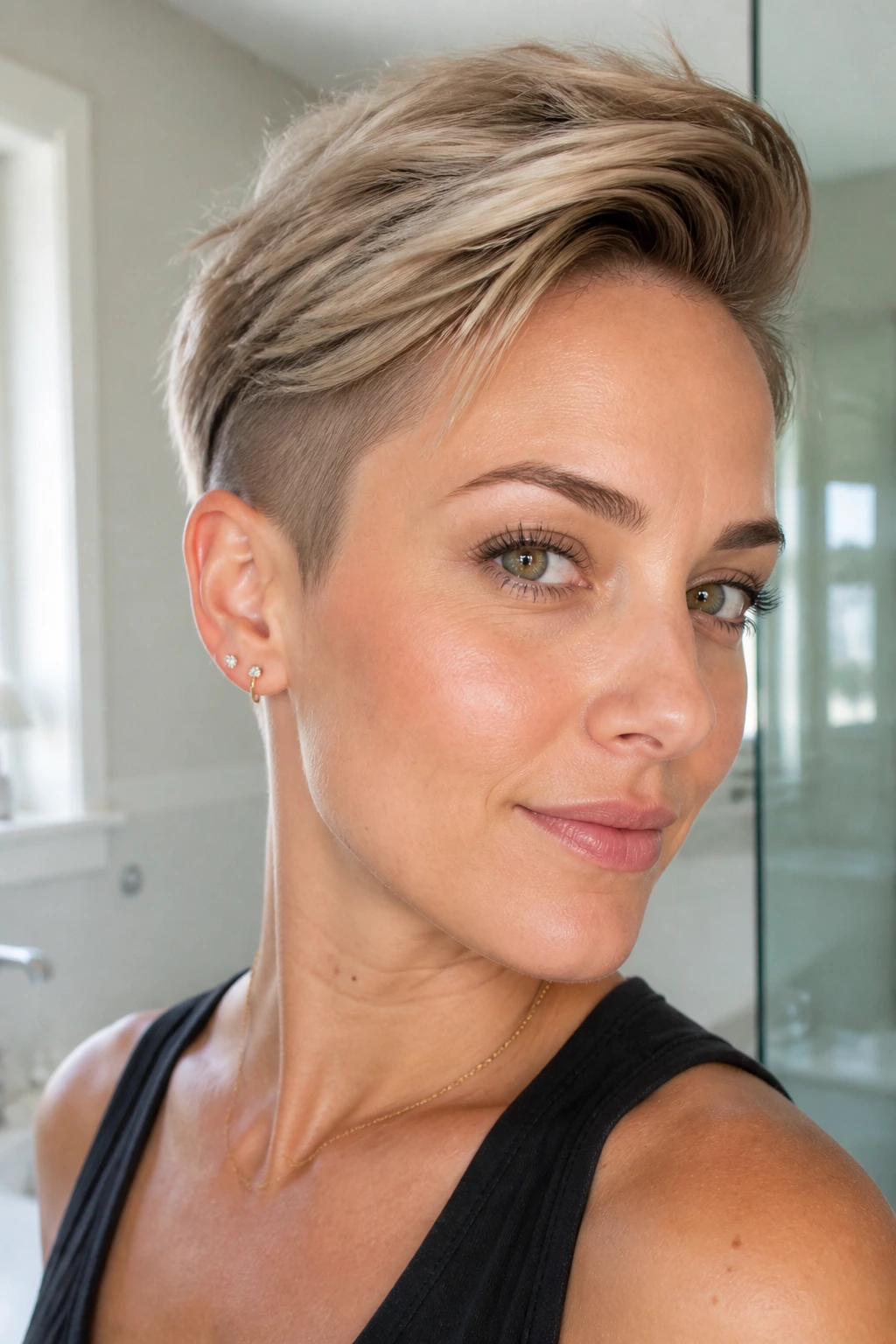
This version has a little attitude, but it is still easy to wear. The undercut removes bulk from the lower back and sides, while the crown stays long enough to flip, spike, or smooth depending on the day. If your hair is thick, this is one of the smartest ways to keep the shape from ballooning.
Keep the top soft if you want it to feel modern. Too much height makes the cut wander into costume territory. A puff of root spray and a quick finger dry usually give the crown enough lift without turning it into a project.
8. Asymmetrical Pixie Bob
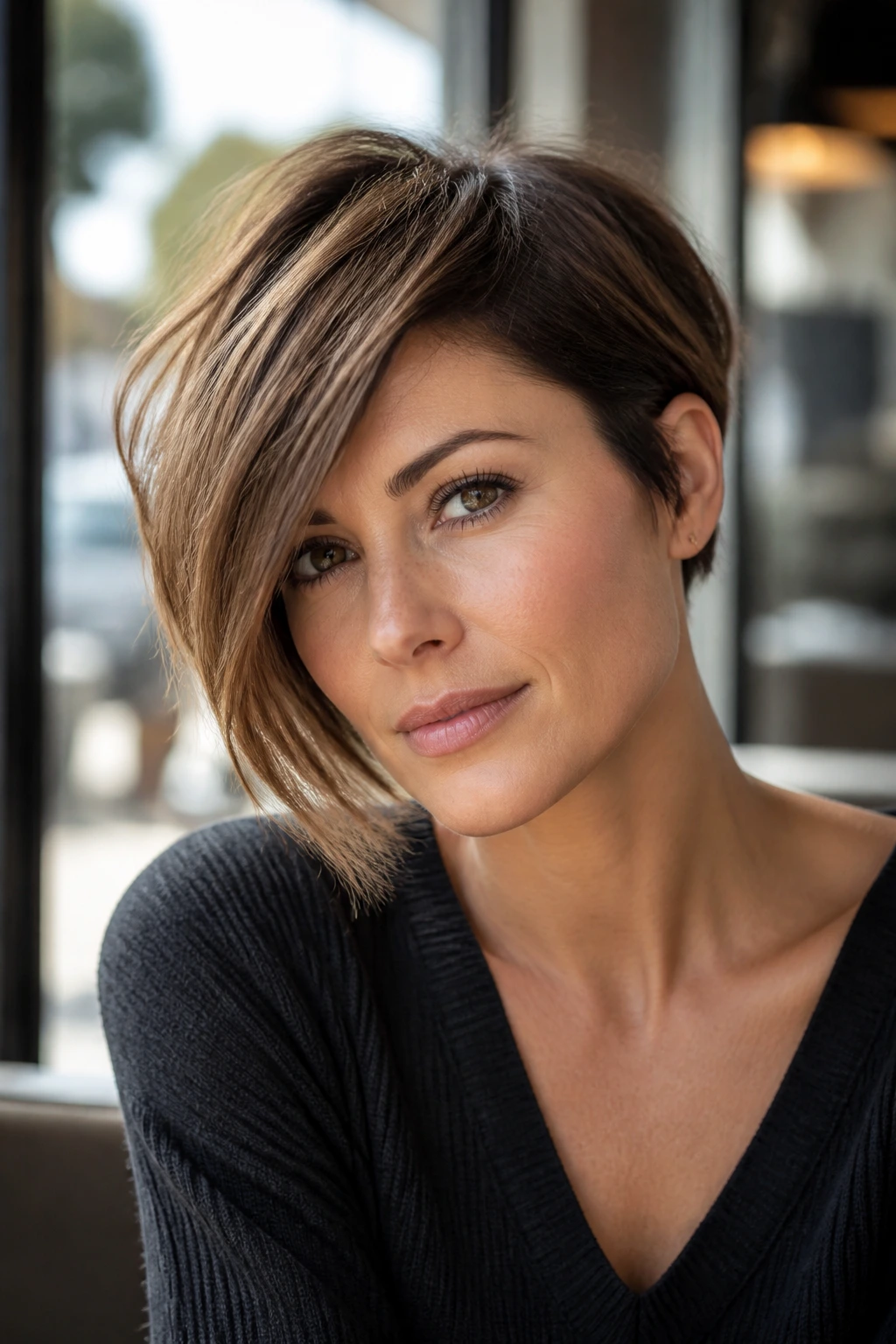
One side longer than the other changes the whole mood. The asymmetry draws the eye diagonally across the face, which is handy if you want to soften a broad cheek or make a rounder face look a little longer. It also gives the haircut a more deliberate edge without needing a dramatic color change.
The trick is balance. The longer side needs enough weight to swing; otherwise, it just looks unfinished. Ask for the shorter side to be tucked close around the ear, then let the longer side graze the jawline or just below it.
9. Shaggy Pixie Bob with Piecey Fringe

This one lives in that sweet spot between relaxed and messy. The shaggy layers keep the top from puffing, and the piecey fringe breaks up the forehead in a way that feels soft instead of severe. It is especially good if your hair has some natural bend and you do not want to fight it every morning.
A salt spray or texture mist makes sense here, but use a light hand. Too much product turns the fringe sticky. You want separate bits, not crust.
10. Side-Part Pixie Bob with Lift
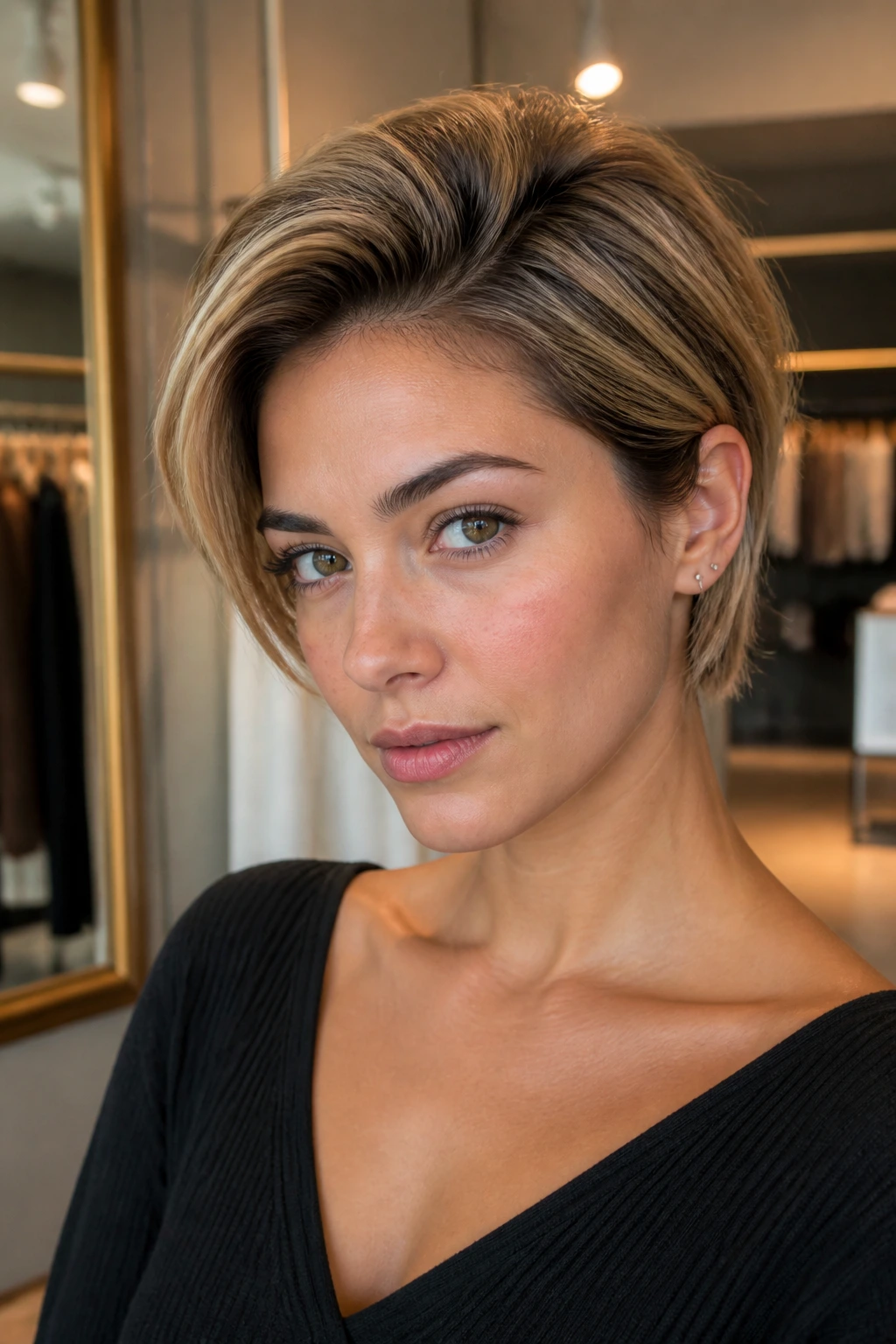
The side part is doing a lot here, and that is the point. It gives the root on one side a little height, which makes the whole haircut feel fuller at the crown. If your hair tends to lie flat on top, this is a practical fix that does not need extra length.
Best for
- Fine hair that needs root lift
- Oval or heart-shaped faces
- People who want a softer alternative to a center part
Dry the hair in the opposite direction first, then flip it back into place. That old trick gives the roots more memory. A small round brush helps, but even fingers and a vent brush can do the job if the cut has the right structure.
11. French-Girl Pixie Bob with Micro Bangs
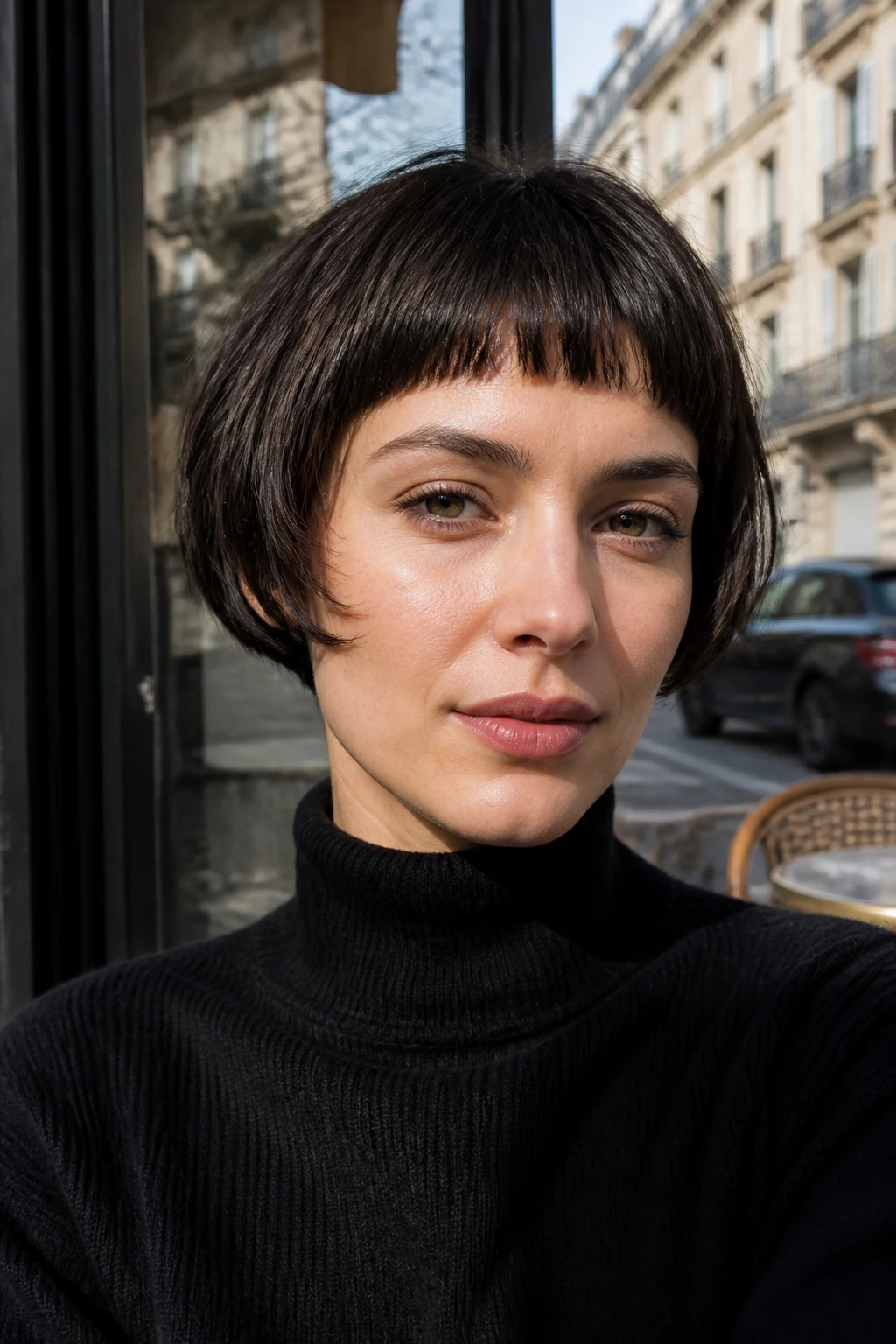
Micro bangs are not for everyone, and that is why they look good when they are done with confidence. The short fringe gives the face a direct frame, while the rest of the pixie bob stays soft around the ears and nape. The result feels artistic without tipping into fussy.
This cut works best on straight or slightly wavy hair. Very curly textures can wear micro bangs, but the shrinkage has to be planned for, not guessed at. Keep the fringe light and feather the edges a touch so it does not sit like a hard line across the forehead.
12. Wavy Caramel Pixie Bob
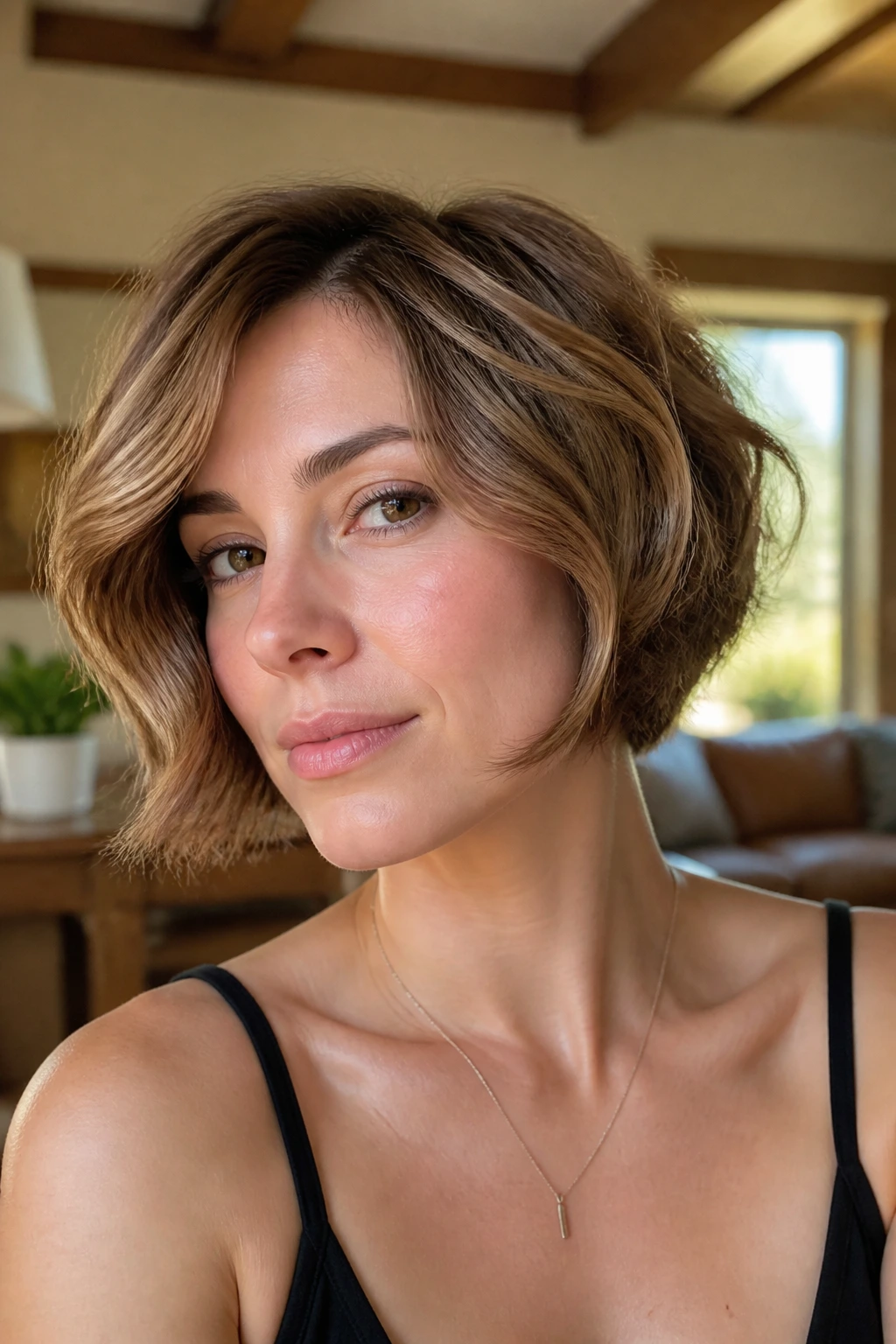
Waves give a pixie bob a built-in bend that straight hair has to be coaxed into. The caramel color adds dimension, especially around the front where the hair moves against the cheekbones. If you like that “I woke up with texture and didn’t overthink it” feel, this cut gets close.
Use a cream, not a sticky gel. Scrunch it in while the hair is damp, then let it air-dry partway before finishing with a diffuser. The waves should land in loose S-shapes, not tight spirals unless your natural texture already does that.
13. Blunt Fringe Pixie Bob
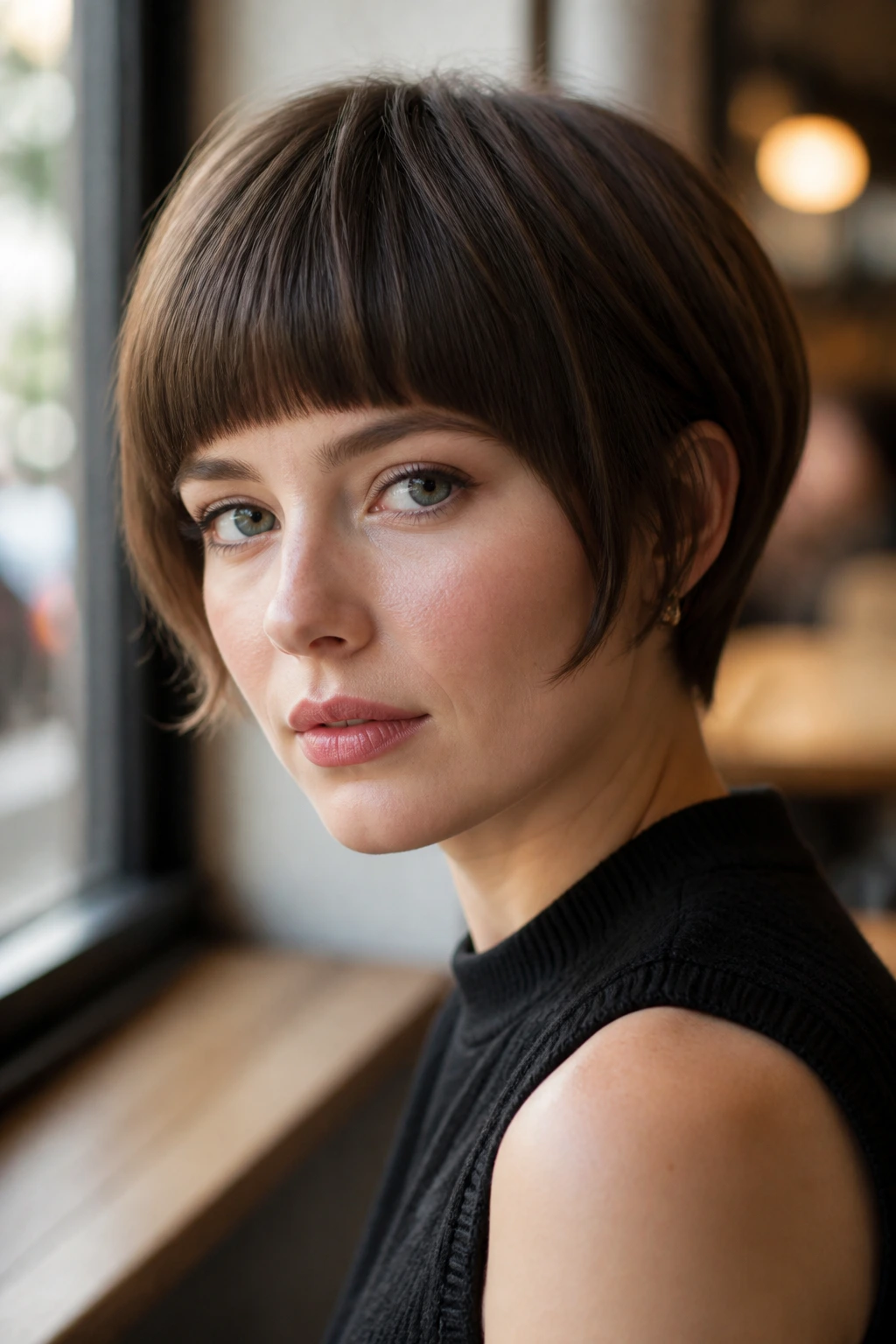
A blunt fringe changes the silhouette fast. It gives the cut a graphic front edge, and when the bob part sits slightly shorter in the back, the whole thing feels crisp and modern. It is a good move if you like strong lines and have brows or eyes you want to bring forward.
The fringe needs regular trimming. Even a quarter-inch can change the way it sits. If you let it get too long, the line stops looking intentional and starts getting heavy in the eyes.
14. Tousled Auburn Pixie Bob
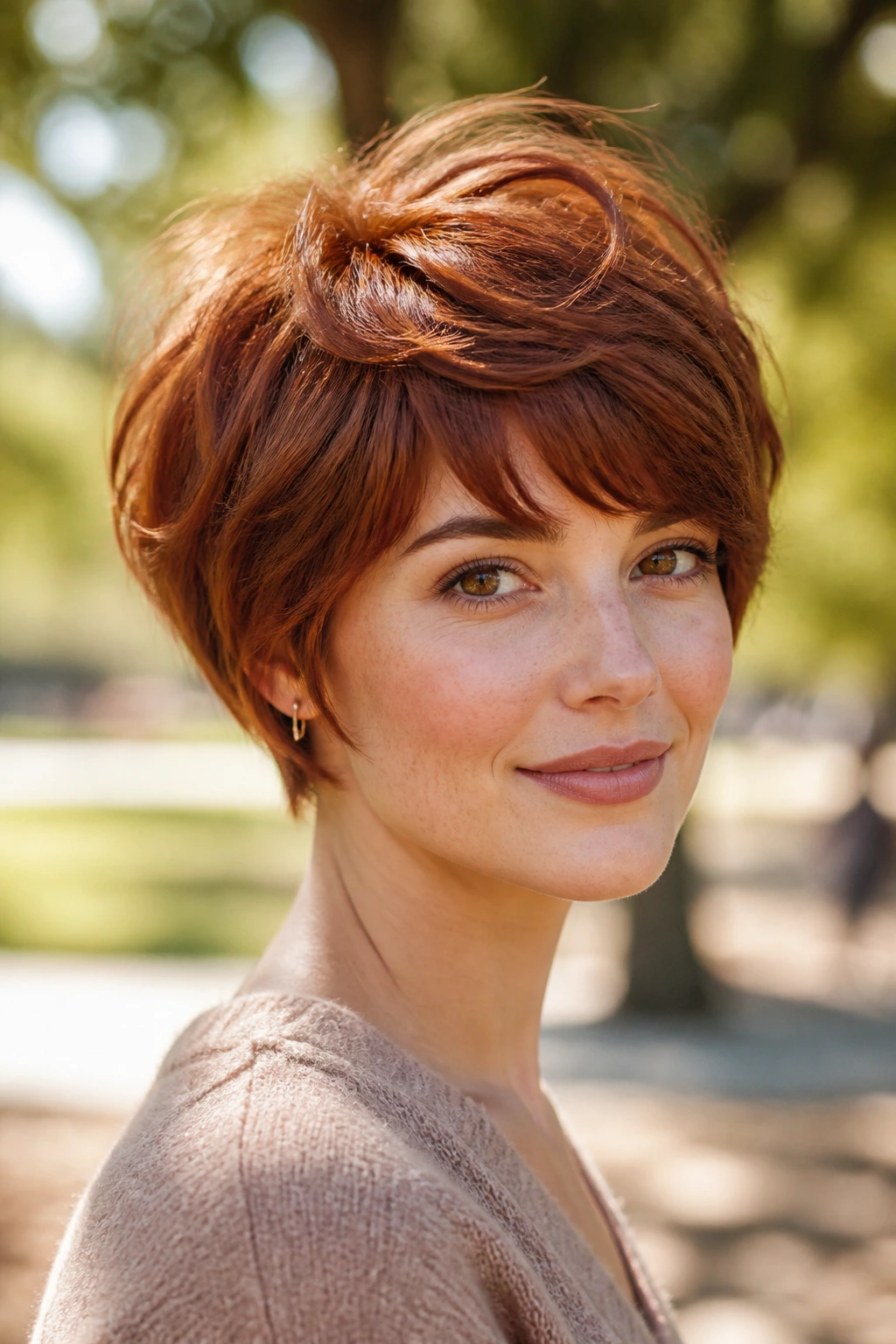
Auburn and tousled texture are a good pair. The warm tone shows every bend in the hair, and the tousled finish keeps the color from feeling too formal. This is one of the easier pixie bob looks to wear on a day when you want shape without stiffness.
Use a little sea-salt spray at the roots and a touch of cream on the ends. Then twist small sections around your fingers while the hair is still damp. It sounds fussy, but it takes less than five minutes once you’ve done it a few times.
15. Softly Layered Pixie Bob for Fine Hair
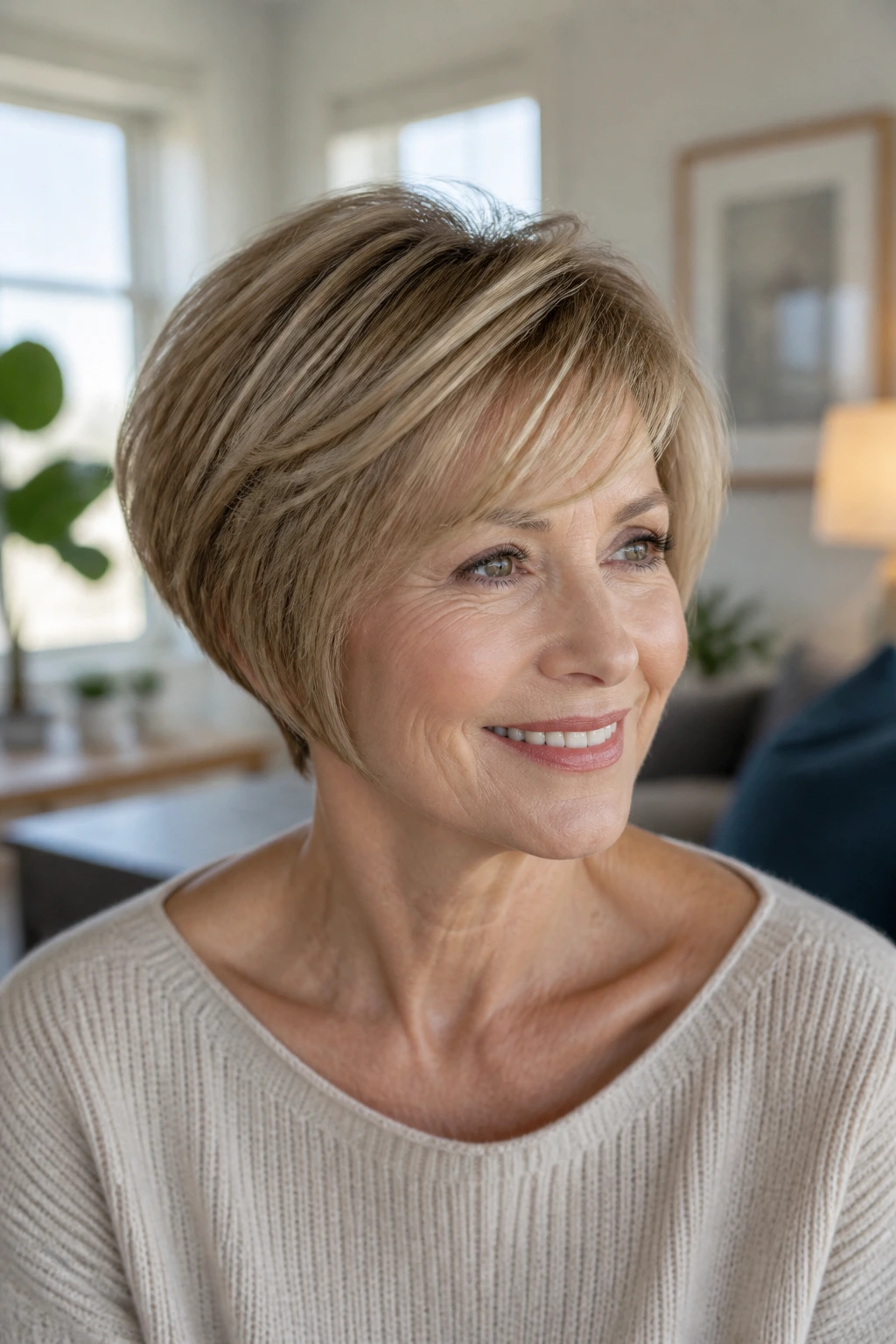
Fine hair needs help, but not the wrong kind. Too many razor layers can leave the ends wispy and thin, which makes the haircut look sparse. Soft layering works better because it creates lift near the crown while keeping enough density at the bottom to hold the outline.
What to ask the stylist for
Ask for internal layers, not aggressive thinning. The difference matters. Internal layers remove weight from inside the shape; thinning shears can chew up the ends and leave the cut frayed.
A root-lift spray at the scalp and a light mousse through the crown usually do the job. Blow-dry the top section upward, then smooth the sides with your hands so the style keeps a little air without puffing out.
16. Thick-Hair Pixie Bob with Debulked Ends
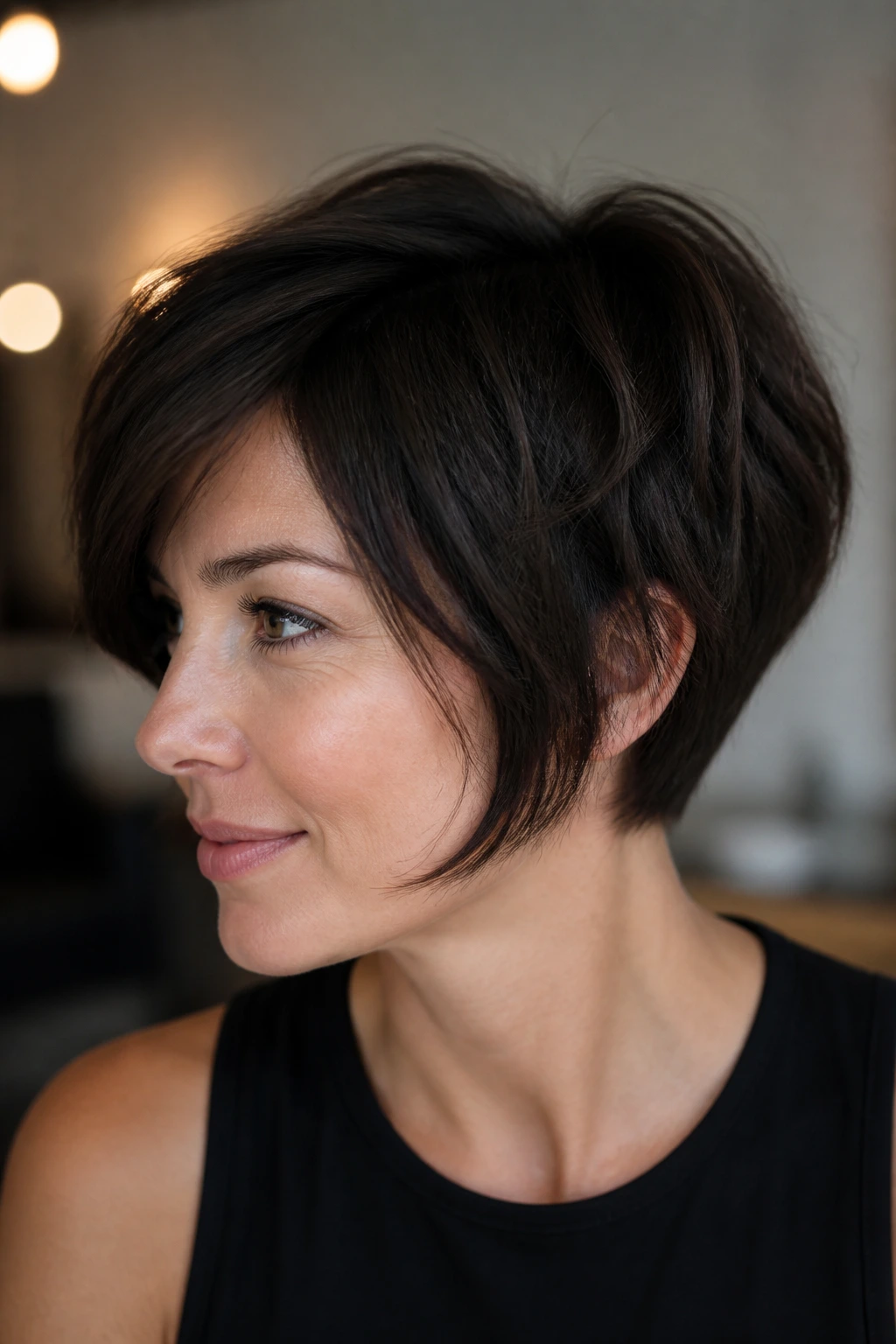
Thick hair can wear a pixie bob beautifully, but only if the bulk is handled with some care. Debulking the ends keeps the cut from sitting like a shelf, and a slightly longer top gives the stylist room to shape the crown without exposing too much scalp.
Do not let anyone thin it to the point of frizz. That is the trap. You want weight removal in the right places, usually underneath and toward the back, so the top still has enough body to move.
17. Dark-Rooted Platinum Pixie Bob
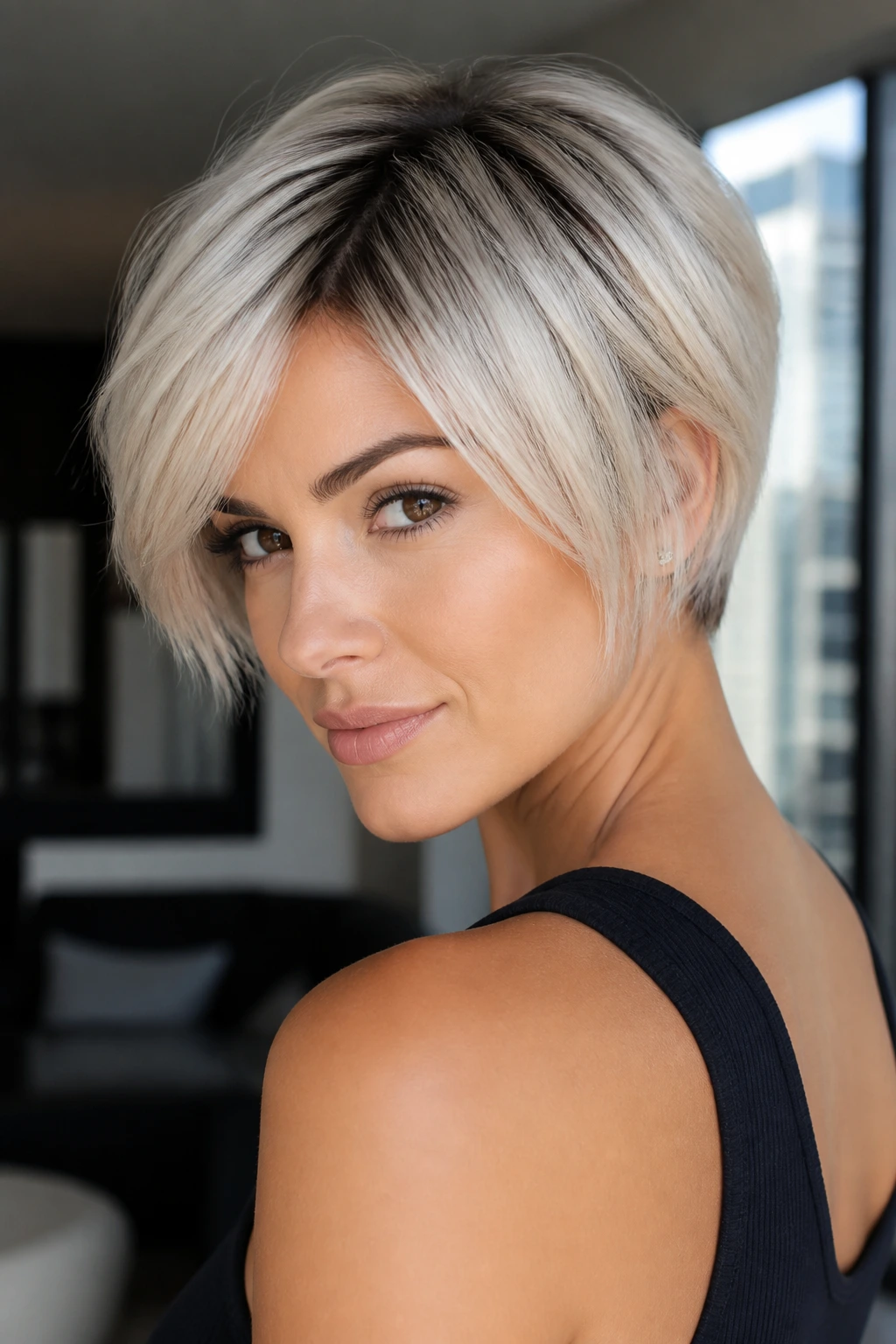
Dark roots against platinum lengths make short hair look deliberate, not neglected. The contrast gives the pixie bob depth at the scalp and brightness through the ends, which helps the cut read as more textured than it really is. If you want a bold color story without extra length, this does the job.
A purple mask once in a while keeps the platinum from drifting brassy. Just do not leave it on forever; short hair grabs pigment fast, and over-toning can make the blonde look flat.
18. Rounded Pixie Bob with a Curved Nape
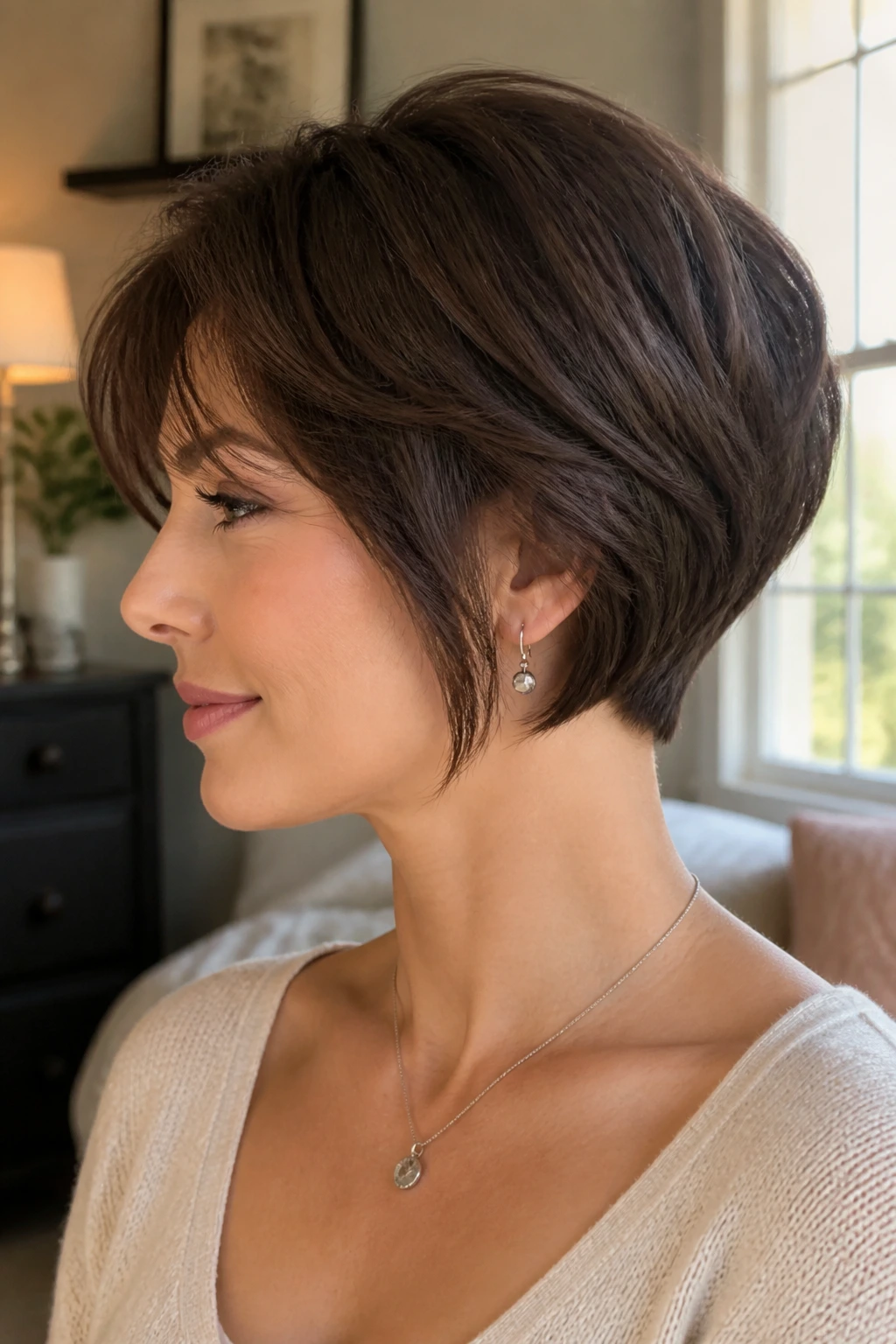
This cut hugs the head in a softer way than a stacked bob. The rounded outline gives the nape a clean curve, and the sides sweep gently toward the cheeks instead of shooting out. It is tidy, yes, but not stiff.
The shape suits straight hair especially well. If your hair has a wave, the curve at the back needs a careful blow-dry or it can kick out at the neckline. A small brush and a nozzle attachment make the difference here.
19. Razored Pixie Bob with Airy Ends
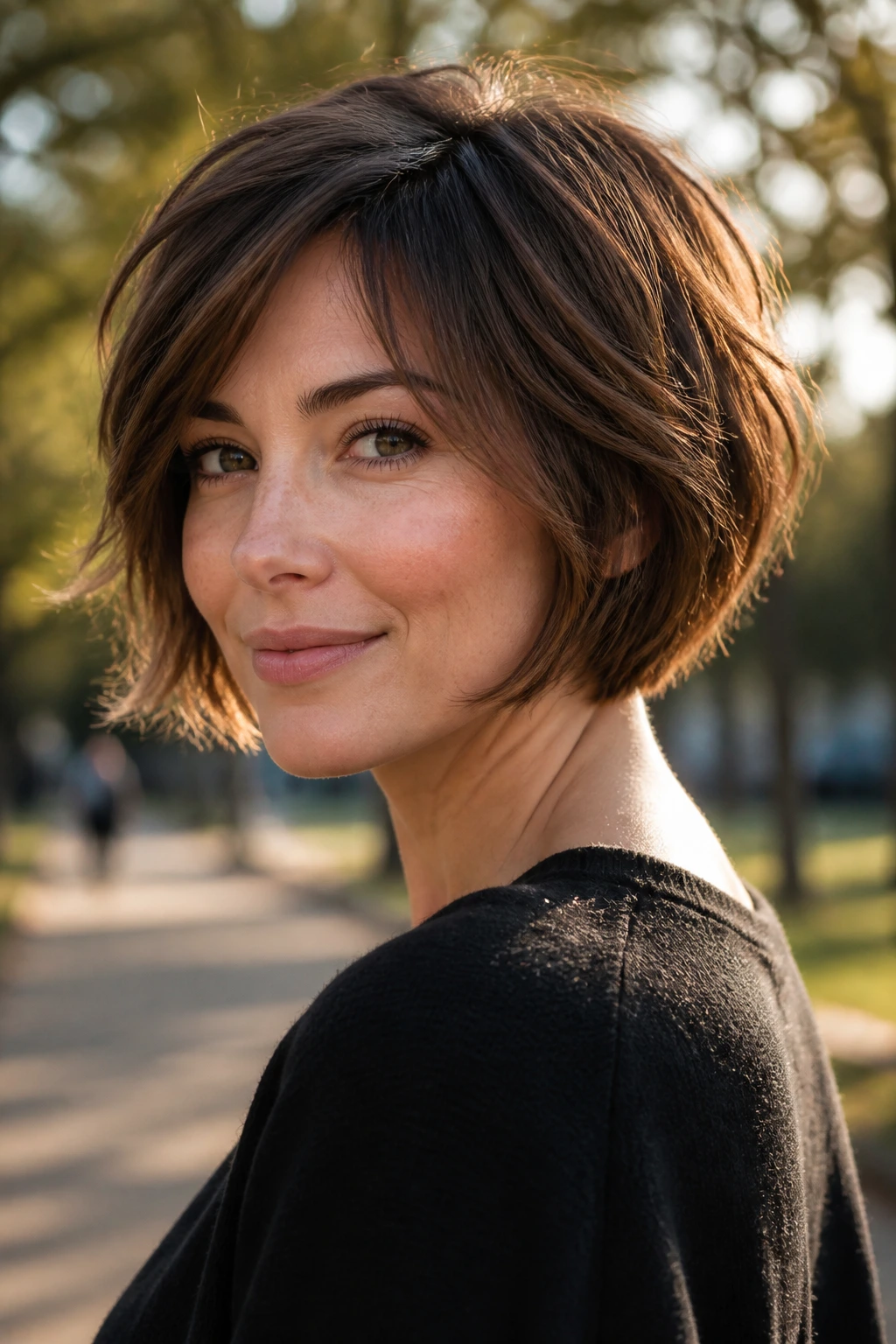
A razor cut can be brilliant on the right hair, and wrong on the wrong hair. On medium to thick hair with a bit of bend, the airy ends keep the shape from feeling heavy. The result is soft, feathered movement that falls around the jaw instead of sitting in a blunt line.
Frizzy hair needs more caution. Razor ends can swell in humidity if the cut is too high-maintenance for the texture. If your hair puffs up easily, ask for point-cutting instead of a heavy razor finish.
20. Mini-Mullet Pixie Bob
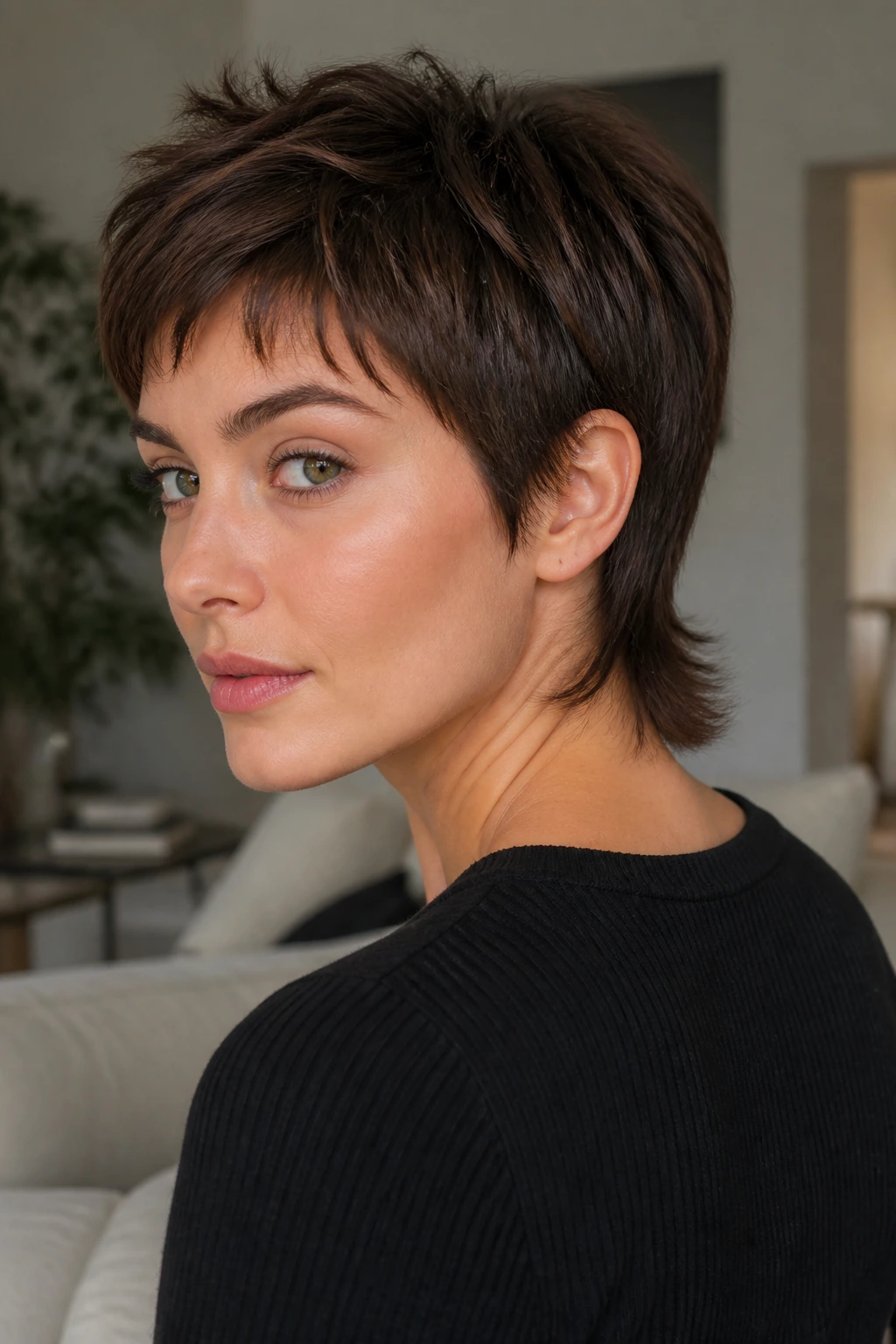
This one is for people who want a little edge but still want the haircut to behave. The front and sides stay short, while the back hangs slightly longer, just enough to create a bit of tailing at the nape. It can look cool and modern if the transition is soft.
Best when
- You want shape without a strict bob line
- You like texture around the face
- You do not mind a cut that reads a little bolder from the side
The back should never look stringy. Keep the layers blended, and style it with a light texture cream so the ends move instead of sticking out like a pointed tail.
21. Chin-Grazing Pixie Bob
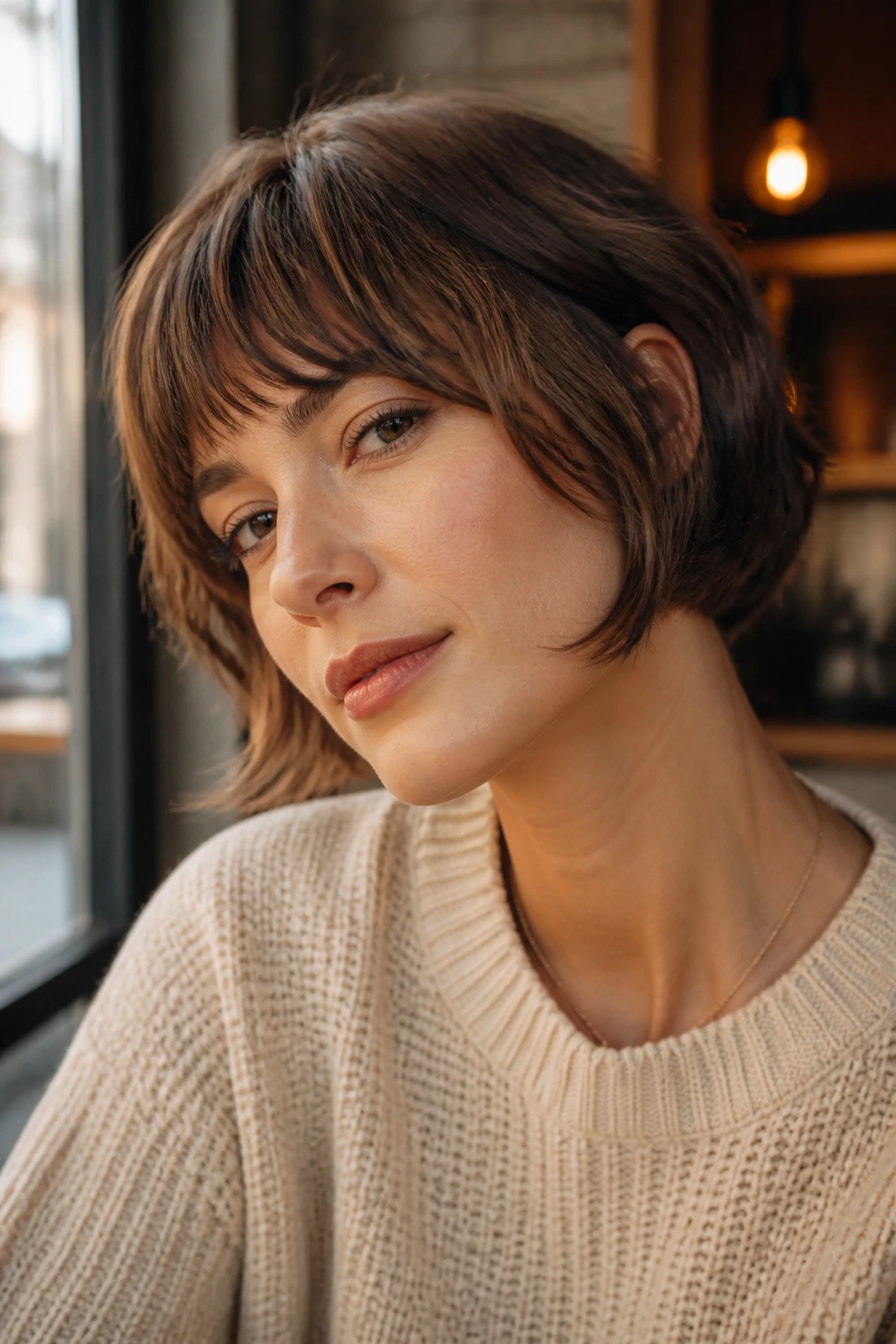
A chin-grazing version feels closer to a short bob than a pure pixie, and that’s why it works for people who are nervous about going short. The extra length near the jaw gives you movement when you tuck one side back, and the nape still stays neat enough to keep the pixie feeling.
This is a nice in-between cut for growing out a shorter style. It also gives you room to test fringe shapes, from side-swept to curtain-like, without losing the short-hair energy.
22. Mushroom Pixie Bob with Soft Shape
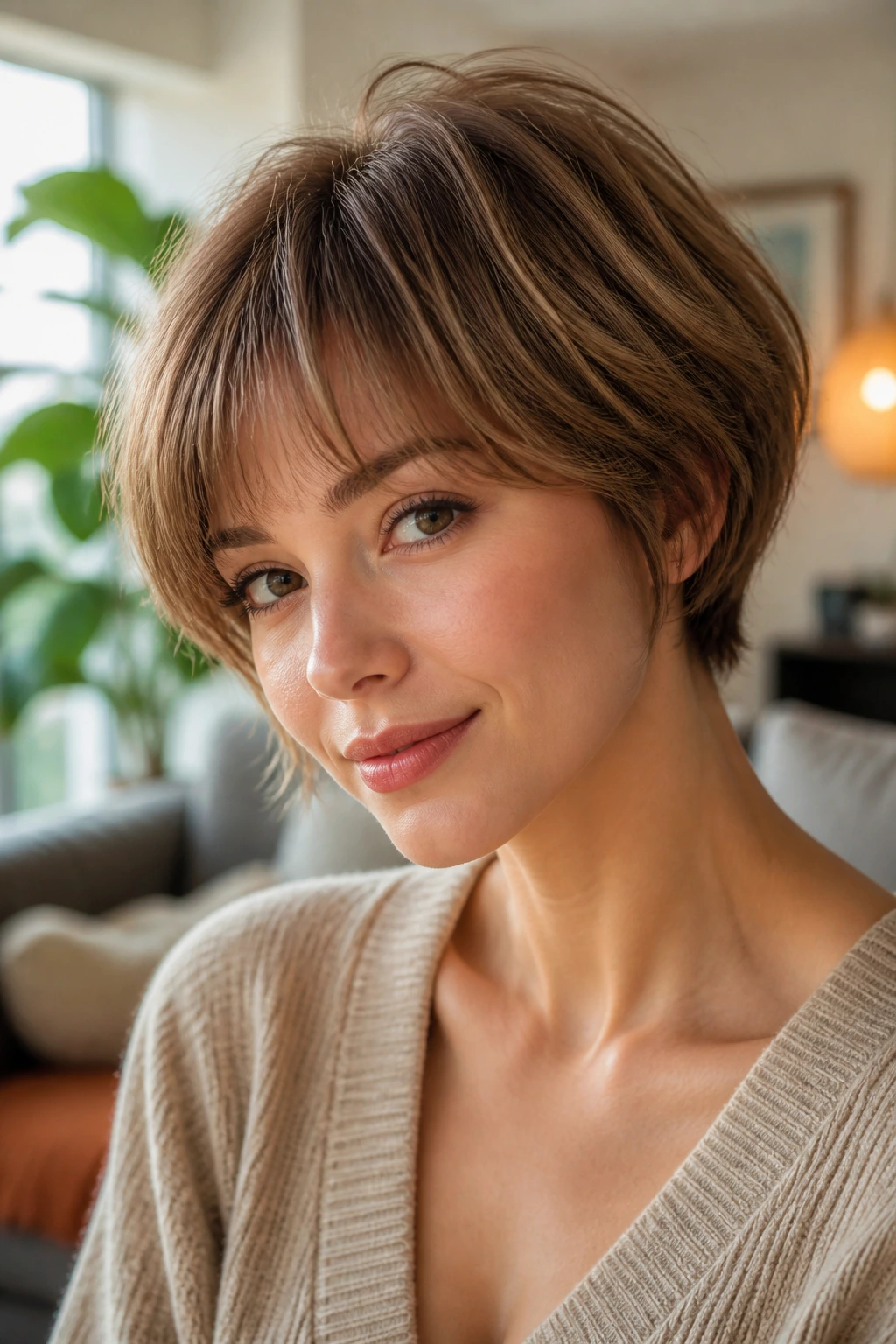
The mushroom silhouette can be lovely when it is softened. The top curves gently, the sides stay rounded, and the edges are broken up enough that it does not look like a helmet. It is a good fit for straight hair that can hold a clean shape.
A little root lift at the crown keeps the curve from collapsing. If you want the cut to feel modern, ask for the edges to be softened around the ears and neck rather than cut into one hard circle.
23. Slicked-Back Pixie Bob
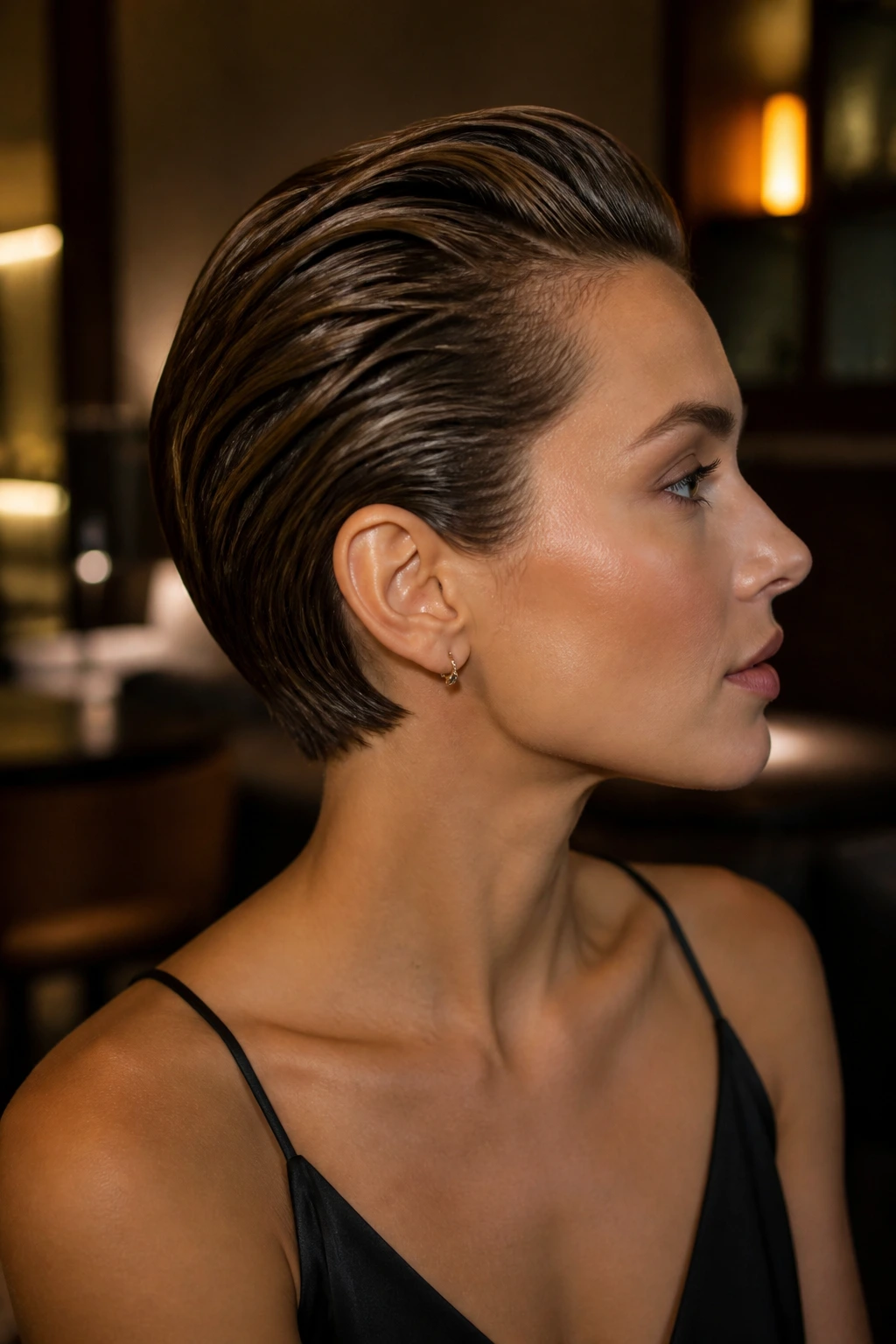
This is the evening version of the cut. Slicked back, it shows off the face, the ears, and the line of the jaw in a way that makes short hair feel intentional and a little sharp. Wet-look gel or a strong styling cream does the trick, but use less than you think you need.
The danger is overloading the hair and making it greasy instead of sleek. Start at the roots, comb back with a fine-tooth comb, and stop once the hair lies flat with a little sheen. That is enough.
24. Peekaboo Highlight Pixie Bob
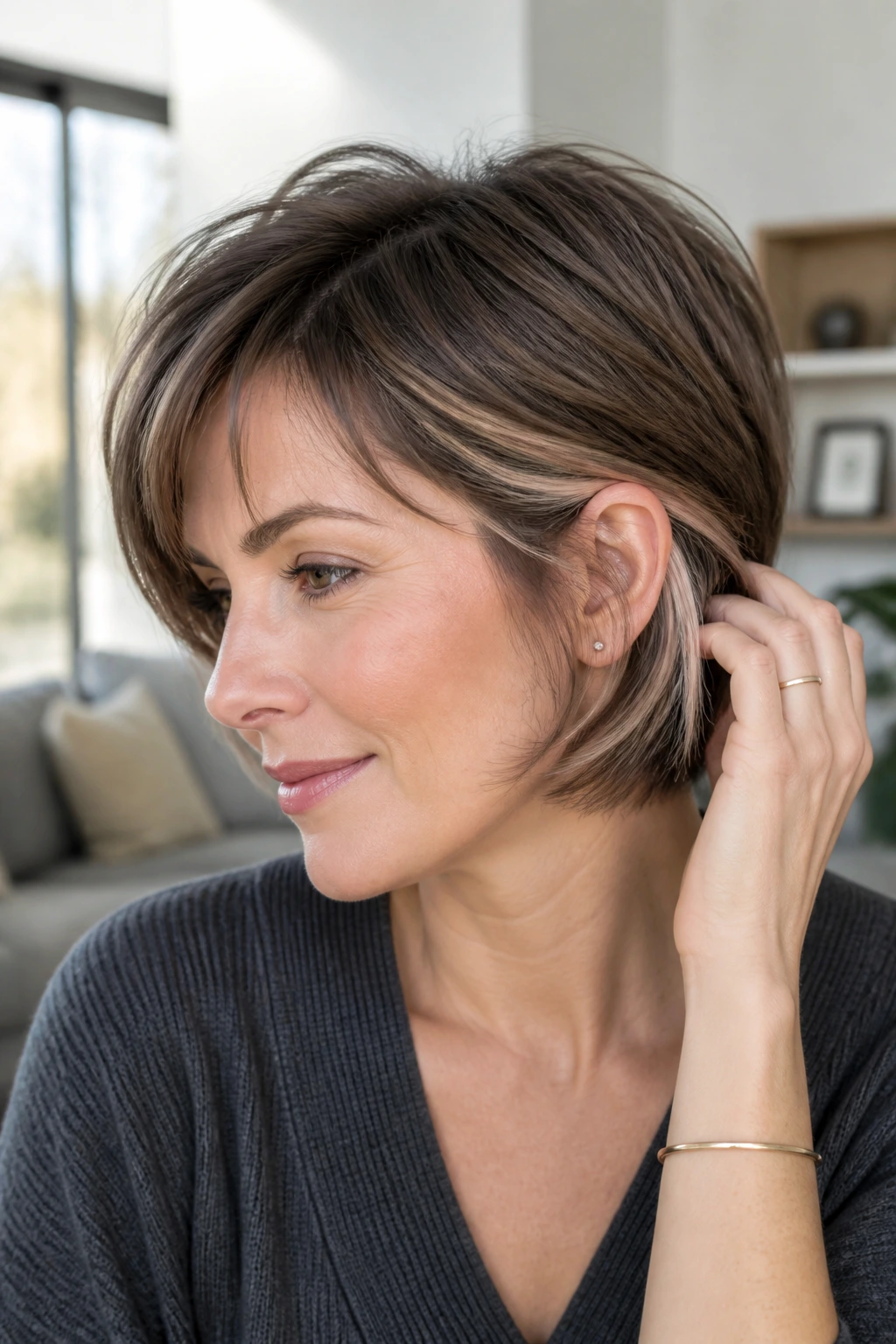
Hidden color ribbons are fun on a pixie bob because the hair moves enough to flash them without needing long layers. A few peekaboo streaks under the top layer can show when you tuck the sides or part the hair differently, which gives you more looks from the same cut.
This is a smart choice if you want color but do not want all-over maintenance. You can keep the top neutral and place the brighter shade under the crown or near the temple so it shows only when the hair shifts.
25. Warm Copper Pixie Bob
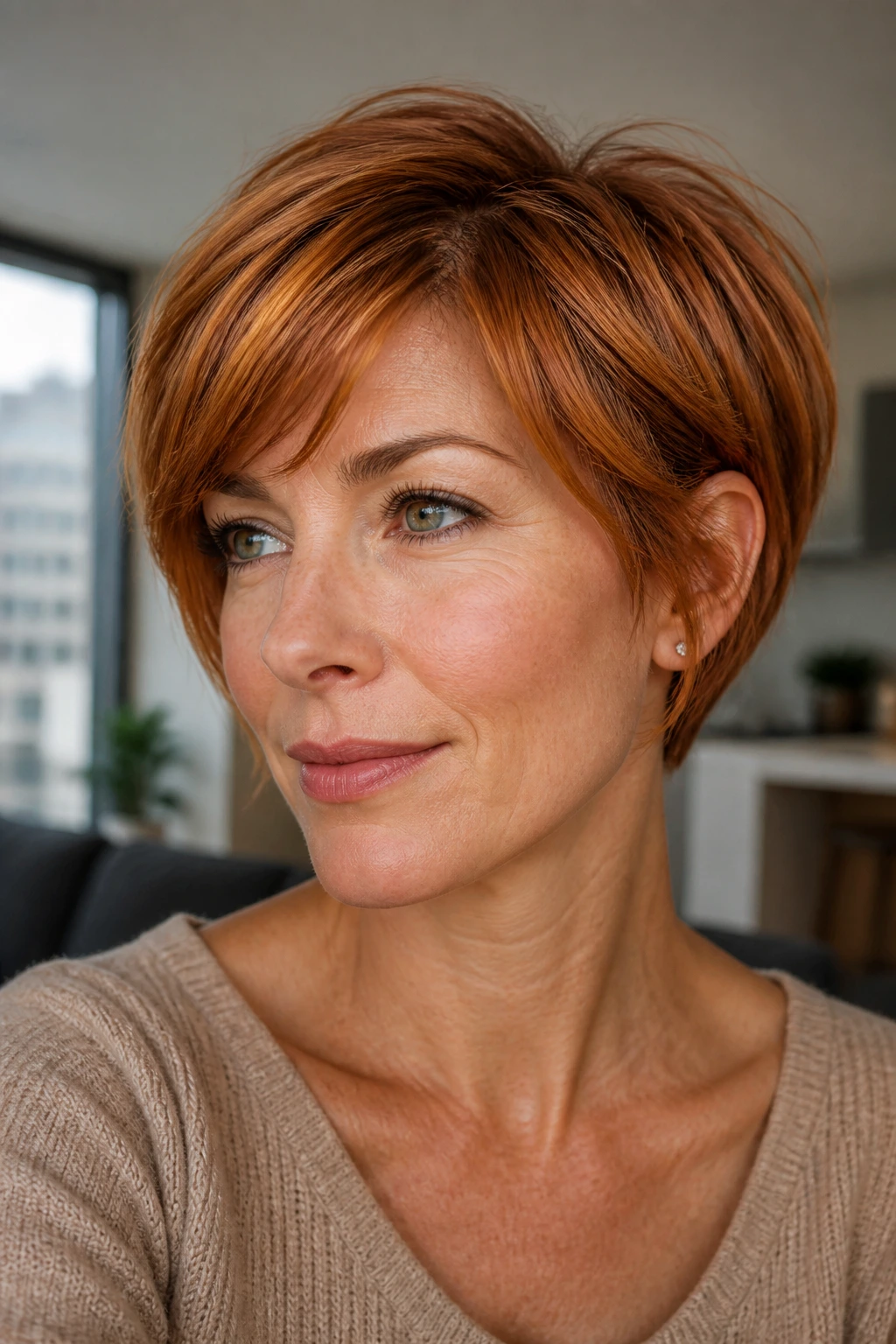
Copper and short hair are an easy win. The warmth catches on every layer and makes the shape feel fuller than it would in a flat brown or ash blonde. On a pixie bob, copper also softens the sharper lines around the nape and fringe.
Use a shine spray sparingly after styling. Copper looks better when it has a clean surface and a little gloss, not when it is coated in a heavy serum that drags the hair down.
26. Grown-Out Pixie Bob
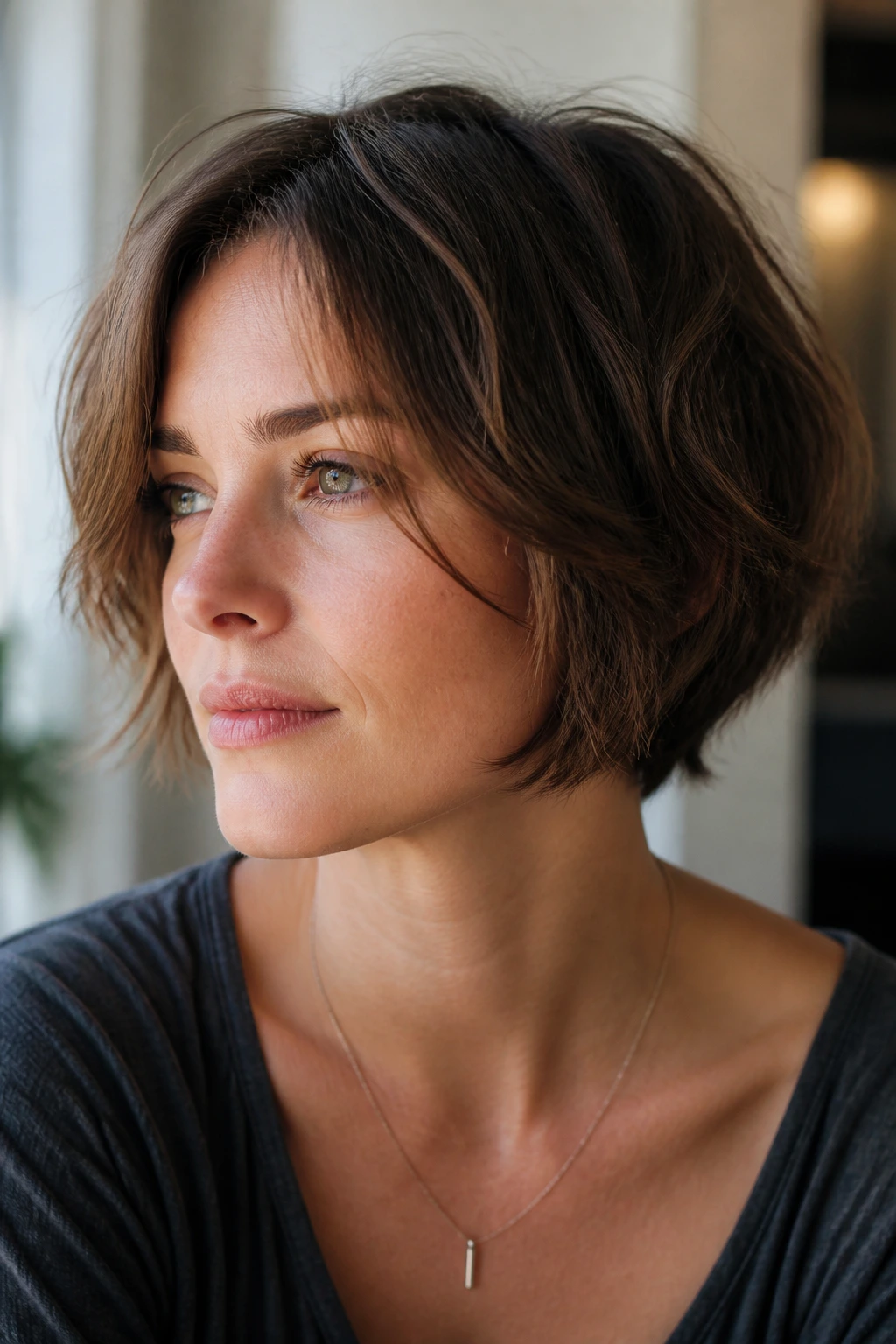
Some pixie bobs look best in that in-between stage where the layers have relaxed and the neckline has softened a little. A grown-out version keeps the outline loose and lets the sides reach the jaw or neck without losing the cropped feel at the back.
This is the cut for people who do not want to live on a four-week trim cycle. A few bends with a flat iron or a round brush can keep the shape readable, even when the edges are starting to soften.
27. Pixie Bob with Curtain Bangs
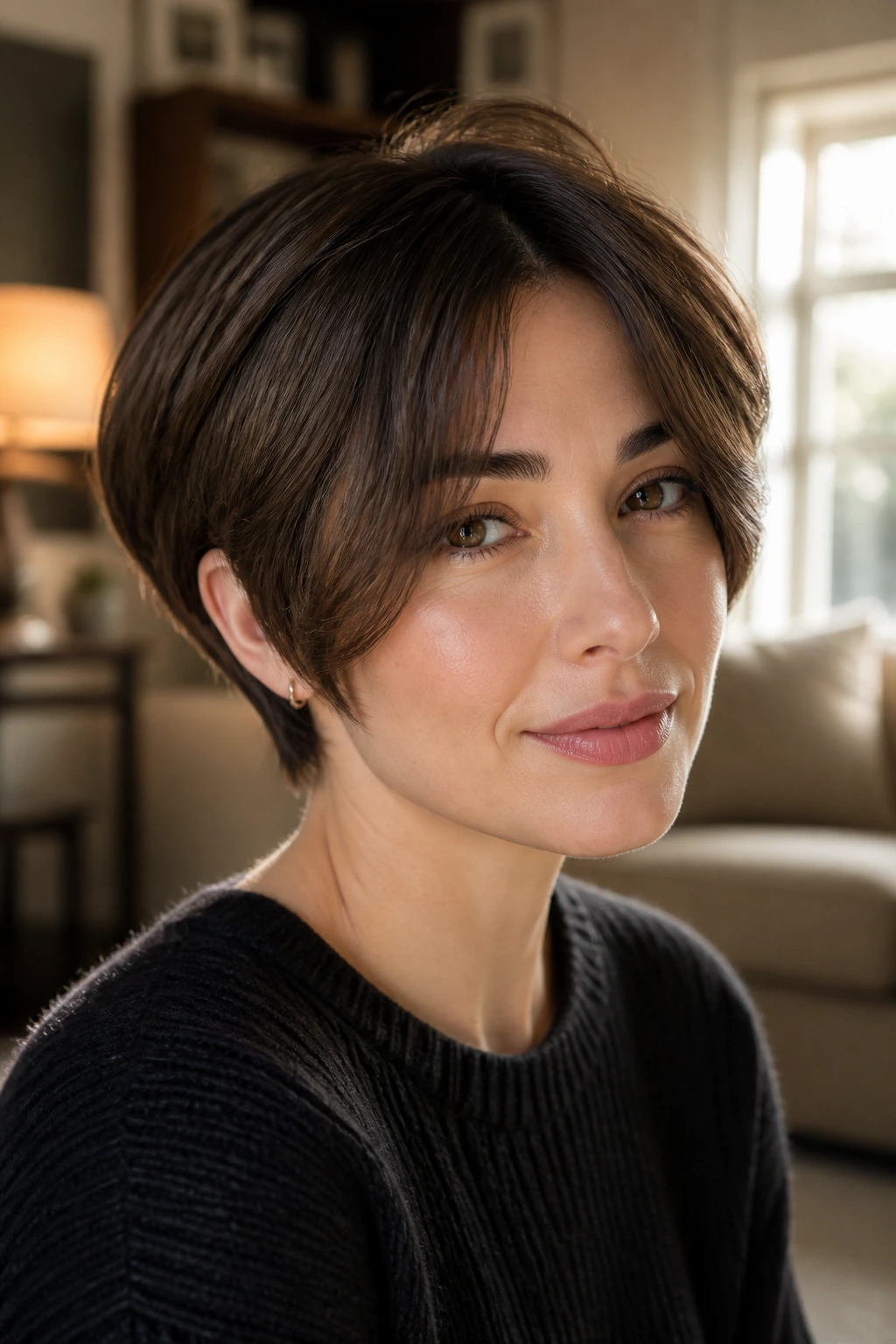
Curtain bangs give a short cut more movement at the front. They open at the center or just off-center and drape along the cheekbones, which makes the pixie bob feel softer and less severe than a blunt fringe. It is one of the easiest ways to make short hair feel current without being dramatic.
If your forehead is on the shorter side, keep the curtain pieces a little longer. They should sweep, not hover. A round brush or a blow-dry brush can help the bangs fold away from the face instead of sticking straight down.
28. Neck-Short Pixie Bob
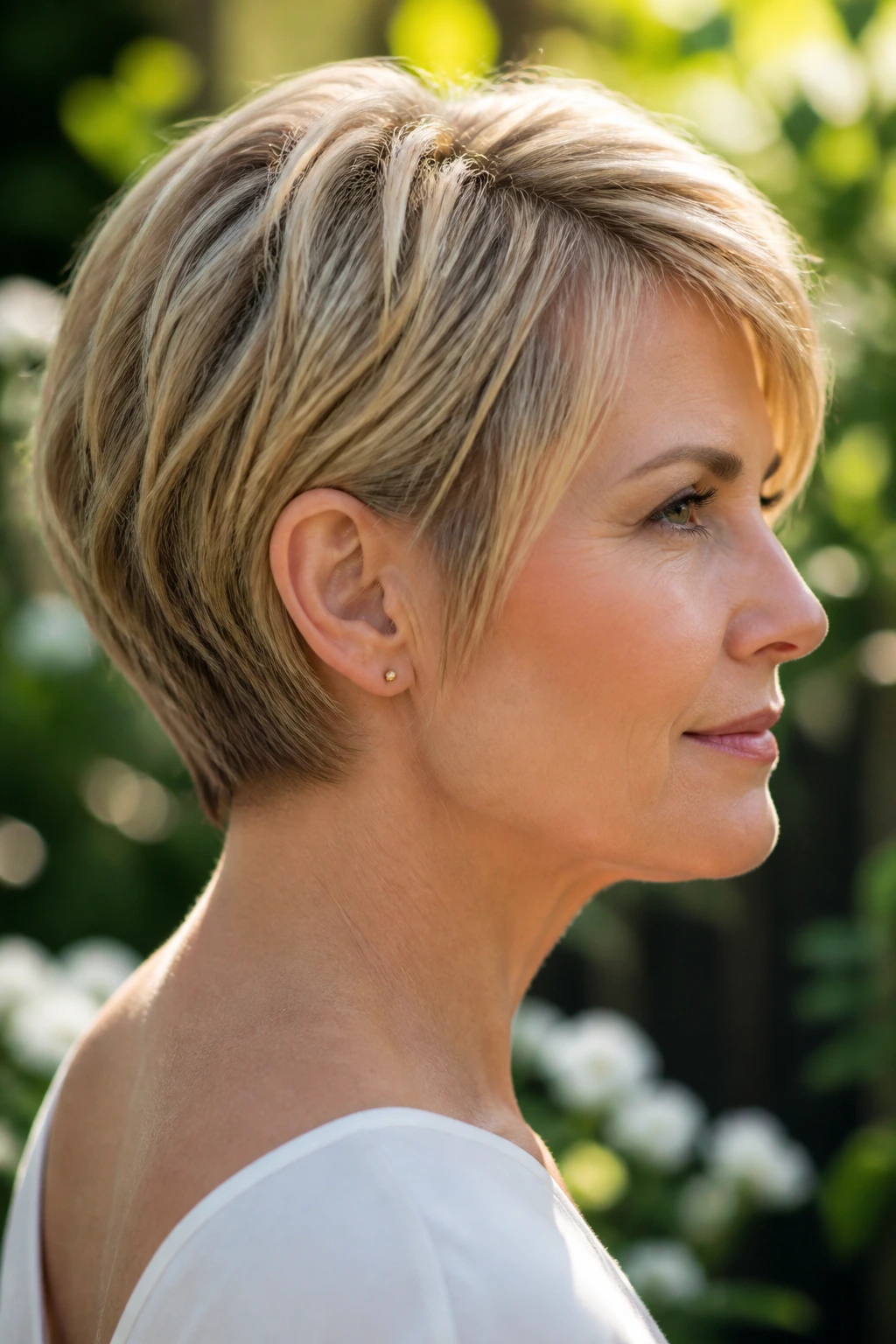
This version stays close at the back and slightly loose through the crown, which gives it a neat profile from every angle. It works especially well in warm weather or for people who dislike hair brushing the neck. There is something clean about it, almost athletic, but still feminine if the top is kept soft.
The neckline needs regular cleanup. A neck-short cut looks best when the hairline stays crisp. If the back grows out unevenly, the whole shape loses that tidy line fast.
29. Bixie-Inspired Pixie Bob
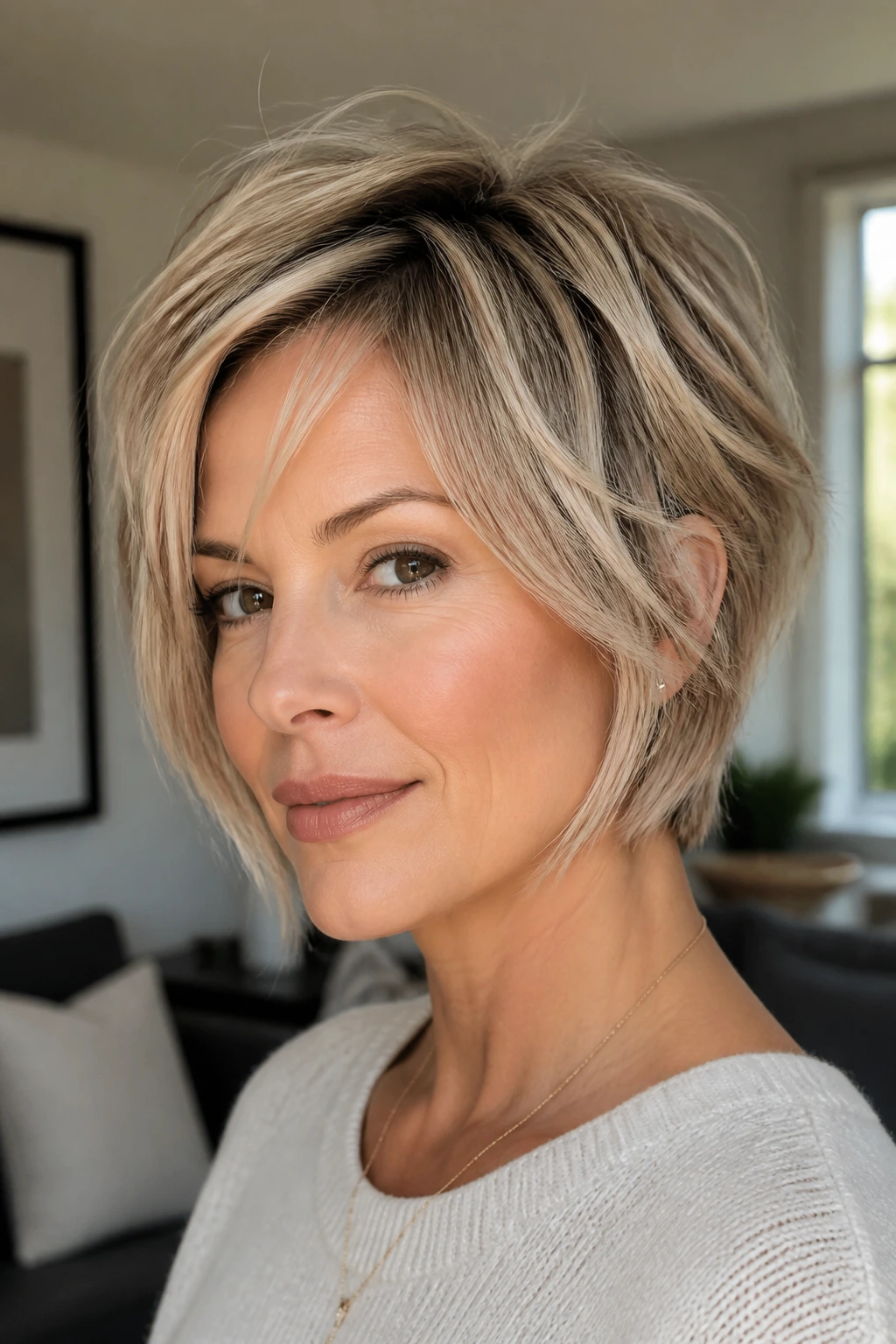
A bixie sits between a pixie and a bob, and a bixie-inspired pixie bob borrows the best parts of both. You get more length than a classic pixie, more texture than a mini bob, and enough layers to keep the cut from feeling heavy.
It is a good pick if you want movement without going super short around the crown. Ask for choppy, blended pieces through the top and a slightly longer perimeter around the jaw. That keeps the cut from tipping too far into either extreme.
30. Baby-Layered Pixie Bob
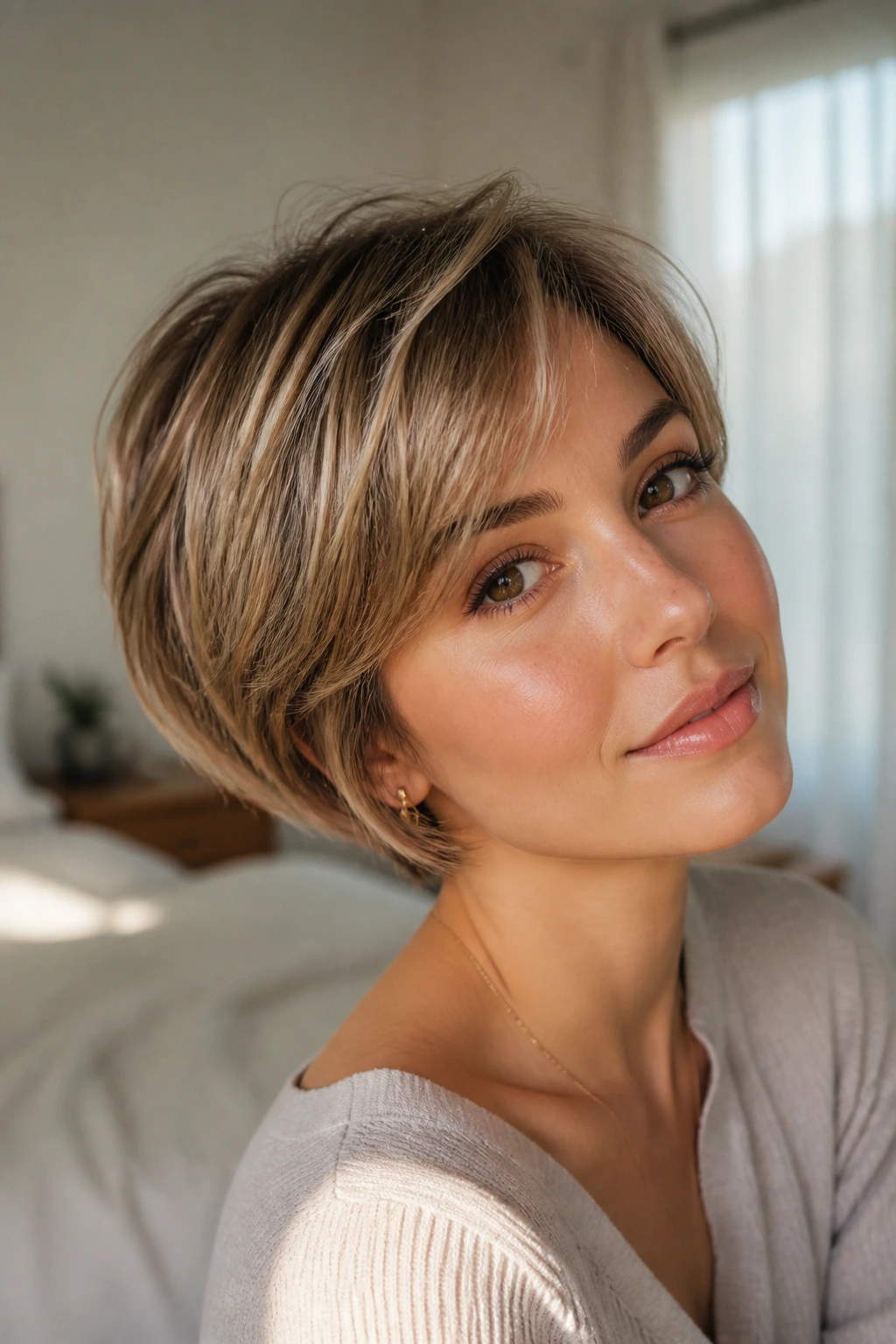
Baby layers are tiny, soft layers that change the fall of the hair without shouting about it. On a pixie bob, they stop the top from sitting like one flat block and keep the shape from puffing out in a triangle. The result is subtle, but the difference shows the minute you style it.
This cut is especially helpful if you like clean lines but want a little air around the crown. A lightweight mousse and a rough dry with your fingers can be enough to show the shape.
31. Sideburn-Heavy Pixie Bob
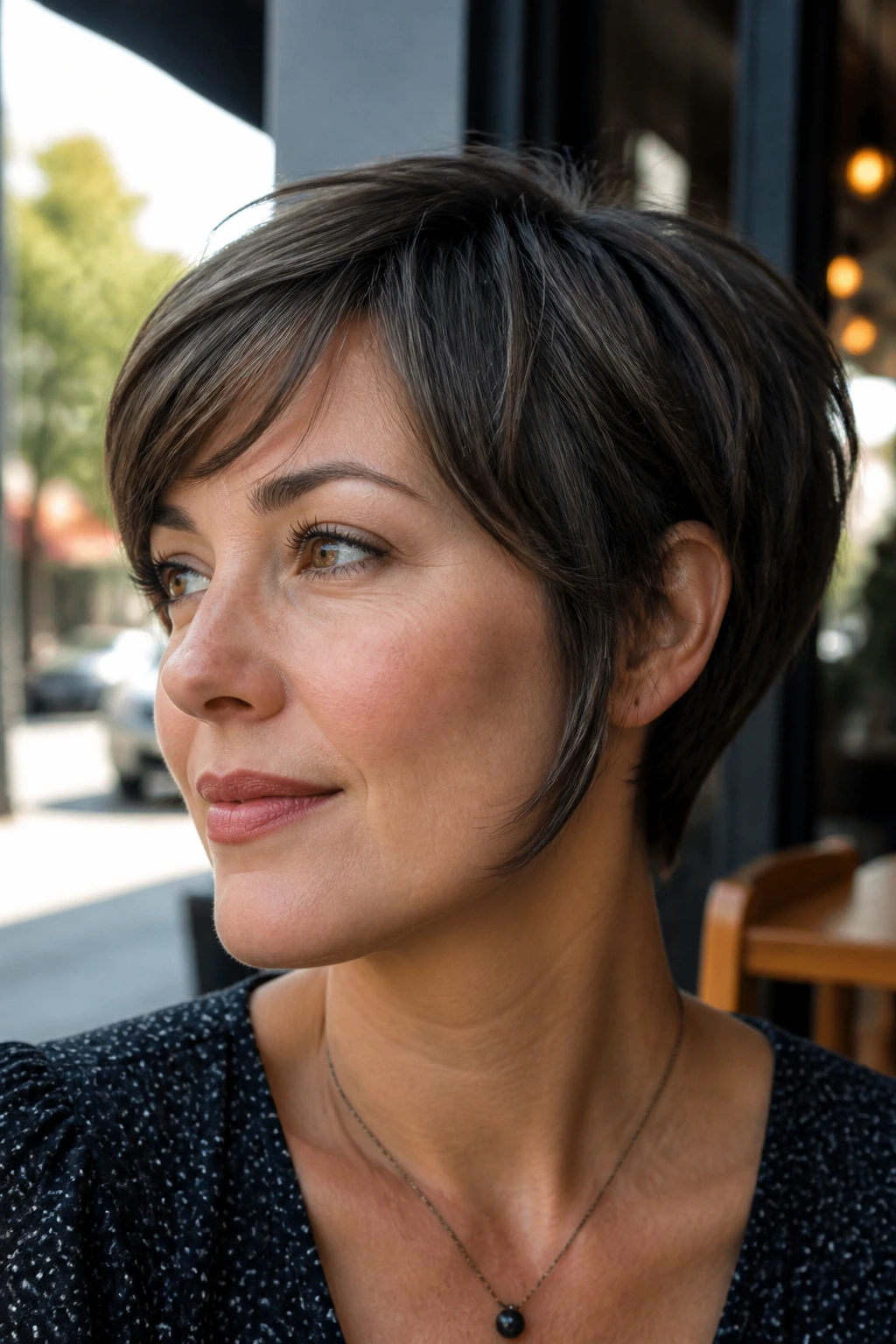
Longer sideburns can make a short cut feel more graceful. They frame the temples and jaw, and they give the pixie bob a softer edge than a super-clean crop. If your face is narrow or you want a more face-framing finish, these longer pieces do a lot of work.
Keep the sideburns intentional, not straggly. They should taper into the rest of the cut, not hang like forgotten extras. A touch of cream on the ends helps them sit in place.
32. Romantic Wave Pixie Bob
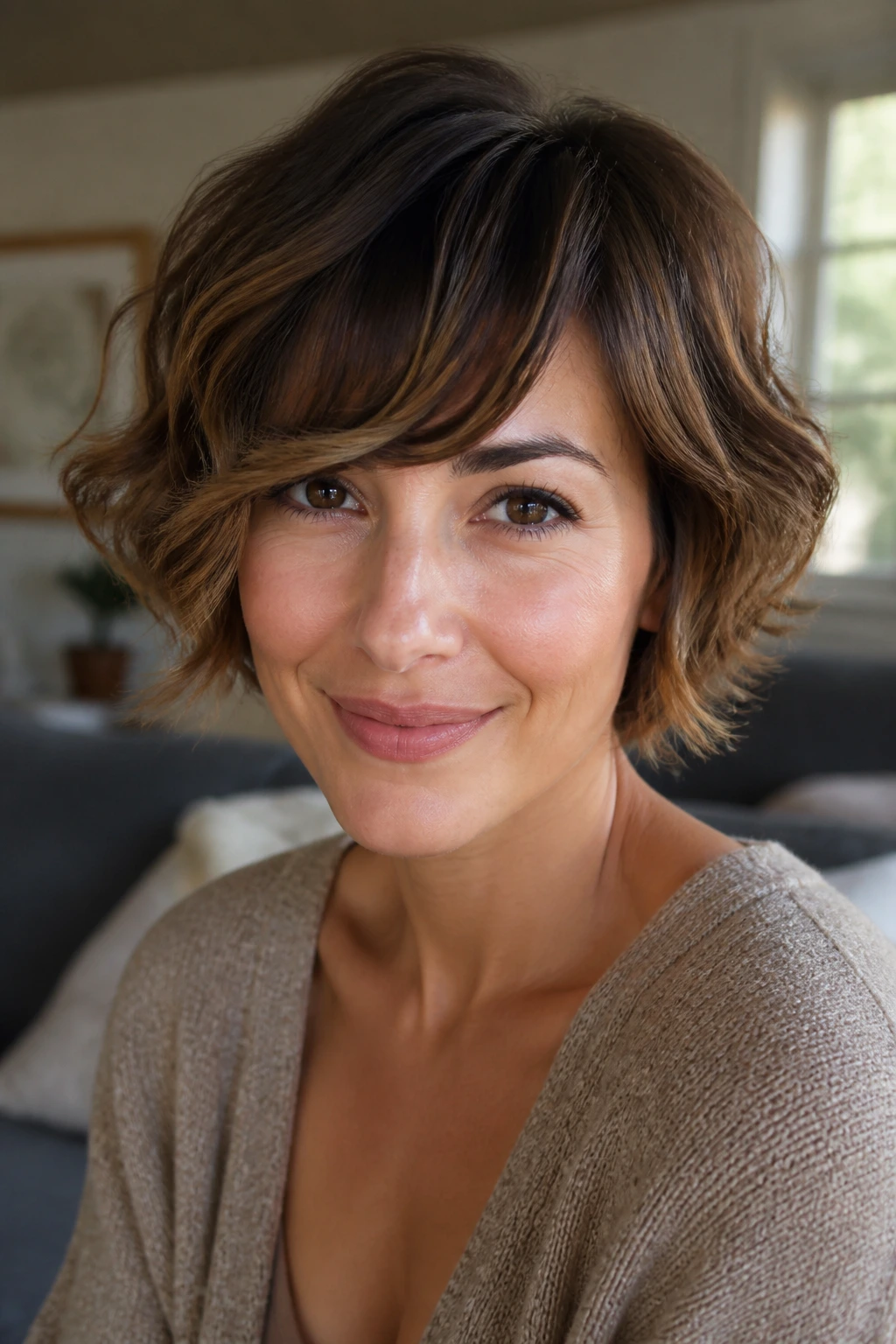
Soft waves change the whole mood of short hair. The cut looks gentler, the fringe bends instead of falling straight, and the ends move in loose curves around the jaw. It is a good choice if you want short hair that still feels touchable and a little soft around the face.
A 1-inch iron or a flat iron used with a slight twist can create those bends. You do not need perfect curls. A few irregular waves are better, honestly. They keep the cut from looking too set.
33. Deep Side Part Pixie Bob
A deep side part adds instant shape. One side gets lift, the other side drops closer to the cheek, and the contrast makes the cut look fuller at the crown. If your hair is fine or your face is round, this parting trick can change the whole balance without changing the length.
How to keep it from collapsing
Clip the part while the hair is warm, then let it cool in that direction. A little root spray at the base of the lifted side helps, but the real work comes from setting the direction early.
34. Black Gloss Pixie Bob
Deep black hair on a precise pixie bob looks clean and dramatic because every line shows. The shine matters here. If the hair is dull, the cut can read flat; if it has a reflective surface, the short shape suddenly has more dimension around the crown and jaw.
A smoothing cream and a careful blow-dry make more difference than extra product. Too much serum weighs black hair down fast, and then you lose the crisp edge that makes this version stand out.
35. Airy Salt-and-Pepper Pixie Bob
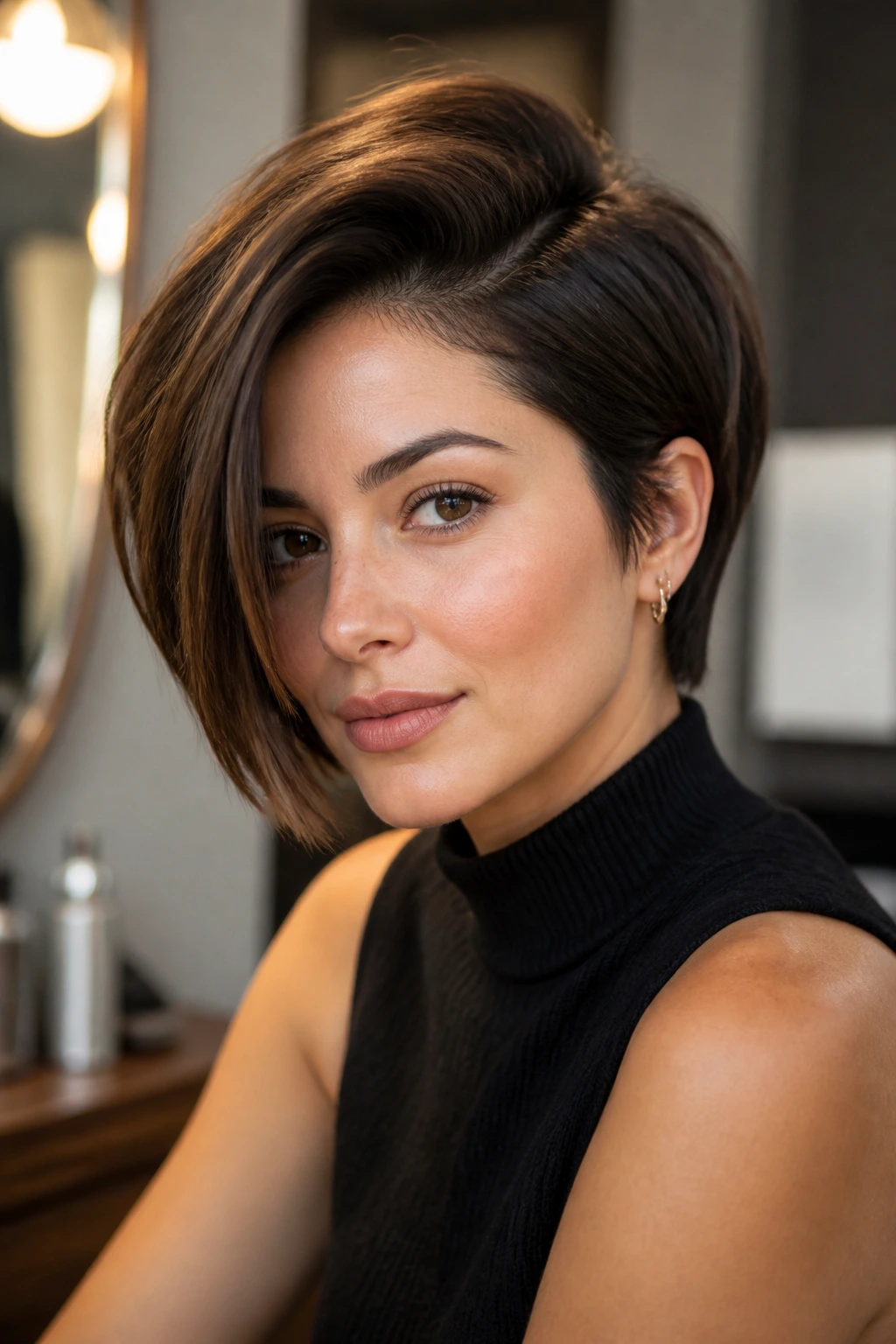
Salt-and-pepper hair looks especially good in a pixie bob because the short layers let the natural mix of silver and darker strands show in motion. The airy finish keeps the cut from looking dense, and the color variation gives the whole style a lived-in, easy feel that many people spend years trying to fake.
Keep the layers soft and the top a little piecey so the gray and dark strands catch the light at different angles. That contrast is the charm. There is no need to hide it.
What Makes the Pixie Bob Shape So Easy to Wear
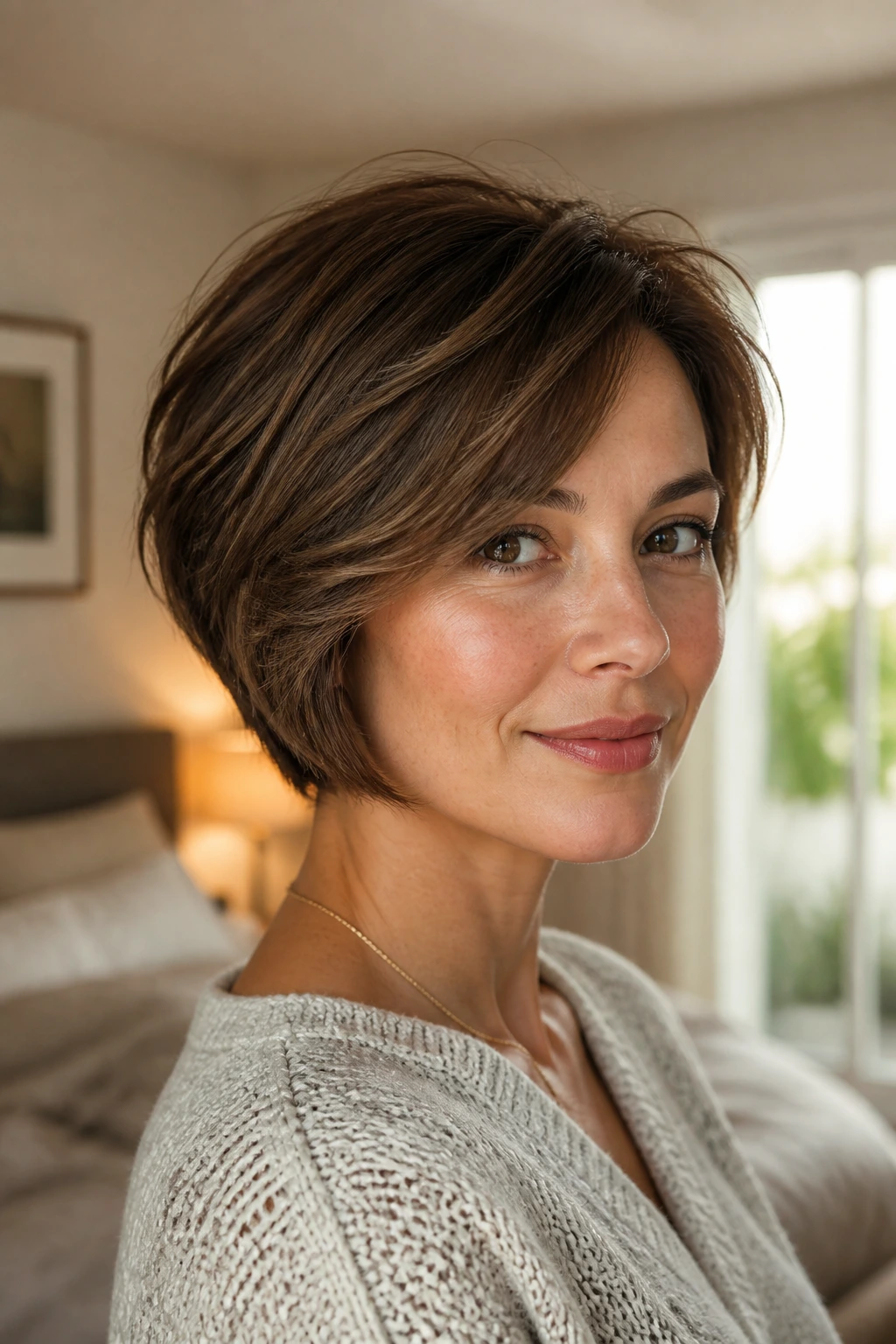
The pixie bob works because it gives you two kinds of control at once. You get the neat neckline and shorter back of a pixie, but you also get the cheekbone-to-jaw length that makes a bob feel more grounded. That mix keeps the cut from looking too severe on the face and too heavy at the nape.
The other reason the shape holds up is that it can be cut to suit the hair you already have. Straight hair gets clean lines. Wavy hair gets bend and texture. Curly hair gets a frame that follows the pattern instead of fighting it. If the layers are placed well, the cut does a lot of the work for you, which is probably why people keep coming back to it after trying something more fussy.
It is also forgiving in a way that a classic pixie is not. You can tuck it behind the ears, sweep the fringe to one side, or rough it up with a little texture spray, and the shape still makes sense. That flexibility is the whole charm.
Essential Tools for a Pixie Bob Cut and Style
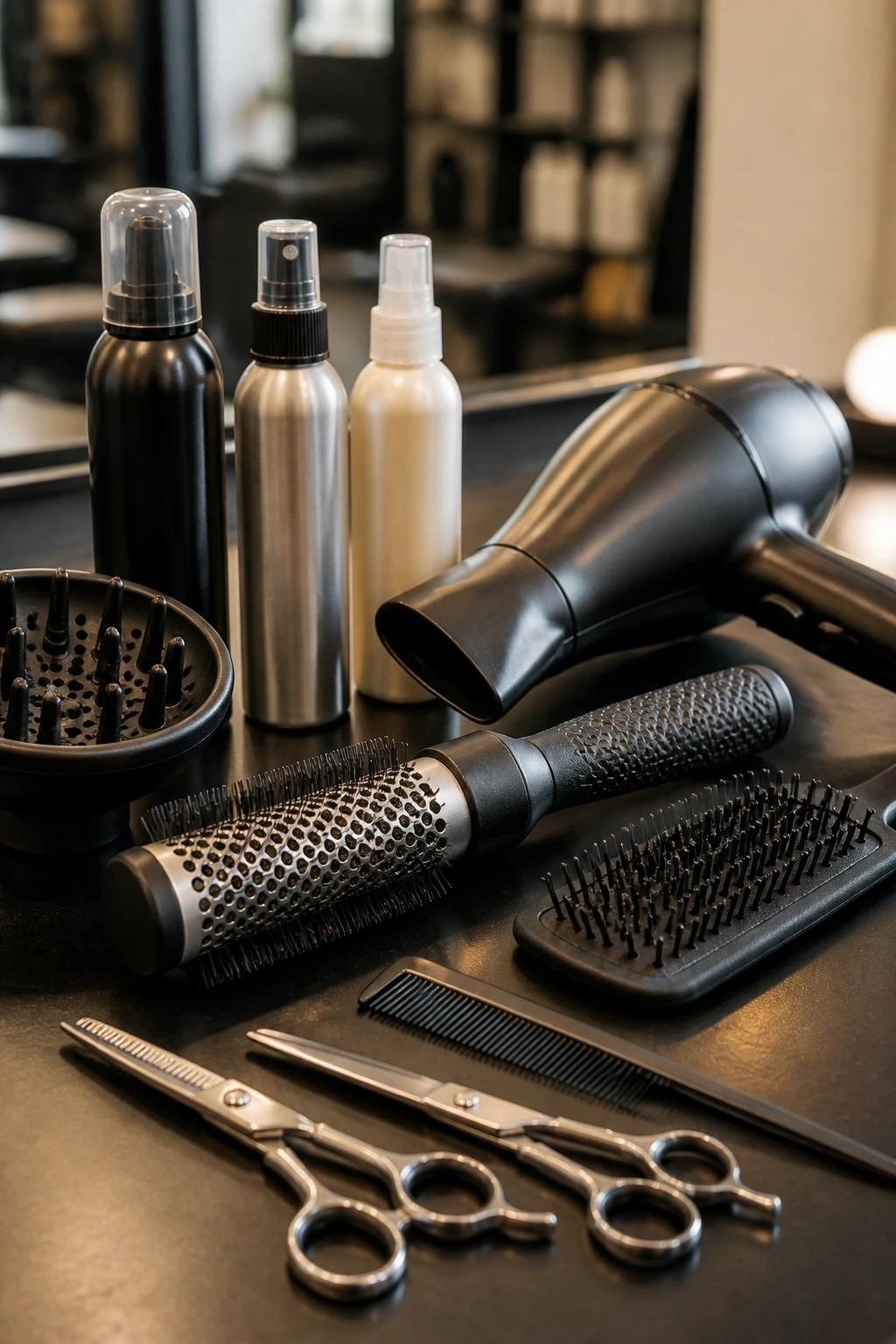
- A good pair of haircutting shears: Needed for shaping and detail work; dull blades chew up the ends and make short hair fray.
- Point-cutting shears or texturizing shears: Helpful for softening edges and taking bulk out of thick hair without making it look thin.
- Fine-tooth tail comb: Useful for parting, sectioning, and lifting short layers at the crown.
- 1-inch to 1.5-inch round brush: The best size for adding bend to the top and smoothing the sides without creating giant curls.
- Blow-dryer with a nozzle: Directs airflow so the cut lays where you want it; this matters more on short hair than people think.
- Flat brush or vent brush: Good for sleek versions, side parts, and quick root drying.
- Diffuser: A must for curly or wavy pixie bobs if you want the texture to stay soft instead of blown apart.
- Light mousse or root spray: Gives lift at the crown without making short hair sticky or heavy.
- Texturizing spray or matte paste: Best for choppy, piecey, or shaggy versions; use a little, then add only if needed.
- Heat protectant: Non-negotiable if you use a flat iron or round brush daily. Short hair still burns.
How to Choose the Right Pixie Bob for Your Hair Texture
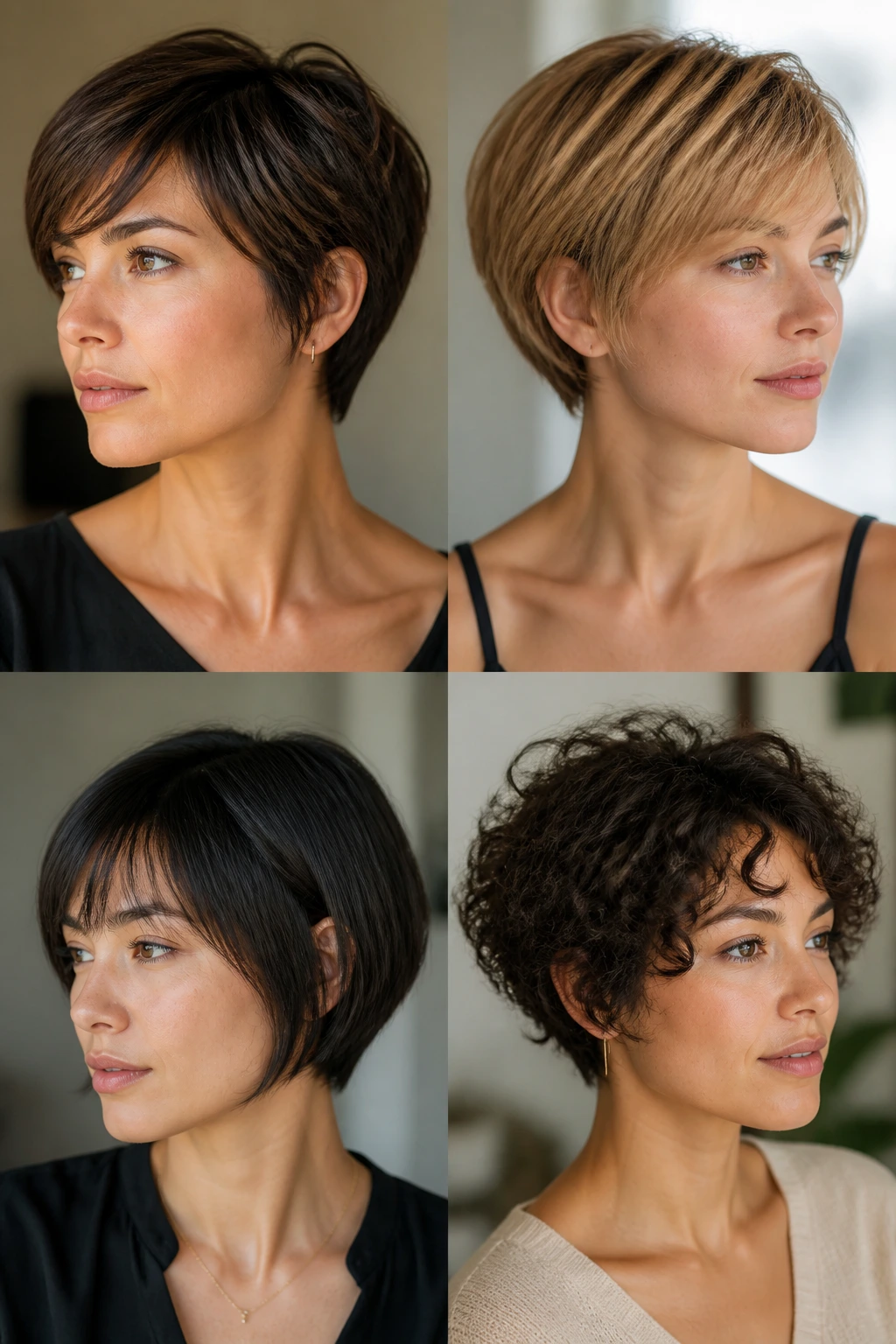
The fastest way to pick the wrong pixie bob is to copy a photo without looking at the hair underneath it. Thick hair needs weight removal in different places than fine hair. Curly hair needs length left in key spots so the curls do not spring up too far. Straight hair usually needs more internal shape because it can go limp if the layers are too blunt.
Face shape matters, but not in the rigid way some salons talk about it. If your face is round, a deeper side part or longer front pieces can help the cut look stretched. If your face is long, a fuller fringe or a little width at the sides can bring balance back. Heart-shaped faces usually like softness around the jaw, and square faces often look good with feathered or side-swept pieces that interrupt a strong line.
Bring more than one photo. Bring three, maybe four, and point out what you like in each one — the fringe on one, the nape on another, the texture on a third. That is much more useful than showing a single picture and hoping the stylist guesses the rest.
How to Style These Cuts for Everyday Wear, Work, and Nights Out
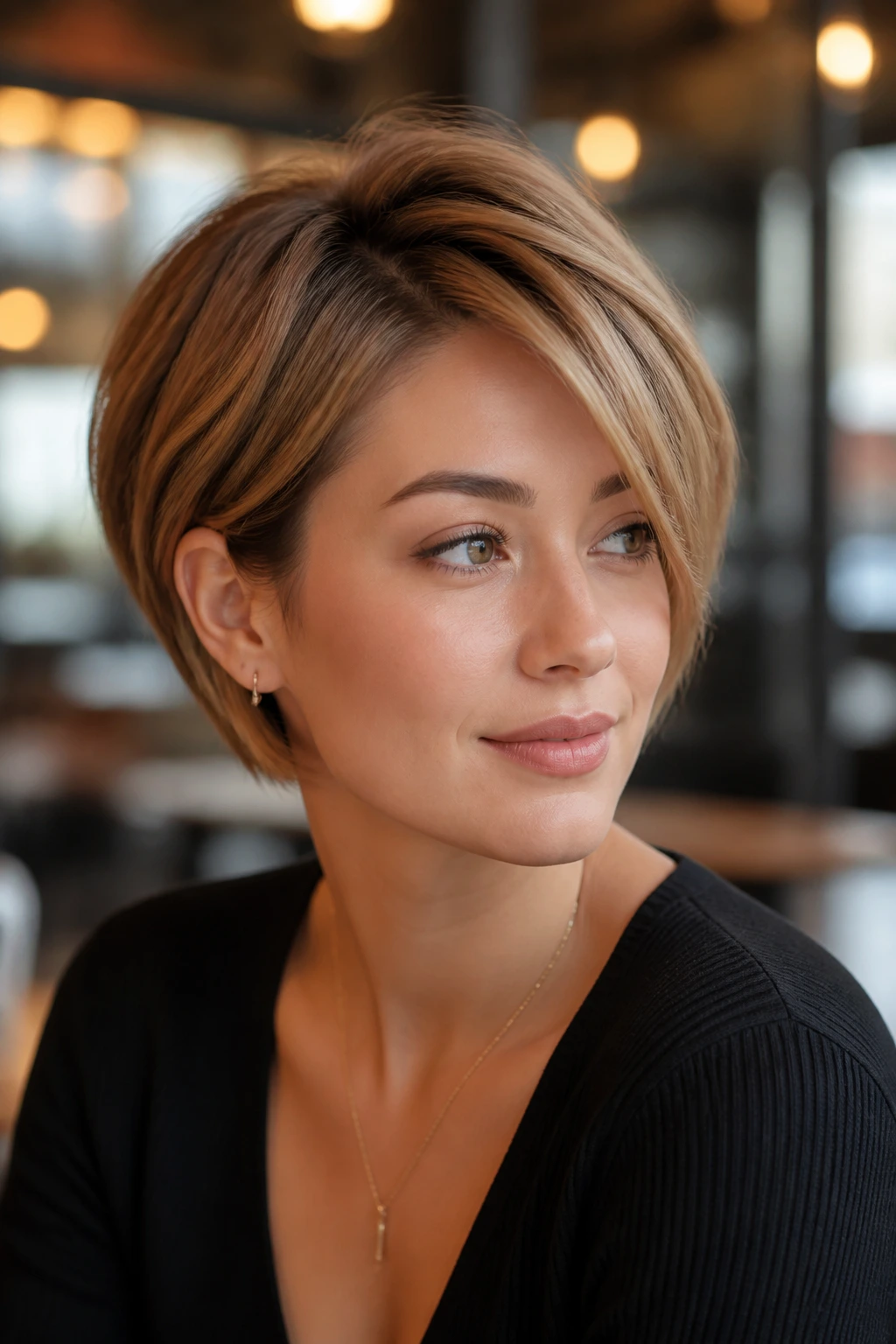
Everyday Finish:
A quick blow-dry with a round or vent brush is usually enough. Aim the dryer at the roots first, then smooth the sides and ends with your fingers. A pea-sized amount of cream or paste keeps the hair from puffing out on day two.
Work Finish:
For a cleaner look, set a side part while the hair is still warm and tuck one side behind the ear. A drop of serum at the ends gives the cut a neat surface without making it slick. This is the version that looks good with earrings, glasses, and a sharp collar.
Texture Finish:
If the cut is shaggy, choppy, or wavy, scrunch in a light texture spray and let the hair dry halfway before touching it. That pause matters. Touching it too early is how the bend breaks apart.
Dressier Finish:
A slicked-back crown, a deep side part, or a polished wave along the cheek can make the same haircut feel more dressed up. A small hair clip, a barrette, or even a tucked ear with a bold earring changes the whole read without changing the cut itself.
Small Styling Moves That Make the Shape Look Intentional
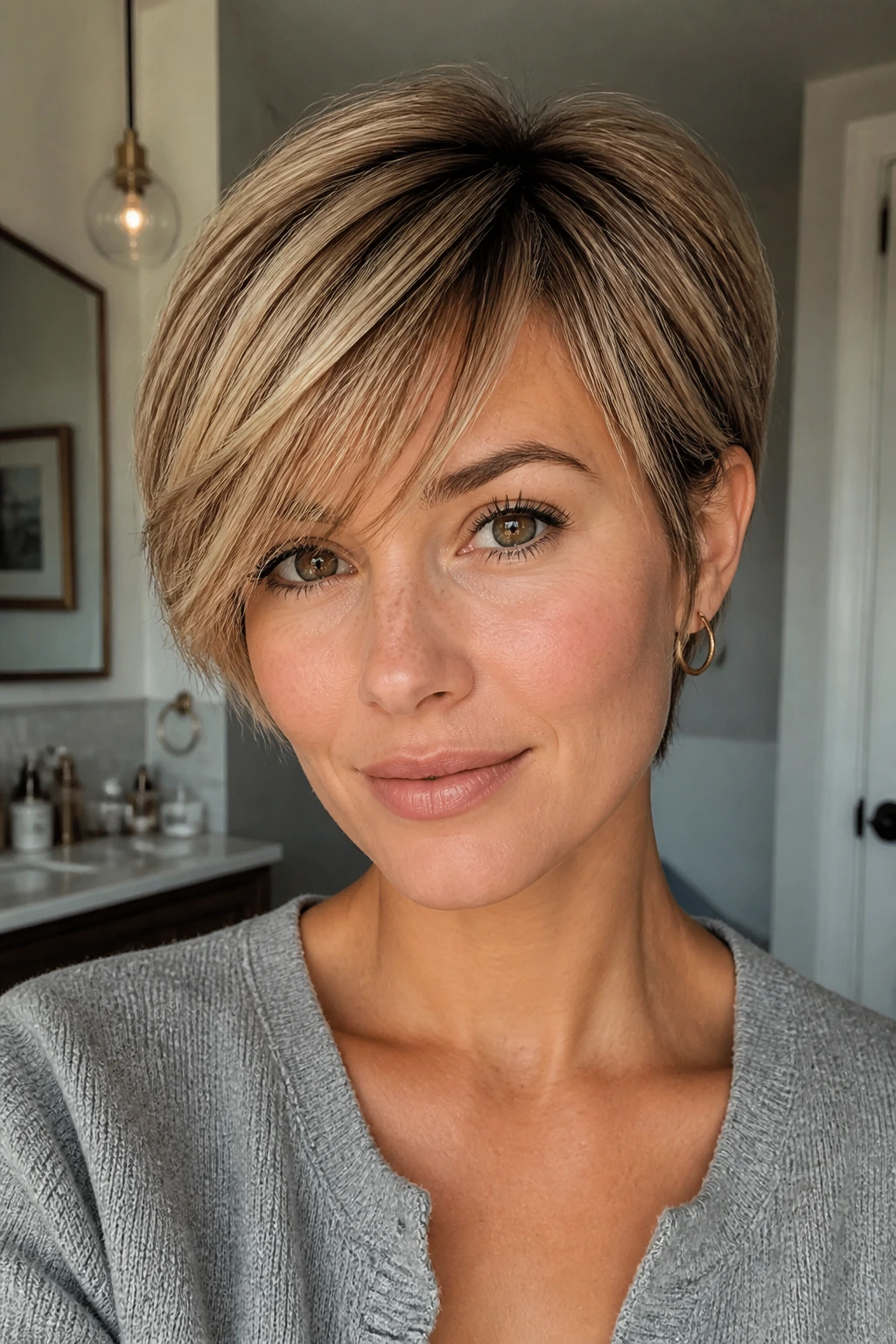
A pixie bob lives or dies on tiny details. The part line, the direction of the fringe, and the way the nape is cleaned up can make a big difference in how finished the cut looks. Keep the neckline tidy. Even a little fuzz back there can make a sharp cut feel lazy.
Texture Boost: A dime-size dab of matte paste, warmed in your palms first, can separate the top layers without making the hair stiff. Use it on dry hair, not damp hair, or it will clump.
Lift Trick: Dry the crown in the opposite direction first, then flip it back. That gives the roots memory and stops the top from sitting flat against the scalp.
Polish Move: If the sides are too wide, use a flat brush and a little tension while blow-drying the hair back toward the ears. That keeps the silhouette narrow.
Accessory Move: Small hoops, a slim headband, or a single clip at the temple can make short hair feel styled in 10 seconds. That matters on days when you do not want to fuss.
Keeping the Shape Sharp Between Salon Appointments
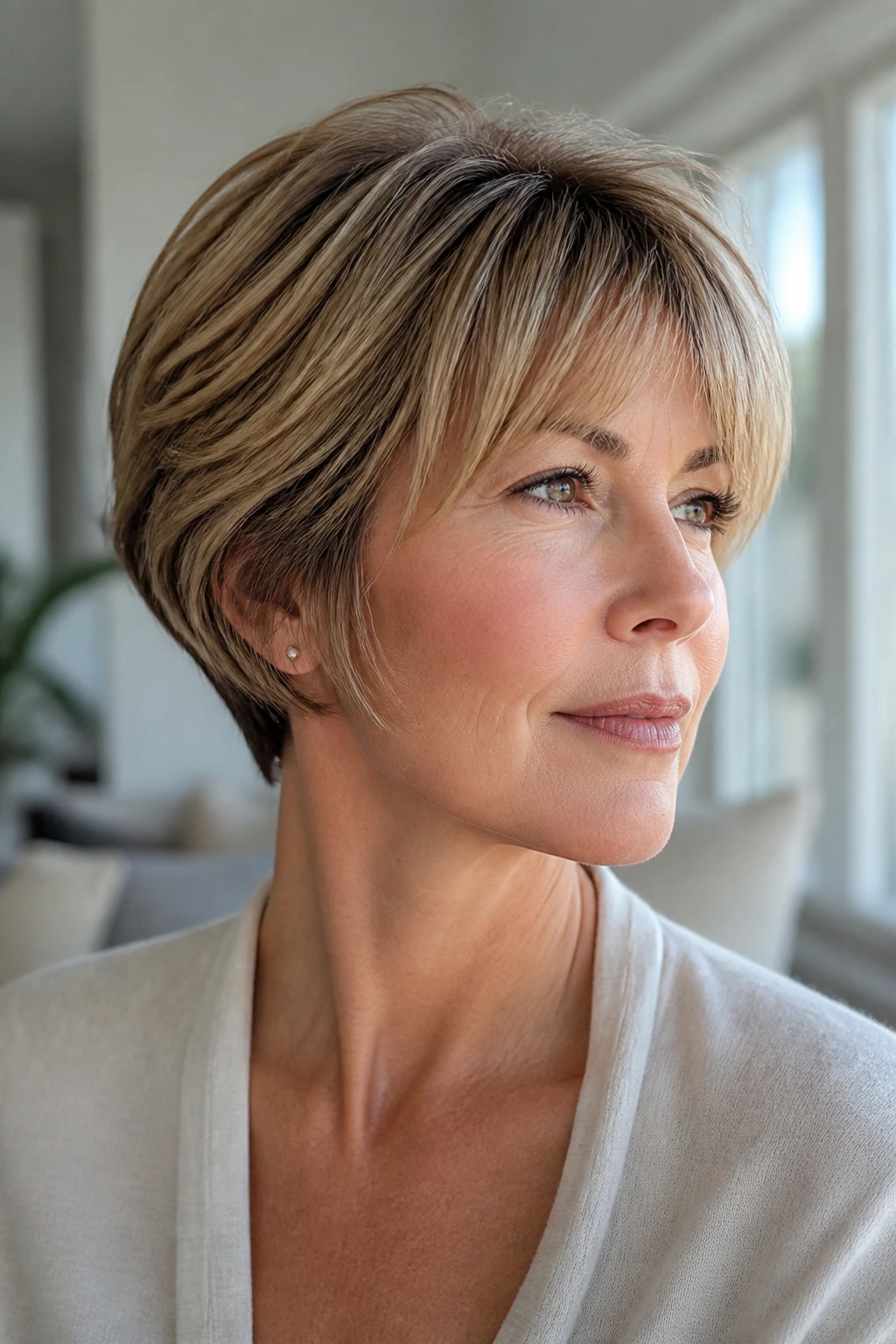
Short hair shows growth faster than long hair, which is both annoying and useful. A pixie bob usually looks best with trims every 4 to 6 weeks if you want the neckline and fringe to stay crisp. If you like a softer grow-out, you can stretch that a little longer, but the silhouette will change.
The easiest overnight fix is a silk pillowcase or a bonnet. Short layers still rub, and the friction can bend the sides in odd directions by morning. If you wake up with a wonky crown, mist the roots lightly with water, use your fingers to reset the part, and hit only the roots with the dryer. You do not need to wash the whole head every time.
Dry shampoo helps, but it can also make short hair look dusty if you overspray. Use it at the roots, wait a minute, then massage it in with the pads of your fingers. If the hair feels chalky, stop there. More product will not rescue it.
Variations and Adaptations to Try
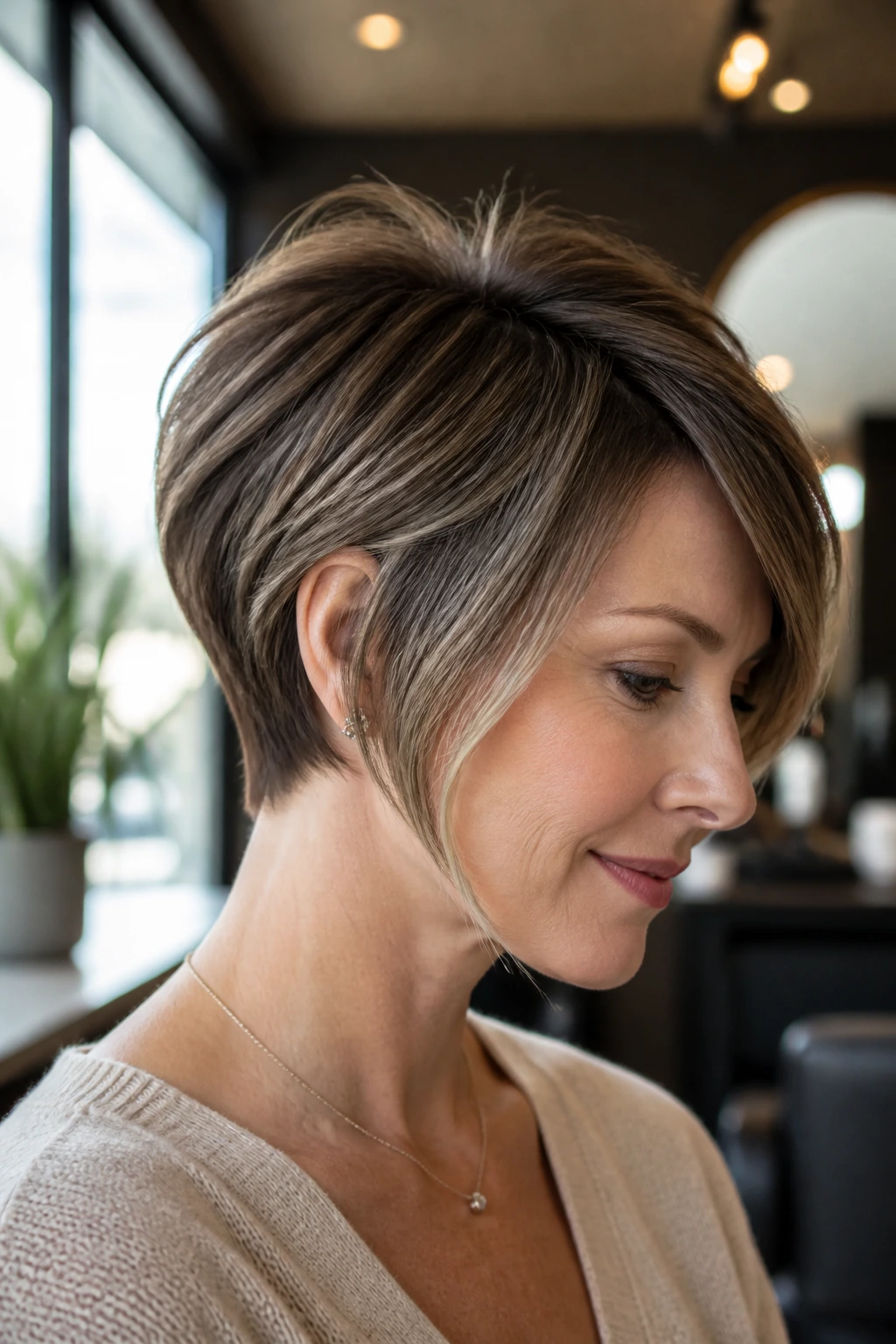
Curly Crown Reset: Leave the top a little longer and cut the sides to follow the curl pattern. This version gives curl more room to sit without turning into a triangle.
Sharper Jawline Version: Ask for slightly longer front pieces that graze the jaw and a tighter nape. It draws the eye downward and gives the haircut a cleaner edge.
Soft Grow-Out Version: Keep the fringe and sideburns longer so the cut still looks deliberate after several weeks. This is the one to choose if you hate frequent trims.
Bold Color Swap: Copper, platinum, silver, deep black, or even hidden streaks change the entire mood without changing the structure. Short hair shows color fast, so one thoughtful panel can matter more than a full head of highlights.
Thick-Hair Relief Cut: Add more internal weight removal and a cleaner undercut at the nape. Thick hair can swallow the pixie bob shape if the bulk is left untouched.
Common Mistakes That Flatten the Cut
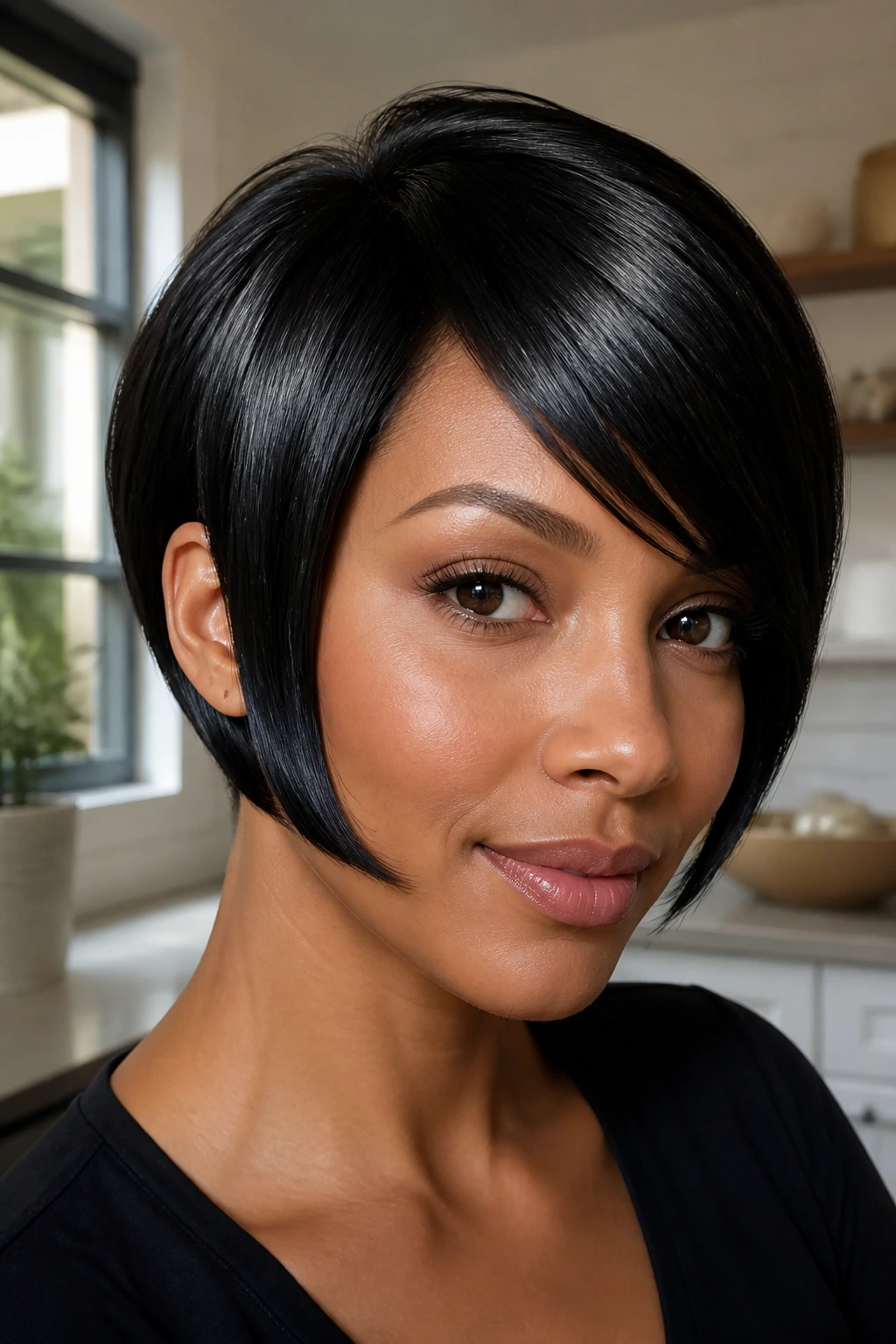
The first mistake is cutting the back too blunt or too bulky. When that happens, the style loses the airy swing that makes a pixie bob feel modern. The fix is simple: ask for the nape to be tapered or stacked, not just chopped off straight.
Another common problem is over-thinning fine hair. The ends start to look see-through, and the haircut ends up looking stringy instead of light. Fine hair usually needs shape, not a lot of aggressive texturizing.
Product overload is another one. Short hair needs less product than you think, and it shows grease faster. Start with a pea-sized amount, not a palmful, and add only if the ends need separation.
The last big miss is ignoring your cowlicks and natural growth pattern. If the front likes to split a certain way, fighting it every morning gets old fast. A good pixie bob should work with that pattern, not punish you for having one.
Frequently Asked Questions
Will a pixie bob work on round faces?
Yes, if the cut keeps a little height at the crown and some length near the front. Side-swept bangs or a deep side part help stretch the face visually, while a blunt, boxy shape around the cheeks can make it look wider.
Is a pixie bob hard to style every day?
Not usually. Most versions need 5 to 15 minutes if the cut is shaped well and your tools are right. A quick blow-dry, a little root lift, and a small amount of styling product cover most of it.
What’s the difference between a pixie bob and a bixie?
A bixie usually leans a little more toward the pixie side with soft, shaggy edges. A pixie bob keeps more of a bob-like outline around the jaw and neckline, so it often feels a bit fuller and more structured.
Can thick hair wear a pixie bob without puffing out?
Yes, but the cut needs bulk removal in the right places. Ask for debulking underneath and a tapered or stacked nape so the hair does not sit like a block.
How often does a pixie bob need trimming?
If you want the shape to stay sharp, plan on 4 to 6 weeks. If you like a softer, looser outline, you can wait longer, but the nape and fringe will start to change first.
Does this cut work with glasses?
It often works very well with glasses because the short sides clear the frame and the fringe can be cut to sit above or beside it. The real trick is keeping the front pieces light enough that they do not bunch behind the arms of the glasses.
What if my hair is very fine and flat?
Ask for internal layers, not a heavy thinning job, and keep some length in the top so the crown has something to lift from. Root spray and a small round brush help more than thick creams ever will.
Can I wear a pixie bob curly without straightening it?
Absolutely. In fact, curly versions often look better when the cut follows the curl pattern. The only catch is that the bangs and front pieces need to be left long enough to account for shrinkage.
A Cut You Can Come Back To
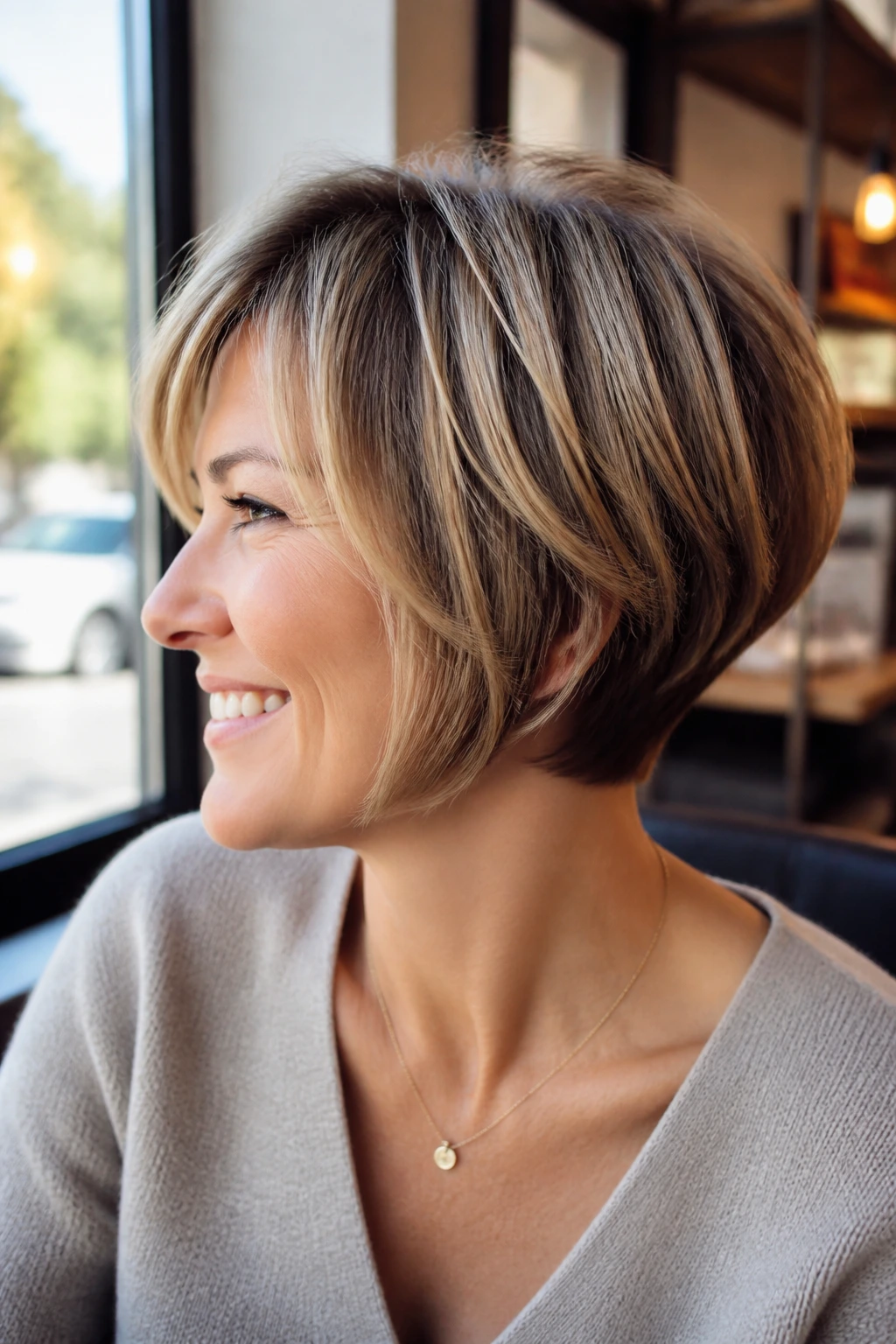
The reason the pixie bob stays interesting is that it never locks you into one mood. You can make it soft, sharp, shaggy, sleek, or quietly grown out, and the same basic shape still holds. That flexibility is what keeps it useful, not a slogan or a trend cycle.
If your short hair has felt a little too severe, a little too flat, or a little too eager to misbehave, this is the shape worth trying next. Give it movement, keep the nape tidy, and let the front do a bit of face-framing work. That’s where the charm lives.
