



Balayage looks for short hair live or die by placement. On a bob or pixie, the painted pieces sit out in the open, which means there’s nowhere for sloppy color to hide. One thick streak near the part line can make the whole cut look stripy. Get the placement right, though, and the haircut starts doing this little magic trick where the cheekbones look higher, the ends look softer, and the whole shape feels more expensive than it has any right to.
That’s what makes short hair so fun to color. The cut is already doing half the work. You don’t need a giant curtain of blonde to create movement; sometimes two caramel ribbons around the face and a softer sweep through the crown are enough to make a blunt bob look airier. A cropped cut also exposes the nape, the temple, and the top layer in a way longer hair doesn’t, so the color has to be mapped to the shape, not just painted on top and hoped for.
The 30 balayage looks below lean into that reality instead of fighting it. Some are warm and sunny, some are cool and smoky, some are barely-there whispers of dimension, and a few make a blunt cut or a pixie feel sharper on purpose. If you’ve ever wondered why one short-hair color looks polished and another looks patchy, the answer is usually in the placement, the tone, and how the grow-out is designed. That’s where the good stuff starts.
Why These Balayage Looks Work on a Cropped Cut
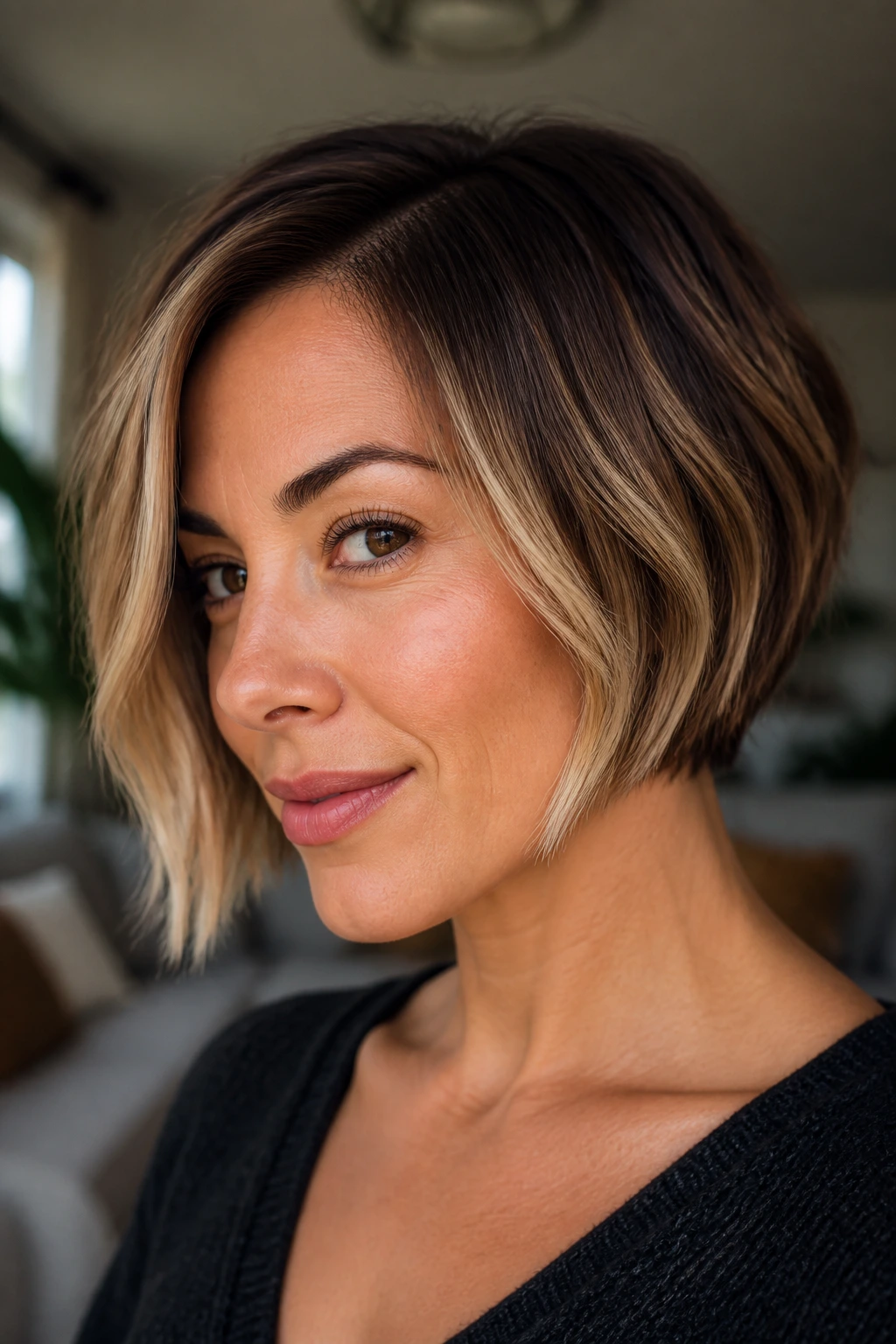
Short hair gives you less room for error and more room for impact. That sounds dramatic, but it’s true. A few painted sections can change the way a bob bends at the jawline, and a tiny flash of brightness at the temple can pull a pixie straight into “finished” territory.
- Placement matters more than volume: On short hair, the eye sees the color map almost at once, so narrow ribbons and soft feathering usually look cleaner than broad, chunky panels.
- Grow-out shows sooner: A root smudge or shadow root buys you time, especially on cuts that sit above the shoulder and get trimmed often.
- Texture changes everything: Straight hair shows every line. Waves blur the blend. Curls need their highlights placed where the coil opens, not where the hair lies flat.
- Short cuts love contrast at the edge: The perimeter, the fringe, and the face frame can take more brightness than the interior because that’s where movement shows first.
- A good short-hair balayage follows the haircut: If the bob is blunt, the color should soften the edge. If the cut is shaggy, the lighter pieces can look a little more scattered and still feel right.
The biggest mistake people make is treating short hair like a smaller version of long hair. It isn’t. The canvas is smaller, yes, but the visual payoff is louder, and that means the formula has to be tighter. I’m always happiest when the color looks like it belongs to the cut instead of sitting on top of it like decoration.
1. Caramel Ribbon Bob
A warm brunette bob with thin caramel ribbons through the top layer does one job beautifully: it makes a blunt cut move. The lighter pieces sit where the light naturally hits first — around the temples, through the crown, and just off the ends — so the color feels polished instead of loud. On chin-length hair, that balance matters.
Why It Works
Caramel softens a heavy line without stealing the shape of the bob. Ask for narrow painted sections rather than chunky bands, and keep the root shadow close to your base so the grow-out stays smooth. Best on: level 4-6 brunettes with straight or softly waved bobs.
- Face-framing brightness without a stripey part line
- Soft grow-out for 8-10 weeks
- Easy to wear with a middle or side part
Styling note: Bend the ends with a flat iron, not a tight wave. The color needs a little room to show.
2. Honey Face-Frame Lob
A honey face-frame lob can do more for short hair than a full head of highlights. It puts the brightness where the eye lands first — around the cheekbones and just under the eyes — while the rest of the cut stays softer and easier to maintain. That keeps the lob looking clean, not busy.
Honey is a good choice if your base sits in the medium-brunette range and you want lift without drifting into pale blonde. I like this look with loose bends and a deep side tuck, because the front pieces catch the light every time you move your head. If the hair around your face is too pale, the whole cut can look detached. Keep the face frame a shade or two brighter than the rest, not five.
Ask for: brighter money pieces near the front, then a gentler sweep through the mids and ends. That gives you dimension without letting the front overpower the haircut.
3. Mushroom Brown French Bob
Why does mushroom brown look so good on a French bob? Because the cool beige-brown tones keep the line crisp. A French bob already has a little attitude; it doesn’t need loud blonde to make itself known.
This look works best when the colorist keeps the lift low and the tone earthy. Think taupe, beige, and smoky brown instead of gold. On hair that naturally pulls warm, a mushroom gloss keeps the color from turning orange after a few washes. I also like it on shorter bobs with soft fringe, because the muted tone lets the cut’s shape stay in charge. If you want hair that looks polished even when it’s air-dried, this is a strong place to land.
How to wear it
- Wear it sleek for a neat, editorial finish.
- Add a soft tuck behind one ear to show the lighter surface pieces.
- Keep the ends blunt or only slightly textured so the tone reads intentional.
4. Icy Beige Pixie
If your pixie gets too bright on top, the whole cut can start looking top-heavy. Icy beige balayage solves that by keeping the sides deeper and concentrating lift on the crown and fringe, where the movement lives. The effect is sharp, but not frosty in a harsh way.
This is the look for someone who wants a cooler blonde without a full bleach-out feeling. The beige keeps it wearable; the icy edge keeps it from disappearing on short hair. Best on: straight pixies, piecey crops, and cuts with a little height at the front.
- Brightest pieces on the crown and fringe
- Deeper sides to keep the head shape balanced
- Works well with matte paste or a light cream
Tip: Don’t over-layer the toner. On a pixie, too much ash can make the color look flat instead of clean.
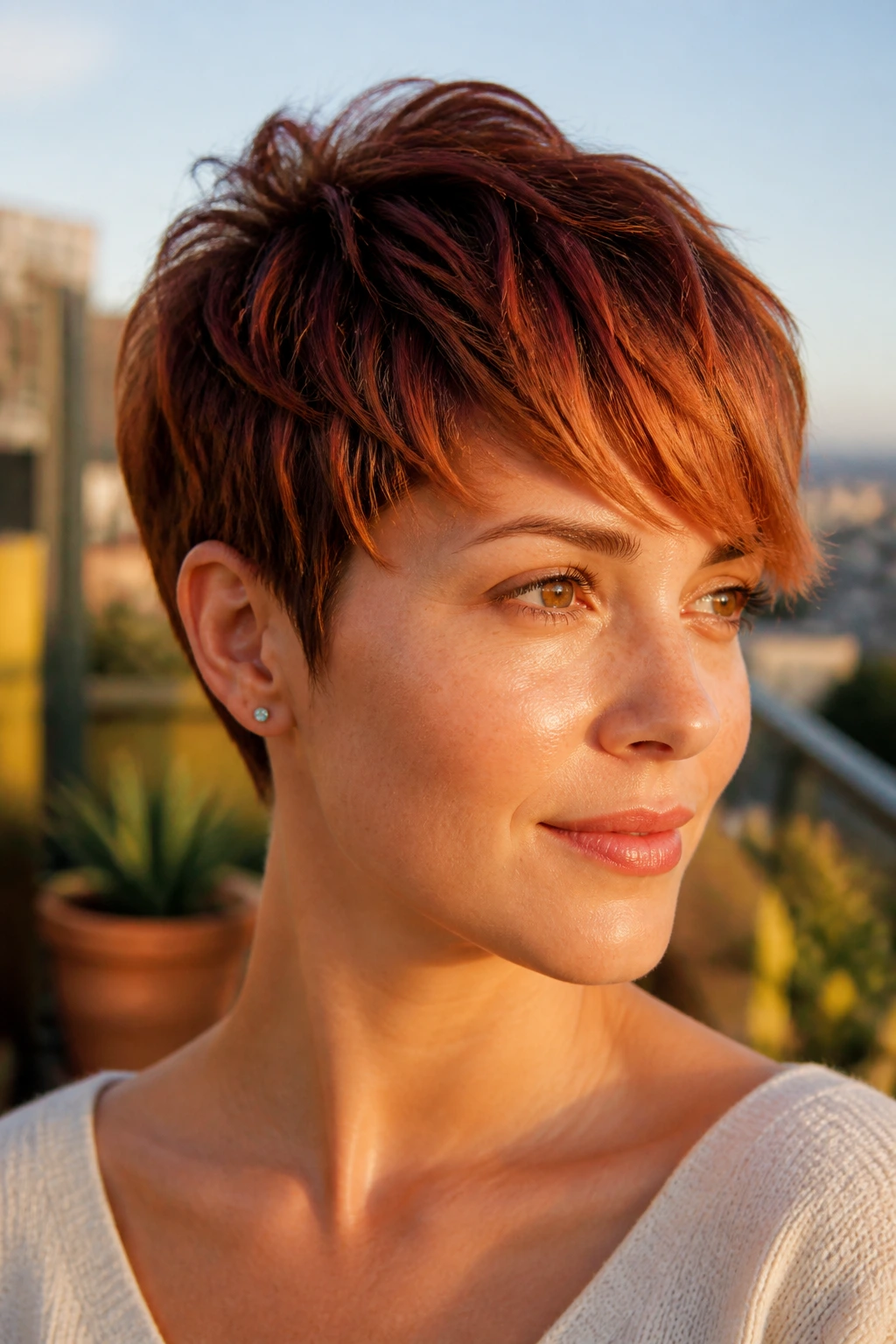
5. Copper Melt Crop
Copper on a short crop is never shy, but it can still be refined. The trick is to let the warmth melt from a richer cinnamon base into brighter copper ends so the color feels dimensional rather than painted in blocks. On textured crops, that glow catches every bend.
This is one of my favorites for someone who wants warmth without gold. Copper sits nicely on brunette bases and shows up fast on short hair, even when the lift is modest. The short length keeps the color close to the face, which is why it feels so vivid. If the cut has choppy layers, ask for the brightest placement on the top third of the hair and a softer drag through the perimeter. That keeps the shape from turning into a helmet of orange.
A little shine spray helps here. Copper looks dull when it’s dry. Give it light.
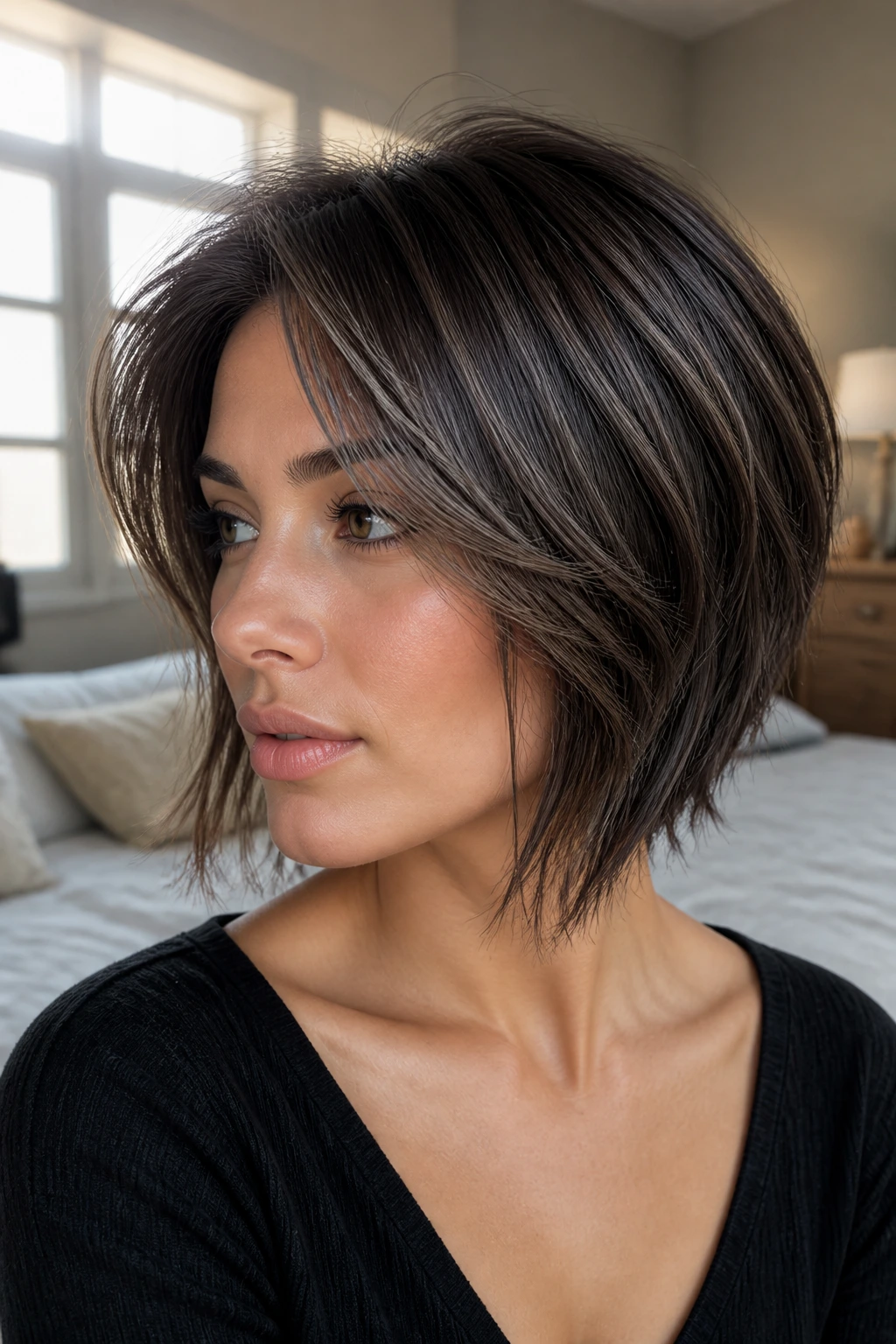
6. Ash Brunette Sweep
Ash brunette balayage is for people who hate brass and love a clean, smoky finish. It keeps the depth of brunette hair intact while nudging the surface pieces toward cool mocha and graphite-brown tones. On short hair, that kind of restraint reads as expensive-looking rather than flat.
The best version doesn’t try to turn dark hair blonde. It just shifts the surface enough to give the cut a little movement. I like this on layered bobs and longer pixies, especially if the natural base pulls orange in sunlight. The colorist should keep the lift soft and the toner cool, then leave some deeper pieces around the nape so the cut keeps its shape.
If your hair is fine, this is a smart pick. Too much lightness can make fine short hair look see-through. Ash brunette keeps the body.
7. Rose Gold Shag Bob
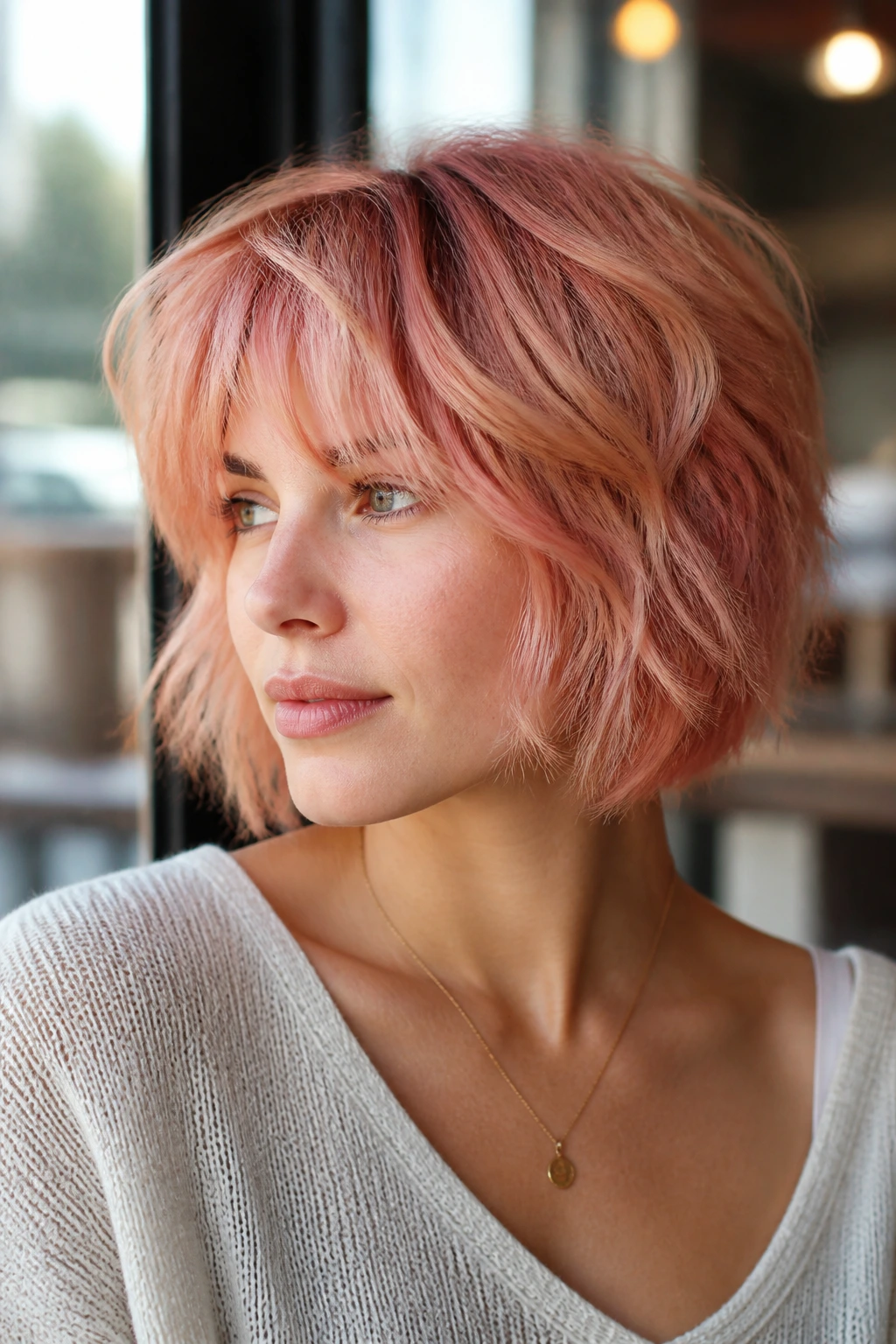
A rose gold shag bob has a nice kind of mess to it. The pinky-copper tones sit on top of a shaggy base and make every flipped end look deliberate instead of accidental. It’s playful, yes, but the cut keeps it grounded.
This look works best when the light pieces are feathered through the top and around the fringe, not pasted into the ends. On shaggy short hair, the movement comes from layers, so the color should follow that rhythm. Rose gold also softens very dark roots if you want a little contrast without jumping all the way to blonde. It fades in a nice way, too. The pink usually backs off first, leaving a pretty peachy stain if you care for it gently.
Styling note: Use a small round brush or a diffuser. The texture should look bent, not curled to death.
8. Sandy Blonde Blunt Bob
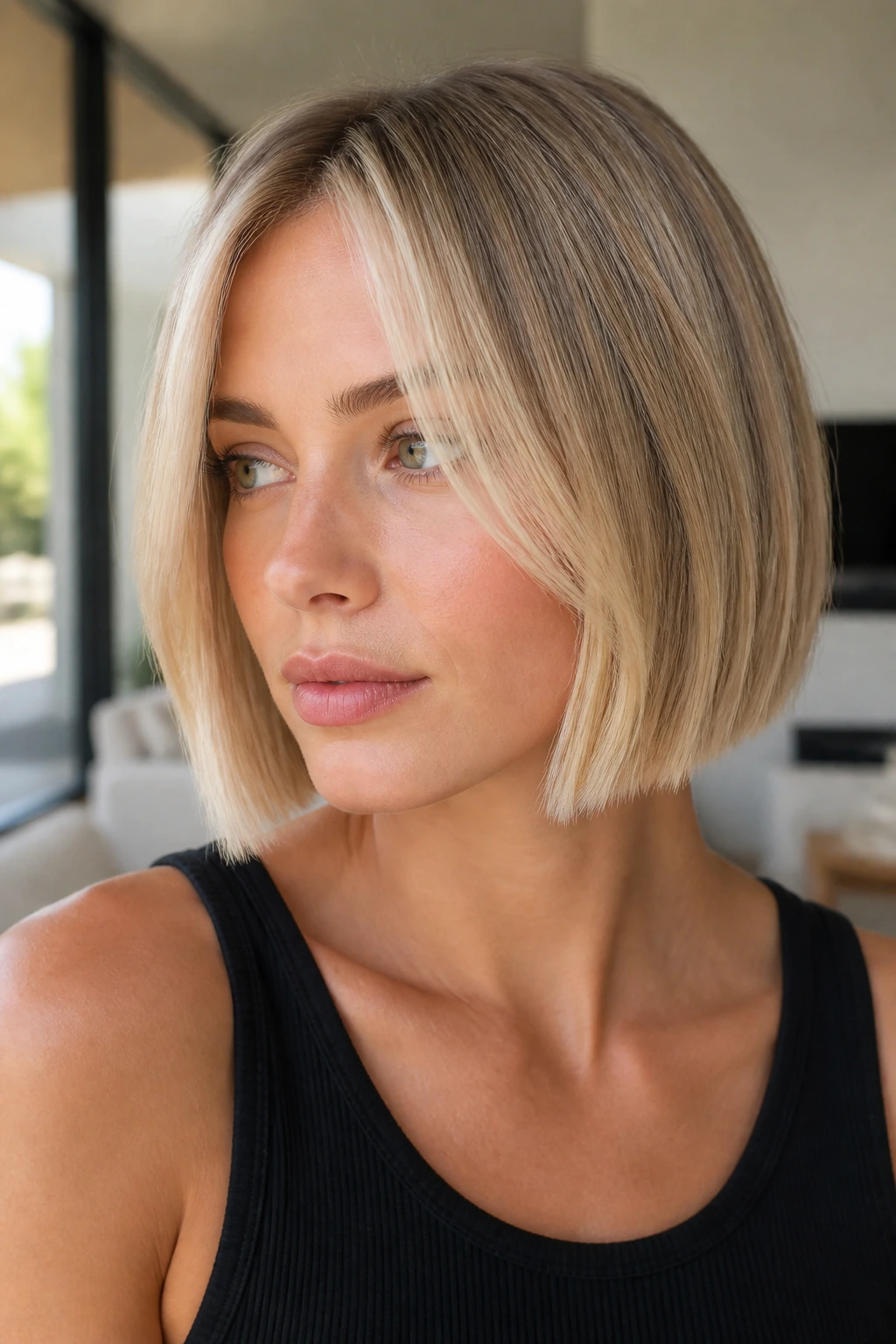
A sandy blonde blunt bob is one of those looks that seems quiet until you see it in daylight. Then it wakes up. The sandy tone keeps the blonde grounded with a little beige and a little gold, which keeps a blunt edge from looking harsh.
I like this when the haircut is precise and the color needs to soften the line without blurring it. The balayage placement should be subtle through the mids and a touch brighter at the front. That gives you the sunlit effect without breaking the clean edge of the cut. If your natural base is brunette, the grow-out line should be shadowed enough that you can wear the style for weeks without feeling boxed in.
This one is especially good with a middle part and a flat iron bend through the ends. Clean, calm, and not boring. That’s the whole point.
9. Espresso-to-Toffee Sweep
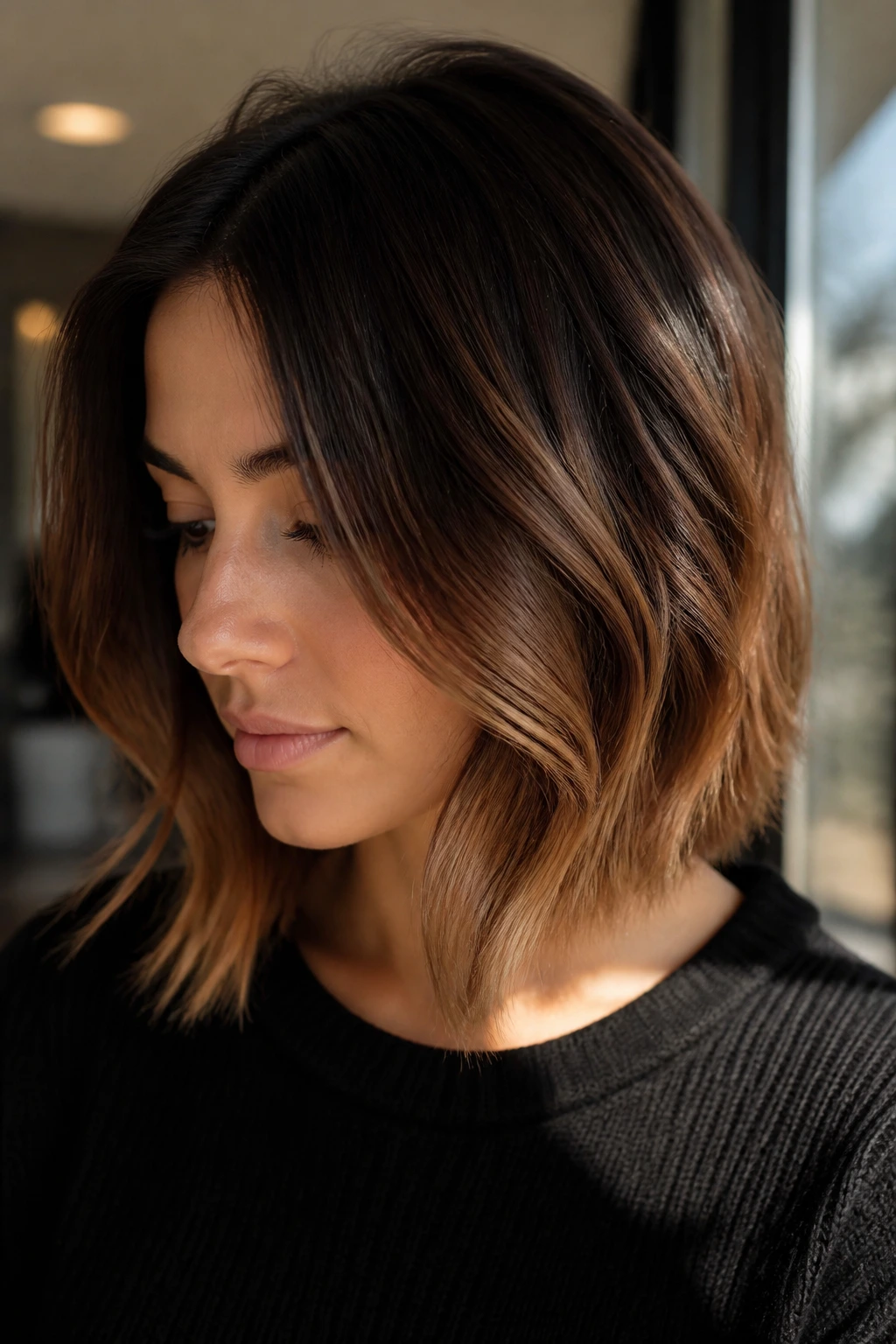
A dark espresso root melting into toffee ends gives short hair more depth than a single bright highlight ever could. The transition feels expensive because it follows the natural way hair catches light: dark at the base, warmer where the ends move. On a bob or lob, that gradient makes the cut look fuller.
This is a smart choice if you want dimension but do not want a high-maintenance blonde look. The toffee should stay a little deeper than caramel, which keeps the whole style from tipping too warm. Ask for soft hand-painted pieces through the front and a gentle lift through the lower half of the cut. That way the movement lands where people actually see it.
It’s a strong option for thicker hair, too. The darker root and midsection keep the shape from ballooning out visually.
10. Platinum Money Piece Pixie
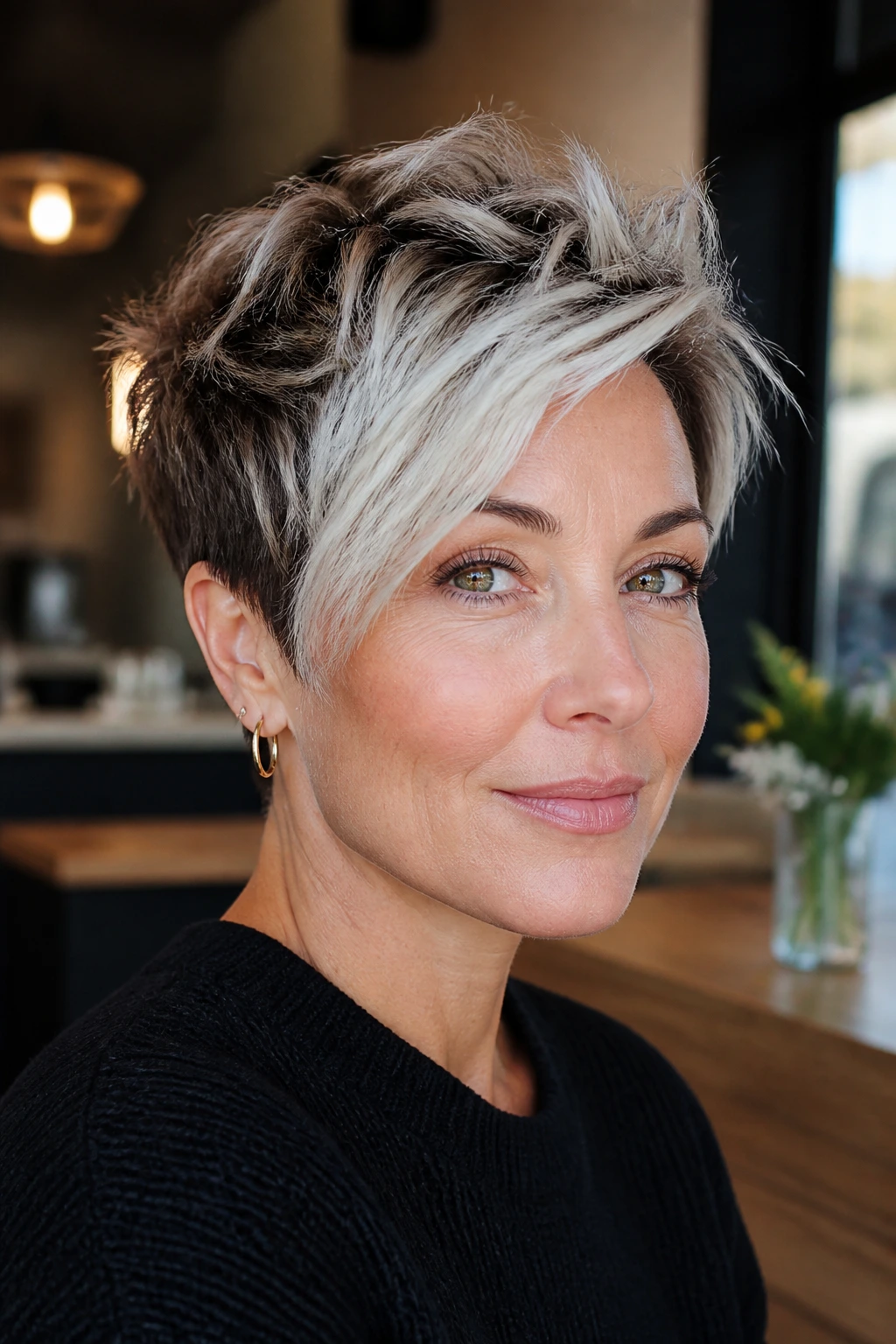
If you want a pixie that turns heads, platinum around the front does the job fast. A money piece on short hair is bolder than it is on long hair because the face frame takes up so much of the visual field. That’s why this look works best when the sides stay deeper and the platinum is kept clean and narrow.
I prefer this on a pixie with some texture at the top. The brighter front pieces make the cut feel sharper, and a little depth behind them keeps the color from looking overprocessed. The maintenance is real. Platinum short hair needs toning and careful conditioning, not casual hope. Still, when it’s done right, the result is crisp and a little defiant.
Ask for: a bright front panel, not a bleach blur all over the head. That distinction matters.
11. Chestnut Balayage French Bob
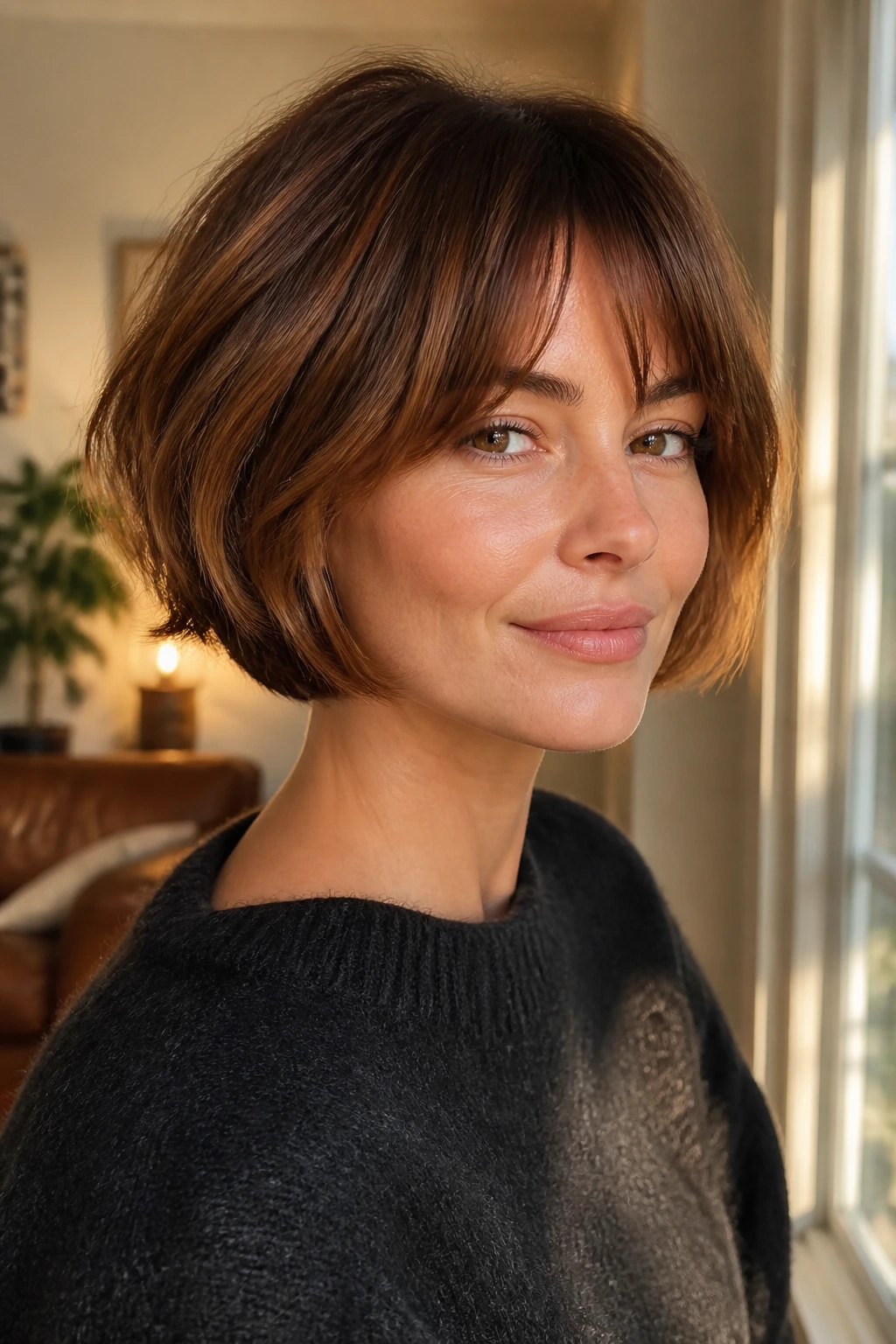
Chestnut balayage on a French bob feels like a good wool coat on a cold morning. Rich. Soft. Easy to keep looking polished. The chestnut pieces sit just a shade lighter than the base, so the change is visible without shouting.
This is one of the most forgiving looks in the whole lineup. On short hair, subtle dimension can be more flattering than heavy lift, especially if the fringe is short and the neckline is clean. The color glides through the top layers and around the face, which gives the bob movement without losing the chic little square shape that makes a French bob so good in the first place.
If you like low drama and good grow-out, this one deserves a long look. It’s the color version of a well-cut jacket: fitted where it counts, easy everywhere else.
What to tell your colorist
- Keep the lift one to two levels lighter than the base.
- Add soft pieces around the temple and crown.
- Finish with a warm chestnut gloss, not red.
12. Peach Blonde Wavy Bob
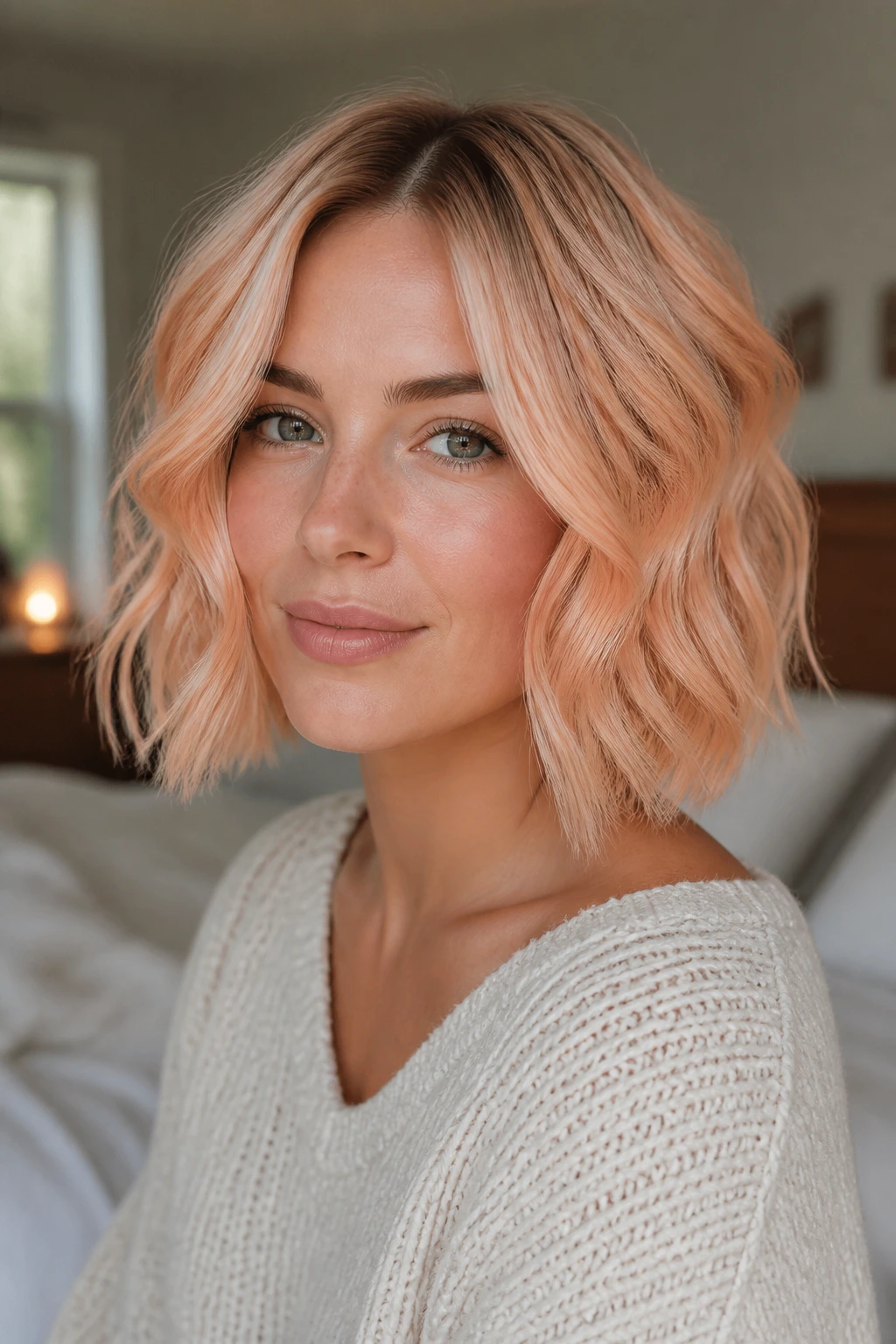
A peach blonde bob only works if the waves stay loose and the tone stays sheer. Too much curl makes the color look costume-y. Too little wave and the peach can disappear into the blonde. The sweet spot is a soft bend that lets the pastel catch the light.
This look is made for someone who wants something playful but still wearable. The peach should sit on top of a pale blonde base, not fight a dark brunette foundation. If your hair is porous, that matters even more, because the color can grab too hard and go orange. A gentle gloss keeps it on the peach side of the line.
Best with a center part, a soft fringe, or tucked-behind-the-ear styling. It’s a fun one, but it still needs restraint.
13. Cinnamon Brunette Ends
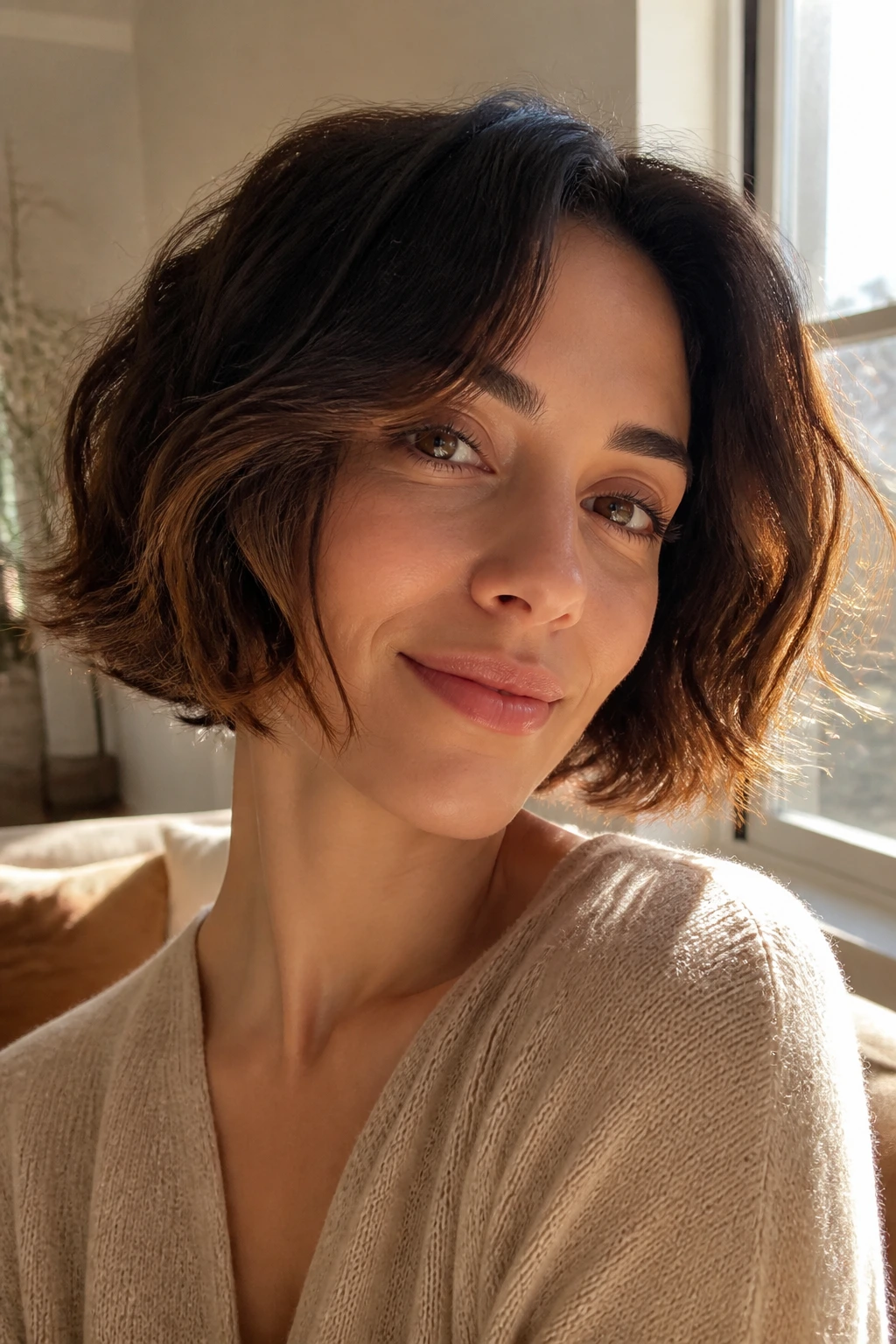
Cinnamon ends on short brunette hair are a smart way to get warmth without lifting the whole head. The color lives mostly at the perimeter, where the ends flick and turn, so the brightness feels natural. It also makes short layers look fuller because the eye reads the warmth as movement.
This is a lovely choice for anyone who wants a softer fall-in-the-sun version of balayage. The base can stay deep espresso or chocolate, while the ends pick up a cinnamon-copper cast. On textured short hair, that warmth pops without requiring lots of lift. I’d choose this over blonde on hair that’s fragile or already lightened too much.
Maintenance: A copper-safe gloss every 6 to 8 weeks keeps the ends from fading into dull brown. If the color goes flat, it’s usually because the toner washed out, not because the highlight placement failed.
14. Smoky Taupe Crop
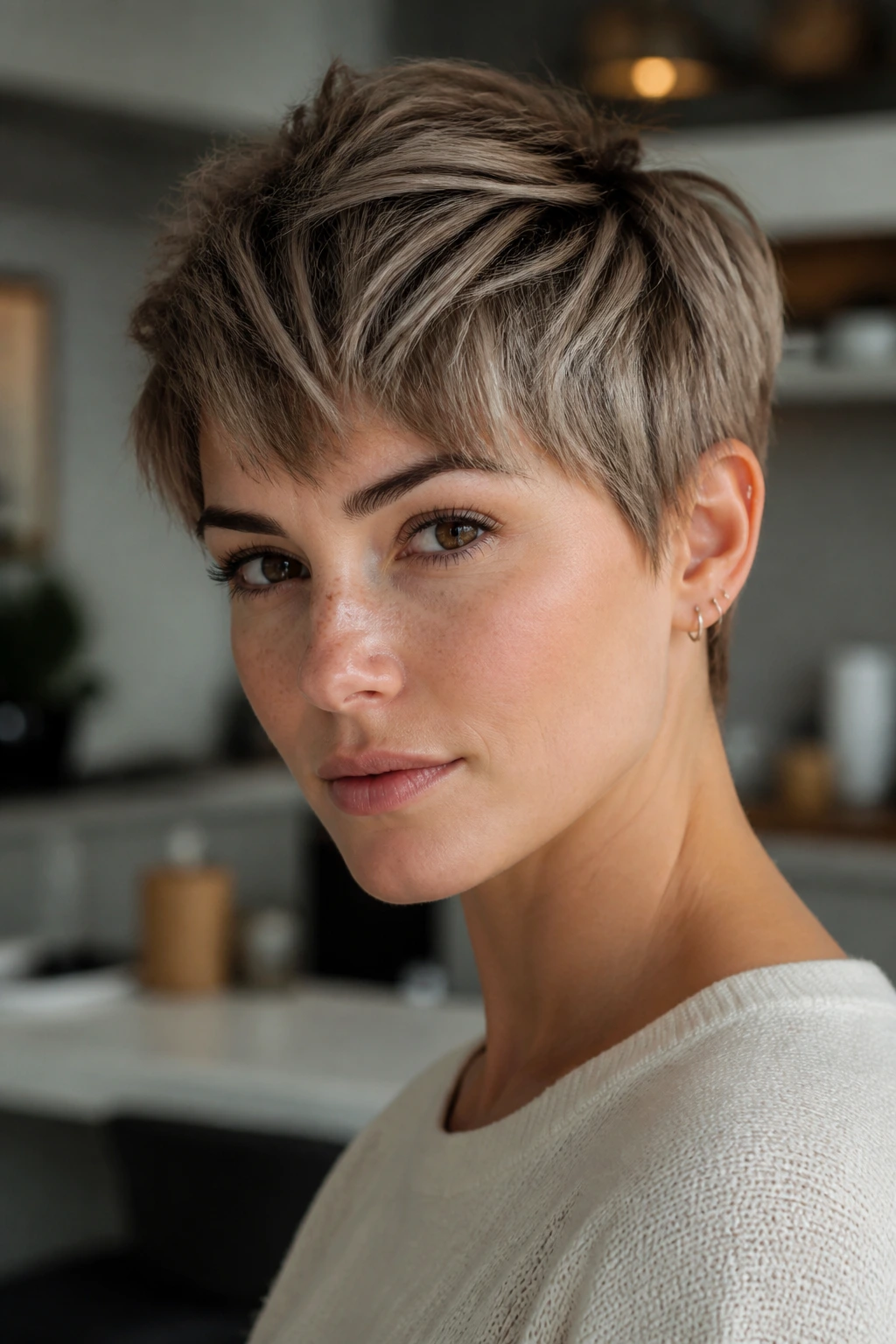
A smoky taupe crop is what happens when you want dimension but not warmth, not brightness, and not anything that screams for attention. The taupe notes float between ash brown and beige, which makes the crop look soft and modern without looking washed out.
This is especially strong on short hair with a lot of texture. The cooler tone defines the layers without making them too obvious. On a very clean crop, taupe can be almost architectural: a little darker at the base, a little lighter across the top, and a soft smoky edge at the ends. That mix gives the haircut more depth than a single flat brunette.
If your skin tone tends to suit cooler jewelry tones, this look often feels easy. If you run warm, ask for a touch more beige so the color doesn’t drift muddy.
15. Golden Apricot Pixie Bob
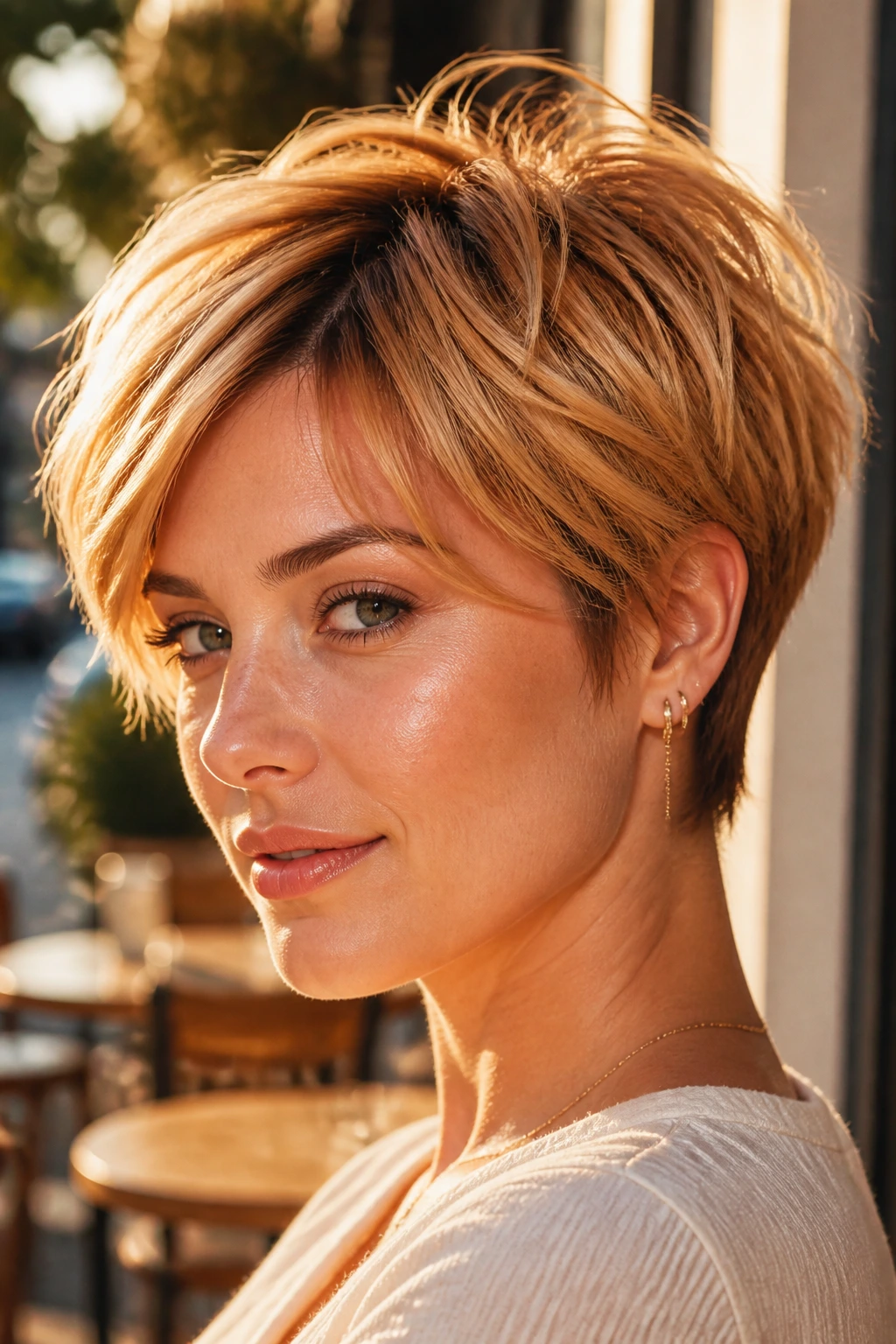
Golden apricot is one of those shades that looks sweet on paper and sharper in real life. On a pixie bob, the warmth lands where the hair bends, which makes the cut feel sunlit instead of orange. The color has enough gold to brighten the face and enough apricot to keep it interesting.
I like this on layered short cuts that need a little lift but not a hard blonde contrast. The best version keeps the base slightly deeper and paints the brighter pieces across the crown and around the front. That gives the style a soft halo effect. It’s especially good if your natural color sits in the light brunette or dark blonde range.
Tip: Ask for a glaze after the lightening step. Apricot can turn brassy fast if the toner is too thin or too warm.
16. Midnight Blue-Black Shine
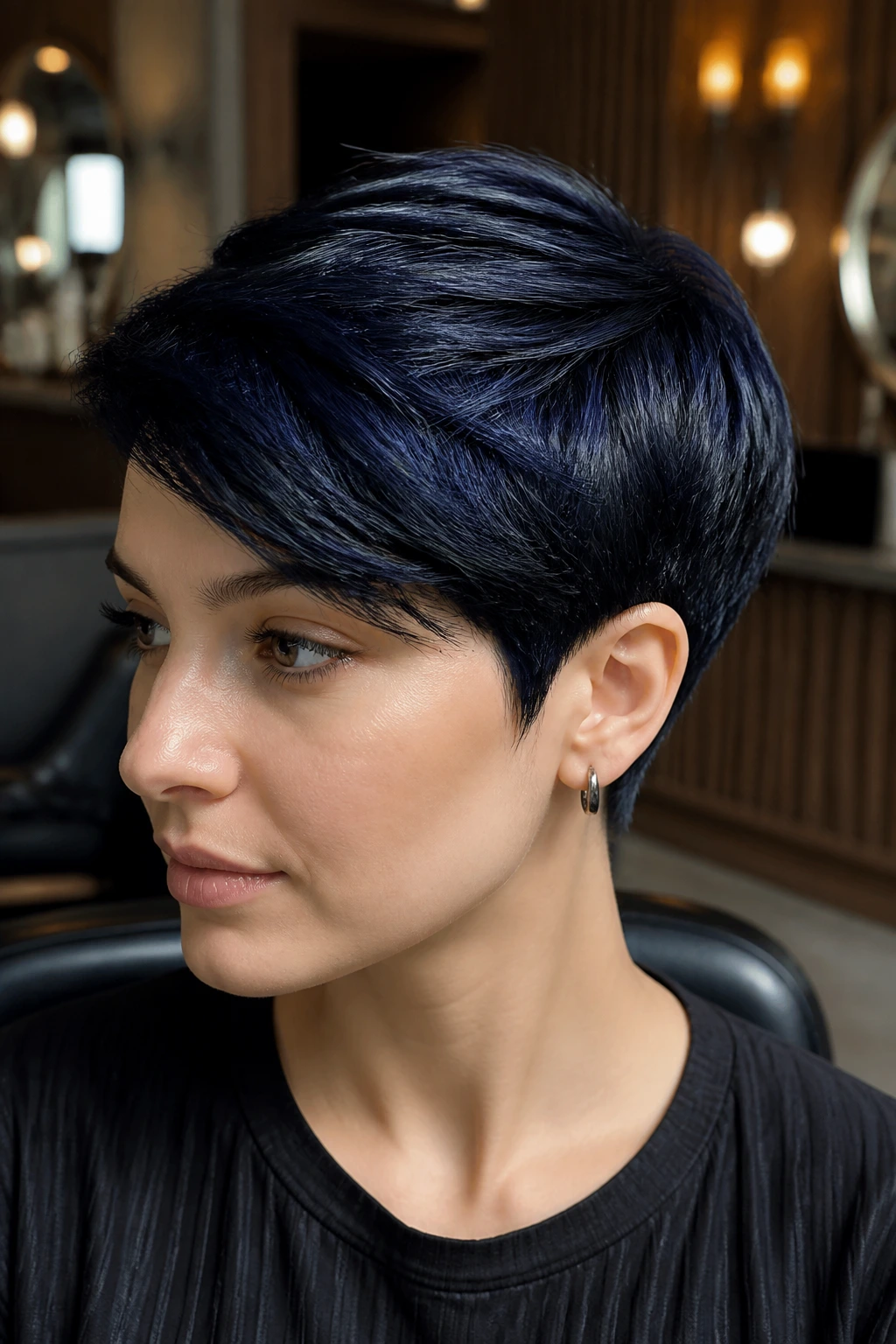
A blue-black balayage on short hair works because it isn’t trying to look highlighted from across the room. The color shift is subtle: in dim light, the hair reads almost black; in sunlight, it turns into blue-black glass with a quiet sheen. That’s a strong move on a cropped cut.
This style suits someone who likes edge but not mess. Keep the hand-painted pieces hidden under the top layer or near the fringe so the surface stays deep and glossy. On very short hair, too much lift destroys the whole point. The real appeal is movement, not brightness.
Best ways to wear it
- Sleek and tucked behind one ear for a hard, clean line
- Softly tousled to reveal the blue tones at the crown
- With a shine serum, never a dry matte paste
Watch the toner: Blue-black can fade greenish if the base is porous and the aftercare is rough.
17. Beige Blonde Curtain-Bang Bob
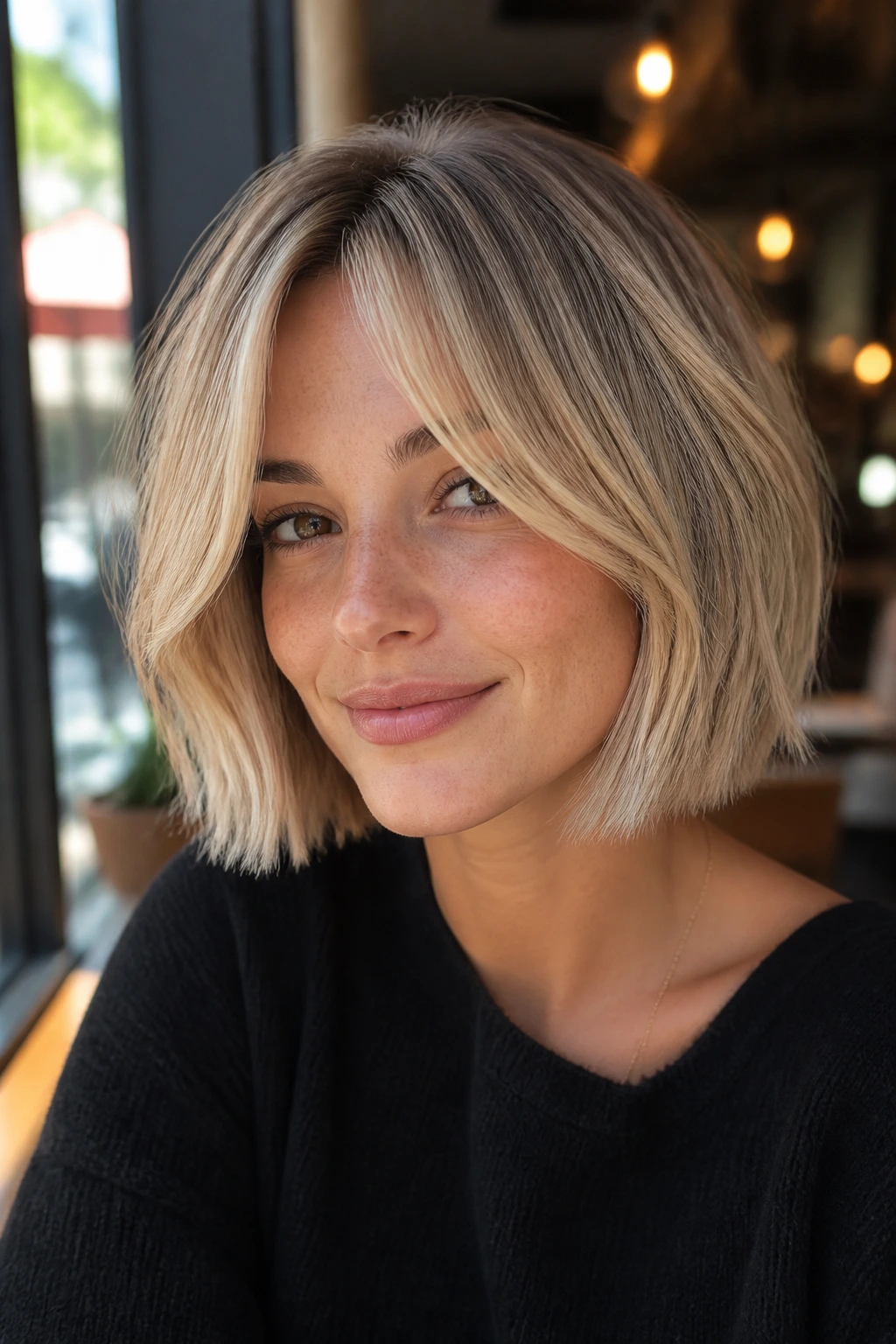
Curtain bangs and beige blonde balayage are natural partners because both are about soft movement at the front. The beige keeps the blonde from turning stark, and the bangs give the color a place to do its best work: around the eyes, the cheekbones, and the part line.
This look is better than a heavy all-over blonde if you want brightness without losing the bob’s shape. The painterly pieces should sit through the top layer and down the front sections, with a touch more light where the bangs split. If the ends are too blonde, the whole cut can look puffy. Keep the brightness concentrated up top and let the lower half stay calmer.
It’s a very wearable version of blonde on short hair. You get the lift, but the haircut still feels like a haircut.
18. Chocolate Cherry Balayage
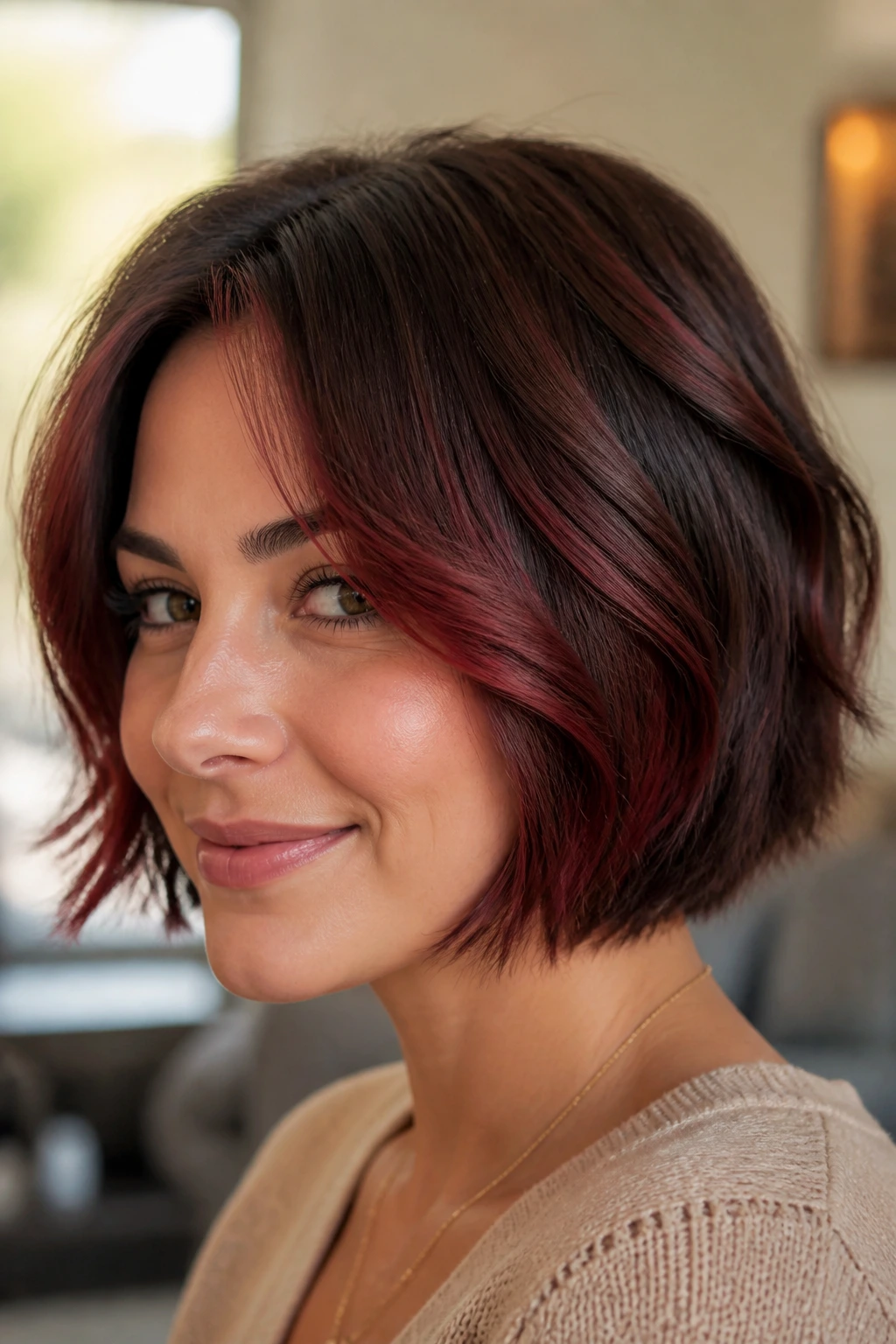
Chocolate cherry is rich enough to read brunette and red at the same time, which is exactly why it works so well on short hair. The deep red-brown catches the light in slices, especially on a bob with a little bend or a crop with layers. It looks glossy, not loud.
This is a good route if you want color that feels warm in winter-light and still has life in the sun. The cherry tone should live inside the chocolate base, not sit on top like a neon overlay. Short hair keeps the color close to the face, so even a subtle red shift becomes visible fast. That’s why this look often photographs better than it sounds in the salon chair.
Best for: brunettes who want richness without leaning copper.
19. Pearl Blonde Micro-Balayage
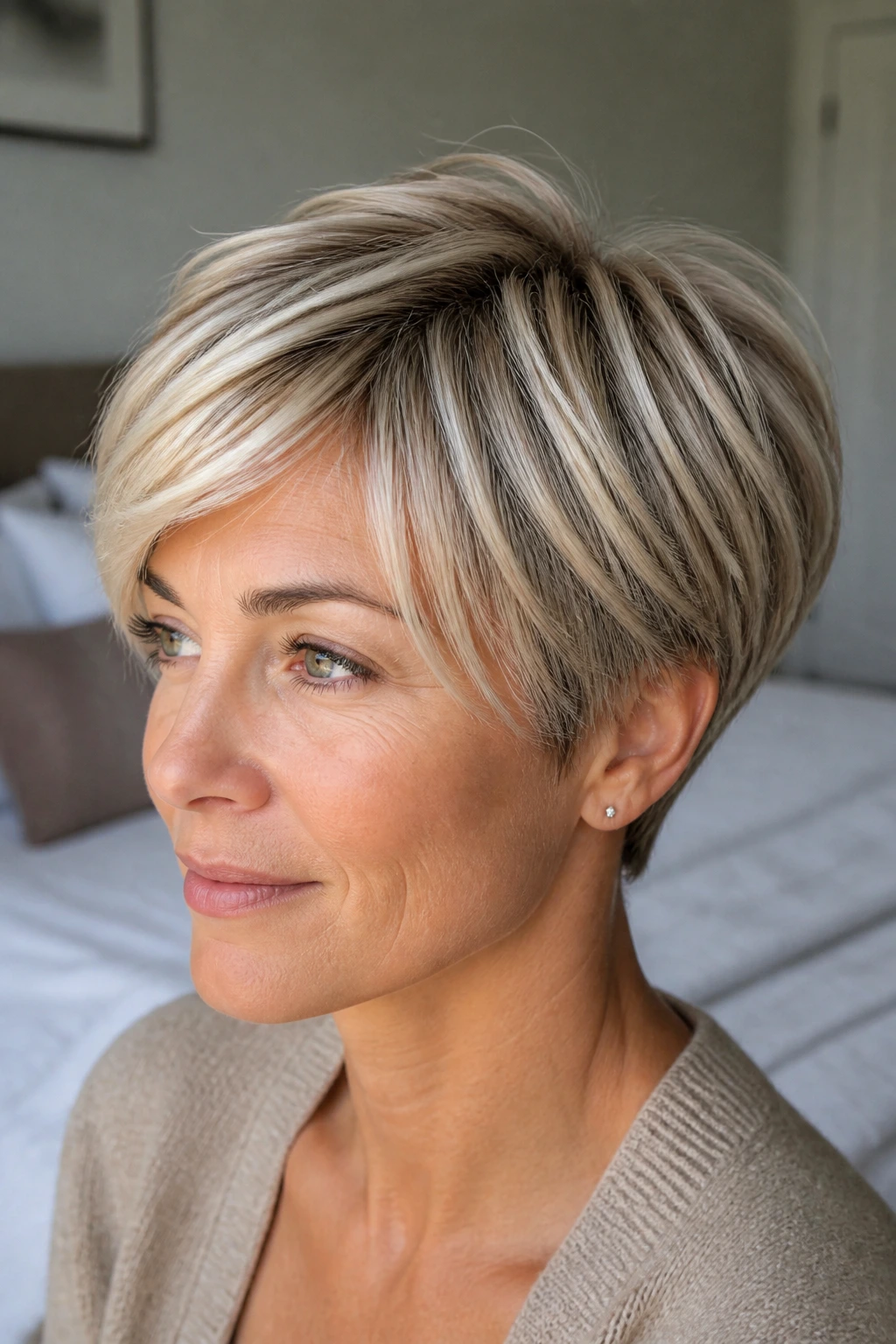
Pearl blonde micro-balayage is the subtle one that still gets noticed. The key is tiny, whisper-thin lighter pieces that sit across the surface of the hair and break up a flat blonde base. On fine short hair, that can be enough to make the whole cut look more expensive.
I prefer this on cropped cuts where you don’t want obvious stripes or heavy contrast. The pearl tone keeps things cool and soft, and the micro-placement means the grow-out stays tidy. It’s also one of the better choices if your hair is already light and you want dimension without chasing more lift.
What makes it different
- Thin painted sections instead of broad ribbons
- A cooler pearl gloss instead of yellow blonde
- Best on fine hair that needs softness, not drama
Tip: Keep the ends hydrated. Micro-balayage looks airy when the hair is smooth, and rough ends make it feel thin.
20. Auburn Glow Curly Bob
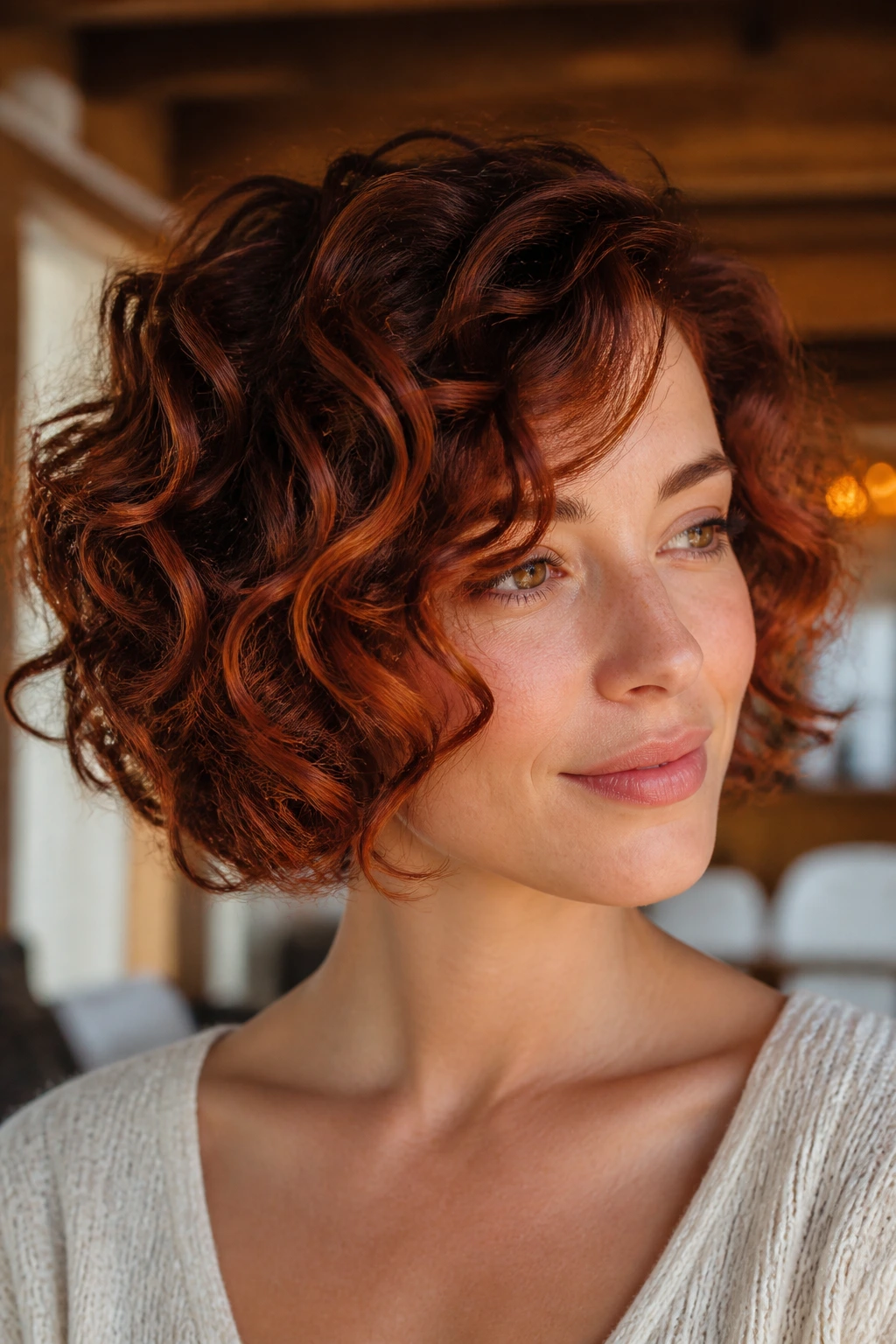
A curly bob and auburn balayage are a good match because the curl pattern does half the blending for you. The auburn sits where the curl opens, so the color looks like it belongs inside the hair instead of sitting on the surface. That’s the whole trick.
The brighter pieces should be painted on the outer curve of the curl, not hidden deep inside the coil. If the highlight is buried, it disappears. If it sits too high on the root, the curl shrinks it into a stripe. Auburn gives you warmth, movement, and a little shine, which short curls need more than straight hair does.
This is one of the looks I’d point to if someone says short curls can’t do dimension. They absolutely can. They just need the map drawn differently.
21. Sunkissed Bronde Lob
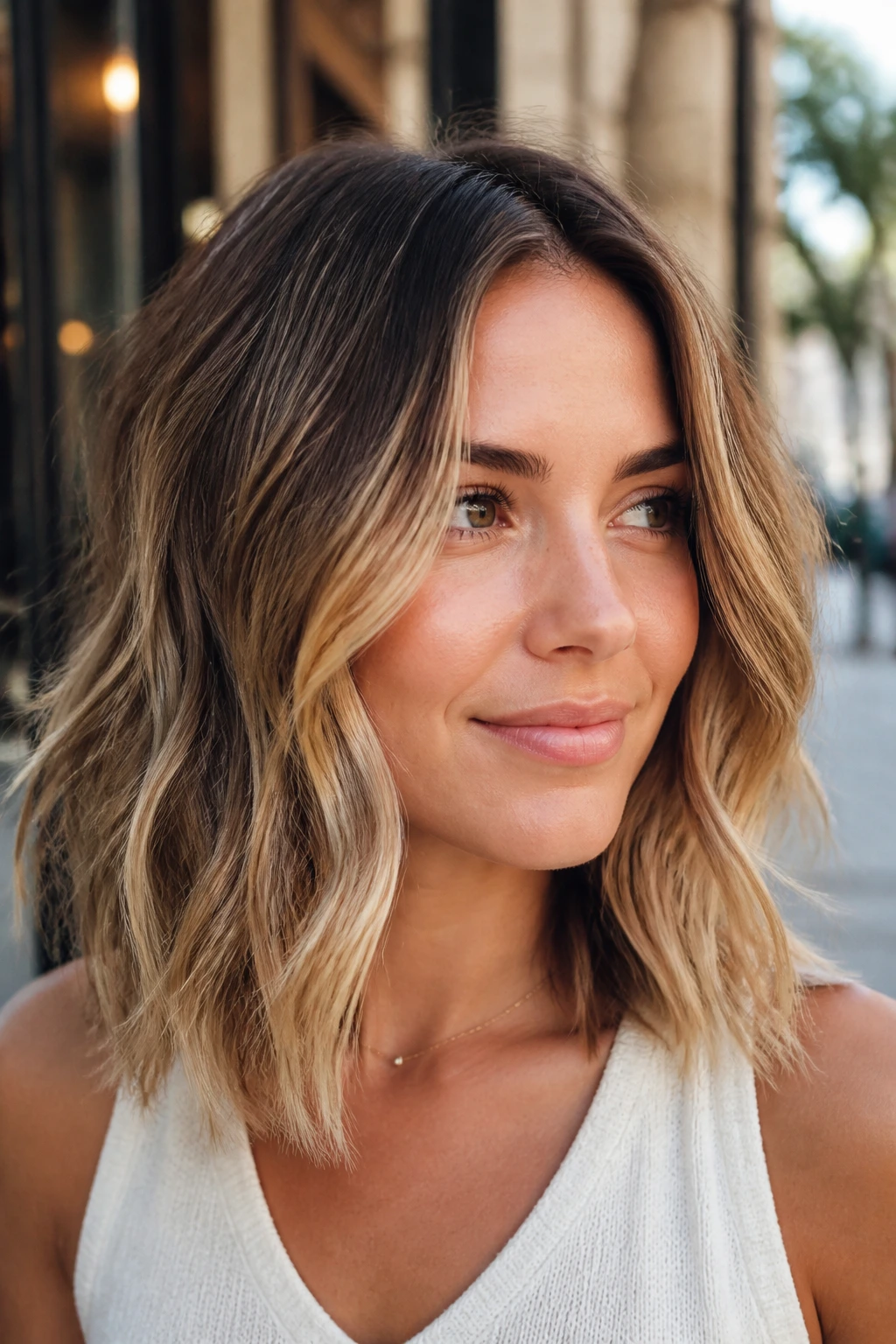
Bronde is the safe word for people who want lightness but not a full blonde commitment. On a lob, sunkissed bronde works because the length gives the color room to breathe, and the short-to-medium cut still keeps it easy to wear. The tone sits between brown and blonde, which softens the whole effect.
What makes this version stand out is the way the lighter pieces are scattered through the mids and face frame rather than blasted all over. That keeps the grow-out gentle and the hair from looking over-processed. If you like the feel of summer light without the upkeep of pale blonde, this is the lane.
It also wears well with waves. The bends create little flashes of lighter and darker tones that make the cut look fuller.
22. Frosted Mushroom Pixie
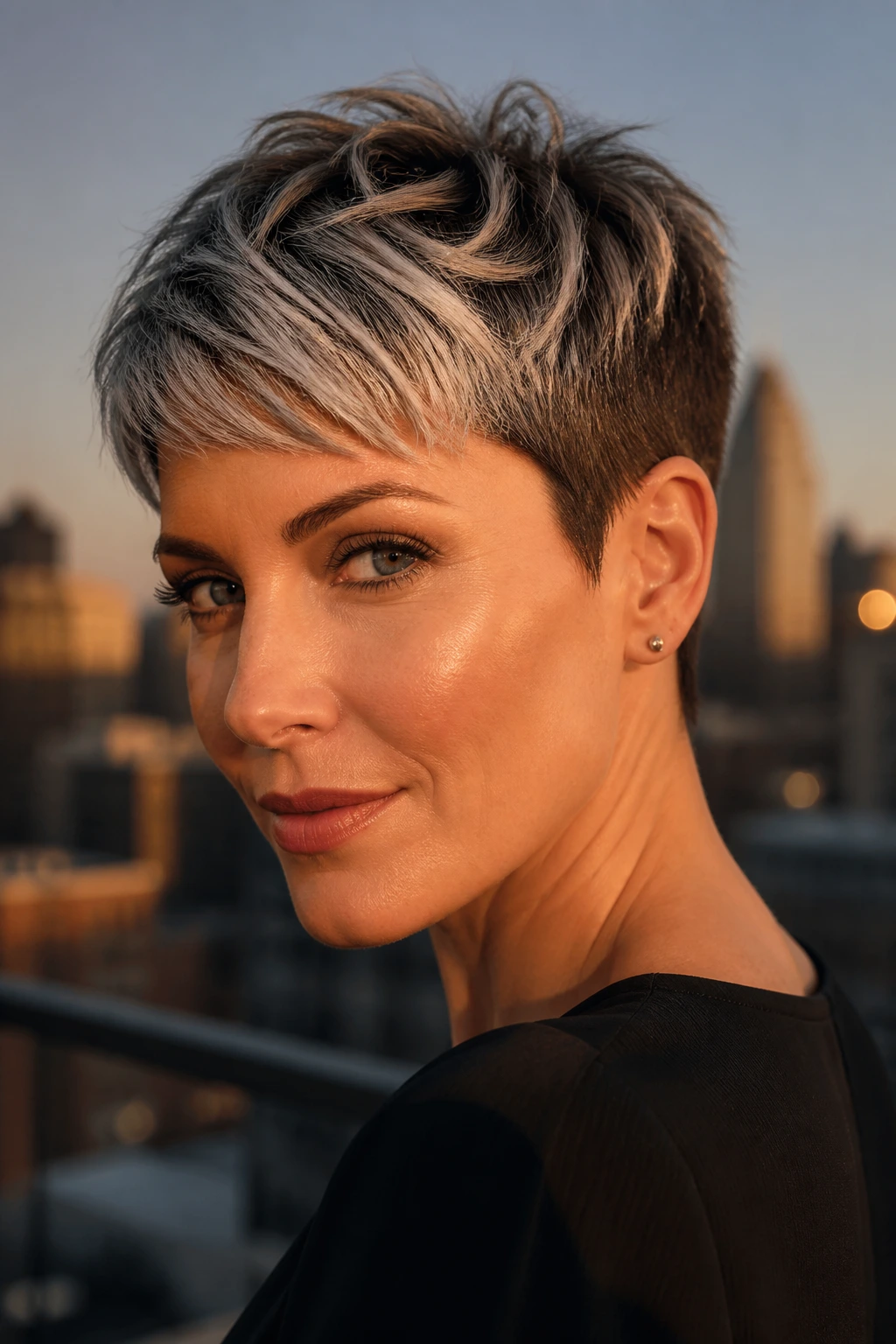
A frosted mushroom pixie sounds cool, and it is. The base stays earthy and muted, then the top pieces get a light frost that keeps the cut from going flat. On a pixie, that little shift in tone can make the layers pop without turning the head into a helmet of blonde.
This is the kind of look that needs restraint. Too much brightness and you lose the mushroom softness. Too little and the pixie disappears. Aim for cool beige over true silver, and keep the sides deeper so the crown doesn’t look inflated.
Best on: short cuts with texture through the top and a little length at the fringe.
If you like a refined, editorial finish but still want something that feels modern and wearable, this one holds up well.
23. Warm Honey Blunt Bob
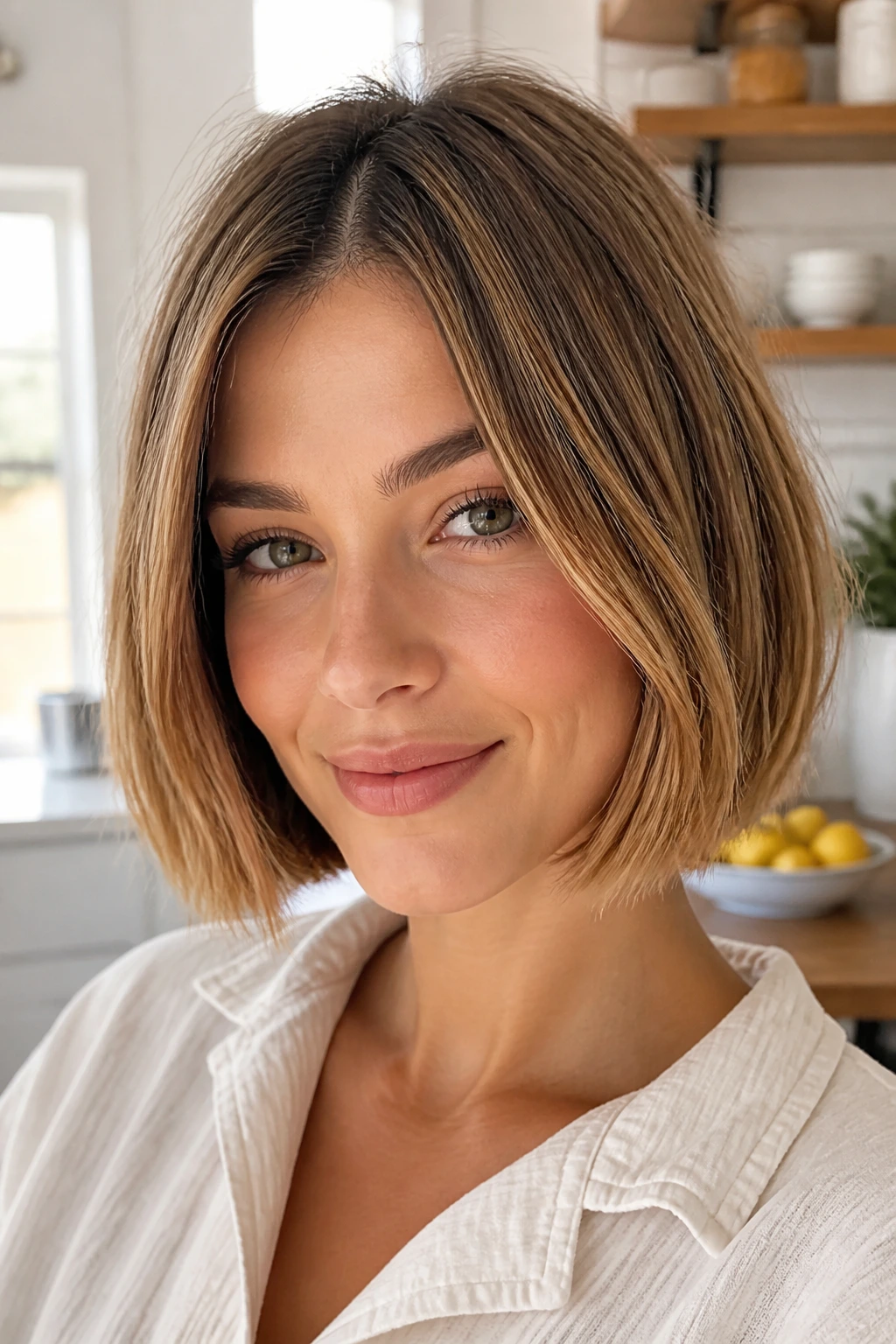
A blunt bob doesn’t have to stay sharp all the way through. Warm honey balayage softens the edge just enough to keep the cut from looking too geometric. The honey pieces are brighter around the front and more diffused through the back, which gives the bob a gentle glow when it moves.
This works especially well if your base color is a medium brunette or dark blonde. The honey should feel warm, not brassy, so a beige-leaning glaze after lightening makes a big difference. On short hair, that kind of warmth can make the cut look thicker too, because the light catches the perimeter and gives the ends more presence.
I like this one with a center part and a smooth blowout. The contrast is soft, but not sleepy.
24. Lavender-Tinted Blonde Crop
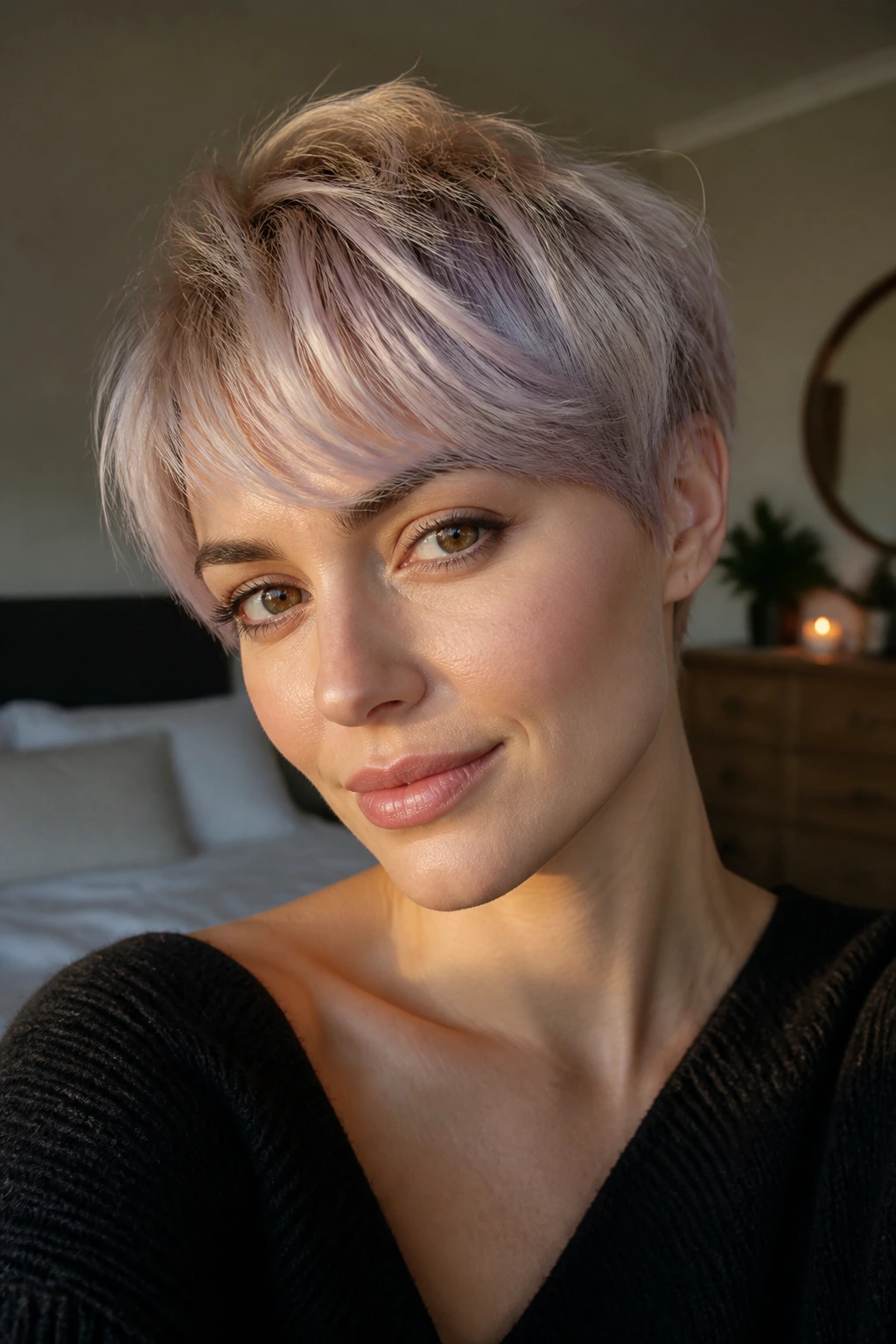
Lavender on a short blonde crop is a little bold and a little soft at the same time. The trick is to keep the lavender sheer, like a glaze over pale blonde, so it reads as color memory instead of a full fashion block. That makes it easier to wear and easier to fade out later.
This look shines on cropped hair because the length keeps the pastel close to the face. You don’t need much to make it visible. A few cool pieces at the top and around the fringe are enough. If the base is too dark, the lavender turns muddy. If the blonde is too warm, it leans lilac-orange in a strange way. So the starting canvas matters a lot here.
Best for someone who likes playful hair but still wants the cut to look clean and deliberate.
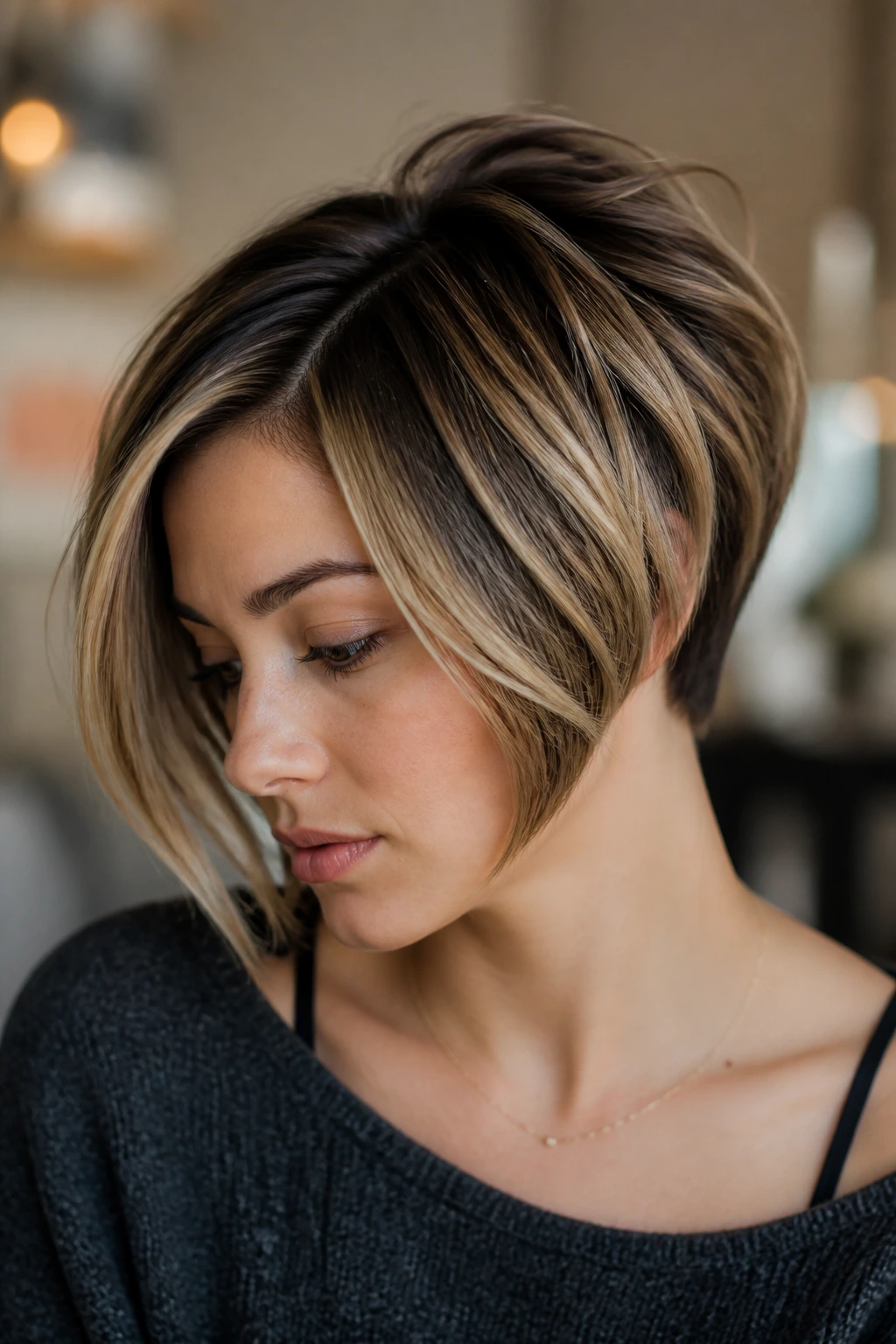
25. Mocha Melt Inverted Bob
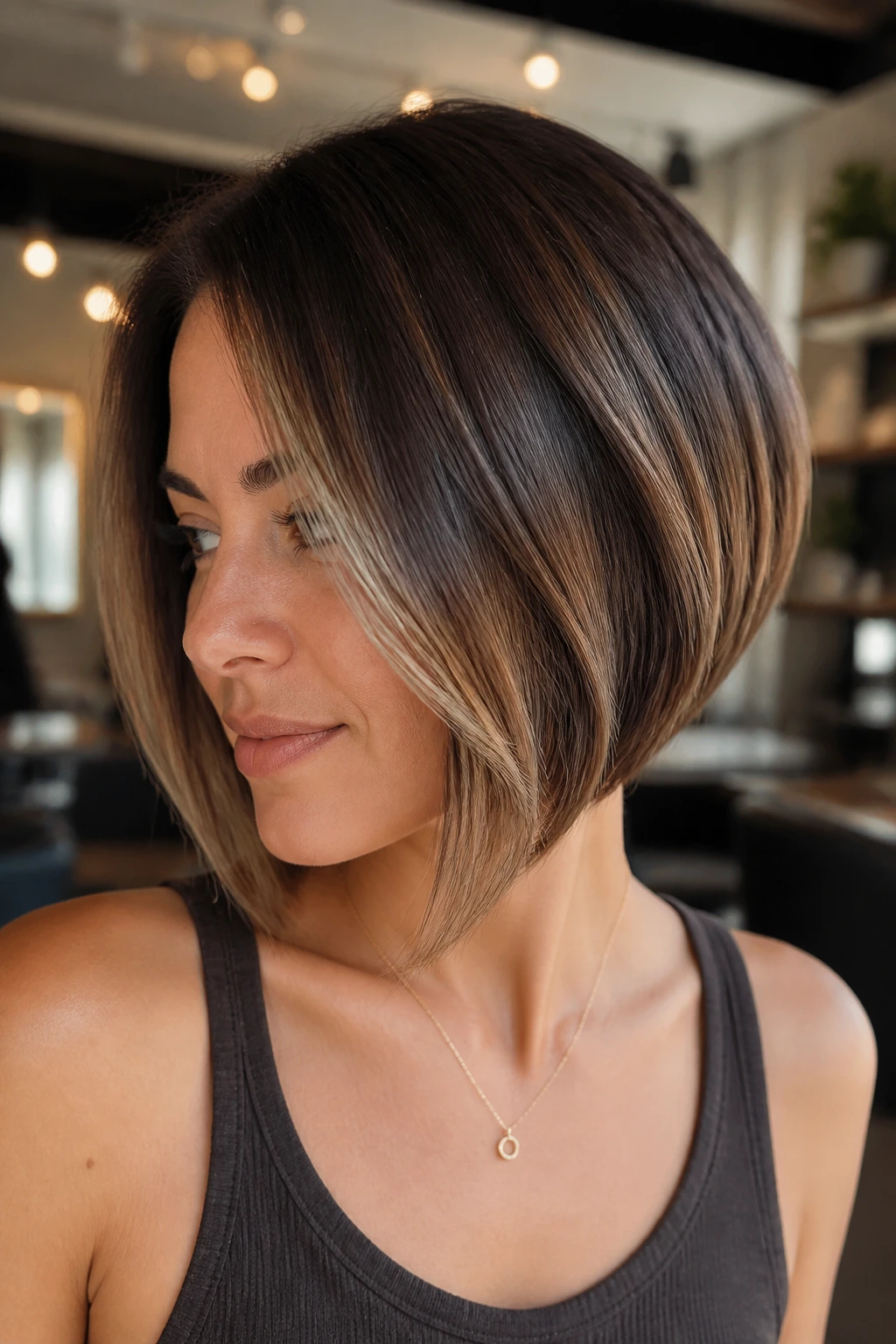
An inverted bob already has built-in drama from the shorter back and longer front. A mocha melt plays right into that shape by keeping the nape darker and gradually brightening the front panels. The result feels sleek, not streaky.
This is one of the smarter ways to color an angled cut because the lighter pieces follow the movement of the haircut. The eye travels down the longer front, so the mocha-to-light transition feels intentional. I’d choose this over chunky highlights any day on an inverted bob. The shape is the feature; the color should underline it, not compete with it.
If you blow-dry this smooth, the gradient looks elegant. If you wave it, the transition gets softer and more dimensional. Both work.
26. Copper Penny Pixie Bob
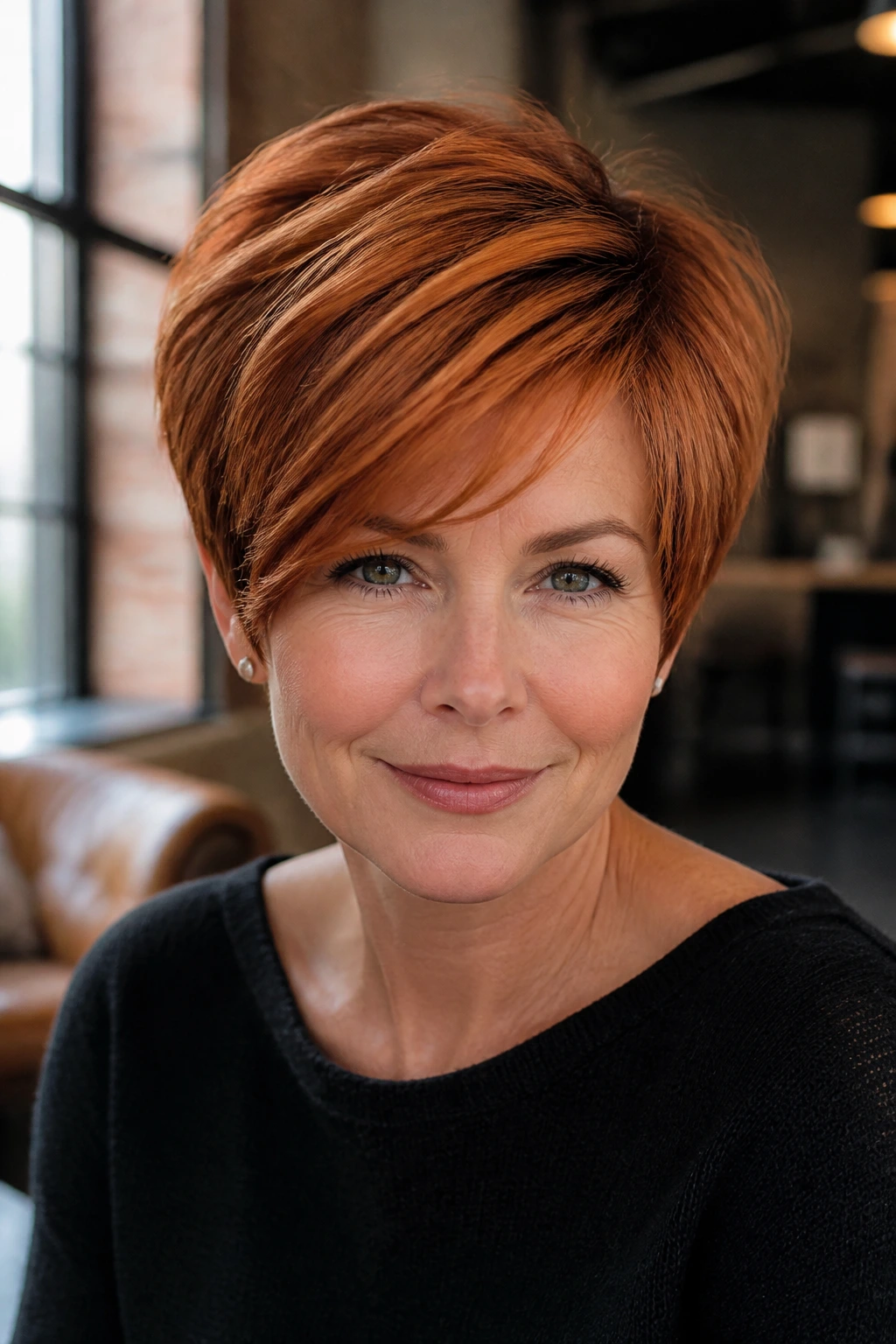
Copper penny is a strong choice when you want a short cut to look warm, rich, and a little fearless. The shade sits between bright copper and deeper red-gold, which means it can light up a pixie bob without looking flat. Short hair gives the color plenty of face time, and that matters here.
The best version keeps the copper brightest at the front and crown, then drags it a touch softer through the back and underneath. That way the shape stays visible. If the whole cut is equally bright, it can lose depth fast. Copper also needs good aftercare because faded copper turns dull before it turns ugly, and that’s a fine line.
Pro move: Finish with a clear shine gloss or a color-safe serum. Copper loves light.
27. Pearl Blonde Sleek Crop
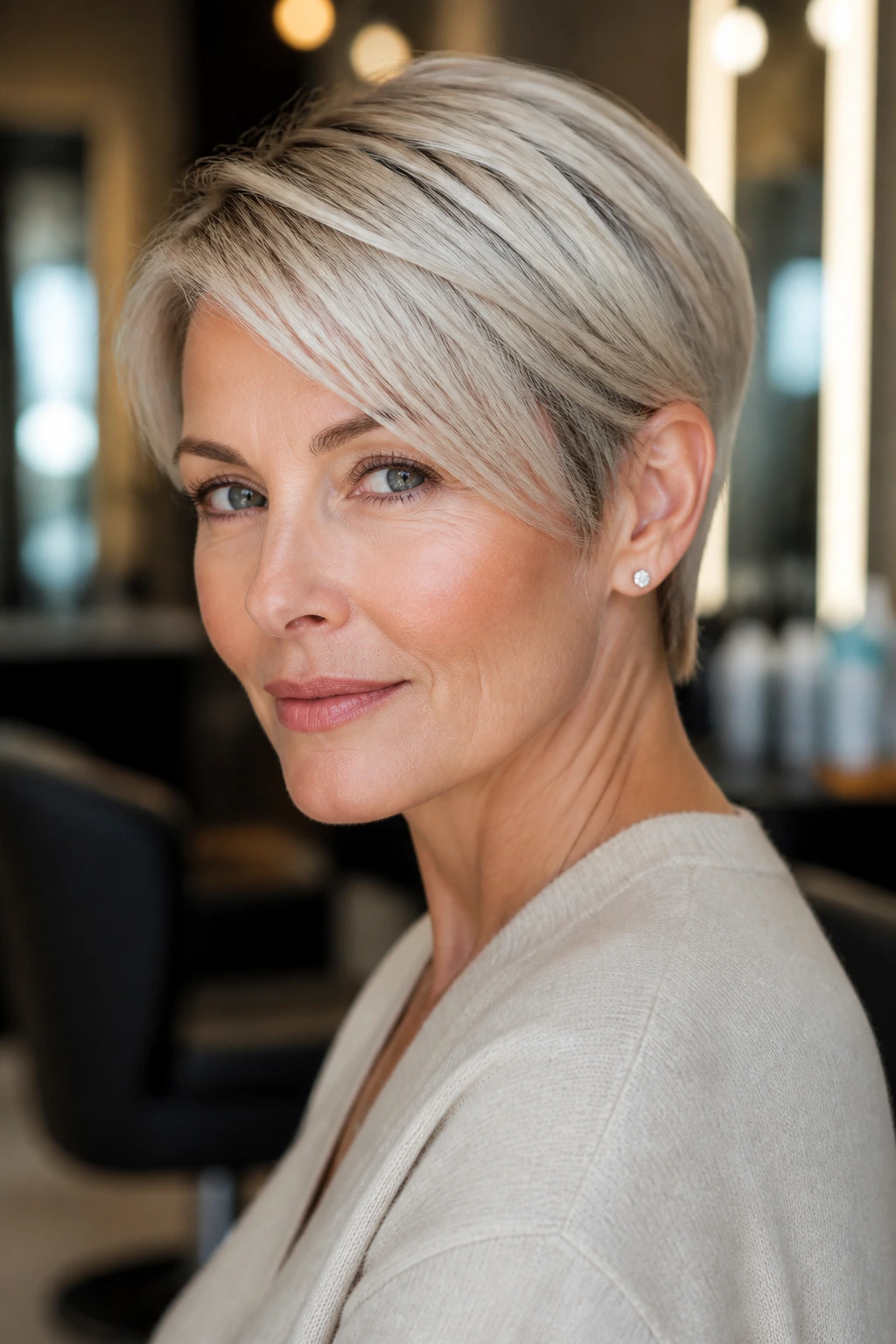
A sleek crop in pearl blonde has a cool, glossy feel that’s different from the beachy blonde looks people usually chase. The pearl tone keeps the blonde soft and slightly cool, while the sleek styling makes every ribbon of color visible. It’s neat. It’s clean. It doesn’t need much else.
This look is strongest when the lighter pieces are thin and placed to follow the shape of the cut. You want brightness at the top and around the face, not thick stripes through the back. On very short hair, the pearl finish can make the edges look smoother and the texture less rough. It’s a nice choice if you want blonde without the usual sunlit feel.
The downside is maintenance. Pearl tones drift warm faster than people expect, so toner and purple shampoo matter.
28. Beige Bronde Heavy Face Frame
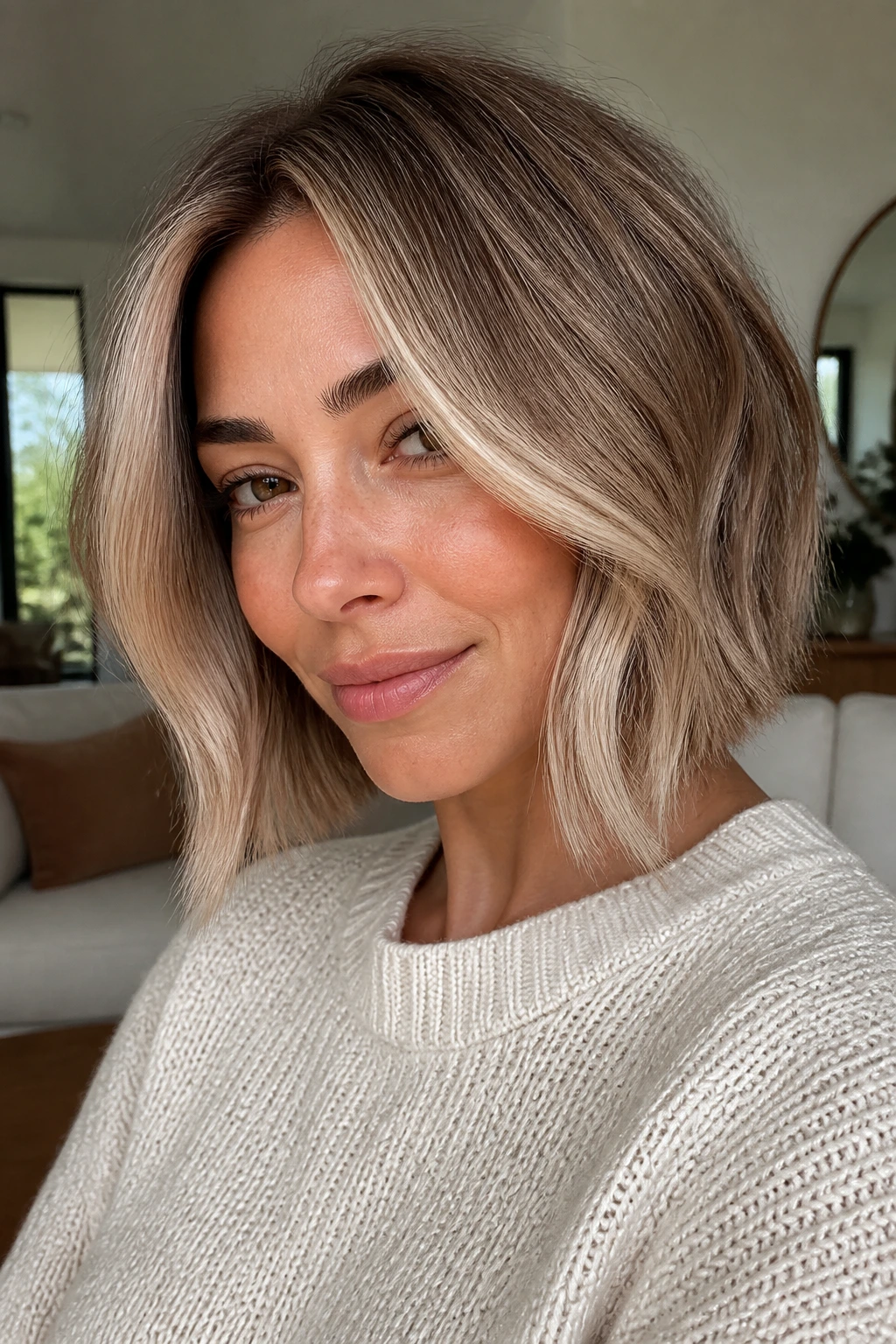
A heavy face frame changes the whole mood of a short cut. Beige bronde keeps it from becoming too stark. The front pieces are brighter, yes, but the beige tone softens them enough that they don’t look pasted on. The rest of the hair stays in the brown-to-blonde middle ground.
This is a good pick if you want noticeable brightness without committing to full blonde upkeep. The face frame pulls attention upward, which can be flattering on short hair because it opens the face and keeps the cut from reading too compact. Ask for a brighter front section that starts near the cheekbone, then a softer fade into the mids. If the front is too wide, it can overwhelm a bob. Narrower is usually better.
It’s one of the most practical ways to get impact quickly.
29. Cinnamon Mocha Shaggy Bob
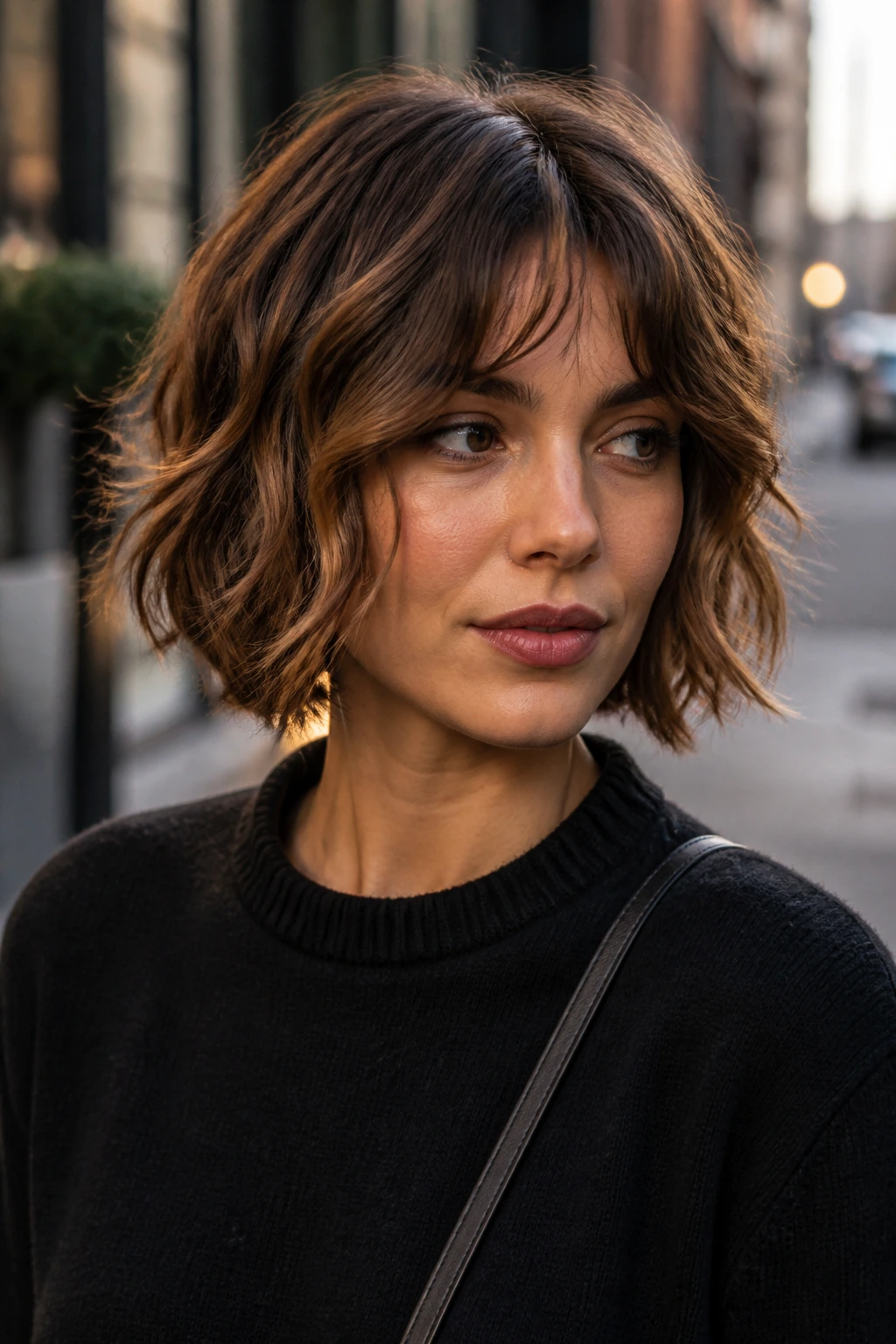
A shaggy bob wants color that moves with it, and cinnamon mocha does exactly that. The mocha keeps the base rich and grounded, while cinnamon picks up the frayed ends and layers without turning the cut orange. The whole thing looks lived-in in the best way.
I like this when the haircut has texture and the client wants dimension they don’t have to baby. The highlights can be scattered through the top, around the fringe, and into the ends, because a shag is supposed to look a little loose. That looseness is what keeps the color from feeling precious. If the waves are soft and uneven, even better.
This is one of those looks that rewards a dry texture spray and a hand-tousled finish. Too polished and it loses the point.
30. Smoky Lilac Ends Pixie
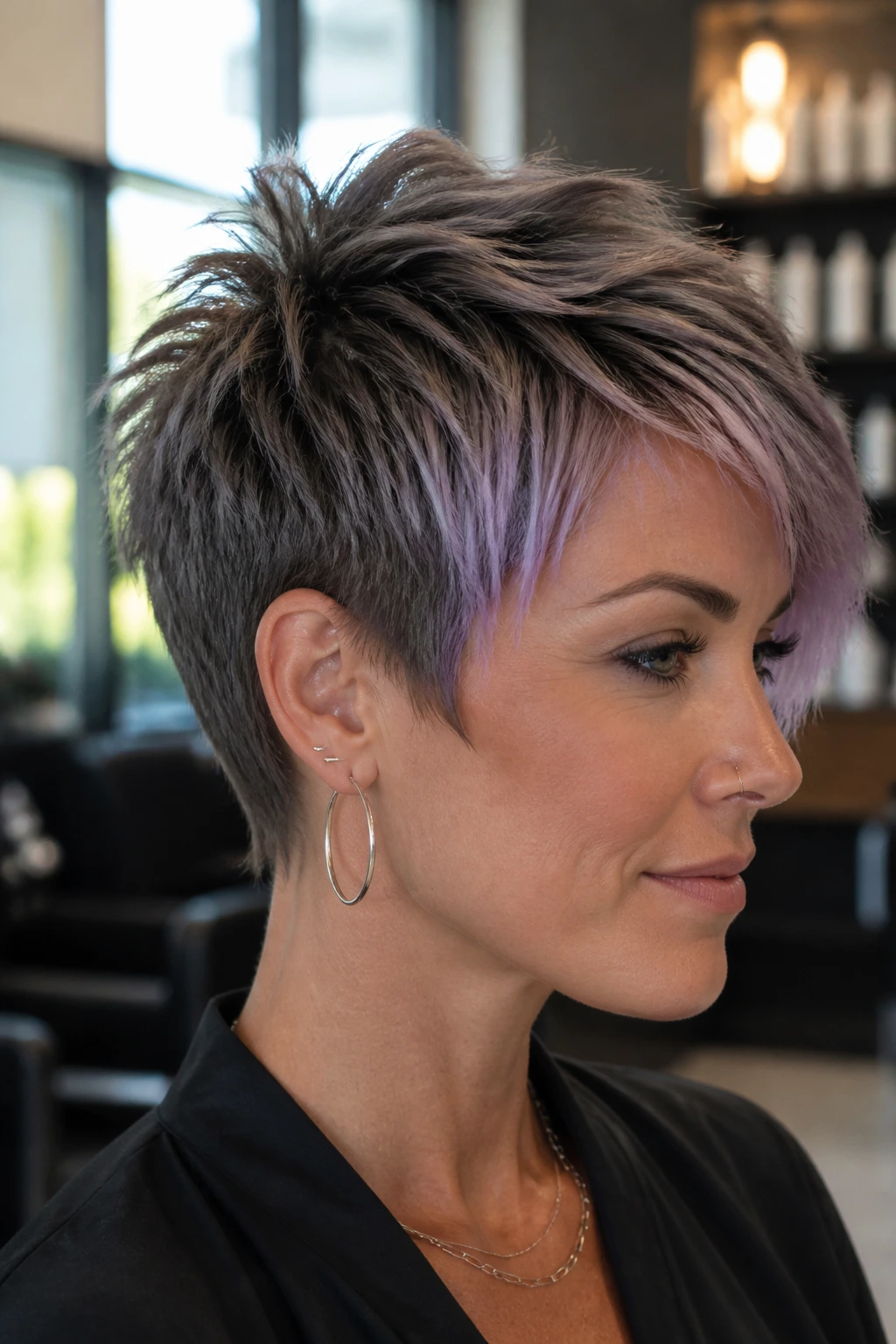
Smoky lilac ends on a pixie are playful, but they’re smarter than they first appear. The lilac sits mostly at the tips and outer layers, while the base stays cool and grounded. That makes the color visible without turning the whole cut pastel.
This works best on a pixie with enough length to show a little movement at the top. If the cut is too short all over, the lilac can vanish. If the blonde base is too warm, the smoky tone goes muddy. A cool, pale starting point keeps the color clean. I’d also keep this one slightly darker at the root so the lilac at the ends has a place to land.
It’s a good reminder that short hair can wear fashion color without looking like costume hair. The placement is what makes it feel grown-up.
Why Balayage Placement Matters More on Short Hair
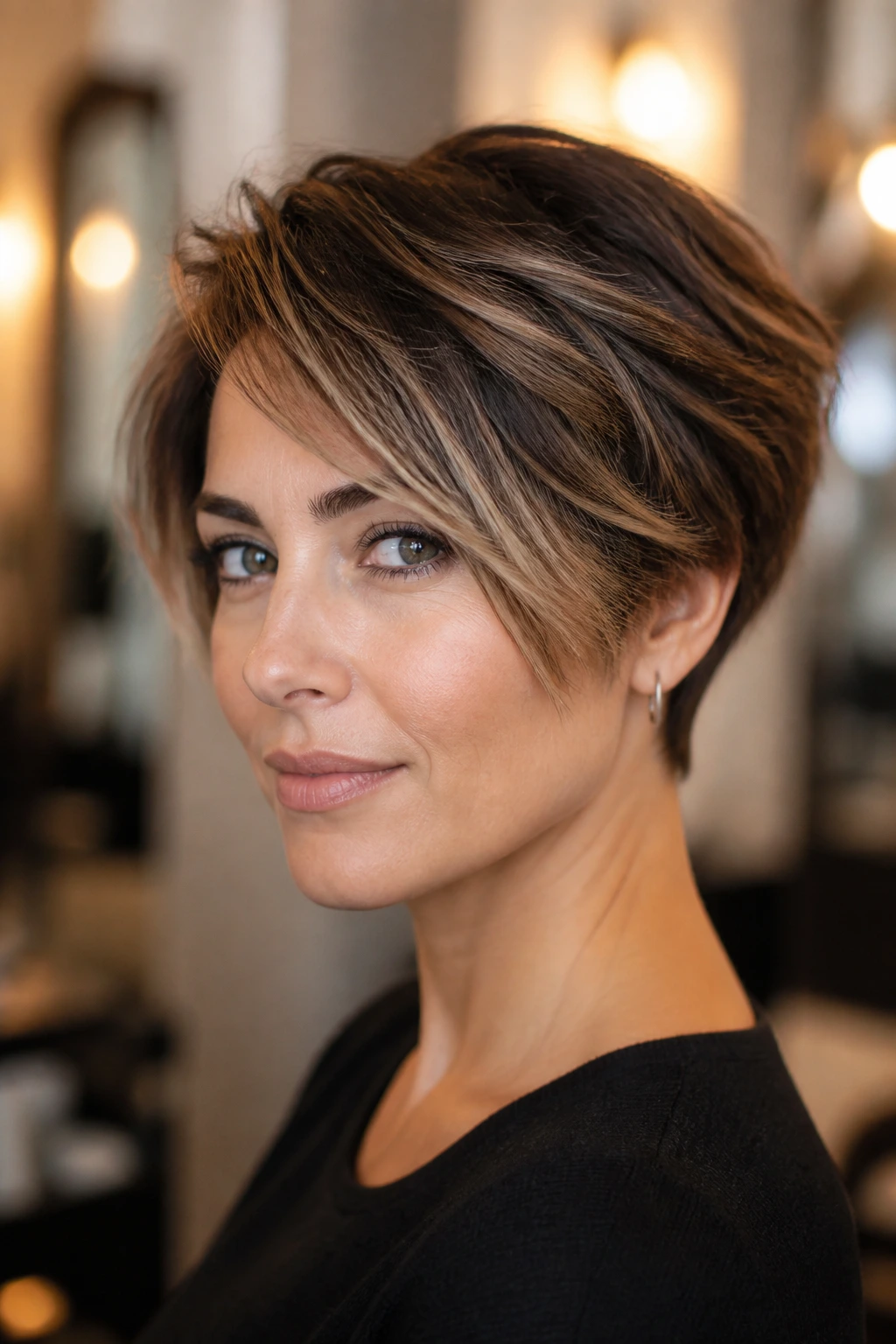
On long hair, you can sometimes get away with generous placement because the weight of the length hides a few decisions. Short hair is less forgiving. Every painted piece has a job: open the face, lift the crown, soften the perimeter, or give the bob some swing at the jawline. If one of those jobs is missing, the whole look can feel unfinished.
That’s why the best balayage on a cropped cut often looks quieter than people expect. The point is not to scatter brightness everywhere. The point is to follow the haircut’s architecture. On a pixie, that might mean a brighter fringe and a deeper nape. On a blunt bob, it might mean a few soft ribbons through the surface and a more polished face frame. On curly short hair, it means painting where the curl expands, not where the hair lies flat and hides the color.
Short hair also grows out with a different rhythm. Because the cut is trimmed more often, a smart placement plan keeps the color looking tidy between appointments. A shadow root, a controlled face frame, and a few deeper pieces underneath can save you from that awkward “I need a touch-up every 3 weeks” feeling. That’s not a flaw in short hair. It’s just the price of visibility.
Tools That Make Short-Hair Balayage Cleaner
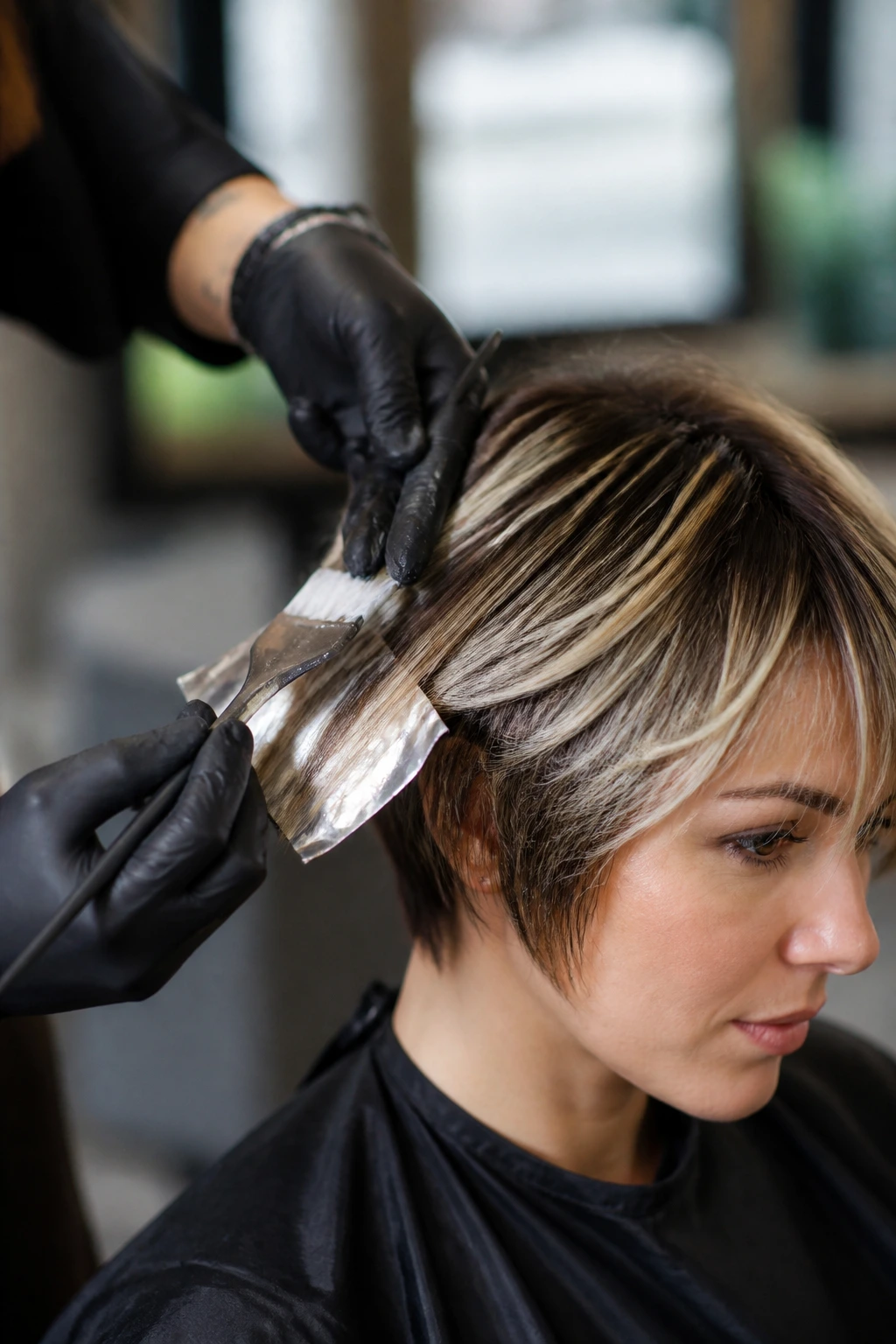
You don’t need a mountain of gear, but you do need a few things that help the color land where you want it. Short hair is all about control. Loose, sloppy application is where stripes are born.
- Tint brush with a narrow edge: A slimmer brush gives you cleaner sweeps through short layers and around the hairline.
- Balayage board or paddle: Helpful for keeping the sections flat when you paint the mid-lengths and ends.
- Sectioning clips: Short hair still needs clean partings, especially around the crown and nape.
- Fine-tail comb: Useful for slicing precise sections and keeping the face frame even.
- Bowl and whisk: Helps mix toner or gloss evenly so you don’t get patchy color.
- Gloves and color cape: Short hair still splashes, and lightener is not forgiving on skin or clothes.
- Foils or film: Optional, but useful when you want more lift at the front or need to keep the heat on a stubborn section.
- Color-safe shampoo and mask: Not part of the application itself, but they matter once the color is in.
A towel with a little grip under the cape helps, too. Small thing. Makes a difference.
Choosing the Right Tone for Your Base Color
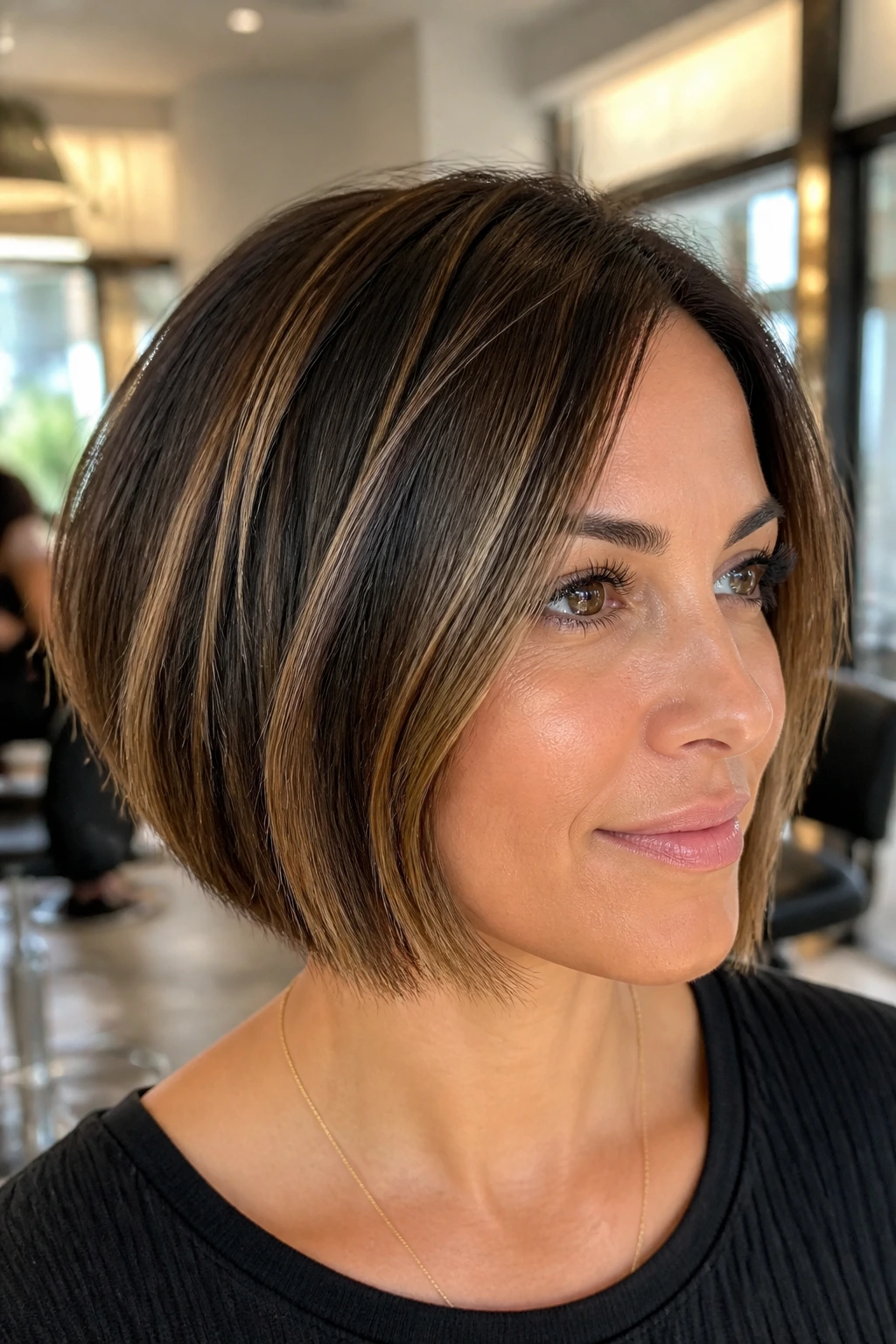
The fastest way to make short-hair balayage look expensive is to match the tone to the base, not to the inspo photo. A pale ash blonde on someone with deep warm brown roots can look disconnected on a bob because the contrast is too abrupt. A caramel or beige-brunette blend usually sits more naturally on that base and grows out cleaner.
For dark brunettes, think in levels and warmth first. A lift of one to three levels is often enough to create dimension on a short cut, especially if you’re keeping the roots deeper. Jumping straight to pale blonde on very short hair can flatten the shape and chew up the ends. On lighter brunettes and dark blondes, bronde, honey, beige, and sandy tones usually look softer and less stripey than icy platinum.
Cool tones have their place, but they need a clean canvas. If your hair pulls orange or red, ash brunette, mushroom brown, taupe, and pearl blonde can keep the finish controlled. Warm tones do the opposite job. Caramel, honey, copper, cinnamon, and apricot can wake up a cut that feels dull or heavy. Neither camp is “better.” The better choice is the one that respects your base.
How to Wear These Looks With the Cut You Already Have
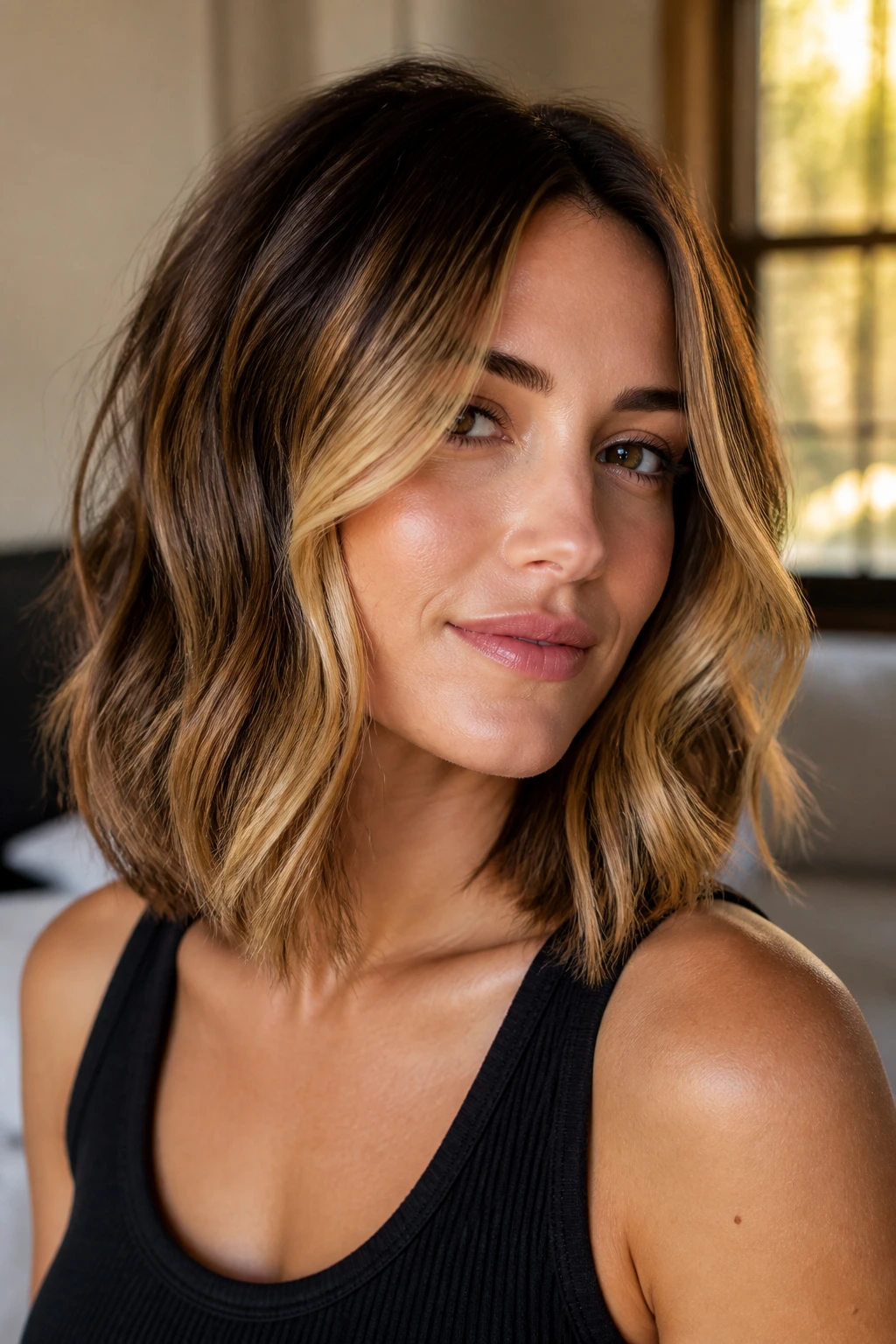
Styling: Short-hair balayage looks strongest when the styling shows the color map, not buries it. A soft bend, a slight tuck behind one ear, or a piecey front section usually shows off dimension better than a tight curl set. On very short cuts, a dab of matte cream at the roots and a little shine through the ends can keep the whole thing from looking fuzzy.
Cut Pairings: Blunt bobs love warm ribbons or subtle beige highlights because the color softens the edge. Shags and textured crops can take more scattering and still feel tidy. Pixies need the brightest pieces near the front or crown, where the eye lands first, while lobs can spread the dimension a little more evenly through the mids.
Contrast Level: Soft looks suit people who want fewer touch-ups and less visual drama. Medium contrast gives you the most balanced short-hair effect. High-contrast money pieces and platinum flashes work best when the haircut has enough structure to support them, because short hair doesn’t leave much room to hide bold color.
Best For: Fine hair usually benefits from micro-balayage or soft face-framing brightness. Thick hair can carry deeper contrast and warmer tones without looking busy. Curly hair needs the placement drawn to the curl pattern, not to the flat surface.
Extra Tone, Extra Depth, Extra Shine
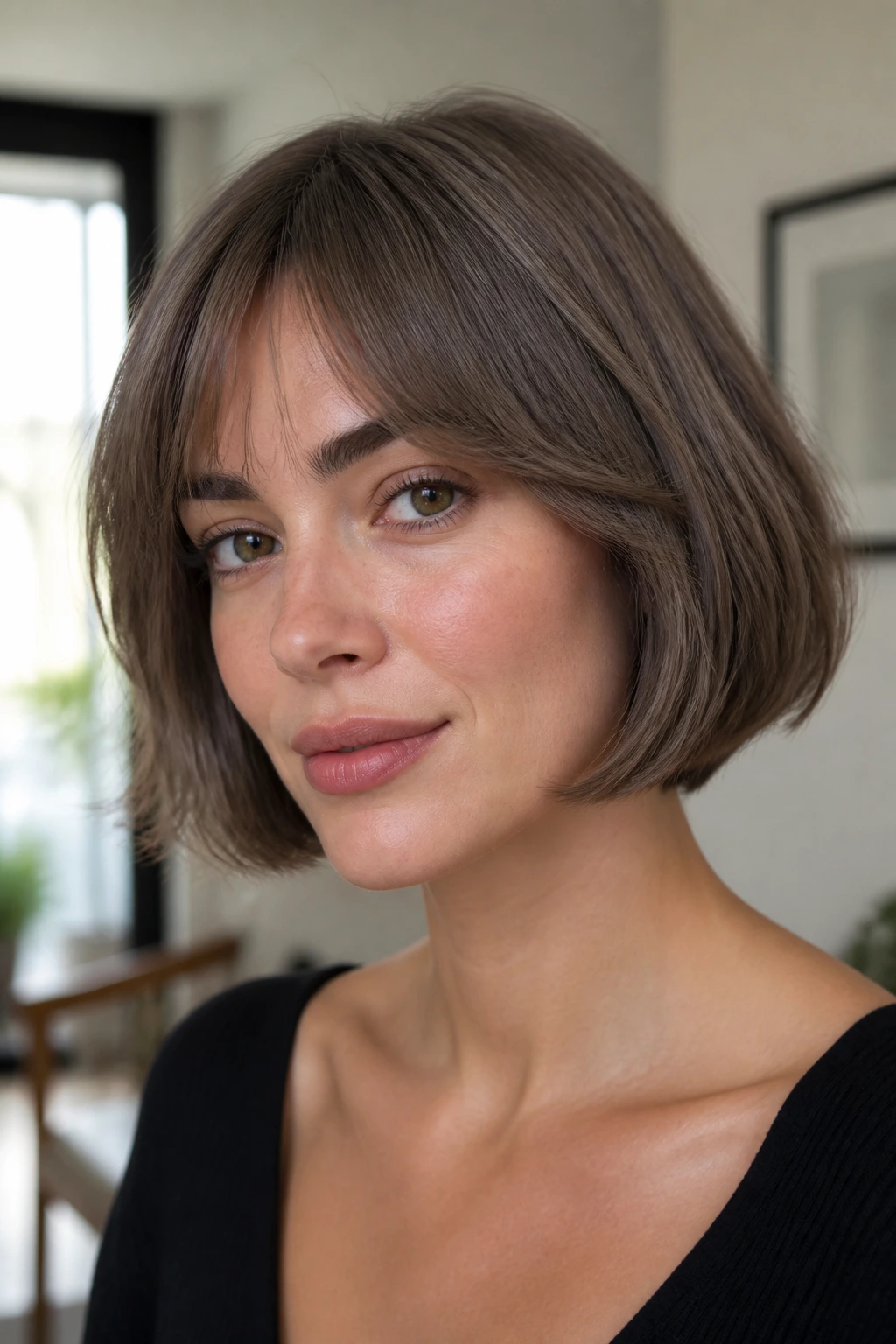
Tone Boosters: A gloss or glaze every 6 to 8 weeks can keep caramel from going muddy, pearl from going dull, and copper from looking tired. On short hair, glossing matters more than people think because the color is concentrated close to the face, and faded tone is harder to hide.
Customization: Add lowlights if the cut feels too bright at the top, or ask for a money piece if you want more face-framing impact. Hidden panels underneath can give a bob movement when it swings, while a softer root smudge can make platinum or beige blonde easier to live with.
Finish: Shine sprays, lightweight oils, and heat protectants all change how balayage reads. Dry ends swallow color. Smooth ends bounce it back. If the haircut is textured, keep the product light so the pieces still separate instead of clumping together.
Make-It-Yours: If you wear your hair curly, ask for placement that sits on the outer curve of the curl. If your hair is straight and fine, ask for thinner ribbons. If you like an edgier finish, push the contrast higher at the front and keep the nape deeper. That little shift changes the whole vibe.
Keeping the Tone Fresh Between Appointments
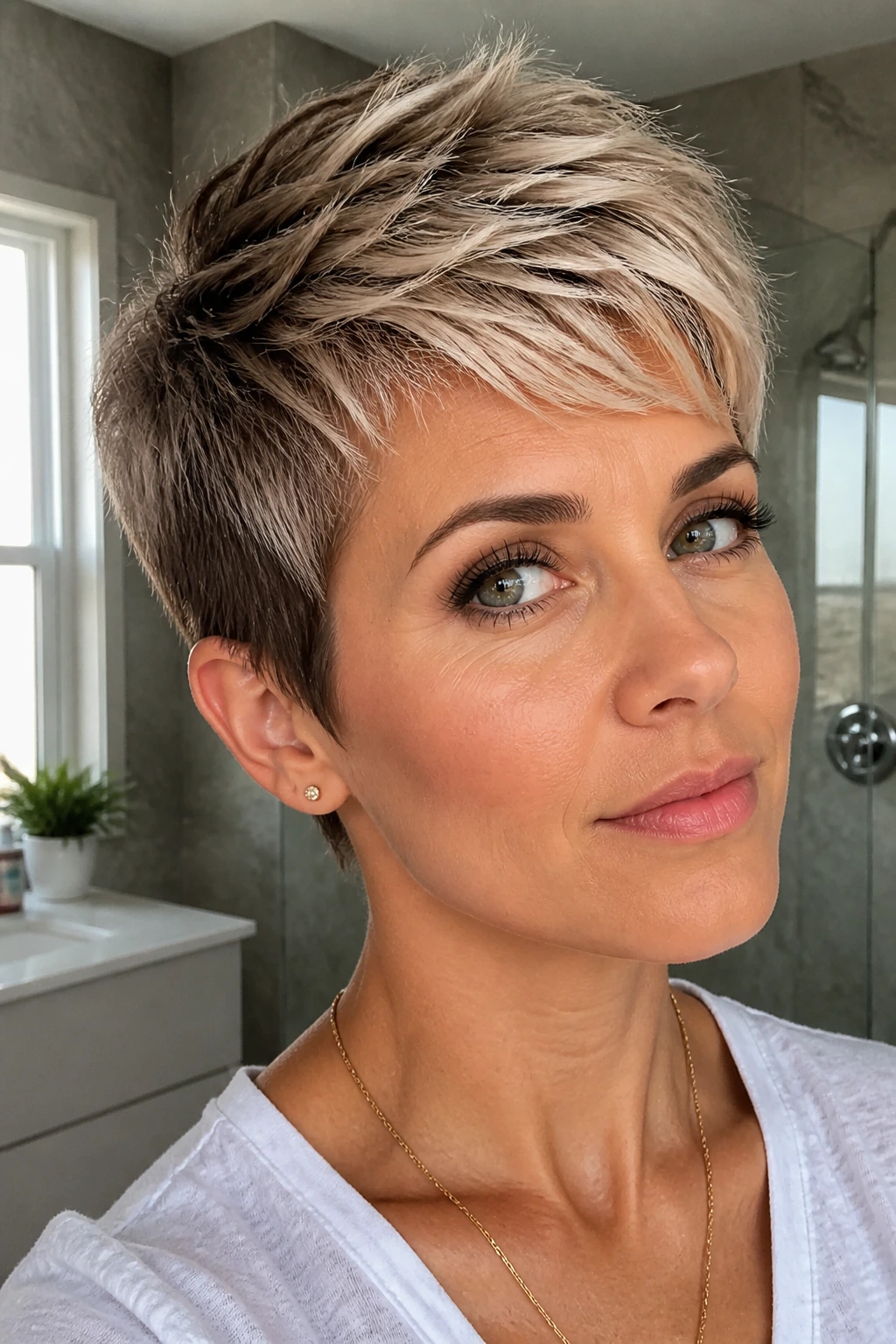
Short hair gives you a cleaner grow-out than a long blunt line, but it also shows tone changes faster. A bob that starts as honey blonde can look tired when the gloss fades, even if the roots are still fine. That’s why maintenance is less about root panic and more about tone control.
Most short balayage looks benefit from a gloss every 6 to 8 weeks if you want the color to stay crisp. Very short pixies and platinum pieces may need toning closer to every 4 to 6 weeks because the hair is all front-and-center. Brunette balayage usually stretches longer, but warm tones like caramel, copper, and cinnamon can slip toward brass after a few washes if you shampoo too hot or too often. A sulfate-free shampoo and cool rinses help, though I’d skip the icy water routine unless you enjoy suffering for no reason.
For blondes, purple shampoo once a week is usually enough. More than that can leave the hair flat and chalky. For brunette-ashe shades, blue shampoo can help when orange starts peeking through, but don’t treat it like everyday cleanser. A moisturizing mask once a week keeps the short ends from drying out, which matters because short hair is clipped close to the most fragile part of the strand. If you heat-style often, use a protectant every single time. No exceptions. Short hair burns just as fast as long hair, only with less room to hide the damage.
If you’re planning a major color shift — going darker, lighter, or into a fashion tone — a strand test saves headaches. It tells you how fast your hair lifts and how thirsty the ends are. That’s boring advice until it saves a bad color correction.
Variations and Adaptations to Try
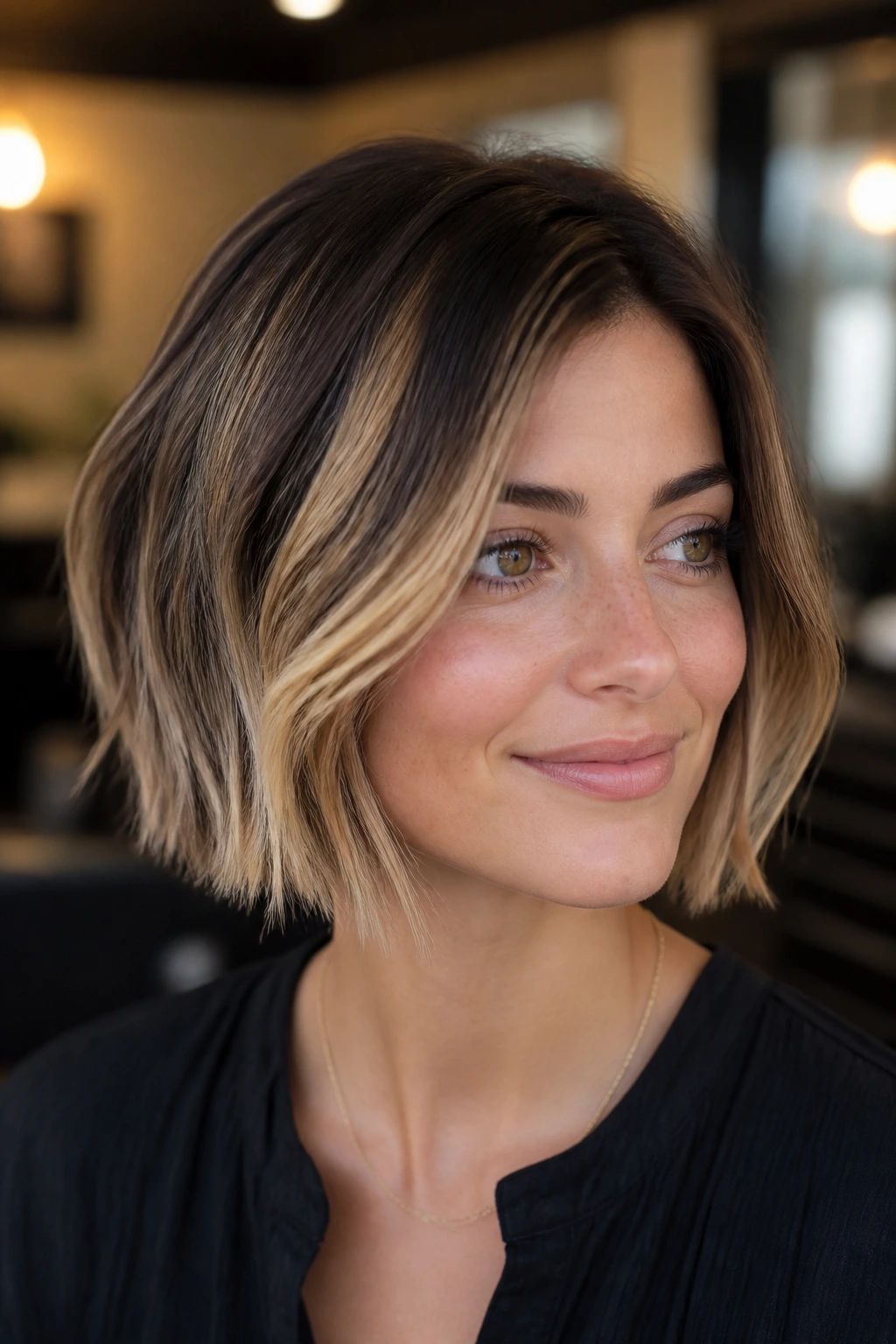
Soft Grow-Out Blend: Ask for a deeper root smudge and fewer bright ribbons if you want a style that holds up longer between salon visits. This works especially well on bobs and lobs that get trimmed every few weeks anyway. The color stays polished even when the cut changes a little.
Money-Piece Flash: Keep most of the hair soft and put the brightness around the face. This is the quickest way to make short hair look lighter without over-lightening the ends. It’s a strong move for pixies, curtain-bang bobs, and anyone who wants their eyes to pop.
Curl-First Placement: For curly short hair, paint the outer curve of the curl pattern and leave the underside deeper. That gives you visible dimension when the hair expands. If you paint flat like the hair is straight, the color disappears once the curls spring back.
Cool Smoke Finish: Use taupe, mushroom, ash brunette, or pearl blonde if you want the whole look to feel softer and more modern. This is the route for people who dislike gold and don’t want copper warmth creeping in. It can make a blunt cut feel especially crisp.
Warm Glow Finish: Caramel, honey, apricot, copper, and cinnamon bring life to dark or medium bases without needing a massive lift. They’re easier to wear than pale blonde on many short cuts because they keep the hair looking full.
Fashion Tint Layer: Lavender, rose, peach, or blue-black can sit on top of a balayage map if you want something less ordinary. The trick is to keep the base believable and the tint sheer enough that the haircut still reads first.
Common Mistakes That Make Short-Hair Balayage Go Flat
Painting too high at the root: On a pixie or very short bob, bright color right up at the scalp can make the cut look like it has a cap on top. The fix is simple: keep the brightest pieces where the hair moves, not everywhere at once.
Using too many tones at once: Three or four highlight shades on short hair can turn into a muddle fast. Pick one main light tone and, if needed, one gloss or lowlight to support it. Clean color reads better on a small canvas.
Ignoring the haircut shape: A color placement that looks gorgeous on a layered shag can look wrong on a blunt bob. The haircut decides where the movement lives. If the cut is sleek, keep the color cleaner. If the cut is messy, you can scatter the pieces more.
Over-toning blondes: Icy toner on short hair can go gray or flat if it sits too long. Watch the strand, not the clock alone, and stop when the brass is gone but the hair still has life. Flat blonde on a bob is a sad thing to see.
Forgetting curl shrinkage: Curly short hair hides color when it springs back up. Paint the pattern where the curl opens, not where the wet hair lies. Otherwise, the balayage disappears after drying.
Skipping maintenance products: Short hair does not hide dryness well. If the ends are rough, the color looks dull. Use a mask, use heat protectant, and use a gloss when the tone starts to fade.
Questions People Ask Before They Book
Can balayage work on a pixie cut?
Yes, and it can look sharp when the placement is tight. The best pixie balayage usually focuses on the crown, fringe, and face frame instead of flooding the whole head with light pieces.
How often does short-hair balayage need a touch-up?
Most short styles do best with a gloss or toner refresh every 6 to 8 weeks. Platinum, pastel, and very high-contrast looks may need attention sooner because the tone shows fade faster on short hair.
Is balayage less damaging than traditional highlights?
It can be, but only if the lightener is used carefully. Short hair can still take a beating if someone pushes it too pale or repeats the process too often. Technique matters more than the label.
What if my hair is dark brown?
You can still do balayage, but warm caramel, cinnamon, copper, or soft bronde usually look more natural than trying to force a pale blonde finish. Dark bases often need a gentle lift first, then a tone that sits well on the new level.
Why does my balayage look stripy after styling?
Usually the sections were too wide, too close to the root, or too evenly spaced. Short hair needs feathered placement and a bit of depth left behind the bright pieces so the cut doesn’t read like zebra stripes.
Can curly short hair wear balayage?
Absolutely. Curly short hair often shows balayage beautifully when the color is painted where the curl expands. The mistake is placing highlights as if the hair will stay flat.
Should I bring a photo if my hair is very short?
Yes, but bring one that shows the haircut shape, not just the color. On short hair, the cut matters just as much as the tone, and a color that looks dreamy on a lob can feel wrong on a pixie.
What’s the best tone if I want low upkeep?
Soft caramel, bronde, chestnut, mushroom brown, and warm honey tend to grow out with the least drama. They leave enough depth at the root that the style doesn’t fall apart between appointments.
A Short Cut With More Color to Work With
The best short-hair balayage doesn’t try to pretend the hair is long. It works with the crop, the bob, the pixie, the shag, and the way each cut moves when you turn your head. That’s why the strongest looks in this list feel tailored rather than copied. The placement is tighter, the tone is more deliberate, and the grow-out is part of the design.
If you take one thing from all of this, take this: on short hair, color is architecture. A few well-placed ribbons can do more than a flood of brightness ever will. Pick the tone that respects your base, ask for placement that follows the cut, and keep the finish clean enough to show the work. The result should look like the haircut and the color were planned together from the start, because the good ones usually are.
