



A blonde that survives heat usually has one thing going for it: dimension. The harsh, one-note platinum that looks crisp under salon lights can go flat fast once sweat, sun, and a few messy ponytail days get involved. The 38 blonde hair looks for summer that actually hold their shape are the ones with a root shadow, a soft gloss, or a few brighter ribbons around the face—the small things that keep the color looking alive when the light changes.
I like blondes that can take a little abuse. Not because they’re lazy, but because hair lives a real life: chlorine, dry shampoo, a hot iron run over the same section one time too many, maybe a week of too much sun and not enough patience. A creamy beige balayage or a honey melt often looks better on day 21 than a stark bleach-out does on day 1.
What you’ll see here is a mix of bright, warm, cool, short, long, curly, straight, and low-maintenance options, because summer blonde should fit your actual schedule. The best look is the one that still looks like you when the heat is high and the mirror is unforgiving.
Why These Blonde Looks Earn Their Keep
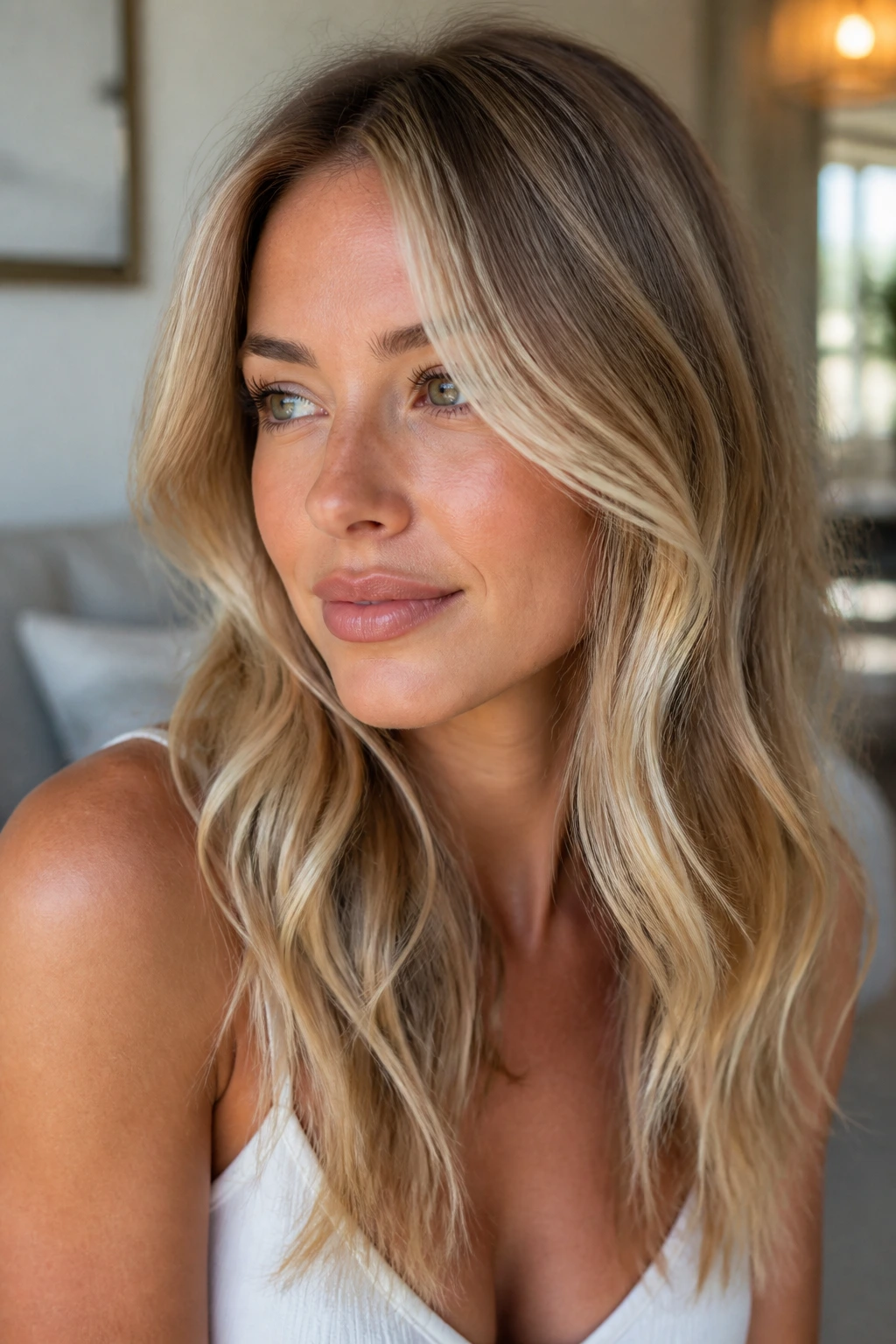
- Soft grow-out: Root shadows, melts, and blurred highlights keep regrowth from drawing a hard line across your part after a few weeks.
- Tone range: Beige, champagne, honey, pearl, and mushroom blonde all solve different problems, so you can match the shade to your skin and base instead of forcing one blonde to do everything.
- Texture-friendly: Some looks flatter waves, some need a blunt edge, and some are built for curls; the cut matters as much as the color.
- Heat-proofing: Lighter face-framing pieces and interior ribbons reflect light even when hair is tied up or air-dried rough.
- Maintenance control: You’ll find easy-upkeep options that need a gloss every few weeks, plus bolder blondes that ask for a little more salon loyalty.
- Salon realism: These looks are the kind you can actually explain to a colorist without waving around a photo of a celebrity who has six hours and three assistants.
Why Dimensional Blonde Holds Up Better in Heat
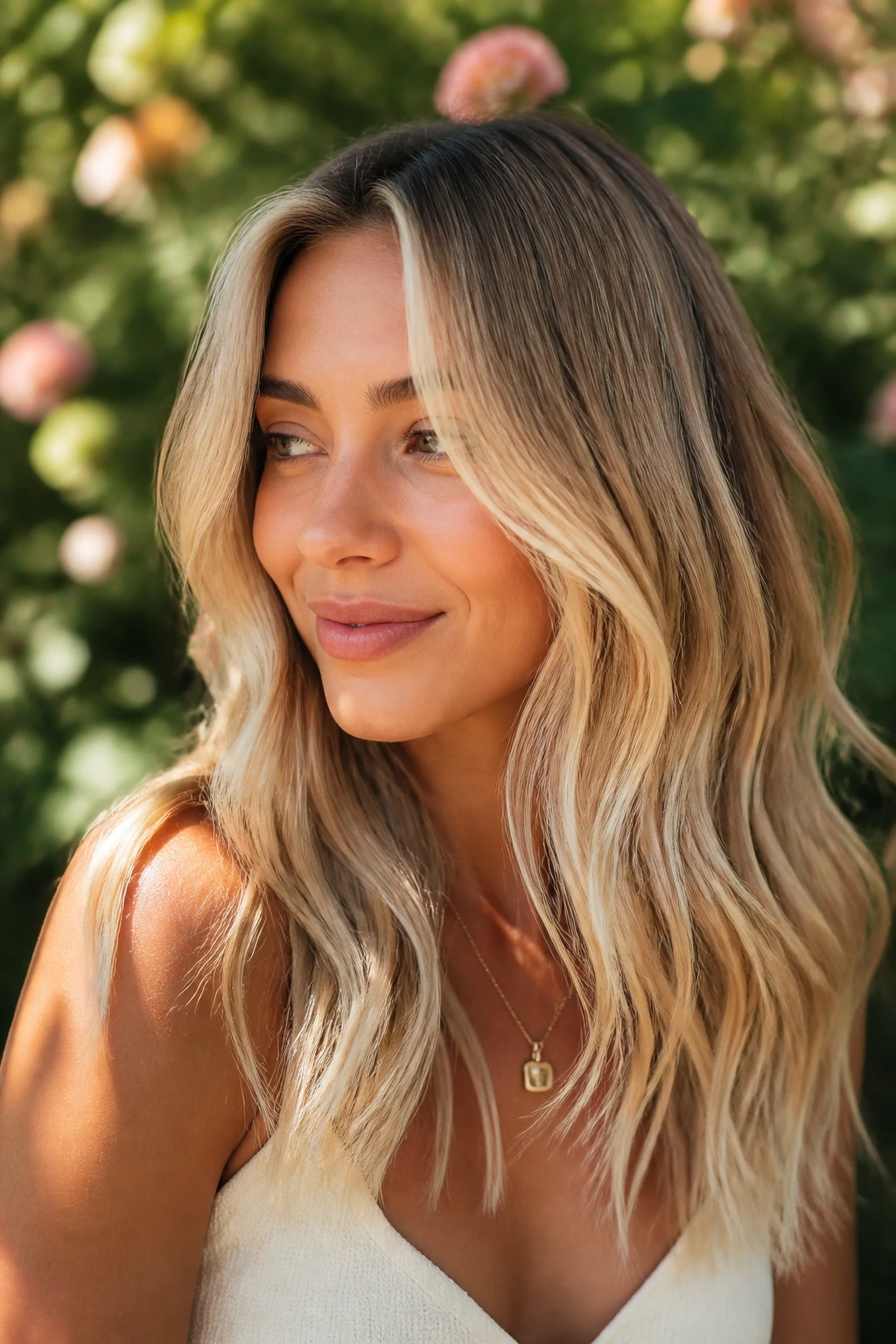
Solid blonde can look expensive for about ten minutes. Then the sun hits it, the toner softens, and every uneven spot in the lift starts announcing itself. Dimension fixes that. A little depth at the root, a few lighter pieces near the face, and a neutral or beige gloss across the mids make the whole color look richer, even when humidity is doing its worst.
There’s also a practical reason dimension wins. Hair grows. Roots happen. If the blonde is built with a soft shadow or a blurred balayage line, the regrowth looks like part of the plan instead of a mistake. That matters more in summer than people admit, especially if you wear your hair in clips, buns, and half-up styles that expose the crown every time you move.
Cool blondes need a bit of care here. Too much ash can tip muddy when the toner fades. Too much gold can swing yellow after a few washes. Beige, champagne, and creamy vanilla usually sit in the middle and behave better when the weather gets sticky. And if chlorine or salt water is part of your life, a soft multi-tone blonde is easier to keep believable than a razor-bright bleach job that shows every dull patch.
1. Buttercream Balayage with Face-Framing Pieces
A buttercream balayage is the blonde I trust when the hair needs brightness but not a hard line. The color sits around level 8 to 9, with lighter ribbons around the cheekbones and a soft root that keeps the grow-out from screaming at you three weeks later. It reads sunny, not streaky.
What to ask for
- A level 8–9 beige blonde through the mids and ends.
- A soft root shadow one shade deeper than the rest of the hair.
- Fine face-framing pieces that start around the cheekbone, not the scalp.
If your base is a medium brunette, this is the version that keeps the hair looking sunlit instead of striped. A gloss with a neutral-beige finish keeps the warmth from tipping yellow.
Pro tip: Leave the last inch of the ends a little deeper if they’re dry. That tiny bit of depth makes the whole style look healthier.
2. Champagne Blonde Lob with Soft Ends
Champagne blonde works because it has sparkle without the bleachy glare. On a collarbone-length lob, it feels polished in a way that a longer style sometimes doesn’t, and the soft ends keep it from looking too stiff. There’s a little coolness in the tone, but not enough to go flat.
You can wear this one with a blowout, a bend at the ends, or barely-there waves. It’s the sort of blonde that looks expensive when it’s freshly glossed and still looks fine when you’ve had two late mornings in a row.
If you want low drama and a clean edge around the shoulders, this is a smart pick. Ask for a beige-pearl toner rather than a stark silver one; the champagne part is what keeps it flattering.
3. Honey Blonde Waves with a Deep Side Part
Why does honey blonde work so well in summer? Because warm light likes warm hair. Honey tones sit in that golden middle ground where the hair looks rich instead of brassy, especially on olive, golden, and neutral skin.
Best match
- Medium to dark brunettes who want a visible shift.
- Wavy hair that already has some bend.
- Anyone who likes a little contrast at the roots.
A deep side part gives honey blonde a little drama and keeps the waves from feeling too sweet. I’d ask for ribboned highlights, not all-over lightener, so the darker pieces can frame the wave pattern.
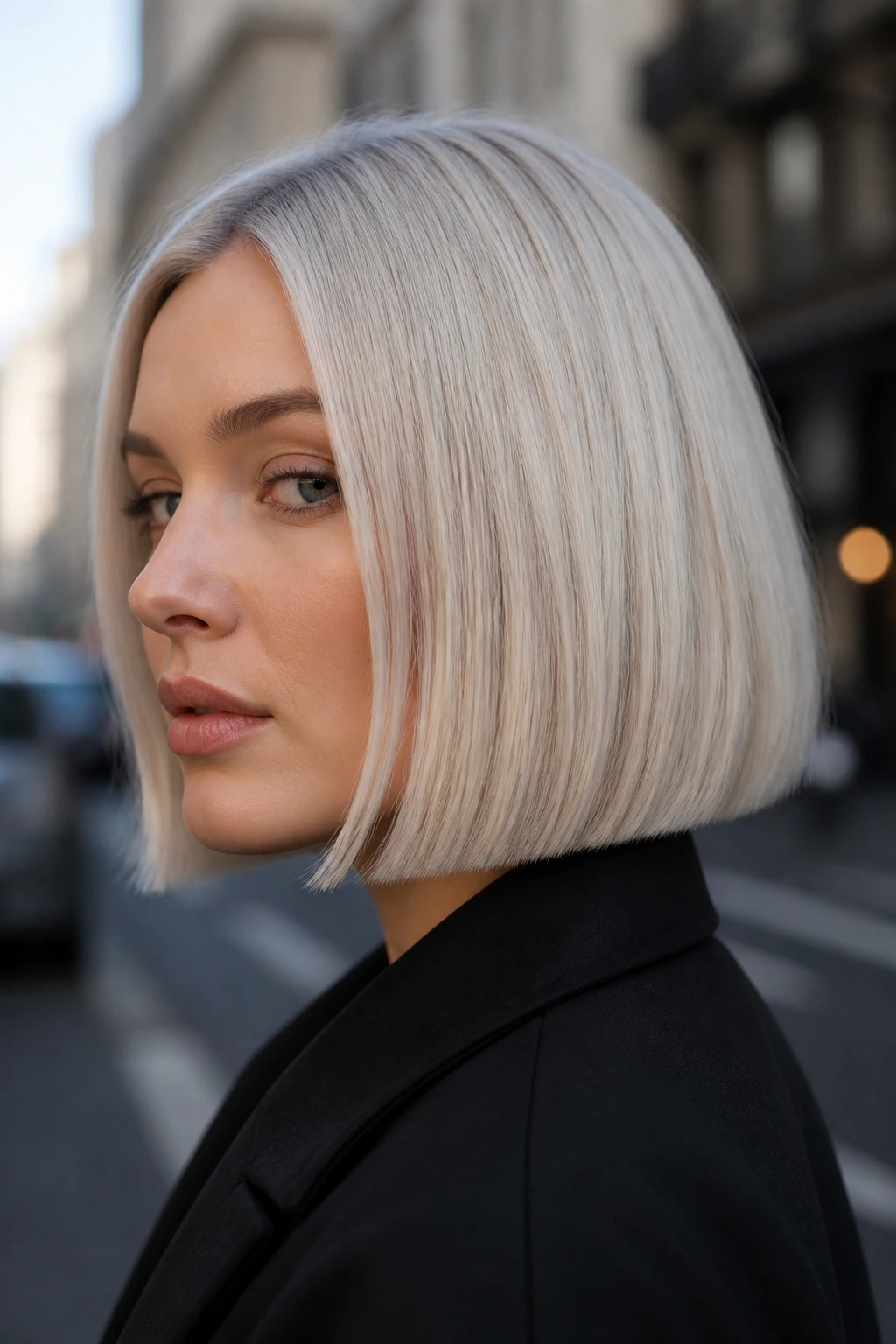
4. Icy Pearl Bob with a Blunt Edge
An icy pearl bob is sharp, clean, and not at all shy. The blunt edge gives the color a little graphic punch, which matters because pale blonde can look washed out if the cut is too soft. On a bob, pearl reads polished instead of tired.
This is not the laziest choice on the list. The tone wants regular glosses, and the cut wants trims so the bottom line stays crisp. But if you like a short blonde that looks almost luminous in daylight, this one delivers.
Use a violet shampoo once a week, not every wash. Too much and the pearl tone starts looking dull, which defeats the whole point.
5. Beige Blonde Curtain Bangs
Curtain bangs can make beige blonde feel younger without making it fussy. The fringe gives you brightness right where people look first, and beige tone keeps it soft enough to live through a few sweaty forehead days.
The cut matters here. If the bangs are too dense, the face frame steals all the light and the rest of the hair can look plain. Keep the bangs airy, with a little bend, and let the blonde around them be slightly brighter than the lengths.
A lot of people think bangs and summer are enemies. They’re not. They just need less density and more texture. That’s the trick.
6. Rooted Vanilla Blonde with Shadow Roots
Rooted vanilla blonde is the blonde for someone who wants creamy, soft, and not too precious. The shadow root keeps the regrowth line blurred, while the vanilla mids and ends stay light enough to feel bright. It’s one of my favorite low-maintenance blondes.
Compared with a solid platinum, this version buys you time. The darker root gives the eye somewhere to rest, which also makes the lighter pieces look brighter. That’s a neat little cheat, and it works.
If your hair lifts warm, ask for a vanilla-beige toner rather than a cool ash. The wrong toner on this look turns it flat fast.
7. Sandy Long Layers with Sunlight Ribbons
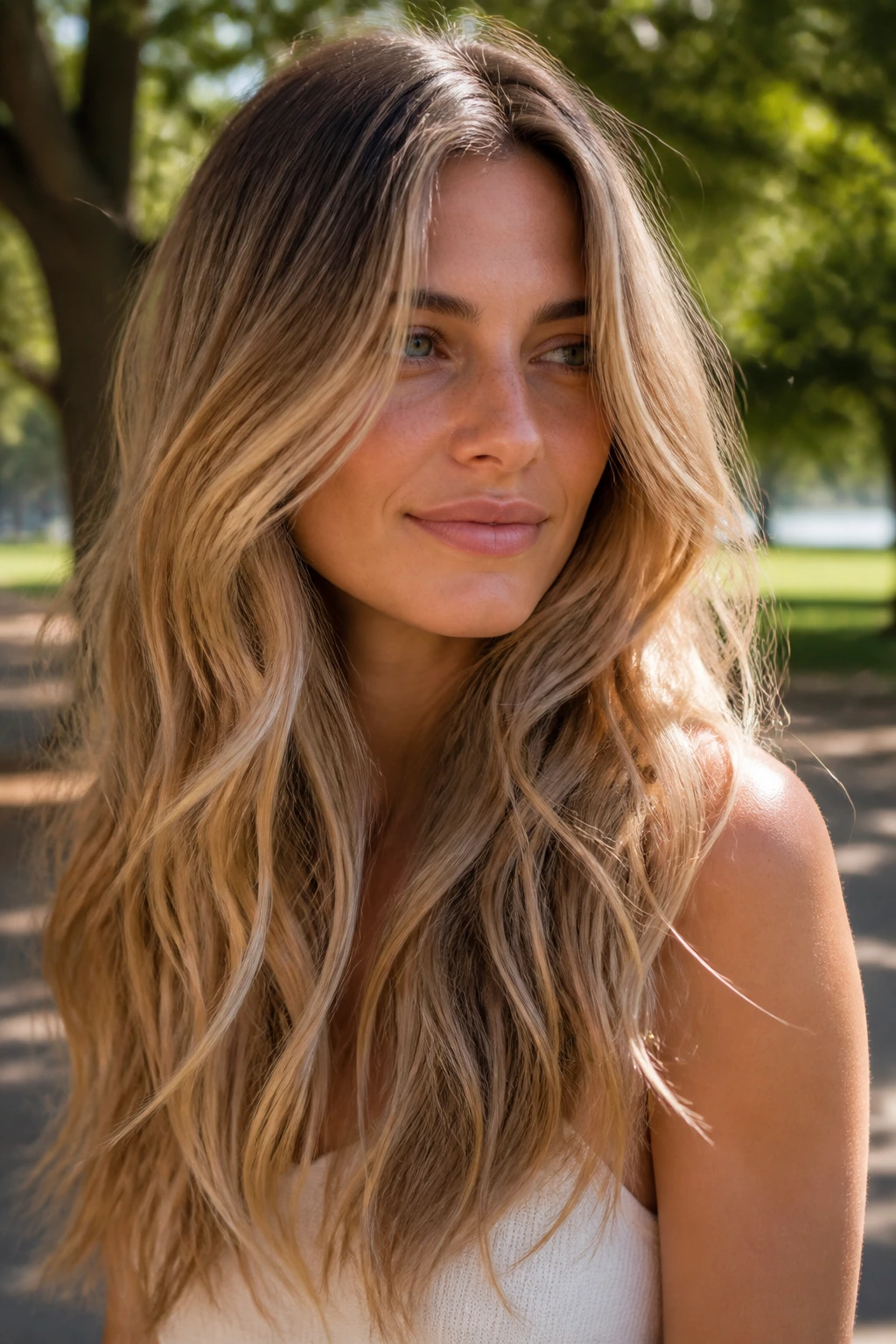
Long layers and sandy blonde are made for each other. The movement in the cut keeps the ribbons from looking heavy, and the sandy tone gives you that soft, sun-faded finish without making the ends look stripped. It’s the kind of blonde that gets better when the hair is a little imperfect.
How to wear it
A loose wave shows off the ribbons. A straight blowout does, too, but only if the highlights are painted in a way that follows the fall of the hair. Ask for a mix of babylights and a few wider ribbons through the mids.
Best for: thick hair, long hair, and anyone who wants brightness without a sharp regrowth line.
8. Mushroom Blonde Shag with Piecey Texture
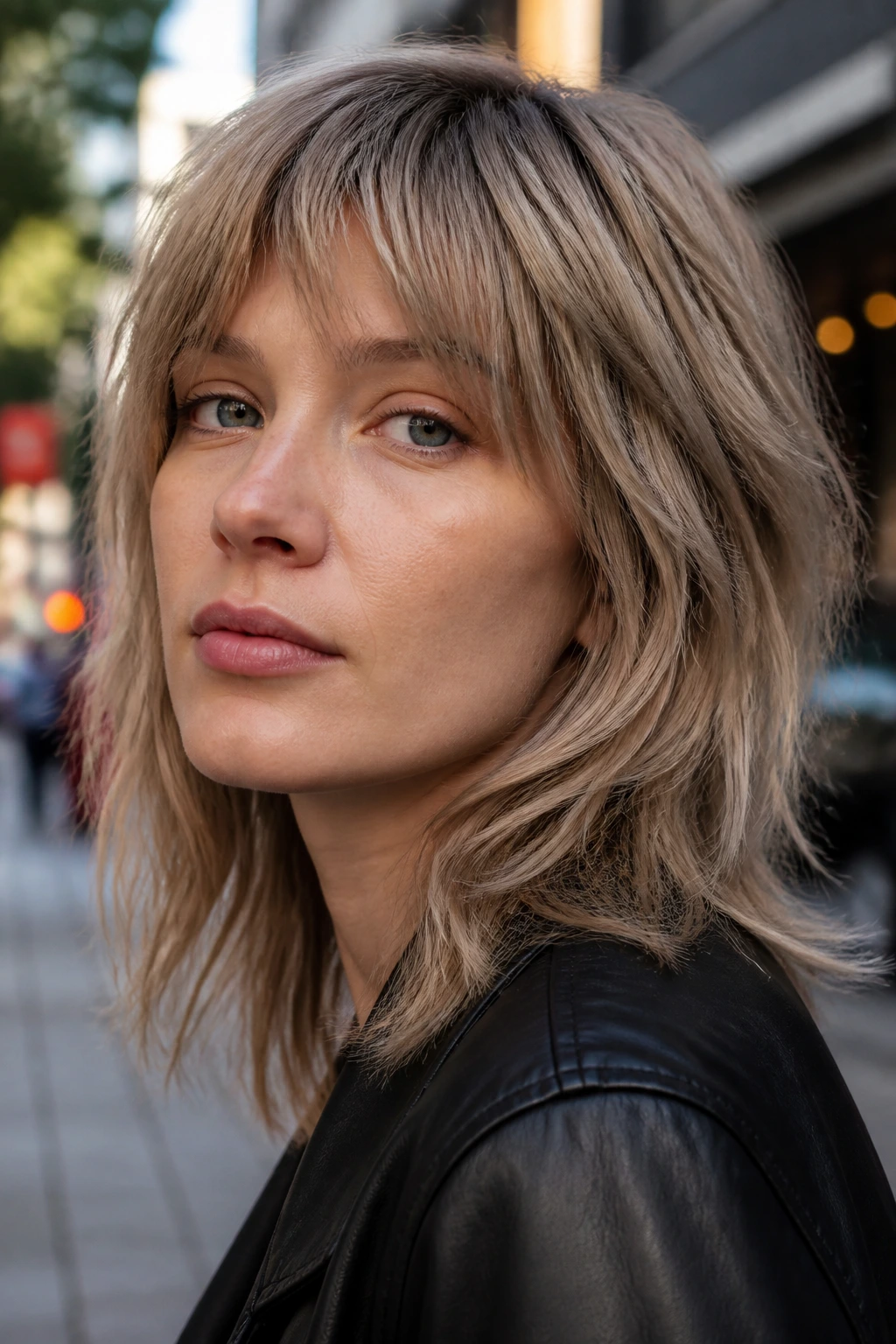
Mushroom blonde is the cool girl’s answer to summer blonde, and the shag cut gives it the edge it needs. The color leans taupe and beige instead of gold, which makes the texture look more deliberate and less sun-fried.
This one looks best when the ends are a little piecey. I’d avoid over-layering the top, because the color already has movement built in. A matte cream or a light wave spray gives the shag that separated finish that makes mushroom blonde work.
If your hair naturally throws orange, this shade needs a colorist who understands toning. A cool gloss should calm the warmth, not erase the dimension.
9. Cream Soda Blonde with a Bright Money Piece
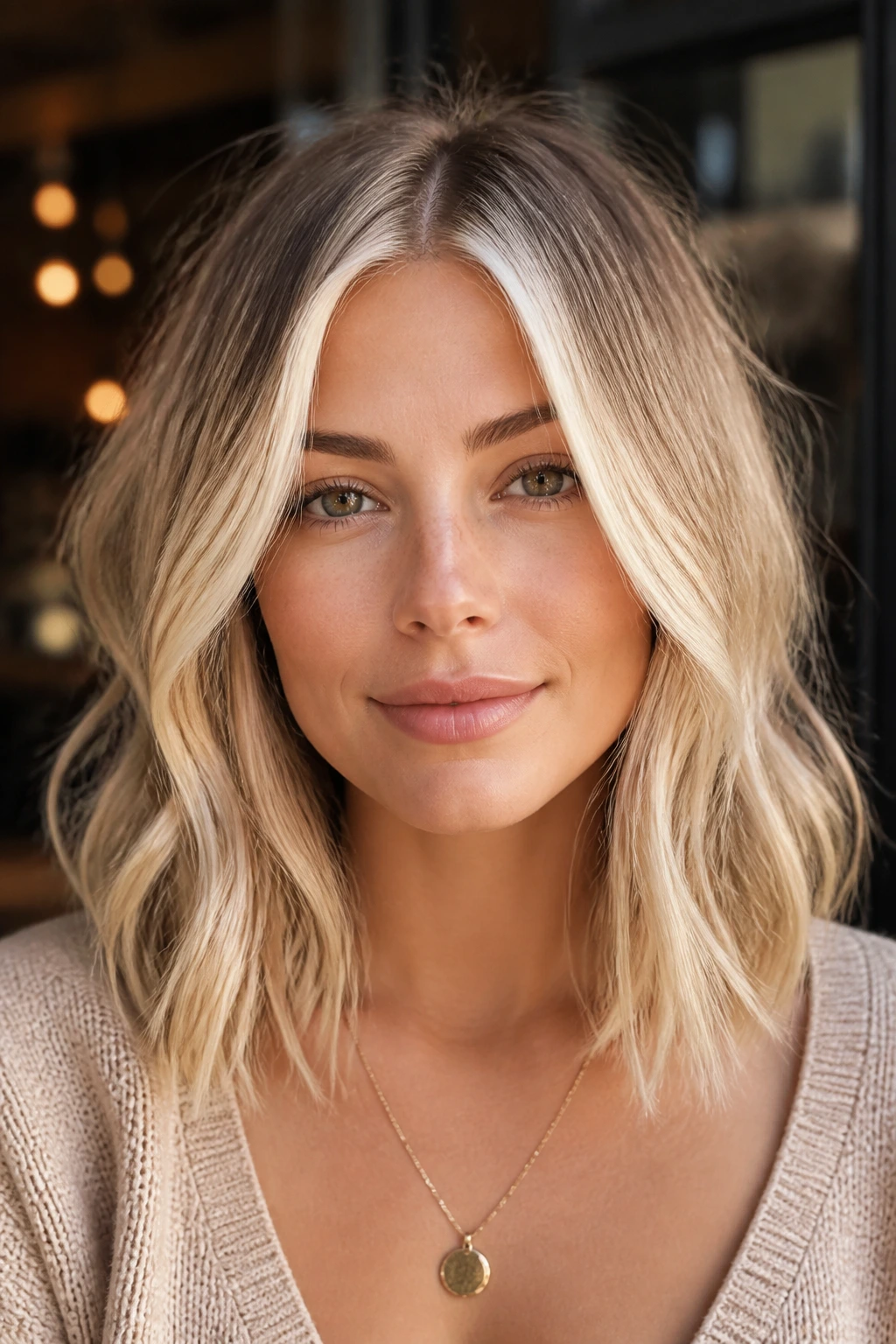
Cream soda blonde has a soft, almost whipped look through the mids, but the bright money piece in front wakes the whole head up. That front section is the point. It adds lift around the eyes and cheekbones without demanding that every strand go light.
This style is useful if you want a noticeable blonde shift but don’t want to commit to an all-over high-lift look. Keep the money piece bright and the rest creamy; that contrast is what makes the color feel fresh.
What makes it different
- The front is brighter than the crown.
- The body stays creamier and more forgiving.
- Regrowth is easier to live with because the brightness is concentrated where it matters most.
10. Scandi Hairline Blonde with Airy Ends
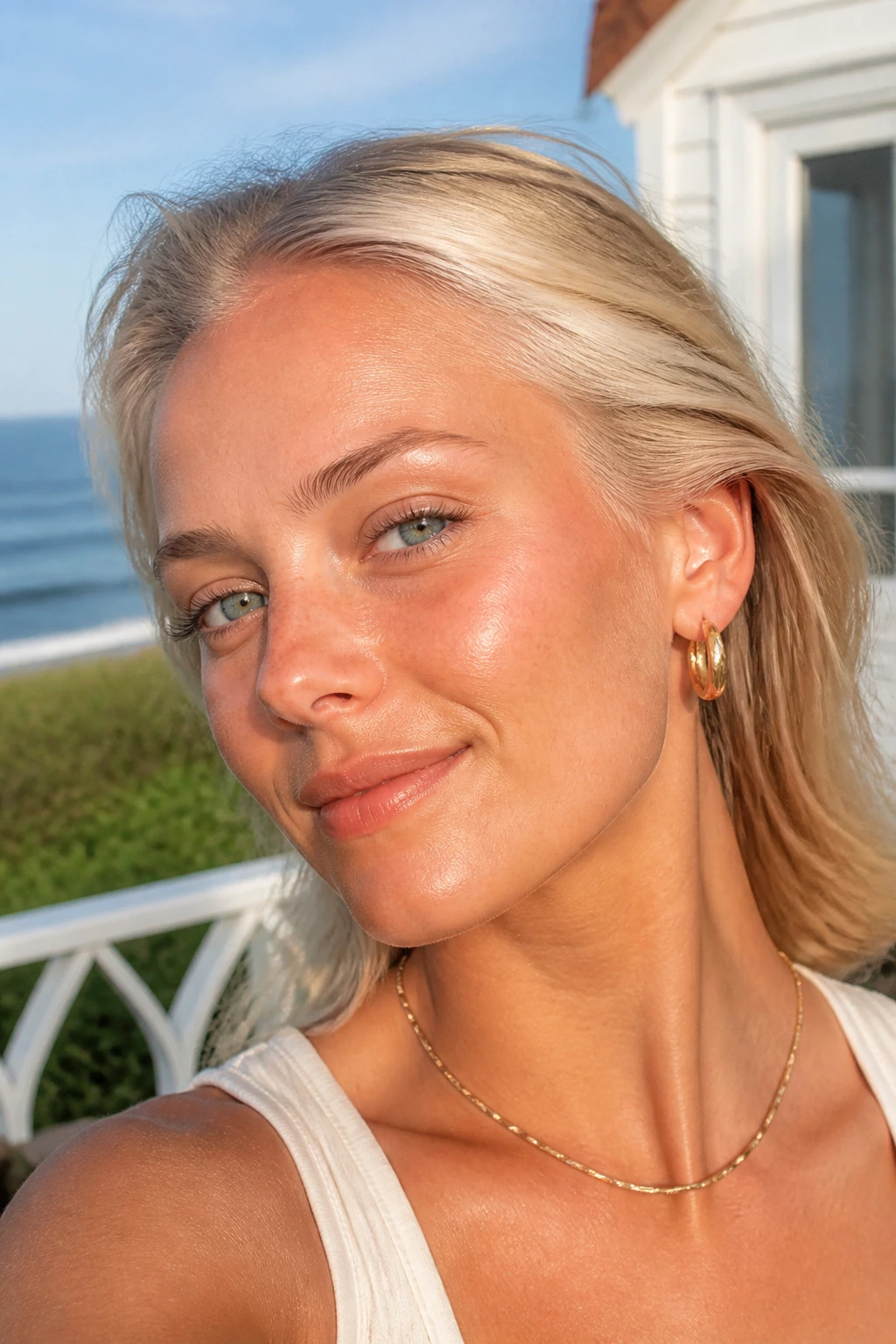
Scandi hairline blonde looks bold in a very sneaky way. The hairline is lighter, especially around the temples and face, while the rest of the hair stays softer and a touch deeper. It gives you that pale, sunlit frame without bleaching the whole head into submission.
A lot of people overdo this look. They make the front strips too thick, and then it starts reading stripey. Keep the light pieces thin and blended, and let the ends stay airy rather than overprocessed.
This is one of those styles that looks especially good when you tuck your hair behind the ears. The bright edge catches the light, and that’s the whole trick.
11. Golden Ribbon Curls
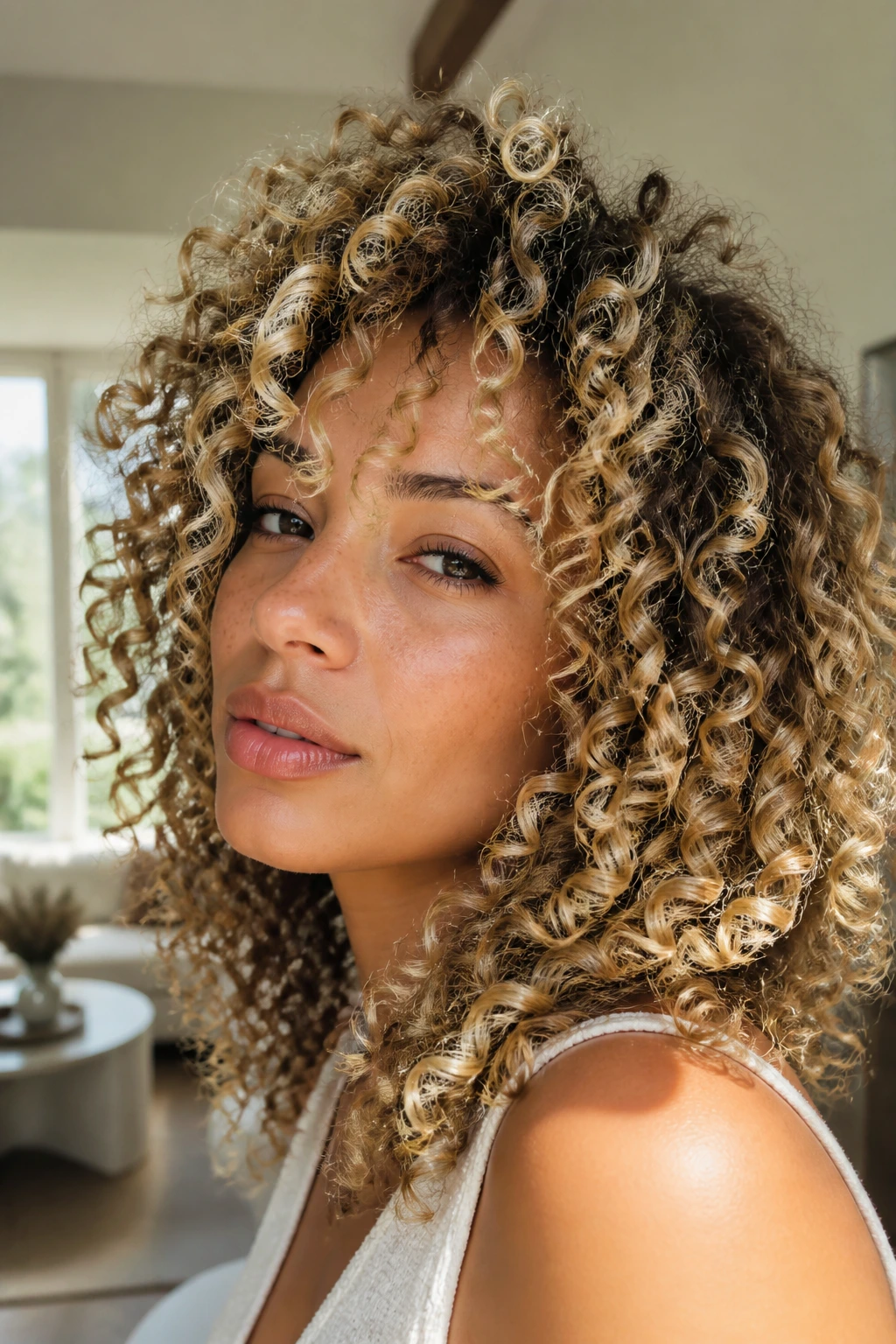
Golden ribbon curls are exactly what they sound like: warm blonde ribbons placed through curls so the pattern shows instead of disappearing. On curly hair, blonde can either pop or vanish into the texture. Ribbons fix that.
I prefer this look when the curl pattern is intact and the cut has shape. If the layers are too blunt, the highlights bunch up and the color loses its rhythm. A colorist should paint where the curls turn outward, not across every coil the same way.
Use a diffuser and a light cream. Heavy oils flatten the ribbons, and the hair stops looking blonde at all. It just looks wet and dark. Not the goal.
12. Bronde Melt for Darker Bases
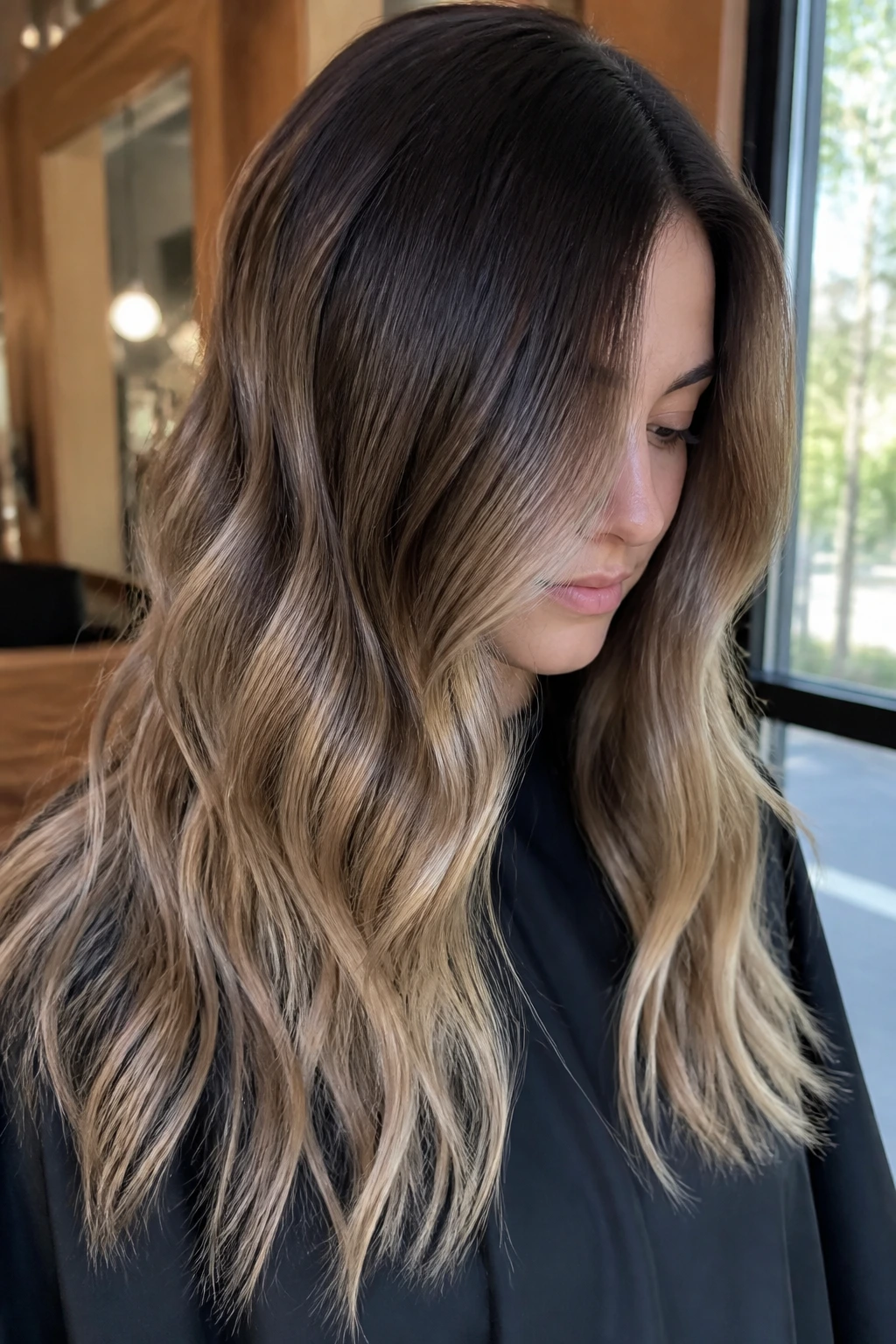
A bronde melt is the sensible route from brunette to blonde when you don’t want a hard jump. The root stays deep, the mids gradually brighten, and the ends hold the lightest pieces. The whole thing feels expensive because the transition is slow and deliberate.
This is the blonde I recommend when someone says they want to go lighter but still recognize themselves in the mirror. It also grows out beautifully, which is useful if you’re not planning to sit in a salon every month.
Ask for lowlights as well as highlights. That’s the part people skip, and it’s why their “blonde” ends up looking like one flat shade with no shape.
13. Platinum Pixie Crop
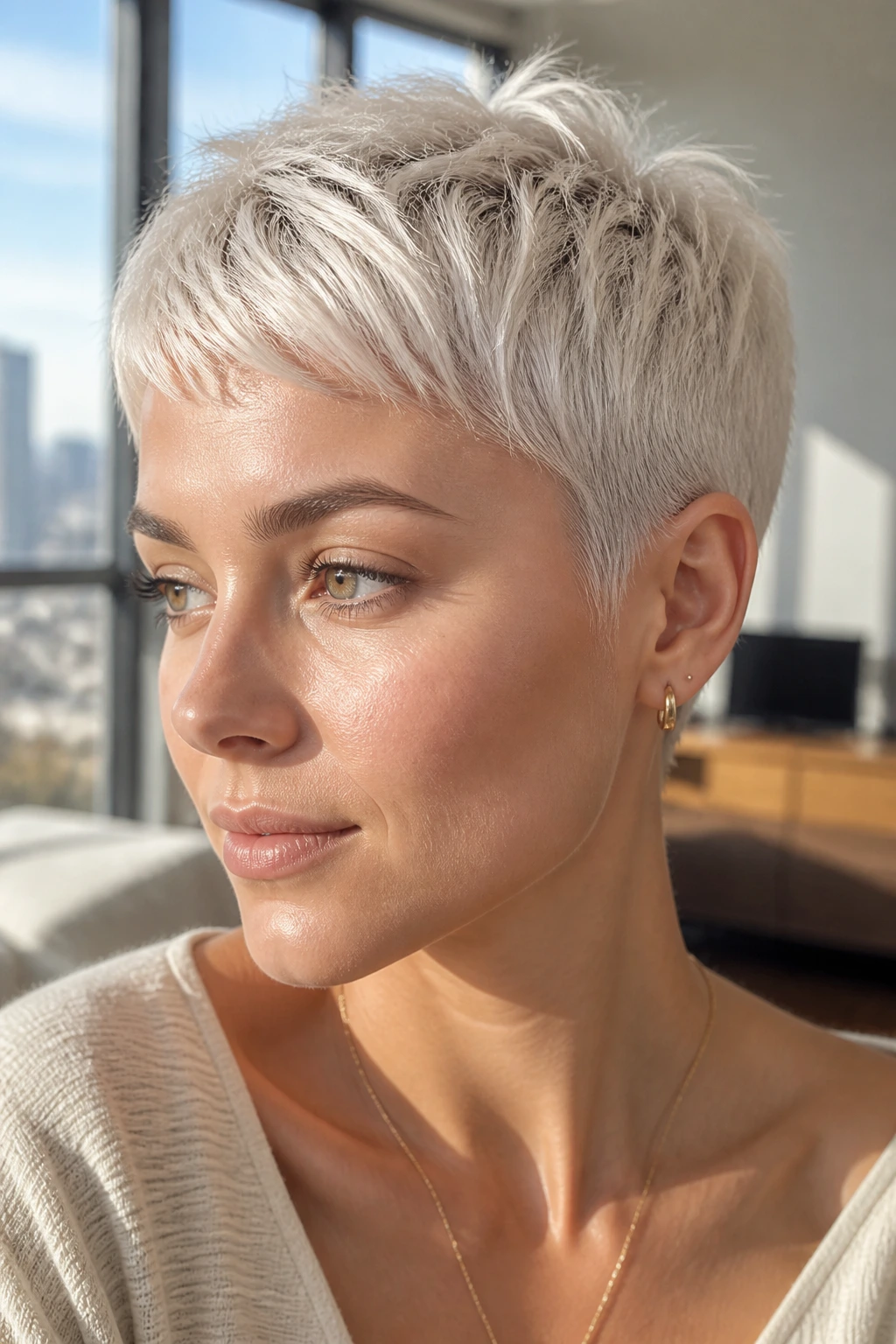
A platinum pixie crop is all about confidence and clean edges. Short hair shows every color decision, so the blonde has to be even, cool, and precise. There’s nowhere to hide.
The cut helps the color feel stronger. A textured pixie can look too choppy if the blonde is patchy, but a smoother crop with a little movement at the top looks sharp and modern without trying too hard. Keep the tone pearl or soft white, not yellow-leaning platinum.
Watch for
- Frequent toner refreshes.
- Dryness around the crown.
- Overuse of heat tools, which makes short blonde look frayed fast.
14. French Bob in Soft Beige Blonde
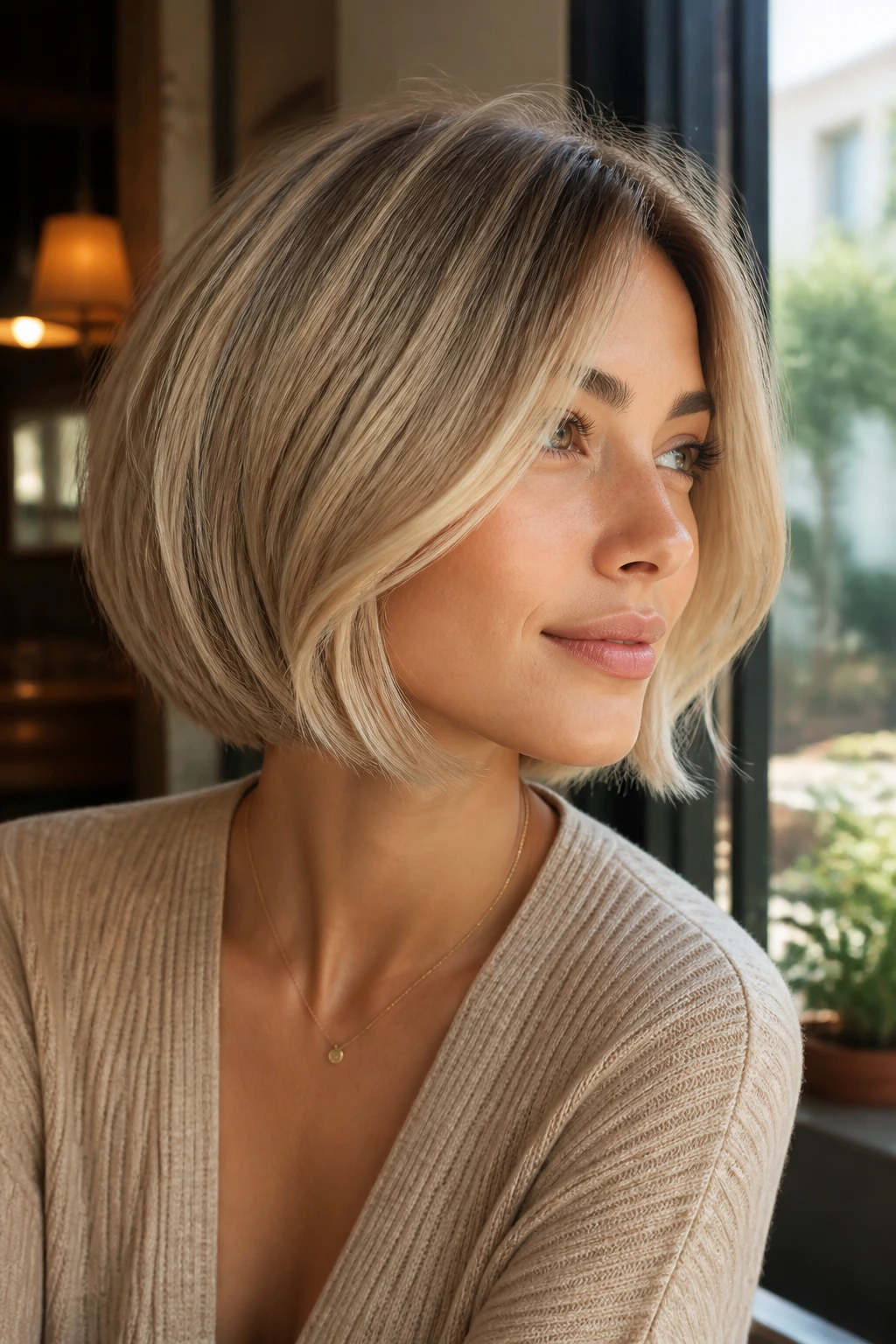
A French bob and soft beige blonde make a very neat pair. The bob gives shape close to the face, while the beige tone keeps the color from feeling too severe. It’s casual, but there’s a line to it.
This look shines when the ends are slightly beveled inward or left with a tiny bend. If the cut is too blunt and the color too cool, the whole thing can go severe. Beige softens that immediately.
I’d choose this for someone who likes a short cut but still wants a little movement. The color grows in cleanly, and the shape stays put even when the weather doesn’t.
15. Toasted Almond Lob with Dimensional Highlights
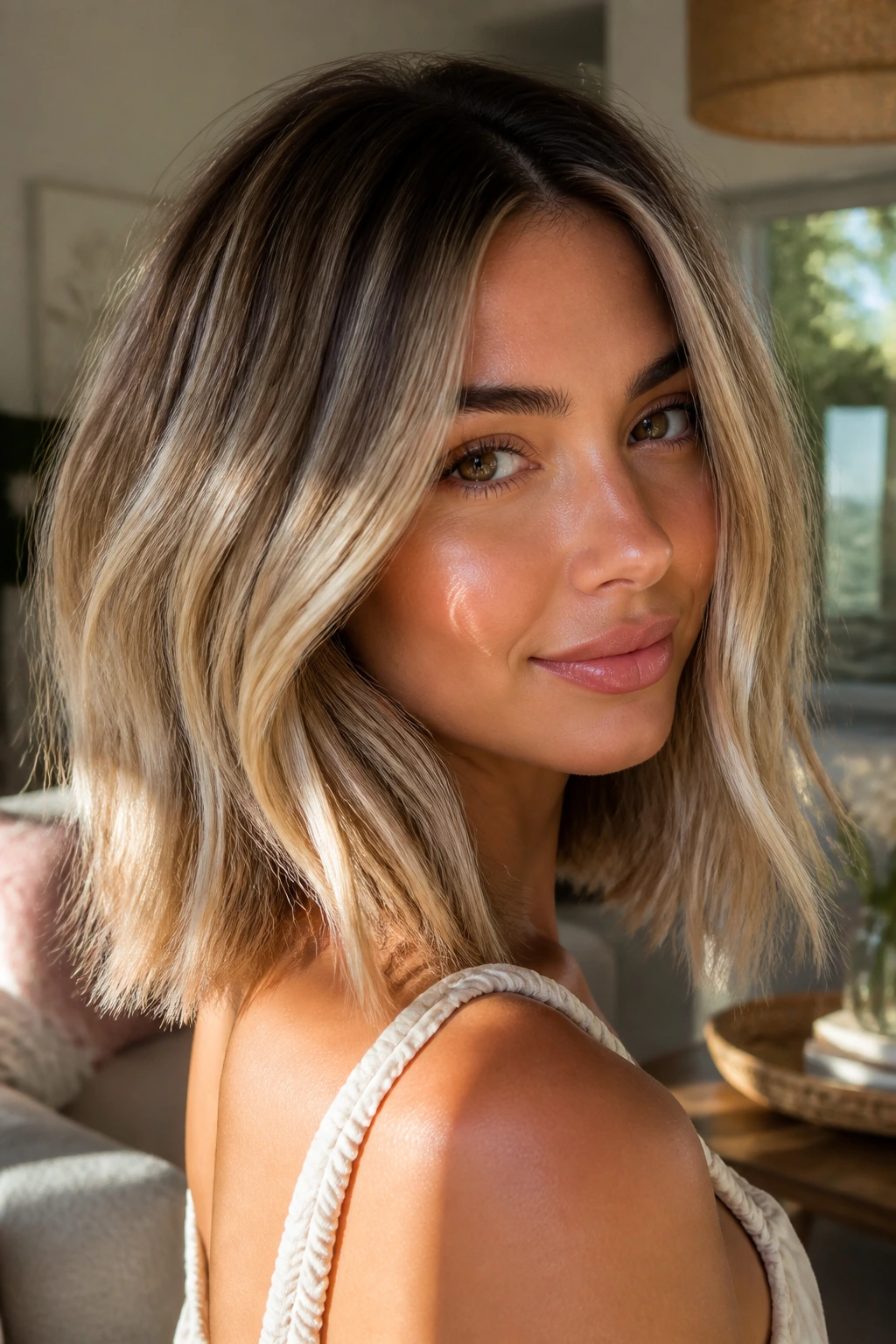
Toasted almond blonde has warmth, but it isn’t syrupy. That matters. The color sits in a nutty, neutral zone that flatters a lot of skin tones and works especially well on a lob because the cut has enough length to show the gradation.
Dimensional highlights keep the shade from collapsing into one block of tan. You want a little lift at the face and through the top, with deeper pieces underneath so the hair keeps some shadow. That shadow is what gives the blonde depth.
If your hair tends to look dull in beige tones, this is the warmer cousin worth trying. It’s less precious than ash and less yellow than gold. A rare sweet spot.
16. Foilayage on Straight, Glassy Hair
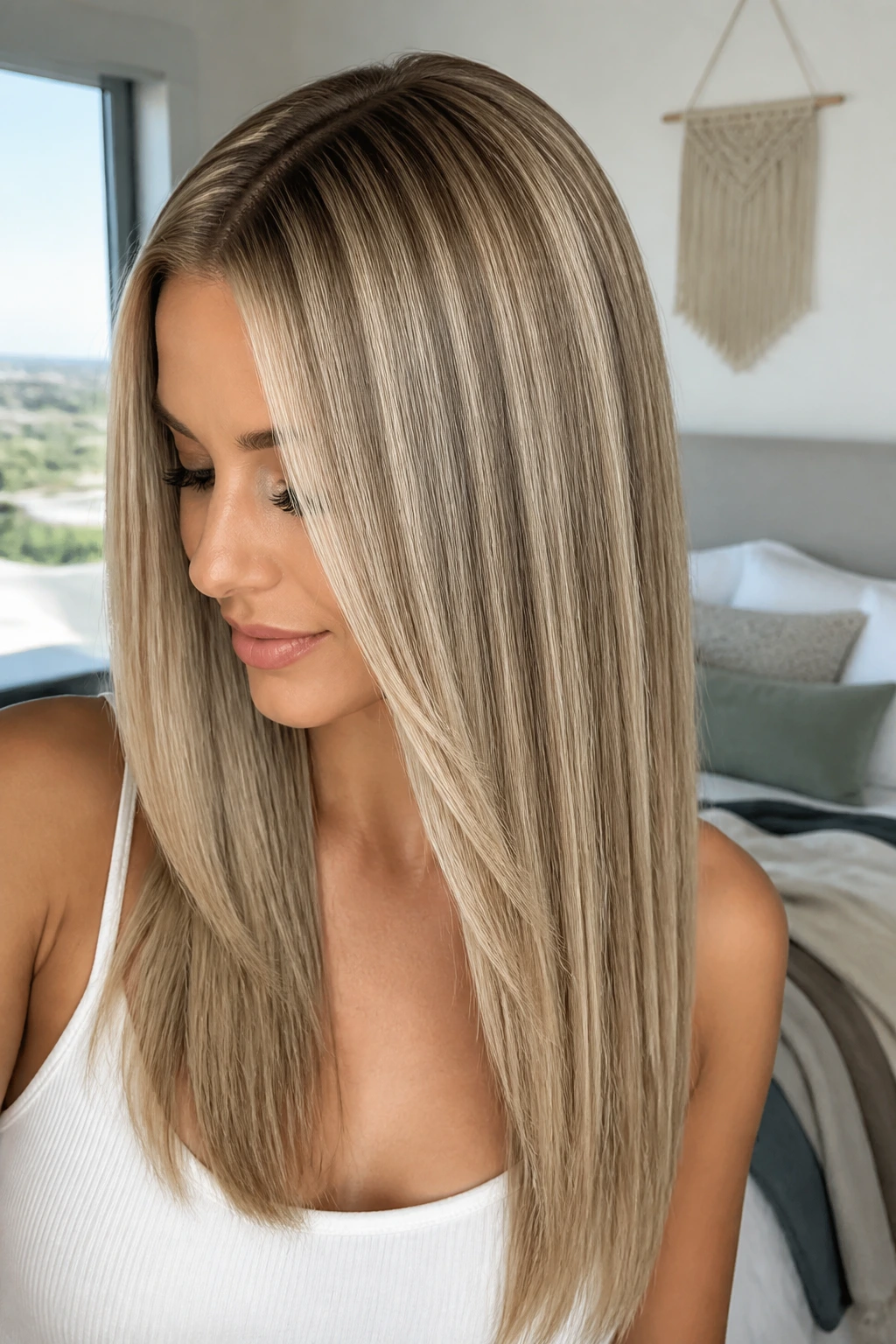
Straight hair can swallow balayage if the placement is too random. Foilayage solves that by giving you the softness of painted highlights with the lift of foils, which means the blonde actually shows up once the hair is smoothed flat.
The “glassy” part matters. On sleek hair, a lot of dimension depends on the light moving across the surface. Ask for finer pieces at the top and slightly wider ones underneath so the blonde doesn’t disappear into the line of the cut.
Best for
- Straight or lightly wavy hair.
- People who wear a center part.
- Anyone who wants blonde that still reads clean when straightened.
17. Pearl Blonde Blunt Bob
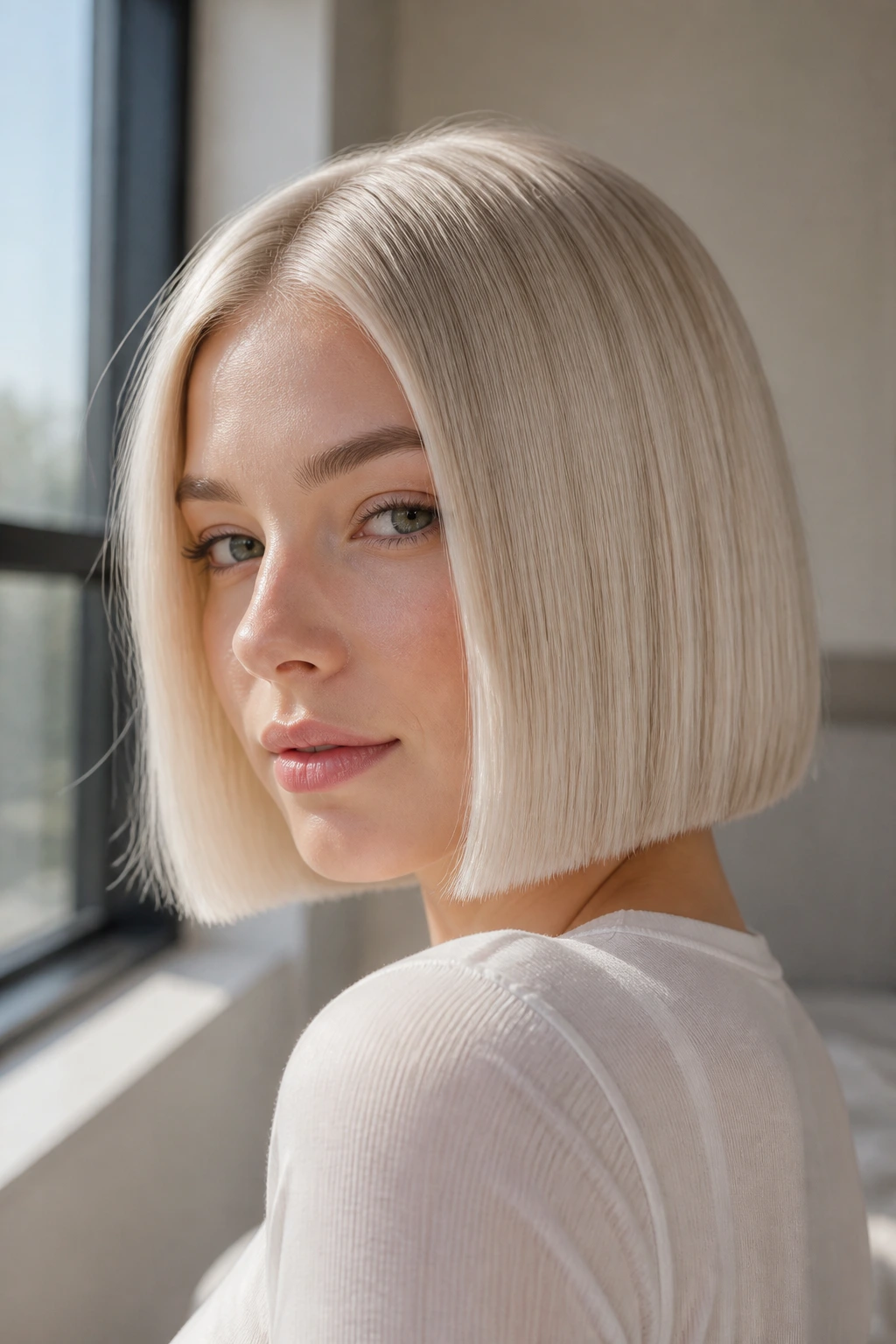
Pearl blonde and a blunt bob make a very tidy pair. The blunt edge keeps the color from drifting soft, and the pearl tone adds enough reflectiveness to stop the cut from looking blocky. It’s crisp without being harsh.
This one needs regular trims, because the whole look depends on the bottom line staying sharp. If the ends fray, the pearl tone starts to feel empty. I’d also keep the toner in the cool-pearl lane, not full silver.
When this look is fresh, it has that slick, pale sheen that makes a simple bob feel intentional. When it grows out too much, the illusion fades fast. Not a flaw. Just the price of sharpness.
18. Butterfly Cut with Honeyed Layers
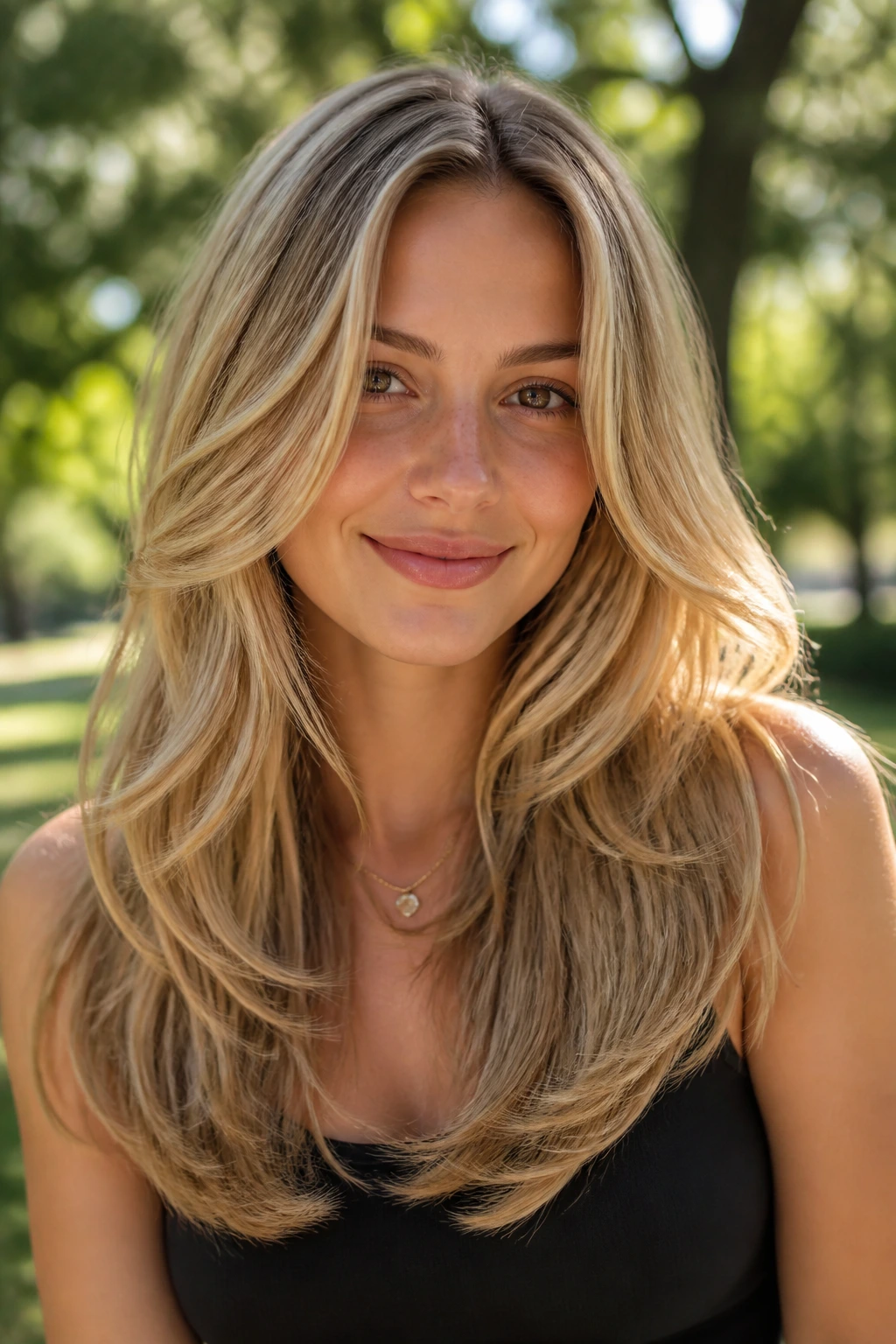
The butterfly cut is one of the better long-hair cuts for blonde because it gives you movement around the face and plenty of length to show the color. Add honeyed layers and you get brightness that moves instead of sitting there.
This look is for anyone who likes a blowout with lift at the crown and softer lengths below. The honey tone keeps the layers from looking dry, which can happen when long hair is lightened too far and then left too cool.
A large round brush and a little bend through the front pieces go a long way here. The color wants air around it, not a heavy finish.
19. Cool Cream Balayage
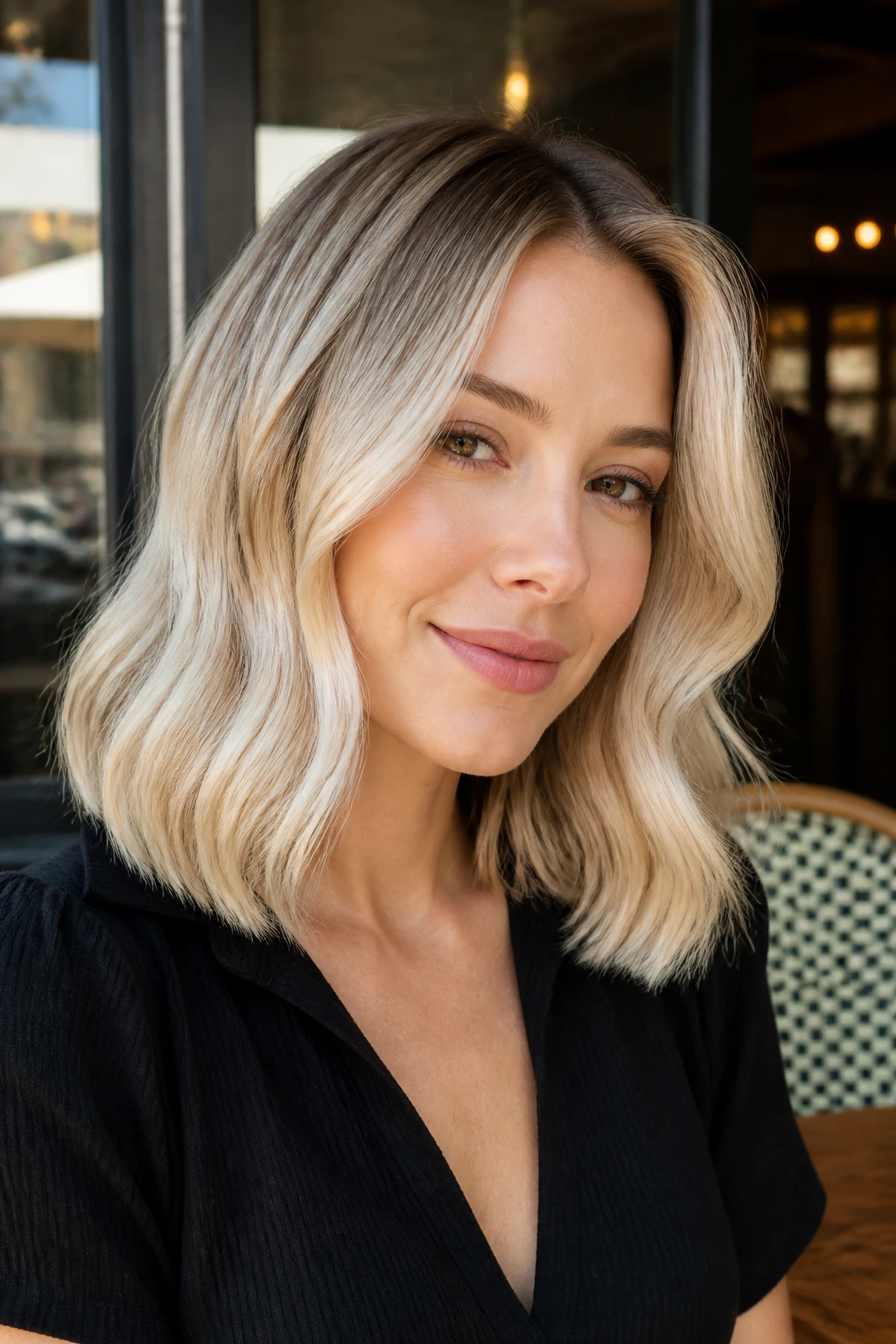
Cool cream blonde is calmer than platinum and less golden than honey. It lands in the middle, which is exactly why it works on a lot of people. The shade has enough softness to feel wearable, but enough brightness to stand out.
I like this on shoulder-length hair or longer, where the cool tone can spread through the shape instead of crowding the face. It’s especially good if your wardrobe leans white, black, gray, or muted blue. The hair doesn’t fight the clothes.
Keep the root a touch deeper. Without that contrast, cool cream can go flat and look like the hair lost its tone rather than gained one.
20. White Blonde Bob with a Deep Root Tap
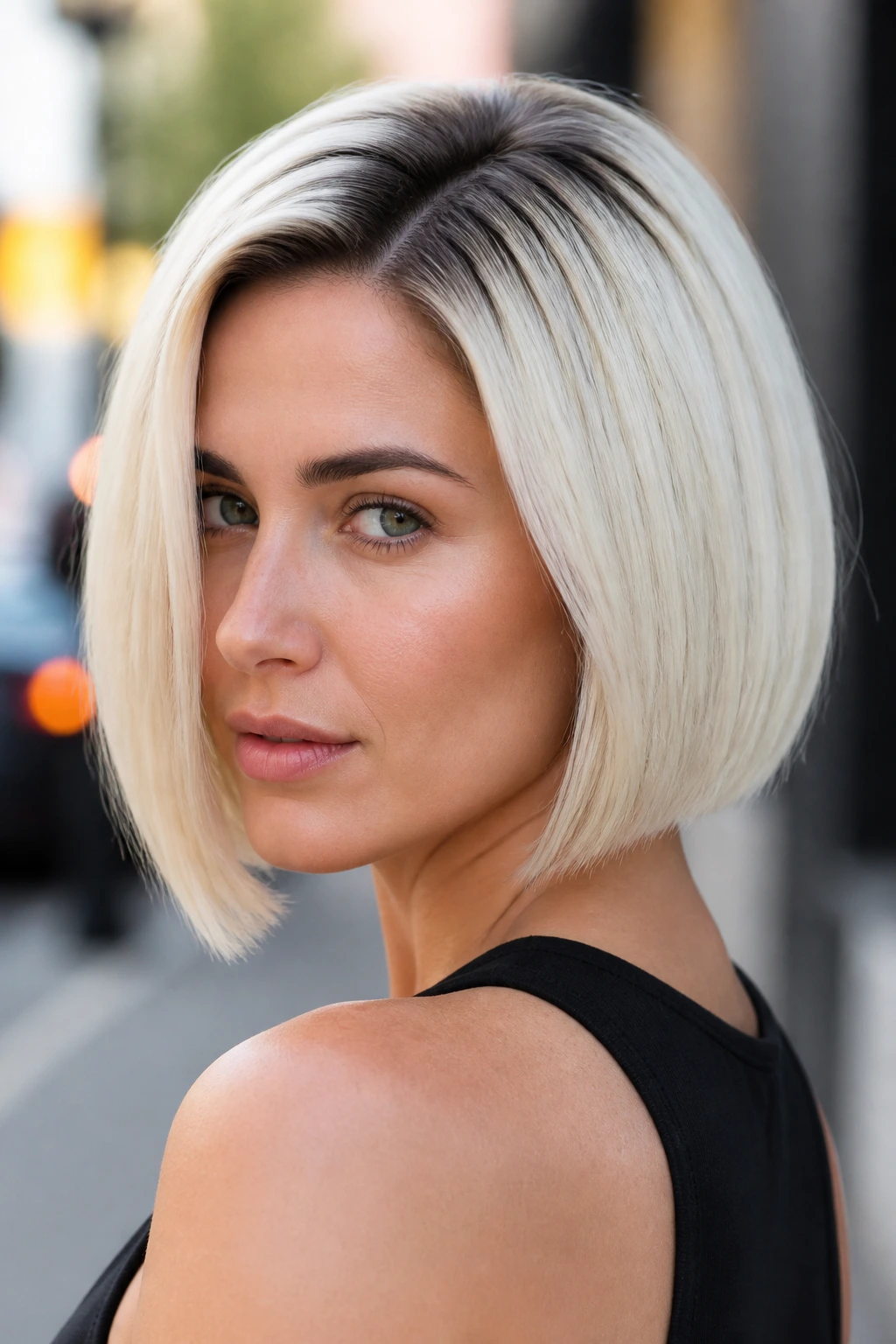
White blonde is not for the impatient. It is bright, sharp, and absolutely unforgiving if the maintenance slips. The root tap makes the whole thing wearable, though, because it gives the eye a place to land before the pale ends take over.
On a bob, the look is almost architectural. The deep root tap prevents the haircut from looking like a helmet of light, and that small shadow is what keeps the style from becoming harsh.
What to ask for
- A pale white-blonde finish through the mids and ends.
- A root tap one to two levels deeper.
- A gloss that keeps the tone clean, not icy-gray.
21. Caramel-Soft Blonde on Wavy Hair
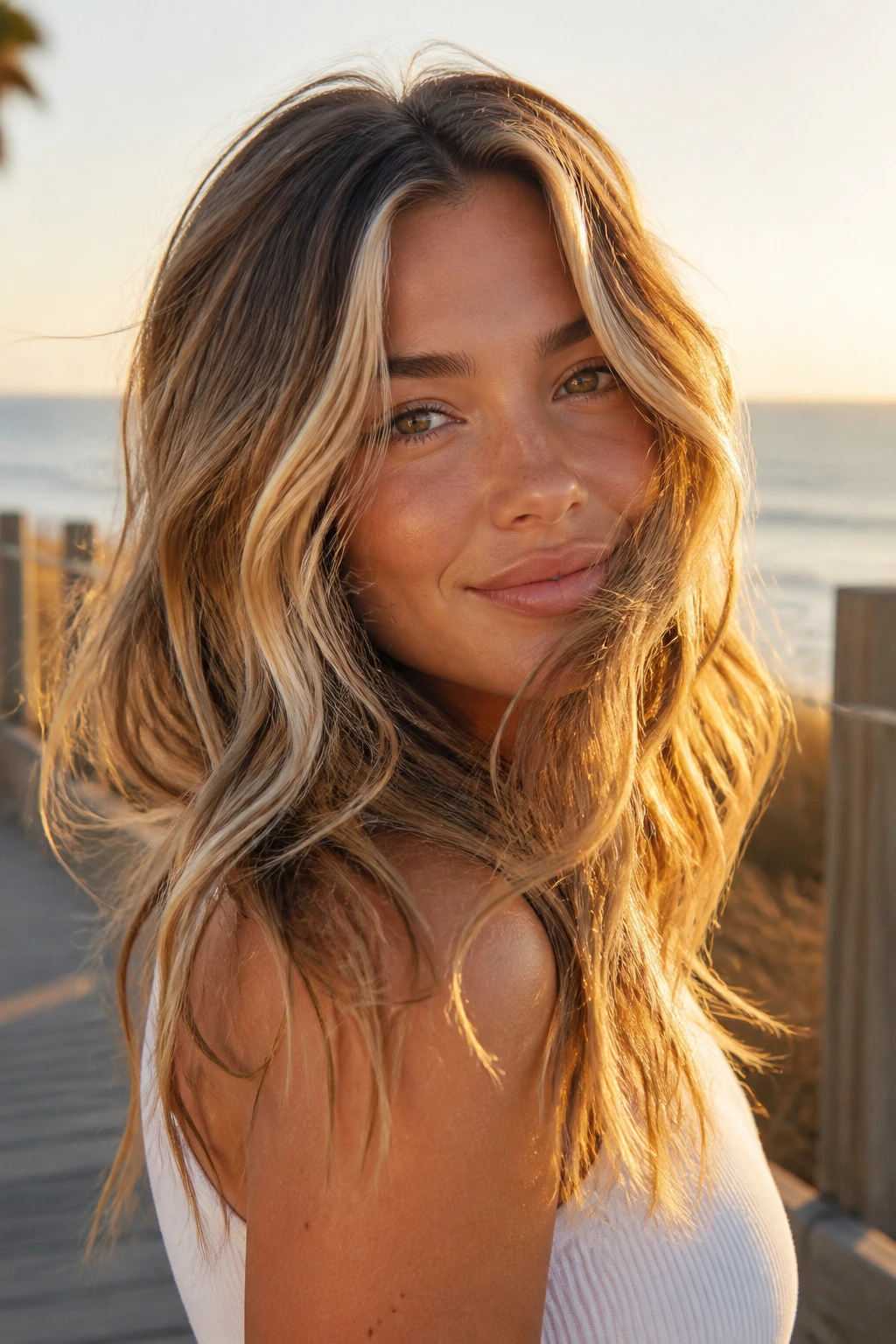
Caramel-soft blonde sits closer to bronde than true blonde, and that’s part of its charm. Wavy hair gives the caramel ribbons room to move, so the color looks sunk into the pattern rather than painted on top.
This is a good choice if your base is dark and you want brightness without a big lift. The warmer tone also hides the occasional dull wash day better than a pale ash blonde would. Honest, practical, useful. That’s my kind of summer color.
If you like a beachy finish, ask for broad hand-painted pieces through the mids and a few brighter bits around the face. It keeps the wave pattern visible without making every curl or bend compete for attention.
22. Dimensional Blonde on Tight Curls
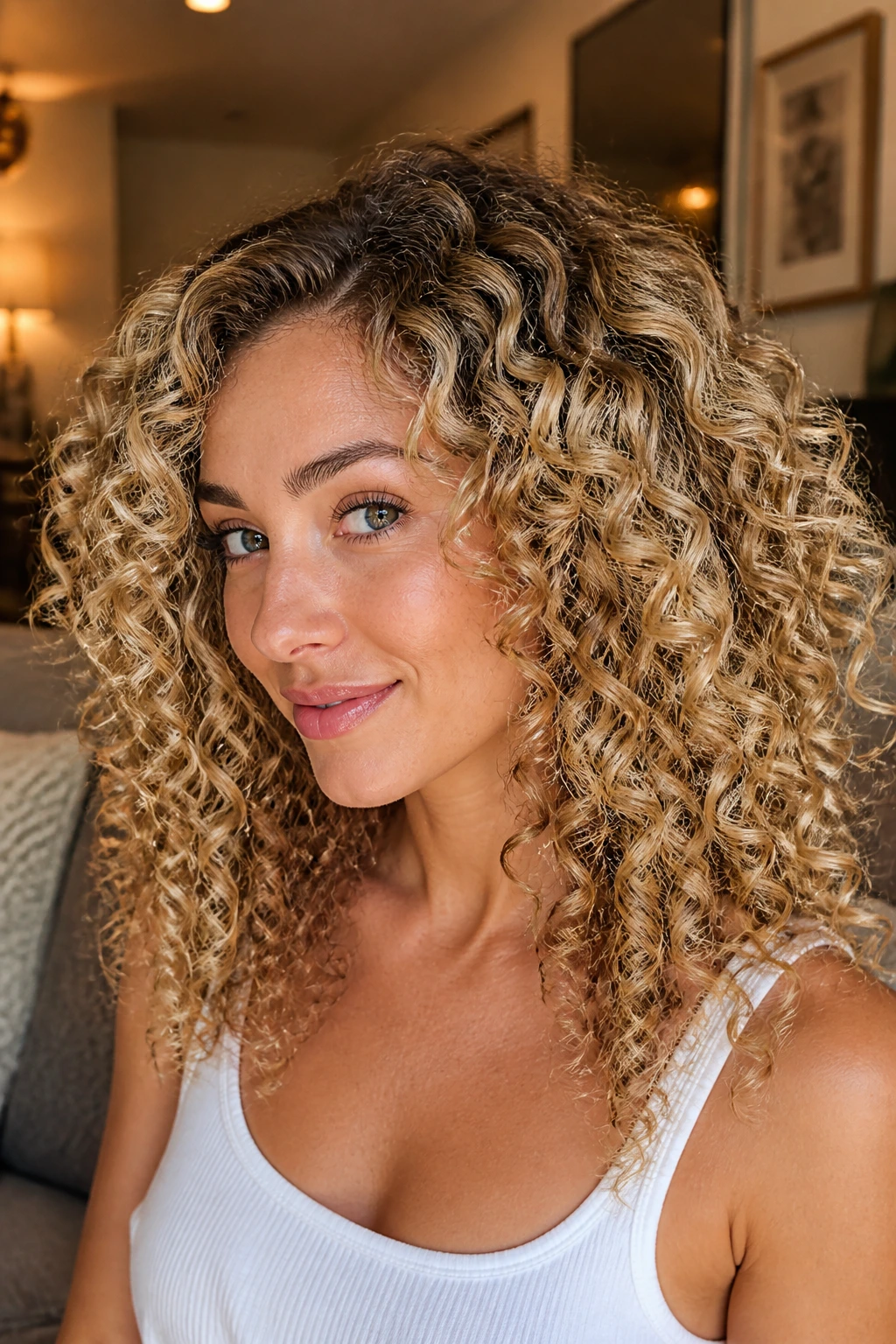
Tight curls need placement, not just lightness. If the blonde is painted evenly everywhere, the curl pattern can swallow the color or turn it busy. Dimensional blonde solves that by concentrating brightness on the outer curves and leaving some darker structure underneath.
This is one of the cases where foil placement and curl pattern have to talk to each other. The colorist should work with the way your hair sits, not against it. A few brighter coils around the face and crown can change the whole read of the style.
Use a curl cream that won’t coat the hair too heavily. Blonde on curls already has enough visual texture; you don’t need product to make it look thicker.
23. Frosted Fringe and Layered Ends
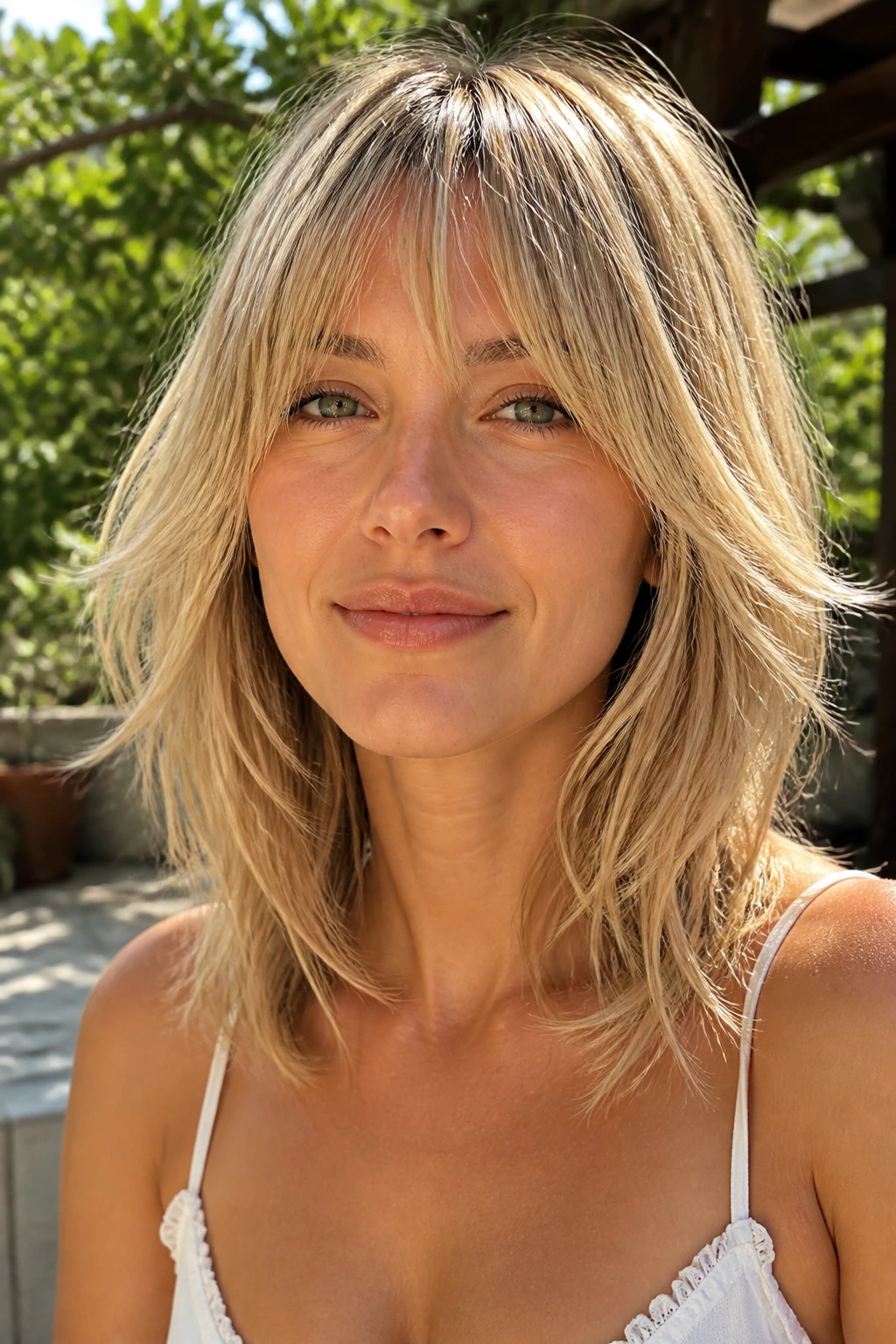
A frosted fringe changes the whole mood of a cut. The bangs catch the light first, so even a simple layer of blonde feels deliberate. With layered ends, the style keeps moving instead of settling into one heavy shape.
I like this look when the fringe is feathered and not too dense. Dense bangs plus pale blonde can feel heavy in the forehead area, which is the opposite of what you want when the weather is warm. Keep the fringe airy and the tone cool-neutral.
The ends should still show some depth. Too much light all the way through the length makes the cut lose its shape. Frosted top, softer bottom. That balance matters.
24. Creamy Long Layers with a Shadow Root
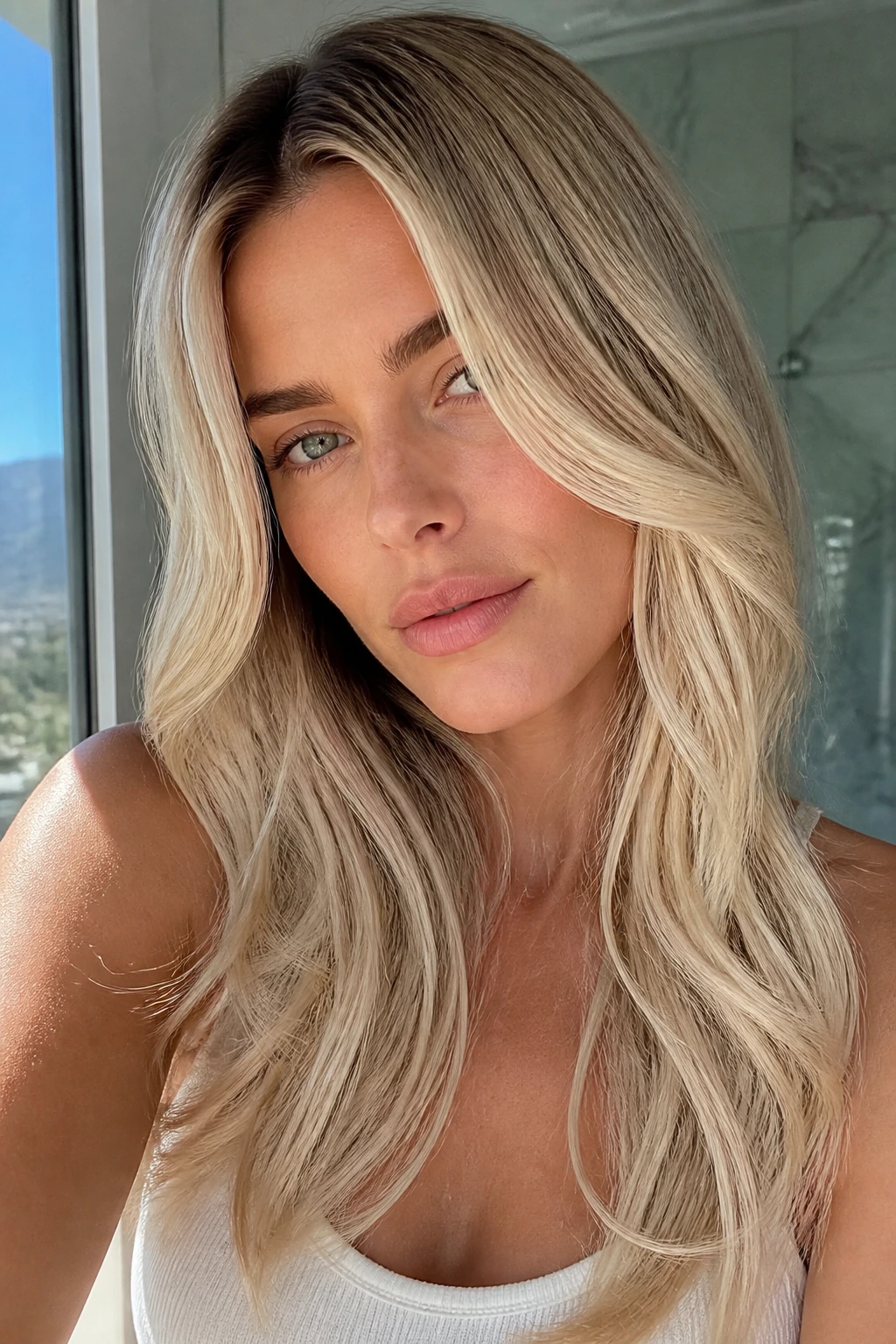
Long layers and a shadow root are a low-maintenance alliance. The depth at the root buys time, while the creamy blonde through the lengths keeps the hair bright enough to feel fresh. The cut does half the work for you.
This one is excellent if you don’t want to fight obvious regrowth every few weeks. The shadow root also makes long hair look thicker near the scalp, which is useful if the ends are lighter and finer. That little illusion helps.
Good if
- You like to wear your hair down.
- You want a blonde that grows out quietly.
- You’d rather gloss than bleach the whole head again.
25. Beach-Glass Blonde Shag
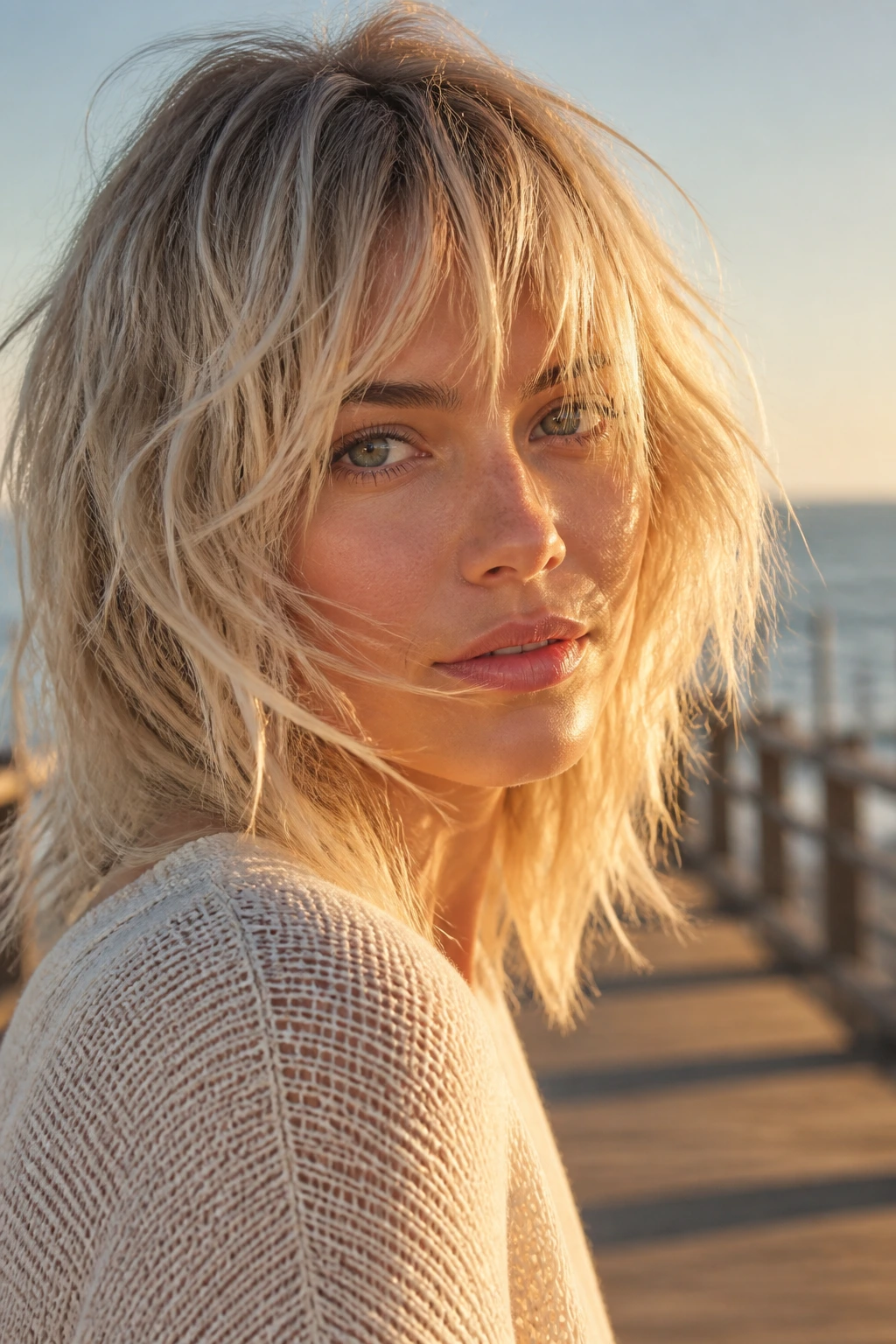
Beach-glass blonde has a translucent, slightly cool finish that works beautifully with the lived-in texture of a shag. The layers keep the hair broken up, and the color reflects in little flashes instead of one solid wash.
This is not a polished bob. It’s softer and more relaxed, with movement that looks better when the hair isn’t over-scrubbed or over-styled. A shag wants a bend spray, a little grit, and a root that stays just deep enough to show off the shape.
If you have thick hair, this cut-and-color combo can remove some visual weight without making the blonde disappear. That’s a nice trade.
26. Straw-Soft Beige Blonde on Fine Hair
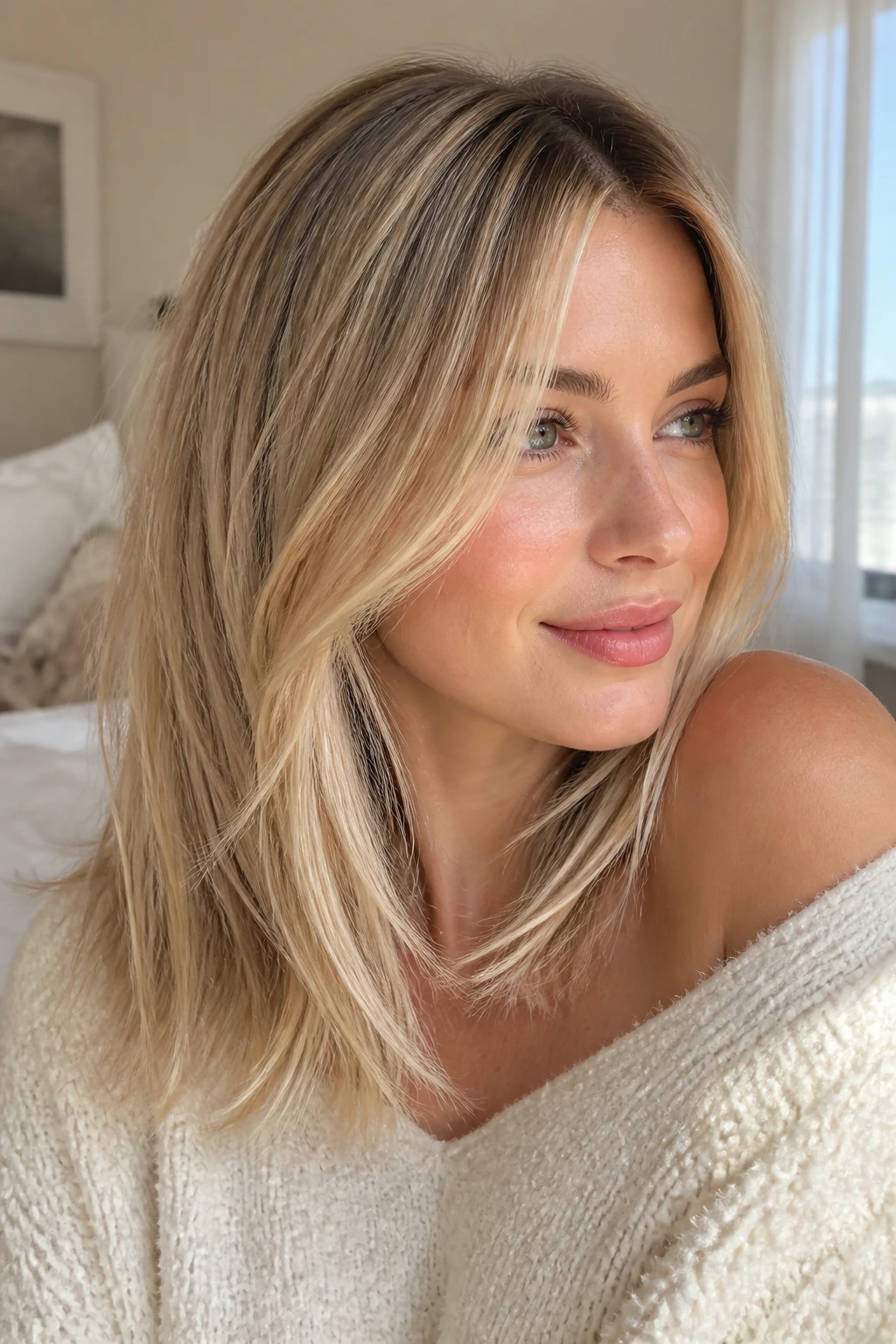
Fine hair needs a blonde that doesn’t look brittle. Straw-soft beige is light, but not so pale that it exposes every dry end. The tone stays soft enough to make the hair look fuller than a stark platinum would.
Babylights are your friend here. Too many broad highlights can make fine hair look see-through, and that’s where people start blaming the cut when the placement is the problem. Keep the pieces delicate and the toner beige.
A root shadow one shade deeper than the mids helps the hair feel denser at the top. Tiny move. Big payoff.
27. Vanilla Milk Blonde with Loose Waves
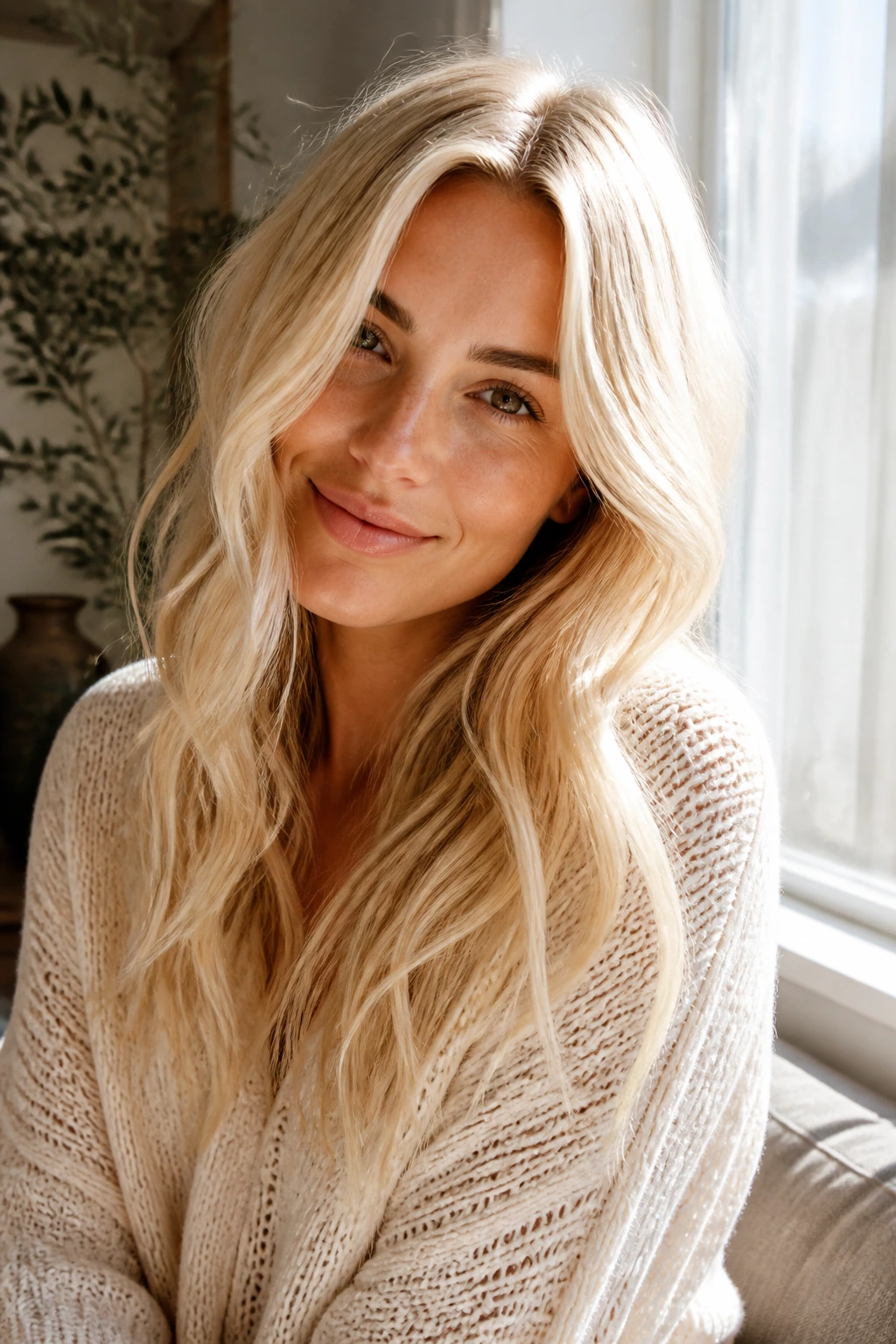
Vanilla milk blonde is creamy, soft, and not fussy about how it’s worn. Loose waves give it just enough texture to break up the tone, but the color itself stays smooth and luminous. It’s a gentle blonde, not a loud one.
This look works especially well when the hair has been lightened carefully rather than blasted. If the lift is even, the gloss can do the rest. I’d keep the tone neutral-warm so the ends don’t fade chalky.
There’s a reason this shade shows up so often on longer cuts. It makes the hair look touchable. Not flat. Not dry. Just soft.
28. Soft Platinum Waves
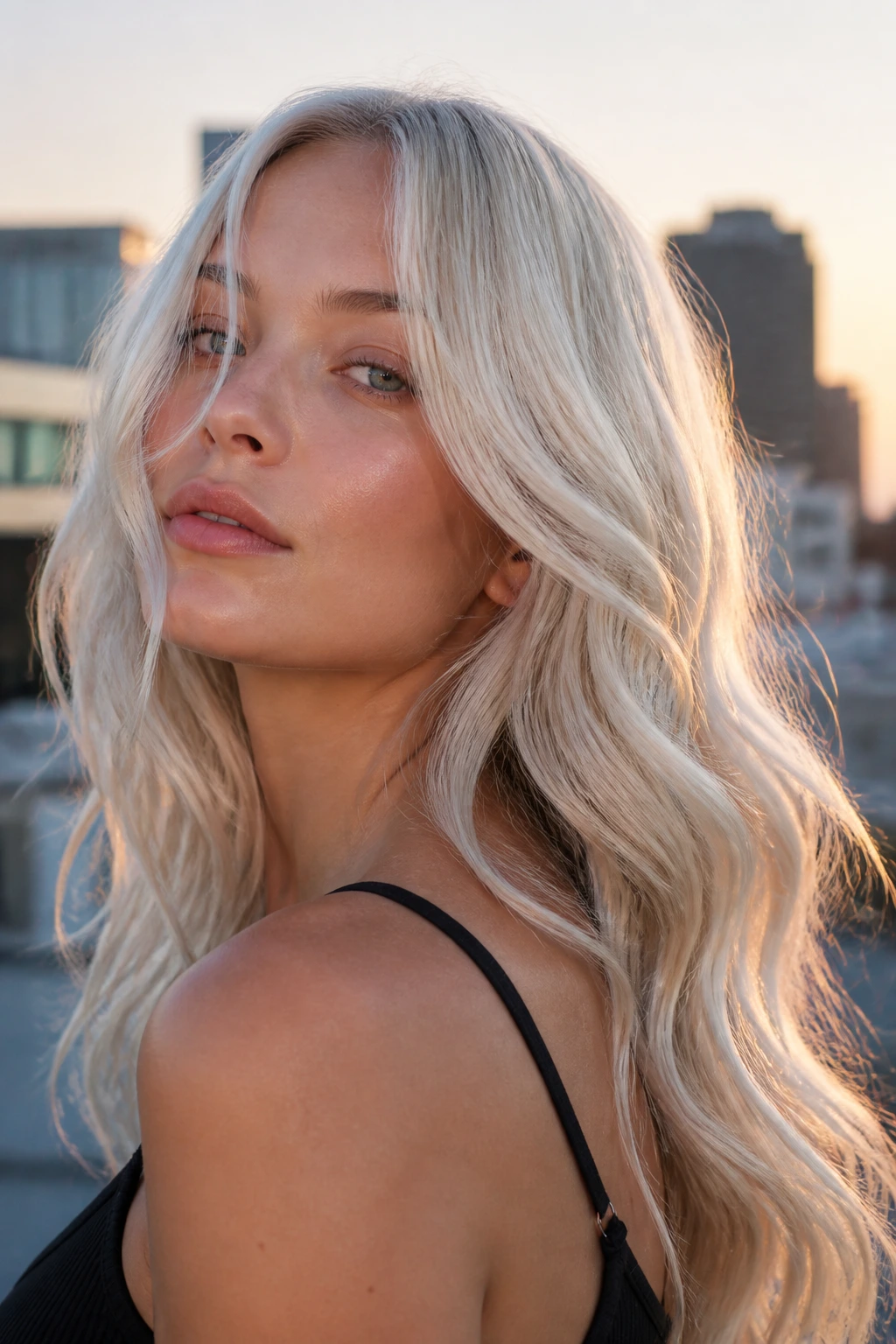
Soft platinum is a little friendlier than white blonde. The tone still runs pale, but the waves keep it from feeling severe. It’s a high-contrast look that needs a careful hand.
The secret is not over-toning it into a gray blanket. Soft platinum should still have a little brightness. If the gloss gets too ash-heavy, the waves lose their shine and the whole thing looks older than it should.
Use a 1-inch iron or a wide wand to create loose bends, not curls. The color wants movement, not tight spiral energy.
29. Champagne Root Melt on Midlength Hair
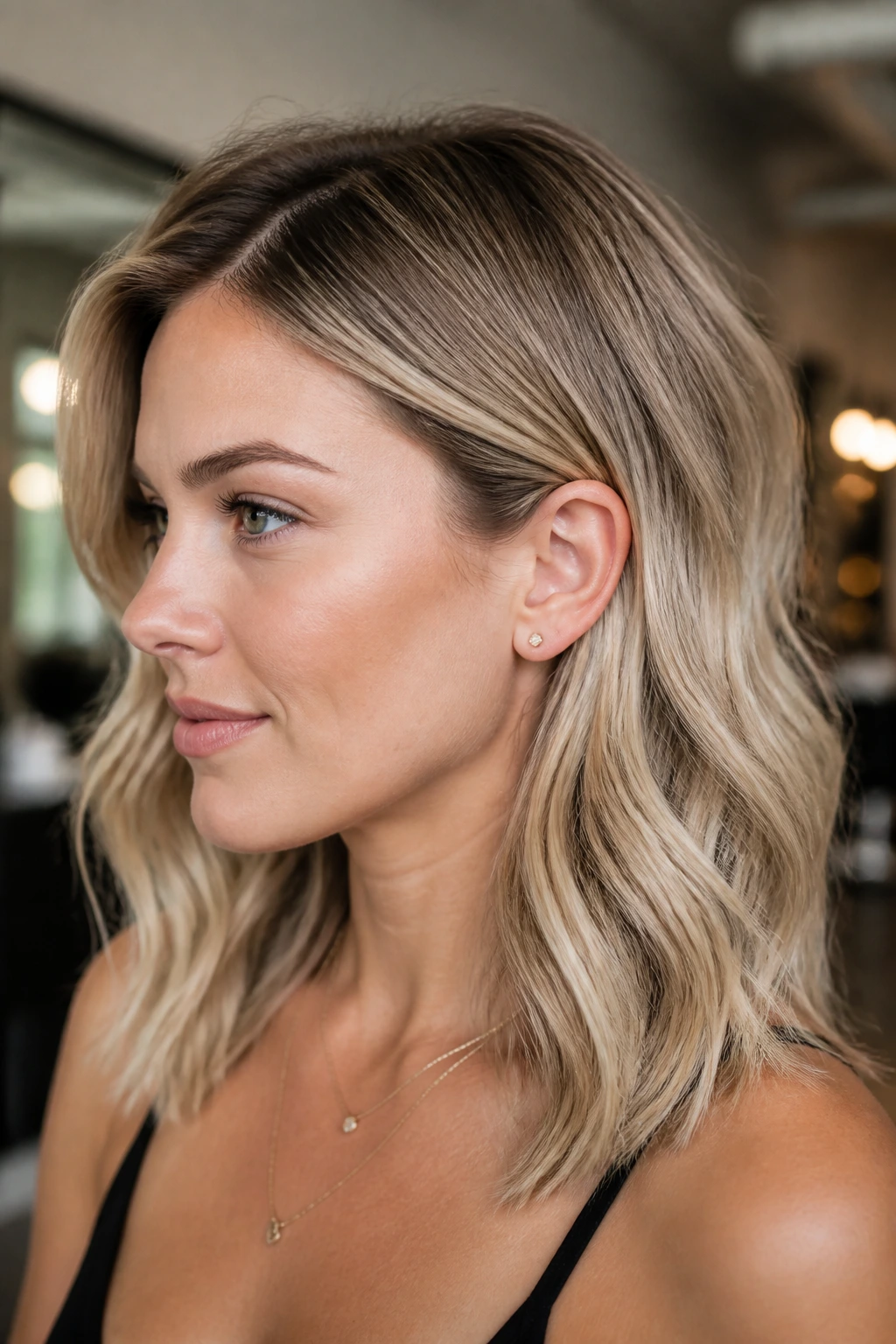
A champagne root melt gives you brightness where it counts and softness where it saves your sanity. The root stays slightly deeper, then the tone lifts into a sparkling champagne through the midlengths. It’s polished, not precious.
Midlength hair is a sweet spot for this look because the transition is visible without feeling long or heavy. A good root melt should be blurred enough that you can grow it out without glaring stripes, but not so soft that the blonde looks muddy.
If you wear your hair tucked behind the ears, this style is especially good. The root depth keeps the color from disappearing, and the brighter mids do the talking.
30. Golden Blonde Pixie with Texture
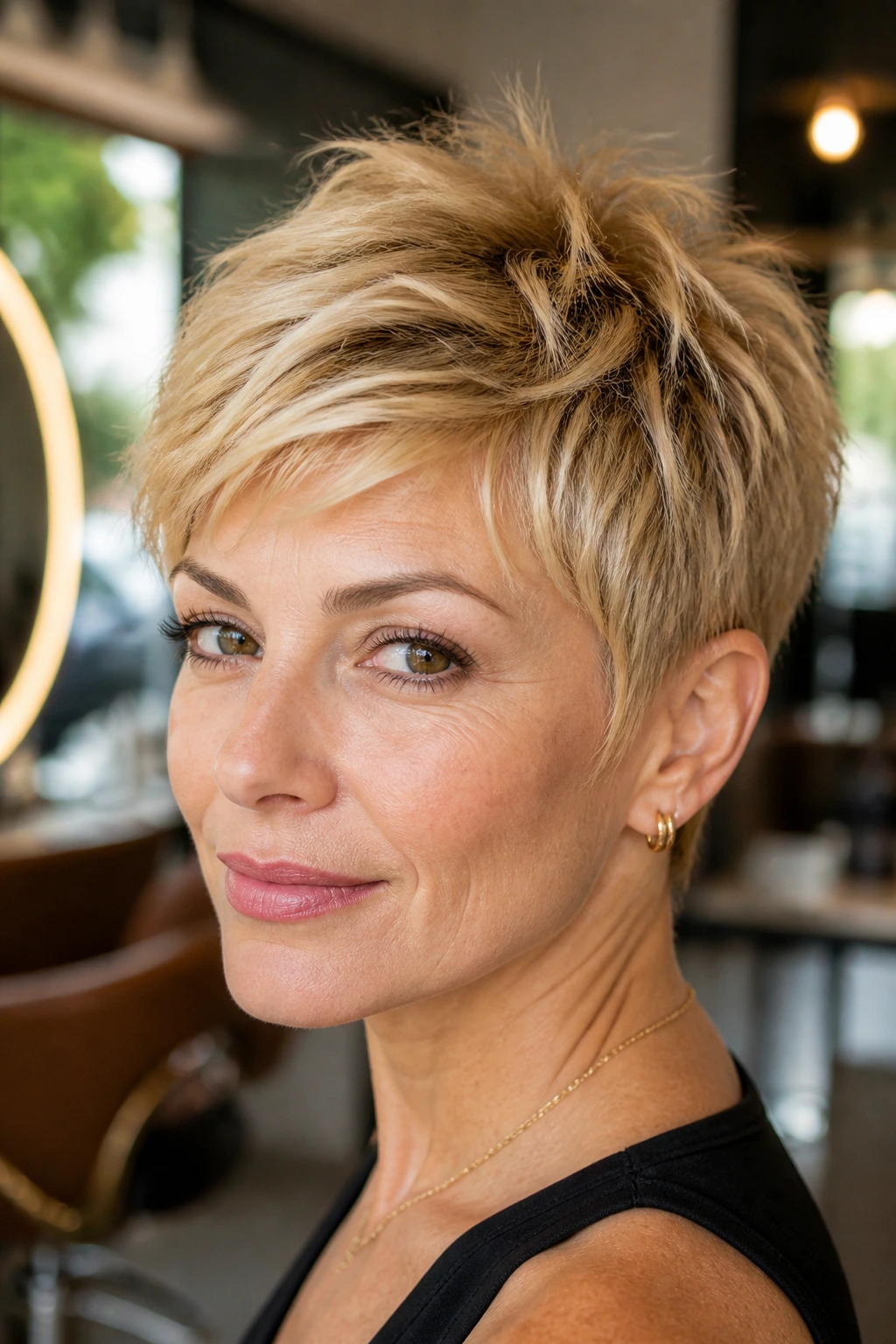
A textured pixie in golden blonde has more life than people expect. The short shape shows off every cut line, and the golden tone gives it warmth so the style doesn’t look clipped to the head. It’s neat, but not severe.
Keep the top piecey. Too much product and the blonde loses its airy look; too little and the shape can look unfinished. I like a tiny bit of paste worked through the crown and front, then left alone.
This is the kind of blonde that looks best when it’s not trying too hard. A good cut, a clean tone, and a little texture. Enough.
31. Ashy Mushroom Lob
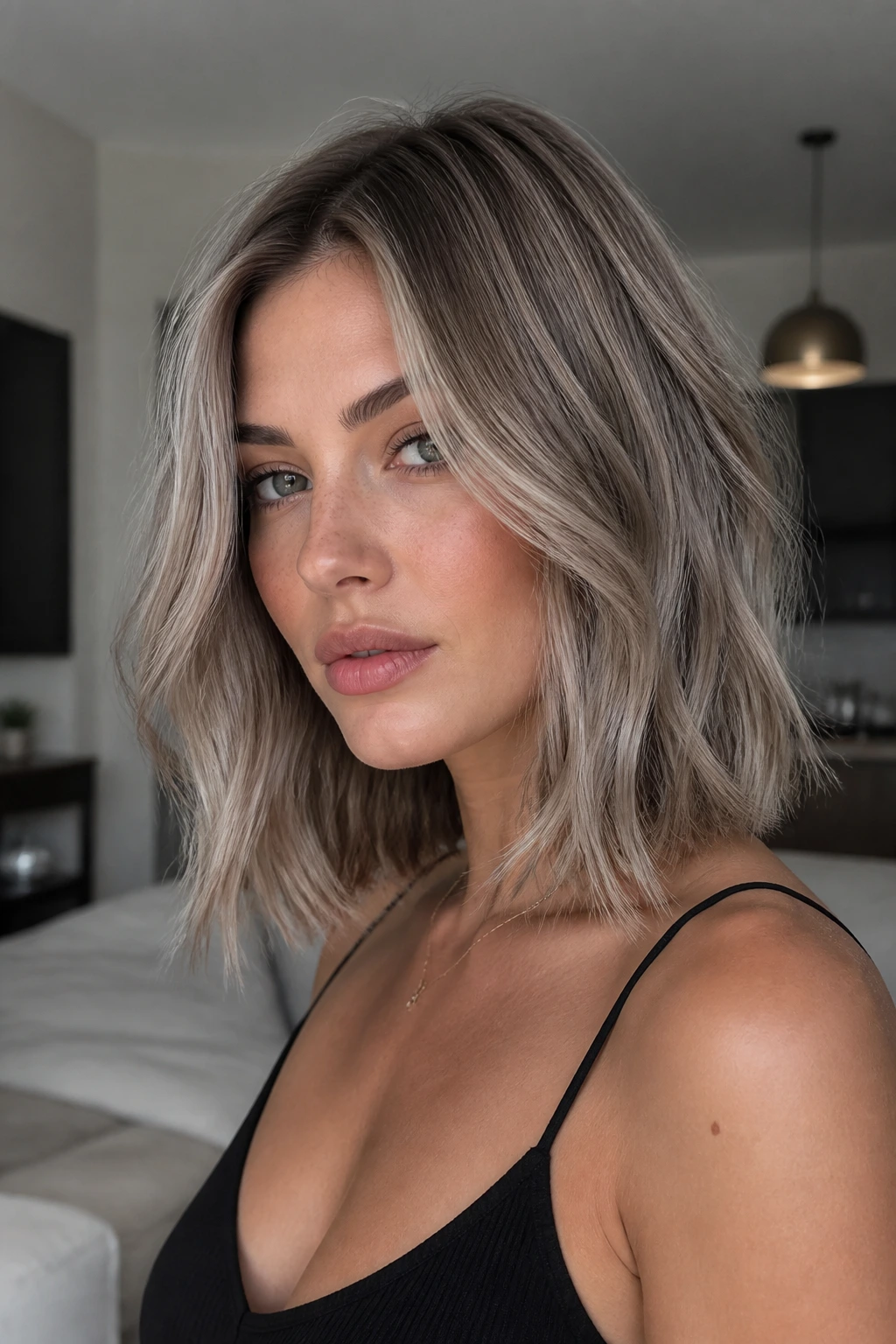
Ashy mushroom blonde is for people who don’t want their hair to shout. The lob gives structure, and the mushroom tone keeps the palette cool, earthy, and calm. It’s one of the easiest ways to wear blonde without going warm.
The catch is tone maintenance. Ashy shades can fade muddy if the shampoo is too harsh or the toner is left too long. Use a cool gloss, not a heavy pigment bomb, and keep the dimension visible underneath.
This is a smart look if your skin runs cool or neutral and you hate yellow. It reads polished even when the styling is loose.
32. Baby Blonde Highlights on a Brunette Base
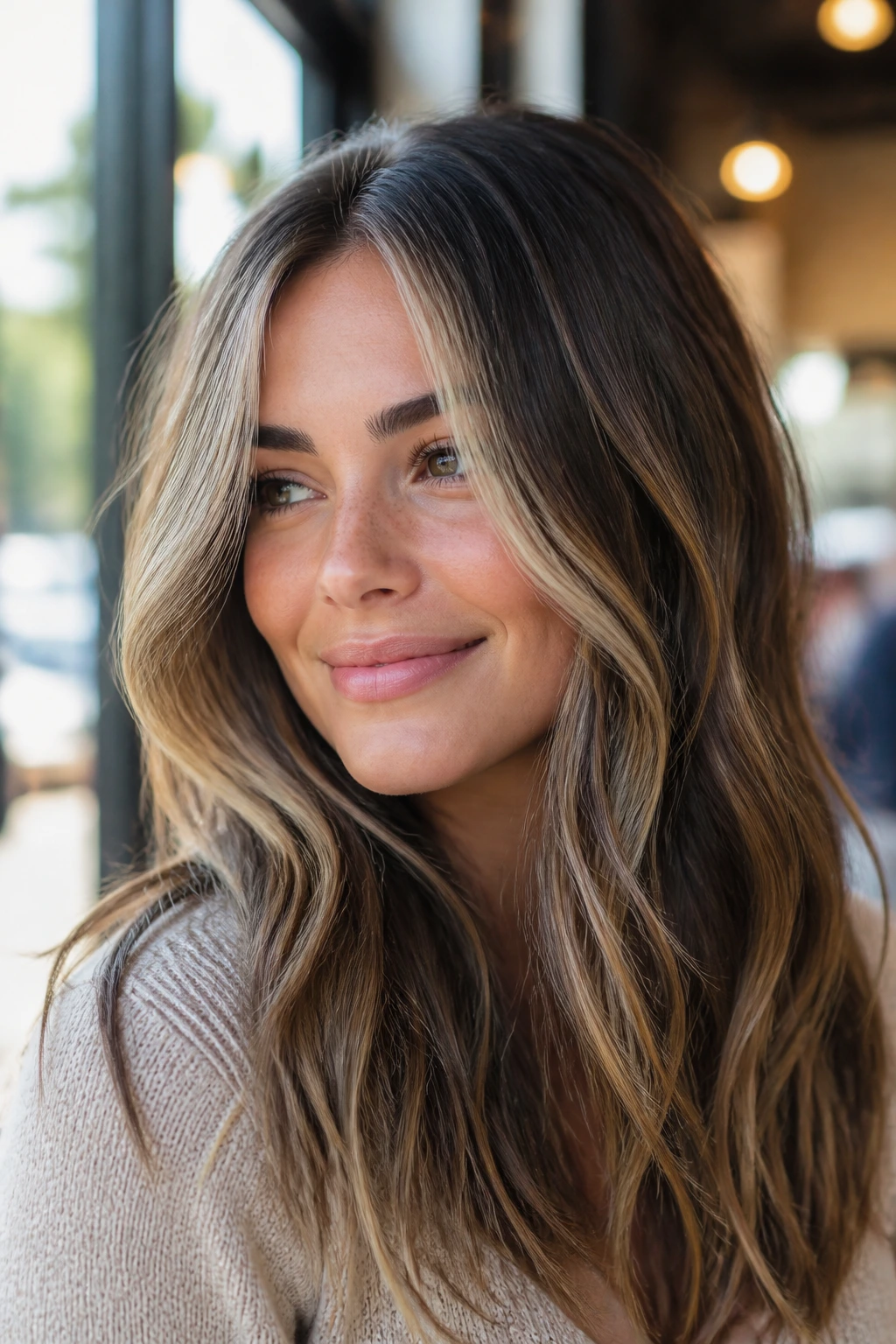
Baby blonde highlights are tiny, fine, and sneaky in the best way. On a brunette base, they give the feeling of brightness without erasing the dark hair underneath. That contrast is what makes the color feel believable.
I prefer this approach when someone wants a softer summer change rather than a full blonde transformation. The highlights should be so fine that the color looks woven into the hair, not pasted on top. Think glow, not striping.
Why it works
- Less damage than an all-over lift.
- Easier grow-out.
- More natural dimension on straight or wavy hair.
33. Buttery Tapered Layers
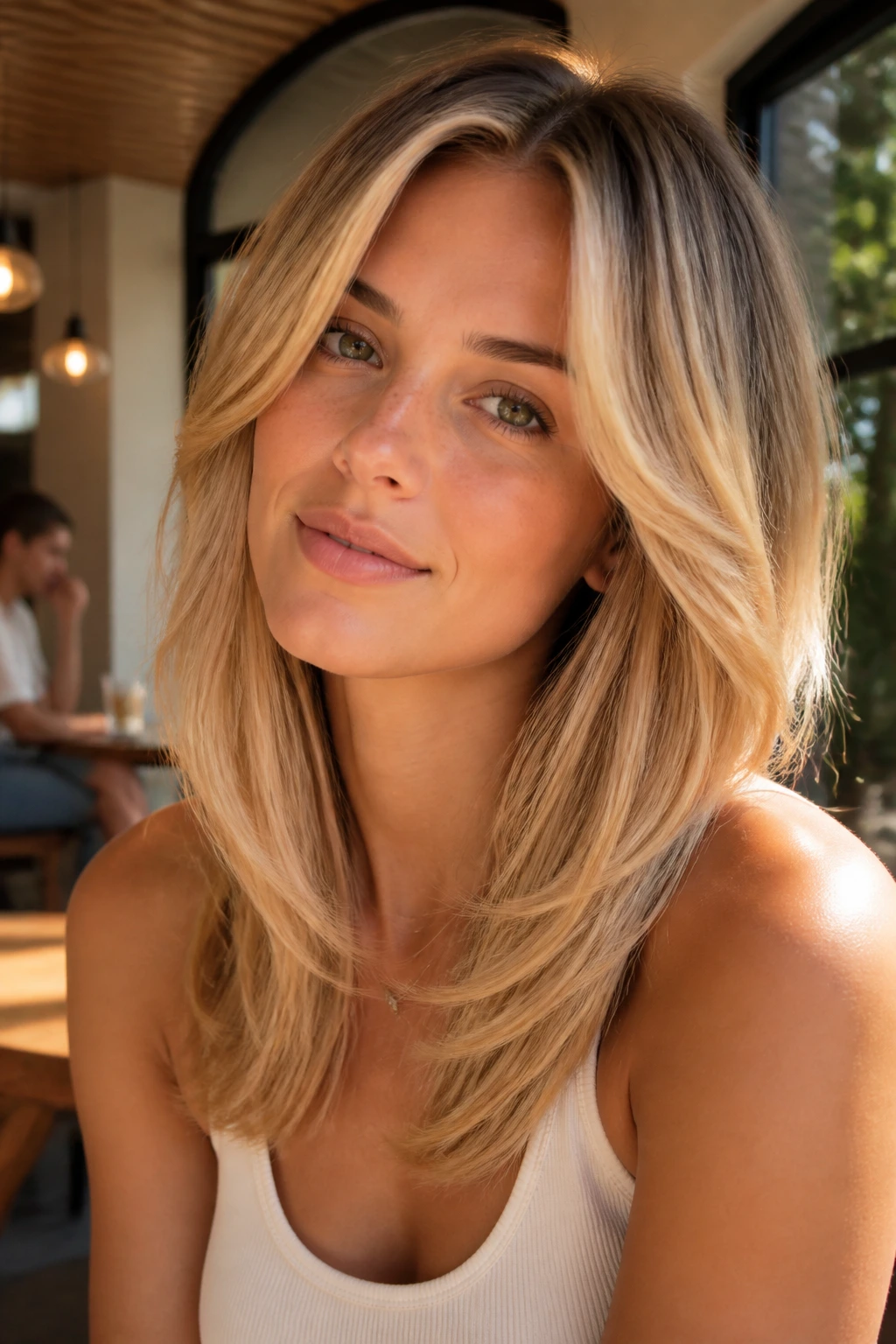
Buttery blonde is one of those shades that can look sweet or heavy depending on the cut. Tapered layers fix that by keeping the ends lighter and the shape moving. The color reads soft and warm without turning orange.
This is a good choice if your hair needs body. The tapered shape builds a little lift at the crown and keeps the ends from looking thick and blunt. The butter tone then sits on top like a warm glaze.
Use a smoothing cream sparingly. Too much and the layers collapse. A little movement is what makes the blonde feel fresh.
34. Pearl-Toned Face Frame
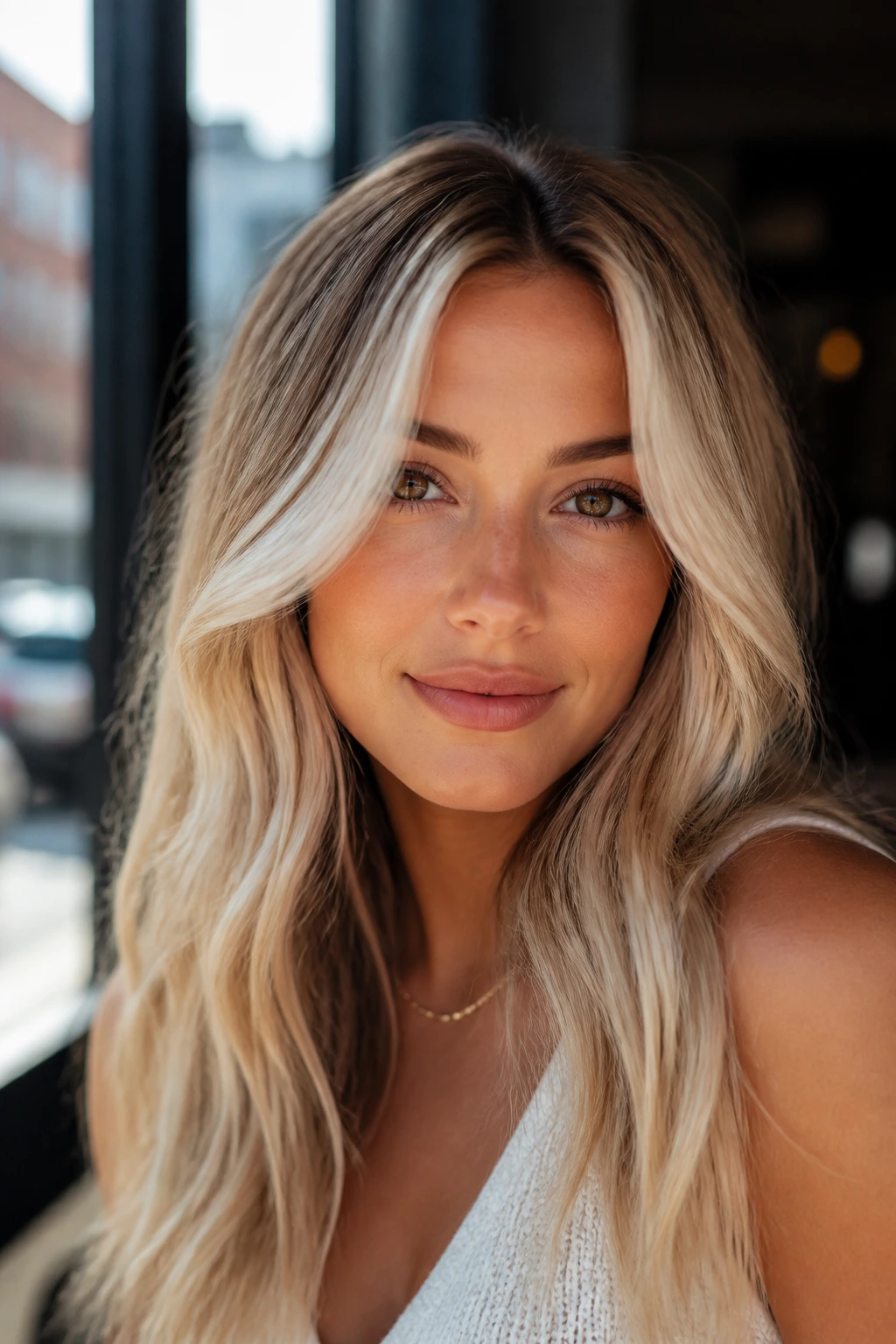
A pearl-toned face frame is the easiest way to brighten the face without changing the whole head. The front pieces lift the eyes and cheekbones, and the pearl tone keeps the color clean and reflective. It’s bright, but selective.
This works on almost any length. The trick is placement: the brightest pieces should sit where the hair naturally falls forward, not just in a neat little stripe at the front. That way the blonde looks integrated when you wear the hair back.
If you want a small change with a big visual payoff, start here. It’s a smart salon request and an easy refresh between bigger coloring services.
35. Honey-Butter Collarbone Cut
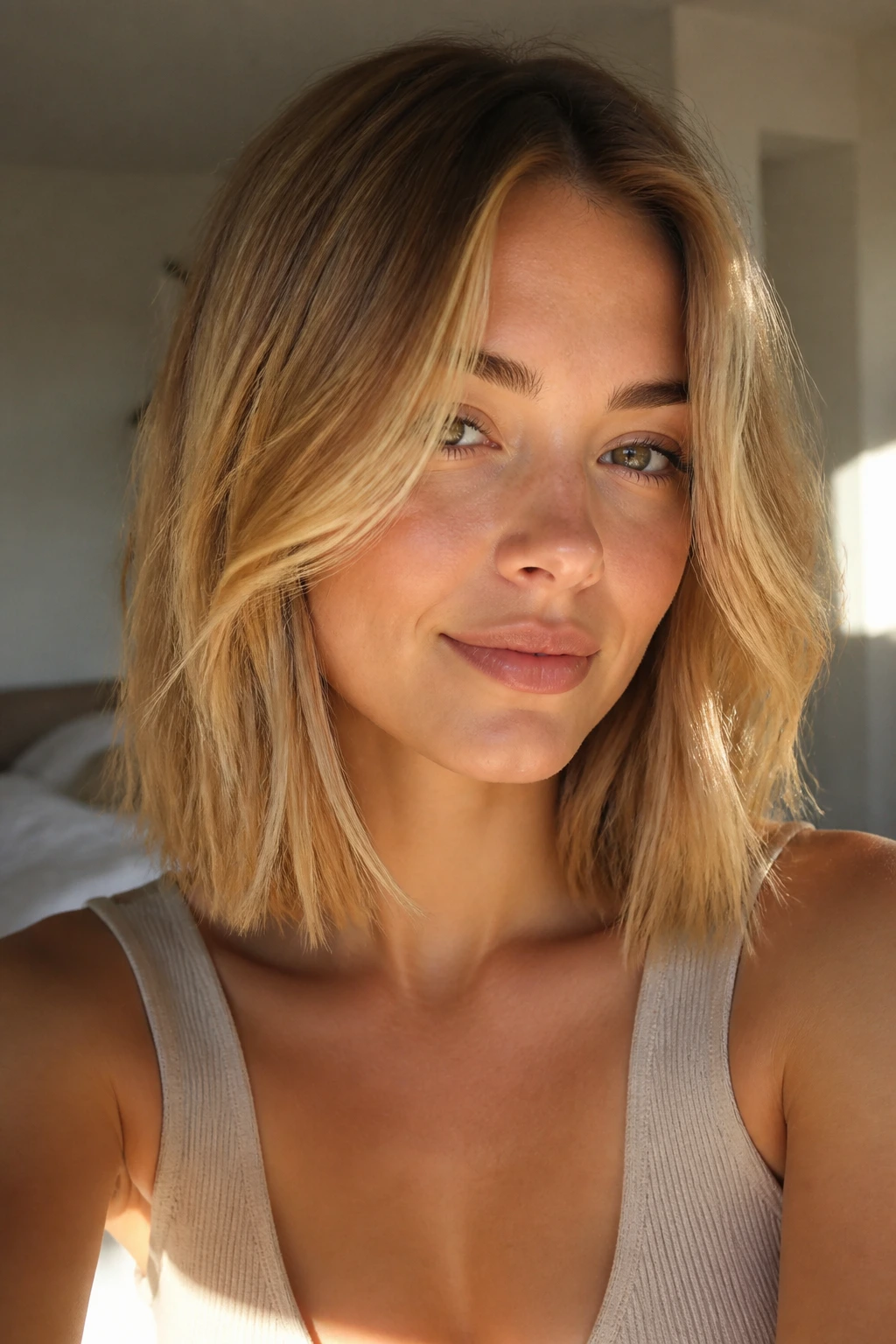
A collarbone cut gives honey-blonde tones room to show off. The length is long enough to feel feminine and short enough to stay light around the shoulders, which matters when the heat hangs in the air. Honey-butter is warm, creamy, and not too golden.
I like this look on hair that has a slight bend or a soft blowout. The blonde reflects better when the ends aren’t too blunt. A few brighter pieces near the face stop the cut from looking all one note.
If your wardrobe is full of warm neutrals, this shade plays well with them. It’s friendly hair. No attitude, unless you style it that way.
36. Ultra-Fine Babylights That Barely Show a Line
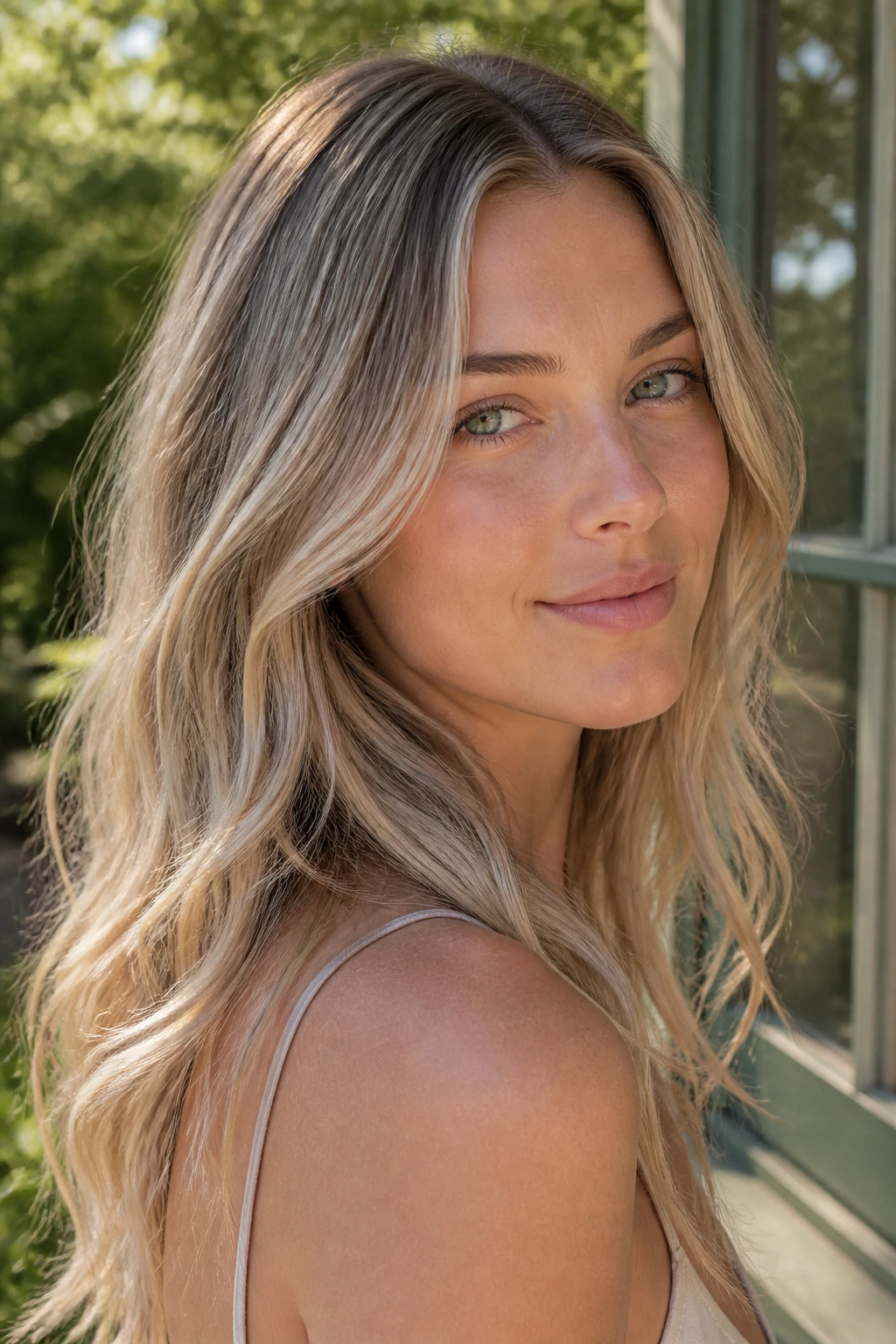
Ultra-fine babylights are the most discreet way to go blonder. They don’t shout. They whisper. And that’s exactly why they work so well on people who want brightness without obvious highlights marching across the head.
The payoff is subtle, but the hair looks richer because the light is scattered instead of blocked out. That scattering also helps with grow-out, since the regrowth line gets broken up by all the fine threads of color. It’s a smart move if you hate maintenance.
Ask for tiny sections and patience. If the stylist grabs too much hair at once, the result stops being babylights and starts being stripes. Different thing entirely.
37. Bright Blonde Braids
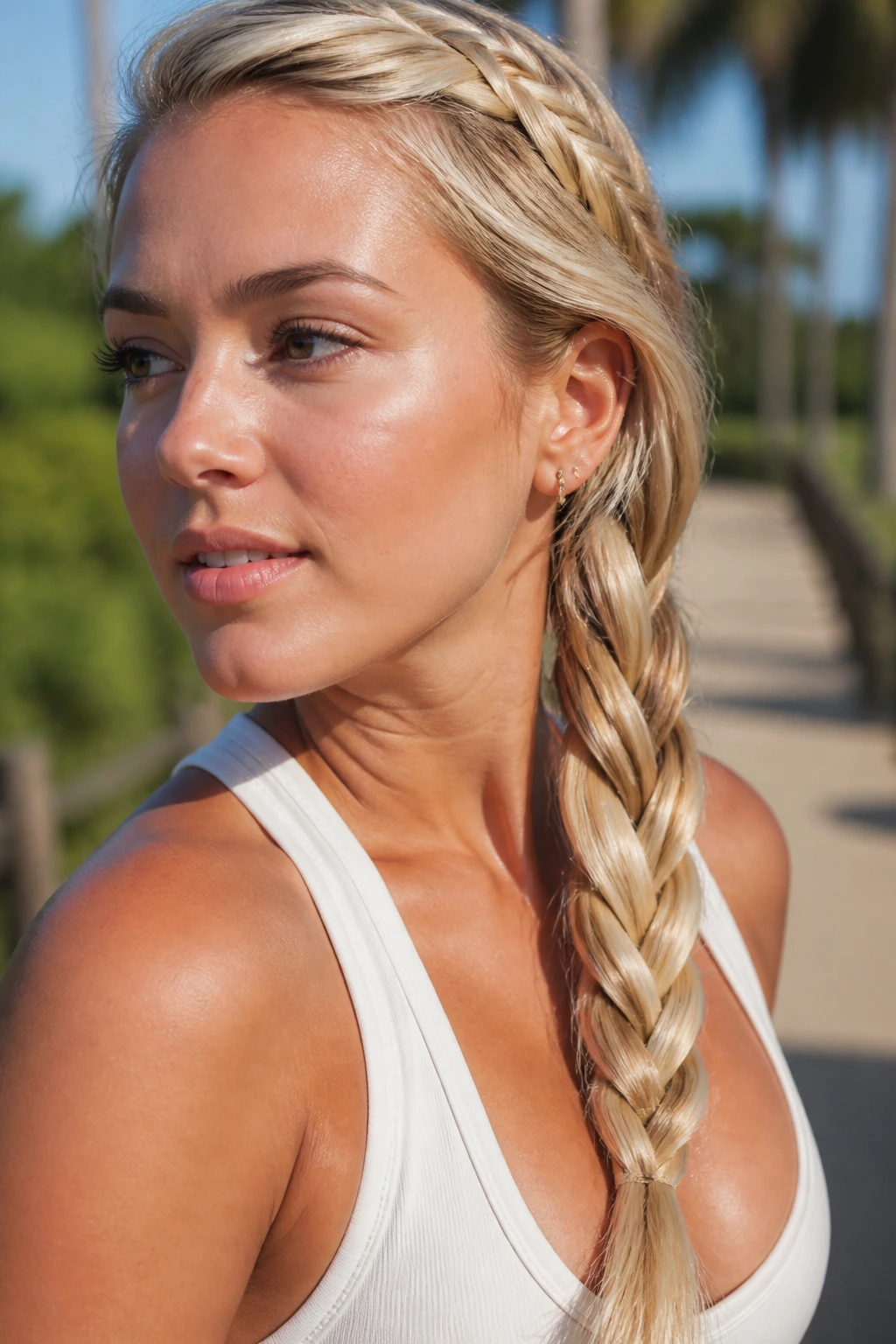
Bright blonde braids are part color, part styling decision, and the braid is what makes the shade sing. A braid shows the weave of the highlights, especially if the blonde is multi-tonal and not one flat shade. The look feels easy and a little sporty.
This is a clever option when you want the color to stand out but you also need your hair off your neck. The braid protects the ends, which is no small thing when the sun is beating down. It also makes lighter pieces appear more varied because the sections fold over each other.
Best for
- Long or medium-long hair.
- Highlighted or balayaged blonde.
- Days when you want one style that handles heat and still looks deliberate.
38. Surfer Blonde Long Cut with Swept Layers
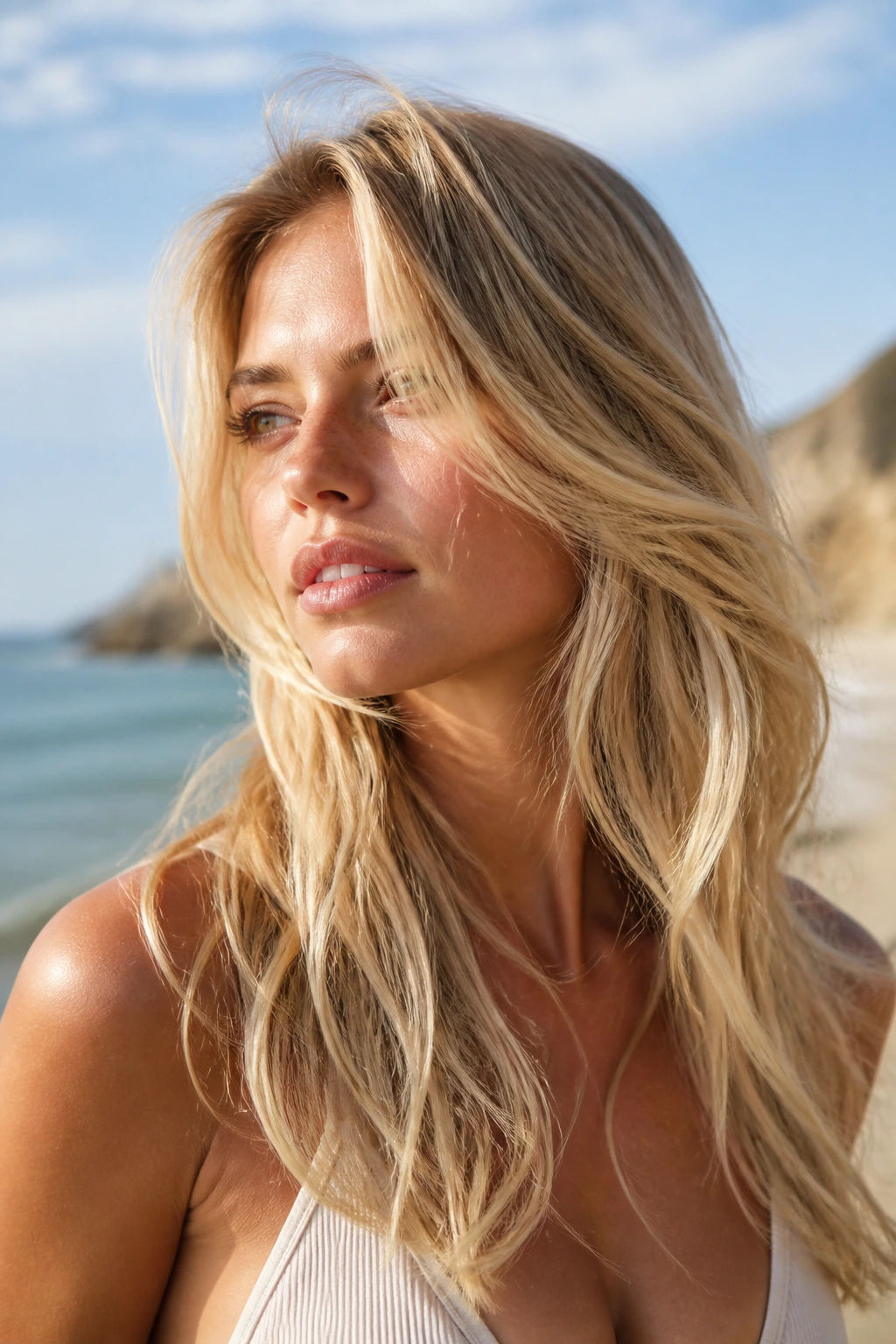
Surfer blonde works because it looks like it happened over time, not in a single chair appointment. The long cut and swept layers give the color a loose frame, and the blonde itself should feel sun-kissed rather than bleached to a stop.
This is one of the most forgiving blondes on the list. The swept layers keep movement at the front and around the ends, while the tone can live anywhere from sandy to soft gold depending on your base. It’s the blonde that benefits from a little rough-drying.
If you want hair that looks better after a day of air and movement, this is the one to study. It doesn’t need perfection. It needs direction.
How to Choose the Shade That Matches Your Base and Undertone
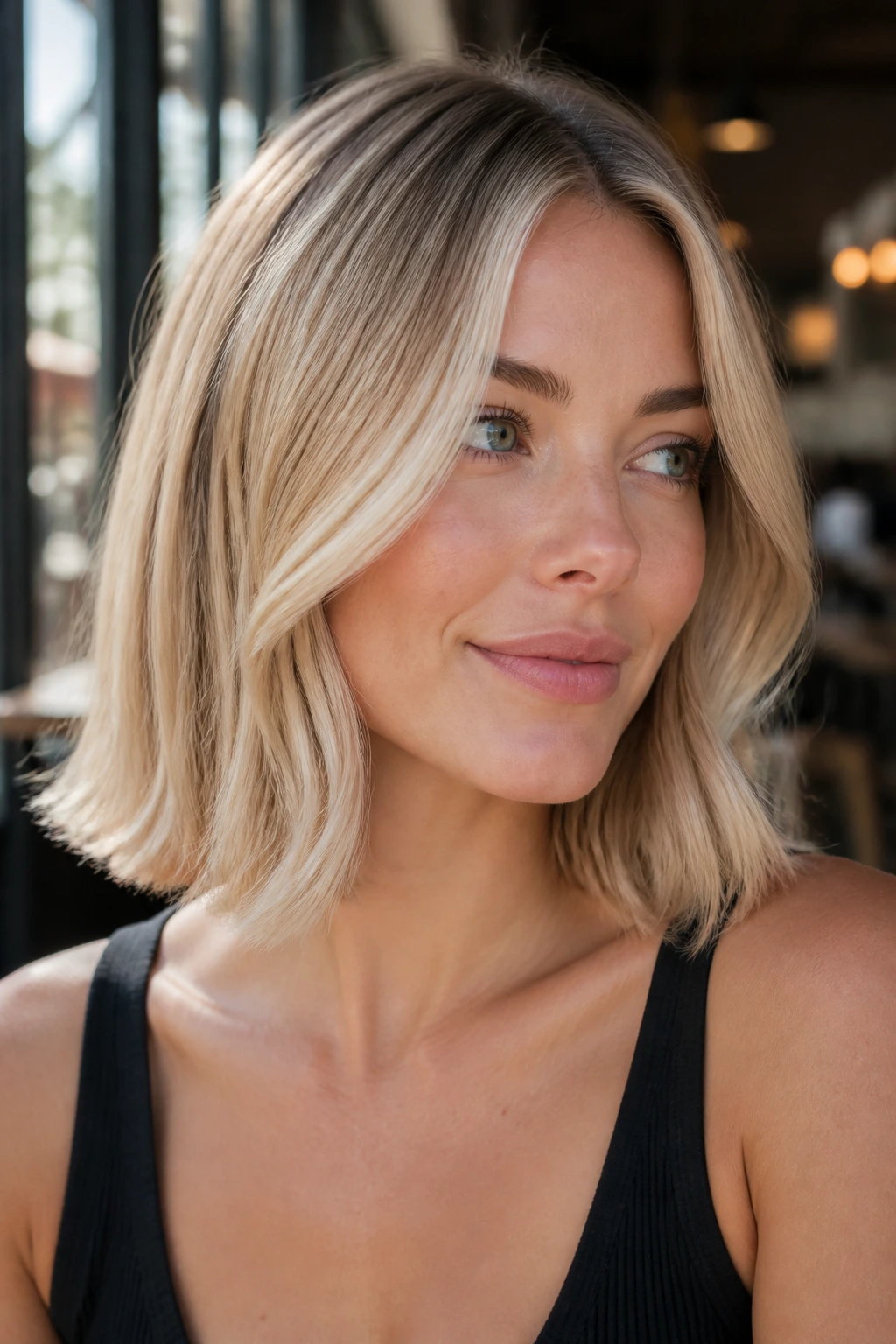
Picking blonde by photo alone is how people end up disappointed in daylight. The better move is to match the tone to your base color, skin undertone, and maintenance tolerance. A beige or champagne blonde can read soft and flattering on a lot of people, while a pure icy platinum usually looks best when the skin has enough contrast to carry it.
If your skin runs warm
Honey, butter, champagne, and toasted almond usually sit in the sweet spot. These shades keep peachy or golden skin from looking washed out, and they blend better with brunette roots if you’re not going all the way light. Cool ash can work, but it needs a careful gloss so it doesn’t turn grayish.
If your skin runs cool
Pearl, vanilla, cool cream, and soft platinum are your friends. They echo the cooler side of the complexion instead of fighting it. If the blonde gets too yellow, the whole look can feel off even if the lift is technically good.
If your hair history is dark or color-treated
Start with bronde, baby lights, foilayage, or a root melt. A sudden jump to pale blonde on already colored hair is where breakage lives. Safer placement, more sessions, and a realistic toner plan will get you farther.
If your hair is fine, curly, or very dense
Fine hair usually looks better with tiny ribbons and a little depth left underneath. Curly and dense hair can take bolder placement, but the color has to follow the shape of the cut. That part matters more than people think.
The Tools, Toners, and Products That Make Blonde Behave
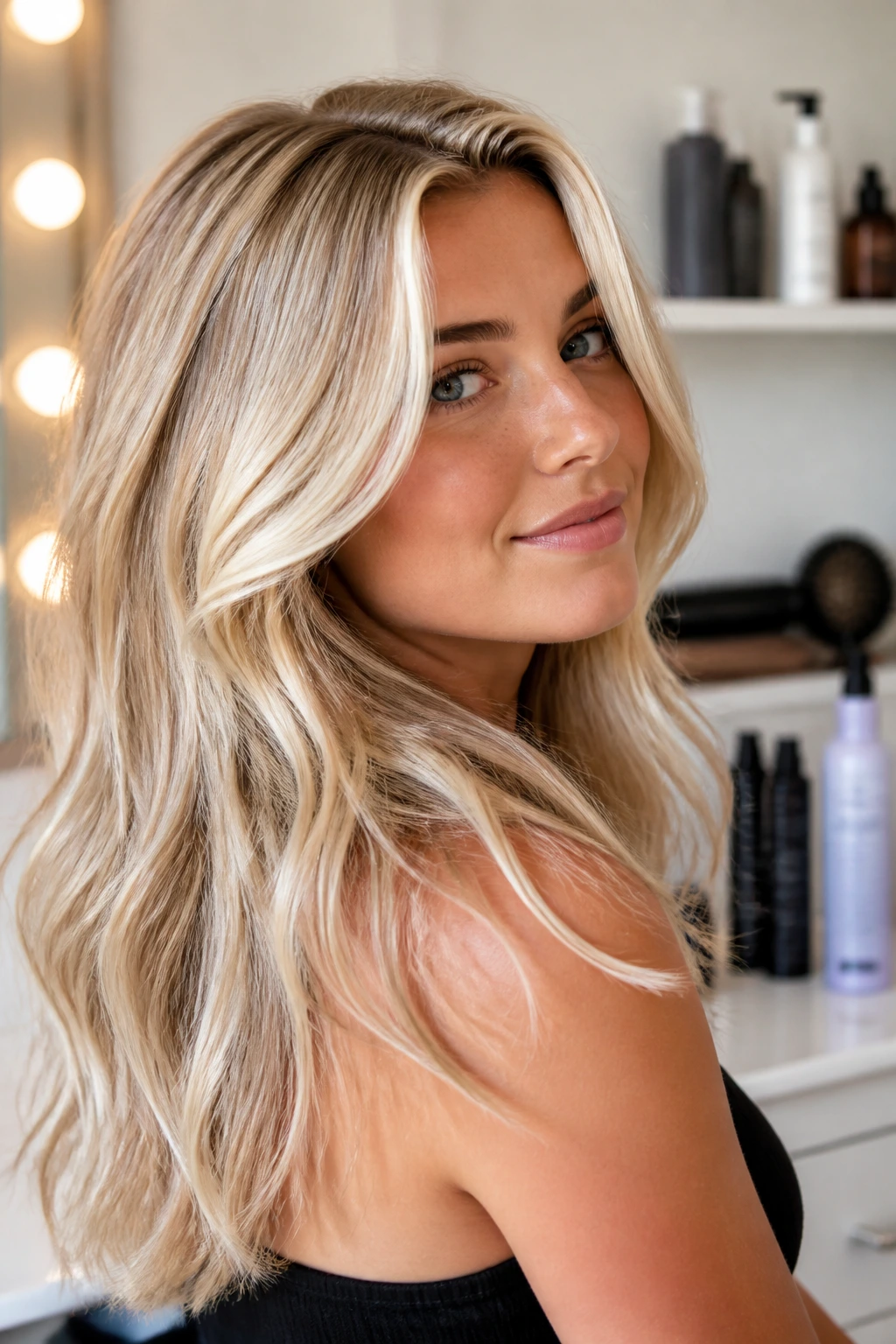
The right blonde lasts longer when the tools are boring and the routine is consistent. Fancy names don’t matter much here. Good combs, a decent gloss, and the right shampoo do more than an expensive serum with glitter in it.
- Purple shampoo: Use it when yellow starts taking over, usually once a week or every other wash for paler blondes. Too much will dull the shine.
- Blue shampoo: Better for darker blondes or bronde where orange shows first.
- Bond-building treatment: Helps hair that’s been lightened more than once feel less brittle after washing.
- Color-safe shampoo and conditioner: Keep the toner from slipping out too fast.
- Heat protectant: Use before blow-drying or ironing; look for one that covers medium heat up to 450°F.
- Microfiber towel or soft T-shirt: Cuts down on roughing up the cuticle after washing.
- Wide-tooth comb: Easier on lightened ends than a brush when hair is wet.
- Sectioning clips: Useful if you’re doing a blowout, curls, or home toning with care.
- UV or leave-in spray: Worth it if your hair sees sun, pool water, or a lot of outdoor time.
How to Style Blonde So It Still Looks Intentional on Humid Days
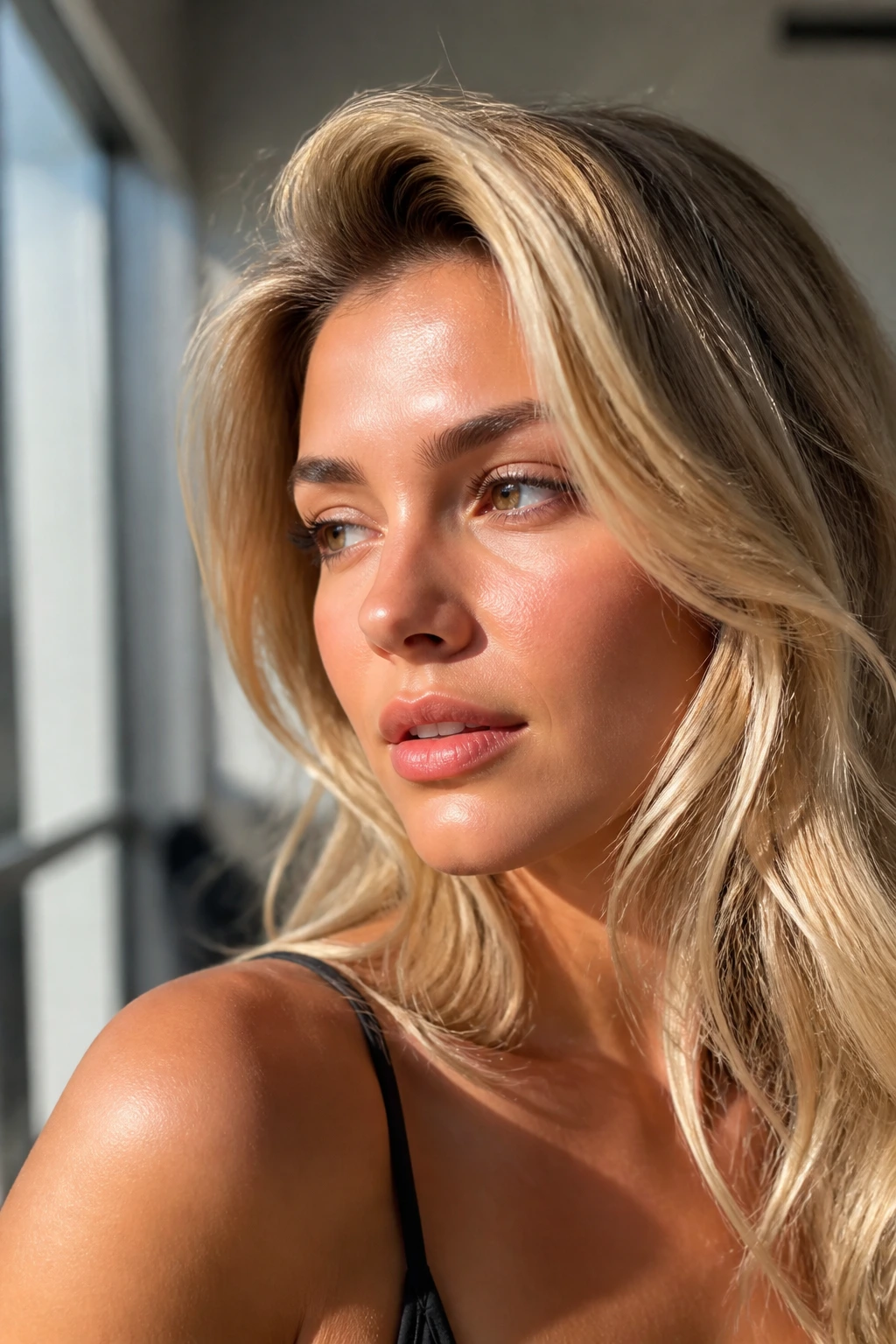
Humidity doesn’t ruin blonde. Sloppy styling does. The best move is to pick a finish that works with the tone instead of fighting it. Beige, honey, and champagne blondes look especially good with soft bend and a little root lift. Pale blondes look cleaner when the style is polished close to the head.
Glossy blowout: Use a round brush and a nozzle attachment, then finish with a cool shot. That keeps the cuticle smooth so the blonde reflects light instead of turning fuzzy.
Loose bend: A 1-inch iron or wand gives the mids and ends just enough movement. Leave the last inch out if your hair is dry; that tiny imperfection reads modern, not careless.
Air-dry texture: For shags, curls, and beachy layers, use a light cream or foam and stop touching the hair once it starts to dry. Overworking it makes blonde look frayed.
Updo days: Claw clips, braids, and low buns show off face-framing pieces and root shadow. They also make the color look deliberate when the rest of the hair is hot and tired.
Practical Tips for Getting the Most Out of These Looks
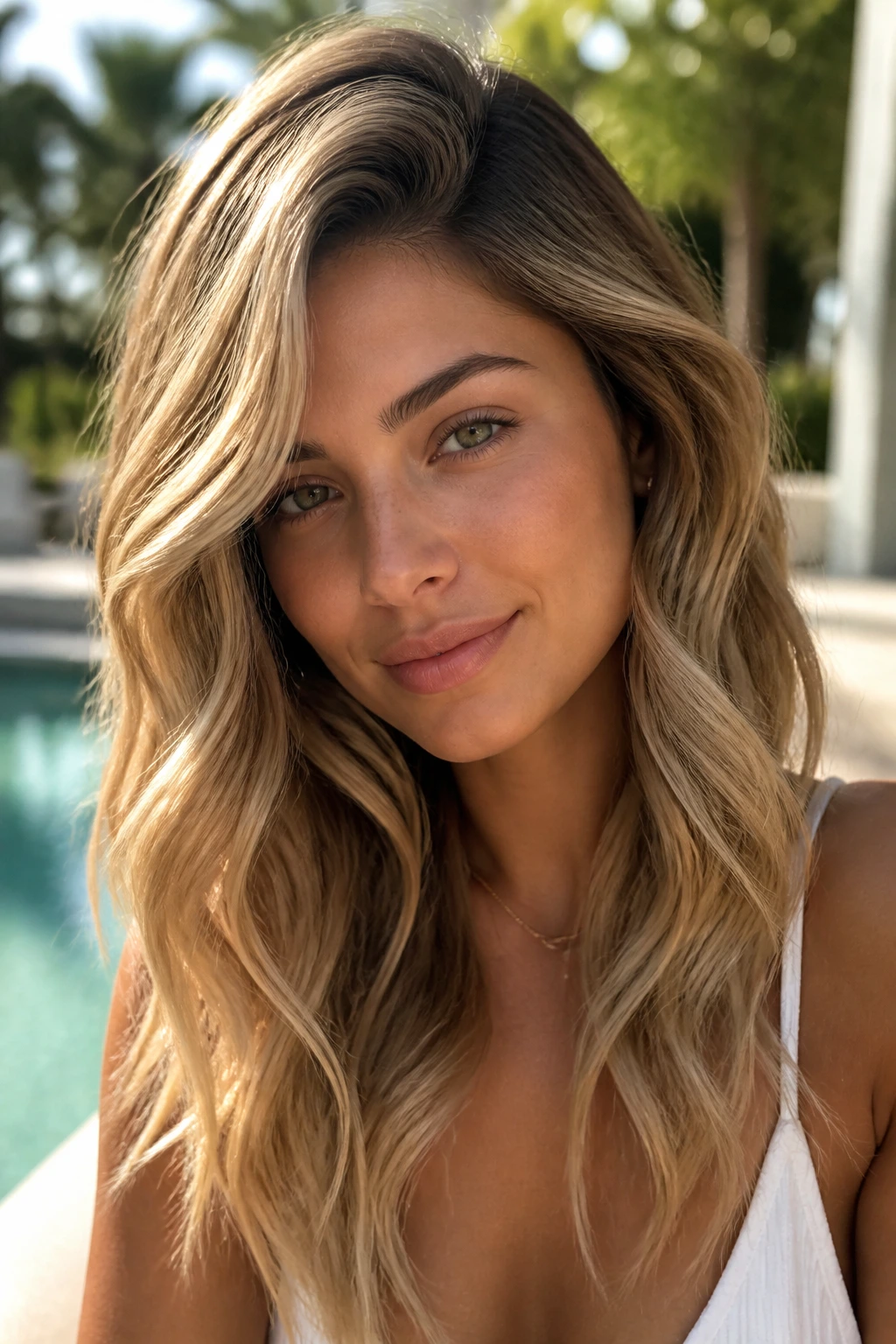
Placement matters: Brightness around the face changes the whole mood of a blonde faster than piling light all over the back. If you want the biggest visual payoff for the least damage, ask for a strong money piece and softer ribbons elsewhere.
Tone matters: Beige and champagne are easier to live with than stark ash if you wash often. Cool blondes need upkeep, and if you know you won’t touch the toner for weeks at a time, choose a shade that fades gracefully.
Cut matters: A blunt bob can carry pearl blonde. A shag wants mushroom or beachy dimension. Long layers love balayage. The shape is not decoration; it changes how the color sits.
Ask for photos of the placement, not just the shade: One picture of tone and one picture of highlight placement beats five screenshots of different celebrities. Color is one thing. Where the light sits is another.
Respect the schedule: If your blonde needs a gloss every 4-6 weeks, that is part of the look. Skipping it and hoping for magic usually leads to brass, dryness, and that tired, straw-like finish nobody wants.
Common Mistakes That Flatten Blonde or Turn It Brassier
- Going too pale in one visit: Hair can only lift so far before it starts to feel cooked. If your base is dark, push toward a soft blonde plan in stages instead of demanding platinum immediately.
- Using purple shampoo too often: The hair starts to look dull, ashy, or even slightly gray. One wash a week is enough for most blondes; more than that tends to stack pigment.
- Skipping the root shadow: A hard root line makes the color look grown-out almost immediately. A level or two of depth at the root keeps everything blurred.
- Choosing the wrong warmth: Too much gold on cool skin can look yellow. Too much ash on warm skin can look dusty. Ask for beige if you want the safest middle ground.
- Forgetting trims: Lightened ends fray fast. If the cut goes stringy, even beautiful blonde starts to look neglected.
- Ironing at full heat every day: High heat strips shine and makes toner fade quicker. Use the lowest temperature that shapes the hair, and always use protectant.
Variations and Alternatives for Different Lengths and Textures
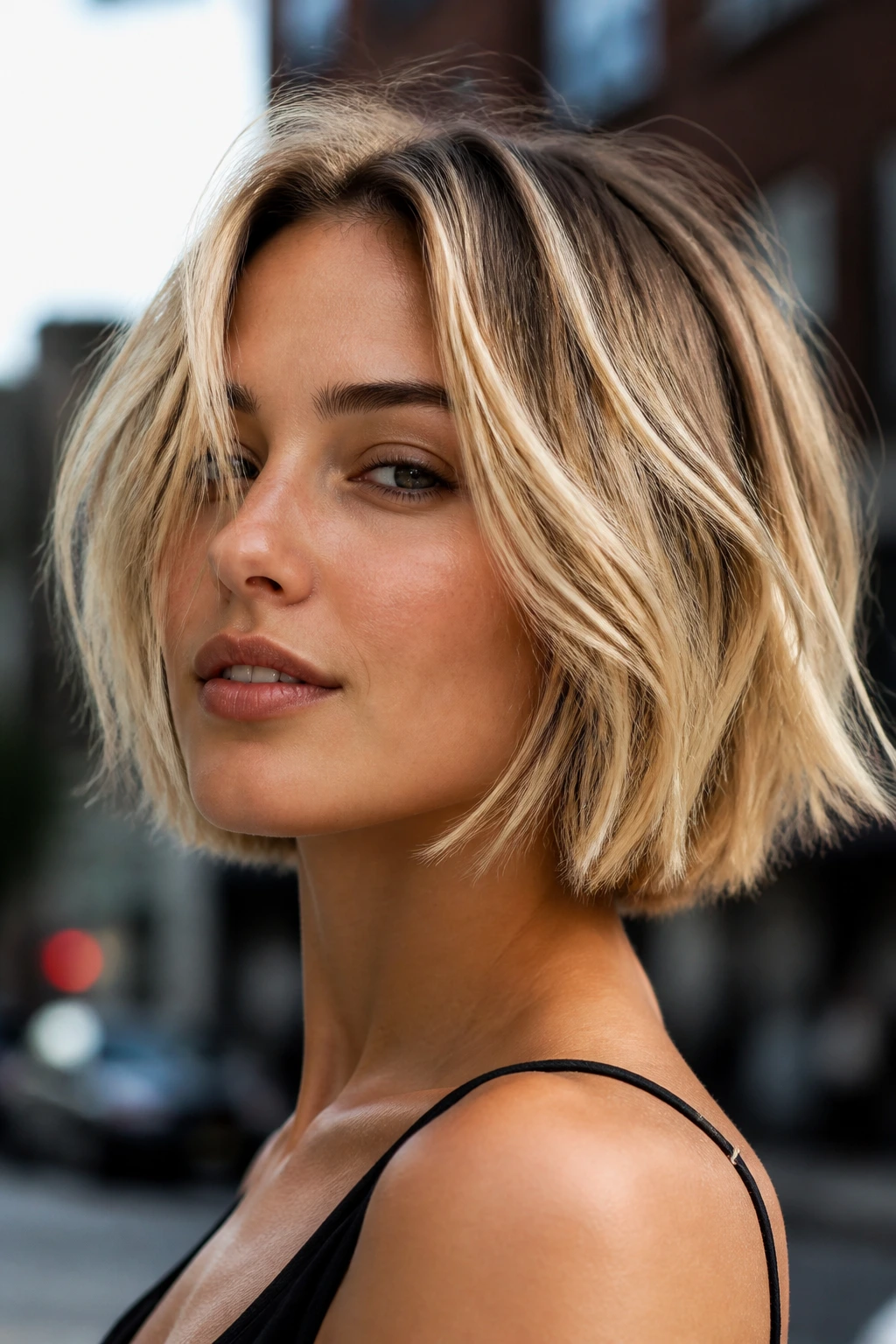
The Low-Maintenance Melt: Keep the root deeper and the blonde softer through the mids, then add just enough light at the ends to show movement. This version is good if you hate obvious regrowth and want a color that fades quietly.
The Curly Halo: Focus the light around the face and outer curl pattern, then leave depth underneath so the curls don’t turn into a bright blur. It gives curly hair shape without flattening the texture.
The Short-Cut Flash: On bobs and pixies, shift the blonde brighter and cleaner around the perimeter and crown. Short hair exposes everything, so the color has to be neat.
The Brunette Bridge: For darker bases, go with bronde, baby lights, or toasted almond rather than full blonde on the first pass. It’s kinder to the hair and easier to maintain.
The Bright-Front Upgrade: If you want a change without a full color overhaul, brighten the money piece and the part line only. That tiny lift can wake up the whole head.
Keeping Blonde Bright Between Salon Visits
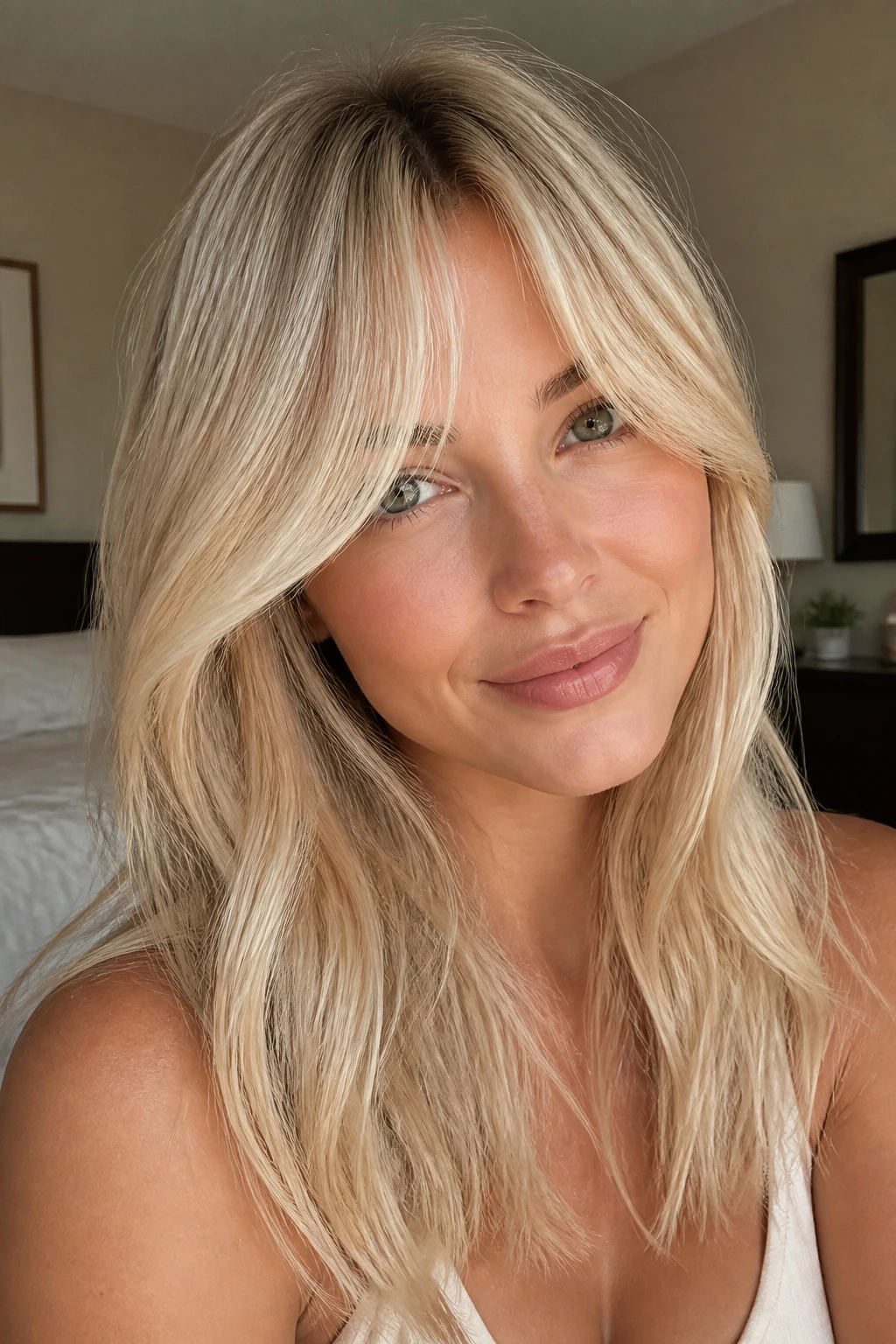
Blonde lasts longer when you treat wash day like a tool, not a habit. If your hair was just colored, give it a little time before the first shampoo if your colorist recommends it, then keep the washing gentle. A sulfate-free shampoo and a good conditioner do more here than a cabinet full of random treatments.
Purple shampoo belongs in the rotation, but not every wash. For most blondes, once a week is enough to keep yellow from creeping in. If your blonde is warmer or darker, you may only need it every other week. If your hair is very pale, watch the tone closely so you don’t overcorrect.
Glosses and toner refreshes are the quiet heroes. Many blondes look best with a refresh every 4-8 weeks, depending on how fast your color fades and how much sun, heat, or pool time you give it. Root touch-ups depend on the style: a lived-in balayage can go longer, while a platinum bob will want more attention. If you swim, rinse hair with clean water before getting in the pool and apply leave-in or UV spray first. That tiny step helps more than people expect.
Frequently Asked Questions
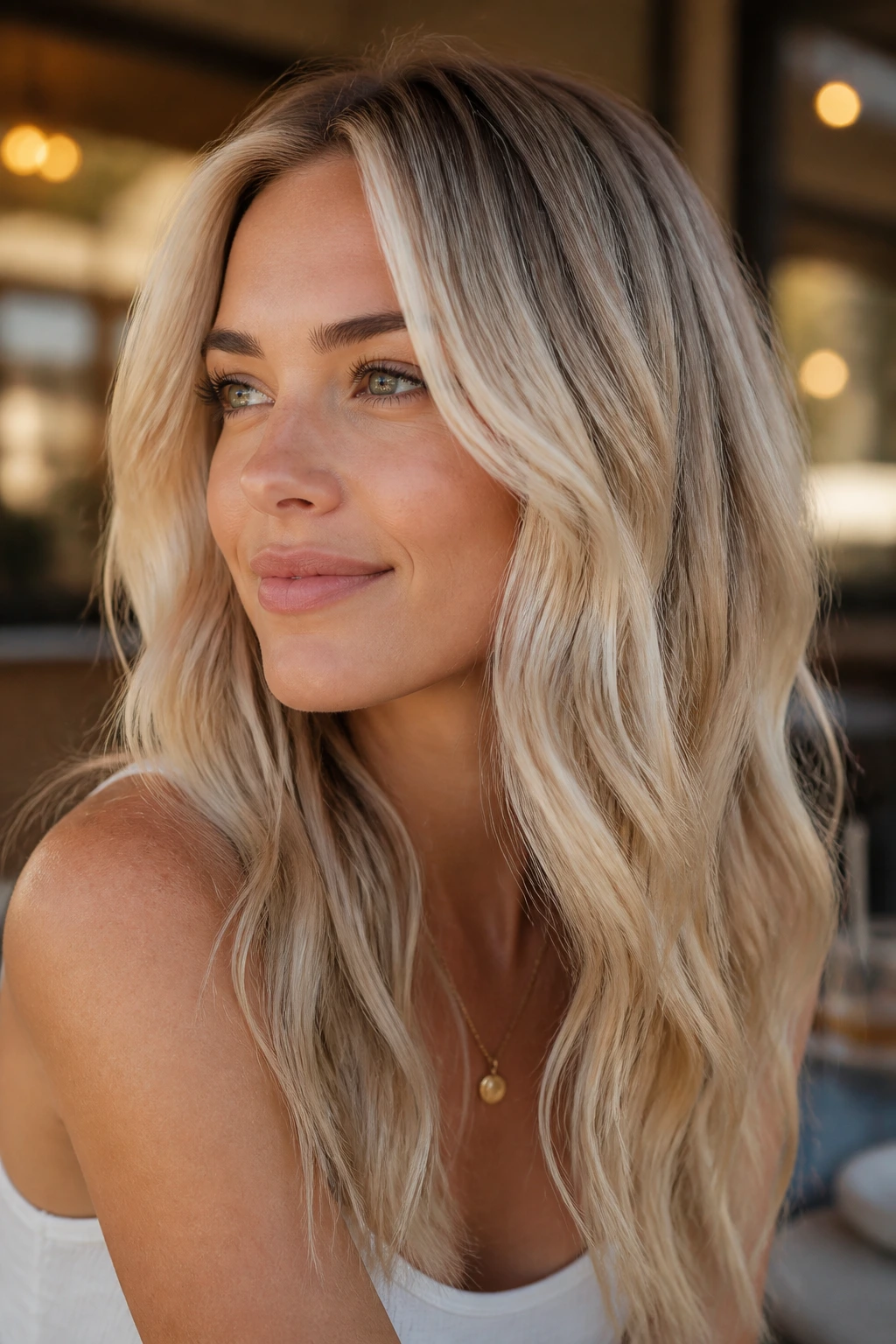
Which blonde look is easiest to maintain?
Rooted vanilla blonde, bronde melts, and soft balayage usually win here. They grow out with less drama because the root stays slightly deeper and the highlights are blended instead of stacked in one hard line.
Can dark brown hair go blonde without frying the ends?
Yes, but not in a single heroic appointment unless your hair is already very strong and virgin. A safer plan is foilayage, babylights, or a gradual bronde-to-blonde shift over more than one session.
How often should toner be refreshed?
Most blondes do well with a refresh every 4-8 weeks. Paler shades need it sooner; warmer, softer blondes can go longer if the tone still looks clean in daylight.
Is purple shampoo enough to fix brass?
Not always. Purple shampoo helps with yellow, while blue shampoo is better for orange on darker blondes. If the color is really off, a salon gloss is usually the cleaner fix.
What blonde works best on curly hair?
Dimensional ribbons, face-framing highlights, and curly halos tend to work better than all-over lightening. Curly hair needs placement that follows the curl pattern, or the color can disappear into the texture.
Should I choose balayage or foils for summer?
Balayage is softer and grows out more quietly, while foils give more lift and brightness. If you want a subtle, low-maintenance blonde, balayage wins. If you want a brighter contrast, foils or foilayage may be better.
How do I keep blonde from looking flat?
Leave some depth at the root, keep a mix of light and medium pieces, and choose a cut that moves. Flat blonde usually means too much one-tone color and not enough contrast.
What if my blonde turns orange after a few washes?
That usually means the base wasn’t lifted enough or the toner faded too fast. A blue shampoo can help a little, but a gloss appointment is the real fix.
A Blonde That Still Works After the Heat Dies Down
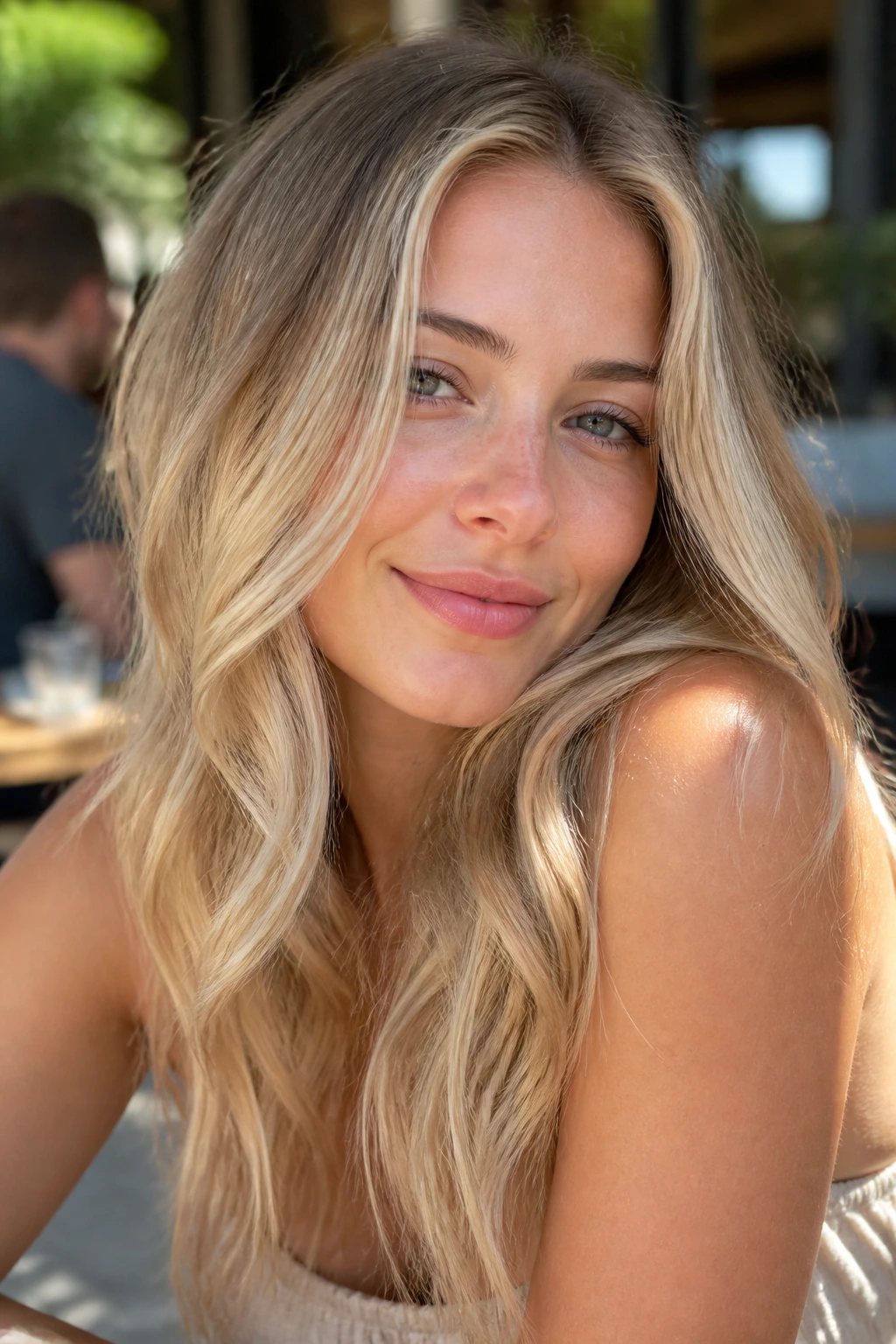
The blondes that earn a place in real life are the ones that keep some depth, some shine, and a little breathing room around the roots. That’s why buttercream balayage, champagne lobs, honey waves, and bronde melts keep showing up again and again: they don’t collapse the minute the weather gets a little rude.
If you want a summer blonde that still looks good after a week of heat, clipping it up, and forgetting to stand in the good bathroom light, start with dimension first and brightness second. That order matters. And once you’ve got the right tone, the right placement, and the right maintenance rhythm, the color stops feeling fragile and starts feeling like something you can actually live in.
