



Medium length layered haircuts have a useful trick: they make hair move without forcing you into a short cut that flips out at the wrong places or a long shape that drags itself flat by lunch.
The sweet spot sits around the chin, the shoulders, and the collarbone. That length gives a stylist room to carve shape into the front, remove bulk where hair balloons, and leave enough weight at the ends so the cut still feels full when you skip a wash day.
What matters most is where the layers start. A few inches too high and the hair can go wispy; too low and the cut behaves like one length with a polite face frame. Get that balance right, and balayage shows its ribbons cleanly, waves get a better bend, and straight hair starts looking less like a sheet and more like something with actual shape.
Why You’ll Love This Collection
-
Built-in movement: Medium length layered haircuts shift when you turn your head, which means the shape does some of the work before you touch a brush.
-
Body without losing length: You keep enough weight for a full-looking outline, but the interior no longer sits there like a heavy curtain.
-
Easy to customize: The same basic cut can lean soft, shaggy, polished, or face-framing depending on where the layers begin.
-
Friendly to color: Highlights and balayage show up better on layered hair because the bends and edges break up the color in a more interesting way.
-
Less daily styling pressure: A good layered shape can air-dry decently on one day and still revive with a brush or iron the next.
-
Works with real hair textures: Fine, thick, wavy, straight, and curly hair all have versions that make sense here; the trick is choosing the right weight removal.
1. Collarbone Butterfly Layers
This is the cut I recommend to people who want movement but still want their hair to feel like hair, not feathers. The shortest face-framing pieces usually start around the cheekbone or just below it, while the longer interior layers keep the body sitting around the collarbone. The result looks soft when it’s loose and a little dramatic when you blow it out with a round brush.
Why it works
The butterfly shape gives you two jobs at once: lift near the face and fullness through the length. That matters on medium hair, because a single layer line can make the ends look thin if the cut is too aggressive. Here, the lower length keeps the perimeter solid.
It also plays nicely with highlights. If you have balayage or lighter face-framing pieces, the shorter front layers let those ribbons sit where they’ll actually be seen instead of hiding under the top layer.
Best for
- Medium to thick hair that needs movement
- Faces that want softness around the cheekbones
- Anyone who likes a blowout with a little flip at the ends
Styling note: Use a 1.5-inch round brush and direct the front sections away from the face. That one detail makes the whole cut look more intentional.
2. Soft Face-Framing Lob
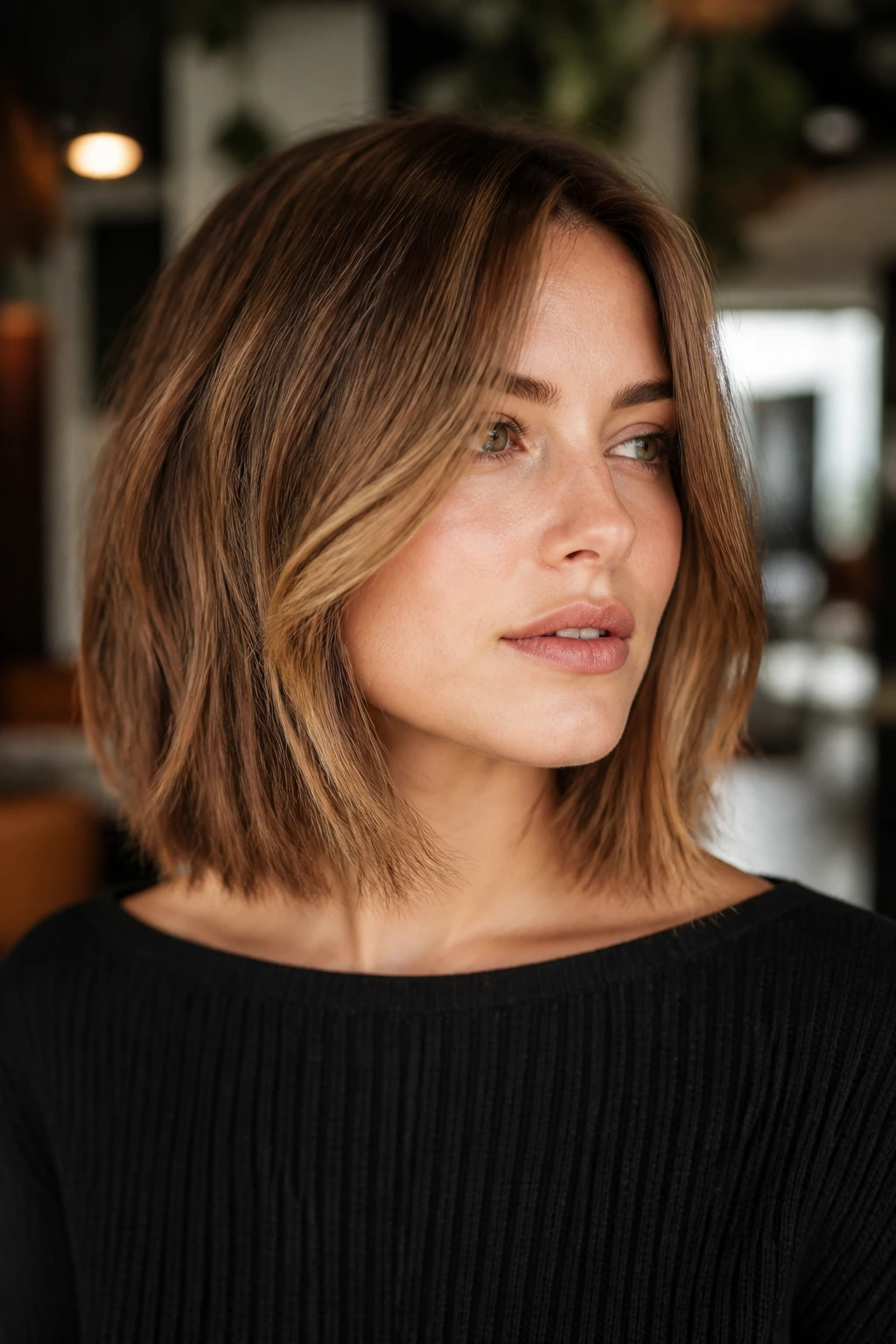
A lob can look flat if it’s cut with no thought beyond “shoulder length,” and that’s where soft framing changes everything. This version keeps the perimeter tidy, usually grazing the collarbone, while the front layers angle down from the cheekbones toward the jaw. It’s clean. It’s easy. It doesn’t ask for a lot.
What I like most here is the restraint. The layers aren’t fighting the shape; they’re nudging it. That makes this one of the best medium length layered haircuts for people who want a neat outline at the back and a little swing around the face.
If you wear a side part or tuck one side behind the ear, the shape changes in a good way. You get a quiet asymmetry that makes the cut look more expensive than it is.
3. Curtain Bangs with a Textured Midi
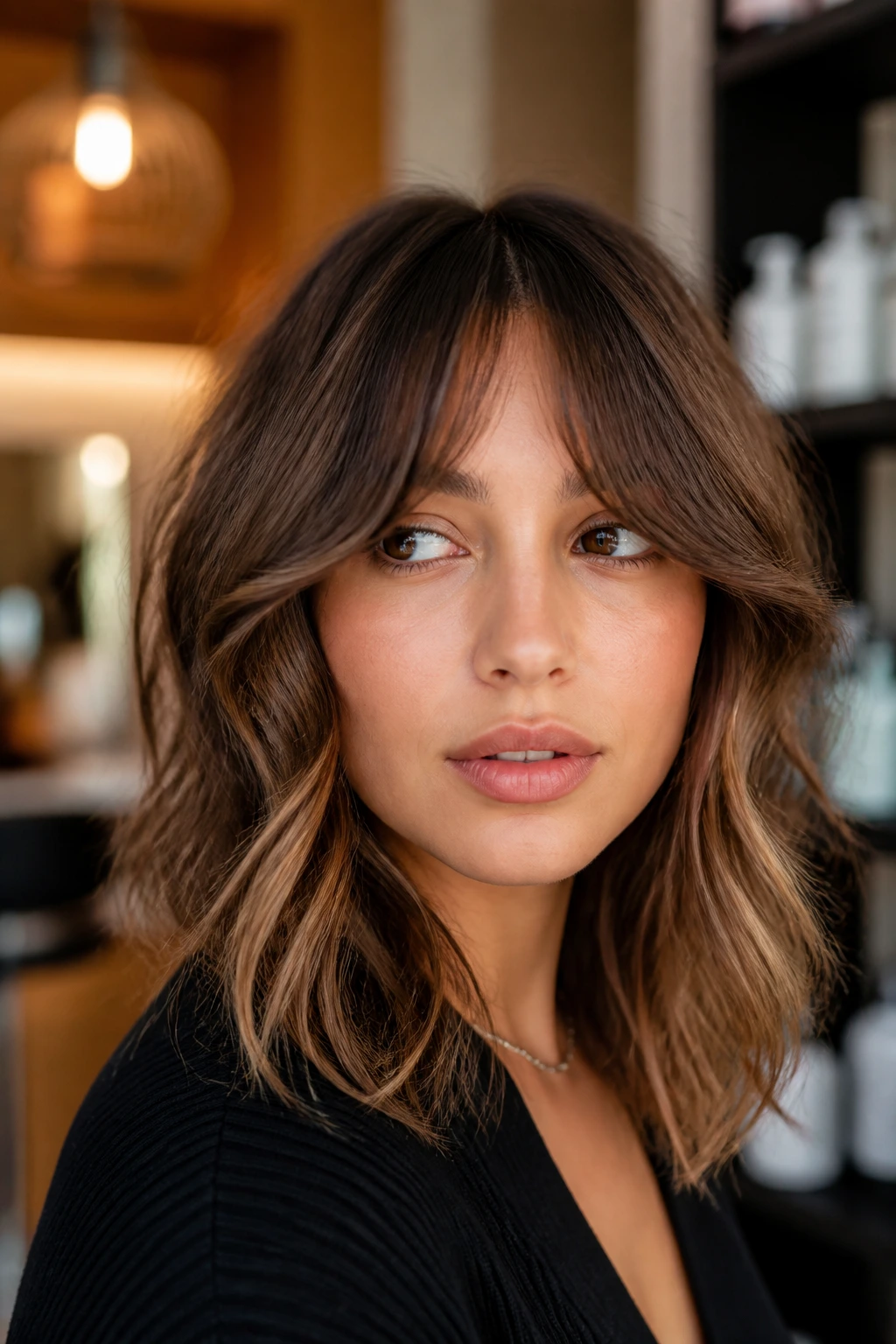
Can curtain bangs make a medium cut look fuller? Yes, if they’re blended instead of hacked off like a separate project. This version works because the fringe opens around the eyes and then melts into the rest of the layers, so the whole cut reads as one shape. Nothing feels bolted on.
The texture through the mids is what keeps this from turning puffy. Ask for soft internal layering, not a lot of choppy ends. You want the bangs to fall into the cheekbones and the side layers to keep the length moving, especially if you wear balayage or warm ribbons around the front.
How to wear it
A center part gives the fringe that curtain effect. A slight off-center part makes it softer and a little less symmetrical, which is useful if one side grows faster than the other. A blow-dry brush makes the front pieces curve just enough.
4. Shoulder-Length Shag with Soft Ends
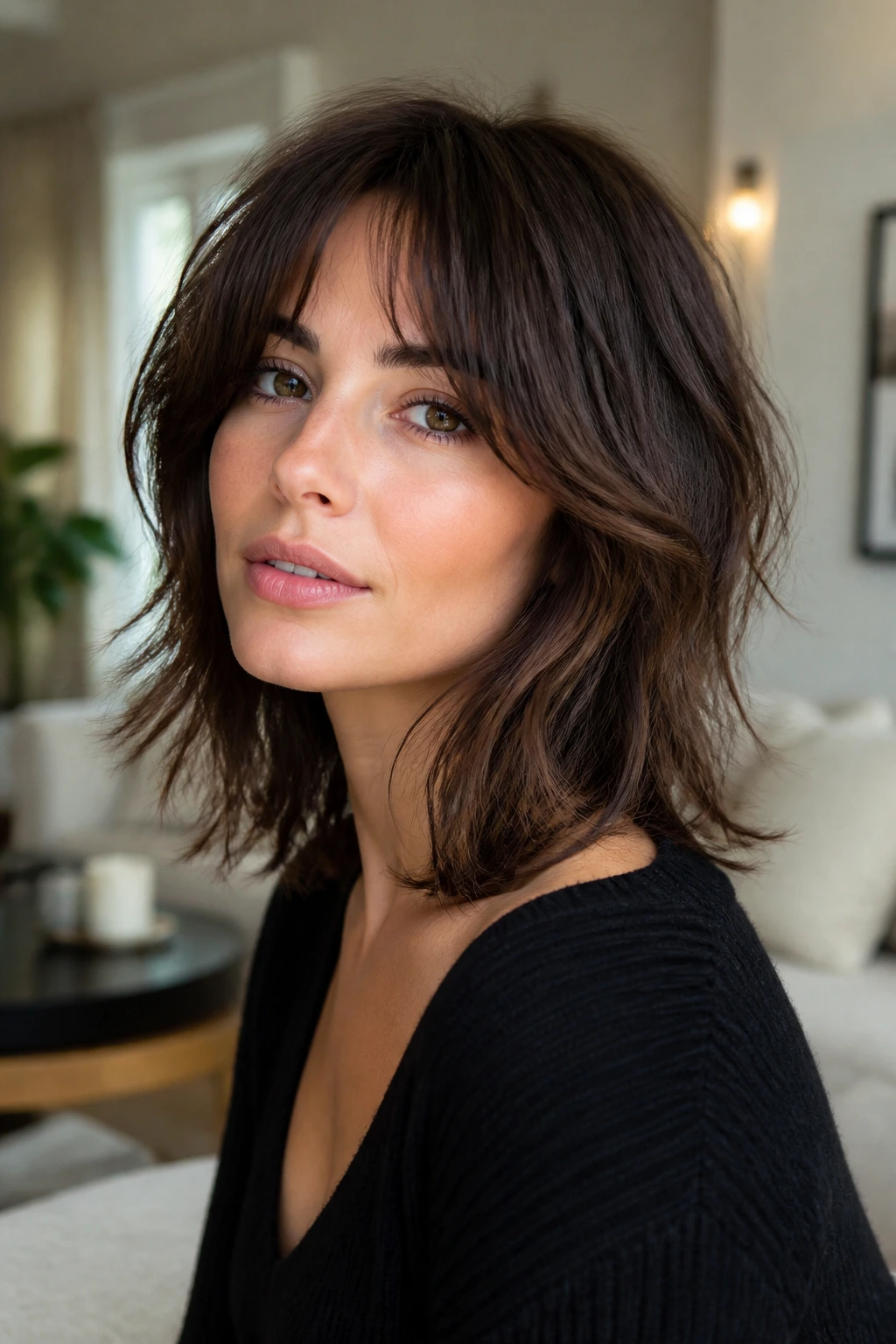
A shag can go too hard, too fast, especially when the layers are short and the ends are shredded. This version stays friendlier. The length still lands around the shoulders, but the edges are softened and the crown has enough lift to keep the shape from collapsing.
You can think of it as the shag’s calmer cousin. It keeps the lived-in movement people want from a shag, yet the perimeter stays usable. Put some wave in it and the shape wakes up. Leave it straight and it still has enough internal texture to avoid that helmet look.
This is one of the better options if your hair has a natural bend but not much volume at the root. The cut gives the root area room to rise instead of pulling everything downward.
5. U-Shaped Layers for Thick Hair
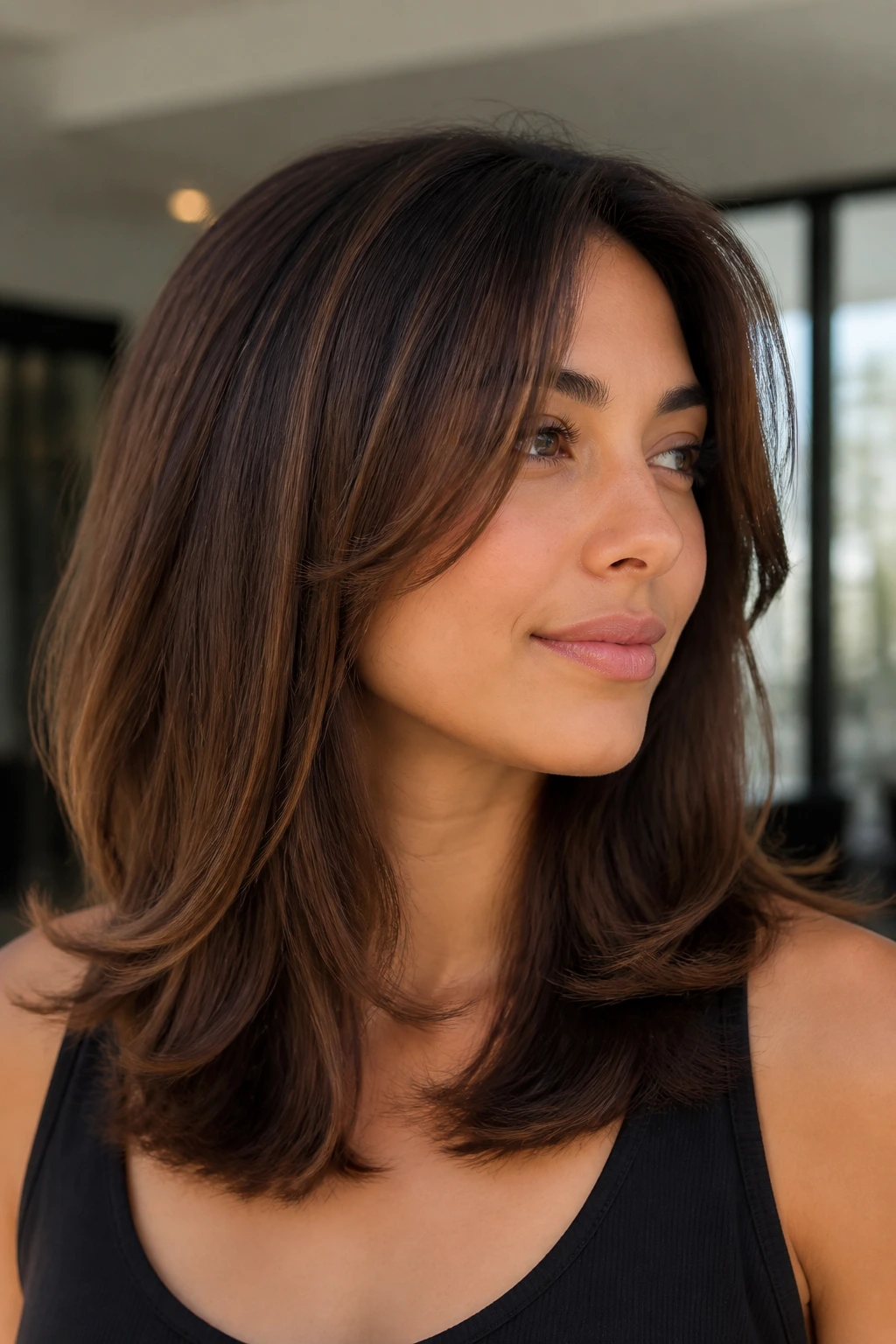
Thick hair can get triangular in a hurry. A U-shaped perimeter solves part of that because the length curves gently instead of sitting in a hard line across the bottom. Add long interior layers and the whole cut loses weight without losing its body.
The useful thing here is balance. The ends still look substantial, which matters when thick hair has a habit of getting bulky and then suddenly looking thin if you over-thin it. That mistake is common. A lot of stylists know how to remove bulk; fewer know how to keep the outline from going stringy.
Best for
- Dense hair that puffs at the sides
- People who want length to stay visible
- Cuts that need to air-dry without a triangle shape
Pro tip: Ask for long point-cut layers, not razor-thin pieces. The bluntness at the ends keeps thick hair from fraying visually.
6. Invisible Layers for Fine Hair
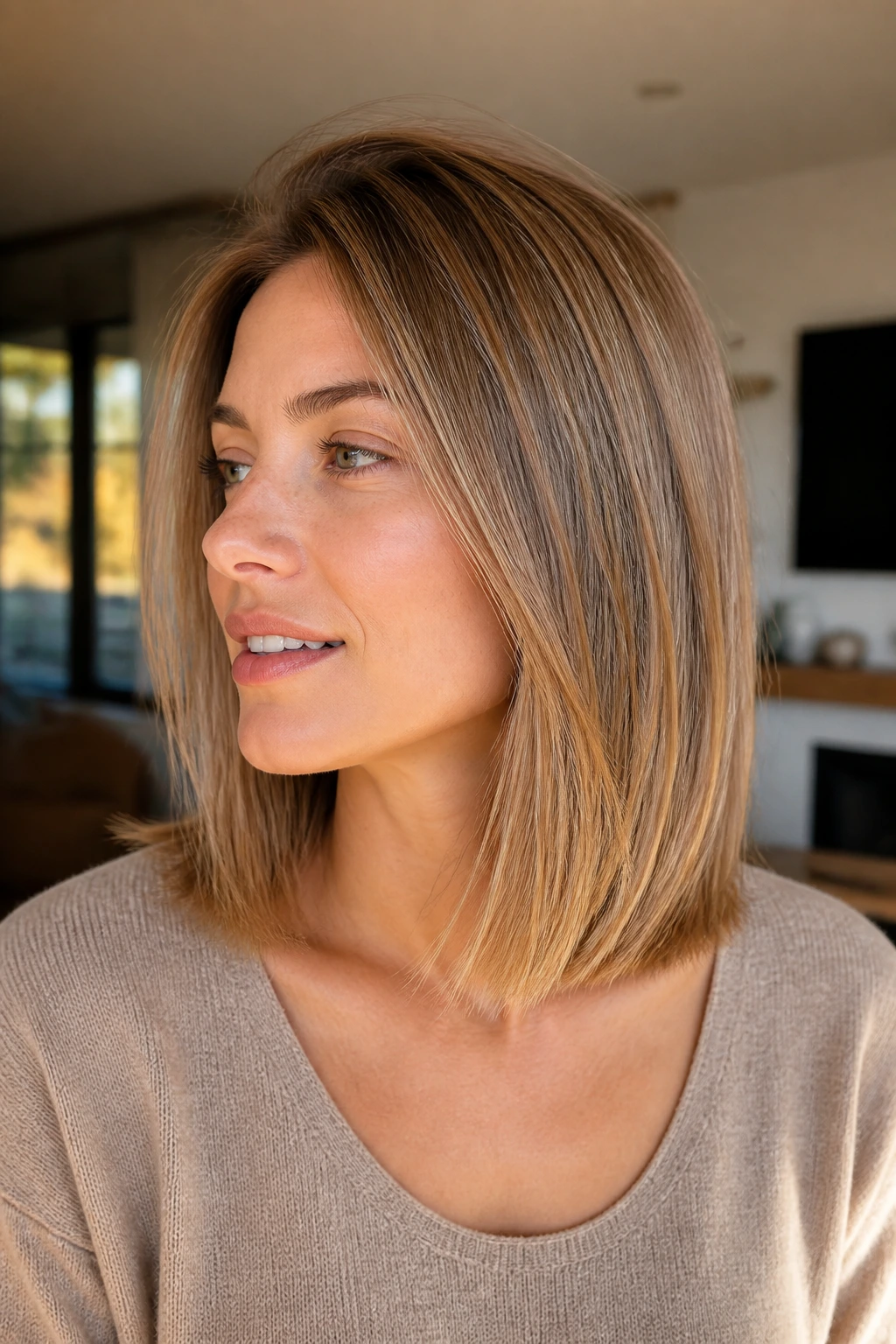
This is the cut for people who hear the word “layers” and immediately worry their hair will disappear. Invisible layers keep the outside line blunt while the inside gets subtle movement. From the front, the shape looks smooth. From the side, it has lift and bend.
Fine hair usually hates too much texturizing. It can look shredded in a blink. So this approach removes a little weight without breaking the outline into a thousand wisps. That’s the whole game here.
I prefer this on medium hair that falls flat at the crown but still has decent ends. You get a bit more air under the top section, and the lower length stays thick enough to make the cut feel intentional.
7. Rounded Blowout Layers
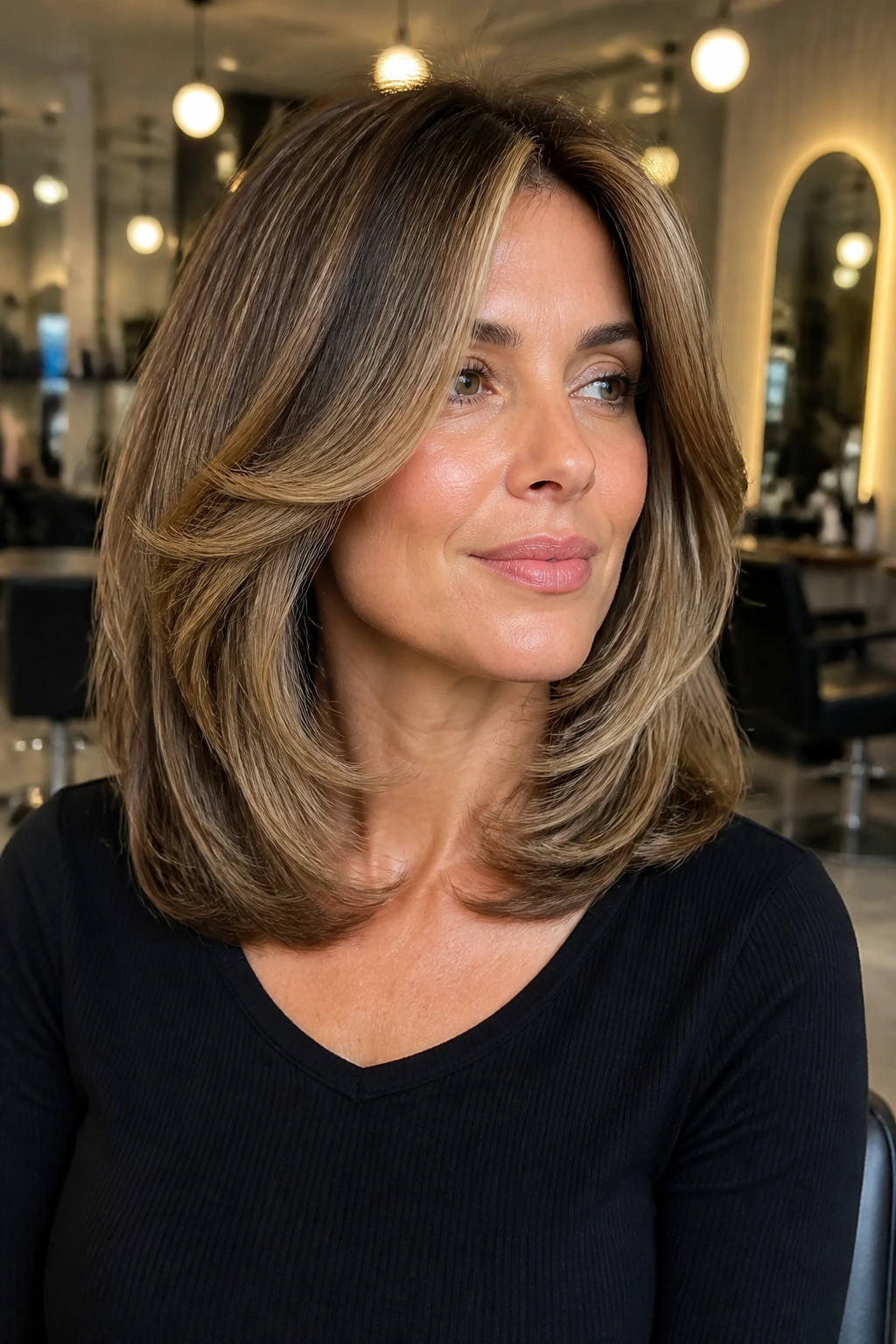
If you like that salon-blowout curve where the ends turn under and the front swings away from the cheekbones, this is the cut to ask for. Rounded layers are cut to support that kind of styling, so you’re not fighting the haircut every time you pick up a round brush.
The shape is especially flattering on medium length hair because the weight sits where the brush can control it. You’re not dragging around too much length, and you’re not trying to force a pixie-level lift into a longer cut. The movement lands in the middle, where it belongs.
This style also makes a very decent base for highlights. The curved pieces catch dimension better than a flat one-length cut. The color gets a little more structure, which is the whole point of paying for it.
8. Razor-Cut Piecey Layers
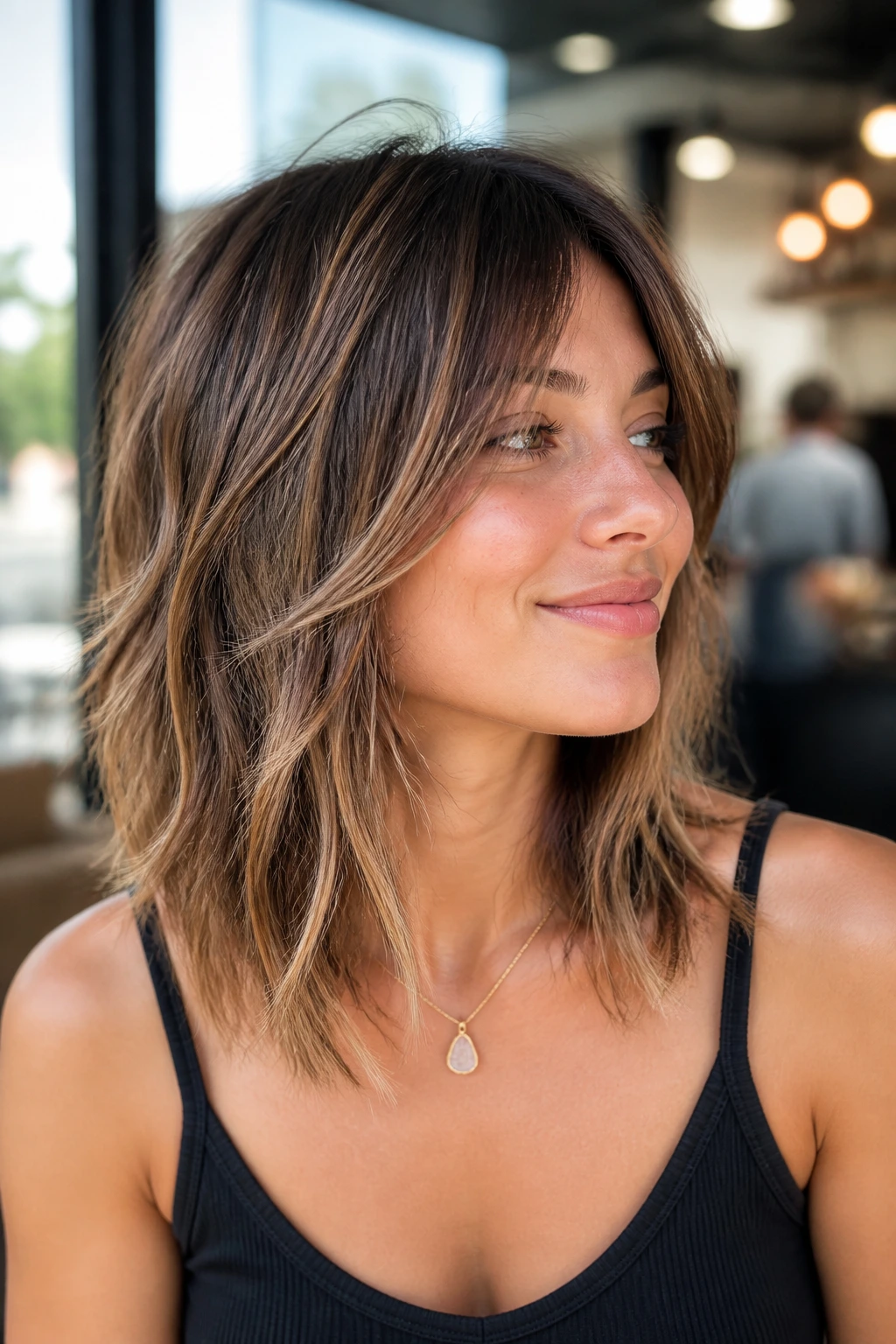
Razor-cut layers bring a sharper, more separated finish. They can look airy and cool on straight to wavy hair, but they need a careful hand because overly softened ends can make medium hair look scraggly instead of piecey. That’s the line.
The best version of this cut keeps a touch of fullness in the perimeter and uses the razor mostly on the internal movement. You want visible strands moving apart from one another, not a frayed outline around the shoulders.
Use this if you like a more relaxed finish and you’re not married to a polished blowout every morning. It pairs well with texture spray, a light cream, and a bit of bend through the mid-lengths.
9. Curly Mid-Length Layers
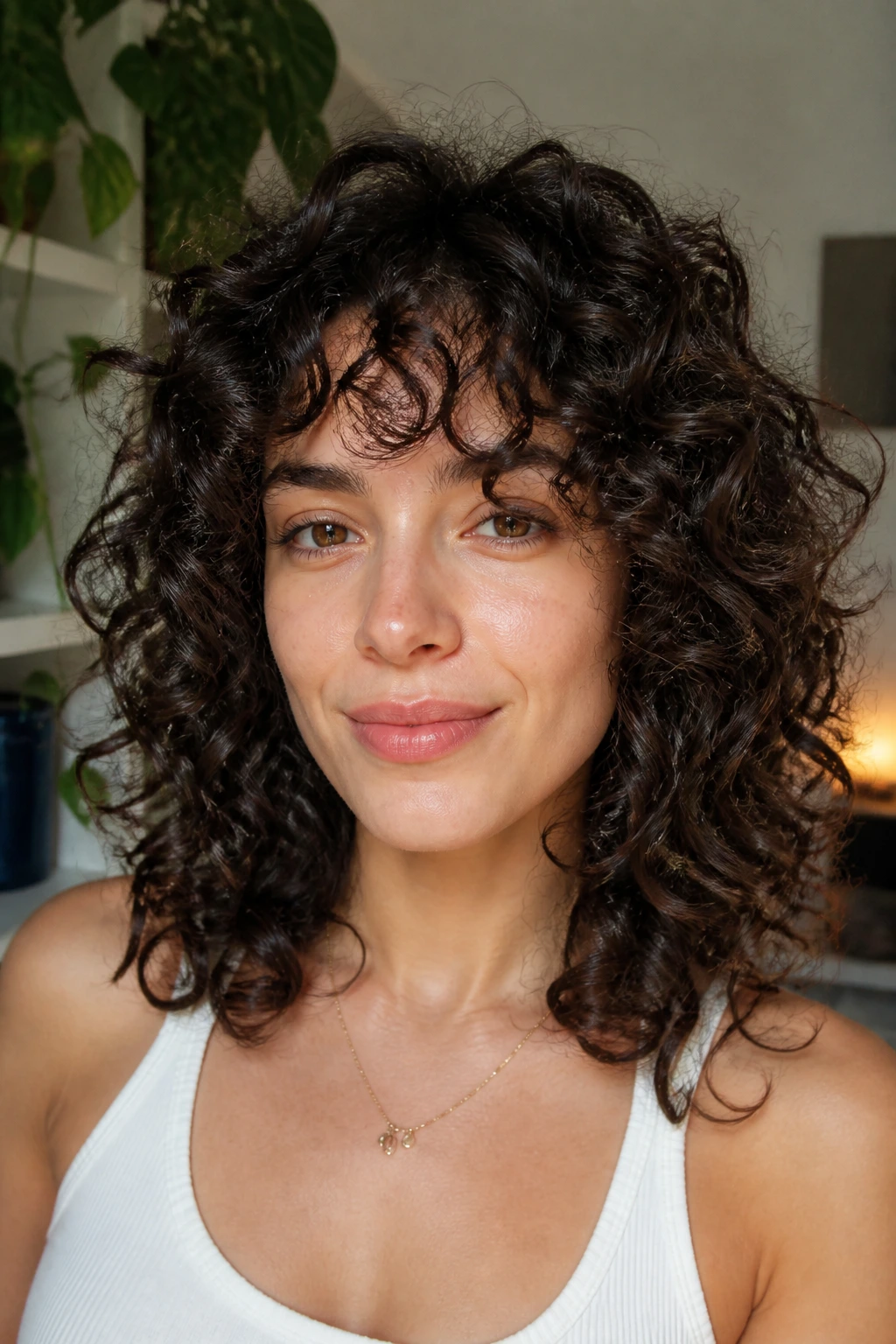
Curly hair needs layers for a different reason than straight hair. It’s not about “adding movement” so much as redistributing shape so the curls don’t pile into a pyramid. Medium length is a smart place for that because the curls still have enough weight to clump nicely, but not so much that they stretch into one heavy block.
Dry cutting or curl-by-curl shaping usually gives the best read on where the layers should fall. Curly hair shrinks more than people expect, and layers that look perfect wet can bounce up much higher once they dry.
The goal is roundness, not bulk removal for the sake of it. A few deliberate layers around the face and a little internal shaping through the crown can make the cut springier without wrecking the curl pattern.
10. Blunt-Perimeter Layered Lob
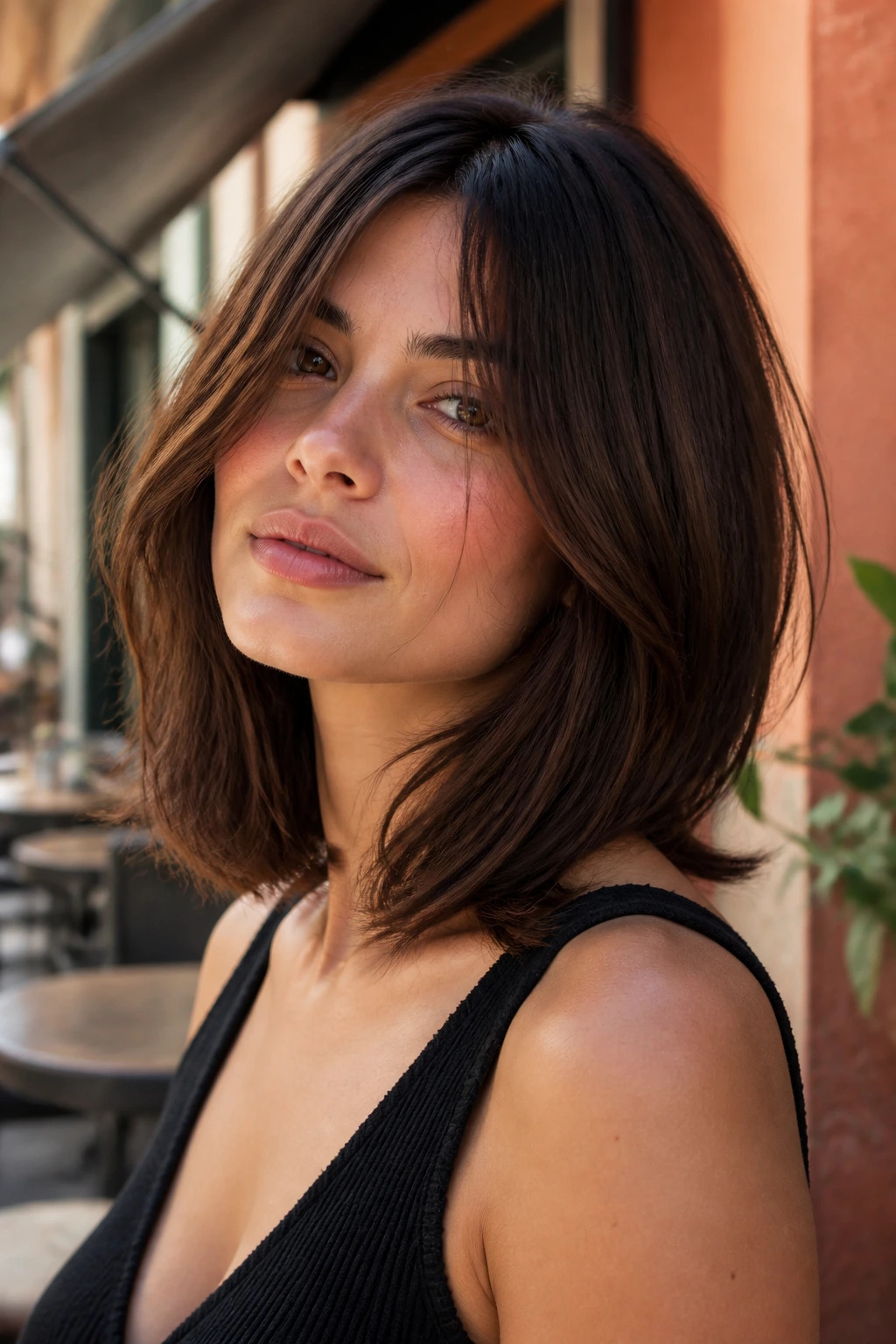
This one is my favorite compromise haircut when someone wants polish and movement in the same sentence. The outline stays blunt, which makes the hair look thicker at the ends, but the interior gets soft layering so it doesn’t hang like a single slab.
The blunt edge gives you visual density. The layers give you swing. That’s the whole deal.
It also grows out gracefully, which matters more than people admit. A fully shaggy cut can lose its shape quickly. This one tends to soften rather than fall apart, especially if you keep the ends tidy with trims every 8 to 10 weeks.
11. Feathered Layers with a Center Part
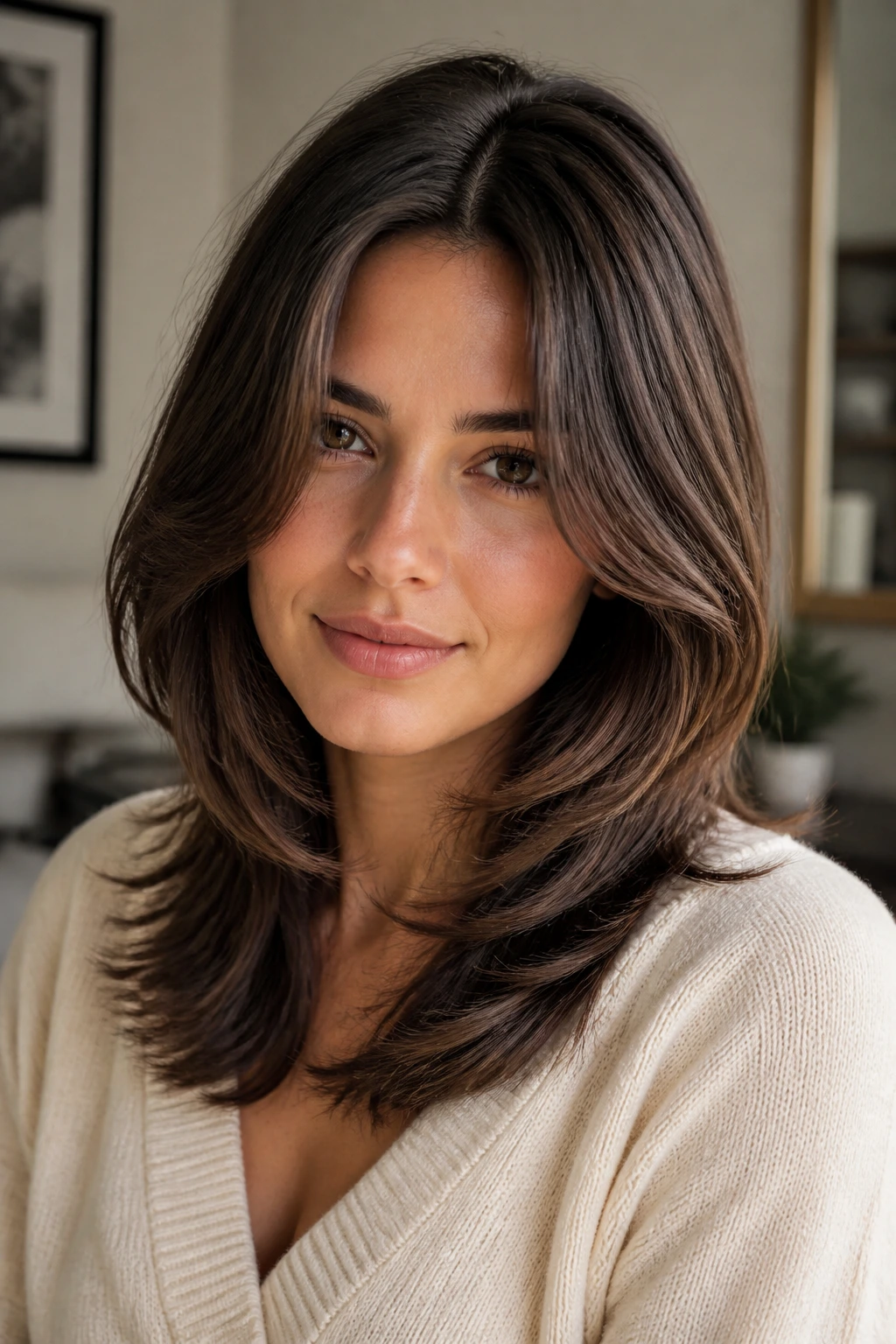
Feathered layers are a little old-school in the best way when they’re done softly. The front sections move away from the face, the ends stay light, and the center part keeps the whole thing balanced. It’s the kind of shape that likes a brush more than a scrunch.
What keeps this from feeling dated is restraint. The layers should look brushed-through, not blown into submission. A little lift at the cheekbones and softer ends through the collarbone area is enough.
This cut works well for people who want movement but do not want obvious choppiness. It’s especially nice on hair that’s thick enough to hold shape, because the feathering shows up without making the ends look empty.
12. Side-Part Volume Layers
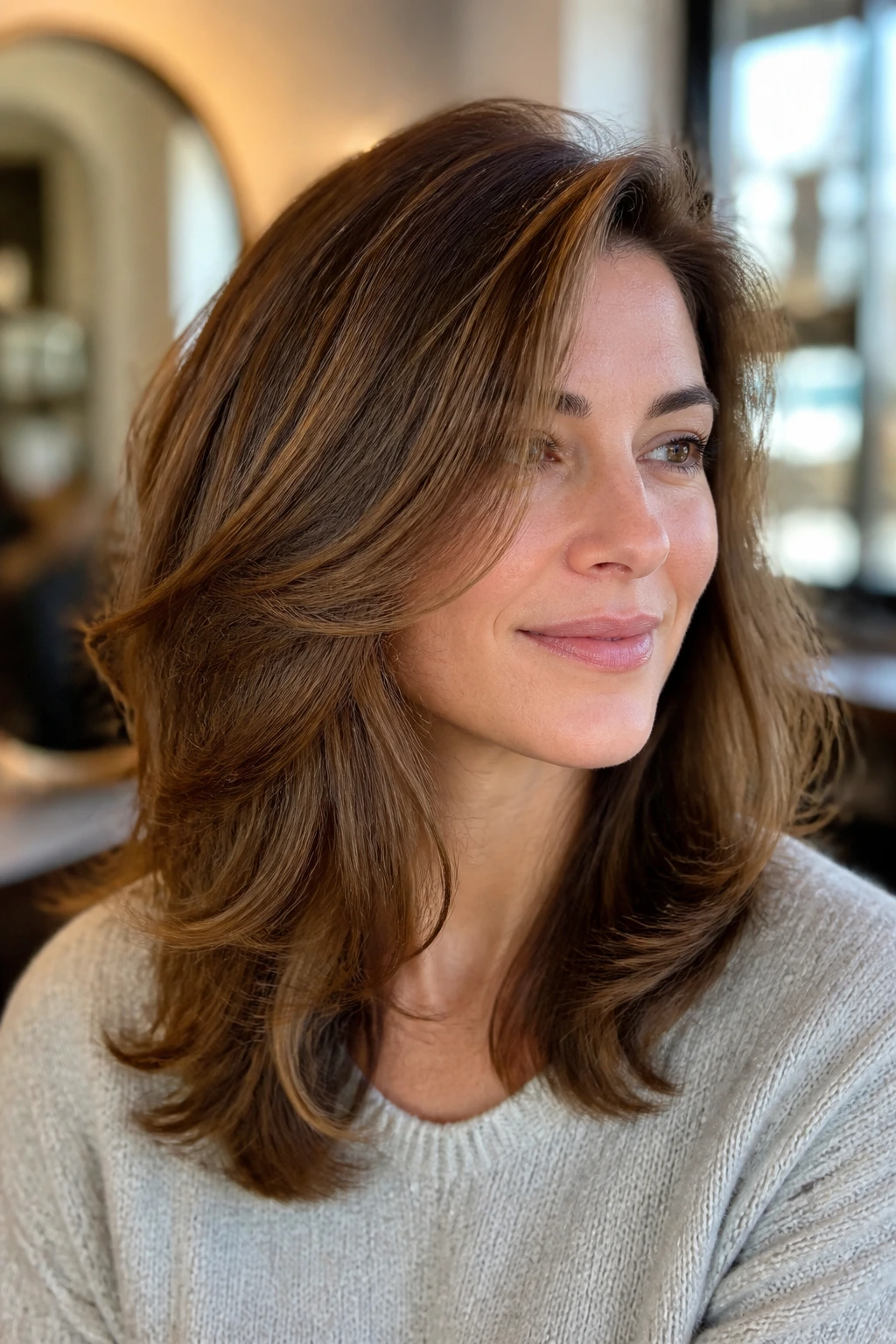
A side part changes the geometry fast. It gives one side more height, shifts weight away from the center, and makes medium layers look fuller at the root without needing aggressive teasing. That alone makes it worth trying.
The layers should support that off-balance lift. Ask for a front shape that starts near the cheekbone and falls diagonally, not one that sits in a flat, blunt curtain. On the side with more hair, the layers can be a little longer to keep the balance from getting too fussy.
This is a good cut for anyone whose hair lies a little too close to the scalp. A side part, a root spray, and a medium round brush can change the whole read of the haircut in five minutes.
13. Wolf-Lite Midi Cut
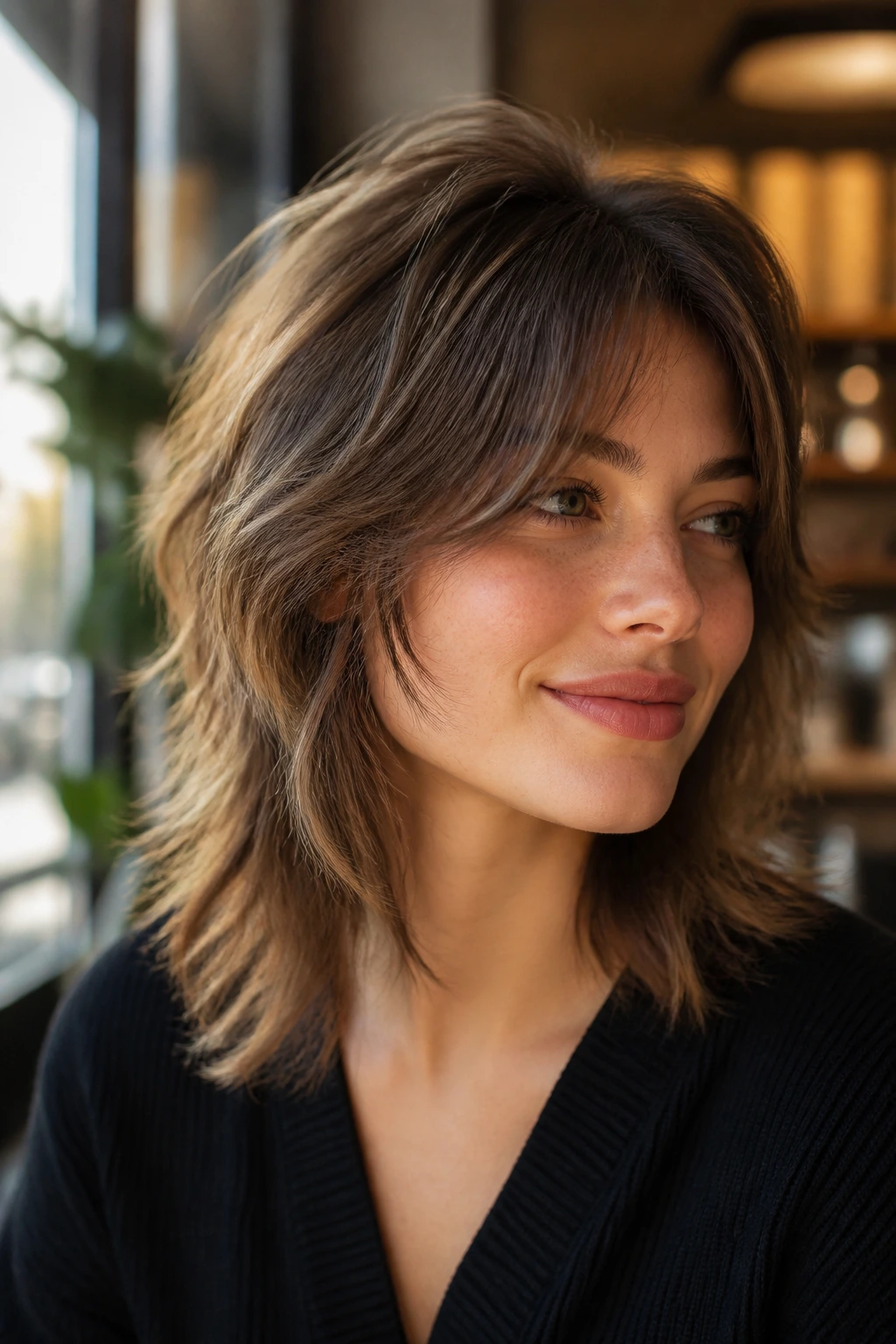
A full wolf cut can be a lot. It can also be a specific taste that you either love or don’t. The wolf-lite version keeps the edge but trims back the drama, which is a wise move at medium length because you still want the shape to feel wearable on a random Tuesday.
The crown gets some lift, the ends stay textured, and the front usually carries some softness around the face. That combination gives you a little attitude without turning the cut into a costume.
I’d use this if you like air-dried texture and don’t mind a cut that looks better with a little mess in it. A polished blowout can smooth it down, but the haircut is happiest when it keeps a bit of separation.
14. Modern Rachel Layers
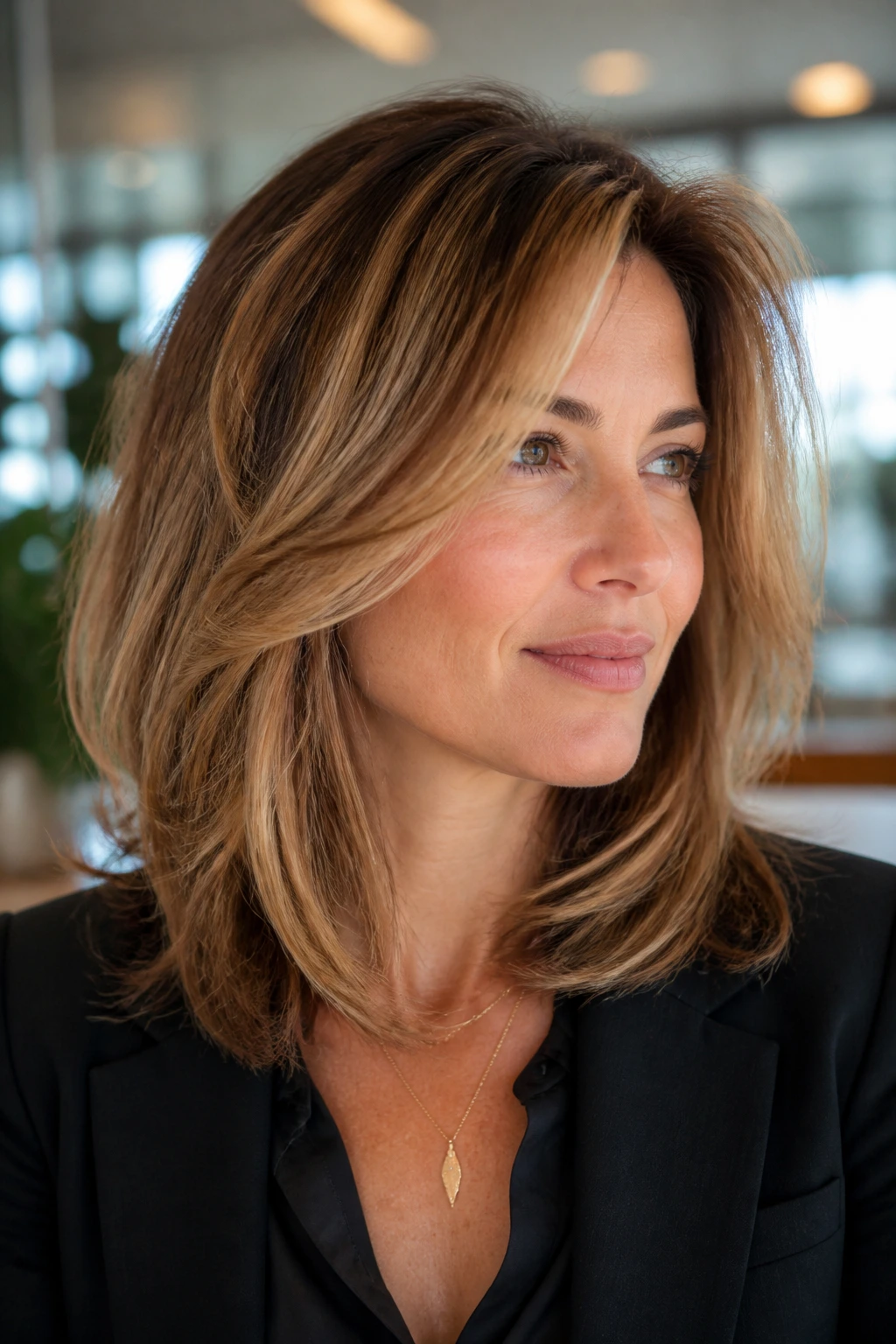
Yes, the reference is obvious. No, that does not make it dated when it’s done with a lighter hand. The modern version keeps the face-framing movement and the bounce around the shoulders, but it skips the heavy stacking and the obvious 90s volume line.
The best modern Rachel sits at medium length, with layers that sweep away from the chin and then soften toward the collarbone. It has that instant “the hair has been brushed but not flattened” feeling.
This one is especially good if you like blow-drying your front pieces under and away from the face. It’s less about wild texture and more about controlled swing, which makes it a useful cut for work, weekends, and anything in between.
15. Long Fringe with Tapered Layers
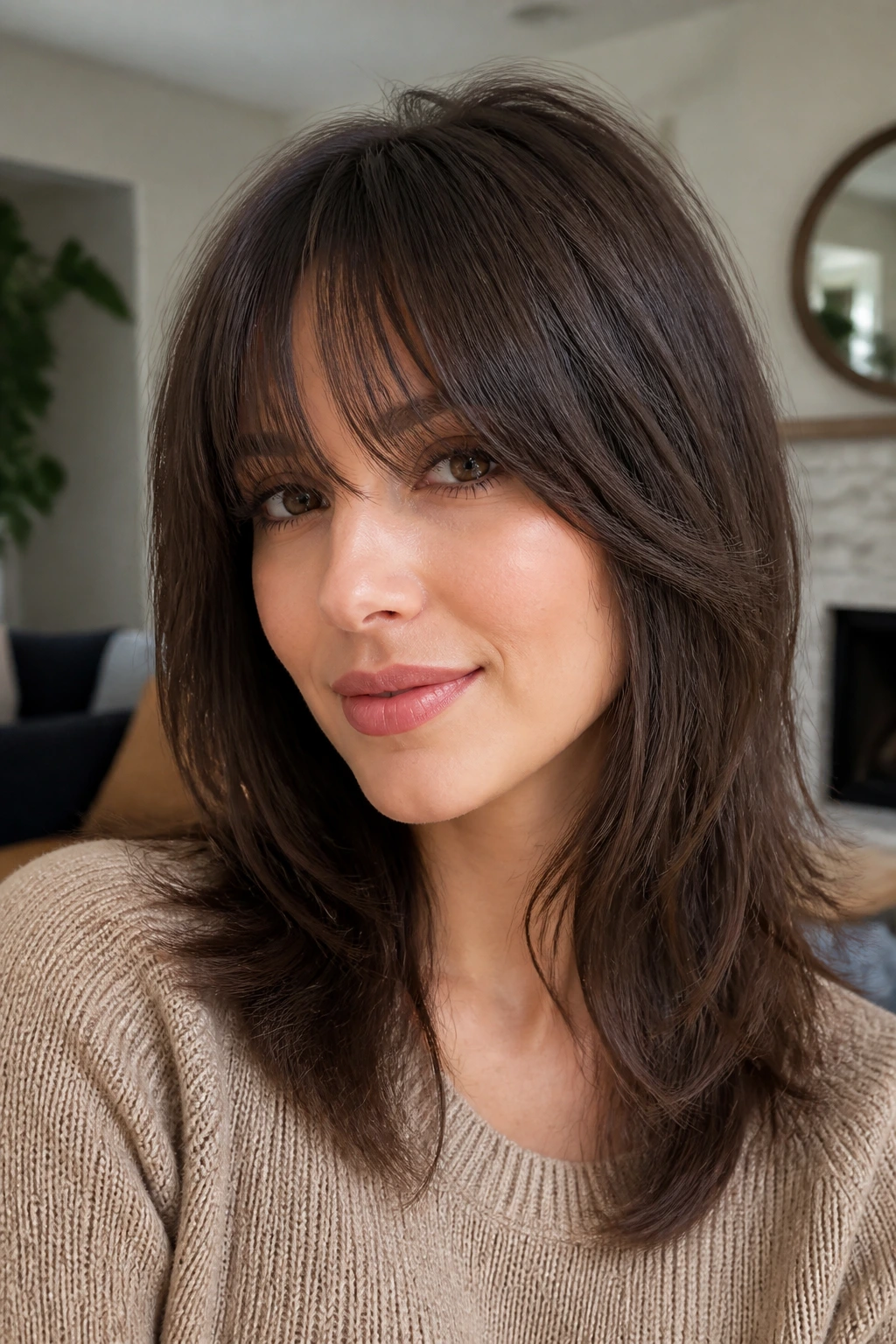
A long fringe can change a medium layered haircut fast. It adds softness to the face without cutting the whole front short, and tapered layers make sure the fringe doesn’t sit there like a separate object. The line should melt, not stop.
This is the right move for people who want to soften a high forehead, shorten a long face, or just give their haircut a little more presence around the eyes. The fringe should skim the brows or hover just below them, depending on your cowlicks and how much styling you’re willing to do.
The rest of the layers should taper away from the fringe rather than compete with it. That keeps the cut from turning into a fringe plus everything else. Subtlety matters here.
16. Cheekbone Layers for a Lifted Frame

Shorter layers that begin around the cheekbones create a lifted frame without making the hair look choppy. The key is where the line lands. Too high, and the face frame starts to feel severe. Too low, and you lose the lift that makes this cut worth asking for.
On medium hair, cheekbone layers bring attention upward in a flattering way. They work especially well when you want to show off contour, earrings, or a strong brow line. Hair has a funny way of changing the read of the face, and this cut leans into that.
It also works with soft waves. The bends land right where the layers are cut, so the whole style looks like it has more shape than it actually does.
17. Air-Dry Wave Layers
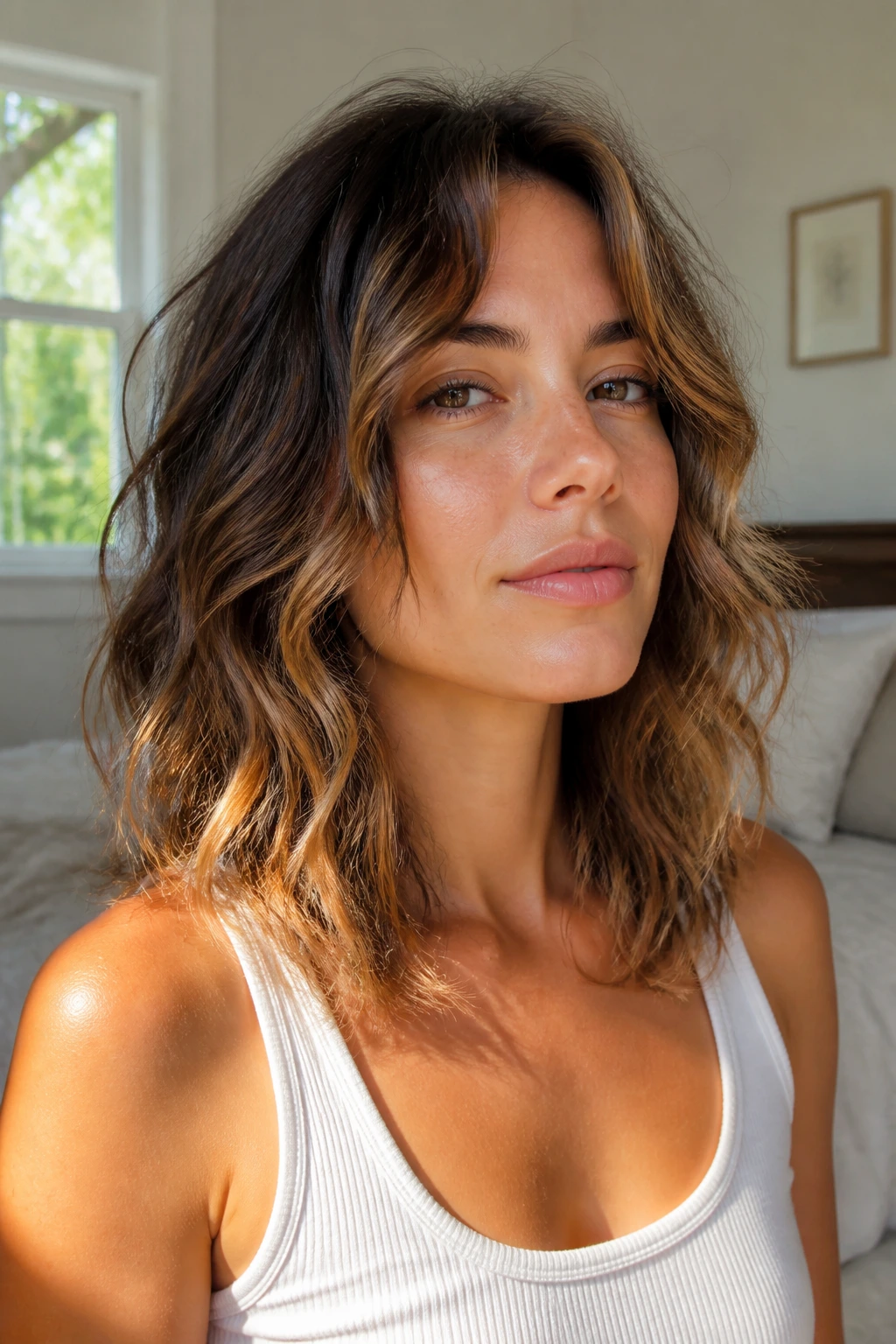
Some hair wants to be touched less. This cut respects that. The layers are placed so the natural wave can bend without getting confused by too many short pieces, and the ends keep enough weight to stay smooth instead of puffing out.
The best version starts with a soft face frame and a few strategic interior layers through the mid-lengths. That gives the wave places to land. It also helps if your hair has uneven texture—straight at the crown, wavy underneath, frizzy at the ends. A good cut can calm that chaos.
If you air-dry a lot, this is one of the safest medium length layered haircuts to ask for. It looks finished even when it’s not styled to perfection, which is rare and useful.
18. Debulked Layers for Dense Hair
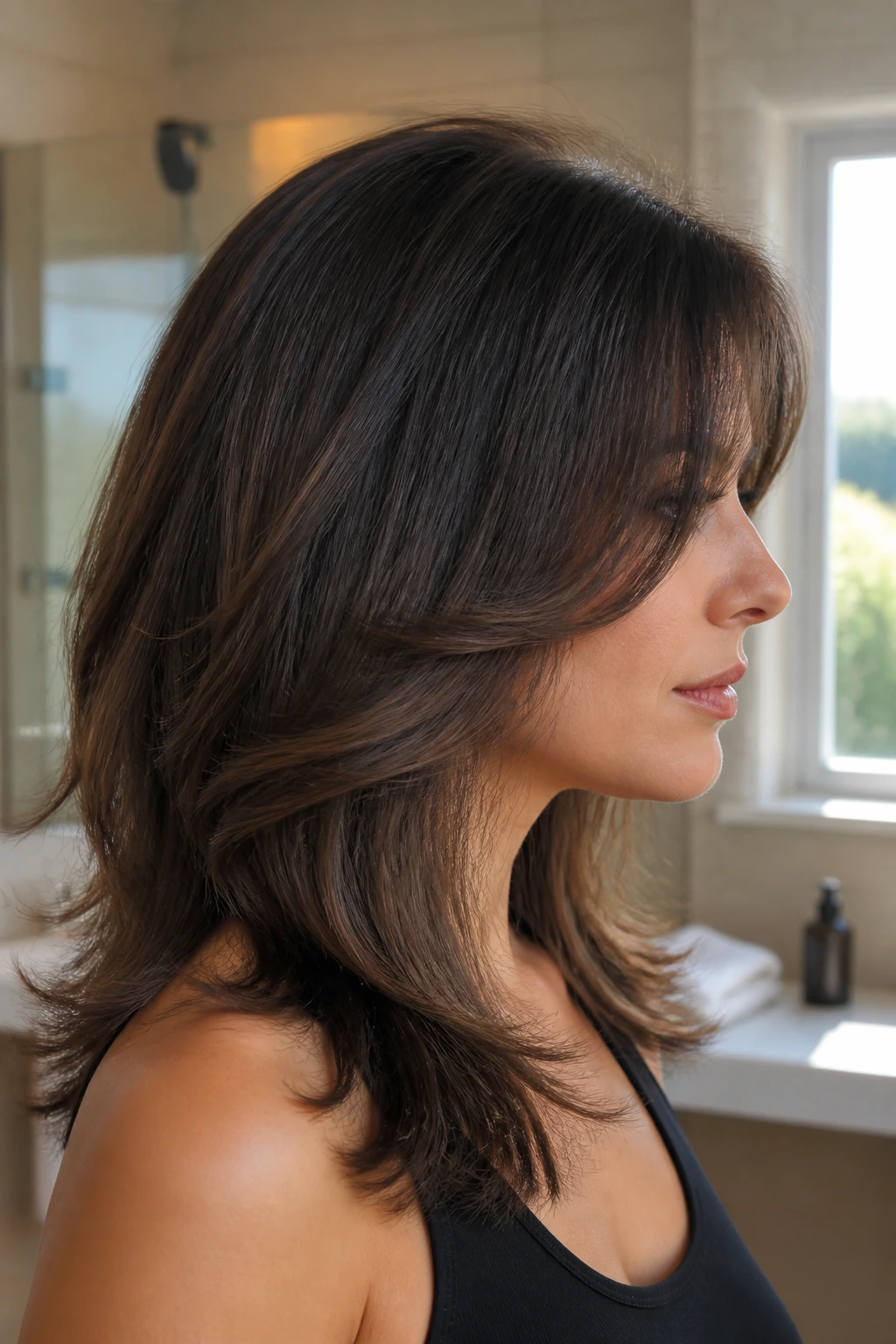
Dense hair can feel heavy in all the wrong places. Debulked layers solve that by removing internal weight while leaving the outside line thick enough to hold its shape. You want controlled release, not a thinning disaster.
The trick is to keep the perimeter strong. The interior can be point-cut, slide-cut, or layered in long sections, but the bottom edge should not look scissored to death. Once that line gets too soft, dense hair starts to puff out and lose its clean finish.
This style is ideal if your hair takes forever to dry or traps heat like a blanket. Less bulk means faster drying, easier movement, and fewer mornings spent fighting the shape.
19. Smooth Swoop Layers
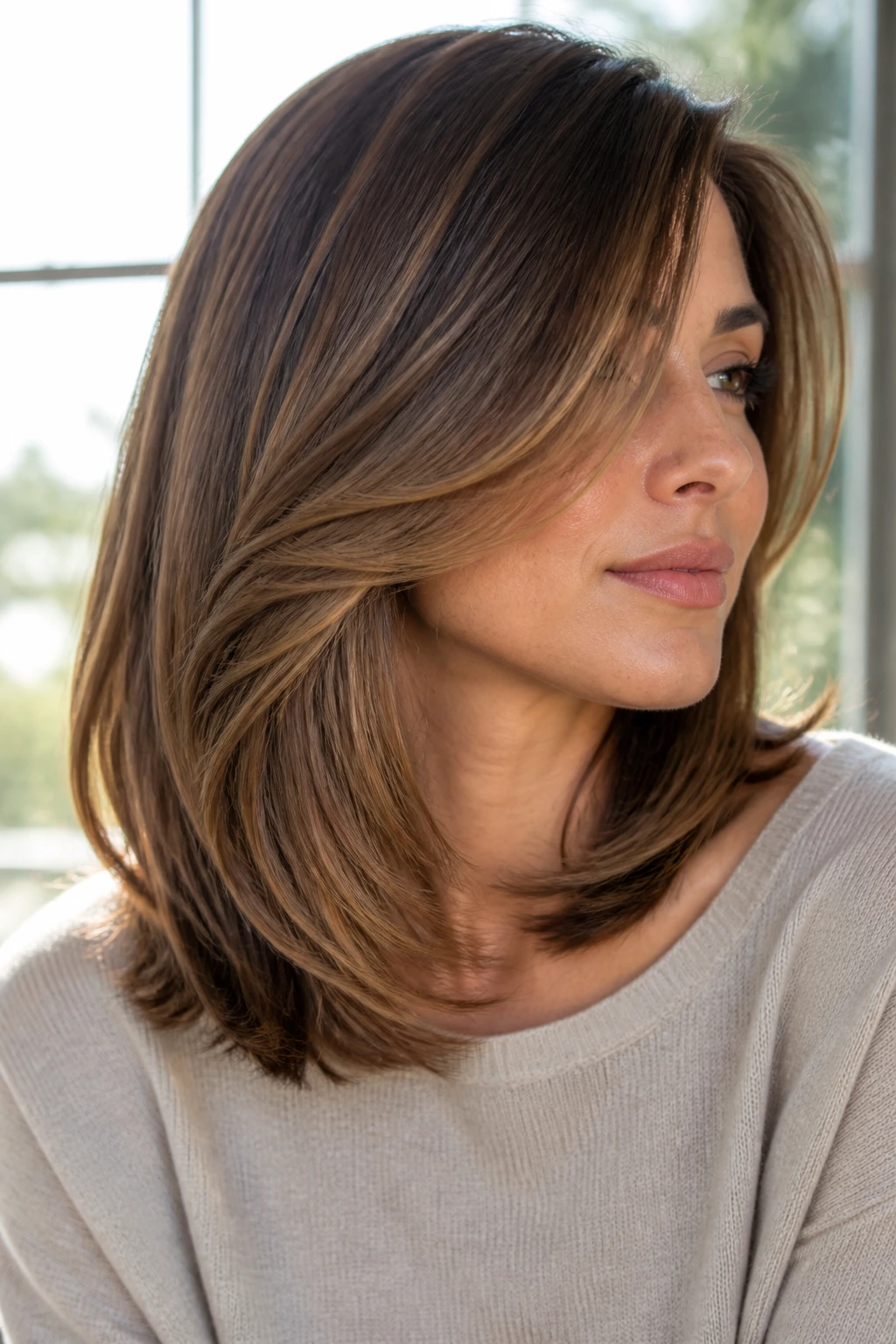
Smooth swoop layers are for people who want movement without obvious texture. The front falls in a gentle arc, the ends curve just enough, and the cut keeps a refined shape even when you skip the curling iron. It’s a calm haircut, which I mean as a compliment.
The swoop is usually stronger on one side or at least more directional around the face. That makes the cut feel softer and a bit more sculpted. It’s a nice choice if your face shape benefits from diagonal lines rather than blunt ones.
This also works well with glossed color. A smooth surface shows dimension in a more elegant way than a shredded texture cut. The highlights sit there with a little shine, which is pleasing in person even when the hair is not trying hard.
20. Choppy Layers for Straight Hair
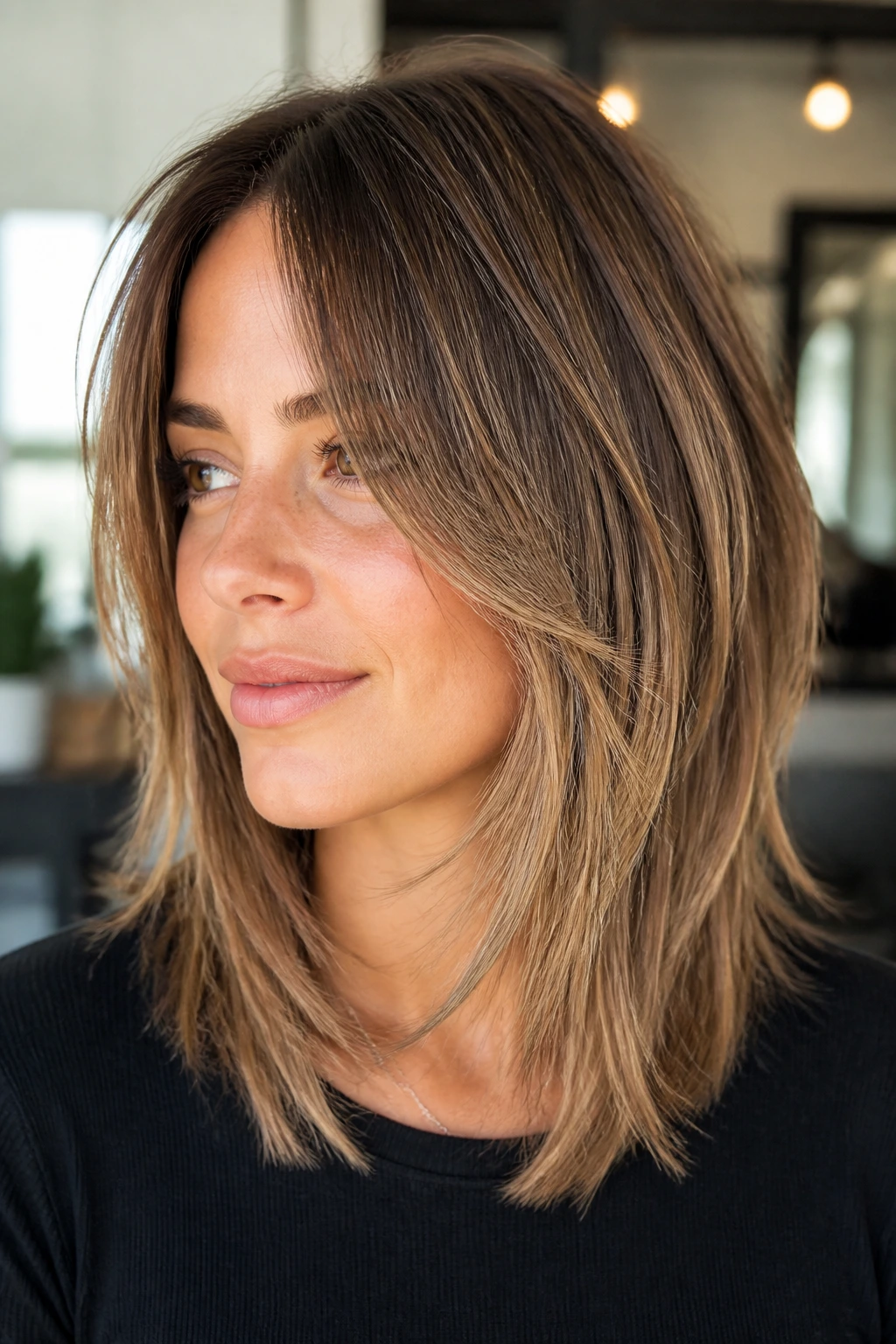
Straight hair can be stubborn. It lies flat, shows every line, and makes a badly layered cut look like a math problem. Choppy layers help, but only if they’re done with enough care to keep the ends from looking ragged.
The best version keeps the layers visible in motion rather than stacked all over the head. You want movement through the mids and a touch of separation at the ends. When you turn your head, the shape should shift. When you stand still, it should still look tidy.
If your hair is poker-straight, this is a good place to ask for some texture around the front and a little internal lift through the crown. Otherwise the layers can disappear on you by afternoon.
21. Shoulder-Flip Layers
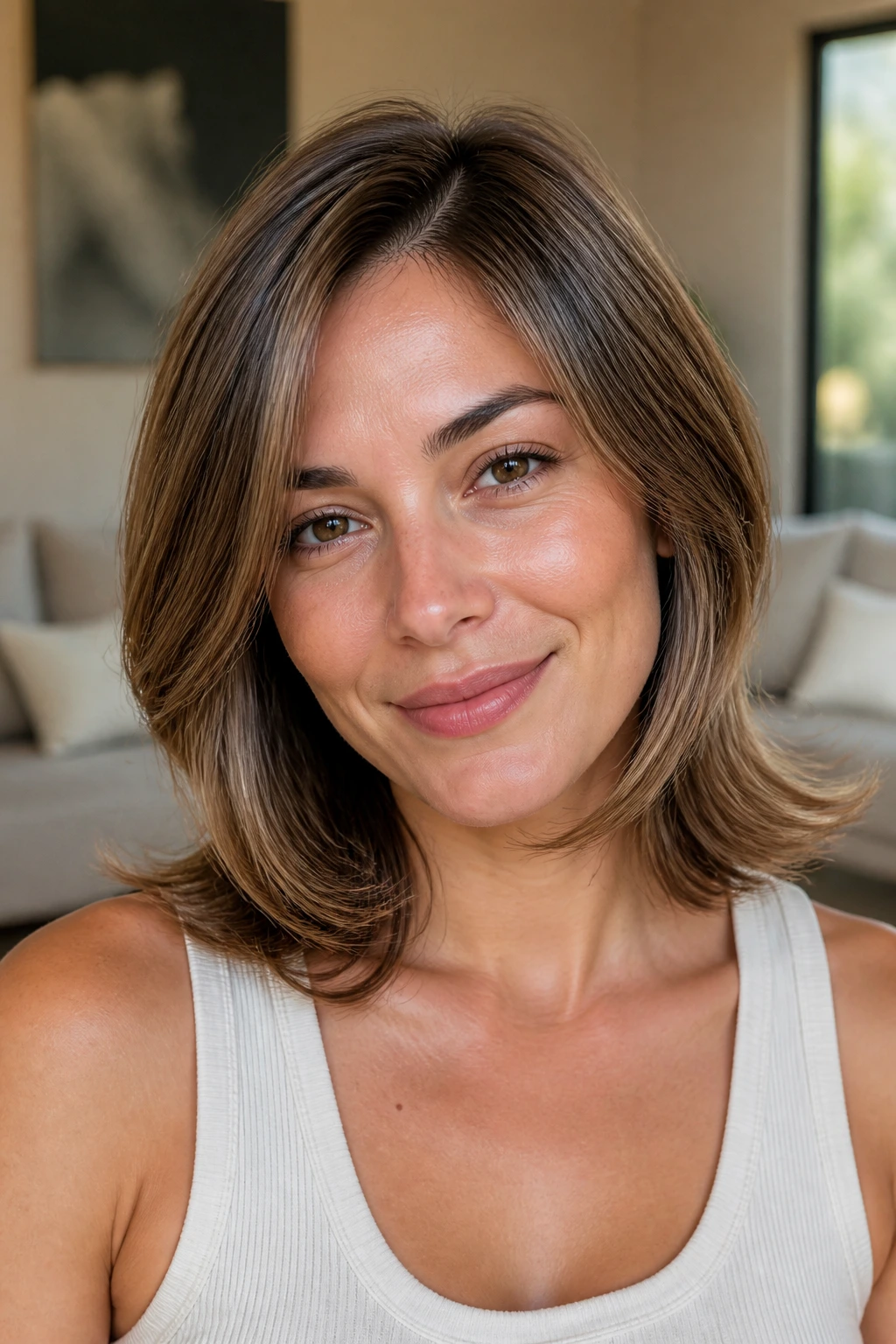
Some cuts are built for one thing: a little flick at the shoulder. That’s what this one does. The layers are shaped to encourage the ends to turn out or under with a brush, a round brush, or even the bend from a quick blow-dry.
This is a smart middle ground for people who want body but not a full-volume blowout. The shape makes the ends look active, which is useful when your hair is medium length and can otherwise sit too straight against the neck.
It also gives you a little room to play. Tucked behind the ears, it feels neat. Flipped out, it feels casual. Same cut. Different mood. That flexibility matters.
22. Jaw-Softening Layers for Square Faces
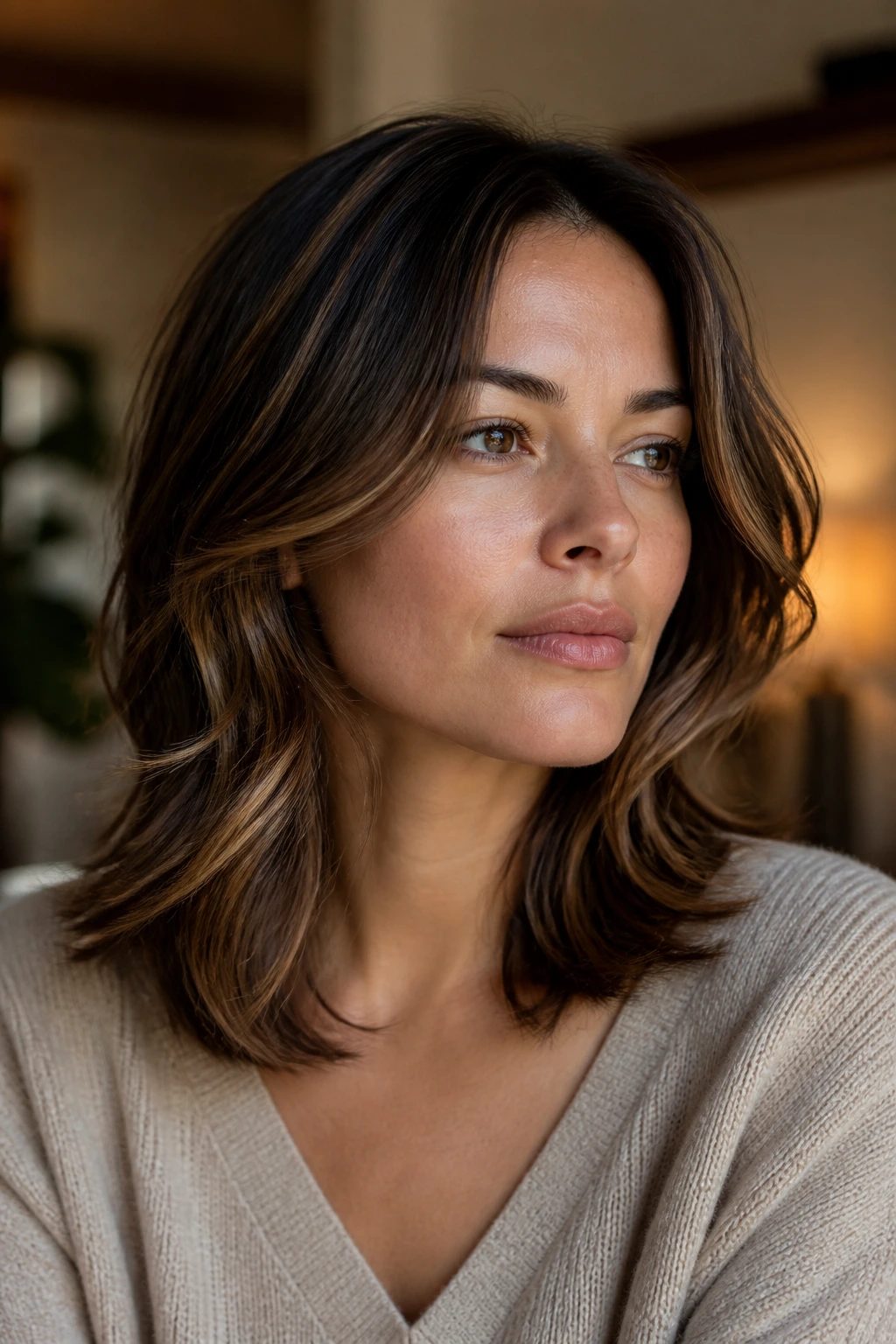
Square jawlines do well with movement that starts slightly below the jaw rather than ending right on it. Jaw-softening layers do that by creating diagonal lines that break up the bluntness around the lower face. The result is softer, not weaker.
The front pieces should fall in a way that nudges the eye downward and inward. That keeps the strongest part of the face shape from feeling boxed in by the haircut. Medium length is useful here because there’s enough length to guide the shape without burying the face under too much hair.
If you wear waves or curls, this gets even better. The shape around the jaw becomes less rigid, and the layers give the curls somewhere to rest instead of piling up in one block.
23. Balayage Layers with Ribboned Dimension
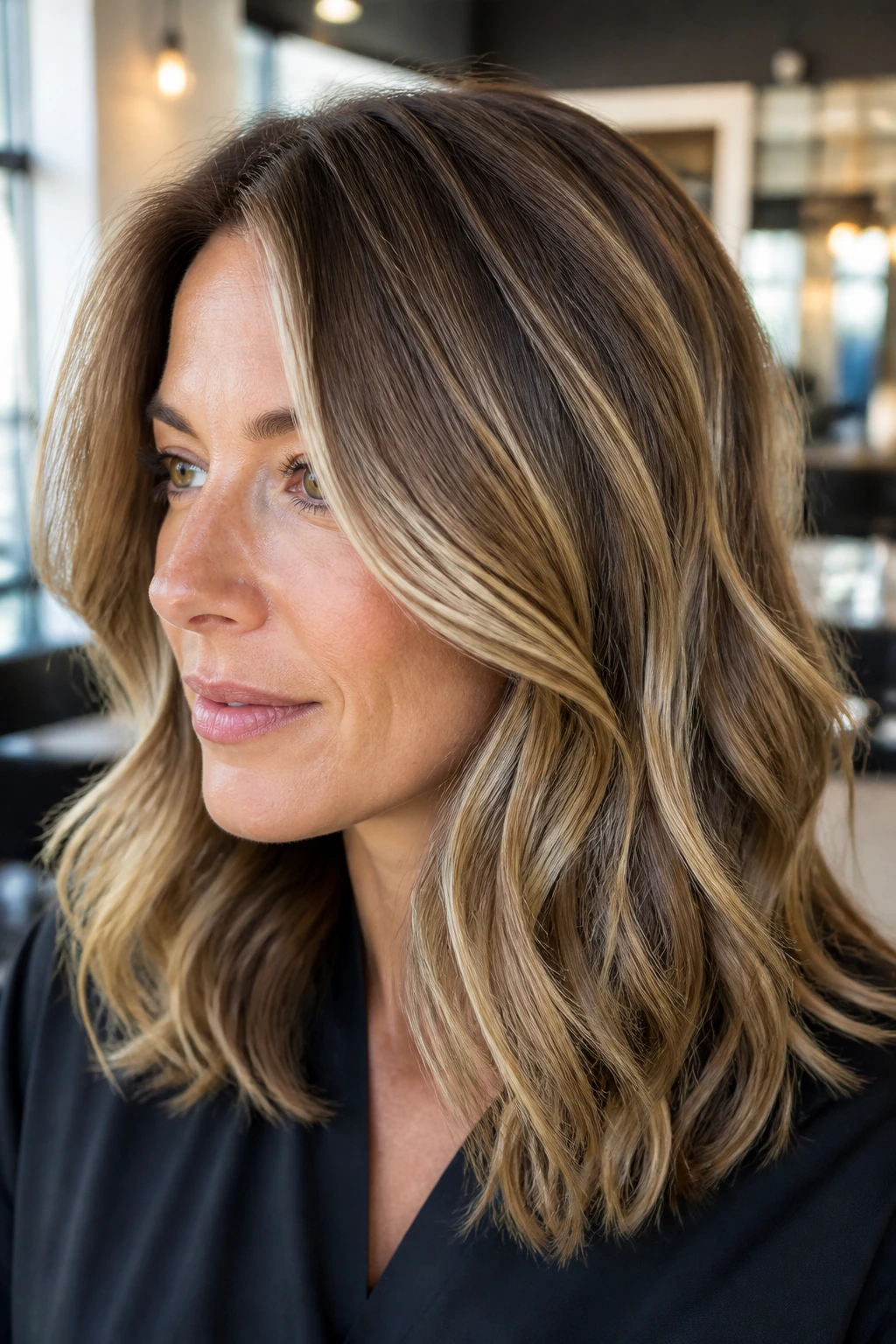
Layered hair and balayage belong together for a reason. The layers break up the surface, so the color shows in ribbons instead of one flat sheet. That matters if you want dimension that looks woven into the haircut rather than painted on top.
The best placement usually lives around the face, the mids, and the outer veil of hair. On medium length cuts, those ribbons move when you turn your head, which makes the color feel more alive. A blunt one-length cut can hide that work. A layered shape shows it off.
I like this combination especially on soft curls, loose waves, and blowouts. The cut gives the color a path to travel, and the color gives the cut depth. That pairing is harder to fake than people think.
24. Lift-at-the-Crown Layers
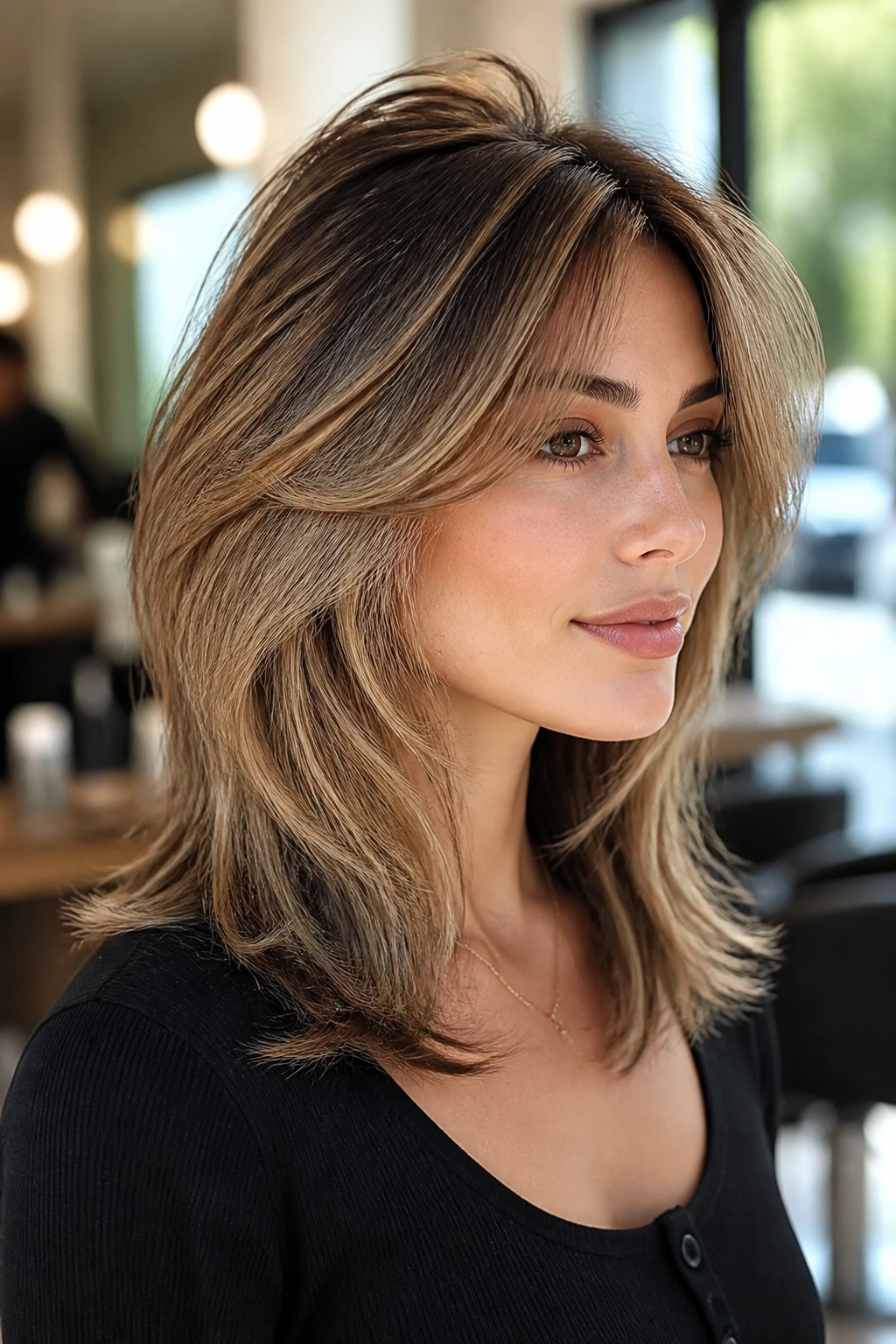
If your hair collapses at the roots, this is the cut to consider. Lift-at-the-crown layers create space at the top without stripping the ends. That’s a delicate balance, because too many short top layers can make the crown stick up in a bad way.
A careful version keeps the shortest pieces subtle and uses the rest of the layering to support movement through the mids. You’re after lift, not volume for its own sake. The distinction matters. One looks airy; the other looks like you argued with a round brush and lost.
This is a strong choice for medium hair that feels heavy by day two. The shape can wake back up with dry shampoo, a root spray, and a quick brush at the crown.
25. Everyday Polish Layers
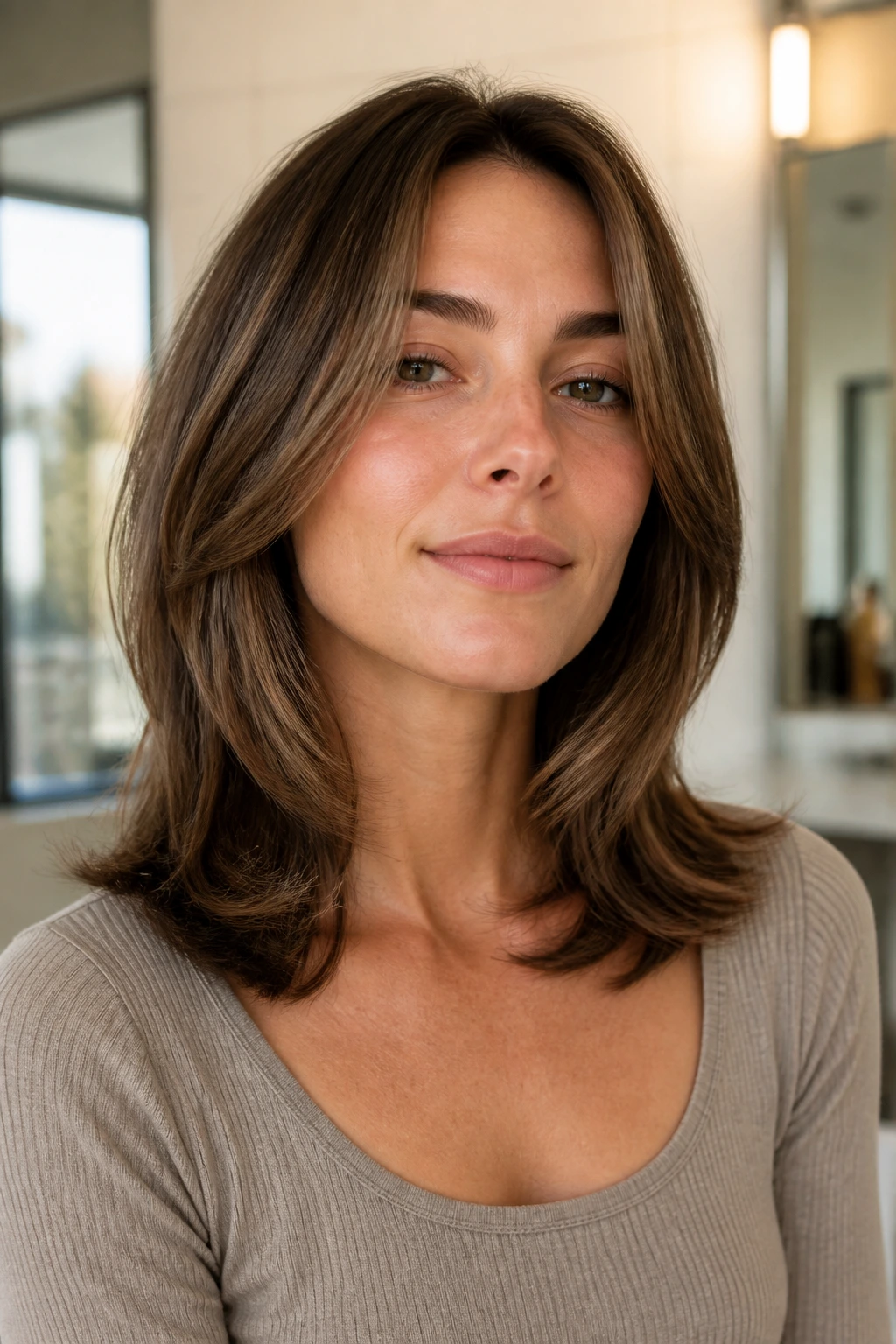
This is the haircut for people who want movement but do not want to think about it all morning. The layers are soft, the outline stays clean, and the whole shape looks good with a blow-dry, an air-dry, or a quick bend from a flat iron. That kind of versatility is rare enough to respect.
The perimeter usually lands around the collarbone or just above it, with layers that begin low enough to keep fullness. Nothing feels overcut. Nothing feels trendy in a way that might look strange two months later. It just works.
If I had to pick one medium length layered haircut for somebody who wants broad appeal, this is the one. It’s not the loudest choice in the room. It is, though, the one that keeps showing up in the mirror looking like the haircut meant something.
What Gives Medium Layers Their Swing
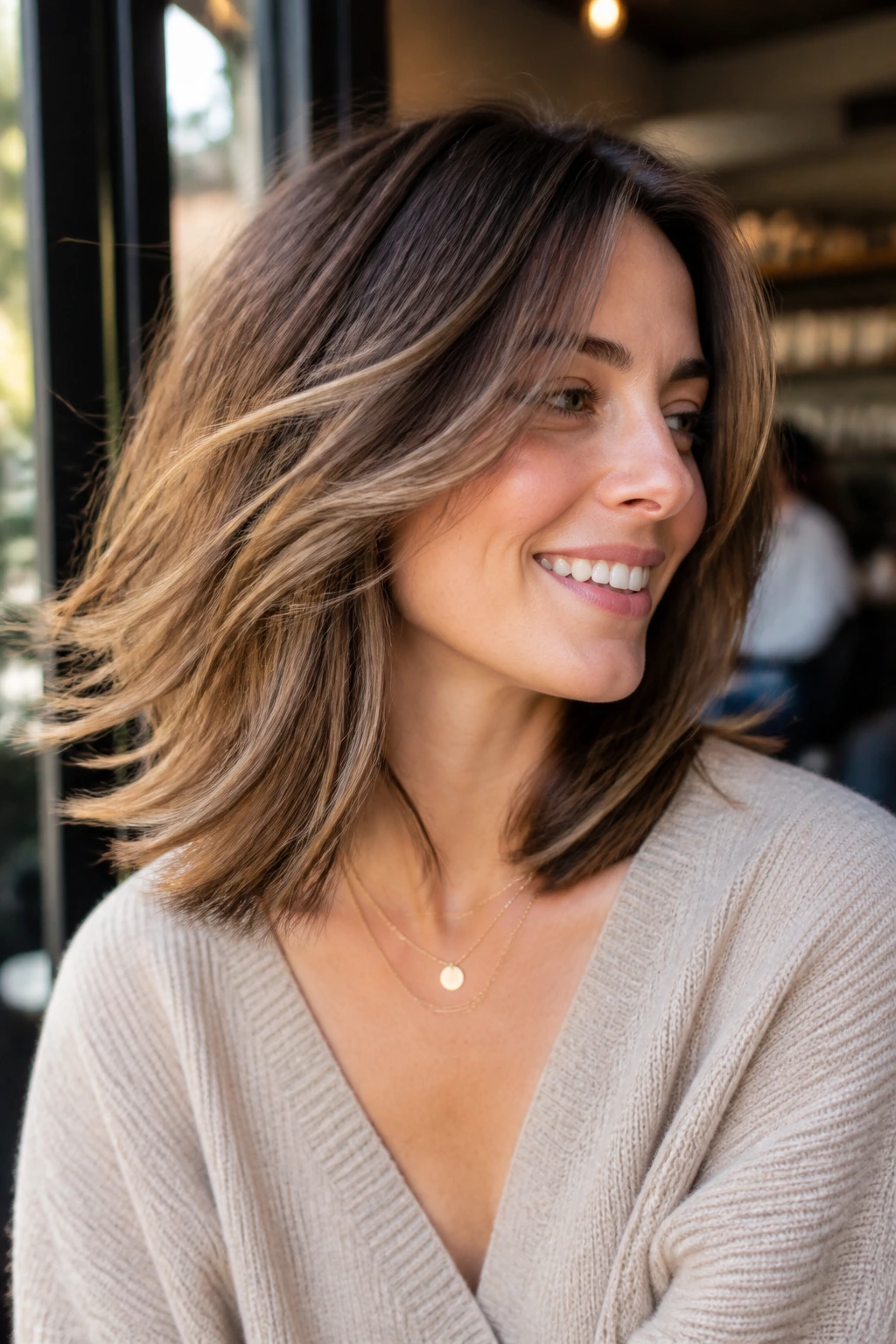
The difference between a layered cut that moves and one that lies there is mostly geometry. Hair has weight, and that weight pulls straight down unless the cut gives it somewhere else to go. Medium length is the sweet spot because there’s enough length to preserve fullness, but not so much that the layers disappear under their own gravity.
The front matters more than people think. A face frame that starts near the cheekbone can change the whole read of the haircut, because it breaks up the heaviness around the jaw and creates a line the eye follows. If the face frame starts too high, the cut can look thin. If it starts too low, the hair just hangs.
Internal layers are the hidden workhorses here. You don’t always see them when the hair is down, but you feel them when the cut dries faster, bends easier, and sits with more air between the strands. That’s where body comes from. Not from making everything short. From making the weight smarter.
Color plays into this too. Balayage on layered hair doesn’t sit there like a painted stripe. It bends, moves, and breaks up the silhouette. On a medium cut, that dimension tends to look softer because the layers and the color are working together instead of competing.
What to Tell Your Stylist at the Chair
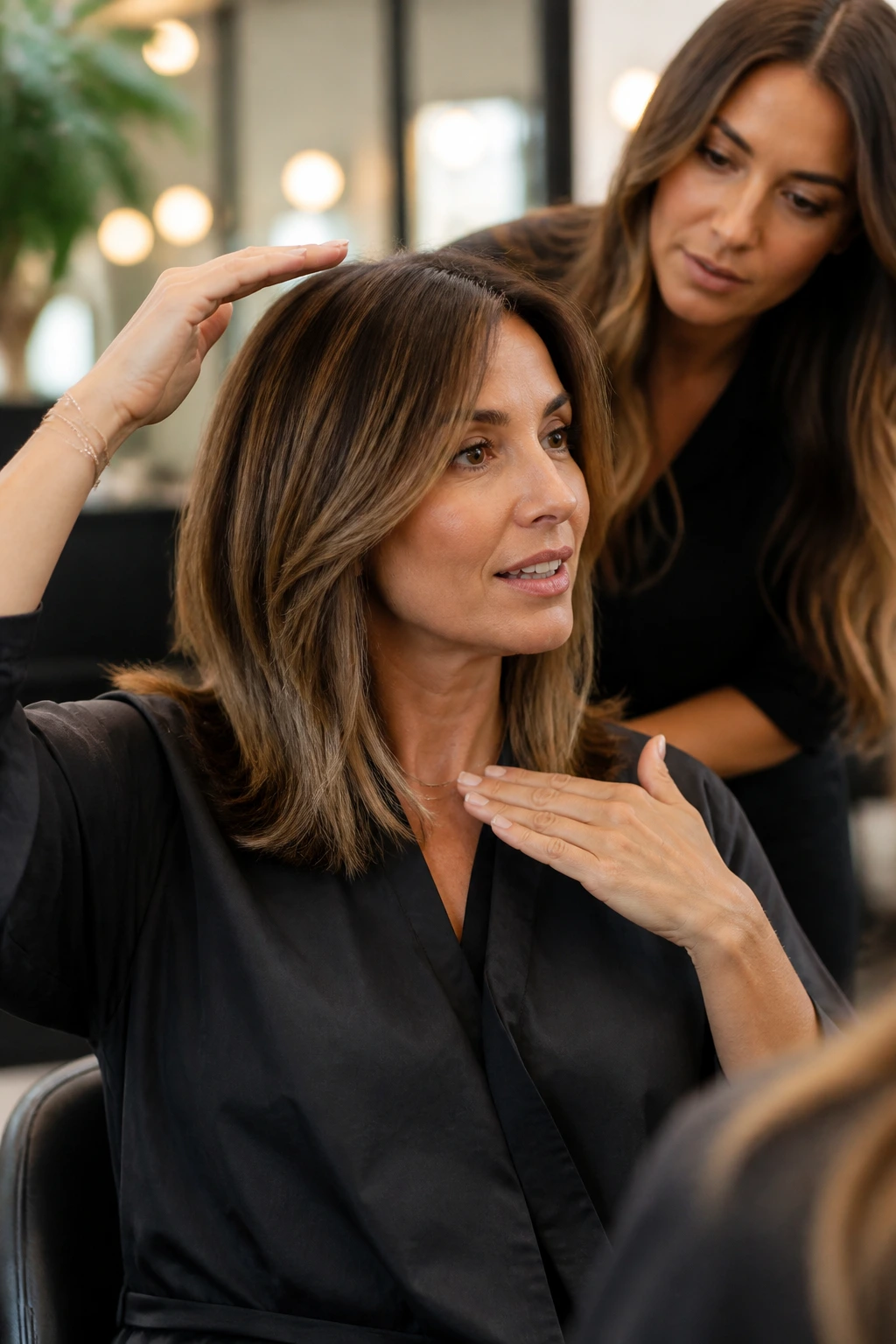
Photos help, but only if you know what part of the photo matters. Bring 2 or 3 images, then point to the exact pieces you like: the front, the crown, the ends, or the way the layers land around the neck. Saying “I like this haircut” is fuzzy. Saying “I like the length at the collarbone, but I want less crown height” gives the stylist something useful.
Be honest about how you wear your hair. If you air-dry most days, say that. If you own a round brush but hate using it, say that too. A shape that only works with a perfect blowout is a bad bargain for most people. The cut should fit your habits, not the other way around.
Ask about weight removal, face-framing length, and where the shortest layer starts. Those three details usually decide whether a layered haircut feels soft or choppy. You can also ask the stylist to keep the perimeter blunt if you want density at the bottom, which is often the better move for medium hair.
A tiny side note: cowlicks and natural part lines matter. A lot. If your hair always falls to one side, the cut should respect that instead of pretending you’ll change your habits after the appointment.
Tools and Products That Help the Shape
-
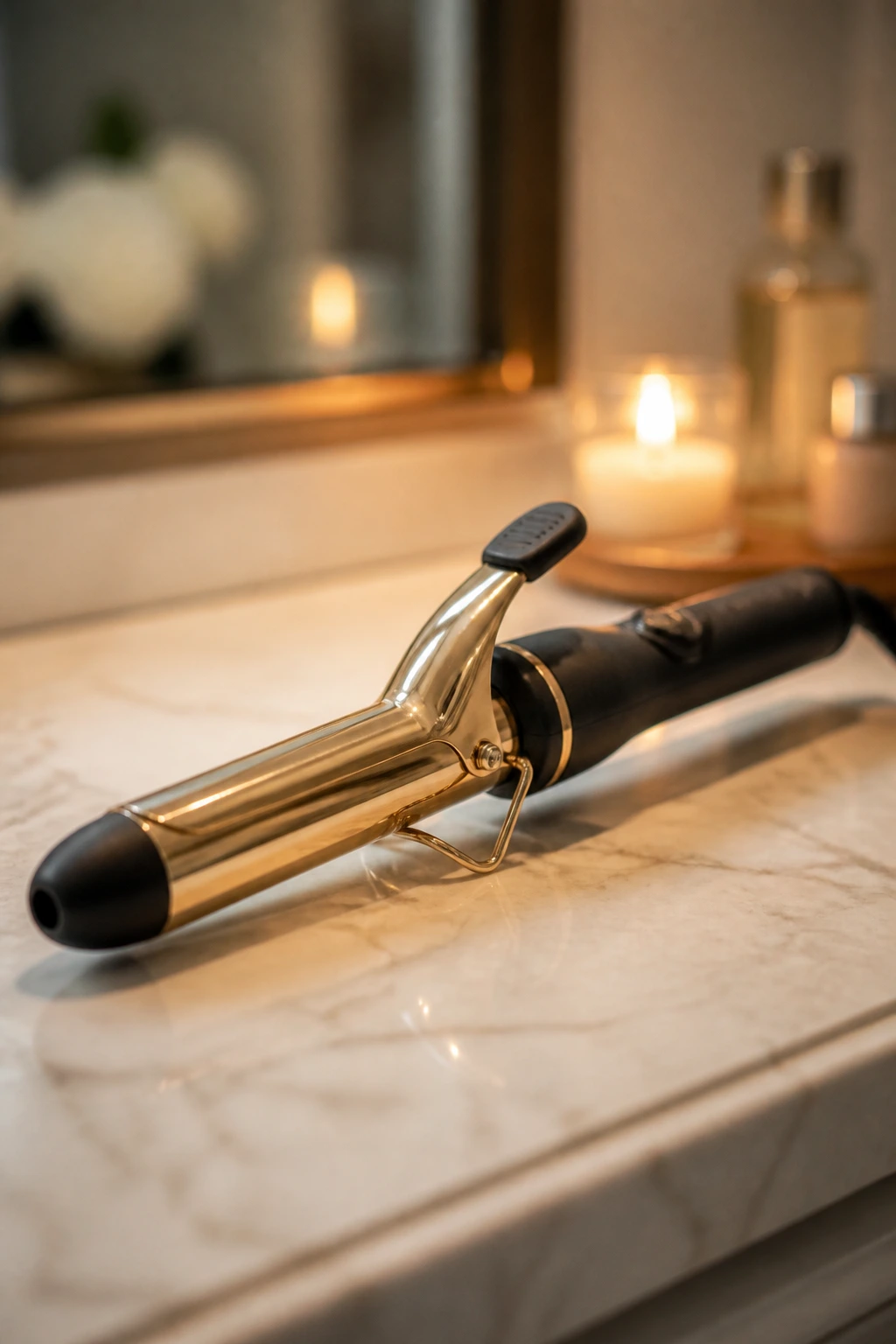
1.25-inch curling iron or wand: Useful for soft bends and face-framing movement; the size is small enough to create shape without turning the cut into tight curls.
-
1.5-inch round brush: A solid choice for collarbone flips, blowout layers, and lifting the front away from the face.
-
Blow-dryer with a concentrator nozzle: The nozzle helps direct the airflow, which matters when you want the layers to sit smooth instead of frizzing out.
-
Heat protectant spray: Use it before every hot-tool pass; medium layered cuts show damage fast because the ends are often the most visible part.
-
Volumizing mousse or root spray: Good for lift at the crown and for keeping fine hair from collapsing once the blow-dry cools.
-
Texture spray: Useful on shaggy, piecey, or wave-friendly cuts; it separates the layers without making them crunchy.
-
Lightweight smoothing cream: Best for thick or frizz-prone hair that needs the layers to sit neatly instead of puffing.
-
Wide-tooth comb: Handy for detangling wavy or curly layered hair without stretching the shape out of place.
-
Clips for sectioning: Not glamorous. Very useful. Clean sections make the blow-dry faster and keep the layers from getting tangled together.
How to Wear These Cuts Day to Day

Finish: A soft blowout is the classic move for medium length layered haircuts. Roll the front away from the face, lift the crown at the root, and let the ends curve under or out depending on the shape you want. If you air-dry, use a light cream or mousse and let the layers settle on their own.
Best pairing: Curtain bangs, balayage, and a collarbone length perimeter all work well with layered cuts because they keep the movement visible. A blunt fringe can work too, but it changes the tone of the cut fast, so decide whether you want soft or sharp before you pick it.
Accessories: Hair clips, narrow headbands, and simple pins sit nicely on layered hair because the shape already has some movement. Heavy accessories can crush the crown, so keep them light if you care about volume.
Quick refresh: On second-day hair, mist the mid-lengths with water or a leave-in spray, twist the front pieces around your fingers, and hit only the roots with a small amount of dry shampoo. Don’t soak the whole head. That just makes the layers frizz and lose their clean line.
Small Tweaks That Change the Whole Cut
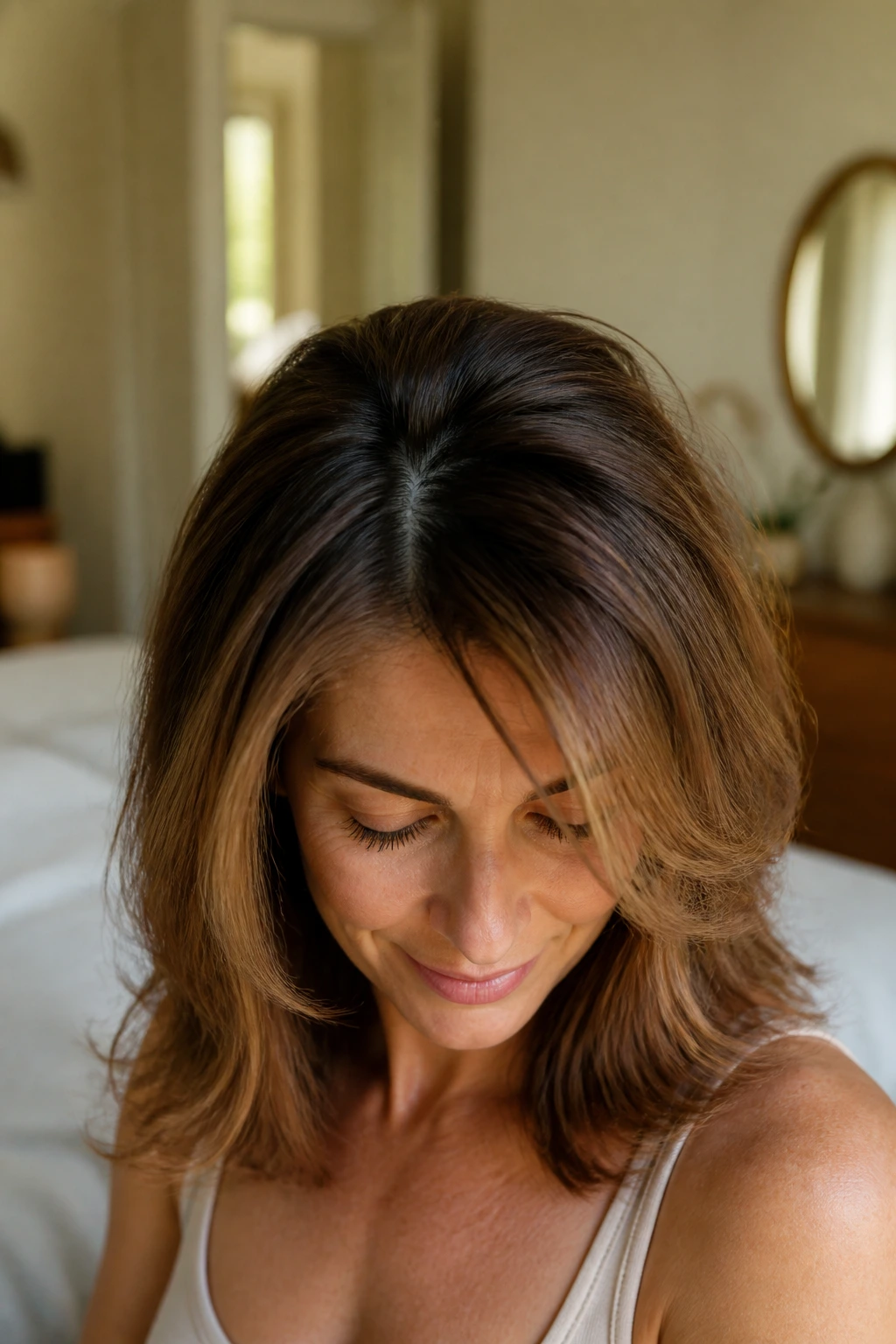
Root Lift: If your hair lies flat, ask for a bit more elevation through the crown and use a root spray at the base before drying. The cut won’t do everything alone, but it will stop fighting you.
Face Frame: A longer face frame softens round cheeks and broad foreheads, while a shorter one brings attention to the eyes and cheekbones. The wrong length here is what makes a layered haircut feel off even when the rest of the cut is fine.
Texture Control: Fine hair usually wants softer layering and fewer aggressive chops. Thick hair can handle more internal removal, but the perimeter still needs to stay clean or the shape goes fuzzy.
Color Placement: Balayage looks richest when it follows the movement of the layers. Put brightness around the front and through the mids, and the haircut reads deeper and more dimensional.
Common Mistakes That Flatten the Whole Look
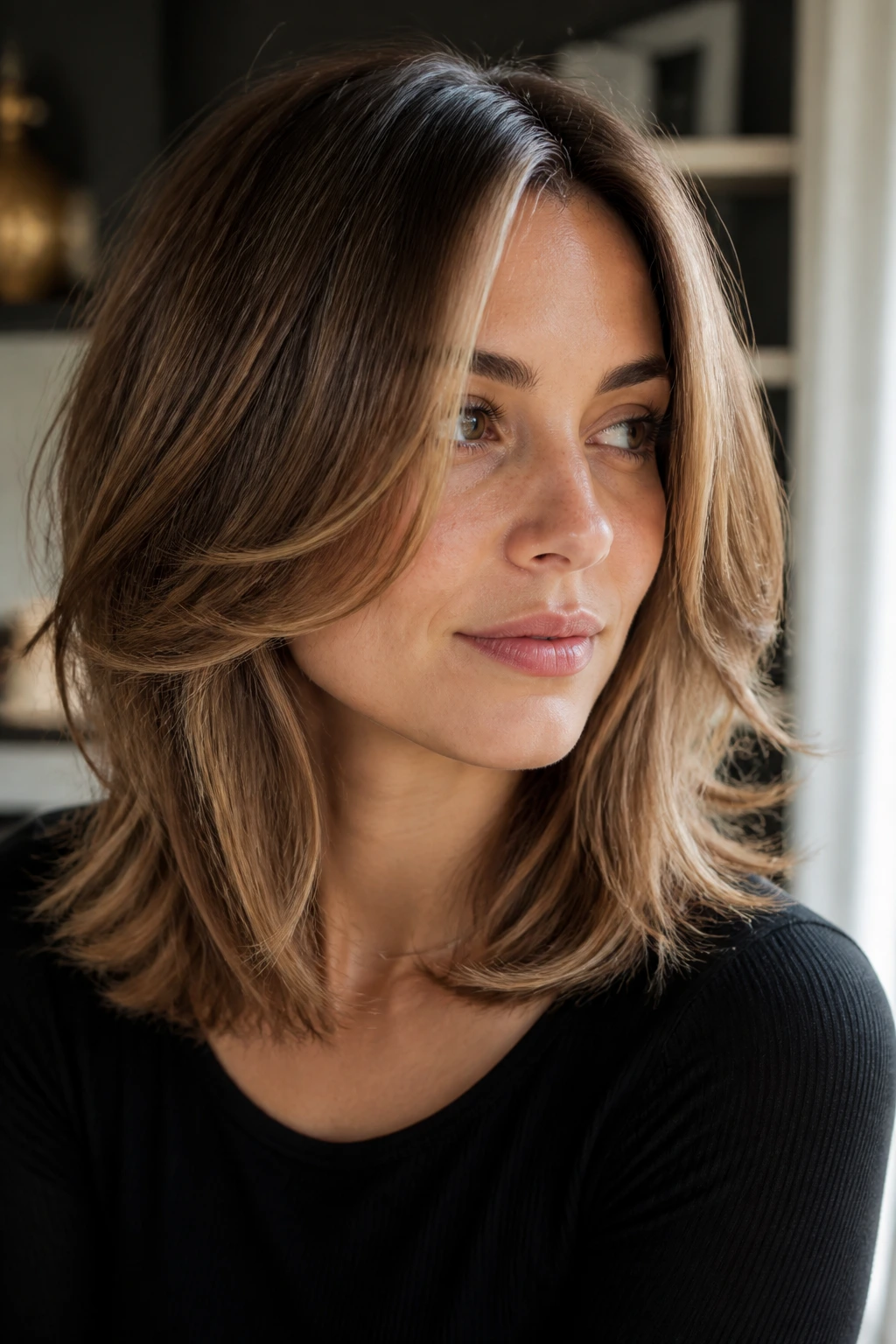
One common mistake is asking for too many short layers at once. The haircut might look airy in the chair, but a week later the ends can go thin and the crown can puff up. The fix is simple: keep the shortest pieces controlled and protect the perimeter.
Another problem is treating every hair type the same. Fine hair and dense hair need different kinds of layering. Fine hair usually wants subtle movement and a blunt edge; dense hair can handle more weight removal, but only if the outline stays solid. If your stylist talks only about “layers” and never mentions density or texture, keep asking.
People also ignore the part line they actually wear. If your hair always parts left, a center-parted cut can fall into your face in ways you won’t enjoy. The solution is to cut the shape for the part you live in, not the part you think you should have.
Overusing heavy styling cream is another easy way to kill body. A rich cream can make the layers collapse and stick together. If you need control, use a small amount and pair it with a round brush or texture spray instead of loading up on product.
Variations and Alternatives to Try
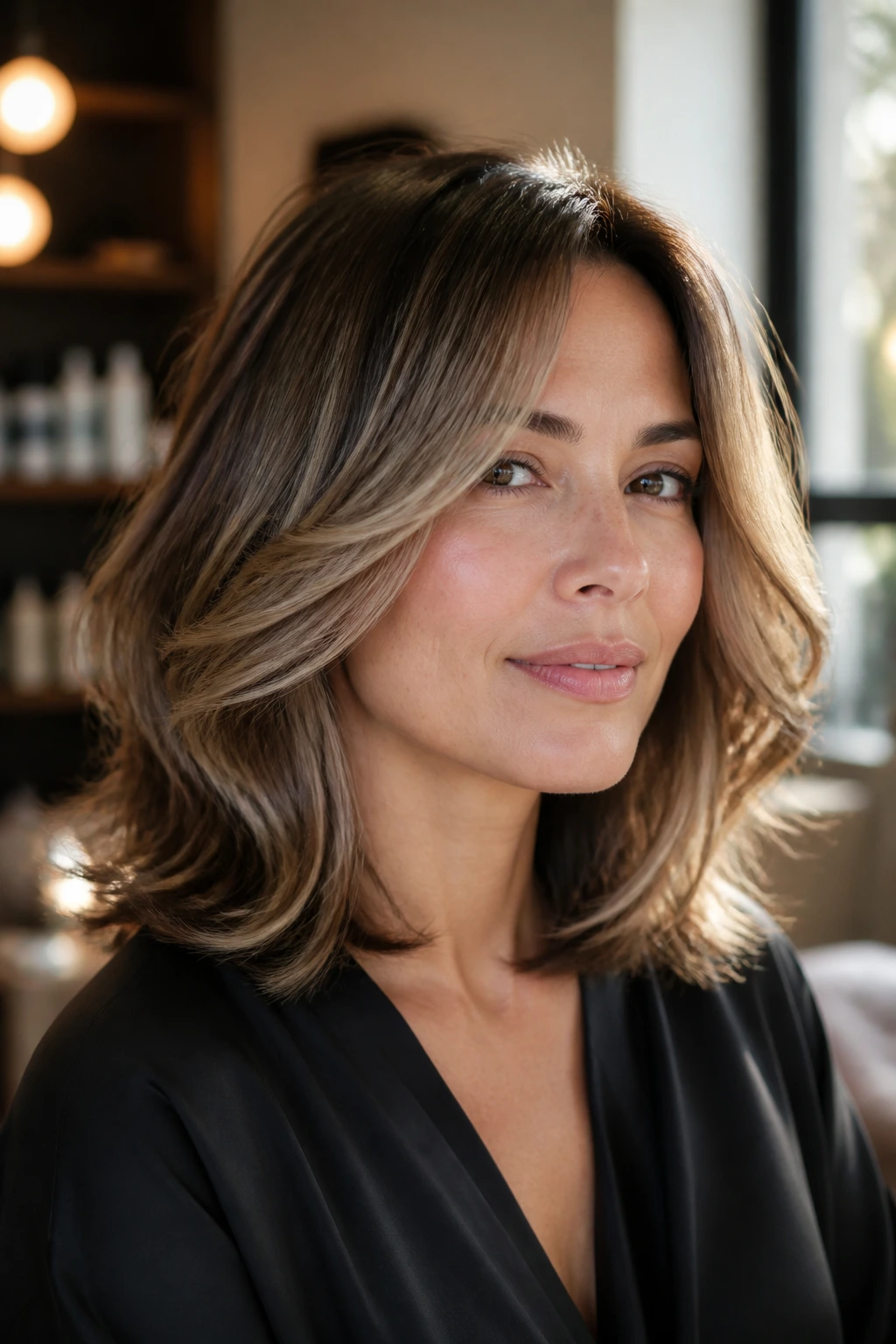
The Soft Blowout Version: Keep the perimeter at the collarbone, then add rounded layers that turn under with a brush. This version is for anyone who likes polished movement more than a lived-in texture.
The Shaggy Weekend Version: Push the layers higher, add more separation at the ends, and leave the front pieces a little piecey. It’s a looser, more casual shape that works well with texture spray and natural wave.
The Blunt-and-Soft Combo: Leave the bottom line clean and blunt, then keep the layers invisible inside the cut. It suits fine hair and anyone who wants body without obvious choppiness.
The Curly Shape-Up: Use curl-by-curl layering around the face and crown, then keep the lower length full. This version is about balance and bounce, not volume for its own sake.
The Color-Forward Version: Add balayage, money pieces, or soft face-framing highlights to make the layered shape read more clearly. The cut does the movement; the color tells the eye where to look.
Keeping the Shape Between Appointments
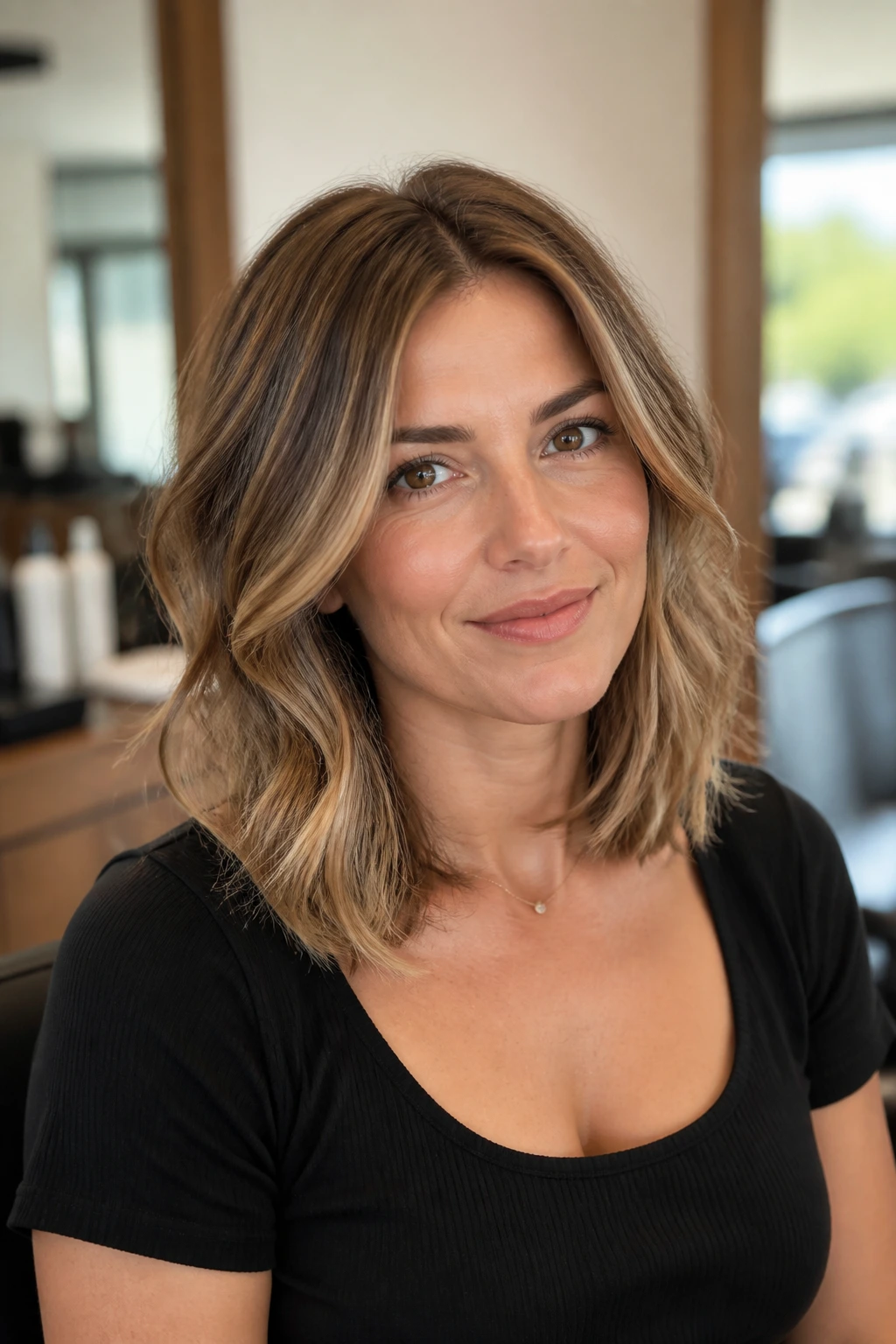
Medium length layered haircuts hold up best when you do not wait too long between trims. Eight to twelve weeks is the practical window for most shapes, with the shorter end better for shaggier cuts and the longer end fine for blunt-perimeter lobs. If the ends start flipping in weird directions or the face frame loses its shape, you’ve waited too long.
Wash routine matters too. Heavy conditioners near the root will flatten a layered cut faster than most people expect. Keep richer products from the scalp, then work them through the mids and ends where the hair actually needs them. That one habit changes the look more than another fancy styling product.
If you color your hair, especially with balayage, plan on toning or glossing at intervals that keep the dimension from turning dull. Faded color can make layers look less defined, even if the cut itself is fine. A quick gloss often wakes the whole shape back up.
Sleeping on a silk or satin pillowcase helps, but the bigger win is not sleeping with soaked hair twisted into a wad. Let the roots dry well enough that the shape doesn’t set in a weird bend. Hair remembers.
Frequently Asked Questions
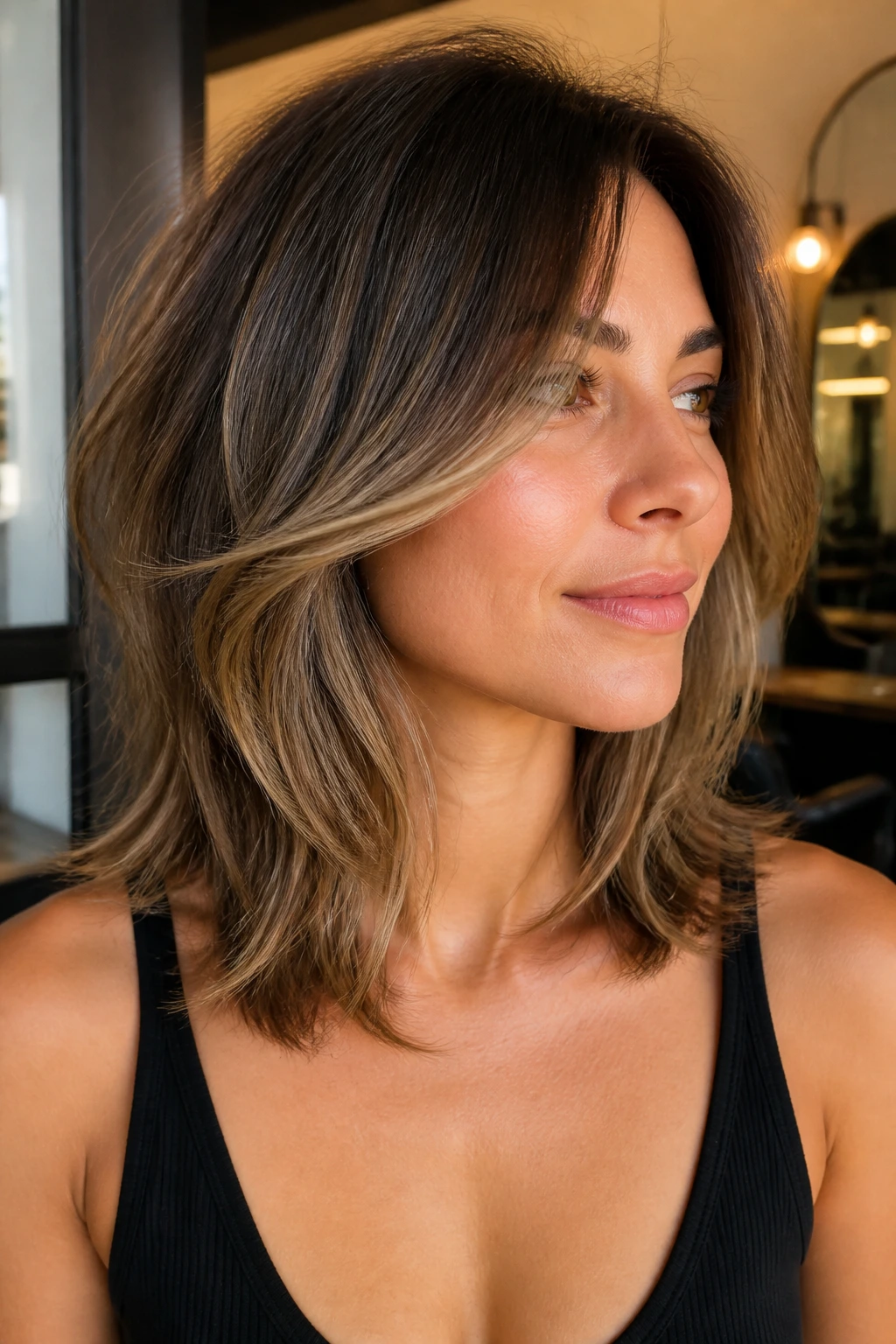
Which medium length layered haircut is best for fine hair?
Invisible layers, blunt-perimeter lobs, and soft face-framing cuts usually work best. They add movement without shredding the ends, which is the fastest way to make fine hair look thinner than it is.
What layer style works best for thick hair?
U-shaped layers, debulked layers, and long butterfly shapes are smart choices. They remove weight while keeping the outline strong, so the cut doesn’t puff into a triangle.
Do layers make curly hair frizzy?
Bad layers can. Good ones help curls sit in cleaner sections and stop the triangle shape. If your curls frizz easily, keep the layering controlled and avoid over-thinning the ends.
How often should medium layered hair be trimmed?
Most cuts need a trim every 8 to 12 weeks. If you wear a shag, a wolf-lite shape, or a strong face frame, stay closer to 8 weeks so the shape doesn’t wander.
Can I get layers if I air-dry most of the time?
Yes, but the layering should be soft and placed for natural bend, not for a blowout only. Ask your stylist how the cut will look when it dries without heat; that answer matters more than a perfect salon finish.
What if my layers look choppy instead of soft?
Usually the layers are too short, too separated, or cut without enough blending into the perimeter. A smoothing trim can help, but the better fix is to ask for softer transitions and less aggressive weight removal next time.
Do balayage highlights look better on layered hair?
They usually do, because the layers break up the color and keep it from reading as one flat stripe. Medium lengths are especially good for this since the ribbons move around the face and through the mids.
Is a medium layered haircut high maintenance?
It can be, but it doesn’t have to be. A blunt-perimeter layered lob is easier to live with than a shag or wolf-lite cut, and most of the upkeep comes from trimming the shape before it grows heavy.
The Shape That Keeps Its Swing
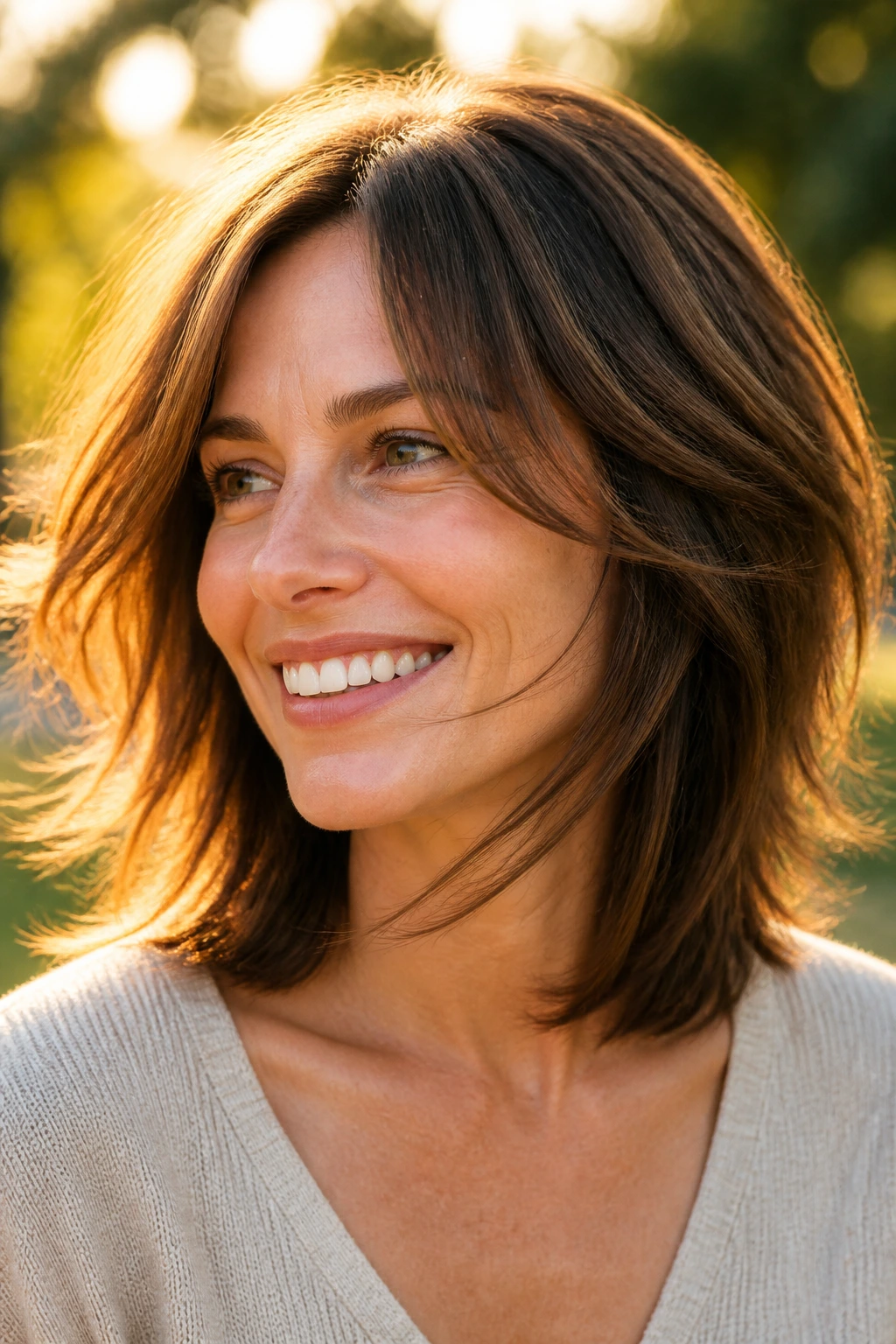
The best medium length layered haircuts do one thing well: they keep the hair from settling into a dull, heavy block. That can look soft and polished, or piecey and undone, or somewhere in the middle. The cut itself is the structure; your part, texture, and color decide the mood.
If you’re sitting in a salon chair trying to choose, think less about trends and more about weight, balance, and the way your hair behaves on day three. The right layers are the ones that still look like a haircut after sleeping on them. That’s the test that matters.
