



Blonde hair looks for men can read clean, sharp, sun-faded, or icy enough to stop traffic, and the difference is almost never the dye alone. It’s the cut, the tone, the root depth, and whether the hair still has enough life in it to hold shape after bleaching. A pale buzz cut and a pale shag are the same color only on paper.
The part most people miss: blonde shows everything. Brass. Banding. Dry ends. A weak fade. A lazy neckline. There’s nowhere to hide, which is why the best blonde looks on men feel deliberate instead of accidental. The color has to sit on top of a shape that already works.
That’s also why this kind of style can be so good when it’s done right. A little warmth can make dark brows look stronger. A cool ash tone can calm a heavy beard. A rooted blonde can buy you time between salon visits. And when the haircut matches the tone, the whole thing lands with a kind of ease that’s hard to fake.
Why These Blonde Looks Work So Well
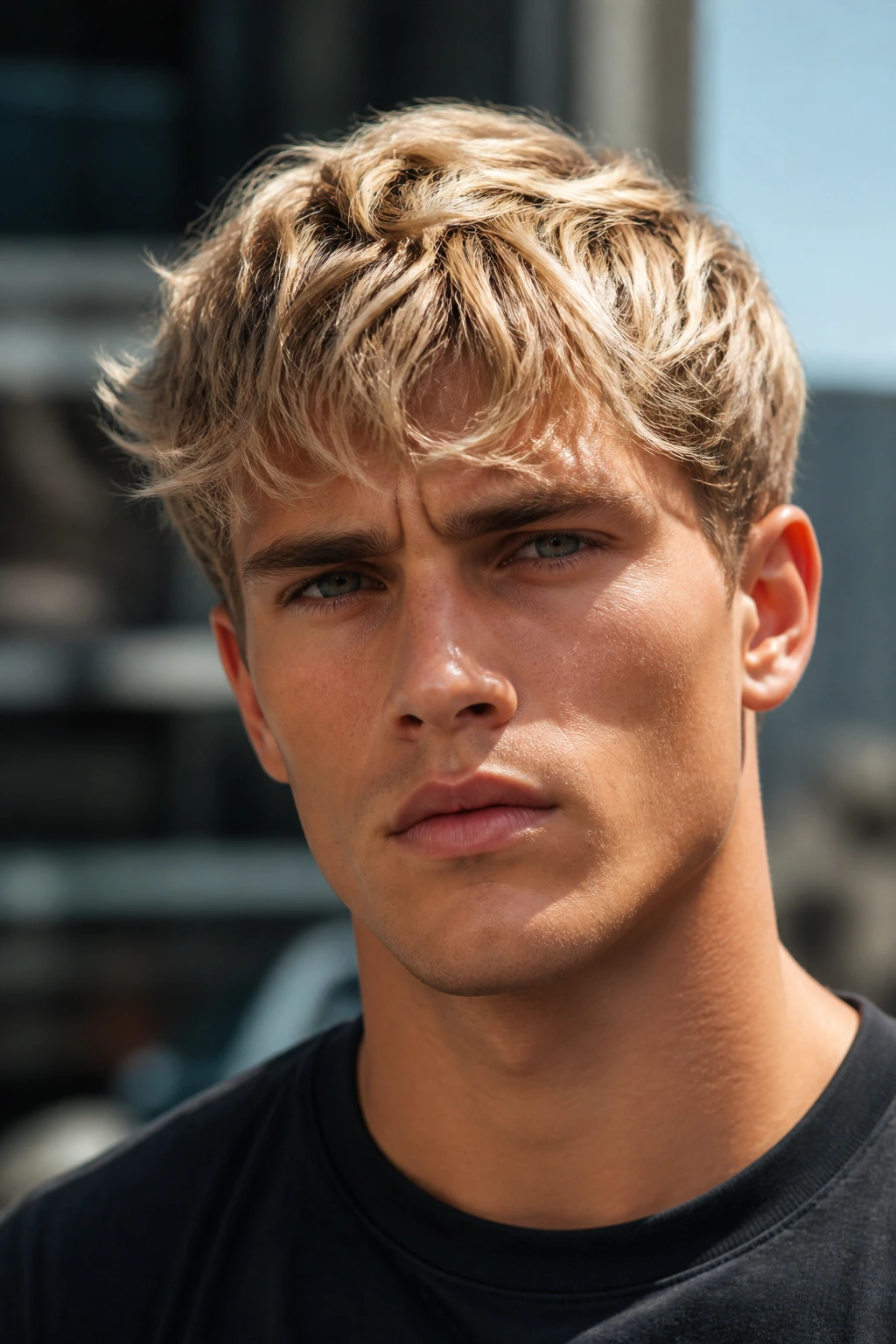
- Short Cuts Show the Color Clearly: Buzz cuts, crops, and Caesars let blonde read immediately, without depending on daily styling or a blow-dry.
- Tone Changes the Mood Fast: Honey, beige, ash, platinum, and dirty blonde each send a different signal, even on the same haircut.
- Root Shadow Helps Grow-Out: Leaving a little darkness at the base makes the style look intentional and keeps the first inch of regrowth from shouting at you.
- Texture Makes Blonde Look Richer: Waves, curls, and choppy layers stop pale color from looking flat, which matters more than most guys expect.
- Face Shape Can Be Corrected With Hair: Fringe softens a long face, height adds length to a round one, and side parts make a broad forehead look more contained.
- There’s a Version for Every Maintenance Level: Some of these looks need toner and trimming every few weeks. Others can drift a little and still look good.
1. Bleached Buzz Cut
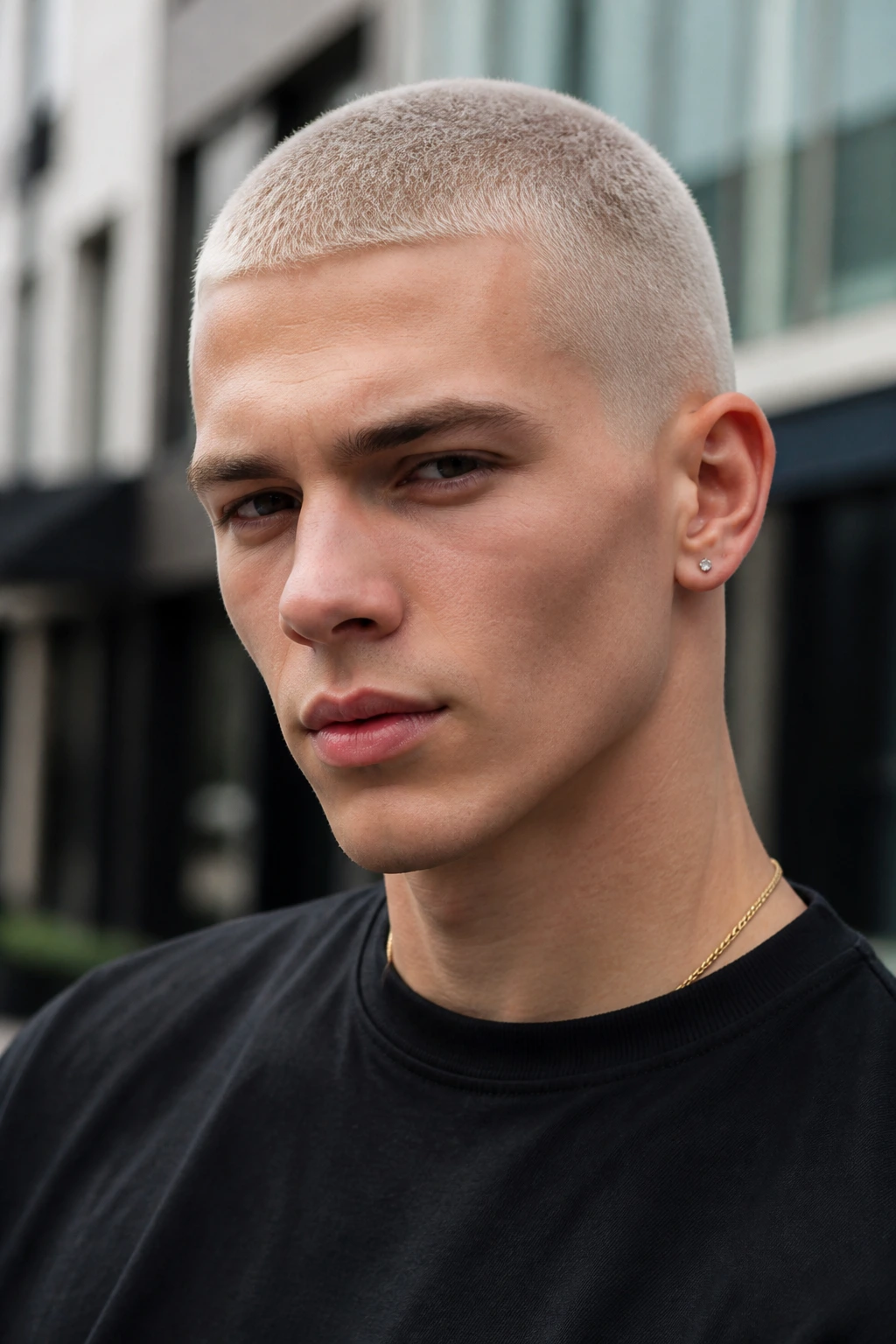
A bleached buzz cut is the bluntest way to wear blonde, and I mean that as a compliment. There’s no styling trick to hide behind, no curl pattern to carry the color, and no fringe to soften a bad tone. What you get is pure contrast: pale hair, darker brows, clean edges, and a head shape that suddenly matters a lot more. That’s why it works best when the fade is crisp and the color is even from crown to hairline.
This cut suits men who want the blonde to feel severe, modern, and low-fuss. If your hair is already coarse or dark, the short length keeps the bleaching process a little more forgiving because the color doesn’t need to travel far. Ask for a guard #1 or #2 on top, then a skin fade or tight taper at the sides if you want the color to look sharper. Keep the tone icy or neutral, not banana-yellow. That yellow is cheap-looking in a hurry.
2. Platinum Textured Crop
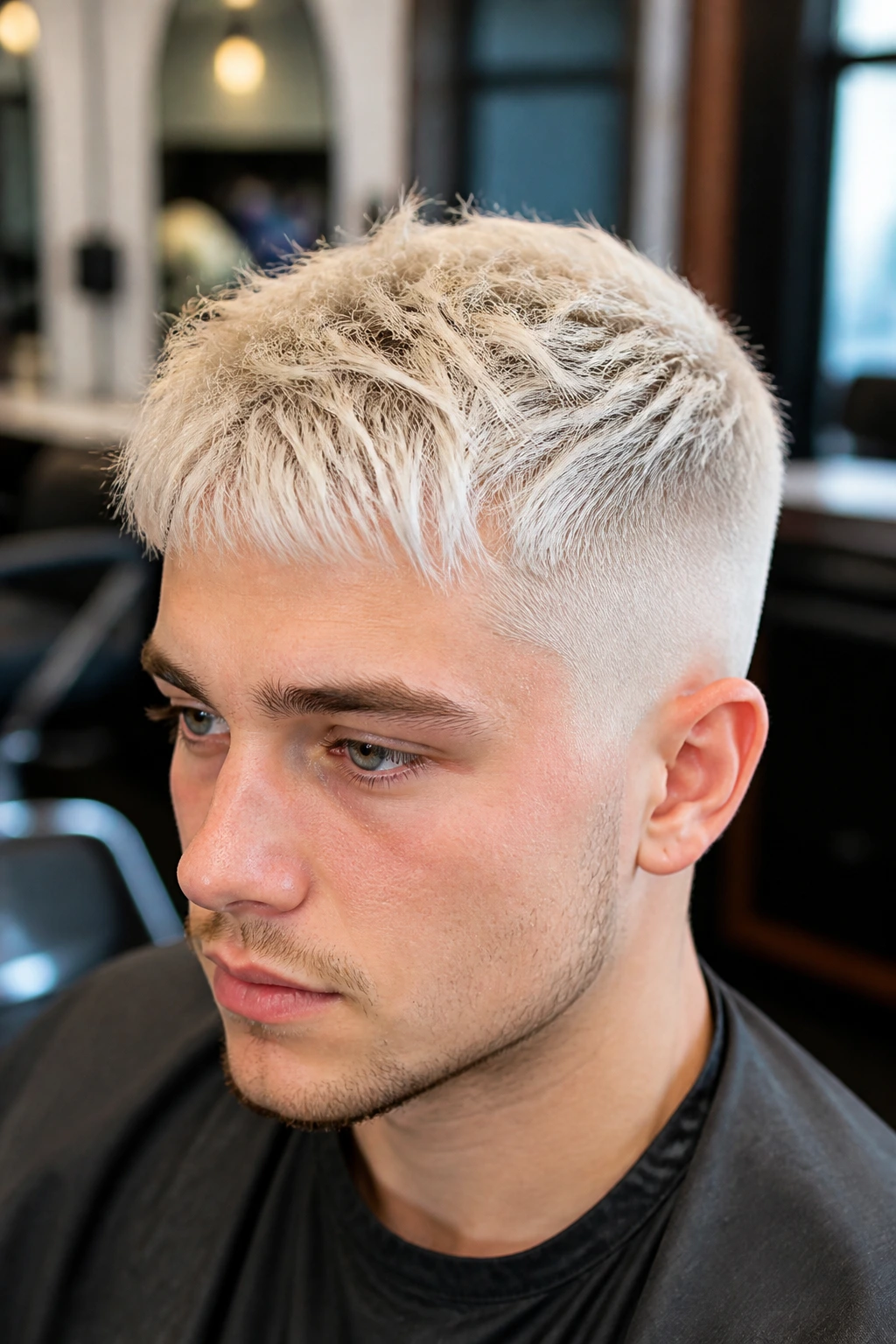
Platinum on a textured crop has a sharper edge than people expect. The chopped top breaks up the brightness so the color doesn’t look like a helmet, and the short fringe keeps the whole cut from drifting into nightclub territory. On straight hair, this style looks tidy and architectural. On wavier hair, it gets a little more attitude, which is usually the point.
Why it reads clean
The crop works because the movement on top softens the bleach. You’re not asking the hair to sit perfectly flat, which means a small amount of dryness or rough texture won’t ruin the finish. The trick is to keep the top around 1 to 2 inches, with heavy texturizing at the ends and a low-shine clay or paste. If the top grows too long, platinum starts to look scruffy instead of deliberate.
A barber can usually build this with a short fringe, tapered sides, and point-cut texture through the top. A toner that leans pearl or silver keeps the blond from turning mustard under warm indoor light. That matters more than people think.
3. Honey Blonde Quiff
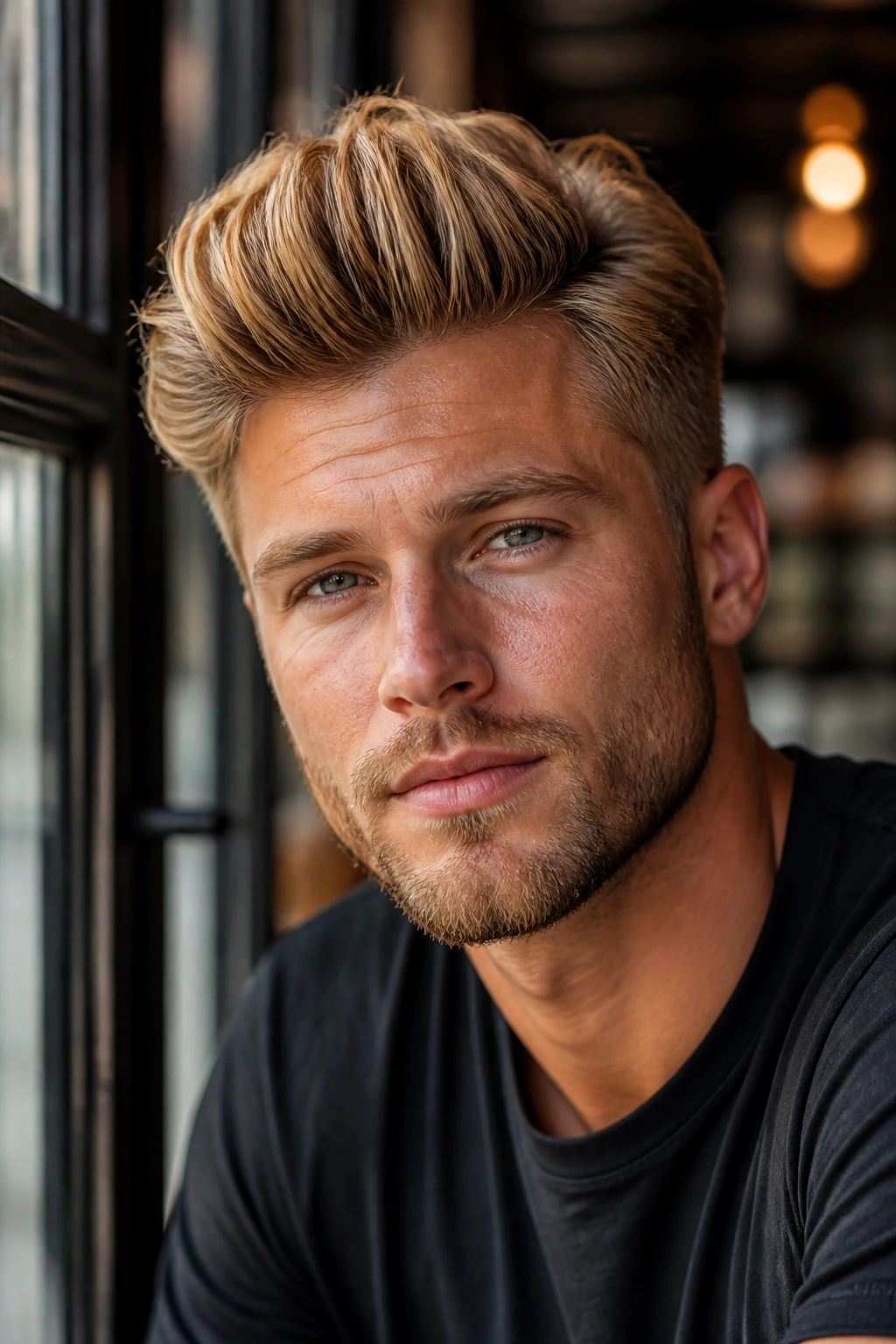
Honey blonde and a quiff are a good match because the volume gives the warmth somewhere to go. A tall front needs a tone that doesn’t look brittle, and honey does the opposite of that. It makes the hair feel thicker, almost softer, which is a nice counter to the lift at the front.
This one asks for some work with a blow-dryer. Not a mountain of it. Just enough heat and direction to push the front upward and back, then a medium-hold cream or mousse so the shape doesn’t collapse by lunchtime. If your hair is naturally thick, the quiff will sit with less product and less arguing. If it’s finer, keep the top a little shorter and avoid over-lightening it; honey blonde on thin hair can look see-through if you go too pale.
Dark brows and a short beard help this look a lot. The warmth in the hair connects the face instead of floating above it.
4. Ash-Blonde Fringe
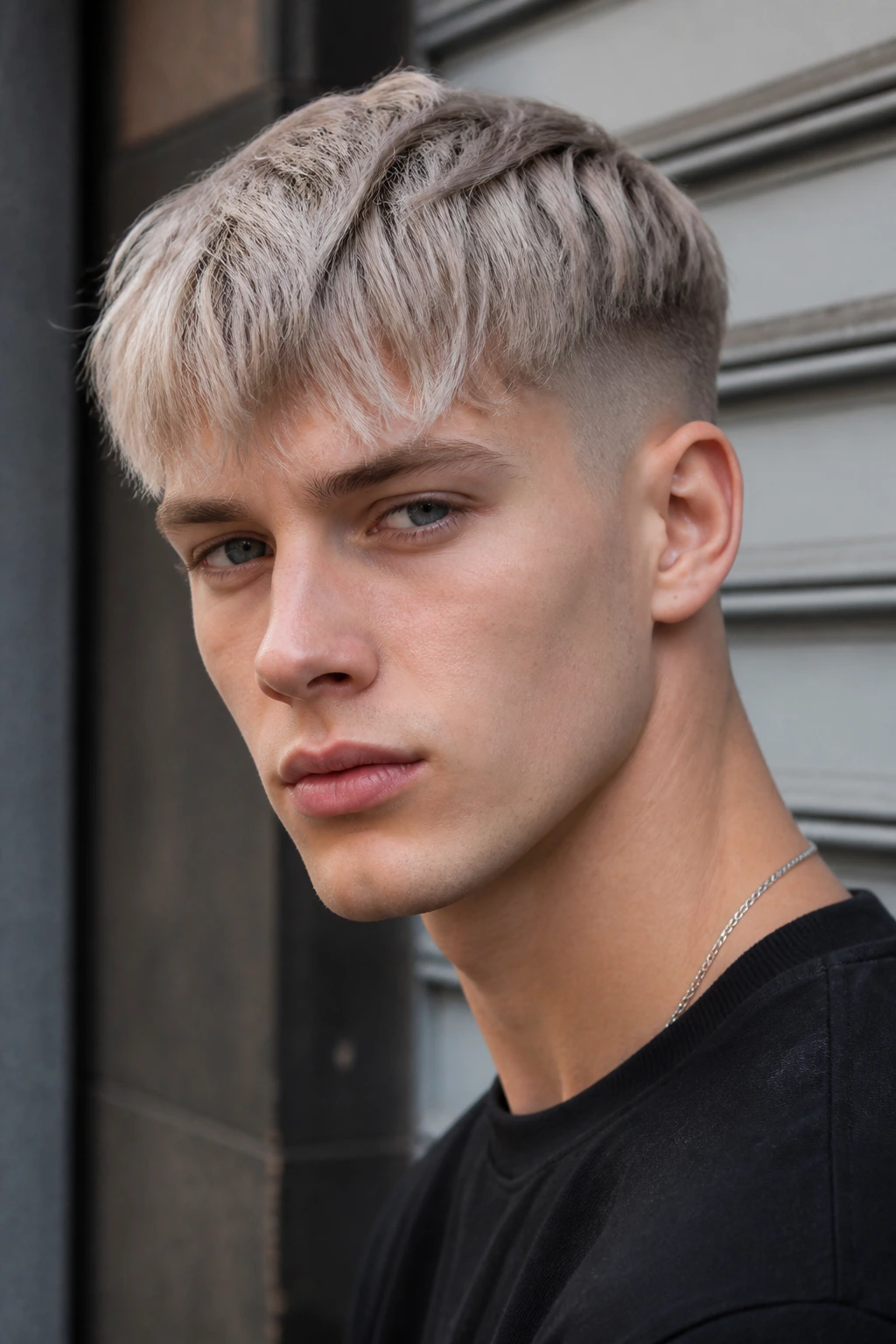
Ash blonde is the right move when you want the color to cool down the whole haircut. A fringe then puts that cool tone front and center. The combination works especially well on men with straight or slightly wavy hair, because the front can fall in a neat line without separating into awkward wisps.
The reason ash reads so well is simple: it cuts the brass. If your natural hair pulls orange after lifting, an ash toner or blue-violet maintenance shampoo keeps the finish from drifting yellow. On a fringe, that cool tone is easy to see, which means the haircut looks intentional even when it’s a little messy. That’s a useful thing. Messy is fine. Random is not.
A longer fringe also helps soften a high forehead or a sharper hairline. Keep the sides tapered, not bulky, or the cut starts to feel heavy. The blonde should look like a design choice, not a rescue mission.
5. Dirty Blonde Crew Cut

Dirty blonde is the smartest blonde for men who don’t want people staring at the color first. It sits close to natural, especially when the roots stay a touch darker, so the cut looks understated rather than dyed. On a crew cut, that low contrast gives you a clean shape without the maintenance tax of platinum.
This look is a good fit for thick hair, business settings, and anyone who wants blonde without the bleach-blown effect. Ask for a classic crew with just enough length on top to catch light, then leave the temples and nape tighter so the silhouette stays neat. A matte paste works better than anything glossy here. You want the hair to look lived-in, not coated.
It’s also one of the easier styles to grow out. The color mismatch between new growth and the dyed hair is smaller, which means you can stretch appointments a bit without the style falling apart.
6. Sandy Blonde Curtain Hair
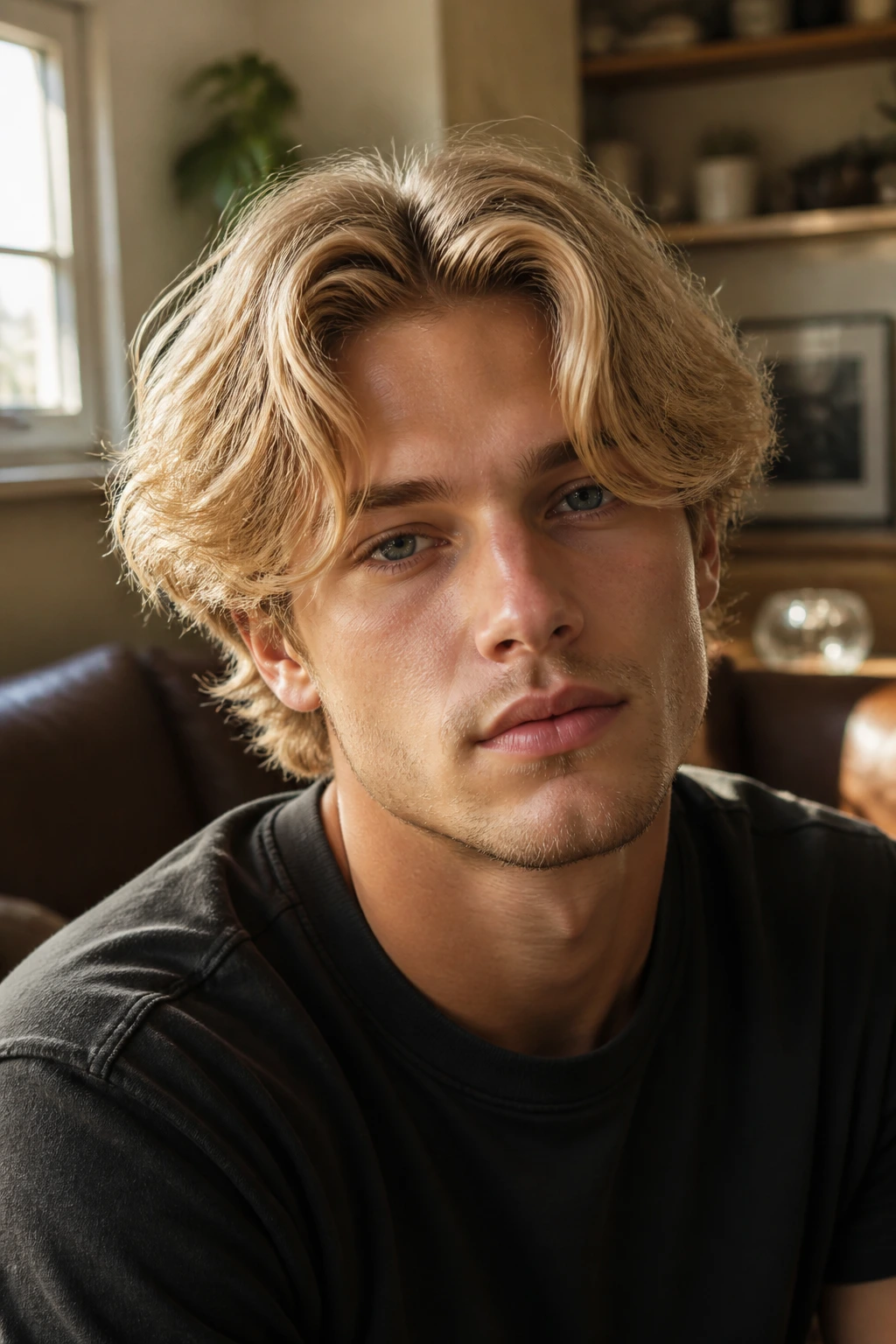
Curtains are back in a big way for a reason: they make blonde feel relaxed instead of staged. Sandy blonde suits the cut because the tone sits between gold and beige, which keeps the middle part from looking too stark. On medium-length hair, the color and the shape do half the work for you.
The important bit is movement. You need enough length for the front pieces to split and fall away from the face, but not so much that the hair hangs flat like wet rope. Blow-dry the front off the center line, then push a little bend into the ends with your fingers. A sea-salt spray or light cream gives the shape grip without turning it crunchy.
This style looks best when the ends are healthy and not fried. Sandy blonde can forgive a little dryness, but not a lot. If the hair snaps at the ends, the whole thing reads cheap fast.
7. Frosted High and Tight
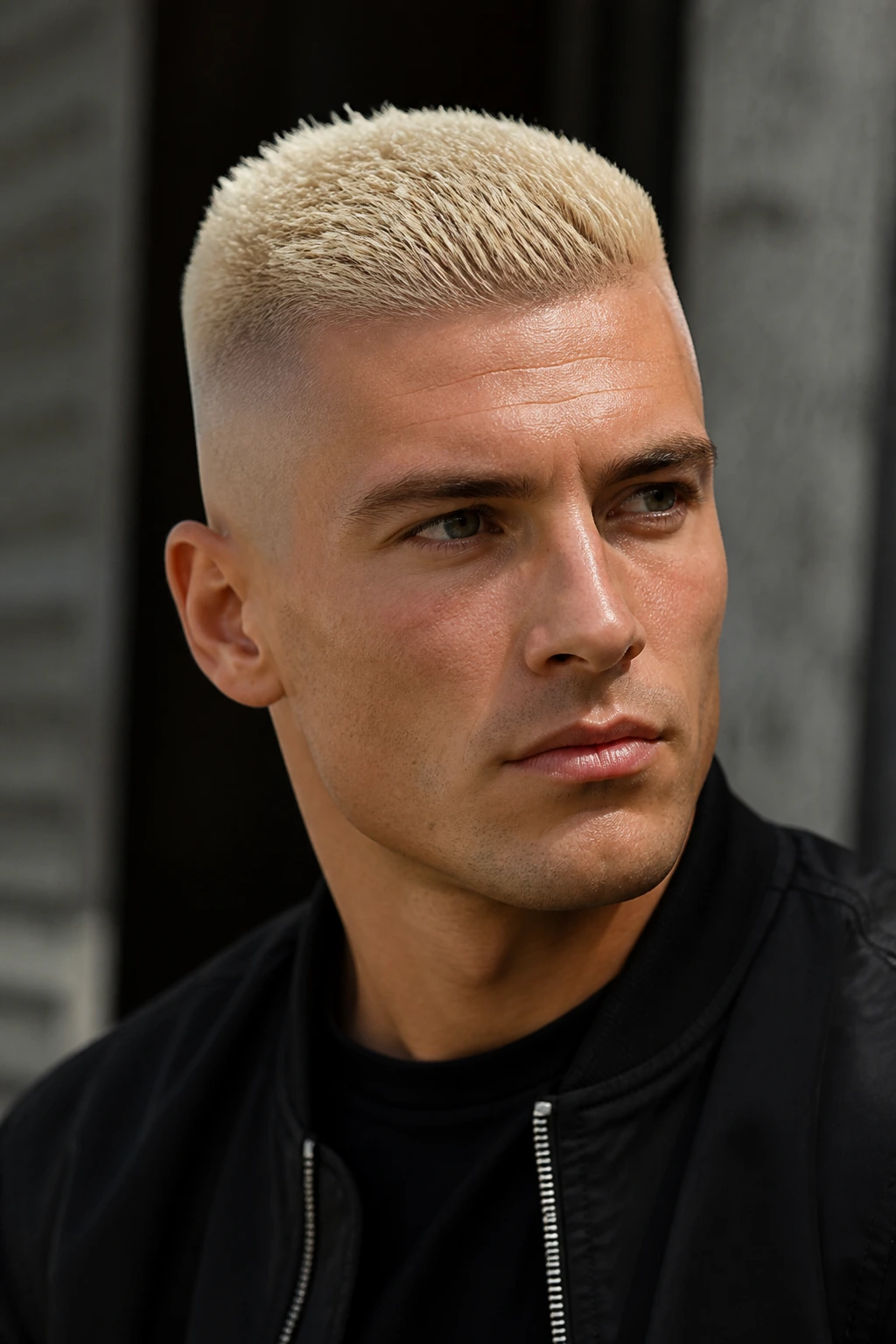
A high and tight with frosted blonde on top is pure contrast. That’s the appeal. The sides stay very short, almost severe, while the top gets just enough length to show pale color against the skin. It’s one of the cleanest ways to wear blonde if you like structure and don’t mind a harder edge.
The style works because the cut does the heavy lifting. The short top doesn’t expose much damage, and the frozen-looking color on top makes the fade look even sharper. If you have strong cheekbones or a square jaw, this cut looks especially good because it draws the eye straight to the architecture of the face. Ask for a tight skin fade up the sides and keep the top short enough that it can’t flop over.
Be careful with the toner. Frosted does not mean yellow-white. It means pale, cool, and even.
8. Golden Surfer Waves
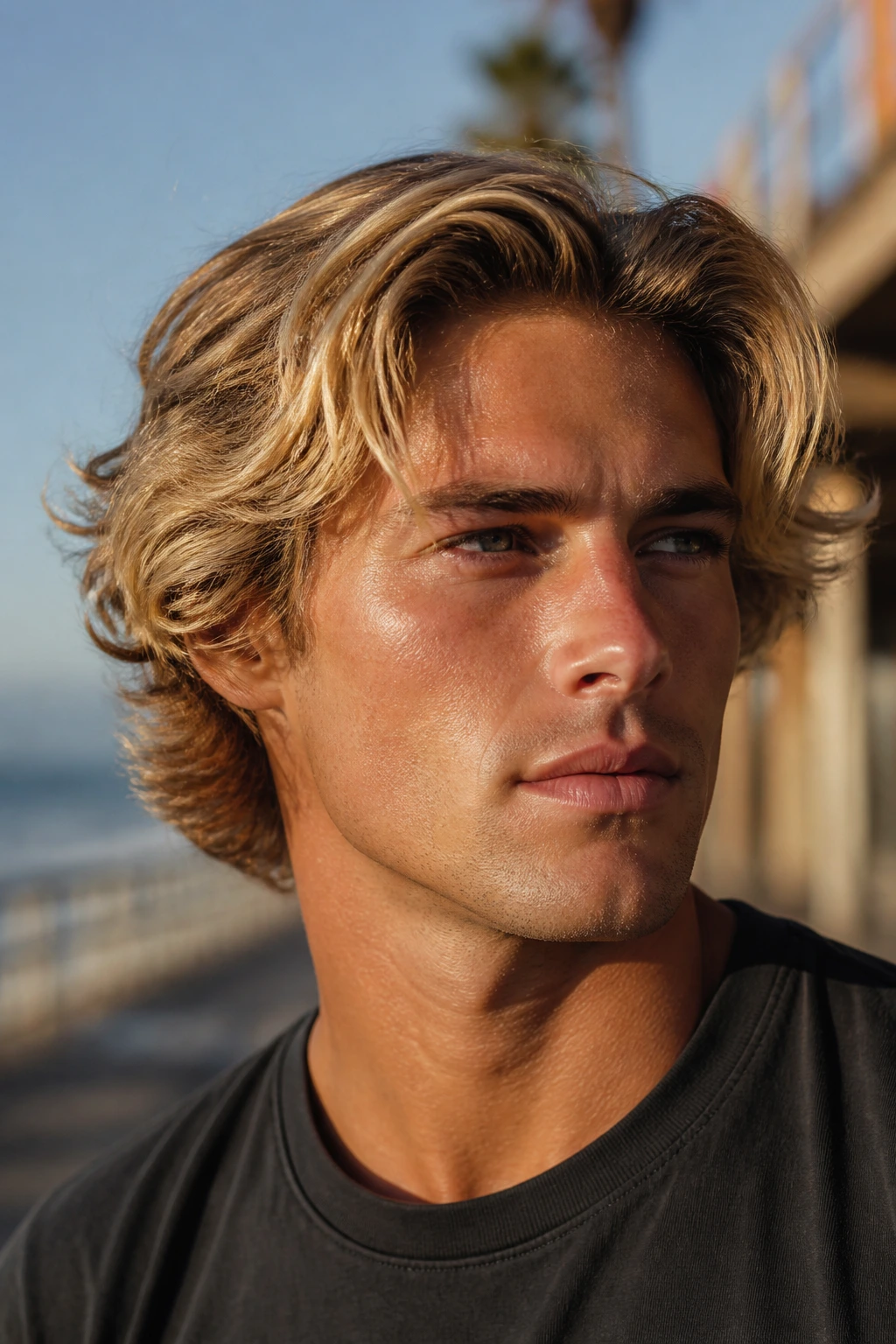
Golden blonde waves are the opposite of the tight, military looks above, and that’s exactly why they belong here. The warmth in the color gives the wave pattern depth, so the hair doesn’t flatten into one pale sheet. It looks especially good when the length hits around the ears or just below, where the movement can actually show.
This style depends on texture more than precision. A rough-dry with a diffuser or a loose blow-dry with fingers will keep the waves from collapsing. Use a curl cream or light styling lotion, not heavy gel. Heavy products make golden blonde waves clump together in a way that looks greasy instead of lived-in.
Sun-kissed hair like this usually looks best when there’s a little root shadow. That darkness at the base keeps the blonde from floating. Without it, the color can look washed out, especially under flat indoor lighting.
9. Beige Blonde Side Part
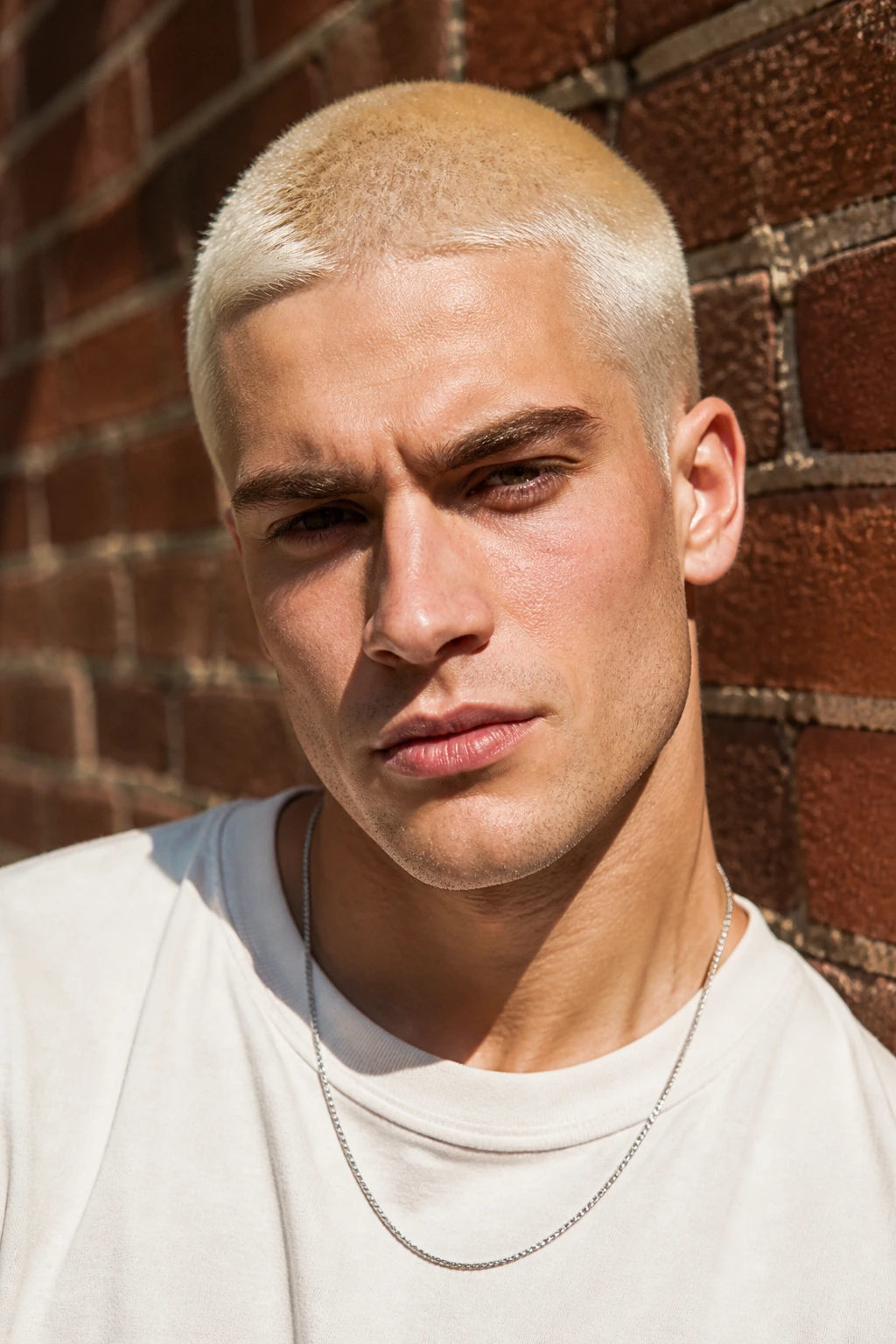
Beige blonde is the quiet one in the room, and I mean that as praise. It’s neither icy nor honeyed. That middle ground makes a side part look expensive without screaming about itself. On men with finer hair, the side part adds order, while the beige tone keeps the scalp from showing too much contrast.
A side part also gives you a cleaner frame around the face. You can use it to pull a wider forehead in a bit or to make a softer jaw look more structured. Keep the top smooth, not pasted down, and ask for tapered sides rather than a sharp disconnect unless you want the cut to feel more fashion-led.
This is one of those styles that gets better when the color is subtle. Beige blonde looks good because it doesn’t fight the haircut. It lets the shape stay in charge.
10. Rooted Blonde Taper Fade
A rooted blonde taper fade is proof that dark roots are not a mistake when they’re planned. The shadow at the base gives the blonde dimension, and the taper on the sides keeps the whole style from looking overprocessed. If you’ve ever seen a grown-out dye job and thought it looked rough, this is the opposite of that.
The best version leaves a little darker tone near the scalp, then lifts the mids and ends to a warm or neutral blonde. That contrast makes the color read fuller. It also stretches out your maintenance window, because the grow-out blends instead of announcing itself. Ask for a low or mid taper, keep the top textured, and let the root shadow stay visible. It’s doing work.
This style suits almost every face shape because the taper softens the edges while the blonde keeps the crown from looking heavy. A beard can help tie the roots back into the face, especially if it’s darker than the hair.
11. Champagne Blonde Pompadour
Champagne blonde has a little polish in it, which makes it a good partner for a pompadour. The lift at the front needs a tone that looks clean under product, and champagne does that better than flat yellow or hard silver. It gives the style a light, almost creamy finish that stays readable even when the hair is pushed high.
What matters here is control. A pompadour can turn stiff in a hurry if you load it up with too much spray or clay. Start with a volumizing mousse, blow-dry the front up and back with a round brush, then finish with a flexible hold product. You want height with some movement, not a lacquered shell. If the hair is too long on top, the shape droops. If it’s too short, it stands up like a toy.
Champagne blonde looks best when the sides are tight enough to let the front feel tall. That contrast is the whole point.
12. Silver-Blond Caesar
A silver-blond Caesar has a blunt confidence to it. The short fringe, the tight shape, and the pale cool tone all line up in a way that feels controlled rather than flashy. This is one of the cleanest options for men who want blonde but don’t want volume or blow-dried drama.
The Caesar works because it frames the forehead without exposing much of the scalp. Keep the fringe short and even, and let the top sit flat or nearly flat. The silver tone makes the cut look deliberate, but it also shows every dry patch, so conditioning matters. If the hair is coarse, use a leave-in cream after washing to keep the ends from looking strawy.
It’s a strong choice for straight hair and strong brows. On round faces, the blunt line can add some needed structure. On longer faces, keep the fringe a touch softer so the cut doesn’t make the face feel longer than it is.
13. Curly Blonde Mop Top
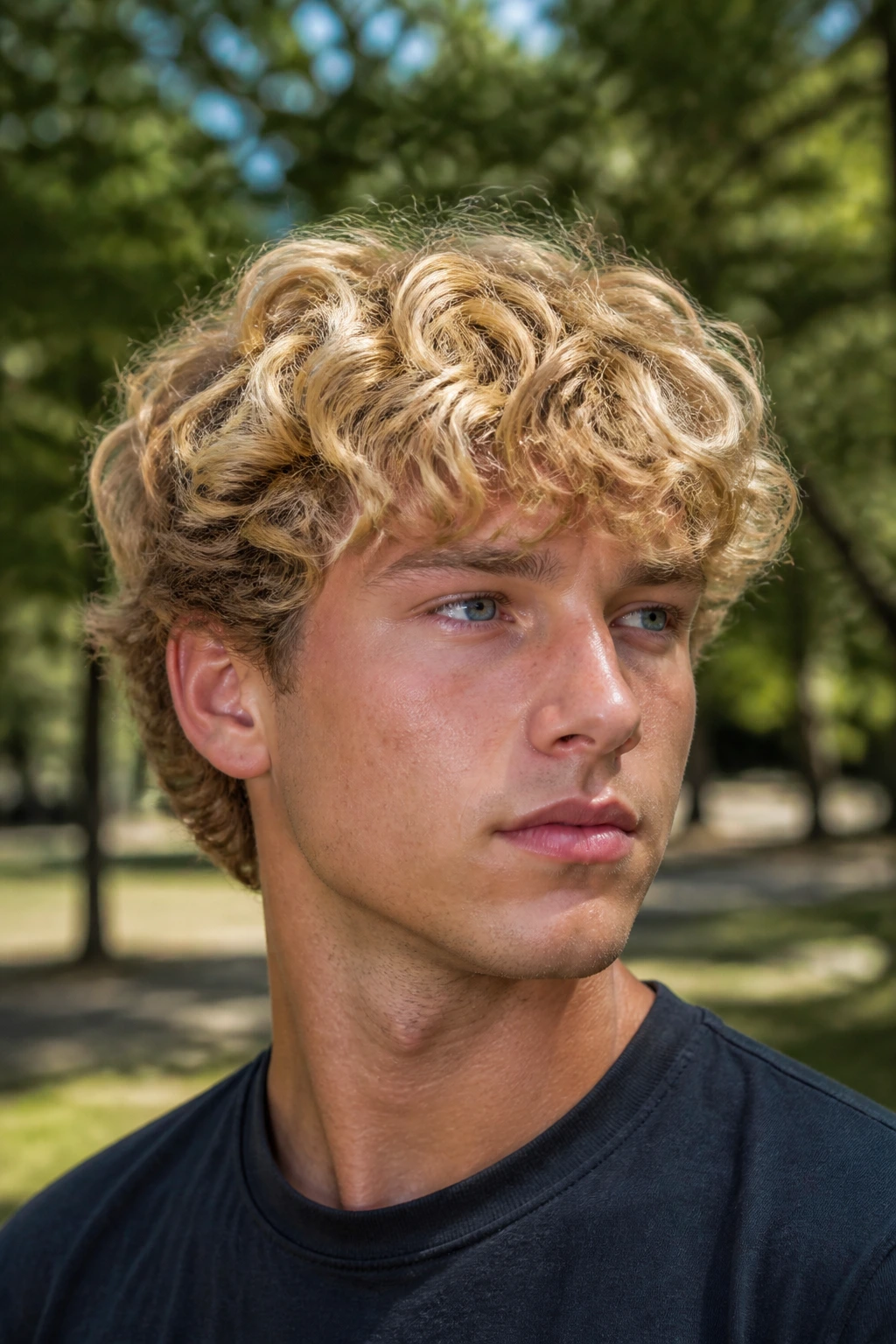
Curly hair changes blonde in a good way. The curls catch light at different angles, so even a medium blonde looks richer than it would on flat hair. A mop top shape lets the curls spill forward and around the head without turning the cut into a triangle, which is the main thing to avoid.
Bleach and curls need respect. Not drama. Respect. Keep the lift controlled, use a bond-building treatment if you color at all, and don’t chase the palest possible tone if your curls already run dry. A warm or beige blonde often looks better than harsh white on textured hair because it keeps the coil pattern looking soft. Use a curl cream or light gel while the hair is damp, then scrunch and diffuse without blasting it with heat.
This style looks best when the curls are defined and the ends are trimmed regularly. Split ends make curly blonde look frizzy fast.
14. Bleached Slick Back
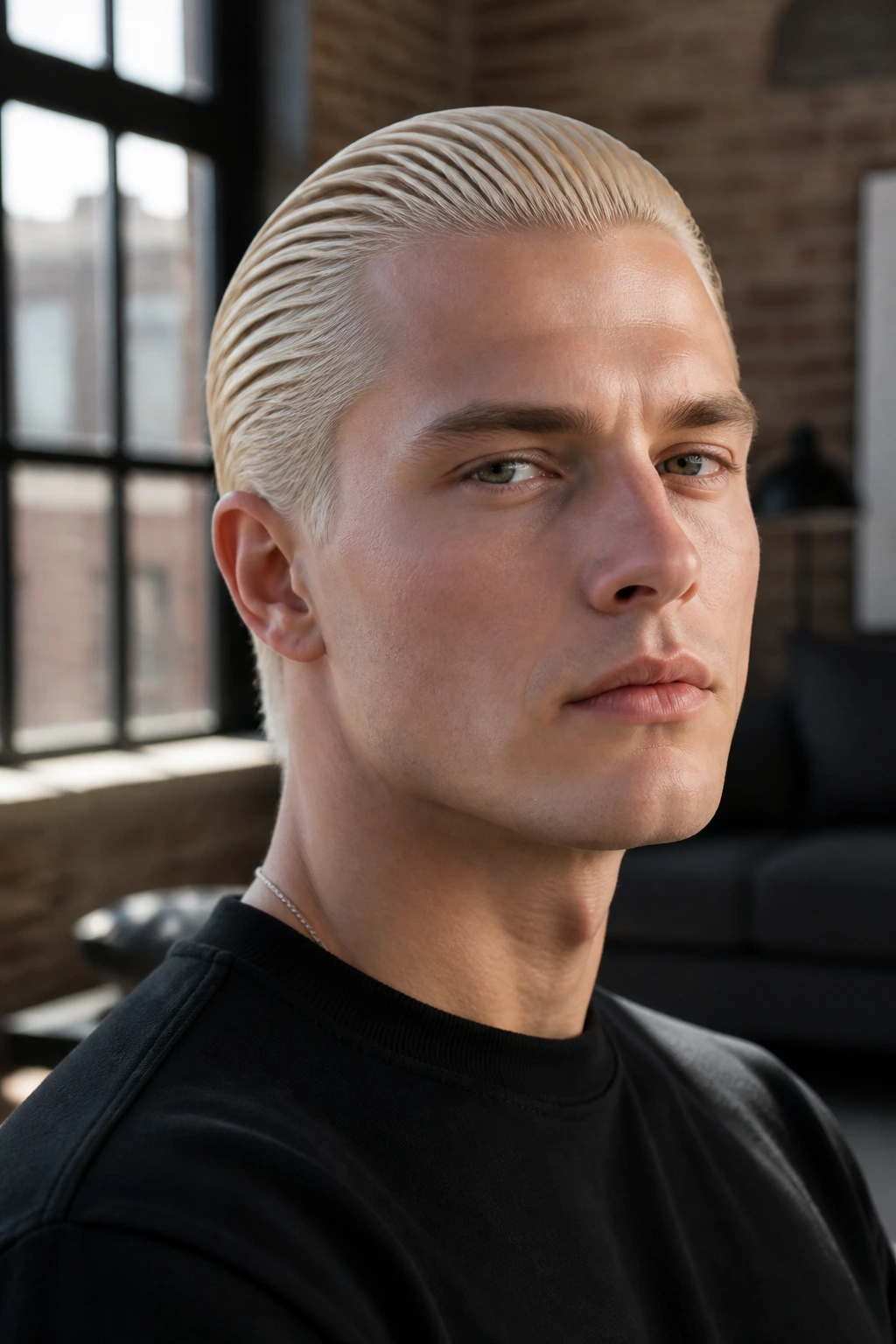
A bleached slick back has a slick, dressed-up feel that can tip into sharp territory quickly. The pale color makes the slicked shape more obvious, which is nice if you want a strong silhouette. It’s not the friendliest haircut in the room, but that’s part of the appeal.
This look works best on dense, straight, or slightly wavy hair that can actually hold the backward direction without fighting it. You’ll want some length on top, shorter sides, and a product with shine if you want that lacquered finish. If you prefer a drier look, use a matte paste and brush the top back more loosely. The big mistake here is overbleaching. Slick backs show damage at the part line and around the temples, and dry ends stick up like little flags.
The style reads best when the fade is clean and the top is uniform. Any uneven tone stands out in a slick back more than it does in a crop.
15. Buttery Blonde Ivy League

The ivy league is one of those cuts that benefits from a warm, easy blonde because the haircut itself is already neat. Buttery tones make the style feel softer and less corporate, while the side part and short top keep it controlled. It’s the kind of look that can move between a blazer and a hoodie without looking out of place in either.
Keep the top long enough to part and brush, but not so long that it starts collapsing over the forehead. A light cream or styling lotion is enough. You don’t need much else. The point is a tidy shape with a little gloss, not a high-shine helmet. Buttery blonde is especially forgiving if your natural color isn’t very dark, because the grow-out blends into the cut instead of fighting it.
If you want blonde that still looks respectable at a meeting, this is one of the safer bets.
16. Bleached Mullet
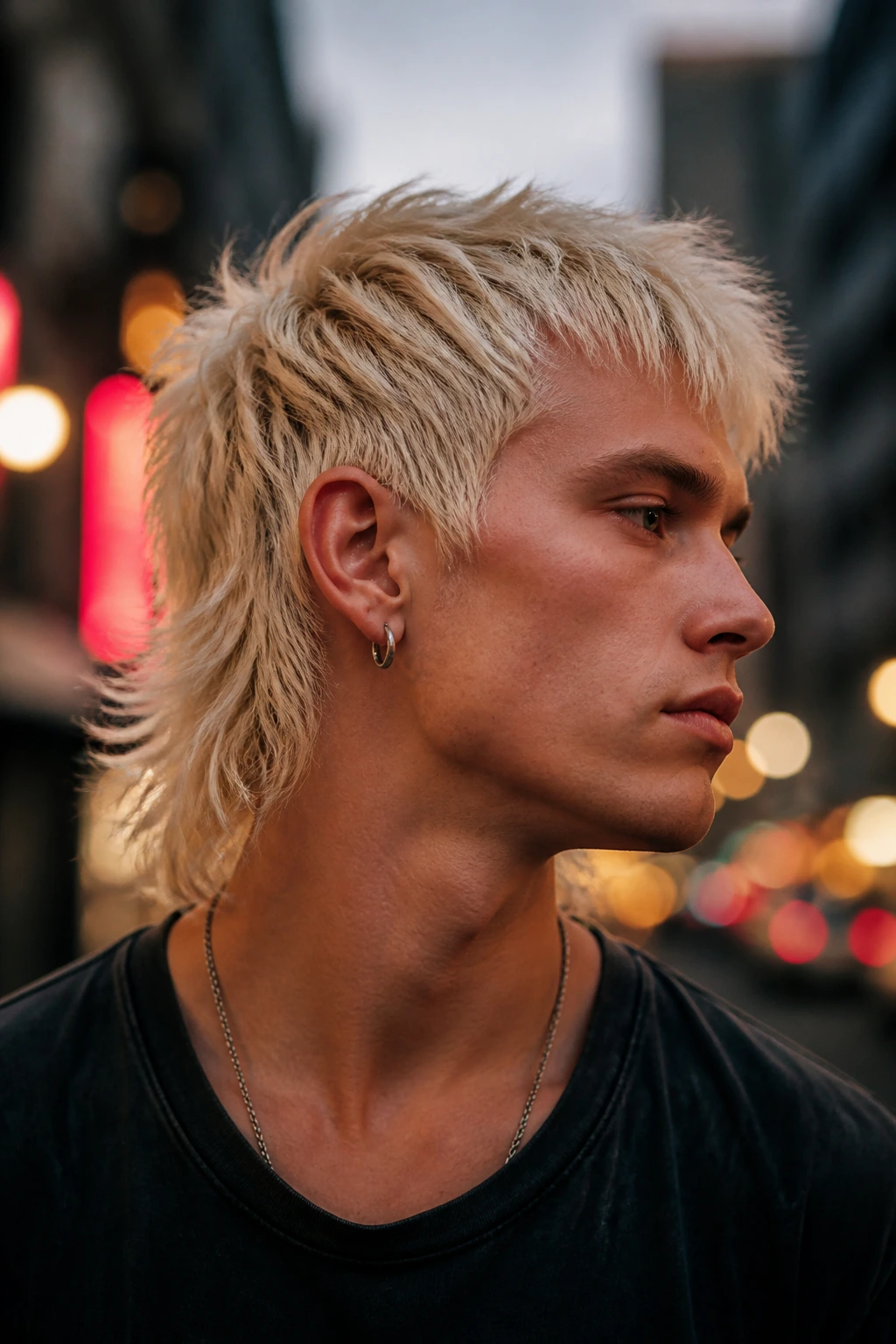
The bleached mullet is not subtle. It shouldn’t be. The shorter front and sides make room for the longer back, and the blonde pulls all of that into one loud shape that feels intentional instead of accidental. If the cut is right, it has movement and edge. If the cut is wrong, it looks like you missed an appointment. There’s no middle ground.
What saves this style is texture. Choppy layers, a bit of volume in the crown, and a cleaner neckline make the mullet look current rather than costume-like. A pale blonde or even a rooted platinum keeps the length from feeling heavy. If the back is left too thick, the whole shape drags. Thin it out. Let the sides be tight enough to create contrast.
This works best on people who like a little chaos in their style. It does not need a polished finish. It needs shape, attitude, and a barber who knows when to stop cutting.
17. Caramel-Blonde Tapered Afro
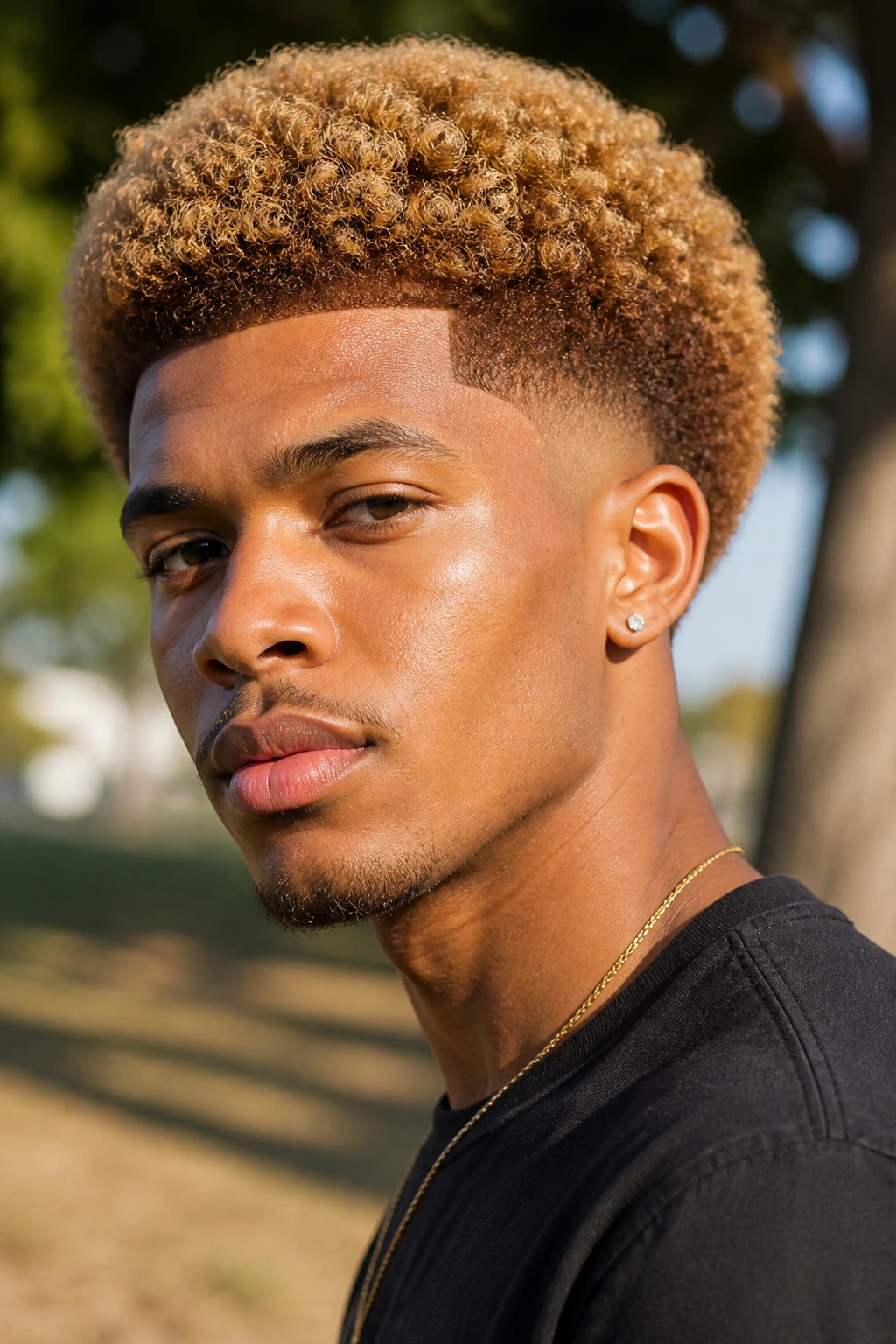
A tapered afro with caramel-blonde color is one of the smartest ways to wear blonde on coily hair, because the taper keeps the shape clean while the warmer tone protects the texture from looking flat. Caramel sits closer to natural depth than pale platinum, which is exactly why it tends to look richer on tight curls and coils.
The taper matters more than the color here. Clean sides and a shaped perimeter keep the top looking intentional. If you go too pale, the hair can lose its depth and start to look dry even when it isn’t. A good colorist will lift in stages and avoid overprocessing the edges, because those parts are the first to get rough. Moisture is non-negotiable. Use a leave-in conditioner and a curl butter or cream that keeps the coil defined.
The best versions of this style look warm, full, and precise around the edges. That edge work is everything.
18. Ice-Blonde Faux Hawk
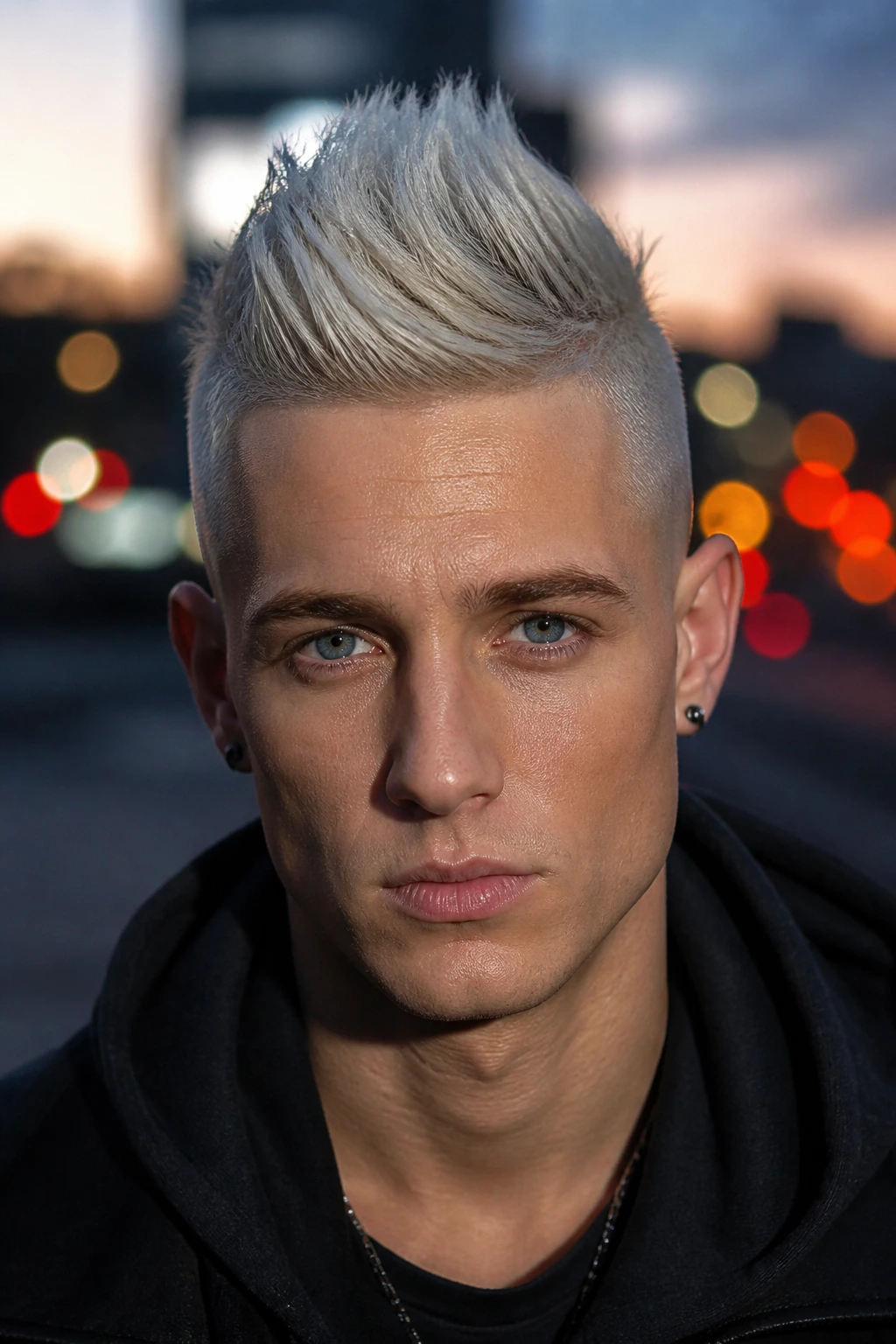
An ice-blonde faux hawk is a hard-edged look with a lot of visual energy. The center strip of hair gets pushed upward, the sides stay tight or faded, and the pale color makes the whole shape look even taller. It’s a cut for someone who wants to be noticed from the waist up.
The color should stay cool and pale, not yellow and bright. That coolness makes the hawk feel sharper, which matters because the shape itself is already bold. Use a blow-dryer and a strong but flexible product to build lift in the center, then pinch the top with your fingers so it doesn’t look glued in place. If the hair is fine, keep the faux hawk shorter. Long, pale spikes on thin hair tend to sag by noon.
This is one of the more demanding looks on the list, but when it’s done well, it has a clean sting to it.
19. Vanilla Blonde Brush-Up
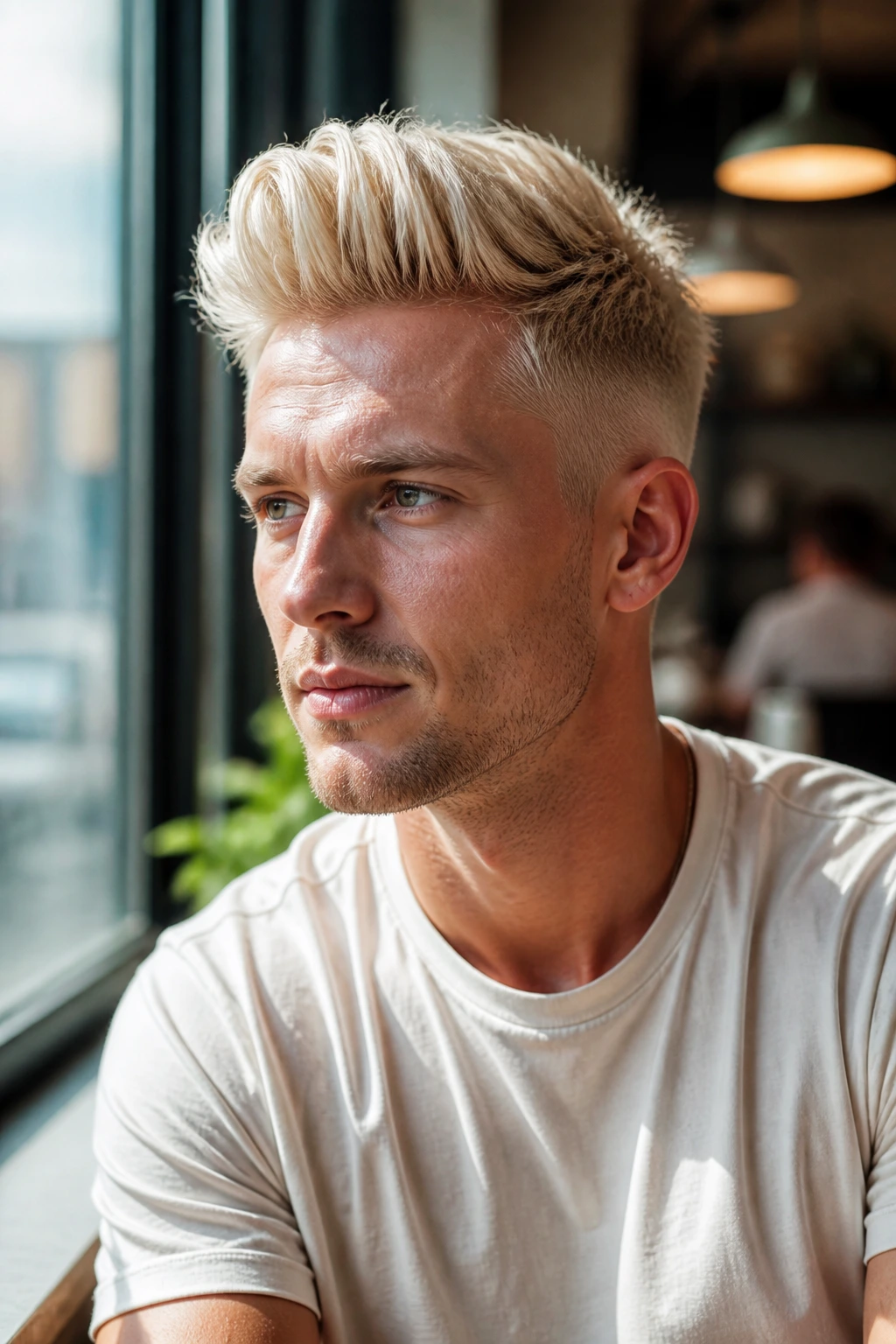
Vanilla blonde sits in a softer zone than platinum or ash, which makes it useful on a brush-up. The hair is lifted upward and slightly back, but the tone keeps the final shape from looking harsh. It’s a nice option if you want height without the drama of a full pompadour.
The brush-up works best when the top has enough length for the hair to stand, but not so much that it bends over. A pre-styler before blow-drying helps the roots hold, and a medium-hold cream is usually enough after that. If your hair is thick, this style will cooperate. If it’s fine, don’t chase extra height at the expense of texture; too much lift on too little hair starts to look patchy.
Vanilla blonde is one of those shades that makes the cut feel softer around the edges. That softness is the point. Not every blonde needs to shout.
20. Platinum Twists
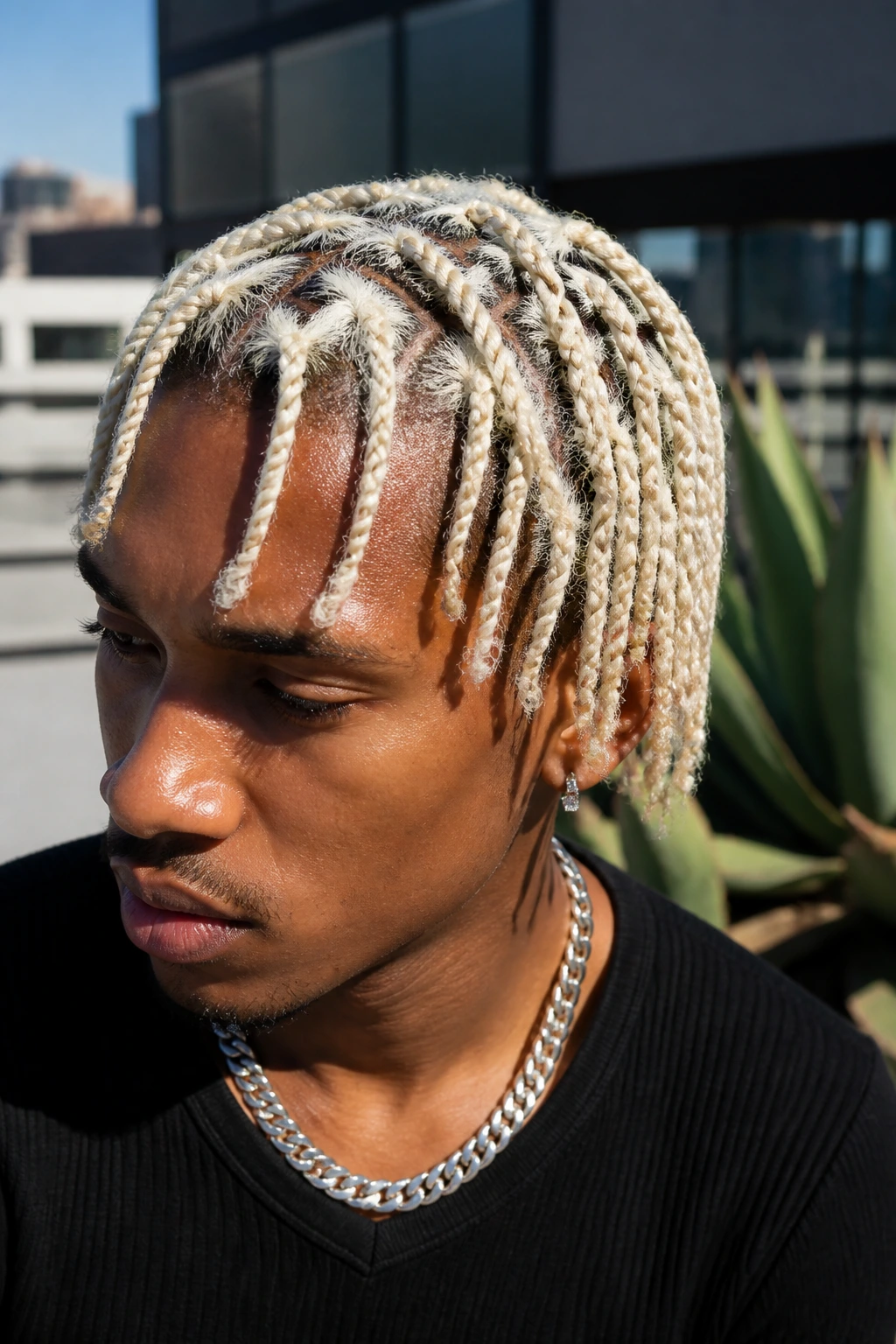
Platinum twists are high-maintenance and worth it if you want the color to meet texture head-on. The twists give the hair structure, and the pale tone makes each rope of hair stand out more clearly. On the right head, the effect is clean, graphic, and very controlled.
This style needs caution because textured hair can’t always take aggressive lifting. Bleach should be handled carefully, with moisture and strength treatments in the rotation. If the hair has been overprocessed, the twists will fray and lose shape quickly. Ask for smaller or medium twists so the color lands evenly and the pattern stays crisp. A satin bonnet or scarf at night helps a lot here. So does not overhandling the hair during the week.
Platinum twists look best when the scalp is healthy and the parts are neat. Once the roots get fuzzy, the entire style changes character fast.
21. Warm Wheat Blonde Crop
Warm wheat blonde is the practical cousin of platinum. It looks sunlit, not stressed. On a short crop, that warmth gives the haircut a soft glow that works especially well if your natural hair is dark brown rather than black. The roots can stay a touch deeper, and that helps the color look expensive instead of flat.
This look needs texture at the top and clean sides. Nothing fancy. The crop line at the front can be blunt or lightly broken up, depending on whether you want it neat or more casual. The warm tone is also kind to a little grow-out, which means you don’t have to panic every time the roots start showing. If you’re after blonde that doesn’t feel like a full-time job, wheat is a strong lane.
Matte styling products fit better than glossy ones. The finish should look dry in the good sense, not parched.
22. Blonde Locs with Root Shadow
Blonde locs with a dark root are one of the easiest ways to keep blonde from looking too severe. The darker base keeps the look grounded, while the blonde on the lengths or tips adds brightness where it matters. That root shadow also buys you time, which is no small thing when the style is this visible.
The biggest mistake with blonde locs is over-lightening them until the strands lose strength. That’s a fast road to breakage. A softer blonde, or a partial lift focused on the ends, tends to look better and stay healthier. The loc pattern itself already gives the style structure, so the color doesn’t need to do all the work. Keep the scalp clean, moisturize the lengths lightly, and avoid heavy residue that dulls the blonde.
This style pairs well with a shaped beard or a crisp lineup because the color and the roots then feel balanced instead of random.
23. Beach Blonde Flow
Beach blonde flow is the long-haired version of not trying too hard, except it still takes work. The layers need to move, the tone needs enough warmth or beige in it to avoid looking washed out, and the ends have to stay healthy enough that the length doesn’t fray into a mop. When it’s right, the result looks loose and expensive at the same time.
A good flow cut lets the hair fall back and around the face without clinging to it. Blow-dry with a brush or hands, then use a light cream or texture spray to keep the shape from collapsing. If your hair is naturally wavy, you’re halfway there. If it’s straighter, you’ll need more direction from the cut and a little more product.
This is one of the few blonde looks that can get better with a bit of imperfection. The trick is making sure the imperfection still has shape.
24. Beige Blonde Undercut
A beige blonde undercut is all about contrast with restraint. The sides are cut short enough to make the top stand out, but the blonde tone stays neutral, so the style doesn’t turn loud. That makes it a good choice if you want a cleaner version of an undercut without the extreme brightness of platinum.
The top can sit slicked back, brushed to the side, or left a little loose. Beige blonde works because it doesn’t compete with the cut line. It keeps the attention on the separation between top and sides, which is where the shape lives. If you want the undercut to feel less severe, leave a small root shadow. If you want it sharper, clean up the part and keep the ends tidy.
This is one of the better styles for men who wear glasses, because the neutral tone doesn’t fight the frames.
25. Bleached Bowl Cut
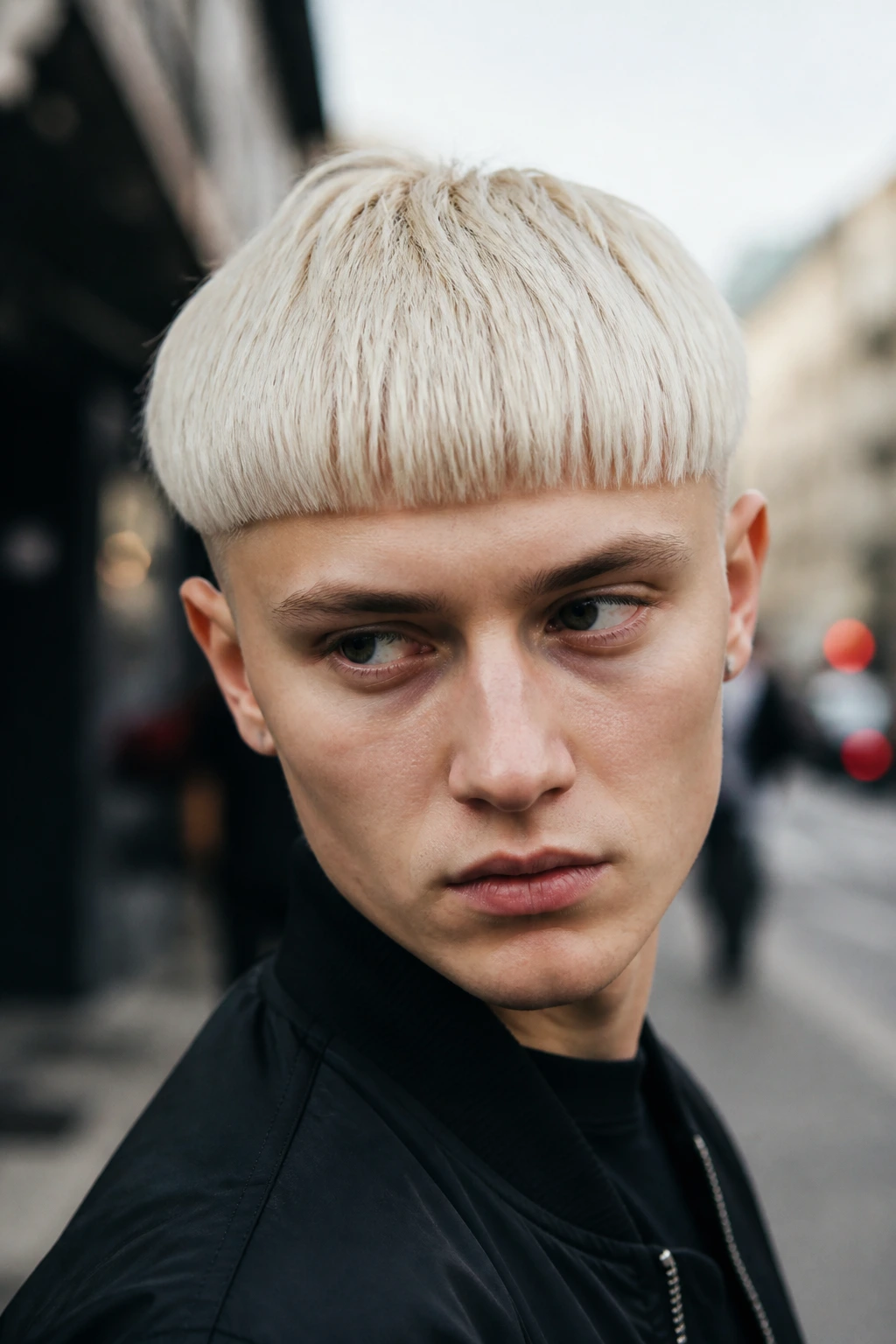
A bleached bowl cut sounds absurd until you see a good one. Then it becomes obvious that the shape can work when the edges are clean, the line is intentional, and the blonde is pale enough to make the silhouette feel graphic instead of childish. The color is doing some heavy lifting here. So is the precision.
This look needs a barber who understands weight. Too much bulk and it turns helmet-like. Too little and it loses the bowl outline completely. A slightly textured fringe can soften the look, but the edge line should stay deliberate. Platinum or white-blonde tones make the shape feel more fashion-driven; warm yellow makes it look like a mistake from childhood photos.
If you like strong shapes and don’t mind people having an opinion about them, this is a memorable cut. If you want blending into the background, skip it.
26. Strawberry-Blonde Textured Crop
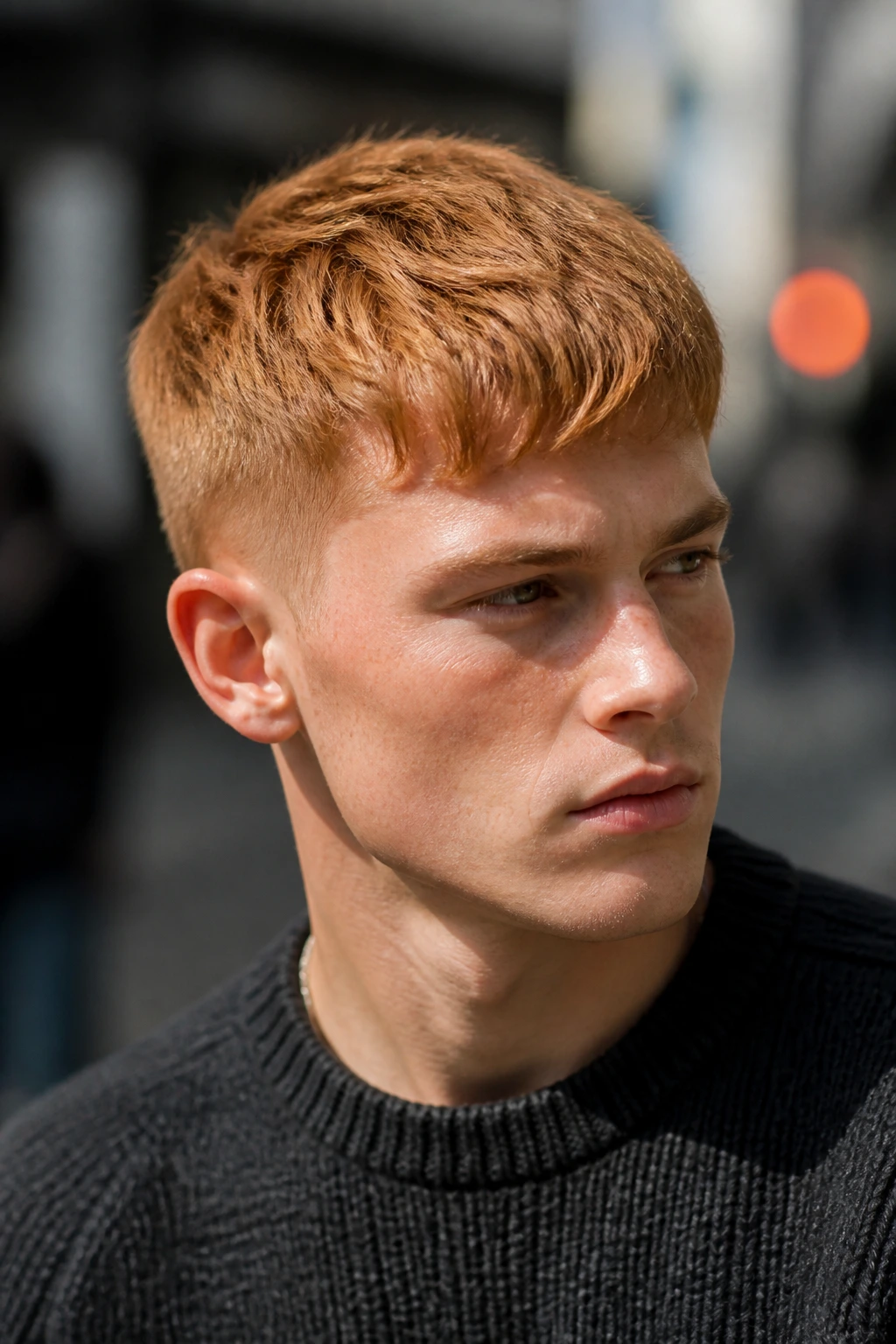
Strawberry blonde sits in an interesting place because it’s blonde with a warm red cast, which makes the haircut look alive under daylight. On a textured crop, that warmth breaks up the shape enough to keep it from looking flat. It’s a good call for men with freckles, fair skin, or lighter eyebrows, though it can work on darker features if the tone is kept balanced.
The crop keeps the style grounded. The texture keeps it from looking too polished. Ask for short sides, a slightly broken fringe, and enough length on top to catch some movement. If you push the strawberry tone too orange, the whole thing starts drifting into copper. Keep it softer than that. A gloss or toner can help hold the warmth in a controlled range.
This is one of the more underrated blonde looks because it doesn’t need to be extreme to stand out.
27. Golden Blonde Hard Part
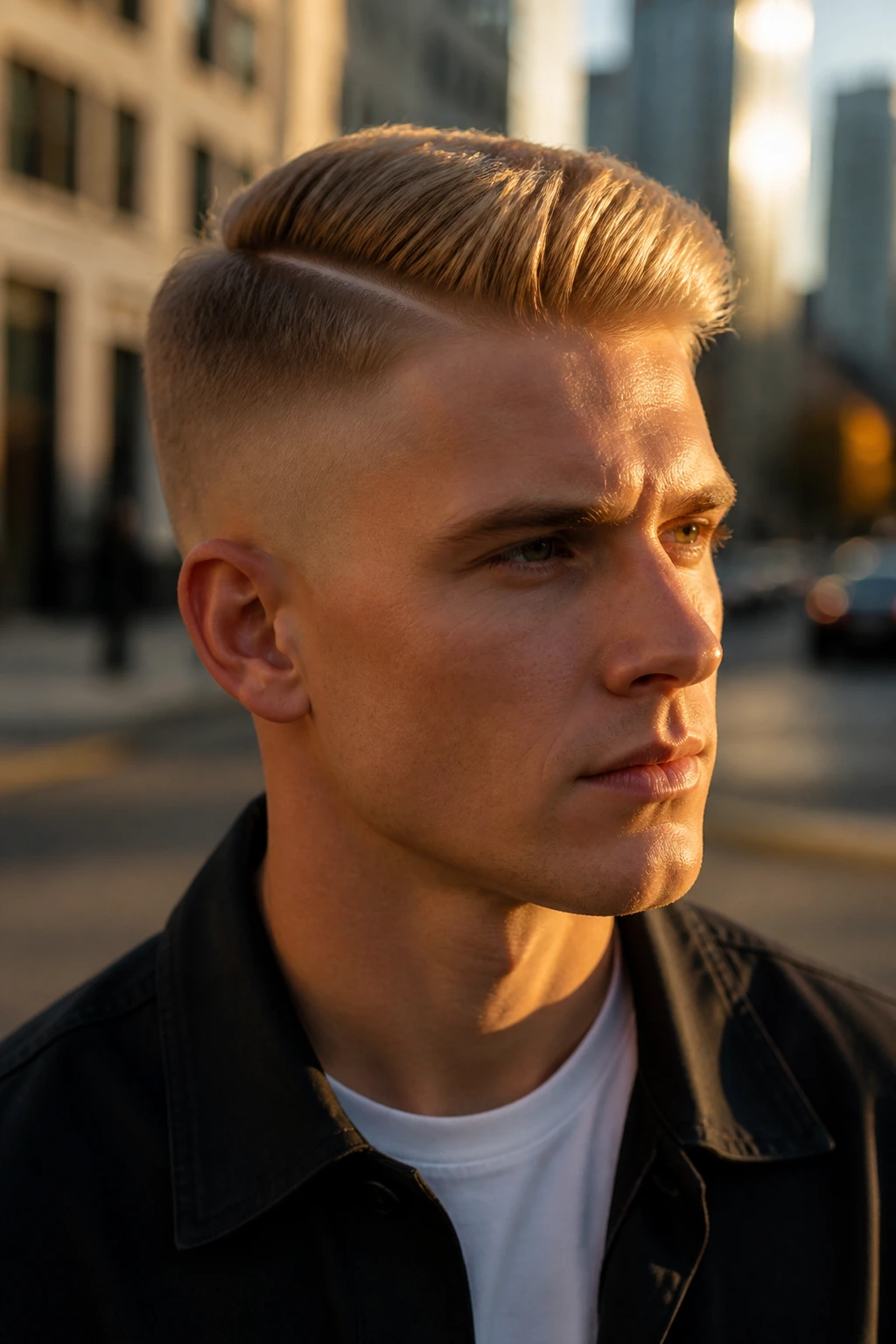
A hard part gives blonde hair a line to follow, and golden tones make that line feel warmer and more wearable. This style is all about structure: faded sides, a clean part shaved or combed in, and a top that stays neat enough to show the shape. If you like order, this is a strong one.
The part line works best when the top has enough density to comb over without exposing the scalp. Golden blonde softens the severity of the hard part, which keeps the cut from looking too rigid. You still need regular trims, though. Once the fade grows out and the part gets fuzzy, the whole thing loses its edge. A light styling cream or pomade will keep the top in place without making it look greasy.
If you want a style that reads sharp in the first three seconds, this is it.
28. Matte Ash Blonde Comb Over
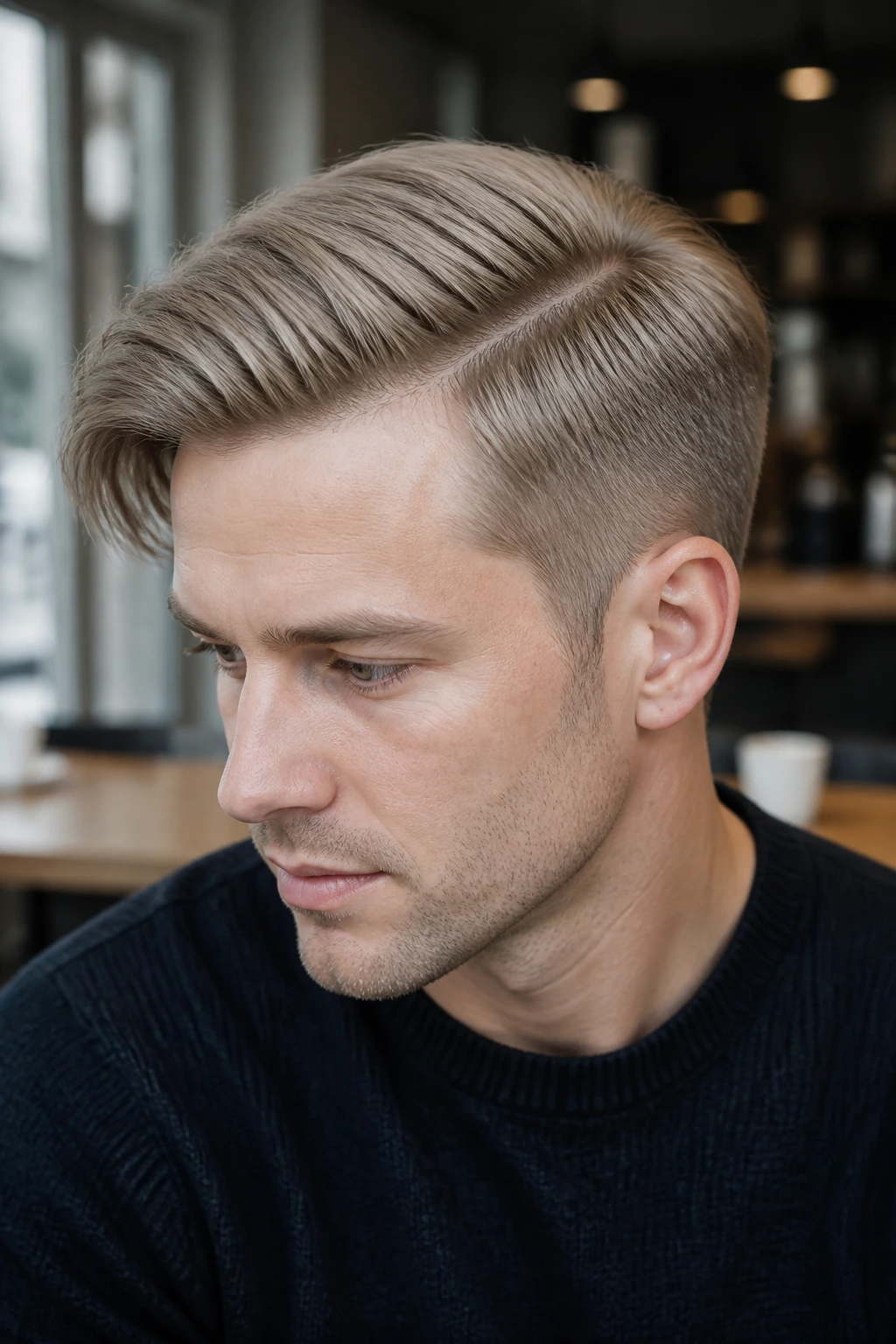
A matte ash blonde comb over can be a smart option for men dealing with thinning areas, because the cool tone and the directional styling reduce contrast. That doesn’t mean it hides everything. Nothing does. It means the eye reads the shape first, not the scalp. That’s a useful distinction.
The comb over works best when it’s not over-slicked. Use a matte cream or light clay, comb the hair over with a natural bend, and keep the sides tight enough to frame the top. Ash blonde helps because it avoids the shiny, yellow look that can make thin hair feel even thinner. The side part should be clean but not cartoonish. Too much shine or too much product draws attention to the wrong places.
This is one of the few blonde styles that can look polished without looking overdone. The matte finish is doing a lot of the heavy lifting.
29. Sunlit Blonde Long Layers
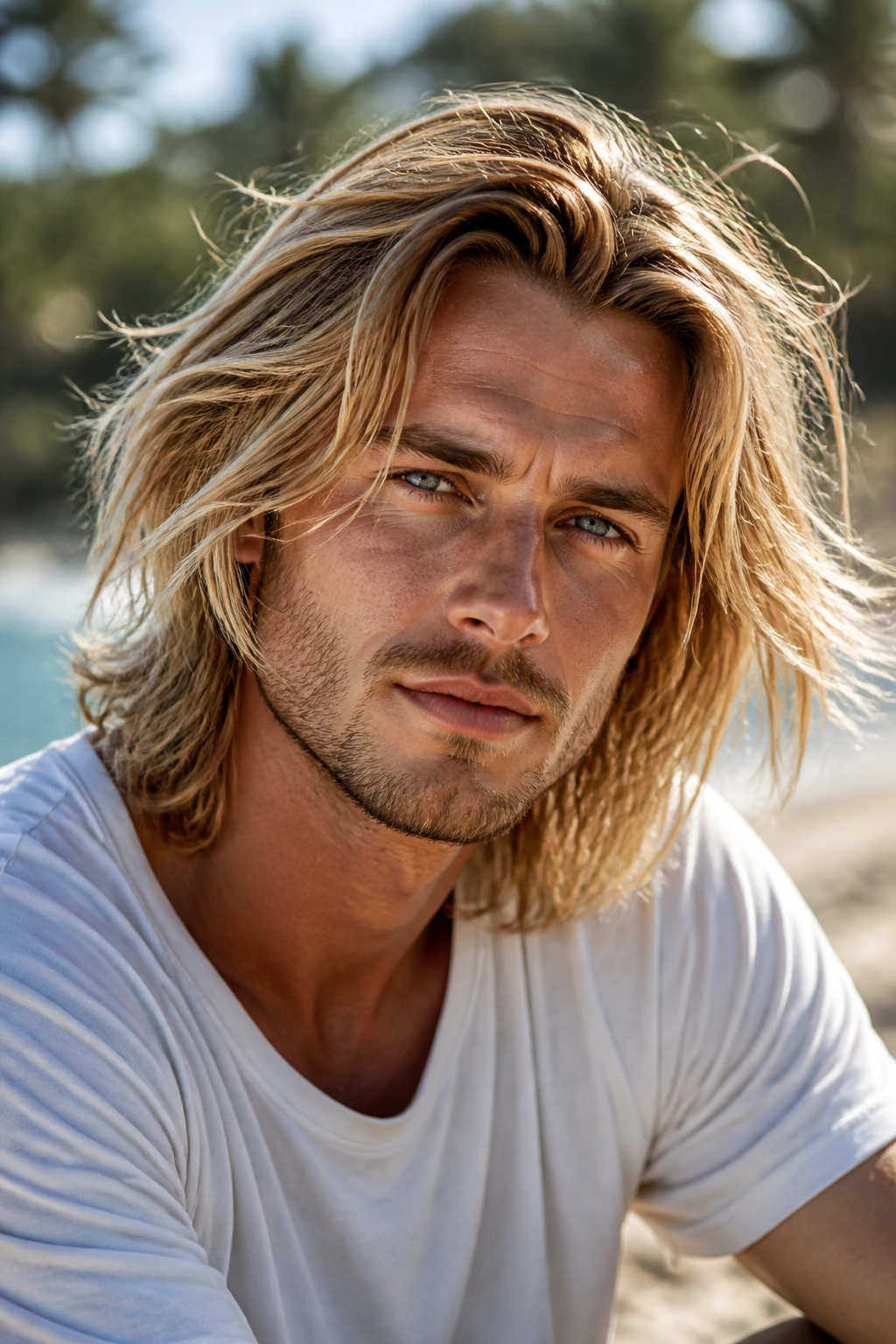
Long layered blonde hair on men works best when it looks like it’s been shaped, not left to grow wild. Layers stop the length from sitting in one heavy block, and a sunlit blonde tone keeps the hair from appearing muddy as it gets longer. This is the style for men who want movement and are willing to trim the ends before they get scruffy.
The key is keeping some dimension at the crown and around the face. That keeps the layers from hanging flat. A soft blow-dry, a little leave-in conditioner, and a small amount of texture spray can make the hair fall in a more natural line. If the blonde is too pale, long hair can look brittle. Beige or soft gold usually ages better on length because the color feels warmer against the face.
This look needs patience. Long blonde hair shows every split end. Trim it before the damage gets obvious.
30. Nordic Blonde Wolf Cut
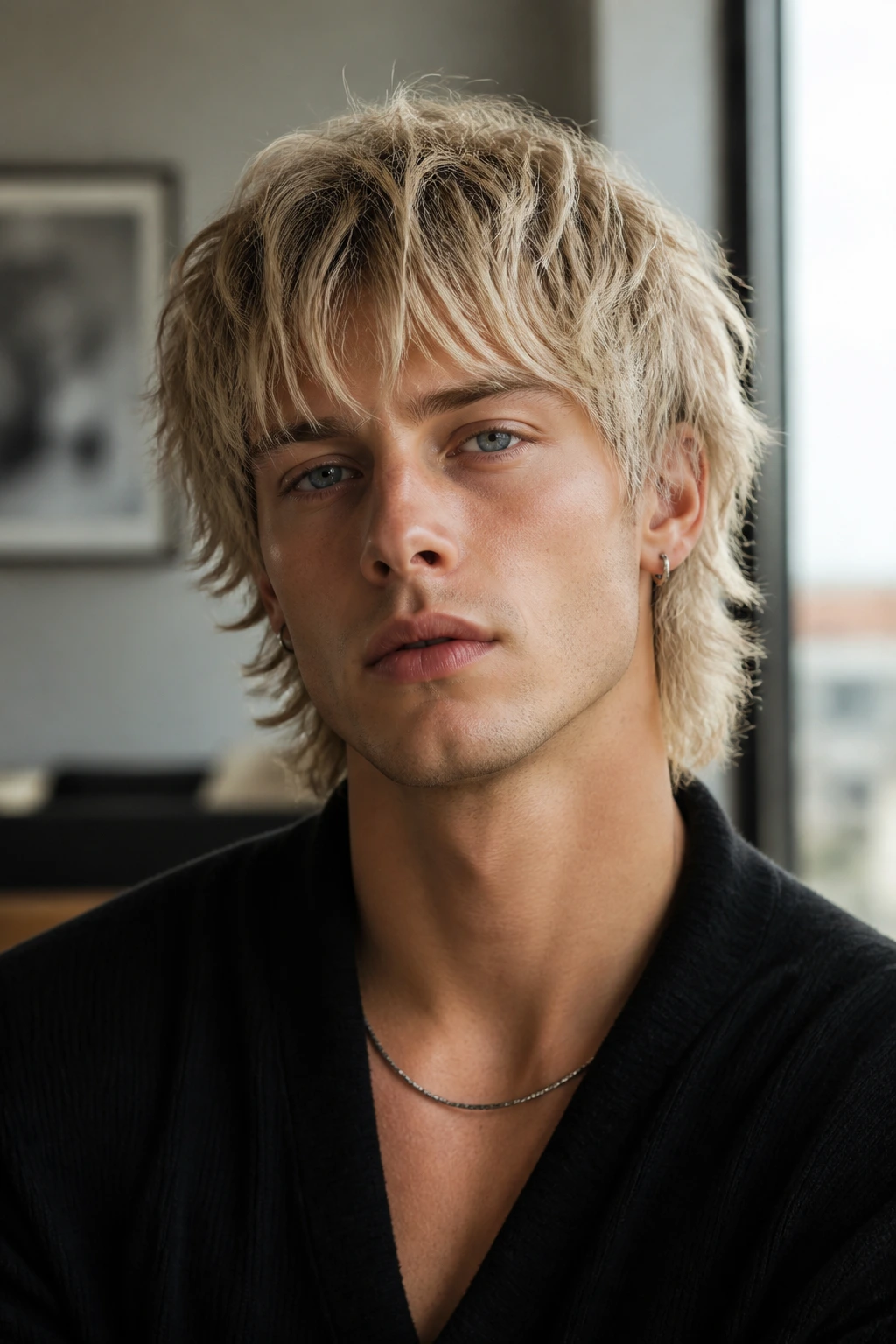
The Nordic blonde wolf cut is the most fashion-forward style on the list, and it earns that place because it mixes shaggy layers, a bit of length at the back, and a pale cool tone that makes the whole thing feel sharp instead of scruffy. It’s messy, but in a planned way. That matters.
The wolf cut works when the layers are uneven enough to create movement without turning into a mullet clone. Keep the front softer, the crown airy, and the back a little longer. A cool blonde or white-blond tone makes the layers stand out, but only if the hair is healthy enough to carry it. Add texture spray or a light matte cream and scrunch the hair a bit; don’t comb all the life out of it.
This is the kind of look that rewards confidence and a good cut more than perfect styling. If the shape is right, it has bite.
What Makes Blonde Hair Read Clean Instead of Fried
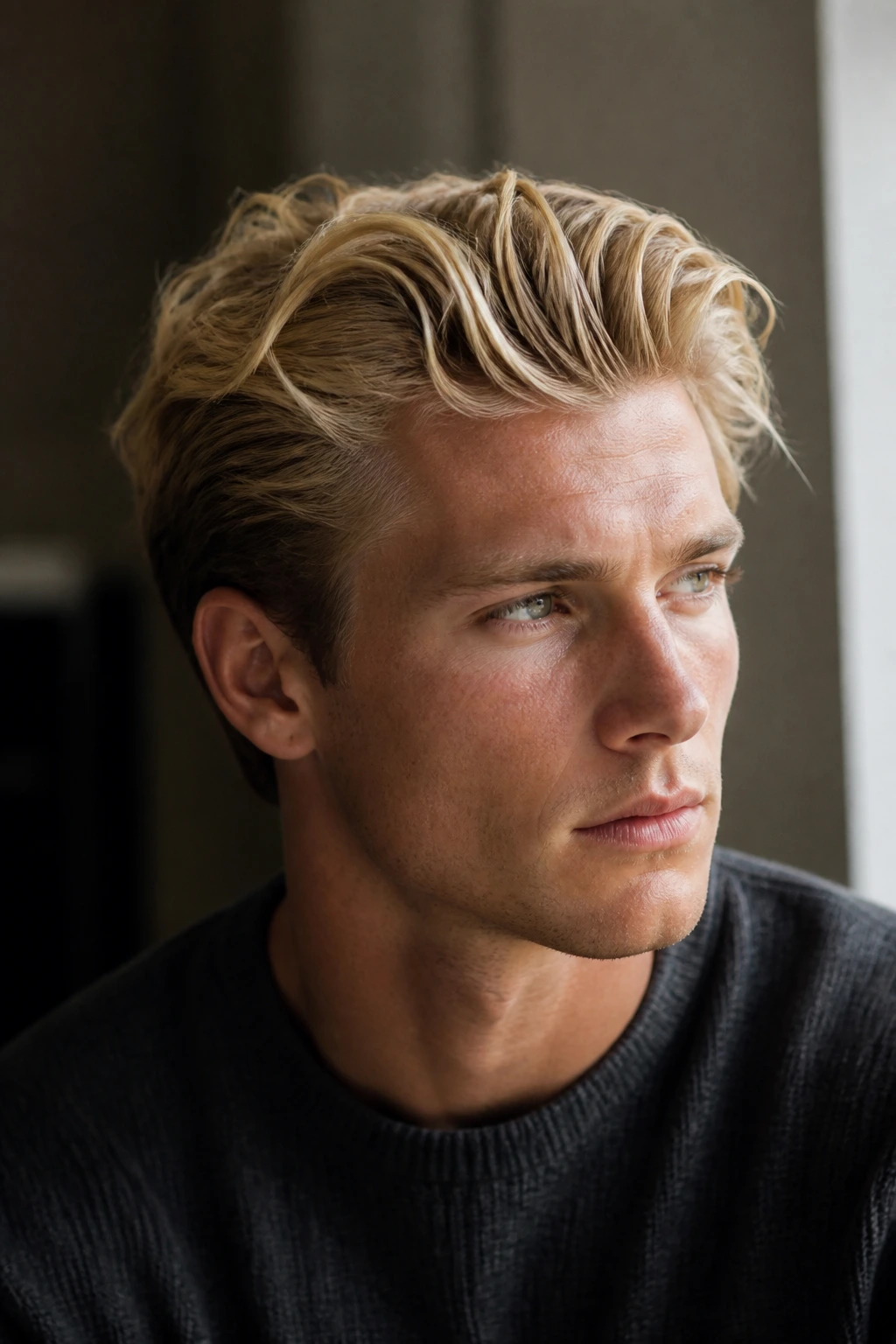
Blonde on men lives or dies by tone control. That’s the whole game. A lift level that’s a little too warm can make the hair look yellow under fluorescent light, while a tone that’s too ashy can flatten the style and make the hair look dusty. The sweet spot depends on your natural base, your brow color, and how much contrast you want against your skin.
Root shadow matters here too. A small amount of darkness at the scalp keeps the color from looking painted on. On short cuts, it gives the blonde depth. On longer cuts, it helps the regrowth look like part of the design instead of a problem you forgot to fix. I’m a fan of that approach because it respects real life. Not everyone wants a full bleach appointment every few weeks.
Texture is the other piece people underestimate. Straight hair shows lines and shine. Wavy hair shows movement. Curly and coily hair show depth. The same blonde can look clinical on a buzz cut and warm on a layered crop simply because the surface changes how light hits the hair.
How Blonde Hair Looks for Men Match Face Shape and Hairline
The cut matters more than the color when the face shape needs correction. A fringe can shorten a long face. Height can add length to a round one. A side part can soften a wide forehead or pull a strong hairline into a cleaner shape. Blonde only makes those decisions easier to see.
If your hairline is receding, don’t panic and don’t chase a comb-over that fights the pattern. Go shorter on the sides, keep the top textured, and use a blonde shade with a little root depth so the contrast doesn’t make the recession look harsher than it is. If your face is narrow, don’t overdo the height. The blonde will already pull the eye upward.
Quick pairing notes
- Round face: brush-ups, quiffs, and faux hawks add vertical lines.
- Long face: fringes, Caesars, and crops keep the shape from stretching.
- Square face: side parts, curtains, and waves soften the edges.
- Thinning hair: matte ash, beige blonde, and rooted looks reduce harsh contrast.
Tools That Keep Blonde Hair Sharp
- Purple shampoo: Use it once a week to knock out yellow tones, but don’t leave it on so long that the hair turns dull or gray.
- Color-safe conditioner: Blonde hair feels drier after lifting, and a conditioner with a little slip makes combing less brutal.
- Leave-in conditioner: Good for curls, waves, locs, and long layers that need softness without heavy grease.
- Heat protectant spray: Essential if you blow-dry quiffs, brush-ups, curtains, or pompadours.
- Blow dryer with nozzle attachment: The nozzle gives you direction, which is half the battle on structured blonde styles.
- Round brush: Helps build height on quiffs, pompadours, and brush-ups.
- Matte clay or paste: Best for crops, buzz-adjacent styles, and comb overs that should look dry, not shiny.
- Texturizing spray or sea-salt spray: Useful for waves, flows, and shaggy looks where movement matters more than polish.
- Wide-tooth comb: Gentler on bleached hair, especially curls, locs, and long layers.
- Microfiber towel or cotton T-shirt: Reduces roughness after washing, which matters more than most guys think once the hair’s been lightened.
How to Choose the Right Blonde at the Chair
Bring photos, yes, but bring the right photos. A blonde quiff on thick straight hair is not the same thing as a blonde quiff on fine wavy hair, even if the haircut name is identical. Show your barber the tone you want, the haircut shape you want, and one or two photos of your own hair in similar length if you can get them. That saves everyone time.
Tone is the first decision. Ask yourself whether you want warm, cool, or neutral blonde. Warm reads softer and more lived-in. Cool reads sharper and cleaner. Neutral sits in the middle and usually grows out more gracefully. If your brows are dark and your skin runs warm, a honey or beige blonde often sits more naturally than white-platinum. If your features are cooler, ash can look cleaner.
The second decision is maintenance. A pale platinum crop and a rooted dirty blonde crew cut are not the same commitment. One needs toner refreshes, moisturizing, and regular trimming. The other can slide a bit and still look intentional. Pick the one you’ll actually keep up with, not the one that looks best for two days in the mirror.
Small Tweaks That Change the Whole Look
Tone Control: A gloss service or toner every few weeks keeps blonde from wandering into brass. A tiny shift toward ash, beige, or gold can change the entire mood of the cut.
Texture Control: If the hair feels too flat, add layers or rougher styling. If it feels too wild, shorten the top and use a cream instead of a spray. The goal is shape, not chaos.
Face Framing: A fringe, curtain split, or slick back changes where the eye goes first. That’s useful when you want to soften the forehead, sharpen the jawline, or keep attention on the eyes.
Make-It-Yours: If you like low maintenance, pick a rooted crop or crew cut. If you like bold style, go platinum or ice blonde. If you want something softer, beige and honey are your friends.
The Most Common Blonde Hair Mistakes Men Make
The first mistake is bleaching too far, too fast. Hair that lifts past what it can handle gets rough, stretchy, and see-through at the ends. Once that happens, the color stops looking crisp and starts looking tired. A better plan is slower lift with conditioning between sessions.
The second mistake is choosing the wrong tone for the haircut. Pale platinum on a heavy, blunt cut can look harsh. Golden blonde on a sharp buzz can look too warm and patchy. Match the tone to the silhouette. Sharp cuts usually handle cooler shades better, while layered or wavier cuts can carry warmer ones.
The third mistake is forgetting that blonde exposes bad edges. A messy neckline, fuzzy fade, or split fringe stands out more when the hair is light. Keep trims on a tighter schedule than you would with darker hair, because the color is less forgiving.
The fourth mistake is overusing purple shampoo. It can save you from brass, but too much of it makes the hair flat and dry. Once a week is usually enough for maintenance, and even that depends on how porous the hair is.
Variations and Adaptations to Try
Shadow-Root Blonde: Keep the first half-inch or inch at the roots darker, then lift the mid-lengths and ends. This works well on crops, fades, and longer layered cuts because the grow-out blends instead of shouting.
Soft Honey Fade: Use a warm honey tone on top of a skin fade or taper. It’s a good middle ground if platinum feels too hard and dark blonde feels too plain.
Cool Beige Reset: When hair pulls brass fast, beige blonde sits in a safer middle lane than pure ash. It’s especially handy on side parts, crew cuts, and ivy league shapes.
Texture-First Blonde: On curls, waves, or twists, keep the color a little softer and let texture do the work. The style stays richer if the hair keeps some depth.
High-Contrast Platinum: If you want a bold look, pair very pale blonde with dark brows, a sharp fade, or a hard part. The contrast gives the style its shape before anyone notices the tone.
Keeping Blonde Hair Looks for Men Fresh Between Appointments
Blonde hair gets dull faster when it’s dry, so maintenance is mostly about moisture, tone, and trim timing. Use a color-safe shampoo two or three times a week, then follow with conditioner every wash. If your hair is bleached hard, add a bond-building treatment or deep conditioner once a week. That keeps the ends from turning brittle and makes the style look cared for instead of battered.
For toning, purple shampoo once a week is usually enough for pale blonde, and less than that may be all you need for beige or honey shades. If the color starts looking muddy, don’t keep piling on purple. A gloss or salon toner will reset the tone more cleanly than trying to wash it into submission.
Trims matter more than people admit. Buzzes and crops stay tidy with trims every 2 to 4 weeks. Mid-length looks like curtains, flows, and wolf cuts usually need a shape-up every 6 to 8 weeks. Long layers can stretch a bit more, but split ends show fast in blonde, so don’t let them go forever.
Questions Men Actually Ask About Going Blonde
Will blonde hair ruin my hair?
Not if it’s done with some care. Bleach does open the cuticle and weaken the hair, which is why conditioning and spacing out sessions matter. The damage usually comes from rushing the lift or re-bleaching already fragile hair.
What’s the easiest blonde look to maintain?
A dirty blonde crew cut or rooted crop is usually the least fussy. The shorter length hides small tone shifts, and the darker root keeps regrowth from looking harsh.
Can dark-haired men go blonde without turning orange?
Yes, but it usually takes more than one lifting step. Dark hair often lifts through red and orange before it reaches pale yellow, so toner becomes part of the process, not an afterthought.
Is ash blonde or honey blonde better for me?
Ash works better if you want a cooler, sharper look and your skin leans cool or neutral. Honey tends to suit warmer skin, darker brows, or thicker hair that can handle a softer tone.
Does blonde work with curly hair?
Absolutely, but curls need more moisture and a gentler lift. Warmer or beige blondes often look richer on curls than stark platinum because they keep the texture from looking dry.
How often should I tone blonde hair?
Most men need toner every 4 to 8 weeks, depending on how pale the blonde is and how fast brass shows up. The paler the blonde, the more often it usually needs a reset.
Can I do this at home?
Short, low-stakes looks like dirty blonde or subtle beige are sometimes manageable with care. Platinum, ice blonde, and any style on curls, locs, or previously colored hair are better left to someone who can read the hair as they work.
The Blonde That Fits the Cut
The best blonde hair looks for men are the ones that know what they are. A buzz cut wants precision. A crop wants texture. Curtains want movement. Platinum wants control. Warm blonde wants a little softness, and rooted blonde wants a barber who isn’t afraid of grow-out.
Pick the tone that makes your cut easier to wear, not harder. That’s the part people remember, even if they can’t name why it looks right.
