



A good set of braids changes the whole mood of a face. Box braid styles for men can make coarse hair look organized, sharpen a jawline, and give a haircut some shape even when the rest of the cut is plain. But the difference between “clean” and “too much” usually comes down to small things: part size, root tension, length, and whether the braids are finished in a way that makes sense for the hair underneath.
Tight braids are not a badge of honor. Neither is length for length’s sake. I’ve always had more respect for a set that sits comfortably, grows out neatly, and still looks intentional after two weeks than for one that looks dramatic on day one and starts screaming for mercy by day five. The best versions feel balanced. The parts are crisp, the roots lie flat, and the whole style looks like someone made choices on purpose.
Some men suit compact braids with a taper fade. Others need knotless starts, bigger sections, or a little color to keep the style from going flat. A few look strongest with a bun, while others are better off keeping the ends at jaw level so the braids don’t swallow the face. The styles below cover that range, from quiet and clean to sharper, louder, and more detailed.
Why These Styles Work So Well on Men
-
Shape matters more than length: A medium braid set can look sharper than long braids if the parts are clean and the front line sits right against the hairline.
-
Root comfort changes everything: Knotless and feed-in starts reduce that hard tug at the scalp, which matters if your temples are touchy or your first install always feels rough.
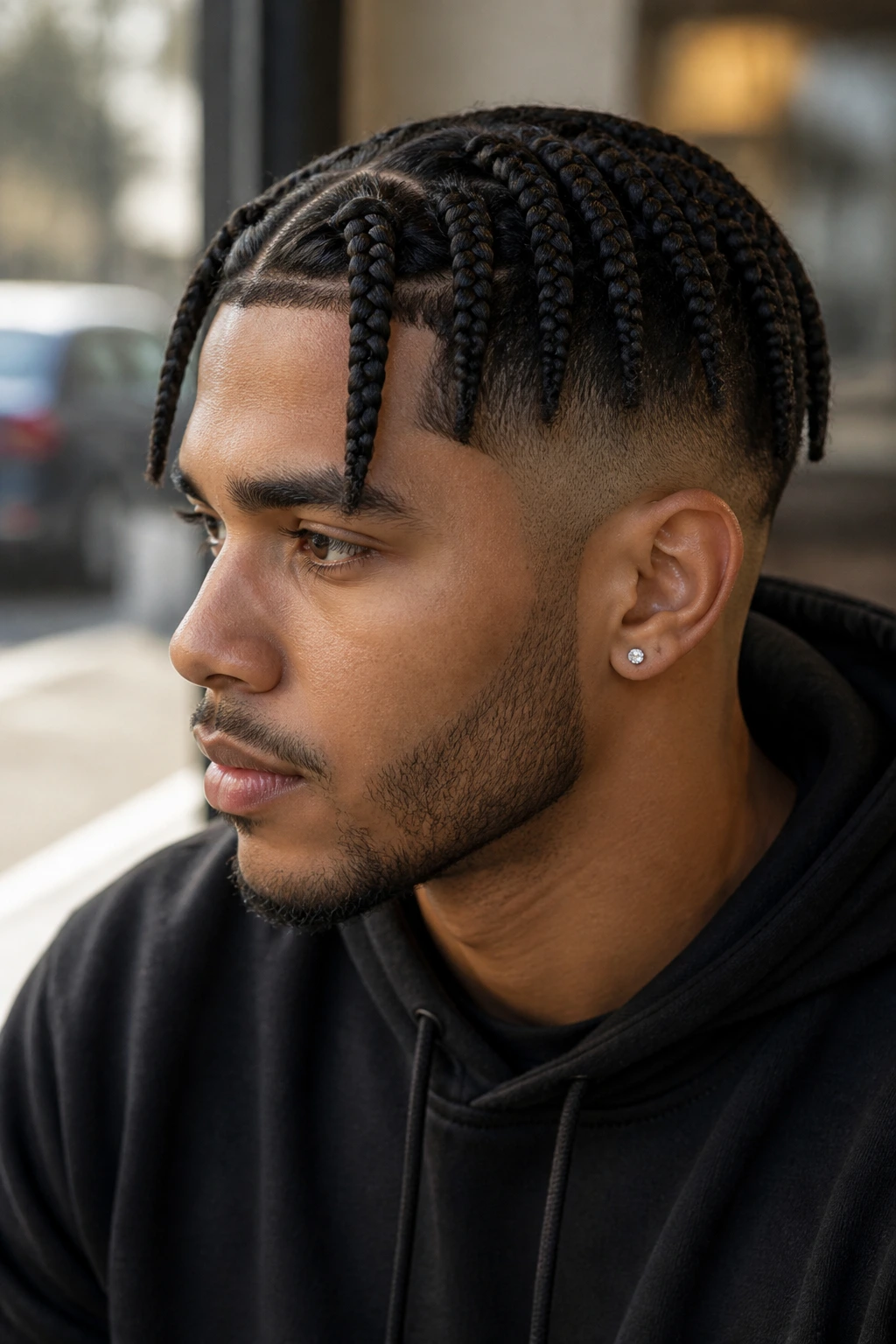
-
Fades and braids are a strong pairing: A clean taper or high fade keeps the sides from looking heavy, and it gives the braid pattern a real frame instead of letting it sprawl.
-
Accessories change the mood fast: Beads, cuffs, and thread don’t just decorate the braids; they change the rhythm of the whole style.
-
Not every set needs to be long: Short, shoulder-length, and bun-ready braids each solve a different problem, from collar snagging to gym hair to office neatness.
-
Parting is the silent hero: Square, triangle, and zigzag sections all give the style a different personality before a single braid is even finished.
1. Classic Medium Box Braids
If you want the reference point for the whole family, start here. Classic medium box braids sit in that middle zone where the style looks deliberate without becoming heavy or fussy. The braids are thick enough to read from across the room, but not so thick that they feel bulky on the scalp or look clumsy around the temples.
I like this version because it gives you room to move. You can wear it down, pull half of it back, or tuck it under a cap without the whole shape collapsing. A medium set also ages in a nicer way than a very small or very jumbo set. When the roots grow out a little, it still looks like the style was meant to sit there.
What to ask for
- Section size: roughly 1/2 to 3/4 inch squares, depending on your density.
- Length: chin to shoulder is the safest range for a first set.
- Finish: ask for neat, sealed ends and even tension from front to back.
- Parting: clean square parts, not stretched or crooked boxes that widen toward the crown.
A medium set is the one I’d point to if someone said, “I want braids, but I don’t want to think too hard about them.” It’s the steady, useful option. Not flashy. Not boring. Just dependable in a way that holds up.
2. Knotless Box Braids
Tight braids are not a badge of honor. Knotless box braids earn their place because they start lighter at the scalp and build into the braid gradually, which means less of that abrupt pull right at the root. If your hairline tends to get sore or your skin reacts fast to tension, this is the style to look at first.
The other advantage is visual. Knotless braids lie flatter at the base, so they look smoother and more natural at the start. That flat root changes the whole vibe, especially when the braids are medium or small. They don’t sit on the head like little pegs. They move.
A braider usually spends a little more time on these, and that extra care shows. They’re a smart choice for men who want a cleaner start, a softer grow-out, and less chance of that first-day headache that comes from over-tight work. If the goal is comfort without losing the braid look, knotless does the job better than most people expect.
My bias: if your scalp complains easily, this is the one to pick before you try anything louder.
3. Jumbo Box Braids
Why do jumbo braids look so strong on some heads? Because the bigger sections turn the braid itself into the shape, not just the hair. You can see the parting from the front, and the braids carry more visual weight, which gives the style a solid, almost sculpted look.
Jumbo braids are fast compared with smaller sets, which makes them a good choice if you want impact without spending the whole day in the chair. They’re especially useful on dense hair, where a few large braids can create a cleaner silhouette than a crowd of tiny ones. On thinner hair, though, jumbo sections can make the scalp show too much between rows, so the look can feel sparse if the density isn’t there.
Quick facts that matter
- Best range: about 8 to 12 braids for a typical head, though that shifts with size and density.
- Weight: each braid carries more heft, so keep the length reasonable if your roots are sensitive.
- Look: bold, simple, and easy to read.
- Watch out: overly long jumbo braids can tug more than they should.
I’d use jumbo braids when I want a set that looks confident without a lot of extra decoration. They don’t need cuffs, color, or tricks. The braid itself is the point.
4. Small Box Braids
Small box braids are the opposite of lazy. They take time, the parting has to stay neat, and the sections need to be close enough together to look full without crowding the scalp. But when they’re done well, the result has a sharp, textured grid that holds its shape longer than chunkier styles.
I usually think of small braids as the choice for men who like detail. They read clean from a distance, and up close they show the work. That makes them useful if you want a set that looks intentional in every angle, not just from the front. They also pack nicely into a ponytail or bun, which gives you more styling options later on.
- Best for: dense hair, longer wear, and people who don’t mind chair time.
- Not ideal for: very tender scalps or anyone who wants a fast install.
- Ask for: even sizing across the crown; tiny braids at the front and huge ones at the back will look off.
- Keep in mind: more braids means more maintenance on wash day.
Small braids are not subtle. They’re detailed. That’s the point.
5. Short Box Braids
Short box braids stop around the ear, jaw, or upper neck, and that shorter length changes the whole feel. The style looks tighter, cleaner, and less busy because the braids don’t swing around or sit on top of the collar. For men who hate hair in their face, that’s a real benefit. No drama. No constant brushing back.
The front row matters a lot here. Short braids show the parting clearly, so any uneven section sticks out fast. If the install is sloppy, you’ll see it. If the install is crisp, the style looks almost tailored. That’s why I like short braids best when they’re paired with a neat taper or a clean lineup. The haircut and the braid pattern need to speak the same language.
They’re also easier to live with under a hood, a hat, or a work cap. Less length means less snagging and less time drying after a wash. If you want braids but don’t want the maintenance of long ends brushing your shoulders all day, this is a strong pick.
6. Shoulder-Length Box Braids
Shoulder-length braids are the flexible middle lane. They’re long enough to tie up, sweep back, or let hang, but not so long that every movement turns into a hair management problem. That balance is why I keep coming back to them. They carry shape well, and they don’t collapse into heaviness the way extra-long sets sometimes do.
There is one catch. Shoulders are where friction lives. Shirt collars, jacket seams, and backpack straps all rub there, so the ends need to be neat and the braid weight needs to be balanced across the head. A few too many braids in one section can make the style feel lopsided after a week.
Best use case: men who want enough length for a bun or half-up style, but still want the braids to hang naturally.
My advice: if you choose this length, ask for medium or slightly smaller sections instead of giant ones. The weight lands better, the style lasts longer, and the movement looks cleaner when you turn your head.
7. High Fade Box Braids
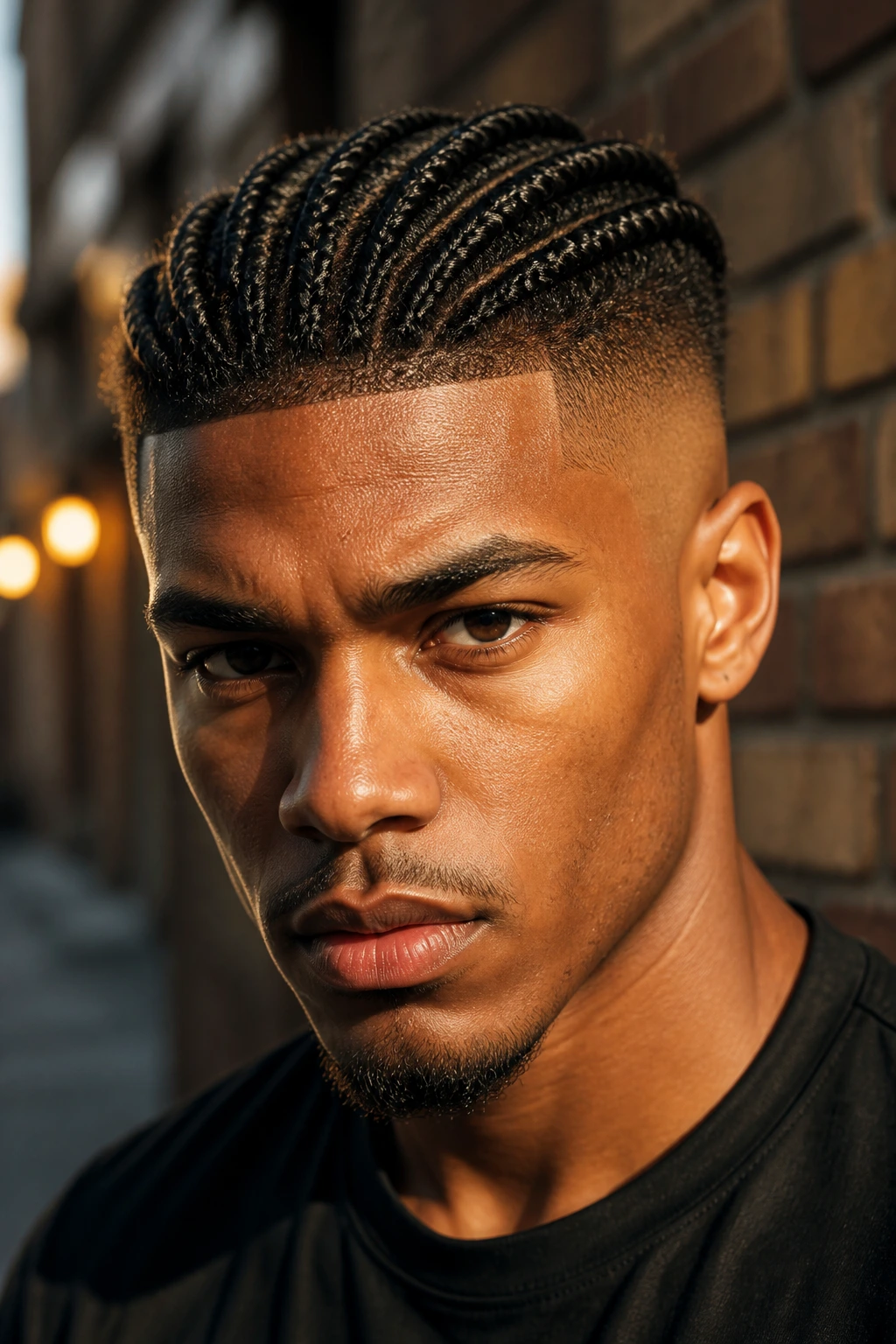
A high fade with box braids is not subtle. That is the appeal. The shaved sides give the braids a hard edge, and the braid mass on top suddenly looks taller and more defined. The contrast can make a round face look a little longer and give a square face even more structure.
This style works best when the fade line is clean around the braid perimeter. If the cut underneath grows out unevenly, the whole shape starts to wobble. I’d keep the sides touched up every couple of weeks if the goal is a crisp look, because high fades show regrowth fast. The top can be immaculate, and the style still looks messy if the sides turn fuzzy.
It pairs well with medium or jumbo braids. Tiny braids can get lost on top of a very high fade, while huge braids plus a high fade can feel a little top-heavy unless the head shape supports it. If you like strong contrast and don’t mind the upkeep, this is one of the sharpest ways to wear the style.
8. Taper Fade Box Braids
If a high fade feels too loud, a taper fade is the cleaner compromise. The sides stay softer and more gradual, so the braid set doesn’t look like it’s sitting on a shaved platform. That makes the style easier to wear in settings where a harsh contrast would feel out of place.
The taper fade also ages more gracefully. When the sides grow out, the shift is less obvious, which means you can go a little longer between barber visits without the look falling apart. The style still feels shaped, though. That’s the real win. You get structure without losing all the natural weight around the temples and sideburns.
I like this version for men who want braids that don’t shout before you speak. It works with medium parts, knotless starts, and even shorter braids. It’s also one of the better choices if you wear glasses, because the softer sides keep the frame from fighting with the haircut.
9. Undercut Box Braids
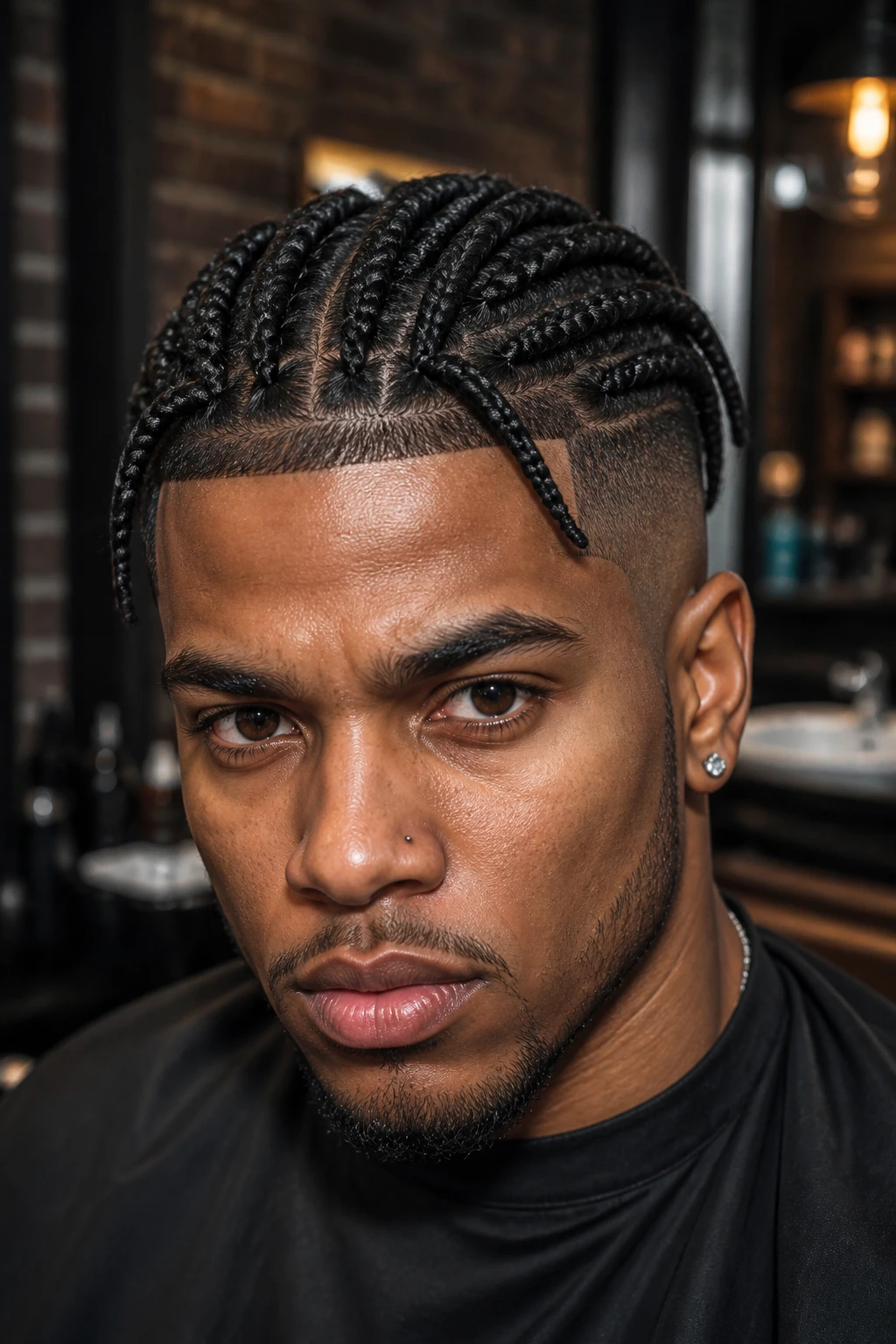
Not subtle. That’s the whole point.
An undercut with box braids pushes the sides down so hard that the top becomes the entire show. The silhouette gets dramatic fast, especially with longer braids or a thick braid count. If you like a clean, narrow lower half and a much fuller braid section on top, this is the style that delivers that contrast without pretending to be anything else.
The downside is upkeep. Undercuts reveal growth fast, and the shape can go from sharp to scruffy if the shaved portion is left alone too long. I’d only choose this if you’re willing to keep the sides lined up or refreshed on a regular schedule. The braid work itself can stay neat while the undercut underneath quietly ruins the illusion.
This style also gives you room to play with color, a bun, or side-swept styling. The clean undercut makes the top feel even more deliberate. If you want your braids to look strong from every angle, this is a heavy-handed but effective move.
10. Triangle-Part Box Braids
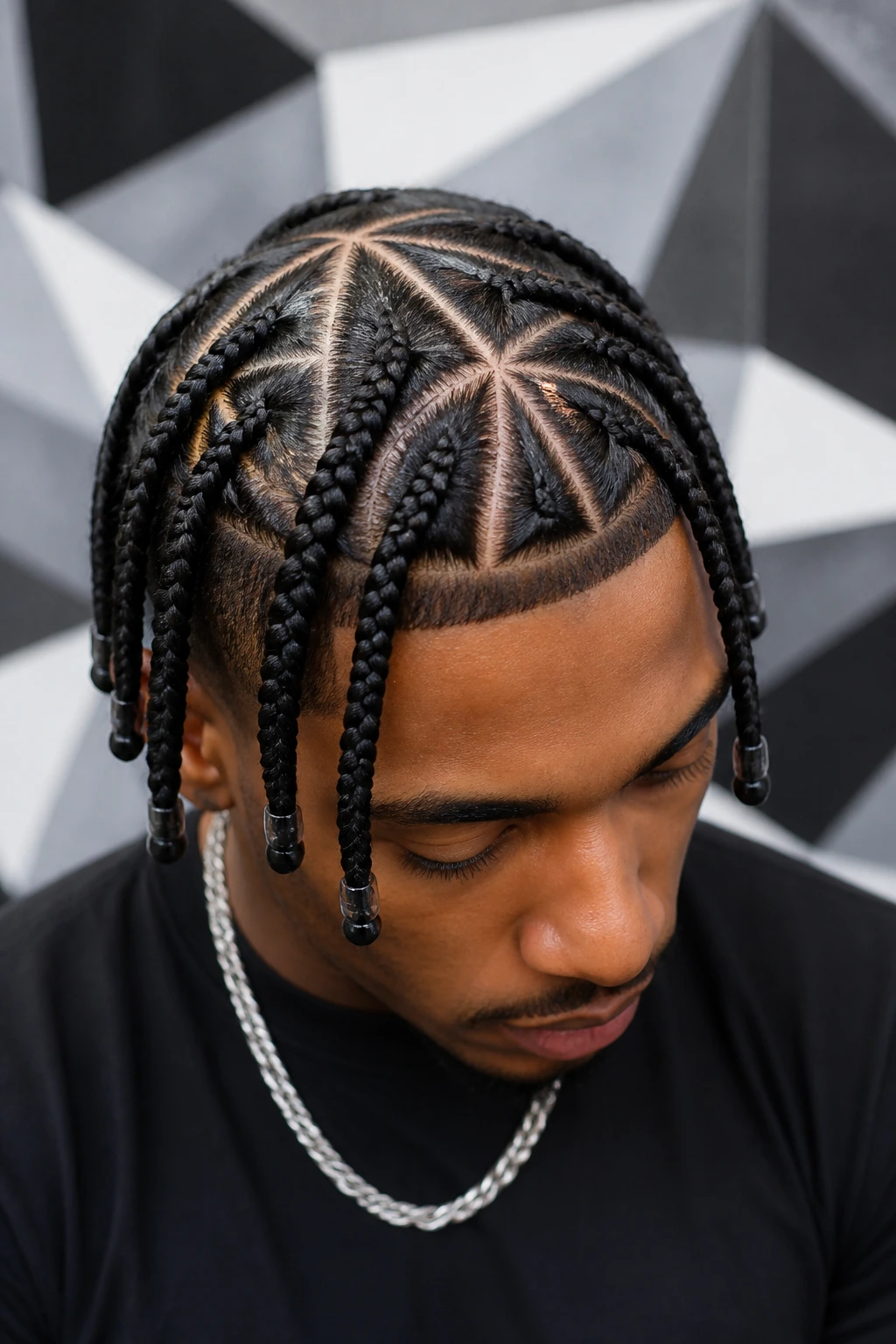
Triangle parts change the whole mood of the scalp. Instead of the usual square grid, the sections break into angles, which makes the braid pattern feel more graphic and a little less expected. The style still reads as box braids, but the parting adds its own pattern before the ends even move.
I like triangle parts on men who want a detail that shows up without needing color or beads. The geometry does the talking. The sections can also flatter hair that doesn’t part perfectly in straight rows, because the diagonal shapes distract from tiny irregularities. That said, this is not the easiest pattern to do yourself. A good triangle layout needs a steady hand and an eye for symmetry.
What to ask your braider
- Keep the triangles even from front to crown.
- Use clean, straight part lines with no fuzzy overlap.
- Pair with medium or small braids for the best shape.
- Avoid very jumbo sections, which can make the triangle pattern disappear.
Triangle parts are for the man who wants the style to look considered. It’s a small change that makes the whole set feel edited.
11. Zigzag-Part Box Braids
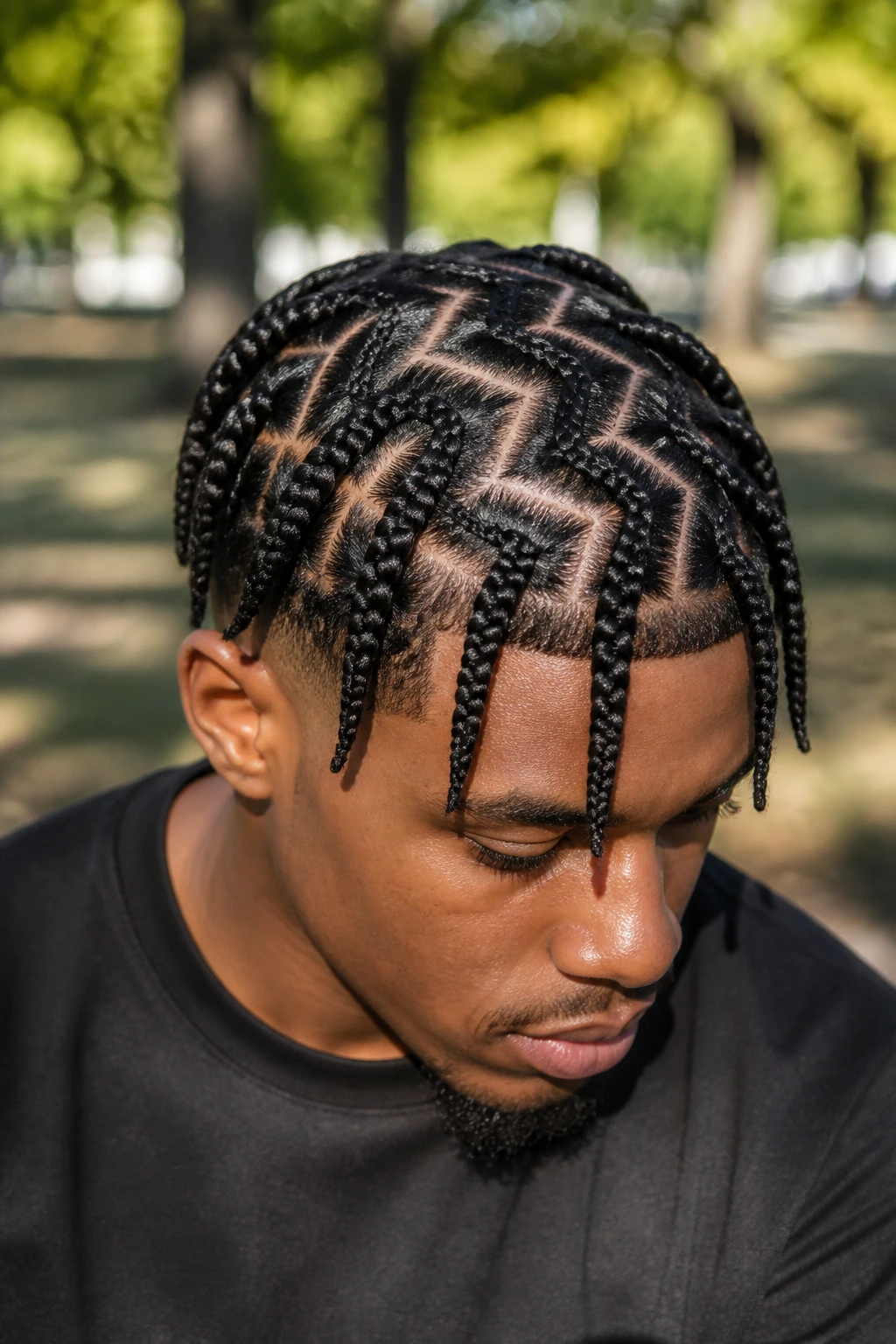
Zigzag parts bring movement before the braids even start. The part line itself has energy, and that matters if you want something less rigid than a square grid. It’s a little playful, a little graphic, and not at all shy.
This style works best when the parting is crisp enough to be read at a glance. If the zigzags are too shallow, they just look like crooked lines. Too deep, and they can start looking overworked. The sweet spot is a clean pattern that still feels intentional when you catch it from the side.
Men who like detail but don’t want accessories tend to like this one. It gives the scalp a second layer of design without adding weight, beads, or color. I’d pair it with medium-length braids and a taper or low fade so the parting has room to show.
The style isn’t conservative. It’s not trying to be. If you want neat braids with a bit of motion built into the roots, zigzag parts do that without needing much else.
12. Feed-In Box Braids
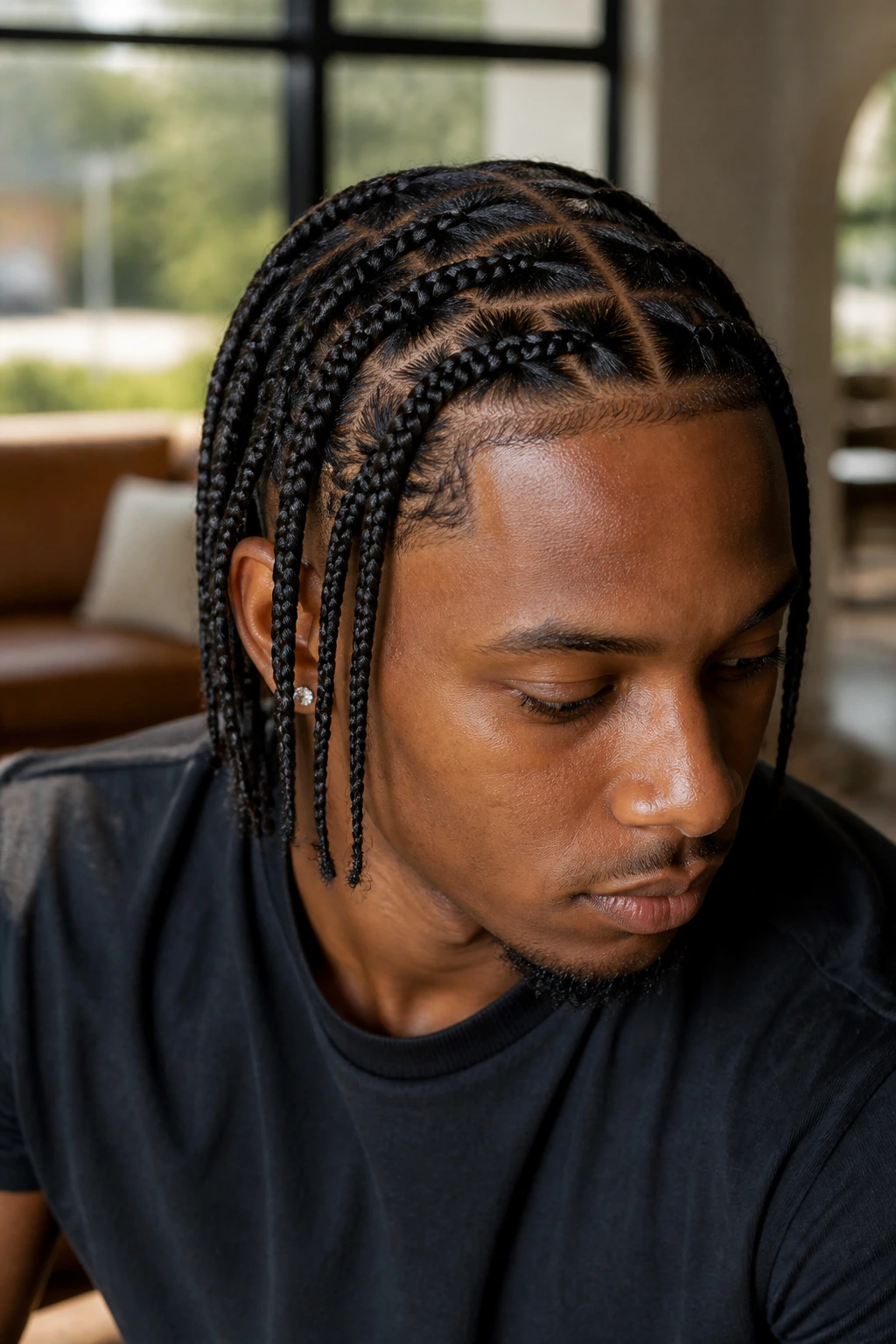
Feed-in braids are useful when you want a smoother start at the root without the hard bump that can happen with traditional installs. The added hair is worked in gradually, so the base sits flatter and looks more blended. That is especially helpful if your natural hair is short, fine at the edges, or just sensitive to tension.
A lot of men like feed-in braids because they look polished without looking padded. The scalp line stays clean, and the braid starts with less bulk, which makes the front row look neat longer. It also helps the style sit closer to the head, so hats and hooded sweatshirts don’t push it around as much.
This isn’t the same thing as knotless, though people often lump them together. Feed-in is about how the hair is added through the braid; knotless is about the root starting without a knot. In practice, both help reduce that hard, bulky beginning, and both are easier on the hairline than a rough install. If you want a tidy, softer-looking braid start, feed-in is a smart move.
13. Beaded Box Braids
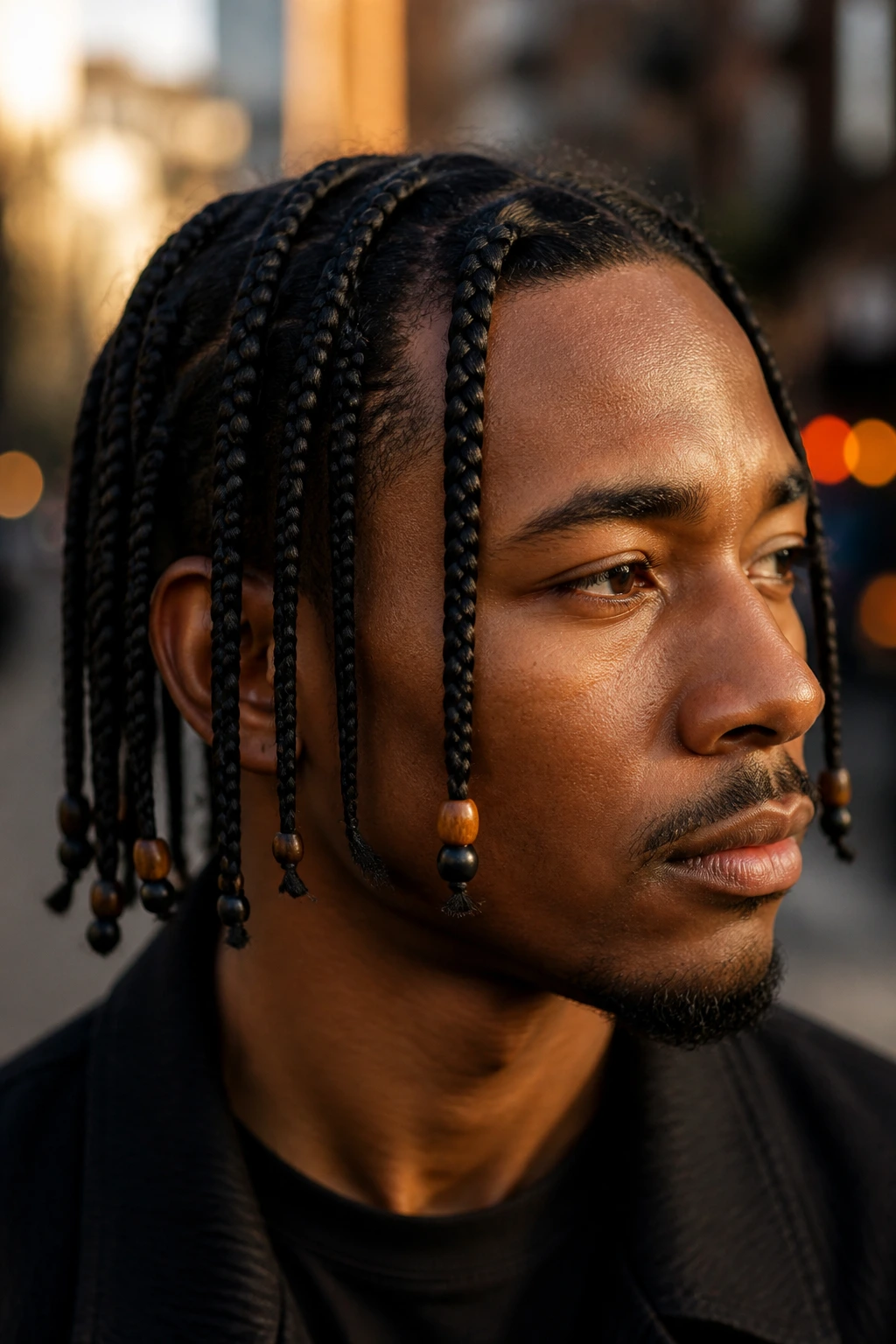
Beads change the sound of a hairstyle. That sounds small until you hear it. A few beads clicking softly at the ends give the braids motion, rhythm, and a little weight that makes the style feel alive instead of static. The effect is strongest on short to medium braids, where the beads have room to hang and move without getting buried.
I prefer beads used sparingly on men. A dozen loud beads on every braid can feel costume-like unless that’s the point. A few placed near the ends, or just on the front rows, are usually enough. Wood beads, matte black beads, or clear ones tend to look cleaner than glossy plastic if you want the style to stay grounded.
A few practical notes
- Weight matters: huge beads on thin braids will pull more than they should.
- Placement matters: keep the heaviest beads away from the roots.
- Balance matters: one or two accent rows can be better than decorating every braid.
- Removal matters: use small elastics or secure fittings so the beads don’t slide off.
Beads are for men who want motion and personality without changing the braid pattern itself.
14. Cuffed Box Braids
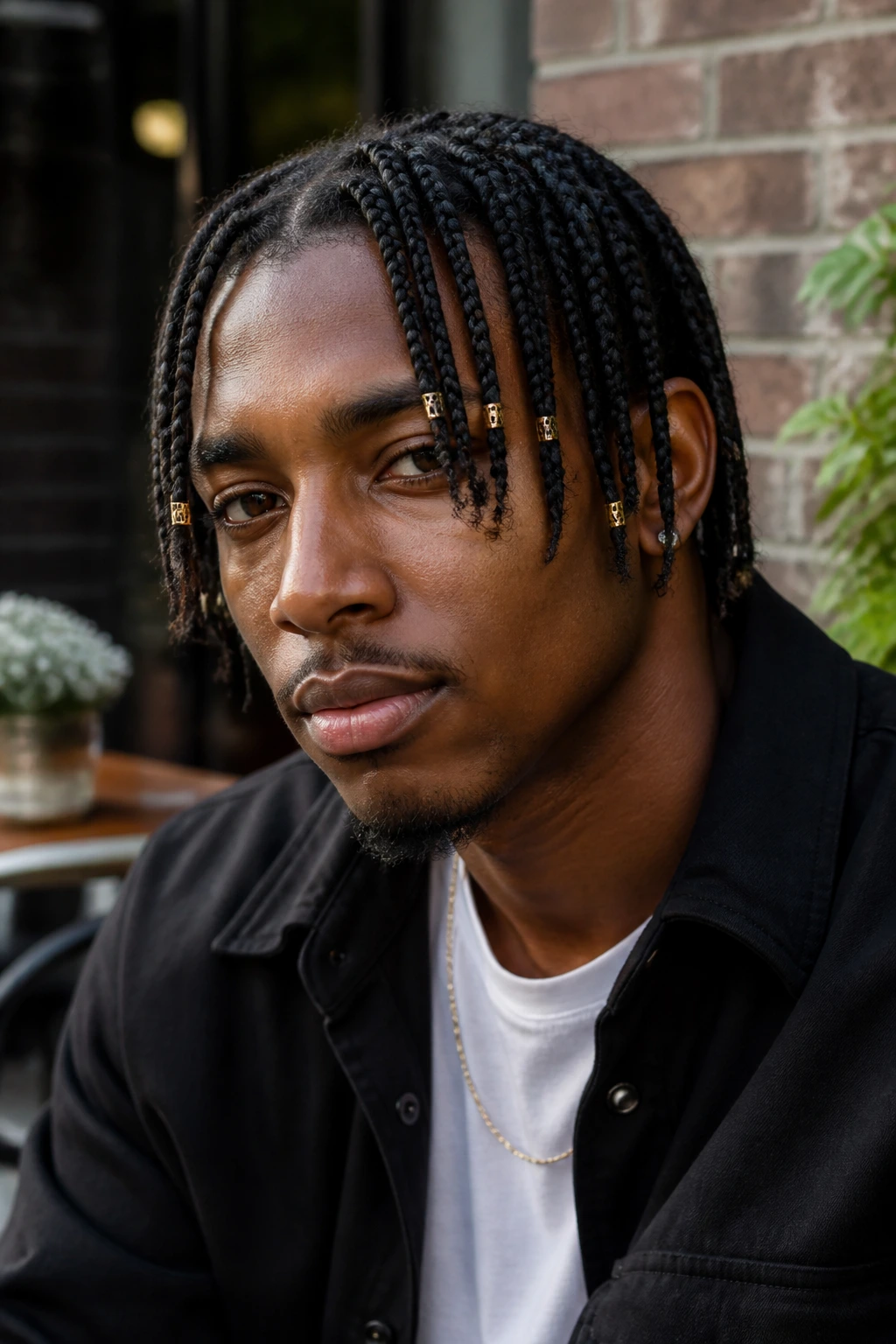
Cuffs are the quieter cousin of beads. They catch the light, but they don’t chatter when you move, and that makes them easier to wear in everyday settings. A few well-placed cuffs can sharpen a braid set that would otherwise feel too plain, especially if the braids are medium or long.
I like cuffs most when the braid work is already clean. That sounds obvious, but it matters. Cuffs draw the eye, and if the sections are sloppy, the cuffs just spotlight the mess. On neat braids, though, they look disciplined and intentional. Silver works well against black hair. Gold looks strong with warm brown, blonde, or copper tones. Black cuffs are the stealth option.
You don’t need to cover every braid. In fact, I’d avoid that. A few cuffs near the ends or clustered around the front rows usually do more than a full metal takeover. This style is less about decoration and more about punctuation.
15. Colored Box Braids
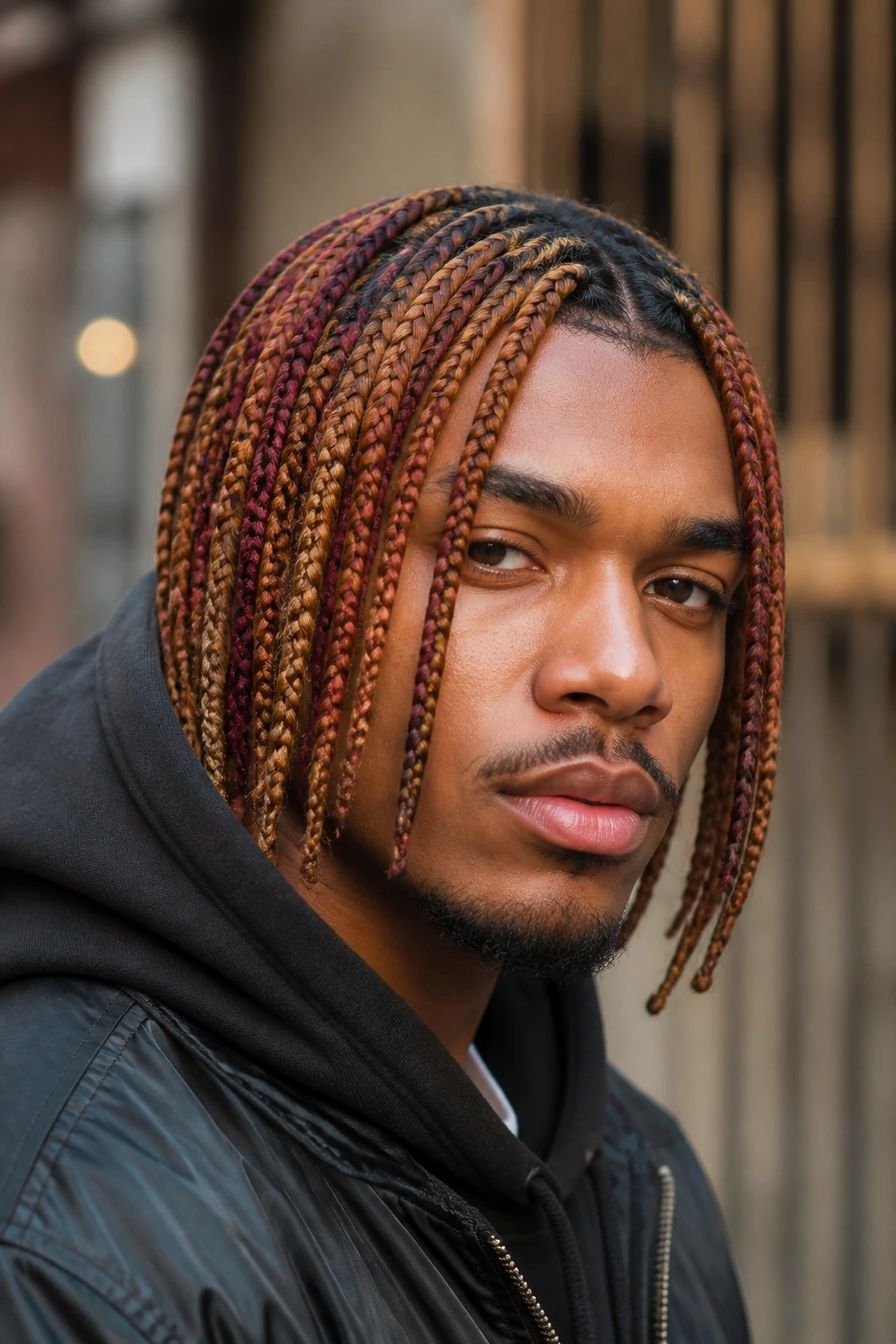
Color changes the story fast. Black braids are clean and classic, but a little color can change the whole read of the style without changing the braid pattern at all. Honey brown warms the face. Burgundy adds depth. Blonde catches the eye from across the room. Even a soft gray or ash tone can make the braids look sharper under natural light.
What matters most is contrast control. Men with deeper skin tones often look good in warm browns, reds, or honey shades because those colors blend with the skin rather than fighting it. Cooler complexions can carry ash, silver, or blonde better than people expect. If you’re unsure, start closer to your natural shade and move outward from there.
I’d avoid dyeing your natural hair just to chase a color trend. Pre-colored braiding hair gets you the effect without exposing your own strands to another round of chemical stress. That’s the cleaner route, and it keeps the braid install simpler. Color should make the style easier to wear, not harder.
16. Two-Tone Box Braids
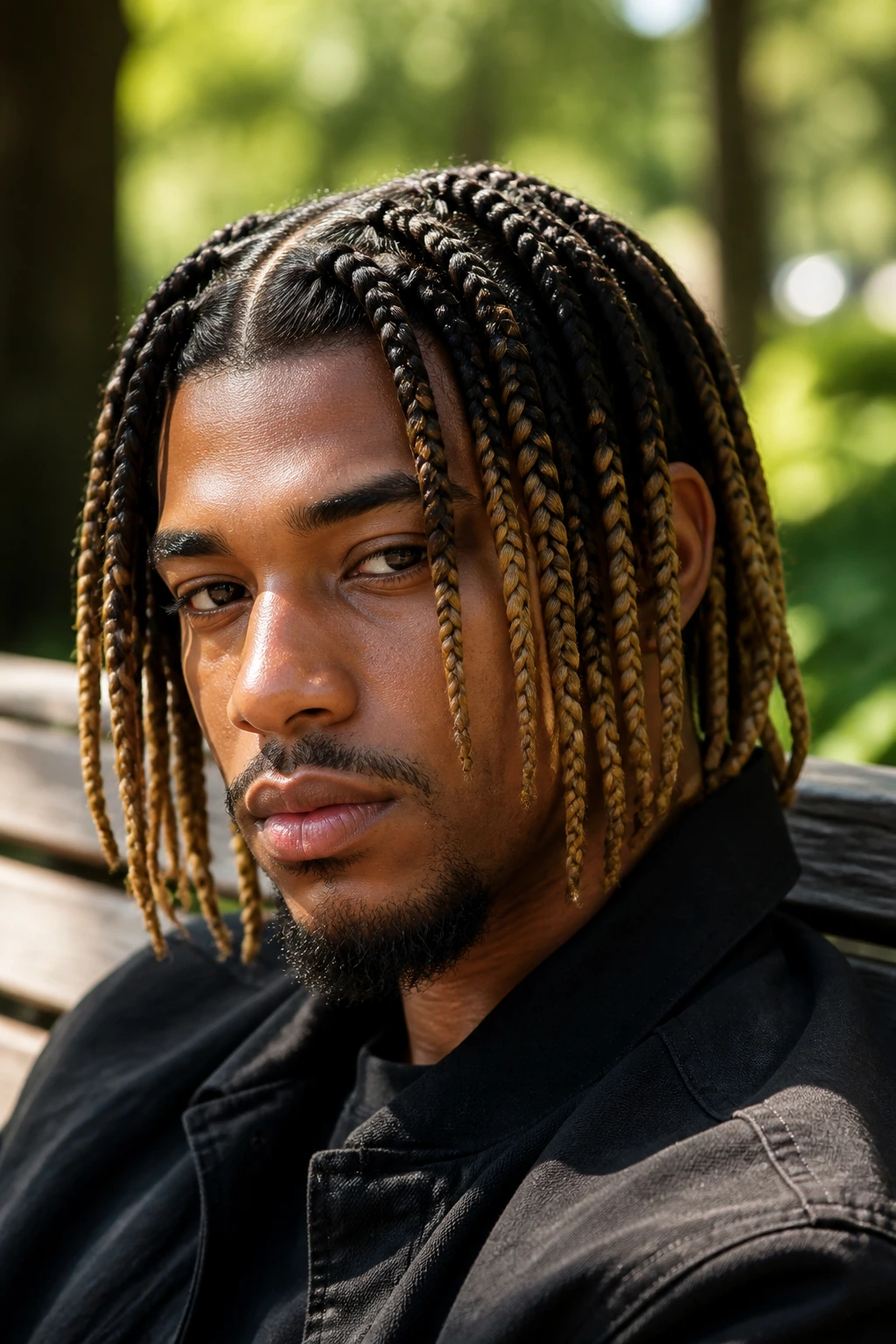
Two-tone braids are a better choice than all-over bright color for a lot of men. The reason is simple: the contrast shows movement without turning the whole style into a statement piece. Dark roots with honey ends, black with burgundy tips, or brown with blonde dipped ends all create a sense of motion when the braids shift.
This style works especially well on medium and shoulder-length braids, because the difference between the tones becomes more visible as the hair moves. Short braids can still use two tones, but the effect is quieter. The longer the braid, the more the color contrast has room to show itself.
I also like two-tone sets because the grow-out is easier to live with. If the root tone stays close to your natural color, the style doesn’t look as blunt when your own hair starts to show. That makes it a little more forgiving than a full-head color job. It’s a good option if you want something with personality but not something that needs explaining every time you walk into a room.
17. Half-Up Box Braids
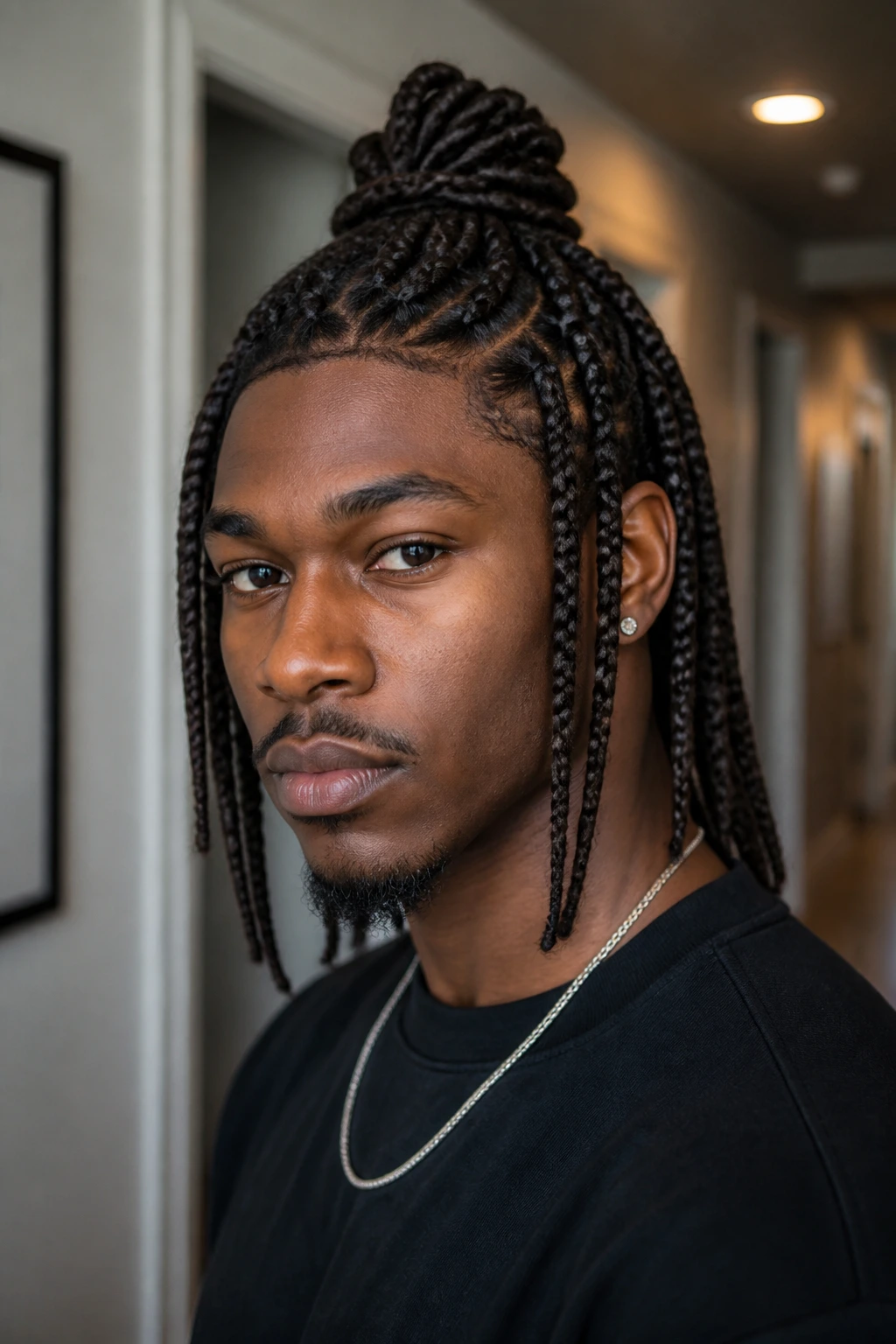
Half-up braids solve a problem without making a fuss. They keep the front and top sections off your face while letting the rest of the braids hang, which means you get shape and movement at the same time. This is one of the easiest ways to make medium or long braids feel tidier during the day.
The trick is not pulling the top too tight. A half-up style should lift the hair, not cinch it like a knot at the crown. Use a snag-free band or braid wrap, and keep the gathered section centered unless you want a deliberate off-center look. If the set has a fade underneath, the half-up shape usually looks even sharper because the lifted top exposes the clean sides.
This is the kind of style that quietly improves a braids set that’s starting to feel heavy. It keeps the face open, shows the parting, and makes the ends look controlled instead of wild. If you’re the type who constantly brushes hair out of your eyes, this one saves you some annoyance.
18. Box Braid Bun
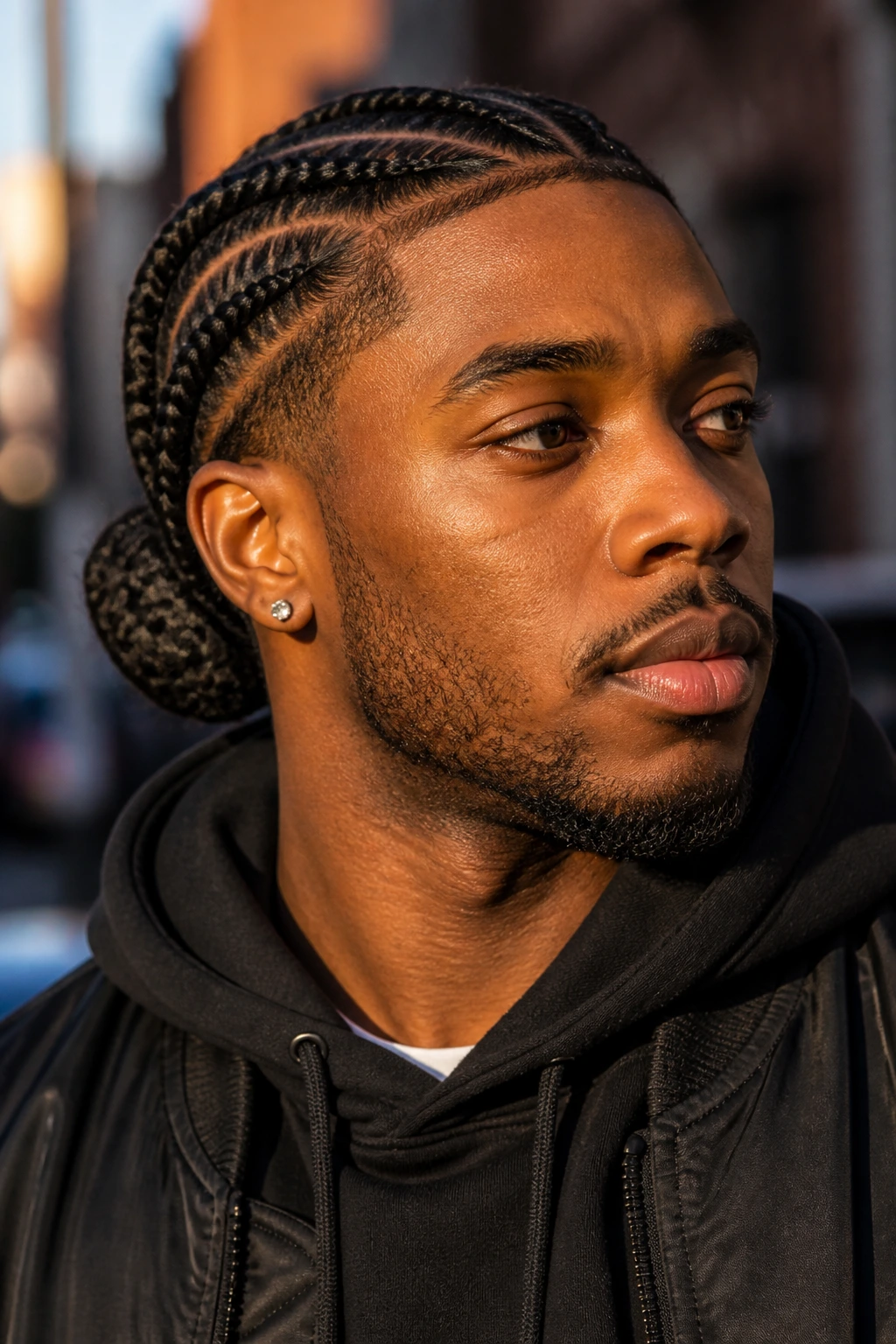
The braid bun is the most controlled version of the style. It pulls the length into a single shape and makes the braids behave, which is useful when the ends are long enough to start getting in the way. A low bun usually looks cleaner and is gentler on the scalp than a high one because it doesn’t yank as hard at the temples.
A high bun can look sharper, but it also puts more strain on the front rows if the hair is heavy. I’d save that for men with a strong hairline and enough length to support the shape without fighting the roots. The low version is easier to wear for long stretches, especially if you sit at a desk, wear headphones, or work under a hat.
A braid bun is also one of the better ways to make long braids feel neat on short notice. No special tools. No complicated wrapping. Just a band, a careful pull, and a shape that keeps the ends out of everything.
19. Side-Swept Box Braids
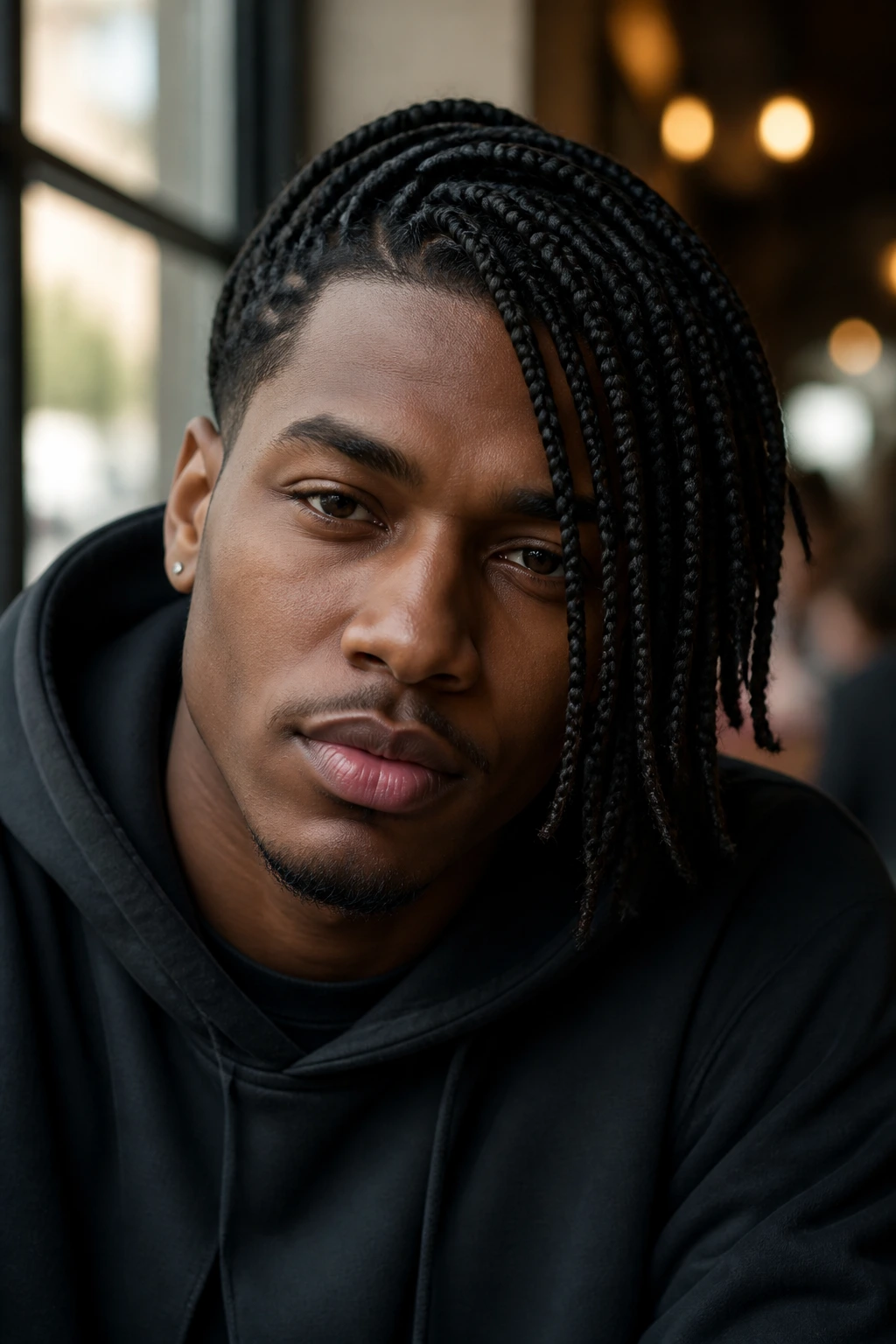
Side-swept braids bring direction to the style. Instead of hanging straight down or pulling back into a bun, the braids move across the face and toward one side, which gives the whole set a little more motion. It works best when the braids are medium to long, because shorter pieces won’t hold that sweep for long.
I like this style when a man wants the braids to frame the face rather than sit symmetrically on top of it. It can soften a sharp forehead, balance a wider jaw, or cover a widow’s peak without trying too hard. If there’s a fade on one side, the sweep feels even stronger because the hair has a clear path to follow.
This is also a good style if you like parting that doesn’t feel too formal. It’s a little looser, a little less strict than the grid-based looks above. Not messy. Just directional. And sometimes that is enough to make a braid set feel fresh again.
Why the Install Details Matter More Than the Photo
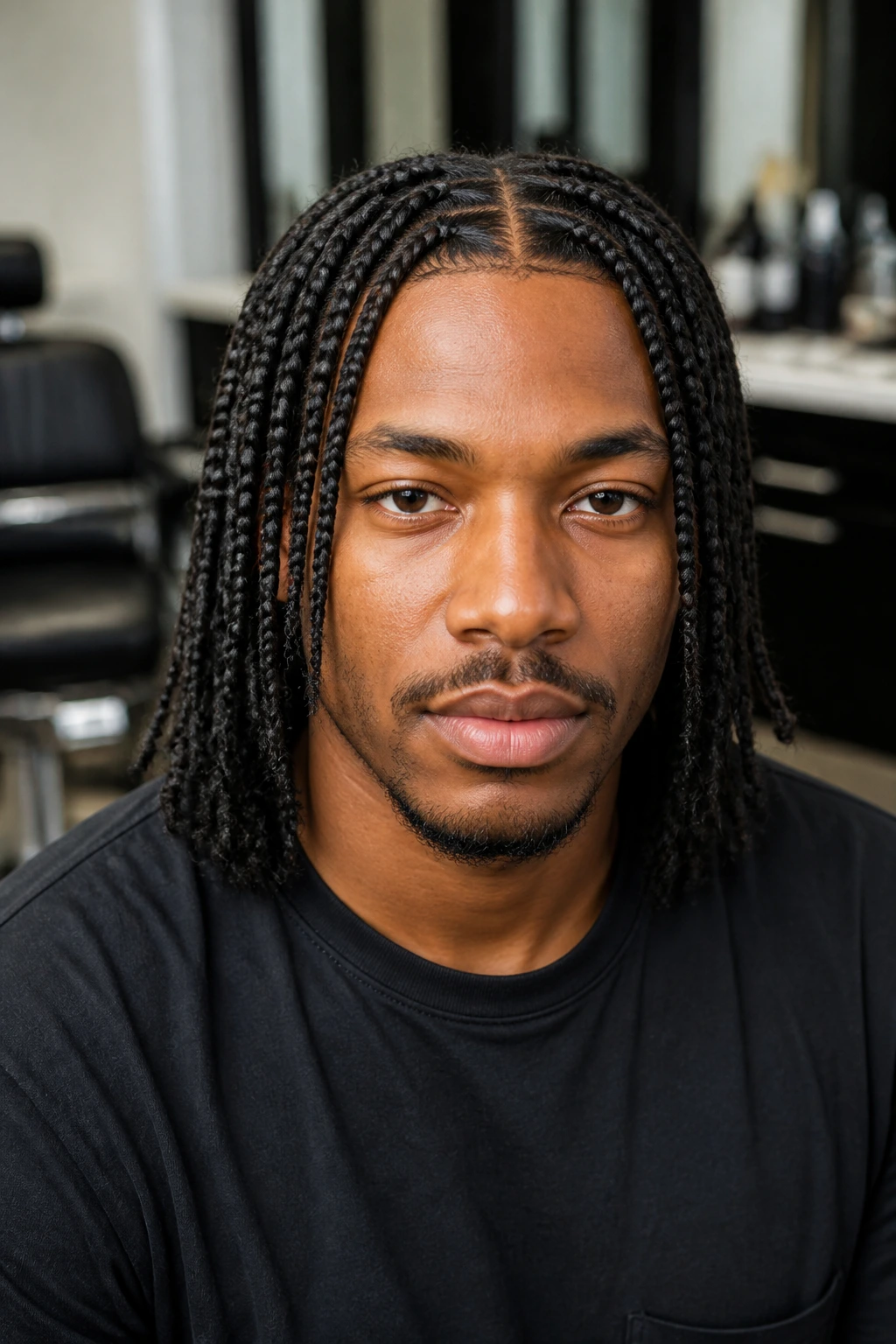
A braid style is not only about the finished picture. The install decides how it feels on day two, how it grows out, and whether you can keep wearing it without tugging at your scalp every time you turn your head. That’s why I keep coming back to part size, tension, and the weight of the hair. Those three things are doing more work than any color choice or accessory ever will.
The first sign that a set is wrong is usually not visual. It’s physical. Soreness at the temples, red bumps near the hairline, or a braid that feels like it’s lifting when you blink are all warning signs. Dermatology guidance is plain on this point: repeated tension at the edges can lead to breakage over time, and that is not a price worth paying for a sharp photo. A braid that feels safe at the root can still look crisp. You do not have to choose one or the other.
What I like about box braids is that the style can be tuned. Smaller sections spread the weight. Knotless and feed-in starts soften the grip. Fades change the silhouette. Length changes how much the style moves. Once you start thinking about braids that way, the “right” set gets easier to spot.
Essential Equipment for These Styles
-
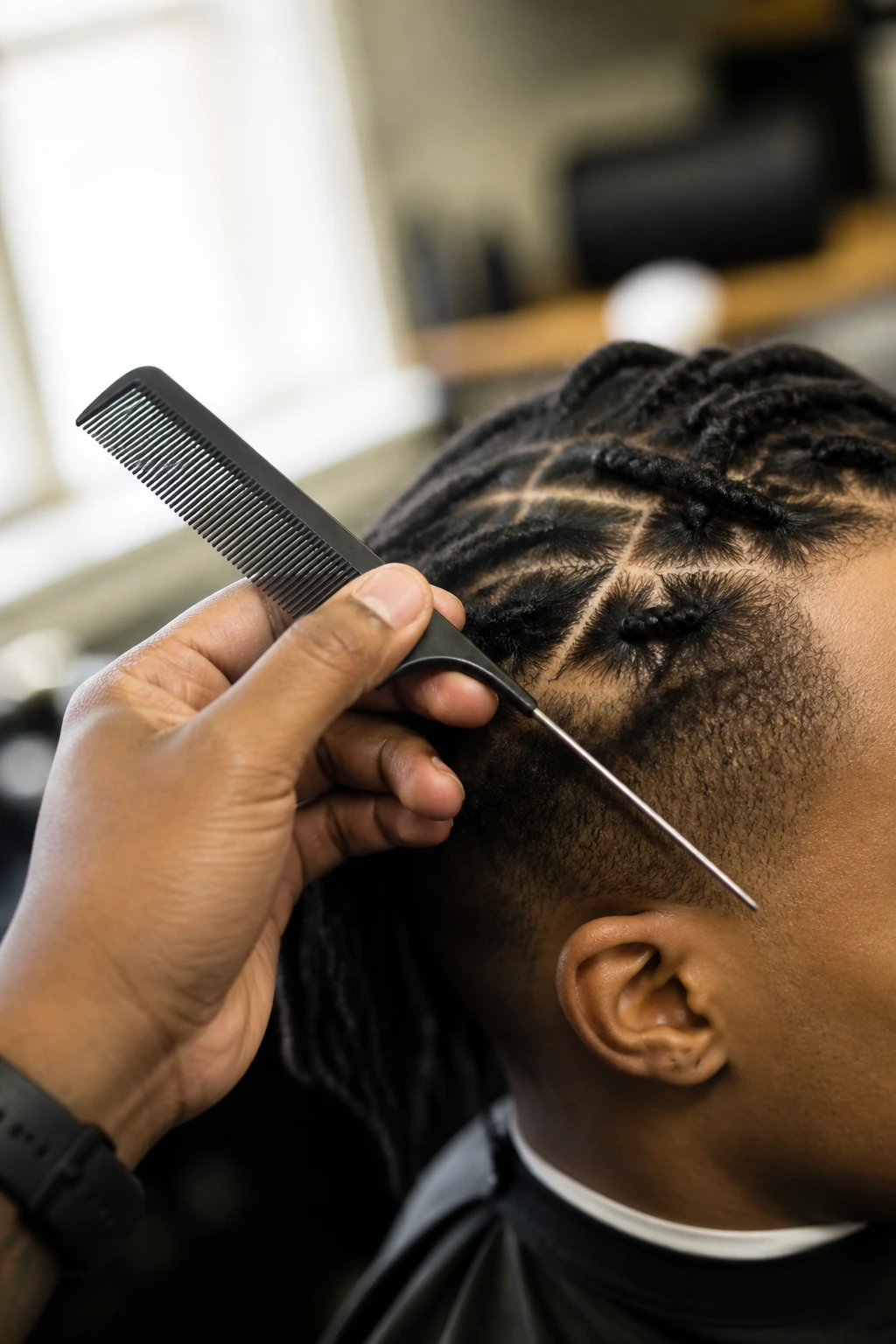
Rat-tail comb: The tail gives you clean part lines, especially for square, triangle, or zigzag sections.
-
Sectioning clips: These keep the hair separated while you work and stop the back rows from getting mixed up.
-
Braiding hair: Pre-stretched kanekalon or X-pression-style hair is the usual workhorse for a clean, smooth braid.
-
Braid gel or shine jam: Use a light hand. You want grip at the roots, not a waxy helmet.
-
Spray bottle with water and leave-in: Handy for keeping the natural hair workable and preventing it from drying out while you braid.
-
Mousse or foam wrap: This helps lay down fuzz after finishing and keeps the set looking cleaner.
-
Satin durag or bonnet: Night protection. Non-negotiable if you want the style to last.
-
Hair oil applicator bottle: Useful for scalp care because it lets you place oil between parts instead of flooding the roots.
-
Hand mirror: Essential if you’re checking the back rows or asking someone else to braid for you.
-
Blow dryer with cool setting or hooded dryer: Helps dry the roots fully after washing so the braids don’t smell damp.
Smart Shopping and Hair-Selection Tips
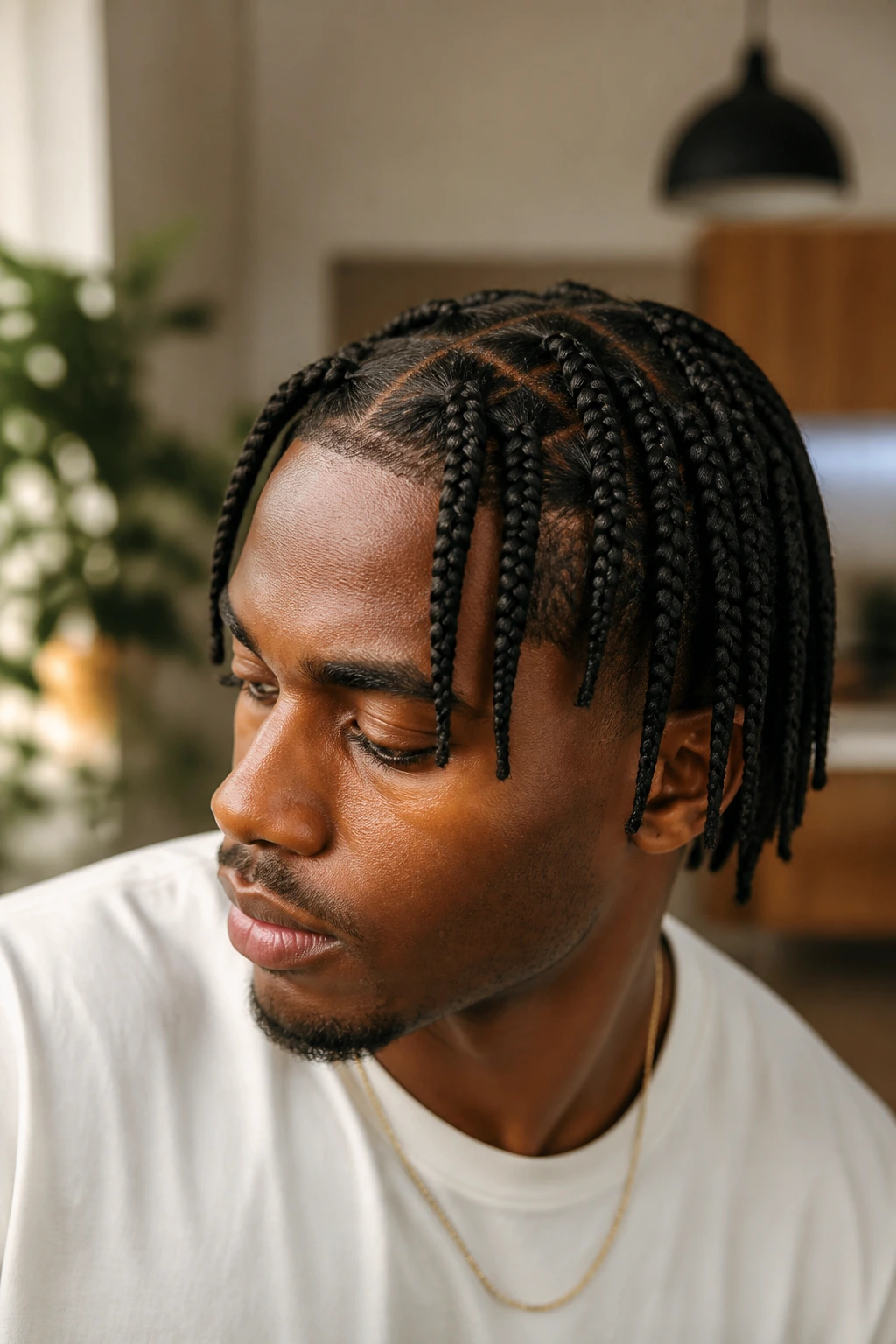
Braiding hair is one of those purchases where cheap can be fine, but cheap and rough is not fine. If the synthetic hair feels scratchy in the pack, it will probably feel scratchy on your neck too. Pre-stretched hair saves time and usually gives a smoother finish, which matters a lot on medium and long braids. If you’re new to the style, that smoother feed is worth the extra few dollars.
Color is easier than people make it. Natural black or off-black blends with almost everything, so it’s the safest starting point. Brown, burgundy, blonde, and ash tones work best when they echo your beard, eyebrows, or skin undertone instead of fighting them. If you’re not sure, hold the bundle up near your face in daylight. Indoor store lighting lies.
For quantity, medium installs often take 4 to 6 packs, while small, long, or heavily layered sets can need 7 to 9. Jumbo styles usually use less. That said, head size and braid length change the math fast, so it’s smart to buy one extra pack if you’re planning a longer style or a color blend. Nobody likes stopping mid-install because the last few strands ran out.
For products, I’m conservative. A braid-friendly gel, a light mousse, a leave-in spray, and a scalp oil with a narrow tip are enough for most people. Heavy pomades build up fast and leave the roots dull. If your scalp gets flaky, choose lighter oils and use them sparingly. Braids like clean hair more than they like shiny hair.
How to Wear the Look
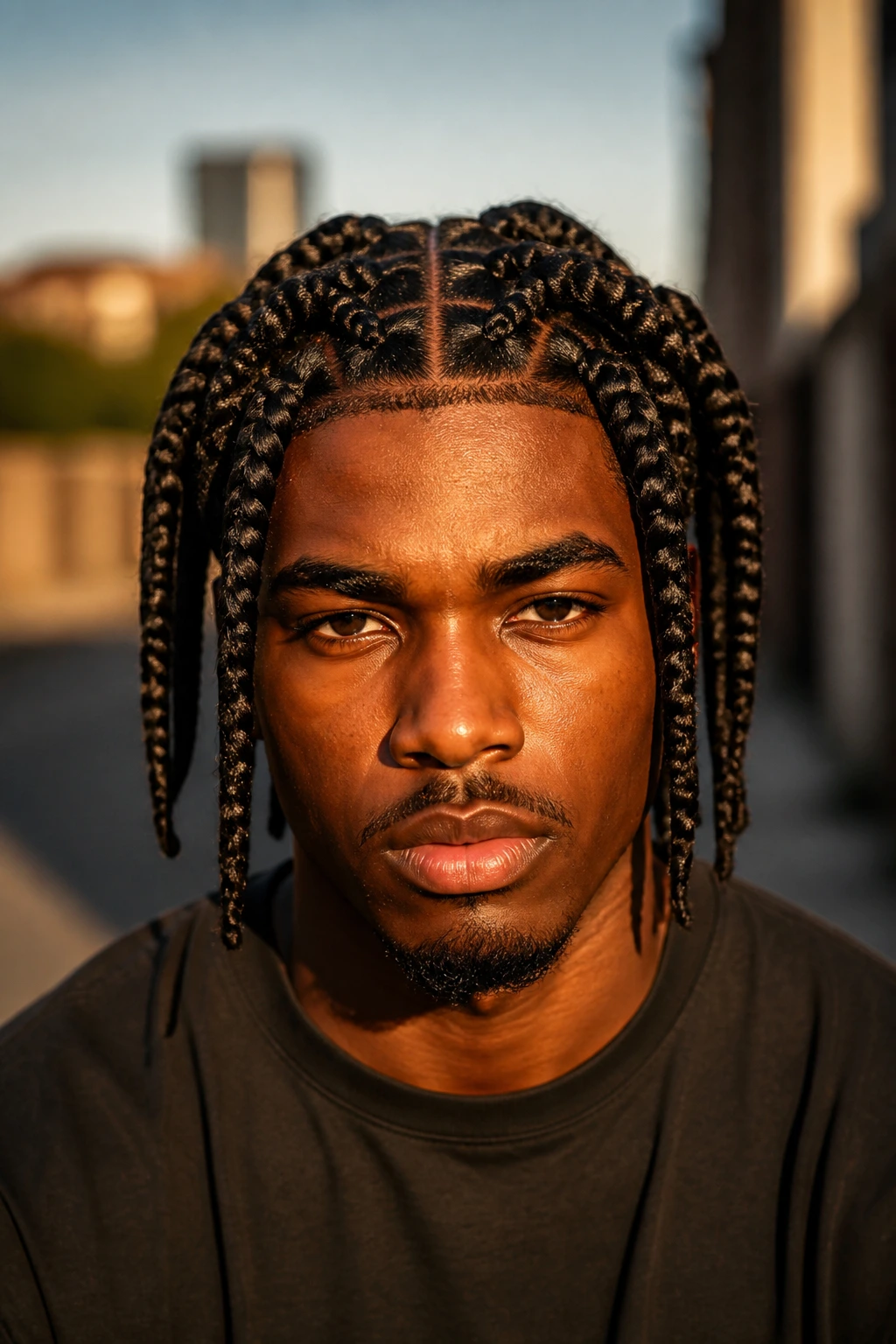
Presentation: Keep the front row neat, the parts deliberate, and the ends finished in a way that matches the length. A crisp line-up or taper makes the braids look sharper immediately, while loose edges can make even a good install feel unfinished.
Accompaniments: A tidy beard, a clean fade, and one or two accessories at most usually work better than piling everything on at once. If the braids are long or colorful, let the haircut stay quiet. If the haircut has a hard fade, keep the braids simple.
Scale: Shorter or narrower faces usually benefit from more, smaller braids because the texture adds width. Broader faces can take medium or jumbo sections well, especially when the style keeps the sides tighter. If your head shape is uneven, change the part placement slightly instead of forcing a perfect grid that doesn’t suit you.
Finish: A satin wrap at night keeps the braid surface smooth, and a light foam or mousse after washing helps the frizz settle down. Skip the thick grease on the scalp. It tends to collect lint, and lint never makes a braid set look better.
Additional Tips and Personalization
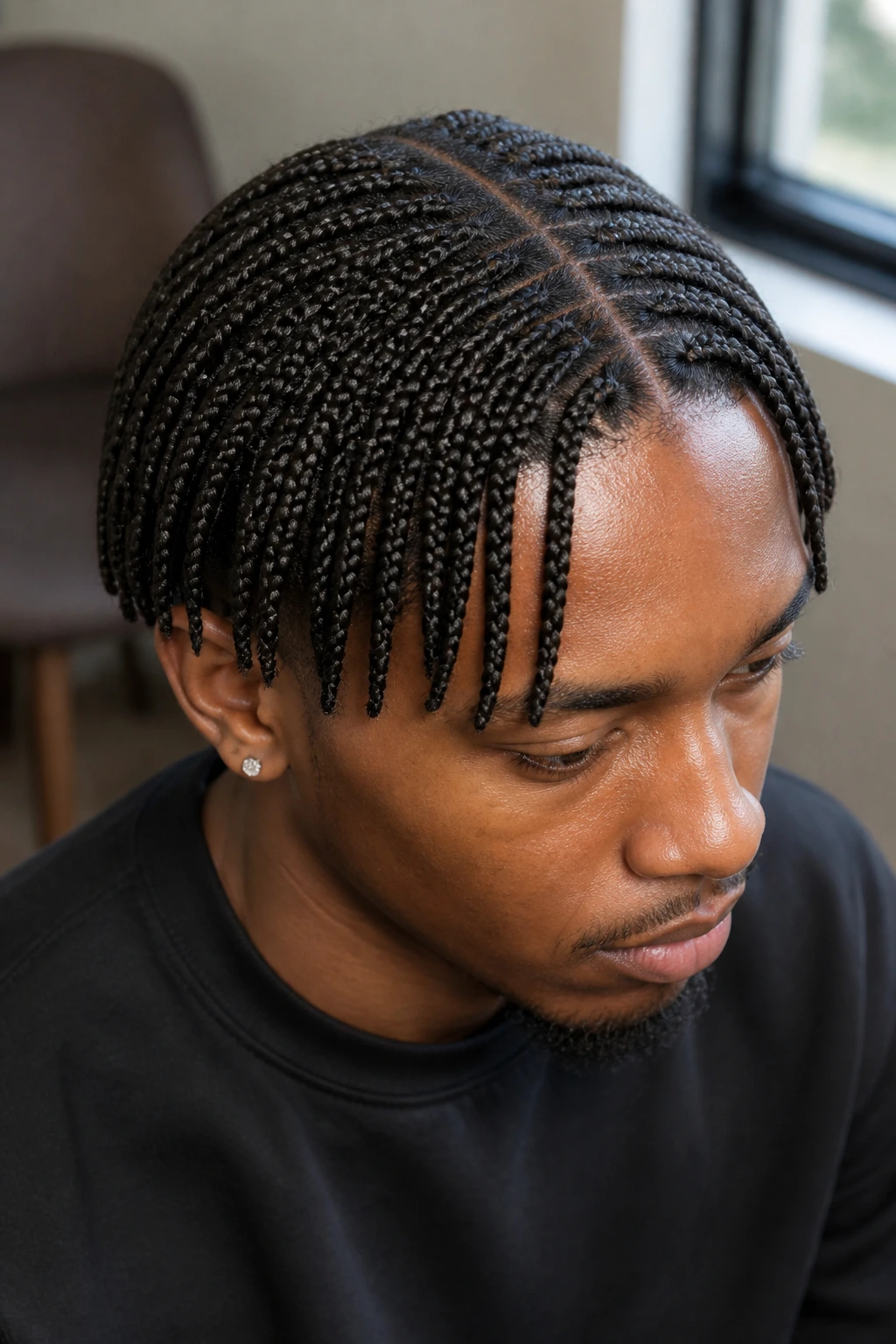
Shape Boost: Shift the parting a little off-center if your hairline is uneven or if you want the braids to fall toward one side naturally. That tiny adjustment can make the whole set look more balanced.
Texture Play: Mix braid sizes on purpose if your braider is comfortable with it—medium rows through the crown and slightly smaller ones at the front can make the style look fuller without becoming bulky. The trick is consistency inside each zone.
Accessory Choice: Cuffs near the ends, one row of beads, or a small thread wrap around a few front braids gives you detail without cluttering the set. I’d rather see one smart accent than ten random ones.
Make-It-Yours: If your scalp is sensitive, pick knotless or feed-in starts. If your hair is dense, ask for more sections rather than extra length. If you wear glasses, keep the front braids short enough that the arms of the frame do not keep catching them.
Keeping Braids Fresh Without Overhandling Them
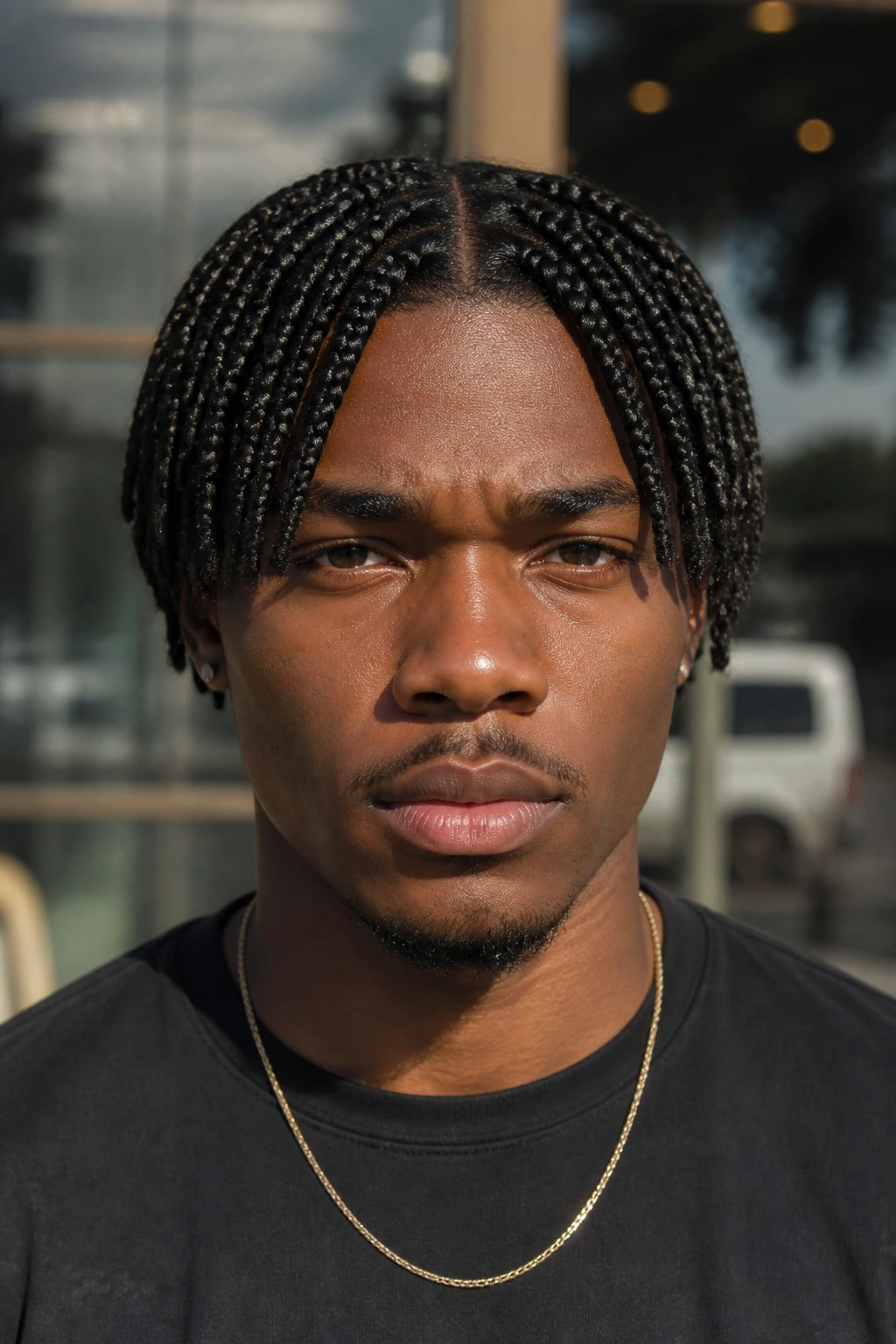
Braids last longer when you stop fussing with them. Wrap them every night with a satin durag or bonnet, and try not to sleep on rough cotton pillowcases if you can help it. That one change alone cuts down on frizz and lint in a way that’s hard to ignore.
Wash the scalp every 1 to 2 weeks if you wear braids regularly, or sooner if you sweat hard. Use a diluted shampoo or a braid-safe cleanser so you can get between the parts without soaking the whole head in suds. Dry them fully afterward. Damp roots are what lead to that stale, heavy smell people pretend not to notice.
A light scalp spray or oil every few days is usually enough. Heavy product is where things go sideways. It gathers at the roots, attracts dust, and makes the style look tired even when the braids themselves are still fine. If the roots puff more than about half an inch or you start feeling pulling at the temples, it’s time to ease up or book a refresh. Most sets wear best for about 4 to 8 weeks, depending on length, size, and how hard you’re on them.
Variations and Adaptations to Try
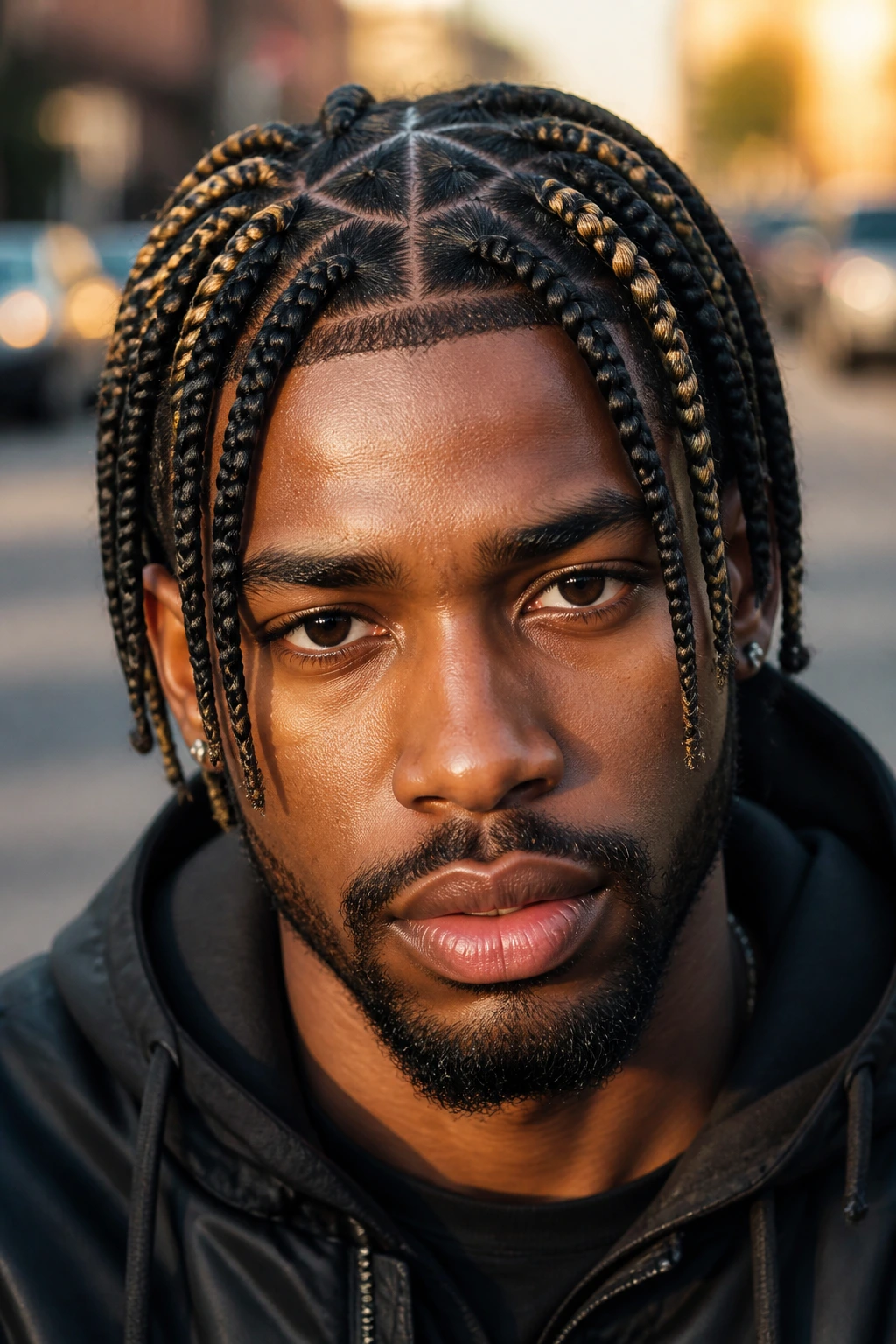
Low-Profile Office Set: Keep the braids medium or short, pair them with a taper fade, and skip the beads and bright colors. The result is tidy enough for conservative settings without looking plain.
Temple-Safe Knotless Build: Choose knotless or feed-in starts, keep the sections medium, and avoid jumbo weight near the hairline. This version is the easiest on a tender scalp and usually the easiest to live with for a first set.
Street-Detail Set: Add cuffs, a touch of two-tone color, or triangle parts. It’s a good way to make the braids look louder without turning the whole head into a costume.
Gym-Proof Length: Ask for shoulder-length or shorter braids and plan on a low bun or half-up style. That keeps hair off your neck and makes sweat management less annoying.
High-Contrast Fade Build: Use a high fade or undercut, then keep the braids medium to jumbo so the top has some weight. This version is for men who want strong shape and don’t mind touching up the sides often.
Common Mistakes to Avoid
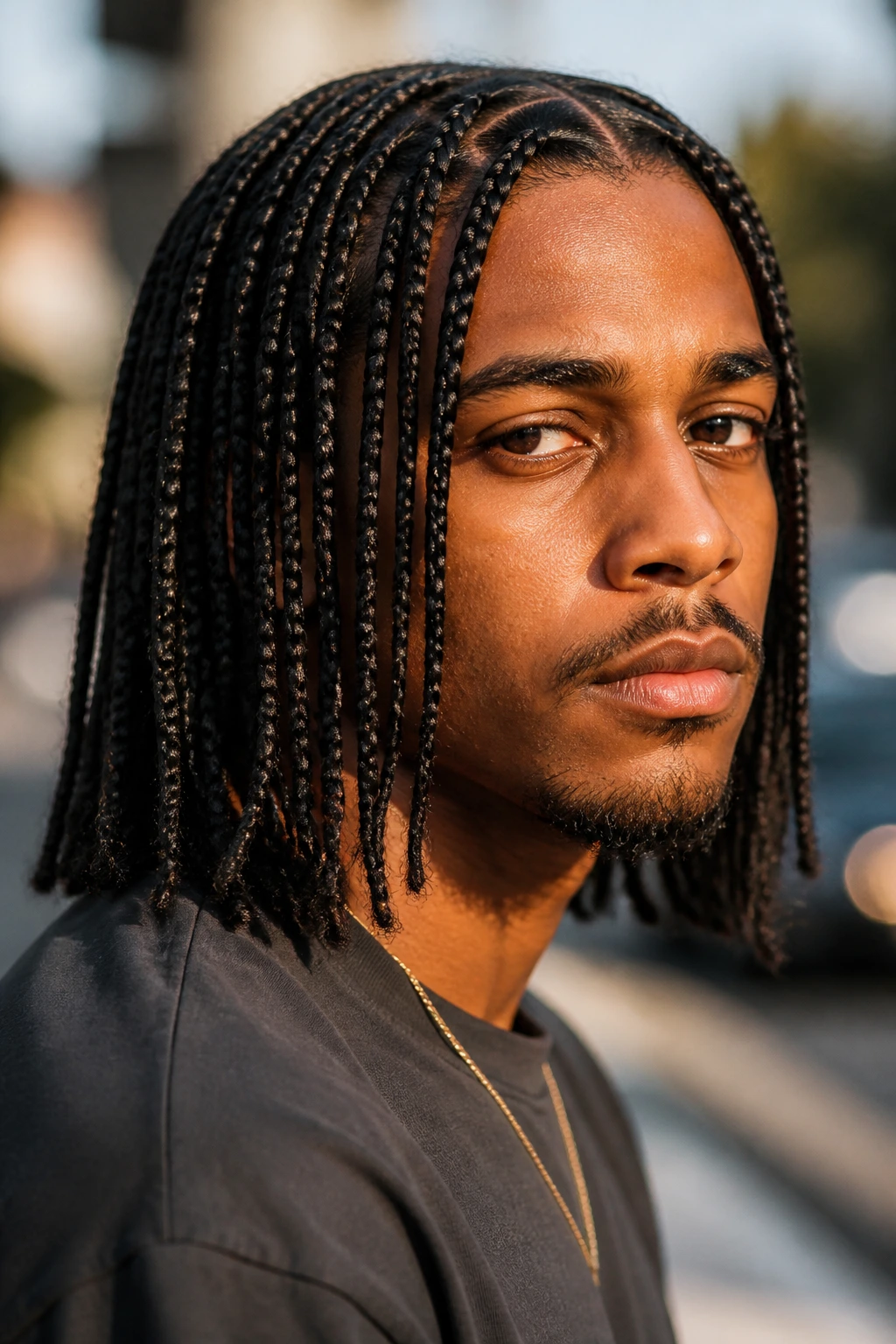
-
Pulling the front rows too tight: If your temples feel hot, sore, or shiny after the install, the tension is already too high. Ask for looser roots or switch to knotless/feed-in at the hairline.
-
Choosing braid size that doesn’t match density: Tiny braids on thin hair can expose the scalp too much, while giant braids on sparse hair can look heavy. Match the section size to the hair you actually have.
-
Ignoring the sides after a fade: A sharp top with fuzzy sides looks unfinished fast. Book barber cleanups on a regular rhythm if your style depends on a fade or undercut.
-
Skipping sleep protection: One rough pillowcase night can frizz up the front rows and roughen the ends. Satin or silk wrapping at night keeps the shape intact.
-
Using too much product: Heavy gel and thick grease make the roots sticky, which collects lint and buildup. Use lighter products and less of them.
-
Leaving braids in too long: Once the roots puff, the parts blur, and the style starts to tug, it’s past its best look. Taking them out on time is part of good maintenance, not failure.
Frequently Asked Questions
How long do box braids usually last on men?
Most sets hold up well for about 4 to 8 weeks, depending on braid size, hair growth, and how careful you are at night. Smaller braids usually last longer, but they also take more time to wash and dry.
Can you get box braids with short hair?
Yes, but the exact length matters. Very short hair usually works better with feed-in or knotless starts, while classic box braids need enough length for the braid to grip without slipping.
Are knotless braids better than regular box braids?
Better for comfort, usually yes. They spread tension more gently at the root and sit flatter on the scalp, though they can take longer to install and sometimes cost more.
How much braiding hair do I need?
Medium sets often need 4 to 6 packs, while smaller, longer, or layered looks can take 7 to 9. Jumbo braids usually use less. Buy one extra pack if you’re adding color or going longer than shoulder length.
Can I wash box braids?
You should, especially if you sweat or wear product often. Wash the scalp every 1 to 2 weeks with a diluted shampoo, then dry the braids fully so moisture doesn’t sit at the roots.
Do box braids damage the hairline?
They can, if the tension is too high or the style stays in too long. Soreness, red bumps, and a shiny pulled look at the hairline are warning signs that the braids need to be loosened or removed.
Can I work out with box braids?
Yes. A durag, sweat-wicking headband, or tied-back style helps, and you should dry the scalp after heavy sweat so buildup does not sit under the braids.
Can I do box braids myself?
You can, though the back rows and consistent tension are hard to master alone. If it’s your first set, a simpler medium layout is easier than triangle parts, tiny braids, or a complicated fade combination.
A Cleaner Finish
The best braid set is not the loudest one in the room. It’s the one that sits right on the head, suits the face, and still looks deliberate when the roots start to soften. That’s why the details matter so much here. Part size, root tension, length, and the cut underneath all shape the final result more than people expect.
If you want the safest place to start, medium classic braids, knotless braids, or a taper fade version usually give the cleanest balance of shape and comfort. From there, the style can get sharper, longer, louder, or more detailed without losing its footing. Once the silhouette fits your face, the rest starts falling into place on its own.
