



A good bun can rescue a bad hair day, but the best bun hairstyles for men do something more interesting: they change the shape of the face, sharpen a jawline, soften a heavy forehead, or make a plain T-shirt look like a choice instead of a compromise. That’s the part people miss when they treat the bun like a default move for long hair. It isn’t one style. It’s a whole set of decisions about height, tension, texture, and how much polish you want to show.
Hair length matters, sure. So does density. But the real difference between a bun that looks deliberate and one that looks like a rushed tie-off in a bathroom mirror is usually placement. Two inches higher or lower can change the mood completely. Pull it too tight and the whole thing turns severe. Leave it too loose and it falls apart by lunch.
That’s why this many versions make sense. A guy with straight hair and a clean taper needs something different from someone with curls, locs, braids, or that awkward stretch where the top has enough length but the sides are still catching up. The right bun doesn’t fight the hair you have. It works with it, and that is where the style starts earning its keep.
Why These 27 Buns Work in Real Life
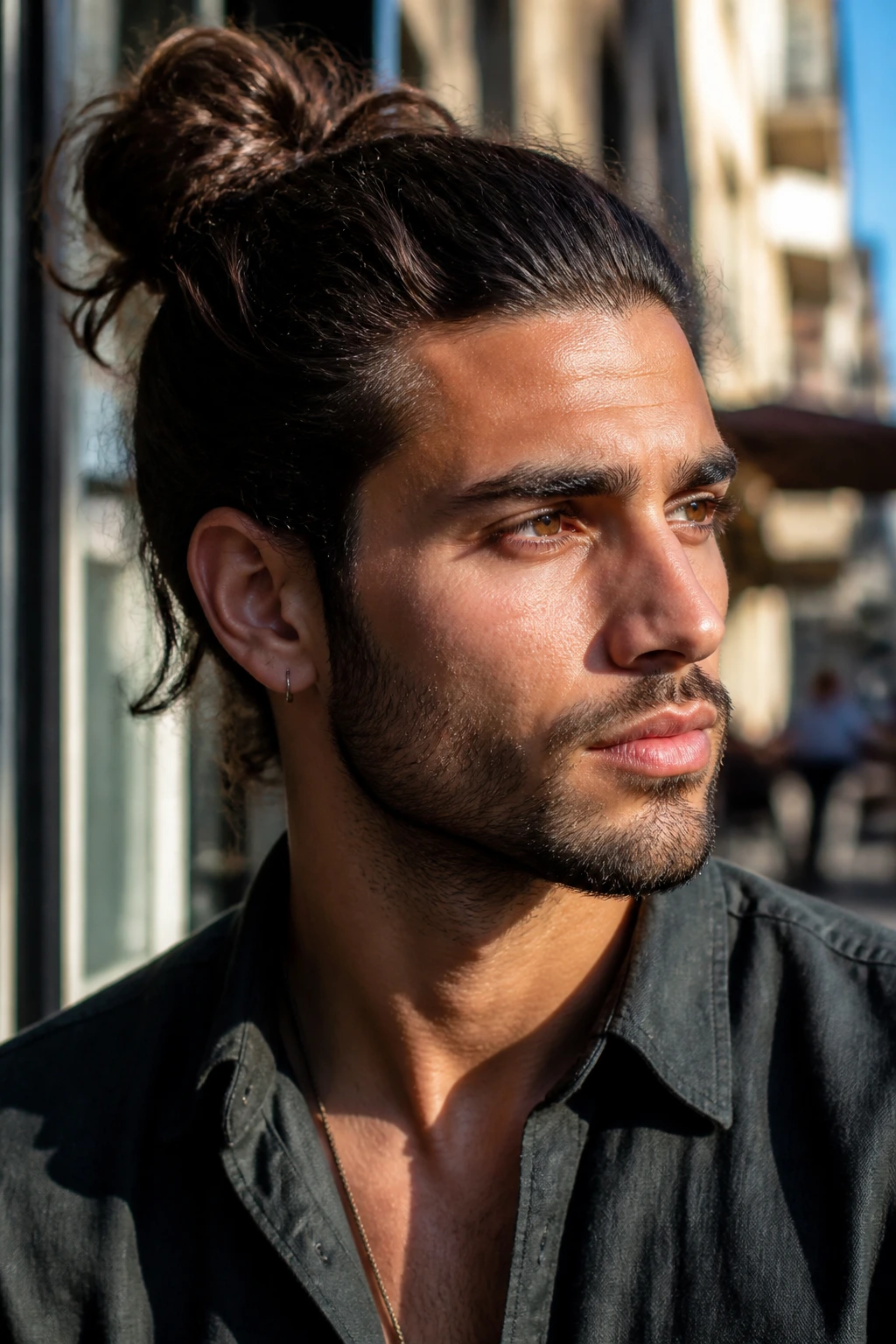
-
They solve different length problems: Some men need a way to manage 6 inches of hair; others need a bun that can handle 14 inches without looking like a tennis ball.
-
They shift the face on purpose: A low bun softens the profile, while a high knot pulls the eye upward and makes the face read longer.
-
They work with texture instead of against it: Straight hair, waves, curls, coils, braids, and locs all sit differently, and these styles reflect that.
-
They can look clean or rough on demand: The same base shape can read formal with a smooth finish or casual with a few flyaways left on purpose.
-
They play well with fades and beards: A bun can look unfinished if the sides are ignored; with a taper, fade, or beard cleanup, it starts looking tailored.
-
They give you options during grow-out: If your haircut is in that annoying in-between stage, a bun gives the top a job before the rest catches up.
1. The Low Clean Bun
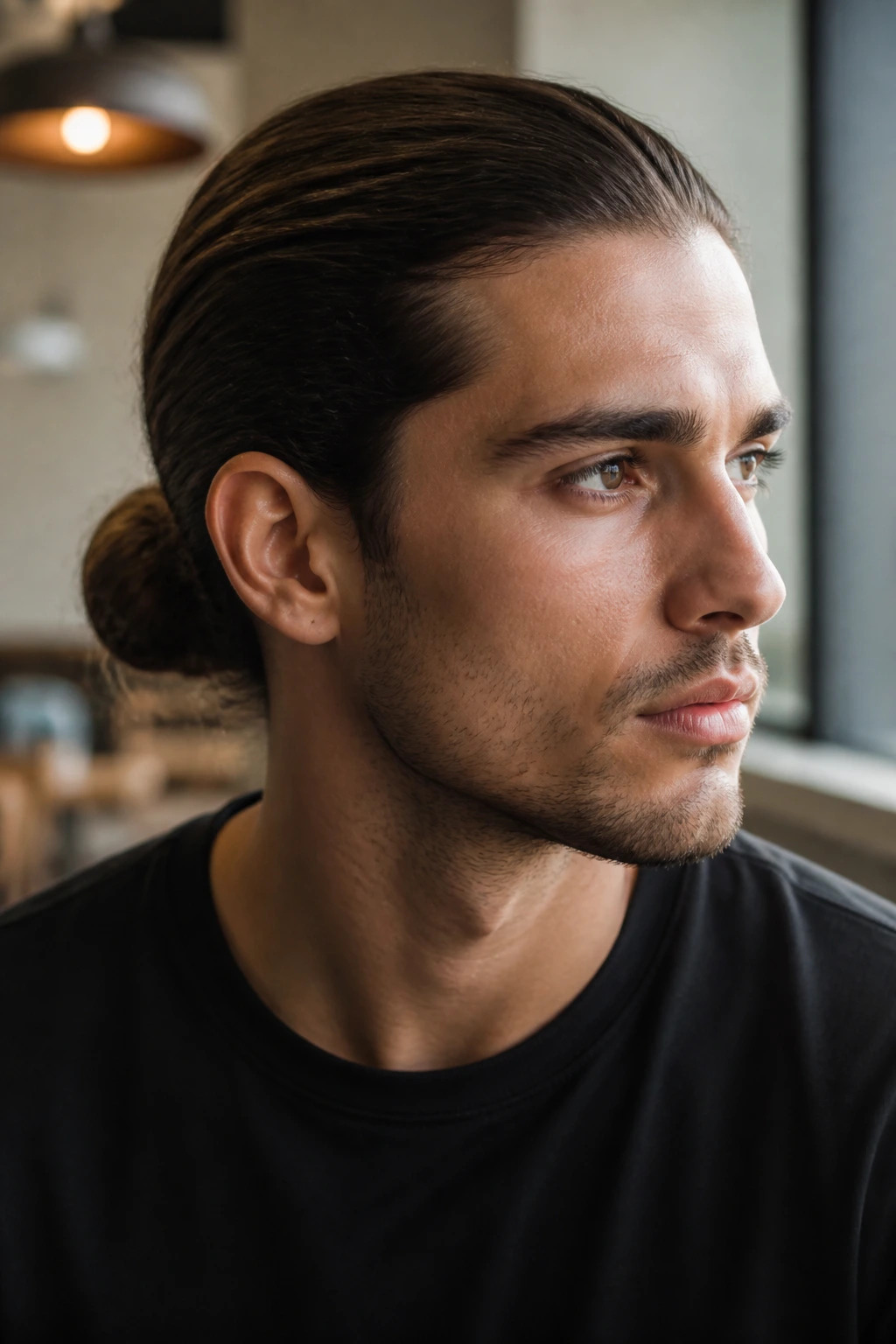
A low clean bun sits at the nape and keeps the whole look calm. It’s the version I reach for when the goal is to look pulled together without calling attention to the styling itself. On straight or slightly wavy hair, it gives the neatest line from forehead to neck.
Why It Works
A low placement does a lot of quiet work. It shortens the visual bulk of the bun, keeps the head shape balanced, and avoids that top-heavy look that can happen when the knot sits too high. If your hair is 8 to 10 inches long, this is usually the easiest clean option.
- Best with a taper around the ears and neckline.
- Looks sharp with a short beard or a clean shave.
- Works especially well if your hair is dense and wants to puff outward.
- Needs less product than you think; a pea-size amount of matte cream is often enough.
Pro tip: use a seamless elastic, not one with a metal seam. That tiny metal joint is where strands snag first.
2. The Tapered Man Bun
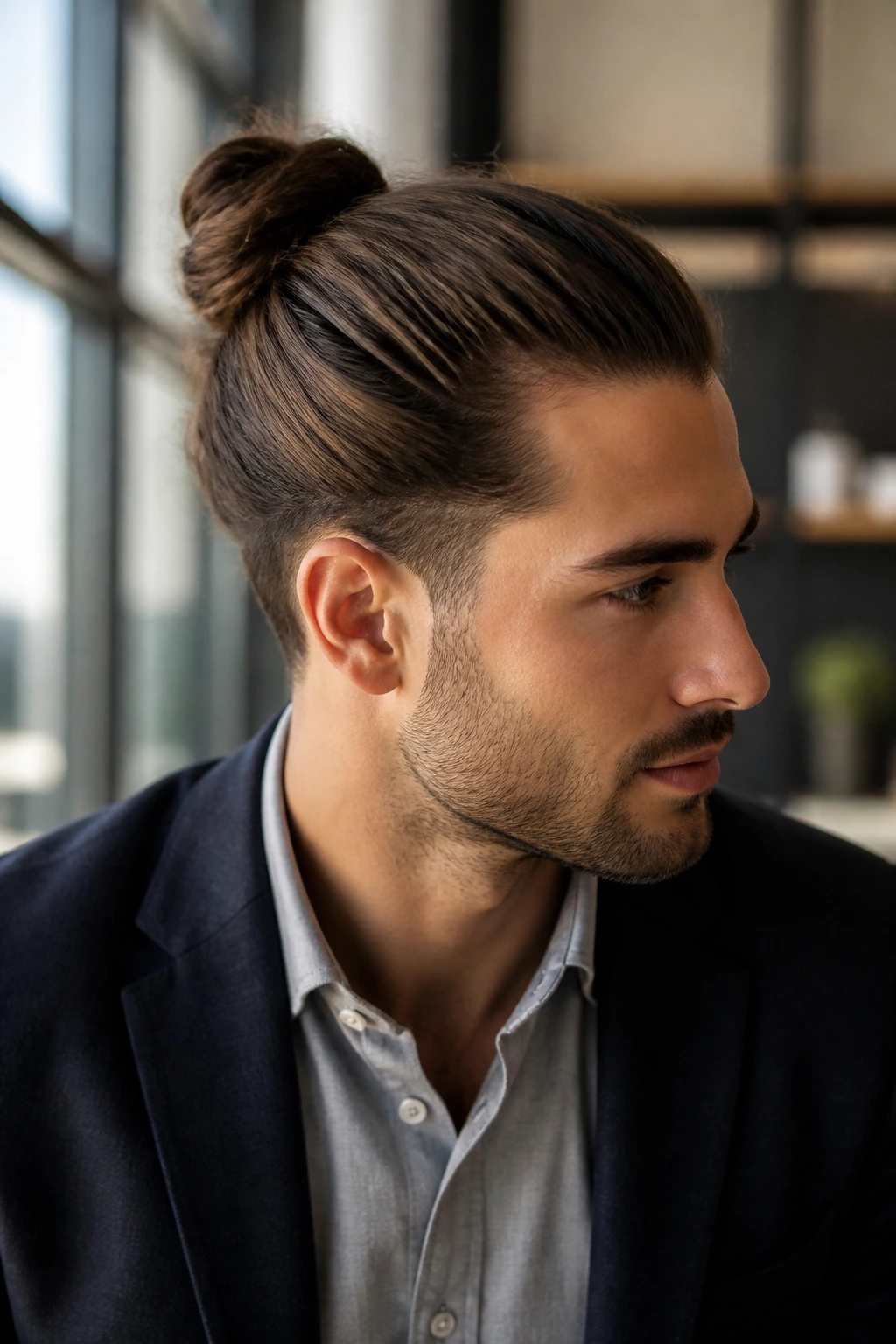
A taper is the fastest way to make a bun look intentional. Without it, the bun can feel like a growth phase. With it, the sides fall into place and the knot gets all the attention where it belongs.
The nice thing about this style is that it doesn’t need drama to work. Ask for a low or mid taper around the temples and nape, leave the top long, and keep the bun compact rather than ballooning it out. That contrast between short sides and tied-back length is what gives the style its clean edge.
If your hair is thick, this bun also stops the sides from looking bulky under the tie. It’s one of the better choices for men who want something tidy enough for a work setting but not stiff enough to feel formal. The haircut does half the job for you.
3. The High Top Knot
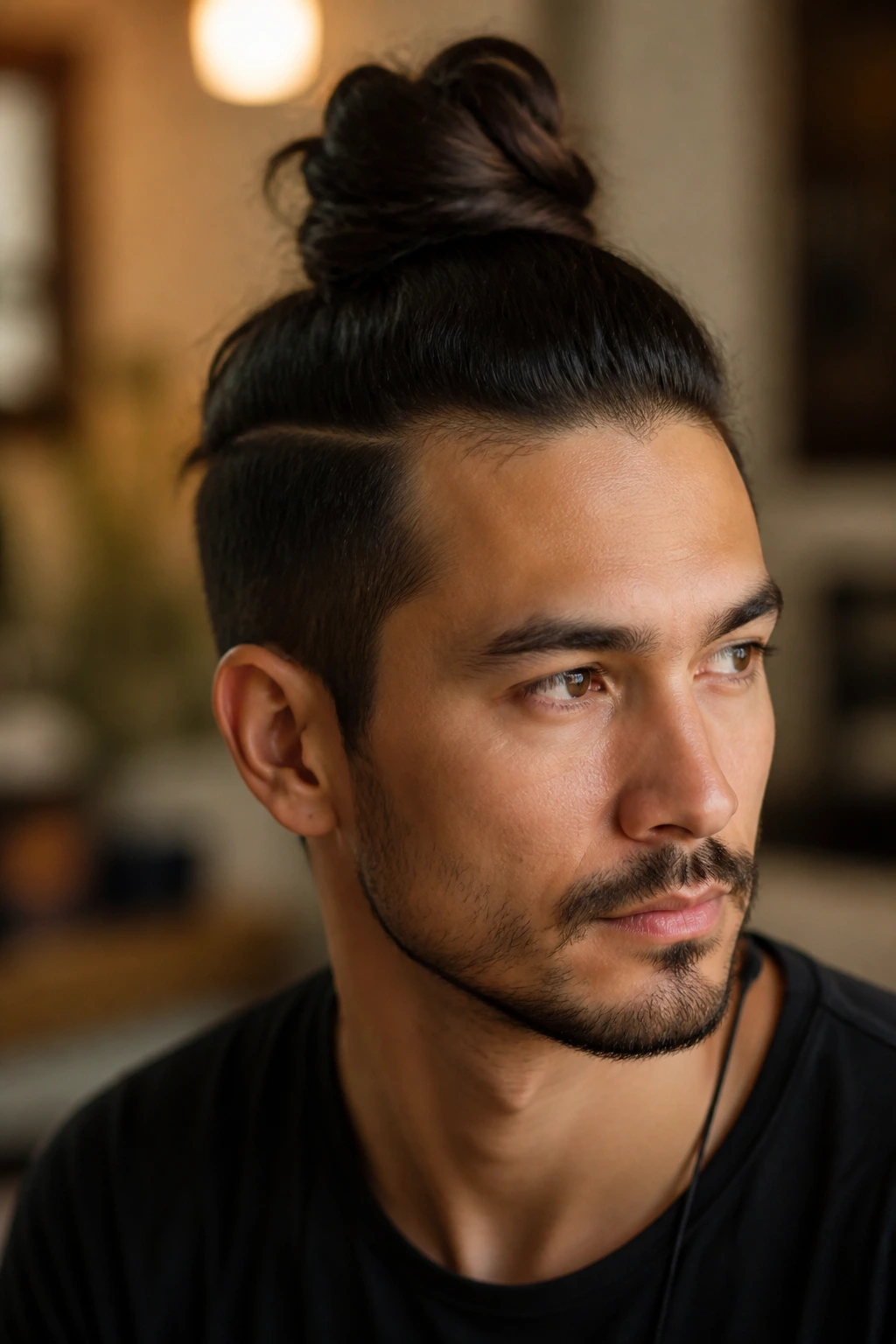
Why does a knot on the crown change the whole face? Because it pulls the eye upward before it gives the hair anywhere else to go. A high top knot adds height fast, which makes it useful for men with rounder faces or shorter necks.
The tradeoff is tension. A high knot can look sharp, but if you yank it tight every day, your scalp will let you know. I like this one best when the sides are trimmed down and the knot itself is compact, almost stacked rather than fluffed. The result is cleaner than a loose bun and more modern than a low knot.
How to Style It
Pull the hair to the crown, twist once, and loop the tail through only halfway on the second pass if you want a top knot rather than a full bun. Keep the front slightly flatter so the height comes from placement, not from puffing the hair up with your hands. A light cream on the ends helps keep the flyaways from standing straight out.
4. The Loose Weekend Bun
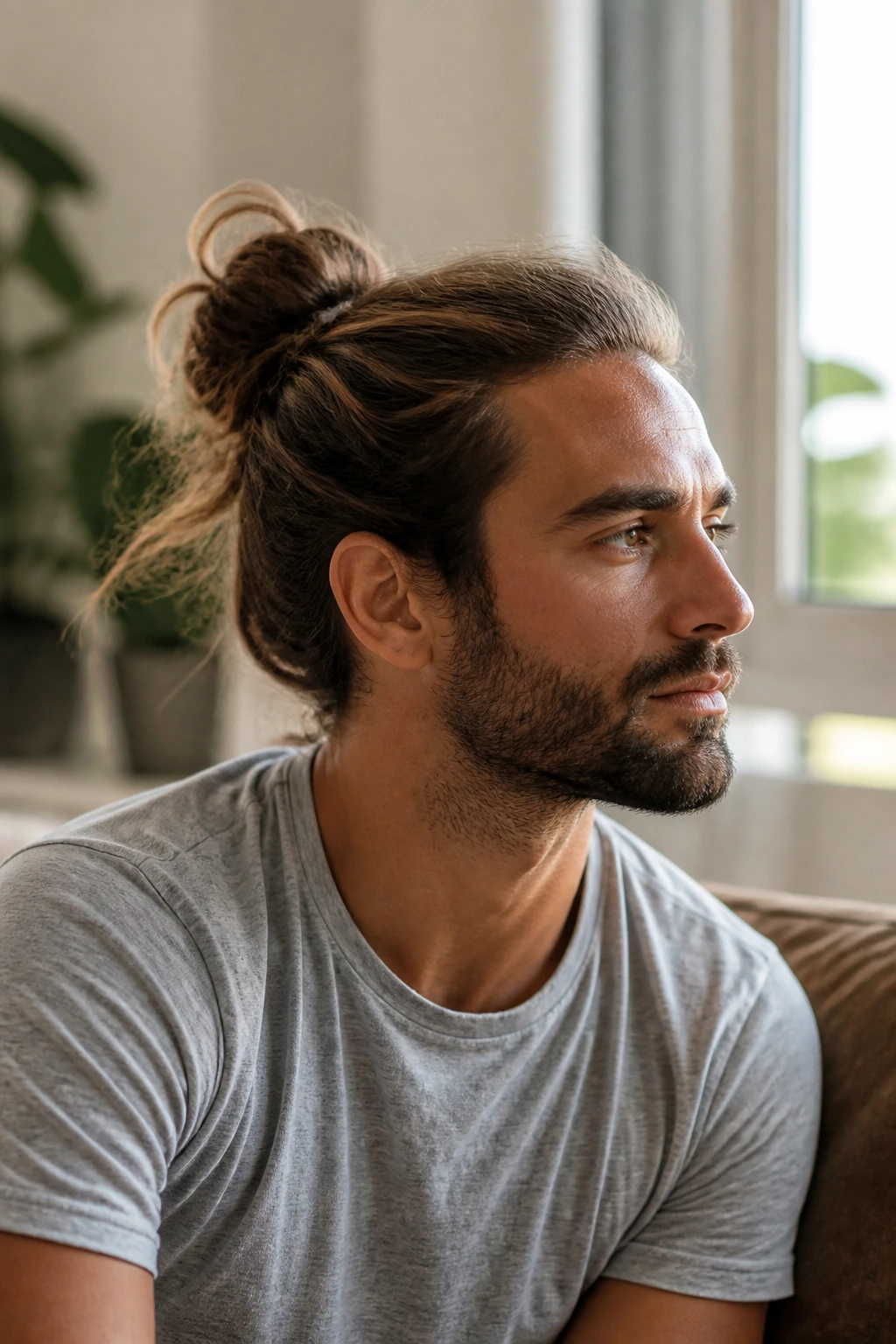
This is the bun you wear when you are not trying to win an argument with a mirror. It has a little slack, a few bent ends, and enough texture to look lived-in instead of staged. The trick is to keep it loose without making it look forgotten.
Use your fingers instead of a brush. That alone changes the finish. If the hair is freshly washed, it can be slippery, so a touch of texture spray or matte paste helps the knot stay together without getting crunchy. Leave a few pieces around the temples if your hairline gets too severe when everything is pulled back.
- Don’t smooth every strand flat.
- Leave 4 to 6 flyaways if your hair naturally does that.
- Keep the bun slightly off-center if the crown wants to split.
- Use a soft tie; hard elastics make this look too forced.
A bun like this is less about precision and more about shape. It should look easy, even if it took three tries.
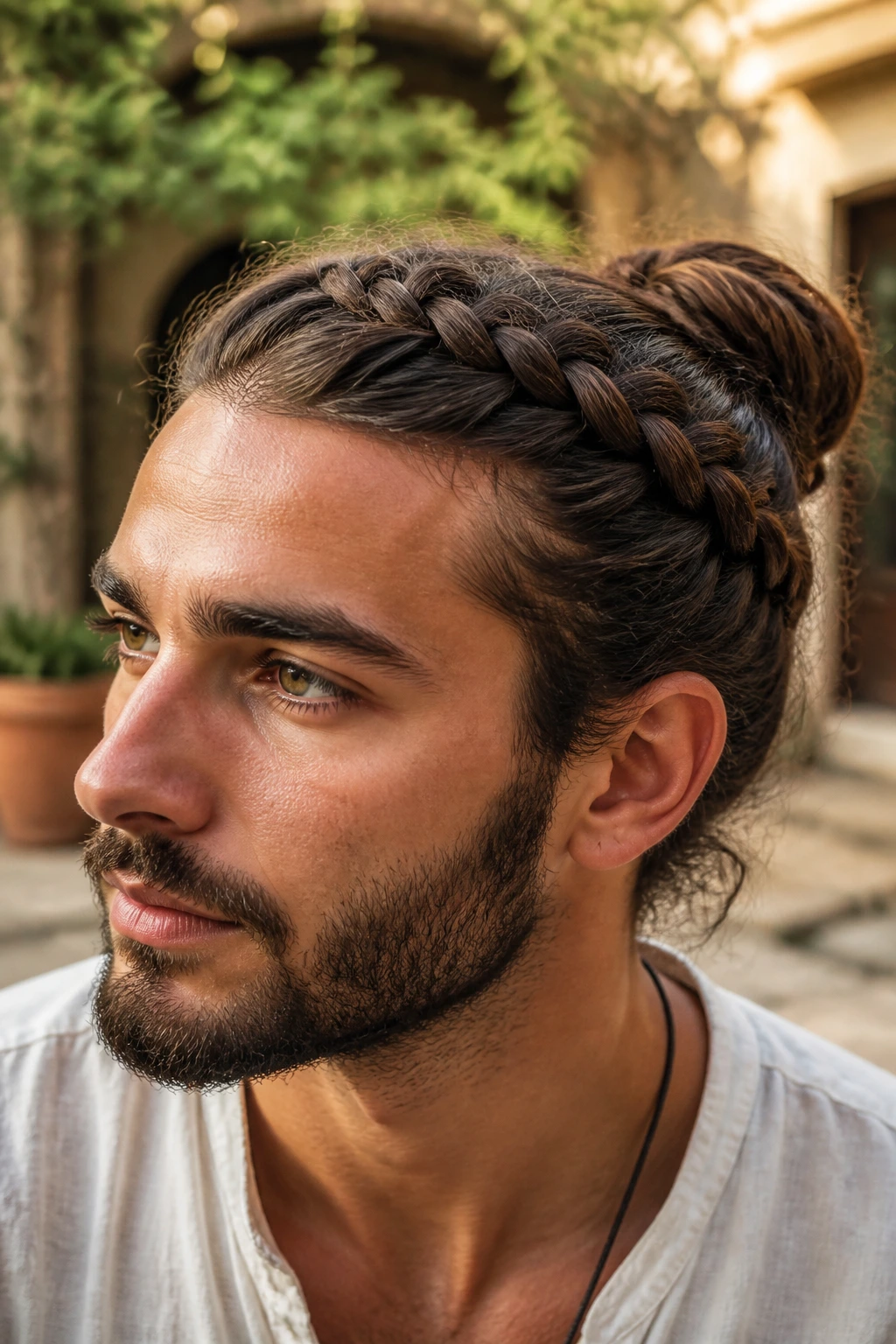
5. The Braided Bun
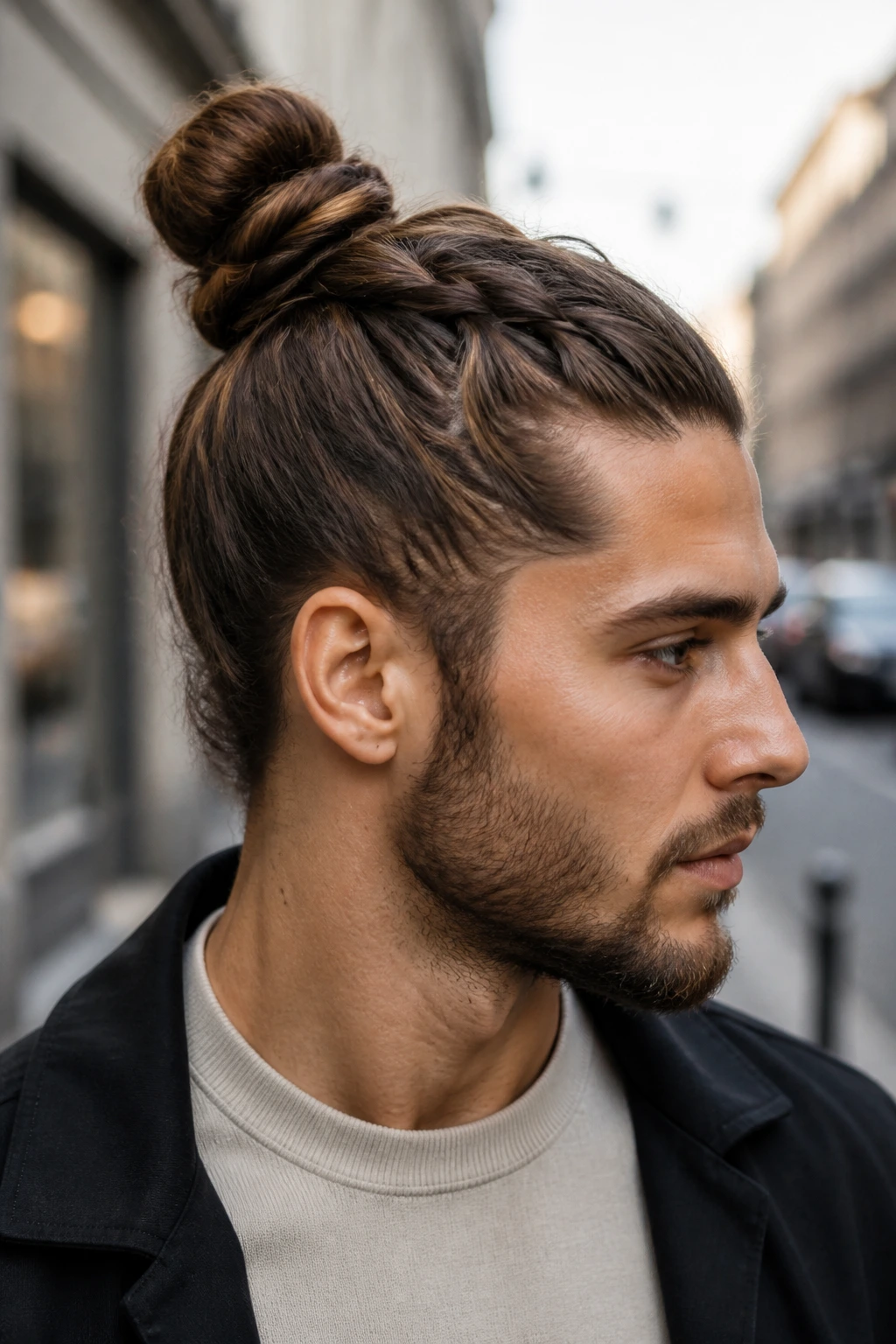
Braiding before you bundle the hair changes everything. It gives the bun structure, cuts down on loose ends, and adds texture that plain tied hair can’t fake. That’s especially useful if your hair is thick, layered, or prone to unraveling the second you let go of it.
I like this style because it can feel polished without going slick. A single braid folded into a bun reads clean and controlled, while two braids feeding into a knot can look more detailed. Either way, the braid does the heavy lifting. The bun just finishes the shape.
If your hair is long enough to braid comfortably, this is one of the most useful styles for days when you need the hair to stay put for hours. It also works well for men who want their bun to feel more structured without adding a lot of product.
6. The Half-Up Bun
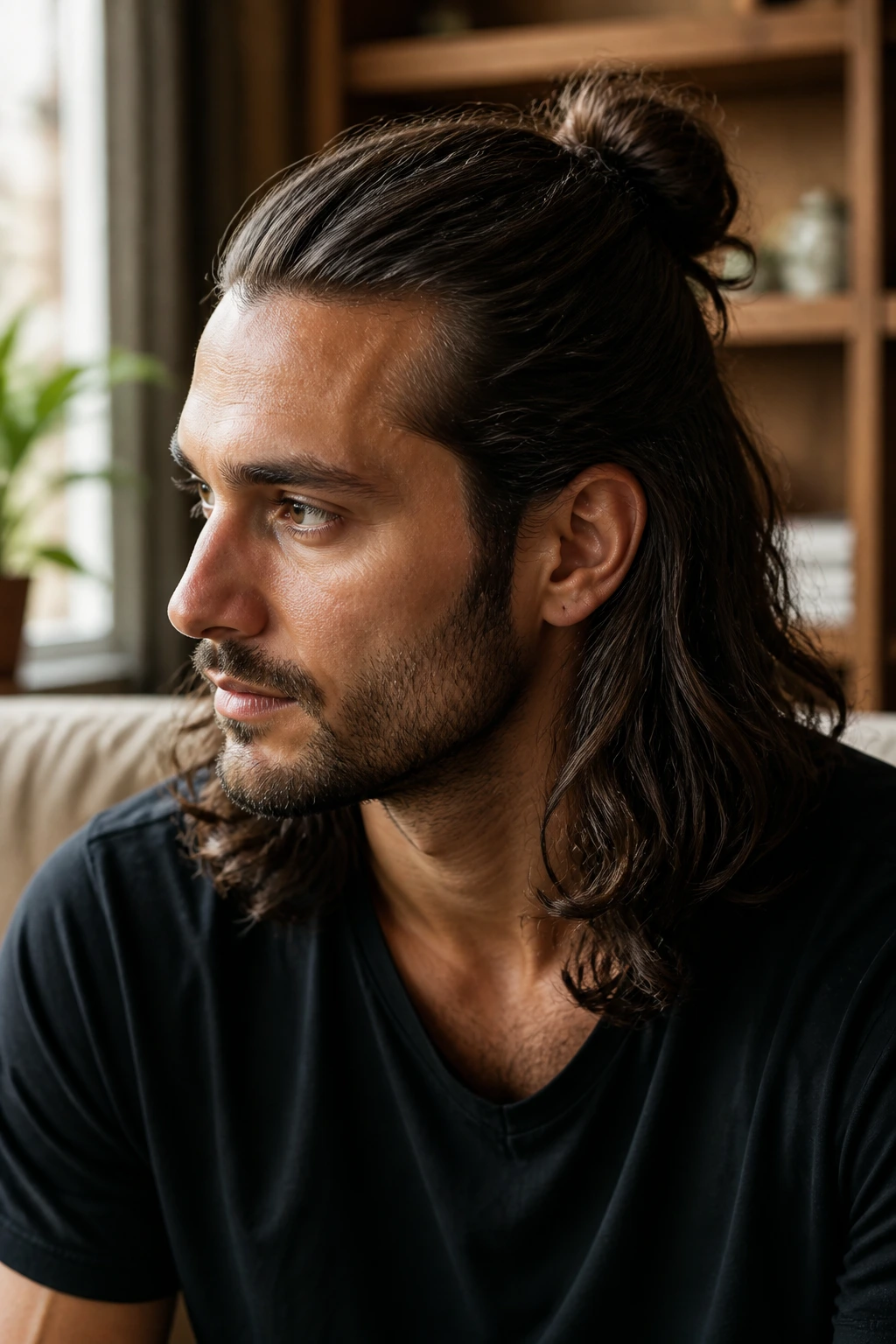
A half-up bun is the answer when the hair is long enough to tie but not long enough to fully behave. Instead of forcing every strand into the knot, you pull the top section back and let the rest fall. That gives the style movement, which is the point.
This version looks better with hair that has a little wave or bend. Straight hair can still work, but it often needs a bit of texture spray so the lower section doesn’t hang too flat. For shoulder-length hair, the half-up bun is often more flattering than a full bun because it keeps the face open while still showing length.
It’s also forgiving. If your hair is in the awkward middle stage, this style buys you time. The lower layers keep the shape from looking too tight, and the top section keeps the face clear.
7. The Samurai Knot
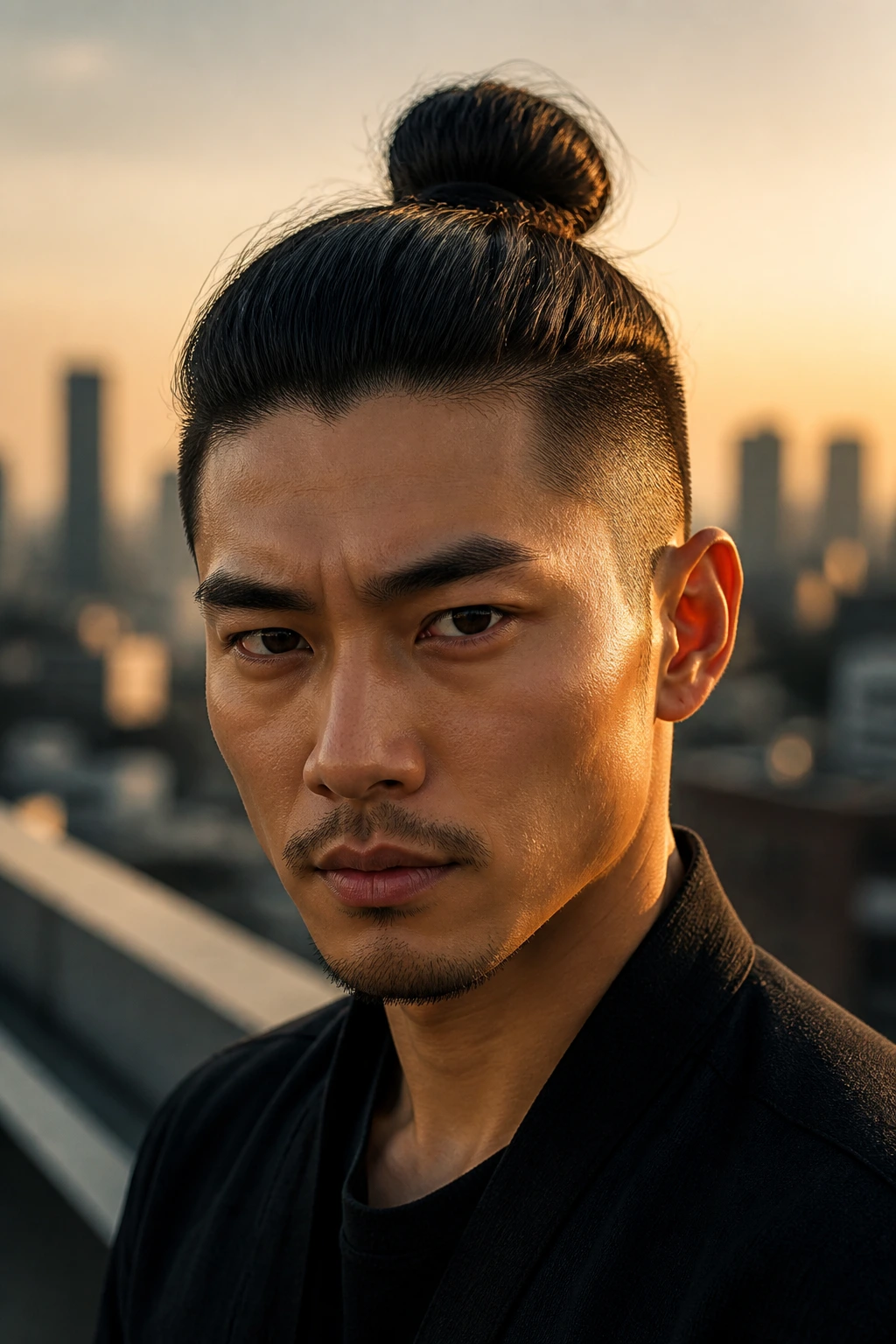
The samurai knot sits with a little more attitude than a standard bun. It’s often placed higher, and it feels sharper because the shape is more compact. With very short sides or a clean undercut, it can look almost architectural.
This style works best when the knot is small and the base is tight enough to stay put, but not so tight that it pulls the scalp. If your hair is dense, keep the knot smaller than you think you need. A huge samurai bun can tip into costume territory fast. A tight, modest one looks better.
The strong thing about this style is contrast. Short sides, long top, compact knot. That’s the whole sentence. If your face has strong angles, the style leans into them. If your face is rounder, the height helps stretch the silhouette.
8. The Center-Part Bun
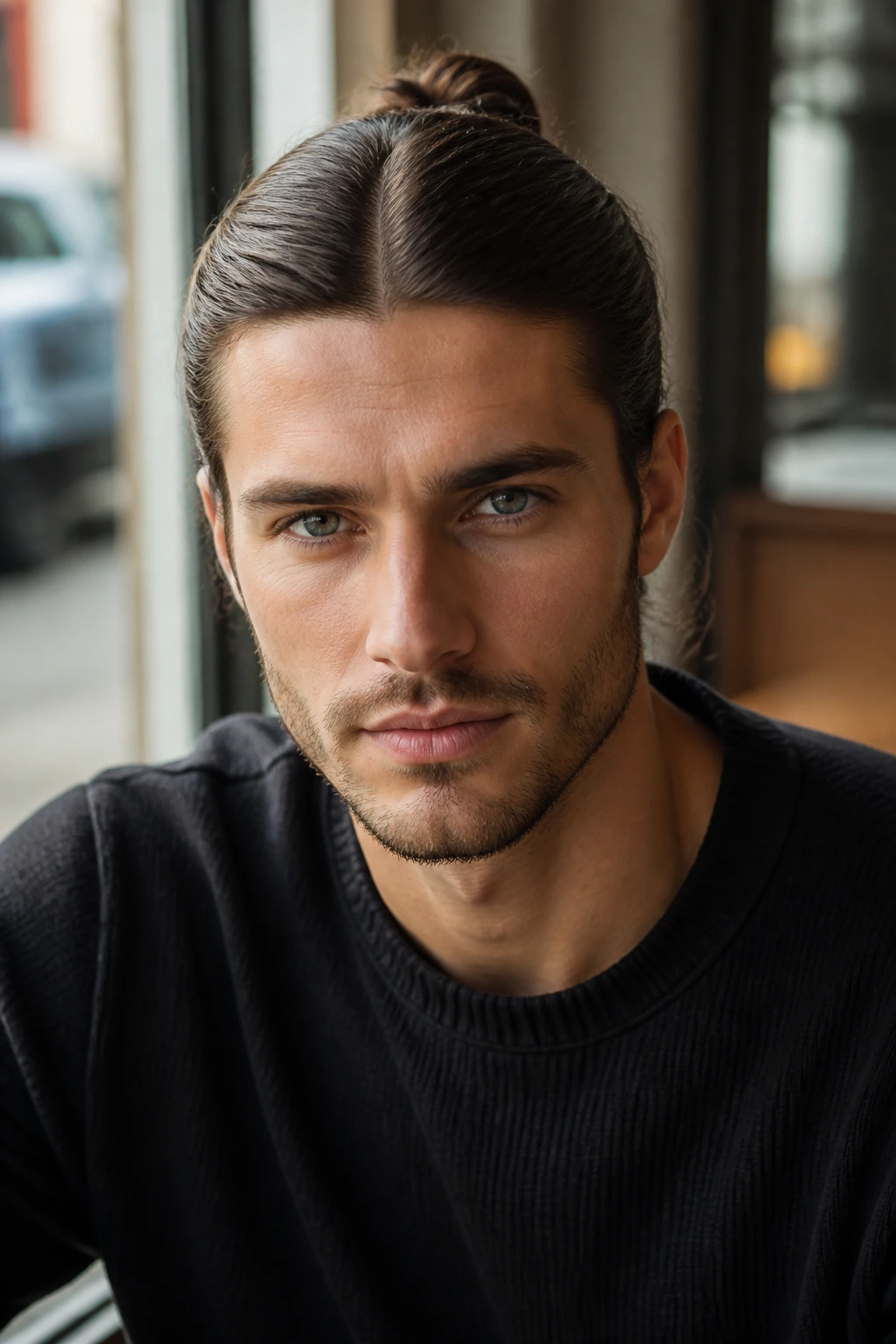
A center part makes a bun feel intentional before the knot even goes in. It creates symmetry, and symmetry has a way of cleaning up long hair that might otherwise drift into random shape. If you’ve got straight or slightly wavy hair, this is one of the easiest ways to make a bun look edited.
The part matters most when the hair is long enough to fall on both sides evenly. Use a tail comb, make the split while the hair is damp, and comb each side back before tying. That tiny bit of planning keeps the bun from looking like it was gathered in a panic.
If your face is already long, keep the bun lower. Too much height plus a center part can stretch the look more than you want. Lower placement balances the sharpness of the part.
9. The Undercut Bun
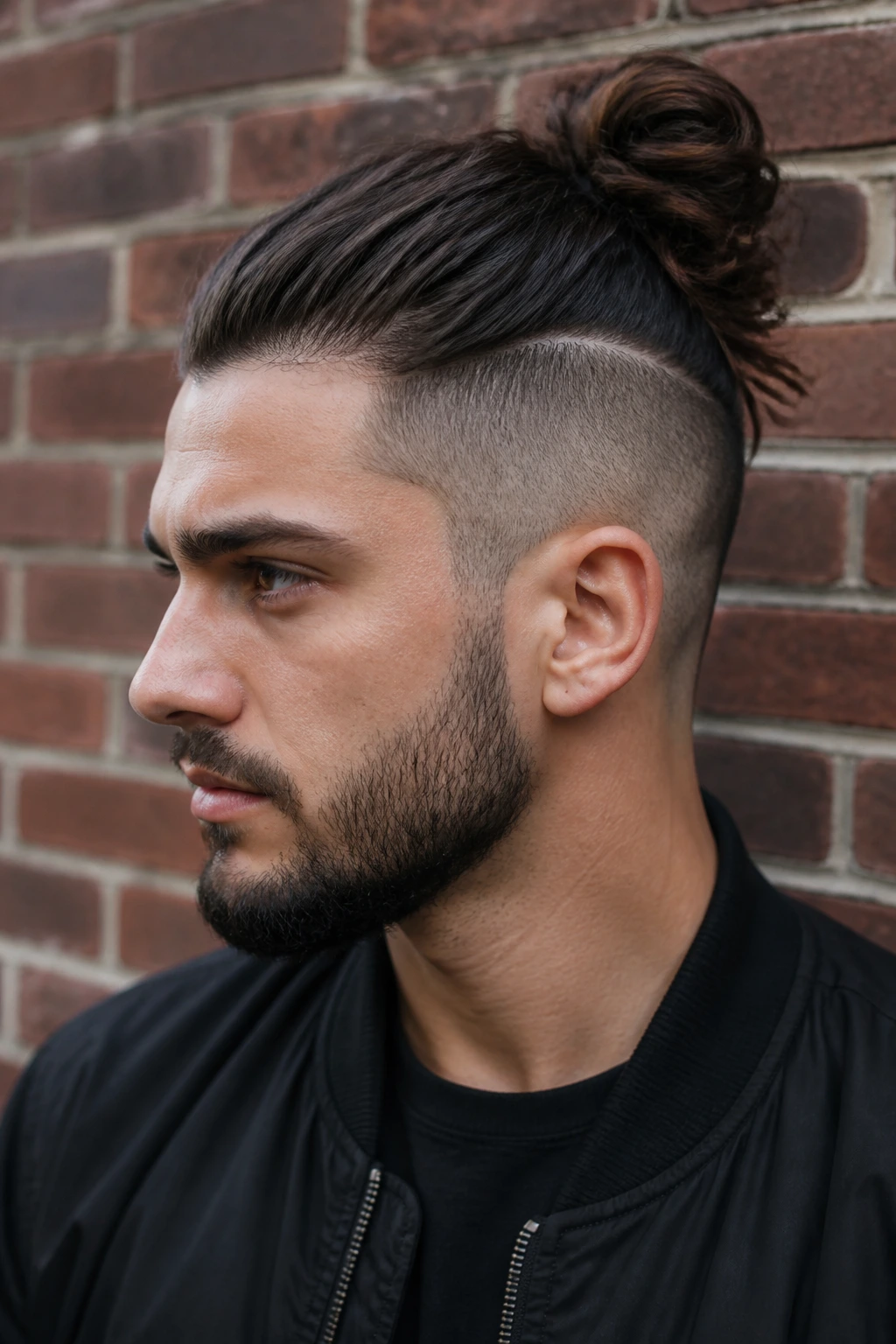
Can an undercut and a bun live in the same haircut? Absolutely. In fact, the contrast is the reason people keep coming back to it. The short sides make the top look fuller, and the bun gets a clean stage all to itself.
This style is best when the disconnect is deliberate. Ask for a clear undercut rather than a soft blend, then keep the bun compact enough that it doesn’t sprawl over the crown. Thick hair benefits most here, because the undercut removes the side bulk that would otherwise make the head look wide.
Maintenance is the catch. The sides grow out fast, and once they do, the sharp contrast disappears. If you like this look, plan on cleanup appointments more often than you would for a softer taper.
How to Style It
Pull the top back after it’s about 80 percent dry. That little bit of moisture helps the hair hold without turning flat. Use a matte product on the ends and keep the sides clean so the haircut keeps its shape.
10. The Rope-Twist Bun
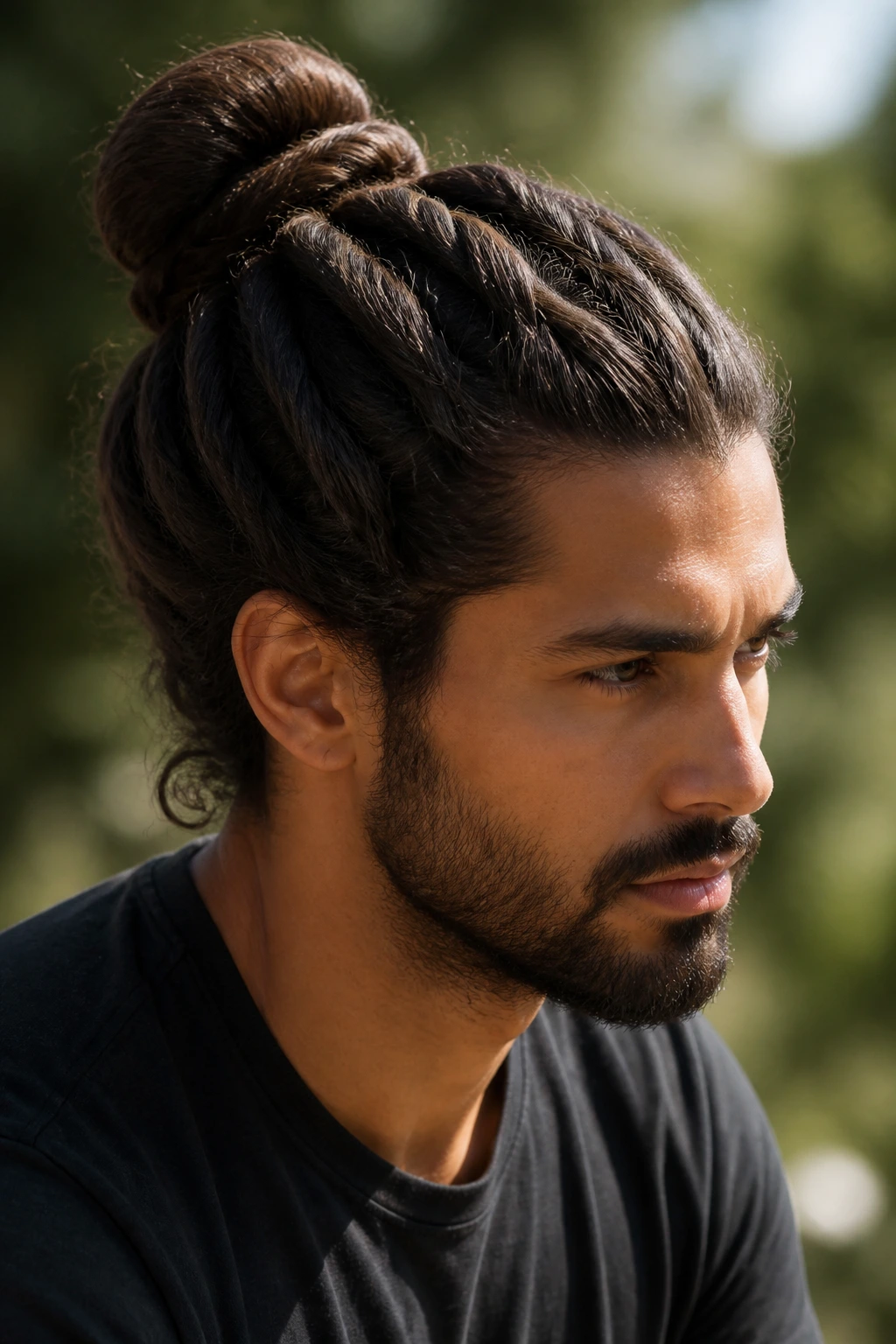
Twisting the hair into two rope-like sections before wrapping it creates a bun that looks more controlled than a simple loop. It also helps layered hair stay together, which is a real problem if your ends keep slipping out of the tie.
The texture here is the point. A rope-twist bun doesn’t need to be glossy or smooth. It looks better when the twist pattern is visible and the bun has a bit of depth. If your hair is medium-thick, this is a smart way to keep the shape from feeling flat.
A little leave-in cream on the ends makes the twist less frizzy. Don’t drown the roots in product. The roots need grip; the ends need help.
- Twist both sections in the same direction.
- Wrap them around each other in the opposite direction.
- Secure with one tie, then a second if the hair is heavy.
- Leave the bun just slightly loose so the twist pattern shows.
11. The Curly Halo Bun
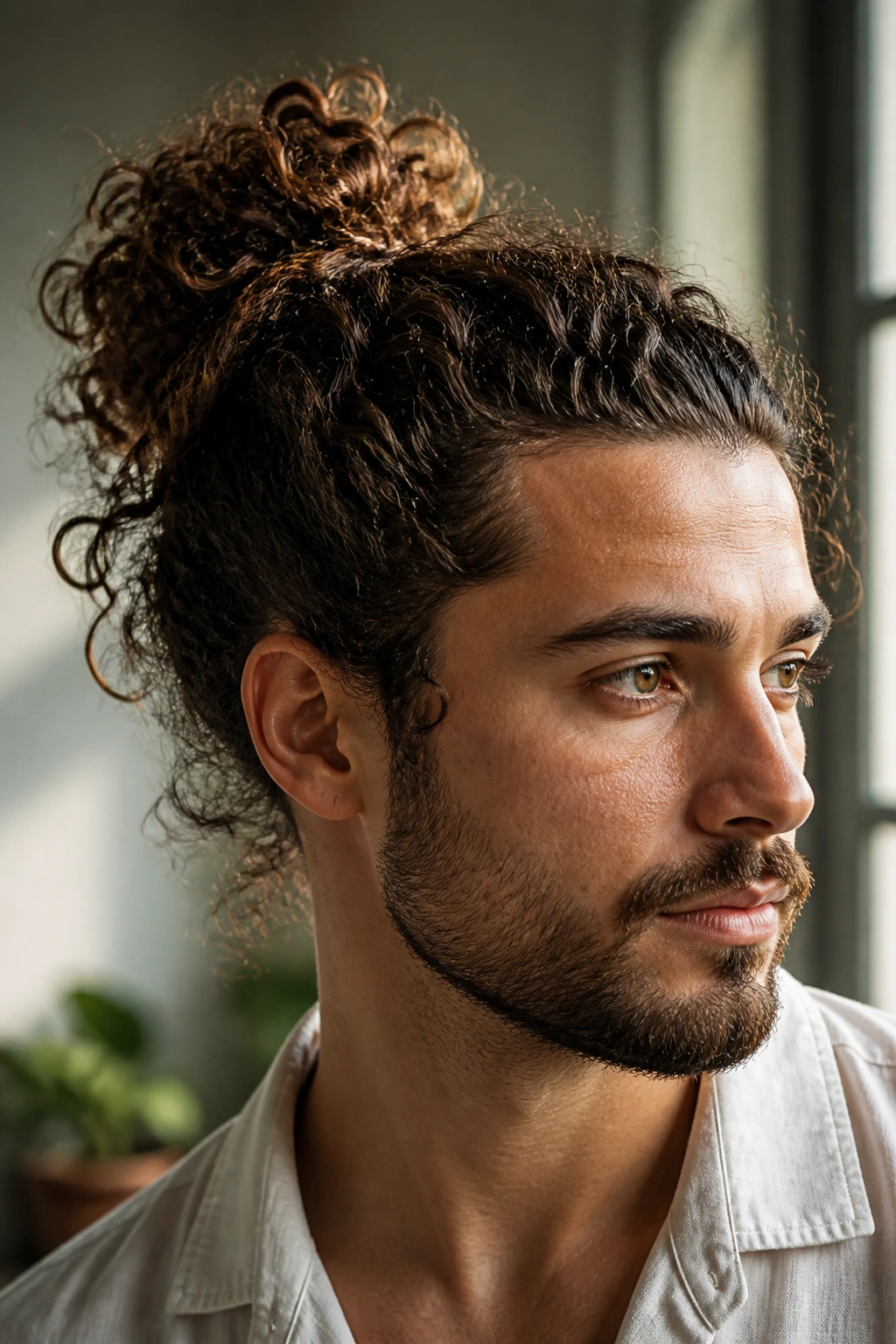
Curly hair changes the whole equation. A bun on curls should not be flattened into submission; that usually ends in puffiness, breakage, or both. The better move is to let the curl pattern stay visible around the bun so the style keeps some life.
This works especially well when the hair has enough length to gather but still wants to spring back. Use a curl cream or light leave-in first, then pull the hair back without brushing every coil out of shape. A few curls around the hairline can make the style look softer and less rigid.
I like this one because it respects what the hair is already doing. Instead of fighting the curl, the bun uses it for shape. The result is fuller, rounder, and less severe than a tight slick-back.
12. The Wavy Textured Bun
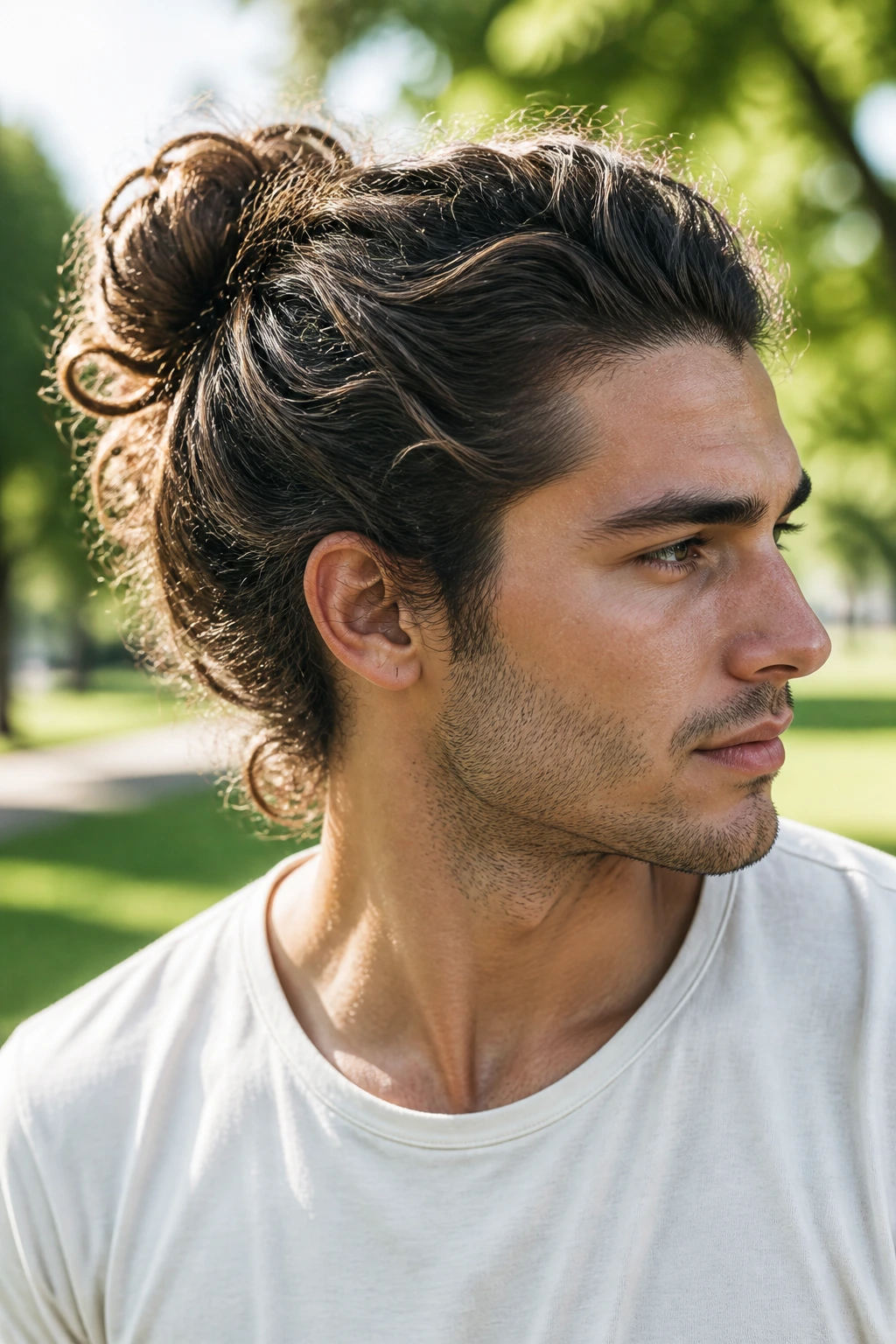
A wavy textured bun is the opposite of the wet, polished knot. It works because the surface has movement. The waves keep the bun from looking like one solid block of hair, which is a common problem with longer straight styles.
This is a good choice if your hair has a natural bend but not enough curl to hold a braided style. A little sea-salt spray on damp hair, then a quick rough-dry, gives the hair enough grip to stay in place without making it stiff. Finger-combing beats brushing here. Brushes flatten the character right out of it.
It also pairs well with casual clothes. Denim, knits, plain tees, even a work shirt with the top button open—it all fits the same low-key energy. If you want a bun that says you have hair on purpose but aren’t showing off, this is the one.
13. The Beard-Balanced Bun
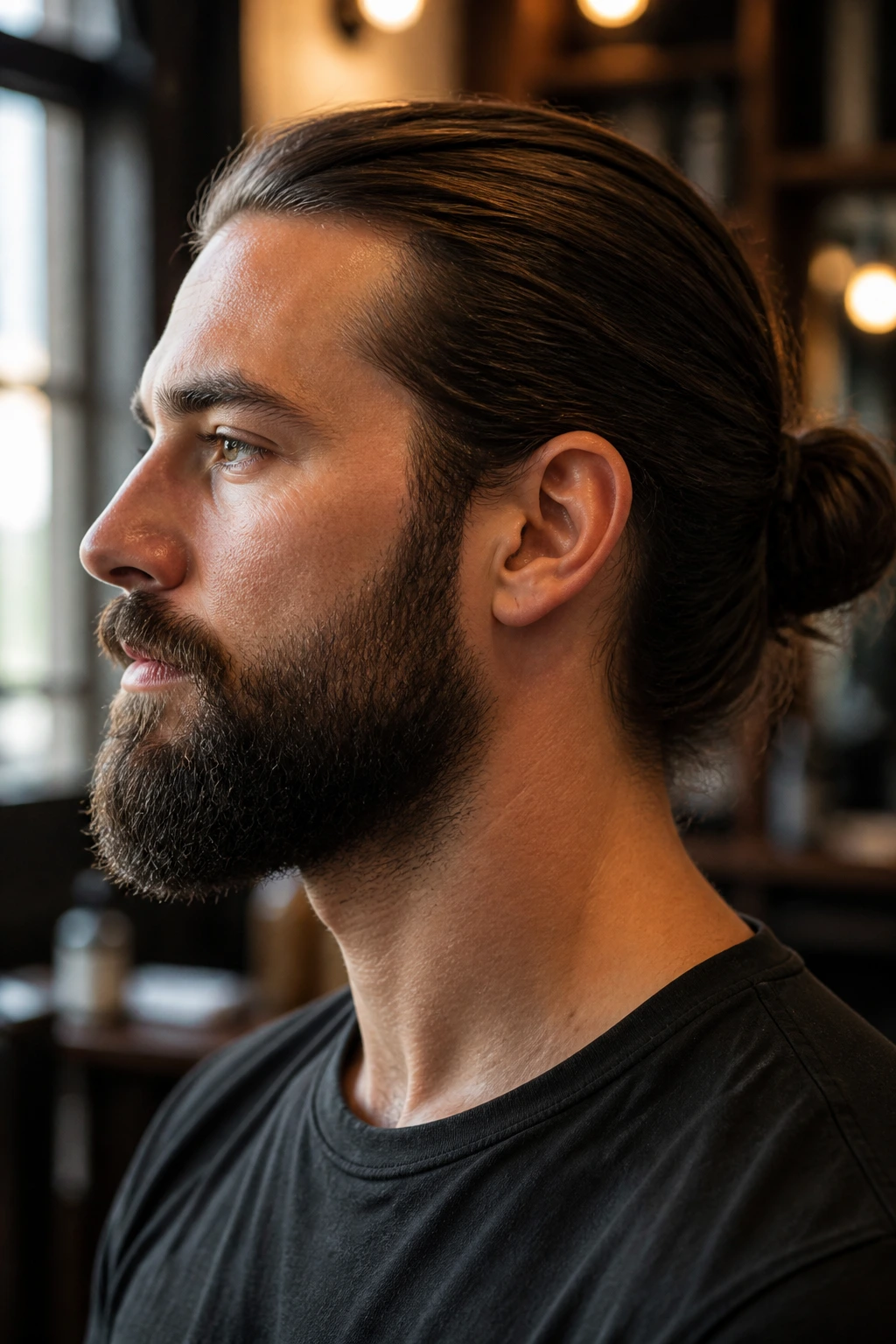
A bun and a beard can either balance each other or crowd each other. When they’re done right, the beard grounds the lower half of the face while the bun keeps the top from feeling too wide or too empty. The whole head reads as one shape instead of two competing ones.
This style works especially well if the beard has a clean neckline and the bun sits low or mid-height. A full beard can make a high bun feel smaller by comparison, so keep that in mind if your facial hair is already heavy. If the beard is light, the bun can carry a little more volume.
Why It Works
The point is proportion. A strong beard plus a low bun can make the jawline look broader and more stable. A short beard plus a tight bun usually feels cleaner. Both work; they just tell different stories.
14. The Wet-Look Bun
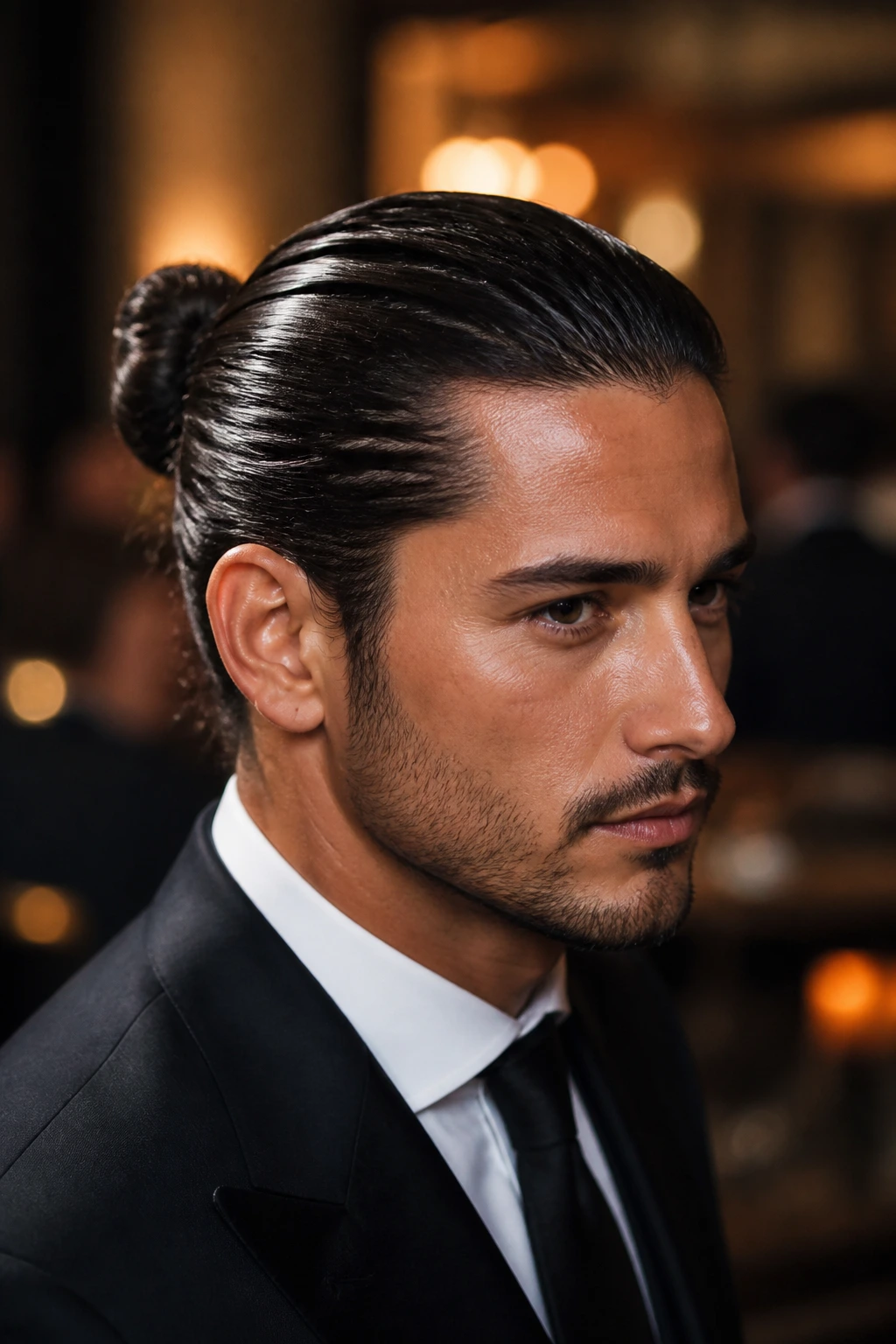
A wet-look bun is for when you want shine to do the talking. Use damp hair, comb it back, add gel or a very firm cream, and keep the outer layer smooth. It looks sharp in a way that matte styles don’t.
The downside is that every bump shows. Cowlicks, broken pieces, and uneven part lines all stand out more under shine. So this is the style you choose when the hair is already in good shape and you’re willing to take an extra minute or two to comb it right.
I wouldn’t wear this every day. But when you need a cleaner read—formal event, sharp jacket, evening setting—it gives the bun a more deliberate finish than a casual texture ever could.
15. The Nape-Tucked Bun
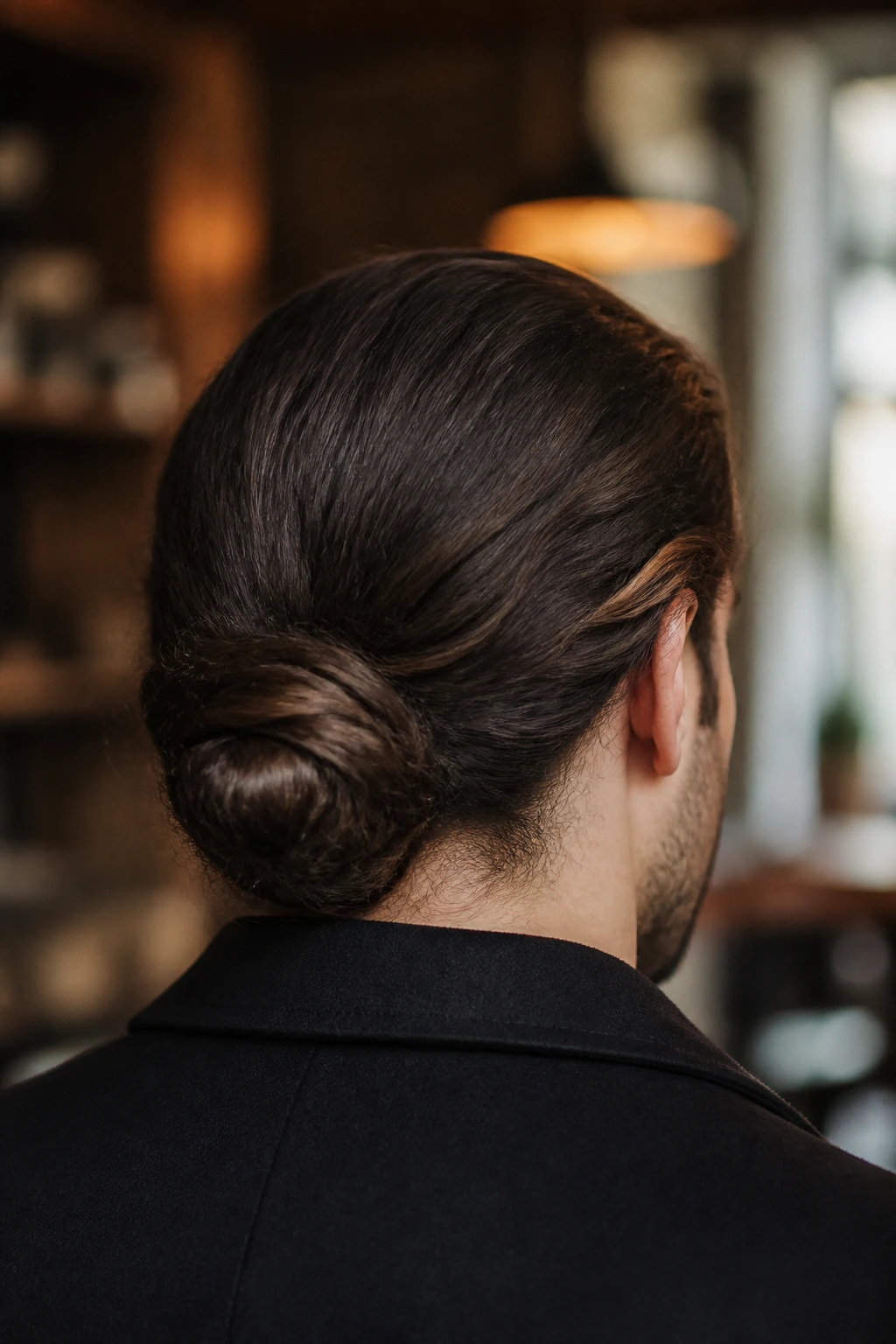
What happens when you tuck the bun low enough that it almost disappears into the neckline? You get a style that feels restrained and neat. The nape-tucked bun stays close to the head, which makes it a good fit for jackets, collared shirts, and cold weather layers that would otherwise fight a bigger knot.
It also helps longer hair stop bouncing around. If your hair brushes the collar all day, a low tucked bun keeps it from rubbing the neck raw. That matters more than people think. Comfort is part of style.
How to Style It
Brush or finger-comb the hair down, tie the bun at the lowest point that still holds, and tuck the ends neatly under the base. If any pieces stick out, pin them instead of tugging harder. A small, hidden pin beats a tight pull every time.
16. The Formal Knot
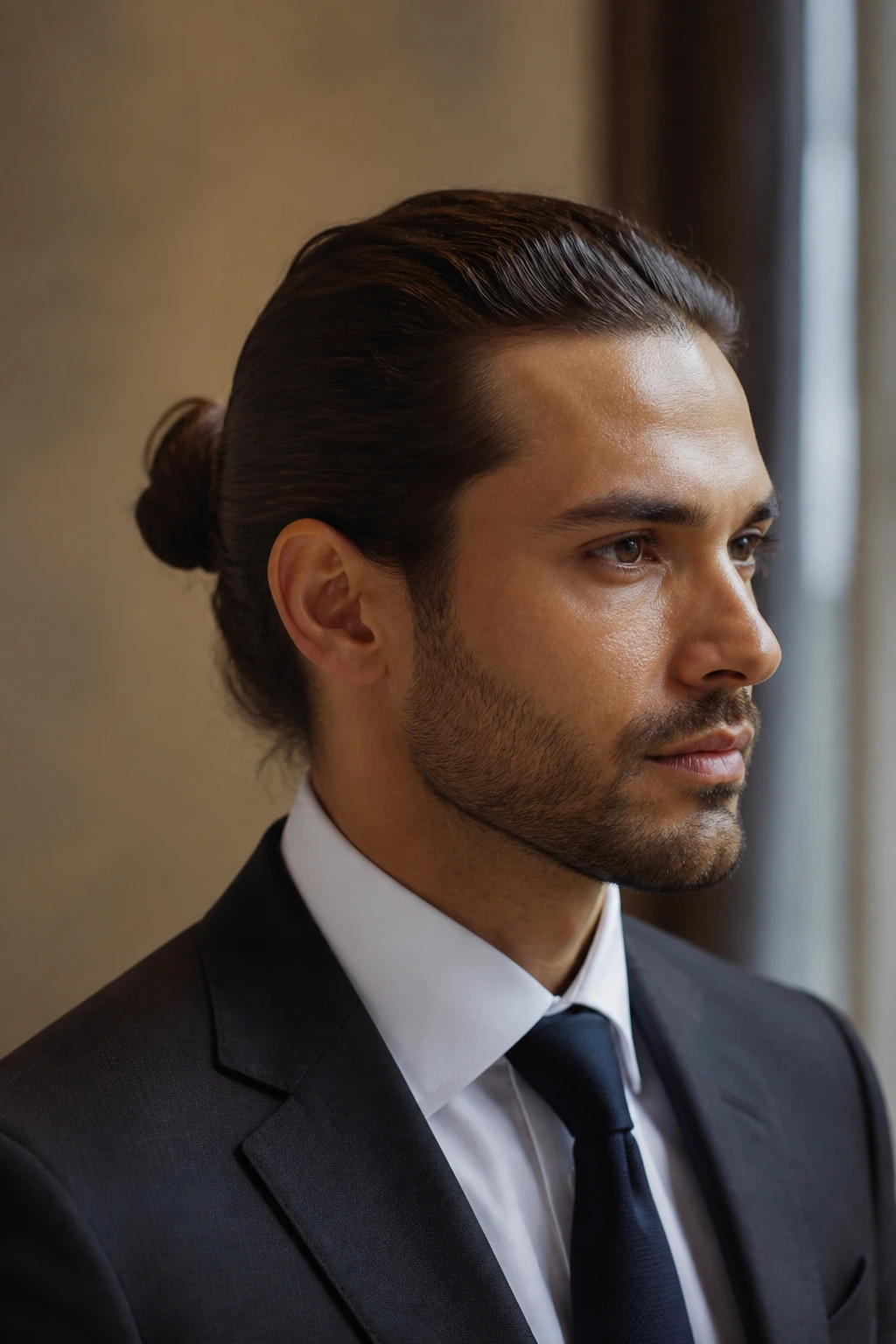
When a bun needs to sit under a collar and behave, this is the answer. The formal knot is tidy, low, and built around clean lines. It doesn’t ask for attention; it just makes the rest of the outfit easier.
This version usually works best with a soft side part and a little product to hold the surface smooth. It’s a strong choice for weddings, dinners, interviews, or any situation where you’d rather not look like you tied your hair up five minutes before leaving. A light oil on the ends can keep the bun from looking dry under indoor lighting.
- Keep the bun compact and low.
- Clean the sides and neckline first.
- Use a comb, not just your hands.
- Avoid heavy shine unless the outfit is already polished.
The formal knot is basically the suit version of a bun. It’s clean enough to disappear into the rest of the look.
17. The Box-Braid Bun
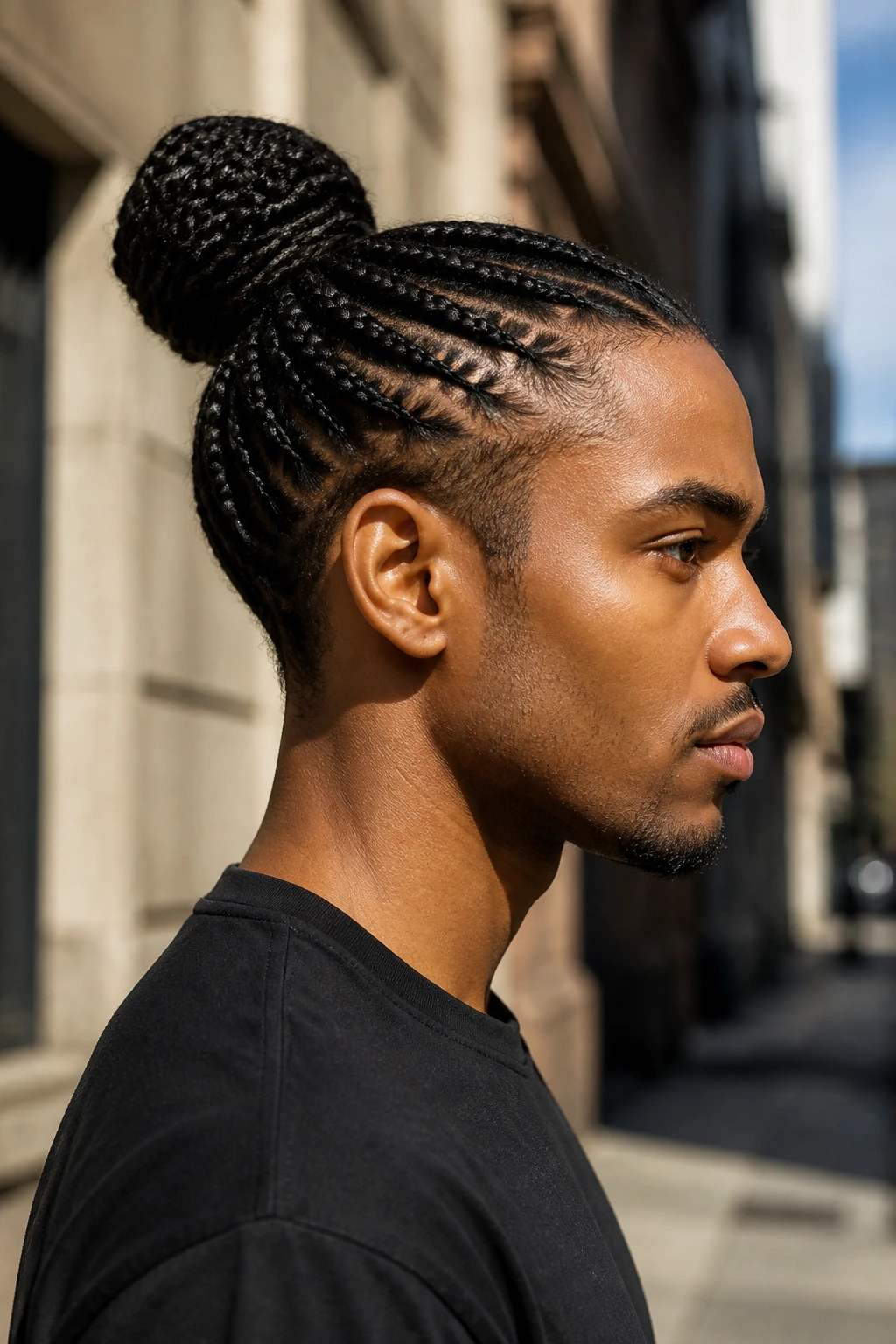
Braids do the heavy lifting here. When the hair is already boxed or cornrowed, the bun becomes a tidy finish instead of a struggle. That makes this style especially useful for men who want the hair secured for longer stretches without dealing with loose strands every hour.
The bun itself can sit low or high depending on how the braids fall. A wider tie works better than a skinny elastic because it spreads the pressure out. Tight pressure at the edges is the part to watch; a bun should not pull the hairline every time you move your head.
This style also holds shape for a long time, which is part of the appeal. It’s one of the few bun versions that can stay neat through a full day without constant touching.
18. The Loc Bun
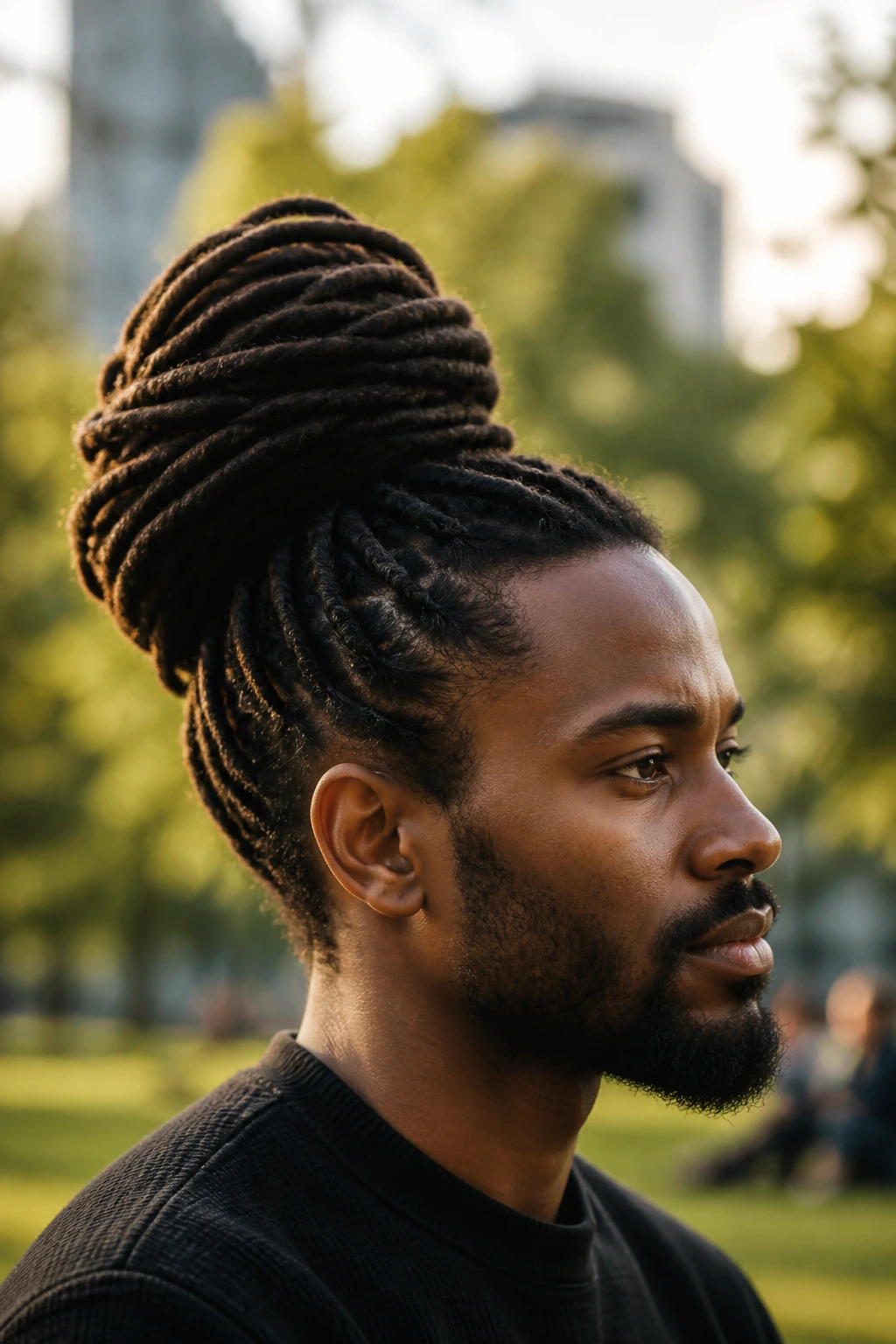
Locs create their own silhouette, and the bun has to respect that. You are not trying to squash volume out of them. You’re gathering the length into a shape that stays balanced and comfortable.
A loc bun usually looks strongest when it’s secured with a wider tie or a loc-friendly wrap rather than a tiny elastic. The base should feel steady, not strained. If the locs are long and thick, keep the bun lower so the weight doesn’t drag the crown backward all day.
What I like here is the density. A loc bun has presence. It can be sculptural or casual, but it never looks flimsy. If your locs are mature and full, this is one of the easiest ways to keep the style controlled without making it look overworked.
19. The Mid-Length Mini Bun
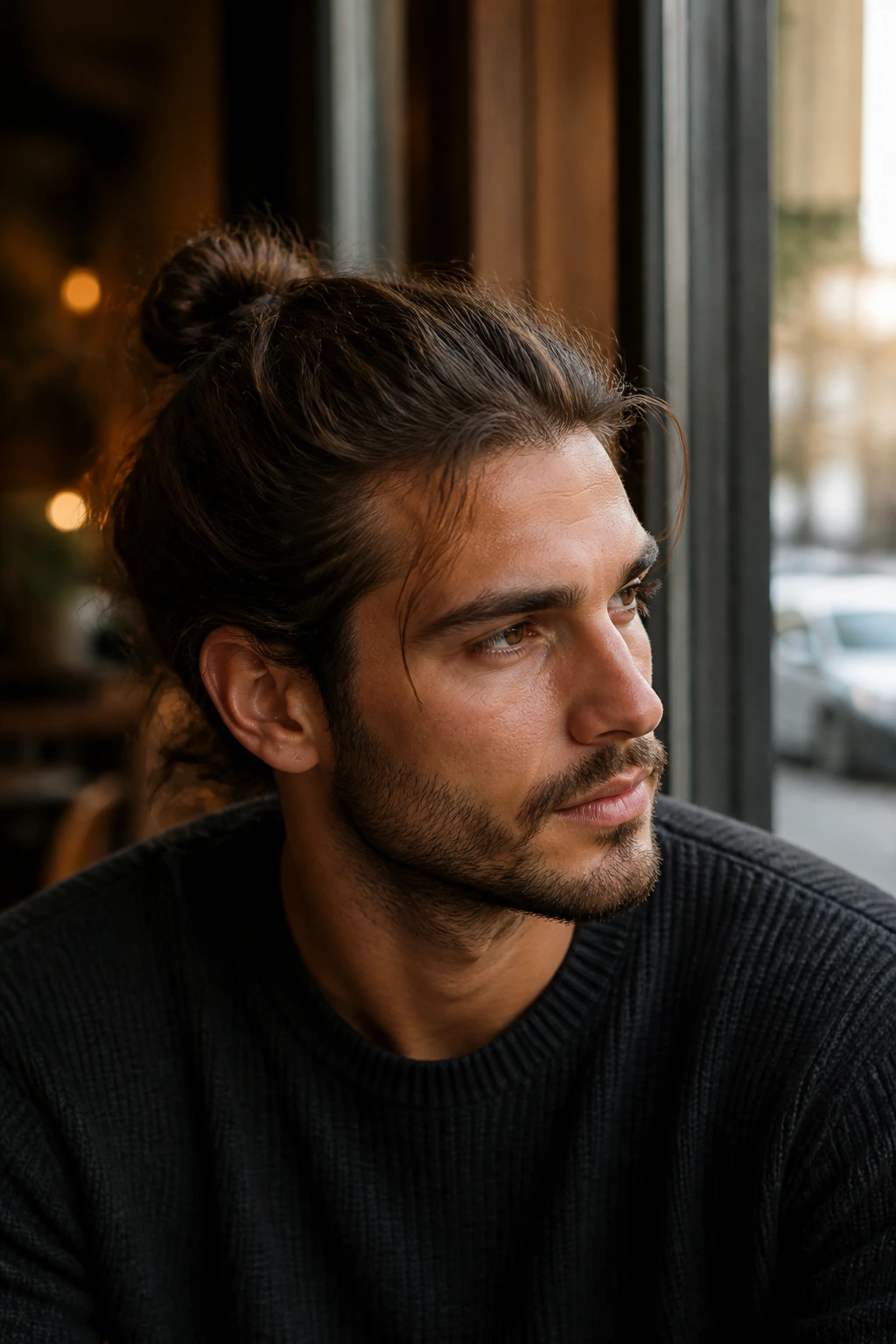
The awkward stage has a solution, and it’s not always a full bun. A mid-length mini bun uses the hair you have now, even if it only folds once or twice. That makes it useful for hair that’s around 4 to 6 inches long, especially on the top.
The key is not to pretend it’s a bigger style than it is. A mini bun should look compact and intentional. If pieces stick out, that’s fine. A bit of texture actually helps. What ruins it is trying to stretch short hair into a knot that wants more length than it has.
What to Watch For
Use a smaller elastic, keep the tie close to the crown or nape depending on length, and don’t overload the hair with product. Too much cream makes short lengths slip. A little control, not a helmet, is the goal.
20. The Double-Tie Bun
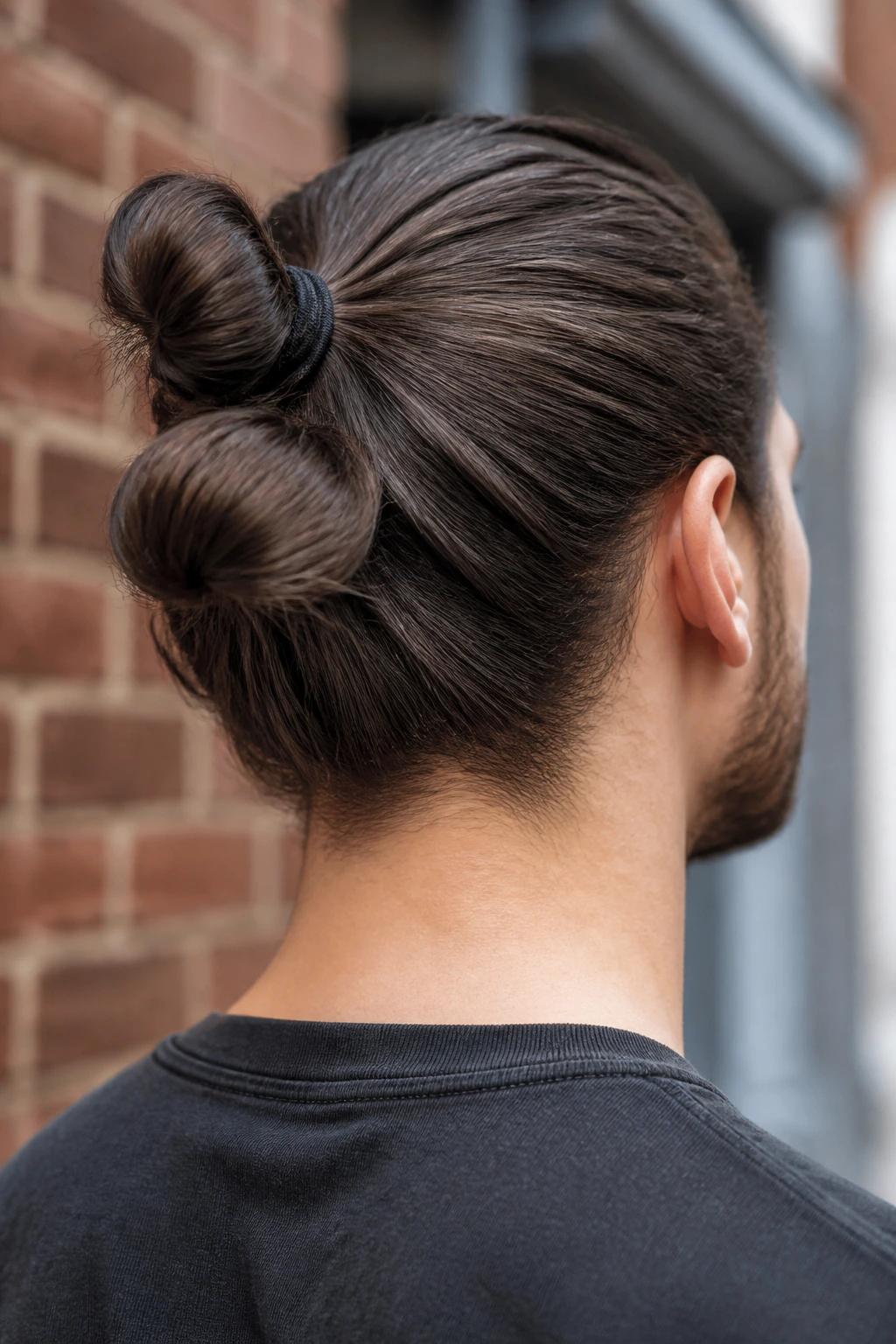
One elastic is often not enough for heavy hair. A double-tie bun uses a first tie to collect the ponytail and a second tie to lock the bun in place. It’s a simple fix, but for thick straight hair or dense curls, it makes a real difference.
This style also helps when the hair wants to sag after an hour. The second tie takes some of the weight off the first, so the bun stays centered instead of drooping. If your hair is long enough to feel heavy when wet, you’ll know this problem well.
A double tie is not the same thing as pulling tighter. That’s where people go wrong. Two ties spread the stress better than one hard pull, which is why the style can actually be kinder to the hair than a death-grip bun.
21. The Side-Swept Bun
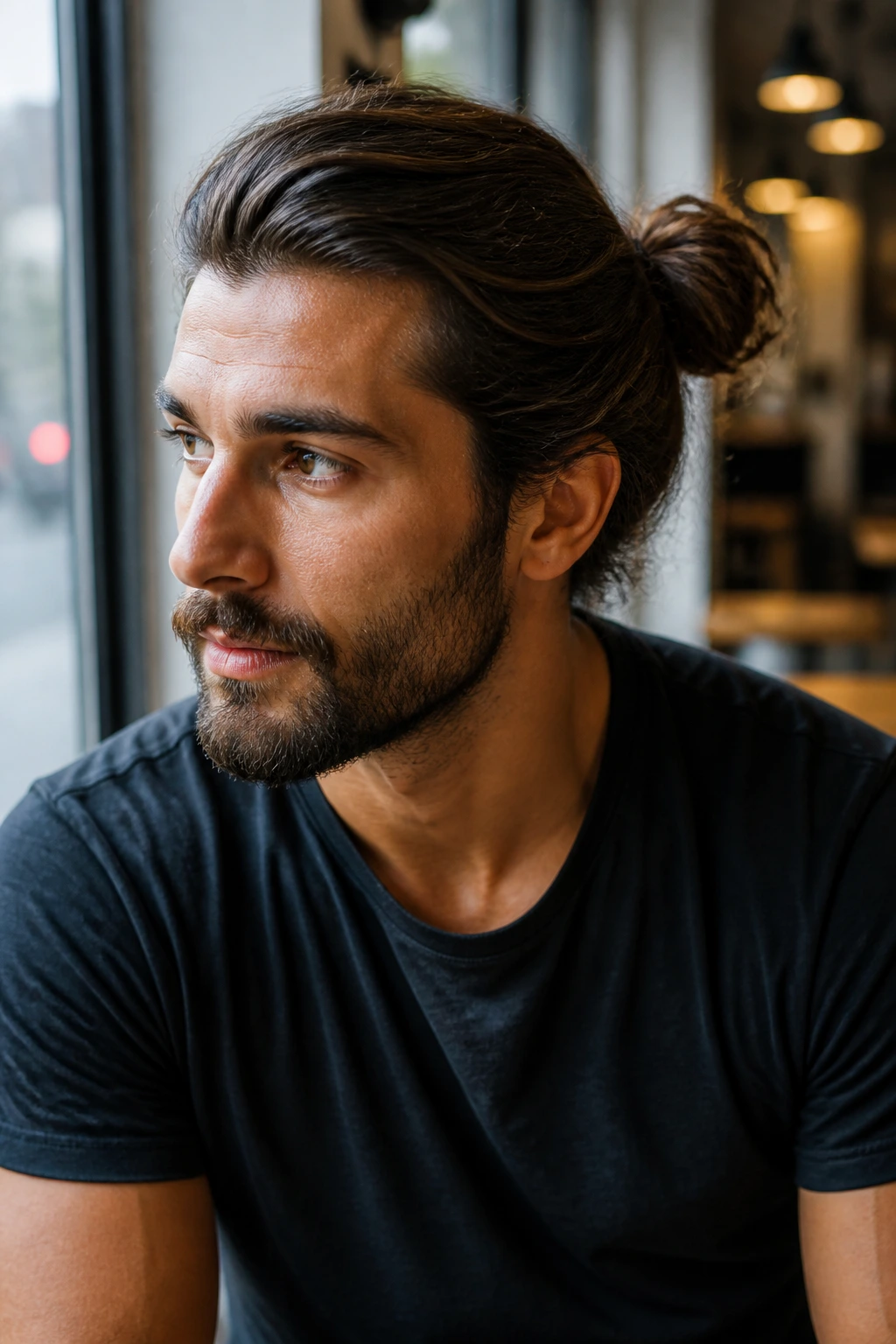
A side-swept bun shifts the knot slightly off center, and that small change makes the style feel less rigid. It softens the symmetry and gives the hair a little motion even when it’s tied back. If your face is round or you don’t like the straight-down-the-middle look, this is a strong option.
A side part helps, but the whole style still depends on the placement of the bun itself. Pull the hair back from the part, let the bun sit a finger-width or two to one side, and keep the finish loose enough to show the direction. It’s subtle. That’s why it works.
How to Style It
Start with a clean side part, brush the hair back in the same direction, and secure the bun slightly off-center. A touch of matte product on the front keeps the part from disappearing. The asymmetry should look chosen, not accidental.
22. The Wrapped Base Bun

A wrapped base bun looks finished because the elastic disappears. You leave one strand out, wrap it around the tie, and pin it underneath. That tiny move changes the whole read of the style.
It’s a useful trick for men who want their bun to look deliberate without adding more product or changing the haircut. The wrapped base is especially good for meetings, dinners, or photos where the hair tie itself would otherwise break up the line. It also works better on medium to long hair than on short lengths, where the wrap can look forced.
- Leave one clean strand aside before tying.
- Wrap it once or twice around the base.
- Secure it with a small bobby pin underneath.
- Smooth the final surface with damp fingertips.
That’s all it is. A small detail, but small details are what make a bun look edited instead of improvised.
23. The Athletic Bun
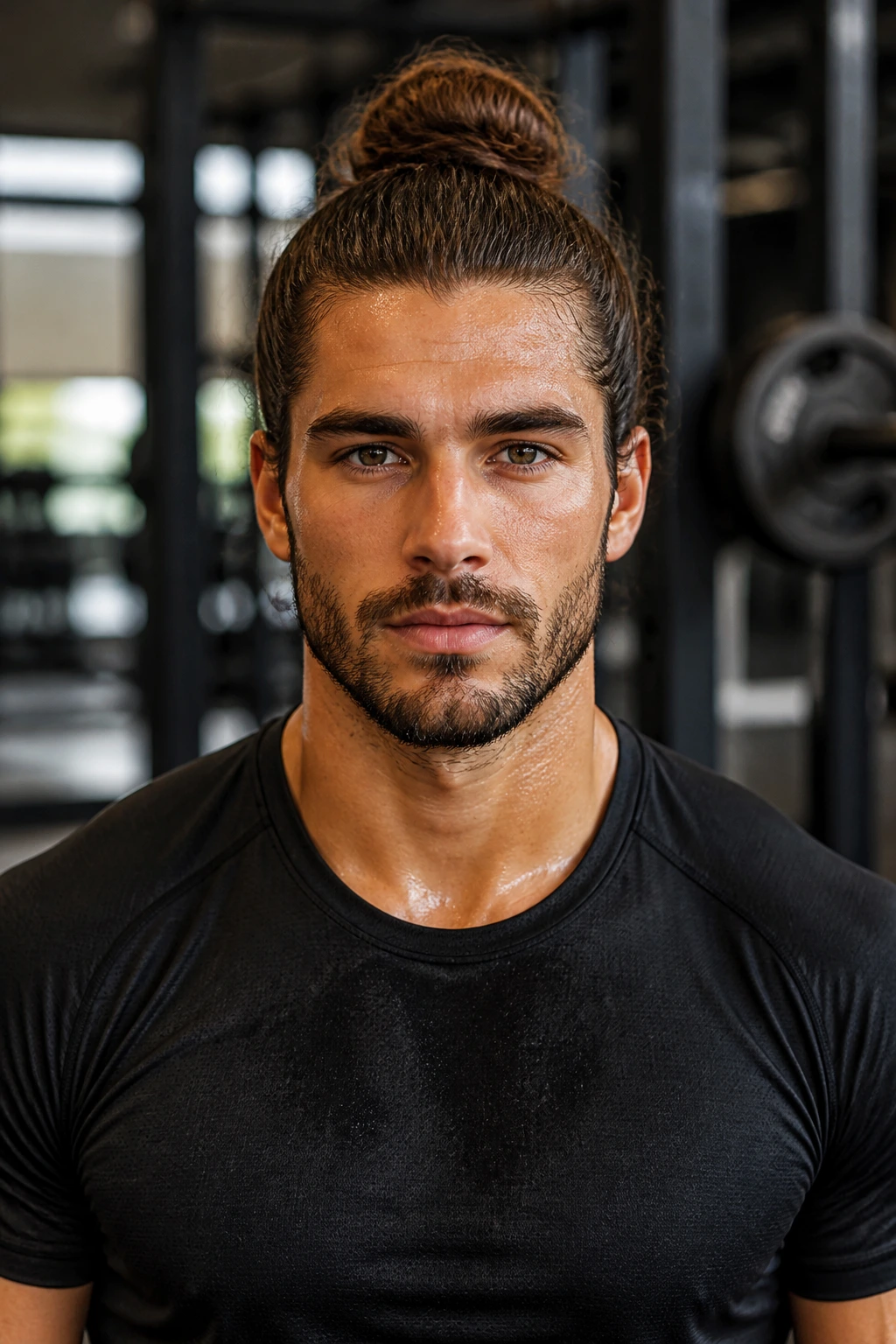
The athletic bun is built for motion. It has to stay put through sweat, stretching, and the weird friction that happens when hair meets collars, benches, or a towel. It should feel secure, but not so tight that it gives you a headache halfway through the session.
I like this bun when the hair is cleaned off the face and neck before training, then released afterward so the scalp can breathe. If you wear it tight all day, it stops being an athletic bun and starts becoming a tension problem. Use a snag-free tie, and don’t knot it so hard that you’re dragging on the roots.
The style works especially well on hair that’s long enough to swing but not so long that it gets in the way every five seconds. It’s practical. That’s the point.
24. The Loose Knot

This is the version that looks easiest because it is easiest. A loose knot keeps the shape of a bun without locking the whole head down. It works best when the hair has a little natural texture and the ends are allowed to bend, not hide.
The loose knot is good for off-duty days, travel, or mornings when you want the hair out of the way without turning it into a project. It’s also kinder to the scalp than a high-tension knot, which matters if you wear your hair back often. A wider elastic and a softer wrap make it feel lighter.
Unlike the athletic bun, this one doesn’t need to survive an intense workout. It just needs to look good while you’re doing regular life.
25. The Skin Fade Bun
A skin fade bun puts the contrast front and center. The sides are shaved clean or taken down very short, and the bun sits above all that clear space. The result is sharp, high contrast, and impossible to ignore.
This is one of the more maintenance-heavy looks on the list. Skin fades grow out fast, and once the sides blur, the whole style loses its edge. If you like clean lines, though, it’s worth the upkeep. Dense, dark hair makes the contrast even stronger.
Why It Works
The bun feels bigger because the fade removes visual clutter. That’s the real trick. It’s not that the bun itself changes; it’s that the haircut around it gives it more presence. Pair it with a short beard or stubble if you want the face to feel grounded.
26. The Crown-Braid Bun
A crown braid into a bun gives the style more pattern and more depth. Instead of one simple gathering point, the hair moves around the head first, then ends in the knot. That creates shape before the bun even forms.
It’s a strong option for special occasions, long hair, or anyone who wants the bun to feel a little more crafted. The braid also helps control layers and keep the top from puffing out in random places. If your hair is thick or slightly unruly, that matters.
This is not the quickest style on the list. But quick is not the point here. The point is structure, and a crown braid gives the bun a framework it would not have on its own.
27. The Shoulder-Length Full Bun
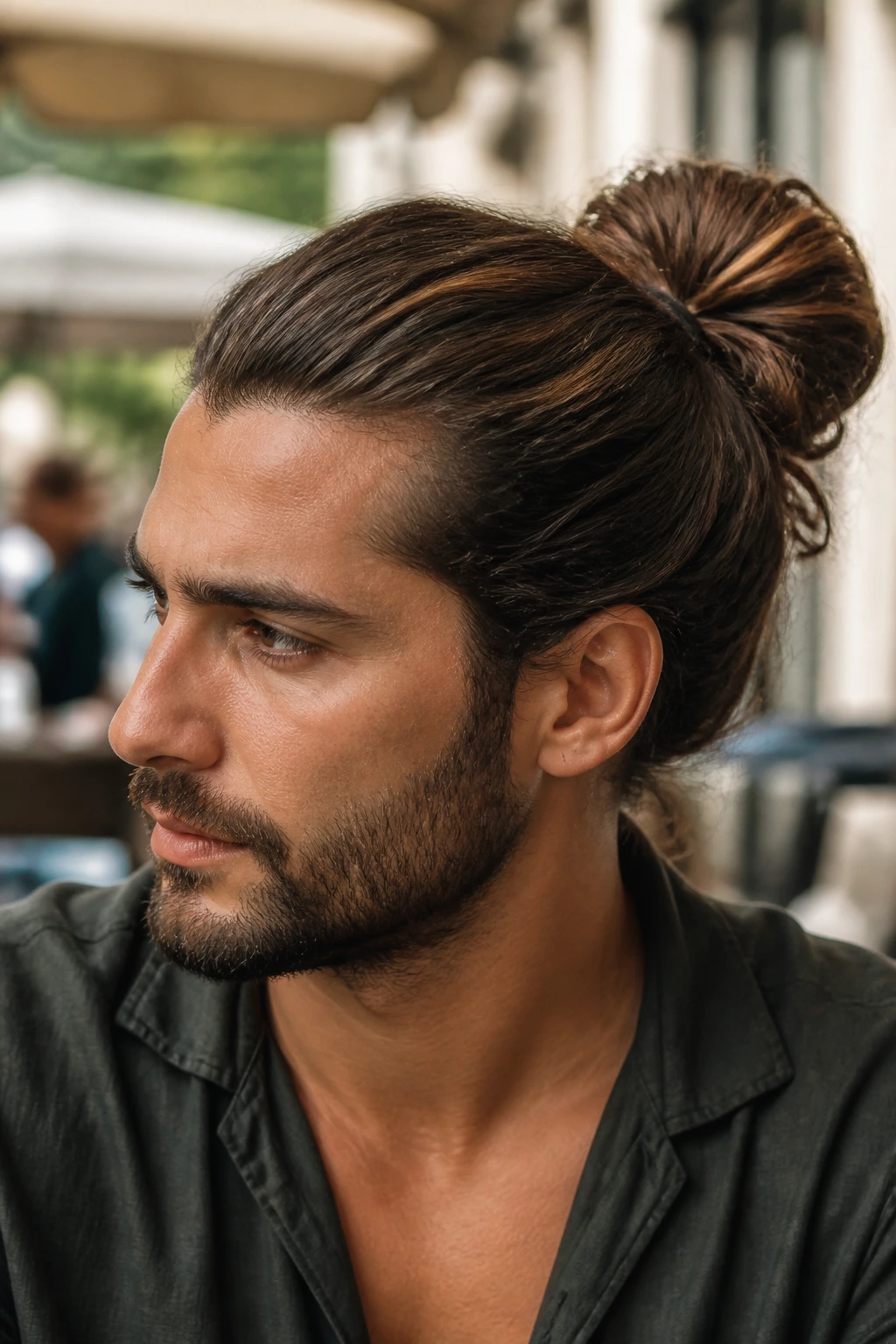
What happens when the hair is long enough that the bun stops feeling like a workaround and starts feeling like the whole style? You get the shoulder-length full bun. It’s fuller, softer, and more relaxed than the tight compact versions, and it can look especially good when the hair has enough length to fold twice.
This is the style that benefits most from restraint. Don’t crush the hair flat. Let the bun keep some roundness. A little cream on the ends, a clean tie, and a low or mid placement usually do the job. If the hair is straight, this version can look sleek; if it’s wavy or curly, it looks richer and more textured.
The shoulder-length full bun is one of the few styles that can look casual and serious at the same time. That’s a useful trick to have.
Why a Bun Stays Useful When Hair Gets Awkward
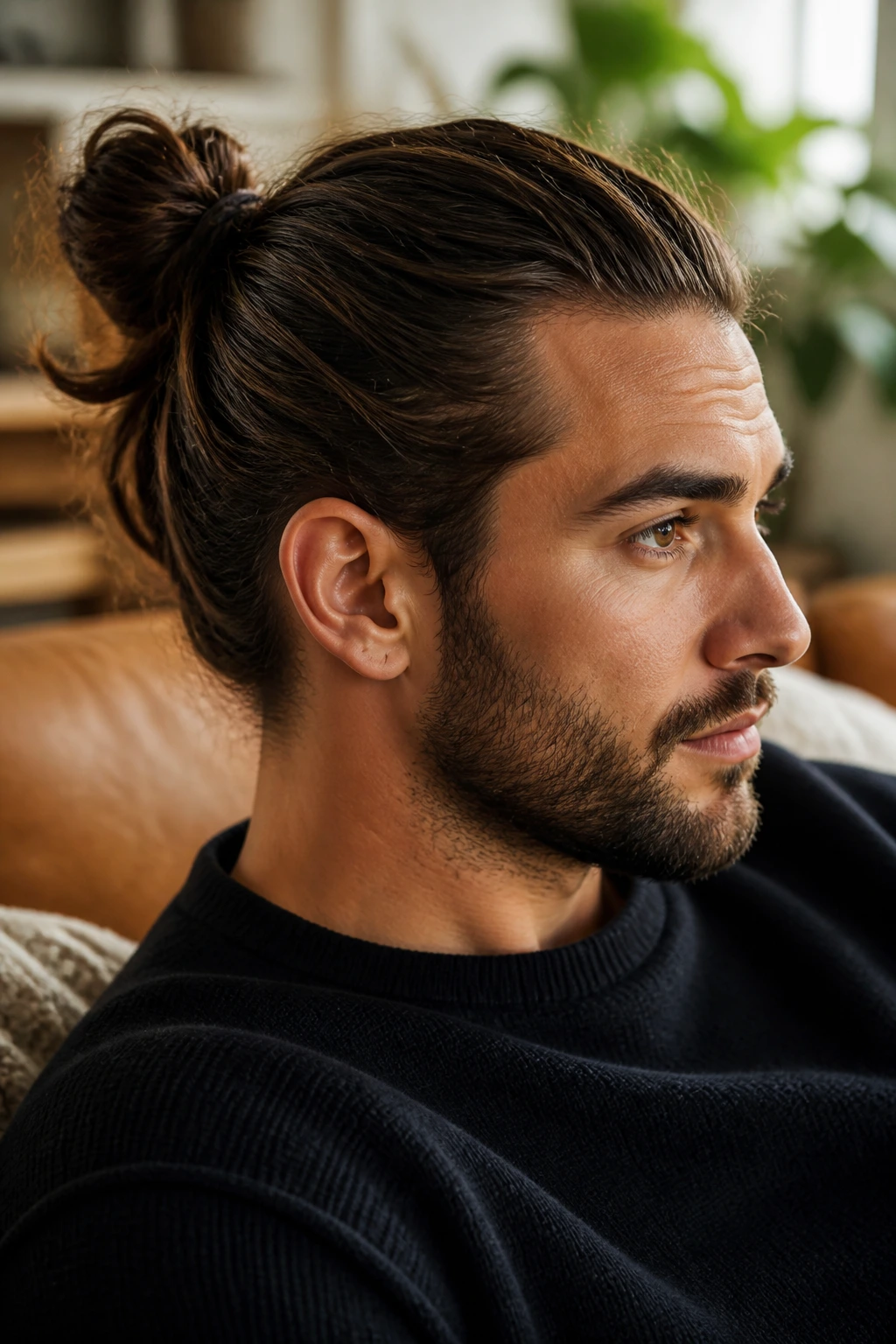
Hair grows in stages, and the middle stages are rude. One month it falls into your eyes; the next it sticks out from the sides like it’s trying to quit. A bun gives that awkward length something to do while the rest catches up. That alone makes it worth knowing.
The other reason bun hairstyles for men keep showing up is simple: they adapt. A bun can be neat, messy, high, low, braided, faded, slicked, or almost invisible under a collar. You can make the same basic shape fit a gym day, a suit, a weekend errand run, or a dinner where you want the hair out of the way but not erased.
That flexibility only works when the base is right. Placement, tension, and texture matter more than fancy product. Get those three things close, and the style starts behaving.
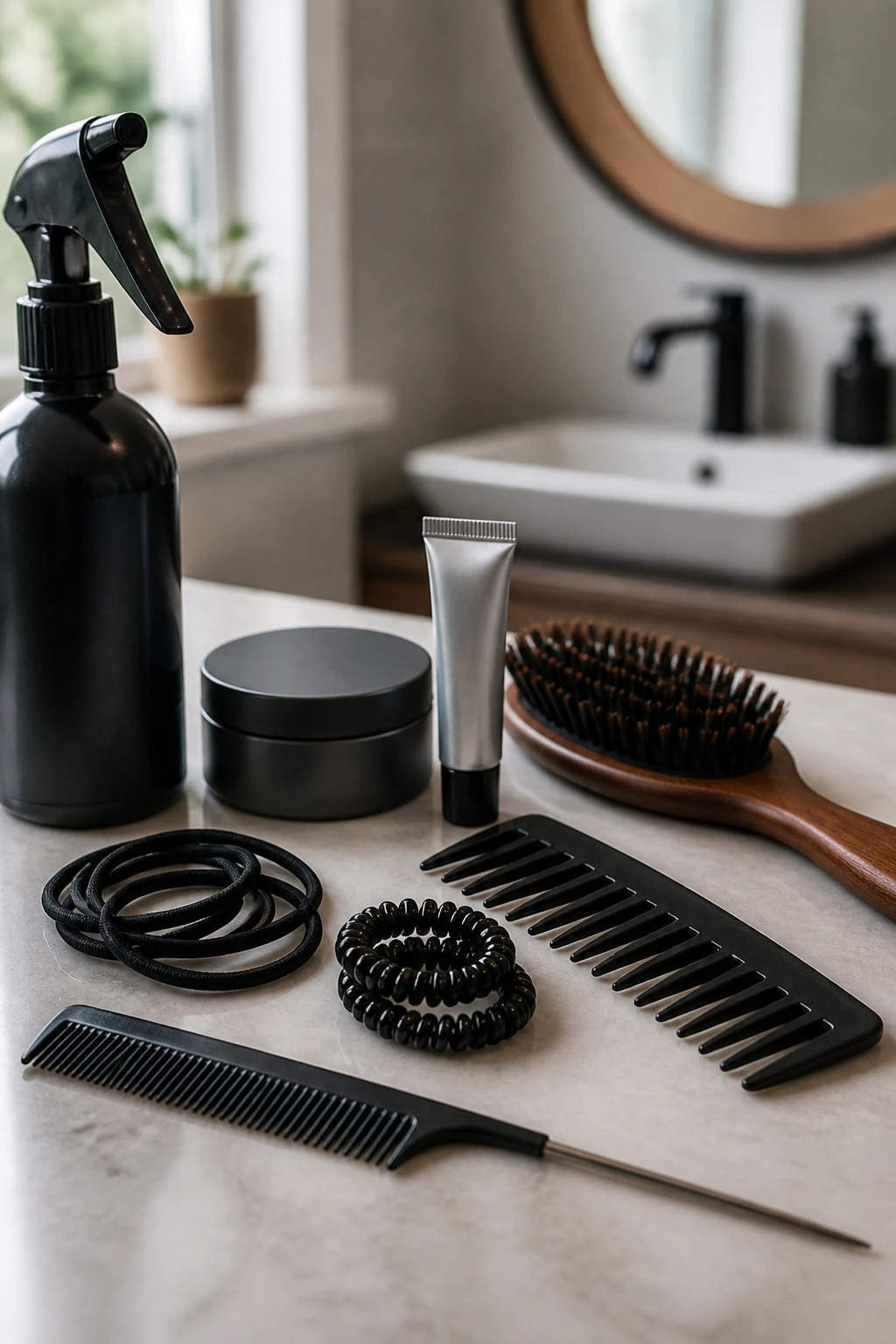
Essential Tools for Men’s Bun Hairstyles
-
Seamless hair ties: These hold without the metal snag that chews up strands.
-
Spiral hair ties: Good for thick or long hair because they spread pressure a little better.
-
Tail comb: Useful for clean parts, sectioning, and smoothing the top before tying.
-
Wide-tooth comb: Better than a brush for curls, waves, and hair that tangles easily.
-
Boar bristle brush: Helps slick down straighter hair without leaving it looking greasy.
-
Spray bottle with water: A small mist makes damp styling easier and keeps flyaways under control.
-
Matte cream or paste: Adds grip and shape without the wet shine that can make the hair look stiff.
-
Light gel: Best when you want a wet finish or need stronger hold around the hairline.
-
Sea-salt or texture spray: Gives movement to straight or wavy hair before tying it back.
-
Hair pins or small clips: Handy for wrapped bases, braid ends, and stubborn side pieces.
-
Hand mirror or two-mirror setup: The back of a bun lies, and this is how you catch it.
-
Diffuser or blow-dryer with cool setting: Optional, but useful if you want more lift or a smoother finish.
How to Choose the Right Length, Texture, and Hold
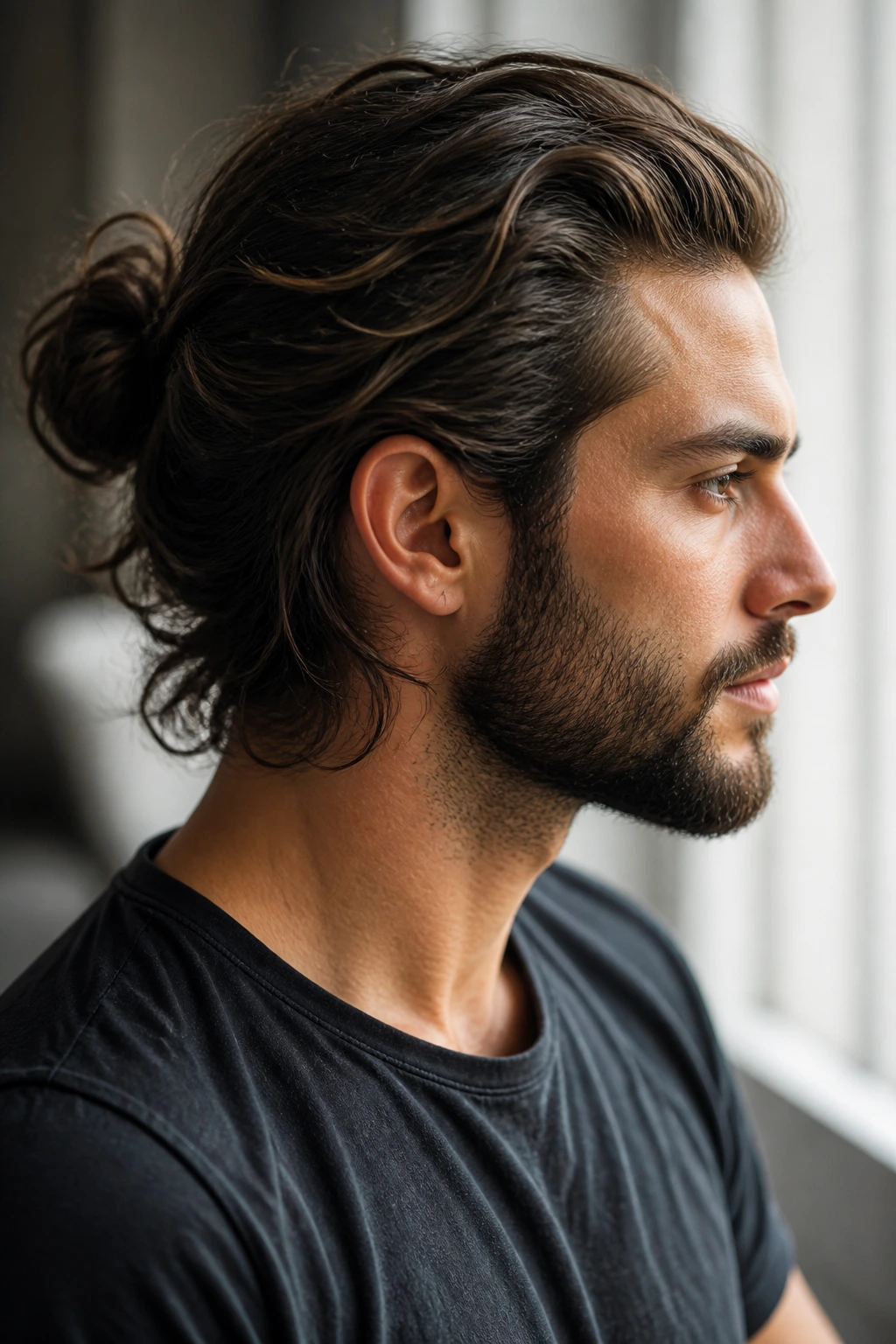
Hair length is the first filter. If the top is around 4 to 6 inches, a mini bun or half-up style usually behaves better than a full knot. At 7 to 9 inches, low buns and compact top knots start to work cleanly. Once the hair reaches 10 to 12 inches or more, the style opens up fast: fuller buns, braided versions, wrapped bases, and layered knots all become easier.
Texture changes the product choice. Straight hair slips, so it often needs a bit more grip from matte cream, paste, or light gel. Wavy hair usually likes texture spray or a rough-dry first pass. Curly and coily hair do better when you respect the curl pattern instead of brushing it flat; cream plus a gentle tie usually beats heavy gel and repeated combing.
Hold matters too. If your hair is heavy, choose a wider elastic or a double-tie setup. If it is fine, too much product can make the bun slide. And if your hairline gets sore after a few hours, the style is too tight, no matter how neat it looks in the mirror.
How to Wear a Bun With the Rest of Your Look
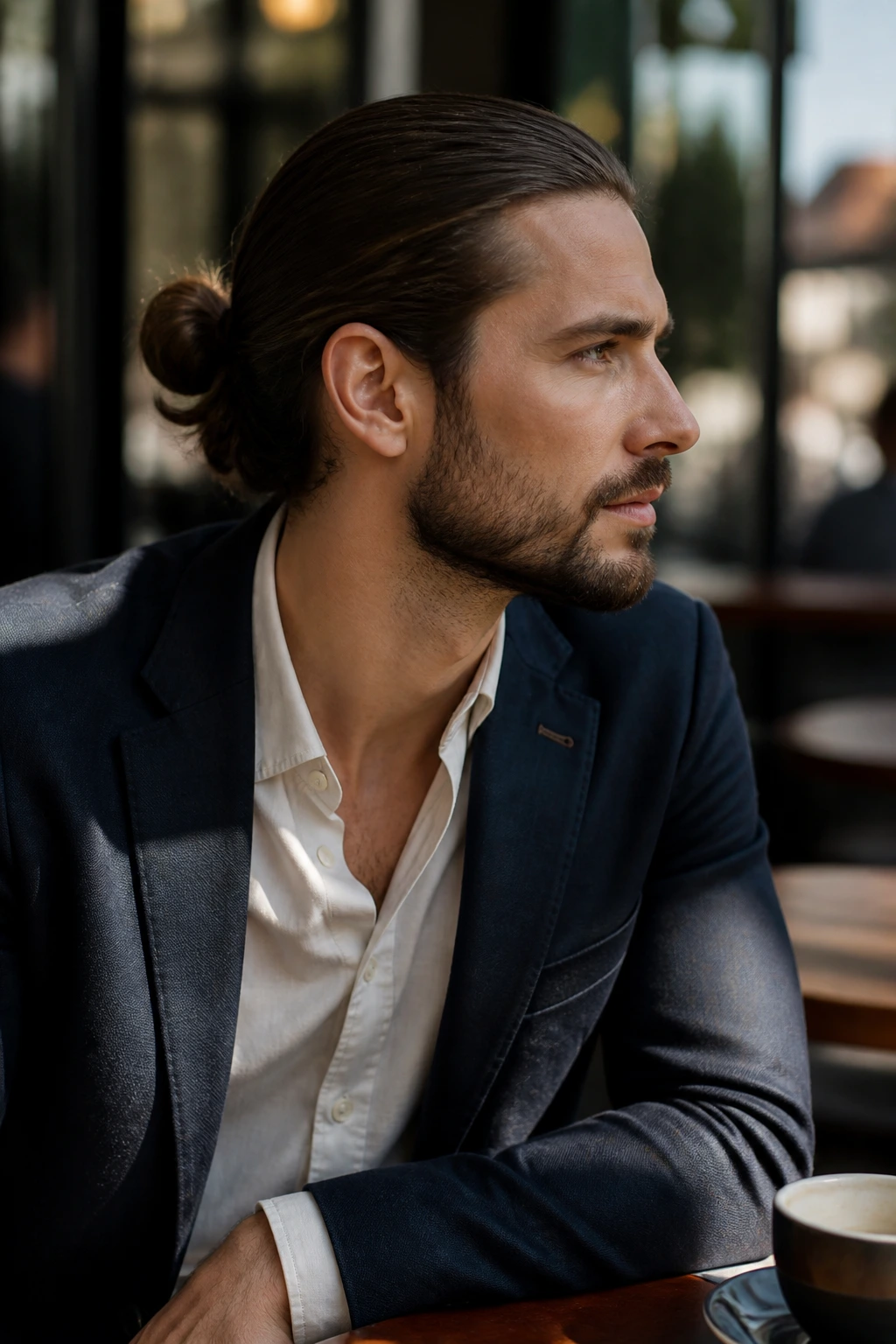
Presentation: A low bun sits closer to the neckline and reads calmer; a high bun feels sharper and more angular. If you want the style to look clean, keep the base smooth and let the shape do the talking. If you want it casual, leave a few strands loose near the temples and crown.
Accompaniments: Fades, taper fades, stubble, beards, and collar choice all change the way a bun lands. A heavy beard with a loose bun can look crowded unless the sides are clean. A sharp jacket collar or turtleneck pairs better with a low knot than a high one, because the collar won’t fight the hair.
Proportion: The bun should fit the head, not sit on top of it like a separate object. If it looks too wide, reduce the loop or move it lower. If it disappears completely, move it higher or tighten the wrap one notch.
Occasion: A wet-look bun or formal knot can handle a dressier setting. A loose knot, half-up bun, or wavy textured bun makes more sense for errands, travel, or weekend wear. Matching the bun to the outfit is what keeps it from looking accidental.
Small Tweaks That Change the Whole Read
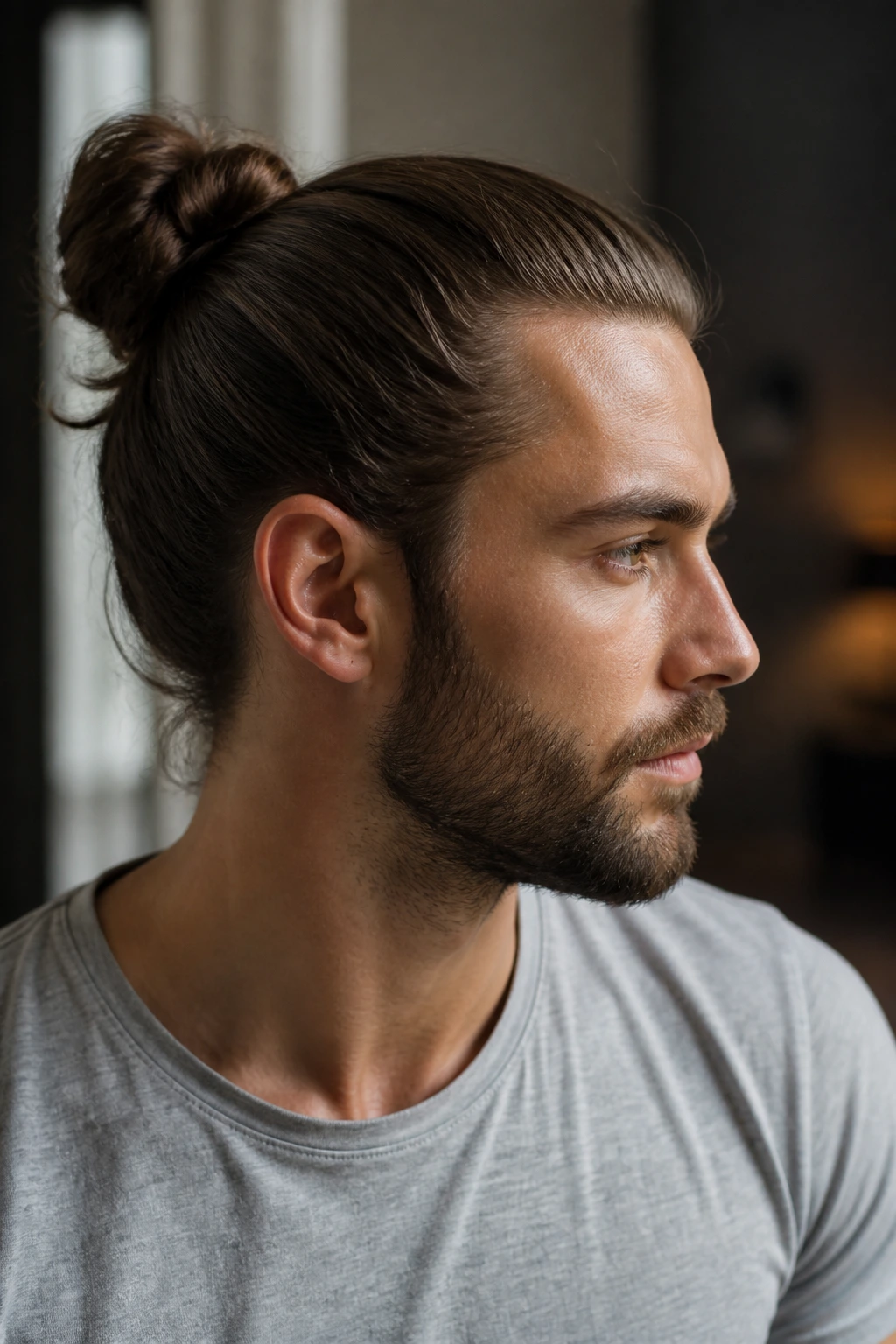
Texture Boost: On straight or slightly wavy hair, a light mist of sea-salt spray before tying changes everything. Let the hair dry about 70 percent of the way, then gather it. You’ll get grip without the sticky shell that heavy gel leaves behind.
Shape Control: Check the back with a mirror before you call it done. Most bad buns are just bad rear views. Smooth the sides with your palms, not by yanking the whole knot tighter. That way the bun stays where you placed it.
Accessory Swap: A matte tie, wrapped elastic, or small hair pin can change the style more than another ounce of product. Longer hair can even take a hair stick or clip if you want a sharper finish. Avoid shiny accessories unless the rest of the look is already polished.
Make-It-Yours: Curly hair looks better with a little lift around the bun. Straight hair often benefits from braid, twist, or texture spray before tying. Coarse hair does well with a wider tie and less friction. Thin hair needs less product and a smaller knot so it doesn’t look overbuilt.
Keeping the Style Fresh Between Washes
A bun usually looks best on day one or day two after washing, when the roots have a little grip but the hair isn’t oily. If your hair is freshly washed and slippery, the knot may slide unless you use a stronger tie or a little texture product. If it’s been a few days, dry shampoo at the roots can bring the style back without a full wash.
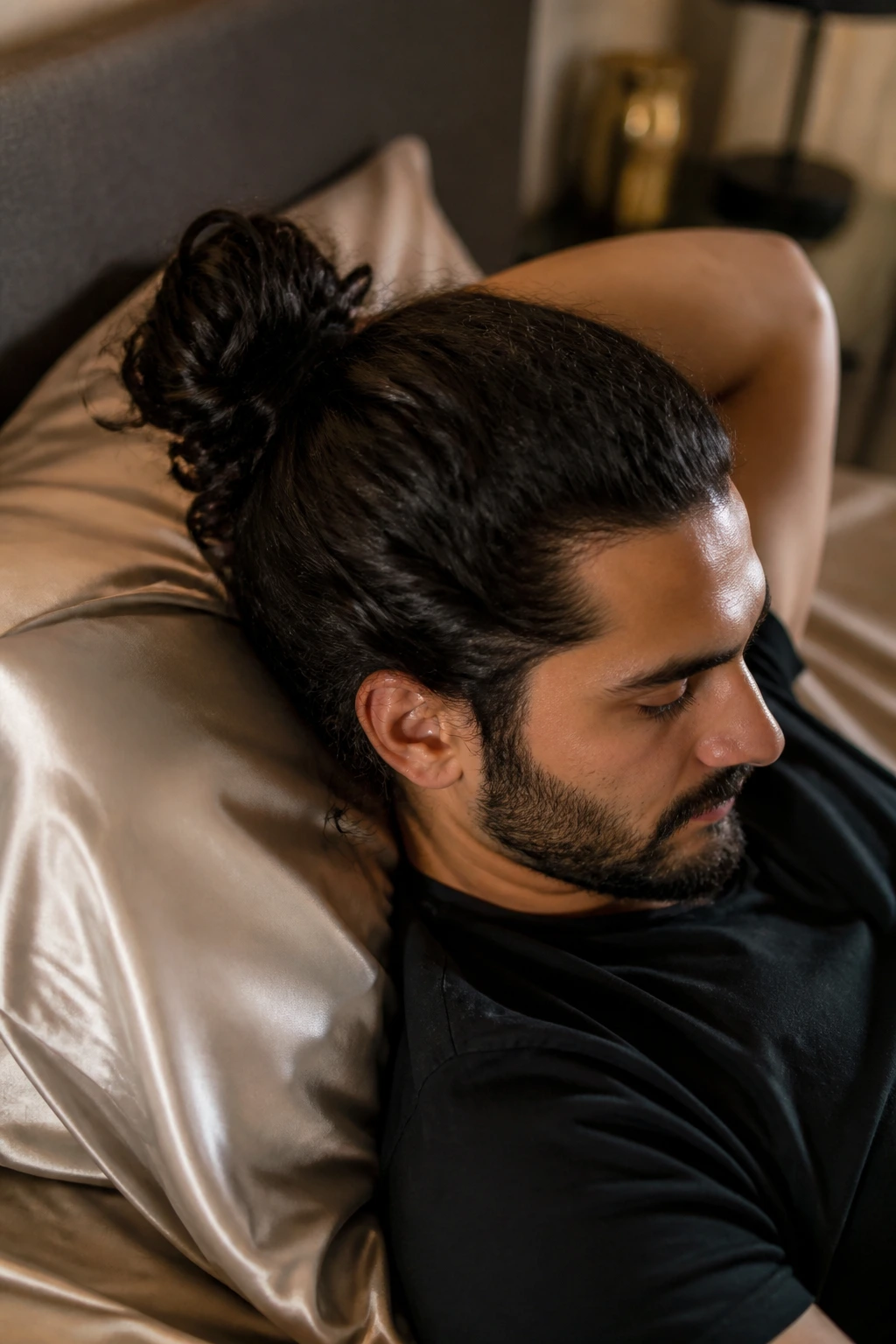
At night, a satin pillowcase helps more than people expect. It cuts down on friction, so the bun doesn’t frizz out by morning. If you wear the hair up during sleep, keep it loose. Tight overnight tension is where hair starts to feel sore and the line around the elastic gets ugly.
If you wear buns often, give the same spot a break. Move it a little higher, lower, or to the side from time to time. A few centimeters of shift can prevent that sore patch at the crown or nape that shows up when the tie sits in the same place every day. Wash the scalp when it feels coated or itchy, not by a fixed calendar alone.
Variations and Adaptations to Try
Office-Ready Low Bun: Keep the knot low, the sides neat, and the finish matte. This version works when you want the hair controlled but not shiny, and it pairs better with button-downs than with sporty clothes.
Curly-First Bun: Leave some curl structure visible instead of flattening everything down. Use curl cream, skip the brush, and let the bun keep a little puff at the edges. It looks fuller and feels less forced.
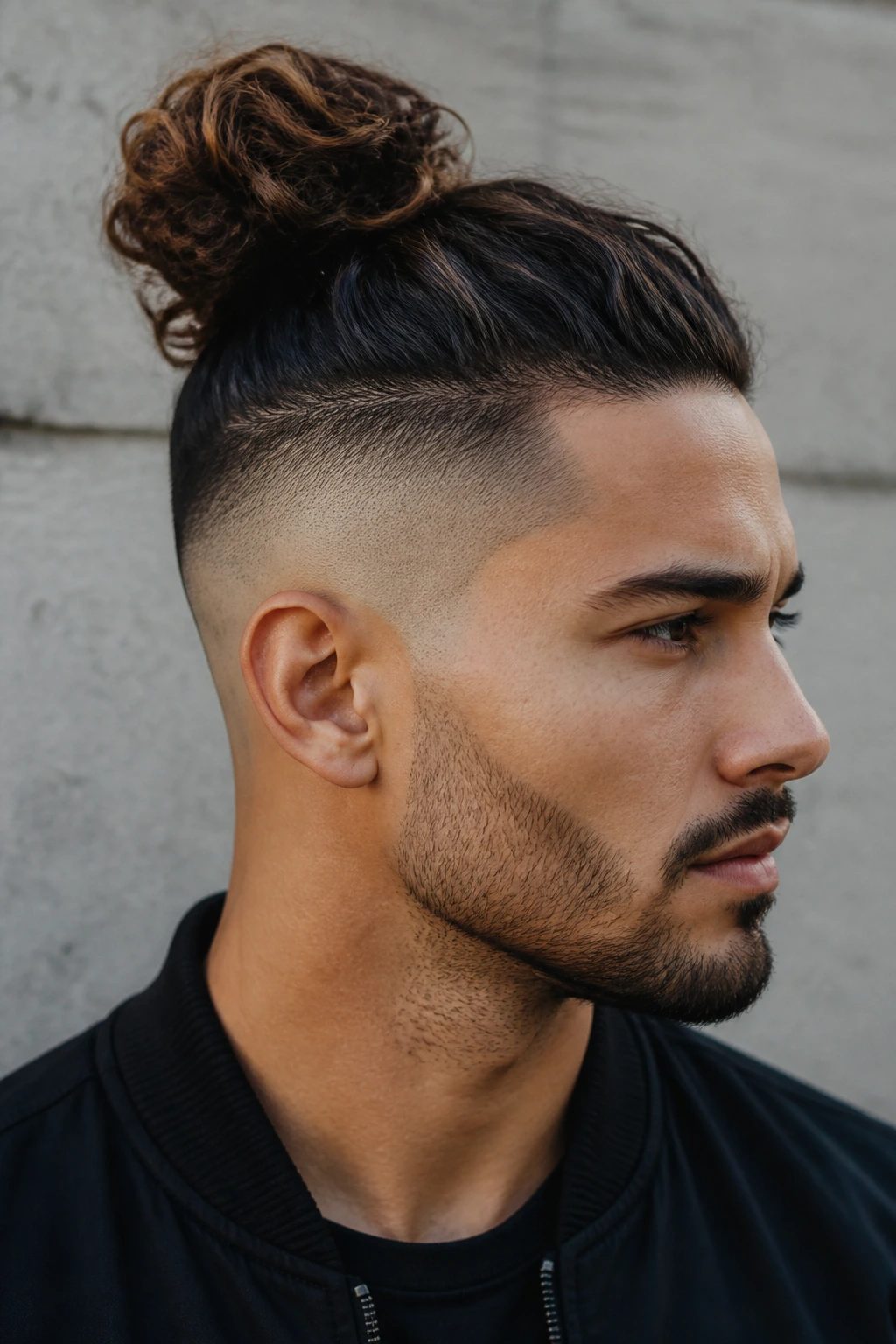
Fade-Forward Version: Pair a bun with a skin fade, high fade, or tight taper. The haircut does the sharpening, which lets the bun itself stay simple. This is a good choice if your hair is thick and you want a clearer outline.
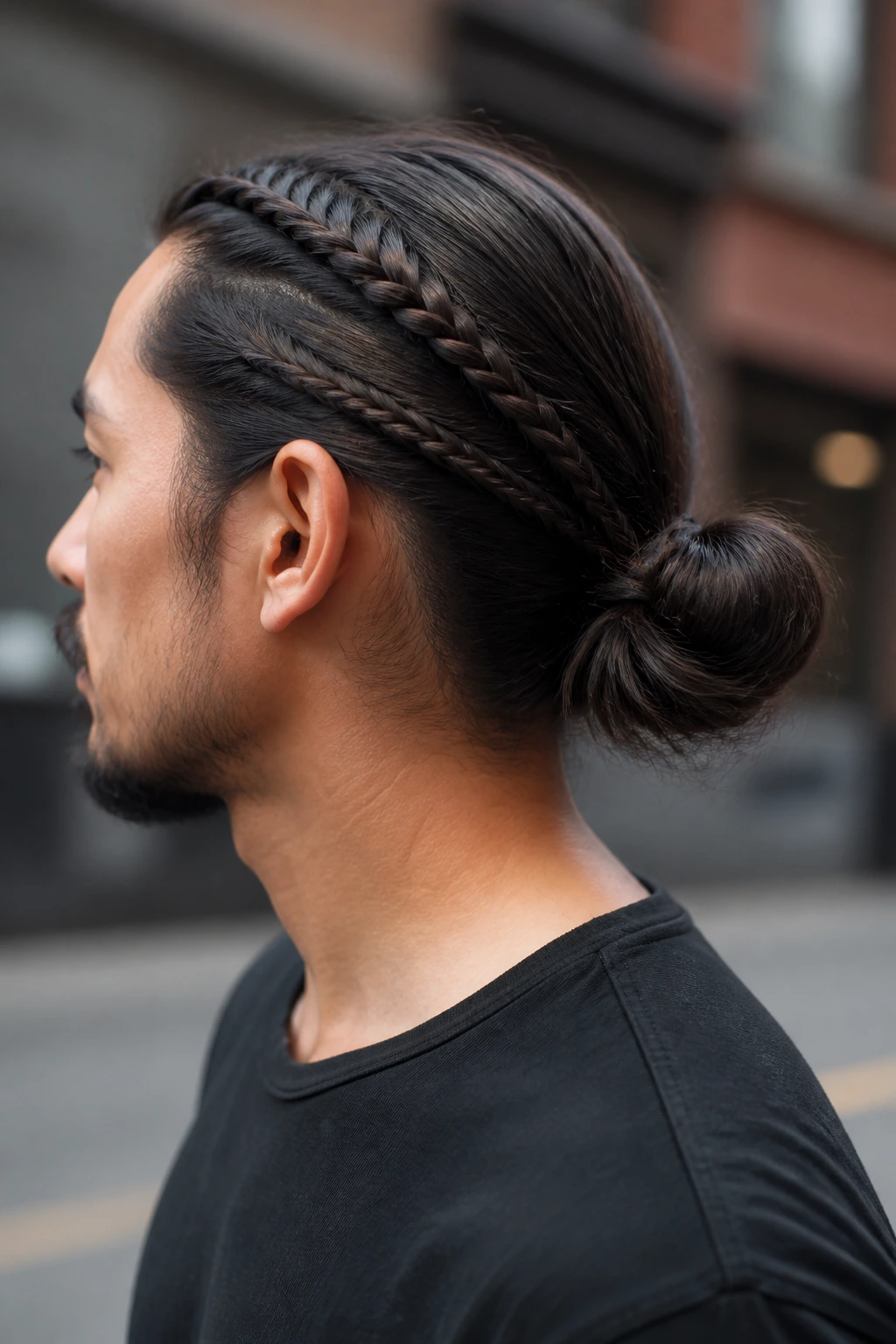
Braided Control Bun: Feed the hair through one or two braids before tying it back. It keeps layers in line and helps the bun stay put for long stretches. Men with coarse or layered hair usually notice the difference fast.
Grow-Out Rescue Bun: Use a mini bun, half-up shape, or loose knot while the hair is in that annoying middle length. It buys time without making the haircut look abandoned. This one is less about style drama and more about surviving the in-between.
Common Mistakes That Ruin an Otherwise Good Bun
-
Pulling it too tight: If your scalp aches or your temples feel strained, the bun is too tight. Ease the tie, lower the placement, and use a wider elastic so the pressure spreads out.
-
Using the wrong elastic: Tiny elastics with metal seams snag hair and break strands. Seamless ties or spiral bands are safer and sit flatter at the base.
-
Forcing a full bun too early: If the hair keeps springing out, you probably need a mini bun or half-up style instead. Don’t fight a length problem with more tension.
-
Ignoring the sides and neckline: A bun can look unfinished when the haircut around it is messy. Keep the sides, nape, and hairline cleaned up so the knot looks deliberate.
-
Loading on too much product: Grease at the roots makes the bun slip, and heavy gel can turn the whole thing rigid. Start small, then add more only where the flyaways actually need help.
Frequently Asked Questions About Bun Hairstyles for Men
How long does my hair need to be for a bun?
A small bun or mini knot can work once the hair reaches about 4 to 6 inches, especially on top. For a more secure full bun, 8 to 10 inches is easier, and 12 inches or more opens up the fuller styles.
Will wearing a bun damage my hair?
The bun itself is not the problem; tension is. Tight daily pulling, metal seams in elastics, and sleeping in the same knot over and over can stress the hairline and break strands. Loosen the tie, move the placement around, and let the hair rest.
Can curly or coily hair do these styles too?
Yes, and a lot of these styles look better with texture than straight hair does. The key is not to brush the curl pattern flat unless the style really needs it. Cream, gentle hold, and a wider tie usually work better than hard gel.
What product should I use for a clean bun?
A matte cream or light paste is usually the safest starting point. If you want a glossy finish, use gel more sparingly and keep it near the outer surface rather than working it deep into the roots.
How do I stop my bun from falling apart during the day?
Tie a ponytail first, then twist and loop the hair into the bun. For thick hair, use a second elastic or a wider tie. Also make sure the hair is dry enough to hold; soaking wet hair slips faster.
Can I wear a bun with a fade or undercut?
Yes, and that contrast is part of the appeal. A fade or undercut gives the bun a cleaner outline and makes the top look fuller. The catch is maintenance, since the sides grow out quickly.
Is a messy bun acceptable for work?
Sometimes, but it depends on how messy. A loose knot with controlled sides and a clean neckline reads far better than a wild bundle of flyaways. If the bun is going into a more formal setting, lower placement and less visible texture usually help.
How often should I wash my hair if I wear buns often?
Enough to keep the scalp comfortable and clean, not so often that you strip it dry. For many people that means every 2 to 4 days, though heavier product use or workouts can change the rhythm. If the scalp feels itchy or the roots look coated, wash sooner.
Why the Bun Keeps Working
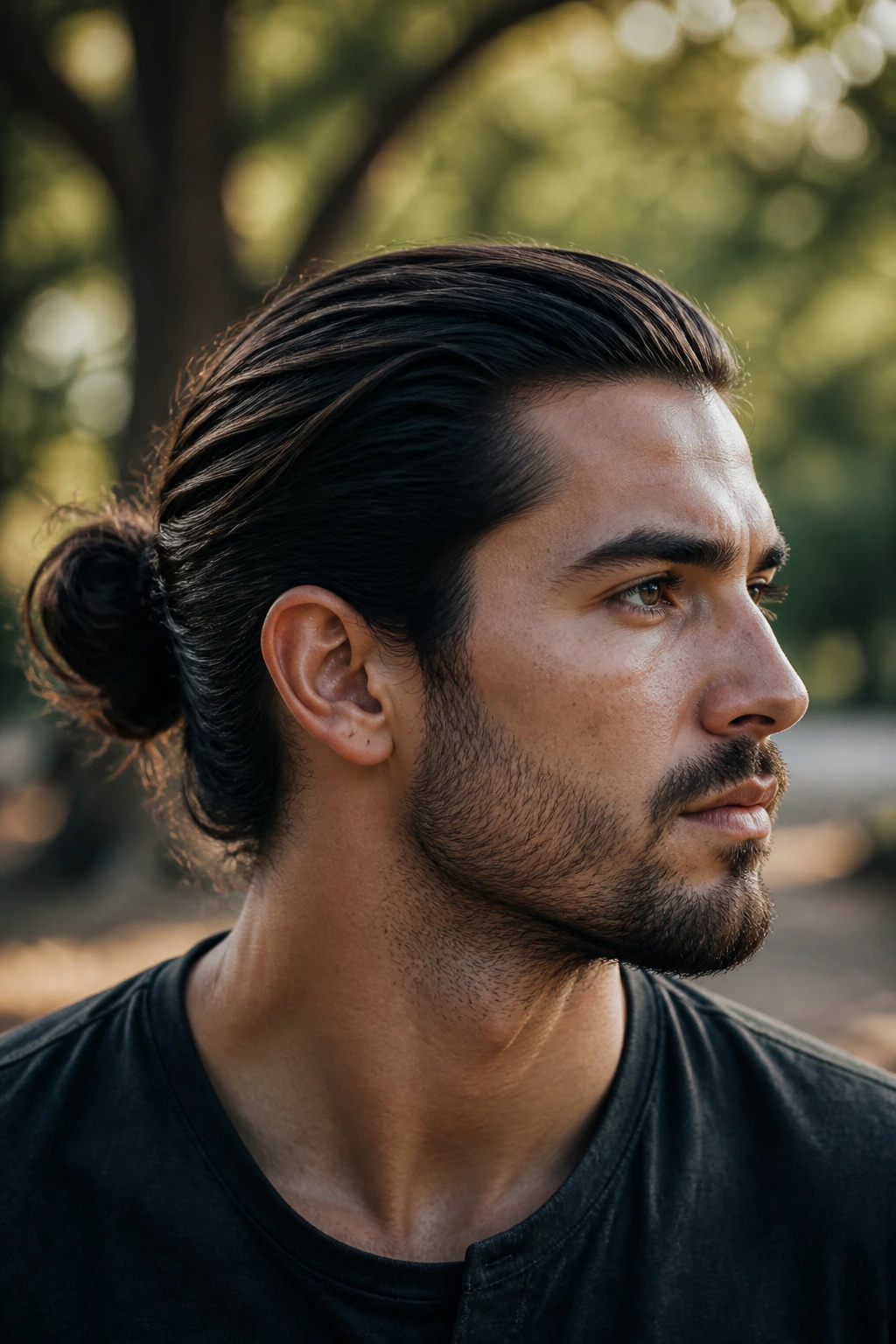
The smartest thing about bun hairstyles for men is that they are not locked into one personality. A low bun reads calm. A top knot reads sharper. A braided bun reads deliberate. A loose knot says you had somewhere to be and still cared enough to make the hair behave.
That range is why the style keeps hanging around. It gives you a way to use the hair you already have instead of waiting for the perfect length or the perfect haircut. Pick the version that fits your texture, your face, and the kind of day you’re having, then let the bun do what it does best: keep the hair out of the way while still looking like you meant it.
