



A short cut can go wrong in about two snips. Take too much off the perimeter, and wavy hair springs up at the ends while the crown lies flatter than you expected; leave too much weight in place, and the shape sinks into a helmet by lunch.
For older women, that balance matters even more. Hair often gets a little finer at the temples, a little coarser through silver strands, and a little less forgiving if the cut is blunt in the wrong place. The best short wavy haircuts for older women solve those problems with shape, not with a mountain of mousse.
I keep coming back to cuts that move when you turn your head. A side part that lifts one eyebrow, a soft nape that doesn’t stick to the neck, a fringe that breaks up a forehead without swallowing it — those small details change the whole mood. The right haircut should look like you meant it, even if you ran a brush through it and walked out the door.
Why These 24 Short Wavy Haircuts Earn Their Keep
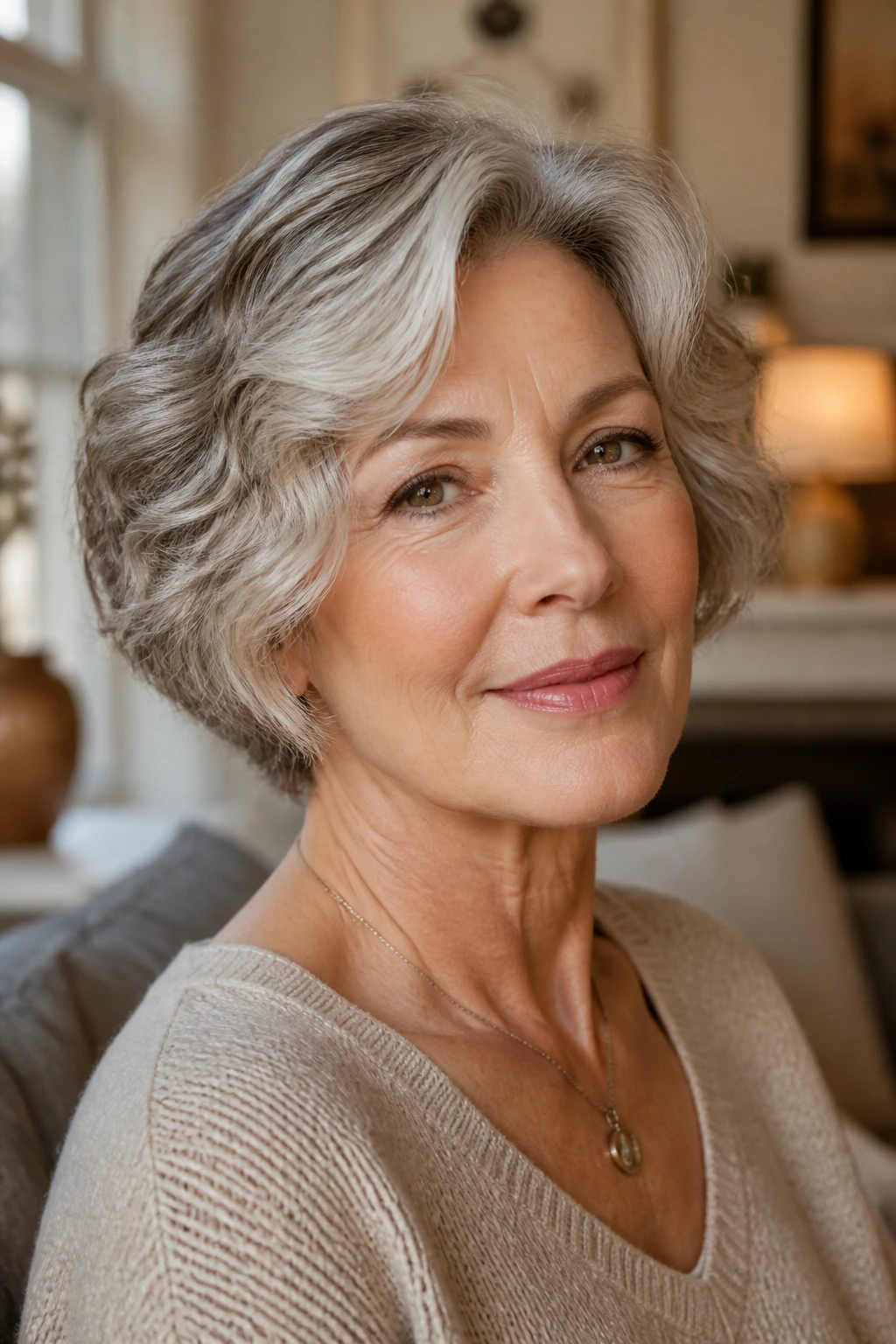
-
They respect your wave pattern: Instead of forcing waves into a flat sheet, these cuts let the bend show up where it naturally wants to live — at the jaw, the cheekbone, or the crown.
-
They keep the neck line light: Shorter backs and softer napes stop the cut from feeling bulky, which matters when hair starts to puff around the collar.
-
They make fine hair look fuller without overloading it: Layers placed in the right spots create lift. Too many layers can backfire, and these shapes are built to avoid that trap.
-
They work with silver, salt-and-pepper, and highlighted hair: Wavy texture and dimensional color make each other look richer, especially when the cut has movement.
-
They grow out with less drama: A good short wavy shape can survive a few weeks of growth without turning into a triangle or a shelf.
-
They give you styling room: Some days you want polished. Some days you want air-dried and done. These cuts can handle both.
1. Chin-Length Wavy Bob with a Soft Side Part
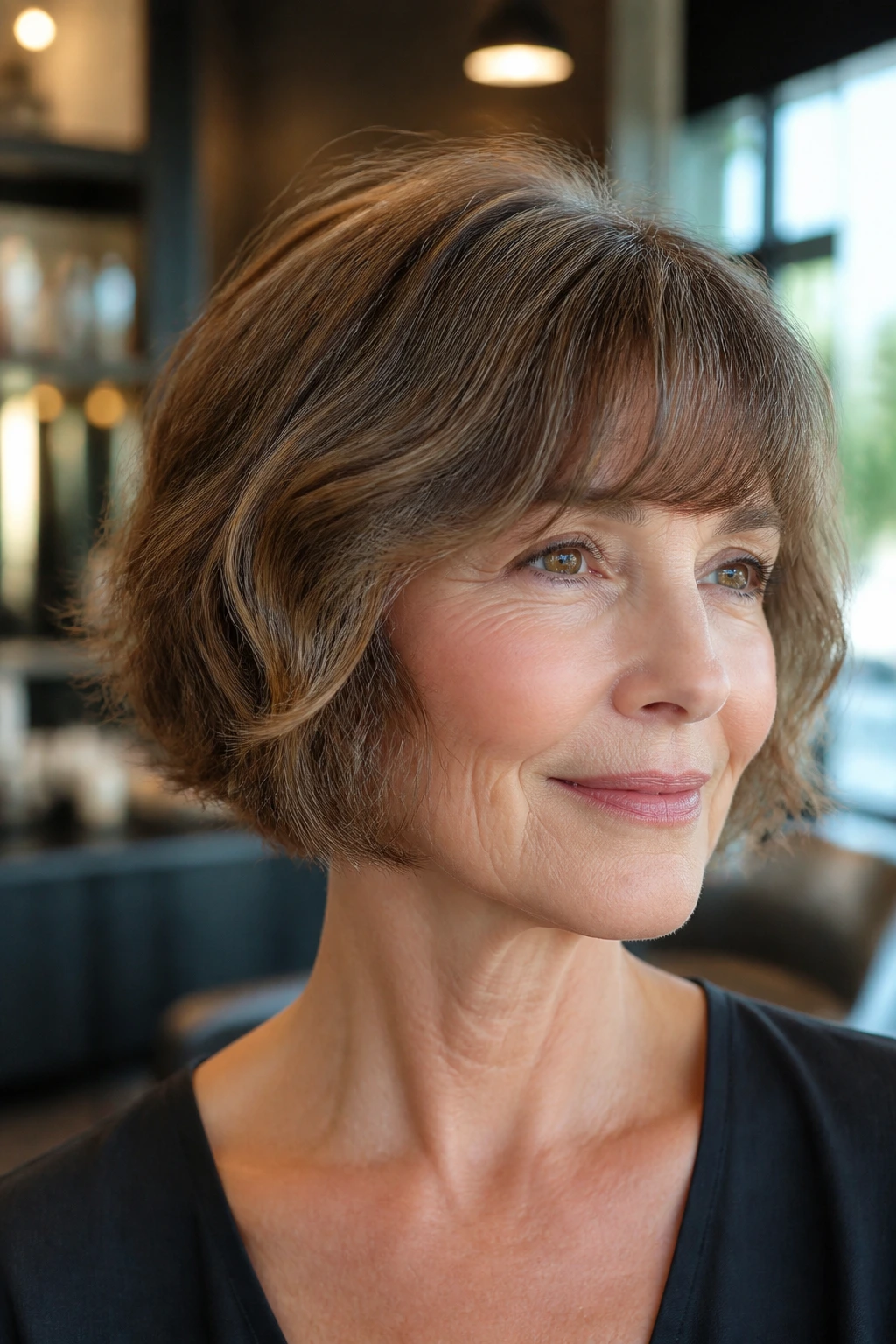
A chin-length bob is one of those cuts that makes wavy hair look awake the second it hits the jawline. The side part does a lot of the heavy lifting here; it lifts the front, breaks up the face, and keeps the whole shape from going boxy. If your hair has a little bend but not a lot of bulk, this is a calm, reliable shape.
The trick is softness. Ask for the ends to be lightly point-cut so they don’t sit like a blunt shelf, and keep the layers subtle if your hair is fine. On a round face, the side part stretches the line. On a square face, the curve around the chin takes some of the edge off.
A dab of mousse at the roots and a quick diffuse is usually enough. Air-dry and scrunch if you like a looser finish. It’s the sort of cut that looks neat at 8 a.m. and still has some shape by dinner.
2. French Bob with Feathered Fringe
The French bob has a little attitude, and that’s part of the charm. It usually sits around cheekbone to jaw level, with a fringe that’s light enough to move instead of sitting like a curtain. On wavy hair, the whole thing feels easy but intentional, especially when the fringe is broken up with small snips rather than cut into a hard line.
I like this one for women who want something short without going cropped. The fringe softens forehead lines if that matters to you, but it also works because it gives the eyes a frame. Ask for the front to stay slightly longer than the back if you wear glasses; it keeps the cut from fighting the frames.
A little curl cream in the fringe, a little root lift at the crown, and you’re done. No need to over-style it. The best version looks a touch undone.
3. Layered Jaw-Length Bob with Tucked Ends
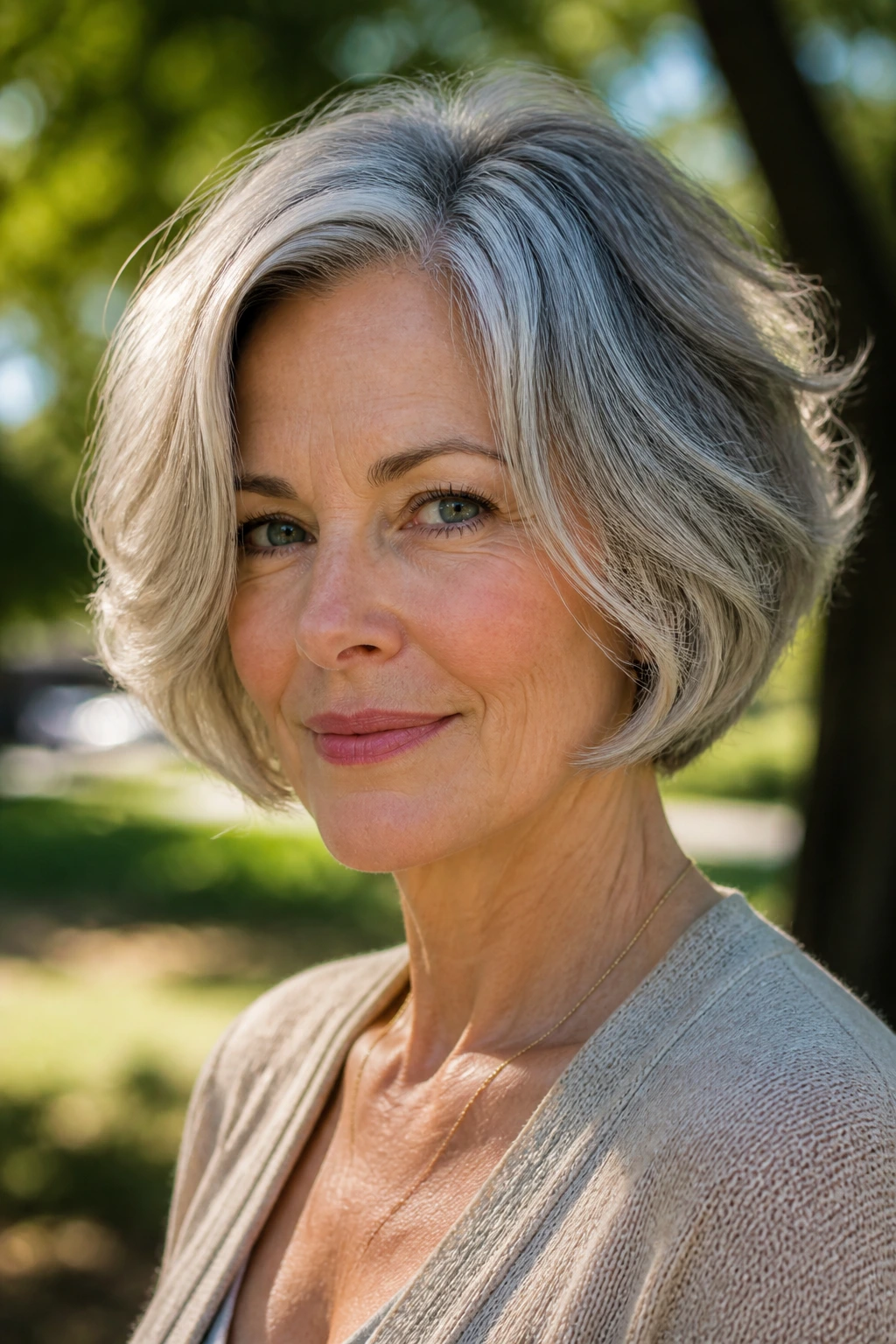
Jaw-length is a smart place to stop when waves need shape but not extra width. This cut lands right where the jaw wants definition, and the tucked ends keep the outline neat. It’s especially useful if your hair is thick enough to puff out in humid weather, because the layers remove weight before it turns into a triangle.
Why it works on mature waves
The wave pattern gets to show, but the length is short enough that the ends don’t drag. That means less droop at the bottom and less of that heavy, hidden bulk that can make a haircut feel older than it is. If your stylist slides the layers too far up, though, the cut can fray. Keep them concentrated near the mid-lengths.
This one plays nicely with soft color ribbons, silver streaks, or a single all-over tone. It’s tidy. Not stiff. There’s a difference.
4. Textured Pixie-Bob with a Longer Crown
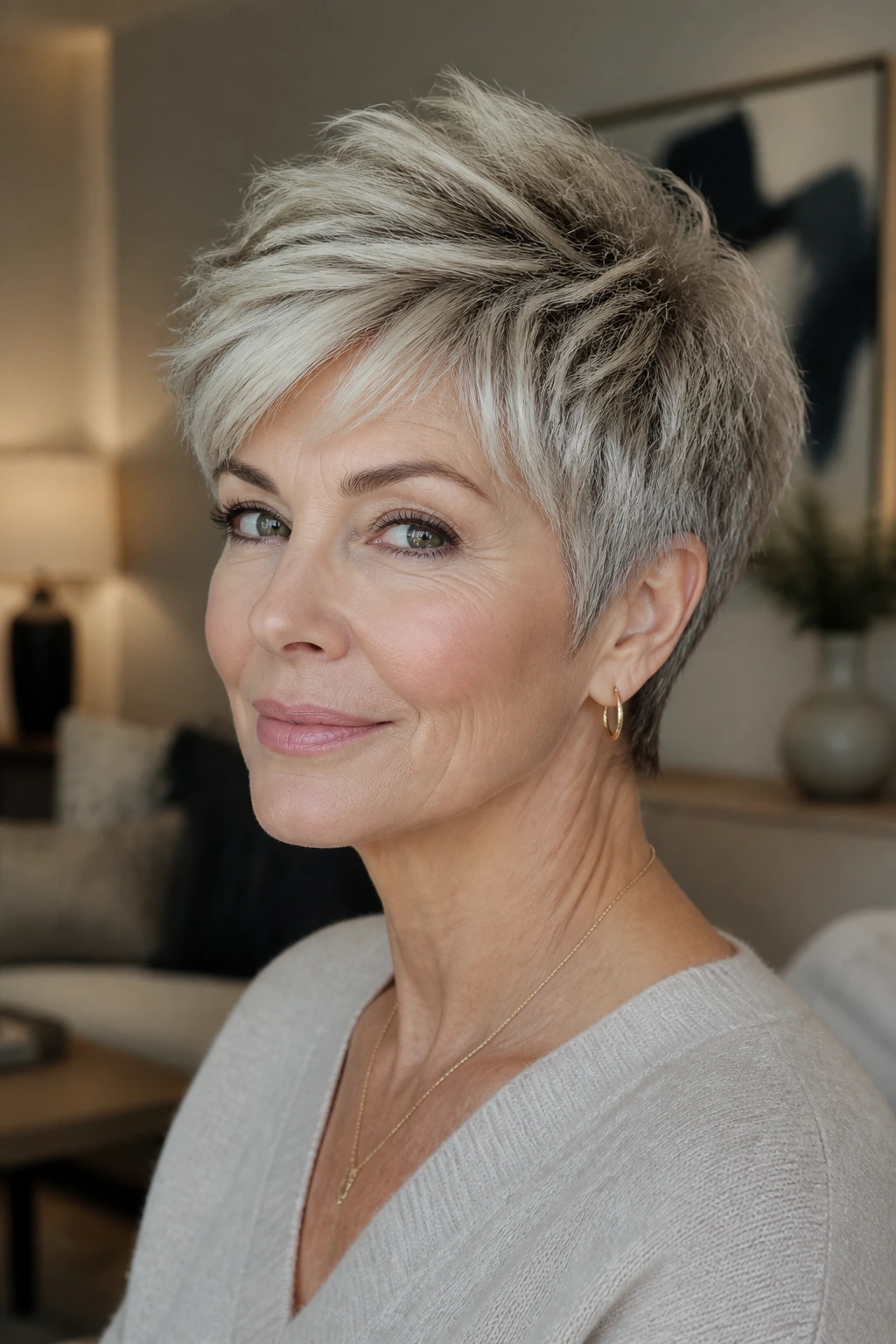
A pixie-bob sits in that useful middle ground between a bob and a crop. The crown stays long enough to keep the wave pattern visible, while the back and sides get shorter so the shape doesn’t feel heavy. On older women with fine hair, that longer top can create the illusion of density without needing a dozen styling products.
The only catch is balance. If the top is too long and the sides are too short, the cut can tip into helmet territory. Ask for textured ends, not choppy ones, and keep the crown soft so it can sweep rather than spike.
This style does best with a pea-sized amount of paste or cream worked through dry hair. Use your fingers, not a brush, or you’ll flatten the very movement you paid for.
5. Stacked Bob with Crown Lift
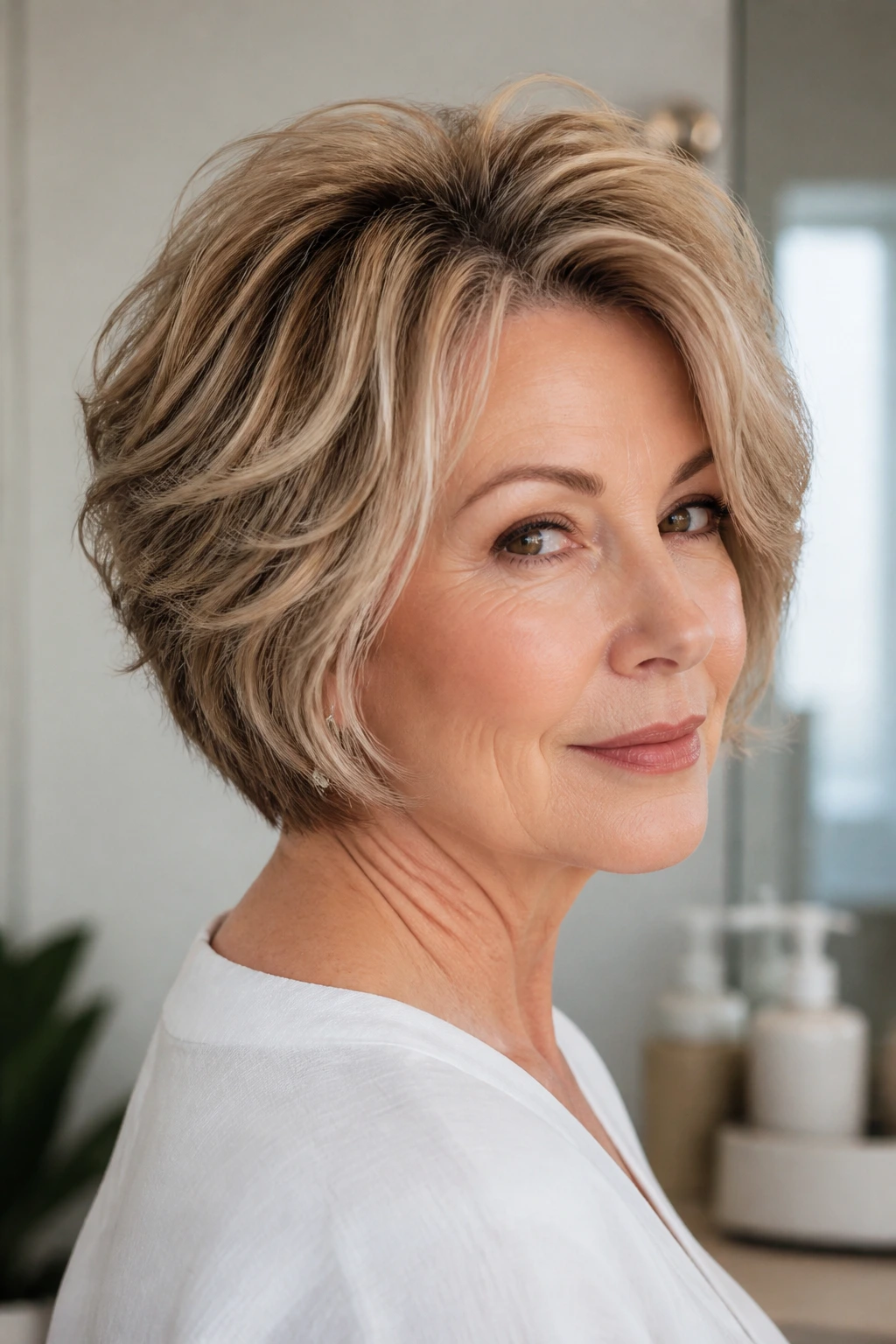
A stacked bob gives you shape at the back right away. The graduated layers in the nape create lift near the crown, which is handy if your hair tends to lie flat at the roots and puff out at the sides. On wavy hair, the stack keeps the silhouette neat while the top pieces stay loose.
This is the cut I’d point to if someone says, “I want polished, but I don’t want a helmet.” That’s the line. The back should be built enough to hold the shape, but not so steep that it looks old-fashioned. A little softness around the front keeps the cut from feeling severe.
If your hair is thick, a stacked bob can be a lifesaver. If it’s fine, ask for a lighter stack and skip over-thinning the ends. Too much removal makes the outline fragile.
6. Soft Wedge Bob for a Clean Nape
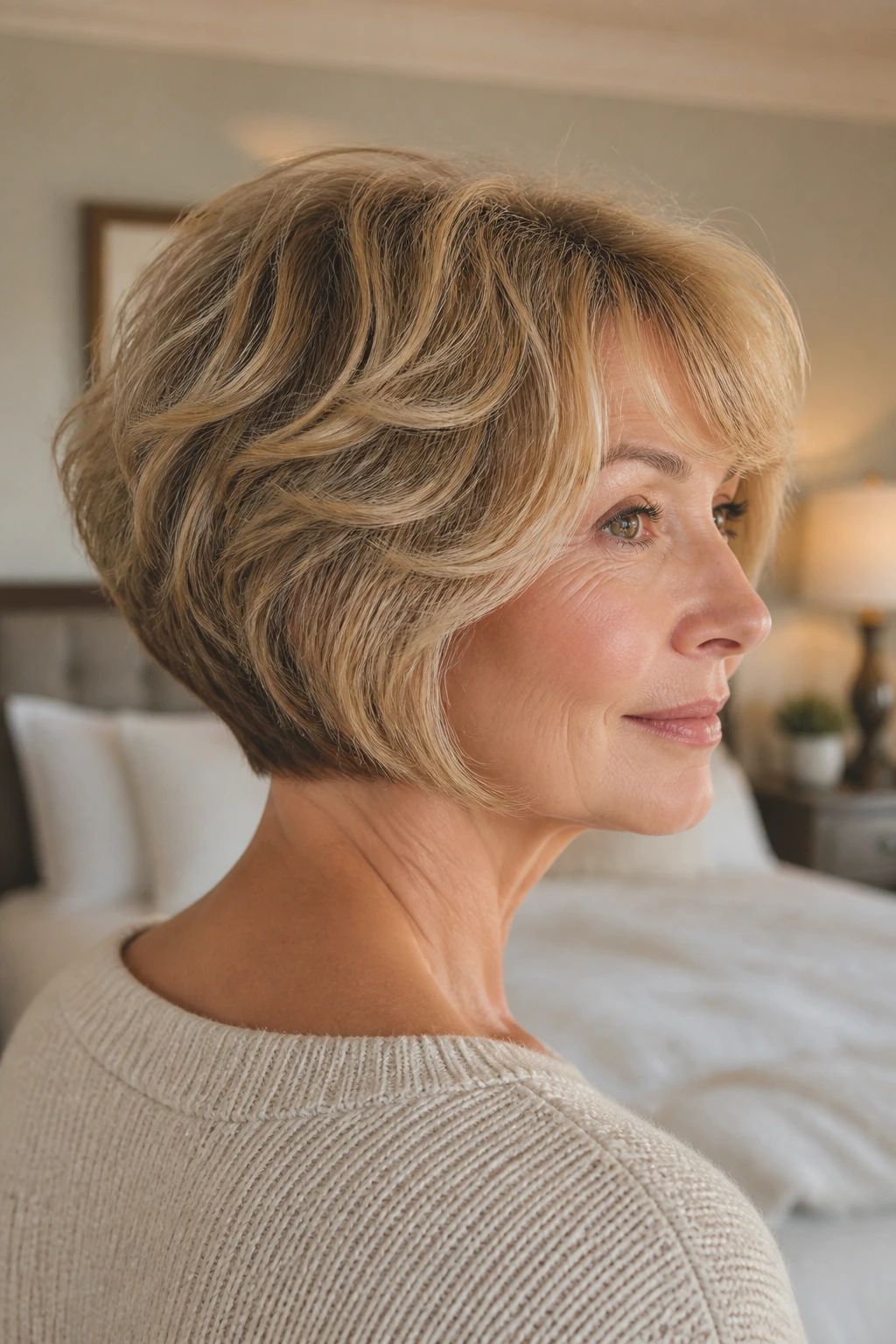
The wedge bob has a reputation for being dated when it’s cut too sharply. The modern version is softer, with a clean nape and rounded layers that follow the head instead of shouting over it. That makes it a smart pick for wavy hair that needs discipline at the back and movement on top.
A good wedge opens the face without leaving a blunt shelf near the ears. It works beautifully with side-swept bangs, especially if your forehead is wide or you wear specs. The silhouette looks deliberate from the side, which matters more than people admit.
Ask for the bottom line to hug the neck but not scrape it. A slight bend at the ends — just enough to kick under or out — keeps it from feeling severe. That little bit of softness saves the whole haircut.
7. Feathered Crop with Side-Swept Bangs
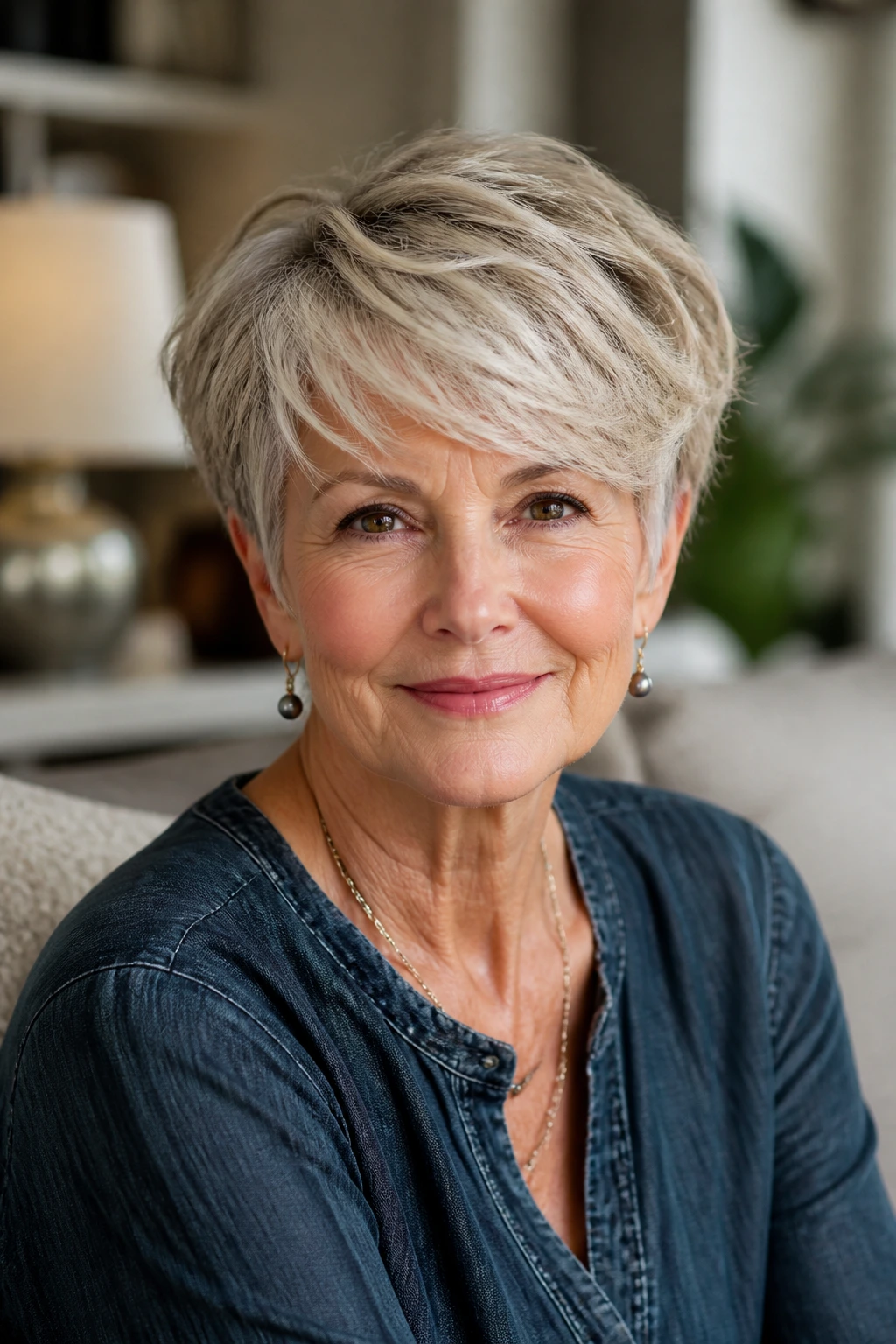
This is one of the easiest short wavy haircuts for older women who want motion without fuss. The crop stays short around the ears and nape, while the top is feathered enough to bend and lift. Side-swept bangs make the whole cut friendlier and help break up a high forehead or a strong brow line.
I like feathering on wavy hair because it keeps the ends from stacking up into a block. But here’s the line: feathering should be light, not shredded. If the stylist takes too much density out, the cut starts to look wispy in a bad way.
A small round brush at the fringe and a dab of lightweight cream through the crown are usually enough. If you want a soft, lived-in finish, let the rest air-dry and only shape the front. That’s the part people notice first anyway.
8. Curly Shag with Airy Layers

A shag can be a beautiful thing on wavy hair if the layers are placed with care. The goal isn’t chaos. The goal is air. Shorter layers around the crown give lift, while longer pieces around the jaw keep the shape from spreading out like a mushroom.
This cut loves salt-and-pepper hair. The different tones catch the layers in a way that makes the texture look fuller. It’s also a solid option if your waves tend to collapse at the top but puff at the bottom, because the distribution of weight is doing some of the fixing for you.
You do need a stylist who knows when to stop. Over-layering a shag on fine hair can leave it too airy and see-through. Keep the ends blunt enough to hold the outline.
9. Asymmetrical Wavy Bob
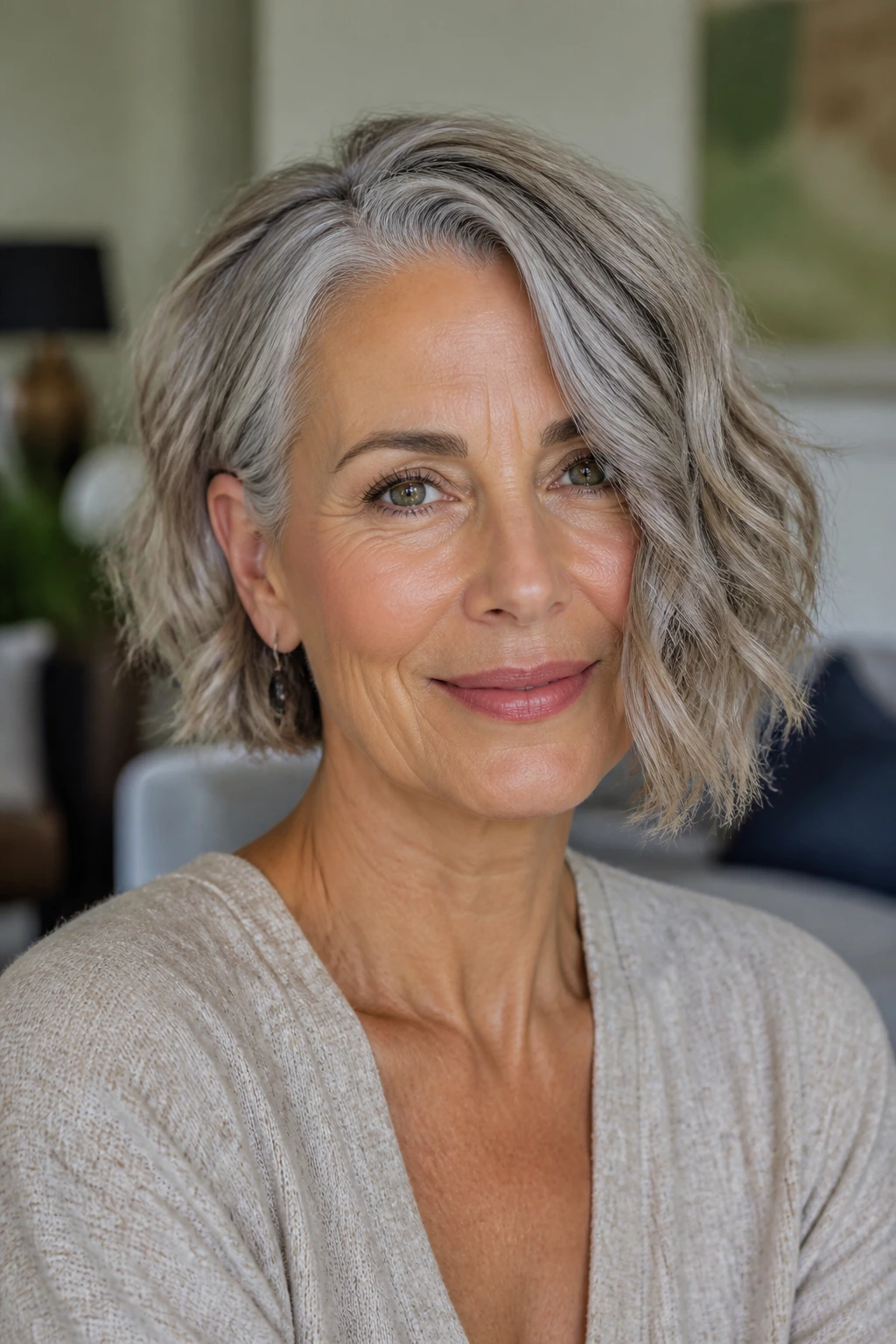
A little asymmetry can do a lot for a face that wants more lift on one side than the other. One side sits a touch longer, and that diagonal line pulls the eye downward in a flattering way. On wavy hair, the uneven line looks softer than it does on straight hair, which is part of why this cut works so well.
It’s also a nice fix for stubborn cowlicks or a part that refuses to sit in the same place every morning. The longer side gives you room to tuck behind the ear, while the shorter side opens the cheekbone. The whole thing feels modern without being loud.
Keep the asymmetry subtle. Half an inch to an inch is enough on most faces. Push it too far and the cut starts shouting when you probably wanted a hum.
10. Inverted Bob with Loose Front Pieces
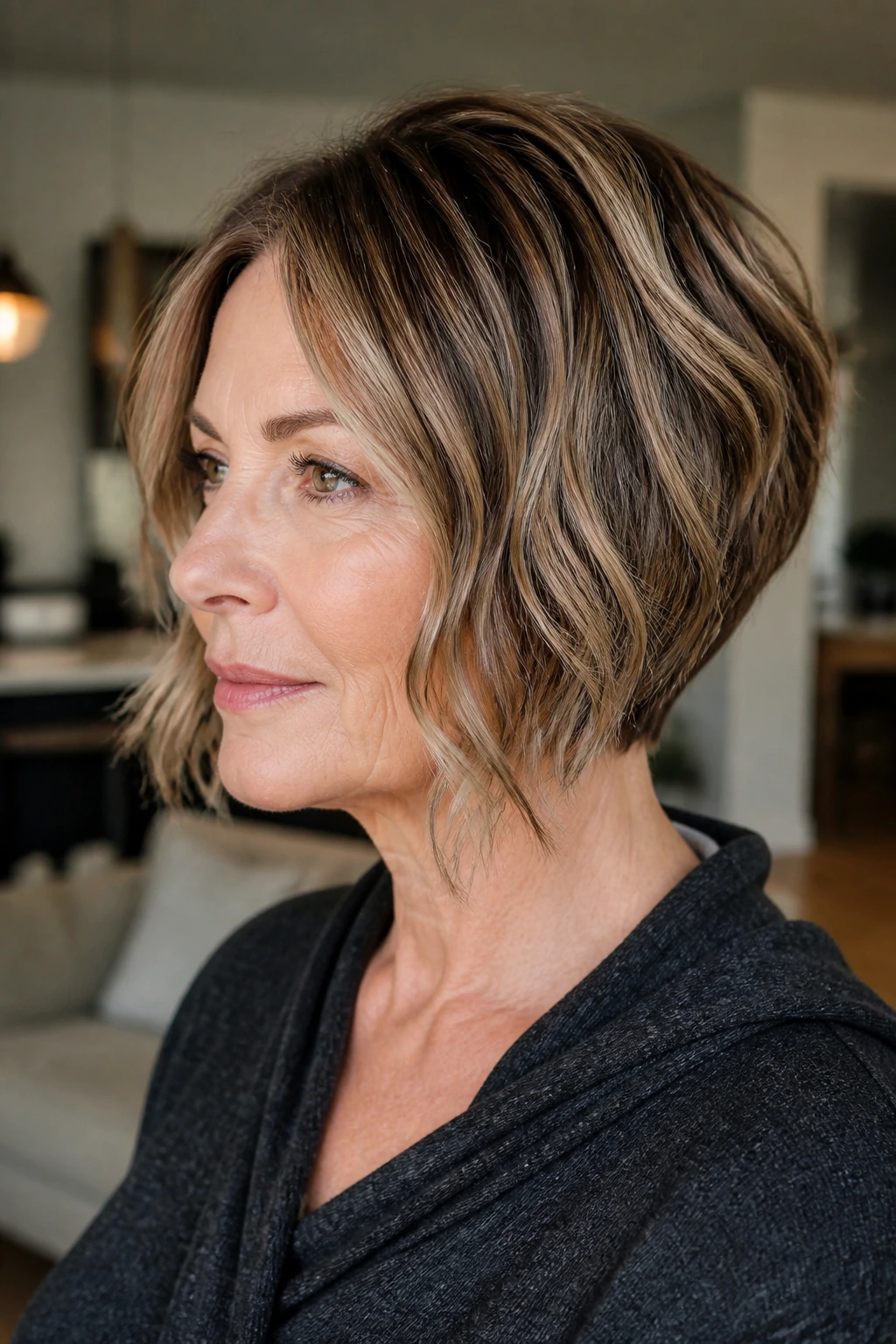
An inverted bob gives you a shorter back and longer front, which is a smart way to add angle without piling on volume where you don’t want it. The loose front pieces fall just under the chin, and that helps lengthen the face. If your waves are loose and your hair has decent body, this cut can feel crisp without looking severe.
The back needs to be kept tidy. If the nape gets too heavy, the inversion disappears. If the front pieces are over-styled into pin-straight lines, the whole haircut loses its softness. The best version keeps a little bend in the ends and lets the side pieces sweep naturally.
It’s a strong choice for women who like structure. Not stiffness. Structure. There’s a reason this shape has staying power.
11. Ear-Length Crop with Wispy Nape

An ear-length crop is tiny, and that’s the appeal. It clears the neck, opens the face, and lets wave texture show up in the top layers instead of hiding under longer lengths. The wispy nape keeps the back from feeling hard, which is important because a sharp short cut can age fast if the edges are too blunt.
This one suits women who don’t want to wrestle with hair at all. You wash, you dry, you finger it into place. Done. The trick is keeping enough softness around the temples so the cut doesn’t look severe next to glasses or earrings.
If you have a strong jawline, this crop can look fantastic. If you want more coverage around the neck, skip it. Hair this short makes a statement whether you’re trying to or not.
12. Bixie with Tapered Sides
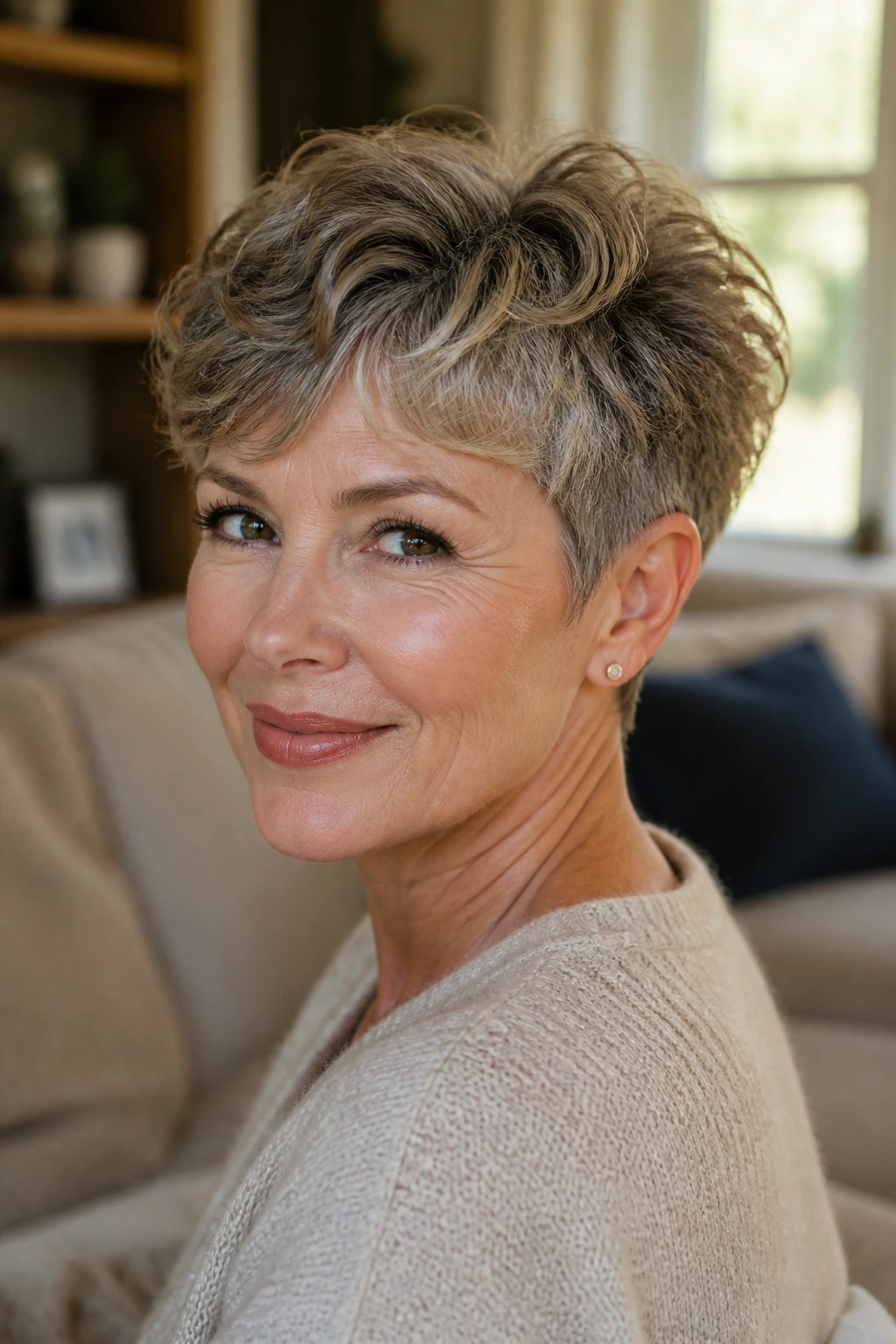
The bixie keeps the best parts of a bob and a pixie in the same haircut. The top has enough length to show the wave, while the tapered sides keep everything snug and light. It’s one of the easiest short wavy haircuts for older women who want shape but don’t want to deal with a heavy blow-dry.
What I like most is the flexibility. Brush it forward for a softer look. Push it back for a little lift. Tuck it behind the ears if you want to show off earrings or cheekbones. A bixie can shift moods faster than a more fixed bob.
Ask for the taper to stay soft around the ears. Too much clipping there makes the whole thing look sporty in a way that may not be the point. A few longer pieces on top give you room to play.
13. Blunt Bob with Undone Texture

A blunt bob sounds strict, but on wavy hair it can look fresh when the texture is left slightly messy. The blunt edge gives the cut a clean outline, which helps fine hair look thicker at the bottom. Then the undone waves keep it from looking like a block.
This one works best when the waves are loose rather than tight. If the bend is too strong, the blunt line can fight the pattern and pop out in odd places. Keep the length around the chin or just under it, and ask for the ends to be softened a touch so they don’t sit like cardboard.
It’s a good choice if you like simple styling. A little smoothing cream, a little scrunch, and a side part can be enough. Clean line. Soft movement. That’s the whole deal.
14. Rounded Bob with Face-Framing Layers
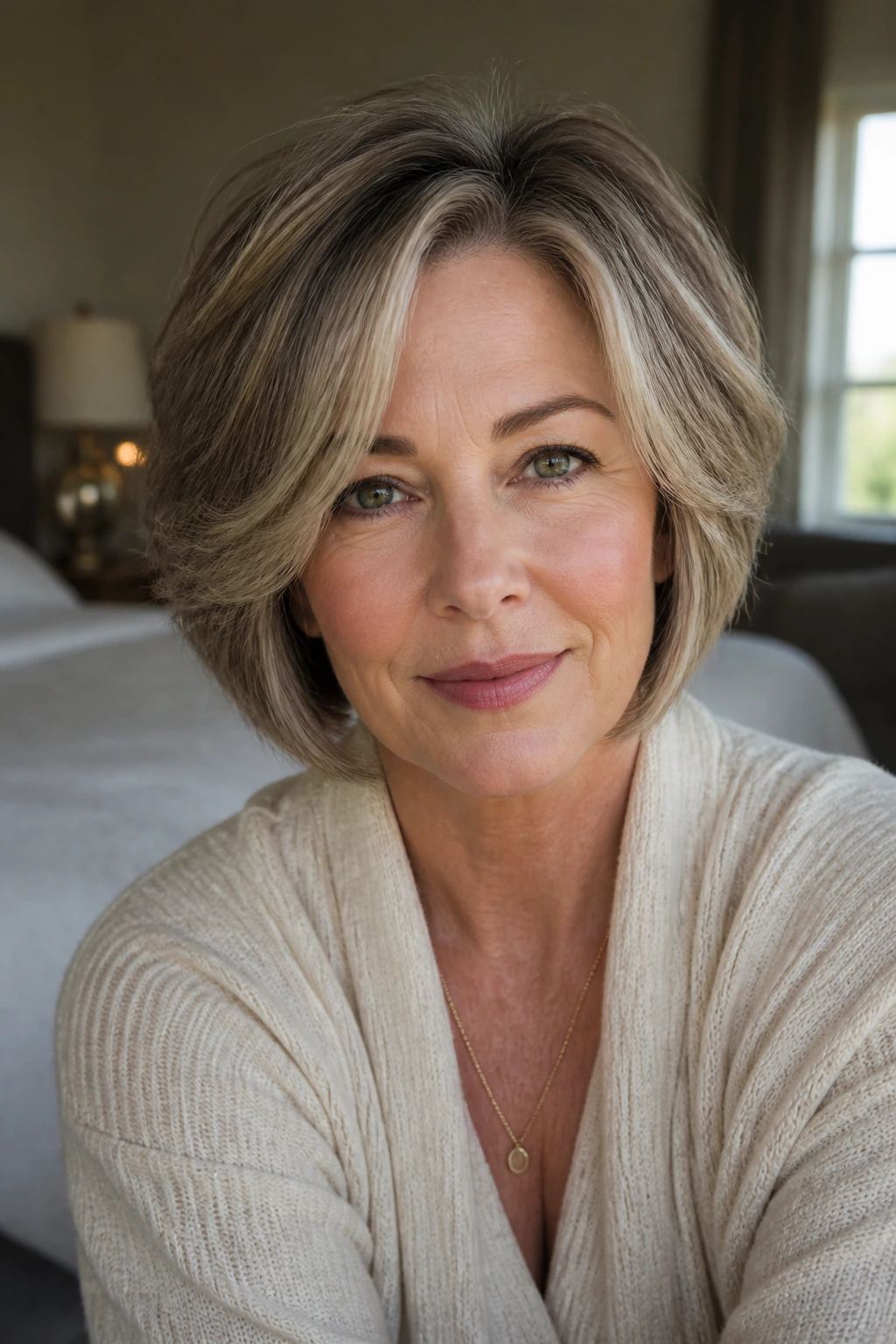
A rounded bob curves around the face instead of dropping straight down, and that curve is useful when you want the haircut to feel lifted. Face-framing layers keep the front lighter, which helps around the cheeks and jaw. On wavy hair, the rounded shape often looks fuller without extra teasing.
I’d point this cut toward women with angular faces or anyone who wants a softer edge near the chin. It also plays nicely with medium-density hair that needs a little help staying contained. The outline should follow the head, not balloon out from it.
Don’t let the layers get too short near the face. If they start at the wrong spot, the haircut can kick out awkwardly. The sweet spot is usually at the cheekbone or just below it.
15. Choppy Crop with a Long Fringe
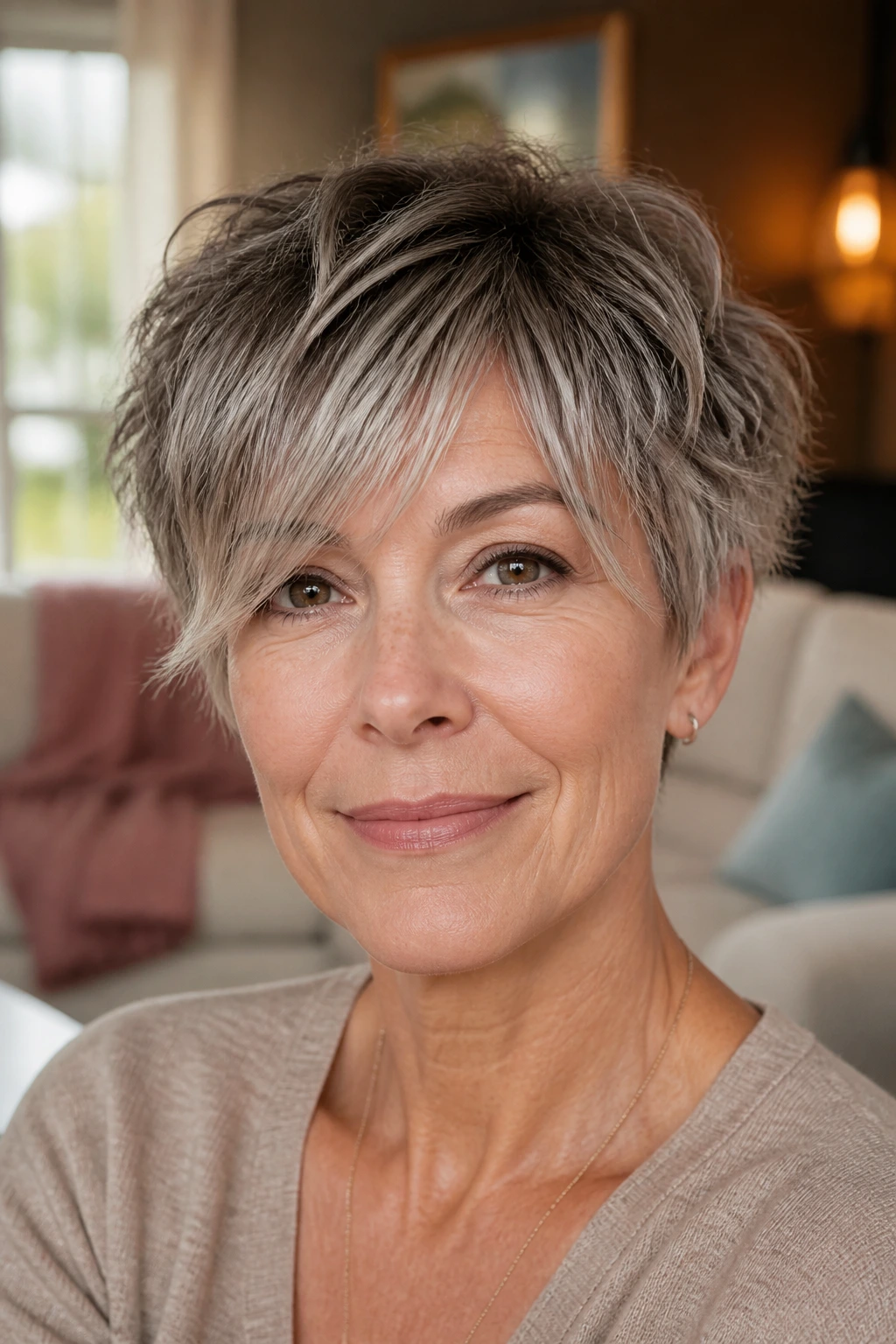
This crop has a little edge, but it doesn’t need to be punk about it. The choppy layers add movement, while the long fringe keeps the front flexible. On wavy hair, the fringe can split naturally and land somewhere between a side sweep and a curtain shape.
It’s a strong option if you want to soften a forehead without going all the way into bangs. The longer fringe can be tucked, pushed, or let fall forward on days when you want more coverage. That kind of flexibility matters more than people think.
Keep the choppiness controlled. Tiny, random snips everywhere can make the haircut look pieced-out in a bad way. You want irregularity with a plan.
16. Neck-Length Bob with Internal Layers
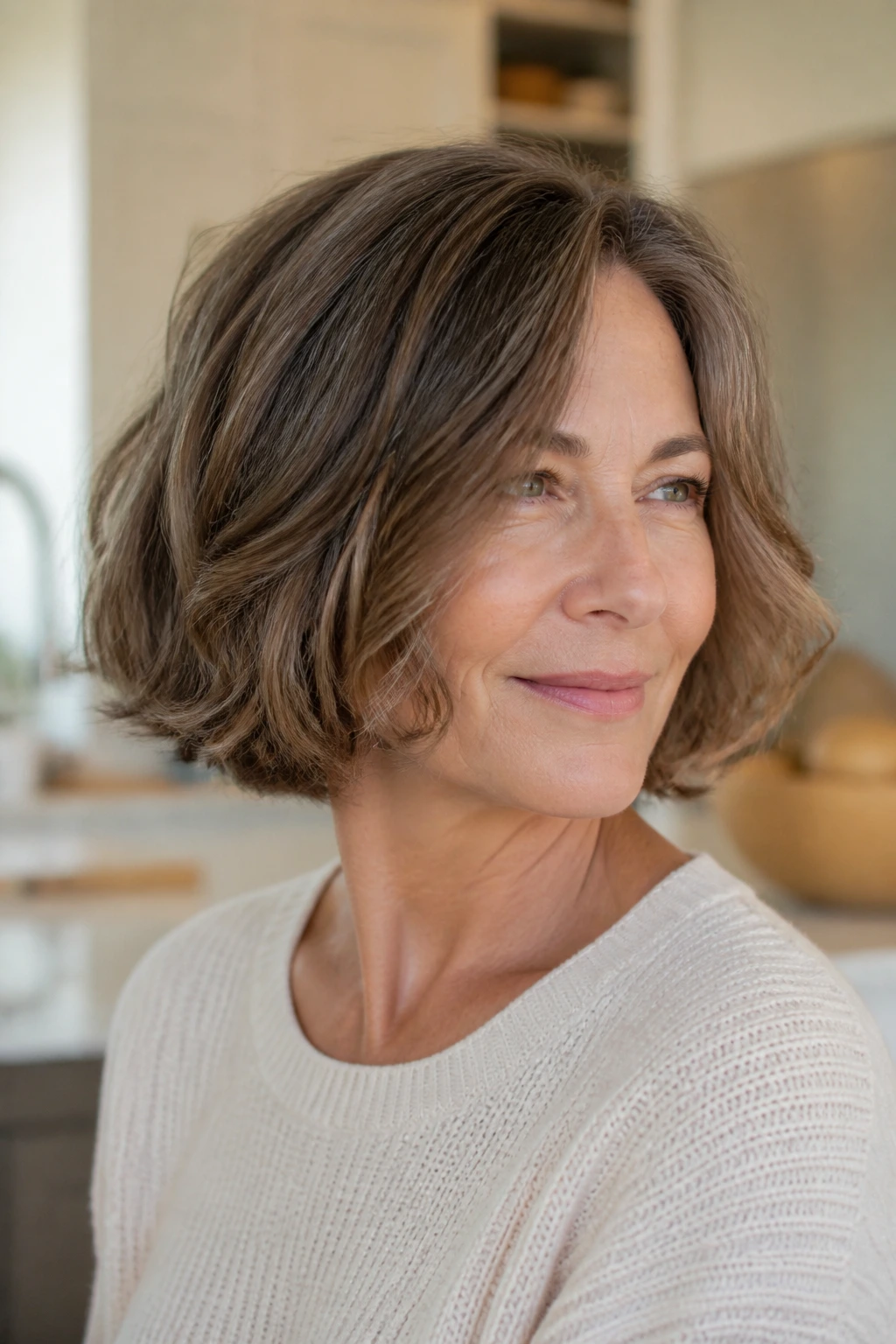
A neck-length bob gives you a little more breathing room than a chin-length cut, which is useful if your waves need space to bend. Internal layers keep the body inside the haircut instead of on the outside, where it can turn puffy. That means the shape stays smooth while still moving.
This is one of my favorite low-drama options for older women with medium hair density. It doesn’t scream for attention, but it doesn’t disappear either. If you want something that can be air-dried and still look like a haircut, this is a strong candidate.
Ask the stylist to keep the outer line clean and place the texture underneath. That way the top layer lies neatly while the wave has room to live below it. It’s a small detail with a big effect.
17. Razor-Cut Bob with a Tucked Nape
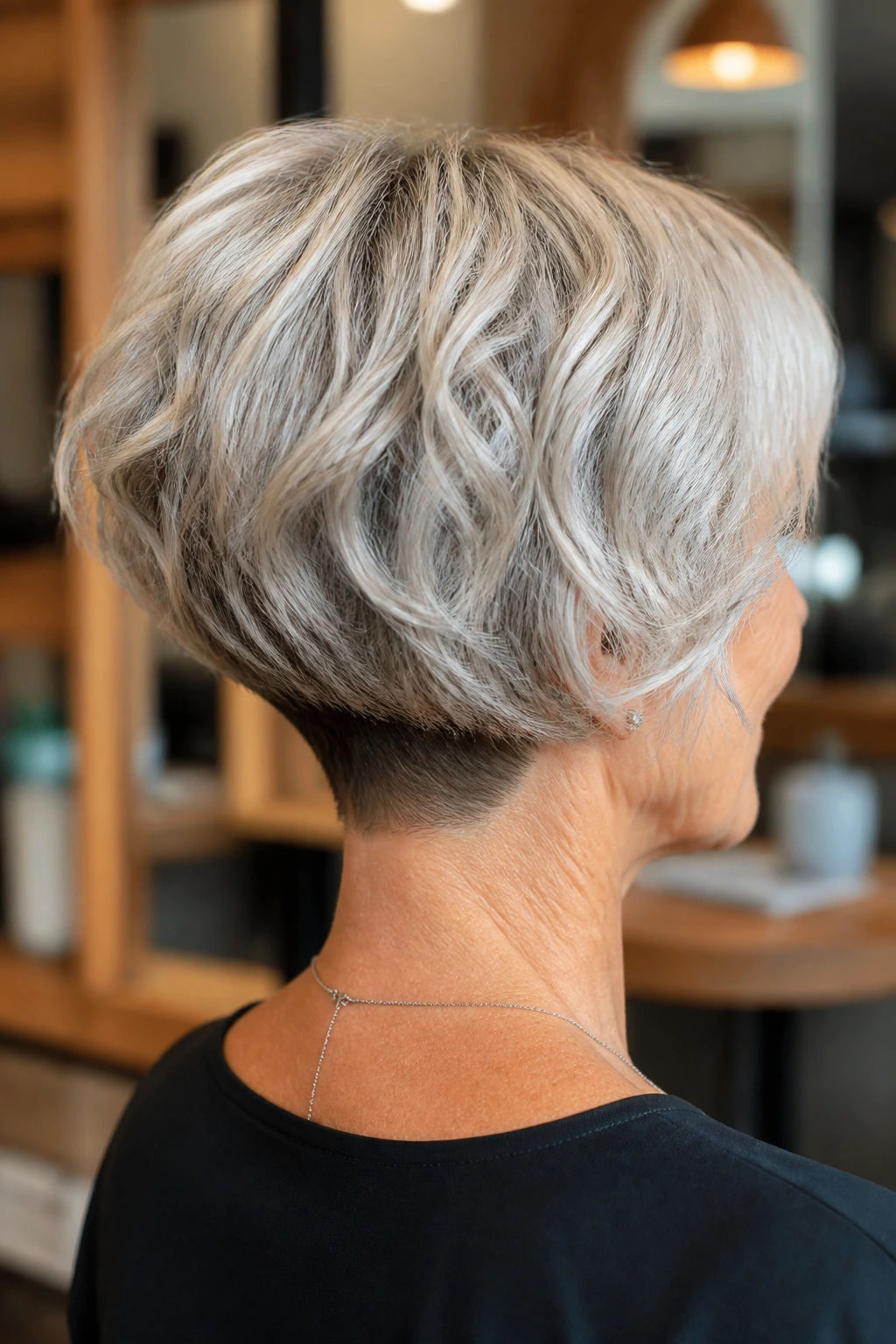
Razor-cut ends can look soft and a little airy, which suits wavy hair when the texture is not too coarse. The tucked nape gives the haircut a neat finish at the back, so you get movement without a shaggy outline. On gray or silver hair, this can look especially crisp.
The caveat is simple: a razor can make coarse hair fray. If your wave is thick and wiry, scissors plus point-cutting may behave better. If your hair is softer, the razor can give you that wispy finish that sits nicely around the face.
This cut looks best with a light hand on product. Too much cream can drag the ends down and kill the texture. A little mist of leave-in is plenty.
18. Side-Parted Pixie with Longer Top
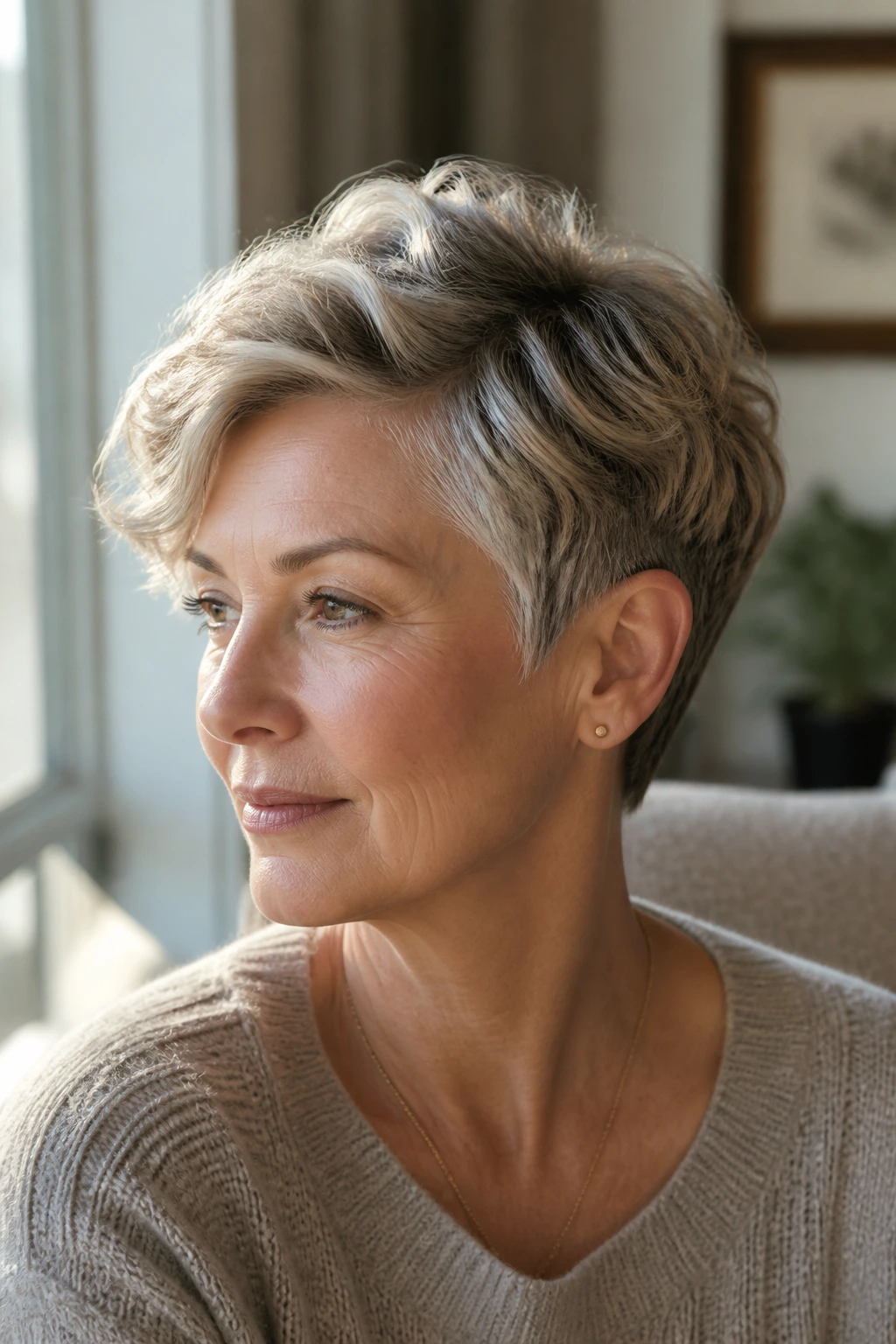
A side-parted pixie is for someone who wants short hair that still moves. The longer top gives the wave room to show, while the sides stay close enough to keep the profile tidy. The part matters here; it keeps the cut from looking flat and helps the top sweep instead of stand up.
This is one of the best picks for women with finer hair around the temples. The lift created by the side part can make the crown look fuller without a lot of effort. It also works well with glasses because the top frame keeps the face from feeling too open.
If you go this short, plan on trims more often. A pixie loses its shape faster than a bob. That’s the price of the silhouette.
19. Tapered Crop with Crown Volume
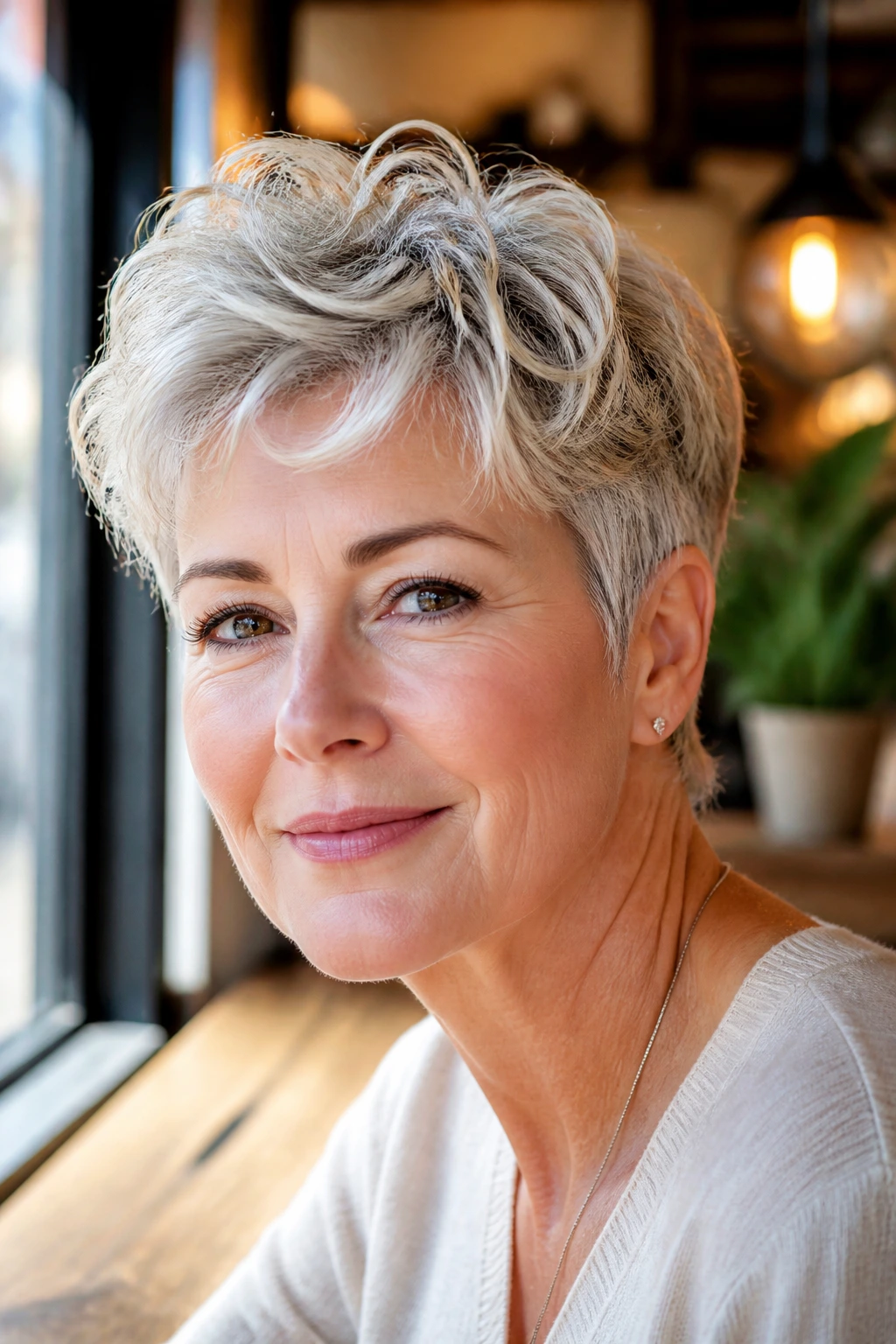
A tapered crop is all about control. The sides and back narrow gently, while the crown keeps enough length to hold a little lift. That makes it ideal if your hair goes flat on top but expands around the ears or nape.
The shape is clean, but it shouldn’t feel severe. Ask for a soft taper, not a clipper-heavy fade. A few longer pieces at the front help keep the haircut feminine if that matters to you, though honestly the bigger point is balance.
This cut is a win for active women who want hair off the neck but don’t want to look like they’ve surrendered to a buzzed crop. It’s neat. It dries fast. It keeps its line.
20. Micro-Layered Bob for Fine Waves
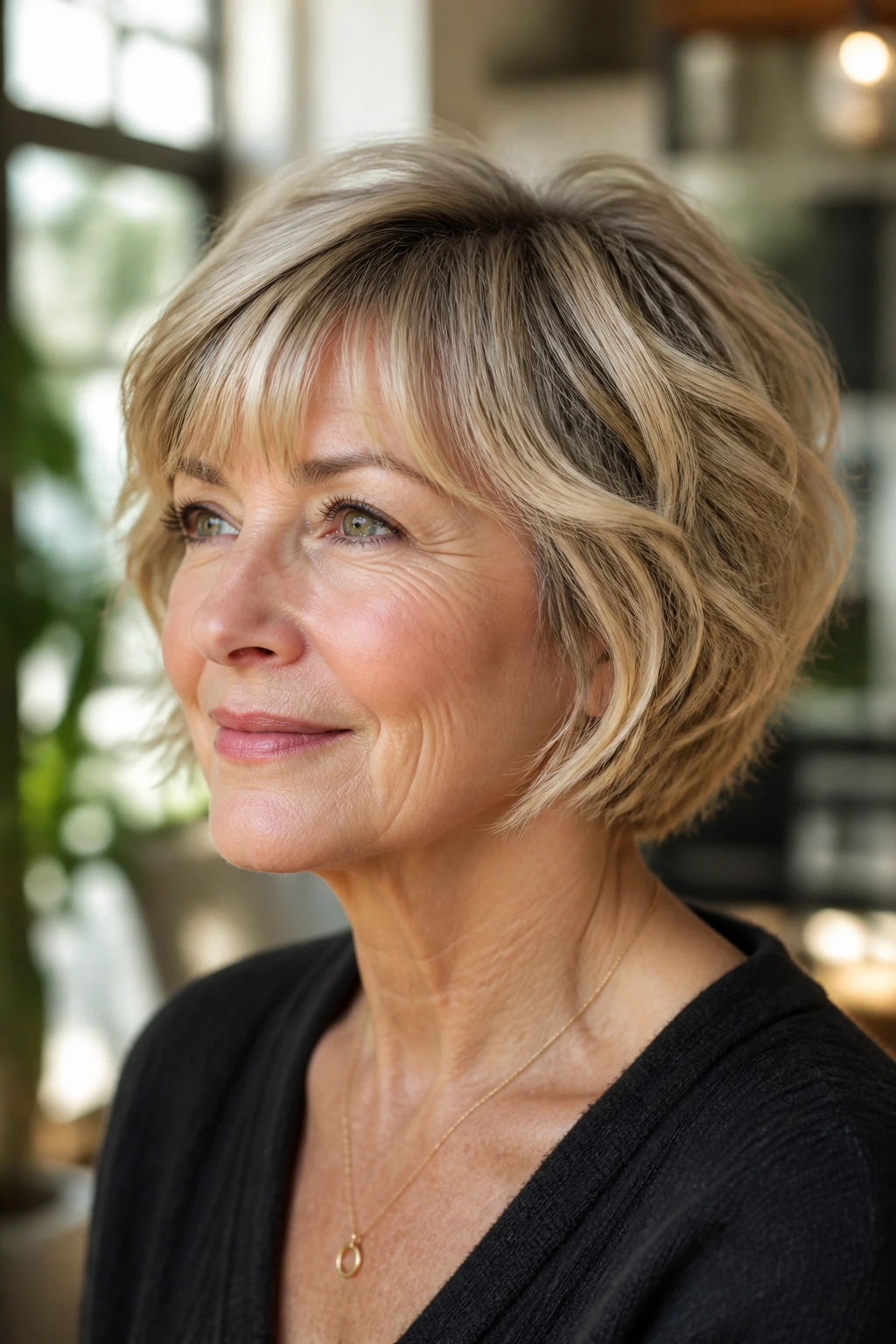
Fine waves need a careful hand. Too much layering and the haircut turns see-through; too little and it lies flat as paper. A micro-layered bob splits the difference by adding tiny internal layers that lift the shape without taking away the perimeter.
That makes this a useful option if you have soft hair that collapses by midday. The bottom line stays intact, so the bob still looks like a bob. The small layers underneath add enough movement that the style doesn’t feel stiff.
Keep the finishing product light. Mousse, root spray, or a small amount of volumizing foam will do more than thick cream here. Fine waves usually need support, not weight.
21. Short Lob with Airy Ends

A short lob gives you a bit more length, which can be useful if you want the cut to skim the neck instead of sitting high above it. The airy ends stop it from feeling blunt. On wavy hair, the shape can look polished on good days and relaxed on bad ones, which is a nice thing to have.
This is a smart bridge cut if you’re growing out something shorter or testing the waters before going bob-length. It also works for women who like to tuck hair behind the ears but still want some softness around the face.
Ask for the ends to be texturized lightly, not thinned aggressively. Too much thinning turns the lobe into stringy pieces. A little softness goes a long way.
22. Soft Mushroom Cut with Movement
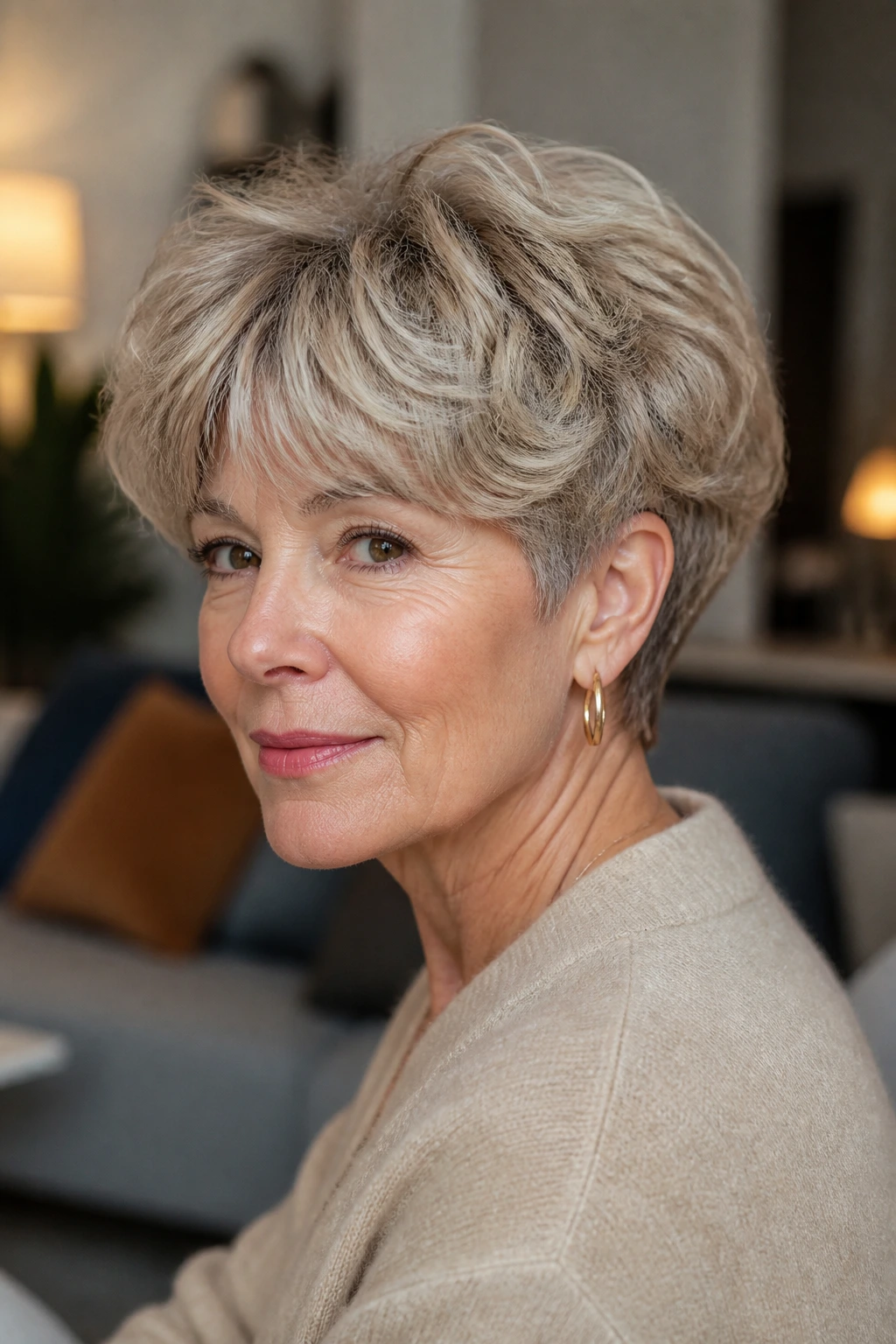
A mushroom cut can sound harsh, but the soft version is more rounded and much less rigid. The modern shape keeps length on top and around the crown, with a taper that hugs the sides and nape. On wavy hair, that contrast makes the cut feel deliberate instead of retro in a costume-y way.
This style is not for everyone. It suits women who want a compact shape and don’t mind a little style on the haircut itself. If you like simple clothes and strong earrings, the silhouette can be very good.
Keep the top airy. That’s where this cut lives or dies. If the crown gets too heavy, the whole shape slumps.
23. Tousled Ear-to-Jaw Crop
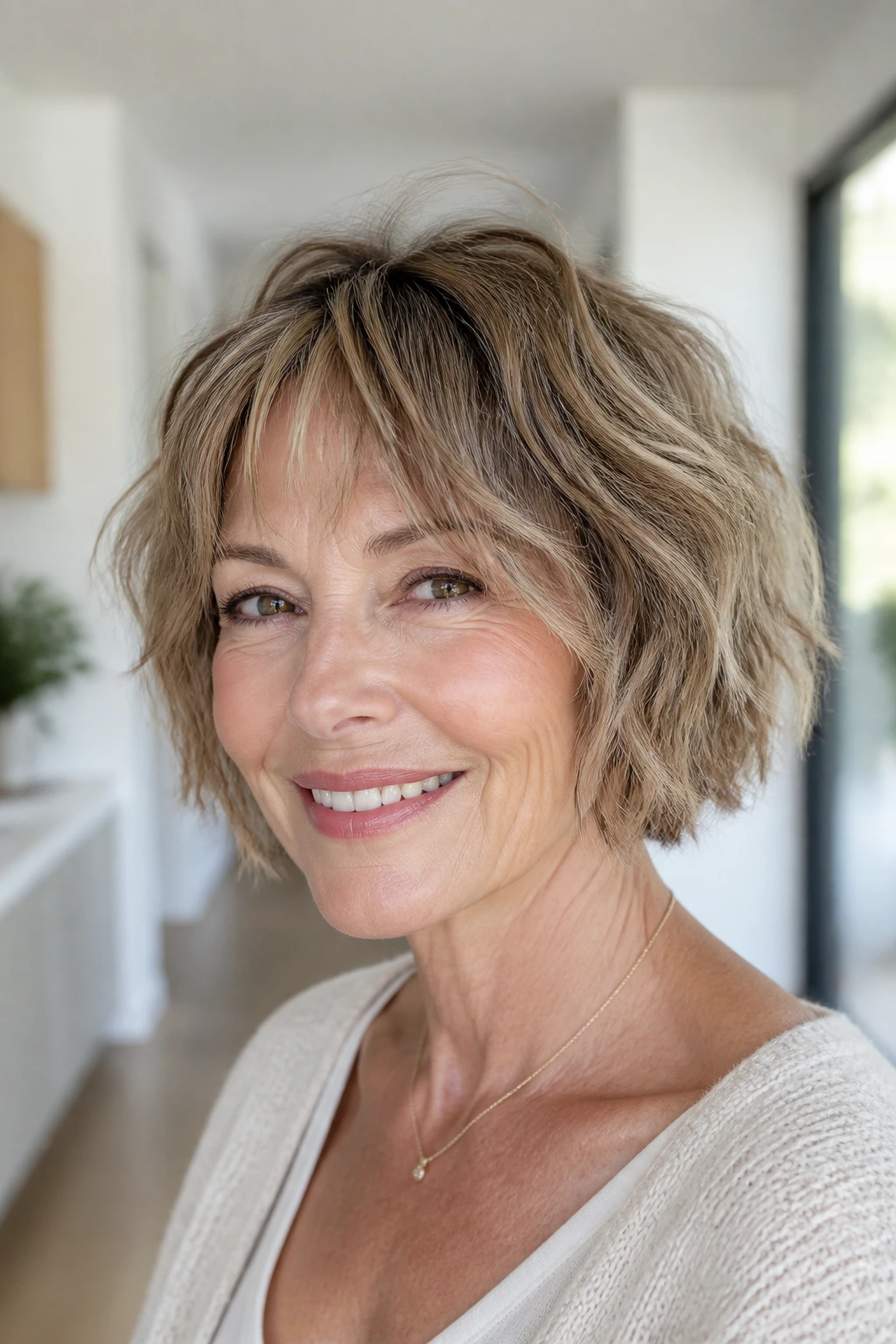
This crop sits in the narrow band between ear and jaw, which makes it feel modern and easy to wear. The tousled finish matters more than precision here. Instead of a sharp line, you get piecey movement that falls where it wants to fall.
It’s a nice option if you want a short haircut that still has some softness around the face. The side pieces can graze the cheekbone, which helps if you prefer a little coverage near the temples. And because the overall length stays compact, it’s quick to dry.
I’d keep the product matte and light. Shine creams can make this style collapse into one shiny lump. Texture is the point.
24. Curved Bob with Light Curtain Bangs

A curved bob with curtain bangs is one of the most forgiving shapes in the whole group. The curve hugs the jawline, while the bangs open in the middle and sweep to each side. On wavy hair, the result is soft without getting shapeless.
The bangs matter because they bring the eye up. They can also blur a strong forehead line without covering it completely, which is why this cut feels easy to live with. Keep the bang length just past the brows if you want movement; too short and they stop cooperating.
This is a lovely ending point for the list because it combines polish with flexibility. It’s short. It’s soft. It still lets the wave do the talking.
Why Short Wavy Haircuts for Older Women Need Lightness at the Ends

Heavy ends are the enemy of short wave. They pull the shape down, make the cut sit flat against the head, and hide the wave pattern you probably want to show off. Once the perimeter gets too dense, the haircut can start to feel like a cap instead of a shape.
That’s why the best short wavy haircuts for older women use lightness in specific spots, not everywhere. A little weight removed near the jaw can lift the face. A soft nape can keep the back from sticking out. Internal layers can add movement without making the outline frizzy.
There’s also the matter of hair texture changing with age. Silver strands can be wirier. Fine strands can be softer but less dense. A good cut respects both realities, and that usually means some combination of point-cutting, careful layering, and a length that stops where the wave still has room to bend.
The Tools That Make Short Wavy Hair Easier to Live With
-
A wide-tooth comb: Use it on damp hair after conditioner so you don’t drag waves flat or rip through tangles.
-
A diffuser attachment: This keeps the wave pattern from getting blasted into frizz and helps the crown keep a little lift.
-
A small round brush, 1 to 1.5 inches: Handy for shaping bangs, front pieces, and the side of a bob near the cheekbone.
-
Light mousse or foam: A golf-ball-size amount can give fine waves enough support without making the hair sticky.
-
Leave-in conditioner: Best on silver or dry hair, especially if the ends get fuzzy by midday.
-
Texturizing spray: Good for short layers that need a bit of separation, but use it lightly or you’ll get grit.
-
Dry shampoo: Useful on day two for the roots, though it works best when you spray it at the scalp and wait a minute before rubbing.
How to Ask for the Right Cut and Choose the Right Products
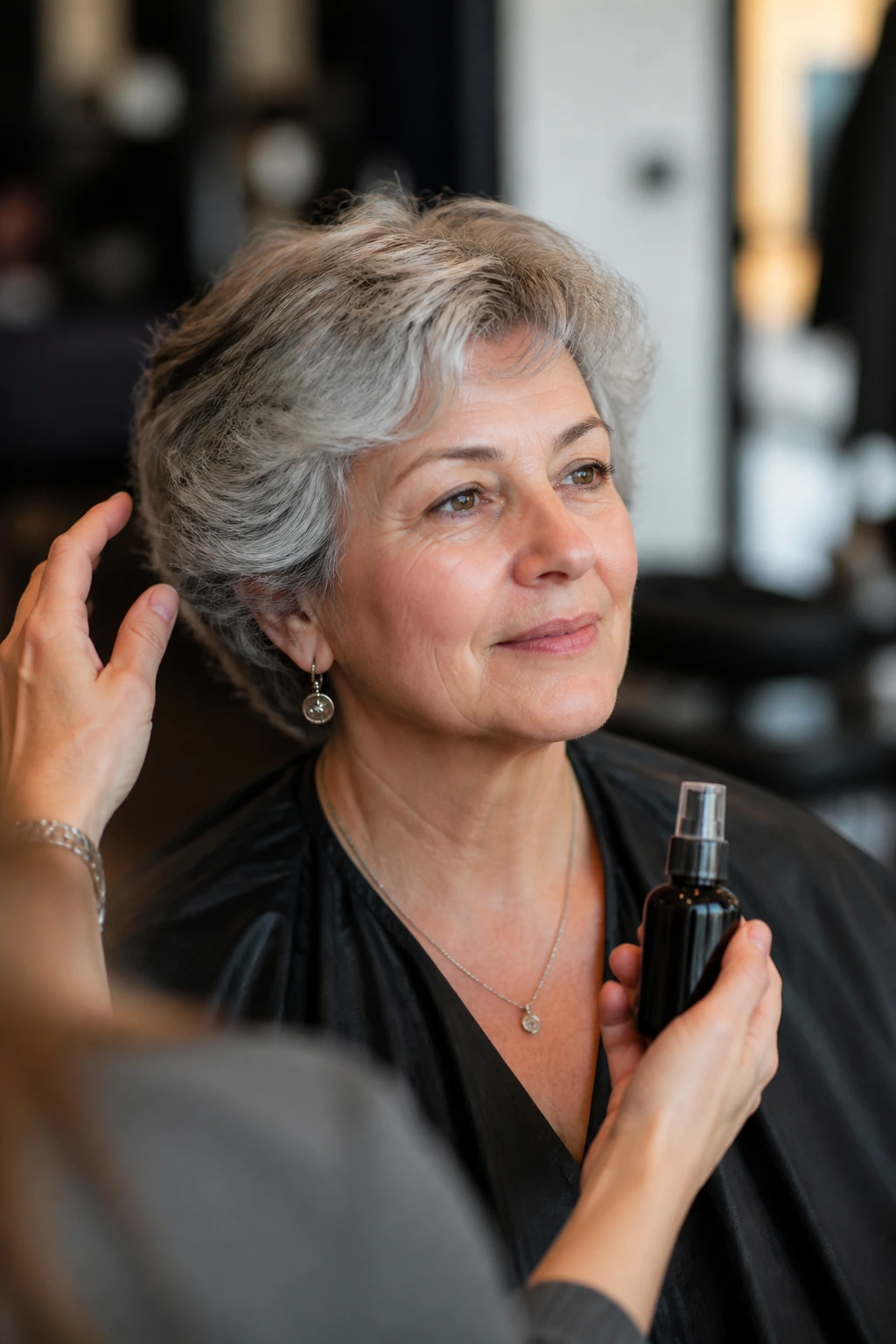
Bring photos, yes, but bring the right ones. Show the stylist a front view, a side view, and a back view if you can find them. A haircut can look charming from the front and awkward from the nape, and that back view is where a lot of short cuts live or die.
Say what your hair actually does. If it flattens at the crown, say that. If it flips out at the neckline, say that too. If you wear glasses every day, mention it. If you want to tuck hair behind your ears, mention that as well. Stylists work better with useful facts than with vague praise like “something easy.”
For products, think light first. Fine waves usually need mousse, foam, or root spray. Coarser silver waves often need leave-in conditioner and a cream with a little slip. Heavy oils can flatten short hair fast, and that’s one of those mistakes that looks like a haircut problem when it’s really a product problem.
How to Style Short Wavy Haircuts Without Killing the Bend
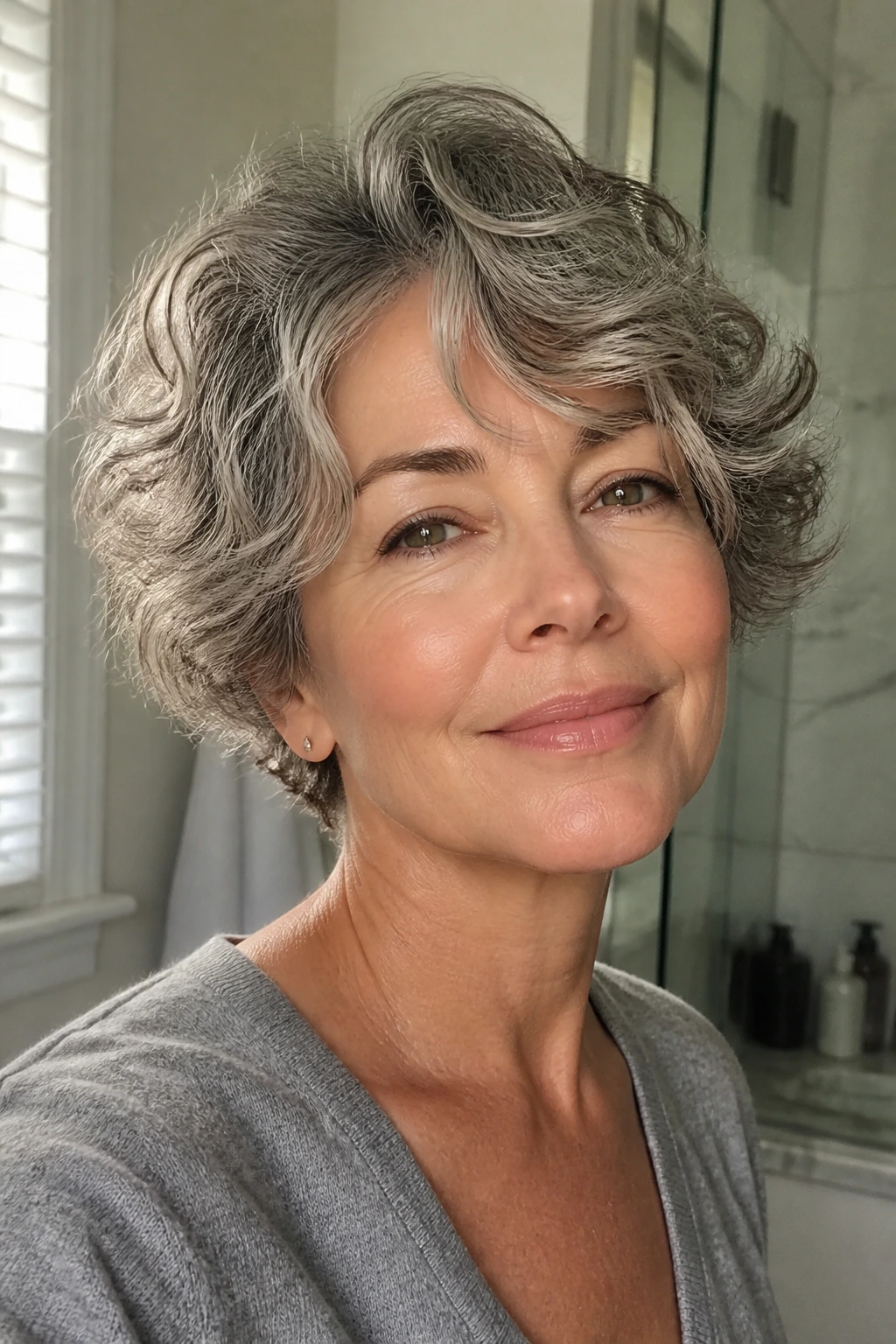
Air-Dry Days:
Blot the hair with a microfiber towel or a soft T-shirt, then scrunch in a small amount of mousse from roots to ends. Let the hair fall where it wants, and resist the urge to keep touching it. Touching breaks the cast and frizzes the surface.
Blow-Dry Days:
Use a diffuser on low heat and low speed. Lift the roots at the crown with your fingers or a clip while the hair dries, then stop before the ends feel brittle. High heat on short waves is a fast way to get puffy ends and flat roots.
Defined Wave Days:
Wrap a few front pieces around a small round brush or a curling wand set low, around 300°F or under. Leave the rest rougher. If every strand is equally neat, the cut can look helmet-like.
Quick Refresh:
Mist the hair with water, add a pea-sized touch of cream or leave-in, and scrunch only where the waves have collapsed. Don’t soak the whole head. You’re waking up the shape, not starting over.
Extra Texture Tricks That Add Lift Without Teasing
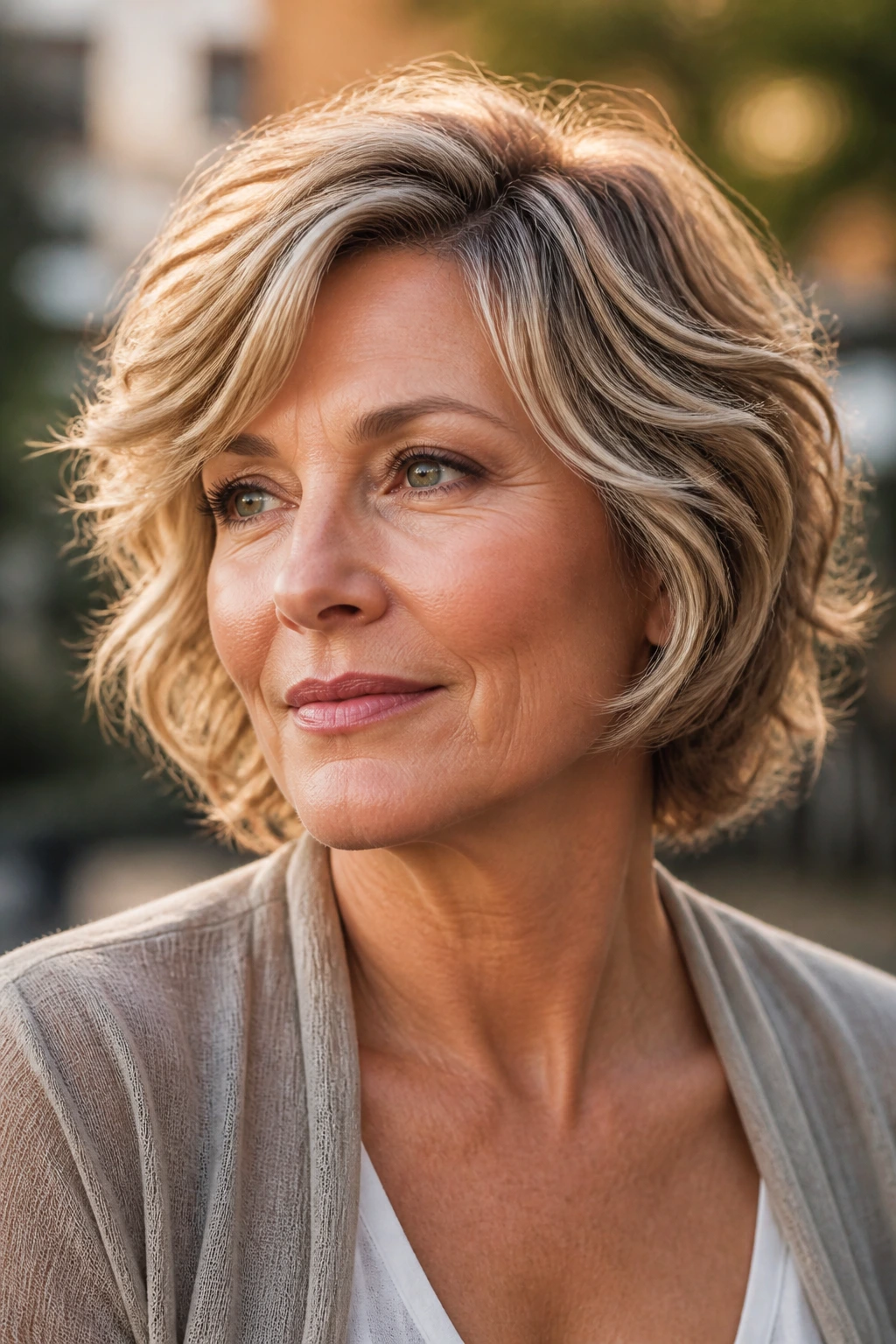
Root clips: Place them at the crown while the hair is damp. They create lift without backcombing, which is kinder to short hair and easier to wash out.
Flip-and-diffuse: Turn your head slightly to one side, diffuse for a few minutes, then switch sides. The roots dry with a little bend instead of sitting dead flat.
Dry shampoo on clean hair: A light dusting at the roots can give short waves some grip before the day gets going. It’s one of those things people save for day two, but it works on freshly washed hair too.
Velcro rollers for the top layer: Ten to fifteen minutes in the crown can make a bob look fuller without permanent teasing. Take them out only when the hair is mostly dry.
A tiny bit of shine serum on the ends only: This keeps the shape from looking fuzzy, especially if your hair is gray or highly highlighted. Stay away from the roots. That’s where good intentions go to die.
Keeping the Shape Between Salon Visits
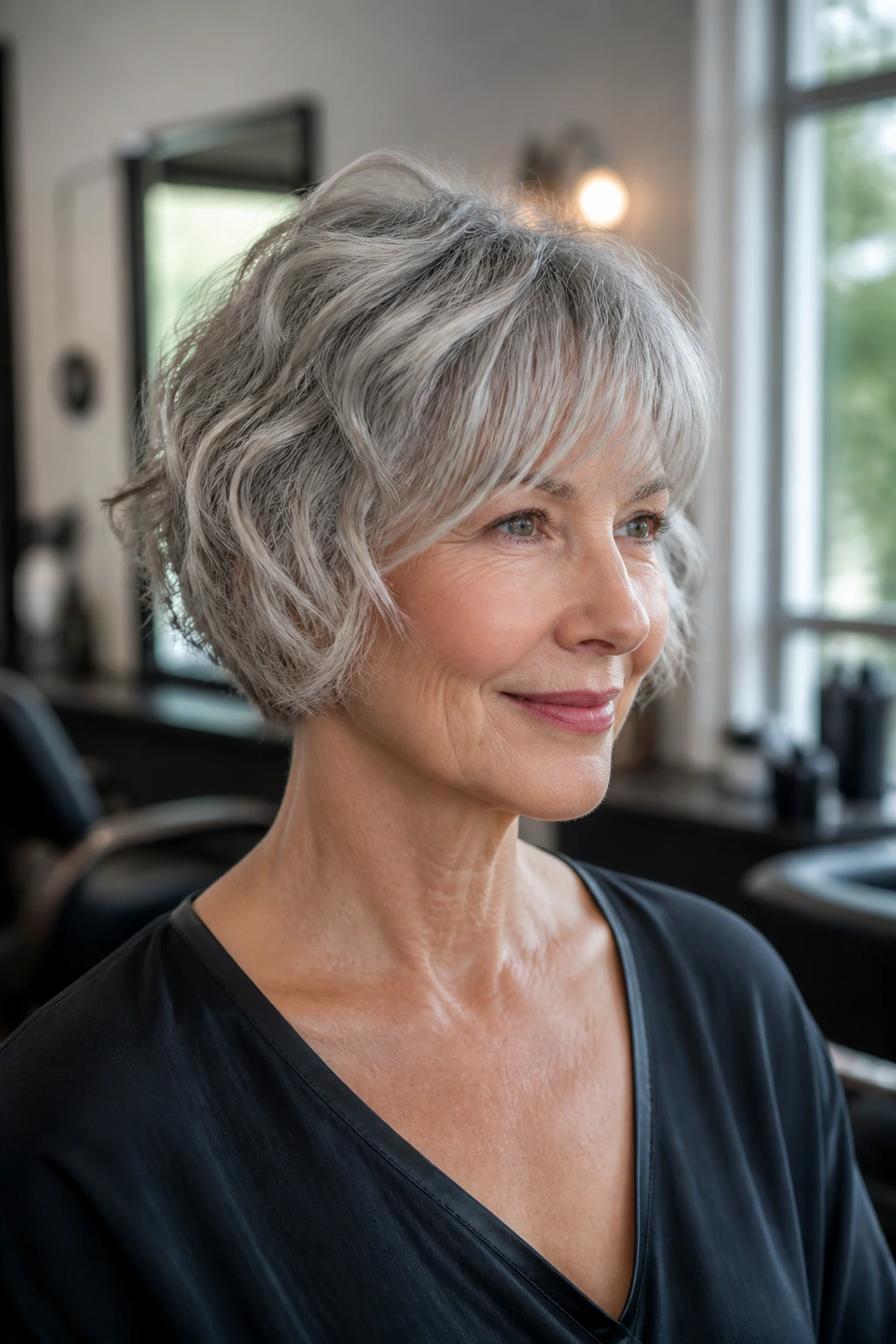
Short wavy cuts live or die by the neckline and fringe. Once those start growing out, the shape loses its clean line first at the nape, then around the temples, and finally at the front. A trim every 5 to 8 weeks usually keeps most of these styles honest. Pixies and bixies often need the shorter end of that range.
If your hair is silver or gray, use a gentle purple shampoo every one to two weeks if brass creeps in. Don’t use it every wash unless the tone really needs it; too much can leave hair dull or muddy. A moisturizing mask once a week helps too, because gray hair often feels rougher than it used to.
At night, a satin pillowcase or a loose sleep wrap can cut down on friction. That matters more for short waves than people think. You wake up with fewer mashed sides and less frizz at the crown, which means less fixing before coffee.
Variations to Try for Fine Hair, Thick Hair, Silver Hair, and Grow-Out Hair

Fine-Hair Float:
Ask for a chin-length bob or bixie with very light internal layers and a soft side part. The goal is lift, not thinning. Keep the perimeter solid so the ends don’t look see-through.
Thick-Hair Tamer:
Choose a stacked bob, wedge bob, or jaw-length cut with weight removed underneath. Thick waves need room to move, but they also need structure or they balloon out at the sides.
Silver Shine Shape:
A rounded bob, French bob, or soft shag looks especially good on silver hair when the cut has clean edges and a little gloss. Use a nourishing leave-in and skip anything sticky or chalky.
Glasses-Friendly Frame:
Pick a feathered crop, side-parted pixie, or curtain-bang bob that clears the temples and leaves the front pieces light. Glasses already add a frame; the haircut should cooperate with it, not crowd it.
Grow-Out Friendly Trim:
If you know you’ll wait longer between salon visits, go for a neck-length bob or short lob with internal layers. Those cuts tend to blur out gracefully instead of turning triangular.
Common Mistakes That Flatten or Puff Short Waves
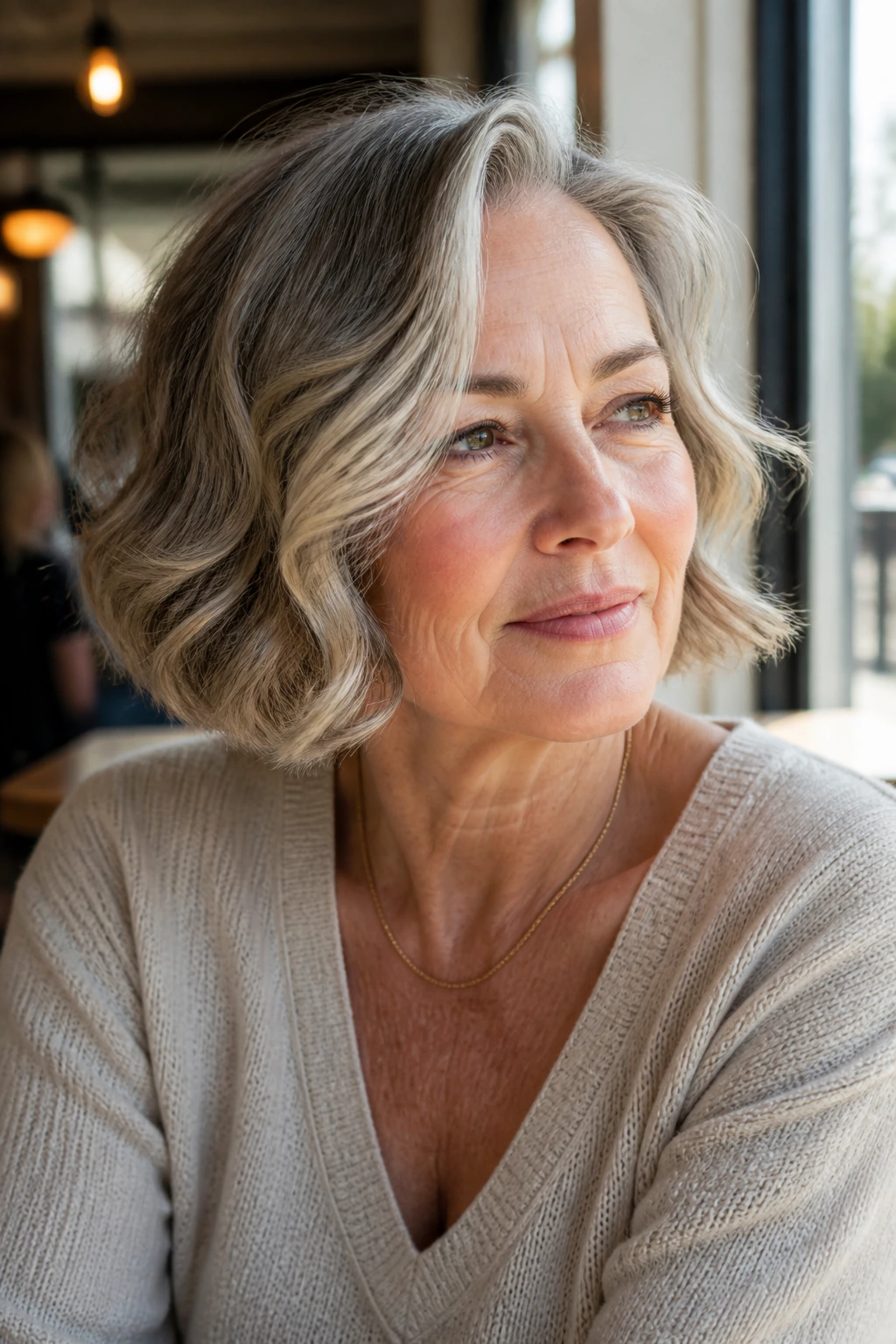
-
Cutting the sides too short and leaving the top too long: The result can look top-heavy, especially on fine hair. Ask for balance through the crown and sides, not a dramatic disconnect unless that’s the look you want.
-
Thinning gray hair with a heavy hand: Over-thinning makes silver strands frizz and separate in odd places. A little weight removal is fine; shredding is not.
-
Using rich cream at the roots: Short waves do not need much product near the scalp. Heavy cream at the root takes the lift out and makes the cut sag by noon.
-
Skipping the nape trim: A clean neckline makes short hair look intentional. Once the nape grows out, even a good cut can start to look fuzzy.
-
Fighting the wave pattern every morning: If your hair wants to bend left, make a shape that lets it bend left. Forcing it straight for a short cut usually ends in puff and frustration.
-
Ignoring the part line: Moving the part an inch can change the whole face shape. That’s not a small detail. It’s often the cheapest fix in the room.
Frequently Asked Questions About Short Wavy Haircuts
What is the most flattering short wavy haircut for older women with fine hair?
A chin-length bob with a soft side part is hard to beat because it keeps enough length for movement while still letting the hair look fuller at the ends. If you want even more lift, a bixie with a longer crown can work too, as long as the layers stay light.
Should older women avoid bangs with wavy hair?
Not at all. The trick is choosing bangs that move, like a feathered fringe or curtain bangs, instead of a hard straight line that fights the wave. Softer bangs also grow out more gracefully, which is useful if you don’t want a trim every three weeks.
How often should a short wavy cut be trimmed?
Most short wavy cuts need a clean-up every 5 to 8 weeks. Pixies and ear-length crops usually need the shorter end of that range, while a short lob or neck-length bob can stretch a little longer without losing shape.
Can gray wavy hair handle a pixie or bixie?
Yes, and the texture often makes those cuts look even better. Gray strands can be a little wirier, so ask for soft tapering and avoid aggressive thinning; that keeps the shape neat without making the ends fray.
What should I ask for if my hair flips out at the nape?
Ask your stylist to keep the nape either tucked and clean or slightly layered so it sits closer to the neck. A little graduation at the back often fixes the flip better than just cutting it shorter.
Is a bob better than a pixie for wavy hair?
A bob gives you more room to show the wave pattern, while a pixie gives you faster drying and less styling time. If you want softness around the jaw, choose the bob. If you want the neck clear and the top lifted, the pixie wins.
How do I keep short waves from puffing in humid weather?
Use a light mousse on damp hair, then seal the ends with a small amount of cream or serum. The part matters too; a side part often controls puff better than a center part because it breaks up the width.
Can I air-dry these cuts without losing shape?
Yes, but the cut has to be designed for it. Internal layers, a soft perimeter, and a bit of root product help the hair dry with bend instead of collapse. If your hair is very fine, a short diffuser blast at the crown can keep the shape from sinking.
The Shape That Still Moves
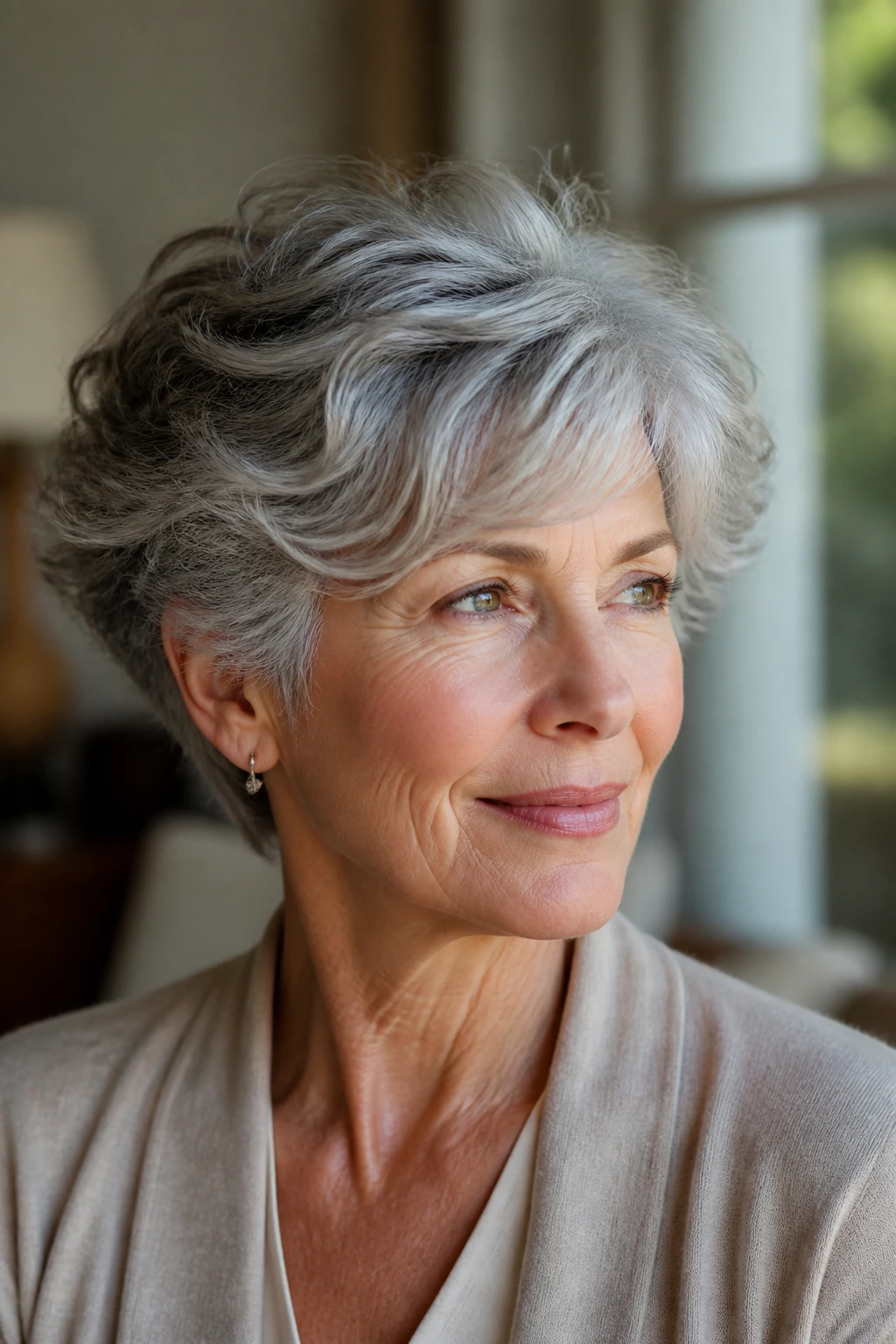
A good short wavy cut does not make you chase the mirror. It gives the mirror something decent to work with. The wave lands where it should, the neck feels lighter, and the whole cut stays open enough to show the face instead of hiding it.
That’s why the best choice is rarely the shortest one and rarely the most layered one. It’s the one that respects where your hair bends, where it falls flat, and where you want the eye to go first. Pick that shape, keep the ends clean, and let the texture do the rest.
