



A good kids’ haircut has to survive more than a mirror check. It has to handle breakfast crumbs, backpack straps, car-seat naps, and that weird late-afternoon moment when every strand seems to point in a different direction. Haircut ideas for kids only matter if they work in that mess, not if they merely look tidy for the five seconds after the cape comes off.
Cute is easy. Living with it is harder.
The smartest cuts respect the child’s hair texture, their patience for brushing, and your tolerance for upkeep. A fringe that drops into the eyes on day one becomes a daily fight by week two. A tight fade on a child who hates clippers can turn the whole appointment into a drama you’d rather not repeat. The good shapes are the ones that still make sense after sleeping on them, sweating in them, or shoving a hoodie over them.
Thirty-eight options give you room to choose. Some stay short and neat, some leave curls room to bounce, and some keep enough length for braids, ponytails, or a little edge. Start with the haircut that fits the hair you actually have, then narrow in on the look your child will happily wear tomorrow.
Why These Haircut Ideas Work in Real Life
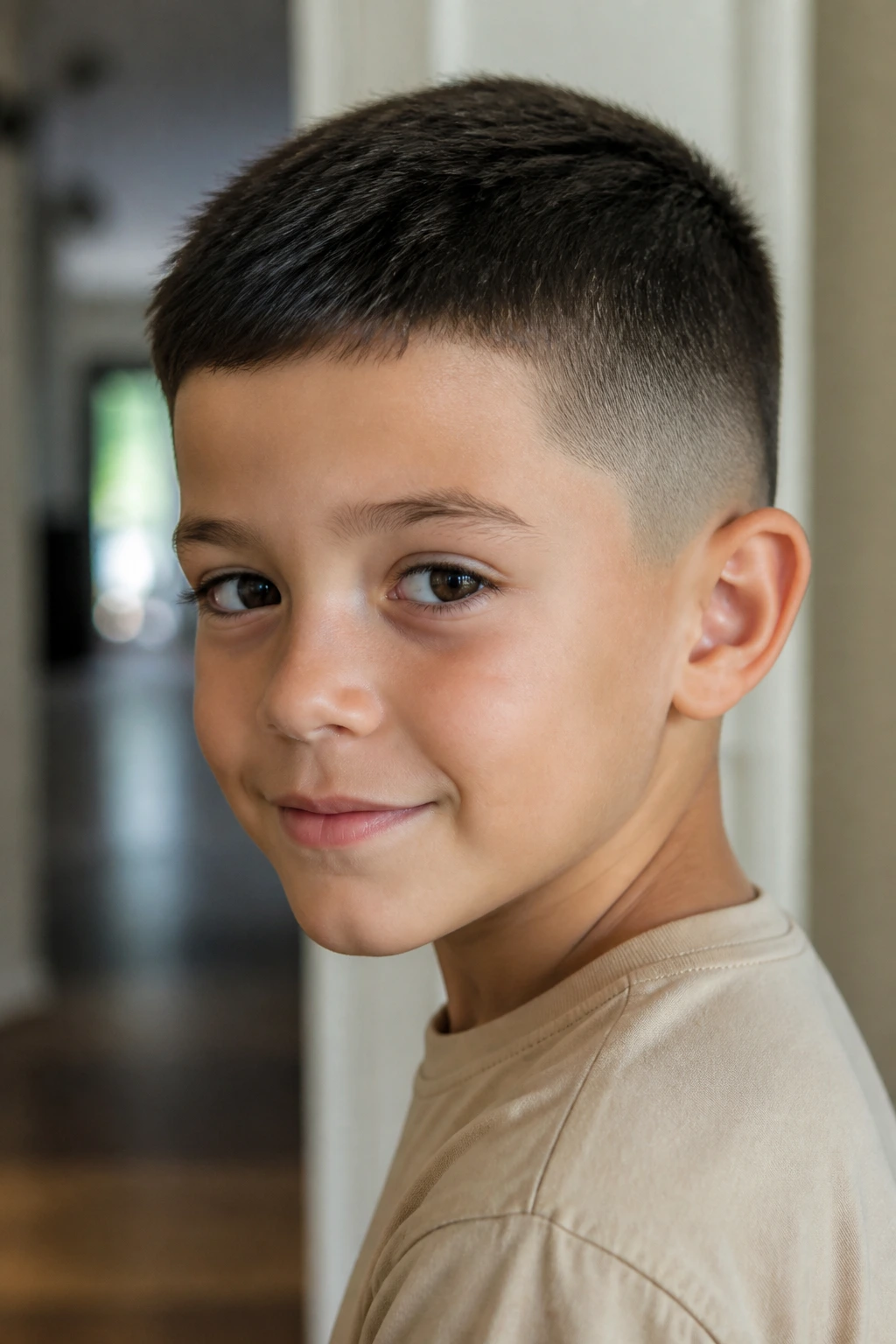
-
Fast mornings: Short crops, tapers, and clean bobs dry quickly and need very little coaxing before school.
-
Texture-first choices: These cuts are built for straight, wavy, curly, coily, fine, and thick hair instead of pretending every head behaves the same way.
-
Room to grow: Several of the styles here still look intentional when they’ve been outgrown by an inch or two.
-
Kid approval matters: A little fringe, a little length, or a shape with personality can make a child more willing to sit through the cut.
-
School and sports friendly: These styles fit under helmets, hoodies, and headbands without falling apart instantly.
-
Easy to explain: You can point to length, fringe, neckline, and sides without having to translate hair-shop jargon.
1. The Classic Crew Cut With a Soft Fade
A crew cut is the haircut equivalent of a clean lunchbox: not flashy, but it gets through the day without fuss. Leave a little extra length on top—about a #3 guard—then taper the sides shorter so the shape sits close to the head and doesn’t flare out after a nap or a helmet.
If the crown has a cowlick, keep a touch more length there. That one choice saves a lot of morning water-spritzing and finger-combing.
2. The Textured Crop With a Forward Fringe
This is the short cut for kids who want hair, just not too much hair. The top is cut with point texture so it falls in little pieces, and the fringe is brushed forward instead of being left heavy and square.
What to Ask For
-
Keep the fringe around mid-forehead, not buried in the eyebrows.
-
Leave enough length on top for a soft, piecey finish.
-
Taper the sides low so the cut still looks rounded, not clipped to the skull.
That forward fringe does a lot of work. It hides a stubborn hairline, stays neat after recess, and gives straight or wavy hair some shape without daily drama.
3. The Low Taper With a Longer Crown
Want something tidy that still leaves room for a little movement? This is the sweet spot. The crown stays longer—enough to comb, part, or brush forward—while the sides taper down neatly around the ears and neck.
It’s especially good for kids who like having hair to play with but hate feeling bulk at the temples. The shape looks polished on picture day and still makes sense when the top gets mussed up by a hoodie.
4. The Side-Part Taper That Reads Clean
A side-part taper works because it follows the way the hair already wants to fall. That matters. Forcing a part where none exists usually makes the cut look stiff, and kids can smell stiff from across the room.
Keep the top long enough to tuck or comb over, and leave the sides short enough that the shape stays crisp after a long day. If your child likes a sharper look, ask for a defined part; if not, let it stay soft and natural.
5. The Curly Top With Tapered Sides
Curly hair needs room to do its own thing. Chop the top too short, and it springs upward into a puff that nobody asked for. Leave the curls 2 to 4 inches long on top, then taper the sides so the whole shape feels balanced instead of boxy.
If the stylist can cut curls when they’re dry, even better. Dry curls show their real length, and that keeps the top from coming back a full inch shorter than expected.
6. The Soft Bowl Cut With Rounded Corners
The modern bowl cut has a better reputation than the old helmet version, and for good reason. The perimeter sits around the eyebrows, ears, and nape, but the corners are softened so it looks shaped instead of dropped on.
Why This Version Works
The old bowl cut was all hard edges. This one keeps the round silhouette but removes enough weight around the ears and neckline to make it feel current. It’s a smart choice for straight or dense hair that tends to puff out if it’s left too long at the sides.
7. The French Crop That Keeps the Forehead Clear
If hair falls into the eyes the second a kid tilts their head, the French crop starts to look very appealing. The fringe sits straight across or slightly jagged, and the top is textured so it doesn’t lie like a heavy sheet.
The best part is how little styling it needs. A quick finger-comb forward, maybe a dab of light cream, and you’re done. It also hides cowlicks better than a lot of other short cuts, which is no small thing.
8. The Buzz Cut With a Slight Fade
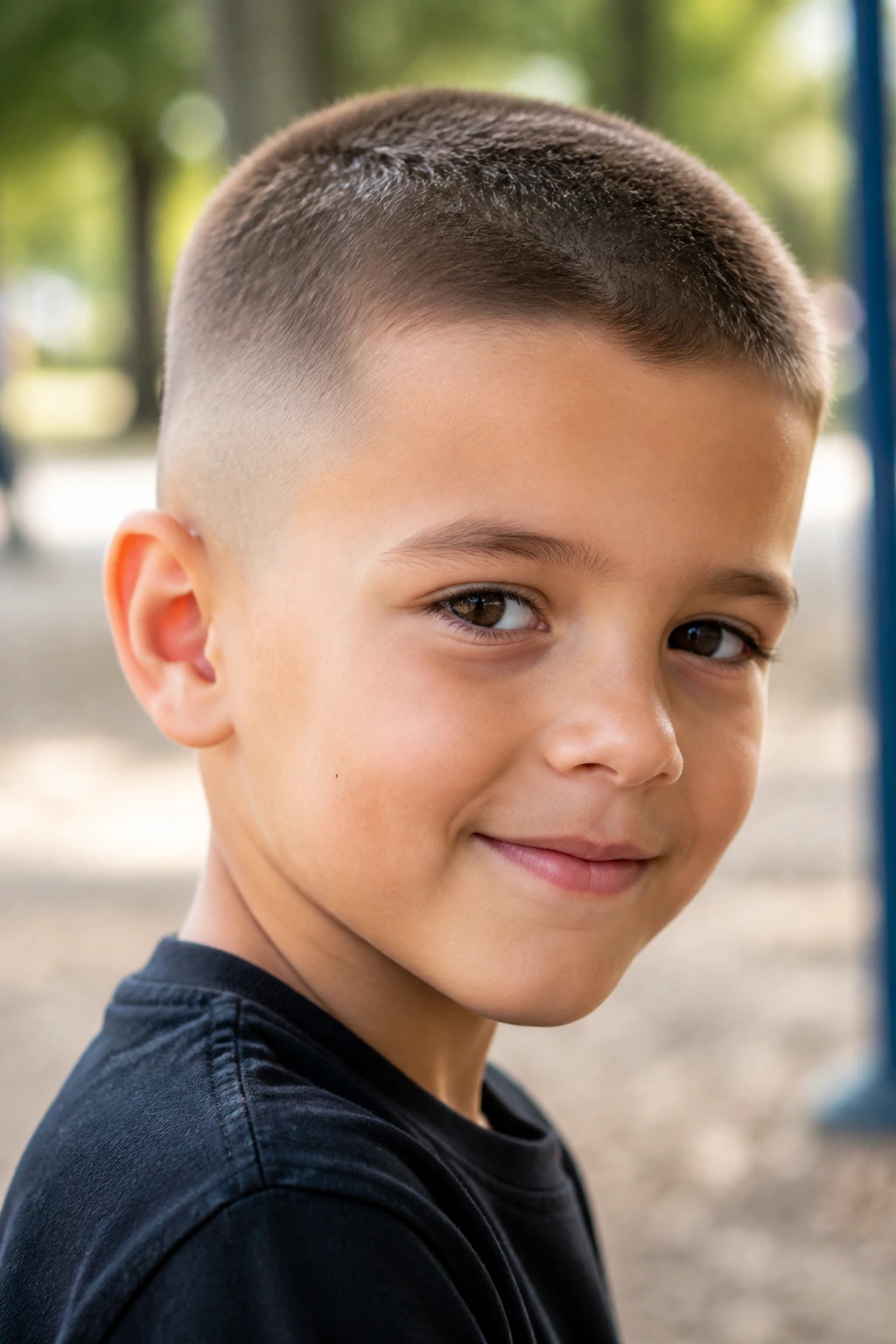
A buzz cut can look blunt if it’s done without thought. Leave a little more length on top—just enough to avoid the “clippers and nothing else” look—and fade the sides down a bit so the shape has some movement.
This cut makes sense for kids who hate hair on the neck, hate brushing, or want the shortest possible routine. It does, however, show scalp and hairline more clearly, so if your child spends a lot of time outdoors, keep that sun protection in mind.
9. The Shaggy Mop Cut With Built-In Movement
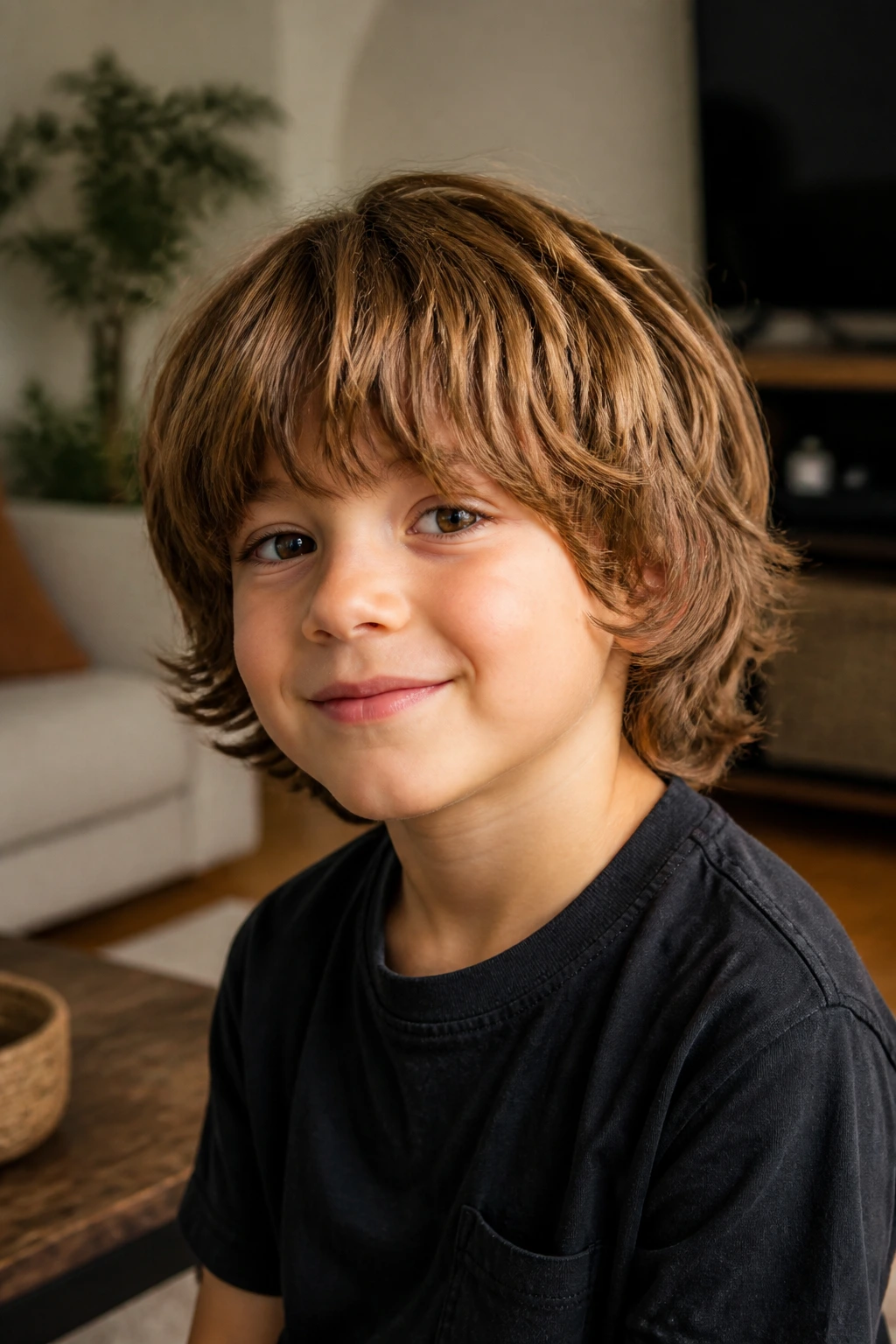
For the kid whose hair refuses to sit still, a shag can be a mercy. The top and sides are layered so the hair falls in soft, irregular pieces instead of one flat curtain. It looks casual in a good way, not sloppy.
The trick is leaving enough length around the ears and crown that the cut still moves. Brush it too hard and you lose the shape; finger-comb it, and it does exactly what it should.
10. The Chin-Length Blunt Bob
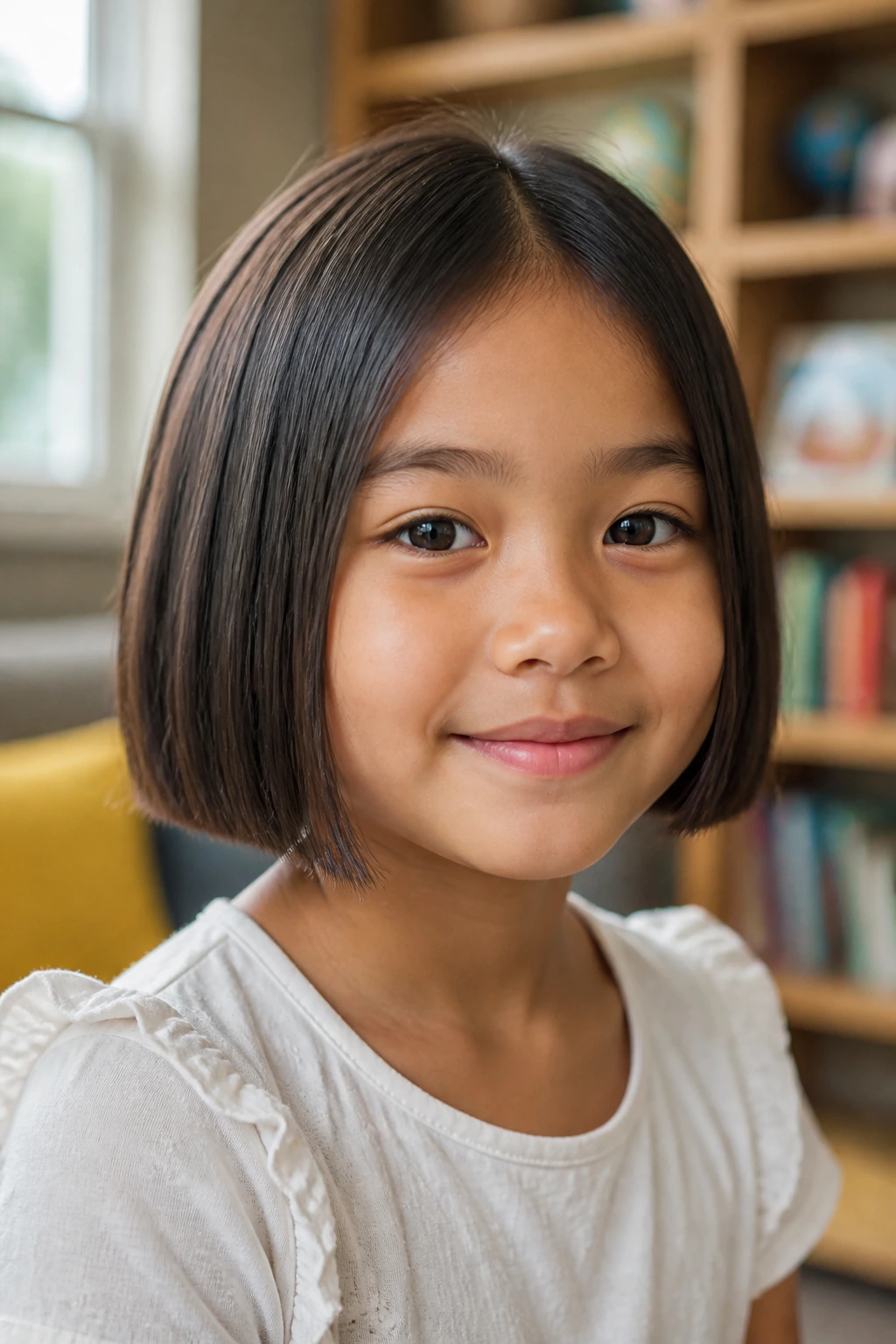
A blunt bob at the chin has a clean line that does half the styling work for you. It can tuck behind the ears, sit neatly under a beanie, and stay out of the mouth during homework, which counts for a lot.
This cut is strongest on straight or slightly wavy hair. If the ends are cut too thin, the bob starts to look wispy, so keep the line solid and let the shape do the talking.
11. The Tapered Pixie With a Soft Neckline
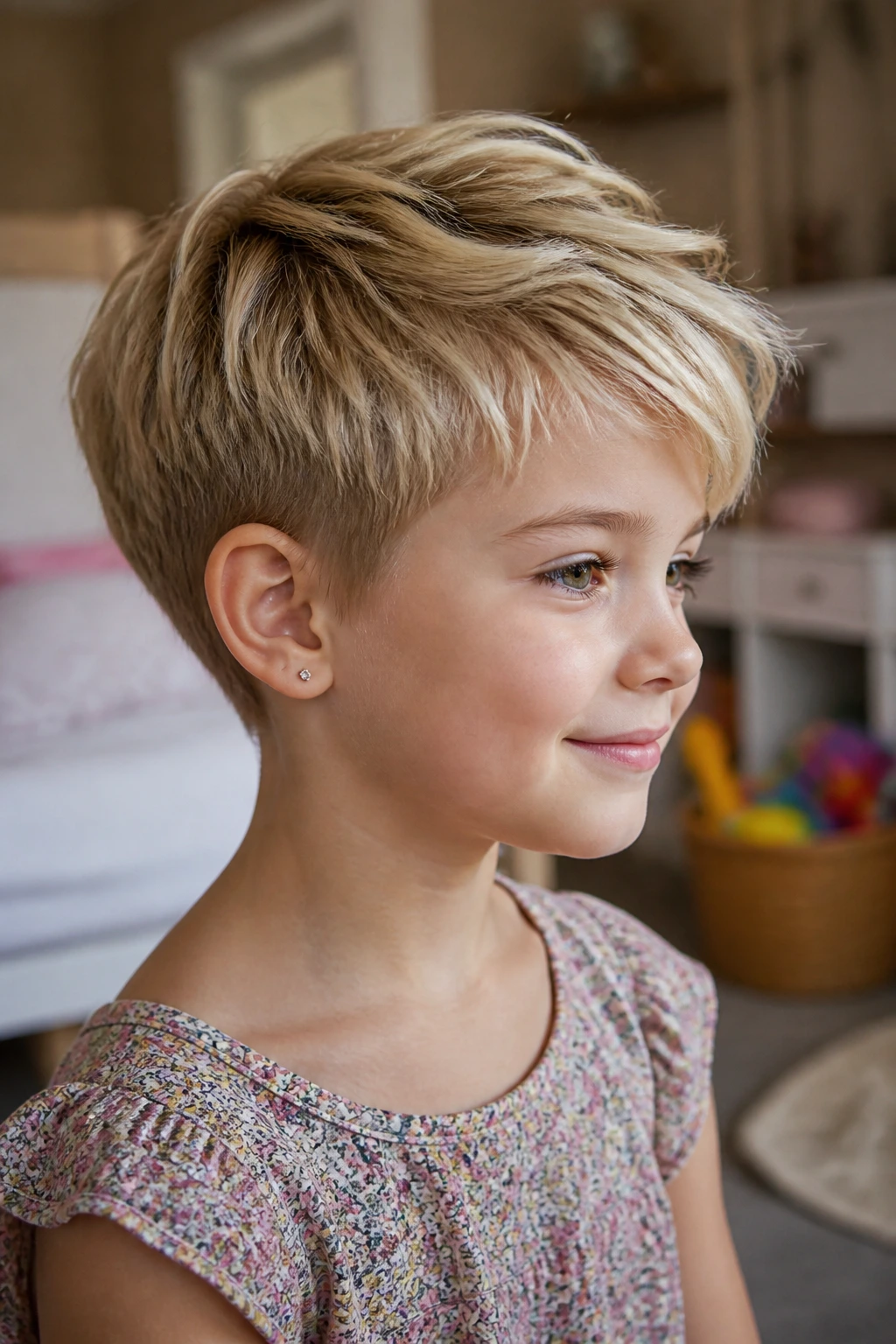
A pixie cut works best when it doesn’t feel shaved to the scalp everywhere. Keep some length on top for movement, taper the sides, and leave the neckline soft instead of squared off unless your child really likes a sharper finish.
This is one of those cuts that looks neat even when it’s a little messy. A quick tuck behind the ears or a fingertip of styling cream is enough to make it look intentional again.
12. The Bixie That Sits Between Bob and Pixie
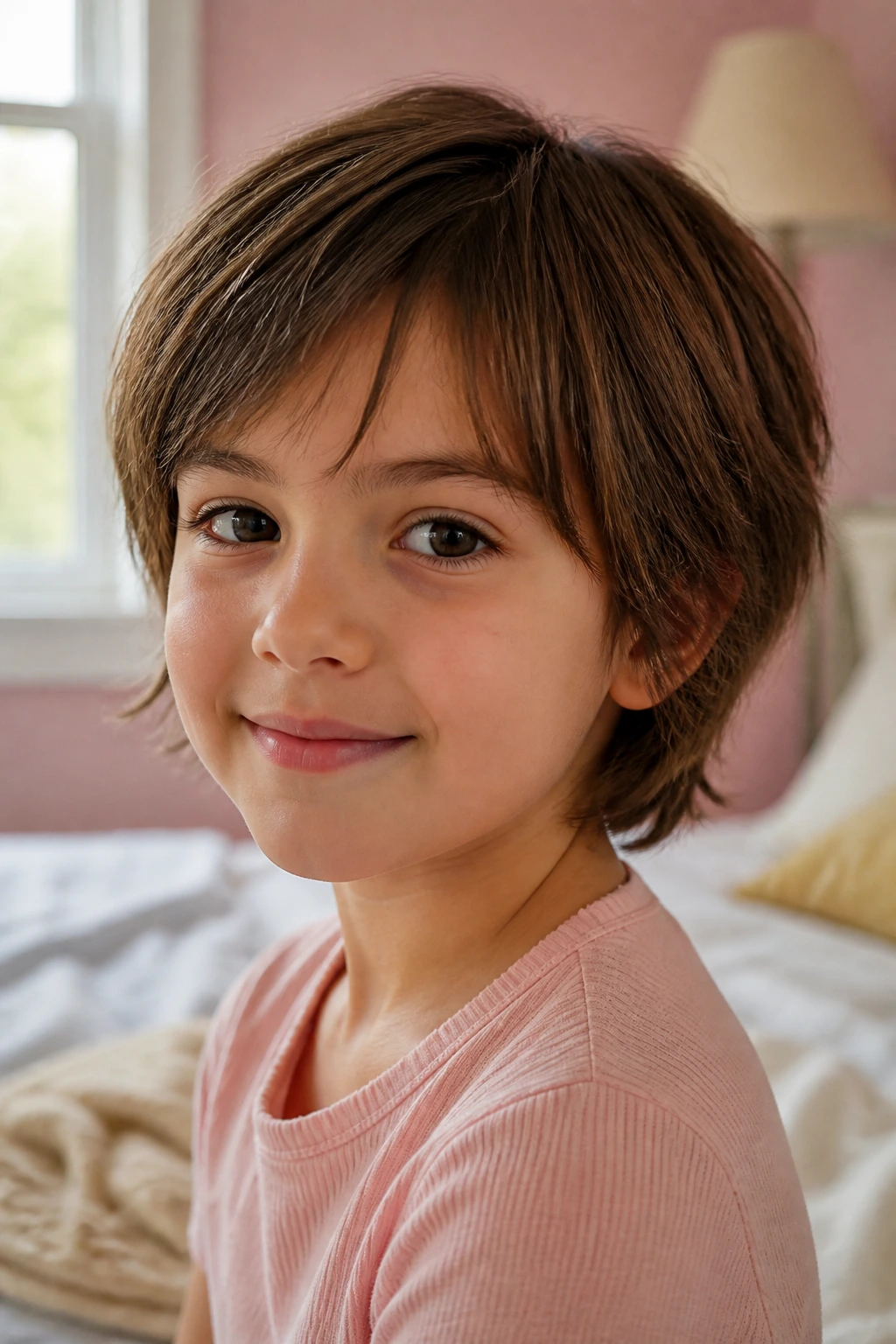
Too short for a bob, too tidy for a pixie? The bixie lives right in the middle. It keeps enough length to shape around the face, but it still feels airy and light around the neck.
That in-between length is useful. It grows out better than a very short pixie and feels less heavy than a chin-length bob, which is why a lot of parents end up liking it more than they expected to.
13. The Shoulder-Length Layers That Still Tie Back

Shoulder-length layers are the compromise cut that doesn’t feel like a compromise. The hair stays long enough for ponytails and braids, but the layers stop it from turning into a flat sheet.
Best For
-
Kids who like wearing hair down but need it out of the way for sports.
-
Thick hair that gets bulky at the ends.
-
Families who want a style that can go from loose to tied back in one rubber band.
Keep the face-framing pieces long enough to tuck, not so short that they pop loose the second the child moves.
14. The Long Layers With Face-Framing Pieces
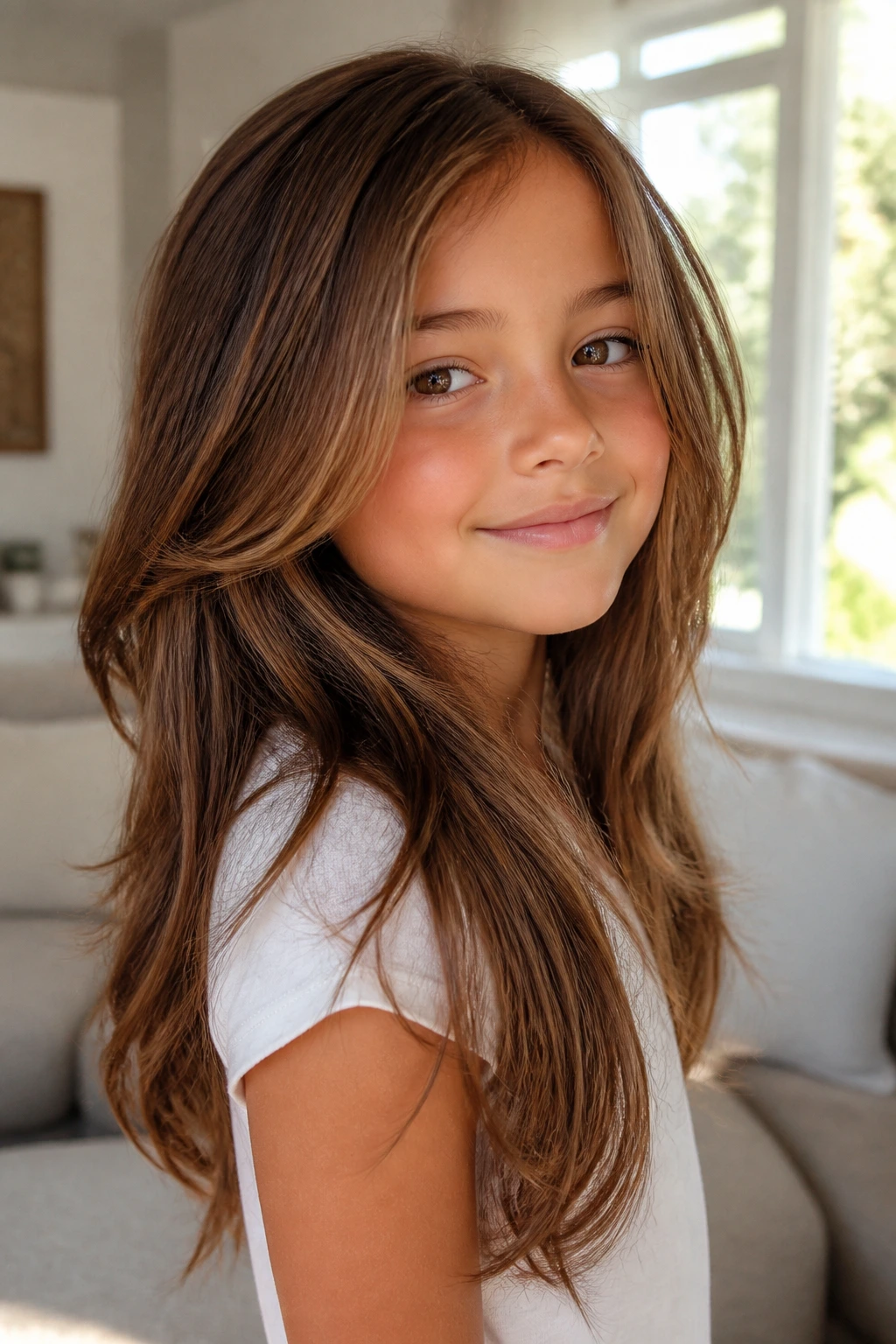
Long hair can look heavy fast. Face-framing layers pull some of that weight away from the cheeks and jaw, which keeps the cut from reading as one long curtain.
The best version doesn’t thin the ends to nothing. It just breaks up the length enough that the hair swings a little when the child turns their head. That small movement makes the whole cut look less flat.
15. The Curtain Bangs on Medium Hair
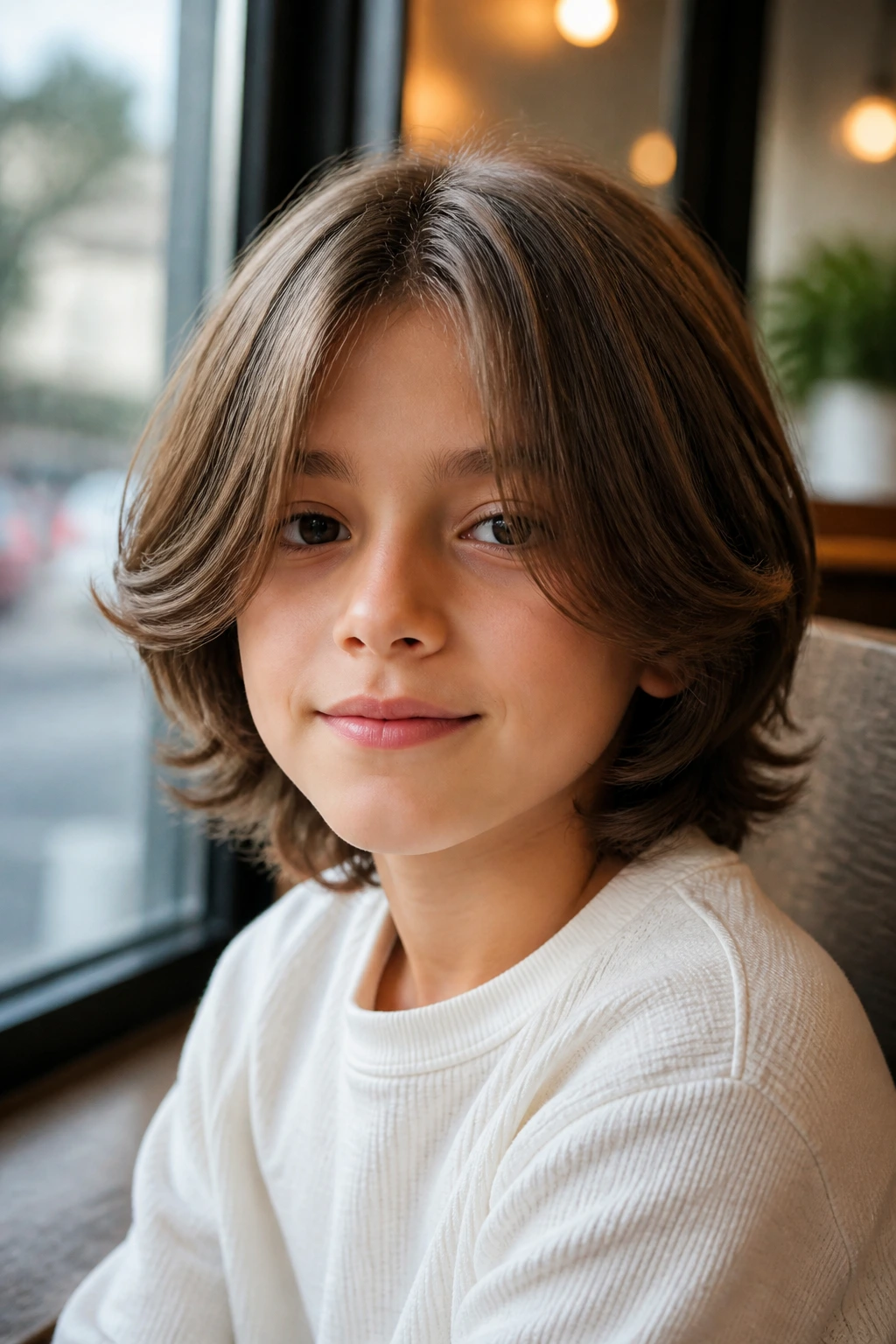
Curtain bangs are a nice trick when you want hair off the face without committing to a blunt fringe. The center part opens the bangs away from the eyes, and the longer sides graze the cheekbones instead of sitting straight across the forehead.
Trim them dry if possible. Wet bangs spring up, and the difference between “eye-skimming” and “in the eyes” is usually less than you think.
16. The Wolf Cut With Choppy Crown Layers
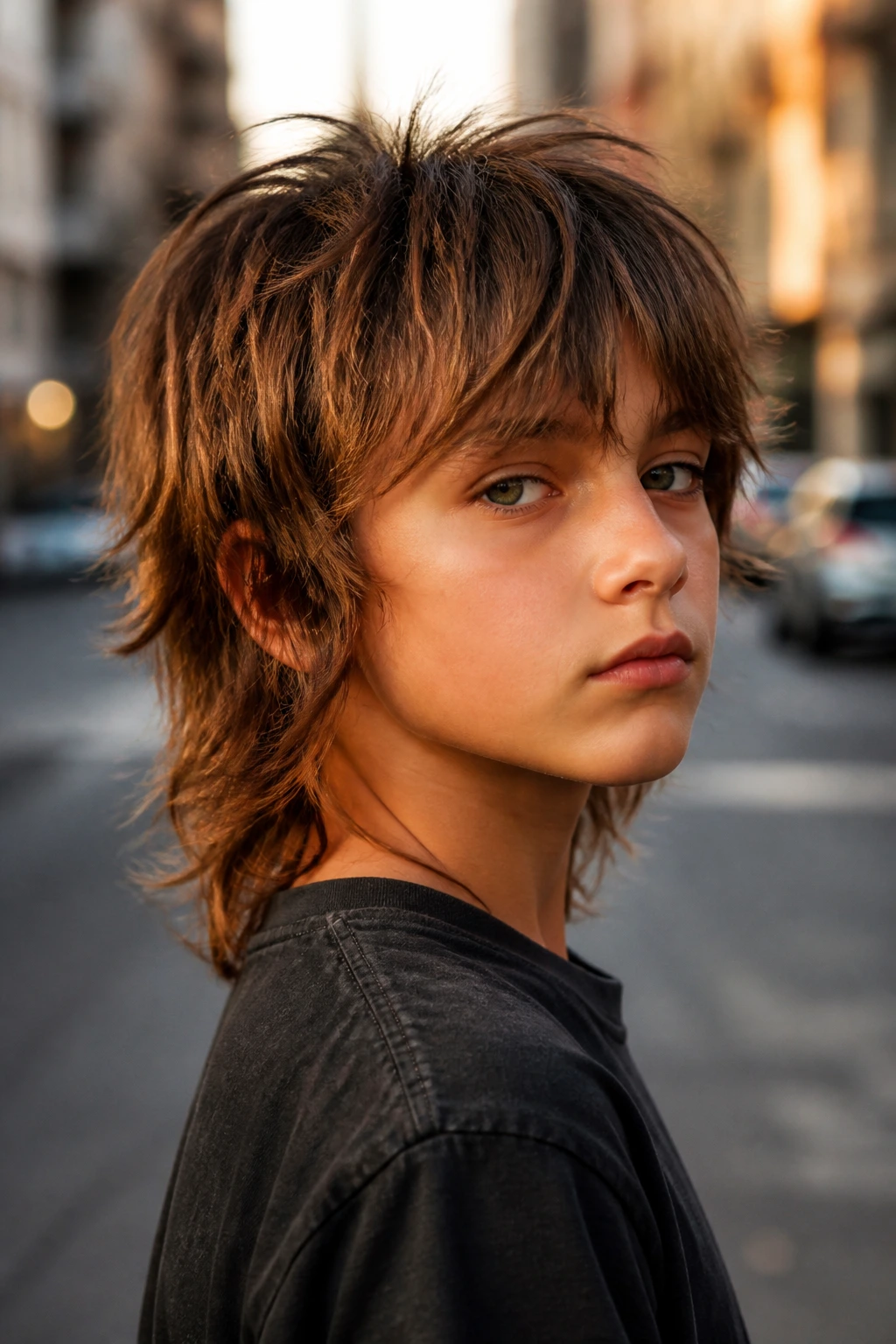
A wolf cut has more edge than a shag and less polish than a classic layered cut. The crown is shorter, the ends stay longer, and the whole shape has that deliberately rumpled look older kids often love.
It works best when the hair already has some texture. Thick or wavy hair can carry it without much help. Fine hair can wear it too, but the layers need to be handled carefully or the cut can go limp.
17. The Soft Mohawk That Doesn’t Go Too Hard
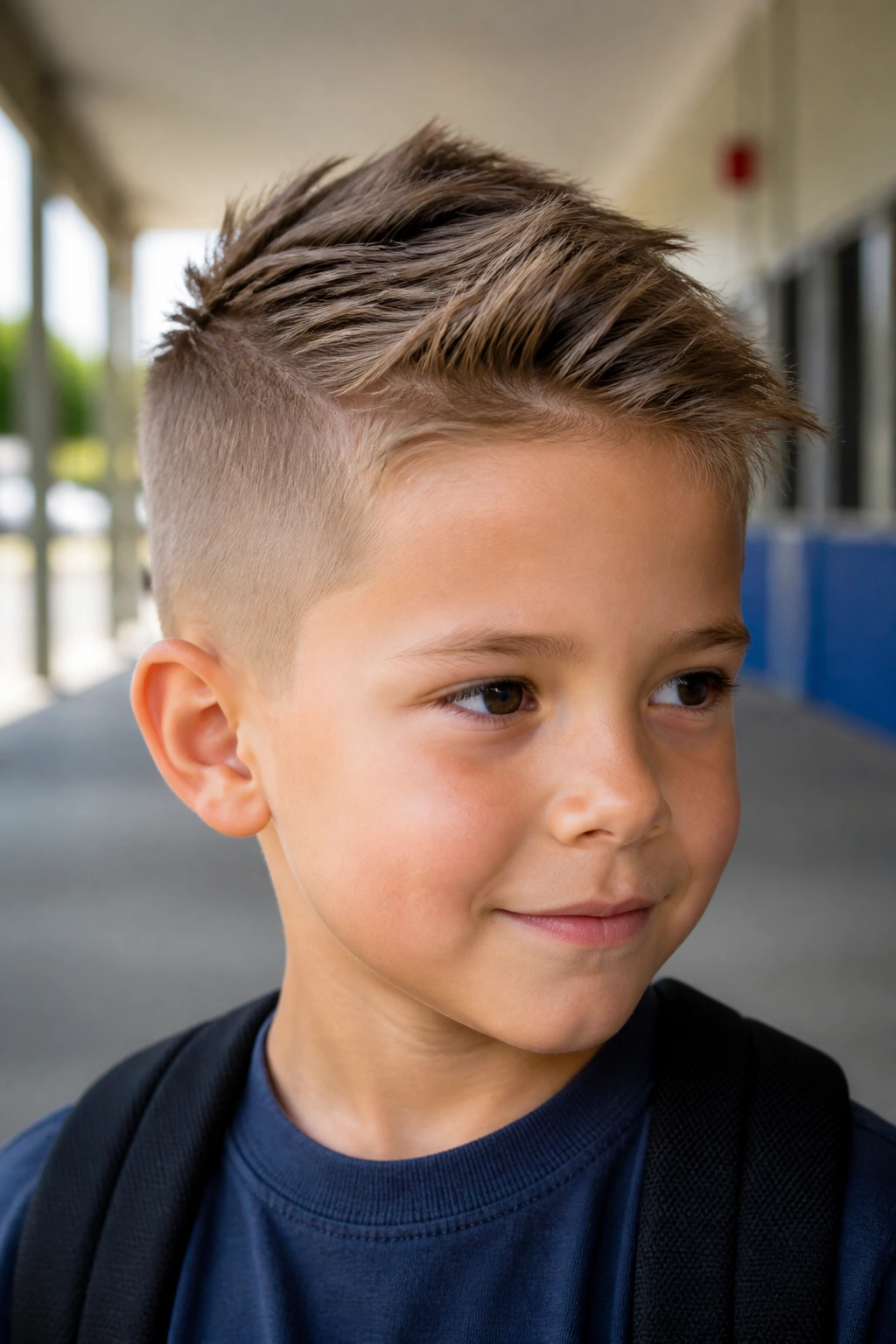
A mohawk doesn’t have to mean a stiff ridge and shaved sides. Keep the center strip a little wider, taper the sides softly, and leave enough length on top that the hair can be brushed flat when needed.
That flexibility matters. Kids can wear it spiked for one day, smoothed down the next, and it still looks like the same haircut. It’s a good middle ground for a child who wants something bold but still school-friendly.
18. The Faux Hawk With Tapered Sides
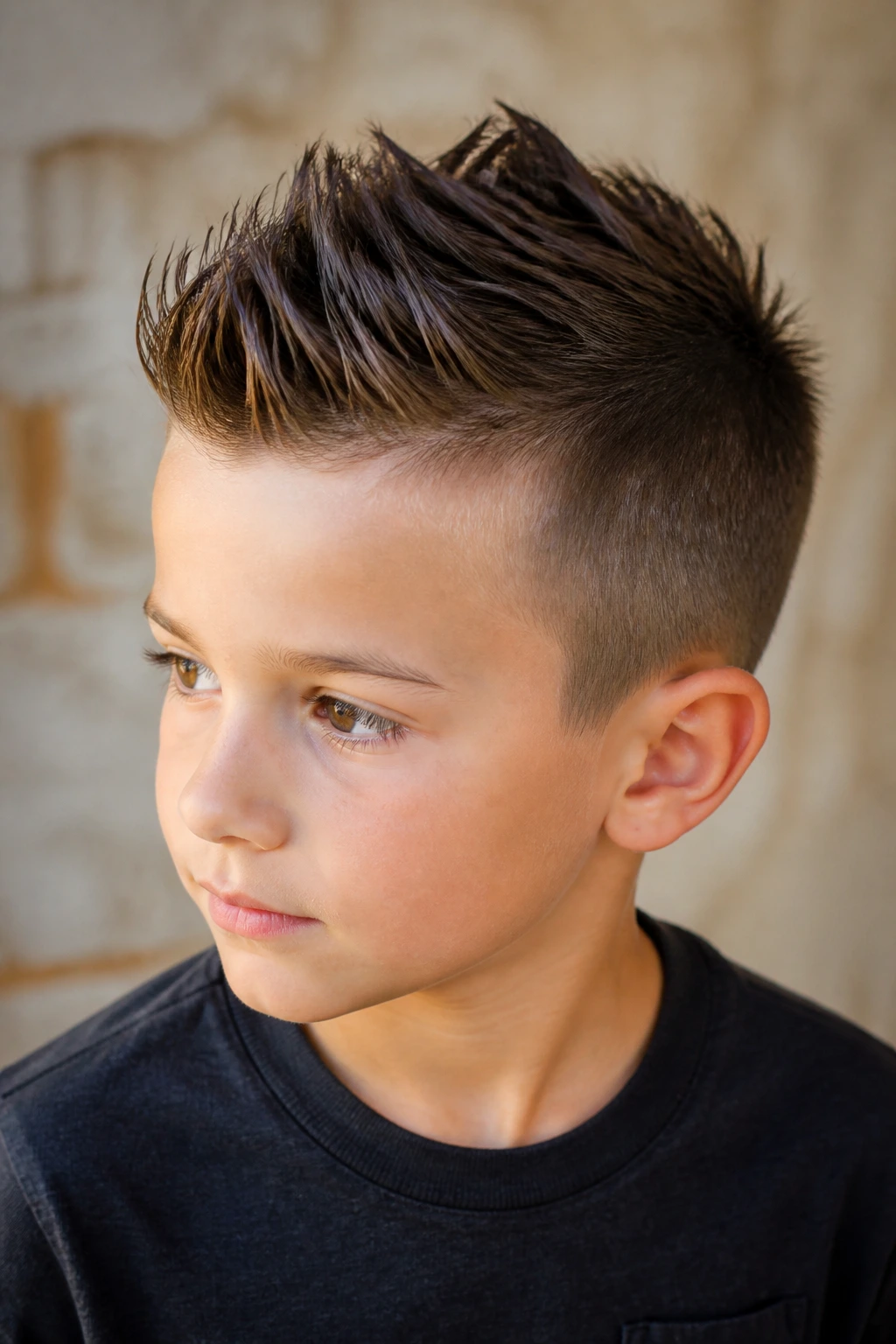
If the mohawk feels like too much commitment, the faux hawk keeps the energy without the drama. The center is left a bit longer, the sides are shorter, and the whole thing can be pushed into shape with a damp hand and a little product.
The beauty here is in the option to calm it down. Brush it flatter for family events, then add a little lift when the child wants more personality.
19. The Surfer Layers That Air-Dry Nicely
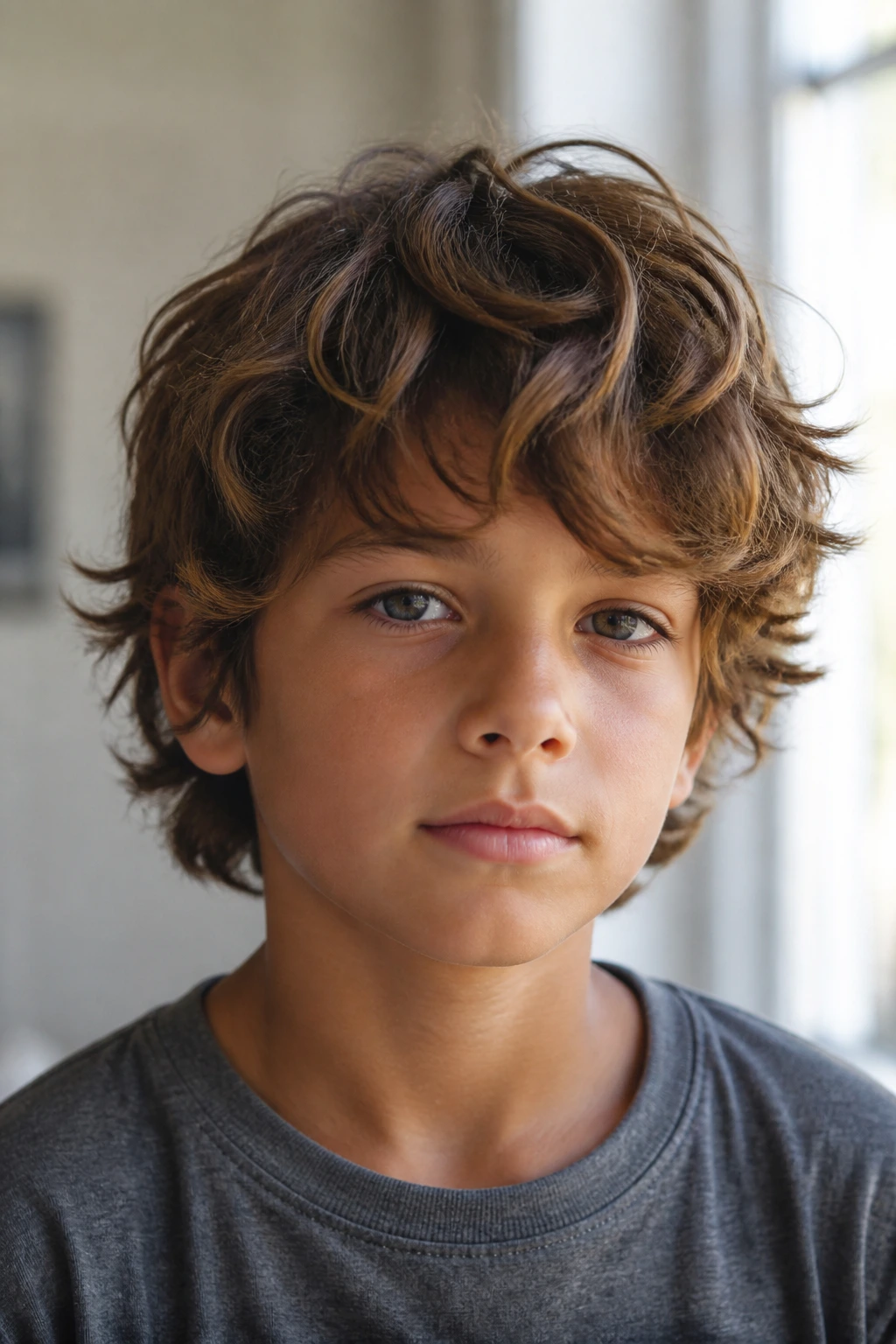
Surfer layers work because they don’t fight natural wave or bend. The ends are kept soft, the top has enough length to move, and the whole cut looks better after it’s been air-dried than after it’s been overworked with a brush.
That’s a nice thing to have in a kid’s haircut. Less fighting, more letting the hair do what it already wants to do.
20. The Skater Cut With a Sweeping Fringe
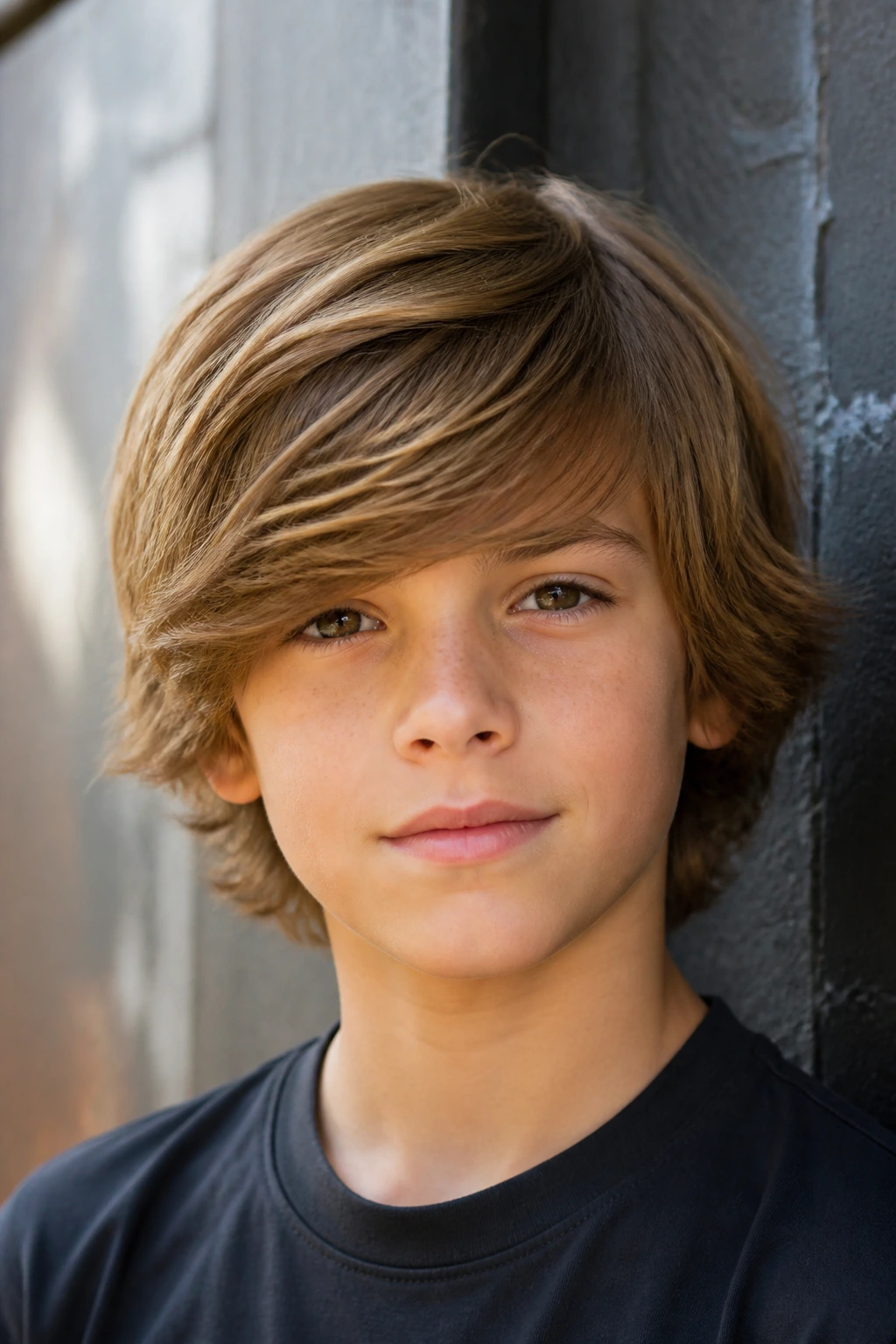
The skater cut sits between a crop and a shag. The fringe sweeps across the forehead, the sides stay a bit longer than a strict short cut, and the shape has a loose, effortless feel without actually being messy.
It’s best for kids who like a bit of hair in the face but not enough to make them blink at math homework. If the fringe starts to reach the lashes, it’s time for a quick trim; waiting too long makes the whole cut lose its shape.
21. The Natural Comb Over With a Gentle Part
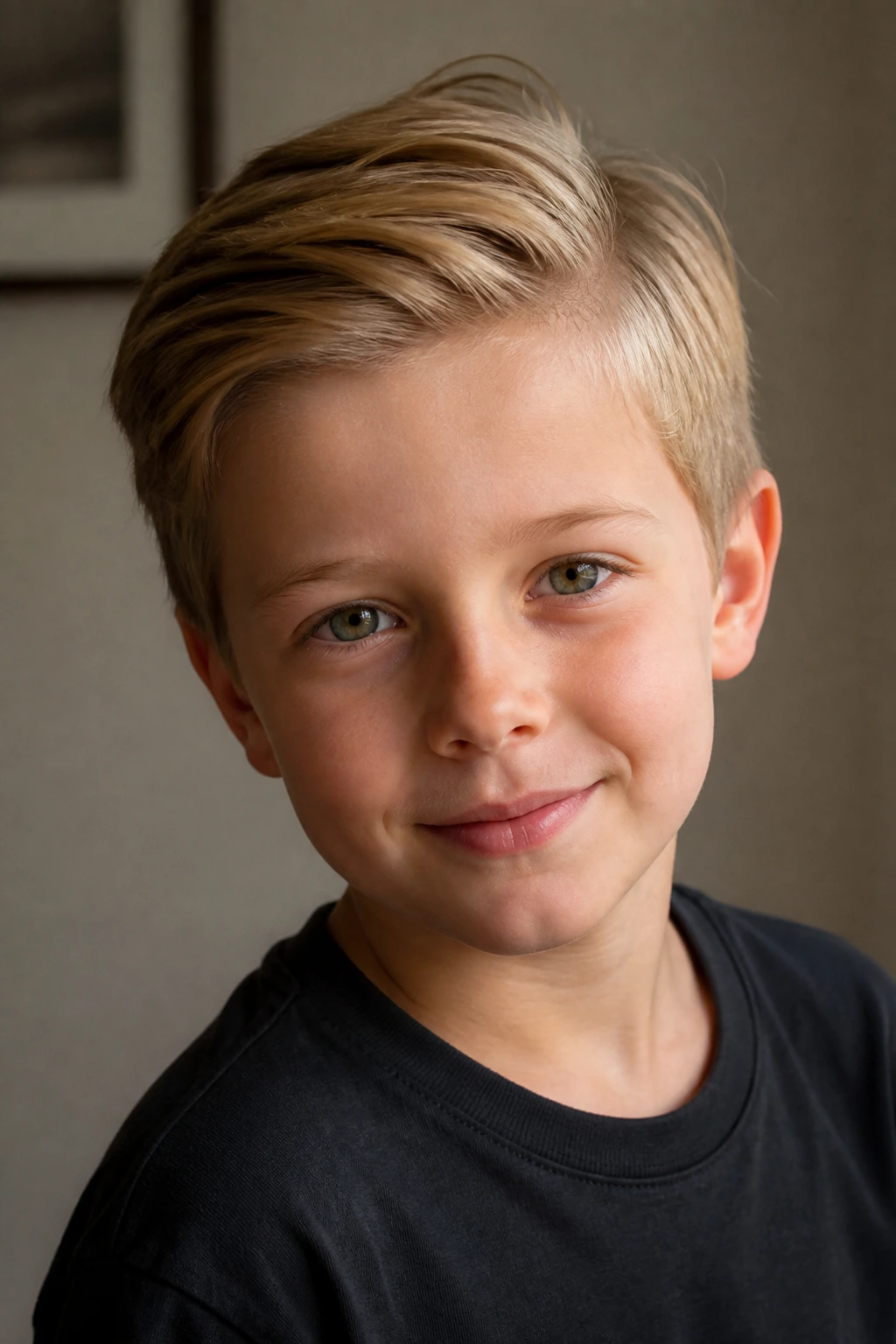
A comb over can look formal or fussy if it’s done with too much product and a hard line. Keep it softer. Let the part fall where the hair naturally splits, then guide the top across with a light hand so it still moves.
This is a good choice for fine hair that needs a little volume on top. The shape gives the illusion of fullness without requiring a lot of length or daily effort.
22. The Low Taper Fade With a Sharp Edge
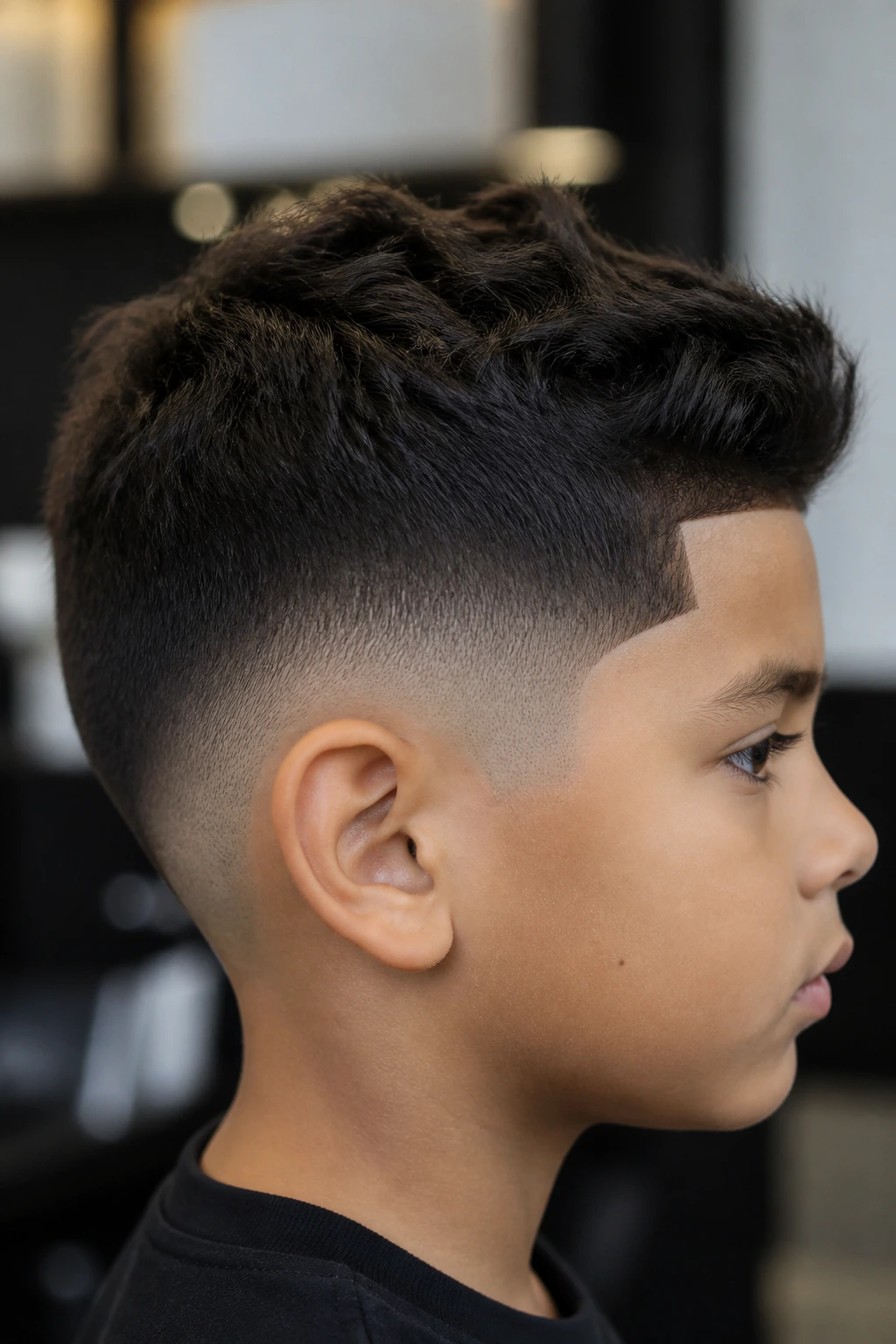
A low taper fade cleans up the ears and neckline without climbing too high on the head. That low starting point matters; it keeps the cut looking smooth instead of overly severe.
The top can stay textured, combed, or even a little curly. The whole point is contrast: neat around the edges, flexible up top. It’s one of the best options for thicker hair that needs some bulk controlled.
23. The High and Tight for Zero-Fuss Mornings
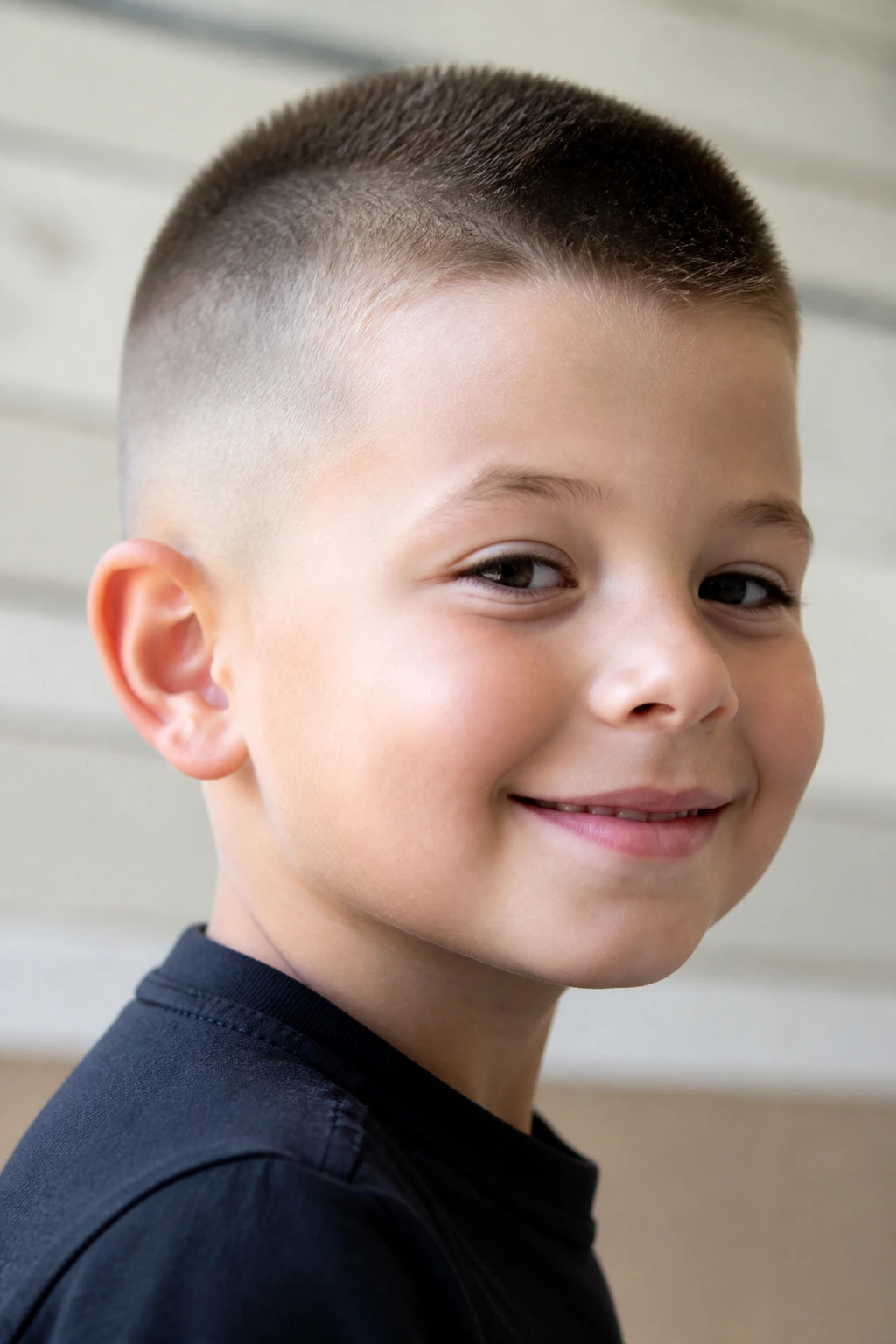
If your child wants as little hair in the way as possible, this is the blunt answer. The sides stay very short, the top stays short too, and the whole cut clears the collar, the ears, and most of the daily brushing problem.
It isn’t for every kid. There’s not much styling freedom here. But for the child who hates hair touching the neck or who spends half the day in sports gear, it can be a relief.
24. The Rounded Afro Shape That Keeps Volume Even
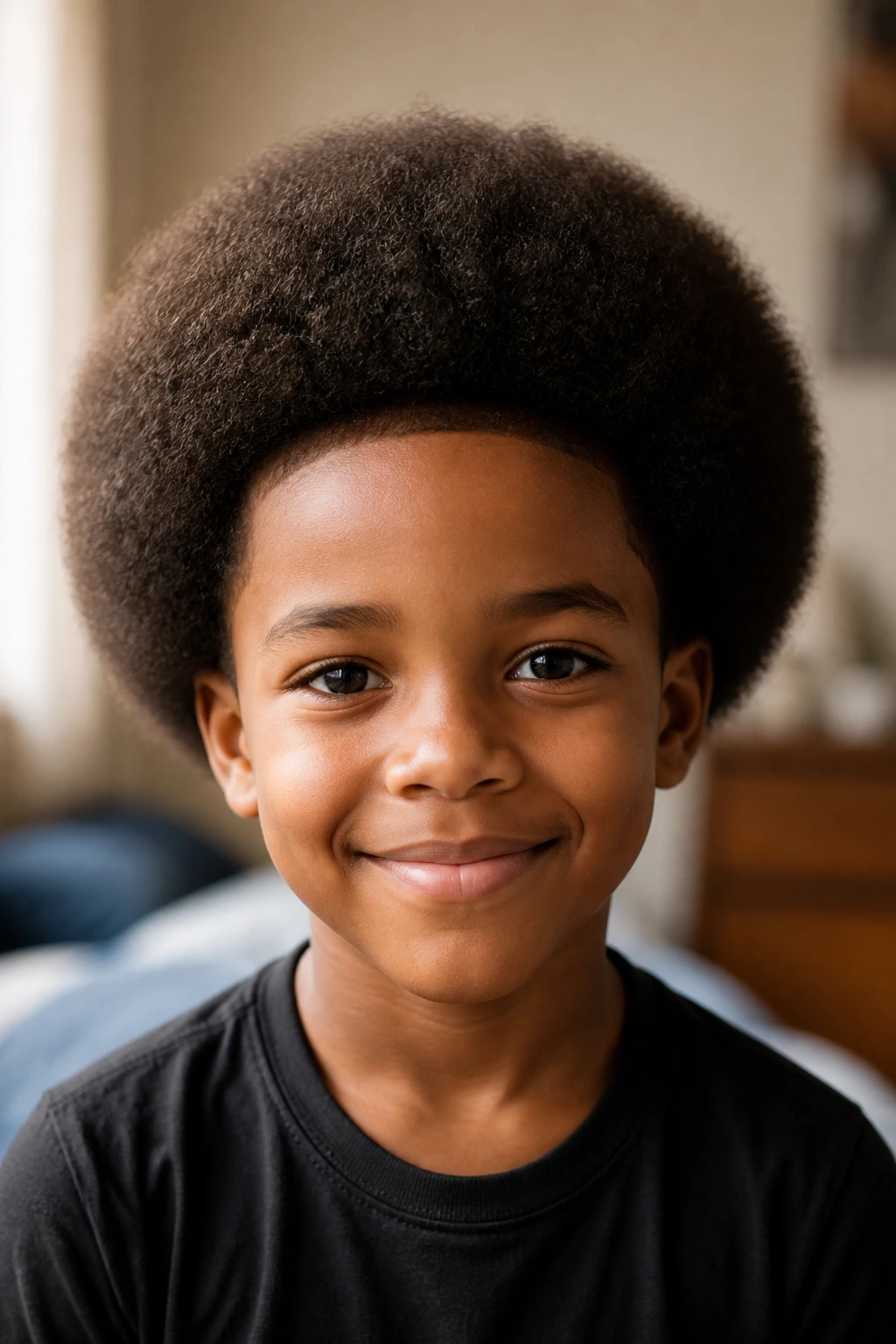
A rounded afro shape works best when the silhouette follows the head instead of fighting it. The trim should even out the outline and keep the volume balanced on top and around the sides.
Cutting it dry helps a lot. Coily hair shrinks, and what looks level wet can come back uneven once it dries. A dry trim respects the real shape and keeps the afro looking intentional rather than accidentally puffy.
25. The Tapered Natural Fro With a Clean Outline
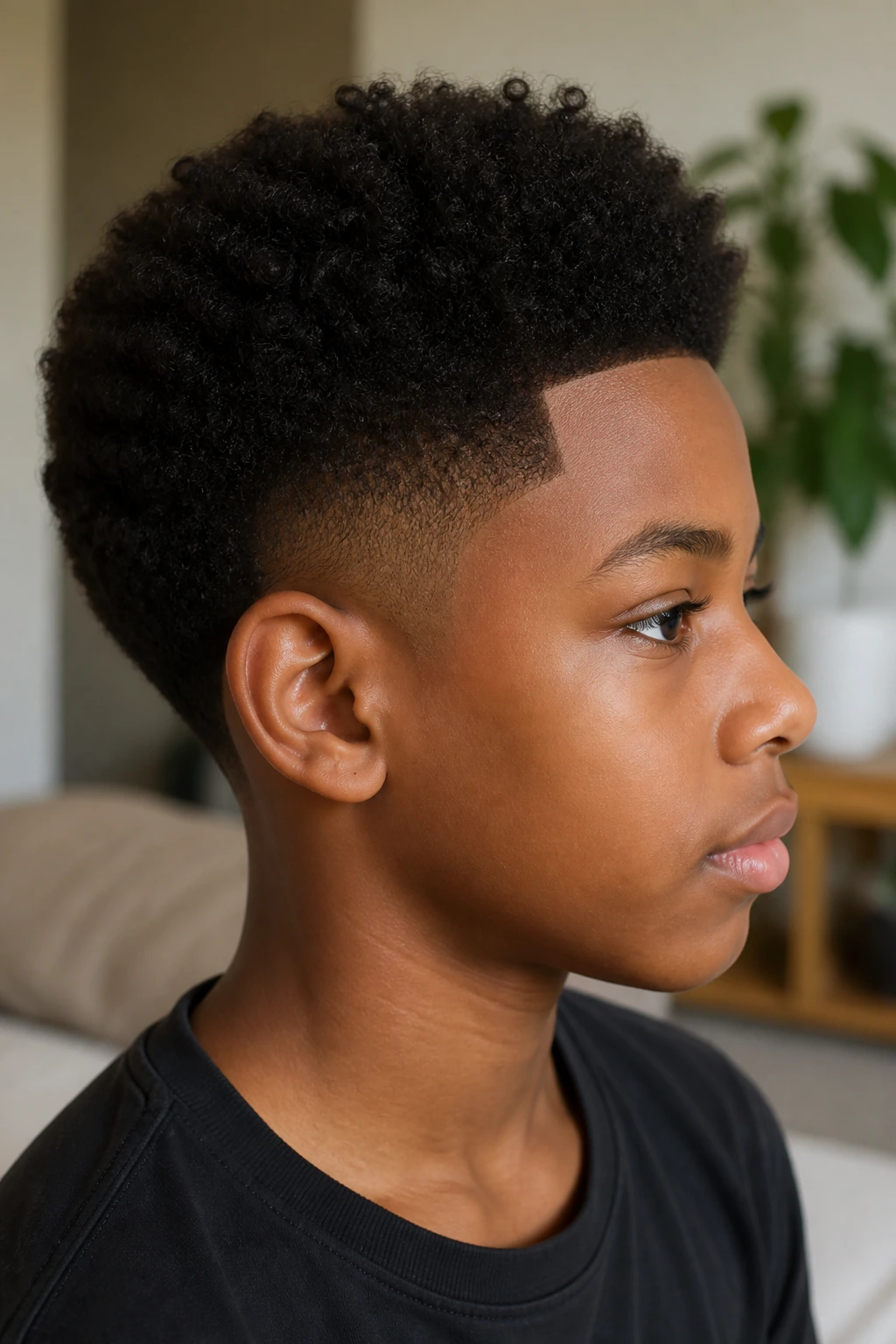
This version keeps the top full and the sides slimmer. That simple shift makes the hair feel shaped without flattening what makes it special in the first place.
A clean outline around the nape and temples sharpens the silhouette, which is useful if the hair tends to spread wider as it grows. It’s a neat cut with some room left for texture, and that balance matters.
26. The Protective Braids With Fresh Parts
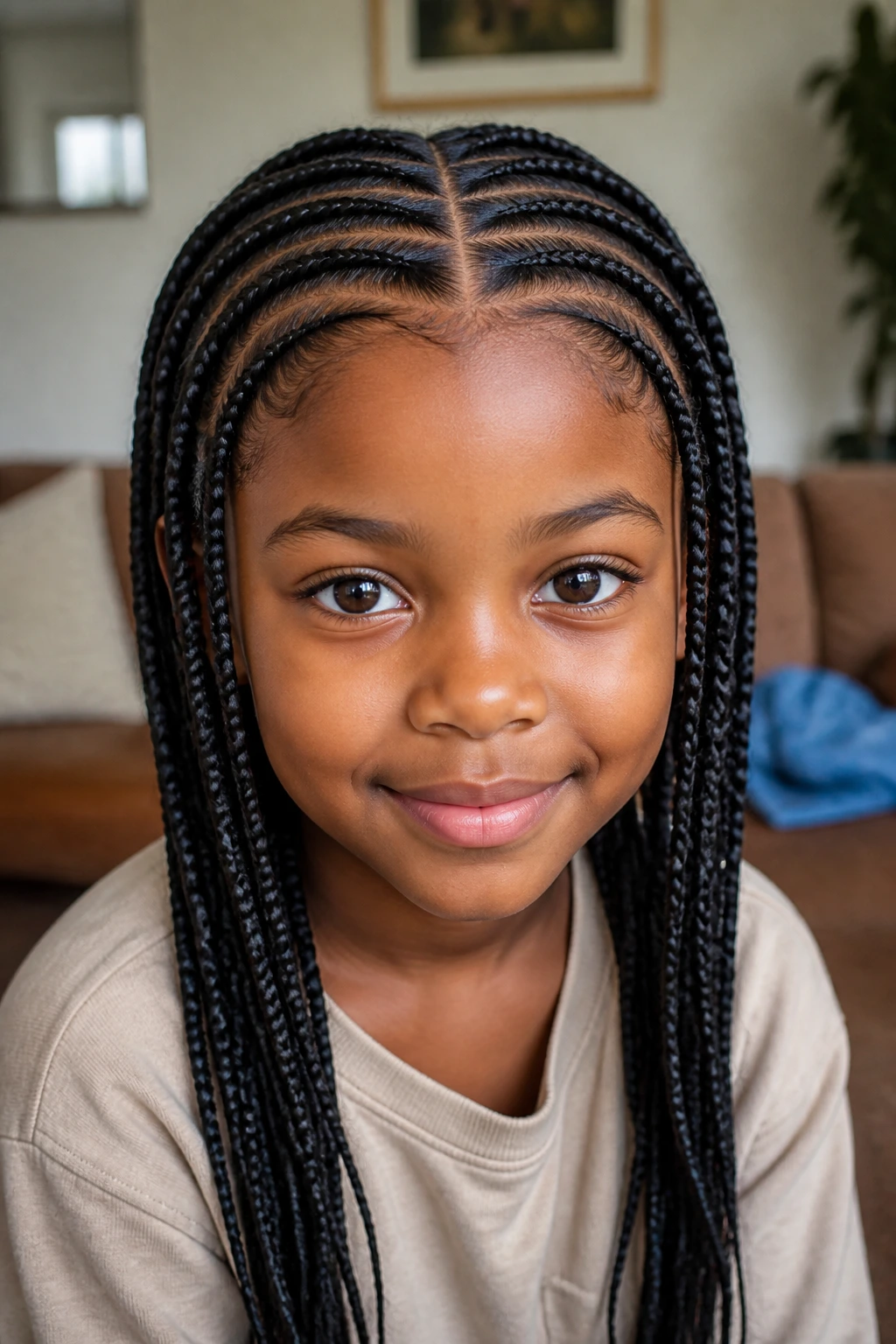
Braids are more than a style; they’re a way to keep hair settled and protected for a stretch of time. The part lines should be neat but not tight, and the braid size should match the child’s age, hair density, and comfort level.
What to Watch For
-
The scalp should not look pulled or shiny at the root.
-
The braids should sit close without tugging at the hairline.
-
Fresh parts make the style look crisp, but tension matters more than perfection.
If a child complains about soreness, don’t brush it off. Tight braiding can be miserable, and comfort has to win.
27. The Two-Strand Twists With a Tapered Finish
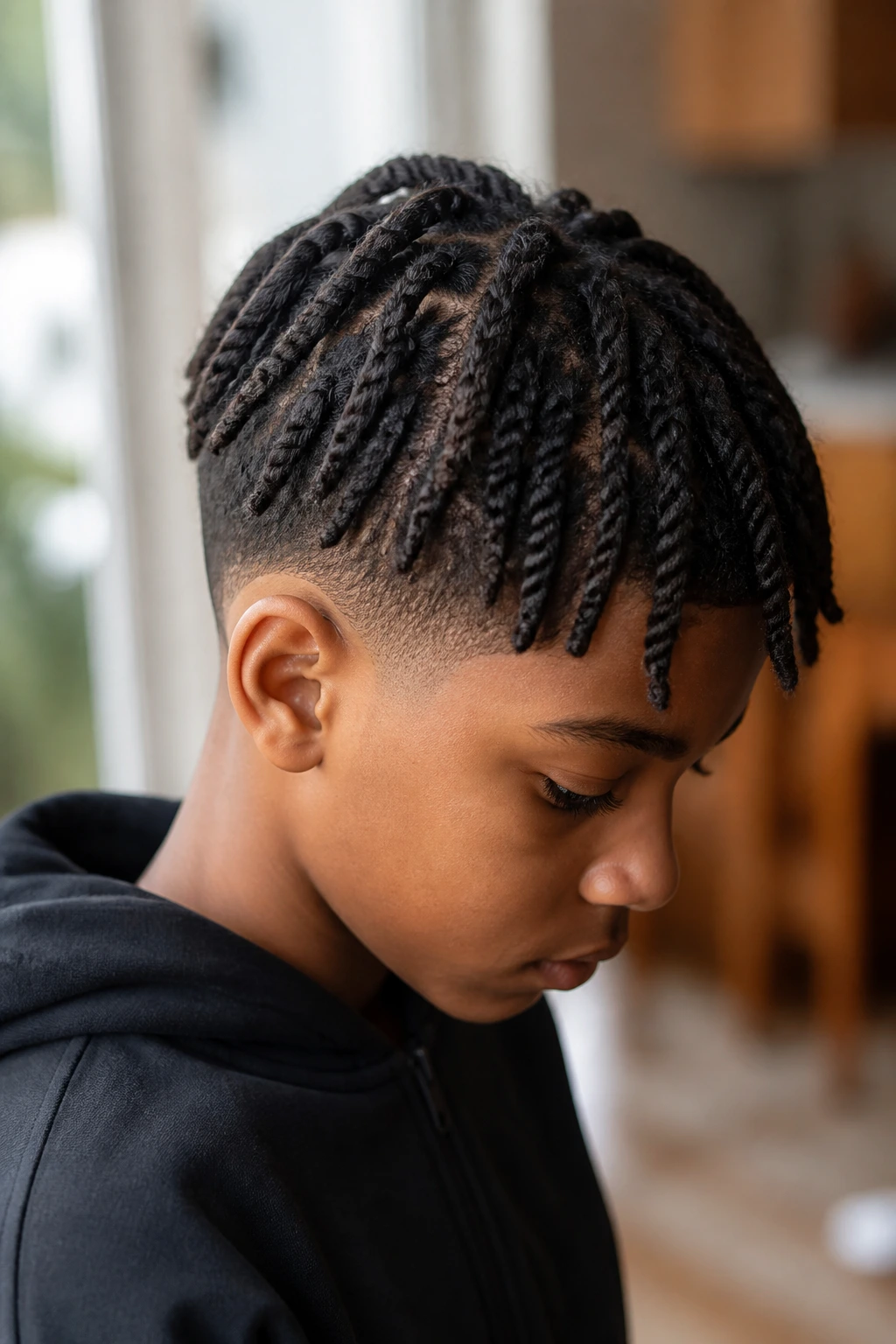
Two-strand twists sit somewhere between a style and a shape. They keep hair controlled without the firmer feel of braids, and they can be worn a little loose or a little tighter depending on the look you want.
A tapered finish around the neckline keeps the whole thing from feeling bulky. It’s a smart choice when you want lower maintenance than loose hair, but not the more structured feel of cornrows or tight braids.
28. The Loc-Friendly Outline Cut
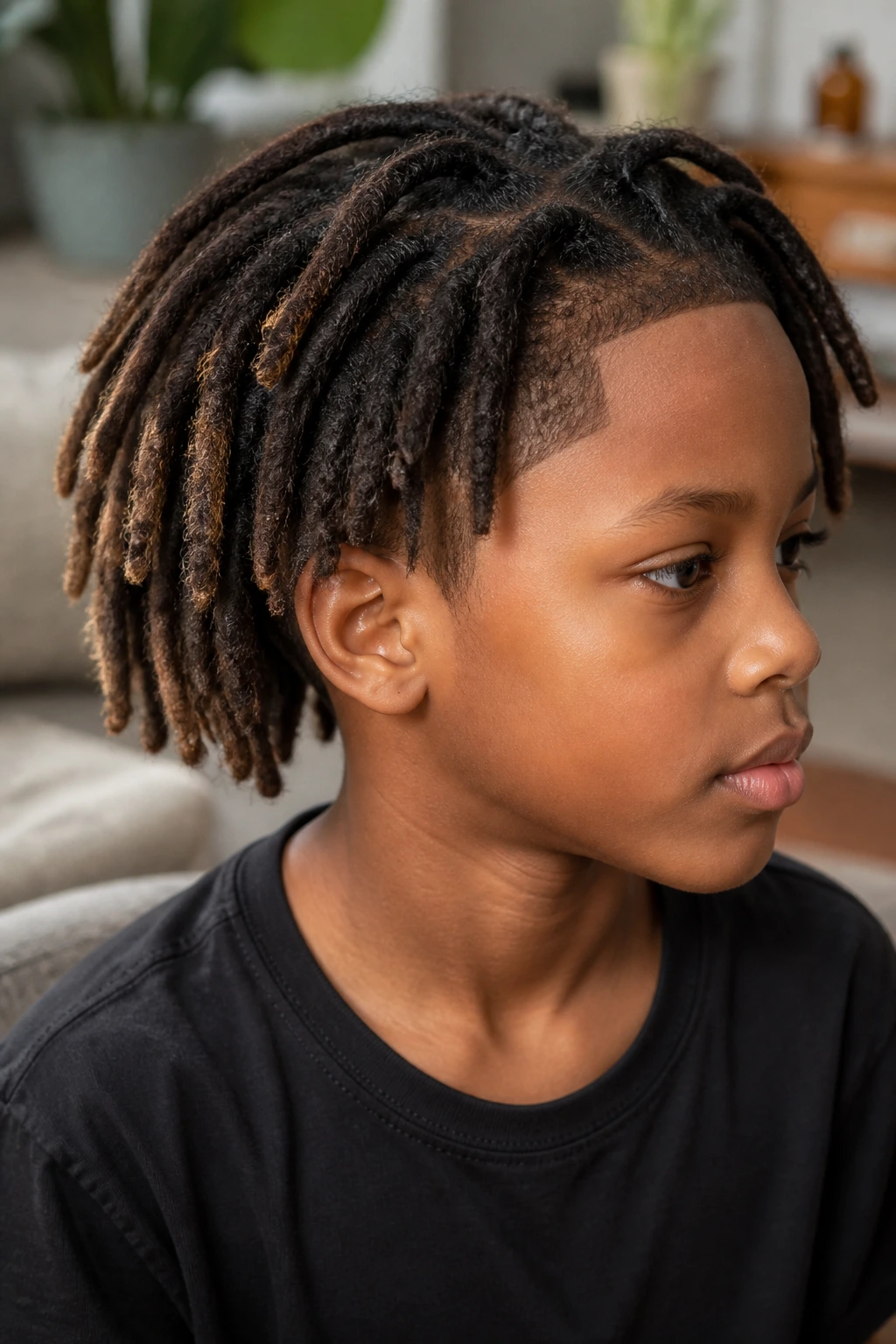
For kids wearing locs, the haircut idea is usually about the outline, not the length. Clean up the nape, tidy the hairline, and shape the silhouette so the locs look purposeful instead of simply untrimmed.
That’s a subtle difference, but a real one. A crisp outline makes the whole style feel finished without touching the loc length itself. If the hair is growing out unevenly at the sides, this kind of shaping helps a lot.
29. The Asymmetrical Bob With One Side Longer
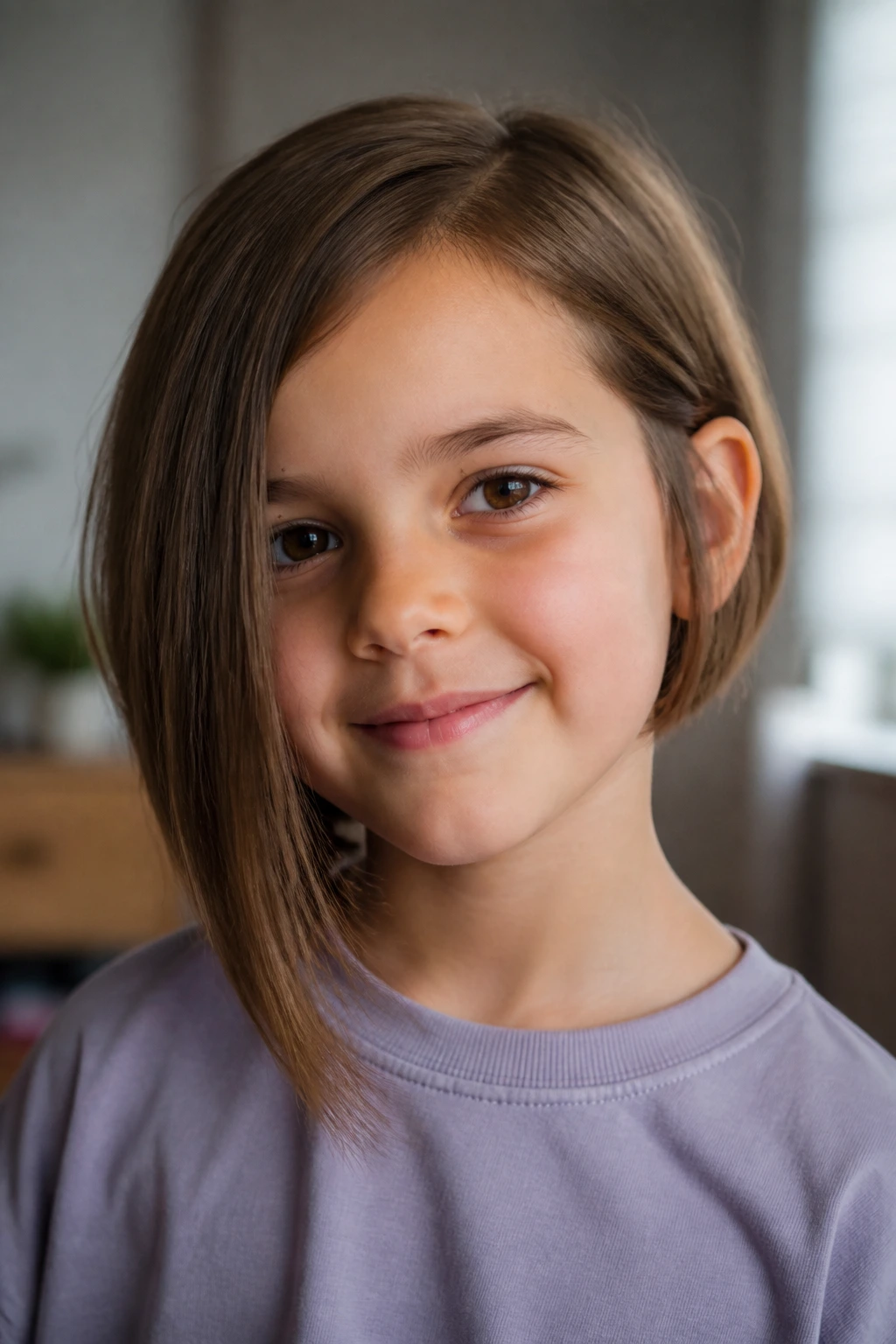
An asymmetrical bob has a little built-in attitude. One side sits slightly longer than the other—usually by a half-inch to an inch—and that small angle makes the cut look deliberate instead of plain.
It’s a good pick for kids who like something a little different but still need the hair to stay out of the face. Too dramatic an angle can feel fussy on thick hair, so keep the difference modest unless the child really wants the effect.
30. The Modern Mushroom Cut With Softer Edges
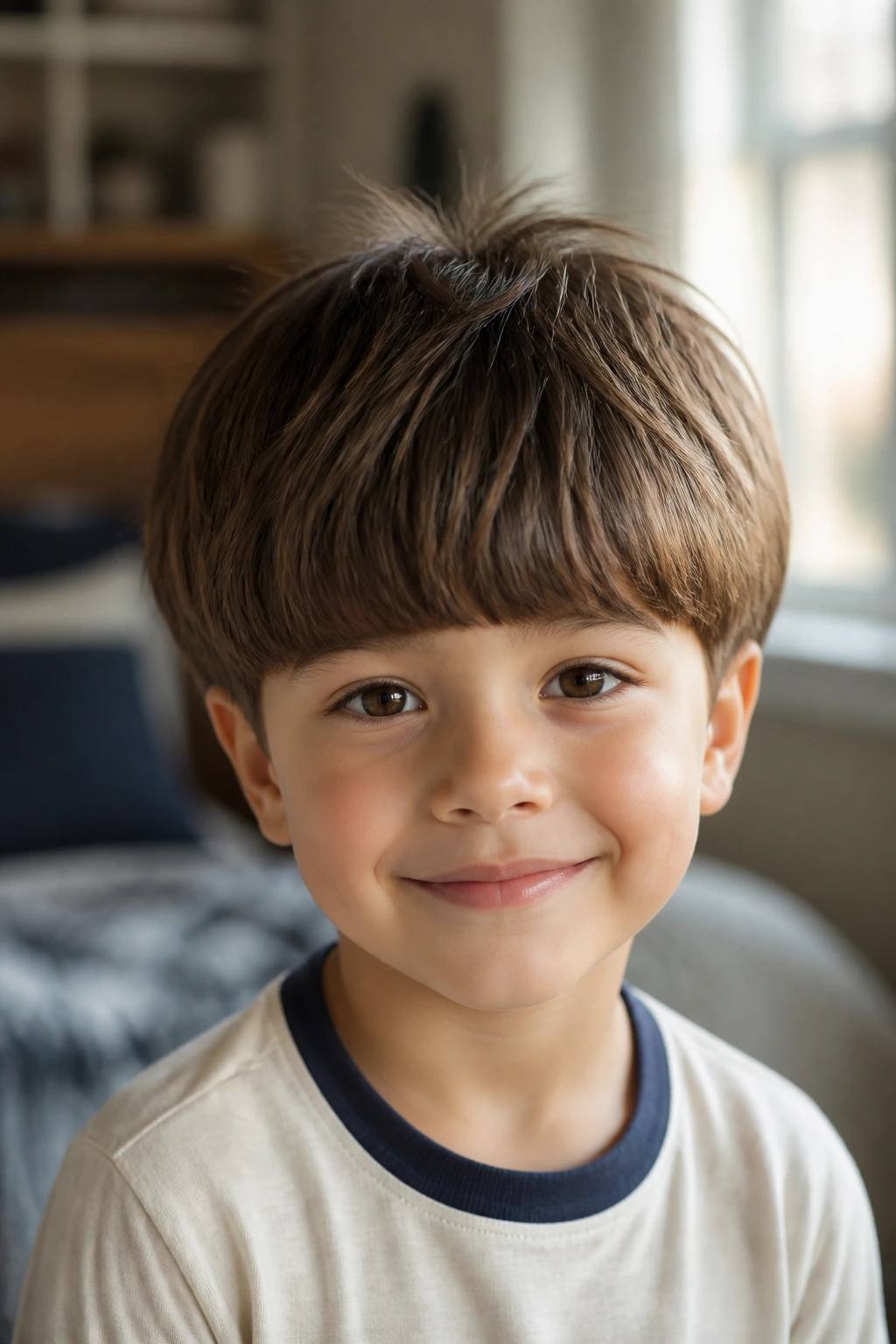
The old mushroom cut had a bad habit of sitting like a cap. The modern version keeps the roundness but softens the perimeter and adds texture so it doesn’t look boxed in.
This cut can be charming on straight hair, especially when the top is left with a little lift. The key is not to over-round the shape. A little softness around the ears and nape goes a long way.
31. The Pageboy Cut That Sits at the Jaw
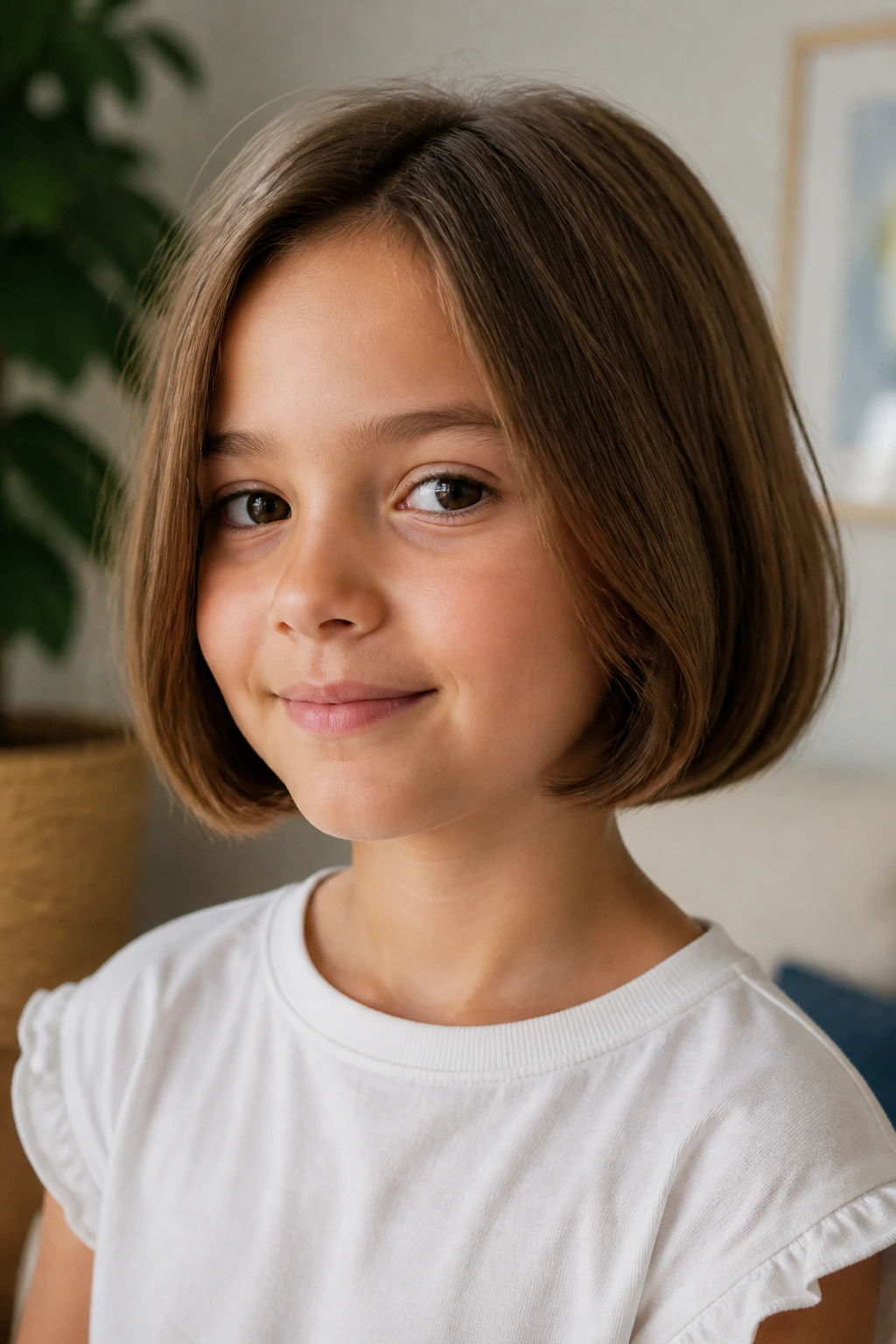
A pageboy cut sits close to the head, with the ends curving under around the jawline. It has a neat, classic feel, which is why it works so well for kids who like hair that looks smooth and controlled.
The ends should be blunt enough to show shape but soft enough not to feel severe. It’s a quiet haircut, really. Not boring—just tidy in a way that saves time.
32. The Side-Swept Fringe for Fine Hair
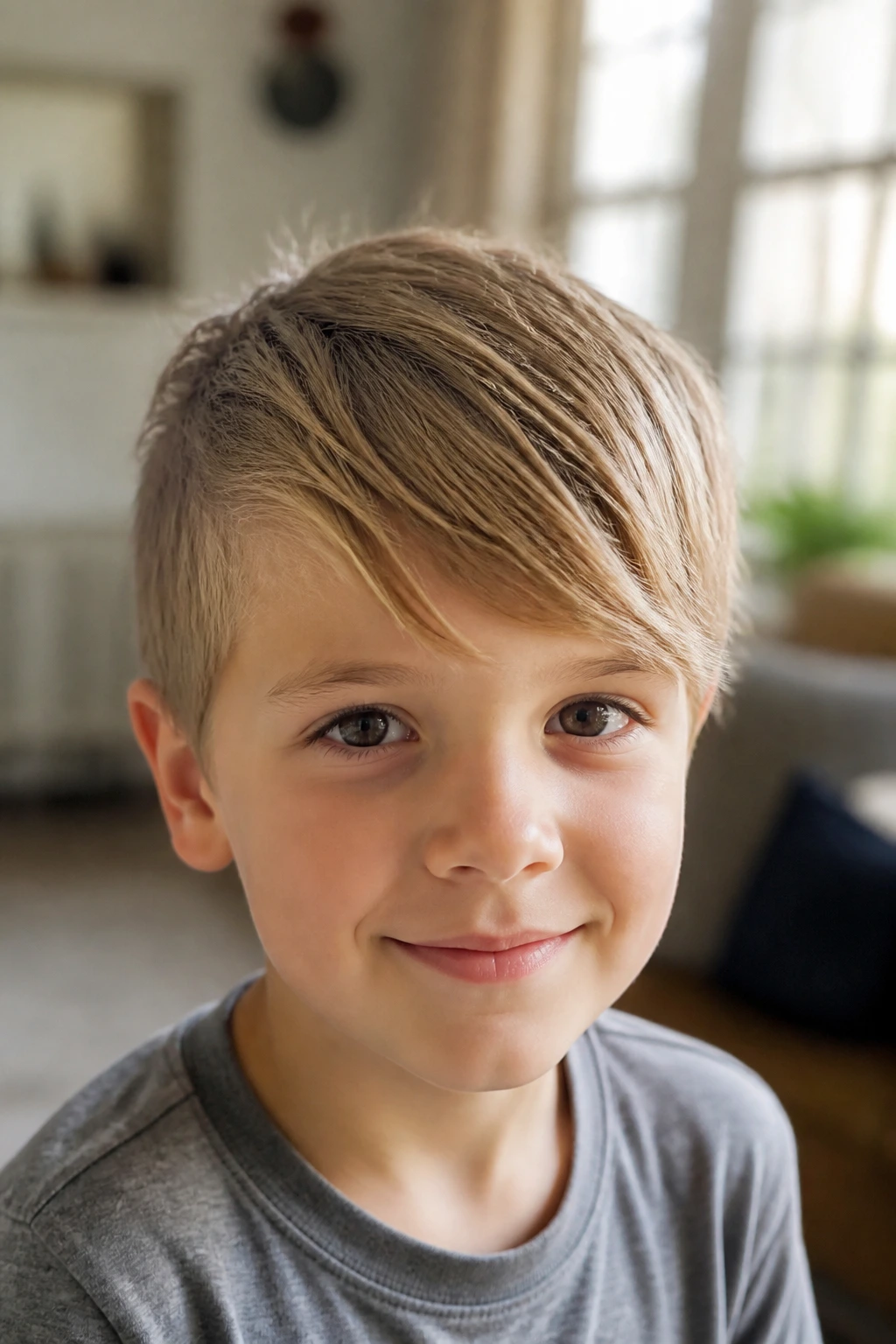
Fine hair benefits from a fringe that can move. A side-swept fringe gives you that movement without the heaviness of blunt bangs, and it can make the top look fuller than it really is.
The mistake here is cutting it too short. Leave enough length for the fringe to sweep rather than sit in a tiny little ridge. Once it starts touching the eye, the shape gets annoying fast.
33. The Layered Curly Cut That Lets Ringlets Bounce
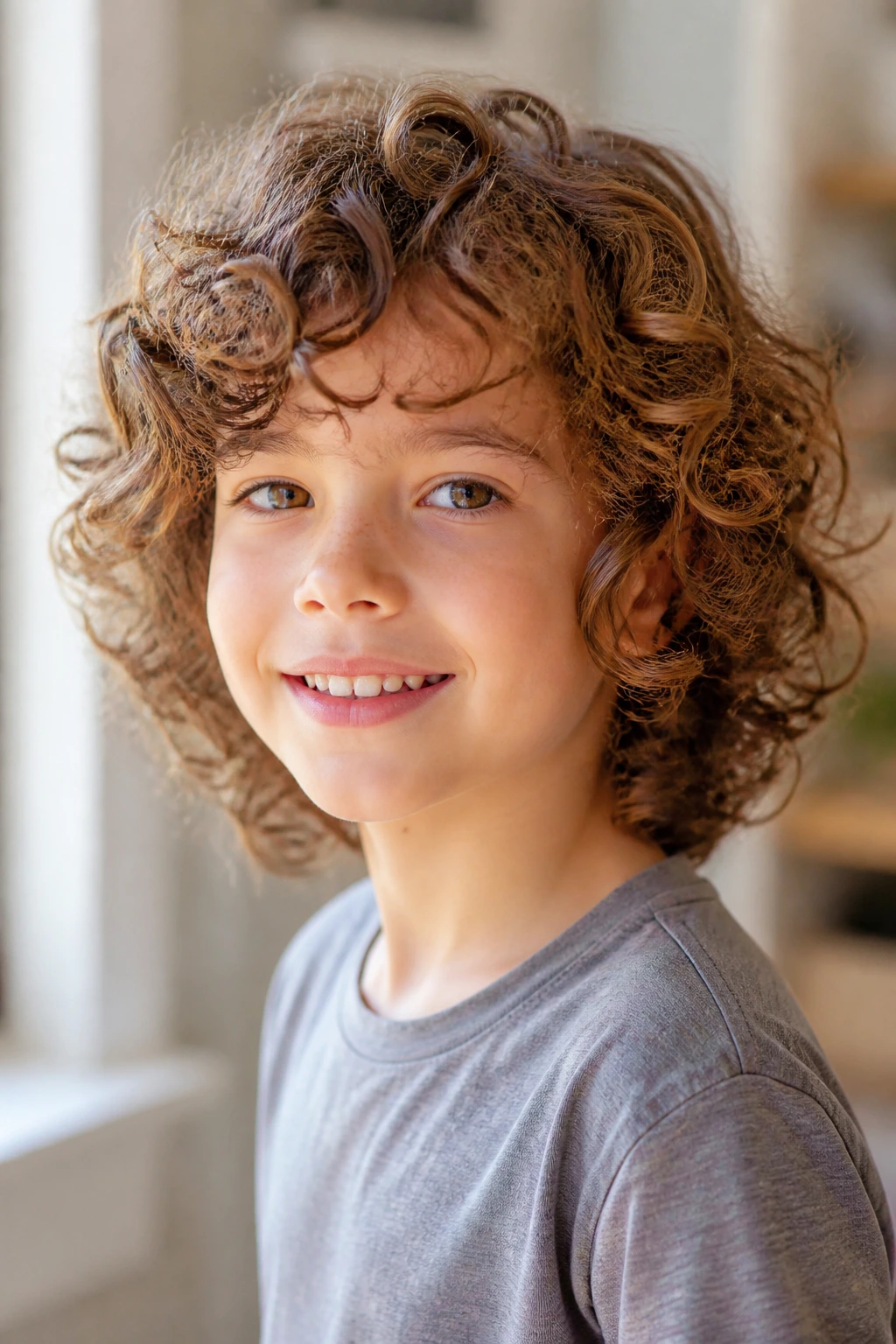
Curly hair likes a haircut that respects the curl clumps instead of flattening them into shape. Layers should follow the way the curls naturally sit, which helps the ringlets spring instead of collapsing into one heavy triangle.
Dry cutting is often the better call here. Wet curls lie. Dry curls tell the truth, and that truth saves a lot of disappointment later.
34. The Mini Mullet With a Soft Back
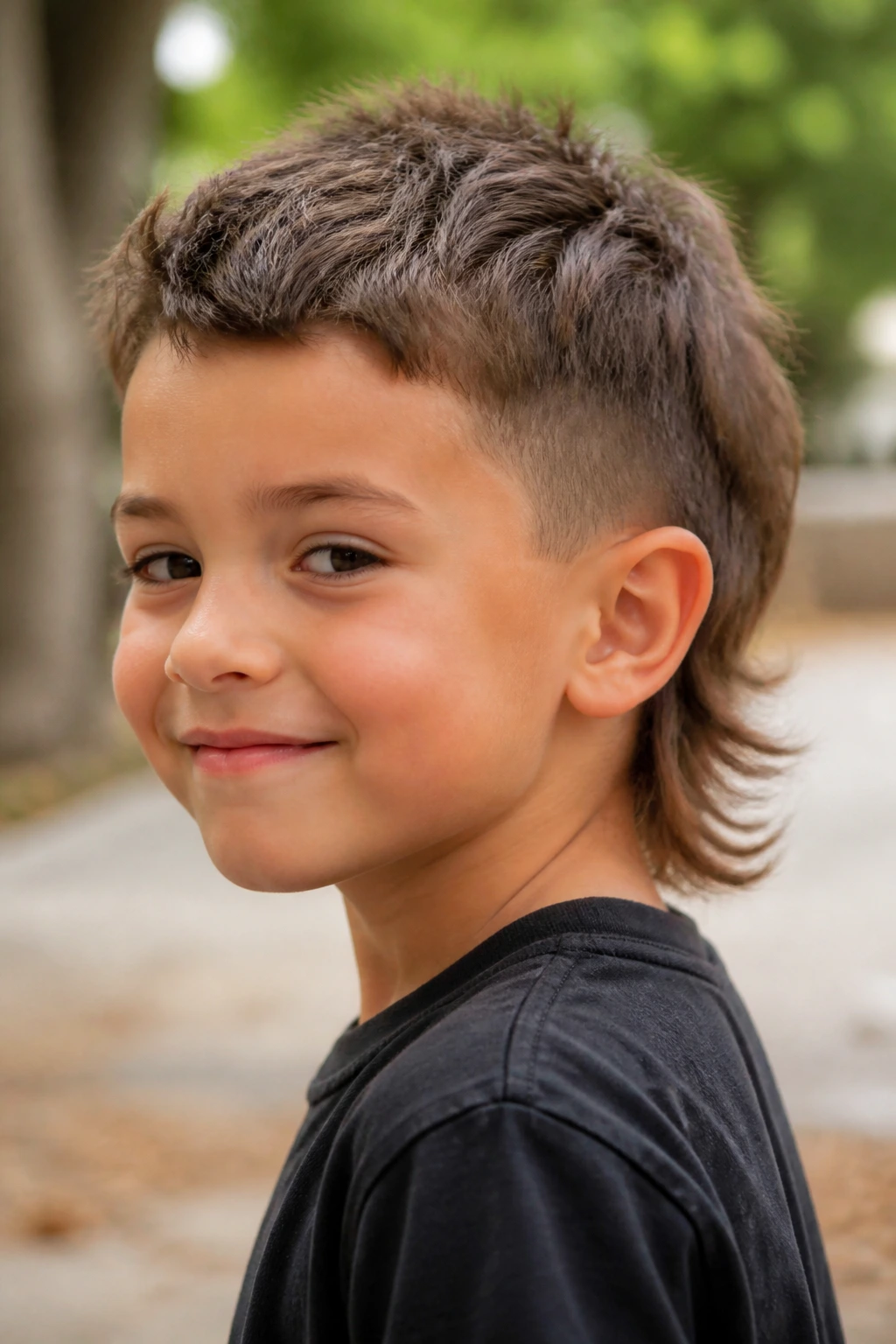
A mini mullet sounds bold, but the smaller version is more playful than dramatic. Keep the front and sides tidy, then leave the back a little longer so there’s a clear shape without the full retro statement.
Older kids often like it because it has attitude without requiring much care. If you keep the back only slightly longer, it reads more like a style choice and less like a joke haircut.
35. The Undercut With a Longer Top Layer
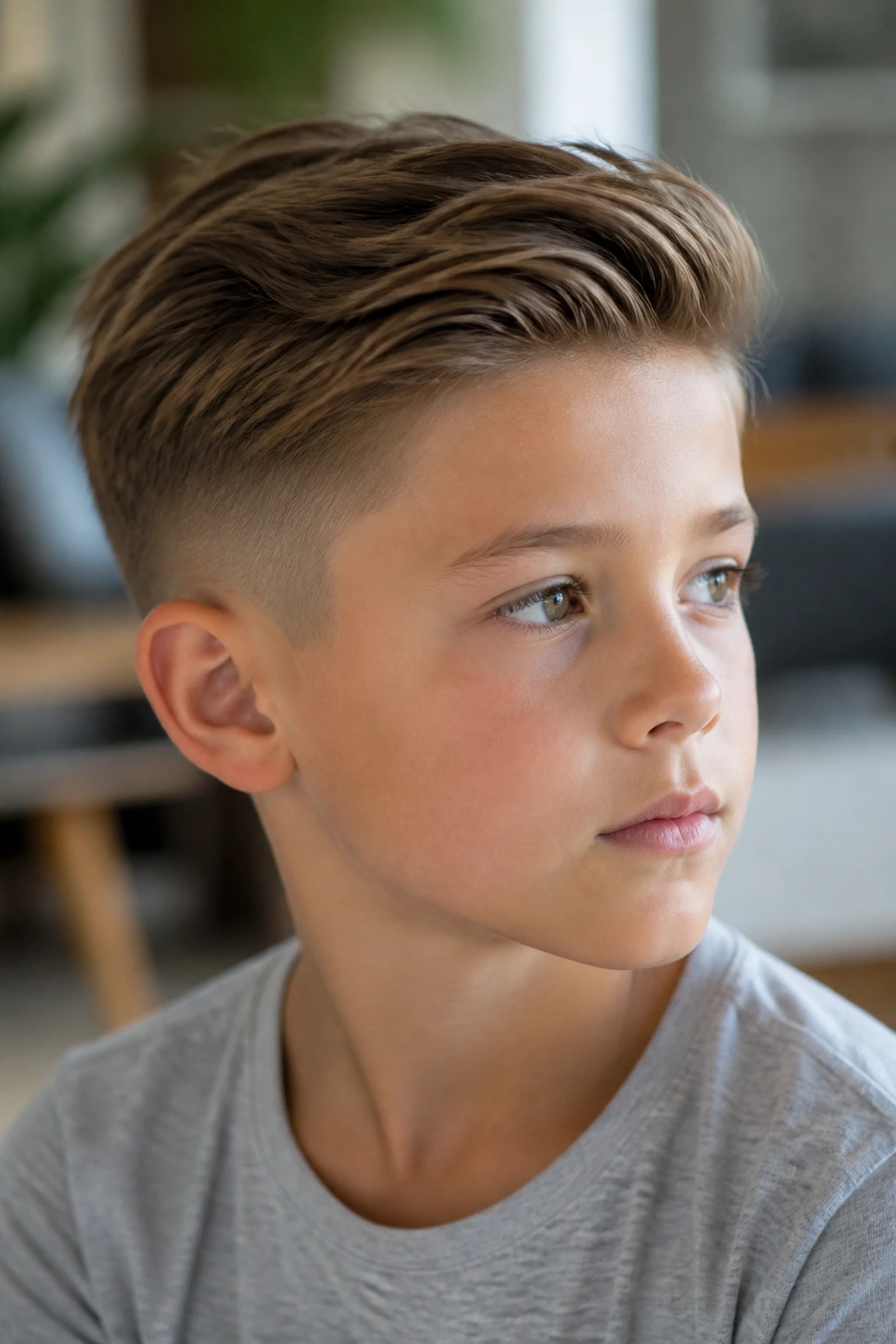
An undercut gives you options. The shorter section underneath removes bulk, while the longer top layer can fall over it, get brushed back, or be pushed to one side depending on the day.
That flexibility is the point. Worn down, it looks neat. Pushed up or back, it shows edge. It’s also a good answer for thick hair that feels heavy no matter what you do with it.
36. The Choppy Crop With Piecey Texture
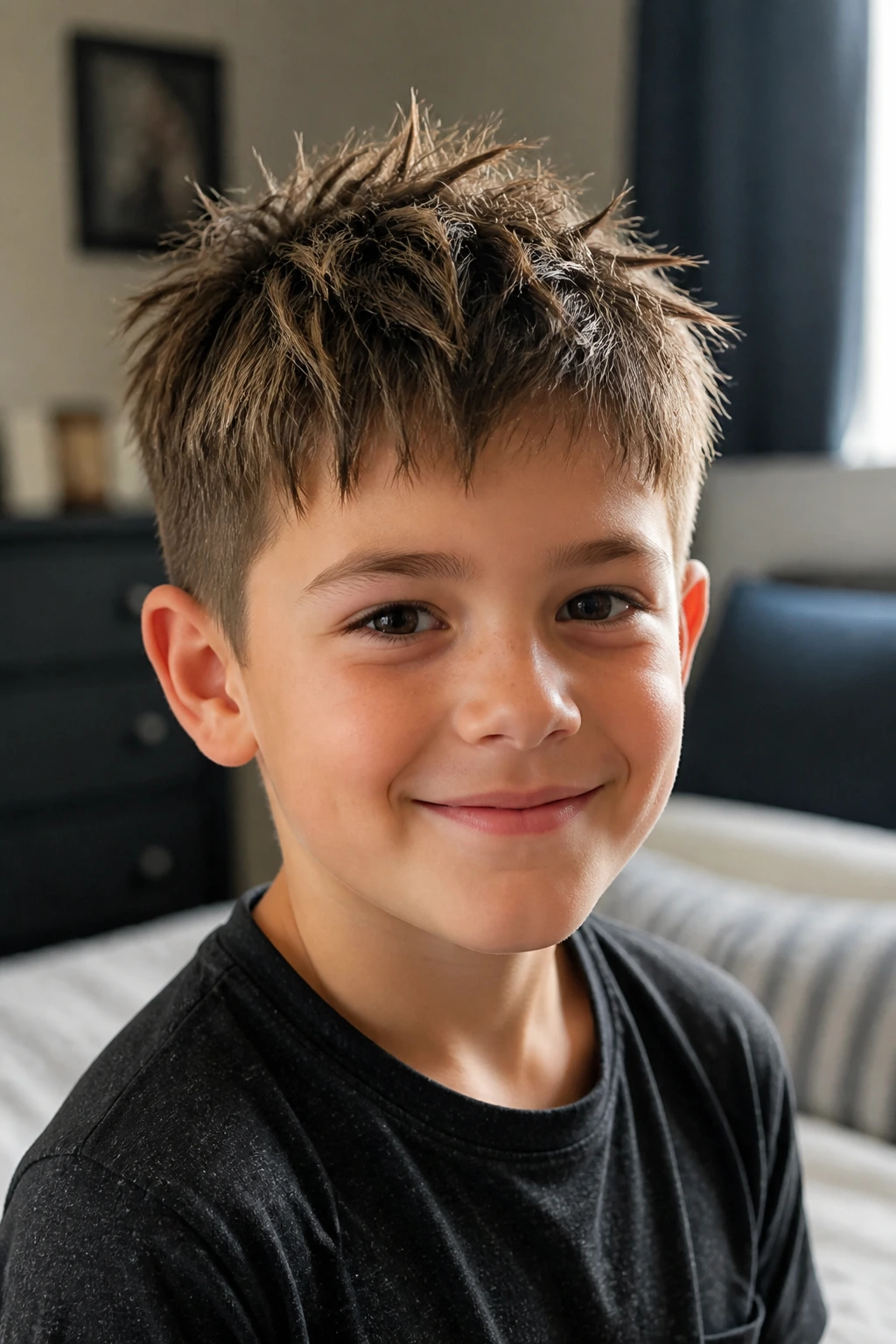
A choppy crop breaks the top into small pieces, which keeps the haircut from sitting like one solid block. The result looks lively, not polished in a stiff way, and that suits kids who want something easy but not plain.
A tiny bit of matte cream or light paste helps define the pieces. Too much product will glue the strands together, so start with almost nothing and add only if the hair needs it.
37. The Half-Up Friendly Long Cut
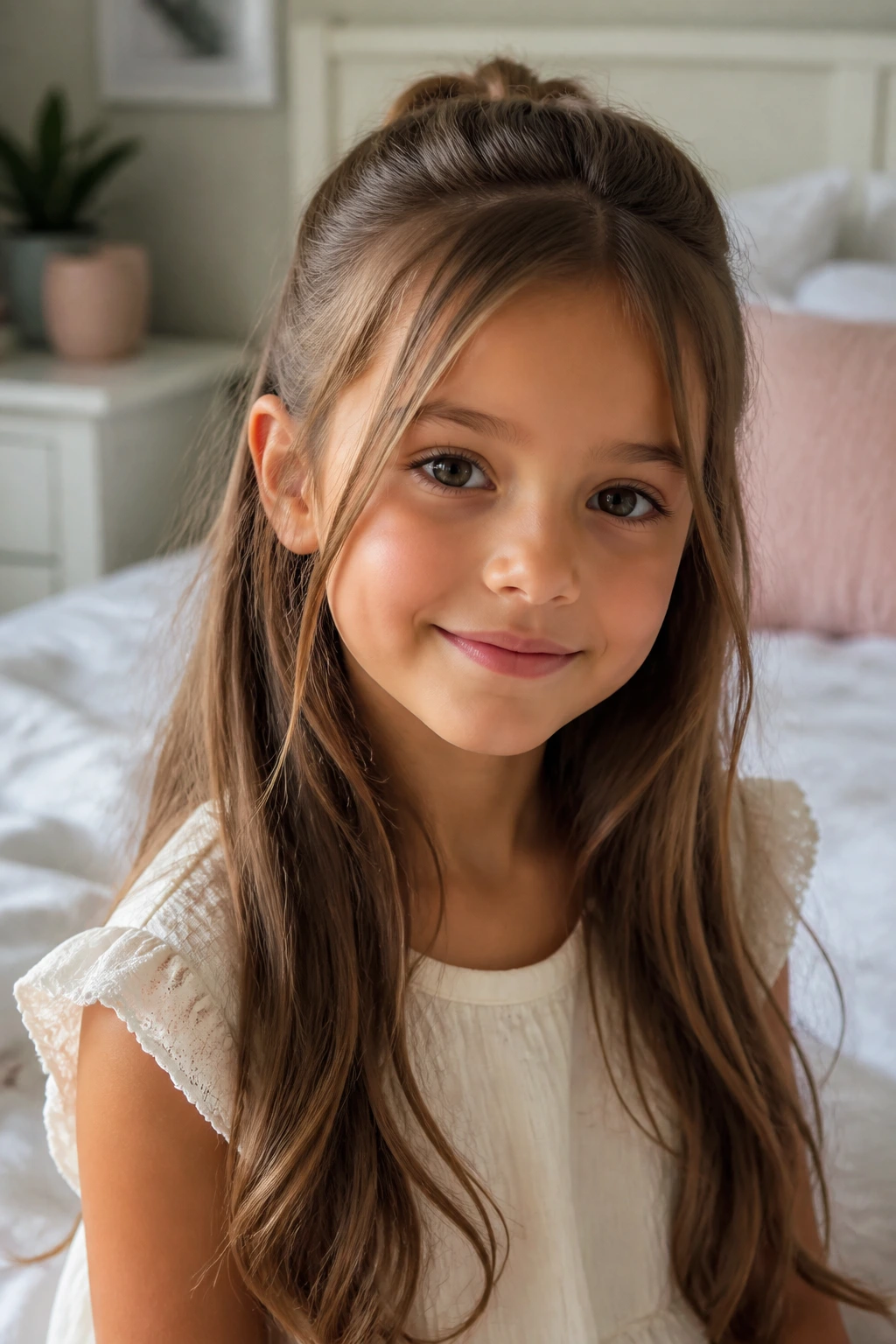
Some kids want length, period. This cut keeps the hair long enough for ponytails, half-up styles, buns, and braids, but shapes the front so it doesn’t hang flat against the face.
A few light face-framing layers keep the top from feeling heavy when the hair is worn down. That makes the cut more useful on ordinary days and less dependent on one perfect styling trick.
38. The Shoulder Bob That Grows Out Gracefully
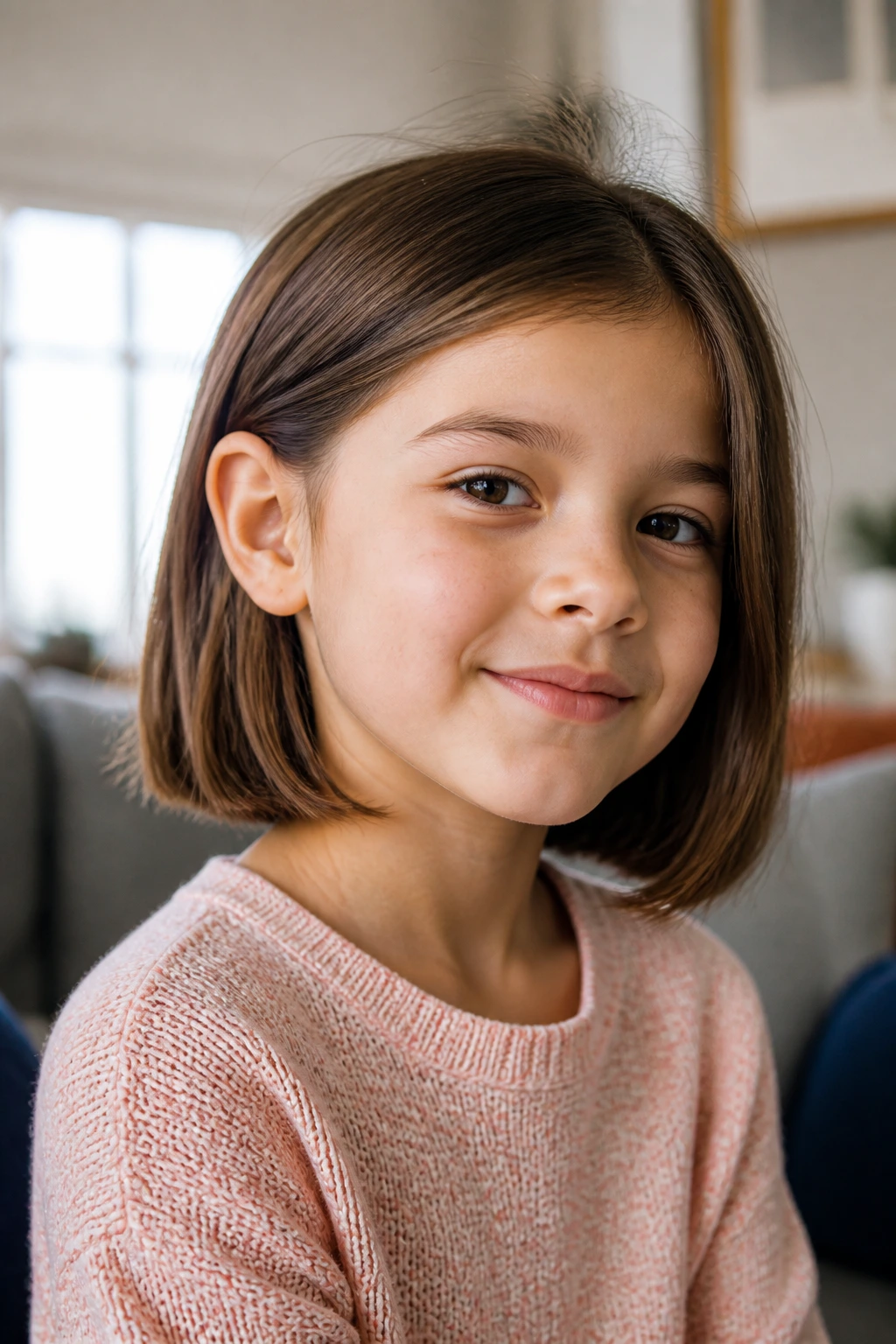
A shoulder bob sits between a bob and a longer lob, which makes it one of the easiest shapes to live with. It can tuck behind the ears, go half-up, or hang loose without looking overdone.
The best part is the grow-out. As the hair gets longer, the style doesn’t fall apart immediately. It just softens into the next version of itself, which is exactly what you want when appointments get delayed.
Matching a Cut to Hair Texture, Cowlicks, and Morning Routines
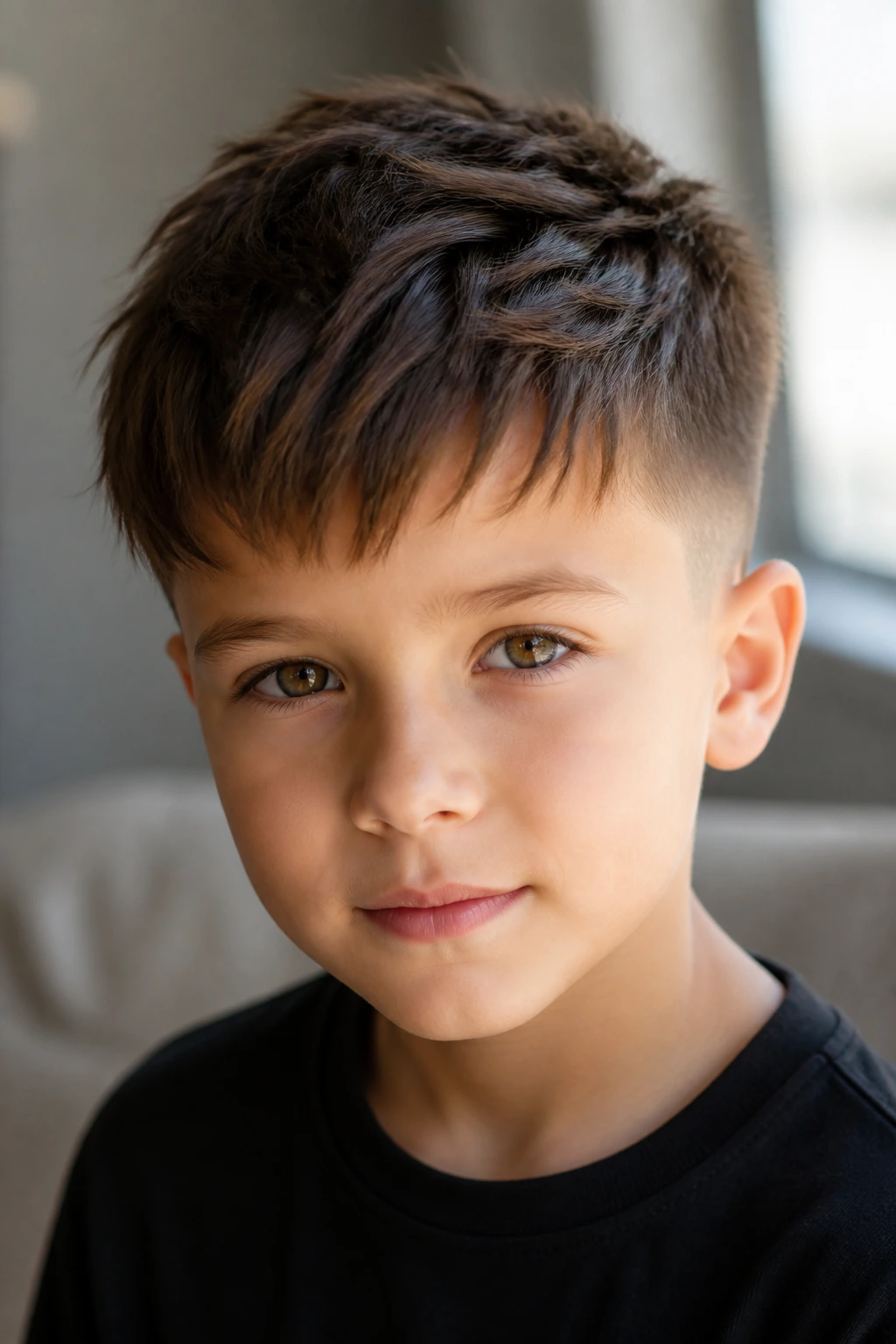
The smartest kids’ haircut is the one that works with the hair already on the head. That sounds obvious, but it’s where most bad choices start. A photo gets picked because it looks cute, then the child’s cowlick, curl pattern, or thickness walks into the room and ruins the plan.
Straight and Fine Hair
Straight, fine hair likes shape. Blunt edges, soft side parts, and light fringe work better than over-thinned layers, which can make the ends look see-through. If the hair lies flat, keep some structure on top so the cut doesn’t disappear by lunchtime.
Thick Hair
Thick hair needs bulk removed in the right spots, not just hacked short everywhere. A low taper, interior layering, or a rounded outline keeps it from puffing into a box. If the hair grows fast, leave a little more at the crown and around the temples so the shape lasts longer.
Curly and Coily Hair
Curly and coily hair should be judged by the way it actually lives, not by how it looks damp. Shrinkage changes everything. Dry or near-dry cutting helps the stylist see where the curl lands, and that keeps the cut from ending up too short once it springs back.
Sensory-Sensitive Kids
Some kids hate hair on the neck, buzzing at the ears, or a cape brushing the skin. Those kids do better with soft necklines, scissors around the ears, and a stylist who moves quickly but calmly. Bring headphones if they help. And if the child is already tense, don’t force a short cut just because it seems easier on paper.
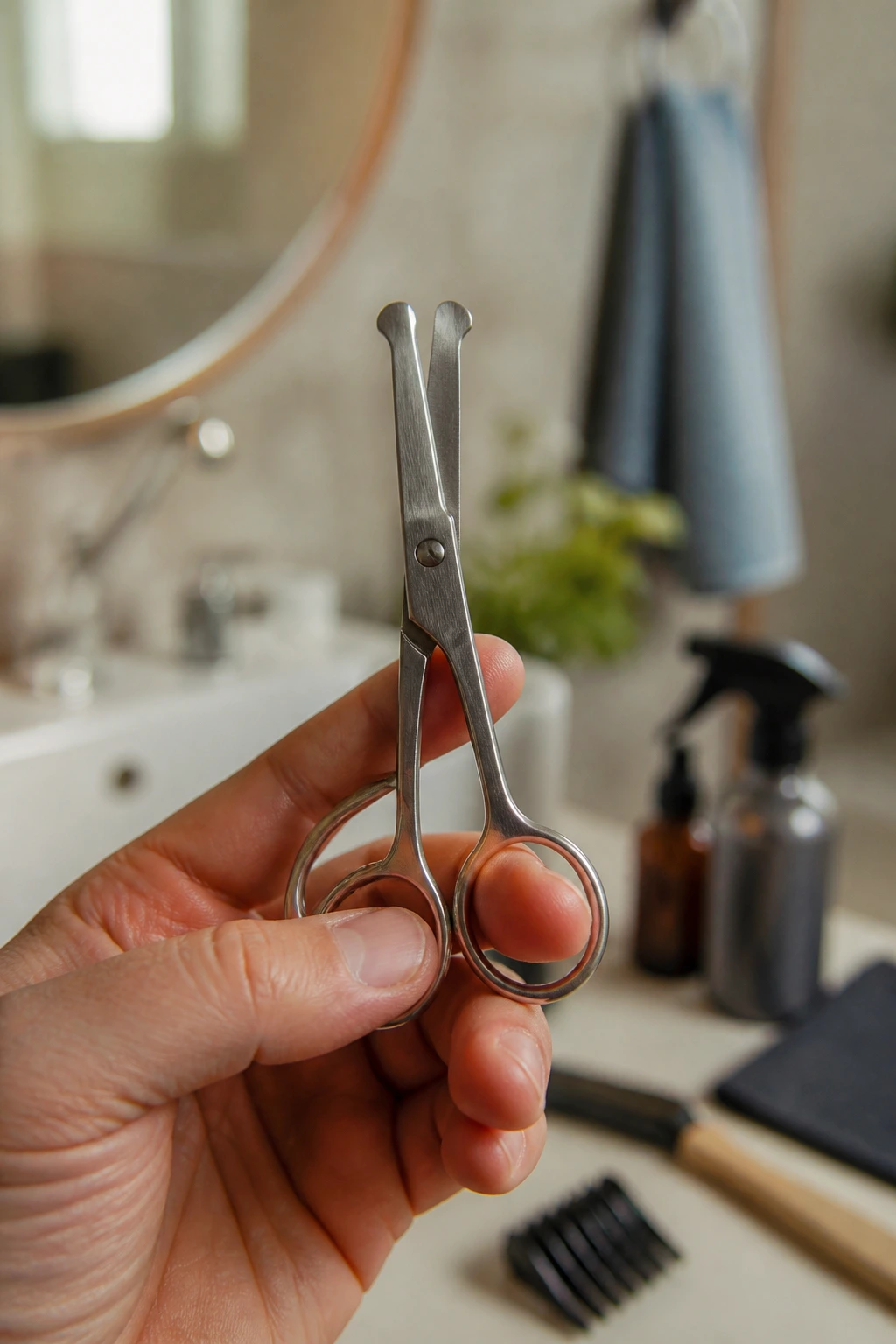
Essential Tools for Kid Haircuts at Home
-
Spray bottle: A fine mist helps reset cowlicks, bangs, and curls without soaking the hair.
-
Wide-tooth comb: Better than a fine comb for detangling curls, twists, and longer styles without yanking.
-
Detangling brush: Useful for straight or wavy hair that knots near the nape.
-
Sharp haircut scissors: Small, clean snips are much safer and neater than kitchen scissors, which crush the ends.
-
Clippers with guards: Helpful for fades, buzzes, and clean necklines; the guard number controls length.
-
Salon cape or large towel: Keeps cut hair off the clothes and makes cleanup less miserable.
-
Leave-in conditioner or curl cream: A small amount helps shape curls and waves without making them greasy.
-
Matte styling cream or light paste: Good for crops, faux hawks, and piecey short cuts.
-
Small section clips: Handy when you need to separate bangs, layers, or the top section of longer hair.
-
Hand mirror: Lets a child see the back and helps them feel part of the decision, not trapped in it.
How to Explain the Look to a Barber or Stylist
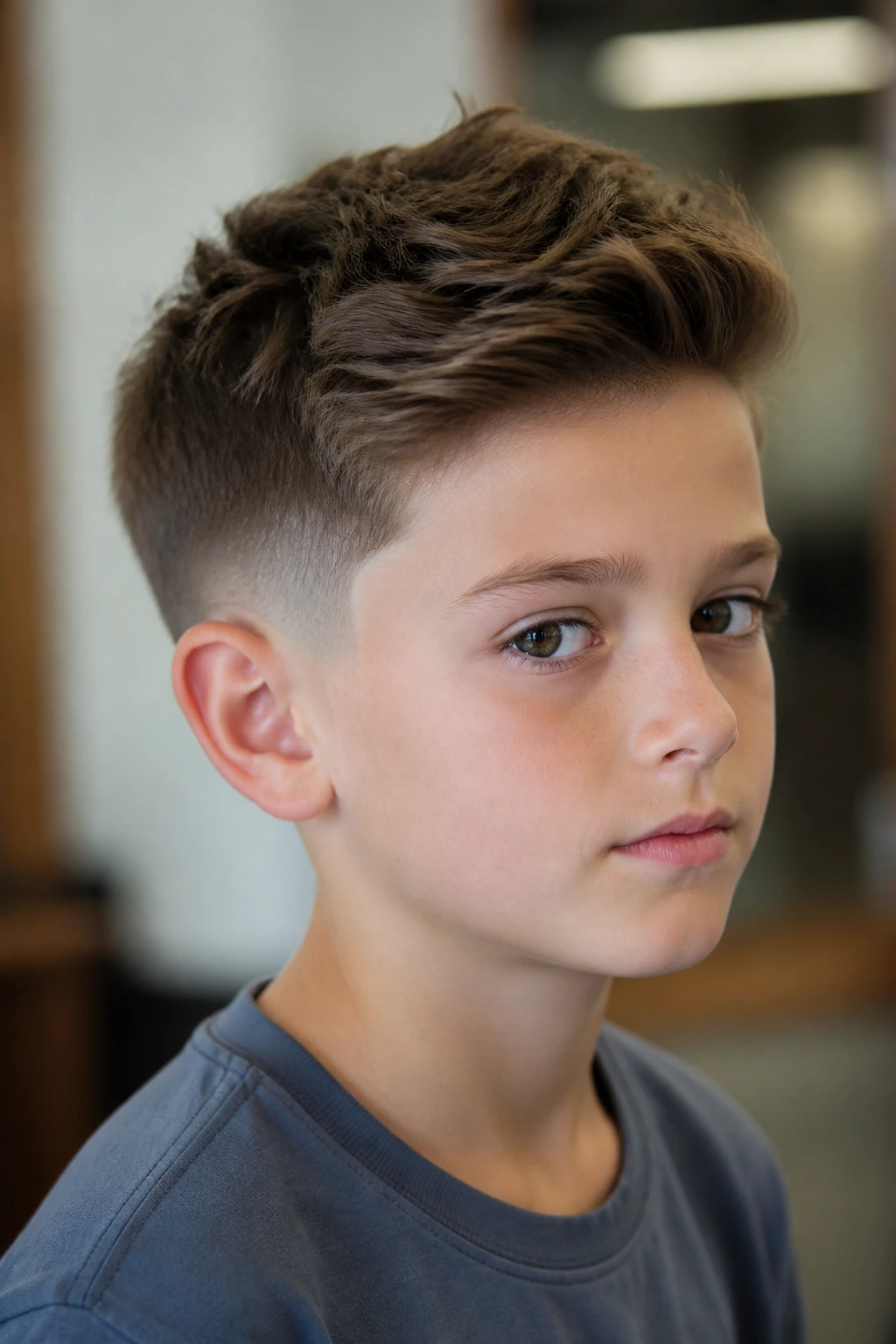
A photo helps, but it does not explain length. The better move is to bring a picture and a few words that tell the stylist what matters most: fringe length, ear coverage, neckline, and how often you want to come back. Those four things usually decide whether everyone leaves happy.
Say what you want in plain language. “Keep the fringe above the eyes.” “Leave the top long enough to part.” “I want the sides soft around the ears.” “My child hates the clippers at the nape.” That is more useful than waving at a screen and hoping for the best.
A good question to ask is, “How will this grow out in three weeks?” That one line saves more regrets than any trendy reference ever will.
Quick Styling Moves That Keep the Shape Intact
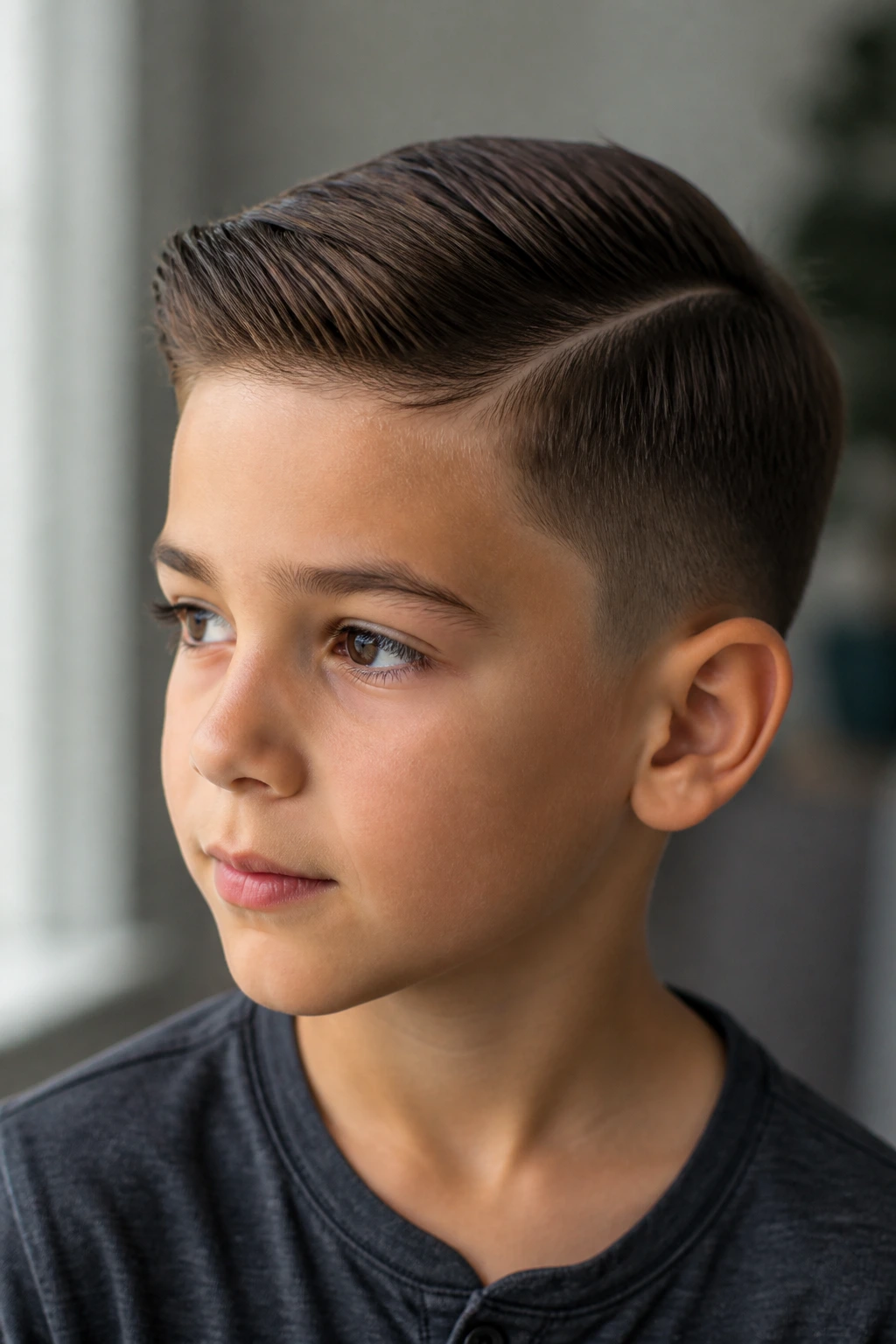
Water first: A spray bottle is enough to wake up most kids’ cuts. For a cowlick, dampen the spot, press it the direction you want, and let it dry there for a minute before touching it again.
Use less product than you think: A pea-sized amount of cream or paste goes far on a child’s head. Heavy product can make fine hair limp and curly hair crunchy, and neither one looks better after lunch.
Finger-style before you brush: Fingers separate pieces without flattening them. That matters on shags, crops, textured bobs, and curly tops where the goal is movement rather than neat helmet hair.
Finish the edges only if needed: A clean fingertip, a soft brush, or a toothbrush can tame flyaways around the ears and hairline. Don’t overdo it. If the whole head is sleeked down, the cut loses its shape.
Common Mistakes That Make Kid Haircuts Harder to Live With
-
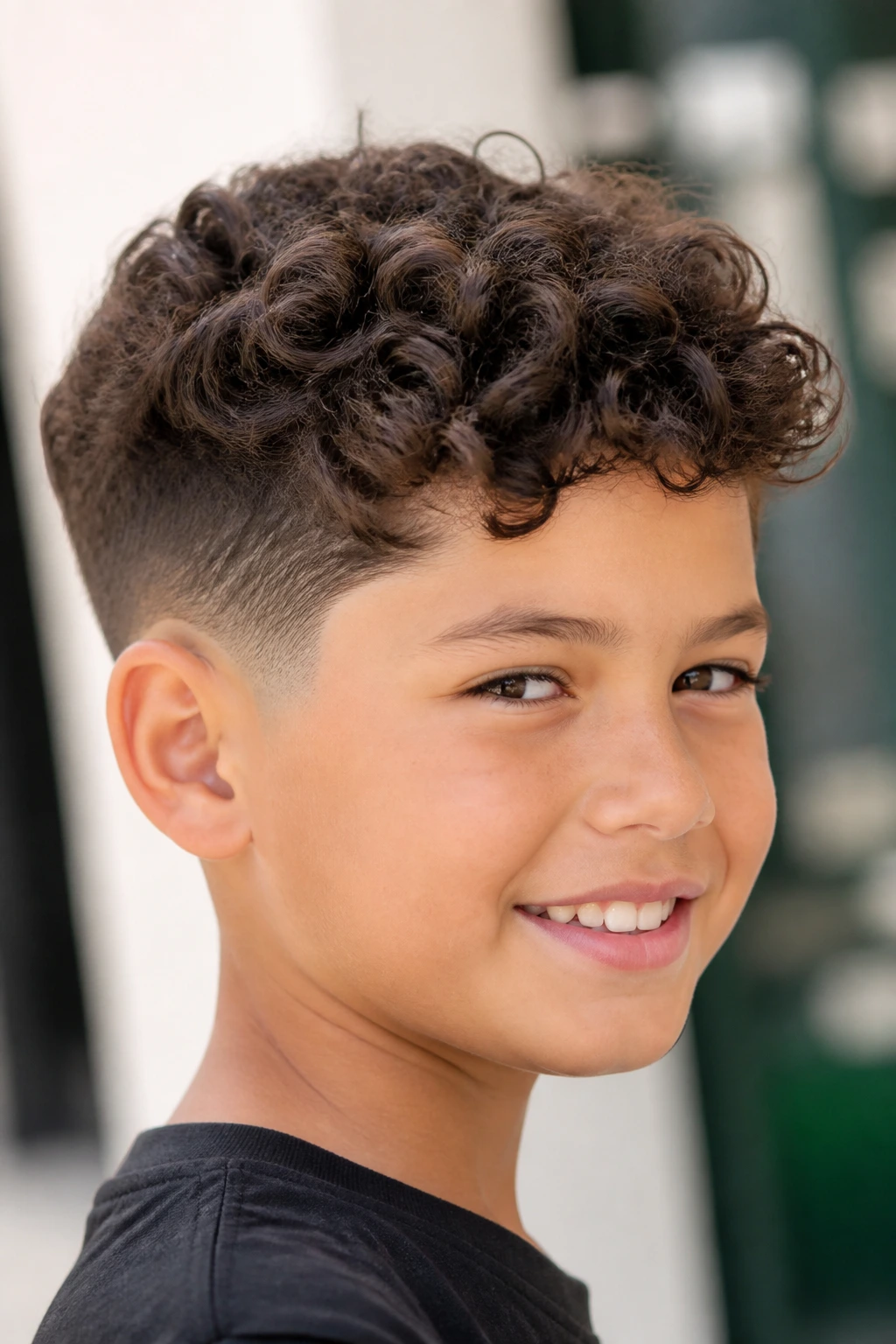
Choosing a photo that ignores hair texture: A straight-haired child and a curly-haired child do not wear the same cut the same way. Match the picture to the texture first, not the face.
-
Cutting bangs too short: Short bangs look neat for about a week. Then they spring upward, stick out, and land right where your child can feel them. Leave a little extra length and trim again later if needed.
-
Taking too much off the crown: This is how curls puff and thick hair turns boxy. If bulk is the problem, remove it inside the shape instead of mowing everything down.
-
Forgetting the cowlick: A strong cowlick at the hairline or crown will win unless the cut respects it. Leave extra length there or part around it.
-
Waiting too long on fades and bangs: A fade loses its clean edge fast, and bangs start to look messy before the rest of the cut does. If the shape depends on those details, trim earlier rather than later.
-
Using heavy product on fine hair: It makes the hair look oily and flat. Start light. You can always add more, but you cannot un-grease it.
Variations for Curly, Coily, Fine, and Sensory-Sensitive Hair
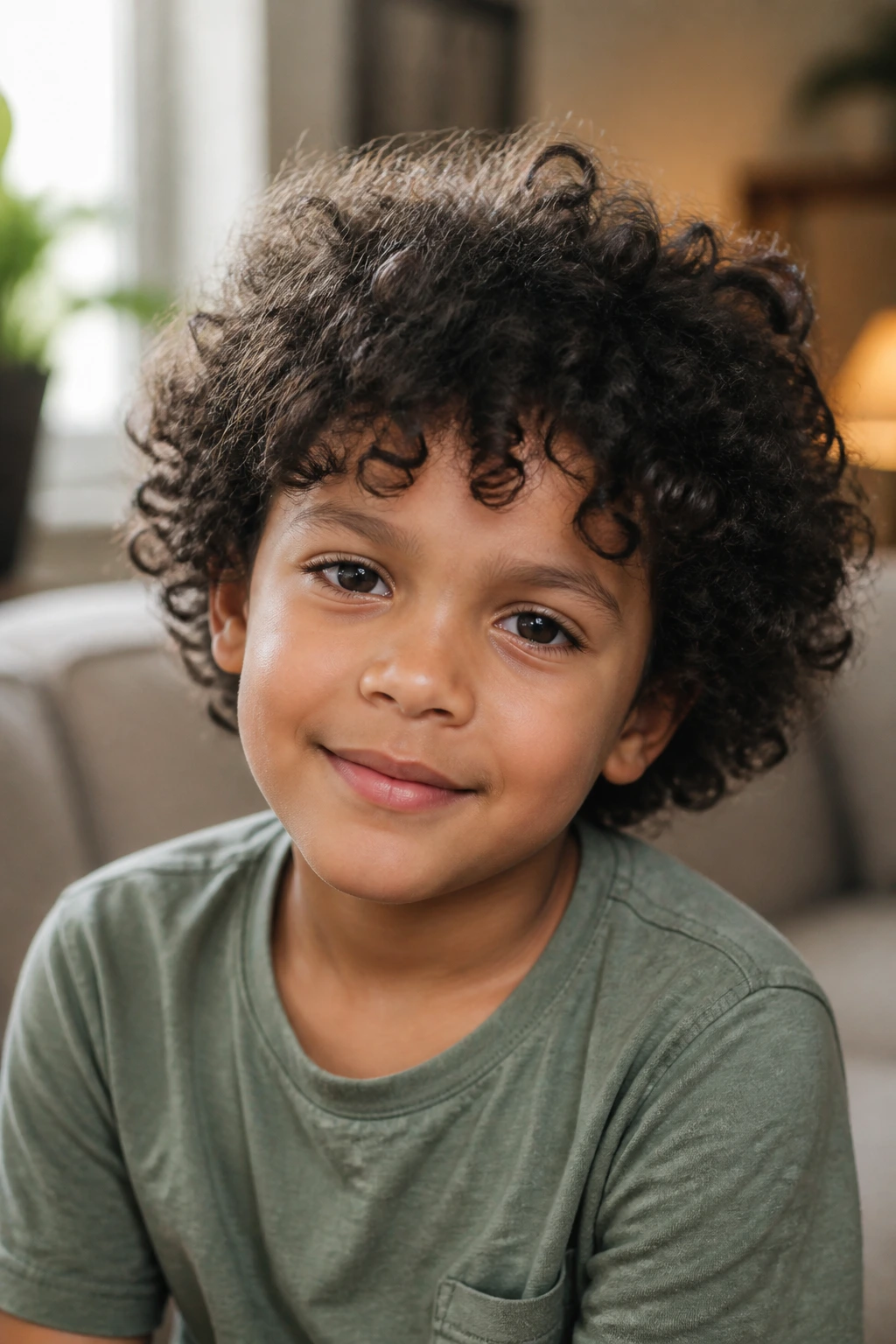
The Low-Fuss Version: Keep the sides tapered, the fringe short enough to stay out of the eyes, and the top long enough to lie naturally. It’s the best option for children who want the haircut to disappear into daily life.
The Curl-First Version: Leave extra length on top, cut dry, and avoid over-thinning the sides. Curls need room to spring, and the shape should follow that spring instead of fighting it.
The Sensory-Friendly Version: Choose scissors over clippers around the ears and neckline, keep the cape loose, and avoid very tight braids or razor-sharp outlines. Comfort matters more than a crisp edge when a child is sensitive to touch.
The Grow-Out-Friendly Version: Leave the fringe a little longer, keep the nape soft, and avoid severe angles. If your schedule slips, the cut still holds together instead of going fuzzy and strange.
The Dress-Up Version: Keep enough length on top or around the face for clips, bows, gels, or a side sweep. It’s nice when a haircut can handle everyday chaos and still look intentional on a dressier day.
How to Keep the Shape Between Trims
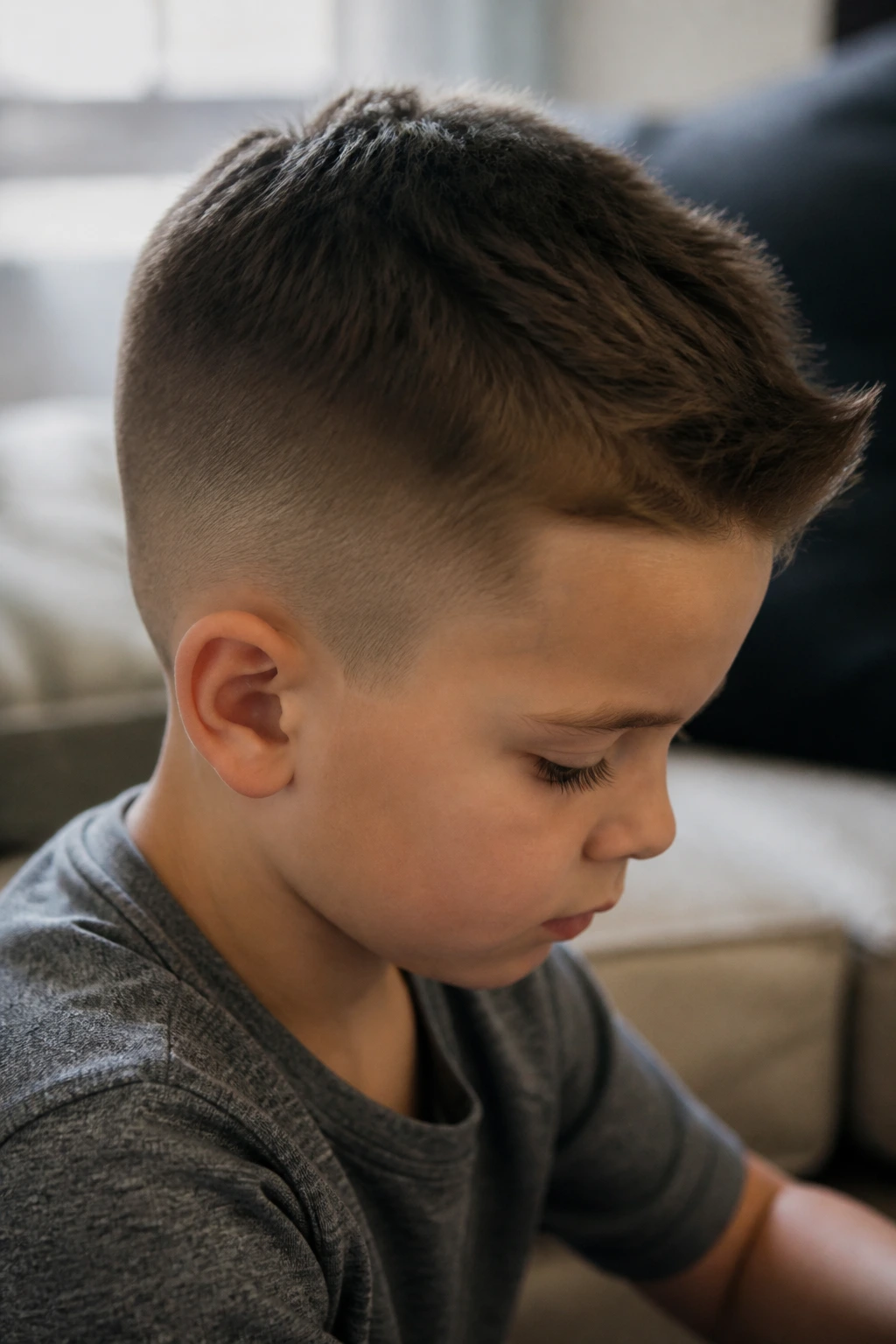
Short cuts show their age first. Fades and buzz cuts usually need a touch-up every 2 to 4 weeks if you want the outline to stay sharp. Crops and French cuts can stretch a bit longer, but the fringe is usually the first thing to go.
Bobs, pixies, and shoulder-length cuts are more forgiving. Most of them can go 6 to 10 weeks before they start losing shape, though bangs often need a small trim sooner. Long layers and braids can last longer, but the ends and the front pieces still need checking.
The easiest way to tell it’s time? Look at the ears, the neckline, and the eyes. If hair is sitting on all three, the cut has started drifting.
Questions Parents Ask Before the Appointment
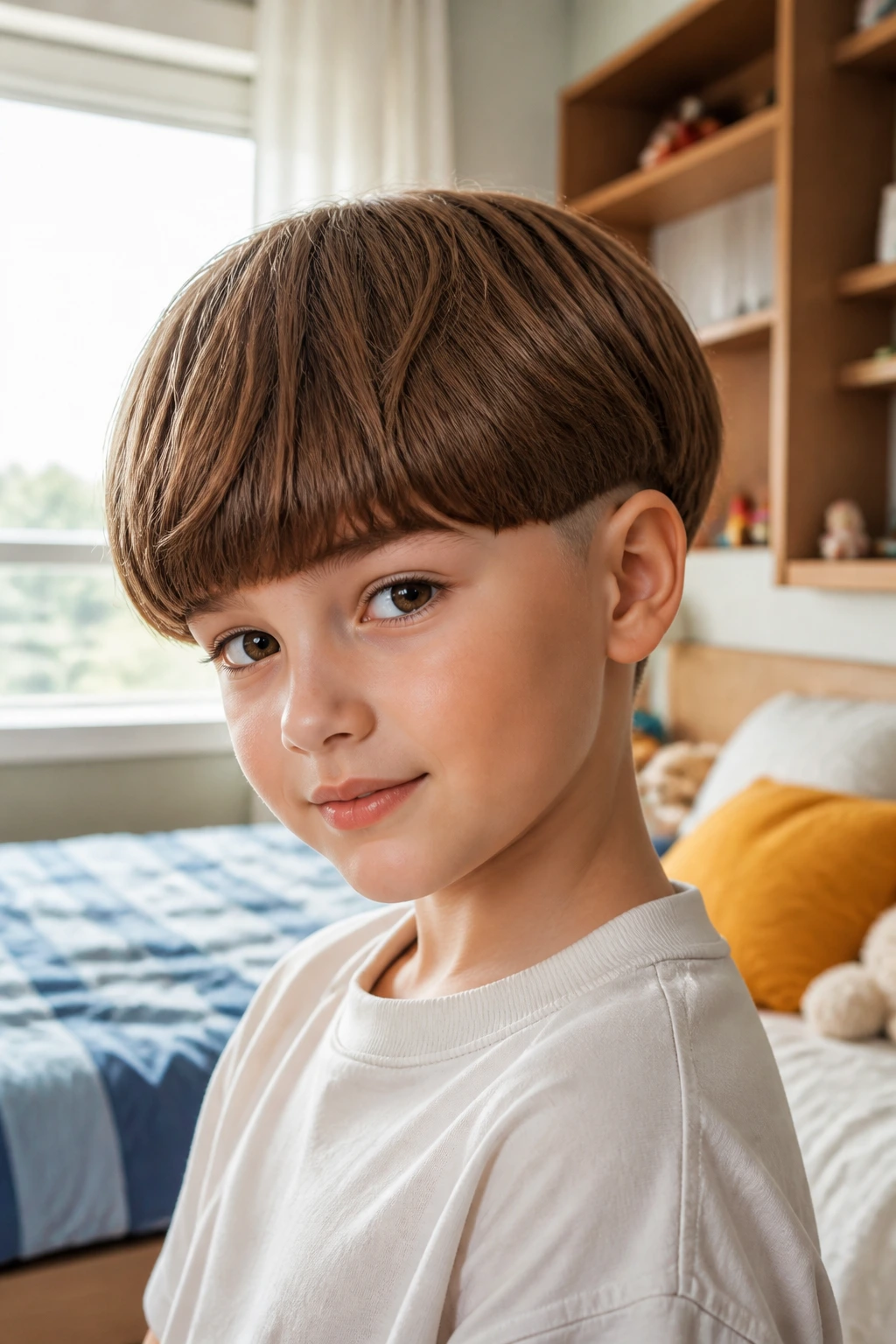
What’s the easiest haircut for a child who hates brushing?
Shorter styles win here: crew cuts, low tapers, buzz cuts, and textured crops. The less length you have to detangle every morning, the easier the routine gets.
Should curly hair be cut wet or dry?
Dry or nearly dry is usually safer because it shows the true curl shape and shrinkage. Wet curls can fool everybody and come back much shorter.
How short is too short for a first haircut?
Short enough to feel clean is fine; short enough to upset the child is not worth it. For a first haircut, leaving more length tends to make the whole process calmer.
Can I trim bangs at home?
Yes, if you go slowly and use sharp scissors on dry hair. Tiny trims are one thing; changing the whole shape at home is where things get crooked fast.
What if my child has a strong cowlick?
Don’t fight it head-on. Leave more length around it, redirect the part, or choose a cut that lets the cowlick live without screaming for attention.
Is a barber better than a salon?
Short fades, buzz cuts, and neat tapers often suit a barber chair well. Layers, curls, bobs, and longer shapes can be better in a salon. Skill matters more than the sign on the door.
What if my child changes their mind in the chair?
Go longer, not shorter. A conservative cut can always be trimmed more later, but hair that’s gone is gone.
How do I know if the cut is growing out badly or just getting longer?
If the shape is still balanced, it’s just growing. If the fringe is blocking the eyes, the ears are buried, or the neckline is puffing out, the shape is gone and a cleanup will help.
Cuts That Still Feel Like the Kid Wearing Them
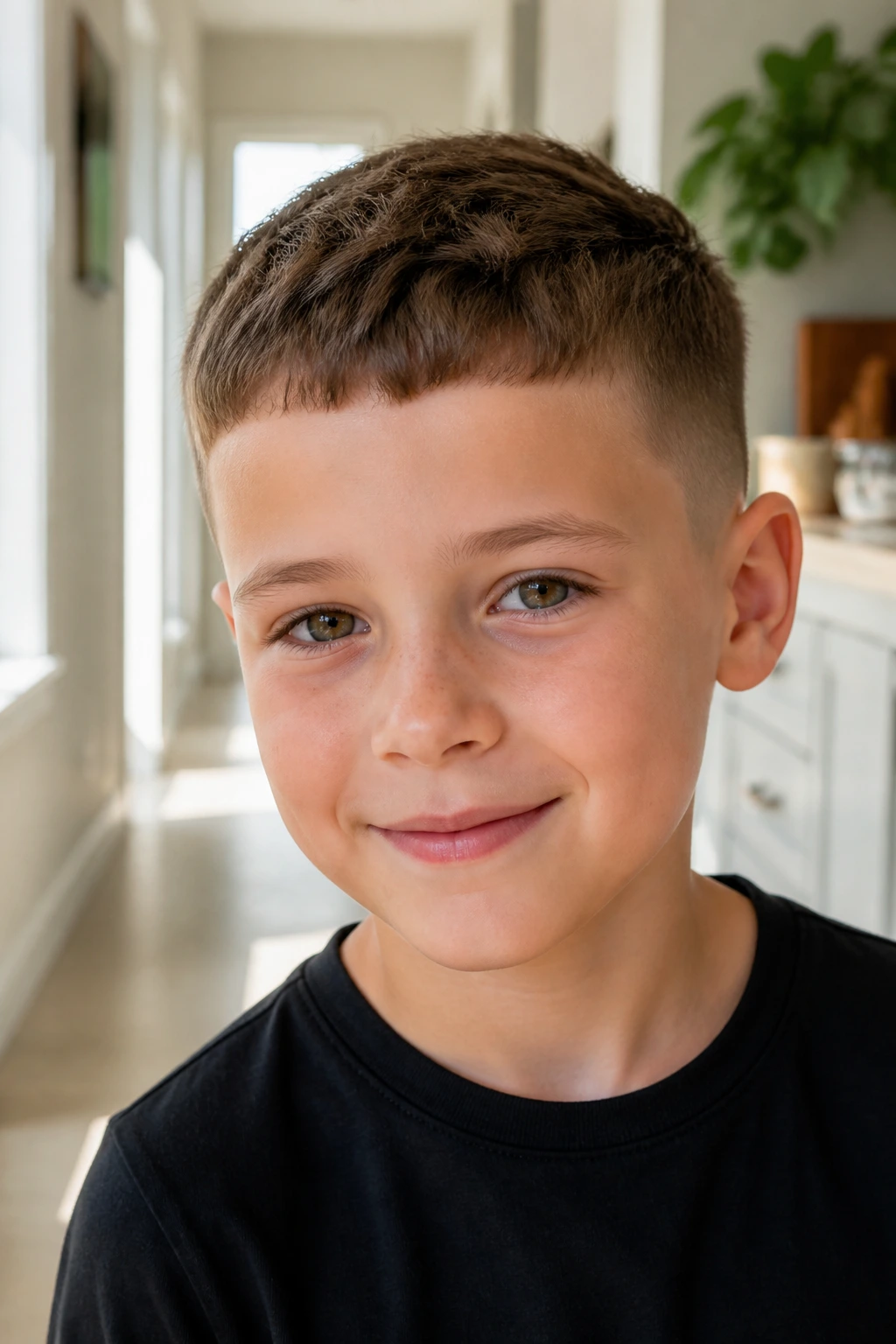
The best kid haircut is the one that matches the child in the mirror instead of the photo on your phone. It should hold up through school, play, naps, and the occasional refusal to brush. If it also makes the child feel like themselves, that’s the real win.
A good cut does not need to be dramatic. It needs to sit right, grow out politely, and stay out of the daily argument over hair in the eyes. Start with texture, be honest about upkeep, and pick the shape that behaves on ordinary Tuesdays, because that’s where the good haircuts live.
