



Long wavy hair can look rich and alive, or it can collapse into a heavy curtain that makes the whole face look pulled downward. The difference usually isn’t the wave pattern. It’s the cut.
That matters even more for older women, because hair often changes in more than one direction at once. The crown may get a little flatter, the ends may get finer, and the wave itself may tighten in some places and go lazy in others. A good long cut works with those shifts instead of pretending they aren’t there.
The best long wavy haircuts for older women don’t hide length. They give it shape. They keep enough weight at the ends to avoid that stringy, see-through look, then build movement in the right places so the hair bends around the face instead of hanging straight down from it. That’s the sweet spot. Not fussy. Not dated. Just smart.
Why These Cuts Earn Their Keep
- They keep the perimeter from going scraggly: Long waves need some weight at the bottom, or the ends puff out and start looking dry even when the hair is healthy.
- They make gray hair look intentional: Silver strands often show wave texture better than darker hair, and the right cut keeps that texture crisp instead of wiry.
- They work with air-drying: A shape that still looks good after a quick scrunch and a little leave-in cream saves a lot of time on ordinary mornings.
- They soften the face without chewing up the length: Face-framing pieces can lift the eye line, ease the jaw, and still leave the back long enough to pull up or tuck behind a shoulder.
- They grow out gracefully: Good long layers should blur into the rest of the cut for weeks, not turn into a hard shelf after two haircuts’ worth of growth.
- They handle glasses, earrings, and scarves better: A thoughtful front shape keeps the hair from fighting with frames or swallowing the sides of the face.
What Long Waves Need Before the First Snip
A long wavy cut lives or dies on weight placement. Too much bulk near the crown and the top balloons. Too much removal through the ends and the whole length turns wispy, which is a miserable look on anyone and especially annoying on hair that already leans fine or porous.
The hair’s natural wave pattern matters more than the calendar. Some women get looser bends at the nape and stronger movement around the temples. Others have a polite wave near the front and an almost stubborn straight line underneath. A good stylist should look at all of that dry, not just wet under a cape where everything looks smoother than it really is.
Ask for a cut that respects the way your hair dries on a normal day. If you wear it tucked behind the ears, say so. If you have glasses, say that too. If you hate daily blow-drying, say it loudly. A haircut can be gorgeous on a salon blowout and useless in your bathroom. I’ve seen that mismatch more times than I can count.
1. Soft Face-Framing Layers
Soft face-framing layers are the easiest long wavy haircut to wear because they do one job very well: they bring the eyes and cheekbones forward without stealing thickness from the rest of the length. The shortest pieces usually start around the cheekbone or just below the lip, then melt into longer waves that sit at the collarbone or chest. That keeps the front from feeling heavy while the back still has enough substance to bend.
Why it works
The face frame gives the wave a place to turn. Without it, long hair can feel like one long drop, especially if the crown is flat or the hair has narrowed a little at the temples. A few smart layers also help the front pieces dry with a soft bend instead of hanging straight like they’re waiting for a better plan.
Ask your stylist to point-cut the ends rather than slicing them blunt. That gives the wave a little softness at the edge, which matters more than people think.
If you wear readers or full glasses, this cut keeps the side pieces from fighting the frames. That small detail is the difference between “hair wearing you” and “hair doing its job.”
2. Curtain Bangs with Long Waves
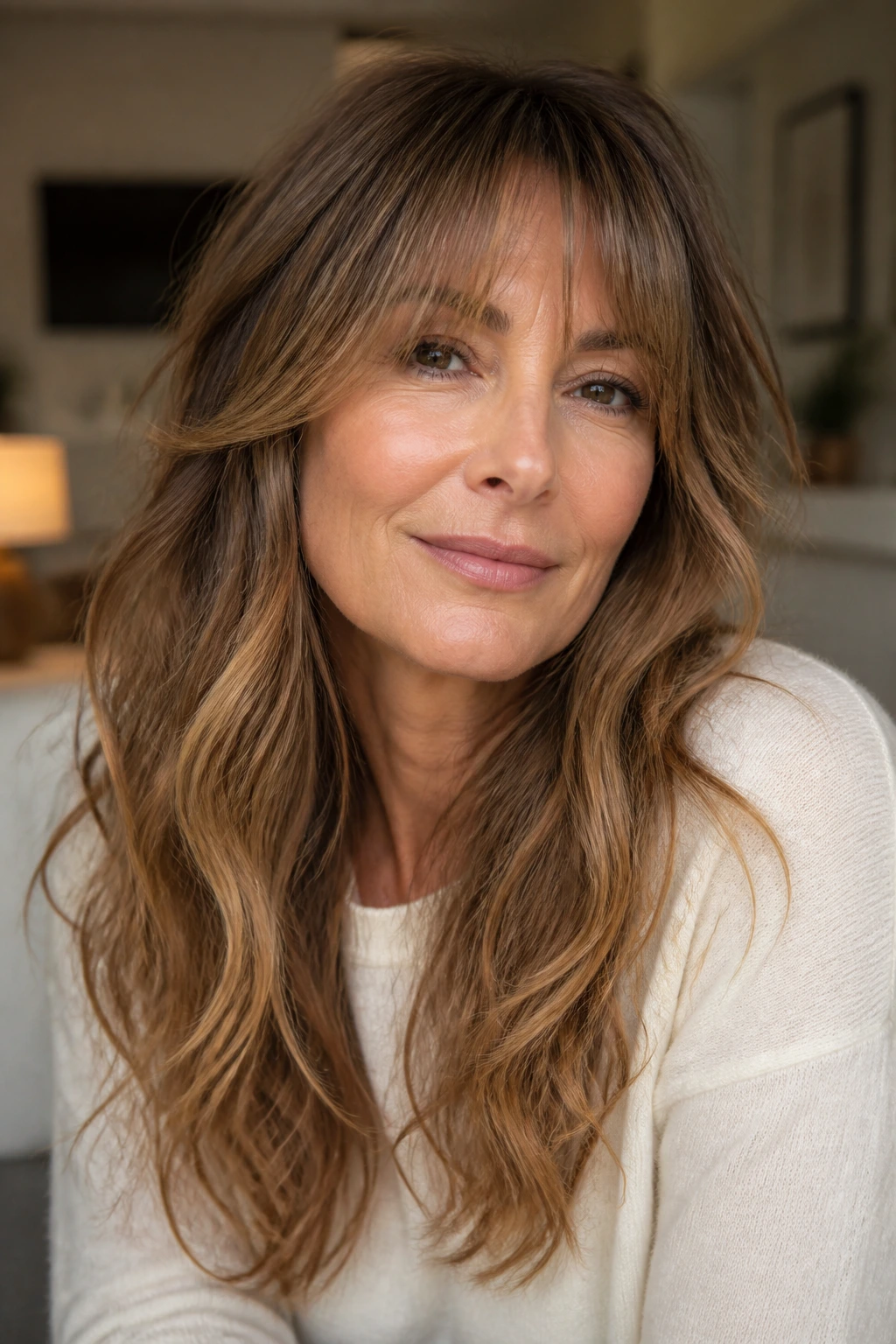
Curtain bangs are the haircut version of opening the center of the face and letting air move through it. On long waves, they can feel modern without looking like they’re trying too hard, which is exactly why they work so well for older women who want shape but not a chopped-up front.
The key is length. Curtain bangs should split cleanly in the middle and graze the cheekbones or outer lashes when dry. If they’re cut too short, they spring up and sit like a little shelf. No one needs that.
A good curtain fringe connects to the longest front layers instead of sitting on top of them. That connection is what makes the cut feel grown-up and soft. It also helps the waves fall in that easy, swept-back way that opens the forehead without exposing every line in a harsh stripe.
Best for: women with medium to thick waves, longer foreheads, or glasses that sit higher on the nose bridge.
Styling note: blow-dry the bangs first with a round brush, then let the rest of the hair air-dry or diffuse. That keeps the front from separating into two strange little wings.
3. Long Shag with Tapered Ends
A long shag is for the woman who wants movement with a little attitude. Not a lot. Just enough. The crown gets some lift, the sides get soft layers, and the ends stay tapered so the whole cut moves instead of hanging in one heavy sheet.
What I like about this shape is that it can rescue hair that’s doing the two most annoying things at once: flat on top and puffy at the bottom. The shag solves that by shifting weight upward and releasing some of the bulk around the mid-lengths. When it’s done well, the hair looks broken in, not butchered.
The trick is restraint. A shag on long wavy hair should still feel long. If the stylist goes too short with the shortest pieces, the cut starts looking choppy and loses the easy sweep that makes it flattering on mature features.
A little styling cream and a diffuse-dry is enough. Let the wave do most of the talking.
4. U-Shape Cut with Hidden Layers
The U-shape cut is one of my favorite answers for women who want long hair to feel full at the ends. The back rounds softly into a curve, usually deepest in the center, so the length reads as lush instead of flat. Hidden layers underneath keep the shape from turning bulky, but the perimeter still looks clean.
That clean edge matters. A U-shape gives long waves a sense of weight and polish, especially if the hair has gotten a little finer over time. It avoids the triangular outline that happens when the top is too heavy and the bottom is too thin. That triangle is the enemy.
What to ask for
Tell the stylist you want soft internal layers and a rounded perimeter. Those two phrases matter more than saying you want “just a trim.” A trim without shape often leaves the cut vague. Vagueness is what turns long hair limp.
This shape also makes a low ponytail look better. The sides fall in a gentle arc instead of sticking out at odd angles, which sounds minor until you live with it every week.
5. V-Shape Cut for Extra Swing
A V-cut gives long waves more drama in the back, because the center length stays longest and the sides taper down toward it. The result is a sharper line than a U-shape, with a little more visual swing when the hair moves. It’s a strong choice for women with dense hair that needs direction.
The V-shape is especially good when the waves are broad and heavy. That long point in the back keeps the hair from reading as one solid block. The sides still frame the face, but they don’t hog the length.
I would not push this shape on very fine hair unless there’s enough density to support it. A weak V can make the ends look see-through. And see-through ends are unforgiving in daylight.
Keep the front layers long enough to blend into the side lengths. If the front is chopped too high, the V starts looking like two separate haircuts sharing a head.
6. Side-Swept Fringe with Cascading Layers
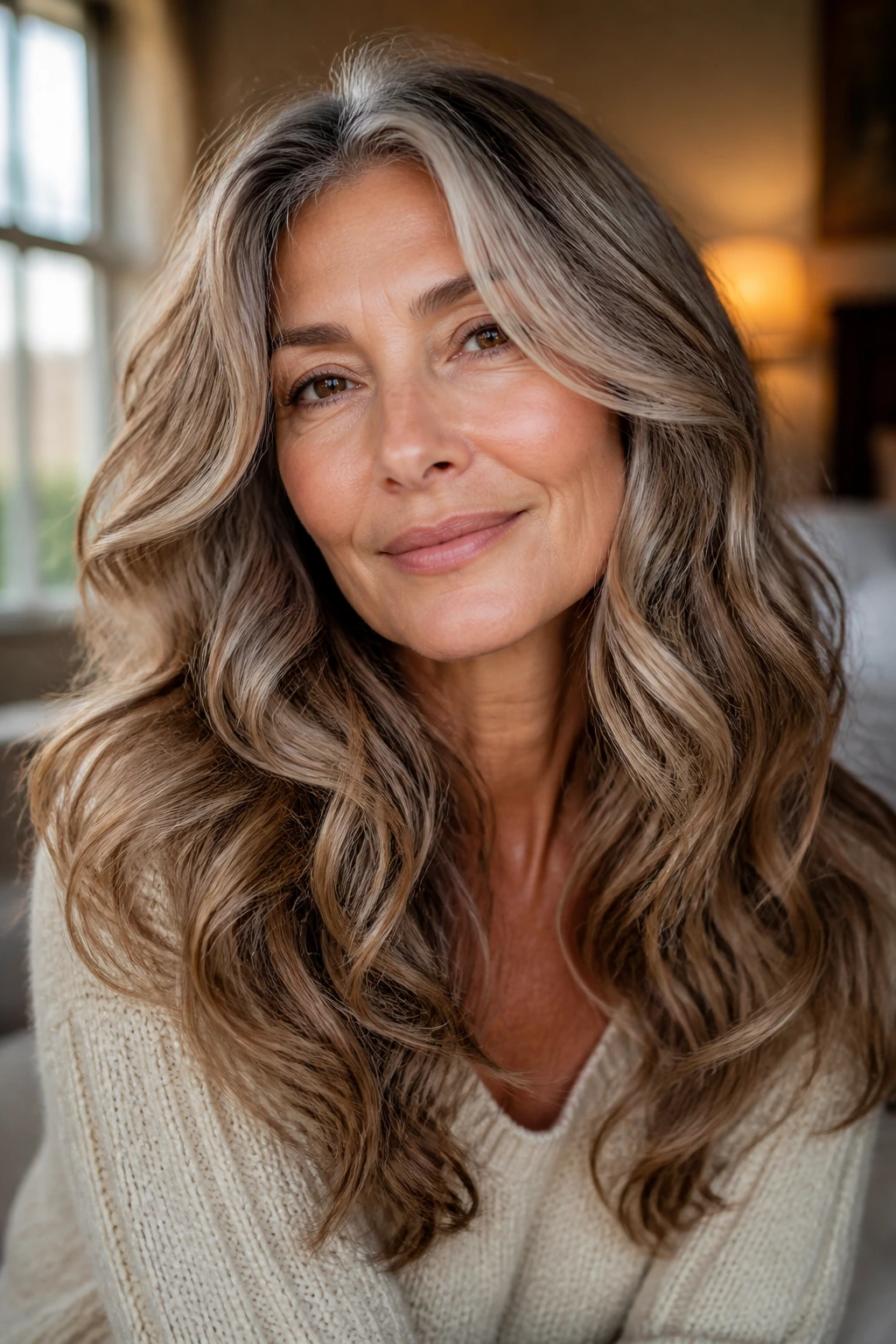
A side-swept fringe changes the whole mood of long wavy hair. It gives the face a diagonal line, which tends to be kinder than a straight-across cut if the forehead feels a little high or the cheek area needs softening. With waves, the fringe doesn’t need to sit flat. It needs to drift.
The best version starts deep on one side and travels across the forehead in a long, soft sweep. It should blend into the layers around the cheek and jaw, not sit like a separate piece. If the end of the fringe is too heavy, it drags the whole front down.
This is a smart cut for women who like one side of the face a little more open. It also plays nicely with statement earrings. The hair moves away from the ear instead of crowding it, which means the jewelry actually gets seen.
A round brush on the fringe and a diffuser on the rest is a solid everyday routine. You do not need a full blowout here.
7. Feathered Layers for Fine Hair
Feathered layers can be a lifesaver for long wavy hair that has gotten finer at the ends. The idea is to keep the movement airy without carving the hair up into a dozen little pieces. Done well, feathering makes the wave look lighter and more lifted, especially around the face and upper mid-lengths.
The word feathered gets abused a lot. Too many stylists hear it and start thinning the hair to the point that the ends look tired. That is not the move. You want soft graduation, not shredded fringe.
The sweet spot
Ask for layers that begin below the chin and gradually open toward the collarbone. That keeps the perimeter full enough to read as healthy. Add a little root lift mousse at the crown, and the whole shape wakes up.
Fine hair usually does better with fewer, smarter layers. Not more. More layers often just mean less hair where you want it.
8. Heavy Layers for Thick Hair
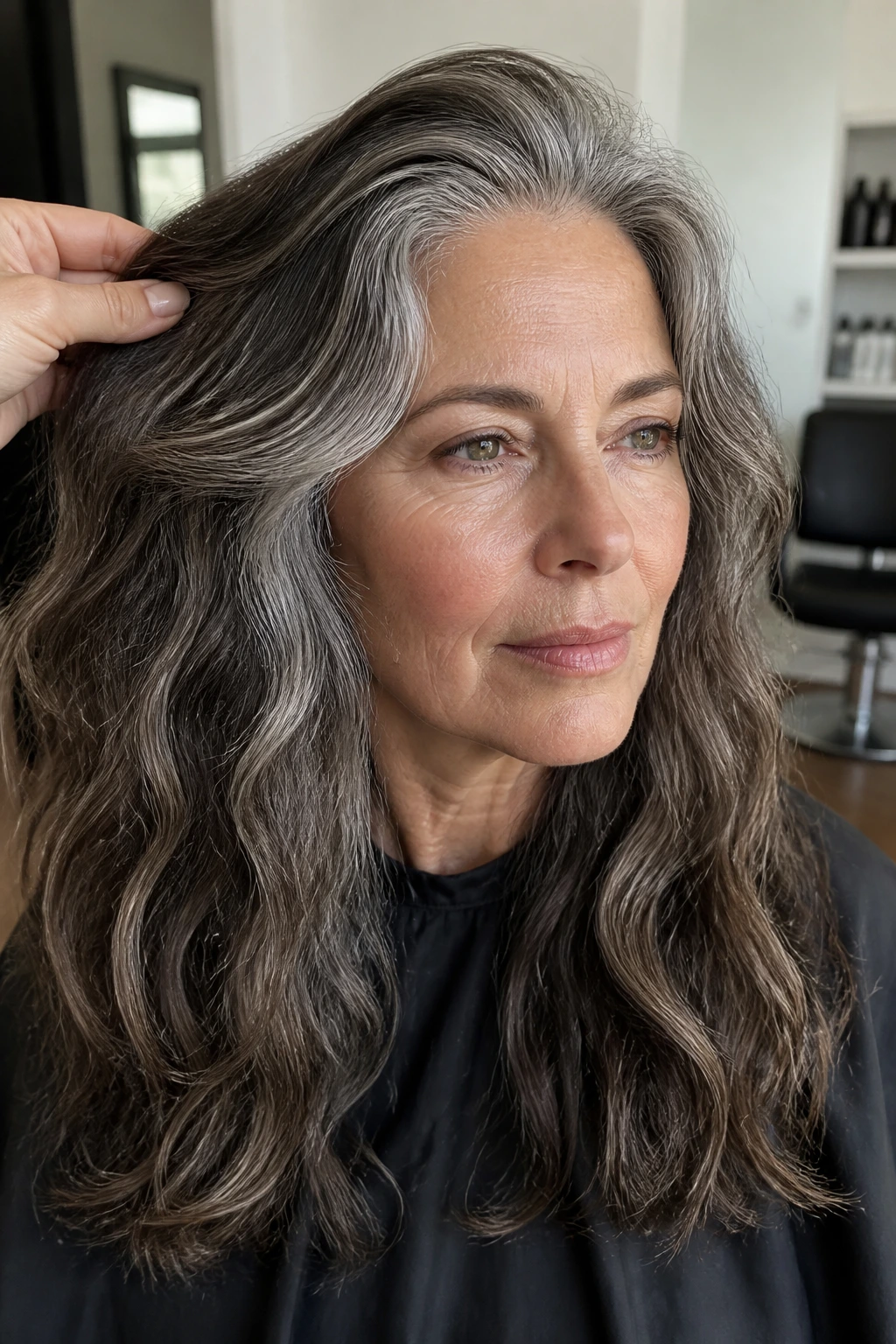
Thick, wavy hair needs management, not punishment. Heavy layers take the bulk out of the right places while leaving enough mass to keep the ends from fraying. This is the cut that stops a thick wave from turning into a helmet.
The internal layers should remove weight from the midsection, especially if the hair swells at the sides. But the outer line should stay long and stable. That outer line is what keeps the cut looking intentional instead of over-detailed.
A good thick-hair cut also makes the neck feel lighter. That matters more than people admit. If the back of the head feels hot and heavy by noon, the cut is asking for too much from the hair.
Avoid aggressive thinning shears unless the stylist really knows how your wave pattern behaves. Over-thinning thick wavy hair can create a frizzy halo that takes forever to calm down. I’d rather see a clean layer plan and a little extra drying time.
9. Butterfly Layers That Keep the Ends Full
Butterfly layers are basically face-framing layers with a little more ambition. The shorter front pieces lift around the cheekbone and jaw, while the back stays long and full. On wavy hair, that split of weight can be beautiful because the hair gets movement without losing the impression of length.
The cut works because your eye reads the shorter front as lift and the longer back as volume. That contrast gives the illusion of more styling than you actually did. Which is useful. Nobody wants to spend forty minutes building something a cut could have handled in the first place.
This style is especially good if your waves flatten at the roots but still bend well through the middle. The butterfly shape gives the front a little air and keeps the ends substantial. It is also one of the better long options if you enjoy a round brush, Velcro rollers, or a large-barrel iron.
Keep the shortest pieces around the cheekbone, not the chin, if you want the face to look more open.
10. Deep Side Part with Crown Lift
A deep side part is not a haircut by itself, but paired with long waves it acts like one. The line shifts the weight of the hair to one side, which creates volume at the crown and gives the face a stronger diagonal. That diagonal can be especially good if the hair is flatter at the top or the face shape needs a little length.
The cut underneath should support the part. That means soft layers that can move to either side without splitting into gaps. If the layers are too short, the part starts looking choppy. If they’re too long and heavy, the crown stays flat and the part becomes a struggle.
What I like here is the instant change in posture. Hair that usually sits in a middle part can look lifted and a little more deliberate with only a 2-inch shift. That’s a small move with a big payoff.
If your hair resists the change, blow-dry just the root area in the opposite direction for 30 seconds before setting the part. It helps more than most people think.
11. Blunt Length with Hidden Texture
Blunt long hair sounds simple, but on waves it can be quietly elegant when the texture inside the shape is handled carefully. The outer line stays clean and full, which is a gift for women whose ends have gotten a little sparse. Inside that line, a few subtle layers stop the wave from bloating out like a triangle.
This is the cut for someone who likes polish more than pieces. It feels controlled. The silhouette is strong, and the wave shows up as a soft bend instead of a bunch of broken sections.
That said, blunt length does not forgive bad ends. If the last inch of hair is dry or split, you’ll see it right away. Keep the perimeter trimmed every 8 to 10 weeks if you want this cut to stay crisp.
A center part or gentle off-center part both work. The real key is shine. Blunt long waves need healthy-looking ends, or the whole thing turns dull fast.
12. Silver-First Layers for Gray Hair
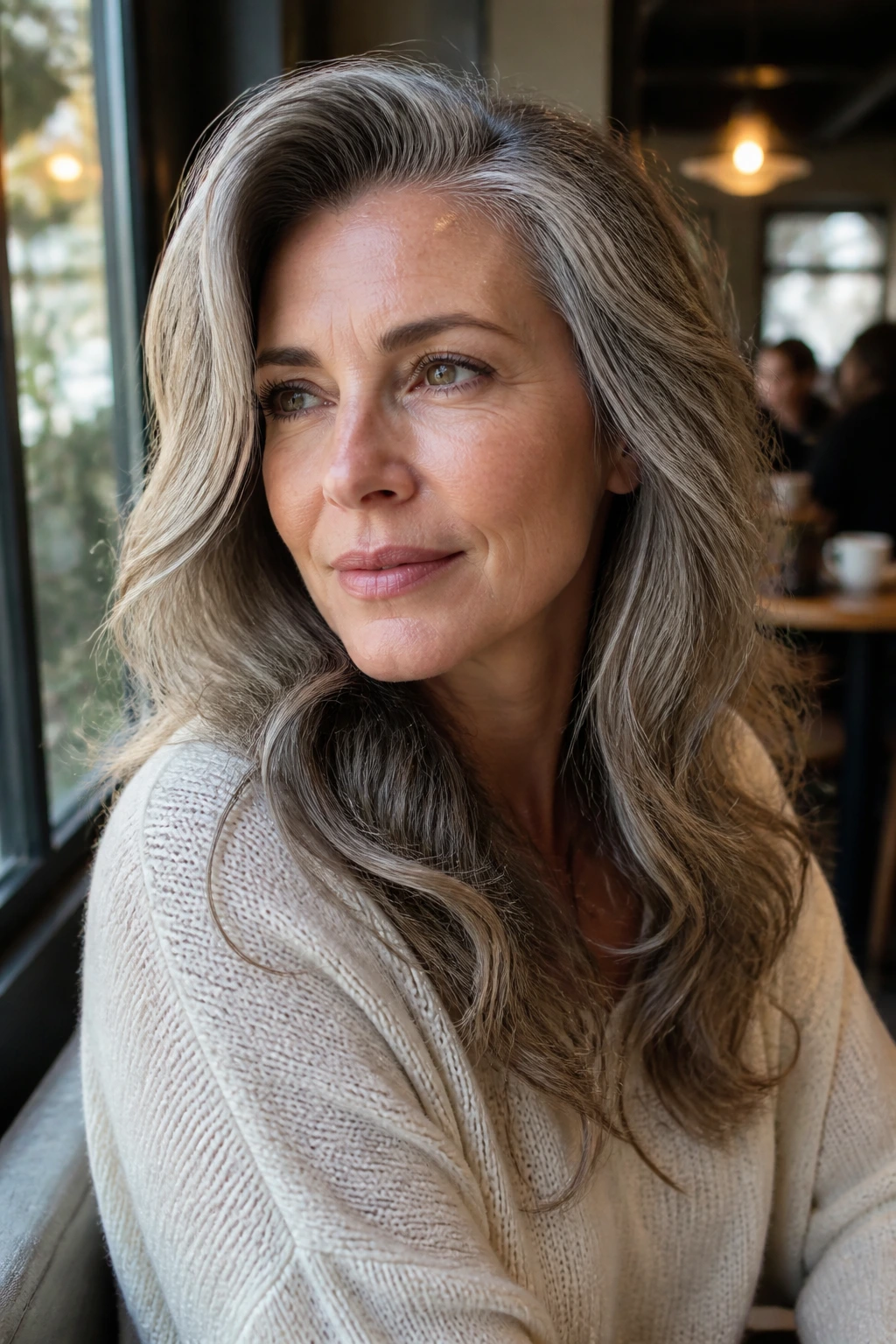
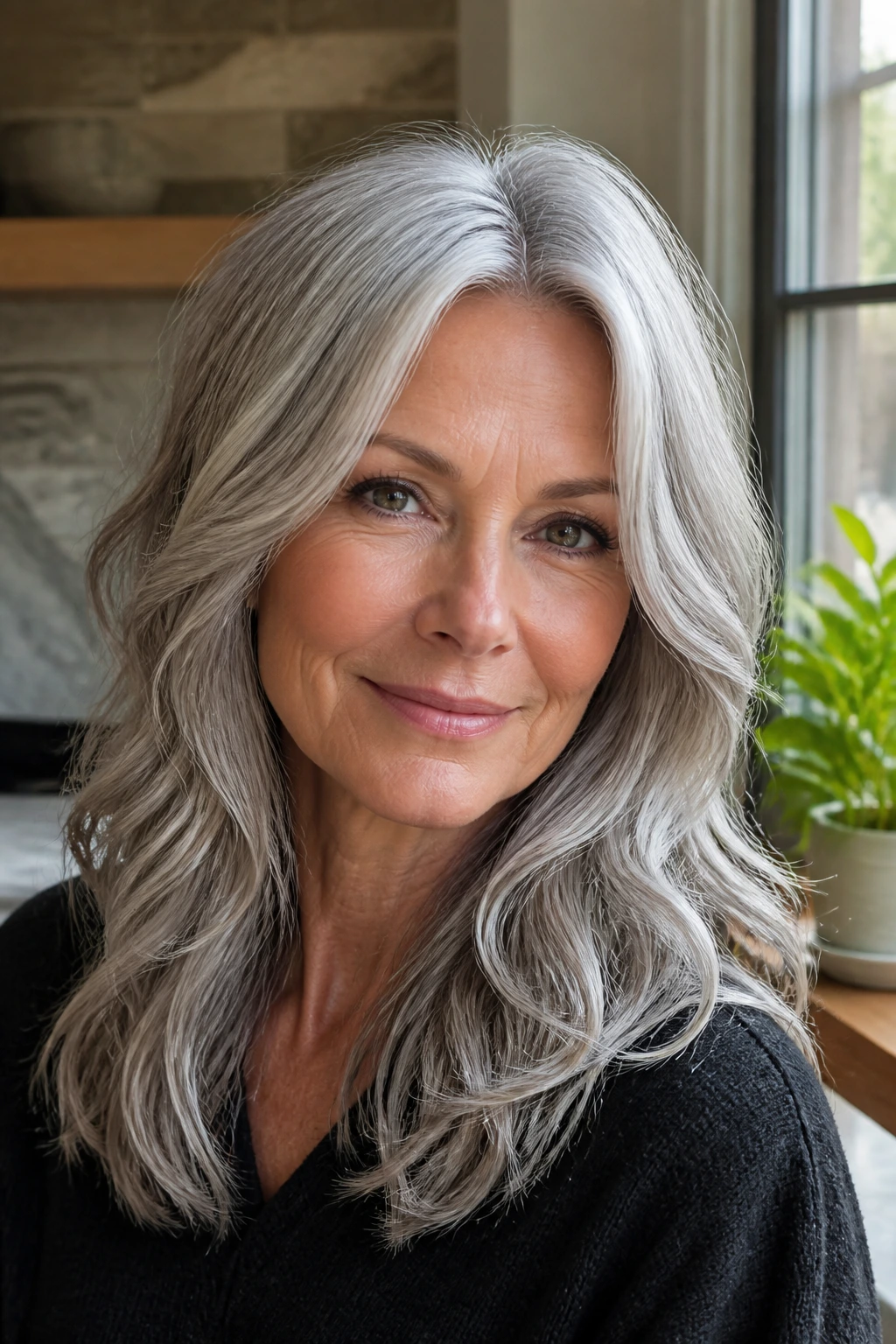
Gray hair has its own texture, and good cutting should respect that. Silver strands often feel coarser at the root and softer through the lengths, so a long wavy cut needs to keep the shape clean while allowing the wave pattern to show. Too much layering can make silver hair look frayed. Too little can make it look bulky.
The best approach is usually a soft frame around the face with a tidy perimeter. That lets the silver catch the light in bands instead of turning into one flat sheet. When gray hair moves, it can look especially sharp if the cut is controlled.
I also like this style because it doesn’t ask the hair to pretend it’s a younger texture. It works with what’s there. That is the whole point.
If your silver is coming in streaky, this cut makes the contrast part of the design. The waves break up the color and give it a little rhythm.
13. Rounded Layers for Square Jaws
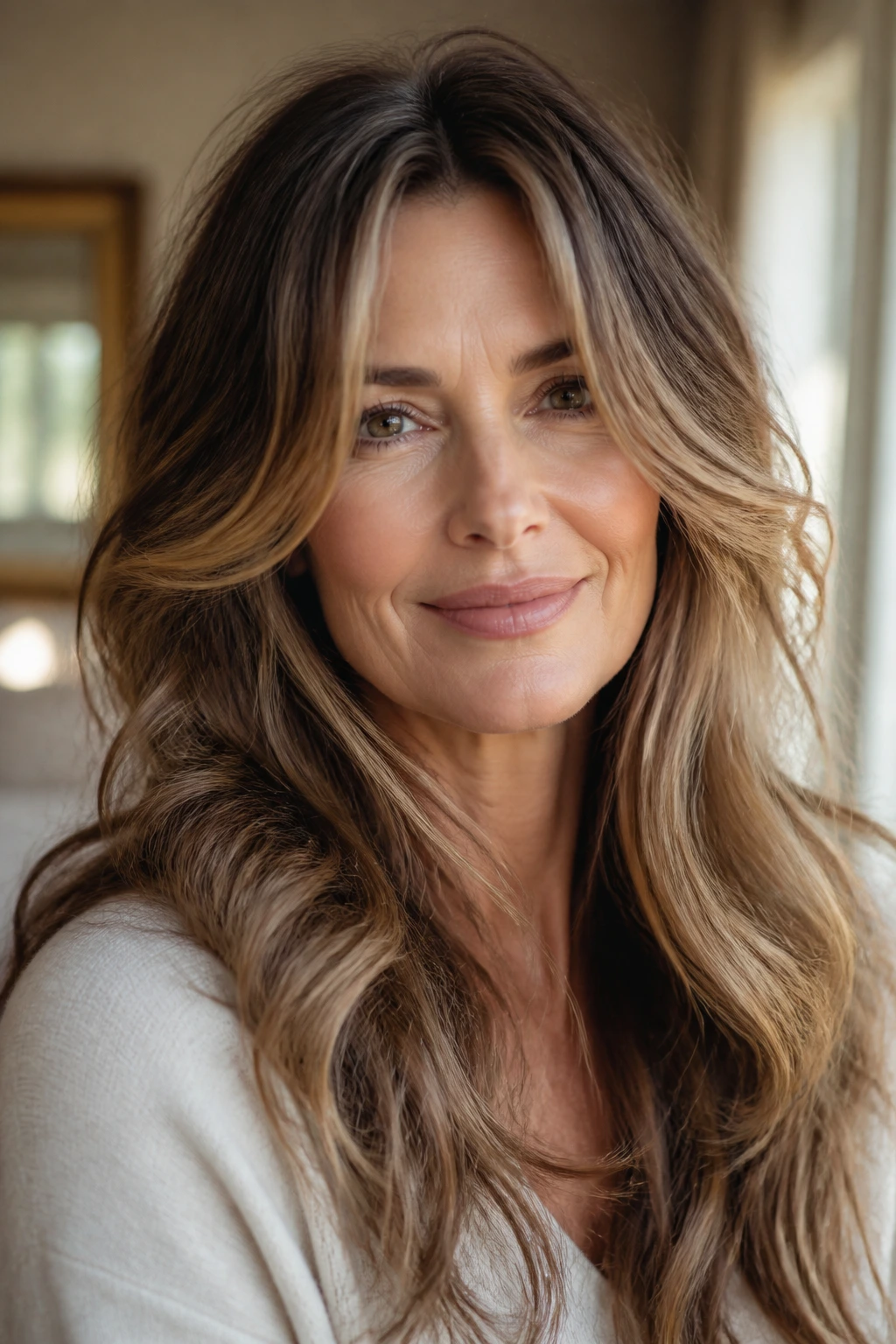
Rounded layers are a good answer when the jawline is strong and the goal is to soften the outline without hiding the face. The curve should start below the jaw, then roll into the shoulders and chest so the shape feels gentle rather than boxy.
A square face can take a long cut beautifully, but the layers need to bend inward a little. Straight, blunt sides can exaggerate the corners. A rounded line does the opposite. It nudges the eye through the shape instead of stopping it.
What makes it different
The front pieces should not end exactly at the jaw. That’s the trap. If they hit right there, they can draw a hard line across the face. Better to let them fall a little lower, where the wave can soften the edge.
This is one of those cuts that looks even better once it’s tucked behind one ear. The curve stays visible, but the front doesn’t crowd the cheeks.
14. Chin-Skimming Front Pieces
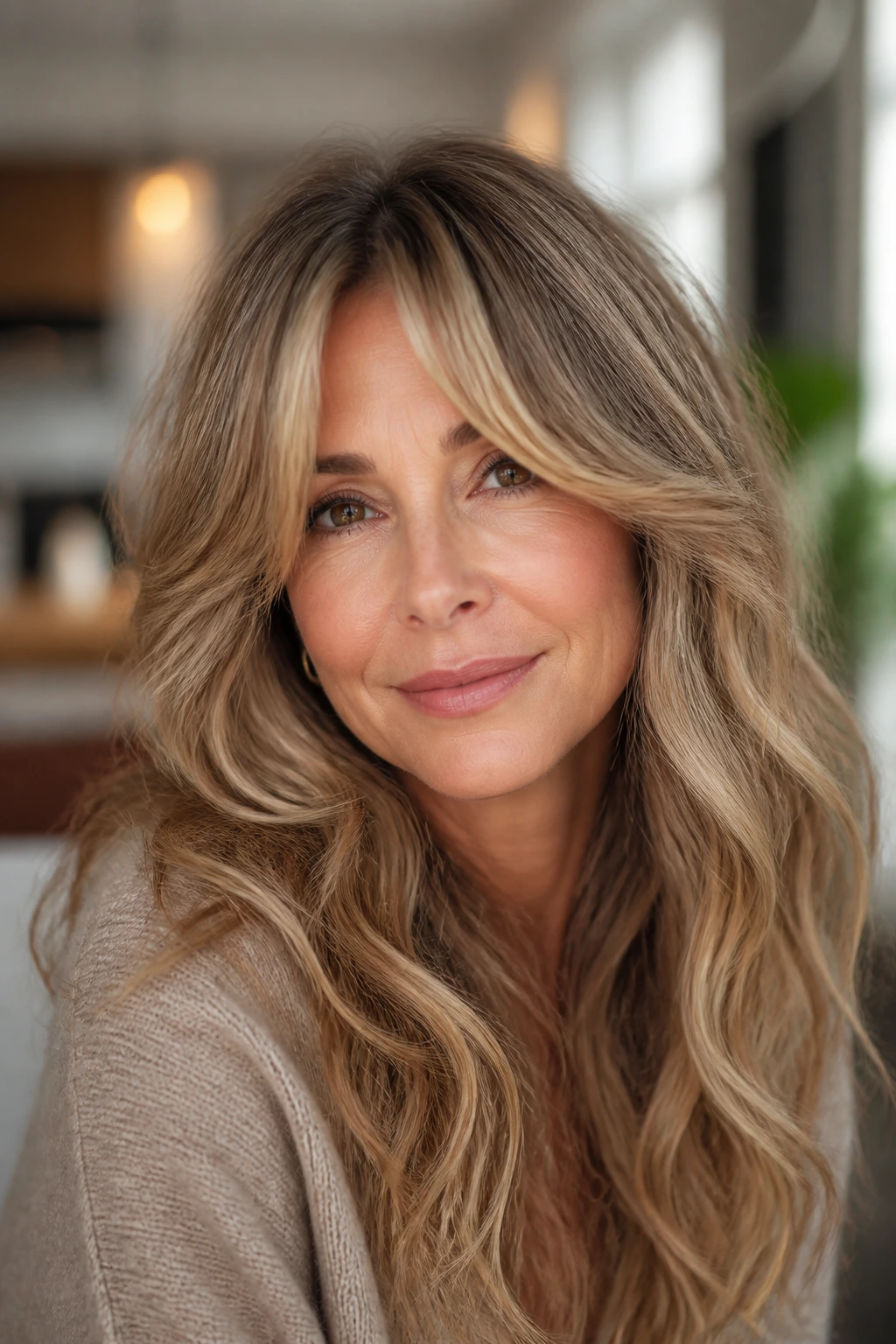
Chin-skimming front pieces are one of the cleanest ways to give long wavy hair shape without heavy bangs. The front layers should brush the chin or sit just below it, then flow into the rest of the length. That keeps the eye moving and gives the face a softer outline.
The reason this works is simple. Chin level is where a lot of faces need help. It’s where the jaw starts, where glasses sit, where the neck begins to show up in the silhouette. Putting a little motion there changes the whole cut.
If you want the shape to feel lighter, ask for a soft bevel at the ends instead of a hard stop. That tiny bevel helps the wave fold under or out depending on the day.
This cut is especially nice on longer faces because it shortens the visual distance between the eyes and the bottom of the hair. But it doesn’t have to be a “face shape fix” cut. Sometimes it’s just the most flattering place for the hair to land.
15. Razor-Textured Ends for Swing
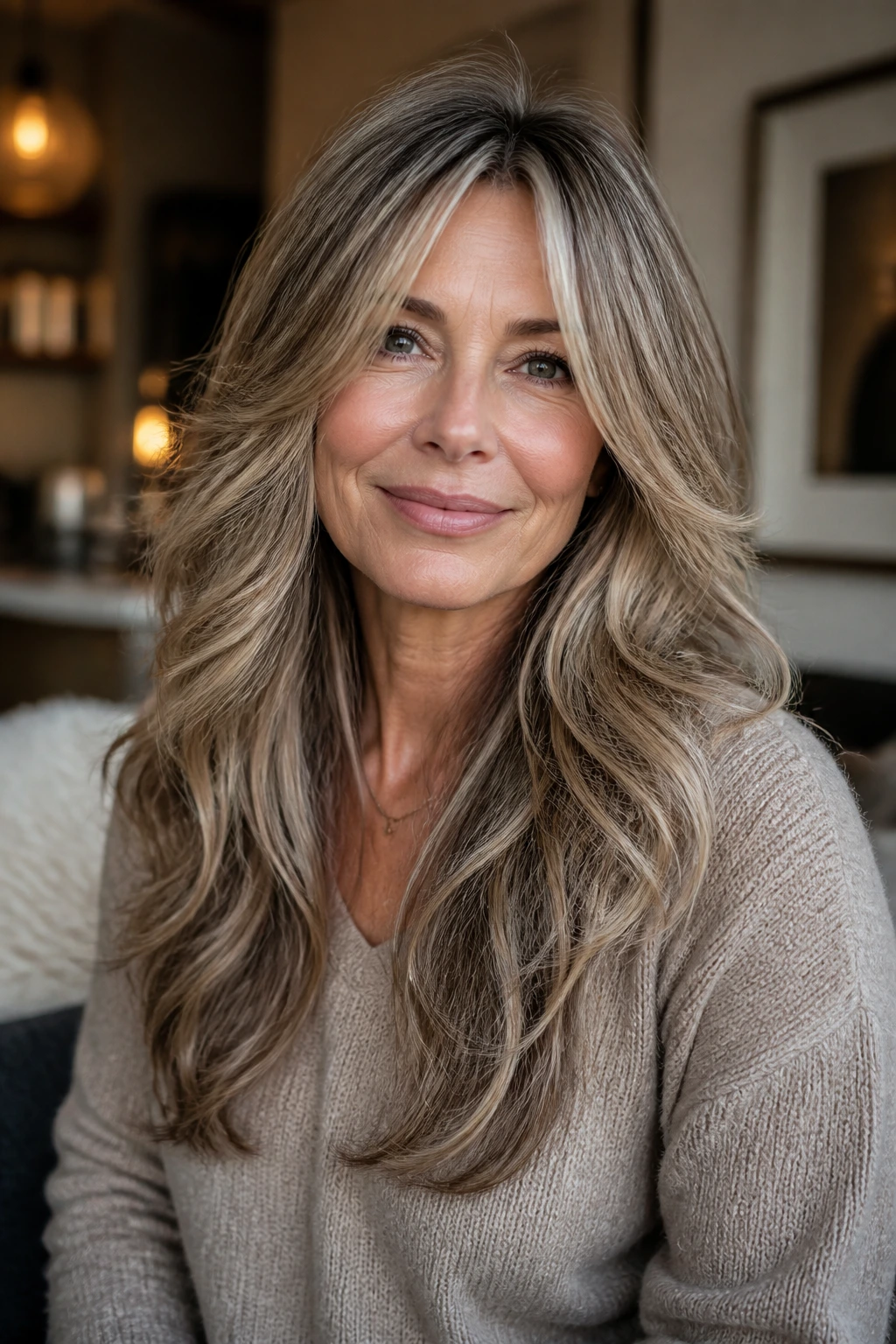
Razor-textured ends can make long waves move like they’ve got a little more air in them. The ends look softer and more broken up, which helps if the hair feels heavy or solid at the bottom. Done carefully, this can keep long hair from looking stiff.
But this one comes with a catch. Razor cutting is not for every wave pattern. If the hair is porous, frizzy, or already prone to rough ends, a razor can make the bottom look fuzzy. The cut itself may be fine. The texture is the issue.
I’d use this on medium-density hair with a wave that likes separation. It’s especially nice when the goal is a relaxed, piecey finish rather than a polished curtain of hair.
If you choose this route, keep the rest of the shape simple. The razor detail should be the accent, not the whole story.
16. Modern Boho Shag with Long Curtain Pieces
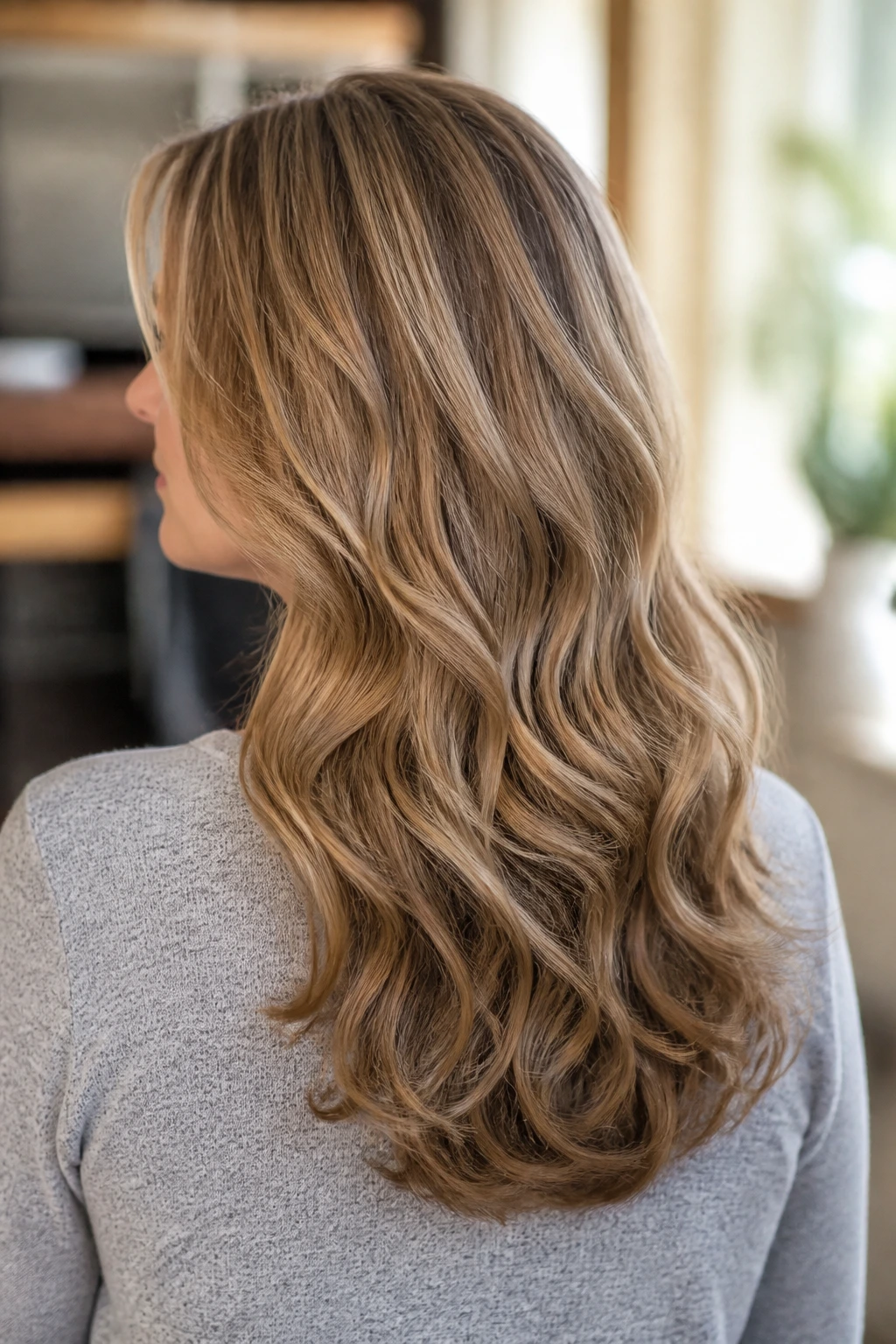
The modern boho shag sits somewhere between a shag and a soft layered cut. It has a little lived-in movement, a little face framing, and enough length to keep it from looking like a retro costume. On wavy hair, that balance is the whole trick.
This cut works when you want the hair to look casual but not lazy. The crown gets a bit of lift, the sides feather out, and the front pieces fall long enough to skim the cheek and jaw. It’s especially good if the waves like to clump in some places and separate in others. The shaggy structure makes that irregularity look deliberate.
The style gets better on day two. Honestly, a lot of shag cuts do. A light mist of water, a pea-sized amount of curl cream, and a scrunch is often enough to wake it up.
If you like a very sleek finish, skip this one. It wants movement, not perfection.
17. Frizz-Friendly Wave Cut
Some haircuts are made for humidity. This is one of them. A frizz-friendly wave cut keeps the perimeter a little more blunt, uses long layers sparingly, and leaves enough weight in the shape so the hair doesn’t puff out the minute the air gets sticky.
The goal is control, not flattening. Long waves can absolutely frizz without losing shape, and this cut aims to keep the wave pattern intact while calming the edges. That means fewer internal cuts, a solid line at the bottom, and face-framing pieces that are not too short.
This is the haircut I’d point to for coarse or porous hair that reacts to weather. It’s also a good fit if you prefer air-drying and don’t want to fight the texture every morning.
Avoid asking for too much thinning. That usually backfires. Once the ends get wispy, frizz has more room to show up.
18. Polished Center-Part Layers
A center part on long waves can look clean and calm, especially when the layers are symmetrical and the front pieces are long enough to frame the cheekbones. It’s a quieter shape than a side part, but it can be very strong on the right face because the symmetry adds balance.
This cut works best when the layers are soft, not chopped. The front should open around the face like curtains pulled back a little, while the back keeps enough weight to sit neatly over the shoulders. That makes the whole style feel composed.
It’s a good choice if you like your hair to look tidy with very little effort. A center part can be surprisingly forgiving when the wave pattern is even on both sides. Add a touch of smoothing cream on the mid-lengths, and the cut reads as polished without becoming stiff.
If your face is very round and you want more length, a slight off-center part may be kinder. But the center part itself is not the enemy. The shape around it is what matters.
19. Soft Flip-Out Ends
Soft flip-out ends give long waves a little lift at the bottom, which can be lovely if the hair tends to hang too straight. The flip doesn’t need to be dramatic. In fact, the best version is subtle, almost like the ends decided to turn out on their own.
This shape can feel especially fresh on shoulder-to-chest length hair. The wave moves, the ends flick, and the whole cut avoids that downward drag that can make long hair feel older than it is. It also plays nicely with a round brush or large rollers if you like a set that lasts into the evening.
The key is not to overcut the ends. The flip should come from shape, not from removing too much length. If the cut is too light, the ends fly apart. That looks cute in theory and thin in practice.
I’d use this on medium-density hair with a wave that holds a bend well. It’s a nice way to get motion without a shaggy finish.
20. Low-Maintenance Air-Dried Cut
This is the cut for women who want long wavy hair to behave without a styling marathon. The layers should be long, the perimeter should hold enough weight, and the face frame should match the way the hair naturally bends when it dries on its own. No cleverness for its own sake. Just a haircut that knows how to sit down and be useful.
An air-dried cut should follow the wave map. If the front dries fast but the back takes forever, the layers need to account for that. If the crown goes flat, the crown needs a little lift. A good stylist can usually read those patterns in a minute or two if the hair is worn loose and dry.
This style is ideal if you don’t want to be married to hot tools. A bit of mousse, a squeeze of leave-in cream, and a scrunch is often enough. Let the hair do what it already wants to do.
The cut still needs shape, though. Air-dried does not mean shapeless.
21. Wispy Bangs with Long Waves
Wispy bangs are trickier than curtain bangs, but they can work on older women when the fringe is left long enough to blend instead of sit like a child’s haircut. The pieces should be soft, separated, and capable of moving with the wave pattern rather than against it.
I prefer this look when the hair has enough texture to keep the bangs from going flat against the forehead. Fine hair can wear it too, but the fringe has to stay sparse and light. Thick bangs on wavy hair tend to puff and split in all the wrong places.
The payoff is a softer face line without losing much length. If the bangs are properly blended into long waves, they can blur forehead lines while keeping the rest of the cut open and airy.
If you wear glasses, keep the bangs long. Short wispy fringe and frames fight each other more than they should.
22. Glossy One-Length Cut with Barely-There Layers
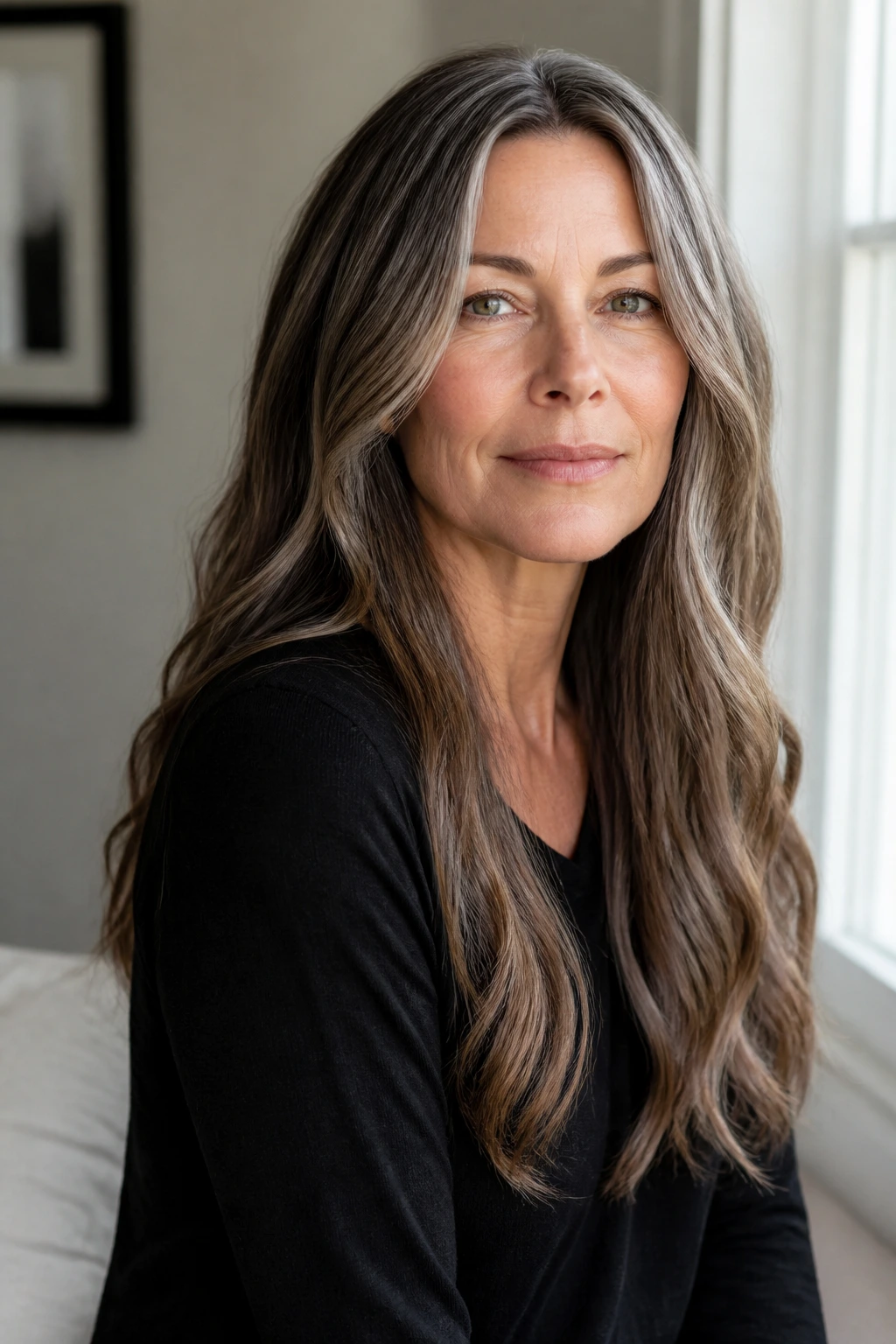
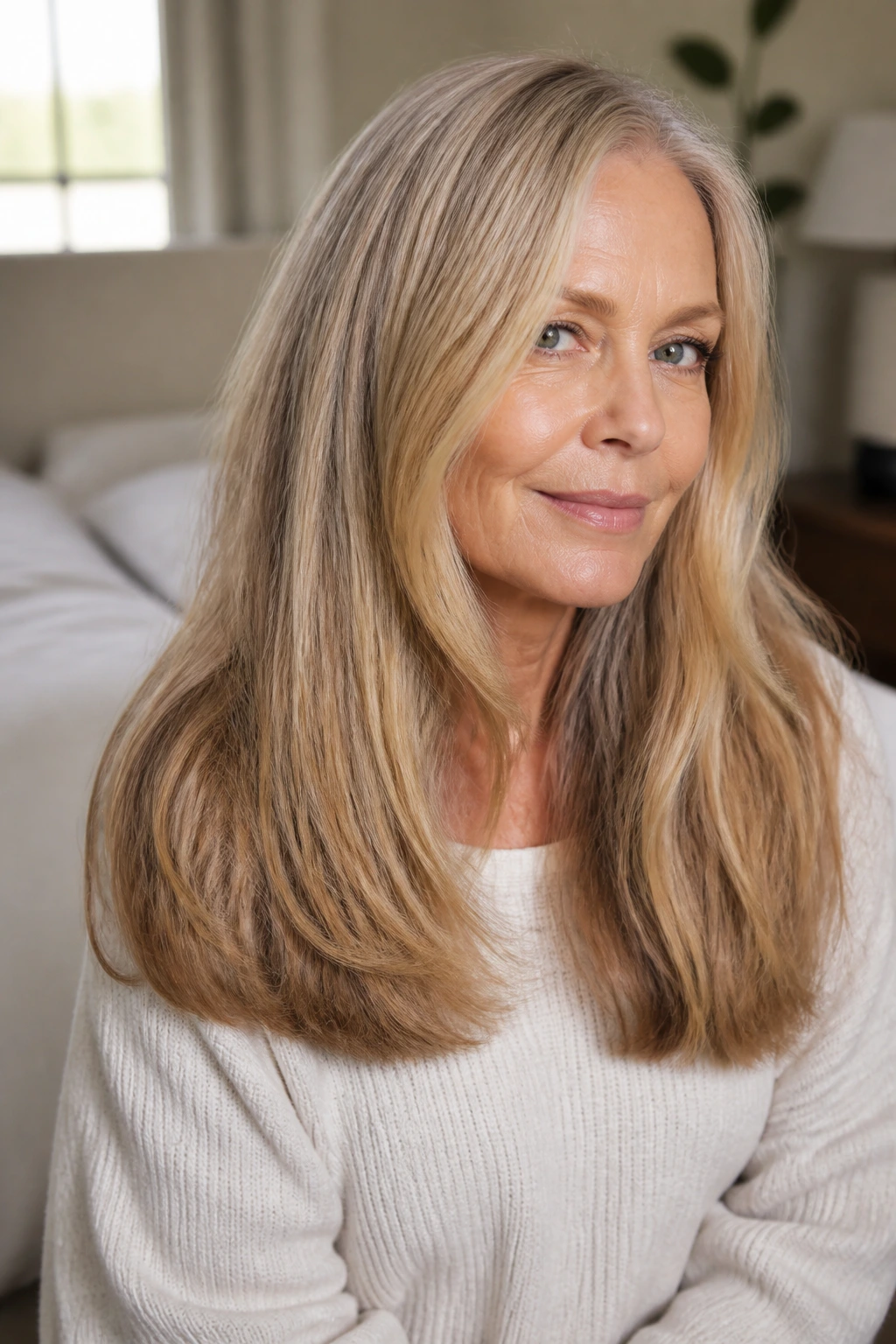
A glossy one-length cut is a strong choice when the hair is healthy enough to show off its full outline. On long waves, it can feel sleek and grown-up, especially if the wave pattern is broad and the ends are still dense. The trick is to keep the shape almost straight at the bottom, with only the faintest internal layers to stop the hair from turning triangular.
This style is a favorite of mine for women who like a more classic look. It doesn’t chase texture. It lets the texture exist inside a clean line. That’s a different kind of confidence, and it can be especially striking with salt-and-pepper or silver hair.
The maintenance is stricter than with a shag or butterfly cut. Ends need to stay neat, and the shine has to be there. But if your waves are smooth and your density is solid, the payoff is a long shape that looks deliberate from every angle.
It’s simple. That’s the point.
How to Choose the Right Shape for Your Face, Glasses, and Hair Density
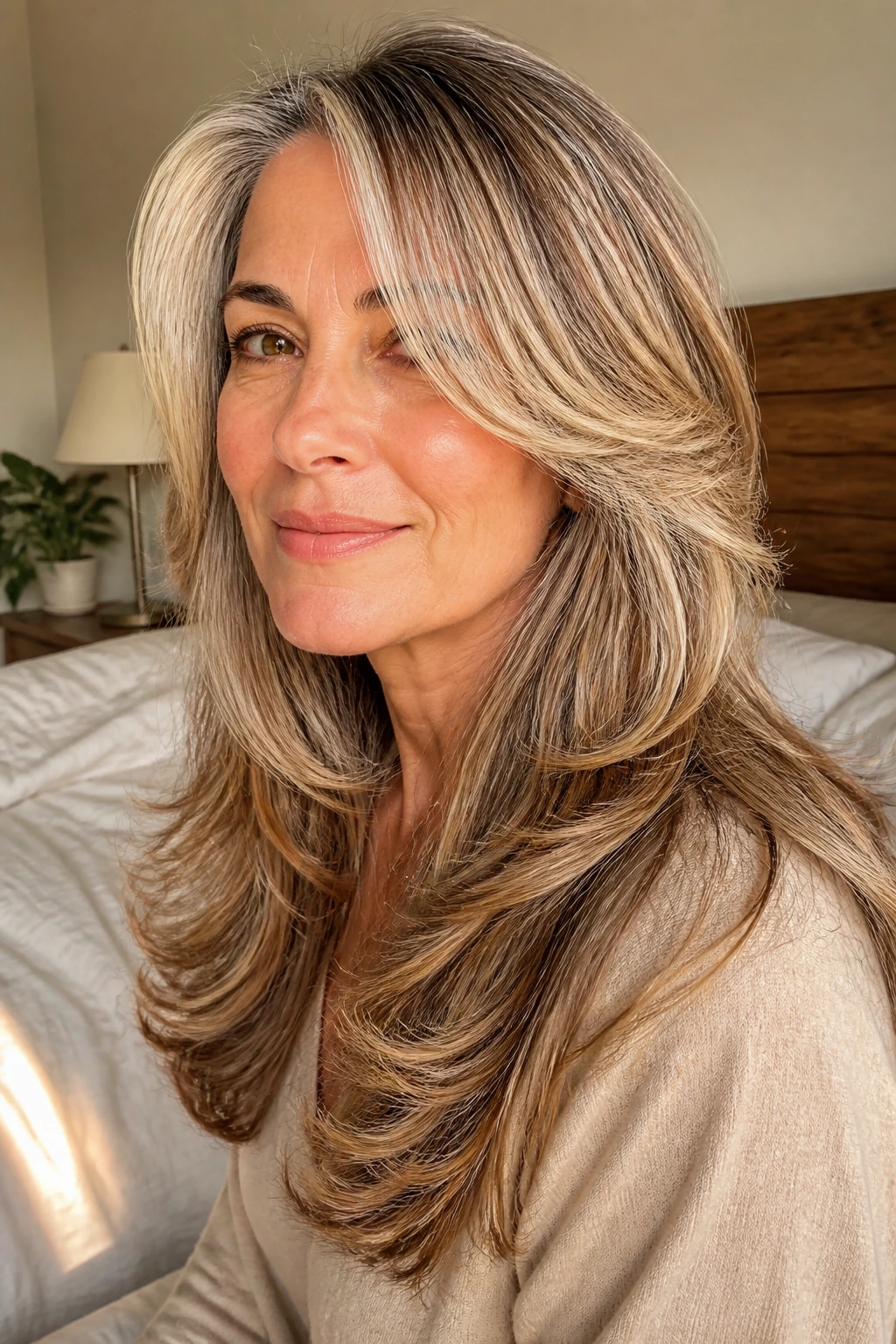
A long wavy haircut should solve at least one real problem. Too flat at the crown? Too much width at the sides? Hair that disappears under glasses? Pick the cut that answers the problem first, then worry about trend names later. That order matters.
If the hair is fine, start by protecting density. Blunt ends, long layers, and soft face framing usually beat aggressive shaping. Fine hair looks better with the illusion of weight than with a lot of slicing. If the hair is thick, the opposite is true: you need internal movement and a clear perimeter so the bulk doesn’t swallow the face.
Glasses change the front line. If your frames are bold or large, keep the shortest layers away from the lens line. If the frames are small, you can get away with more cheekbone framing. Same with earrings. Big earrings and a heavy fringe are too much unless the rest of the cut is quiet.
Face shape helps, but it should not bully the decision. A round face may like a side part or longer front pieces. A square jaw may like a rounded frame. But hair texture comes first. A perfect face-shape haircut that fights your wave pattern will be annoying in two weeks.
Essential Tools for Styling Long Wavy Hair
- 1.25-inch or 1.5-inch curling iron: Best for quick bends in long waves without making the hair look tightly curled.
- Diffuser attachment: Gives wave and curl shape with less frizz than a blasting nozzle.
- Wide-tooth comb: Helps detangle wet hair without stretching the wave apart.
- Sectioning clips: Useful when you want to set the crown separately from the lengths.
- Microfiber towel or cotton T-shirt: Cuts down on rough-up frizz after washing.
- Large round brush: Good for curtain bangs, face-framing layers, and soft flip-outs.
- Flexible-hold hairspray: Keeps the wave in place without making the ends crunchy.
- Light mousse or foam: Useful for fine or flat hair that needs lift at the roots.
- Leave-in conditioner or curl cream: Helps longer waves stay soft and separate instead of drying into a fuzzy halo.
- Silk or satin pillowcase: Not glamorous, but it saves the shape overnight better than a rough cotton case.
Smart Salon Notes and Product Picks
Bring photos, but bring words too. A good picture helps, yet the real value comes from explaining what you like in it. Maybe it’s the front layers. Maybe it’s the density at the ends. Maybe it’s the part or the way the bang falls across the forehead. Say that out loud.
Tell the stylist how you actually wear your hair on an average Tuesday. Air-dried? Diffused? Curled on top and left flat underneath? Tucked behind the ears? Those details matter more than whether the cut looked lovely in the chair. They tell the cutter where the wave needs support.
Product choice should match the haircut, not fight it. Fine hair usually likes mousse at the roots and a light cream on the ends. Thicker or frizz-prone hair often does better with a bit more leave-in and less spray. If the cut has bangs or face framing, a small round brush can save a lot of frustration.
And please, if your hair is wavy, do not let someone flatten it into a shape that only works on straight hair. The whole point here is to let the texture do the work.
How to Wear These Cuts Day to Day
Presentation: Let the shape fall where it was cut to fall. That means not shoving every front layer behind the ear before it has had a chance to frame the face. If you want the cut to read correctly, give it a little room around the cheeks and collarbone.
Accompaniments: Glasses, earrings, collars, and scarves all change how a long wave reads. Higher collars like turtlenecks can crowd a heavier cut, while scoop necks and open collars tend to let the movement breathe. Statement earrings work best when the side pieces are light enough to clear the ear.
Portions: Think in terms of balance. If your hair is fine, ask for more perimeter and fewer short layers. If it is thick, ask for enough internal shaping that the ends don’t feel like a brick. The cut should look fuller where you want presence and lighter where you need motion.
Finish: A pea-sized amount of cream or a mist of flexible spray is often enough. Too much product weighs the wave down and makes long hair look greasy at the crown before lunchtime.
Additional Tips for Making the Shape Your Own
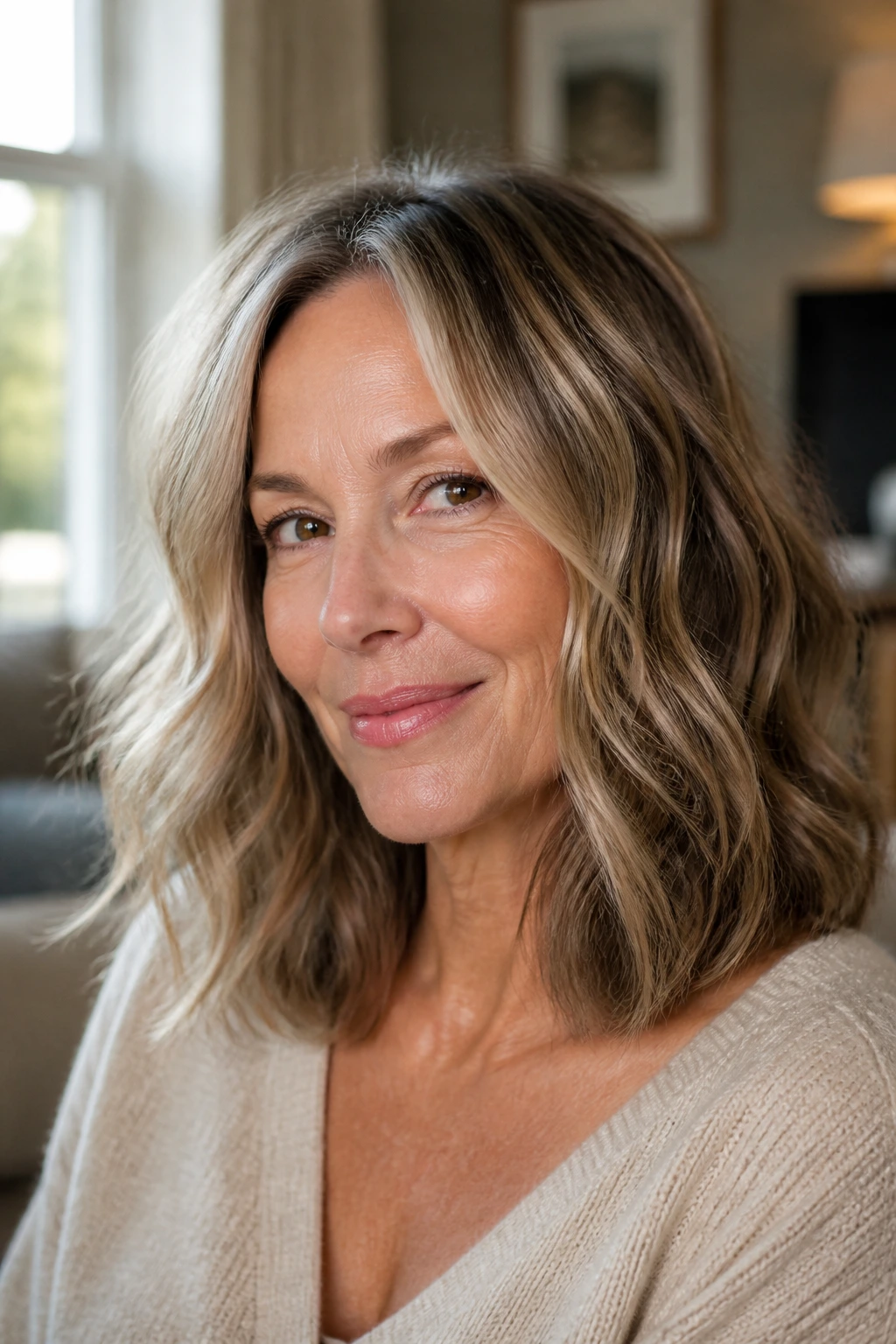
Texture Boost: If your waves are weak at the front but stronger underneath, ask for slightly more length around the face and a touch more shaping under the back layers. That keeps the silhouette from collapsing where people notice it most.
Color Placement: A few lighter pieces around the face can make long layers read more clearly, especially on gray or salt-and-pepper hair. The cut shows the movement; the color shows the path.
Glasses-Friendly Shape: Keep the shortest front pieces at or below the cheekbone if you wear larger frames. That stops the hair from kicking into the lenses every time you turn your head.
Make-It-Yours: If you like polish, go with blunt ends, a center part, and a cleaner surface. If you like a little more ease, choose long shaggy layers, a side part, and a lived-in finish. Same length. Different attitude.
Keeping the Cut Sharp Between Trims
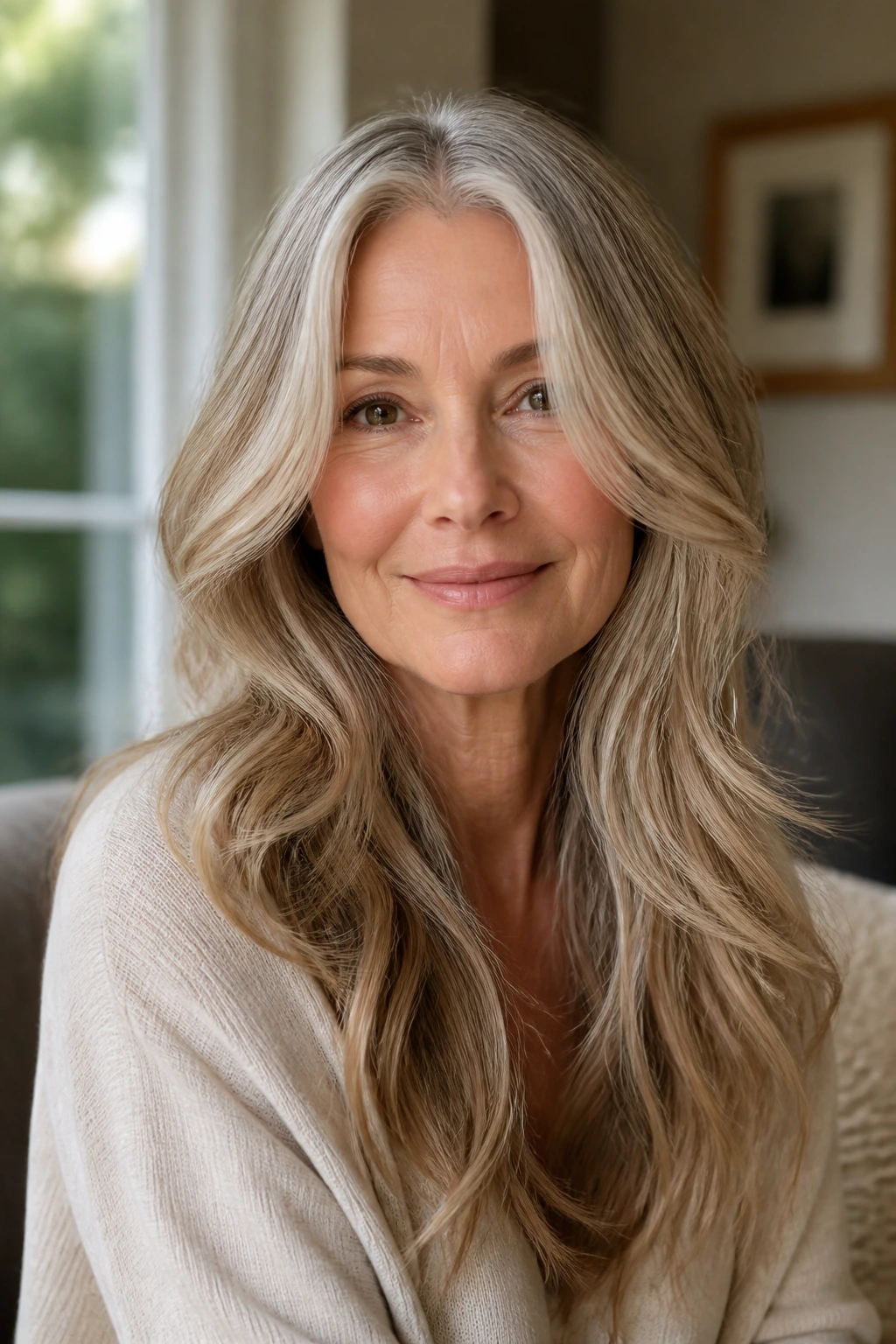
Long wavy hair stays nicest when the ends are trimmed before they start looking tired. Most women with long layers do well with a trim every 8 to 12 weeks if they want to preserve the shape. If you’re growing it out, you can stretch that a bit longer, but the perimeter will usually tell on you before the calendar does.
Sleep changes the shape more than people admit. A loose braid, a silk pillowcase, or a low ponytail with a soft tie keeps the wave from getting crushed at the back. If you wake up with one flattened side, mist it lightly with water, add a touch of cream, and twist the pieces around your fingers. That’s often enough.
Heat styling doesn’t have to happen every day. In fact, most long wavy cuts look better when the hot tools are used sparingly. A quick refresh on the bangs or the face frame can be enough to make the whole shape feel deliberate again.
Common Mistakes That Flatten Long Waves

- Layers that start too high: If the shortest layers begin near the ears or higher, the crown can puff while the ends go thin. Ask for a softer start point, usually around the cheekbone or lower.
- Over-thinning the ends: Hair that has been aggressively thinned often looks fuzzy by the second day. The fix is a cleaner perimeter and less texturizing.
- Curtain bangs cut too short: Bangs that spring up above the brow make the front look abrupt. Keep them longer than you think and let them shrink when dry.
- Ignoring the wave pattern: Some hair bends forward, some bends out, and some bends flat. If the cut doesn’t follow that pattern, the styling fight starts every morning.
- Trying to force straightness: Long wavy hair usually looks best with one or two visible bends instead of a pin-straight finish. If you flatten every inch, you lose the thing that made the cut worth keeping.
- Skipping regular trims: Split ends travel fast on long hair. Once they start fraying, even a good cut can look tired at the bottom.
Variations and Adaptations to Try
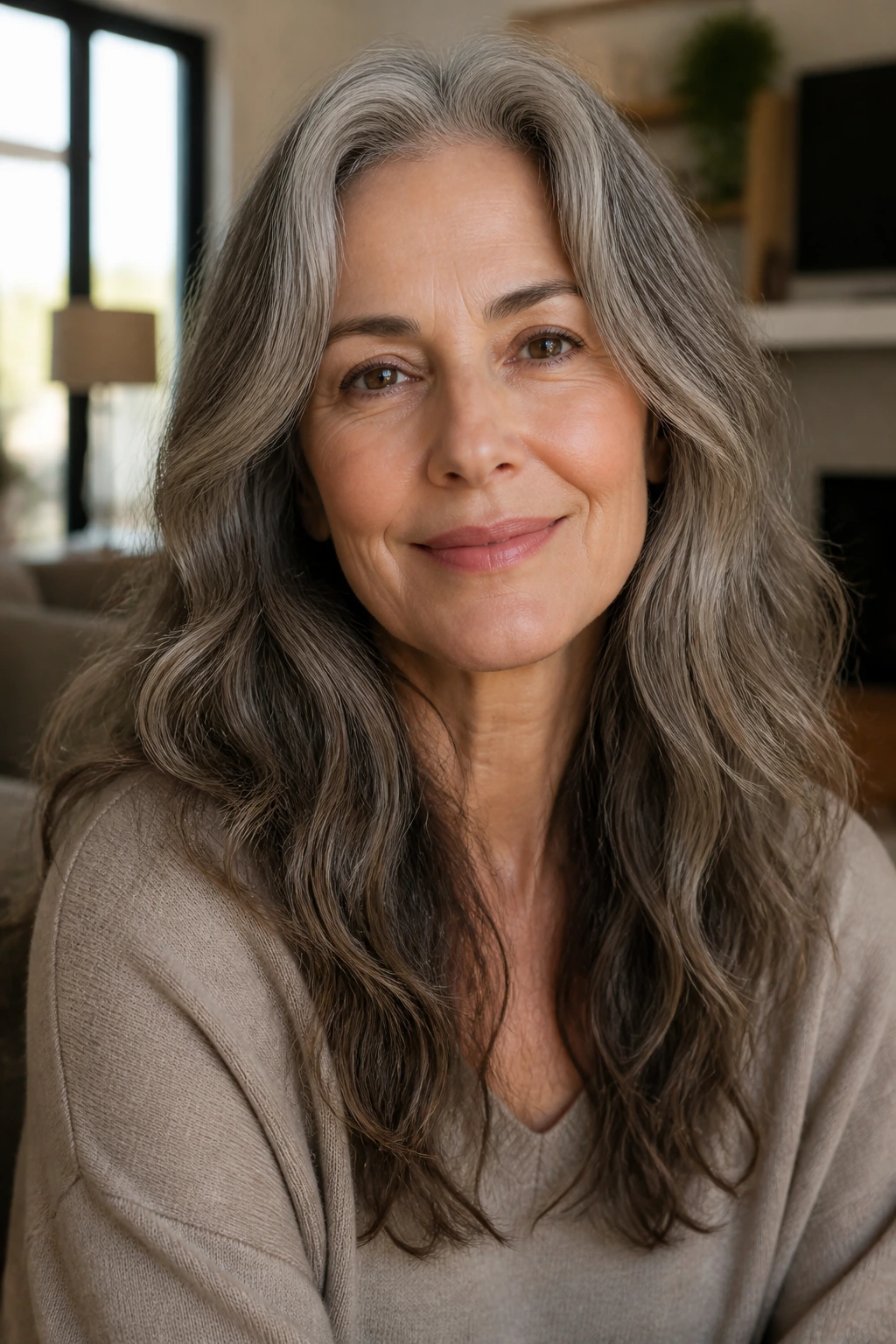
The Fine-Hair Lift: Keep the perimeter blunt, the layers long, and the front pieces soft. This version gives the illusion of density without making the hair feel heavy or overcut.
The Thick-Hair Tamer: Use a U-shape or soft rounded perimeter with internal weight removal. It keeps the volume under control while still letting the waves move.
The Gray-Glow Shape: Choose a clean outline, subtle face framing, and fewer choppy layers. Silver hair looks sharp when the line is neat and the texture is allowed to show through.
The Glasses-Friendly Frame: Let the front pieces fall below the lens line and keep the shortest layers away from the temples. That keeps the haircut from tangling with frames all day.
The Low-Heat Cut: Ask for a shape that air-dries well with minimal crown work. Long layers should follow your natural wave pattern, not a blowout fantasy.
The Dress-Up Version: Add slightly stronger face framing and a little more polish at the ends. This one looks especially good with a round brush set or loose iron bends for evening events.
Frequently Asked Questions
Which long wavy haircut makes hair look fuller?
Blunt ends with long internal layers usually make hair look fuller than a heavily layered cut. If the hair is fine, too many short layers can leave the ends looking sparse.
Are curtain bangs a bad idea for older women?
Not if they’re cut long enough to blend into the rest of the hair. Short bangs can feel abrupt, but longer curtain bangs soften the forehead and open the face without looking stiff.
Should long wavy hair be layered or one length?
That depends on density. Fine hair often looks better with very light layering or a blunt line, while thick hair usually needs more internal shaping so it doesn’t spread outward.
How often should long wavy hair be trimmed?
Most long cuts benefit from a trim every 8 to 12 weeks. If the ends are splitting or the shape has gone fuzzy, don’t wait for the next milestone.
Can gray or silver hair hold long waves well?
Yes, and sometimes it holds shape better than expected because the strand can be a bit coarser. The main thing is keeping the ends neat so the texture reads as movement instead of frizz.
What if my hair is wavy but frizzes easily?
Ask for fewer short layers and a more stable perimeter. Then use a leave-in cream or light mousse and let the hair dry with less rough handling.
Is a side part better than a middle part for mature wavy hair?
A side part adds lift at the crown and can soften a strong jaw or a flat top. A middle part can look cleaner and more balanced on longer faces or symmetrical cuts. Choose the part that gives your roots the shape you want.
What should I tell my stylist if I want low maintenance?
Say you want a cut that still looks right when air-dried, on day two, and after being tucked behind the ears. That tells the stylist to protect the wave pattern instead of building a haircut that only works with a full blowout.
The Shape That Keeps Its Movement
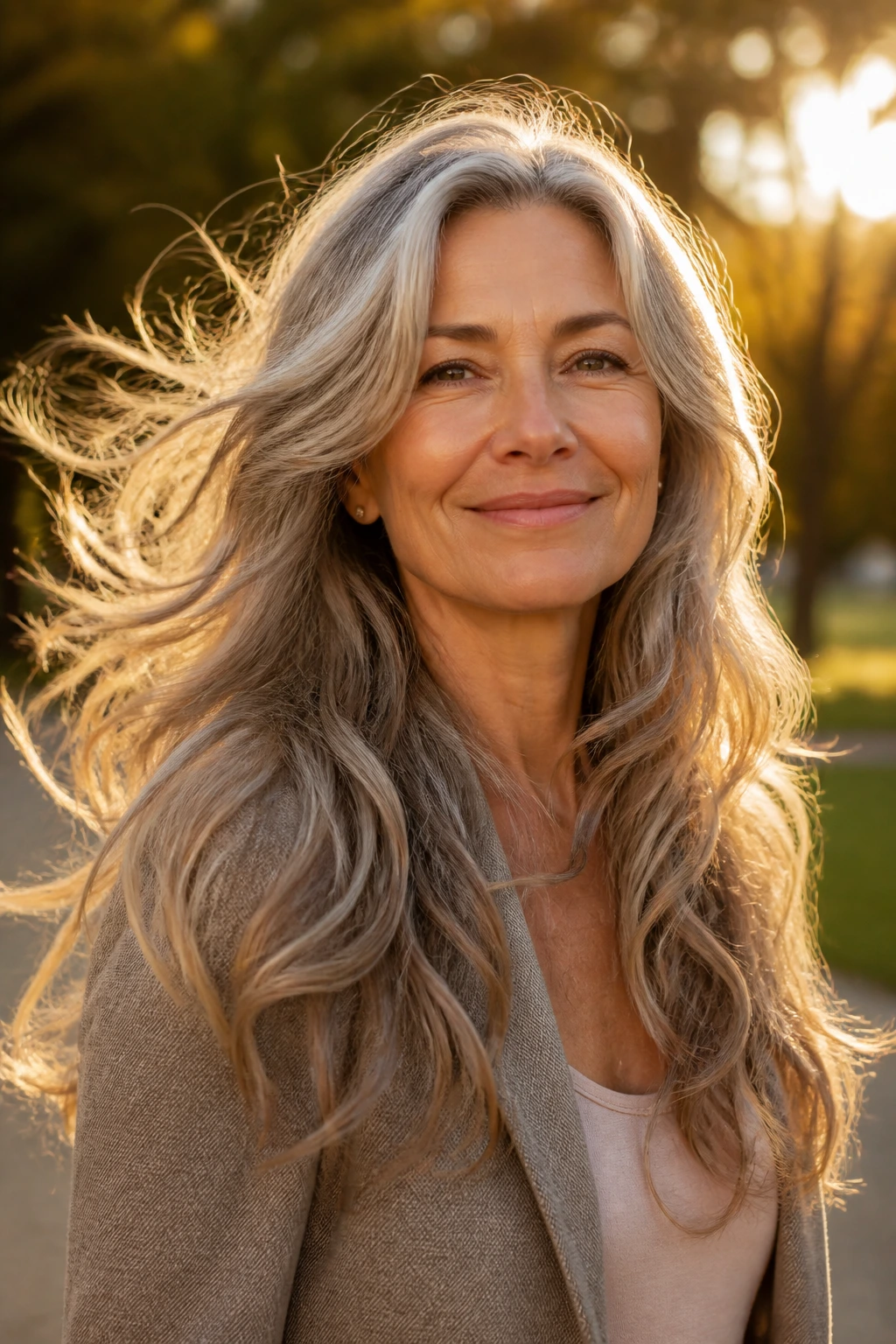
Long wavy hair does not need to be apologetic, and it does not need to be chopped short to look current. It needs structure in the right places. Once the layers support the wave instead of fighting it, the whole look gets easier to wear, easier to style, and a lot less fussy to maintain.
The best haircut is the one that still looks like your hair after the salon excitement fades. Not shellacked. Not overworked. Just better placed. That’s the quiet difference between a haircut that sits there and one that actually moves with you.
