



Little boys’ haircuts live in the messy middle between style and survival. The cut has to look tidy in the chair, then survive a backpack strap, a scooter helmet, nap time, a sweaty run across the yard, and whatever happens when a kid rubs his head on a car seat. That’s the real test. Not the mirror.
The best haircut ideas for little boys aren’t the flashiest ones. They’re the cuts that still make sense when the fringe has been pushed sideways by a hand, the crown sticks up a little, or the neckline starts growing out before the weekend is even over. A sharp fade can look fantastic. So can a soft scissor cut, a curly crop, or a longer layered style that moves instead of fighting back.
A good haircut also has to match the child, not just the photo. Thick hair behaves differently from fine hair. Curls need room. Cowlicks have opinions. And some kids will sit still for twelve minutes, while others act like the cape is made of snakes. The right cut takes all of that into account, which is why a strong list of boys haircut ideas is worth having on hand before the chair starts spinning.
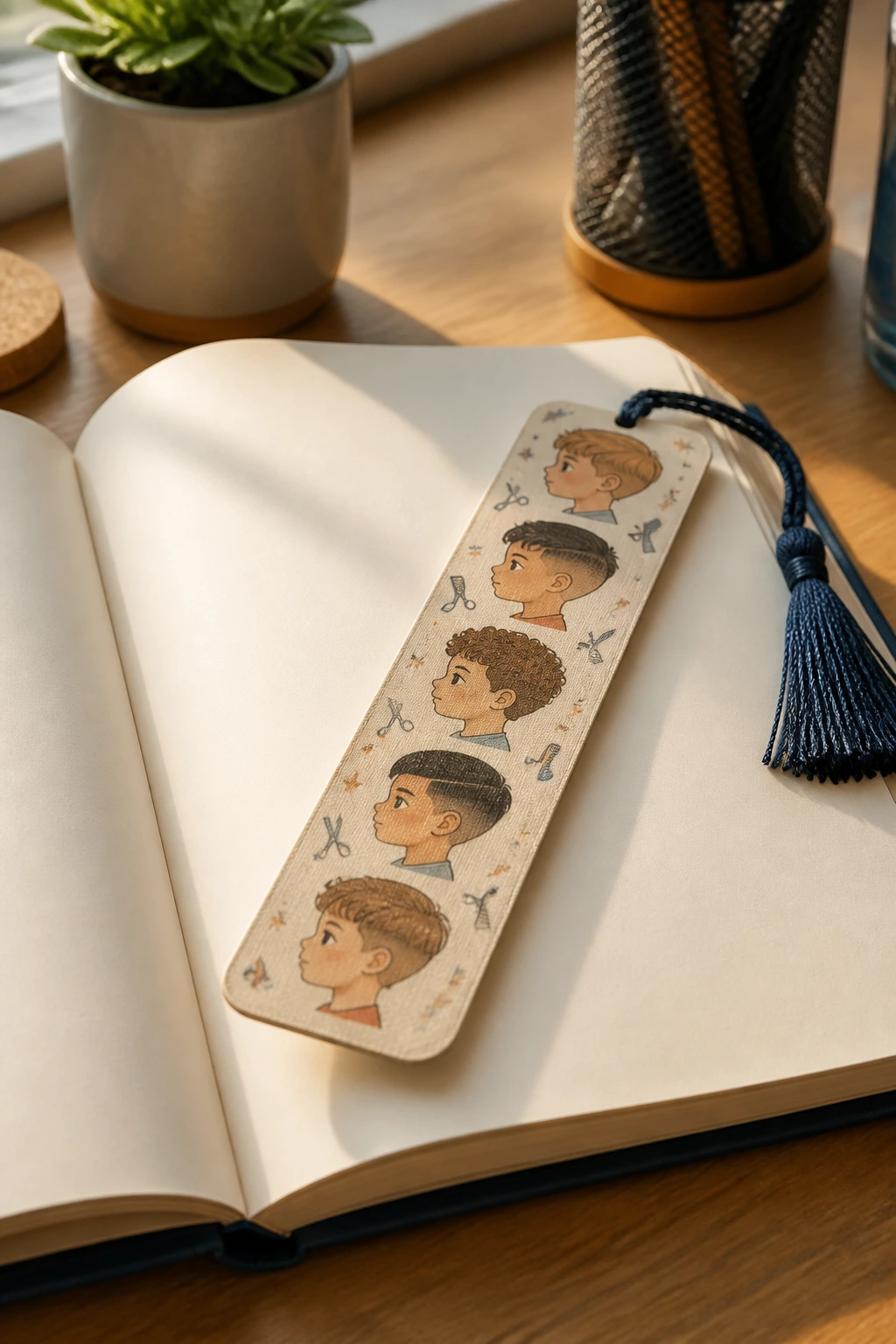
Why This Collection Is Worth Bookmarking
-
Low-Fuss Options: A few of these cuts need nothing more than a quick comb or a dab of matte paste, which matters on mornings when everyone is moving too slowly.
-
Barber-Friendly: Most of the styles can be explained with guard numbers, scissor lengths, or a single reference photo, so there’s less room for the dreaded “not quite what I meant.”
-
Works With Real Hair: Straight, wavy, curly, thick, fine, and coily hair all show up here, because kids do not come with one standard texture.
-
Grows Out Better: Some haircuts start to look rough after ten days. These choices include shapes that stay readable even when the edges soften.
-
School and Sports Ready: Helmets, hoodies, swimming, and PE class all put a haircut through a very specific kind of chaos. These cuts handle that better than most.
-
Not Boring: Clean does not have to mean plain. A little taper, fringe, texture, or length change can make a cut feel fresh without making mornings harder.
1. Classic Crew Cut
A crew cut is the haircut equivalent of a clean white T-shirt: simple, dependable, and hard to mess up. The sides stay short, the top is just long enough to show a little shape, and the whole cut sits close to the head without looking shaved down.
Why It Works
It’s one of the easiest boys haircuts to maintain because the shape is built into the cut itself. Ask for the sides around a #2 or #3 guard and leave the top a bit longer, usually about 1 to 1.5 inches. That gives the hair enough length to lie flat without puffing out.
It also handles cowlicks better than most parents expect. The shorter the top, the less room a stubborn swirl has to misbehave. If your kid is active, this is the haircut that still looks fine after recess.
A crew cut is not showy. That’s the point.
2. Textured Crop
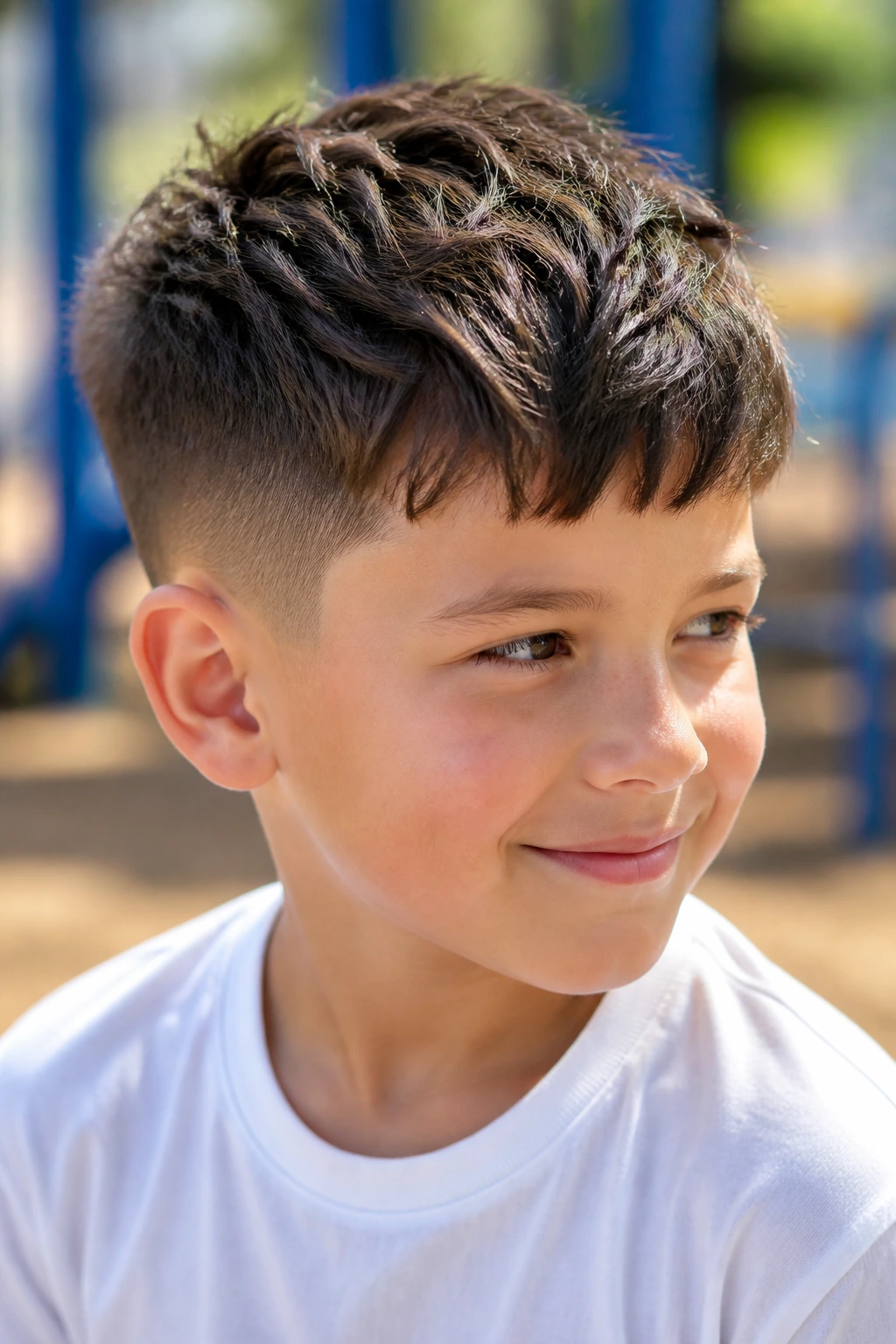
This is the cut I reach for when straight hair gets too helmet-like. The textured crop keeps the top choppy and forward, with short sides and a fringe that lands just above the eyebrows or barely on them.
What Makes It Different
Tell the barber to leave 2 to 3 inches on top and work the scissors in a way that creates little pieces instead of one solid block. The finish should look deliberately uneven, not hacked at. A matte paste or light cream keeps it from flopping over.
This style looks especially good on thick hair, because the texture takes some weight out of the top. It also works on boys who like their hair to move a little when they run, rather than sitting in one stiff shape.
The texture is the whole story. Skip the shine.
3. Low Taper Fade with a Short Top
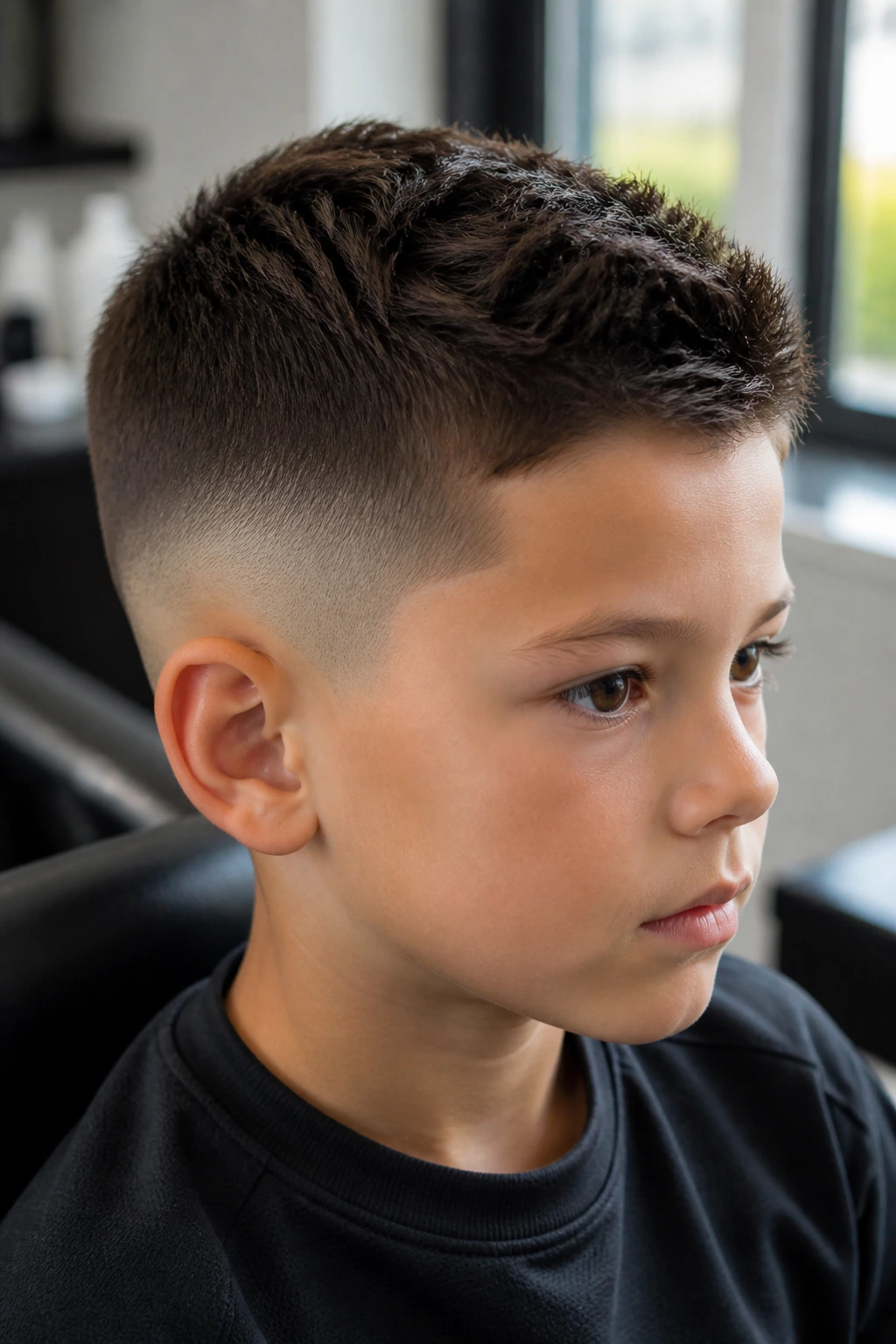
If you want something neat without going full skin fade, a low taper fade is a smart middle ground. The taper starts low around the ears and neckline, while the top stays short and easy to brush.
How to Ask for It
Bring a photo and ask for a low taper around the ears and nape, with the top left at 1.5 to 2 inches. The fade should feel soft, not dramatic, and the top can be combed forward or slightly to the side.
This is a strong choice for kids who wear glasses, because the area around the temples stays cleaner and less bulky. It also grows out more gracefully than a sharper high fade. The shape hangs together even when the cut is a couple of weeks old.
Clean edges matter here. A sloppy taper ruins the whole thing.
4. Side Part with a Scissor Top

A side part gives a little boy haircut a grown-up shape without making it stiff. The top is scissor-cut, the part is natural or lightly encouraged, and the sides stay short enough to keep the outline neat.
Why Parents Keep Coming Back to It
It’s a good pick when you want school-photo neatness but not a buzzed look. The top usually sits around 2 to 3 inches, which means it can be brushed over with water or a dab of cream. If your child’s hair is fine, this cut gives it some structure. If it’s thick, it removes bulk without turning the head into a helmet.
A true side part looks best when the barber follows the hair’s natural fall instead of carving in a hard, flashy line. Soft is better here. Always.
5. French Crop
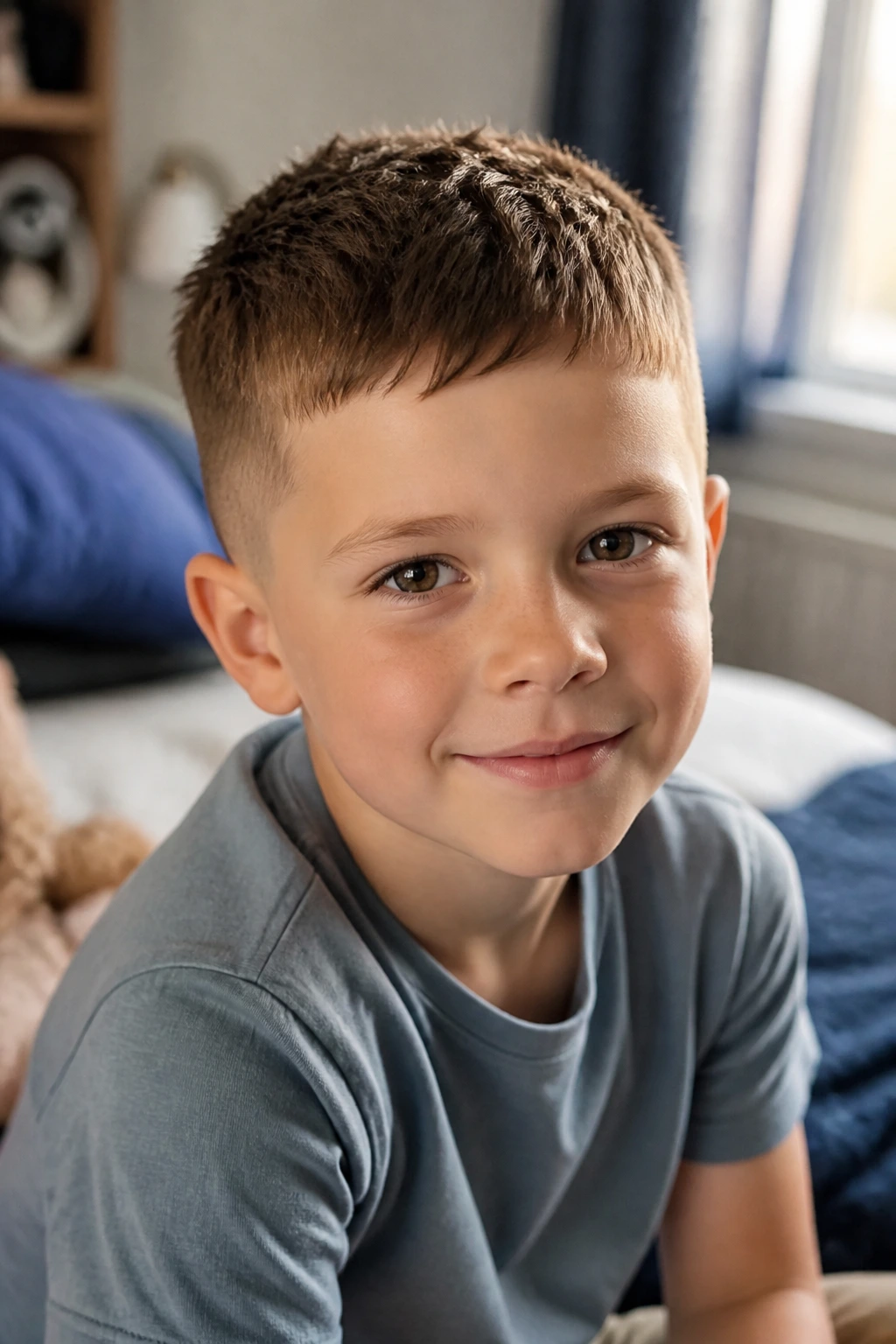
The French crop is basically the textured crop’s quieter cousin. The fringe is short and forward, the sides are clipped tight, and the whole cut lands with that neat, almost tucked-in look.
It’s especially useful for boys with a high forehead, because the fringe brings the focus down and forward. Ask for a blunt or slightly textured fringe and keep the top compact, around 1 to 2 inches. If the hair is thick, this cut removes weight fast. If it’s straight, it lies down cleanly with almost no styling.
I like this one because it doesn’t try too hard. It just works.
6. Buzz Cut with a Line-Up
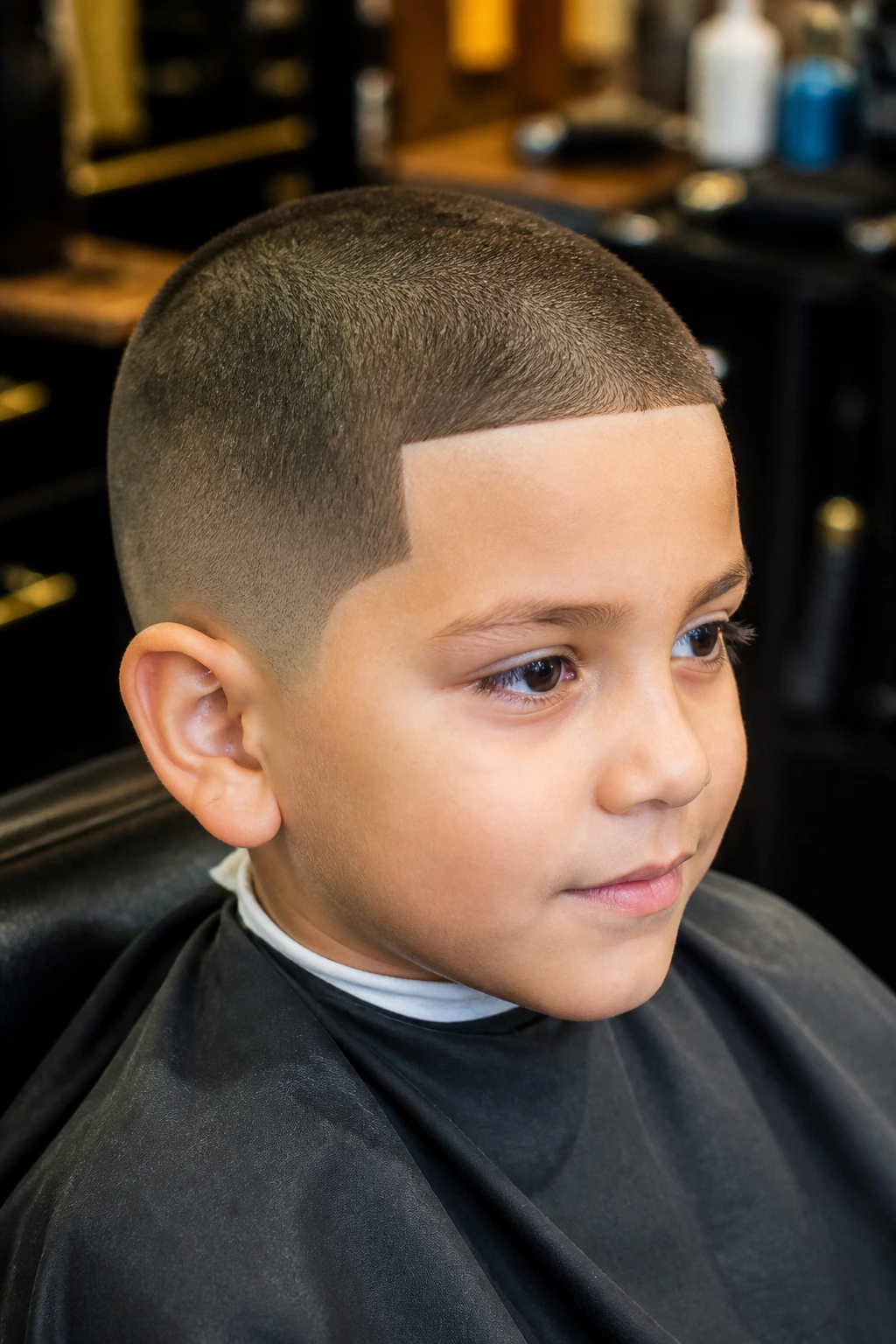
A buzz cut with a line-up is the no-nonsense answer when a kid wants hair out of the way and parents want zero drama. The length can be as short as a #1 guard or as soft as a #3, and the edges are cleaned up around the forehead and temples.
The Trade-Off
This is the easiest haircut on this list to wash, dry, and forget about. But it also puts the head shape on display, so the line-up needs to be neat. If the hairline is squared too aggressively, the cut can look harsh on a small face. Keep it clean, not sharp enough to look borrowed from an adult.
The best buzz cuts still have a little softness around the ears and neckline. That’s what keeps them from looking military in a way that doesn’t suit a child.
7. Ivy League Cut
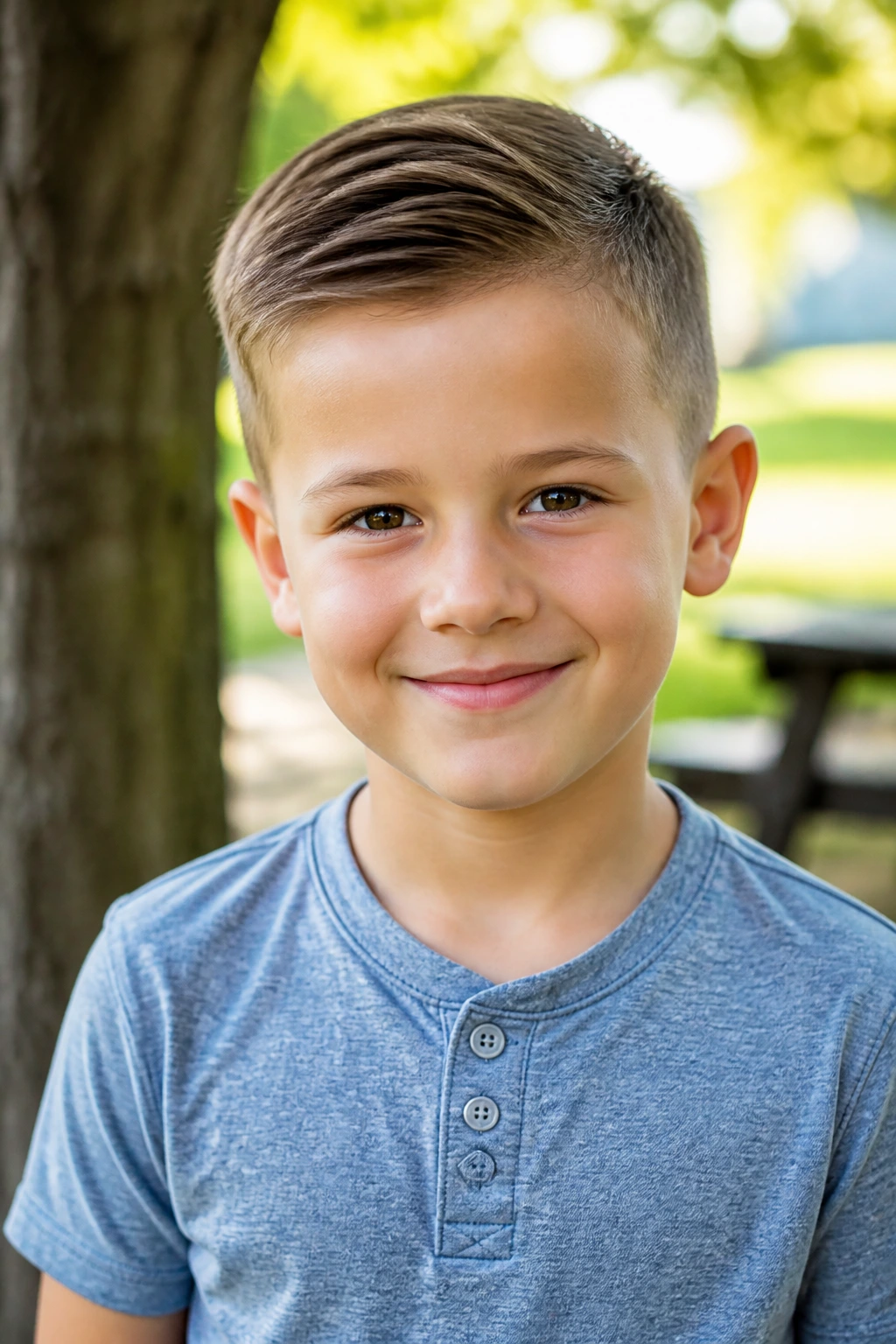
Think of the Ivy League as a longer crew cut with manners. The top stays long enough to part or brush over, while the sides are tapered short enough to keep the shape tidy.
A Good Fit For
This cut works well on straight and slightly wavy hair, especially when you want something that can dress up for family photos and still survive a playground. Ask for about 2 to 3 inches on top and shorter sides that blend, not jump.
The Ivy League is one of those styles that looks neat even when it’s not freshly styled. A little water, a quick finger-comb, and you’re done. I also like it for boys who hate anything that falls into their eyes but still want enough length to show a bit of personality.
8. Faux Hawk
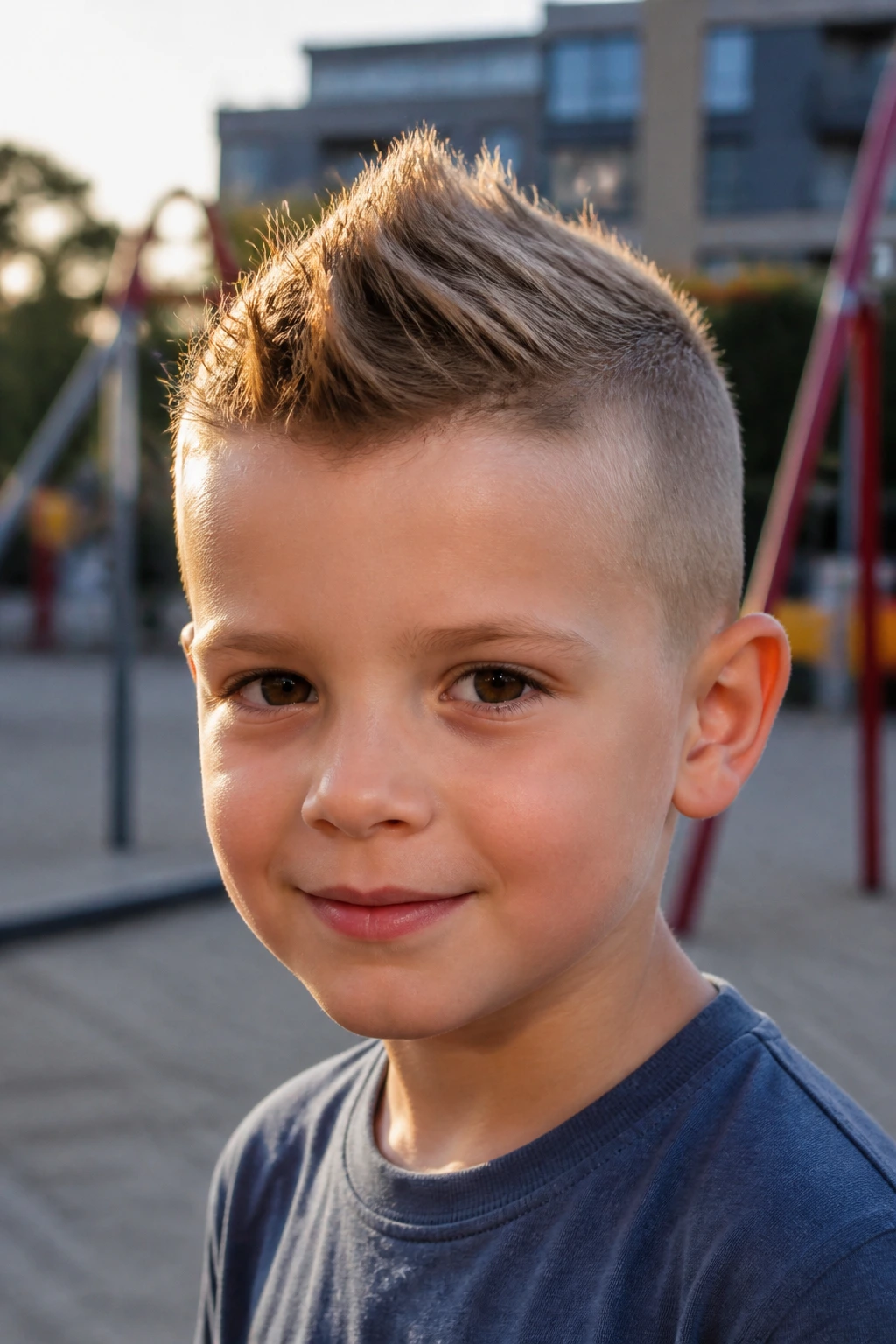
A faux hawk gives a child a little edge without crossing into costume territory. The middle strip is left longer, the sides are tapered down, and the top gets enough length to lift forward or up.
This is one of the few bolder styles that still works in real life if you keep the difference modest. Don’t ask for a giant mohawk ridge. Ask for a subtle center strip with shorter sides and texture on top. A small amount of styling cream is enough to nudge the hair into shape.
It’s fun, but it still has to be wearable. That’s the line.
9. Curly Top with Tapered Sides
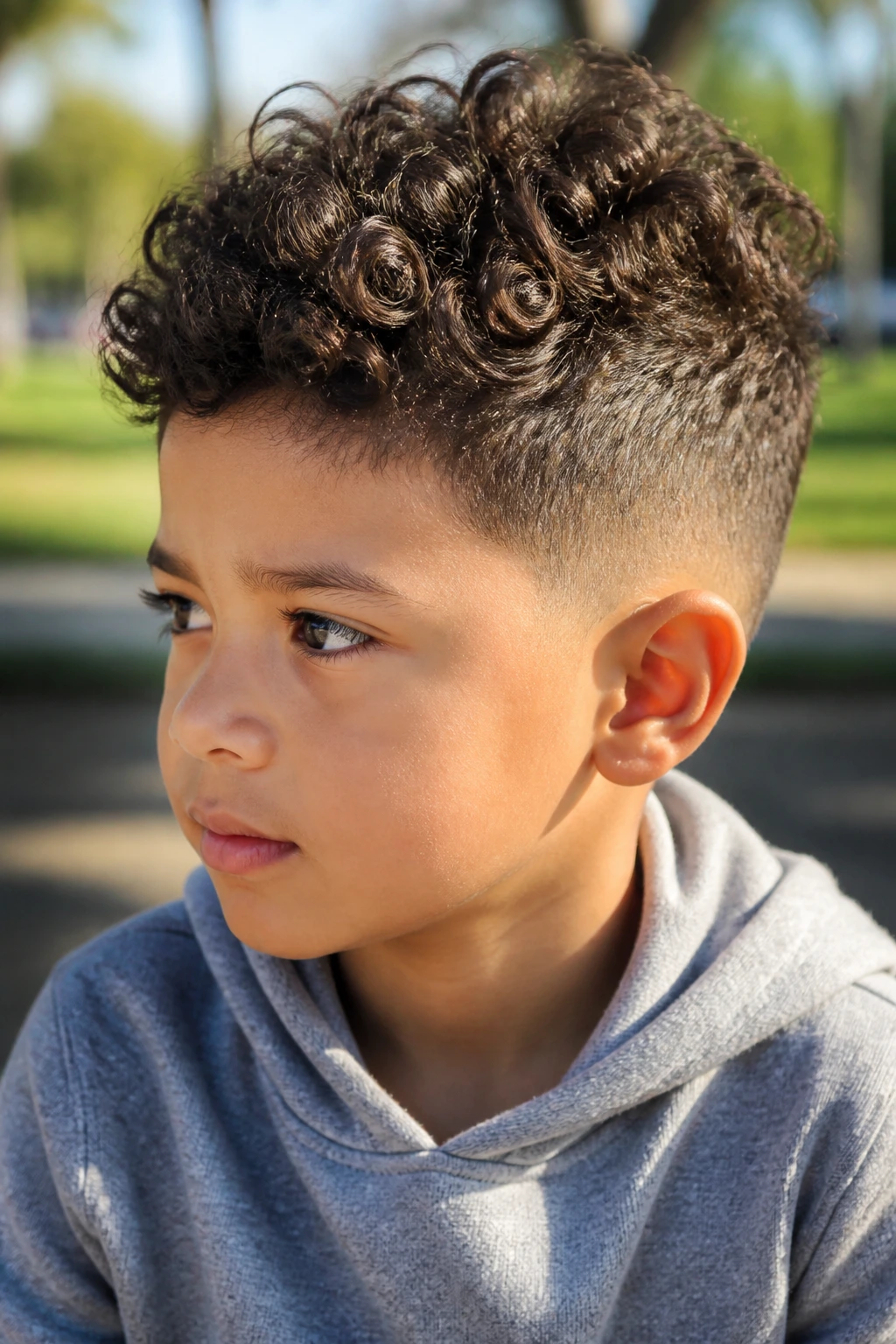
Curly hair looks best when the barber leaves it alone where it matters. Keep the curls longer on top and taper the sides and back so the head doesn’t turn into a triangle.
Why This One Matters
Too many curly cuts get cut like straight hair, and that’s where the trouble starts. Curly hair shrinks when it dries. If you cut it too short while wet, the shape can jump up a full inch or more. Leave the top with room, usually around 3 to 5 inches depending on curl tightness, and shape the sides with a soft taper.
This cut feels intentional when the curls are left to do their own thing. A little curl cream can help, but the real work happens in the shape of the cut. Not the product.
10. Modern Bowl Cut
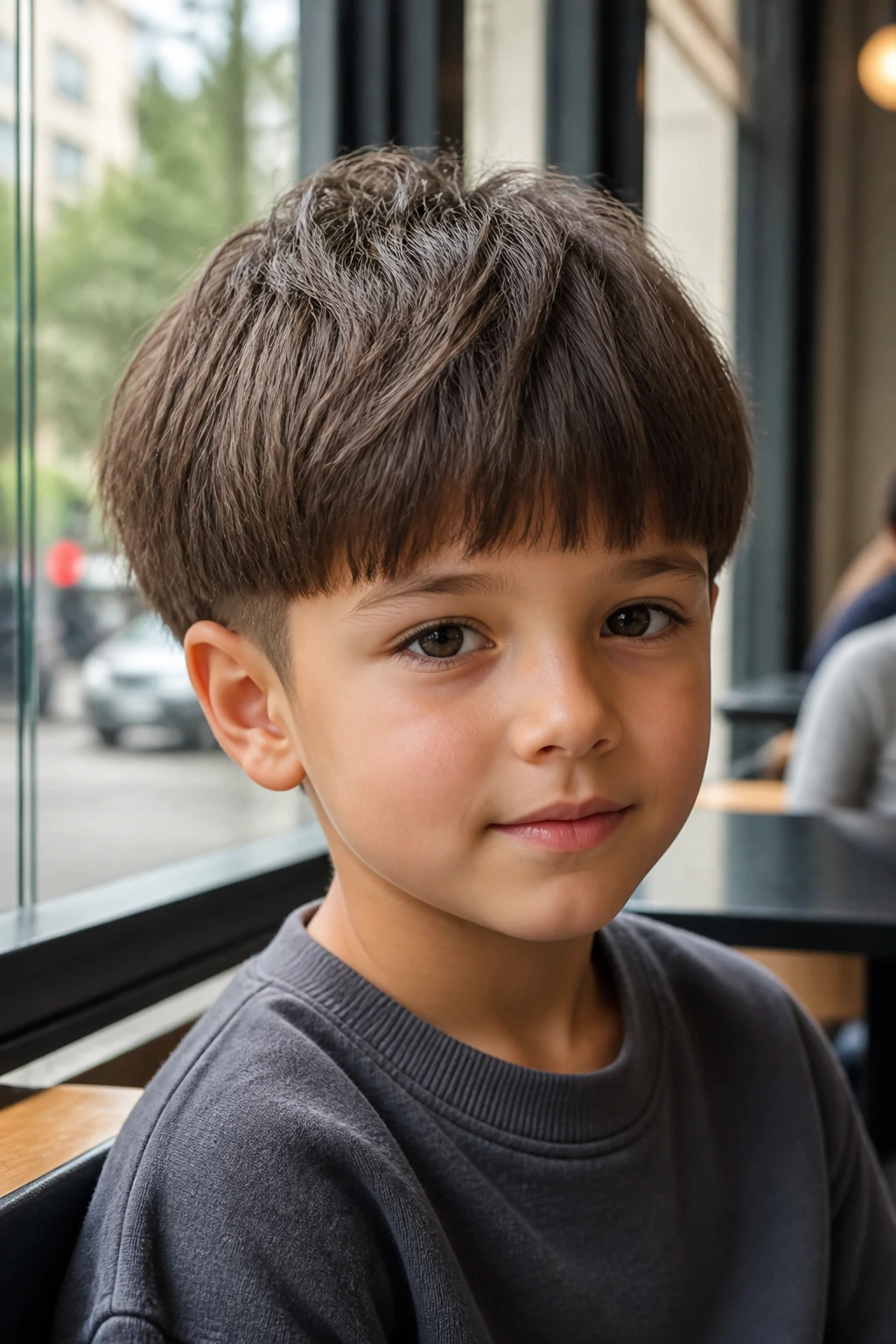
A good bowl cut is not the old-school mushroom helmet people remember from childhood photos. The modern version has texture, softer edges, and a shape that follows the head instead of fighting it.
What to Tell the Barber
Ask for a rounded silhouette with textured ends and no hard shelf line. The fringe can sit straight across or be slightly broken up so it doesn’t look too blunt. The ears may stay partially covered or fully opened, depending on the look you want.
I know this cut gets side-eye. Fair enough. But on the right hair, especially thick straight hair, it can look sharp and a little arty instead of clunky. The trick is softness. Not perfection. Not a hard line cut with a ruler.
11. Mop Top
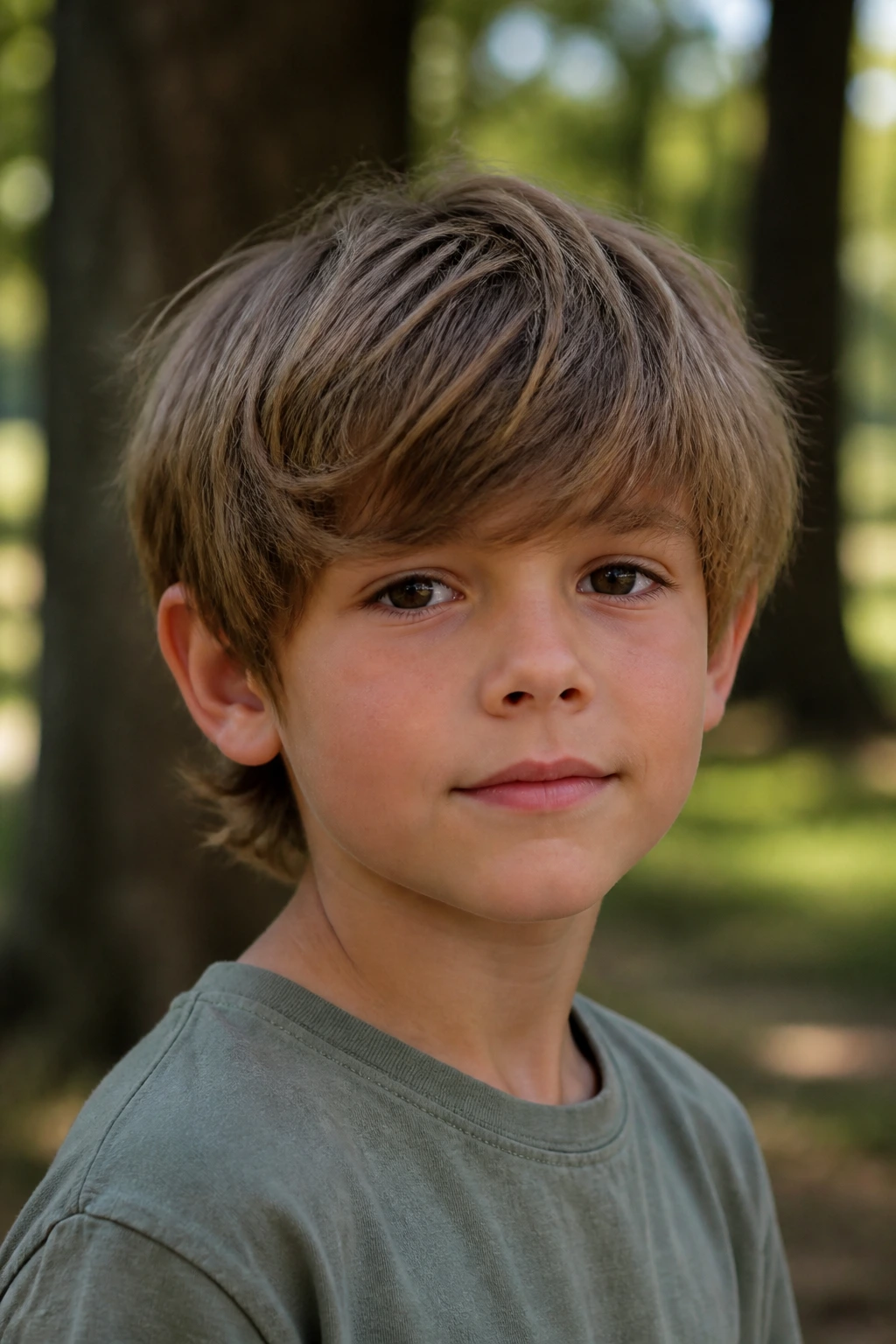
The mop top has a loose, playful shape with longer pieces around the ears and fringe. It looks a little shaggy in a good way, like the haircut has movement even when the child is standing still.
This style suits boys who have straight or wavy hair and do not mind a bit of length around the face. It does need brushing. Not styling, exactly—just brushing so the fringe doesn’t land in the eyes after a nap or a long car ride.
The mop top can look charming rather than messy if the layers are cut thoughtfully. If the ends are all one length, it falls flat fast. Layer it. Lightly.
12. Shaggy Layers
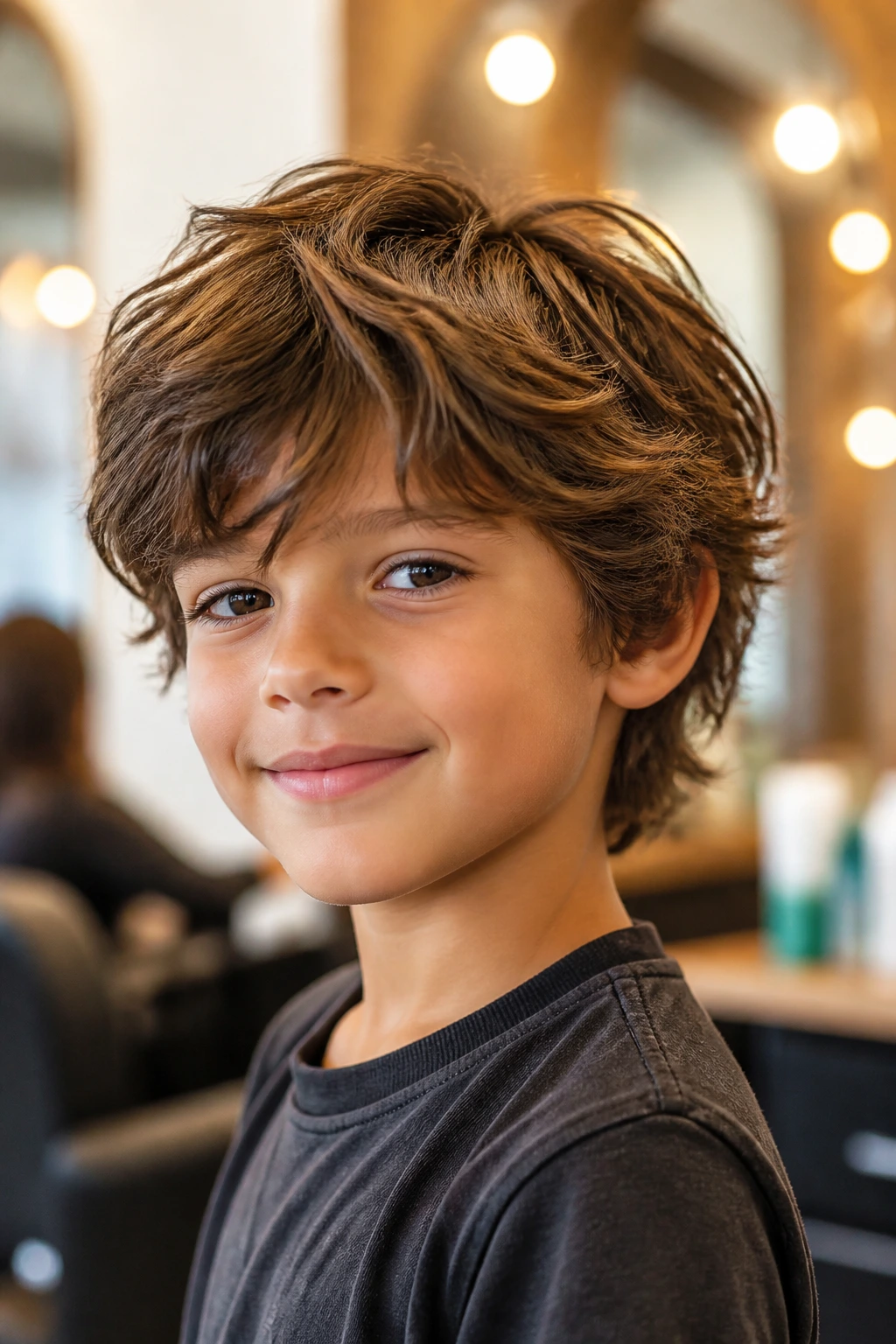
Shaggy layers are the answer when a kid’s hair wants to be longer, but you still want it to look shaped. The cut keeps length through the top and sides, then removes bulk in uneven layers.
Best For
Wavy and thick hair. Especially thick hair. Layers stop the shape from puffing out at the temples and let the hair move instead of box up around the ears.
Ask for longer scissor work around the crown and sides rather than a heavy clipper cut. That makes the grow-out phase less awkward, which matters if you’re trying to stretch time between barber visits. A quick shake and a touch of leave-in conditioner are often enough.
This is one of my favorites for kids who like a little length but hate fuss.
13. Caesar Cut
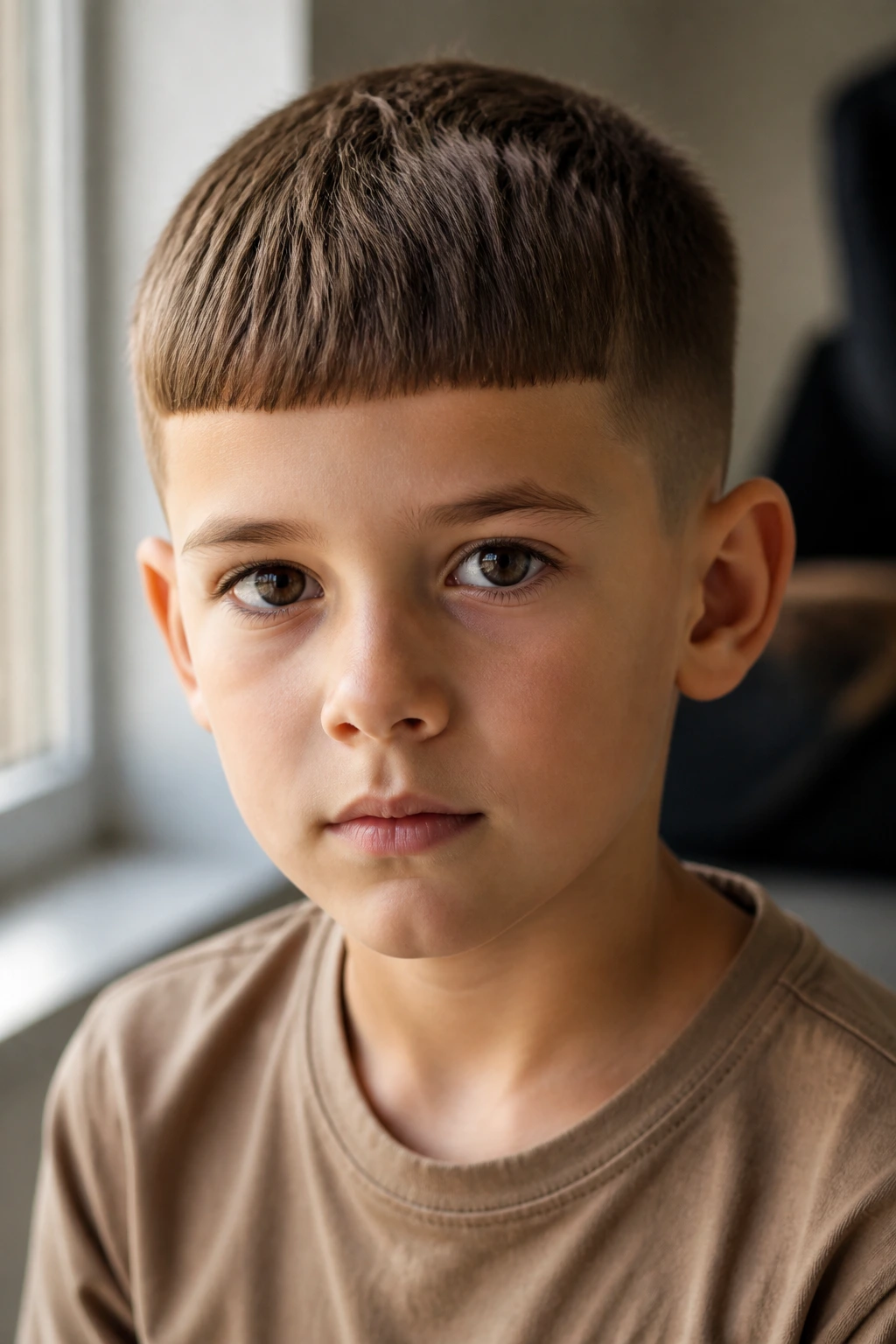
The Caesar cut is short, forward, and blunt across the front. The fringe is cut straight or nearly straight, which gives the whole head a tidy, no-nonsense frame.
Why It’s Still Around
It handles cowlicks and uneven growth lines better than people expect. Because the hair is kept short and pushed forward, there’s less chance of a cowlick splitting the front open by noon. Ask for the top kept around 1 to 1.5 inches, with the fringe slightly textured if you want it softer.
This is also a solid choice for boys who don’t want hair in their face during sports or reading. It stays low-maintenance, but it doesn’t look like a pure buzz. That tiny bit of fringe is doing the work.
14. Skin Fade with a Hard Part
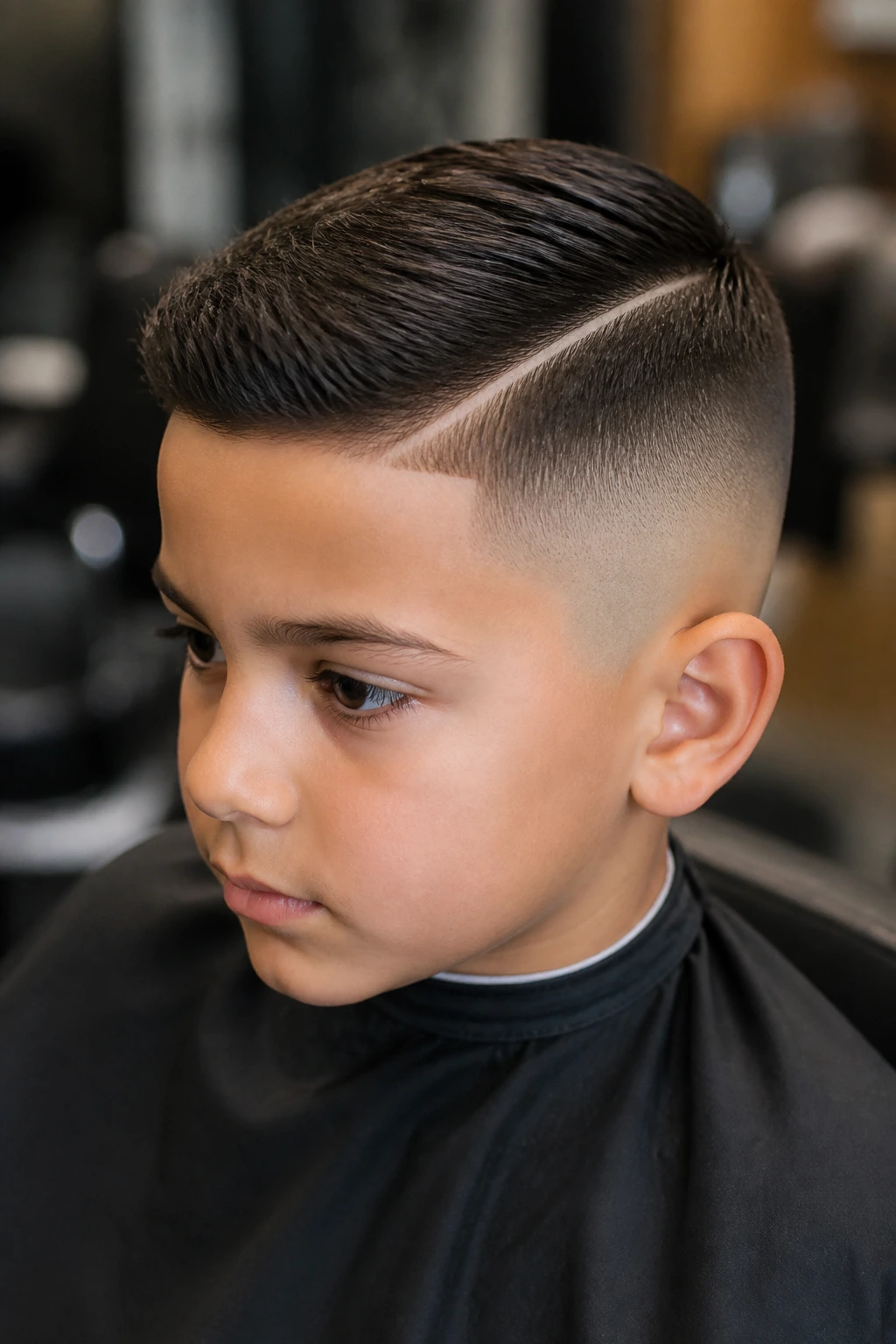
A skin fade with a hard part is a sharper, more polished look. The fade drops all the way to skin on the sides, then a distinct shaved part cuts through the top for a clean line.
It’s a strong style, but it needs a barber who can keep the balance right. Too much contrast and it starts to look costume-y on a small head. Keep the top moderate, around 2 to 3 inches, and let the part stay precise but not overly deep.
This one reads best on straight hair. It also needs upkeep sooner than softer cuts. When it grows out, the edges show it fast. No mystery there.
15. Comb-Over Fade
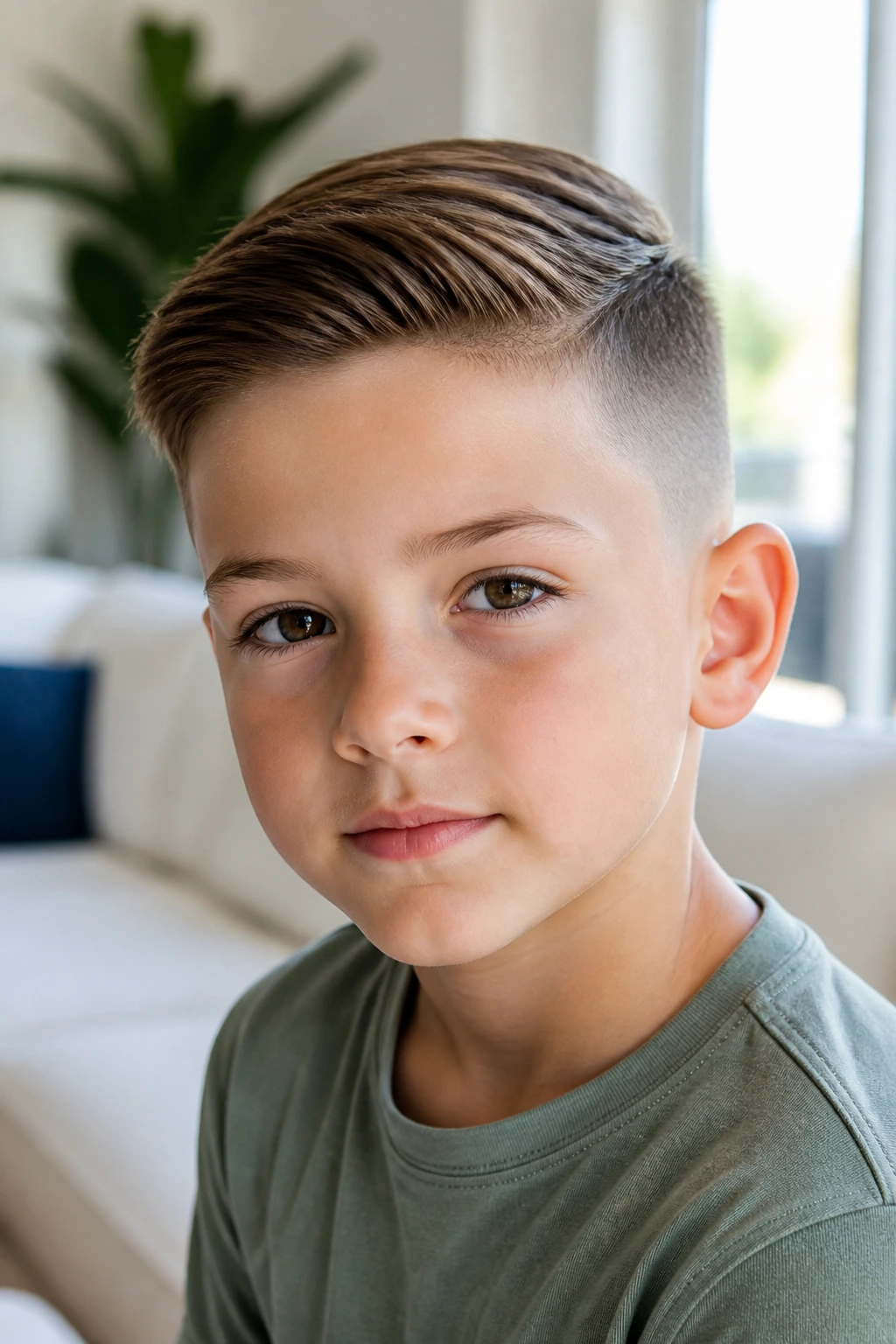
A comb-over fade is more flexible than it sounds. The hair on top is left long enough to sweep to one side, while the sides fade cleanly so the whole thing stays crisp.
How It Looks in Real Life
The cut works because it gives you a clear shape without demanding a lot of styling. A little water and a dab of cream are enough to separate the top and push it over. If the hair is thick, the fade removes weight. If it’s fine, the side sweep creates the illusion of more body.
Keep the comb-over soft for kids. A hard, glued-down version belongs on another head, not this one.
16. High and Tight
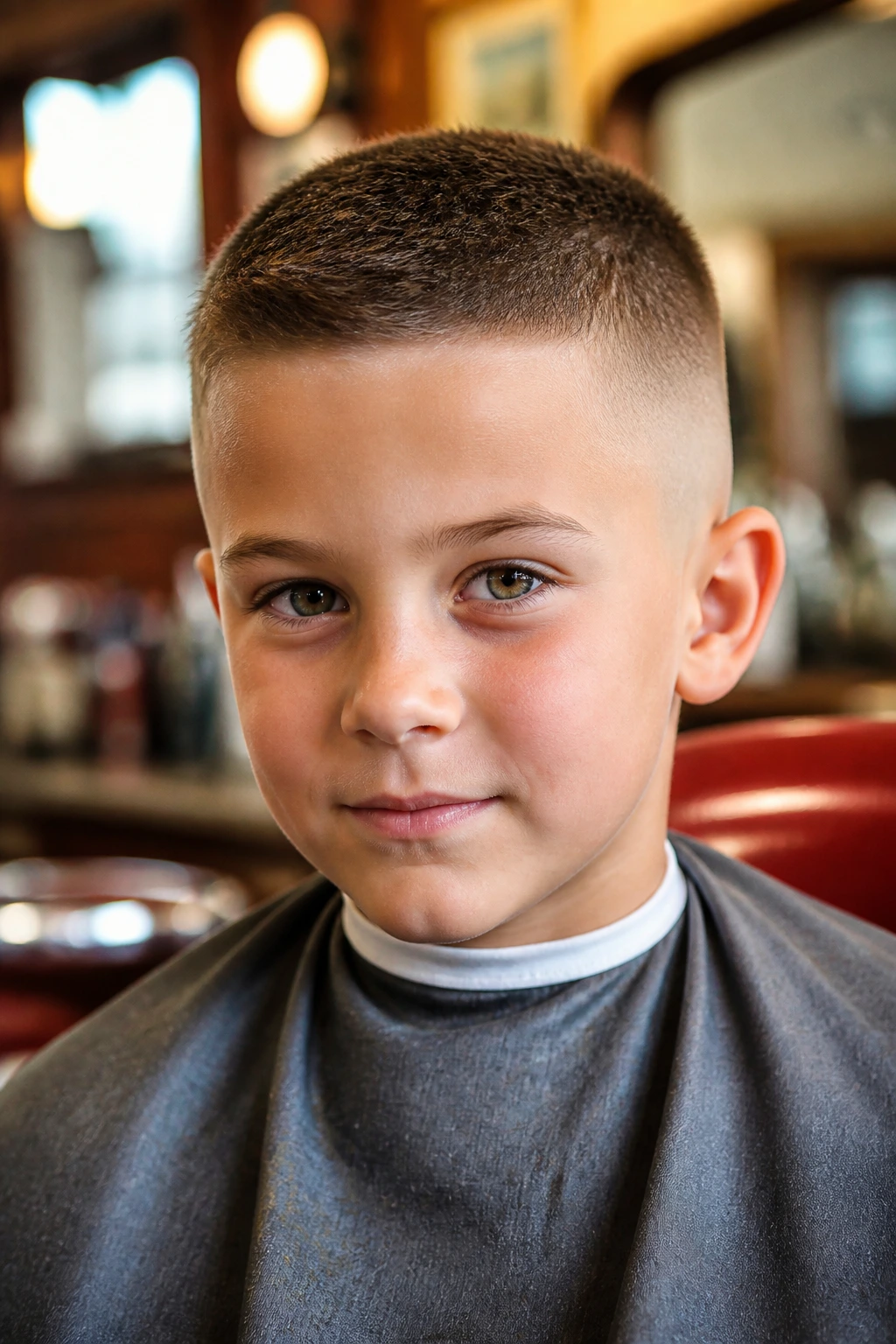
The high and tight is a shorter, sharper cousin of the crew cut. The sides and back are clipped very close, while the top stays short but slightly longer than the sides.
It’s a clean look, and it keeps the bulk down for boys with thick hair who always seem one week away from a mushroom shape. Ask for a tight fade or very short sides and a top that’s just long enough to show a little texture. Usually that means around 1 inch or a bit more.
The one caution: it can feel severe if the face is very small or round. That’s not a deal-breaker, just a reason to keep the top soft.
17. Mini Pompadour

A mini pompadour gives a little lift at the front without turning your kid into a tiny nightclub singer. The front is brushed up and back, the sides stay shorter, and the shape rises just enough to look deliberate.
This cut works best when the hair has a little natural body. Straight hair can do it with a blow-dry and a light cream. Thick hair can hold the height more easily, but it needs the sides cleaned up so the front doesn’t get lost in bulk.
I like this for special occasions and photo days. It’s a little more styled, sure, but not fussy if you keep the volume modest.
18. Buzz Cut Fade
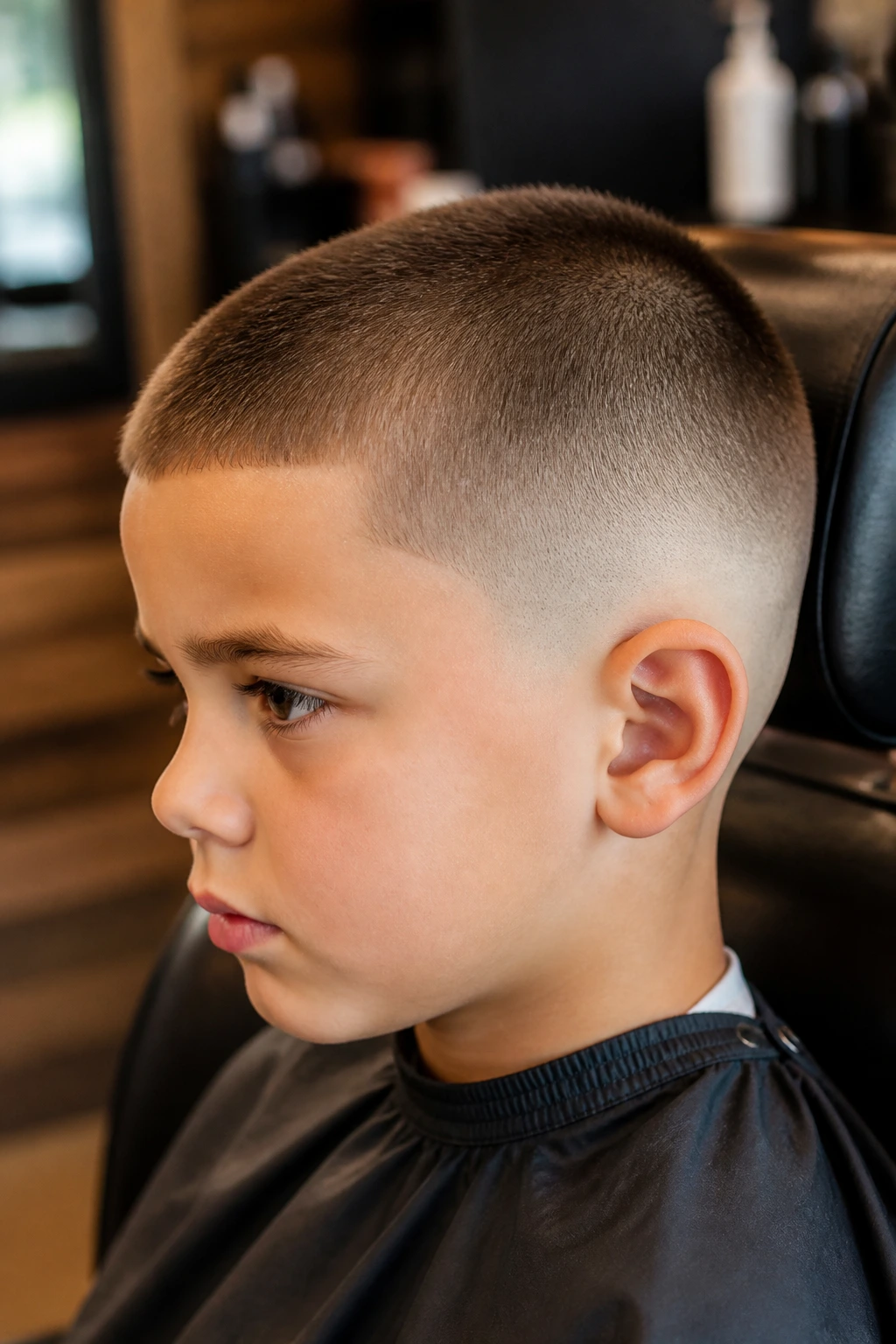
A buzz cut fade is cleaner than a plain buzz because the sides are blended rather than clipped all one length. That tiny shift makes a huge difference in how polished the haircut feels.
The top can stay at a #2 or #3 while the fade softens the edge around the ears and neck. It suits boys who want the simplest possible routine but don’t want the head to look completely shaved. It also grows out more evenly than a uniform buzz, which saves you from the awkward “all one length, all at once” stage.
Simple. But not dull.
19. Burst Fade Mohawk
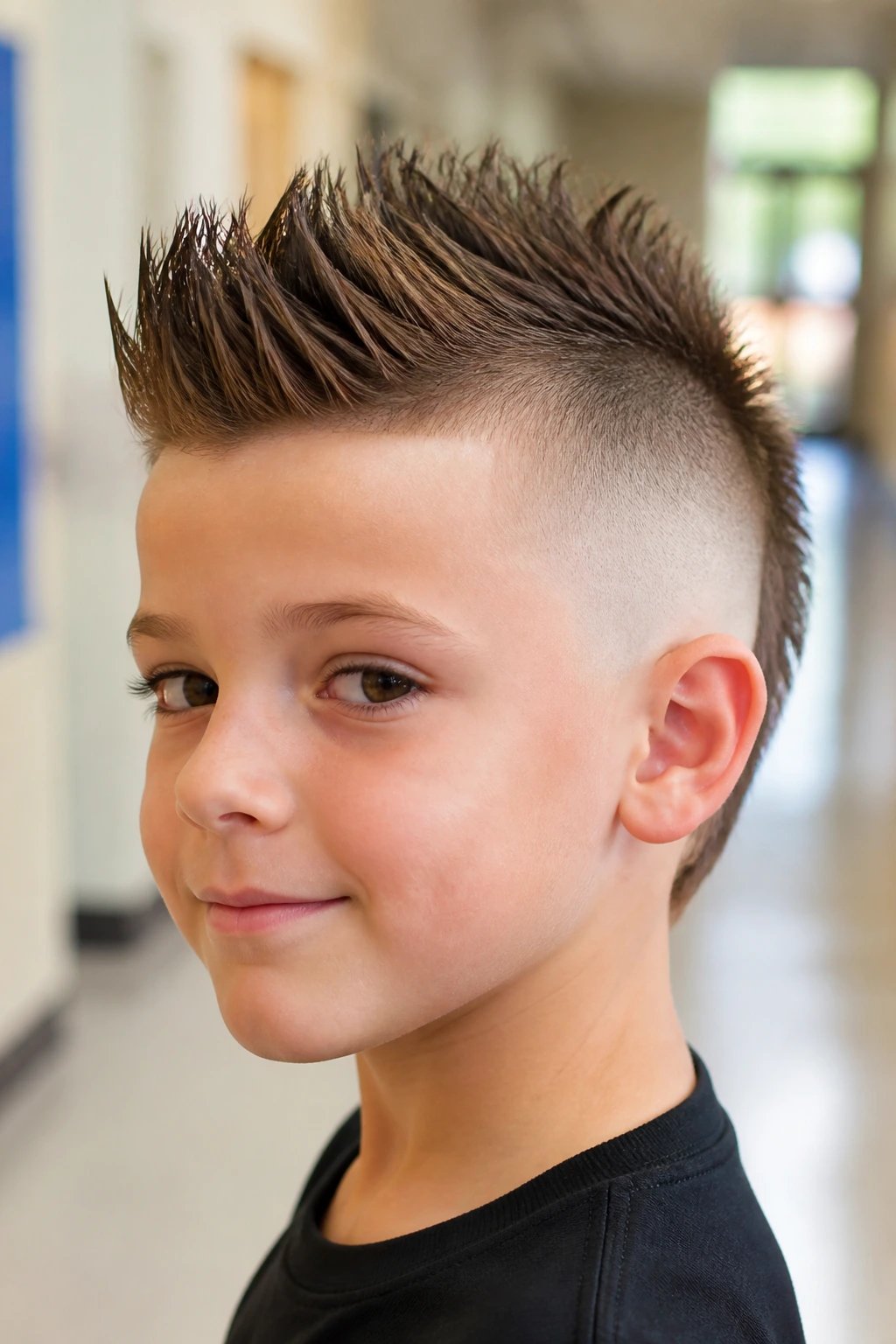
The burst fade mohawk curves around the ear and leaves a strip of length through the middle. It’s more playful than a standard fade, and a little more defined than a faux hawk.
When It Fits
If your kid likes hair with personality, this one delivers. Ask for the fade to “burst” around the ear rather than taper straight down. Keep the top strip medium short so it still behaves. Think 2 to 4 inches, not a towering ridge.
This cut needs confidence, and not every child wants that much attention on their head. But on the right kid, it looks energetic without feeling cartoonish. A small amount of matte paste can keep the top moving in one direction.
20. Curly Fringe
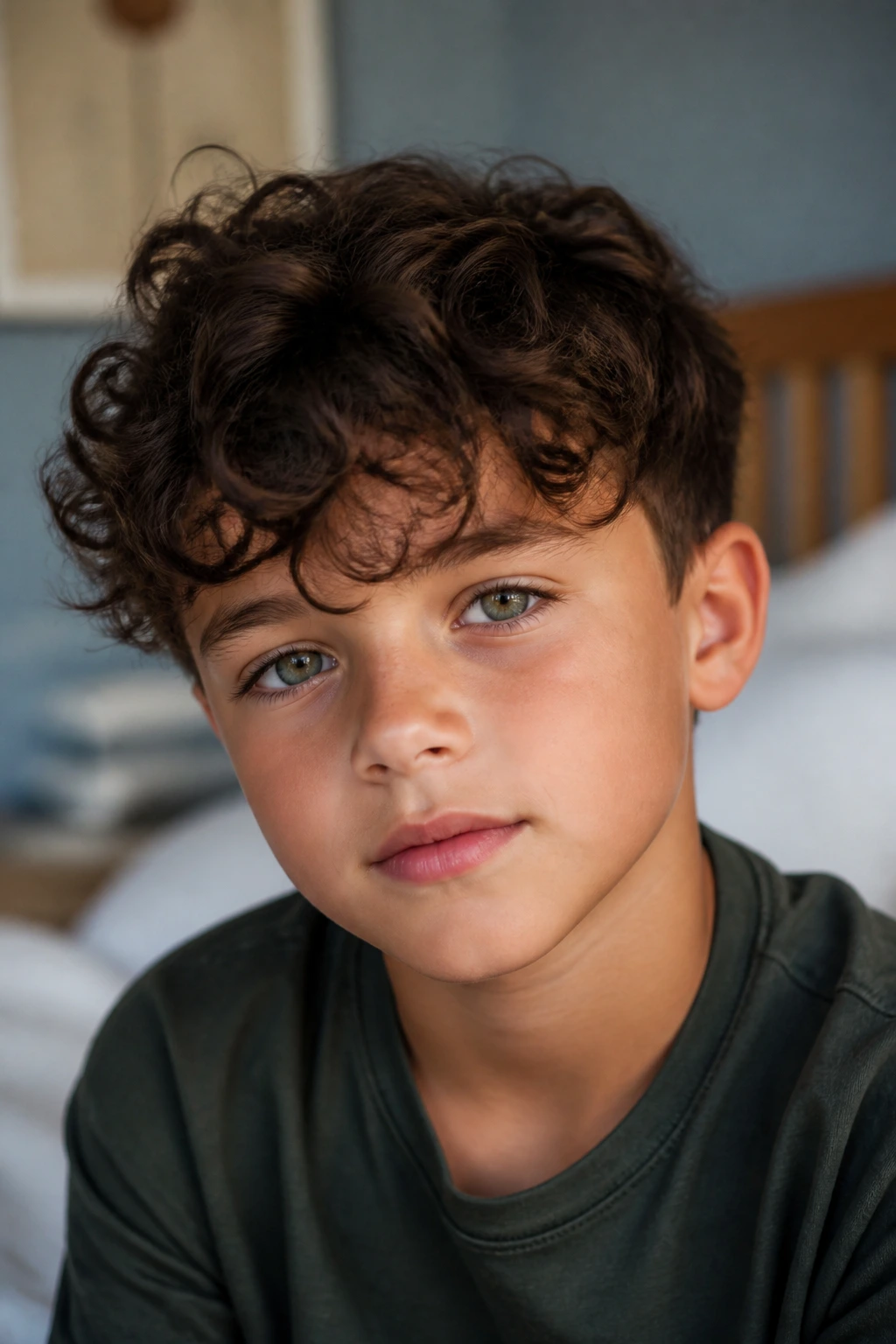
A curly fringe lets curls fall forward in a soft curtain across the forehead. The sides stay tapered or scissored short, which keeps the shape from getting bulky where the curls stack up.
This style works best when the curls are not chopped too short at the front. Leave enough length for shrinkage—usually around 2.5 to 4 inches, depending on curl pattern. The fringe should land near the eyebrows or just above them when dry.
It’s one of the nicer ways to wear curls because it doesn’t fight the texture. It just frames it. And if the child likes touching his own hair, this style has enough movement to make that habit harmless.
21. Surfer Layers
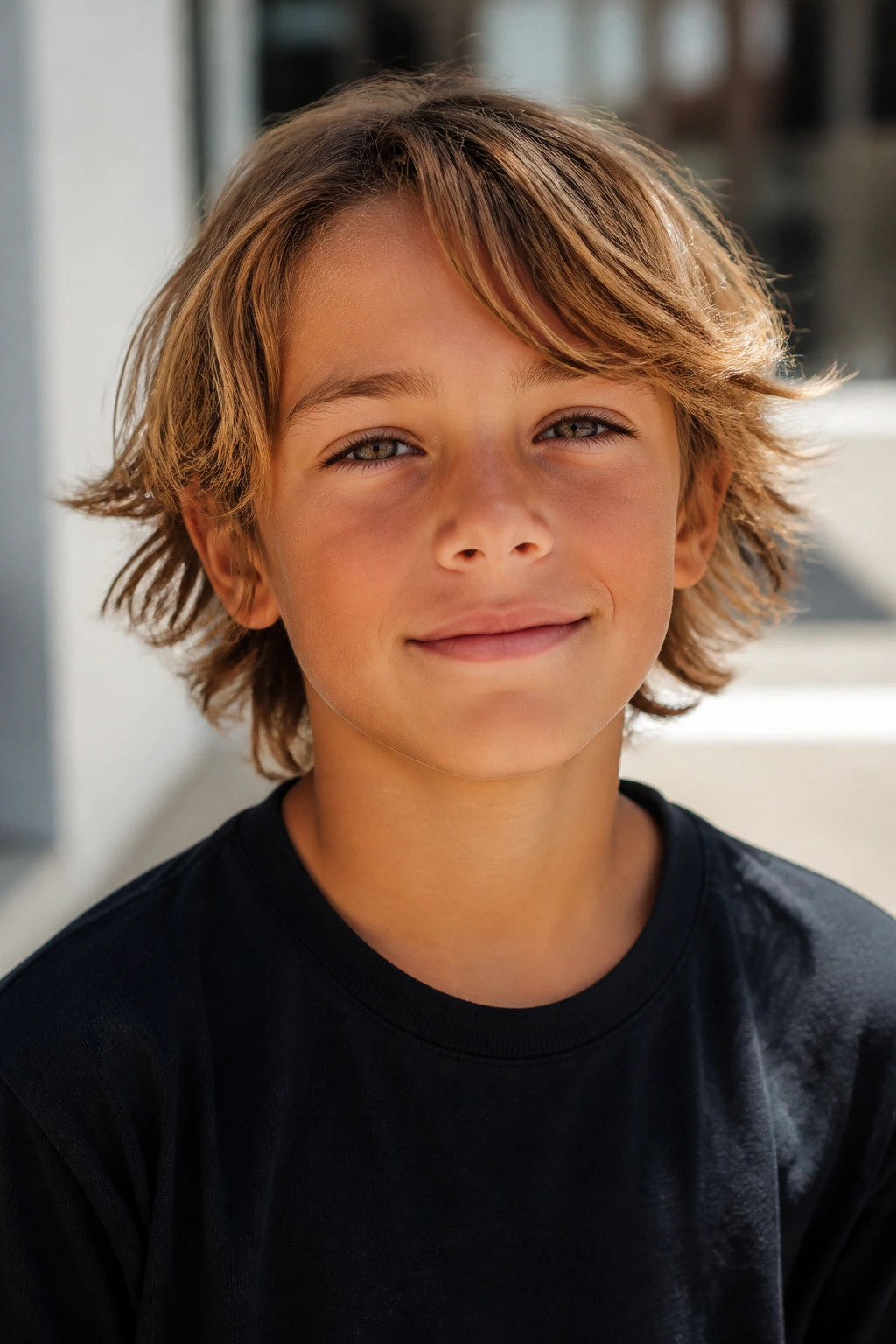
Surfer layers bring in longer, tousled length with pieces that sit loose around the ears and neck. It’s the haircut for a kid who looks best with a little wind in the hair, even if the “wind” is just a fan in the hallway.
This cut works nicely on wavy and straight hair. The key is not overcutting the layers. You want movement, not choppiness. A leave-in conditioner or detangling spray helps if the hair tangles after sleep or sports.
This one does need more brushing than a short crop. That’s the trade-off. Still, it grows out with a lot of grace, which is more than I can say for plenty of shorter cuts.
22. Temple Fade Afro
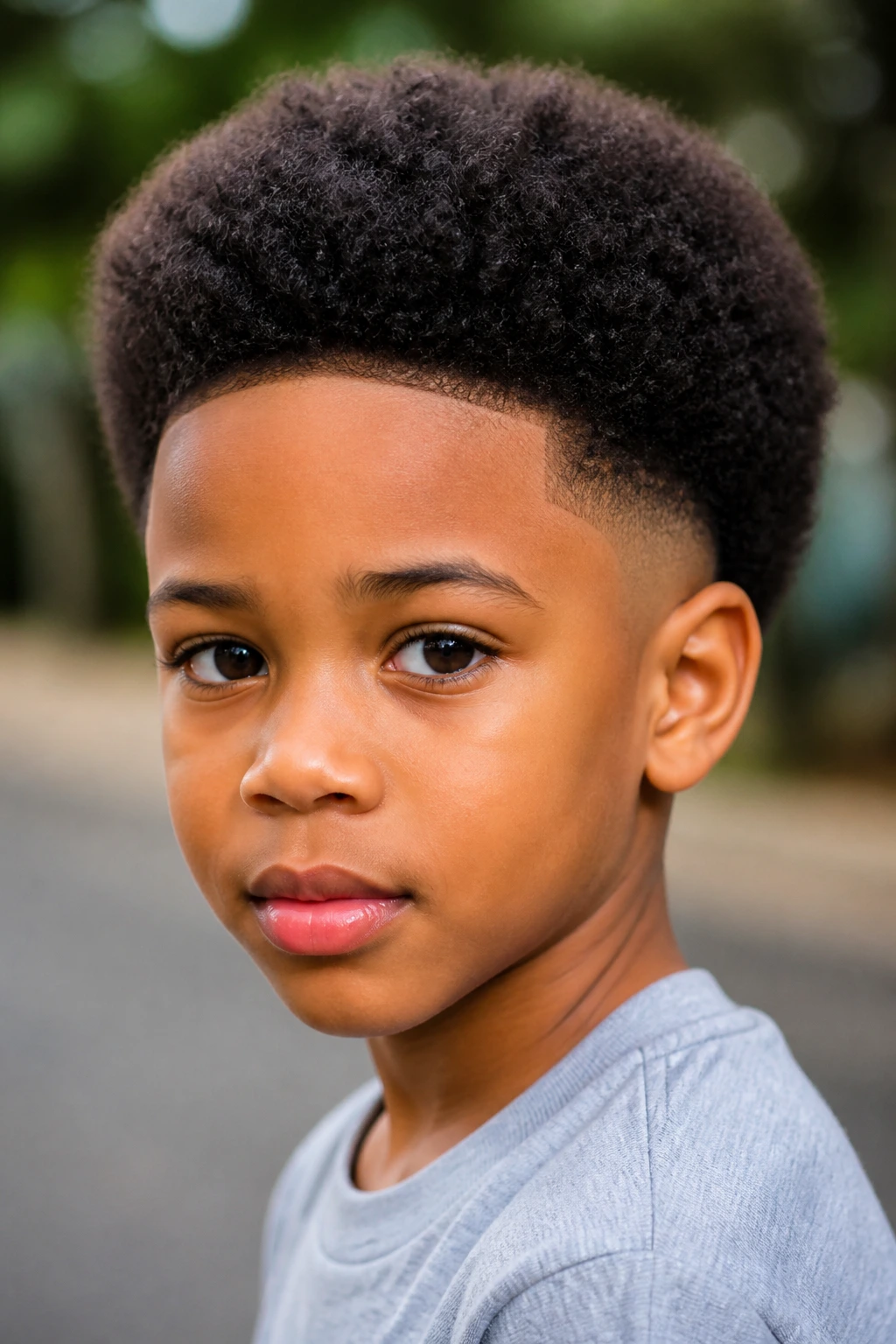
A temple fade afro keeps the shape full on top while cleaning up the temples and sides with a tidy fade. The silhouette stays rounded and natural, but the edges look sharper and easier to maintain.
Why It Looks Right
The temple fade lets the hair keep its volume without turning the head into one big block. Ask for a fade that blends around the temples and sideburns, then shape the top so it follows the natural curve of the head. A sponge or pick can help bring out texture if the hair is tightly coiled.
This cut is especially good when the goal is neat edges without sacrificing fullness. It’s balanced. That’s the word. Balanced.
23. Tapered Afro with a Shape-Up
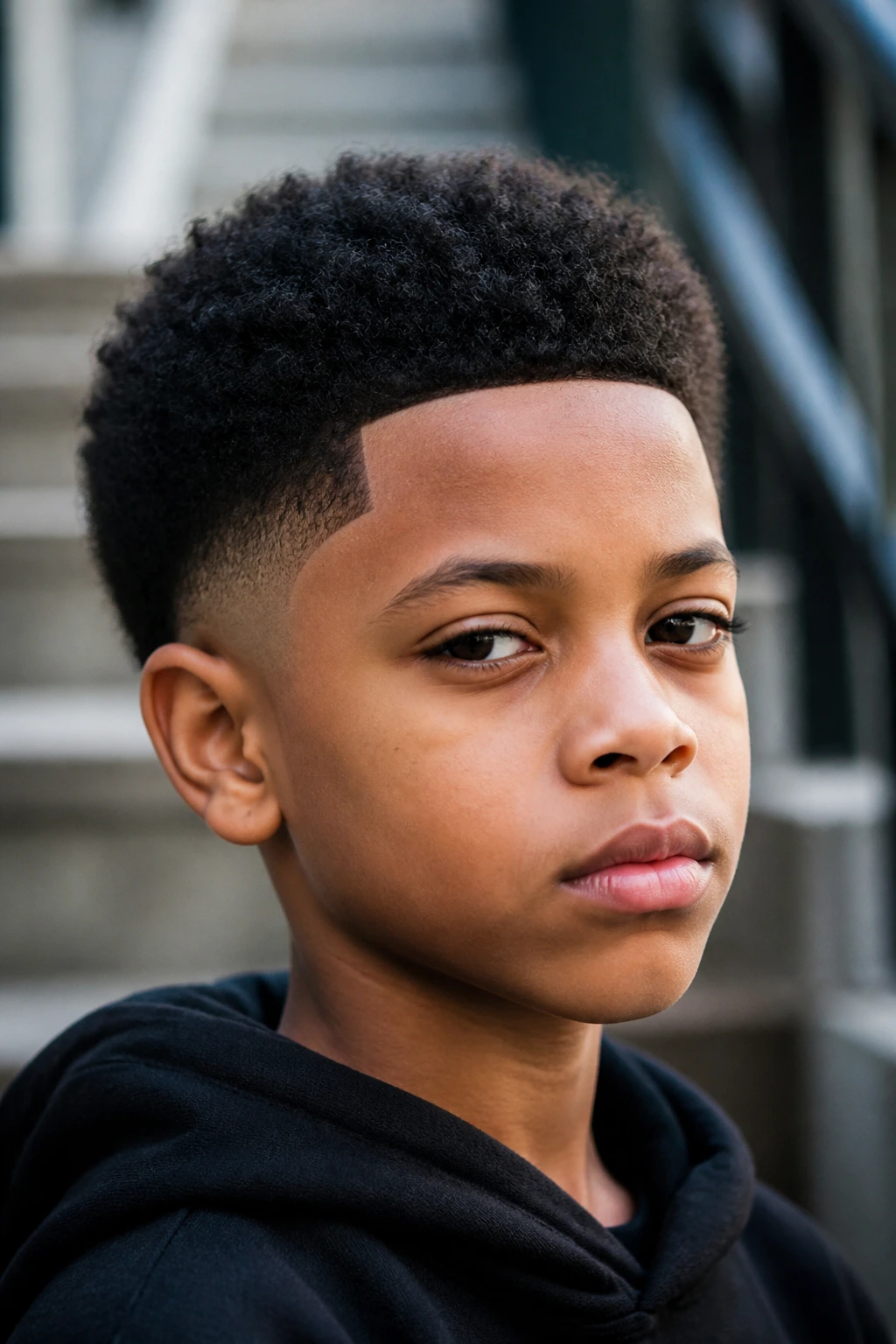
A tapered afro with a shape-up gives coily hair a rounded body and a crisp outline around the hairline. The taper takes weight out of the sides and back, while the shape-up sharpens the front and temples.
If the hair is dense, this cut keeps it from ballooning outward. That matters. Ask the barber to keep the top natural but sculpt the edges carefully. The shape should look clean, not carved into an unnatural square. A little pomade on the hairline is not the point here; the line itself is.
This is one of the best ways to keep natural hair looking tidy without flattening it.
24. Mini Mullet
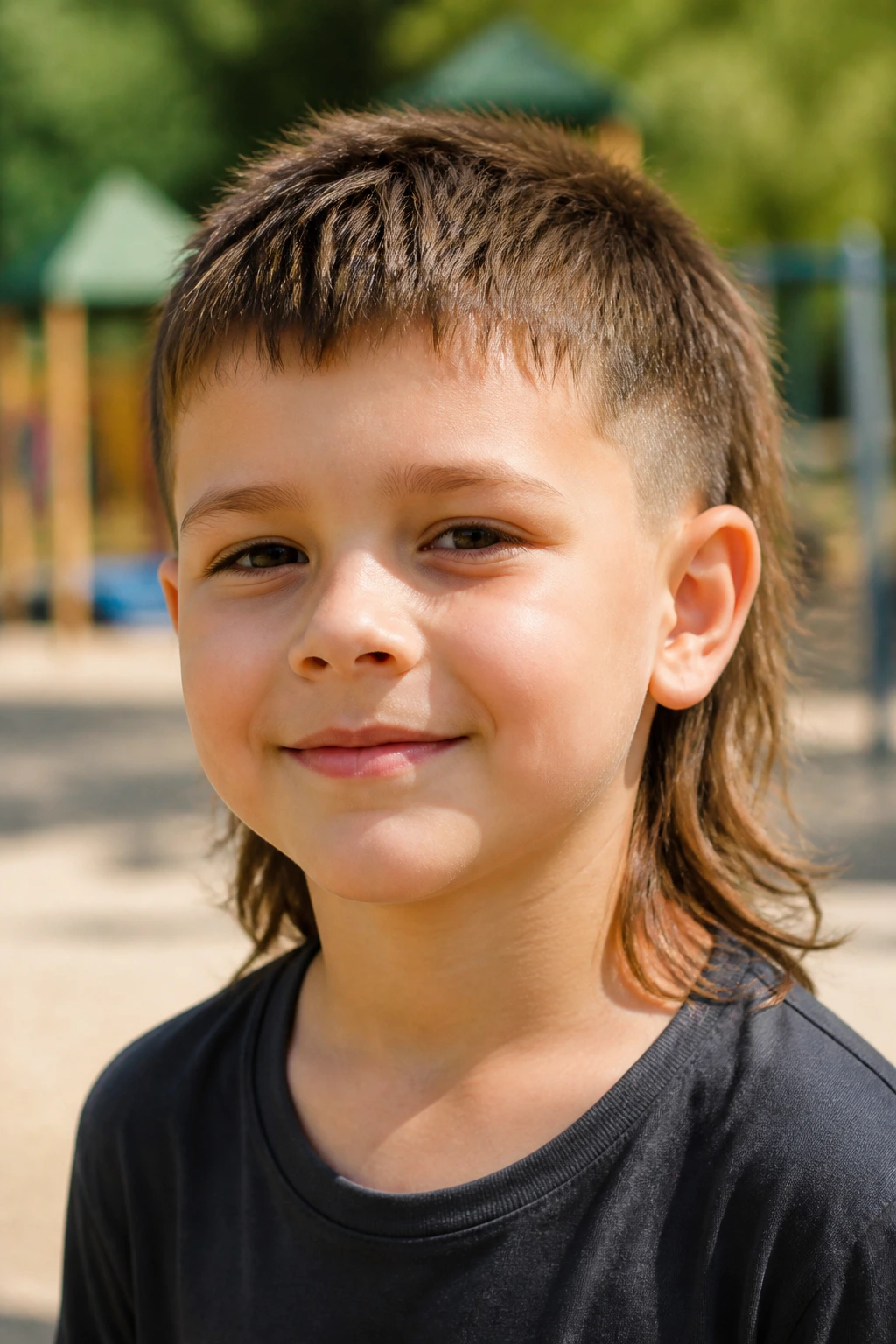
Yes, the mini mullet is still here, and on the right kid, it’s actually fun. The front stays shorter, the top has some shape, and the back is left a little longer so the silhouette reads clearly from behind.
The modern version is softer and more controlled than the old one. Ask for the back just long enough to peek below the neckline, not drag on the shirt collar. That keeps the cut playful instead of shaggy in a lazy way.
It suits kids with a bit of attitude and parents who do not mind a little personality showing up in the cut. Not every style has to be polite.
25. Long Top with a Tapered Neck
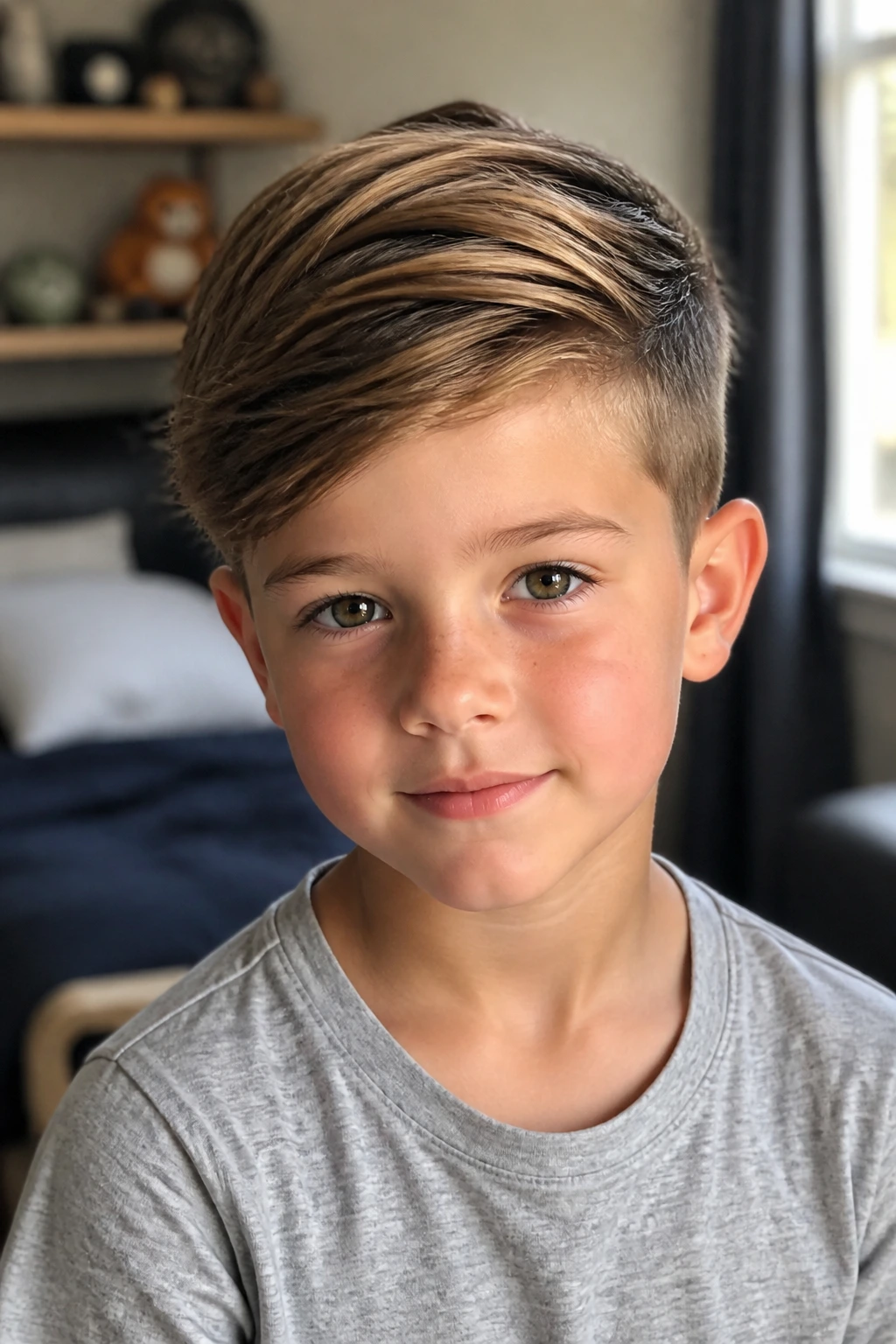
This cut keeps length up top while tidying the neckline and ears with a taper. It’s useful when you want to preserve length but keep the haircut from looking grown out too quickly.
The Appeal
Longer top sections can be swept, parted, or left messy, and the tapered neck helps the whole shape stay neat. This is a good bridge haircut for boys growing their hair out because it prevents the back from turning into a shaggy shelf.
If the top is heavy, ask the barber to remove bulk with scissors rather than clipping it all down. That keeps the hair from puffing out in a triangle when it dries. It’s a small detail. It changes the whole feel.
26. Slick Back with a Low Fade
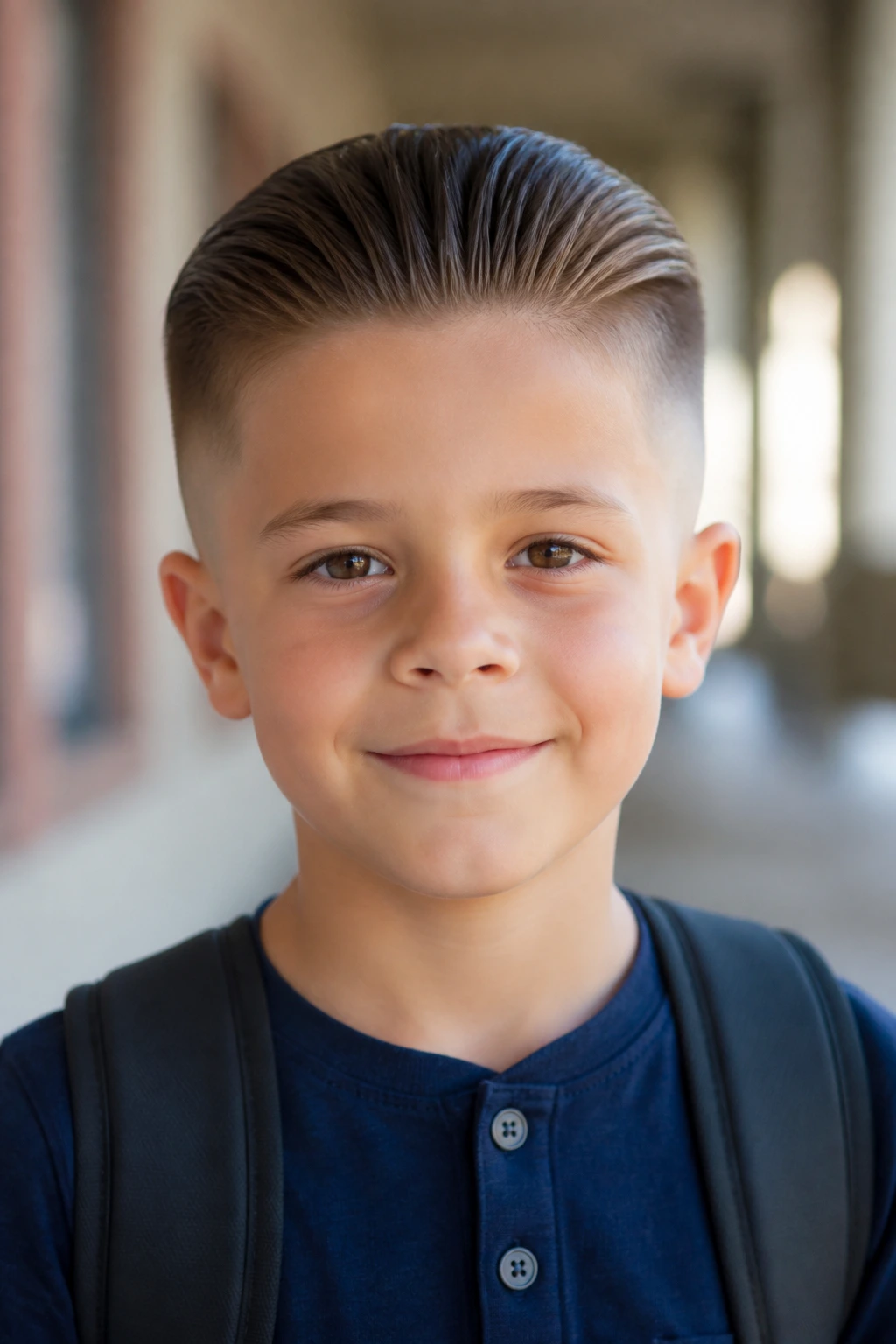
A slick back with a low fade is cleaner than people think, especially on straight or slightly wavy hair. The top is left long enough to brush back, while the low fade keeps the sides tight without making the haircut too severe.
It works best when the hair has some natural shine but not too much. A lightweight cream or a tiny bit of pomade is enough. You do not want helmet hair. You want control with movement.
This is a good choice if your kid likes a sharper look but still needs something practical for school. It’s neat, and it stays neat longer than a lot of more dramatic styles.
27. Spiky Crop

The spiky crop is short, textured, and easy to wake up with. The top is cut with enough texture to stand up a little, while the sides stay shorter so the shape looks intentional instead of fuzzy.
A matte product works better than anything shiny here. Ask the barber to leave the top around 1.5 to 2 inches, then texture the ends so the spikes separate naturally. If you use too much gel, the whole thing turns into a stiff patch. Less is better.
This is a cut that kids often enjoy because it invites a little hands-on styling. Quick, playful, done.
28. Drop Fade with a Crop Top
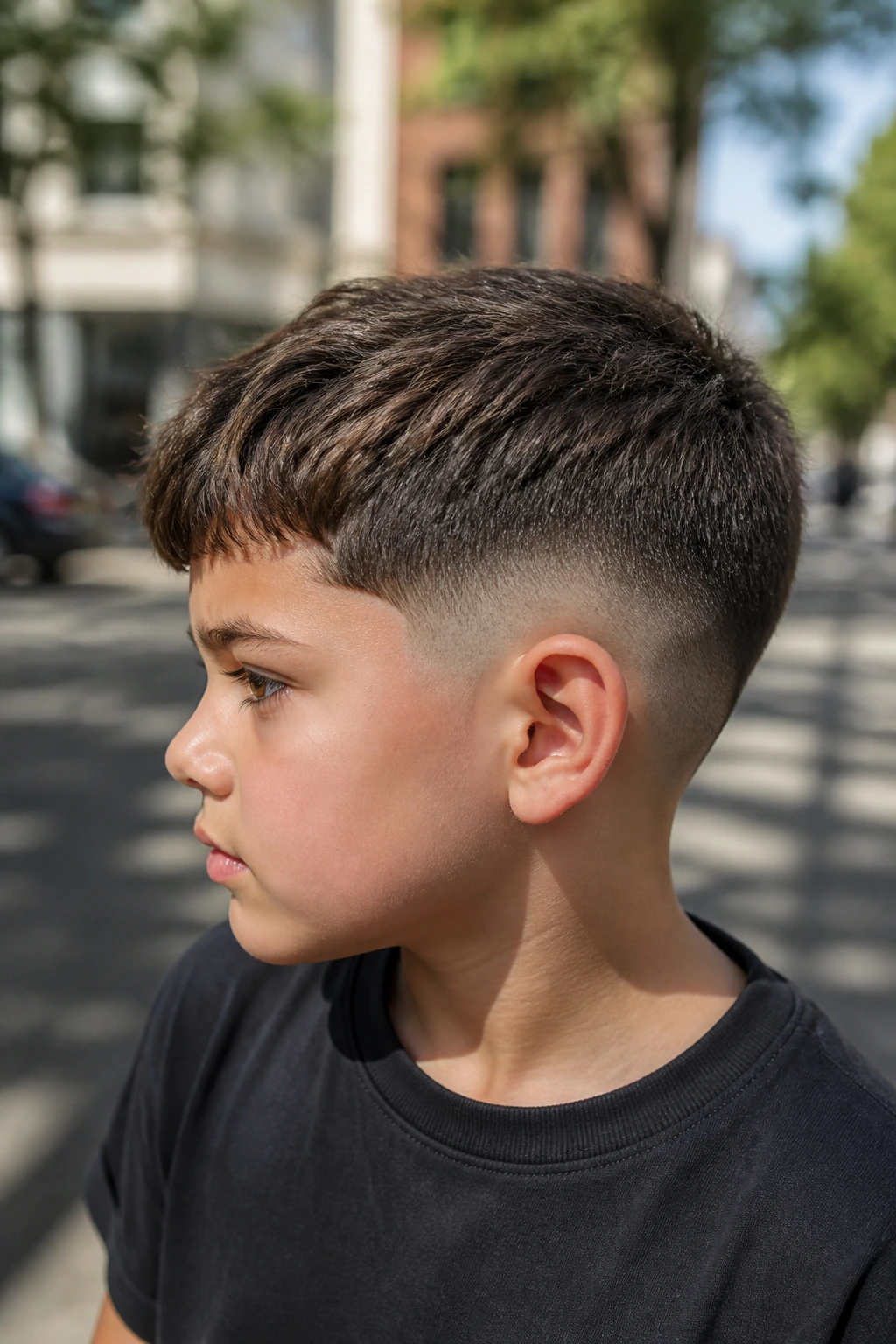
The drop fade curves lower behind the ear, which gives the haircut a smoother outline than a straight fade. Pair that with a cropped top, and you get a shape that feels modern without needing a lot of length.
This style is neat around the sides and still leaves room on top for texture or a slight fringe. It’s especially good for thick hair because the drop shape follows the head rather than forcing a box. If the barber fades too high, the whole point disappears. The curve matters.
It’s one of those cuts where the silhouette does most of the work. Nice when the hair is busy.
29. Disconnected Undercut
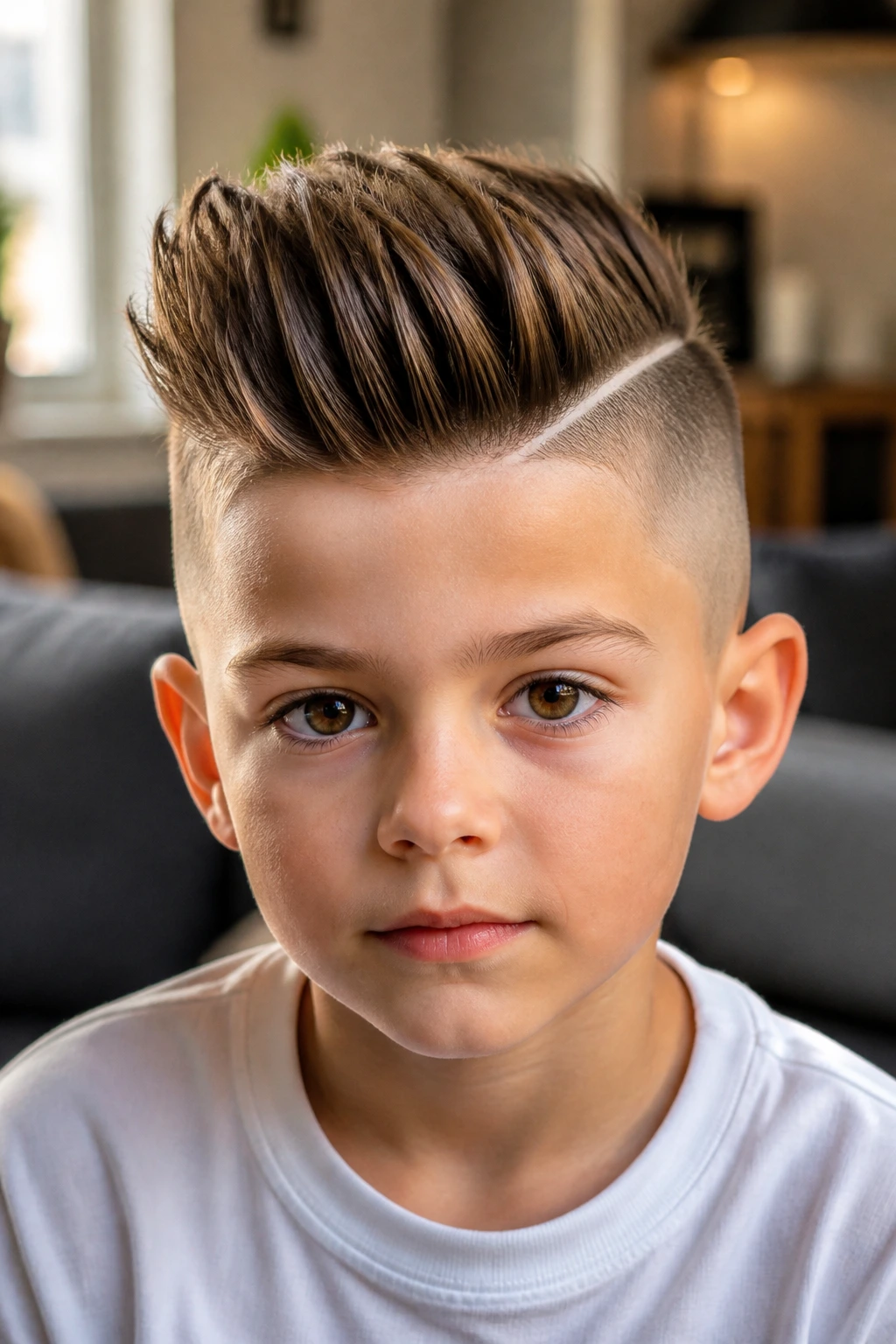
A disconnected undercut is bold because the sides stay very short while the top stays clearly longer, with little or no blending between them. That separation makes the top the main event.
It’s a good choice for straight hair that can lie smooth, or thick hair that needs strong structure. The downside is maintenance: the contrast grows out fast, and the line between top and sides gets muddy if you wait too long. Ask for the top trimmed to a length that can be brushed over or left messy, usually 3 to 5 inches.
This one is for kids who like a strong shape. It is not subtle.
30. Side-Swept Fringe
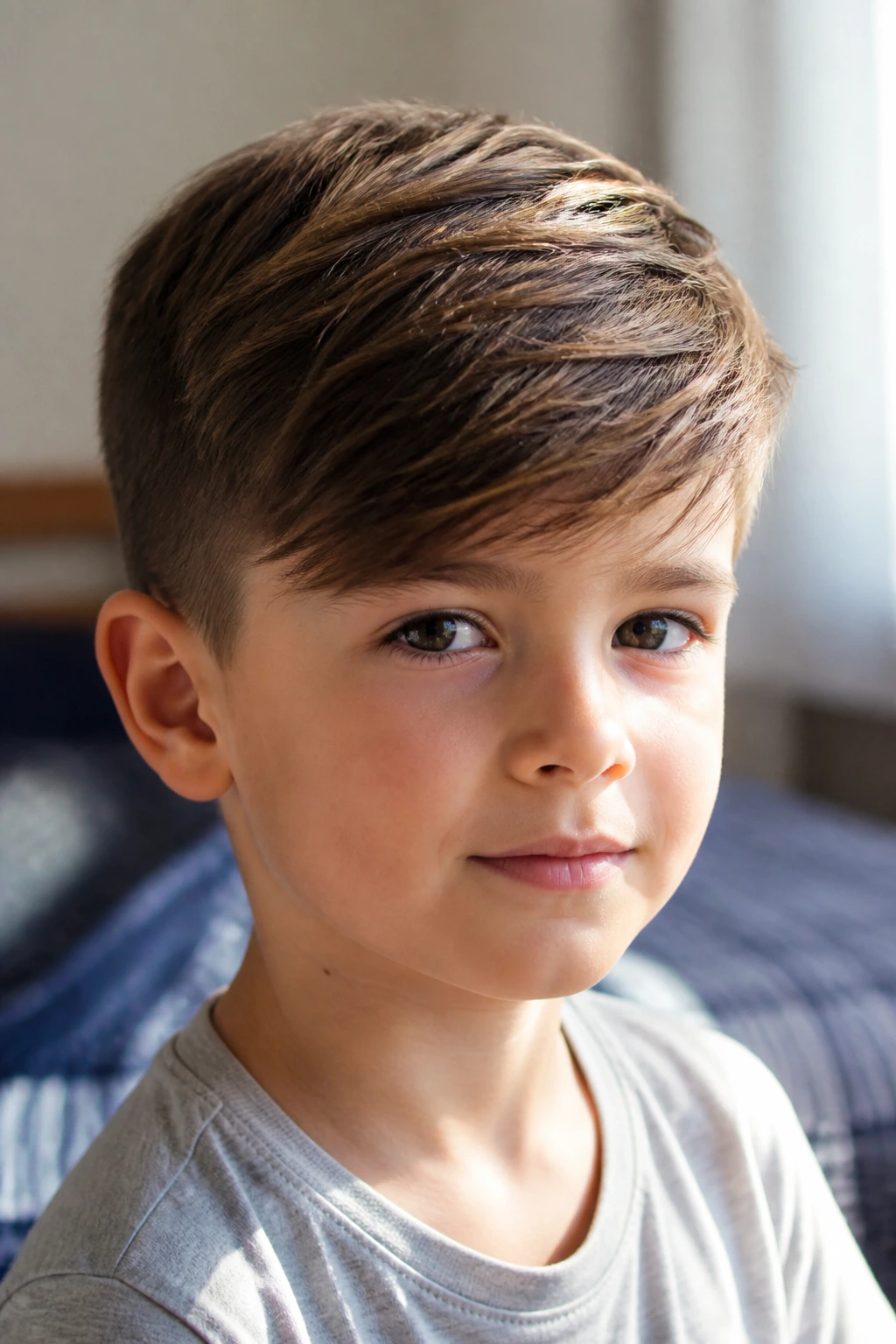
A side-swept fringe softens the forehead and gives the haircut a gentle, easy look. The front is left long enough to slide across one side, while the rest of the cut stays shorter and cleaner.
This cut is useful for fine hair because the sweep adds the illusion of fullness. It also works for boys who dislike hair falling straight down onto their brows. The barber should blend the fringe into the sides so it doesn’t look like a separate piece attached to the front.
A little water and a comb are usually enough. That’s one of the reasons it keeps showing up on kid heads.
31. Soft Quiff

A soft quiff lifts the front without turning the haircut into a stiff, grown-up pompadour. The top is left with enough length to push up and back slightly, and the sides stay neat so the front can stand out.
This cut is easiest on hair with some natural body. If the hair is fine, a blow-dry in the morning can help a lot, but the shape should still look relaxed. The quiff should look like it belongs to a kid, not a mini salesman.
It’s a good choice when you want a little style but not too much polish. That line is tricky. This cut stays on the right side of it.
32. Tapered Natural Curls
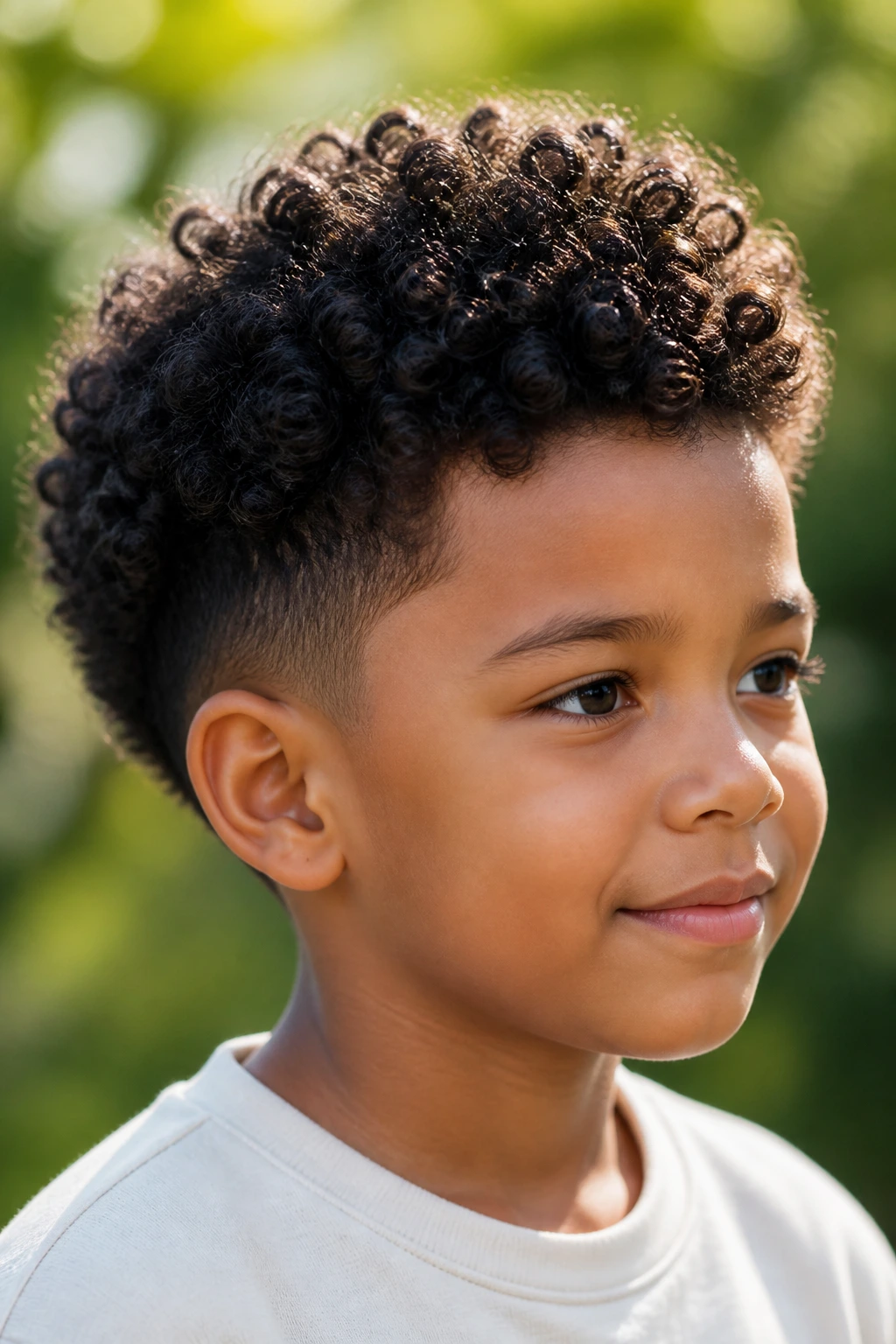
Tapered natural curls let the curl pattern do the talking while the sides and neckline are cleaned up. The shape is soft, rounded, and easy to recognize from across a room.
The best version keeps the curls at the top full enough to spring, not clipped close to the scalp. That means preserving length where the curl forms its shape, then tapering the edges so the haircut doesn’t balloon at the sides. A curl cream or leave-in conditioner helps, but the silhouette is what makes this cut work.
If you have curls, this is often the most flattering route. It respects the hair instead of sanding it down.
33. Short Afro with a Rounded Shape
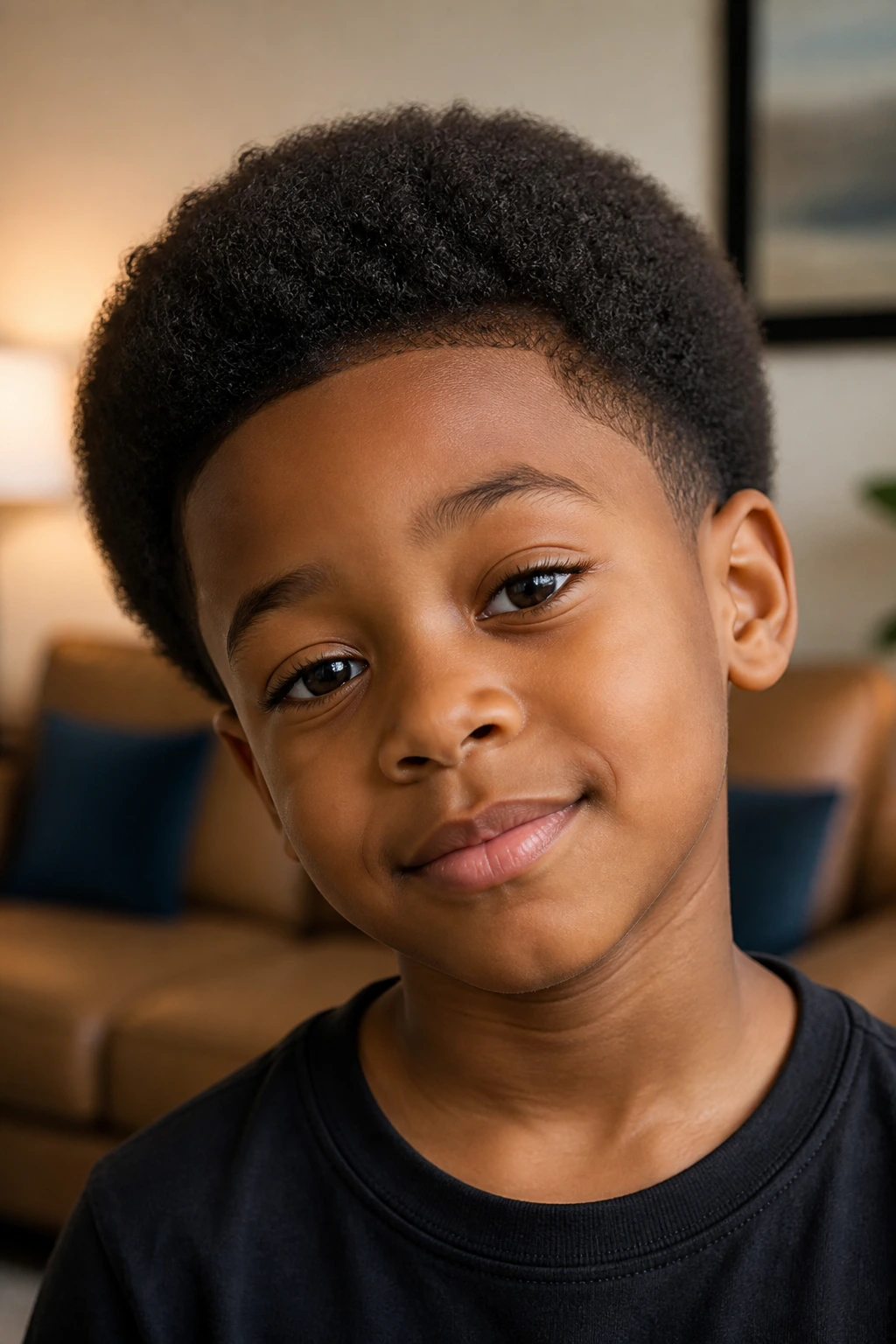
A short afro with a rounded shape is one of the cleanest ways to wear coily hair when you want it low-maintenance but still full of personality. The key is the curve. Not a box, not a flat top, but a soft round outline.
Ask the barber to keep the overall length even and shape the edges so the silhouette follows the head naturally. If the cut gets squared off too much, the whole thing loses that easy, balanced look. Regular line-ups help, but the roundness is the main event.
This cut looks calm. That may sound odd, but it’s true. It has a quiet, finished feel.
34. Brush Cut

A brush cut is short, even, and brushed in the direction the hair grows. It sits between a buzz cut and a crew cut, which makes it a strong option for parents who want something tidy without going ultra-short.
The cut is useful for boys with thick hair because it keeps the bulk down while still leaving enough length to show a little texture. It can also work well with a natural cowlick if the barber follows the growth pattern instead of cutting against it. Ask for the top and sides to stay close in length, with only a slight difference.
It’s plain in the best sense. Nothing gets in the way.
35. Grow-Out Friendly Scissor Cut

If you hate the awkward stage between haircuts, a grow-out friendly scissor cut is the move. The hair stays longer, the layers are cut with scissors instead of harsh clipper lines, and the neckline is softened rather than squared off too tightly.
This is the style I’d pick for parents who want flexibility. It can be worn neat, messy, parted, tucked, or pushed back, and it survives a few extra weeks without turning into a disaster. Ask the barber to shape the sides and back so they follow the head, then leave enough length on top for the child to change the style as it grows.
It buys you time. That alone is worth a lot.
Why These Cuts Work on Real Little Boys’ Heads
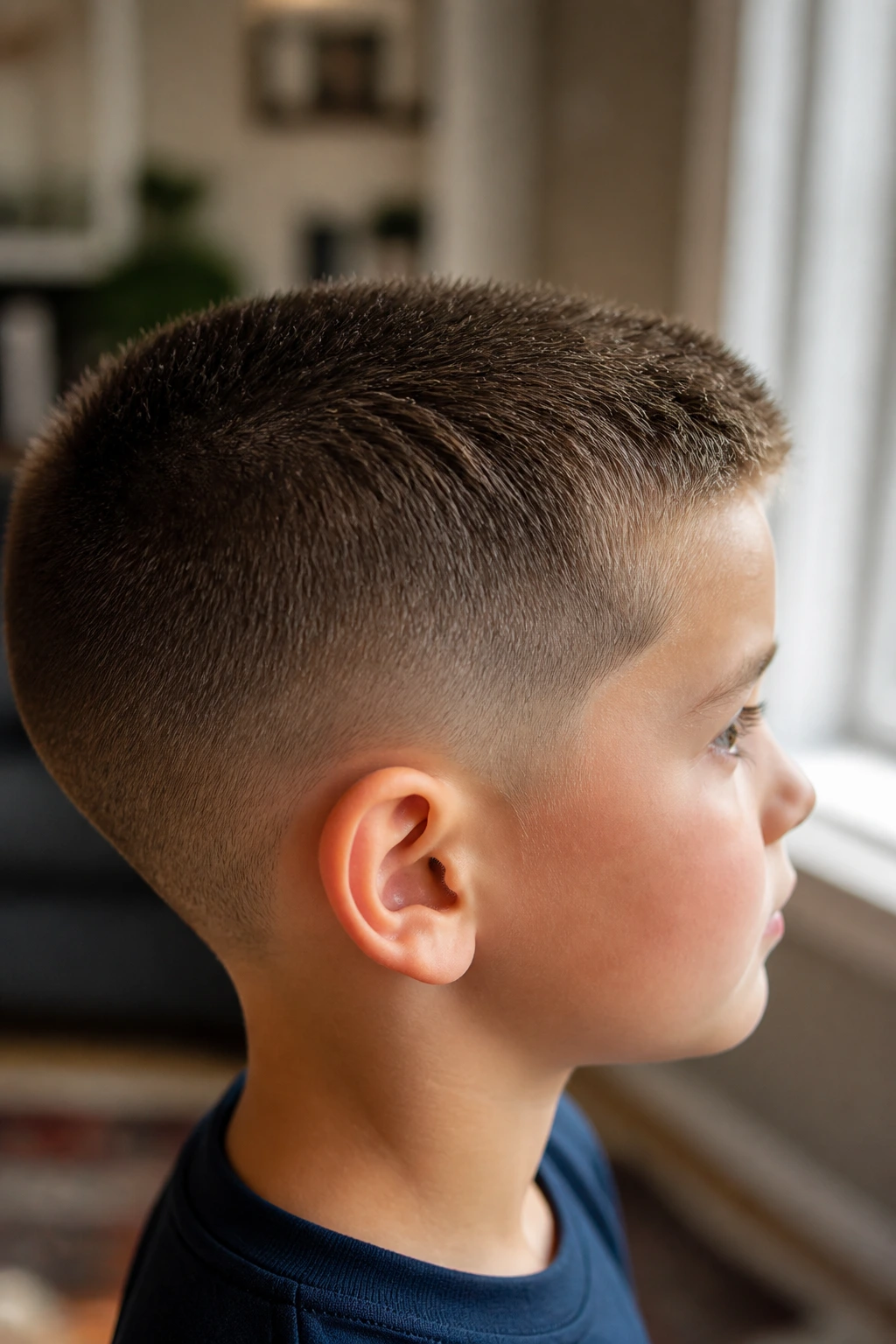
A haircut can look perfect for the ten minutes after it’s finished and still fail by bedtime. That’s why these little boys haircuts are built around shape, not just style. A good crew cut, taper, crop, or layered cut still makes sense when the hair gets flattened by a car seat or roughed up under a hoodie.
Cowlicks matter more than most people think. So does hair texture. A cut that ignores either one tends to fight the child every morning, and nobody needs that. The smarter cuts on this list either work with growth patterns or leave enough length to absorb them.
There’s also the real-life part no one likes talking about. Kids move. They sweat. They chew on the cape. They touch their hair all day. A solid haircut needs to be simple enough that the child doesn’t have to manage it every fifteen minutes.
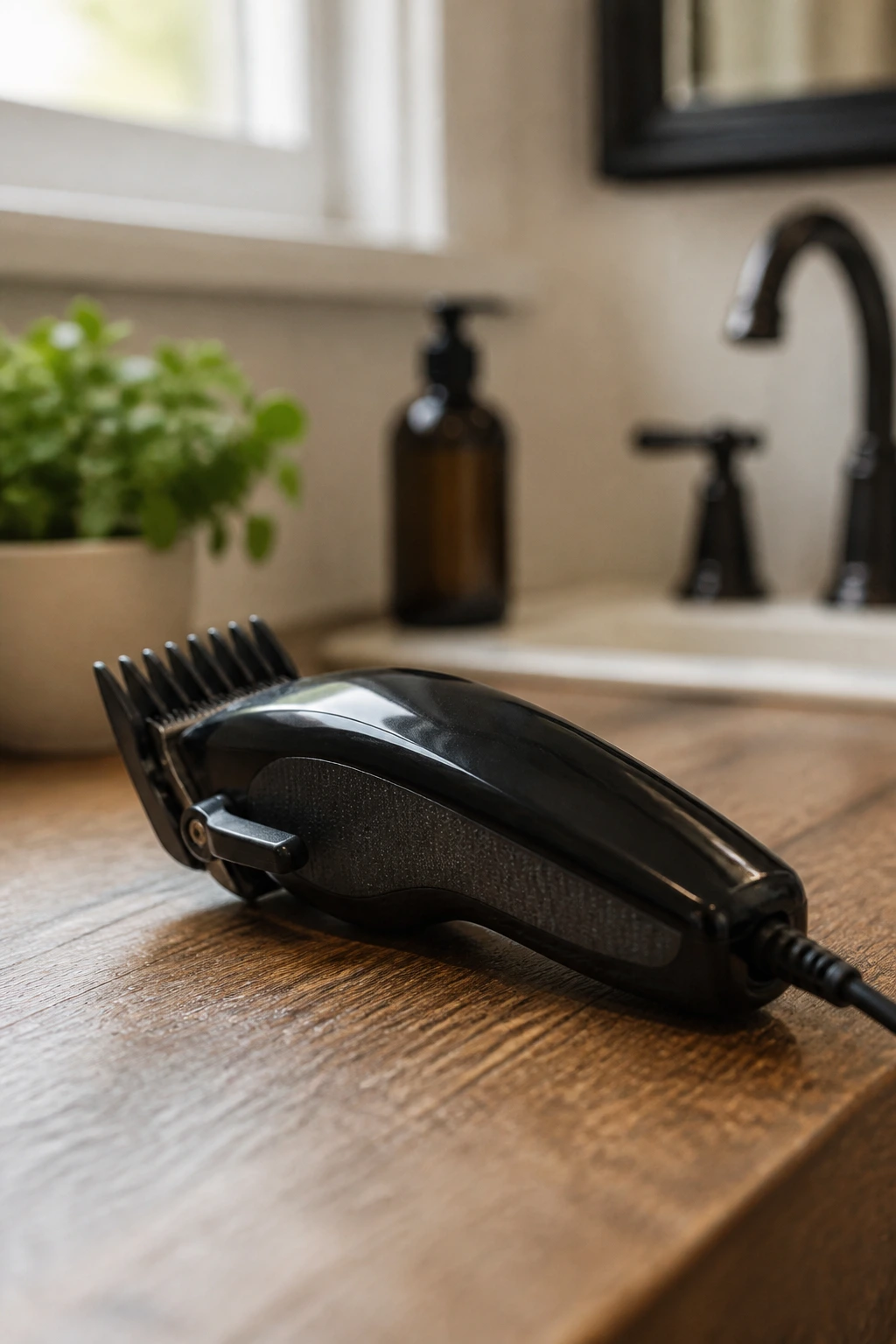
The Tools That Make Barber Visits and Home Touch-Ups Easier
-
A quality clipper with guard sizes: Useful for home cleanup around the sides, neckline, and ears when the haircut is short.
-
Detail trimmer: Best for sharp edges around the hairline, sideburns, and the area behind the ears.
-
Wide-tooth comb and fine comb: The wide-tooth comb handles curls and tangles; the fine comb helps with parting and clean lines.
-
Spray bottle with water: Essential for scissor cuts, fringe reshaping, and taming dry hair before a quick trim.
-
Texturizing or thinning shears: Handy for thick hair that puffs up, though they should be used carefully and sparingly.
-
Cape or towel: Keeps hair off the neck and inside the shirt. Parents underestimate how irritating loose clippings can be.
-
Matte cream, light paste, or curl cream: Choose one based on texture; you usually do not need more than a fingertip amount.
-
Handheld mirror: Useful for checking the back of the head and neckline without making the child twist around.
How to Pick a Cut That Fits Your Child’s Hair Texture
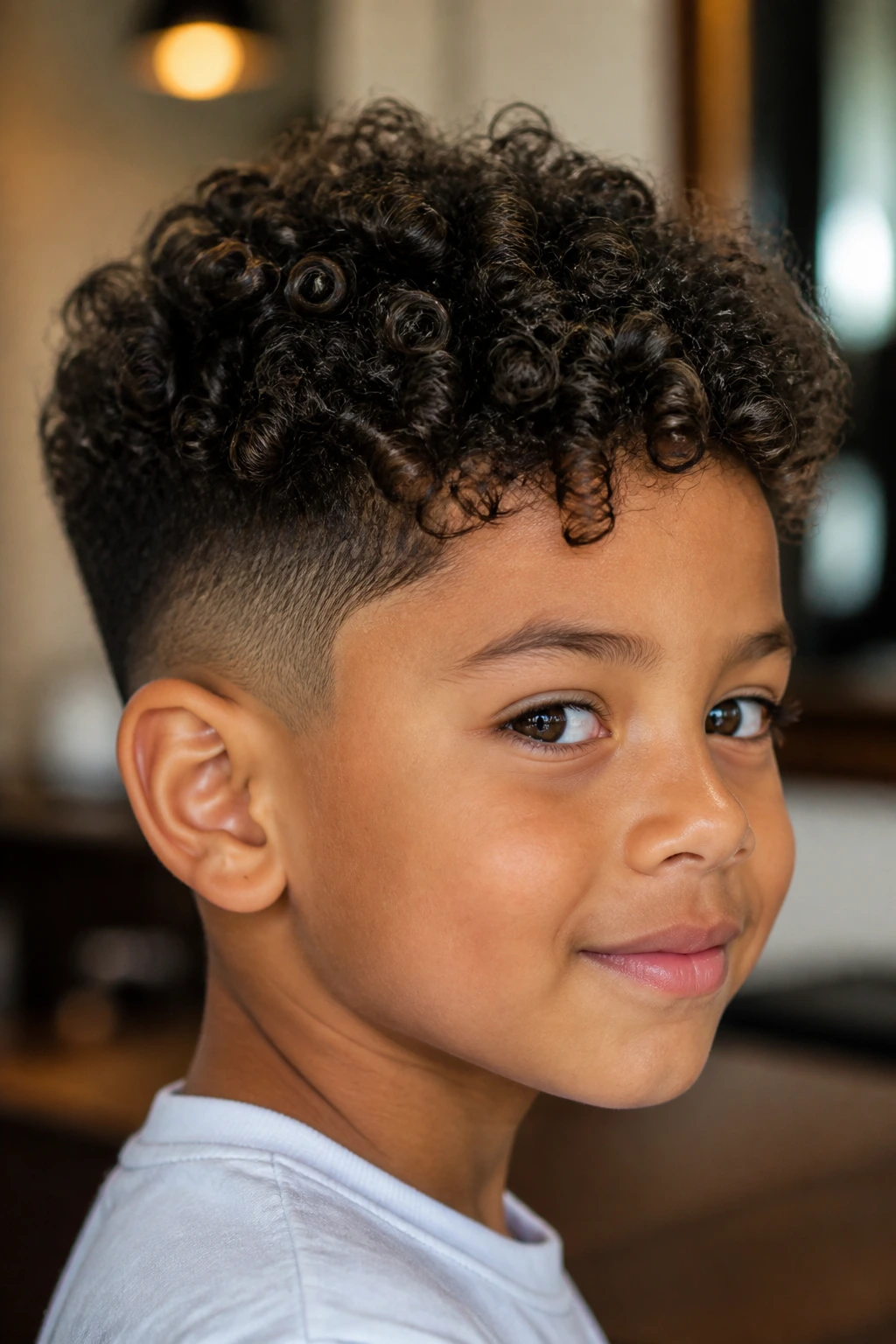
Straight hair behaves differently from wavy, curly, or coily hair, and that changes the whole haircut conversation. Straight hair shows lines cleanly, so fades, parts, crops, and side-swept styles tend to look crisp. Wavy hair likes texture. It usually looks best when the barber leaves a little more length on top and avoids overblending everything into one flat shape.
Curly hair needs room. Short curls can spring up and shrink, so leaving the top longer than you would with straight hair prevents accidental overcuts. Coily hair benefits from shape and balance, not overthinning. If the sides are shaved too low and the top is left too full, the outline can get wide fast.
Fine hair usually does better with simpler shapes and a bit of texture. Thick hair often needs weight removed or it starts to act like a mushroom by the second week. That’s the boring truth, and it matters more than any trendy photo.
How to Tell the Barber What You Want Without Guesswork
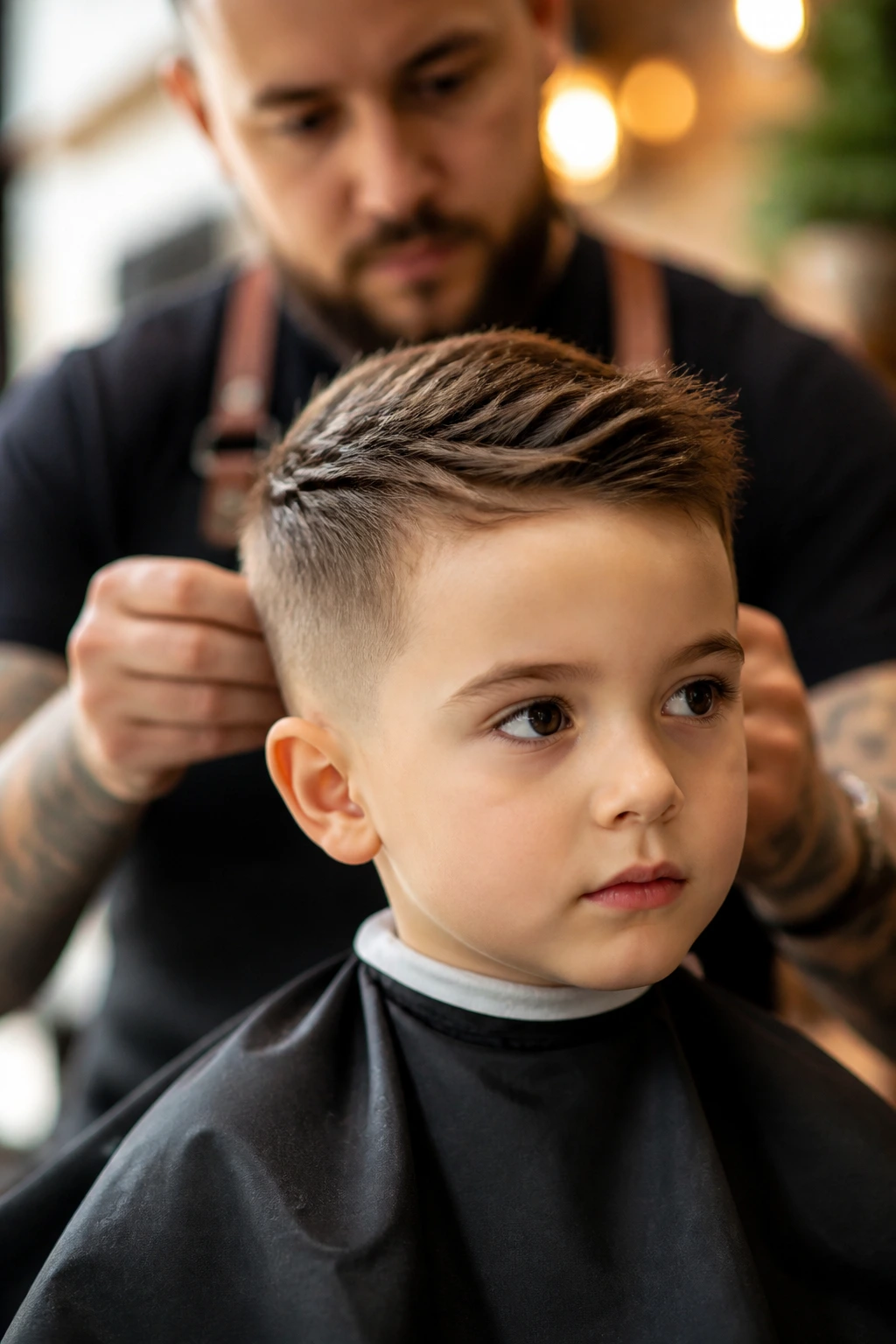
Bring a photo. A real one. Preferably from the side and the front. Then say what you like about it in plain language: “I want the top short and textured,” or “Keep the sides tight but not skin-bald,” or “Leave more length in the curls.”
Guard numbers help, but they are not the whole story. A #2 fade can look very different depending on where the fade starts and how high it goes. If you care about the neckline, say so. If glasses need room at the temples, say that too. Barber chairs are not mind-reading booths.
A good question is also useful: “How will this grow out?” That answer tells you a lot. If the barber sounds nervous, the cut may be too high-maintenance for your actual life.
How to Style These Haircuts on School Mornings
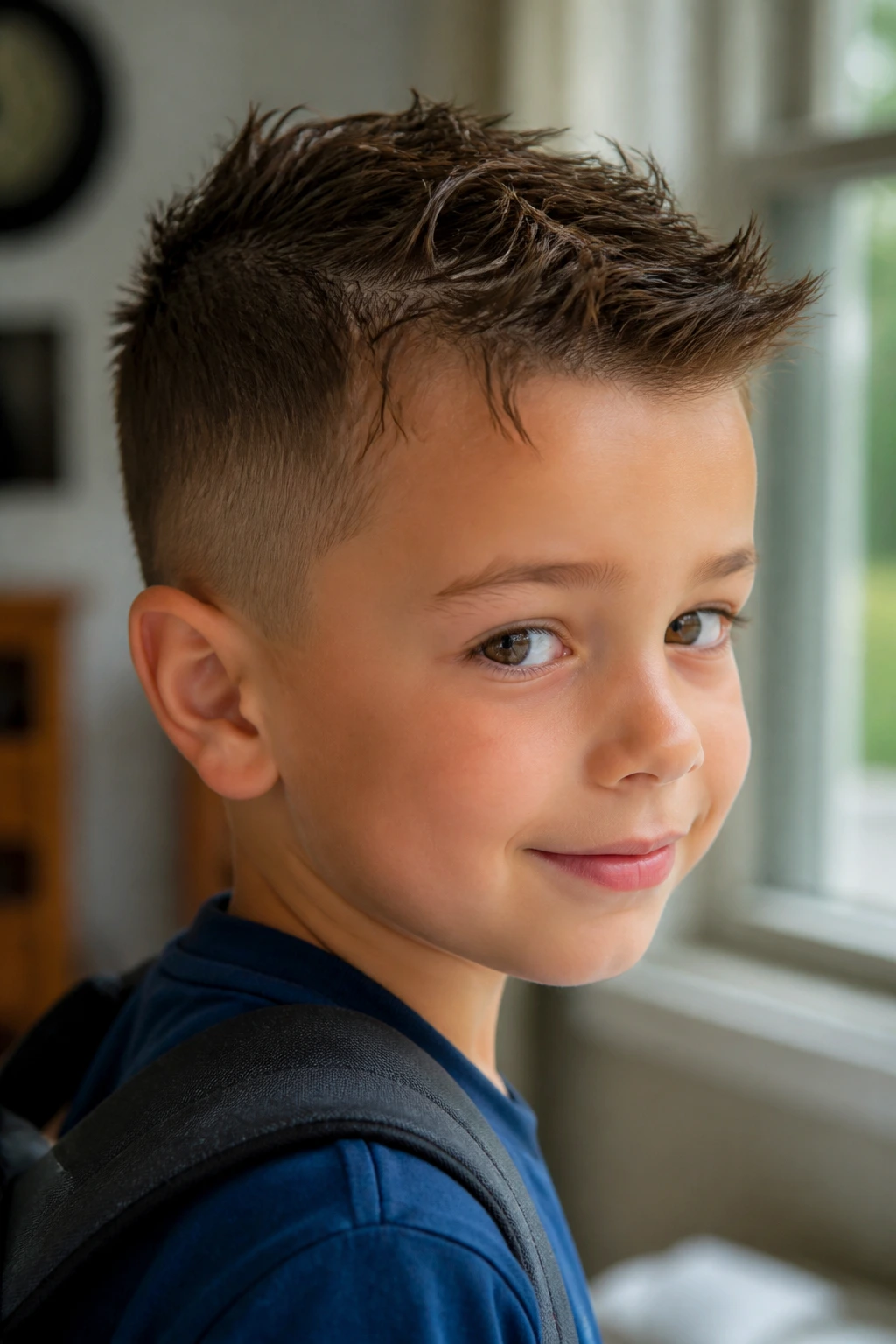
Short cuts need almost nothing. A crew cut, buzz fade, brush cut, or high and tight often just needs a damp hand, a quick comb, and maybe a tiny bit of product if the top sticks up. Don’t drown it. That just makes the hair look greasy and invites hands to touch it more.
Medium-length styles are where the routine matters. Crops, side parts, quiffs, and comb-overs usually behave best when the hair is slightly damp and the product is worked through the top first, then the fringe or sweep is guided into place with fingers. A comb can make the finish too stiff if you use it too much.
Curly and coily styles need moisture more than control. A leave-in conditioner or curl cream on damp hair is usually enough. Let the shape do the work. If you keep trying to flatten curls, you’ll just make them frizzier.
Common Mistakes That Make Kids’ Haircuts Go Wrong
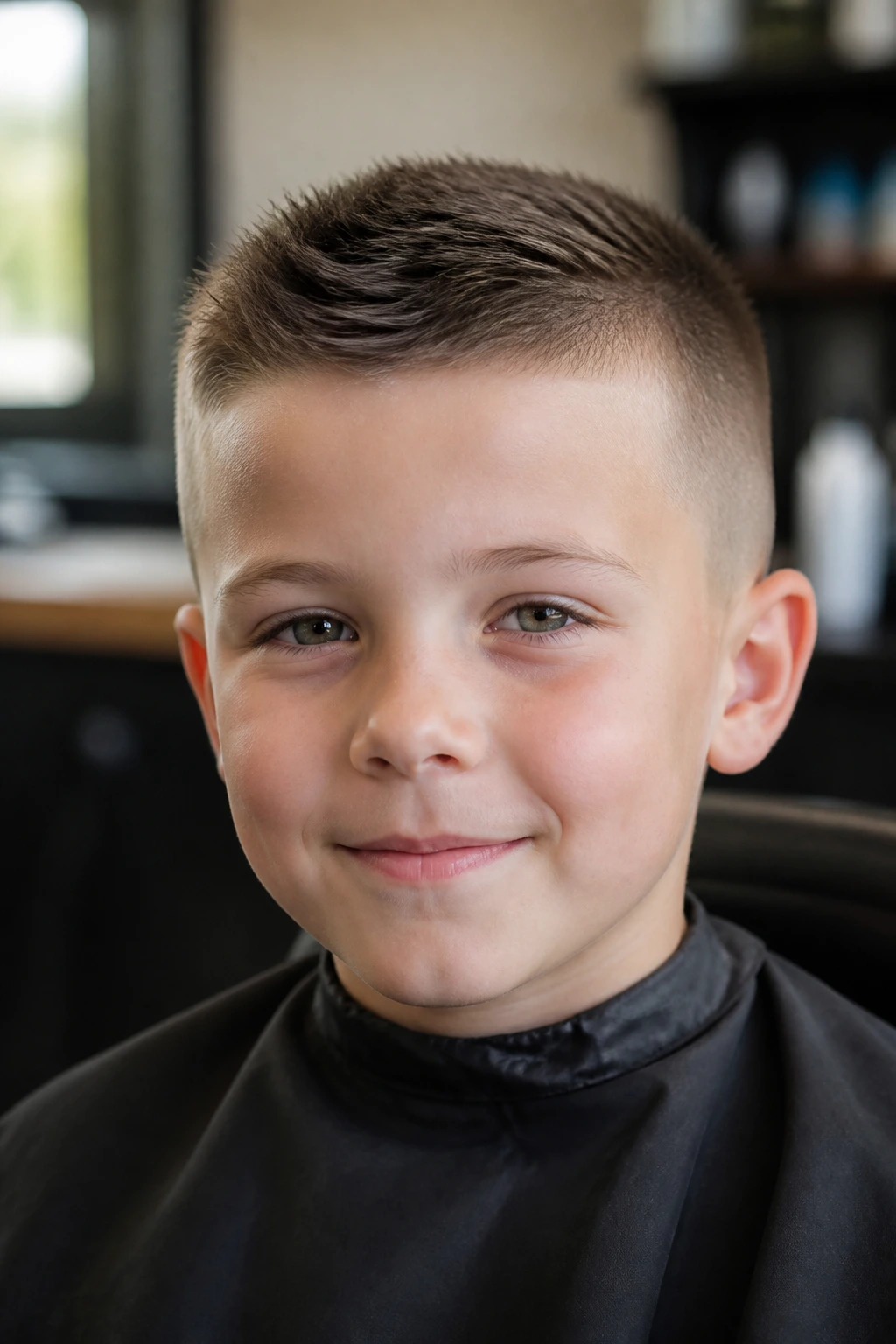
The biggest mistake is asking for a style that ignores the child’s hair texture. A photo of a straight-haired boy does not mean a curly-haired kid will get the same result. The shape changes. The way it grows out changes. The maintenance changes too.
Another common problem is cutting curly hair too short while it’s still wet. Once it dries, the shrinkage can take off more length than expected. That’s how parents end up staring at a fringe that jumped half an inch higher than planned.
Going too high on the fade is another one. On small heads, a high fade can take over the whole haircut and leave the top looking tiny. If you want the style to stay soft, keep the fade lower. Clean does not have to mean severe.
And then there’s the opposite mistake: leaving everything long without any shape. That can turn “growing it out” into “letting it happen by accident.” Those are not the same thing.
Small Tweaks That Make a Boys Haircut Easier to Wear
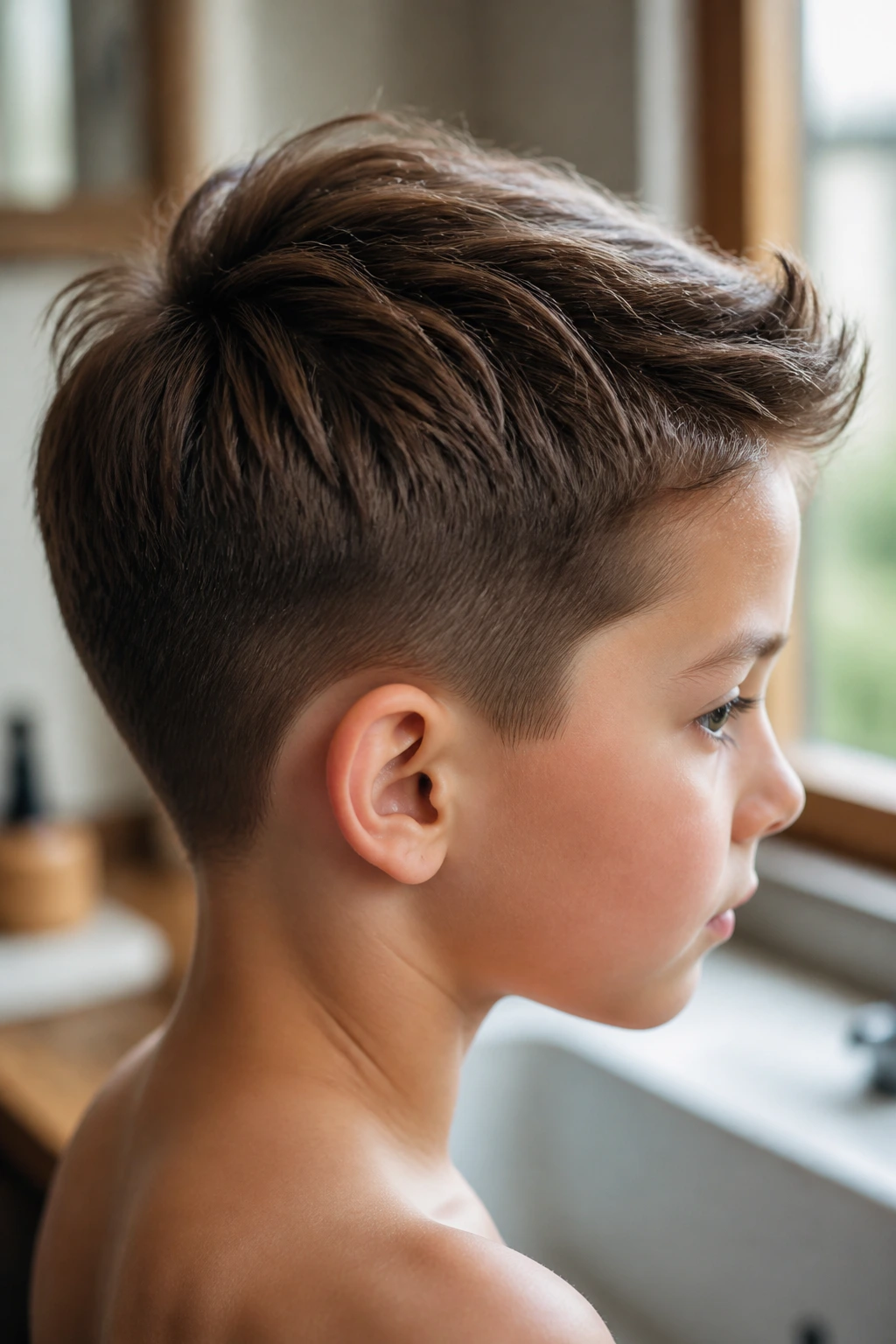
Texture: If the top feels too flat, ask for point cutting or light texturizing at the ends. That gives hair movement without making it look chopped up.
Parting: A natural part often works better than a forced hard part on younger kids. It’s less fussy and easier to restore after a nap.
Neckline: A softly tapered neckline grows out cleaner than a hard box line. It buys you extra days before the haircut starts looking untidy.
Finishing product: Use the lightest thing that works. A pea-sized amount of cream or paste is usually enough. Too much product makes kids want to touch their hair, which defeats the whole point.
Variations and Alternatives to Try
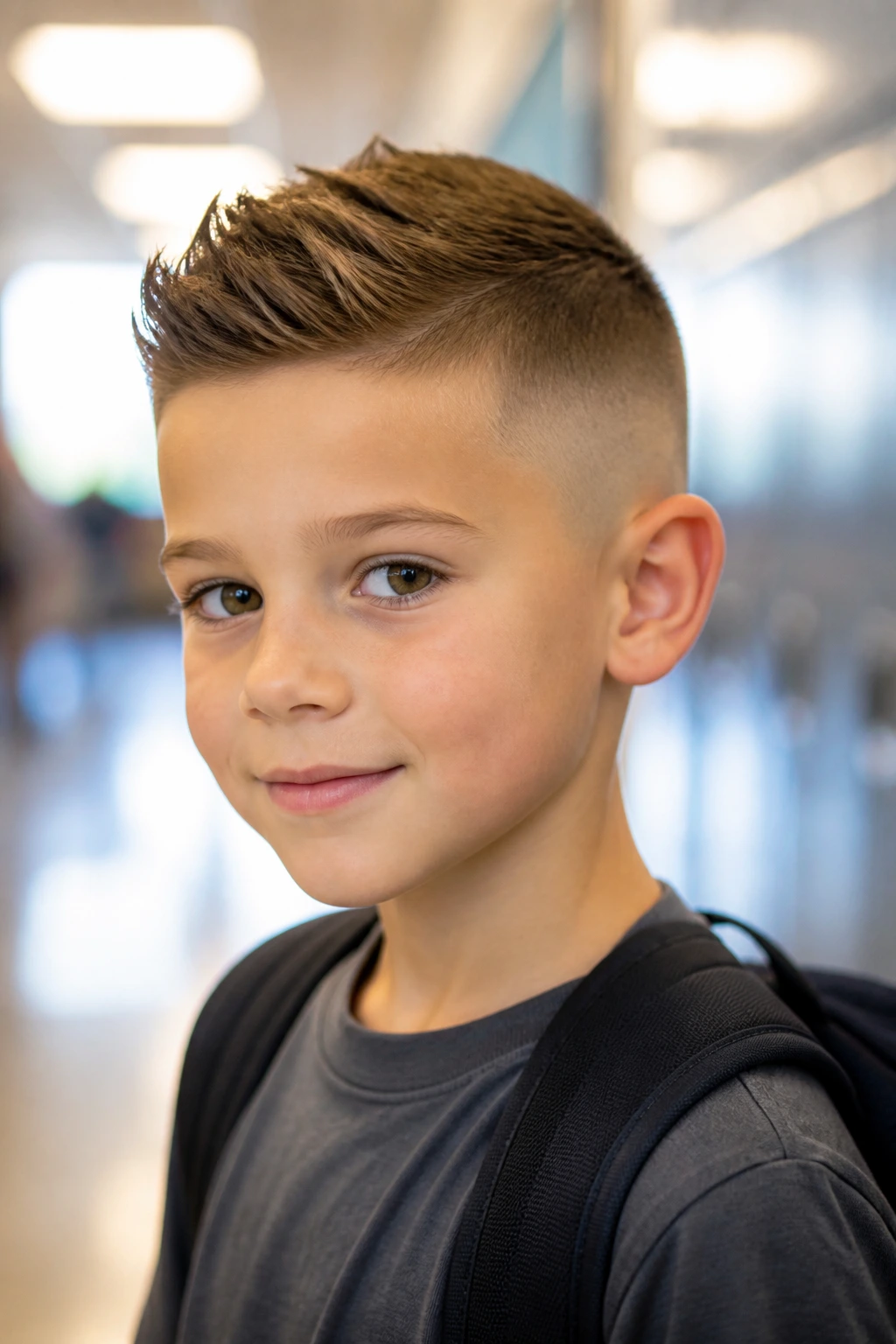
The School-Photo Version: Keep the same haircut, but ask for the fringe a little neater and the neckline cleaned up more sharply. It keeps the style familiar without overhauling the cut.
The Helmet-Friendly Version: Choose shorter tops and lower fades so nothing gets mashed flat under straps. Crew cuts, buzz fades, and short crops do this especially well.
The Sensory-Friendly Version: Skip clippers around the ears and neck if your child hates the buzz. A longer scissor cut with soft edges is easier to tolerate.
The Grow-Out Version: Leave a bit more length than you think you need, especially on the top and around the crown. That extra half-inch can save the shape later.
The Curly-Control Version: Keep the sides tapered and preserve length through the top and fringe. Curly hair usually looks better with room, not with forced tightness.
Keeping the Shape Between Haircuts
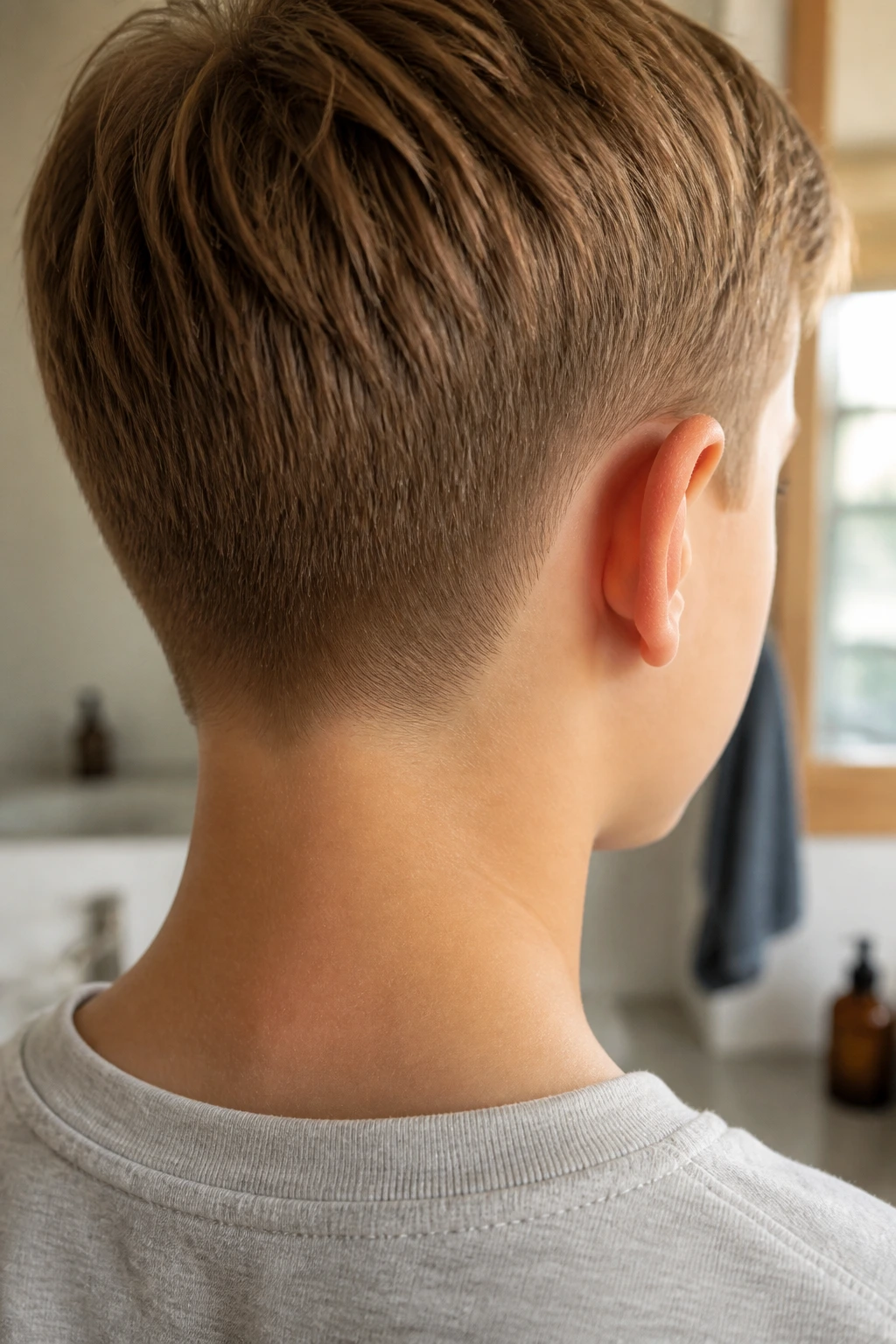
Shorter cuts usually need a trim every 3 to 5 weeks if you want the lines to stay clean. Fades show grow-out faster than scissor cuts, so if you choose a skin fade or hard part, be ready to go back sooner. Longer layered cuts can stretch farther, sometimes to 6 or even 8 weeks, if the shape is soft enough.
At home, the goal is not to recut the style. It’s to keep it tidy. A neckline cleanup, a touch around the ears, and a light comb-through after washing are often enough. If you’re trimming bangs, take off less than you think. You can always trim again. You cannot glue hair back on.
A satin pillowcase or a simple quick brush before school can also reduce the wild morning shape that happens after sleep. Small things. They matter.
Questions Parents Actually Ask About Boys’ Haircuts

What haircut is easiest for little boys to maintain?
A crew cut, buzz fade, or brush cut is usually the easiest. These cuts keep the shape close to the head, so they need little more than washing and a quick comb.
What works best for curly hair?
Curly tops with tapered sides, curly fringes, and tapered natural curls are usually the safest bets. They leave enough length for the curl pattern to show without turning the sides into a triangle.
How short should I go on the sides?
That depends on the child’s head shape and how often you want to return for trims. A #2 or #3 guard is a comfortable middle ground for many kids; skin fades look sharper but grow out faster.
Can I cut my son’s hair at home?
Yes, if you keep the shape simple. A buzz cut, brush cut, or basic trim is manageable with clippers and a steady hand. The more layered or textured the style, the easier it is to hand it to a barber.
What if my child hates hair on his neck or ears?
Ask for a soft tapered neckline and keep the area around the ears clear. Use a cape and a towel, and brush clippings off fast so they don’t scratch.
Do hard parts and shaved designs hold up well on young kids?
They look sharp right after the cut, but they grow out fast. If your kid likes the look, fine. If you want lower maintenance, skip the razor lines and go with texture instead.
What if the haircut looks too short once it’s done?
Don’t panic for the first 24 hours. Short hair always looks shortest right after a cut because the fresh edges are so clean. If the cut still feels too severe after a wash and a day of movement, make a note for the next visit to leave more length on top.
Which haircut is best for a first haircut?
A soft scissor cut, crew cut, or grow-out friendly layered cut is usually the least stressful. These shapes are easy to shape, easy to maintain, and less likely to create a surprise grow-out problem.
The Cuts That Keep Up With Kids
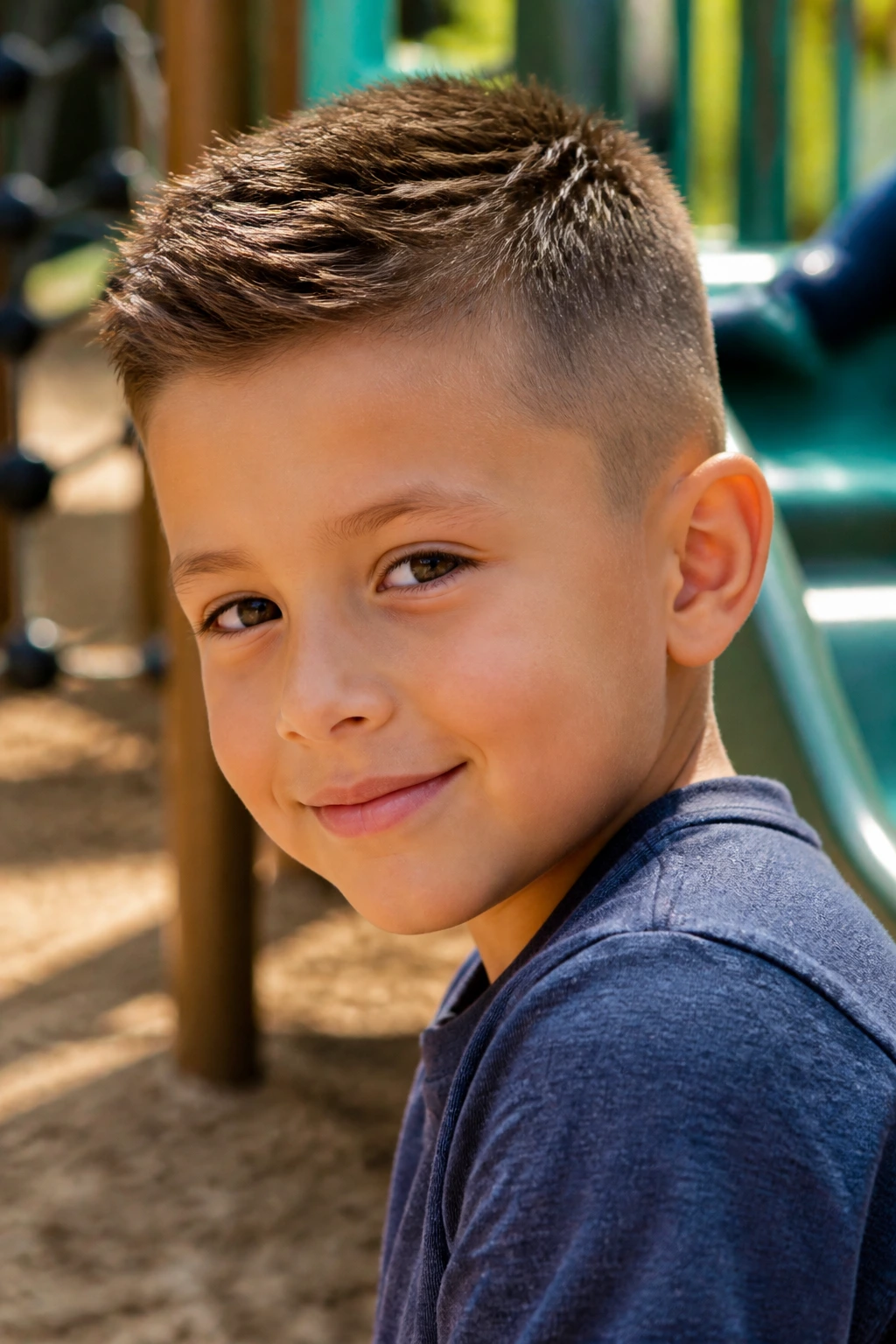
The best little boys’ haircuts are not the ones that look frozen in place. They’re the cuts that can survive a real day: a fast breakfast, a sticky forehead, a playground tumble, a nap in the car, and one more round of being rubbed the wrong way by a tiny hand. That’s a very specific job. Hair has to earn it.
Some of these looks are short and clean. Some have texture. Some lean soft and layered. A few bring a little attitude. What they share is something practical: they can be worn by actual children with actual schedules, hair textures, and opinions.
Pick the shape that fits the child in front of you, not the photo in your phone. That’s where the good cuts live, and it’s why the same few styles keep showing up in barbershops, school pictures, and kitchen mirrors all over the place.
