



Red hair color ideas for curly hair have a different job than red on pin-straight hair: they need to catch light from every bend, coil, and spring in the strand. A flat red can look one-note fast. Put that same shade on curls, though, and suddenly you get ribbons, shadows, flashes of copper, and little pockets of berry tone that move when you move.
That’s why this topic is worth doing carefully. Curly hair doesn’t just hold color differently; it shows color differently. A bright copper can read like a flame on a shag cut, while a deep cherry cola tone can hide in the darker folds and only flare out when the hair shifts. On the wrong curl pattern, the same formula can look muddy, brassy, or overworked. On the right one, it looks rich, layered, and alive.
The best red shades for curly hair aren’t always the loudest ones. Sometimes the smartest choice is a softened auburn that lets your curl definition stay visible. Sometimes it’s a face frame in burgundy, or a halo of ginger around the perimeter, or a deeper mahogany melt that keeps the whole shape from looking chopped up. Placement matters as much as pigment. Maybe more.
Why These Red Shades Work So Well on Curls
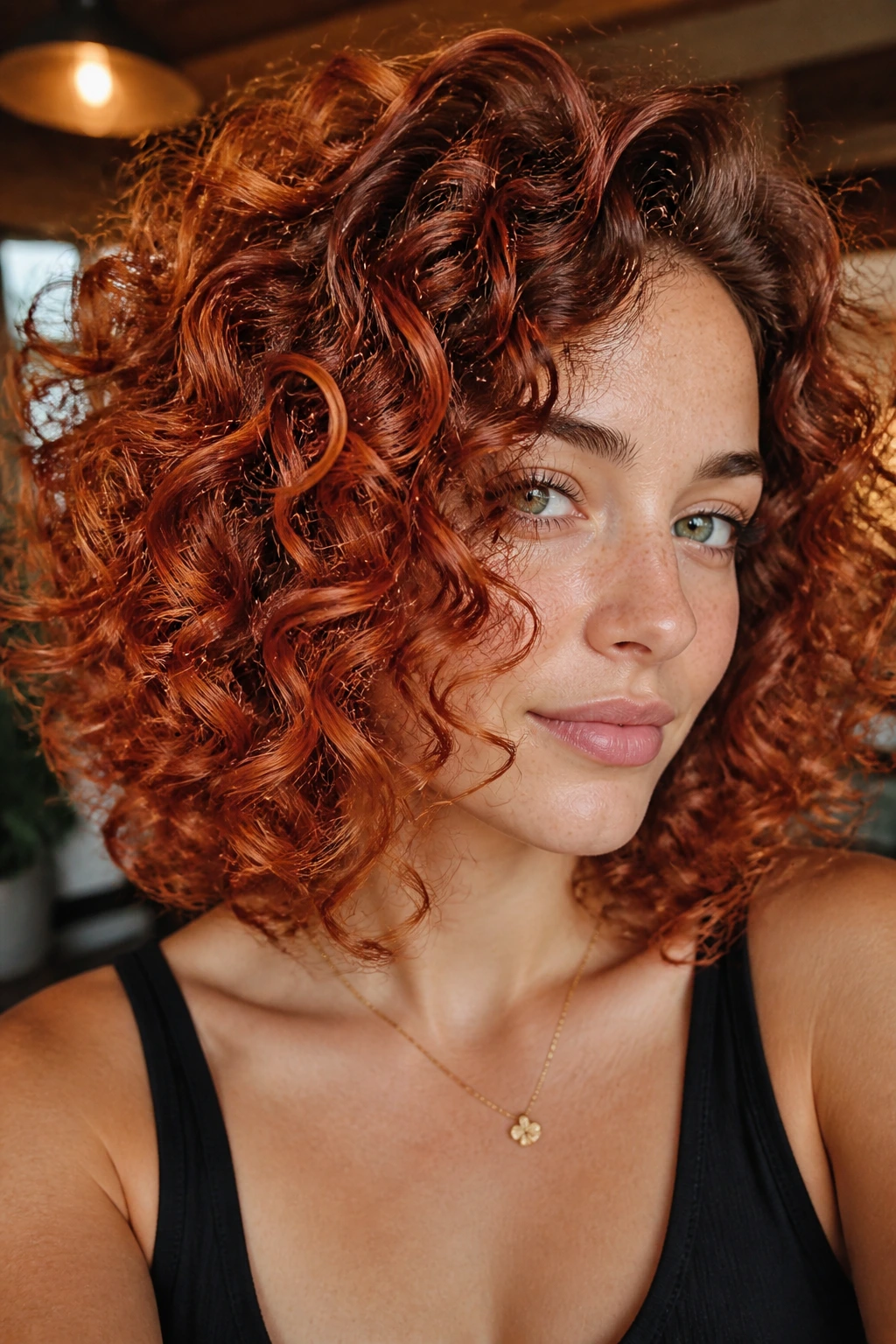
- Dimension first: Curly hair already breaks light into pieces, so even one red formula can show three or four tones at once.
- Low-effort drama: A few face-framing copper pieces can change the whole mood of a cut without needing full-head bleach.
- Shape-friendly color: Reds help curls read as a shape, not a blob, because the color shifts along the curve of each strand.
- Customizable depth: You can go from whisper-soft rosewood to black cherry without changing the haircut.
- Grow-out matters less: Rooty reds and balayage placements soften the line of regrowth, which is a relief when curls shrink up after washing.
- Better than flat brown: A brown base with red reflection tends to move more naturally on curls than a single opaque shade.
1. Copper Ringlet Glow
Copper on curls is one of those shades that looks expensive even when the formula is simple. The color sits right between orange and gold, so every bend in the hair throws a little different reflection. On loose ringlets, it reads warm and bright. On tighter curls, it can look almost lit from inside if the placement is smart.
Why It Works on Curls
Copper is a good match for curls because it doesn’t need perfect symmetry to look intentional. The curl pattern creates its own pattern. If the base is medium brown to dark blonde, copper ribbons can sit on top without disappearing, and the curl clumps make the color look thicker than it is.
A full copper can be a commitment. A partial copper, though, works beautifully around the face and crown, especially when the ends keep a slightly deeper base. That little bit of shadow keeps the style from turning into one big orange block.
- Best on: 2B to 3C curls that already have some shine and spring.
- Ask for: Copper balayage, a warm gloss, or face-framing copper panels.
- Watch for: Over-lightening the ends first; curls that are fried will make copper look dusty fast.
- Best finish: Diffused, soft clumps. Frizz eats the glow.
Quick tip: If your curl pattern is loose, keep the roots one shade deeper than the mids. The color will still pop, but the grow-out won’t scream at you.
2. Cherry Cola Balayage
Cherry cola is the shade people underestimate until they see it on curls. It’s dark enough to stay wearable, but it has that red-black sheen that moves when the light hits it. The result is rich, not flat. Think espresso with a cherry twist, not candy red.
This works especially well if you don’t want your hair color to look the same from every angle. On curly hair, cherry cola balayage can hide in the underlayers and then show off on the outer curve of each spiral. That makes the style feel deeper than an all-over red-brown.
The best version keeps the base close to your natural depth and paints the red where the hair naturally swells. That way, the color catches the curl pattern instead of fighting it. If you’re starting with dark hair, this can be one of the easiest ways into red without a giant bleach job.
A gloss finish matters here. A flat matte red-brown misses the point. This shade needs shine.
3. Cinnamon Auburn Ribbons
Why do cinnamon ribbons look so good on curls? Because they act like fine lines in a sketch. They don’t cover the whole surface. They trace it. On a curly cut with long layers, those thin auburn ribbons make the shape easier to read and give the hair more movement without making it look striped.
Auburn sits in that useful middle zone between red and brown, which means it can flatter a lot of natural base colors. If your hair is dark blonde, the ribbons will read warmer. If your hair is medium brown, they’ll look deeper and spicier. If your curls are porous, this shade can take on a little extra warmth, so ask for a strand test before you commit.
How to Wear It
Keep the highlight pattern loose and irregular. Not chunky. Not too neat. The point is to create thin, curved threads of color that follow the curl, not hard lines that cut across it.
This is one of the best choices if you like dimension but hate upkeep. The regrowth line stays soft, and the red tones fade into a cozy copper-brown rather than something neon.
4. Burgundy Money Piece
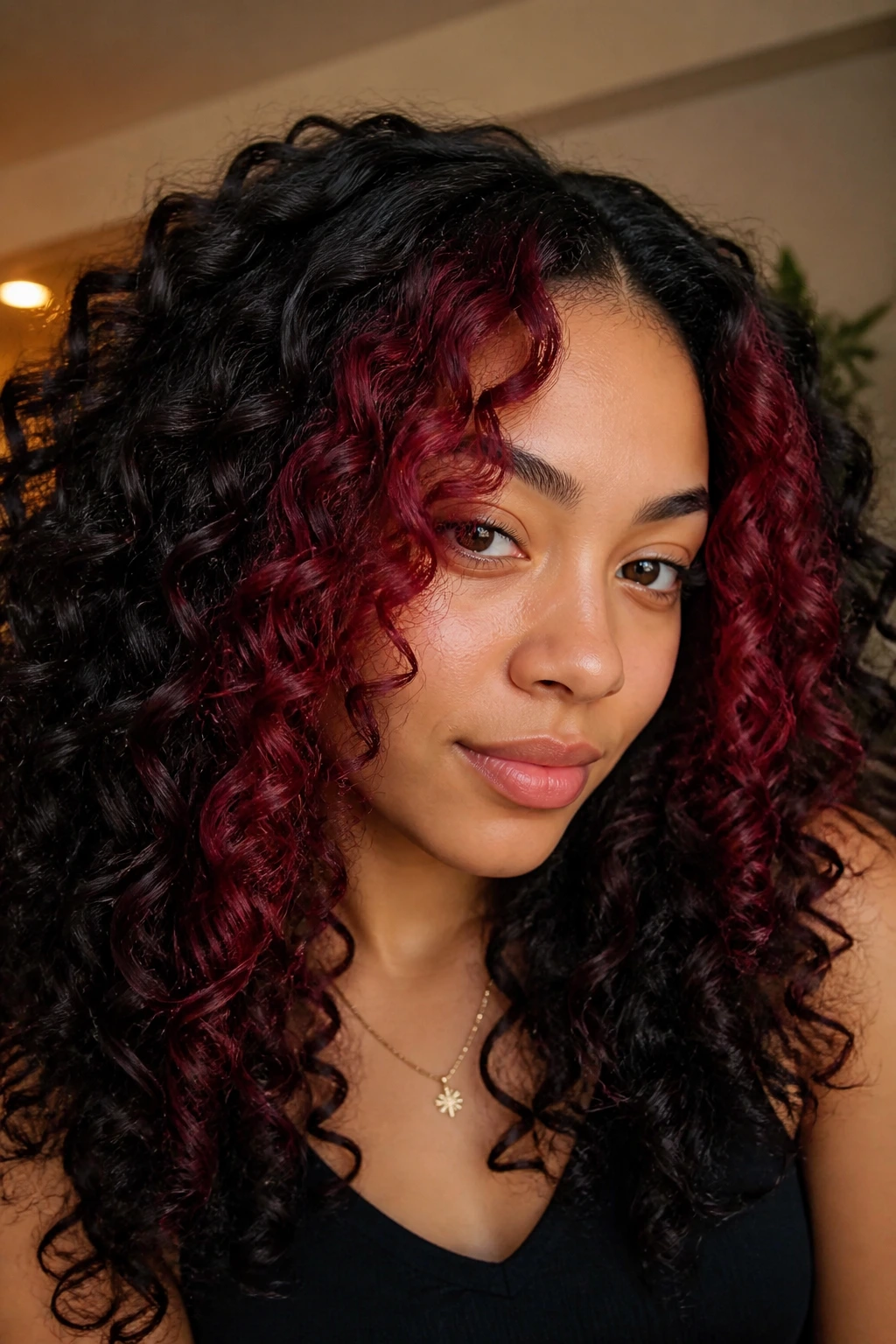
A burgundy money piece can change a whole curly haircut in ten seconds. That sounds dramatic, but it’s true. Put two brighter wine-red panels around the face, and the curls suddenly feel framed instead of just “done.” It’s especially sharp on layered cuts, where the front pieces already have a little movement.
The trick is contrast. Burgundy sits cool enough to feel polished, but it still has that red depth that flat black or brown can’t give you. On curly hair, the front tendrils catch light in small bursts, so the color looks richer than it does on straight hair.
- Best on: Dark brunettes, black hair with lift, or anyone who wants a bold front without coloring every strand.
- Placement note: Keep the money piece slightly wider than you would on straight hair. Curls shrink and cover more surface.
- Style note: A side part can make the face frame feel even more dramatic.
- Maintenance: Refresh the front pieces first when fading starts. They’re the ones people see.
The funny part is that this is often the safest red for curl skeptics. It gives drama without taking over the whole head.
5. Strawberry Bronze Curls
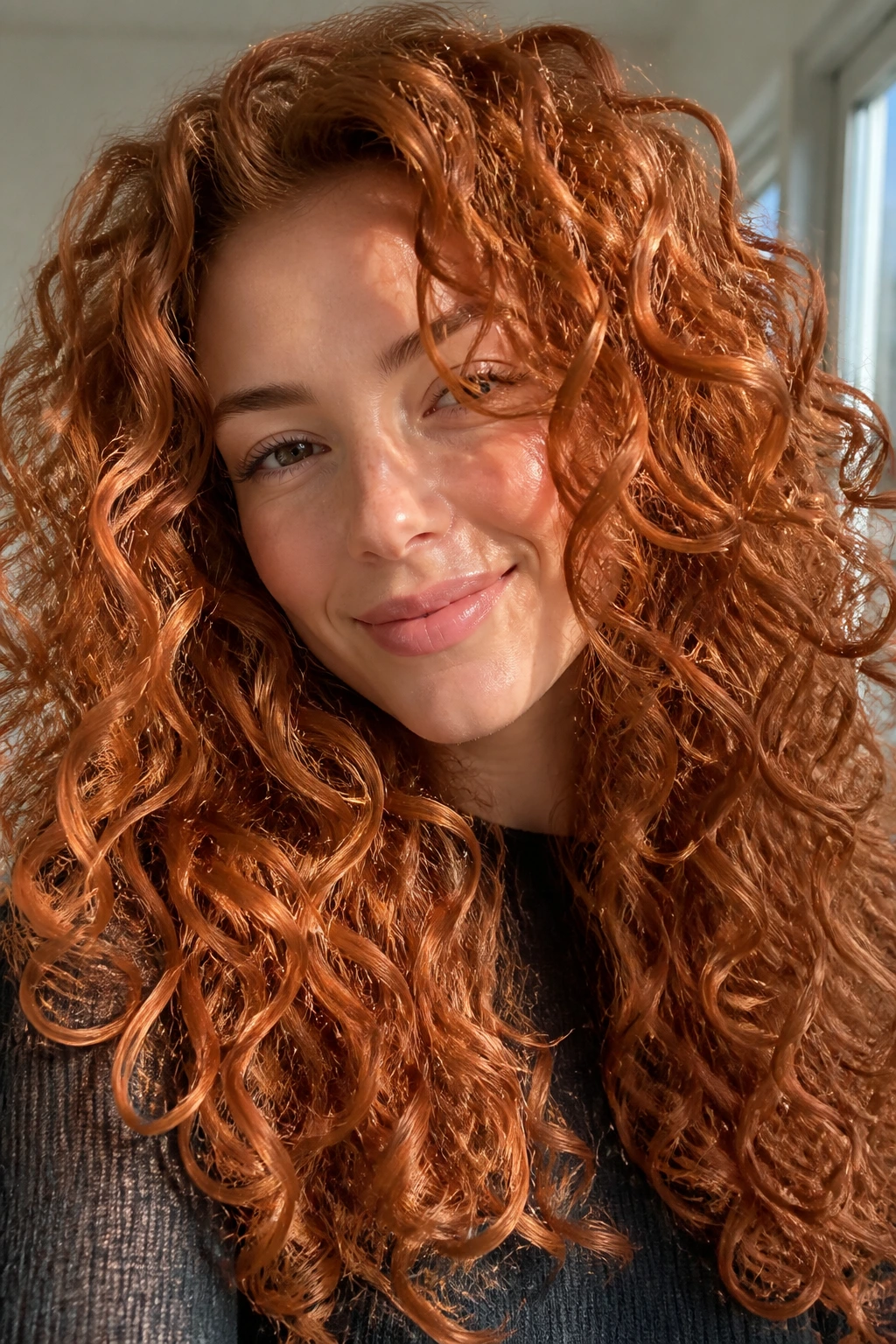
Strawberry bronze is softer than a classic copper and warmer than a rose gold. On curls, that middle ground can be gorgeous because it doesn’t overpower the texture. The color looks like sun on warm metal, with just enough red to feel fresh and just enough gold to keep it from going pink in odd lighting.
This shade is best when you want something bright but not shouty. On looser curls or curly bobs, strawberry bronze can make the hair look fuller because the lighter warmth bounces around the shape. On tighter curls, it works best as a glaze or soft highlight pattern; otherwise it can read too light at the ends and leave the roots feeling heavy.
A curl-friendly cut helps a lot here. Layers keep the bronze from sitting in one big sheet. And if your hair is naturally dark, the formula needs a real lift under it. Otherwise the red-gold balance turns muddy.
I like this one on people who wear minimal styling products. Too much shine cream can make it look syrupy. A light gel cast and a soft scrunch out keeps it airy.
6. Mahogany Melt
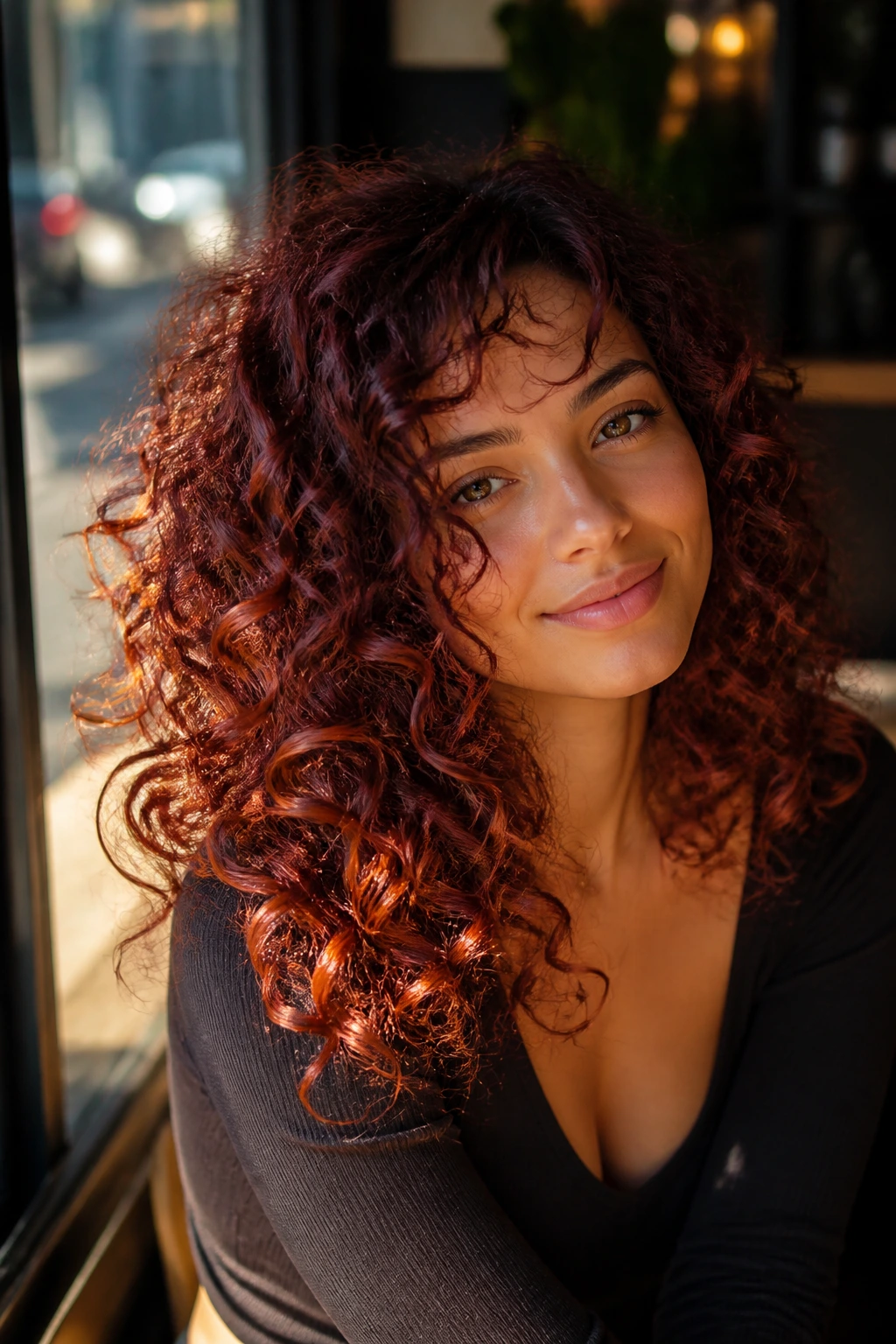
Mahogany is the red for people who like depth more than brightness. It’s brown with a wine-red edge, and on curls that edge peeks out in the most useful way. You get color, but you still get shadow. The curl pattern stays visible because the whole head isn’t competing with a neon tone.
Unlike an all-over cherry red, mahogany melt works by fading from a richer root into slightly warmer mid-lengths and ends. That gradient matters. On curls, a hard block of red can look heavy. A melt keeps the shape moving, especially if your haircut has layers or a rounded silhouette.
This is a smart pick if your natural hair is already medium to deep brown. You can often keep more of your base than you would with brighter reds, which means less lightening and less stress on the curl pattern. That matters. Damaged curls swallow shine.
If you want a red that feels adult, wearable, and not fussy, this is one of the best places to start.
7. Ruby Peekaboo Panels
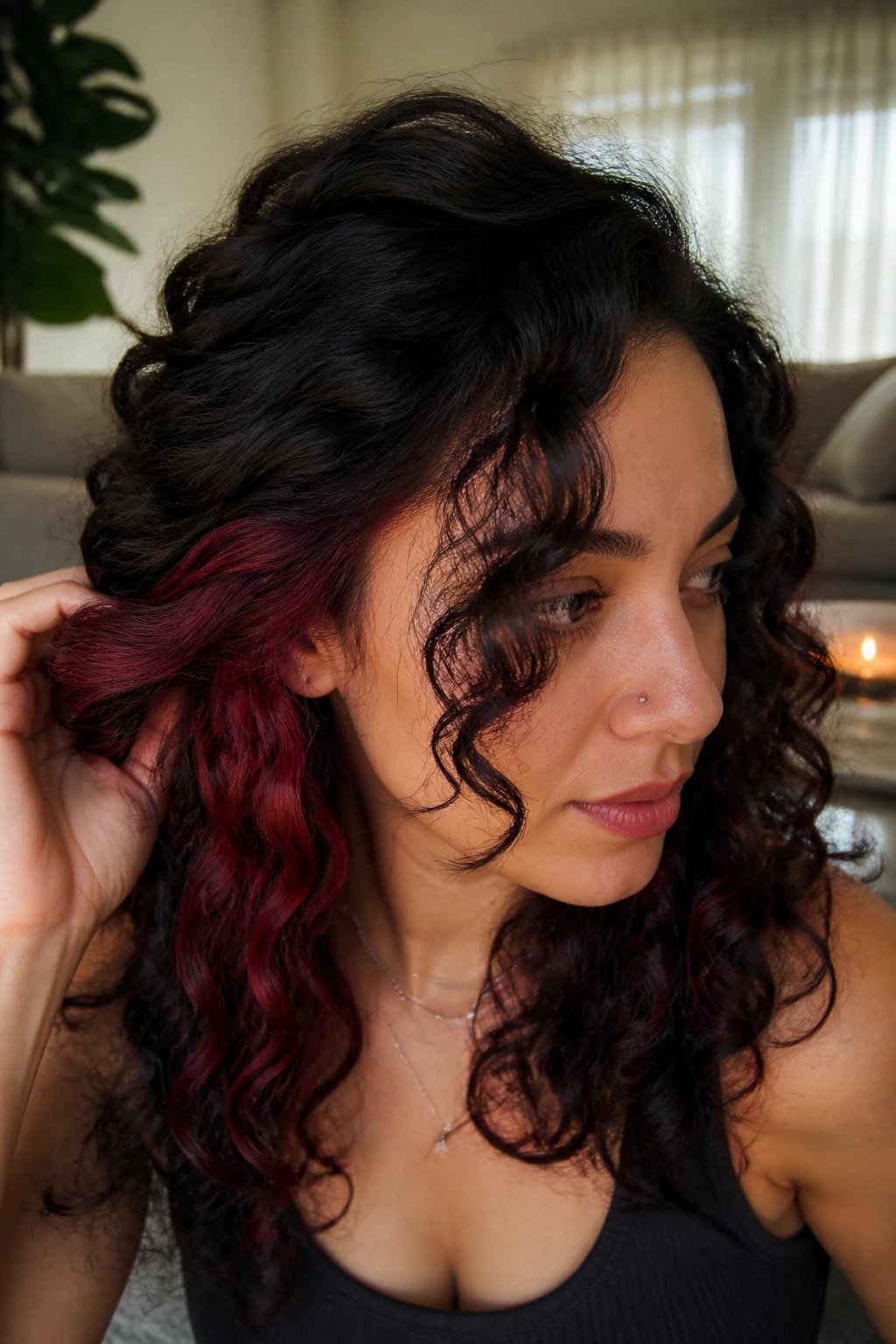
Hidden red panels are one of my favorite ideas for curly hair because they reward movement. When the curls fall forward, the ruby stays tucked underneath. When you shake the hair out or tuck one side behind your ear, the red flashes through like a secret.
The placement is the whole game here. Peekaboo panels work best under the crown, behind the ears, or in the lower half of a curly shag where the texture naturally separates. That way the color isn’t visible all the time, which makes the reveal feel sharper.
Where It Makes Sense
- If you wear your curls down most days, the red stays tucked and controlled.
- If you love half-up styles, the hidden panels show up fast.
- If you’re testing red for the first time, this keeps the commitment low.
- If you hate constant root touch-ups, the underlayer buys you time.
Ruby peekaboo panels look especially good on dark hair because the contrast is sudden. One minute it’s a chocolate coil. Then the light moves and you get that deep red flare. It’s not a subtle effect, but it is a controlled one.
8. Ginger Fringe Frame
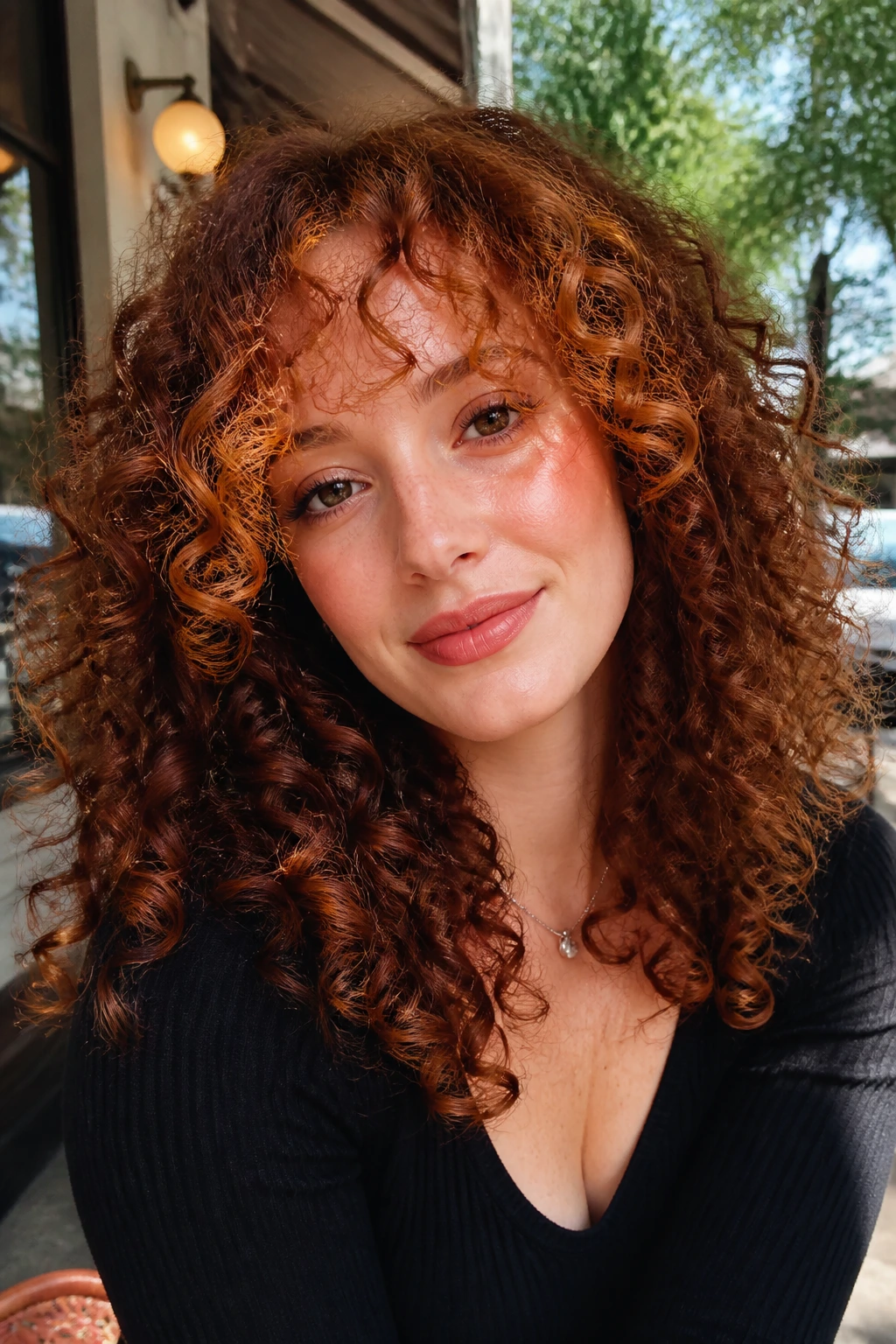
A ginger frame around the front of curly hair can do more for the face than a full-head color job. The front curls are the ones people read first, and ginger gives them a warm, bright outline. It can wake up a shag, soften a heavy bob, or make long curls look less tucked away.
The best version is not a solid helmet of orange at the hairline. That gets old fast. Better to blend the ginger into the first few inches around the face, letting the color drift into the rest of the curls with a little softness. On curly bangs, this looks especially good because the fringe already breaks up the shape.
If your skin tone runs warm, ginger can look very natural. If your undertone is cooler, ask for a slightly deeper copper-ginger blend so it doesn’t pull too pumpkin-like under indoor light.
This is also a good style for anyone who likes wearing glasses. The color around the face keeps the frame from feeling heavy. Small detail. Big difference.
9. Merlot Velvet Ombré
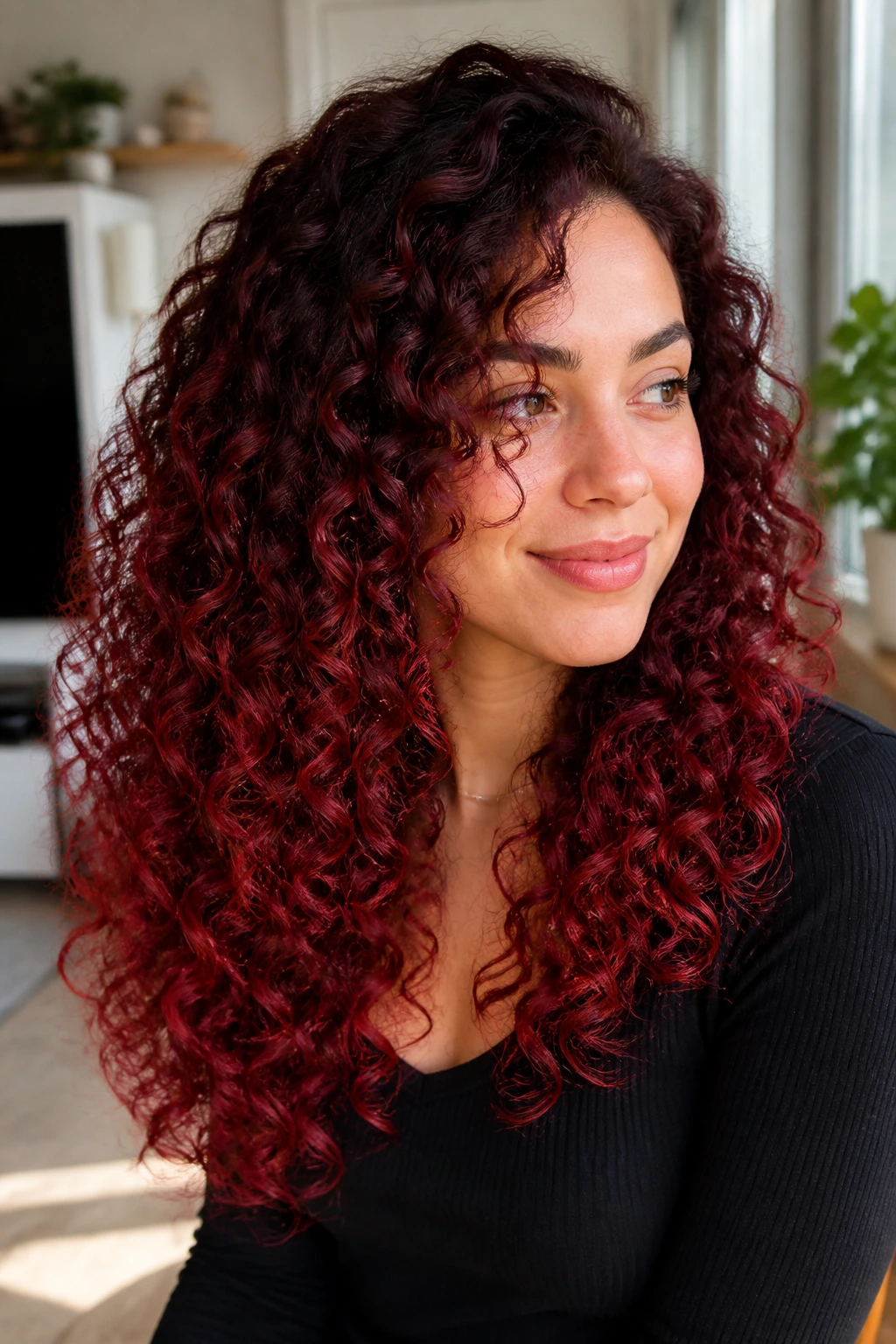
Merlot velvet ombré is for people who want red to feel rich, not bright. The root stays deep and wine-dark, then the color softens through the mid-lengths before opening into a darker red at the ends. On curls, that gradient looks plush. The hair seems thicker because the shadow at the root makes the curl clumps stand out.
This shade works especially well on medium to dark bases. It does not need a huge amount of lift to look good, which is a blessing for textured hair. Less bleach usually means better curl shape. Better curl shape means the color reads richer. The whole thing circles back on itself.
If you wear a curly bob or shoulder-length layers, merlot can look almost like fabric—soft, dense, and a little moody. That’s part of its appeal. It isn’t trying to be flashy. It’s trying to look expensive under normal light.
A gloss every few weeks keeps the red side from fading into a plain brown. That’s the mistake people make with deep reds. They forget the red is still there, waiting to be refreshed.
10. Rosewood Gloss
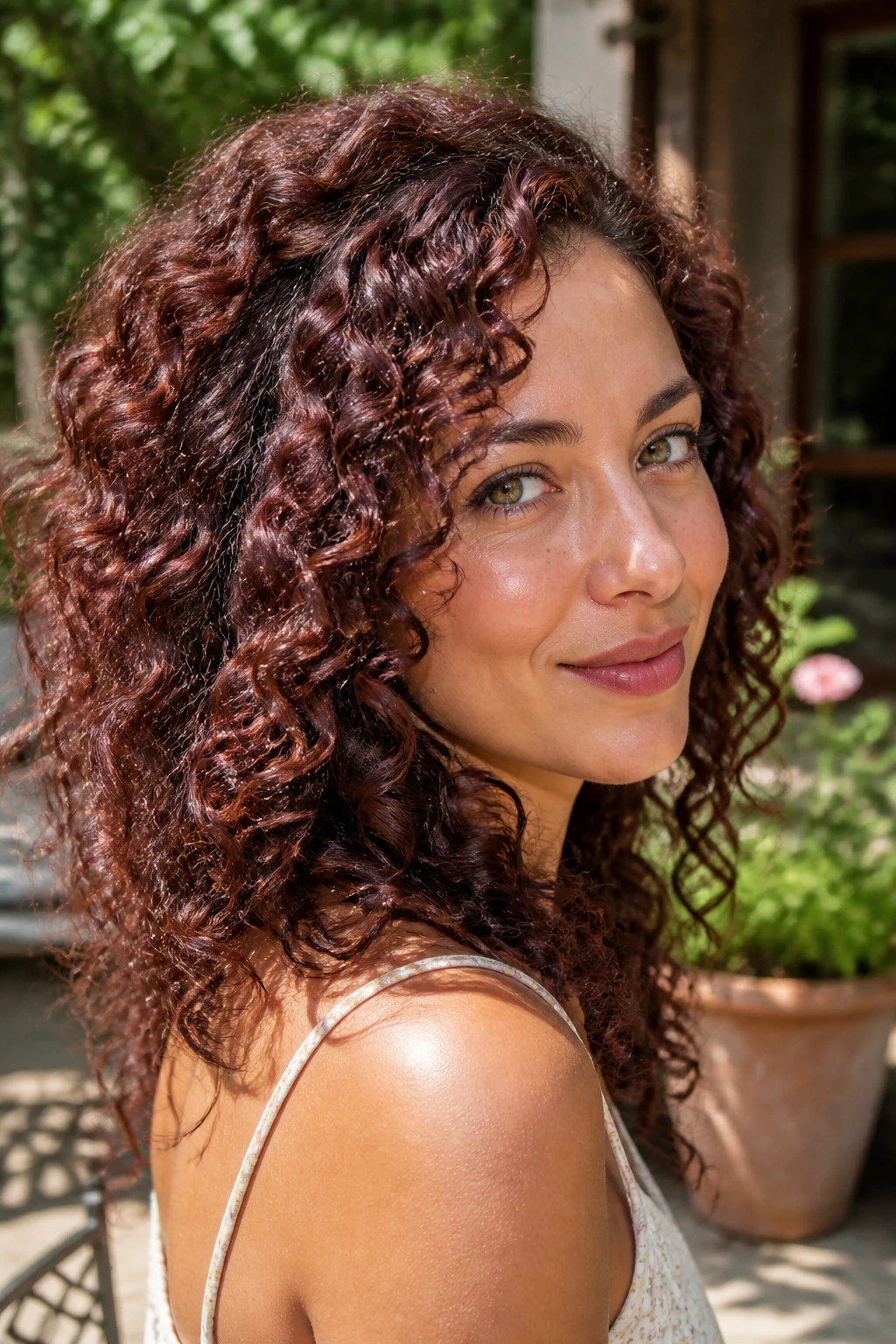
Rosewood is red for people who dislike obvious red. It sits in that dusty zone between brown, red, and a faint berry tone, which makes it lovely on curls that already have texture doing some of the visual work. The color doesn’t need to shout. It just needs to move.
A rosewood gloss can be used over a brunette base or on lighter hair that needs a cooler red shift. Because the shade is muted, it tends to age more gracefully than brighter copper. When it fades, it usually slides into a soft brown-red instead of turning yellow or orange.
This is one of those colors that looks especially good on dry, defined curls. Not crunchy. Defined. The cuticle has to lay decent enough for the gloss to shine back. If the hair is frizzy, you lose the whole point.
I also like this shade for clients who want something appropriate in every setting without looking boring. It’s not plain. It’s just quieter.
11. Firelight Copper Ombré
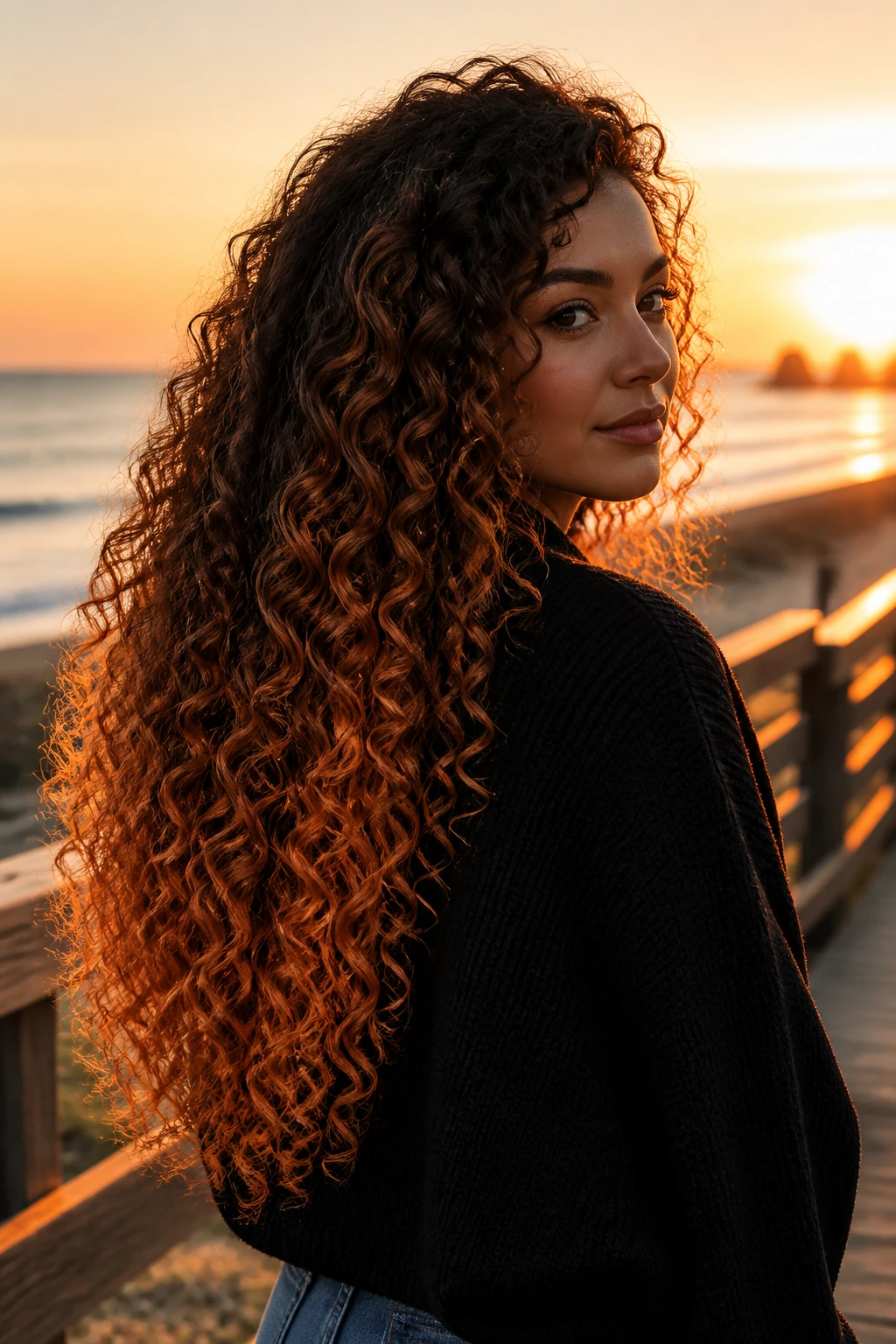
Firelight copper is what happens when you let the ends catch the brightest part of the red story. The roots stay deeper, the mids get warm, and the ends flare into a copper that looks almost molten. On curly hair, that ombré effect can be striking because the ends already move the most. More movement, more light, more color.
This style is a good match for long curls, where the length gives the color room to breathe. On shorter cuts, the transition can look abrupt unless the blend is very soft. You want the red to seem like it grows out of the curl pattern, not like it was painted on with a brush and a hurry.
A firelight ombré also makes your hair appear denser at the top and brighter at the bottom, which can be useful if your curls go limp near the roots. The contrast helps the outline of the style read from across the room.
It does need maintenance. Bright copper ends fade fast, especially if you wash often. Color-safe shampoo and fewer hot tools go a long way here.
12. Rusted Rose Balayage
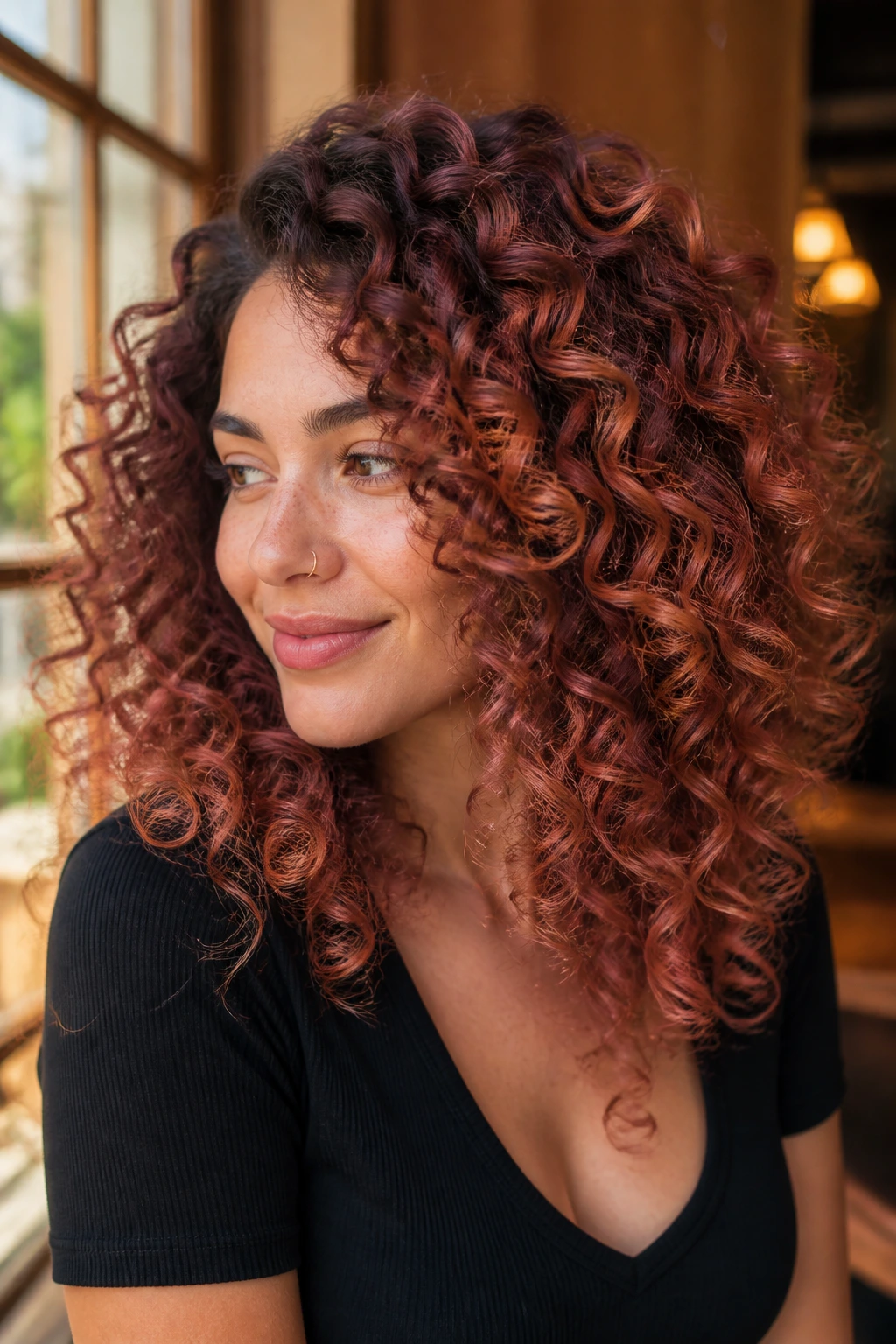
Rusted rose is one of the better red ideas for someone who wants color with a soft, worn-in feel. It mixes muted rose tones with a little copper and brown, so the result feels brushed rather than painted. On curls, that softness is a gift. The bends in the hair do half the blending for you.
Balayage is the right technique here because it leaves room for the curl pattern to show. The color sits on the surface of the wave and spiral, then disappears into the next section. That broken pattern keeps the style from looking chunky. Chunky is the enemy of a good curly red.
This shade fits people who like low-key warmth but don’t want a flat brunette. It’s also forgiving if your curl pattern is mixed, with tighter pieces around the crown and looser pieces toward the ends. The rose tone helps everything feel connected.
If your stylist leaves a deeper base underneath, the whole look turns more dimensional. I’d push for that. Flat rust is fine. Rusted rose with depth is better.
13. Crimson Dip Ends
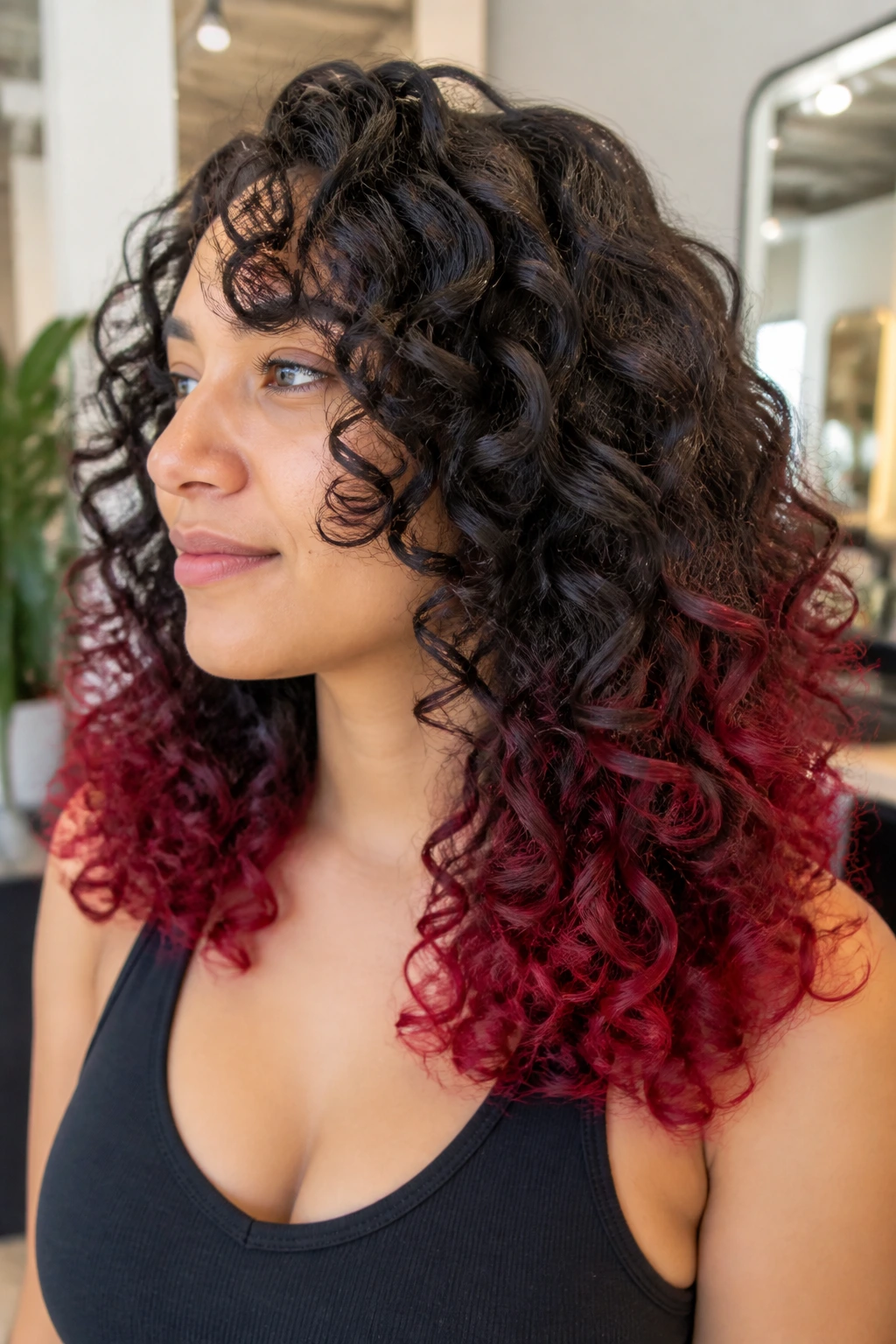
Dip-dyed red ends are a clean way to bring color into curly hair without coloring the entire head. Crimson at the bottom gives the curls a sharp finish, especially on layered hair where the lower pieces move freely. The look can be bold, but it’s still controlled because the red stays where the eye lands last.
This is a solid idea if your top layers are dark or if you’re growing out old color. The ends carry the drama, and the roots stay calm. On curls, the transition looks softer than on straight hair because the color breaks up across the coils. That means you can get away with a more dramatic endpoint without it looking harsh.
The main thing to watch is dryness. The ends are already the oldest part of curly hair. If they’re rough, a bright crimson can make them look drier. A hydrating mask and a trim before coloring make a big difference.
This style is also easy to turn into a seasonal switch. Crimson can skew wine-dark or fire-bright depending on the formula. One placement. Two moods.
14. Warm Auburn Halo
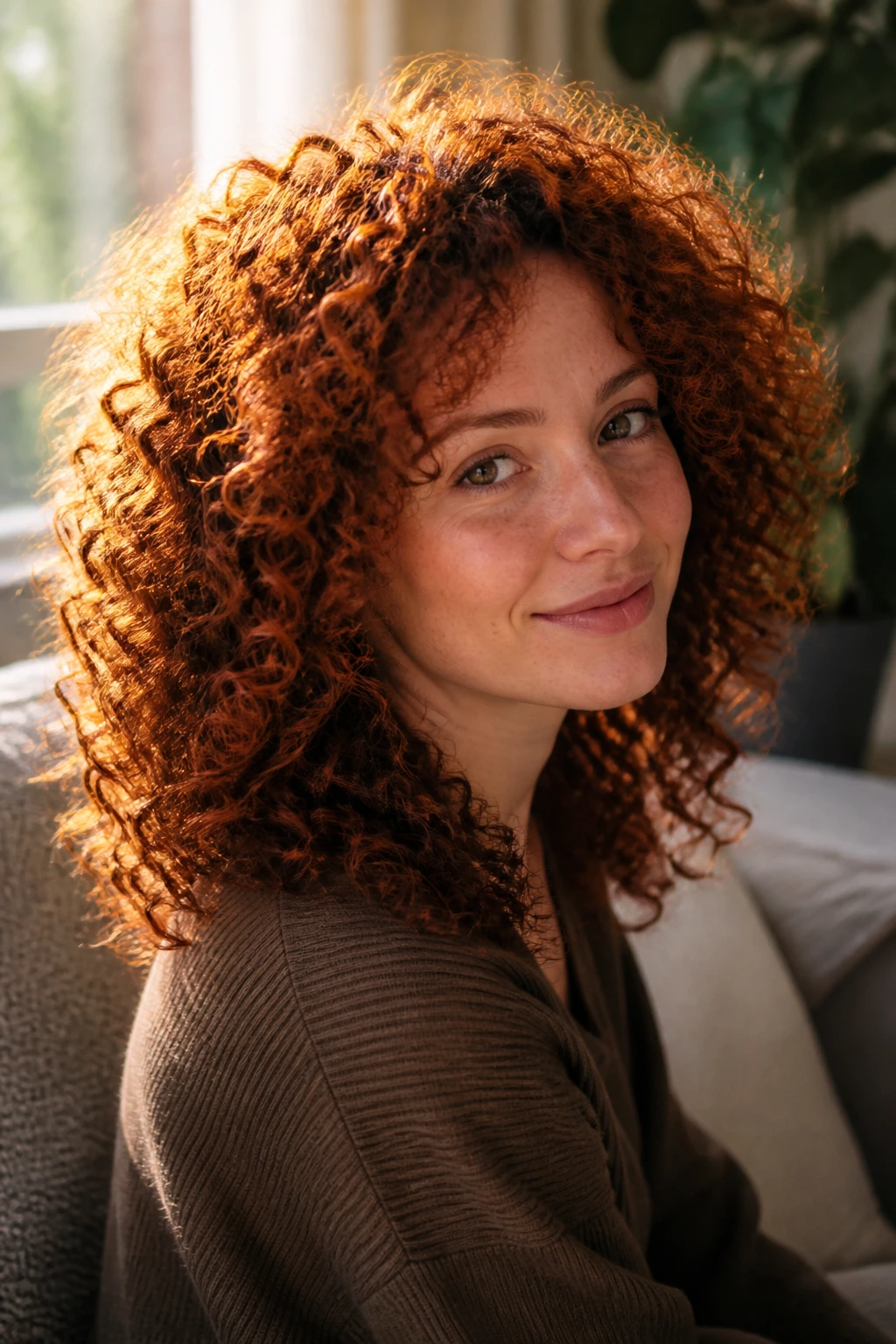
A warm auburn halo is all about the top layer. Instead of flooding the whole head with red, you brighten the curls that sit on the surface and around the crown. That creates a halo effect when the hair lifts and falls. On a rounded curly cut, the result is especially pretty because the shape itself does part of the work.
The halo idea is smart when you want the red to feel airy, not heavy. Darker underside layers keep the style grounded. The top layer picks up the warm auburn, and the curl pattern makes it look like light landed in the right place by accident. That “by accident” part takes real planning, though.
This works well on medium-density curls that tend to flatten at the crown. The lighter top color gives the illusion of more lift. If your roots are sparse or your hair is fine, ask for a soft blend rather than too much contrast. A sharp contrast on fine curls can separate the texture in a bad way.
A halo like this looks best when the curls are fully dry and separated enough to show dimension. Wet curls hide all the work.
15. Spiced Maple Lowlights
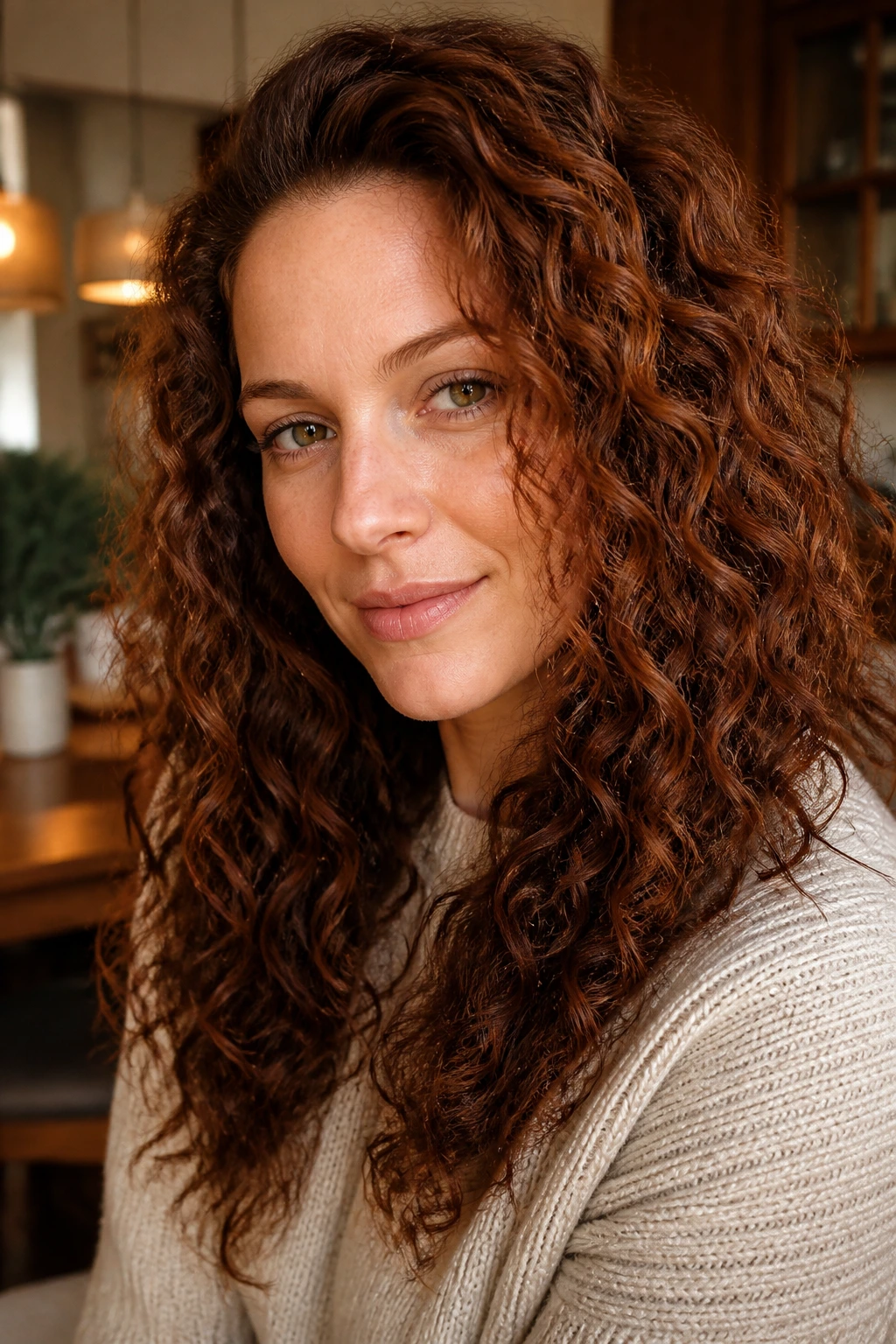
Most people think red means highlights. Not always. Spiced maple lowlights deepen the hair in selective sections so the red reads richer everywhere else. On curly hair, lowlights can be the difference between “colored” and “layered.” They tuck into the undercurves and make the brighter pieces stand up better.
This is a smart move if your curls already have some copper or auburn in them and you want more shape, not more brightness. A few deeper red-brown strands can tighten the whole look. They make the curl pattern feel more carved out, especially on bigger, looser curls that need help reading from a distance.
Maple lowlights also help if you’ve gone a little too far with bright red before. They calm things down without stripping the color out. That’s useful. Very useful. The result is warmer and more wearable than trying to erase red with brown alone.
If you wear your hair in a side part, place a few lowlights on the heavier side. It keeps the shape from leaning flat.
16. Wine-Red Stacked Bob
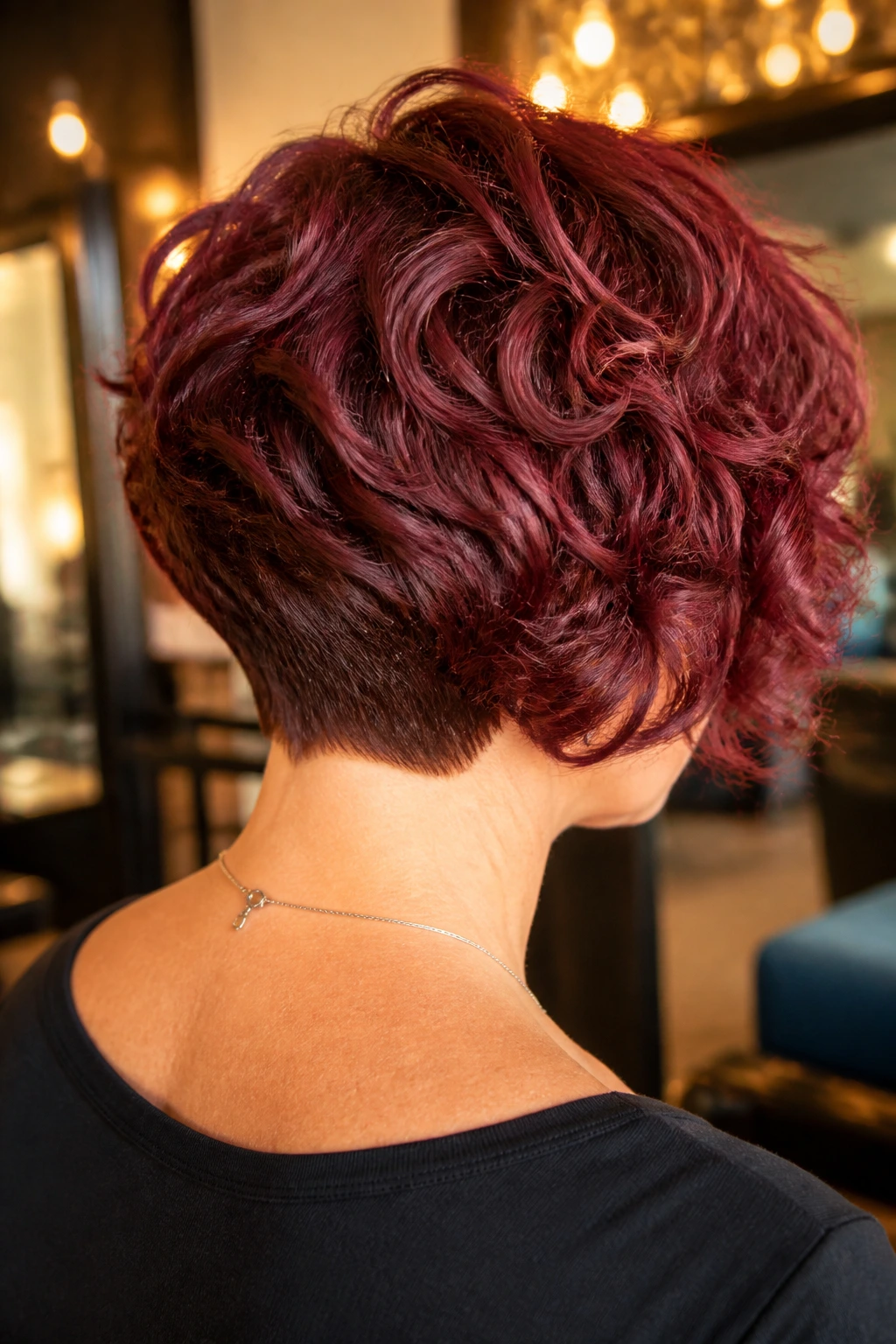
A stacked bob and wine-red color are a strong pair because the cut creates clean lines while the color adds softness. The back is shorter and fuller, the front pieces fall longer, and the deep wine tone makes that shape read even more clearly. On curls, the result is compact but never boring.
This works best when the bob is shaped to your curl pattern, not against it. The stacking at the back gives the curls room to spring upward, while the red keeps the silhouette from feeling too rounded. If the color is too bright here, it can fight the geometry of the cut. Wine red is better. It has enough depth to support the line.
It’s also a practical choice if you don’t want very long, heavy color service sessions. A bob takes less product, less time, and less maintenance on the ends. The color still shows because the shape is crisp.
A lot of people overlook how good wine-red can look with short curls. It’s sharp. It’s tidy. It has enough mood to keep the cut from feeling too sweet.
17. Tangerine Red Curly Shag
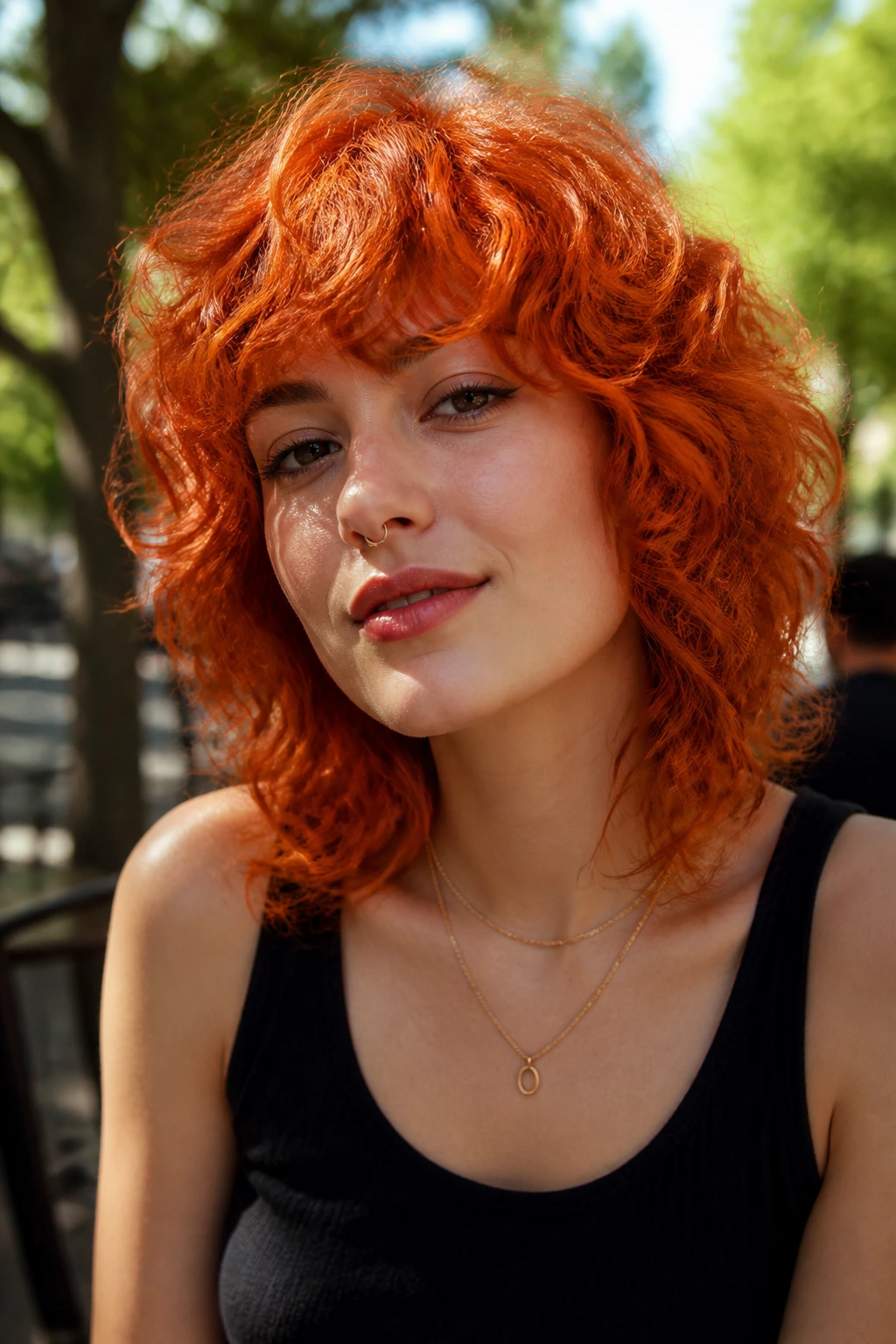
Tangerine red on a curly shag is not for the timid. It looks like light caught in motion and decided to stay there. The shag cut already brings separation, fringe, and lift, which gives vivid red a place to live. Without that shape, the color could feel too strong. With it, the style feels almost designed for the shade.
The important part is texture. A shag should not be over-smoothed if you want this color to make sense. Let the curls or waves stay a little wild. The cut layers, the fringe, and the bright tangerine-red all need room to breathe.
This is one of the rare red ideas that works better when it looks a little imperfect. Not messy. Just loose. A hard-styled shag loses the point. The color is the point. The movement is the rest of it.
If you love fashion color but still want curls to be the star, this is a strong pick. It looks especially good in daylight, where the orange-red tones break apart and show more than one note at once.
18. Plum-Red Shadow Root
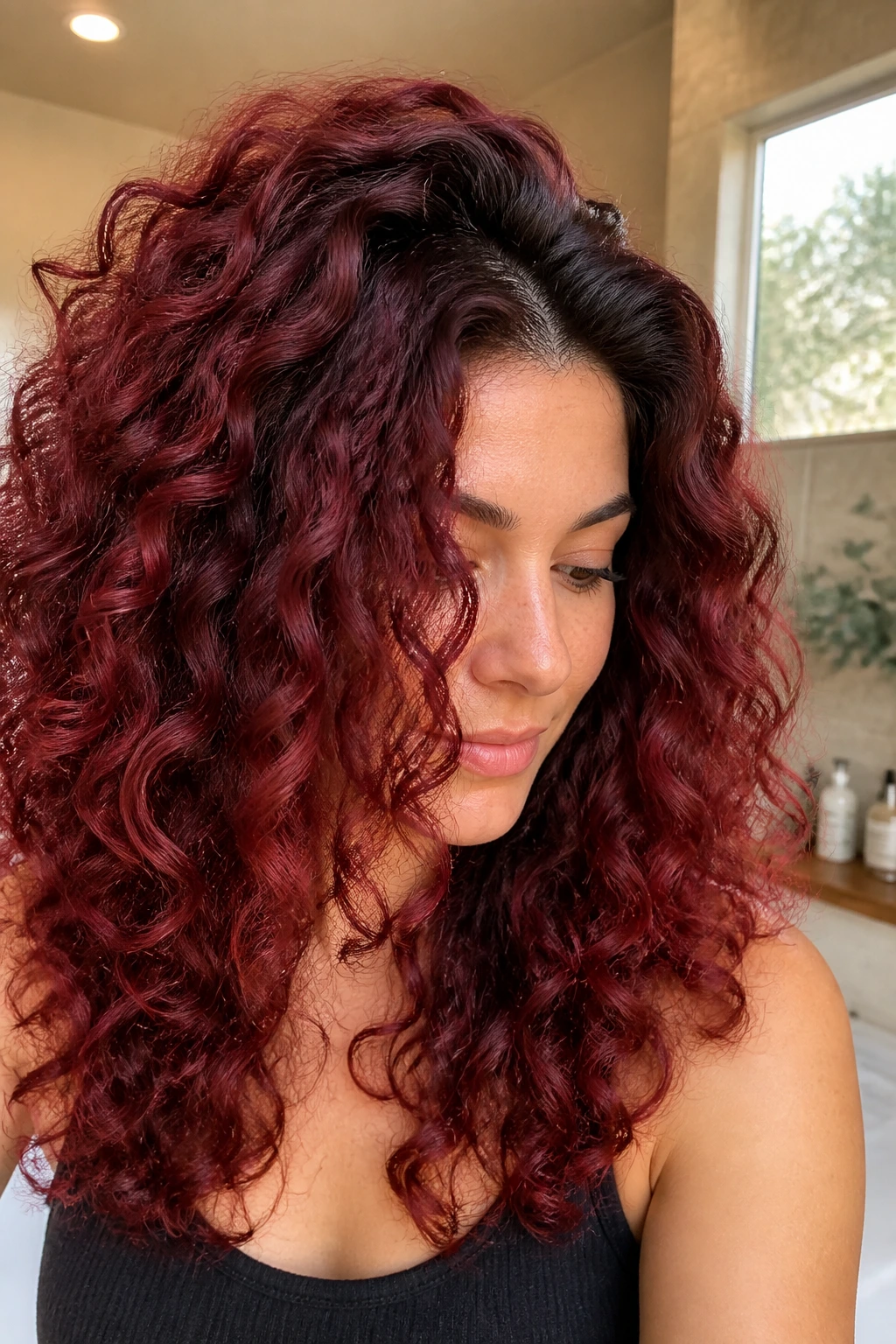
A plum-red shadow root is a good answer when you want red without a harsh regrowth line. The roots stay deep and cool, then the plum-red opens beneath them. On curls, that shadow root makes the top area look thicker and gives the red a place to emerge instead of being shouted from the first strand.
This is a particularly good choice for people with darker natural bases. You keep more of your own color near the scalp, which means less maintenance and less stress on the texture. Then the mid-lengths and ends carry the color payoff. Nice and efficient.
Plum works better than bright red if your wardrobe leans cool—black, navy, charcoal, gray. It still feels rich, but it won’t clash as hard with cooler clothing or makeup. On curls, that matters because the hair and the outfit sit close together visually.
If the plum starts to fade, it often softens into a berry-brown that still looks deliberate. That’s the kind of fade I like. Not every color has to leave with a dramatic exit.
19. Desert Coral Curls
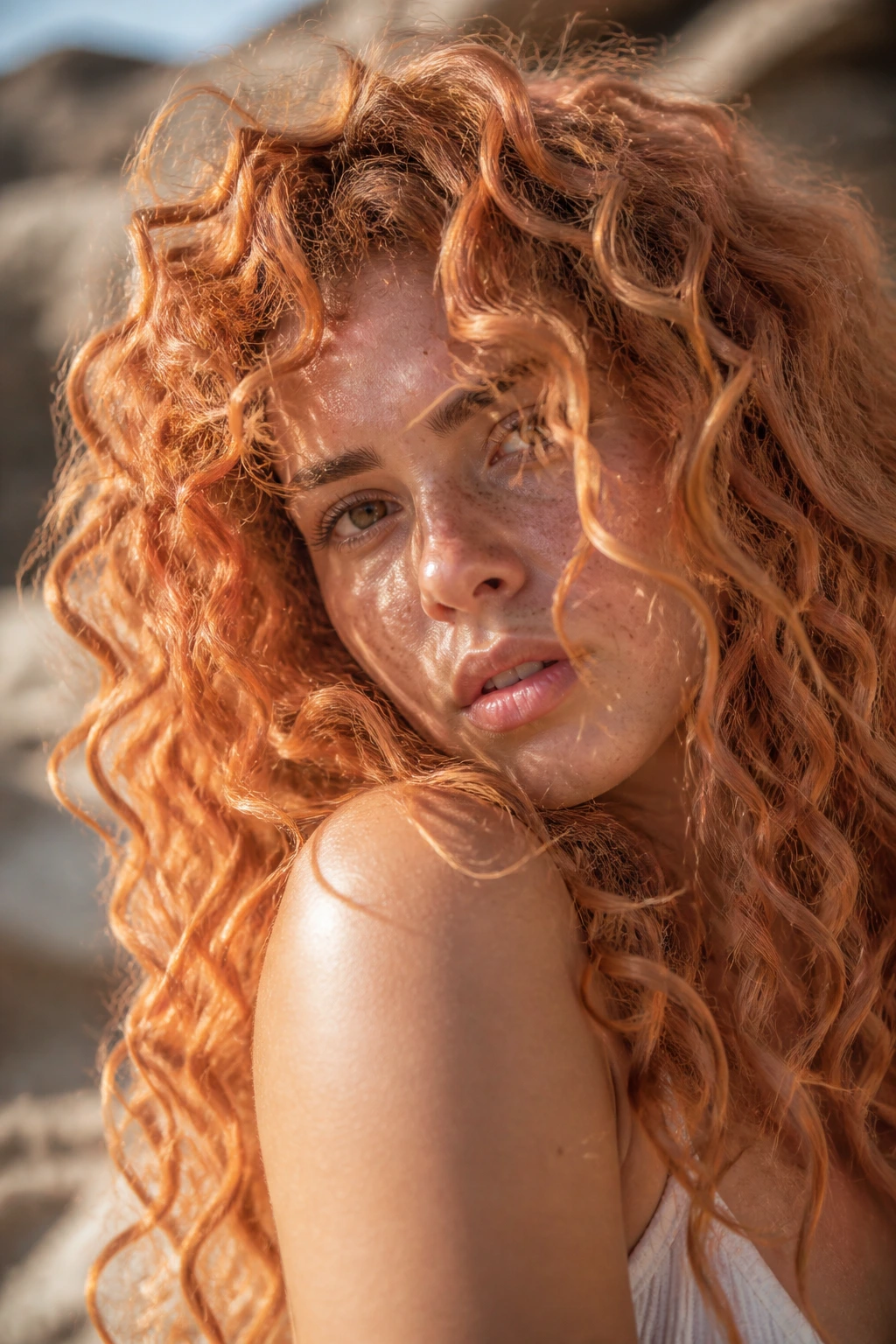
Desert coral is the softer, sun-warmed cousin of copper. It has a peach-red edge that can look almost sandy in some light and more lively in others. On curls, that tonal shift is the whole appeal. The hair never looks one flat shade because each curve catches a slightly different part of the coral spectrum.
This shade works best on lighter bases or pre-lightened curls. If the base is too dark, the coral can disappear or turn muddy. But on blonde-to-light-brown curls, it can look airy and fresh without becoming pastel. That balance is hard to get right, which is why coral looks best when the curl pattern is healthy and defined.
I’d use this on someone who wants warmth without the heaviness of a deep red. Coral has brightness, but it doesn’t have the weight of burgundy or cherry. That makes it a nice springboard into red if you’ve never gone there before.
It also pairs well with short curly cuts. The color doesn’t need a long canvas to make sense. The texture does enough.
20. Black Cherry Dimension
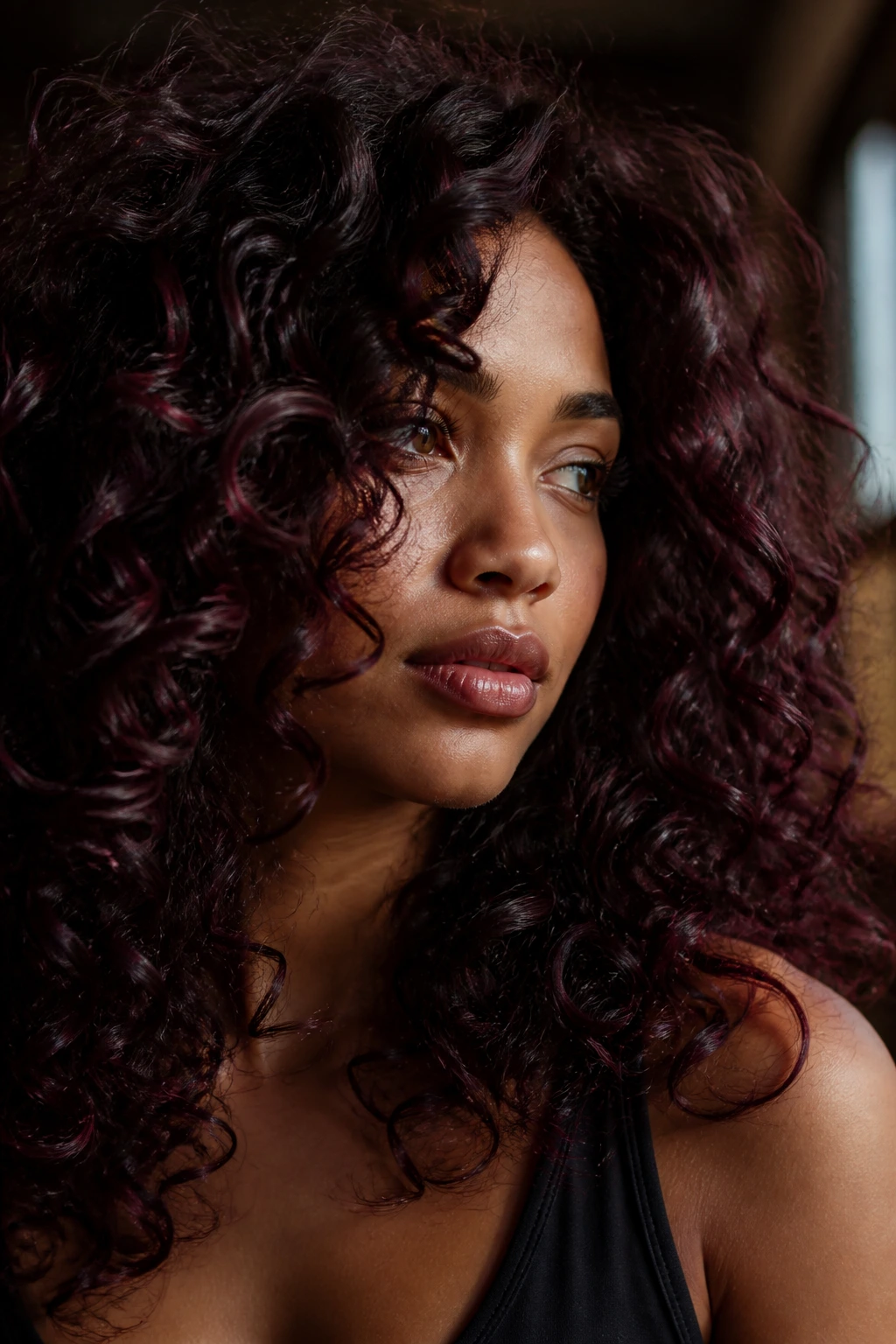
Black cherry is the deepest, richest end of the red spectrum, and curly hair gives it a lot to do. From a distance, it can look almost black. Up close, the red-violet undertone shows up in the bends and surface layers. That contrast is exactly why it works. Curls let the shade reveal itself slowly.
This is one of the best options for darker bases that want something more interesting than brown but less obvious than copper. It keeps the hair looking dense and glossy, which can be a lifesaver if your curls tend to look dry under bright light. The cherry tone softens the harshness that a pure black color can bring.
A shape with layers or a rounded silhouette helps black cherry a lot. The color needs movement to wake up. Flat styling can hide the best parts of it. Diffuse the curls, keep the ends moisturized, and the shade does the rest.
If you like your red moody, this is the one. It’s not soft. It’s not shy. It’s the kind of color that makes a curly cut look sharper just by existing.
Why Red and Curls Get Along So Well
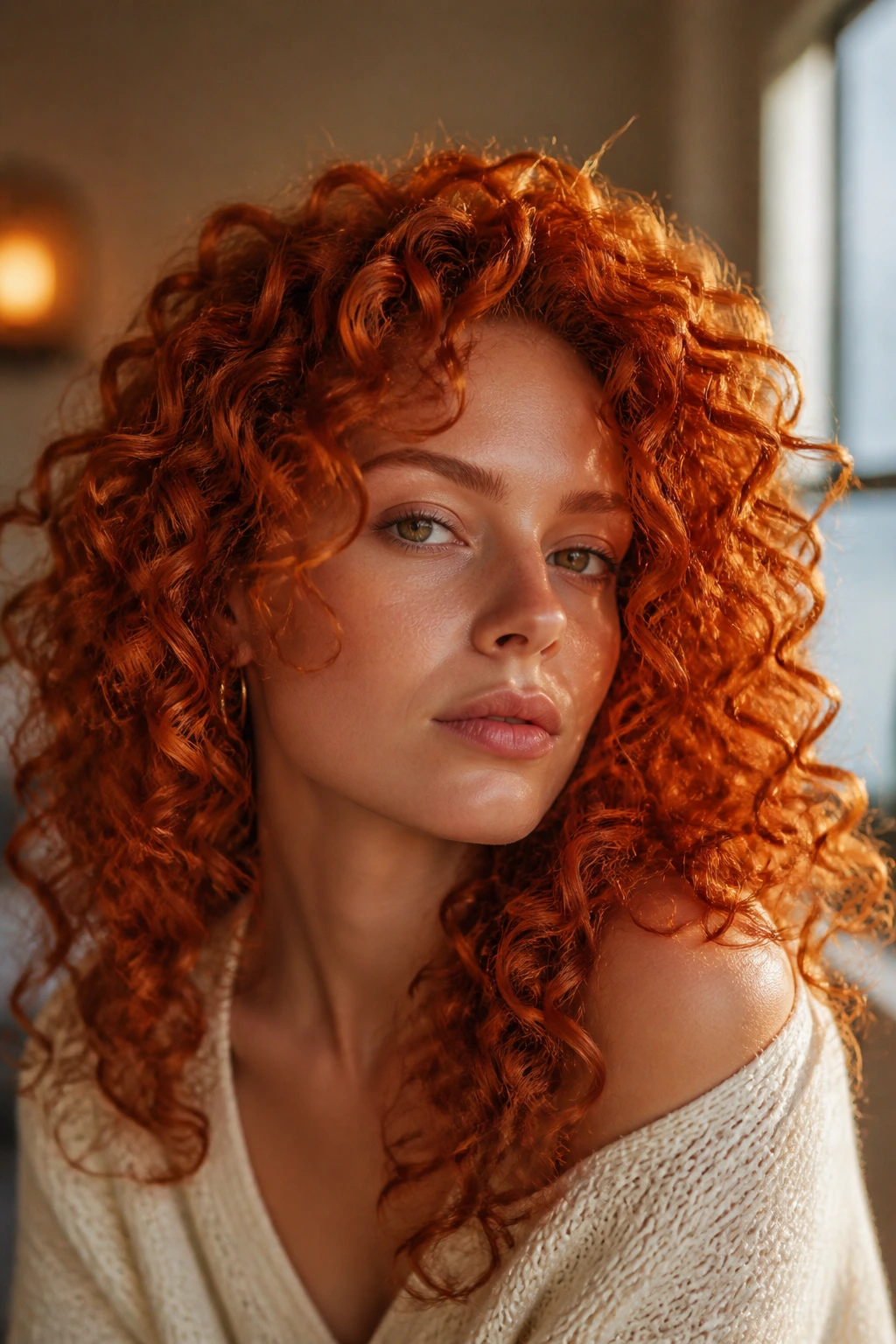
Curly hair gives red more places to live. That sounds simple, but it explains a lot. On straight hair, a red formula sits on a flatter surface, so the eye reads the shade almost immediately. On curls, the light hits the outer curve, then slips into the crease, then lands again on the next bend. That means one color can look like three different ones in the same head of hair.
The other thing curls do well is soften transitions. A balayage line that might look obvious on straight hair can disappear into a curl clump. A money piece can feel bigger and more blended at the same time. Even a root shadow gets more interesting because the hair is never lying perfectly flat. That’s useful if you want red dimension without a strict, painted-on look.
There’s a catch, though. Curly hair can also make poor color choices look rough faster. If the ends are dry or the cuticle is raised, a bright red can go patchy. If the haircut is shapeless, even a gorgeous shade can look busy. Curls reward care. They don’t forgive shortcuts as easily.
Essential Tools for Coloring Curly Hair Red
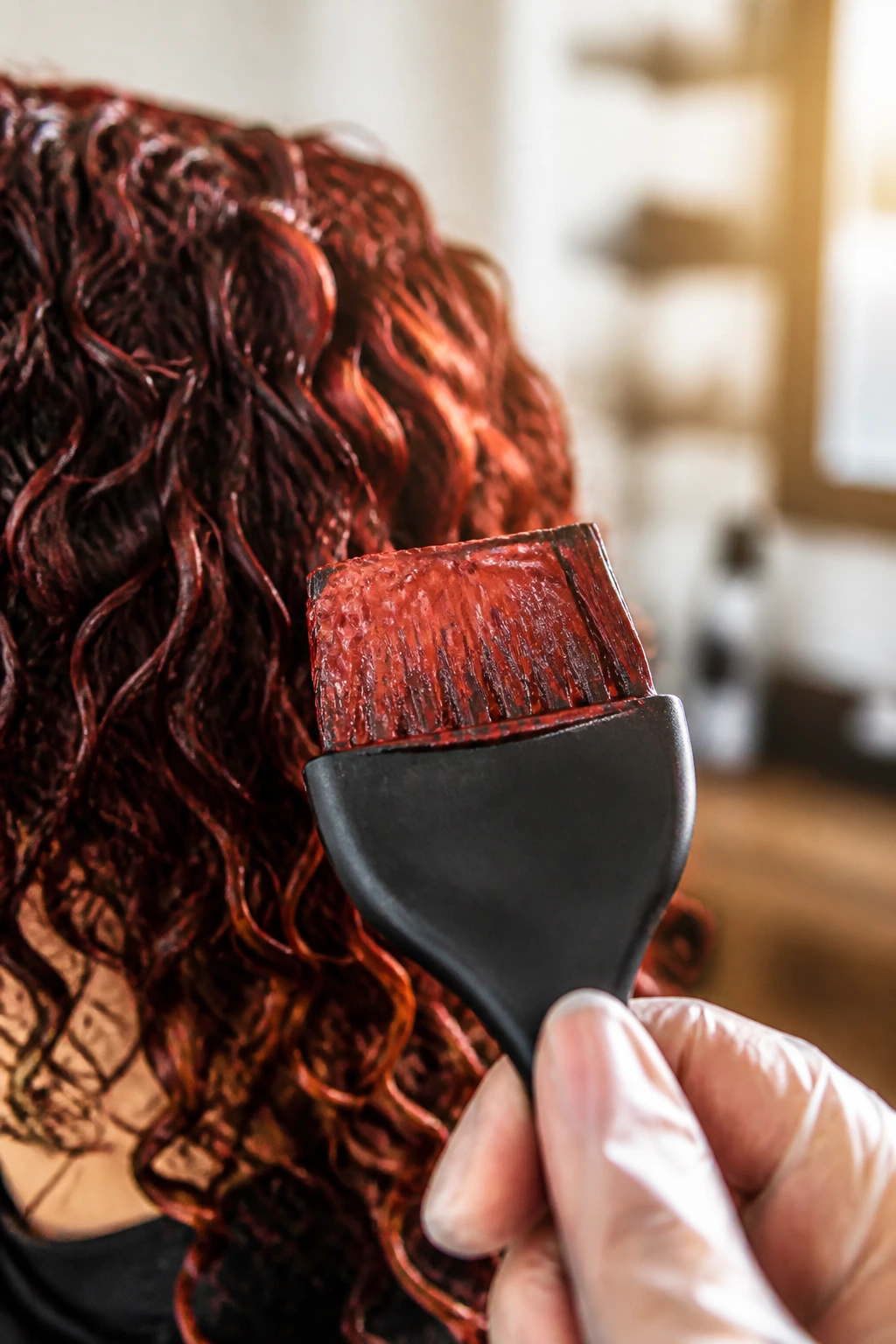
- Tint bowl and color brush: Needed for clean sectioning and even application, especially around the crown and face frame.
- Gloves: Red pigments stain skin fast, and some formulas cling to the cuticles of your fingers for days.
- Sectioning clips: Four to eight clips keep curls out of the way without crushing the shape.
- Wide-tooth comb: Use it gently on damp hair only, not to yank through dry curls.
- Color-safe shampoo: Choose one without harsh sulfates so the red doesn’t rinse out in two washes.
- Deep conditioner or mask: Curly hair needs moisture after any color work, even if the formula was mild.
- Bond-building treatment: Helpful if you’re lifting dark curls before depositing red.
- Petroleum jelly or barrier cream: Put it on the hairline, ears, and nape before painting the color.
- Timer: Red can over-process into odd warmth if you start guessing.
- Diffuser: Not a coloring tool, but it helps the finished style show off the shape properly.
Smart Shopping for Red Dyes, Glosses, and Lighteners
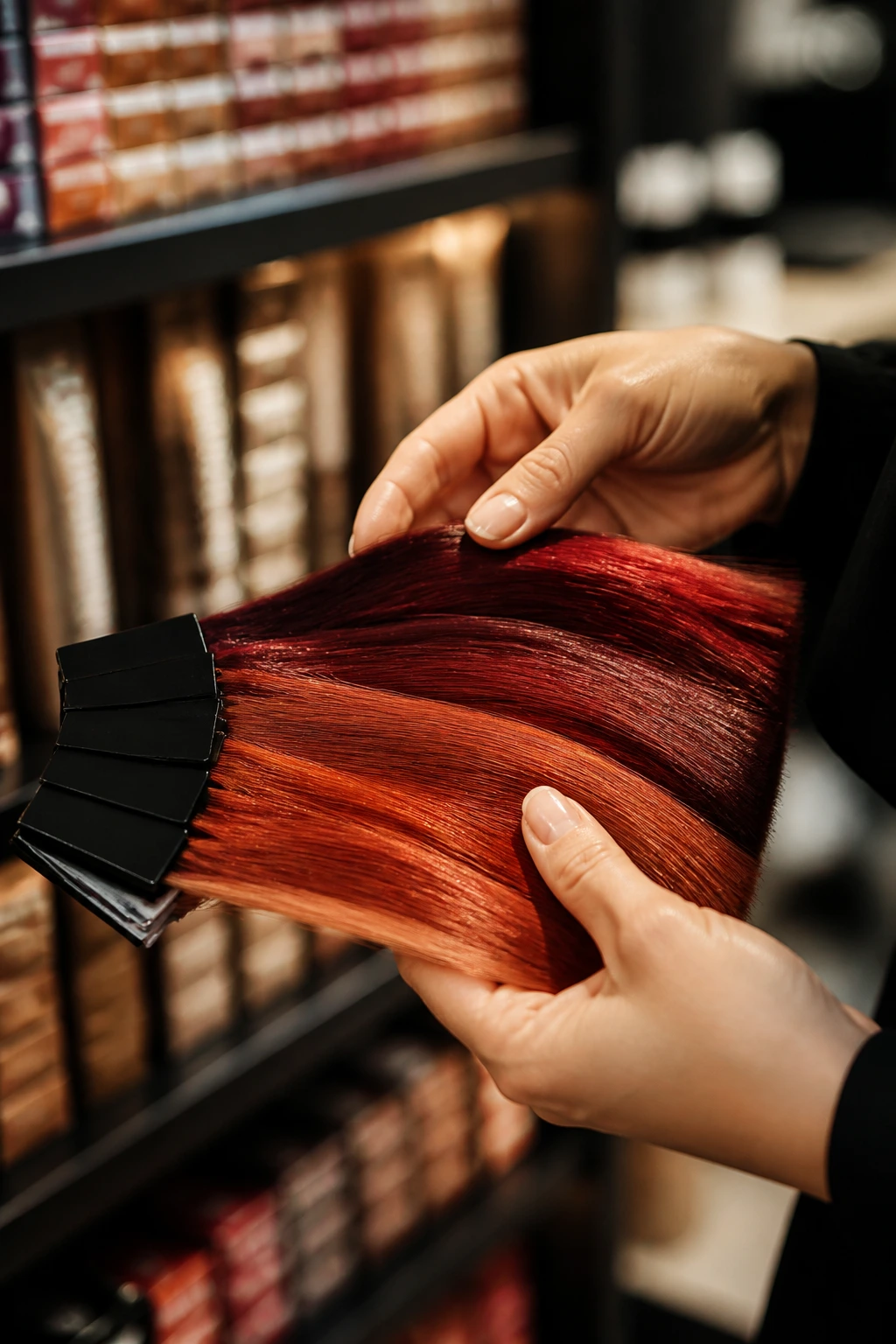
Red on curly hair starts before the brush touches the strand. You need to know whether you’re buying a deposit-only gloss, a demi-permanent color, or a permanent formula with lift. If your goal is a deep cherry or burgundy on medium-dark hair, a deposit-only formula may be enough. If you want copper or coral on dark hair, you’ll probably need lift first. That’s the annoying truth. The shade chart won’t save you if the starting level is too dark.
Porosity matters more than people think. High-porosity curls grab red fast and let it go fast. That can be useful if you want a bold color, but it also means the shade may fade unevenly. Lower-porosity hair often needs a bit more processing time or a gentle heat cap to accept the pigment. A strand test is not optional when your curls are already chemically treated.
Choose your undertone on purpose. Warm reds—copper, ginger, auburn—sit well on golden or neutral skin. Berry, plum, and merlot tones tend to flatter cooler complexions. Mixed undertones can wear either, but if you’re unsure, a red-brown glaze is safer than an intense orange-red.
And please, if your curls are fragile, stop trying to buy the brightest color possible just because the box looks exciting. A slightly deeper shade on healthy curls almost always beats a loud shade on damaged ones.
How to Style and Show Off These Shades
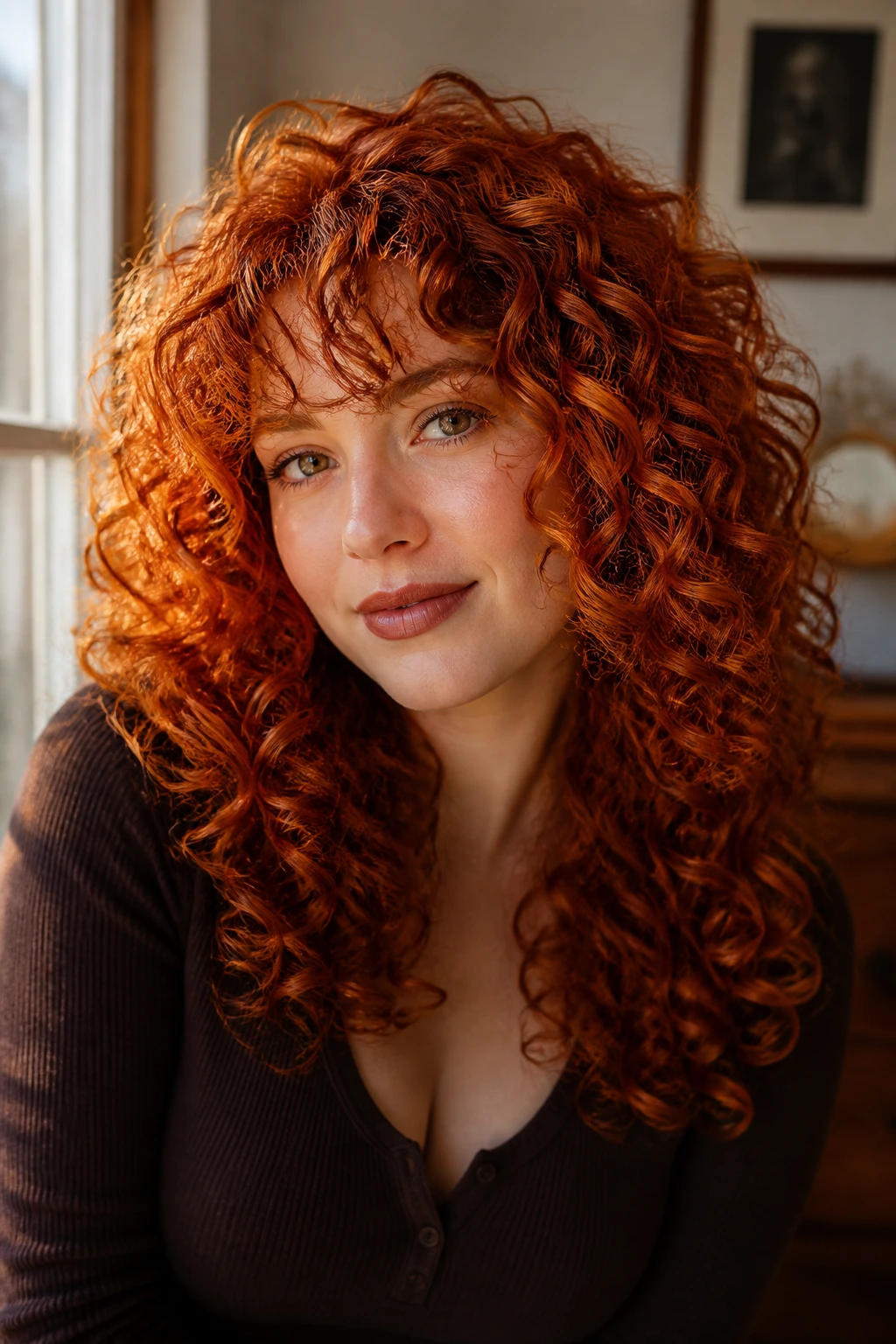
Presentation: Wear the color on curls that are fully dry and separated enough to show their shape. A diffuser, twist-out, or stretched style will show more of the red ribbons than wet, packed curls ever will. If the shade lives in the underlayers, a half-up style can expose it without making the whole head look busy.
Accompaniments: Long layers, curly bangs, or a rounded bob help red look intentional because they give the color structure. Pair the hair with curl cream or a light gel that defines the clumps, not a thick butter that dulls the shine. A satin pillowcase helps too, though that’s more about keeping the shape than showing it off.
Portions: Full-head copper or merlot makes sense when you want the color to be the main event. Face-framing pieces, peekaboo panels, and dip ends work better if you want a softer commitment or lower upkeep. On curly hair, a small placement can still read bold because the texture expands the visual footprint.
Finishing Touches: A shine spray, a clean part, and a tiny bit of edge control around the hairline can make the shade look polished. Not stiff. Polished.
Extra Ways to Push the Color Further
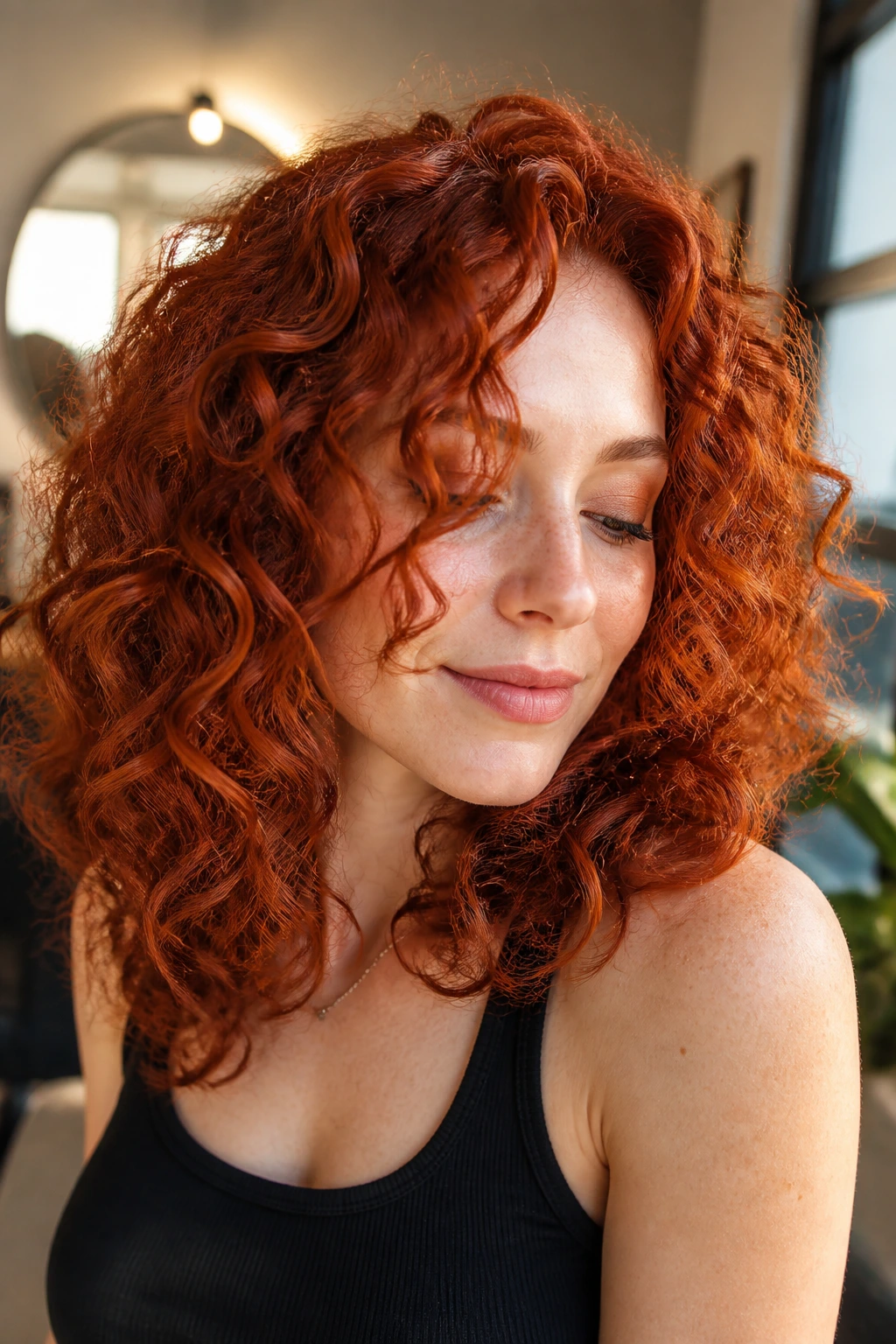
Tone Boost: If the red starts leaning flat, a clear copper or berry gloss can wake it back up without changing the whole formula. Glosses are the fastest way to keep curly reds from looking tired between appointments.
Dimension Boost: Leave one to two shades of difference between the base and the red pieces. On curls, too little contrast can blur into one lump, while too much can look striped. The middle ground usually wins.
Maintenance Boost: Wash less often and rinse with cool water when you can stand it. Hot water strips red faster than most people expect. Use a sulfate-free cleanser, then follow with a mask that isn’t loaded with heavy waxes.
Customization: If you want a warmer result, add copper or ginger. If you want a cooler result, go burgundy, merlot, or plum. If you want something soft for the office or school, a rosewood or mahogany glaze gives color without the full blast.
Common Mistakes to Avoid
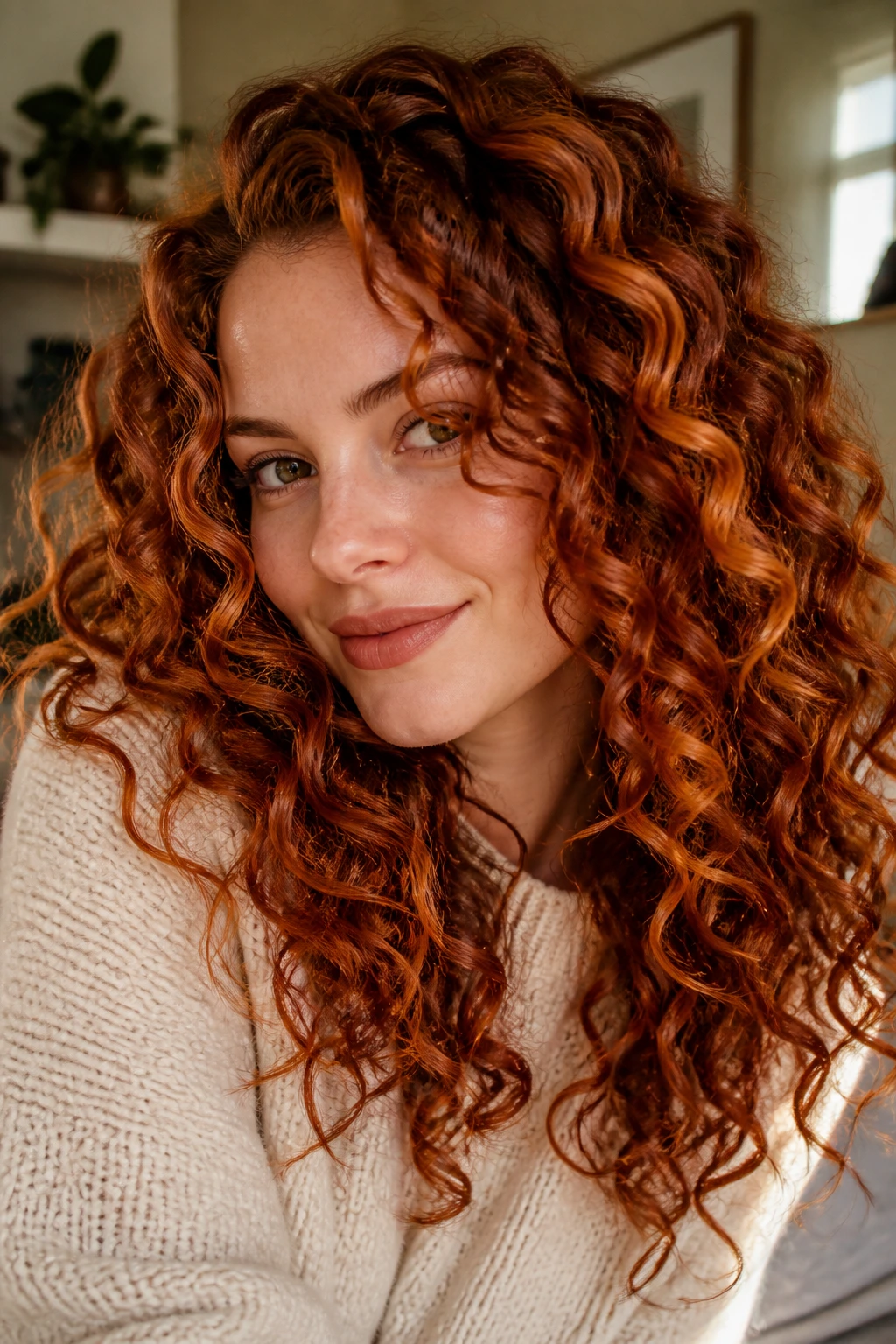
- Choosing the wrong lift level: If the base is too dark for a copper or coral target, the color can turn muddy instead of bright. Fix it with a strand test and a realistic lift plan.
- Skipping porosity checks: High-porosity curls can drink in red and spit it back out unevenly. Use a protein-moisture balance before coloring so the hair can hold the shade more evenly.
- Painting every curl the same way: Curly hair needs placement, not wallpaper. Flat, uniform color can hide the curl pattern and make the haircut look heavy.
- Forgetting the ends: Dry ends grab red fast and often fade first. Treat them with a trim or pre-color conditioning so they don’t turn rough and transparent.
- Washing too soon: Let the pigment settle. A same-day shampoo can steal the strongest part of the color before it has a chance to sit.
- Using styling products that dull shine: Heavy creams can coat red and make it look muddy. If the color is bright, keep the finish light.
Variations and Adaptations to Try
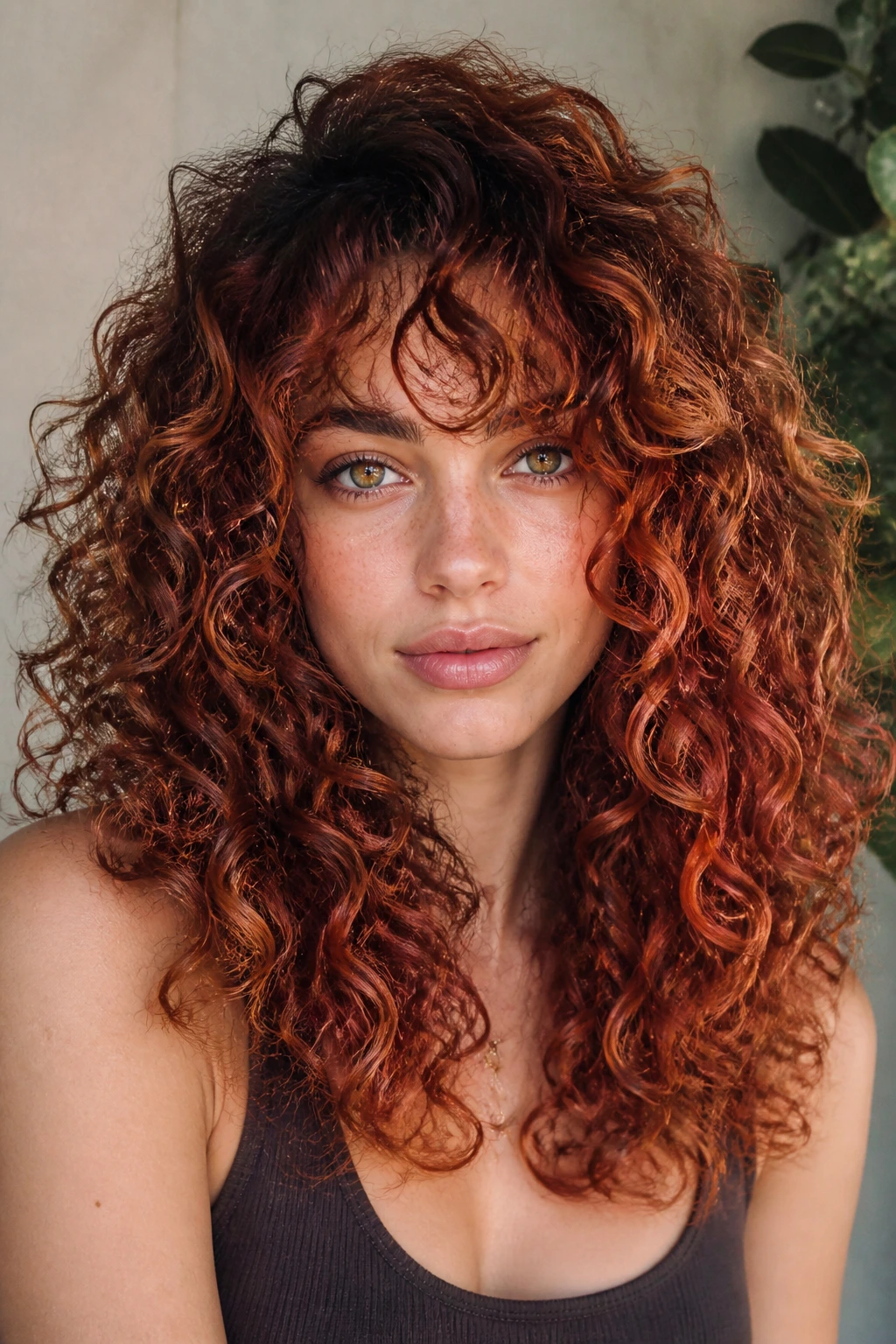
Soft Copper Wash: If full copper feels like too much, ask for a translucent copper gloss over your natural base. The result is a warm reflection that shows up most on sunny curls and stays quieter indoors.
Berry-Brown Blend: This version swaps bright red for a cool berry note mixed into brown. It works well on darker curls that need richness more than visibility, and it fades in a very forgiving way.
Face-Frame First: Start with a money piece, then add panels later if you like the effect. That staged approach keeps the first appointment manageable and helps you learn how the red sits with your skin tone.
Underlayer Drama: Keep the top layers natural and put the red underneath. This is a good fit if your workplace is conservative or if you like a little surprise when you pull your hair up.
High-Glow Ends: Concentrate the brightest red on the last 4 to 6 inches. The curl pattern at the bottom moves the most, so the color appears lively without needing a full-head commitment.
Maintenance, Refreshes, and Fade Control
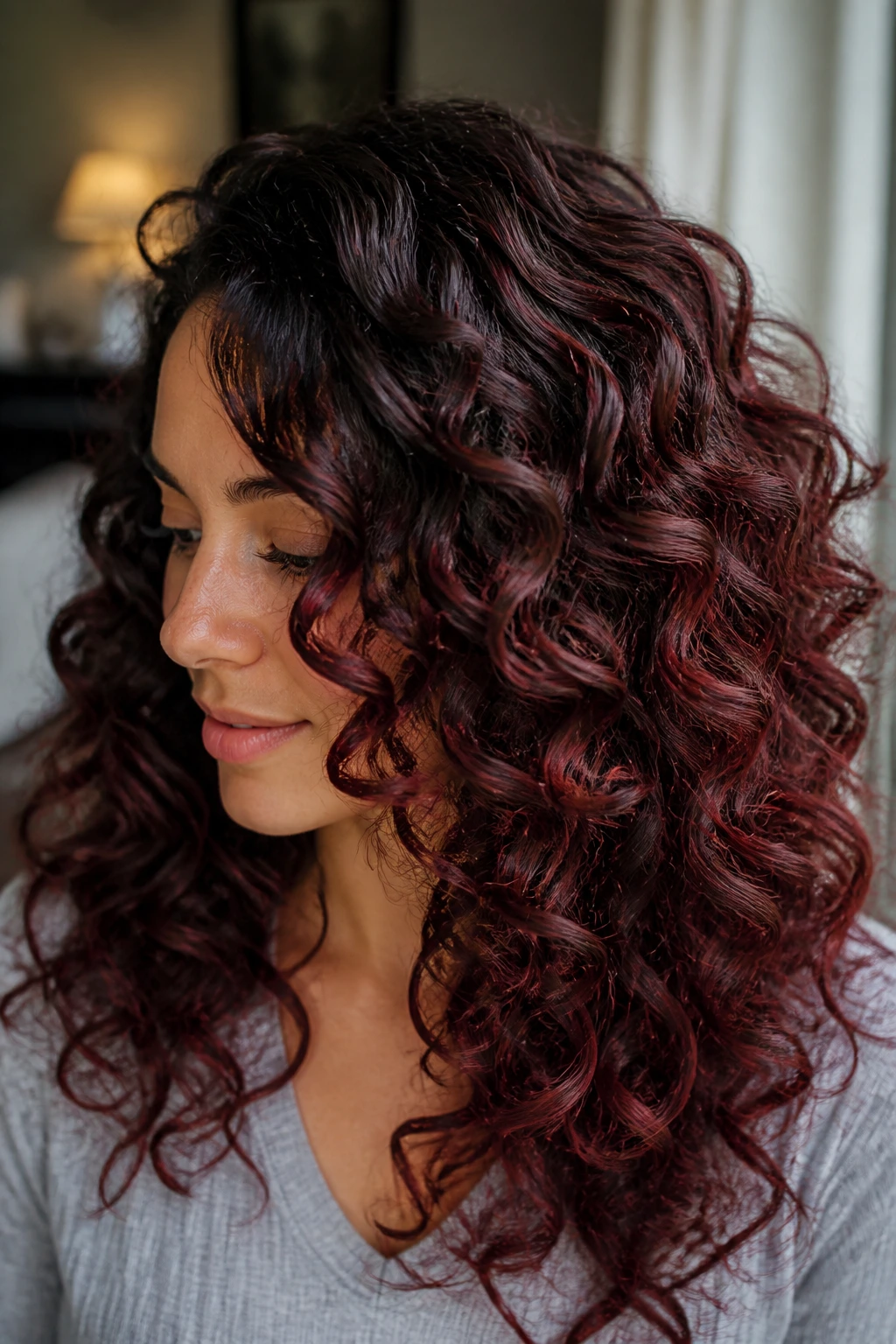
Red fades faster than brown. That’s just the deal. On curly hair, the fade can show up first at the ends, around the hairline, and on the outermost layer where the sun and water hit most. If you wash often, expect direct pigments to soften in roughly 4 to 8 washes. Demi-permanent reds usually hang on longer, but the shine still needs help.
The easiest way to protect the color is to change the wash rhythm. Two to three washes a week is kinder to red than daily shampooing. Use lukewarm water, not hot, and don’t scrub the lengths like you’re cleaning a frying pan. Focus shampoo on the scalp, let the suds rinse through the mids and ends, and get out.
A color-depositing conditioner can stretch the life of copper, auburn, or berry tones between salon visits. Use it every one to two weeks, not every wash, or the shade can turn heavy. For salon reds, a gloss refresh every 4 to 6 weeks usually keeps the tone from slipping into dull brown. Trims every 8 to 12 weeks help too, because ragged ends make red look older than it is.
Sleeping on satin or silk makes a bigger difference than people want to admit. So does a loose pineapple or bonnet. Red looks expensive when the curl shape survives the night.
Frequently Asked Questions
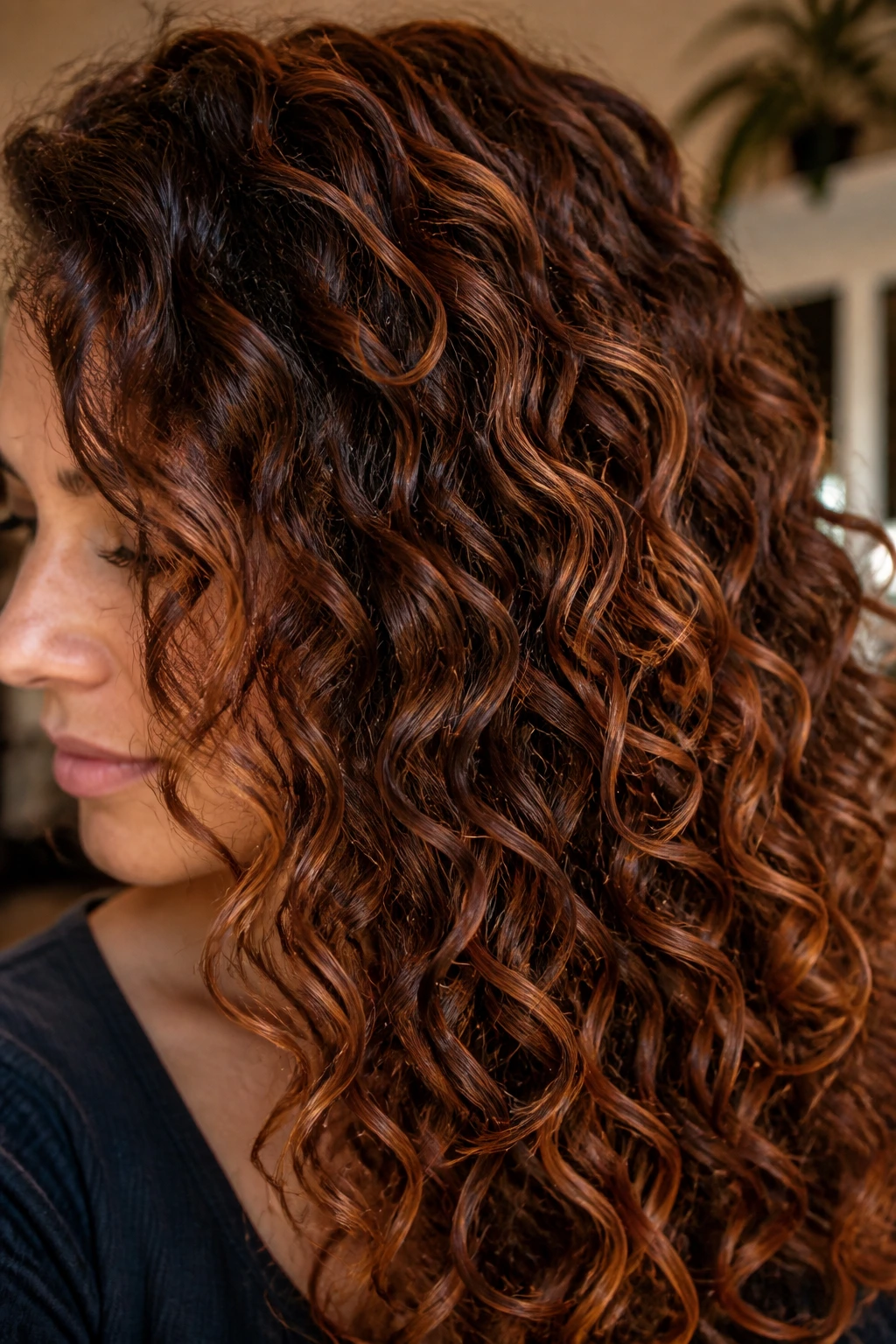
Can you get red hair on curly hair without bleaching it?
Yes, if you want deeper reds like burgundy, cherry cola, mahogany, or black cherry. Copper, ginger, and coral usually need some lift to show properly on dark hair. A colorist can tell you how far your starting shade needs to move.
Which red shade is easiest to maintain on curls?
Muted reds like rosewood, mahogany, or cherry cola tend to fade more gracefully than bright copper or tangerine. They also hide regrowth better because the base and the color stay closer in depth.
Will red make curly hair look drier?
It can if the hair is already thirsty or over-processed. Red formulas themselves are not the problem as much as the lift and dryness that sometimes come with them. Prepping with moisture, trimming rough ends, and using bond support helps a lot.
Is copper or burgundy better for curly hair?
Copper looks brighter and more playful, while burgundy reads deeper and softer. If you want dimension and low upkeep, burgundy often wins. If you want the color to be the first thing people notice, copper does that faster.
How often should red curly hair be refreshed?
A gloss or toner every 4 to 6 weeks keeps the color looking fresh. Direct dyes may need attention sooner, especially if you wash often or use heat styling. The ends usually need help before the roots do.
Can gray curly hair take red well?
Yes, and it can look striking. Gray hair often grabs red in a brighter way than darker strands, so a soft auburn or rosewood can blend the contrast nicely. A strand test helps because gray can process differently from the rest of the head.
What if the red turns too orange?
That usually means the formula was too warm or the lift went a little high. A cooler gloss—berry, mahogany, or plum—can bring it back into line. If the orange is severe, a salon correction is safer than layering more color on top.
Does red show differently on loose curls and tight coils?
Yes. Loose curls often show wider ribbons of color, while tight coils break red into smaller flashes of tone. That means the same formula can look softer on one texture and more vivid on another, even when the dye is identical.
A Shade That Knows How to Move
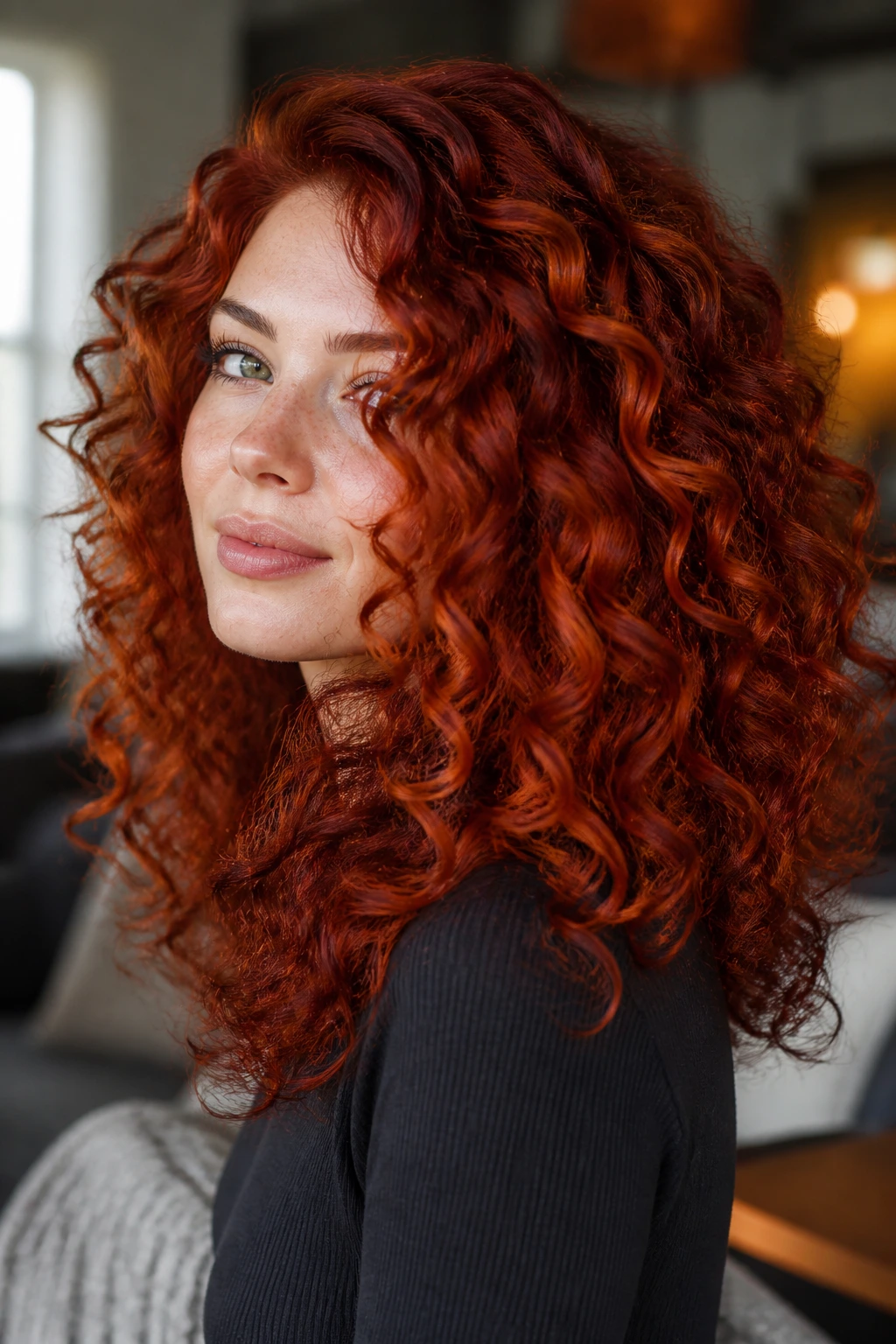
Red hair on curls works best when the color respects the shape instead of flattening it. That’s the pattern running through every idea here: let the curl pattern do some of the blending, keep the undertone in sync with the base, and choose a placement that makes sense when the hair shrinks, expands, and shifts through the day.
The reds worth trying are the ones that make the curls look more alive, not more forced. Copper, cherry cola, burgundy, merlot, mahogany—each one behaves a little differently, and that’s the fun of it. The right red doesn’t erase texture. It gives texture more to say.
If you’re standing between two shades, start with the one that matches your maintenance tolerance, not the one that looks wildest on a swatch. Curls have enough personality already. The best color just knows how to keep up.
