



Fall wedding hair has a sneaky habit of exposing every weak spot. A little wind on the steps, a coat collar brushing the nape, a warm ballroom, and the style that looked smooth in the mirror can start to bend, puff, or slide before the first toast. The best fall bridal hairstyles are the ones that can take a bit of friction and still look intentional, not rescued.
My bias runs toward styles that are anchored low, shaped clearly, and finished with enough texture to survive a long day. That doesn’t mean everything has to be a bun. It just means the hair should have a job to do: hold the veil, stay clear of a high neckline, flatter the face in indoor light, and still make sense after you’ve hugged half the guest list.
That’s where these fall bridal hair ideas earn their keep. Some are polished and clean. Some are soft and romantic. Some are built for curls that don’t want to be flattened, and others are made for brides who want the dress to do the talking while the hair quietly behaves.
Why This Collection Feels Different
-
Weather-smart shapes: These styles lean low, secured, or controlled at the crown, which matters when a breeze meets fine mist, dry air, or a long aisle walk.
-
Dress-friendly options: You’ll find looks that leave room for high necks, open backs, lace collars, capes, and sleeves that already bring enough drama.
-
Texture-specific ideas: Straight hair, waves, curls, coils, and short cuts all get a place here, because one wedding hair photo never tells the whole story.
-
Veil-ready choices: Several of these are built to hold a comb veil, a cathedral length veil, or a small clip without turning the crown into a mess of pins.
-
Reception-proof movement: Some styles stay neat, while others are meant to loosen a little and still look good when the dancing starts.
-
Accessory flexibility: Pearl pins, crystal combs, ribbons, and flowers all show up in places where they won’t fight the shape of the hair.
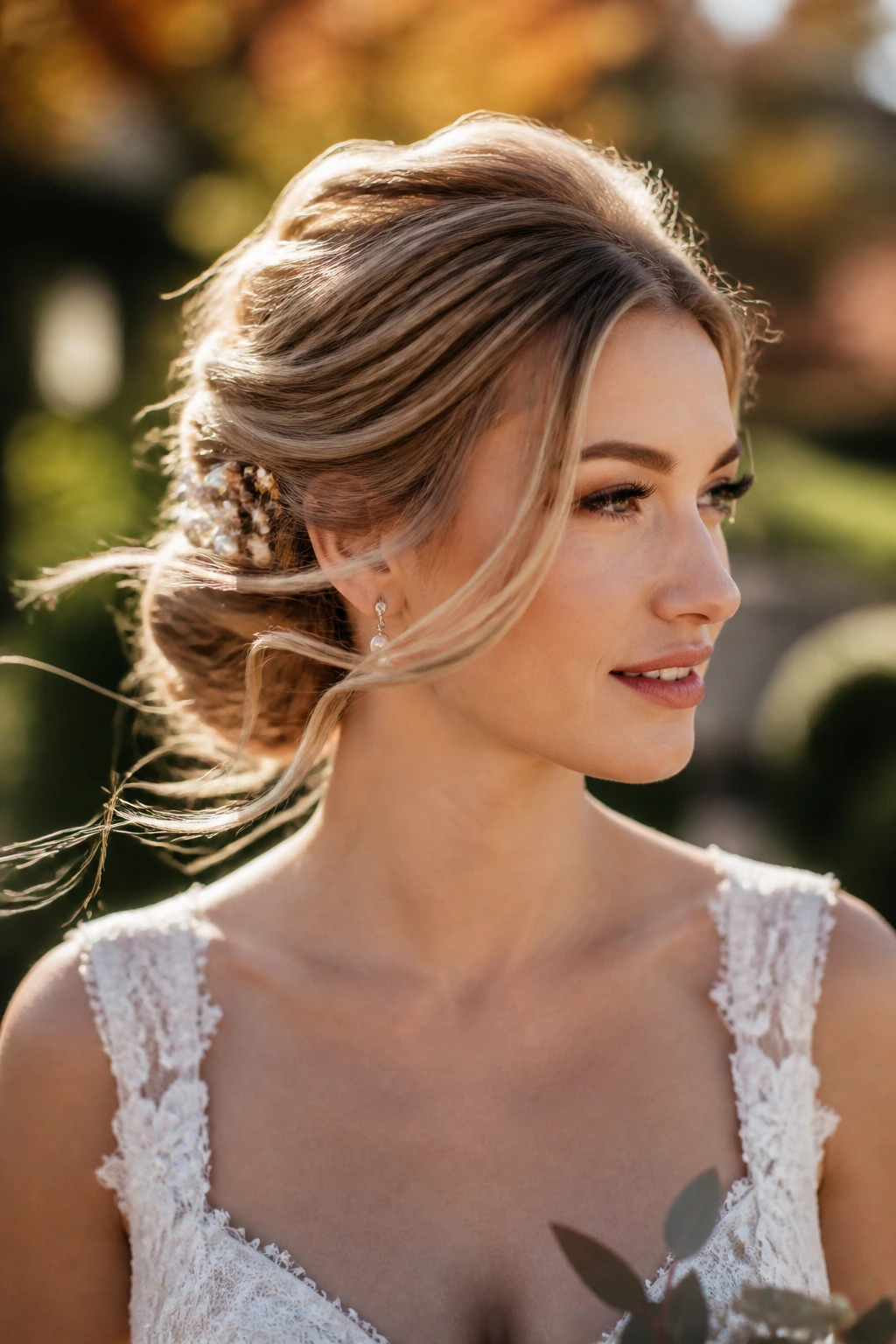
1. Soft Low Chignon with Face-Framing Pieces
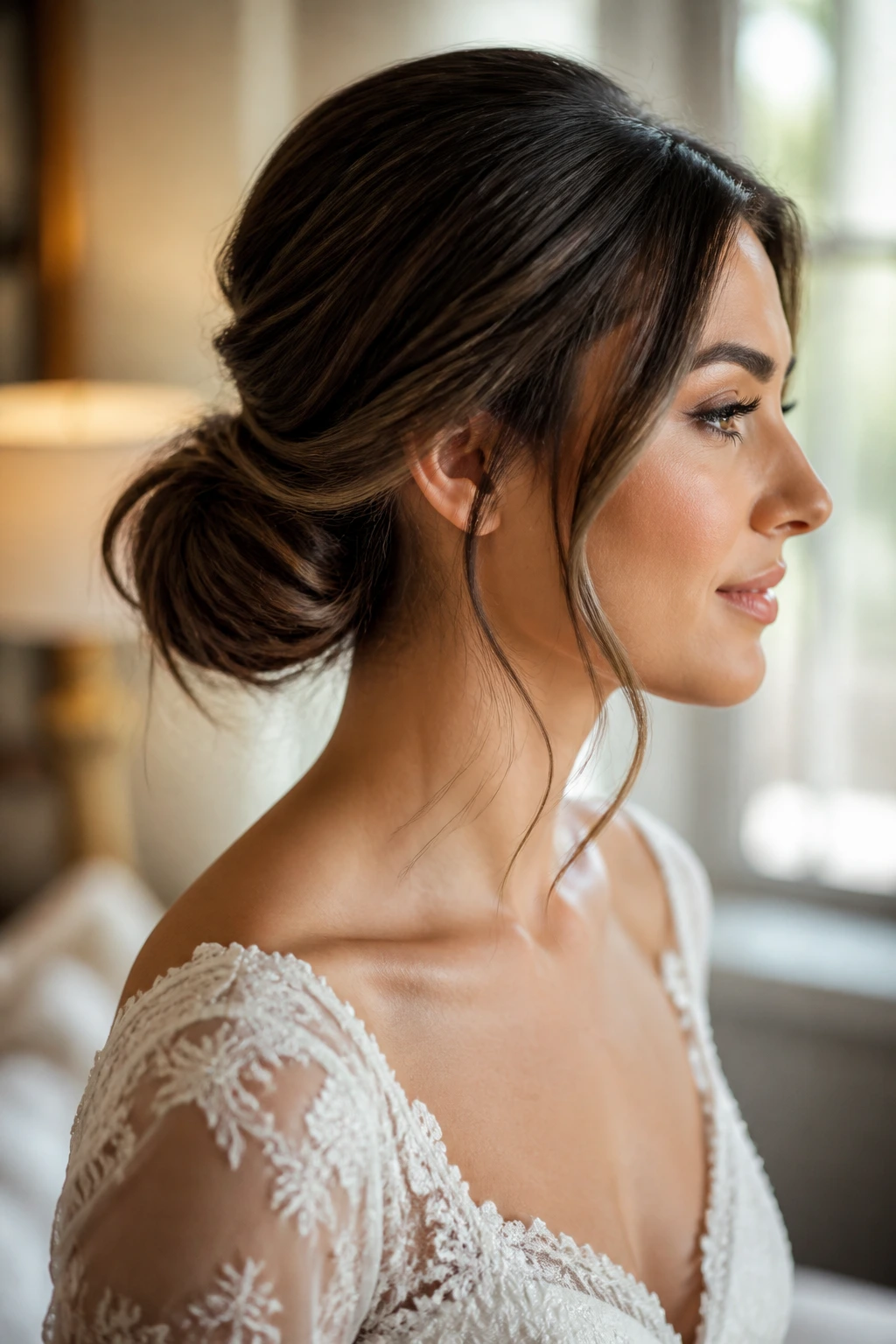
A low chignon sits in the safest part of the head for a fall wedding: close to the nape, where coat collars and veils are less likely to flatten it. Leave two slim pieces around the cheekbones and bend them away from the face with a 1-inch iron. That small curve keeps the style from feeling stiff.
I like this one for brides who want the back of the dress to show. It clears the neckline, looks tidy from every angle, and still has enough softness that it doesn’t read severe. If your hair is fine, give the roots a little grit with texture spray before you pin. If it’s thick, build the bun in two loops so it stays compact without looking squashed.
2. Sleek Center-Part Ballet Bun
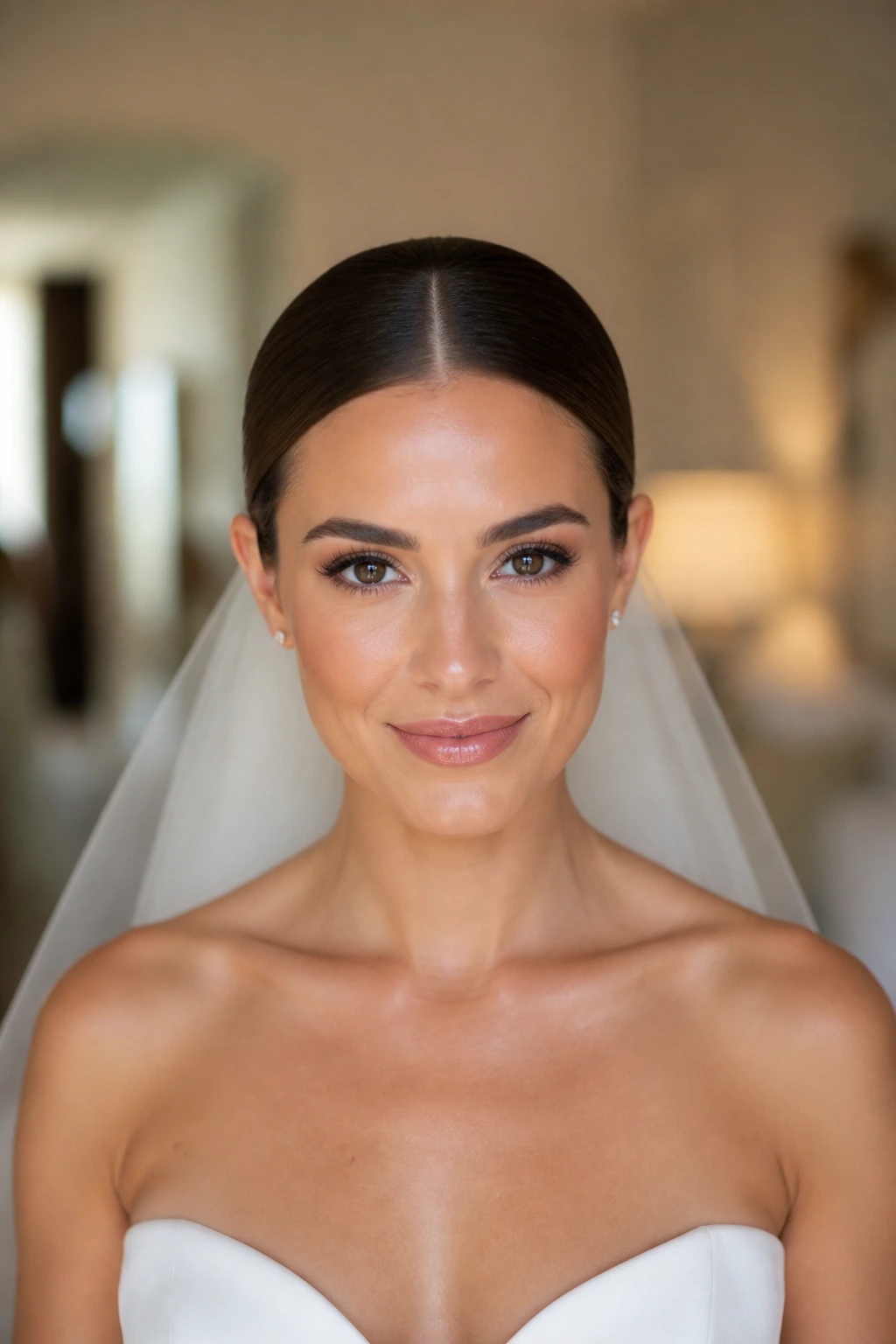
The center part makes this bun feel crisp right away. Draw the hair straight back, smooth the sides with a boar-bristle brush, and tuck the bun low enough that a veil comb can sit just above it. The result is clean, sharp, and very hard to ruin with a little wind.
This is the style for a dress with strong lines: square necks, structured satin, high collars, or anything with a very neat back. I prefer it on brides who do not want stray pieces living rent-free around the face all night. Use a light serum on the surface, not the roots, or the whole thing can slide by dessert.
3. Loose Hollywood Waves with a Deep Side Part
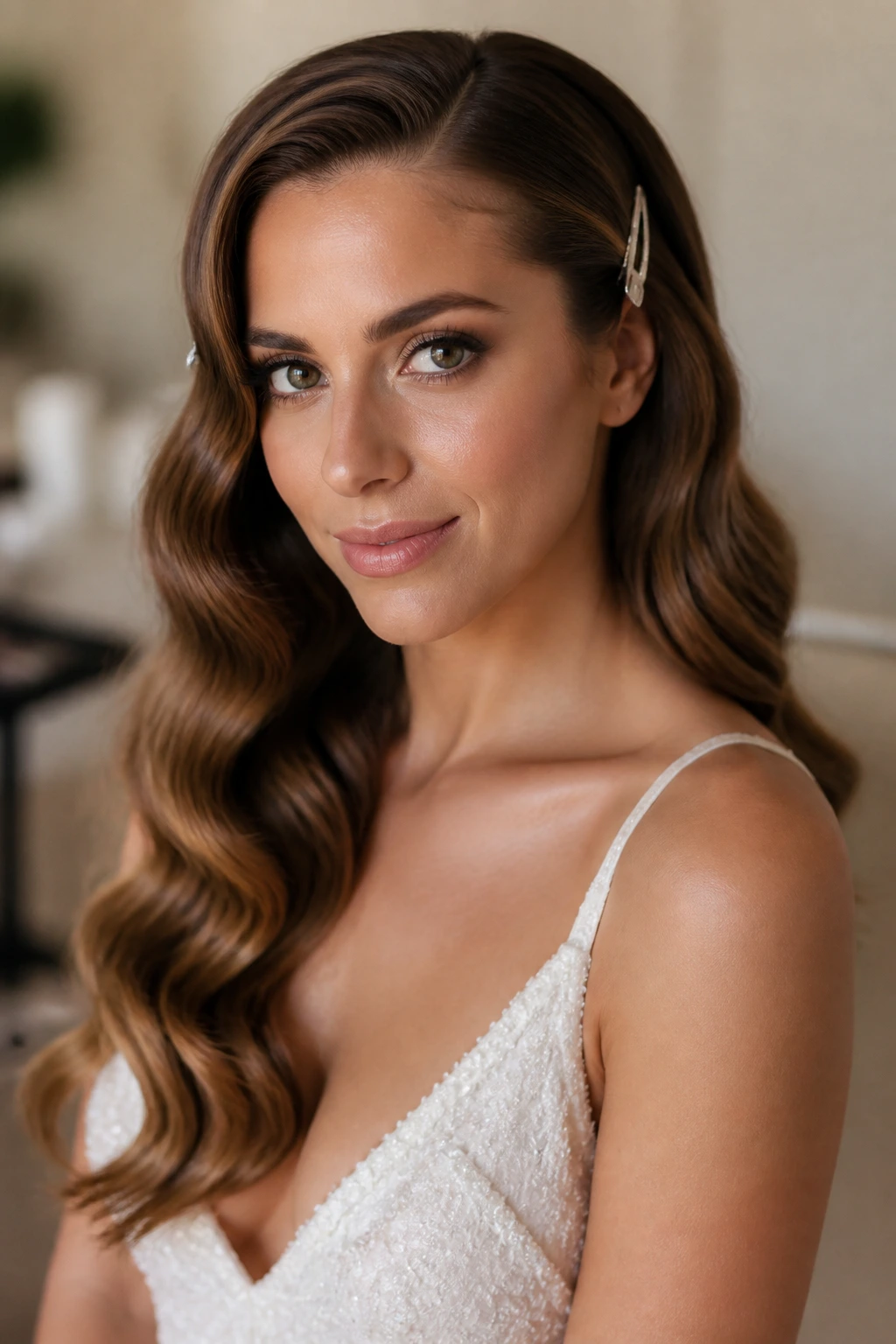
If you want movement, this is the classic move. The deep side part gives the waves direction, and the polished bends keep them looking deliberate instead of beachy. Set the front sections with clips after curling so the wave pattern cools in place; that cooling time matters more than people think.
This style leans best when the dress is minimal and you want the hair to bring the drama. It’s also a smart choice for brides who want to wear one earring that shows and one that stays quiet. In cooler weather, the waves keep their shape longer than they do in humid air, but you still want a firm hairspray and a small comb in the touch-up kit.
4. Braided Crown with Hidden Pins
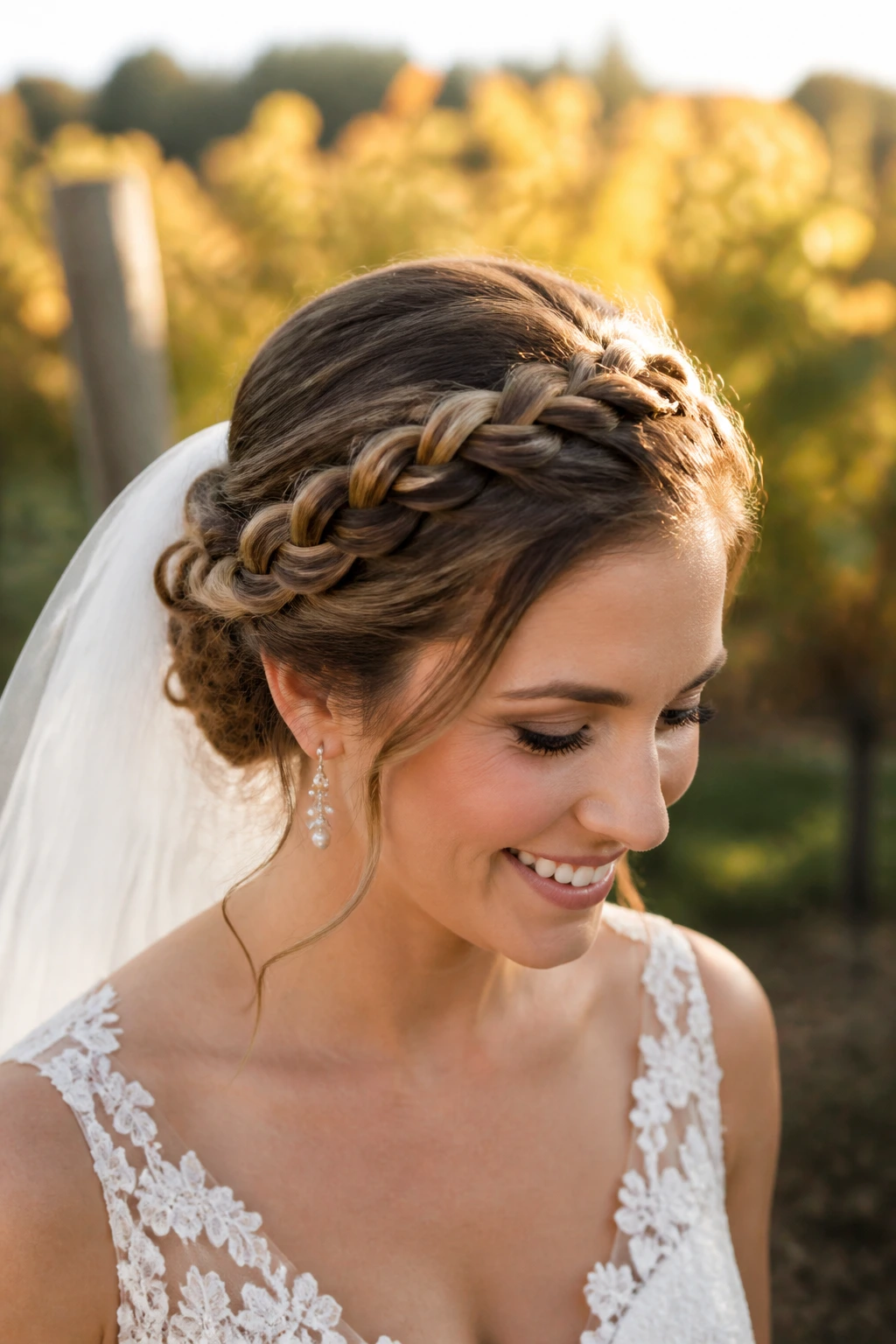
A braided crown gives you control without making the whole style feel heavy. The braid wraps the hairline, which is useful if your front pieces tend to frizz the second you step outside. Tuck the ends under the braid itself so there’s no obvious start or stop.
This one works especially well for outdoor ceremonies, vineyard settings, or any bride who wants hair off the face but doesn’t love a tight updo. It also handles veils better than people expect, as long as the comb sits under the braid rather than through it. Use hidden pins that match your hair color, and cross them. Straight pins alone tend to wander.
5. Textured Low Ponytail with Wrapped Base
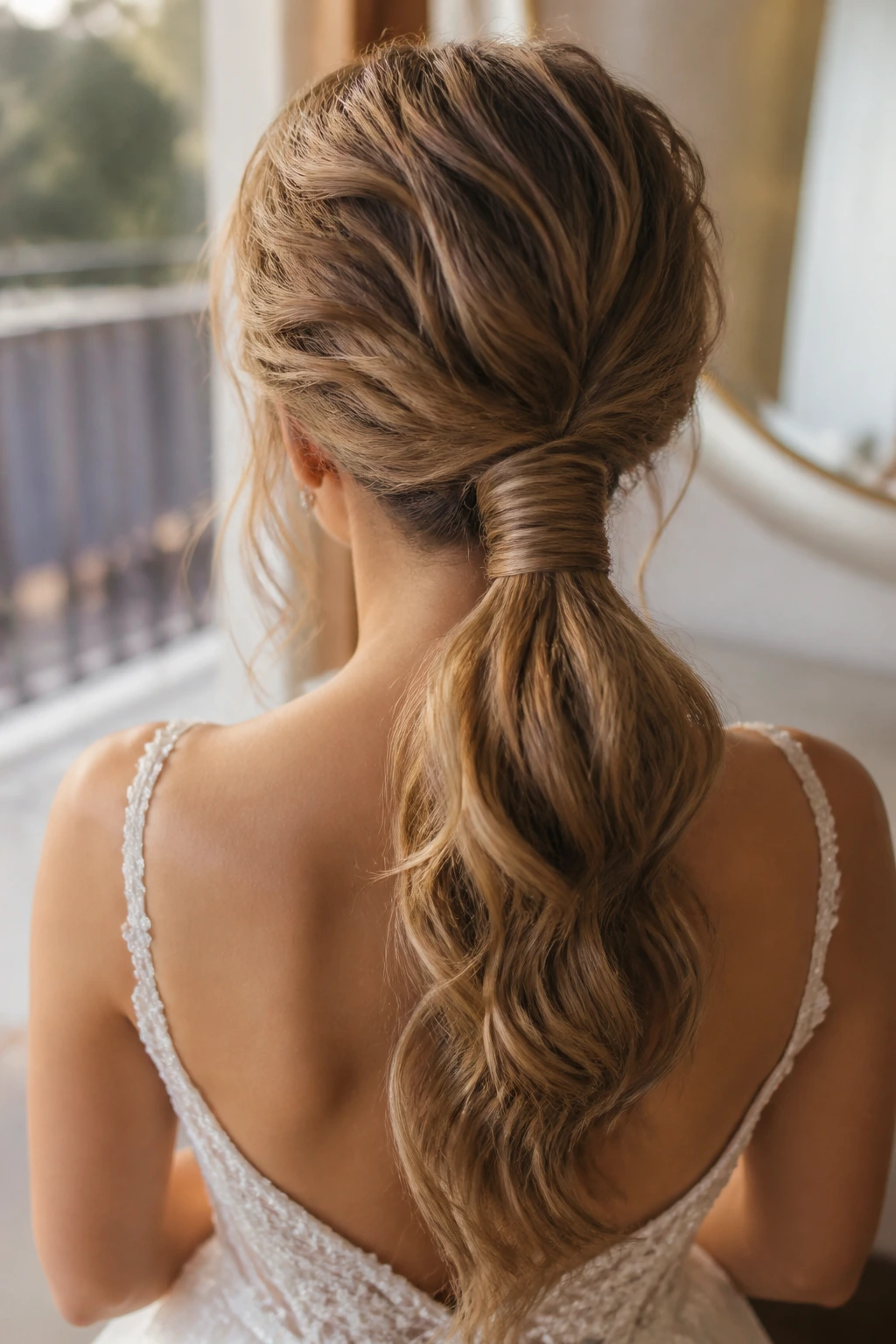
A low ponytail can look surprisingly formal when the base is wrapped and the tail has enough bend to feel intentional. Leave the crown smooth, add soft volume at the back of the head, and wrap a one-inch section of hair around the elastic so the tie disappears. That detail matters.
This style is a strong pick for brides who want to keep the shoulders clear and the neckline visible. It also behaves nicely under a coat or shrug because the anchor point is low and protected. If your hair is very silky, rough up the midlengths with dry texture spray before tying it back. Otherwise the ponytail can slip flatter than you want.
6. Romantic Half-Up Twist with Cascading Curls
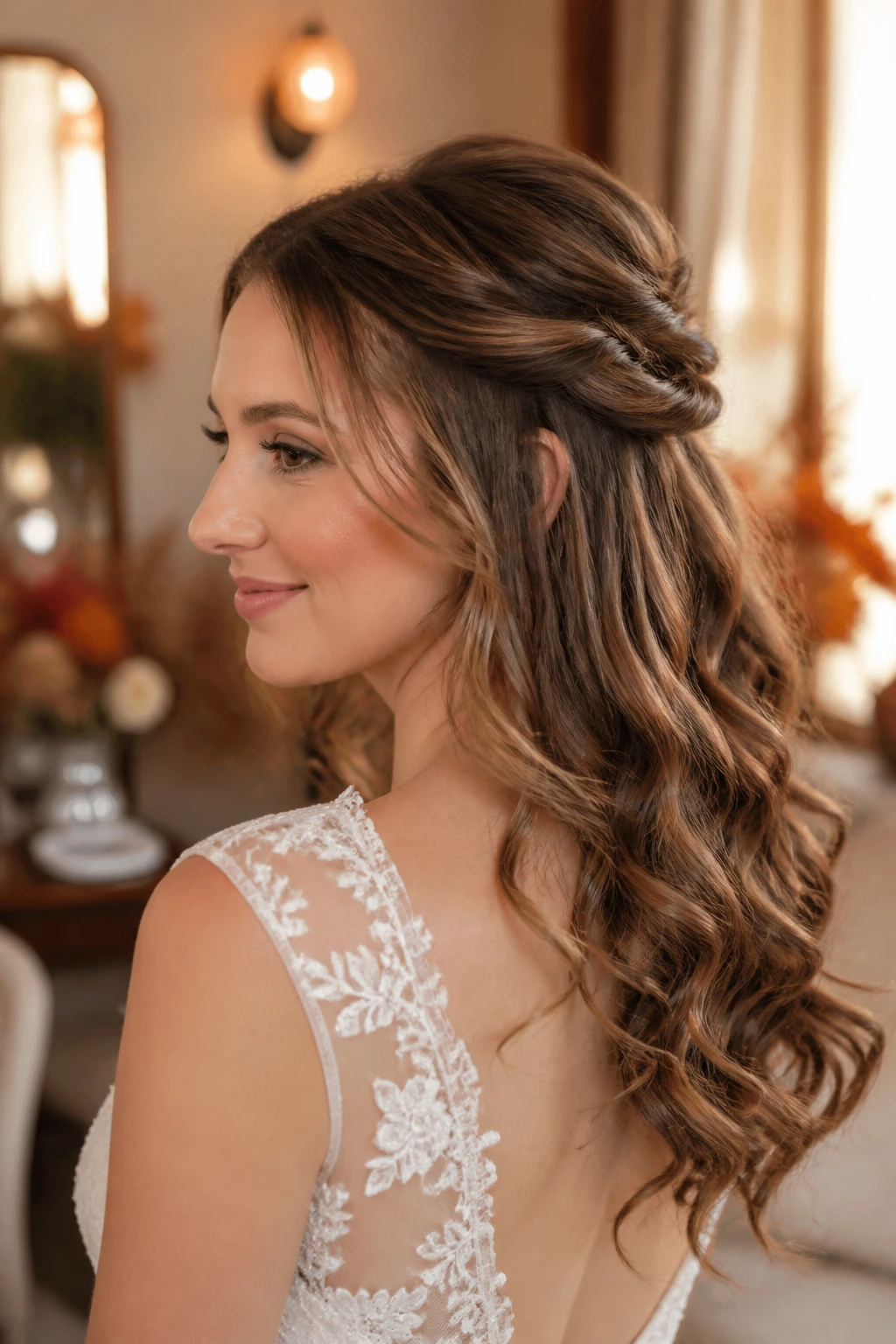
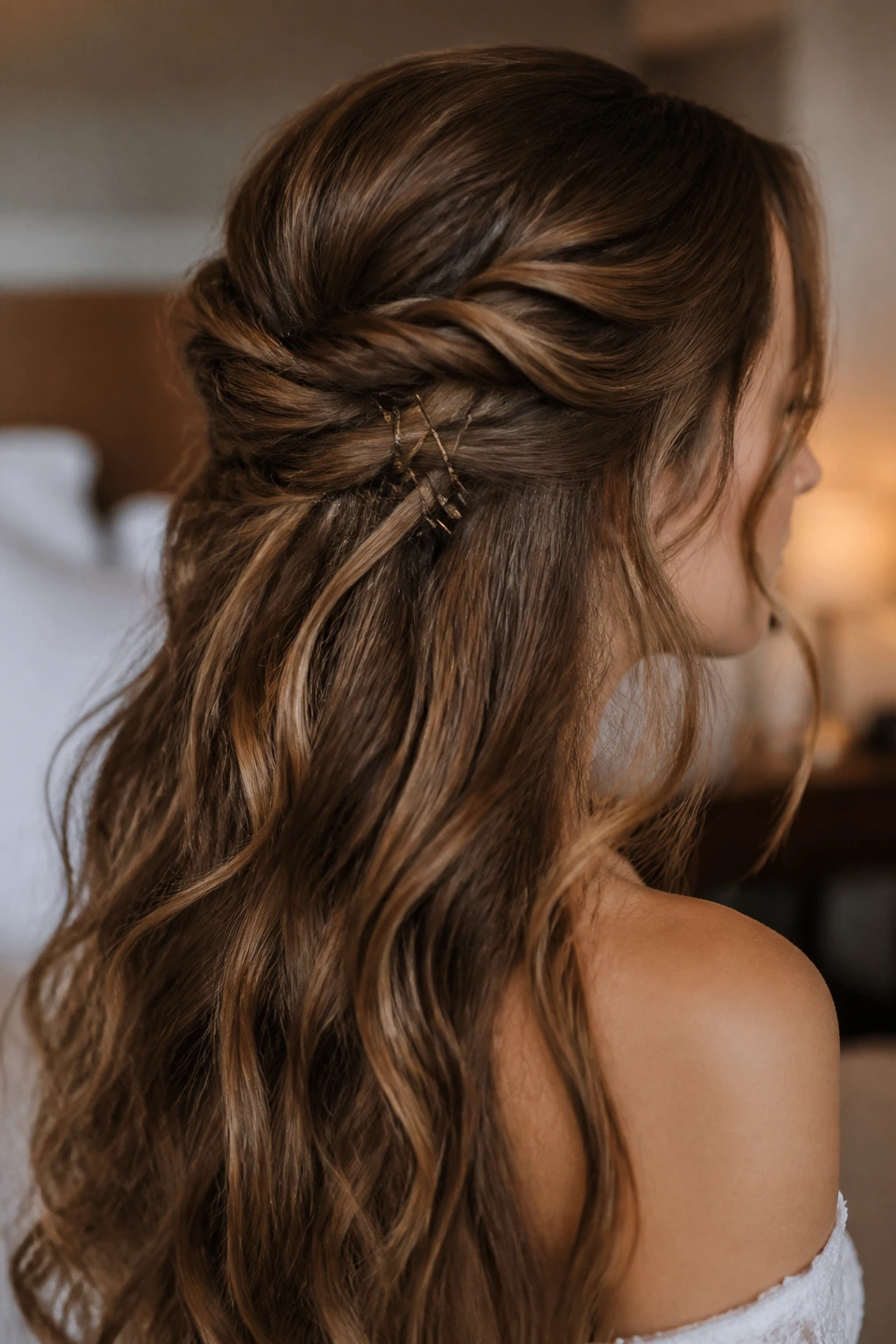
This is the compromise style for brides who cannot quite give up having hair down. Twist two sections from the temples to the back of the head, then pin them just above the occipital bone and let the rest fall in soft curls. The lift at the crown keeps the shape from collapsing.
It works well when the dress has detail near the waist or bodice and you want the hair to soften the whole look. The half-up structure also keeps hair off the face during vows, which is one less thing to think about. Keep the curls more polished than loose; overly undone ends tend to look frayed in crisp fall air.
7. French Twist with Soft Ends
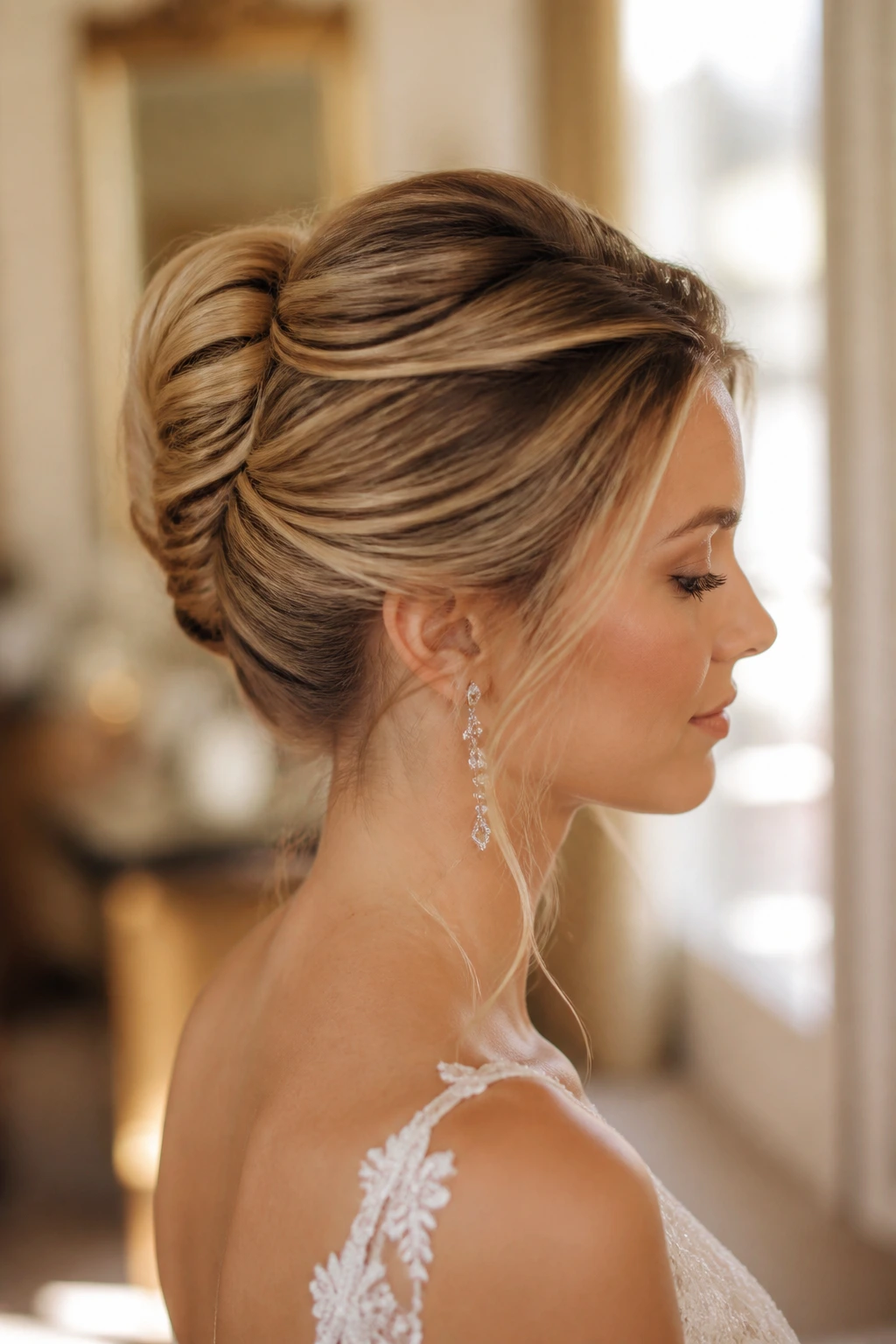
A French twist gives you old-school polish without looking fussy if you leave the ends slightly relaxed. I like it when the twist is tight enough to hold its line, but not so shiny that it feels lacquered. A little texture at the shell of the style keeps it from looking dated.
This is one of the best choices for a formal ceremony or a dress with a dramatic back. It stays close to the head, so it won’t fight a high collar or a deep veil comb. If your hair is layered, pin the shorter pieces inward before you roll the twist upward; otherwise the ends can poke out and spoil the line.
8. Defined Curly Updo with Lifted Crown
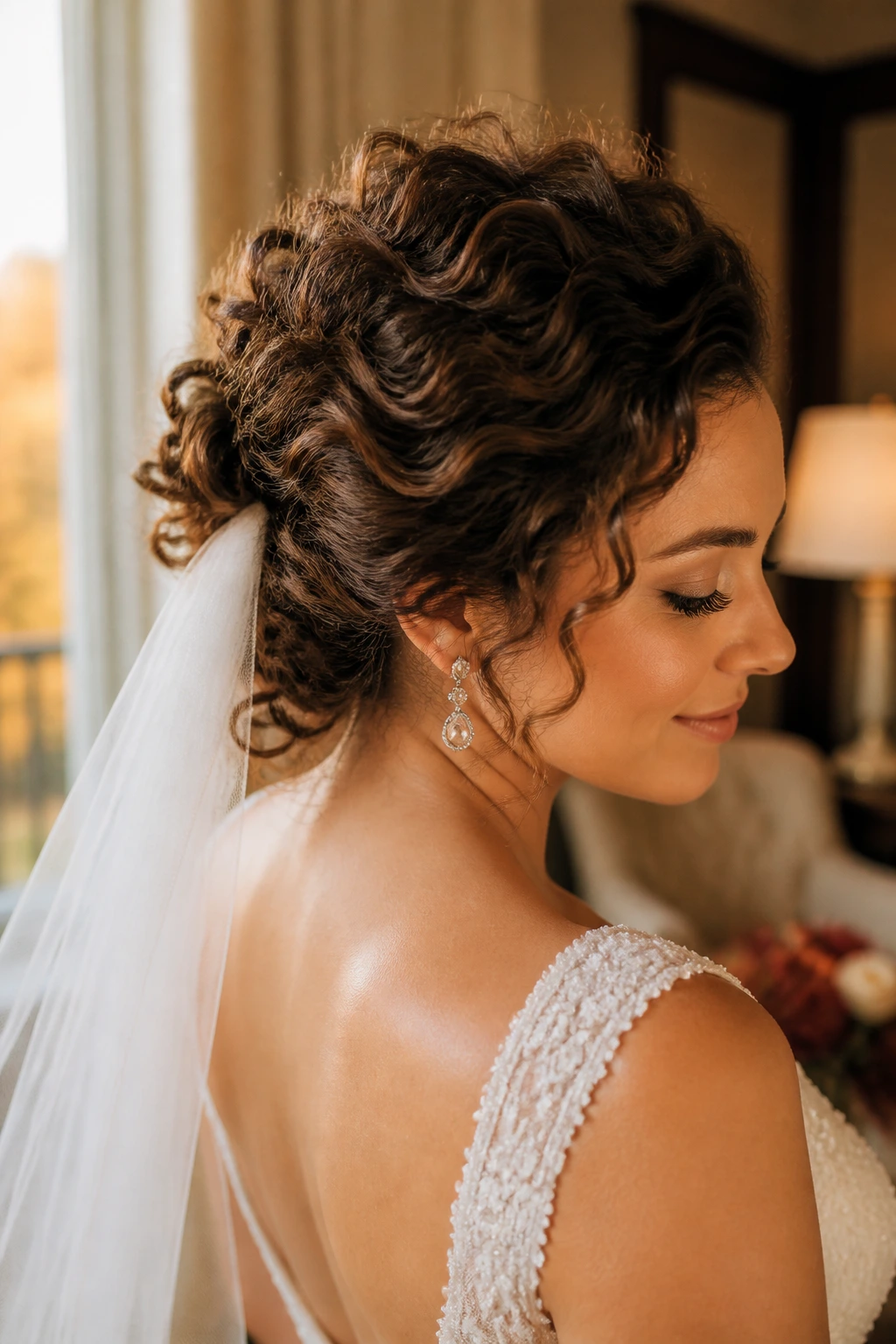
Curly hair deserves its own architecture, not a smoothed-down imitation of straight hair. Let the curls keep their shape, gather them low to mid-height, and pin the crown upward so the top has lift without getting flat. The trick is to keep the curl pattern visible, not mashed into one dense ball.
This style is especially good for brides whose curls lose bounce when brushed too much. A good curl cream and a strong setting spray do most of the work. If you’re wearing a veil, place the comb lower than the highest point of the updo so the shape stays round instead of getting crushed.
9. Side-Swept Old Hollywood Bob
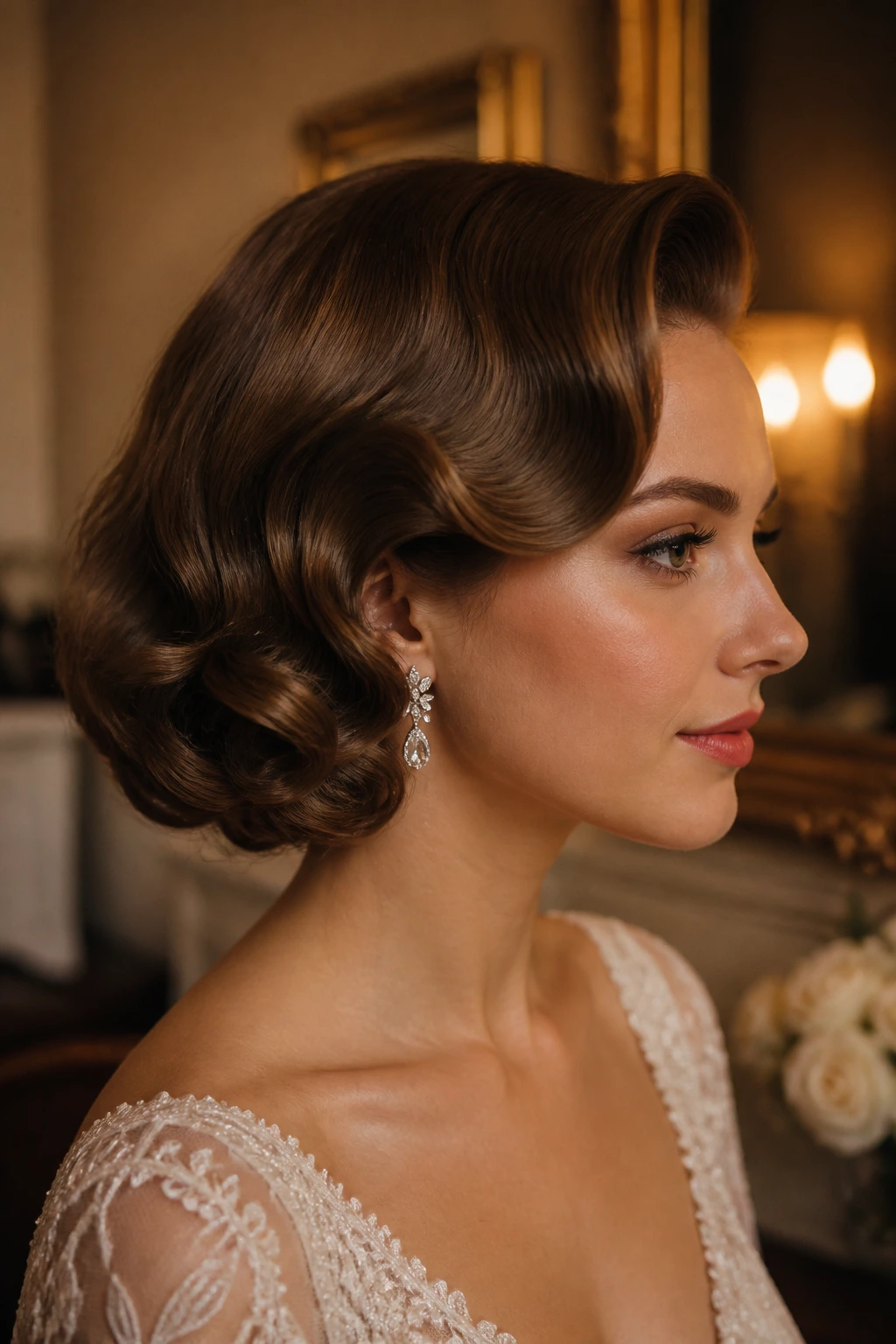
Short hair does not have to fade into the background. A side-swept bob with sculpted waves gives you that clean vintage line and lets the face stay open. Use a side part that follows the natural fall of your hair, then shape the front in one smooth bend toward the cheek.
I like this on brides with shorter cuts because it looks finished without asking the hair to do something unnatural. It also keeps earrings visible and pairs nicely with a shorter veil or a birdcage piece. If the bob is freshly cut, give the ends a tiny bend inward so they don’t flip out in an unplanned way.
10. Fishtail Braid into a Low Knot
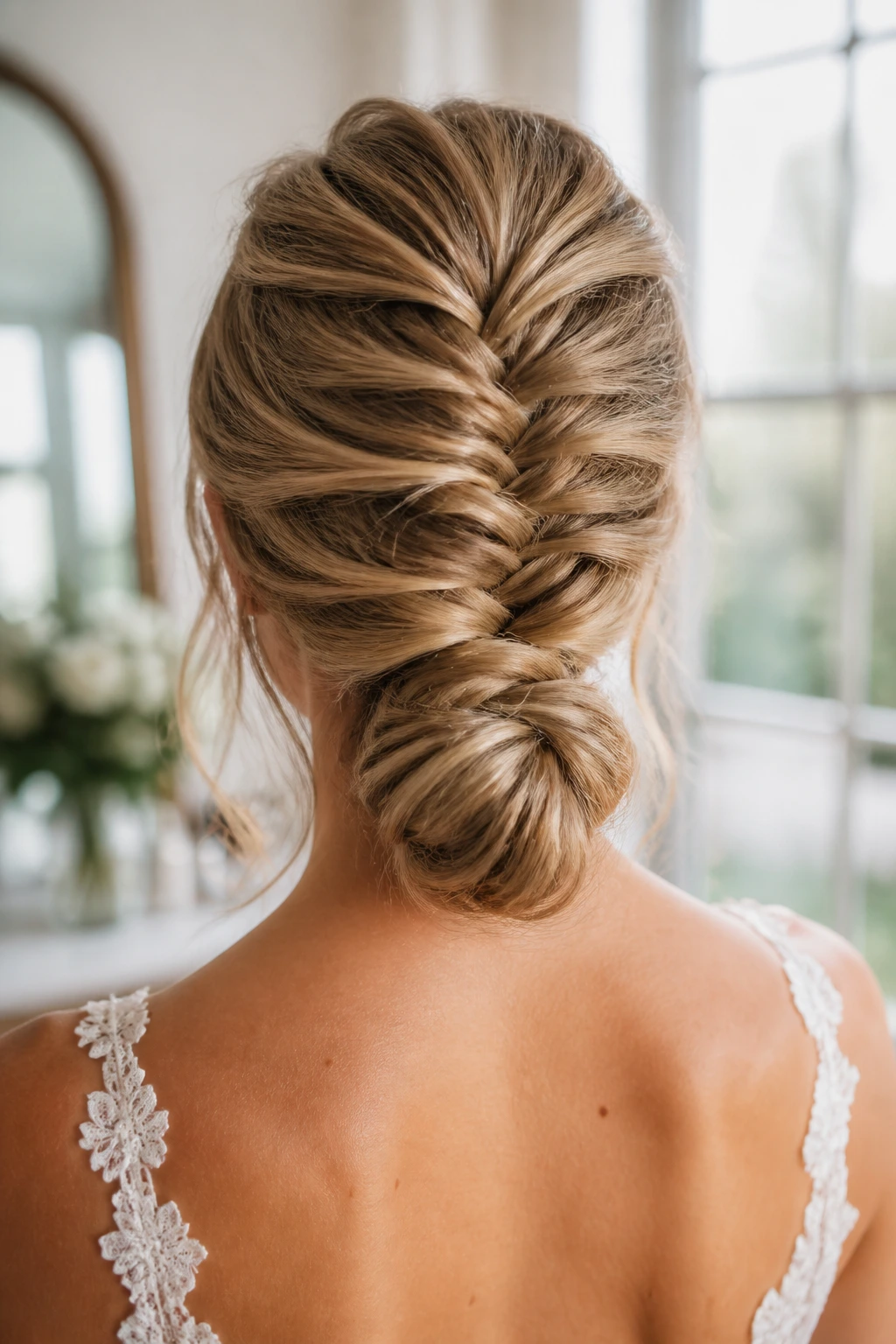
A fishtail braid gives the braid itself enough texture that the knot at the bottom doesn’t need much else. Start the braid at the back of the head or just off-center, then coil the tail into a low knot and pin it tight against the nape. The result is structured but not severe.
This is one of those styles that looks more complicated than it is, which can be useful if you want visual interest without a huge amount of height. It works well under a veil, too, because the braid gives the pins something to grip. If your hair is slippery, mist the lengths before braiding; freshly washed hair can be too smooth for this one.
11. Bubble Ponytail with Satin Ties
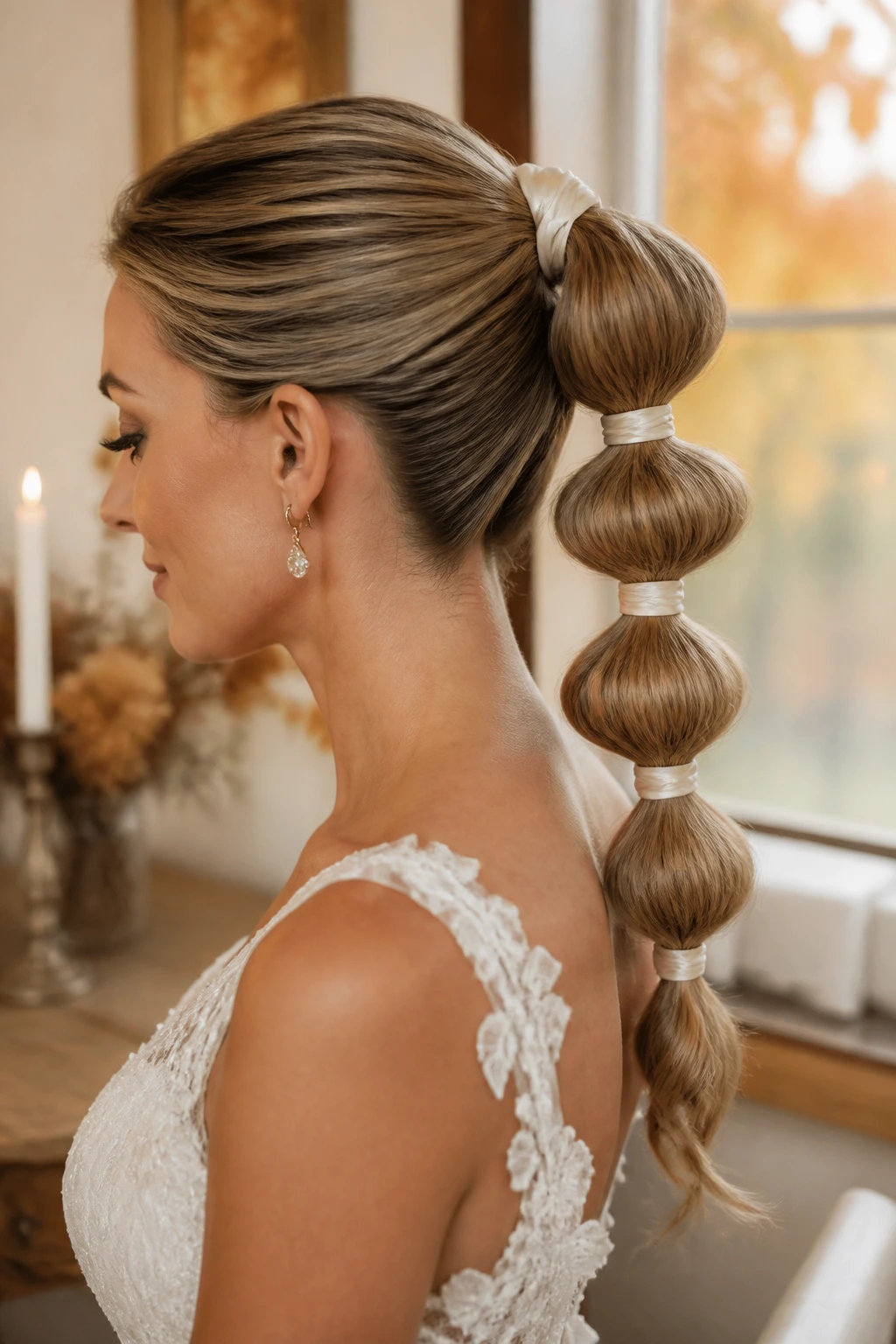
A bubble ponytail reads modern fast. Divide the tail into equal sections with small elastics, then tug each section outward just enough to create roundness without making the shape cartoonish. Satin ties or thread-wrapped elastics soften the look and keep it from feeling like a gym trick dressed up for a wedding.
This style is smart for brides who want movement and a little edge. It also works well if the dress already has a lot going on, because the ponytail stays graphic rather than fussy. Keep the crown sleek and the bubbles evenly spaced. Sloppy spacing is the fastest way to make the whole thing look accidental.
12. Waterfall Braid Half-Up
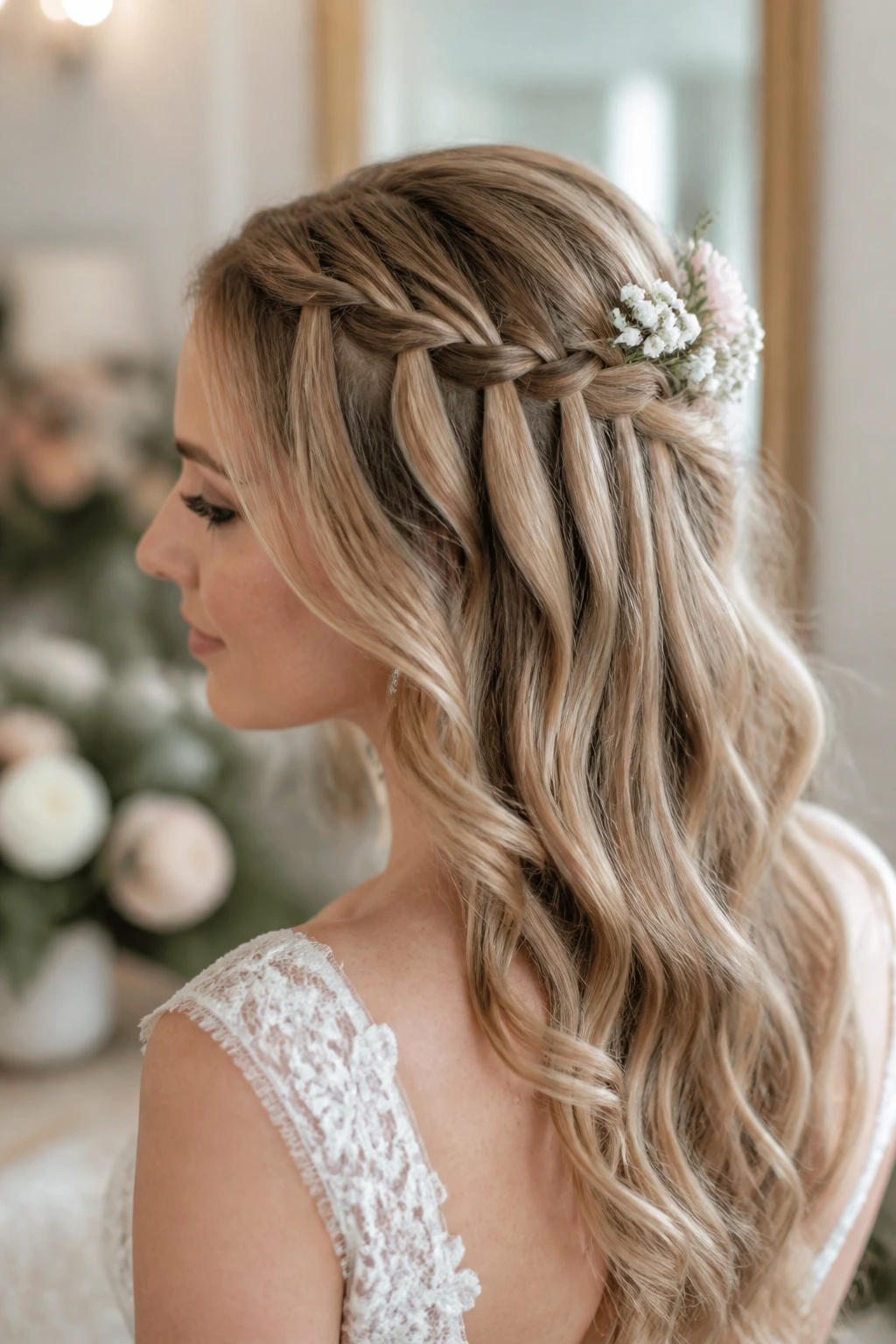
A waterfall braid gives you detail across the back without pinning every inch of hair away from the face. The braid acts like a frame, while the lower hair stays loose and soft. It’s one of the more romantic options in the group, but it still has enough structure to survive a long day.
I’d choose this for brides with medium to long hair who want visible texture from the back in photos. It also sits nicely with floral accents because the braid creates tiny anchor points for pins or small blossoms. Keep the loose hair curled in the same direction so the whole shape feels coherent instead of chaotic.
13. Minimalist Knot Bun
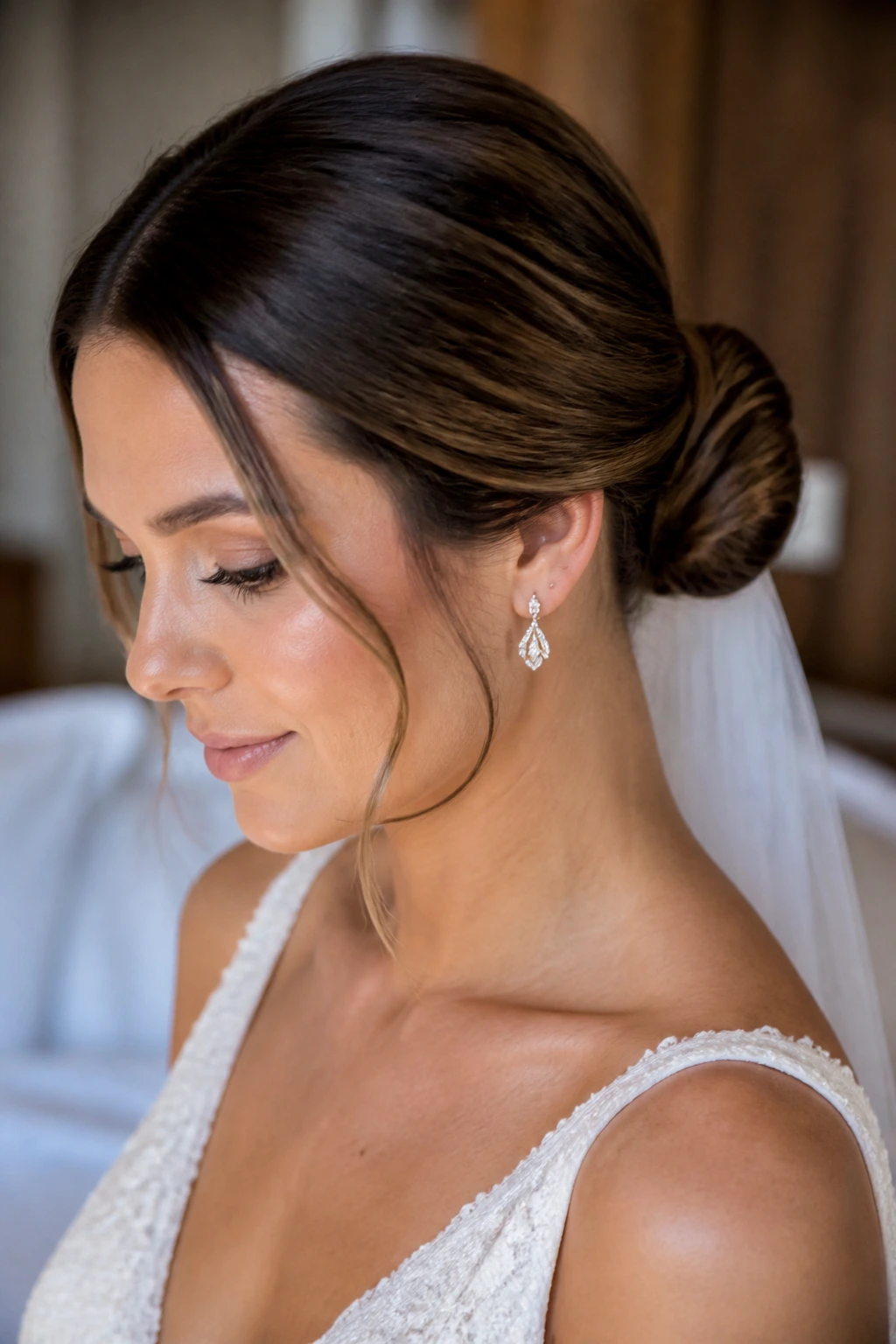
A knot bun is what happens when you strip away extra decoration and let the shape do the talking. The hair is folded, tucked, and pinned into a low knot that sits close to the head. Clean edges and a soft surface make it feel modern, not severe.
This one is a good answer to a dress with strong texture, like beaded lace or heavy embroidery. The bun doesn’t compete. It gives the eyes a place to rest, which is underrated on a wedding day when the outfit can easily start to feel crowded. If you want more softness, pull one or two tiny pieces at the temples after pinning.
14. Loose Waves with a Crystal Comb
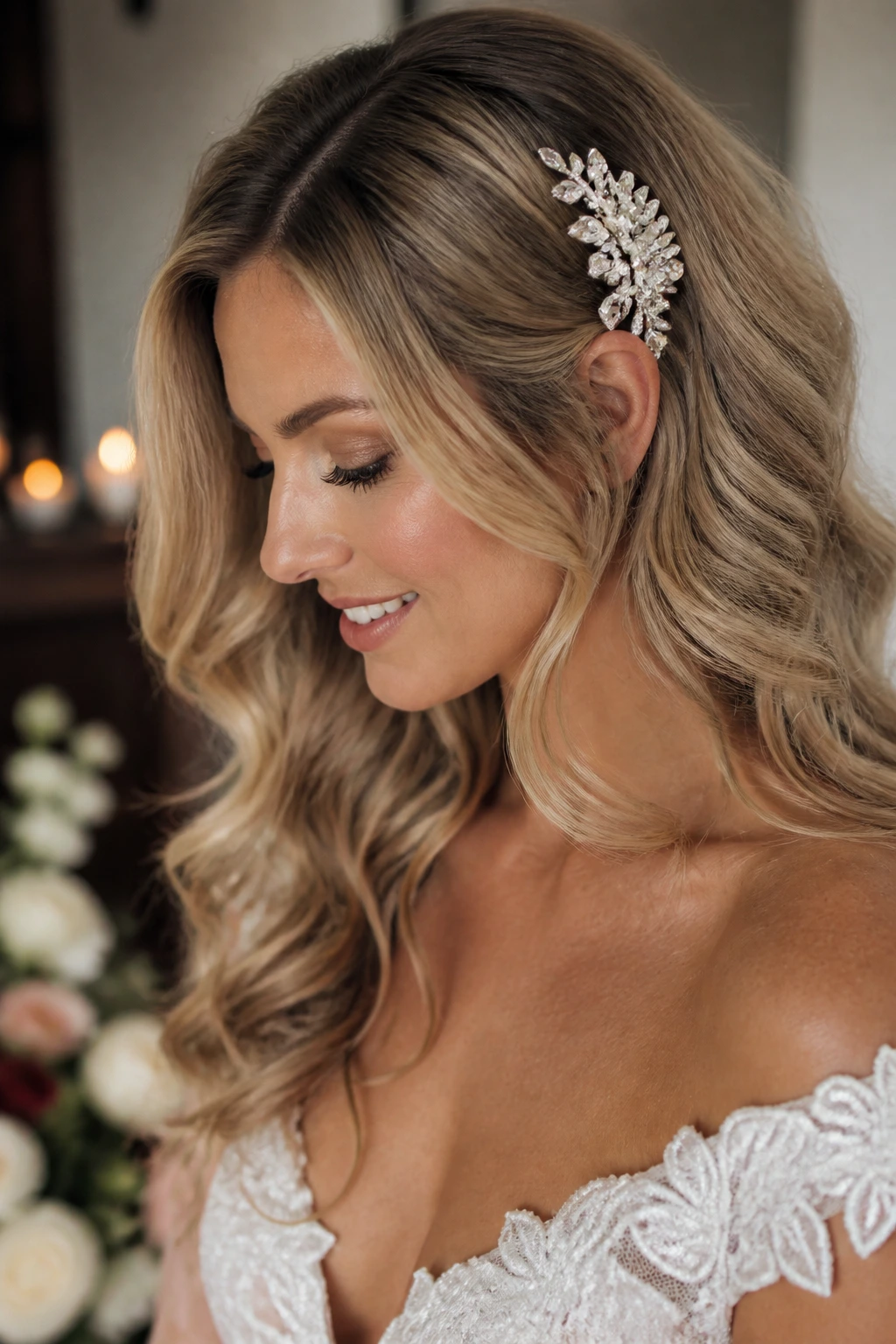
Some brides want a hairstyle that mostly disappears and lets the accessory take over. Loose waves with a crystal comb do exactly that. Keep the part clean, let the waves fall in broad S-shapes, and place the comb above one ear or slightly behind it so the sparkle catches from the side.
This works best when the dress is simple and the jewelry is restrained. A crystal comb gives the hair a focal point without needing extra braid work or a heavy updo. The important part is the wave pattern; if the curls are too tight, the accessory starts fighting the texture. Broad bends look calmer and much more expensive in the best sense of that word.
15. Rope-Braid Low Bun
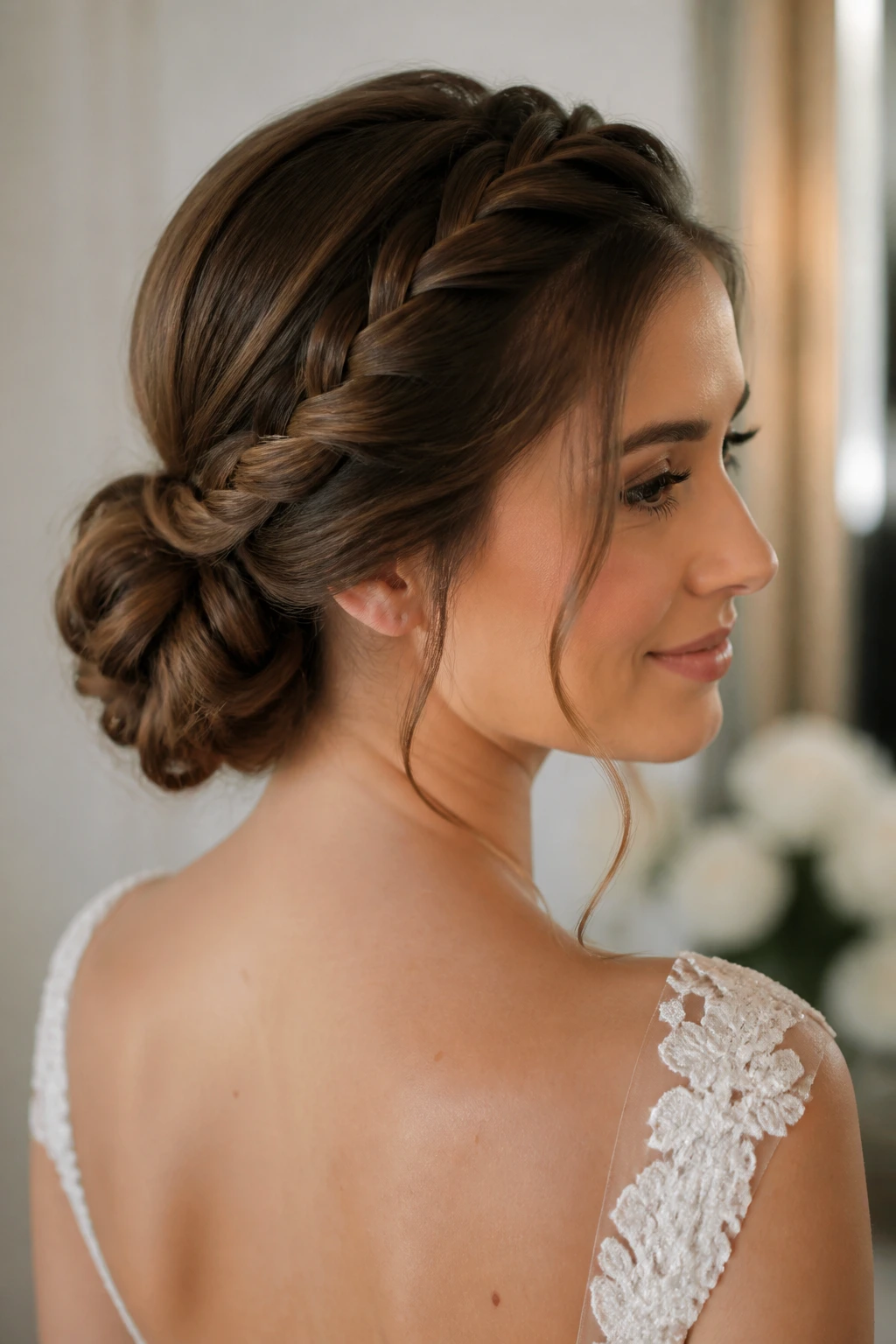
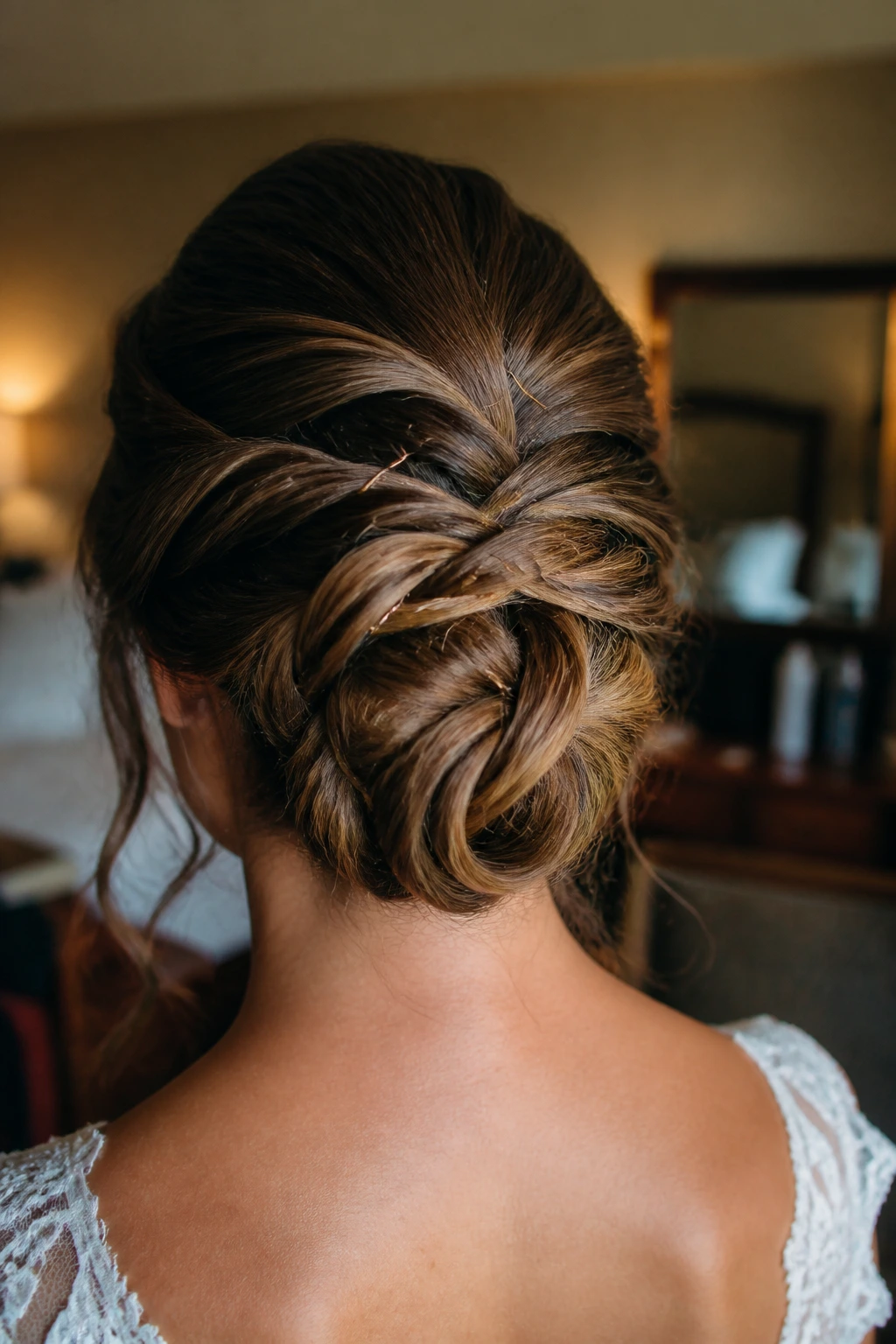
A rope braid brings a little twist, literally, to the base of a bun. Split the hair into two sections, twist them in the same direction, then wrap them around each other before winding the tail into a low bun. That twisted texture keeps the style from feeling flat even when the bun sits close to the head.
It’s a good fit for brides who like a tidy look but want a touch of detail in the back. The rope braid also holds surprisingly well once pinned, which helps if you’ll be wearing the style through an indoor ceremony and a later reception. Add a mist of flexible hairspray, not a hard shell. You still want the bun to feel touchable.
16. Veil-Friendly Low Coil
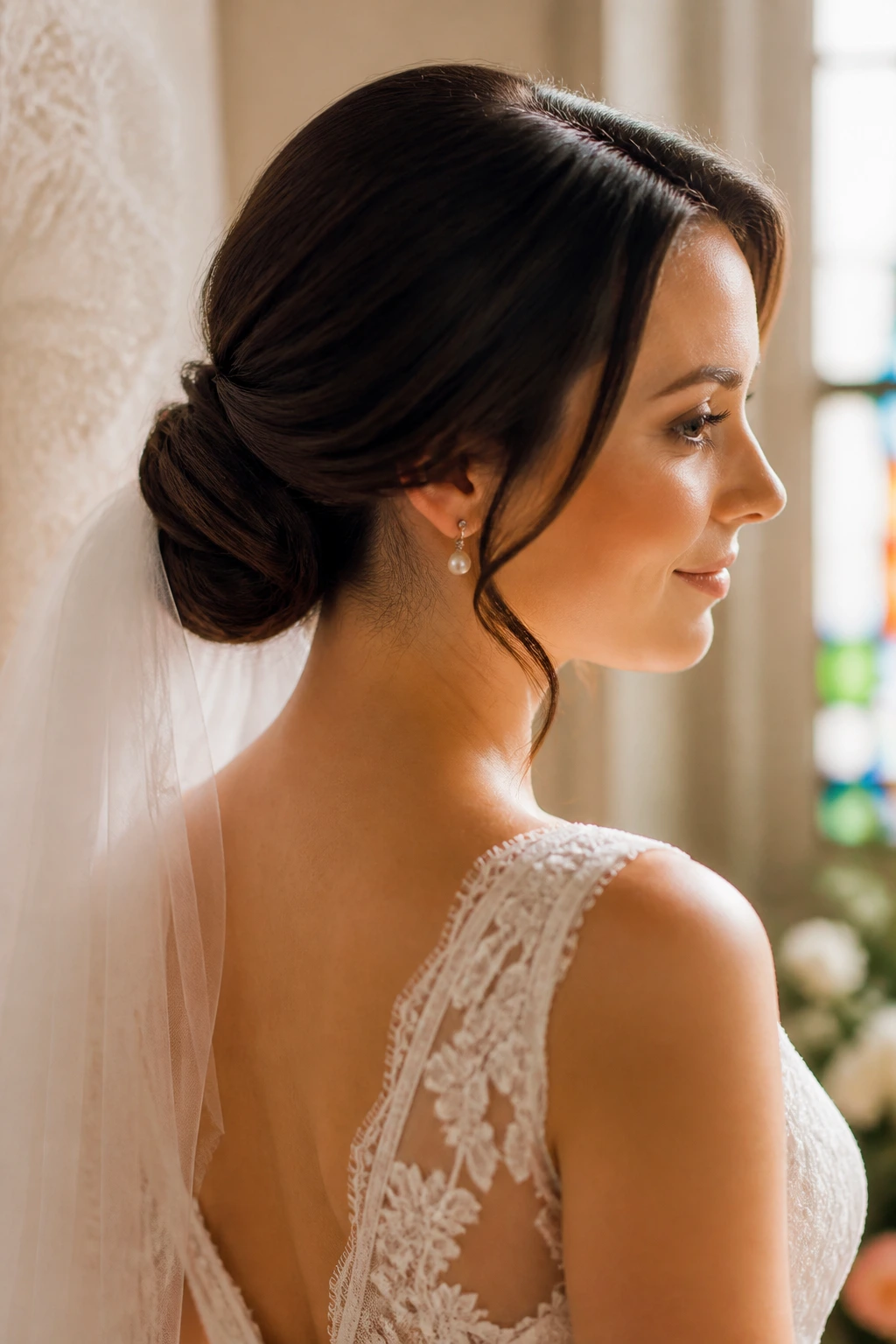
If the veil matters as much as the hair, build the hair around the veil, not the other way around. A low coil sits right where the comb can anchor safely, and because the shape stays compact, the veil doesn’t have to fight a bulky crown. The silhouette is neat and practical.
I like this style for chapel-length or cathedral veils, especially when the dress back needs to stay visible. The coil also handles coat-on, coat-off movement better than a high style that can catch on fabric. Ask the stylist to pin the veil only after the coil is fully set. If it goes in too early, the weight drags the shape down.
17. Side-Part Glam Curls
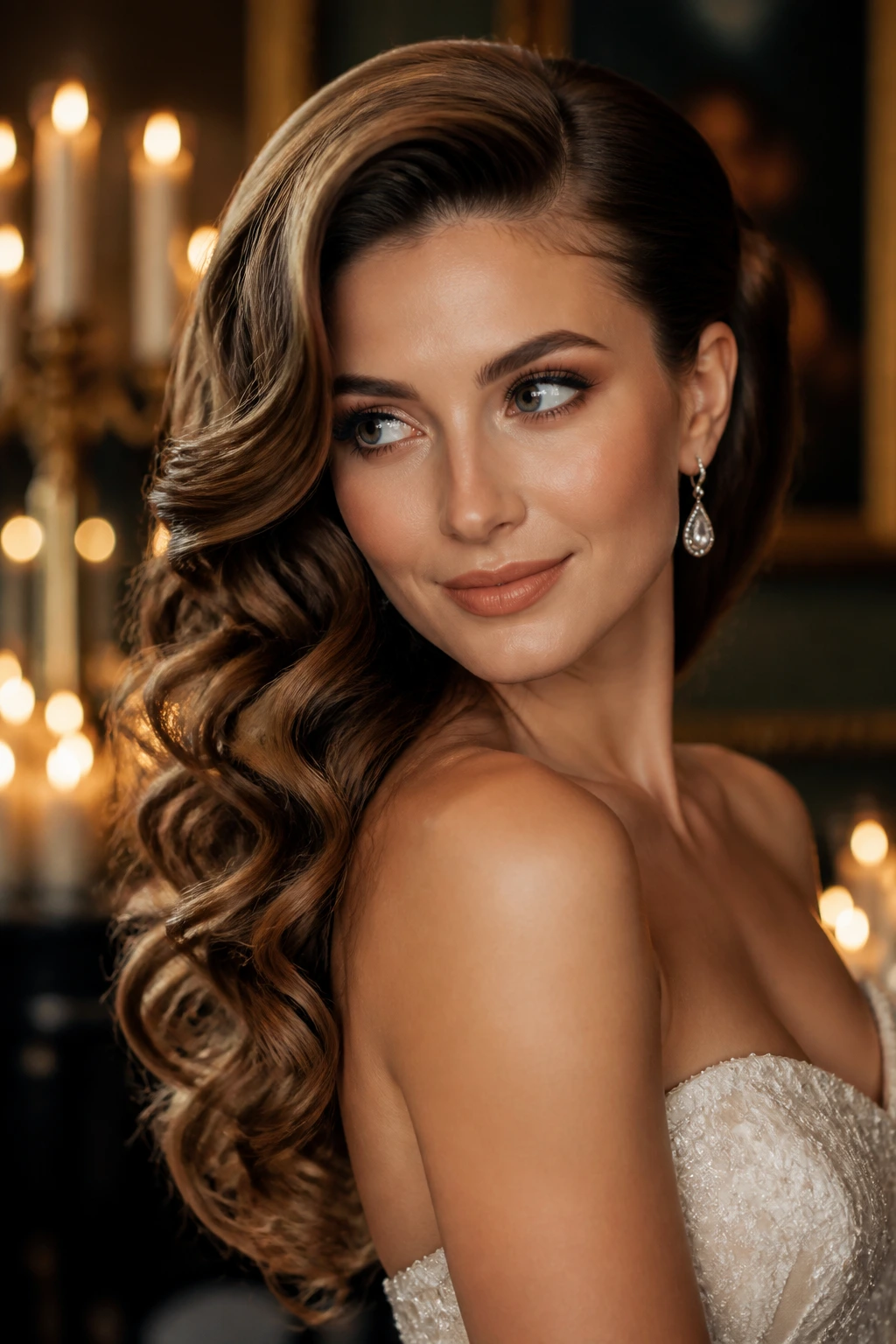
A side part with full curls on one side feels dramatic in a good, old-movie way. The front sweep frames the face, while the heavier side gives the style a clear direction. Keep the curls brushed just enough to join into smooth waves, but not so much that the ends frizz out.
This is one of the strongest looks for evening receptions and candlelit rooms. It brings movement around the face and looks good with one statement earring or a shoulder-baring dress. If the hair is naturally straight, set each curl fully before brushing; half-set curls fall apart the moment they meet a dance floor.
18. Milkmaid Braid with Modern Texture
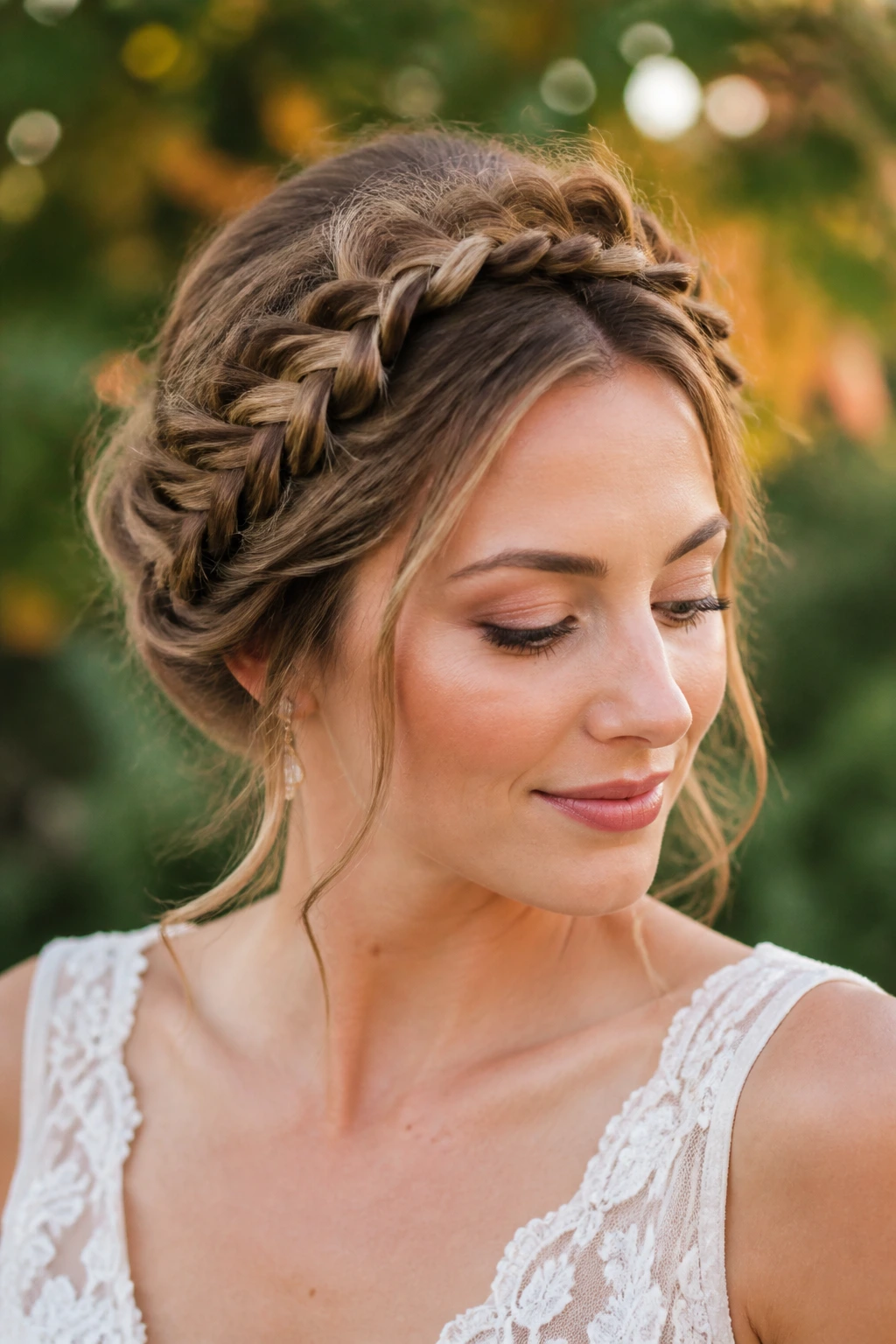
A milkmaid braid can look costume-like if it’s too perfect. The modern version leaves the braid looser, with a little texture at the temples and a softer finish around the crown. The shape still wraps the head, but the line is gentler and easier to wear.
This style is a strong choice for boho dresses, lace sleeves, and outdoor ceremonies with a lot of greenery. It keeps hair contained, which matters if the wind has a habit of showing up uninvited. Pull the braid edges outward after pinning to give it width. Tiny, tight braids read more severe than bridal.
19. Shoulder-Length Blowout with Barrettes
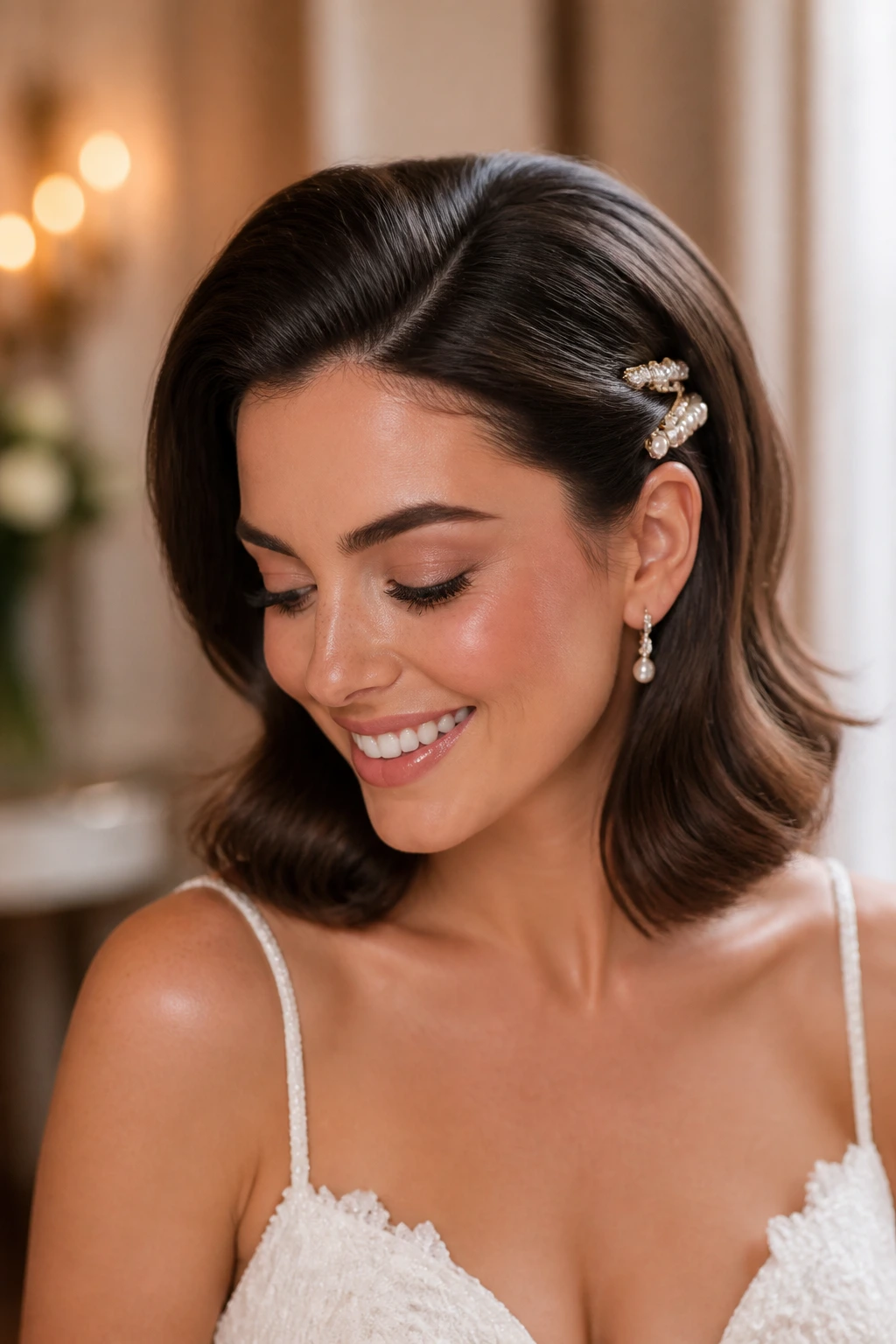
A polished shoulder-length blowout is the answer for brides who do not want to force short or mid-length hair into an updo that keeps slipping loose. Give the ends a smooth bend, add lift at the crown, and pin back one or both sides with decorative barrettes. The accessory does the formal work.
This style is especially useful when the dress has a clean neckline and the hair needs to stay movable rather than pinned in place. It also works well if you want to remove the barrette for dancing later without losing the whole shape. Use barrettes that grip, not decorative clips with weak teeth. Pretty clips that slide out in thirty minutes are a waste of money.
20. Braided Bun with Fresh Flowers
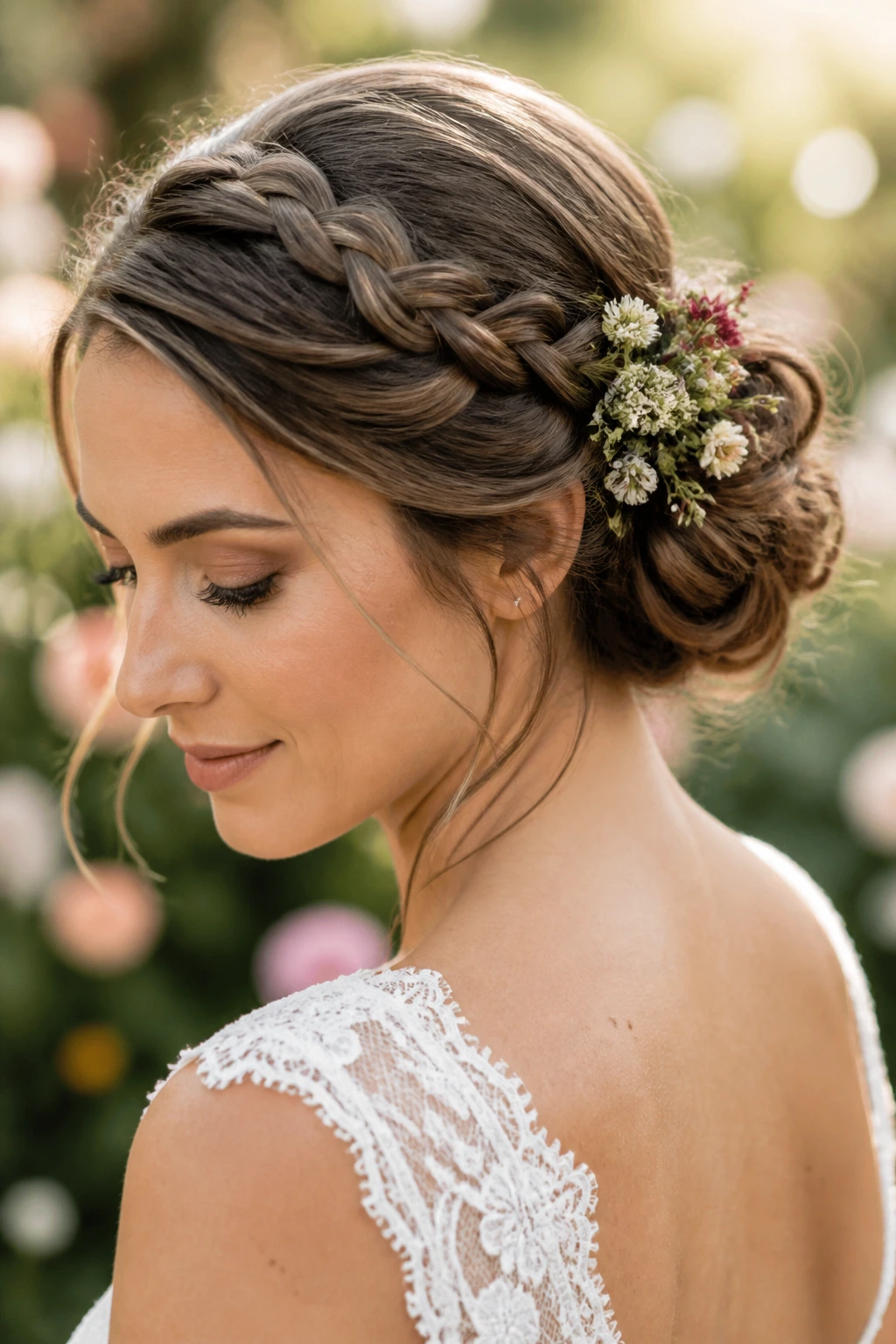
A braided bun with flowers can look lush without becoming overloaded if the flowers stay small and well placed. Build the braid first, wrap it into a bun, then tuck in blooms with short stems or floral wire. Keep the flowers near one side or tucked into the base so the shape stays readable.
I’d choose this for garden ceremonies, rustic venues, or any bride who wants the hair to feel connected to the setting. The braid gives the flowers something to nest in, which helps them stay put through the night. Skip heavy blooms. A few small stems—sprigs, buds, or one or two roses—usually look better than a bouquet glued to the head.
21. Faux Bob with Polished Waves
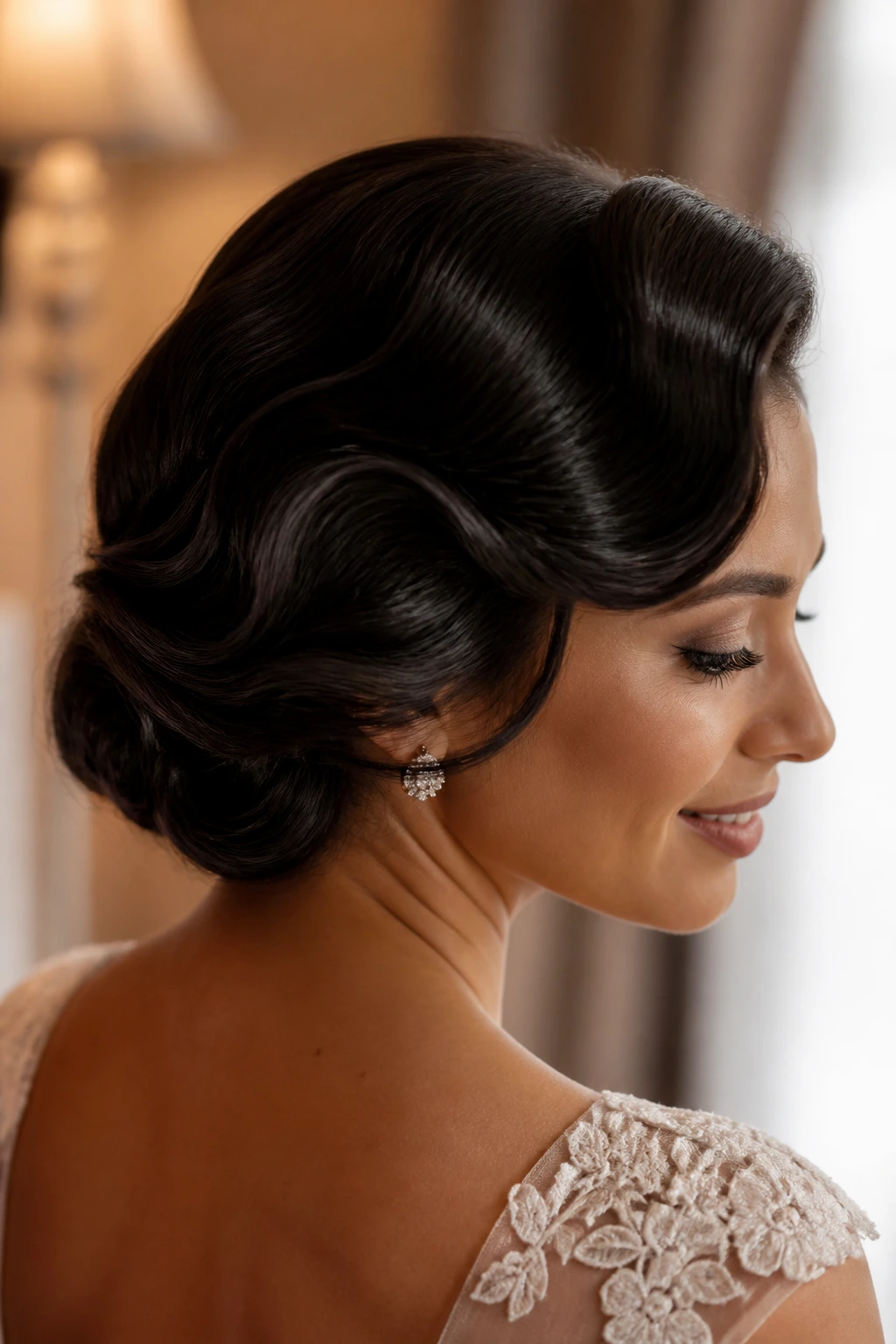
A faux bob gives long hair the shape of a short cut without sacrificing length for the rest of the day. Tuck the lower section inward and pin it flat, then wave the top layer so the ends disappear into the fold. The trick is to keep the silhouette smooth at the back.
This works nicely for brides who want a vintage feel or a cleaner neckline under a detailed dress. It also keeps hair off the shoulders, which can be useful if the fabric is textured or the weather is cool enough for a wrap. The style needs a careful trial run, though. If the pins are too loose, the bob collapses the moment you turn your head.
22. Natural Curl Halo with Tucked Sides
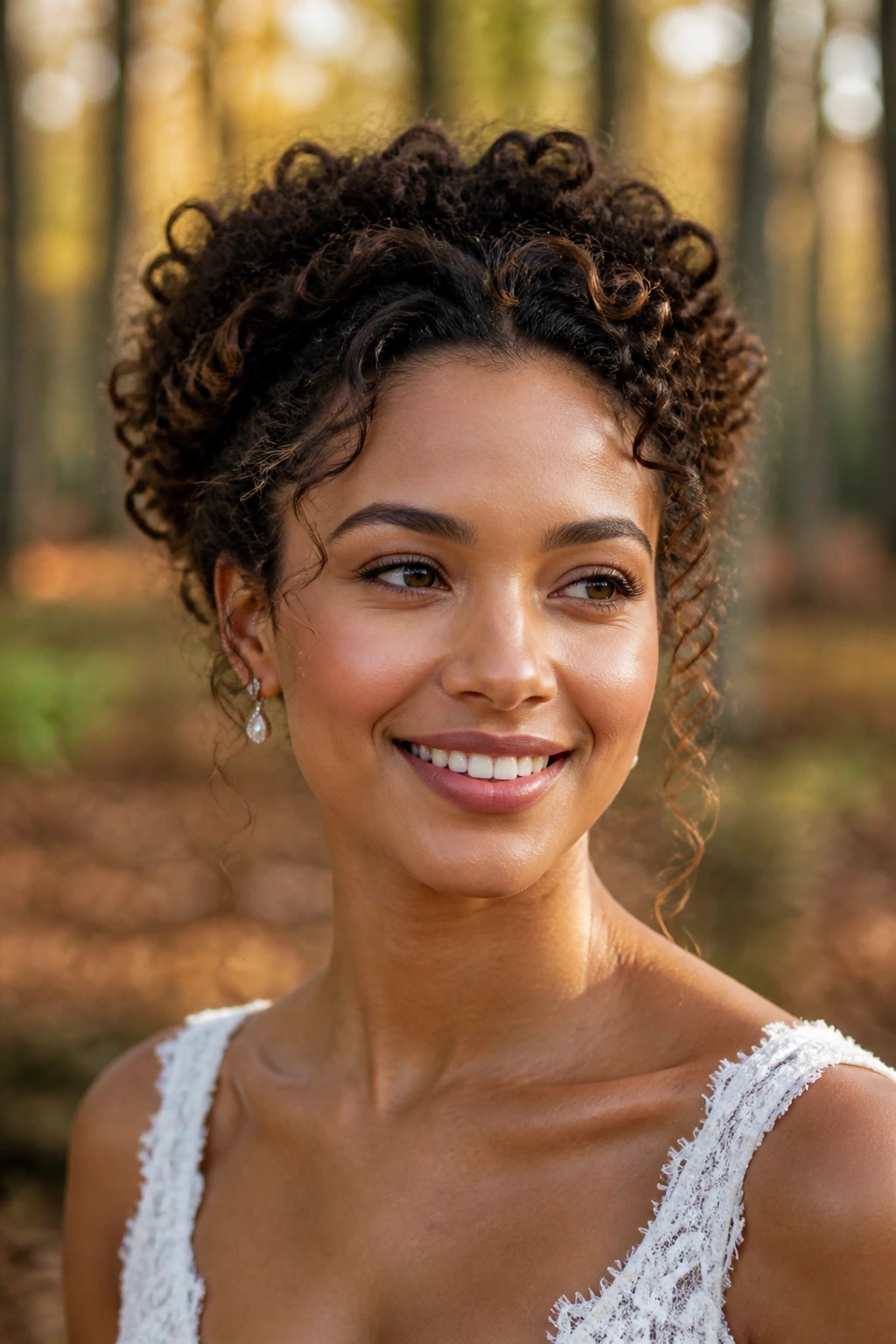
This one respects curls instead of forcing them into something else. Shape the curls into a halo around the head, tuck the sides back just enough to open the face, and let the natural volume stay alive at the crown and around the temples. It should feel like your curls, just arranged with a clearer outline.
It’s one of the best fall bridal options for curly and coily hair because it handles texture with less fight and less frizz. Use moisture first, hold second. A curl cream, diffuser, and a little flexible spray go further than a mountain of gel. If the hair is dry, the halo looks fluffy instead of defined, and that changes the whole mood.
23. Sleek French Braid Ponytail
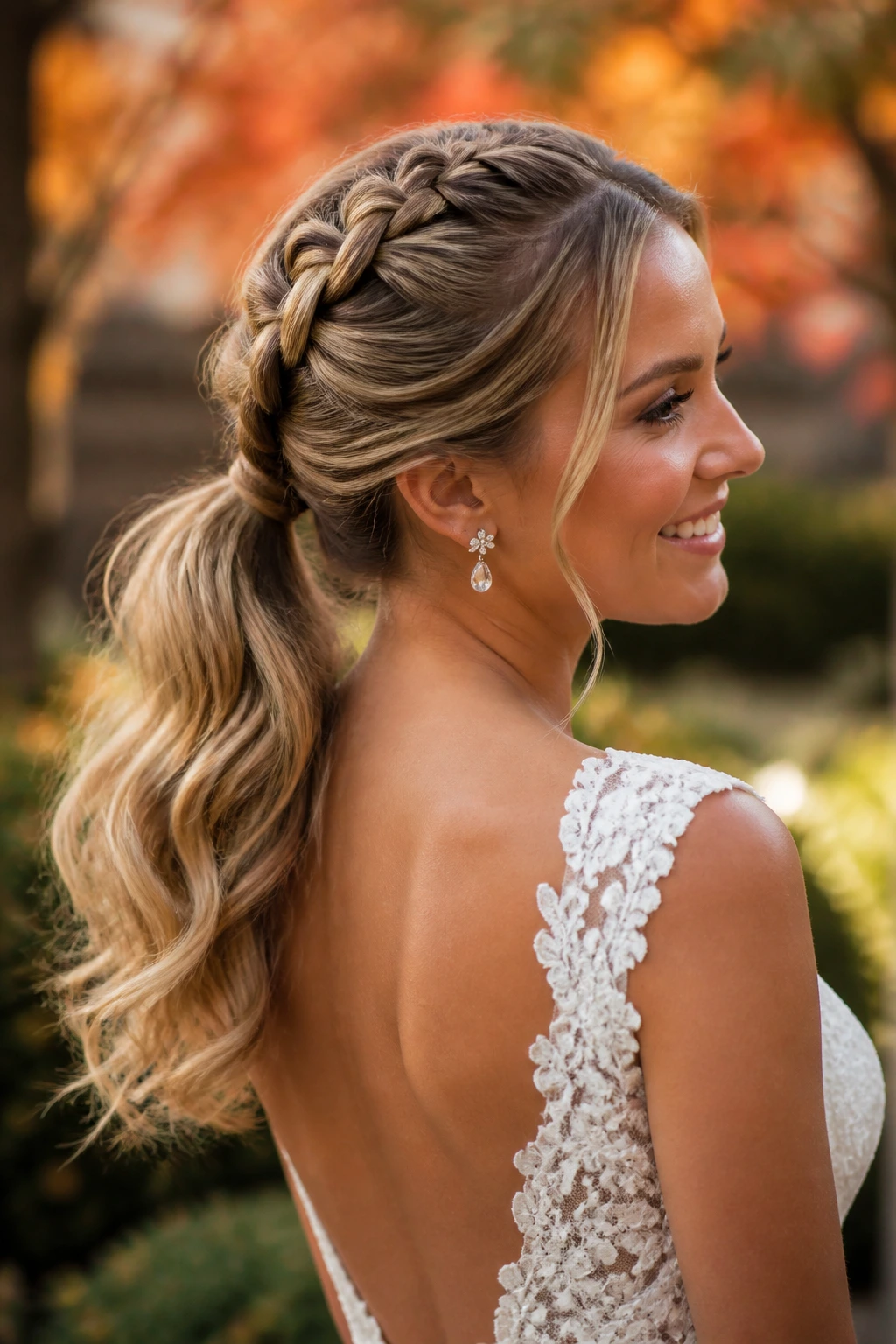
A French braid feeding into a ponytail gives you the control of a braid with the clean end point of a ponytail. Keep the braid tight at the scalp, then loosen the tail just enough to make it look full. It’s practical, but not plain.
This style is useful for brides who want hair secured through a long ceremony and a reception that involves actual movement. It also works if the dress has a strong back detail because the braid creates a line that leads the eye downward. Wrap a small piece of hair around the elastic at the base. Leaving the tie visible makes the whole thing look unfinished.
24. Twisted Half-Up Crown
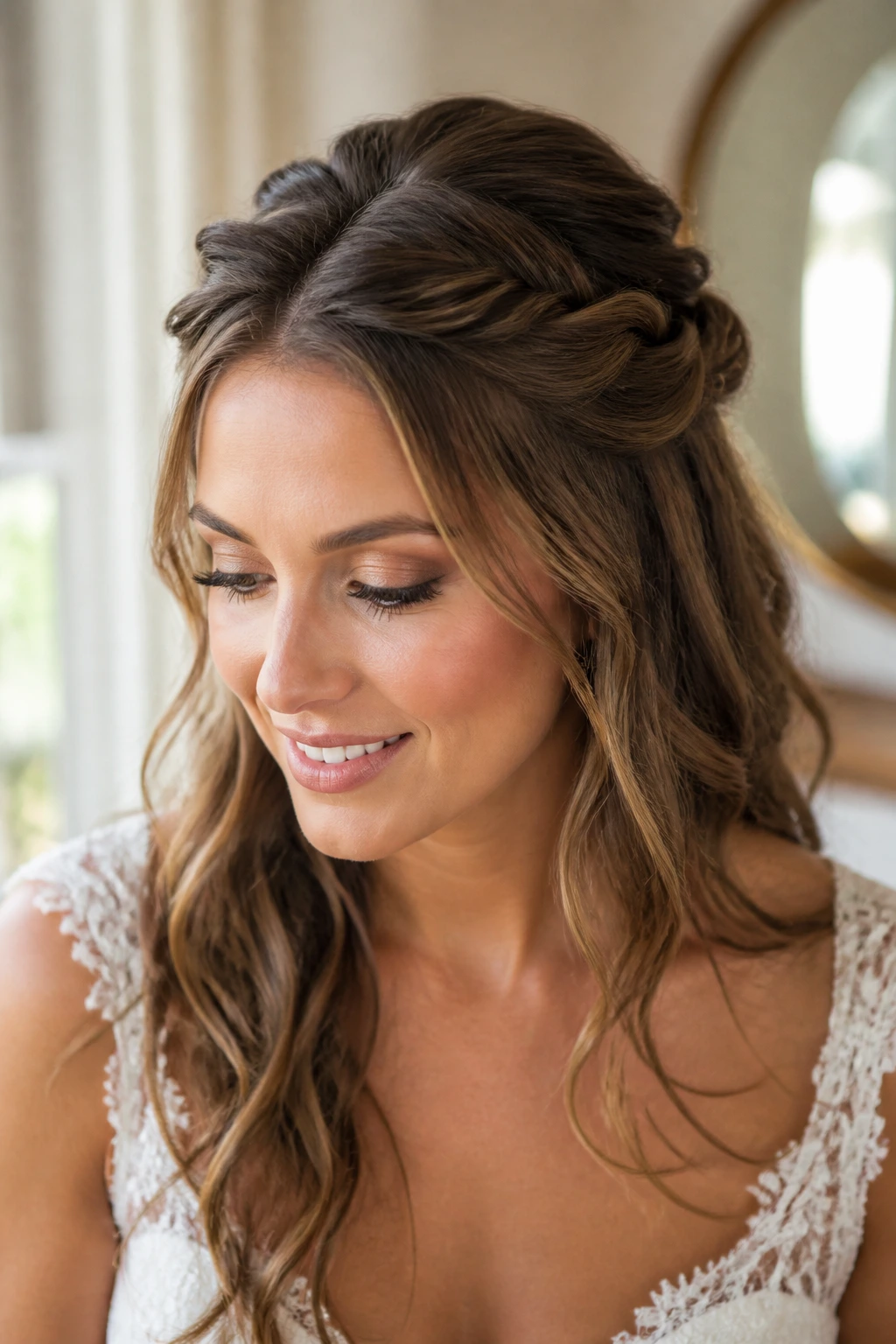
A twisted half-up crown gives you softness around the face and lift where the hair needs it most. Twist sections from both sides toward the back, pin them with the crown slightly raised, and let the lower half keep its movement. The shape feels airy without being loose.
This is a strong fit for brides who want the comfort of hair down but need something more secure than all-over waves. It also works beautifully with a small veil or a simple pin placed at the back center. Keep the twists broad. Skinny twists can look busy, especially when the dress already has lace or beading.
25. Low Ponytail with Satin Ribbon
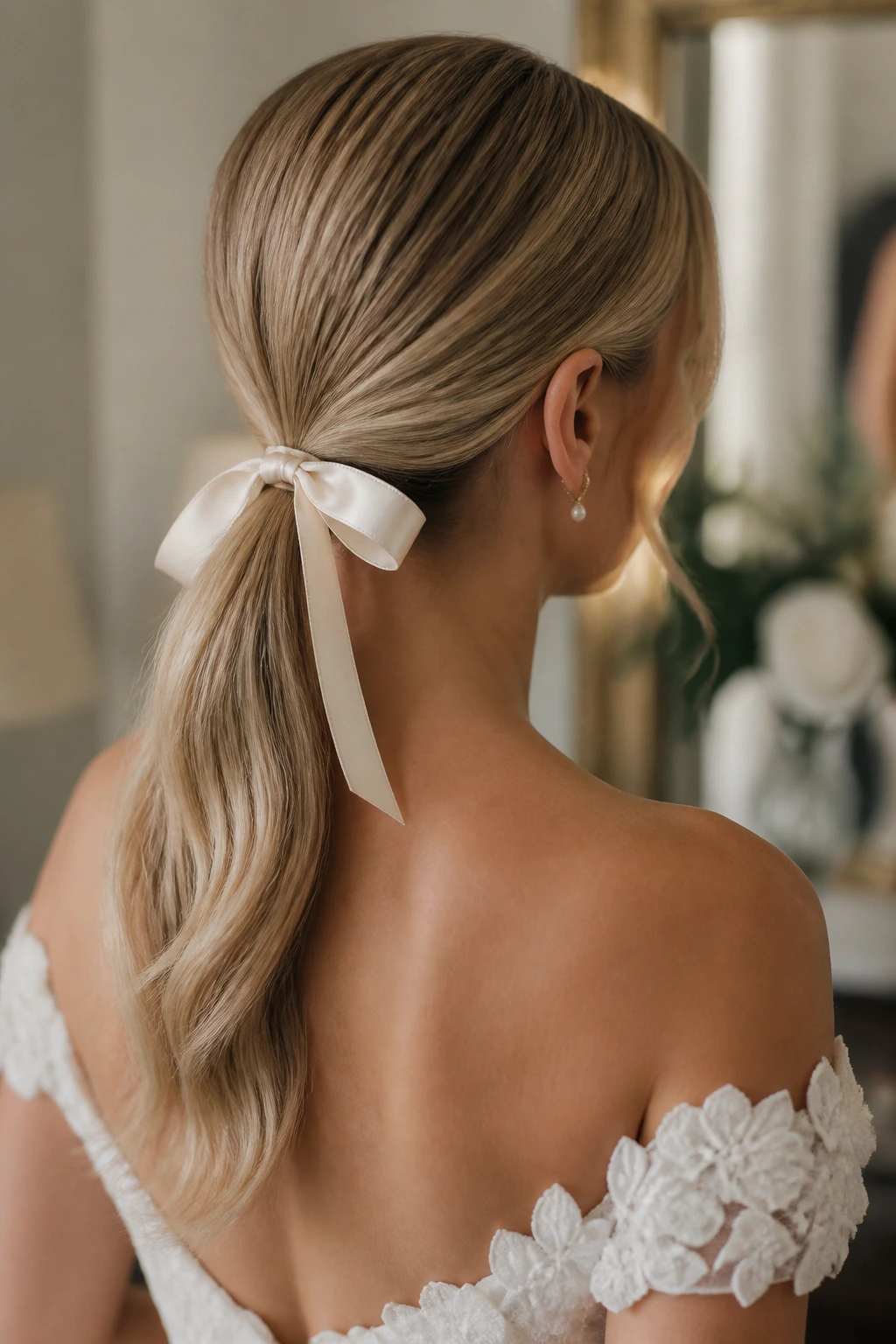
A satin ribbon changes the whole feeling of a low ponytail. The pony itself stays simple, but the ribbon adds finish at the base and lets you control the mood—matte, soft, polished, or a little romantic. Tie it snugly enough that the ends don’t drift apart.
I like this style for brides who want something understated but not plain. It’s easy to coordinate with a bouquet ribbon or a sash tone, and it looks especially good against dresses with soft drape. Choose ribbon with enough body to hold its bow shape. Flimsy craft ribbon collapses halfway through the ceremony and then you’re fixing it with a bobby pin behind a curtain.
26. Soft Gibson Tuck
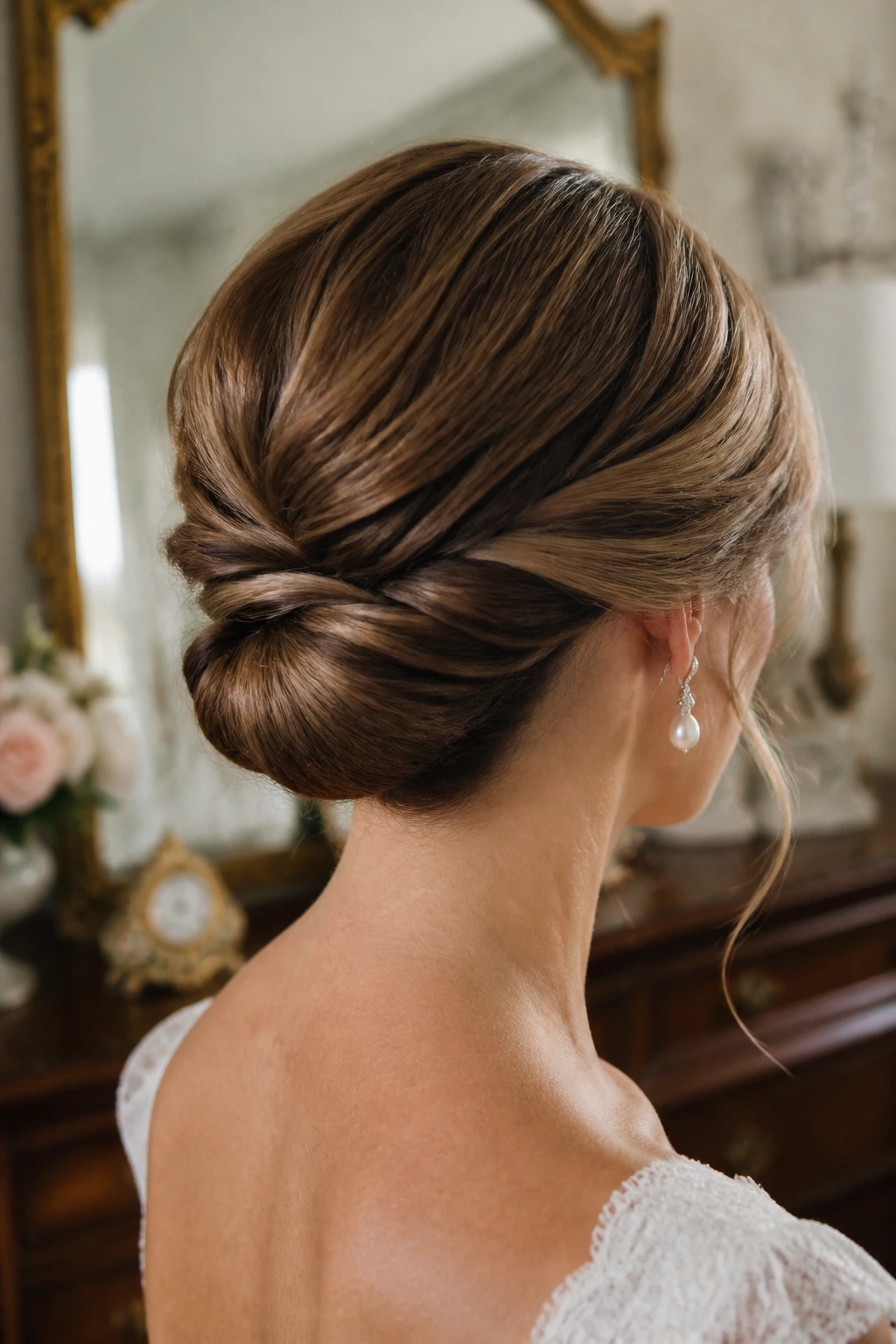
The Gibson tuck has a lovely old-world shape: hair rolled inward and pinned low, with a soft curve at the back rather than a hard knot. It leaves the neckline open and gives the profile a clean line. If you want a style that feels vintage without screaming a costume reference, this is the one.
It suits brides wearing high necks, sleeves, or a structured veil. It also behaves well in dry fall air because the ends stay tucked away instead of flying loose. The most common mistake is making the roll too tight. A little softness at the seam keeps it bridal, not rigid.
27. Braided Side Bun
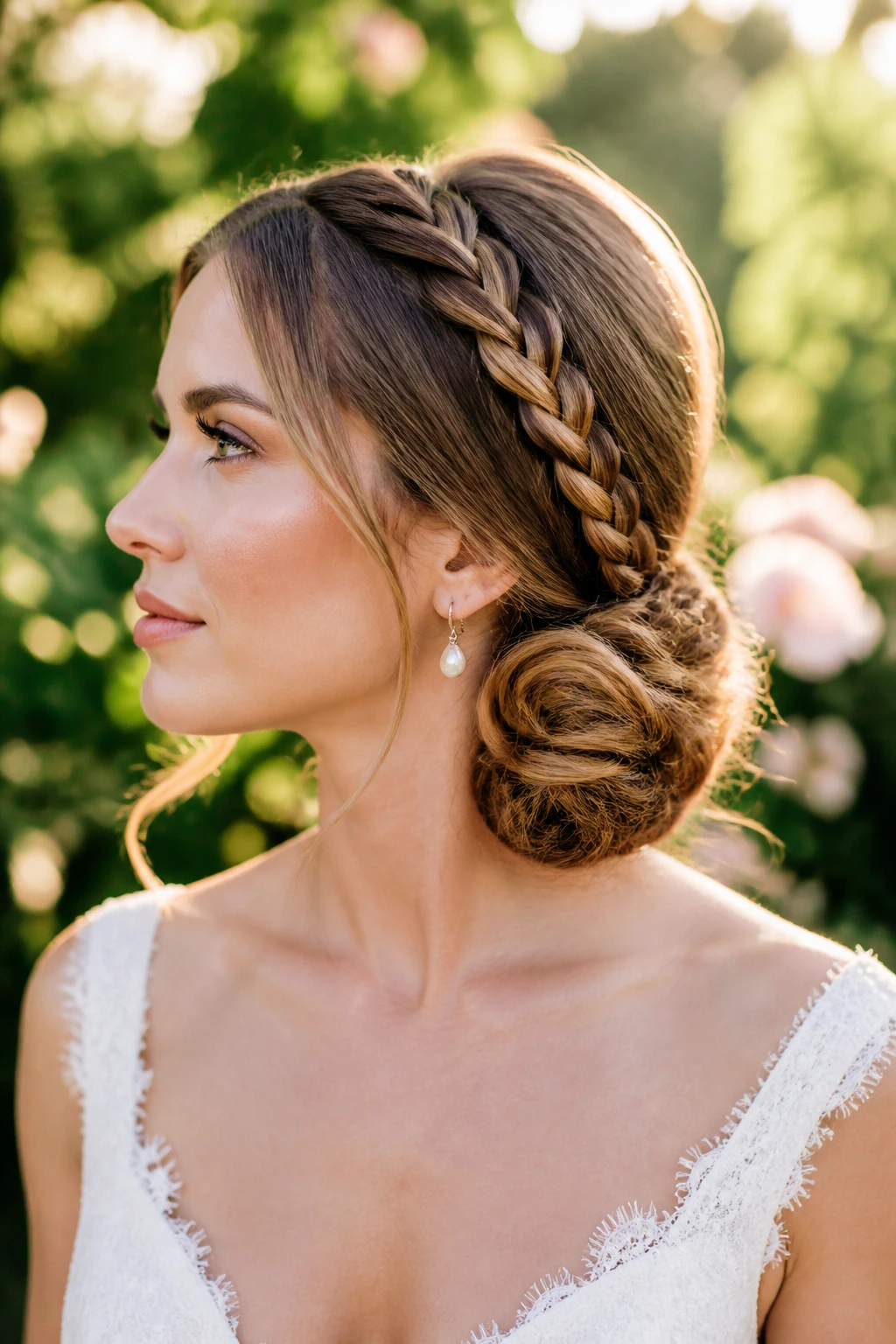
A side bun built from a braid gives one shoulder or one side of the face a little more attention, which is useful with asymmetrical dresses or off-the-shoulder necklines. Start the braid on the heavier side, then wrap it low and to the side, pinning the bun flat enough that it doesn’t poke out in profile.
This style carries a lot of detail without needing a huge amount of height. It also keeps the veil or hair accessory out of the way if you place them on the opposite side. If your hair is layered, secure the shortest pieces first. Loose layers around the temple are what make a side bun unravel in a hurry.
28. Pinned-Back Waves with Tiny Clips
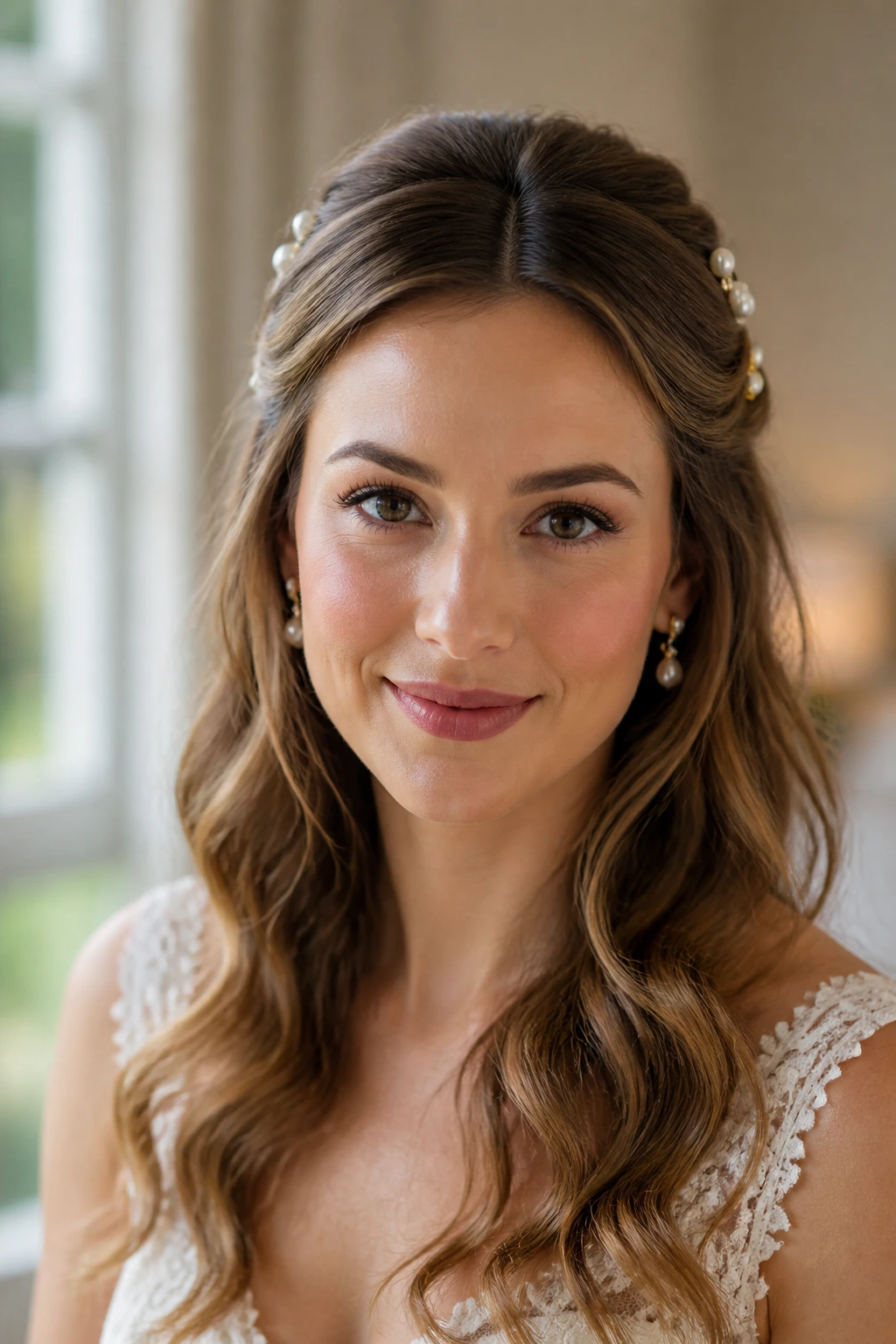
Pinned-back waves are for brides who want to keep the hair down but still have a bit of structure. Curl the hair into soft waves, then pin back small sections near the temples with tiny clips, pearl pins, or minimalist barrettes. The face stays open, and the rest of the hair moves.
This style is especially good when you want the dress and makeup to stay visible. It also looks clean in close-up shots because the front sections stay away from the cheeks and lipstick. Keep the clips small. Oversized metal pieces can pull the whole look into a different decade, and not the one you were aiming for.
29. Double Twist Updo
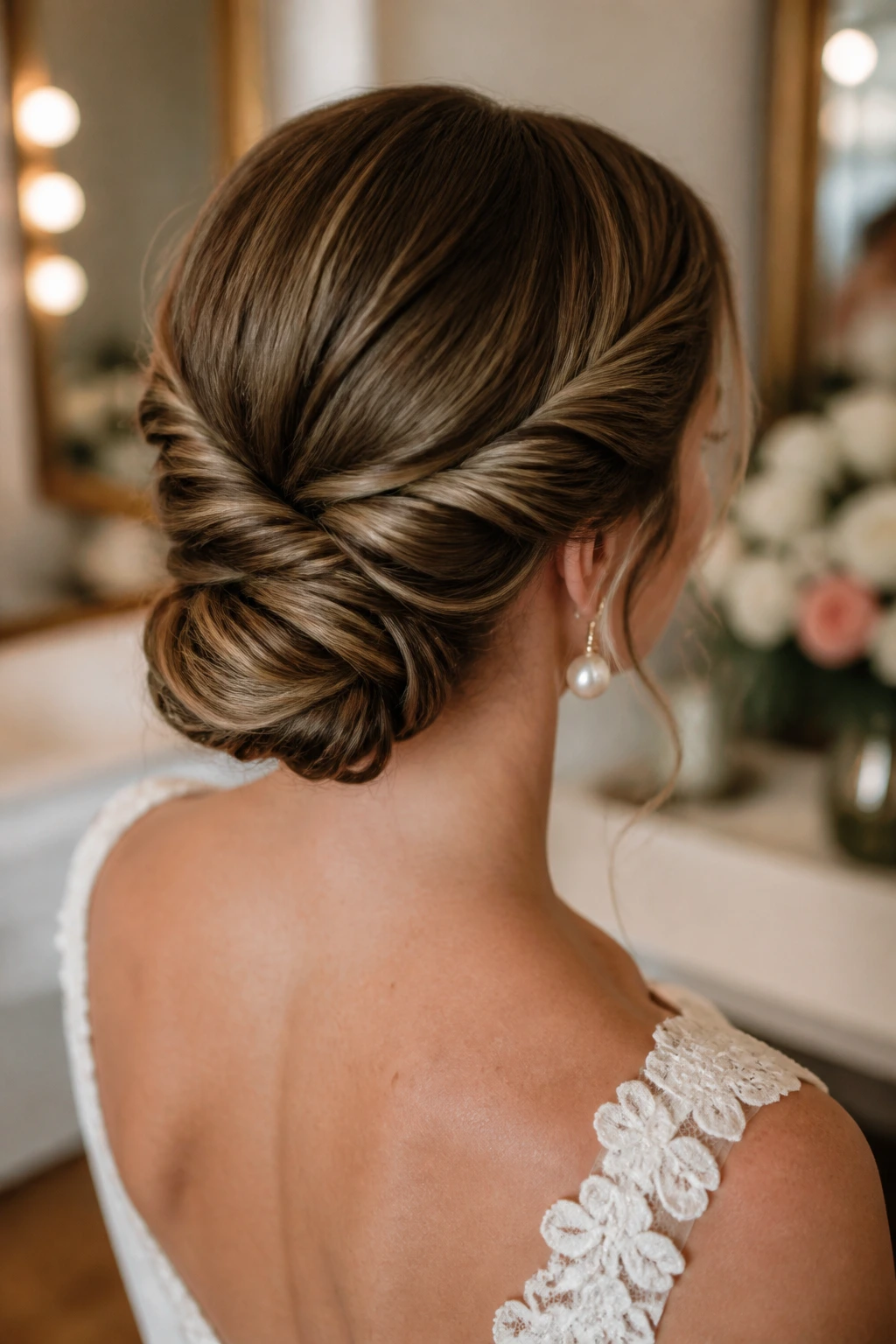
A double twist updo gives the back of the head shape without needing a heavy braid or a lot of teasing. Take two sections from each side, twist them toward the center, then tuck the remaining hair into a low pinned bundle. The result is symmetrical and calm.
I like this style for brides who want something secure but not severe. It sits low, so it doesn’t compete with a veil or the top edge of a dramatic dress. If your hair is thick, divide the back into smaller sections before pinning. Big sections tend to create lumps that show through the surface.
30. Soft Halo Updo with Veil Placement
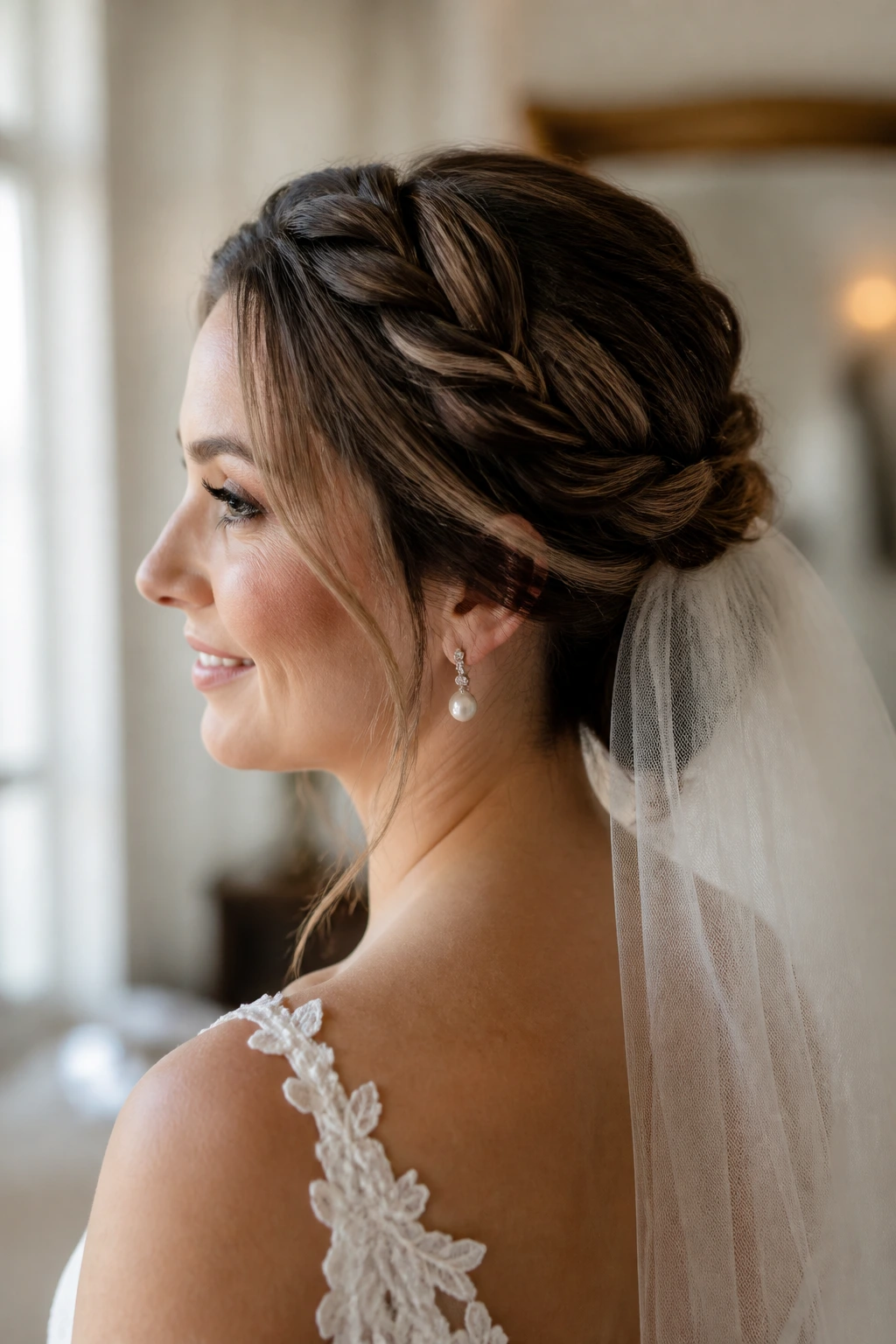
This is the style that closes the circle nicely: a halo of texture around the head, with the actual updo resting low enough for veil placement to be clean and secure. The surface should look soft, almost cloudlike, but the base needs to be pinned firmly. That balance is the whole point.
It works well for brides who want romance, movement, and a secure anchor all at once. If the ceremony includes a veil, ask for the comb to be tucked just under the halo line so the shape doesn’t flatten. This is not the style for shortcuts. The shape needs proper pinning, or it can lose its outline by the time the formal photos start.
Why Fall Bridal Hair Needs a Different Plan
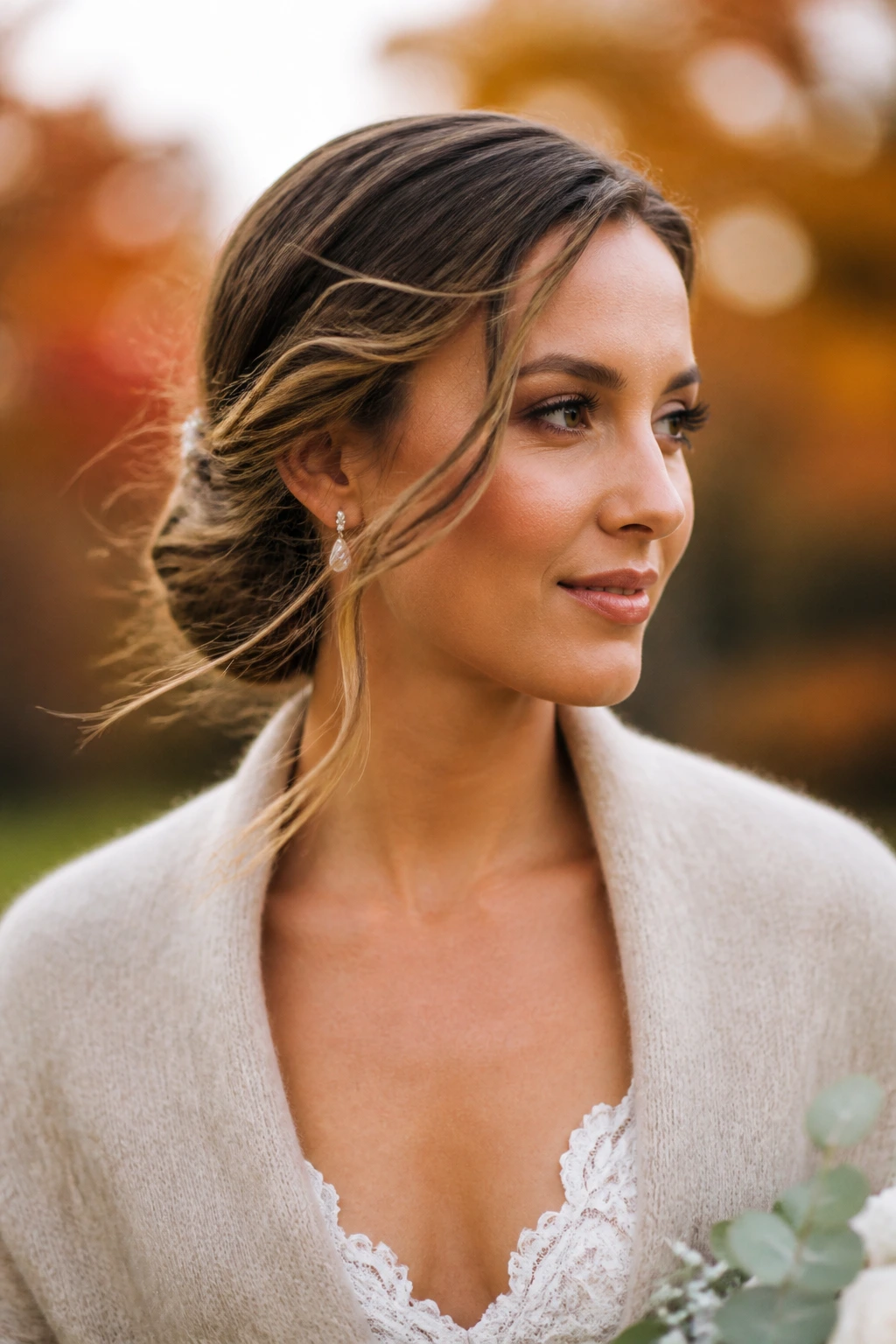
Fall changes the rules in tiny ways that add up fast. The air is usually drier than people expect, so sleek strands can get static at the ends while curls lose their spring if they’re overhandled. Indoors, heaters can make the front pieces frizz and the back sections collapse at the same time, which is a very irritating combination.
The clothing matters too. Fall dresses often bring sleeves, capes, jackets, heavier lace, or higher necklines, and the hair has to sit with all that fabric instead of fighting it. A style that looks fine with a strapless gown can feel crowded once there’s a high collar, a veil comb, and a wrap around the shoulders. I keep coming back to low shapes for that reason. They just behave.
Wind is the other big one. It does not need much. A walk from the car, a gust near the venue door, or one coat removal can split a face-framing section in a way you won’t notice until the photographer starts clicking. That’s why fall bridal hairstyles often work best when the base is secured and the movement lives on top, not underneath it.
Essential Tools for These Looks
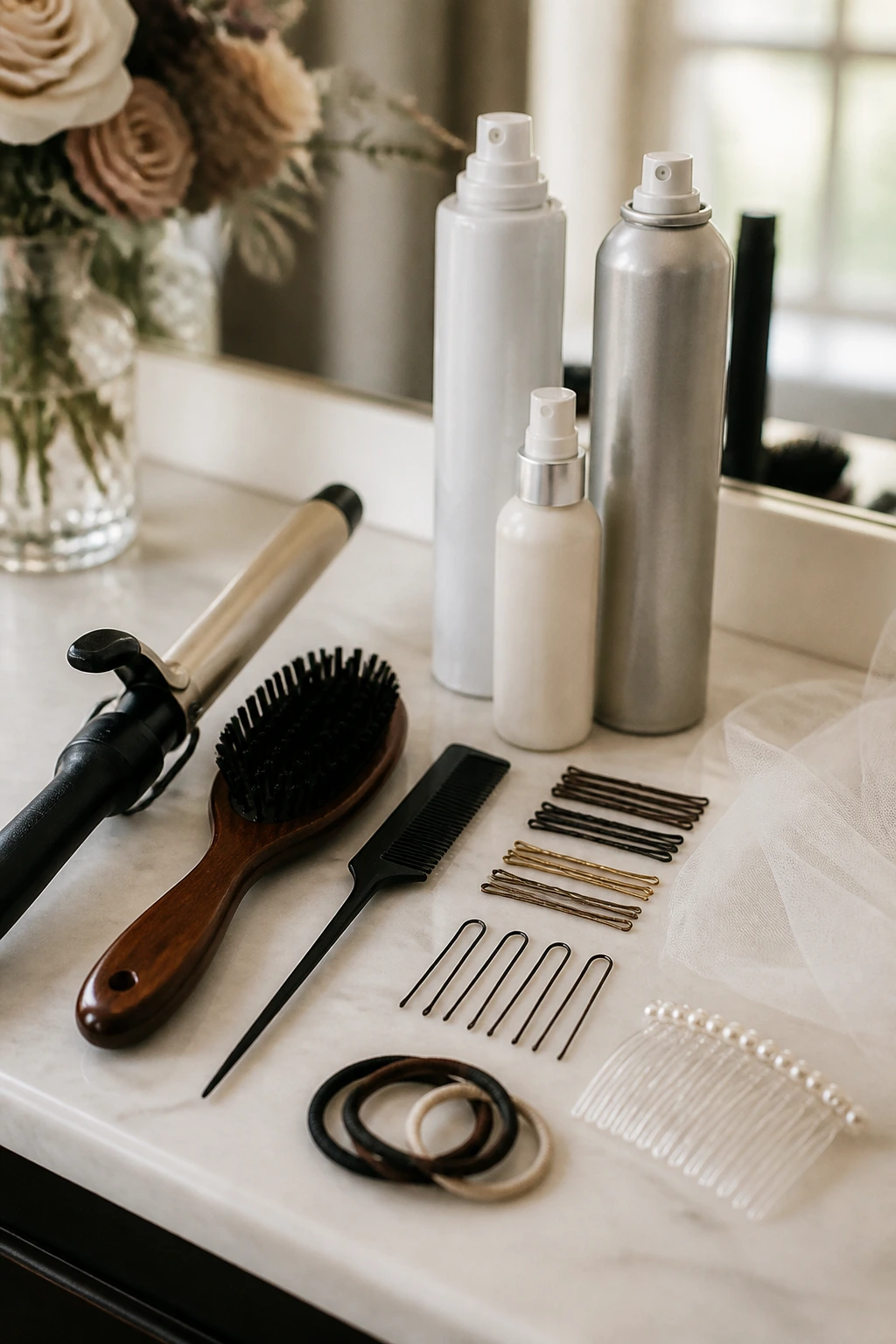
-
1-inch curling iron or wand: Best for controlled bends, waves, and face-framing pieces that don’t look too tight.
-
Boar-bristle brush: Useful for smoothing the crown on sleek buns, ponytails, and twists without leaving hard brush marks.
-
Tail comb: Helps with clean parts, sectioning, and teasing a little lift where the style needs it.
-
Bobby pins in two shades: Brown or blonde pins blend better than black ones on lighter hair and disappear faster in photos.
-
U-pins: These are excellent for buns, coils, and twists because they hold shape without making the style bulky.
-
Hair elastics with a strong core: Thin, weak elastics snap under tension. Bring extras.
-
Texturizing spray: Gives grip to slippery hair and helps braids or buns stay put.
-
Flexible-hold hairspray: Better for bridal hair than a crunchy shell. You want movement, not a helmet.
-
Heat protectant: If the style uses hot tools, this is not optional. Heat damage shows fast in polished styles.
-
Veil comb or accessory clips: Test these before the wedding day so you know exactly where they sit and how much weight they add.
-
Sectioning clips: Make the trial run easier and keep the top layers from getting mixed into the wrong section.
-
Mini touch-up kit: Pack spare pins, a travel spray, and a small comb. A tiny kit saves a lot of panic.
Smart Hair Prep and Product Choices
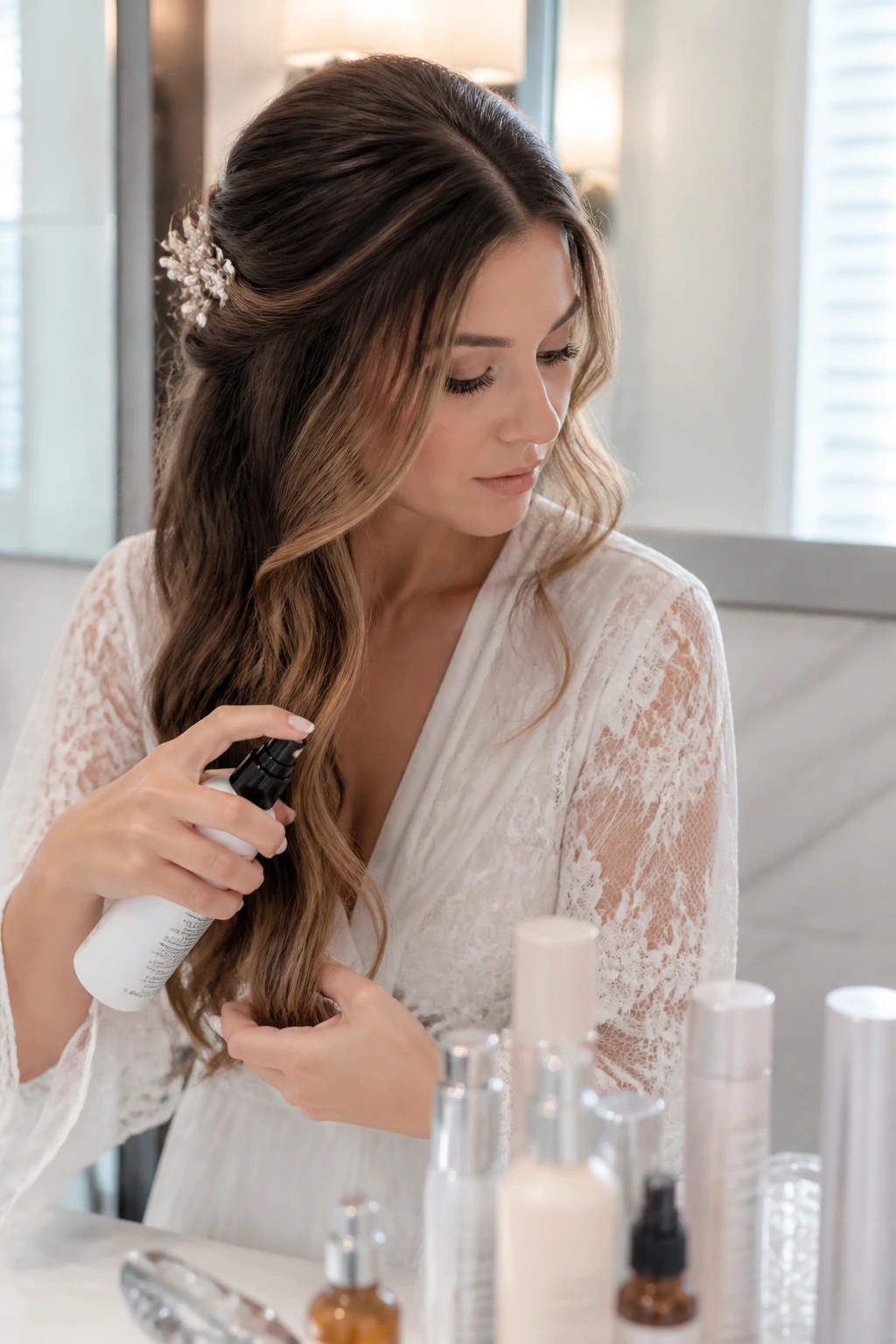
Hair prep is where a lot of bridal styles either gain grip or slide into trouble. Most updos and structured half-up looks prefer hair that is clean enough to move through, but not so silky that the pins skate out. Day-old hair often gives the best balance for straight or fine textures, while curls usually need moisture and curl definition rather than extra washing.
Product order matters. Start with heat protectant if you’re using hot tools, then add a light mousse or setting lotion where the hair needs body, not all over the scalp. Texture spray works best on the midlengths and roots after the first curl set has cooled. If you spray the hair before it’s shaped, you can end up with stiff sections that refuse to blend.
Trial runs save people from surprises. If you’re wearing a veil, earrings, or a heavy accessory, test them with the style in place, not beside it. A comb that feels light in your hand can pull the crown down once it’s attached. And if your hairline tends to frizz in dry air, don’t fight it with too much serum. A tiny amount at the edges is usually enough; the goal is control, not shine.
How to Match the Style to the Dress and the Day
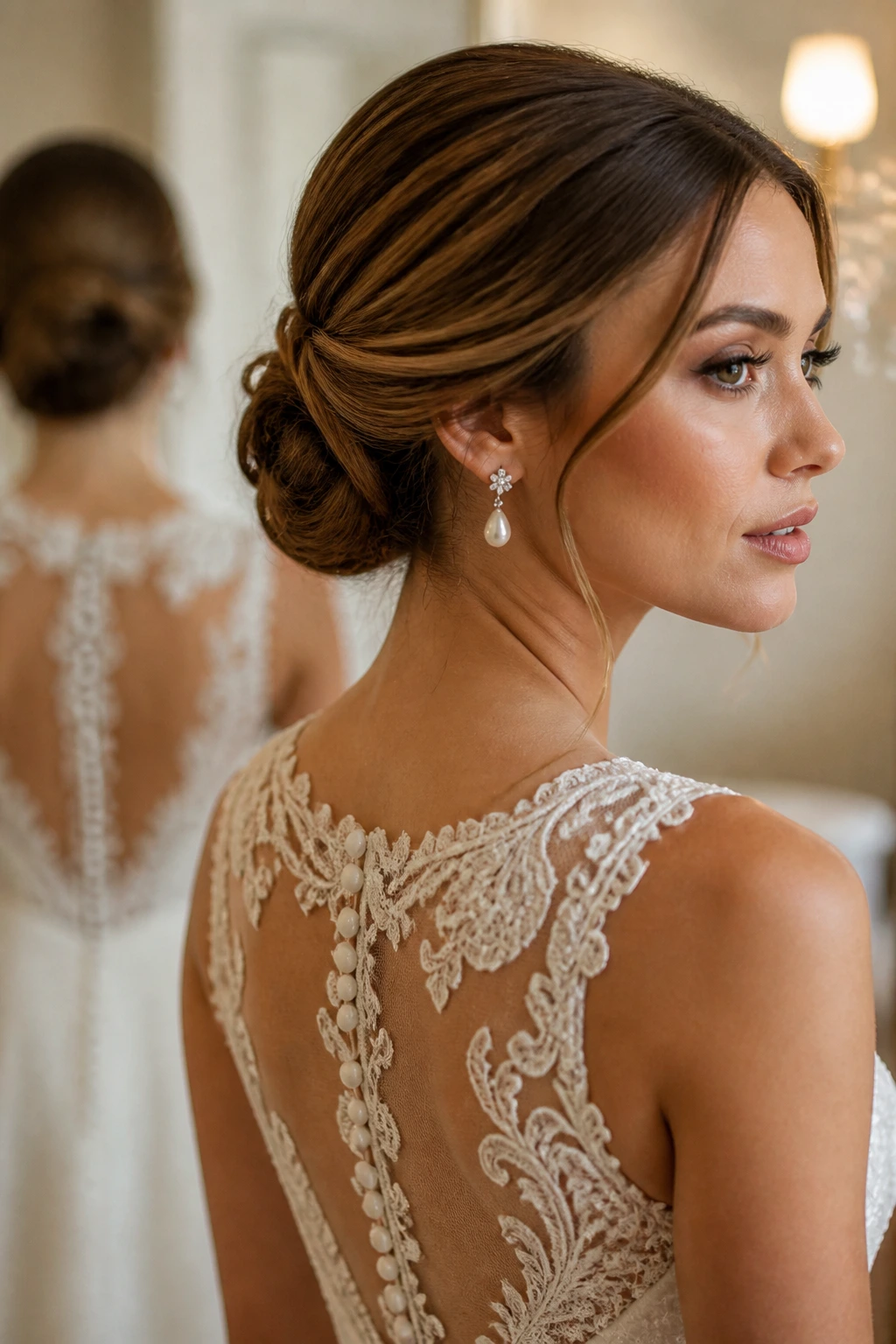
Silhouette: If the dress has a busy back, a low bun, chignon, or tucked style usually looks cleaner than a high mound of curls. When the neckline is already doing a lot, the hair should support it instead of competing for attention.
Accessories: Big earrings and a heavy necklace call for simpler hair. A crystal comb, ribbon, or small pins can carry the look without turning the head into a display rack. If you want both a veil and a crown, keep the hairstyle itself quieter.
Scale: Fine hair usually needs tighter shaping and smaller pieces, while thick hair can hold broader braids, coils, and waves. Shorter styles work best when they’re polished and intentional, not forced into faux volume that fights the cut.
Venue: Outdoor ceremonies ask for more anchor points, lower shapes, and less loose face-framing. Indoor ballroom styles can tolerate more movement, more shine, and a little more drama.
Additional Tips and Finishing Moves
Texture Boost: Curl each section, clip it to cool for 8 to 10 minutes, then brush or finger-comb only after the shape has set. That one pause gives the hair a stronger bend and fewer collapsed pieces.
Time-Saver: Build the base with dry shampoo or texture spray the night before if your hair tends to be too soft. It gives the style grip from the start, which matters more than extra spray later.
Pro Move: Hide a second row of pins underneath the visible surface. The top layer looks clean, but the hidden pins keep the shape from sagging once the veil comes off.
Emergency Fix: Keep two spare bobby pins, a tiny can of hairspray, and a tail comb near the getting-ready chair. If a face-framing piece starts to split or a wave goes flat, you can repair it in under a minute.
Common Mistakes to Avoid
Washing too close to the ceremony: Freshly washed hair can be too slippery for buns, braids, and twists, especially if the style needs pins to bite. If your hair is very fine, a little natural oil helps the shape stay where it belongs.
Choosing volume that ignores the dress: Huge hair with a high neckline or detailed back can look crowded fast. The fix is to decide what the dress needs first, then shape the hair around it.
Skipping a veil test: A veil comb that seems light in the box can drag down the crown once it’s anchored. Always test the placement with the actual hairstyle so the weight lands in the right spot.
Over-spraying too early: A hard shell of hairspray before the style is finished makes the hair hard to shape and even harder to fix. Use enough to set, then stop. You can always add a little more at the end.
Ignoring the hairline and nape: These are the first places to frizz, bend, or break apart. A tiny smoothing product and a few strategic pins around the perimeter save a lot of last-minute panic.
Variations and Adaptations to Try
For Fine Hair That Slips: Use smaller sections, more hidden pins, and a little powder or texture spray at the roots. Fine hair usually looks best when the shape is compact and deliberate, not oversized.
For Thick Hair That Fights Back: Build the style in layers and pin as you go instead of trying to force the whole mass into one move. U-pins help more than people expect, especially for buns and coils.
For Natural Curls and Coils: Keep moisture in the midlengths, define the curls first, and shape them without brushing the life out of them. A curl pattern that stays visible tends to look better than one that’s been over-smoothed.
For Short Hair and Lobs: Go polished, not overstuffed. Waves, pins, barrettes, and tucked sections usually work better than trying to imitate a long-haired updo that won’t stay balanced.
For Windy Outdoor Ceremonies: Favor low buns, braids, and half-up styles with secure anchors near the nape. Anything that depends on loose, floating pieces at the temples will need constant rescue.
For Heavy Veils or Cape Trains: Keep the crown compact and place the accessory lower than you think. A style that leaves room for the comb and the fabric usually holds up better than one built too high.
Make-Ahead, Touch-Up, and Next-Day Care
The smartest bridal hair plan starts before the wedding day, not on it. A trial run 2 to 4 weeks ahead gives you enough time to see whether the style collapses, frizzes, or feels too tight around the temples. If something looks wrong in the mirror for five minutes, it will probably bother you for five hours.
For the day itself, most styles hold best when the hair is prepped in stages: dry hair, product, set, cool, pin, then final spray. If you’re doing curls or waves, let them cool fully before brushing them apart. That cooling window is where a lot of the hold gets built. Shortcuts there usually show up during the reception.
For touch-ups, keep the kit tiny and useful: 4 to 6 bobby pins, 2 U-pins, a travel hairspray, a small comb, and a few blotting papers if your hairline gets shiny. If you’re wearing a veil, ask someone to remove it carefully by lifting the comb straight out instead of yanking at an angle. That one motion can save the style from flattening halfway through dinner.
If you want the hairstyle to survive into the next morning for brunch or a sendoff, sleep with a silk scarf if the style can tolerate it, or loosely pin the parts that tend to separate. Don’t brush everything out aggressively; work from the ends upward with your fingers first. The style rarely survives a full night untouched, but it can often be coaxed into a second life.
Questions Brides Actually Ask About Fall Hair
Which fall bridal hairstyles hold up best in wind?
Low buns, braided crowns, French twists, and sleek ponytails usually behave best because the weight stays close to the head. Loose side pieces can work too, but they need more spray and more pinning than most brides expect.
Should my hair be clean or day-old for the wedding?
For most straight or fine hair, day-old hair gives better grip and less slipping. Curly and coily textures often need a different prep plan: cleanse early enough to define the curls, then add moisture and hold rather than over-washing right before styling.
Can I wear a veil with a ponytail?
Yes, but the placement matters. A low ponytail or wrapped base gives the veil comb something stable to sit on, while a high ponytail can push the veil awkwardly upward unless the stylist plans for it.
What if my hair is very fine and every style falls flat?
Choose compact shapes and prep with texture spray, dry shampoo, or a lightweight mousse before styling. Fine hair usually does better with smaller sections, tighter pins, and a shape that sits lower on the head.
How do I keep curls from falling by the reception?
Let each curl cool fully before touching it, and use a firm but flexible setting spray after the style is shaped. If the hair is very soft, set curls with clips for a few minutes before releasing them. That extra pause helps more than another round of hot tools.
Can short hair look formal enough for a wedding?
Absolutely. A polished bob, a side sweep, or pinned-back waves can look refined and deliberate without pretending the hair is longer than it is. Short styles often look best when the lines are clean and the accessories are chosen with restraint.
What hairstyle works best with a high-neck dress?
Low chignons, French twists, Gibson tucks, and neat ponytails keep the neckline visible and avoid crowding the fabric. If the dress already sits close to the throat, hair should usually stay below the collar line.
How far in advance should I book a trial?
Two to four weeks ahead is a good window. That gives you time to adjust the shape, order accessories if needed, and still remember exactly what felt off during the test run.
A Style That Still Feels Like You
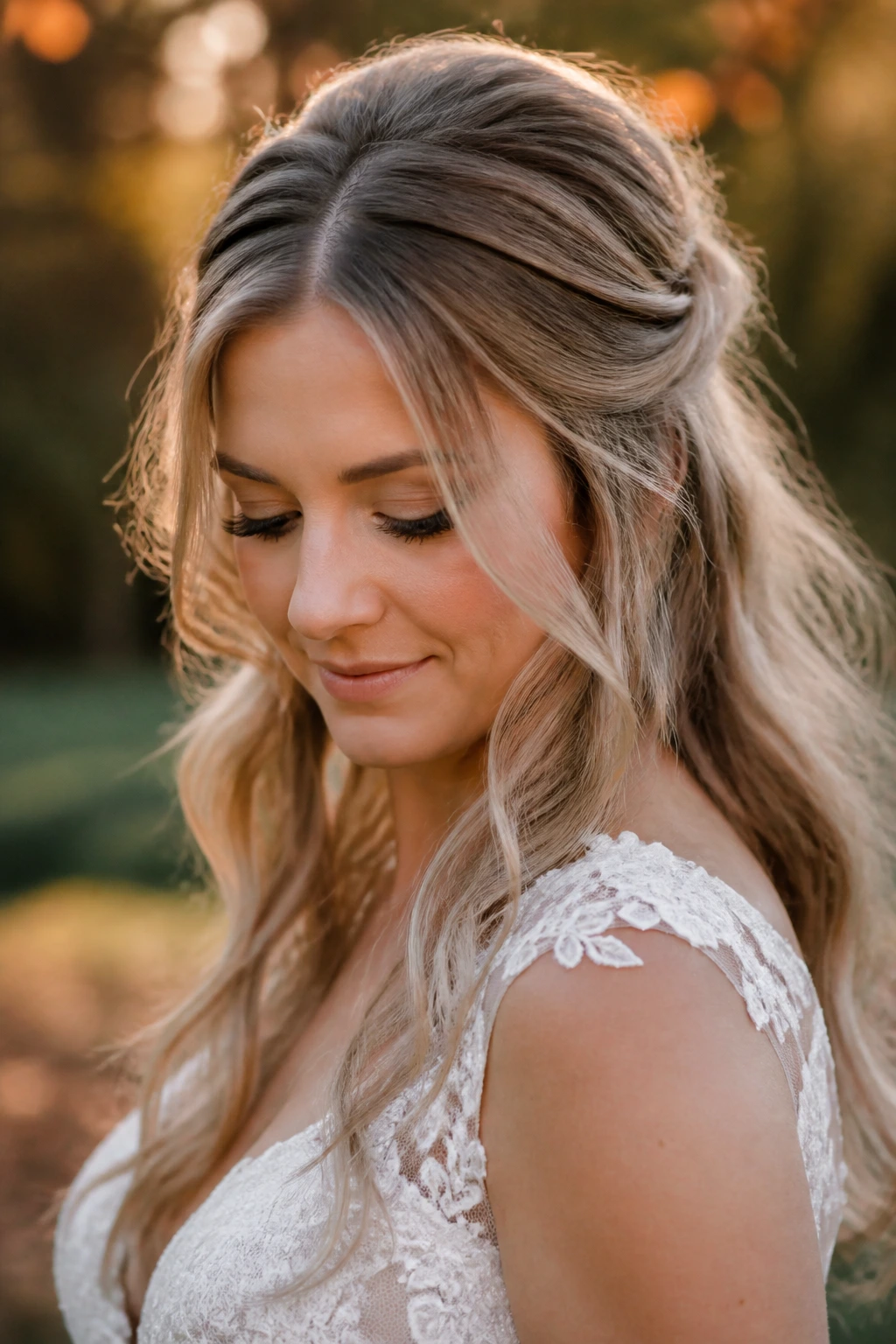
The strongest bridal hair choices don’t fight the dress, the weather, or the texture of your own hair. They make room for all three. That’s why the best fall bridal hairstyles are usually the ones with structure at the base and enough softness around the edges to keep the whole look human.
If you’re stuck between two options, picture the style after the coat comes off, after the hug line starts, and after the first hour of dancing. The one that still makes sense in that moment is probably the better one. And that’s the version worth wearing all day.
