



The best wedding hairstyles for brides have a tricky job. They need to look soft in the mirror, stay put through hugs and dancing, and still make sense once a veil comes off halfway through the reception. That is a much harder brief than it sounds. Hair that looks gorgeous for ten minutes is easy. Hair that still looks polished after a ceremony, portraits, dinner, and one enthusiastic aunt is the real work.
Most bridal hair fails for plain, practical reasons. The base was too slippery. The crown had no support. The face-framing pieces were left to do too much. Or the style looked lovely in a still photo and then collapsed the minute the bride turned her head. I trust wedding hair with a good skeleton under it — pins, texture, a shape that’s actually anchored — more than styles that depend on perfect weather and a prayer.
Some brides want sleek. Some want romantic. Some want vintage, undone, polished, or a little bit dramatic. All of that belongs here. The useful question is not “What looks pretty?” It’s “What will still look like your hair after the hug line, the first dance, and the veil removal?”
Why This Collection Is Different
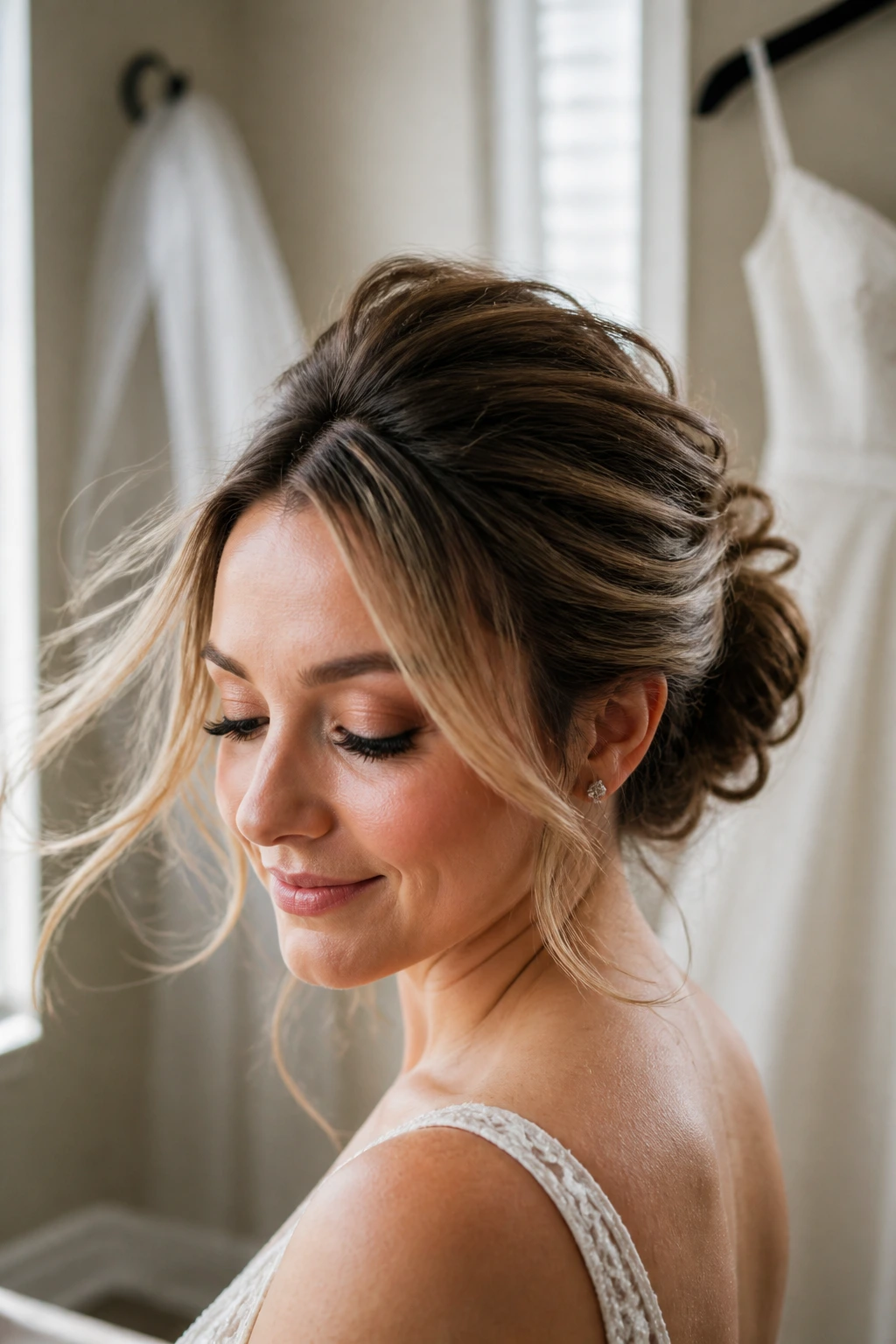
- Built for real movement: These styles account for hugs, wind, dancing, and the awkward moment when someone lifts a veil too quickly.
- Works across hair types: Fine hair, thick hair, curls, short cuts, and long lengths all get a place in this lineup.
- Accessory-friendly: Combs, pins, flowers, pearls, and tiaras have a real job here, not just a decorative one.
- Photo-proof from every angle: Front, side, and back matter. A bride sees all three in one day.
- Easy to adapt: Most of these can be tightened, softened, or dressed up without changing the whole shape.
- Comfort is part of the plan: Pretty hair that gives you a headache by hour two is a bad trade.
How to Match a Bridal Hairstyle to Your Dress, Veil, and Texture
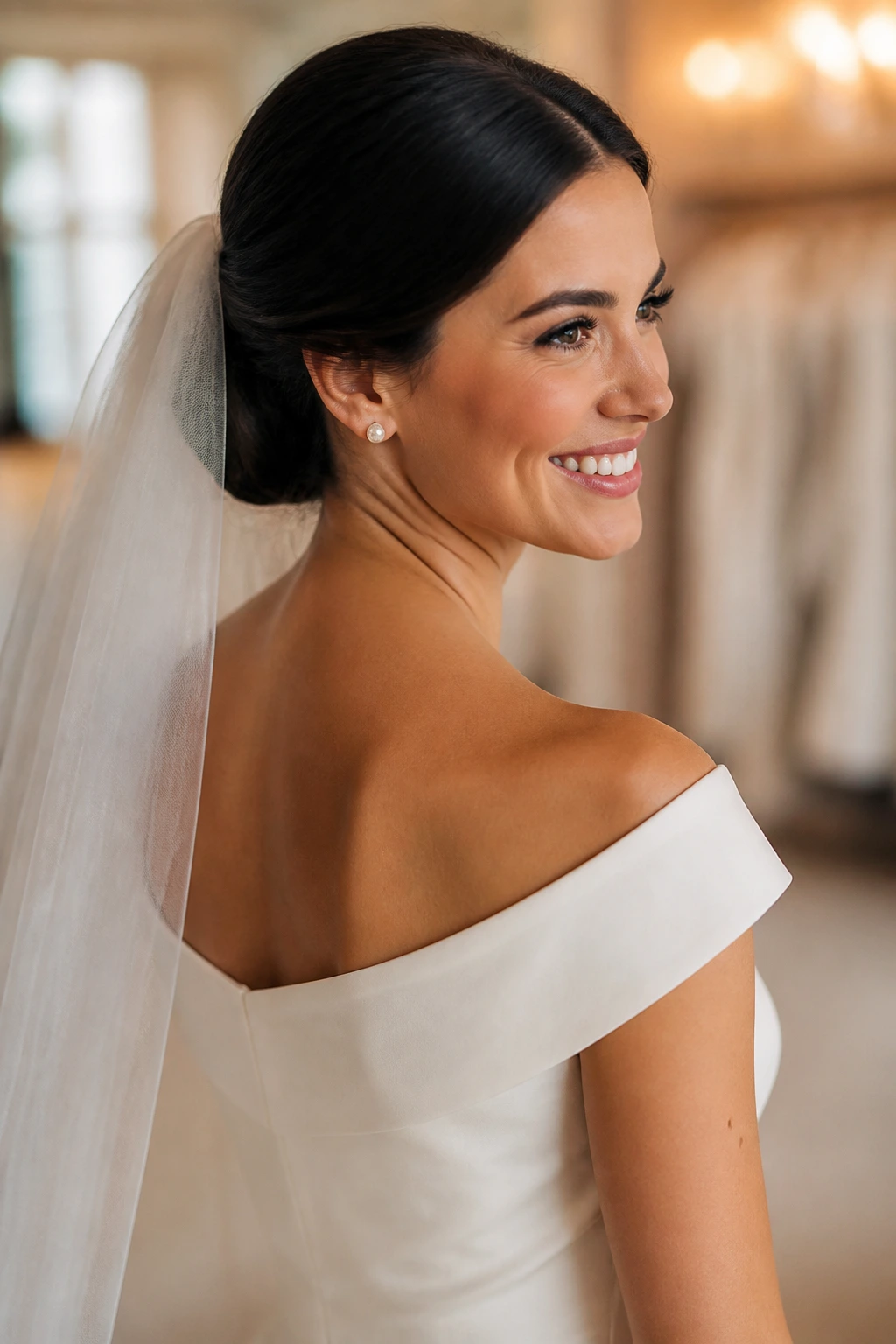
A bridal hairstyle should sit in conversation with the dress, not compete with it. A high neckline or a heavy lace bodice usually wants hair off the shoulders so the fabric can breathe. A bare neckline can handle more movement — soft waves, a ponytail, or a half-up shape — because there’s room for the hair to live without crowding the dress.
Veils change the picture fast. A comb veil needs a stable anchor point, usually on top of a bun, twist, or braid that has some grip. If the veil is cathedral length, the hair underneath should be calm and secure, because loose texture under a long veil tends to tangle when it’s removed. Headpieces and combs work best when the base is already built.
Texture matters even more than length sometimes. Fine hair usually needs root lift, a little backcombing, and a spray that gives grip without turning the strands crunchy. Curly hair holds shape in a completely different way; the goal is usually to preserve the curl pattern, not flatten it into something it never wanted to be. Shorter cuts can look gorgeous with the right pin placement and one strong accessory. They do not need to be “hidden.” They need to be styled on purpose.
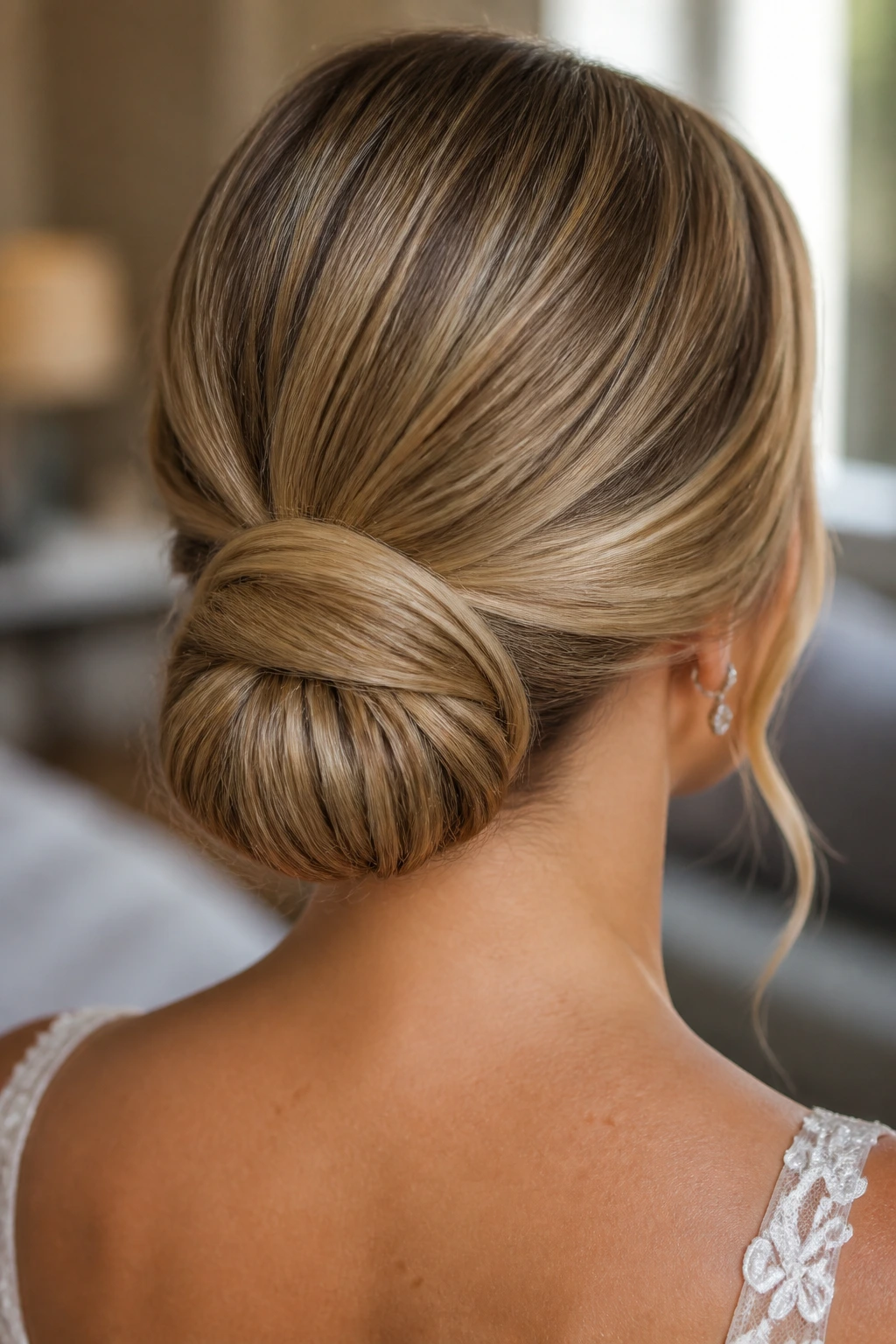
1. Sleek Low Chignon With a Center Part
A sleek low chignon with a center part is the kind of bridal hairstyle that looks calm from the front and expensive from the back. It sits low at the nape, usually tucked into a compact knot or twist, and the center part gives the whole style a clean line that feels modern without getting cold. This is one of those looks that never fights the dress.
It works especially well with structured gowns, satin fabric, square necklines, and long veils. The trick is a smooth crown and a chignon that has real pin support inside it, not just a surface twist. Ask for the hair to be pre-smoothed with a light serum, then set with a fine mist of flexible spray so it doesn’t puff up when you move.
Why it stays elegant
- The low placement keeps the neckline open.
- The center part gives balance if the gown has symmetry.
- The nape bun holds a veil comb more securely than soft loose hair.
If you want one style that looks polished in portraits and never feels fussy, this is a very safe bet.
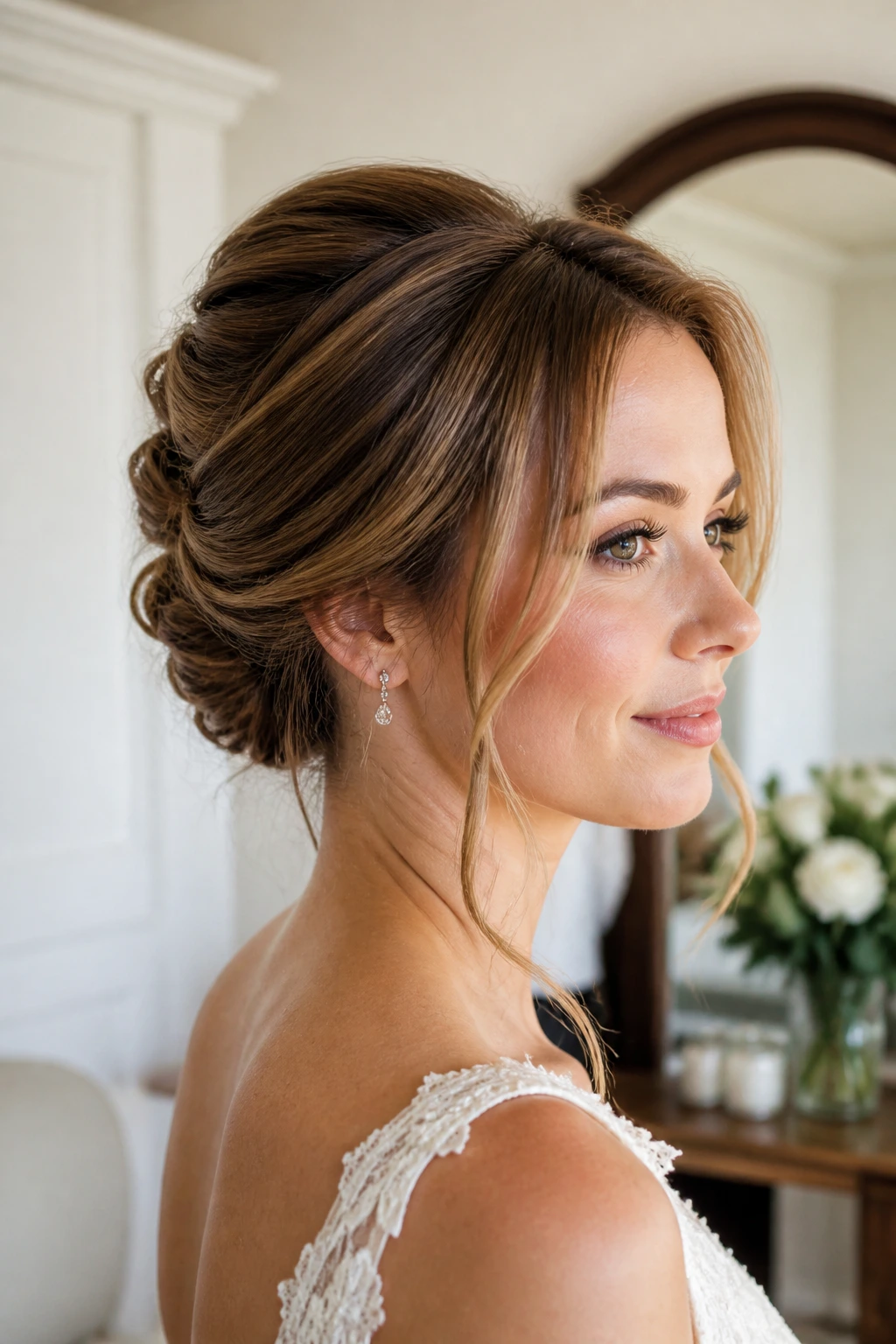
2. Soft French Twist With Face-Framing Pieces
The French twist gets a bad reputation because too many versions look stiff enough for a courthouse document photo. The soft version is different. It lifts the hair upward, folds it neatly, and leaves just enough movement at the temples to keep it from feeling sealed shut.
This style is strong with a bateau neckline, long sleeves, or a dress with a detailed back. It gives the shoulders space and keeps the focus on the face and jawline. I like it best when the front pieces are curved away from the cheekbone rather than dragged straight down; that small detail changes the whole mood.
A good French twist is a little engineering project. The stylist should build a secure vertical base, then smooth the outer layer over it so the twist looks tidy but not helmet-like. If you have medium to long hair, it can hold a comb, pins, or a slim pearl clip with no trouble at all.
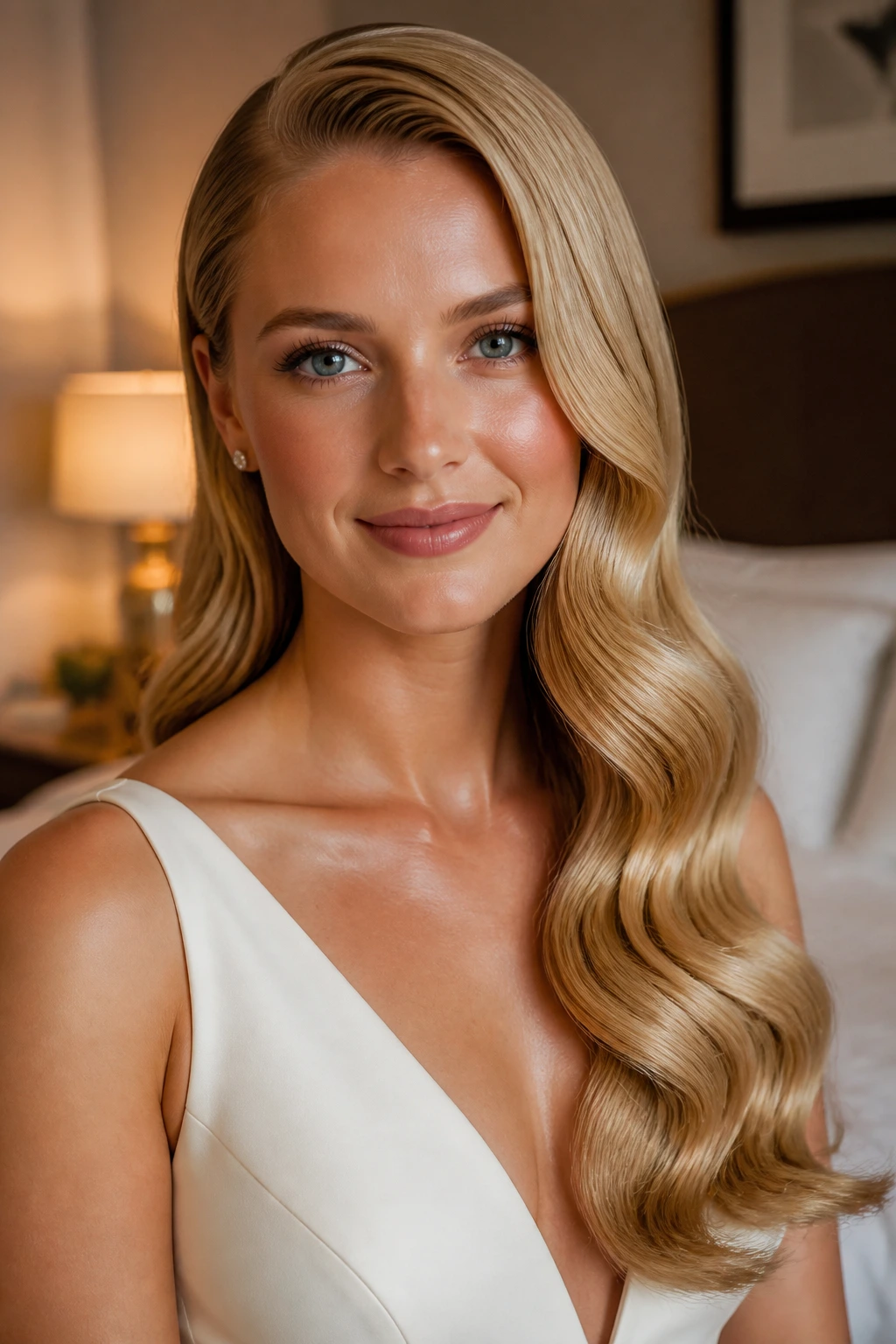
3. Glossy Hollywood Waves
Hollywood waves are for brides who want glamour with a strong side part and a deliberate shape through the ends. They are not beach waves. Beach waves drift. Hollywood waves sit in formation. The curve runs in a clean S-shape, and the shine matters as much as the pattern.
This style is excellent with strapless gowns, fitted silhouettes, or dresses with very clean lines because the hair brings drama while the dress stays simple. It’s also one of the few down styles that still looks intentional in formal portraits. The waves should be brushed just enough to unify them, not so much that they turn fluffy.
The best version has a soft hold spray layered after each section is set. That gives the wave memory it can keep through photos and dancing. If your hair is very fine, a few hidden extensions can help the shape stay fuller from roots to ends. Without that, the wave can flatten at the back by the reception.
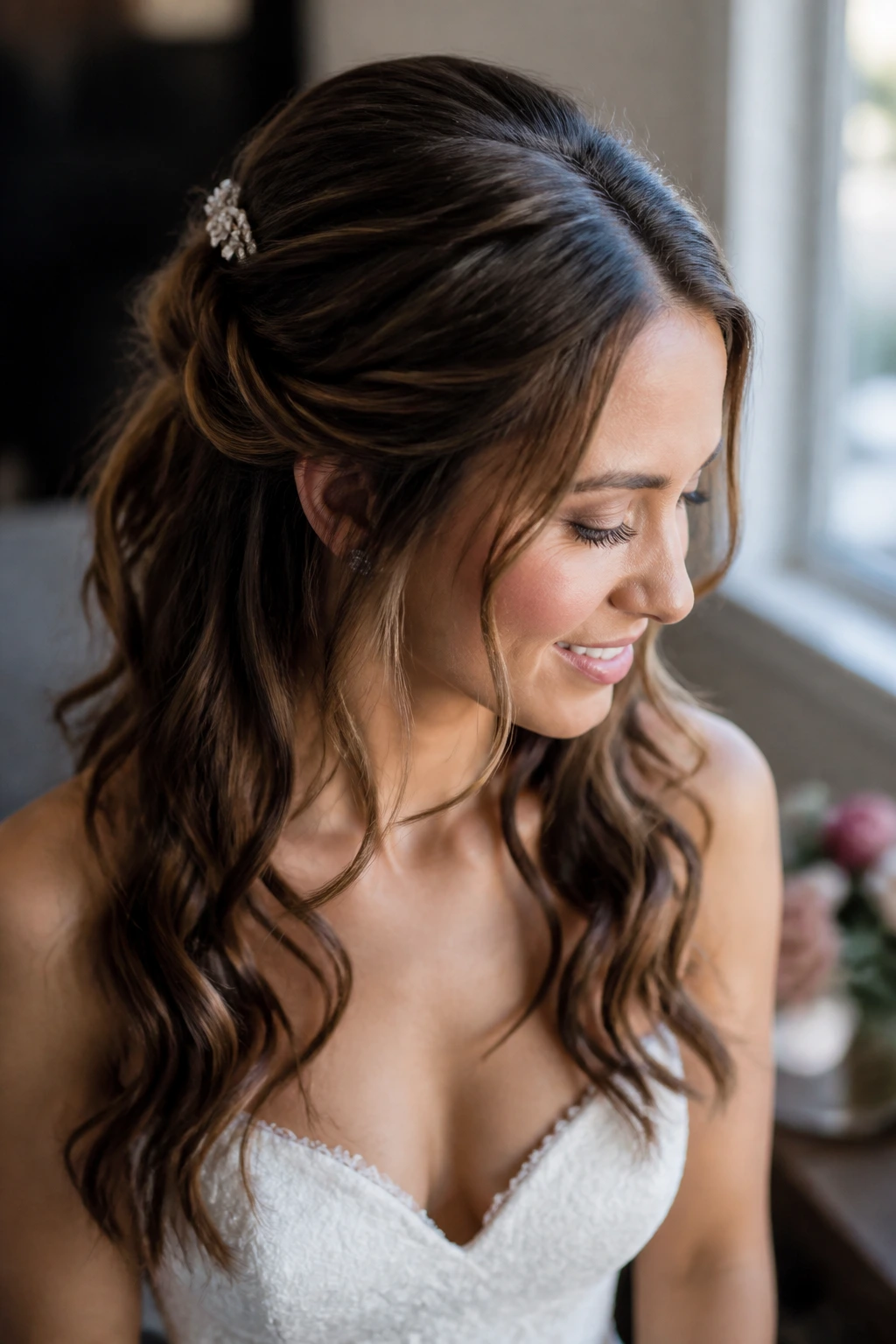
4. Half-Up Twisted Crown
A half-up twisted crown gives you the best part of an updo and the best part of wearing your hair down. The front is pulled back with twists that meet at the back of the head, while the rest falls in soft movement over the shoulders. It feels airy, which is one reason brides keep coming back to it.
This works beautifully for outdoor ceremonies, garden settings, and dresses that need a little softness around the neckline. The crown section keeps hair off the face, which matters if you’re wearing lashes, dewy makeup, or a long veil that gets lifted later. The lower hair can be curled loosely or blown out straight with a bend at the ends.
Ask for this detail
Ask the stylist to pin the twists into a hidden cross pattern. That small step keeps the top from splitting when the weather gets warm or the hair starts to move under a veil. A little texture spray at the roots helps the twists grip instead of sliding.
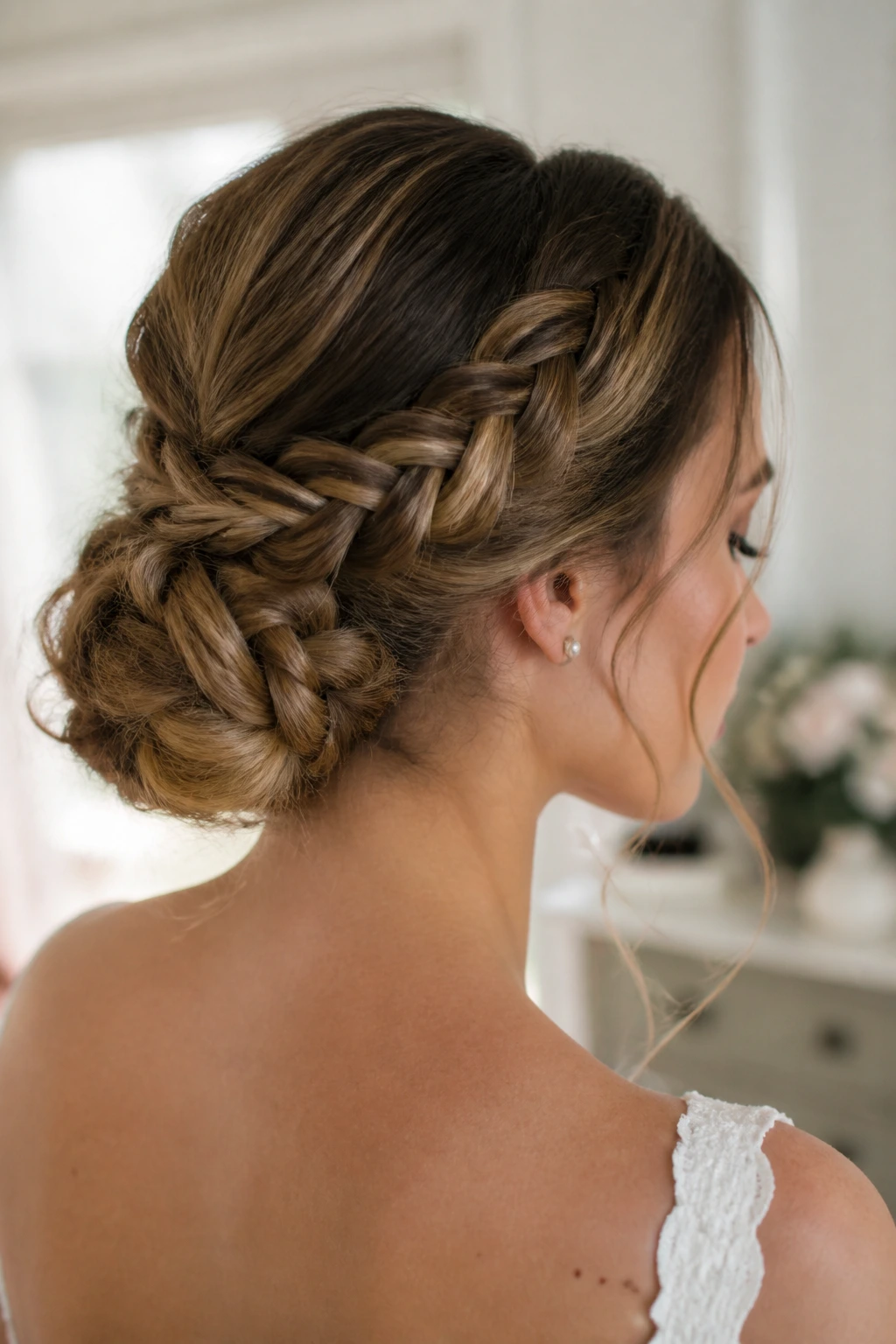
5. Braided Low Bun
The braided low bun has a sturdier feel than a plain knot, and that matters on a wedding day. The braid gives the bun texture, so the shape looks dimensional even when it sits low and tidy. It is a style that reads calm, not plain.
This is especially useful for brides who want a traditional shape but don’t want the finish to look too formal. The braid can wrap into the bun itself, snake along one side, or form a crown before disappearing into the nape. Any of those versions works well with veils and floral pins.
If your hair is thick, the braid helps control bulk without making the bun look compressed. If your hair is fine, the braid gives the illusion of more hair than you actually have. Either way, it’s one of the better choices for all-day wear because the woven structure resists sagging better than a smooth twist.
6. Classic Ballet Bun
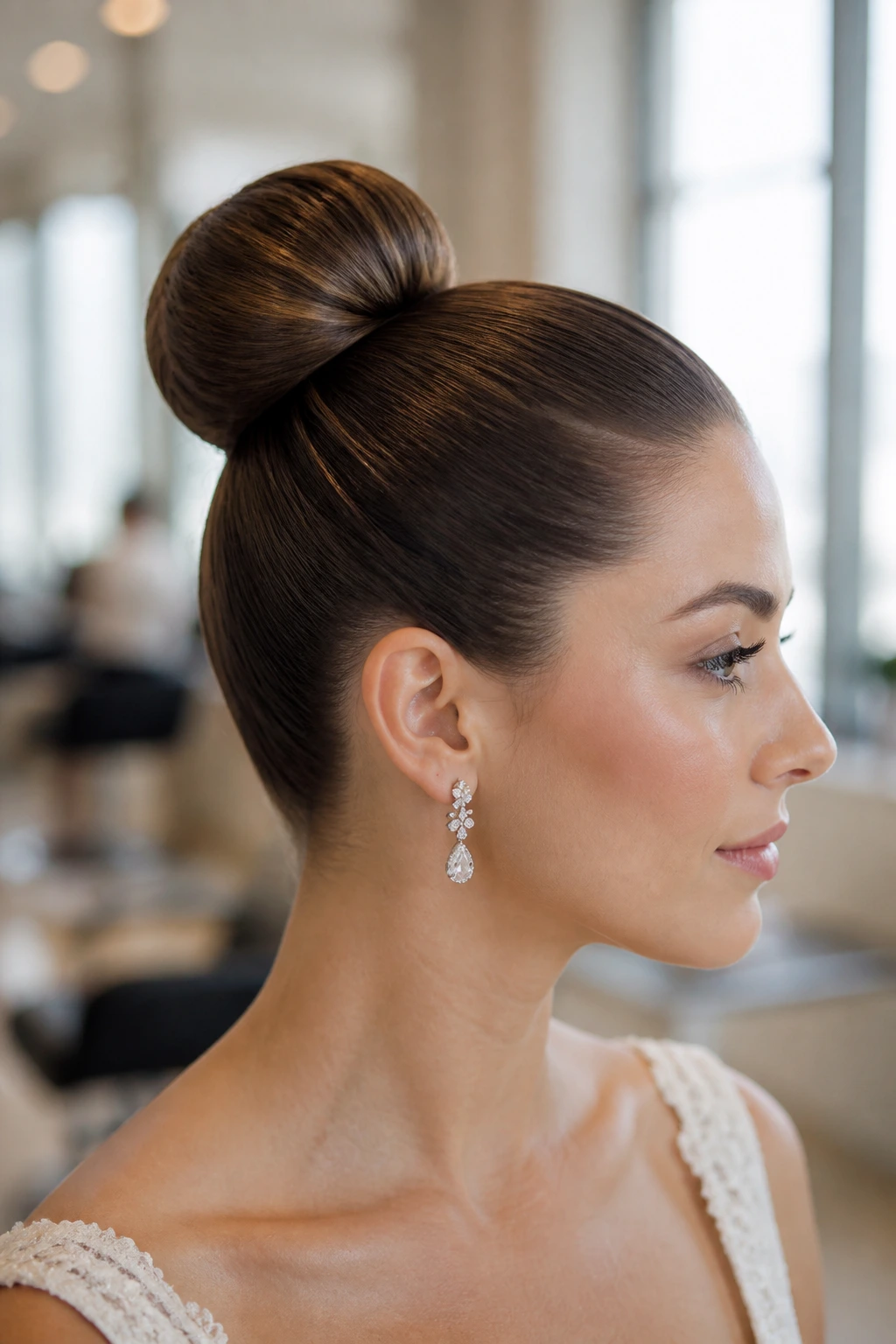
The classic ballet bun is still around for a reason: it’s tidy, balanced, and shockingly versatile. It sits centered or slightly low, often wrapped smooth and pinned close to the head so the silhouette stays clean from every angle. There’s nothing casual about it.
Brides with minimalist dresses tend to look especially good in this style because it doesn’t pull attention away from the gown’s shape. It also pairs well with statement earrings, since the hair leaves the ears exposed and the line of the neck uninterrupted. If you want a strong veil placement, this bun gives the comb plenty of structure.
A ballerina bun can be softened with a few face pieces or kept very clean and glossy. I prefer the version that has a little texture hidden inside the base, because it survives better than a perfectly slick surface. The outside can look neat; the inside should do the hard work.
7. Romantic Side-Swept Curls
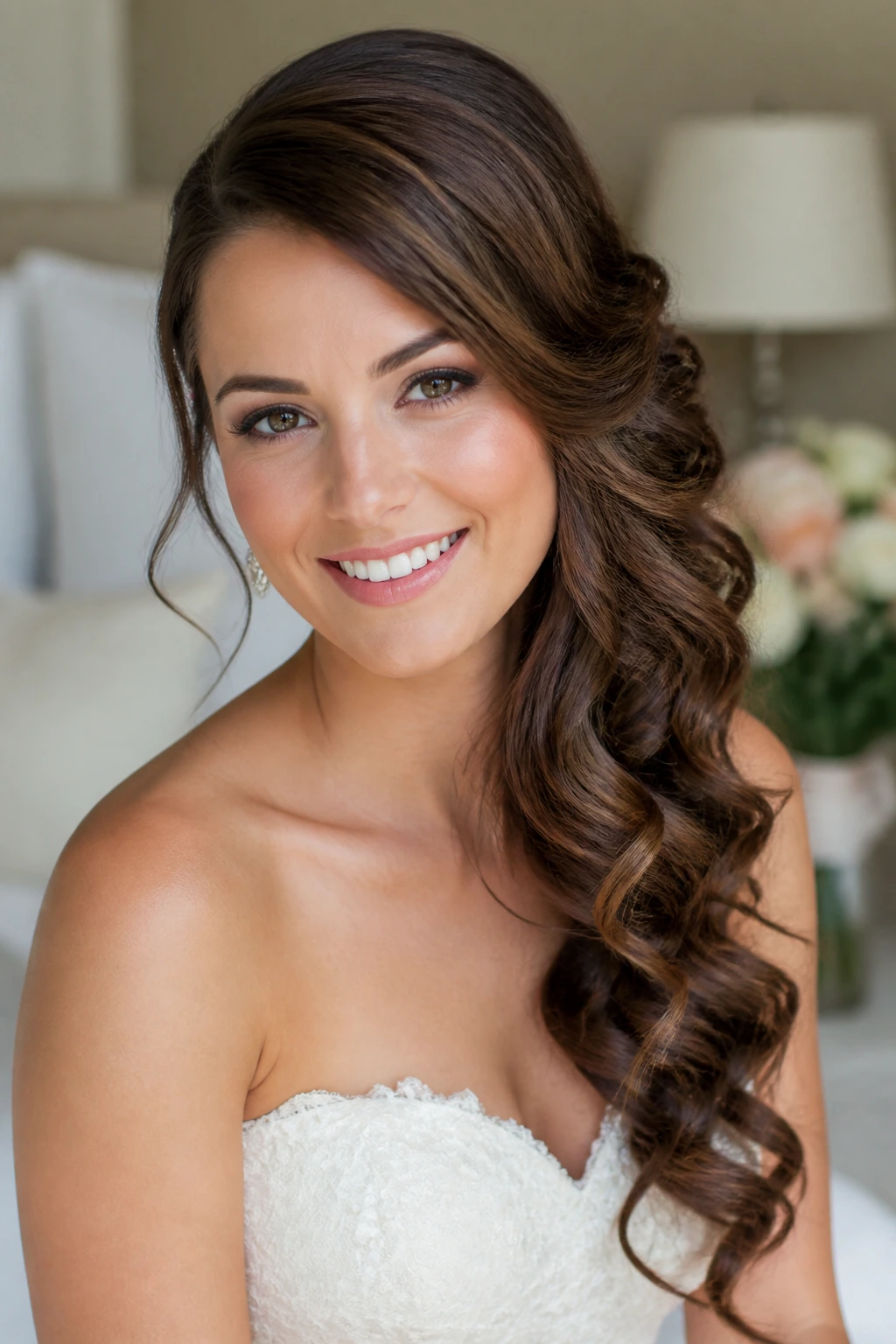
Side-swept curls feel a little old-school in the best way. One side is pinned back or tucked behind the ear, and the rest spills over one shoulder in soft, deliberate curves. It gives the face a long line and lets the dress neckline stay visible on the other side.
This is a good match for asymmetrical gowns, one-shoulder dresses, and brides who want movement without committing to a full down style. The side sweep also makes room for a single comb, hair vine, or a cluster of pins near the temple. That can be prettier than a big accessory right at the center.
The main thing to protect here is the shoulder side. If the curls are too loose, they frizz near the collarbone. If they’re too tight, the style starts looking prom-like. The sweet spot is a brushed curl with enough shape to hold for the whole event.
8. Bubble Ponytail With Pearl Pins
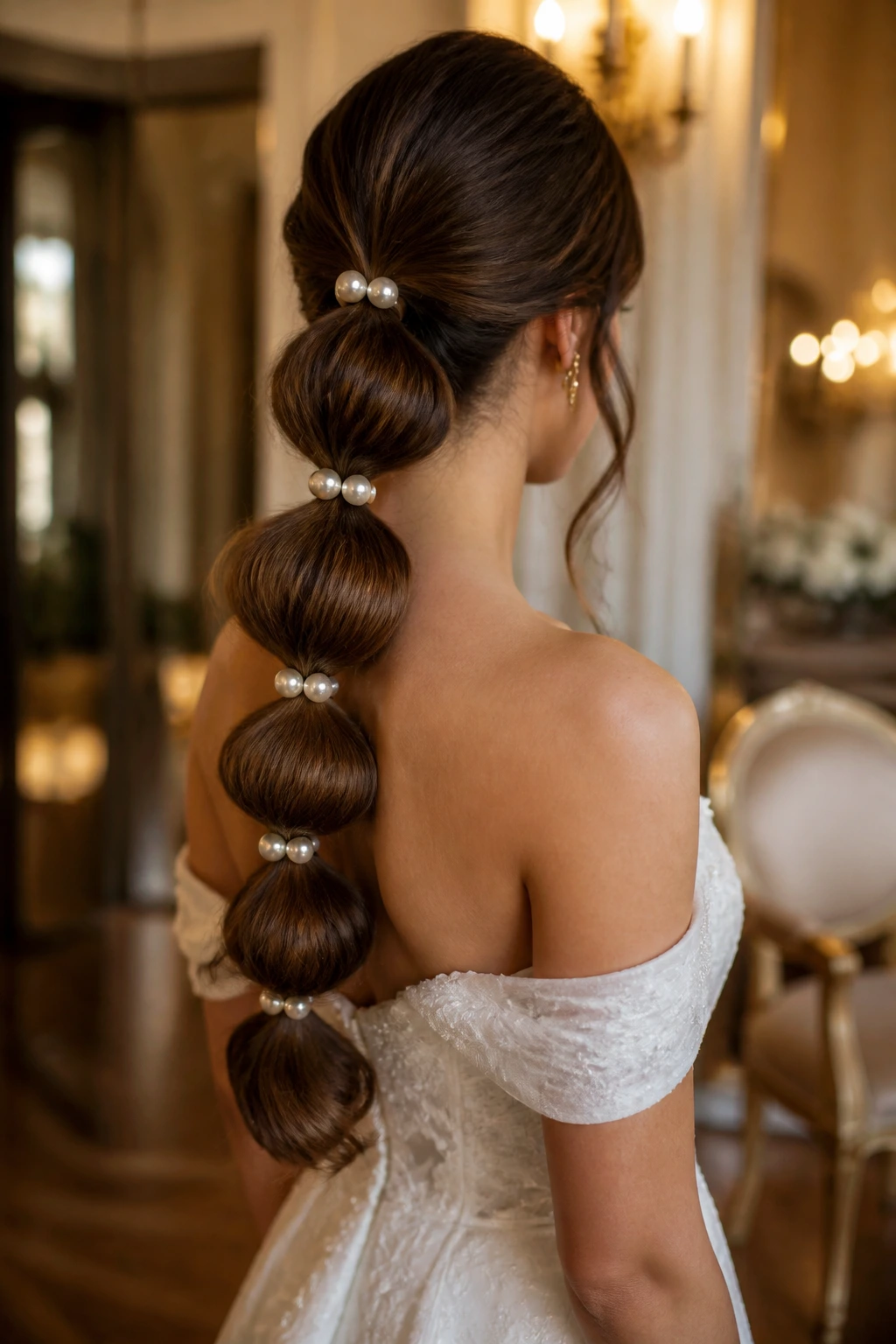
The bubble ponytail has a playful edge, but when it’s polished and dotted with pearl pins, it becomes surprisingly bridal. The hair is pulled into one long ponytail and sectioned with hidden elastics to create rounded “bubbles” down the length. It looks sculpted without being fussy.
This style is especially good for brides who want something modern and a little less expected. It keeps hair off the face, shows off earrings, and works with dresses that have striking backs. If the hair is very long, the bubbles give it structure so it doesn’t just hang there.
Pearl pins or small crystal accents can be placed between sections to keep the style from reading sporty. The key is to keep the top clean and the bubbles even. If one section is much looser than the others, the whole ponytail loses its rhythm.
9. Modern High Ponytail
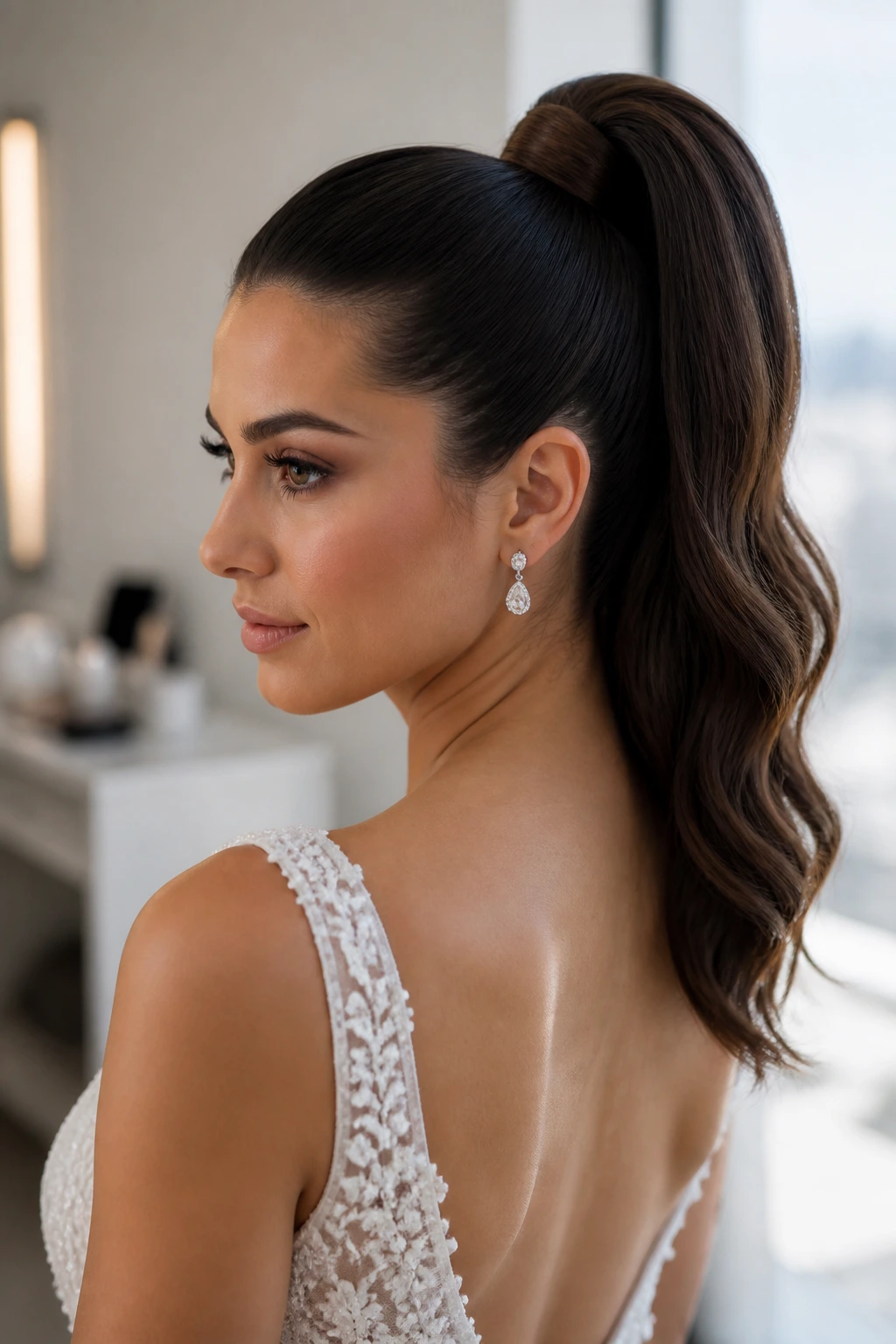
A modern high ponytail is sharp, lifted, and more formal than people expect. The crown gets smooth volume, the pony sits high enough to open the face, and the length can be curled, waved, or left glossy and straight. It feels confident.
This works with sleek gowns, fashion-forward silhouettes, and brides who want a little edge with their elegance. It also pairs nicely with high necklines because the lifted pony tail keeps the hair from crowding the fabric. The base needs to be wrapped neatly — a strand of hair or a small accessory at the elastic makes a big difference.
I like this option for brides who want movement in the hair but do not want the ends brushing the back of the dress all night. It sways, it photographs well from the side, and it usually survives dancing better than a loose wave.
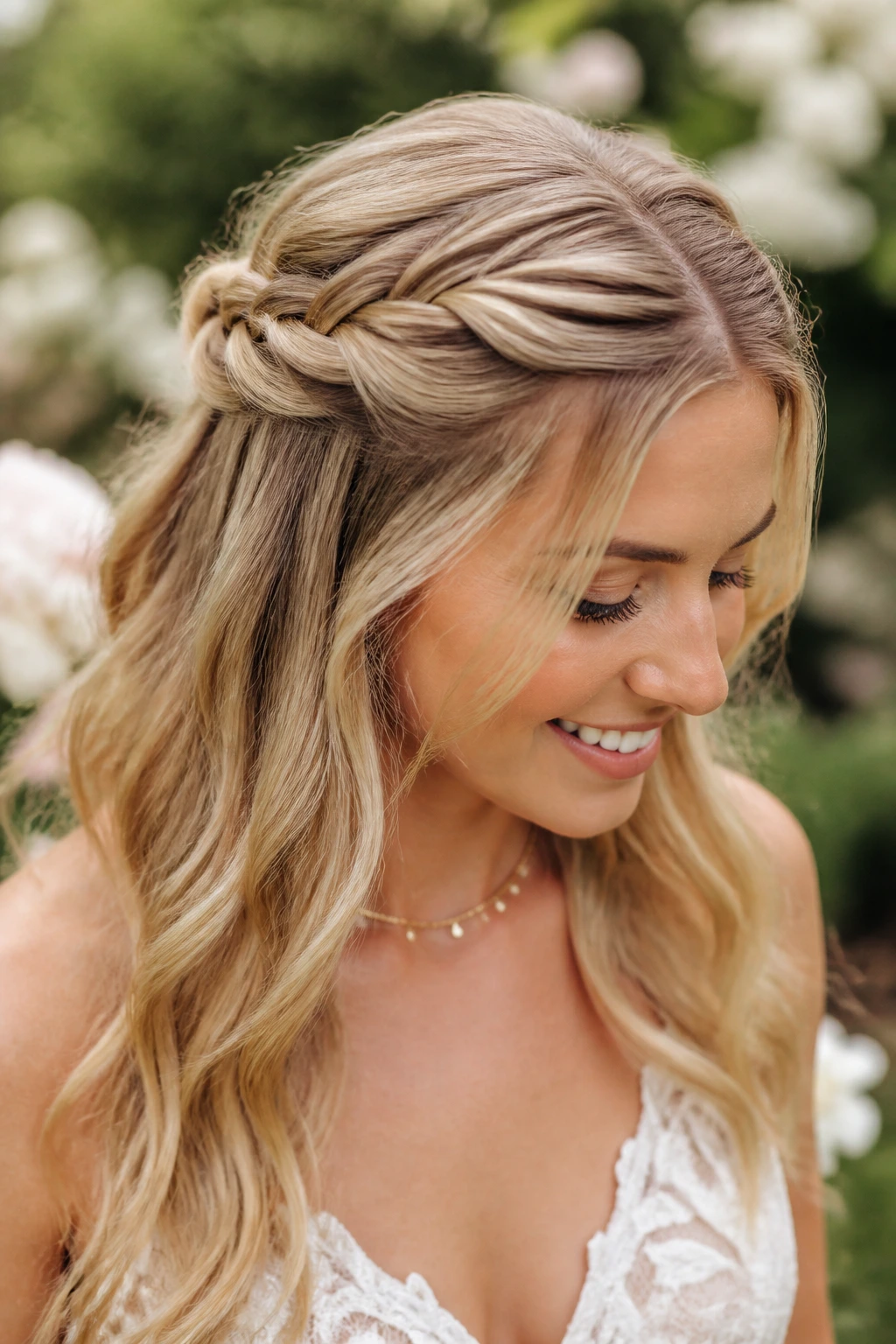
10. Loose Boho Crown Braid
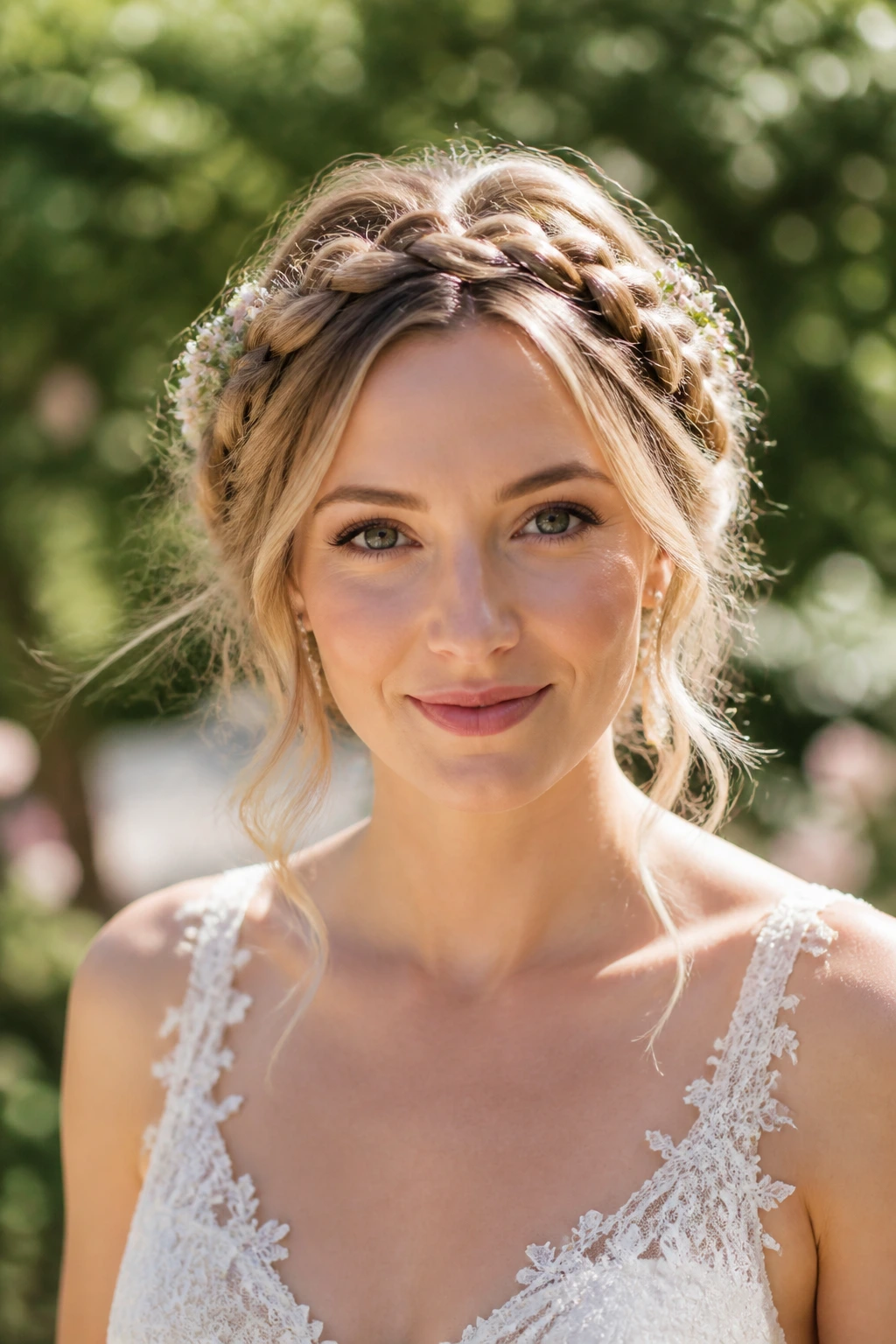
A loose crown braid gives the whole look a softer, more handmade feel. The braid wraps around the head like a halo, but the strands are gently pulled apart so it doesn’t look tight or severe. It’s one of the few bridal styles that can feel relaxed and still look fully deliberate.
This shape shines with lace dresses, outdoor ceremonies, and brides who want flowers tucked into the braid. It frames the face in a way that feels gentle rather than formal. If you’re wearing a veil, the braid also gives the comb a stable place to sit without fighting the texture.
The important part is restraint. Pull the braid out just enough to soften it, not enough to make it collapse. A loose braid with too little pin support will look charming in the mirror and flatter by the time you hit the reception. The braid should still have a spine.
11. Short Wavy Bob With One-Side Pin
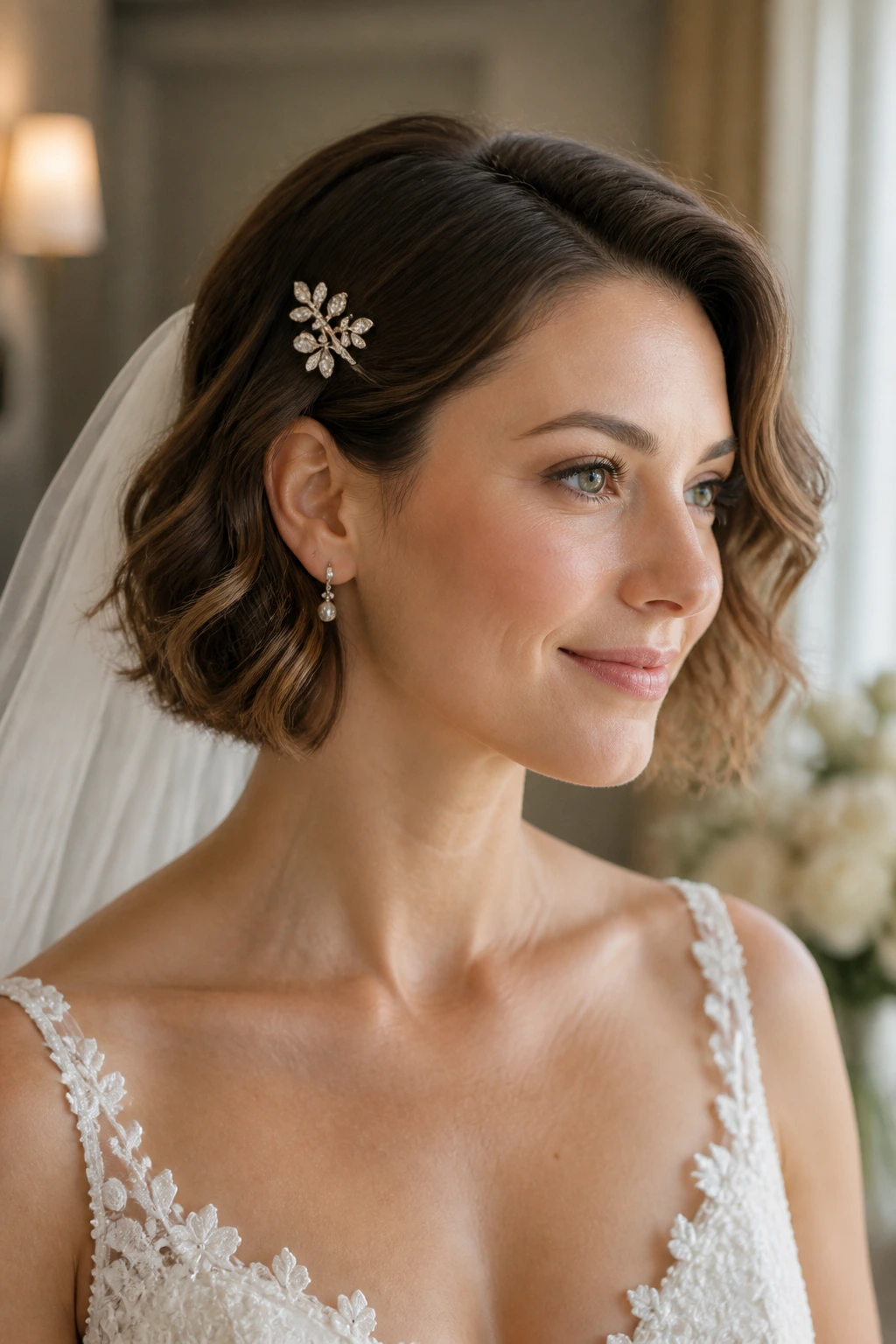
A short wavy bob can be bridal without trying to impersonate long hair. The cut itself becomes part of the design. Soft waves add shape, and one well-placed side pin or comb keeps the front off the face while letting the rest move naturally.
This is especially good for brides who want to look like themselves, just more refined. It works with vintage dresses, minimal gowns, and veils that sit higher on the head. A bob can also look sharper than long hair in photos because the line stays clean around the jaw.
The mistake to avoid is overbuilding it. Short hair doesn’t need to be buried under too much spray or stuffed with too many accessories. One elegant pin, one defined wave pattern, and a bit of shine is enough. The cut should still look like a cut.
Best companion pieces
- Small combs with a narrow base
- Pearl pins placed above one ear
- Veils that attach above the crown or just behind it
12. Textured Low Knot
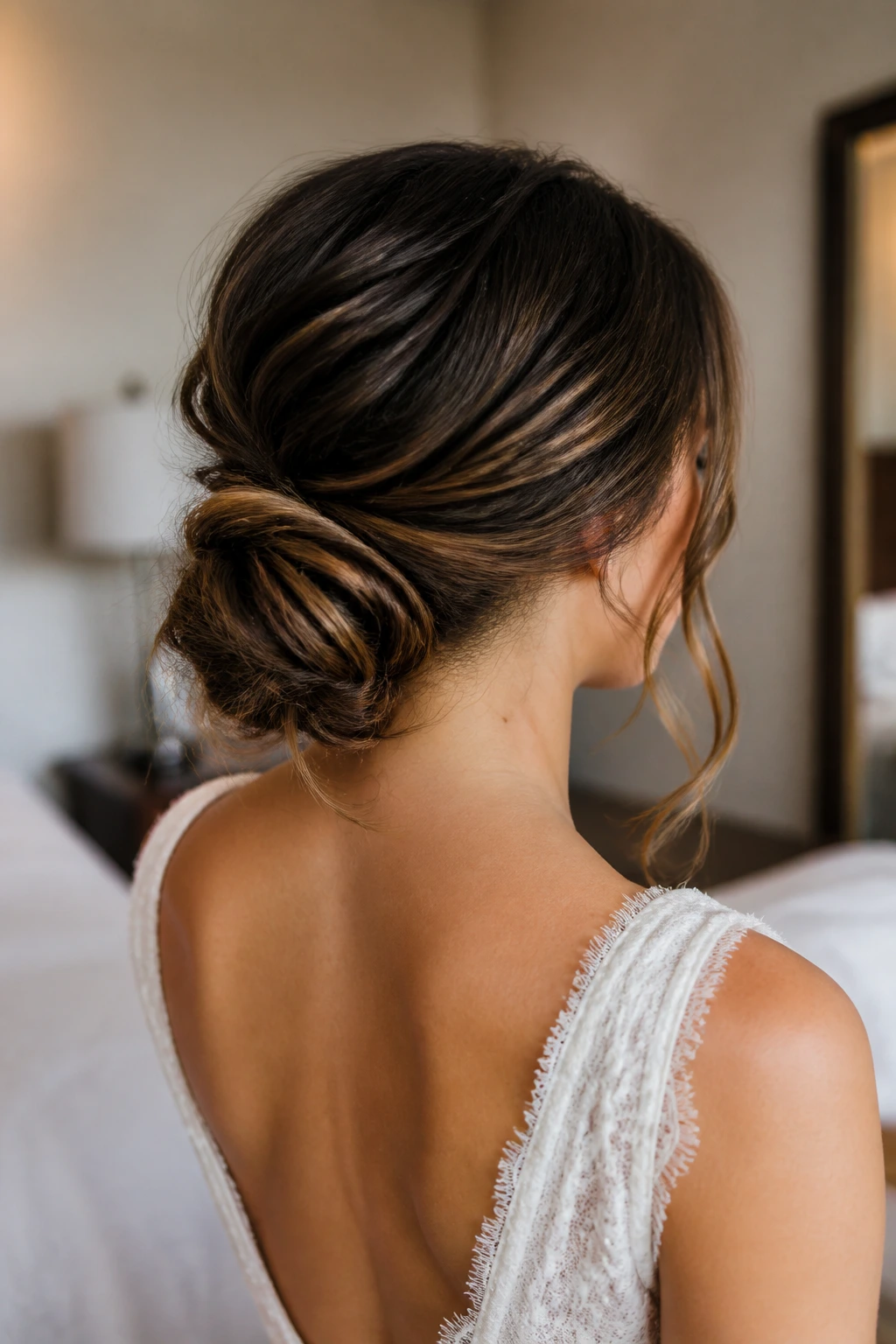
The textured low knot is for brides who want something a little less formal than a chignon but still fully polished. The knot sits at the nape and has some visible movement in the surface, which keeps it from looking too rigid. It feels relaxed, but not loose.
This shape handles soft fabrics well — crepe, chiffon, chiffon overlays, anything that needs a lighter hairstyle beside it. It also helps if your hair has some natural wave or bend, because the texture can be worked into the knot instead of smoothed away. If the stylist backcombs the crown lightly first, the knot holds its position better.
A textured knot is one of the easiest places to hide a veil comb or a cluster of pins. It’s also forgiving if the weather turns warm. The visible strands can shift a little without making the whole style fall apart, which is more than you can say for a perfectly sleek bun.
13. Waterfall Braid Half-Up
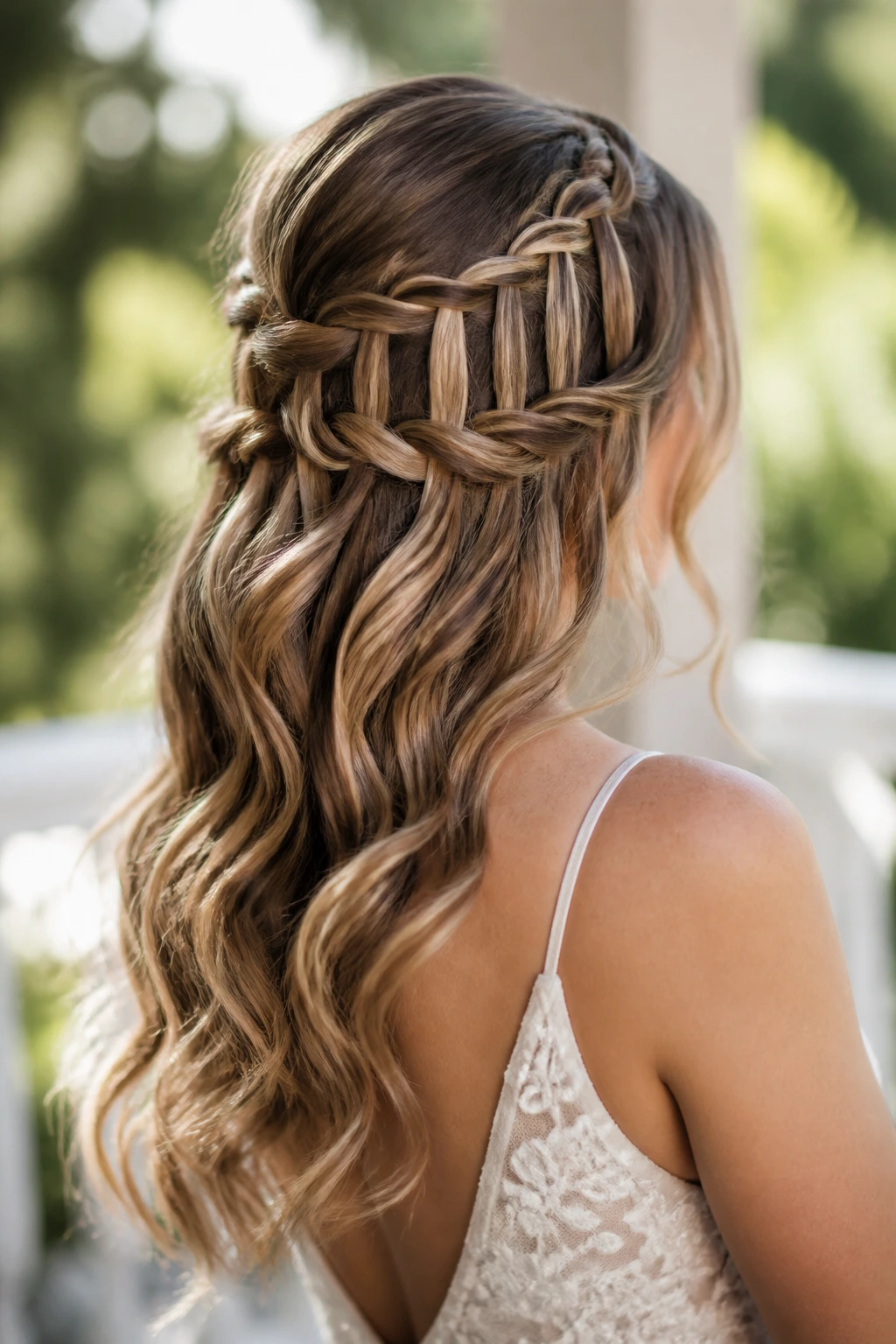
The waterfall braid half-up is a nice choice when you want movement and detail at the same time. The braid drops sections through itself like little ribbons, while the rest of the hair stays down in waves or curls. It looks intricate from the back and softer from the front.
This works especially well for brides with medium to long hair who want something more decorative than a simple half-up. It’s also a useful style when the dress is plain and the hair needs to carry some of the visual interest. A veil can sit above the braid line, but the comb should be anchored into a solid section rather than the loose ends.
The trick is keeping the braid visible without making it too tight. If it’s pulled aggressively, the effect turns stiff. If it’s too loose, the braid disappears into the curl pattern. A waterfall braid needs shape, not strain.
14. Twisted Gibson Tuck
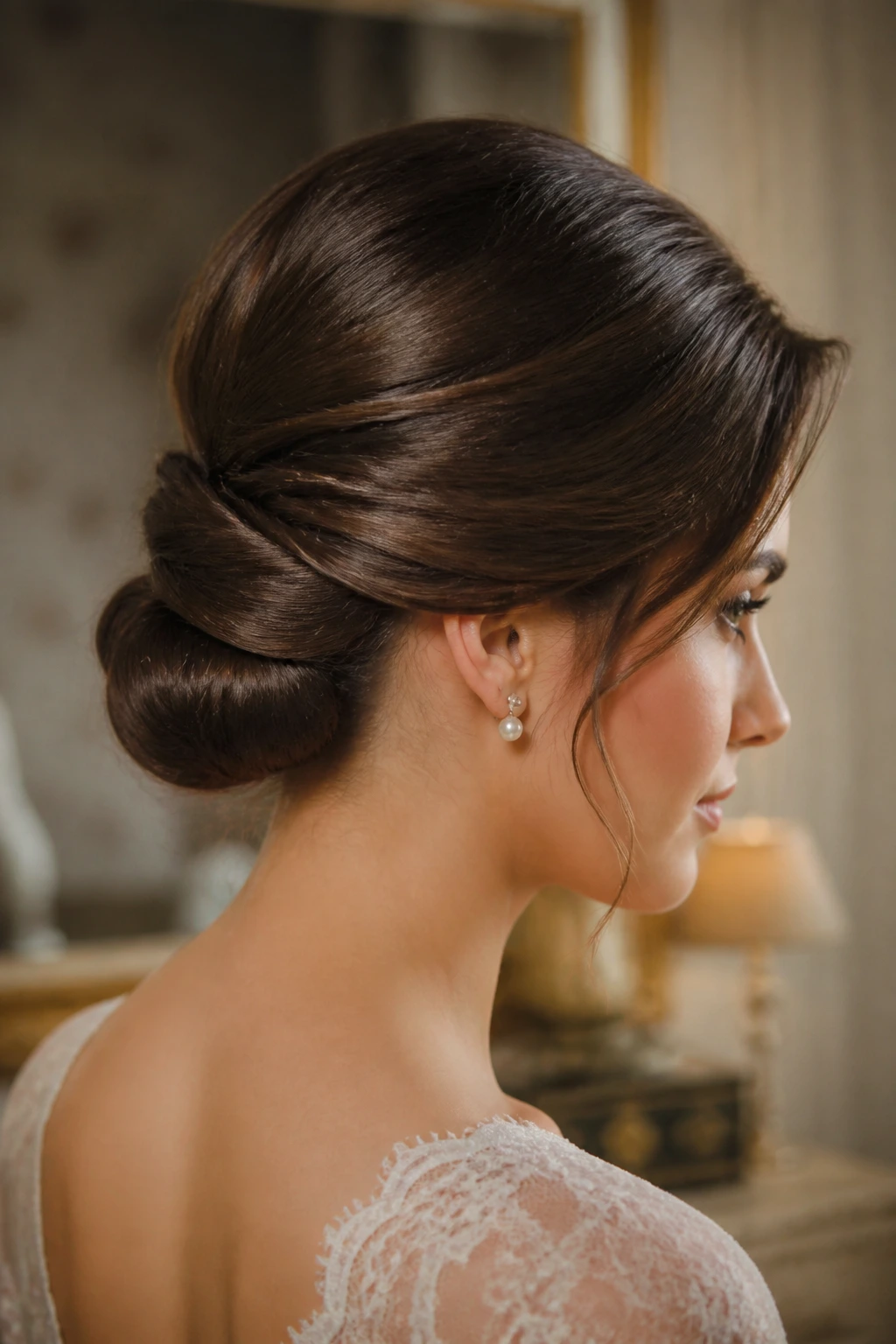
The Gibson tuck has an old-world softness that feels especially nice for brides who like a vintage note without a literal vintage costume. Hair is rolled or tucked inward at the back, often into a low ridge that sits close to the neck. It’s clean, graceful, and a little bit underused.
This style is a good match for simple dresses, pearl jewelry, and veils that don’t need a high anchor. It also works well if you want the hair off the shoulders but do not want a hard, sculpted bun. The tuck gives the illusion of length being folded neatly away.
What makes it lovely is the line from crown to nape. There should be enough smoothness to feel formal, but not so much that the style loses movement. A few hidden pins and a soft spray at the finish keep it from flattening.
15. Soft Side Bun With Deep Part
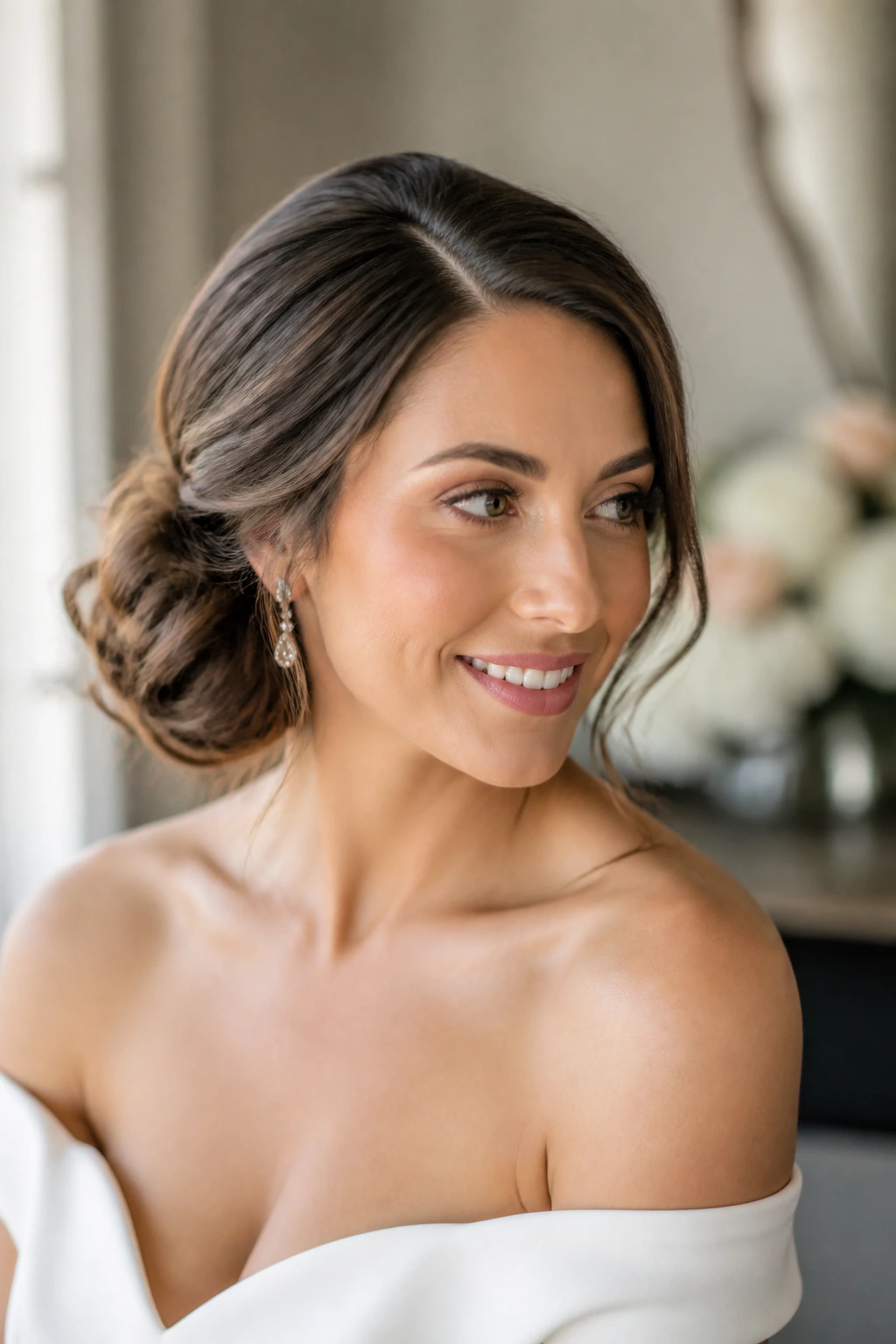
A soft side bun with a deep part has a romantic lean that makes the whole face look a little longer and more open. The bun sits off-center rather than exactly at the nape, which gives the style a touch of asymmetry. That small shift changes the whole mood.
It’s a smart choice for brides with side-swept bangs, off-shoulder dresses, or earrings that deserve a little room. The deep part also gives the hair more visual lift at the roots, which is useful if the hair is fine and tends to lie flat. A side bun can be neat or softly textured, depending on the dress.
The off-center placement works best when it feels deliberate, not accidental. That means one side of the front should be smoother than the other, and the bun should sit low enough that it doesn’t compete with the cheekbones. A well-placed side bun can do a lot without looking flashy.
16. Airy Curls With Defined Ends
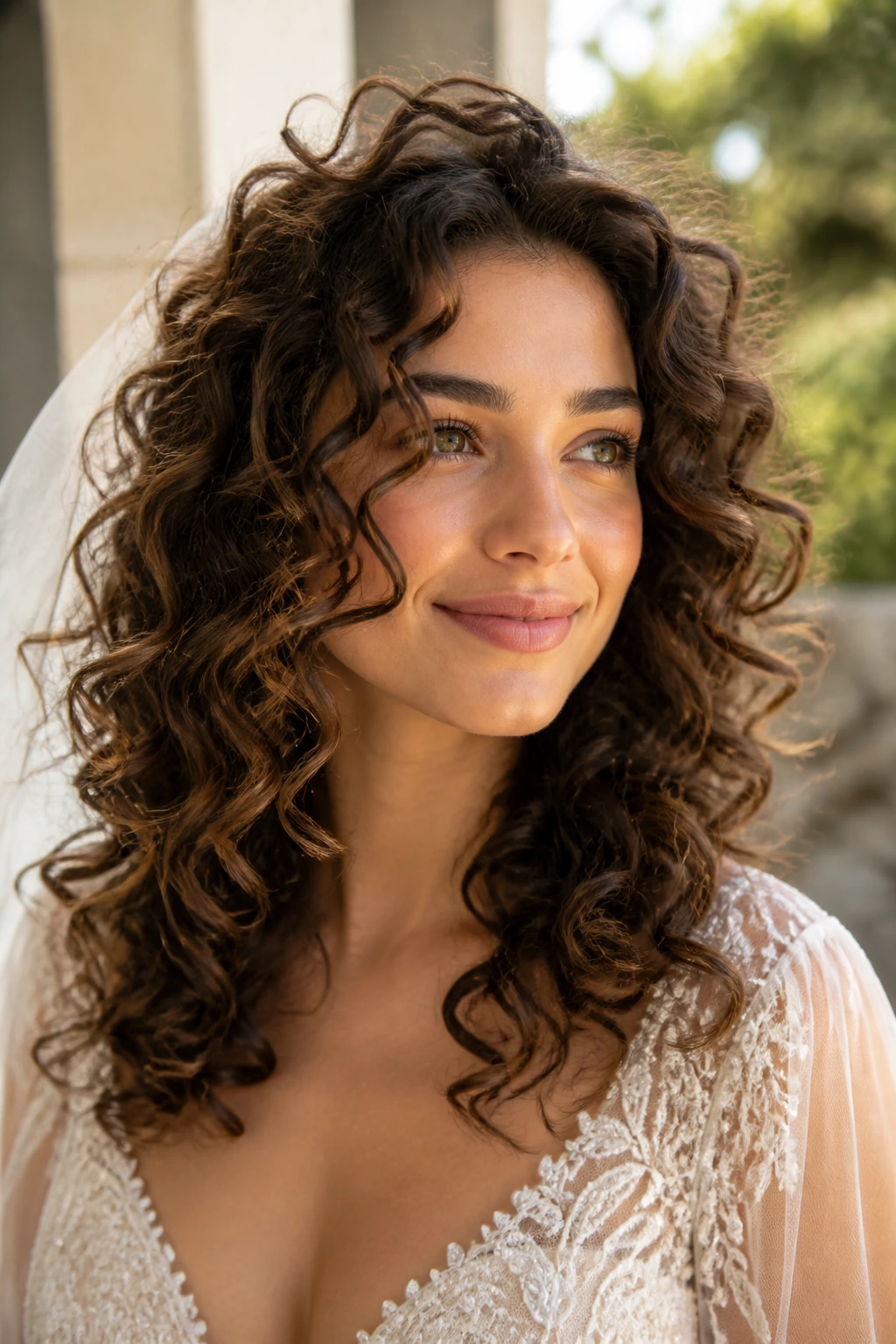
Airy curls with defined ends are for brides who want a down style that still feels controlled. The root area has lift, the mid-lengths stay soft, and the ends are shaped enough that the whole thing doesn’t drift into fuzz. It’s less sculpted than Hollywood waves, more relaxed than beach hair.
This is a good choice when the dress is ornate and the hair needs to soften it, or when the bride wants movement around the shoulders without a half-up shape. A side part can make the curls fall in a more flattering line, especially if the face is long or angular. The curls should look touched, not sprayed into place like a shell.
If your hair is naturally straight, the stylist will need to set the curls firmly and let them cool completely before brushing. If your hair already holds a wave, the styling time can be shorter, but the finish still needs polish. Loose does not mean unfinished.
17. Pinned-Back Natural Curls
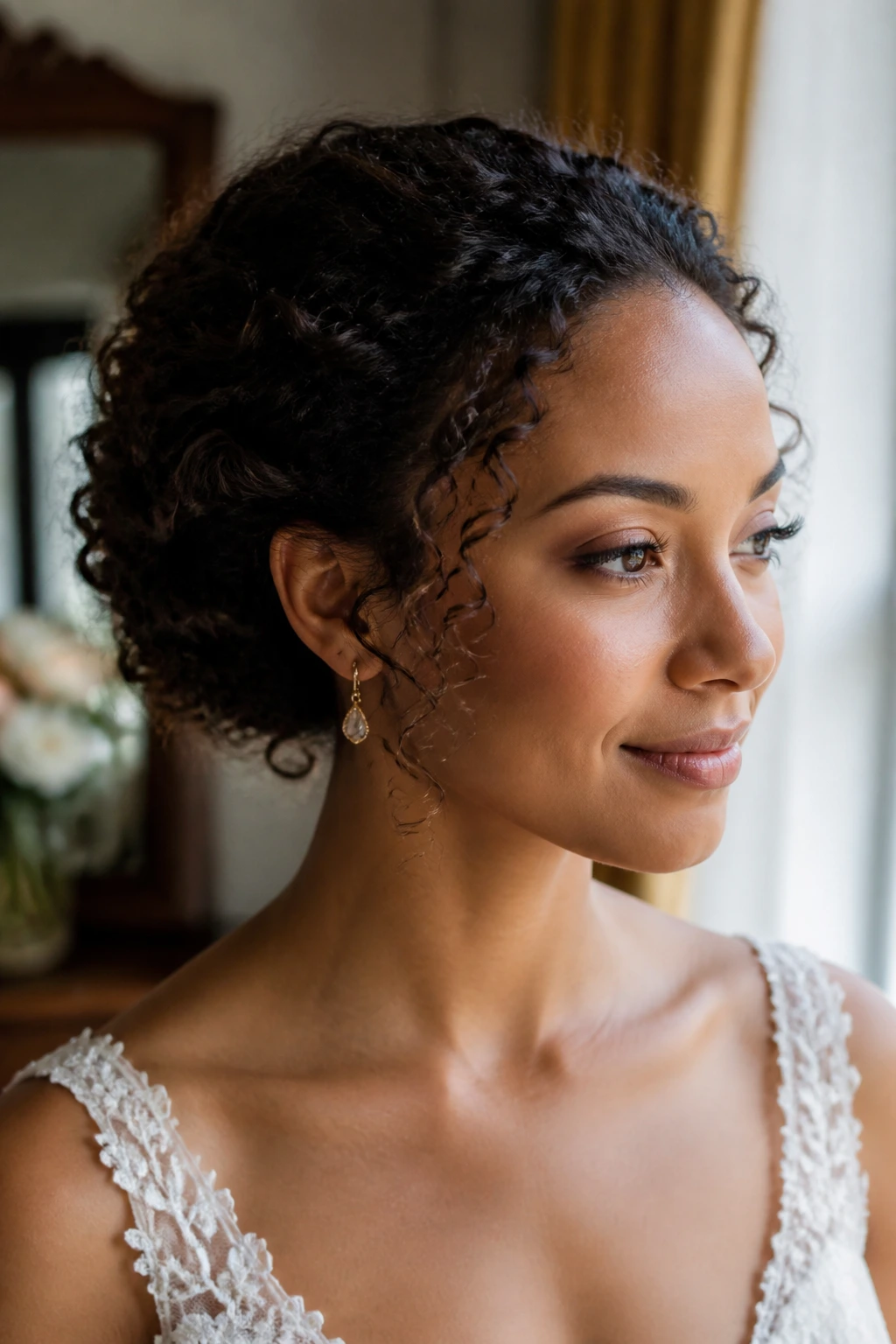
Pinned-back natural curls are one of the best ways to keep texture looking like texture instead of forcing it into a shape it hates. The front and sides are gathered back with pins, while the curl pattern stays visible through the back and ends. It feels honest, but still special.
This style is strong for brides with curls that already have good shape and bounce. It keeps hair out of the face for photos and gives the neckline some breathing room without flattening the curl. A decorative comb, a few pearl pins, or even a single flower can sit at the pinned area nicely.
The mistake is trying to smooth the curls too hard. If you drag a brush through them, the whole style expands in the wrong direction. Use your fingers, a little curl cream, and pins that disappear into the texture. Curly hair looks best when it is guided, not bullied.
What to ask for
- Pin the sides loosely, not tight to the scalp
- Let the crown keep some lift
- Finish with a humidity-resistant spray, not a stiff lacquer
18. Curly High Puff With Jewelled Clip
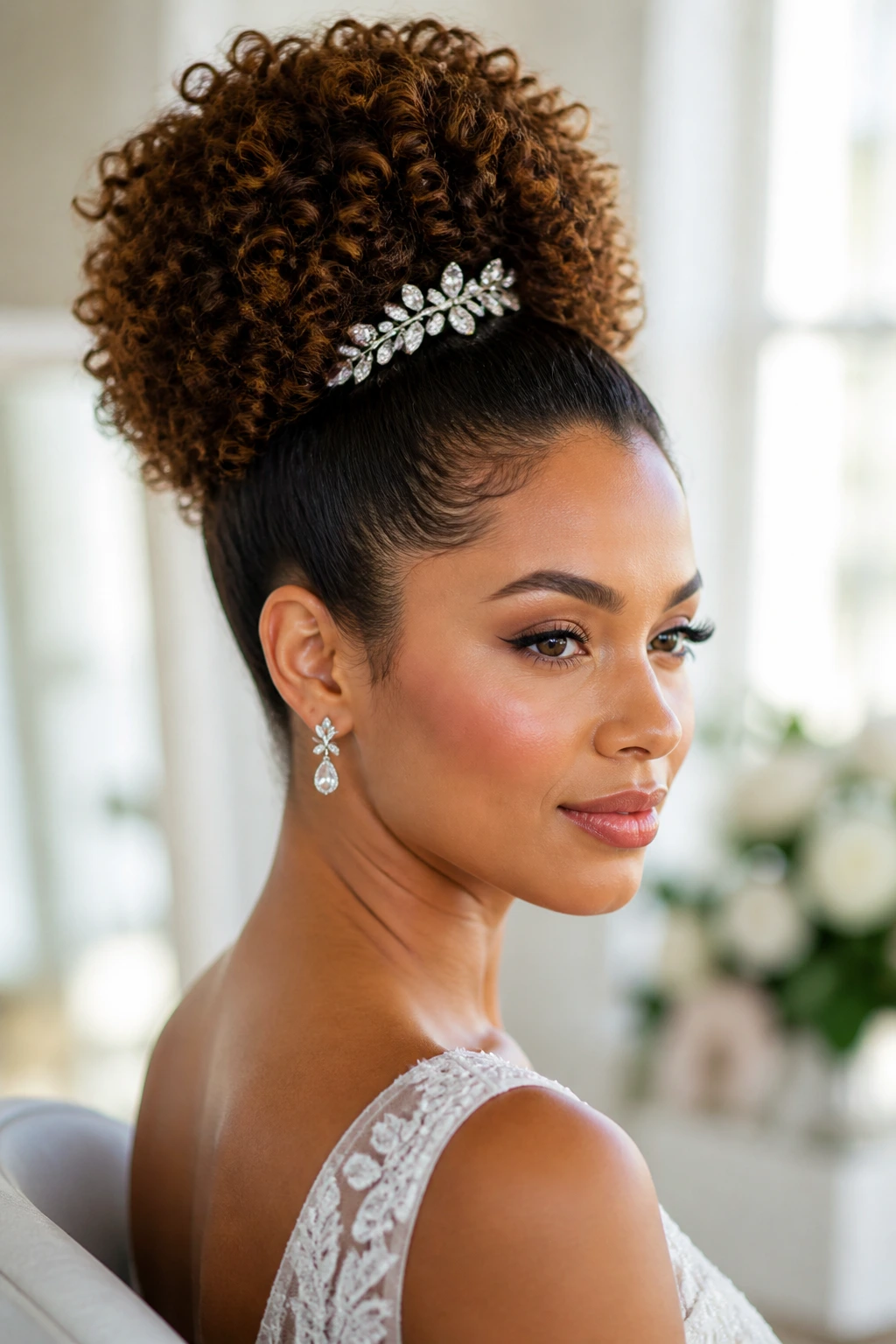
A curly high puff is bold, elegant, and much more formal than people assume when they hear the word “puff.” The curls are gathered high and centered so the shape lifts the face and opens the neck. It creates height without sacrificing texture.
This is especially striking with modern gowns, halters, and minimalist silhouettes because the hair brings the energy. A jewelled clip can sit at the base or one side of the puff without overpowering it. The goal is clean structure around the edge and full curl volume above it.
What makes this style work is shape control. The sides should be smooth enough to look intentional, but not so slick that the texture loses its life. If your curls tend to shrink, build the puff slightly fuller than you think you need. They always look a little smaller once they settle.
19. Sleek Lob Tucked Behind One Ear
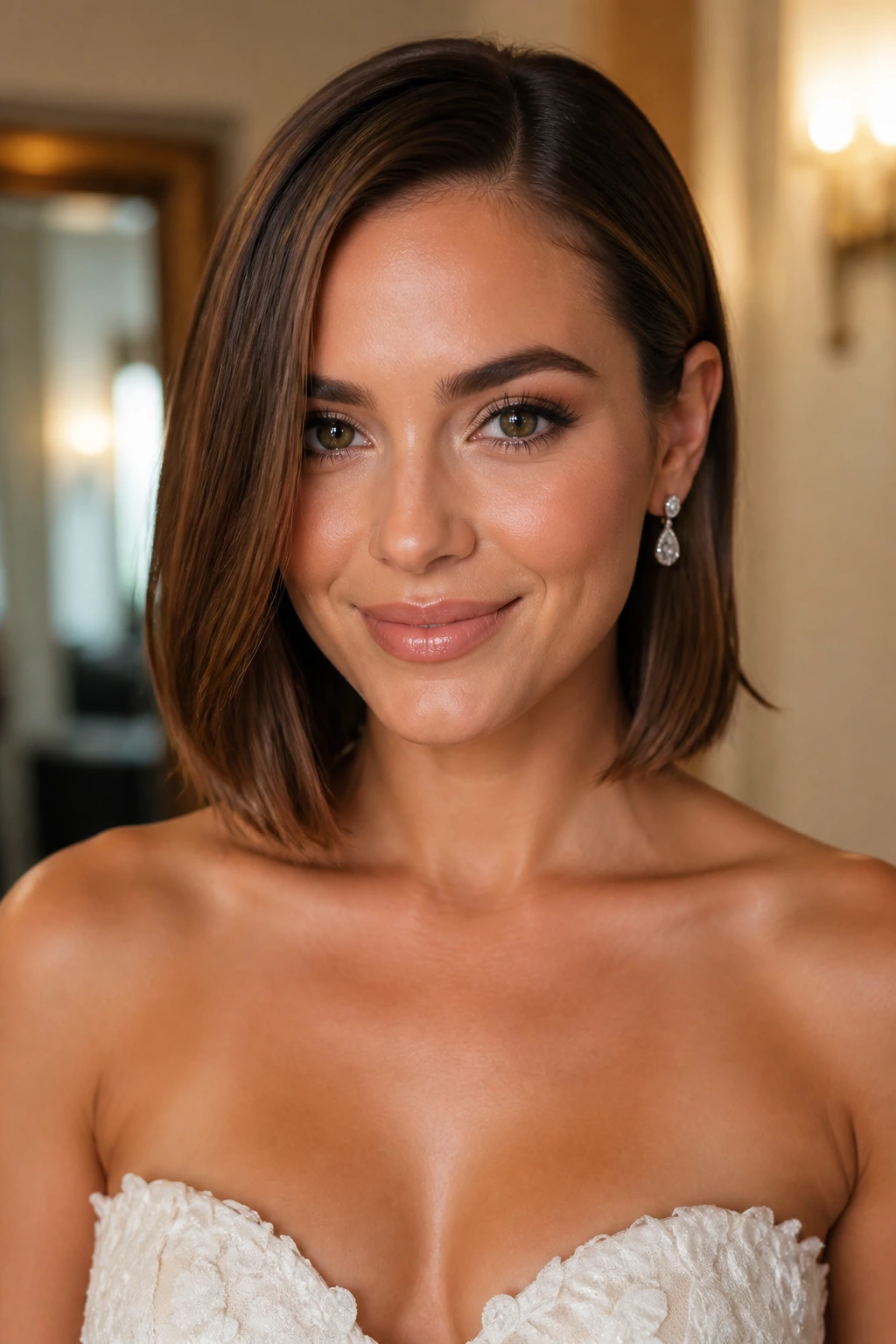
A sleek lob tucked behind one ear is for brides who want polish with very little fuss. The line of the haircut matters here. The hair should fall just below the jaw or collarbone, with one side tucked and secured so the face stays open.
This is a lovely option for short-to-medium hair that doesn’t need fake volume to make a point. It works with statement earrings, modern dresses, and smaller veils or clips. The tucked side can be held with one strong pin or a comb that disappears into the hair.
The best version has shine at the top and movement at the ends. Too flat, and it looks severe. Too curled, and it loses the clean shape that makes the lob feel special. A bit of bend through the bottom half is usually enough.
20. Rope Braid Bun
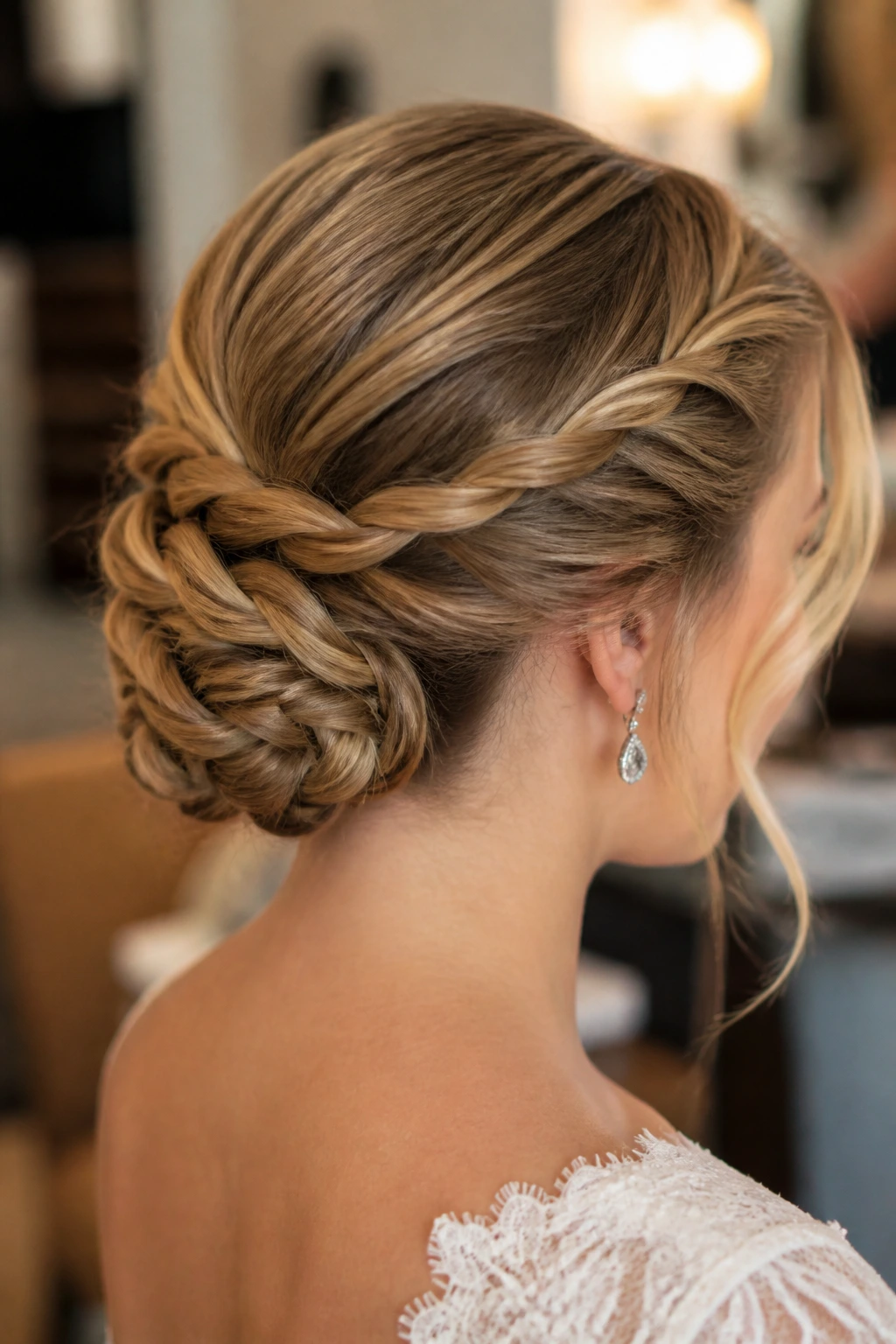
The rope braid bun has a tighter, twistier finish than a traditional braid bun. Two sections are twisted around each other before they’re wrapped into the bun, which gives the style a braided look without the same amount of bulk. It’s neat and a little architectural.
This is a smart shape for brides who want a clean bun with visible detail. It works well with satin dresses, sleek gowns, and jewelry that already carries some shine. Because the structure is compact, a veil comb can sit securely without shifting around too much.
The rope twist is also useful for thick hair. Regular braids can get heavy fast; rope braids often sit a little lighter and show the twist pattern more clearly in photos. Keep the finish smooth at the crown, then let the bun itself have enough texture to hold the shape.
21. Fishtail Accent Braid With Veil
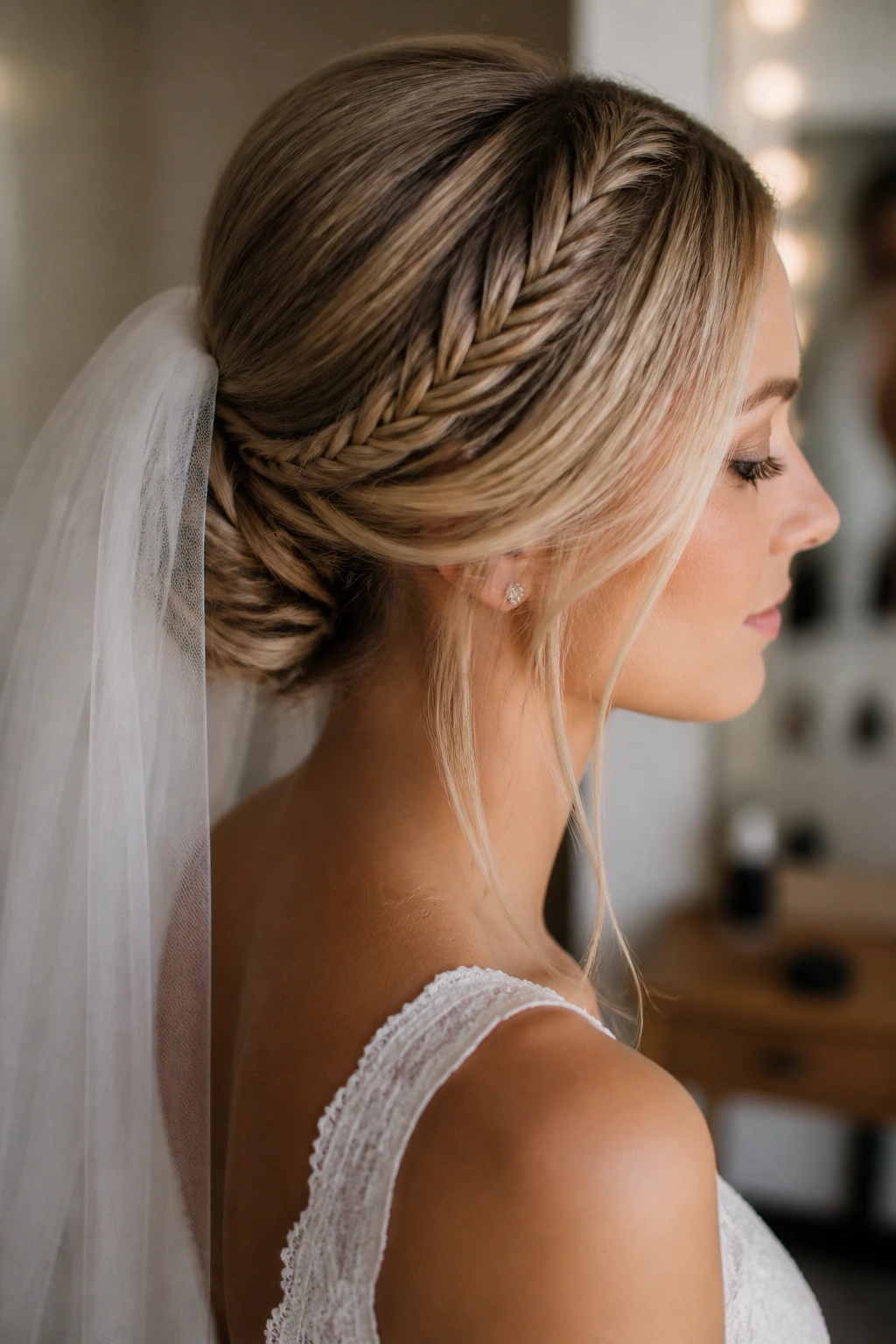
A fishtail accent braid adds detail without taking over the whole hairstyle. It can run along one side, feed into a bun, or sit as a braid crown that ends in a low knot. The thin, woven pattern looks intricate from a distance and even better up close.
This is a good choice for brides who want something romantic but not overly sweet. The braid gives the hair a handcrafted feel, while the veil can still sit over or just behind it. If the dress is simple, this kind of detail gives the whole look more depth.
The fishtail braid does need patience. It takes smaller sections than a regular braid, and it looks best when the pulling is even from top to bottom. If one side is tugged looser than the other, the braid gets lopsided fast. That small inconsistency shows in photos more than you’d expect.
22. Satin Ribbon Ponytail
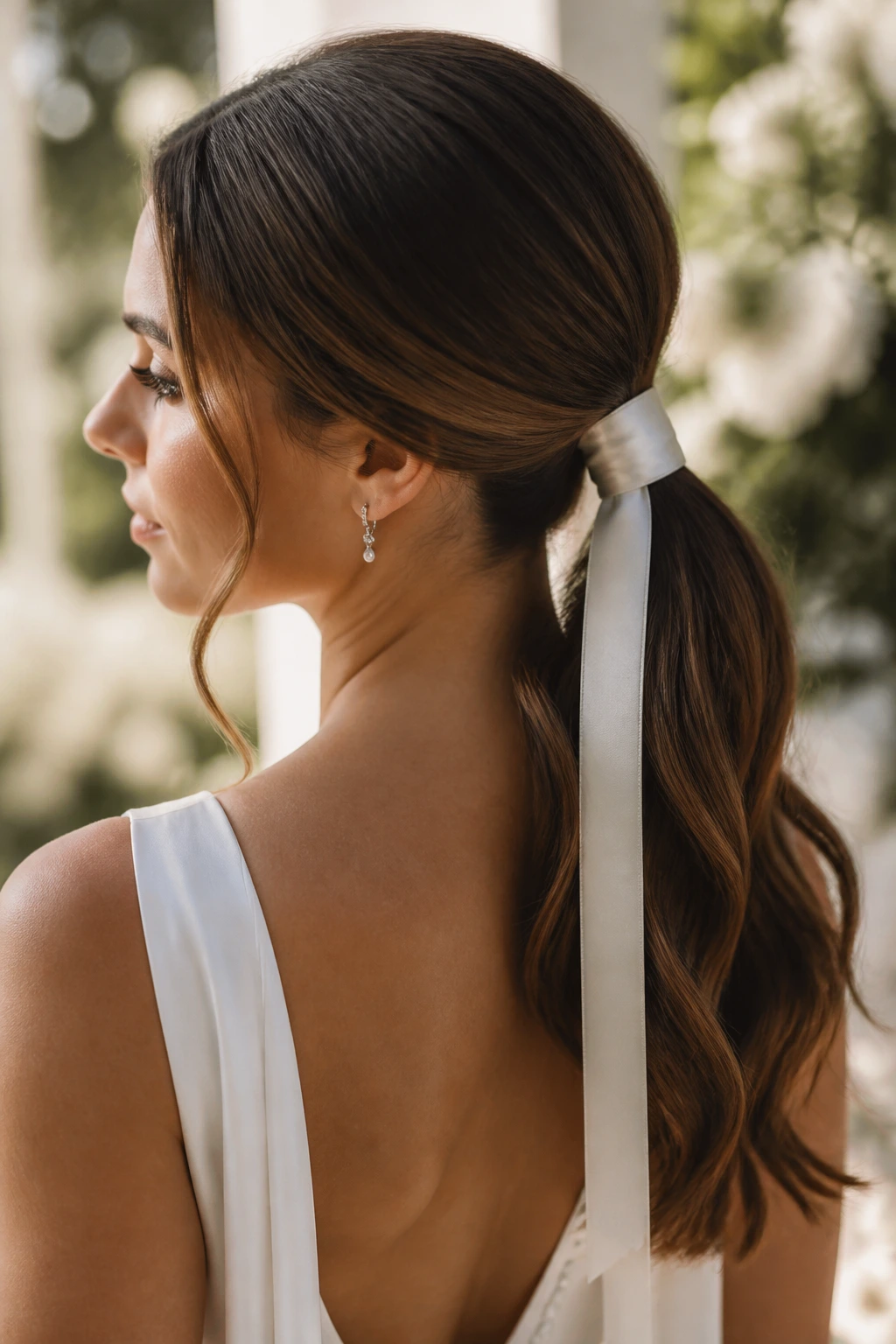
A satin ribbon ponytail is a simple idea with a very formal finish. The ponytail can sit low, mid-height, or high, then a ribbon is wrapped around the base and left to trail a little down the back. Satin keeps the look soft while still feeling deliberate.
It works especially well for brides who want a little romance without a full updo. It can be polished straight, softly waved, or curled at the ends. The ribbon also brings a color note into the hairstyle, which can tie into the bouquet, shoes, or a dress sash.
The best version is not overstuffed with accessories. One ribbon, one clean base, and a ponytail with enough body to hold its shape is enough. If the hair is very fine, curl the ponytail first so it has a little more life after the ribbon goes on.
23. Half-Up Crown With Extra Volume
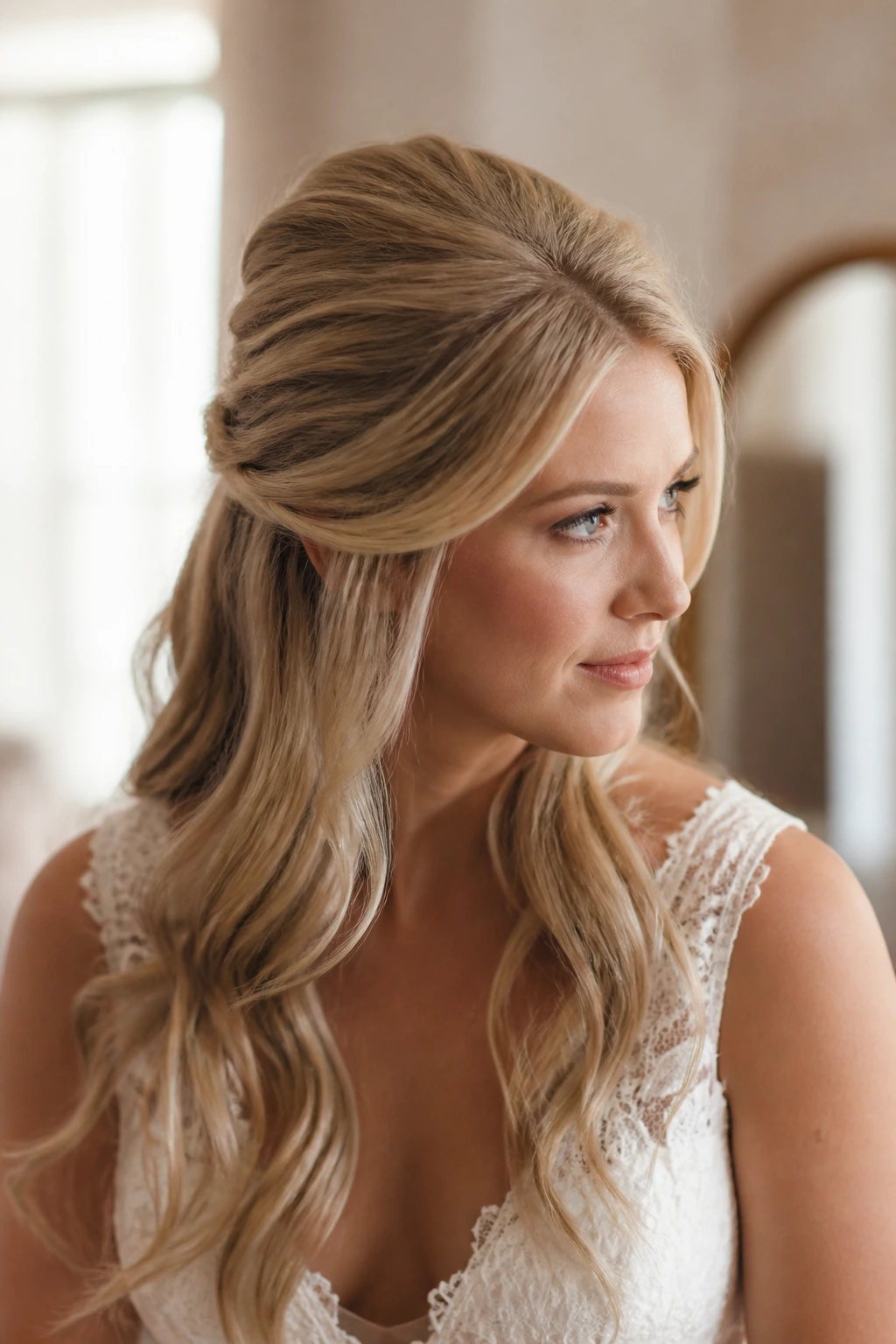
A half-up crown with a bit of extra volume is for brides who want to feel lifted without putting all the hair away. The top section gets gently teased or padded at the crown, then pinned back so the face stays open while the rest falls down. It has a soft, flattering profile.
This style is especially useful if the dress has an open back or a sweetheart neckline and you want the hair to echo the softness of the silhouette. It also lets you wear a veil without sacrificing all the down-hair movement later. The crown gives the style height, which is helpful in photos taken straight on.
The key is restraint. The crown needs to rise a little, not turn into a prom bump. If it gets too tall, the shape starts fighting the rest of the outfit. A few carefully placed pins and a light hold spray are usually enough.
24. Wrapped Low Ponytail
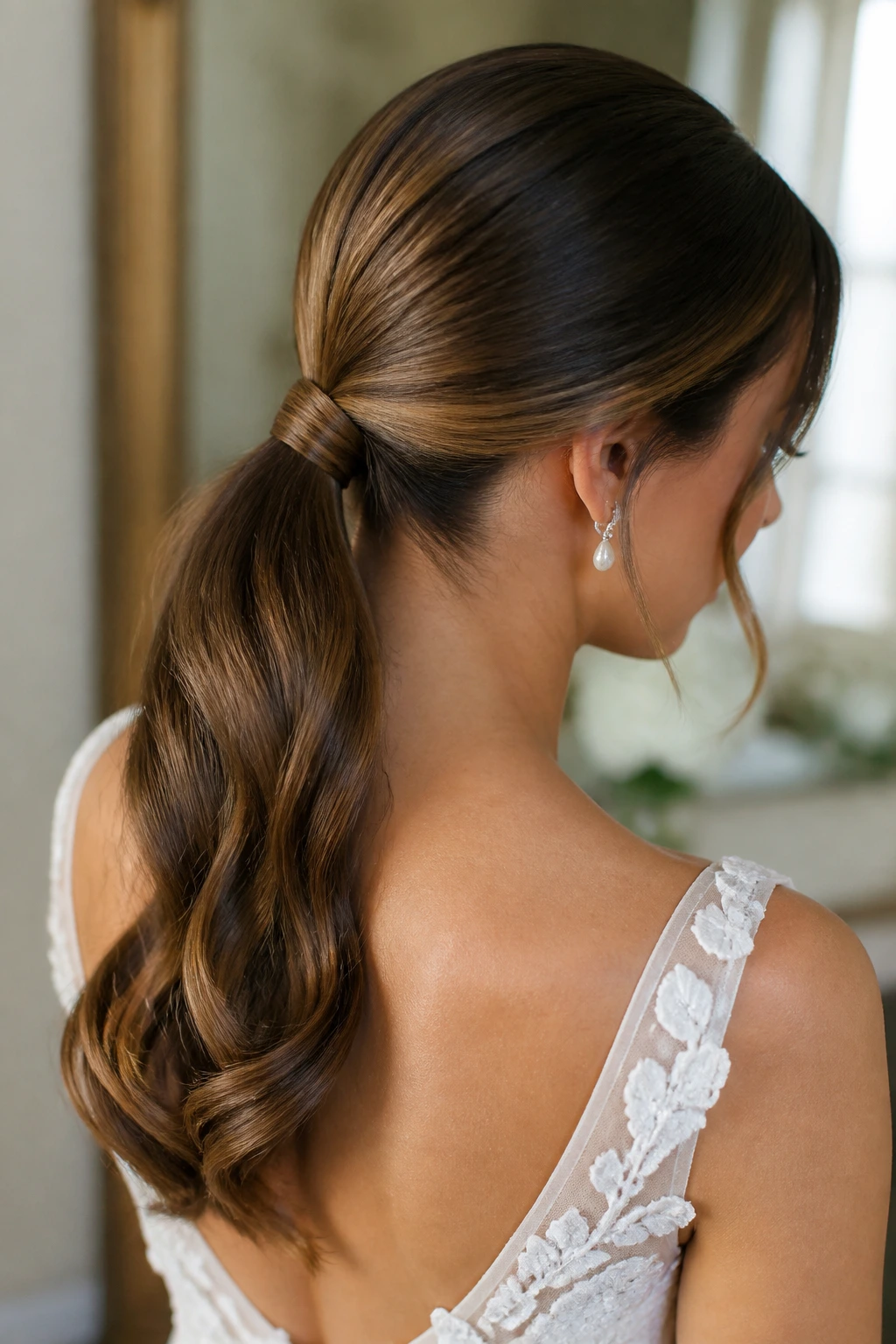
A wrapped low ponytail is one of the cleanest bridal styles around. The pony sits at the nape, and a strand of hair wraps around the elastic so the base disappears. The result is minimal, polished, and more formal than the word “ponytail” usually suggests.
This is a very good option for brides who want the hair controlled but not pinned into a bun. It works with long veils, long earrings, and dresses that have a strong shoulder line. The ends can be curled for softness or kept straight for a sleeker finish.
What I like most here is how well it handles movement. The ponytail sways, but the base stays put. If you want a style that feels modern and lets the back of the dress show, this one does the job without overcomplicating it.
25. Braided Halo Updo
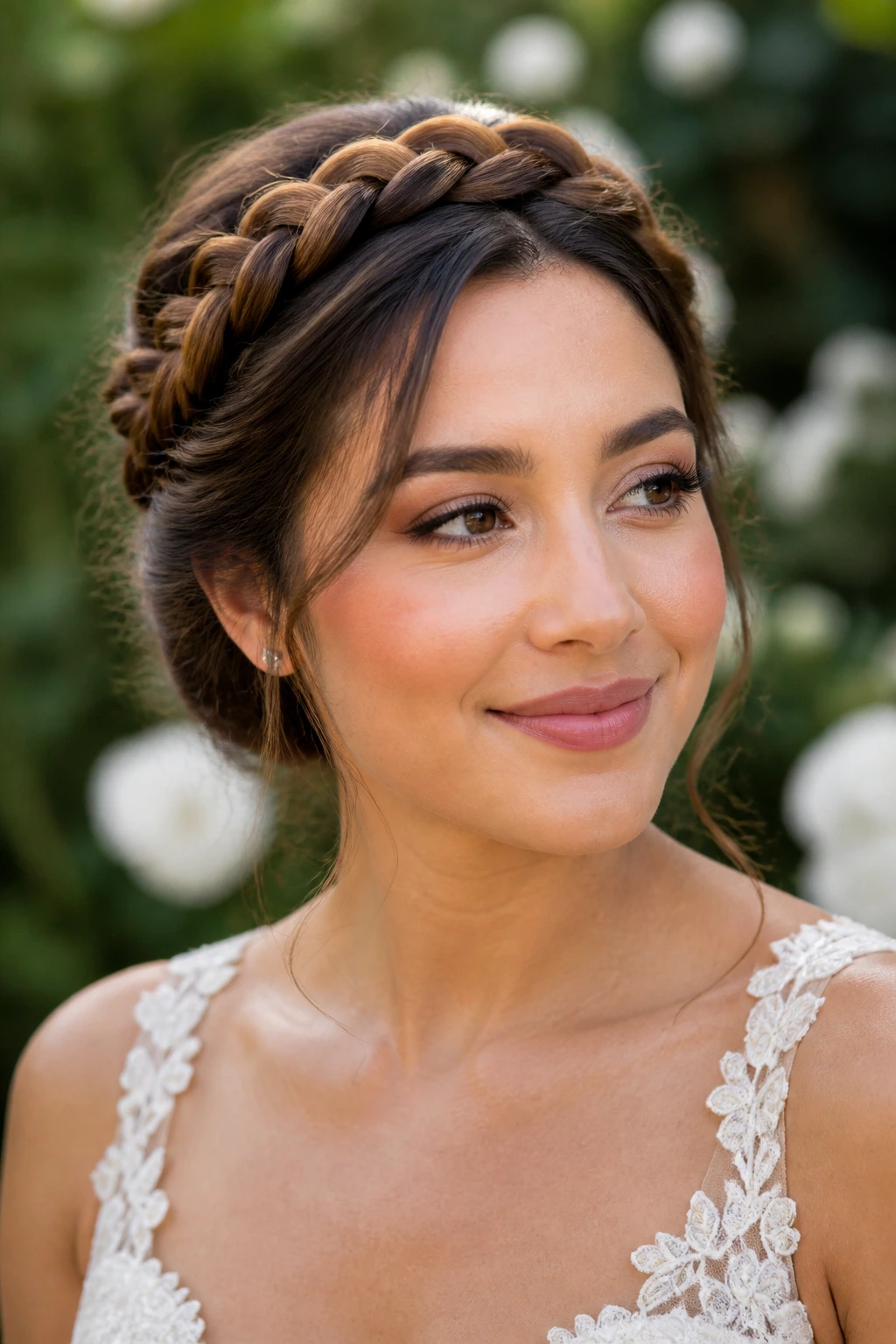
The braided halo updo wraps braid texture around the head and tucks the remaining hair into a low or mid bun. It has a crown-like shape that feels bridal without needing a literal headpiece. The braid gives the style enough detail that it can stand alone.
This works well for outdoor weddings, lace gowns, and brides who like a romantic shape near the face. It’s also a strong choice if the veil is short or if you plan to switch from veil to hair accessories later in the night. The braid creates a frame that keeps the whole style from looking empty.
The most useful thing here is balance. The halo should sit evenly and not droop on one side, or the whole look loses its shape. A bit of texture helps the braid hold, but the bun underneath should stay pinned tightly so the style doesn’t slide down as the day goes on.
26. Relaxed Knot With Face-Framing Pieces
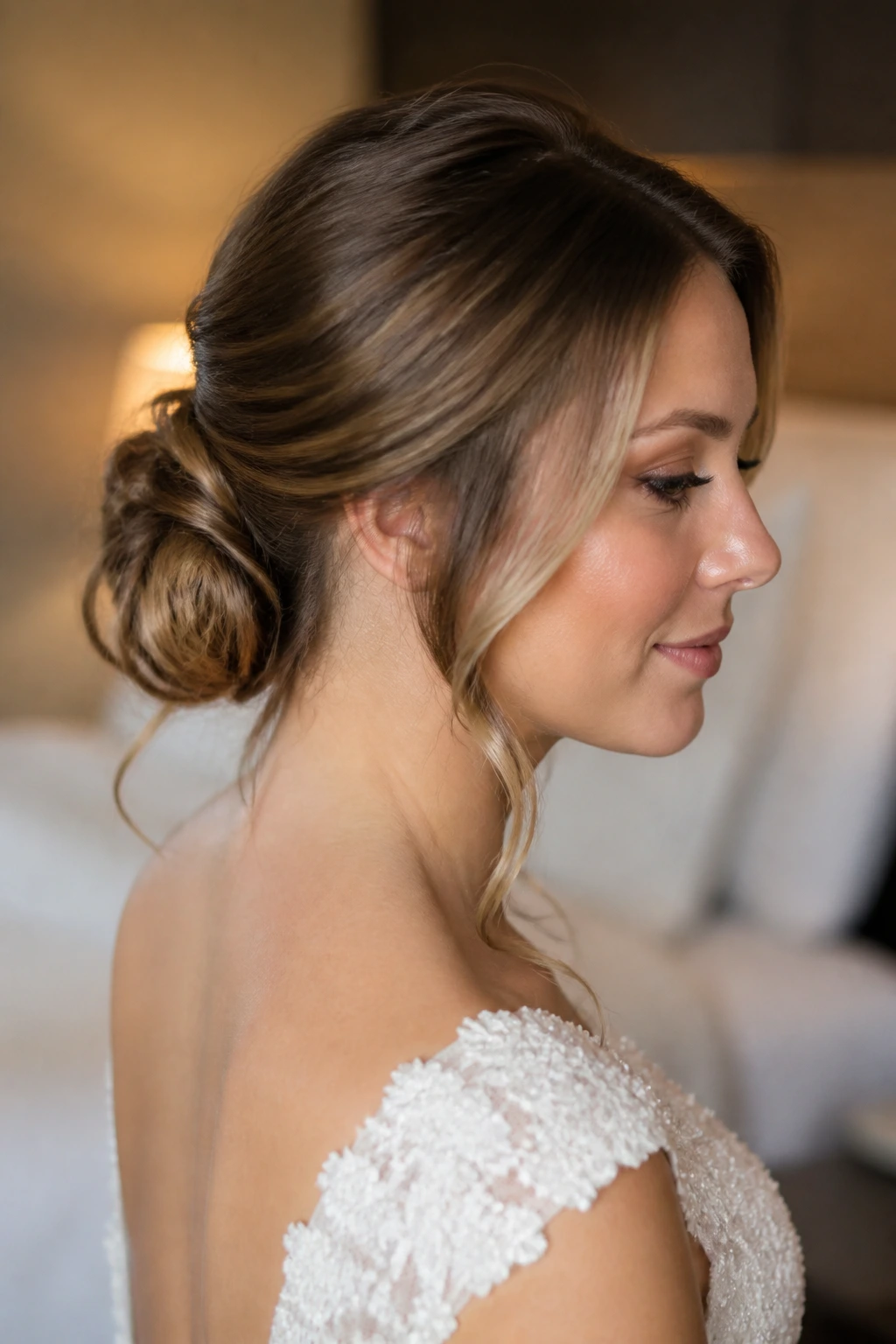
The relaxed knot is what happens when a bun stops trying to be perfect and starts looking good. It sits low, has a few visible bends and folds, and leaves face-framing pieces soft around the cheekbones. It’s airy, modern, and far less stiff than a classic chignon.
This is a nice fit for brides who want softness without wearing their hair fully down. It works well with dresses that have a little detail at the shoulders because the knot doesn’t crowd the neckline. If you’re planning to dance a lot, the knot should be pinned tighter than it looks. Loose shape on the outside, solid hold inside.
A stylist’s note
The face-framing strands should be curled away from the face, not toward it. That keeps them from falling into the mouth or sticking to lipstick. It seems like a tiny thing. It isn’t.
27. Tucked-In Roll Updo
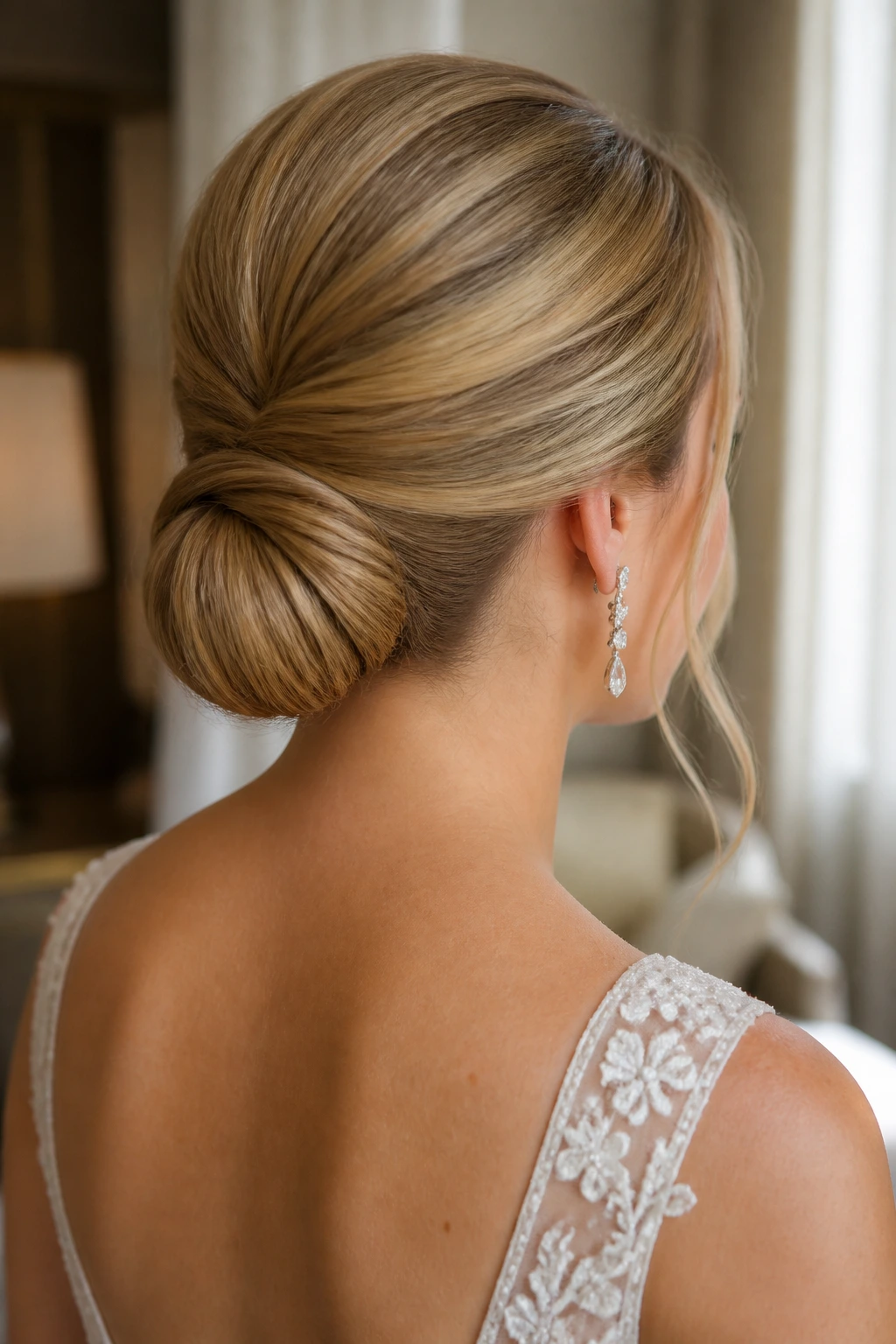
A tucked-in roll updo has a clean, slightly vintage line. Hair is rolled inward at the back so the ends disappear, creating a smooth curve from crown to nape. It feels formal without becoming severe.
This style is especially good for satin, silk, or dresses with a lot of structure, because the clean roll echoes that same precision. It also works for brides who want the hair fully off the neck. Earrings become more visible, and the back of the dress stays in full view.
The roll should not look stuffed. A well-done version has a gentle shape at the back and smooth sides that don’t puff out at the temples. A few invisible pins and a narrow veil comb can sit over it easily if needed.
28. Vintage Finger Waves
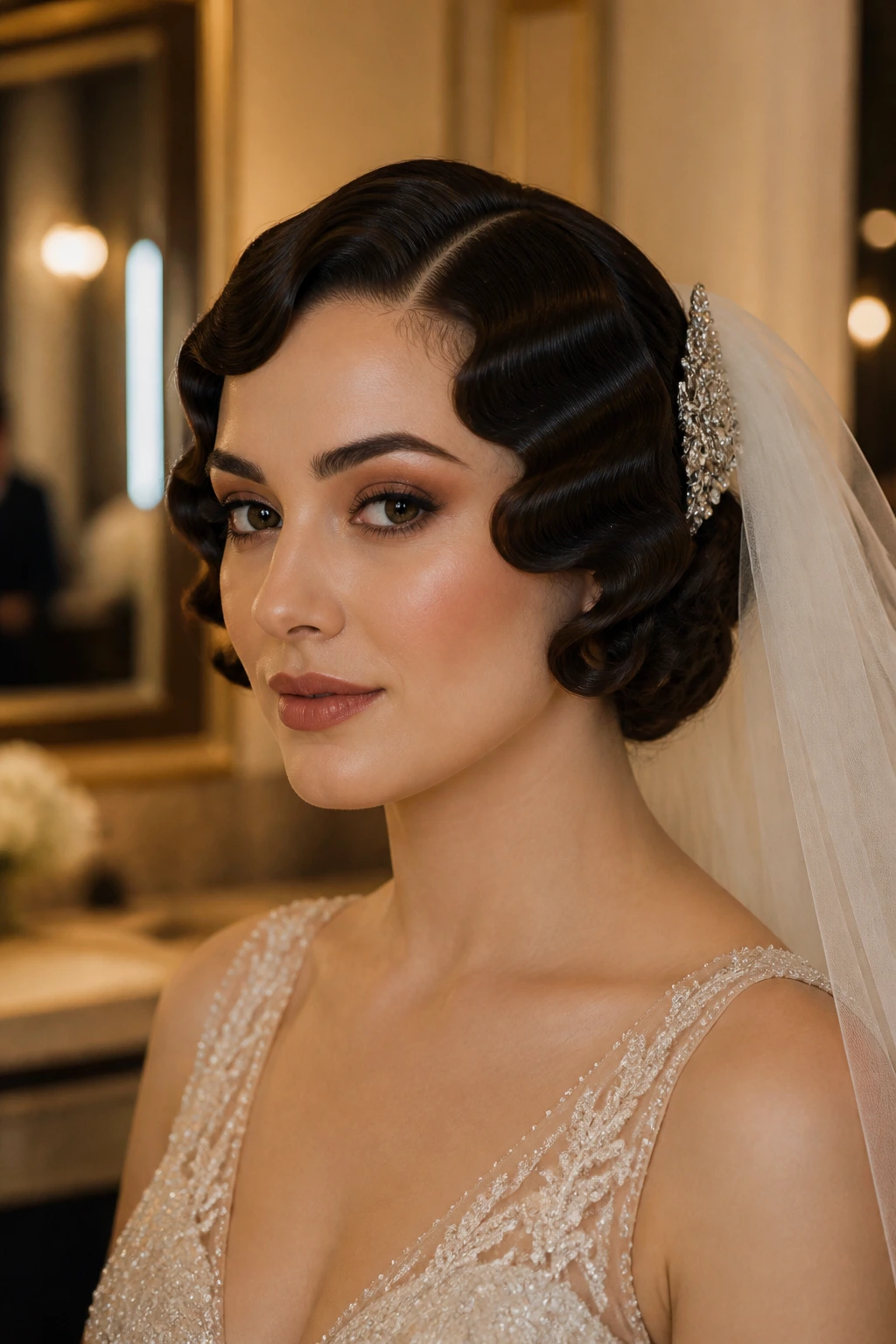
Finger waves are for brides who want a strong vintage voice. The waves are sculpted close to the head in glossy, repeating curves that look deliberate from the hairline back. This style has presence, and it knows it.
It works beautifully with Art Deco-inspired dresses, beaded gowns, or short haircuts that need a formal shape. Because the waves sit close to the scalp, they stay secure well and create a very clean profile from the side. They also pair nicely with veils placed a little farther back or with a jeweled comb.
The finish needs shine. Without it, finger waves can look dry and flat. With it, they look carved. A strong setting lotion or mousse at the start, then a light spray at the end, is usually the difference between “retro” and “costume.”
29. Half-Up Rosette Twist
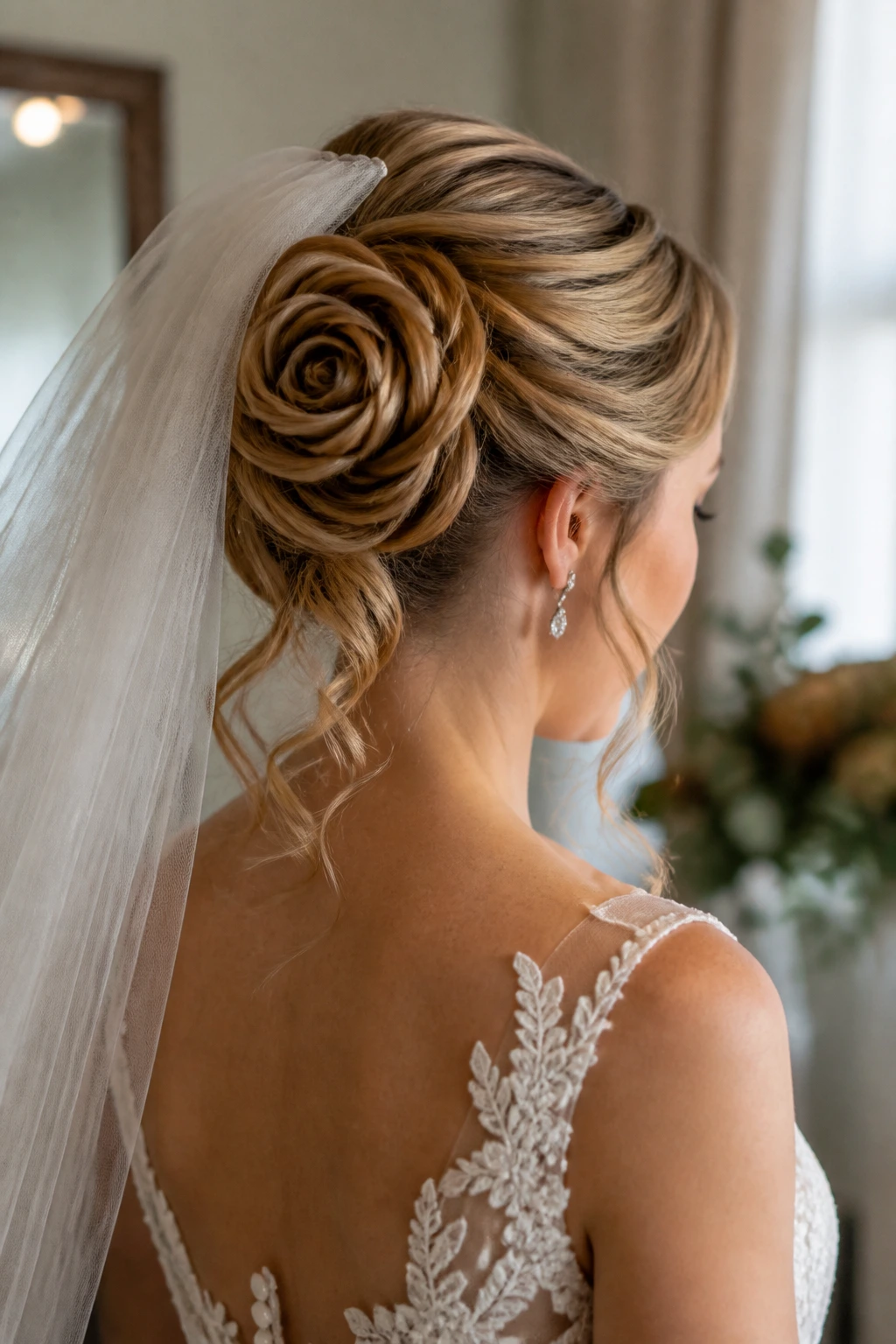
A half-up rosette twist gathers sections of hair into a soft rose-like shape at the back of the head. It’s prettier than a plain twist, but not so ornate that it starts stealing focus from the dress. The shape works especially well with soft curls underneath.
This is a lovely choice if you want something romantic with a little handmade detail. It can be centered or placed slightly off-center, and it handles medium to long hair well. A veil can sit above it if the base has enough grip.
The best rosette versions do not look overworked. The twist should read as a flower when seen from the back, but the front should still feel easy. If the stylist pulls too much at the sections, the detail disappears into a generic knot.
30. Braided Crown With Loose Ends
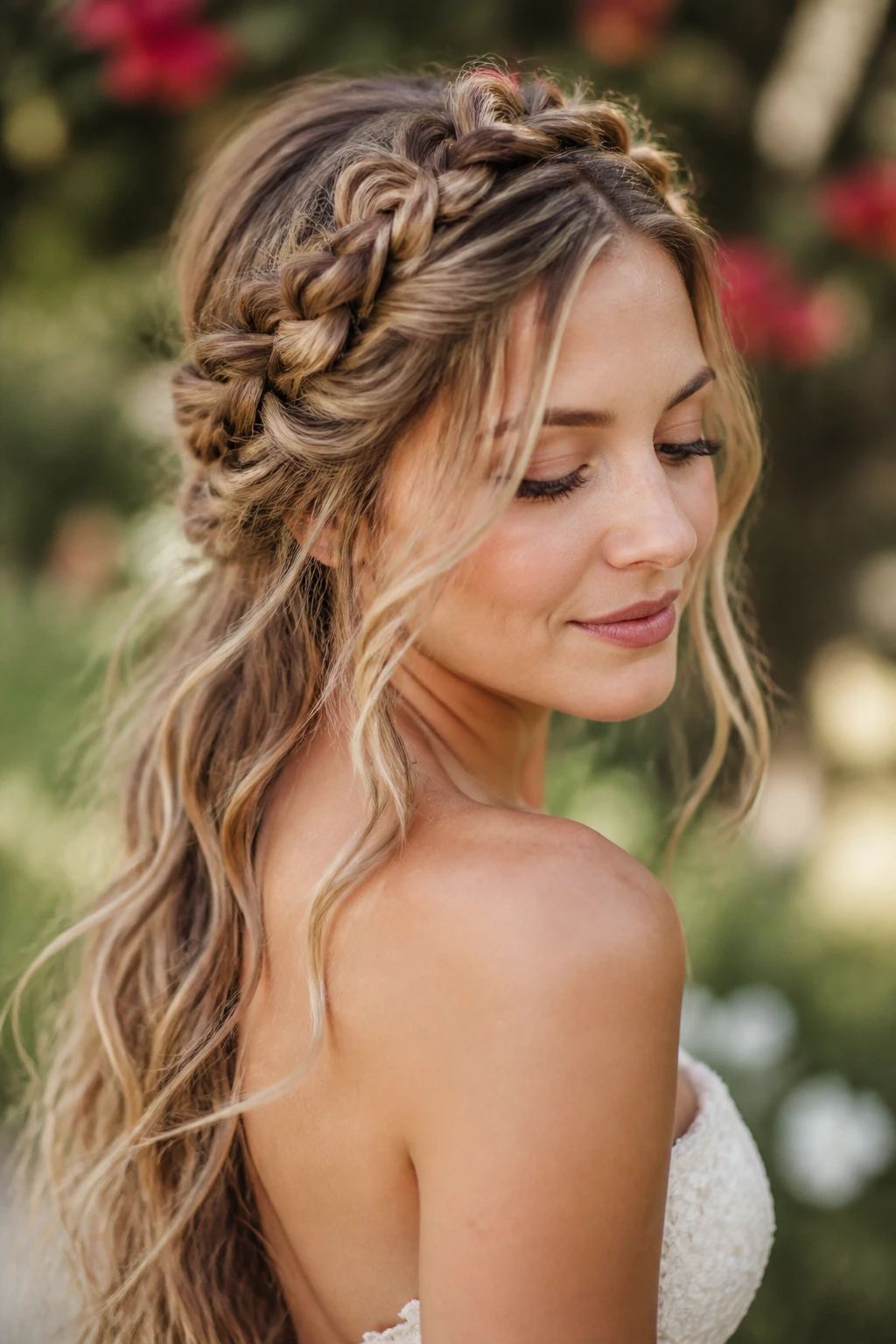
A braided crown with loose ends gives you the structure of a crown braid and the softness of trailing hair. The braid wraps around the head, then the remaining length can fall in curls or waves down the back. It feels balanced, which is why it suits so many dresses.
This is especially strong for brides who want a boho note but still need a hairstyle with real shape. It keeps hair away from the face, works with fresh flowers, and gives the veil a natural anchor point. If the ends are too loose, though, the style can start to look unfinished, so the lower section still needs styling.
A small trick: keep the braid a touch tighter near the temples and softer as it moves around the back. That keeps the face open while still letting the crown feel romantic. The contrast matters more than the exact braid size.
31. Pixie Cut With Statement Clip
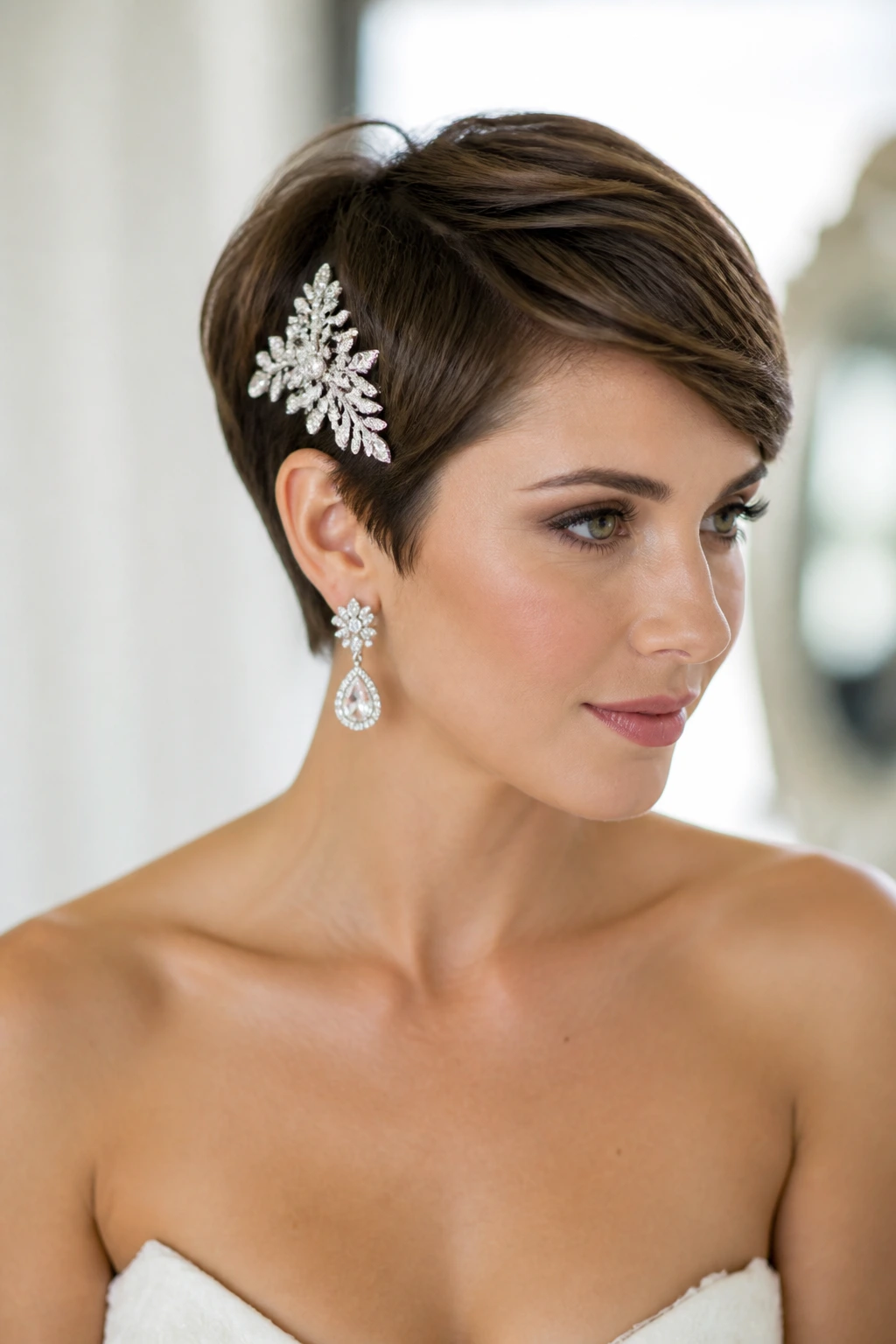
A pixie cut does not need to be disguised to count as bridal. A statement clip, a sculpted wave, or a jeweled comb placed with intention can turn a short cut into a very sharp wedding look. The haircut itself becomes the style.
This is a great choice for brides who prefer simplicity and do not want added length for the sake of it. It keeps the neck and shoulders open, which works beautifully with dramatic earrings or a neckline that already has detail. A side part can add instant structure, while a clip can shift the whole mood from everyday to wedding-ready.
The important part is choosing the right accessory size. Too small, and it disappears. Too large, and it looks like the accessory is wearing you. One clean, strong piece usually does more than several tiny ones scattered around.
32. Soft Side-Parted Waves With a Hair Vine
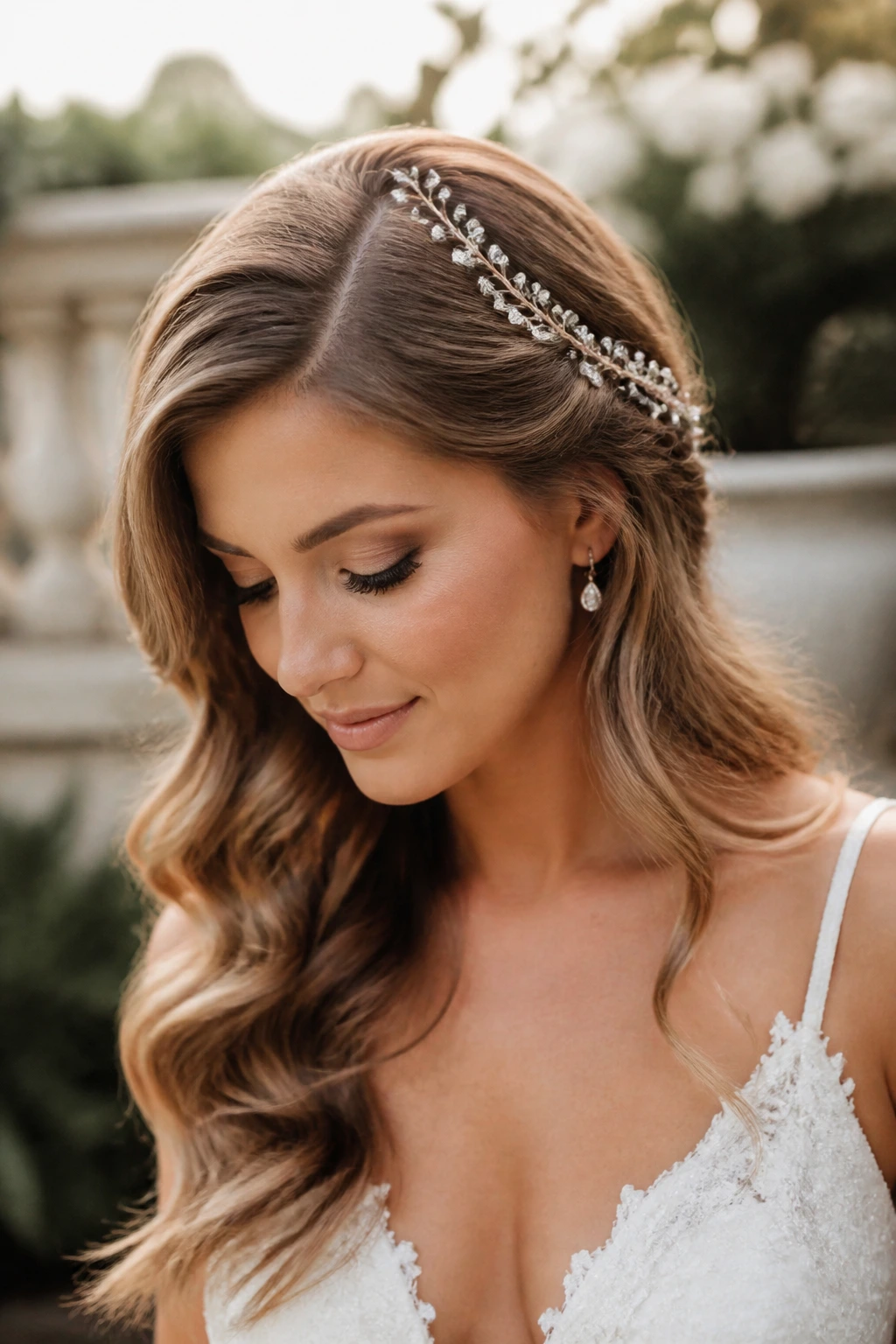
Soft side-parted waves have a gentler energy than Hollywood waves and a little more polish than beachy texture. A hair vine can sit along the part, at the temple, or tucked into the back curve of the wave. The whole look feels romantic without being sugary.
This works well for brides with long or medium hair who want movement but still need a defined shape. The side part makes the front look lifted, especially in photos shot from the right angle. A vine is a smart choice because it follows the line of the hair instead of sitting on top of it like a separate object.
The waves should have soft ends and enough hold to survive the day. If they’re too loose, the vine can slide. If they’re too stiff, the whole style loses the lightness that makes it appealing in the first place.
33. Garden Chignon With Floral Comb
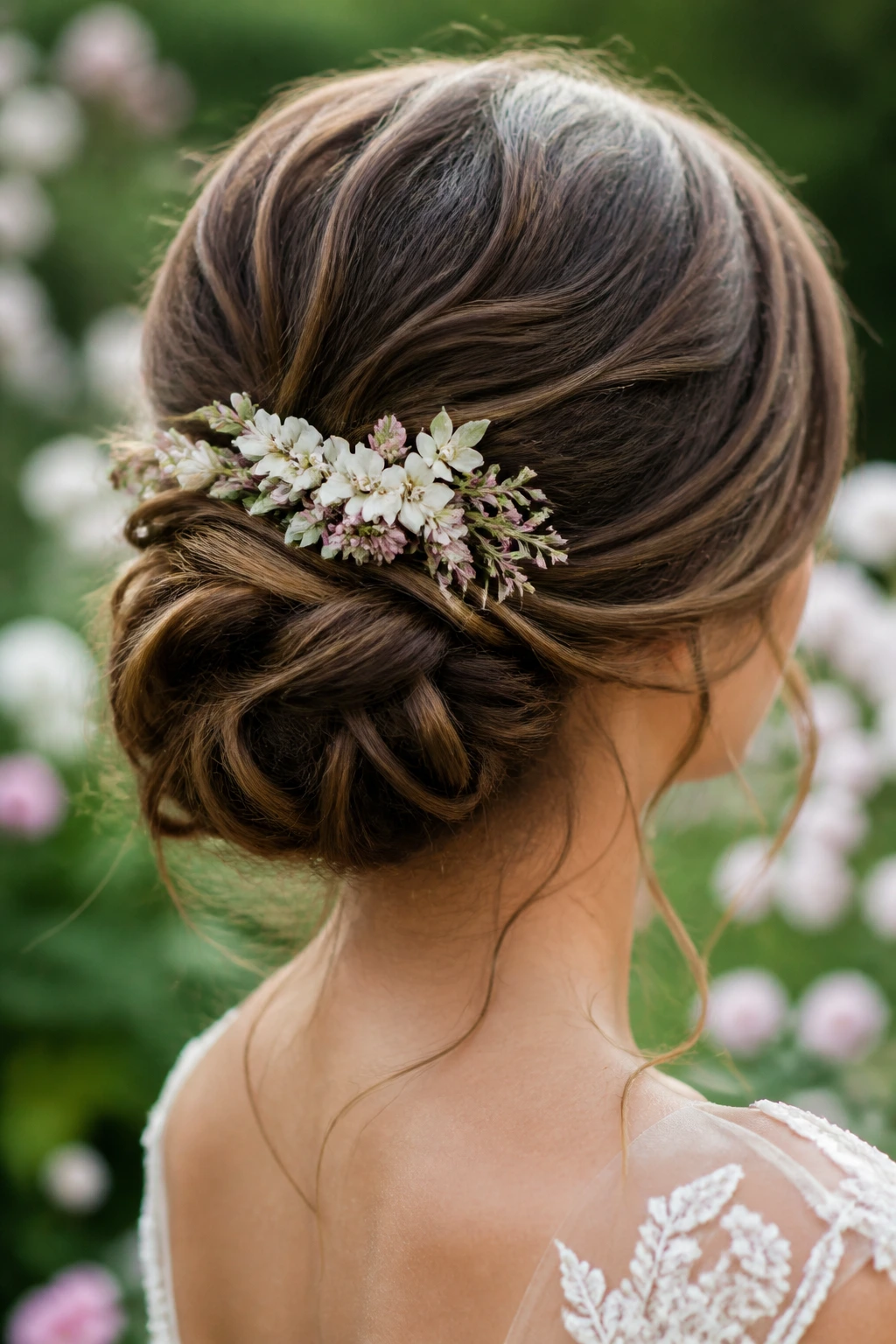
A garden chignon is a low bun built to hold flowers. Fresh blooms, silk florals, or a mixed comb can sit in the side or above the twist and make the whole style feel alive. The bun itself is usually soft, low, and slightly textured so it doesn’t fight the flowers.
This is one of the prettiest choices for outdoor ceremonies and dresses with natural lace, embroidery, or botanical detail. The floral comb should be chosen with the hairstyle in mind, not the other way around. Stems that are too long or heavy can drag the bun down; smaller clusters often sit better.
The chignon underneath should stay clean enough to support the decoration. If the bun is too shaggy, the flowers disappear into it. If it’s too polished, the flowers can feel pasted on. The best version sits in the middle.
34. Twisted Low Ponytail With Curls
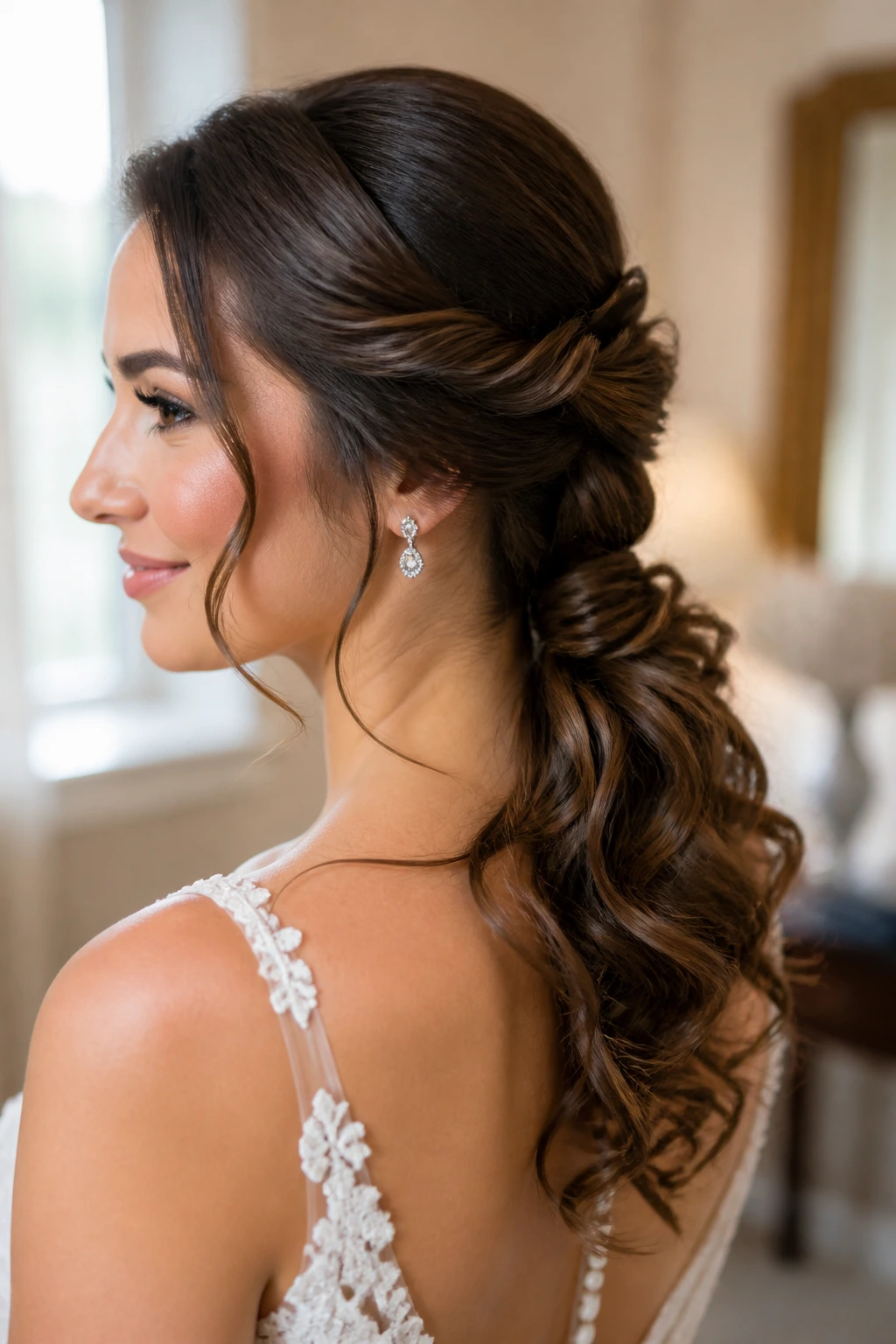
A twisted low ponytail with curls gives you softness at the sides and movement through the length. The top sections are twisted back, then gathered low and curled so the ponytail has shape instead of limpness. It’s elegant, but not severe.
This is a very practical bridal style for brides who want the neck clear and the hair still visible from the back. It works with veils, long earrings, and dresses that have a clean shoulder line. If you want a less formal version, the twists can be looser; if you want more structure, they can be smoothed tighter to the head.
A good low ponytail should not look like it was thrown together after the ceremony. The twists need to feel intentional, and the curled tail should have enough volume to hold its form in photos. A wrapped base ties everything together neatly.
35. Sculpted French Roll With Volume
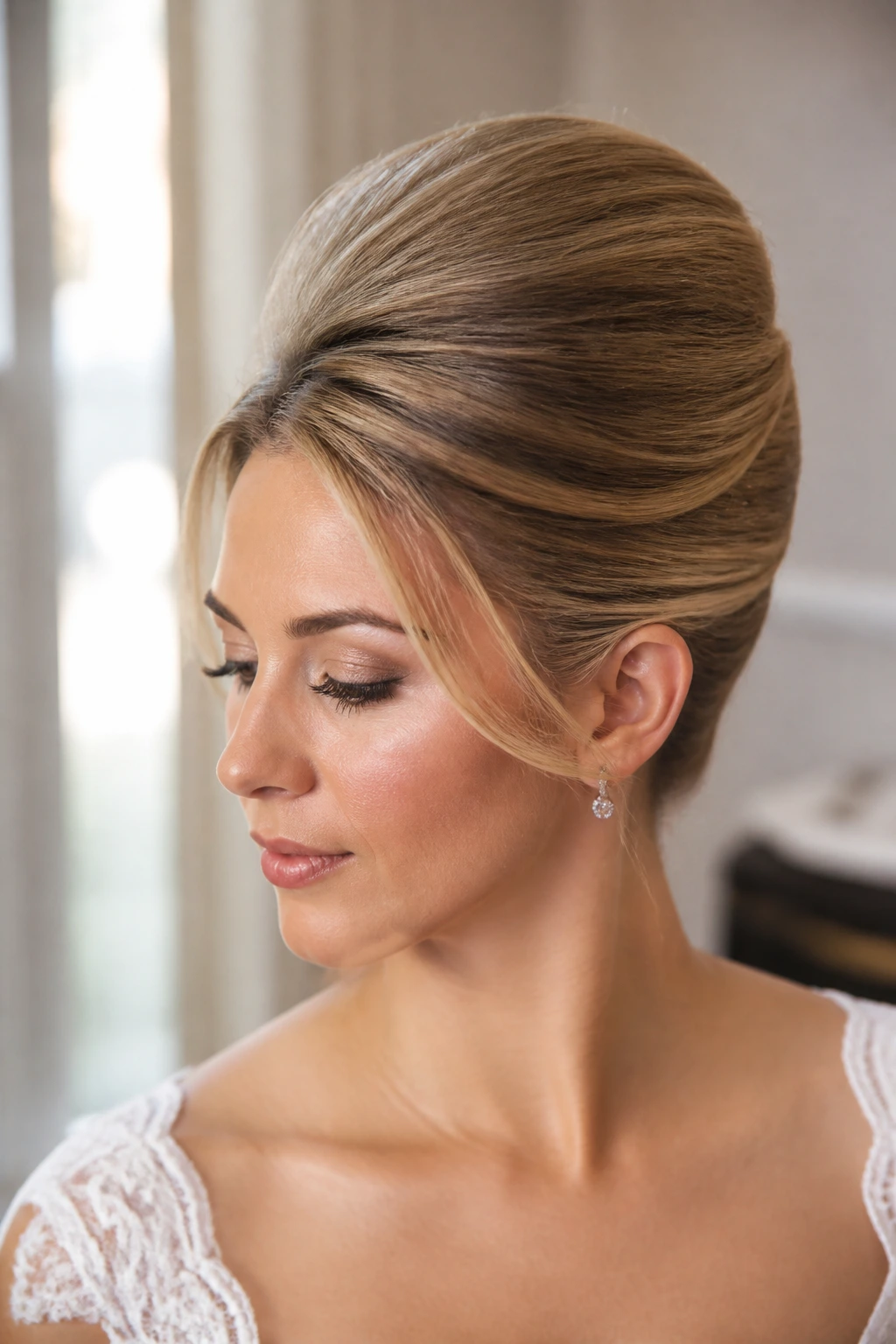
A sculpted French roll with volume is the polished older sister of the casual twist. The hair is lifted and folded upward into a vertical shape, but the crown has more height and the surface has a cleaner finish. It looks formal from every angle.
This is a good closing style for brides who want sophistication without a bun. It pairs well with column dresses, clean tailoring, and classic veils because the shape is tidy and refined. A bit of height at the crown also balances a dress with a lower neckline or a long, narrow silhouette.
The sculpted roll works best when the stylist builds the base first and smooths the outer layer last. That order matters. If the outer layer is too polished before the roll is pinned, the style slips. Inside grip first, pretty surface second. That’s the whole game.
Why Bridal Hair Needs a Built-In Support System
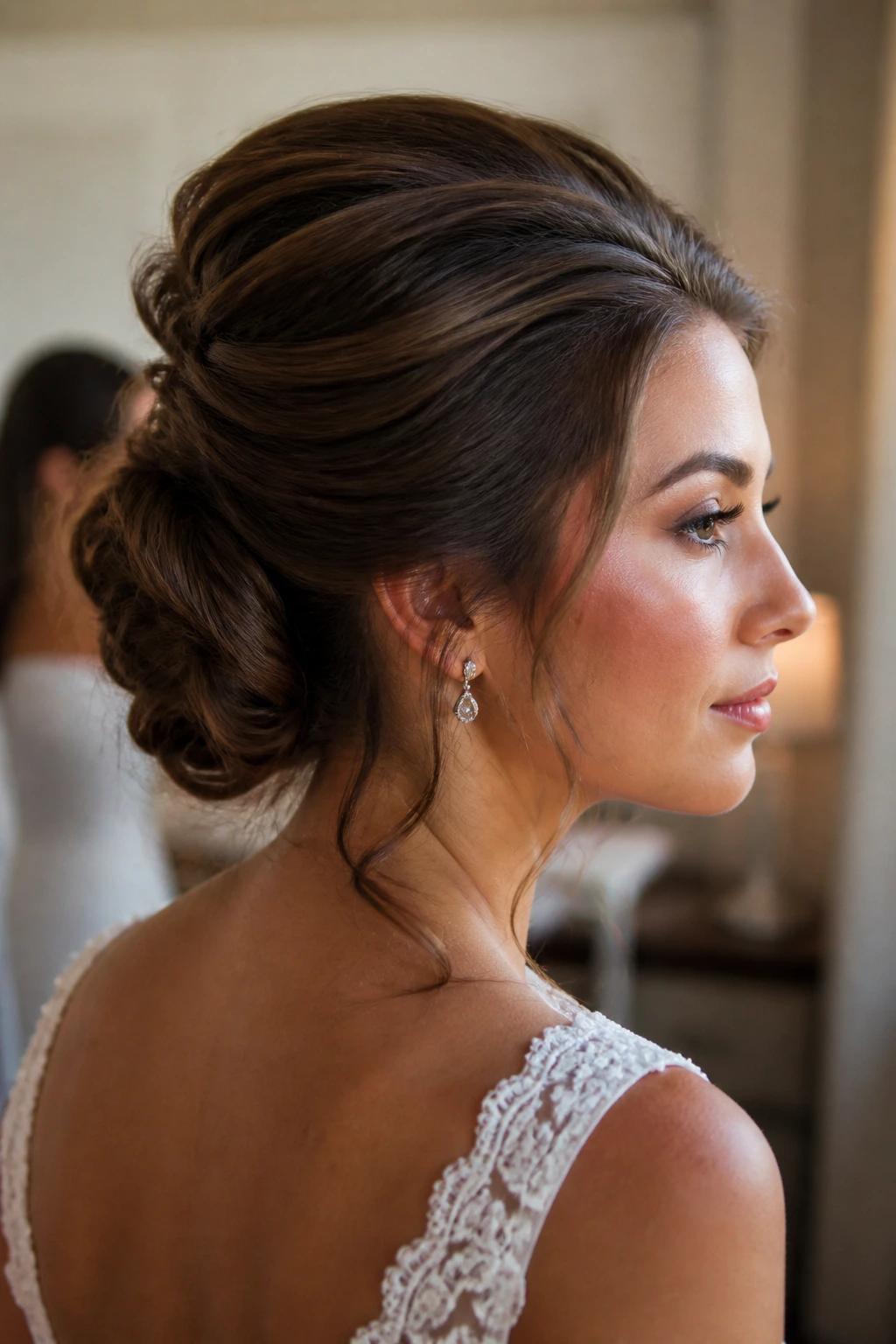
A wedding hairstyle is not just a shape. It is a structure that has to carry weight, heat, motion, and accessories for hours without looking tired. That means the best styles almost always have a hidden base: teasing at the crown, cross-pinning through the nape, or a braid that gives the hair something to cling to. Pretty on top is nice. Support underneath is what saves the photo at hour eight.
The other thing people miss is movement. A bride does not stand still. She hugs people, turns her head, lifts a veil, bends over a bouquet, and usually dances harder than she planned to. Hair that is pinned too rigidly can crack or look flat after a few hours. Hair that is too loose starts slipping. The sweet spot is a style that bends a little without losing shape.
Accessories should work with that structure, not fight it. A veil comb wants grip. A hair vine wants a line to follow. A floral piece wants a stable patch of hair, usually over a braided or pinned area. If the foundation is wrong, even the prettiest accessory starts to look awkward.
Essential Equipment for These Looks
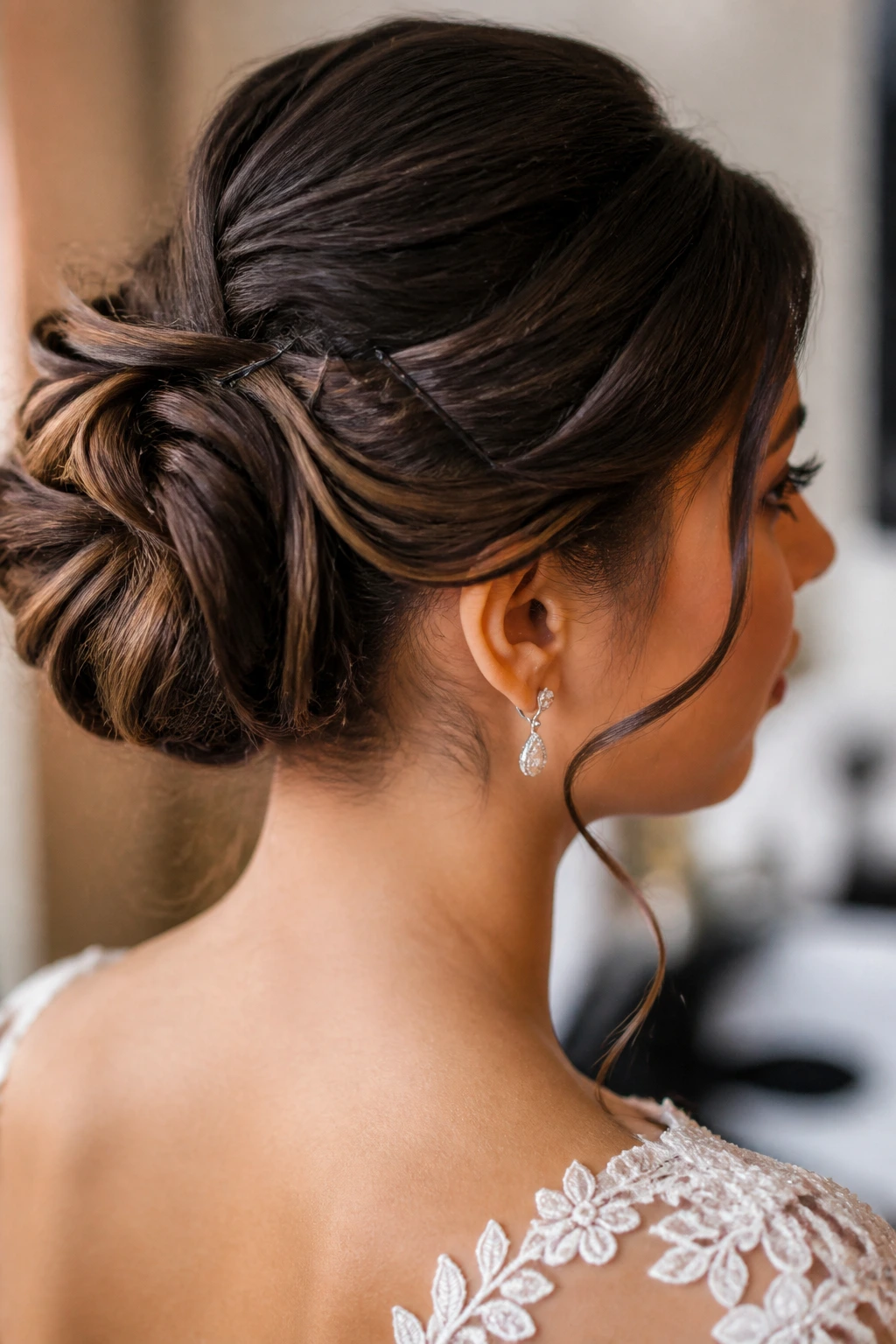
- Tail comb: Best for clean parts, sectioning, and teasing the crown without tearing through the hair.
- Sectioning clips: Keep hair out of the way while you work one part at a time.
- Bobby pins and hairpins: Use both; they do different jobs, and a few extra never hurt.
- Strong-hold hairspray: Necessary for updos, waves, and anything that needs to survive moving air.
- Flexible finishing spray: Better for soft waves and face-framing pieces that should still move.
- Texturizing spray or dry shampoo: Adds grip to slippery hair and helps pinned styles hold.
- Round brush and paddle brush: Useful for smoothing and shaping different sections.
- Curling iron or wand: A 1-inch barrel handles most bridal curls well.
- Blow dryer with nozzle: Helps build a smooth base before styling.
- Hair net or bun form: Optional, but useful for fuller buns and sculpted rolls.
- Veil comb and accessories: Bring the actual pieces to the trial. Guessing never goes well.
- Clip-in extensions: Optional for fullness; choose shades that match the ends, not the root.
Smart Shopping and Styling Prep Tips
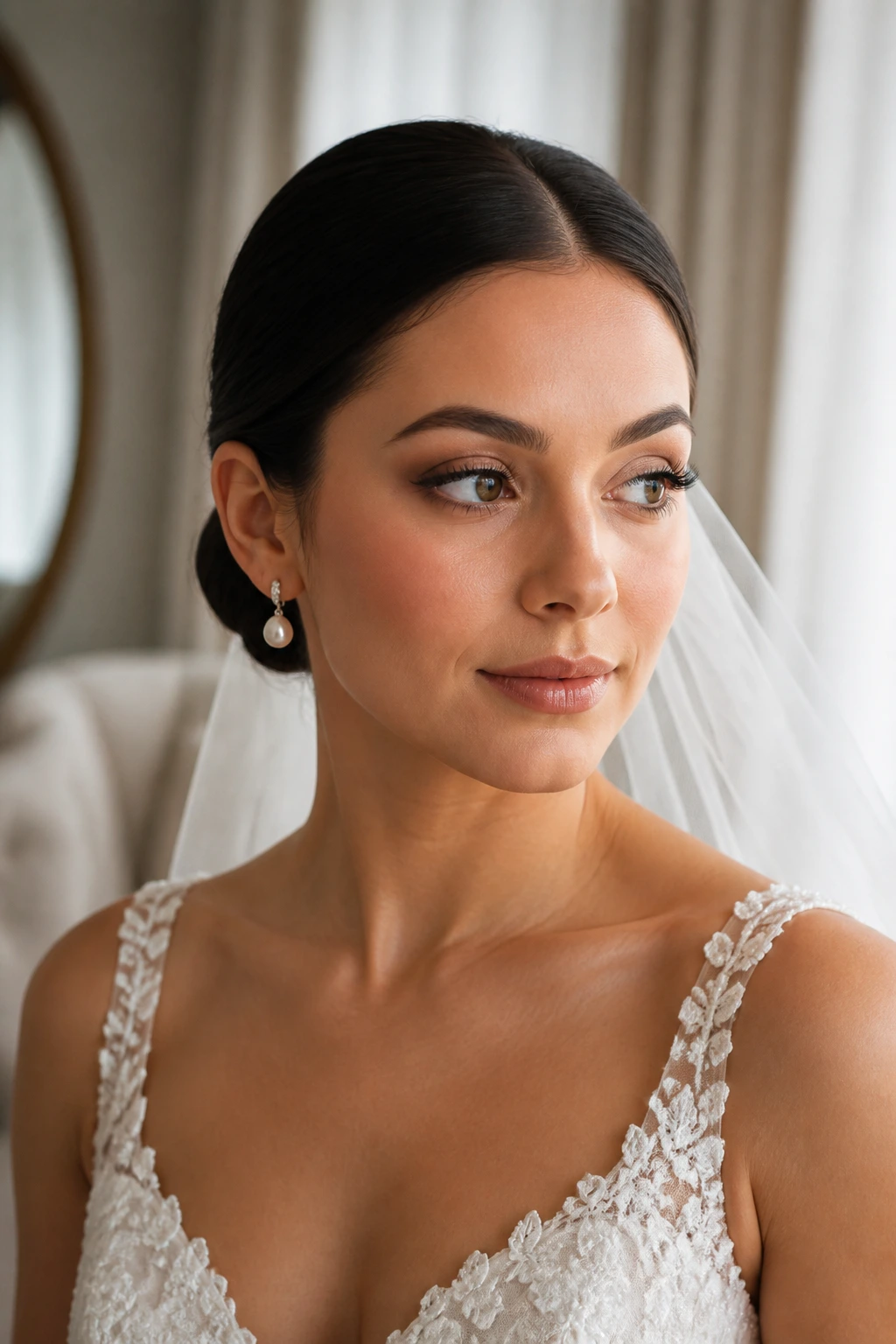
The product bag matters more than people think. If your hair is fine and slippery, a root-lifting spray and a texture spray are worth more than a heavy oil. Too much smoothing product makes the hair too soft to pin. If your hair is dry or curly, you’ll want a leave-in that gives slip without flattening the curl pattern, plus a firm hold spray to finish.
Extensions deserve care, too. If you’re using clip-ins, buy them early enough to color-match in daylight, not under store lights. And bring them to the hair trial. A stylist can’t guess the weight or placement of extensions from memory, and a bridal style changes once extra length gets added.
Accessories should be chosen with the hairstyle, not after it. A comb that’s too wide can knock apart a small twist. A heavy floral piece can drag down a soft bun. If you’re wearing a veil, test how the comb sits in the actual style you’ll wear, because the same veil looks different on a ponytail, a bun, and a braid.
How to Wear These Styles With Veils, Combs, and Jewelry
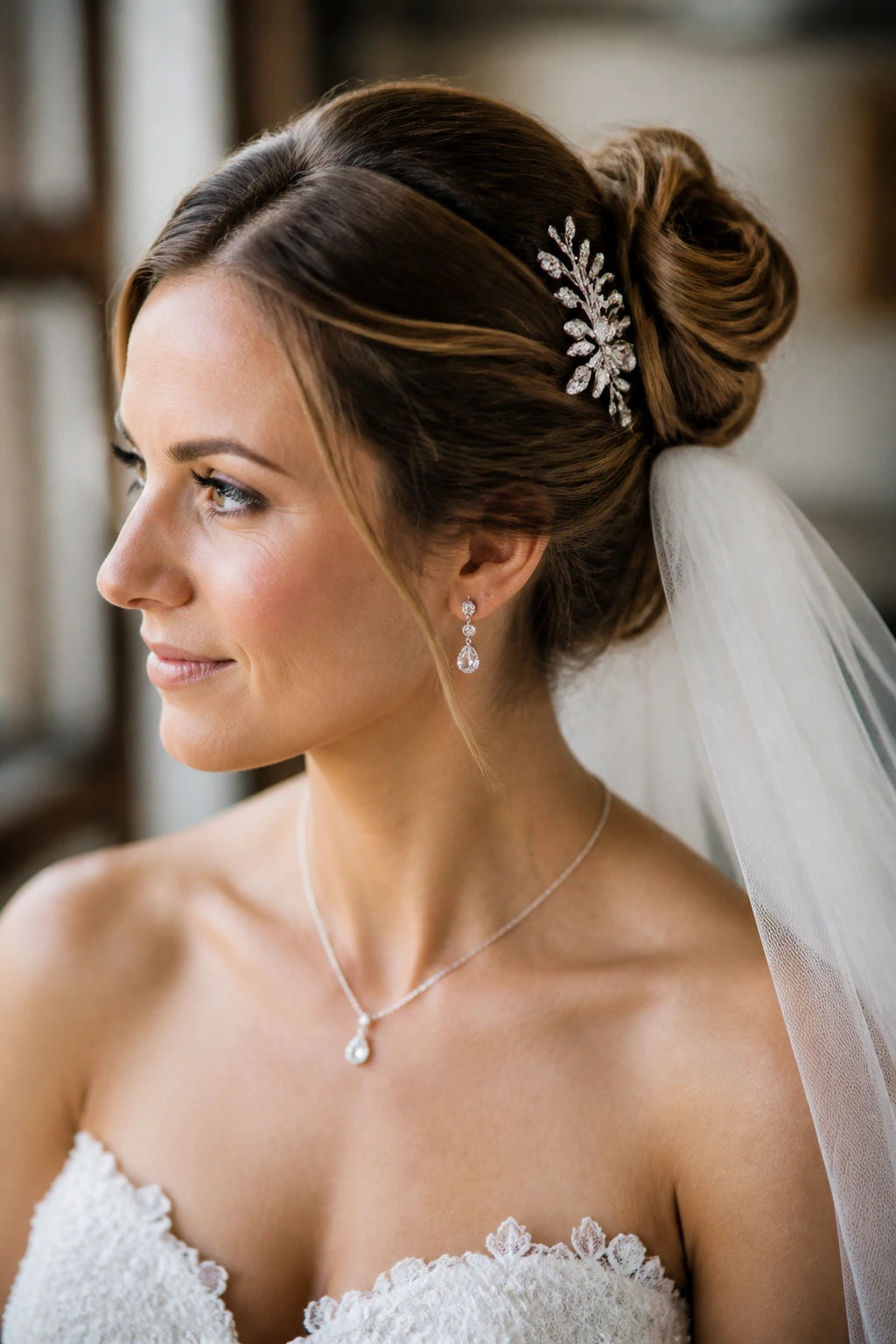
Placement: A veil comb usually works best where the hairstyle already has structure — above a bun, into a braided base, or just behind a twist with enough pinned support. If the hair is silky and flat, the comb can slide. A few hidden crisscross pins solve that fast.
Accessories: Hair vines, pearl pins, and floral clips should follow the line of the style, not sit on top of it like a sticker. A vine can trace a part or the rim of a braid. A comb can sit to one side of a chignon. The cleaner the shape, the easier the accessory placement.
Comfort: Press the style lightly behind the ears and at the nape during the trial. Those are the spots that bite after several hours. If something feels pokey in the chair, it will feel worse after the ceremony. Move the pins before the wedding day becomes a long exercise in regret.
Jewelry: Big earrings pair well with hair pulled back. If the neckline already has beading or lace, keep the hair around the face softer so the outfit doesn’t feel crowded. The goal is balance, not matching every detail to every other detail like a wedding catalog exploded.
Additional Tips and Finish Boosters
Texture Enhancement: A little dry shampoo at the roots can help even clean hair hold better, especially in sleek buns and ponytails. Use it sparingly. Too much and the hair turns chalky around the hairline.
Customization: Face-framing pieces should be chosen on purpose. Cheekbone length lifts the face. Chin-length pieces can drag it down. Small difference. Big effect.
Serving Suggestions: If the dress is simple, spend your detail budget on the hair — a pearl pin, vine, or floral comb can carry the whole look. If the dress is already busy, keep the hair shape cleaner so the room isn’t visually crowded.
Last-Minute Polish: Spray a little hairspray on a toothbrush or small comb to tame flyaways around the crown and nape. Do not soak the hairline. That just makes the fine baby hairs stick straight up in hard little spikes.
Make-Ahead, Maintenance, and Touch-Up Guidance
The smartest bridal hair prep starts before the wedding morning. A trial run should happen far enough ahead that there is time to change direction if the first idea sits wrong against the dress. Bring photos of the actual gown, earrings, veil, and any comb or flower piece. Hair only makes sense in context.
Wash timing matters more than people admit. Many updos and braids hold better on hair that’s one day old, because the strands have a little grip. Very silky hair can be too slick on the day of washing, while very curly or dry hair may do better with a light moisturizing routine and a defined twist-out or blowout the day before. The goal is not dirty hair. It’s hair with a little texture.
For touch-ups, pack a small kit: 6 to 10 bobby pins in your hair color, a travel-size hairspray, a tiny comb, a few clear elastics, and a couple of blotting papers if face-framing pieces tend to stick to makeup. Ask someone to do a quick check after the veil comes off and again before the first dance. That 30-second check can save you from a collapsing side piece or a ponytail that has loosened at the elastic.
Variations and Adaptations to Try
Fine-Hair Illusion: Use a padded bun form, a little root crimping underneath, and a texture spray before pinning. Fine hair can look fuller fast, but only if the base has grip. A sleek finish on the outside helps hide the extra structure.
Curly-Texture Celebration: Keep the curl pattern intact and shape it with pins instead of flattening it. This works for half-up styles, low puffs, and pinned-back curls. The styling should guide the curl, not erase it.
Short-Hair Luxe: A pixie or bob can be elevated with a statement clip, side wave, or narrow comb. The cut stays visible, which is the point. Forcing short hair into something it is not usually looks worse than celebrating the length you have.
Humidity Shield: Choose tighter bases, slightly firmer spray, and styles with hidden anchoring, like buns, twists, and braids. The outside can still look soft. The inside should be built to survive warm air.
Minimalist Bride: Pick one clean shape — low pony, chignon, French roll — and one strong accessory. That’s enough. The style reads more intentional when every part has a job.
Common Mistakes to Avoid
- Styling hair that’s too clean and slippery: Freshly washed hair often has less grip, so buns and braids can slide. If your hair is silky, aim for light texture the day before.
- Ignoring the back view: Brides spend a lot of time being photographed from behind. A style that looks lovely in front but collapses at the nape is only half done.
- Overloading with product: Heavy cream, oil, and spray can make hair collapse or look dull. Use enough to control frizz, not enough to glue the style shut.
- Placing accessories before the base is stable: A veil or comb should go into solid hair, not a section that still needs adjusting. If the base shifts, the accessory shifts too.
- Forgetting about comfort: Pins behind the ear or at the crown can become painful after a few hours. If a trial feels sharp, move it.
- Trying to force a mismatch: A tiny veil with a huge braid or a sleek gown with wildly tousled hair can look disconnected. Match the mood of the hair to the dress, not the other way around.
Frequently Asked Questions
How do I choose between an updo and wearing my hair down?
Start with the dress neckline and the length of time you need the style to last. Updos keep the shoulders and back visible and usually hold better, while down styles feel softer but need more support if you’re wearing them for many hours. If you’re torn, a half-up style gives you a middle ground.
Should I wash my hair the morning of the wedding?
Usually, no. Hair that’s freshly washed can be too soft and slippery for pins, curls, and braids. Many bridal styles hold better on hair that’s been washed the day before, though curly hair may need a different prep routine.
Can I wear a veil with a ponytail?
Yes, as long as the ponytail base is stable. A low ponytail, wrapped ponytail, or high ponytail with a good anchor point can all hold a veil comb. The key is pinning the veil into structure, not loose length.
What if my hair is very fine?
Fine hair needs grip and shape more than it needs more spray. Ask for texture at the roots, possibly a few hidden extensions, and a style with a tighter base like a bun, twist, or ponytail. Soft waves alone can fall faster than you want.
Will short hair limit my options?
Not nearly as much as people think. A bob or pixie can look stunning with a side wave, a jeweled clip, or a small comb placed with care. The style should respect the haircut instead of pretending it’s longer.
How do I keep curls from falling flat?
Let them cool completely before brushing, and don’t overload the hair with heavy oils. A strong setting spray at the styling stage matters more than trying to fix the curls once they’ve dropped. Hidden pins can also hold the shape around the face.
Do I need extensions for a bridal hairstyle?
Not always. Extensions help when you want more fullness in a bun, ponytail, or long wave pattern, but they are not required for every look. If the hair already has enough volume, adding extra pieces can make the style harder to balance.
What should I bring to the hair trial?
Bring the veil, jewelry, actual hair accessories, and photos of the dress from front and back. If you plan to wear extensions or a hairpiece, bring those too. A trial without the real pieces is only half useful.
How far in advance should I decide on the hairstyle?
Early enough to test it at least once in the real dress context. That means not waiting until the last minute to figure out whether the bun sits too high or the side pieces hit the neckline. Hair decisions get easier when the dress, veil, and accessories are all in the room.
Styles That Last Past the Cake Cutting
The bridal hairstyles that hold up best are the ones with a real foundation. Not the stiffest ones. Not the most complicated ones. The ones with enough shape under the surface to survive movement, weather, and the strange physics of a full wedding day.
That is the part I trust most in this lineup. Whether you lean toward a low chignon, a polished ponytail, a curly half-up, or a short cut with one very good clip, the right style should still look like you after the veil comes off and the music gets louder. Pick the one that fits the dress, fits your hair, and can take a little weather without flinching.
