



Summer bridal hairstyles have a funny job. They need to look soft enough for lace and flowers, but structured enough to survive heat, hugs, a veil, and a dance floor that gets warmer by the hour. The styles that work best usually aren’t the fussiest ones. They’re the ones with clean anchors, smart placement, and enough movement to feel romantic without falling apart the second the air gets sticky.
The best summer bridal hairstyles also solve a practical problem most glossy inspiration photos ignore: hair behaves differently when you’re warm, a little nervous, and surrounded by sunlight. Fine hair slips faster. Thick hair can swell and puff. Curly hair wants to live its own life unless you give it shape and room. A style that looks gorgeous in a cooled studio can turn into a halo of frizz after twenty minutes outdoors, which is why the real winners use structure in the hidden places and softness where the camera sees it.
So the trick is not to choose the prettiest picture. It’s to choose the style that still looks like itself after the ceremony, the toasts, and the first few songs. That’s where these 38 hairstyle ideas earn their keep.
Why These Styles Work in Summer Heat
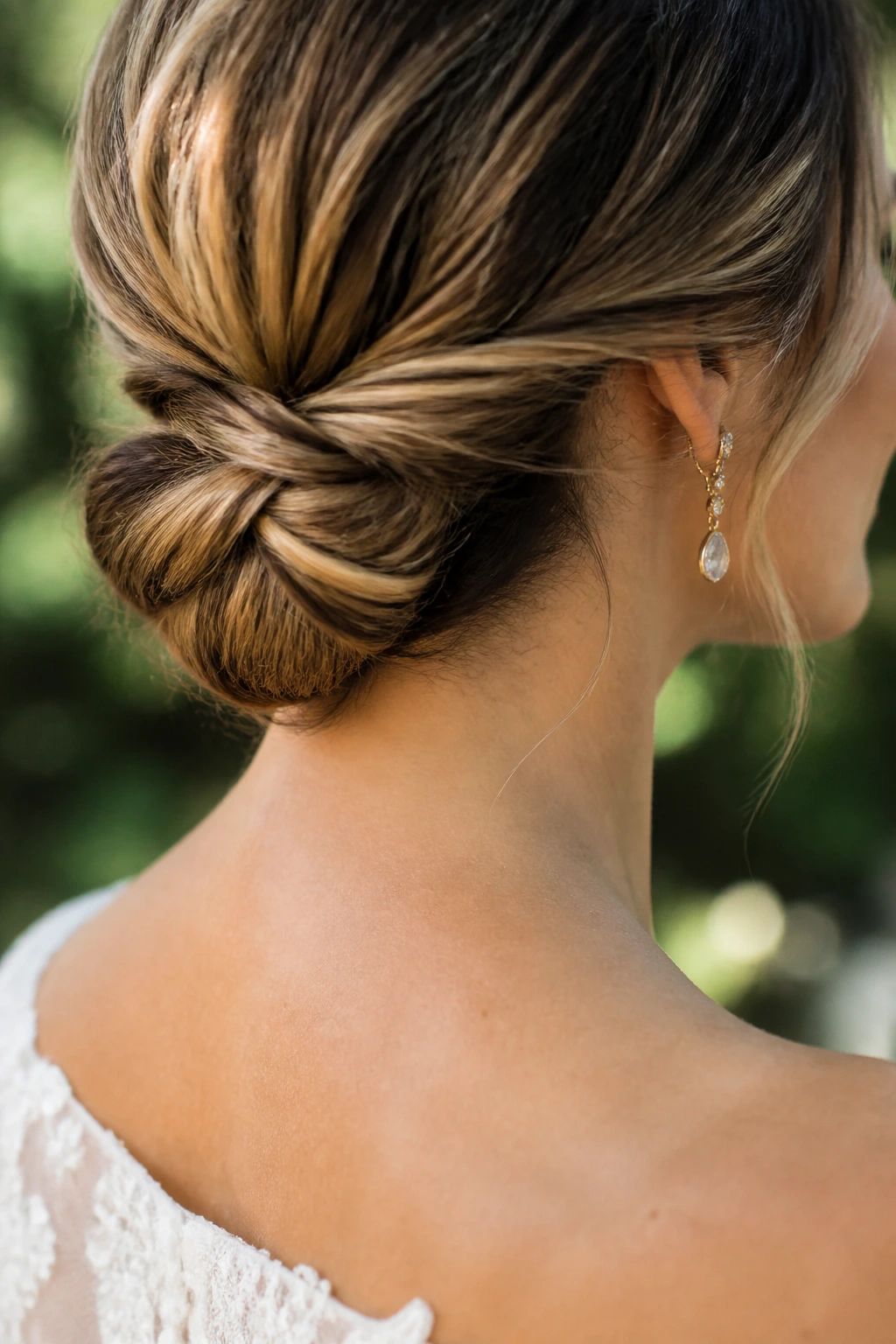
-
They keep weight off the neck: Low buns, twists, and lifted crowns leave the nape open, which matters when the temperature climbs and the back of your neck starts to do most of the sweating.
-
They handle real movement: These looks are built with pins, braids, wraps, or set curls, so they can survive veils being removed, hugs, and a little wind without collapsing into mush.
-
They play nicely with accessories: Whether you want pearls, fresh flowers, a comb veil, or a statement clip, these styles leave enough structure for something to sit on top of.
-
They work with different hair textures: Fine, thick, curly, coily, and shorter hair all get their own lanes here instead of being forced into one impossible shape.
-
They age better through the day: A good summer bridal style often looks even better an hour later, once the hair has settled and the hard edges soften a touch.
-
They photograph cleanly from every angle: The silhouette stays readable from the front, side, and back, which is a big deal when you only get one set of wedding photos done right.
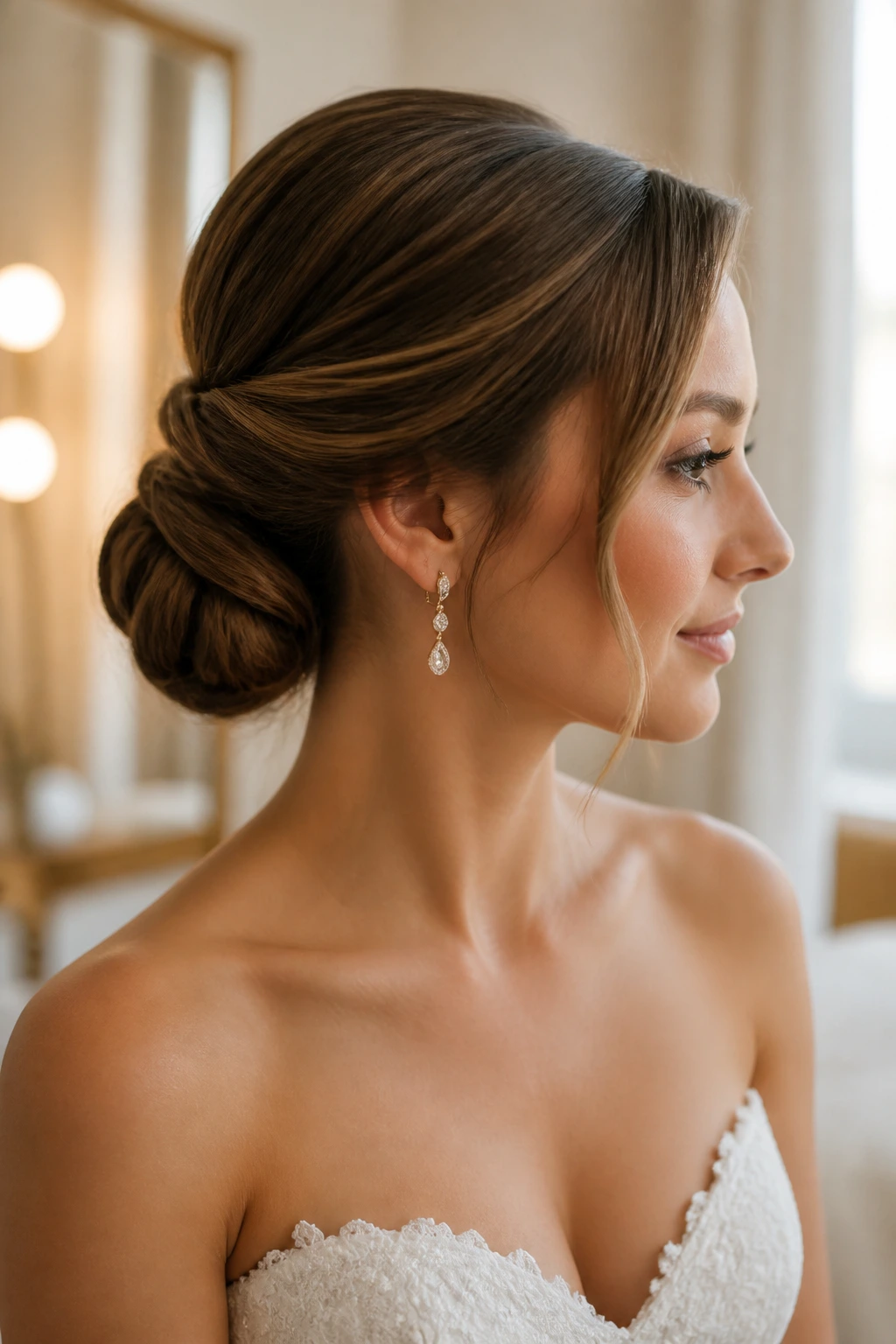
1. Sleek Low Chignon
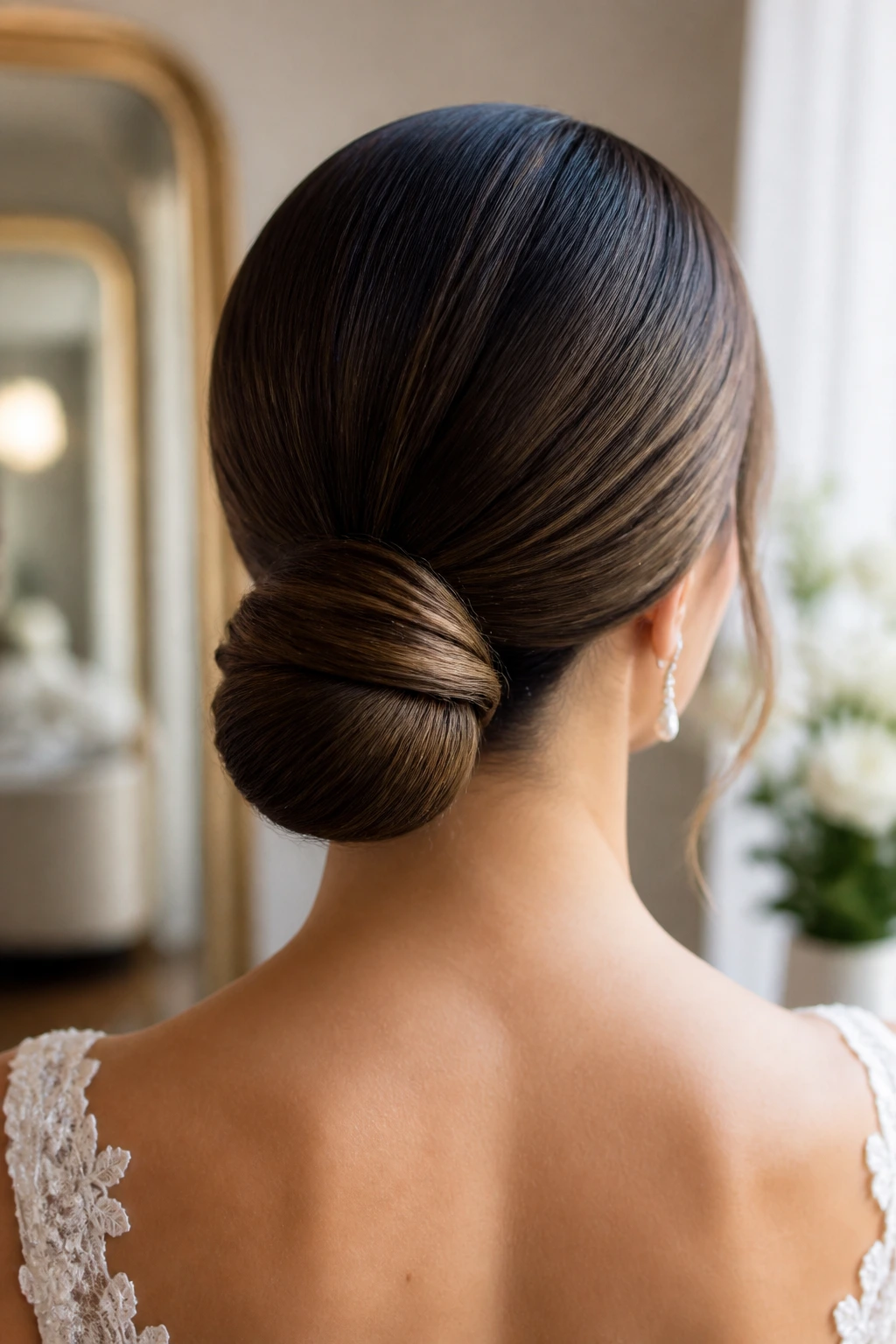
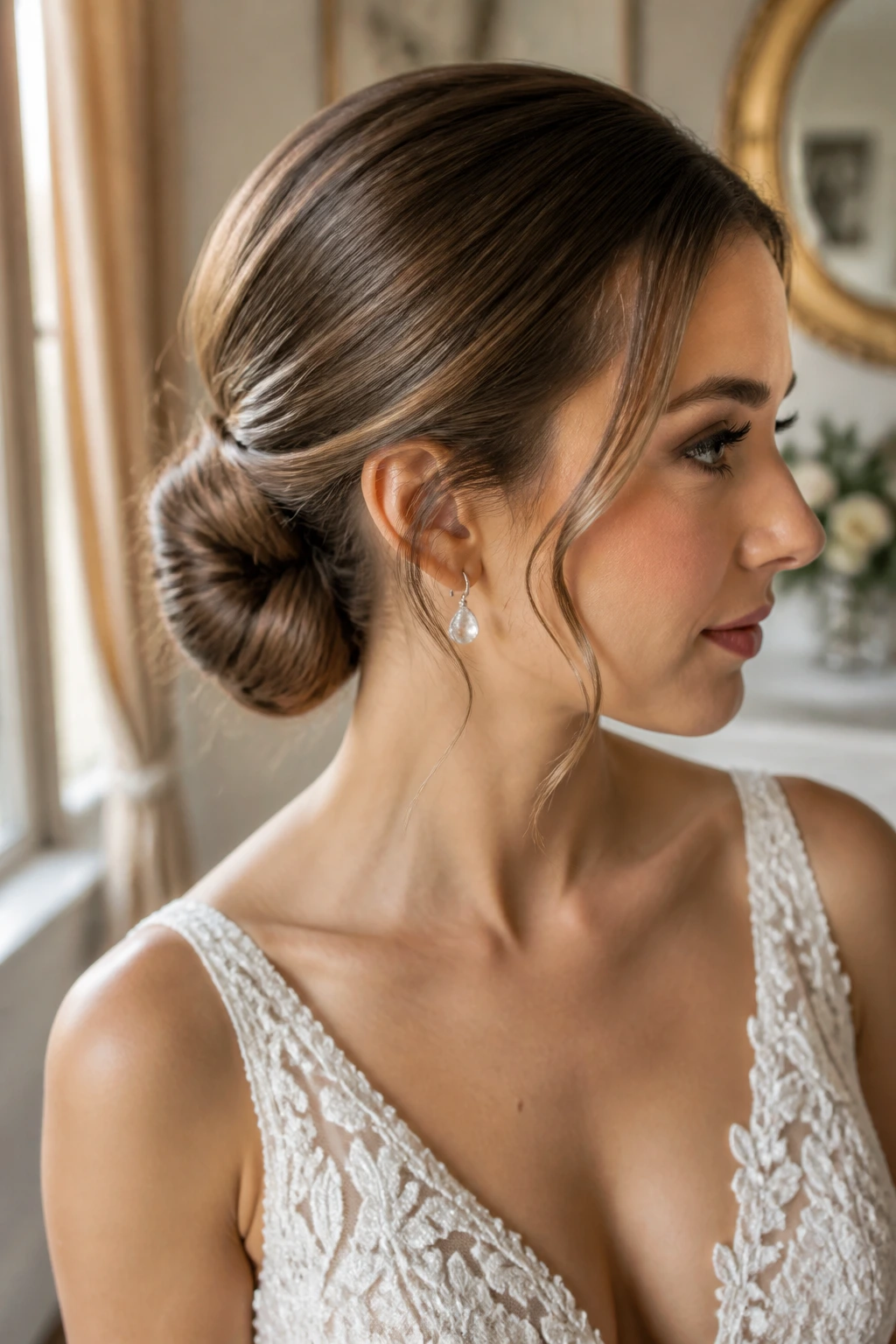
A sleek low chignon has a clean line that feels calm in the best possible way. It sits close to the head, usually just above the nape, so it doesn’t fight a high neckline or a long veil. I like this one for brides who want polish without fuss. The outline stays neat, and the face gets to stay the focus.
Why It Works in Summer
The low placement keeps heat off your neck, and the smooth surface fights humidity better than loose curls. If your hair frizzes the second it hears the word “outdoor,” this is one of the safest bets.
Quick Note
A tiny amount of smoothing cream at the roots and a strong mist of hairspray over a toothbrush can tame the flyaways around the hairline without making the bun look shellacked.
2. Soft Low Bun with Face-Framing Pieces
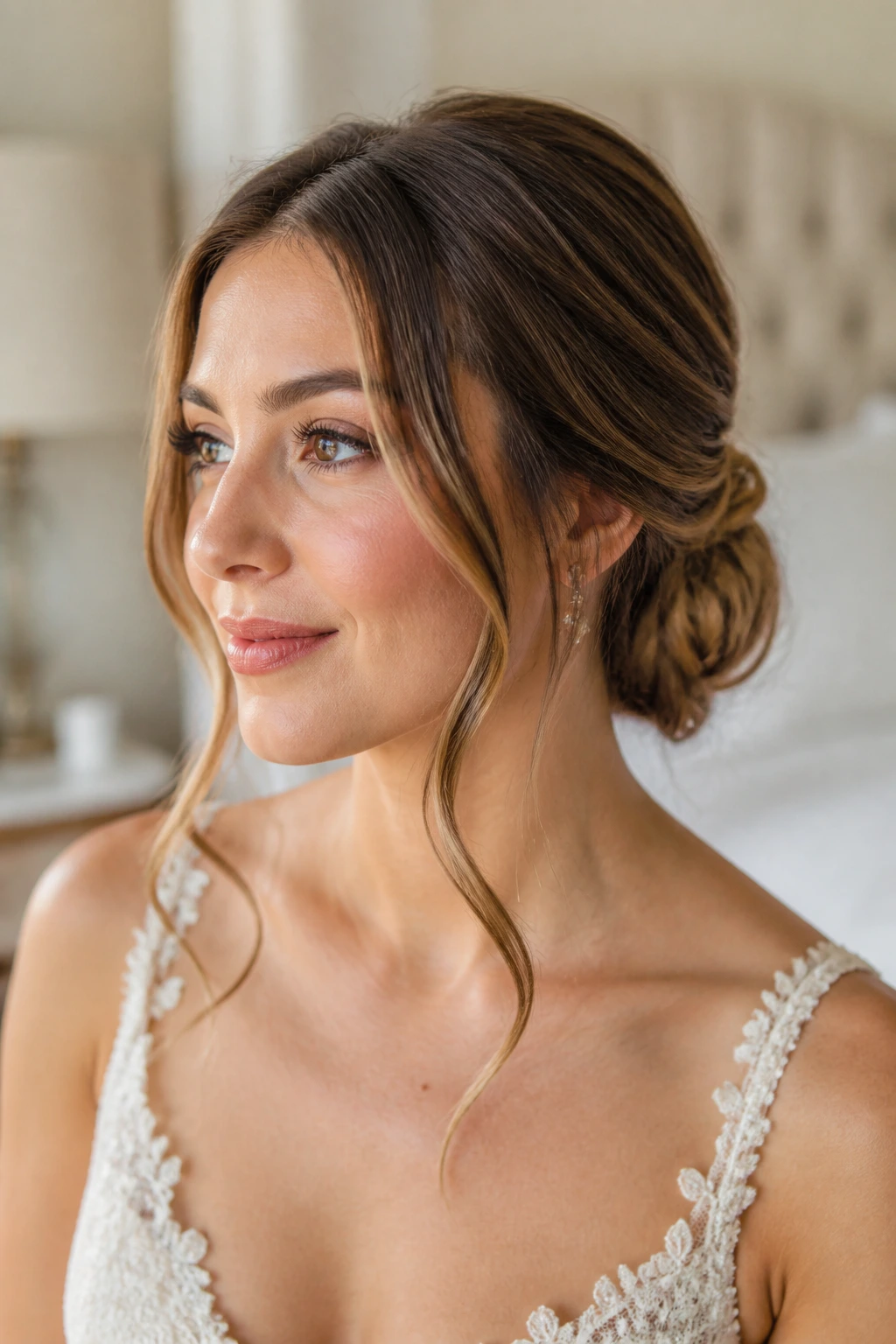
Can a bun feel relaxed and still look bridal? Absolutely, if the shape is low and the front pieces are handled with care. The trick is keeping the bun compact while letting a few face-framing strands curve softly along the cheekbones.
That softness matters in summer. The style stays cool at the neck, but it doesn’t have the severe feel of a fully tucked updo. It’s a good answer for brides who want romance without the “I haven’t moved my face all day” effect.
3. Braided Crown Updo
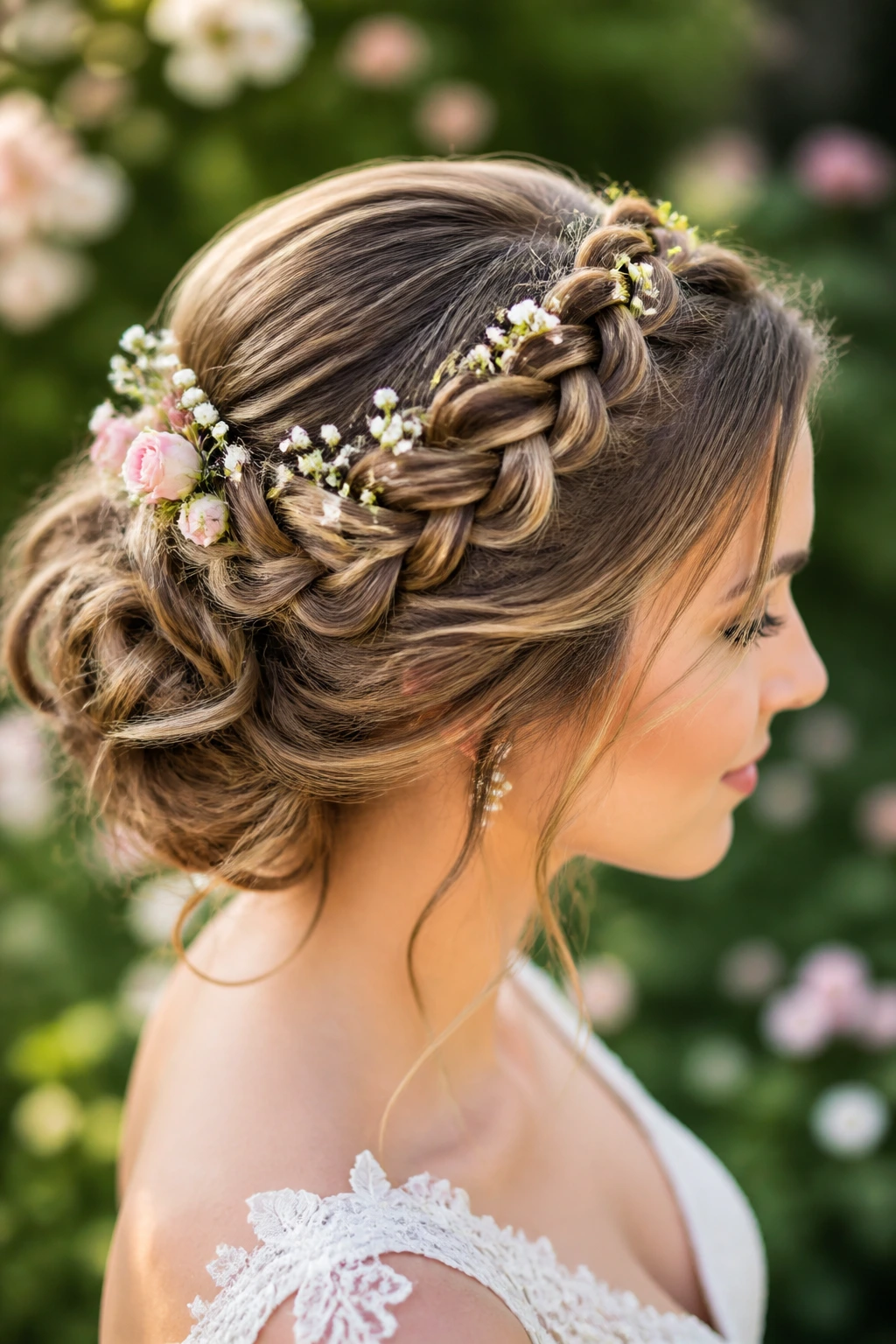
This one has a built-in summer advantage: the braid already does half the work of holding the hair in place. A crown braid wrapped into an updo creates texture that looks intentional even if a few wisps slip free later.
What Makes It Stand Out
The braid gives the eye something to follow, which is helpful when the dress is simple and the hair needs to carry a little more interest. It also works well with flowers tucked into the braid line, especially small blooms or herbs with tiny stems.
Best For
Long hair, medium-thick hair, and brides who want something that feels a little fairytale without getting sugary.
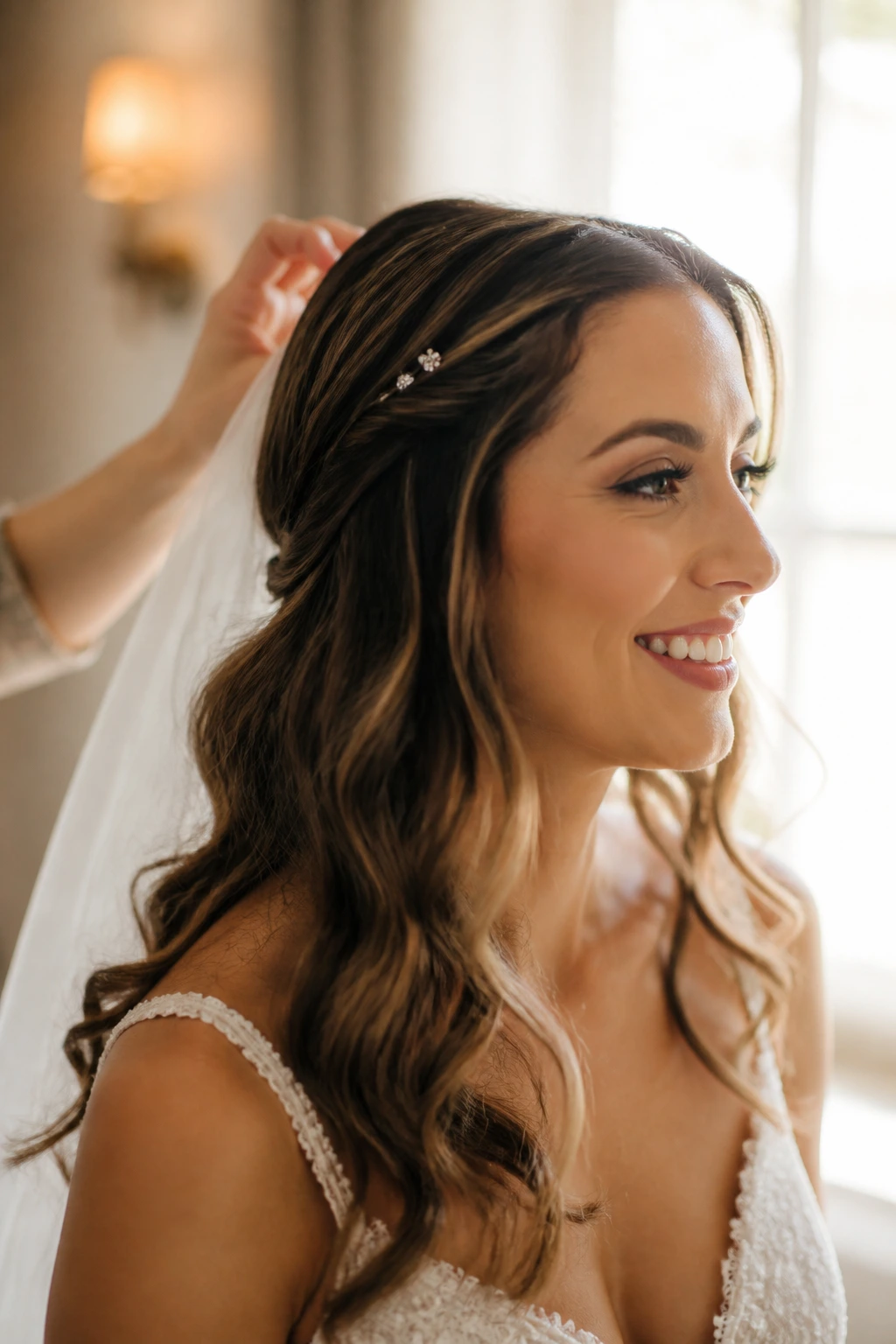
4. Half-Up Twist with Loose Waves
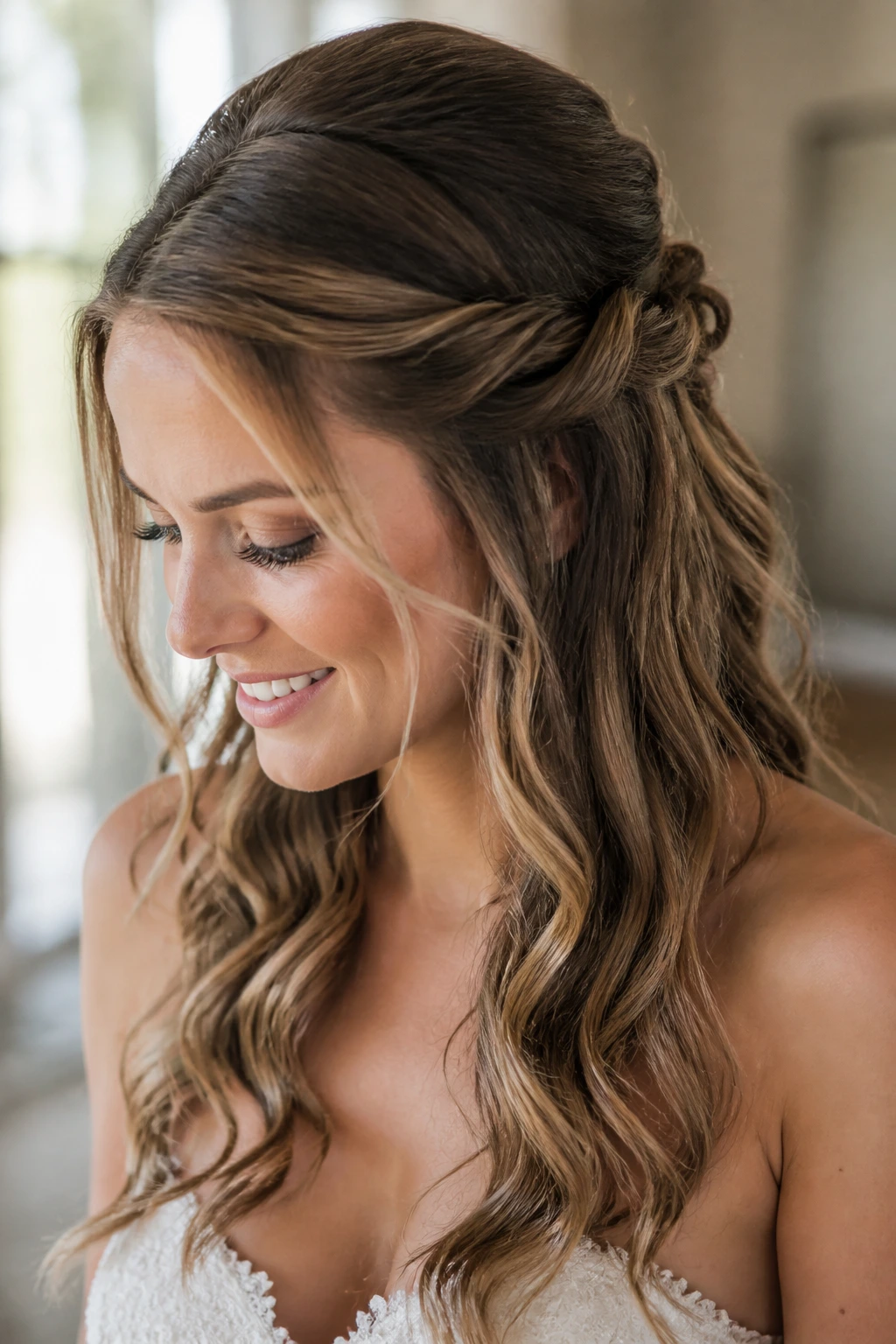
This is the style for someone who wants hair down, but not all the way down. The top section gets twisted back and pinned, while the lengths stay wavy and loose below. It’s lighter than a full updo and a bit easier to wear if you don’t like your whole head pulled tight.
There’s a catch. In sticky heat, the waves need a strong set before the event or they can stretch out. If your hair holds a curl well, this is a lovely middle ground.
5. Glossy Ballet Bun
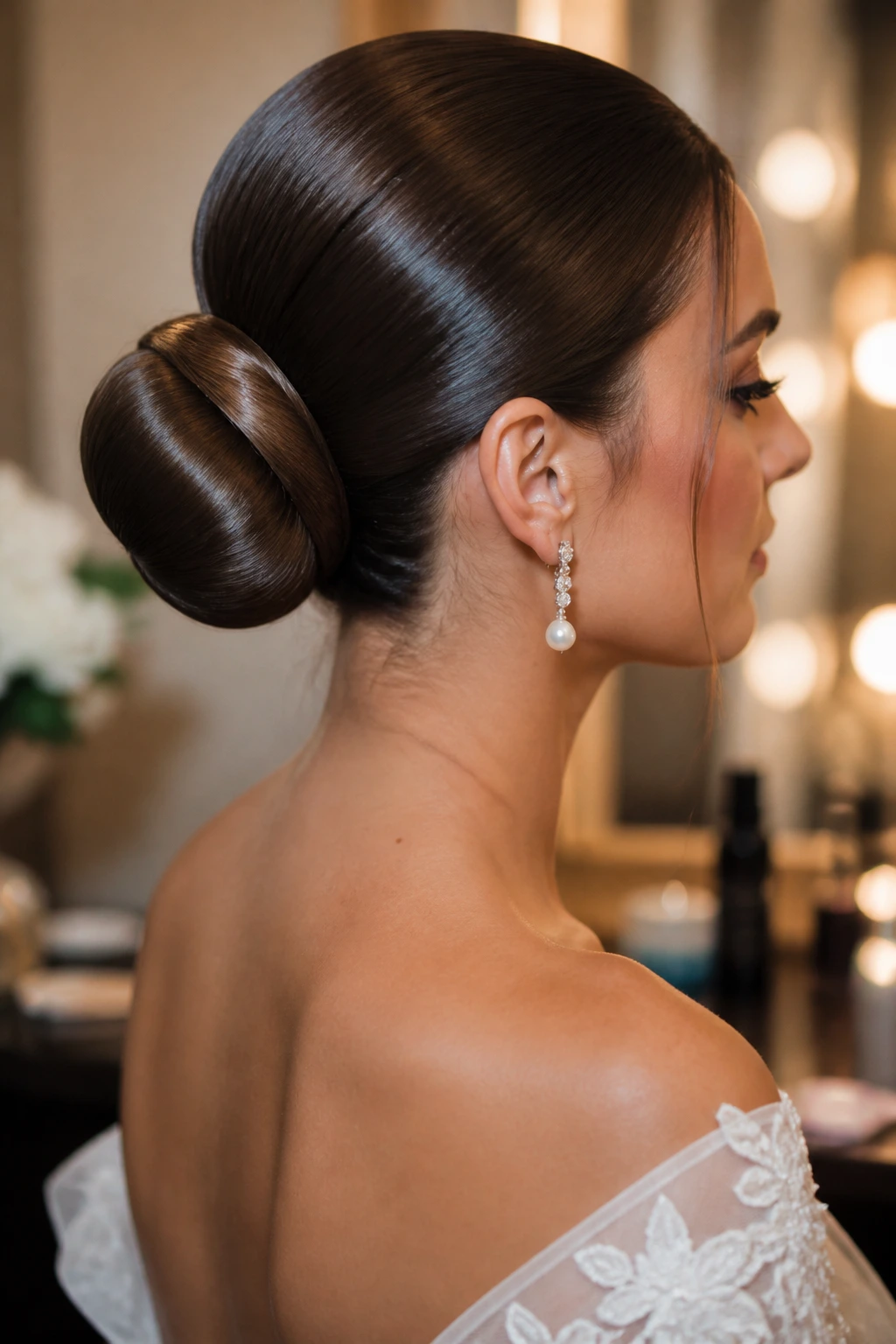
A ballet bun can look stark in the wrong hands, but when it’s done well, it has a quiet confidence that suits a wedding dress with clean lines. The key is sheen, not stiffness. The bun should look smooth and sculpted, not crunchy.
I prefer this for brides who want the dress, earrings, and makeup to take center stage. The bun becomes a frame, not the headline. And because it sits snugly, it doesn’t mind a warm ceremony or a packed dance floor.
6. Textured French Twist
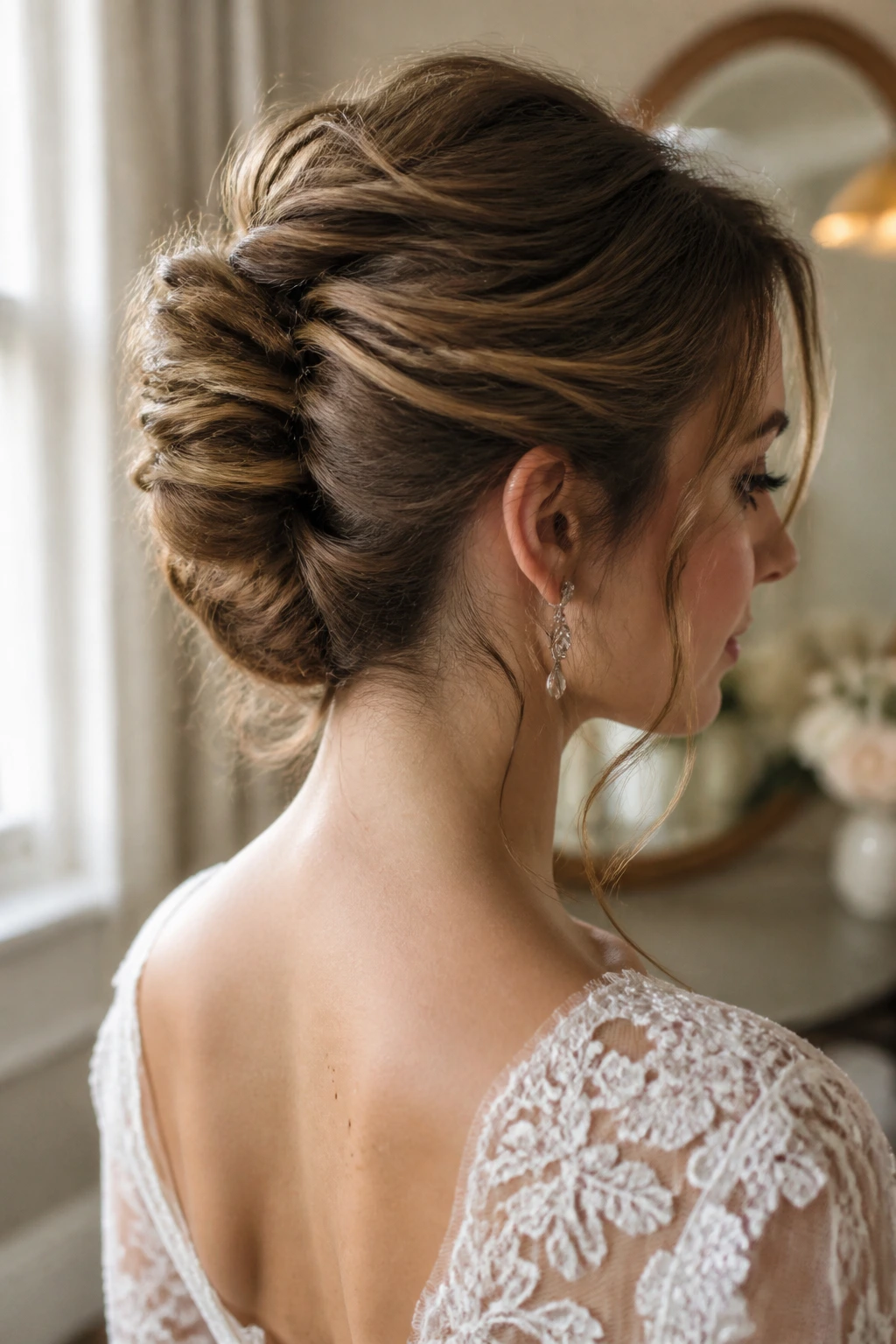
A French twist has a little more vertical drama than a low bun, which can be handy if your gown has an open back or if you want the neck to look longer. The textured version feels softer than the old-school shellacked twist, and that’s the one I’d choose for summer.
It also ages well. By the reception, the tiny looseness around the twist usually makes it look better, not worse. That’s not true of every hairstyle.
7. Side-Swept Hollywood Waves
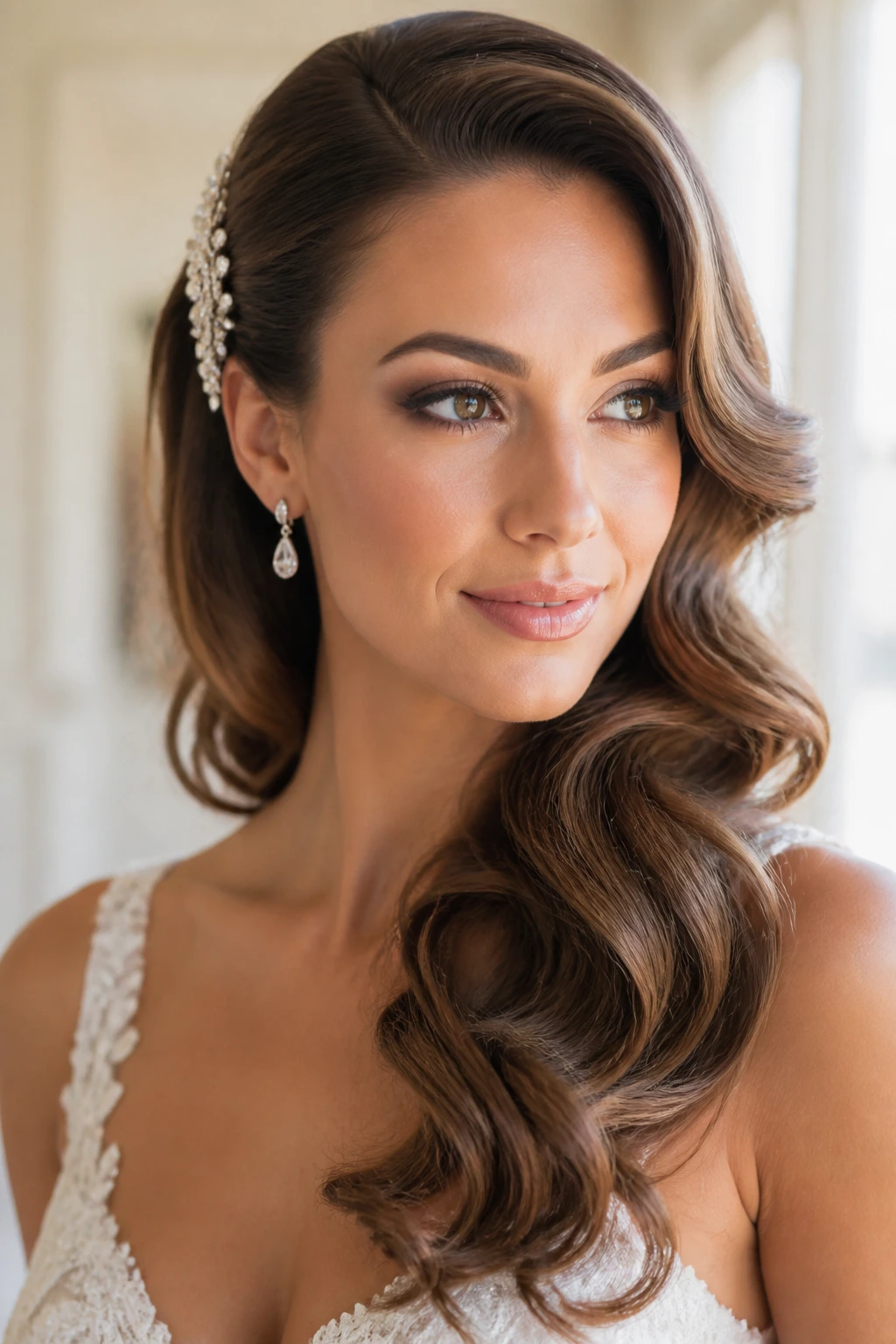
Side-swept waves bring a strong, old-school shape that looks luxurious without needing much decoration. One side stays anchored, the other spills over the shoulder, and the line across the front gives a face a very flattering angle.
Why It Works in Summer
The style keeps some hair off the back while still giving you the movement of wearing it down. If you want to show off one earring or a shoulder-baring neckline, this is one of the smartest options.
Watch For
The waves need a solid set with a 1 to 1.25-inch iron, then they must cool before brushing. Rush that part, and they turn limp by dinner.
8. Bubble Ponytail
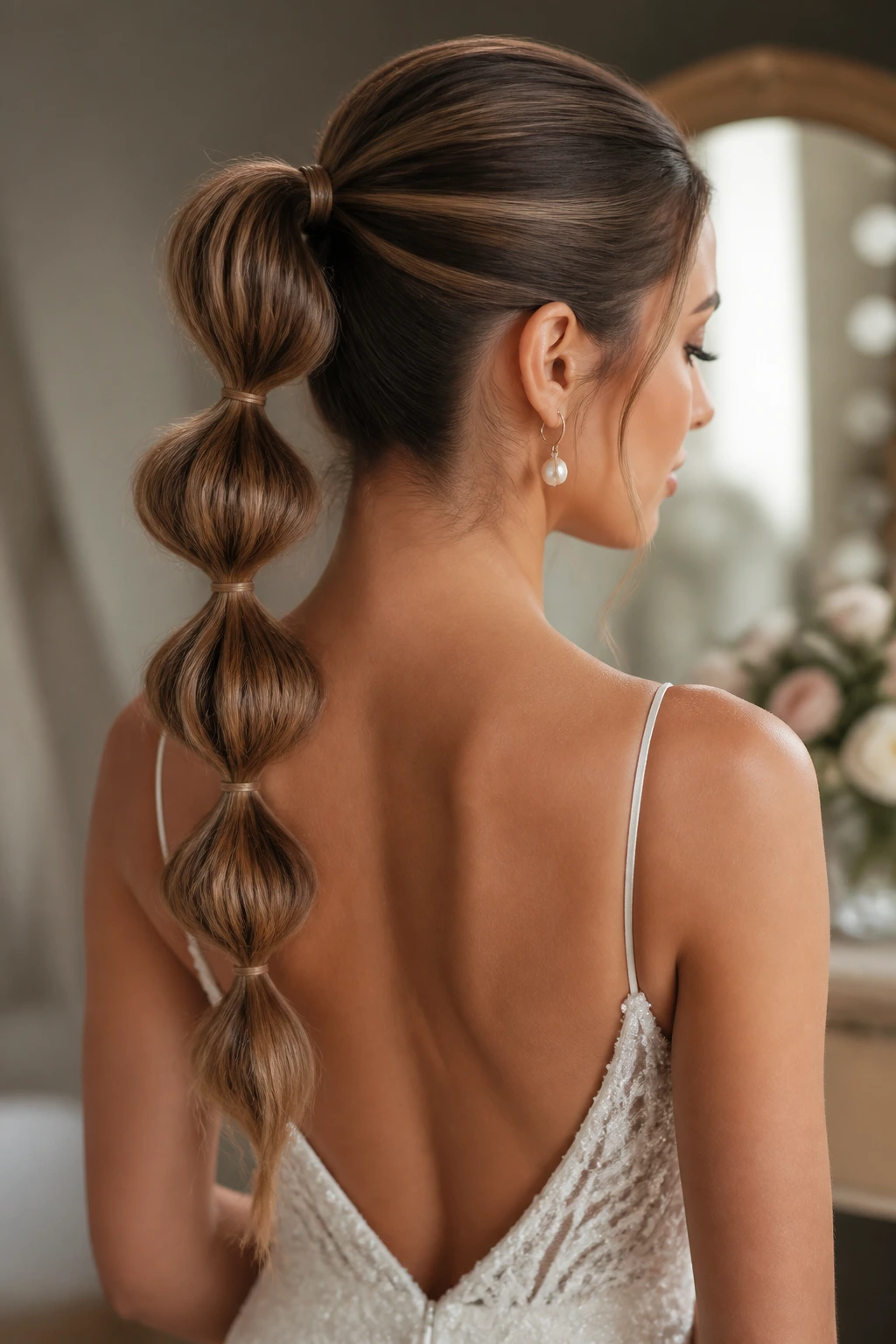
A bubble ponytail sounds playful because it is, but the bridal version can be surprisingly elegant. It’s built by securing the length at intervals so the ponytail forms rounded “bubbles” down the back. The shape reads as modern and a little architectural.
It’s a strong choice for brides who want hair off the neck but don’t want a bun. It also holds up better than a plain ponytail because the sections give the style more structure and less swinging motion.
9. Rope-Braid Low Ponytail
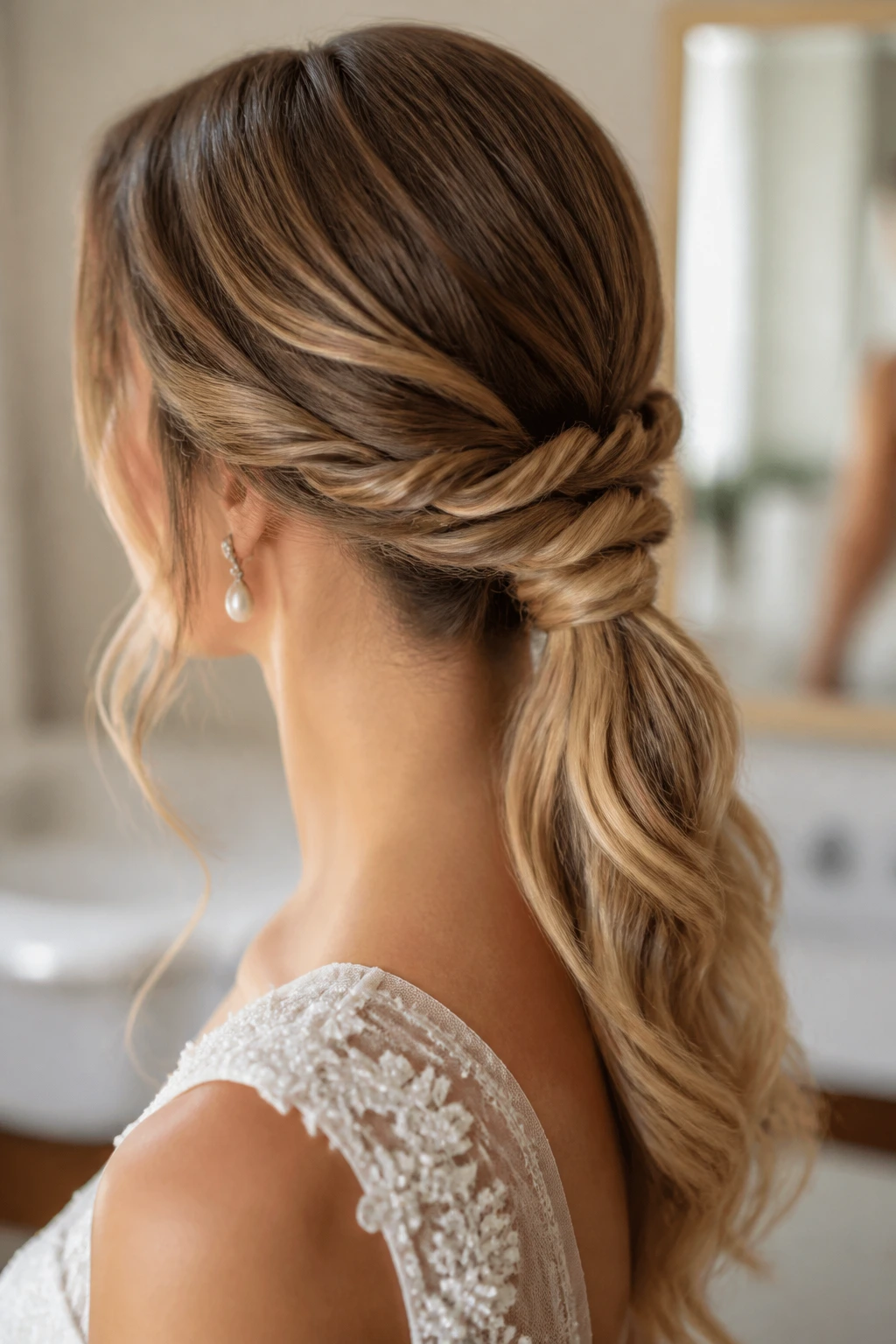
A rope braid is one of those details that looks complicated and is actually quite practical. Twist two sections in the same direction, wrap them around each other in the opposite direction, and the braid locks in with a tight, glossy finish.
The low placement makes it wedding-appropriate, while the rope texture keeps it from feeling too plain. It’s a nice match for modern dresses, and it stays neat even when the air is heavy.
10. Floral Pinned Updo
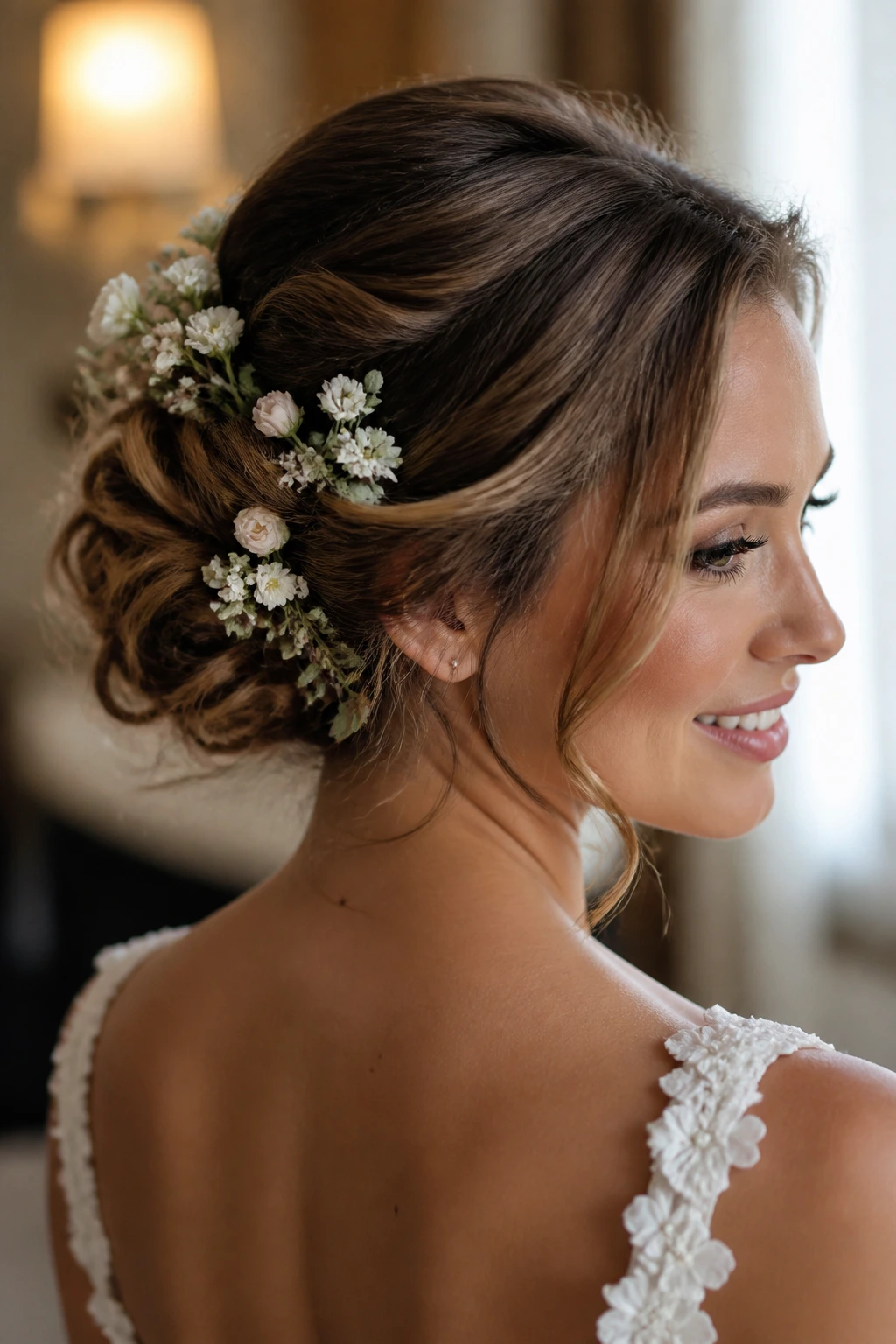
Fresh flowers in hair can look dreamy, but only if they’re anchored properly. A floral pinned updo uses a base of twists or a bun, then places blooms where they can be secured into the structure rather than perched on top.
Small flowers work best here. Big blooms can drag the shape down. I like this for garden weddings, but it can also feel sharp and fresh in a ballroom if the flower choice is restrained.
11. Messy Knot with Pearl Pins
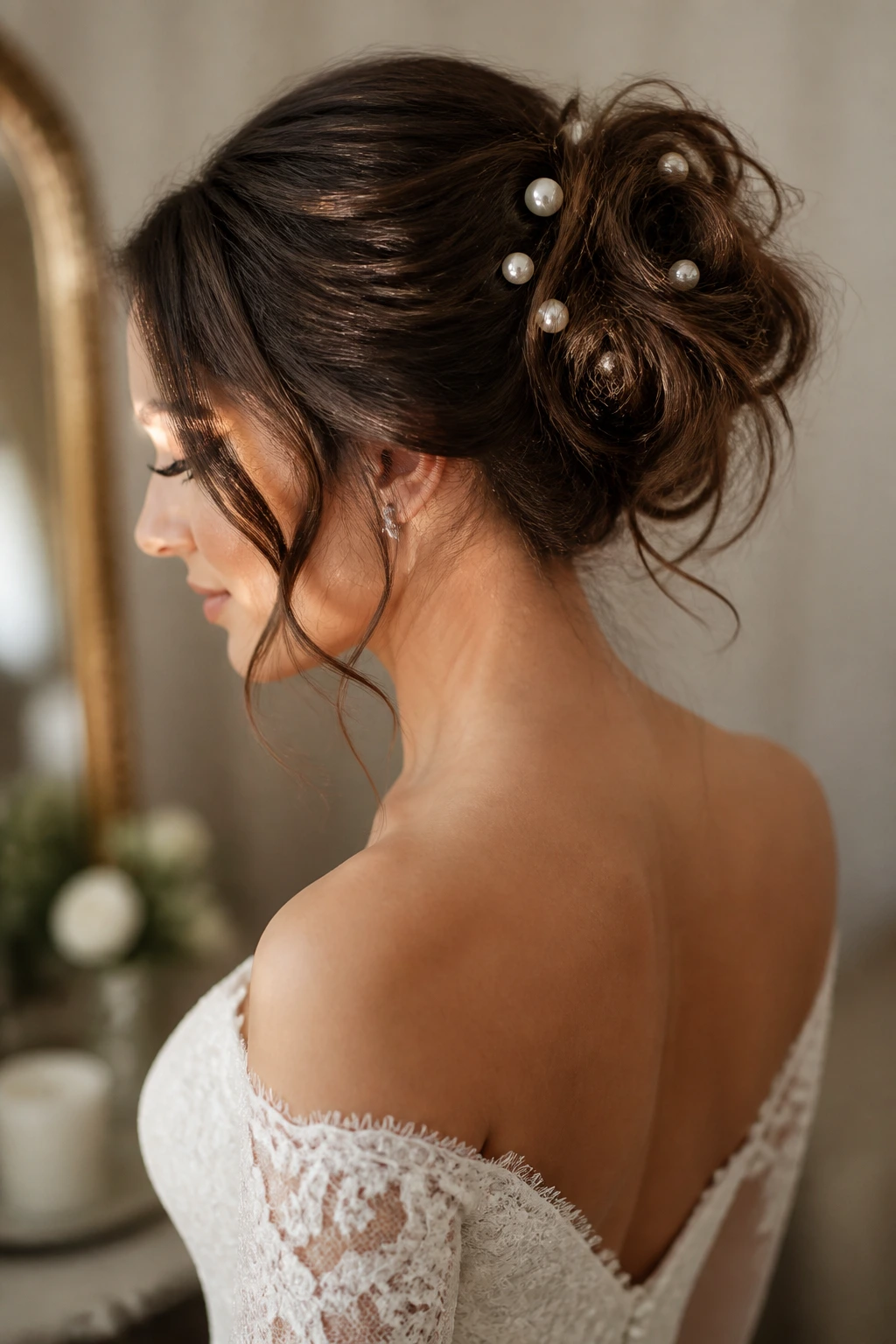
A messy knot can go wrong fast if it’s too messy. The bridal version should still have shape, with irregular pieces tucked in a way that feels deliberate. Pearl pins are the part that makes it look finished rather than tossed up.
Pearls do something useful here: they catch the eye so the style doesn’t need to be perfect from every angle. A few misplaced hairs become part of the charm instead of a problem.
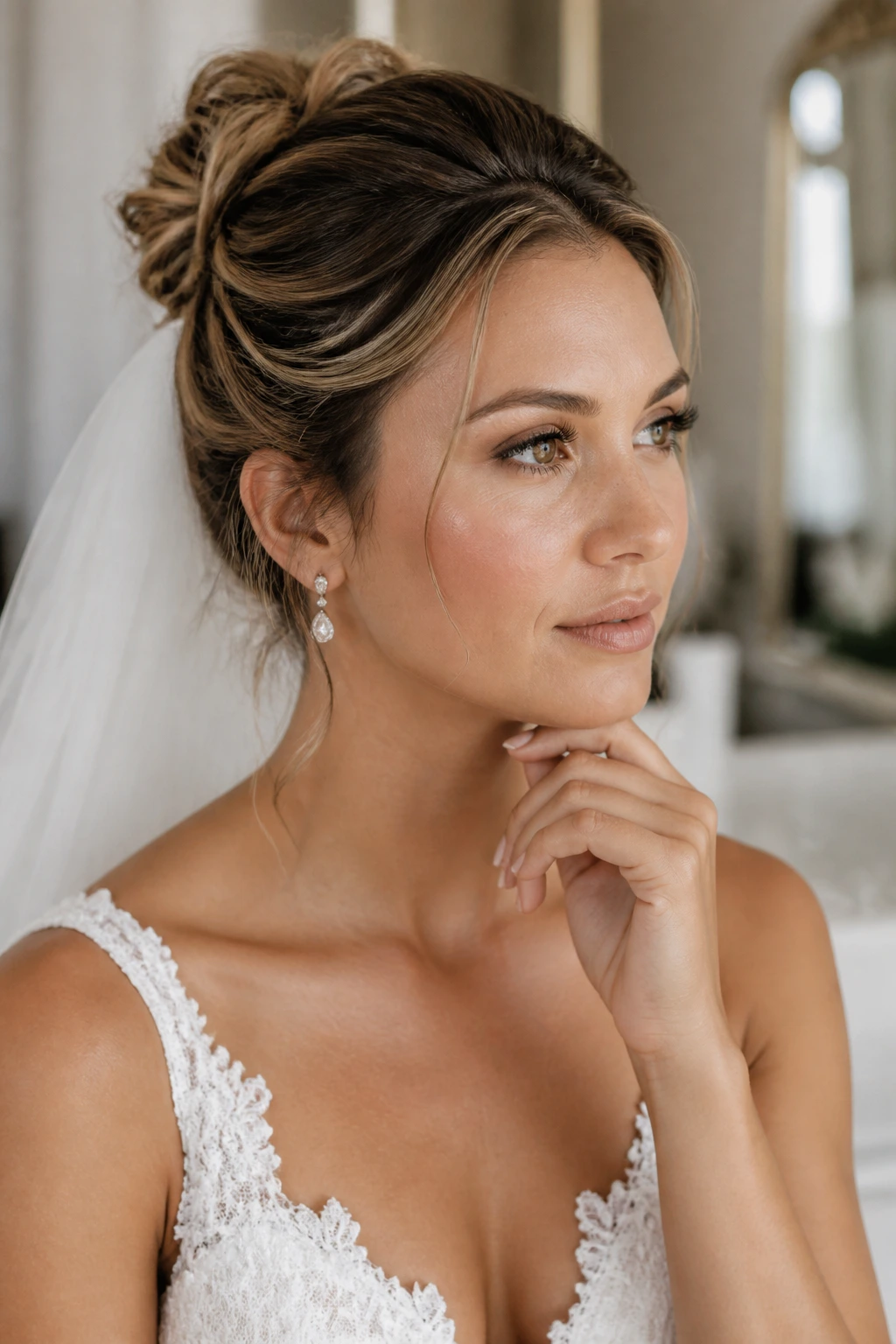
12. Sleek High Bun
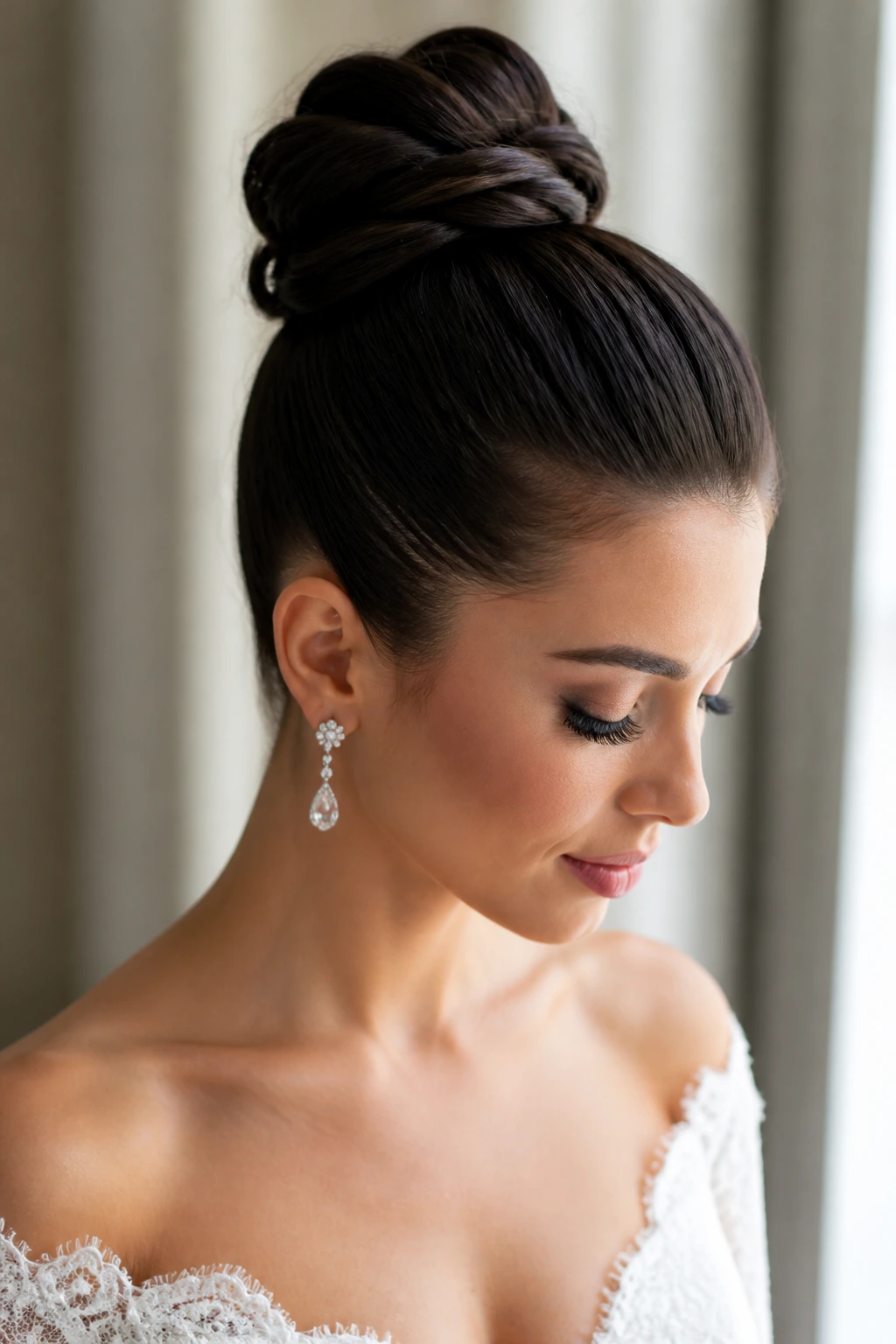
A high bun is not the first thing people think of for a summer wedding, and that’s a shame. It lifts the face, shows off the jawline, and leaves the neck open to the air. If you’re wearing a dramatic neckline or long earrings, this style gives them room.
The important thing is balance. A too-tight high bun can look harsh. A slightly fuller bun with polished edges feels much more wearable.
13. Twisted Halo Braid
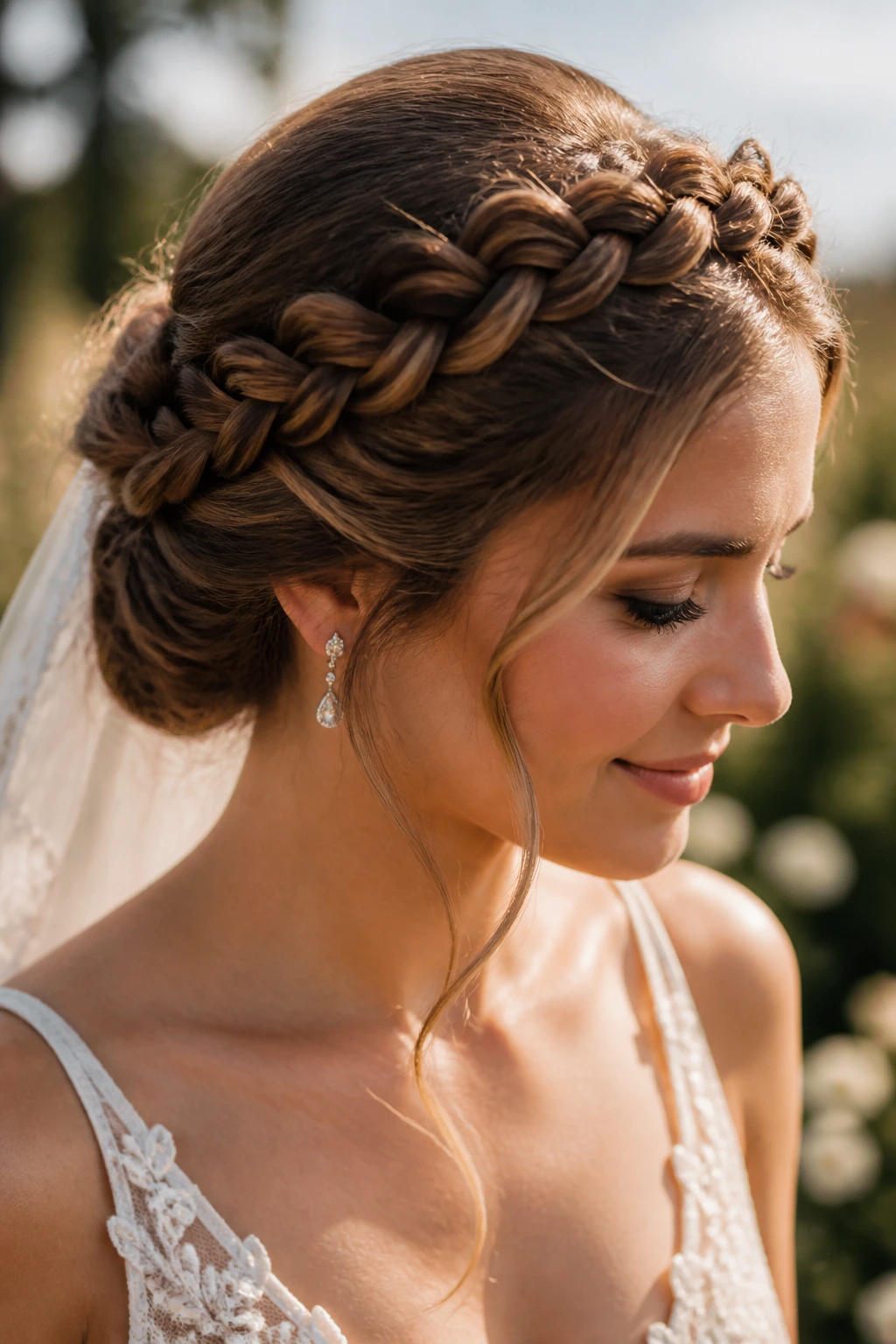
A halo braid has a romantic shape that works especially well with outdoor ceremonies. The braid travels around the head like a crown, which gives a nice frame to the face and keeps hair from dropping into the cheeks.
The best versions don’t look too pancake-flat. Pull the braid just enough to give it thickness, then pin the ends where they disappear into the back. That’s where the neatness comes from.
14. Low Ponytail with Wrapped Base
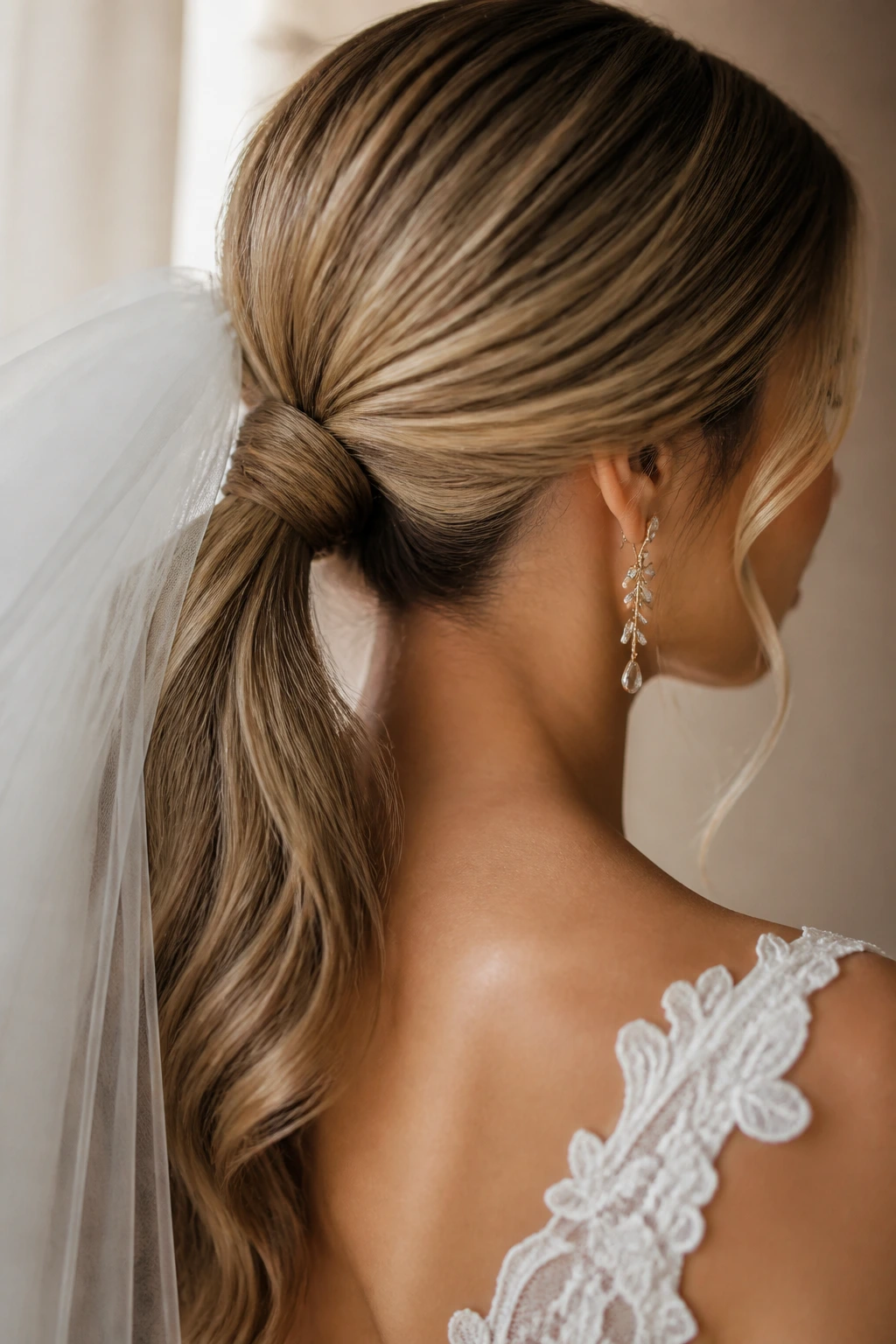
This is one of my favorites when a bride says she wants “simple” but means “simple, but expensive-looking.” The wrapped base hides the elastic, and a smooth section of hair around the tie gives the ponytail polish.
It’s a good option for long veils or dramatic earrings because it leaves the shape clean. And it’s easier to refresh later in the day than a lot of more intricate updos.
15. Waterfall Braid Half-Up
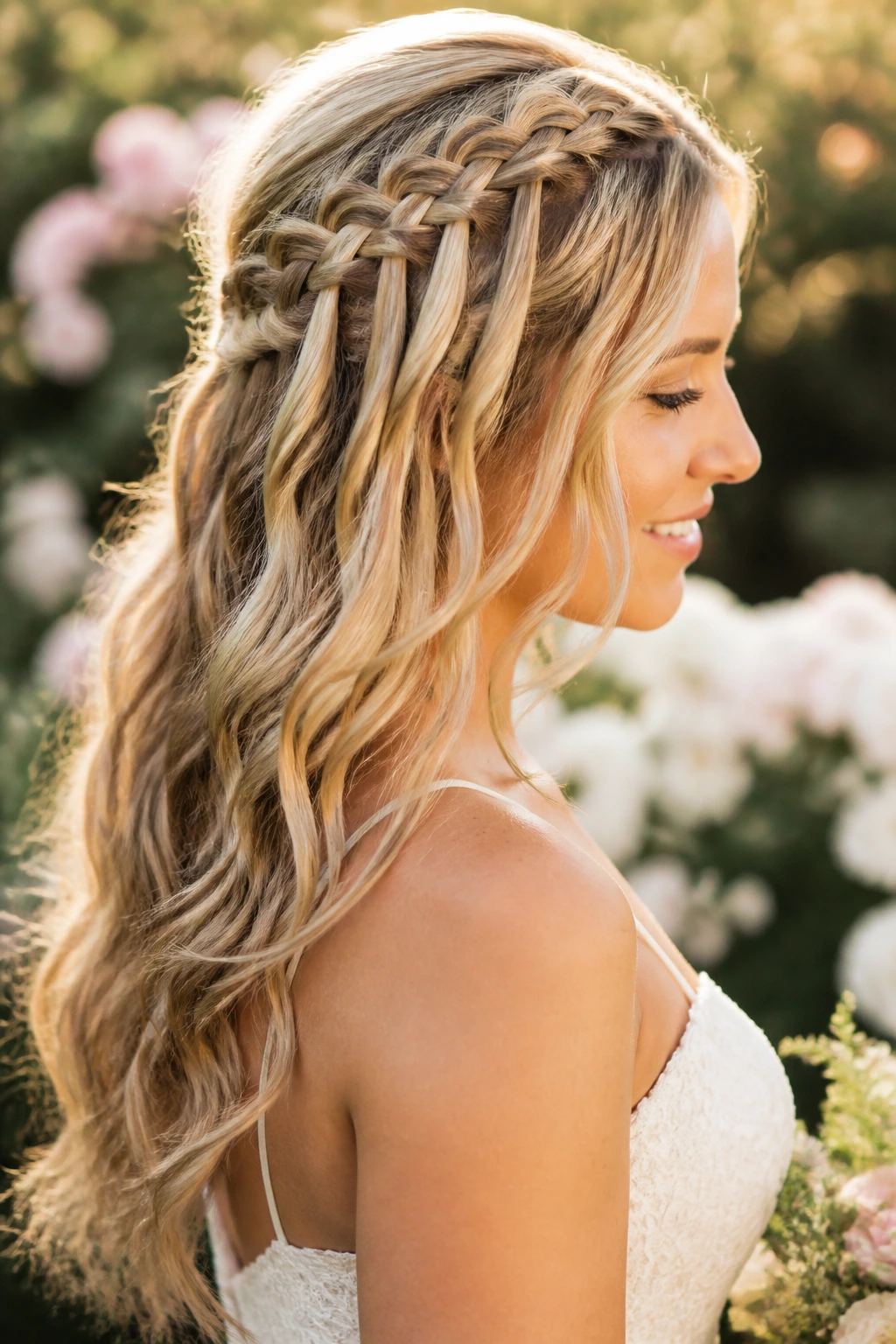
A waterfall braid gives the impression of motion even when the hair is mostly held still. It’s one of the prettier half-up styles because the braid acts like a little ledge where strands drop through in sequence.
This is the style for brides who want softness around the shoulders without losing all structure. It suits medium to long hair best, and it looks especially good when the ends are lightly curled, not frizzed into oblivion.
16. Sculpted Top Knot
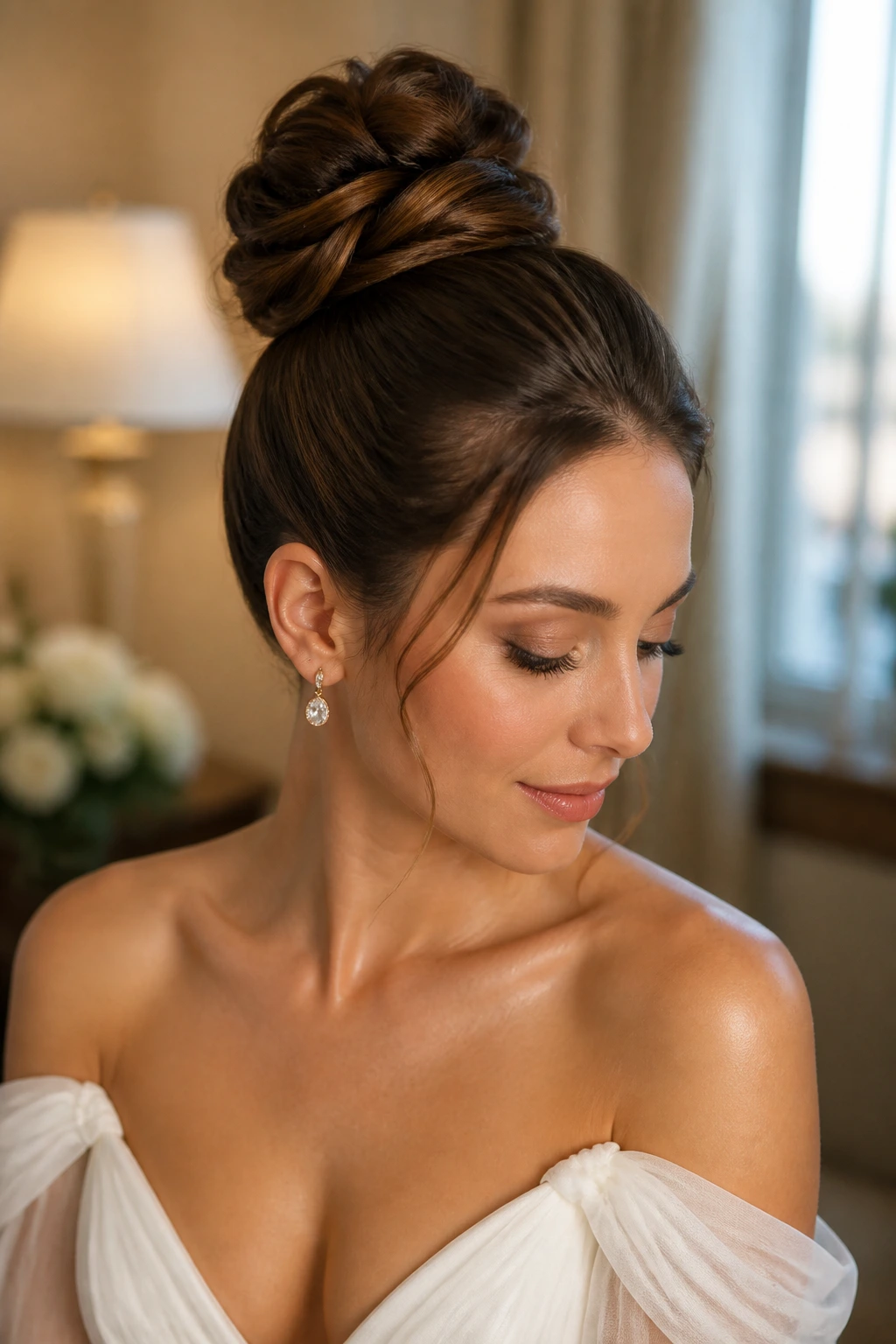
A sculpted top knot is more refined than the casual version people wear on errands. The bun sits high, but the lines are clean and intentional, almost like a small piece of architecture on top of the head.
That height can be useful. It elongates the face, keeps every strand away from the neck, and works very well with gowns that have open shoulders. If you sweat easily, this one earns its place.
17. Old Hollywood Waves for Shorter Cuts
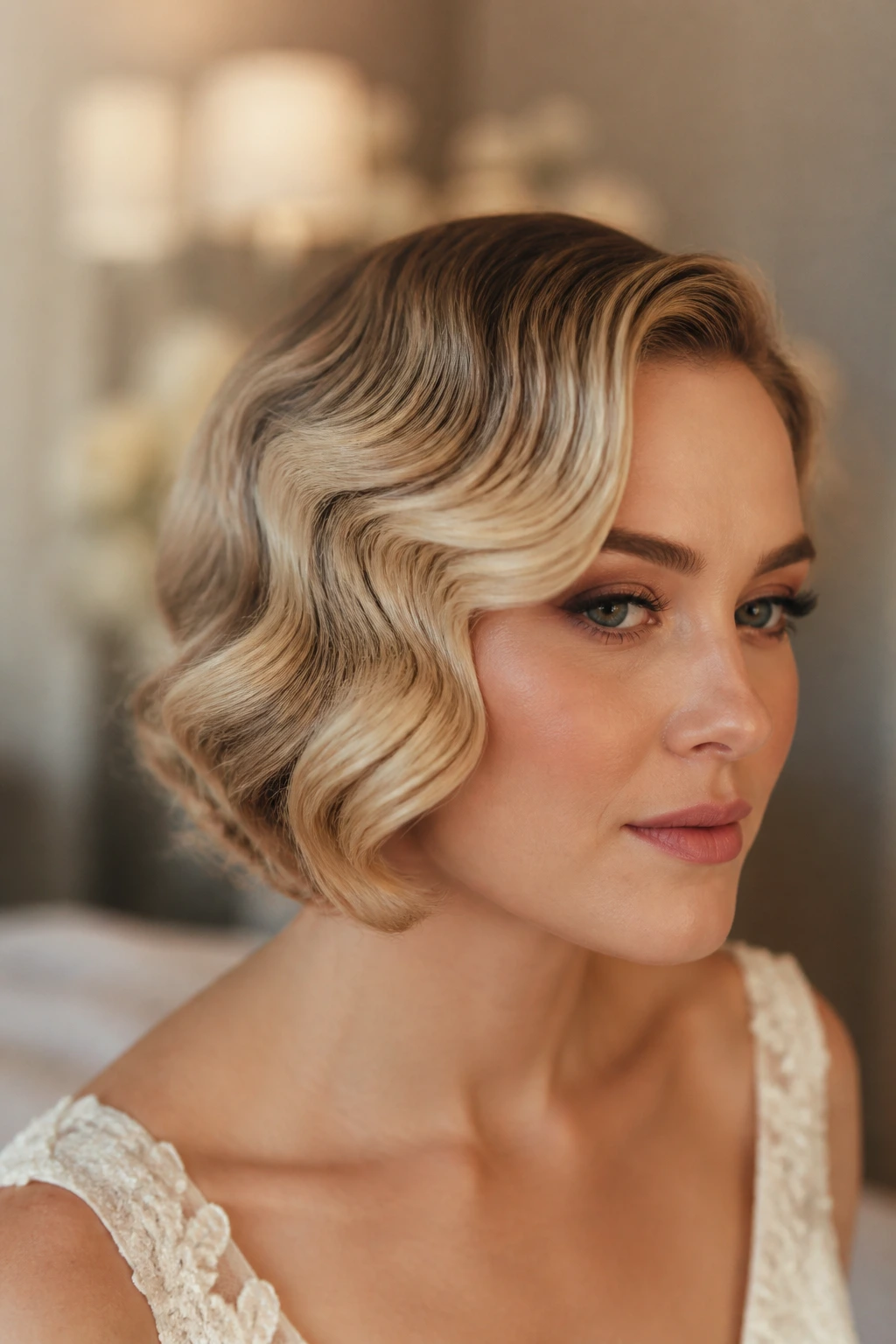
Short hair does not need to be an afterthought. Old Hollywood waves on a bob or lob create a smooth, glossy shape that feels formal without adding fake length. The contour matters more than the length here.
What to Know
The waves should sit in a strong S-curve, then be pinned or clipped while they cool so the shape actually stays. If the front pieces are too airy, the whole thing can look underdone instead of chic.
Best With
Structured dresses, drop earrings, and brides who want a vintage edge without going full costume.
18. Side Braid into Bun
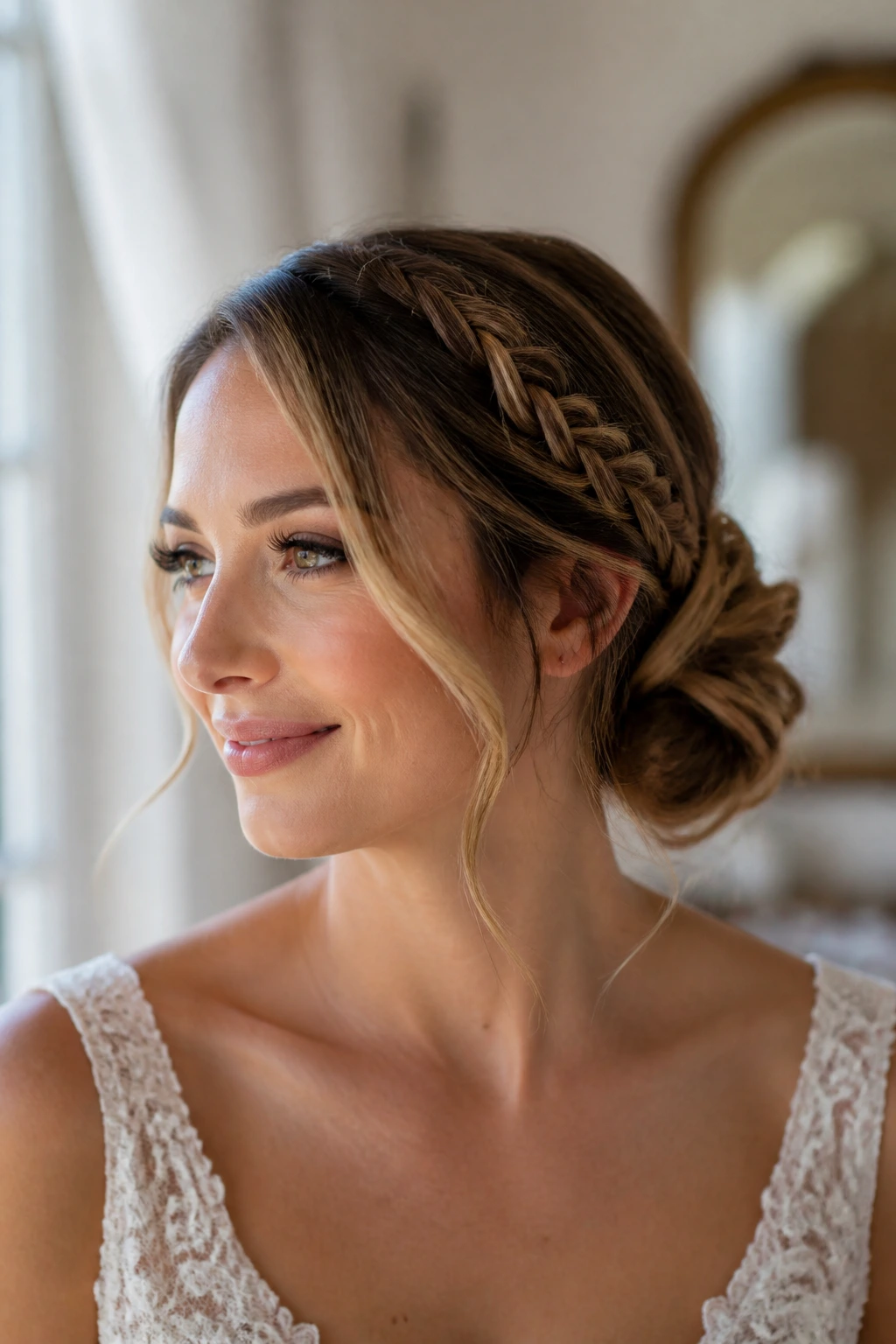
This style starts with a braid that travels from one side of the head into a bun at the back or low side. It has movement at the front and a secure finish at the back, which is a nice compromise for summer weddings.
The braid gives the style grip, and the bun gives it weight. I like it for thick hair because it keeps the volume from expanding in all the wrong places.
19. Boho Braid Crown with Loose Curls
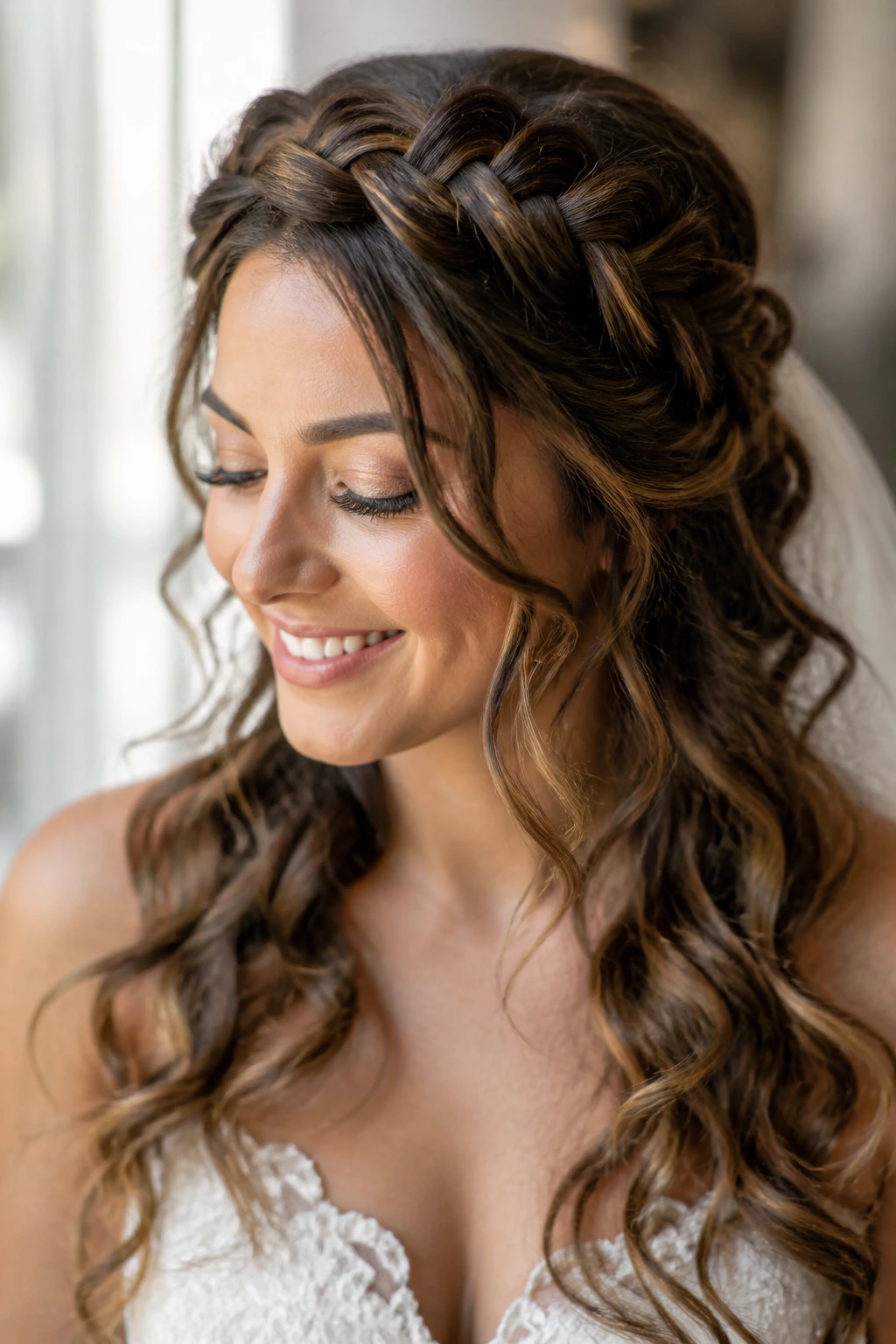
This one is softer than the halo braid and a bit more undone. The braid crowns the top, while loose curls tumble below. It feels especially right for brides who want a light, romantic mood without a tightly pinned updo.
The secret is restraint. Too many flyaways and it looks unfinished; too few and it loses its easy feel. A little texture spray on the roots gives the crown braid something to grip.
20. Polished Lob Waves with Tucked Side
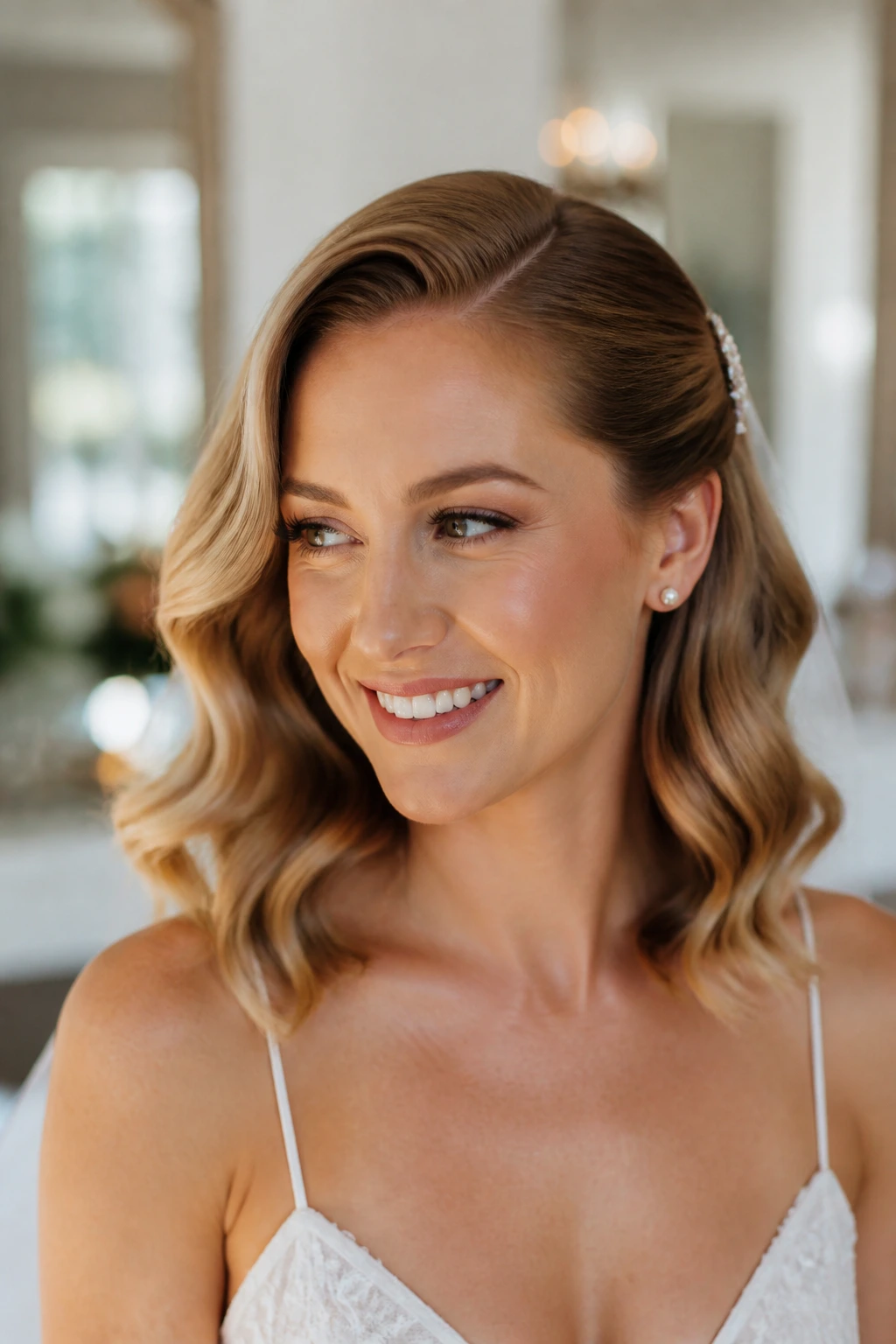
A lob can be a headache at weddings because it sits between short and long hair. Tucked waves fix that. One side is smoothed back with a pin or comb, while the rest falls in polished bends that keep the line soft.
This works when you want a chic finish but don’t want to fake length. It’s also one of the most manageable choices for humid weather, since the hair stays close to the head.
21. Twisted Half-Up Crown
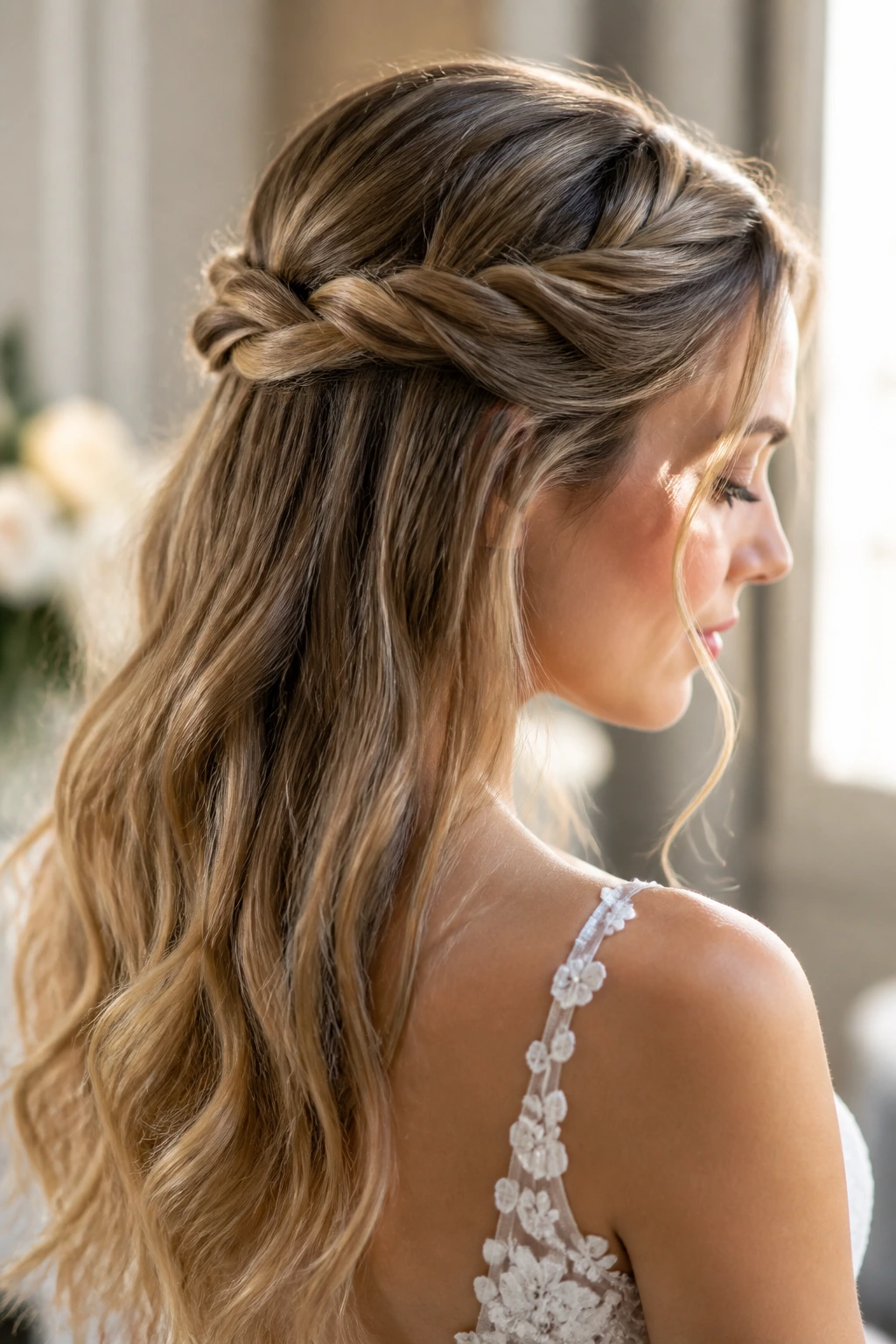
A twisted half-up crown uses two rolled sections meeting in the back, almost like a soft headband made from your own hair. It’s gentler than a braid and often easier to do on hair that doesn’t hold tight weaving well.
The shape leaves enough hair down to feel pretty, but not so much that it becomes a blanket around the neck. On hot days, that matters more than people admit.
22. Low Bun with Braid Detail
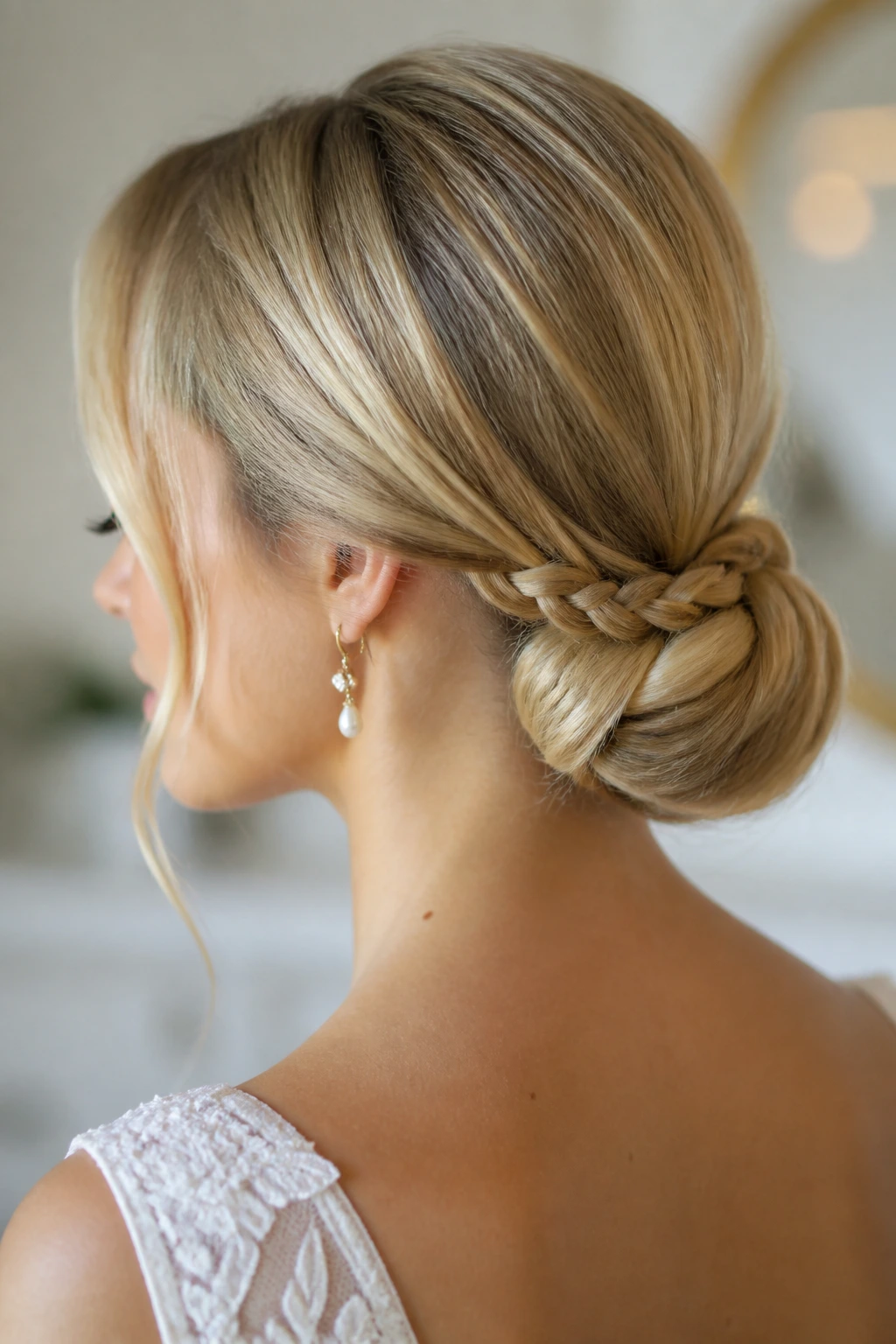
A braid detail can change a plain bun into something richer without adding a lot of bulk. It might wrap the bun, cross the back, or feed into the base, but the point is the same: a little texture does the heavy lifting.
I like this when the dress is plain and the hair needs a small focal point. It keeps the look from reading as “just a bun,” which is not what you want after all that planning.
23. Curtain-Bang Ponytail
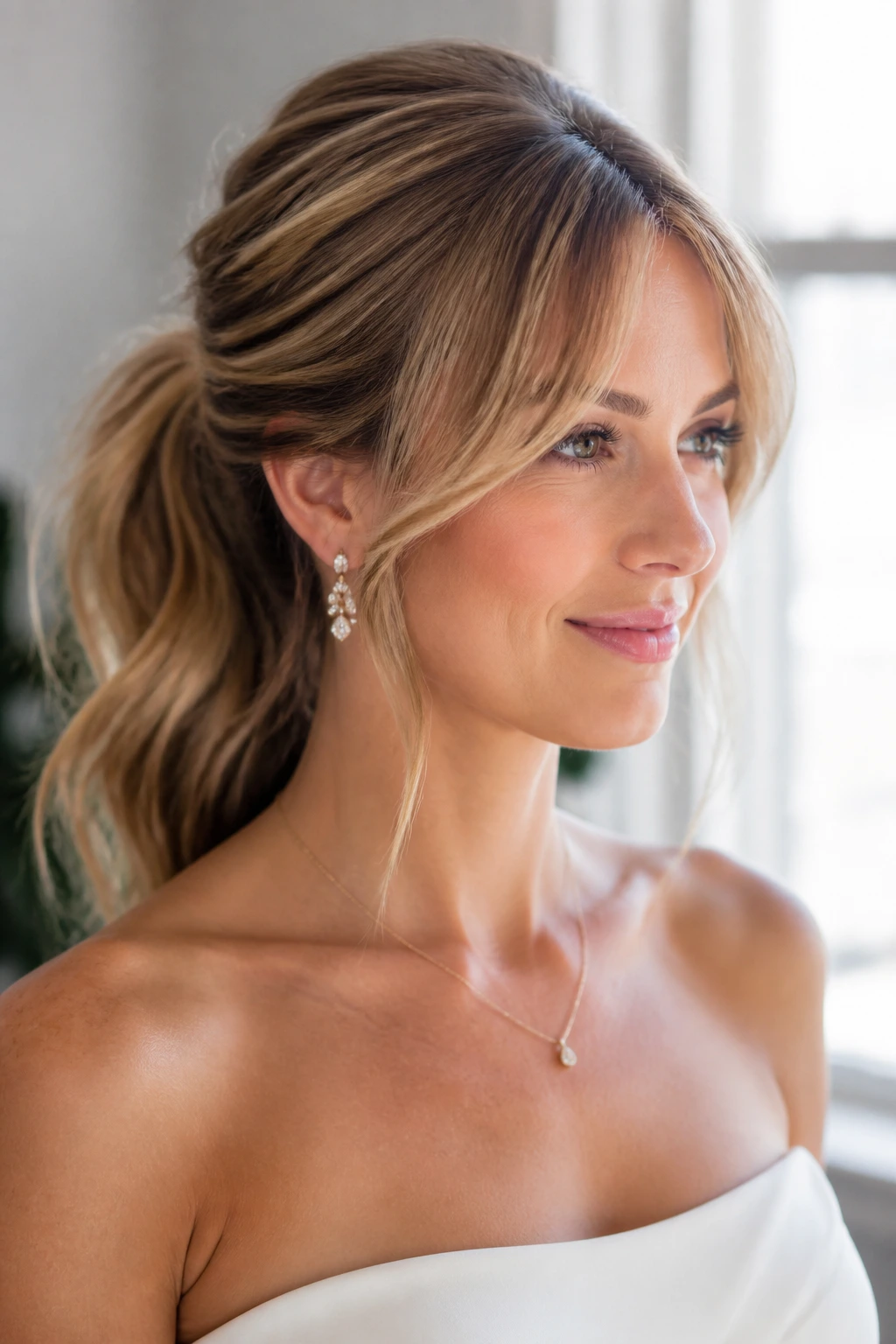
Curtain bangs with a ponytail give you movement around the face and clean control everywhere else. The ponytail can be low or mid-height, but the bangs soften the front in a way that feels modern and flattering.
The one thing to watch is oil. Bangs can go from airy to sticky fast in heat, so a touch of dry shampoo at the roots before styling helps a lot.
24. Sleek Side Part with Tucked Ear
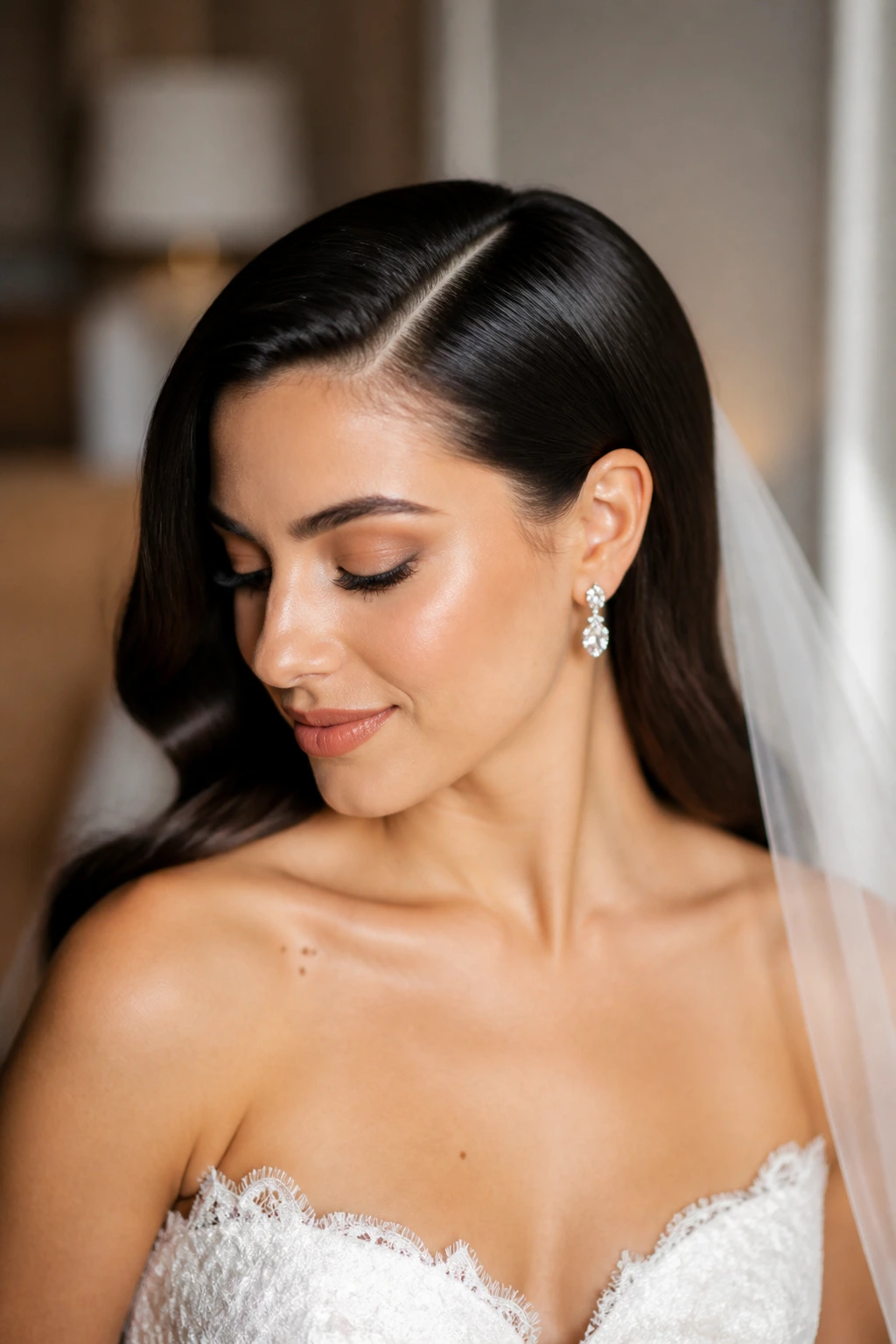
This is the quietest look in the group, and I mean that as a compliment. A deep side part with one side tucked behind the ear creates a refined line that doesn’t fight the dress or the makeup.
It works best when the hair has shine. The ear tuck lets a statement earring show, while the rest of the hair stays smooth and controlled. No drama. No fuss. Just clean shape.
25. Ribbon-Tied Braid
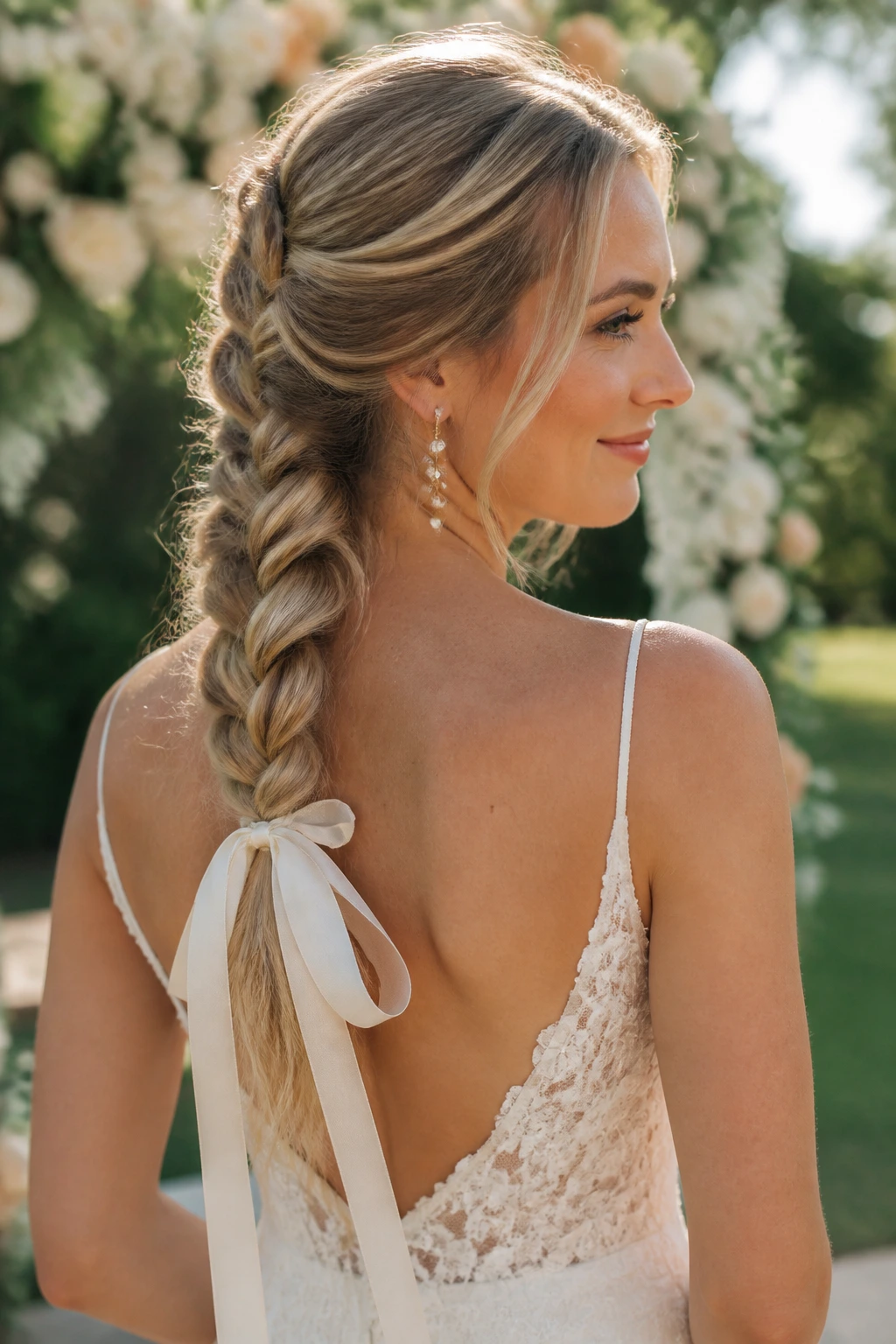
A ribbon can soften a braid in one second flat. Whether it’s satin, velvet, or a narrow silk tie, the ribbon adds color and movement without making the hairstyle heavy. In summer, a lighter ribbon tends to feel easier than a dense accessory.
The braid itself can be loose or tight, depending on the dress. I’d choose a ribbon-tied braid for an outdoor ceremony or a more intimate wedding where the detail can be seen up close.
26. Faux Bob with Soft Pins
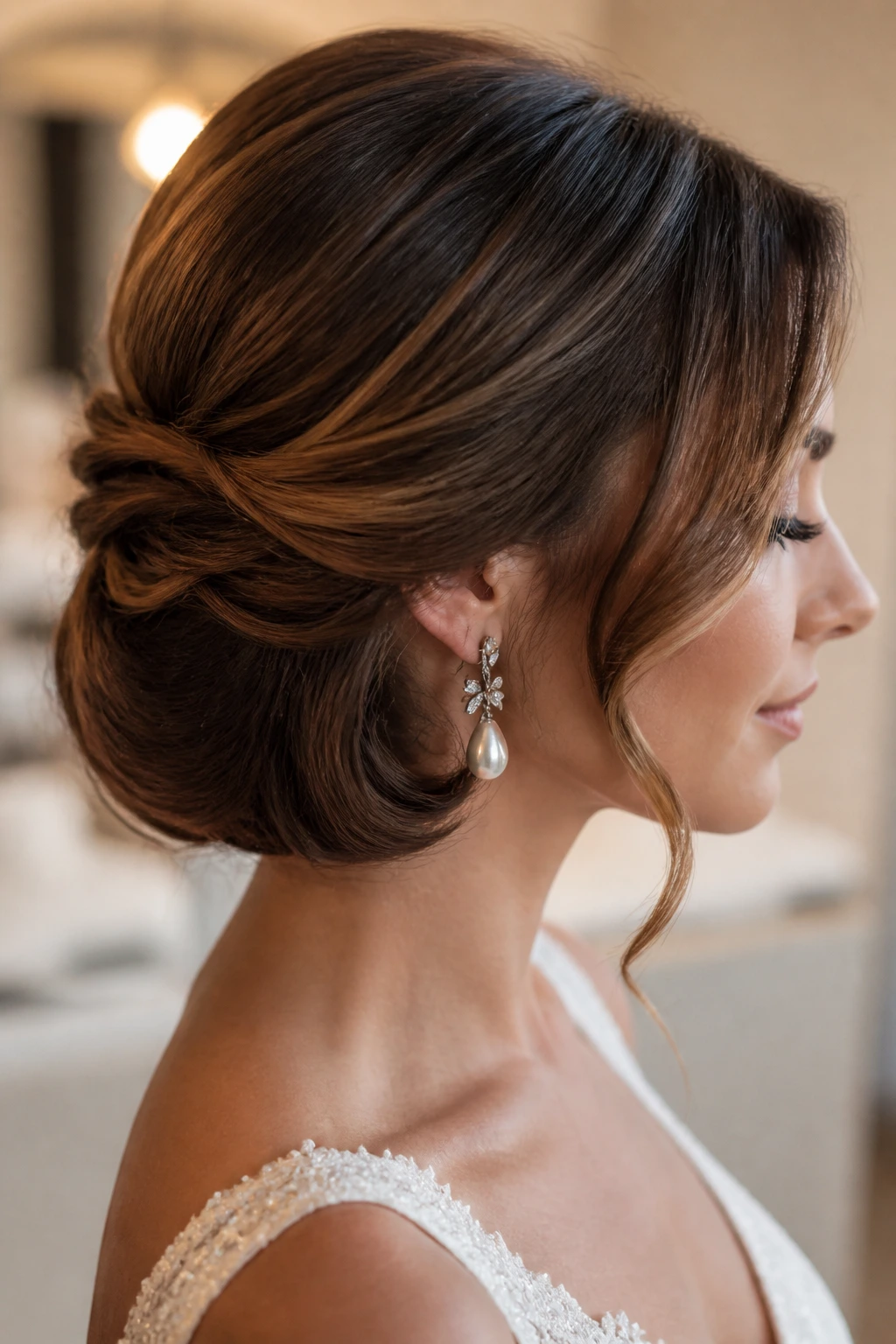
Short hair energy, without the haircut. A faux bob tucks longer lengths under and pins them into a shape that reads shorter from the side and back. It’s a clever choice when you want something unusual but still bridal.
The soft pins matter because the style should feel hidden, not overworked. Keep the front smooth and let the ends disappear under the fold. The trick is shape, not volume.
27. Soft Pinned Curls
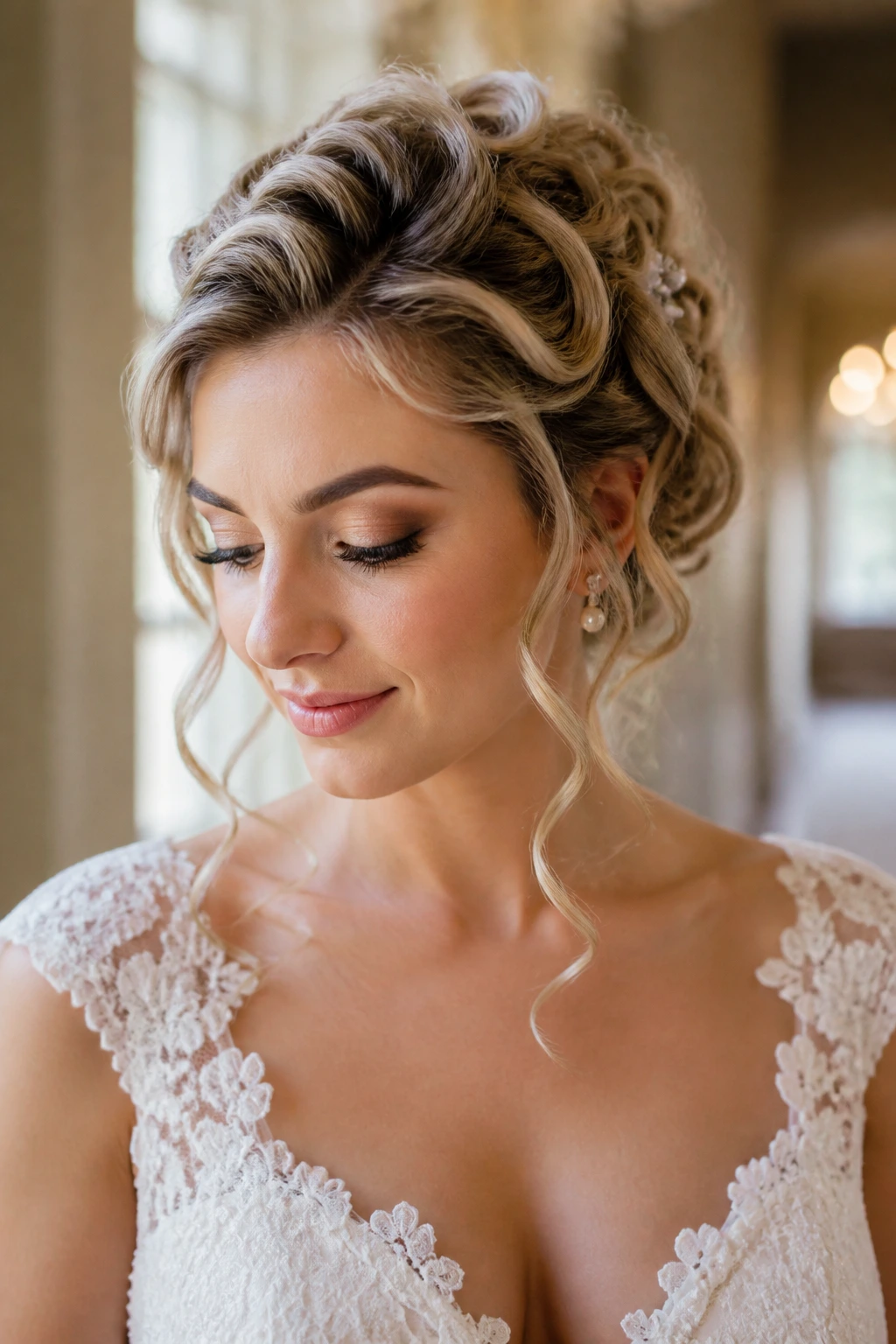
Pinned curls are one of those styles that look simple and take more thought than people expect. Each curl gets placed and pinned to create a curved, sculpted pattern rather than just sitting loose.
The result is lovely for brides who want texture and softness but need better control than open waves can give. It also handles humidity a bit better, because the curls are fixed in place instead of left to expand.
28. Wet-Look Bun
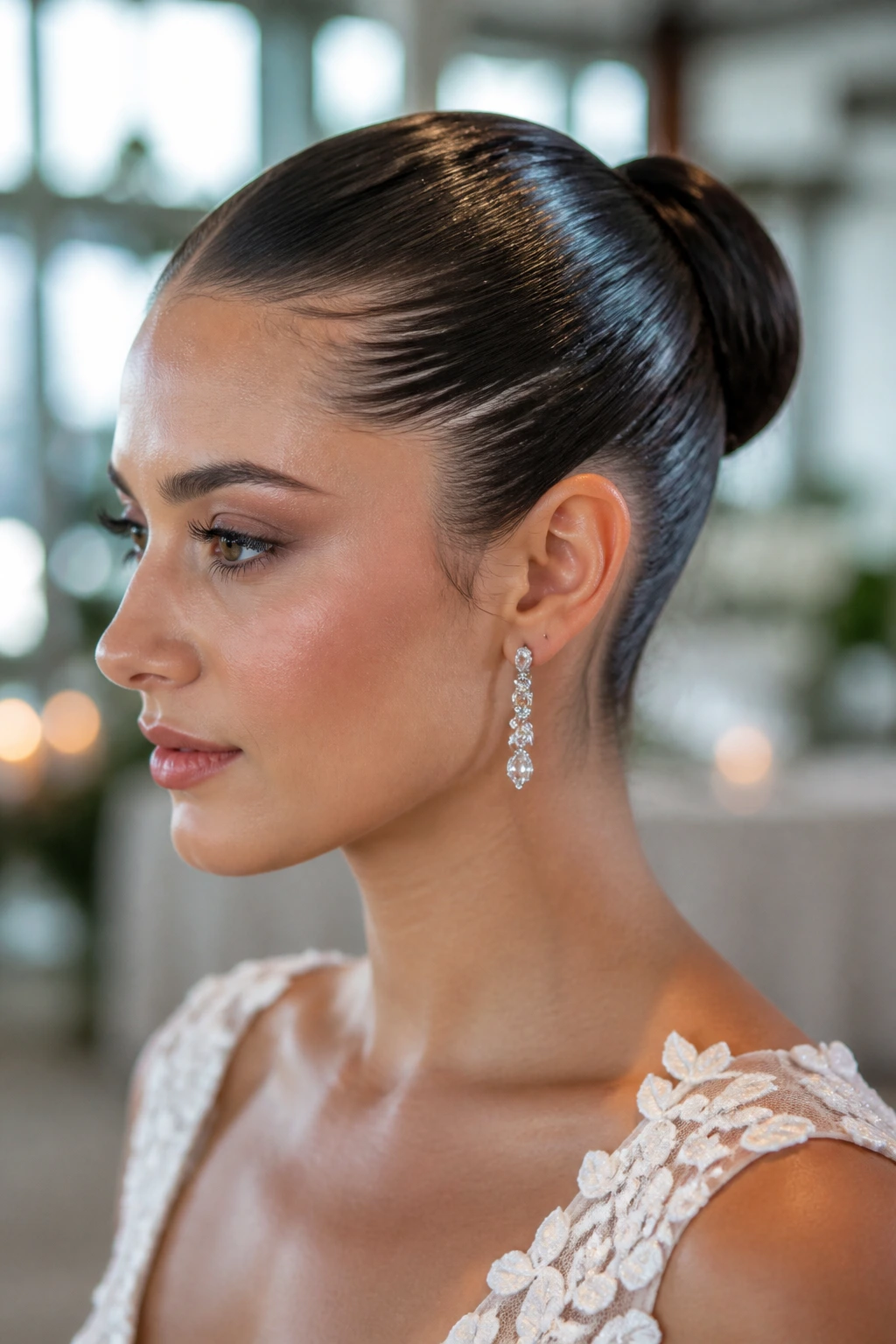
A wet-look bun sounds fashion-forward because it is. The shine gives the style a sharp edge, and the bun itself can be low, mid, or high. It’s especially good if your dress already has plenty of softness and you want contrast.
This look does ask for confidence. It’s not the right choice if you hate seeing product near the hairline. But if you like clean lines, it can feel striking in a very grown-up way.
29. Afro-Textured Puff with Jeweled Pins
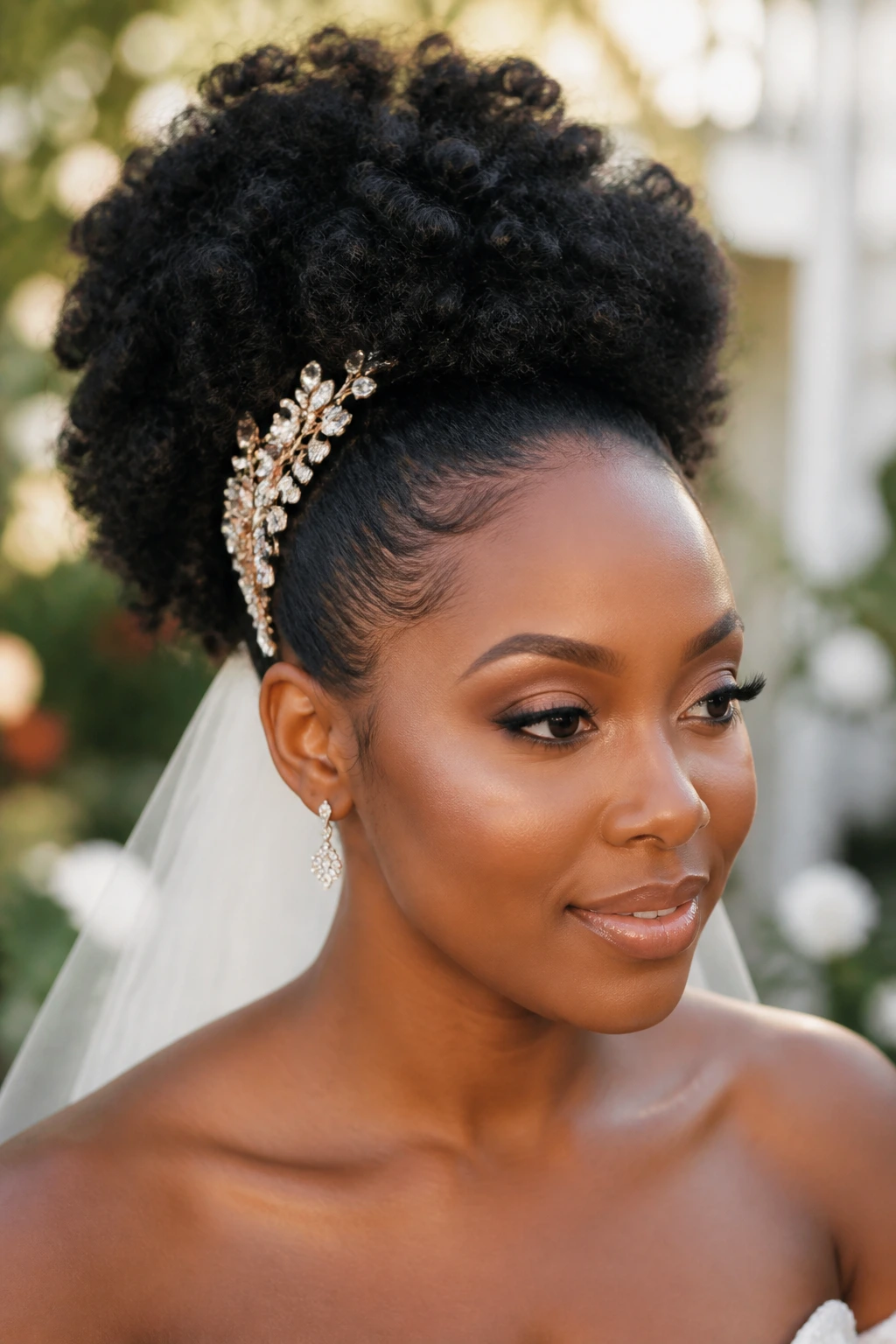
A puff can be bridal without losing its shape or identity. For textured hair, a well-placed puff keeps volume high and controlled, which is useful in heat because the hair isn’t being forced flat against the scalp.
Jeweled pins at the base or side turn the shape into a finished look. I’d keep the edges neat, let the puff breathe, and avoid overloading it with too many accessories. The texture should stay the star.
30. Natural Twist-Out with Floral Comb
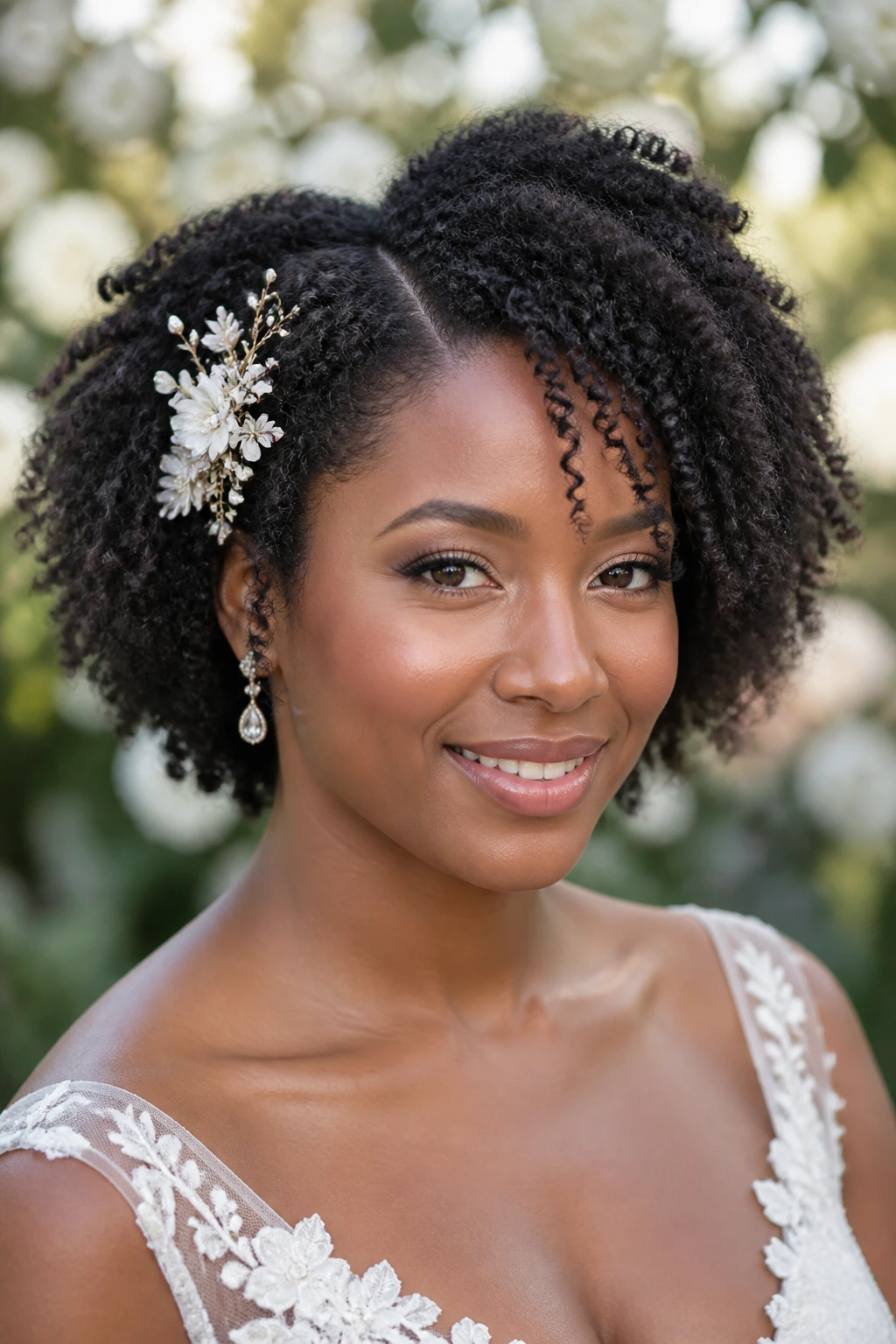
A twist-out can be one of the most beautiful summer bridal styles because it gives texture, fullness, and movement all at once. The key is definition. The twists need time to set properly, and the unraveling should happen with light hands, not rough fingers.
A floral comb tucked to one side adds a bridal note without hiding the hair pattern. That matters. A good twist-out deserves to be seen.
31. Braided Bun for Thick Hair
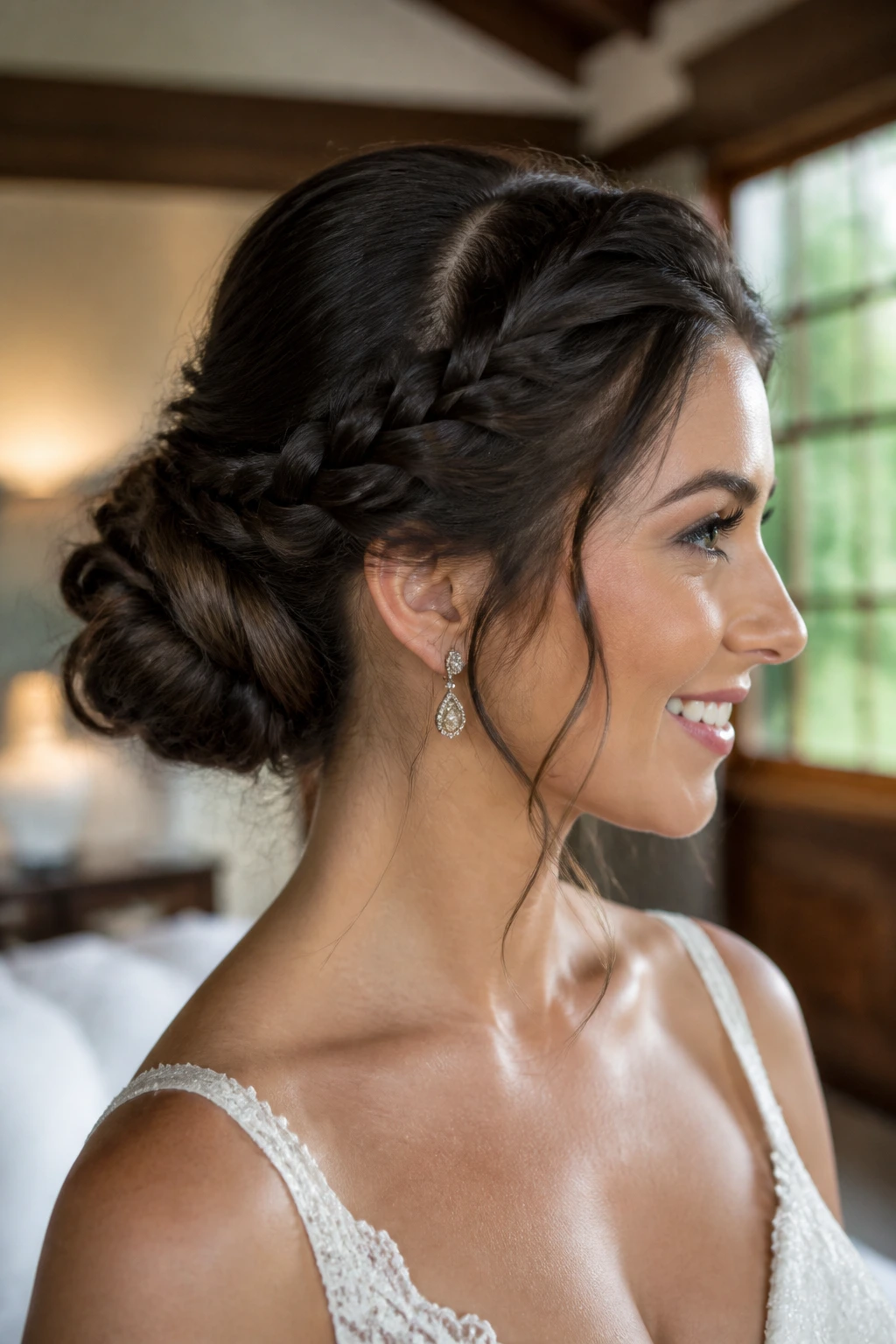
Thick hair can turn into a lot of volume very fast, which is why braiding it before forming the bun helps so much. The braid compresses the mass, gives the pins something to grip, and keeps the bun from looking too wide.
The style is practical, but it can still be elegant. A smooth front and a slightly fuller bun shape make it feel intentional rather than heavy. Good for heat. Better for holding.
32. Voluminous Curly Ponytail
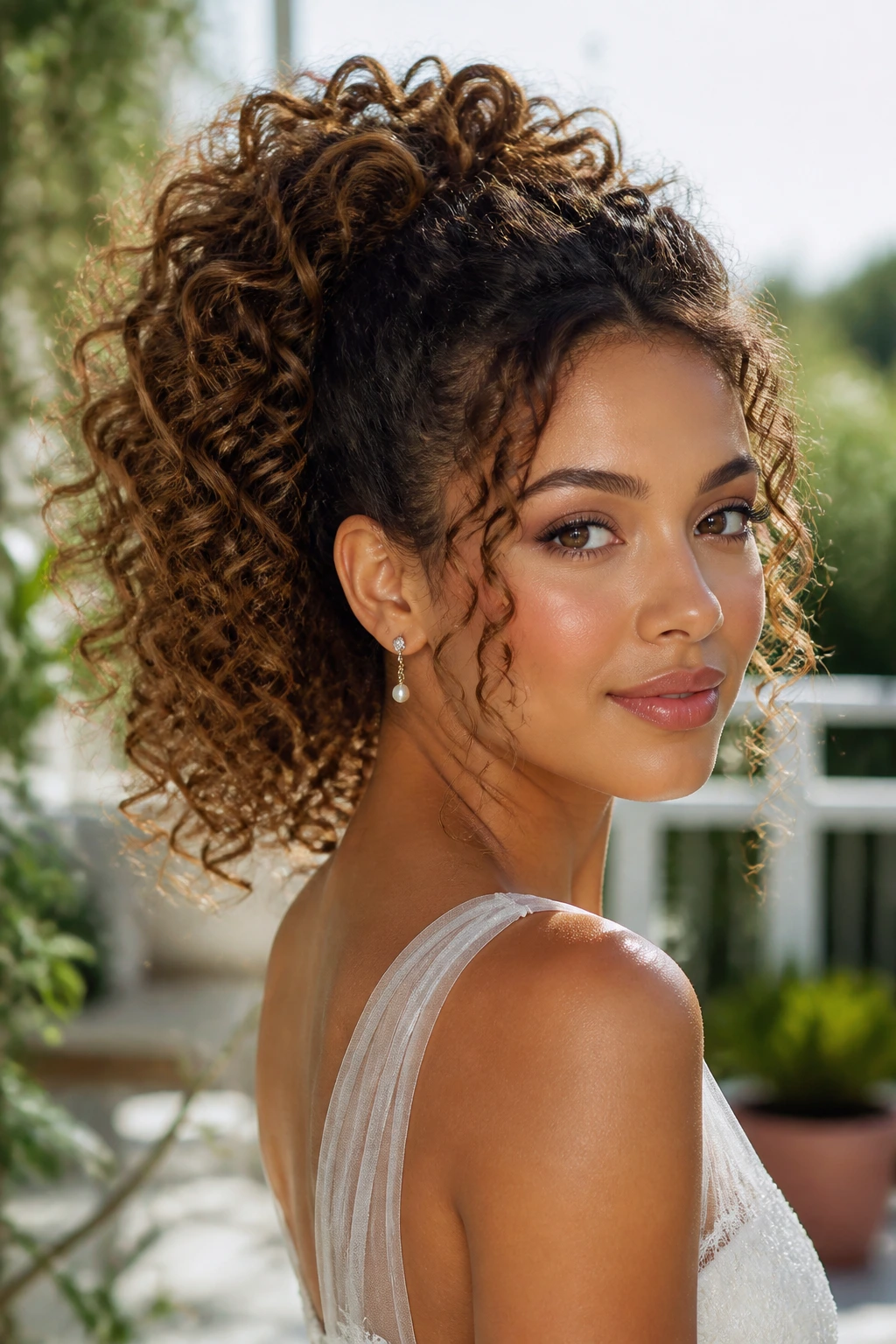
A curly ponytail can look far more dressed up than people expect, especially when the base is clean and the curls are defined. The height can be mid or high, but the volume should stay bouncy rather than frizzy.
This one works best when the curls are hydrated and shaped the night before. If you want to show off your texture instead of taming it, this is a strong choice.
33. Headband Updo
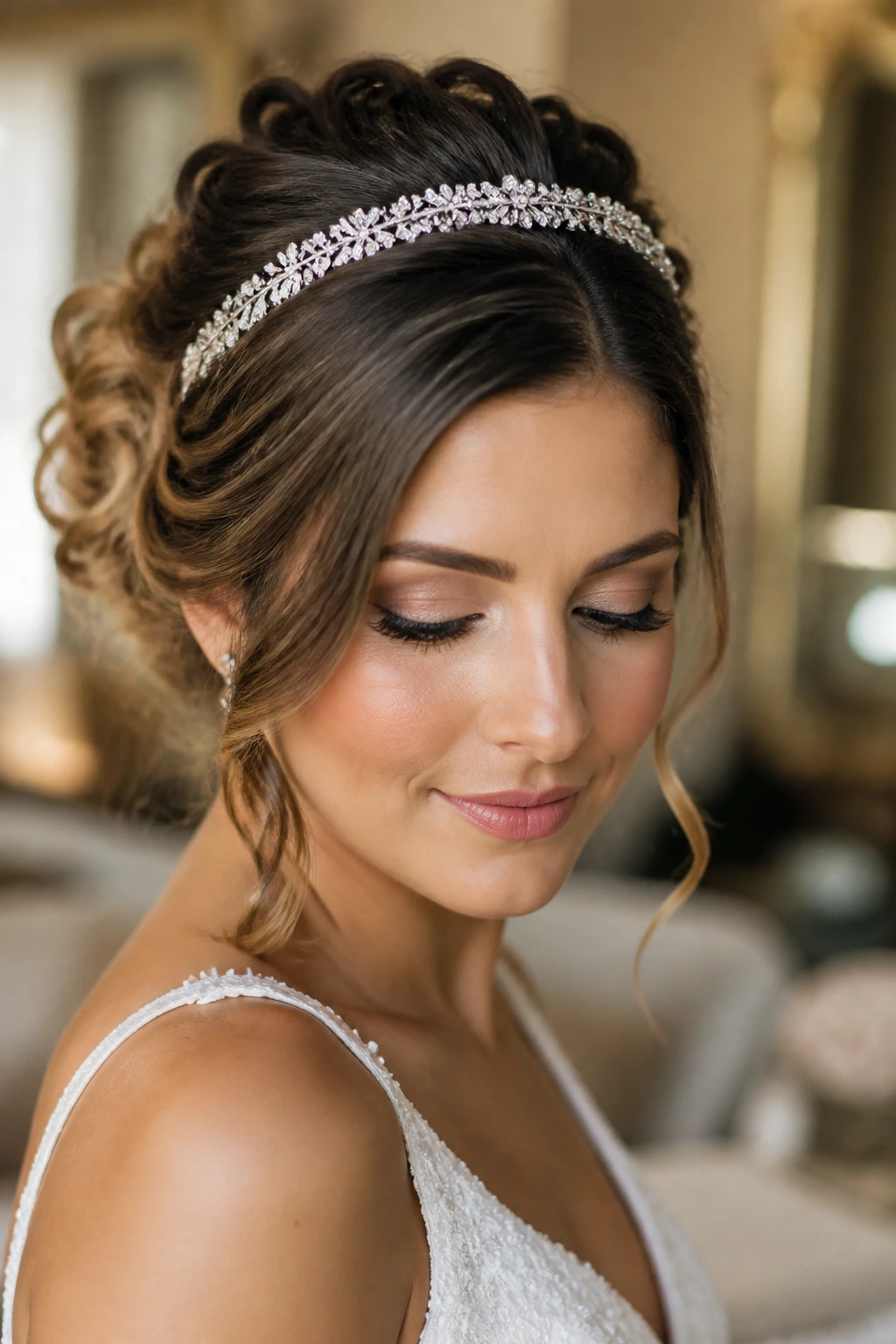
A headband can solve a lot of problems at once. It gives the eye a focal point, helps hold back the front sections, and makes an updo feel less severe. The look can lean classic, floral, pearl-studded, or satin depending on the band.
I like this for brides who want the comfort of knowing something decorative is already built in. You don’t need much else when the accessory does the framing for you.
34. Mini Buns with a Bridal Finish
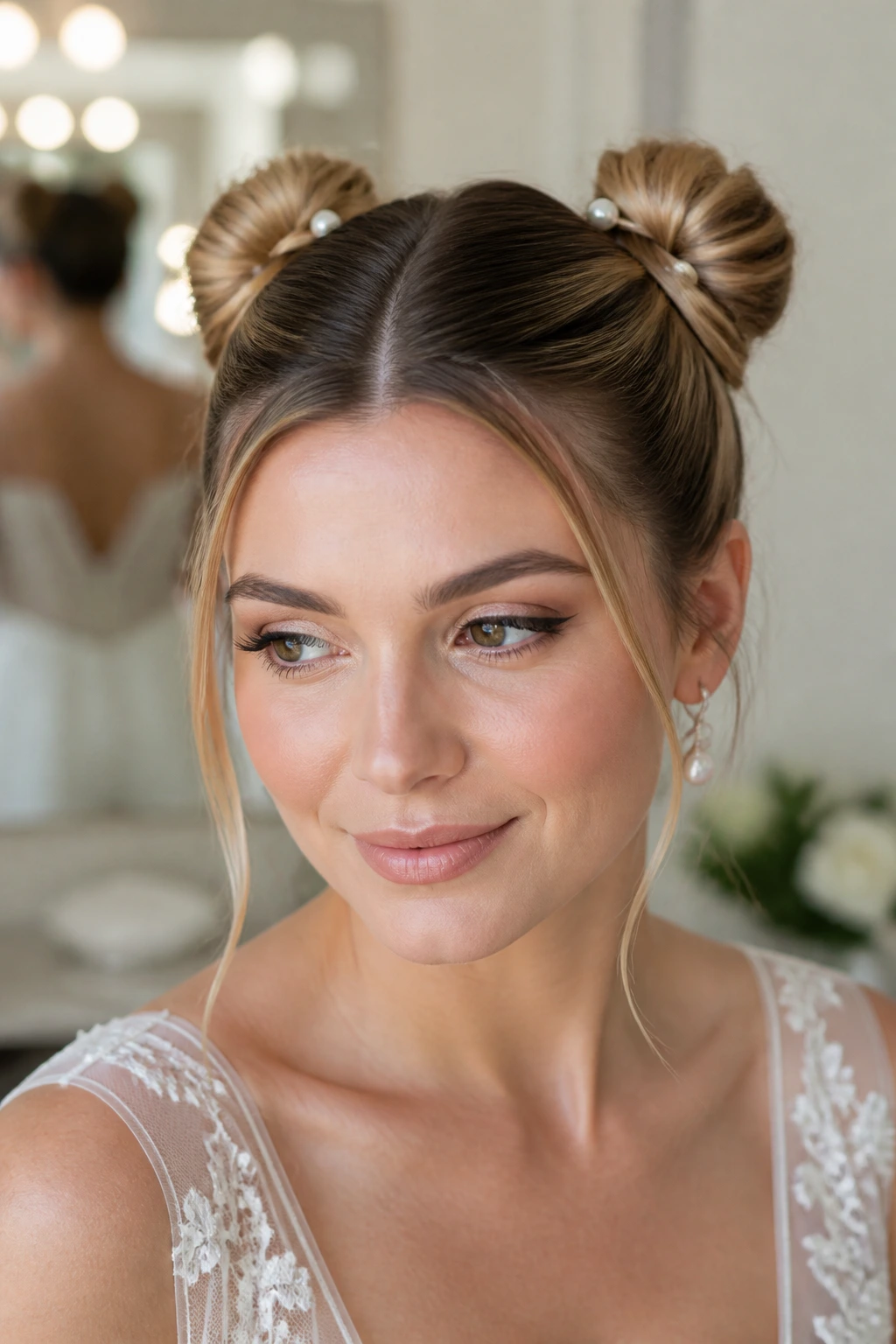
Mini buns can feel playful, but with the right finish they become refined and intentional. Keep them clean, spaced with purpose, and balanced so the shape reads as design rather than whimsy.
This style is not for every dress. It works best with modern gowns, reception looks, or brides who want something a little unexpected. If you’re worried it might feel too casual, add pearl pins or a sleek center part.
35. Deconstructed Updo with Tendrils
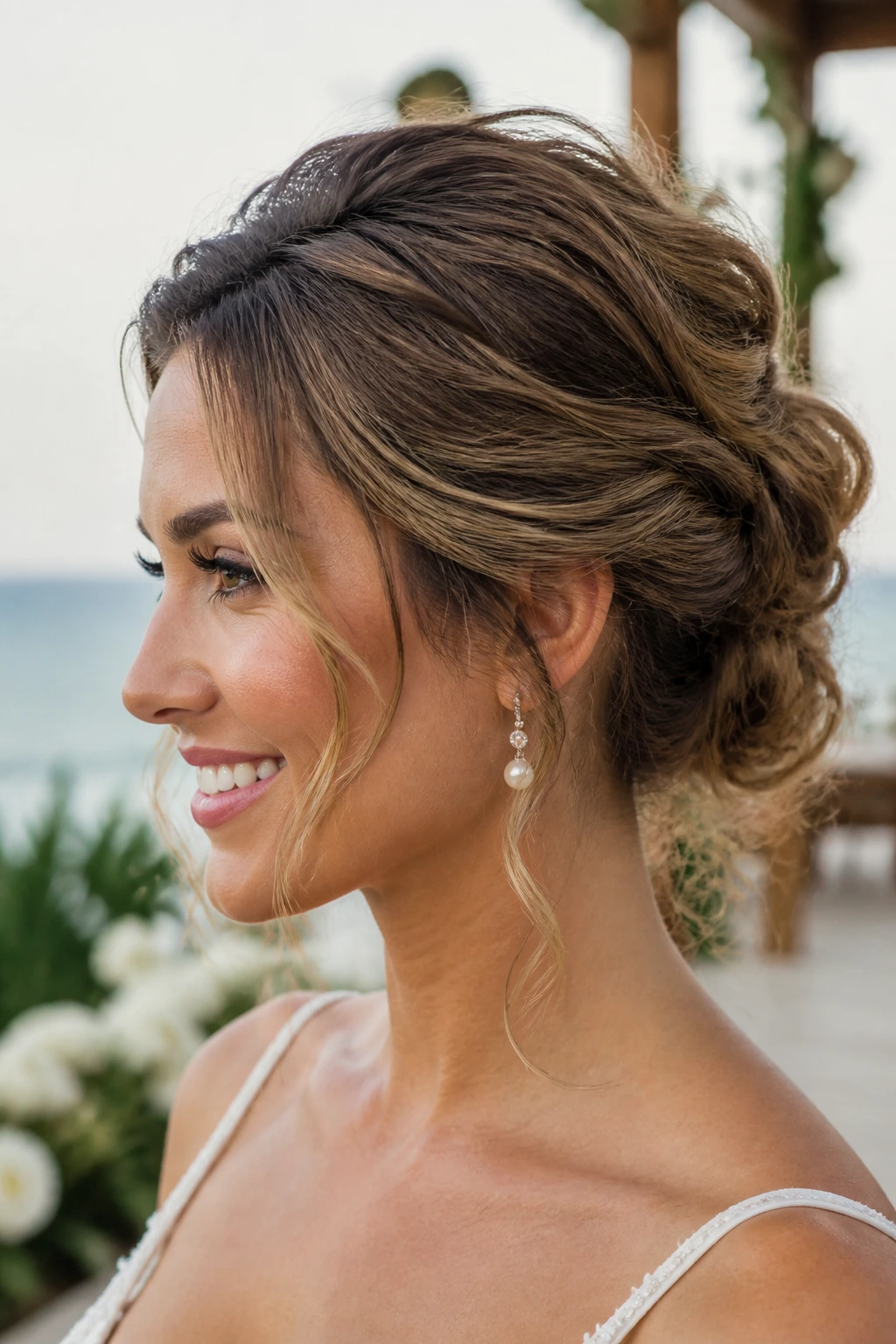
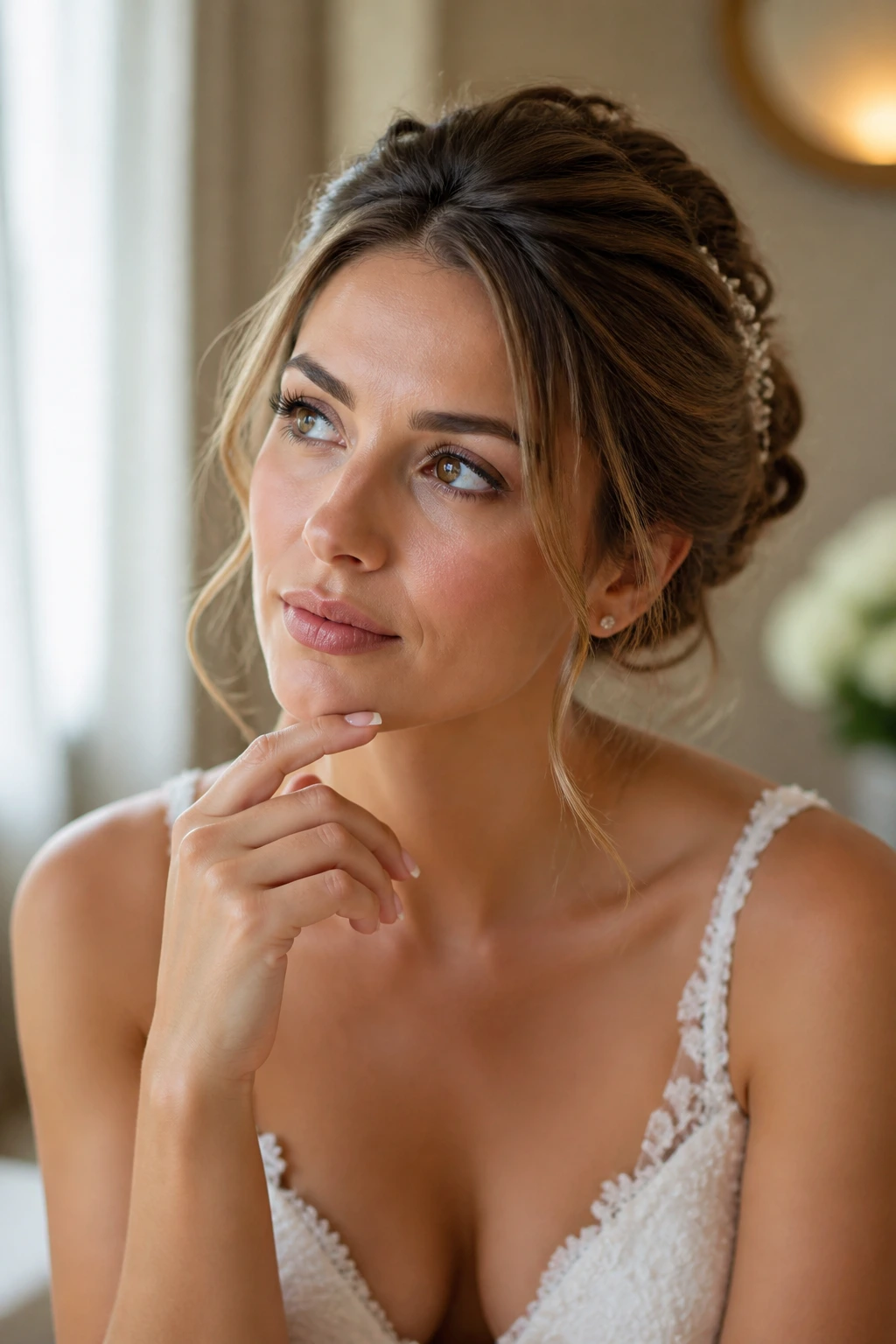
A deconstructed updo looks softer because not every strand is forced into submission. Tendrils around the face and neck keep the shape from feeling too formal, which can be useful for a summer wedding that leans relaxed or romantic.
The challenge is control. The updo still needs a real base underneath, or it will collapse into fuzz. Loose doesn’t mean loose all the way through.
36. Long Veil-Friendly Low Knot
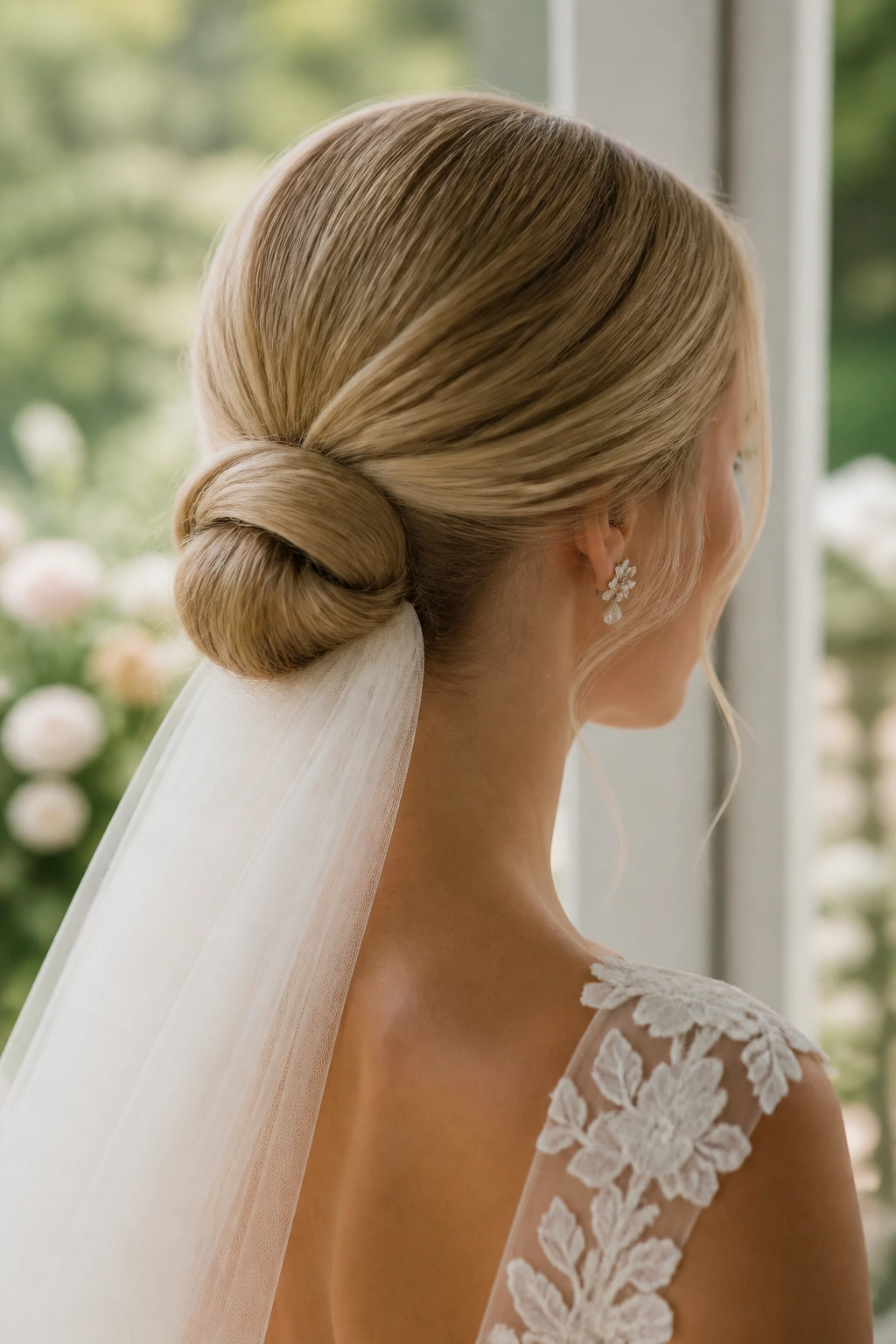
If the veil is the main event, the knot underneath should be quiet and sturdy. A low knot sits where the comb can anchor securely and where the veil can fall without crushing the entire shape. That’s the whole point here.
This is the style I’d choose when the dress and veil are elaborate. It stays out of the way, holds up in heat, and gives the veil a proper place to live.
37. Classic Braided Bun with Center Part
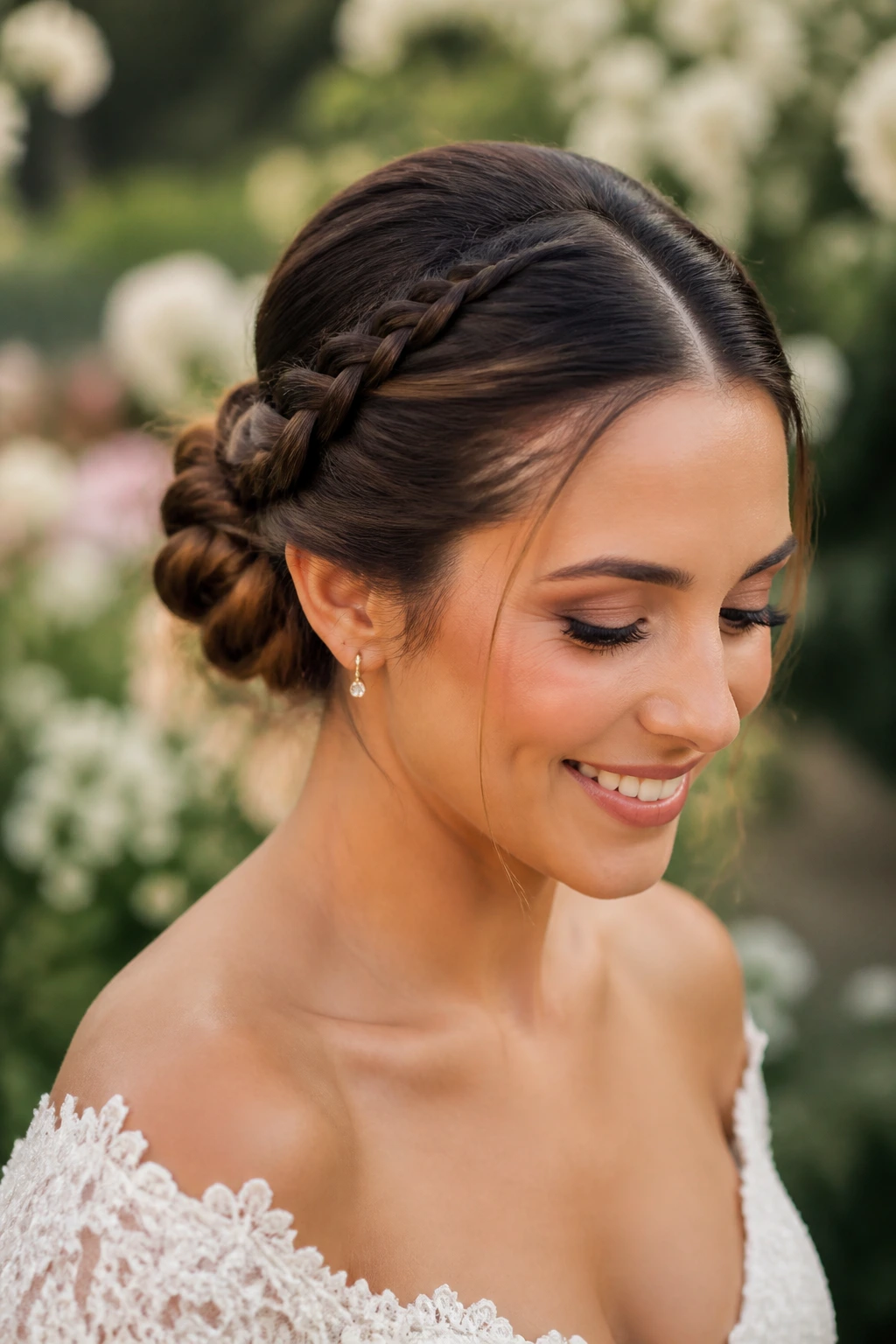
A center part gives the face symmetry, and the braid feeding into the bun adds a little texture so the style doesn’t feel too plain. This is one of those looks that can move between clean and romantic depending on how tight the braid is.
It’s especially useful for brides who want a tidy front and a more detailed back. The bun can be compact, medium, or fuller, but the part keeps the silhouette crisp.
38. Airy Half-Up Knots with Ends Left Soft
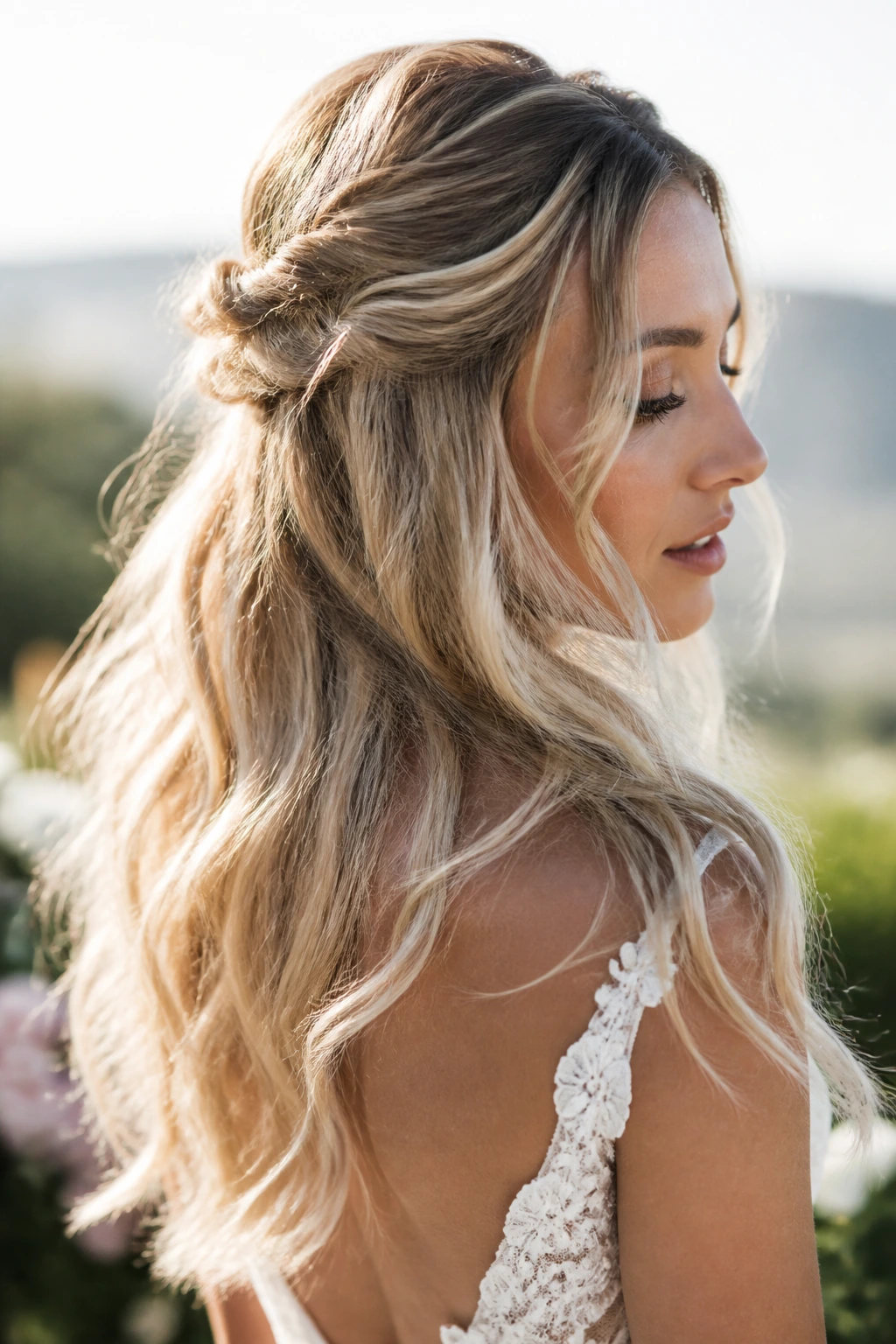
These little knots are a nice answer when you want something light and unfussy but still styled. The top sections are tied or twisted into small knots, while the ends stay soft and wavy below. It feels easy without looking accidental.
Summer brides who hate heavy hair usually love this one. It keeps the sides off the face, keeps some length visible, and lets the style breathe when the temperature rises.
Why Summer Bridal Hair Needs More Structure Than It Looks
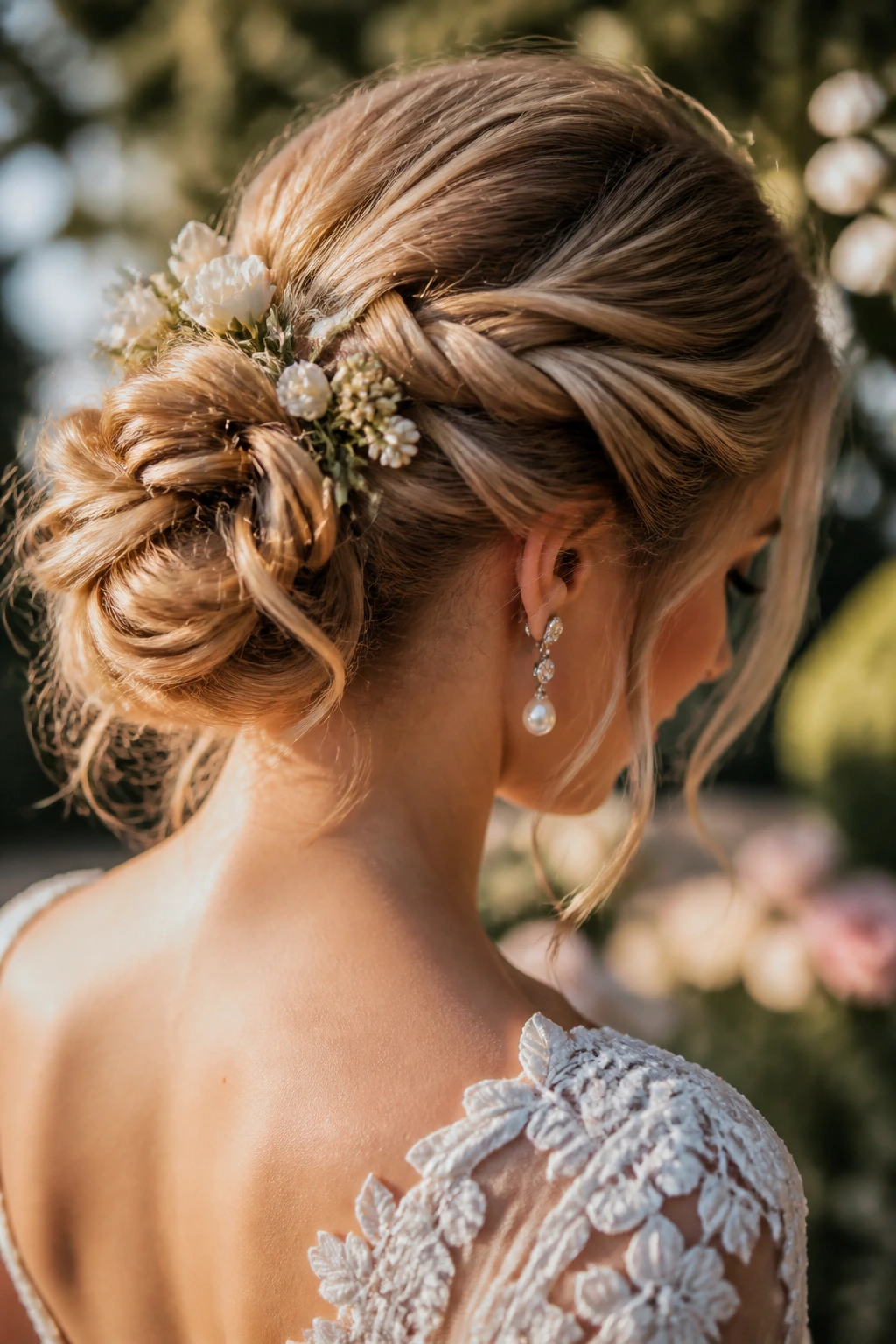
Heat changes hair more than most brides expect. Humidity swells the cuticle, fine hair loses grip, and even a style that looks secure at the salon can soften by the time you’re walking outdoors or standing under bright lights. That’s why the best summer wedding hair usually has hidden support: braids inside buns, pins under twists, sprayed roots under waves.
I’ve always thought the biggest mistake is choosing a style for the mirror and ignoring the room it will live in. A ballroom with cool air is one thing. A garden aisle in direct sun is another. Your hairline, your nape, and the crown near the part will usually need the most help, because those are the places where sweat and movement show first.
There’s also a comfort angle people overlook. A tight style can start to ache. A loose style can start to spread. The sweet spot is a shape that feels firm at the base and soft on the edges, so you can wear it for hours without fidgeting with it every ten minutes. That is the real luxury.
Essential Tools and Accessories for Bridal Styling
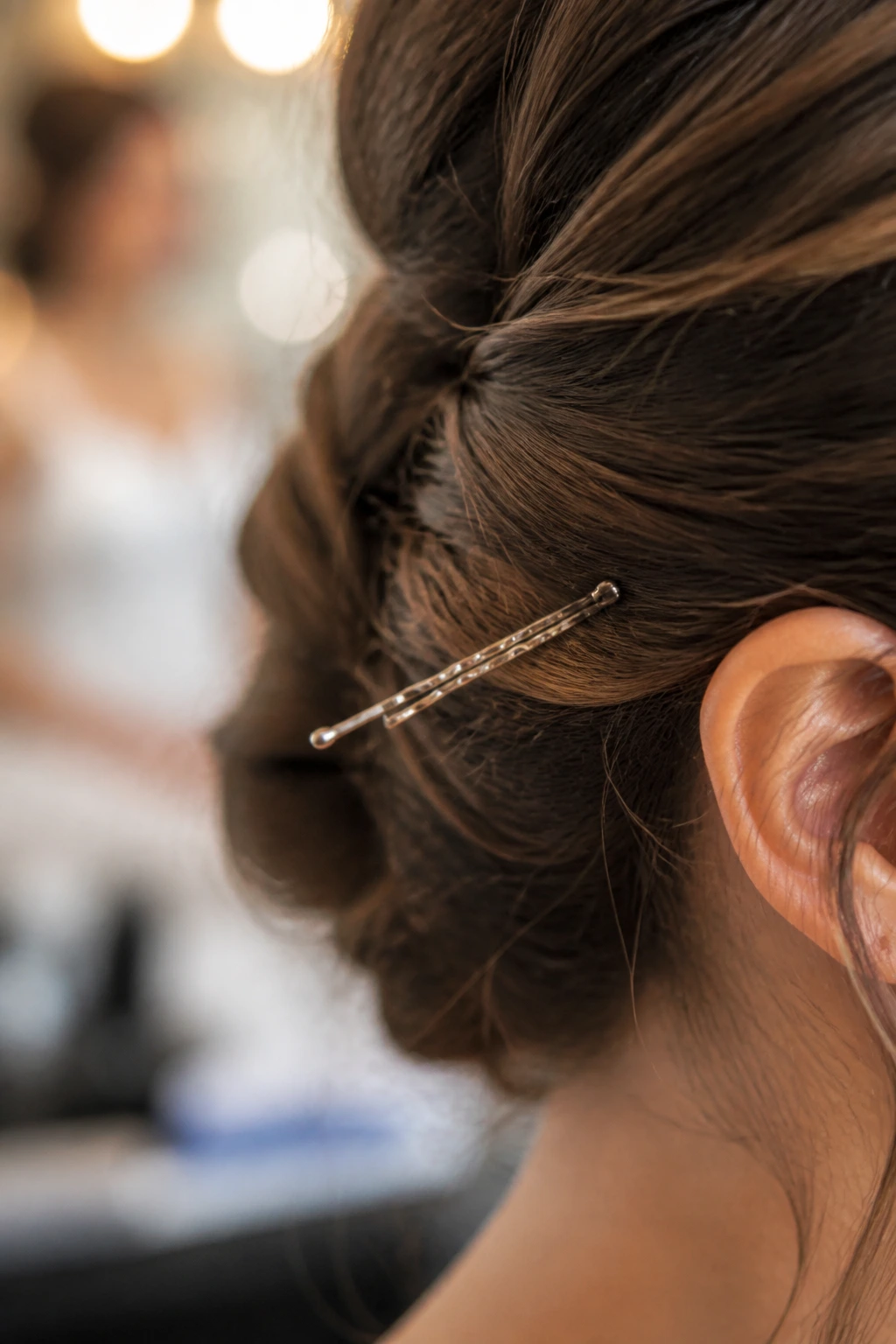
- Tail comb: Useful for crisp parts, clean sections, and hiding bumps at the crown.
- Sectioning clips: Keep the hair separated while you curl, pin, or braid each part.
- 1-inch curling iron or wand: Best for tighter curls, defined waves, and better hold in warm weather.
- 1.25-inch curling iron: Gives a softer bend that works well for half-up styles and loose glamour waves.
- Blow-dryer with nozzle: Helps control the cuticle and smooth the root area before styling.
- Boar-bristle brush: Good for polishing ponytails, buns, and sleek front sections without leaving big brush marks.
- Bobby pins with a ridged side: The ridged edge grips better; smooth pins slide more than people think.
- U-pins: Excellent for buns and twists when you want hidden support instead of a pile of visible pins.
- Clear elastics: Handy for braids, ponytails, and sectioning under accessory-heavy looks.
- Strong-hold hairspray: Choose one that sets fast but can still be brushed through a little if needed.
- Texturizing spray: Gives slippery hair a bit of bite before pinning or braiding.
- Heat protectant: Non-negotiable before any iron work; summer hair already takes enough abuse.
- Mini flat iron: Great for taming the hairline, shaping bangs, or refining the ends of a lob.
- Hair padding or bun form: Optional, but useful when fine hair needs more shape inside a bun.
- Travel-size finishing cream: A small amount smooths flyaways without flattening the style if used lightly.
Smart Product Picks and Prep Notes
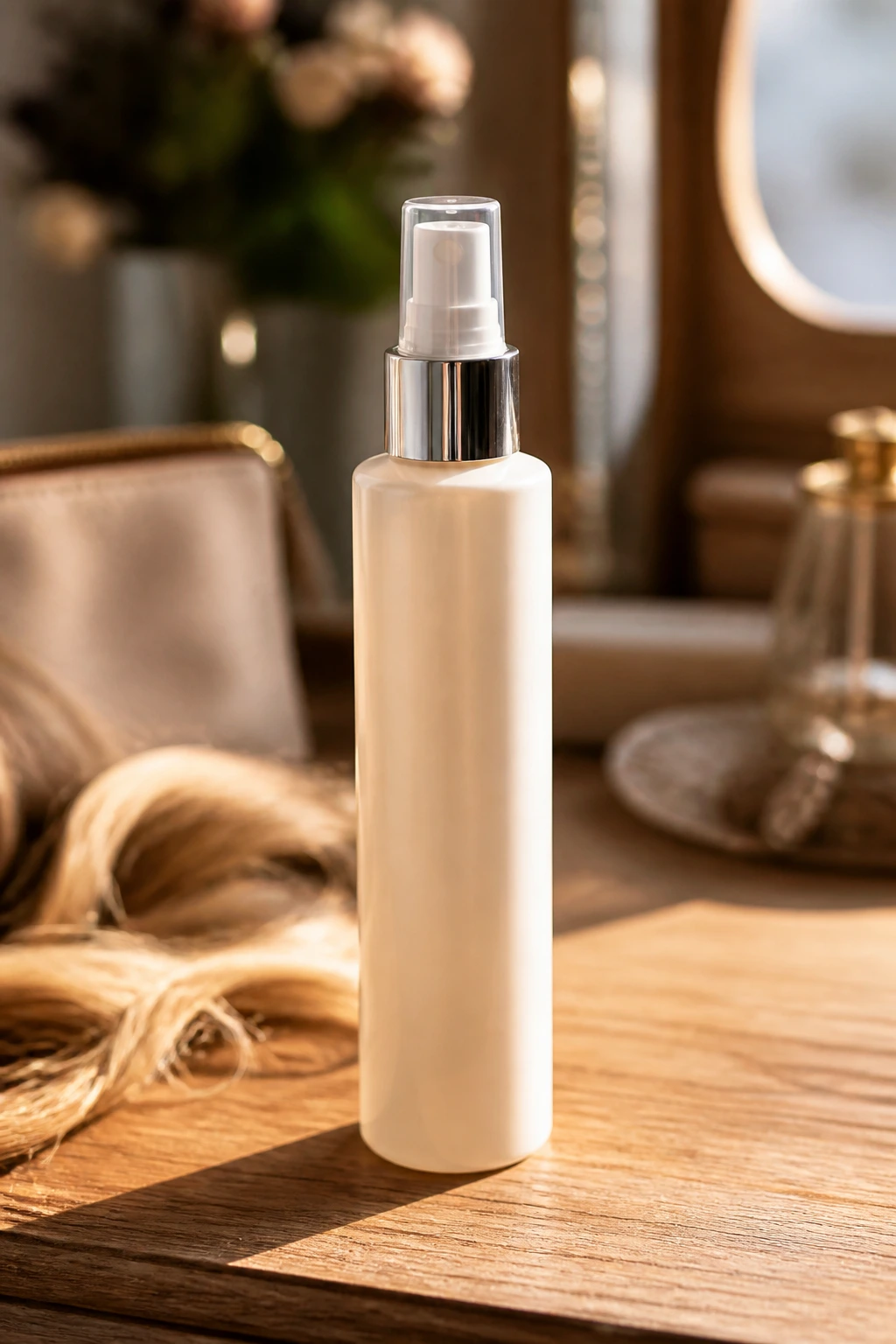
The best bridal prep starts before the iron comes out. Hair that has been freshly washed and coated in heavy conditioner can feel too slippery, especially if you’re doing buns, braids, or a ponytail. I usually prefer hair that has a little natural grip, which often means washing the day before and using conditioner only on the mid-lengths and ends.
Product choice matters more than people think. If the style needs movement, start with a light mousse or root lift spray on damp hair and finish with a firm mist after styling. If the style needs shine, add a pea-sized amount of smoothing cream only to the outer layer, not the roots. Too much oil near the scalp will undo all the pinning work.
Clip-in extensions can be a good idea, but only if they’re color-matched and placed before styling begins. Don’t add them as an afterthought. That’s how you get bumps, exposed clips, and a shape that sits oddly at the crown. If your hair is very fine, a few well-placed wefts can make a bun or ponytail look fuller without making it bulky.
Do a trial run with the exact accessories you’ll wear. A pearl comb changes the balance of a style. So does a heavy veil. Even earrings matter more than you’d expect because they affect how the front sections should sit.
How to Wear the Look With Veils, Earrings, and Necklines
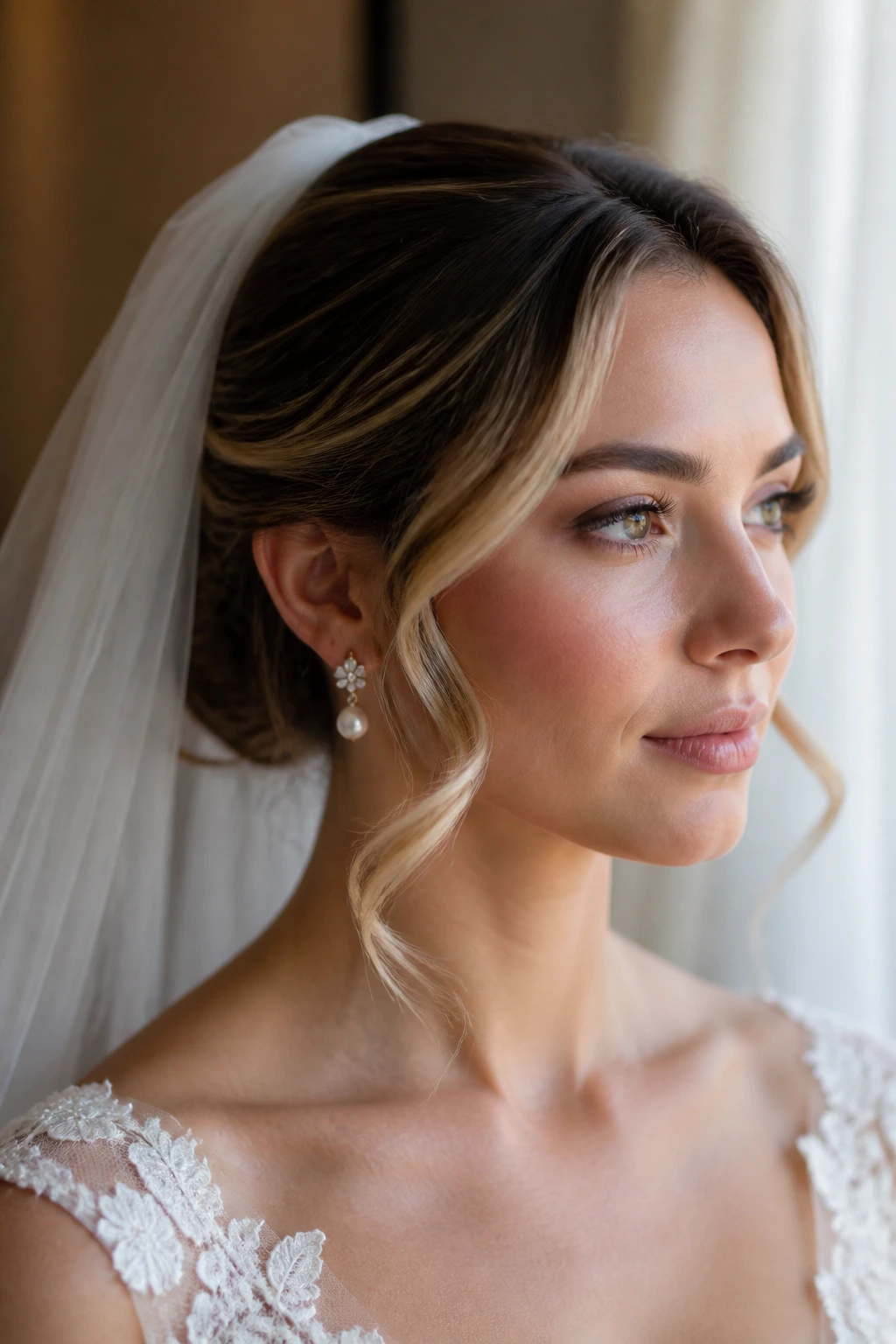
Presentation: Keep the shape where the eye wants to land. Low styles flatter high necklines and long veils, while high buns and lifted crowns give open shoulders and strapless gowns more breathing room. Side-swept styles can sharpen a square neckline and soften a boat neck.
Accompaniments: Veils, combs, pins, fresh flowers, pearls, and statement earrings all change the weight of the look. If the hairstyle already has texture, keep the accessory simple. If the hair is sleek, a comb or pin can do more of the visual work.
Portions: Match the size of the style to the amount of hair you actually have. Fine hair usually does better with compact shapes and a little hidden padding. Thick hair can carry braids, bigger buns, and larger ponytails without getting swallowed by the silhouette.
Beverage Pairing: Keep your getting-ready drink in a stemmed glass or a straw-friendly cup so condensation and lip color stay away from the front pieces. It sounds trivial until a damp ring lands near your part. Then it’s all you can think about.
Small Tweaks That Make These Styles Look Intentional
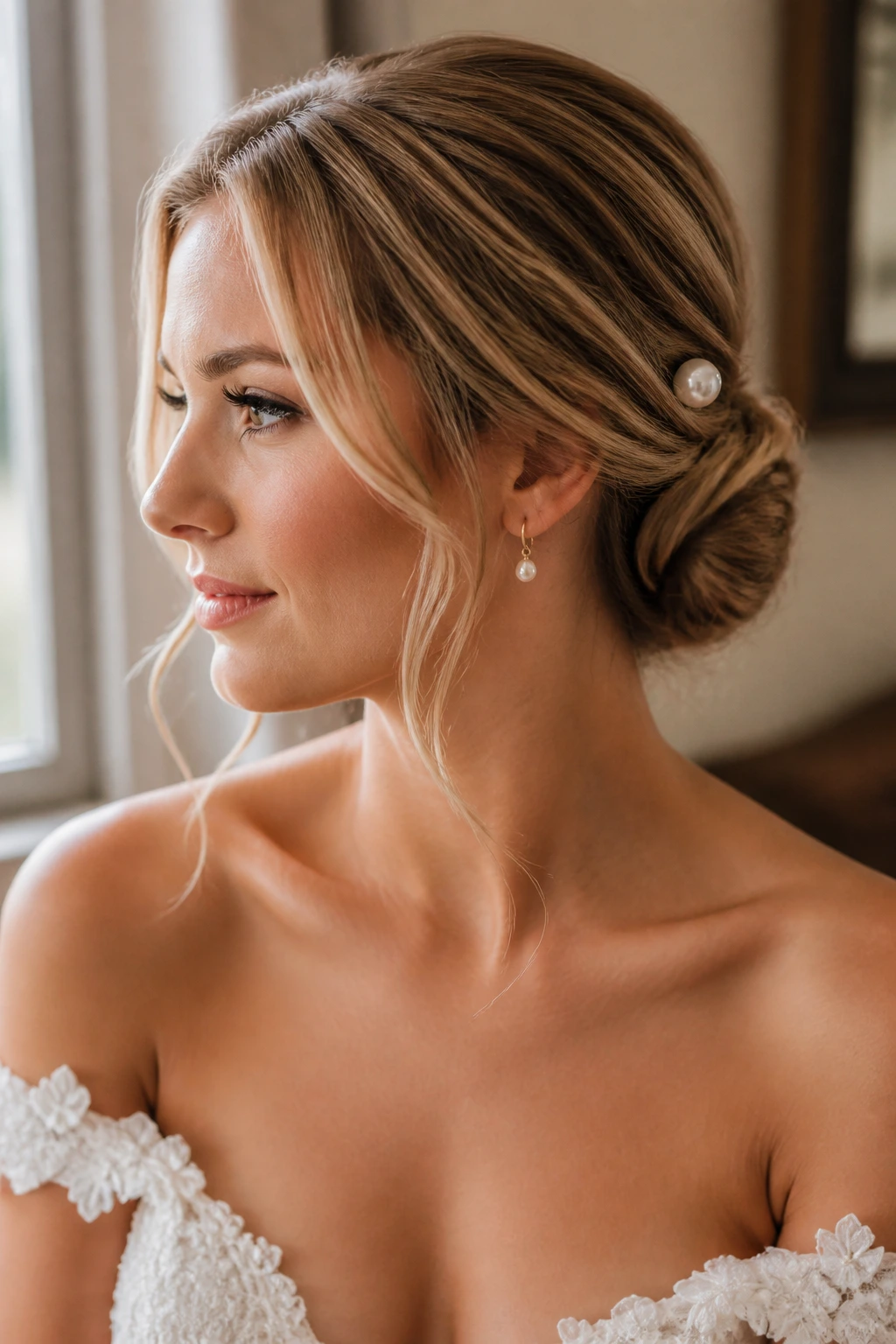
Texture Boost: If the hair feels too smooth to hold, mist the roots and mid-lengths with texturizing spray before pinning. The style will grip better, and the finished look won’t slide down by the time the vows start.
Accessory Swap: A simple bun can feel far more bridal with one pearl pin, a narrow ribbon, or a small comb placed just off-center. You do not need a pile of decorations. One well-placed piece often does more.
Volume Control: For styles that are meant to feel airy, pull the braid or twist out gently with your fingers before the final spray. For sleek looks, use a toothbrush with a tiny amount of styling cream to flatten the baby hairs near the temple and nape.
Make-It-Yours: Curly hair can keep more of its natural pattern if you style around it instead of fighting it. Short hair can lean into accessories. Fine hair usually looks strongest with cleaner outlines and fewer loose pieces. Thick hair often benefits from a shape that is gathered close to the head.
Common Bridal Hair Mistakes in Summer
-
Starting with hair that is too clean: Freshly washed hair can be slippery and hard to pin, especially if your strands are fine. Wash the day before for better grip unless your stylist tells you otherwise.
-
Overloading on shine products: A little smoothing cream helps; a lot turns the front of the hairstyle limp and greasy. Keep anything oily away from the roots and focus it on the ends.
-
Ignoring the veil placement early: If the veil comb goes in after the style is finished, it can crush the shape or split the back. Place it while the structure is still being built.
-
Curling without cooling: Hot curls dropped too soon lose shape fast. Pin them up until they are fully cool, or the waves will sag before dinner.
-
Choosing a style that fights the dress: A high, sharp bun under a very ornate neckline can feel crowded. A loose braid under a heavy, beaded gown can disappear. Let the dress and hair share the space.
-
Forgetting the nape: Heat and sweat show up there first. If the back of the style is packed with too much product or too many pins, it can itch, shift, or pucker under pressure.
Variations and Adaptations to Try
Fine-Hair Support Plan: Use a textured bun, a low knot, or a wrapped ponytail with a little hidden padding. Fine hair usually looks best when the shape is compact and the root area has some roughness before styling.
Curly-Texture First: Start by defining the curls, then pin selectively instead of stretching them flat. A twist-out, curly ponytail, or half-up crown keeps the texture visible and feels easier than forcing a smooth finish.
Short-Hair Bridal Route: Try a faux bob, side-swept waves, or a headband updo. Shorter lengths can look very polished when the front is clean and the accessory does part of the framing.
Humidity-Proof Minimalism: Choose a sleek bun, low chignon, or tucked side part and keep the finishing products restrained but firm. In high heat, a simple silhouette often outlasts anything heavily curled.
Garden-Wedding Softness: Add fresh flowers, ribbon, or a few loose tendrils around a braid or bun. The goal is not to pile on decoration; it’s to echo the setting without making the hair look busy.
Black-Tie Shine: Lean into glossy finishes, centered parts, and cleaner shapes like the ballet bun, French twist, or polished low ponytail. The shine reads elegantly when the dress has structure and the venue feels formal.
Keeping the Style Fresh From First Look to Last Dance
A bridal hairstyle lives longer than most people expect, which is why the prep matters. If you’re doing a trial, schedule it a few weeks before the wedding and photograph it from the front, side, and back. Take notes on what falls, what feels tight, and what the veil or earrings do to the shape. A style that looks lovely for ten minutes isn’t enough.
On the day itself, build in the right kind of touch-up kit. A handful of bobby pins, a small can of hairspray, a fine-tooth comb, a few clear elastics, and one travel-size smoothing cream will cover most surprises. If you’re wearing a veil, keep the comb and pins together so nobody spends ten frantic minutes hunting through a makeup bag.
The maintenance style depends on the look. For waves, refresh only the front pieces and the ends that frame the shoulders; don’t brush the whole thing to death. For buns and twists, press flyaways down with a little product on your fingertips instead of misting the whole head again. Too much spray late in the evening can make the hair feel stiff when you’re trying to relax into the party.
After the wedding, take the style apart gently. Braid-heavy looks can leave small knots near the back, and pinned curls should be loosened slowly so you don’t snap the ends. If the hair is loaded with product, give it a proper wash within a day or two so the scalp does not feel coated for long. Hair likes a clean reset after a long event.
Questions Brides Ask About Summer Wedding Hair
How far ahead should I do a hair trial?
A trial a few weeks before the wedding is usually enough time to make changes without rushing. That gives you room to test the style with your veil, earrings, and neckline, which is where a lot of good ideas change shape.
What holds best in humidity?
Compact styles with hidden structure usually hold best: low buns, chignons, braided updos, and sleek ponytails. Loose curls can work too, but they need more product and more re-setting than most brides expect.
Can I wear a veil with a ponytail or braid?
Yes, if the base is built for it. The comb usually needs a firm anchor point near the crown or just above the bun or braid, so the stylist has to plan that placement before the style is finished.
What if my hair is fine and doesn’t hold curls?
Choose a style that depends more on pins and structure than on loose movement. A wrapped ponytail, a chignon, or a braided bun will usually behave better than a fully down style that needs big, lasting waves.
Is second-day hair better for bridal styling?
Often, yes. A little natural oil and texture can help the hair grip pins, braids, and elastics. If your roots get greasy quickly, use dry shampoo sparingly at the crown and keep conditioner away from the scalp.
Can short hair still look bridal without extensions?
Absolutely. A lob, bob, or pixie can look formal with waves, a tucked side, a sculpted part, or a strong accessory. The shape matters more than the length.
What should I do if my curls start falling?
Don’t brush them. Rewind the front pieces around a finger or a small iron, pin them to cool, and mist lightly from a distance. Piling on more spray without reshaping usually makes the curl collapse faster.
How do I stop flyaways without making hair crunchy?
Use a tiny amount of smoothing cream or wax on your fingertips and press the stray hairs down. A toothbrush with product works well around the hairline, but less is better than people think.
The Styles That Stay Lovely in Heat
The strongest summer bridal hairstyles do one thing well: they respect the weather instead of pretending it isn’t there. They keep the neck cool, give accessories a place to sit, and hold their shape long enough to survive the parts of the day that matter most.
A style can be romantic and practical at the same time. That’s the part people forget. If the shape is smart, you spend less time fixing your hair and more time living in the day, which is really the point.
Pick the look that matches your hair’s texture, the weight of your dress, and the amount of motion you expect from the ceremony to the last song. The right choice will feel steady from the first photo to the last hug, and that steadiness is worth more than a hairstyle that only behaves for the first fifteen minutes.
