



Straight hair and a round face can make bangs behave with almost rude honesty. There’s no wave to blur the outline, no curl to soften a bad cut, and no mystery once the fringe lands on your forehead and meets the mirror. The right shape looks sharp and intentional. The wrong one can make the face read wider, shorter, or just plain busier than it needs to.
The good news is that bang styles for straight hair and round faces have more range than people think. You are not stuck choosing between “no bangs” and “heavy blunt fringe that feels like a helmet.” Straight hair gives you clean edges, which is a gift if the cut is smart. A round face gives you room to play with diagonals, center breaks, cheekbone length, and side sweeps that pull the eye downward instead of side to side.
What matters most is shape. A fringe that starts too low or sits too wide can flatten the forehead and widen the cheeks. One that opens at the center, skims the temples, or tapers toward the jaw can make the whole haircut look longer and lighter. That’s the lane we’re staying in here — practical, wearable fringe ideas that work with straight hair instead of fighting it.
Why This Fringe Edit Stands Out
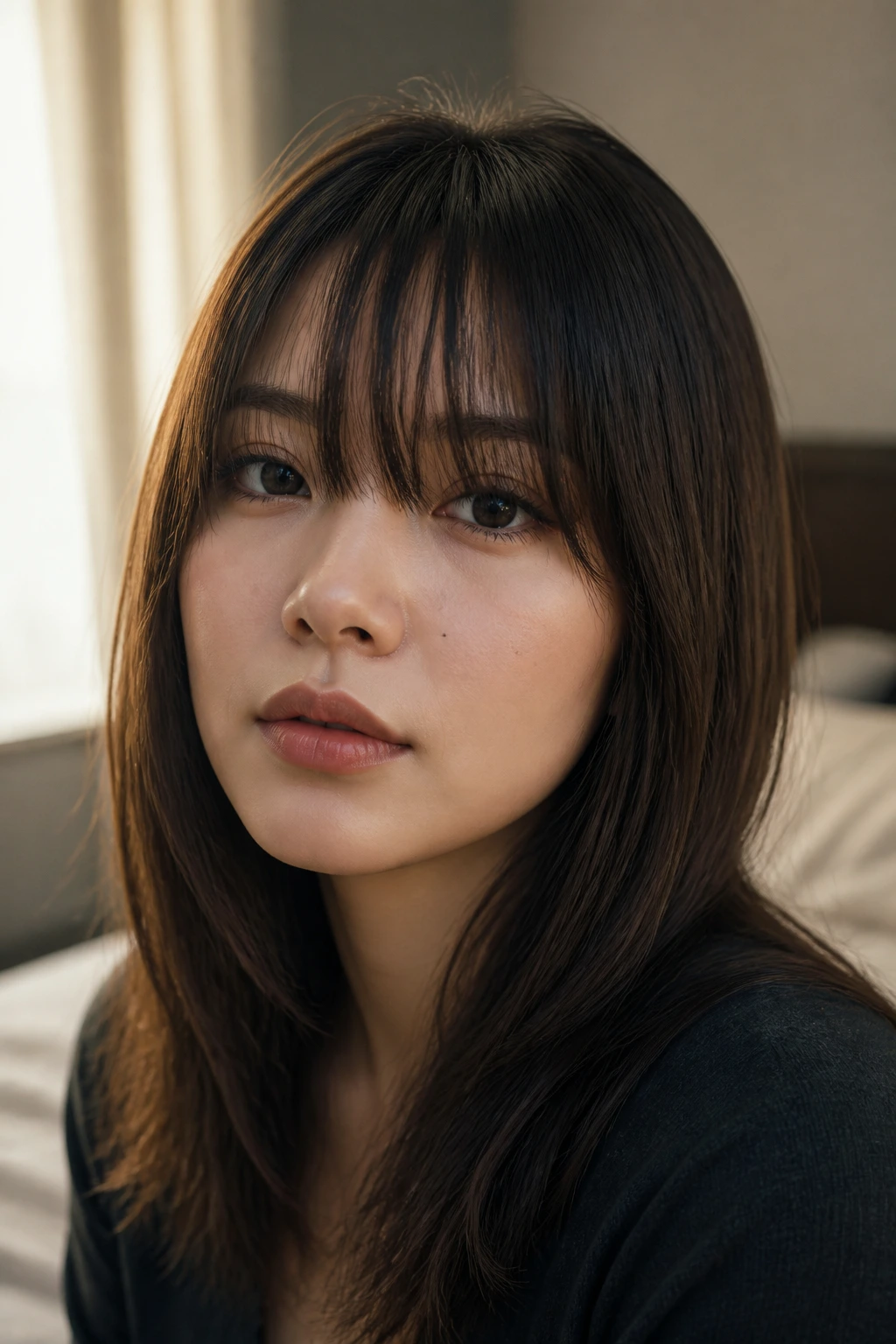
- Built for straight hair: These styles rely on cut shape, not texture, so they still read clearly when your hair dries flat and smooth.
- Kind to round faces: Most of the options break up width with diagonal lines, center gaps, or longer outer corners that travel downward.
- Salon-friendly language: Each style is easy to describe without dragging a stylist through a five-minute explanation.
- Low-risk to bold: The list starts with safer, grow-out-friendly shapes and moves toward stronger fringe statements.
- Maintenance is part of the plan: You’ll see which bangs need a trim every 3-4 weeks and which ones can drift longer without looking sloppy.
- Straight-hair tricks included: Some fringe types need a bend, a root lift, or a tiny cooling set so they don’t split by lunchtime.
Why Bang Styles for Straight Hair and Round Faces Need Different Rules

Straight hair is unforgiving in a useful way. Every cut line shows up immediately, which is why a bang that looks soft in a photo can feel heavy in real life if the perimeter is too blunt. You can see the geometry right away. There’s nowhere for the shape to hide.
Round faces bring a different puzzle. The widest point usually sits around the cheeks, so a fringe that draws a clean horizontal line across that zone can make the face look wider, even if the cut is technically tidy. That doesn’t mean horizontal lines are banned. It means they need help — usually from length at the corners, a center part, or a sweep that travels down toward the cheekbone.
The best fringe shapes for this face-and-texture pairing create movement without depending on waves or curls. Think of the cut as the styling. If the line is already doing the right job, your morning routine can stay simple. If the line is wrong, no amount of root spray will fix it.
1. Long Curtain Bangs That Split at the Cheekbones
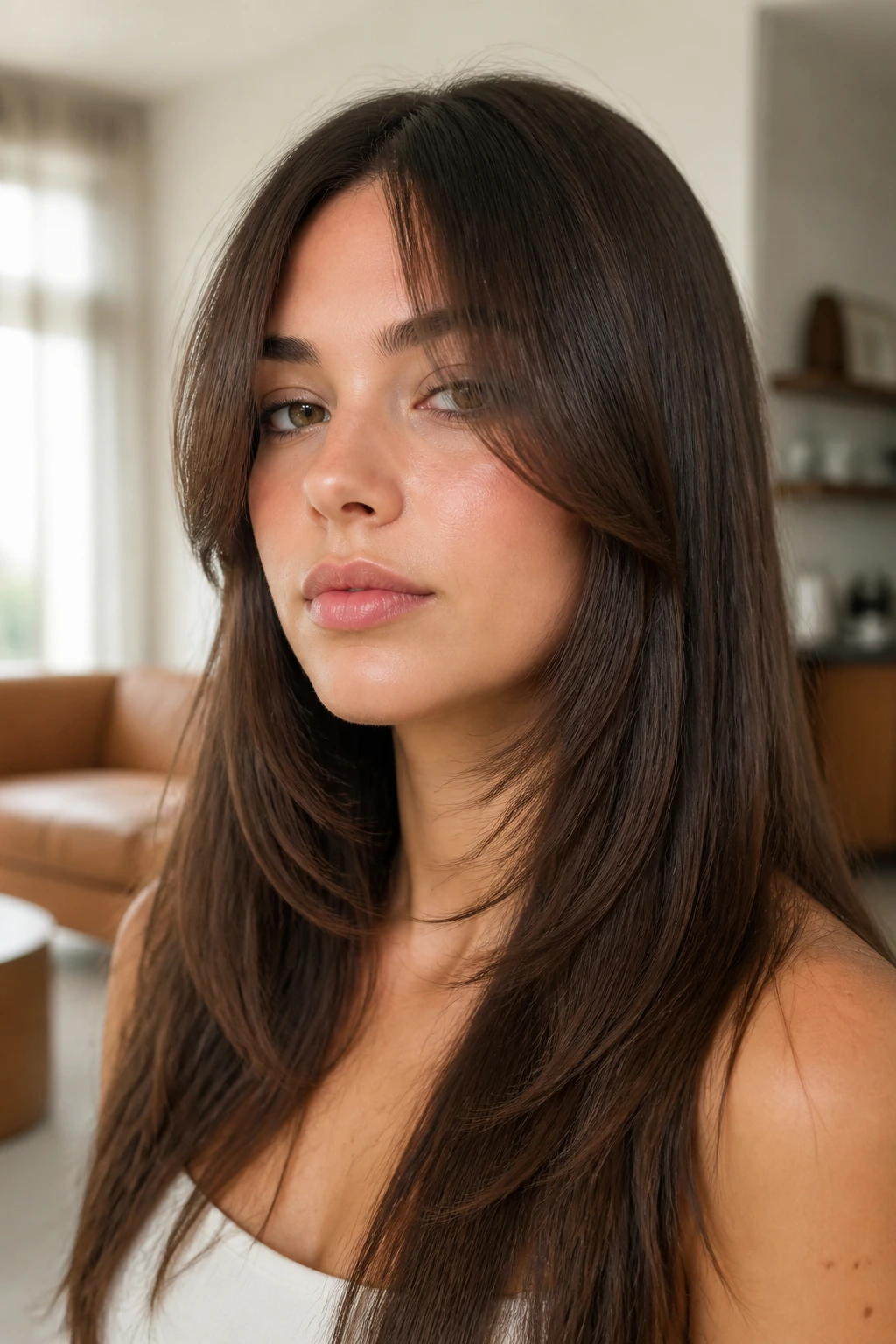
Long curtain bangs are the safest place to start if you want bangs but don’t want a hard commitment. They part in the middle, fall softly toward the cheeks, and leave enough length that you can tuck, pin, or blend them into the rest of the haircut. On straight hair, the clean split looks deliberate instead of fussy.
Why they work
The center stays open, which keeps the forehead from feeling boxed in. The longer outer pieces travel downward toward the cheekbones, and that downward line is doing quiet work on a round face. I like this option because it gives you bang shape without the dense, blunt wall that can make straight hair look heavy.
Ask for the shortest point to hit around the bridge of the nose or just below the brows, then let the sides angle to the cheekbone. Blow-dry them away from the face with a small round brush, then flip the ends out just slightly. If they sit perfectly flat, they can look sleepy. A little bend is enough.
2. A Deep Side-Swept Fringe with One Long Diagonal
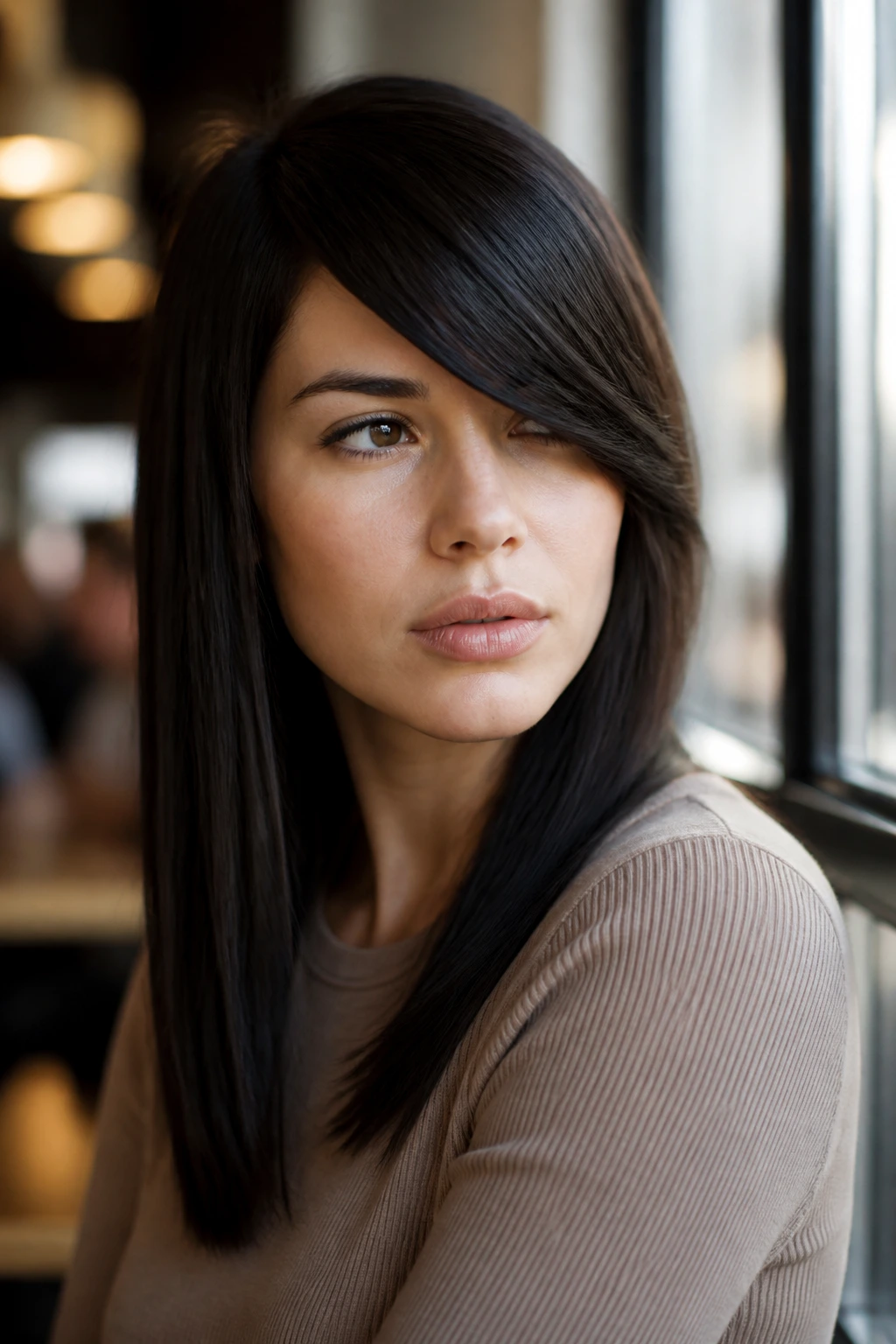
If you already wear a side part, this is the most natural-looking fringe in the lineup. The hair sweeps from one temple across the forehead in a long diagonal, which is a nice trick for round faces because the eye follows the line downward instead of across the width of the cheeks. Straight hair keeps that diagonal crisp.
This style works best when the shorter side is still long enough to brush the brow, not chop into the center of the forehead. The longer side can skim the cheekbone or even blend into front layers. That asymmetry is the whole point. It breaks the circle.
A deep side-swept fringe also behaves better on flat, straight textures than people expect. Clip the direction while it cools after blow-drying, and it will keep the shape longer. If you skip the cooling step, the strand memory tends to relax and fall back into the same flat curtain by afternoon.
3. Bottleneck Bangs with a Narrow Center and Wider Sides

Bottleneck bangs are one of the smartest shapes for a round face because they start narrow in the middle and widen gradually toward the temples. That shape imitates the neck of a bottle, which is where the name comes from, and it’s not just cute jargon — the geometry actually helps. The center exposes a little forehead, then the sides frame the face without stopping abruptly at cheek width.
On straight hair, this cut keeps its outline beautifully. There’s no wave pattern to confuse the shape, so the stylist’s lines matter even more. I’d ask for the center to sit just under the brows, with the sides angling longer toward the cheekbones or upper jaw.
How to wear it
Use a round brush only at the root. You do not need a big curl at the ends. In fact, too much curve can make the fringe puff outward and fight the face. A tiny bend inward at the center, then a loose sweep away from the temples, is enough.
4. Brow-Grazing Feathered Bangs
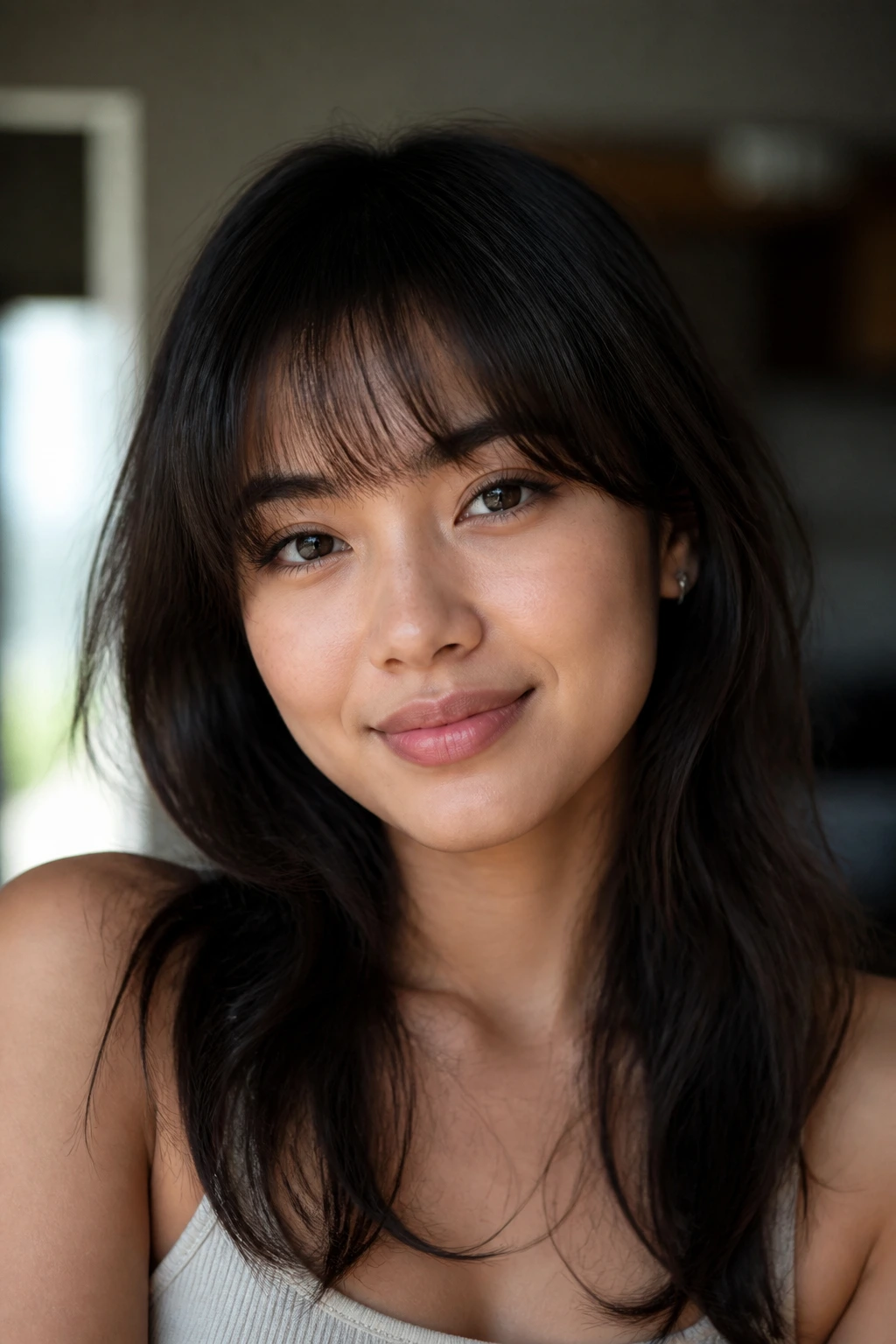
These are for the person who wants bangs to exist, but not dominate the entire forehead. The line sits around brow level, and the ends are feathered so the fringe doesn’t land as one thick block. On straight hair, that feathering matters a lot. It keeps the cut from looking like a strip of fabric laid across the face.
Round faces usually do better with some forehead visibility, and this is where feathered bangs earn their keep. The open space above the brows makes the face read longer, while the lighter ends stop the fringe from feeling square. It’s a clean, easy shape that still has enough body to show up.
H3: Ask for this, not a blunt slice
Tell the stylist you want the middle to sit at or just above the brow, with a soft taper at the corners. Point-cutting or light slide-cutting keeps the edge from looking too hard. If your hair is fine, ask for less texturizing than you think you need; too much thinning can leave wispy gaps that separate weirdly on straight strands.
5. Piecey Center-Part Fringe
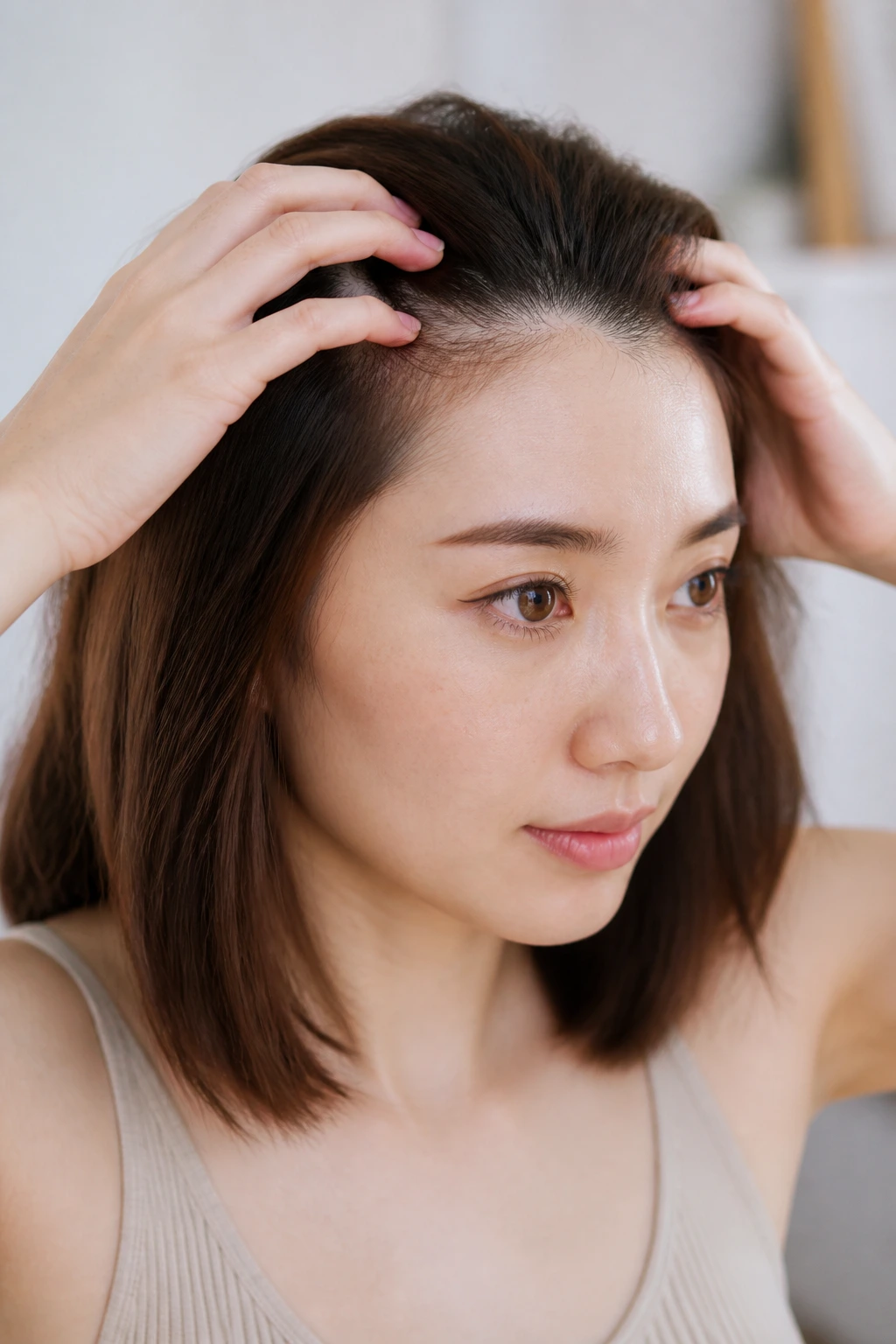
This style is almost a curtain bang, but lighter and more separated. Instead of one continuous fringe, you get a few distinct pieces around the center part that fall forward in narrow strands. The gaps matter. They let the forehead breathe and keep the face from being visually widened by a full band of hair.
I like this one on straight hair because the clean strands stay distinct all day. It looks intentional in a way that wavy hair sometimes can’t quite manage without extra work. For round faces, the center part creates a vertical line right down the middle, which is doing a nice bit of balancing.
Keep the pieces long enough to hit around the brows or a touch below. If they’re too short, the separation can look choppy rather than soft. A little styling cream on the fingertips is enough. Don’t overload it. Straight hair turns oily fast, and piecey bangs can go from airy to limp in about twenty minutes if you get heavy-handed.
6. Soft Blunt Bangs with Tapered Corners
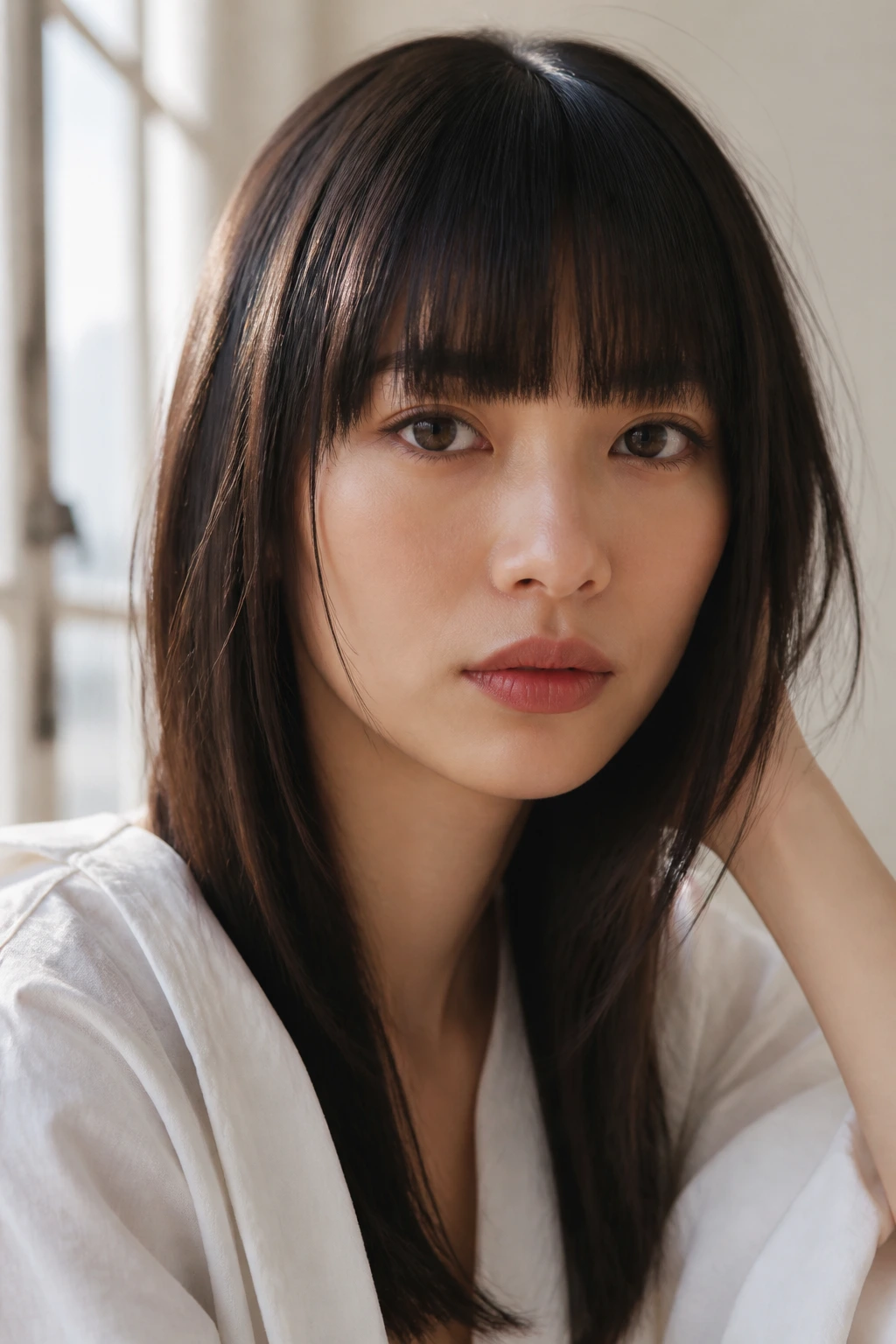
A full blunt bang can work on a round face, but only if the corners are doing some of the heavy lifting. The center can be fuller and sit near the brows, while the sides are left a touch longer so the edge slopes gently toward the temples. That small change makes a huge difference.
Without the taper, a blunt line can stop the eye dead across the broadest part of the face. With the taper, the fringe still feels dense and polished, but it no longer sits like a fence. Straight hair makes this shape look especially neat, which is a plus if you like a more finished haircut.
This style suits medium-density hair best. Too little density, and the blunt effect can look see-through. Too much density, and you risk the heavy shelf that so many round-faced clients regret after the first blow-dry. If you want this shape, ask for weight in the middle and softness at the outer corners.
7. An Arched Fringe That Follows the Brow Line
Arched bangs are underrated, partly because people think “arched” means old-fashioned and overly shaped. Not here. A modern arched fringe has a soft curve that mirrors the brow line, with the center sitting a bit higher or lighter than the sides. On a round face, that slight lift keeps the fringe from forming a hard horizontal block.
Straight hair shows the arch clearly, which is exactly why this style works. There’s no texture to muddy the shape. The curve becomes a design element instead of just a styling accident. If your forehead is a little shorter, keep the arch subtle. A big cartoon curve will look too done.
What to watch for
The outer corners should still move downward. If the ends stop too high, the face can look wider. Blow-dry the center forward first, then guide the corners inward with the brush so they follow the face instead of flipping away from it. A tiny amount of pomade on the very ends can help, but only on the ends. Do not spread it through the whole fringe.
8. Chin-Length Face-Framing Bangs
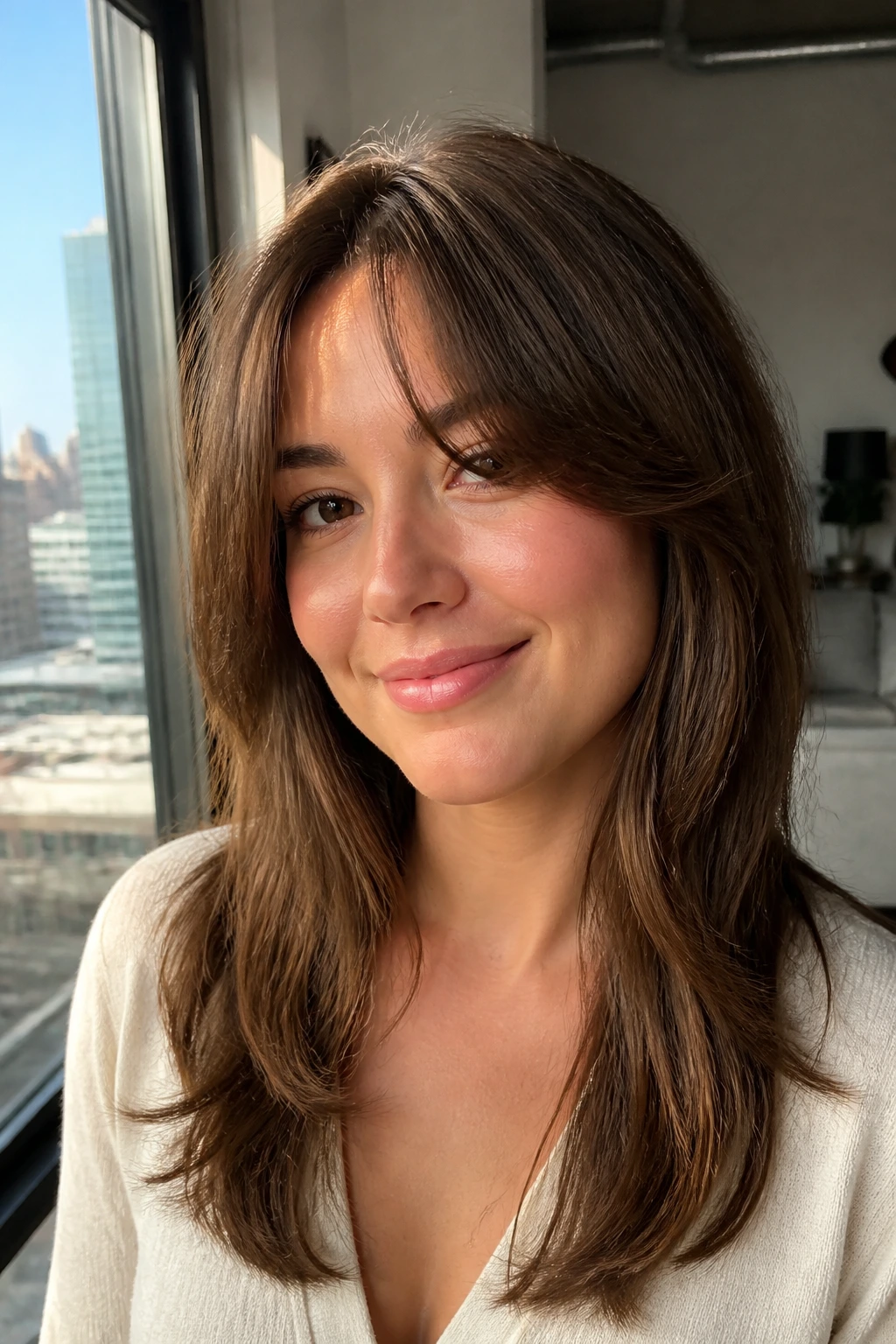
This is the fringe for someone who keeps saying they “want bangs” but really wants face framing with a little more purpose. The shortest pieces start near the brows or cheekbones, then continue all the way down toward the chin. On a round face, that long line gives you the vertical pull that short bangs can’t always provide.
Straight hair makes this cut look sleek and expensive in the most practical sense. The strands fall in a clean sheet, and the face-framing effect is obvious even when you haven’t styled much. I’d call this the easiest growing-out bang style in the whole group. It becomes layers before it becomes awkward.
Ask your stylist to leave the front corners long enough to brush the jaw. The shape should feel like a frame, not a curtain that ends at the cheeks. If your hair is very fine, keep the front pieces only slightly shorter than the rest of the layers so they don’t disappear into the haircut.
9. Sliced Bangs with Air Between the Strands
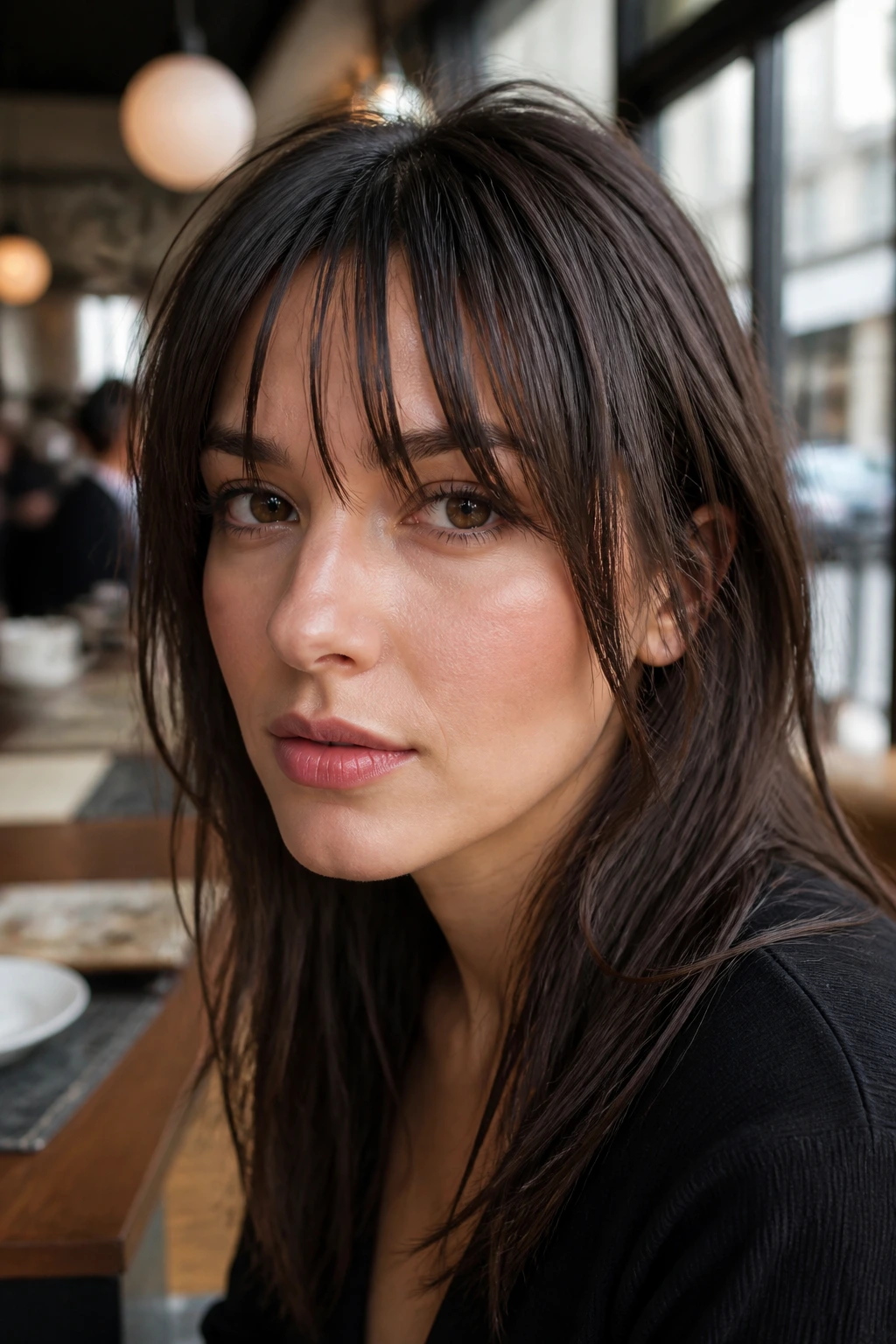
Sliced bangs are cut so the ends feel lighter and more separated, usually with point-cutting or a razor. The result is a fringe that still covers the forehead but doesn’t sit like one thick slab. On straight hair, this can be a lifesaver. Heavy bangs on straight strands often look like a sheet; sliced ends break that up.
For round faces, the spacing between the strands matters because it keeps the fringe from widening the upper face. The eye reads the gaps as softness and movement, not bulk. It’s a nice middle ground if you want a more modern fringe without going full curtain or side-swept.
H3: The one thing not to overdo
Too much thinning can make these bangs look scraggly, especially if your hair is fine. Ask for light slicing, not aggressive texturizing. You want pieces that move, not ends that look chewed up.
10. Shag Bangs That Melt Into Long Layers
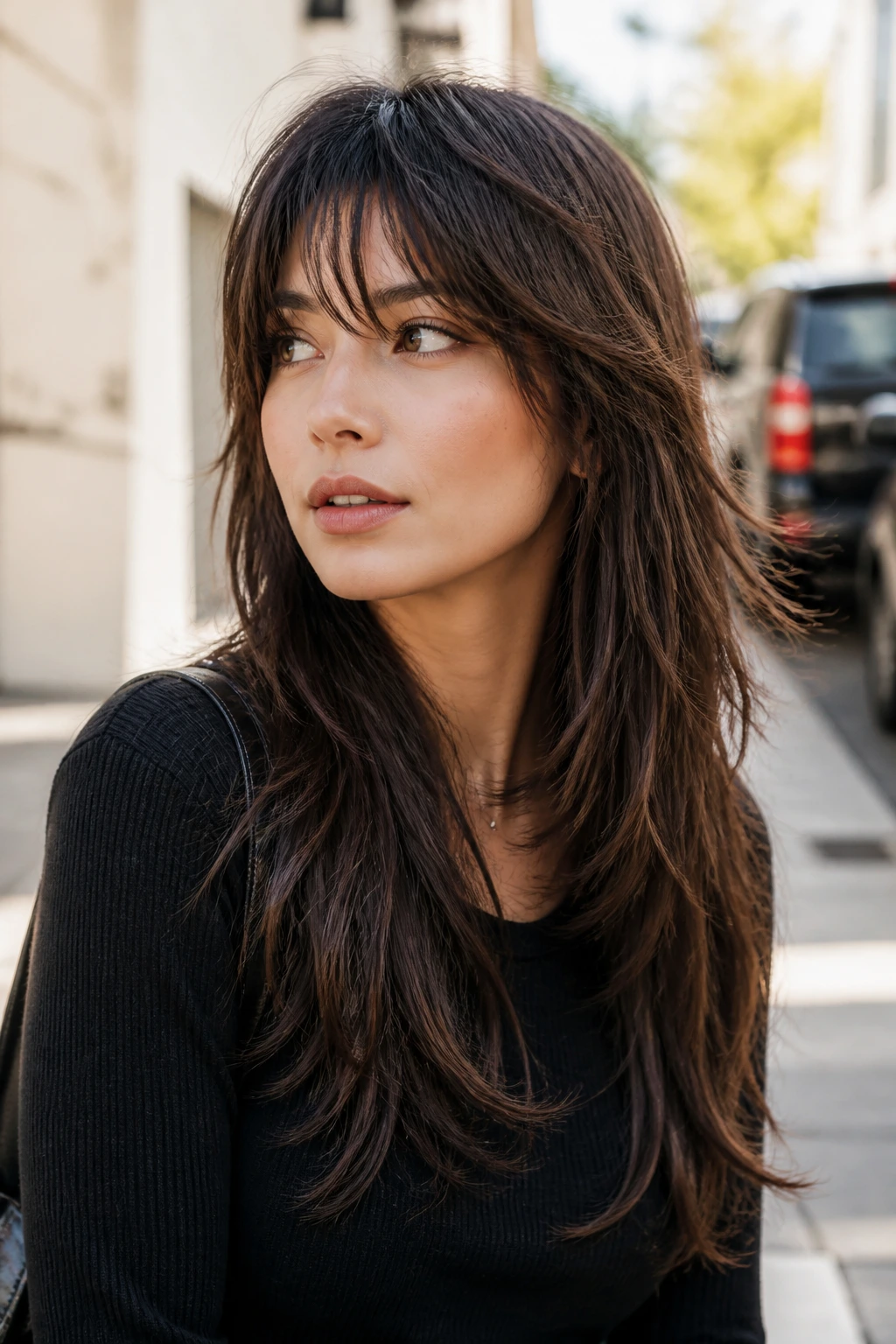
Shag bangs are less about a strict fringe line and more about a front section that lives inside a bigger layered cut. They’re choppy, airy, and a little undone. On straight hair, the shag shape can look especially good because the layers remain visible instead of collapsing into a blob.
Round faces benefit from the broken texture. The eye moves through the layers instead of landing on one wide horizontal band. That makes the face look longer and the haircut feel lighter. I’d choose this style if you like your hair to have some attitude without needing it to be polished every morning.
The key is length. Keep the bangs long enough that the shortest pieces brush the brow, then let the layers below carry the rest of the shape. If they’re cut too short, the shag can turn into a triangle around the face. That’s not the effect you want.
11. See-Through Bangs with a Barely-There Density
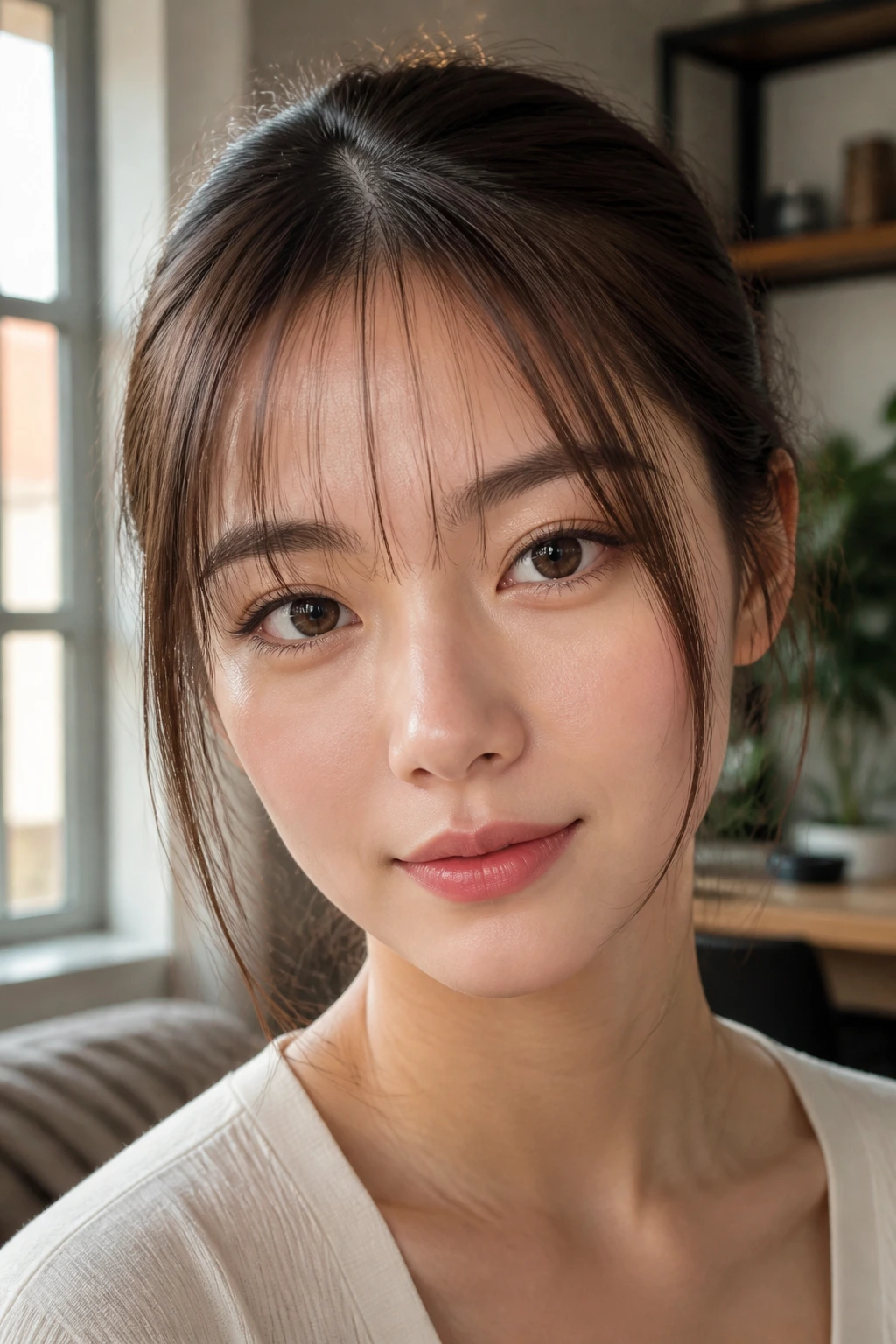
See-through bangs are the opposite of a heavy fringe. They let the forehead show through, which keeps the face open and helps a round shape read longer. On straight hair, this style makes a lot of sense because the strands stay fine and separated without much help.
The trick is density. You want enough hair to register as a fringe, but not enough to form a curtain. Think soft veil, not full blanket. The center can sit near the brows, with a little extra length at the sides so it doesn’t feel cut off. If you have a small forehead, keep the width narrow and the texture airy.
They’re also forgiving on oily roots. A touch of dry shampoo at the front keeps them from clumping together. That said, if your hair line grows in multiple directions, see-through bangs can separate in ugly ways unless you train them with a blow-dryer for a week or two.
12. A Grown-Out Fringe That Already Looks Intentional
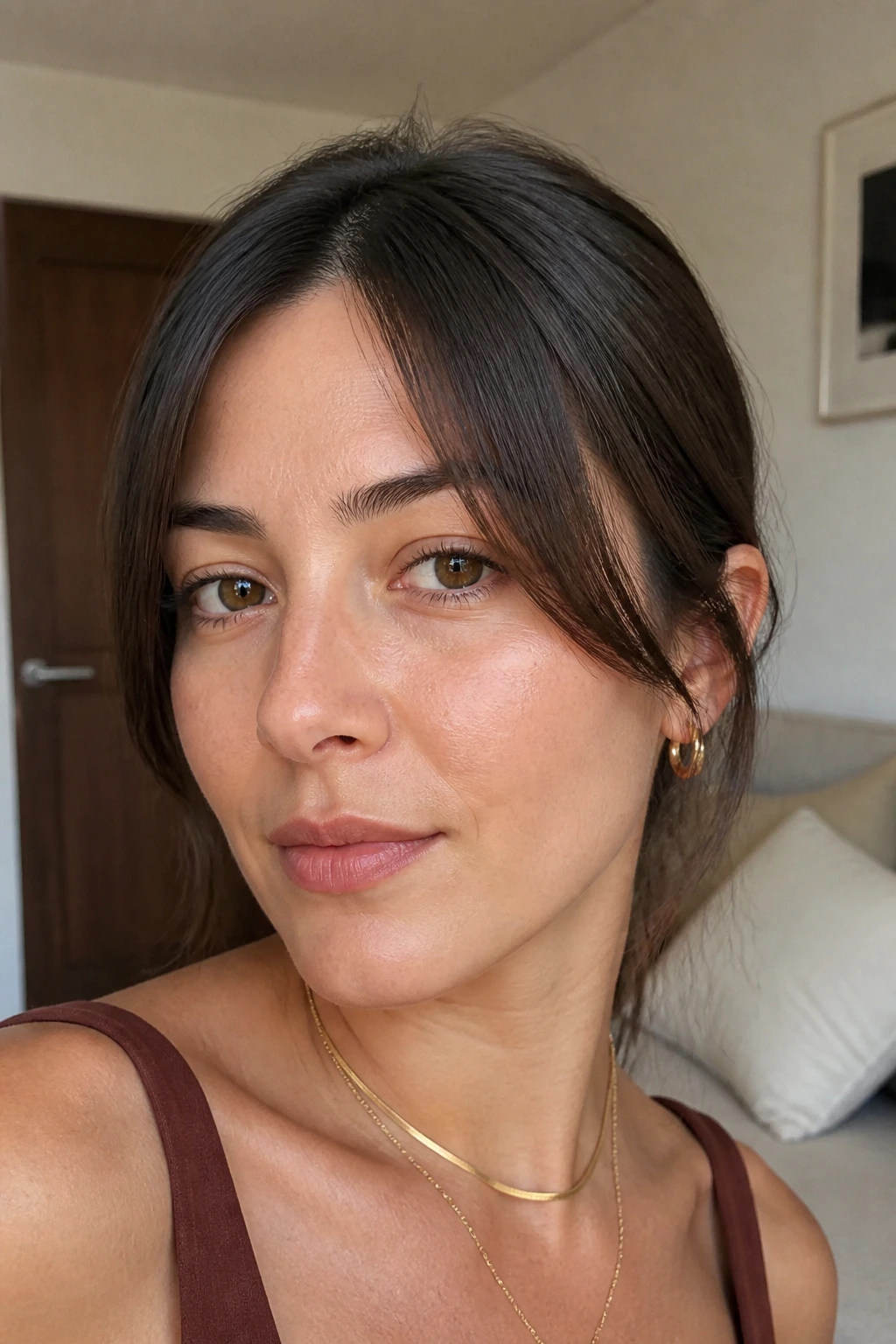
There’s something elegant about bangs that look like they’re in the middle of growing out on purpose. This style keeps the front pieces long enough to tuck behind the ears, split at the center, or sweep to one side without awkward ends hanging in your eyes. It’s a practical choice if you want the bang effect without frequent trims.
For round faces, the length is doing the flattering work. The hair falls past the cheeks, which creates a longer frame and keeps attention moving vertically. Straight hair makes this even easier because the longer pieces stay sleek instead of puffing out.
I’d use this style if you’re not ready for a short fringe but want to test the waters. It also buys you room to change your mind. If you decide later that you want more bang, you can shorten from here. Starting short and regretting it is a much more annoying problem.
13. Razor-Cut Bangs with Soft, Tapered Ends
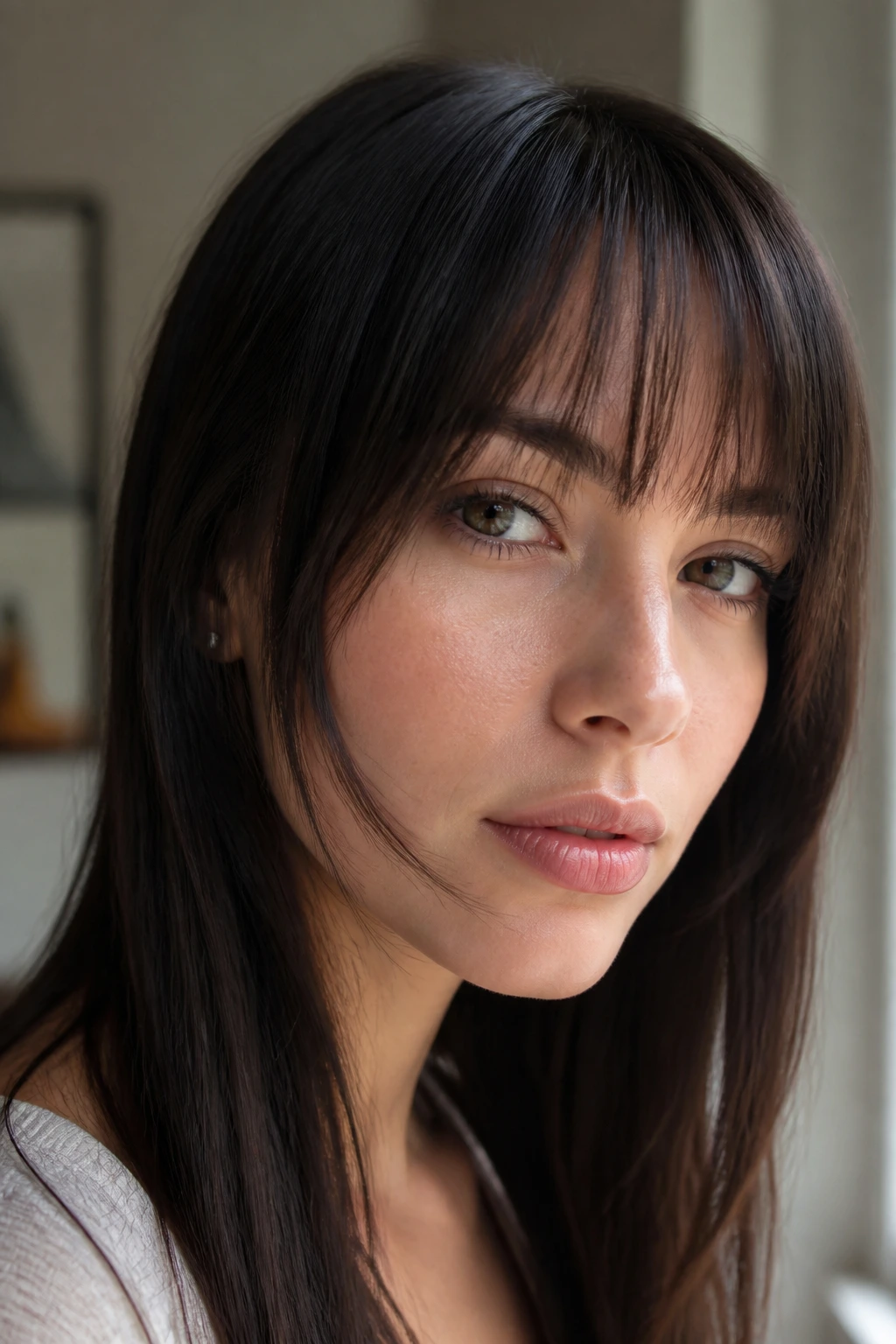
Razor-cut bangs have movement built in. The blade removes weight and leaves the ends softer than a blunt scissor cut, which is helpful on straight hair because the fringe can otherwise look too stiff. On a round face, that softness keeps the line from widening the upper third of the face.
This is not the cut I’d recommend if your hair is damaged or very dry. Razor cutting can make brittle ends look frayed if the stylist gets aggressive. But on healthy straight hair, it gives you a clean, modern fringe with a little swing.
The best version sits somewhere between eyebrow and cheekbone length, depending on how much forehead you want visible. Style it with a round brush or a flat brush plus a light bend at the ends. If you stack on too much serum, the piecey texture disappears and you’re back to a flat sheet.
14. Temple-Length Curtain Bangs That Open the Face
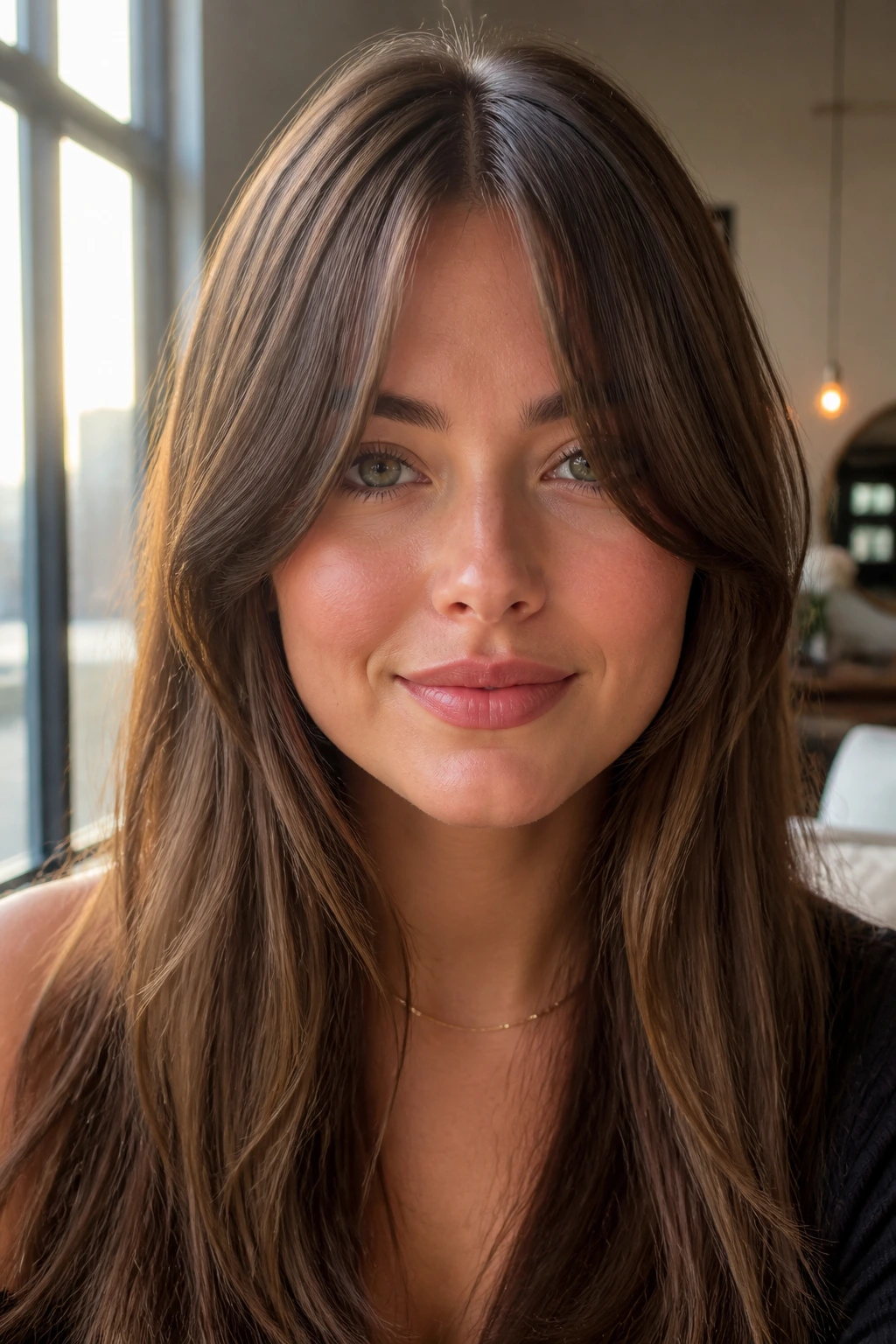
This one goes longer than classic curtain bangs and puts the emphasis on the temples. The center stays relatively open, and the sides drift down in a way that frames the upper cheek and jaw. On a round face, that length gives the illusion of a narrower middle section, which is exactly what you want from fringe.
Straight hair keeps the shape crisp and sleek. It also makes the temple pieces look intentional instead of like overgrown side layers. I like this style for anyone who wants bangs but needs them to survive a windy commute, a long workday, or a week of bad styling decisions.
The center should not be too dense. Let the split breathe a little. If the bang starts feeling heavy at the forehead, the whole cut loses the open effect that makes it work in the first place.
15. A-Line Bangs with a Shorter Middle and Longer Edges

A-line bangs are geometric in the best way. The center sits shorter, then the line lengthens toward the edges, creating a subtle diagonal across the forehead. That diagonal is useful on round faces because it doesn’t stop the eye cold. It nudges it downward.
This style has a little more edge than a classic curtain bang, but it still feels wearable on straight hair. The clean line is easy to maintain, and the shape stays visible without a lot of texturizing. I’d choose it if you like a neat fringe and want something more defined than “soft layers around the face.”
Ask for the center to skim the brows and the sides to lengthen just enough to meet the upper cheek area. If the angle is too dramatic, the fringe can look like a triangle. Keep it subtle. The point is to lengthen, not to show off how clever the cut is.
16. Choppy Brow-Length Bangs with Broken Ends

Choppy bangs are a solid answer for straight hair that tends to lie too neatly. The broken ends keep the fringe from looking rigid, and that small irregularity helps round faces because it interrupts the smooth width of a blunt line. You still get brow-length coverage. You just don’t get the solid panel effect.
This works best on medium-density hair. Very fine hair can look sparse if the choppiness goes too far. Very thick hair can read as bulky if the texturizing stops short. The sweet spot is enough separation to create movement, not so much that the fringe looks accidental.
What I like about this version
It ages well between cuts. A choppy fringe can grow for a few weeks without suddenly turning into a curtain of regret. That makes it one of the better options if you want bangs that don’t demand a salon appointment every month.
17. A French Fringe with Longer Side Pieces
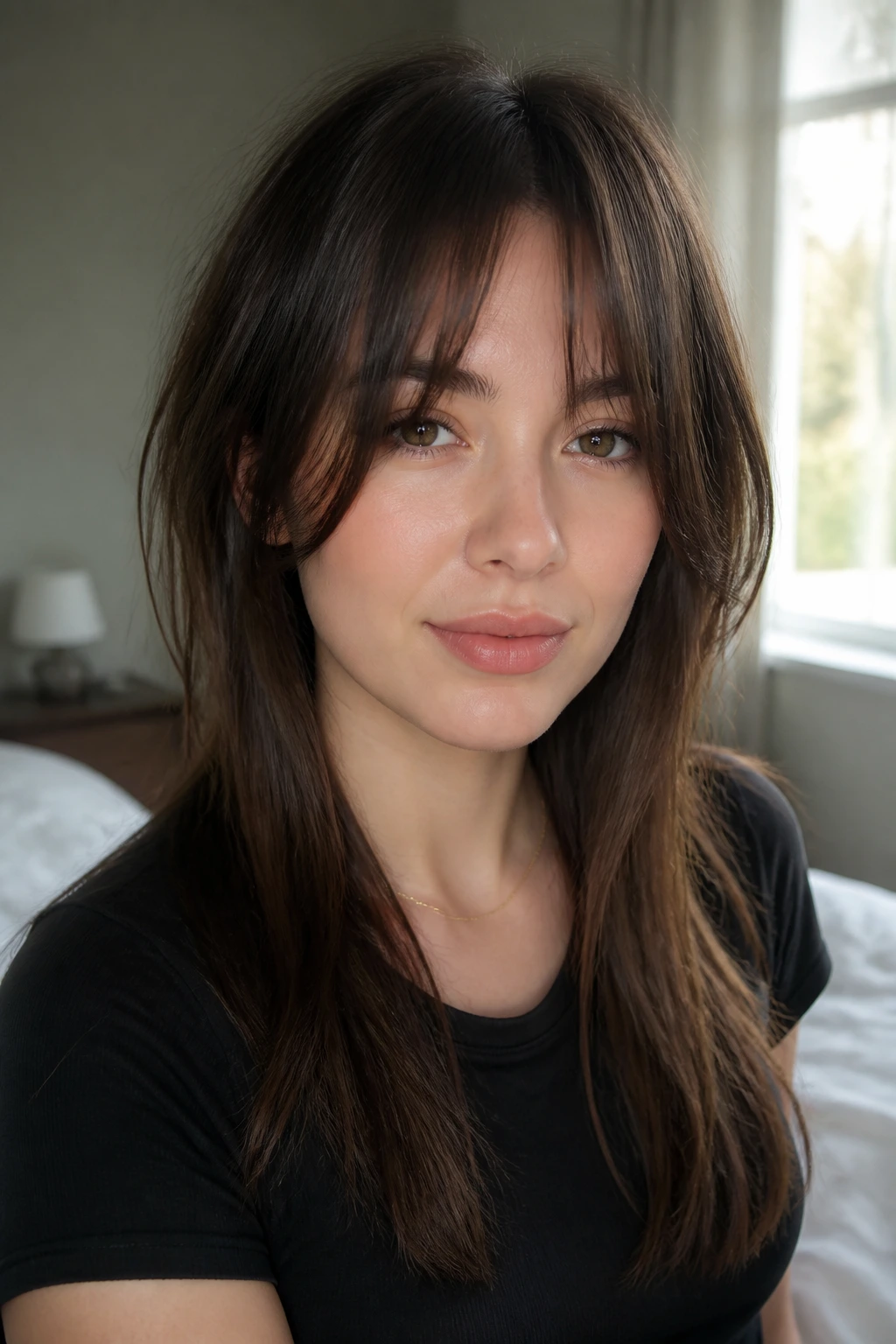
French fringe gets romantic treatment a lot, but the version that works on a round face needs restraint. Keep the center soft and slightly fuller, then let the edges stretch longer so the fringe doesn’t end in a blunt horizontal bar. Straight hair gives this cut a polished finish without much effort.
This style is especially good if you like a little softness near the eyes. The fringe can brush the lashes, but it shouldn’t sit so low that it hides the whole face. The longer sides keep the shape from reading too square.
If you style it with a round brush, aim for a slight inward curve at the center and a looser fall at the sides. Don’t over-curl it. That old-school bounce can look costume-y fast. A modern French fringe should feel relaxed, not precious.
18. Lifted Side Curtain Bangs with Root Height
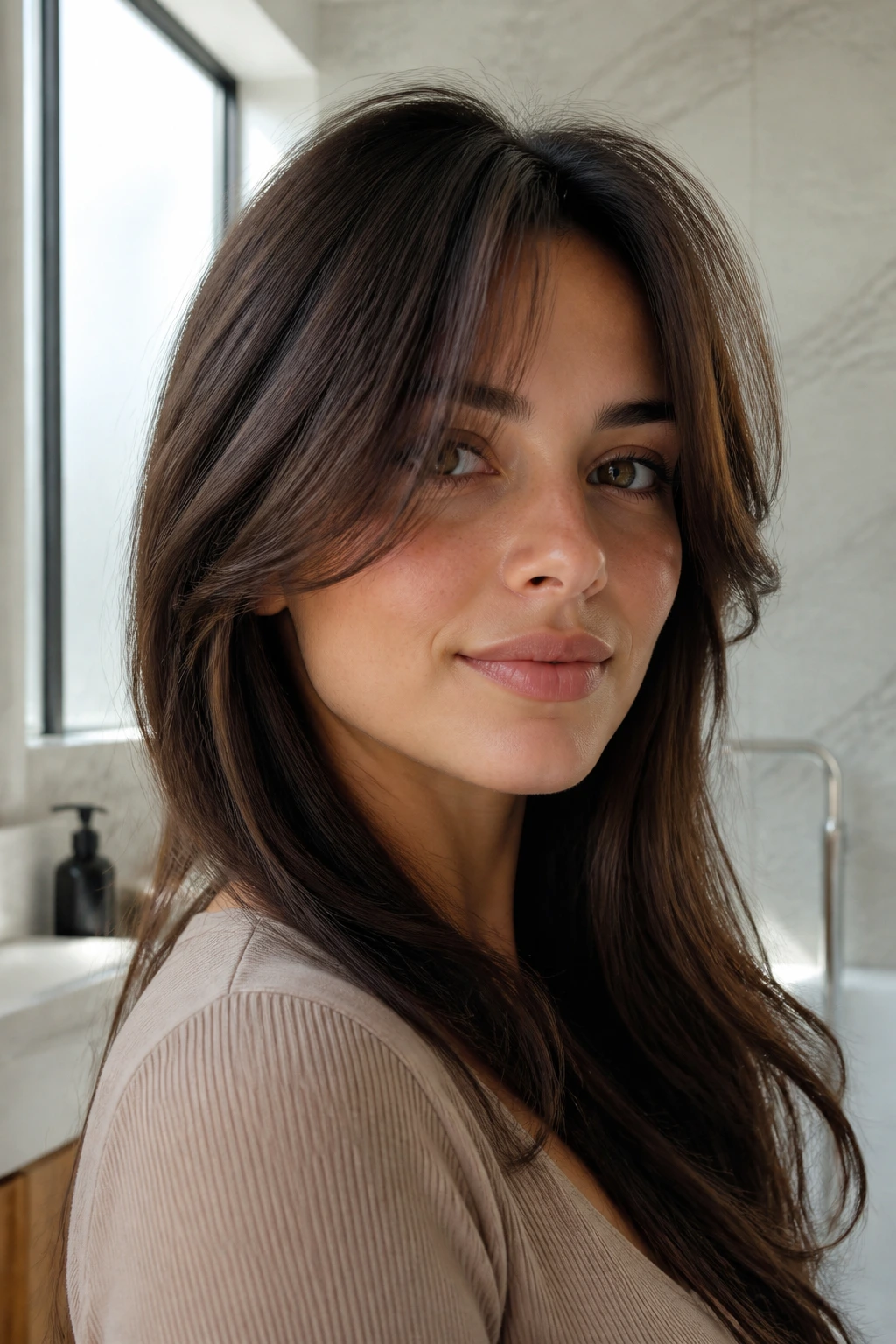
This is for the person whose bangs fall flat the second the humidity changes. The style still uses a curtain-bang shape, but the styling lifts the roots so the fringe opens away from the face instead of hanging there. On a round face, that bit of lift creates vertical space right where you need it.
Straight hair benefits from the root volume because it keeps the front from collapsing into one line. Use a nozzle, a small round brush, or even a velcro roller at the root while the hair cools. That cooling step matters more than people think. Warm hair forgets shape. Cool hair keeps it.
The edges should still curve down toward the cheekbones. If you only build height and forget the side length, the fringe can look puffy instead of balanced. Height plus taper. That’s the formula.
19. A Rounded Fringe with Soft Edges

A rounded fringe is not the same thing as a blunt one. The line follows the brow in a gentle curve, then leaves slightly longer corners so the sides fall away from the widest part of the face. On straight hair, the curve is easy to read, which gives the style a neat, finished look.
This fringe works well if your forehead is a little longer and you want coverage without a hard line. Round faces can wear it too, as long as the corners remain soft and slightly elongated. The shape should feel more like a soft arc than a shelf.
I’d avoid cutting this one too dense. Density is what turns the style from curved to boxy. If you want the fringe to stay light, ask the stylist to preserve some movement through the ends rather than packing every hair into the center line.
20. Peekaboo Bangs with a Little Forehead Showing

Peekaboo bangs are tiny on purpose. They drape lightly over the forehead, but the middle part or natural separation lets the skin show through. That openness is why they work on round faces: they don’t add much width, and they never feel heavy on straight hair.
This is a good option if you want the feeling of fringe without the maintenance of a fuller bang. It can be tucked, parted, or brushed back on lazy days. You won’t get the same face-framing impact as a curtain bang, but you also won’t have to deal with a thick front section getting oily by lunch.
Keep them thin and long enough to move. If they’re cut too short, they can spring up and lose the peekaboo effect. A touch of lightweight spray on the roots and nothing else is usually enough.
21. Long Swoop Bangs That Travel Across the Forehead
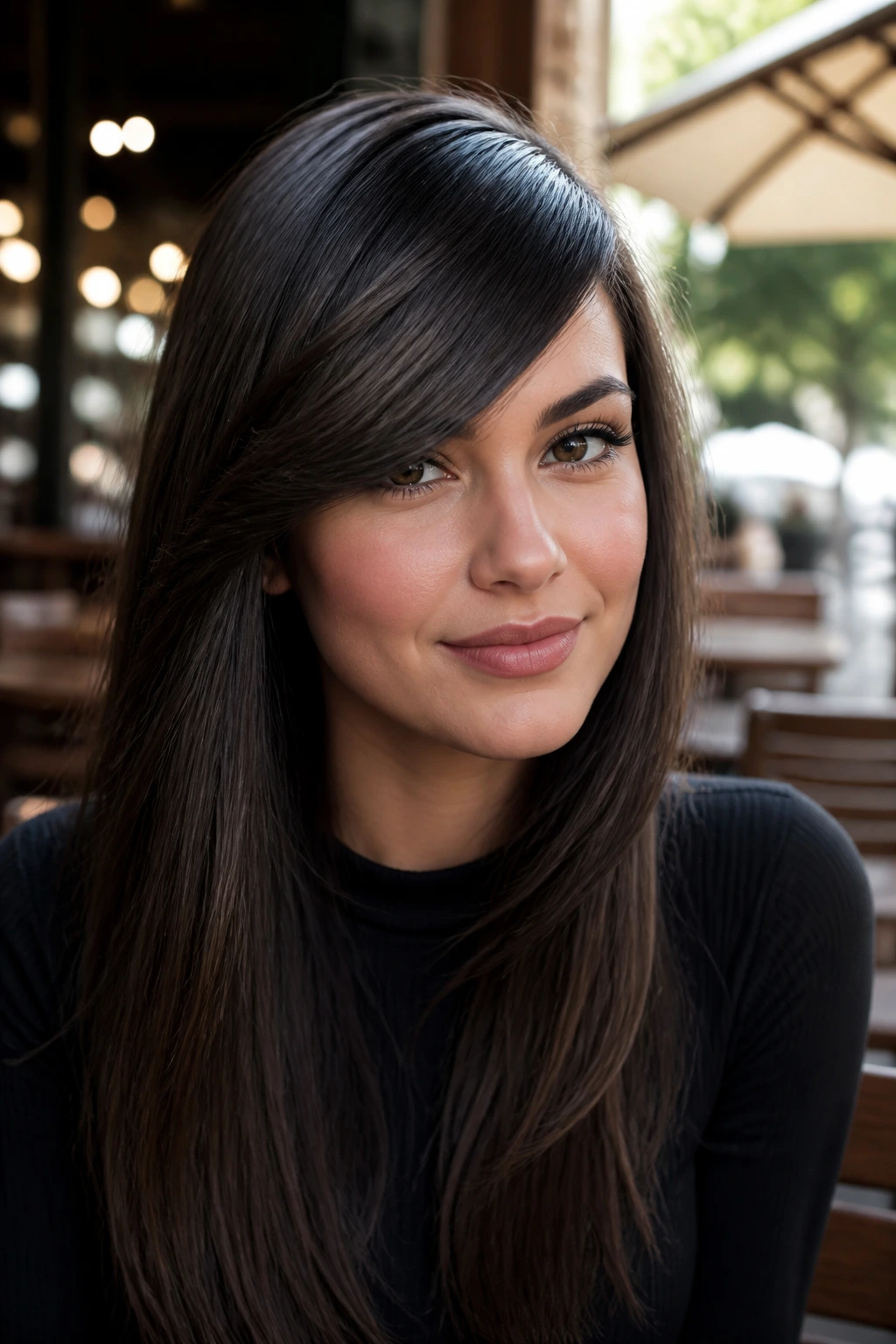
A long swoop is basically a side-swept bang with a little more drama. It starts at one side of the part and curves across the forehead in a clean diagonal. That long travel line is flattering on round faces because it creates length, and straight hair makes the sweep look glossy and sharp.
This is one of the most flattering options for people who never wear a center part. It feels familiar, which matters. If a style is too different from the way you already wear your hair, it tends to get abandoned in a drawer somewhere after one week.
The key is to keep the swoop long enough to move, but not so long that it covers the eye. Blow-dry it in the direction you want, then clip it for a few minutes while it cools. That gives the fringe a memory that lasts longer than one coffee run.
22. Micro Bangs with Longer Side Pieces
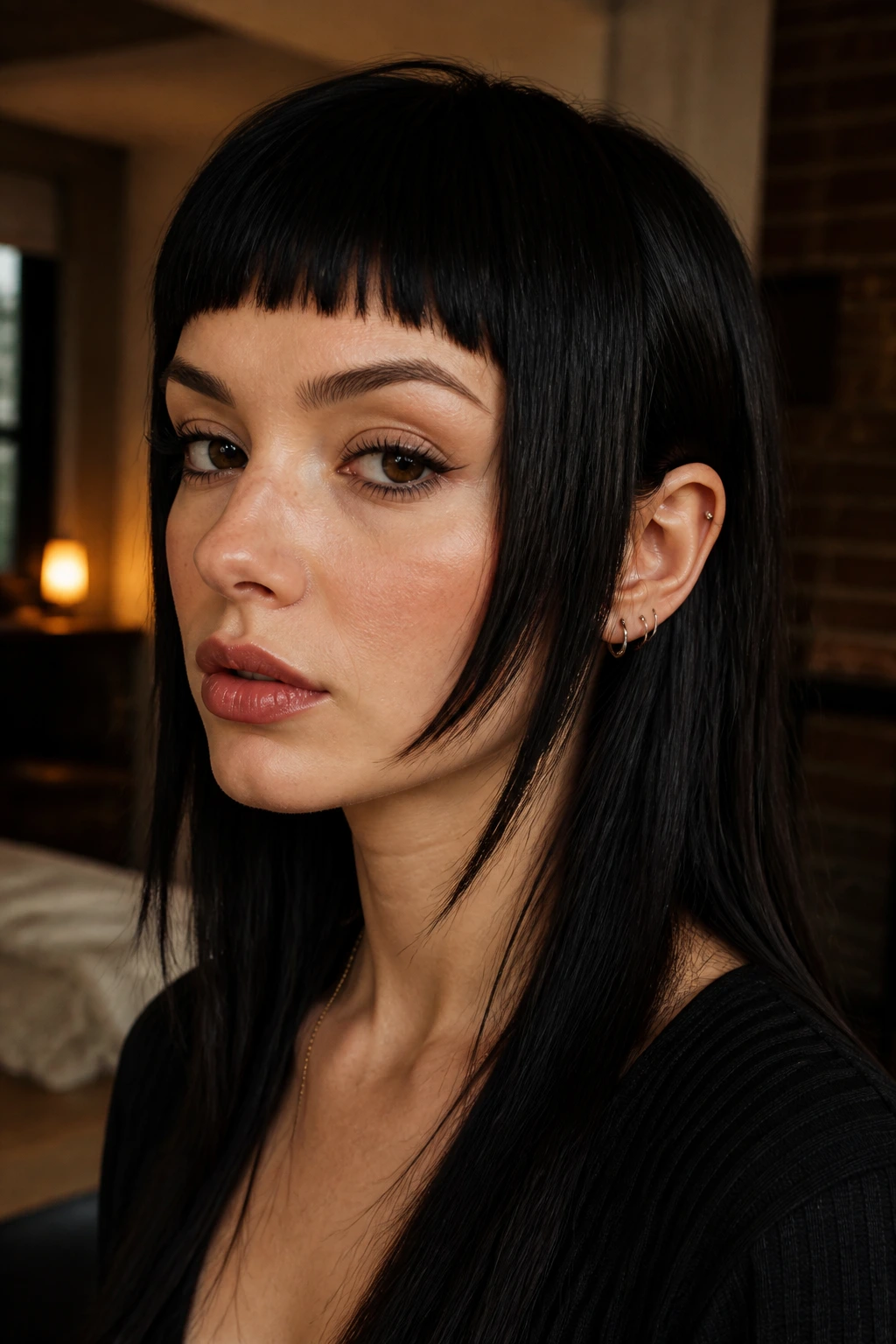
Micro bangs are bold. No way around that. On a round face, they work best when they’re paired with longer side pieces that keep the overall shape from looking too boxy or too wide. Straight hair gives micro bangs a very clean finish, which is why they look so sharp in editorials and so unforgiving in bad lighting.
This is the cut for someone who likes a statement and doesn’t mind the maintenance. The center is short enough to show a lot of forehead, which can actually help round faces if the sides are long enough to frame the cheeks. Without those side pieces, the look can tilt harsh.
If you want this style, go in with your eyes open. It needs trimming, styling, and a bit of confidence. It is not the fringe you pick because you’re bored on a Saturday and want a “small change.”
23. A Hybrid Fringe with Layered Face Frame
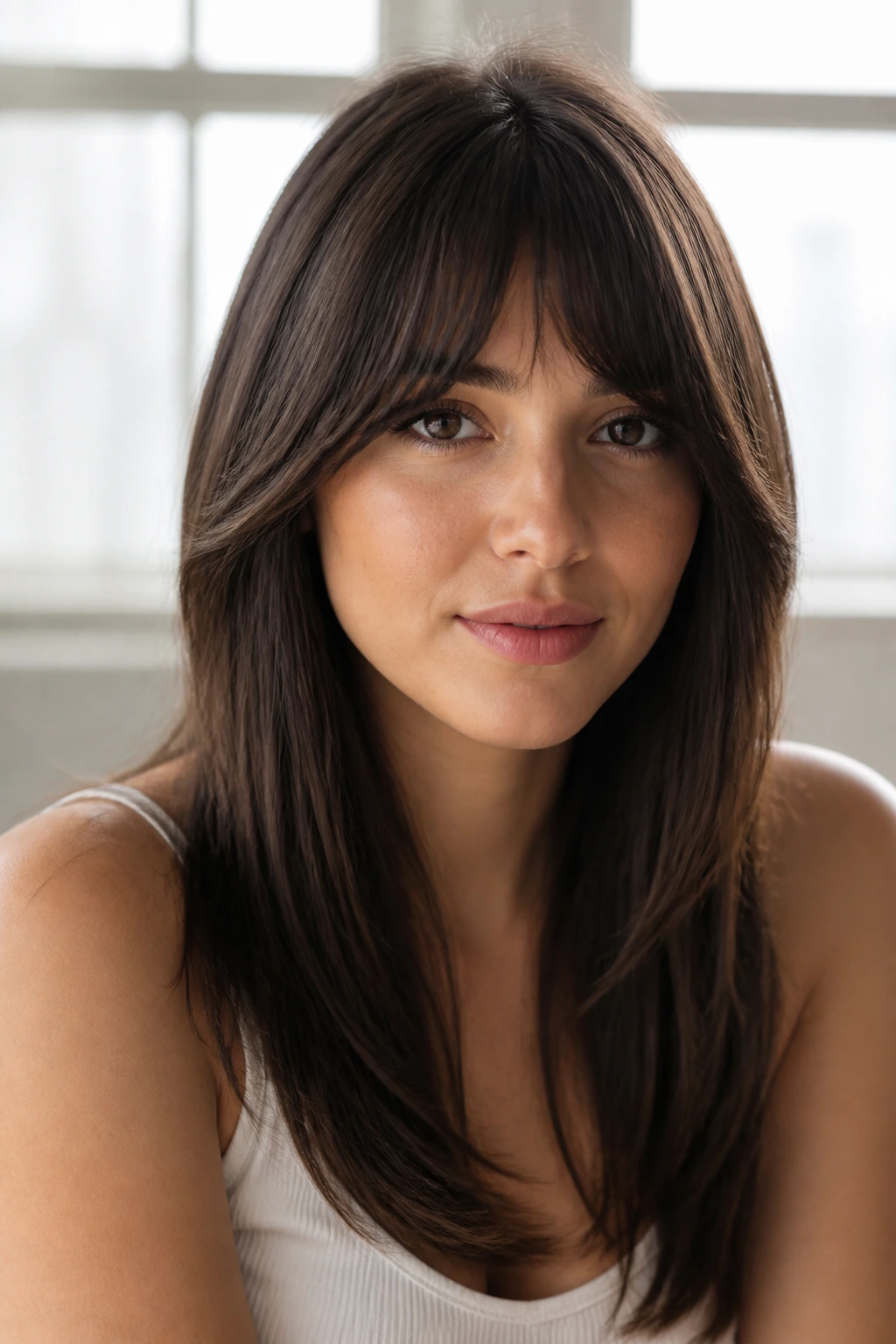
This is one of my favorite modern options because it gives you bangs without a hard line. The front section melts into longer layers at the temples and cheekbones, so the whole haircut moves as one shape. On straight hair, that connection looks sleek instead of choppy.
Round faces benefit from the soft vertical lines this creates. The eye doesn’t stop at the bang edge. It keeps traveling down the front layers, which makes the face look longer. That’s the kind of quiet shape work that makes a haircut feel expensive.
Ask for the fringe to connect into the front layers instead of sitting separately. If the stylist cuts it like a detached mini-bob on the forehead, you lose the whole point. The best hybrid version feels like a frame that was grown that way.
24. A Soft Full Fringe with a Tiny Center Break
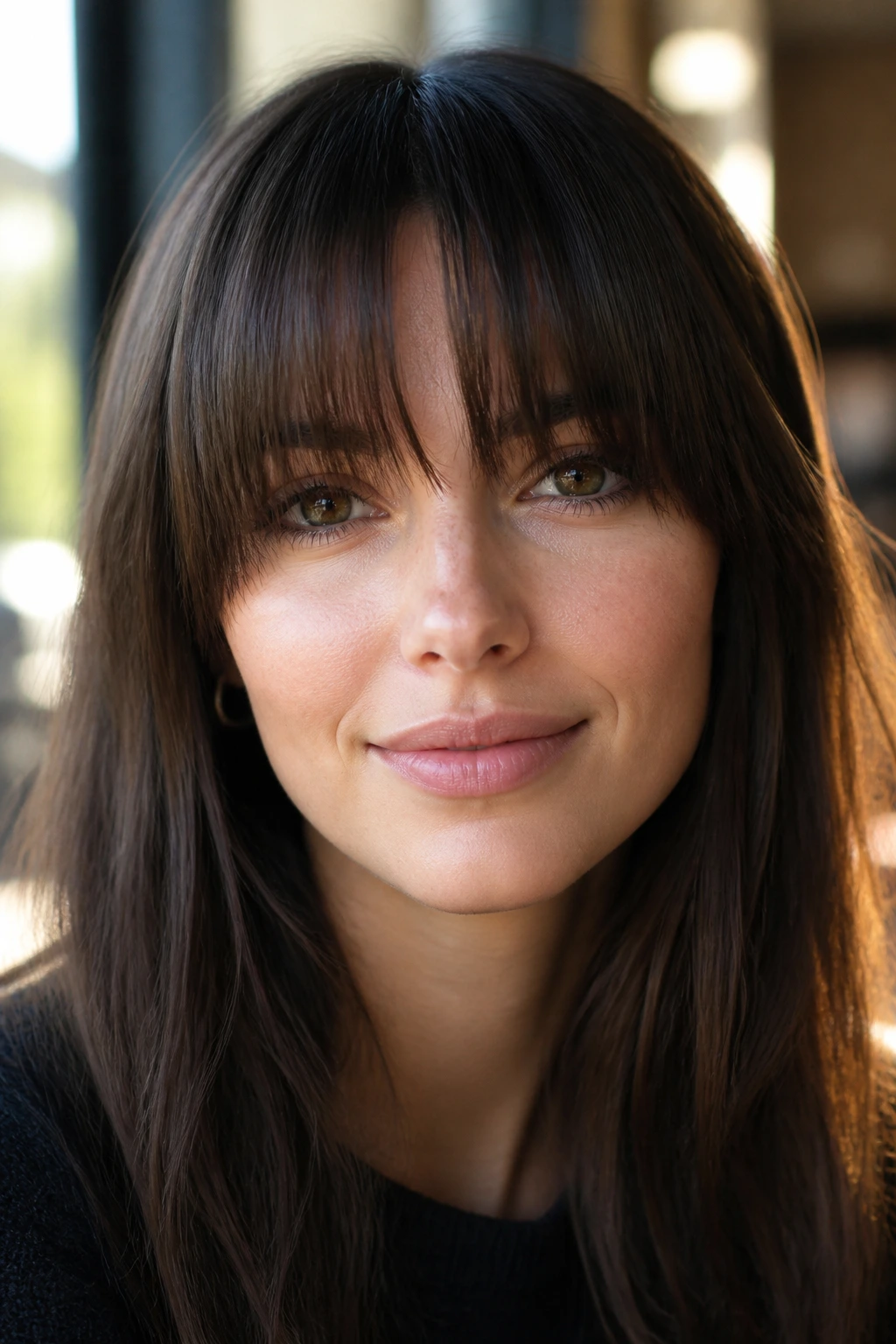
This is the fullest look in the group, but it still needs a little escape hatch in the middle so it doesn’t become a flat wall. The center break can be a slight split, a feathered point, or a shorter middle section that lets a touch of forehead show. Straight hair makes the structure visible immediately, which is good if the cut is smart and not too rigid.
For a round face, the center break is what saves the style. It opens the middle, keeps the fringe from widening the face at the cheeks, and still gives you that satisfying full bang feeling. If you’ve wanted a heavier fringe but feared the helmet effect, this is the version to ask for.
Why it’s different
It gives coverage without shutting the face down. That’s hard to do on straight hair, and most stylists either go too blunt or too airy. This middle-ground shape is the one I’d put on the shortlist for anyone who wants presence up top but still wants the face to read long.
How Straight Hair Changes the Bang Conversation
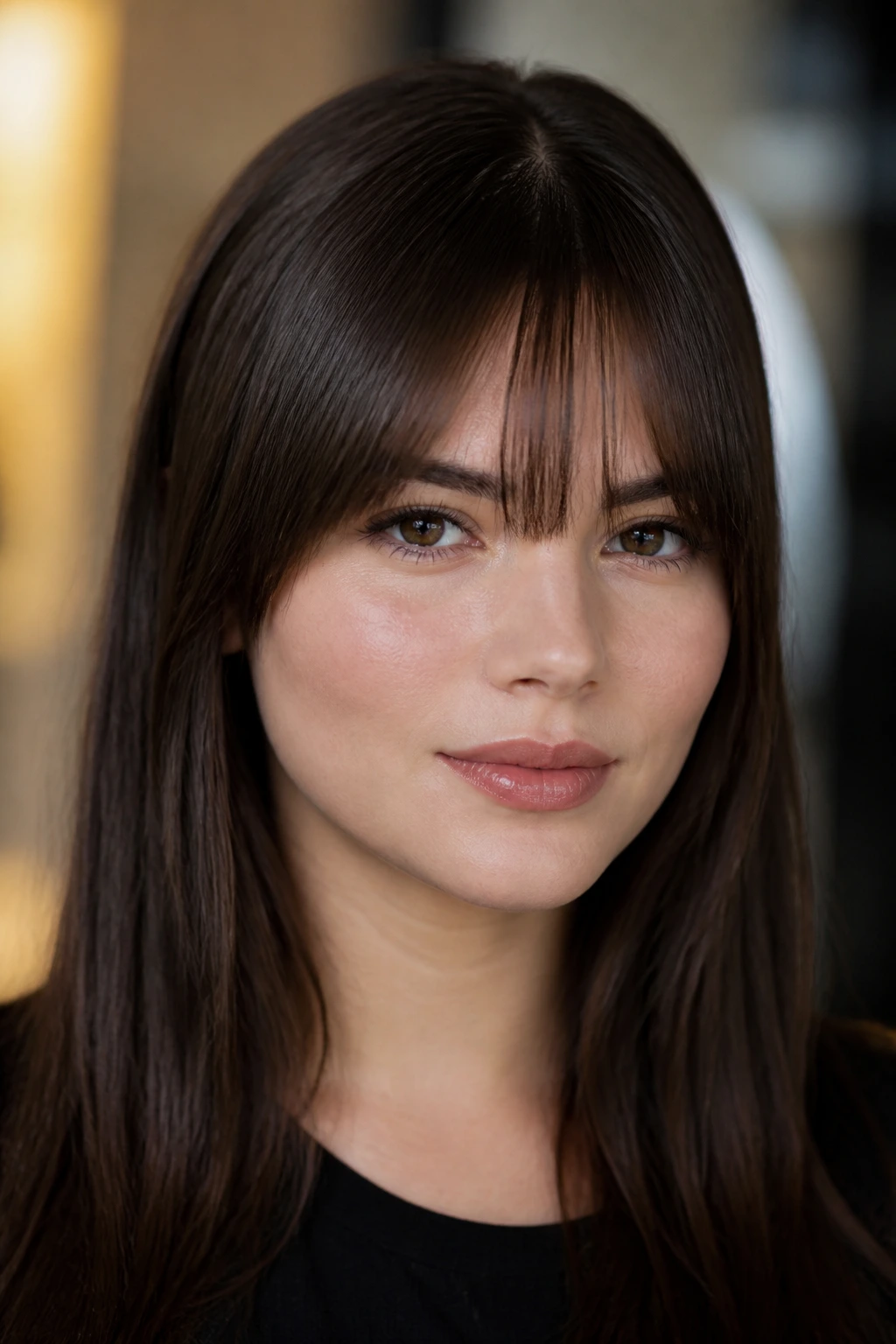
Straight hair doesn’t forgive a vague plan. It shows the line, the weight, the parting, and the bluntness all at once. That can be annoying when you’re trying bangs for the first time, but it’s also why a smart cut looks so good. There’s a precision to straight hair that wavy hair never quite gives you.
On a round face, the goal is usually not to hide the shape. It’s to steer the eye. A center break, a side sweep, a longer corner, or a temple-length frame can all create the illusion of more length without making the haircut feel stiff. If the bang line stops right at the widest part of the cheeks, the face can feel boxed in. If the line travels down or away from the widest point, the whole thing opens up.
That’s why the small details matter. A half-inch of extra length at the outer corners. A lighter center. A side part that isn’t dead center. These are tiny choices, but they change the read of the haircut fast.
Essential Tools for These Bangs
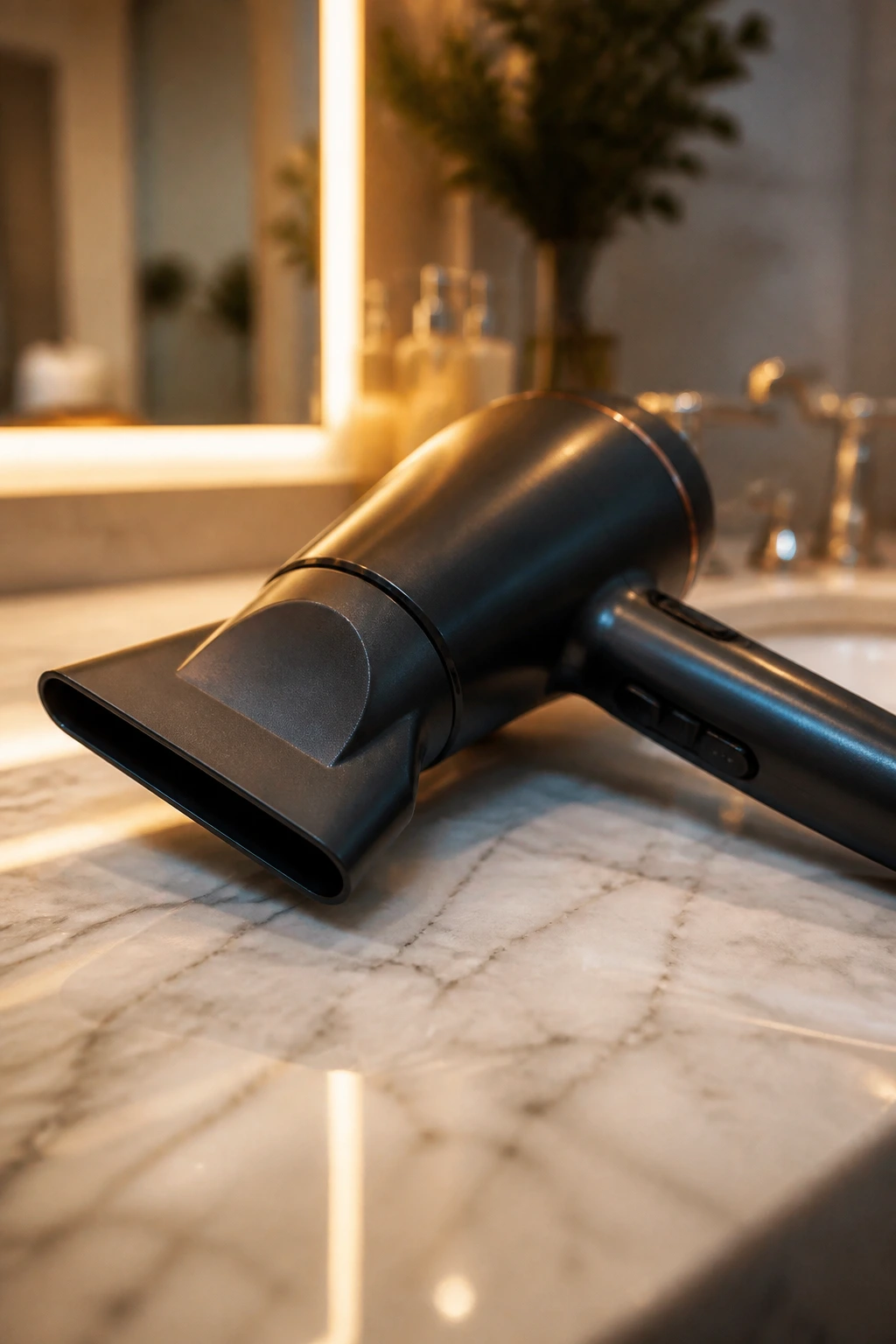
- A blow dryer with a concentrator nozzle: The nozzle keeps air directed so straight bangs don’t blow every which way.
- A 1-inch round brush: This is the easiest size for bending fringe without turning it into curls.
- A fine-tooth comb: Useful for sectioning and for checking whether the line sits evenly after a trim.
- Duckbill clips or small clips: These hold fringe in place while it cools, which helps the shape last.
- Heat protectant spray: Straight hair shows heat damage quickly, especially around the face.
- Dry shampoo: Bangs get oily fast because they sit against skin all day.
- Light texture spray: Good when you want piecey separation without a crunchy finish.
- A small flat iron or mini straightener: Handy for polishing the ends, not for ironing the life out of them.
- Real hair shears if you trim at home: Kitchen scissors chew the ends and make straight bangs look ragged.
Reading Your Hairline Before You Cut
The prettiest bang photo in the world won’t help if your hairline fights the cut every morning. That’s why the hairline matters before the style does. If you have a strong center cowlick, a dead-straight blunt fringe is going to split open unless you’re willing to train it with heat and clips. In that case, longer curtain bangs or a side-swept shape usually behave better.
Density matters too. Fine straight hair can disappear if the fringe is too heavily texturized, while thick straight hair can look like a block if the weight isn’t removed near the corners. A good stylist will cut the center and the temples differently. That difference is where the flattering shape comes from.
Forehead height is another piece people ignore. A shorter forehead usually wants lighter fringe or longer outer corners so the face doesn’t feel crowded. A longer forehead can handle a fuller bang, but it still benefits from some opening at the center. If you wear a side part every day, don’t let anyone talk you into a cut that only works with a center part. That’s wasted salon money.
How to Style Straight Bangs Without Making Them Split
The cleanest routine starts with damp hair, not soaking wet hair. Bangs dry fast, which means you do not have much time to change the direction once they start setting. Direct the roots left, then right, then straight down while blow-drying to soften the cowlick and keep the line from sticking in one odd direction.
Use a round brush or flat brush only long enough to give shape. You want bend, not curl. If the ends flip too much, the fringe starts looking like a toy helmet. Once the shape looks right, clip the bangs in place for a few minutes while they cool. That cooling period is where the style locks in.
Product should stay light. A pea-size amount of texture spray or a tiny bit of cream on the ends is plenty. Too much product makes straight bangs stringy and separated in a sad way, especially around the forehead where skin oils already do half the job for you. If they split during the day, a dry shampoo puff at the roots and a quick brush forward usually resets them.
Common Mistakes That Make Bangs Widen a Round Face
- Cutting them too blunt across the widest part of the face: The symptom is a hard horizontal line that makes the cheeks look wider. The fix is to keep the center softer or let the corners lengthen.
- Going too thick on fine straight hair: The fringe can sit like a curtain and feel heavy by noon. Ask for density that lets some forehead show through.
- Ignoring the cowlick: If the center front pushes apart, the bangs will split even after a good blow-dry. Build the cut around that growth pattern instead of fighting it.
- Overusing oil or cream near the roots: Straight bangs turn greasy fast, and product makes that worse. Keep shine products on the ends only.
- Trimming them wet at home: Wet hair shrinks and shifts as it dries, which is how people end up with one side shorter than the other. If you must trim, cut dry and take off less than you think.
- Choosing a style that only works when styled for 20 minutes: If your routine is three minutes and a coffee, pick a fringe that looks good with minimal effort.
Variations and Adaptations to Try
The Long Game: Start with long curtain bangs or a grown-out fringe, then shorten later if you want more face shape. This is the safest route if you’re nervous about regret and don’t want to get stuck with a short cut you need to babysit.
The Fine-Hair Softness Edit: If your straight hair is fine, ask for feathered or sliced ends rather than a dense bang. The goal is air between the strands so the fringe doesn’t collapse into a flat strip.
The Thick-Hair Thinning Plan: For dense straight hair, keep the middle fuller but remove weight at the corners with careful point-cutting. That stops the fringe from becoming a shelf and keeps it moving.
The Side-Part Loyalty Cut: If you never part your hair in the center, choose side-swept or swoop-based bangs. Forcing a center part on a habit you don’t keep usually ends in frustration and bobby pins.
The Heat-Free Morning: If you hate styling tools, go for longer curtain bangs, bottleneck bangs, or a temple-length frame. These shapes still look intentional when air-dried and lightly tucked.
Keeping Bangs in Shape Between Salon Visits
Bangs live closer to your skin than the rest of your hair, so they collect oil fast. A quick wash of just the fringe area every day or two can keep them from turning limp. If that sounds annoying, a small shot of dry shampoo at the roots works between washes, but don’t cake it on until the hair feels dusty.
Trim timing depends on the shape. Fuller bangs usually need a touch-up every 3-4 weeks if you want them to stay precise. Curtain bangs, side-swept fringe, and chin-length face framing can often go 5-6 weeks or longer before they start feeling shaggy. If you’re growing them out, ask for maintenance trims that preserve the sides while leaving the center longer.
Sleep habits matter too. Bangs that kink overnight can be smoothed by clipping them loosely up or setting them over a soft roller for a few minutes in the morning. And if you do trim at home, do it dry, in daylight, with real shears. Tiny snips. Not heroic ones.
Questions People Ask Before Cutting Fringe
Which bang style is safest if I’m nervous?
Long curtain bangs or a grown-out fringe are the easiest starting points. They give you shape without trapping you in a short, high-maintenance line.
Are blunt bangs a bad idea for a round face?
Not automatically, but they need taper at the corners or a soft center break. A solid straight line across the full width of the forehead can make the face look wider than it is.
How short is too short on straight hair?
If the bangs sit above the brows and your face is already round, you’re in bolder territory. Micro bangs can work, but they ask for styling, confidence, and a stylist who knows how to keep the sides longer.
What if my bangs keep splitting down the middle?
That usually means the growth pattern or cowlick is stronger than the cut. Try a longer curtain shape, blow-dry the roots in alternating directions, and use clips to set the shape while it cools.
Can I wear bangs if I have a short forehead?
Yes, but keep them light, arched, or side-swept. Heavy, dense fringe can crowd the face and make the forehead disappear.
How often should I trim bangs?
Shorter, fuller bangs usually need trimming every 3-4 weeks. Longer curtain or face-framing styles can stretch farther, especially if you don’t mind a softer edge.
Do bangs still work if I wear my hair straight and flat?
That’s actually one of the easiest textures for bangs to read cleanly. You just need a cut that creates length or softness instead of a heavy horizontal block.
The Fringe That Fits
The best bangs for a round face on straight hair do the same quiet job: they give the eye a path to follow. Sometimes that path is a center split. Sometimes it’s a long diagonal. Sometimes it’s just enough softness at the corners to keep the forehead from feeling boxed in.
If you want the lowest-risk place to start, long curtain bangs, bottleneck bangs, and a side-swept fringe are the ones I’d put first on the salon consultation list. They’re forgiving, they grow out well, and they don’t require your morning routine to become a whole event.
Pick the shape that fits how you already wear your hair, then let the cut do the work. Straight hair rewards precision, and round faces reward length in the right places. That combination can look very clean when the fringe is chosen with a little more thought than a screenshot and a shrug.
