



A toddler with curls does not need a perfect fade to look put together. Curly hairstyles for toddler boys work best when they follow the shape the hair already wants to make — soft, springy, a little wild at the ends, and tidy where it counts around the ears and neckline.
The biggest mistake is treating curls like straight hair with extra volume. That usually leads to too much brushing, too much product, and a cut that fights the curl pattern instead of working with it. You end up with puff at the sides, flatness at the crown, and a little one who is done with the whole process before you’ve even found the spray bottle.
What actually holds up on a real toddler’s head is a style that can survive a car seat nap, a snack attack, and a run across the living room without falling apart in the first ten minutes. Some of these looks take 3 minutes. Some need a barber chair and a bit of patience. None of them should look stiff or overworked. That’s the sweet spot.
Why These Curly Toddler Looks Work So Well
-
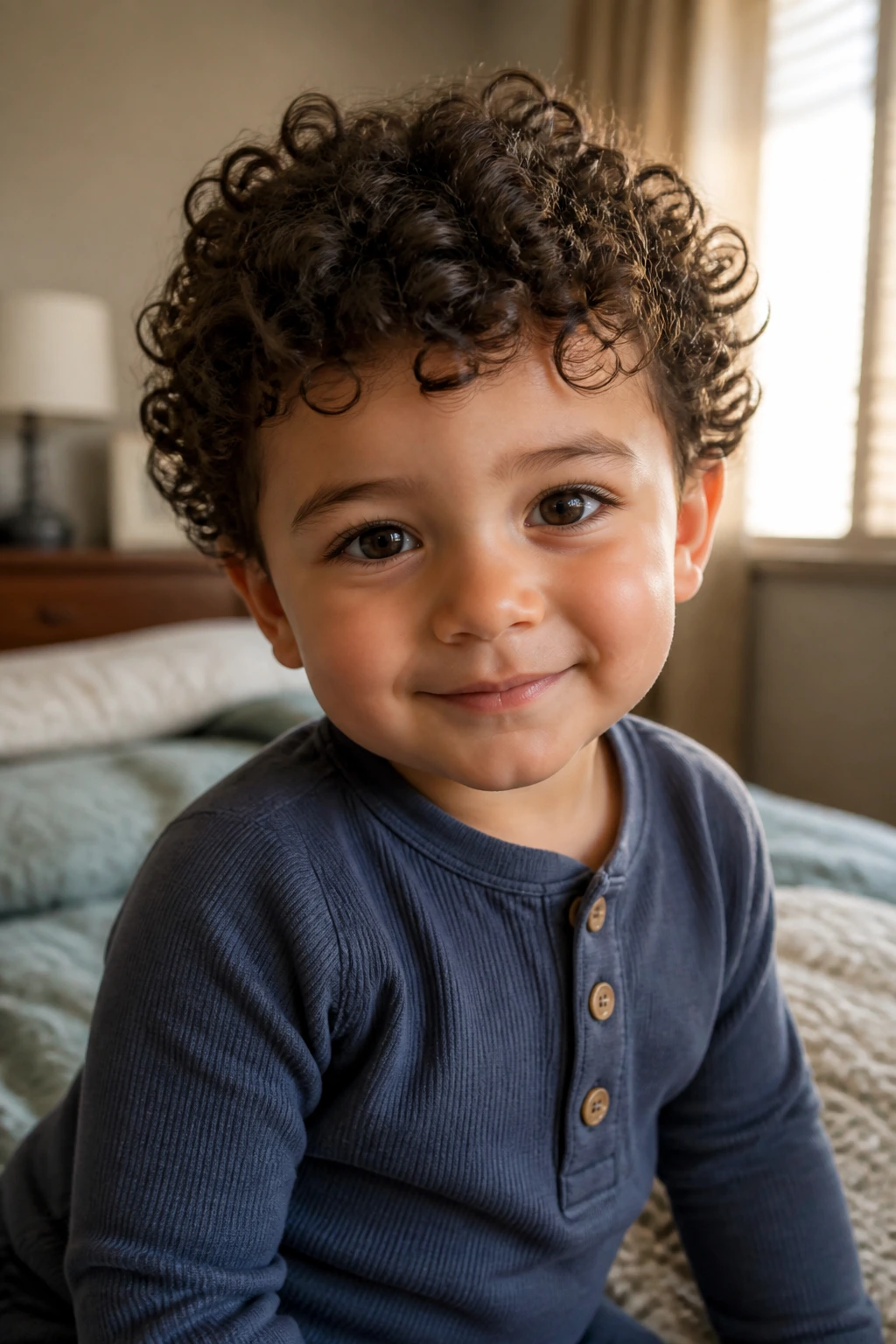
They follow the curl pattern instead of flattening it: That means less fighting with cowlicks, less frizz from overbrushing, and fewer moments where the hair looks bigger on the wrong parts of the head.
-
They give you options by length: If the top is barely 1 to 2 inches, you can still do a neat crop or sponge style. If the curls are closer to 4 inches, twists, a rounded afro, or a swept-back shape start making sense.
-
They hold up through a busy day: Good toddler styles don’t need a full reset every hour. A mist of water, a dab of leave-in, and a few finger touches should be enough to bring them back.
-
They stay age-appropriate: Clean shapes and soft edges look like a child’s hair, not a tiny adult cut. That matters more than people admit.
-
They work with many curl types: Loose ringlets, tight coils, mixed textures, and everything in between can all live inside this collection with a few product tweaks.
1. Mini Round Afro
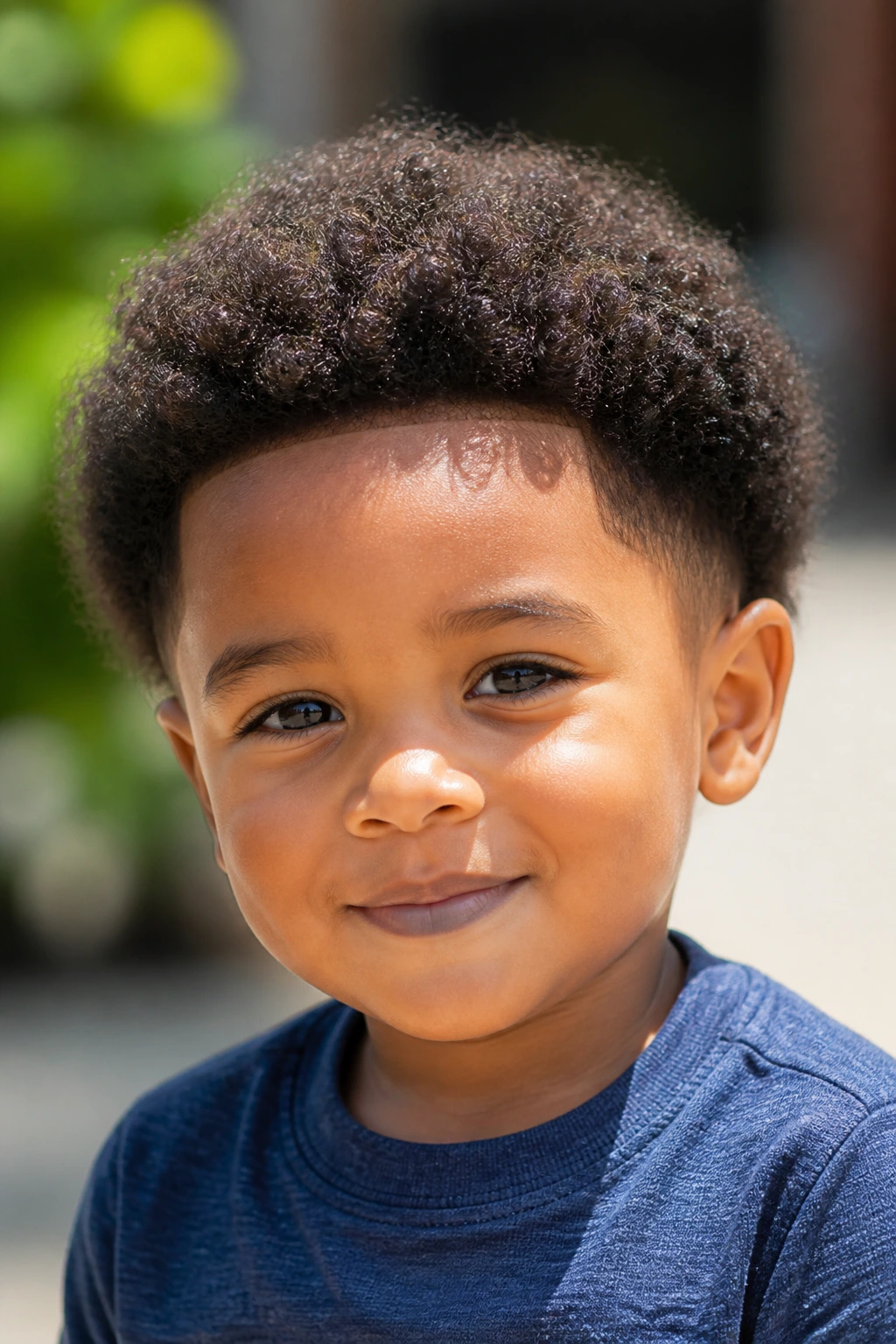
A mini round afro is the style I reach for when the curls are healthy, springy, and long enough to show their shape without any help. It gives the whole head a soft, even silhouette, and that rounded outline is kinder to toddler curls than a square cut that leaves the sides puffing out in odd places.
Why it works
The round shape lets the curls stack naturally. Instead of forcing the hair into a box, you let the top keep a little height while the sides stay balanced. It looks clean even when it isn’t freshly styled, which is a big deal on mornings when nobody wants a long routine.
Best for
- 2 to 4 inches of curly length
- Thick curls that need weight left on top
- Kids who don’t tolerate a lot of product or combing
Quick shape note
Ask the barber to keep the outline soft and rounded, not flat. A tiny taper around the ears can help the shape look intentional without making it feel too grown-up.
Pro tip: After a bath, let the hair dry halfway before fluffing it with your fingertips. If you pick it while it’s soaking wet, the shape grows bigger as it dries and usually loses the clean curve.
2. Soft Finger Coils
Finger coils give curly hair a neat, defined look without turning it crunchy. The pattern is smaller and more controlled than a loose afro, so it works well when the curls are dense but not long enough to hang freely.
This style is especially nice when you want the hair to look tidy for a photo, a family event, or one of those days when everything else is chaos and the hair needs to cooperate. A little curl cream, a small amount of gel, and a quick twirl between your fingers is enough.
The trick is not chasing perfection. You’re building small, soft spirals, not twisting each strand into a stiff rope.
If your toddler has very fine curls, keep the coils larger. Tiny coils on delicate hair can look stringy fast, and nobody wants to spend twenty minutes on a style that lasts six minutes.
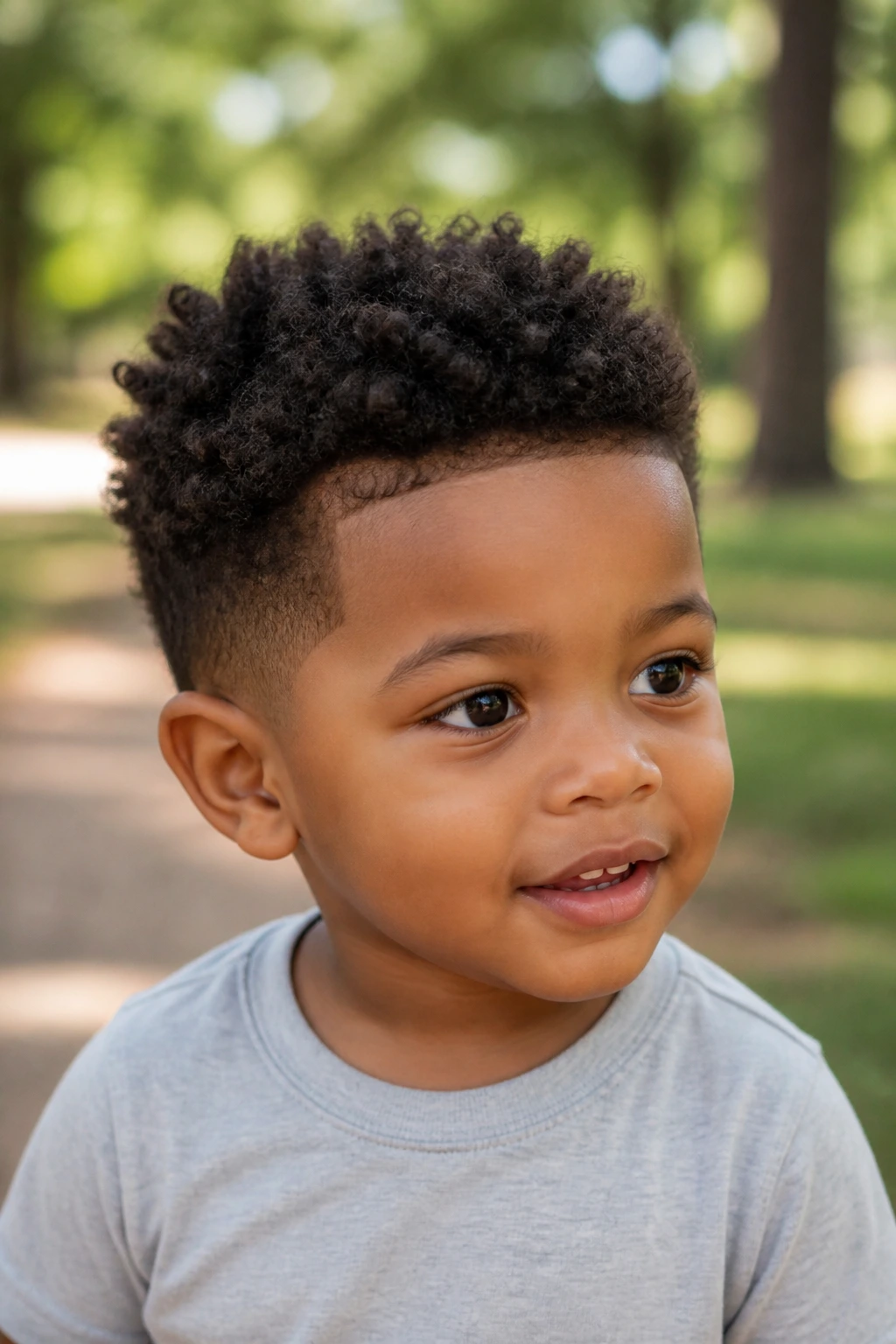
3. Curly Taper Fade
Why does a taper fade work so well on toddler curls? Because it trims the bulk where it gets puffy first — around the temples, sideburns, and neckline — while leaving the curls on top free to do their thing.
That balance matters. The top keeps the personality. The edges stop looking fuzzy by lunchtime.
What to ask for at the barber
Tell the barber you want length left on top, soft tapering at the sides, and no harsh shape-up across the forehead. If the curls are tight, ask for the top to be left long enough to spring, not clipped so short that it stands straight up.
A taper fade is a smart choice when you want the haircut to stay neat for a while between visits. It grows out in a more forgiving way than a sharp cut with hard lines.
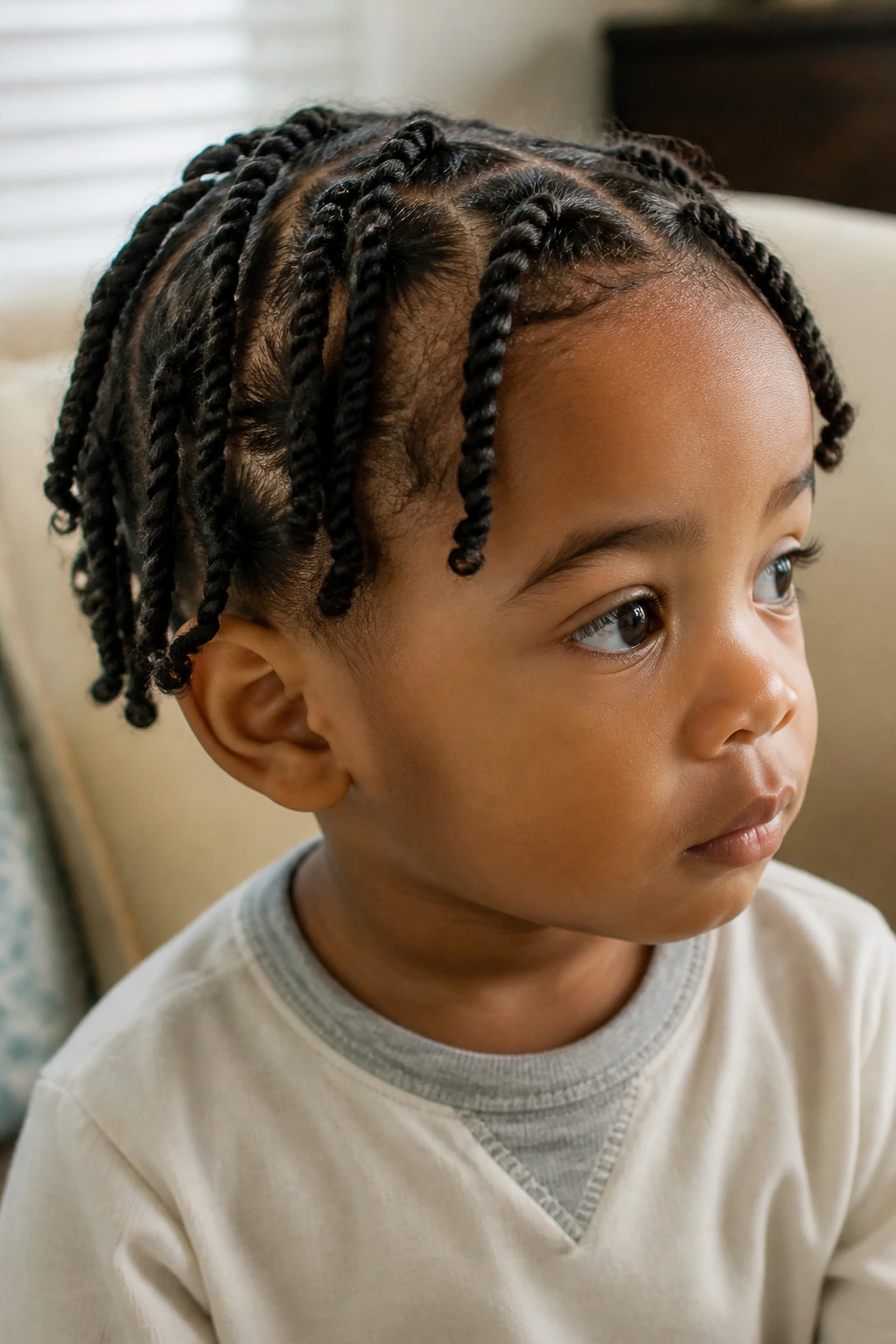
4. Two-Strand Twists
Two-strand twists are the style I’d pick when curls tangle fast and the toddler keeps grabbing at his hair. The twists hold the curl pattern together, which means fewer knots and less morning drama with the comb.
They also look good with a little age-appropriate messiness. You do not need every twist to sit like a ruler. In fact, a tiny bit of movement makes them look softer and more natural on a child’s head.
When to choose them
- Hair is long enough to separate into sections
- You want a style that can last several days
- The hair is prone to frizz at the ends
A useful detail
Keep the sections medium-sized. Tiny twists on a toddler can take too long and may unravel before you get your shoes on. Medium sections are faster, easier to redo, and usually more comfortable.
5. Sponge-Curl Top
A curl sponge can turn short coils into a neat, textured top with almost no stress. It works best on damp, detangled hair that already has some natural curl or coil pattern. If the hair is dry and tangled, the sponge will pull at it and that’s a fast way to ruin the mood for everybody.
The motion is simple. Light pressure. Short circles. No rushing.
Use it when the haircut is short enough that the curls sit close to the scalp but still need some definition. It’s one of the easiest ways to make a cropped style look purposeful instead of accidental.
A light cream or leave-in underneath helps the curls clump instead of frizzing apart. A heavy gel can make the sponge drag.
6. Curly High Top
The curly high top is for the toddler whose hair has some height and a lot of spring. Unlike a rounded afro, this style keeps more lift on top and a tighter shape through the sides, which makes the curls look bold without looking messy.
It’s a good middle ground when you want more shape than a natural puff but not the hard edges of a grown-up cut. The top becomes the focus. The sides just support it.
If the hair is thick, this cut is easier to manage than trying to keep all that volume evenly rounded. The structure gives you a cleaner outline with less daily fuss.
A high top does need regular shaping around the sides and back, though. Leave it too long and the whole thing loses its clean profile fast.
7. Side-Part Volume
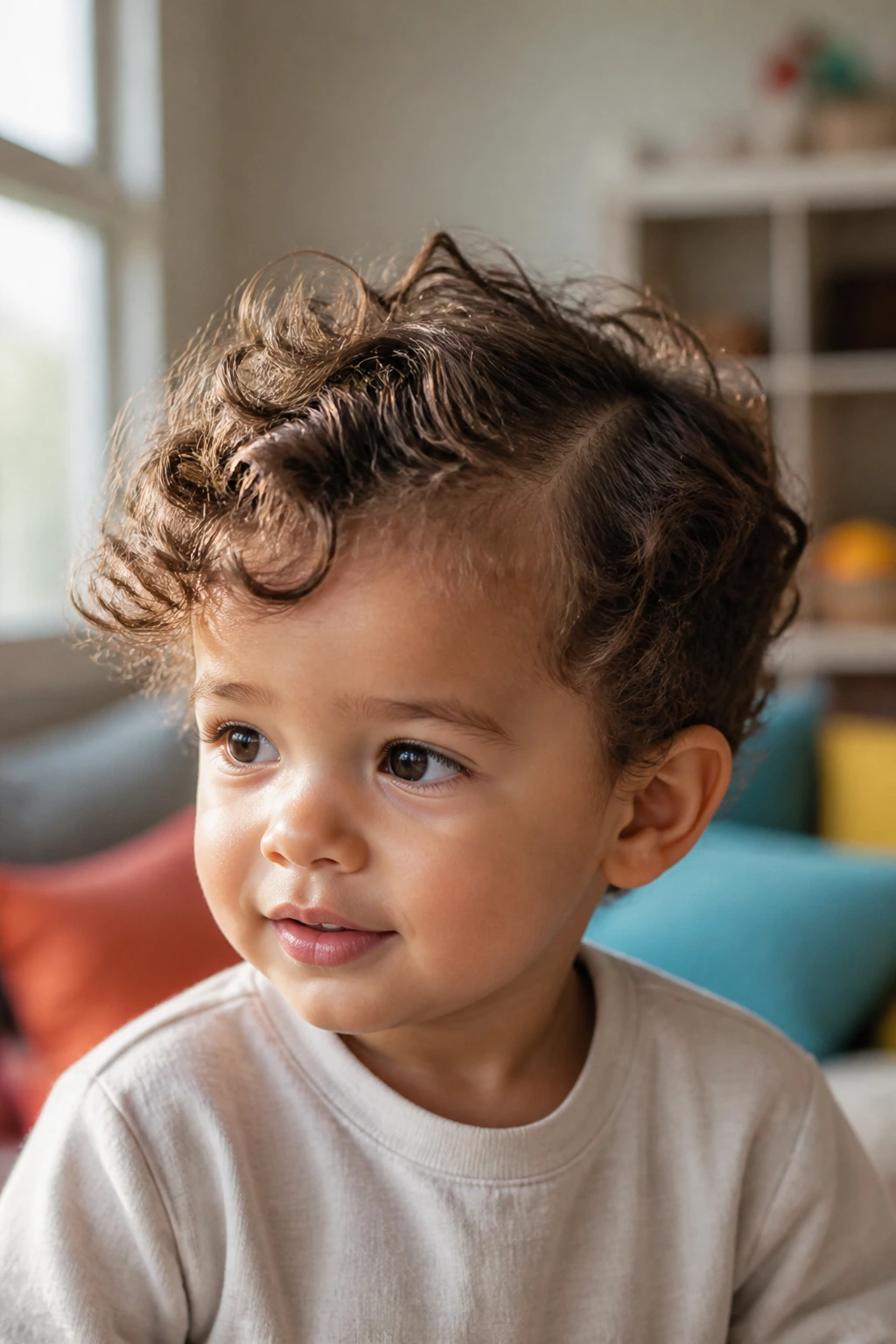
A side part can look surprisingly polished on curly toddler hair when the part stays soft and the volume stays loose. The best version is not a sharp, painted line. It’s a visible shift in direction that lets the curls fall slightly to one side.
Why it stays neat
- The part gives the curls a place to settle
- The top gains shape without needing lots of product
- The style works on medium-length curls, usually around 2 to 4 inches
Use a rat-tail comb only when the hair is damp. On dry curls, a hard part can look broken instead of clean. Finish with your fingers, not a brush. That keeps the top fluffy instead of flattened.
Good to know: If the part disappears by noon, that’s fine. On toddler hair, a soft suggestion of a part often looks better than a rigid line that fights the curl pattern.
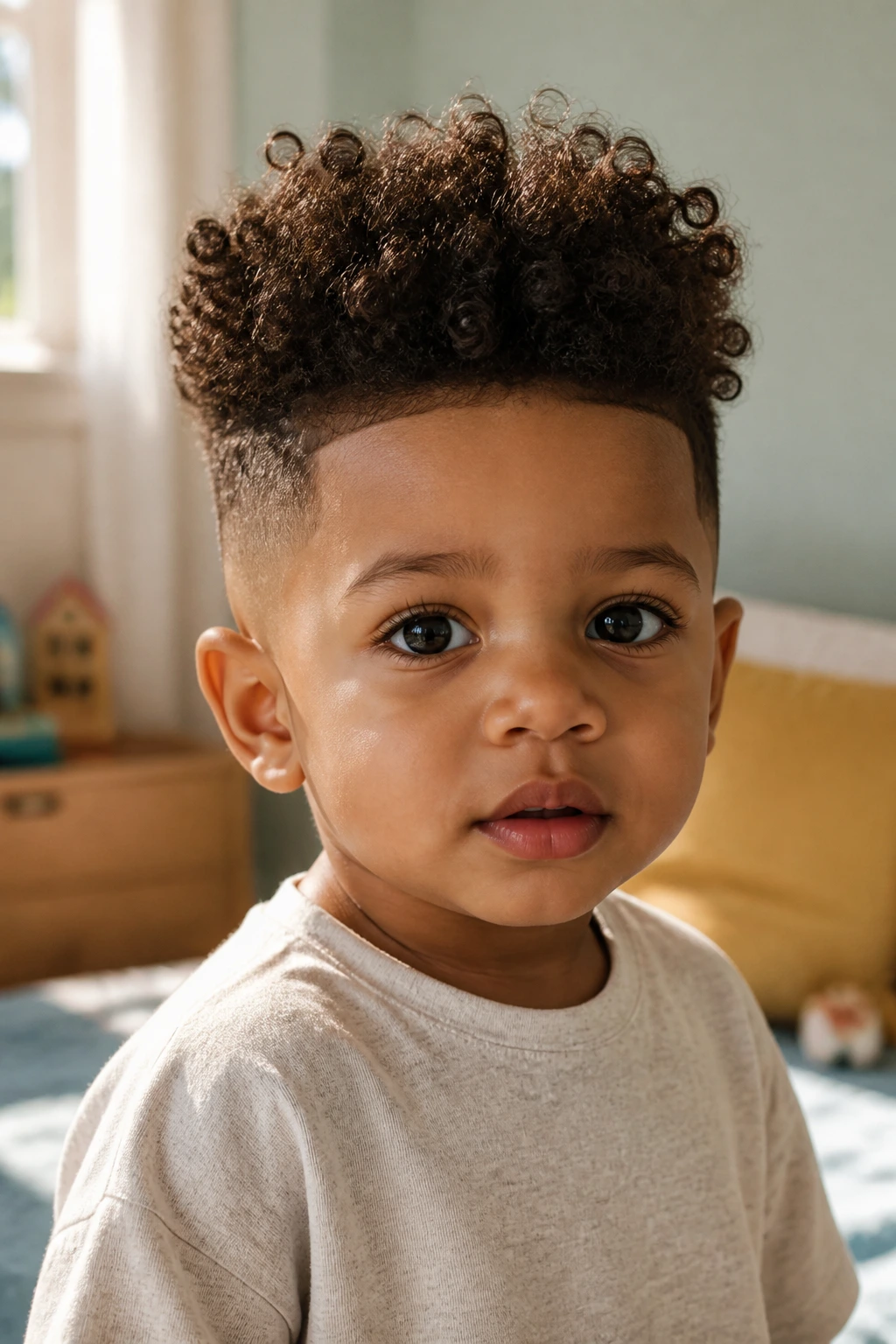
8. Temple Fade with Free Curls
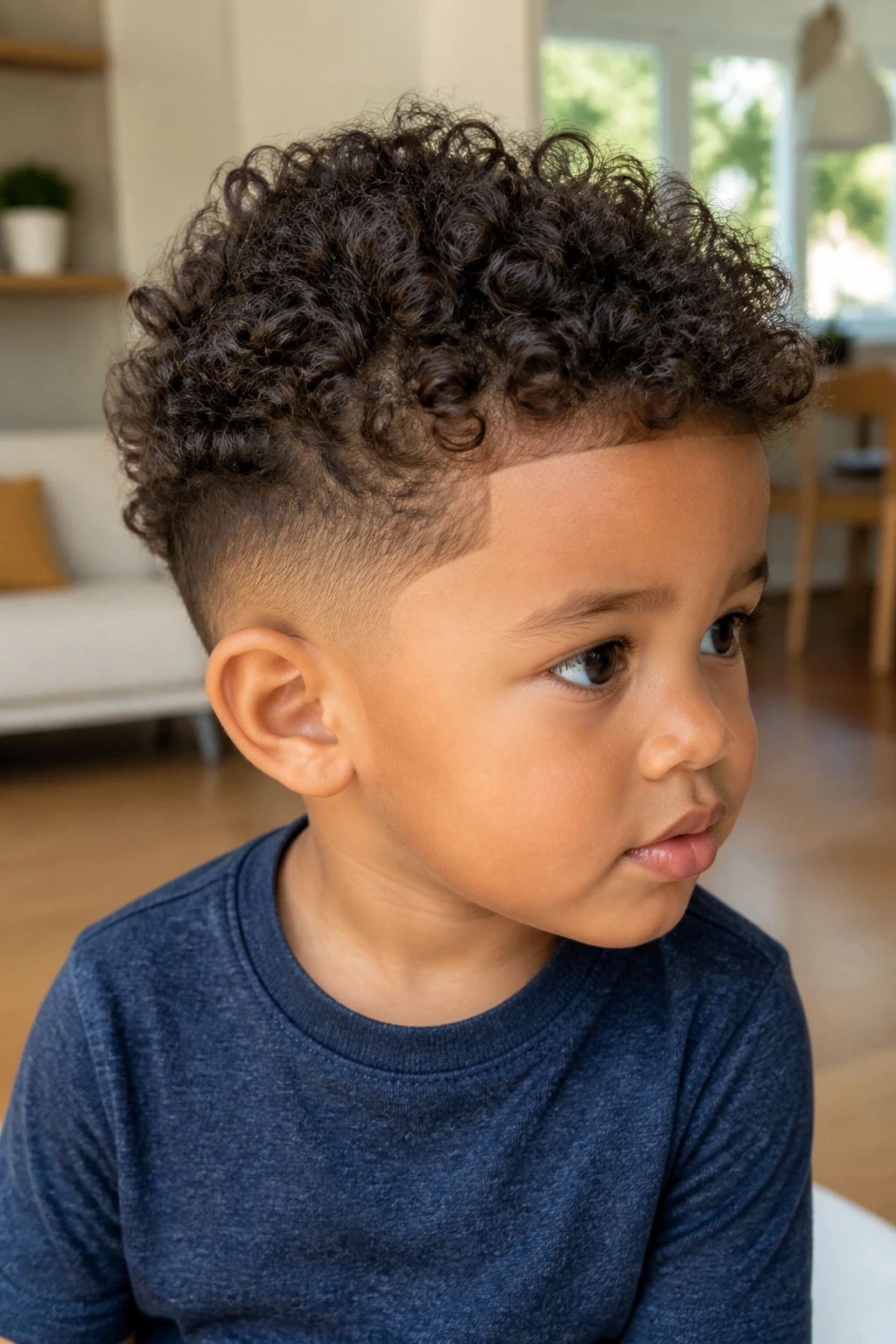
A temple fade with free curls gives you the best of both worlds: clean sides where the hair usually looks bulky, and a loose, touchable top that still feels like curly hair. It’s one of the neatest options if your toddler’s hair grows thick around the temples and sideburn area.
The cut works because the fade removes the weight where the hair grows widest. The curls on top stay fuller, so the shape doesn’t turn into a helmet.
This is a strong choice for parents who want the hair to look tidy without losing texture. You’ll still see every curl pattern on top, just with less visual noise around the edges.
It also grows out in a forgiving way. That matters. A style that looks good for one week and awful the next isn’t much help when you’re trying to keep up with real life.
9. Curly Mohawk
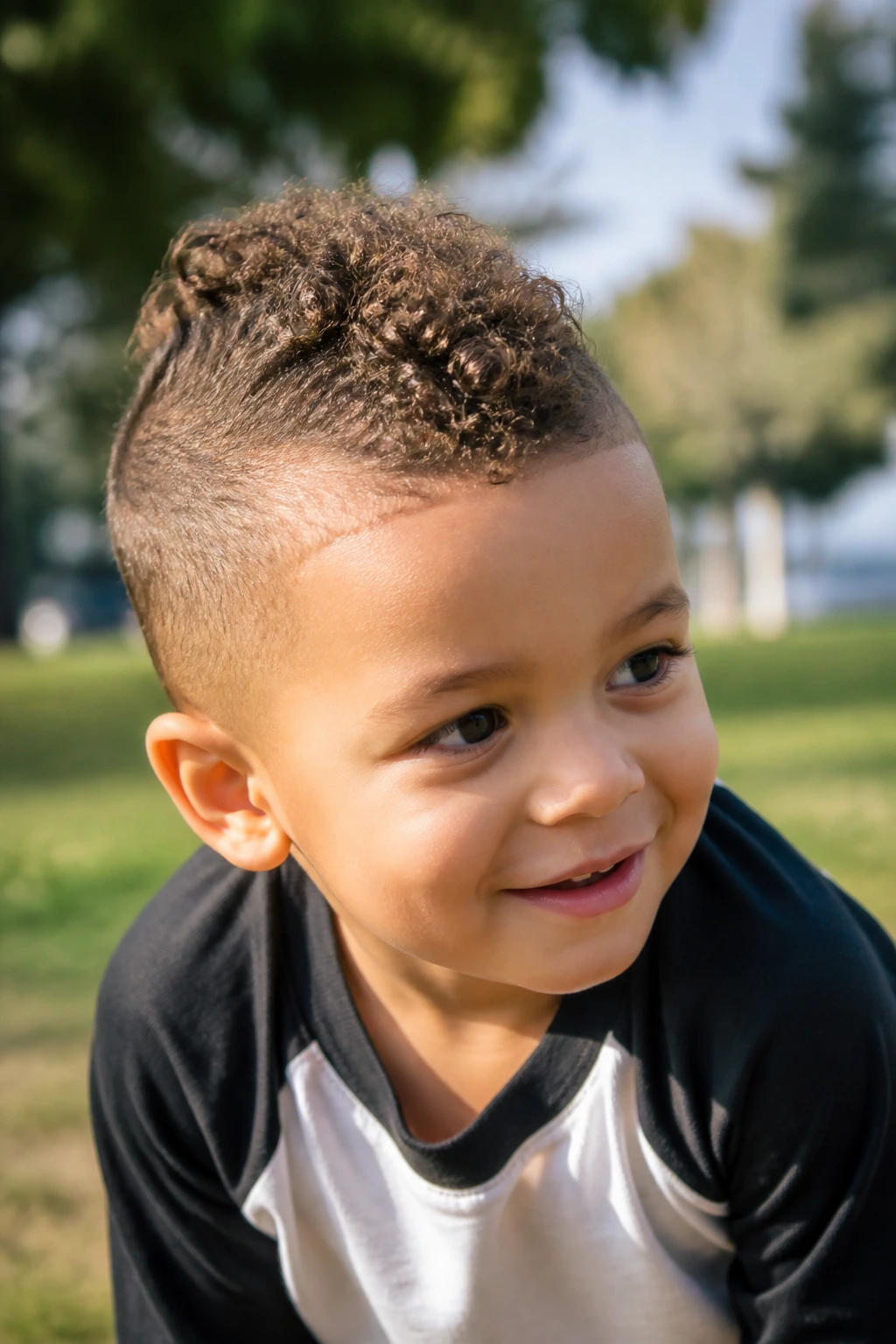
Can a toddler curly mohawk stay playful instead of looking too sharp? Absolutely, if you keep the sides soft and the strip on top rounded rather than spiky.
The idea is simple: curls on the center line of the head, shorter or tapered sides, and a shape that reads fun before it reads edgy. On a toddler, that balance matters more than the label.
Tone it down a little
- Keep the top narrow, not dramatic
- Leave the curls soft at the front
- Avoid hard lines unless the rest of the haircut is very clean
A curly mohawk is perfect when the child has plenty of hair density but not a lot of patience for long styling sessions. A quick mist and finger fluff can bring it back in the morning.
10. Tousled Curly Crop
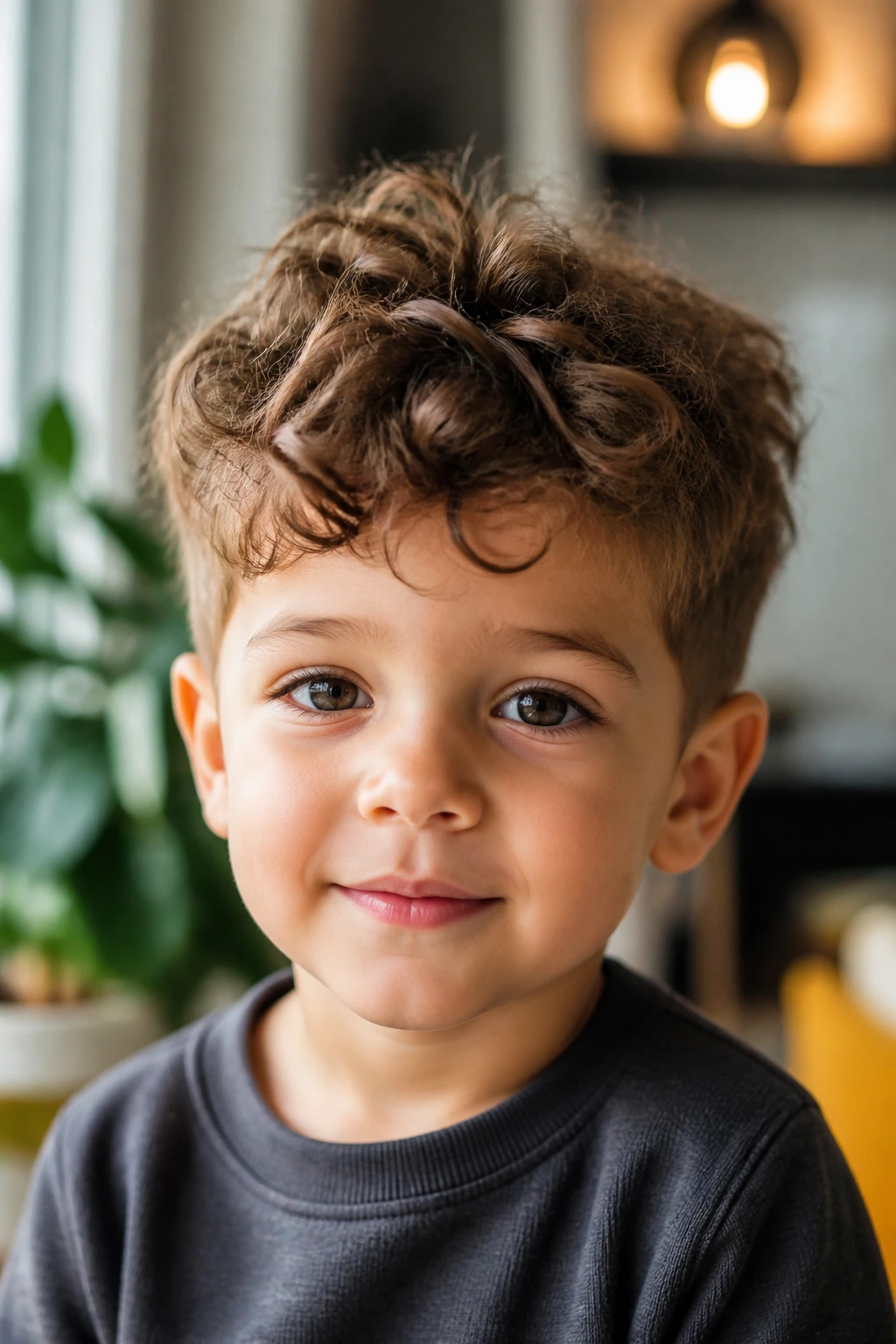
The tousled curly crop is the style for parents who want low-fuss hair that still looks intentional. It keeps the curls short enough to stay out of the eyes, but not so short that the texture disappears.
A crop like this looks best when the front is a little messy on purpose. Not wild. Just relaxed. The small irregularities are the point, because they stop the haircut from looking too neat for a little kid.
It suits toddlers who move a lot and don’t sit still long enough for detailed styling. A little product through damp curls, a scrunch with your hands, and you’re done.
If the hair grows fast around the forehead, this is one of the easiest shapes to maintain. The fringe can sit forward without becoming heavy.
11. Gentle Shape-Up Afro
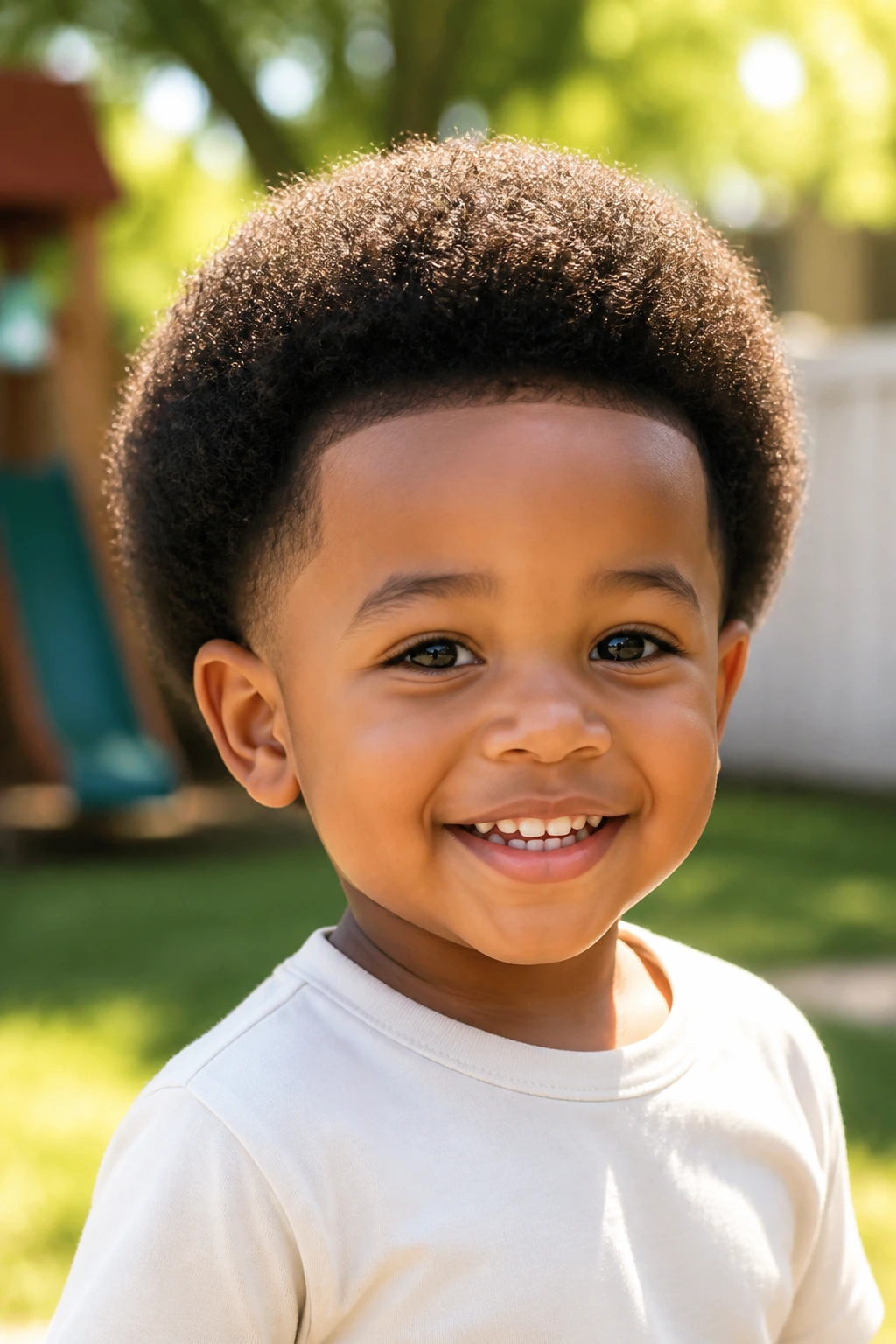
A gentle shape-up afro is what I recommend when you want the outline cleaned up, but you do not want to erase the curl texture. It’s softer than a hard lineup. Think tidy edges, rounded corners, and a shape that still moves.
The appeal is in the restraint. A toddler doesn’t need razor-sharp geometry. He needs a shape that looks neat when he’s running around and still looks like he belongs to a child.
How it differs from a sharper cut
A hard line can look great on older kids and adults. On toddlers, it can feel too stiff. A gentle shape-up keeps the ears and neckline neat while leaving the front and crown soft enough to breathe.
That softness also hides growth better. A sharper outline shows regrowth fast. A gentle one buys you a little time.
12. Short Curly Fringe
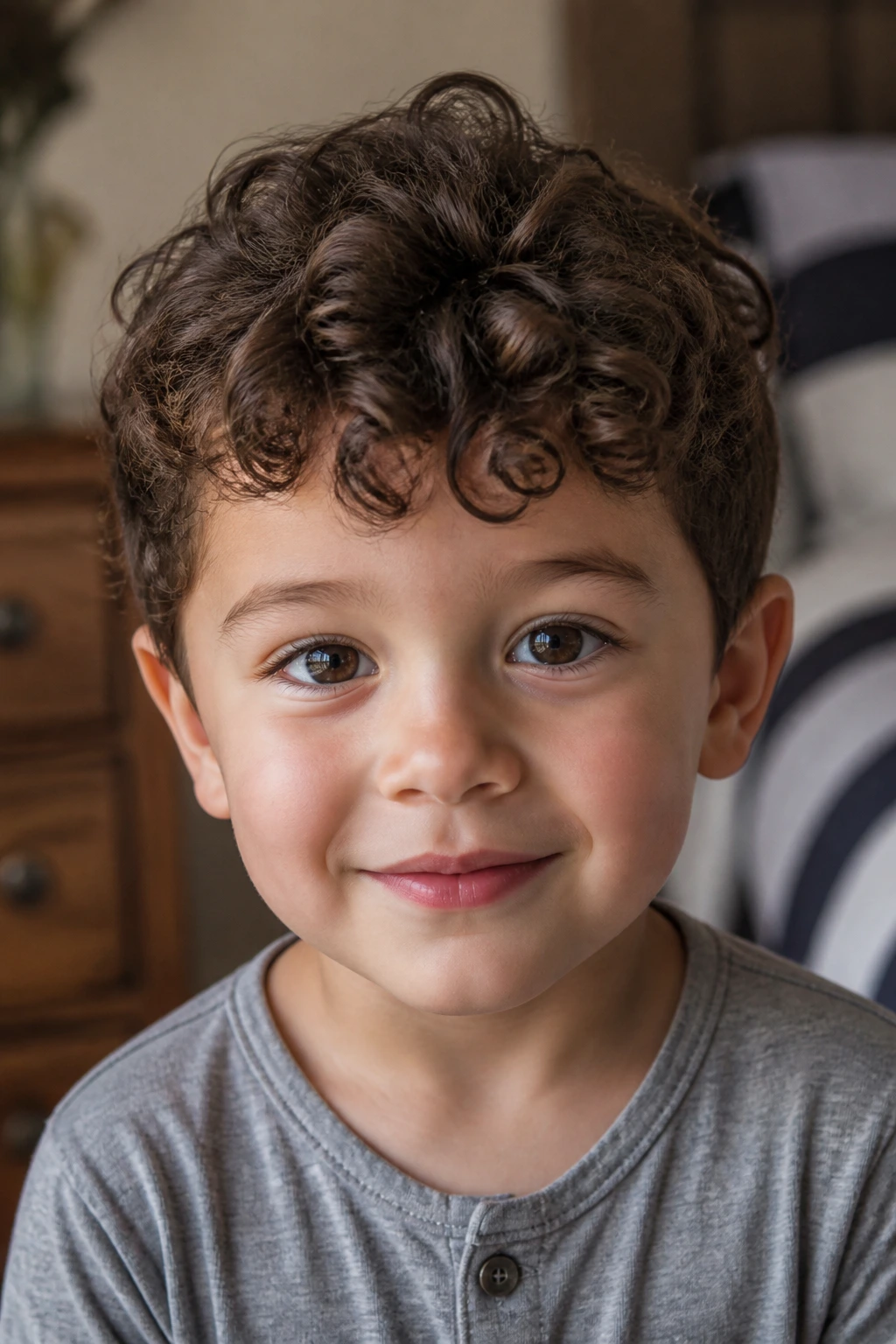
A short curly fringe is useful when the curls want to fall forward but you don’t want them hanging into the eyes all day. The front is trimmed into a soft fringe, then the rest of the hair stays short and even enough to avoid constant fussing.
This style works especially well on fine-to-medium curls that sit close to the forehead. It gives the hair a little frame without creating a heavy bang.
If you’ve ever had a toddler push his hair out of his face every two minutes, you already know why this one matters. Less touching. Less sweat. Less dragging the curls down with tiny hands.
Keep the fringe slightly uneven rather than perfectly straight. That small irregularity looks more natural on curly hair and grows out better.
13. Twisted Crown
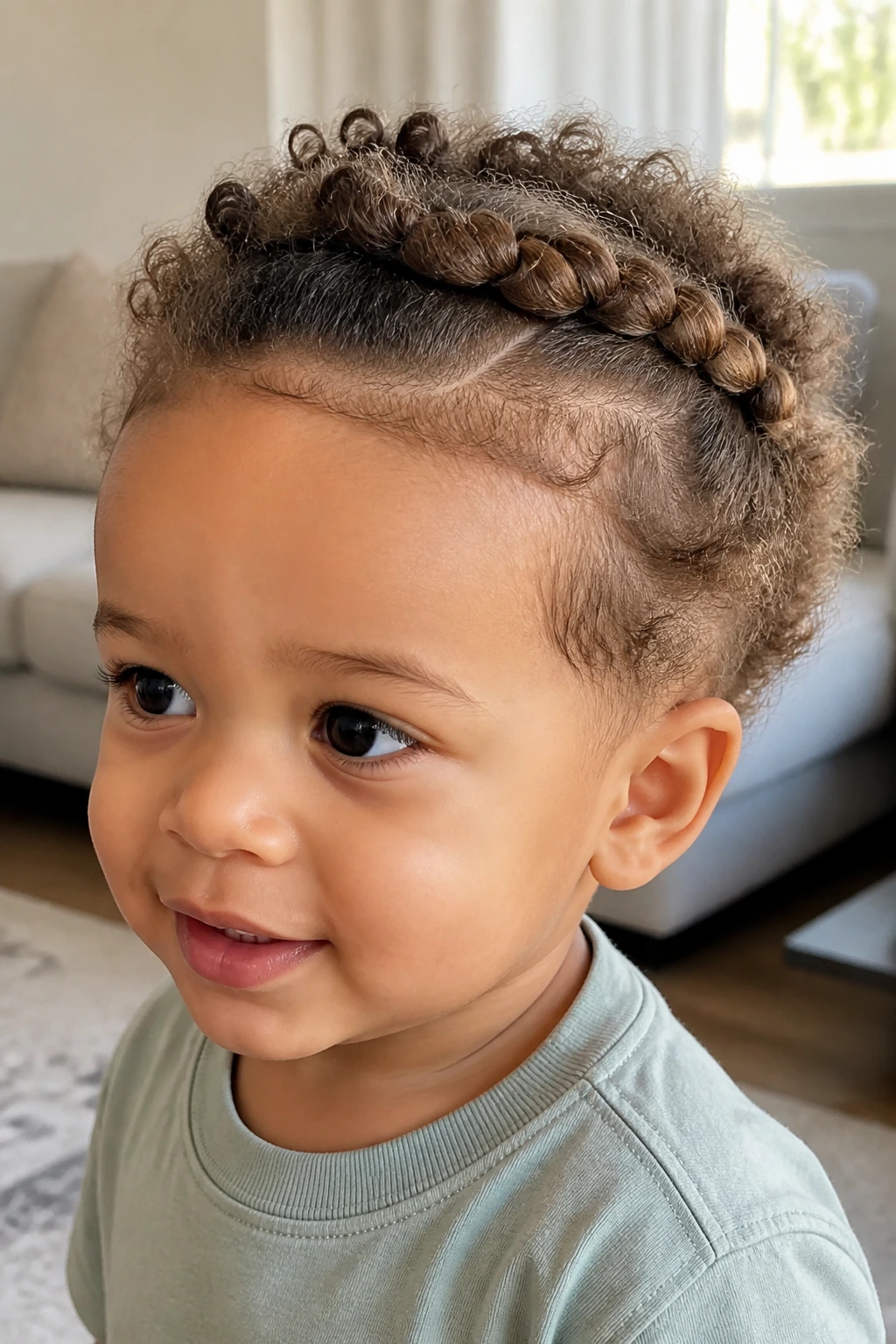
Why does a twisted crown work so well on toddlers? Because it keeps the top tidy while leaving the rest of the hair soft and flexible. The twists sit like a little ring or band of texture, which looks sweet without being fussy.
This is a good choice when the curls are long enough to section but not long enough for a full protective style. It also helps control the front, which is where toddler hair tends to escape first.
How to keep the twists neat
- Start on damp, detangled hair
- Use small sections near the hairline
- Don’t pull the twists too tight at the scalp
A twisted crown is also easy to adjust. If one section loosens, you can redo just that part instead of starting over.
14. Half-Pulled Back Curls
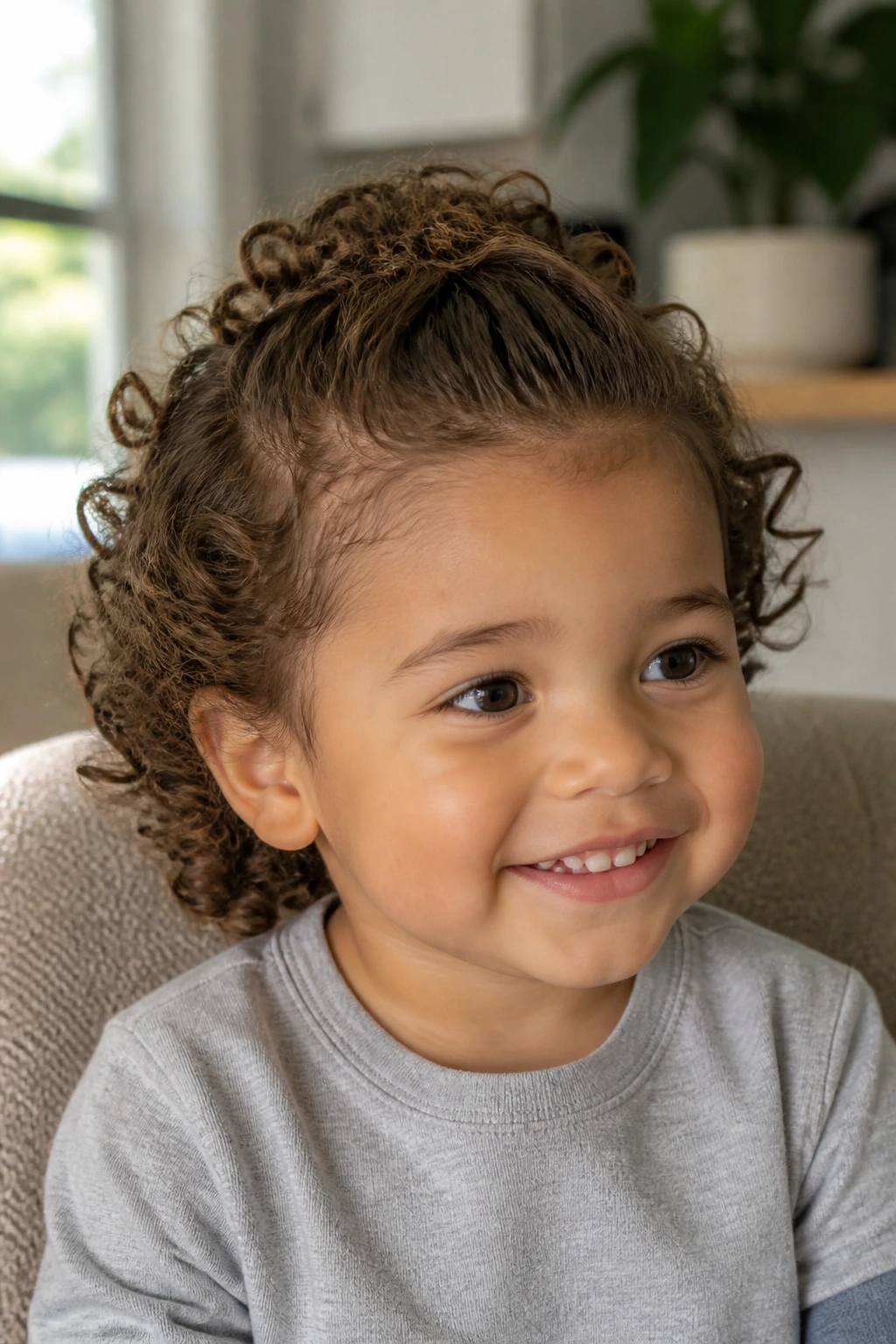
Half-pulled back curls are for the days when the front needs to stay off the face but you still want to show off the curl pattern. Pulling only the top front sections back keeps the style relaxed, not severe.
It’s a useful bridge between a full loose afro and a tighter updo. The back stays down. The front gets out of the way. Everyone gets what they need.
This style is especially handy for photos, church, family events, or any time the curls look better when they’re not hanging in the eyes. A soft elastic or fabric tie is enough. Avoid tight bands that leave a deep crease.
If the hair is very fine, leave a few front curls loose. That keeps the style from looking pulled too hard.
15. Low Burst Fade
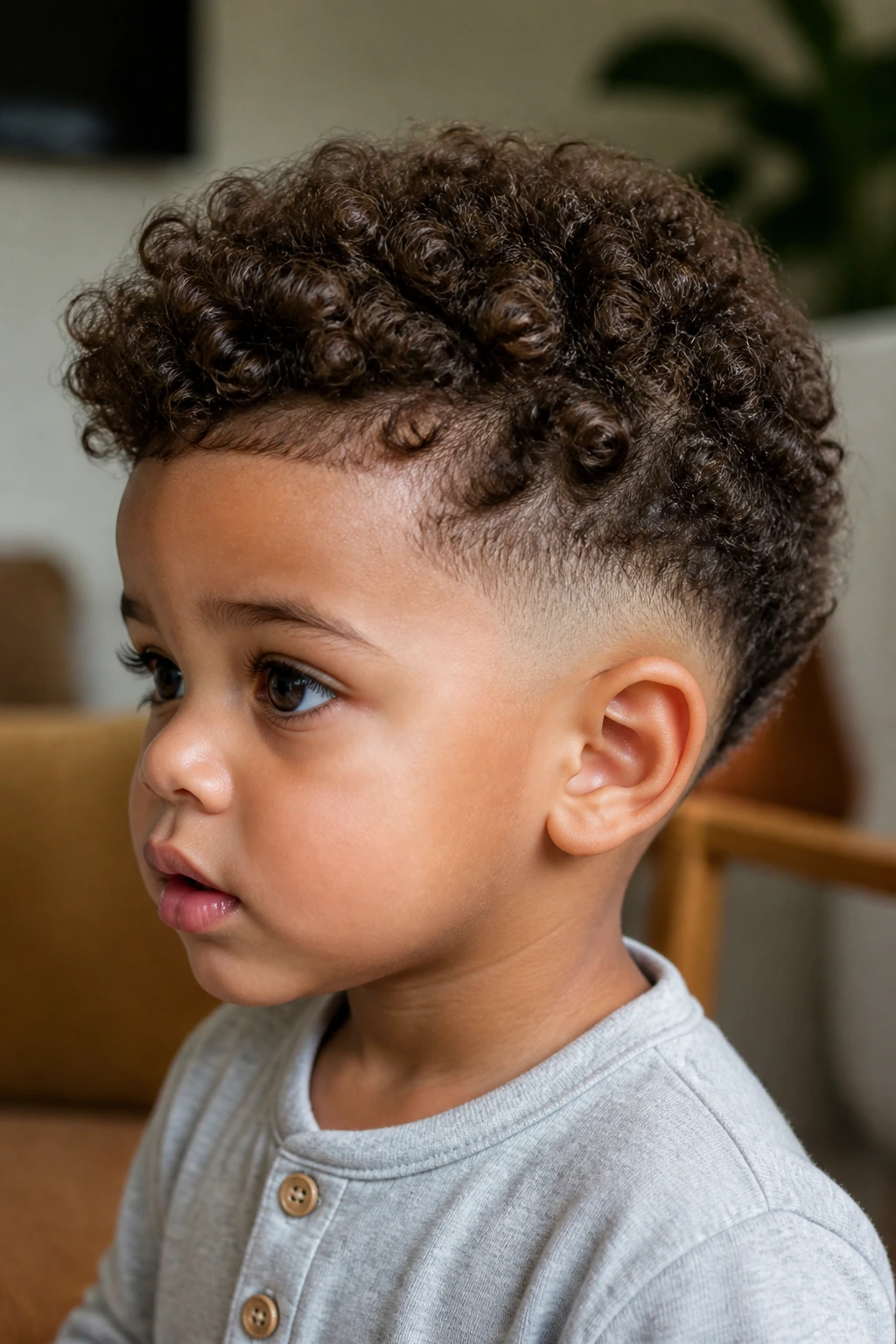
A low burst fade curves around the ear and drops gently into the neckline, which makes it a smart match for thick, curly toddler hair. The fade cleans up the edges without stripping the cut of its personality.
It’s a little more shaped than a standard taper, but not harsh. That curve around the ear helps the haircut look tidy even when the curls on top have their own opinion.
This style is especially good when the sides puff quickly. You get a cleaner outline, and the top can stay round or slightly lifted depending on how much length you leave.
It’s also one of the better options if you want a style that grows out in a controlled way. The curve softens the transition as the haircut gets older.
16. Curly Top with a Clean Part
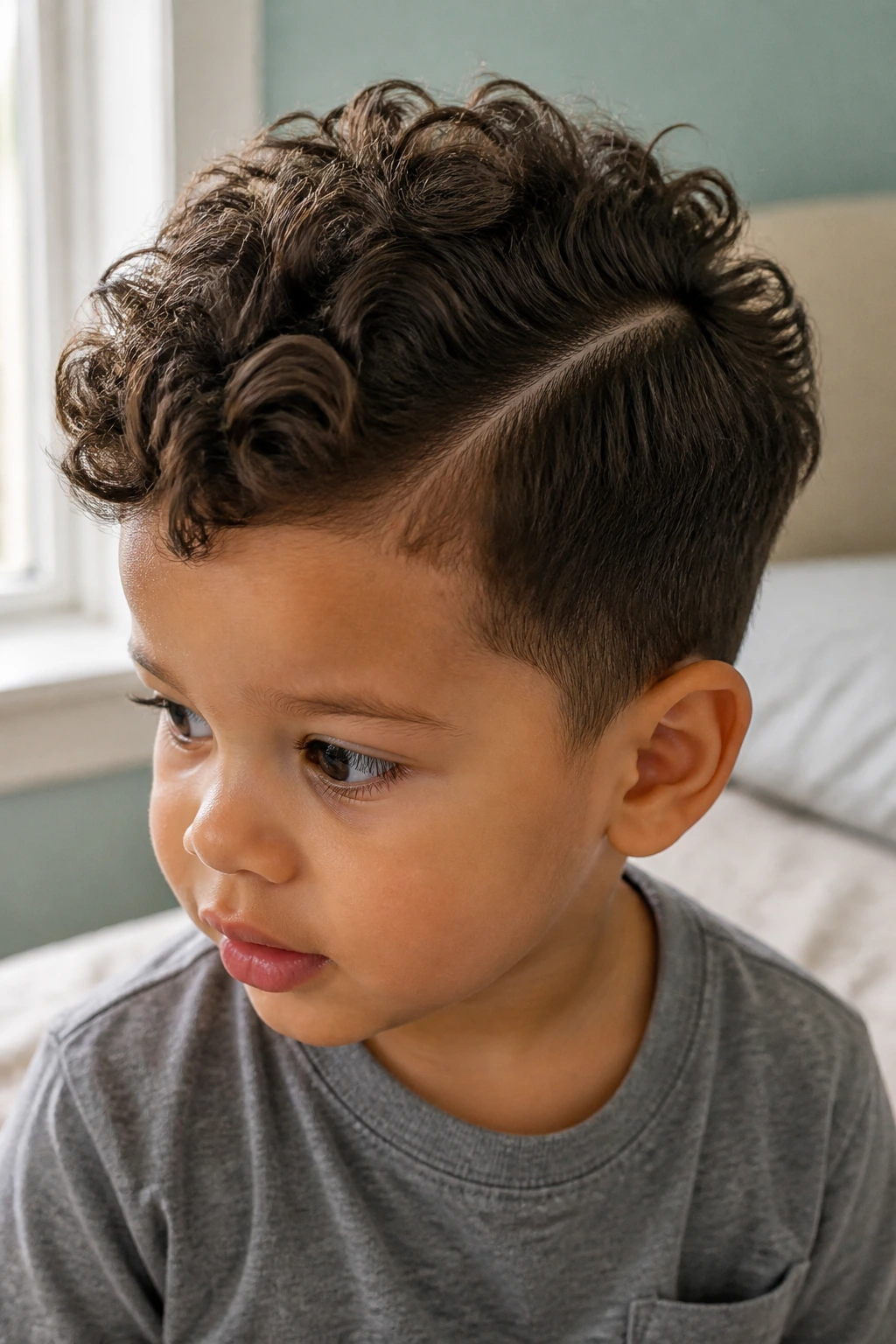
A clean part gives curly toddler hair structure fast. It can be a side part, a soft diagonal part, or even a short line that changes the direction of the curls just enough to make the haircut feel deliberate.
Unlike a rigid part on straight hair, a curly part should never look carved into the scalp. It should sit lightly on top of the pattern, like the curls decided to move that way on their own.
This is a strong pick for thick curls that need direction. The part helps one side lie flatter while the other keeps more volume, which gives the whole style some movement.
A light hold cream works better than sticky gel here. Too much hold and the curls get stiff at the roots.
17. Brushed-Forward Curls
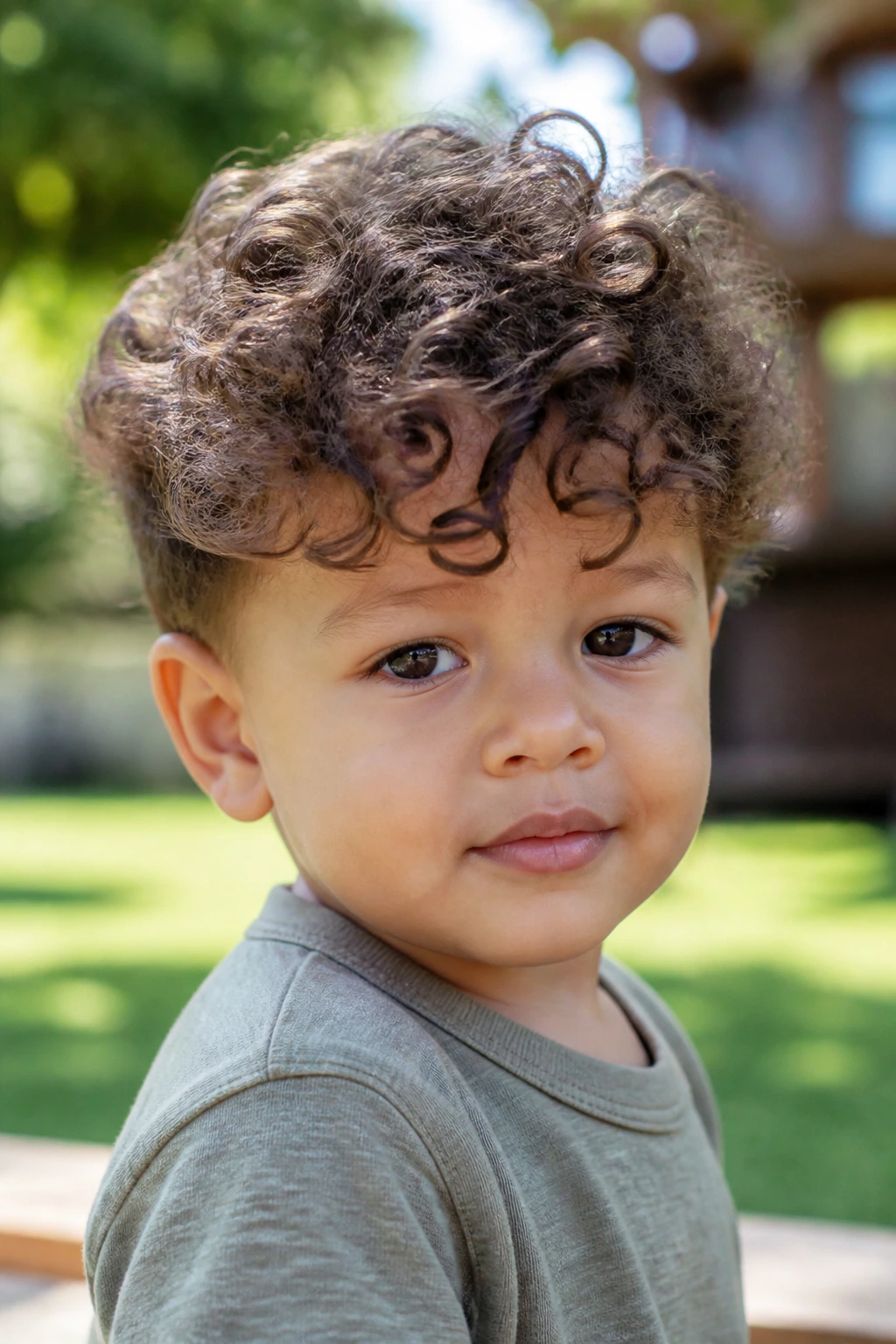
Brushed-forward curls make sense when the hair is long enough to fall over the forehead but short enough to keep its shape. The forward direction softens the face and gives the style a playful, almost sleepy look that works well on little boys.
The key is to brush only when the hair is damp and conditioned. Dry brushing on curls turns them fuzzy in about thirty seconds. Wet or damp hair, though, can be guided into a gentle forward sweep that holds as it dries.
Why it works
- It controls bulk near the crown
- It keeps the top soft and rounded
- It helps shorter curls look fuller at the front
If you want to keep the forehead partly open, brush only the top center forward and let the sides fall back a bit. That small shift changes the whole shape.
18. Headband Tamed Curls
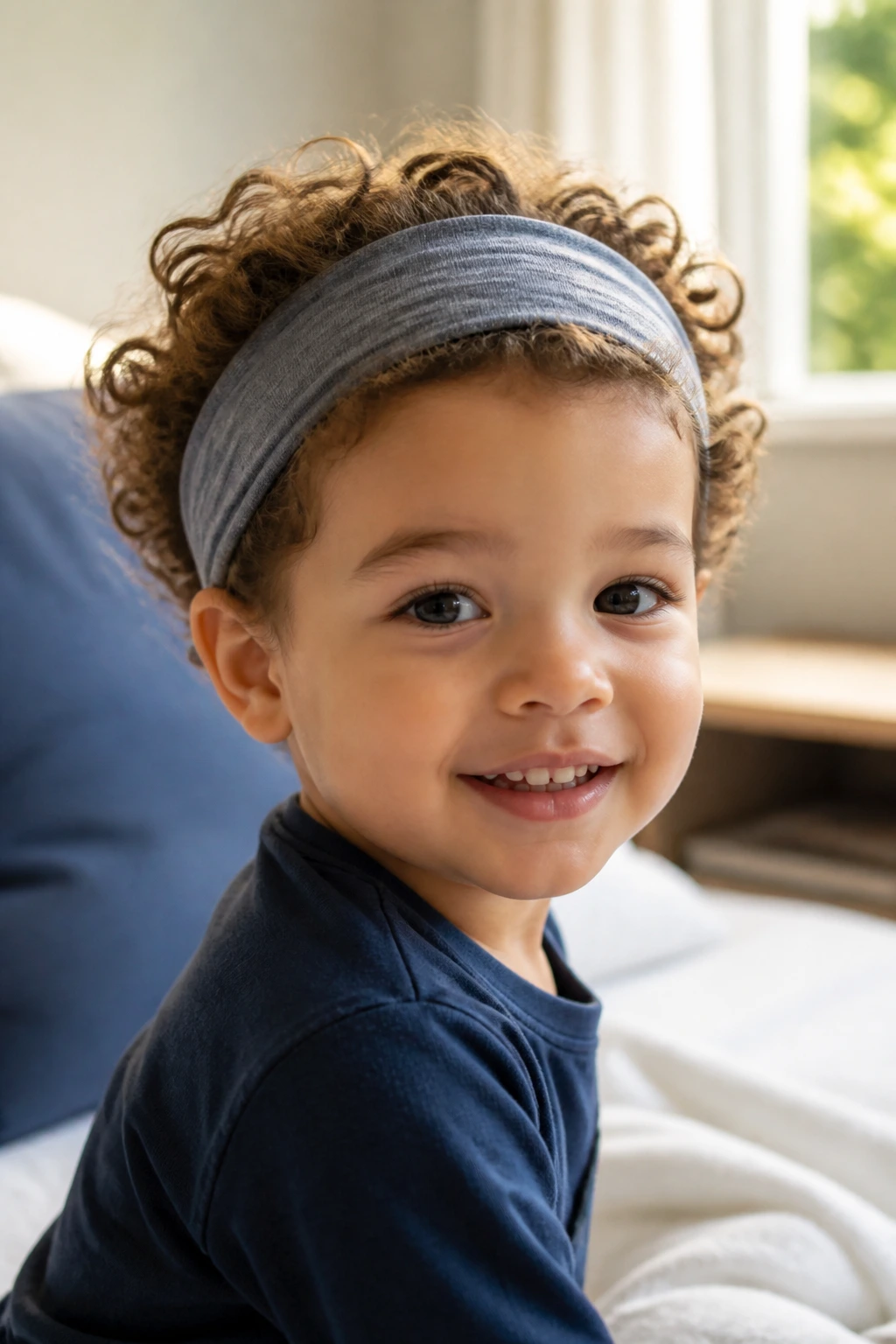
A soft headband can save a curly style that needs one more day before wash day. It’s also useful for toddlers who hate hair in their faces but won’t sit still for a full restyle.
The best headbands are wide, soft, and not too tight. Fabric beats plastic almost every time. Plastic can press behind the ears and leave marks. Fabric just sits there and does its job.
This look works on medium curls, loose ringlets, and even short afro-textured hair when you want the hairline under control. It is not a haircut. It’s a practical fix, and sometimes that’s the point.
Use it when the front curls are long enough to flop but not long enough to tie back. It buys you a clean forehead without changing the cut.
19. Rounded Curly Cut with Soft Edges
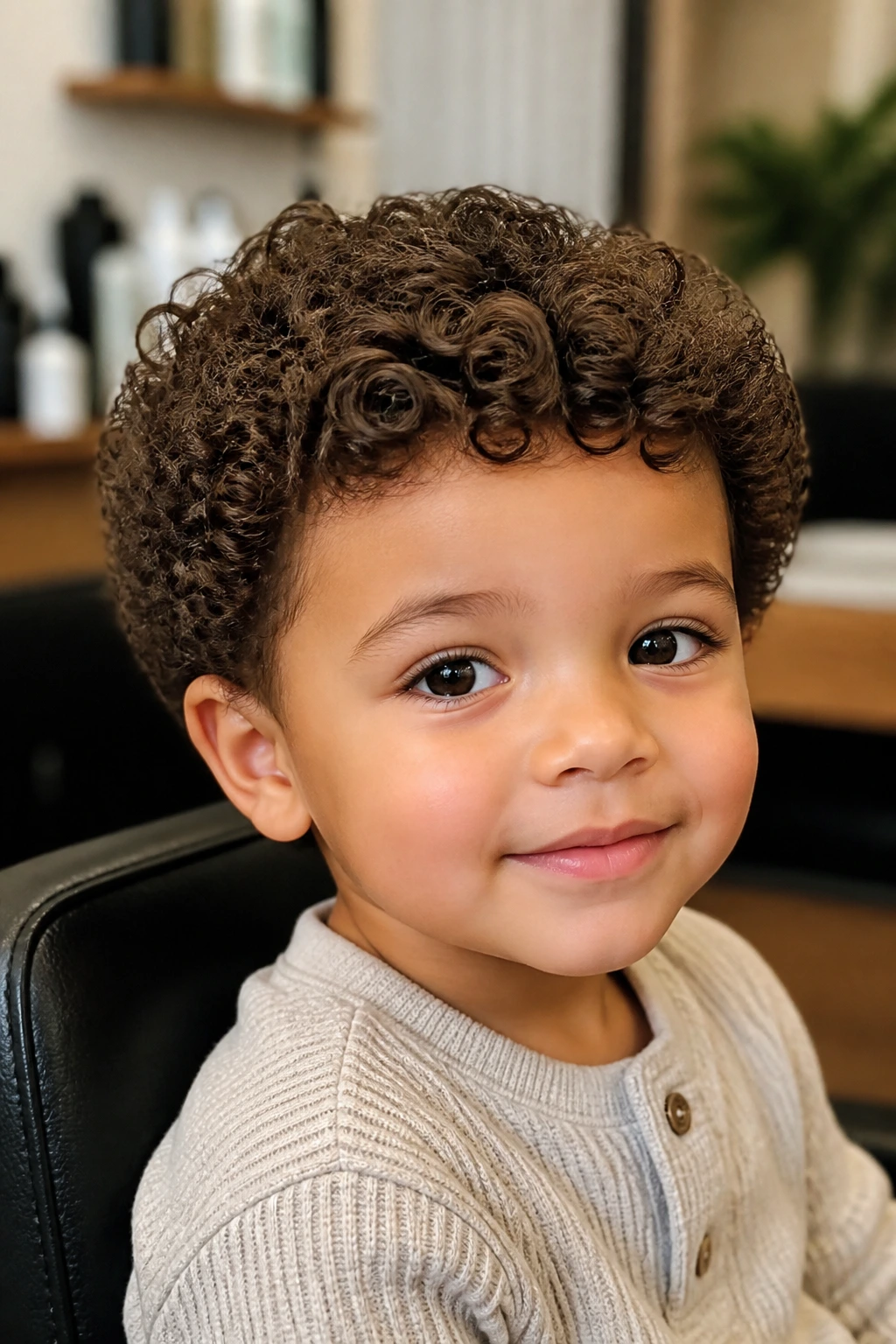
If I had to pick one style that feels most toddler-friendly across different curl types, this might be it. The rounded shape keeps the curls full and soft, while the edges stay gentle enough that the haircut grows out without looking awkward too fast.
It’s the calm option. No sharp angles. No heavy product. Just a balanced shape that works on the kind of hair that likes to bounce when he walks.
This style is especially good for families who want something easy to explain to a barber: keep it round, keep the edges soft, don’t make the sides too flat, and leave enough length for the curls to spring.
That’s the whole deal. Simple. Honest. Hard to mess up if the cut respects the hair.
How Curly Toddler Hair Holds Its Shape When You Leave the Weight Alone
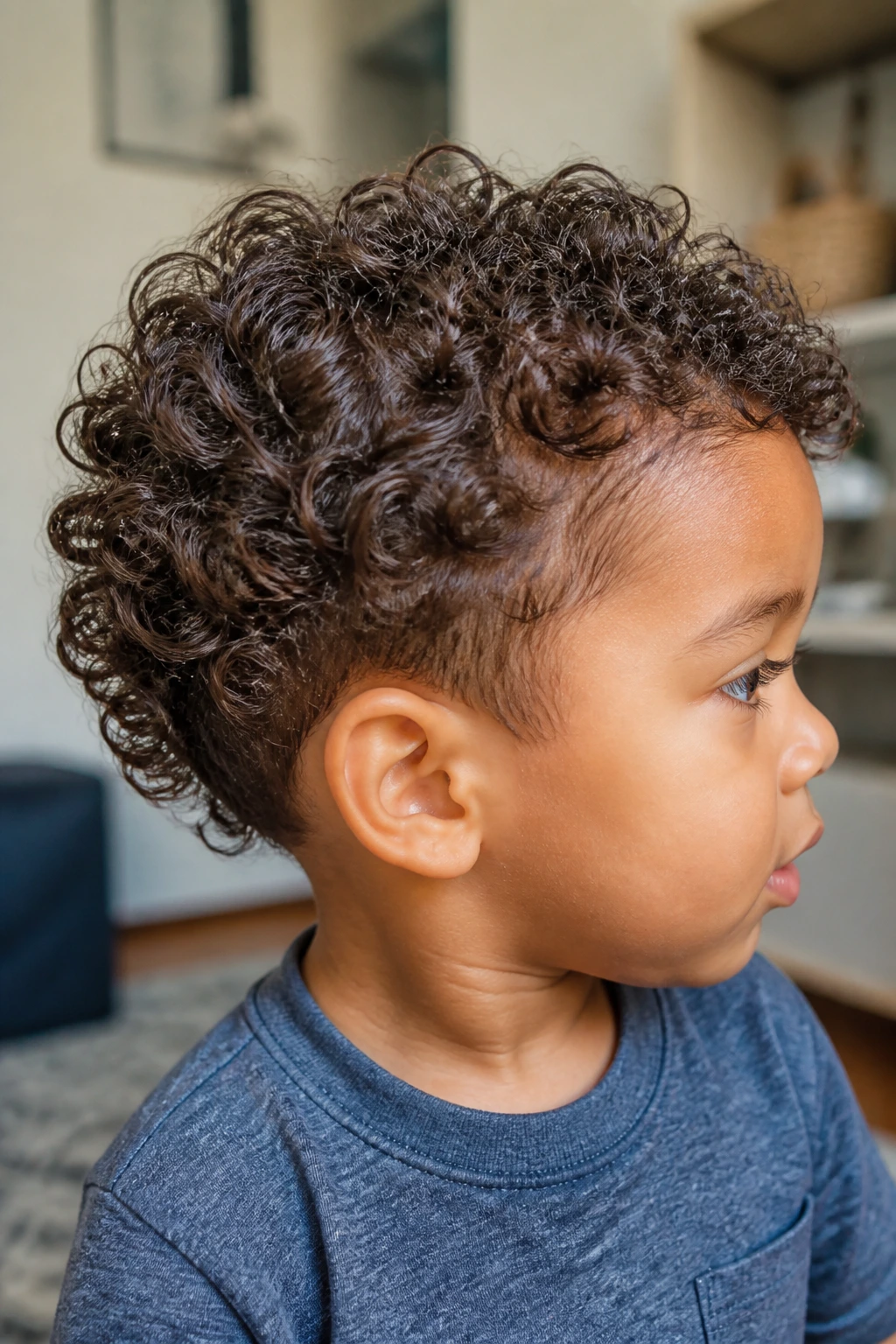
Curly hair on a toddler is happiest when it has a little weight left in the right places. Strip too much off the sides or the crown, and the haircut gets puffy in the wrong spots. Leave the top too short, and the curls stop forming little clumps and start sticking up like static.
Moisture matters too. Dry curls separate into frizz. Damp curls gather into softer, more defined pieces. That’s why a spray bottle and a small amount of leave-in conditioner do more for a toddler curl routine than a cabinet full of styling products.
Shrinkage can trick you. Wet hair may look long enough for twists or a pulled-back style, then it dries and bounces up several inches. Plan with the dry shape in mind, not the wet one. That one detail saves a lot of disappointment.
How to Ask for a Toddler Boy Curly Haircut at the Barber Chair
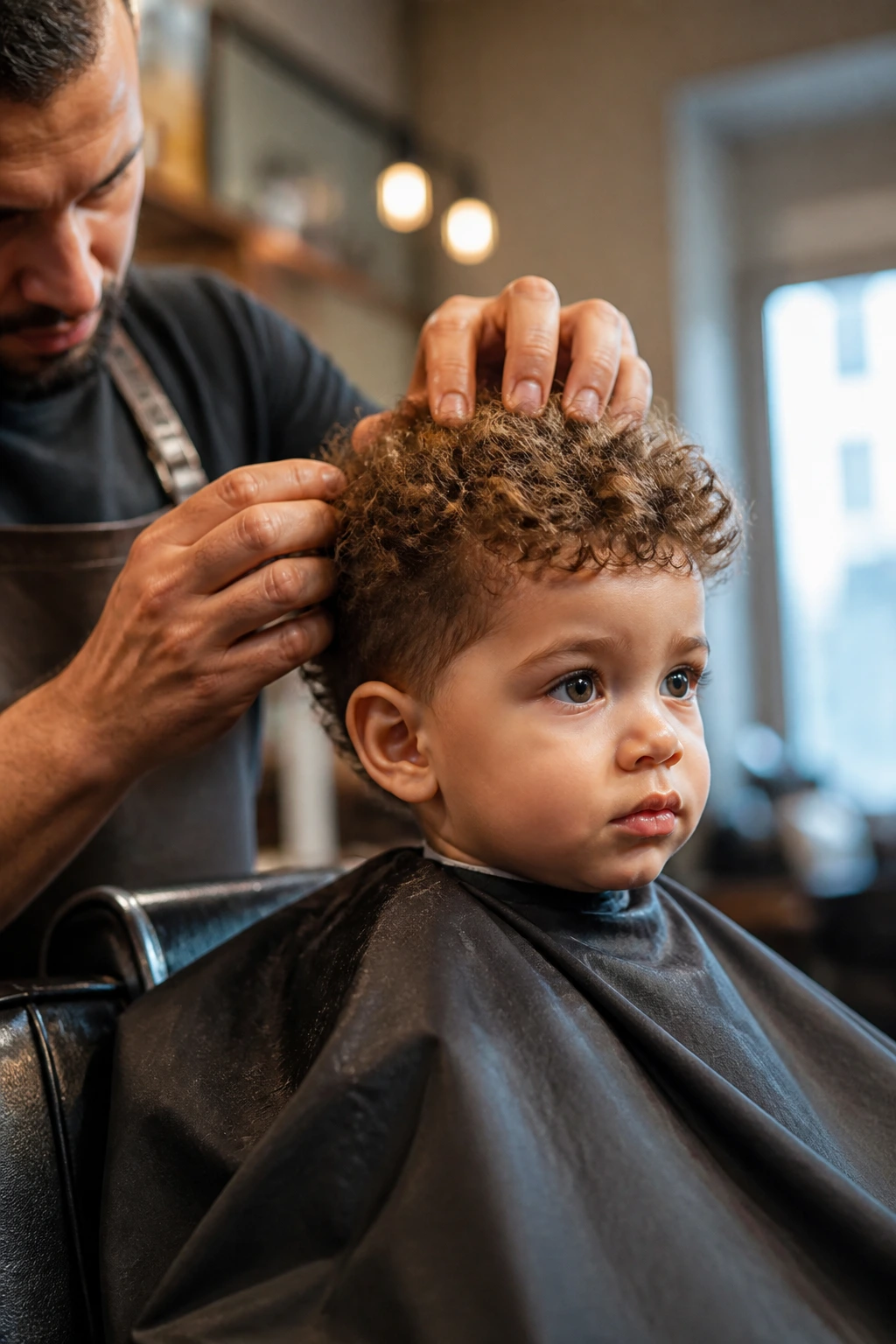
Bring a photo if you can. Better yet, bring two. One for the overall shape and one for the side view. Barber talk gets easier when the visual is doing some of the work.
Use plain language. Say things like “leave the top long enough for the curls to spring,” “keep the sides tapered, not shaved down to the skin,” or “make the outline soft and rounded.” If you want a part, say whether you want it defined or just suggested.
A lot of parents ask for too much thinning. That can be a mistake on curly toddler hair. Thinning shears can make the ends look wispy and uneven, especially if the curl pattern is tight. If the hair is thick, ask the barber to remove bulk carefully, not destroy the curl structure.
If your toddler hates clippers near the ears, say that upfront. A good barber can work faster, soften the approach, or leave a bit more length in the sensitive spots.
Essential Tools for Curly Toddler Styles
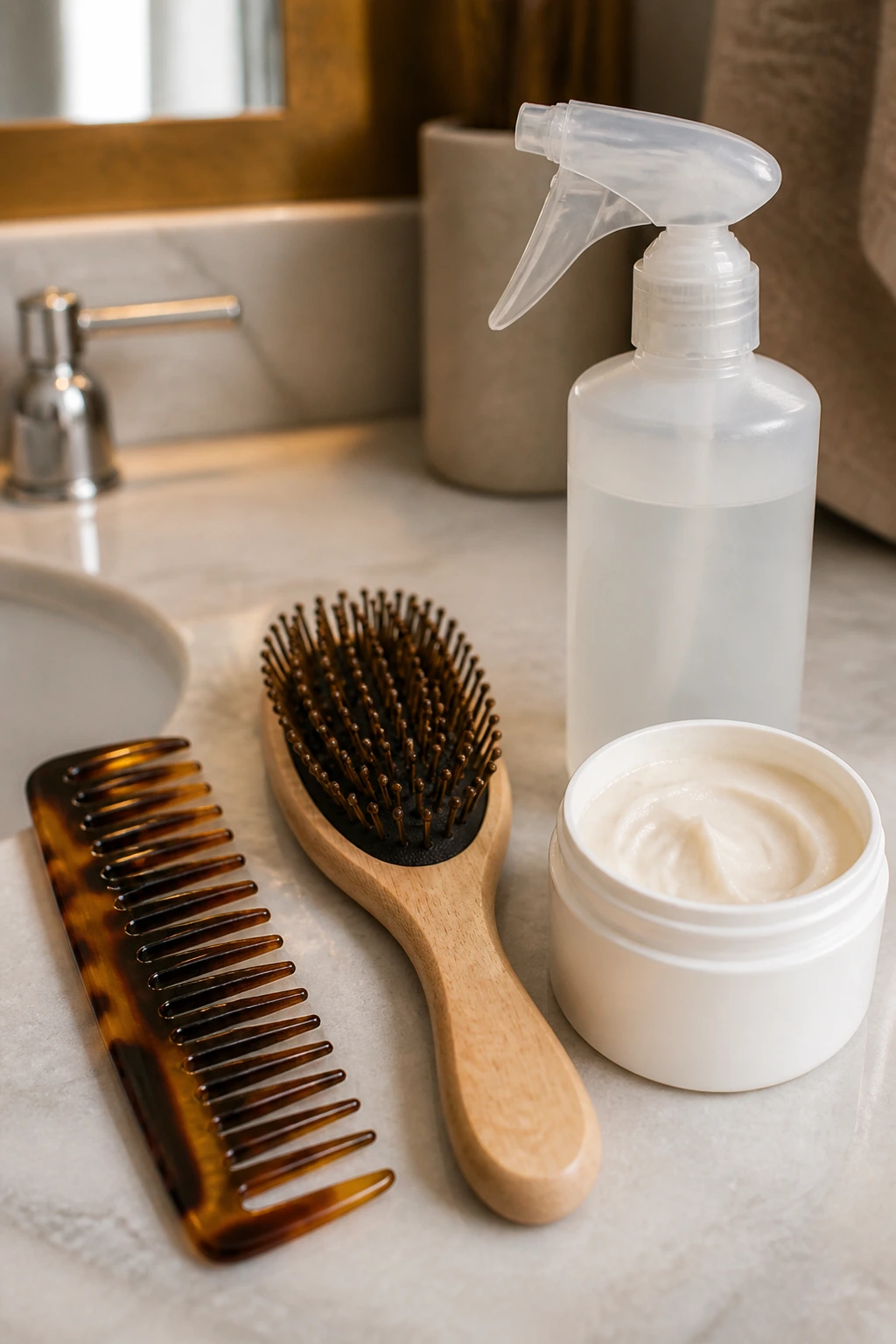
- Spray bottle: A fine mist of water helps reset curls without soaking the scalp.
- Leave-in conditioner: Use a small amount on damp hair so the curls stay soft and easier to separate.
- Wide-tooth comb: Best for detangling when the hair is wet and slippery with conditioner.
- Detangling brush: Helpful for thicker curls that knot near the ends.
- Rat-tail comb: Useful for side parts and sectioning twists.
- Curl cream or light gel: Adds definition, but keep the amount small.
- Microfiber towel or soft cotton T-shirt: Dries the hair without roughing up the cuticle.
- Soft-bristle brush: Good for smoothing edges and shaping around the hairline.
- Satin pillowcase or bonnet: Helps overnight shape and keeps frizz down.
- Child-safe clippers or a trusted barber: Sometimes the tool is the person holding it.
Choosing Products That Help, Not Fight, Toddler Curls
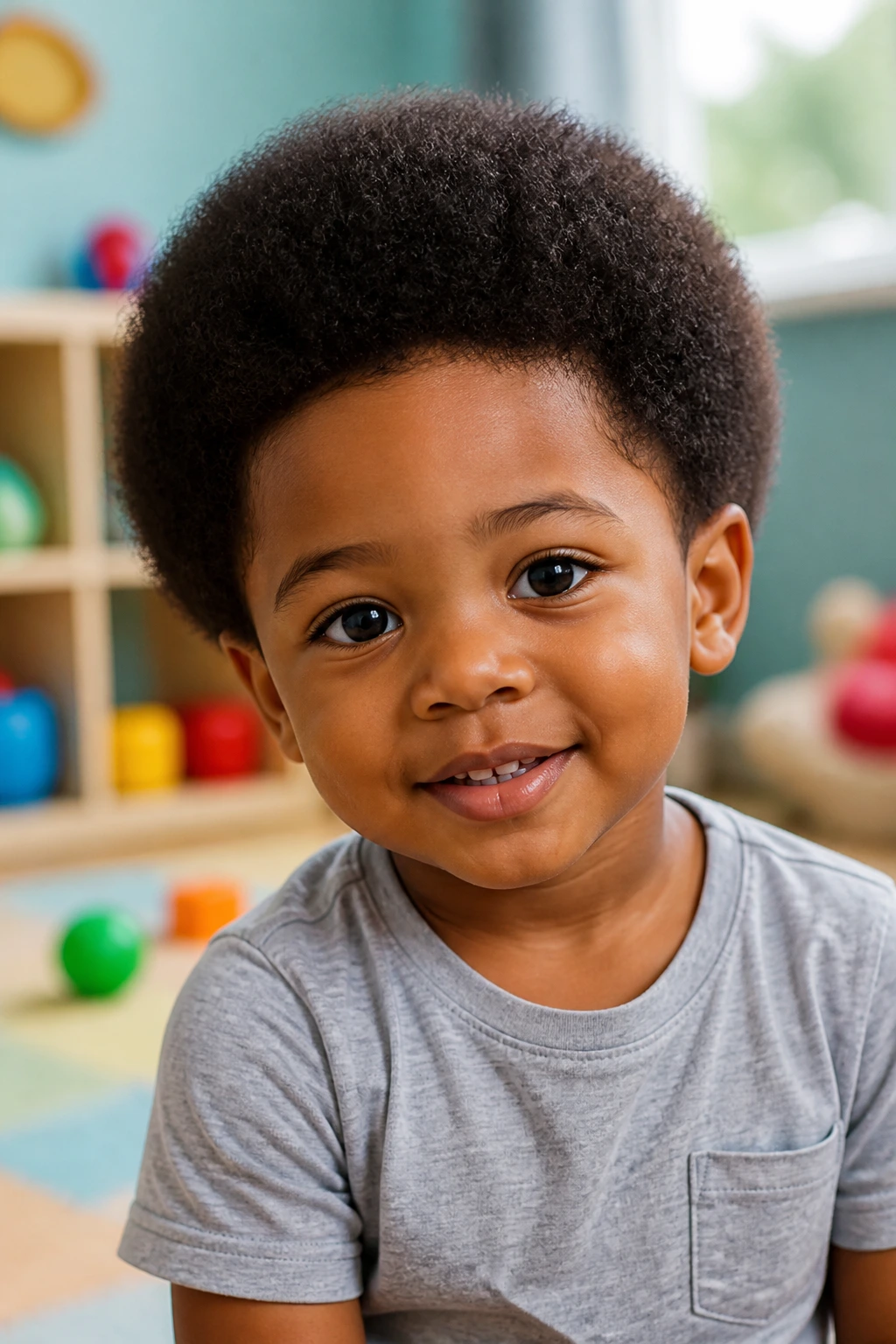
The best products for toddler curls are usually the simple ones. You want a leave-in that spreads easily, a curl cream that doesn’t feel greasy, and a gel or custard that gives hold without turning the hair into a shell. If the hair is fine, go lighter. If the hair is dense and thirsty, use a richer cream, but not so much that it sits on the scalp.
Read the texture, not the hype on the bottle. Water-based products usually sit better on little curls than heavy waxes or thick pomades. Fragrance-free or lightly scented options are worth a look if your toddler has a sensitive scalp or skin that gets red behind the ears.
A pea-sized amount is enough for many short styles. A nickel-sized amount may be more realistic for thicker hair. Start small. You can always add more. Taking product back out of curls is a lot harder than adding a second dab.
Skip strong alcohol-heavy sprays when the hair is dry and brittle. They can leave curls stiff at the wrong end of the day. A little slip is usually what you want.
How to Wear These Styles on Busy Days, Photo Days, and Everything Between
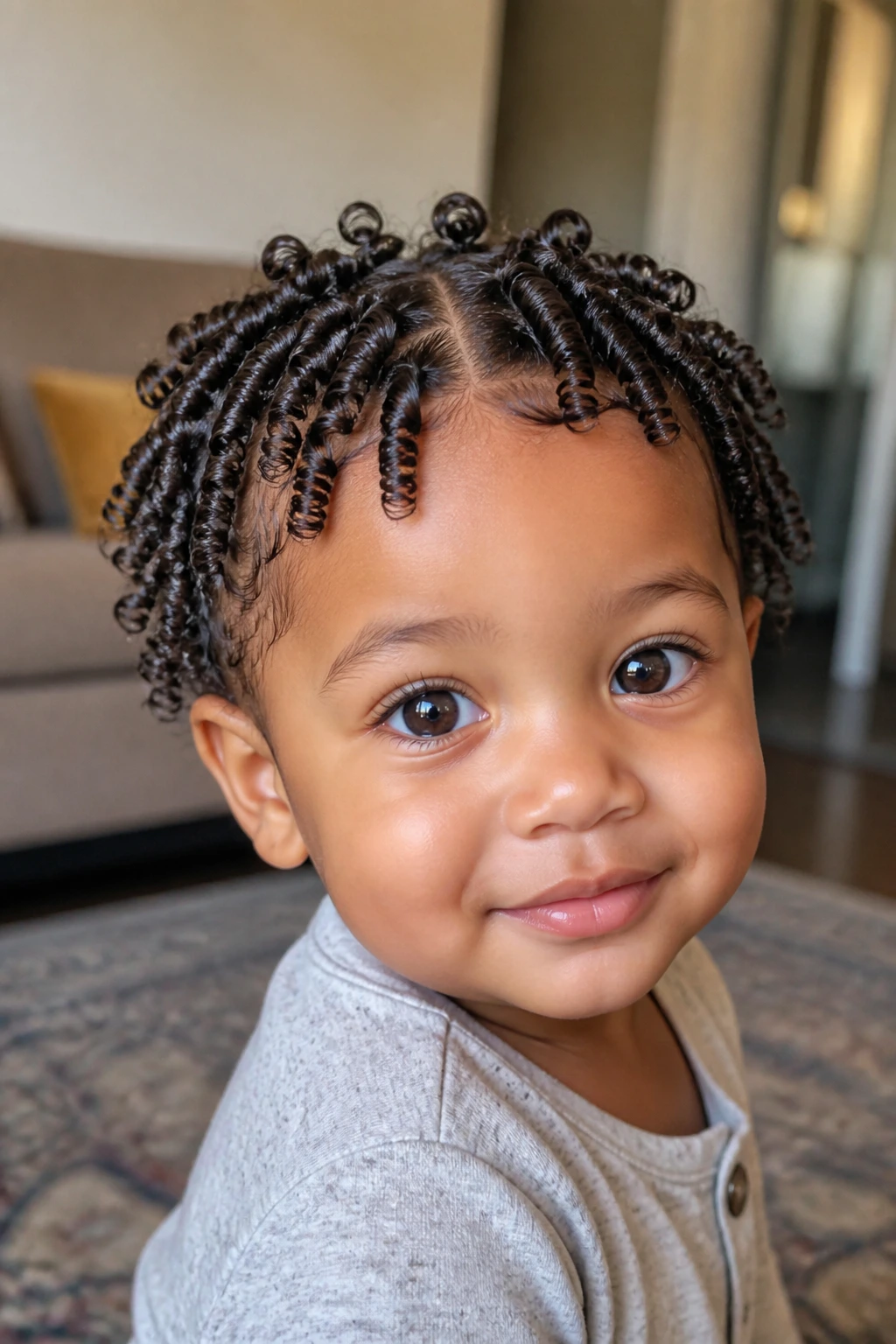
Presentation: Keep the front line soft and the shape clean. A rounded outline, a tidy taper, or a gentle side part usually reads better on toddler curls than a sharp, overbuilt shape. Let the curls stay touchable. If the hair looks like it was frozen in place, you’ve gone too far.
Best for busy mornings: Mini round afros, short curly crops, headband styles, and sponge tops are the least demanding. They can be reset with water and fingers, then left alone.
Best for photos and family events: Finger coils, clean side parts, half-pulled back curls, and twisted crowns give the hair more definition without needing a full formal cut.
Best for active play: Taper fades, low burst fades, and short curly fringe styles stay out of the eyes and hold their shape when the day gets loud.
Best for growth phases: Rounded cuts and soft shape-ups handle awkward grow-out better than styles built on hard lines.
Extra Shine, Shape, and Personality
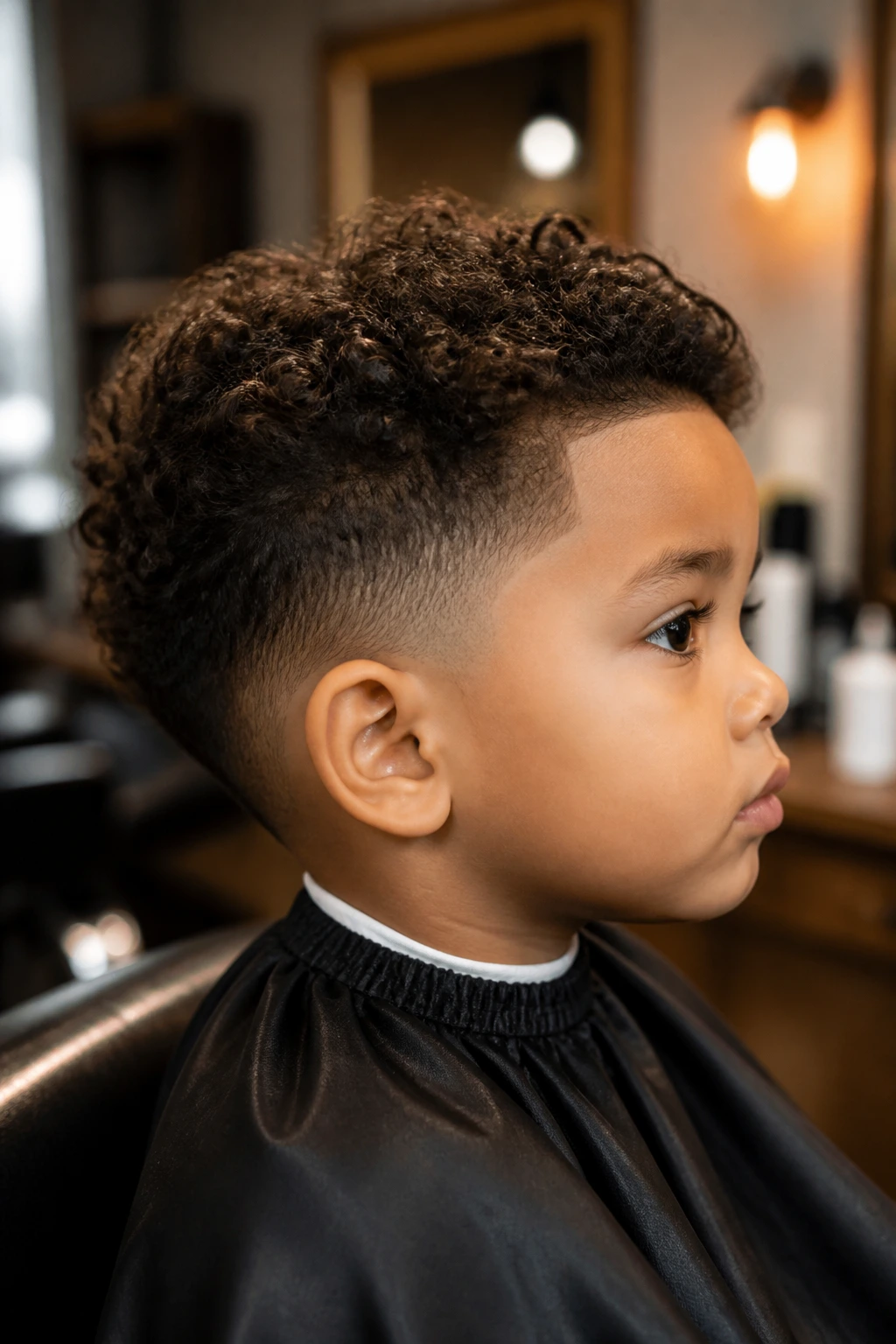
Moisture Boost: A mist of water followed by a tiny dab of leave-in makes the curls clump better and keeps the ends from looking brittle. Put the product in your palms first, not straight on the scalp.
Shape Boost: If the hair is uneven after sleep, use your hands to pinch the curls back into place instead of brushing the whole head. Brushing often adds puff where you don’t want it.
Accessory Ideas: Soft headbands, fabric ties, and tiny barrettes can help on the styles that fall into the face. Keep accessories light. If the child notices them every five minutes, they’re too much.
Personalization: A side part changes a whole haircut without changing the cut itself. So does keeping one curl loose at the front or leaving the crown a little fuller than the sides.
Tiny Detail That Helps: Wipe the forehead and ears before styling. Clean skin makes the outline look sharper, even when the haircut is soft.
Common Mistakes to Avoid With Toddler Curly Hair
-
Brushing dry curls from root to end: That usually turns neat curls into a halo of frizz. Detangle when the hair is damp and coated with slip from conditioner or leave-in.
-
Using too much gel or pomade: The hair may look neat at first, then dry into a crusty cap. Start with a pea-sized amount and add only if the curls still need help holding together.
-
Cutting curls too short on the first visit: Curly hair shrinks when it dries. A cut that looks safe in the chair can end up way shorter than expected once the curls spring up.
-
Forcing hard lines on very soft hair: Sharp edges can look grown-up in photos, but they often grow out badly on toddlers. Soft shape-ups and gentle tapers are easier to maintain.
-
Skipping nighttime protection: Cotton pillowcases can rough up curls fast. A satin pillowcase or bonnet helps the style keep its shape, especially after twists, coils, or a defined crop.
Variations and Adaptations to Try
Fine-Curl Feathering: If the curls are soft and thin, keep the top a little shorter and use a light leave-in instead of heavy cream. Too much product will flatten the roots and make the hair look greasy before lunch.
Thick-Coil Control: Dense curls usually need more shape left on top and a bit more cleaning up around the sides. Two-strand twists, a rounded afro, or a low burst fade works well because it keeps the bulk from swallowing the face.
Sensitive-Scalp Swap: Choose fragrance-light or fragrance-free products and avoid heavy edge control. A calm scalp is worth more than extra shine, especially if the child rubs his head after styling.
Daycare-Proof Version: Keep the cut short enough that a quick refresh is enough to fix it. A taper fade, curly crop, or headband style handles hats, naps, and rough play better than a long style that needs rebuilding.
Photo-Day Version: Finger coils, side parts, and twisted crowns give the most definition. Use just enough product to hold the shape, then stop. Overstyling usually shows in the pictures.
Mixed-Texture Middle Ground: Some toddlers have straight sides and curly tops, or tighter curls in back than in front. A soft taper and a slightly longer top help the textures blend instead of fighting each other.
Frequently Asked Questions
What is the easiest curly hairstyle for a toddler boy?
A short curly crop or mini round afro is usually the simplest. Both styles work with the hair’s natural movement and need only a small amount of water and leave-in to reset.
How often should curly toddler hair be cut?
Most curly styles benefit from a trim every 4 to 8 weeks, depending on how fast the hair grows and how tidy you want the shape to stay. A rounded style can go a bit longer; a fade needs more regular cleanup.
Should I brush curly toddler hair when it’s dry?
Not if you can avoid it. Dry brushing tends to break up curl clumps and create frizz, especially on tighter textures. Detangle with water and conditioner instead, then reshape with your fingers.
Can these styles work on mixed textures?
Yes. Mixed textures often look best with a soft taper on the sides and a slightly longer top so the curl pattern has room to show. The key is not forcing the same finish across every section of the head.
Is gel safe to use on toddler curls?
A small amount is fine for many children, but keep it light and watch the scalp. If the hair gets stiff or the skin turns red, switch to a softer curl cream or a gentler hold product.
How do I keep the style from falling apart during the day?
Start with damp, not soaking hair, use a small amount of leave-in, and choose a shape that matches the length. A quick mist and finger scrunch after a nap usually brings the curls back.
What if my toddler hates having his hair combed?
Work in tiny sections and detangle only when the hair is wet and slippery. A wide-tooth comb or your fingers often feels less threatening than a brush, and short, repeated sessions work better than one long battle.
Do I need a barber for all of these looks?
Not all of them. Styles like finger coils, twists, sponge curls, and headband looks can be done at home. Anything with a fade, shape-up, or defined part is usually easier with a barber.
Curls That Can Keep Up
The best curly styles for toddlers are the ones that leave room for motion. Little boys run, squirm, nap, pull hats on crooked, and somehow find mud before breakfast. A style that can survive that kind of day without turning into a project is worth keeping.
Pick the shape that fits the hair you actually have, not the photo you wish you had. If the curls are short, stay cropped. If they’re thick, leave weight on top. If they tangle fast, use twists or a taper. Simple choices usually hold up better than clever ones.
And once you find a look that works, keep it in rotation for a while. Toddler curls change fast, but they also reward consistency. A good cut, a little moisture, and a calm hand go a long way.
