



Kids’ locs behave differently from adult locs, and the difference shows up by 8 a.m. A style that looks neat in the mirror can fall apart the second a child leans on a desk, slides into a car seat, or gets halfway through recess and decides the hair has suddenly become interesting enough to touch.
I’m picky about loc styles for kids for one reason: the hairline tells the truth. If the front rows leave dents, if the temples feel sore, if a child starts tugging at the crown before lunch, the style is doing too much. Dermatologists have warned for years that repeated tension at the same spots can lead to breakage and thinning, and children usually complain sooner than adults do.
The best kids’ loc styles don’t rely on force. They rely on clean parting, soft bands, a little planning, and the kind of shape that keeps working after the child has forgotten it’s there. Start with comfort, and the rest gets easier.
Why These Loc Styles Work So Well for Kids
-
Low Tension First: Every style here keeps the hairline soft, which matters when a child wears the look through school, naps, sports, and a bonnet at night.
-
Length-Friendly Choices: Some of these work on starter locs around chin length, while others make shoulder-length or longer locs look polished without a lot of extra pulling.
-
Fast Morning Wins: A few of the styles can be done in 5 to 10 minutes once the parting is clean, and that is the difference between a calm school morning and a tiny argument over a brush.
-
Less Product Drama: These looks lean on foam, soft bands, ribbons, and careful sectioning instead of thick wax that leaves flakes on dark locs by noon.
-
Kid Approval Matters: A child will leave a style alone when it doesn’t pinch behind the ears, thump against the neck, or make sleep miserable.
-
Easy Refreshing: Most of these can be revived with a light mist, a satin scarf, and one quick rewrap instead of a full redo.
Why Kids’ Loc Styling Needs a Softer Hand
A child’s scalp is not a battlefield. That sounds obvious, but a lot of bad loc styling starts with a grown-up chasing neatness so hard that the hairline pays for it by dinner. Tight ponytails, tiny elastics, and sharp front parts can look crisp for a few hours, then the child starts blinking at the mirror and rubbing the temples. That’s the warning.
Repeated tension is the real problem. It can show up as soreness, red bumps, puffed edges, or thinning around the front and sides if the same spot gets pulled over and over. A clean style is good. A painful style is not. Those are different things, and the difference matters more on a child who moves, sweats, naps, and forgets the hairstyle exists until something catches.
The sweet spot is simple: enough structure to keep locs tidy, not so much pull that the scalp has to work to hold the look up. If the child can turn their head without complaining, that’s the style you want to keep.
1. Center-Part Pigtail Locs
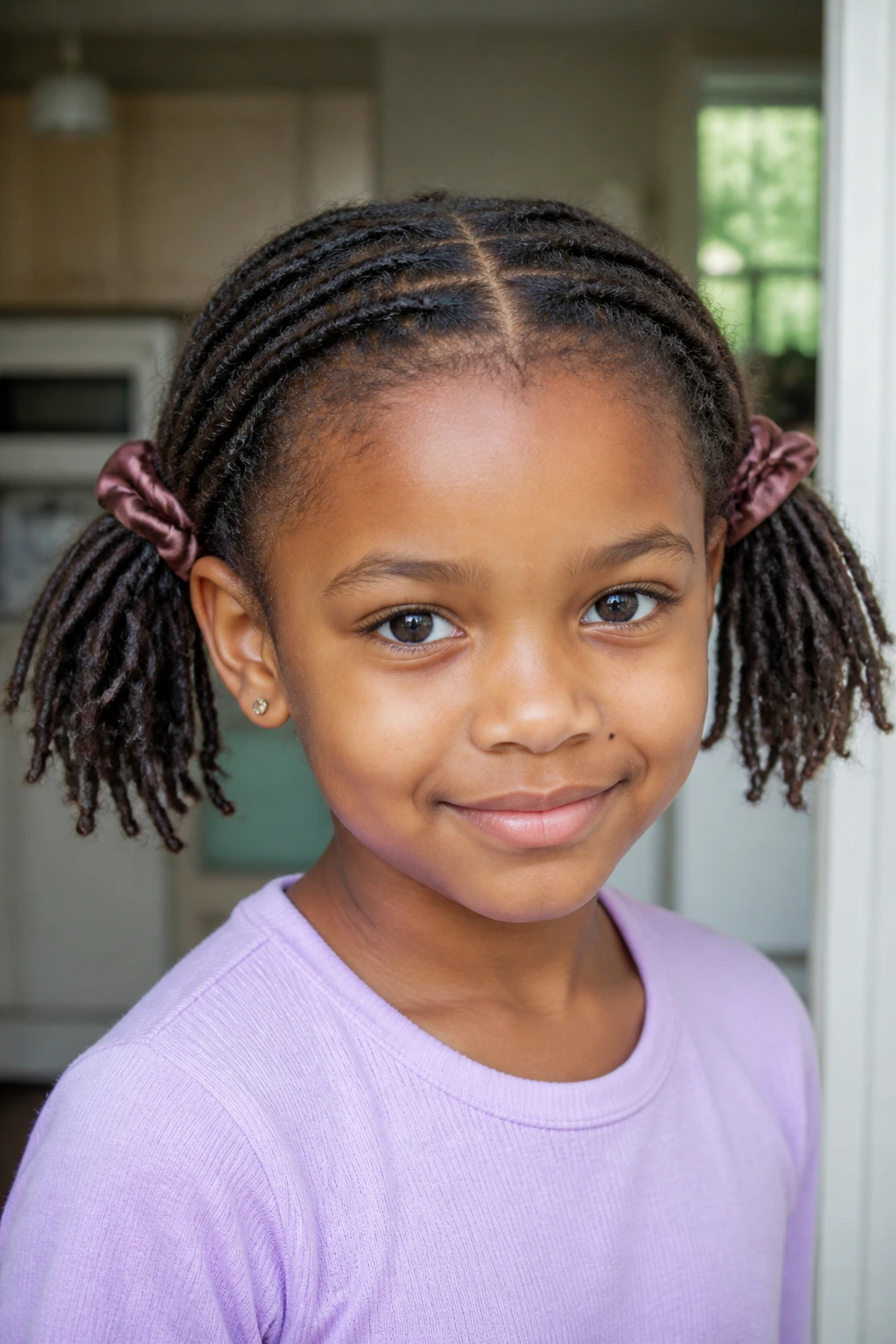
Two low pigtails are the sort of style that saves a school morning. They keep locs off the face, split the weight evenly, and work especially well on starter locs and shorter shoulder-length locs that don’t want to sit in one big bundle yet.
Keep the center part straight, then gather each side at ear level with soft bands or satin ties. If the locs are short, let the ends hang a little instead of forcing them into tiny knots. That loose finish looks better than a tight, stressed one, and it’s kinder to the scalp.
2. High Wrapped Ponytail
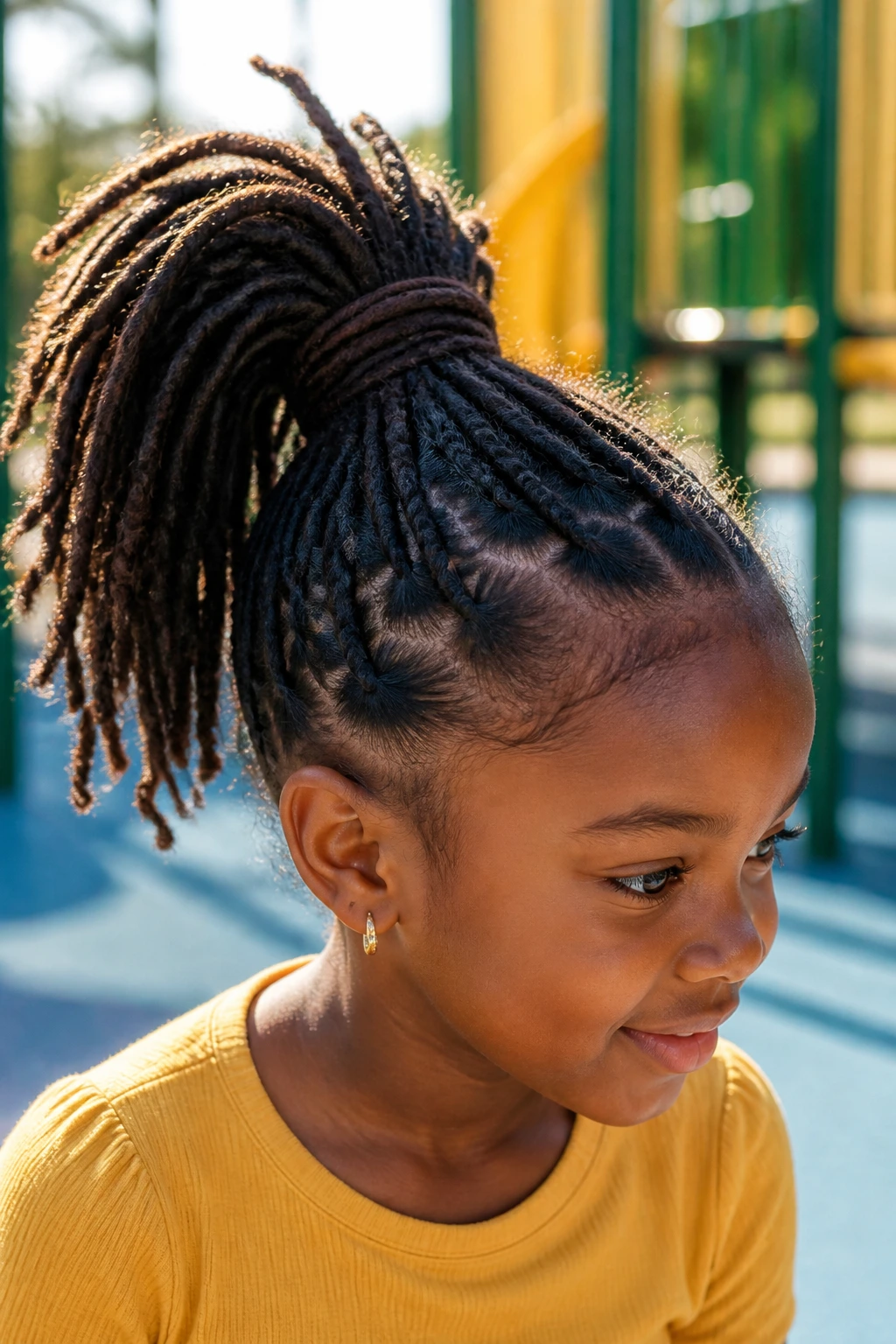
A high ponytail lifts the locs off the neck, which is a small miracle on warm days or during active play. It also gives the face a cleaner line, so the whole style reads neat even if the ends are a little uneven.
The trick is the base. Put the pony high on the crown, not all the way at the hairline, and wrap one loc around the elastic so the tie disappears. If the locs are heavy, tilt the pony slightly forward instead of pulling it straight back; that keeps the child from feeling the weight drag down after an hour.
3. Half-Up Crown With Free Length
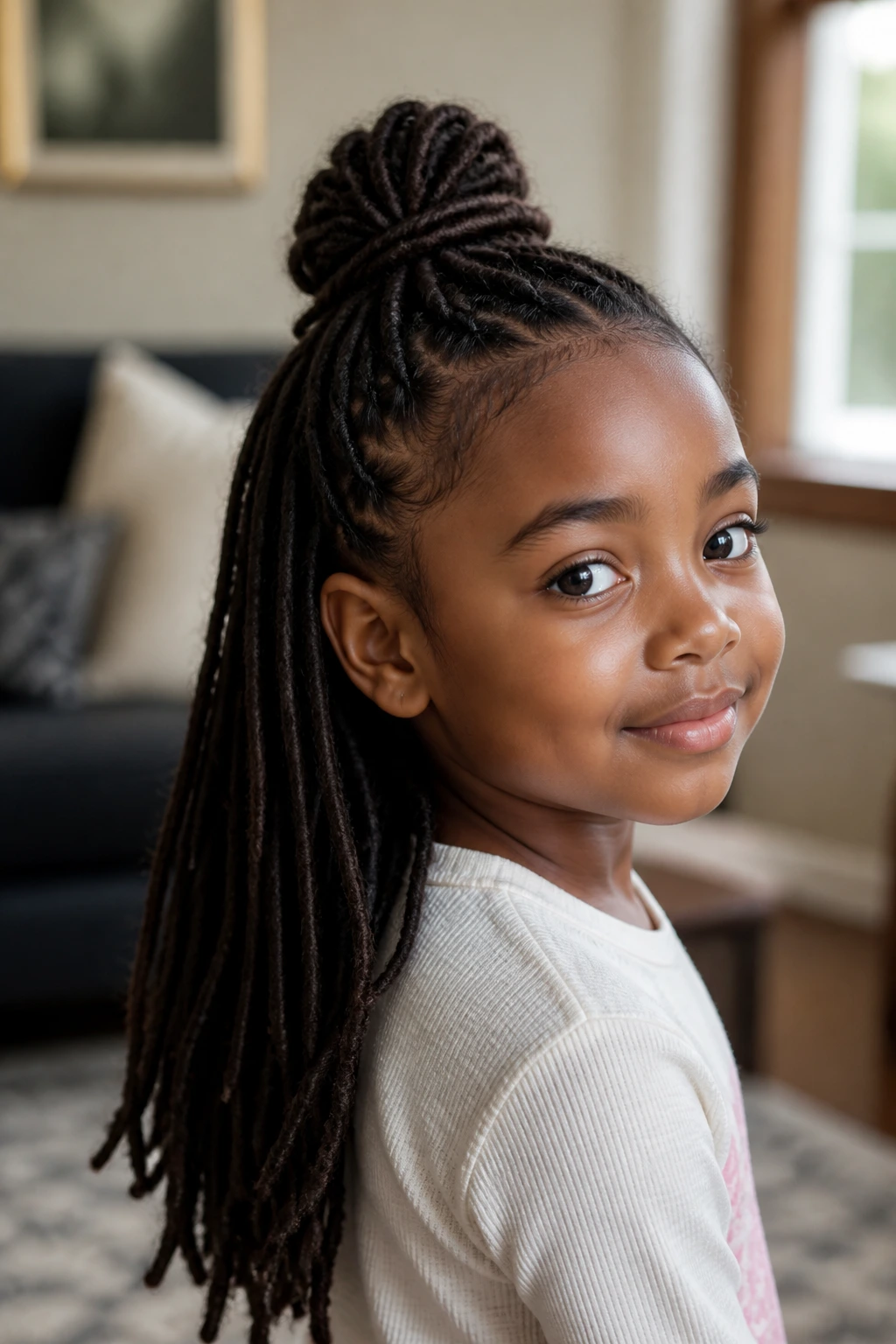
Half-up styles are useful when a child wants movement but you still want the front out of the eyes. Pull the top third of the locs into a small ponytail or soft bun and let the rest fall free. It feels lighter than a full-up style, which is why kids often leave it alone.
This one works on medium and long locs especially well. You can add a ribbon or a single bow at the back, but don’t crowd the look with too many accessories. One pretty detail is enough. More than that starts to feel busy.
4. Low Nape Bun
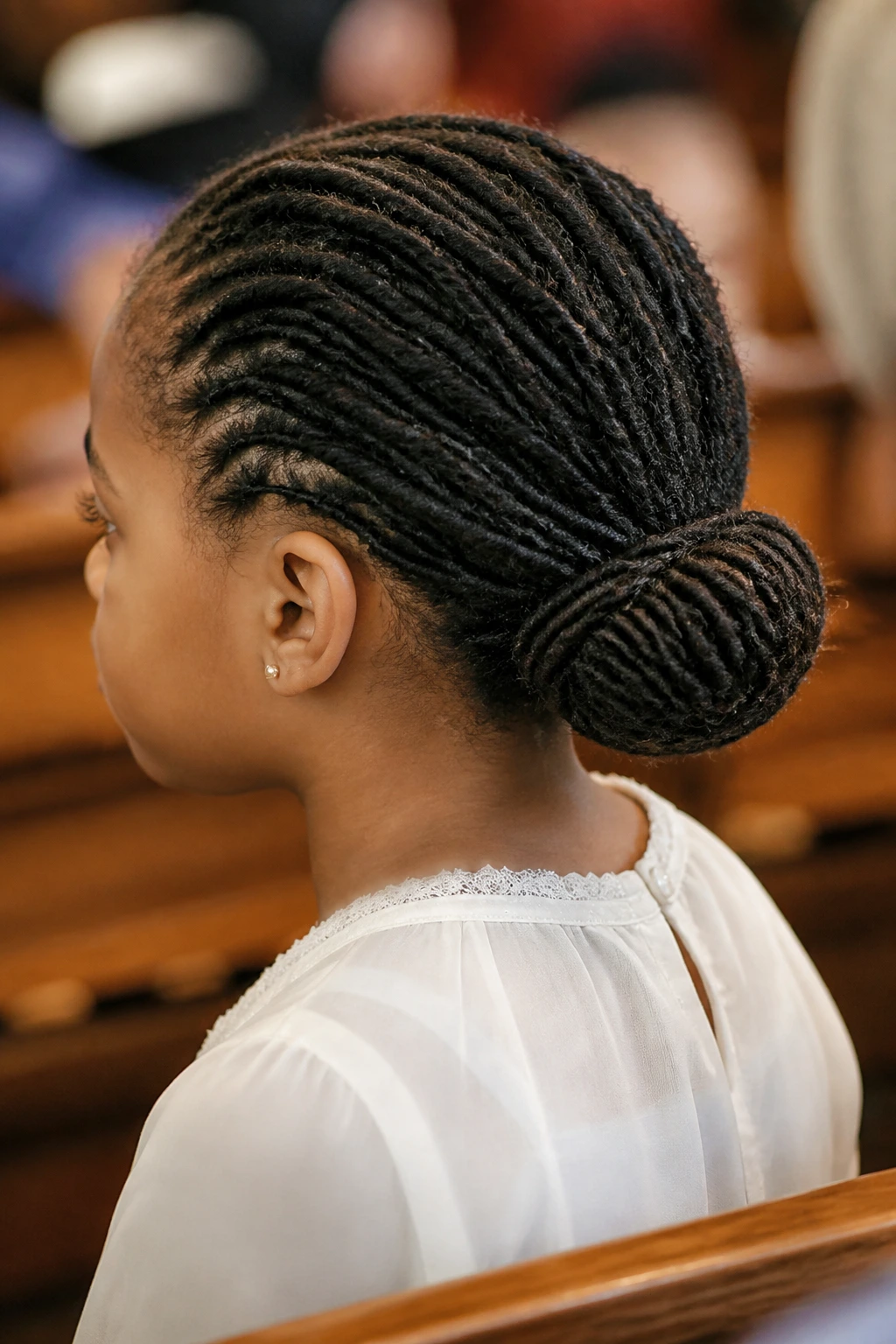
A low bun at the nape is one of those styles that looks calm without trying too hard. It keeps the locs tucked in close, which makes it a smart pick for uniforms, church, family photos, or any day when you want the hair to stay put for hours.
Gather the locs low, twist them into a flat coil, and secure the bun with a soft band before tucking the ends under. If the locs are thick, make the bun wider instead of tighter. A tiny knot with too much pull is how you end up with a sore scalp and a child who hates the style by afternoon.
5. Mini Space Buns
Mini space buns bring a little fun to locs without turning the whole head into a production. Part the hair down the center and make two small buns high or mid-level on each side. On kids, I prefer smaller buns to giant cartoon ones; they sit better and don’t bob around as much.
This style works best on medium locs that can hold shape without falling apart. If the locs are longer, tuck the ends neatly instead of wrapping them around and around. Too much wrapping makes the bun heavy. Light and tidy wins here.
6. Barrel-Twist Pony
Barrel twists give the front of the style a little pattern, which is nice when you want more than a plain ponytail but less than a full braided look. Twist two or three front sections back toward the crown, then gather everything into one ponytail at the back.
It looks polished on medium-to-long locs, especially when the child has a photo day or a family outing. Use a small amount of foam on the twists so the parts lie down cleanly. I’d avoid making the twists so tight that they leave those little ridges at the scalp. That’s detail with a price.
7. Bubble Ponytail
Bubble ponytails are playful without being fussy. Pull the locs into one ponytail, then add small bands every 2 to 3 inches down the length so each section puffs out into a soft bubble. It’s one of the easiest ways to make locs look styled without spending forever on the chair.
This works especially well on longer locs because the bubbles need enough length to show their shape. Keep the bands snug enough to hold, not so tight that they bite into the locs. If you want a finished look, pull one ribbon through the first band and let the tails trail down the back.
8. Side Pony With Ribbon
A side ponytail has a little old-school charm, and on kids it looks sweet without feeling too dressed up. Sweep the locs to one side, secure them low near the shoulder, and tie a soft ribbon or bow at the base.
It’s a nice answer when a child refuses a full bun but still needs the hair out of the face. The side placement softens the whole look and works on short, medium, or long locs. If the child likes to sleep on that side, tuck the ends into the collar of a soft shirt or use a bonnet so the pony doesn’t get crushed.
9. Loc Mohawk
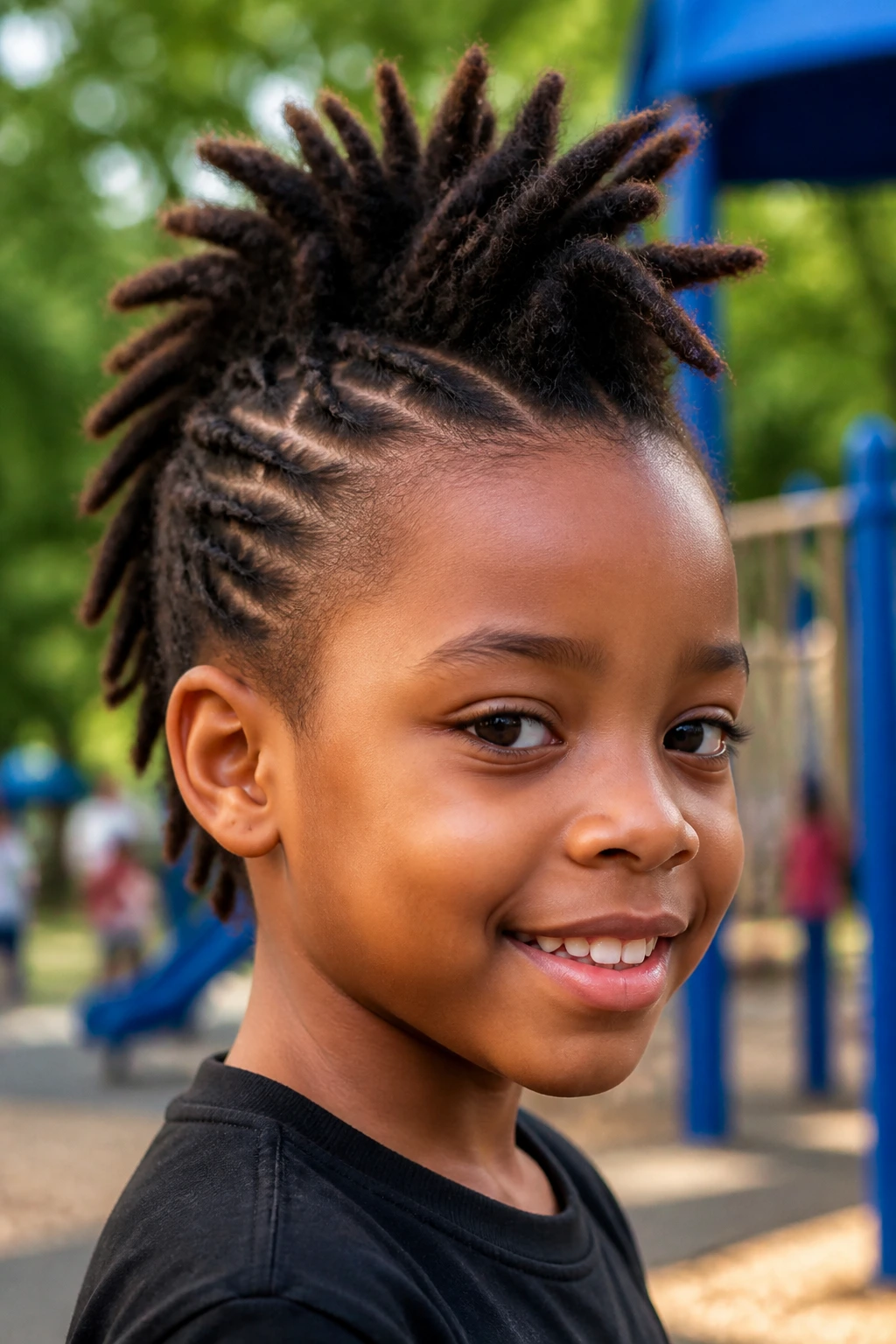
The loc mohawk is for days when you want structure and a little attitude. Pin, twist, or smooth the sides close to the head and let the center section stay lifted. It gives the child freedom around the ears while keeping the top neat.
This style is a strong pick for kids who move a lot because the sides stay out of the way. Keep the side sections soft, though. A mohawk can go from playful to too tight fast if you’re dragging the hair toward the middle like you’re trying to win a contest nobody asked for.
10. Criss-Cross Front Pony
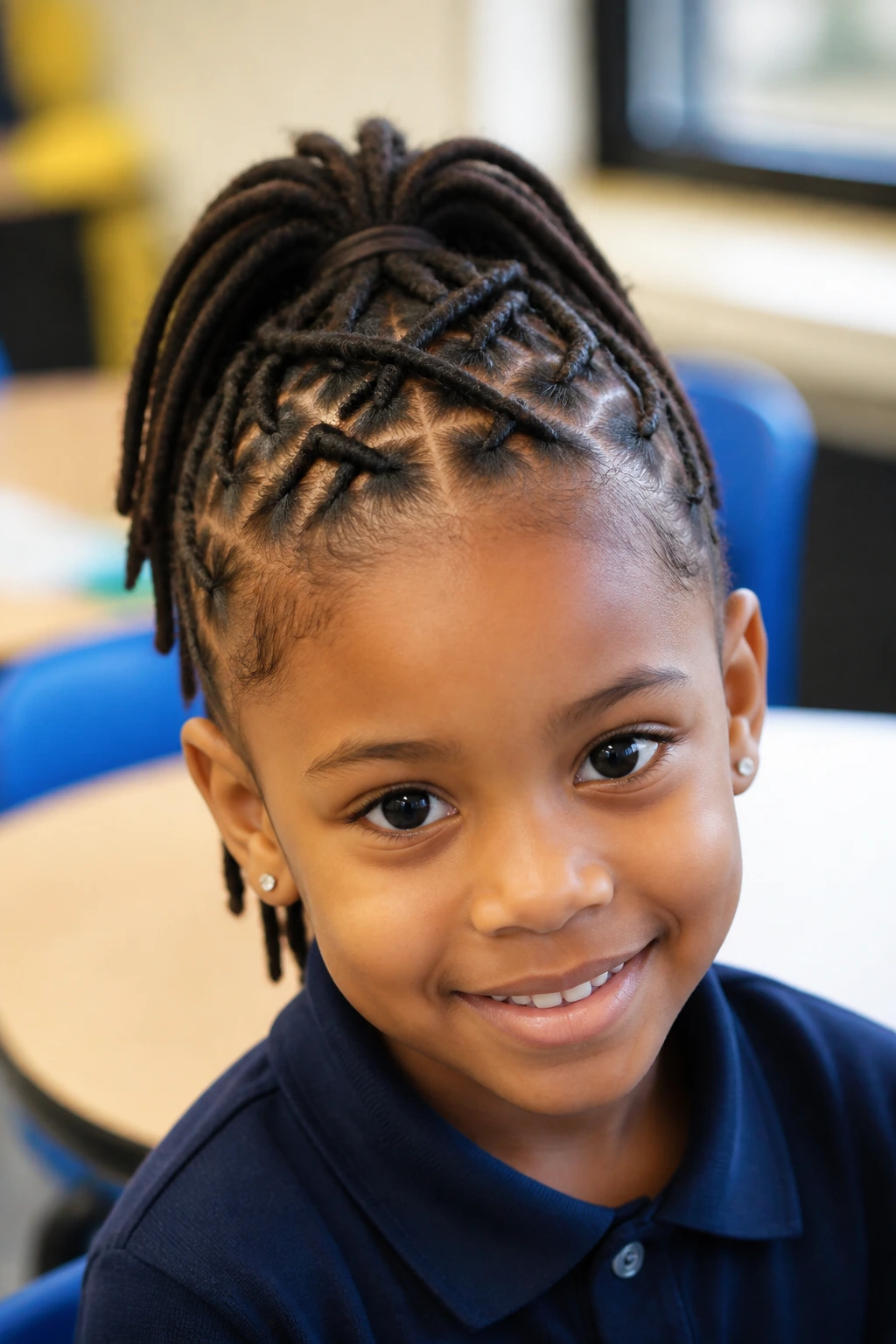
Criss-cross front styling looks more detailed than it actually is. Take small front sections, cross them over each other, and secure them toward the back before pulling the rest into a ponytail. The result has enough shape to feel special without taking all morning.
I like this style for picture day and school events because it stays neat even when the ponytail itself gets a little messy. The front pattern is the part that does the work. Keep the crossovers broad and soft, not tiny and overcontrolled.
11. Halo Wrap
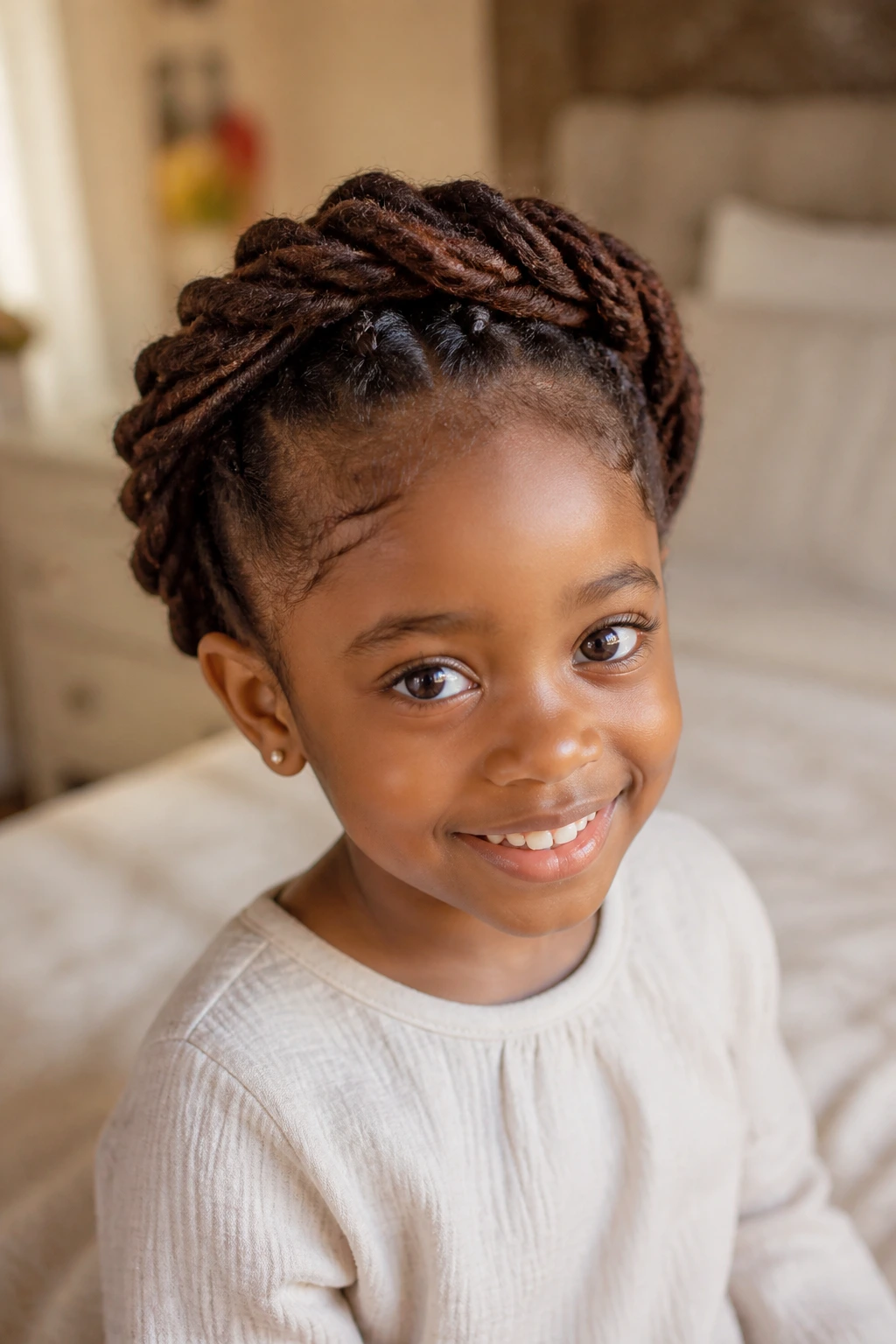
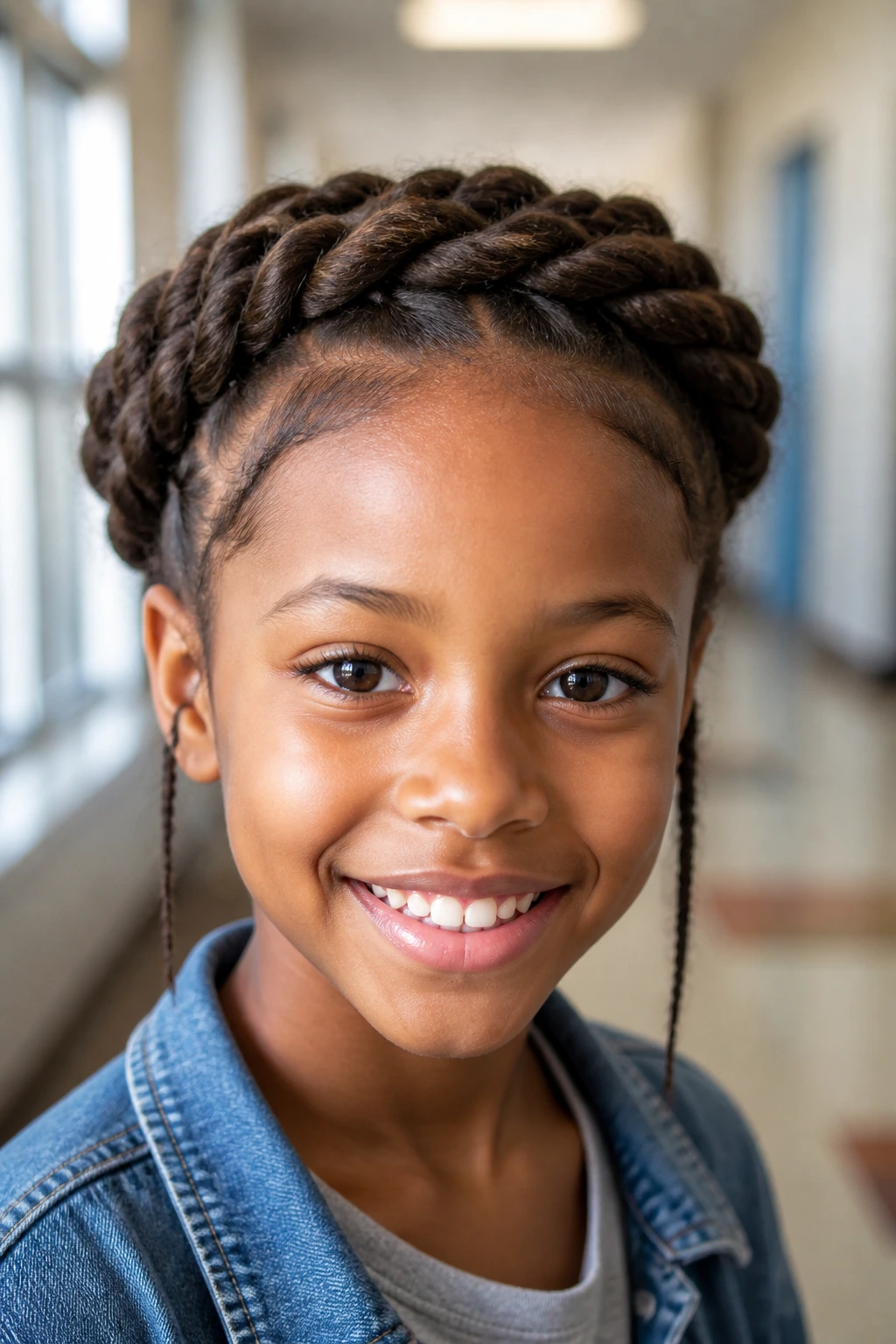
The halo wrap is one of the prettiest ways to make locs look finished on a child. The locs are arranged around the head in a crown-like circle, tucked or pinned so the shape sits smooth and low. It’s a style that reads calm from across the room.
It works best on medium or long locs with enough length to wrap around the head. Use soft pins or a tucked-under method rather than stuffing the hair under tension. This is the style I reach for when the outfit is simple and the hair needs to carry the look.
12. Tucked Bob Set
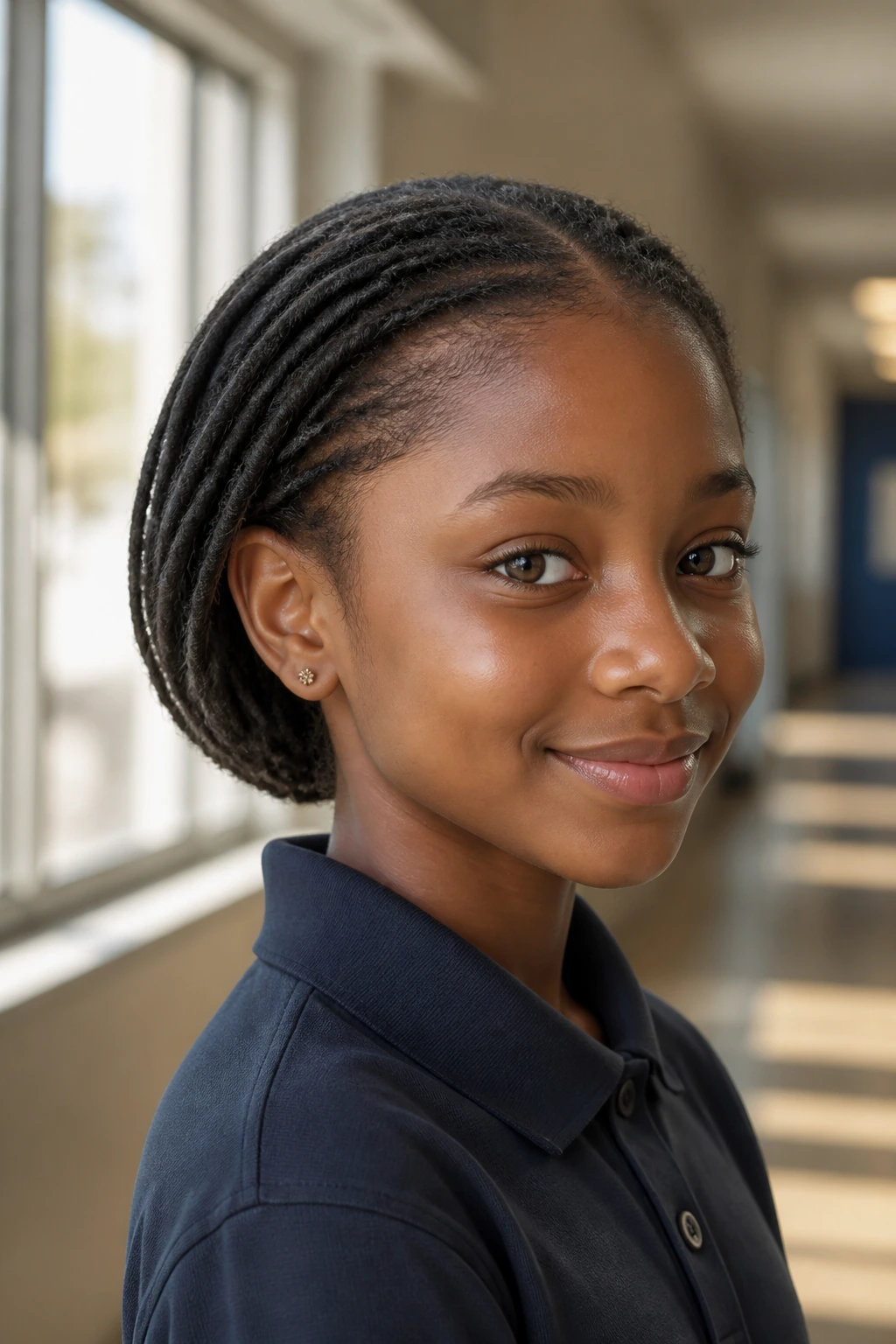
A tucked bob is useful when the child has long locs but you want the shorter, neat look of a bob without cutting anything. Fold the locs under at the nape and secure them so the ends disappear, then smooth the top into a clean shape.
This takes a little patience, but the payoff is a tidy silhouette that feels different from a regular bun. It’s especially nice for school performances or formal days. The key is not to overload the head with pins. Too many pins make the style feel hard instead of tucked.
13. Pinwheel Bun
A pinwheel bun has a rounded, almost spun shape that makes locs look more sculpted. Divide the locs into sections, fan them around a center point, and pin or tuck the sections into a circular bun. It’s a neat look for medium and long locs.
I like this style when a child has a special event and you want something that holds its shape in photos. It does take more time than a ponytail, so it’s not a rushing-out-the-door option. But when you want a bun that doesn’t look flat, this one earns its keep.
14. Three-Section Pony
Splitting the locs into three sections gives you more control, especially on thicker heads of hair. You can make three low ponies across the back, or stack them down the center for a more structured look. Either way, the style keeps the locs organized.
This one works well for kids who dislike heavy single ponytails because the weight gets divided up. It also makes refreshing easier later. If one section gets fuzzy, you can redo just that section instead of starting from scratch.
15. Side Chignon
The side chignon is a low, tucked bun placed just behind one ear or along the jawline. It has a softer shape than a center bun, and that makes it a nice choice for dress-up days, family photos, or anything that needs a polished finish without looking stiff.
Keep the bun compact but not squeezed. A child should be able to lean back without feeling the bun jam into the seat. If the locs are long, let one or two ends peek out on purpose rather than forcing every strand into submission. That little softness helps the style breathe.
16. Beaded Ends Style
Beads on loc ends can be fun, but on kids they need a lighter hand than adults often use. A few lightweight beads or cuffs at the tips add movement and sound without weighing the locs down. That’s the part most people miss: the style should feel easy, not like the head is carrying jewelry.
Keep bead count low, especially on younger children. Too many beads can tug at the ends and clack against the collar all day. If the child likes to chew or pull at everything, skip beads entirely and choose cuffs or ribbons instead.
17. Twisted Front Rows
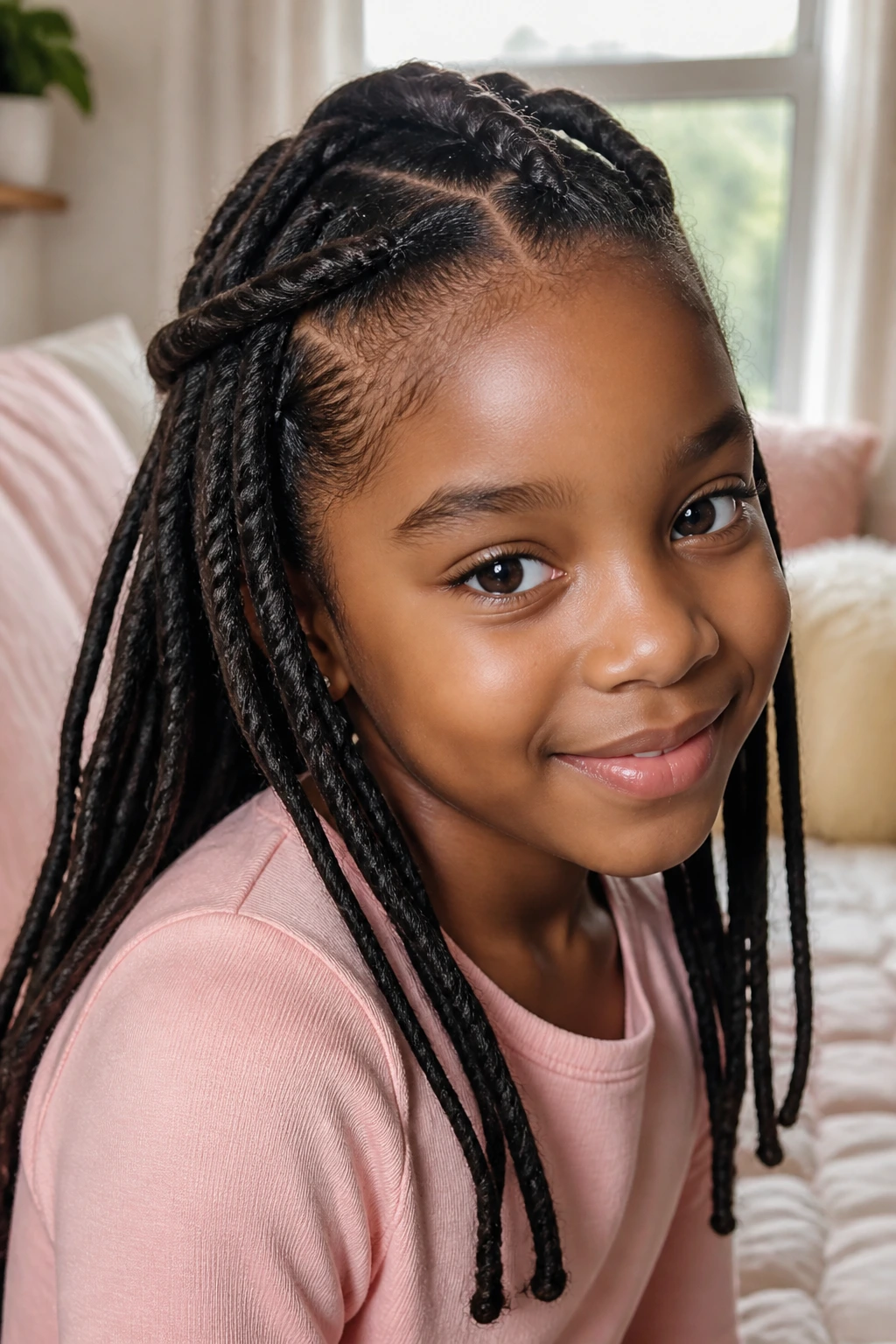
Twisting the front rows back is one of the cleanest ways to shape a child’s locs without taking away length. Make two to four loose front twists, pin them back, and leave the rest free or gather it low. It frames the face and gives the roots a break from full-up styles.
This works well when you need a middle ground between loose locs and a full ponytail. It’s also kinder to the hairline than tiny braids pulled too tight. If you want the style to last longer, mist the front lightly and smooth the twists with foam before pinning.
18. Faux Hawk With Loose Ends
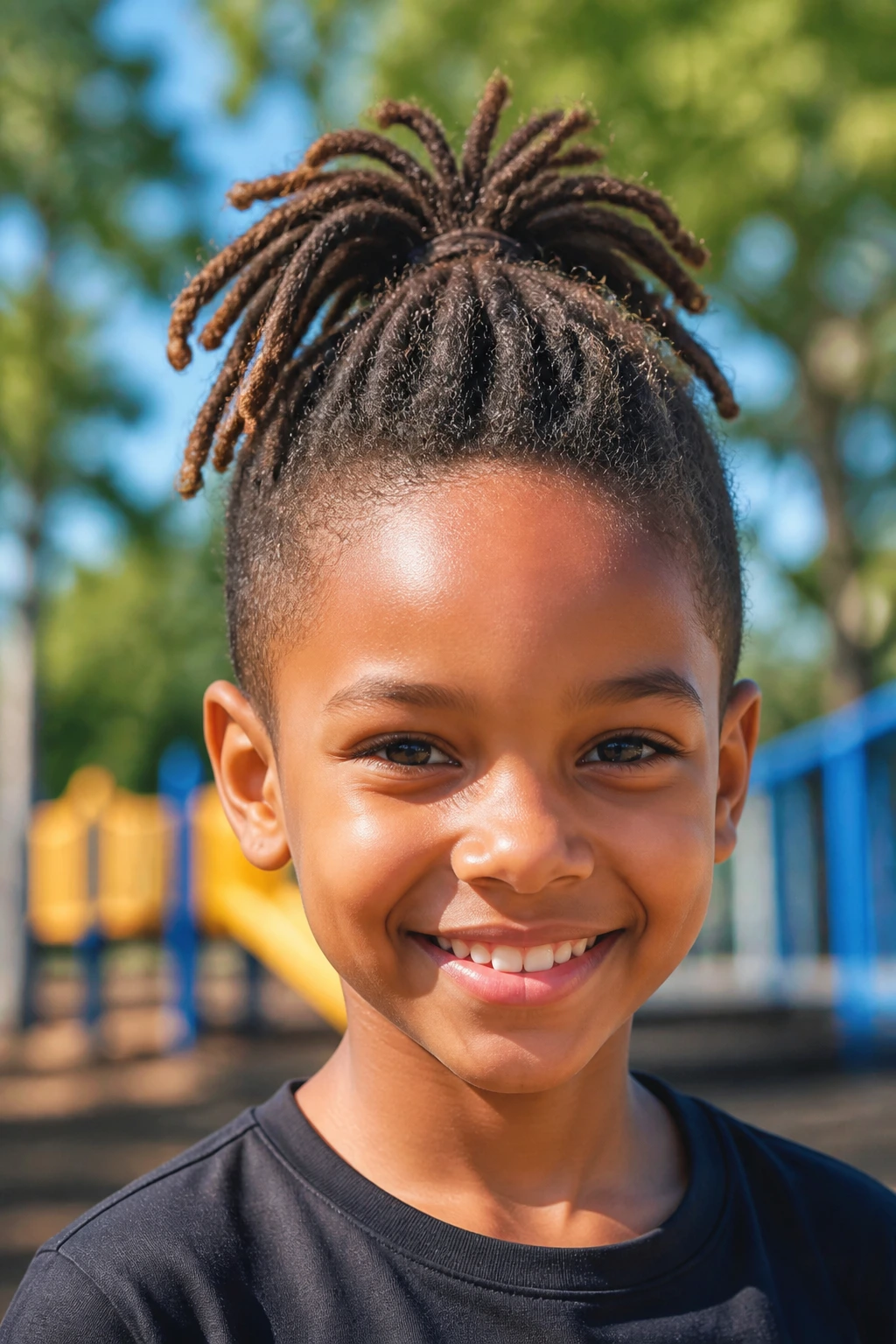
A faux hawk gives the locs a lifted center strip while the sides stay controlled. It’s a fun option for kids who like a style with a little shape, but it doesn’t require the tightness of a real mohawk. The center can sit in a ponytail, a bun, or loose gathered locs.
I’d use this for active kids or weekend plans. It keeps the sides off the face and lets the style look intentional even when the child has been running around all day. The only thing to watch is the side tension. Keep it soft. The lift should come from the shape, not the pull.
19. Basket-Weave Updo
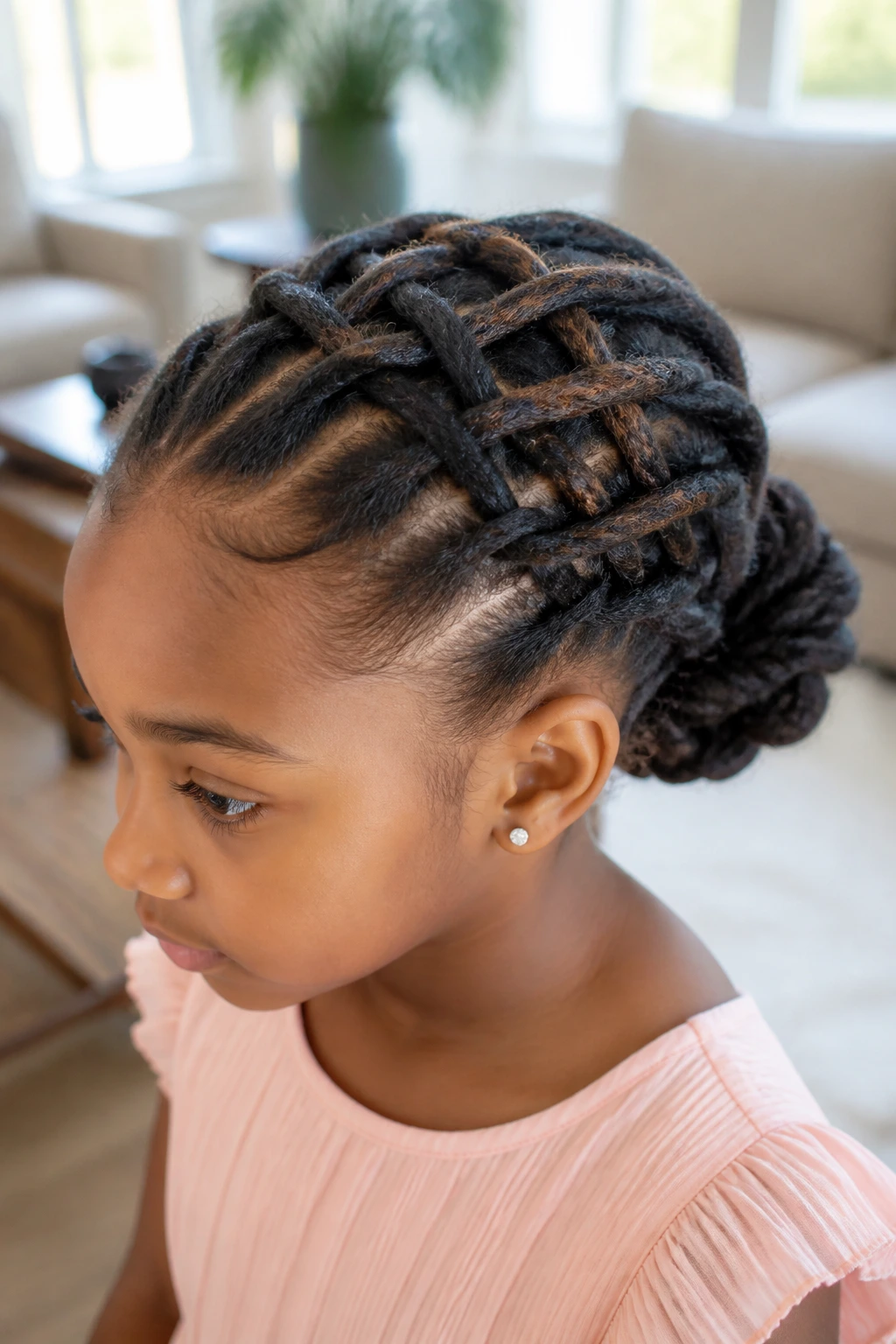
A basket-weave updo is more detailed, and that’s exactly why it works for special occasions. Sections cross over one another in a woven pattern before being tucked into a low or mid updo. The result looks intricate from a distance without needing tiny, overworked parts.
This style is best for medium and long locs, and it rewards patience. It’s not the fastest option in the room, but it can hold its own for photos, performances, or holidays. Keep the weave broad enough that it doesn’t pinch the scalp. Pretty should not mean tight.
20. Double Buns With a Center Part
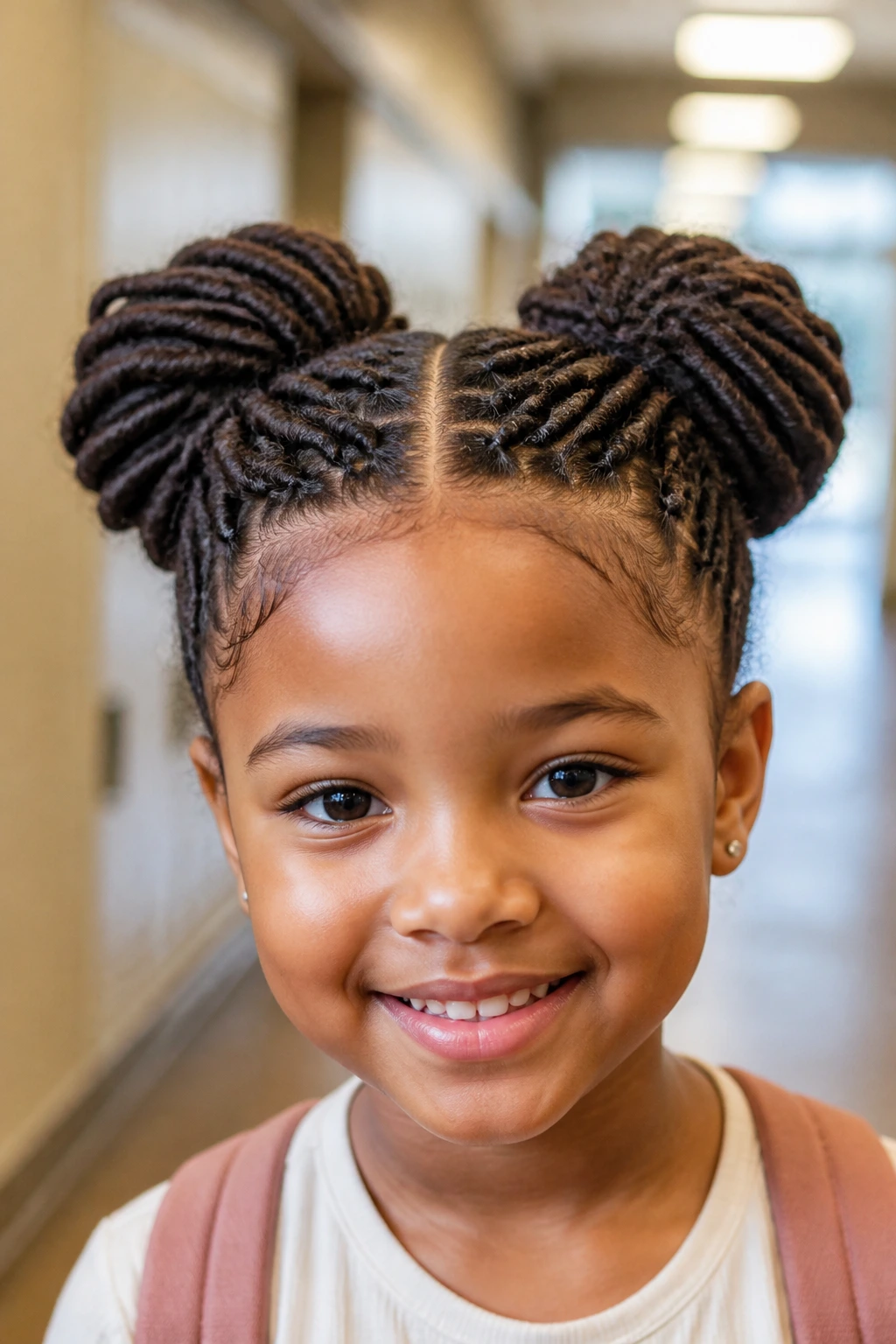
Double buns with a center part are like space buns’ calmer cousin. The buns sit lower and a little softer, which makes them easier to wear for school or errands. They still give that balanced look down the middle, just without the extra bounce.
This style works well on medium-length locs that can gather into two even sections. I prefer larger buns here rather than tiny ones. Tiny buns can look cute, but they often pull harder than they should. Bigger, softer buns tend to sit better and stay put longer.
21. Curled Ends on Flexi-Rods
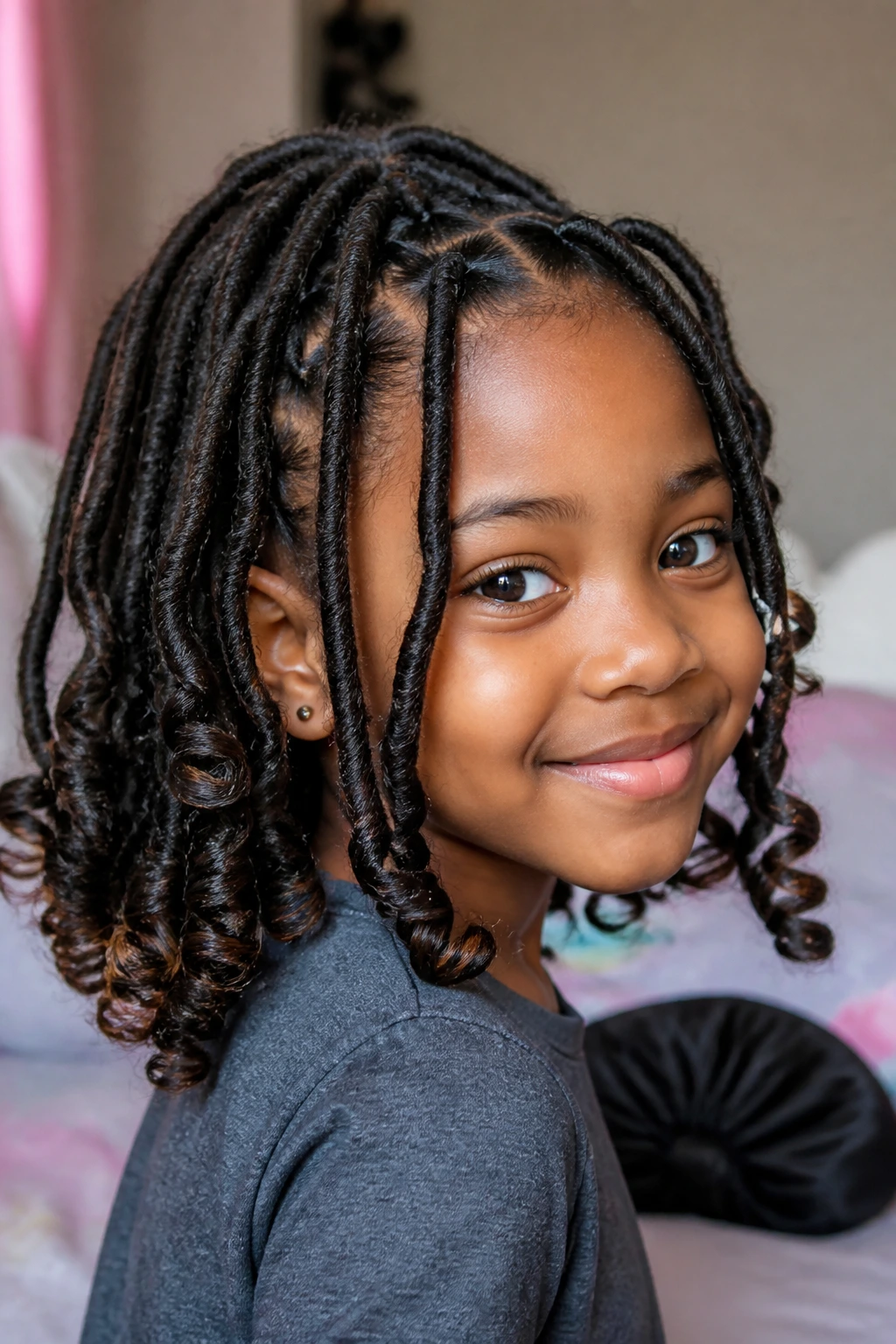
If the child has enough length, curled ends change the whole feel of locs. Flexi-rods or perm rods at the ends create soft bends and curls that make a simple style look finished. You can use them on loose locs or combine them with a half-up look.
The biggest rule is drying time. Don’t rush this style. If the ends come down before they’re dry, the curl goes flat and the frizz shows up fast. I usually treat this as an evening style that can set overnight under a bonnet or scarf, then get removed the next morning.
22. Low Fold-Under Pony
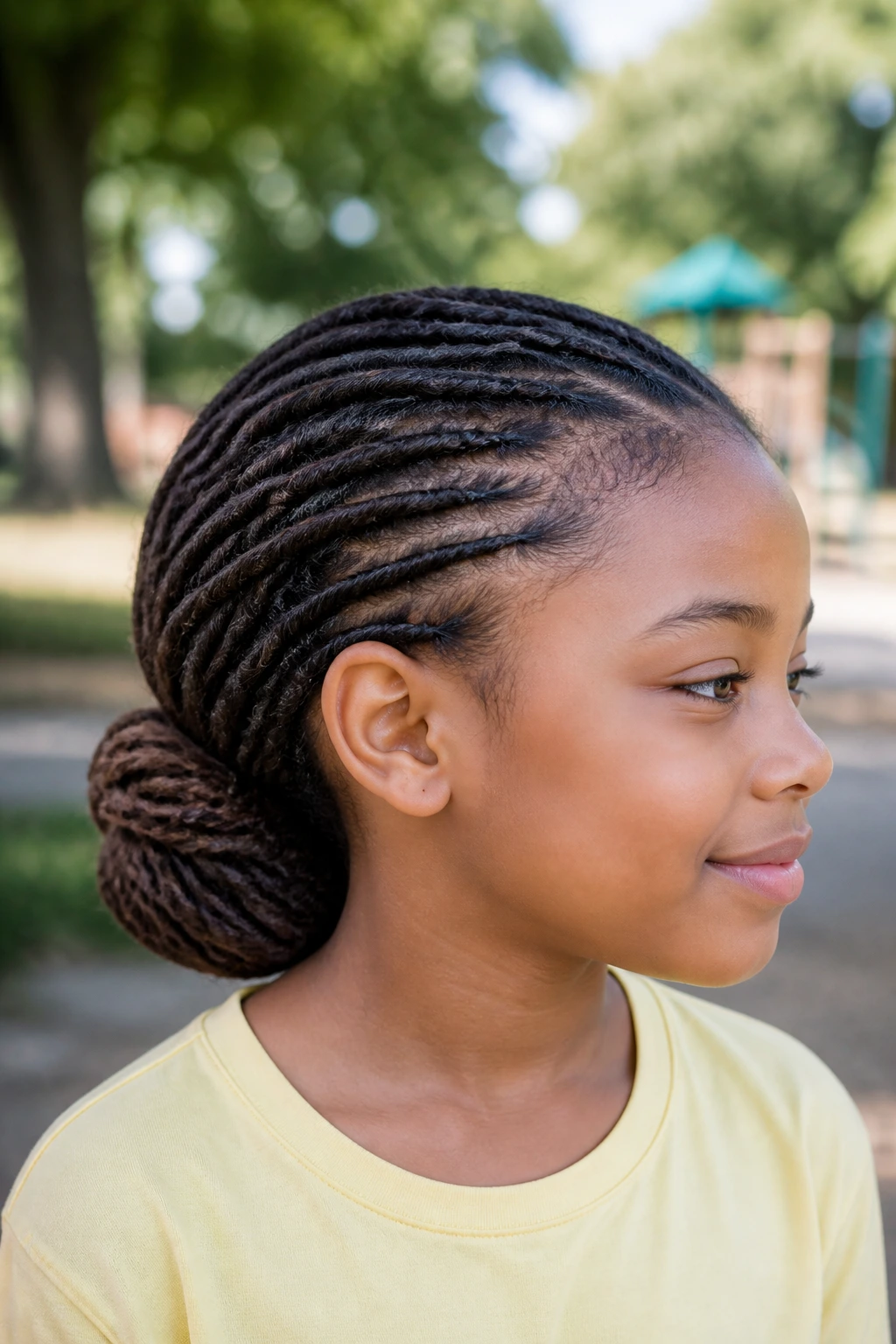
A low fold-under pony is one of those quiet little styles that keeps everything tidy without trying to be the star. Gather the locs low, then fold the length under itself so the ends disappear into a smooth shape. It’s neat, compact, and good for days when collars and coats are going to be in the mix.
This works well on medium and long locs, especially if the child has a uniform or likes a style that won’t swing around. The fold should sit loose enough to avoid a sharp bend at the root. If you have to yank to make it stay, the base is too tight.
23. Triangle-Part Puffs
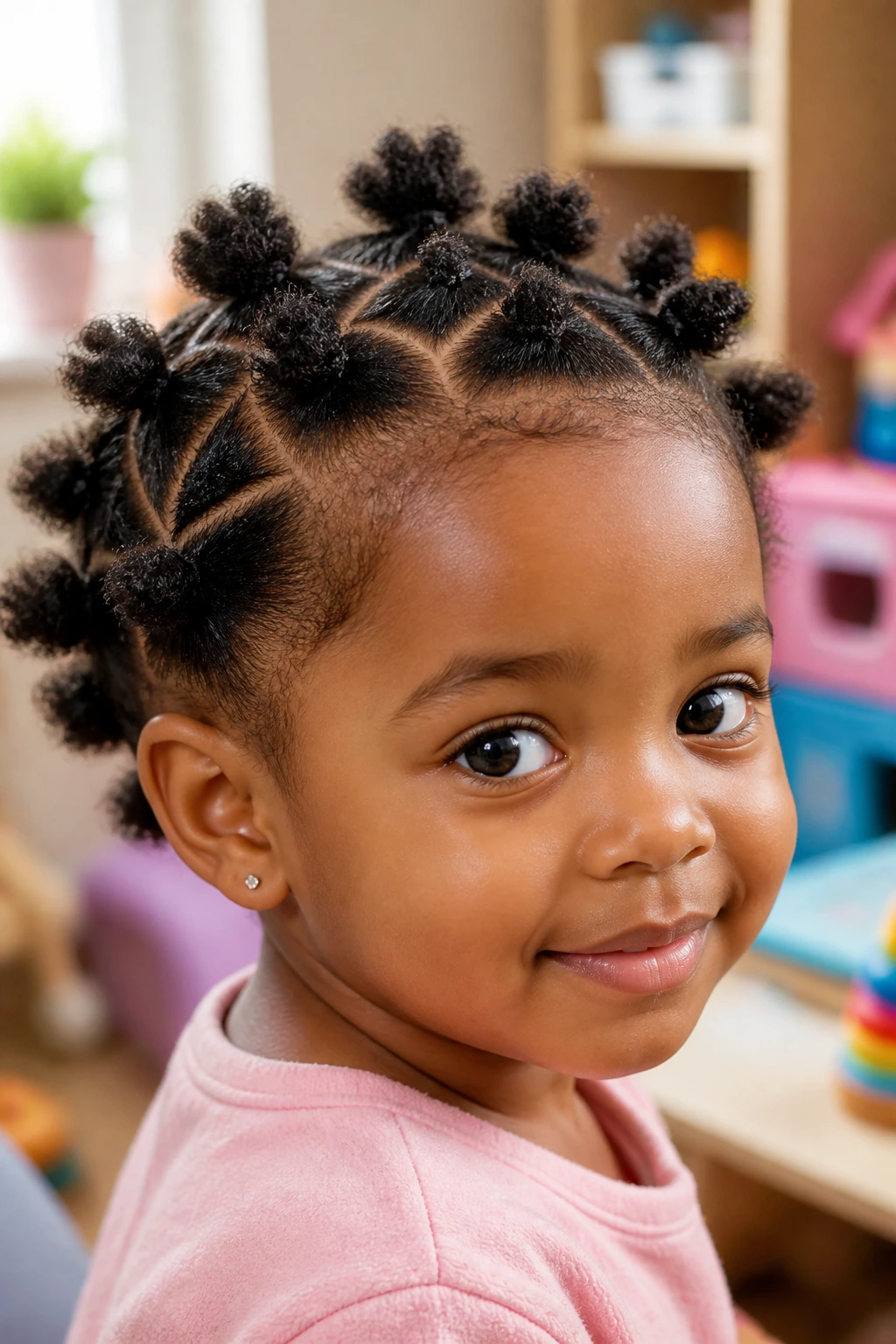
Triangle parts make short locs look intentionally styled instead of simply gathered. On starter locs, you can section the hair into small triangle parts and secure each section into little puffs or mini pony sections. The parting is the star here.
This is one of the better choices for toddlers and younger kids with short locs because it gives shape without forcing the hair to do too much. Add a tiny bow or bead if the child likes decoration, but keep the overall look light. The charm comes from the neat sectioning, not from piling on extras.
24. Ribbon-Laced Ponytail
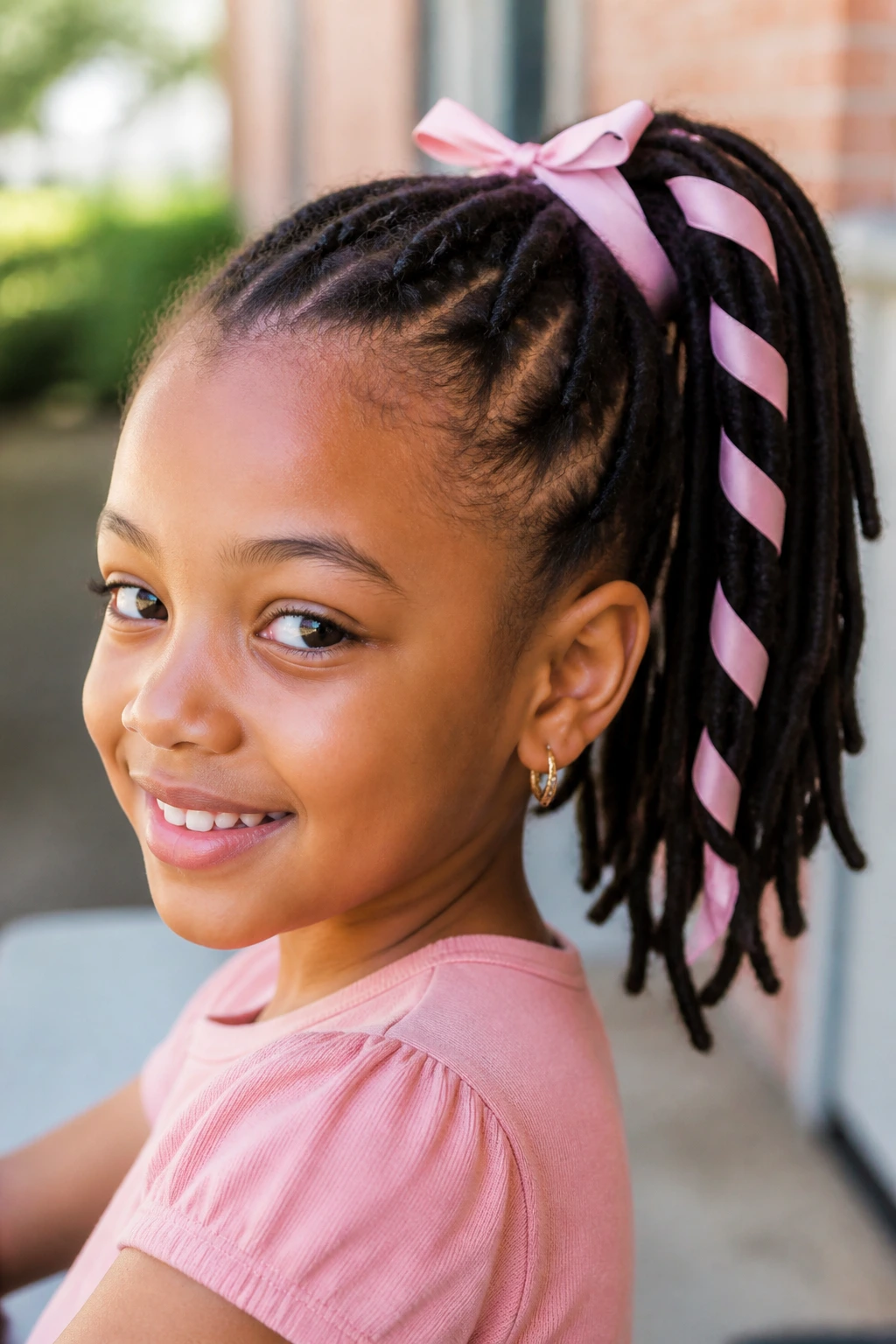
A ribbon-laced ponytail is exactly what it sounds like: a ponytail with a soft ribbon woven around the base or through the length. It turns an ordinary pony into something a little more special without changing the structure too much.
I like this one for picture day, parties, or any day when the outfit is plain and the hair needs a pop. Use a fabric ribbon, not a stiff one with sharp edges. A soft ribbon moves better and doesn’t tug at the locs. Keep the ends short enough that they won’t become a mouth toy on younger kids.
25. Headband Tuck-Back
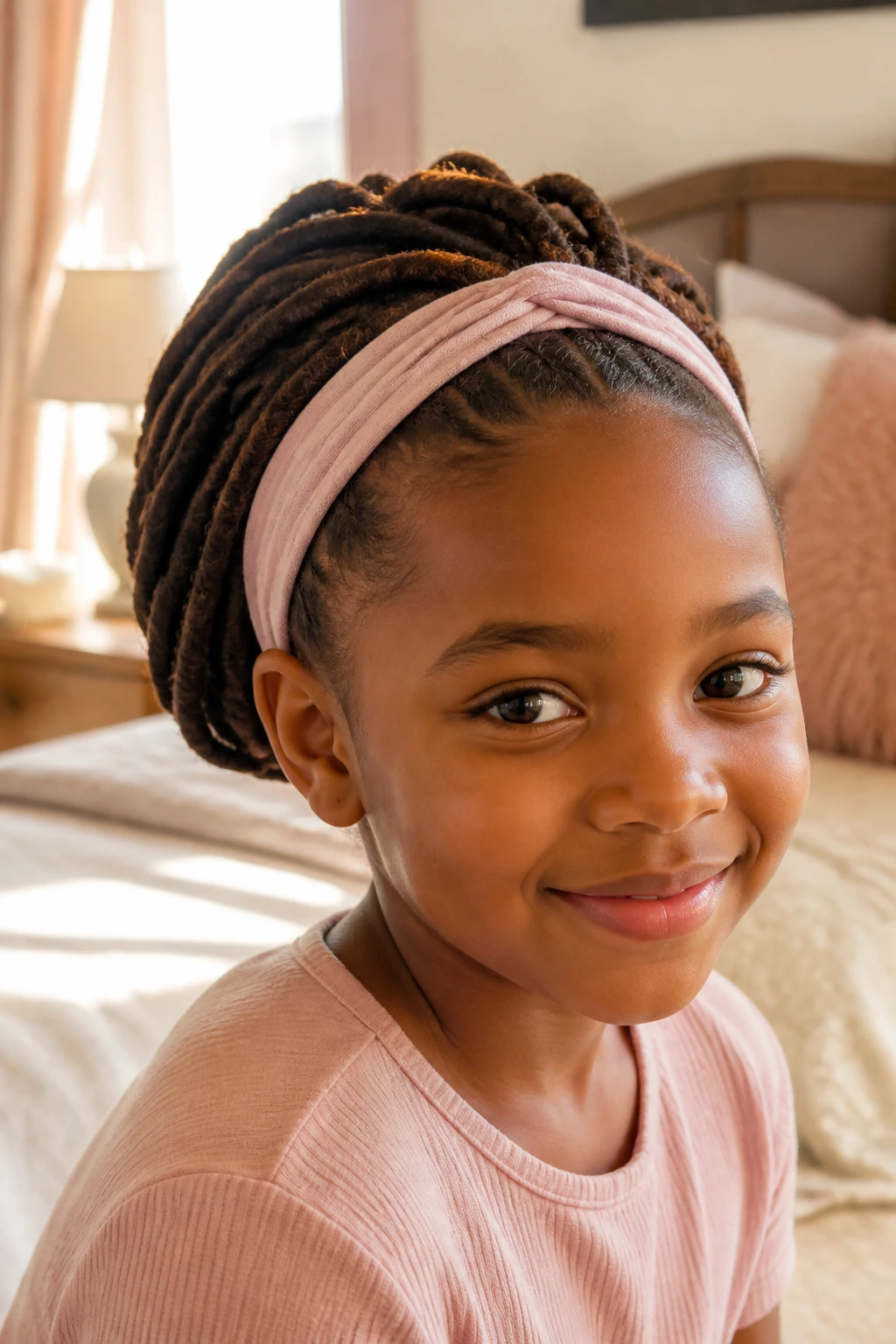
A soft headband tuck-back is a lifesaver on rushed mornings. Place a stretchy, comfortable headband around the head, sweep the front locs back, and tuck the rest in a way that keeps the face open. Some children can wear the length free; others look better with the ends folded under.
This style is especially good for kids who dislike lots of hands-on manipulation. It’s quick, gentle, and easy to undo. If the headband leaves a line across the forehead, it’s too tight. A soft band should sit there and disappear into the style, not announce itself all day.
26. Crossed-Elastic Puffs
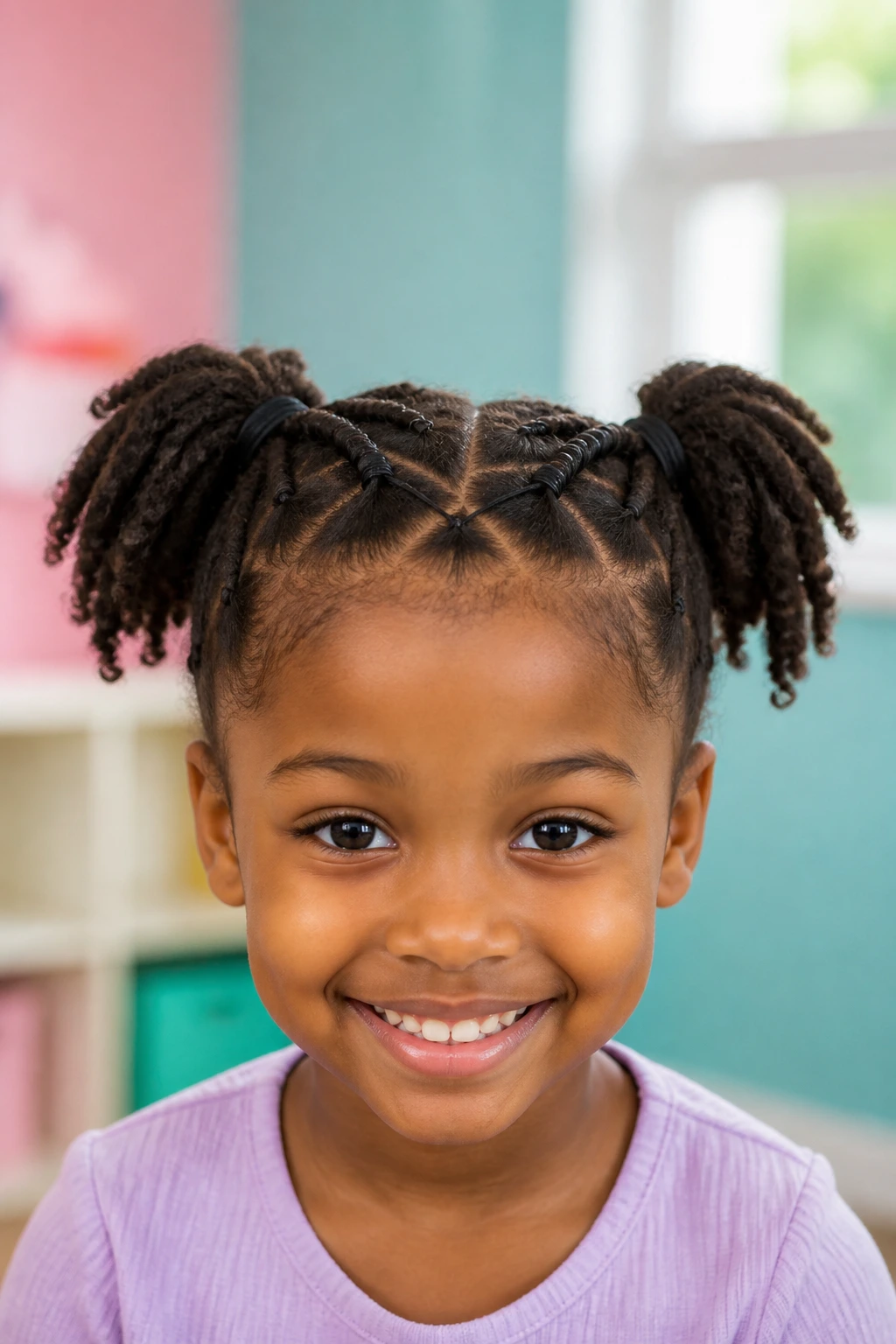
Crossed-elastic puffs create neat little sections that stay orderly without needing pins or braids. Divide the locs into two or four sections, cross them with elastics, and let each section form its own small puff or pony shape. It’s tidy in a way kids often tolerate well because the style still feels playful.
This is useful for shorter locs or for children who don’t have enough length for buns yet. The crossed bands help the style hold shape, but the base should stay loose. Tiny elastics can snag, so remove them carefully and don’t leave them in longer than necessary.
27. Half-Up Knot Bun
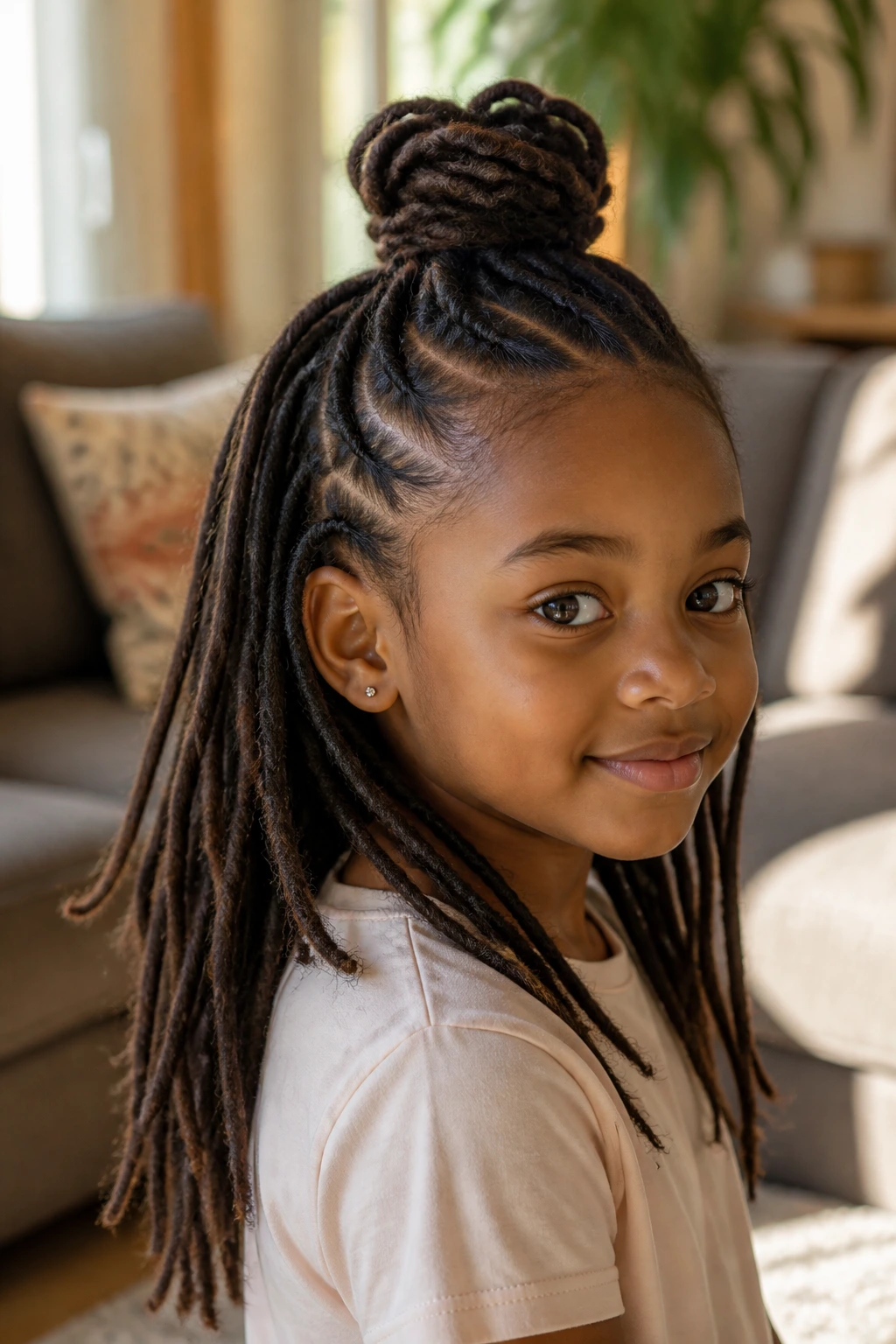
A half-up knot bun keeps the front under control while leaving enough movement in the back to avoid a stiff look. Gather the top half into a knot or mini bun, then let the lower locs fall free. It sits in that nice middle ground between done and relaxed.
This style is good for medium and long locs, especially if the child likes hair on the shoulders but not in the eyes. A ribbon or cuff at the bun base can make it feel finished. I would not make the knot too high on small heads; a lower placement usually sits more comfortably.
28. School-Ready Side Sweep
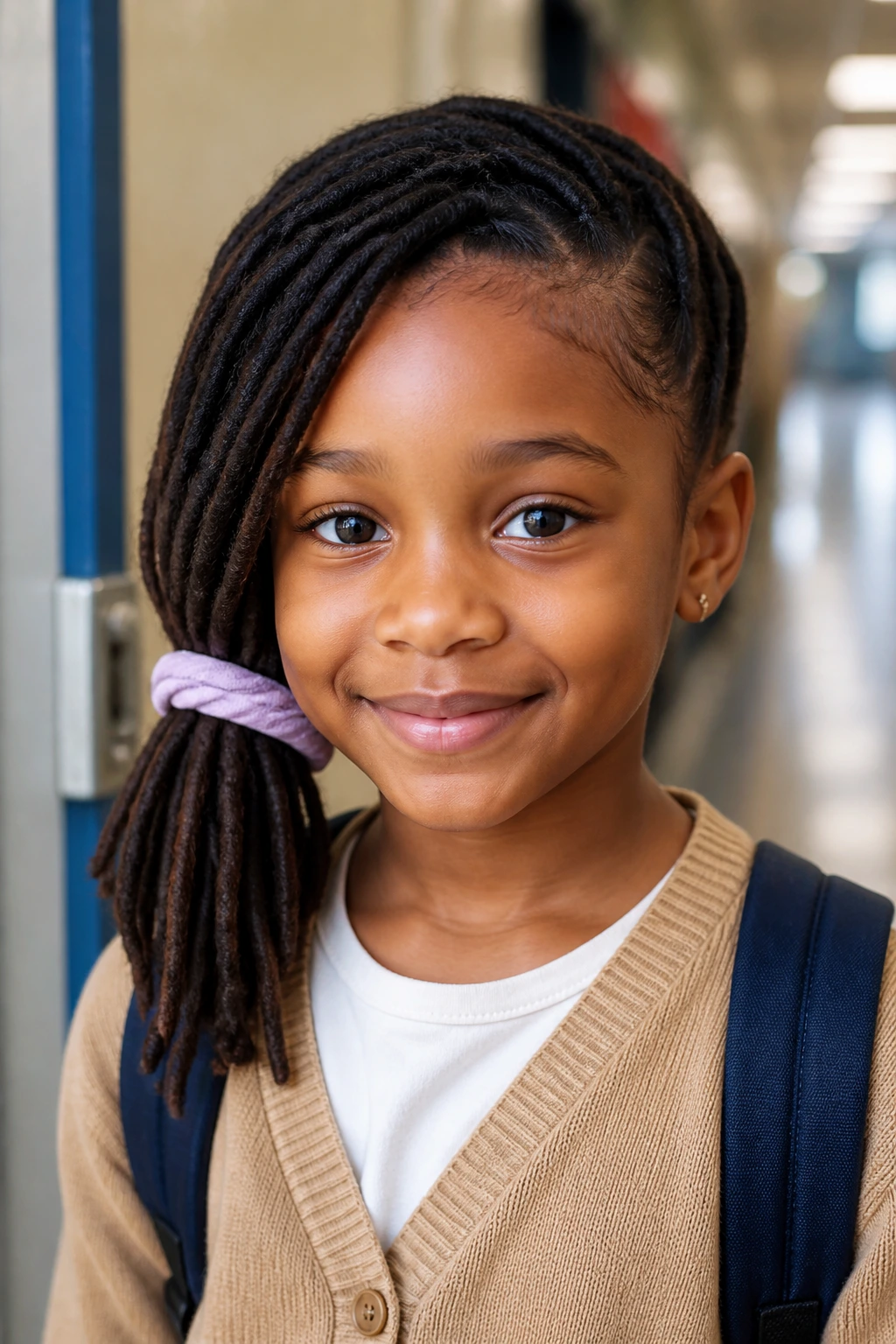
A side sweep is the no-nonsense answer for mornings when time has evaporated. Sweep all the locs to one side and secure them low with a soft band or clip, then smooth the front so the face stays clear. It’s simple, fast, and useful on nearly every length once the locs can move.
This is the style I’d use when a child needs to look neat and leave the house in five minutes. It works best when you want clean shape without a lot of sectioning. Add one bow or clip if you want to dress it up, or leave it plain and let the side placement do the work.
Why Low-Tension Styling Wins Over Fancy Tight Looks
A child’s style should survive the day without becoming the day’s main complaint. Tight loc styles tend to announce themselves fast: the child touches the front, the scalp looks shiny and stretched, the little face scrunches up when you say “hold still.” That’s your sign.
Low-tension styling gives you a better trade. The parting may not look glass-smooth, and that’s fine. The hairline stays calmer, the locs hold up better overnight, and you’re less likely to get those red, tender spots that show up after a style has been yanked into place. I’d take a soft style that lasts three days over a tight one that collapses in six hours. Every time.
There’s another practical piece here. Kids sleep weird. They sit on the floor, lean in car seats, rub their heads on sleeves, and pull bonnets off at 2 a.m. A style that leaves a little room for movement usually outlasts one built like a tiny helmet. That’s not less neat. It’s more honest.
Essential Equipment for Kids’ Loc Styling
-
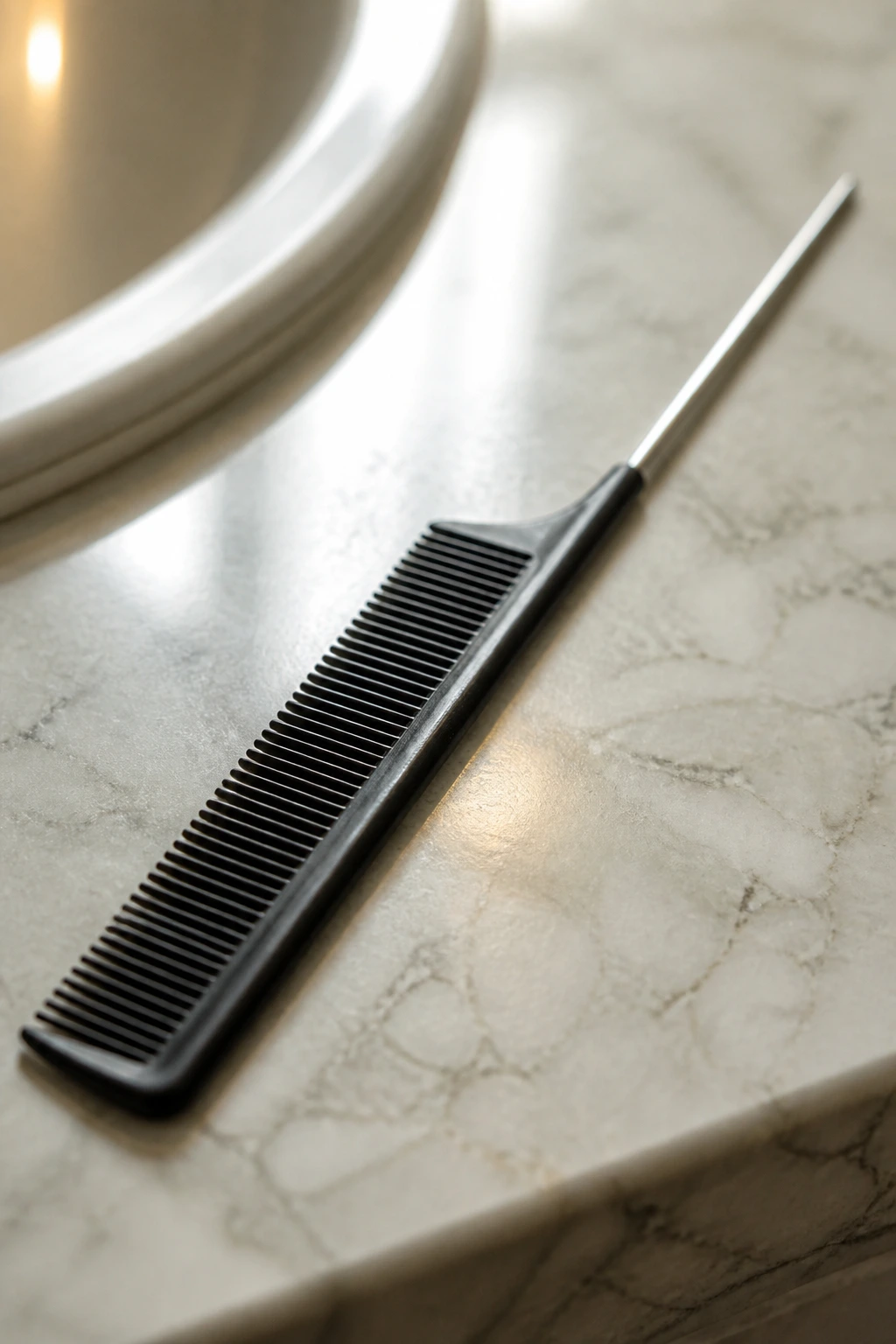
Rat-tail comb: Best for clean parts and sectioning, especially when the hair is lightly misted.
-
Spray bottle with water and a little leave-in: Helps locs separate without dry tugging; keep the mist light, not soggy.
-
Soft satin scrunchies or covered bands: They hold better than old-school rubber ties and are kinder to the loc ends.
-
Duckbill clips: Useful for holding sections out of the way while you build a bun, ponytail, or criss-cross style.
-
Lightweight mousse or foam: Smooths flyaways and gives shape without the heavy residue some gels leave behind.
-
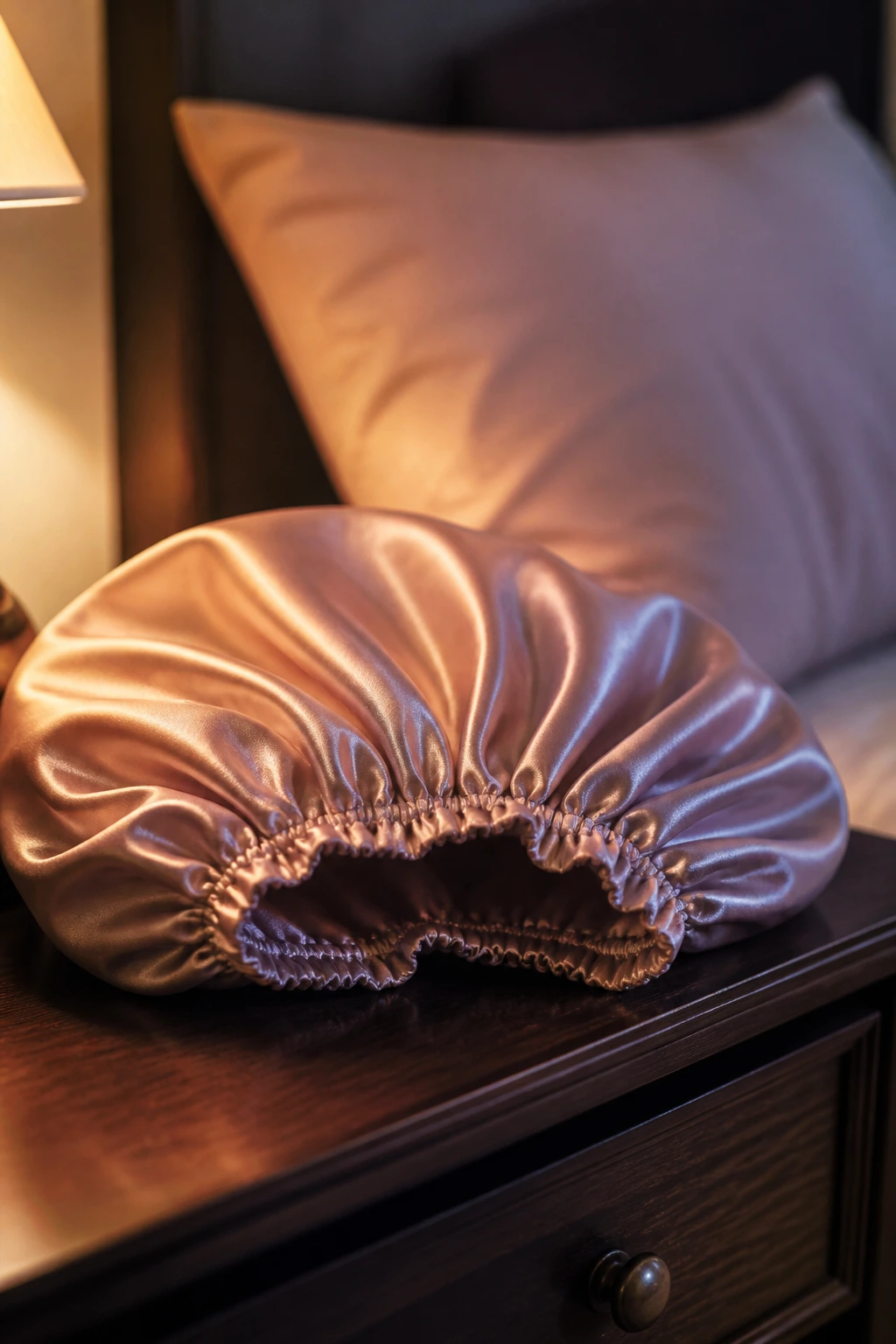
Satin scarf or bonnet: Keeps the style neater overnight and saves you from redoing the front every morning.
-
Small hair cuffs or lightweight beads: Handy for older kids who want decoration, but keep the amount low so the style doesn’t get heavy.
-
Soft-bristle brush: Good for smoothing the hairline and sealing the part, as long as you’re gentle.
-
Wide-tooth comb: Useful for pre-loc detangling and for cleaning up loose sections before styling.
Smart Product and Accessory Picks
Kids’ loc styles work better with light hands and light products. I reach for water-based mousse before anything thick, because it smooths frizz without clogging the locs. Heavy wax can make parts look clean for a day and then leave a dull, sticky film that clings to the hair.
If you use gel, use a little. A dab on the front rows or a small amount on flyaways is usually enough. The whole head does not need to feel sealed. On dark locs, flakes show up fast, and children do not need a style that starts looking dusty by lunchtime.
For accessories, choose soft bands, satin ribbons, and cuffs with smooth edges. Beads should be lightweight and not too many at once. If the child is small enough that anything loose goes straight to the mouth, keep beads out of the equation entirely. That’s not being fussy. That’s being sensible.
How to Wear These Styles to School, Practice, and Picture Day
Presentation: For school days, I like styles that keep the hair off the face without making the child look overdone. Clean parts, a low bun, or a side sweep usually beats a style packed with too many accessories. For picture day, a halo wrap, pinwheel bun, or ribbon-laced ponytail gives you enough shape to stand out without turning the head into a display rack.
Best Matches: High ponies, loc mohawks, bubble ponytails, and double buns tend to do well for practice because they stay up and out of the way. Low buns, tucked bobs, and side chignons make more sense for uniforms, events, or days when the hair needs to sit quietly under a sweater or jacket. Half-up looks sit in the middle and work for almost everything.
Wear Time: Simple styles often hold for 1 to 3 days. More structured wraps, buns, and braided fronts can last 3 to 5 days if you protect them at night. If the style gets sweaty, flattening starts at the crown first, so that’s the area to refresh before you touch the rest.
Accessory Pairing: Satin bows, small cuffs, and one ribbon are enough most of the time. Heavy beads and loud hardware are better saved for short outings. On younger kids, keep anything dangling short so it doesn’t scrape the seatbelt, the collar, or the side of the face.
Additional Tips and Style Boosters
Shine Without Slippage: A light mist of water followed by foam gives locs shape without turning the base greasy. That matters because slippery hair slides out of bands, and then you’re fixing the same ponytail three times before breakfast.
Parting Trick: Part the hair when it’s slightly damp, not dripping wet. The sections stay cleaner, and you won’t have to fight every little frizzy root like it’s a personal grudge.
Accessory Upgrade: Pick one visual accent and let it be the star. A ribbon at the base, a few cuffs on the ends, or a single cluster of beads goes farther than stuffing the style with every shiny thing in the drawer.
Make-It-Theirs: Let the child choose the side part, the bun height, or the ribbon color. When they feel some control, they stop picking at the style every ten minutes.
Quick Reset: If a style starts looking fuzzy by the second day, mist the front lightly, smooth it with your fingers, and rewrap the bonnet for ten minutes. That tiny reset often buys you another full day.
Make-Ahead, Night Care, and Style Refreshes
Most kids’ loc styles hold better when you prep the hair the night before. If the locs need a wash, dry them fully first. Wet locs stuffed into a bun at bedtime stay damp in the middle longer than people expect, and that can lead to a sour smell or a fuzzy, stretched shape by morning.
At night, a satin bonnet or scarf is the non-negotiable piece. It keeps the front from flattening, cuts down on frizz, and saves the parting from getting rubbed loose against a pillow. For longer locs, a loose pineapple or low tuck inside the bonnet usually works better than piling the hair high and hoping for the best.
If you’re trying to stretch a style, refresh the front every morning with a tiny bit of water or foam and a soft brush. Low buns, side sweeps, and headband tuck-backs can often go 3 to 5 days. Beaded styles and curled ends usually look their cleanest when they’re worn for a shorter window and then reset. If the scalp is itchy, tight, or flaky, don’t push it. Take the style down, clean the roots, and start fresh.
Variations and Adaptations to Try
Toddler-Soft Version: Skip beads, skip tiny elastics, and choose pigtails, triangle-part puffs, or a headband tuck-back. The style should come off easily and feel light enough that the child forgets it’s there.
Picture-Day Polish: Add a halo wrap, ribbon-laced ponytail, or curled ends on flexi-rods. Keep the outfit simple and let the hair carry the polish. One strong detail is enough.
Sports-Mode Swap: Use high ponies, loc mohawks, double buns, or a side sweep with the ends tucked close. These styles keep the locs off the neck and away from the face during movement.
Short-Loc Adaptation: Choose center-part pigtails, crossed-elastic puffs, twisted front rows, or a soft headband tuck-back. Short locs need clean sectioning more than they need length-based styling.
Sensitive-Scalp Version: Favor loose parts, soft scrunchies, and foam instead of thick gel. Avoid styles that cling hard to the hairline, and keep the look low and simple.
Big-Event Version: Reach for pinwheel buns, basket-weave updos, or a tucked bob set. These styles take more time, but they give you a finished shape that reads special without needing a lot of extra decoration.
Common Mistakes to Avoid
-
Pulling the front rows too tight: If the child winces, rubs the temples, or the scalp looks shiny and stretched, the base is too tight. Loosen it or switch to a lower style.
-
Using heavy products like they’re glue: Thick wax and too much gel leave flakes, dull the locs, and can make the scalp itchy. A light foam or a small dab of gel is usually enough.
-
Loading up on beads or metal accents: Heavy accessories drag the ends down and can make the child lean one way all day. Keep decorations lightweight and limited.
-
Leaving the same style in too long: Roots get fuzzy, parts disappear, and the scalp starts feeling trapped. Reset the style before it gets to that point.
-
Skipping satin at night: Morning frizz doubles fast when locs rub against cotton pillowcases. A bonnet or scarf makes the style last longer with almost no extra effort.
-
Starting on dry, tangled locs: Dry hair fights back. Mist lightly first, then section and style so the locs separate without rough tugging.
Frequently Asked Questions
How tight should loc styles for kids be?
Tight enough to stay in place, loose enough that the child can turn their head without complaint. If the scalp looks stretched, or the child keeps touching the front row, the style needs to be loosened.
Can you style starter locs?
Yes, but keep the style simple. Triangle-part puffs, pigtails, twisted front rows, and headband tuck-backs work better on short or budding locs than heavy buns or styles that need a lot of wrapping.
What loc styles last the longest on kids?
Low buns, halo wraps, tucked bobs, and side sweeps usually hold up well when they’re protected at night. Simple styles often outlast complicated ones because there’s less to come apart.
Are beads safe for little kids?
They can be, if they’re lightweight, smooth, and used sparingly. For toddlers or kids who still mouth everything, I’d skip beads and use ribbons or cuffs instead.
What if my child has a sensitive scalp?
Keep the parts wider, avoid pulling the edges tight, and use soft bands instead of tiny elastics whenever possible. A style that feels good on day one is more likely to stay in place on day three.
How do I keep loc styles neat for school and sports?
Choose styles that sit close to the head, like low ponies, mohawks, or double buns. A satin bonnet at night and a light refresh in the morning will do more than heavy product ever will.
Can these styles work on short locs?
Absolutely. Short locs look especially good in center-part pigtails, crossed-elastic puffs, twisted fronts, and headband tuck-backs. The trick is to match the style to the length instead of forcing a long-hair look.
When should I take a style down?
Take it down if the scalp is sore, the roots are locking together in the wrong spots, or the style starts smelling musty after sweat and product build-up. Kids’ locs do better with a reset than with stubbornness.
Calm Heads, Neater Locs
The strongest kids’ loc styles are the ones that do their job quietly. They hold shape, they let the scalp breathe, and they survive the kind of day children actually live through — roughhousing, seatbelts, naps, and all the little head rubs that happen without warning.
If you build from softness instead of tension, everything gets easier. The parts stay cleaner, the child complains less, and you stop spending your mornings fixing styles that were doomed before breakfast. Start with the look that leaves the scalp calm, and the rest tends to fall into place.
