



The best undercut styles for women don’t all shout. Some flash a shaved temple the second you tuck your hair behind one ear. Others hide a clean nape panel under a blunt bob, then show up only when the wind moves or you pile your hair into a knot. That little reveal is the point. It’s what makes an undercut feel sharper than a regular short cut and less predictable than long hair with a few layers thrown at it.
What I like about a good undercut is the way it changes the shape of the hair, not just the length. Heavy hair stops ballooning at the back. Curls get room to spring. Straight hair gets an edge that reads clean instead of fussy. And when the placement is right — at the nape, around the temple, behind the ear, or along one side panel — the cut can be hidden at work and loud on a night out without changing a thing.
There’s a catch, though. Placement matters more than drama. A bad undercut sits too high, grows out into a messy shelf, or fights the way your hair naturally falls. A good one works with the line of your part, the width of your neck, and the amount of bulk your hair actually carries. The best cut is not the boldest one. It’s the one that still looks intentional when it grows three weeks past perfect.
Why These Cuts Keep Showing Up
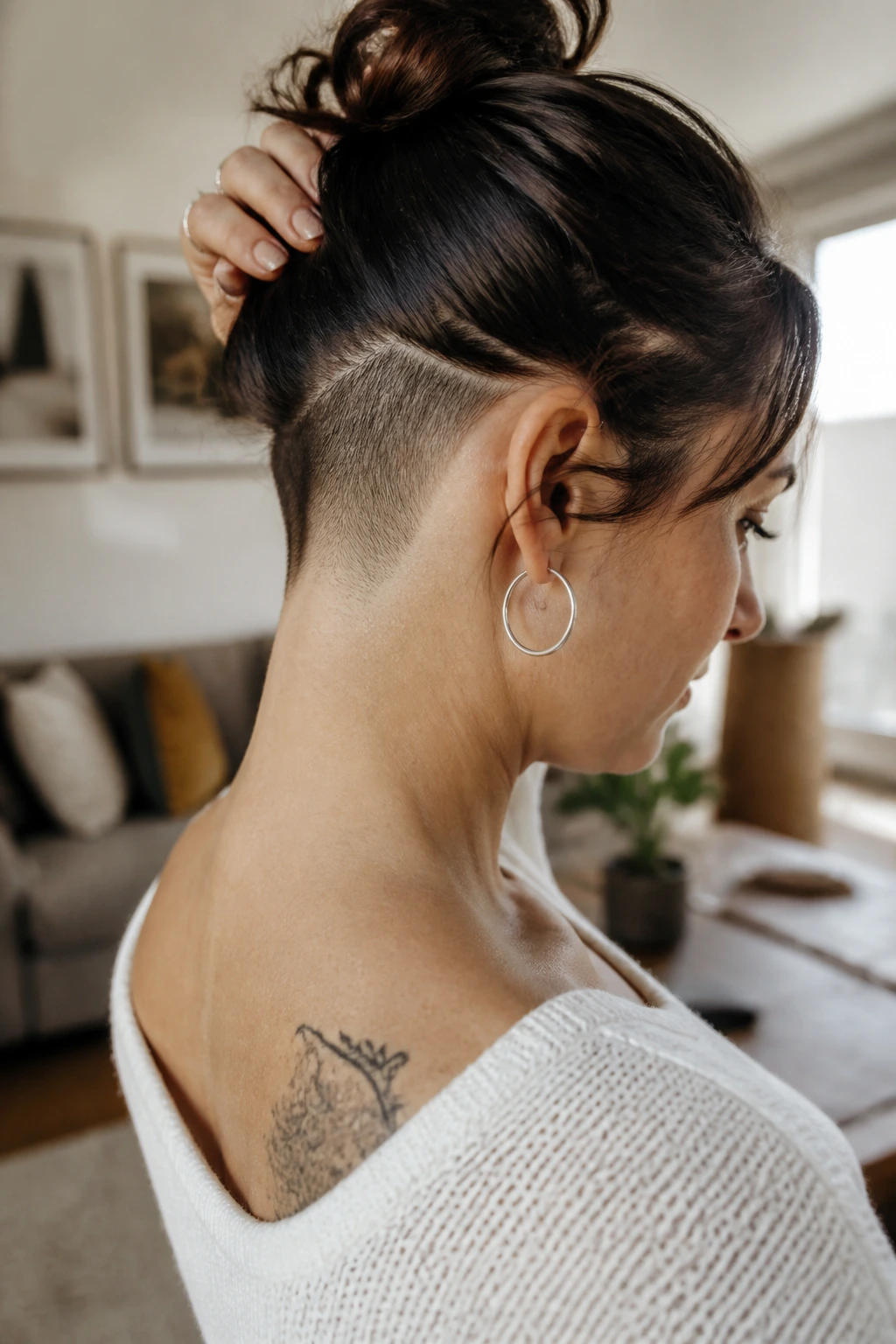
- Hidden by default: A nape shave under long layers stays invisible until you put your hair up, which makes it a safer first undercut if you want options.
- Better weight control: Thick hair, especially at the back of the head, often lies flatter and cooler when some bulk is removed underneath.
- Sharp shape, small commitment: A 0.5 or 1 guard can change the silhouette fast without forcing you into a drastic short cut everywhere.
- Texture-friendly: Curly and coily hair often benefits from strategic removal under the crown, where hidden bulk can make the outline puff out.
- Room for personality: A side shave, line art, or a V-shaped nape gives you a way to make the cut yours without changing the entire haircut.
- Grow-out is manageable: Unlike a full buzz, many undercuts can be trimmed in narrow sections, which keeps the maintenance focused and practical.
1. Hidden Nape Undercut
A hidden nape undercut is the haircut version of a secret you only tell a few people. From the front, your hair can look long, blunt, or softly layered. From the back, the lower strip at the neckline is clipped down close — usually with a 0.5, 1, or 2 guard — so the hair falls flatter and the neck stays cooler.
Why This Shape Works
This is the undercut I’d recommend to someone who wants the benefit without the full visual hit. You keep your ponytail, your bun, your length, and the little panel of shaved hair does the boring but useful work underneath.
Ask for the undercut to sit low at the nape, not halfway up the head. That’s the difference between “hidden” and “oops, that grew out oddly.” If your hair is thick, have the stylist remove a slightly wider band so the shape doesn’t puff at the edges.
- Best for: long hair, lobs, and anyone who likes to wear their hair up.
- What to ask for: a low nape shave with a soft perimeter.
- Styling note: leave it uncovered with a low bun for a neat, clean back view.
2. Side Temple Shave
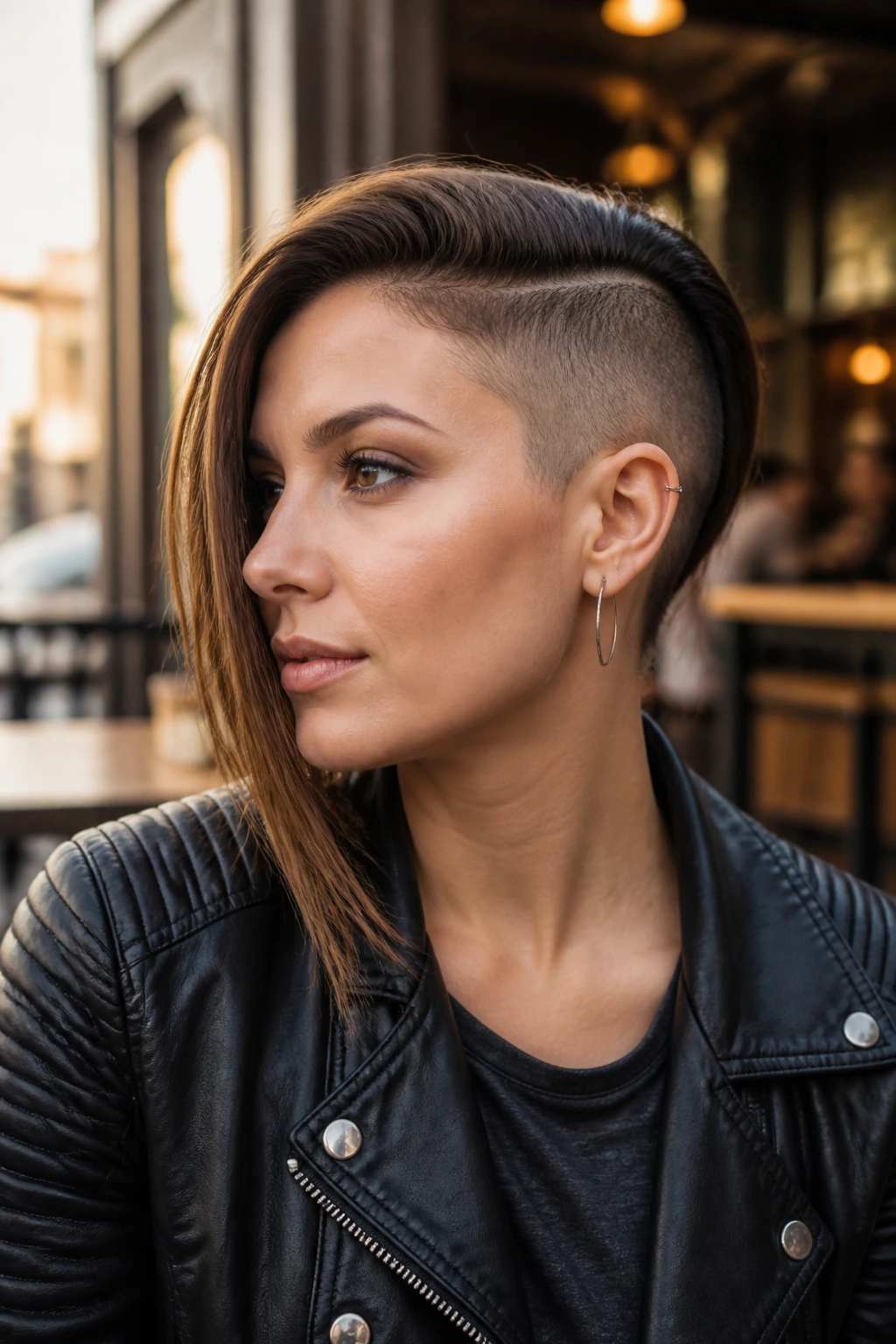
A side temple shave has more attitude than the hidden version, but it still feels wearable because the drama sits in one small spot. You shave the area above the ear and through the temple on one side, then let the rest of the hair sweep across it. The result is clean, slanted, and a little sharp around the face.
I like this one on side parts. The cut line becomes part of the styling, not something you have to fight. If you tuck the longer side behind your ear, the shaved panel flashes immediately; if you wear it loose, it disappears into the shape.
What to Tell the Stylist
Be specific about how high the shave should climb. Too high, and the look turns severe fast. A low temple panel that stops above the outer brow line is usually easier to live with than a large buzzed block that reaches deep into the side of the head.
A small design line can sit inside the shave if you want a little extra edge, but honestly, a clean panel often looks stronger than decoration. Less clutter. Better shape.
3. Long Layers with a Secret Undercut
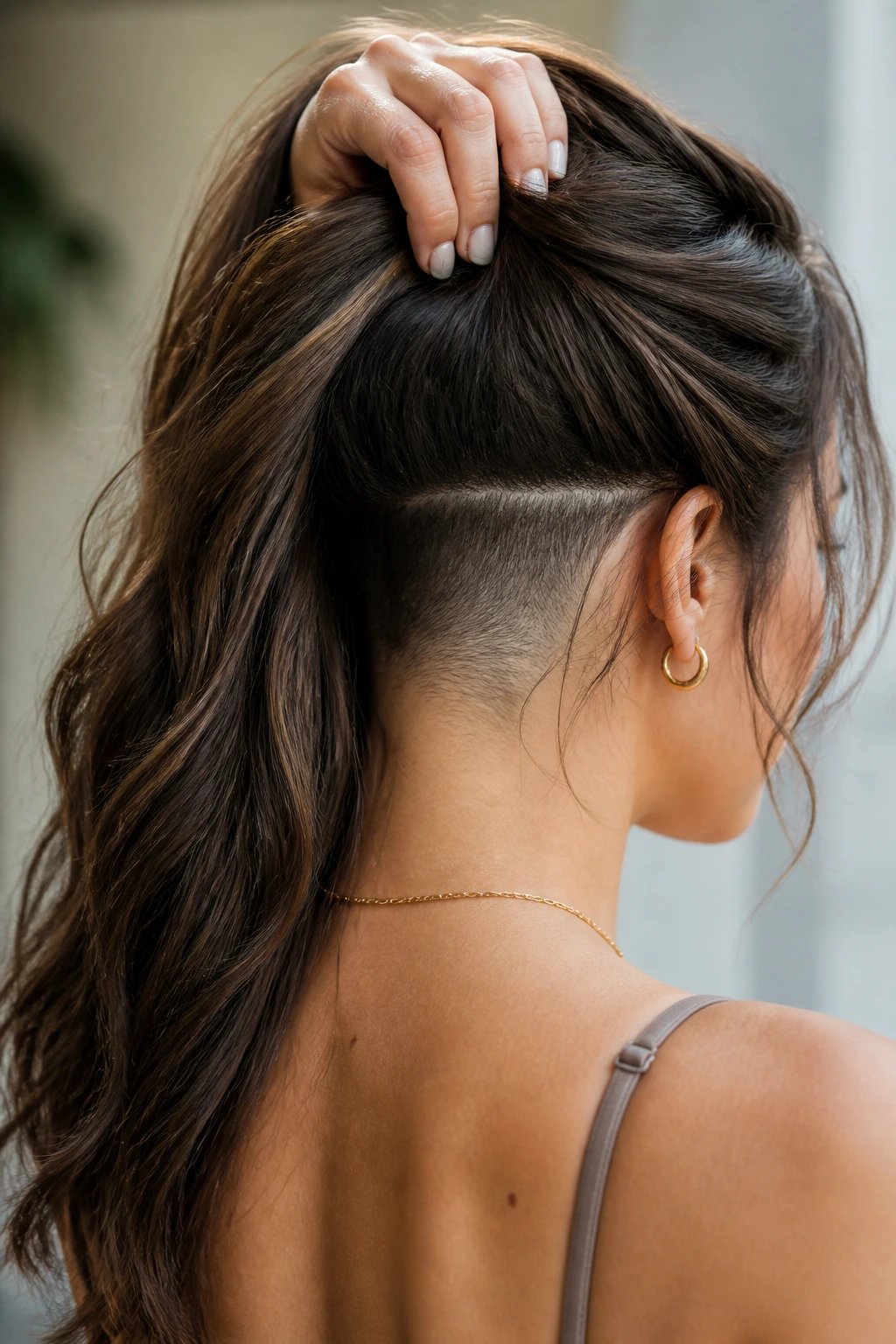
This one is for people with long hair who are tired of feeling the bottom of their ponytail drag on the back of their neck. A secret undercut removes the hidden bulk under the top layers, so the long shape stays intact while the underside gets lighter and easier to move.
The trick is restraint. You are not shaving the whole underside like you’re starting over. You’re carving out the weight where the hair stacks up — usually around the nape and below the crown — so the outer layer can fall without that thick, heavy triangle effect.
The Practical Payoff
This cut is a quiet hero for dense hair. Blow-drying takes less time, buns sit flatter, and the back doesn’t swell out like a mushroom when humidity hits.
If you wear your hair down more than up, keep the undercut low enough that it doesn’t show through the top layer when the hair separates naturally. A stylist with a sharp eye can do this by sectioning carefully and checking the fall of the top layers before shaving anything.
4. Curly Crown Undercut
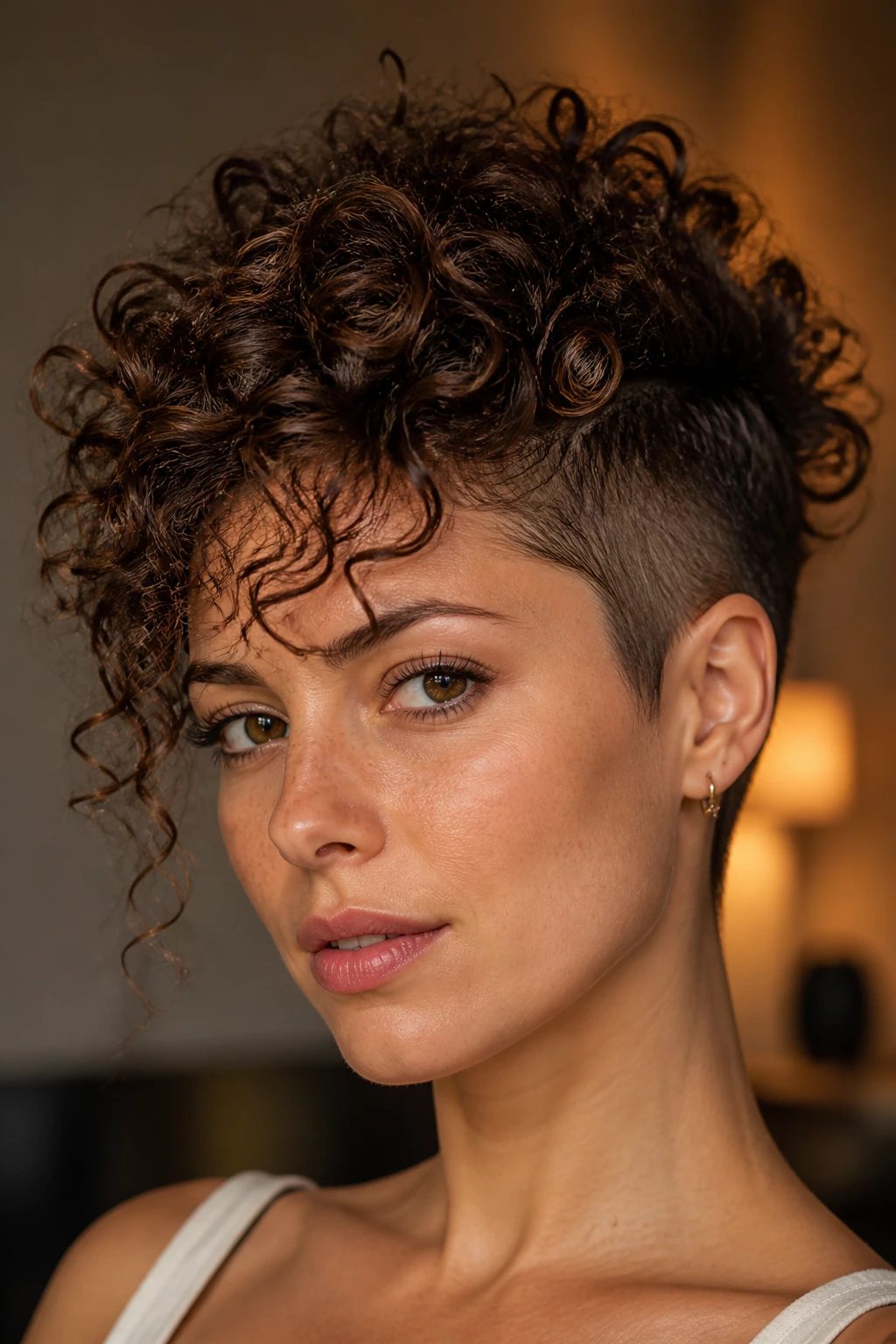
Curly hair changes the rules. It expands, it shrinks, it stacks on itself. That’s why a curly crown undercut can be such a relief. The top stays full and springy, while the lower layers underneath are removed to stop the bottom from pushing out into a triangular shape.
Why It Works on Curls
Curly hair often looks best when the shape is balanced from the root up. A small undercut around the crown and nape lets the curls sit on a lighter base, which means more lift and less bulk. The top still has room to bounce.
I’d ask for the top curls to stay long enough to fall over the shaved area when dry. Wet curls lie, and they lie badly. What looks like enough coverage in the chair can expose the undercut once the hair shrinks.
A diffuser helps here. So does a light mousse or curl cream — nothing heavy enough to stretch the curl or make the top droop.
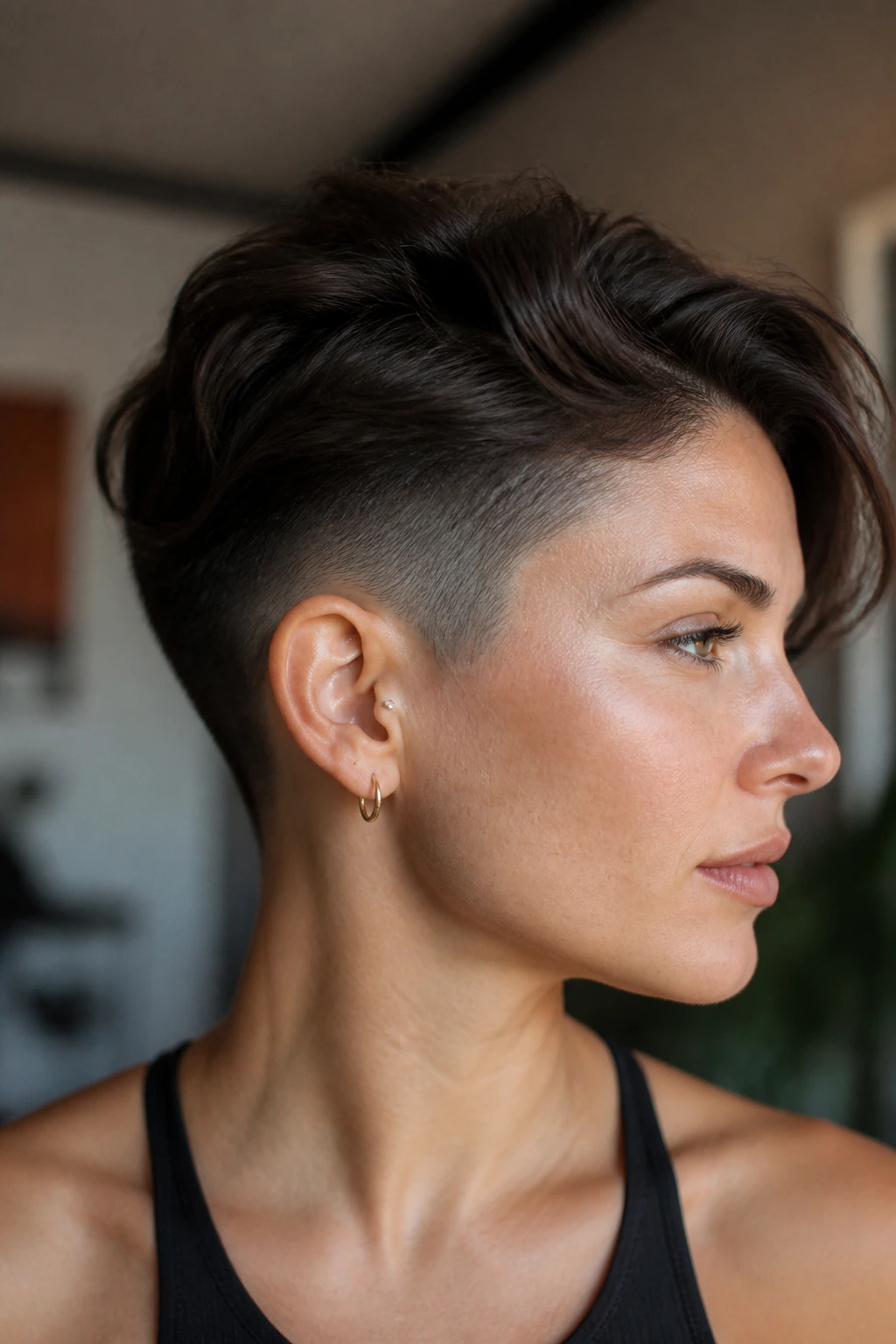
5. Pixie Cut with a Sharp Nape Shave
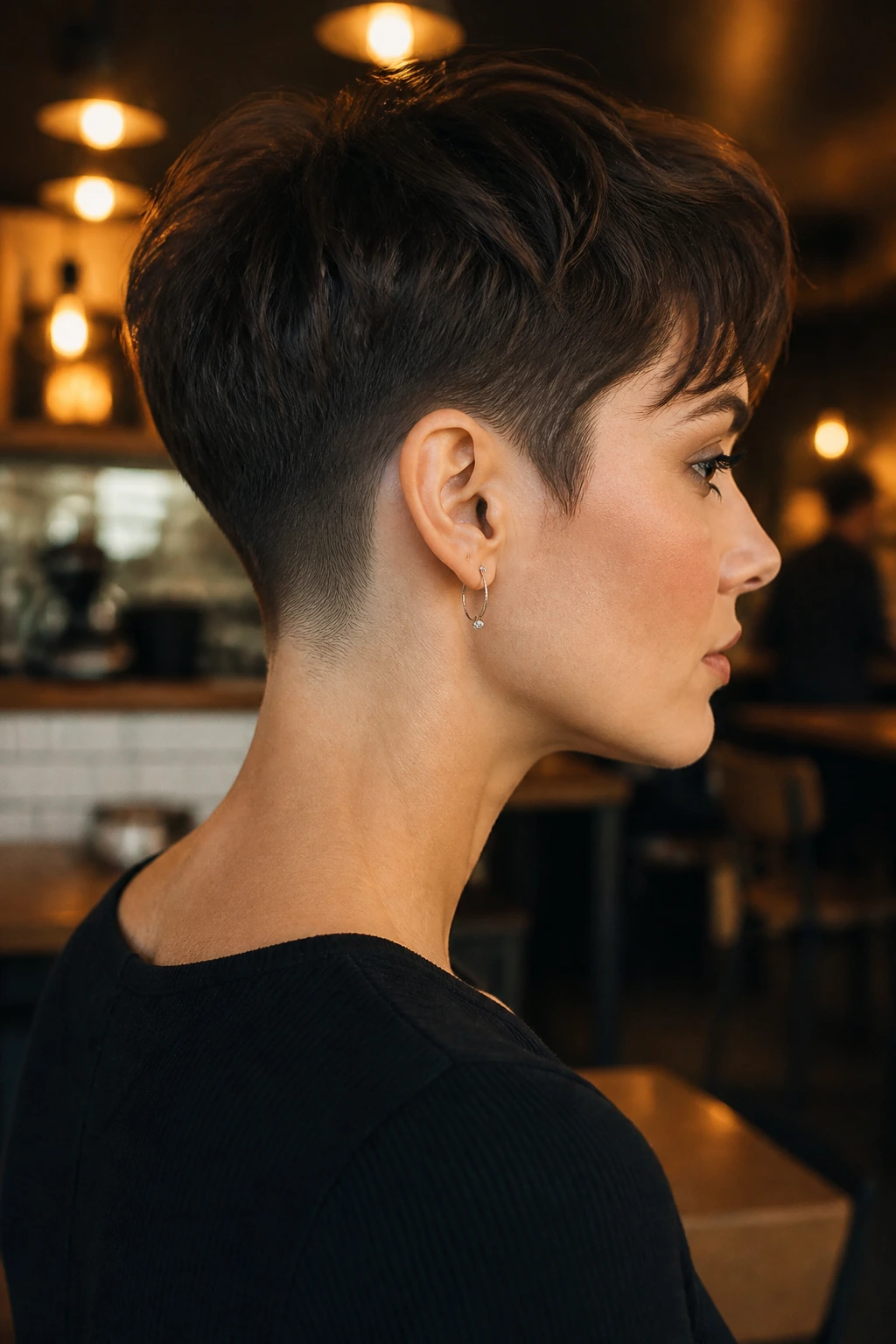
A pixie cut and an undercut are a natural pair. Short top, clean nape, crisp outline. Done well, the cut looks intentional from every angle because there’s nowhere for the shape to hide.
This version is especially good if you like a clean neckline. The nape shave keeps the back from flaring out, and the short top can be piecey, side-swept, or pushed forward. I’m a fan of a bit of texture on top here; it keeps the cut from looking helmet-stiff.
Styling Move
Use a small dab of matte paste or cream wax, then pinch the top into direction. Don’t overwork it. Pixie hair looks best when some ends stay separated and a little rough.
If your hairline grows fast, the nape will show it first. That’s normal. This cut wants regular trims every few weeks if you want it to stay clean.
6. Sleek Bob with a Clean Undercut Line
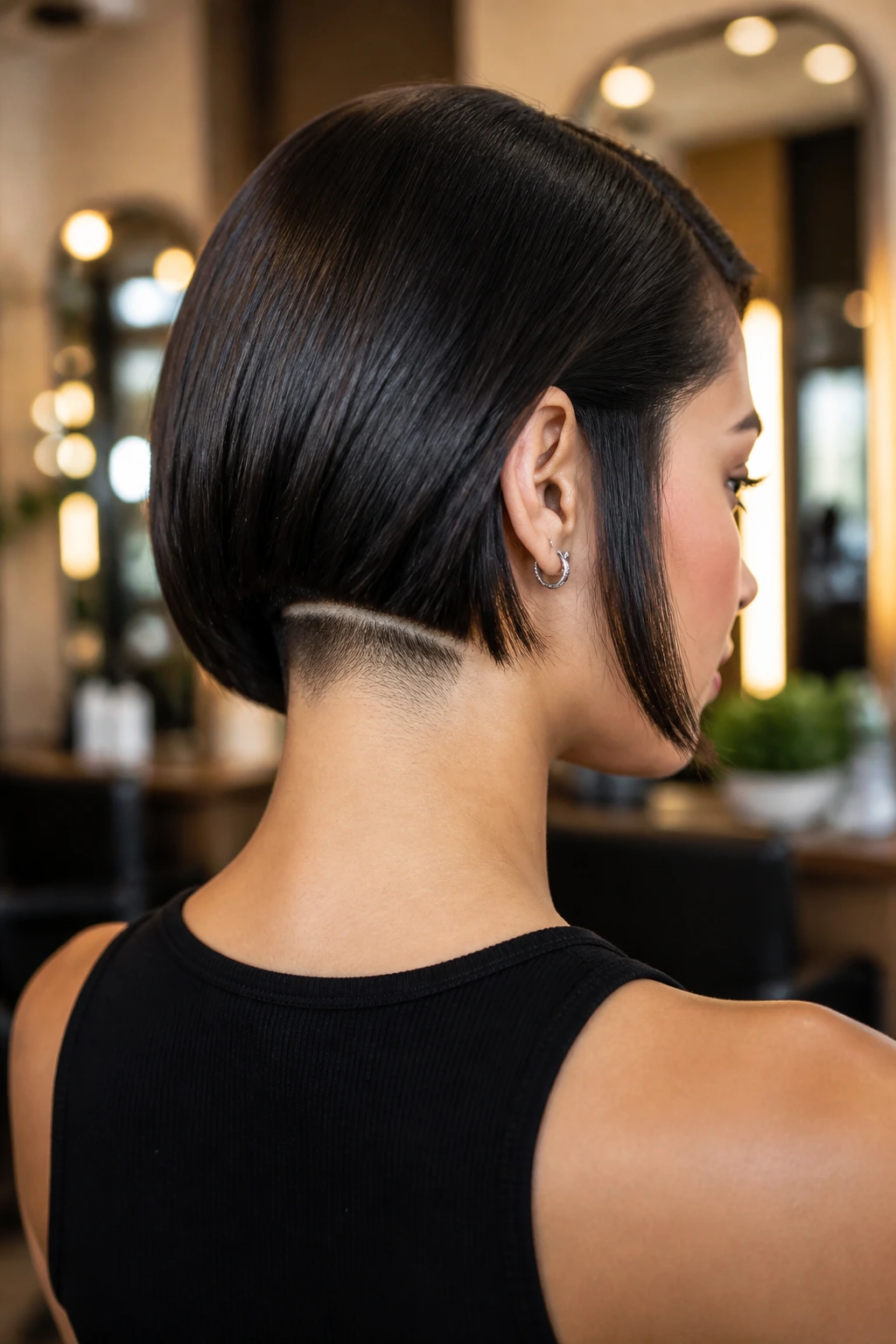
A sleek bob with an undercut is a sneaky little fix for hair that puffs at the back of a blunt cut. The outer bob stays polished and even. Underneath, a narrow section is clipped shorter so the hemline lies flat instead of springing outward like it has a mind of its own.
The result is especially good on straight or slightly wavy hair. You get the neat front and sides of a bob, but the back sits with less bulk and more swing. It’s one of those cuts that people notice only when it moves.
Ask For This
Ask for the undercut to sit under the bob’s baseline, not above it. You want the visible edge of the haircut to stay clean. If the shave creeps too far up, the bob can start to look choppy in a way that feels accidental.
A flat iron or round brush can smooth the top, but the real work happens in the cut itself. That’s why this style is worth getting right in the chair, not trying to fake later.
7. Asymmetrical Bob with One Shaved Side
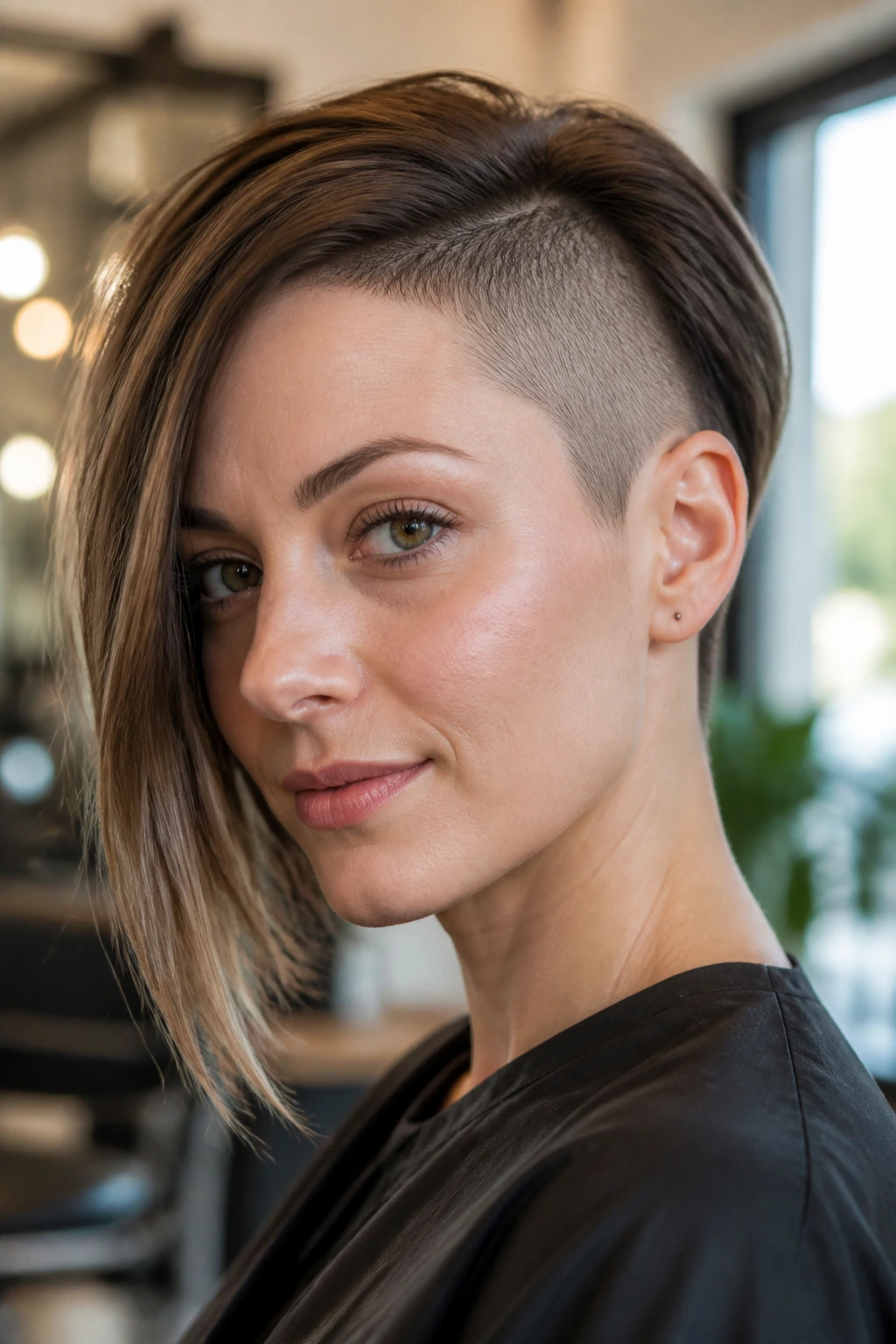
One side longer. One side shorter. That difference does all the work. An asymmetrical bob with a shaved side has a built-in diagonal line that makes the face look more sculpted, especially when the longer side falls across the cheekbone.
I like this cut because it looks deliberate even on a lazy day. You can wear it smooth, tuck it, flip it, or let the longer side break over the shaved panel. There’s no need to over-style it.
What Makes It Different
The asymmetry needs to be obvious enough that it reads as design, not a missed haircut. Usually that means keeping one side several inches longer than the shaved side and letting the line angle forward or toward the jaw.
If you have a side part already, this style slides into place more easily. If your hair naturally falls center, expect to use a little product or a blow-dry to keep the longer side from collapsing over the shorter panel too fast.
8. Braided Undercut with Exposed Sides
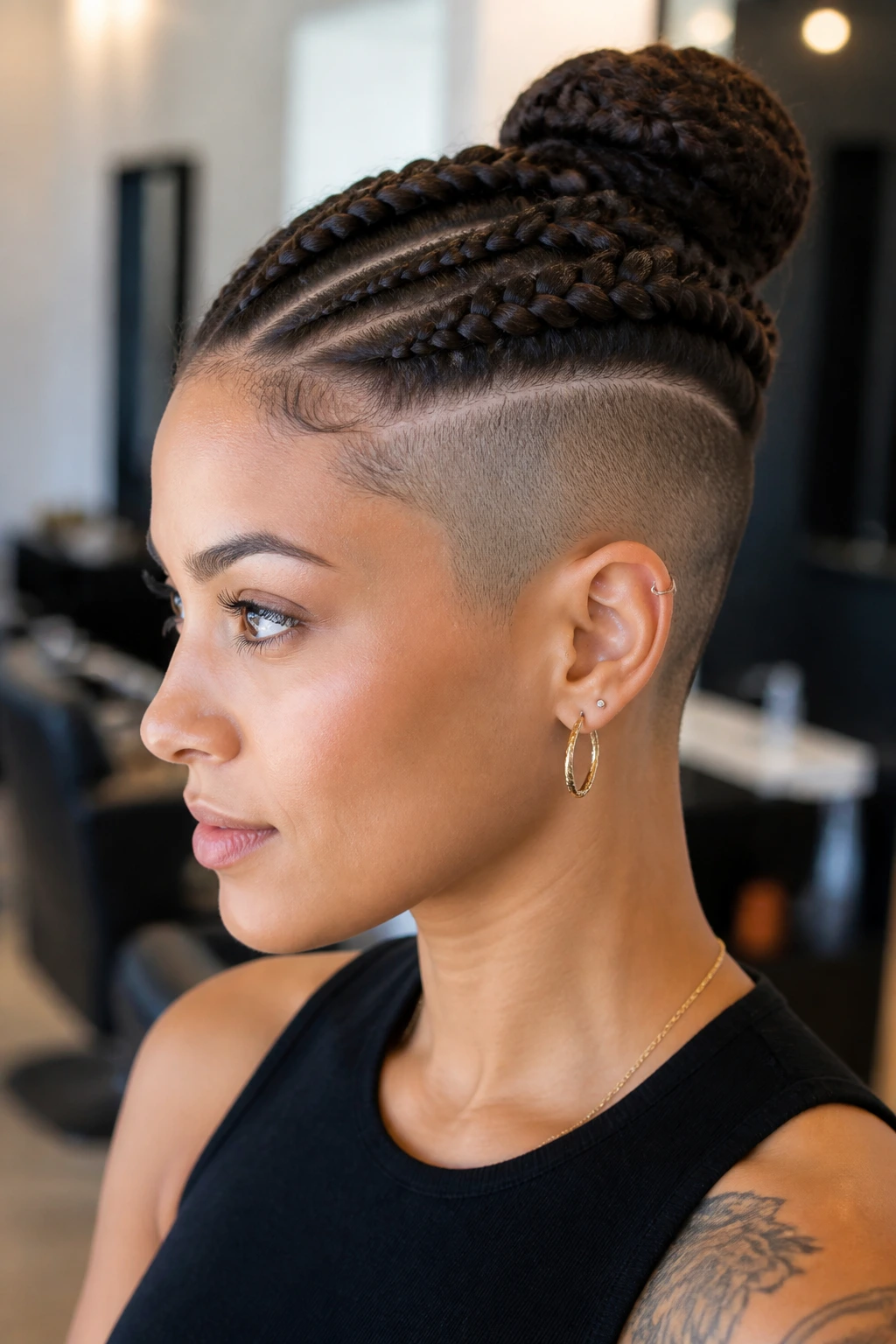
Braids and undercuts are a strong match because both are about control. The shaved sides take weight out of the equation, while the braids on top keep the style tight, neat, and practical. It’s especially useful if you need your hair off your neck but still want the front to feel styled.
This is a good choice for active days, travel, and any week where you do not want hair sticking to your skin. The exposed sides also make braid patterns easier to see.
How to Wear It Well
Keep the braids close enough to the scalp that they don’t fight the shaved area. If the top braids are too puffy, the contrast gets muddy. Clean parting helps. So does moisturizing the scalp before the style goes in, because shaved areas can feel dry faster than people expect.
If you’re wearing box braids or cornrows, the undercut gives the shape a sharper edge. And yes, it cuts down on drying time. That matters more than most stylists admit.
9. Mohawk Strip Undercut
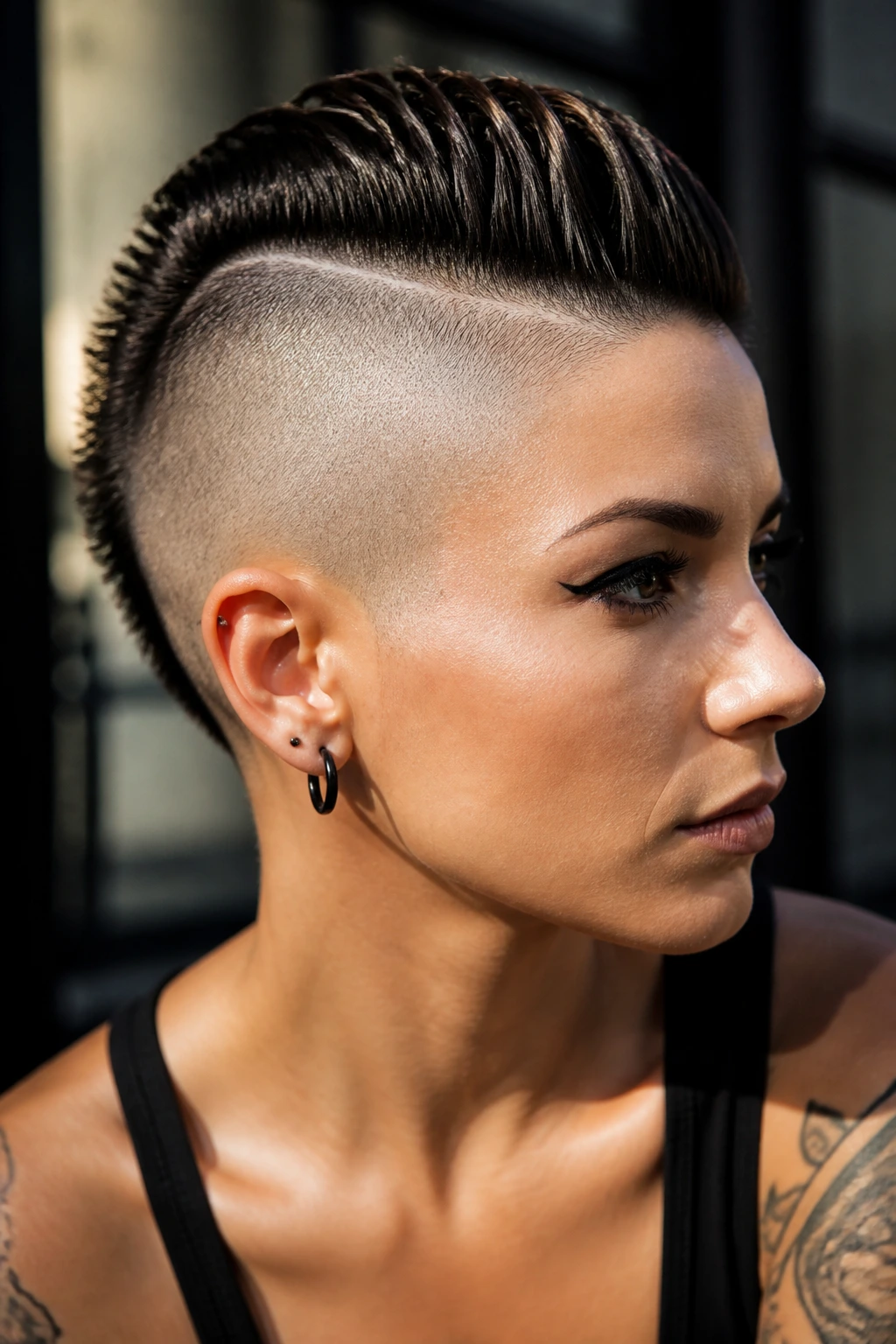
A mohawk strip undercut leaves a band of longer hair running from the front hairline to the nape while the sides are shaved down. It’s direct, high-contrast, and a little fearless. There’s no pretending it’s subtle.
What keeps this version from feeling costume-like is proportion. The strip on top should be wide enough to look balanced, not so narrow that it turns into a thin tuft. On straight hair, the line reads clean and graphic. On curls, it can look softer and more textured.
Best Styling Range
Wear it spiky and upright for more edge, or brush the center strip back for a sleeker profile. A matte product works better than a wet gel if you want the shape to move a little.
If your hair is dense, ask the stylist to taper the transition around the strip so it doesn’t feel like a hard block sitting on the skull. That little blending move makes the cut look finished instead of accidental.
10. Soft Faux Hawk Undercut
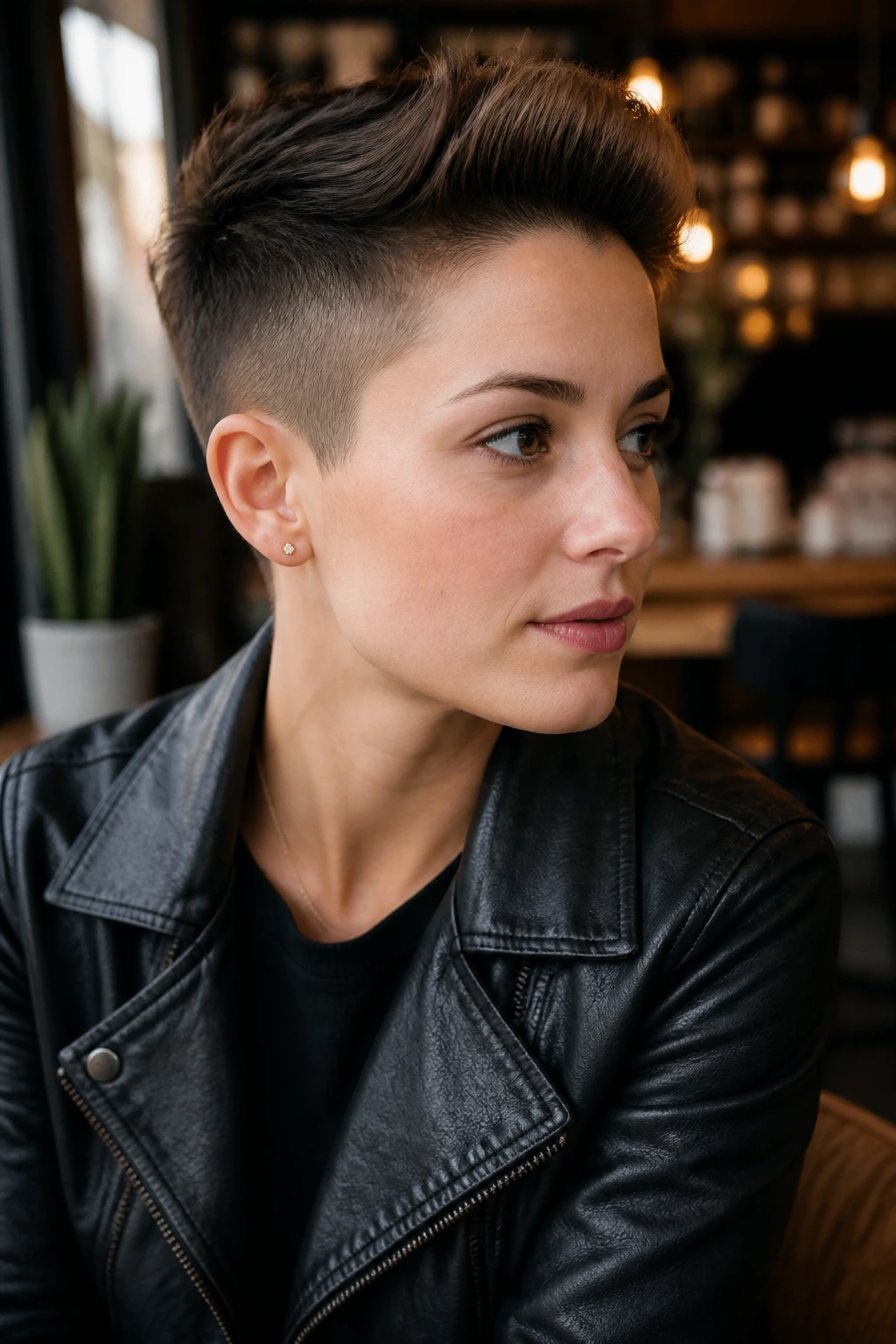
A soft faux hawk undercut keeps the middle line of hair longer, but the sides taper down more gently than a classic mohawk. It gives you that lifted, centered shape without making the whole cut feel severe.
This is the version I’d point to if someone wants a little drama but still needs the haircut to live comfortably in day-to-day life. You can spike the top, sweep it forward, or press it back. The shaved or tapered sides do the quiet work underneath.
How to Style It
Use a root-lifting mousse at the front and crown, then blow-dry the center section up and slightly forward. That keeps the shape from collapsing into the head. A small amount of wax at the ends gives definition without making the hair greasy.
The nice thing about this style is how forgiving it is. If the center isn’t perfect, the cut still reads. That’s rare. Most short styles ask for better discipline than people want to give them.
11. Geometric Nape Design
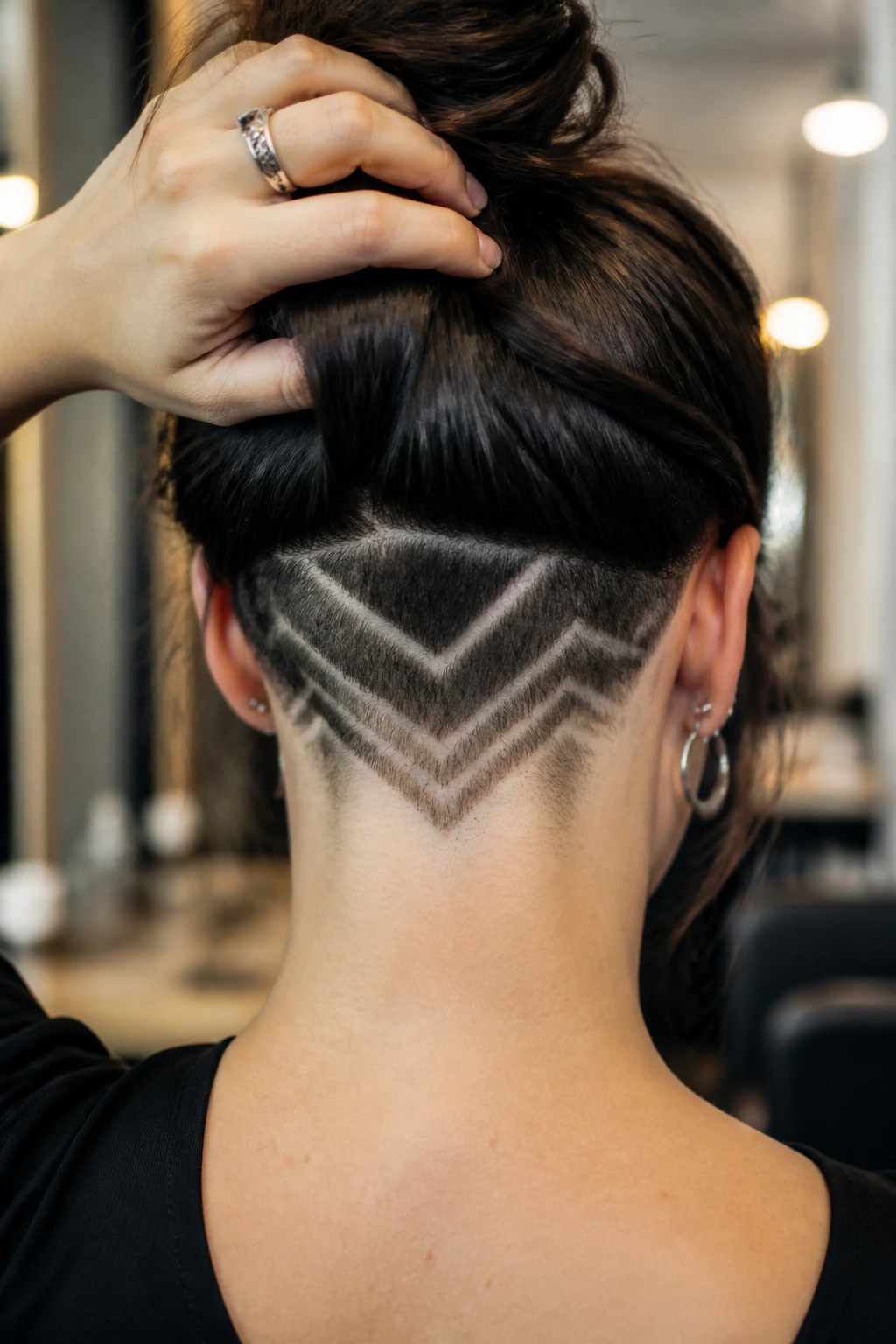
Geometric nape designs are for the person who wants the undercut to show its teeth. Triangles, chevrons, crisp lines, stepped shapes — all of it can sit at the nape where the design peeks out from under lifted hair or a high ponytail.
Why the Shape Matters
The design should fit the curve of the head. A sharp point in the wrong place can look lopsided once the hair moves. A good nape design follows the natural line of the neckline and uses that shape instead of fighting it.
Keep the rest of the haircut simple if you want the pattern to stand out. A busy layer pattern on top plus an etched nape can feel crowded. Clean top, sharper bottom. That’s usually the better move.
This one needs a good trimmer and a stylist who is comfortable drawing with hair. Not every barber is equally good at this, and that’s okay. Bring a photo with the design shown from the back, not just from one angled selfie.
12. Disconnected Lob Undercut
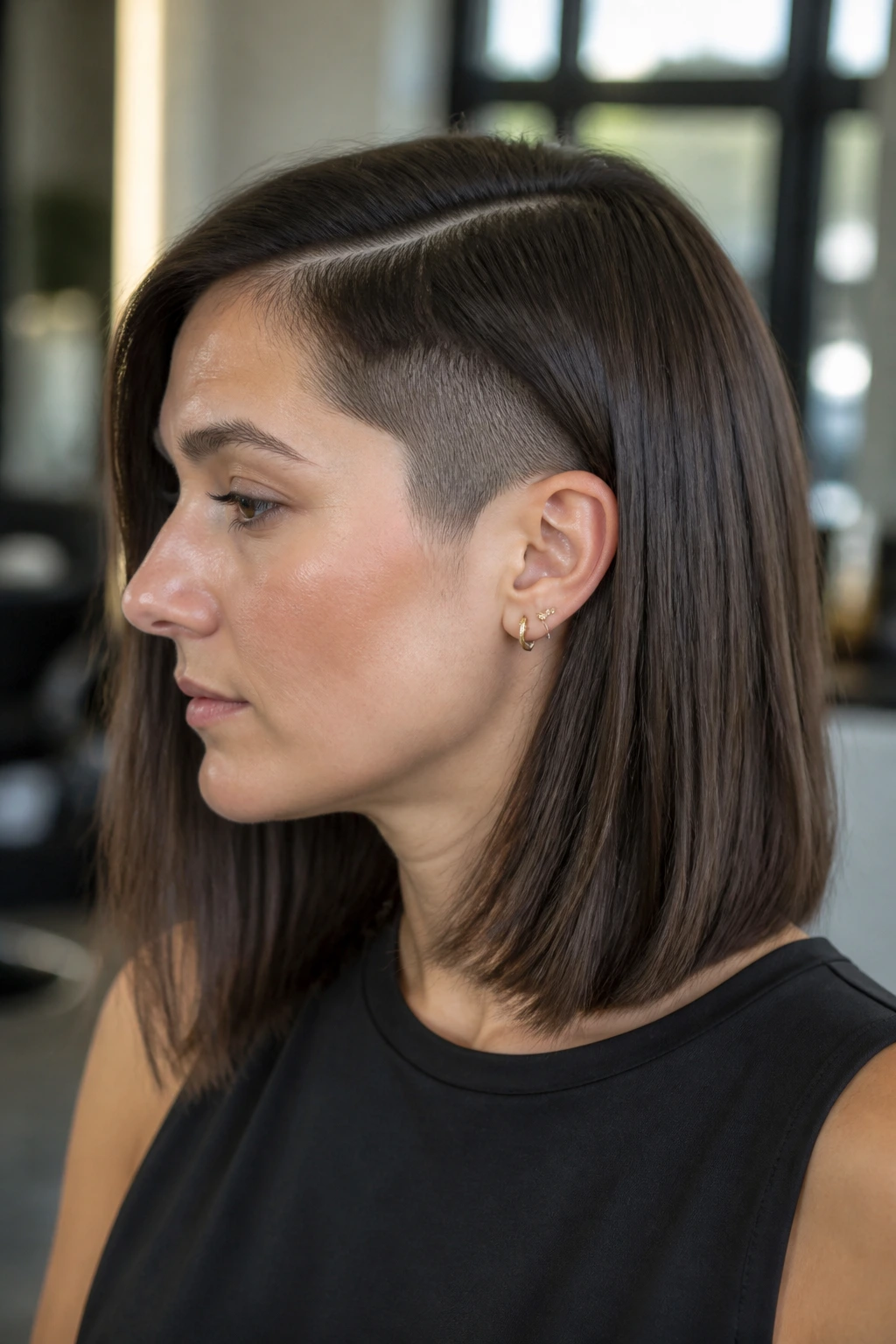
A disconnected lob undercut gives you the long bob shape with a hidden surprise underneath. The top stays around collarbone or chin length, but the underlayer is shortened enough that the hair lies flatter and swings more cleanly.
This cut is nice if you want a lob that moves instead of puffing into a triangle at the base of the neck. On thick hair, it takes away the heavy shelf that can happen when a blunt lob sits too full at the bottom.
What to Ask For
Ask the stylist to leave the exterior shape intact and remove weight only under the outer outline. That word — disconnected — matters. You want the top line to stay solid while the inside gets lighter.
If you wear a middle part, this version can look especially crisp because the two front halves frame the face while the hidden undercut takes pressure off the back. A little bend with a flat iron or round brush makes the line easier to see.
13. Wolf Cut with Shaved Sides
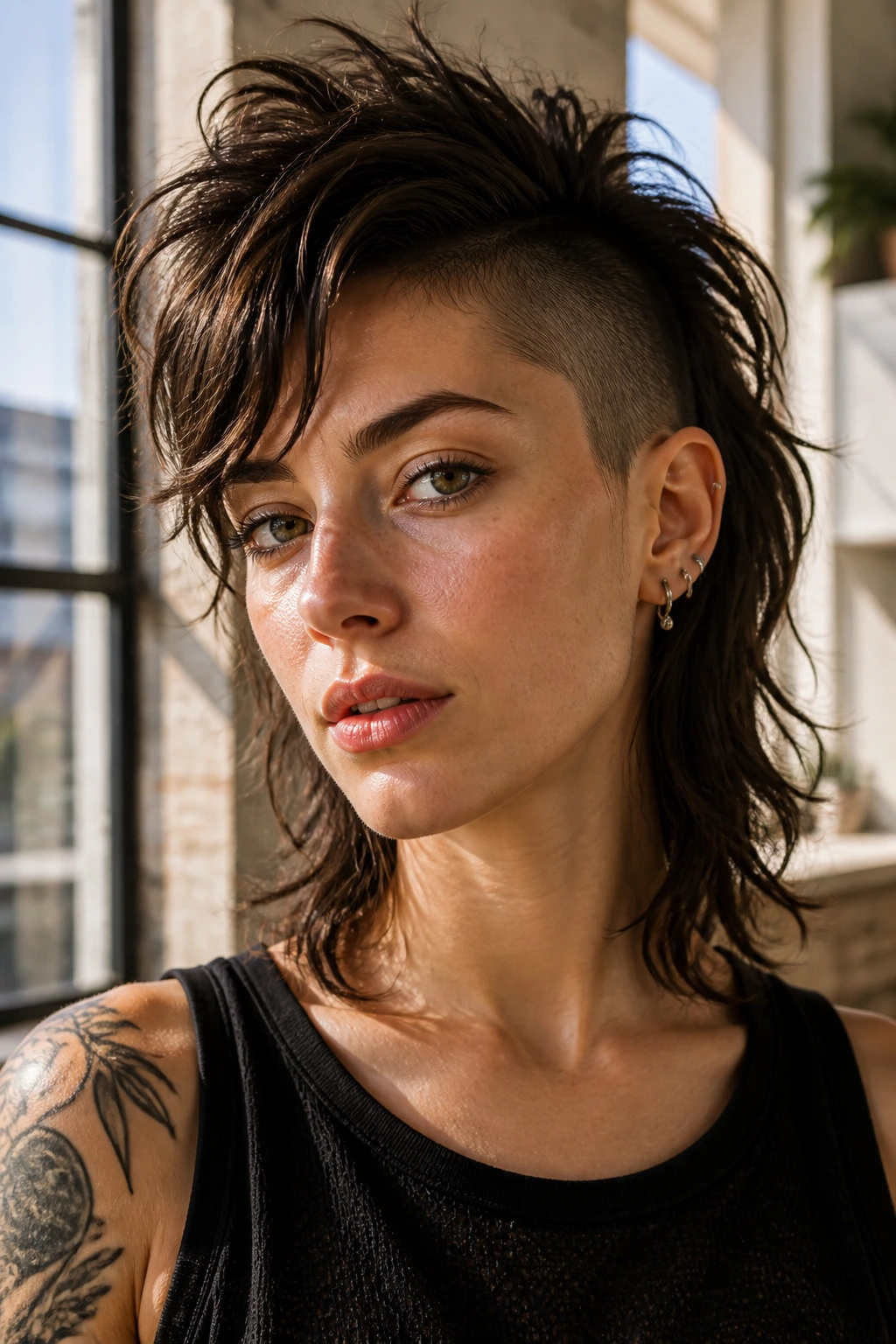
A wolf cut already has attitude: shaggy layers, volume at the crown, and a little wildness around the face. Add shaved sides, and the shape gets more edge without losing that messy, lived-in feel.
This works best when the top layers are left long enough to move. The shaved sides keep the base from spreading outward, which helps if your hair is thick or if you want the crown to sit higher than the sides.
What Makes It Different
The wolf cut can go flat fast if it’s cut too evenly. The undercut gives it a little built-in lift. That’s the part many people miss when they try to copy the look from photos. The lift is not just styling; it starts at the cut line.
A bit of sea salt spray or texture mist on dry hair helps the ends separate. Don’t drown it in product. Wolf cuts need texture, not stiffness.
14. Shag Cut with a Hidden Undercut
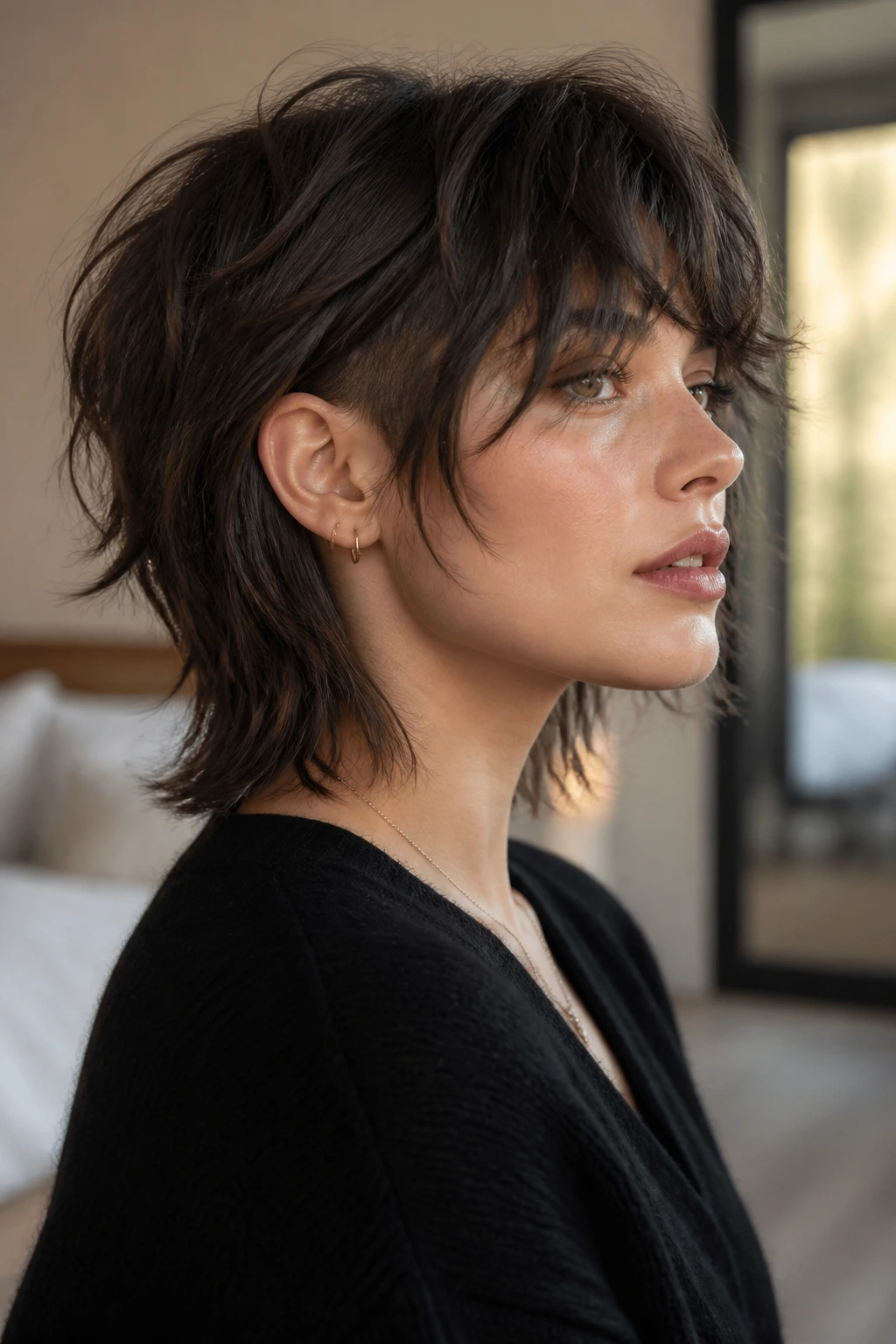
A shag cut with a hidden undercut is softer than the wolf cut and less severe than a buzzed style. The top layers keep their airy, feathered movement, while the underside gets trimmed back so the whole shape sits closer to the head.
I like this one on wavy hair because the layers already want to bend. The hidden undercut stops the lower section from bulking out and lets the top layers fall in a more flattering sweep.
A Small Detail That Helps
Ask for the undercut to stay invisible when the hair falls naturally. That means checking the way your hair parts and how the crown sits when dry. Hair that looks fine when wet can separate in strange places after it dries, so the stylist should check the fall before shaving too much away.
This cut is easy to live with because it doesn’t force the undercut to perform. It just makes the shag behave.
15. Afro Undercut with Rounded Shape
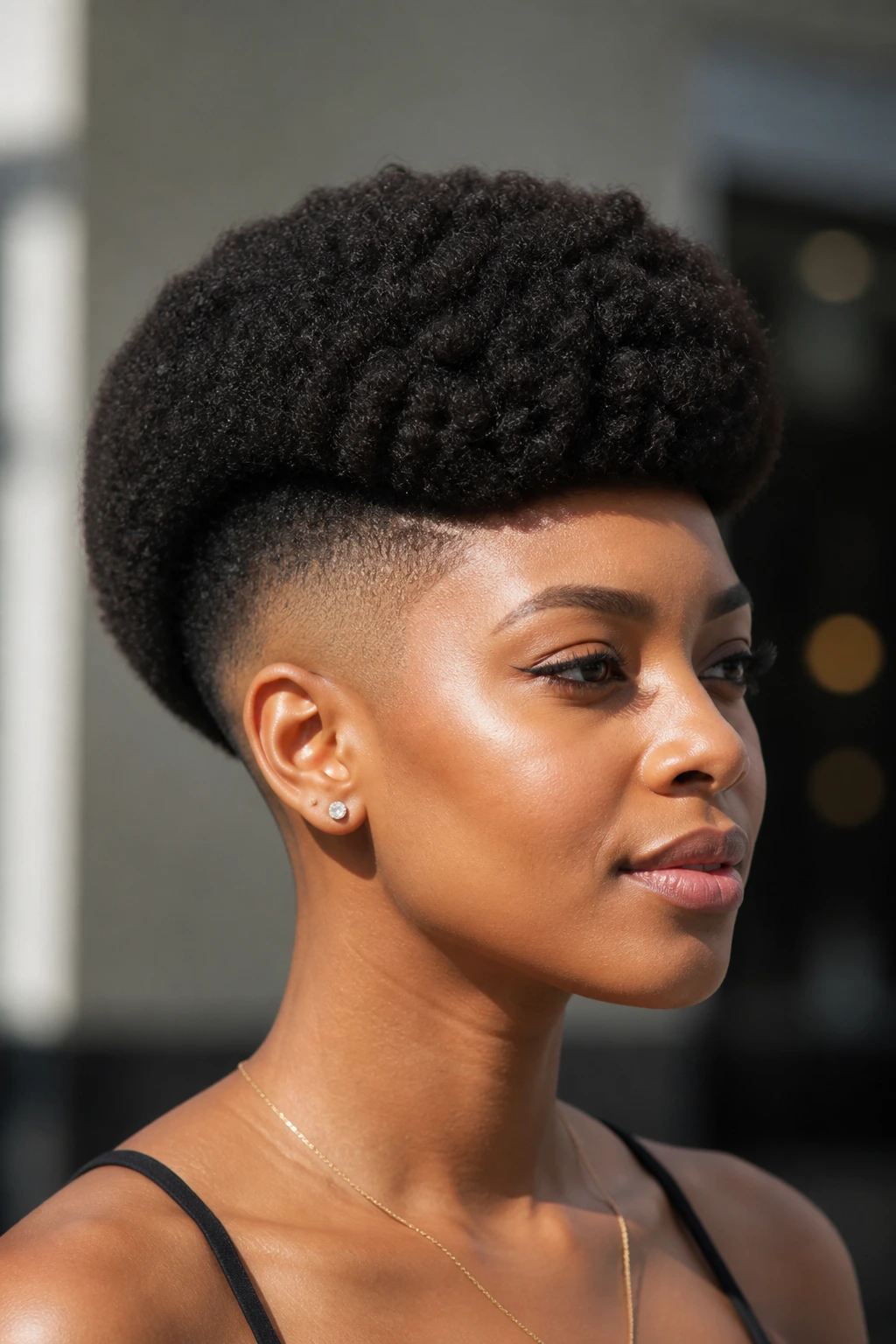
An afro undercut can be one of the cleanest shapes in the whole group when it’s done with care. The sides and lower back are shortened or shaved, while the top stays rounded and full. The outline becomes more intentional, more sculpted, less like a cloud and more like a shape.
That rounded top matters. If the undercut is too aggressive, the afro can lose its balance and start looking top-heavy. Keep the curve soft, especially around the temples and nape.
Why It Works
This cut gives the hair room to lift without becoming wider than you want. The undercut reduces bulk where the hair presses against the neck and jaw, and that often makes the whole silhouette feel lighter.
A clean shape-up at the hairline helps a lot. It’s not about making the edges harsh. It’s about giving the shape a frame so the texture above it can do what it does best.
16. Locs with a Nape Undercut
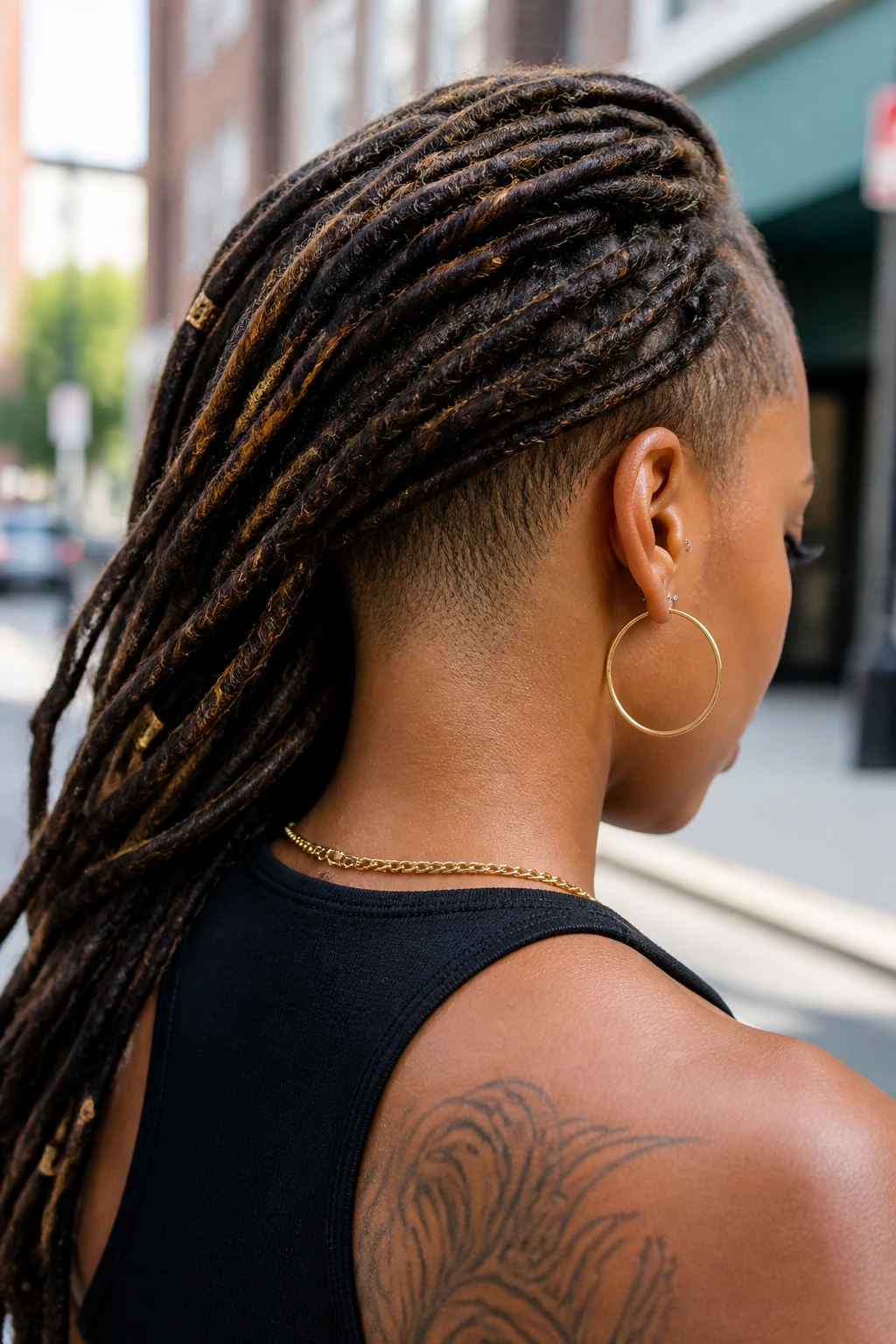
Locs can carry a lot of weight at the neckline, especially when they’re long or thick. A nape undercut removes that pressure point. The locs can still hang or be tied up, but the lower back sits cooler and cleaner against the skin.
This is one of the more practical undercut styles for women with protective styles or mature locs. It can stop the back from bulking up under buns and ponytails, and it gives the neck a little breathing room.
What to Watch For
If your locs are heavy, keep the undercut low and tidy so it doesn’t disrupt the way the locs gather. You want relief, not a weird gap. A small band at the nape is usually enough.
The maintenance is easier than people expect. The visible shave stays simple while the locs do the styling work above it. That’s a nice trade.
17. Dreadhawk with Tapered Sides
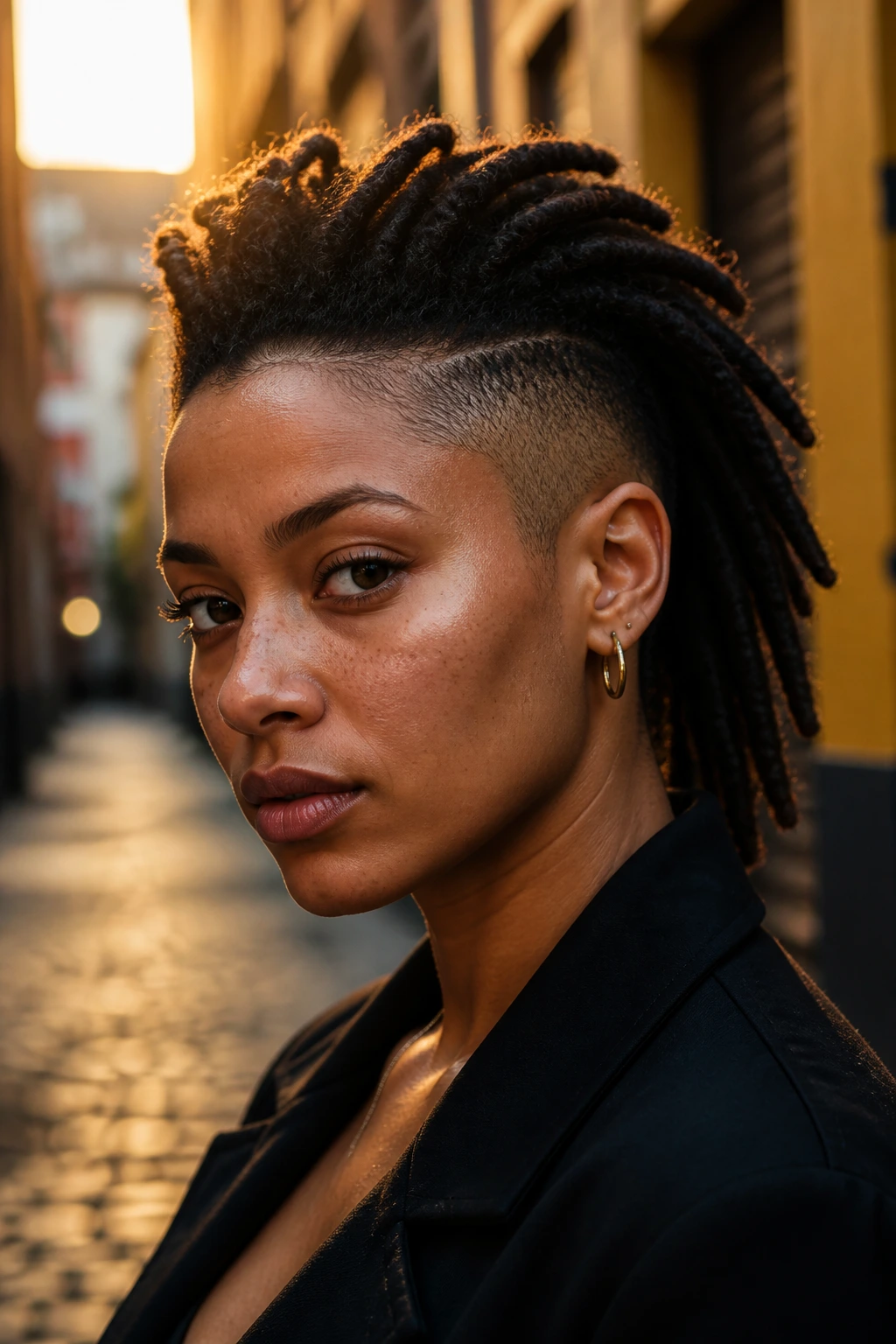
A dreadhawk puts the locs down the center of the head and keeps the sides tapered or shaved. It has the same basic logic as a mohawk, but the texture of locs changes the whole feel. The shape looks sculptural instead of sharp.
I like this one when someone wants movement in the center and a clean outline on the sides. The taper keeps the haircut from looking bulky at the temples, which matters a lot with loc density.
How to Wear It
You can wear the locs loose and centered, pull them back, or pin them up into a higher crest. The tapered sides keep the profile slim no matter what you do on top.
If you want the style to feel more polished, keep the side cleanup crisp. If you want it softer, ask for a gradual taper rather than a hard shave. That small choice changes the whole mood of the haircut.
18. Buzzed Side Panel with a Deep Side Part
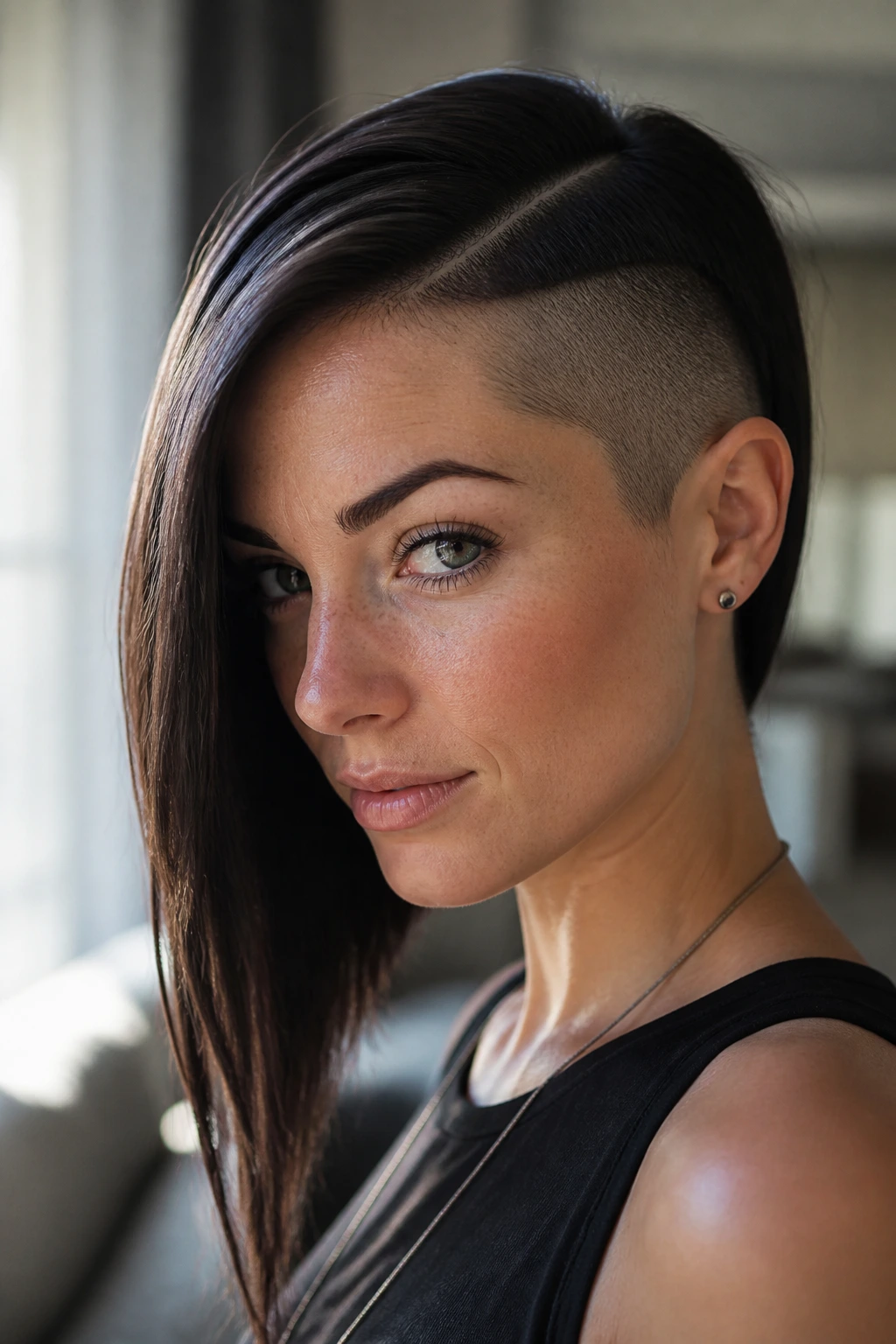
This cut is built around contrast. One side is buzzed down into a clean panel while the other side keeps enough length to swing over with a deep side part. The part is not an afterthought. It’s the hinge that makes the cut work.
A buzzed side panel looks especially strong on straight hair, where the line can be clean and visible. On wavy hair, the longer side has more movement, which softens the contrast just enough to make it wearable.
Why It Reads Well
The part creates direction. Without that, the shave can look like a random missing chunk. With it, the whole cut feels composed and a little dramatic in a good way.
This is a good style if you like one side tucked behind the ear and the other side left loose. It gives you two moods in one haircut. That’s not fluff. It changes the silhouette every time you move your head.
19. Two-Block Undercut with a Strong Disconnect
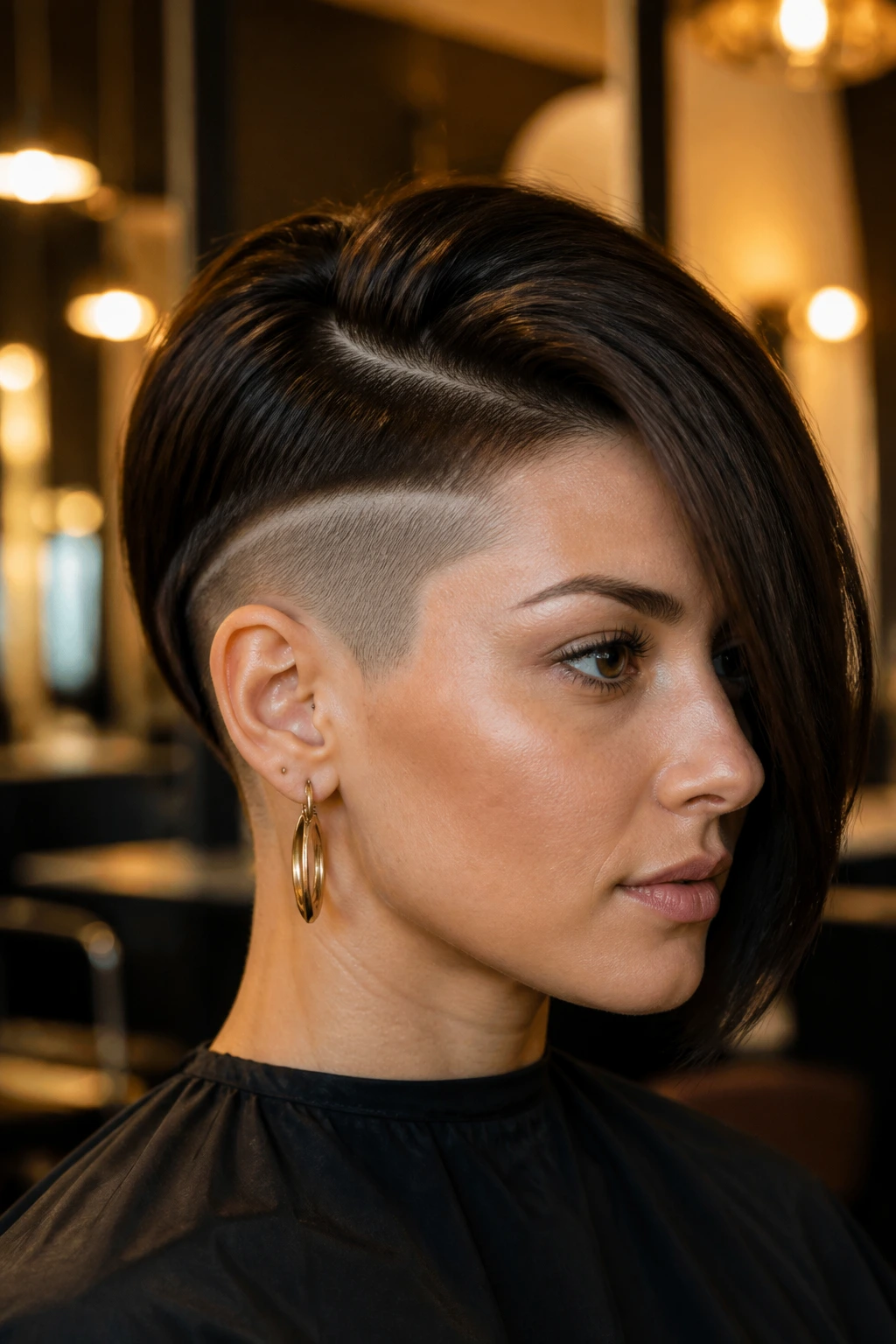
The two-block undercut borrows from the same idea you see in some layered, center-parted cuts: the top section stays longer and the sides and back are cut much shorter, with a clear disconnect between the two. It’s crisp. A little graphic. Not subtle.
This works best when the top has enough length to drape over the short sides, usually around ear to jaw length or longer. Curtain bangs, soft fringe, or a tucked-back front can all sit on top of the short base.
What Makes It Interesting
The hard line between top and bottom is the whole point. If the stylist blends too much, the cut loses its structure. You want to see the difference when the hair is tucked behind the ear or pushed away from the face.
I’d call this one a strong choice for straight or slightly wavy hair, but it can work on curls too if the top is shaped carefully. The disconnect reads most clearly when the hair has some movement but not so much volume that it hides the cut.
20. Pixie Mullet with a Shaved Back
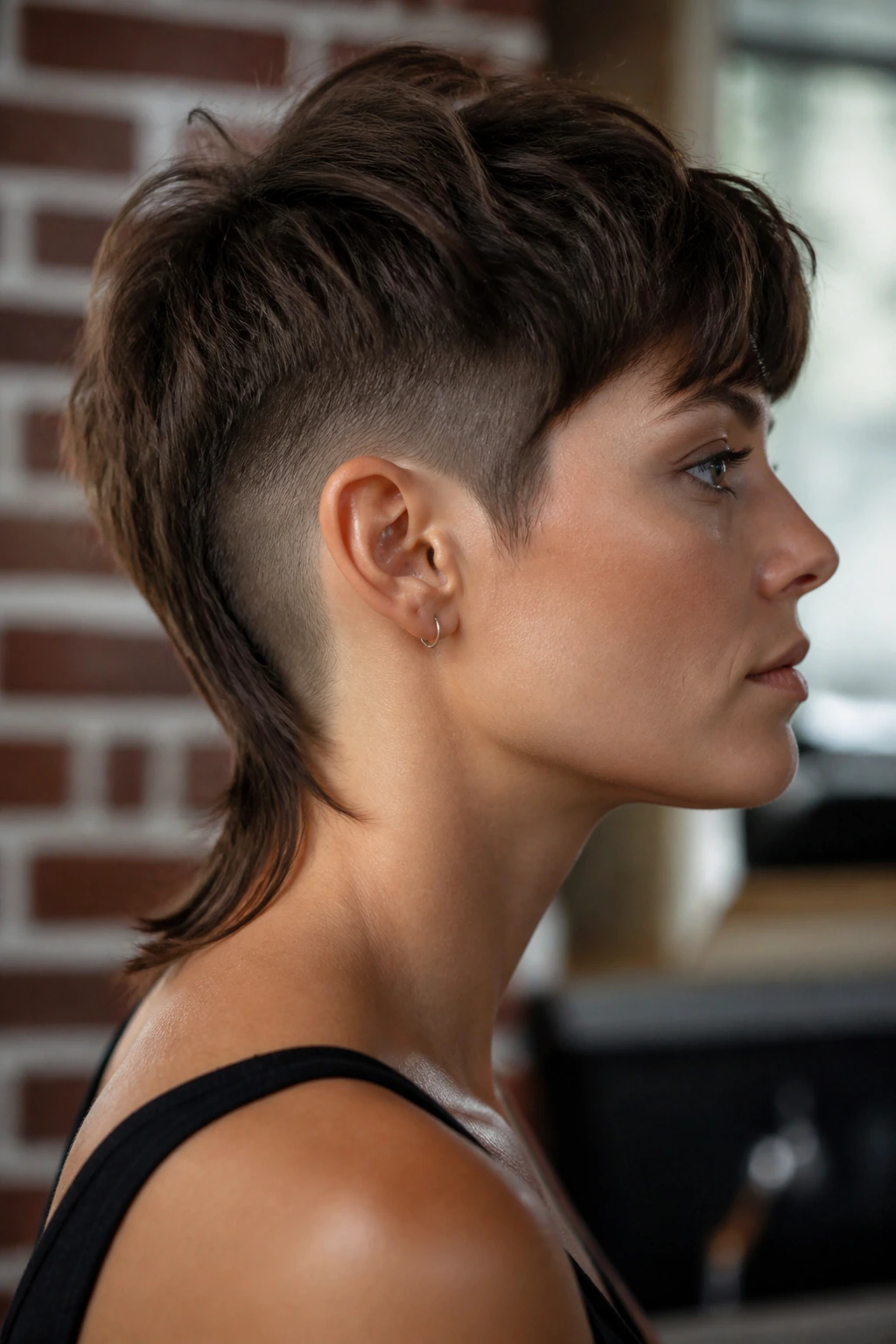
A pixie mullet is not shy about being odd in the best way. The front and crown stay short, the back stretches a little longer, and the underlayer can be shaved to keep the shape from getting puffy or heavy.
This style has a strong personality. It looks best when the texture is a little rough and imperfect. If you try to make it too polished, it loses the fun of the silhouette.
The Shape Trick
The front should stay short enough to read as pixie, not just “short layers.” The back can carry a bit more length so the cut has that mullet tail, but the undercut keeps it from turning bulky.
Use a small amount of paste or cream to piece out the crown and fringe. Don’t over-comb it. That ruins the point.
21. Slicked-Back Crop with an Undercut
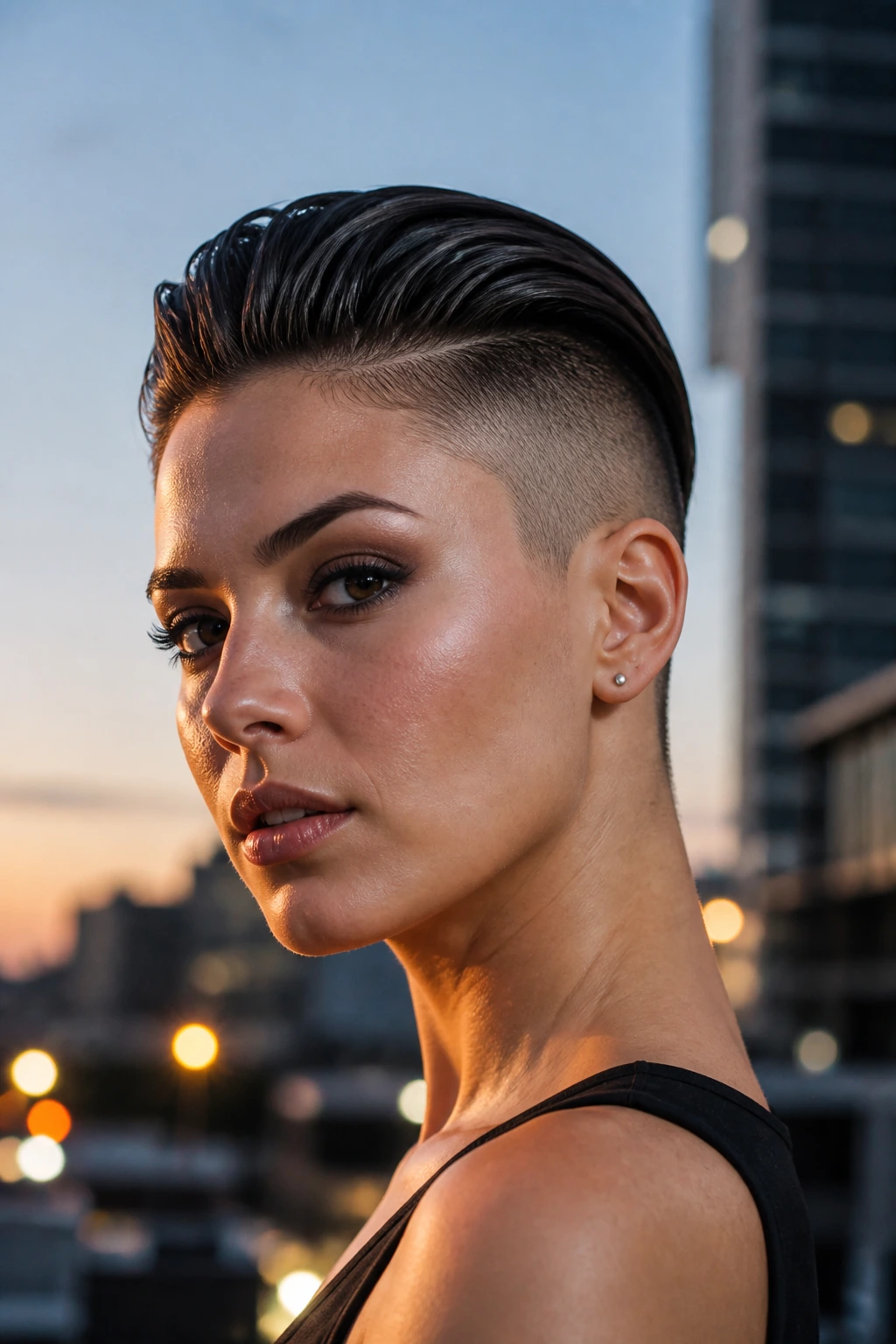
A slicked-back crop is one of the cleanest ways to show off an undercut because the styling makes the short sides and back visible on purpose. Use gel, pomade, or styling cream to push the top back and slightly down. The buzzed sections stop pretending to be hidden.
This cut has a polished edge without needing a lot of length. It can look sharp with a blazer, but it also works with simple clothes because the hair already carries the look.
Best Styling Habit
Work product through damp hair, then comb it back with a fine-tooth comb or your fingers depending on how neat you want it. Too much product can make the top look flat and sticky. Too little, and it will fall forward again before you leave the house.
A small shine on top looks nice here. Grease does not. There’s a difference, and it shows.
22. V-Shaped Nape Undercut
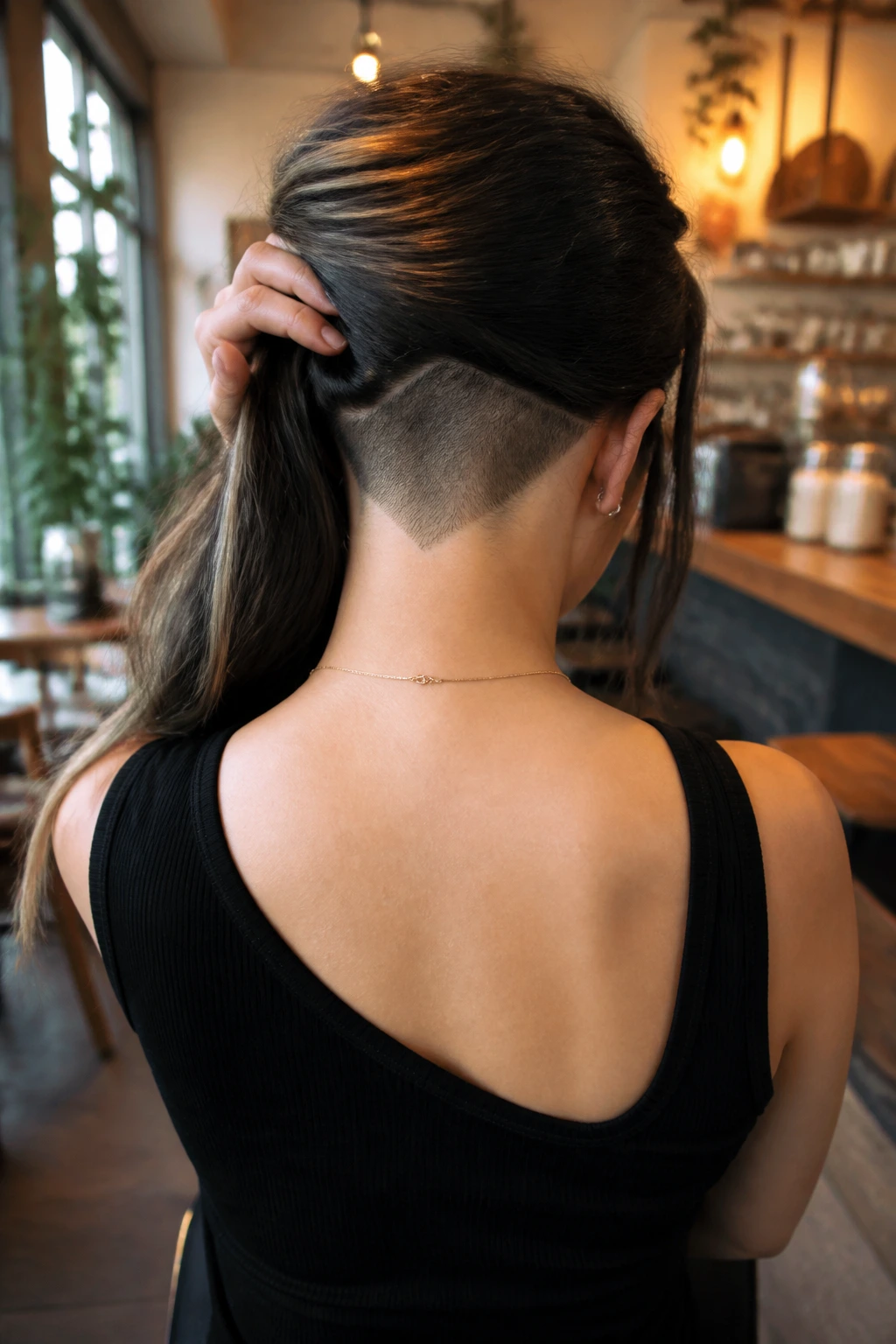
A V-shaped nape undercut gives the back of the head a pointed finish instead of a straight line. It looks especially good under long hair because the point peeks out when you wear a ponytail or bun.
This is a smarter shape than a flat horizontal shave if you like your hairstyle to feel a bit softer. The V follows the natural contour of the neckline and makes the cut look cleaner as it grows.
Why It’s Popular
The point draws the eye downward and can make the neck look longer. That sounds small. It isn’t. Haircut geometry changes how the whole back view reads.
If you want the shape to stay neat, ask the stylist to keep the point centered on the spine, not off to one side. A slightly crooked V is one of those things you’ll notice every time you look in a mirror.
23. Line-Art Undercut
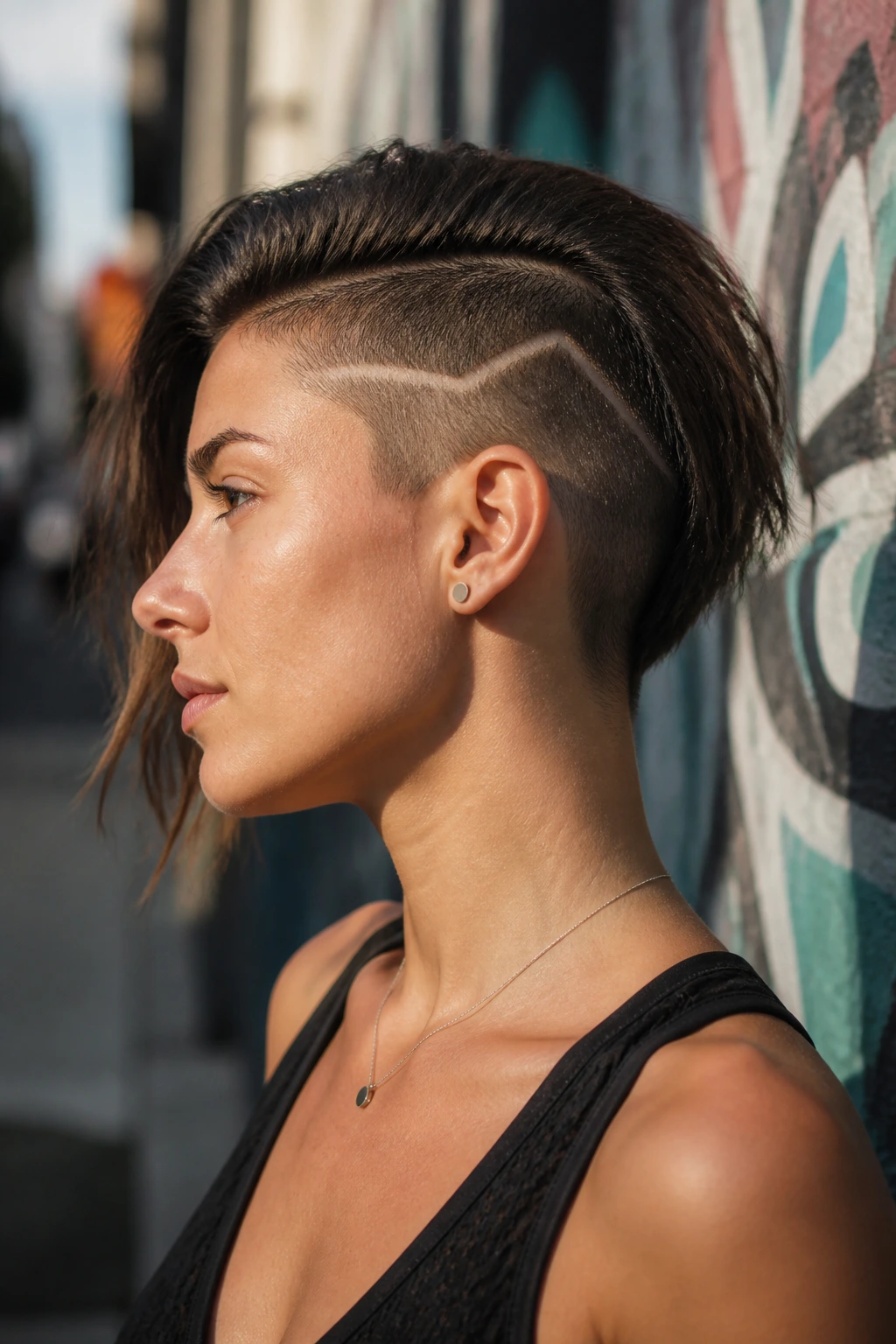
Line art in an undercut is where the haircut turns into a small graphic design. Thin stripes, arcs, chevrons, or one strong slash line can be etched into the shaved area so the cut has a visible mark even when the rest of the hair is down.
This works best when the base shave is clean. A fuzzy grow-out destroys the lines fast. If you want line art, plan on maintenance and accept that the design is temporary by nature.
What to Ask For
Bring a photo of the exact shape you want. “Something cool” does not help here. A trimmer line that sits too close to the hairline can vanish under the next few millimeters of regrowth, so placement matters.
I’d keep the rest of the haircut simple if you go this route. The line should be the detail, not one more thing competing for attention.
24. Color-Blocked Undercut
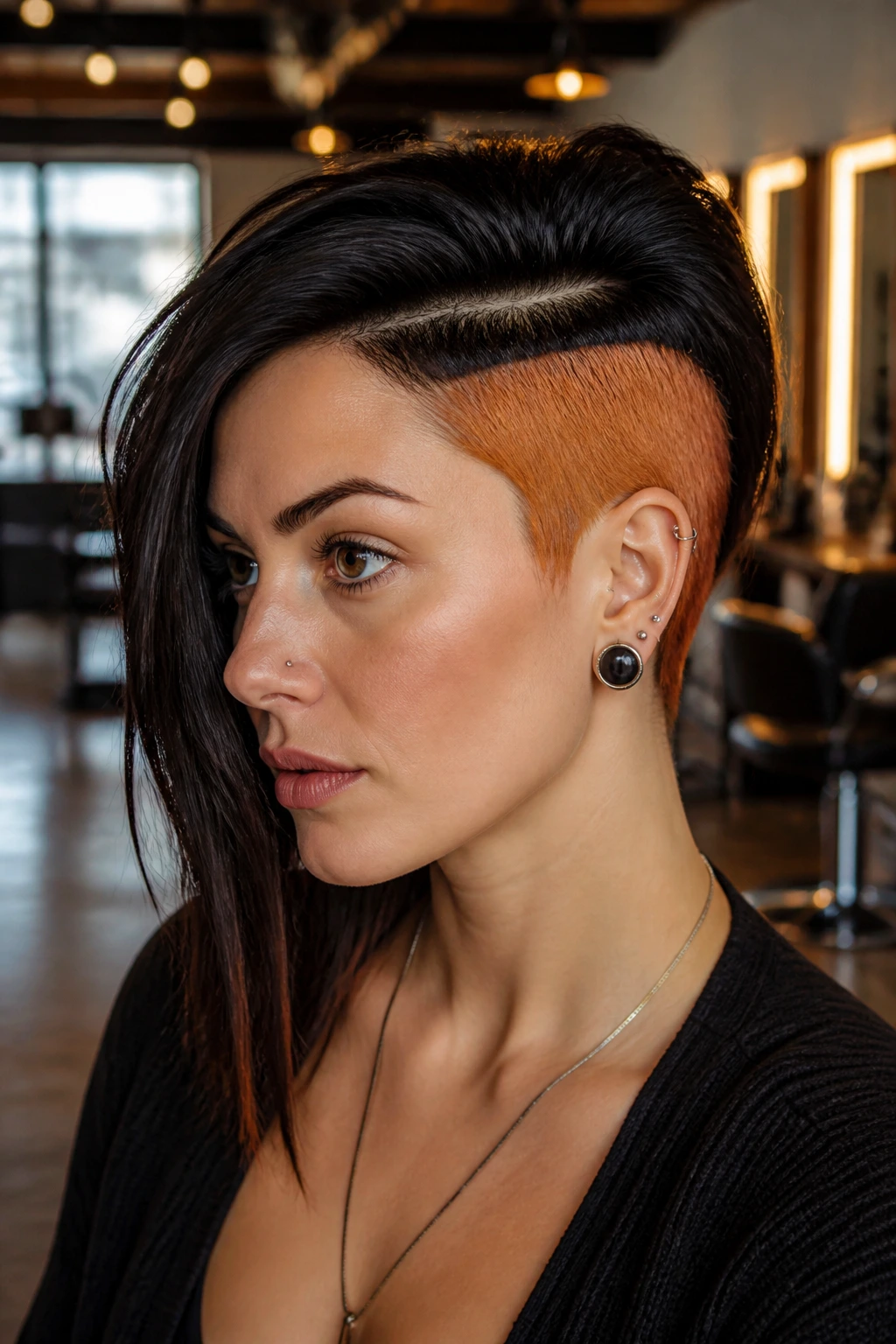
A color-blocked undercut pairs the shave with a strong color shift — maybe a dark top with a lighter hidden panel, or a bright underlayer peeking out from short sides. The contrast turns the undercut from shape into shape plus color.
This is one of the more fun undercut styles for women because it can be bold without requiring a full head of high-maintenance color. Only the shaved or hidden panel needs the treatment, which means the visible commitment can stay small.
How to Keep It Clean
If you bleach the undercut area, keep in mind that short hair processes fast and can also look rough faster if overdone. Condition it. Protect it. Let the stylist check the texture before going another step lighter.
This one looks especially good when the color choice is deliberate rather than loud for its own sake. A copper panel under dark hair, or a slate-gray shave under platinum lengths, can be sharper than neon if the tones are chosen well.
25. Fine Hair Undercut with Crown Lift
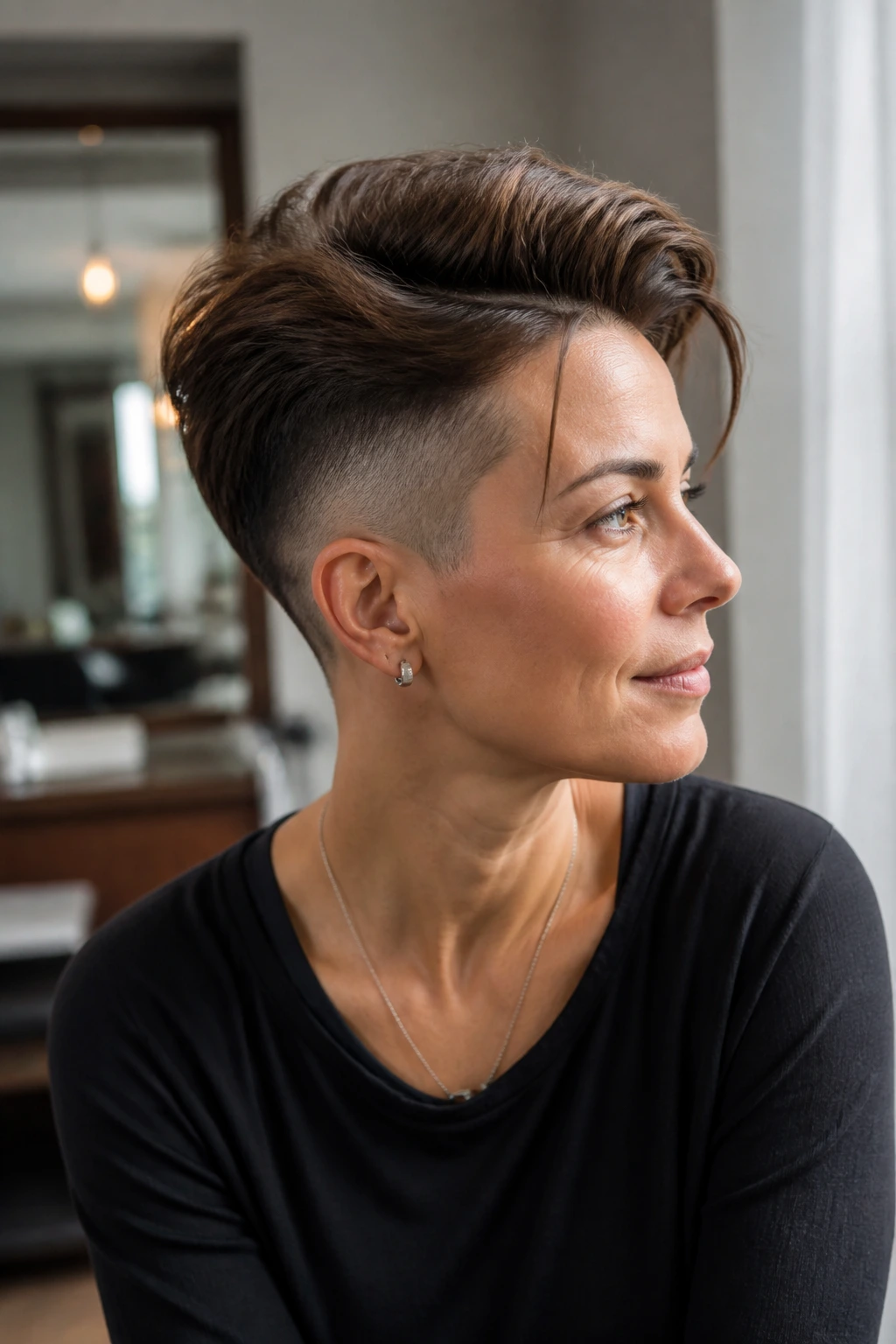
Fine hair can absolutely wear an undercut, but the placement has to be careful. Instead of carving away big sections, the stylist removes just enough hidden weight at the crown and nape to help the top sit with a little lift.
The point here is not to make the hair look thinner. It’s to stop it from lying flat in the wrong places. A minimal undercut can make the crown feel airier and give a bob or long layered cut a bit more movement.
What to Ask For
Ask for a light internal removal, not an aggressive shave. That usually means the top layers stay intact while the lower sections are trimmed back in narrow bands. If the hair is very fine, too much removal can make the ends feel sparse.
This version needs a lighter touch with styling products too. Heavy creams can kill the lift you’re trying to build. A root spray, a little blow-dry lift, and a soft finish usually do the job better.
26. Thick Hair Undercut with Weight Removed
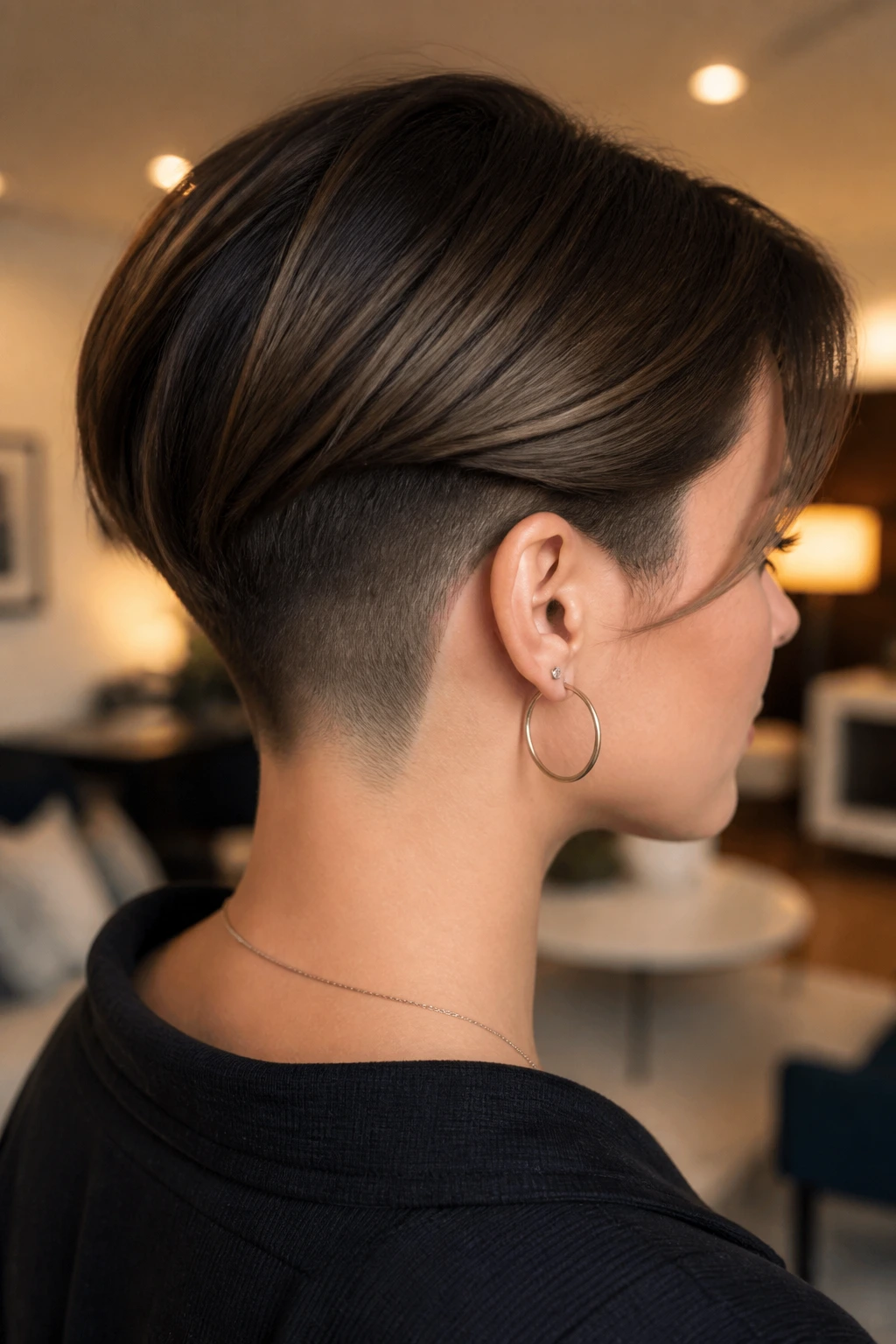
Thick hair gets some of the biggest rewards from an undercut, and it’s also the easiest hair type to over-cut. The right version removes bulk from the nape, behind the ears, and under the crown so the hair falls instead of ballooning.
This cut can change the way a ponytail feels in your hand. Seriously. When thick hair is weighted down by all that hidden density, the difference after an undercut can feel immediate.
Best Use Case
If your hair swells at the base of the neck or forms a little shelf in a blunt cut, this is the one. Ask the stylist to keep the outer outline smooth and only thin the lower zones that create the bulk.
It’s a practical cut, not a flashy one, and I think that’s why it works. The shape improves, the styling gets easier, and the back view stops looking bigger than the front.
27. Curved Ear-Tuck Undercut
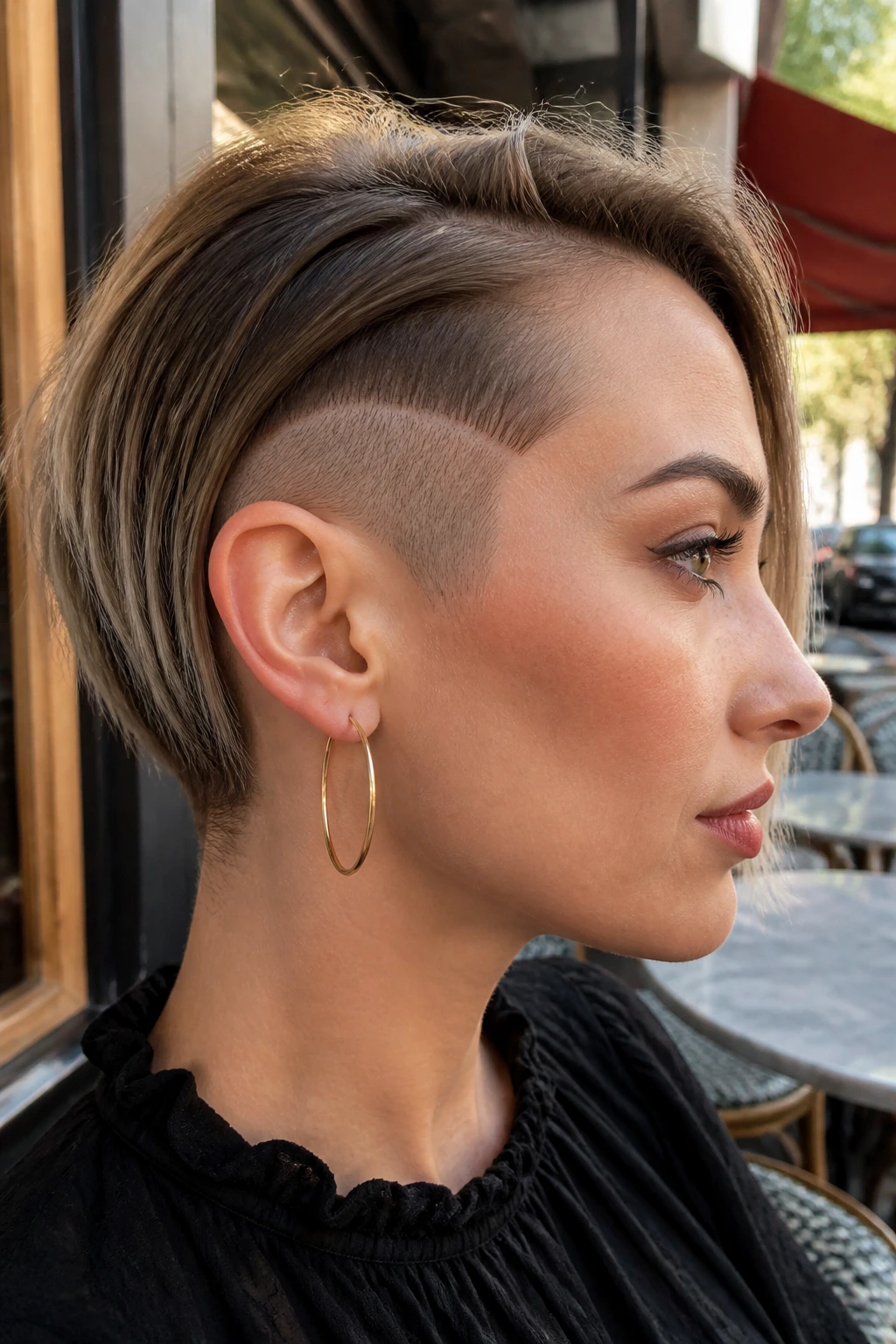
A curved ear-tuck undercut follows the arc around the ear so hair can tuck in neatly without creating a lump. It’s subtle. You usually notice it when the hair is tucked or pinned, which makes it a smart choice if you like a clean side profile.
This style is especially useful for bobs and lobs that get bulky around the ears. The curve removes just enough weight to keep the side smooth while preserving the line of the cut.
Why It’s Clever
The shape follows the body instead of fighting it. That’s the part I like. Hair tucked behind the ear can either sit flat or stick out like it’s annoyed. This helps the first version happen more often.
Ask for the curve to stay soft rather than sharply carved unless you want a harder edge. A gentle curve blends better when the hair grows out, and it tends to suit everyday styling more easily.
28. Micro Fringe with a Hidden Shave
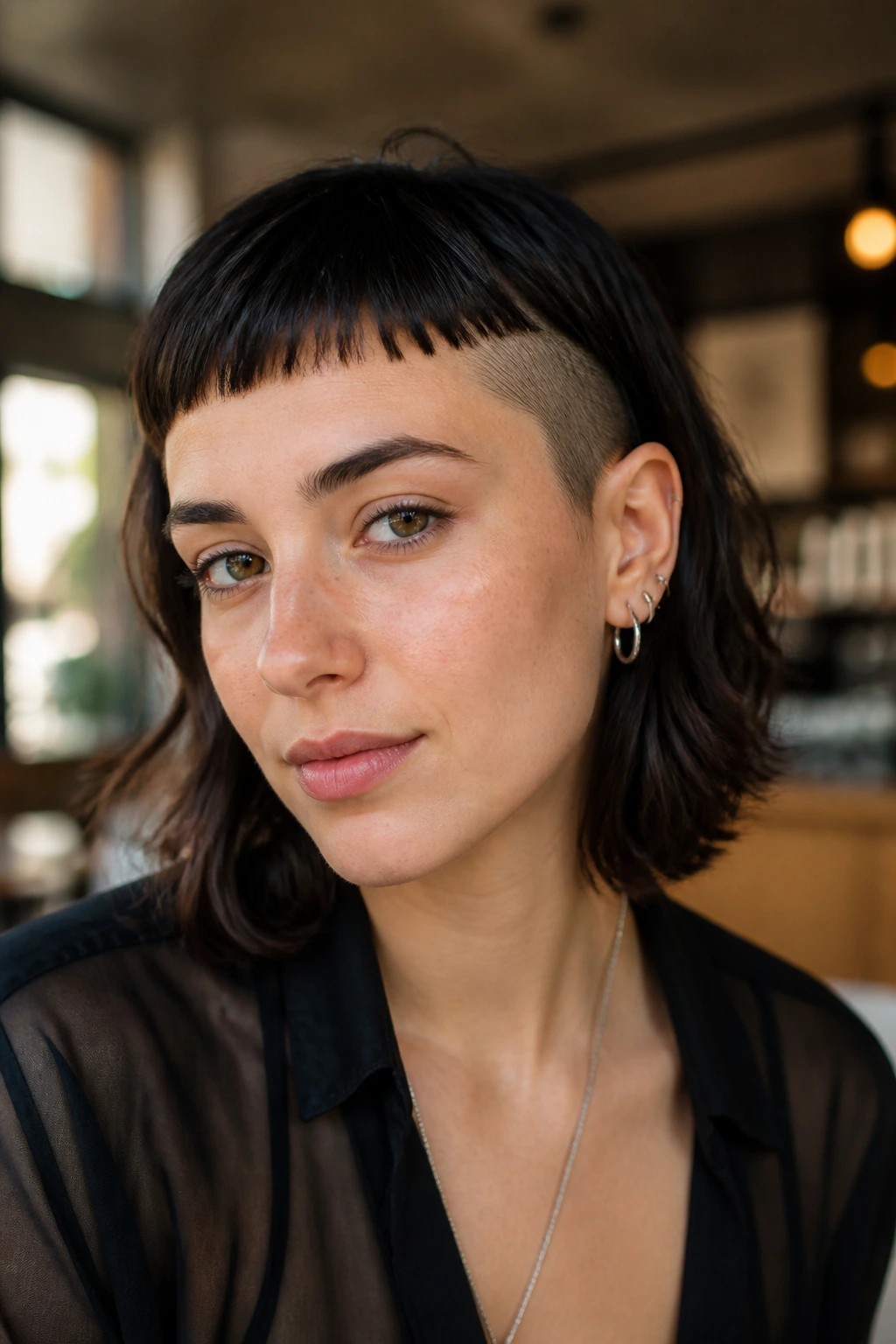
A micro fringe changes the focus of the haircut. Your eye goes straight to the bangs, which makes a hidden shave underneath feel even more deliberate. It’s a nice trick if you want the undercut to be a supporting role rather than the lead.
This pairing works best when the fringe is short but not fussy. You want the front to feel crisp and the undercut to clear away bulk from the sides or nape so the whole shape stays light.
What to Watch For
Micro bangs show every tiny styling mistake, so the rest of the haircut should stay clean. If the hidden shave is too wide, the overall look can shift from chic to severe fast. Narrower usually wins here.
A little texture spray can keep the fringe from clumping. And if your hairline cowlicks hard at the front, talk through that before the fringe gets chopped. That cowlick will have opinions.
29. Braided Crown with a Side Undercut
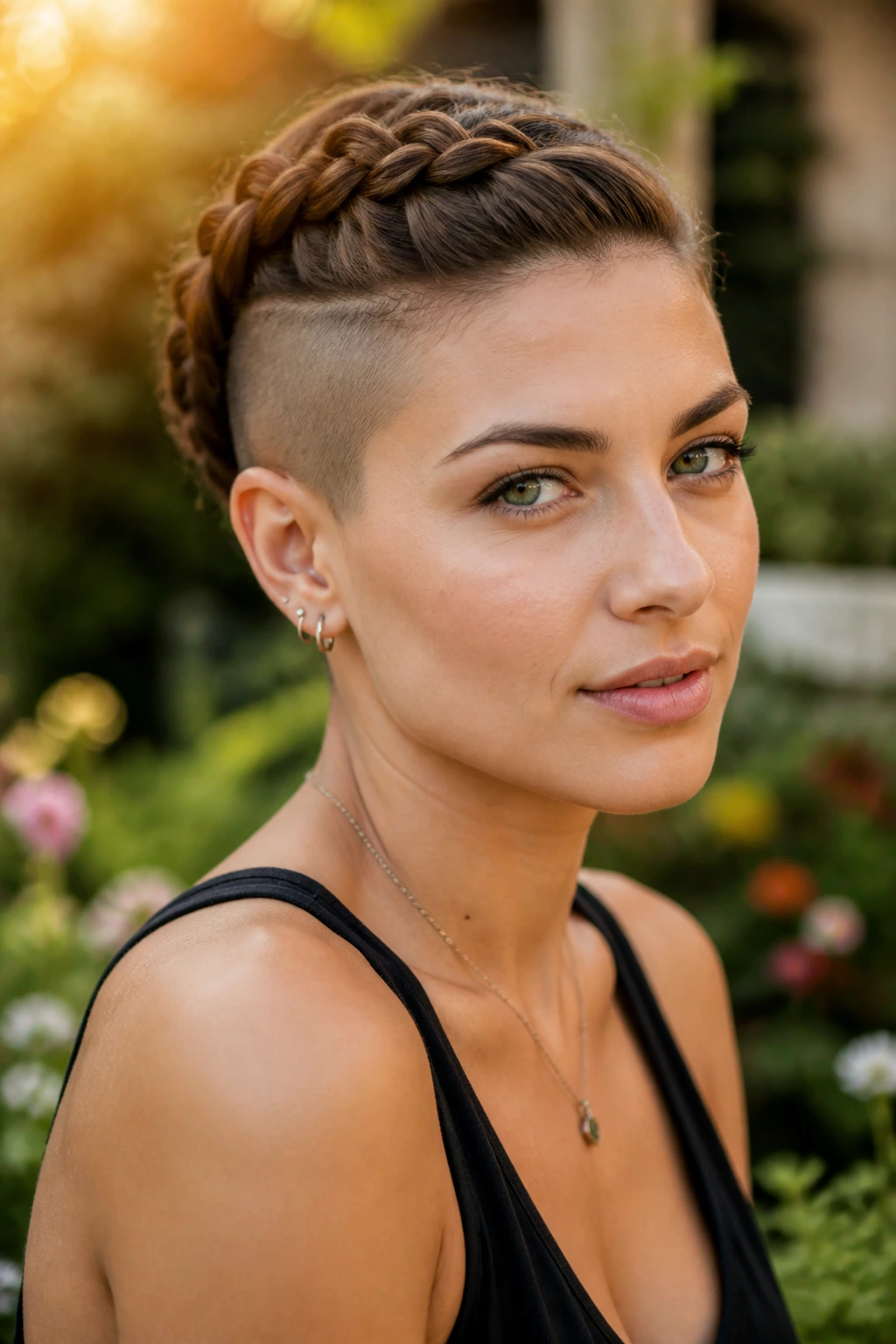
A braided crown with a side undercut has a built-in contrast between softness and sharpness. The braid wraps across the top or around the head, while one side sits shaved or closely tapered underneath.
This is a beautiful shape for anyone who likes to pull hair away from the face but still wants one bold detail to show. The braid adds texture, the undercut gives the scalp some breathing room, and together they create a clear line around the head.
How to Make It Work
Keep the braid close enough to the scalp that it doesn’t puff away from the shaved area. A loose braid on top of a heavy side shave can look disconnected in the wrong way. The goal is contrast, not chaos.
If you wear this often, keep the side panel tidy and moisturize the scalp. Short shaved areas need a little attention or they start to look dry and dusty faster than people expect.
30. Soft Fade Undercut
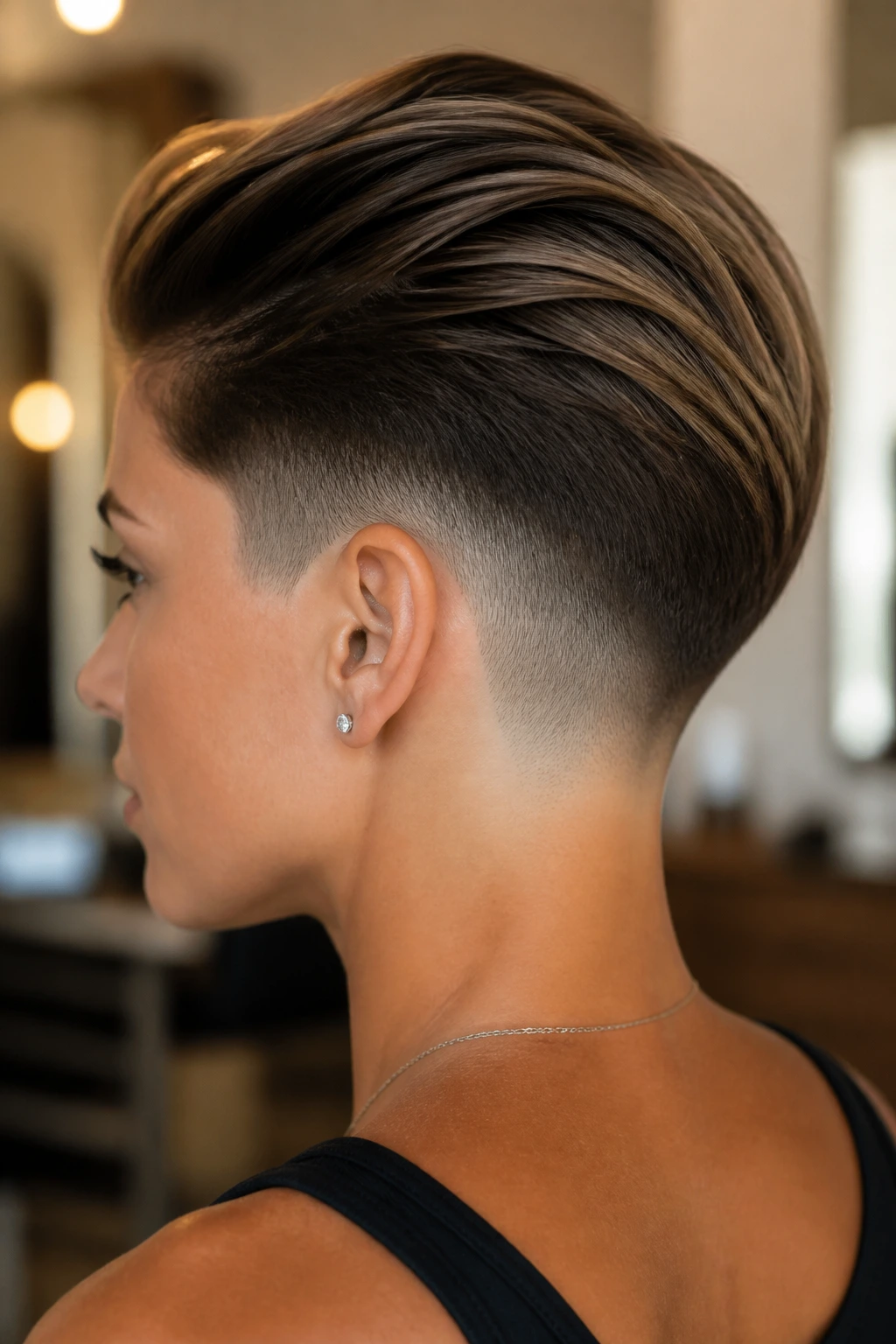
A soft fade undercut is the gentlest version in the bunch. Instead of a hard buzz line, the hair tapers from very short to slightly longer as it moves upward. The effect is smoother, less abrupt, and easier to grow out than a sharp shave.
I think this is one of the smartest choices for anyone curious about undercuts but not ready for a hard edge. It gives you the cool factor of shorter sides and back without the stark contrast of a skin-close panel.
Why It’s a Good Finish
The fade can sit at the nape, around the sides, or both. That makes it flexible. The transition matters more than the exact shape, which is useful if your hairline is uneven or your curl pattern changes the way a hard line would show.
If you want the cut to stay soft, ask the stylist not to push the fade too high. A low fade keeps the top intact and leaves room for the shape to grow out without looking choppy.
Why the Undercut Changes the Whole Shape of a Cut
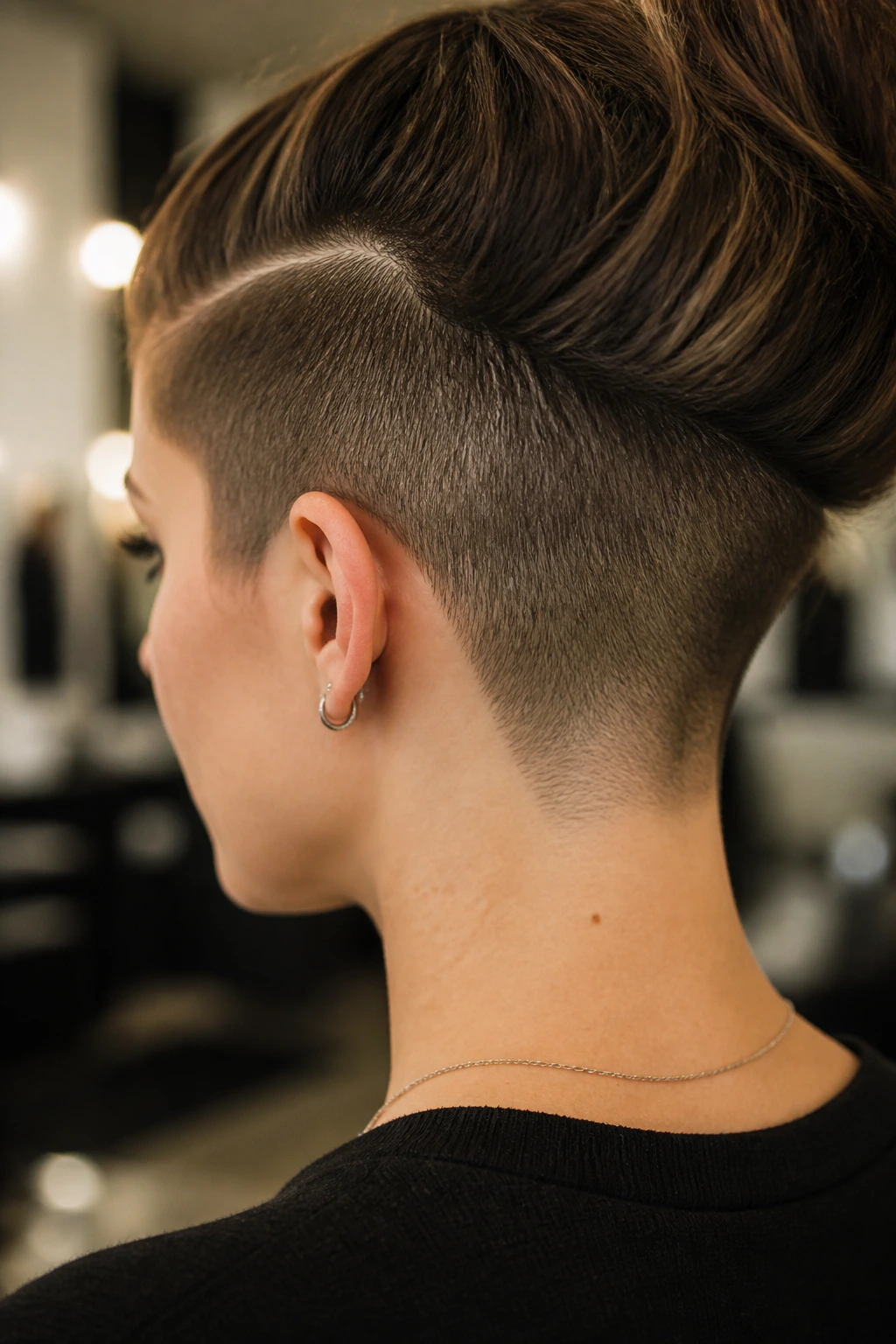
The haircut sits differently once some of the weight is gone. That sounds obvious, but people keep treating undercuts like decoration when they’re really architecture. The back of the head holds more bulk than most people notice, especially in thick or curly hair, and once you remove the hidden density the rest of the cut starts falling with a cleaner line.
There’s also the matter of sightlines. A nape shave makes a ponytail sit flatter. A side panel sharpens a bob. A temple shave changes the way your cheekbone reads. The cut is not only about less hair. It’s about where the eye lands.
The best undercut styles for women respect that. They don’t just add a buzzed patch because it looks cool in a photo. They use the shave to solve a shape problem — weight, puffiness, drag, or just the feeling that the haircut needs a little edge. That’s why one undercut can feel hidden and another can feel loud even if the clipper length is the same.
Essential Tools for These Cuts
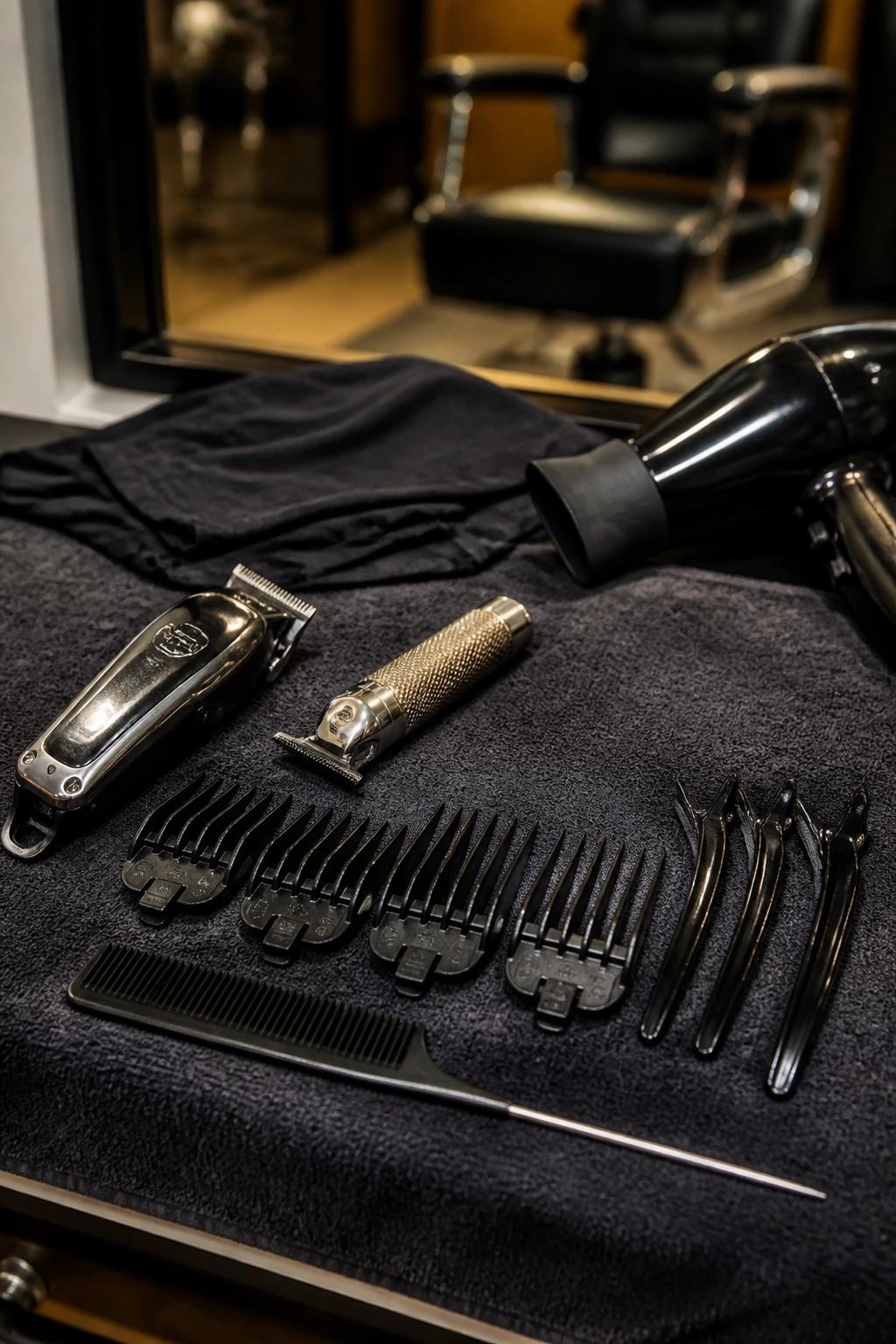
- Clippers with guard sizes 0.5 through 4: These handle most undercut lengths, from very close nape shaves to softer tapers.
- Detail trimmer: Useful for cleaning the neckline, sideburns, and line art without dragging a full clipper over the area.
- Sectioning clips: These keep the top hair out of the way so you don’t accidentally shave too high.
- Rat-tail comb: Helps create clean parts and separates the top from the underlayer with less guesswork.
- Hand mirror: Non-negotiable if you want to check the back and both sides before leaving the chair.
- Cape or salon towel: Keeps short cut hairs from sticking to your neck and shirt — because those tiny hairs are annoyingly itchy.
- Blow dryer with diffuser: Especially useful for curls, shags, and faux hawks where shape matters.
- Matte paste, cream wax, or flexible gel: The product should match the finish you want, not just the hold.
- Texturizing spray or root lift spray: Good for fine hair, pixies, and any cut that needs a little rise at the crown.
- Disinfectant or clipper spray: Keeps tools clean if you’re maintaining the undercut at home between salon visits.
How to Ask for the Right Shape, Guard, and Placement
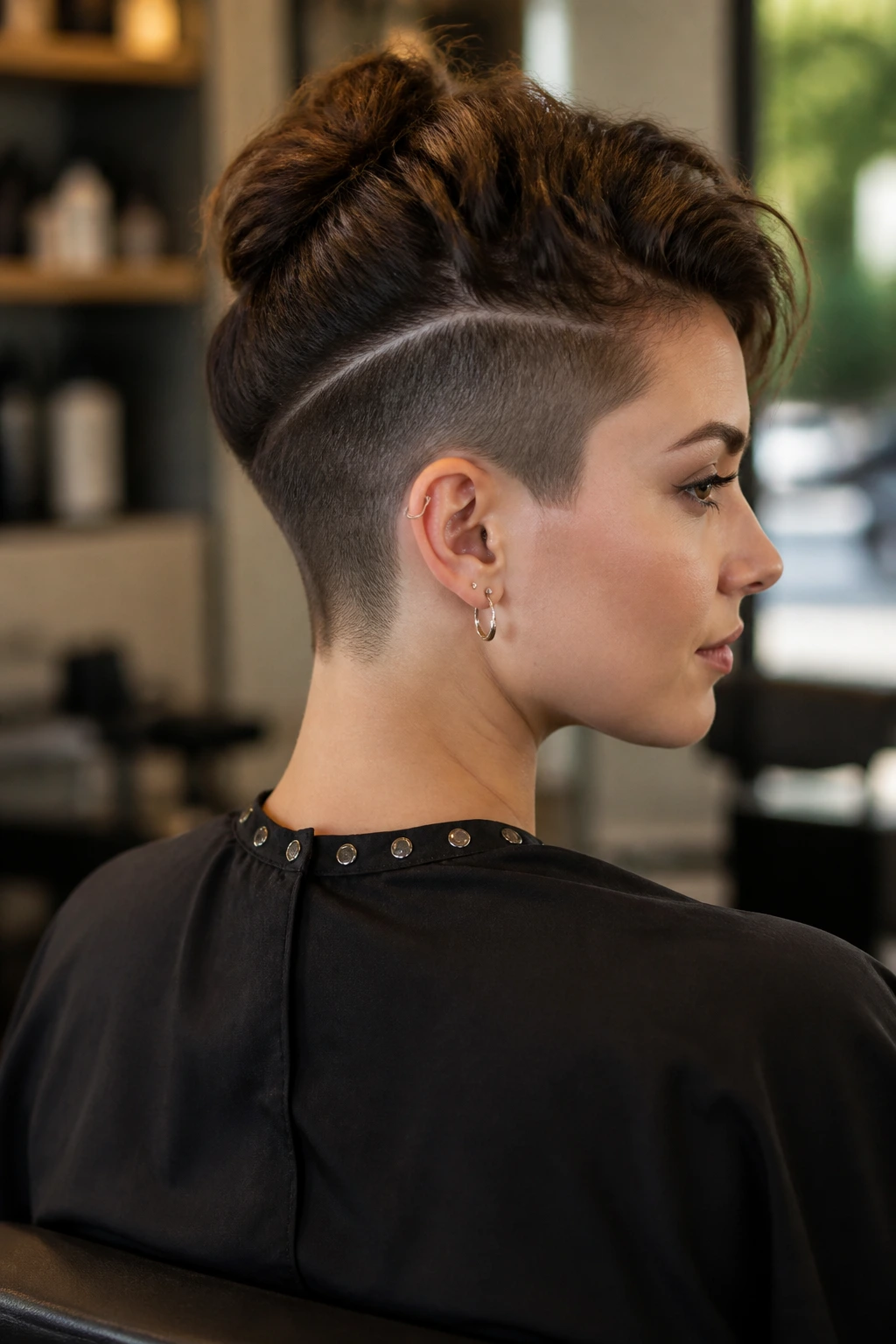
The easiest way to get a good undercut is to stop describing only the vibe and start describing the place. Say where the shave should sit: low nape, one temple, behind one ear, under the crown, or just below the top line of a bob. That tells the stylist what needs to move and what needs to stay.
Bring a photo with the back visible. Bring a second one if the first shot only shows the front. Haircuts are not flat pictures, and undercuts are even worse about that. The same style can look soft from one angle and severe from another.
Guard length matters too. A 0.5 guard reads close and crisp. A 1 or 2 guard leaves a little more softness and is easier to grow out. If you’re nervous, ask for the longest version first. It’s a lot easier to go shorter later than to wait for a too-close shave to fill back in.
Styling Moves That Keep the Cut Intentional
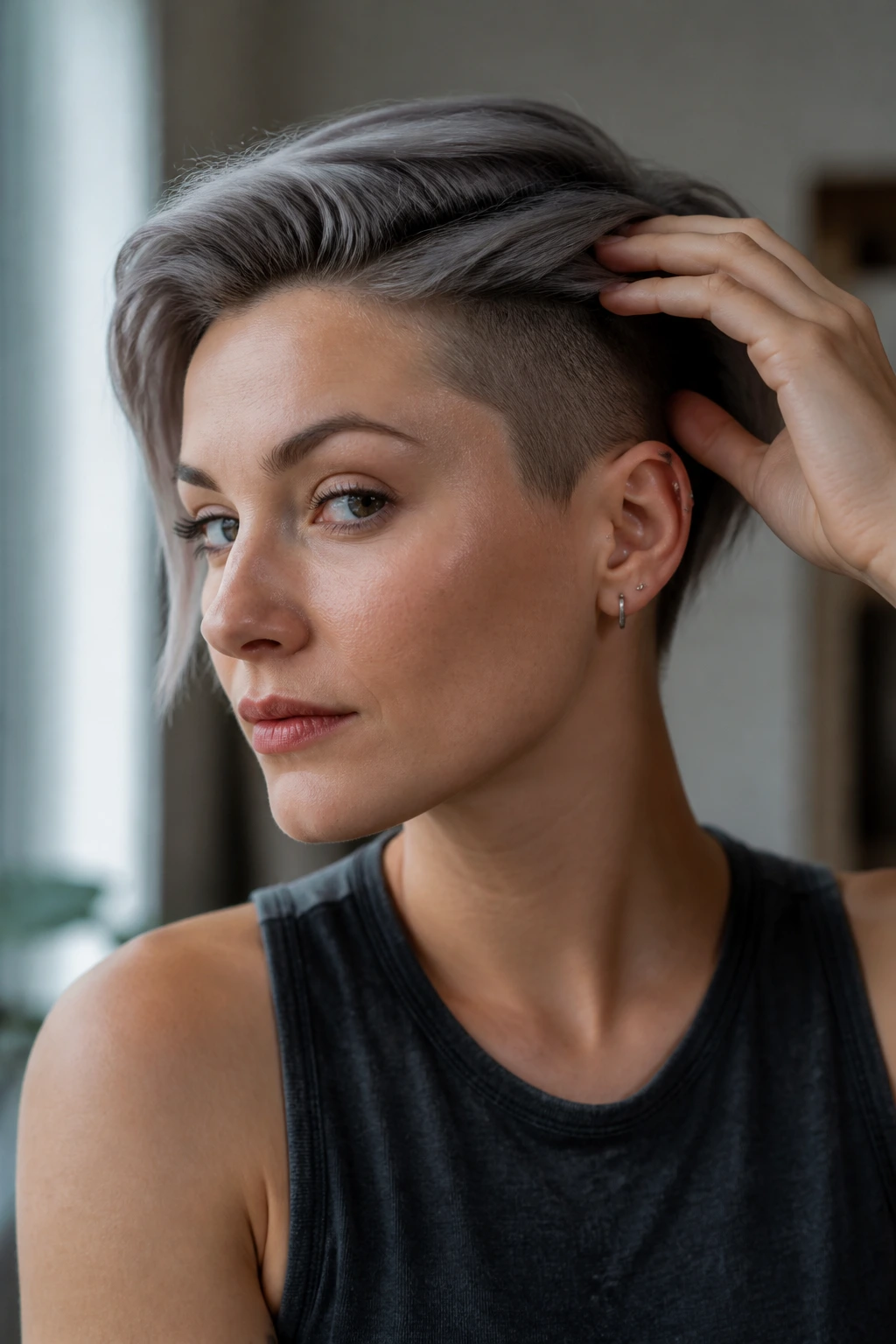
A good undercut can still look sloppy if the styling fights the shape. Short tops need direction. Hidden shaves need a part or tuck that shows why the underlayer exists. Curly cuts need room to spring instead of being dragged down with heavy cream.
Straight Hair
Straight hair shows every line, so the cut itself has to be clean. Use a smoothing cream or light pomade on the top if you want the shaved panel to stay hidden. If you want the undercut visible, tuck one side back or push the top away from the face with a side part.
Curly and Wavy Hair
Dry the hair in the direction you want it to sit. That matters more than people think. Curls that dry flat over an undercut can hide the shape too much, while curls that dry with lift at the root make the shaved section feel like part of the silhouette.
Short Textured Cuts
Pixies, crops, and faux hawks need a little grit. A matte paste or texture spray keeps the top from collapsing. Use less than you think. Half a pea-sized amount can be enough on short hair.
Common Mistakes to Avoid
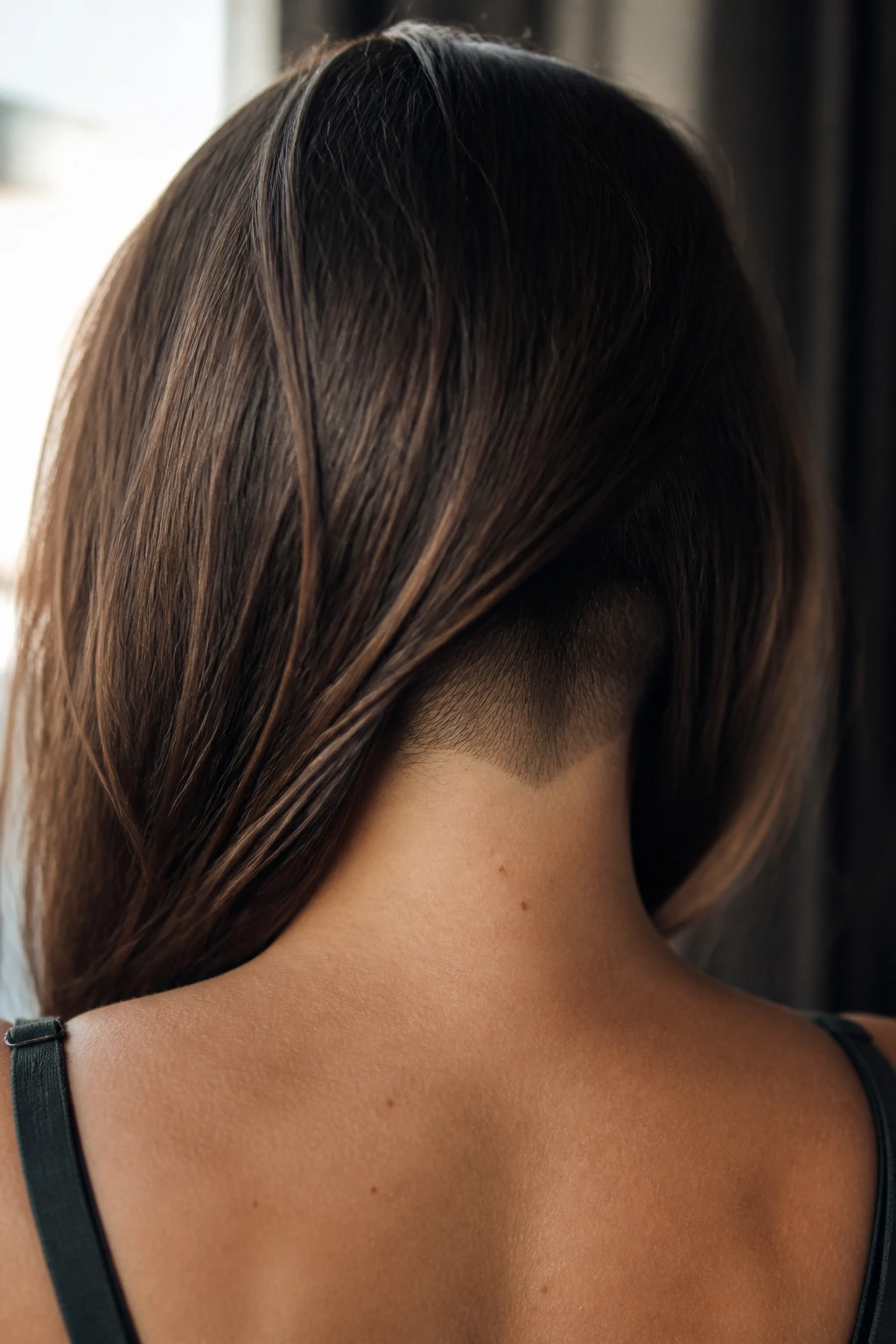
- Shaving too high on the head: The cut starts to look like a half-grown buzz instead of a shape with intention. Fix it by keeping the shortest section lower and checking the side profile before the clippers go higher.
- Ignoring your part and hair fall: If the undercut sits where your hair naturally splits, it may show through in a way you didn’t plan. Move the placement to match how the hair actually falls dry.
- Going too severe too fast: A skin-close temple shave is a big visual jump if you’ve never worn one. Start with a longer guard and clean lines first.
- Forgetting the grow-out stage: A style can look polished for two weeks and messy by week four. Ask your stylist how the shape will age, not just how it looks fresh.
- Blending everything when the cut needs contrast: Some styles need a hard line — the two-block cut, the buzzed panel, the mohawk strip. Over-blending can flatten the whole point.
- Using heavy product to fake lift: Greasy roots collapse on short tops. If you need height, use root spray, blow-drying, or a lighter wax instead.
Variations and Alternatives to Try
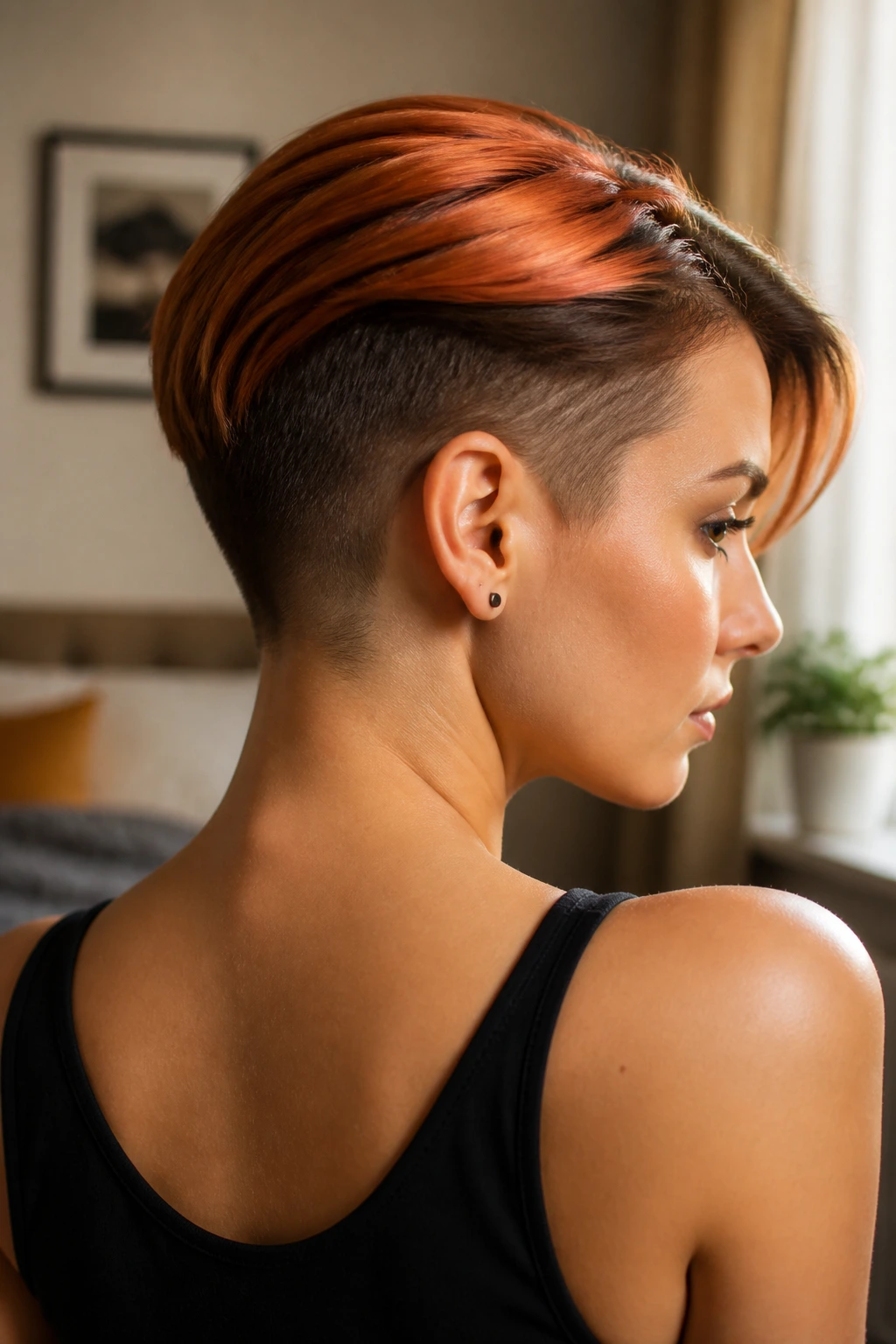
The Office-Quiet Version
Keep the undercut hidden at the nape and stay away from line art or high side shaves. This version works if you want the lighter feel of an undercut without a visible statement from the front.
The High-Contrast Version
Choose a side temple shave, buzzed panel, or mohawk strip and keep the top sleek or textured enough to show the difference. This is the route for anyone who likes a sharper edge and doesn’t mind the cut being noticed.
The Curly-Control Version
Use a low hidden undercut under the crown or nape to stop puff and give the curls a cleaner outline. It’s a smarter choice than shaving too much at the sides, which can throw the curl shape off balance.
The Color-Driven Version
Pair a hidden shave or line-art panel with a strong color block — copper, platinum, dark root shadow, or a pastel panel. The color does more than decorate; it helps the undercut read even when the hair is down.
The Grow-Out-Friendly Version
Pick a soft fade or low nape undercut instead of a hard skin shave. The regrowth is gentler, and the haircut stays usable longer between trims.
Keeping It Sharp Between Salon Visits
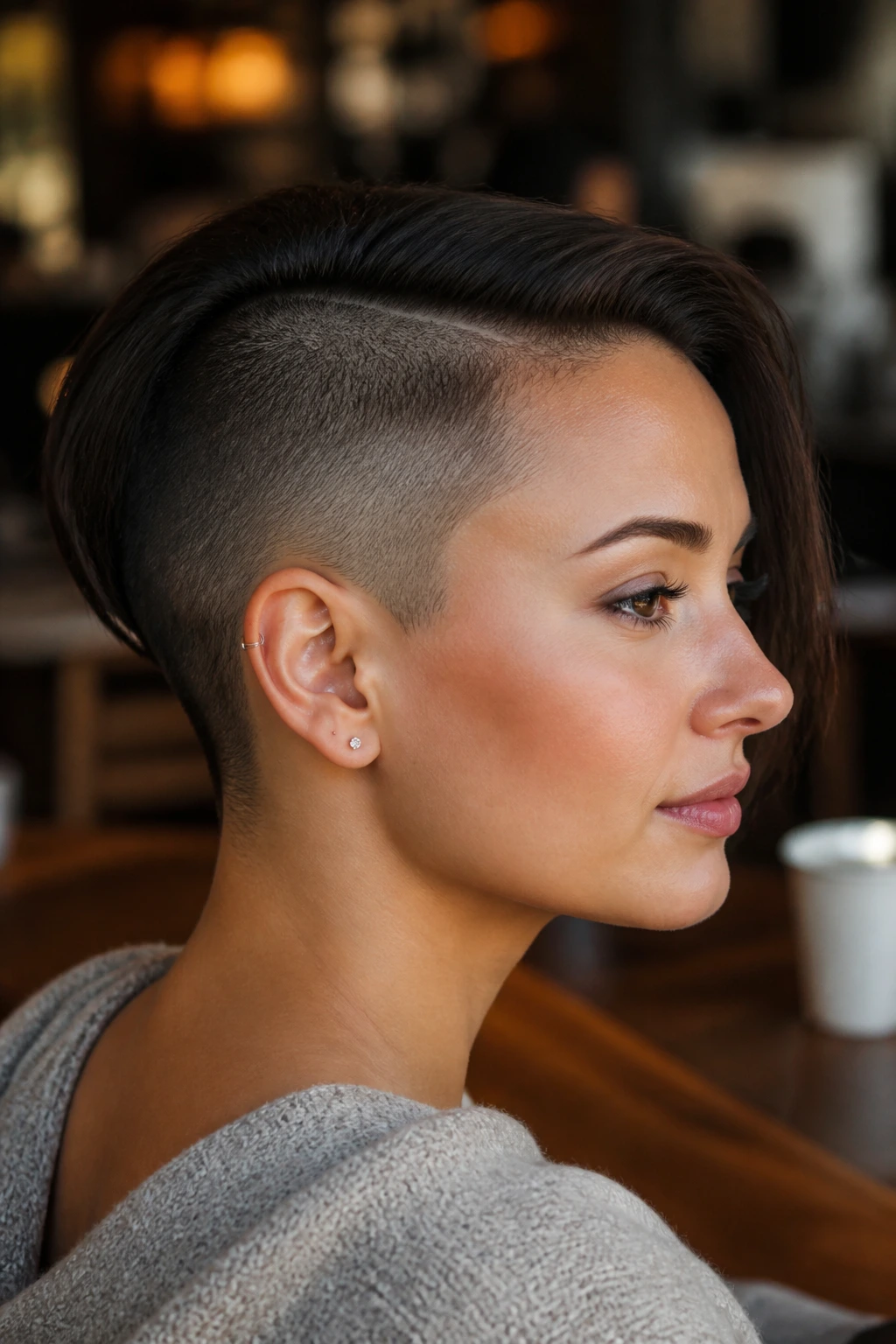
Undercuts need a maintenance rhythm. A low nape shave usually wants a tidy-up every 2 to 4 weeks if you want it to look crisp. Side panels and line art may need even more frequent cleanup if you like a clean edge. Full-shape refreshes, where the stylist re-checks the balance between the top and the shaved section, usually land around 4 to 6 weeks for short cuts and a little longer for hidden styles.
At home, resist the urge to chase every fuzzy corner with a handheld trimmer. That’s how people accidentally push the line too high. Clean up only the obvious fuzz at the neckline and sideburns unless you’re comfortable sectioning with a mirror and comb. Short hair shows mistakes fast. Faster than you want.
If you’re growing it out, hide the undercut under loose layers, a braid, a twist, or a lower bun. The grow-out phase gets easier once the shaved section is long enough to blend with the rest of the hair, but that middle period can be awkward. A little planning saves a lot of bad mirror moments.
Frequently Asked Questions
Can undercut styles for women be hidden for work or formal settings?
Yes. Hidden nape shaves, low underlayers, and soft fades disappear under loose hair or a polished bun. If you need a more conservative look, avoid high temples and line art, since those stay visible even when the hair is down.
What is the safest undercut to try first?
A low nape undercut with a longer guard, usually 1 or 2, is the easiest place to start. It changes the feel of the haircut without creating a huge visual jump, and it grows out more gracefully than a high side shave.
Do undercuts work on curly hair?
They can work extremely well. Curly hair often benefits from removing bulk underneath the crown or at the nape, because the extra weight can make the shape widen at the bottom. The main thing is cutting the hair dry or checking shrinkage carefully.
How often do I need to trim it?
Most undercuts need a cleanup every 2 to 6 weeks, depending on how visible they are and how fast your hair grows. Hidden versions can stretch longer, while side panels, fades, and line art usually need more frequent upkeep.
Will an undercut make fine hair look thinner?
Not if it’s placed carefully. Fine hair usually needs a lighter internal removal, not a big shave. A small hidden undercut can actually help the crown lift and keep the ends from collapsing flat.
What happens if I hate it after the cut?
The good news is that many undercuts are hidden by the hair above them. If the placement is low enough, you can wear the top loose, change your part, or pin the hair in a way that softens the view while it grows out.
Can I grow out an undercut without it looking strange?
Yes, but the awkward middle phase is real. A side part, braid, clipped-back style, or low bun helps the shorter section blend. Soft fades and low nape shapes are easier to grow out than hard buzzed panels.
Is it better to cut an undercut at home or go to a salon?
If you want a hidden nape shave and you already know your guard length, home maintenance can work. For side panels, line art, or anything that changes the silhouette, a salon or barber is the safer call because placement and balance matter more than the clipper length alone.
Clean Grow-Out
The best undercut styles for women do more than look sharp on day one. They solve a shape problem, lighten the parts of the haircut that drag, and give you a little room to choose how visible you want the style to be.
That’s why the low-key versions often end up being the most useful. A hidden nape shave, a soft fade, or a carefully placed temple panel can change how the whole cut sits without turning your hair into a full-time statement. If you want the shape to last, start with placement, not drama.
Bring a photo. Bring a clear answer about how visible you want the shave to be. And if you’re unsure, choose the version that still looks good when it grows out two weeks farther than planned. That one usually ends up being the cut you keep coming back to.
